



Blonde hair for women over 50 works best when it stops trying to be one flat color and starts acting like light moving across fabric. A single yellow-blonde sheet can make the ends look thinner, the roots louder, and every bit of regrowth feel like it needs immediate attention. Beige, champagne, honey, pearl, and soft ash tones avoid that trap by giving the eye somewhere to travel.
The blondes that flatter mature hair usually do three things at once. They soften the hairline, they keep a little depth at the root, and they use brightness where it matters most — around the face, through the top layer, or in a few carefully placed ribbons. That’s why the best results often look less “blonde everywhere” and more “smartly placed light.” Big difference. Huge difference, actually.
If your hair has gotten finer, drier, or more silver, that matters. A lot. Heavy lightening can make the ends feel wispy and the color can go brassy fast, while a good tonal blend can make the whole cut look fuller, cleaner, and more expensive without screaming for attention. The looks below move from soft and low-maintenance to brighter and bolder, because there isn’t one correct blonde — there are just better choices for your texture, your gray pattern, and your patience level.
Why These Blonde Looks Stand Out
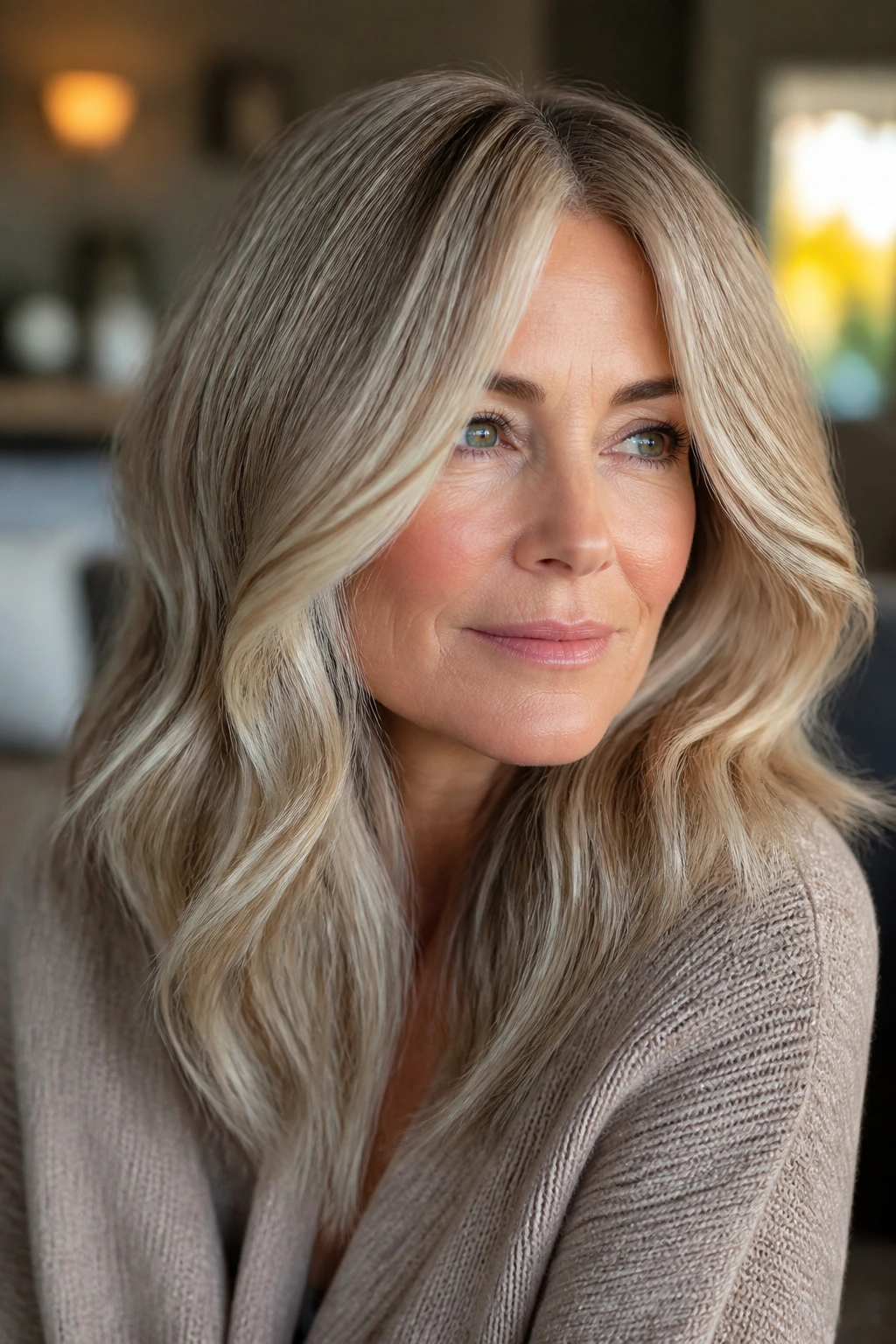
- Root softness: A little depth at the scalp keeps grow-out from turning into a hard line two weeks later.
- Gray blending: Beige, pearl, and mushroom tones sit beside silver hair instead of fighting it, which makes regrowth look deliberate.
- Face framing: Bright pieces around the temples and cheekbones can lift the whole face without bleaching every strand.
- Texture support: Dimensional blonde makes fine hair look fuller and gives thick hair more movement than a single-tone color ever will.
- Low-drama upkeep: Several of these looks are built around balayage, root shadow, or bronde placement, so the appointment schedule stays sane.
- Warm or cool options: If gold makes your skin glow, there’s a place for it here. If ash keeps brass out of the picture, that path is here too.
1. Soft Beige Bob
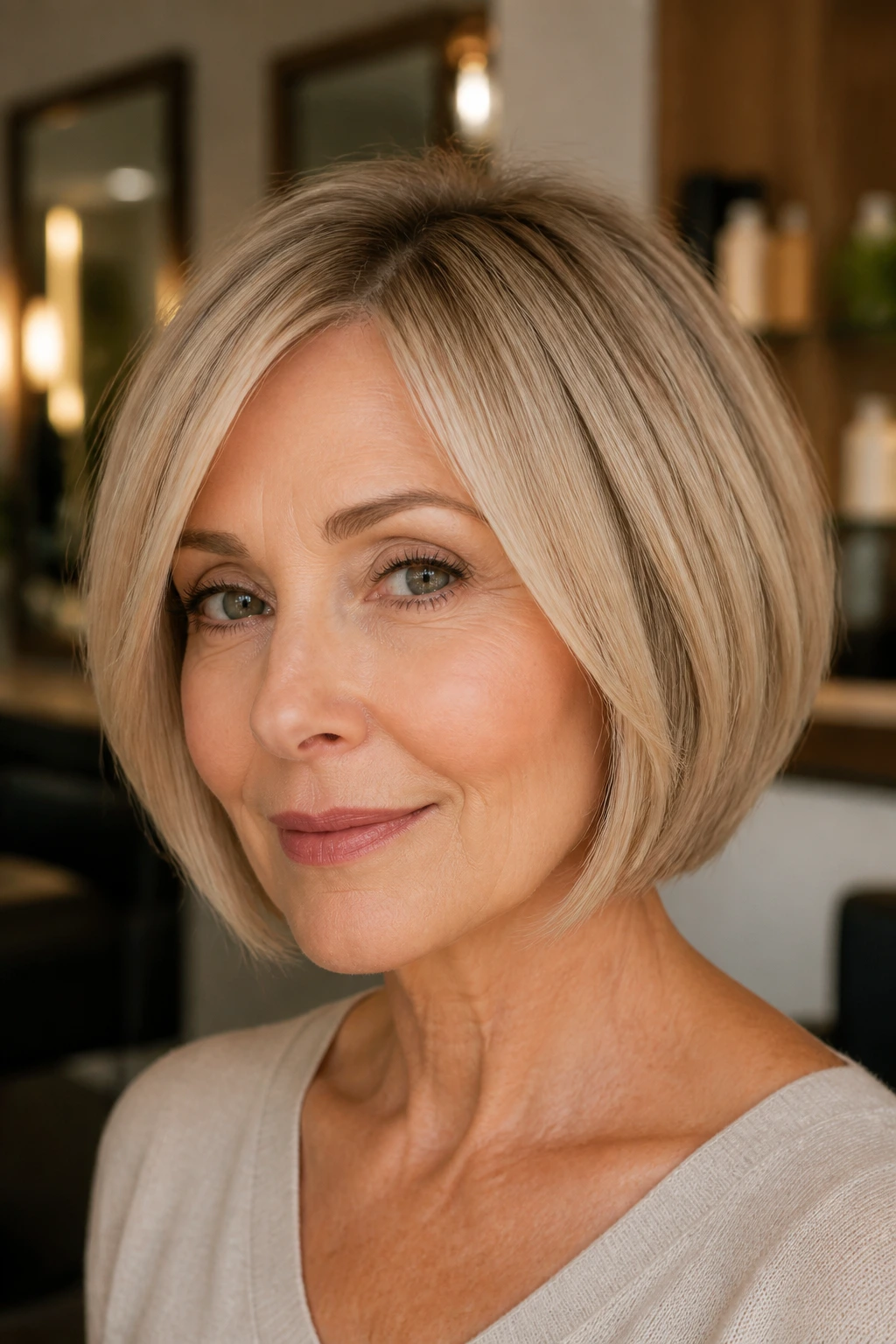
A soft beige bob is the blonde I reach for when someone wants polish without fuss. The cut lands around the jaw or just below it, and the color sits in that gentle middle ground between gold and ash. It does not shout. It doesn’t need to.
Why It Works at the Jawline
Beige blonde is forgiving around the face because it doesn’t create a sharp line between skin and hair. On mature hair, that matters. A bob already gives structure; beige tone keeps the structure from feeling severe. If the hair is fine, the bob keeps the ends looking intentional instead of see-through.
Ask for a slightly beveled edge and a root that is one shade deeper than the lightest pieces. That little bit of darkness at the top makes the cut read fuller. A round brush or a quick bend with a 1-inch iron is enough. You want movement, not helmet hair.
Salon Notes
- Best for: straight to lightly wavy hair.
- Ask for: a level 8 or 9 beige blonde with a soft shadow root.
- Style it with: a side part and tucked-under ends.
A beige bob is the kind of blonde that looks expensive because it behaves. No drama. No brass. No fuzzy grow-out line.
2. Creamy Balayage Lob
A creamy balayage lob is the safe bet that never looks boring. The length hits at the collarbone, which gives hair enough weight to swing but not so much that it drags the face down. The balayage placement keeps the brightest pieces around the top layer and through the ends, where they catch light as you move.
This is one of the easiest blondes to live with if you do not want to be in the salon every month. The root stays deeper, the mid-lengths carry the brightness, and the grow-out looks soft rather than obvious. That’s the whole point.
What I like most here is the way it handles texture changes. If your hair is a little finer than it used to be, the lob gives the illusion of density. If your hair is thick, the lighter ribbons prevent it from turning into a heavy curtain.
A loose wave shows this look best. Straight, it’s clean. Wavy, it wakes up.
3. Champagne Layers
Champagne blonde has a tiny sparkle to it, but it’s not icy and it’s not yellow. That middle note makes it one of the most flattering shades for women who want brightness without a harsh edge. Add long layers, and the color starts moving in soft flashes instead of one flat sheet.
What Makes Champagne Feel Lively
Champagne blonde usually mixes beige, pearl, and a touch of warmth. That mix is why it works on so many different skin tones. It keeps the face from going washed out, and it doesn’t get as flat as a cooler blonde can when the light goes soft.
The layers matter just as much as the tone. Bright ends with a little interior layering make the hair look airy, especially if the length falls past the shoulders. I’d ask for face-framing pieces that start around the cheekbone, not the chin. The higher placement opens the face more cleanly.
Ask For
- Champagne gloss over a lifted blonde base.
- Feathered layers rather than blunt ends.
- Brightest pieces around the temples and the top layer.
Champagne layers are lovely when you want a blonde that feels polished in daylight and still has enough softness to wear with bare skin and simple makeup.
4. Honey Root-Shadow Waves
Honey blonde with a root shadow is one of those looks that earns its keep fast. The honey tone gives warmth and glow, while the root shadow keeps the color from looking overprocessed at the scalp. Add soft waves and the whole thing starts to look rich instead of loud.
This is a smart move for anyone with darker natural roots or a fair amount of gray mixed in. You get a blonde that grows out with a softer edge, and the warmer tone helps the face look a little fuller. Flat, pale blonde can be unforgiving on mature features. Honey usually isn’t.
The wave pattern matters here. Think shoulder-length bends or loose barrel curls, not tight ringlets. That gentle movement separates the honey ribbons so the color doesn’t all blur together. A gloss every few weeks keeps the tone from tipping too orange.
If you like warmth, this is one of the best blondes on the list. It feels lived-in, not fussy.
5. Pearl Pixie
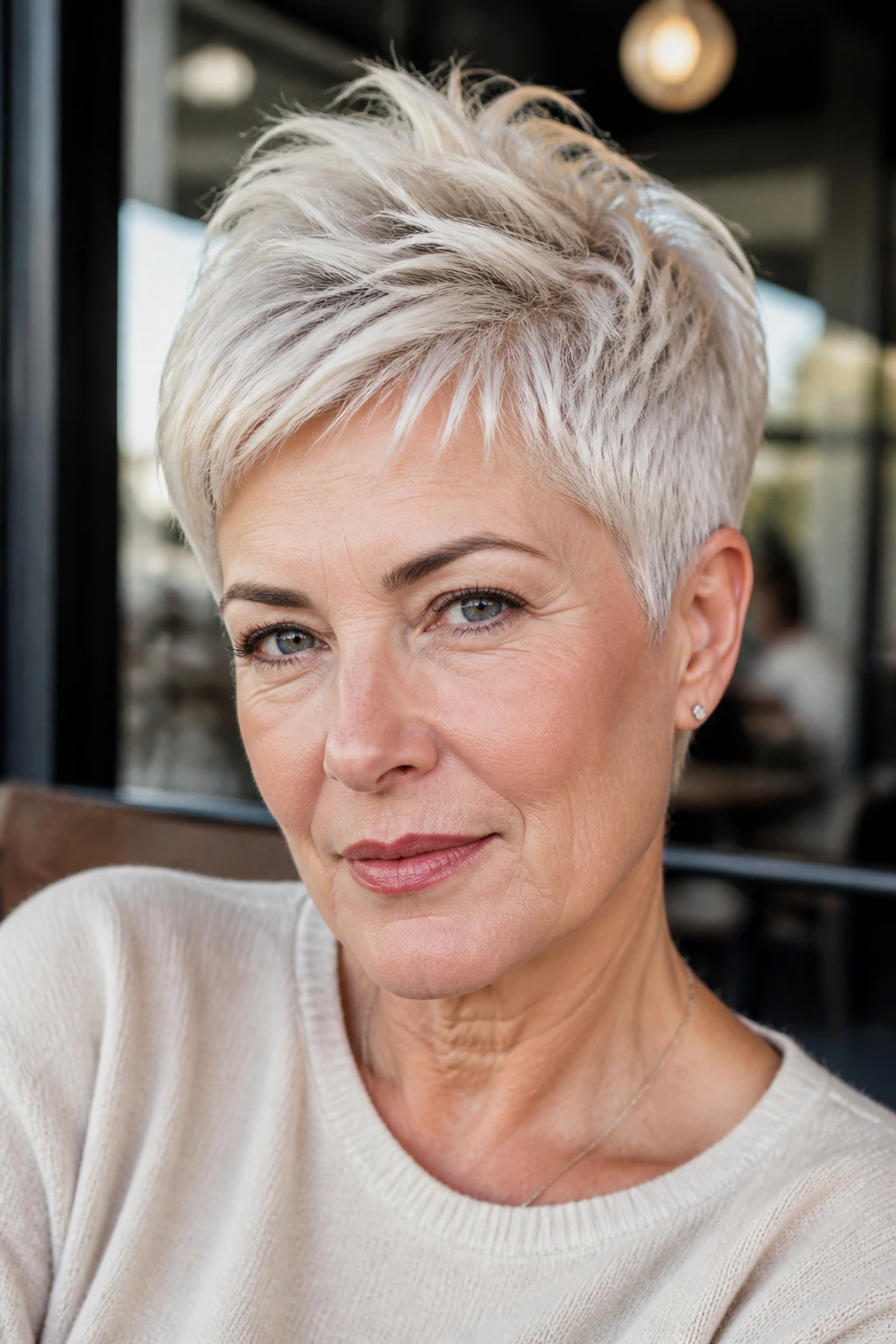
A pearl pixie is sharp in the best way. Short hair shows everything — the line of the jaw, the shape of the cheek, the silver around the temples — so the color has to be clean. Pearl blonde keeps the short cut from looking chalky, and the slight coolness gives the pixie a crisp finish.
Why It Looks Good on Mature Hair
Short cuts can be a gift when hair starts getting finer. You remove weight, keep the shape compact, and let the color do more of the work. Pearl blonde reflects light without pushing too much gold into the face, which helps if your skin has cooled a bit over time.
Keep the top longer than the sides so you can move it with a finger and a touch of styling cream. Too much height at the crown can feel dated. Too little, and the pixie loses its shape. The sweet spot is a bit of lift, not a puff.
What to Ask For
- A longer, textured top with softly tapered sides.
- Pearl or soft icy toner, not flat white.
- A fringe that can sweep forward or off to the side.
Pearl pixies look especially good with a strong brow, a neat earring, and a little attitude. They are not shy.
6. Sandy Silver Blend
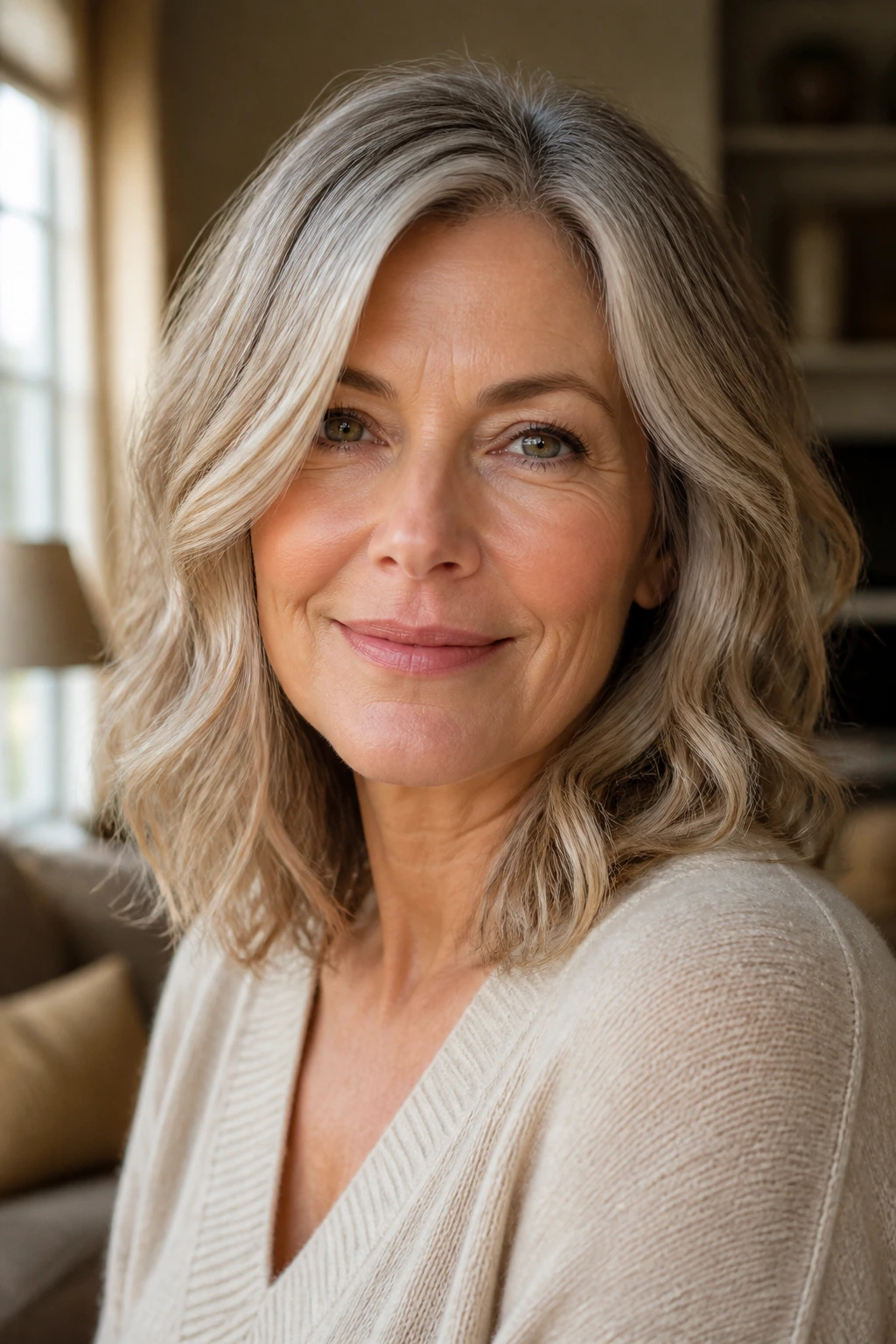
Sandy silver blend is the answer for hair that has moved well past the “cover every gray hair” phase. Instead of trying to erase silver, this look mixes it with sandy blonde so the strands read as dimensional. The result is calmer grow-out and far less time spent worrying about a visible root line.
This style works because it treats gray like a texture, not a problem. The sandy tone softens the brightness of silver while keeping enough lightness to feel blonde. It is one of the smartest choices for women whose natural silver is coming in at the temples, through the front, or all over in a patchy way.
A soft blowout or loose wave helps the blend show up. Straight hair can make the color pattern look more obvious; movement breaks it up. If your stylist paints in a few brighter pieces around the face, the whole effect looks cleaner and more deliberate.
This is the blonde for someone who wants the truth, but prettier.
7. Buttery Shoulder-Length Cut
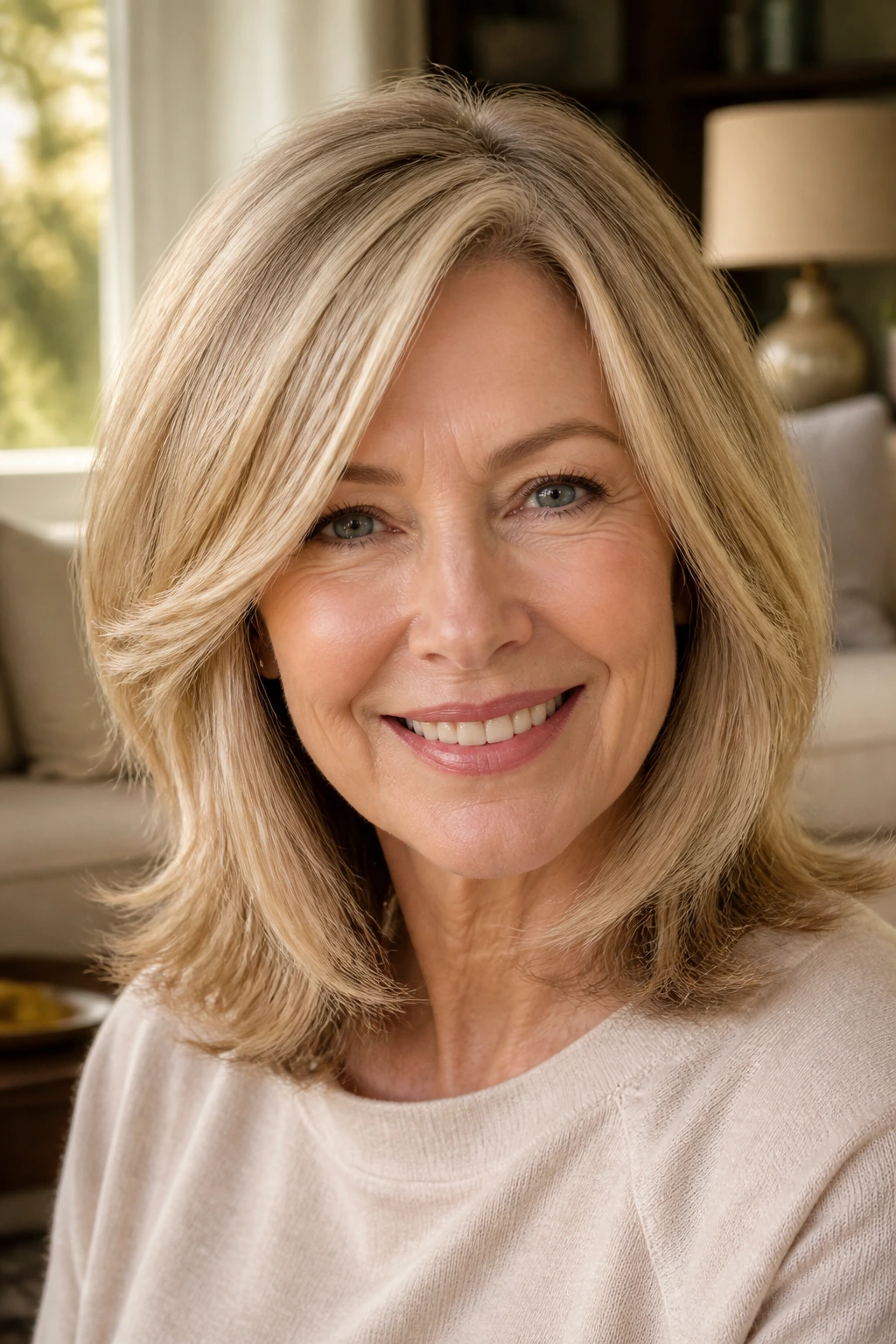
Buttery blonde has a warm, creamy softness that can be very kind to mature skin. When it sits on a shoulder-length cut, the shape gives the hair enough length to move while still keeping the color close enough to the face to matter. The result feels full, soft, and bright without tipping into pale or icy territory.
The trick with buttery blonde is tone control. You want warmth, not brass. If the yellow gets too strong, the look turns flat fast. A beige or soft gold toner keeps the blonde looking like sunlight instead of bleach. That difference is the whole game.
Shoulder-length hair benefits from a few internal layers so the ends don’t gather into a heavy block. A center part can work, but a slightly off-center part usually feels kinder on mature faces. It breaks the line just enough.
This is a very good choice if your hair is naturally medium to thick and you want a blonde that feels soft rather than severe.
8. Vanilla Shag
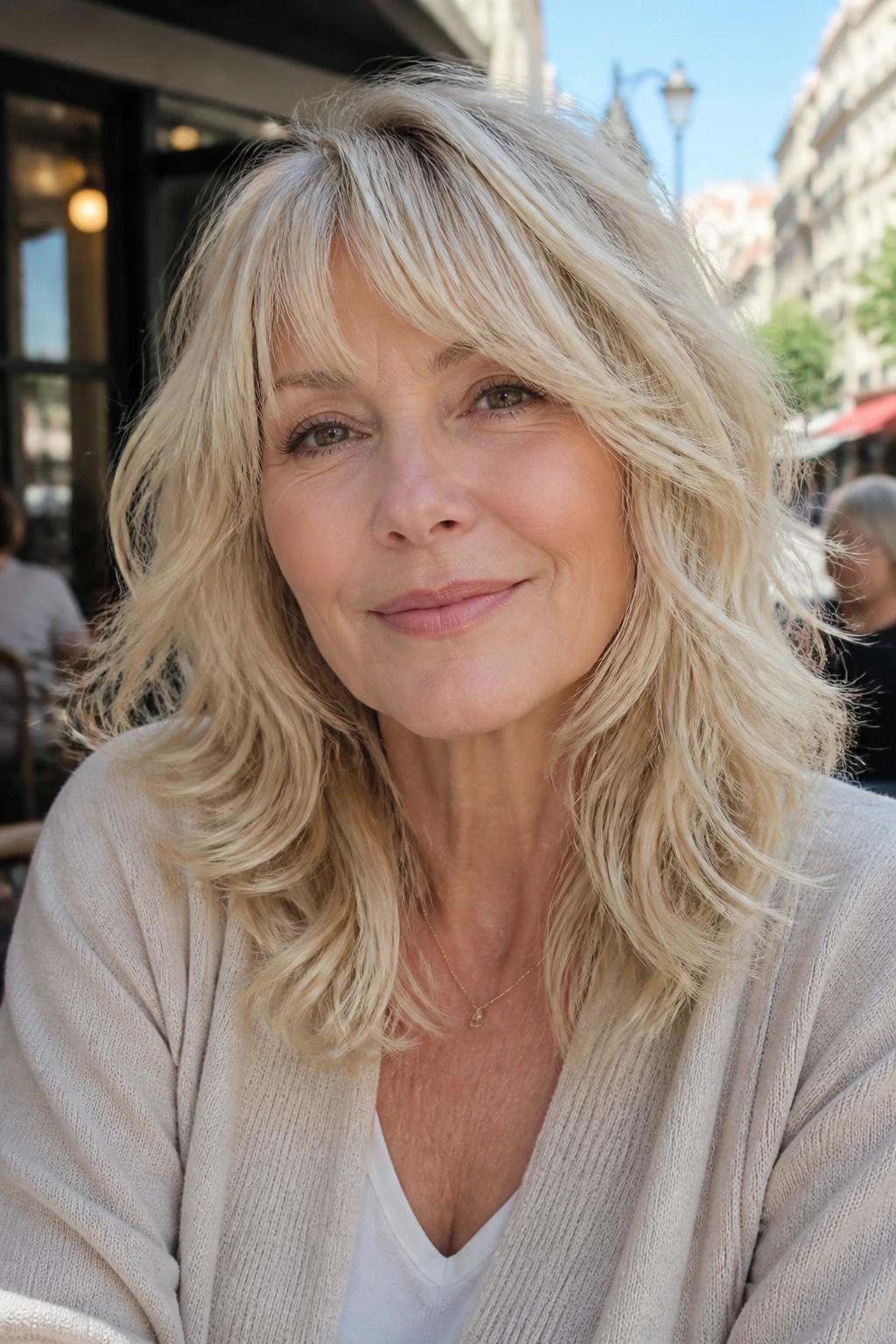
Does a shag feel too young? Not if the cut is shaped well. A vanilla blonde shag can be one of the most flattering options on the list because it brings movement to the hair, not just color. The layers do the work, and the pale vanilla tone keeps the cut from looking heavy.
Why the Shag Helps
A shag adds lift where hair often needs it most — around the crown, through the face frame, and at the ends. That helps if your hair has lost some body or if it falls flat by midday. Vanilla blonde keeps all those layers readable. Too dark, and the shape can disappear. Too brassy, and the whole thing feels dated.
I like this look with soft fringe pieces that sit below the brows. They give the face a little frame without boxing it in. A texturizing spray can help, but use a light hand. The point is feathered movement, not crunchy separation.
Best Match
- Medium to thick hair.
- Natural wave or bend.
- Anyone who likes a relaxed, slightly undone finish.
A vanilla shag is not precious. That’s part of its charm.
9. Mushroom Blonde With Lowlights
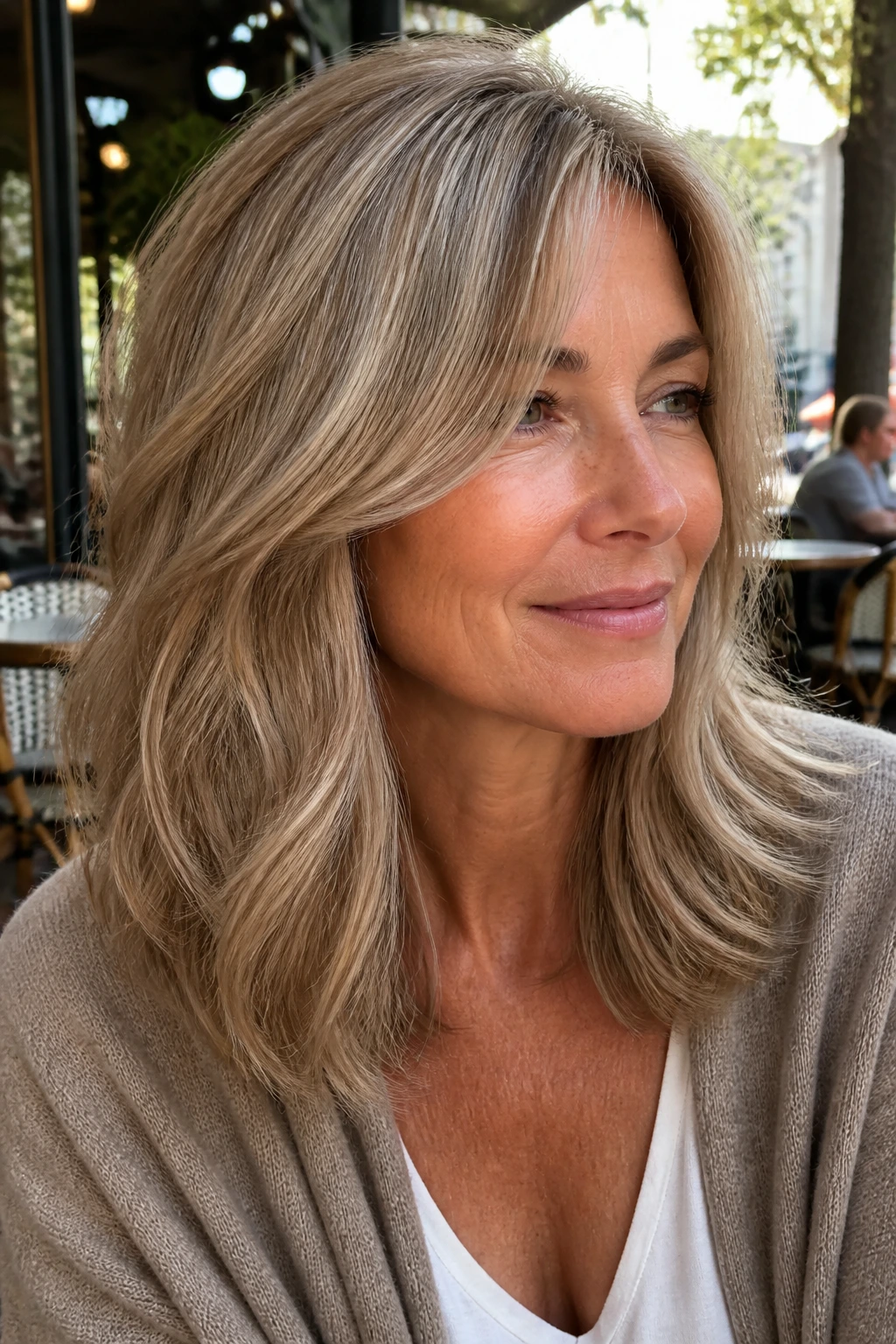
Mushroom blonde is quietly brilliant. It sits in the cool beige-brown zone, which means it can soften brass, deepen overly pale hair, and make gray blending look much more natural. Add lowlights, and suddenly the color has depth instead of just brightness.
This is one of the least fussy blondes for women over 50. It works especially well if your natural color is dark blonde, light brown, or peppery gray. The mushroom tone gives the hair a slightly earthy feel that reads modern without trying too hard.
Lowlights are the reason this look works. They keep the blonde from floating away from the base. Without them, the tone can feel thin. With them, the whole head looks fuller and more believable. That matters on hair that has started to lose density.
If you want a blonde that won’t scream for toner every other week, this is a strong contender.
10. Caramel Ribbon Blonde
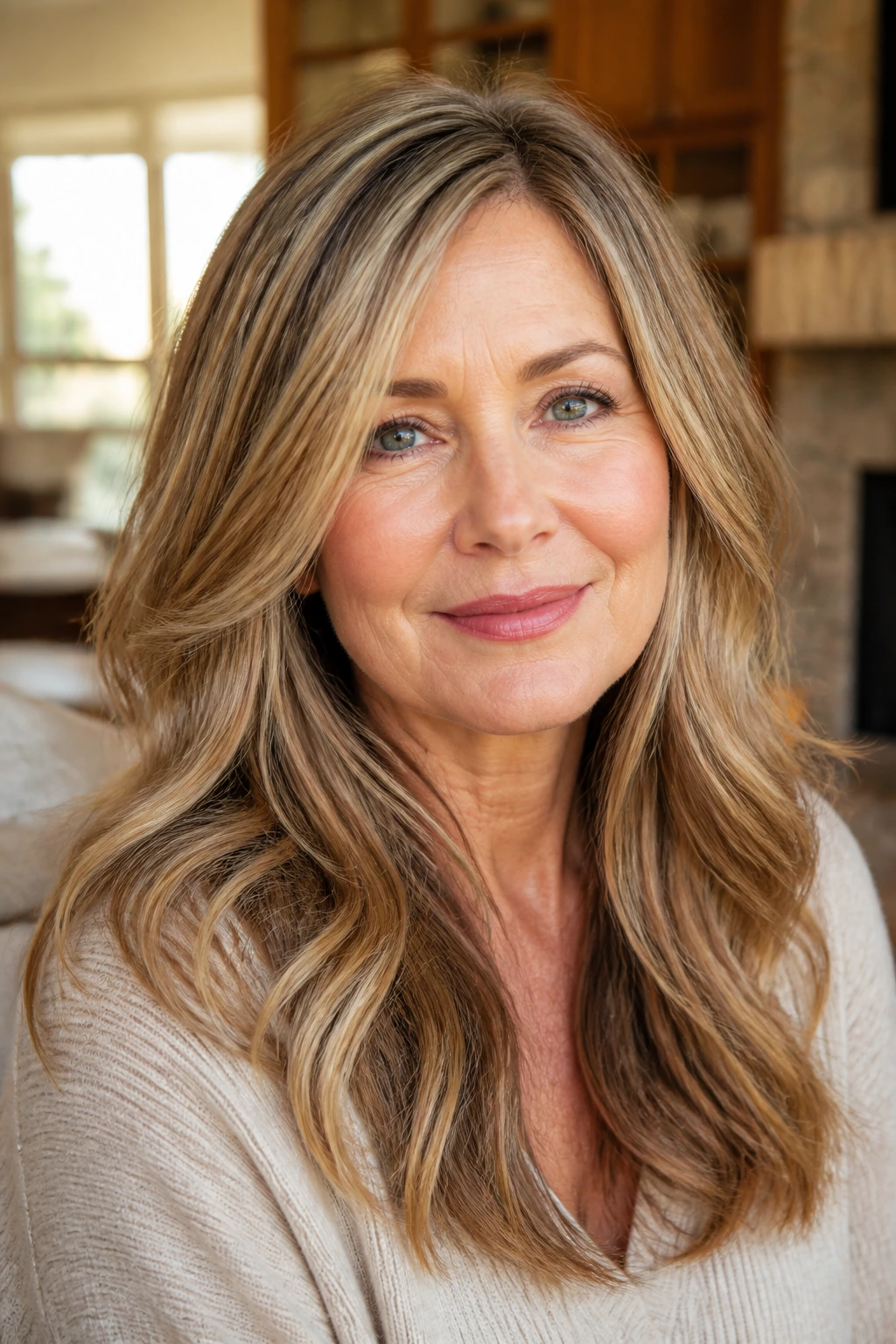
Caramel ribbon blonde is a good bridge shade if you’re not ready to jump to a lighter blonde all over. The base stays deeper, and caramel ribbons are painted through the mid-lengths and ends so the hair feels dimensional, not stripped. It’s especially flattering on darker natural brunettes who want lightness without losing their shape.
The ribbons should be placed with some intention. Around the face, they can brighten the cheek area. Through the lower lengths, they add movement when the hair swings. If everything is light from root to tip, you lose that contrast, and the cut can collapse visually.
Loose waves are your friend here. The ribbons catch light as the hair bends, which is exactly why this kind of blonde stays interesting. It works on a layered lob, shoulder-length cut, or longer hair with movement in the ends.
Caramel blonde is warm, forgiving, and not as high-strung as a cooler blonde. I trust it.
11. Icy Money Piece Bob
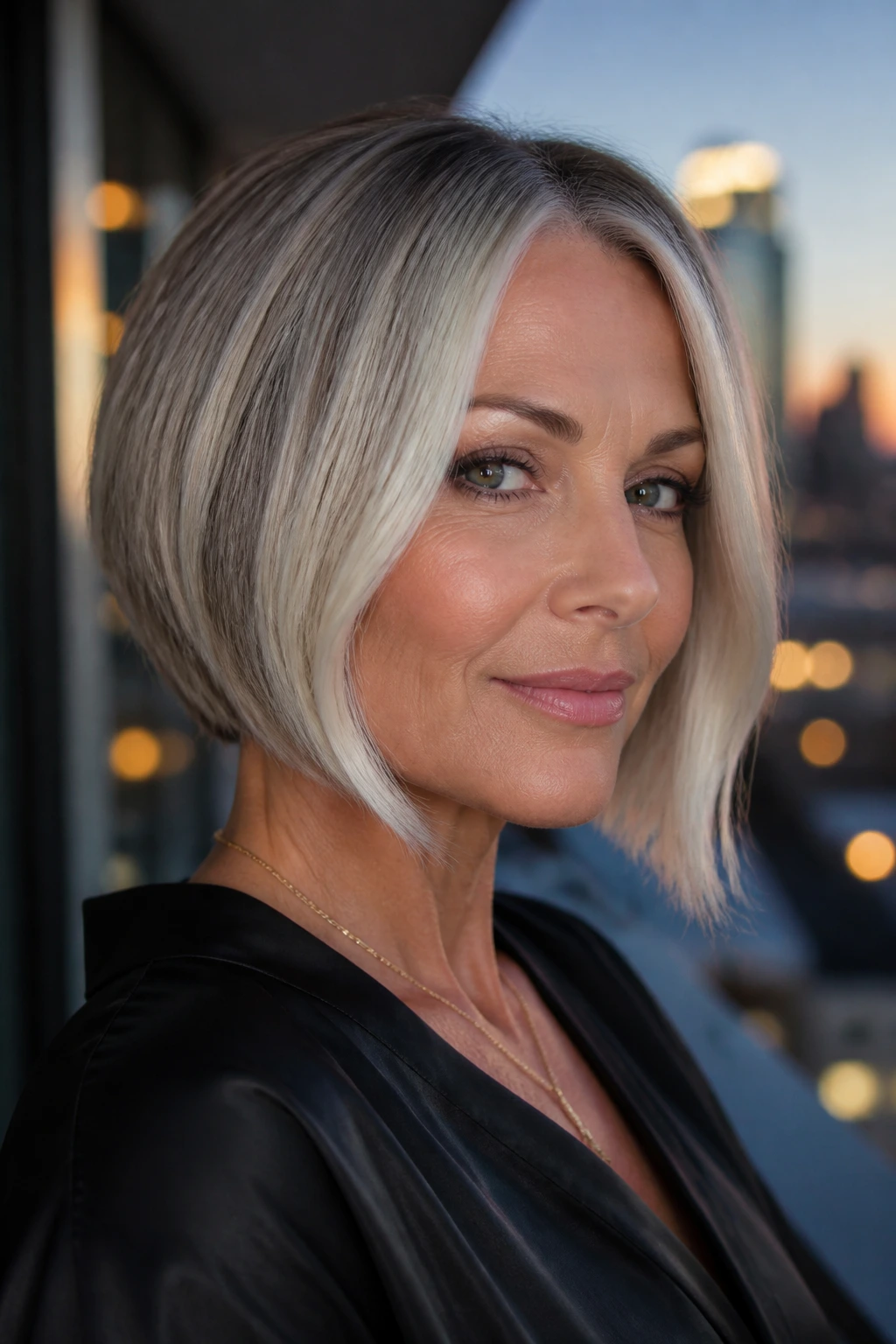
An icy money piece bob takes a classic bob and gives it a sharper frame. The bob keeps the shape clean, while the icy front pieces brighten the face in a way that feels deliberate. It’s a stronger look than beige or honey, but it works when the rest of the hair stays softer and deeper.
Where the Contrast Matters
The money piece — those bright front sections — should sit where the eye naturally goes first: near the temples, cheekbones, and part line. That contrast pulls attention upward and can make the face look more lifted. On a bob, the effect feels neat rather than extreme because the cut itself is tidy.
This is a good choice if you like cool tones and you don’t mind toning your hair regularly. The icy front can go dull or yellow if you ignore it. Use purple shampoo sparingly, though. Too much and the blonde turns flat.
Quick Notes
- Keep the back slightly deeper than the front.
- Ask for a soft root melt.
- Style with a smooth bend or tucked-under ends.
This one has edge, but it still feels grown-up.
12. Golden Curtain Layers
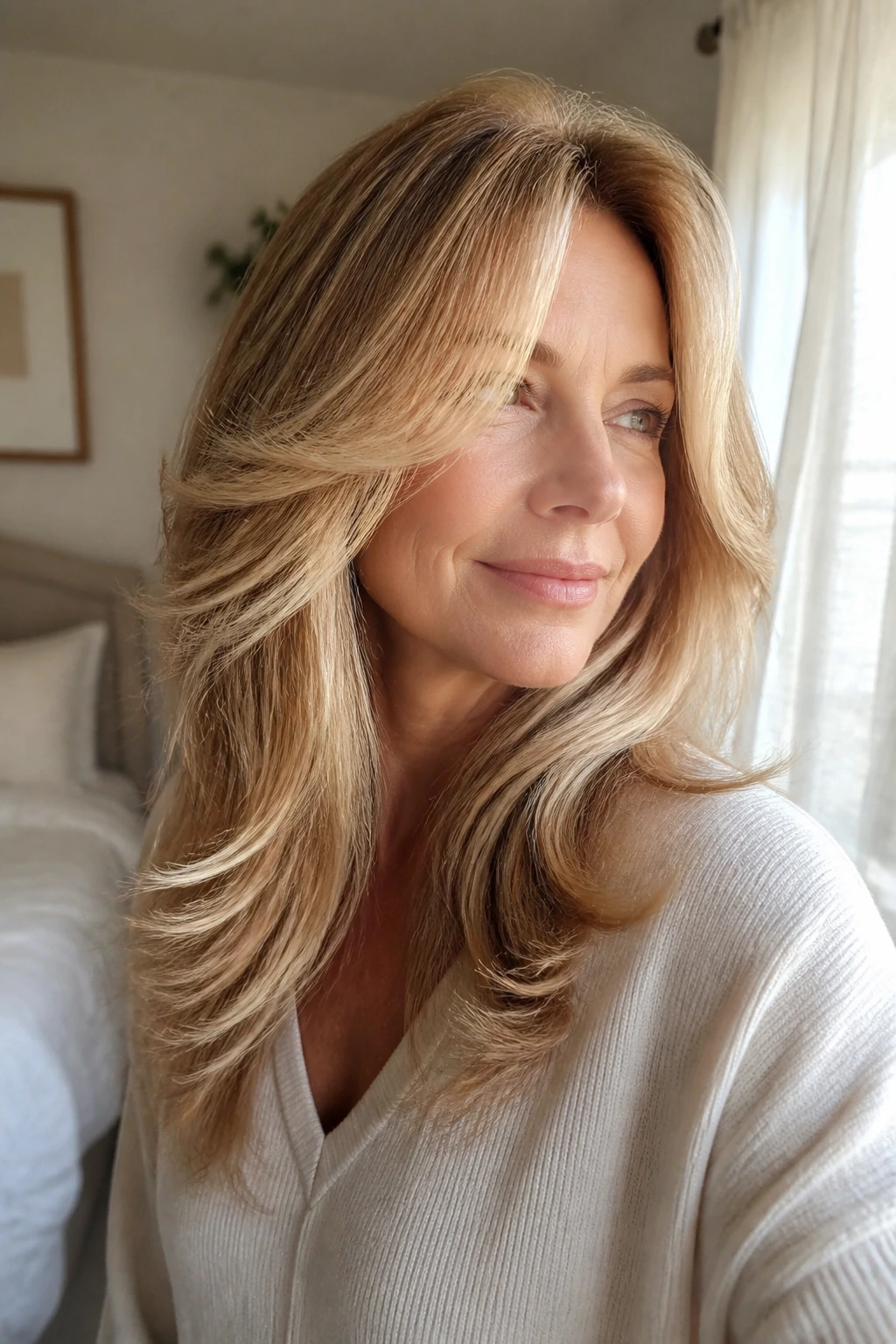
Golden curtain layers are for the woman who wants brightness around the eyes and softness everywhere else. Curtain bangs or longer face-framing pieces open the center of the face, and the golden blonde brings warmth that can make tired skin look less dull. It’s a generous look. Not fussy. Generous.
The key here is placement. The lightest pieces should sit around the face and the top surface, not scattered evenly from root to end. That keeps the cut from turning into a washed-out sheet. The layers should stay soft enough that the blonde moves when you turn your head.
Golden tones work well if your skin has peach or olive warmth, or if you already wear gold jewelry and like how it looks against your face. A good blow-dry matters because curtain layers are supposed to swing. If they sit flat, the whole point disappears.
This is a flattering choice when you want blonde that still feels warm enough to live with.
13. Beige Bronde Lob
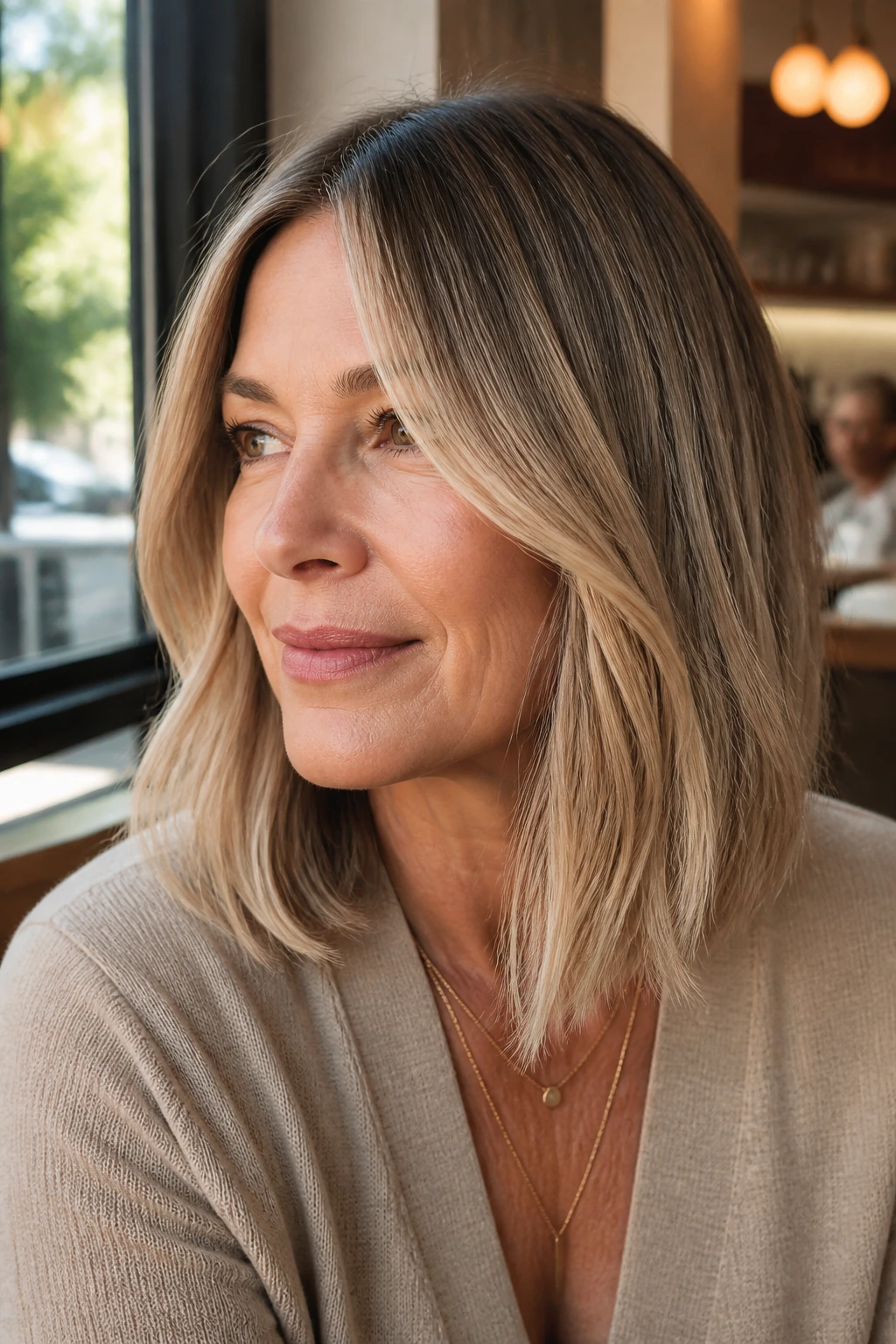
Beige bronde is one of the smartest entry points into blonde because it lives between brunette and blonde without forcing a dramatic leap. On a lob, it looks especially modern: enough lightness to brighten, enough depth to keep the hair from looking stripped. That’s a very useful combination.
The beige tone is doing a lot of work here. It softens the transition from darker root to lighter ends, which means the grow-out isn’t a crisis. It also plays nicely with a few silver strands, especially if they’re mixed through the front or around the hairline.
This is a favorite for women who want to look polished without signing up for a permanent root schedule. The lob gives you movement and a clean line around the shoulders, and the bronde color keeps the whole thing easy to maintain. If hair feels fragile, this is kinder than going all the way bright.
Beige bronde is not trying to impress anybody. That’s why it works.
14. Toasted Almond Crop
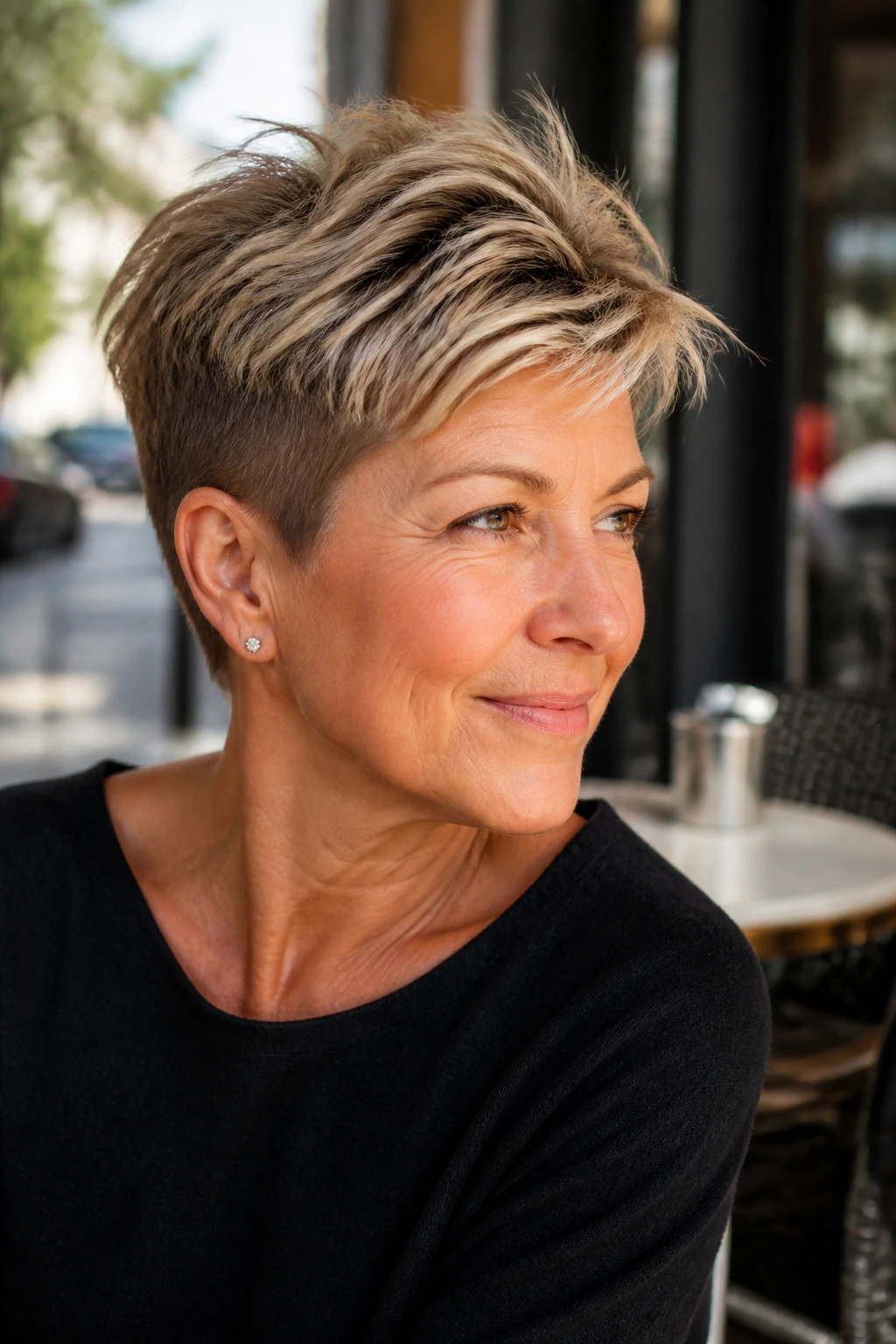
A toasted almond crop has warmth, shape, and a little bit of attitude. Short cuts often need color with some depth, because a single pale shade can make them look too airy. Toasted almond gives the crop a richer base while the lighter bits keep it from feeling heavy.
This is a nice choice if you prefer low styling time but still want a clean, finished look. The cut can be close to the head, slightly longer on top, or softly tapered around the ears. Either way, the color should follow the shape. Brightness on top, a little depth at the sides, and enough contrast to keep the silhouette readable.
I especially like this on hair that has gone naturally lighter around the front but still has darker pieces in the back. The almond tone helps the transition feel smoother. A small amount of pomade or styling cream is enough to separate the top.
Short hair does not need to be loud to be strong.
15. Soft Ombré Mid-Length Hair
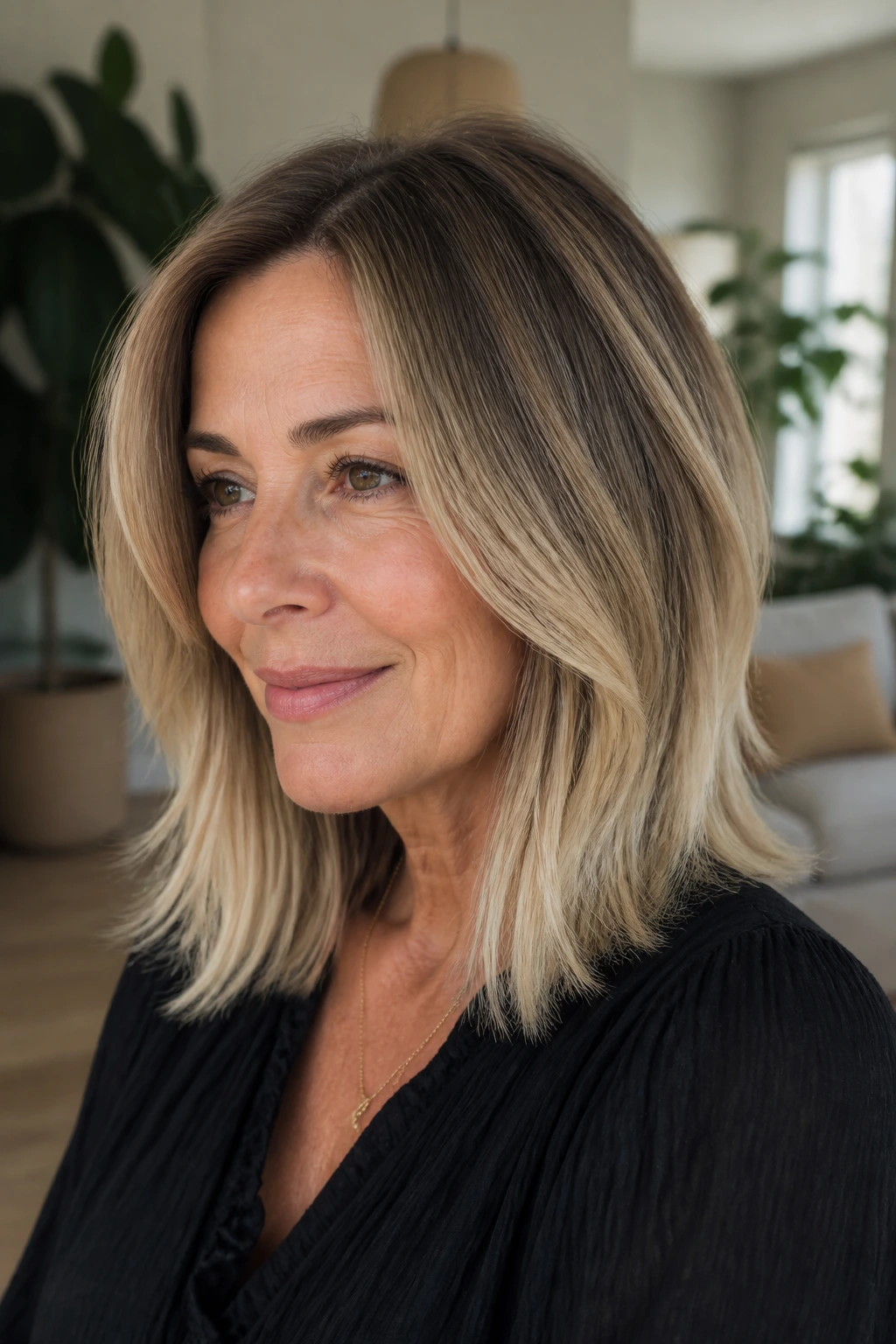
Soft ombré is the blonde for anyone who wants a long grow-out window without a visible line. The root stays deeper, the mids transition gradually, and the ends carry the lightest blonde. On mid-length hair, that gradient gives the cut a little drama without extra maintenance.
Why the Fade Matters
A hard line between root and blonde can look blunt, especially on mature hair where texture and density may already be changing. Soft ombré avoids that by fading the color slowly. You get brightness, but it arrives in stages, which is easier on both the eye and the hair shaft.
This look benefits from layers around the face and toward the ends. If the cut is too blunt, the ombré can seem like a color block. With movement, it reads as soft and expensive. I know that word gets overused, but here it’s really about the hair looking cared for rather than overworked.
Best For
- Women who dislike frequent root touch-ups.
- Hair that’s naturally medium or thick.
- Anyone who likes a longer, flowing finish.
Soft ombré is practical. That’s its charm.
16. White Blonde Tapered Pixie
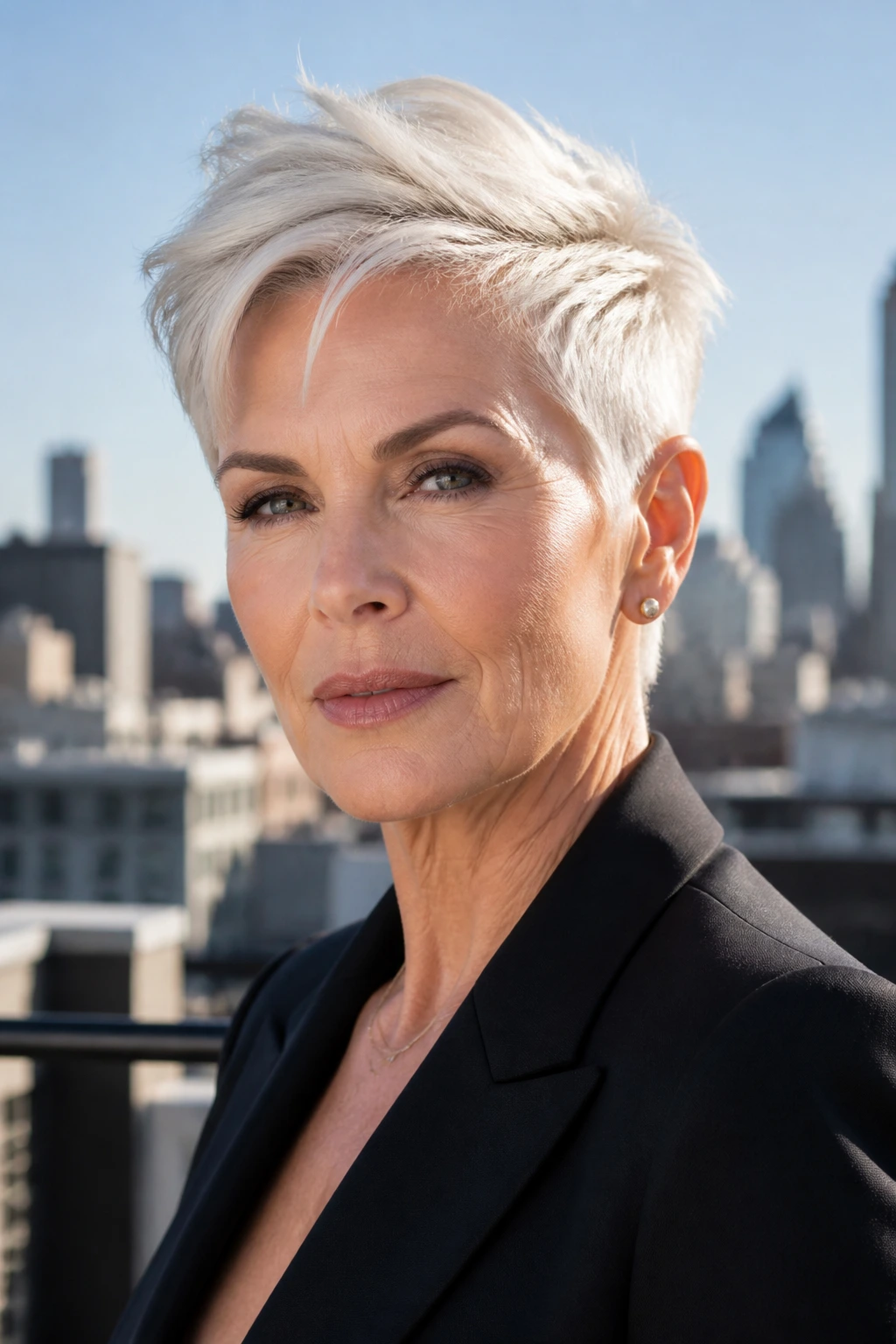
A white blonde tapered pixie is not for the faint of heart. It is clean, bold, and very specific. The taper keeps the sides neat, the top carries the shape, and the pale white-blonde tone makes every line sharper. If you like a strong haircut, this has real presence.
The catch is condition. White blonde asks a lot from the hair, so this works best when the strands are already healthy enough to tolerate lifting and toning. The shape helps a great deal, because a good pixie can make hair look denser than it is. But if the ends are fried, the color will show it.
I like this look on women with good cheekbones, a strong brow, or a taste for simple clothes and clean lines. It can look chic with almost no effort once the cut is right. A tiny bit of styling cream is usually enough.
This is a statement blonde. Not a soft whisper.
17. Warm Biscuit Curls
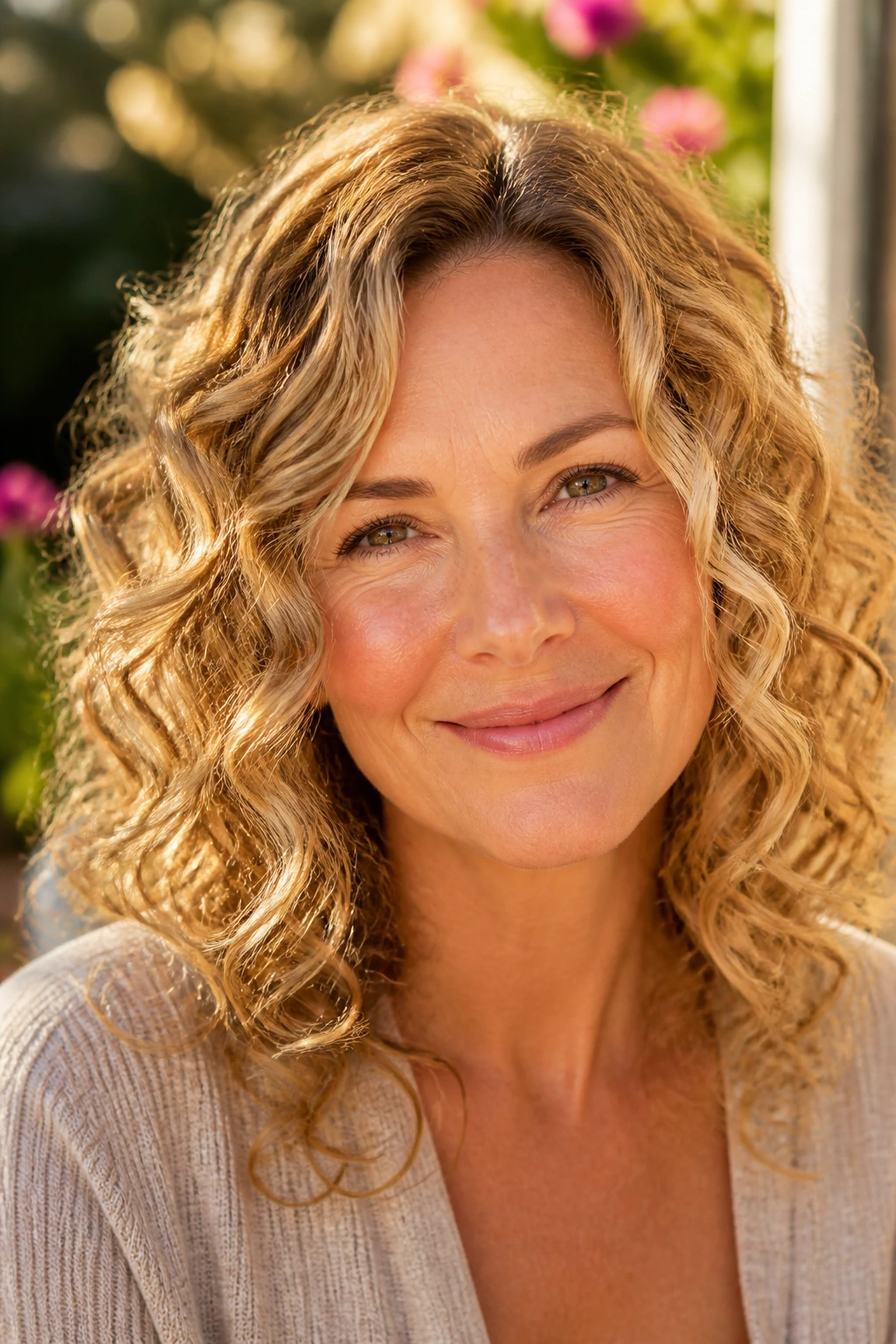
Warm biscuit blonde on curls has a softness that cooler blondes often miss. Curls need dimension to keep their shape visible, and a warm biscuit tone does that job without making the hair look flat or dusty. The color sits in the golden-beige zone, which helps the curl pattern stay readable.
The curl itself matters just as much as the tone. Painted highlights should follow the curve of the curl, not sit in straight lines across it. That way the blonde catches the bends and makes the pattern pop. If the light pieces are too chunky, curls can lose their definition. Too fine, and the color disappears.
This is a kind shade for mature hair that still has spring but maybe not the same thickness it used to. Warm tones make curls look lively. A diffuser, a curl cream, and a little scrunching are usually enough. Skip heavy purple shampoo unless brass is a real problem.
Warm biscuit curls feel relaxed and polished at the same time. Hard to beat that.
18. Smoky Ash Blonde
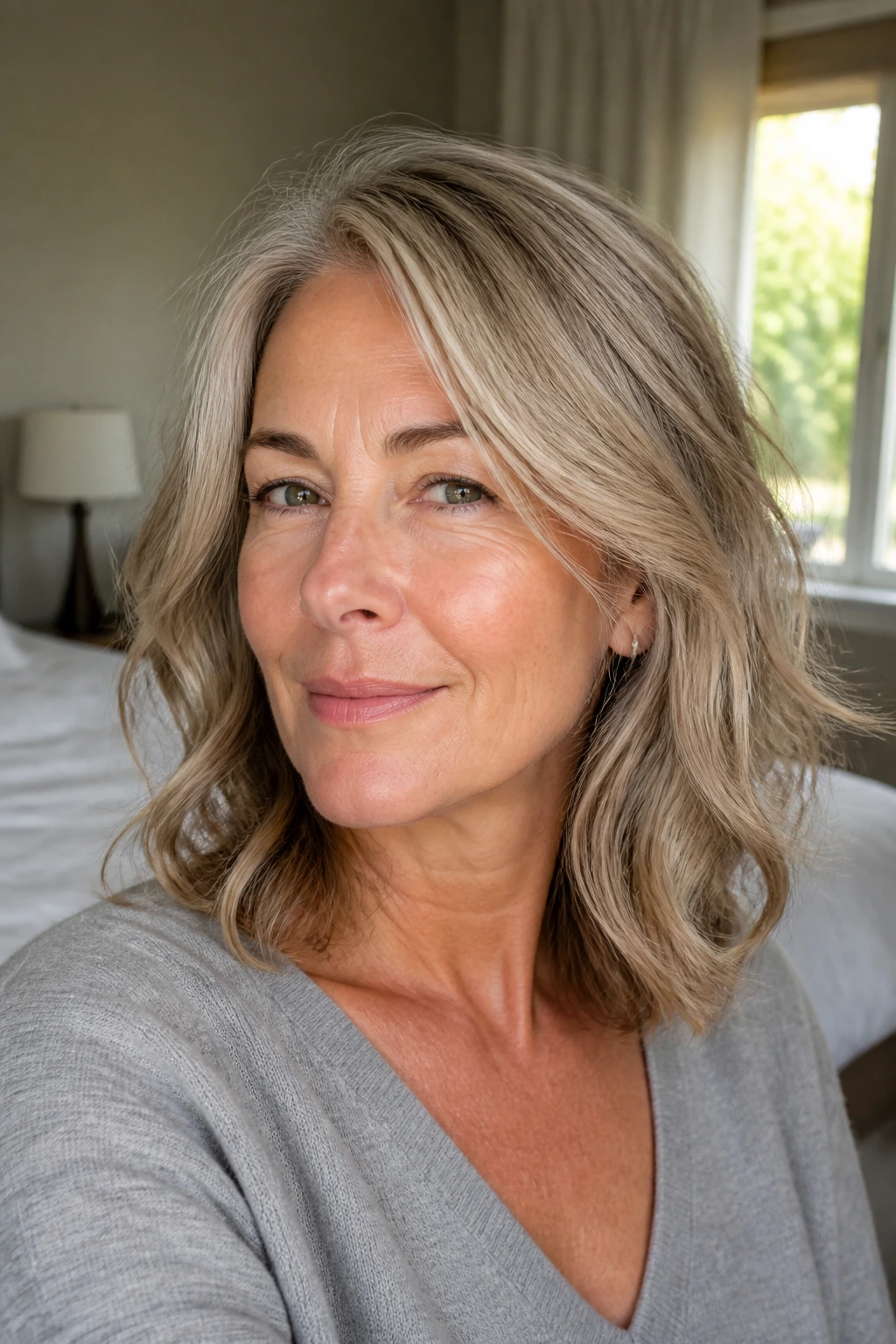
Smoky ash blonde is what you choose when warmth keeps sneaking into your color no matter what you do. The smoky finish softens yellow and orange tones, and the ash keeps the blonde from tipping brassy as it fades. On mature hair, that control can be worth its weight in gold.
Why Ash Needs Balance
Pure ash can look flat or even a little gray if the hair is too porous or too pale. That’s why the “smoky” part matters. It means the tone still has some depth under the coolness. You get a blonde that feels chic instead of chalky.
This look suits sleek blowouts, soft bends, and shoulder-length layers. It can make skin with cool or pink undertones look brighter, especially when the roots stay a touch deeper. If your hair tends to grab warmth fast, ask for a gloss plan, not a one-time toner. That matters.
What to Watch
- Overusing purple shampoo.
- Lifting the hair too pale before toning.
- Letting the ends get dry and fuzzy.
Smoky ash blonde is precise. When it’s done well, it looks calm in the best way.
19. Sunlit Feathered Layers
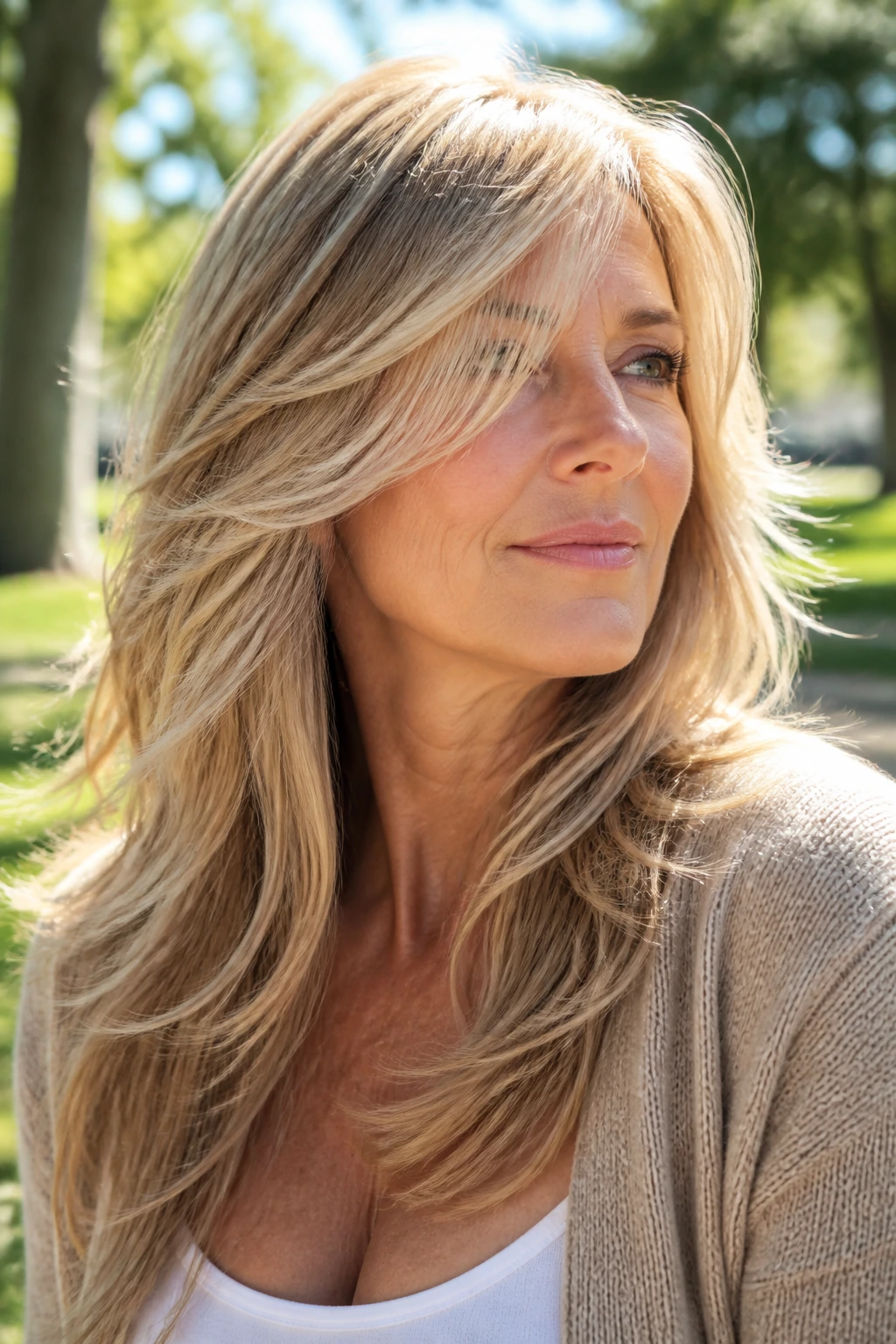
Sunlit feathered layers are the blonde version of a good linen shirt: easy, light, and built around movement. The layers are cut to feather away from the face and around the ends, while the blonde placement focuses on where the light would naturally hit. It feels relaxed, but there’s work underneath.
This style works beautifully on medium to longer hair that still has some fullness. The feathering keeps the length from sitting like one heavy block, and the highlights stop the cut from disappearing into itself. If the pieces around the face are a little brighter, the whole style wakes up.
A side part or soft off-center part works well here. So does a blowout with a round brush, because the layers show their shape when the ends turn slightly away from the neck. If the hair is very fine, keep the feathering controlled; too much layering can erase density.
Sunlit feathered layers are reliable without being dull. I like that.
20. Cream Soda Wedge
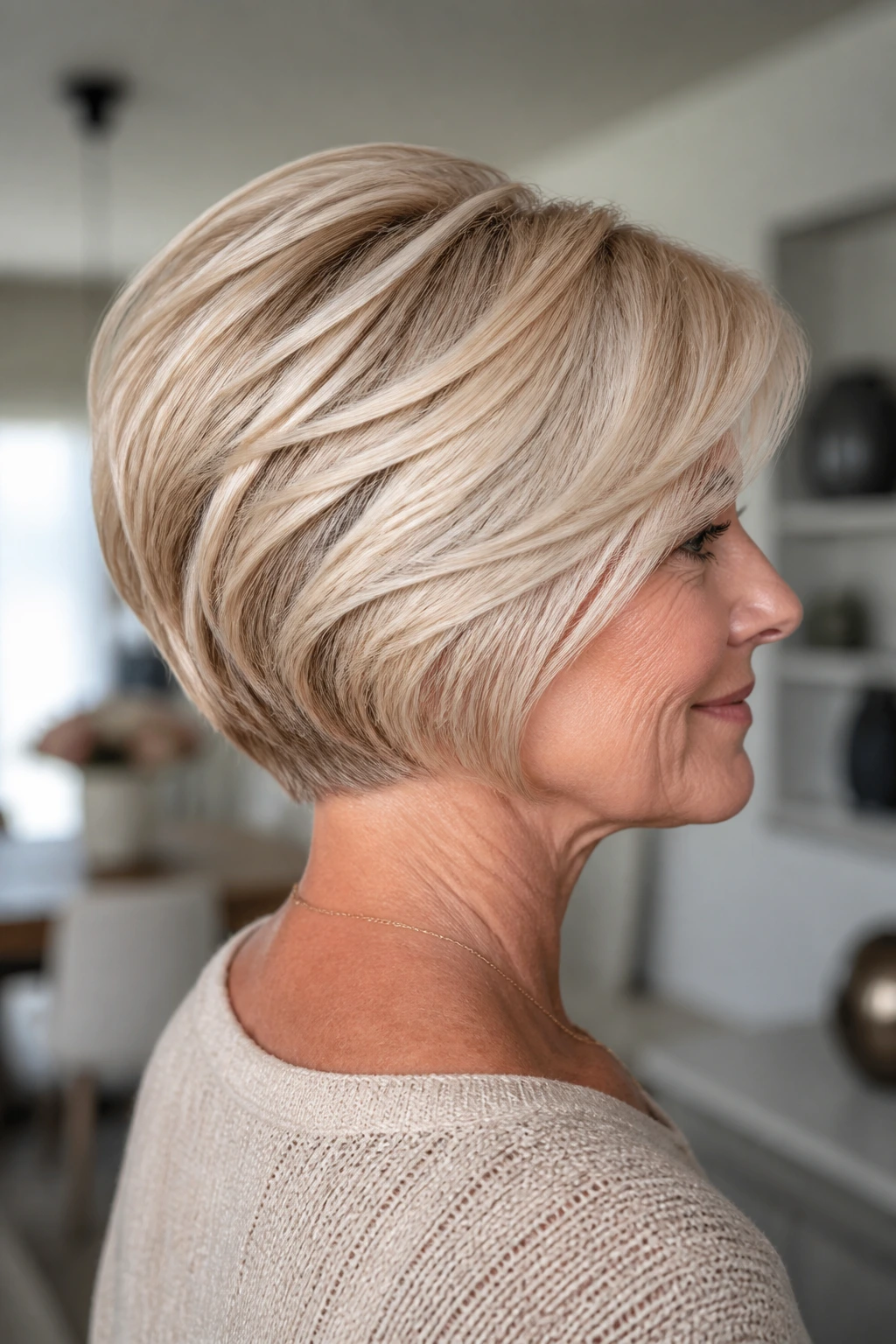
Cream soda wedge hair has a little retro shape, but it can look surprisingly fresh when the color is handled with care. The wedge cut gives the back a rounded lift, which is useful if hair has started to lie flatter at the crown. Creamy blonde highlights keep the shape light instead of helmet-like.
The trick here is to keep the color soft and dimensional. A solid light blonde can make the wedge feel dated. Creamy ribbons, especially around the top and side panels, give it movement. You want a round silhouette with enough brightness to lift the face, not a block of pale color.
This cut works best on straight to slightly wavy hair, and it’s especially kind to finer textures because the shape itself adds body. A smooth blow-dry and a little root-lift spray are usually enough. The look is tidy, but not stiff.
Cream soda wedge sounds playful. The hair should be, too.
21. Dusty Champagne Curls
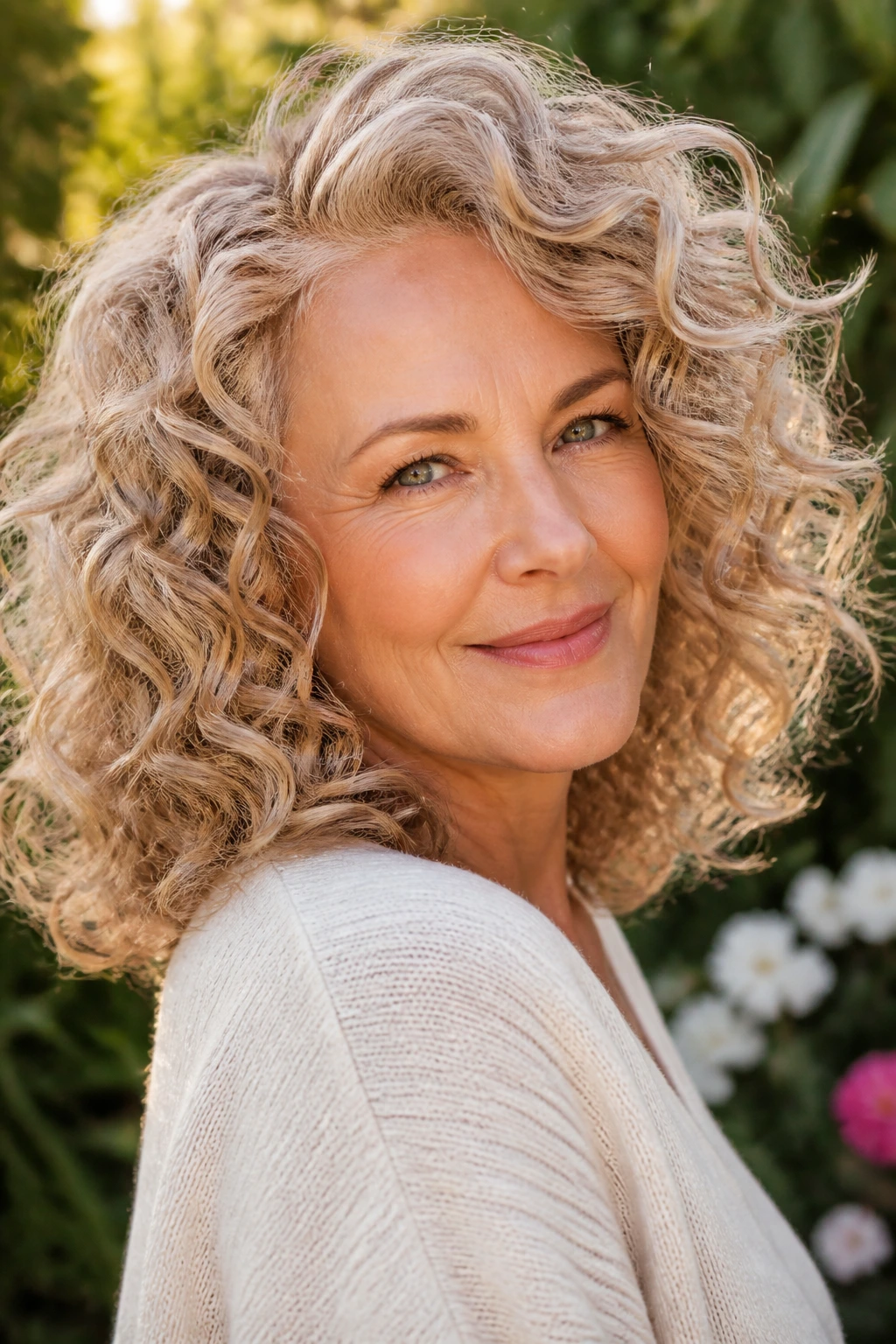
Dusty champagne curls are one of the prettiest ways to wear blonde when you want softness with a little shimmer. The dusty part keeps the color from going too bright or too yellow, and the champagne note gives the curls a reflective finish. On mature hair, that mix can look graceful without feeling sleepy.
Why It Flatters Curly Texture
Curls need contrast to show shape. If the blonde is too flat, the curl pattern can blur into itself. Dusty champagne gives enough tonal variation to keep each bend visible. It also sits well beside silver strands if your curls are changing color naturally.
The best version of this look uses light pieces around the face and through the outer curl layer, not every single strand. That keeps the curls springy and avoids that over-lightened, dry look. A gloss and a curl cream are the finishing pair I’d trust here.
Final Styling Note
Keep the curl pattern soft and separated. A little frizz is fine. What you want to avoid is a stiff, shellacked finish that turns all the lovely color into one hard shape.
Why Blonde Looks Behave Differently on Mature Hair
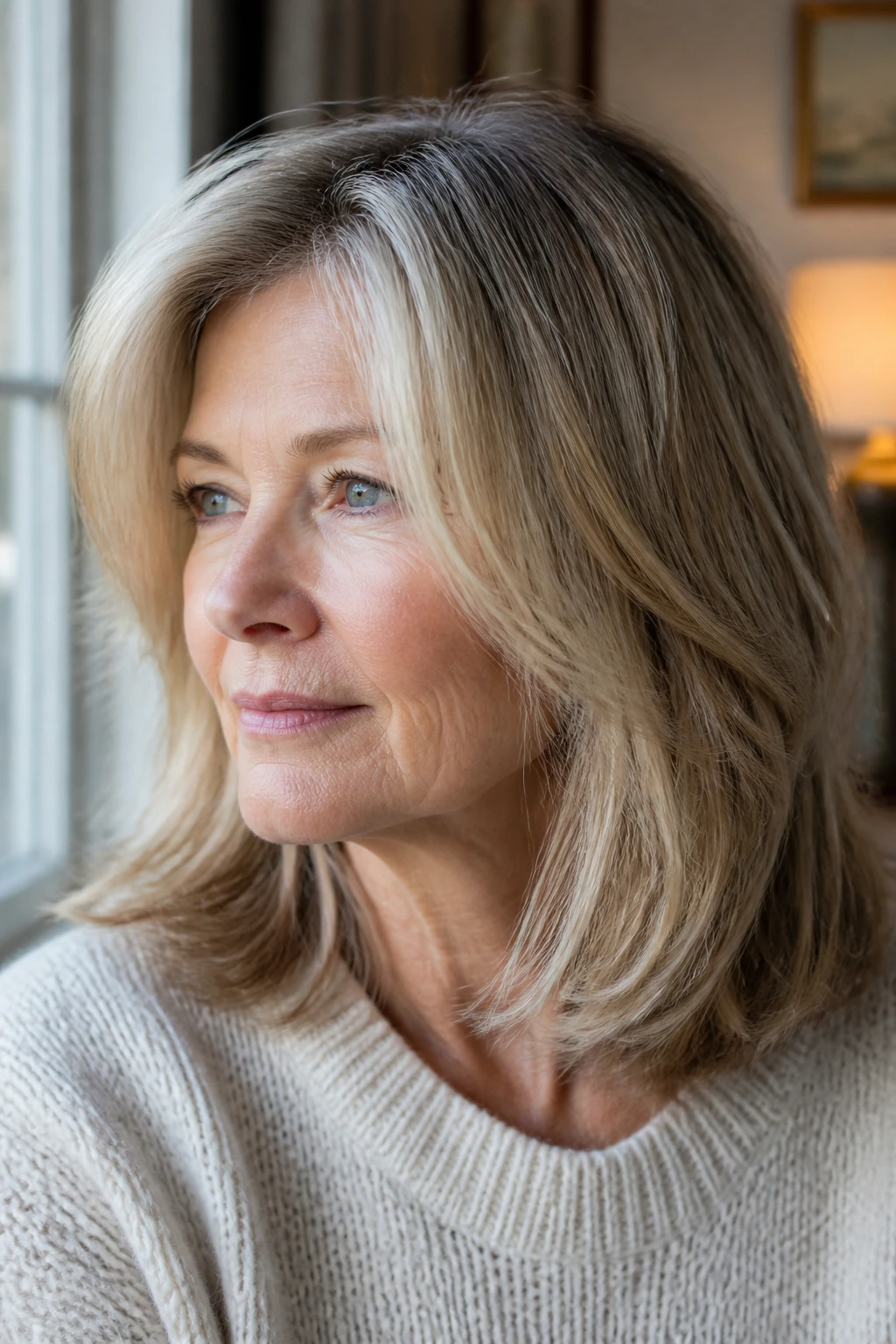
Hair changes with time, and blonde exposes those changes faster than darker color does. That’s not a flaw in blonde. It just means the cut, the tone, and the placement have to do more of the work. Finer hair reflects light differently than dense hair. Gray hair grabs toner in a different way than pigmented hair. Porous ends can go dull or grab too much ash. All of that matters.
The smartest blonde usually keeps a little depth somewhere. At the root. Underneath the top layer. Around the nape. Somewhere. That depth gives the eye a place to rest and makes the lighter pieces look brighter by comparison. If every strand is lifted to the same level, the hair can look washed out or tired, even if the color is technically “blonde.”
Face framing matters more than people think. A few brighter strands near the temples can do more for the face than blasting the whole head into a pale shade. That’s why balayage, money pieces, and root shadows come up so often in good mature-hair color work. They’re not tricks. They’re placement tools.
The Tools That Make Blonde Color and Styling Easier
You do not need a bathroom shelf full of products. You do need the right ones. A blonde that’s cared for with the wrong shampoo or too much heat usually tells on itself fast.
- Color-safe shampoo: Use it for regular washing so the blonde doesn’t fade faster than the cut can hold it.
- Purple shampoo: Keep this for cool blondes, silver blends, and brass control. A little goes a long way.
- Demi-permanent gloss or toner: Handy for refreshing beige, champagne, ash, or pearl tones between salon visits.
- Heat protectant spray: Non-negotiable if you blow-dry or iron the hair. Blonde ends show heat damage early.
- Round brush: Helps bobs, lobs, and feathered layers hold movement instead of hanging limp.
- 1-inch curling iron or flat iron: Good for soft bends that show off dimension.
- Root-lift mousse or spray: Useful when the crown needs volume and the color is brighter through the ends.
- Wide-tooth comb: Easier on fragile, lightened hair than rough brushing.
- Microfiber towel: Cuts down on roughness when the hair is wet.
Picking the Right Blonde Tone, Lift, and Placement
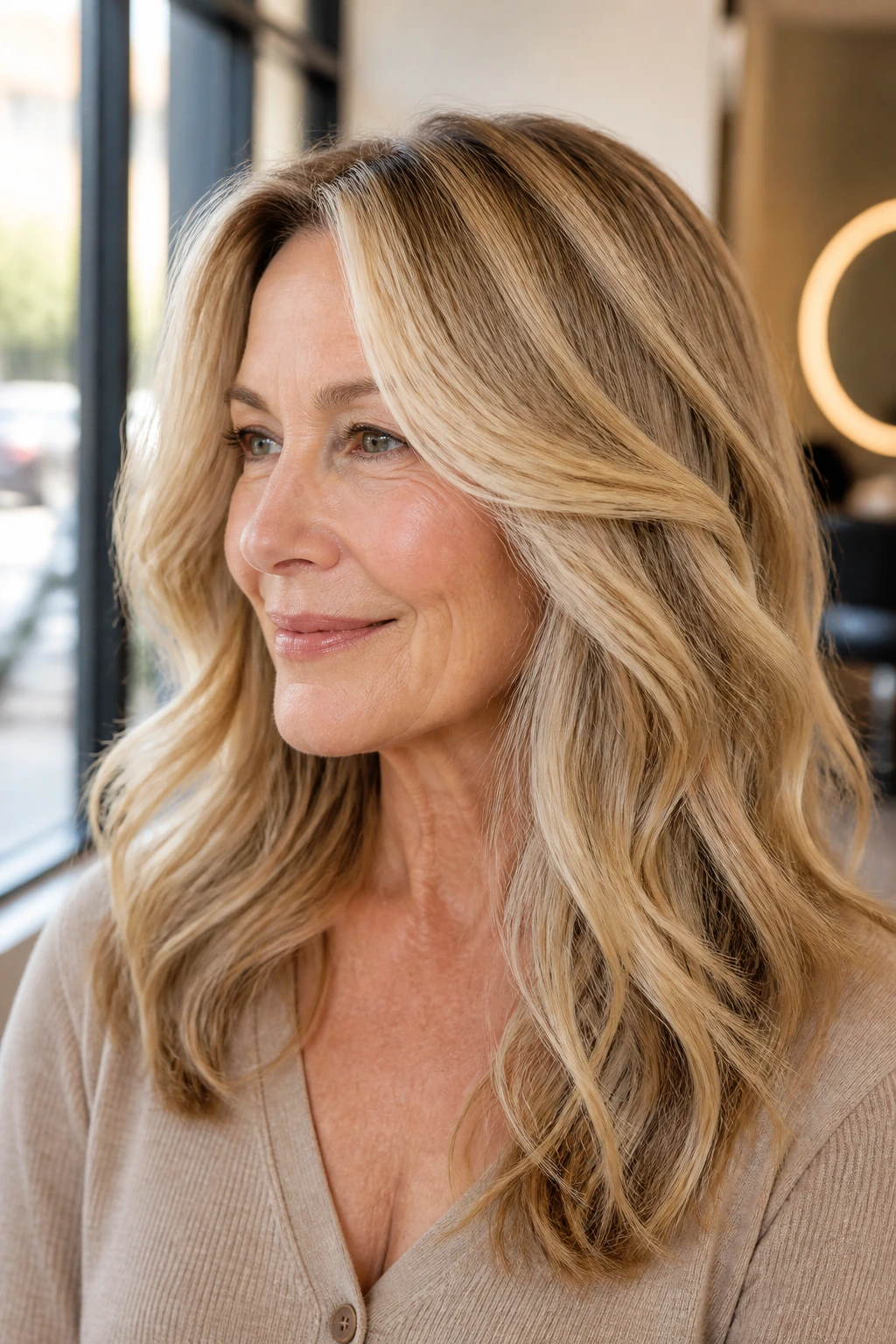
If you stand in a salon and say “blonde,” you can end up with almost anything. That is not helpful. Ask in levels and tones instead. A level 7 is dark blonde/light brown territory. Level 8 is medium blonde. Level 9 is light blonde. Level 10 is very pale blonde. That language gives your stylist something real to work with.
For a softer, age-friendly result, beige, champagne, honey, pearl, and mushroom tend to be safer bets than bright yellow or hard white. Beige sits in the center and does a lot of smoothing. Champagne is lighter and glossier. Honey brings warmth. Pearl cools things down. Mushroom keeps the base grounded. The shade should follow your skin and your gray pattern, not the other way around.
Placement matters just as much. If your hair is fine, keep the lightest pieces around the face and top layer so the rest of the hair can still look full. If your hair is thick, you can spread the blonde a little more widely, but I’d still leave some depth underneath. That’s how the shape keeps breathing.
For at-home work, demi-permanent glosses and toners are kinder than permanent color when you only need tone correction. If you want a big lift, bleach or high-lift color may be necessary, but there is no prize for pushing hair farther than it wants to go. Dry blonde is not flattering blonde.
How to Wear These Shades Day to Day
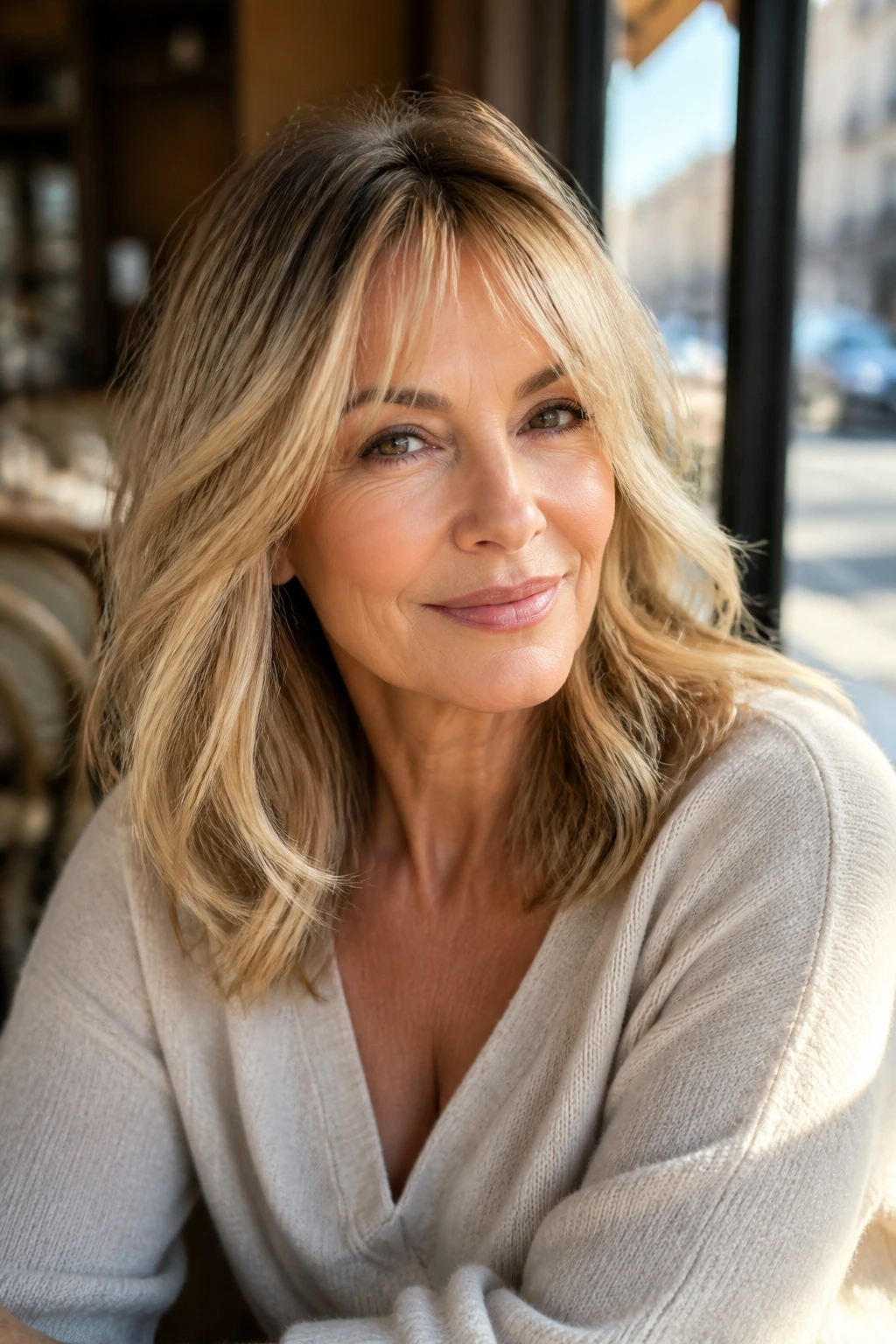
Presentation: Put the brightest pieces where the light naturally lands — around the temples, through the fringe, and across the top layer. That is where blonde looks lifted instead of random.
Accompaniments: The haircut is part of the color story. Bobs need clean edges, lobs need movement, pixies need texture, and curls need soft placement that follows the shape of the curl rather than fighting it.
Scale: If you want less upkeep, choose root shadow, bronde, or soft ombré. If you want more brightness, ask for face-framing foils, money pieces, or a higher-lift blonde through the top layer only. More blonde is not automatically better.
Finish: A bend, wave, or round-brush blowout shows dimension far better than pin-straight hair. Straight styles can work, but they need clean, glossy ends or the color can look a little thin.
Extra Tips and Style Boosters
Tone Booster: A beige or pearl gloss every four to eight weeks keeps the blonde from going dull. Use purple shampoo only when the tone turns brassy, not on autopilot.
Dimension Booster: Ask for one to three lowlight shades if your blonde looks flat. A little depth near the root or underneath the top layer makes the lighter pieces read brighter.
Face-Framing Trick: Keep the lightest pieces around the cheekbone or just below the brow line. Brightness too low can drag the face down; too high can look stripey.
Style Booster: A root-lift mousse at the crown and a round brush through the top section can fix a surprising amount. Hair doesn’t need a lot of volume — it needs the right volume in the right place.
Make-It-Yours: If your hair is curly, place the blonde on the surface of the curl pattern. If it’s straight, use finer ribbons so the color moves instead of sitting in thick blocks.
Common Mistakes to Avoid
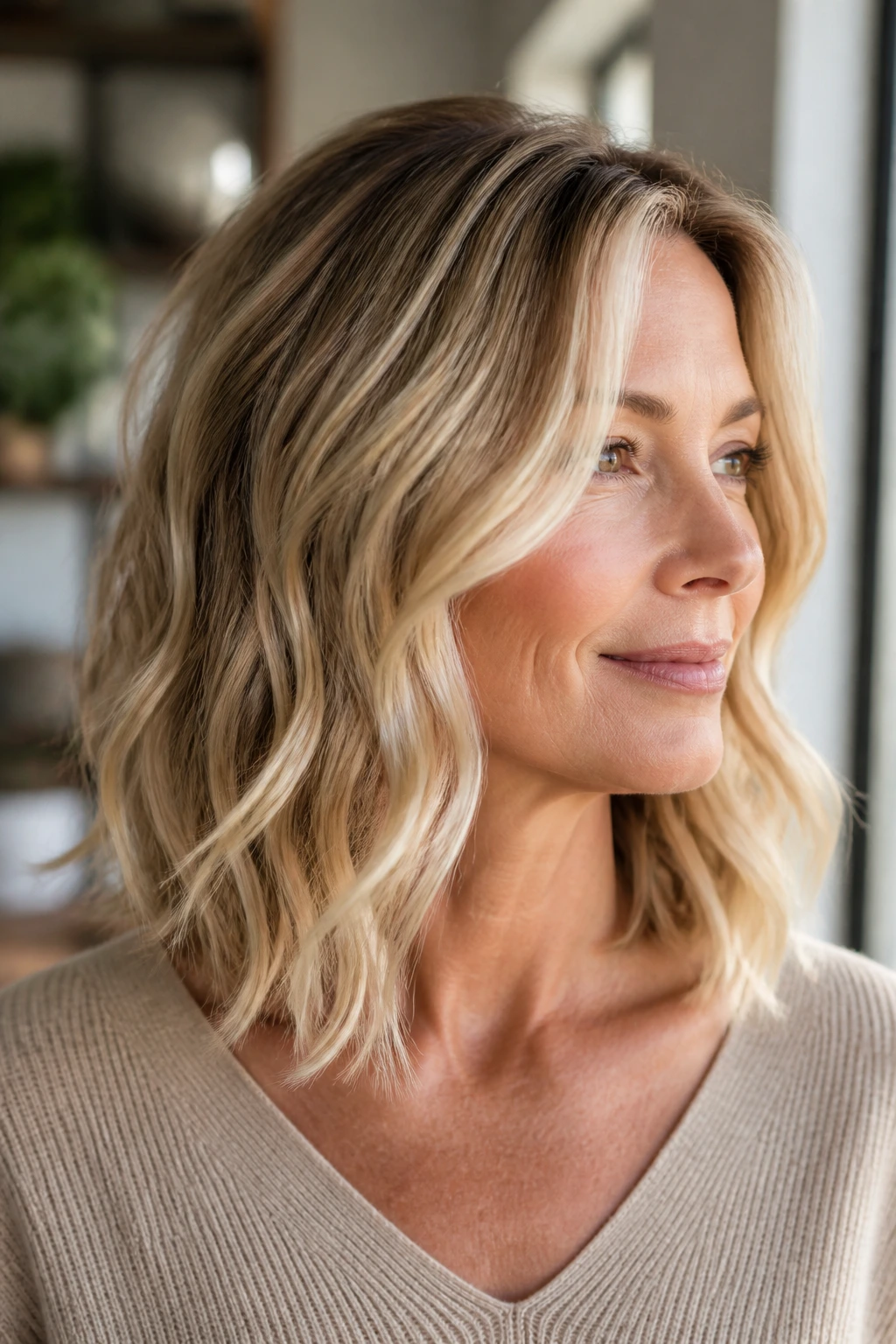
- Going too light, too fast: Pale blonde can be gorgeous, but if the hair is already dry or fragile, it may look see-through at the ends. Start with a softer lift and keep some depth.
- Ignoring undertone: A yellow blonde can clash with cooler skin, while a smoky ash blonde can look muddy on warm complexions. Match the tone to the face, not a photo on a screen.
- Forgetting the haircut: Blonde without shape can look flat and unfinished. A good bob, lob, pixie, or layered cut gives the color structure to live in.
- Overusing purple shampoo: Too much can turn beige or champagne blonde dull and grayish. Use it like a toner, not like a daily cleanser.
- Skipping gloss refreshes: Lightened hair fades. If the tone goes dry and rough-looking, the blonde can start reading older than it is. A gloss helps the finish stay clean.
- Leaving brows and makeup out of the picture: Very pale blonde can make brows look weaker. Sometimes a slightly warmer lip or a more defined brow balances the whole look.
Variations and Adaptations to Try
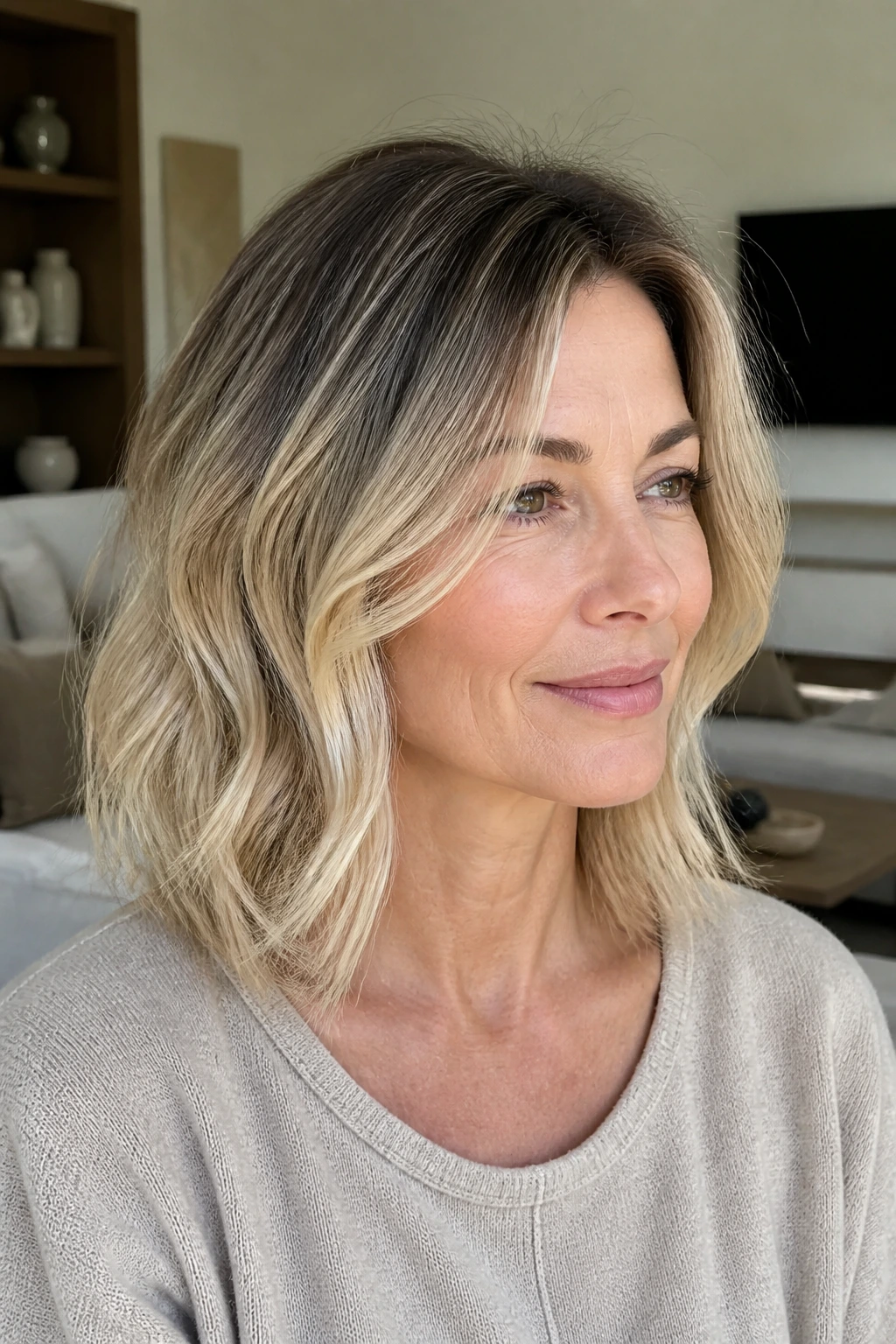
The Low-Maintenance Root Melt: Keep the root one to two levels deeper than the mids and ends. This works well if you hate obvious regrowth and want a blonde that ages gracefully between appointments.
The Gray-Blend Edit: Let silver strands live inside the blonde instead of covering them completely. Use beige, sandy, or pearl toning so the gray reads as texture, not a problem.
The Warm Glow Edit: Push the tone toward honey, buttery beige, or golden champagne if your skin looks better in warm metals and soft cream colors. This version is kinder to peach, olive, and golden undertones.
The Cool Glass Edit: Choose ash, mushroom, or smoky pearl if brass shows up fast in your hair or your complexion prefers cooler tones. Keep the finish glossy so the cool shade doesn’t go flat.
The Short-Cut Edit: These blondes can look especially sharp on bobs, crops, and pixies. Short hair makes the placement more visible, so the brightness should be controlled and intentional.
The Curly-Texture Edit: Put the brightest pieces on the outer curve of the curl and keep the interior a touch deeper. That keeps curls from looking frizzy or over-lightened.
Keeping Blonde Bright Between Appointments
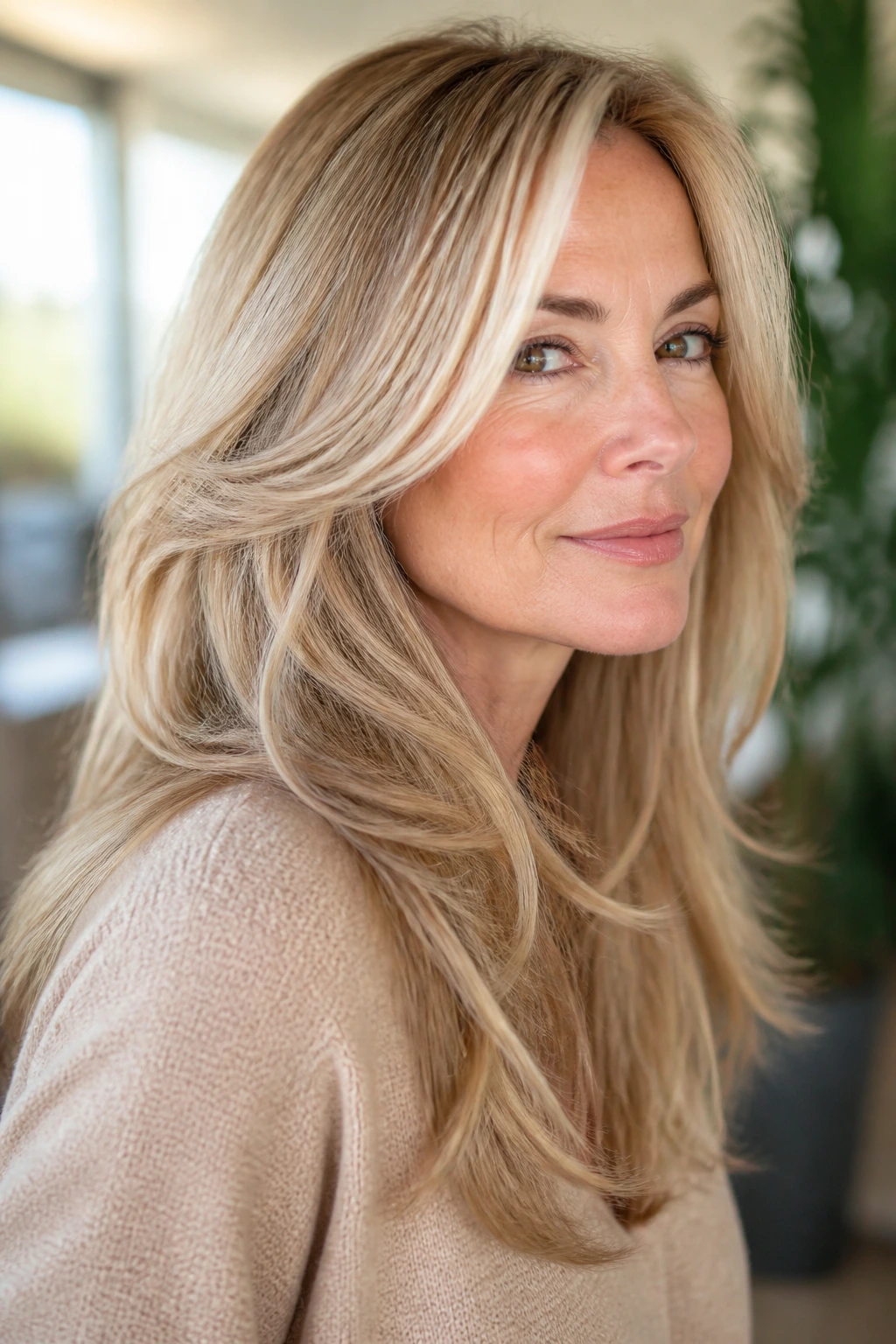
Blonde is high-maintenance only when the care is sloppy. The good news: the routine is straightforward. Most blonde shades need a toner or gloss refresh every four to eight weeks, depending on how porous the hair is and how much warmth sneaks in. Cool blondes usually need the most maintenance. Beige and honey can go longer.
Wash with a color-safe shampoo most of the time, then bring in purple shampoo only when brass starts to show. For many heads, that means once every one to two weeks. Leave it on for a minute or two at first. If the hair goes dull or flat, back off. Purple shampoo is a tool, not a religion.
Heat is the other piece. Use a protectant spray before blow-drying or ironing, and keep hot tools in the moderate range when you can. Very light blonde shows rough ends quickly. A deep-conditioning mask once a week helps keep the cuticle smoother, especially if the hair was lifted more than one level. If you swim or spend a lot of time in strong sun, a hat or UV protection spray makes a difference you can actually see.
Roots depend on the look. A soft balayage, bronde, or ombré might go six to ten weeks before a touch-up. A brighter money piece, platinum pixie, or icy blonde usually needs attention sooner. The point is not to force one schedule on every blonde. The point is to choose a blonde that can live on your schedule.
Frequently Asked Questions
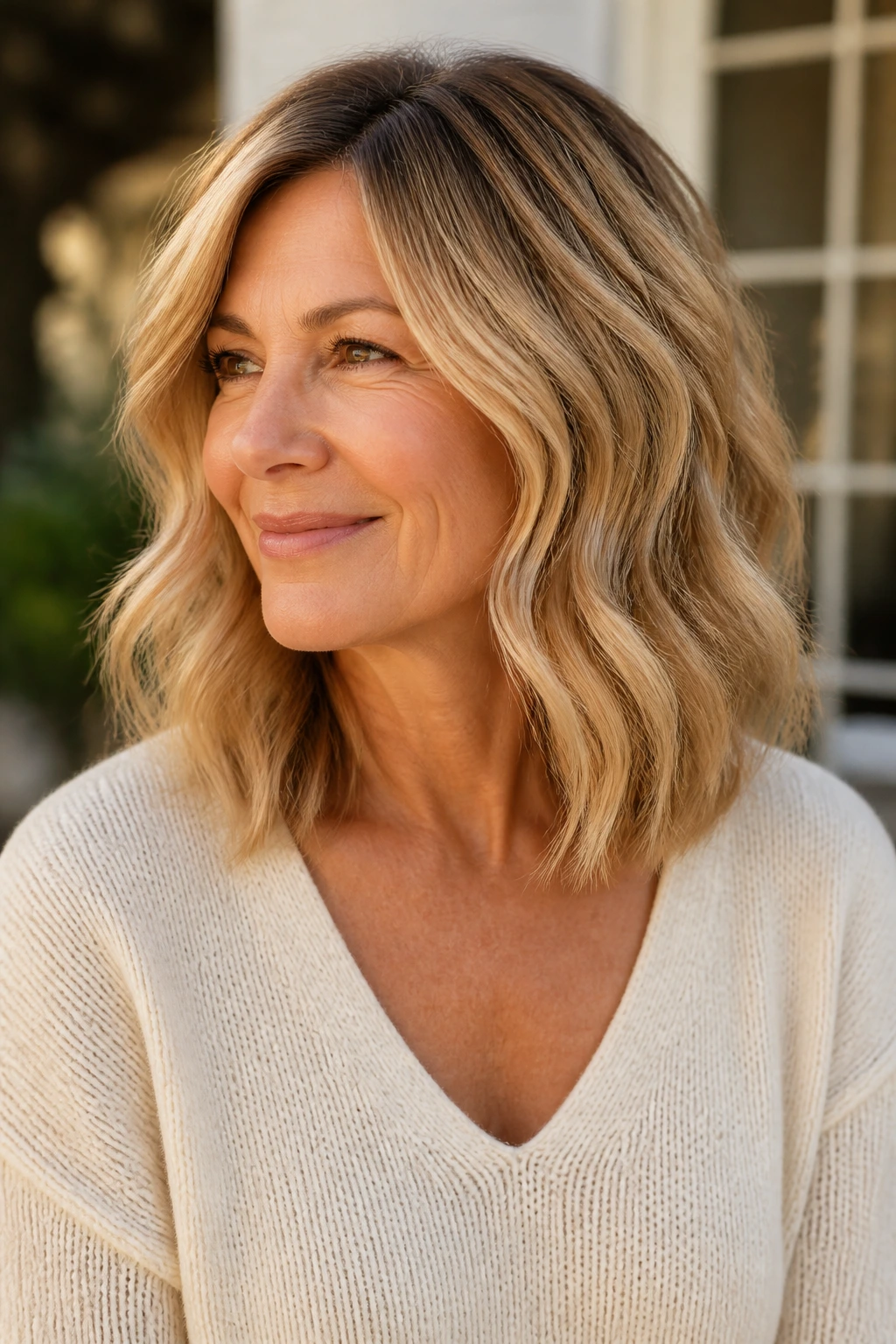
Which blonde shade is most flattering for women over 50?
The safest answer is the one that matches your undertone and your maintenance tolerance. Beige, champagne, honey, and sandy blonde tend to be the easiest to wear because they soften the face and don’t punish grow-out the way an all-over pale blonde can.
Is platinum too harsh after 50?
Not automatically, but it is less forgiving. Platinum works best on healthy hair with a strong cut and regular toning. If the ends are dry or the density is low, a softer pearl or icy beige usually looks cleaner.
Can I blend gray hair instead of covering it completely?
Yes, and in many cases that’s the smarter move. Gray blending with beige, silver, mushroom, or sandy tones lets the silver live inside the color so regrowth looks softer and less obvious.
Will blonde make fine hair look thinner?
It can, if the color is too uniform or too pale from root to tip. Fine hair usually looks fuller with a root shadow, lowlights, and a few brighter pieces instead of one flat blonde level.
How often do I need toner or gloss?
Most blondes benefit from a gloss every four to eight weeks, depending on the shade. Cooler blondes and lighter blondes usually need more frequent toning than beige or honey tones.
Can I go blonde without bleach?
If your hair is already light enough, sometimes yes. A high-lift color or toner can brighten natural dark blonde or light brown hair. Darker hair usually needs some level of lightening to get a true blonde result.
What if my blonde turns brassy fast?
That usually means the hair is porous, the tone is too warm for your starting color, or the purple shampoo is being used at the wrong frequency. A salon gloss with the right toner usually fixes more than a box product does.
Are highlights better than all-over blonde?
For most women over 50, highlights are easier to live with because they keep depth in the hair and let the grow-out look softer. All-over blonde can work, but it asks for more upkeep and more careful toning.
A Softer Finish That Still Has Spark
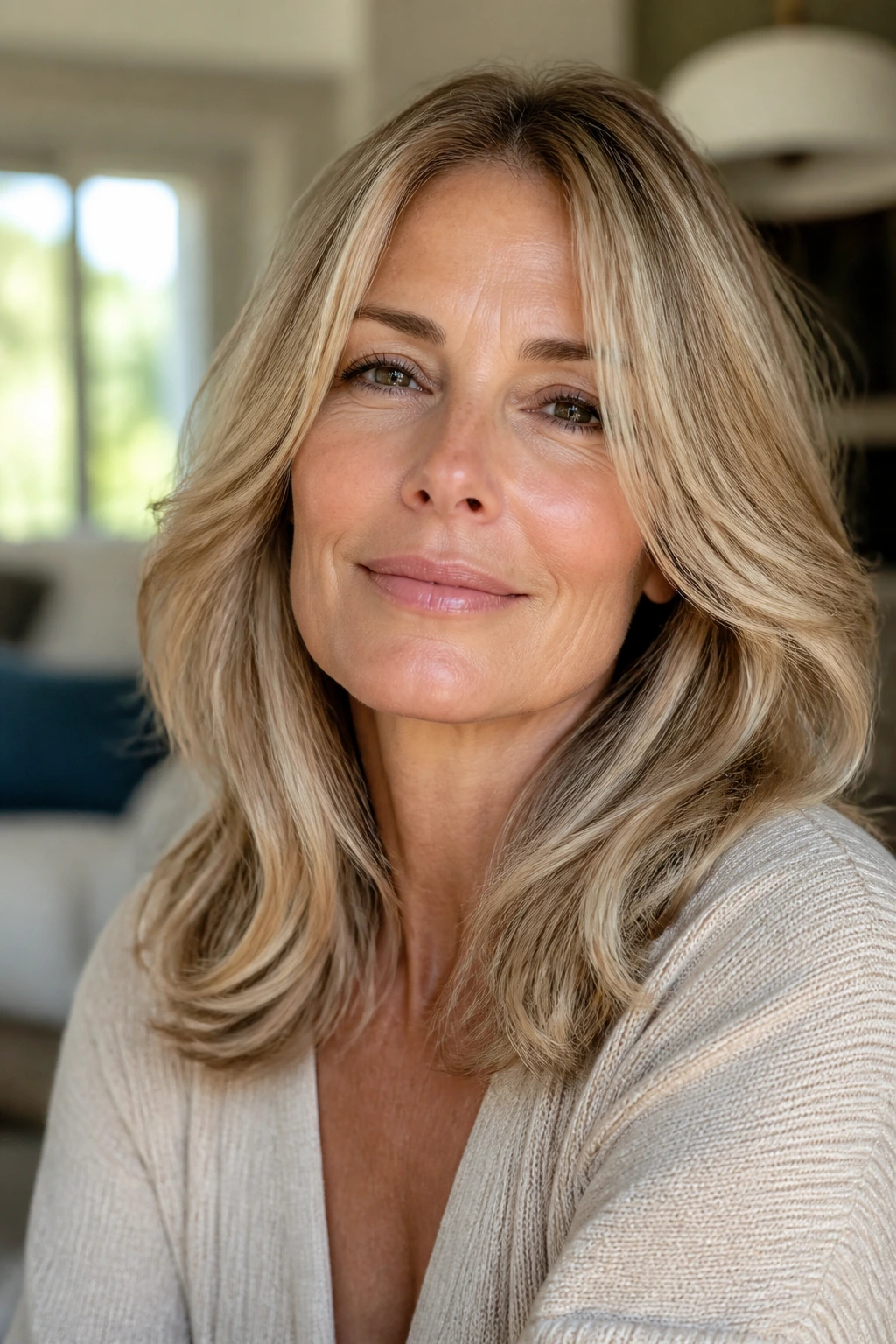
The blondes that age well are usually the ones that know where to stop. A root that stays a little deeper, a face frame that catches the light, and a tone that doesn’t fight your skin can do more than a heavy all-over lightening job ever will. That’s why beige bobs, champagne layers, honey waves, and smoky brondes keep showing up in good salons — they make the hair look like it belongs to the person wearing it.
If you’re heading to the chair, bring a real idea of your maintenance tolerance with you. Not a fantasy. Not a photo with three hours of styling and perfect lighting. Bring the version of blonde you can live with, because the right one should look good on the day you leave the salon and still look like itself when the roots start to show.
