



The best hairstyles for oval faces don’t spend their energy fixing the face shape. They spend it deciding what kind of mood you want to wear: crisp and tailored, soft and airy, sharp enough to make your cheekbones look carved, or loose enough to feel like you didn’t overthink a thing.
That’s the useful part of oval proportions. The forehead and jaw are usually close in width, the cheekbones sit near the widest point, and the face length reads longer than it is wide. So a cut that would fight another face shape can sit here and just… work. A blunt bob can feel elegant instead of severe. A shag can look modern instead of messy. Long layers can stay clean instead of dragging the face downward.
Still, the details matter. A half-inch can change the whole vibe. A bob that lands a little too low can blur the jawline. Bangs cut too short can stretch the face visually. Too much height at the crown can make a long oval feel longer. The hair itself is doing the talking, and the loudest words are usually length, parting, and where the movement starts.
Why Oval-Face Haircuts Give You More Room to Play
- Length is easier to balance: An oval face already has balanced proportions, so you can wear a chin-length bob, a collarbone lob, or waist-length hair without the cut fighting your features.
- Bangs are less risky: Curtain bangs, side-swept fringe, bottleneck bangs, and even a clean blunt fringe can all work here when the lengths are placed with intent.
- Volume can move around: You can put lift at the roots, through the sides, or at the ends depending on whether you want a sharper or softer silhouette.
- Texture matters more than “rules”: A wavy lob, a straight blunt bob, and a curly shag all read differently on an oval face, which gives you room to choose based on hair texture, not just face shape.
- Short cuts don’t feel as harsh: Pixies, French bobs, and cropped crops can look balanced because the face doesn’t need extra length to “compensate.”
- Parting changes the whole story: A center part, a deep side part, and a barely-off-center part create three different moods on the same cut.
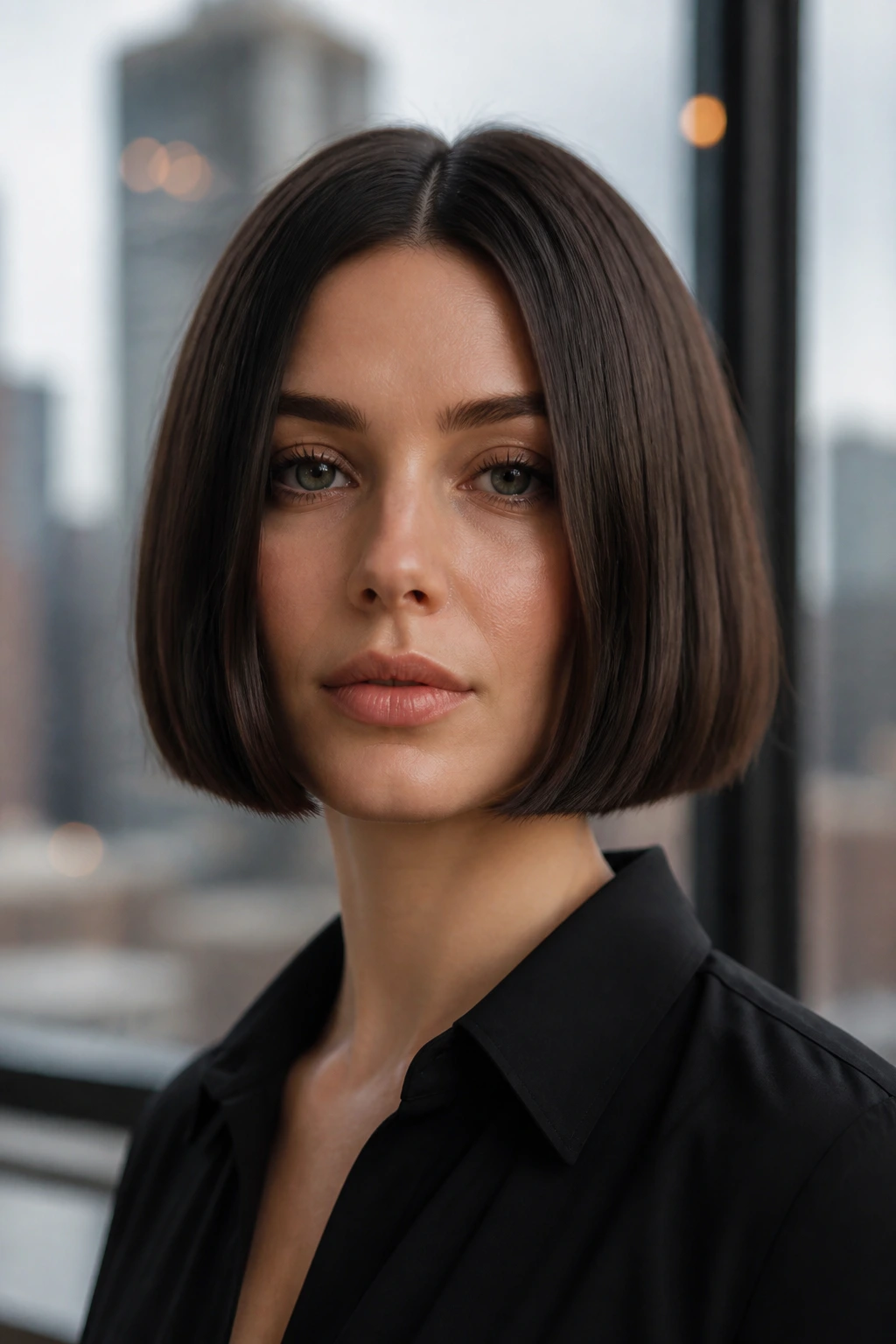
1. Chin-Grazing Blunt Bob with a Middle Part
A blunt bob that lands right at the chin is one of those cuts that looks cleaner in real life than it does in a photo. The line matters. If it sits too low, the shape softens too much; if it hits right at the jaw or just under it, the cut gives an oval face a crisp edge without making the face look long.
Why It Flatters the Shape
The straight bottom line puts emphasis on the jaw instead of letting the eye drift straight down. On an oval face, that creates a little frame around the lower half of the face, which is useful if your features feel soft and you want them to read sharper. Keep the middle part tidy and the ends blunt. No wispy thinning at the hem unless your hair is thick and puff-prone.
A chin-length bob is also one of the easiest ways to make fine hair look denser. The hair has less length to drag it down, so the ends feel full instead of stringy. If your hair is wavy, blow-dry it with a paddle brush and tuck the front pieces behind your ears once it cools. That tiny move gives the cut a deliberate finish.
Best for: Straight to slightly wavy hair, especially if you want structure.
Styling note: Flat iron the last inch of the ends only if they bend outward too much. That’s often enough.
2. Collarbone Lob with Soft, Loose Waves
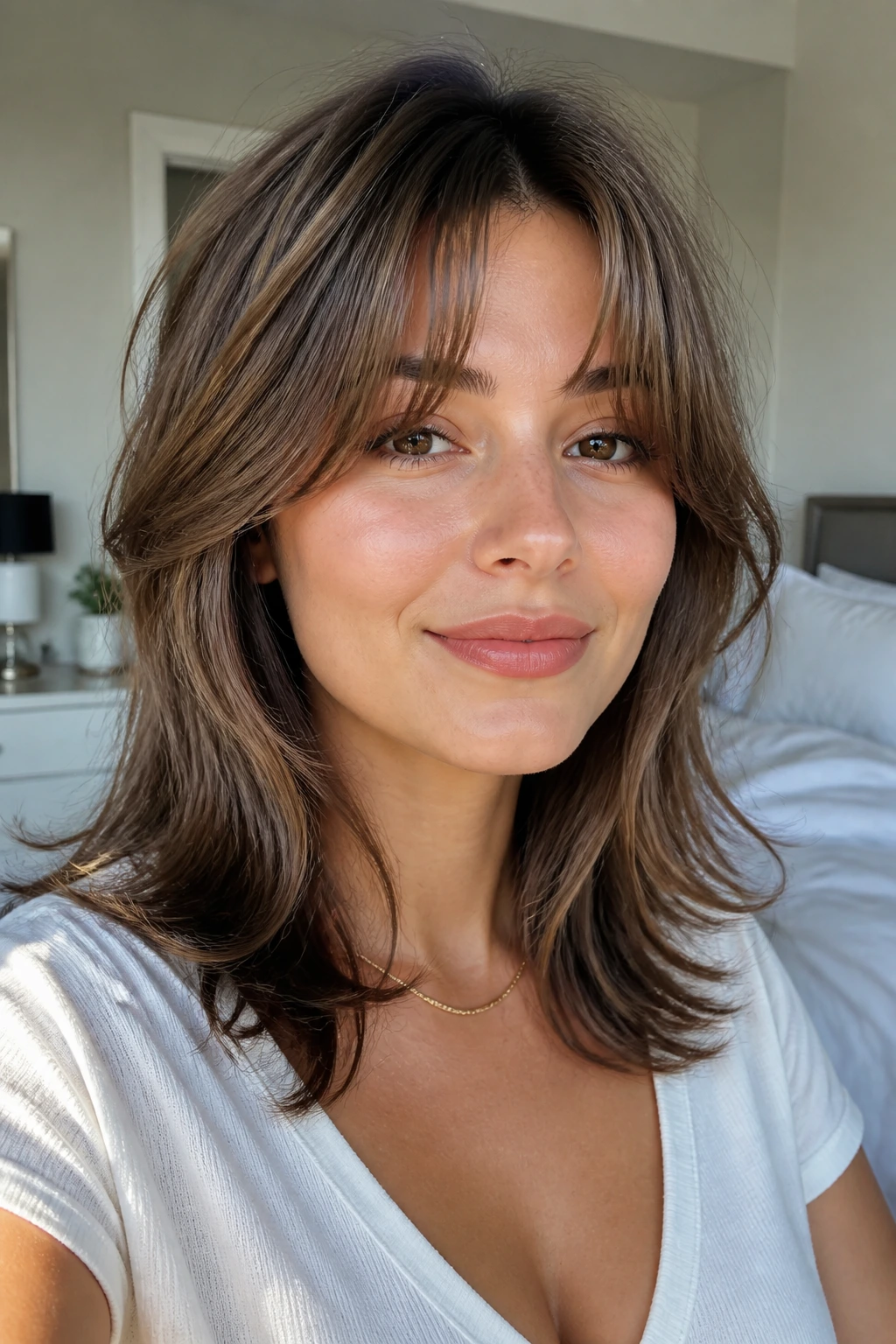
A collarbone lob is the safe choice for people who say they “want to keep the length” but also want something that feels lighter. On an oval face, the cut sits in that sweet spot where it still swings, still moves, and still gives you room to curl or wave it without the ends getting bulky.
The little trick is where the wave starts. If you begin the bend too high, the hair balloons around the cheekbones and can make the face feel wider than it is. Start the wave at mid-shaft or lower, keep the ends soft, and let the collarbone do the work of catching the shape. That landing point is the whole reason this cut keeps showing up in salons.
It’s also forgiving on days when you barely style it. Air-dry with a little mousse, twist a few sections while damp, and let the lob fall where it wants. The shape still reads on an oval face even when it’s a bit imperfect.
3. Long Layers with a Center Part
Compared with a blunt cut, long layers are less about the outline and more about movement. On an oval face, that makes them a good choice when you want softness without losing length. The key is to keep the shortest layers below the cheekbone or around the chin, not right up near the eyes where they can make the face look top-heavy.
Long layers are also a good answer if your hair is thick and you hate the triangle effect. The layers remove some of the bulk from the lower half, so the ends don’t form a curtain that overwhelms the face. If your hair is fine, keep the layering subtle. Too much slicing can leave the hair looking see-through when it’s worn down.
What Makes Them Work
The center part keeps the cut calm and symmetrical. That symmetry is useful on an oval face because you can add drama with texture instead of with shape. A few bends through the mid-lengths, a light blowout at the front, and you’ve got a style that looks polished without trying too hard.
4. Curtain Bangs with Airy Mid-Length Layers
Want bangs without signing up for a full fringe every single morning? Curtain bangs are the move. They open the face instead of boxing it in, and on an oval face they can shorten a longer forehead just enough to make the proportions feel even more finished.
The best curtain bangs don’t start as tiny little baby pieces. They should fall from around the brow and sweep down toward the cheekbones, with the shortest point near the bridge of the nose or just above the brows. That little angle matters. If they’re cut too short, the whole effect turns blunt. If they’re too long and heavy, they disappear into the rest of the haircut.
Pair them with mid-length layers that move away from the face, not toward it. You want the bang to open the face while the layers keep the rest of the shape light. Use a round brush or Velcro rollers for a few minutes at the front, and the fringe will sit with a soft bend instead of a stiff curl.
5. Textured Shag with Cheekbone Lift
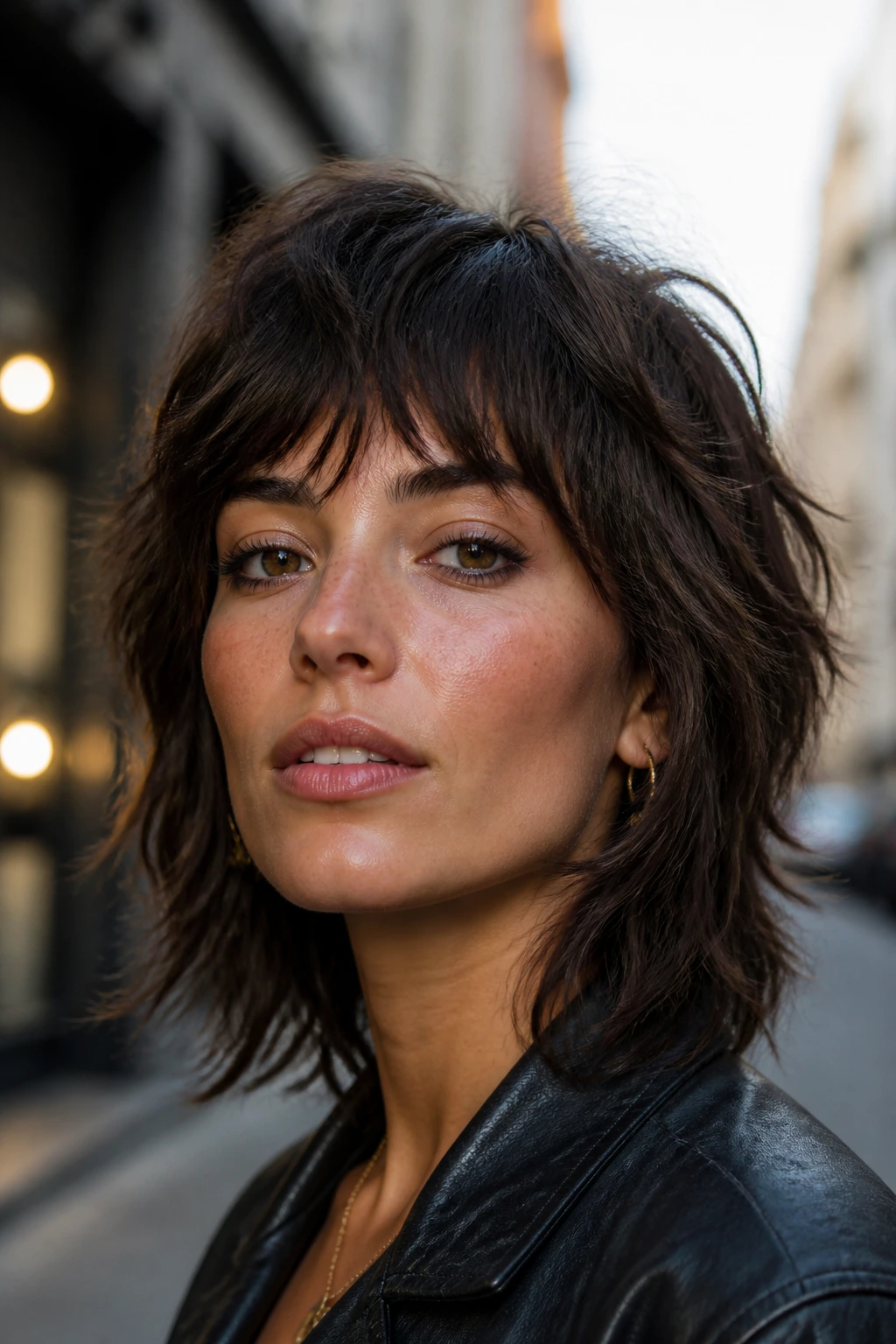
A shag is the haircut version of saying, “I’d like some shape, but I don’t want the shape to look too polite.” On an oval face, that attitude works. The choppy layers break up the vertical line, and the face suddenly feels more lively, especially if your hair tends to lie flat.
The most useful part is the lift around the cheekbones. That’s where the cut earns its keep. Shorter layers near the crown add volume, while the longer pieces around the perimeter keep the style from puffing out like a triangle. If your hair is wavy, this cut can be a gift. Scrunch in mousse, rough-dry it a little, and let the texture do half the work.
A shag does ask for a bit of commitment. Not much. Just enough product to keep the layers separated. If you like clean, glossy hair with zero bend, skip this one. If you like movement that looks a little bit lived-in, this is where the fun starts.
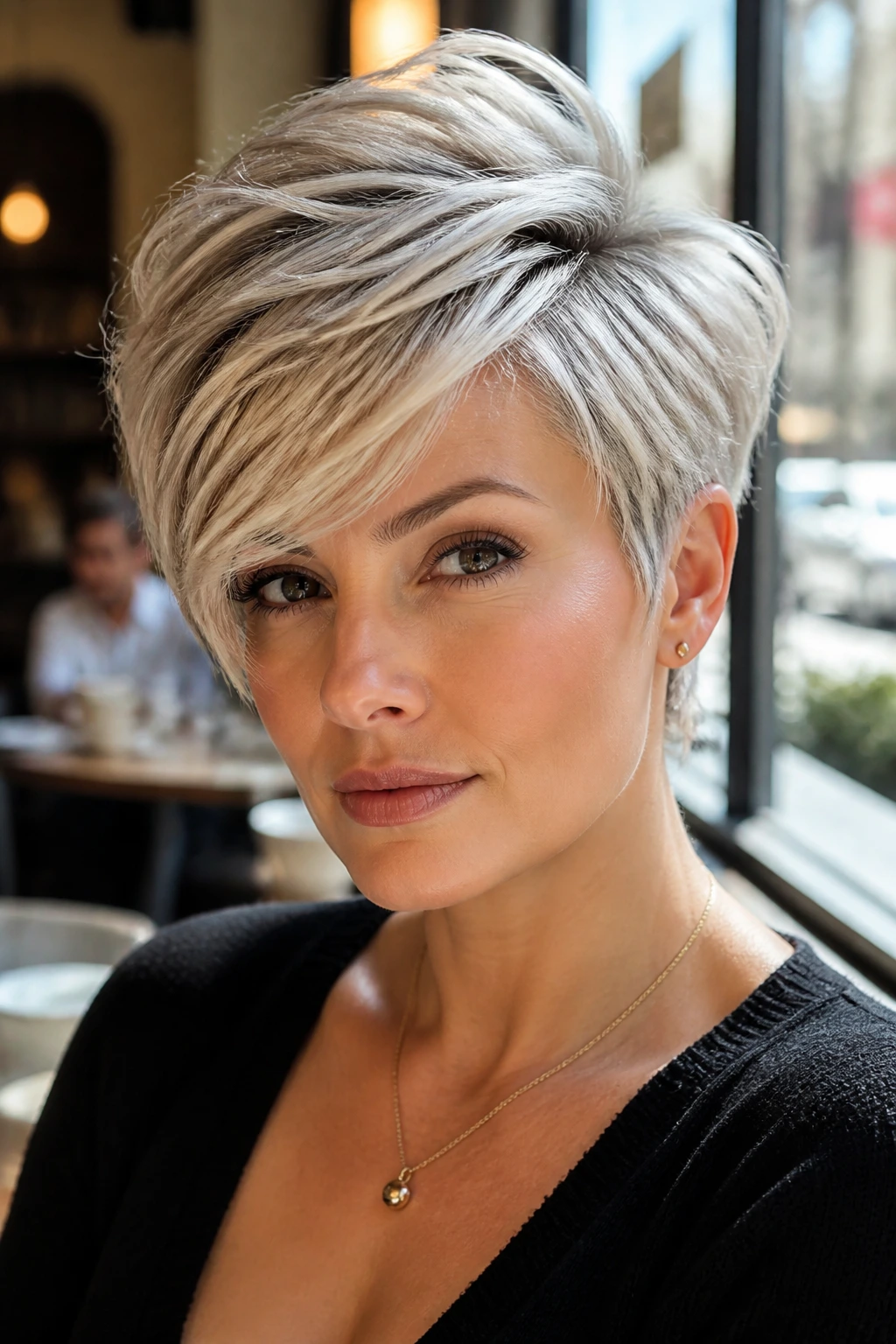
6. Cropped Pixie with Tapered Sides
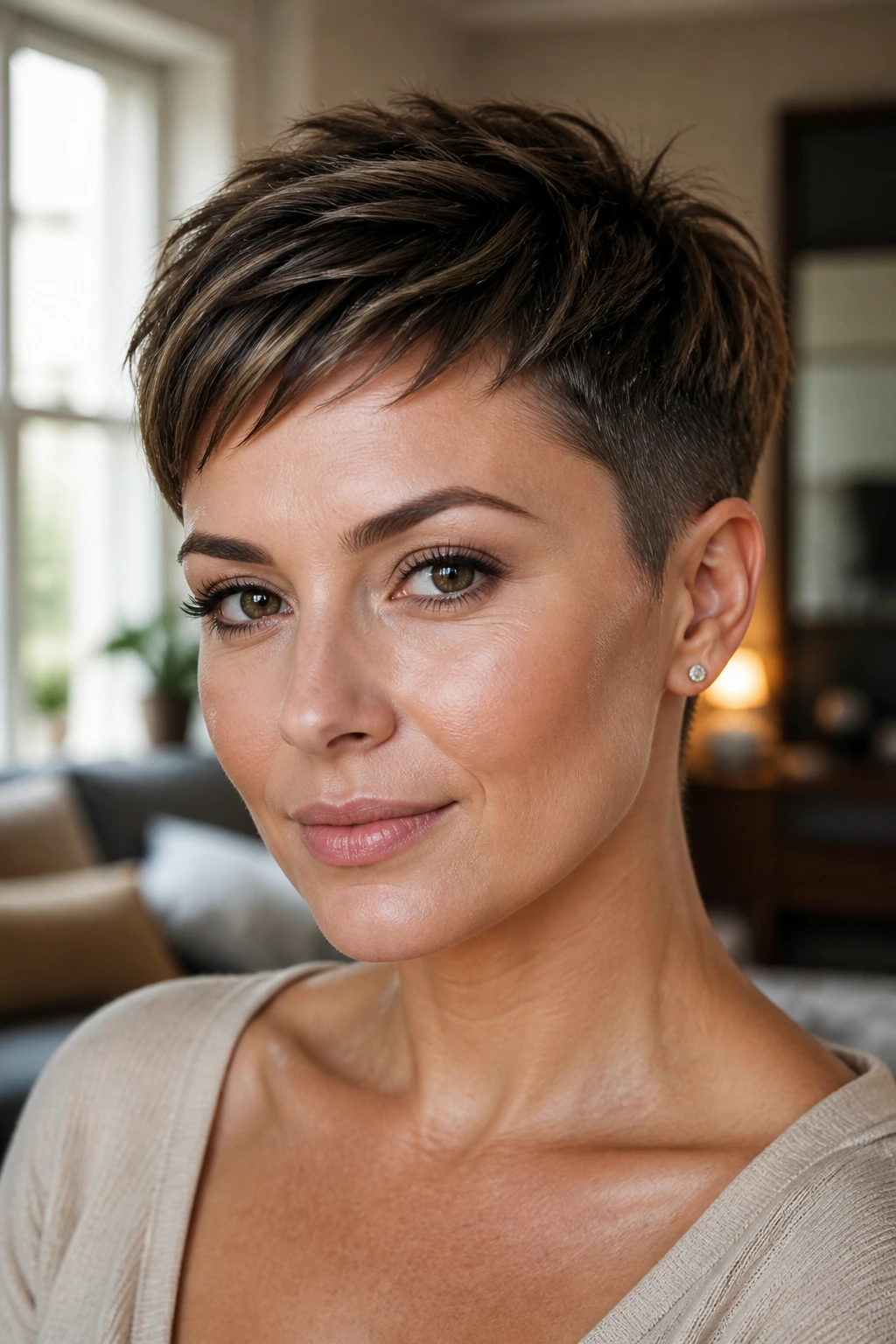
Short hair on an oval face can be startling in the best way. A cropped pixie with tapered sides puts your features out front instead of hiding them behind length, and that’s often exactly why it looks so good. The face doesn’t need extra hair to feel balanced.
Keep the top around 2 to 3 inches if you want enough length to push forward, lift at the crown, or sweep across the forehead. The sides and nape should be neatly tapered so the cut stays clean around the ears and neckline. If you leave the sides too boxy, the whole style can read helmet-like. Nobody wants that.
This cut is especially good for mornings when you want to use one product and move on. A dab of matte paste or lightweight wax, worked through dry hair with your fingers, is usually enough. Done well, the pixie makes an oval face look striking without making the features fight for attention.
7. Side-Swept Pixie with Extra Top Volume
A side-swept pixie gives you a little more softness than a true cropped pixie, and that matters if you like short hair but don’t want every piece to feel exposed. The longer fringe drapes across the forehead, which can be useful if your forehead runs a touch wider or if you wear glasses and want the top half of the face to feel more balanced.
The extra volume sits up top, but not so high that it stretches the face. That’s the part people miss. You want lift, not a tower. Blow-dry the roots in the opposite direction of your part first, then smooth the fringe over once the hair is about 80 percent dry. That gives the shape enough hold without turning it stiff.
This cut looks especially good when the side sweep has a little separation. Not a heavy side curtain. Just enough pieceiness to show the movement. It’s short, but it still has attitude.
8. French Bob with a Soft Fringe
The French bob is the polished little sister of the blunt bob. It usually sits between the cheek and the jaw, and the fringe is softer than a heavy straight-across bang. On an oval face, that shorter length can feel chic instead of severe because the proportions already support it.
A soft fringe changes everything here. It should brush the brows or skim just above them, then blend a little at the sides so the face doesn’t get boxed in. If the fringe is too dense, it can hide the eyes. Too wispy, and it starts looking accidental. The sweet spot is a fringe that moves.
This cut likes a bit of texture. A tiny bend in the ends, a side part on days when you want more lift, or a tucked-behind-one-ear finish can all shift the mood. It’s one of those cuts that looks deliberate even when you haven’t done much to it.
9. Shoulder-Length Curls with Rounded Ends
If your hair curls naturally, shoulder length can be a better answer than long length that pulls the curl pattern down. On an oval face, curls sitting around the shoulders create a rounded frame that keeps the face from looking overextended.
The trick is shape. You do not want a triangle. Keep the layers long enough to preserve the curl clumps, then let the ends round in instead of fanning wide at the bottom. Dry cutting can help here because curls shrink, and a wet cut can lie to you about where the shape really ends up. If your stylist knows curly hair, ask where the shortest face-framing layer will land after shrinkage.
A curl cream, a little gel, and a diffuser on low heat are often enough. Once the curls dry, break the cast gently. The face gets movement without the hair exploding outward.
10. Sleek High Ponytail with Face-Framing Pieces
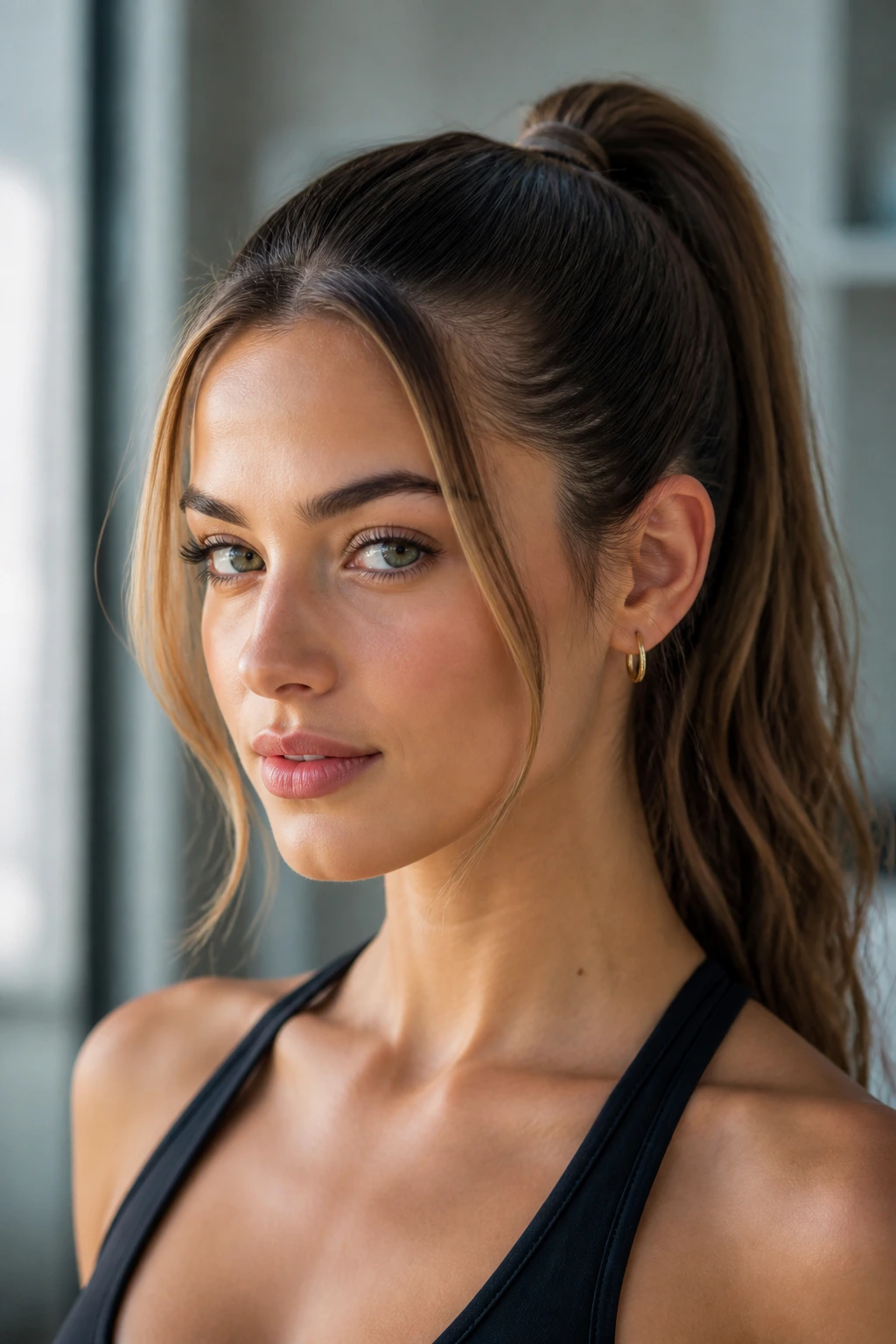
A high ponytail can be a little ruthless on some face shapes. On an oval face, it usually reads as clean and lifted instead of severe, especially if you leave out two face-framing pieces near the temples. Those loose pieces are not decorative fluff. They soften the pull of the pony and keep the forehead from feeling too exposed.
The ponytail should sit high enough to show the cheekbones but not so tight that it yanks everything upward. A base at the crown is enough. Smooth the front with a brush and a touch of gel or styling cream, then wrap a small section of hair around the elastic if you want the finish to look polished. That tiny detail changes the whole style.
This is one of the few hairstyles that can go from gym to dinner without much drama. The face-framing pieces are the reason. They stop the style from feeling like a utility look.
11. Low Bun with a Clean Side Part
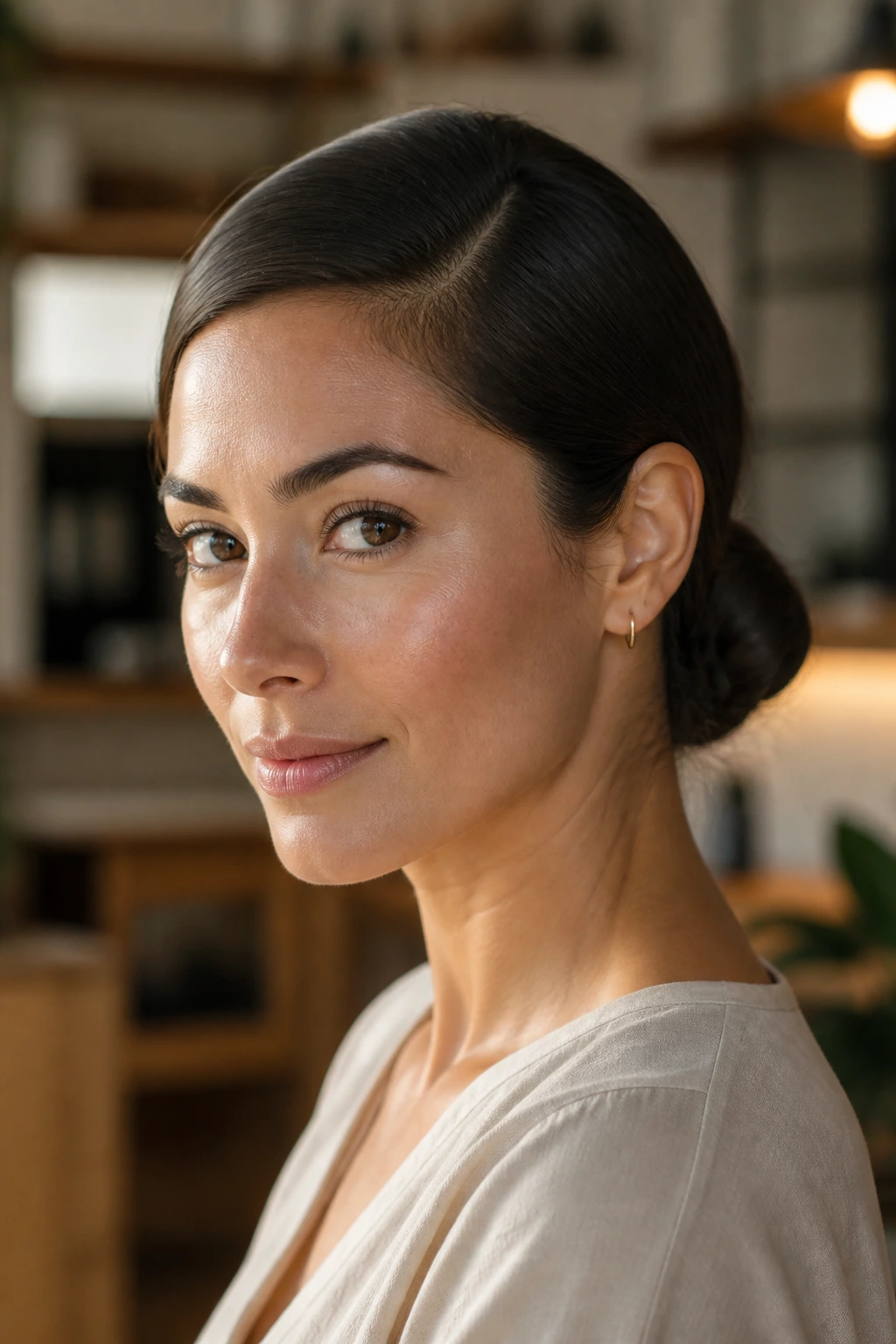
A low bun can look plain in the wrong hands and quietly expensive in the right ones. On an oval face, a side part gives the style a diagonal line, which breaks up the symmetry just enough to keep the face from reading too long or too narrow.
Picture this: hair smoothed back at the temples, a neat part, and the bun sitting right at the nape, not halfway up the head. That placement matters. A high bun can pull the eye upward and exaggerate length. A low bun settles the look and makes the jawline feel calm and intentional.
This style is at its best when the bun is not tiny. A little fullness keeps it from looking pinched. If your hair is fine, backcomb the ponytail lightly before twisting it into the bun. If it’s thick, pin the bun in two spots so it doesn’t sag by lunchtime.
12. Half-Up, Half-Down with Loose Tendrils
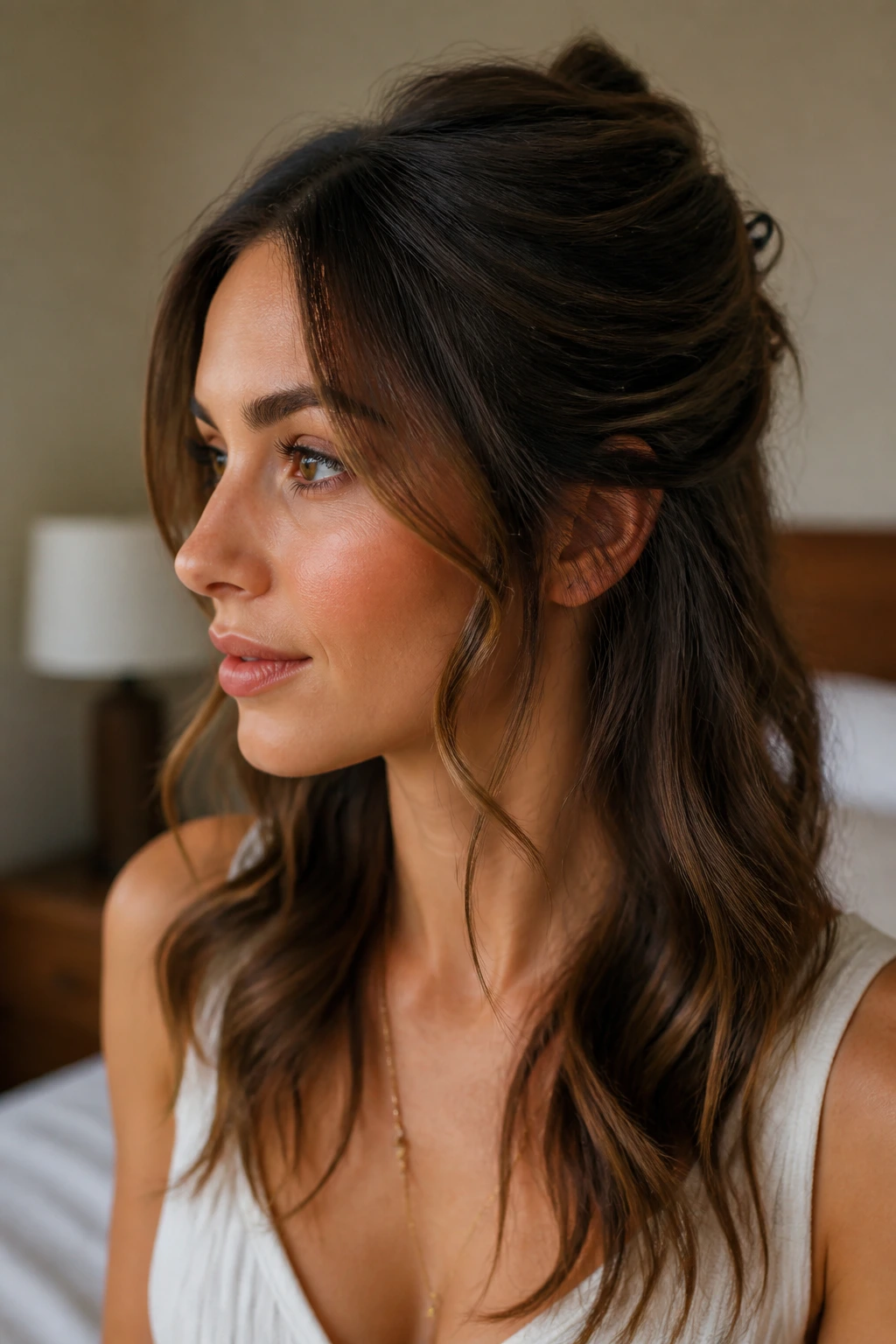
Half-up styles are underrated on oval faces because they let you keep length while still showing your features. The top section lifts the hair off the face, and the loose bottom section keeps the look soft. It’s a balanced, easy middle ground.
Where the Shape Comes From
The part line should start around the temples or just above the ears, not too far back. That keeps the lifted section visible from the front. Leave a few tendrils out near the cheekbones and one near the jaw if you want more softness. Those pieces should be intentional, not random.
A small claw clip can make this style faster than an elastic, especially if your hair is medium length. For a cleaner finish, smooth the crown first, then pull the top section back and secure it. The result has enough lift to matter, but not so much that it starts feeling formal.
13. Deep Side Part with Long Layers
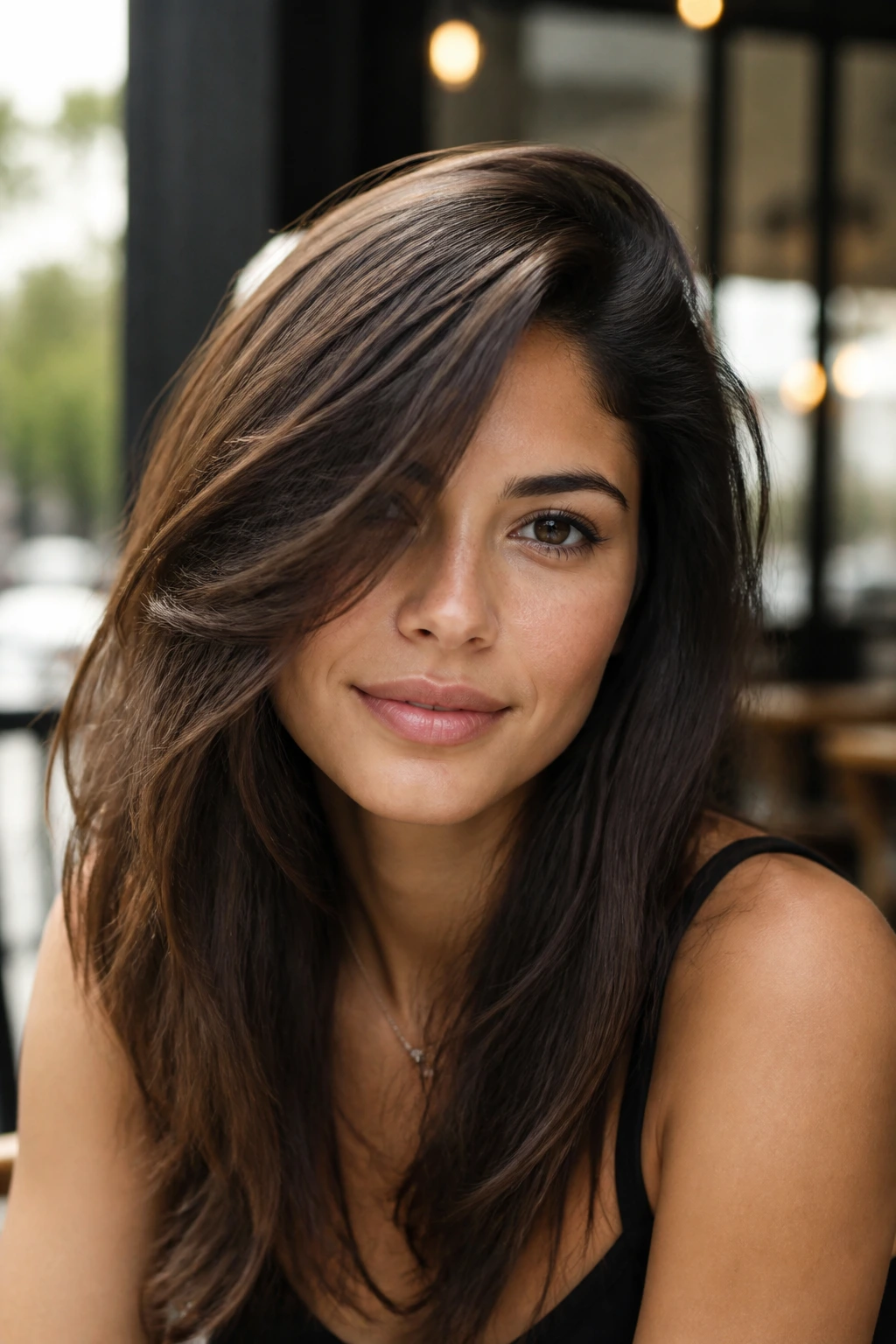
A deep side part can change long hair more than a haircut can. On an oval face, it introduces asymmetry, which is useful when you want the face to feel a little wider through one side or just less centered. The part should usually fall just past the arch of the brow rather than all the way to the temple, unless you want a really dramatic sweep.
Long layers make the side part feel deliberate instead of lopsided. They keep the hair moving around the face while the part does the visual work. If your hair is straight, a side part plus soft bend at the ends can stop it from looking flat. If it’s wavy, the asymmetry tends to look even richer.
This is a good choice when you do not want to cut much off but still want the shape to feel different. It’s one of the easiest ways to make a familiar haircut look new.
14. Wolf Cut with Soft, Choppy Ends
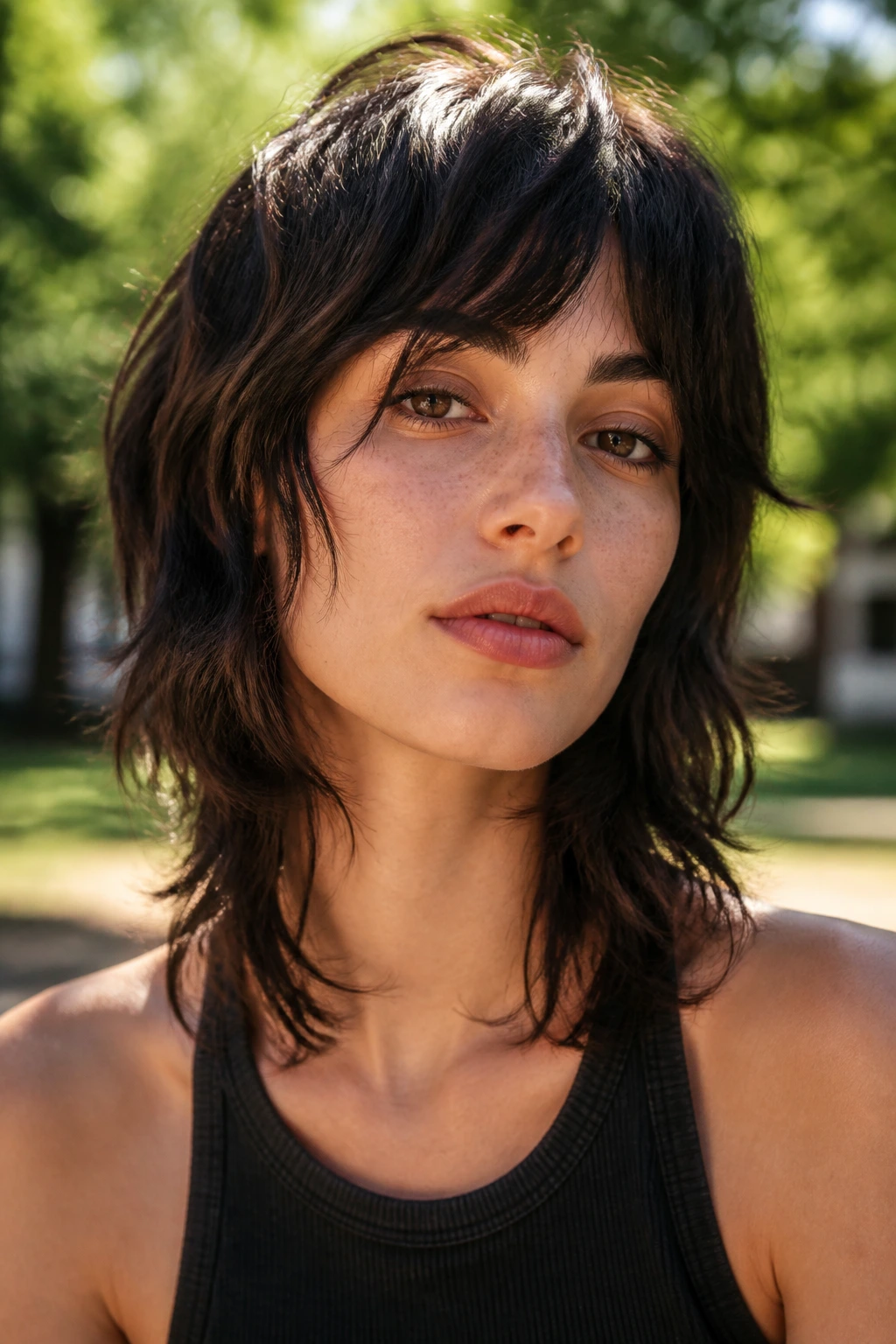
The wolf cut can go wrong fast if it gets too shredded. Done with restraint, though, it gives an oval face a rougher edge and a lot more movement through the top. The shorter crown layers build height, while the longer ends keep the shape from floating away.
The best version for an oval face is softer than the internet version. Think choppy, not chaotic. You want texture at the cheekbones and around the jaw, but you do not want the silhouette to balloon out. If your hair is thick, this cut can take a lot of bulk out without making the ends thin and sad. If your hair is fine, keep the layers less aggressive and lean on styling spray instead.
A wolf cut looks best when it’s not over-brushed. A little grit is part of the deal. That is the whole point.
15. Layered Shoulder Cut with Flipped-Out Tips
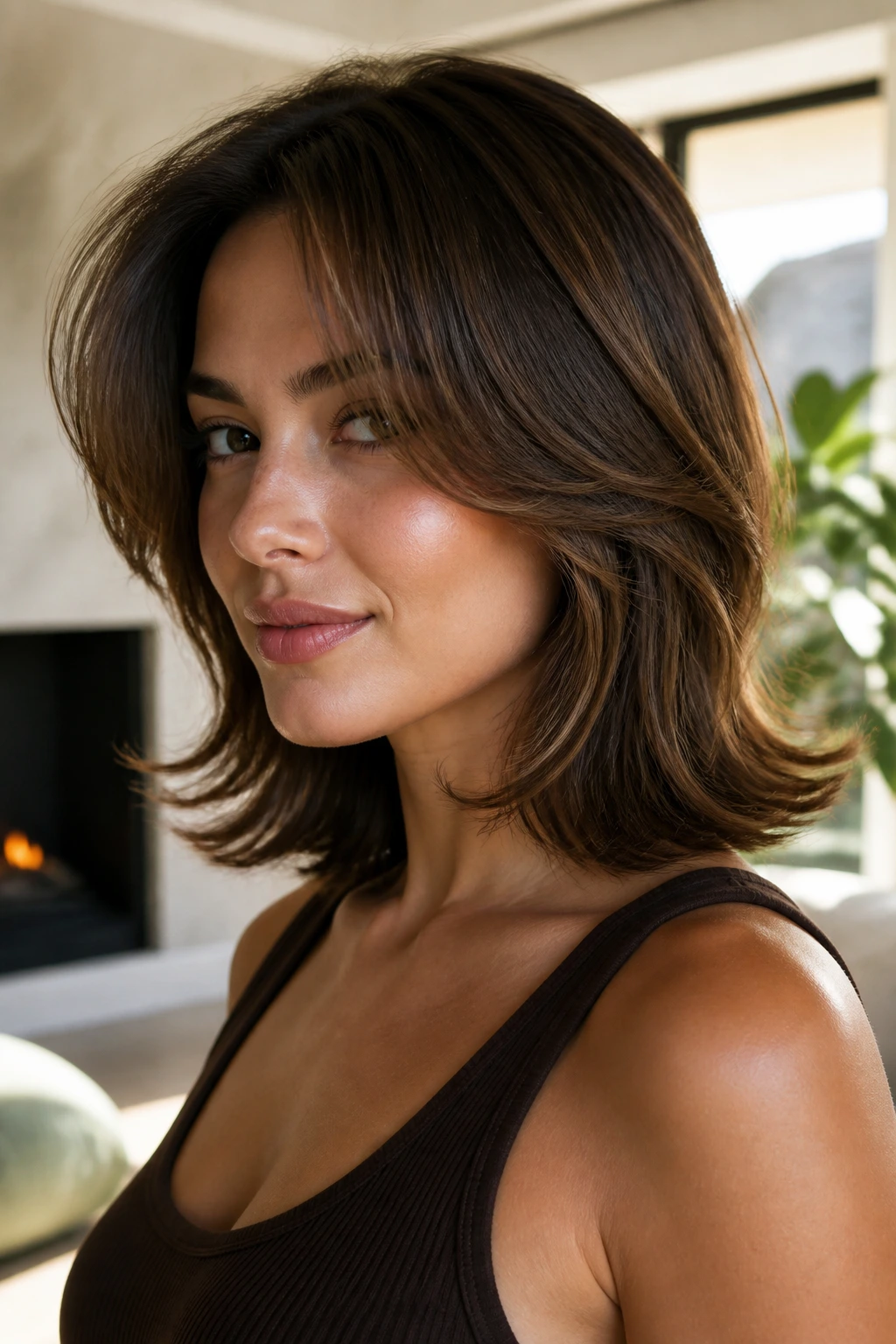
There’s something about a shoulder-length cut with flipped-out ends that feels polished in a way straight hair sometimes doesn’t. On an oval face, the outward bend adds width right where you want it, especially around the lower half of the face and the shoulders.
The cut itself can be pretty simple. The styling is where the personality comes in. Use a medium round brush, flip the ends away from the neck, and let them settle. If the ends curl out too much, run them once with a flat iron in a shallow bend. The goal is movement, not a hard flip from an old sitcom.
This is a good option when you like hair that looks finished without looking stiff. It has structure, but it still feels airy.
16. Straight Long Hair with Invisible Layers
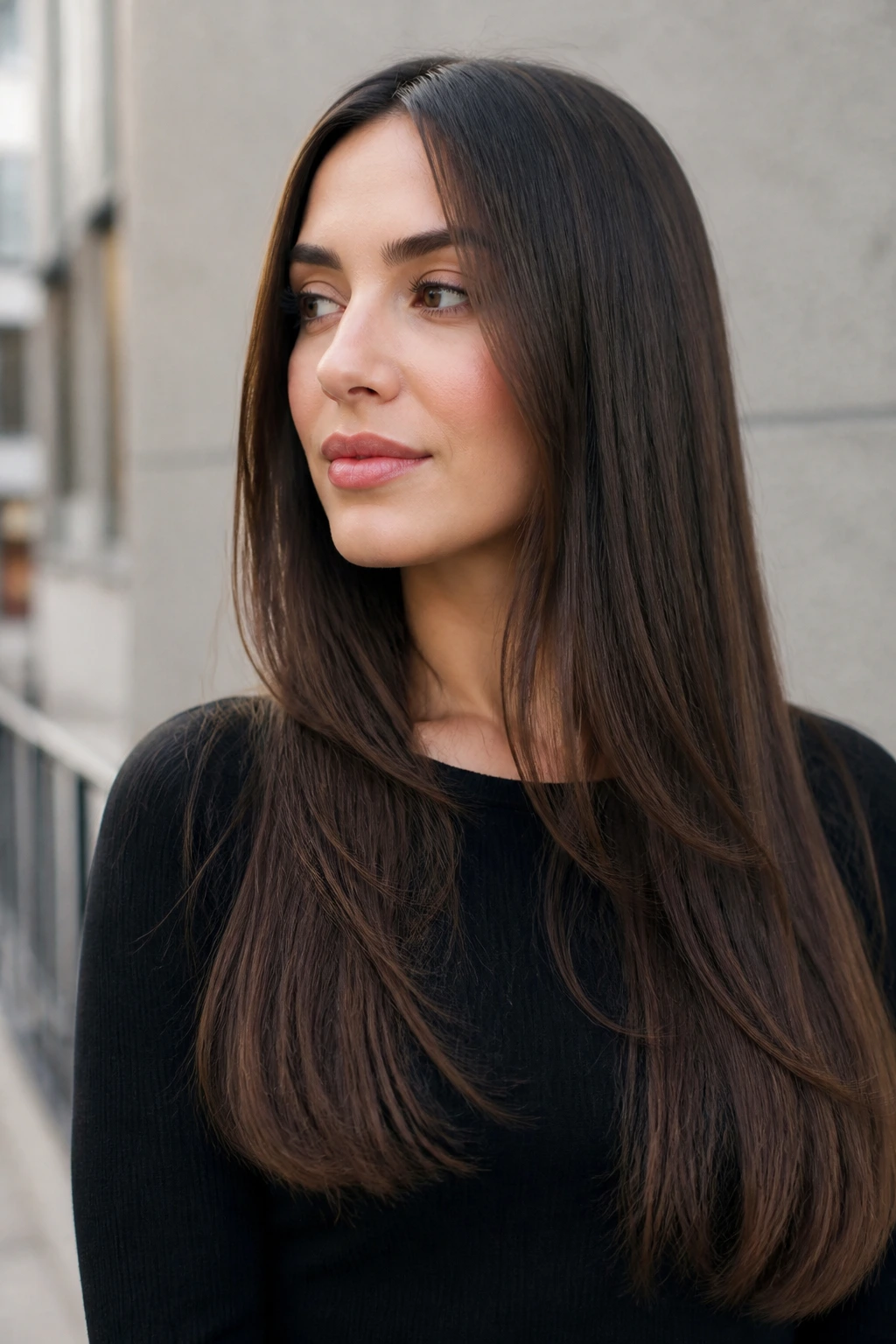
Long straight hair can look too heavy on almost anyone if it’s left untouched. On an oval face, invisible layers solve the problem without changing the silhouette much. These layers sit inside the haircut, so the outside still looks sleek while the inside gets movement and weight removal.
The result is useful if you want length but hate the flat curtain effect that can happen when all the weight sits at the bottom. The layers should be subtle enough that the hair still falls in a clean line when worn down. Ask for movement, not chopped ends.
This cut is especially good if your hair is thick and naturally straight. It keeps the perimeter neat while stopping the middle from turning into a brick. The whole style reads calmer when the air moves through it.
17. Soft Natural Afro with Crown Shape
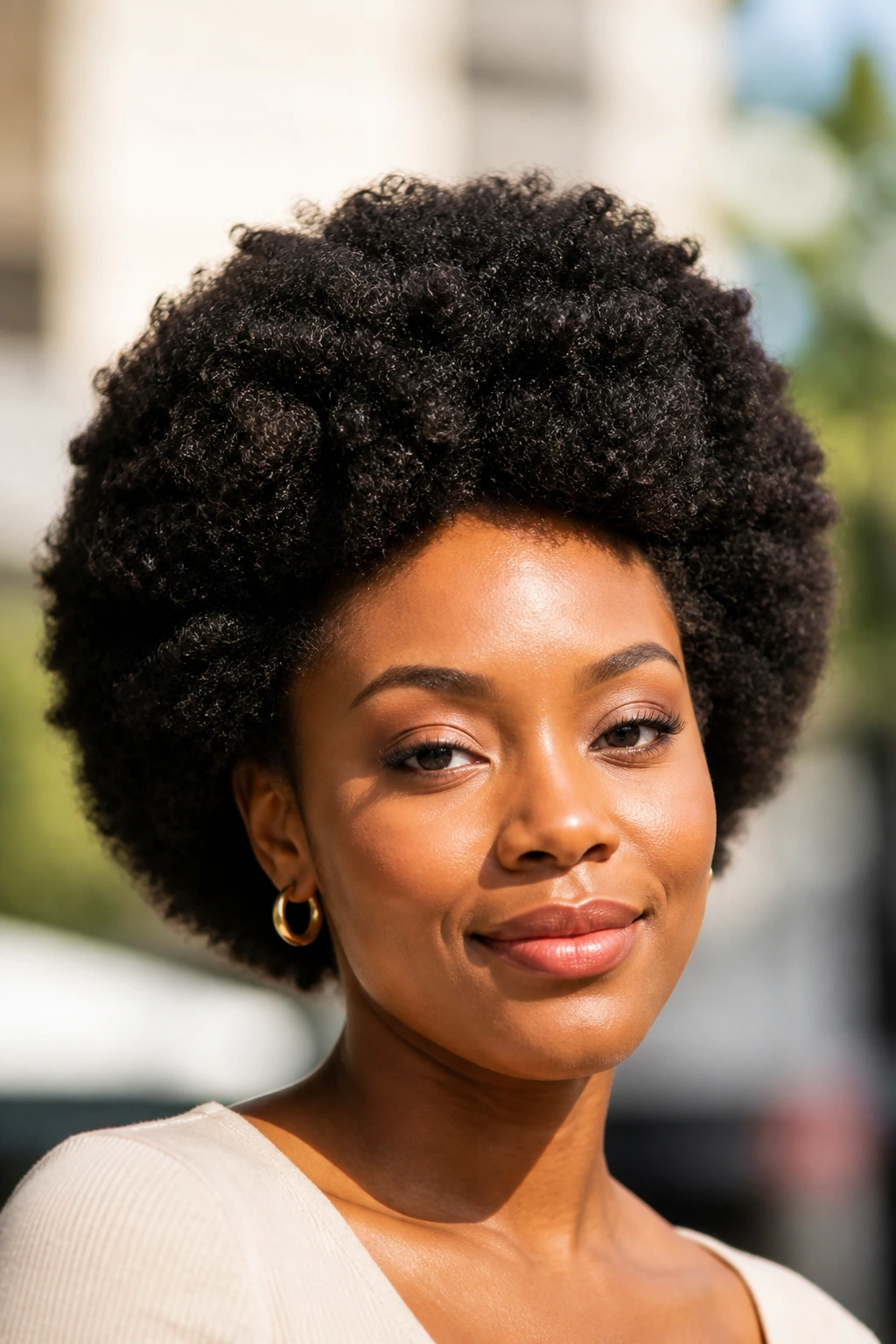
A rounded afro can be one of the most flattering shapes for an oval face because it uses width as part of the style, not as a problem to hide. The oval shape already gives you balance, so the afro can take up space around the head without overwhelming the features.
The important part is crown shape. You want the top to hold a little lift and the sides to stay rounded rather than boxy. That often means shaping the hair when it’s dry or nearly dry, because shrinkage changes everything. A pick at the roots can add lift without wrecking the curl pattern, and a diffuser can help if you want the shape to settle with more definition.
A soft afro also gives you room to choose the mood: more rounded for a fuller silhouette, a little narrower at the sides if you want the face to appear longer, or a touch more height if you want the profile to stand out.
18. Tapered Natural Cut with Defined Edges
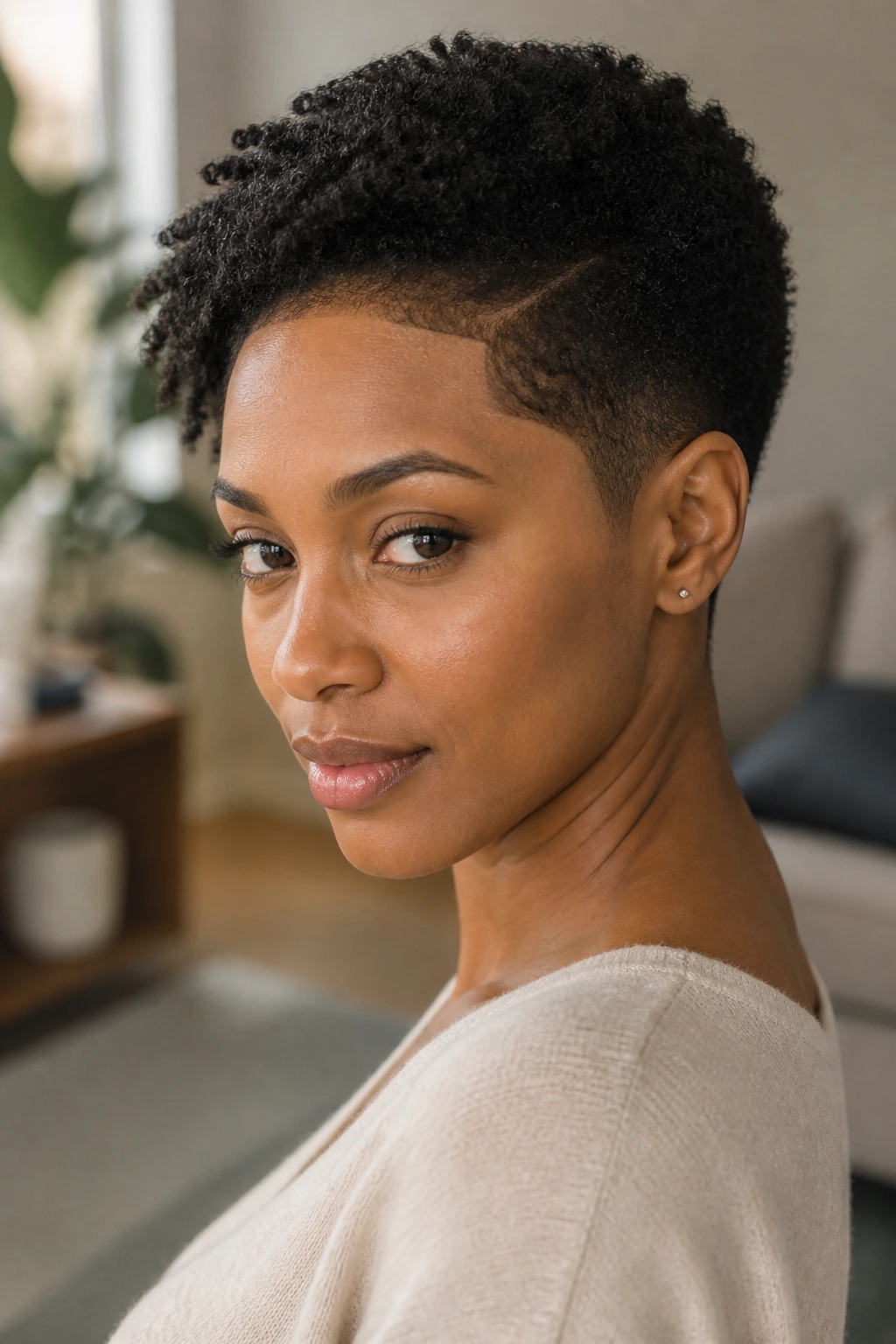
A tapered natural cut is neat, practical, and far less boring than people think. On an oval face, the close sides and shaped neckline create a clean frame around the jaw, while the top keeps enough length to show texture and movement.
The cut usually works best when the top is left long enough for coils or curls to sit clearly—too short, and the shape loses character. The taper at the sides and nape should be soft enough to grow out well, but clean enough to keep the silhouette intentional. If you like low-maintenance hair, this one can be a favorite because it still looks shaped when it starts growing.
Edge work matters here, but not in a fussy way. A neat hairline, a shaped temple area, and a clean neckline are what make the style feel finished.
19. Box Braids with a Middle Part and Tail Length
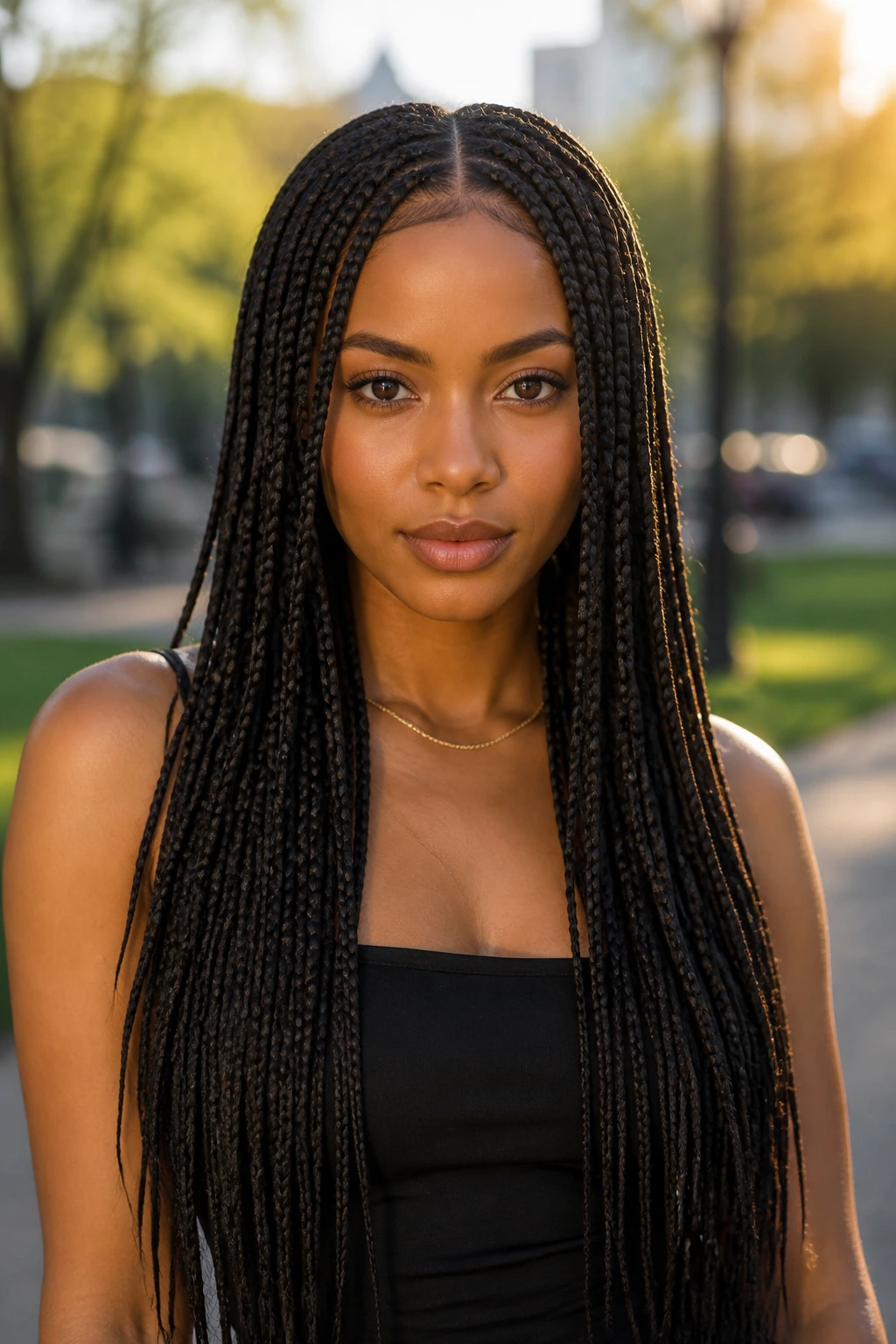
Box braids can look heavy if the parting and length aren’t chosen with care. On an oval face, a middle part keeps the look symmetrical and clean, while the tail length lets the braids hang in a straight vertical line that doesn’t compete with the face.
The part should be crisp, and the braids around the face should not all be the same length if you want a little softness. Leaving a few braids slightly shorter near the jaw can stop the whole style from feeling too severe. Medium-thickness braids usually strike the best balance: thin enough to move, thick enough to feel substantial.
This is one of the easiest styles to wear if you want weeks of low fuss. Still, the face shape matters. A good braid style doesn’t just hang there. It frames.
20. Knotless Braids Pulled into a High Ponytail
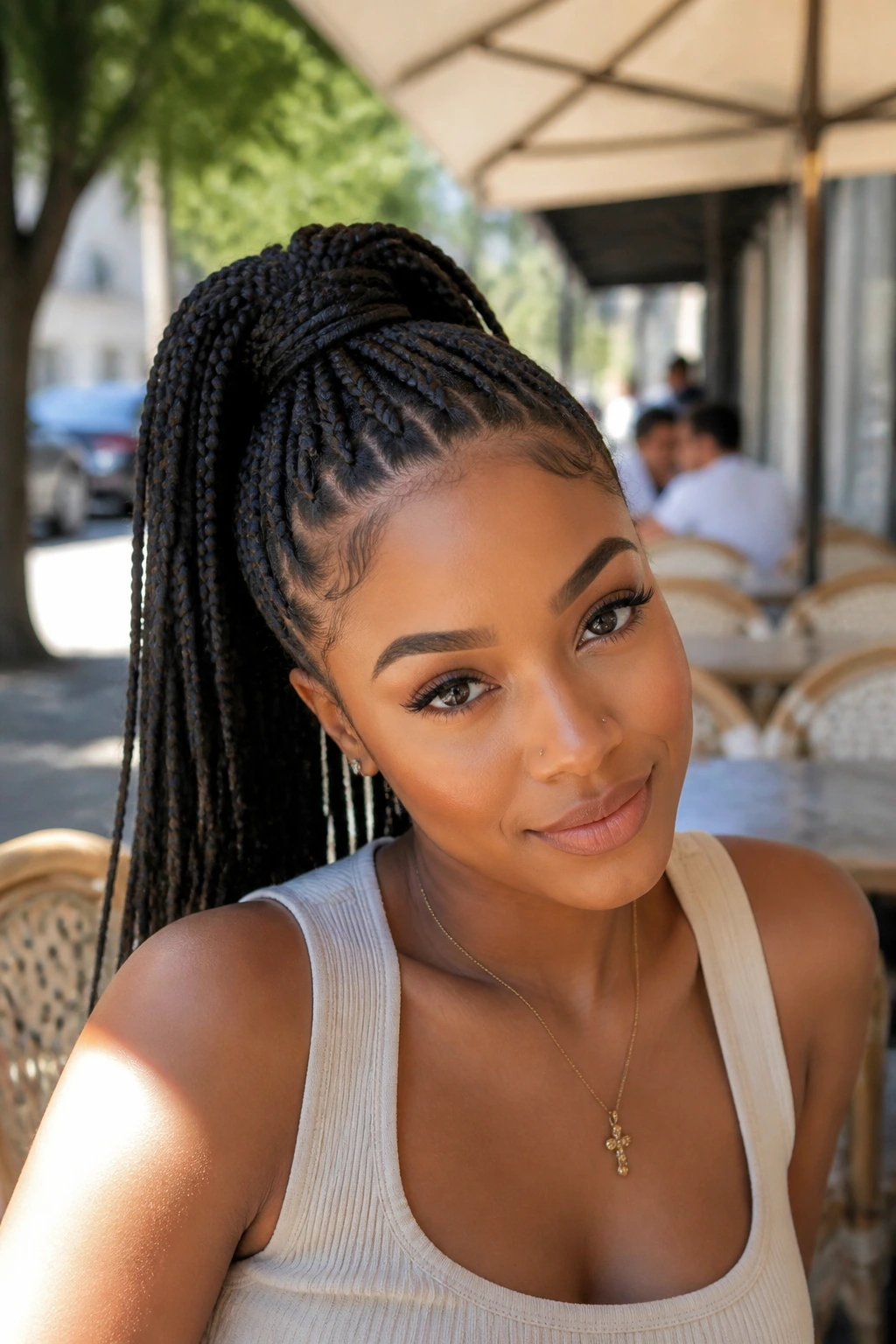
Knotless braids already feel lighter at the scalp, which is why they make a better base for a high ponytail than a heavier install. On an oval face, pulling the braids up creates height without making the look feel compressed around the cheeks.
The ponytail should sit high enough to show the face, but not so high that the base strains the scalp. A wide, secure elastic and a wrapped braid or silk scrunchie keep the weight distributed better. Leave a small amount of braids out at the temples if you want the style to soften the forehead line. That detail helps more than people expect.
This is the kind of style that looks good when it has swing. When the braids move, the face does too. Good balance. Clean line. No fuss.
21. Voluminous Blowout with Bouncy Ends
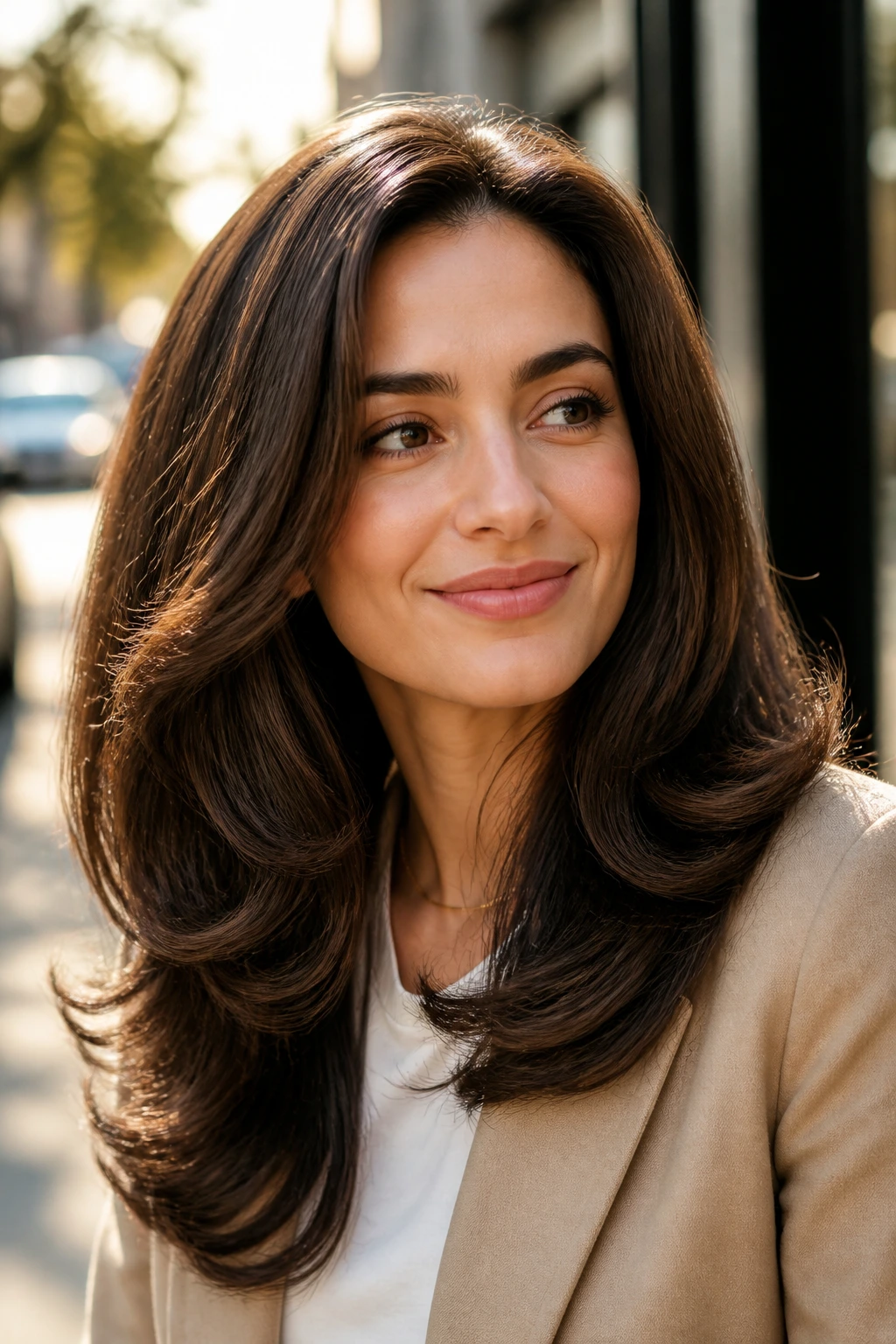
A good blowout can make an oval face look expensive without making the hair feel overstyled. The volume sits where it should: at the roots, through the mid-lengths, and just enough at the ends to keep them lively. Too much bend at the crown, though, and the face starts looking longer than you want.
The Shape Matters
Use a round brush and work in sections about 1 to 1½ inches wide. Dry the roots first, then pull the mid-lengths smooth and give the ends a soft curve under or out. The movement should feel brushed, not curled. That distinction matters. A blowout is about polished body, not ringlets.
This style suits oval faces because it creates width without cutting off the length. It’s especially good for shoulder-length and long hair. If your hair is fine, a root-lifting spray at the crown helps hold the shape. If it’s thick, a smoothing cream keeps the blowout from expanding into a puffball by hour three.
22. Side-Swept Hollywood Waves
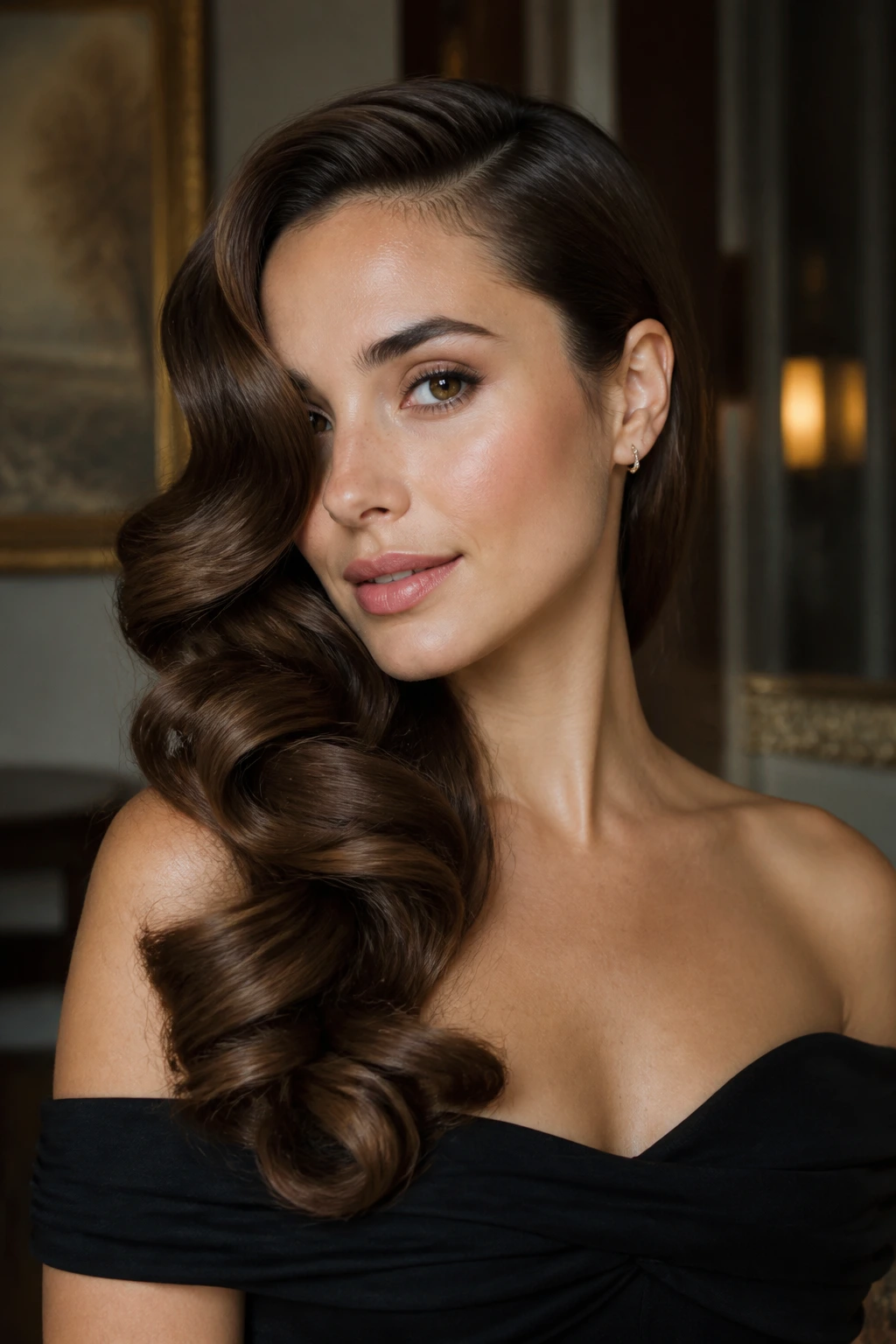
Side-swept waves are one of the easiest ways to make an oval face look a little more dramatic without changing the haircut underneath. The deep side part breaks up the symmetry, and the waves fall in a soft line that can skim the cheekbones and jaw.
The waves work best when they’re brushed out after cooling. That gives them that smooth S-shape instead of stiff curls. If your hair is mid-length or longer, use a 1½-inch curling iron or wand and curl away from the face on the front sections. Pin them while they cool, then brush gently. One side can be tucked behind the ear, the other left fuller. That asymmetry is what gives the style its pull.
This is the kind of look that does not need much jewelry. The hair is already doing the heavy lifting.
Why Oval Faces Let You Change the Mood Instead of Fixing the Shape
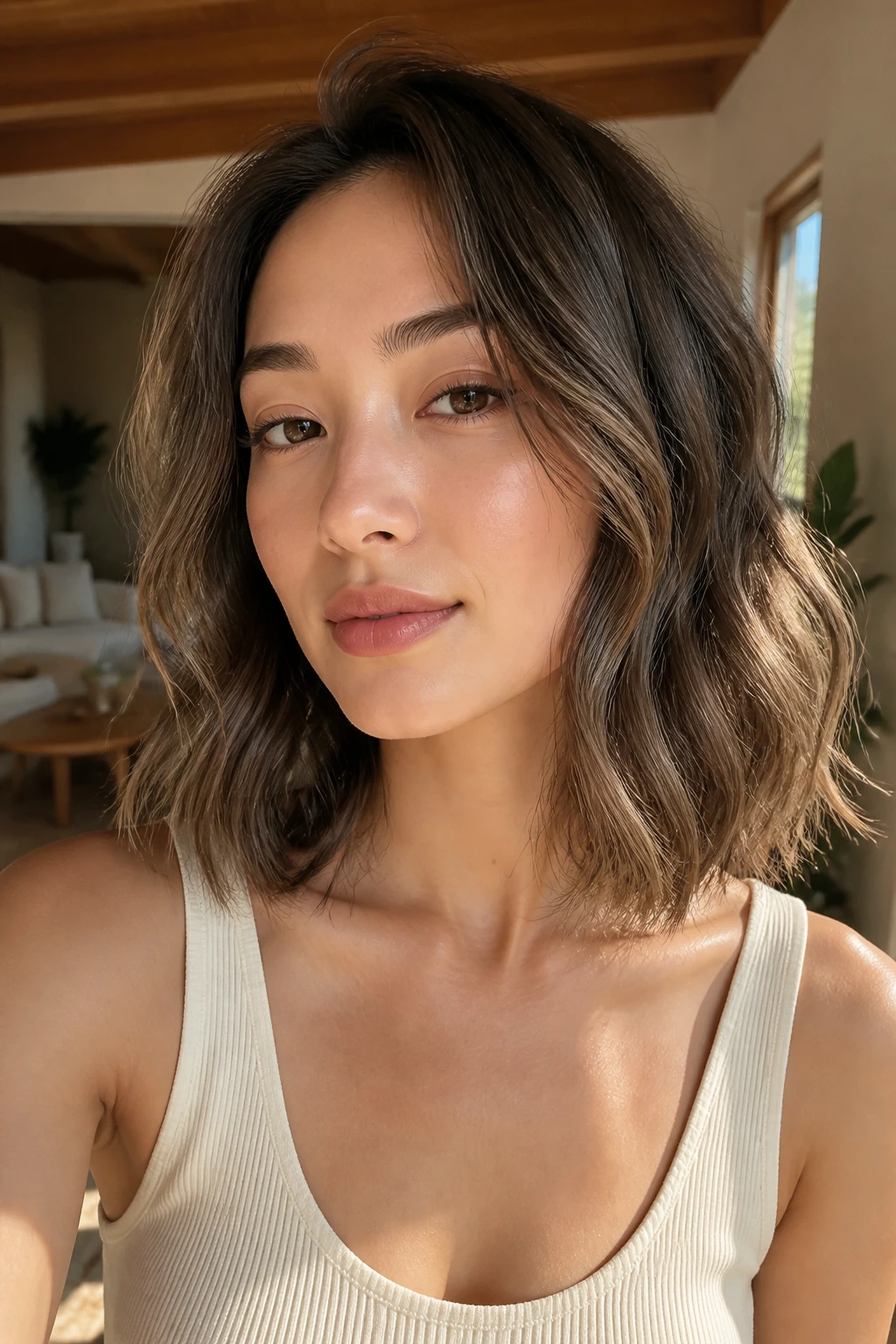
Oval faces get described as “easy,” and people sometimes stop there, which is lazy. The better way to think about this face shape is that it gives you control over emphasis. You can put the visual weight at the chin, the cheeks, the crown, or the forehead without the whole cut falling apart.
That means the question is not “What hides the face best?” It’s “What do you want to bring forward?” A blunt bob sharpens the jaw. Curtain bangs soften a high forehead. Side parts add width. Crown volume stretches the profile. Long layers keep the eye moving downward. The haircut is basically a lighting rig for your features.
If your face is a little longer than average within the oval category, be careful with too much height on top and too much length at the same time. If it’s shorter and fuller through the cheeks, you can get away with more lift and more fringe. That is why the same cut can look polished on one person and oddly flat on another. The face shape gives you freedom, but the proportion still decides the final result.
How to Choose a Cut by Hair Texture and Density
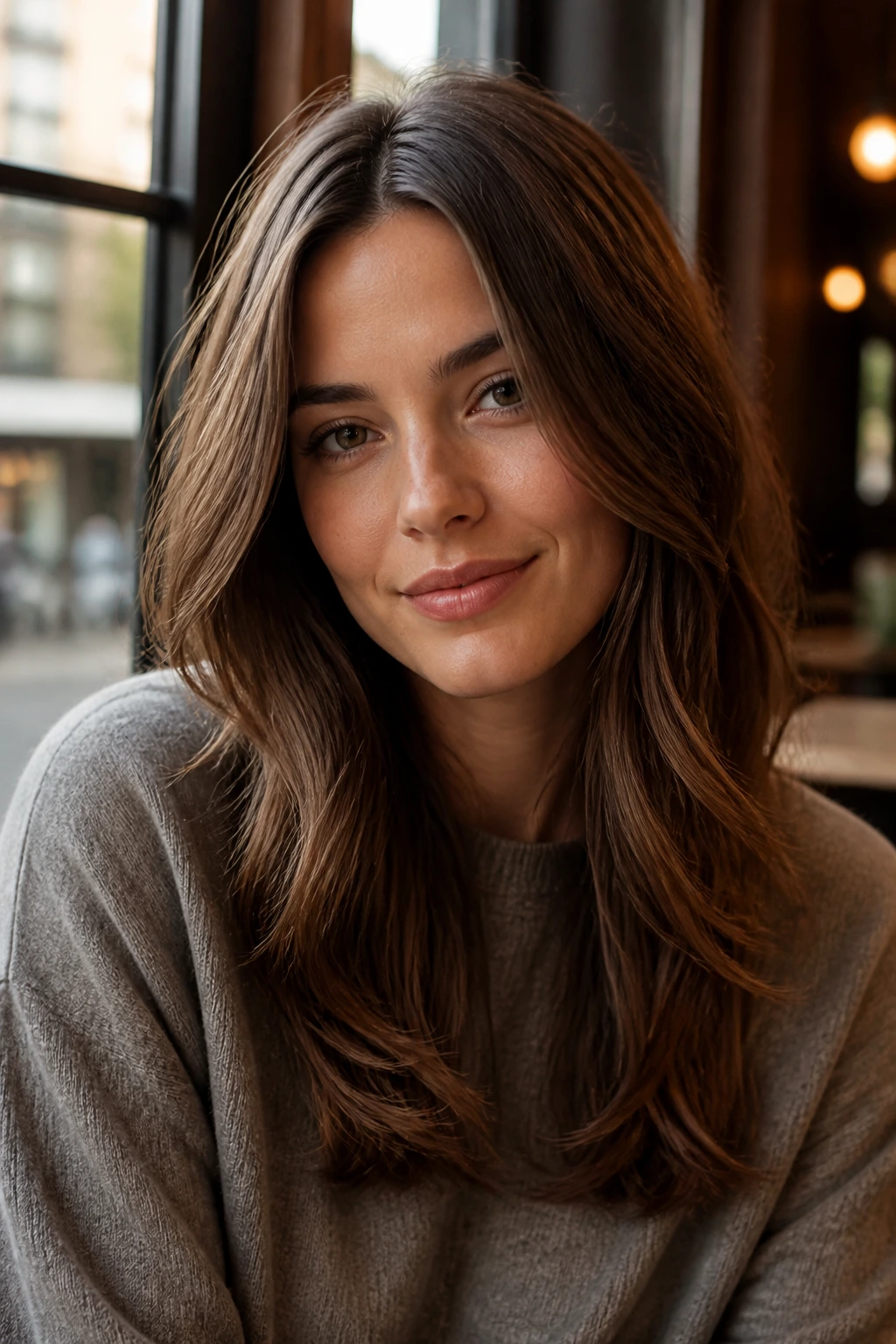
Hair texture changes everything. A blunt bob on fine straight hair behaves differently from the same bob on thick wavy hair, and a curly shag has its own set of rules again. If you ignore the texture, the face shape advice gets blurry fast.
Fine hair: Choose blunt lines, compact lengths, or subtle layers. Too many short layers can make the hair collapse by noon, and then the face reads longer because the style loses its body.
Medium-density hair: You can live in the middle ground. Curtain bangs, lobs, layered shoulders cuts, and soft waves all tend to cooperate here because there’s enough hair to hold shape without puffing out.
Thick hair: Ask for weight removal where the hair needs it, usually through the mid-lengths or underneath the top layer. Long layers, invisible layers, and shags work well if they’re cut with the density in mind. Too much bulk at the ends will drag the whole style down.
Curly and coily hair: Shape matters more than length. Dry cutting, curl-by-curl shaping, and tapers that respect shrinkage are your friends. If the cut ignores your curl pattern, the oval face won’t save it.
Tools and Products That Make Styling Easier
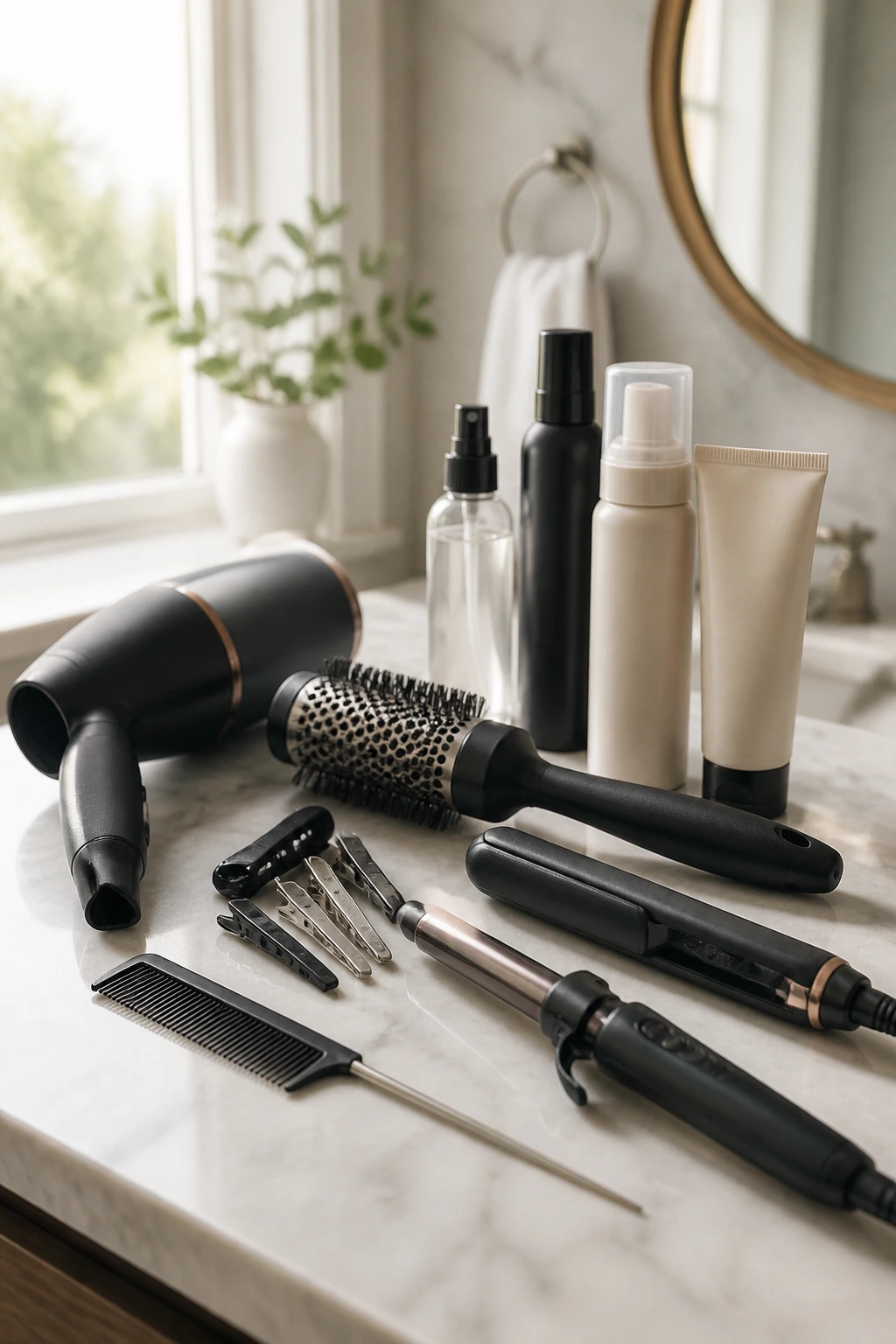
- Tail comb: The cleanest way to make a straight part, especially for bobs, braids, and sleek buns.
- Blow dryer with a nozzle attachment: Directs airflow so you can smooth the cuticle instead of blasting the hair into fluff.
- Round brush, 1¼ to 1½ inches: The workhorse for blowouts, curtain bangs, flipped ends, and face-framing bend.
- Flat iron: Best for blunt bobs, French bobs, sleek ponytails, and brushing out tiny bends at the ends.
- Curling iron or wand, 1 to 1½ inches: Good for loose waves, Hollywood waves, and soft bends through long layers.
- Sectioning clips: Keep the top layers out of the way while you work the lower sections, which matters more than most people think.
- Heat protectant spray: Non-negotiable if you use hot tools. It helps keep the ends from looking dry and rough.
- Mousse or root-lifting spray: Useful for lobs, blowouts, shags, and anything that needs body at the crown.
- Texturizing spray: Gives separation to pixies, shags, and waves without making the hair crunchy.
- Smoothing cream or light gel: Best for sleek ponytails, low buns, and high-shine styles.
What to Tell Your Stylist Before the First Snip
The fastest way to get a haircut you like is to stop talking in vague words like “something cute” and start talking about shape. Bring at least two photos of cuts you like, then point out the specific thing you want: the fringe length, the jawline hit point, the amount of crown height, the way the ends sit. That part matters more than the overall vibe.
Say how you wear your hair on a tired Tuesday. That sentence is gold. If you always air-dry, say it. If you use a flat iron twice a week and then forget about it, say that too. If your hair has a hard side part or a cowlick at the front, show it in the mirror before the cut starts.
Ask one direct question: Where will the shortest face-framing piece hit once my hair is dry? That answer tells you a lot. Cheekbone, chin, jaw, or collarbone all create very different results on an oval face. If your stylist can answer that cleanly, you’re in better shape than most salon chairs ever get.
How to Style These Cuts at Home Without Fighting Them
The easiest styles are the ones that match your routine, not your fantasy version of your routine. If you have six minutes, don’t choose a cut that demands twenty. If you want a polished finish, choose a cut that already has a clean outline so you’re not rebuilding the shape every morning.
For short cuts, dry the roots first and work product through the crown with your fingers. A pea-sized amount of paste or wax is usually enough. Too much product turns a pixie into a greasy helmet, and that ruins the line you paid for.
For shoulder-length and longer cuts, rough-dry the roots, then focus your hot tool only on the front pieces and the ends. That’s where the face reads the shape most clearly. A little bend around the cheekbones or jawline is often enough.
For curly and coily cuts, style in sections and stop touching the hair once it starts setting. The more you pull apart the curl pattern before it dries, the wider the shape gets. If you want definition, apply product on soaking-wet hair and let the curl cast form before you scrunch.
Common Mistakes That Throw Off the Balance
- Adding height everywhere: If the crown, the fringe, and the part all push upward, an oval face can start looking longer than intended. Fix it by choosing one place for volume and keeping the rest smooth.
- Cutting bangs too short: Short blunt bangs can sit strangely on an oval face, especially if the forehead is already on the longer side. Ask for brow-skimming or cheekbone-skimming lengths instead.
- Leaving all the weight at the ends: Long hair with no internal movement can drag the face down and make the style feel flat. Subtle layers or invisible layers usually solve that without losing length.
- Tucking every front piece behind the ears: It sounds neat, but it can erase the frame around the face. Leave a few pieces out if you want the cut to look finished.
- Ignoring the natural part: Forcing a side part where the hair wants to split in the middle usually creates fight and frizz at the scalp. Work with the natural fall unless you want to restyle it every day.
- Over-thinning curly hair: Removing too much bulk from curls often creates a halo of frizz instead of shape. Ask for shaping, not just thinning.
Variations and Easier Alternatives to Try
The Five-Minute Version
Pick a collarbone lob, a low bun, or long layers with a center part. These styles need the least morning fuss because they look intentional even when the hair is only half-styled. They’re good if you want the cut to do the work.
The Soft-Fringe Swap
If you like bangs but hate maintenance, choose curtain bangs or a side-swept fringe instead of a full blunt fringe. They grow out more gracefully and don’t demand as much precision at the salon every few weeks. On an oval face, that softness usually looks better anyway.
The Short-and-Sharp Version
A French bob, a cropped pixie, or a side-swept pixie gives the face a cleaner outline. These cuts suit people who like strong shape and are happy to keep up with trims. They also show off earrings and necklines in a way longer hair never quite does.
The Heat-Free Version
A shag, a soft afro, knotless braids, or a natural curly shoulder cut can all work with very little heat styling. The trick is choosing a cut that respects the way your hair falls on its own. If the shape holds without a curling iron, you’ll keep wearing it longer.
The More Polished Version
Blowouts, Hollywood waves, sleek ponytails, and low buns give an oval face a dressed-up frame. They’re useful for events, interviews, or days when you want the hair to look deliberate from every angle. Keep a strong part or a clean front line so the style doesn’t drift.
Maintenance, Trims, and Day-Two Hair
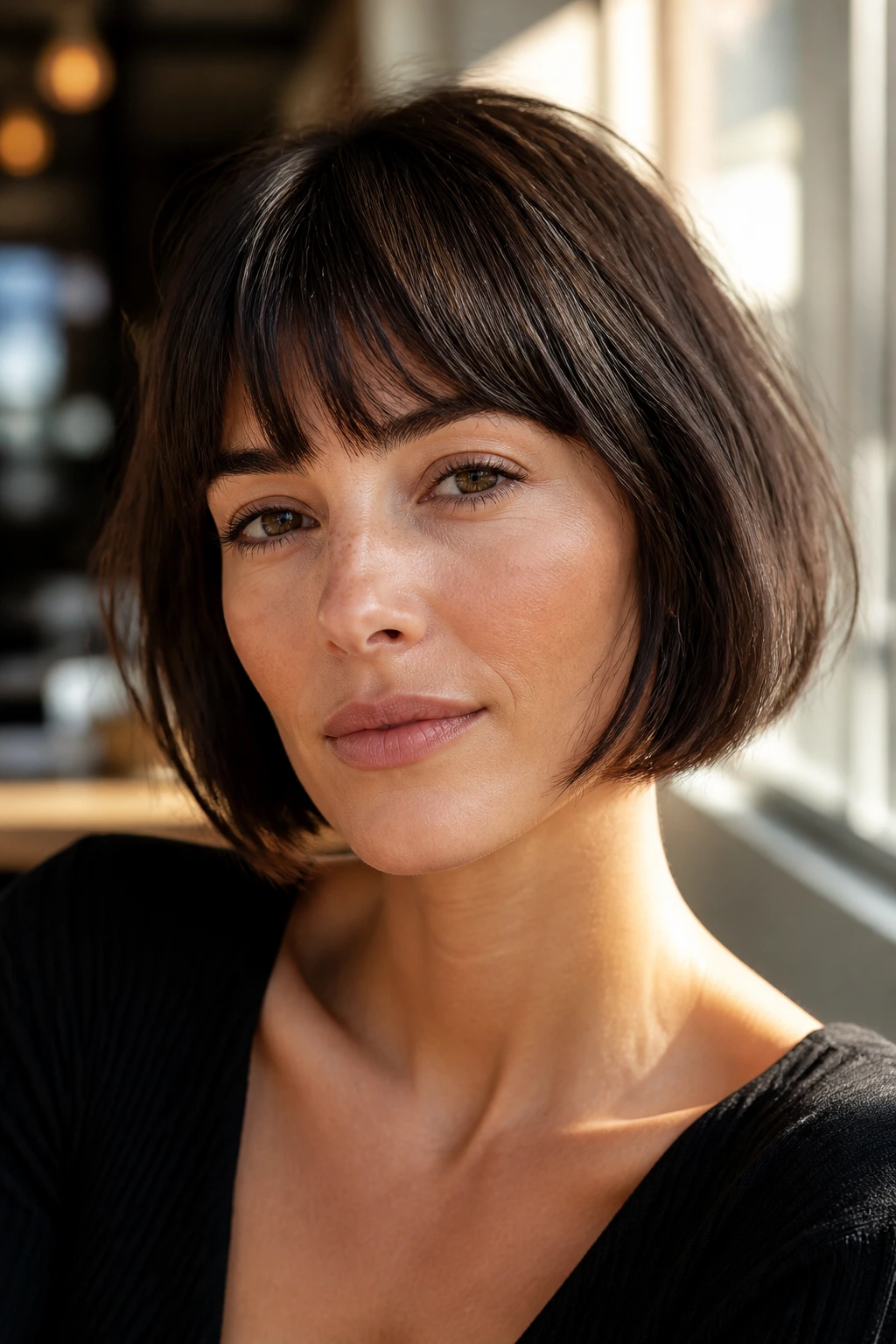
Shorter cuts need more frequent cleanup than people expect. A pixie or French bob usually looks best with a trim every 4 to 6 weeks, because the line is the whole point. Blunt bobs and lobs can stretch to 6 to 8 weeks before they start losing shape. Long layers are more forgiving and often hold for 8 to 12 weeks, but bangs are their own little responsibility—those often need a tiny trim every 2 to 4 weeks if you want them to stay where they’re supposed to.
Day-two hair depends on the cut. Bobs and lobs usually need a quick re-bend at the front and a puff of dry shampoo at the roots. Blowouts can be revived with a couple of Velcro rollers at the crown for ten minutes or a brief pass with a round brush. Curly cuts often need a mist of water and a little leave-in to wake the shape back up.
Braids need different care. Sleep with a silk scarf or bonnet, keep the scalp clean, and do not leave them in so long that the roots start matting or pulling. If your style puts tension near the hairline, loosen it sooner rather than later.
Frequently Asked Questions About Hairstyles for Oval Faces

What haircut is most flattering for an oval face?
There isn’t one single answer, which is the annoying and useful truth. A chin-length blunt bob, a collarbone lob, and long layers with curtain bangs are all strong choices because they emphasize different parts of the face instead of trying to “fix” it.
Can oval faces wear bangs?
Yes, and they usually have an easier time with bangs than round or square faces. Curtain bangs, bottleneck bangs, and side-swept fringe are the safest places to start because they soften the forehead without closing off the face.
Is a middle part or side part better for oval faces?
Both work. A middle part keeps the look calm and symmetrical, while a side part adds movement and can make the face feel a little wider through one side. Pick the one that matches the cut and the mood you want.
Do short hairstyles suit oval faces?
Very often, yes. Pixies, French bobs, and cropped cuts can look especially good because oval proportions don’t need extra length to stay balanced. The main thing is keeping the shape clean around the ears, jaw, and nape.
What if my face is oval but also feels long?
Then be careful with too much crown height and too much length at the same time. A blunt bob, a side part, curtain bangs, or a style that adds width at the cheekbones usually helps more than extra volume on top.
How do I keep fine hair from falling flat on an oval face?
Choose a cut with structure: a blunt bob, a lob with subtle layers, or a pixie with top texture. Root-lifting spray at the crown and a round brush at the front can make a big difference, but the cut still matters more than the product.
How do I keep curly hair from looking wide at the sides?
Ask for shaping that preserves the curl pattern without over-thinning. Long layers, rounded curls around the shoulders, or a tapered shape at the sides usually work better than heavy bulk removal. Dry cutting helps the finished shape make sense once the curls shrink.
What should I avoid if I wear glasses?
Avoid bangs or side pieces that stop right where the frames sit, because that can create a crowded look. A little extra length in the fringe or a cleaner top line tends to sit better with glasses.
The Styles That Stay in Rotation
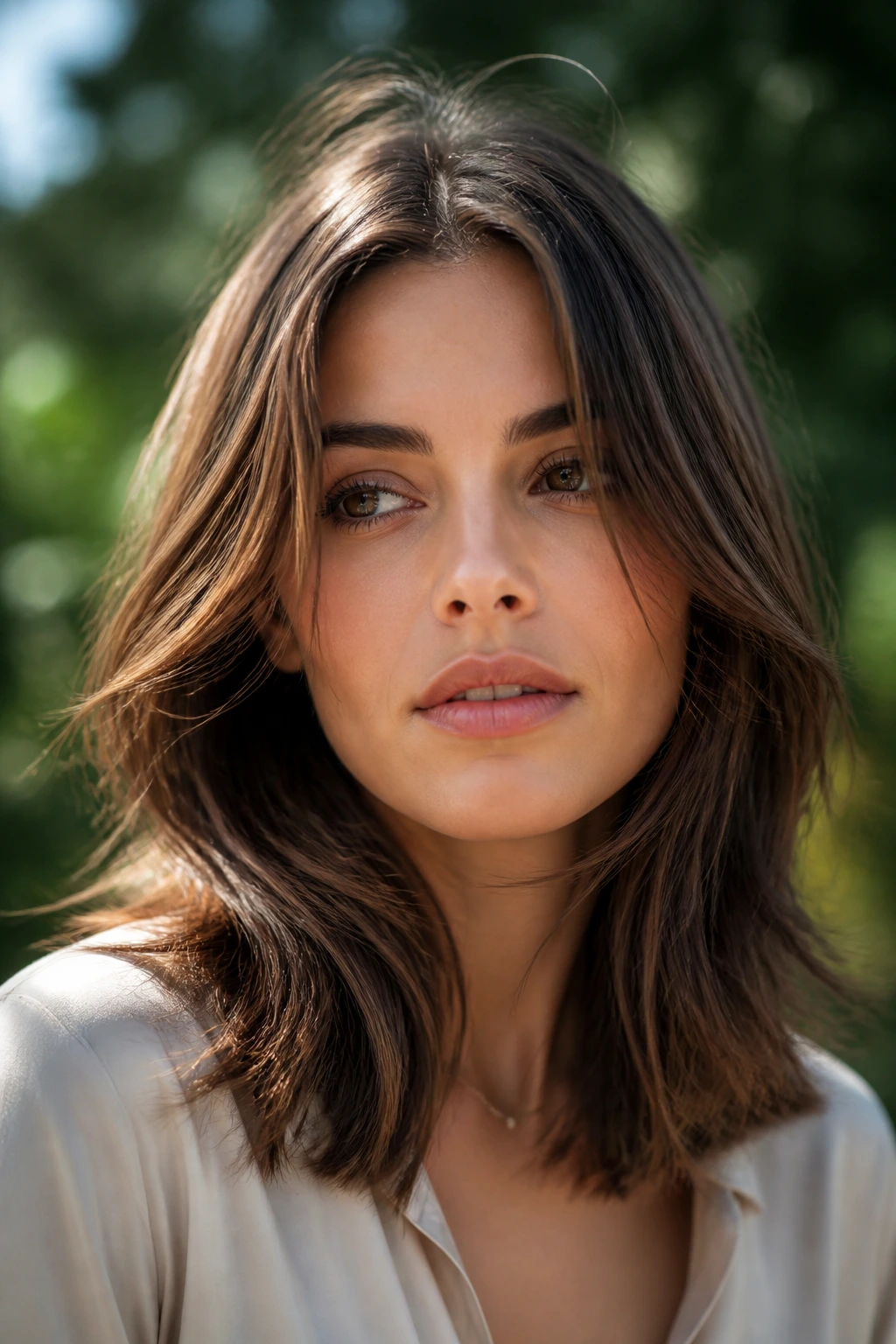
The nicest thing about oval-face haircuts is that they don’t force you into one identity. You can wear a blunt bob when you want edges, a shag when you want motion, braids when you want simplicity, and long layers when you want the hair to behave without making a scene.
Start with the cut that matches your texture and your morning habits, not the one that looks most dramatic on a saved photo. The best styles here are the ones that keep looking right when you’ve been asleep on them, tucked behind one ear, or walked through a bit of wind on the way to lunch. That’s the real test.
