



Long hair can make a ponytail look polished in seconds — or turn it into a sagging, lumpy afterthought that hangs on for dear life by lunchtime. The difference is rarely the elastic alone. It’s placement, tension, texture, and the tiny finishing choices people skip when they’re rushing.
Ponytail styles for long hair have a bigger range than most people give them credit for. A high sleek pony can sharpen a blazer. A bubble ponytail makes thick length look playful instead of heavy. A low wrapped style can calm down layers that refuse to cooperate. And if your hair is past your shoulders, the weight of it changes everything: the base has to work harder, the ends need more shape, and the style has to survive gravity.
That’s the fun part, honestly. Long hair gives you something to work with. You can show off shine, braid into the tail, fold it, twist it, wrap it, or make it look deliberately soft instead of “I grabbed this in the car.” The styles below lean into that length rather than fighting it.
Why These Ponytail Styles Earn Their Keep
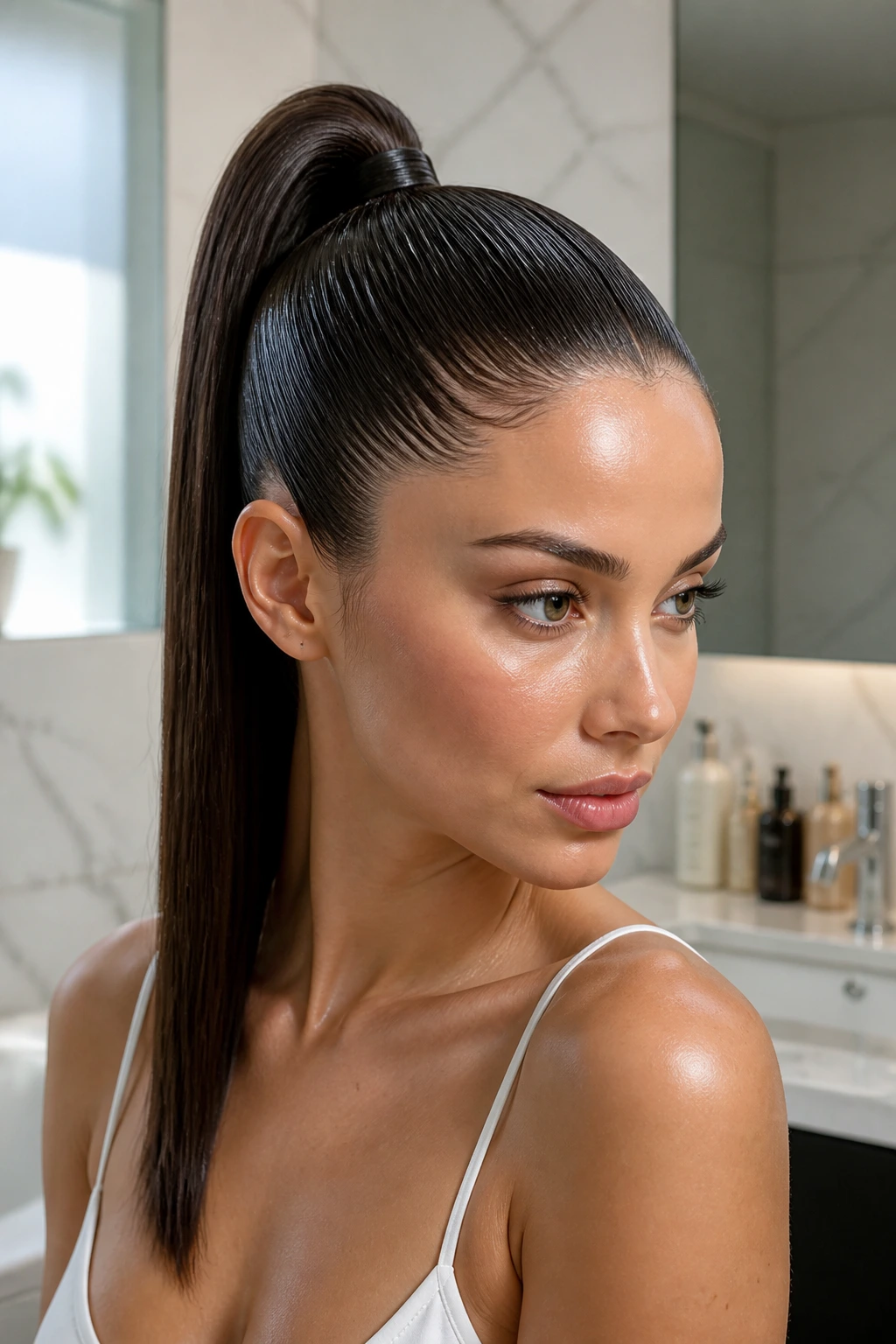
- Length gets used, not hidden: these looks let long hair show off its weight, movement, and shine instead of stuffing it into one flat tail.
- Most of them need only a few tools: a tail comb, two elastics, and a handful of pins can handle a surprising amount.
- The base does the heavy lifting: each style relies on a clear placement choice, which matters more than buying another styling product.
- You can match the mood fast: the same long hair can look sleek, sporty, romantic, or dressed up just by changing texture and height.
- They solve real long-hair problems: slippage, bulk at the nape, flat roots, and stringy ends all get a cleaner fix here.
- They work with second-day hair: not every ponytail needs freshly washed hair. A little texture often helps more than a clean blowout.
1. Sleek High Ponytail
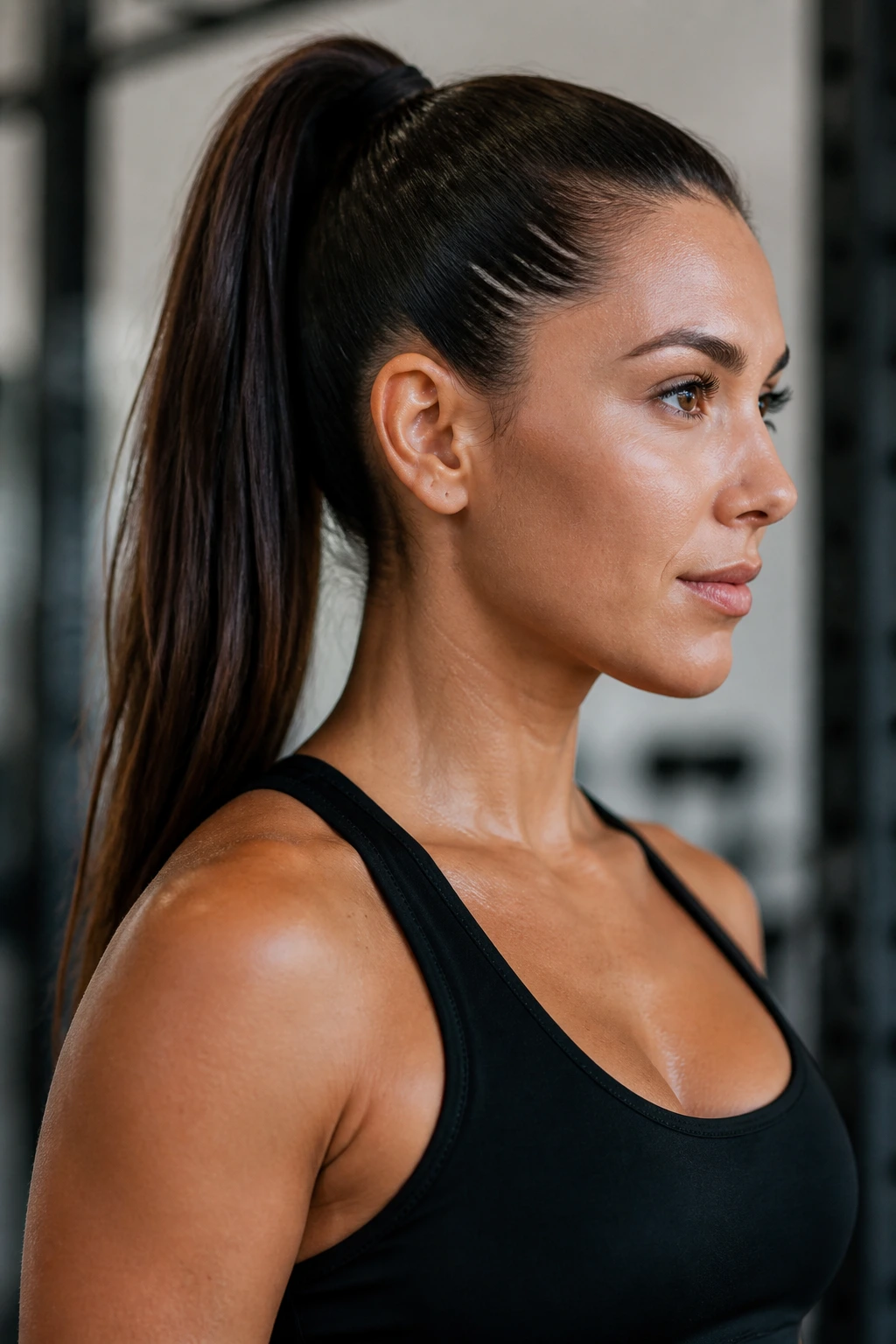
A sleek high ponytail on long hair has a blunt, confident shape that shows off shine right away. The magic is in the base: brush the hair straight up toward the crown, smooth the sides with a boar-bristle brush, and keep the elastic snug enough that the pony doesn’t start sinking after an hour.
I prefer this style when the ends are healthy and the roots need control. A tiny amount of gel at the hairline or a pea-size dab of smoothing cream on the brush is enough. Too much product turns the front into a greasy helmet, and nobody wants that. If your hair is heavy, stack two thin elastics instead of pulling one giant one to the breaking point.
Why it works
The height lifts long hair off the shoulders, which makes the length feel lighter and more animated. It also gives the face a cleaner frame, especially if you leave the very front edge smooth and tuck flyaways behind the ears.
How to wear it
Pair it with a sharp neckline, hoop earrings, or a simple tee and jacket. It looks best when the tail is brushed straight and the last 4 to 6 inches are either ironed smooth or curled under once for shape.
2. Wrapped Low Ponytail
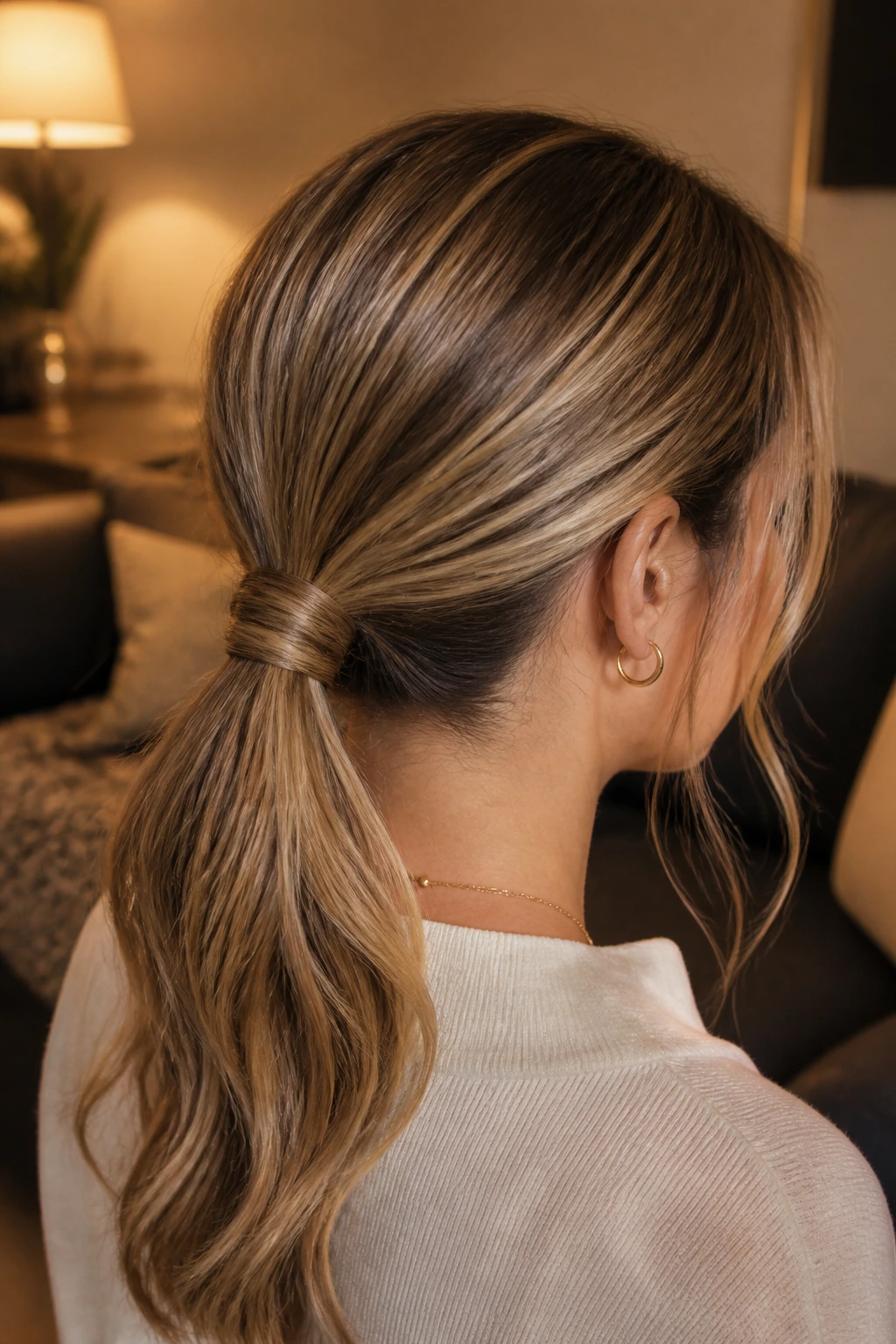
This is the ponytail that looks calm even when your hair is doing a lot. A low pony at the nape, wrapped with a strand of hair around the elastic, gives long hair a neat finish and keeps the whole style from looking like an emergency tie-back.
The key is not pulling the base too tight. Smooth the crown just enough to remove bumps, then secure the pony slightly below the occipital bone. If your layers are slippery, pin the wrapped strand underneath the tail instead of trusting it to hide on its own.
A wrapped low ponytail works especially well with long, blunt hair because the tail drops in one clean line. On layered hair, it looks softer and a little more lived-in, which I happen to like more than an overworked, lacquered finish.
3. Bubble Ponytail
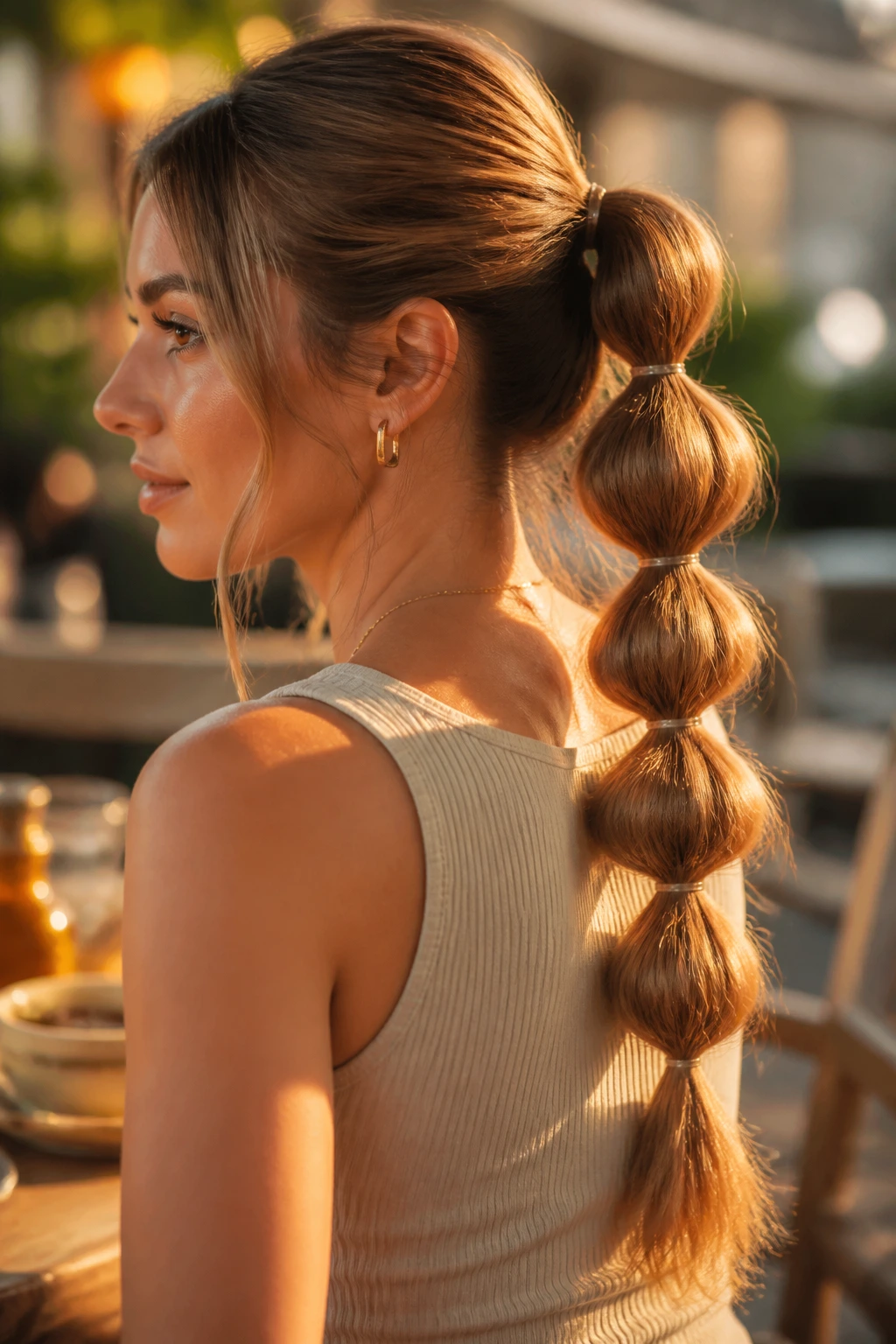
Bubble ponytails look fussy from far away and surprisingly simple up close. That’s why they’re such a good trick for long hair: the length gives you enough real estate to build 4, 5, even 6 evenly spaced sections down the tail.
Use small clear elastics every 2 to 3 inches, starting a few inches below the base. Then gently tug each segment outward until it rounds into a bubble. Don’t yank the same section from the middle, or you’ll flatten one side and make the shape lopsided. A little patience goes a long way here.
Small detail that matters
If your hair is very thick, keep the bubbles slightly wider and the elastics a bit looser. Thin hair does better with tighter spacing and a light mist of texturizing spray so the sections hold their shape.
4. Rope-Braid Ponytail
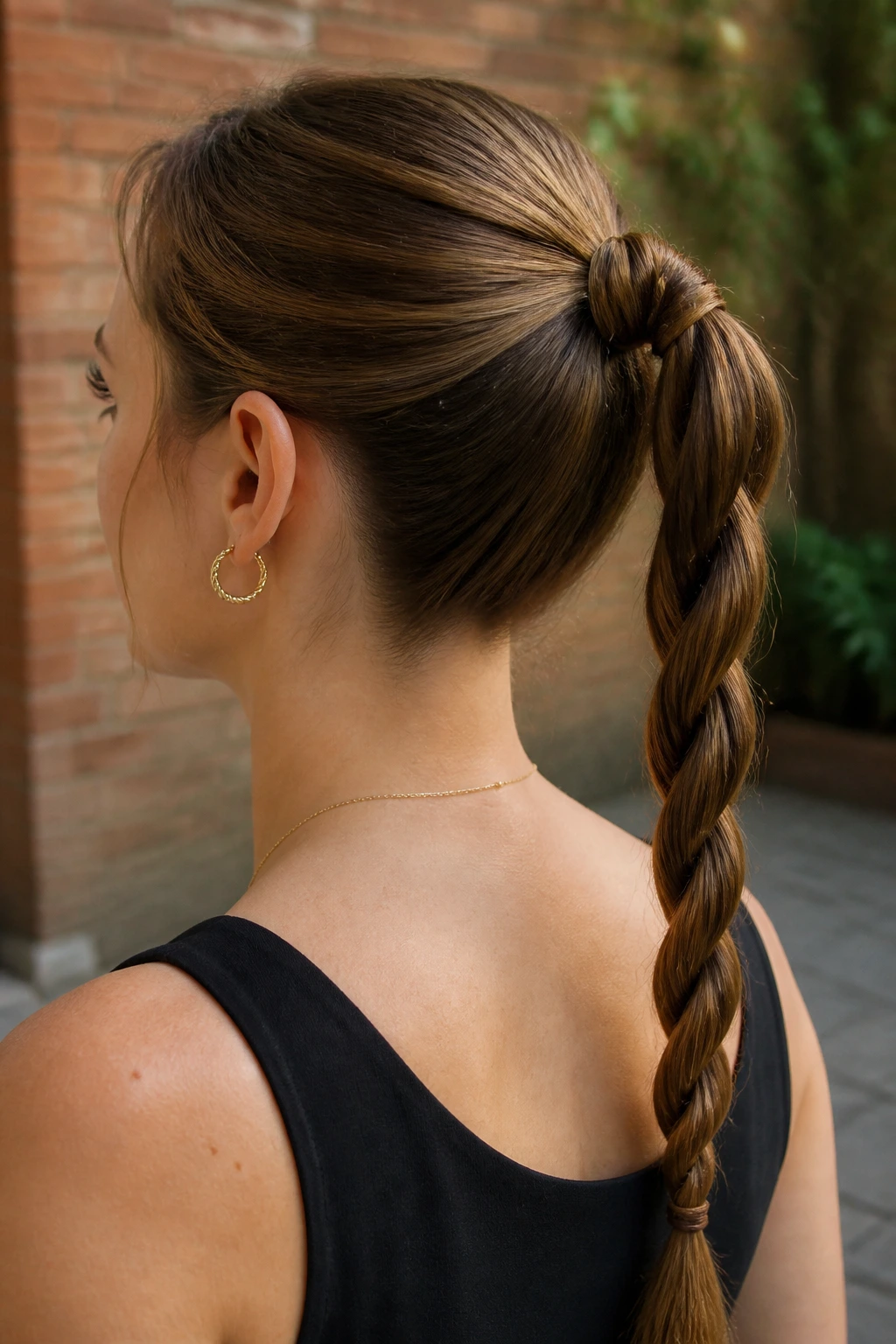
A rope-braid ponytail has this neat twisty texture that reads as deliberate, not stiff. It’s one of the fastest ways to make a simple ponytail feel finished when you don’t want to braid three full sections.
Gather the hair into a mid or low pony, split the tail into two equal pieces, twist both sections in the same direction, then wrap them around each other in the opposite direction. That opposite-direction part is what keeps the rope from unraveling. Secure the end with a small elastic and tug the twists a little to round them out.
I like this style for long hair that holds shape well but frizzes at the ends. The twist gives the tail structure without needing heat. If your hair is layered, a light smoothing cream on the last few inches helps the ends stay tidy instead of sticking out like a broom.
5. Half-Up Ponytail
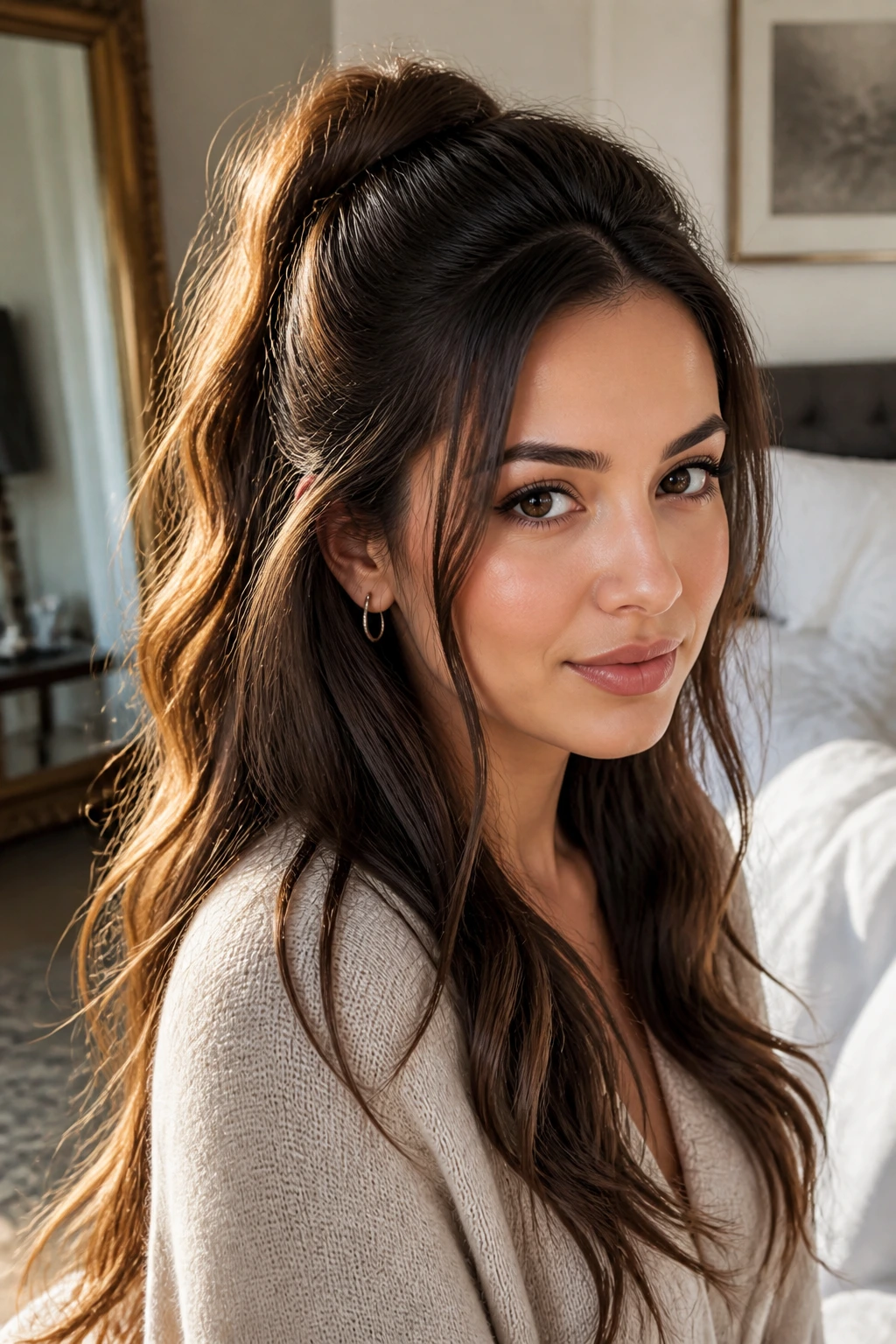
Not everything has to be fully pulled back. A half-up ponytail is one of the smartest long-hair styles because it takes weight off the face while leaving enough length to keep that soft movement people usually want.
The placement is everything. Go too high and it starts to feel juvenile. Go too low and the style loses its point. Aim for the crown area, gather just the top third of the hair, and leave the rest loose with a bit of bend or wave through the lengths.
Best when
- your hair is layered and full of shorter face pieces
- you want height at the crown without a full updo
- second-day waves need a reset without a full wash
If you’re dealing with very thick hair, clip the lower section out of the way first so the top half stays clean while you secure it.
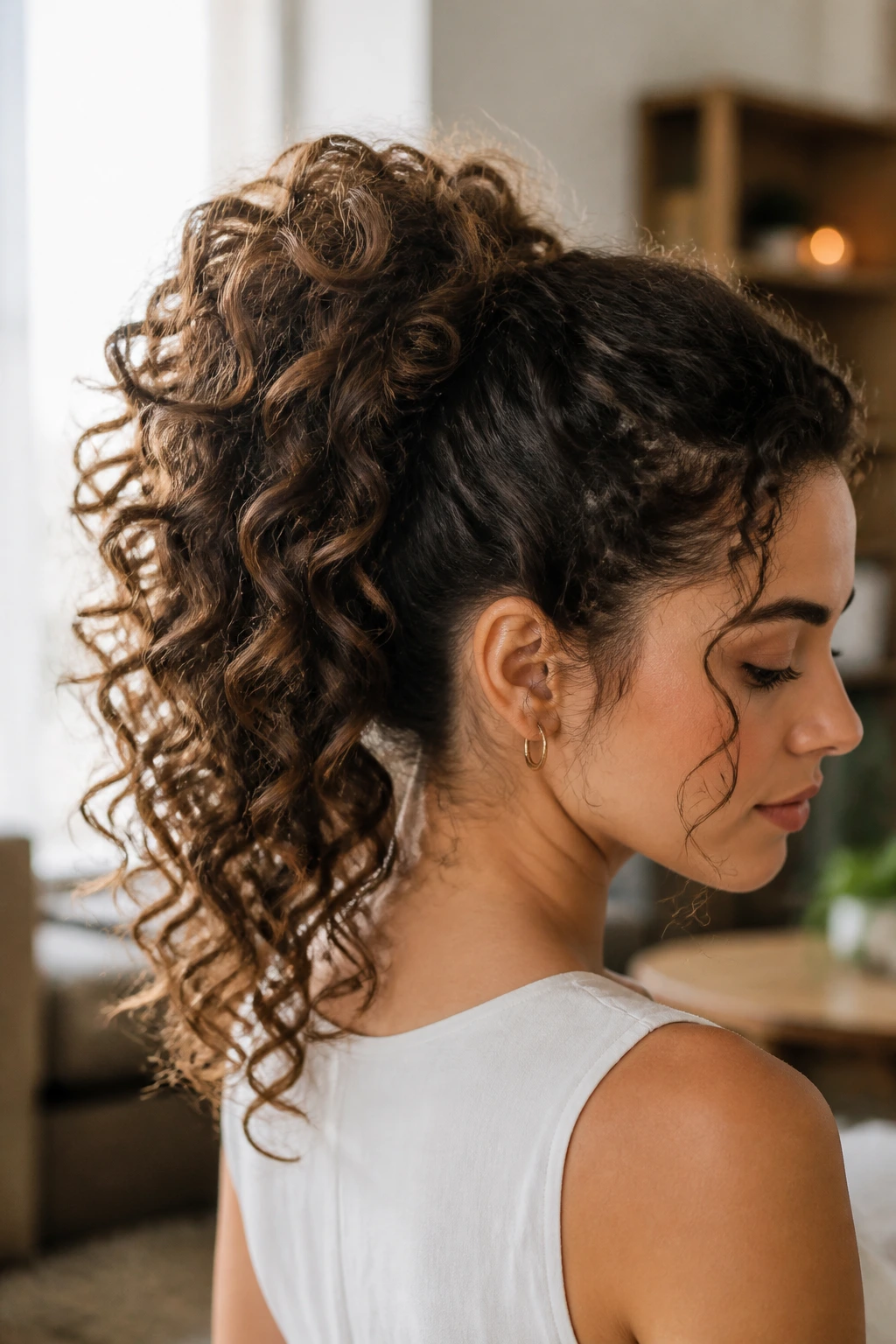
6. Voluminous Curly Ponytail
Curly long hair in a ponytail should never be forced into a flat, tight tail unless that’s the exact look you want. A voluminous ponytail lets the curl pattern do the work, and the result has a much better sense of movement than a stretched-out style.
Start by defining the curls first — not after the ponytail is done. That means a leave-in, a curl cream, or a diffuser, depending on your texture. Gather the hair loosely at the crown or slightly lower, then lift the pony at the base so the curls sit upward instead of dragging down. Leave a couple of front tendrils out if they make the shape look less severe.
This style has a soft, full silhouette that is especially good for long hair with bounce at the ends. If the curl pattern is uneven, scrunch the tail once after securing it and let the shape stay a little imperfect. That’s part of the charm.
7. Side-Swept Ponytail
A side-swept ponytail is the answer when you want long hair to feel romantic but not fussy. Pulling the tail to one side shifts the weight off the centerline, which makes the whole look feel softer and more wearable with dresses, one-shoulder tops, or a structured blouse.
The trick is to keep the part clean. A deep side part gives the style direction, and tucking the base just behind one ear keeps the tail from spreading too wide across the back. If the ends are curly or waved, the shape looks even better because the side placement lets the texture fall forward a bit.
Watch for this
If the pony sits too far in front, it starts to look accidental. Keep it slightly behind the jawline so the side sweep feels intentional and balanced.
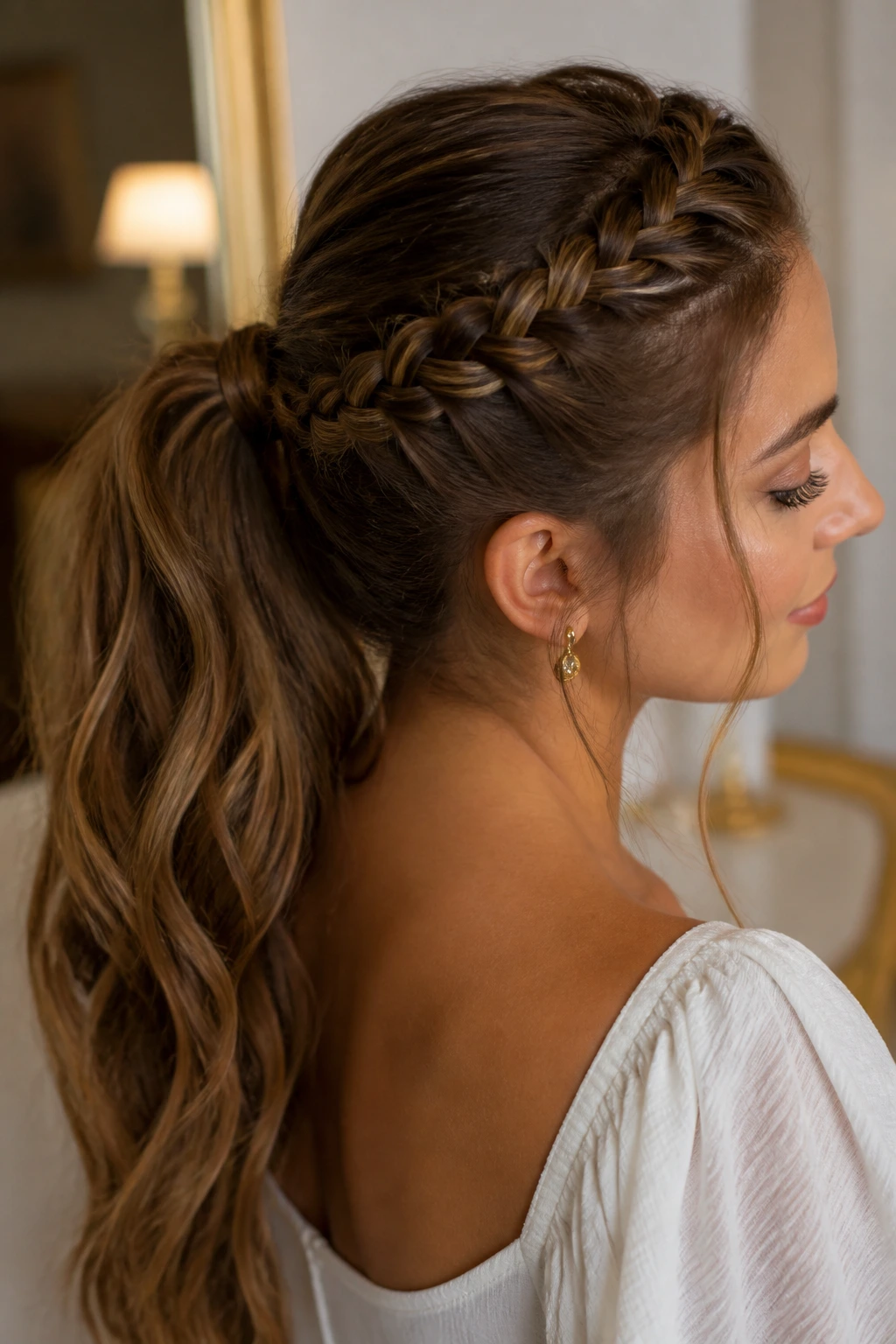
8. Braided Crown Ponytail
This is the style for days when you want a little drama at the front and a simple tail at the back. Braid a section along the hairline — one side or both — and feed that braid into the ponytail base. The front gets texture, the back stays practical, and long hair carries the whole thing with ease.
It works best when the braid is not too tight. A braid pulled hard against the scalp can make the style feel harsh, especially on very long hair where the rest of the pony already carries a lot of visual weight. Keep the braid slightly loose, pancake it gently with your fingers, and let the tail stay clean.
I reach for this one when hair needs to look styled but not overly polished. It plays nicely with a satin ribbon, a small barrette, or a simple wrapped elastic.
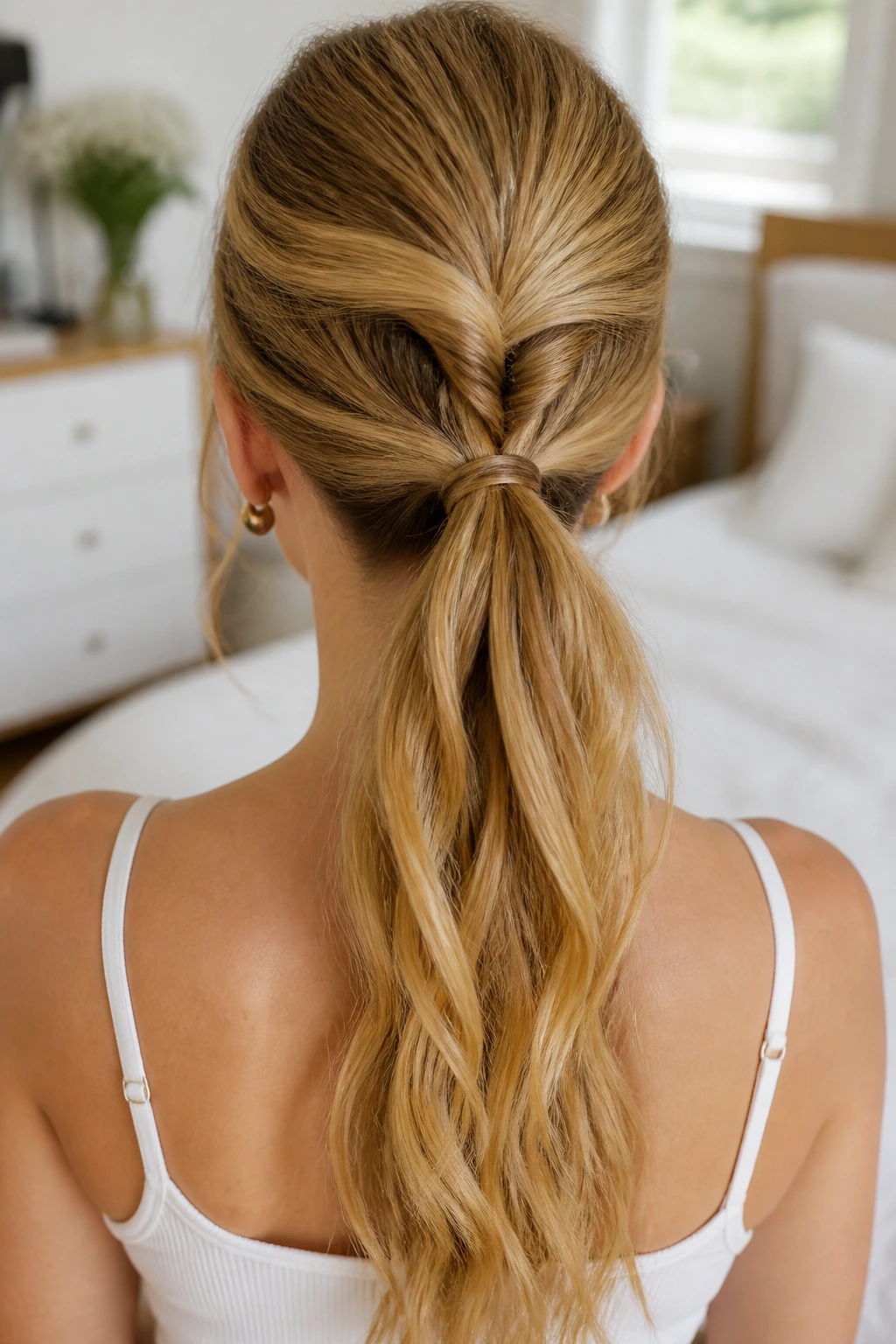
9. Topsy Tail Ponytail
If you grew up seeing this style and forgot about it, it deserves a comeback. The topsy tail ponytail flips the tail through a gap above the elastic, which gives long hair a little twist and makes a basic pony look more structured without extra tools.
Pull the hair into a low or mid pony, split the hair above the elastic, and flip the tail through the opening. That one move creates a gentle knot-like effect at the base. Do it once for a neat look; do it twice if you want more texture. On very smooth hair, a tiny mist of dry texture spray helps the twist stay visible.
There’s something nice about how quick it is. It’s one of those styles that looks like you put in more effort than you did, and for long hair, that’s a pleasant little cheat.
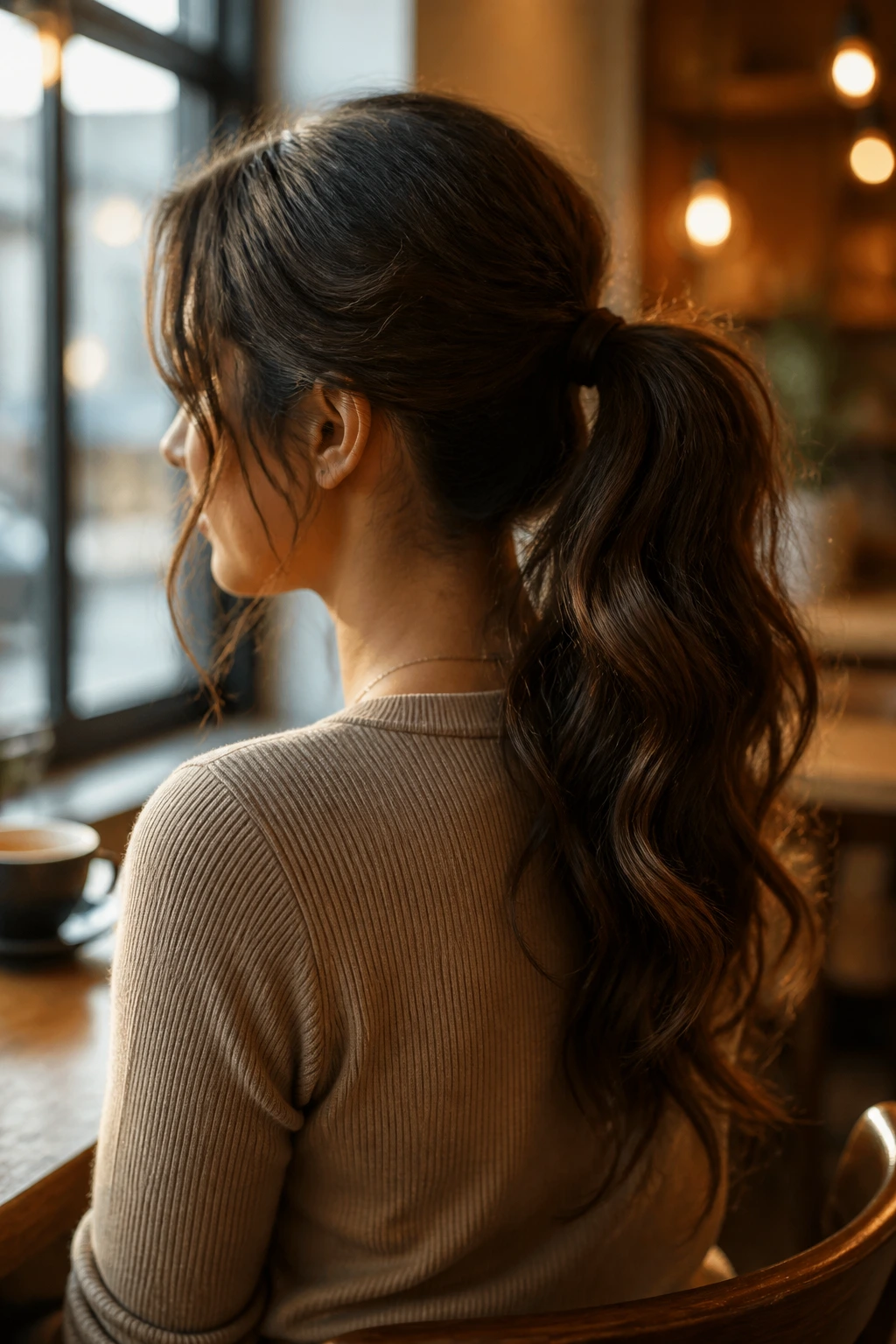
10. Wavy Mid-Height Ponytail
Mid-height ponytails get overlooked because they don’t have the drama of a high pony or the softness of a low one. That’s a mistake. On long hair, a mid-height placement often gives the best balance: enough lift to look intentional, enough drop to keep the length flattering.
The tail looks especially good with loose waves through the lengths. Curl sections with a 1-inch wand, brush them out lightly, and gather the hair at the back of the head where it feels neither too high nor too low. The result has movement from the ear down, which keeps long hair from feeling heavy or pinned in place.
A detail I like: leave the very ends a little straighter than the rest. That tiny contrast gives the tail a more modern shape and keeps it from turning into one giant puff.
11. Sleek Sports Ponytail
The sports ponytail is not only for the gym. On long hair, it can look crisp and sharp when the base is clean and the tail is secured well enough to stay put during an actual busy day.
Use a smoothing gel or a water-based styling cream, brush the hair back in one direction, and anchor it with a snag-free elastic. If the tail is very long and heavy, add a second elastic a few inches below the first to keep the weight from pulling the base loose. That tiny backup makes a difference.
Why it works
The style keeps the line of the head clean and makes thick long hair feel controlled. It also survives movement better than softer styles, which is why it’s useful for errands, walking, travel, or any day that gets a little chaotic.
12. Messy Looped Ponytail
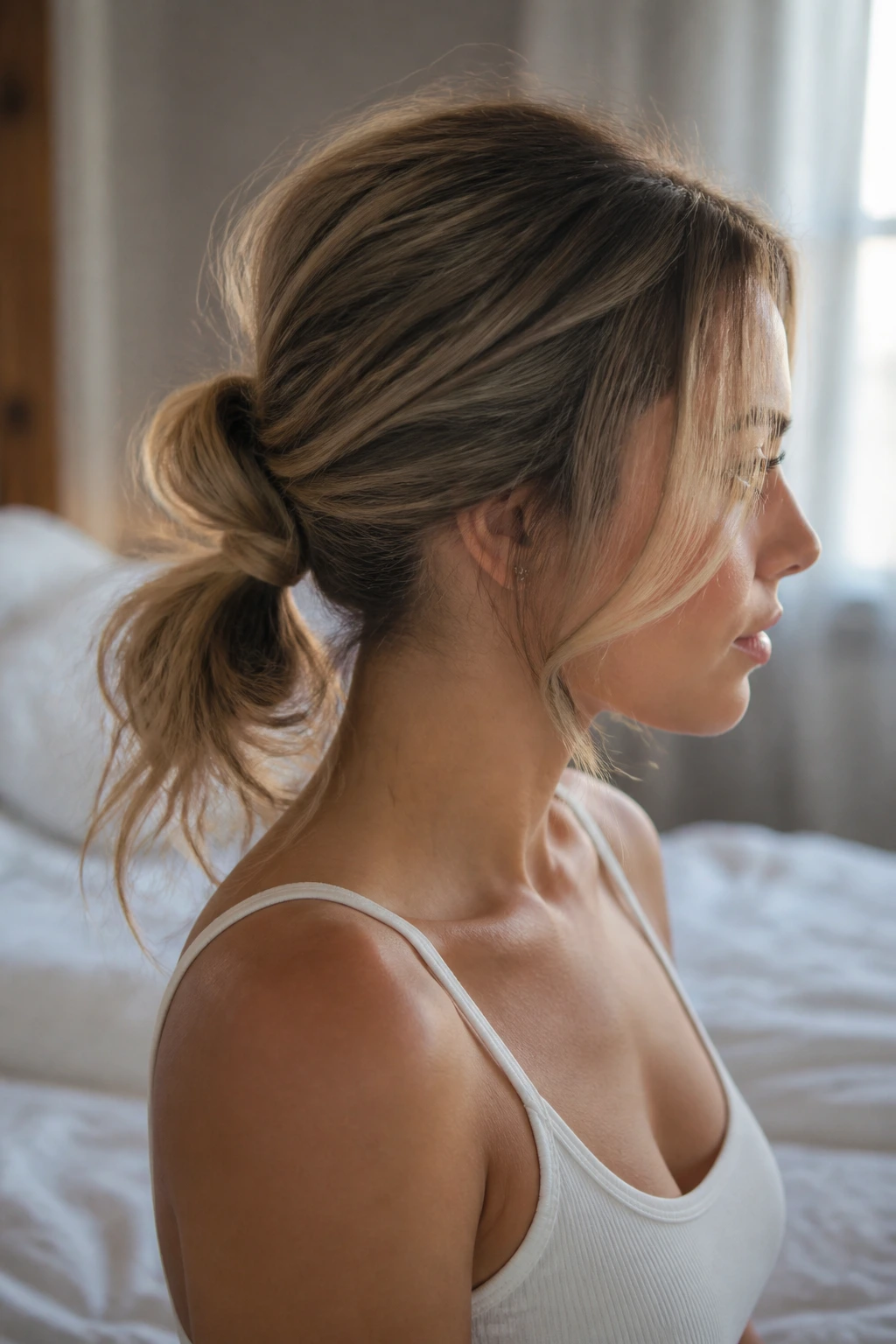
A messy looped ponytail has a relaxed shape that plays well with long hair because the length gives the loop enough body. You don’t want precision here. You want a shape that looks held together on purpose, then softened a little at the edges.
Make a low or mid pony, pull the tail only halfway through the elastic on the last loop, and leave the ends tucked under or draped forward depending on how loose you want it. Then pinch a few pieces around the crown and at the temples so the shape feels less severe. A couple of bent strands around the face help more than a mountain of hairspray ever will.
It’s a good style for second-day hair, especially if the roots are a touch flat and the ends have some texture already.
13. Scarf-Tied Ponytail
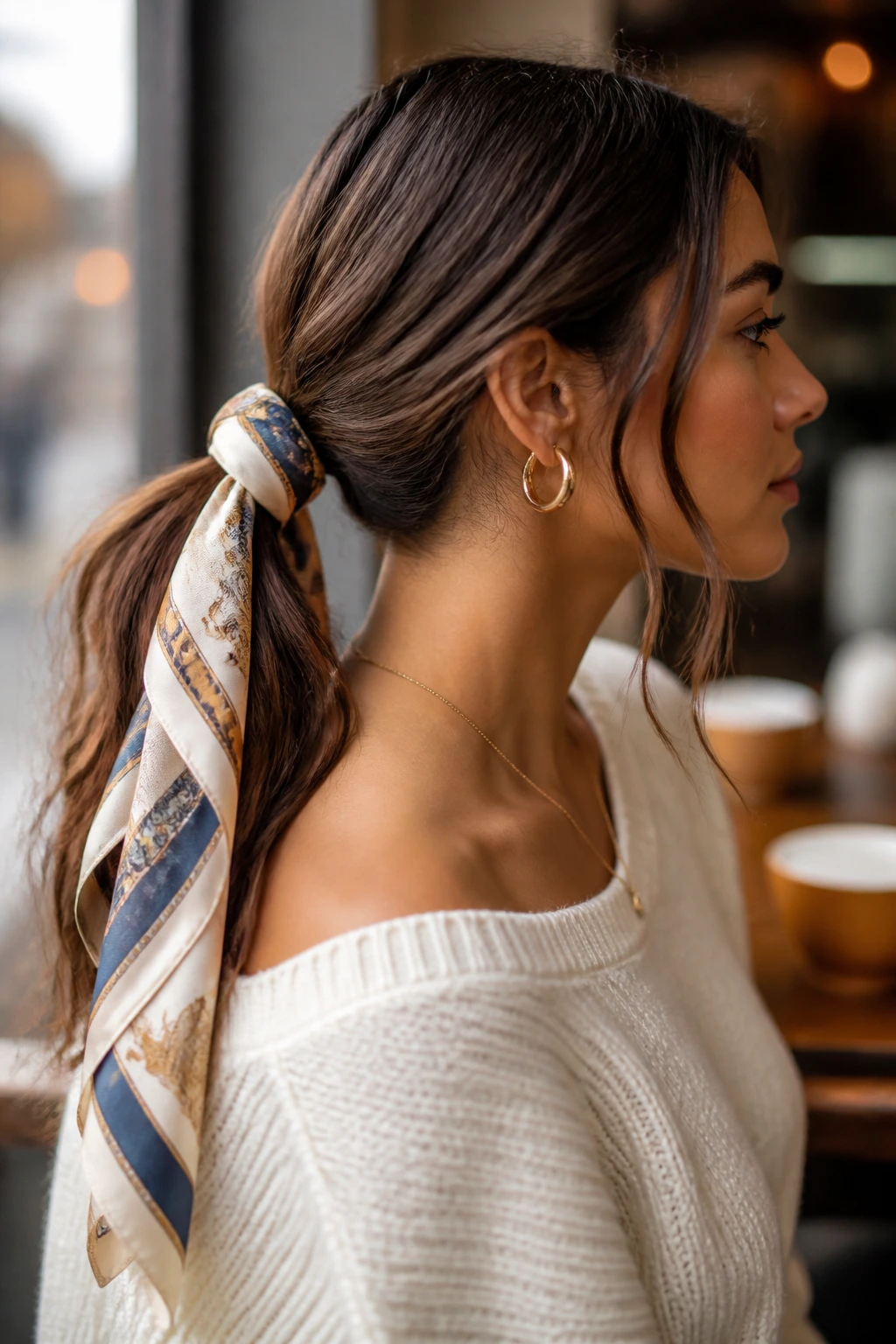
A scarf-tied ponytail changes the whole mood of long hair with one piece of fabric. Silk or satin works best because it glides over the hair instead of catching and fraying the surface, especially at the base where the elastic already does enough damage on its own.
Tie the pony first, then knot the scarf around the elastic and let the ends trail. If the scarf is wide, fold it into a narrow band before tying so it doesn’t swallow the style. I like this best with a low or mid pony because the scarf sits more naturally there than at the crown.
A scarf also helps disguise a less-than-perfect elastic hold. That’s not cheating. That’s styling.
14. Clipped-Back Ponytail
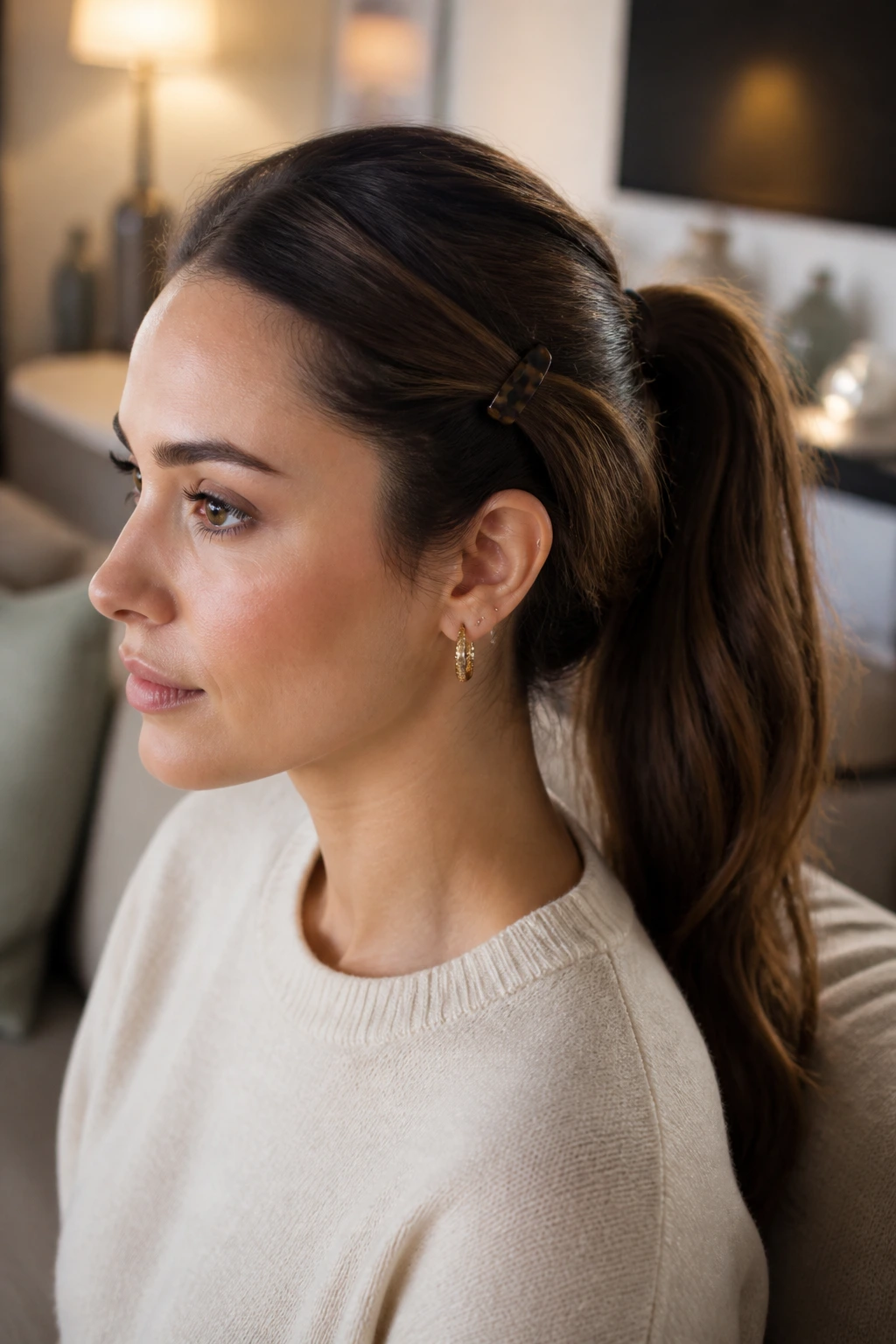
A clipped-back ponytail gives you a little front detail without asking the whole style to do too much. A pair of small barrettes or one strong clip near the temple can redirect the hair line and make a plain ponytail feel dressed up.
Keep the pony itself simple. The clip should be the point, not one extra thing buried in a pile of pins. If your hair is long and thick, flatten only the front sections before clipping them back; leave the tail full so the shape still has weight.
This is a smart choice for days when you want your long hair under control but not fully hidden. It also behaves well with layered cuts because the shorter pieces can be guided back and secured instead of fighting their way out all afternoon.
15. Ponytail with Face-Framing Layers
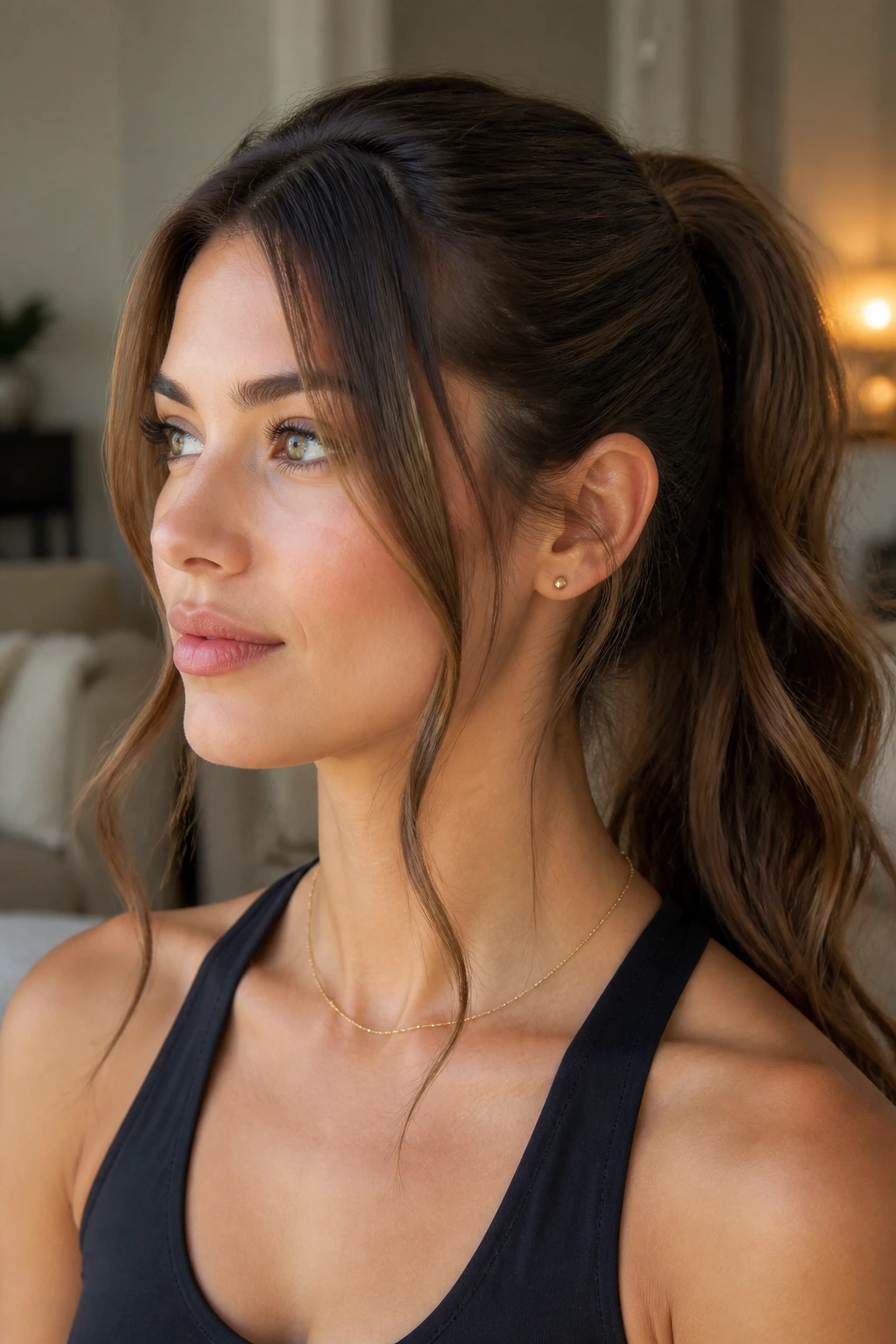
Some ponytails look best when they leave a few things alone. Face-framing layers soften a long ponytail fast, especially if your cut has shorter strands that naturally fall around the cheekbones.
Pull the hair back, but leave out two thin sections near the front. Curl them away from the face or smooth them straight if you want a cleaner line. The tail itself can stay polished or slightly wavy; the face pieces do the softening either way.
Good for
- long layers that disappear when everything is pulled tight
- sharper jawlines that benefit from a little movement around the cheeks
- styles that need to feel less formal
If the front pieces are too thick, the pony can start to look split apart. Keep the face-framing sections narrow and deliberate.
16. Fishtail-Braid Ponytail
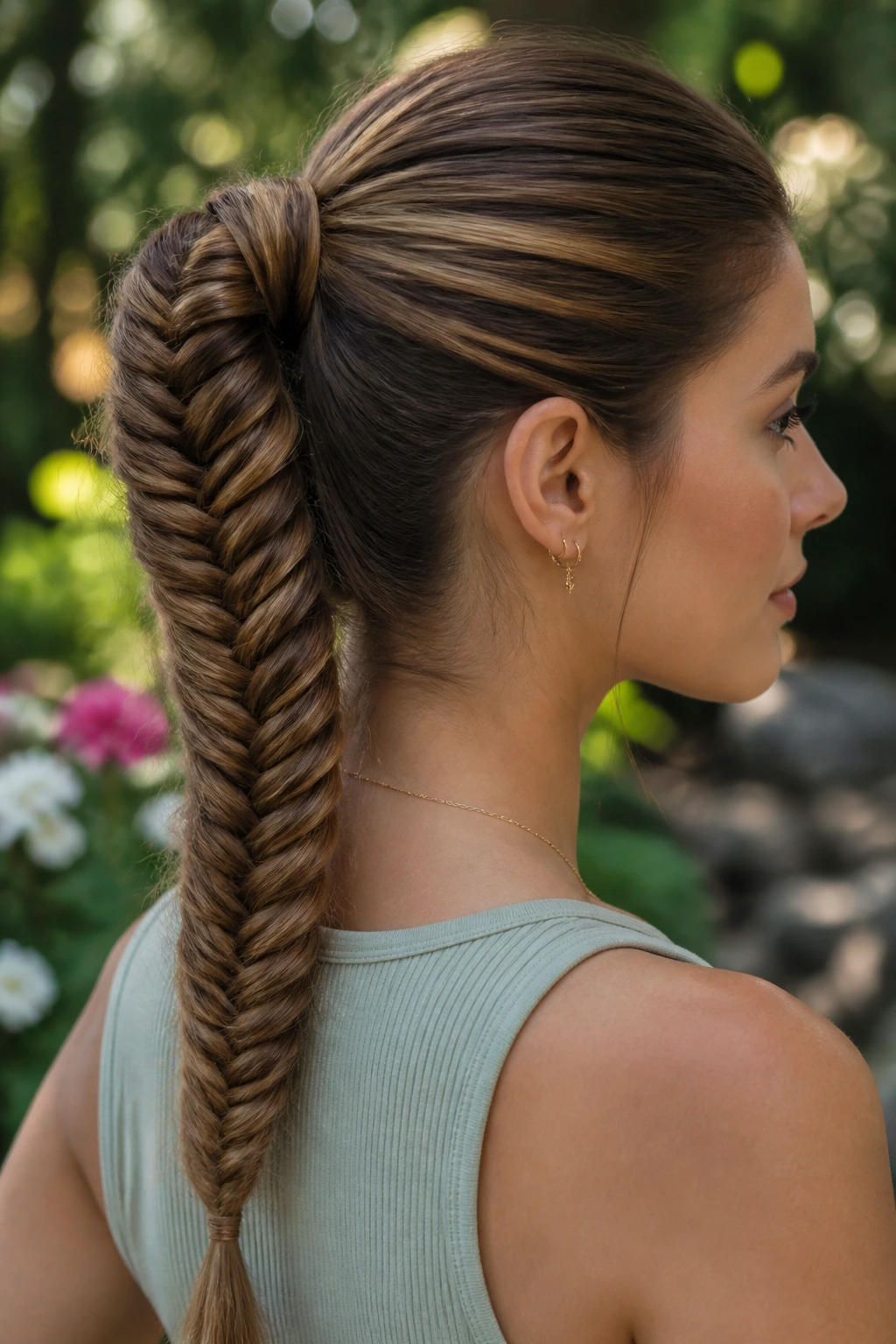
A fishtail-braid ponytail gives long hair a detailed finish that looks more intricate than a standard three-strand braid. It is not the fastest option, but the texture is worth the time if your hair holds braids well.
Gather the hair into a ponytail first, then fishtail the tail all the way down. The braid works best when the sections are thin and even. Once it’s tied off, gently pull the braid apart a little — not enough to wreck the weave, just enough to give it thickness. On very long hair, that pancaked texture looks especially good because the tail has room to spread.
I like this style when I want the pony to be the main event. It does not need extra clips or a scarf. The braid is enough.
17. Twisted Low Ponytail
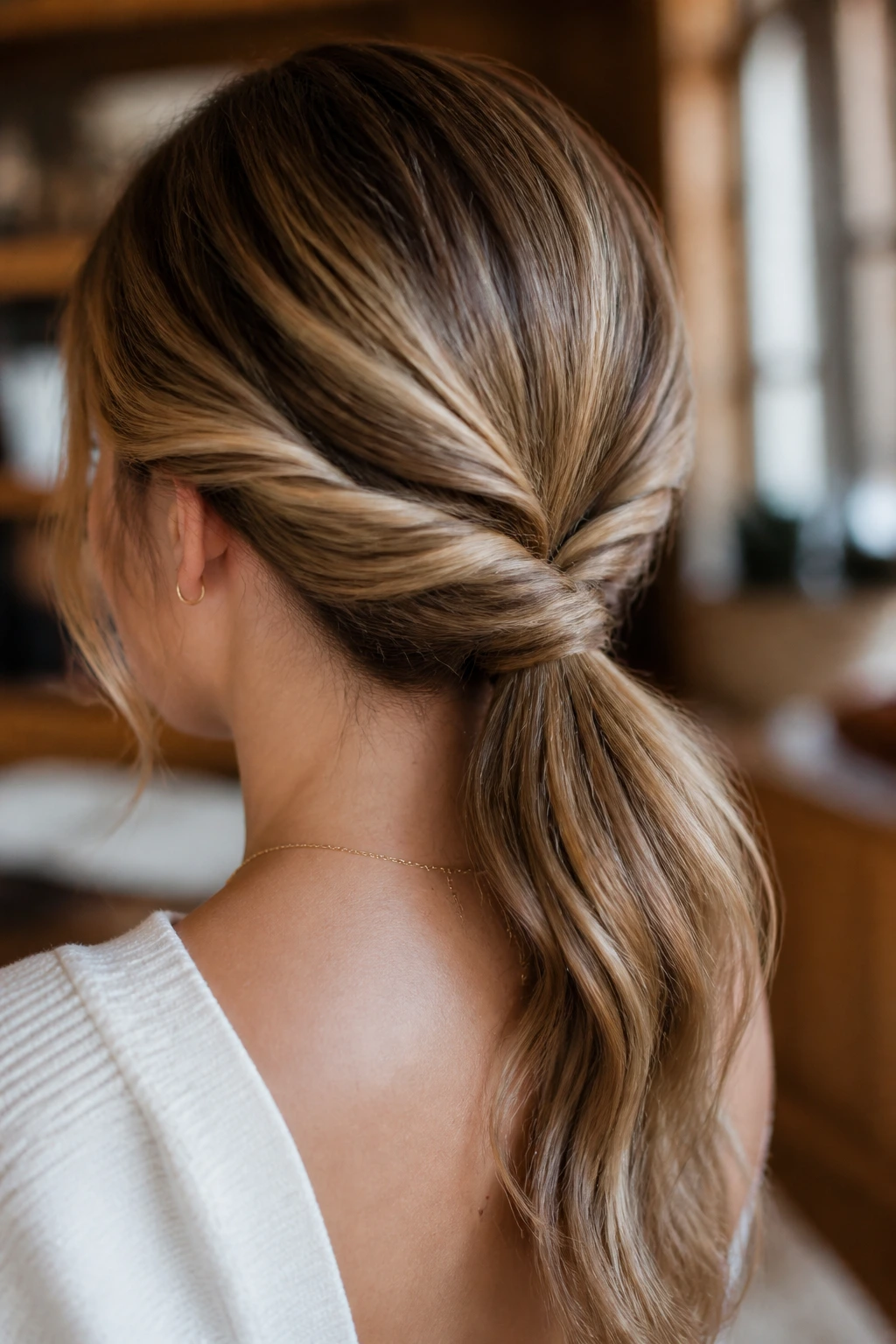
A twisted low ponytail is one of the prettiest ways to handle long hair that wants a softer finish. Instead of relying on one plain elastic, you twist sections from each side toward the nape, then gather them together into the pony base.
The result has a gentle seam running into the tail, which gives the back of the head more shape. It’s a good solution for long hair that feels heavy when pulled straight back, because the twist breaks up the bulk without making the style look busy.
Keep the twists loose if you want it romantic, or tight if you want a cleaner line. A small pin tucked under the base can help the twists stay where they belong.
18. Hidden Underlayer Braid Ponytail
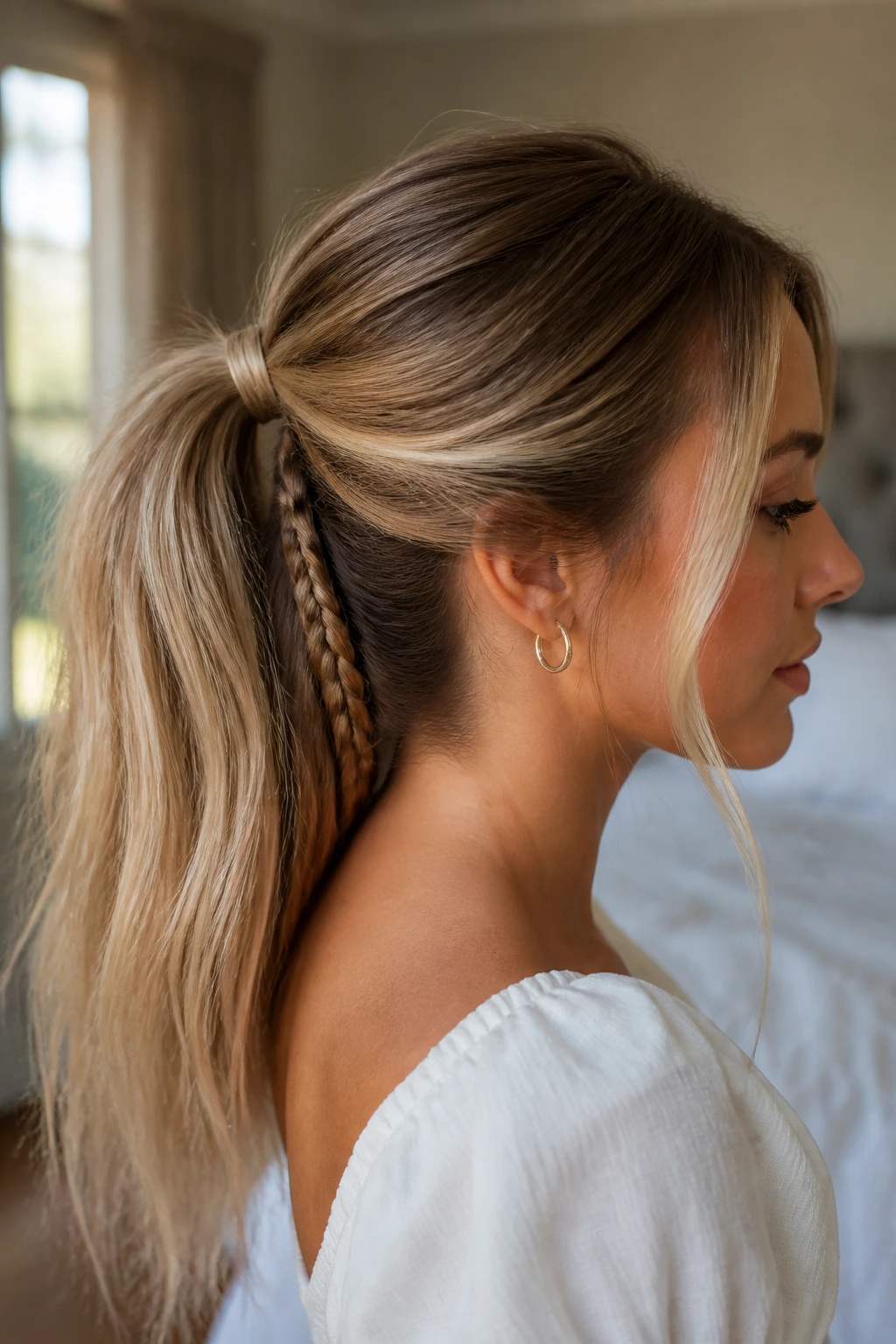
This style is a quiet little trick. Braid a narrow section under the top layer of hair and pull the rest into a ponytail so the braid only peeks out when the tail moves. It gives long hair texture without forcing the whole style into a braid.
The underlayer braid works especially well on one-length cuts, where the tail can look plain if it’s left alone. By keeping the braid underneath, you get a surprise detail from the side and the back, but the front stays smooth.
That hidden bit matters more than people think. It keeps the ponytail from looking flat in profile, and it adds just enough visual break to make the length feel styled rather than simply gathered.
19. High Wrapped Braided Ponytail
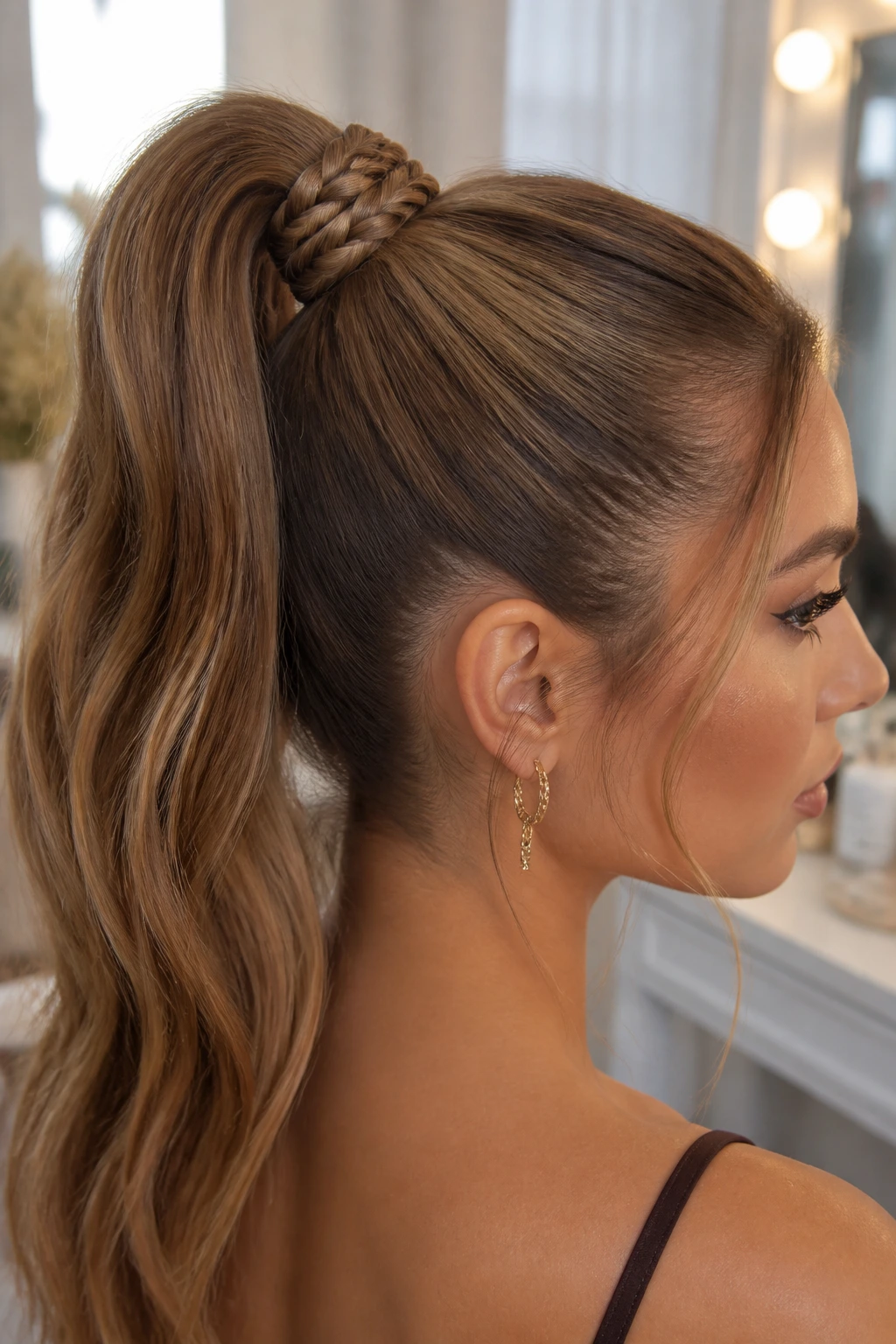
This is the louder cousin of the sleek high ponytail. Start with a high base, braid a strand to wrap around the elastic, and let the rest of the tail stay straight, waved, or even braided again. The lifted placement plus the braid detail makes long hair look fuller at the crown.
It’s one of the best options when you want height without relying on teasing alone. Teasing can work, sure, but the braid wrap gives the style a clear focal point and keeps the base from looking too flat or too polished.
If you have thick hair, this style can handle it. If you have finer hair, keep the braid slim so it doesn’t overpower the pony.
20. Minimalist Ribbon Ponytail
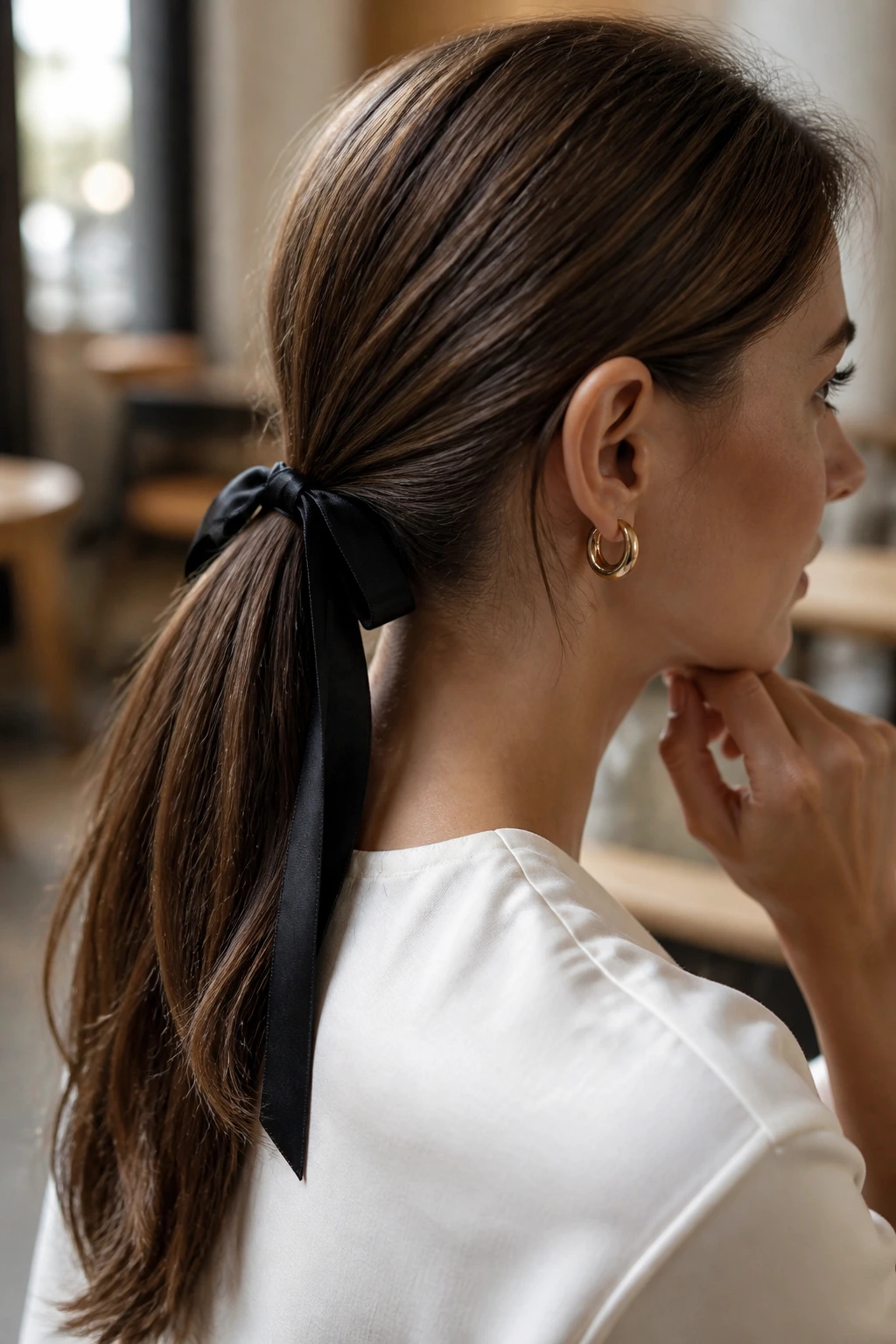
A ribbon ponytail should not look like a gift box unless that’s the point. The best version is restrained: a narrow ribbon tied around the base, with the ends hanging down a few inches to echo the tail.
Choose a ribbon with enough structure to hold a knot. Satin is lovely, but a matte grosgrain ribbon often stays put better and doesn’t slip. Tie it over a clean low ponytail or a mid pony, and let the ribbon color either match the outfit or intentionally clash with it.
I like this style because it’s low effort and high return. One piece of ribbon changes the whole read of the hair.
21. Soft Glam Ponytail with Waves
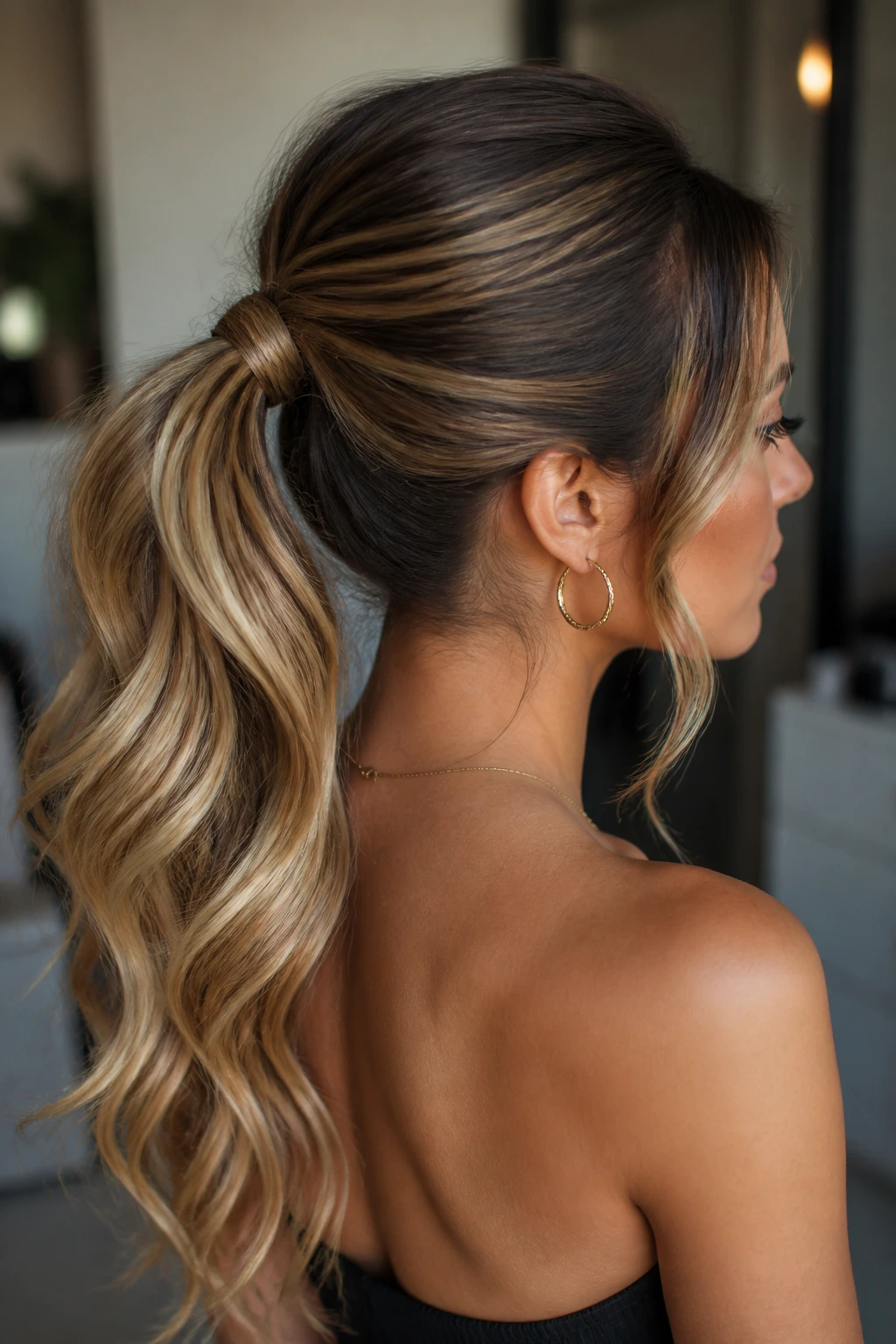
Soft glam ponytails look best when the crown is smooth and the tail has bent, brushed-out waves through the lengths. That contrast — sleek up top, soft down below — is what makes the style feel dressed up instead of plain.
Start by curling the tail in 1-inch sections, then brush through once so the waves join together. Secure the pony at a height that flatters your face, usually just above the nape line or at mid-height, and wrap a small strand around the elastic so the finish is clean. A light mist of flexible hairspray keeps the waves from falling into a limp rope.
This is the ponytail I’d choose for a dinner out, a formal event, or any time you want long hair to look expensive without turning it into a full updo.
22. Cuffed Ponytail
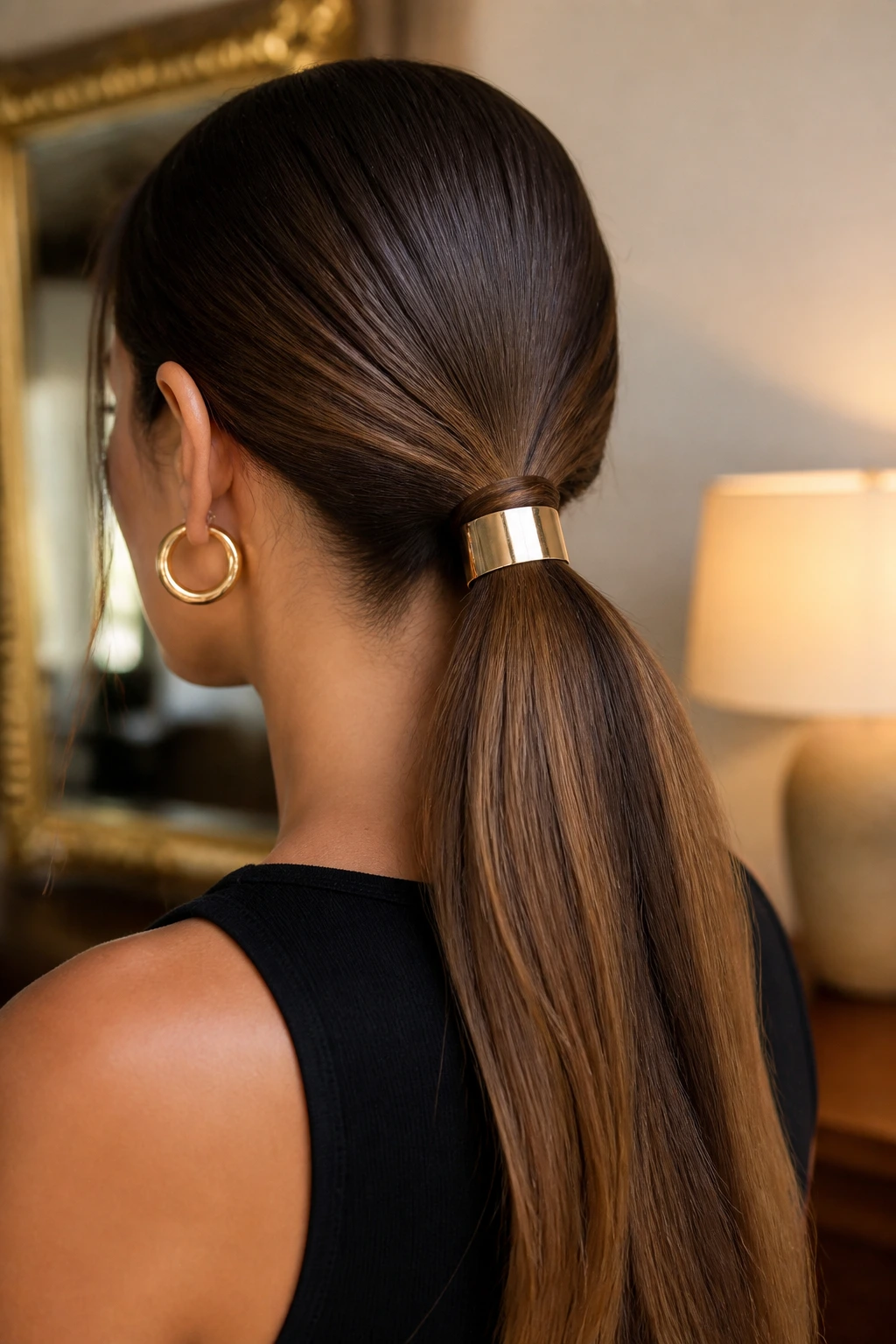
A cuffed ponytail is the no-nonsense answer to long hair that needs a bit of hardware to hold its place. The cuff slides over the elastic and makes the base look like part of the style instead of something you tried to hide.
Keep the pony smooth before adding the cuff. If the base is bumpy, the metal accent just draws attention to the mess. A low or mid-height placement tends to work best because the cuff sits more naturally there, but a high cuffed pony can look striking if the hair is thick enough to support it.
What makes it work
The cuff adds structure. It gives the eye one clear point to land on, which helps long hair feel organized. If you want a ponytail that reads as intentional in one glance, this is a strong choice.
Why Long Hair Changes the Ponytail Game
Long hair is not just “more hair.” It’s more weight at the ends, more drag on the base, more chance for the elastic to slip, and more visible shape when something goes wrong. A tiny bump near the crown barely matters on chin-length hair. On waist-length hair, that same bump looks like a roofline.
That’s why ponytail styles for long hair need a base plan. The first decision is height. The second is tension. The third is what you do with the tail so it doesn’t hang there like dead weight. A good ponytail should feel anchored without squeezing your scalp into regret.
Long hair also gives you a chance to use texture with purpose. Braids get longer, waves show more movement, and wrapped sections have room to make sense. A style that would look too small on shorter hair can finally breathe here. That’s the payoff.
The Tools That Keep These Styles Clean
- Tail comb: the pointed end makes clean parts and helps section the hair without wrecking the shape.
- Boar-bristle brush: best for smoothing the crown and sides into sleek ponytails.
- Snag-free elastics: the plain, coated kind grip better and snag less than cheap rubber bands.
- Clear mini elastics: useful for bubble ponytails, rope braids, and hidden sectioning.
- Bobby pins: keep wrapped strands, twists, and loose layers in place.
- Sectioning clips: make styling easier when you’re braiding or curling before gathering the pony.
- Texturizing spray: helps waves, braids, and bubbles hold shape instead of collapsing.
- Smoothing cream or lightweight gel: useful for polished bases; use a small amount or it gets greasy fast.
- Hairspray with flexible hold: better than crunchy spray if you want movement in the tail.
- 1-inch curling iron or wand: a sweet spot for long hair because it creates bend without making the tail too barrel-shaped.
- Silk or satin scarf: optional, but handy for adding color and reducing friction around the base.
Choosing the Right Products for Your Hair Type
Fine hair needs less product than people think. A little mousse at the roots, a light texturizing spray, and one coat of flexible hairspray usually beat a heavy cream that drags the whole pony down by noon. If your strands are fine and slippery, prioritize grip over shine.
Thick or coarse hair needs the opposite kind of help. A smoothing cream or gel on the top layer, plus a strong elastic, makes the base behave. I’d rather use two slim elastics than one giant one that stretches and gives up. For extra-thick hair, wide elastics can reduce the pressure at the tie point.
Curly hair needs moisture first, control second. A leave-in conditioner or curl cream on damp hair, followed by a soft brush or denman-style smoothing, gives the ponytail a cleaner outline. Skipping the prep and trying to force curls into submission is usually how frizz starts. And once frizz starts, it spreads.
How to Wear These Ponytails
Presentation: Keep the ponytail’s placement tied to the neckline. High ponytails sharpen a crew neck or strapless top, while low wrapped ponytails sit better with collars, turtlenecks, and button-front shirts. If the outfit is busy, let the hair stay simpler; if the outfit is plain, let the ponytail carry the detail.
Accompaniments: Hoops, studs, scarf ties, barrettes, and a good side part can change the whole read of the style. A sleek pony loves clean lines. A bubble pony wants a little texture in the outfit, maybe denim or a knit with structure. Braided styles pair well with a softer makeup look because they already bring visual detail.
Portions: For very long hair, keep the ponytail balanced with the length of your tail. A tiny base and a huge tail can look lopsided, so use a strong anchor and don’t be afraid of a second elastic for support. If your hair is shoulder-to-mid-back length, some of the more complex tail styles may look shorter and tighter, which is fine — just adjust the spacing and don’t force the shape.
Beverage Pairing: A clean high pony feels right with coffee in hand; a low ribbon pony suits sparkling water or a tea cup at a slow brunch; a soft glam wave pony has no problem standing next to a dry spritz or a cold mocktail when the setting asks for something more dressed up.
Additional Tips and Finishers
Smoothing Trick: For sleeker styles, mist a fine-tooth comb with hairspray and comb the surface layer instead of spraying the whole head. You get control at the top without turning the tail stiff.
Volume Trick: If the pony feels too thin, pull the crown upward slightly after securing it, then pinch the tail at two or three points to break up the straight line. Long hair looks fuller when the silhouette changes a little.
Customization: Add a braid, a ribbon, or a cuff only after the base is secure. People often start decorating too early and end up fighting their own accessories while the pony loosens.
Make-It-Yours: If you like low-tension styles, use a satin scrunchie and a loose wrapped base. If you want more grip, rough-dry the roots first with a bit of mousse and a blow-dryer nozzle. If your hair is curly, preserve the pattern instead of brushing it flat unless the style really needs a sleek finish.
Common Mistakes to Avoid

Pulling the elastic too tight at the front: If the temples ache by lunchtime, the pony is too tense. The fix is a firmer elastic at the base, not more force at the hairline.
Placing the pony in the wrong spot for the hair weight: Long hair pulls down hard. A pony that starts too low can collapse fast, while one that’s too high may wobble if the base isn’t anchored well. Check the mirror from the side before you commit.
Using too much oil or serum: A glossy look turns greasy fast when the tail is long and heavy. Put shine products only on the mid-lengths and ends, and keep them away from the scalp.
Skipping sectioning before braiding or twisting: When long hair isn’t divided cleanly, braids come out lumpy and twists slip apart. Use clips. Five seconds of sectioning saves ten minutes of redoing.
Forgetting the second anchor: Heavy hair often needs a backup elastic a few inches below the first one, especially in high or sports styles. One elastic can hold, then slide, then ruin the whole shape in under an hour.
Variations and Adaptations to Try
Low-Tension Everyday Version: Use a soft scrunchie, skip the tight smoothing, and keep the pony at the nape. This works when you want long hair controlled without that pulled-back feeling at the temples.
Glossy Event Version: Add a smoothing cream, straighten the tail, and wrap the base with a strand or a ribbon. The surface reads cleaner under indoor light and photographs with a sharper outline.
Texture-First Version: Mist dry shampoo or texturizing spray through the roots, braid or wave the tail, and loosen the sections a little. This is the easiest path for second-day hair that needs body.
Curly-Respecting Version: Keep curls defined, gather them gently, and leave the front shape soft. A diffuser and a satin scrunchie make this version much kinder to the hair than aggressive brushing.
Office-Neat Version: Choose a low wrapped pony, a center part, and one small accessory only. It stays tidy under jackets and doesn’t fight with collars or headphones.
Keeping a Ponytail Fresh All Day and Night
A ponytail lasts longer when you treat the base like the part that matters most. If it starts to loosen, don’t keep yanking the same elastic tighter and tighter. Re-secure it. That tiny reset protects the hairline and usually makes the style look cleaner anyway.
At the end of the day, take the elastic out gently. Don’t rip it downward through the tail. If you slept in the ponytail — not ideal, but it happens — loosen it before bed or shift it to a lower, looser placement so the scalp gets a break. For repeated ponytail days, vary the placement: high one day, low the next, side-swept after that. Same spot, every day, is how breakage sneaks up on people.
For refreshing the next morning, a quick brush at the roots, a mist of water or leave-in on the ends, and a fresh elastic can bring the style back to life. If the tail looks tired, re-wave the last half with a curling iron or twist it into a rope braid and call it intentional.
Questions People Ask Before Trying These Styles
How do I make a long ponytail look fuller?
Start by lifting the base slightly after you secure it, then tease only the underside at the crown if you need more height. A loose braid, bubble sections, or brushed-out waves in the tail also make the hair look thicker without adding fake pieces.
What elastic works best for thick long hair?
A strong snag-free elastic or a coil-style tie usually handles the weight better than a thin rubber band. If the pony is high or very heavy, use two elastics stacked together so the base doesn’t slide by the middle of the day.
Can these styles work on layered hair?
Yes, but layered hair needs a little strategy. Keep short front pieces under control with pins, leave a few face-framing strands out when the style asks for softness, and use texturizing spray so the layers don’t slip out of the base.
Why does my ponytail keep sagging?
Usually it’s one of three things: the base is too low, the elastic is too weak, or the hair was too silky to hold onto itself. A second anchor elastic, a little root texture, or a better placement point usually fixes it.
What if my hair gets frizzy after smoothing it back?
Use a tiny amount of cream on the surface only, then brush with a boar-bristle brush. If the ends puff out later, smooth just the tail with a serum instead of redoing the whole pony and making it greasy.
Are high ponytails bad for the hairline?
Not if you wear them with some common sense. The trouble comes from constant tension in the same spot. Alternate placements, avoid yanking the elastic too tight, and don’t sleep in a high ponytail every night.
Can I do these styles without heat?
Absolutely. Bubble ponytails, rope braids, wrapped low ponies, topsy tails, and scarf styles all work without curling or straightening. A little texture spray helps, but heat is not required.
Which styles work best for a formal event?
Soft glam waves, a sleek high ponytail, a wrapped low ponytail, and the braided crown version usually read the most dressed up. Add a ribbon, cuff, or pearl pin only after the base is secure; that’s where the style starts to look finished instead of decorated.
A Ponytail That Holds Its Own
Long hair can do more than hang there. It can look sharp, soft, playful, polished, or slightly undone on purpose — sometimes all in the same week. The trick is matching the style to the weight of the hair and giving the base enough structure to support the tail instead of pretending gravity isn’t involved.
The best ponytail styles for long hair don’t fight the length. They use it. A braided tail can carry detail. A wrapped low pony can calm a busy outfit. A high sleek style can make long hair feel modern instead of heavy. Once you start treating the elastic as the start of the style, not the end of it, the options open up fast.
Try one style that feels a little outside your usual habit. The right ponytail has a funny way of becoming the one you reach for again.
