



Some mornings, the mirror is not generous. The front pieces are doing their own little revolt, the ends have gone dry at the neck, and a plain ponytail feels a little too casual for a day full of meetings, camera checks, and people leaning over your desk. The best updos for work solve that problem fast: they make hair look deliberate, keep it off your face, and don’t ask for salon-level patience before coffee.
I’ve always liked work hair that looks calm from across the room and sturdy up close. A good office style should survive a coat collar, a commute, a laptop marathon, and that one humid stretch between lunch and the next email you wish you didn’t have to answer. When a style does all of that, it earns its place in the rotation.
A lot of people get stuck on two extremes: either the hair is so tight it feels like a headache waiting to happen, or it’s so loose that it starts collapsing before the day is done. The sweet spot is somewhere in the middle. The styles below lean polished, practical, and wearable, but they still leave room for texture, face shape, hair length, and the reality that not every office wants the same level of sleek.
Why These Updos Work Better Than a Default Ponytail
-
They hold shape without constant fuss: A pinned bun or wrapped ponytail usually survives longer than a simple elastic-only ponytail, especially if your hair is slippery or fine.
-
They fit more dress codes: These styles can look crisp enough for client meetings and soft enough for everyday desk work, which means you are not changing your hair personality every morning.
-
They play nicely with second-day hair: Slightly lived-in hair gives most of these styles better grip, so you can skip a full wash and still look put together.
-
They work with different textures: Straight, wavy, curly, and coily hair all get a place here, which matters more than people admit.
-
They save time in the morning: Once you learn two or three of these, you can build them without standing in front of the mirror for fifteen minutes.
-
They keep the focus on your face: A clean nape, a tucked bun, or a wrapped ponytail frames features in a way that feels intentional, not fussy.
1. Low Twisted Chignon
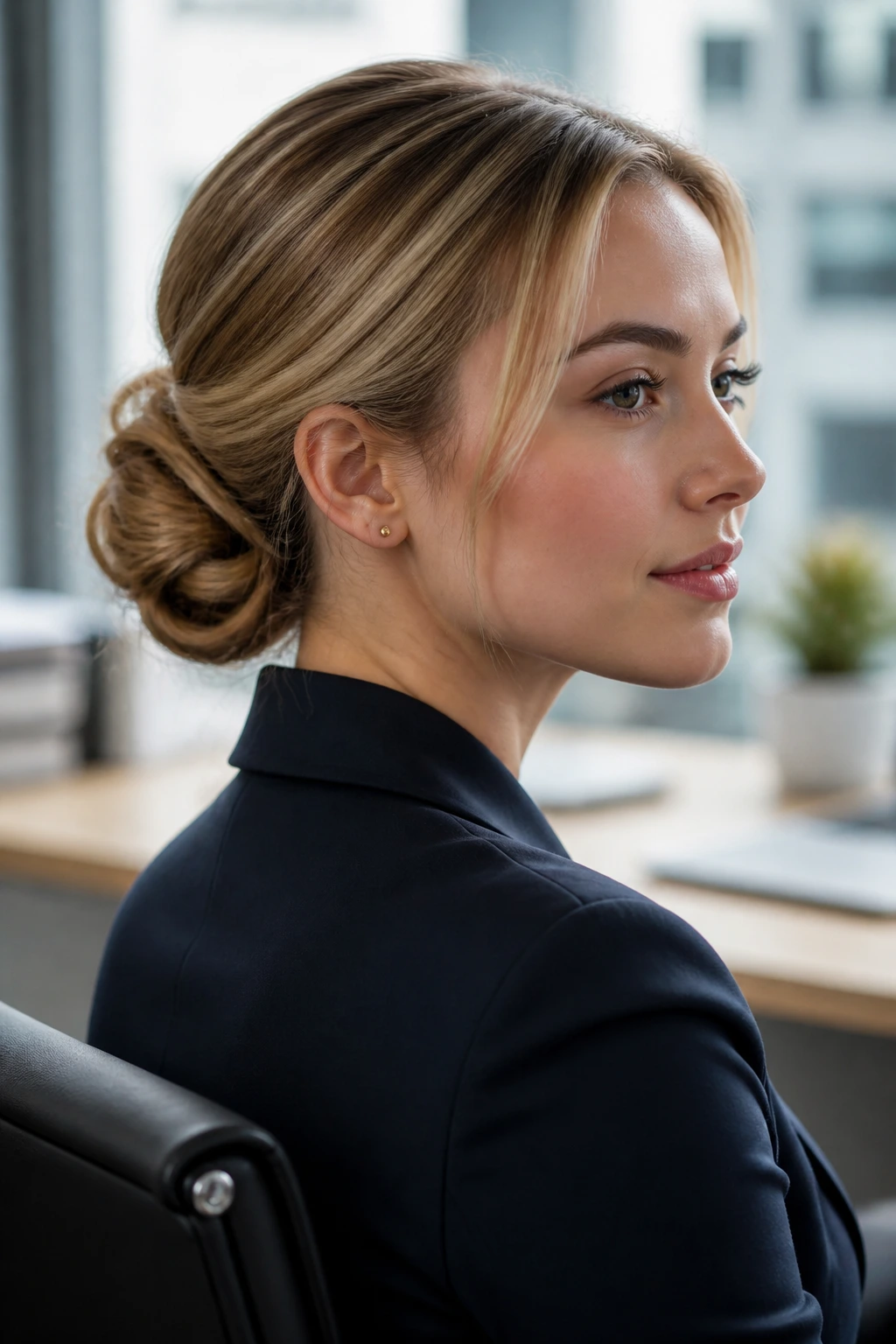
A low twisted chignon is the kind of style that quietly fixes the whole look. It sits at the nape, keeps the neck area neat, and works especially well with blazers, collared shirts, and anything with a little structure. I like it because it never feels overbuilt.
Twist two sections back from each side, coil them into a small bun, and pin across the twist line so the style feels locked in instead of stuffed with random bobby pins. A little texture spray at the roots helps fine hair hold the shape.
2. Center-Part Sleek Bun
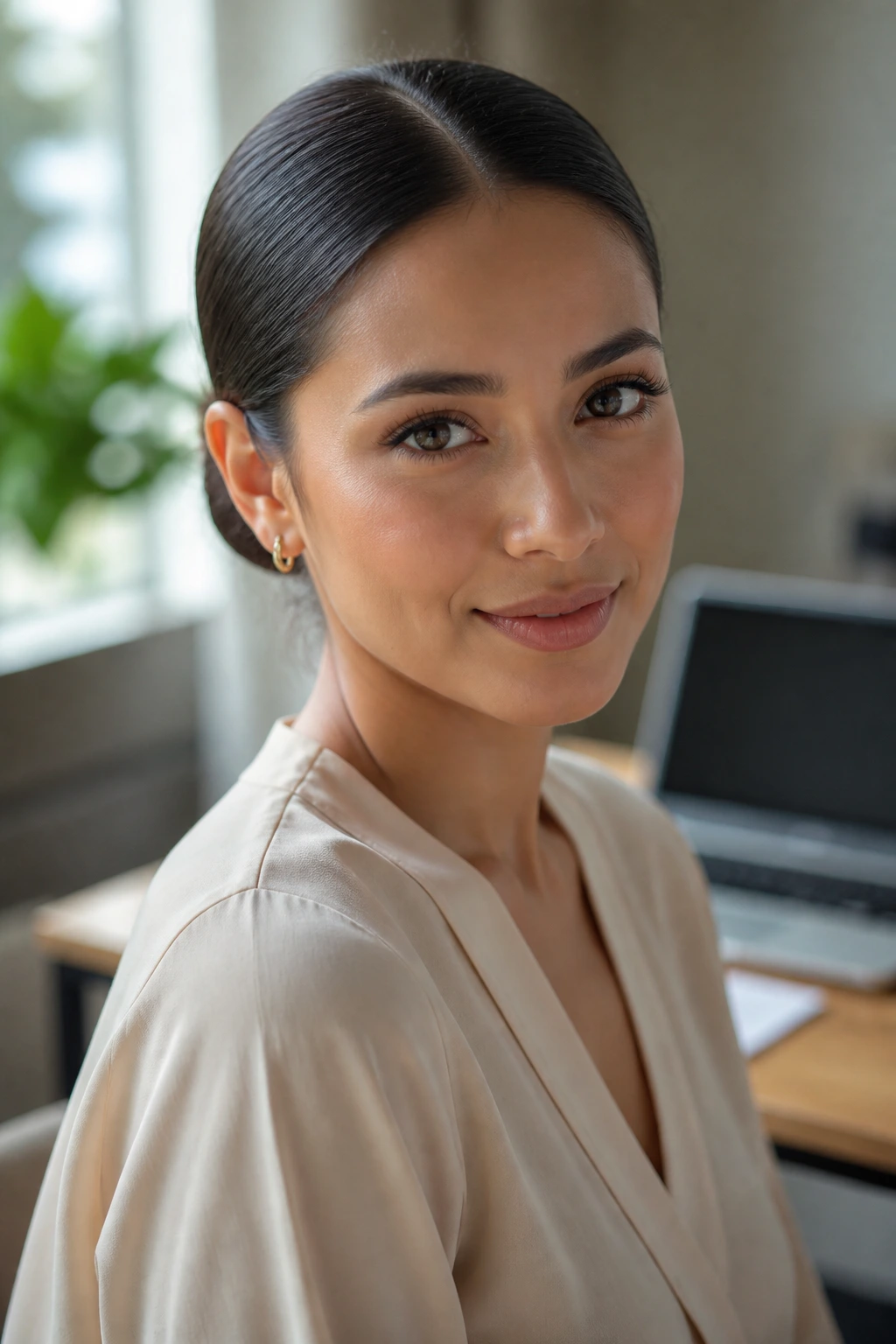
Need something that looks sharp from the front and stays out of your way all day? This is the one. A clean center part and a smooth low bun make the face look polished in a way that works for interviews, presentations, and days when you want zero distraction.
Use a boar bristle brush and a touch of lightweight gel or styling cream to smooth the crown before you gather the hair. The bun itself can stay compact and simple; the part does most of the work.
3. French Twist With Soft Crown
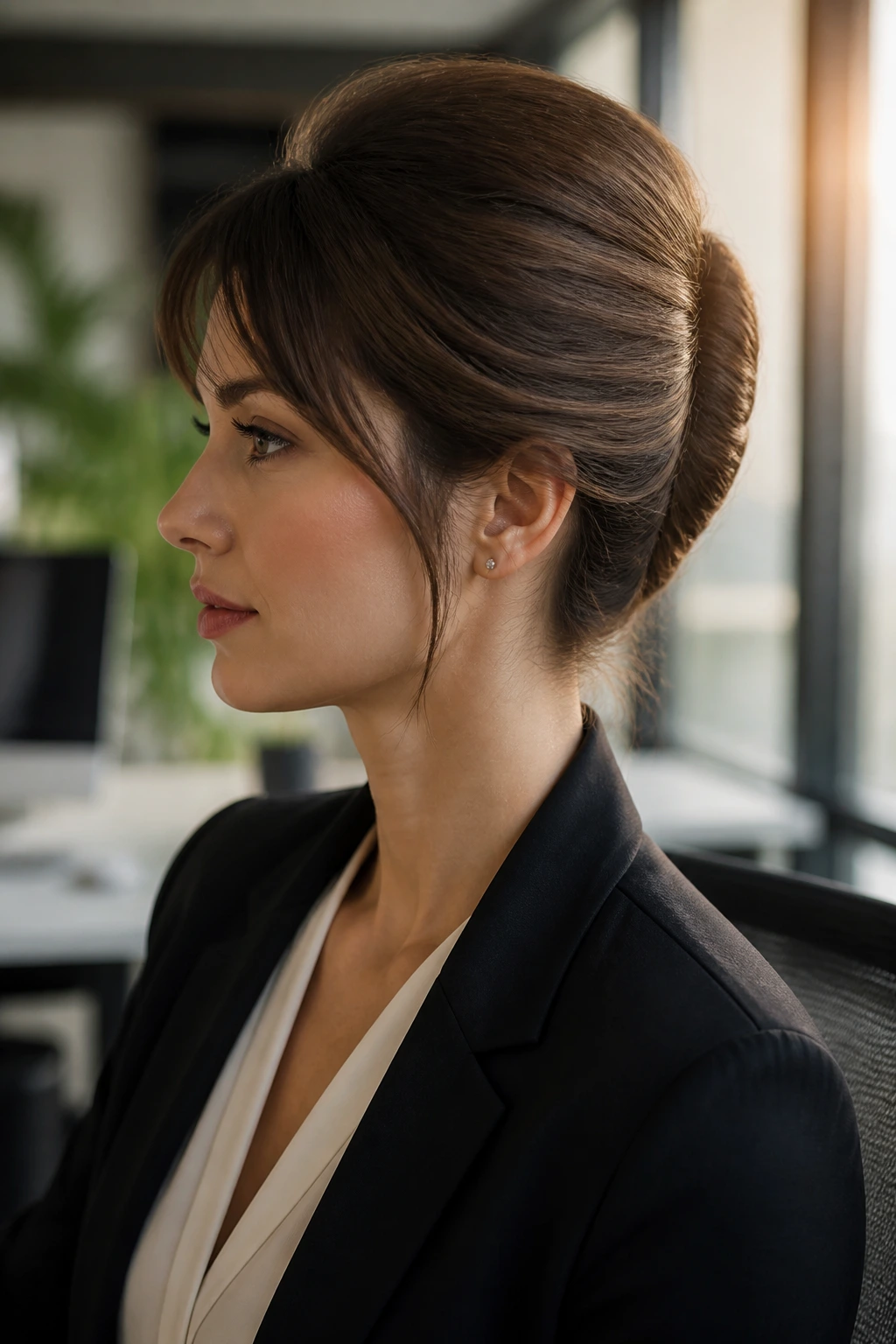
The French twist wins when you want height without the stiff, shellacked look some formal styles give you. It narrows the profile at the back and leaves the top of the head looking lifted, which is especially nice if your hair tends to lie flat by noon.
Pull the hair back with a little cushion at the crown, then fold the lengths upward and tuck them into the twist. Leave the finish soft around the hairline if your office leans less formal. It reads polished, not severe.
4. Braided Low Bun
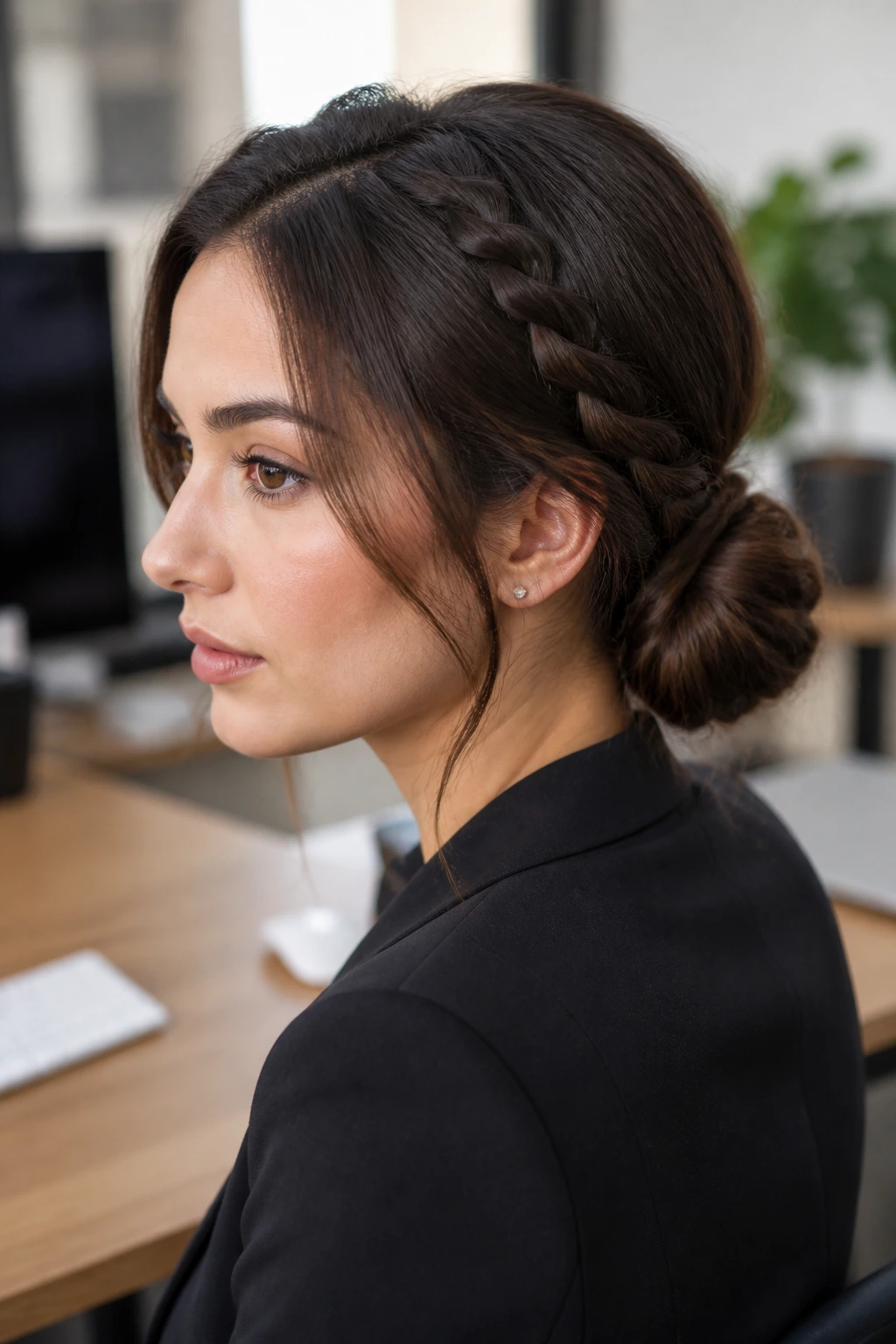
A braid feeding into a low bun gives you grip, structure, and a little detail without making the style loud. Thick hair does well here because the braid controls bulk before it gets pinned into the bun.
Start with a low ponytail, braid it loosely, then wrap the braid around itself and pin in a cross pattern. If the braid looks too neat, gently tug the edges for a fuller shape. That tiny loosening step matters.
5. Wrapped Ponytail
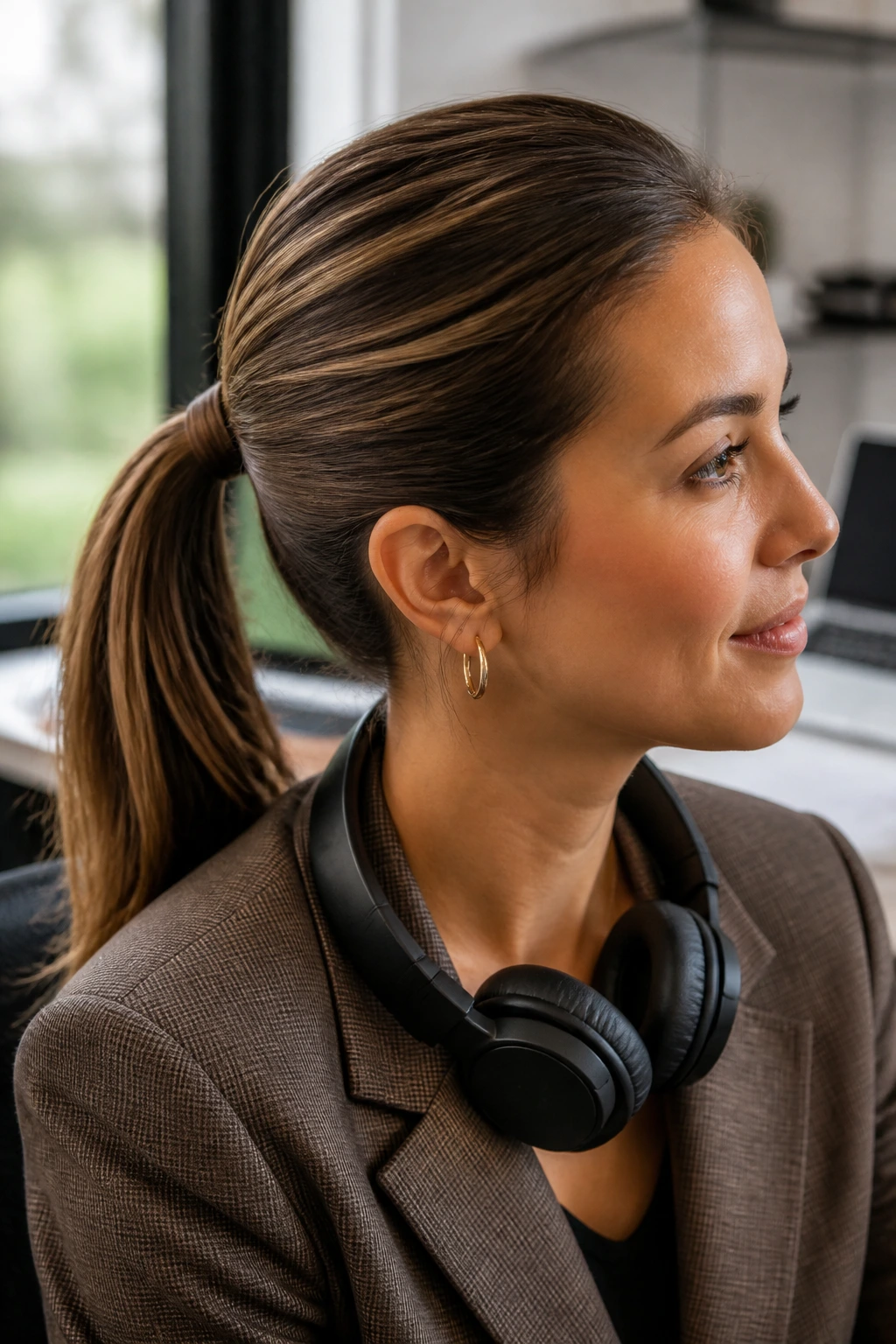
A wrapped ponytail is the answer when you want a ponytail that does not look like an afterthought. Hide the elastic with a small strand from underneath, then smooth the top so the finish looks clean and deliberate.
This style is especially good on medium-to-long hair that is one day past wash day. The slight texture helps the wrap stay put, and the style sits comfortably under headphones, scarves, or a coat collar.
6. Bubble Ponytail
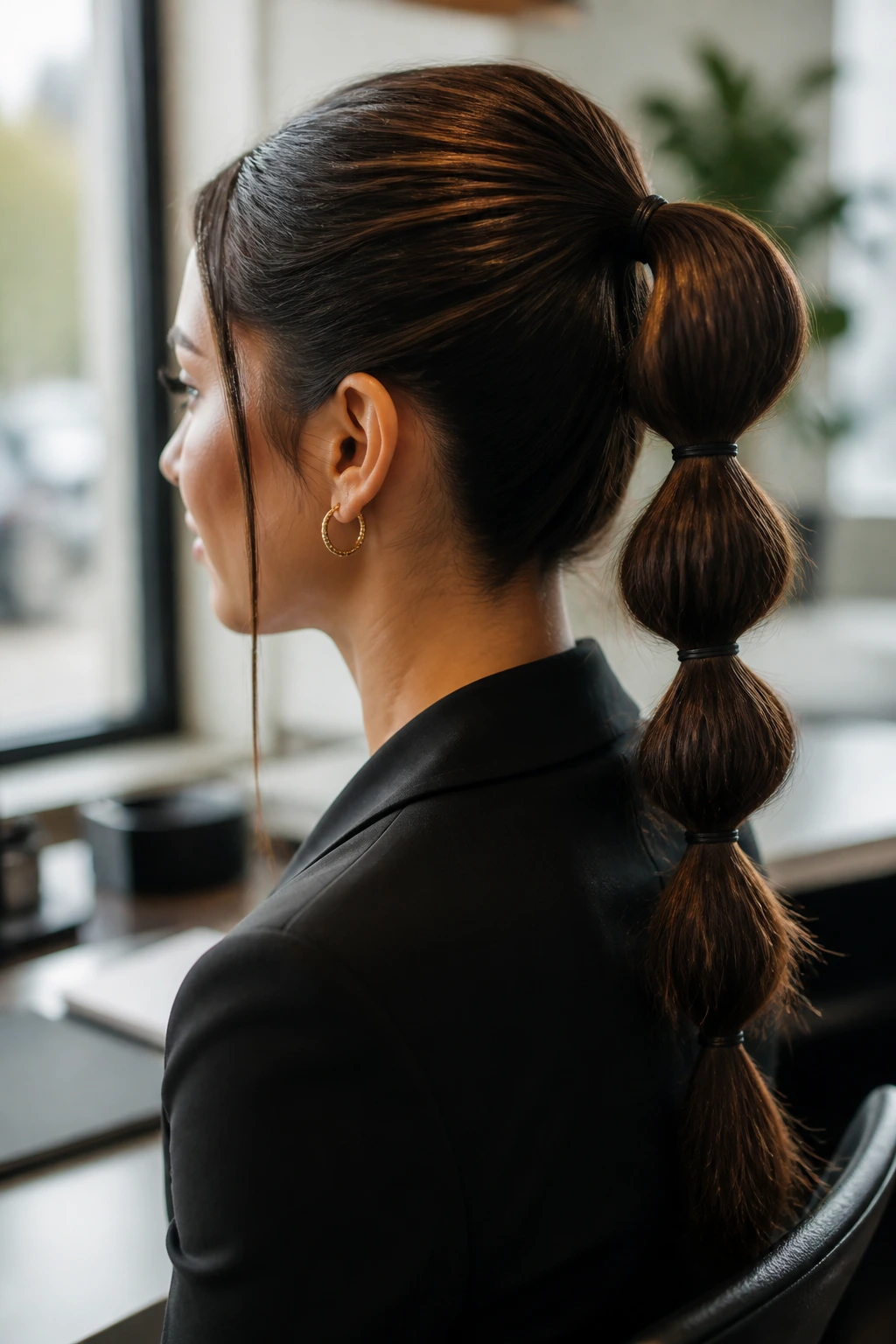
The bubble ponytail looks more styled than it is. That’s the whole charm. You place elastics down the length of a ponytail, then puff the sections between them so the shape feels structured and a little playful without crossing into weekend territory.
Keep the bubbles even if you want the style to read office-friendly. A few spritzes of flexible hold spray help the sections keep their shape, and fine hair benefits from a light texture spray before you begin.
7. Gibson Tuck
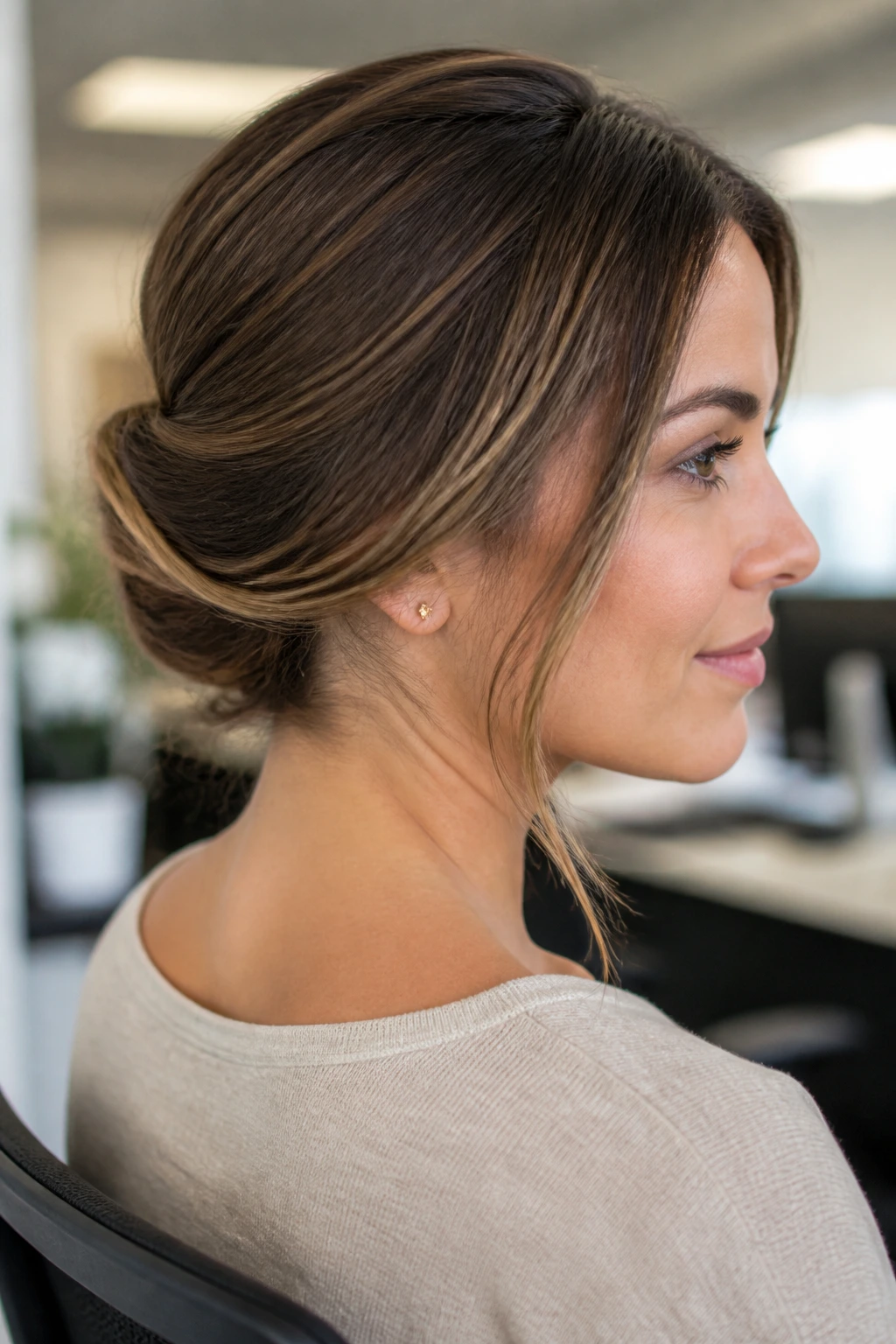
The Gibson tuck has a soft, tucked-under shape that feels almost old-fashioned in the best way. It flatters medium-length hair especially well because the ends disappear neatly instead of poking out at odd angles.
Create a low loose ponytail, split a gap above the elastic, and tuck the length upward through it. Pin the roll in place so it sits flat against the head. This is one of those styles that looks more complicated than it is.
8. Rope-Braid Bun
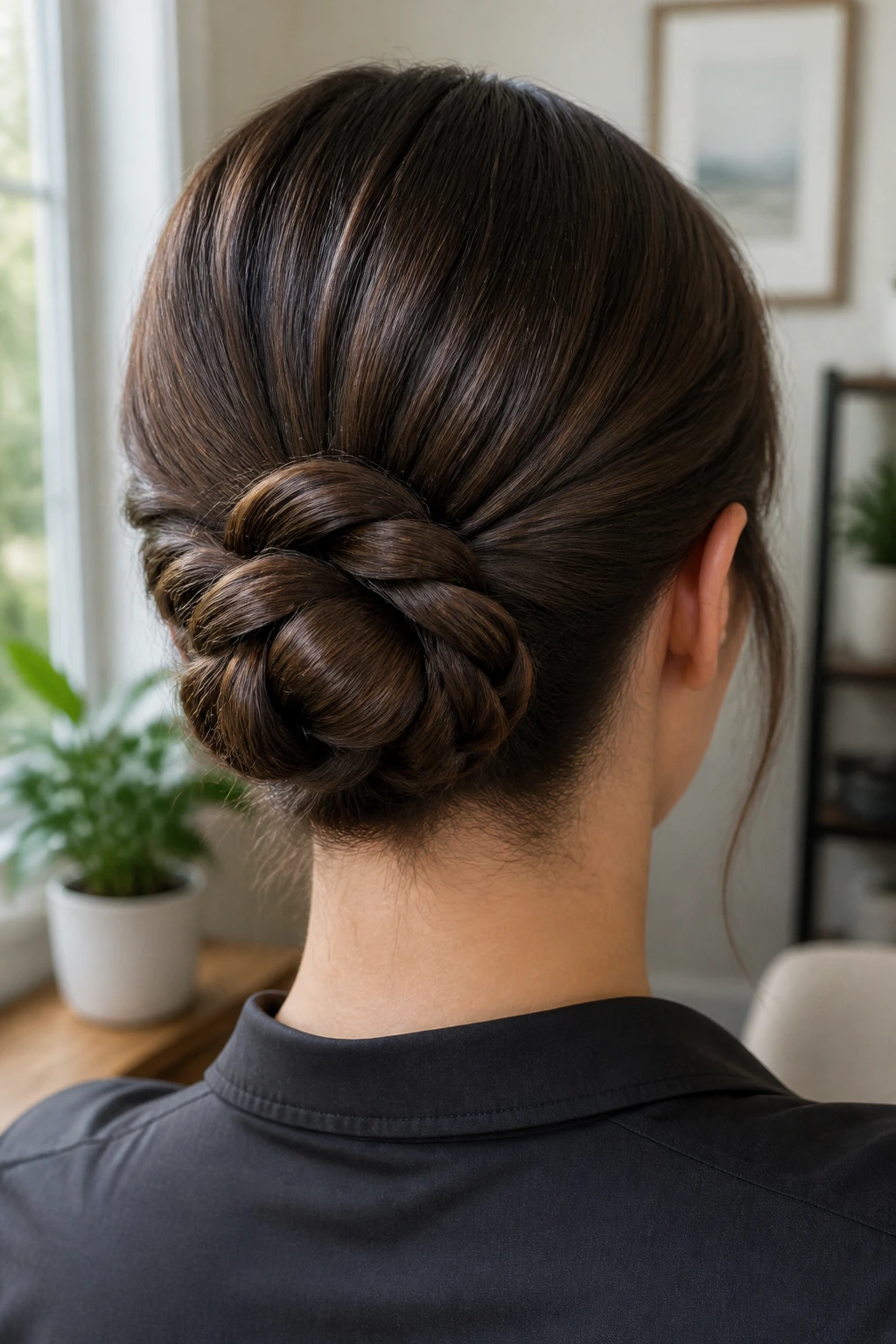
A rope braid gives slippery hair something to hold onto. Twist two sections around each other, then coil the rope braid into a bun at the nape. It has more structure than a simple twist and usually stays put better in fine or silky hair.
I reach for this one on days when the forecast says humidity and the calendar says back-to-back meetings. It keeps the shape tidy without needing a lot of product, which is a relief if your hair gets weighed down easily.
9. Knotted Nape Ponytail
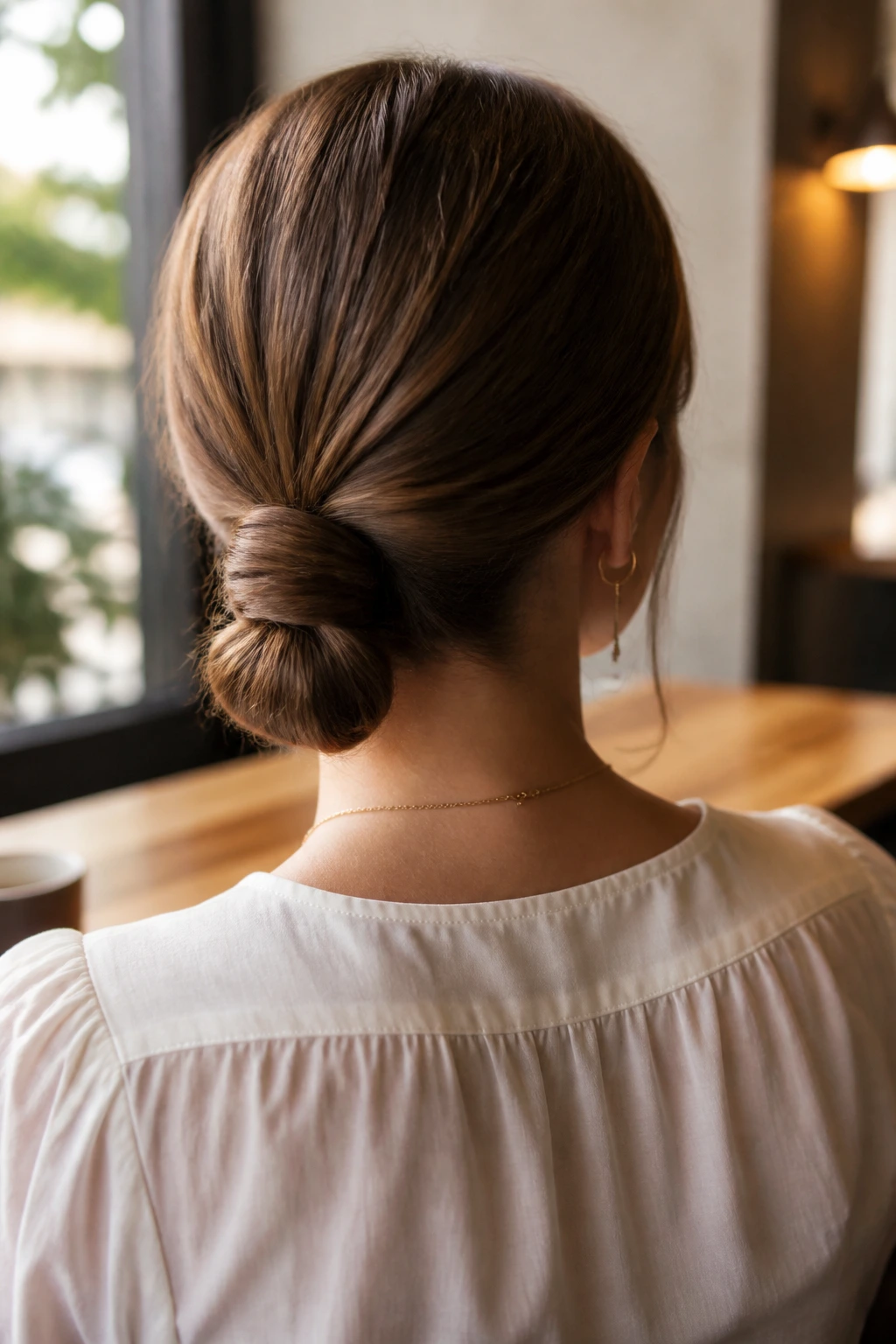
This one feels almost too easy, but that’s part of the appeal. Tie the hair into a low knot at the nape, then secure the tail underneath so the finish looks intentional rather than accidental.
It works best when you want a quick style that still has a little visual interest from the back. If your hair is layered, keep a few pins ready for the shorter pieces that try to escape near the neckline.
10. Claw-Clip French Roll
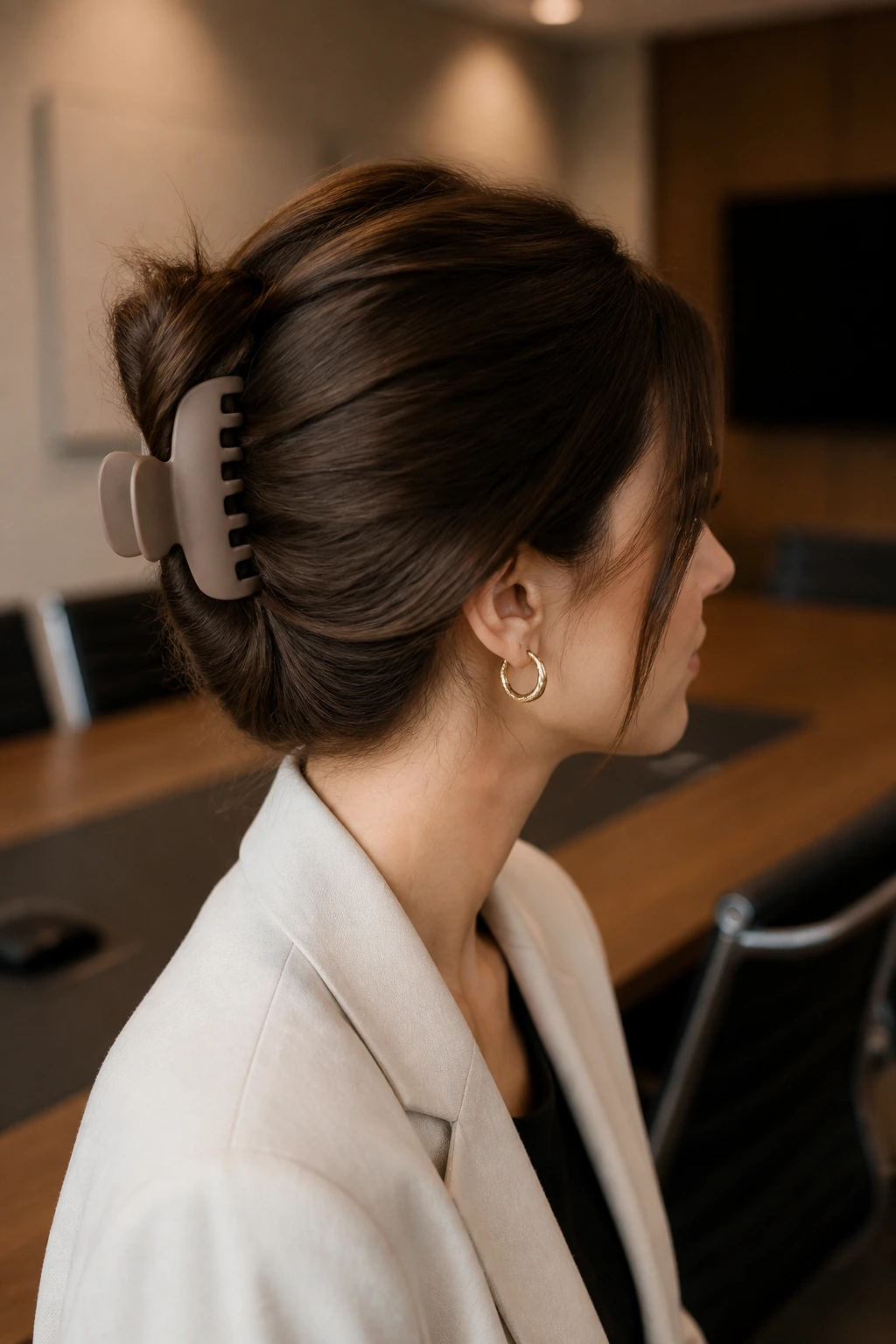
A claw clip can look sloppy or smart depending on how you use it. For work, the trick is to roll the hair upward into the clip instead of just twisting it and hoping for the best. That small difference changes the whole mood.
Choose a medium-sized matte clip in a neutral tone and keep the crown smooth before you clip the twist. If your hair is very thick, section it first; otherwise the clip will bulge and start slipping by lunchtime.
11. High Sleek Ponytail
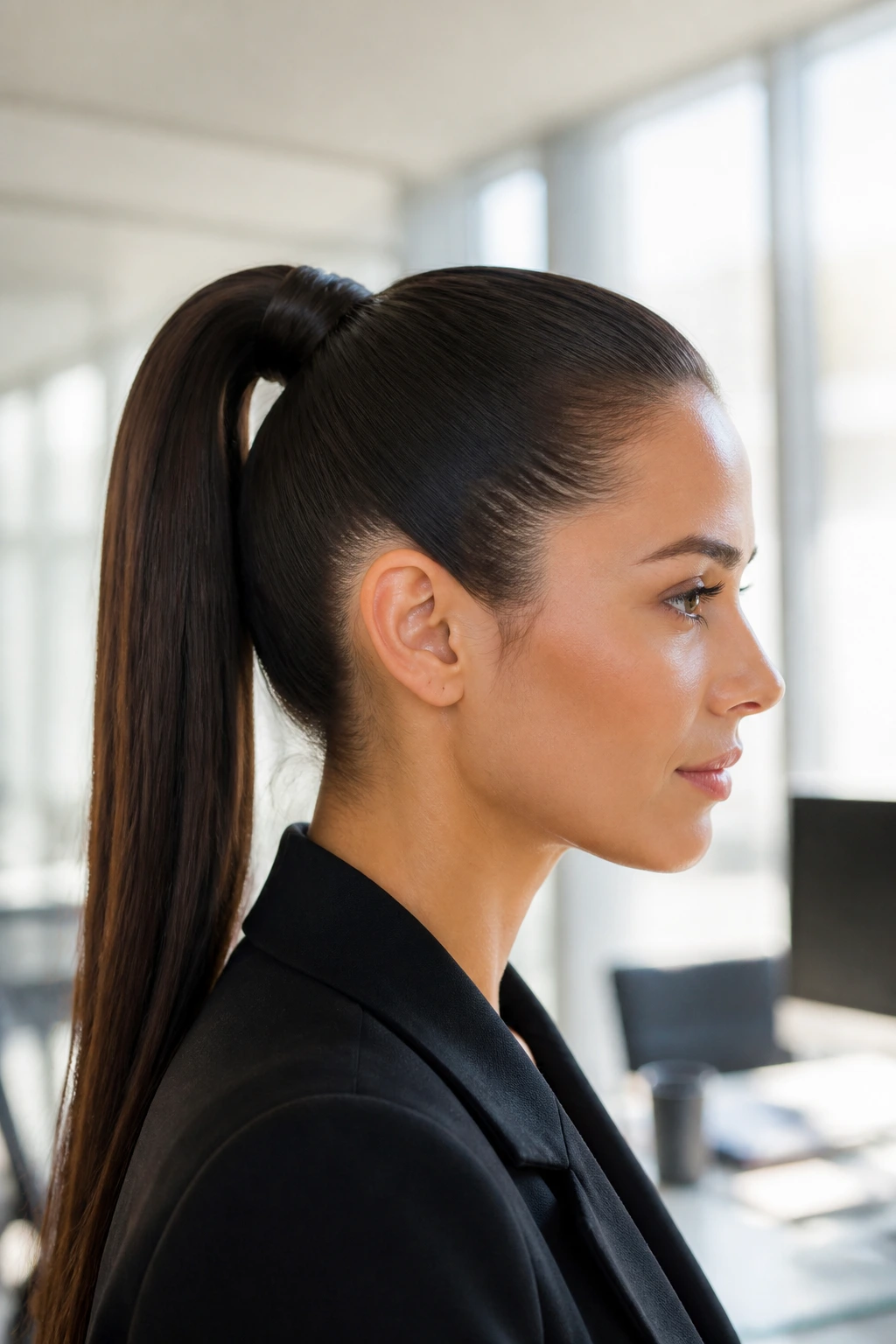
A high sleek ponytail gives the face a lifted look and keeps everything off the shoulders, which is useful on long desk days. The clean base matters more than the length swinging behind you.
Brush the hair up with a little gel or cream, secure it high, and wrap the elastic if you want the style to read more finished. It can feel firm, so I’d skip this one on days when your scalp already feels tired.
12. Low Ponytail With Face-Framing Pieces
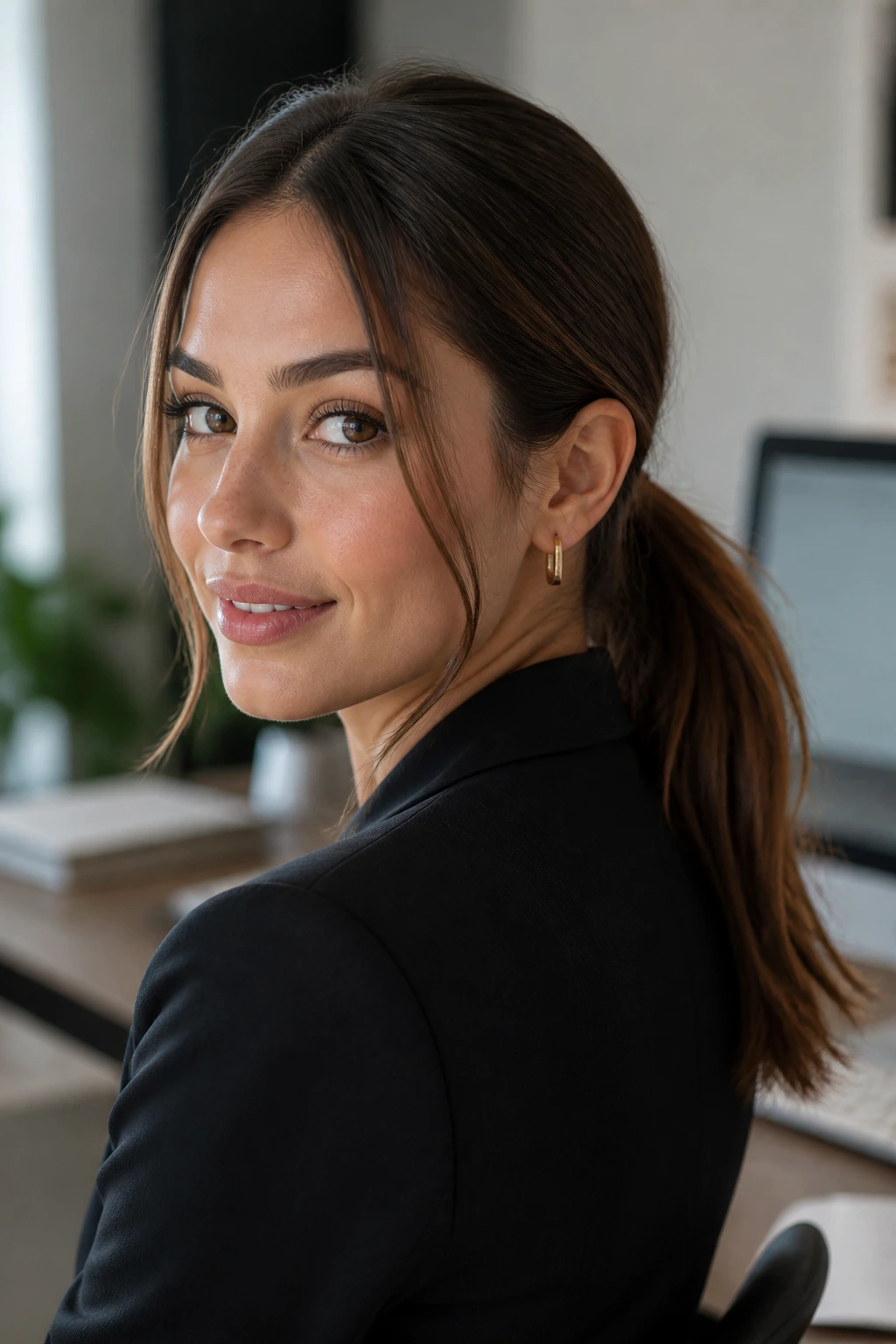
A low ponytail with a couple of loose front pieces sits in that nice middle ground between rigid and casual. It still looks work-appropriate, but the soft bits at the front make it less severe than a slicked-back version.
Keep the face-framing pieces thin and intentional. Thick chunks can start looking careless, while one or two delicate pieces near the cheekbones soften the whole style without stealing the shape.
13. Braided Ponytail
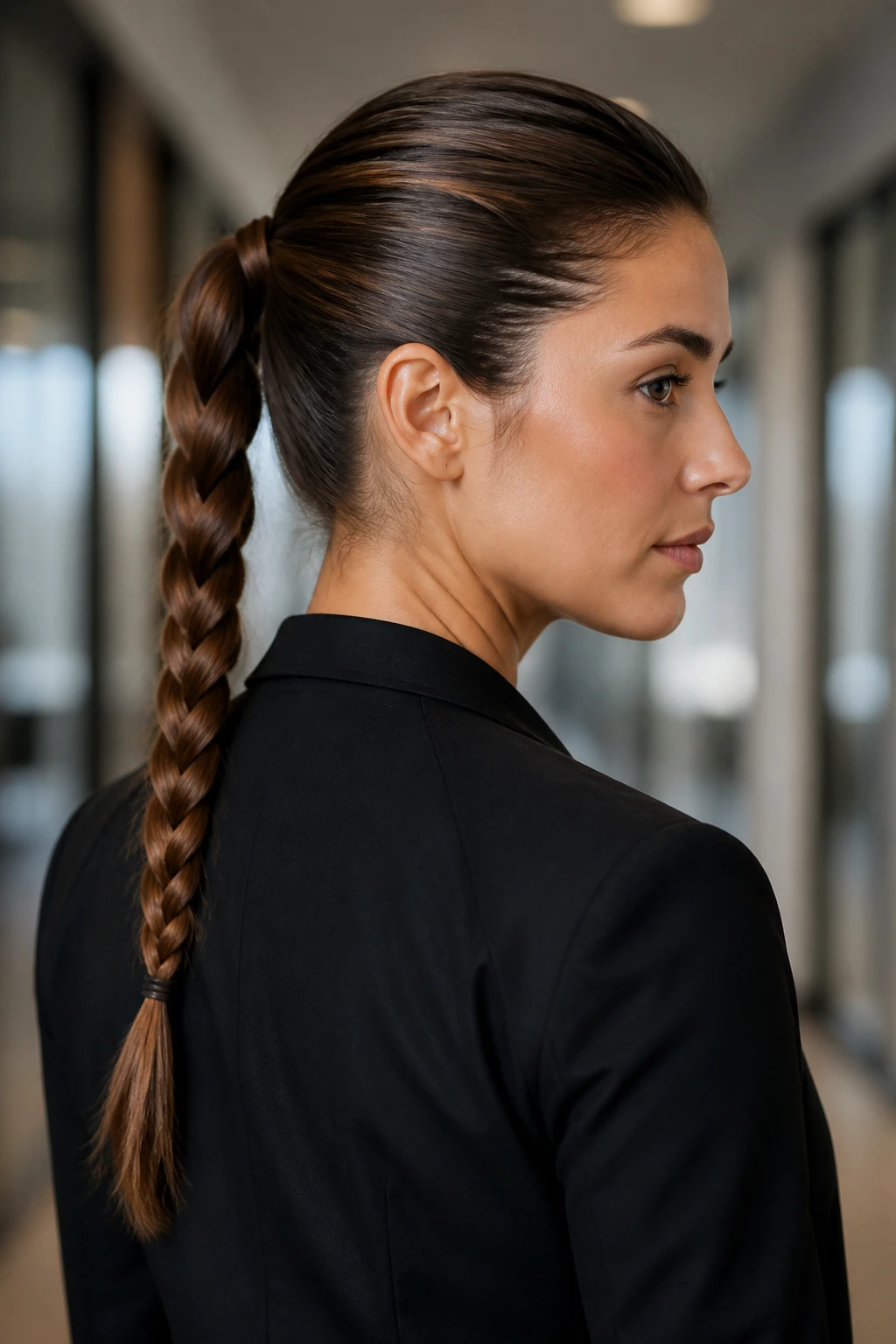
A braided ponytail is one of the easiest ways to stop ends from fraying out during the day. The braid gives the ponytail weight, so it swings less and stays neater, especially if you’re moving between offices, errands, and lunch.
It’s a good choice when you need a style that looks tidy from every angle. If your hair is layered, braid a bit more tightly at the top and loosen slightly at the bottom to keep the shape balanced.
14. Topknot With Hidden Base
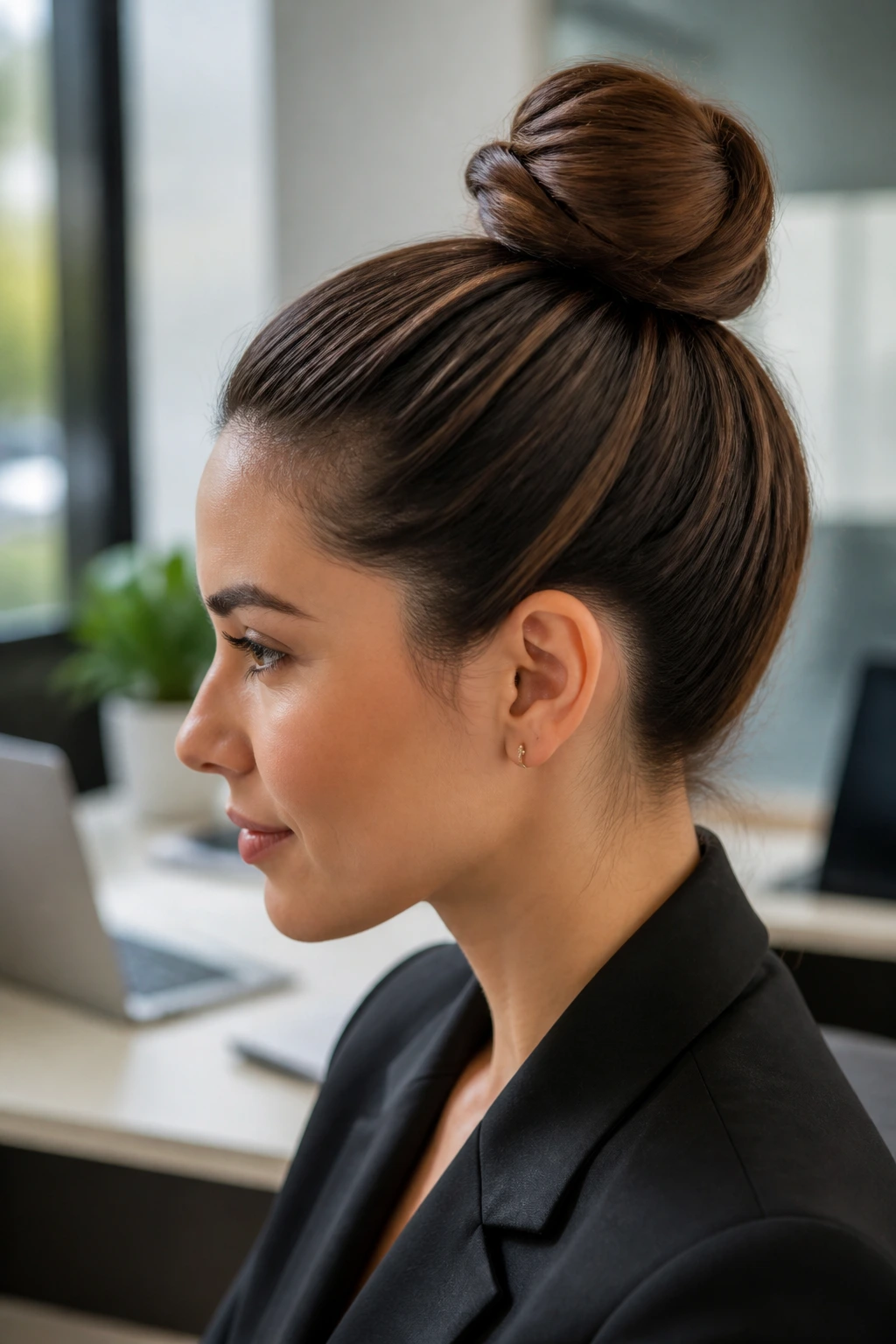
The high topknot gets a bad reputation for looking rushed, but a hidden base changes that. Smooth the hair up, secure a ponytail, then wrap and pin the bun so the elastic disappears under the coil.
Keep the bun compact if your workday includes a lot of sitting back in a chair or wearing a headset. A giant topknot has personality, yes, but it can also be annoying by 3 p.m.
15. Double Dutch Braid Bun
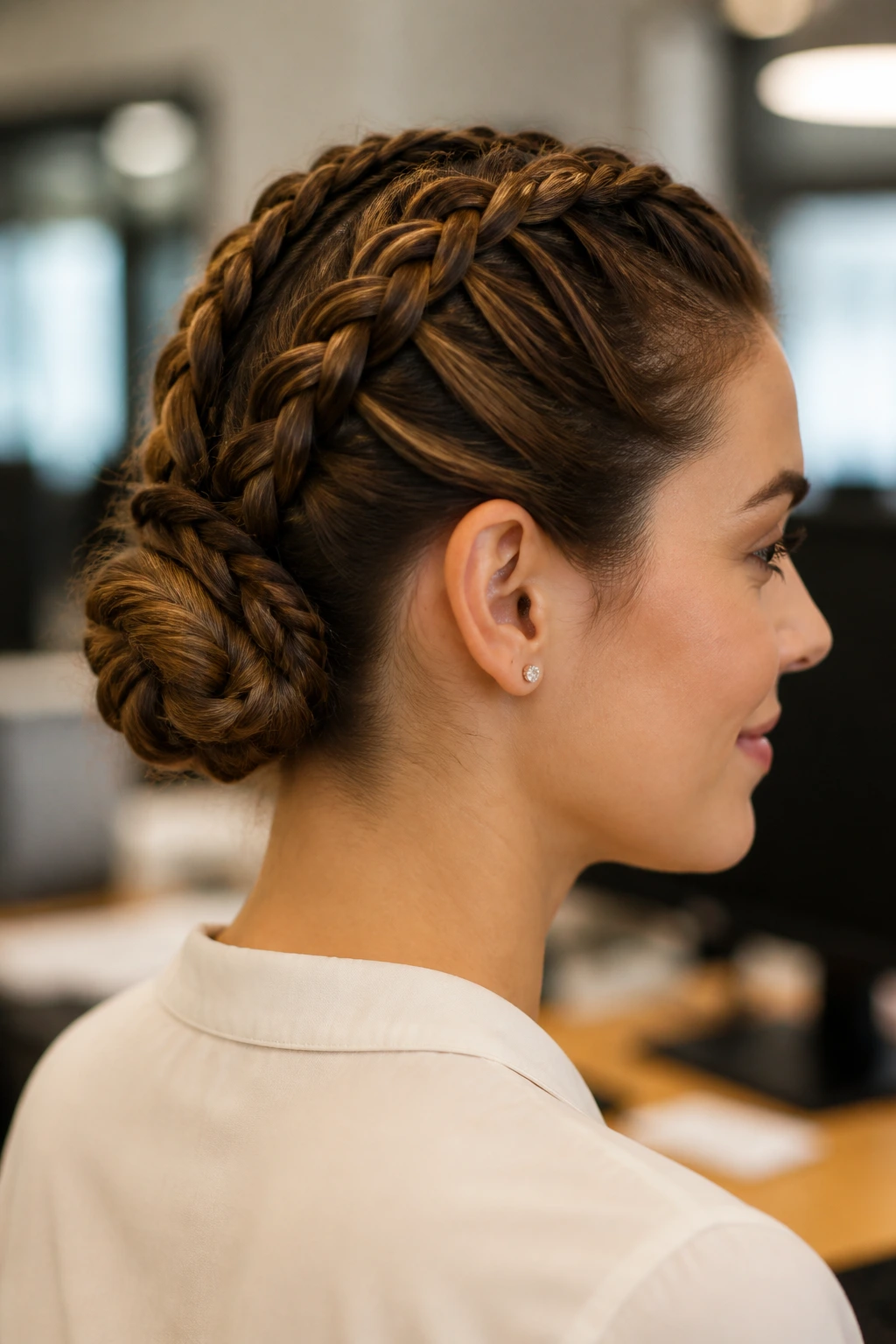
Double Dutch braids feeding into a bun give thick hair real control. The braids create two strong lines from the hairline to the nape, and the bun keeps the ends tucked in without extra bulk.
This style feels especially good if your hair refuses to cooperate with straight-back sleek looks. The texture hides a lot of natural puffiness, and that can be a blessing when you’re short on time.
16. Scarf-Wrapped Bun
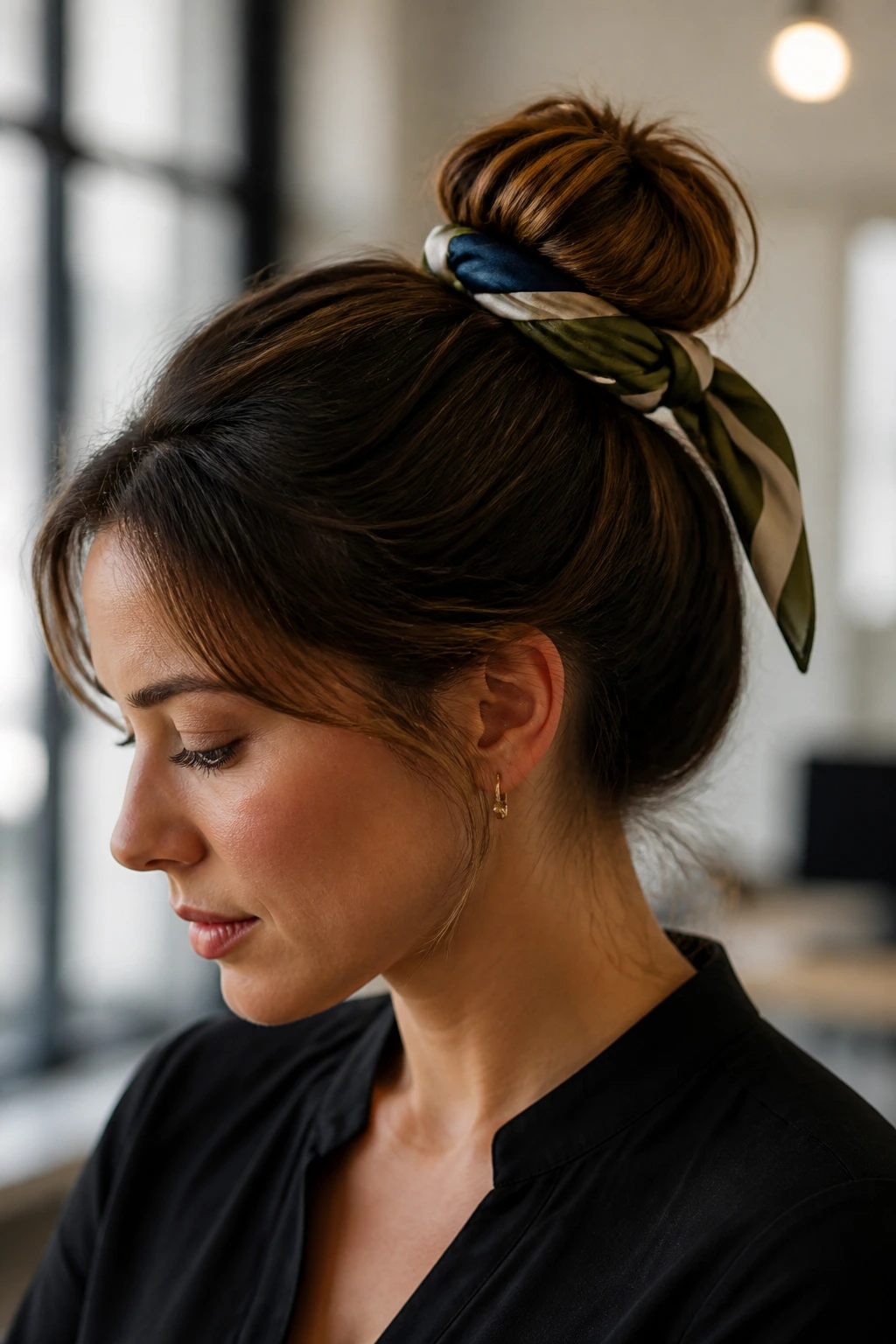
A scarf wrapped around a bun gives the whole style a cleaner finish, and it can solve the problem of pins showing through darker or shinier hair. Use a narrow scarf or a folded square, then tie it low so the knot stays neat.
Stick with tones that look calm in office light: black, navy, cream, muted olive. Loud prints can be fun, but at work they sometimes steal the show from the actual style.
17. Side-Swept Nape Bun
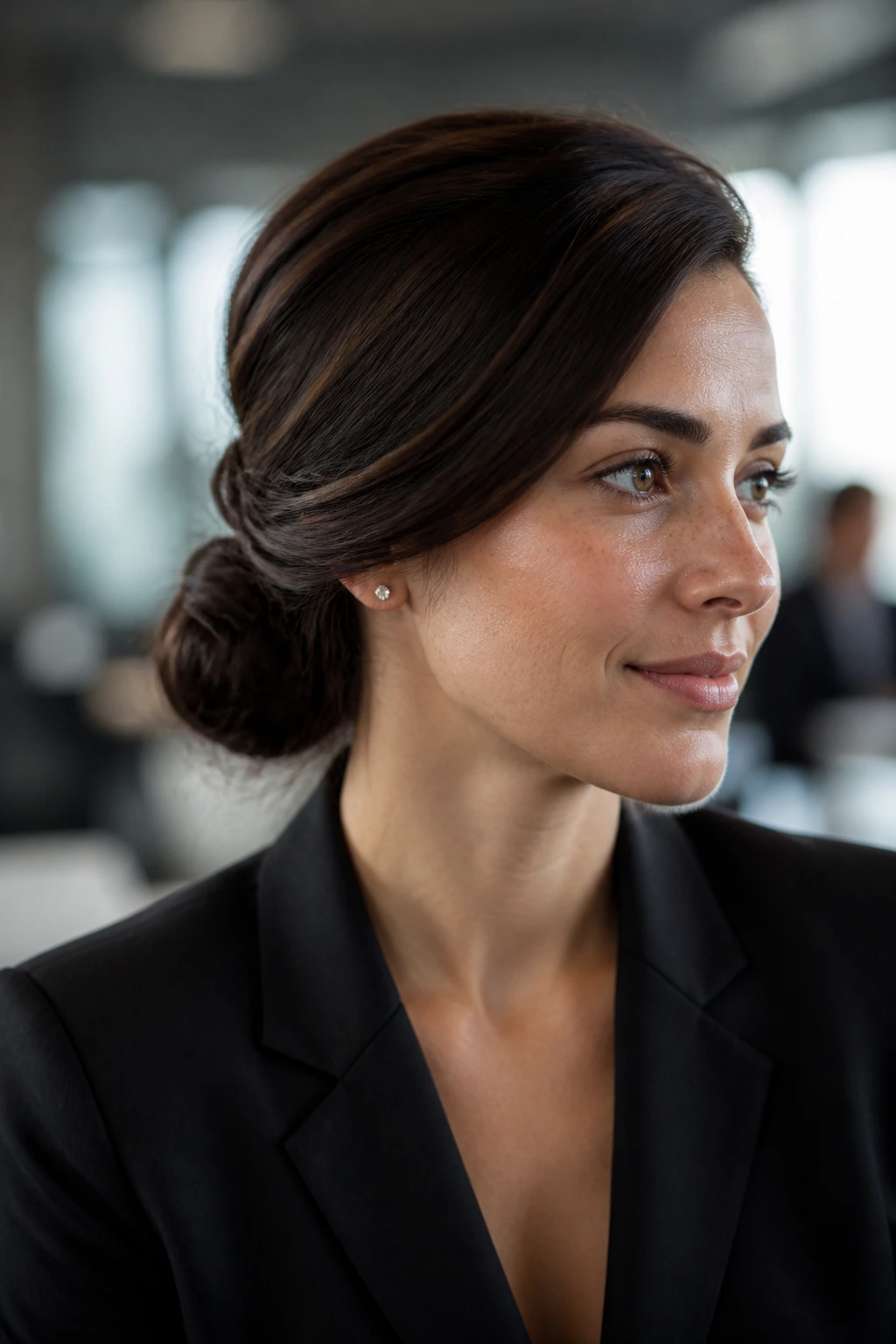
A side-swept nape bun has a softer line than a center-back bun. The off-center placement can flatter rounder faces and looks especially nice with side-parted hair or a blazer that has a strong lapel.
Sweep the hair toward one side before forming the bun, then pin low and slightly behind the ear line. It feels a little less formal, which is useful if your office dress code lives somewhere between polished and relaxed.
18. Rolled Bun for Short Hair
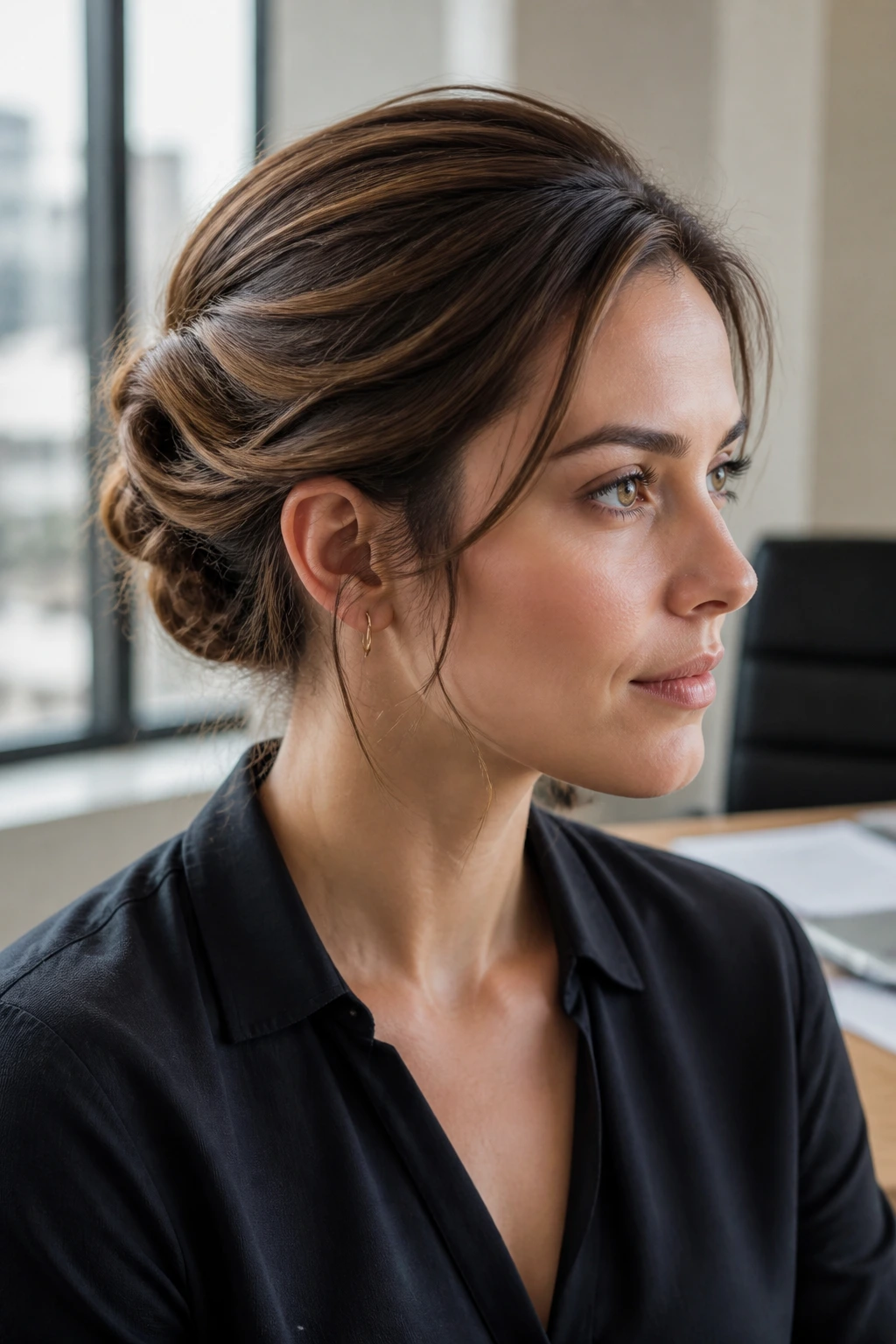
Short hair does not have to sit out the updo conversation. A rolled bun works on bobs and collarbone-length cuts because you are tucking, folding, and pinning more than you are building a large bun.
Use small pins and work in sections so the roll stays close to the head. If your layers are too short to hold, let a few pieces stay loose around the ears rather than forcing them into submission. That usually looks better anyway.
19. Twisted Halo Bun
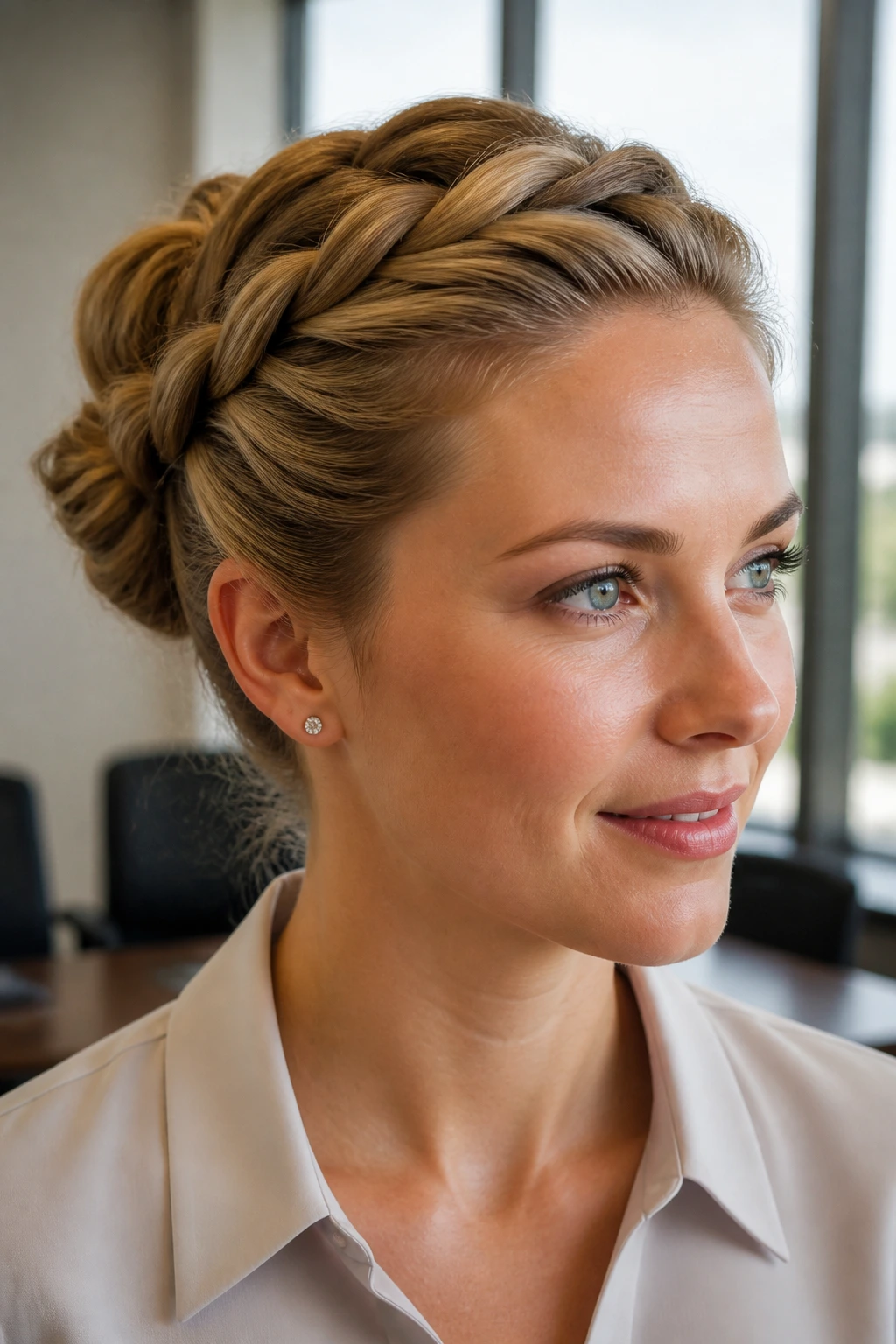
A twisted halo bun gives a little crown shape without going full romance novel. Twist sections from the temples or sides, feed them back, and gather them into a bun low at the back.
It’s a nice choice when you want to show off face shape and keep the front clean. The style also handles medium-texture hair well because the twist pattern helps everything stay in place without excess product.
20. Controlled Messy Low Bun
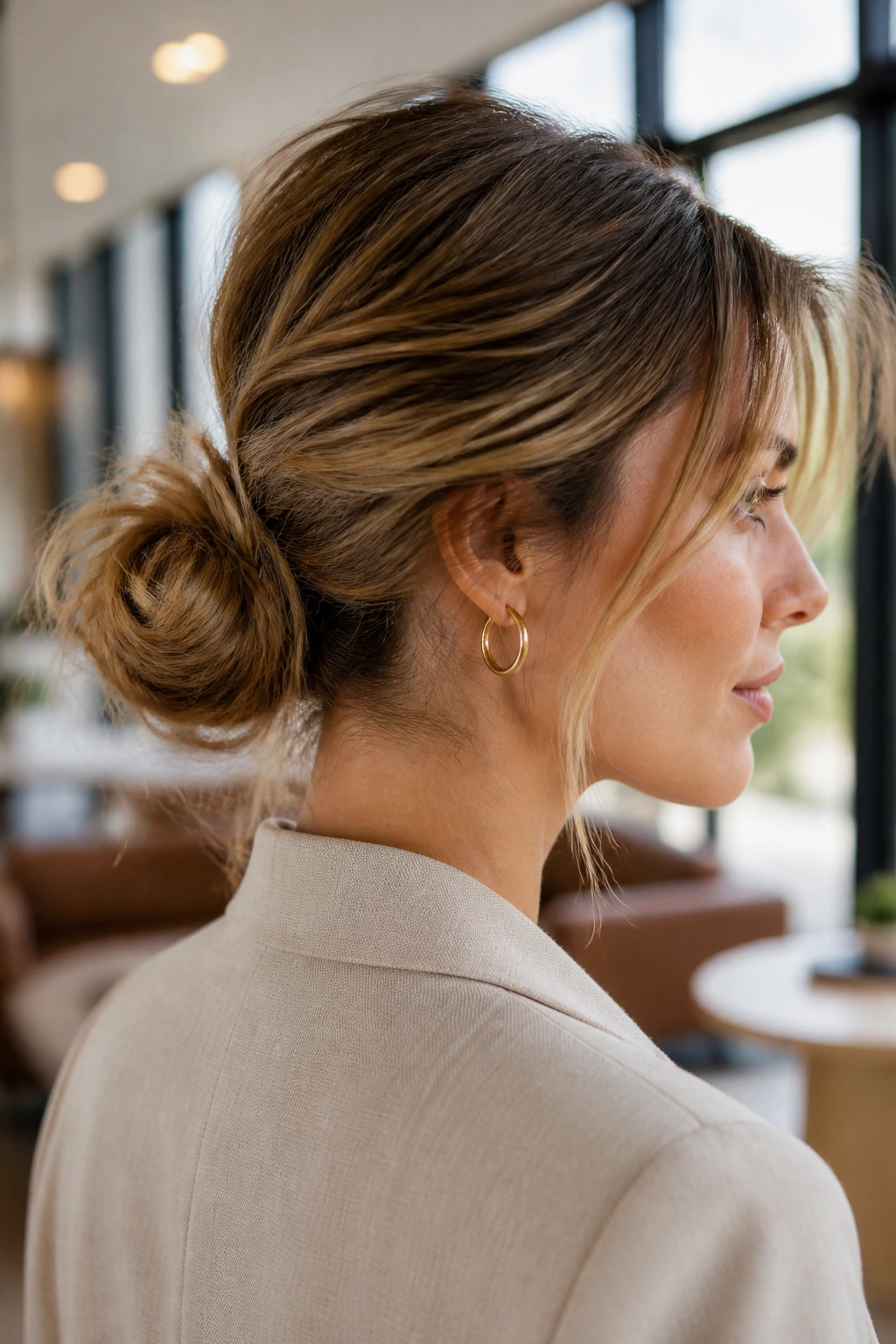
A messy bun can work at the office, but only if the mess looks chosen. The trick is to leave a few soft bends and a little texture near the crown, then keep the bun itself compact enough to feel deliberate.
I like this on days when hair feels a little too clean and slippery for a sleek style. A mist of dry shampoo or texture spray gives the hair some grit, which keeps the bun from sagging into a lump.
21. Volumized Ponytail With Hidden Elastic
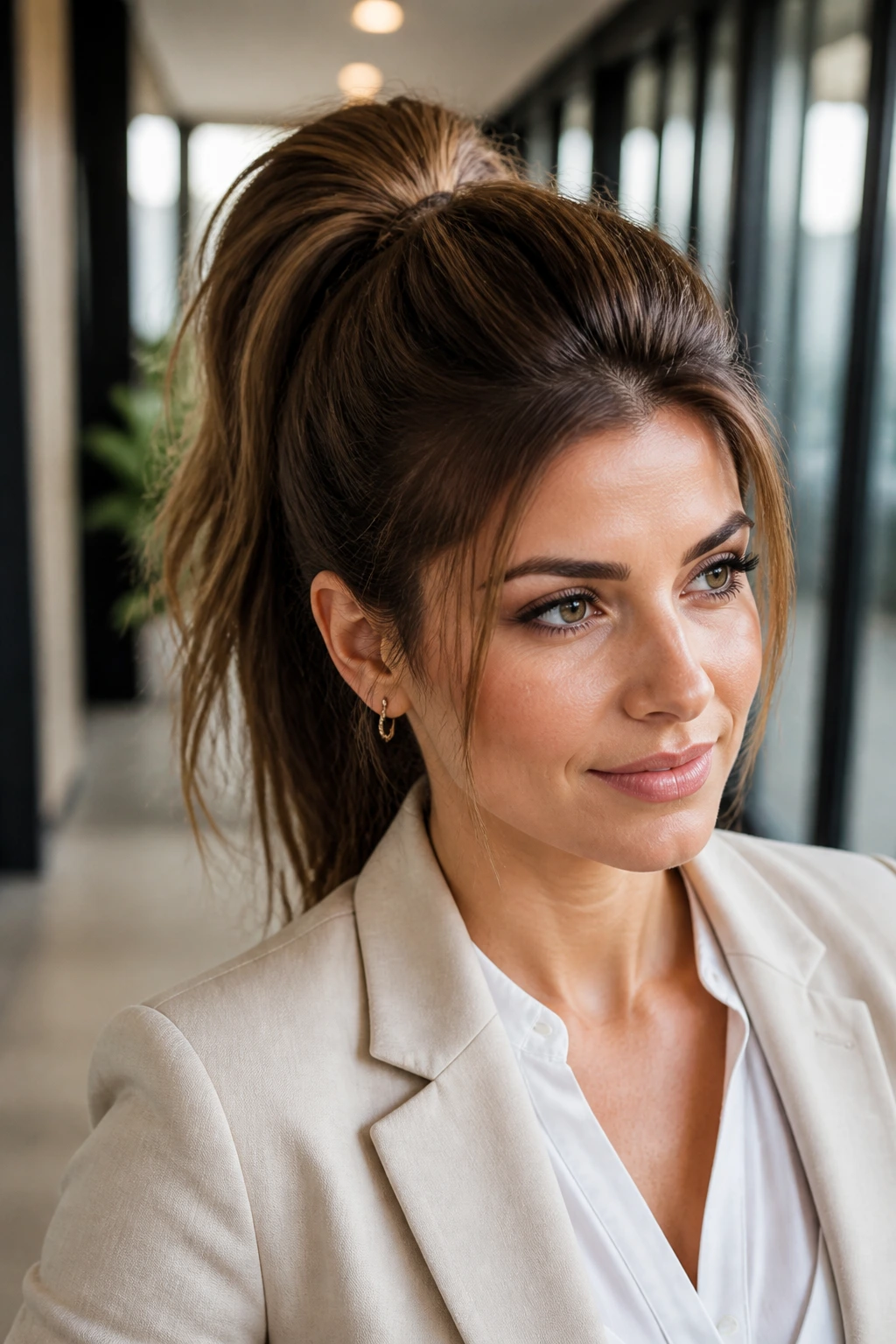
This ponytail starts with lift at the crown, not a flat brush-and-go finish. Tease the roots lightly, smooth the surface just enough to keep it tidy, and hide the elastic with a wrapped strand for a polished result.
It’s the ponytail I’d pick when a full bun feels too severe. The extra height gives structure, and the hidden elastic keeps it from looking gym-ready.
22. Braided Crown Into Chignon
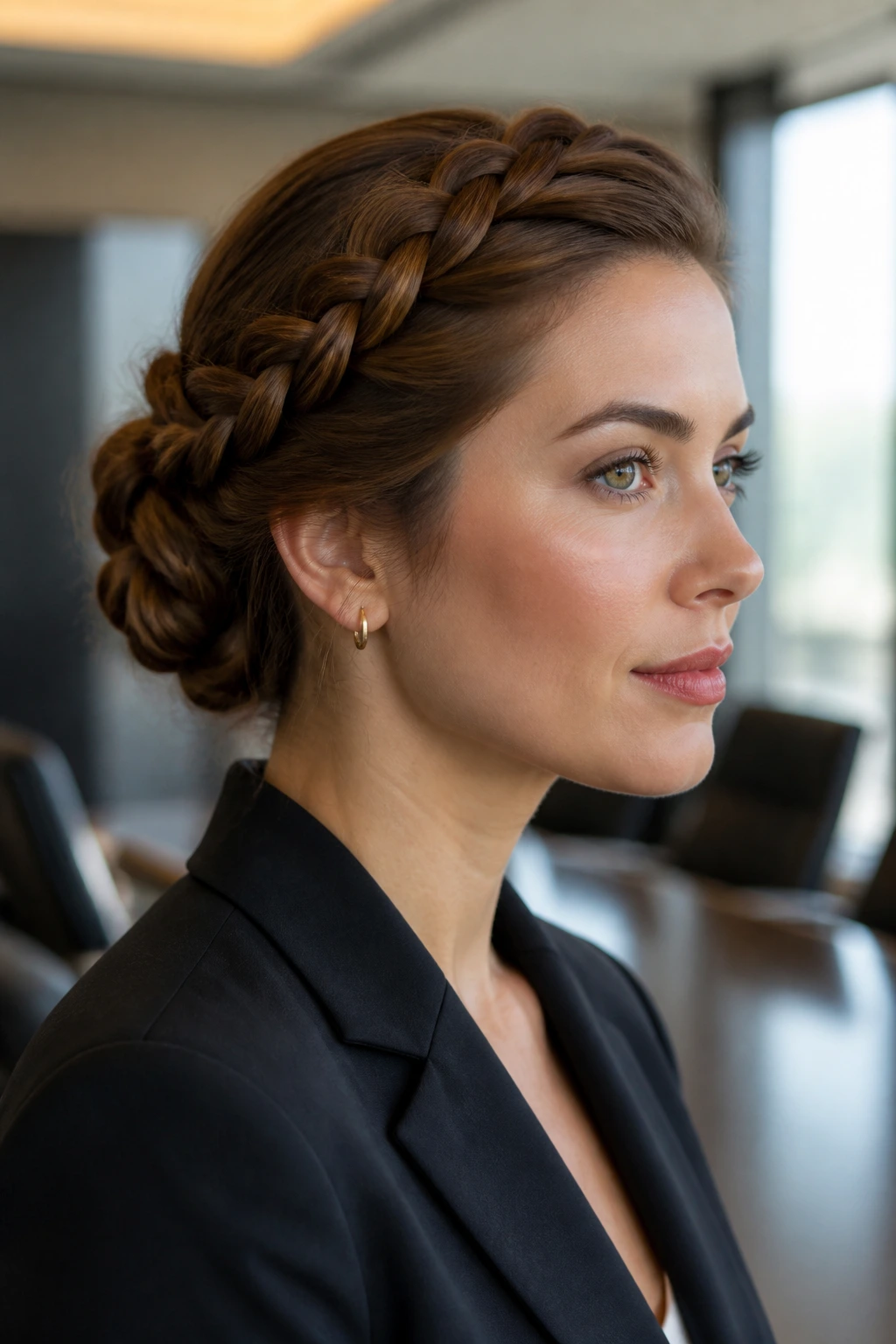
A braided crown into a chignon is one of the more formal options here, but it still earns its keep on days with presentations or client visits. The braid travels along the head and folds into a bun, which creates a secure, finished shape.
This style takes a few more minutes, so I save it for mornings when I know I need the hair to stay put until evening. The payoff is worth it if your calendar is full of visible days.
23. Center-Part Braided Bun
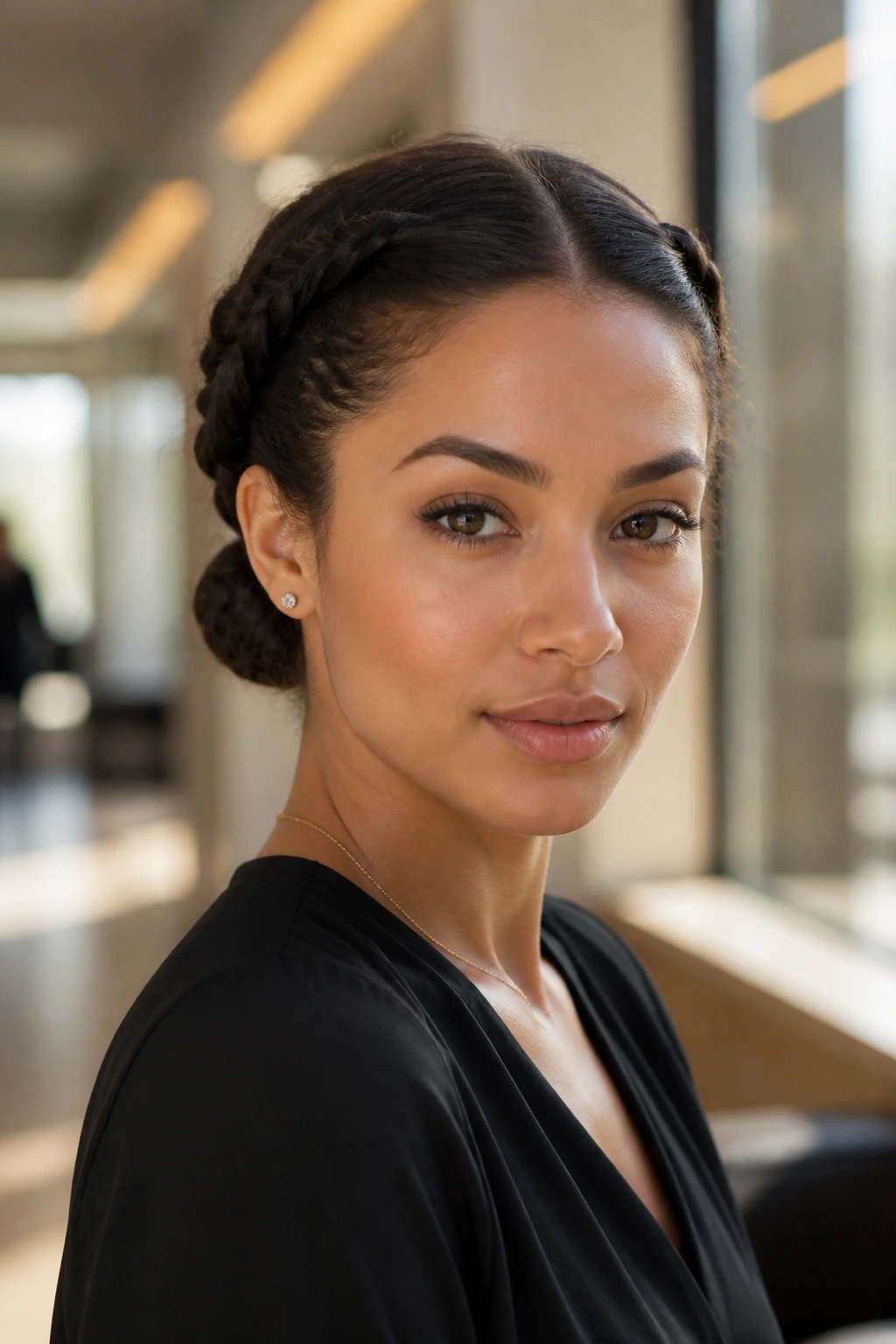
A center part makes the whole style feel symmetrical and clean. Add two braids, one on each side, and pull them into a low bun for a look that feels neat without being stiff.
It’s a good office option for thick or textured hair because the braid lines hold the shape while the bun keeps bulk under control. If your hair is fine, loosen the braids just a touch so they don’t disappear against the scalp.
24. Curly Pineapple Updo
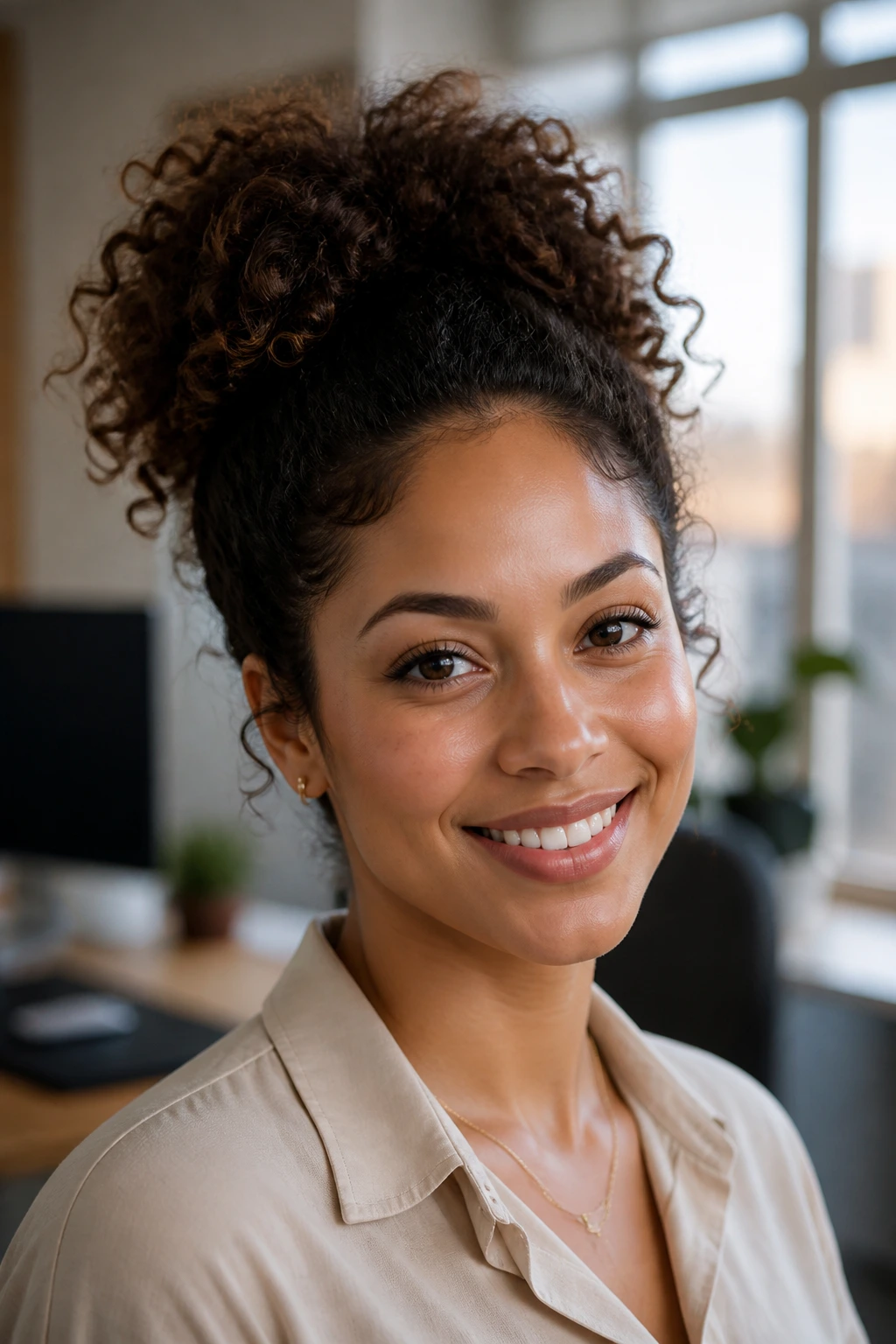
Curly hair deserves a style that respects the curl pattern, not one that flattens it into submission. A pineapple updo keeps the curls gathered high while protecting their shape and keeping the front off your face.
Pin the base gently and leave the curls free enough to keep their bounce. If you wear this to work, a small satin scrunchie or a covered elastic helps reduce dents and keeps the finish looking softer.
25. Low Puff With Wrapped Base
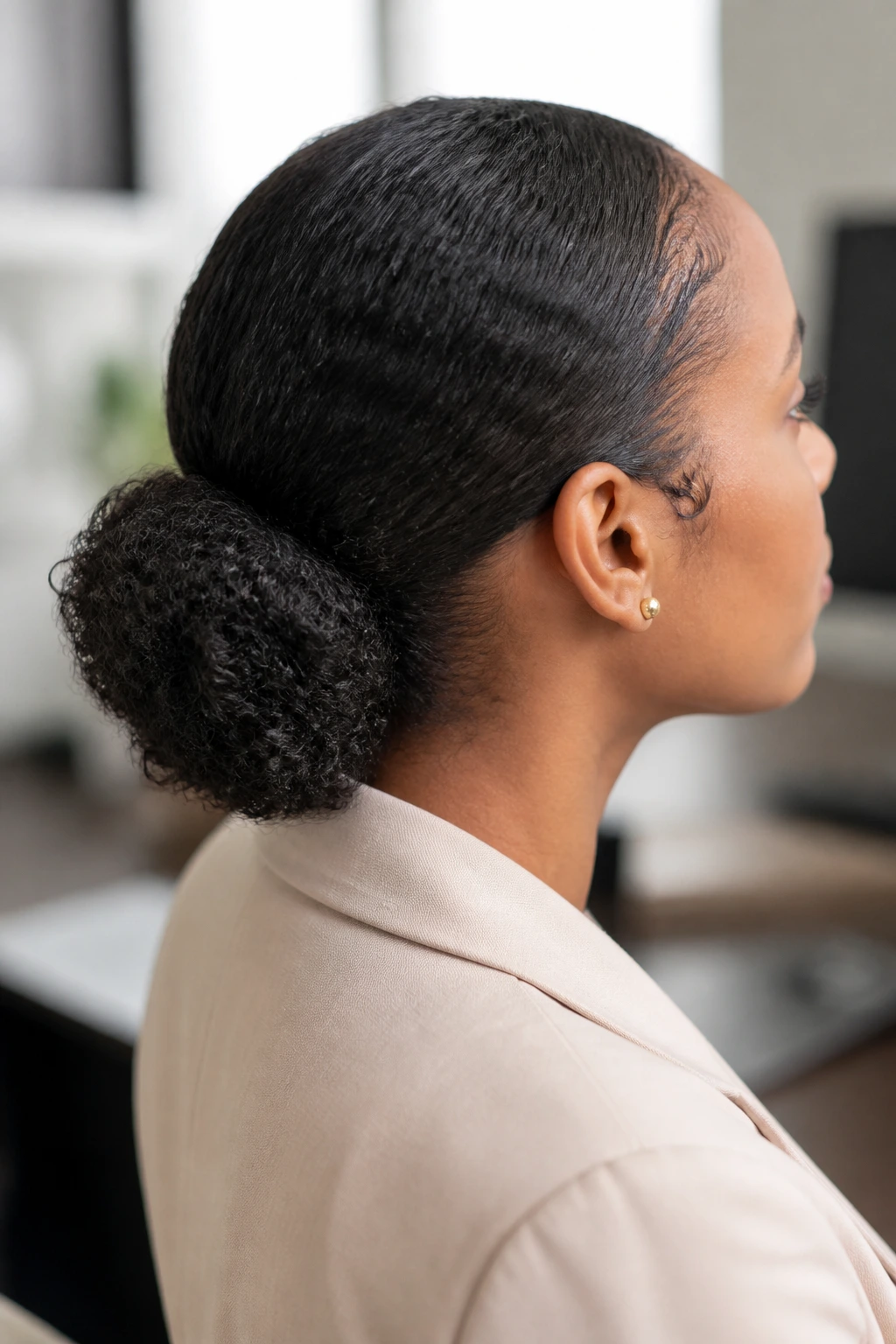
A low puff with a wrapped base is one of my favorite textured work styles because it looks polished without asking curls or coils to become something else. The wrapped base gives the shape a neater line at the back.
Smooth the sides with a little gel or cream, gather the puff low, and wrap a small section around the base to hide the band. The style is secure, comfortable, and kind to natural texture.
26. Sleek High Bun With Edge Finish
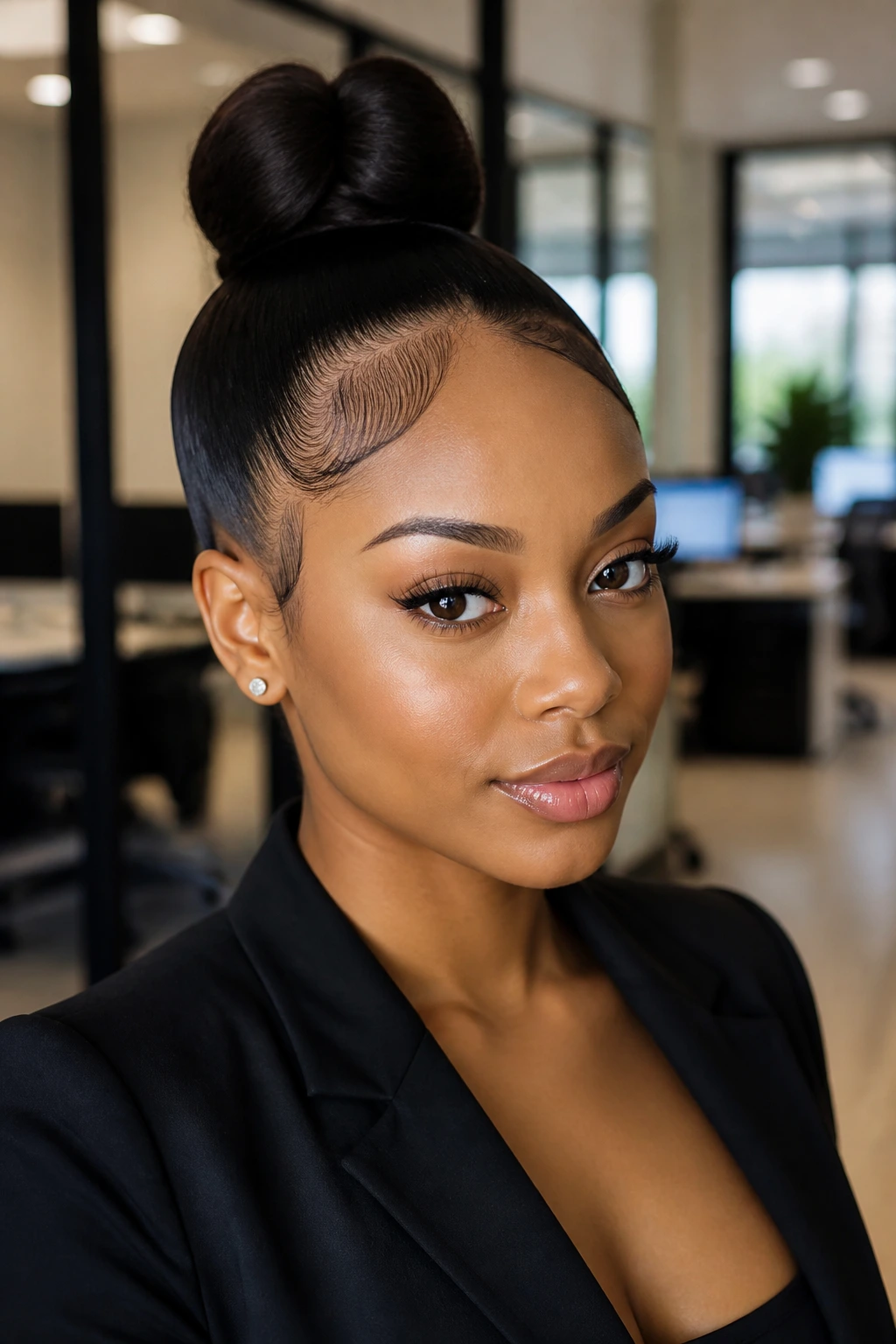
A sleek high bun has a sharper edge than a loose topknot. Smooth the crown, build the bun high, and keep the finish clean around the hairline if you like that detail. A tiny amount of edge control can sharpen the front without making the whole style stiff.
This one works well in offices where a crisp look reads as intentional. It also clears the neck completely, which is a small mercy when the room runs warm.
27. Two-Pin Bun
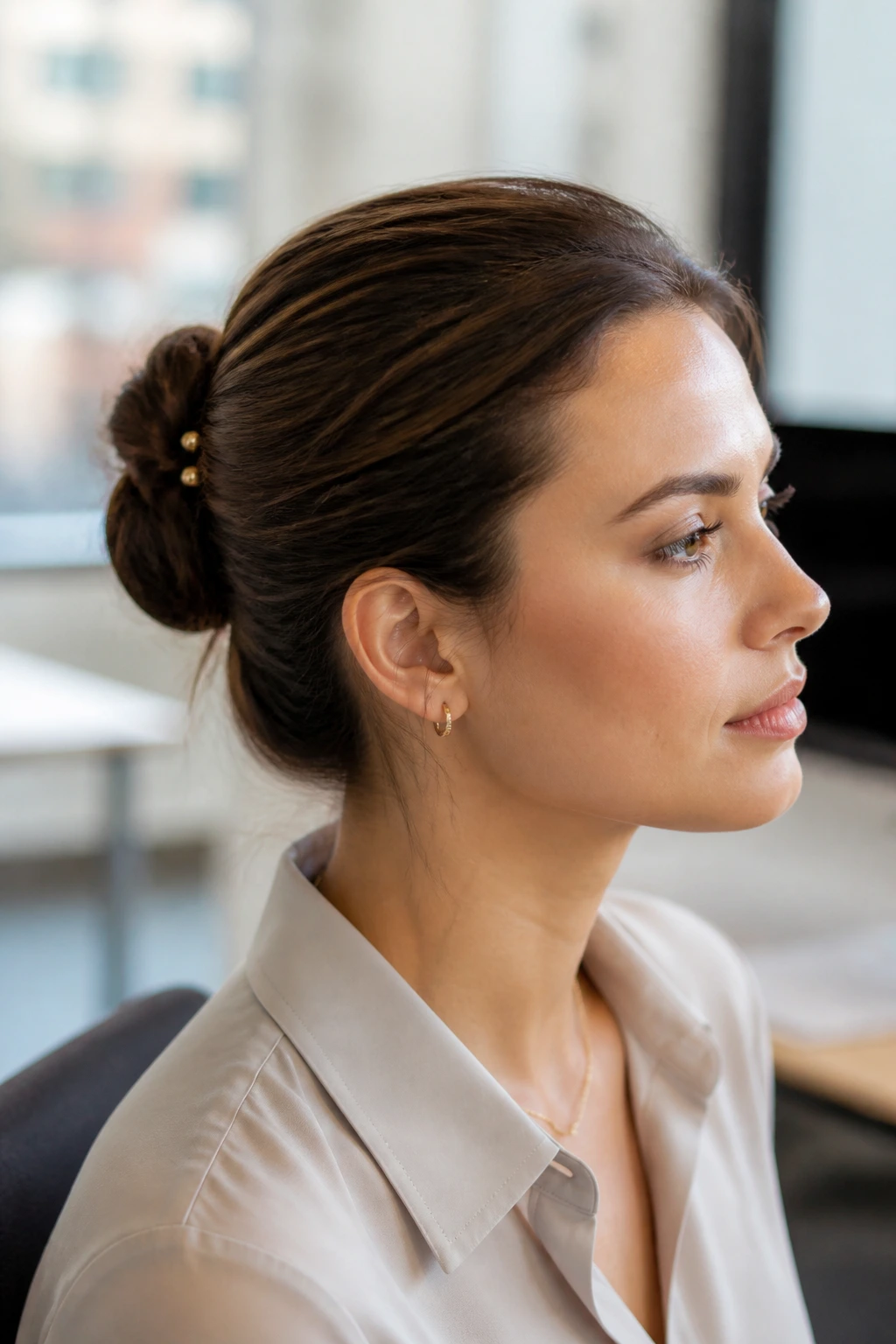
The two-pin bun is almost suspiciously simple: twist the hair into a bun, then anchor it with two well-placed pins. Done right, it looks spare and elegant rather than underdone.
This style is good when you want the least amount of hardware possible in your hair. It works best on medium-density hair, because very thick hair can overpower the two-pin setup and pull the shape loose.
28. Dutch Braid Bun
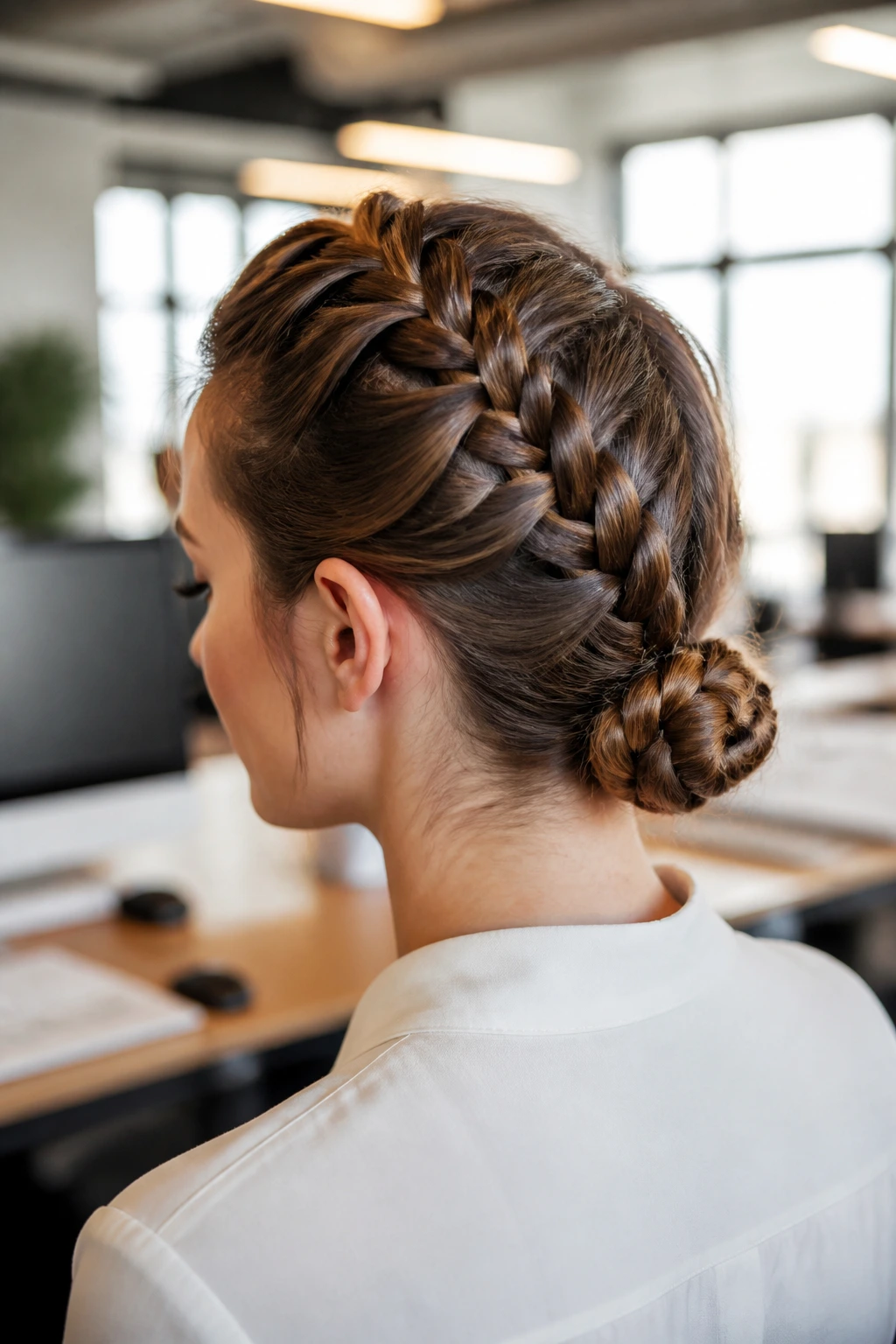
A Dutch braid bun gives you texture from the crown down to the nape, and that texture helps the style stay secure. The braid sits raised on the head, which adds shape even before you pin the bun.
If your hair tends to slip out of braids, start with a little dry shampoo or texturizing powder. The extra grip makes the braid hold better and keeps the bun from loosening halfway through the day.
29. Rolled Ponytail Tuck
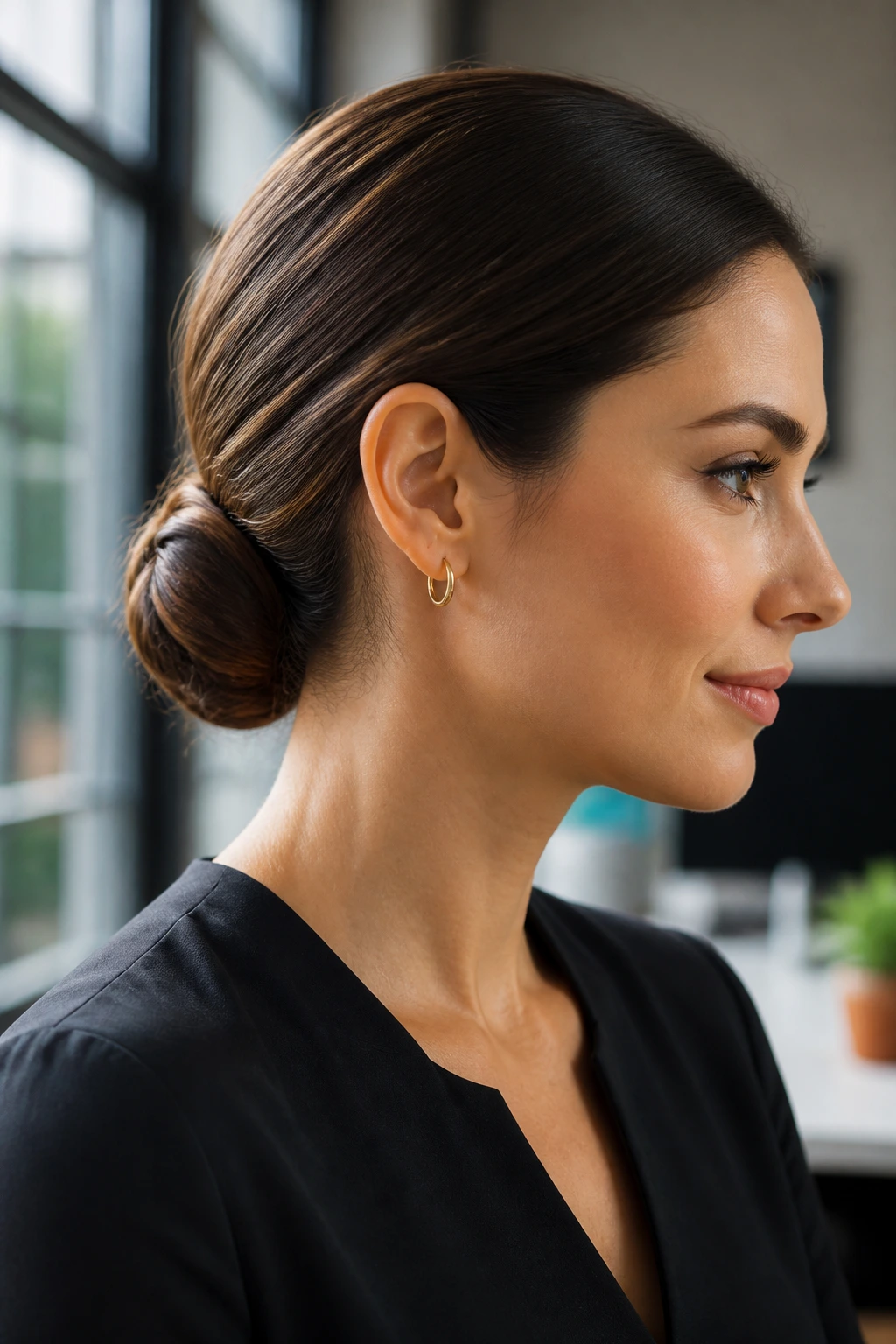
The rolled ponytail tuck is one of those “looks harder than it is” styles. Make a low ponytail, split the hair above the elastic, and tuck the length through the gap before smoothing the roll.
It’s a neat option for medium-length hair because the roll sits close to the head and doesn’t add much bulk. If you need a style that works under a hood or coat collar, this one behaves well.
30. Ribbon-Tied Twist Ponytail
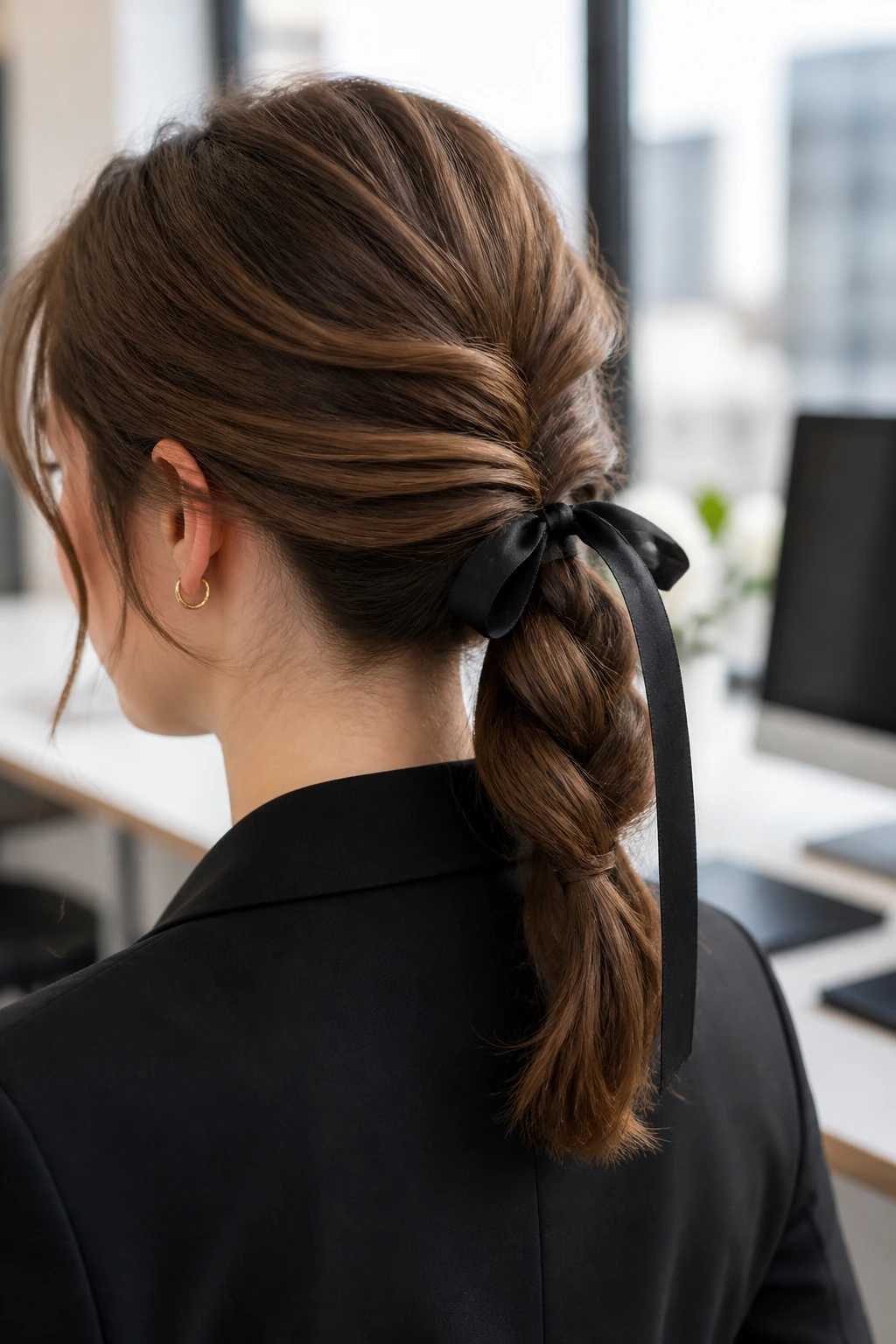
A ribbon-tied twist ponytail adds a bit of softness without getting precious. Twist the ponytail length slightly, then tie a narrow ribbon around the base or down the tail for a more finished look.
Keep the ribbon matte or satin rather than shiny and stiff. That keeps the style office-appropriate and stops it from drifting into event hair. Sometimes the right ribbon is the whole difference.
31. French Braid Into Chignon
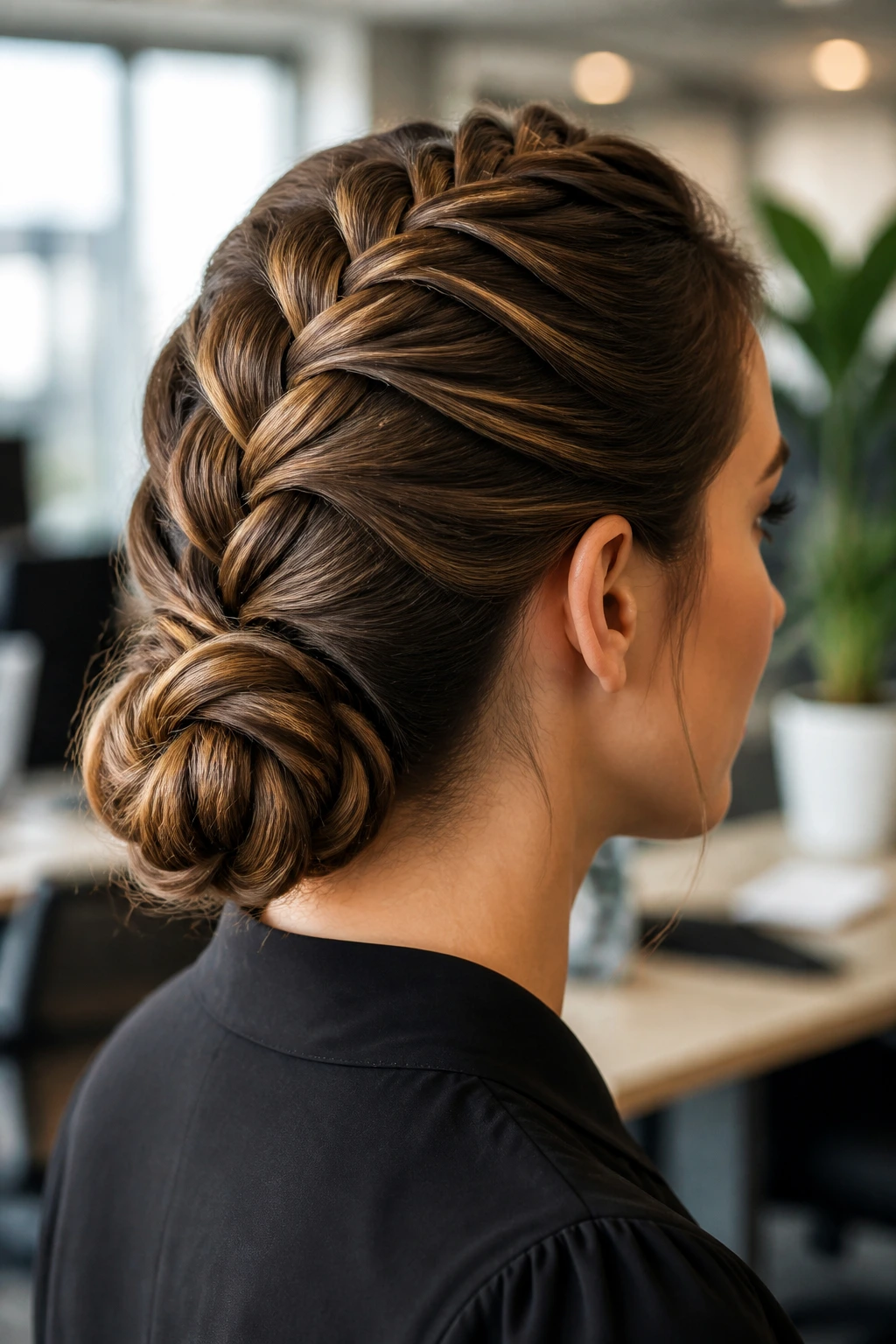
A French braid into a chignon is a solid answer when you need hold first and prettiness second. The braid pulls the hair neatly toward the back, and the chignon keeps the ends tucked away.
This style is excellent on long hair that usually slips out of low buns. The braid gives the bun a built-in anchor, so the whole style can survive a long morning without repeated pin fixes.
32. Asymmetrical Side Chignon
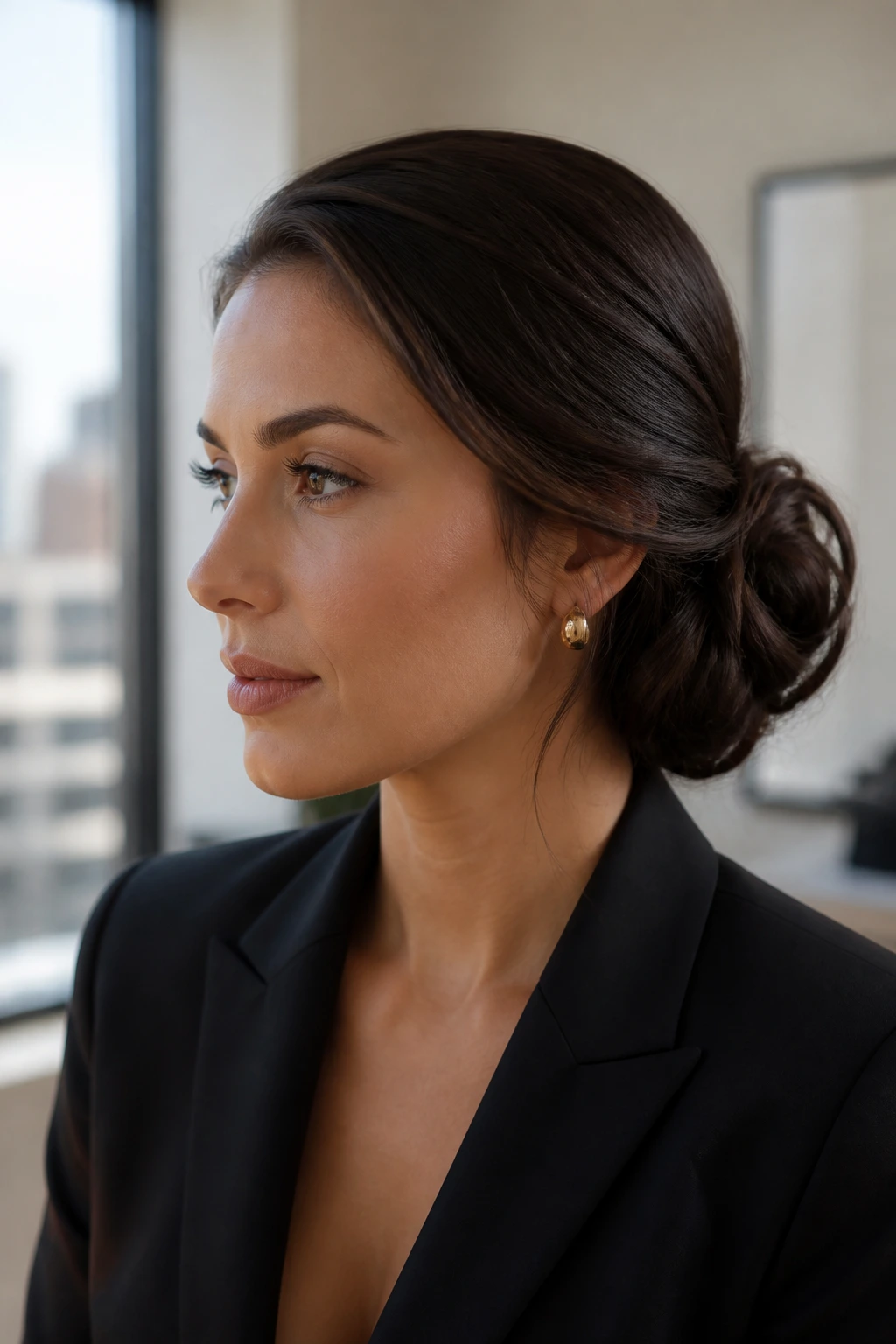
A side chignon breaks the symmetry just enough to look interesting. Move the bun to one side of the nape, keep the top smooth, and let the finish feel a little softer than a center placement.
I like this with statement earrings or glasses because the shape doesn’t crowd the face. It has a bit of character, but not so much that it starts fighting your clothes.
33. Mini Claw-Clip Twist for Short Hair
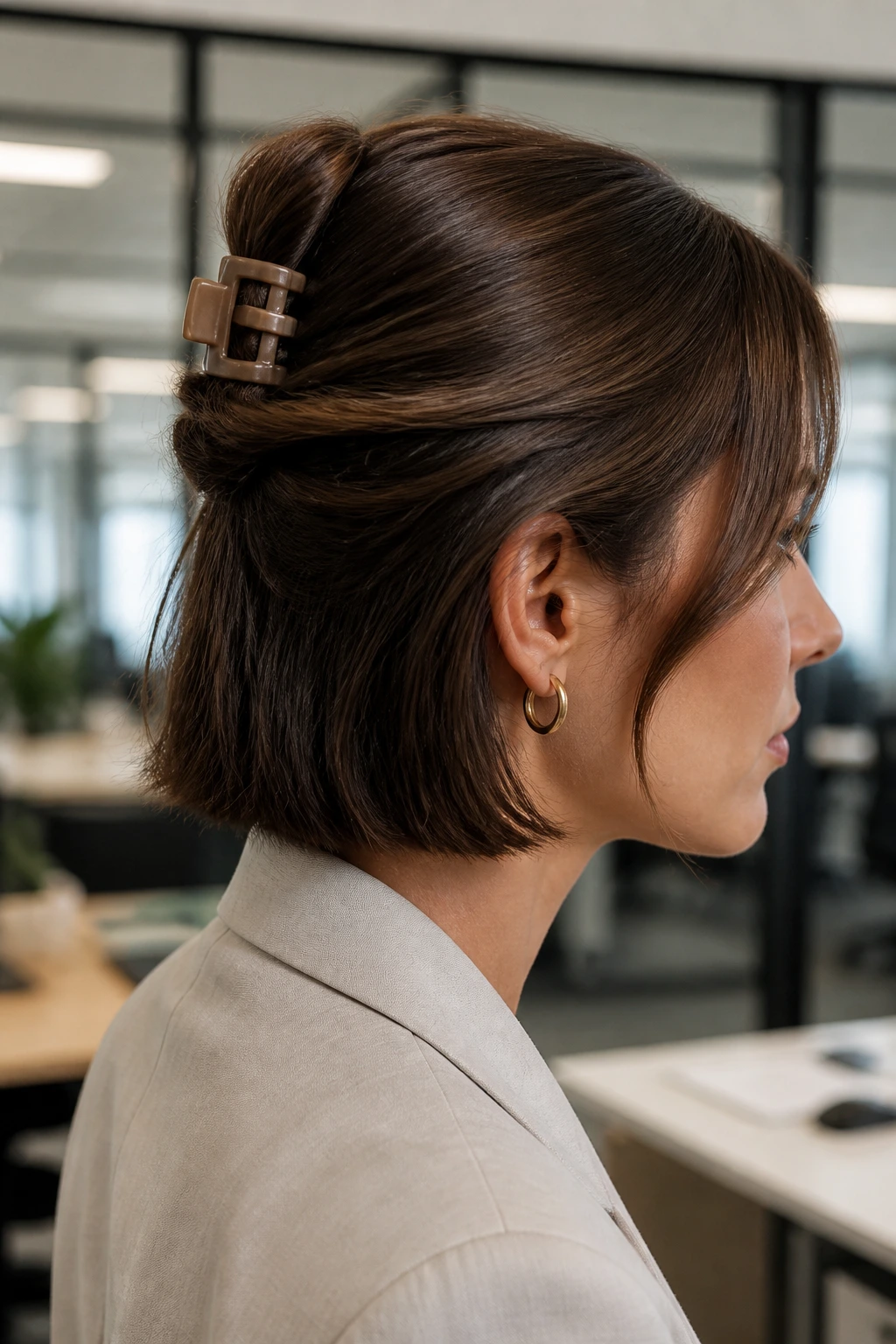
Short hair and office styles can be friends. A mini claw-clip twist works on bob lengths and layered cuts by folding the hair upward and securing it with a small clip that holds without swallowing the whole style.
Choose a clip that matches your hair color if you want the finish to look cleaner. If the ends poke out, curl or tuck them slightly before clipping so the silhouette stays neat.
34. Loop Bun
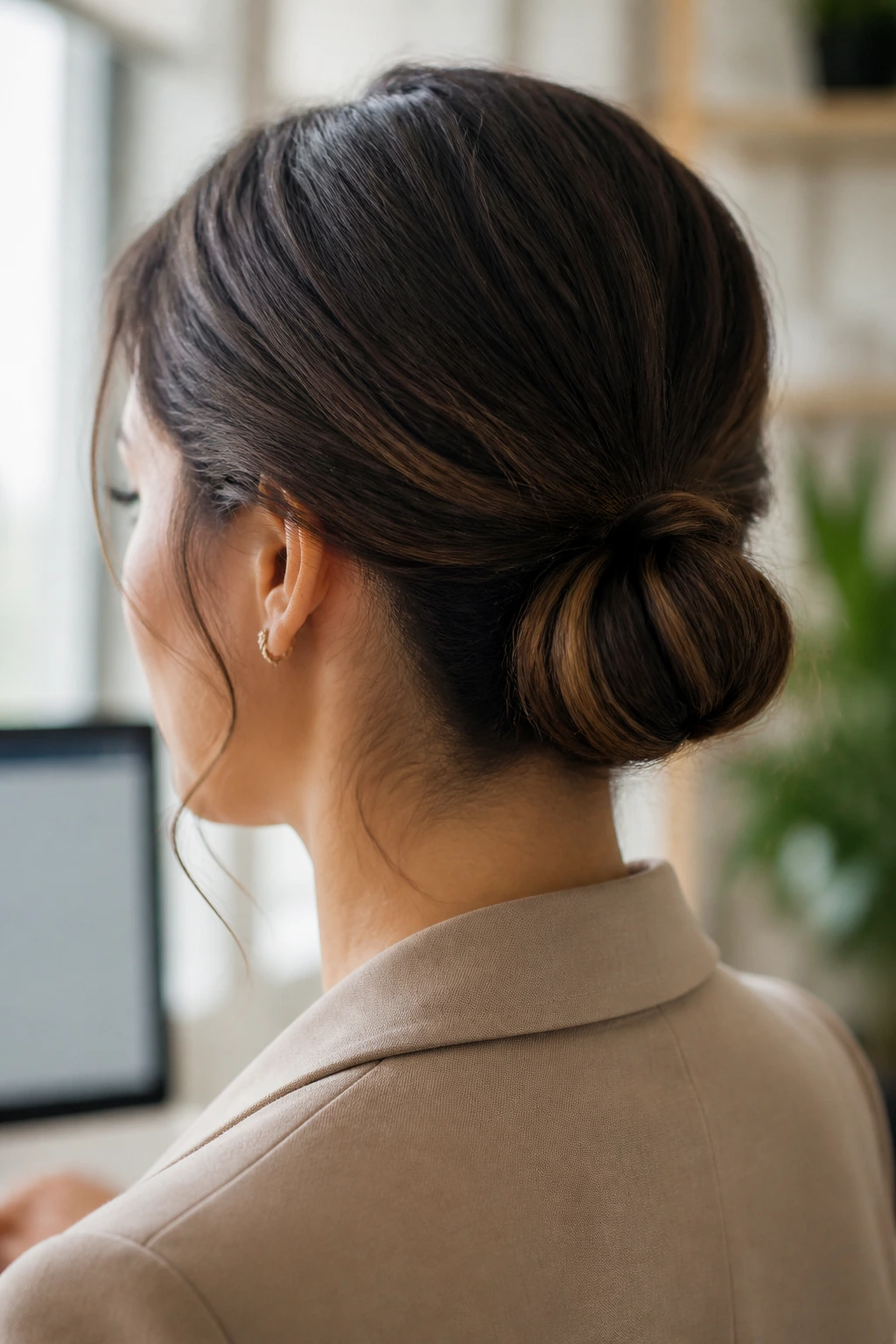
The loop bun is what happens when you stop pulling the ponytail all the way through. Leave the ends folded back through the elastic, and you get a compact loop that feels tidy and a little modern.
It’s useful on days when you want a style that can be done in under five minutes but still looks thought through. Fine hair does well here because the loop creates shape without needing a ton of volume.
35. Low Knot Bun
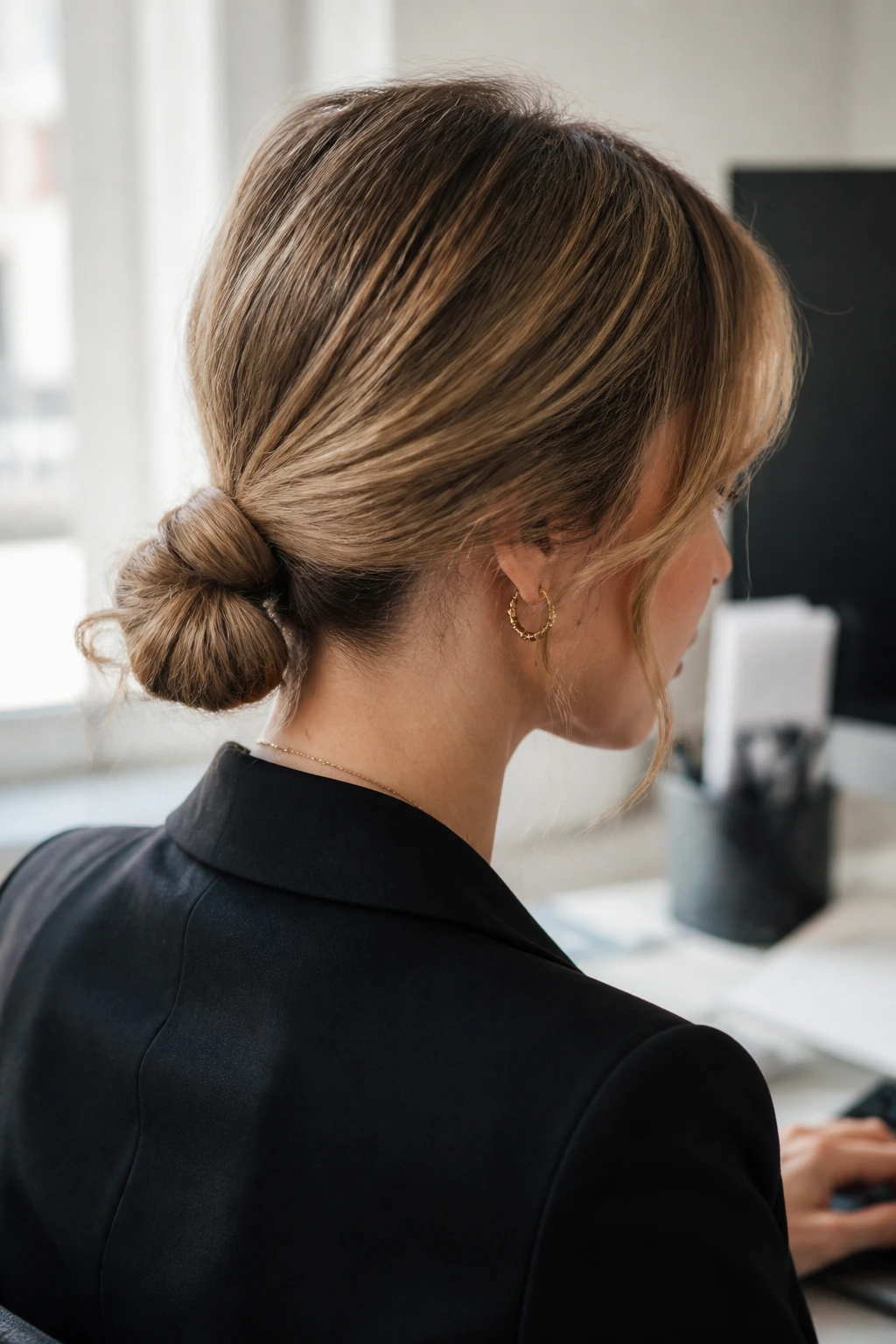
A low knot bun gives a quiet, tailored look that sits close to the neck. Tie the hair once or twice, depending on length, and pin the knot so it does not sag.
This is one of those styles that benefits from slightly rougher hair. If the hair is too soft and clean, the knot can loosen. A little dry shampoo at the roots helps more than people expect.
36. Wrapped Braid Bun
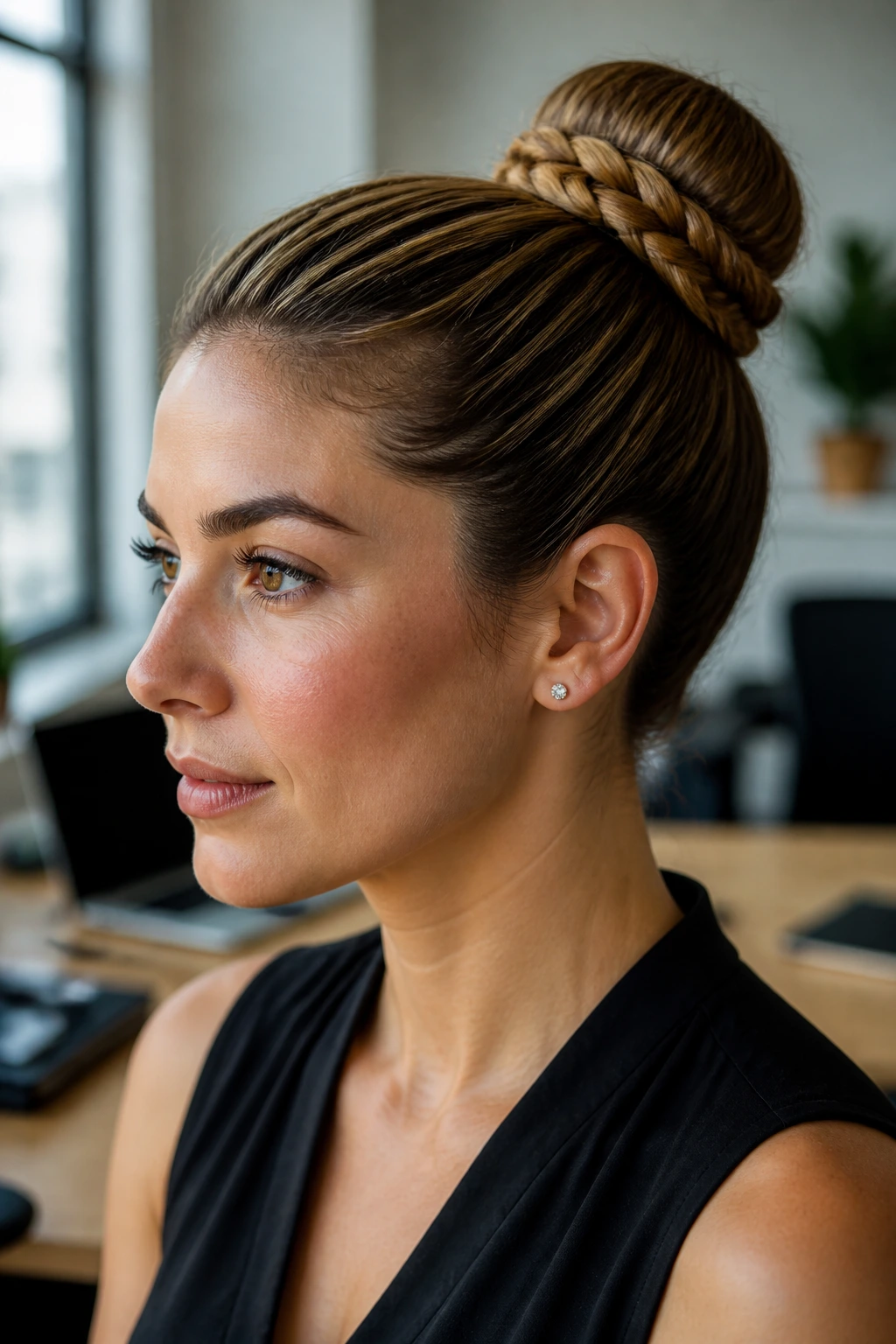
A wrapped braid bun takes the braid idea and gives it a cleaner finish around the base. Braid the ponytail, then wind it around the elastic so the braid itself becomes the decoration.
It reads more finished than a plain braided bun because the wrapped lines create a neat outline. It’s also useful if you want to keep the style compact and wear it with a high neckline.
37. Tucked-In Ponytail Roll
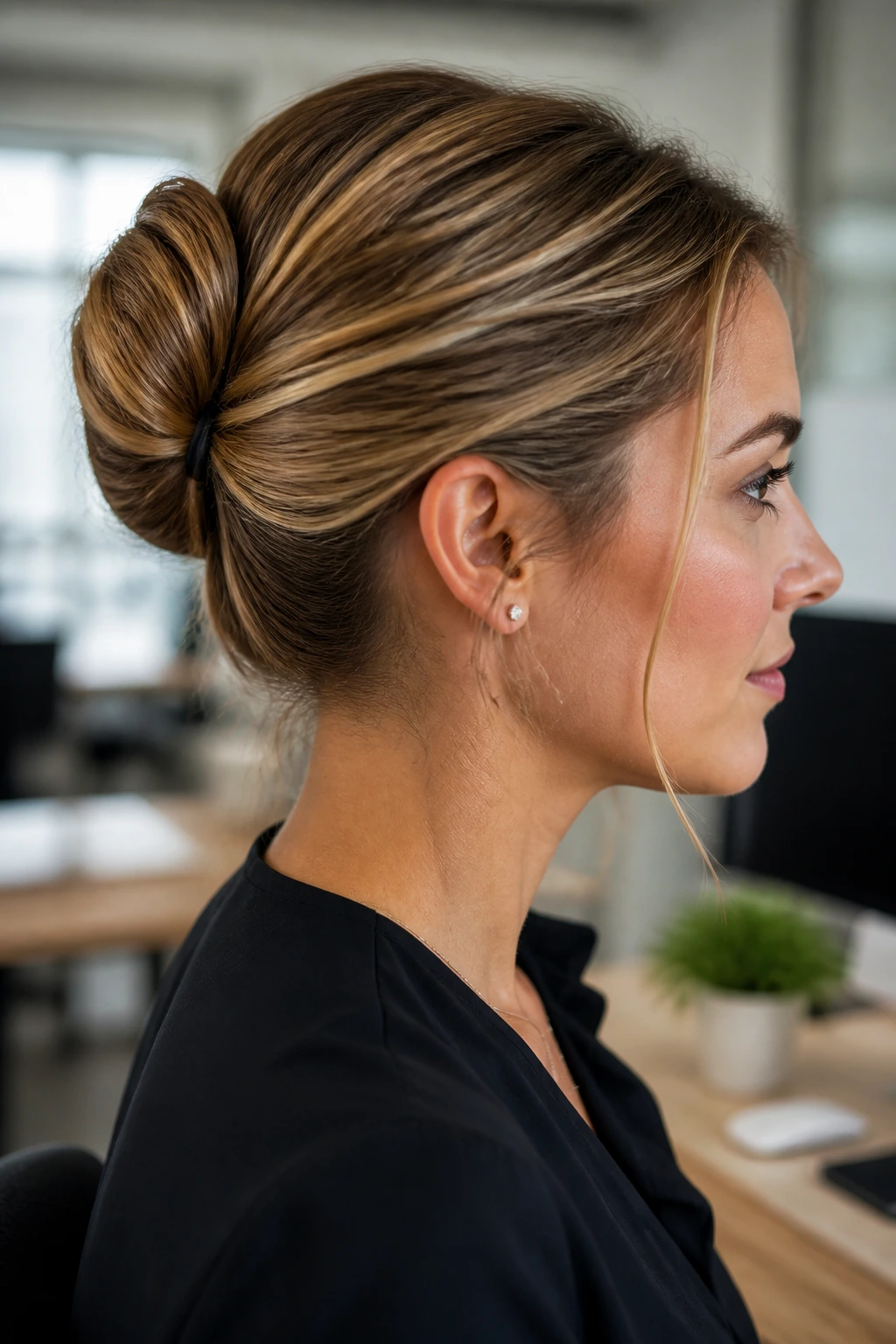
The tucked-in ponytail roll is a calm, tidy option for days when you do not want any loose ends to argue with your face or your collar. Pull the ponytail through a gap above the elastic, then tuck the length inward until the roll lies flat.
It holds well on straight or slightly wavy hair, especially if the ends are not too layered. If your hair is thick, pin the tucked section at two points so it does not puff out later.
38. Nape-Wrapped Coil
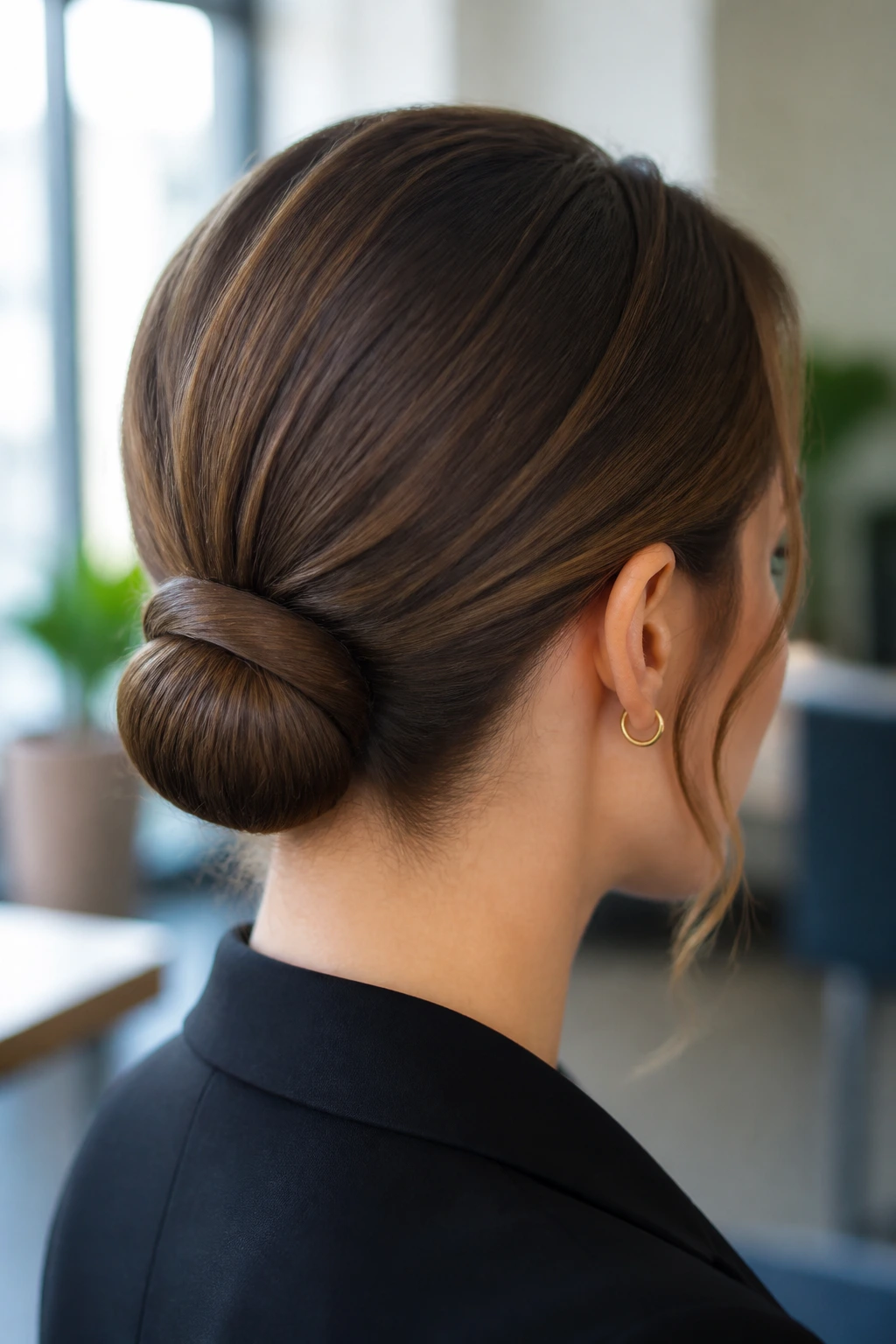
A nape-wrapped coil is the kind of style I reach for when I want the back to look almost architectural. Twist the hair into a flat coil at the nape, then wrap a small section around the center so the pins disappear into the shape.
It’s neat, low, and good for long office days because it stays close to the head. If your hair has some texture, even better; the coil grips more easily and holds its line without fighting back.
Why These Styles Feel Right for a Workday
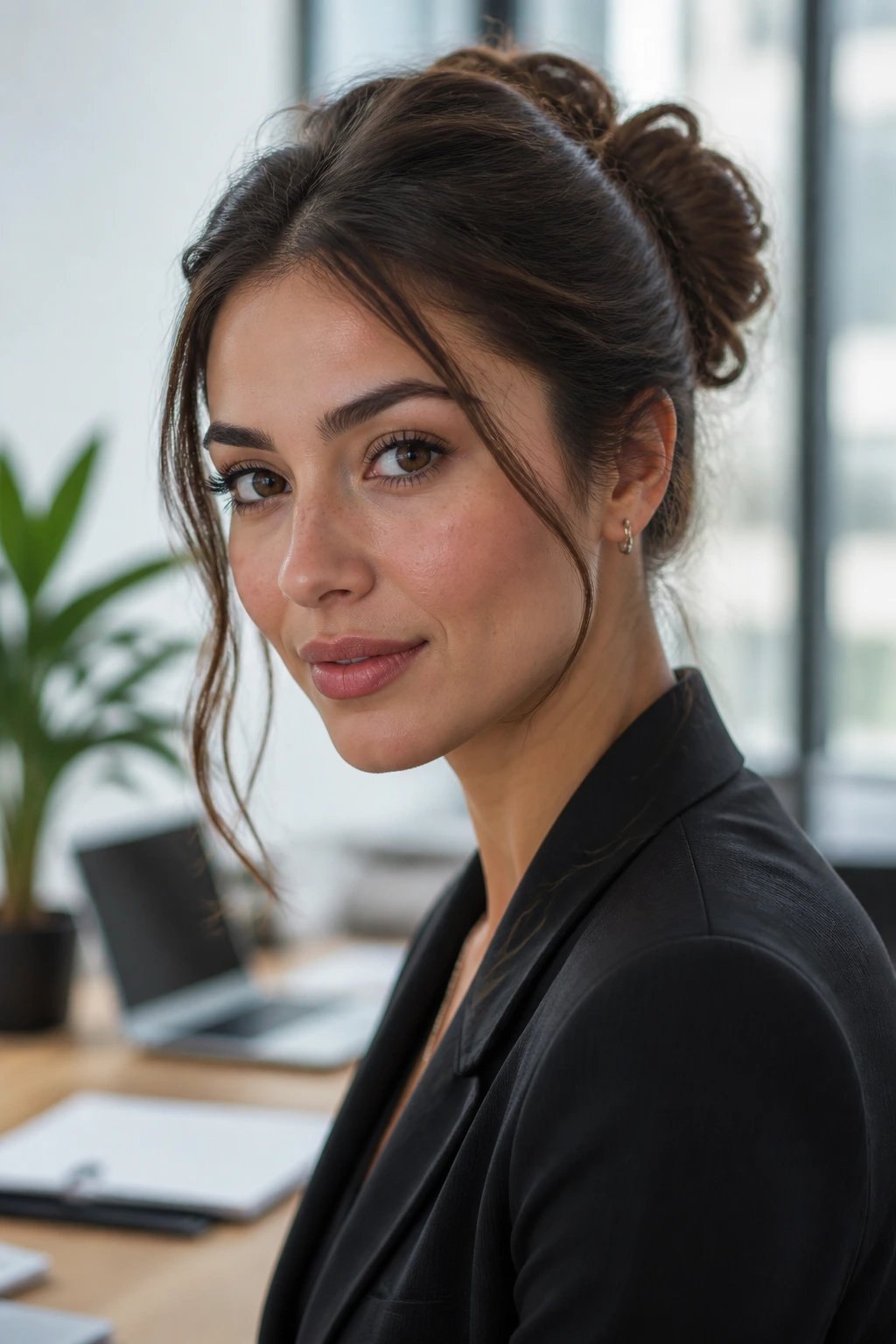
The best office hair does not ask for constant attention. It should stay put when you lean over a laptop, slip on a coat, or turn your head in a meeting without sending loose ends everywhere. That is the real test.
You can also read these styles by how much structure they give. The sleeker buns and twists feel sharper, which suits more formal offices, while the braided and softly pinned versions leave a little movement in the hair. Neither choice is wrong. The useful part is knowing which mood you need before you start pinning.
A lot of people think “professional” means “severe.” It doesn’t. A work style can be smooth, soft, braided, wrapped, or a little relaxed, as long as it looks finished and stays under control.
Essential Tools for Office-Ready Styling
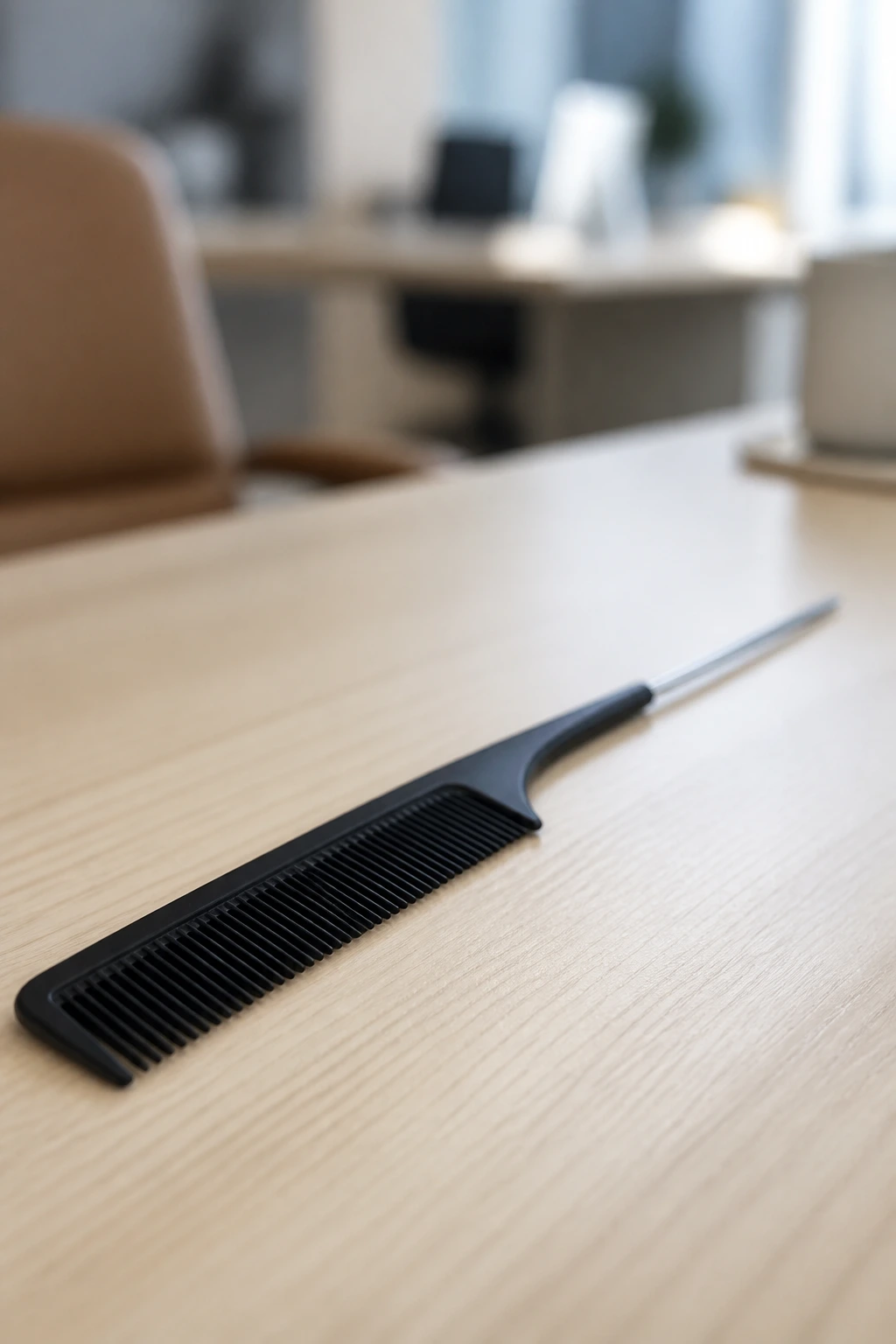
-
Tail comb or rat-tail comb: Useful for clean parts, sectioning, and tucking small strands exactly where you want them.
-
Boar bristle or smoothing brush: Helps flatten the crown without tearing up the surface of the hair.
-
Strong but gentle elastics: Clear or hair-colored bands work best; avoid the brittle ones that snap after two uses.
-
Bobby pins in two sizes: Standard pins handle buns and twists, while smaller pins are better for short layers and fine hair.
-
Texturizing spray or dry shampoo: Gives grip to slippery hair and makes pinned styles hold better.
-
Lightweight gel, cream, or wax stick: Tames flyaways at the hairline and keeps sleek styles from puffing up.
-
Hair net: Optional, but useful if you want a bun to stay compact without using a wall of pins.
-
Matte claw clips and neutral accessories: Good for the styles that should look polished, not flashy.
Smart Prep for Better Hold and Less Frizz
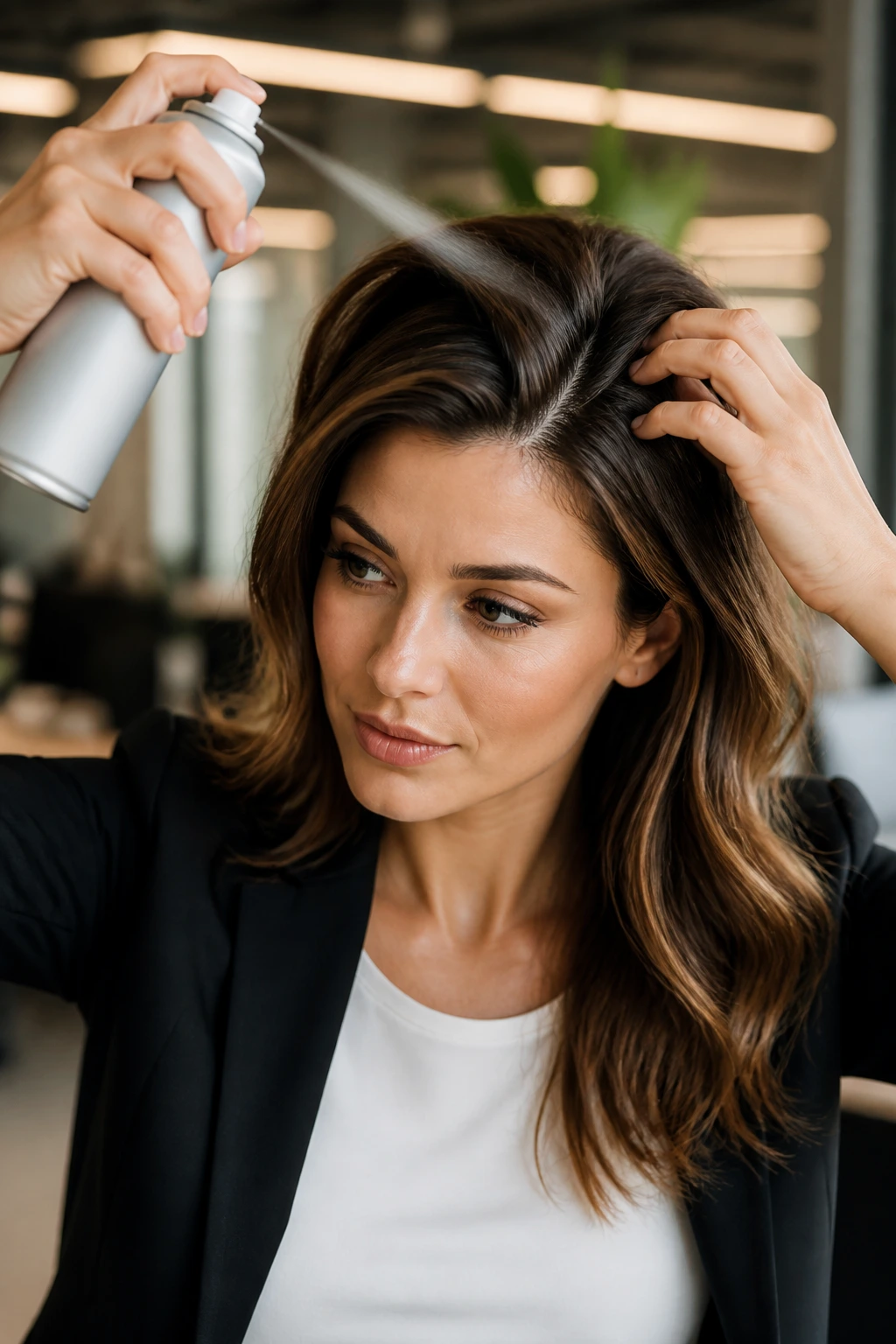
The truth about a good work updo is that the style starts before the pins do. Hair that is too soft, too freshly washed, or too smooth can slide right out of a bun by lunchtime. Hair that has a little grit is easier to shape, easier to pin, and usually easier to live with.
If your hair is fine or silky, start with a light mist of dry shampoo at the roots and let it sit for a minute before brushing it through. That small pause matters. It gives the product a chance to break up the slip and create a bit of friction, which is exactly what a work style needs.
Curly and coily hair often does better with moisture and definition first, then shaping. A small amount of leave-in conditioner or curl cream can stop frizz from taking over, but don’t overdo the product near the base or the style may get soft and saggy.
For sleek styles, use a little gel or cream at the crown and sides, then brush it in firmly before you secure anything. For textured styles, do the opposite: keep the surface slightly imperfect and let the pins and braid pattern do the work. The finish changes the mood more than most people realize.
How to Wear These Styles at the Office
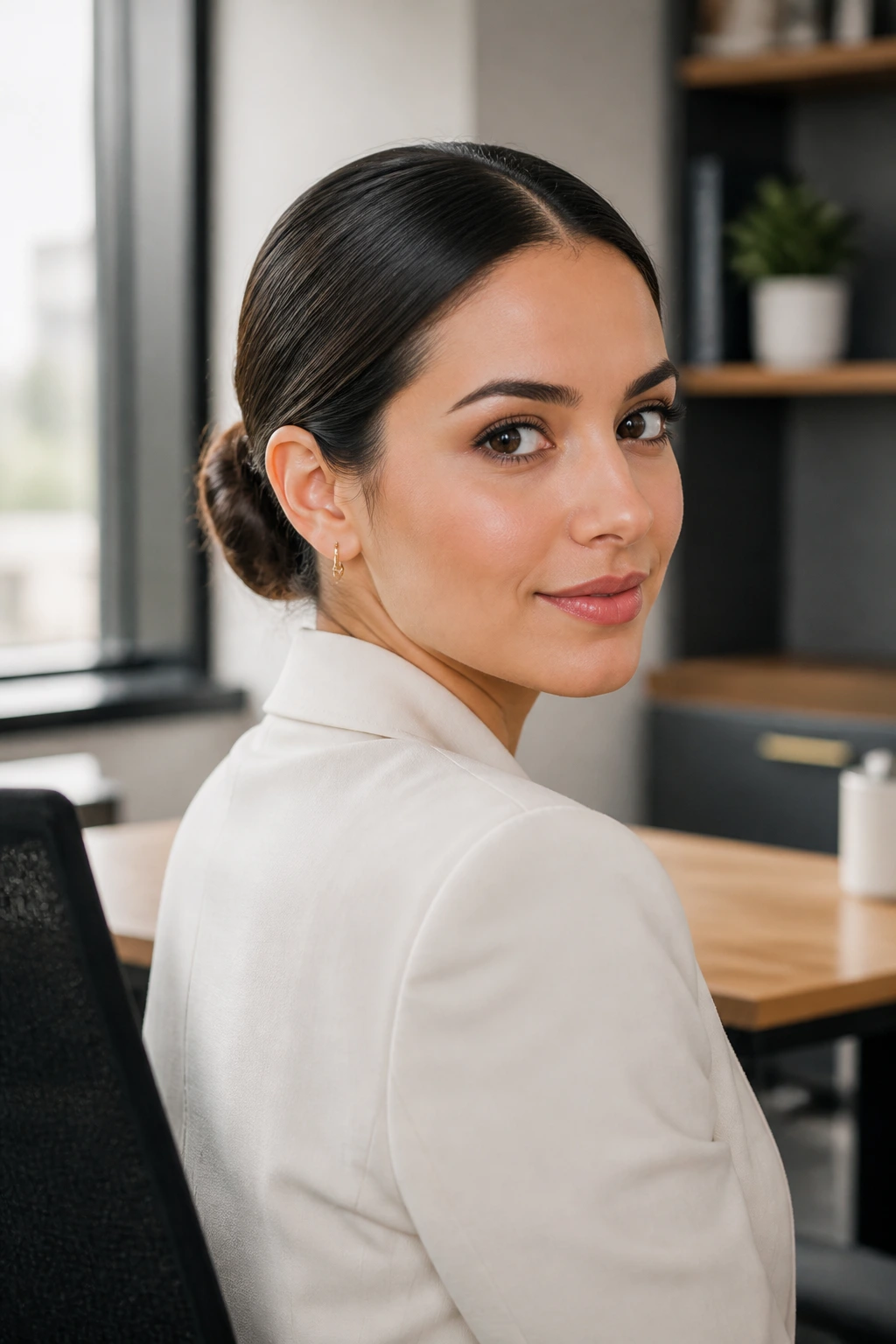
Presentation: Go sharper for interviews, client meetings, and formal offices; choose softer twists, braids, or tendrils for everyday desk work. A low bun with a clean center part says something different from a messy coil, even when both are pinned well.
Accessories: Keep clips, scarves, and ribbons in tones that look calm under office lighting. Matte black, tortoiseshell, ivory, navy, and muted metallics usually behave better than shiny plastic or loud prints.
Comfort: If you sit at a desk for long stretches, choose low styles that won’t jab into your headrest. High buns and topknots can be fine, but they should be compact.
Dress Code Match: Conservative workplaces tend to favor smooth crowns and tidy napes. Creative offices can handle texture, side parts, braids, and a little volume without blinking.
Additional Tips and Style Boosters
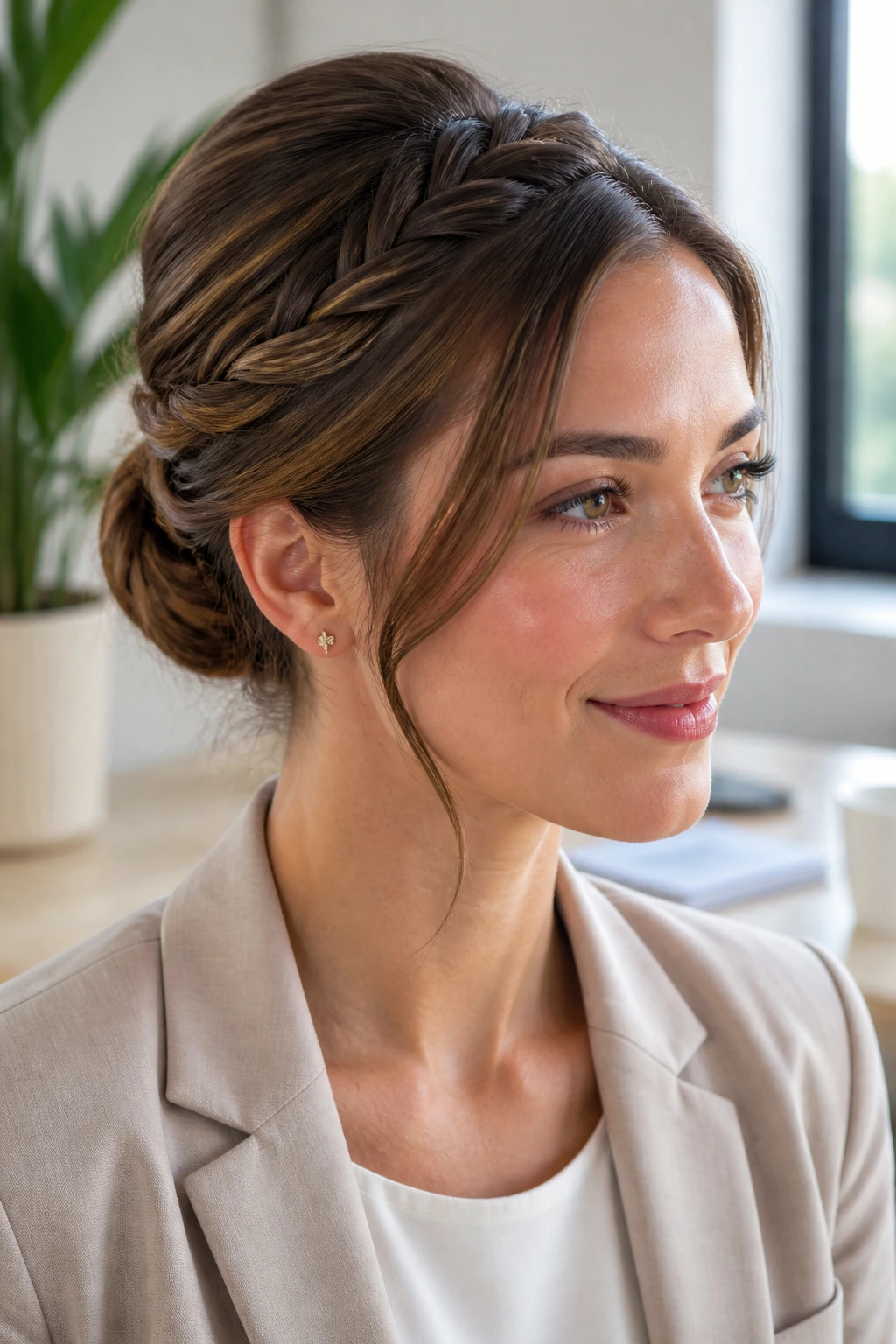
Flavor Enhancement: If hair falls flat by midmorning, work a pea-sized amount of lightweight styling cream into the top layer before you pin. It smooths flyaways without turning the style greasy.
Customization: Swap the finish depending on your day. Sleek for presentations, slightly undone for low-key office time, braided when you know you’ll be moving around a lot.
Serving Suggestions: Pair these styles with small hoop earrings, a neat collar, or a simple necklace when the updo leaves your neck visible. The contrast helps the whole look feel intentional.
Make-It-Yours: Fine hair usually needs texture spray. Thick hair usually needs sectioning and more pins. Curly hair often looks best when you preserve the curl pattern instead of trying to flatten it into something else.
Common Mistakes That Make a Work Updo Fall Flat
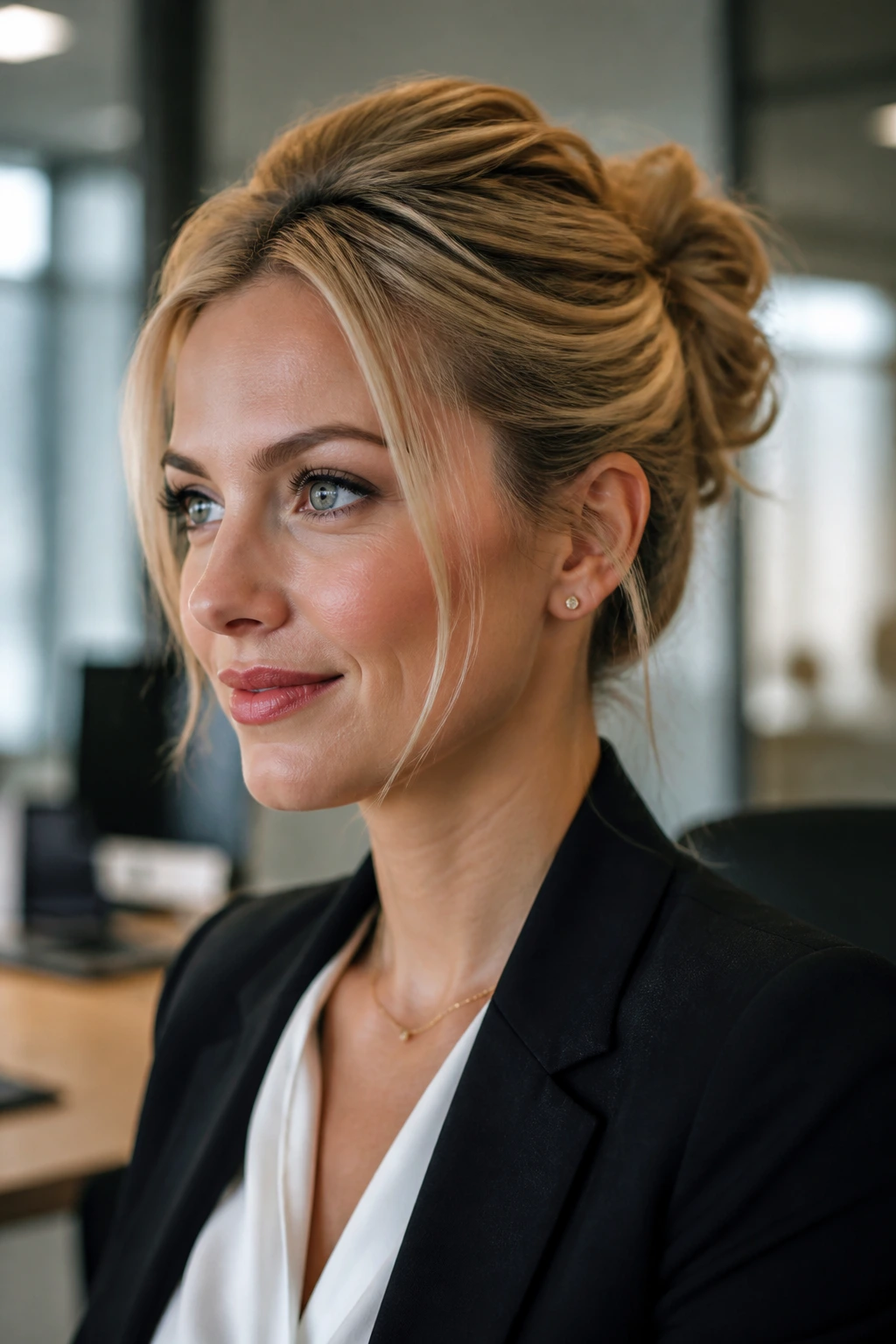
A lot of styles fail for the same few reasons, and the fixes are annoyingly practical.
Using too much product: Hair that feels waxy or stiff can lose movement and start to look heavy. Start with less than you think you need; you can always add a touch more at the front.
Pinning only in the top layer: That’s how buns droop. Pins should catch the base of the shape and cross over each other for grip, not just sit on the surface like decoration.
Making the style too tight at the hairline: If your scalp feels sore by noon, the style is too tight. Loosen the base a little and redistribute the tension before it turns into a headache.
Ignoring the ends: Ends that stick out from a bun or tuck will make the style look unfinished. Tuck them fully, or let them be a planned soft detail instead of random spikes.
Starting on hair that is too slippery: Freshly washed, squeaky-clean hair often slides. A little texture from the previous day, or a bit of dry shampoo, usually gives better hold.
Easy Variations and Texture Swaps
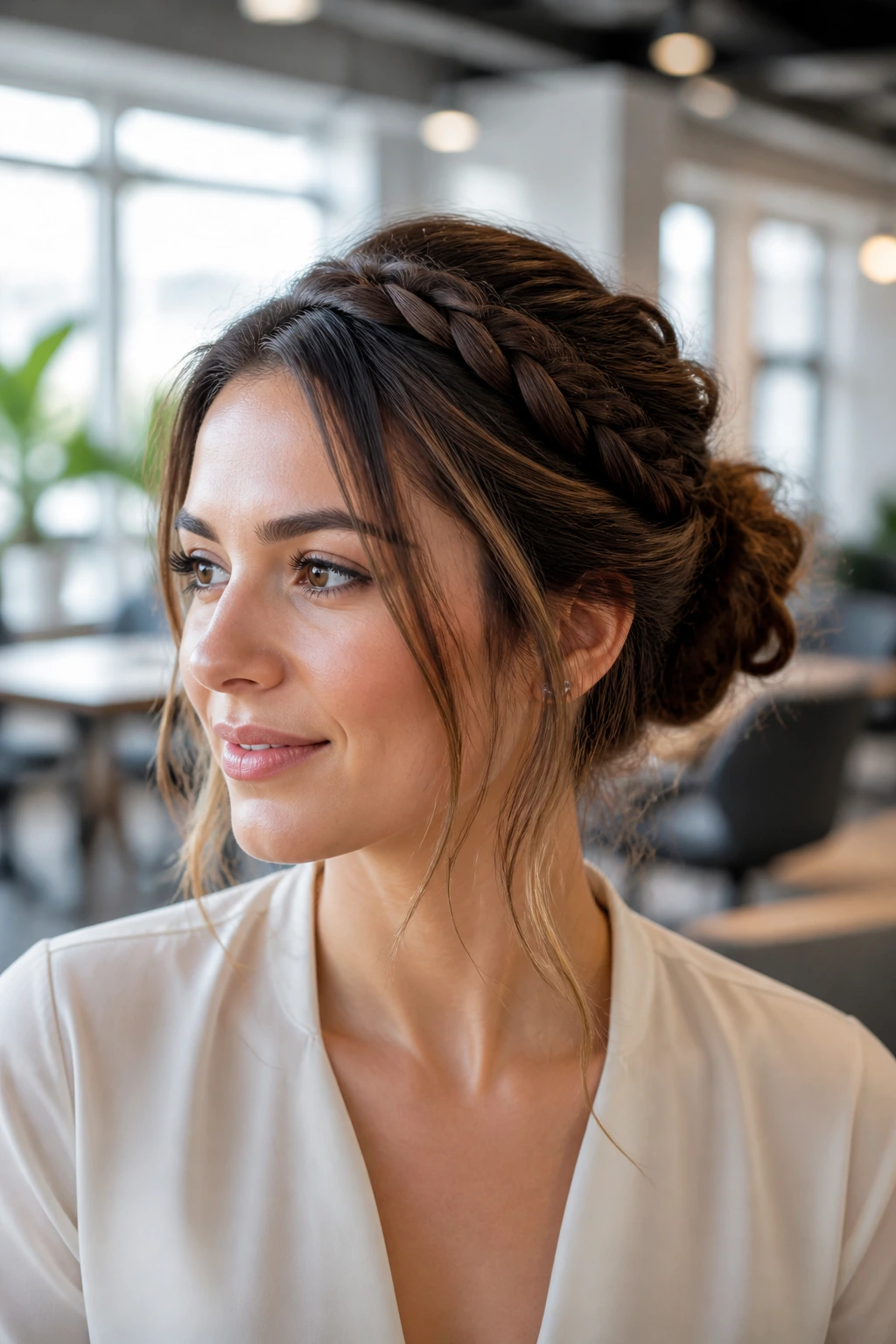
The Sleek Office Edit: Use a touch more gel and a tighter crown for interview days or formal meetings. The style stays the same; the finish gets sharper.
The Soft Desk-Day Version: Leave two thin front pieces loose or loosen a braid slightly so the hair doesn’t feel overcontrolled. This works well in relaxed offices or on long days at a computer.
The Curly-Forward Swap: Keep the natural texture visible and choose styles like the low puff, pineapple, or braided crown instead of forcing everything into a flat bun. The hair stays happier, and the shape lasts longer.
The Short-Hair Adjustment: Use smaller pins, mini claw clips, and tucked rolls instead of trying to build oversized buns. Shorter layers need less ambition and more smart placement.
The Accessory Upgrade: Add a ribbon, scarf, or matte clip when the base style needs a little lift. One accessory can make the same bun feel more finished without changing the whole technique.
Keeping the Style Fresh Through Long Days

Work hair has a weird timeline. It can look perfect at 8:15 and a little tired by 2:30. That does not mean the style failed. It means the day happened.
For all-day hold, stash a small comb, two spare pins, and a travel-size dry shampoo in your desk or bag. If the crown starts to puff, smooth just the top layer instead of rebuilding the whole style. If a bun loosens, add one pin at the base, not five at the outside edge.
Overnight prep helps too. You can braid damp hair before bed for more texture the next morning, or wrap the hair loosely on a silk pillowcase to keep frizz under control. If you know the next day will be busy, choose the style the night before and set the tools out where you can reach them without thinking.
Questions People Ask About Work Updos

What is the easiest updo to do before work?
The low twisted chignon, loop bun, and tucked ponytail roll are all fast once your hands learn the motion. They look tidier than a plain ponytail and usually take under five minutes after a little practice.
Which styles work best for fine hair?
Styles that create grip help most: braid buns, rope braids, wrapped ponytails, and anything built on dry shampoo or texturizing spray. Fine hair can look flat if you over-smooth it, so a little texture is your friend.
What about thick hair that feels too heavy in a bun?
Break it into sections before you start pinning. Braids, Dutch braid buns, and French braids into chignons control bulk better than a single twist, and they usually stay put longer.
Can curly hair do polished office updos without getting ruined?
Yes, if you work with the curl pattern instead of flattening it. Low puffs, pineapple updos, and braided crown styles hold shape while keeping curls from getting crushed into frizz.
How do I keep bobby pins from slipping out?
Insert them with the wavy side facing down against the scalp, and catch a bit of hair from the bun base rather than just the surface. Cross two pins over each other if the style needs extra hold.
Do I need to wash my hair before doing these styles?
No. In fact, slightly lived-in hair often behaves better. One-day-old hair tends to grip elastics and pins more easily than freshly washed hair, which can be too soft.
Which styles look most professional for a formal office?
Sleek low buns, French twists, center-part buns, and wrapped ponytails tend to read as the most polished. They keep the outline clean and avoid the “I threw this up in the car” effect.
The Styles That Make the Morning Easier
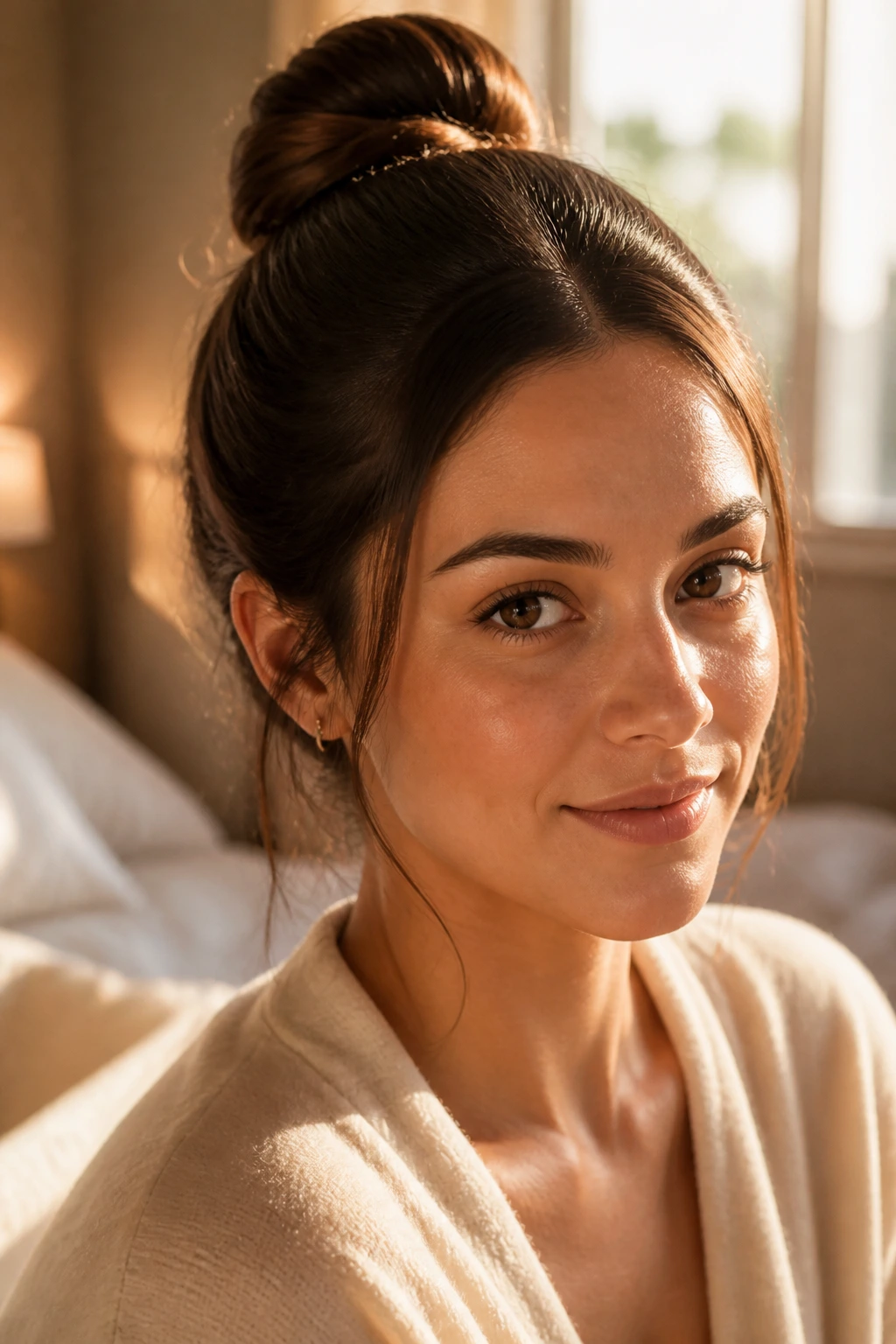
The real value of a good work updo is not that it looks fancy. It’s that it removes one decision from the morning pile and still leaves you looking like you meant to show up that way.
Some days you’ll want the sharp center-part bun. Other days, the braided ponytail or the soft chignon will feel better. That’s the useful part of having 38 options in your back pocket: you can match the style to the day instead of forcing one hair habit to do every job.
Once you find three or four favorites, keep the pins together, keep the elastic drawer stocked, and stop fighting the mirror on busy mornings. The best office hair is the kind that gets out of your way and still looks like it belongs there.
