



A ponytail is one of those hairstyles that can look like five different things depending on how you handle the crown, the elastic, and the last inch of the tail. Pull it tight and it feels sharp. Leave a few pieces loose and it softens right away. Add braid work, a ribbon, a bubble effect, or a wrap around the base, and the whole mood changes.
That’s why cute ponytail styles for women keep showing up in real life, not just on mood boards. They work on second-day hair, washed hair, straight hair, curly hair, thick hair, and the awkward in-between days when your roots need help but your ends still look fine. The trick is not the ponytail itself. It’s the shape around it.
I like ponytails that do one specific job well. A high ponytail should lift the face and show the neckline. A low ponytail should look intentional, not like you gave up halfway through getting ready. And if you want the style to feel polished, the base matters just as much as the tail. A clean part, a hidden elastic, and a little tension at the crown can make a basic tie-back look much more finished than people expect.
Why These Ponytail Ideas Are Worth Saving
- Fast payoff: Most of these styles take 5 to 15 minutes, and the difference comes from placement, not fancy tools.
- Hair-type friendly: Straight, wavy, curly, coily, fine, and thick hair all have a place here; the trick is choosing the right tension and texture.
- Day-to-night range: A ponytail can read casual with a few loose pieces or sharp enough for a blazer and hoops with the same base.
- Low-drama styling: If your hair refuses to hold a full updo, a ponytail gives you structure without demanding perfect precision.
- Easy to personalize: Change the height, add a braid, swap the elastic, or wrap the base and the whole style shifts.
- Better than a rushed bun: A ponytail usually looks fresher than a hasty knot because the tail still shows movement and shine.
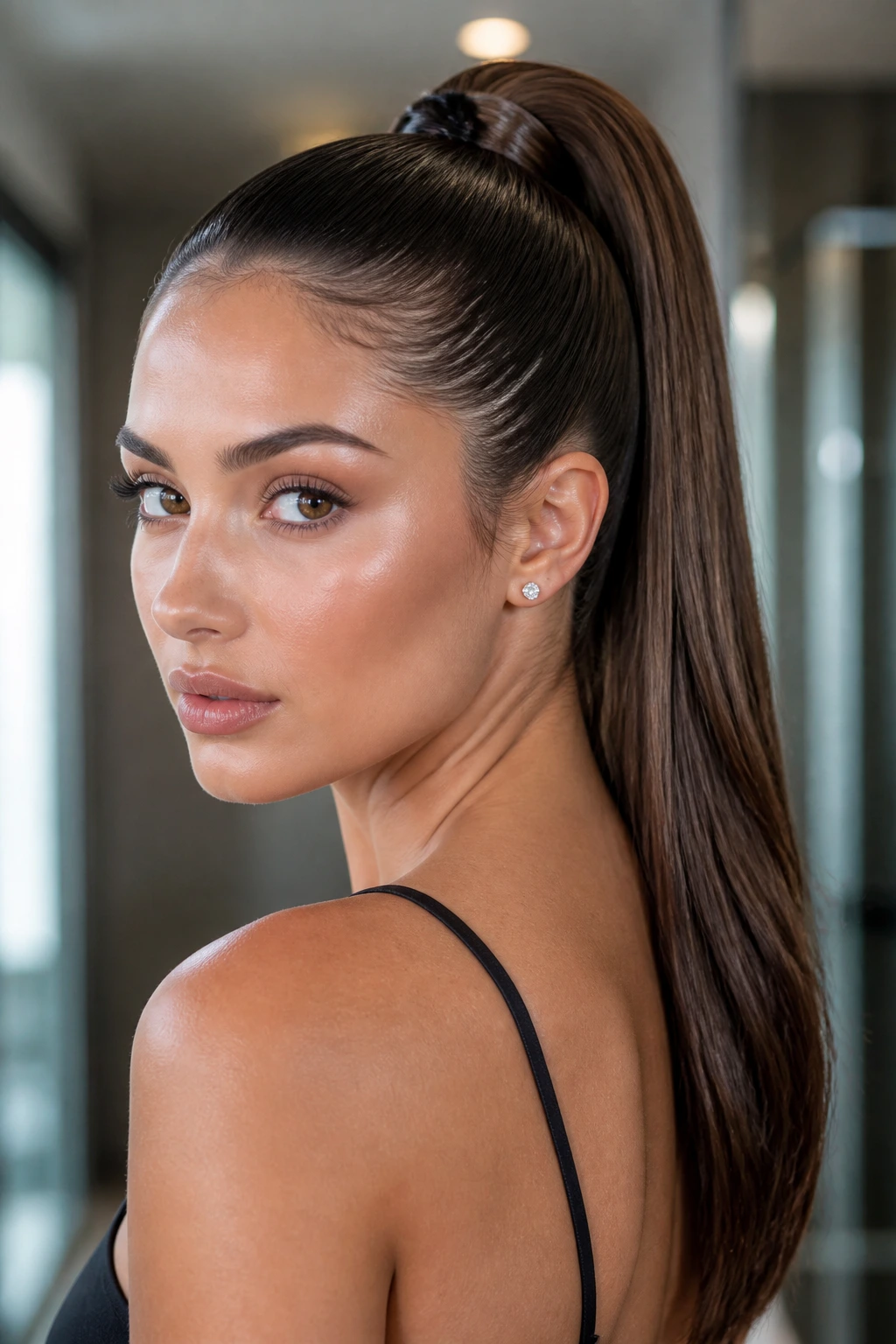
1. Sleek High Ponytail
A sleek high ponytail is the one I reach for when I want clean lines and a little attitude. The lift at the crown opens up the face, and the tight base makes the whole style feel deliberate instead of tossed together. It works best when the hair is brushed upward in one direction first, then smoothed again right before the elastic goes in.
Why It Works
The height does most of the work. It gives the ponytail a bounce that a low tie can’t match, and it keeps the tail swinging instead of hanging flat. If your hair is a little frizzy, a pea-sized amount of smoothing cream on the top layer is enough; too much and the roots can look greasy by noon.
Use a boar-bristle brush or a firm paddle brush to pull everything up cleanly. Then take a fine elastic and wrap a small section of hair around it so the base looks finished. That tiny wrap changes the whole thing.
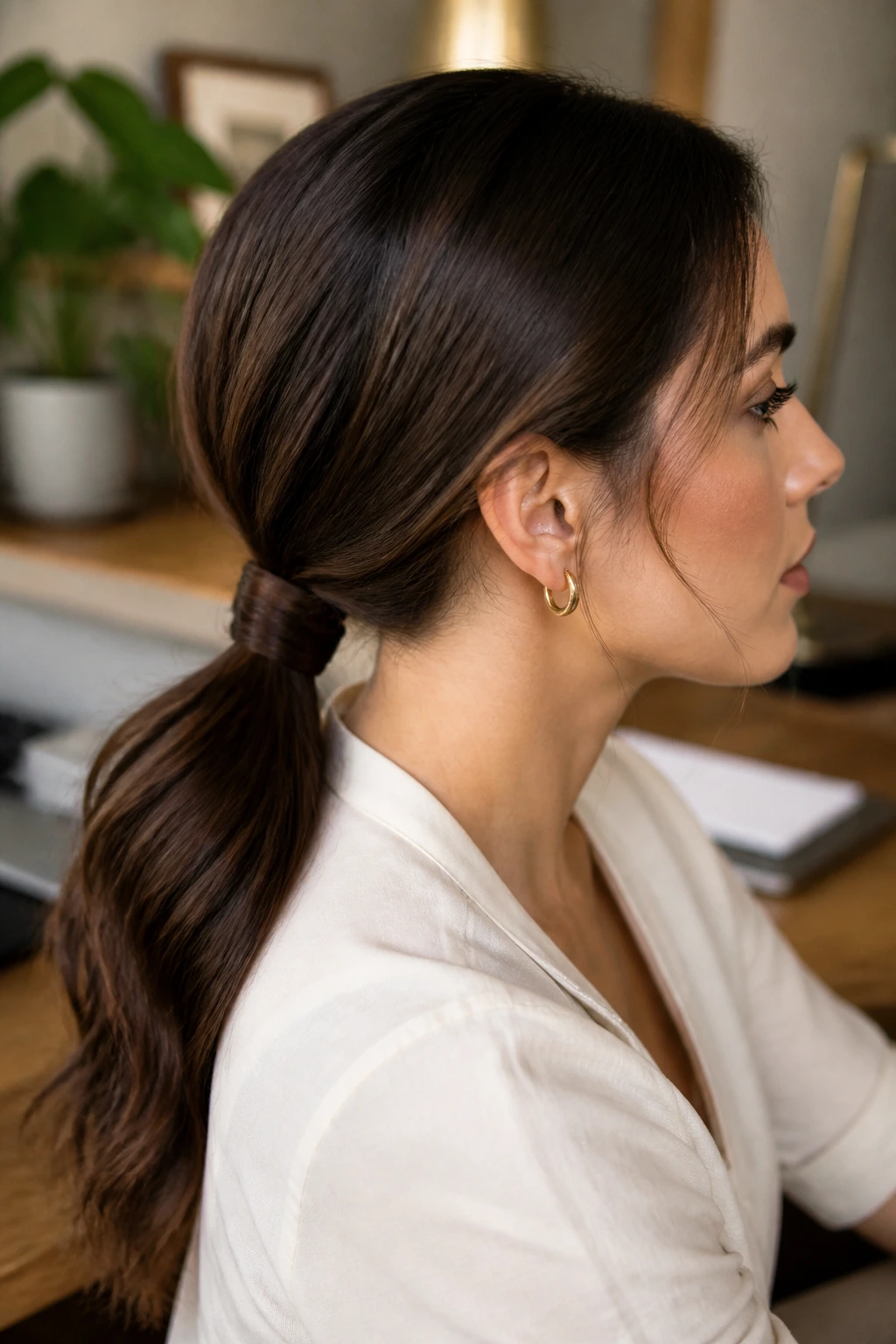
2. Low Wrapped Ponytail
A low wrapped ponytail has a quieter kind of polish. It sits at the nape, which makes it easy to wear with sweaters, button-downs, and anything with a high neckline. I like this one when the hair is clean but not freshly washed, because a little natural grip helps it stay neat.
What Makes It Different
The wrap around the elastic is the detail that keeps it from looking plain. You can use a one-inch strip of hair from underneath the tail, wrap it once or twice around the holder, and pin the end beneath the ponytail with a bobby pin. If you want a softer version, leave the crown slightly loose before gathering the hair.
- Best for medium to long hair.
- Looks sharp with a middle part or a deep side part.
- Works well with straight or slightly wavy textures.
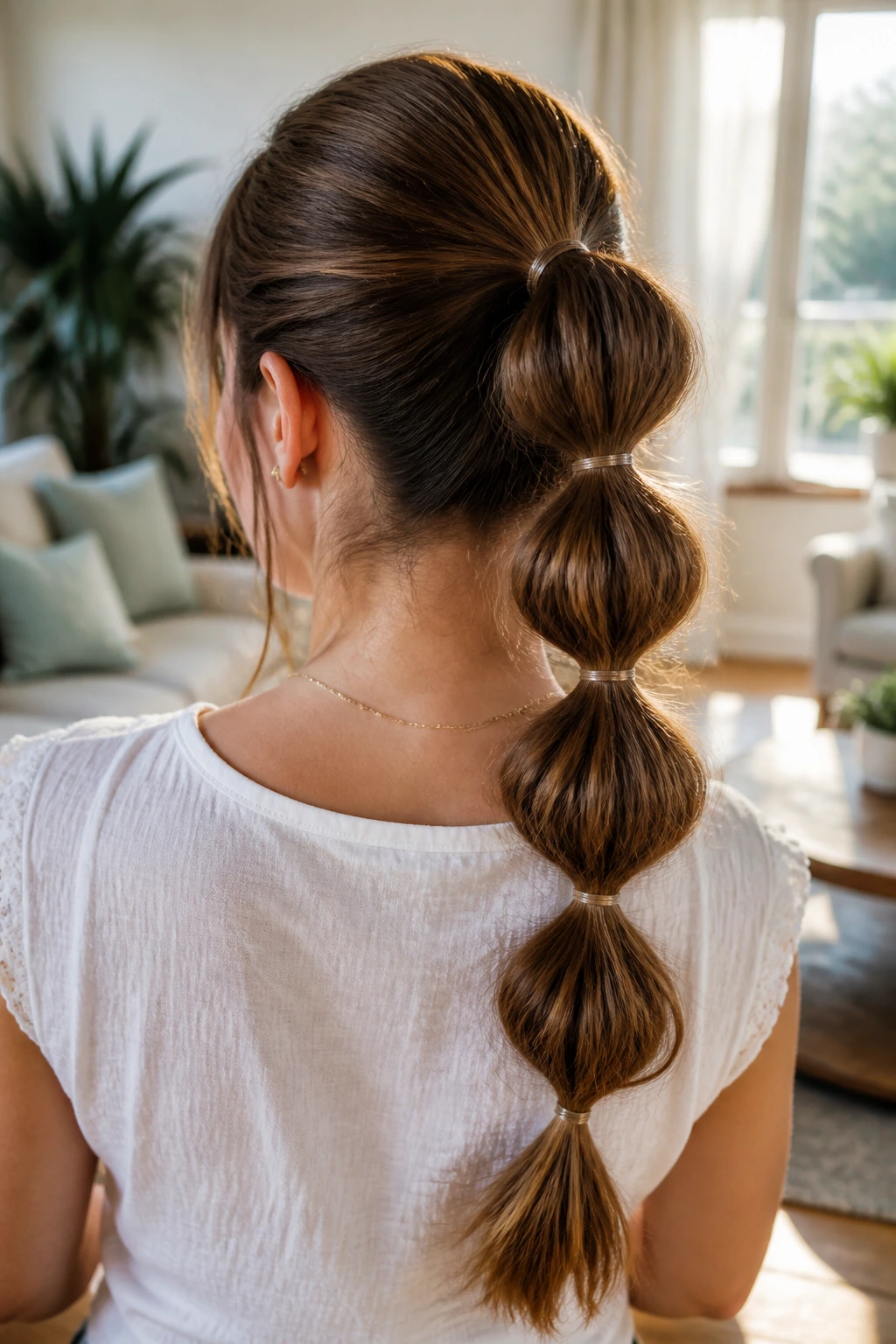
3. Bubble Ponytail
Why does a bubble ponytail look playful even when the rest of the outfit is simple? Because the shape does the visual work for you. Instead of one long fall of hair, you get a series of rounded sections that feel structured and a little unexpected.
How to Space the Bubbles
Tie the ponytail first, then add clear elastics every 2 to 3 inches down the length. Gently tug each section outward until it looks rounded, not flat. If your hair is fine, tease each section lightly before puffing it out; if it’s thick, you may need to smooth the outer layer with a touch of serum first so the bubbles don’t look fuzzy.
This style likes medium and long lengths most. It also holds up better than people think, especially if you keep the elastics snug but not painful.
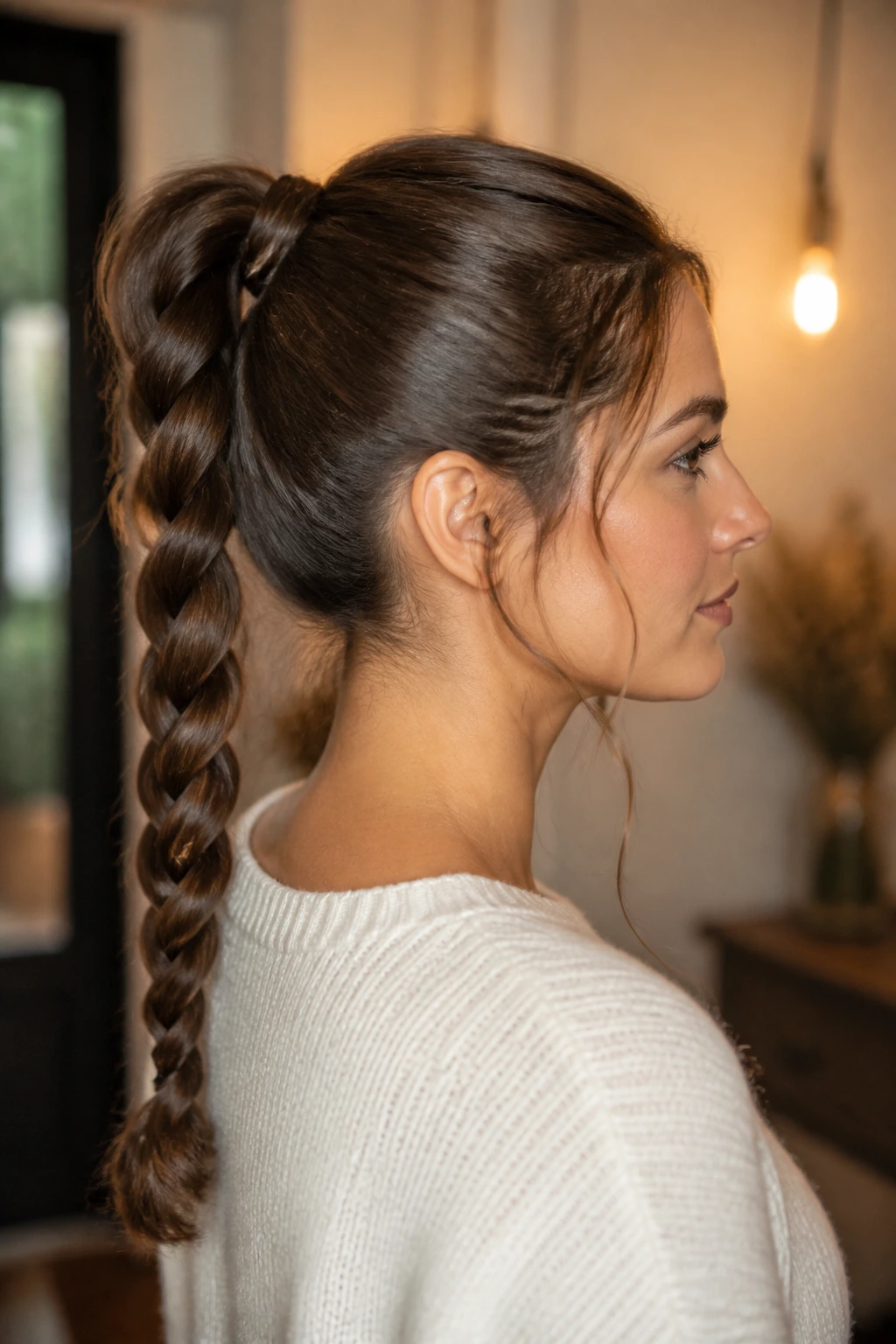
4. Braided Ponytail
A braided ponytail gives you the neatness of a braid with the movement of a tail. It’s one of the best choices when your ends are clean but the length is getting tangled or dry. The braid keeps the hair together, and the ponytail keeps it from feeling too rigid.
What to Watch For
Start with a medium or high ponytail, then braid the tail in a regular three-strand braid, fishtail, or rope twist. Secure the end with a small elastic. If you want more width, pancake the braid by gently pulling apart each section after it’s tied off.
A braided ponytail looks best when the crown isn’t too tight. Leave a little softness near the temples. Too much slickness up top can make the braid feel severe, and that’s not the mood here.
5. Curly High Ponytail
A curly high ponytail is all about volume. When curls are gathered high, they spring outward instead of dragging downward, and that changes the whole silhouette. I like this style because it respects the curl pattern instead of flattening it into submission.
Small Moves That Help
Use your fingers or a wide-tooth comb to gather the curls, not a brush. Brushing dry curls before tying them up can make the surface frizz out fast. Once the ponytail is secure, pull a few curls free at the front or around the ears if you want softness.
A curl cream or a light gel on the top layer keeps flyaways in check. Don’t rake it through the whole head. That’s how you end up with a stiff crown and crunchy ends.
6. Side-Swept Ponytail
A side-swept ponytail feels a little more romantic than a straight-back one. The weight shifts off-center, which gives the style a softer line and makes the profile more interesting. It’s especially nice with a one-shoulder top or an off-center part.
You can keep it low at the nape or lift it to the side of the head depending on how polished you want it to read. I prefer the lower version for daytime because it stays comfortable longer. Pinning one side back before gathering the hair helps the swoop hold its shape instead of collapsing.
7. Messy Textured Ponytail
Messy does not mean careless. A textured ponytail works because the loosened pieces create movement while the base still has enough control to look planned. If your hair is freshly washed and too slippery, a dry texture spray near the roots helps more than another round of brushing.
A few pulled-out strands around the face are fine. So is a bit of lift at the crown. What you do not want is a half-bent elastic and a tail that sits limp against the back of the neck. The style should look effortless in the sense that it has some air in it, not because it got skipped over.
8. Rope-Twist Ponytail
A rope-twist ponytail has a cleaner line than a braid and takes less time than most people expect. Split the tail into two sections, twist them in the same direction, then wrap one over the other in the opposite direction. That opposite motion is what keeps the rope shape from unwinding.
Quick Details
- Works best on medium-length hair or longer.
- Looks neat on straight or lightly wavy hair.
- Holds best if you start with a secure elastic at the base.
If your hair is layered, the ends may poke out a bit. That’s not a flaw. It gives the rope twist a softer edge and keeps it from looking too architectural.
9. Half-Up Ponytail
A half-up ponytail gives you lift without committing to a full updo. The top section gets pulled back, which clears the face, while the rest of the hair stays loose and soft. It’s one of the easiest ways to make long hair feel lighter without losing length.
The height of the half-up section changes everything. Higher reads playful. Lower reads calmer. I like a small wrapped elastic at the base, especially if the hair underneath is loose and wavy. That little detail keeps the style from sliding into school-photo territory.
10. Double Ponytail
A double ponytail is a smart trick when you want more length or a fuller shape than one ponytail can give you. You place one ponytail high and another just below it, then let the upper hair fall over the lower tie so the second elastic disappears. The result is a tail that looks longer and heavier.
It’s a favorite move for fine hair because it creates the illusion of density. Use matching elastics, and keep the top section broad enough to cover the lower one. If the spacing is too tight, the trick shows.
11. Claw-Clip Ponytail
A claw-clip ponytail is for the days when you want a ponytail shape without a tight elastic digging into the scalp. Pull the hair into a low or mid ponytail, twist it once, then clamp the clip over the twist so the ends fall out below it. It’s loose, quick, and far easier on sensitive hairlines.
This style works best with medium to thick hair, because very fine hair can slip out of the clip fast. A medium-sized clip usually holds better than a giant one that wobbles around. If you want more security, use a tiny elastic first, then clip over it.
12. Voluminous Blowout Ponytail
A voluminous blowout ponytail is what happens when you keep the softness of a blowout and move it into a tie-back. The crown stays lifted, the lengths stay smooth, and the tail has enough body to feel full instead of flat. Round-brush tension at the roots helps a lot here.
What Gives It Lift
Blow-dry the roots upward, then set the top section in a loose ponytail while it’s still warm if your hair keeps falling flat. When the hair cools in that lifted position, the shape lasts longer. A large-barrel curling iron can also bend the ends of the tail for extra swing.
Use a light hairspray, not a helmet. You want movement. The best version of this style still sways when you walk.
13. Dutch Braid into Ponytail
A Dutch braid into ponytail has a strong front and a softer back. The braid starts at the hairline, runs toward the crown, and then turns into a ponytail once you’ve braided far enough. It gives the illusion of more detail than the style actually takes.
How to Make It Work
Keep the braid centered if you want a sporty feel, or shift it slightly to one side for a softer look. The braid should be snug at the scalp, but not so tight that it pulls at the temples. Once the braid ends, tie the rest into a ponytail and smooth the tail with your hands.
This one is especially good on second-day hair because the braid grabs onto texture. Fresh, slippery hair can be trickier, so a bit of dry shampoo at the roots helps.
14. Fishtail Ponytail
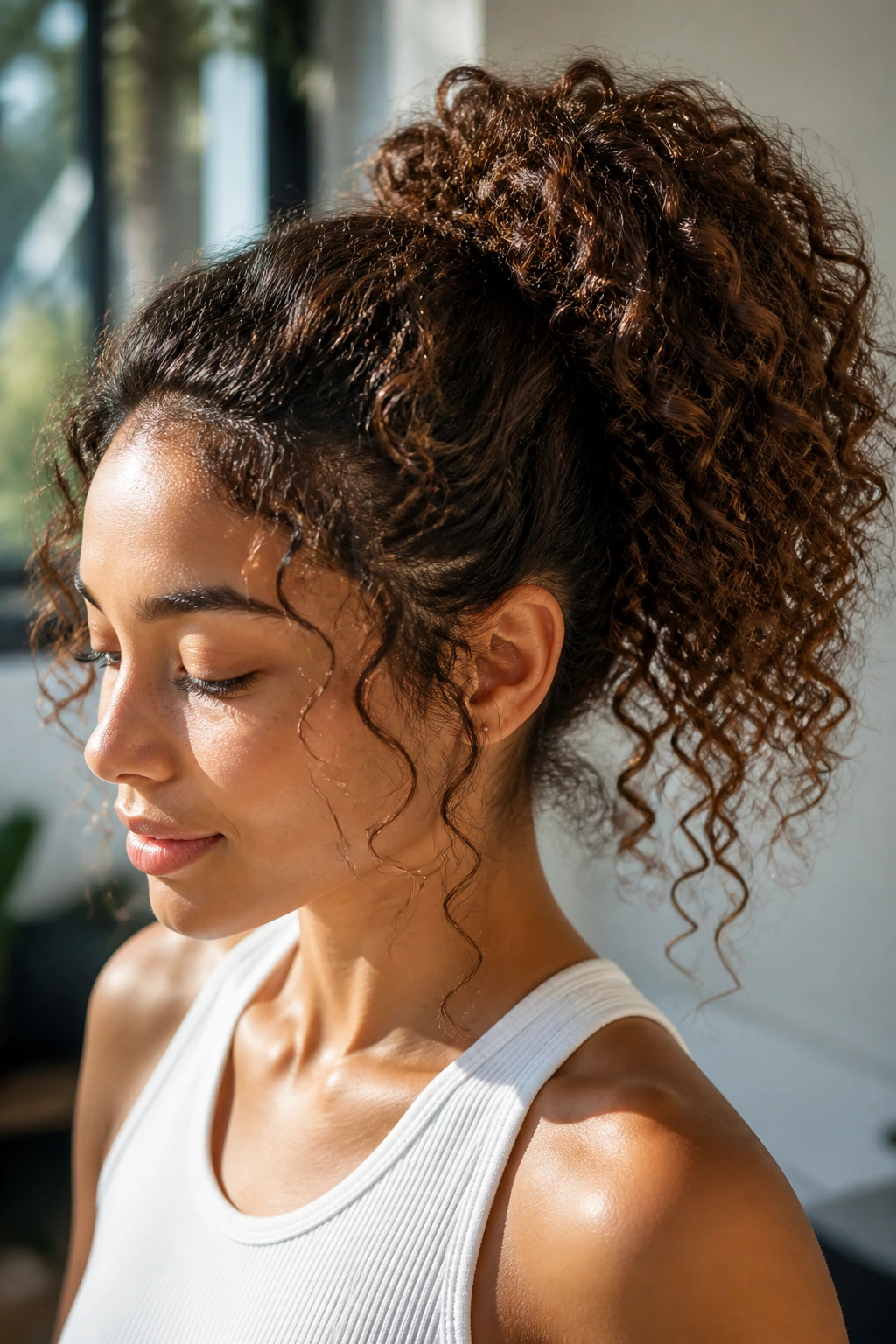
A fishtail ponytail looks intricate, but the shape comes from small sections and a little patience. Tie the hair into a ponytail first, then split the tail into two parts and pull very small pieces from each side across to the opposite side. The smaller the pieces, the tighter and more detailed the braid looks.
I like this style when the hair has some thickness or wave, because the fishtail texture shows up better. After you finish, tug the braid gently to widen it. Too neat, and it can look stiff. A slightly loosened fishtail has more life in it.
15. Scarf-Tied Ponytail
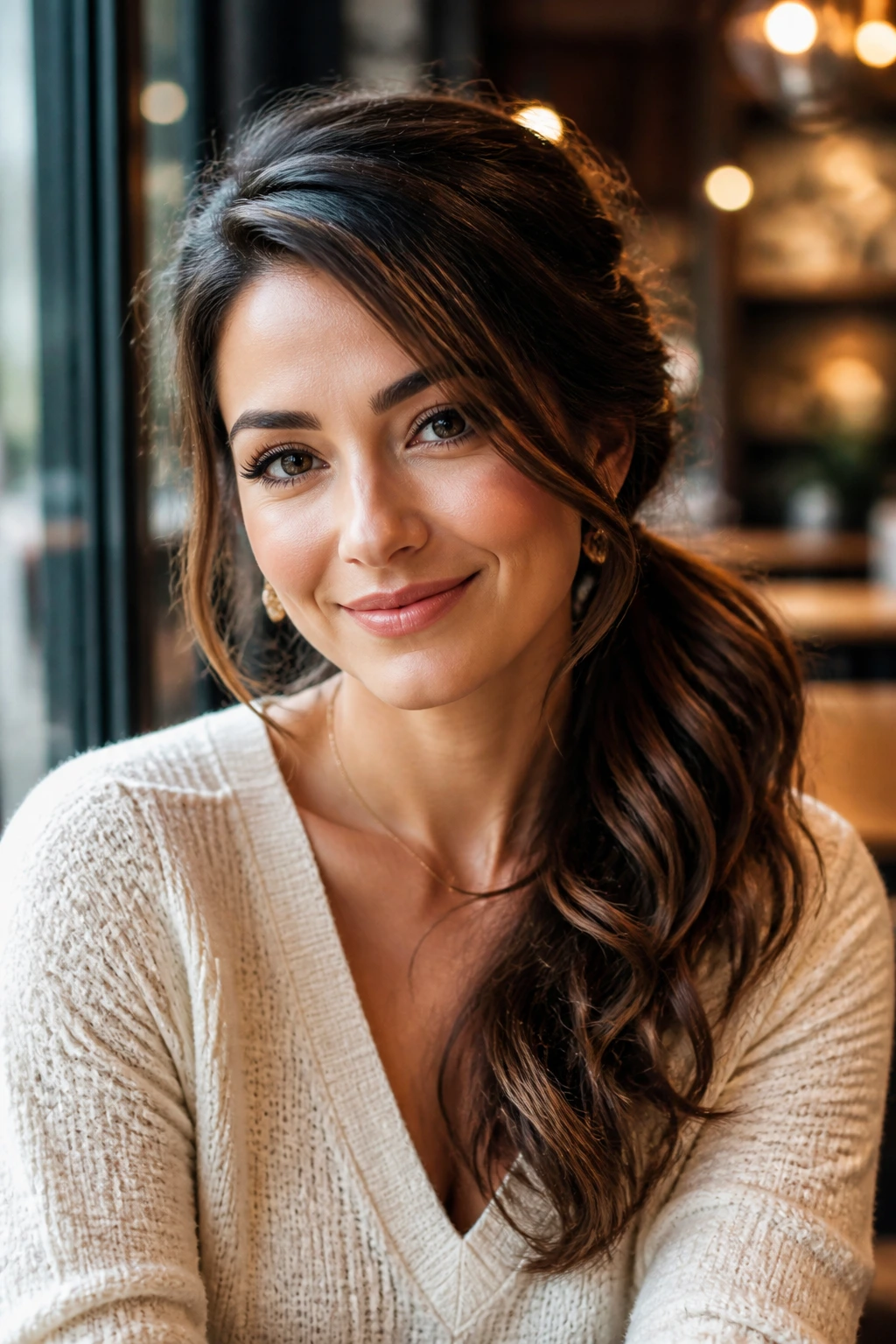
A scarf-tied ponytail gives you color and movement without adding much effort. Tie the ponytail first, then knot a silk or satin scarf around the base so the tails drape down with the hair. The scarf softens the whole style, and it’s one of the easiest ways to make a simple ponytail look dressed on purpose.
Choose a scarf that isn’t too bulky if your hair is fine. Thick squares can crowd the base and make the style feel top-heavy. Narrow silk scarves or slim printed bands are easier to handle and stay put better.
16. Low Sleek Ponytail
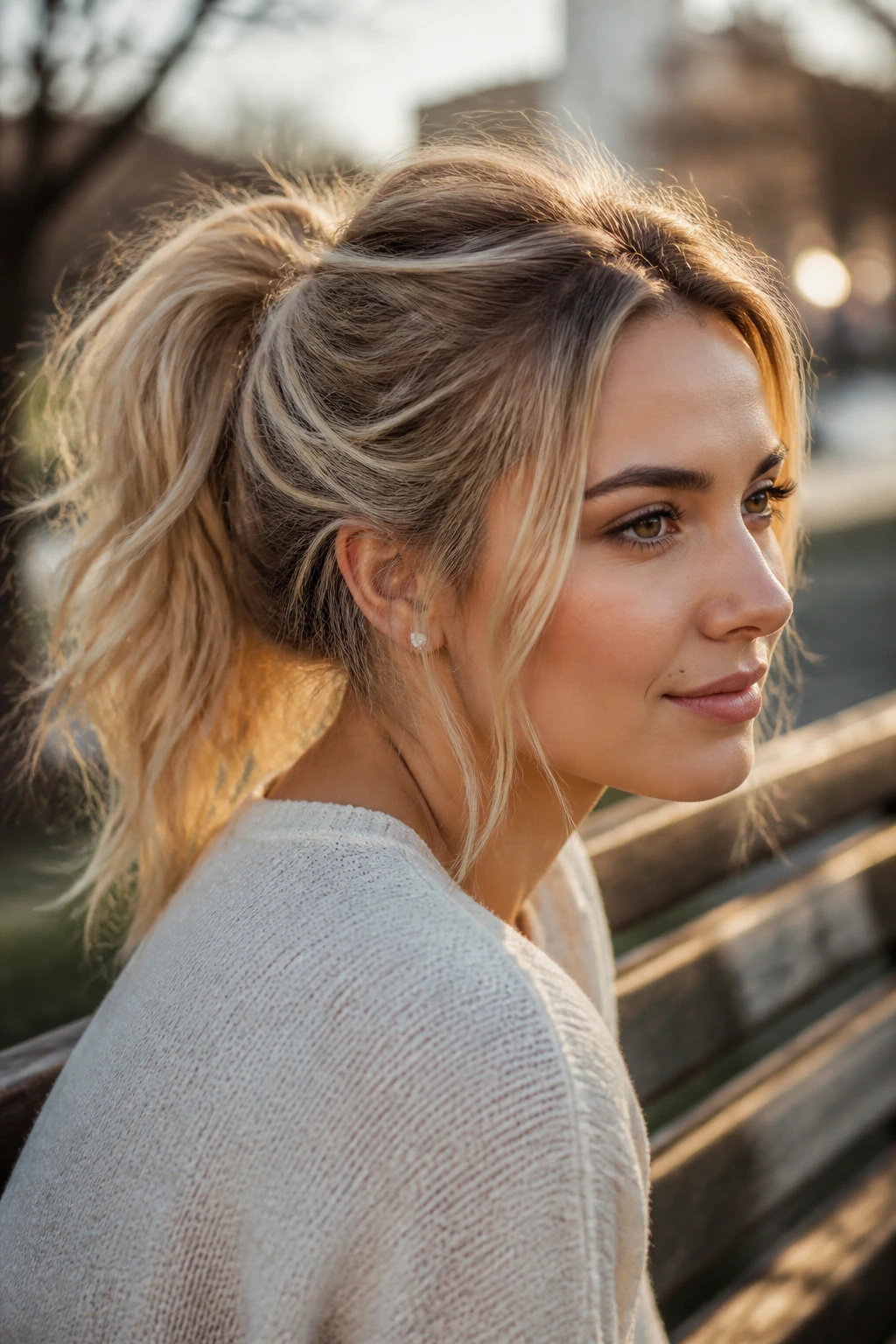
A low sleek ponytail is the hair version of a sharp white shirt. Clean part, smooth crown, polished tail. It’s the style I suggest when someone wants something low-effort-looking that still reads deliberate.
The secret is tension, but not so much tension that your scalp feels pulled. Brush the sides back with a little styling cream or gel, then secure the ponytail low and direct the tail straight down. If your hair has layers, a quick pass with a flat iron on just the exposed lengths can make the finish look cleaner.
17. Puffed Crown Ponytail
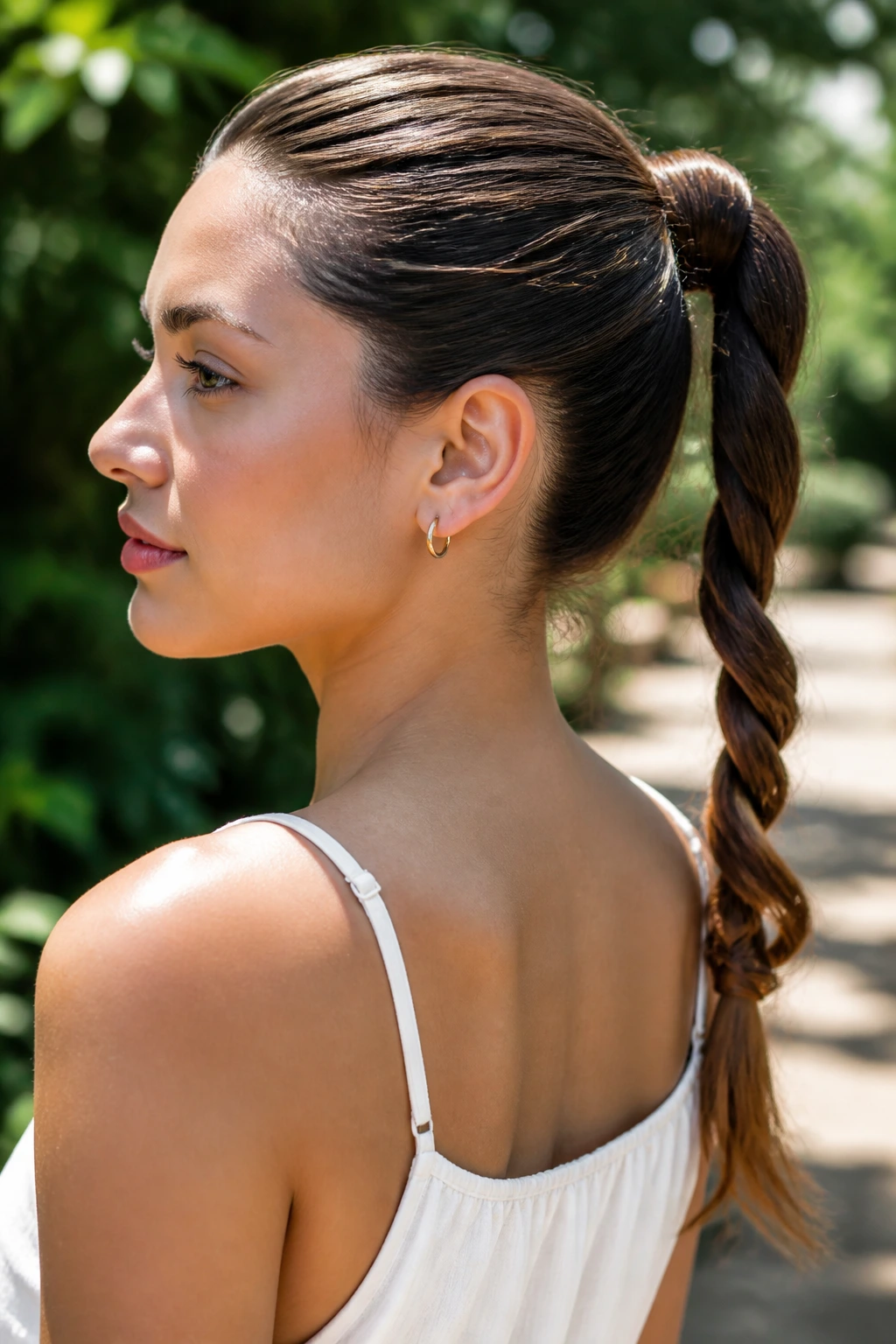
A puffed crown ponytail gets its charm from volume at the top. The front section lifts slightly before it goes back, which keeps the style from sitting flat against the head. This is a good one when you want a ponytail that feels softer around the face.
Where the Height Comes From
Tease the crown lightly or set the top section over a small “hidden” lift created with the fingers before tying it off. The ponytail itself can sit mid or high depending on how much drama you want. If you use too much backcombing, the surface gets rough fast, so keep it modest and smooth the top layer afterward.
A little height at the crown helps balance fuller cheeks and strong jawlines. It also keeps the style from collapsing into the neck on long hair.
18. High Bubble Ponytail
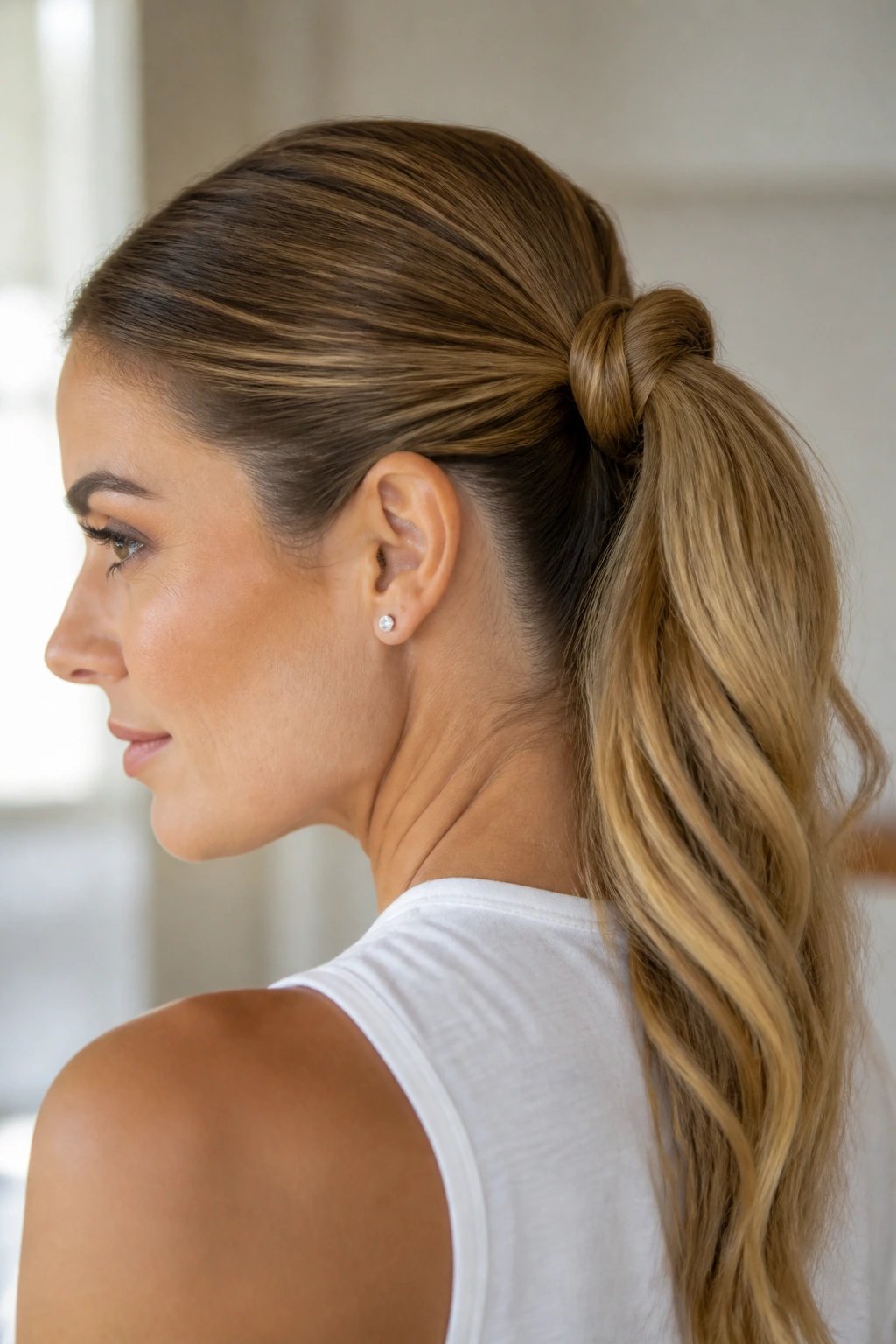
The high bubble ponytail takes the bubble idea and turns up the energy. Lift the tail high on the head, then use small elastics down the length to create round sections that sit above the shoulders instead of below them. The higher placement makes the bubbles look bouncier and more playful.
This style likes longer hair, but you can fake the length with a few added extensions if needed. Keep the bubbles the same size if you want a cleaner result, or let them vary a little for a looser finish. Small variation makes the style look less staged.
19. Wet-Look Ponytail
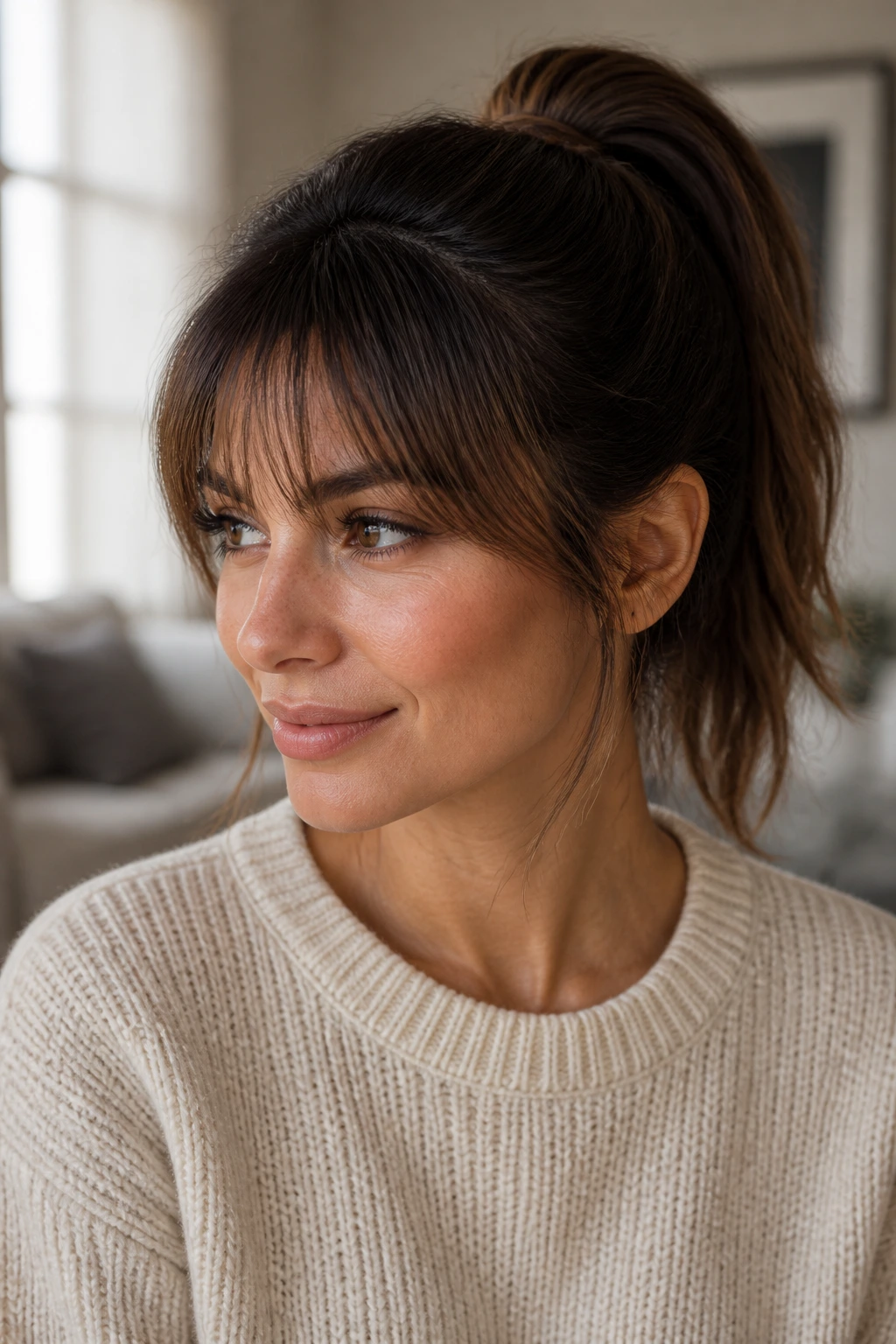
A wet-look ponytail is sleek in a way that borders on glossy, but it only works if the shine looks controlled. Use gel or styling cream mostly at the roots and surface, then comb the hair back until the top lies flat and the tail hangs smooth. The finish should look damp and polished, not sticky.
This style suits evenings, events, and sharp outfits better than errands. If the product load gets heavy, the hair can clump and the tail can separate into strings. That can be chic, sure, but only if the rest of the look is clean enough to carry it.
20. Tousled Low Ponytail with Face-Framing Pieces
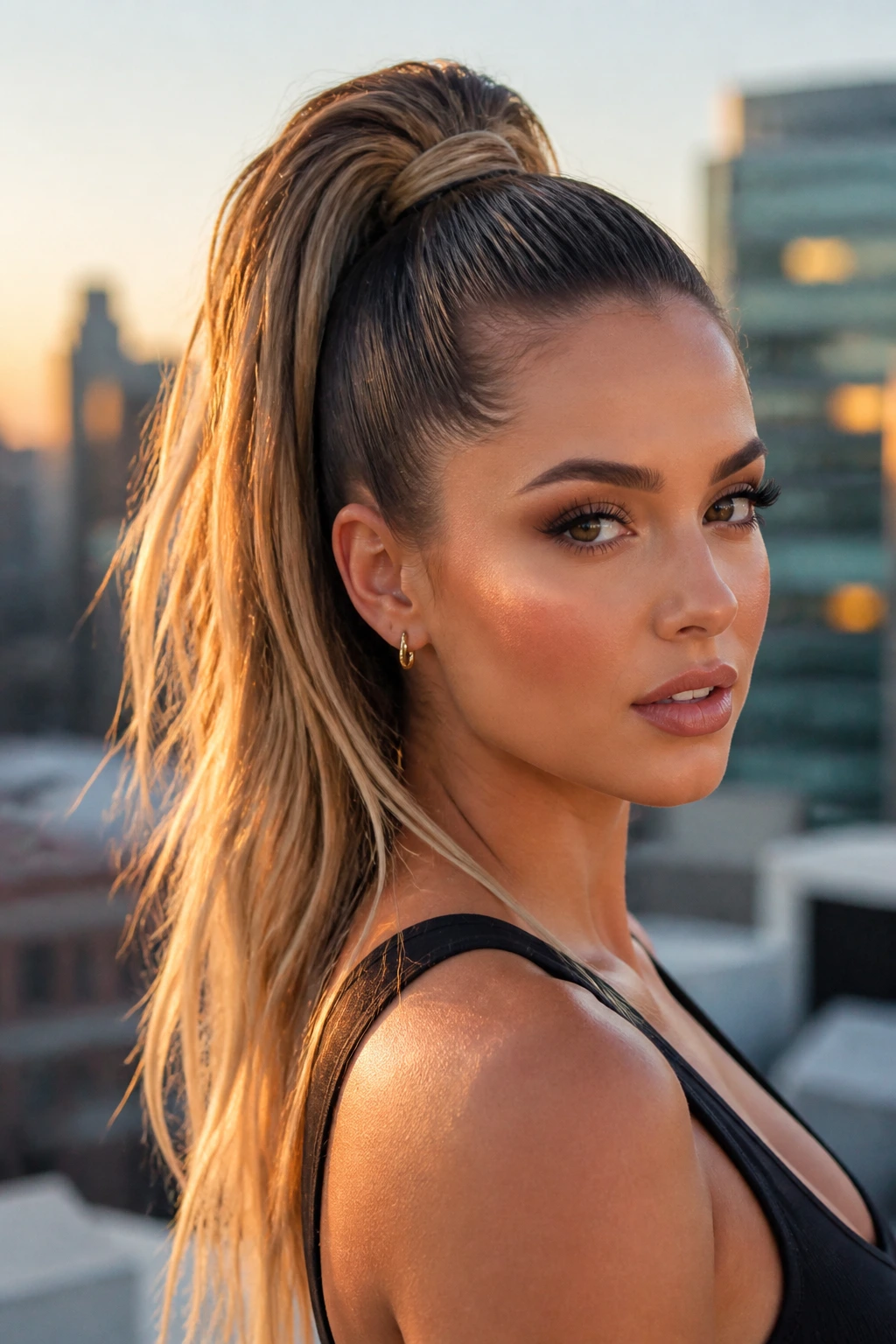
A tousled low ponytail with face-framing pieces is the style I’d call quietly useful. It softens the face, keeps the neck open, and doesn’t demand absolute symmetry. The pieces at the front matter here; they should sit like a suggestion, not a curtain.
Curl or bend the front pieces away from the face if you want them to stay separate. A low ponytail with a slight wave through the tail feels less formal than a straight one. That little bit of movement is what keeps it from looking dated.
21. Mid Ponytail
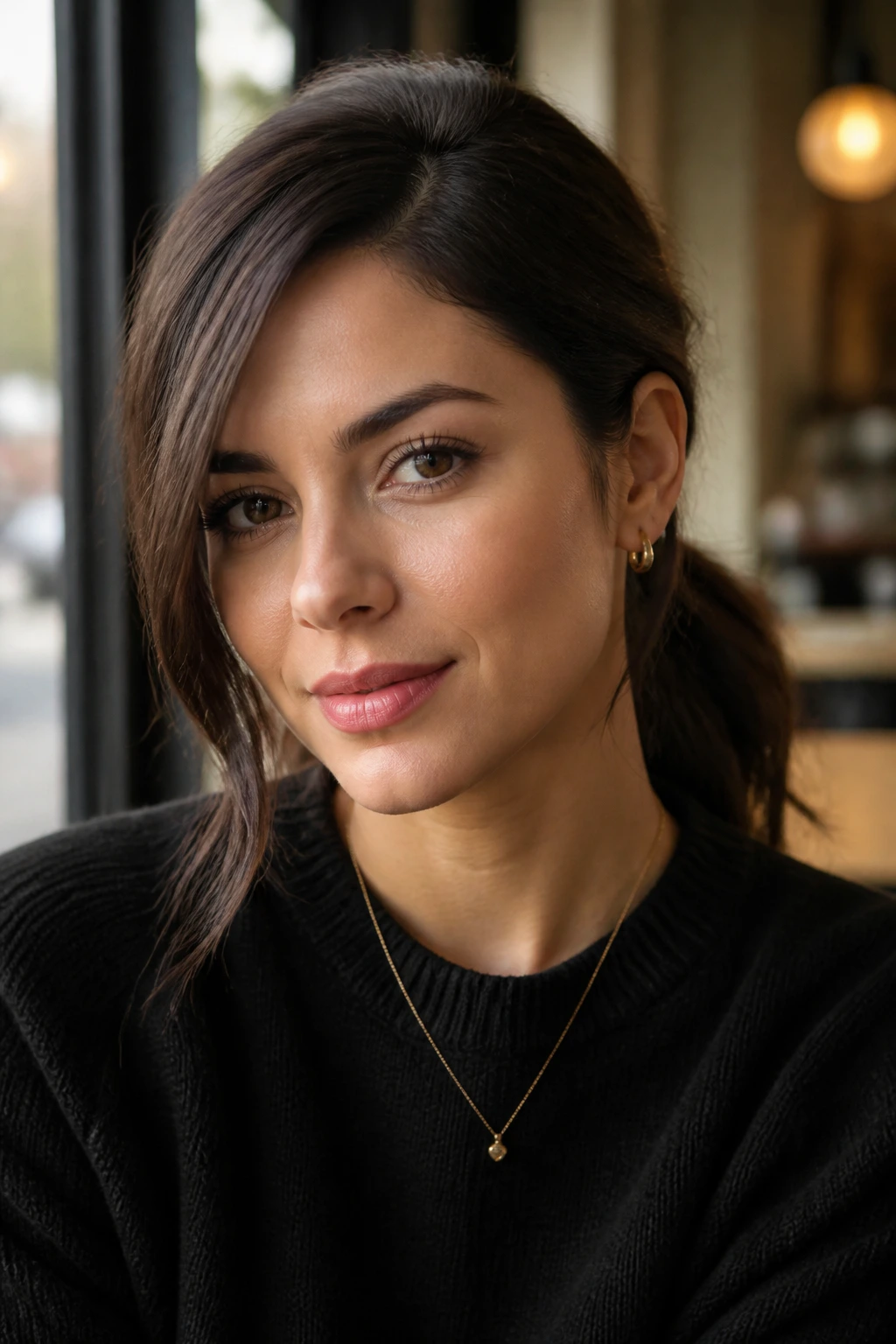
A mid ponytail sits in the middle ground for a reason. It doesn’t pull the face as sharply as a high ponytail, and it doesn’t disappear into the neck like a low one. That makes it one of the easiest styles to wear for long stretches without feeling overdone.
The trick is balance. Place it too high and it can look accidental. Place it too low and you lose the shape. A mid ponytail with a soft bend in the tail works especially well with casual clothes, because it feels easy without looking unfinished.
22. Crisscross Elastic Ponytail
A crisscross elastic ponytail is one of those styles that looks more complicated than it is. You gather the hair in sections, cross them over one another at the back, and secure each piece so the base ends up with visible patterning. It’s a little geometric, which is part of the appeal.
Details That Matter
- Use small clear elastics or matching ones so the pattern stays visible.
- Keep the sections even if you want symmetry.
- Smooth the hair before you start, because frizz hides the crossing lines.
This one looks best on straight or lightly textured hair. Curls can absolutely do it too, but the pattern reads softer and less defined.
23. Braided Crown Ponytail
A braided crown ponytail has a soft, almost stitched look around the hairline before it falls into a tail. You braid sections along the sides or across the front, then pull the rest into a ponytail at the back. It’s pretty in a practical way, which is my favorite kind of hair styling.
If you want the braid to stand out, keep the surrounding hair smooth. If you want the whole thing to feel more relaxed, loosen the braid slightly and let a few baby hairs stay free. The style handles both moods.
24. Curly Ponytail with Scrunchie
A curly ponytail with a scrunchie is charming because the fabric softens the base instead of hiding it. On curly hair, a scrunchie also reduces the sharp dent that a tight elastic can leave. Satin and silk versions are especially kind to the hair shaft.
Use a larger scrunchie if the ponytail is thick, and keep the pony high or mid so the curls can fan out. If you’re wearing this one for a whole day, choose a scrunchie with decent stretch but not a flimsy one that sags halfway through the afternoon.
25. Knotted Ponytail
A knotted ponytail has a little built-in surprise. Instead of gathering the hair straight into an elastic, you section the hair into two pieces, knot them once, then secure the knot with pins or a hidden tie. The result looks modern without being fussy.
It works best when the hair has some length and grip. Very slippery strands can slide apart, so a small mist of texture spray helps. The knot should sit flat against the head, not puff out like a lump.
26. Ponytail with Bangs
A ponytail with bangs changes the whole balance of the face. The bangs keep the front area soft while the tail clears the rest of the hair away. That mix is useful when you want your forehead covered but the back of your neck free.
Curtain bangs, blunt bangs, and side bangs all behave differently here. Curtain bangs blend into the ponytail most easily, while blunt bangs create a cleaner contrast. If your bangs are a little stubborn, a quick round brush and a blast of cool air can help them settle where you want.
27. High Ponytail with Extensions
A high ponytail with extensions is the quickest way to get dramatic length without waiting around for growth. The point is not to hide the extension, but to blend it so the tail moves as one piece. Match the texture first, then the shade.
Clip-ins or wrap-around ponytail extensions work well, depending on the base you want. The base pony should be tight and secure, because the added hair adds weight. If the anchor feels loose, the whole thing starts to sag by the second hour, and that is never a cute look.
28. Low Ponytail with Deep Side Part
A low ponytail with a deep side part has a quiet, flattering shape around the face. The deep part gives the front a bit of drama, and the low ponytail keeps the back controlled. It’s a good choice when you want something softer than a slick center part.
The side section should sweep cleanly across the forehead before joining the tail. A little bend in the ends helps the style feel relaxed instead of strict. This one is especially nice with earrings, because the exposed side of the face gives them space.
29. Wrapped Braids Ponytail
A wrapped braids ponytail uses braid detail around the base or along the tail to make the style feel more finished. You can braid a small section, wrap it around the elastic, or create two narrow braids that frame the tail itself. Either way, the texture adds interest without a full head of braiding.
I’d use this when plain ponytails feel too plain but a full braided style feels like too much work. It’s also a good way to hide a slightly messy elastic. Small braid details forgive a lot.
30. Mini Ponytail Stack
A mini ponytail stack is playful and a little unexpected. Instead of one full ponytail, you create a few tiny ponytails in a row up the back of the head, then let them cascade into one longer shape or leave them separated. It’s especially cute on medium-length hair.
The spacing matters more than the styling product here. Keep the sections neat and even so the stacked effect reads on purpose. If the hair is very thick, the little ties can get bulky, so use slim elastics and don’t overstuff each section.
31. Ribbon-Tied Ponytail
A ribbon-tied ponytail feels soft right away. A narrow ribbon or velvet tie around the base changes the whole mood, even if the ponytail itself is dead simple. I like this one with a low or mid ponytail because the ribbon can drape without fighting the shape.
Choose a ribbon that holds a knot well and doesn’t slide. Satin looks pretty, but velvet grips better. If the tail is wavy or curled, let a few inches fall over the ribbon so the base doesn’t look too exposed.
32. Retro Flipped Ponytail
A retro flipped ponytail ends with the tail bending outward instead of hanging straight down. That flip gives it a vintage feel, especially when paired with a smooth crown and a clean part. A medium-barrel round brush or a quick pass with a curling iron can set that bend.
Keep the roots sleek and the ends smooth before flipping them out. Too much volume everywhere turns it into a vague “old-school” look, which isn’t the goal. The best version has a crisp top and a soft curve at the bottom.
Why Ponytails Work on So Many Hair Types
A ponytail gives you a fixed anchor point and room to play everywhere else. That’s why it works on hair that refuses to hold a full updo, hair that frizzes the moment you touch it, and hair that gets weighed down by heavy pins. You only need one secure base, then the rest becomes shape, texture, and finish.
That flexibility matters. Fine hair can use teasing, layered ponytails, or bubble sections to look fuller. Thick hair can use low styles, braided tails, and wrapped bases to keep the weight under control. Curly hair gets to keep its shape instead of being flattened into a rigid knot, which is honestly the main reason I keep coming back to ponytails.
Essential Tools for These Ponytail Styles
- Snag-free elastics: These hold the base without chewing up the hair, especially on fine or color-treated strands.
- Boar-bristle brush: Best for smoothing the crown on sleek styles and pushing flyaways down.
- Wide-tooth comb: Useful for curls, waves, and textured ponytails that should not be brushed flat.
- Bobby pins: Keep the wrapped ends, twists, and braid tails tucked away.
- Texturizing spray: Adds grit to slippery hair so braids, bubbles, and twists stay put.
- Smoothing cream or gel: Helps slick styles stay neat at the hairline.
- Small clear elastics: Good for bubble ponytails, crisscross patterns, and mini stacked sections.
- Silk or satin scarf: Handy for ribbon-tied looks or for protecting styles overnight.
- Optional ponytail extension: Worth having if you want more length or a fuller tail without teasing.
Smart Product and Hair Prep Tips
Start with the texture your style needs, not the hair you wish you had. A sleek low ponytail behaves better on clean hair with a little smoothing cream. A braid or bubble ponytail usually sticks better on day-two hair with some dry shampoo at the roots. That mismatch matters more than people admit.
If your hair slips out of elastics, look for ties with a little grip instead of jumping straight to stronger tension. Stronger tension often just gives you a headache. For fine hair, a light texturizing spray at the mid-lengths can help the tail keep shape without making it crunchy.
Color-treated hair and fragile ends need gentler handling. Use a soft brush, avoid pulling the base tighter than needed, and swap harsh elastics for fabric-covered ones when the style allows. The little things save you from breakage that shows up later around the hairline.
How to Match a Ponytail to Your Face, Neckline, and Outfit
Presentation: A high ponytail shows off cheekbones and earrings, while a low ponytail frames the jaw and works well with turtlenecks, collared shirts, and sweaters that sit close to the neck. Sleek styles feel sharper with structured clothes. Messier styles sit better with knits, denim, and softer fabrics.
Outfit Pairings: If the neckline is high or busy, keep the ponytail low so the top half of the look doesn’t fight itself. If the outfit is simple, a bubble ponytail, ribbon tie, or braided tail adds enough interest to keep things from feeling plain. Hair and clothes should not both compete for attention.
Scale: Big hair needs a style that can hold volume — think high curls, blowout ponies, or stacked tails. Fine hair usually looks better when the ponytail is compact and the crown is smoothed well, because a huge teased base can collapse by lunch.
Occasion: For errands, use the styles that tolerate movement: mid ponytails, messy textures, claw-clip versions. For dinners, events, or days when you want the hair to feel more thought through, go for sleek bases, wrapped elastics, or a low side sweep.
Additional Styling Tips and Finishers
Texture Boost: A mist of dry shampoo at the roots, then a second light mist at the crown, gives slippery hair enough grip for braids and bubble styles. Don’t pile it on the ends. That’s where hair starts looking dusty.
Face-Framing Control: If you’re leaving pieces out, curl them away from the face and let them cool before touching them again. Hot hair resets faster than people think, and the shape falls if you keep fussing with it.
Base Finish: Wrapping a one-inch hair section around the elastic or covering it with a ribbon changes the whole look for almost no extra effort. I’d do this before I’d add another accessory.
Make-It-Yours: Swap a plain elastic for velvet, satin, or a slim printed scarf when you want the style to feel softer. If you prefer minimal hair accessories, keep the base hidden and let the texture do the talking.
Common Ponytail Mistakes to Avoid
A too-tight base is the fastest way to ruin an otherwise good ponytail. The hairline starts pulling, the crown looks flat, and by the afternoon you’re picking the elastic loose with your fingers. Use enough tension to hold the style, not enough to drag your scalp backward.
Another common problem is smoothing the top too much. A ponytail that’s slick everywhere can look stiff and unforgiving, especially on fine hair. Leave a touch of softness around the hairline or add a little lift at the crown so the style has some shape.
People also overdo the product. Too much gel or cream can turn the roots shiny in a greasy way, and too much hairspray makes the tail move like cardboard. Start small. Add more only if the first pass leaves flyaways behind.
Finally, skipping the base detail hurts the whole look. A plain elastic can work, sure, but if the rest of the hair is polished, that naked elastic looks unfinished. A wrap, ribbon, braid, or even a neat fabric tie fixes that in seconds.
Ponytail Variations and Adaptations to Try
Extra-Full Blowout Tail: Add clip-in ponytail extensions or a few hidden wefts under the base if your hair is fine and you want a thicker tail. Keep the crown smooth so the added density doesn’t look separate from the roots.
Soft Protective Version: For curls or coily hair, use a satin scrunchie, a low placement, and minimal brushing. The style keeps tension down at the hairline and preserves more of the curl pattern.
Office-Safe Sleek Style: Choose a low or mid ponytail with a wrapped elastic and a center or deep side part. It reads neat without looking severe, which makes it easy to wear all day.
Playful Weekend Version: Swap the usual elastic for a ribbon, add one bubble section, or stack two mini ponytails instead of one. That small change makes the style feel less serious without needing more time.
Shorter Hair Adaptation: If your hair barely reaches a ponytail, use a small elastic and pin the ends underneath or curl them under for a stubby, intentional finish. Short ponytails can look great when they’re treated like a style, not a compromise.
Keeping Ponytails Fresh Between Wears
A ponytail can usually be worn again the next day if you handle the base well before bed. Loosen the elastic, brush out the crown gently, and sleep on a silk pillowcase or wrap the hair in a satin scarf if the style needs to survive overnight. That keeps the top from getting crushed into a weird bend.
If the roots flatten by the second day, dry shampoo at the crown and a quick finger-lift at the part can bring the shape back. Don’t saturate the hairline. A little product and a little air are enough.
For curls and textured tails, mist the lengths lightly with water or a curl refresher before reshaping. Sleek styles need less moisture and more control, so a small dab of smoothing cream on the flyaways usually does the trick. In practice, the best ponytail upkeep is about 5 minutes, not a full redo.
Frequently Asked Questions
Which ponytail style is easiest for beginners?
A low wrapped ponytail or a simple mid ponytail is the easiest place to start. Both need only one clean sectioning move and one elastic, and the wrap hides the base so small mistakes don’t stand out.
How do I make a ponytail look fuller?
Use a double ponytail, add a few curls or bends through the tail, or place the ponytail slightly higher so the hair fans out instead of hanging flat. A light tease at the crown helps too, but keep it small or the top starts looking rough.
What ponytail works best for fine hair?
A sleek high ponytail, double ponytail, or bubble ponytail usually gives fine hair the most shape. Fine hair benefits from structure and a little texture spray, since completely smooth styles can collapse fast.
How can I stop my ponytail from slipping?
Start with a little dry shampoo or texture spray at the roots, use a snag-free elastic with enough grip, and secure the ponytail at the right tension for your hair type. If the hair is very silky, a second hidden elastic underneath can help anchor it.
Are ponytails bad for your hair?
A ponytail isn’t the problem by itself. The issue is repeated tension in the same spot, especially when the hair is wet or the elastic is too tight. Rotate the placement, use softer ties, and give your hair breaks between high-tension styles.
What’s the best ponytail for curly hair?
A high curly ponytail, curly low ponytail, or side-swept version usually works best because it keeps the curl pattern visible. Use your hands instead of a brush, and don’t flatten the crown unless that’s the exact look you want.
Can I wear these styles with short hair?
Yes, though some styles need a few pins or a tiny elastic to stay neat. Shorter hair often looks best with low ponytails, half-up ponytails, or flipped ends, because the shape stays intentional even when the length is limited.
How do I make a ponytail look less sporty?
Use a wrapped elastic, ribbon, braid, or side part, and keep the finish smooth rather than rough. A few well-placed face-framing pieces or a softly bent tail changes the whole tone fast.
The Ponytail I Keep Coming Back To
There’s a reason ponytails never really leave rotation. They can be clean, playful, soft, sharp, lazy, dressed up, or all of those at once depending on how you handle the base and the tail. That’s a lot for one hairstyle to carry, and it does the job without asking for a drawer full of tools.
The best part is how honest the style is. If you want polish, the ponytail gives it to you. If you want ease, it gives you that too. Pick the height, shape, and finish that match your day, and the rest falls into place pretty quickly.
