



Half-up half-down styles for curly hair solve a very specific problem: you want your curls to keep their shape, but you also want the front pieces off your face. On curly hair, that balance matters more than it does on straight hair, because one bad elastic or one heavy clip can flatten the crown in a way that takes hours to recover from. The styles that work are the ones that respect the curl pattern instead of fighting it.
What I love about this category is how little it asks for. A few bobby pins. A satin scrunchie. Maybe a claw clip and a touch of gel at the hairline. That’s enough for a lot of these looks. And if your curls are the kind that look better after they’ve had a chance to settle, half-up styling is a smart way to keep the shape while giving the top half some structure.
The useful part is that these styles are not one-size-fits-all. Loose waves, springy ringlets, dense coils, long layers, a fresh wash day, a slightly frizzy day-three pony — they all have a place here. Some of the looks in this collection are polished enough for an event. Others are the kind you throw together in the mirror with one hand while the kettle is boiling. The trick is knowing which section to lift, how tightly to pin it, and when to leave the back alone.
Why This Collection Feels Different
-
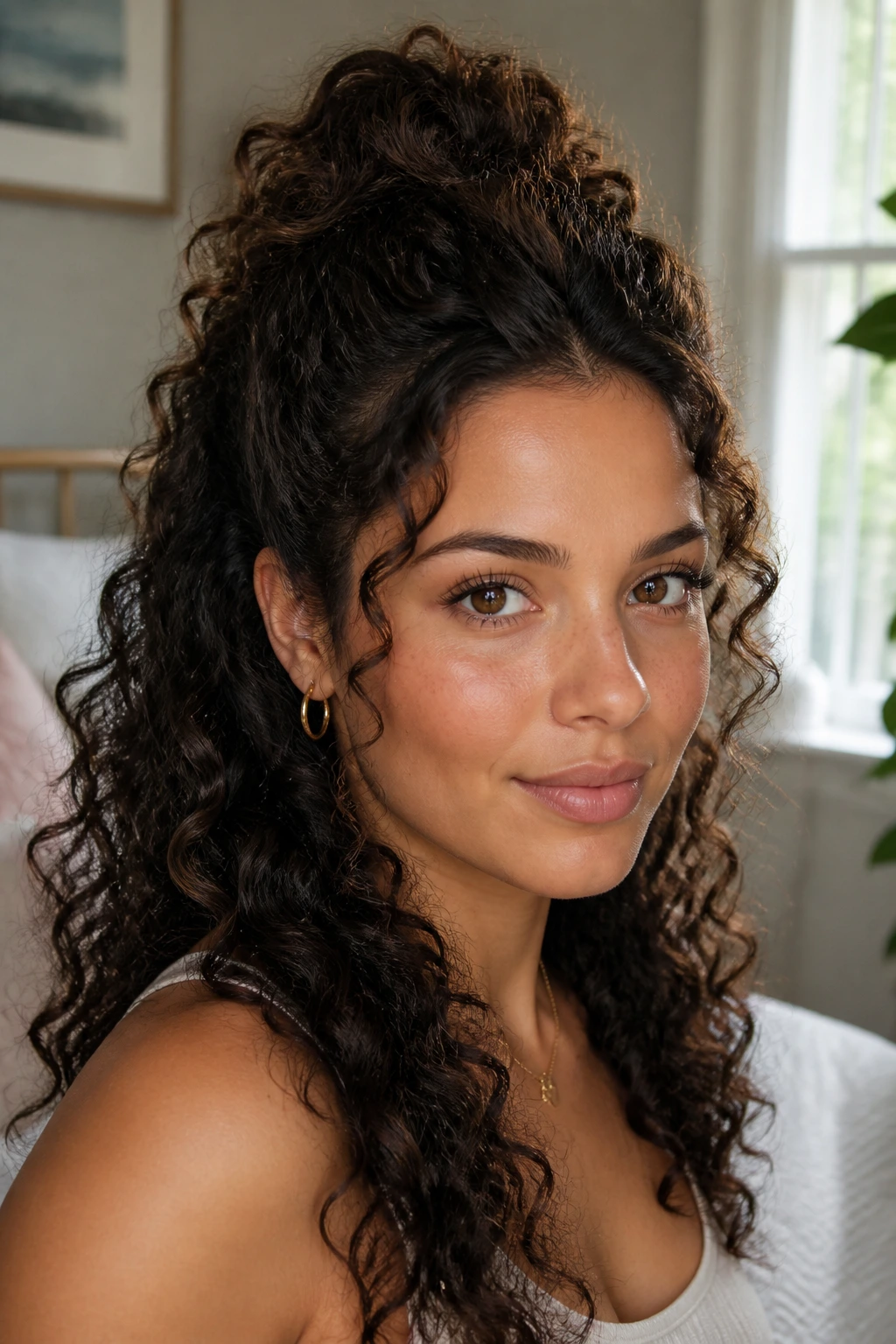
It keeps curl volume visible: Half-up styling lifts the crown without dragging the whole head back, so your curl pattern still gets to do the heavy lifting.
-
It works on second- and third-day hair: A little lived-in texture helps the pins grip, which is why these styles often hold better after the curls have relaxed a bit.
-
It gives you control at the hairline: If your temples puff up first, or your fringe keeps falling into your face, a half-up style fixes that part without starting over.
-
It uses fewer tools than a full updo: Most of these looks need one elastic, a few pins, or a clip. That’s it. No complicated construction.
-
It stretches from casual to dressed-up fast: Change the part, swap a scrunchie for pearl pins, or braid the front pieces, and the same base style reads very differently.
-
It’s kinder to curl ends: Leaving the lower half down means less tension at the fragile ends, which matters when your hair is dry, long, or tightly coiled.
1. Twisted Crown Half-Up
A pair of twists from the temples can calm a frizzy hairline fast. This one works because the twist itself acts like a soft anchor, so the front stays tidy while the back keeps its curl shape.
Why It Stays Put
Take two 1-inch sections from each side, twist them backward, and pin them just above the occipital bone with two bobby pins crossed in an X. If your curls are slippery, mist the sections first or add a pea-size amount of gel before twisting.
Best For
- Shoulder-length to long curls
- Wash-day hair with definition
- Days when the front pieces keep escaping
Pro tip: Don’t twist all the way to the ends. Leave the last inch loose so the twist blends into the curl pattern instead of looking ropey.
2. Mini Space Buns Half-Up
This is the playful one, and on dense curls it’s a gem. The top section gets split in two, each side becomes a small bun, and the lower half stays loose and bouncy.
The buns should stay small. If they get too big, they start competing with the curls below and the shape turns bulky in the wrong way. Keep each bun about the size of a lemon, secure with one elastic, then tuck the ends under with a pin or two.
A good version of this style has movement at the crown, not stiffness. Leave a little texture around the part and don’t smooth the top too aggressively.
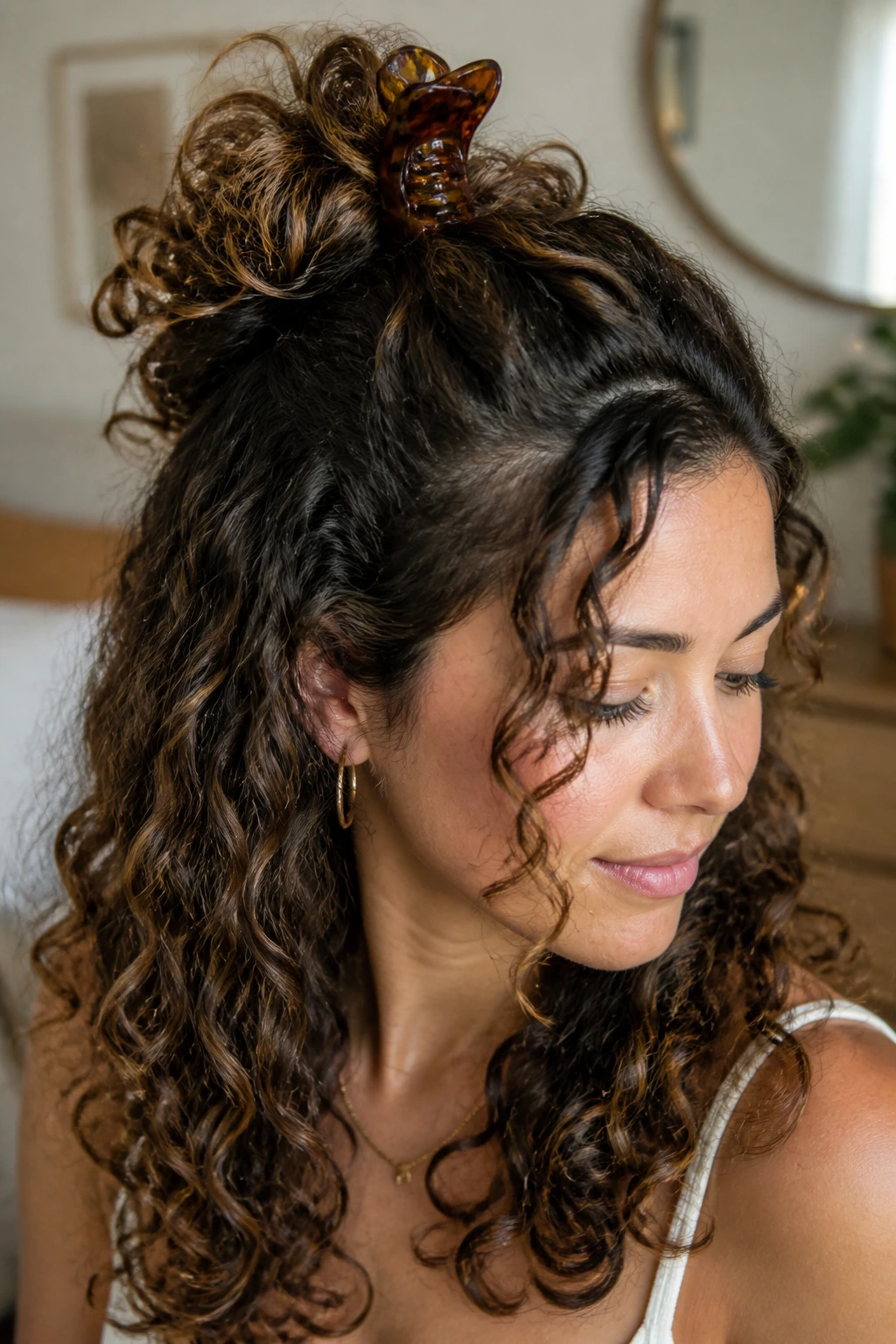
3. Claw Clip Sweep
If you want speed, this is the one. Gather the top third of the hair, twist it once, and slide in a medium claw clip so the curl ends fan out over the top.
The reason this works on curly hair is simple: the clip grips volume. You do not need a perfectly sleek finish. In fact, a bit of texture at the roots helps the clip stay locked in place.
Use this on day-two curls when you want to look put together without flattening anything. A strong clip with wide teeth beats a tiny decorative one every time.
Watch For
- Very heavy clips that slide
- Twisting too tightly, which dents the crown
- Leaving the clip too high, which makes the style unstable
4. High Puff Half-Up
Think of this as a half-up version of a puff with the bottom length left loose. It’s especially good for coils and tightly textured curls that want height at the crown.
The top section is gathered higher than a normal ponytail, then secured with a satin or stretch elastic that won’t snag. Gently lift the roots with your fingers before you tighten it all the way. That extra inch of lift keeps the style from looking flattened at the scalp.
This one looks best when the top section has real shape. If your hair is very dense, use your hands instead of a comb so the puff keeps its natural body.
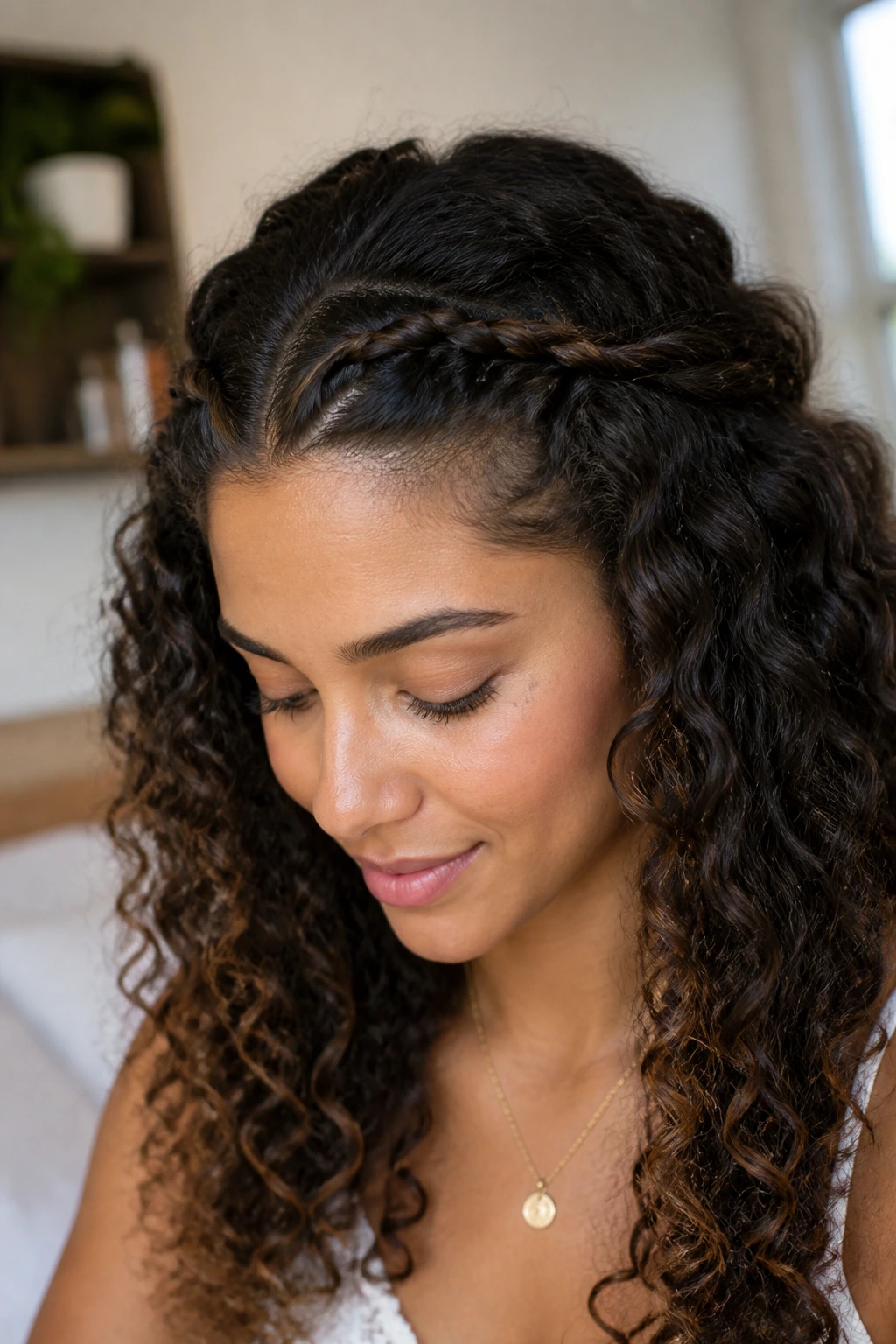
5. Braided Front Halo
Two small braids along the hairline make this look feel structured without taking over the whole head. It’s the kind of style that solves a very real problem: face-framing curls that won’t stay where you want them.
Start the braids near the temples and angle them back toward the crown. Secure them together with pins or a tiny elastic, then let the rest of the curls fall loose. If your hair is layered, braid a little lower so short pieces don’t pop out.
This style sits nicely on hair that has some grip already. Freshly defined curls or lightly textured second-day hair both work.
6. Bubble Pony Half-Up
This one gives shape without much effort. Pull the top half into a ponytail, then add clear elastics every 1½ to 2 inches down the length and gently puff each section.
The bubbles look best when they’re not perfectly even. A little irregularity makes the curls underneath look fuller and more natural. I’d avoid stretching the sections too hard; you want rounded bubbles, not flat tubes.
On long curls, this style adds height and rhythm. On medium-length hair, it creates the illusion of more length because the half pony stays lifted and the ends keep moving.
7. Bow-Tied Half-Up
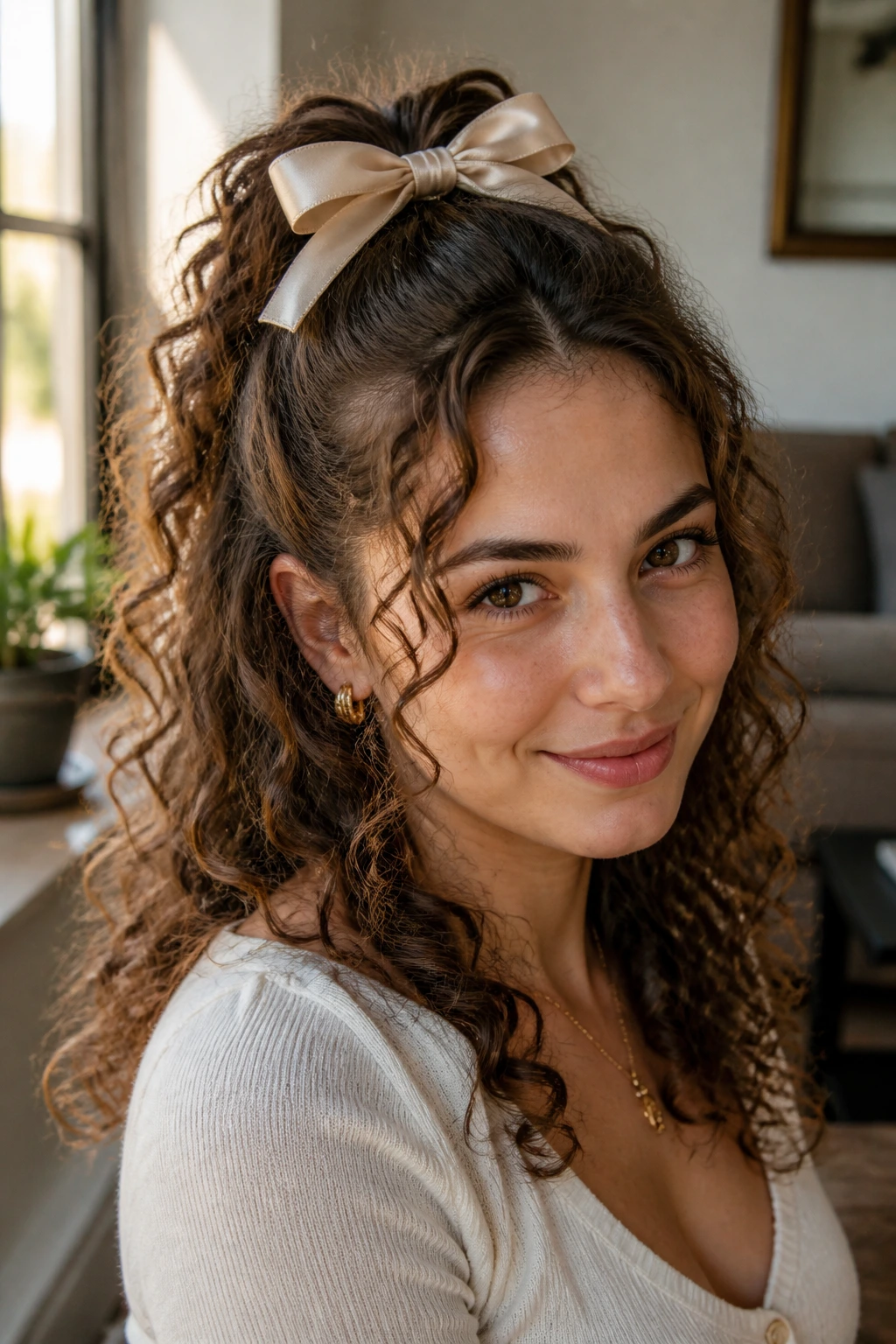
A ribbon bow changes the whole mood of a simple half pony. Tie the top section with a satin ribbon, then knot it into a neat bow just above the ponytail base.
The key is keeping the bow proportionate to the hair. Wide ribbon on thick curls can look better than a thin one, because the curls have more visual weight. Let the lower curls stay loose and soft — the ribbon should feel like a finishing detail, not a costume.
This works especially well when the curl pattern is already defined. You don’t need a lot of styling around it. Clean part, simple ribbon, done.
8. Slicked-Back Half Pony
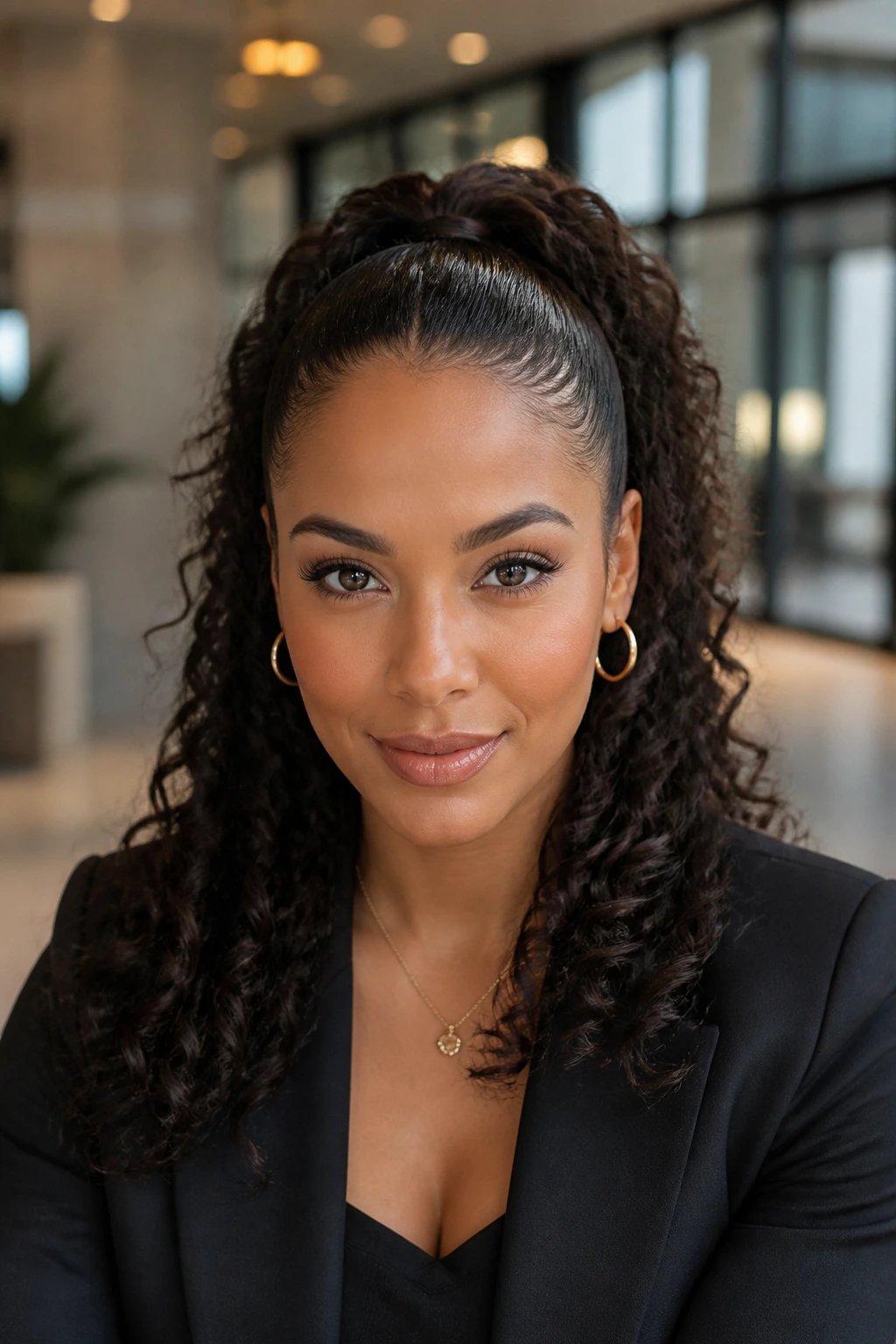
A little gel at the hairline goes a long way here. Brush the front section back with a soft bristle brush or edge brush, then gather the top half into a mid-height ponytail while the back stays loose.
The trick is stopping the slicking where the ponytail begins. If you pull the gel too far into the crown, the style loses lift and the curls look squeezed. Keep the front smooth, then let the rest of the head keep its texture.
This is one of the cleanest half-up curly hairstyles for work, dinner, or any moment when you want the face open and the curls still visible.
9. Rope Twist Half-Up
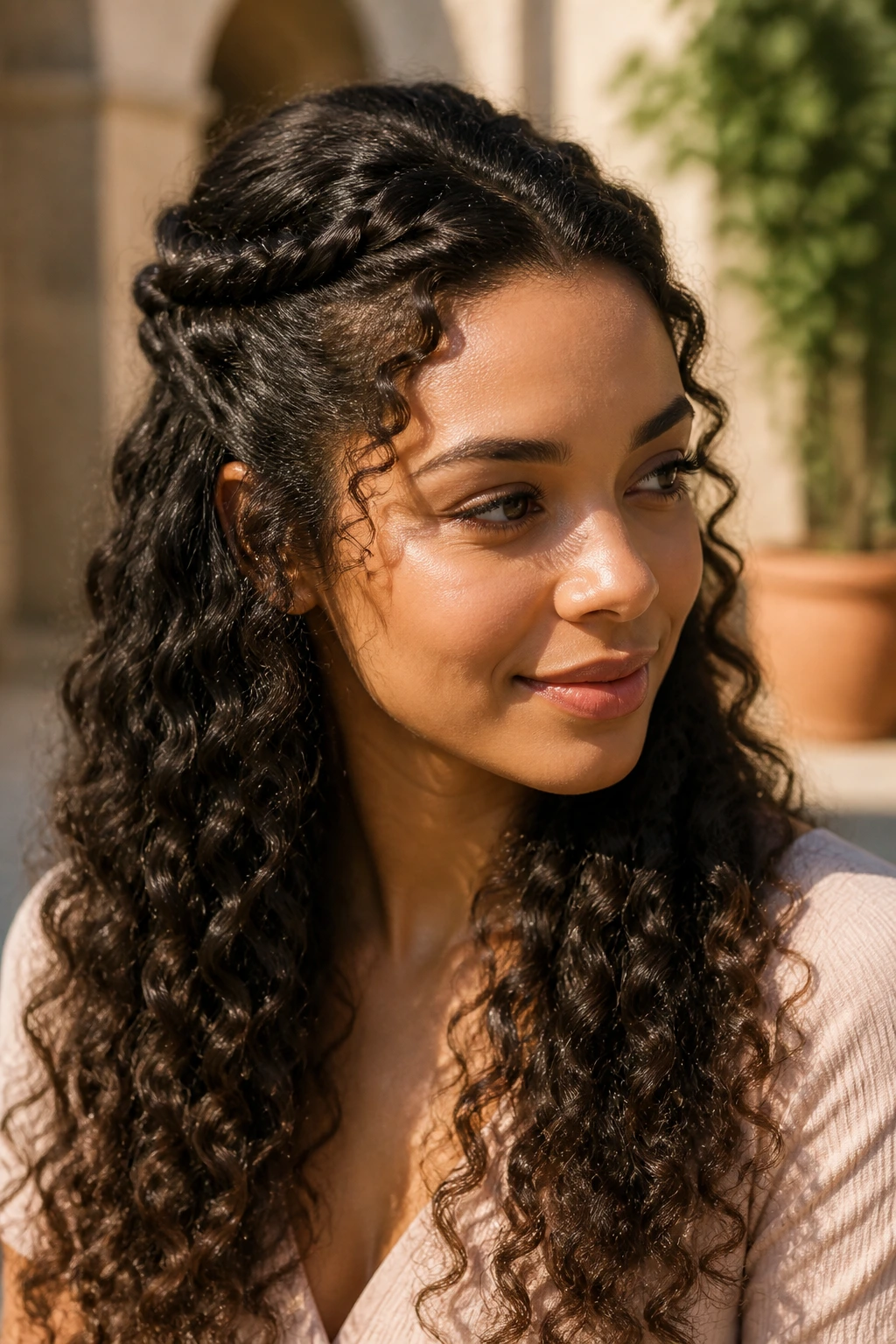
Two rope twists create a neat frame around the face without needing braids. Take one section from each temple, split it into two, twist each piece in the same direction, then wrap them around each other in the opposite direction.
That opposite-direction movement is what makes the rope twist hold. Pin the joined twist at the back, close to the crown, with crossed bobby pins. It’s quick, and the shape is tidy without looking fussy.
This is a good move for medium-length curls where a full braid would feel too heavy. It also holds up nicely if you need the style to last through a long day.
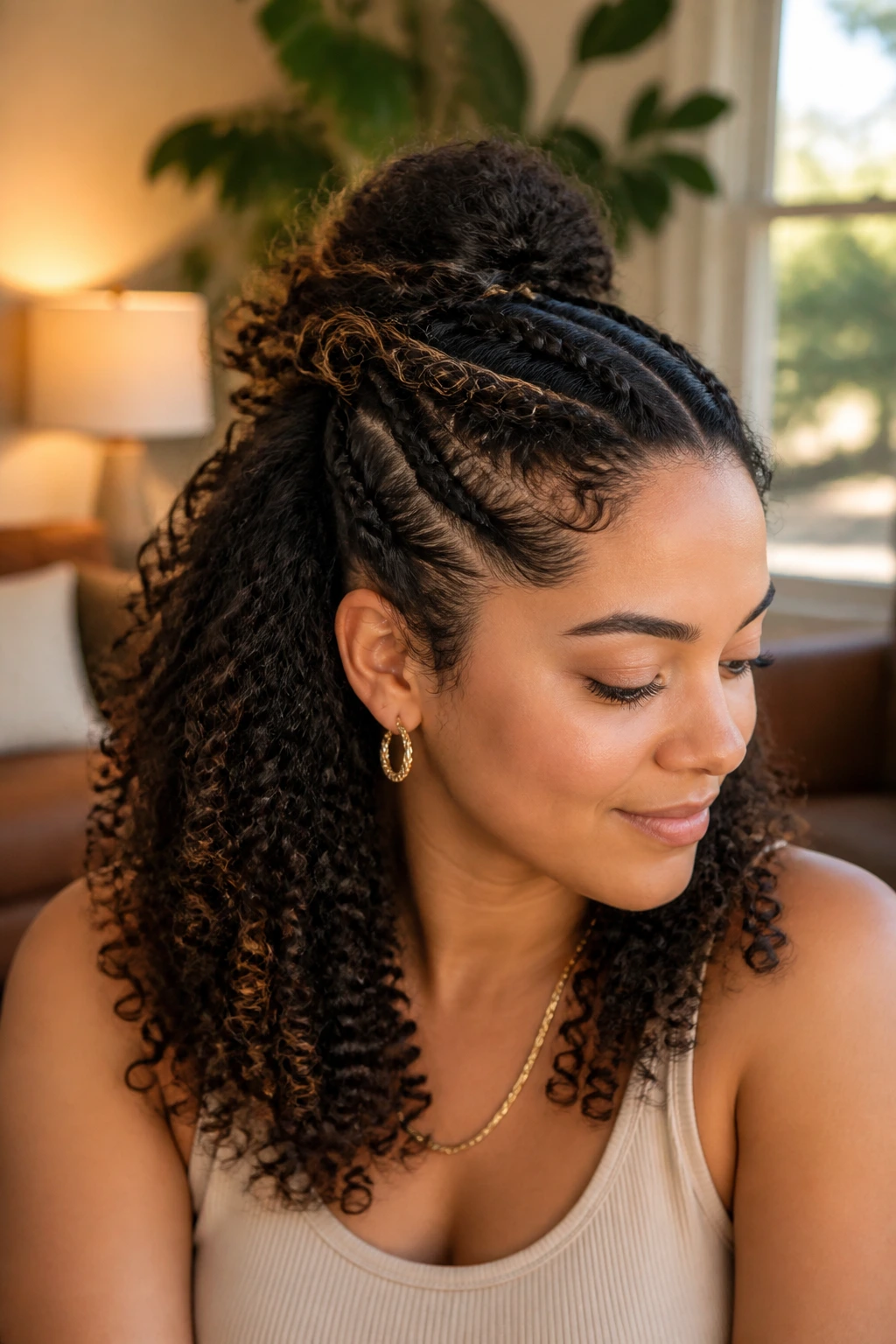
10. Micro Braids Half-Up
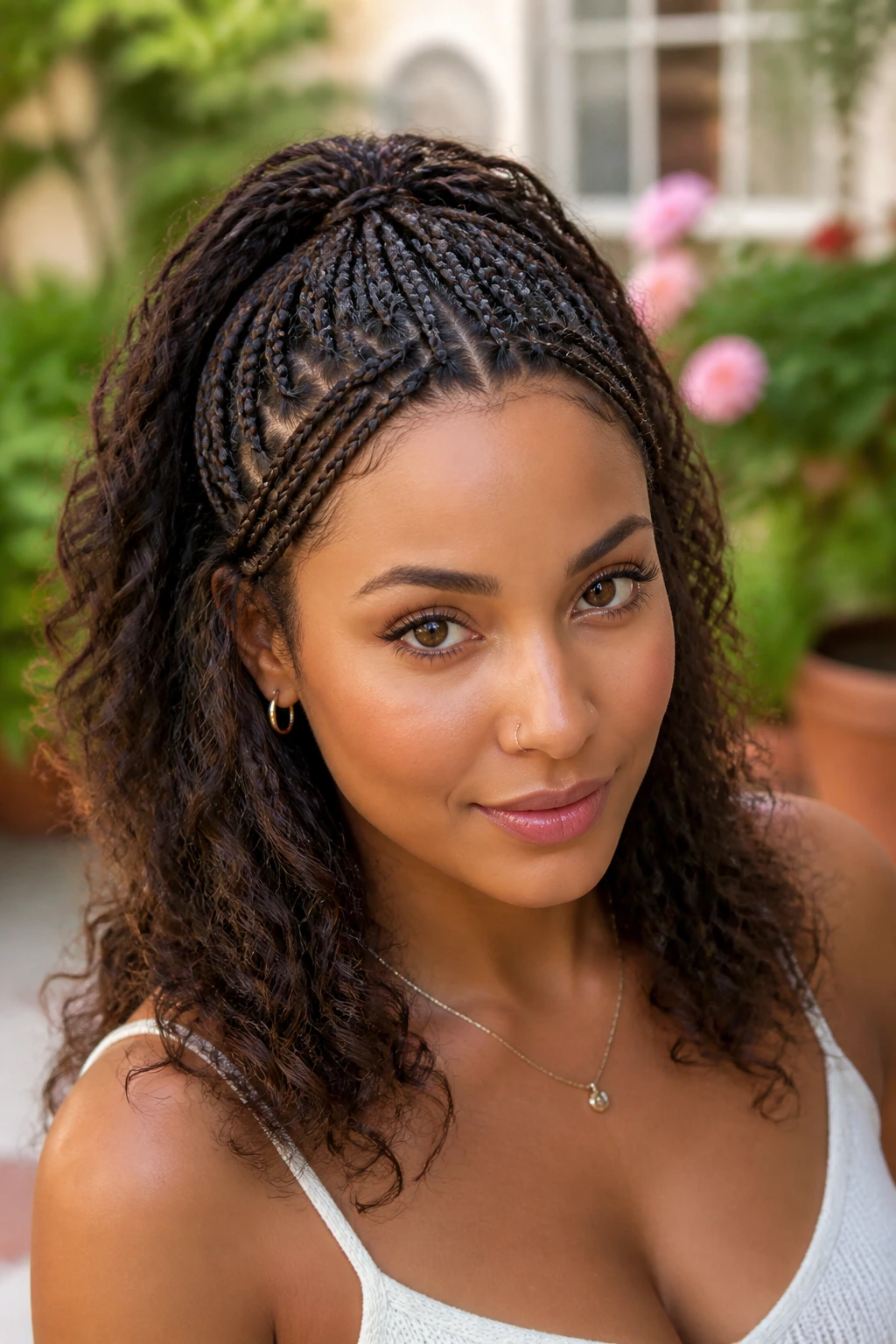
Tiny braids along the front give the whole style a textured, slightly protective feel. Braid one or two narrow sections on each side, then pull them back into a half pony or pin them flat against the crown.
Micro braids do two things well: they hold fragile front pieces in place, and they give the finished style a little detail without asking for a lot of volume. That makes them a smart choice if the curl pattern at the hairline tends to frizz first.
Keep the braids loose enough that they don’t shrink the top section too much. Tight braids on curly hair can create a lumpy line that sits awkwardly under the rest of the style.
11. French Braid Half-Up
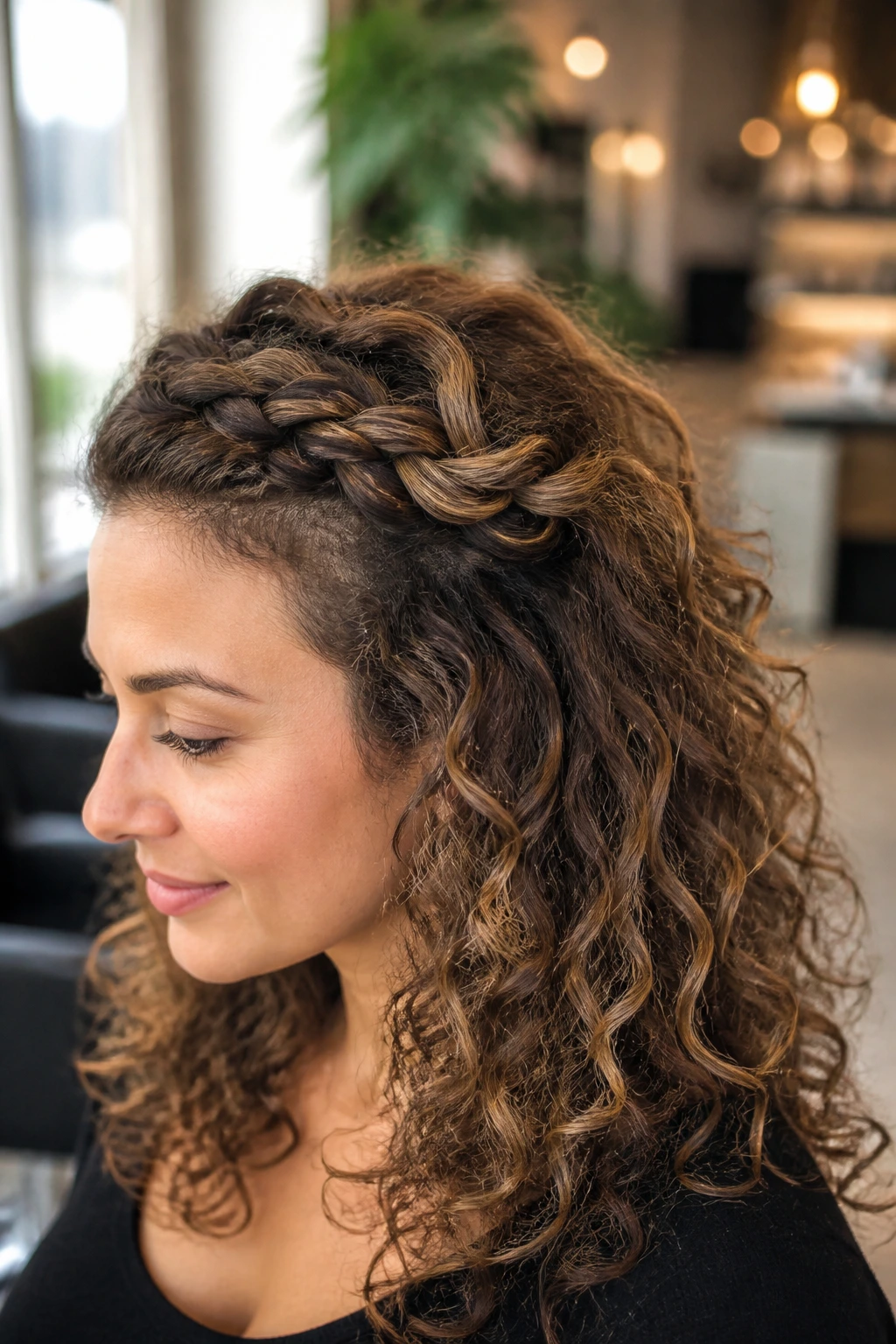
This is the classic for a reason. A French braid pulled only through the top section adds structure, keeps the crown controlled, and leaves the lower curls free to move.
Braid from the front hairline back to the midpoint of the head, then stop. Secure the braid with a small elastic and let the tail disappear into the curls. On curly hair, I prefer a braid that’s not too tight; a looser weave shows off texture better and doesn’t flatten the roots.
If your hair is layered, this style keeps shorter front pieces from drifting forward all day. It’s a workhorse.
12. Top Knot Half-Up
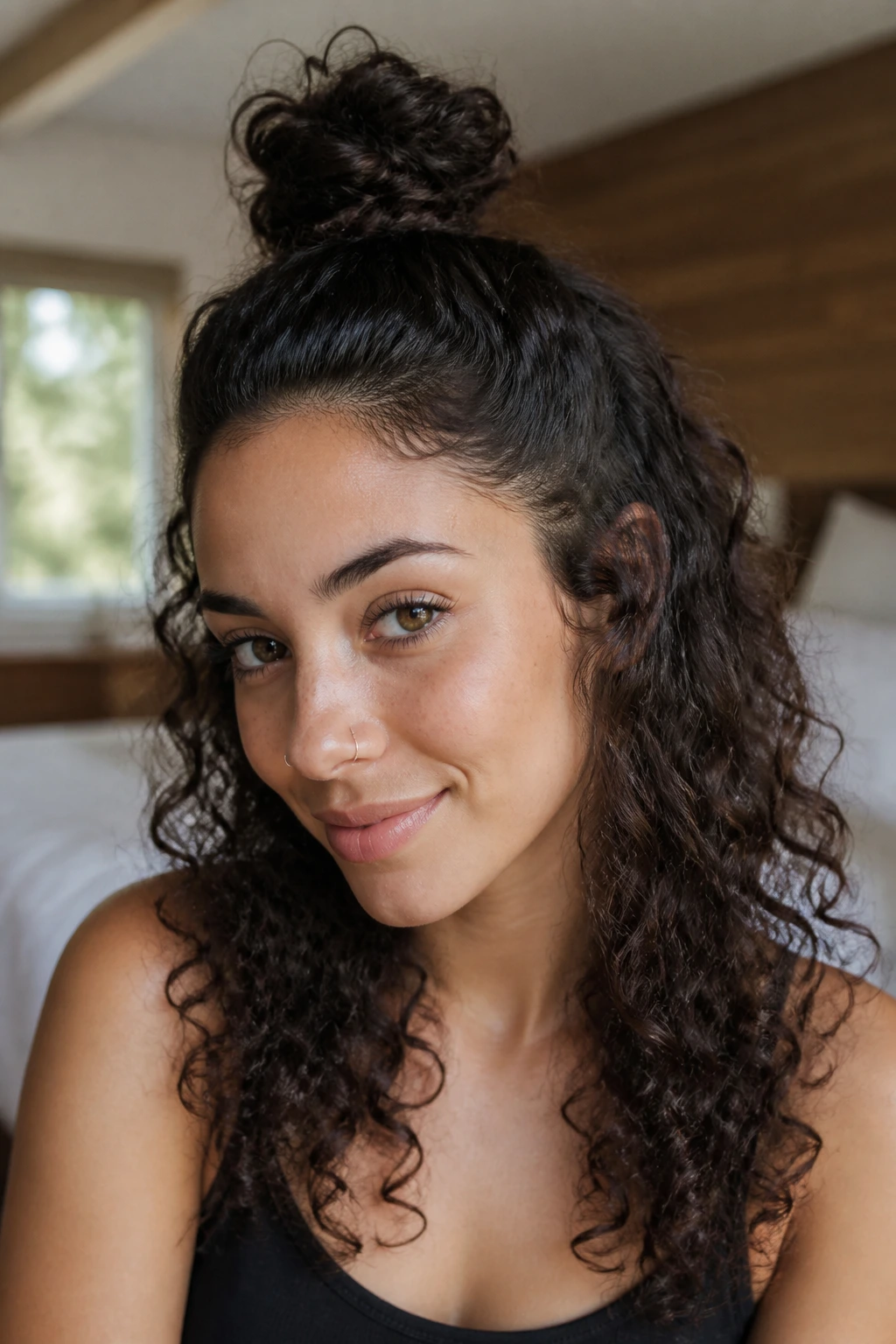
A mini top knot is a neat way to get height without losing the bottom length. Gather the top half high on the crown, twist it into a small knot, and pin it down with two bobby pins.
The knot should be compact. If it sprawls, the style starts to look unbalanced. Leave the lower curls loose and separate them with your fingers so the contrast between knot and curl reads clearly.
This one is especially useful when the front of the hair needs to be out of the way but you still want the ends visible. It’s clean, simple, and it doesn’t ask much from the rest of the head.
13. Side-Swept Half-Up
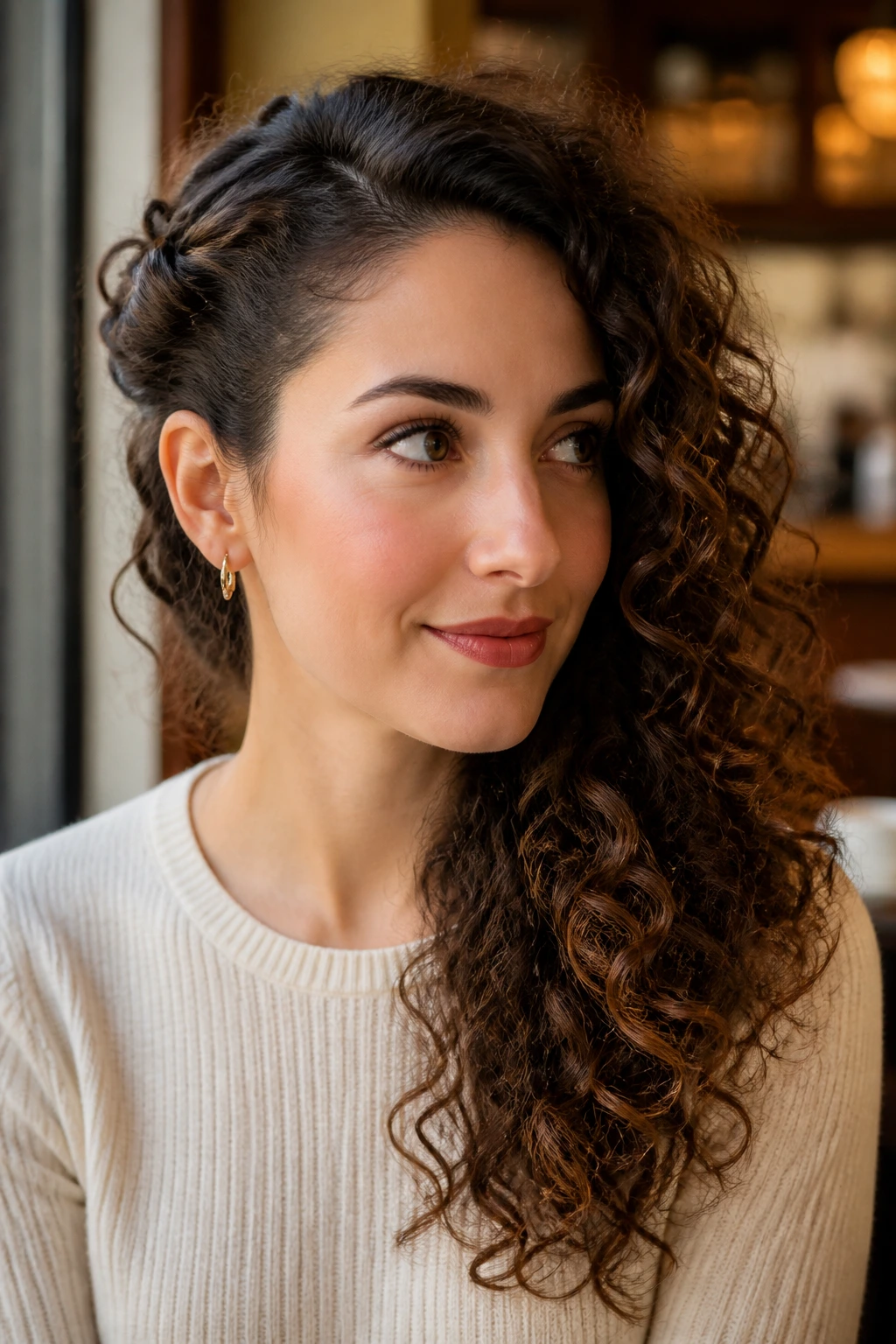
Pulling the top section to one side changes the line of the whole style. It’s softer, a little more romantic, and useful when you want asymmetry instead of a centered look.
Take a deeper section from the heavier side, sweep it back across the crown, and secure it just behind the opposite ear or at the back of the head. Leaving the side part visible gives the curls a little motion before they even start falling.
This is a good option when your curls have a natural bend on one side. You’re working with the shape that’s already there.
14. Pearl-Pin Half-Up
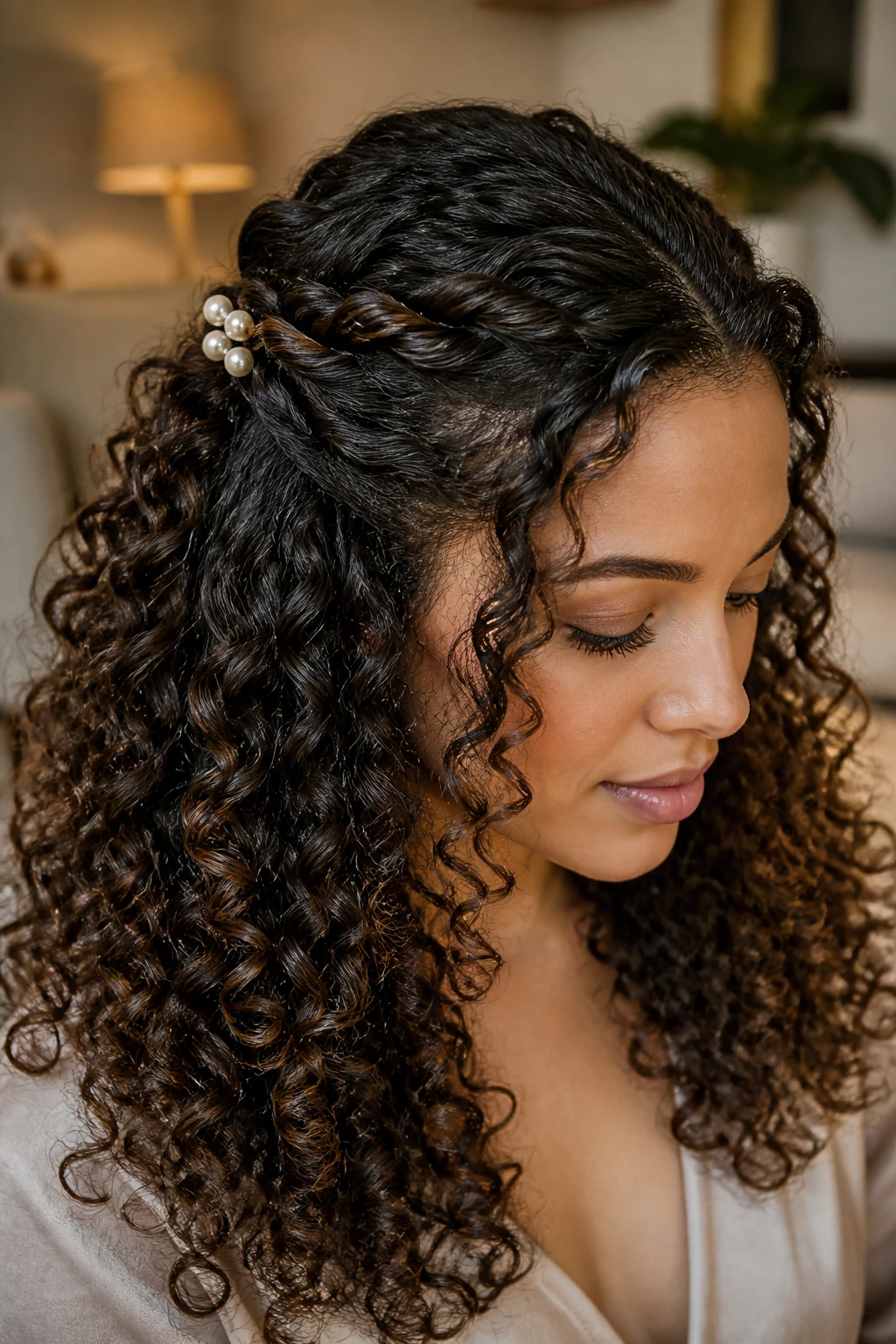
A simple twist becomes dressy fast when pearl pins enter the picture. Pin two twisted side pieces together at the back and tuck the decorative pins where they’ll catch the eye without stabbing the scalp.
The style itself can be soft and almost plain. The hardware does the talking. That’s part of the appeal: the curls stay the main event, while the pins add just enough shine to make the look feel finished.
Use this when you want a half-up style that looks deliberate in photos and still feels comfortable after an hour or two.
15. Ribbon-Tied Half-Up
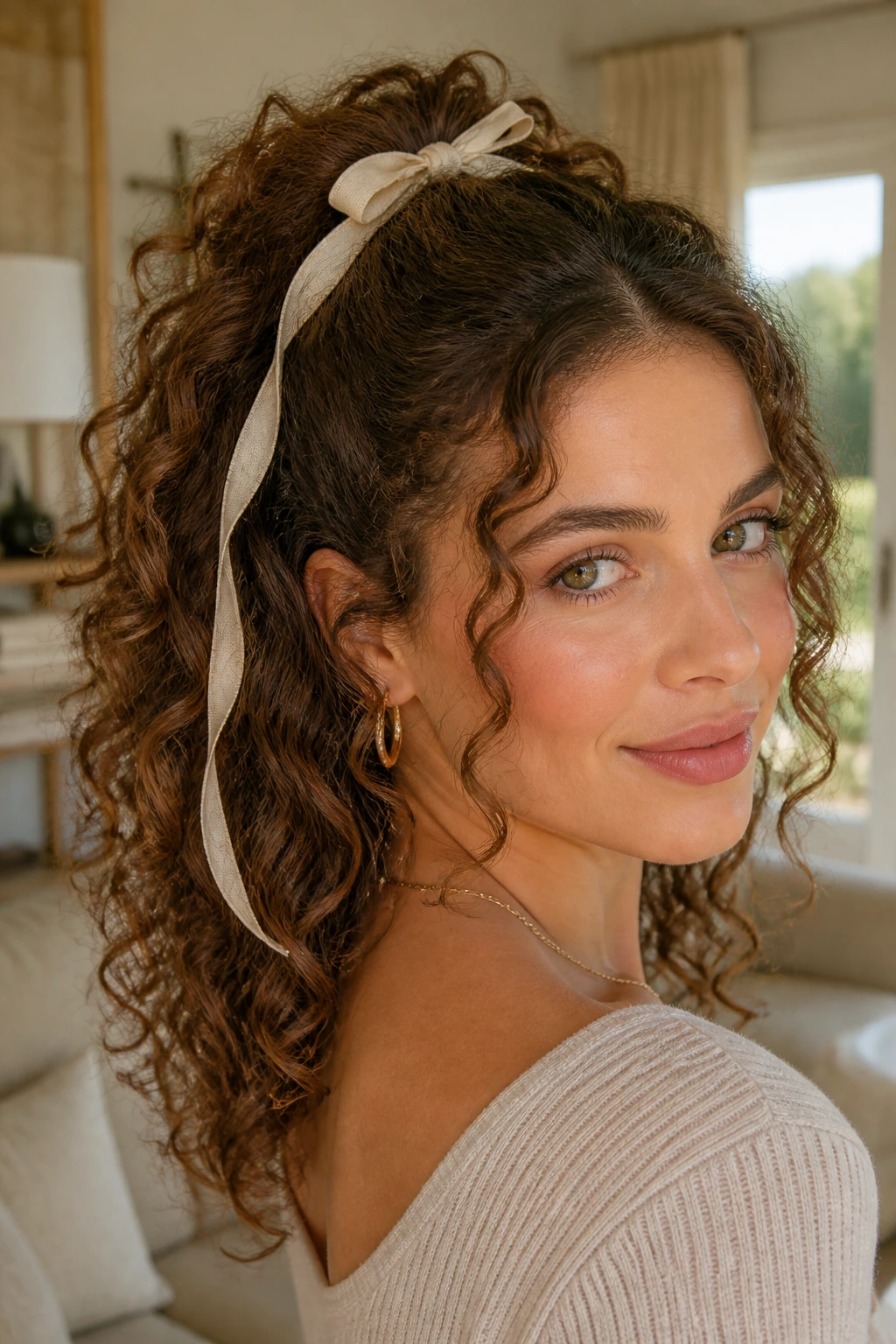
This version is less bow, more trail. Tie the half pony with a ribbon, then let the tails hang down through the curls instead of shaping them into a tight bow.
That trailing ribbon gives the hair a longer line, which is handy on medium-length curls where a bow might look crowded. Choose a ribbon that’s wider than you think you need; thin ribbon can disappear into dense hair.
The style reads soft and a little old-school in the best way. It’s also one of the easiest ways to dress up a simple half pony without changing the structure.
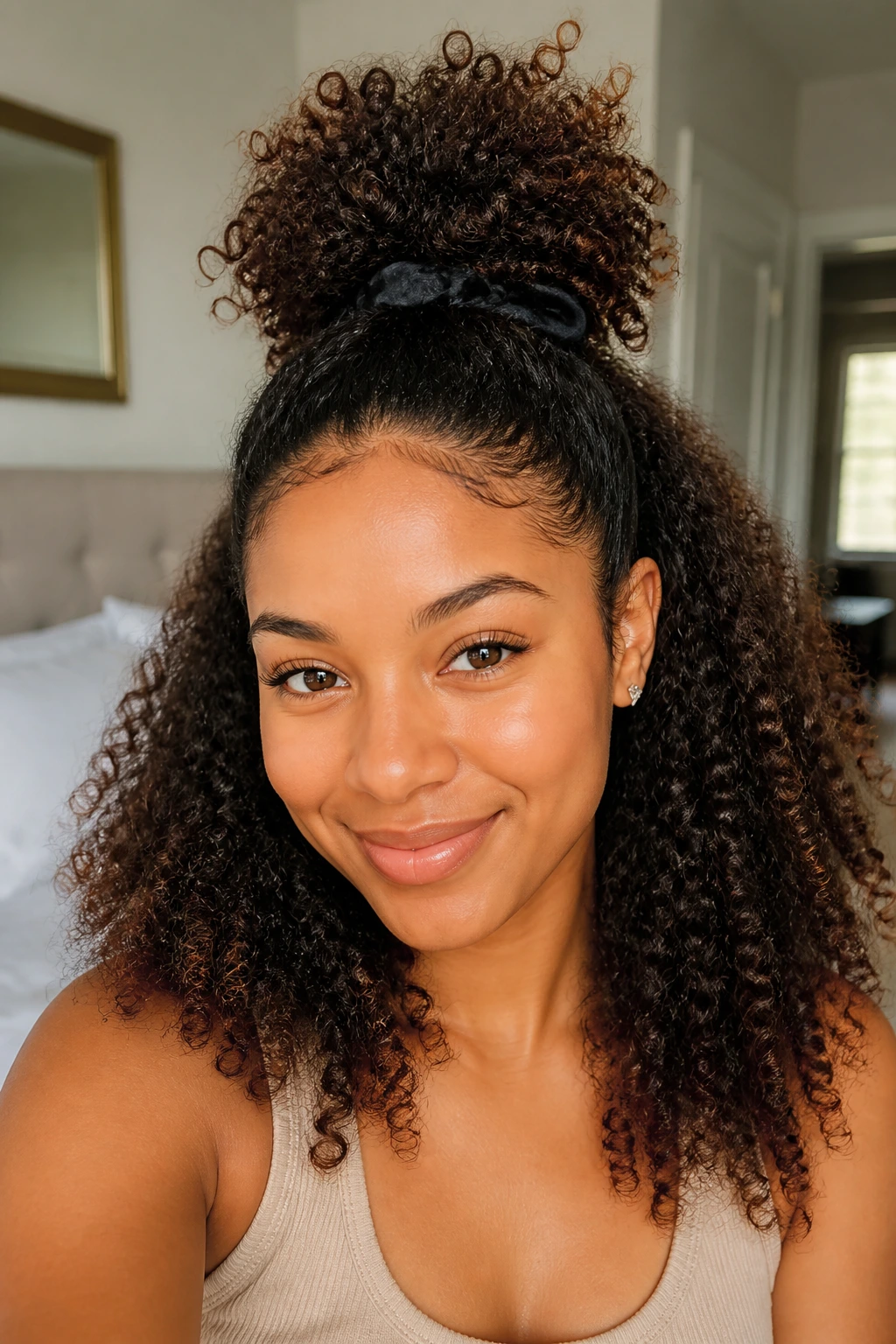
16. Pineapple Half-Up
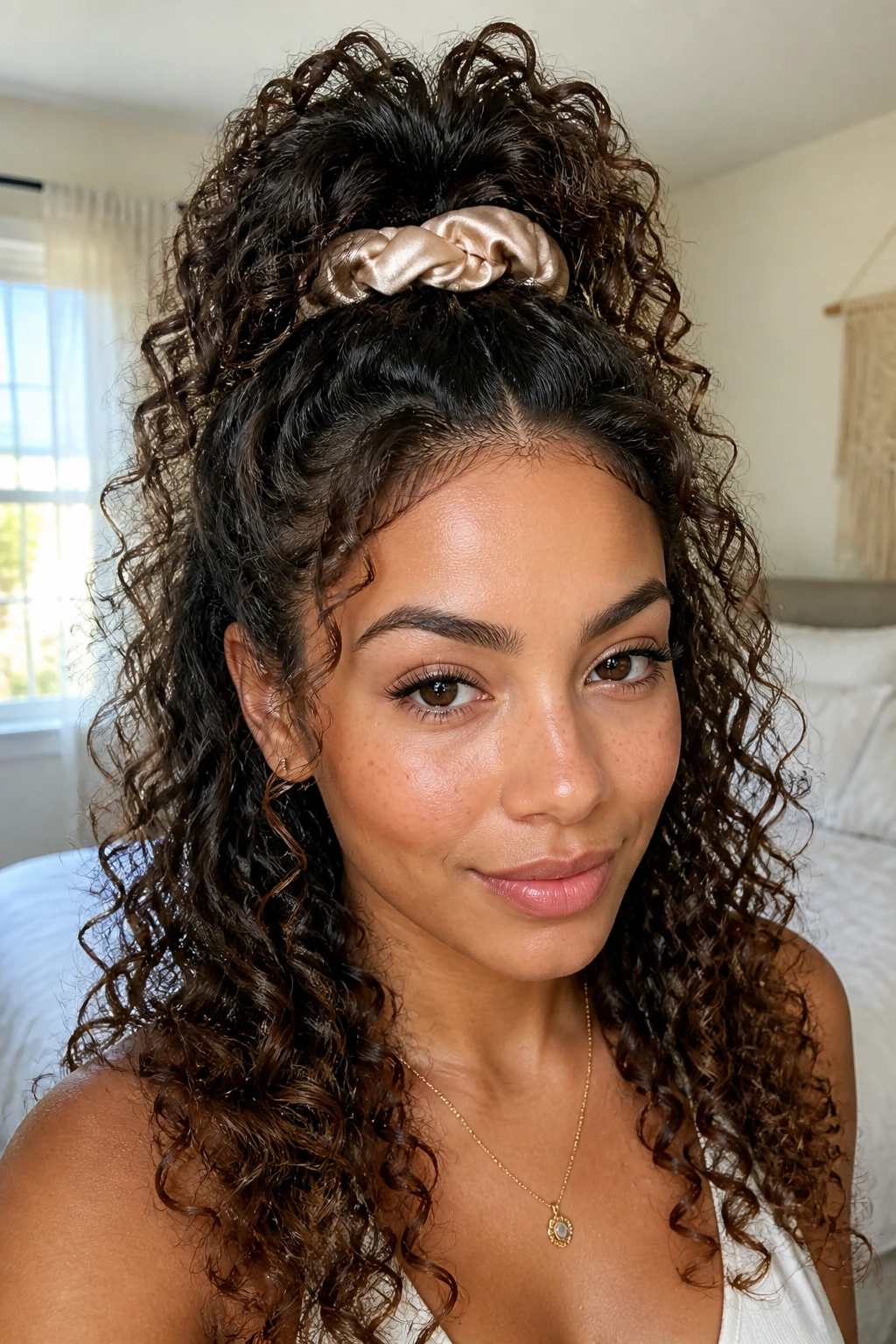
If you’ve ever wanted to keep the crown high and the curls from getting crushed, the pineapple half-up is your friend. Gather the top half very loosely on top of the head with a satin scrunchie and let the lower curls hang free.
This works well on day-three hair because it keeps the top from collapsing while preserving the curl clump below. Don’t pull the elastic tight. The whole point is lift without dents.
It’s practical, but not plain. On a good curl day, the pineapple shape gives the style a light, airy profile that looks intentional instead of rushed.
17. Double Twist Half-Up
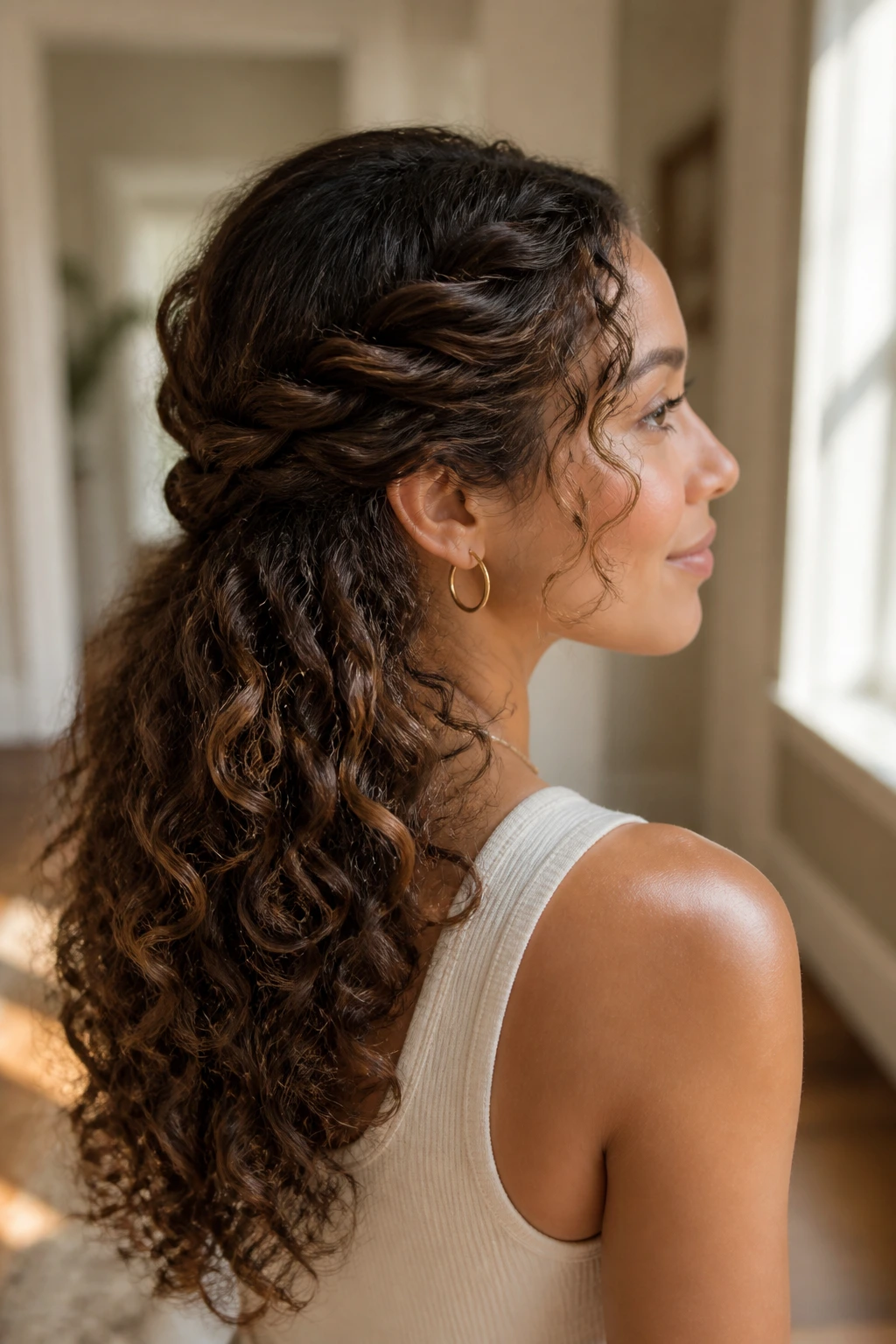
Two twists, one on each side, meet at the back and pin into place. That’s the whole idea. It’s uncomplicated and useful when you need a dependable half-up style that won’t steal the curl pattern from the rest of the head.
I like this one because it balances symmetry with softness. The twists give the face some shape, but the curls below keep their freedom. If the hair is fine, keep the sections small so the twists don’t overpower the rest.
Use a little styling cream on the sections before twisting if the ends tend to separate. The finish should look smooth, not greasy.
18. Waterfall Braid Half-Up
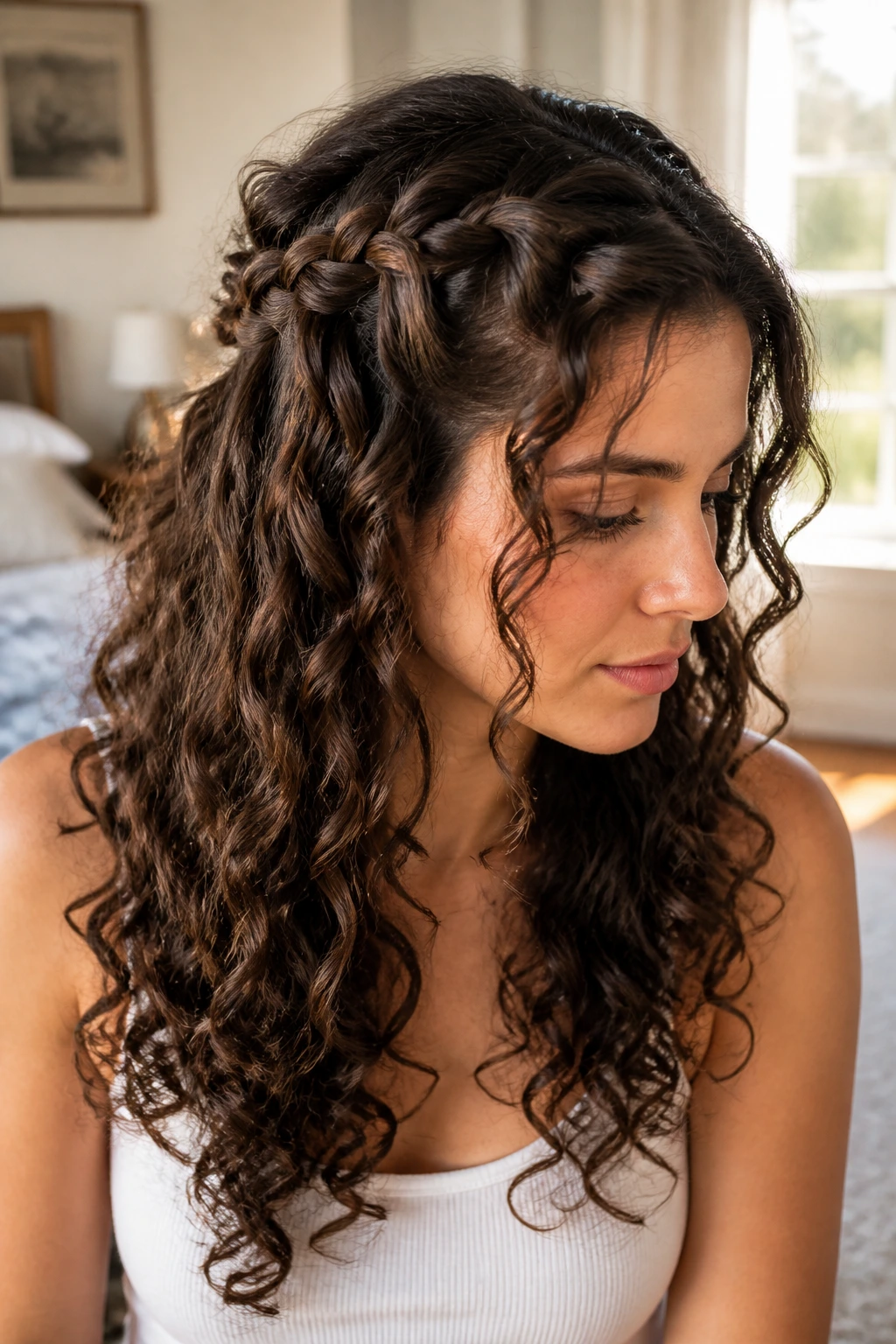
A waterfall braid lets pieces drop through the braid as you move across the head, which makes it a natural fit for curly hair. The texture of the curls makes the whole thing look fuller than it would on straight hair.
Keep the braid loose. Tight waterfall braids can choke the curl volume, and that’s a waste of the texture you’ve got. Let the released pieces blend back into the lower curls so the style feels airy.
This is a good choice when you want the front controlled but still want visible movement across the crown. It’s decorative without turning rigid.
19. Fishtail Accent Half-Up
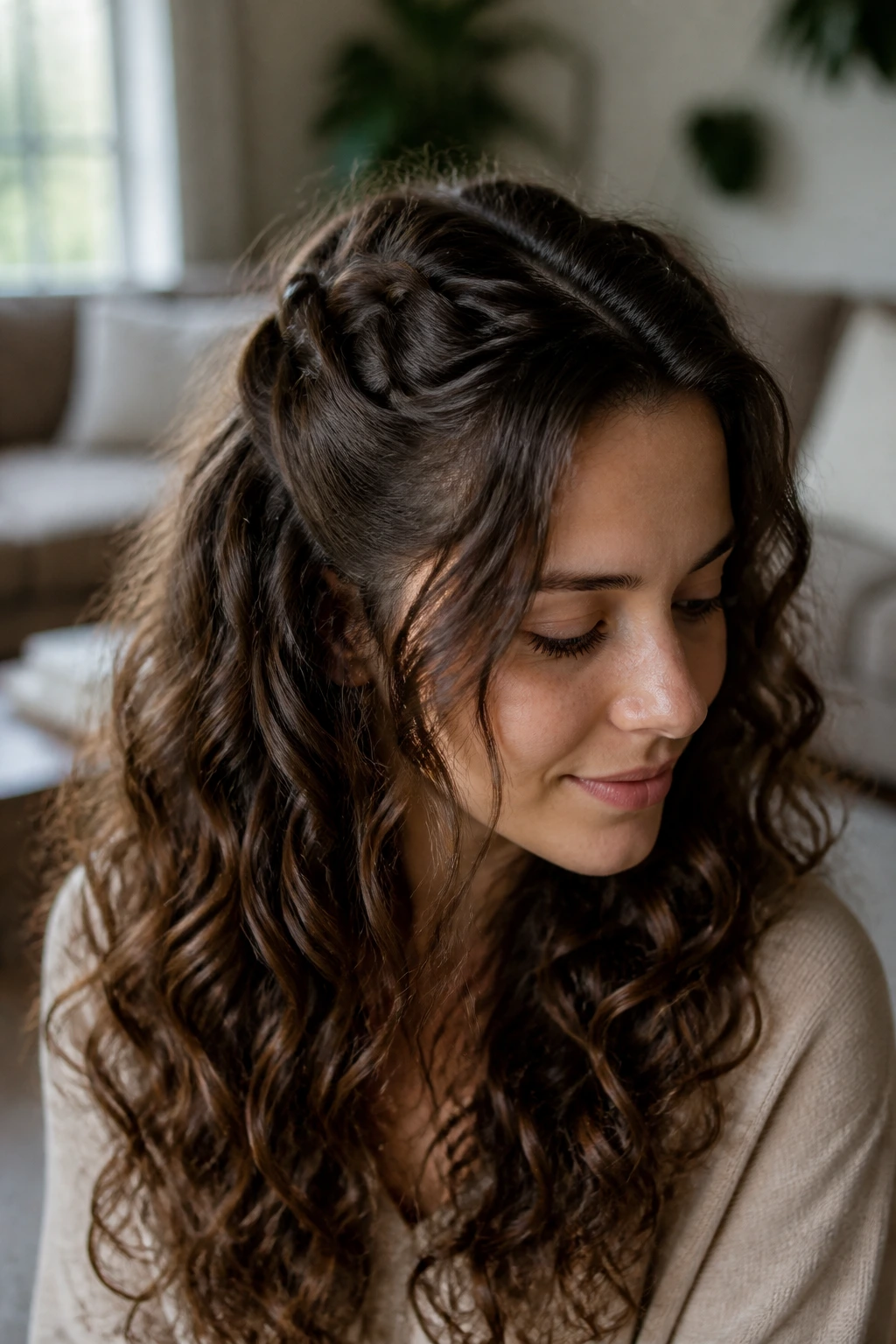
You do not need a full fishtail to get the effect. A small fishtail section at the top or side can add enough pattern to make the style feel finished.
Because fishtails show every strand, they look especially good on curly hair when the braid is kept loose and a little imperfect. Pull it apart gently after braiding so the texture reads wide instead of tight.
Best on medium to long curls. If the hair is short or layered, the braid can get choppy fast, so keep the accent section smaller and stop early.
20. Curly Mohawk Half-Up
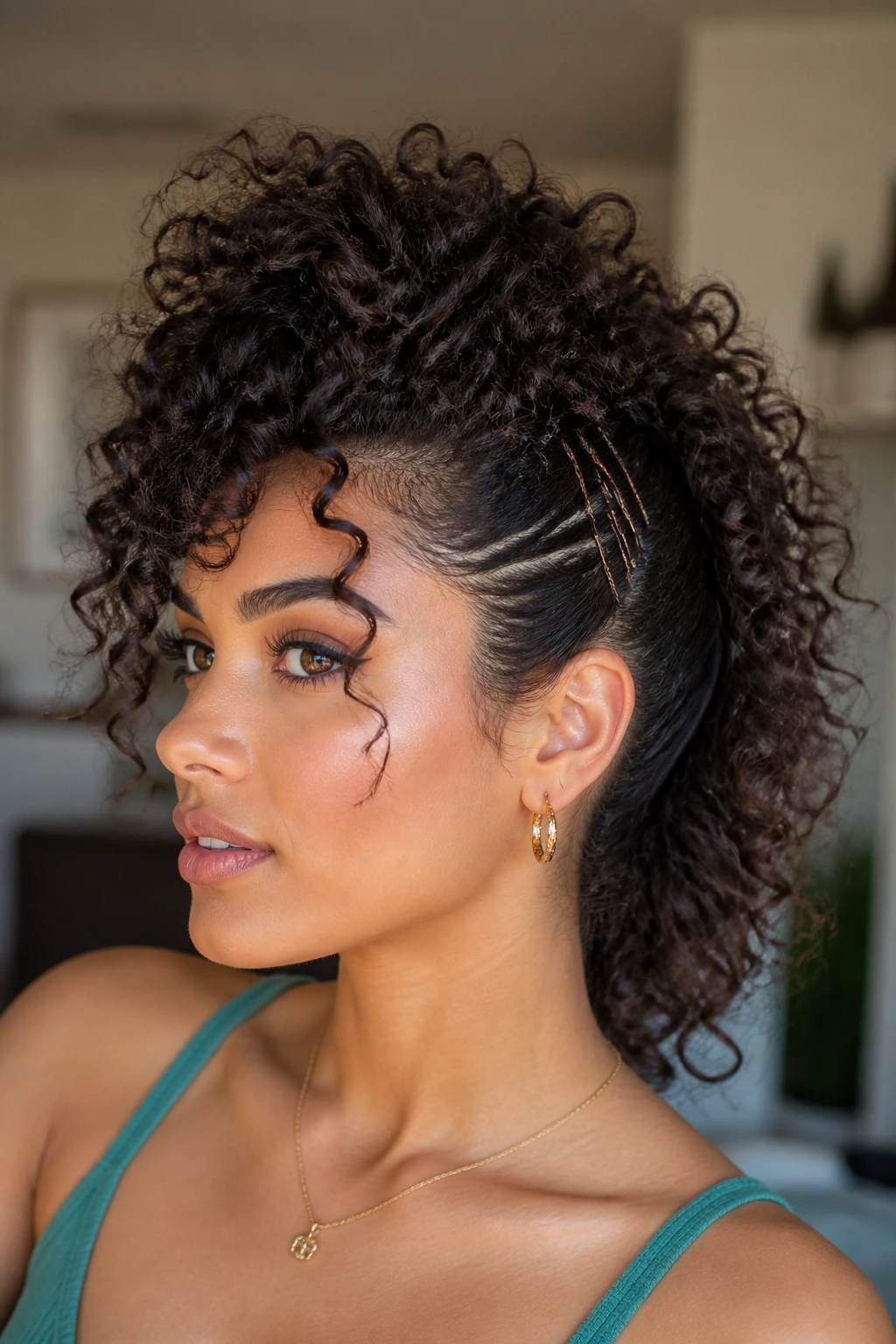
This one is all about height through the center. Pin the sides back tightly enough to open the face, then let the middle section rise and fall like a narrow ridge of curls.
It’s a dramatic look, but it’s not complicated. What matters is contrast. The sides should be controlled; the center should stay full. If the crown gets too slick, the mohawk shape disappears, so don’t overdo the gel.
This is the style I’d reach for when I want curly hair to read bold on purpose. It has edge without needing a full shave or a full updo.
21. Scrunchie Fold Half-Up
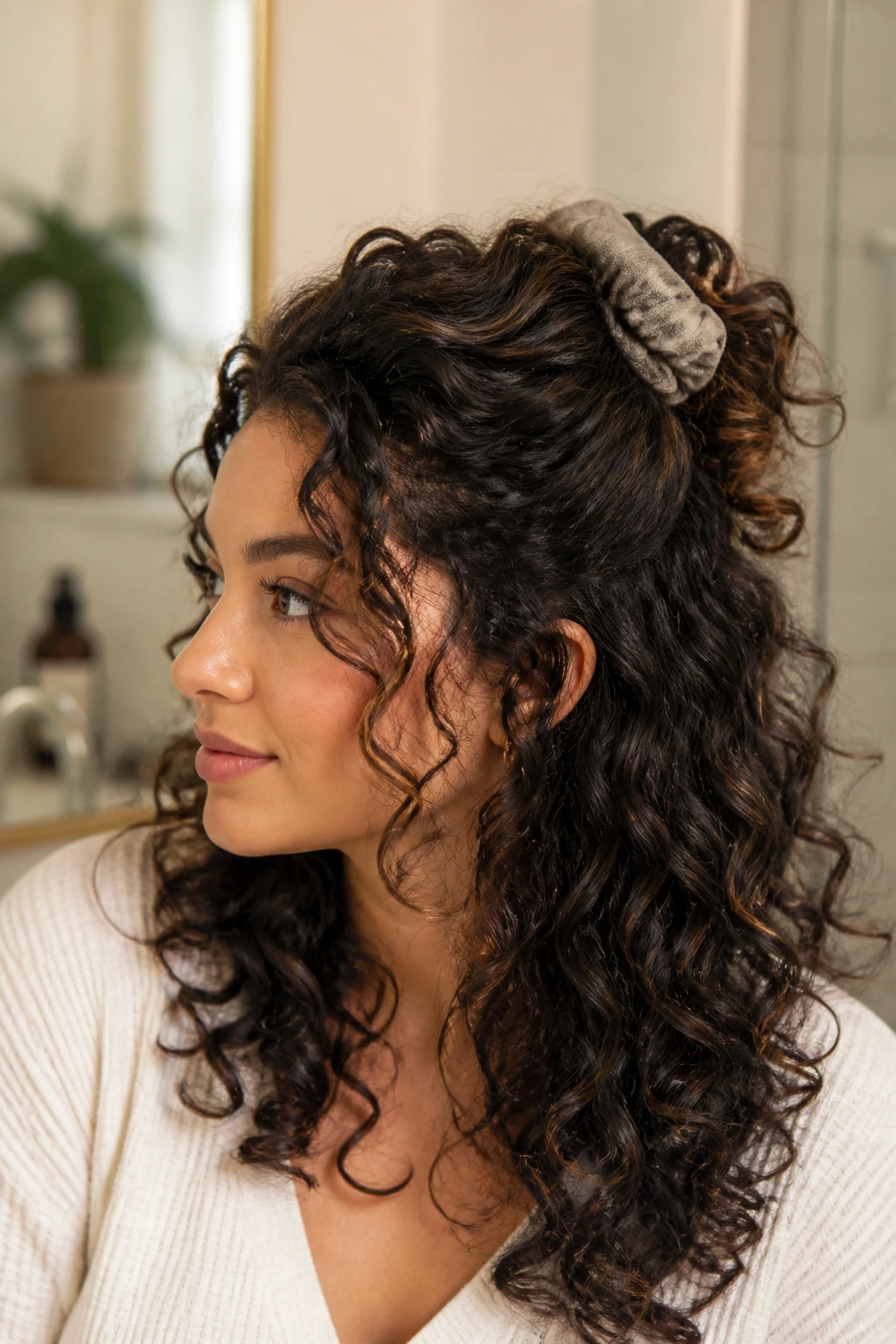
A soft scrunchie can create a folded half pony that holds shape without flattening the curls. Pull the top section through the elastic only halfway, then let the ends drape back so the loop sits loose.
This is gentler than a tight ponytail, which matters if your curls dent easily. It also keeps tension low at the scalp, which is a real comfort point on longer hair.
Use it on wash-day curls if you want a style that feels casual but not sloppy. The fold gives just enough structure to make the crown look finished.
22. Twisted Bangs Half-Up
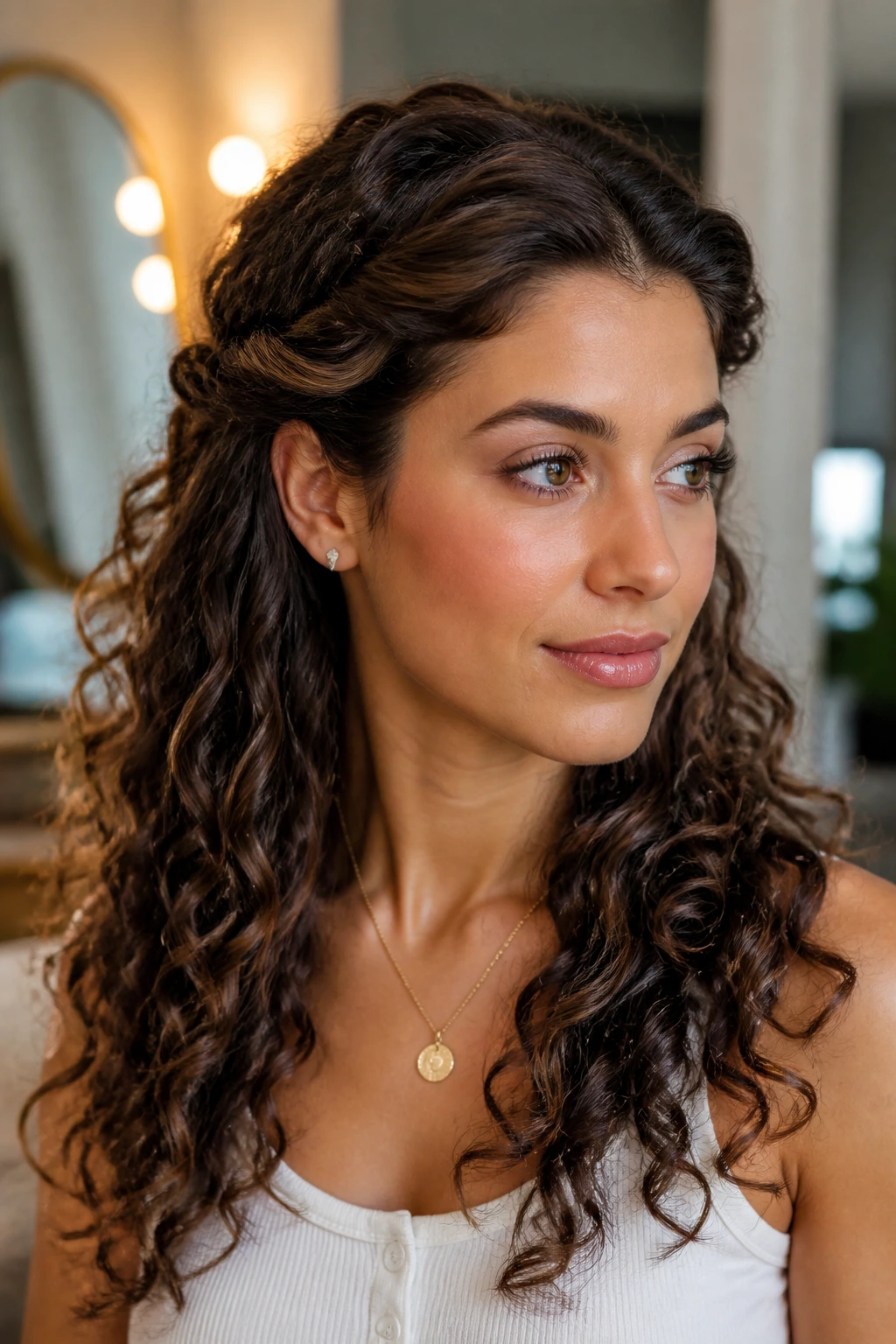
Sometimes the simplest move is the smartest one. Twist only the front fringe or face-framing pieces back, pin them at the temples, and leave everything else alone.
That tiny bit of pinning can solve a lot. It keeps the eyes open, controls frizz near the part, and preserves every ounce of volume through the rest of the curls. If you’ve got shorter layers, this is often easier than a larger half-up section.
Use two small pins per side if your hair is slippery. One pin rarely feels like enough on curls that like to spring back.
23. Crown Braid Half-Up
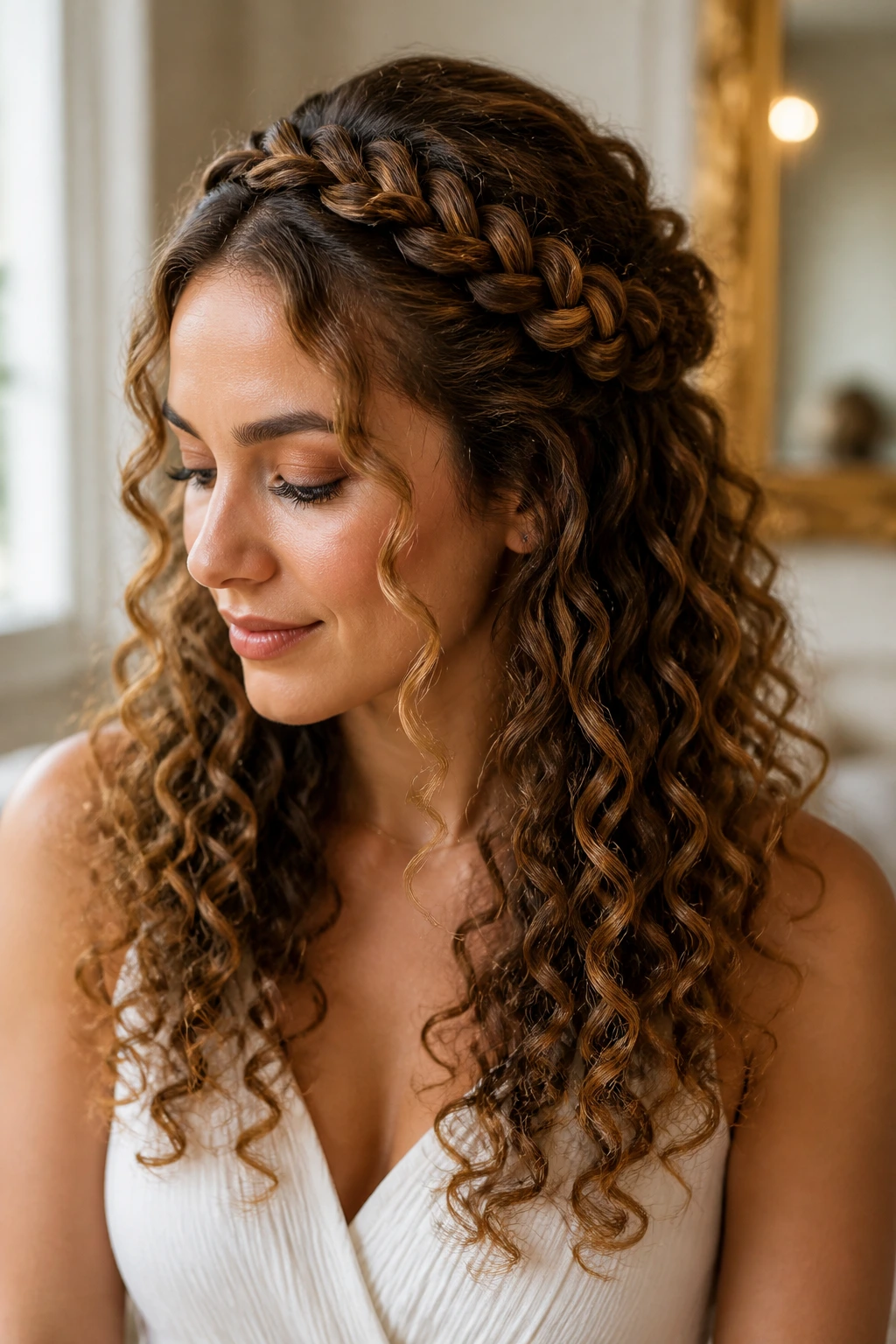
A braid that wraps across the top of the head gives a polished frame without hiding the curls underneath. Start near one temple, braid across the crown, and pin the end underneath the opposite side.
Because curly hair has grip, crown braids usually hold well if the sectioning is clean. Keep the braid relaxed; a rigid braid can make the crown sit too flat and steal the lift from the top.
This style leans formal without becoming stiff. If you need something for a ceremony or a photo-heavy day, it earns its place.
24. Double Claw Clip Half-Up
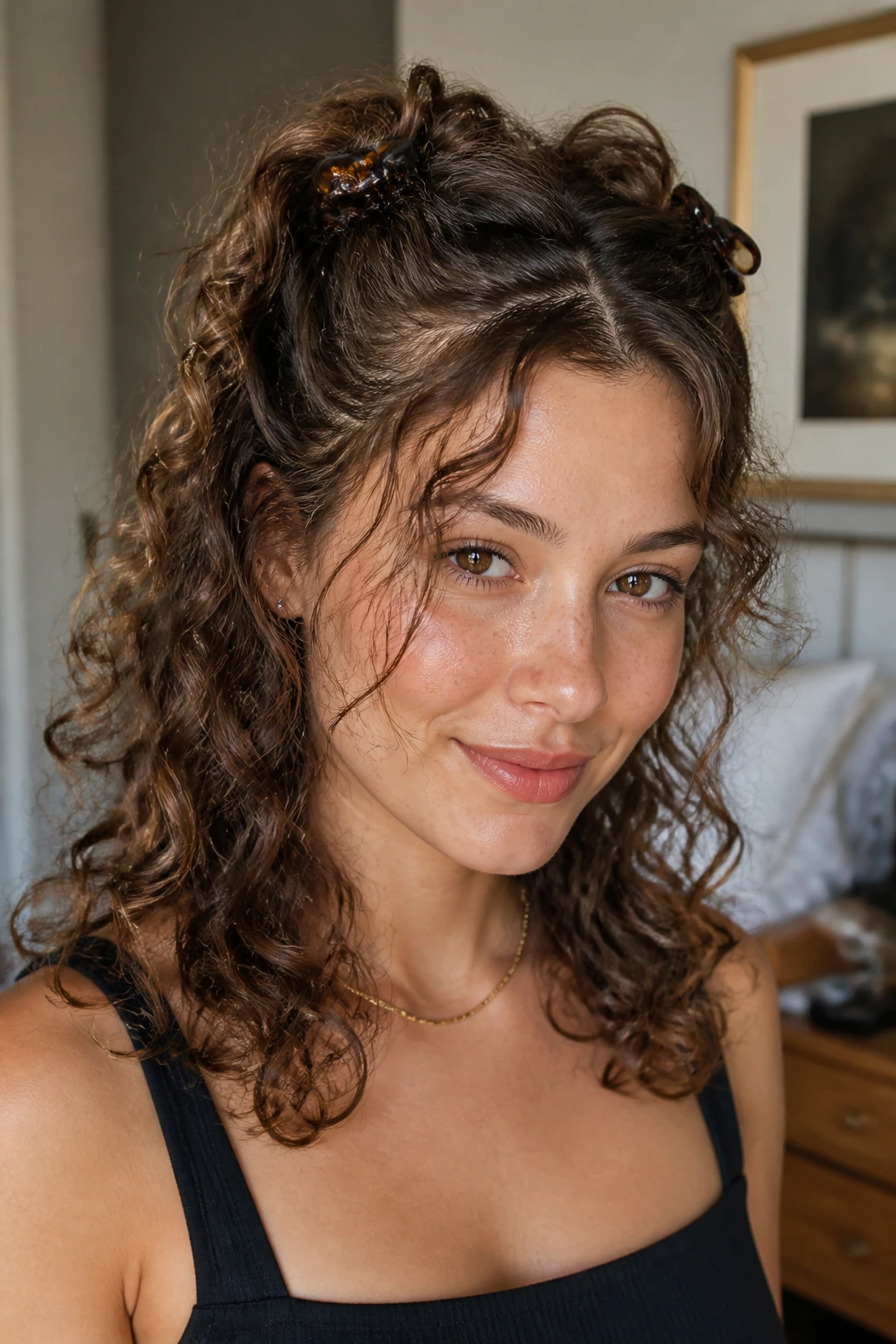
Two small claw clips can do what one large clip can’t: hold the hair in place without forcing it into one bulky lump. Twist each side back separately, clip them near the center, and let the curls settle around the clips.
This is great for medium curls and shorter layers because the weight gets split. It also gives a slightly modern, undone shape that feels current without trying hard.
Choose clips with teeth that actually grip. Decorative plastic can look cute and slide out before lunch.
25. Half-Up Pony with Tendrils
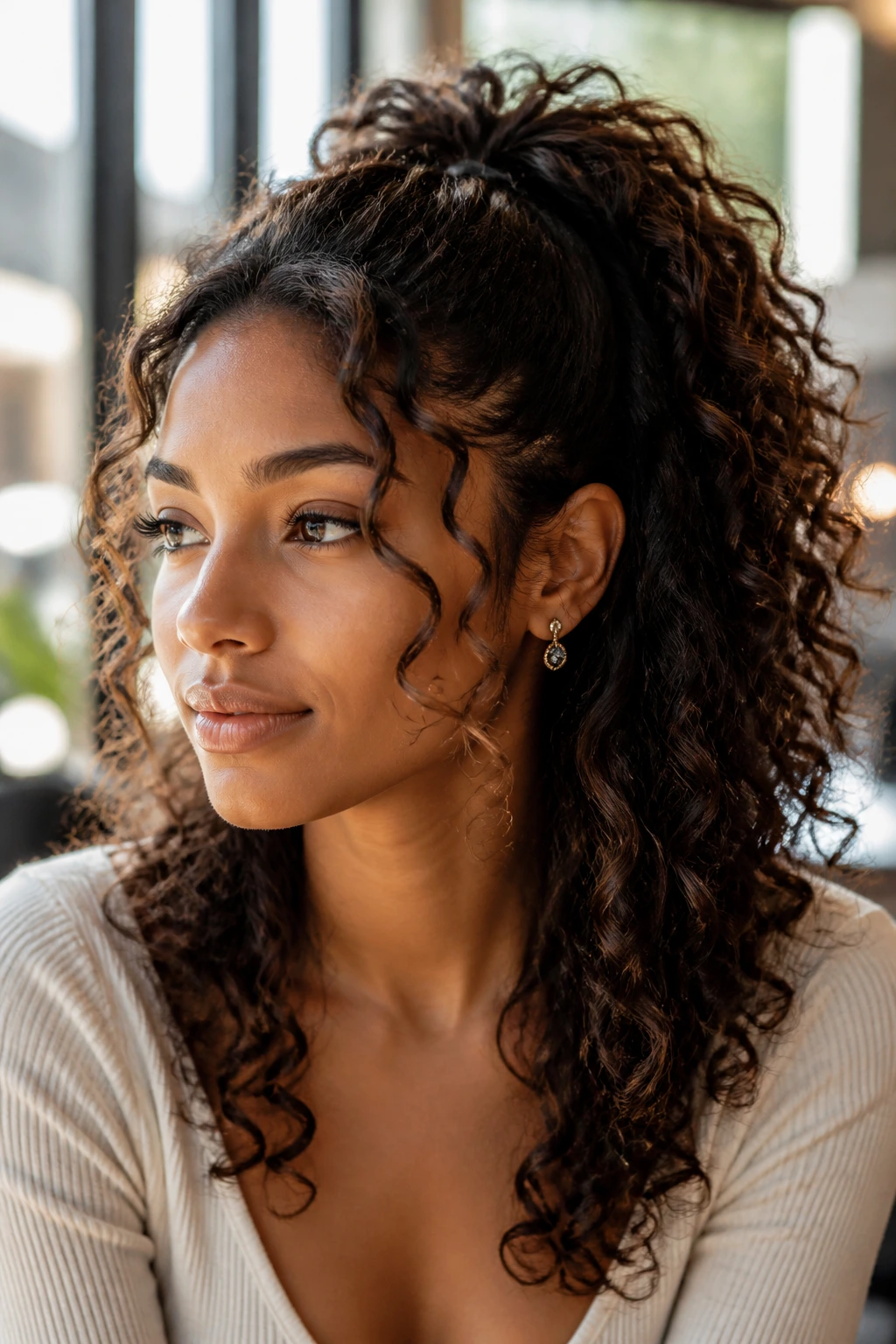
This is the dependable middle ground. Pull the top half into a ponytail, then leave two or four tendrils loose around the face so the style doesn’t read too severe.
The tendrils matter. On curly hair, they soften the line of the pony and keep the face-framing pieces from feeling trapped. If the curls are tight, don’t straighten the tendrils; let them keep their pattern and just define them with a little cream.
This one works for almost any setting, which is why it keeps coming back. It’s simple and flexible.
26. Curly Knot Half-Up
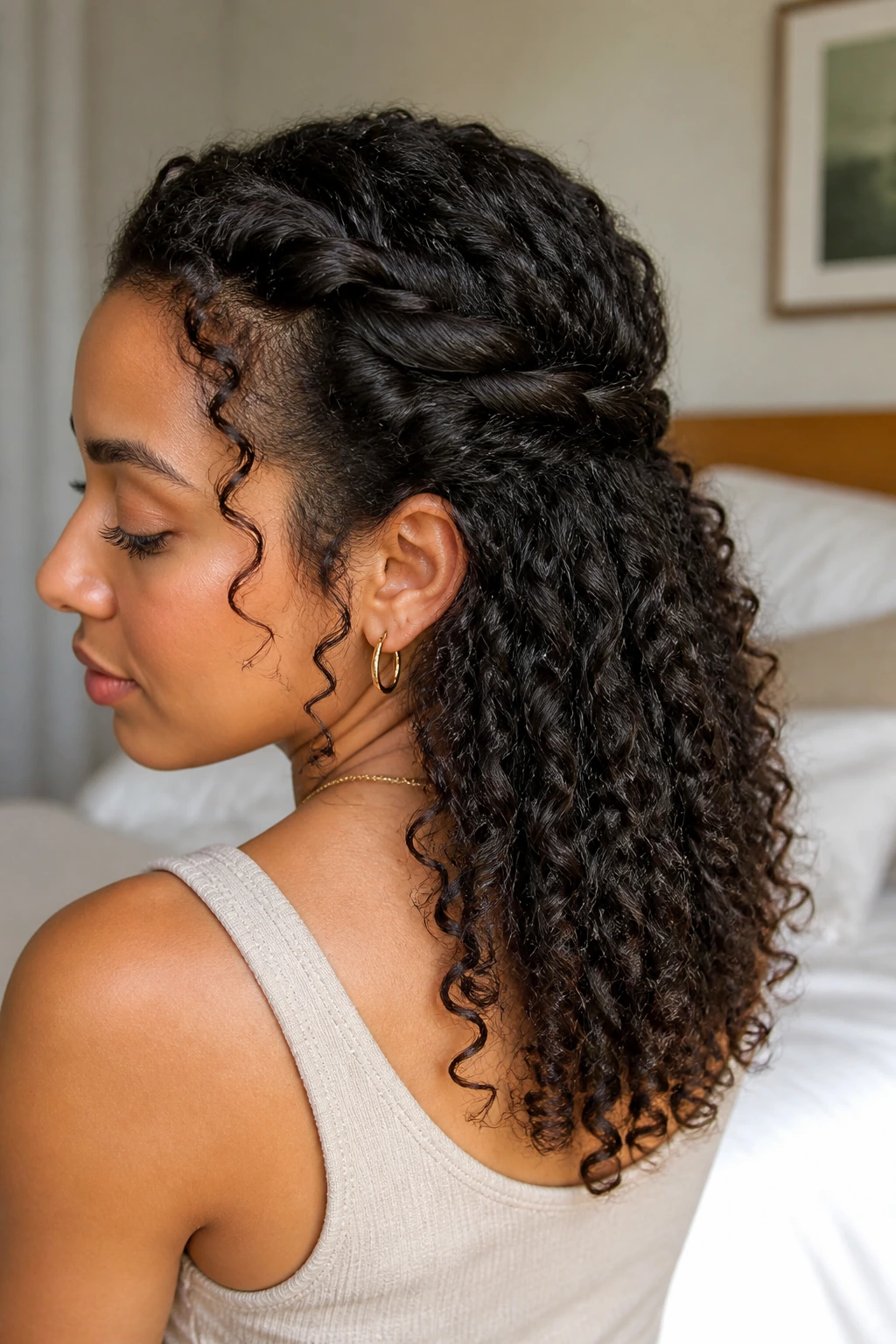
A knot at the crown gives the style a little sculptural shape. Gather the top section, tie it into a loose knot, and pin the folded pieces down so the structure stays put.
The knot should look intentional, not tied in a panic. If it gets too tight, the crown flattens and the back loses balance. Leave enough slack that the curls can bounce around the knot instead of being squeezed by it.
This works best on medium to long hair with some natural body. Fine curls can do it too, but they need a few more pins.
27. Braided Pigtail Half-Up
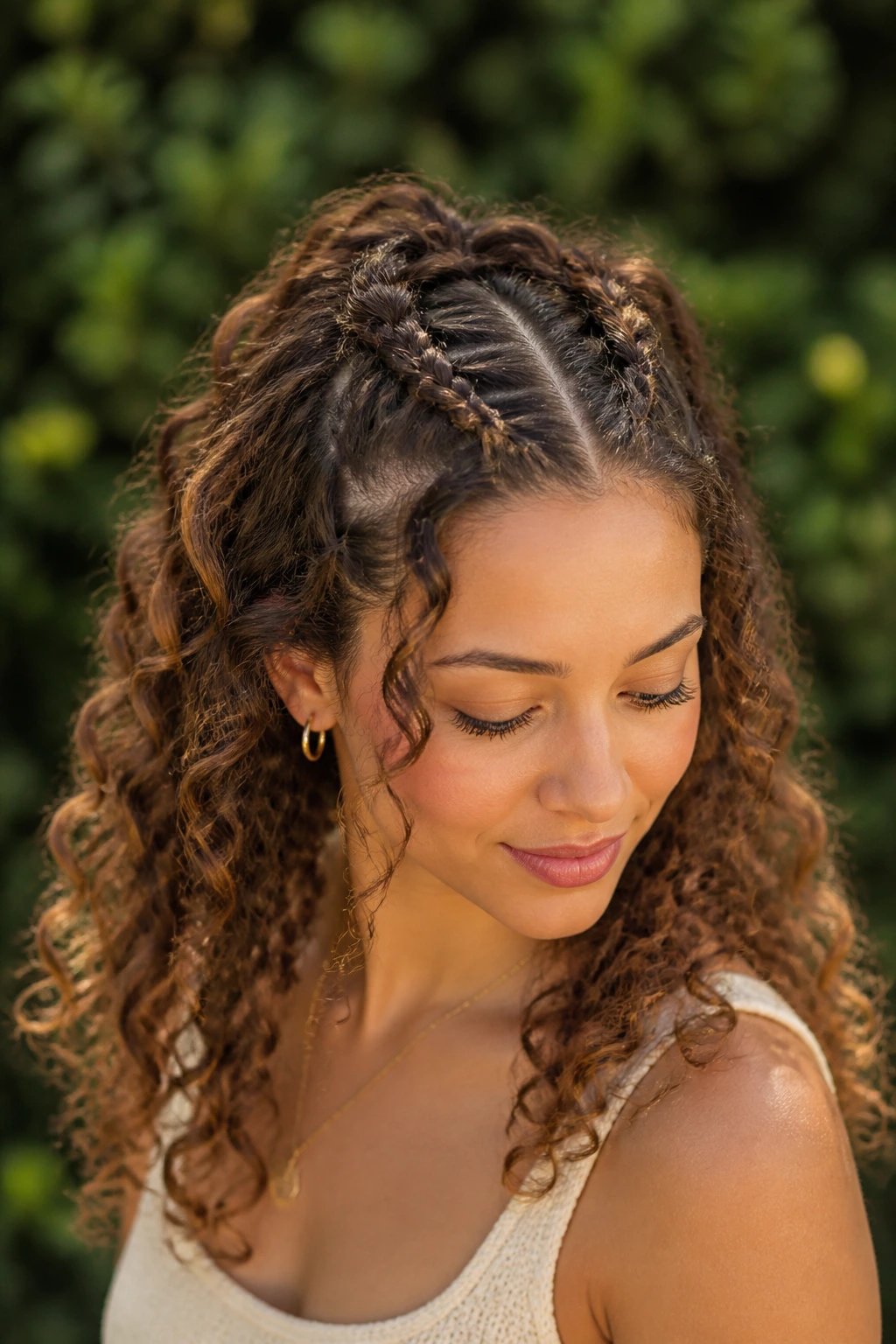
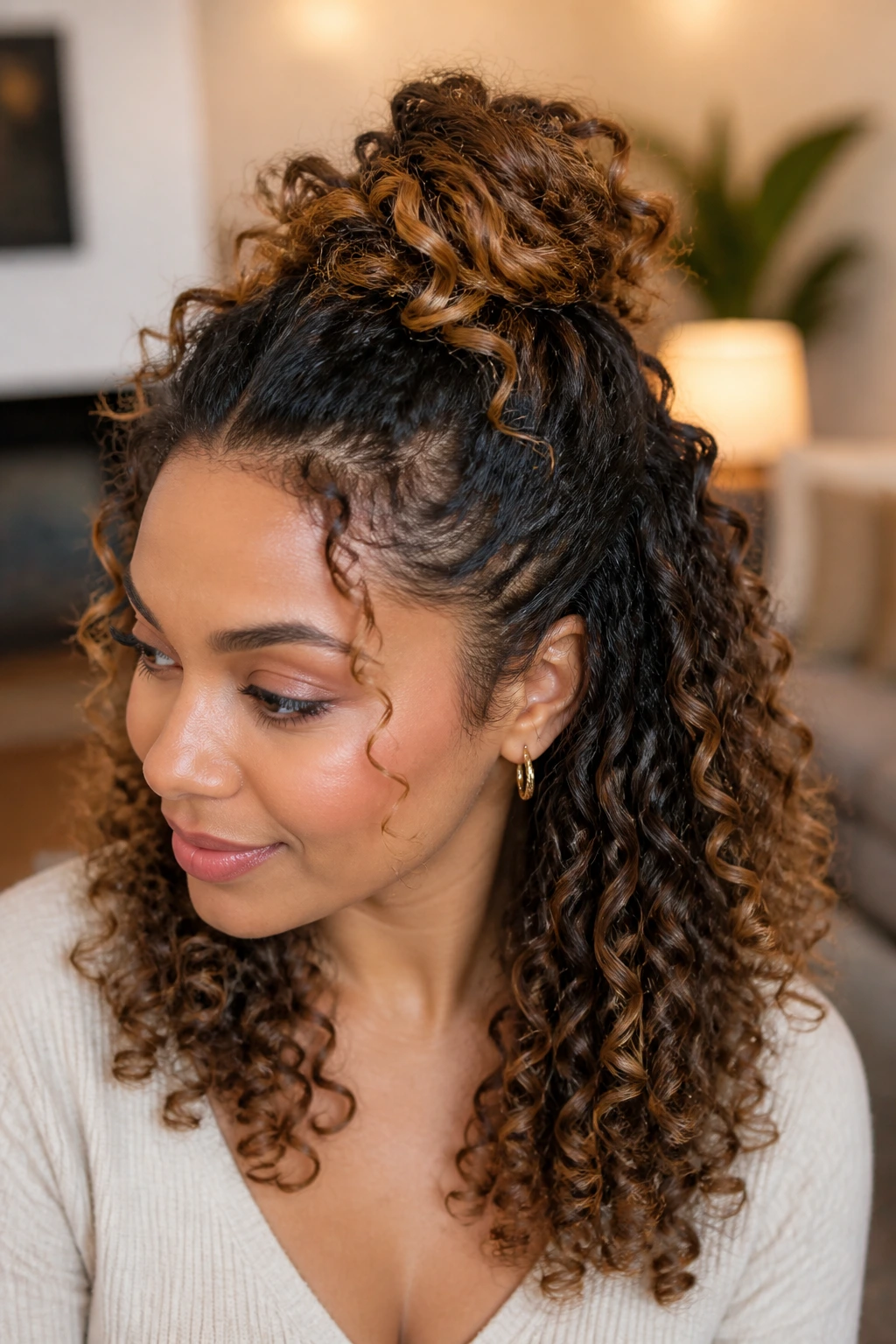
This style pulls two small braids from the front, then joins them at the back or leaves them hanging like tiny pigtails over the loose curls. It has a youthful feel, but it’s also practical because the braids hold the front pieces in place.
Keep the braids even in size so the whole shape stays balanced. On thick curly hair, slightly wider braids often look better than tiny ones because they don’t disappear into the texture.
If you want something playful without going full childlike, this is the sweet spot. A neat part keeps it grounded.
28. Half-Up Bun with Face-Framing Pieces
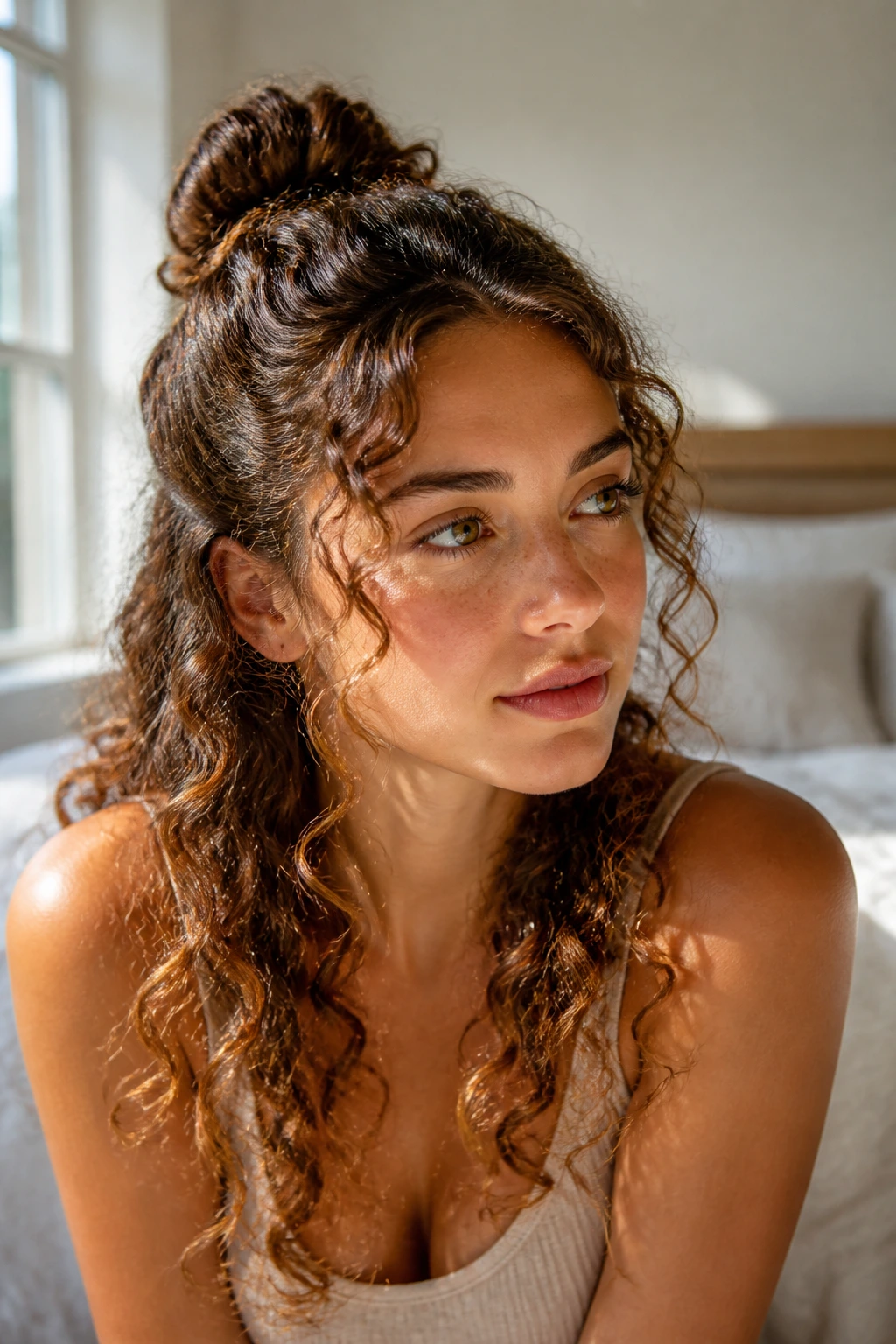
A small bun at the back of the crown, plus a few curls left around the cheeks, gives you shape and softness at the same time. The bun can be tight or loose, but I prefer a looser wrap because curls look better when the ends aren’t squeezed flat.
The face-framing pieces keep the style from feeling too lifted. They also let the hairline stay soft, which is useful if the front curls are shorter than the rest.
This is a good all-purpose style when you want something more pulled together than a pony but less fussy than a full updo.
29. Mini Clip Stack Half-Up
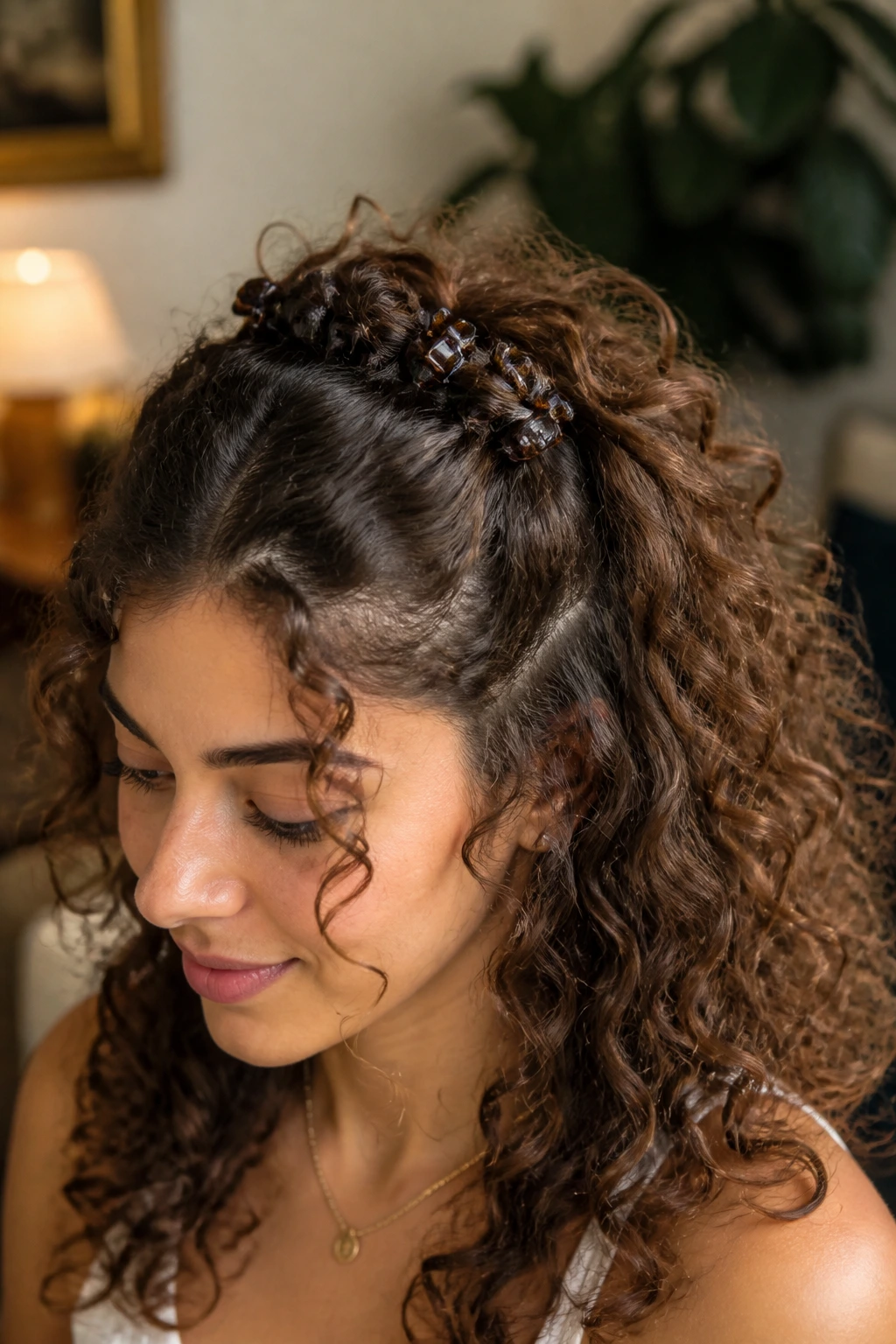
This one is for people who like a little detail without building a full style. Take the top section and secure it with three to five mini clips arranged along the part or across the crown.
The clips should be part of the look, not hidden. That means picking a color or finish that plays well with the hair — matte black, tortoiseshell, or pearl, depending on the mood. On curly hair, the little clips stand out because the texture around them is already doing so much visually.
It’s also a smart choice for shorter curls that don’t want to fit into a big ponytail.
30. Faux Hawk Half-Up
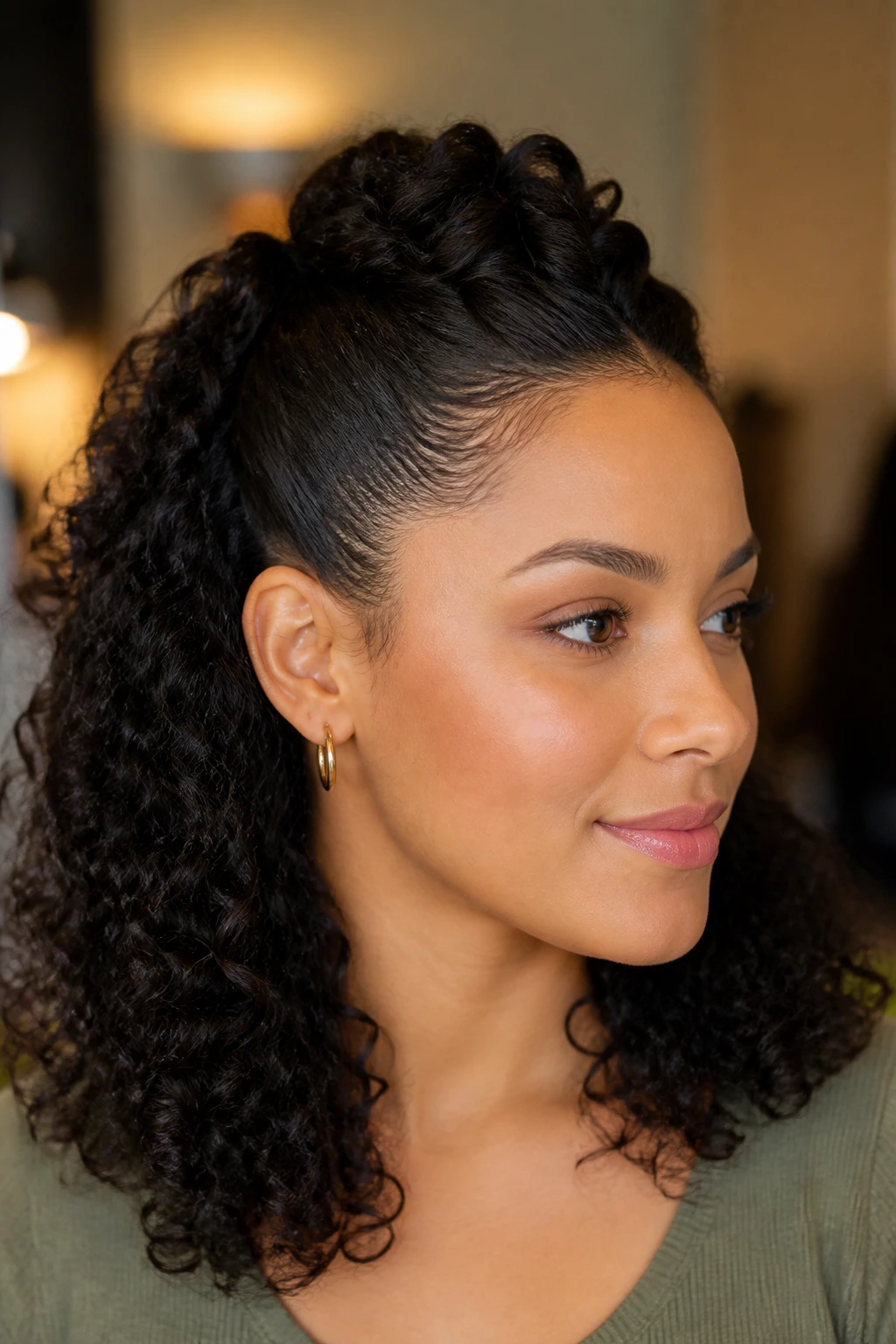
If you want height and attitude, this is the one. Pin the sides back tightly, then lift the center section so it forms a narrow ridge from the front to the crown.
The contrast matters more than the exact pin count. The sides should look smooth, the center should stay full, and the curls should read as one line rather than a jumble of separate pieces. Use extra pins close to the scalp if the middle keeps collapsing.
This style leans bold, but it’s still wearable. On curly hair, the texture keeps it from looking too severe.
31. Low Half Pony with Volume
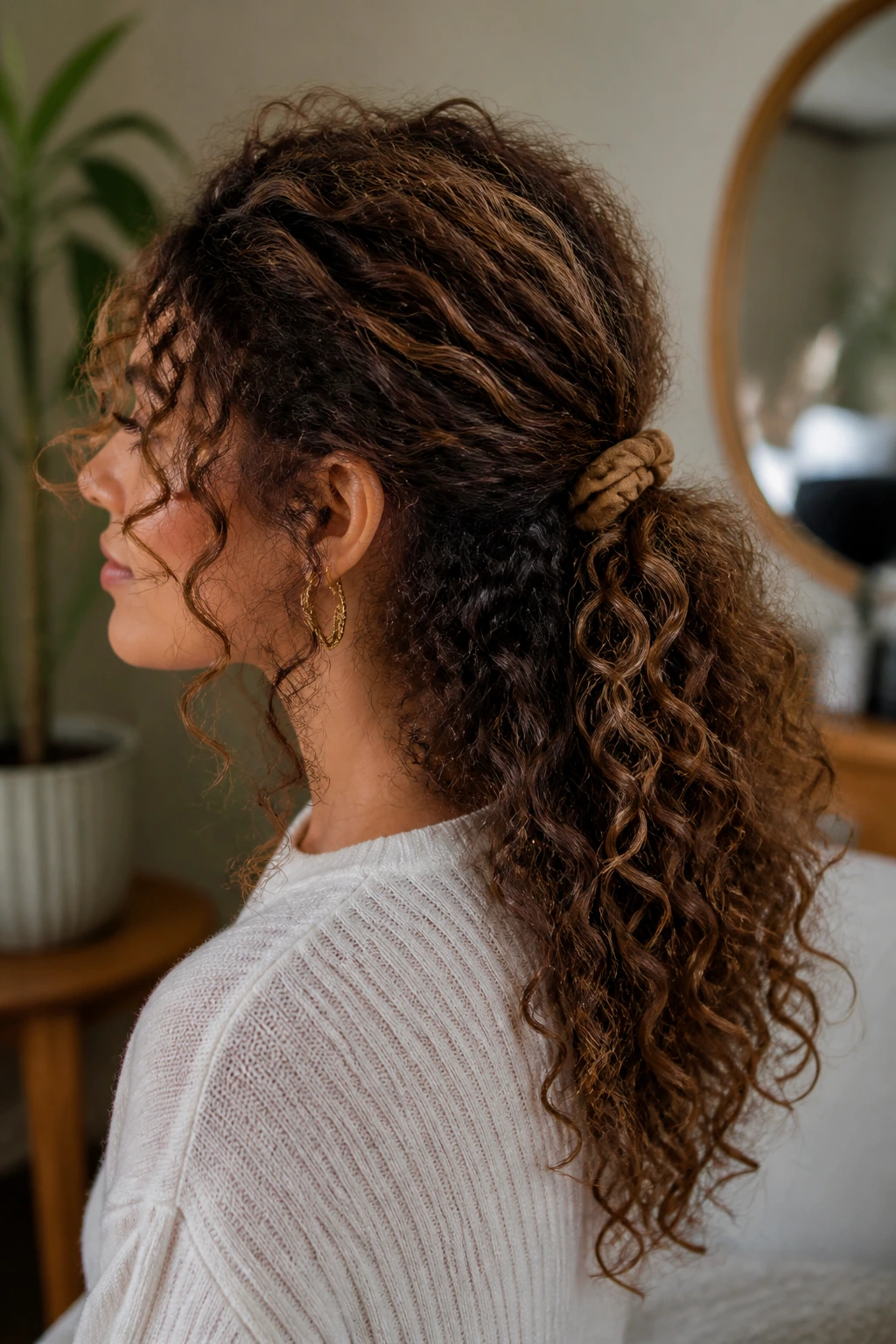
Not every half-up style has to sit high. Pull the top half back low, around the upper nape or lower crown, and keep the roots a little lifted so the shape doesn’t go limp.
This is one of the more elegant options in the group. The lower placement lets the curls fan out from a calmer starting point, which can be easier on long or heavy hair. If the top section is too sleek, the style loses its body, so keep a little air in the crown.
It’s a quiet style, and sometimes that’s exactly the point.
32. Deep Side-Part Half-Up
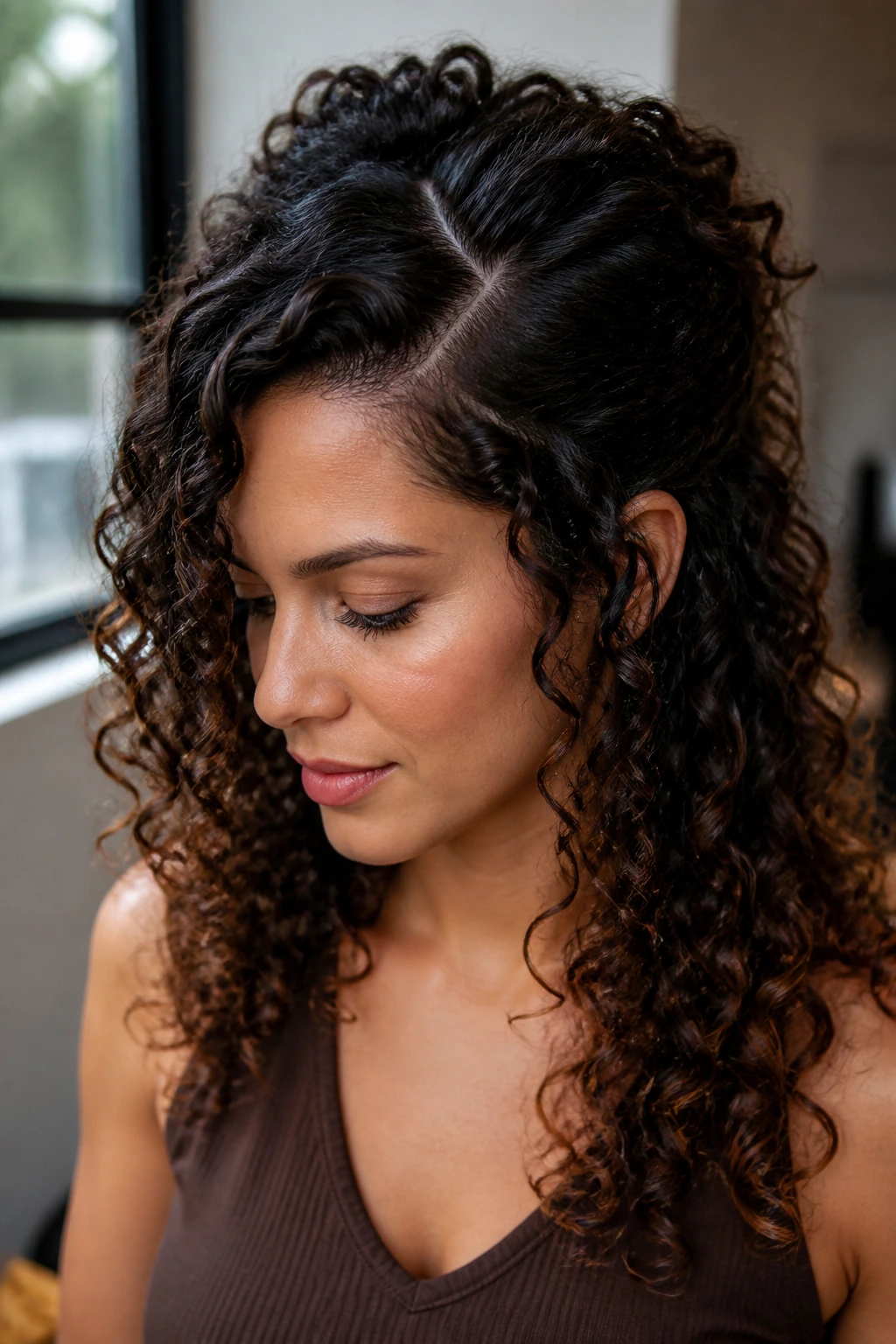
A deep side part changes everything. Sweep the heavier side back into a half-up pin or pony, leave the rest to fall over the shoulders, and let the part do the visual work.
This look is strong because it uses asymmetry instead of volume alone. The deep part creates a long line that makes curls look richer and more deliberate. It’s one of the easiest ways to make a simple half-up style feel polished without adding more hair to it.
If your curls naturally fall to one side, this style tends to cooperate instead of arguing with you. That alone is worth a lot.
Why Half-Up Curly Styles Work So Well
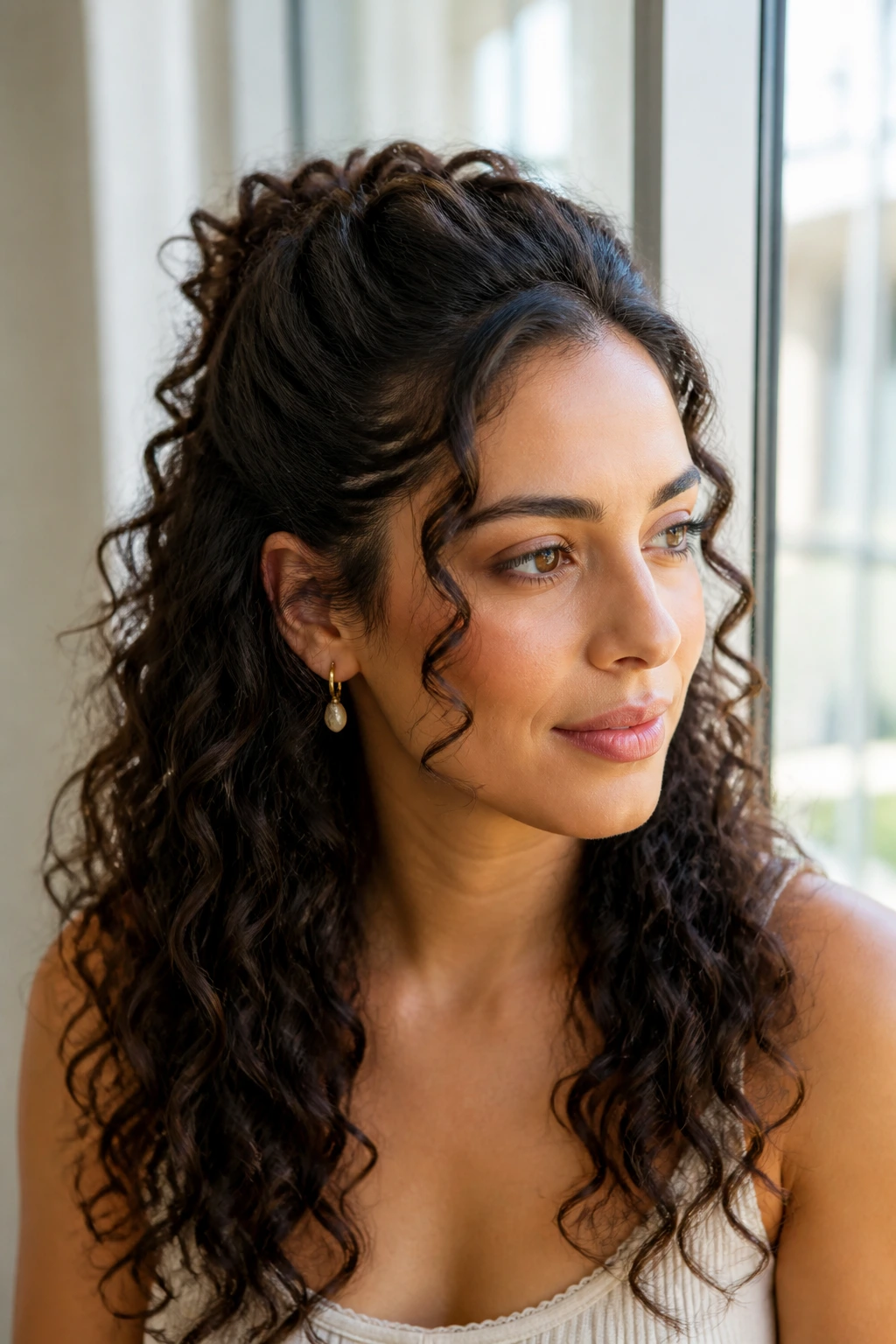
Curly hair has its own math. The crown can flatten fast, the ends can frizz first, and any style that pulls too much from the front tends to look tired by the end of the day. Half-up styling solves that by moving only part of the weight.
The real advantage is balance. You keep enough hair down for movement, but the lifted section controls the hairline, parts the face cleanly, and gives you a spot to anchor pins or clips. That means less fighting the shape your curls already want to make.
What makes them hold
A slightly textured base holds better than a freshly brushed one. Day-two curls, a light mist of water, and a touch of gel at the part usually give more grip than trying to force everything into place on squeaky-clean hair. Curls like to clump. Let them.
Where they fail
The crown usually fails first, not the ends. If a style starts slipping, the problem is almost always section size, pin placement, or using a clip that can’t handle the amount of hair. Fix those three things and most styles improve immediately.
Tools Worth Having on the Counter
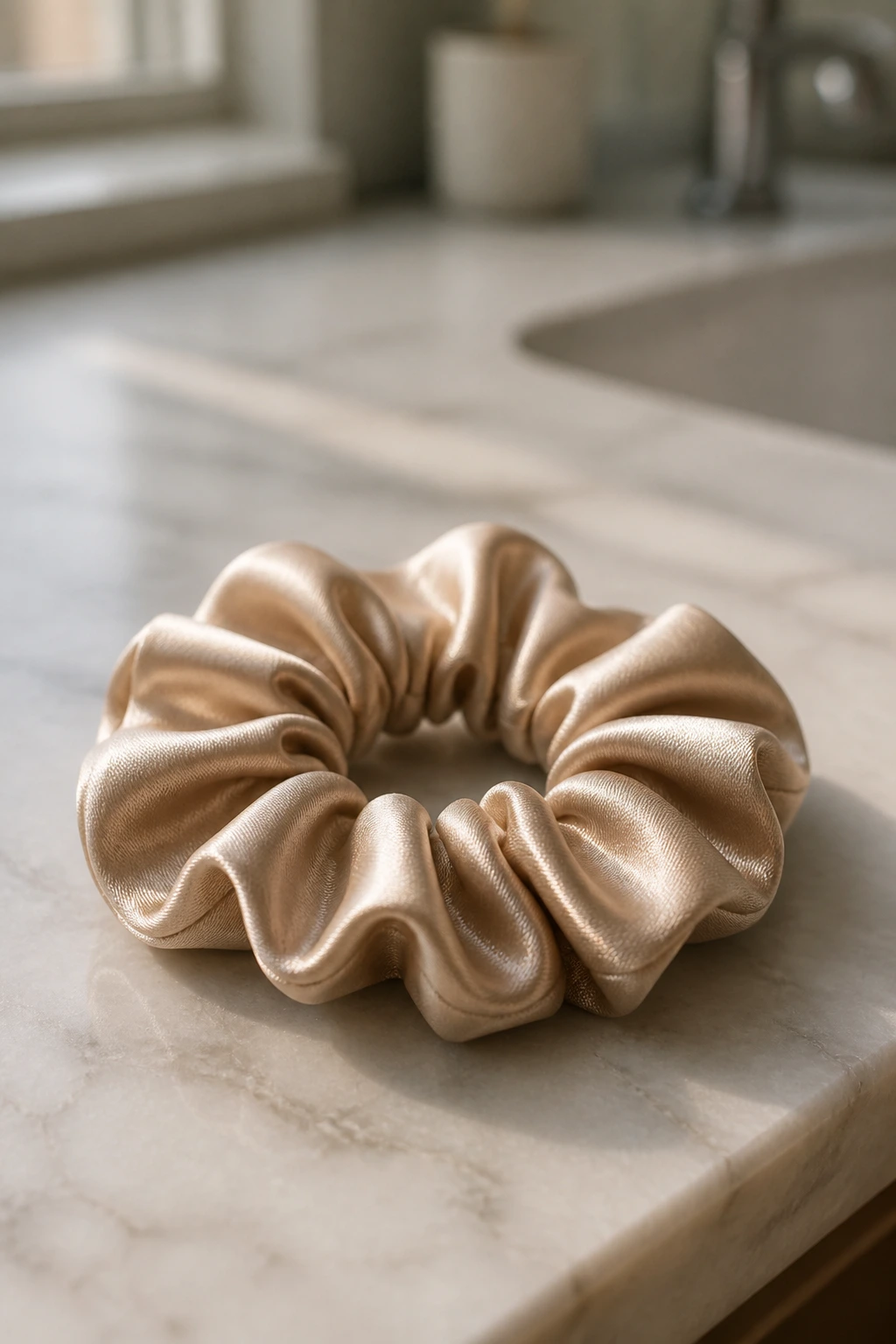
- Satin scrunchies: They grip without cutting a hard line into curls.
- Bobby pins in two sizes: Small pins help with twists; larger pins hold thicker sections.
- Medium claw clip: Handy for fast sweeps and clip-based styles.
- Rat-tail comb: Good for clean parts when you want a sharper finish.
- Wide-tooth comb: Better for detangling without breaking curl clumps.
- Spray bottle: A light mist helps reset frizz and add slip to front pieces.
- Curl cream or gel: Use a small amount to tame flyaways at the hairline.
- Sectioning clips: Useful when you’re braiding or building a style in parts.
- Soft brush or edge brush: Helps smooth the front without destroying the rest of the texture.
- Satin pillowcase or bonnet: Not for styling, but useful if you want the half-up shape to survive overnight.
Product Choices That Actually Matter
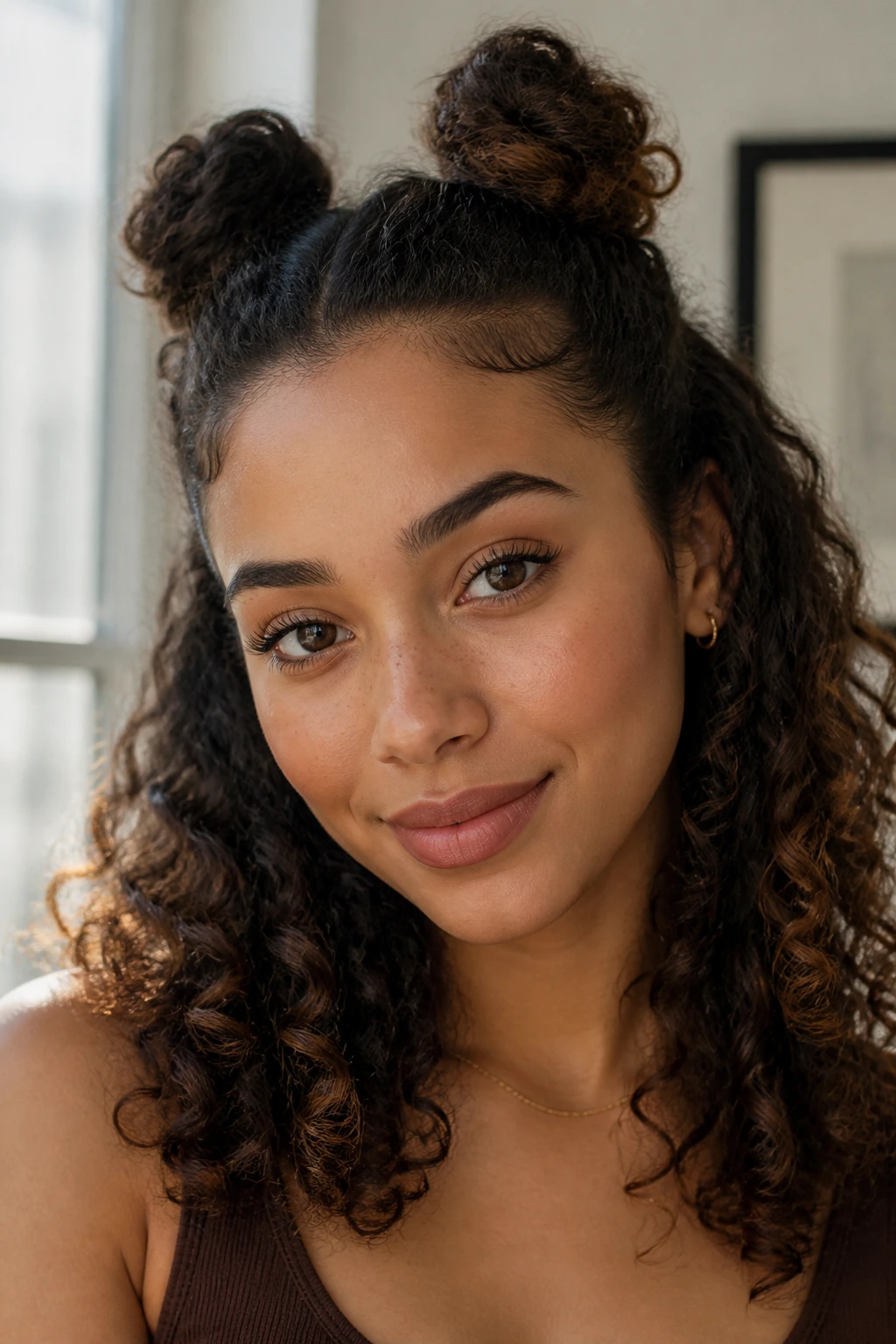
Pick products based on how your curls behave, not on how shiny the bottle looks. Fine curls usually need lighter support: foam, mousse, or a small amount of gel at the roots. Dense curls and coils usually need a bit more grip, especially at the hairline, where pins can slide if there’s too much slip.
If the front of your hair frizzes first, focus your product there. A dime-size amount of gel on each temple can do more than coating the whole head. That keeps the lower curls soft while the top section stays controlled.
Fresh wash-day curls are slippery. Second-day curls have better grip. Third-day curls may need a spritz of water and a little cream at the ends so the shape doesn’t feel brittle. The point is not to drown the hair in product. The point is to give the sections enough control to stay where you put them.
How to Get These Styles to Stay Put
Sectioning: Take less hair than you think for the top section. A smaller crown section usually holds better and keeps the bottom curls fuller.
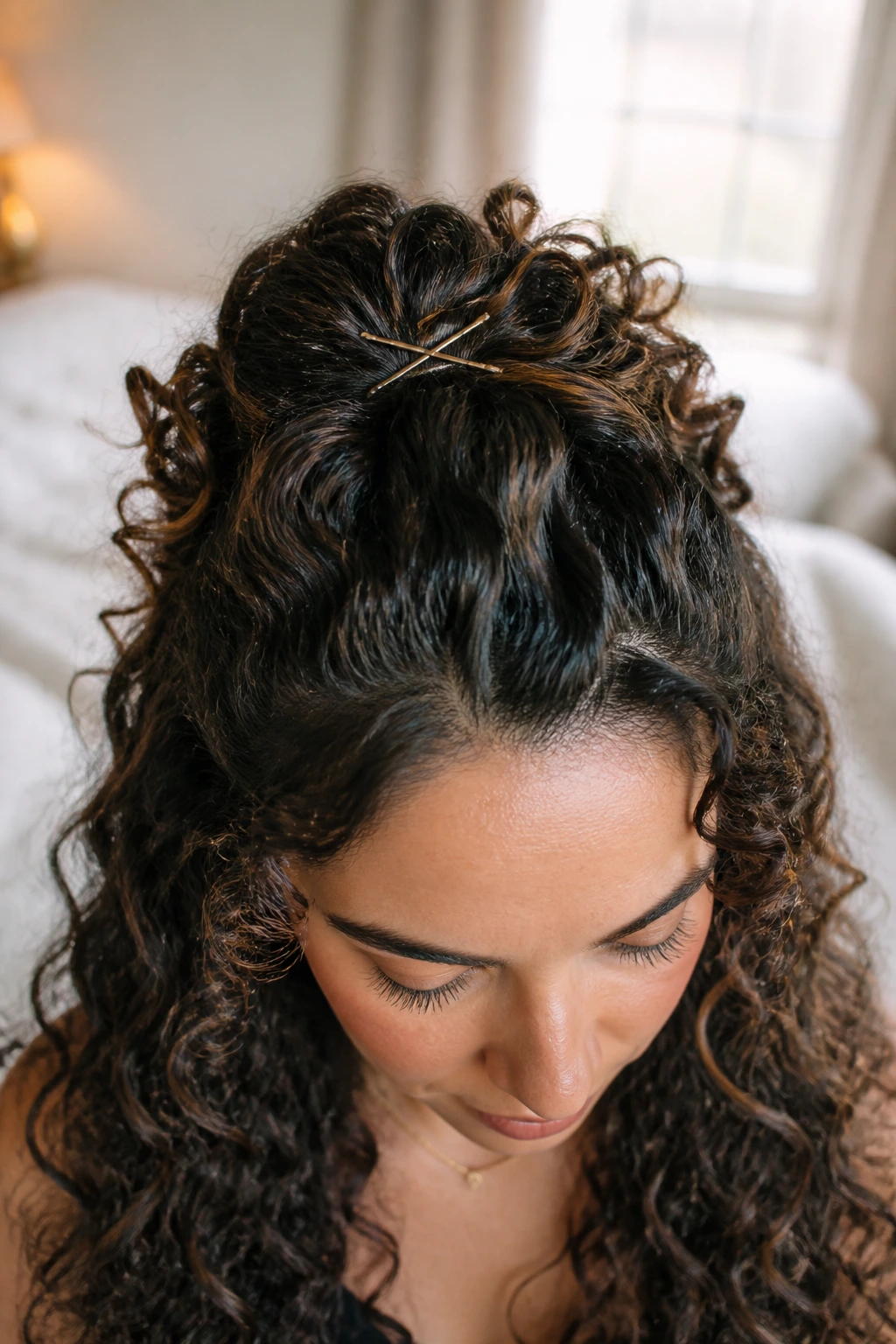
Pinning: Cross two bobby pins in an X when you need serious hold. One pin often works loose once curls start moving.
Finish: Leave the lower curls untouched after styling. Finger-separate only the pieces that need it. Over-touching turns definition into frizz fast.
Refresh: If the style puffs up during the day, mist the front lightly, smooth with your hands, and add one more pin instead of rebuilding the whole thing. That takes 30 seconds and usually fixes the problem.
Humidity play: In sticky weather, tighter twists and braids hold better than loose sweeps. Save the airy clip styles for drier days or short wear.
Common Mistakes That Make Half-Up Curly Styles Collapse
-
Taking too much hair for the top section: The style gets heavy, slides down, and flattens the crown. Use a smaller section and keep the lower half fuller.
-
Starting on wet hair and expecting a clean finish: Wet curls shrink, expand, and shift while they dry. Style on fully dry hair or lightly misted hair if you need grip.
-
Using smooth elastics that don’t hold texture: Thin slippery bands can let go in an hour. Satin is gentle, but you still need enough tension for the hold.
-
Brushing curls out before pinning: That gives you a soft-looking mess, not a controlled style. Separate with fingers or a wide-tooth comb instead.
-
Ignoring the weight of your clips: A decorative clip that looks right on the shelf might be too weak for dense curls. If it moves when you nod, it’s not the right clip.
Variations and Adaptations to Try
Short-Curl Version: Use mini clips, temple twists, or a tiny top knot instead of a full pony. Shorter curls need smaller sections so the style doesn’t wobble.
Coil-Friendly Version: Favor puff shapes, rope twists, and crown braids. Tight coils hold structure well, but they need room at the roots so the shape doesn’t get compressed.
Humidity-Proof Version: Choose braids, double twists, or a slicked-back half pony with a stronger gel at the hairline. Loose clip sweeps are the first thing to give up in damp air.
Event-Ready Version: Add pearl pins, ribbon, or a braid across the crown. The base style can stay simple; the accessories do the lifting.
Low-Tension Version: Use scrunchies, folded half ponies, and loose buns if your scalp is tender or your curls are dry. The style should hold without pulling on one spot all day.
How to Keep the Style Fresh Overnight
If you want to keep a half-up look past one day, don’t sleep flat on it. A satin bonnet or pillowcase helps, but the biggest trick is preserving the crown shape before bed. Loosen any tight pins, let the curls settle, and re-pin only the sections that need support the next morning.
For pony styles, wrap the lower curls loosely on top of the head if you can. For braid styles, leave the braid intact and mist the front lightly before sleep. If the crown gets dented, a little water on the roots and a quick finger-lift usually brings the shape back without starting over.
Most half-up styles are best within one wear, but several of them can be refreshed for a second outing if the ends still look good. The front usually needs the most attention. The back usually doesn’t.
Frequently Asked Questions
Can half-up half-down styles work on short curly hair?
Yes, but the section has to be smaller. Use mini clips, temple twists, or a small crown braid instead of trying to gather too much hair at once. Short curls usually look better when the top section is modest and the lower curls stay full.
What’s the best style for thick curly hair?
Claw clip sweeps, high puffs, double twists, and crown braids usually handle thick hair well because they spread out the weight. Very thin elastics or tiny decorative pins often get swallowed by dense texture.
How do I keep the style from sliding out?
Use two bobby pins in an X, keep the section smaller, and add a little grip at the crown with texture spray, light gel, or even second-day curl texture. Sliding usually means the section is too big or the clip is too smooth.
Should I style curly hair wet or dry?
Dry or mostly dry is safer for half-up looks. Wet curls change size as they dry, and that can make the section shift, especially near the crown. If you need slip, mist the front lightly rather than soaking the whole head.
Can I do these styles without heat?
Absolutely. In fact, most of them look better without heat because the curl pattern does the shaping for you. Heat is optional here, not a requirement.
What if my curls frizz as soon as I pin them?
Use less brushing and more finger smoothing. A tiny amount of cream or gel on the section before pinning helps seal the outside of the curl and keeps the halo frizz down. Also check the pins; rough pins can snag and puff the section up.
Which styles work best for day-three curls?
Claw clip sweeps, pineapple half-ups, low half ponies, and twisted crown looks usually do well on day-three hair. The slightly rougher texture gives the style grip, which is useful when your curls are no longer fresh from wash day.
Do I need special pins for curly hair?
Not special, but good ones matter. Look for bobby pins with a little tension and clips with teeth wide enough to hold volume. Flat, flimsy pins are the first thing to slide.
The Styles That Hold Their Shape
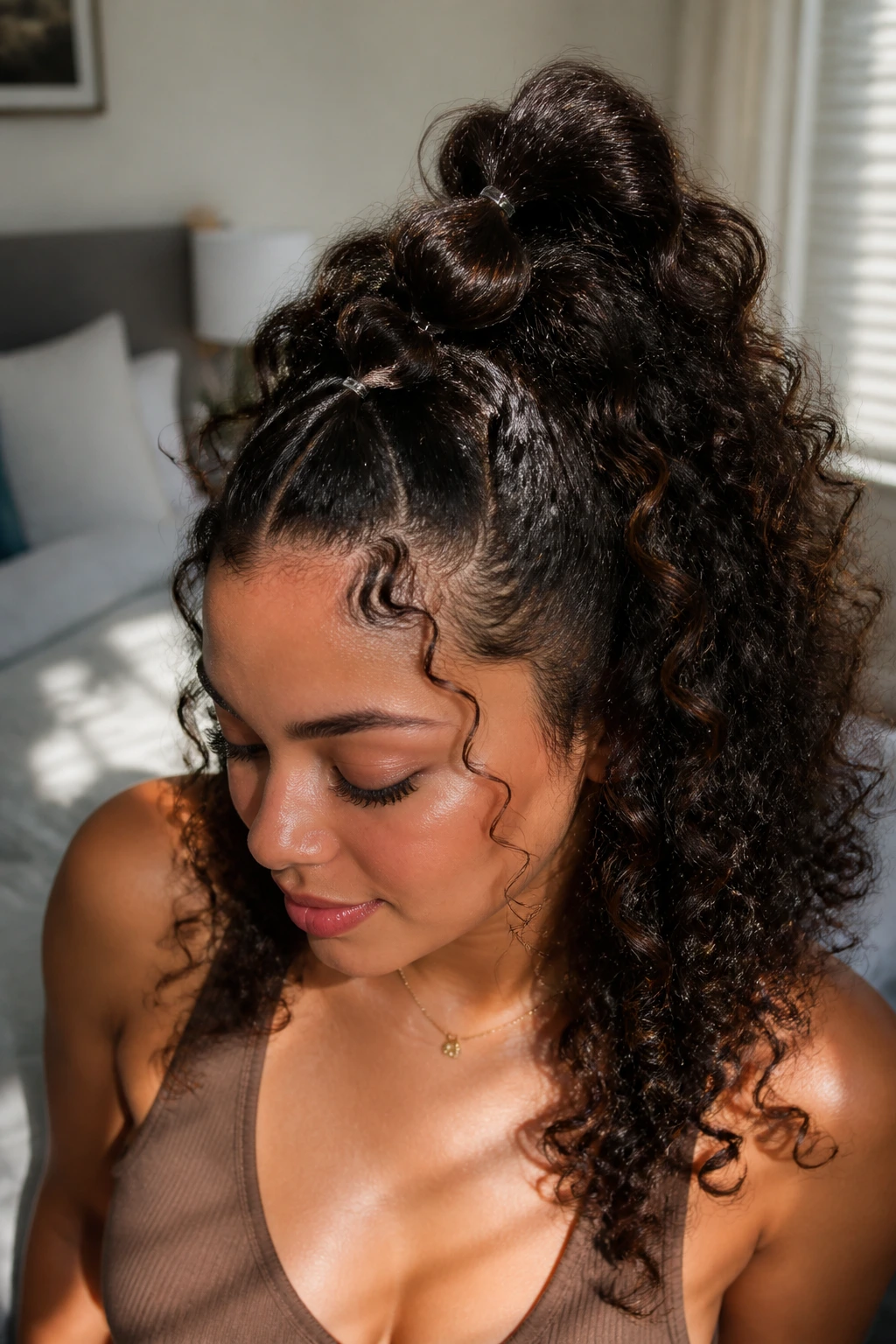
The strongest half-up curly styles aren’t the ones that force your hair into submission. They’re the ones that work with the bend, the shrinkage, the volume, and the soft messiness that comes with real curls. That’s why a simple twist can look better than a complicated updo, and why a good clip sometimes beats a whole drawer full of styling tools.
Pick one style that matches your hair’s mood, not the photo in your head. On some days that means a sleek half pony with tendrils. On others it means a claw clip, a few pins, and a crown that keeps its lift without trying too hard. Curls usually know what they want. Half-up styling just gives them a frame.
If you save only one rule from all of this, make it this: keep the top section lighter than you think, and leave the rest of the curls alone once they’re set. That’s where the shape stays clean, and it’s also where the style starts to feel like yours.
