



Shag haircuts for medium length thick hair solve a very specific problem: you want movement, but you do not want your hair to explode into a triangle, a helmet, or that weird in-between shape where the bottom looks heavy and the crown looks puffy. Thick hair has opinions. It has its own agenda. One blunt line at the shoulders can turn into a solid wall by lunchtime, and too many short layers can make the whole head look wider than it is.
The sweet spot sits around the collarbone, shoulder, and upper chest. That length gives thick hair enough weight to fall, but not so much weight that it drags every layer flat. A good shag works because it removes bulk in the right places: under the crown, through the sides, and around the face. The cut keeps density where you need it and opens space where you want bend, swing, and a little air.
I’ve always liked shag shapes on dense hair because they make the hair look intentional instead of merely managed. You can wear one polished, messy, or somewhere in between; the haircut holds up either way. And when the layers are done with some restraint — not sheared into oblivion — thick hair starts behaving like it actually wants to move with you.
Why This Collection Is Different

-
Weight Is Removed, Not Just Chopped: These shag haircuts use internal layers, face-framing pieces, and controlled perimeter lines so thick hair loses bulk without losing shape.
-
Medium Length Does the Heavy Lifting: Collarbone-to-shoulder length keeps enough mass for swing and shine, but it stops the ends from settling into a dense, boxy block.
-
The Fringe Choices Are Real: Curtain bangs, bottleneck bangs, side-swept pieces, and micro fringe all do different jobs, and the right one changes how the whole cut sits.
-
There’s Room for Texture: Some of these shags are built for air-dried waves, others for a round-brush blowout, and a few are better left rough around the edges. That flexibility matters.
-
Grow-Out Doesn’t Look Like Failure: The better shag shapes on thick hair still look deliberate after a few weeks, which means you’re not trapped in a salon schedule that feels like babysitting.
-
Thick Hair Gets a Shape, Not a Pile of Layers: The point here is not to thin your hair into submission. It’s to give the density a direction so the style moves instead of sitting there with all its weight in one place.
1. Collarbone Curtain Shag
This is the one I’d hand to someone who wants the shag idea without the full punk-movie commitment. The longest pieces sit at the collarbone, while the curtain fringe splits around the center and falls softly toward the cheekbones. On thick hair, that little opening at the front matters more than people think. It breaks the wall of density right where the eye lands first.
Why it behaves well on thick hair
Curtain bangs help the front half of the haircut breathe. Instead of piling all the bulk at the temples and jaw, the shape lifts away from the face and lets the layers fall in a clean arc. On dense hair, that arc keeps the cut from feeling heavy even when the hair itself is substantial.
- Best start point for the fringe: around the cheekbone or slightly below, not at the lash line.
- Best perimeter length: collarbone to just above the chest.
- Best texture: straight, wavy, or loose-curly hair that needs a soft frame.
Pro tip: ask for the shortest face-framing pieces to land where your cheekbones start to widen, not where they end. That tiny shift changes the whole balance.
2. Controlled Wolf Cut Shag
The wolf cut can go feral on thick hair if the stylist gets carried away. And that’s exactly why the controlled version works better for most people. The crown gets lift, the sides get movement, and the back keeps enough length to stop the whole thing from puffing outward like a fan.
The trick is restraint. You want the attitude of a wolf cut, not the shape of a haircut that was attacked with kitchen scissors. Thick hair can handle a lot, but it still needs a bottom line — literally. Keep the perimeter long enough to anchor the cut, and the layers will look edgy instead of overworked.
This one suits anyone who wants a little grit in the silhouette. It’s especially good if your hair gets flat at the roots but dense through the midlengths, because the shorter top layers create lift without sacrificing the weight that thick hair needs to stay controlled.
3. Feathered Blowout Shag
A feathered shag on medium-length thick hair feels almost old-school in the best way. The layers are soft, swept, and turned away from the face, with enough structure that the hair still lands in place after the brush is down. It’s less choppy, more swingy, and that matters if you like thick hair to look full rather than wild.
What makes this version special is the way the ends are softened. The perimeter isn’t carved into pieces so much as coaxed into a lighter edge. That gives you movement around the shoulders without the shaggy crown that some people find too aggressive. If your hair is dense but not coarse, this is a very good lane.
What to ask for
- Layers that are softly feathered, not over-thinned.
- Face-framing pieces that begin around the jaw and continue into the shoulder line.
- A finish that still looks good when blown out with a round brush.
Best for: people who want a polished shag, not a messy one.
4. Razor-Piecey Shag
Do you want the ends to separate into little strands instead of one solid curtain of hair? Then the razor-piecey shag is the one to look at. It gives thick hair a choppy, lived-in edge, and when it’s done properly, the texture looks airy rather than frayed.
The catch is simple: razor work is not a free pass. On coarse or very dry hair, too much razor cutting can leave the ends looking fuzzy by the second wash. I’d rather see a stylist use a razor sparingly on the face frame and point-cut the rest than take a blade to the whole head and hope for the best.
If your thick hair has a slight wave, this cut can be magic. It creates separation without making the whole shape collapse, and the layers catch on each other just enough to avoid that heavy, single-sheet look.
5. Cheekbone-Frame Shag
This version is all about the front. The cut opens at the cheekbones, not lower down, and that one choice changes how thick hair sits around the face. When the front layers skim the upper cheeks, they pull the eye upward and keep the hair from bunching at the jaw.
It’s a smart choice if your thick hair tends to widen the lower half of your face. The cut gives you movement near the eyes and temples, then eases into longer layers below. You still get that shag texture, but the shape feels cleaner and more deliberate.
This one is especially good if you like wearing your hair tucked behind one ear. The front pieces stay visible enough to frame the face, but they don’t disappear into the rest of the length. That sounds small. It isn’t.
6. Rocker Fringe Shag
This is the loud one, and thick hair wears it better than fine hair ever could. A heavier fringe sits across the forehead, while the crown and sides drop into layered movement that looks a little rebellious, a little nostalgic, and very clear about itself.
The best part? Dense hair supports a thicker fringe without making it look sparse by noon. You do need to keep the fringe shaped, though. If it gets too long, it starts hiding the rest of the cut; if it’s too short, the whole thing can feel harsh. The sweet spot is somewhere between brow and lash, depending on forehead height and how much drama you want.
This cut is for the person who likes a little edge in the mirror every morning. It doesn’t whisper.
7. Bottleneck Bang Shag

Bottleneck bangs work because they start narrow at the center and open out toward the temples. On thick hair, that shape prevents the fringe from turning into a heavy slab. It gives you the softness of curtain bangs with a little more structure through the middle, which is useful when the hair itself already has a lot going on.
Compared with curtain bangs, bottleneck bangs sit a touch closer to the face. That makes them a nice match for medium-length thick hair that needs some visual control around the forehead but doesn’t want a full fringe maintenance schedule.
If you wear glasses, this is one of the cleaner options. The curve of the fringe leaves space for frames without swallowing them, and the layers still move around the temples instead of sitting stiffly on top.
8. Side-Swept Soft Shag
A side-swept shag is what happens when you want the texture of a shag but not the obvious “I got a shag” look. The part shifts the weight to one side, the fringe sweeps across the forehead, and the layers blend a little more quietly into the body of the cut.
That shift matters on thick hair. A deep side part breaks up the density line and keeps the hair from forming a symmetrical wall around the face. It also gives you a little extra lift at the crown, which is handy if your roots lie flat while the ends try to take over the room.
This version feels good on workdays. It’s still relaxed, still layered, still a shag. It just doesn’t announce itself before coffee.
9. Curly Halo Shag
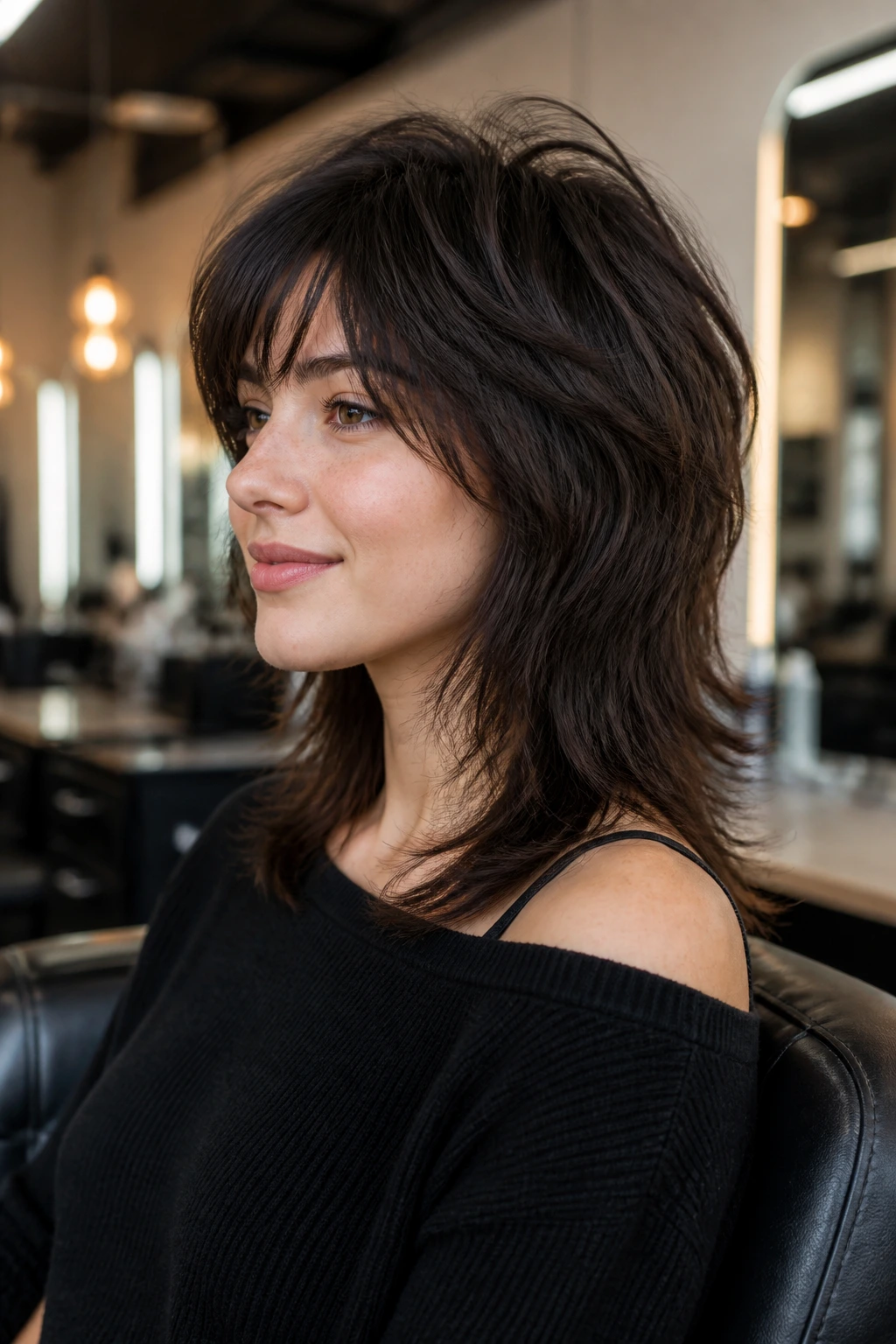
Curly hair and thick hair often arrive in the same head, which is why this version deserves its own spot. The curly halo shag keeps the shape rounded, lets the curls stack without turning into a pyramid, and gives the crown enough room to breathe. The name sounds airy; the cut has to be precise.
Dry-cutting is usually the smarter move here. Curly hair shrinks, and thick curls can hide weight in strange places. If the stylist cuts too aggressively when the hair is wet, the top can end up too short and the bottom too heavy once it dries. No one enjoys that surprise.
How to use this cut
Ask for longer layers that follow the curl pattern instead of fighting it. Keep the shortest pieces around the cheekbone or lip, and leave enough length in the back so the curls can spring without stacking on top of each other. The result is shape, not puff.
10. Wavy Air-Dry Shag
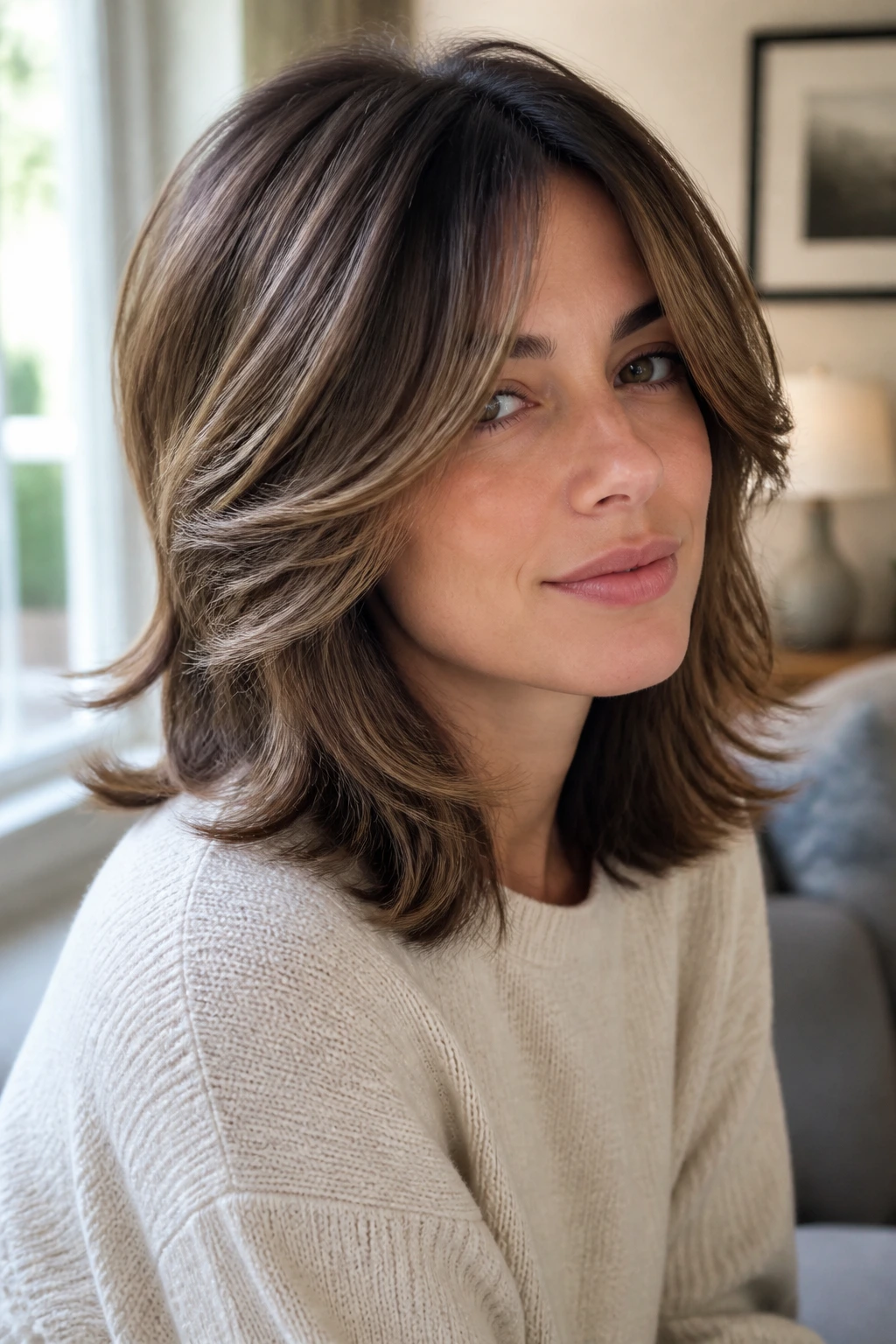
This cut is for the person who wants a haircut that does something even when you don’t touch it much. Loose waves, medium thick density, and a little natural bend in the hair all work in its favor. The layers fall in a way that lets the wave pattern show instead of getting buried under the weight.
The hair needs enough length to tuck under the shoulders or flip away from them. Too short, and the wave can swell. Too long, and the medium-length shag loses some of its swing. Around the collarbone is the sweet spot again — I keep circling back to that because it keeps proving itself.
A little salt spray or light mousse goes a long way here. You want separation, not crunch. If the product leaves your hands feeling sticky, you’ve gone too far.
11. Shoulder-Grazing Lob Shag

A lob shag sits in that useful middle ground where the cut still reads polished but no longer feels heavy. Thick hair benefits from the shoulder-grazing length because it keeps the mass from building up below the jawline, where it tends to puff and drag. The layers give it motion; the length keeps it from looking thin.
This one is smart for people who want a shag but don’t want the obvious choppiness around the crown. The outline stays clean, so the haircut works with blazers, T-shirts, and everything in between. That sounds boring until you realize boring hair is often the hardest hair to style well.
If you’re nervous about committing to a full shag, start here. It has enough texture to feel updated, but it doesn’t rely on heavy fringe or dramatic disconnection to make its point.
12. Crown-Lift Shag
Some thick hair lies flat at the top and bulky everywhere else. Annoying? Yes. Common? Also yes. The crown-lift shag fixes that by placing shorter, controlled layers high on the head so the roots get some air before the lengths take over.
The result is a shape that looks balanced from the side. You get lift at the crown, movement through the midlengths, and a perimeter that still has enough density to look healthy. That’s the trick with thick hair: remove enough weight to let it move, but leave enough structure that it doesn’t go wispy.
This version is a good call if your hair looks best for the first few hours after washing and then settles into a flat sheet. The crown lift keeps the silhouette alive longer.
13. Hidden-Internal-Layer Shag
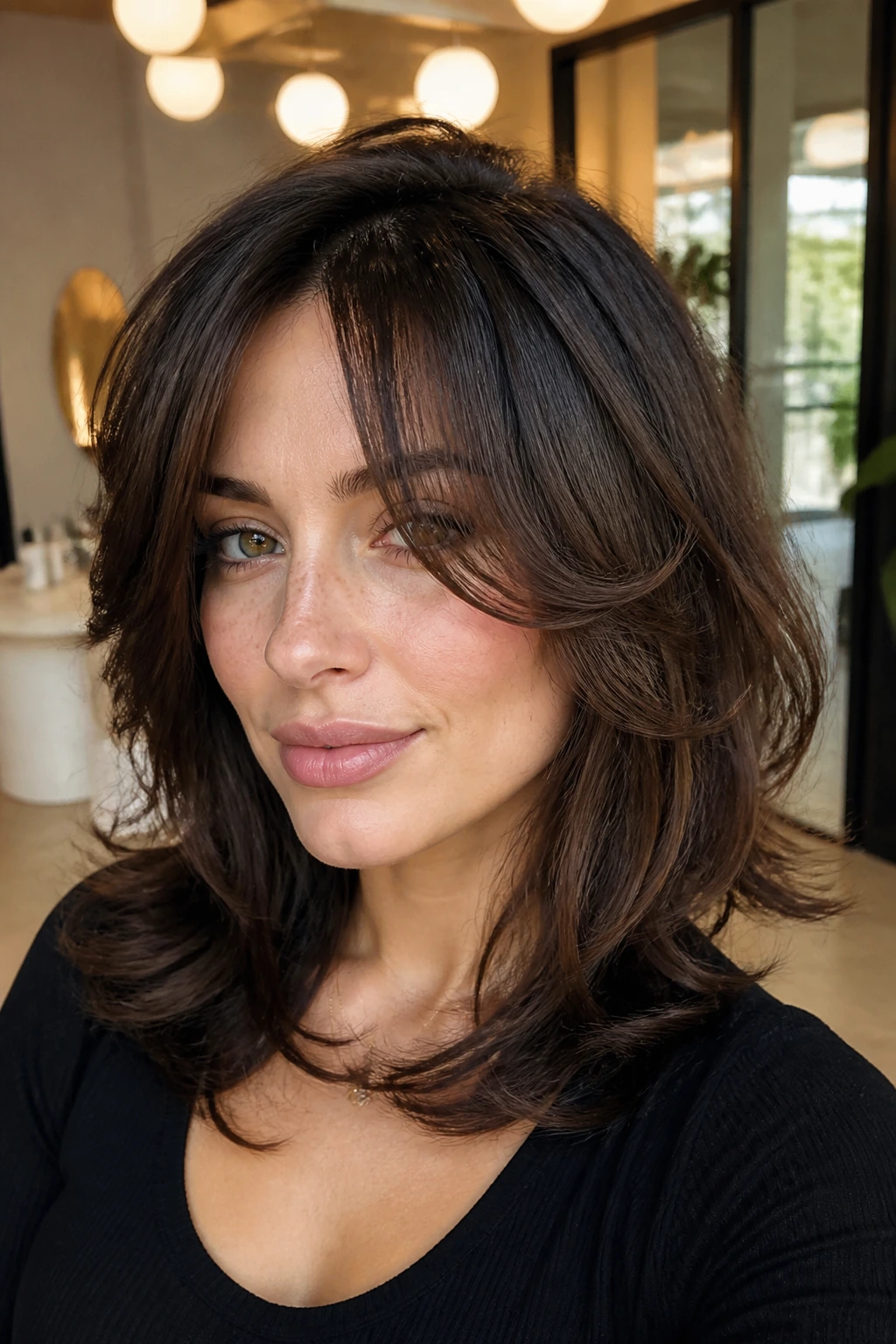
This is the stealth version. From the outside, the haircut looks softer and cleaner than a lot of shag cuts, but underneath there are layers taking weight out of the middle. It’s the right move when you want medium-length thick hair to feel lighter without looking obviously layered.
What makes it different
The stylist trims interior sections so the hair collapses into shape instead of ballooning out from the sides. The perimeter stays fuller, which is useful if the ends of your hair are strong and you don’t want them feathery. You still get movement, but the shape reads more expensive than edgy, if that makes sense.
I like this version for people who want a shag that survives a more formal dress code. It’s also one of the best options if your thick hair tangles easily, because you’re not creating a bunch of tiny, loose ends all over the place.
14. Blunt-Perimeter Shag
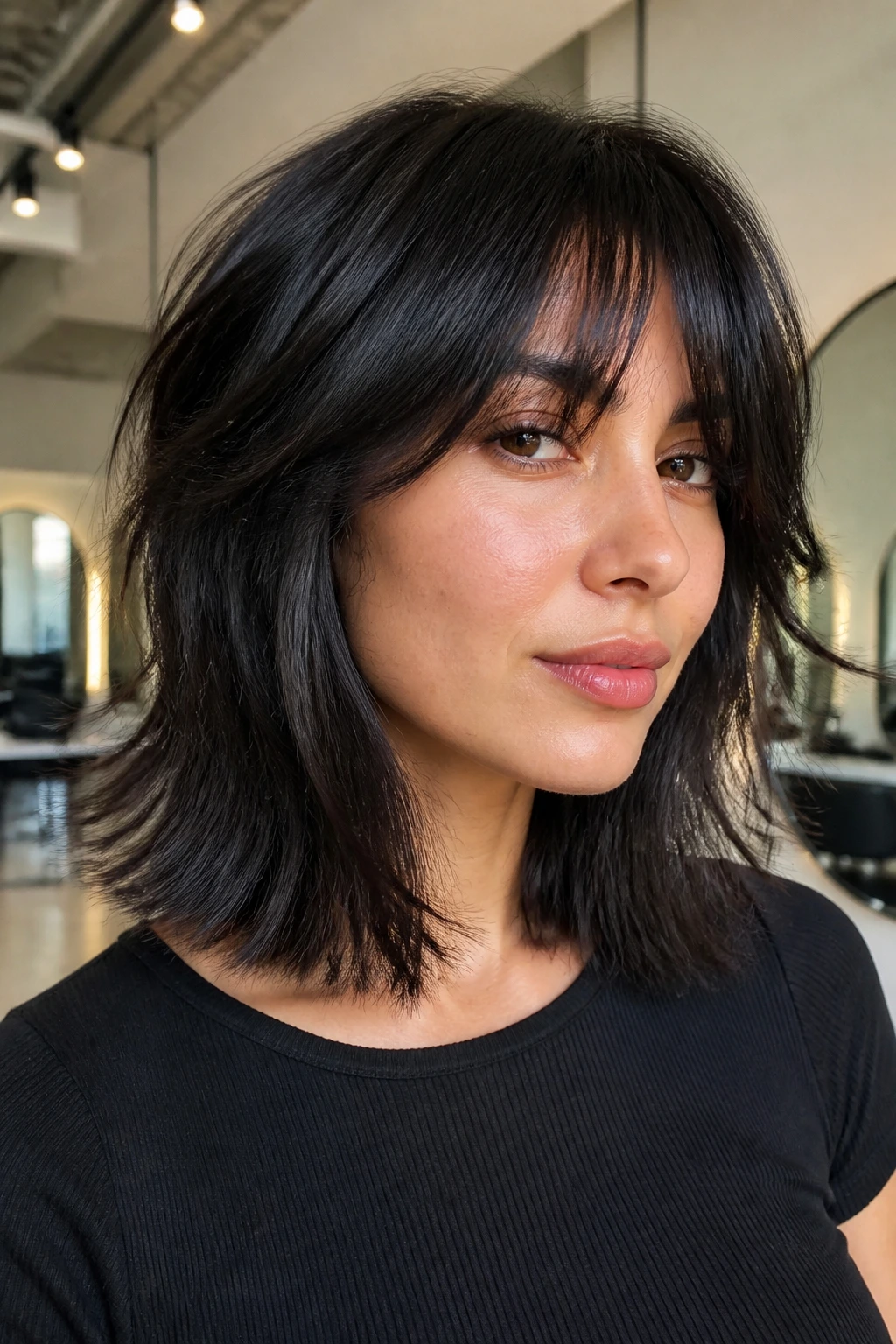
A blunt edge with shag layers inside sounds contradictory until you see it move. The perimeter gives the haircut a firm bottom line, while the inside layers keep the body from swelling into one heavy block. On thick hair, that blunt line is a gift. It holds the silhouette down.
This version is better than many people expect because it stops the ends from looking shredded. If your hair is dense and you like the feel of a full hemline, keep the outline blunt and let the layers do their work beneath it. You get swing without sacrificing weight.
It’s a strong choice for medium-length thick hair that falls straight or slightly wavy. Too much perimeter texture can make it fuzzy. A clean edge avoids that.
15. Asymmetrical Shag
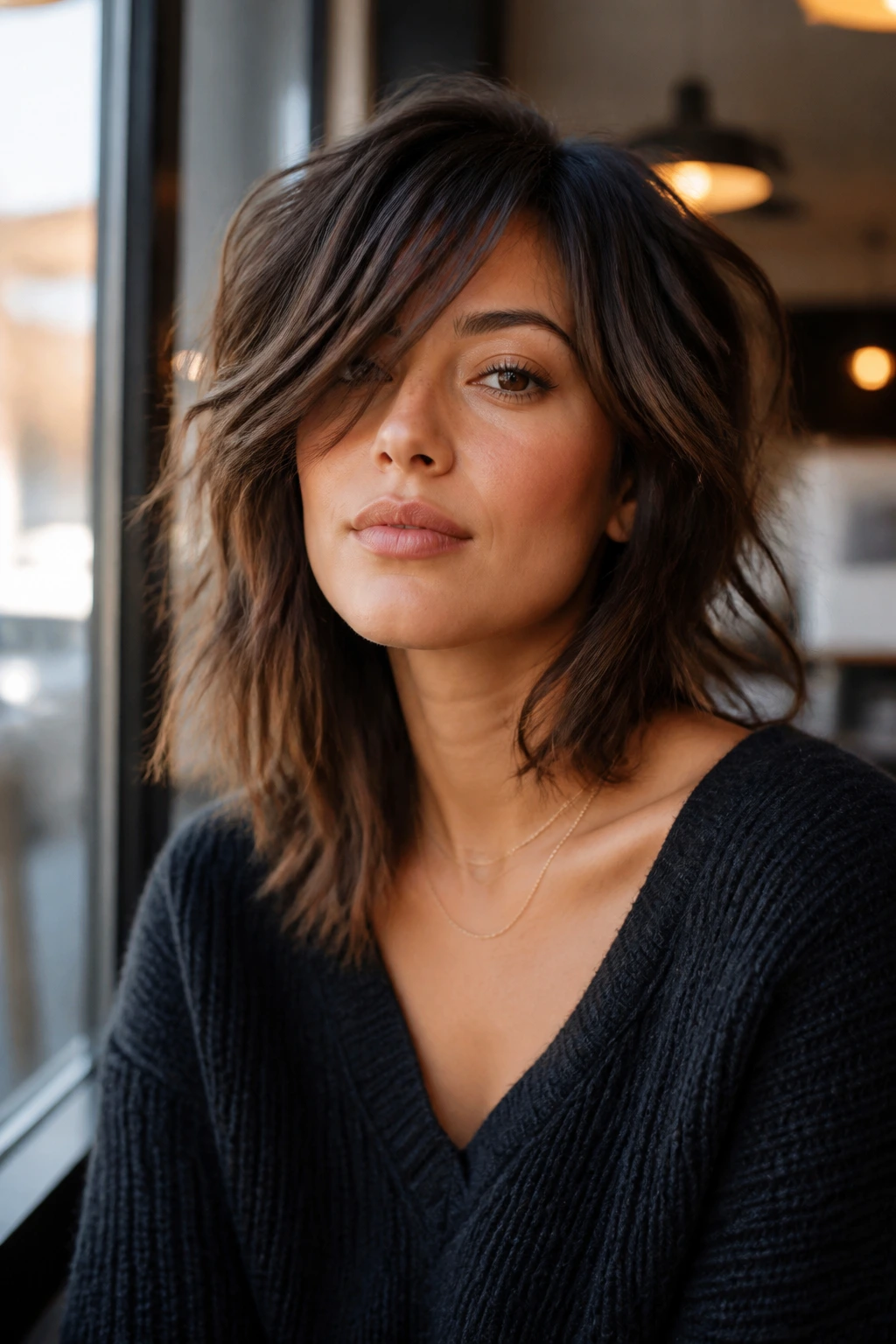
The asymmetrical shag plays with imbalance on purpose. One side may sit a touch longer, the part may be offset, or the fringe may travel more heavily to one side. Thick hair carries that asymmetry well because there’s enough density to support the difference without it looking accidental.
It’s a useful option if your hair tends to sit too evenly on both sides and you want a cut that has a little motion built in. The asymmetry breaks the predictability of a standard shag and makes the shape feel more dynamic from the front.
This cut asks for confidence, not fussiness. If you don’t want to style hair precisely every morning, keep the asymmetry subtle. A quarter-inch can do a lot of work.
16. Micro-Bang Shag
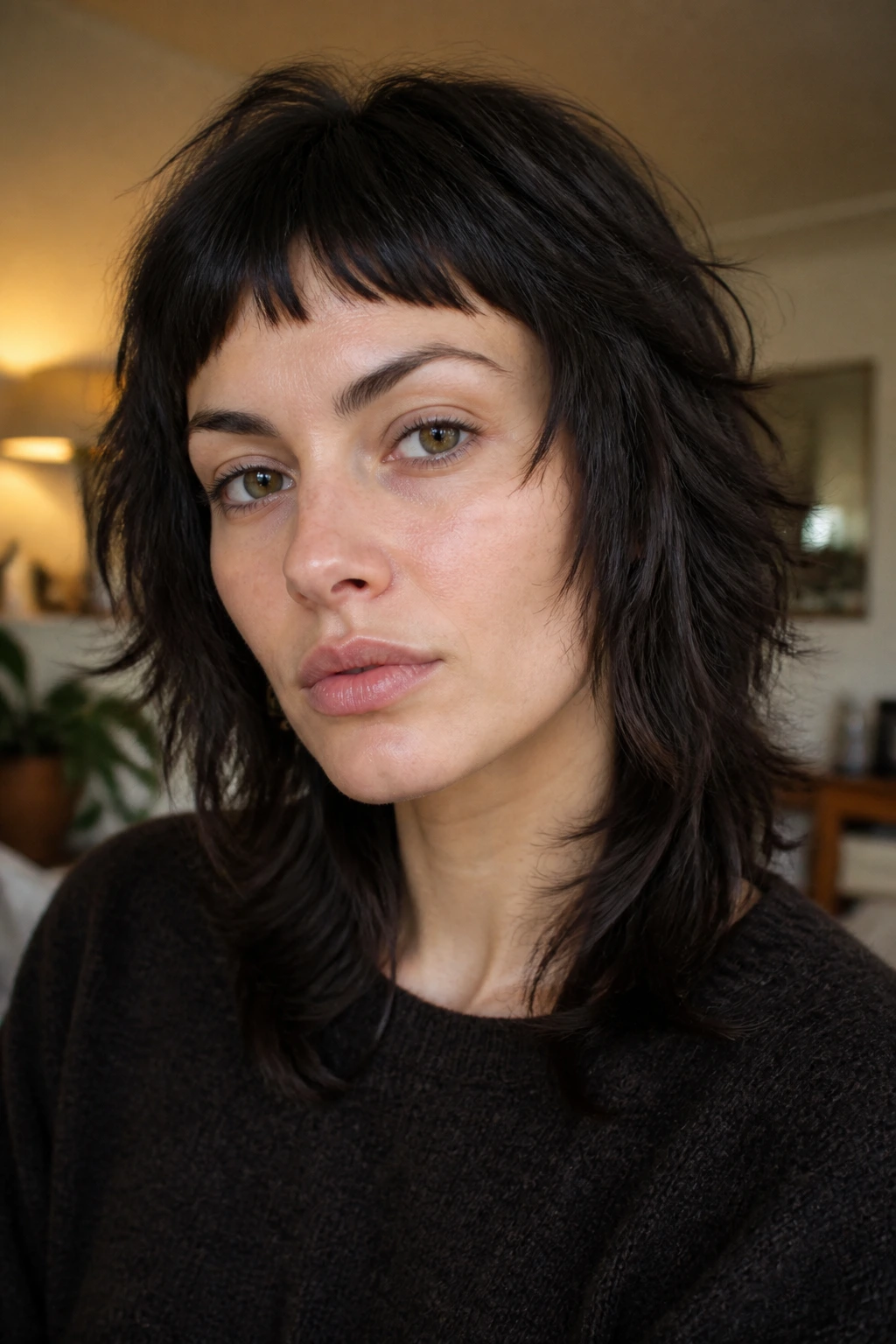
Micro bangs are a commitment. Thick hair makes them easier to wear than fine hair, because the fringe has enough density to sit cleanly instead of floating apart. The rest of the cut can stay medium and shaggy, which keeps the tiny fringe from feeling detached.
You do need maintenance. Micro bangs show growth fast, and on thick hair they can creep into the eyes with annoying speed. If you like the look but not the upkeep, this is not your cut. If you enjoy a sharp line up front and looser texture everywhere else, it can be a fantastic contrast.
Pairing micro bangs with medium-length layers keeps the whole style from feeling too severe. The fringe gives you a point of focus; the shag gives it movement.
17. Deep Side-Part Glam Shag
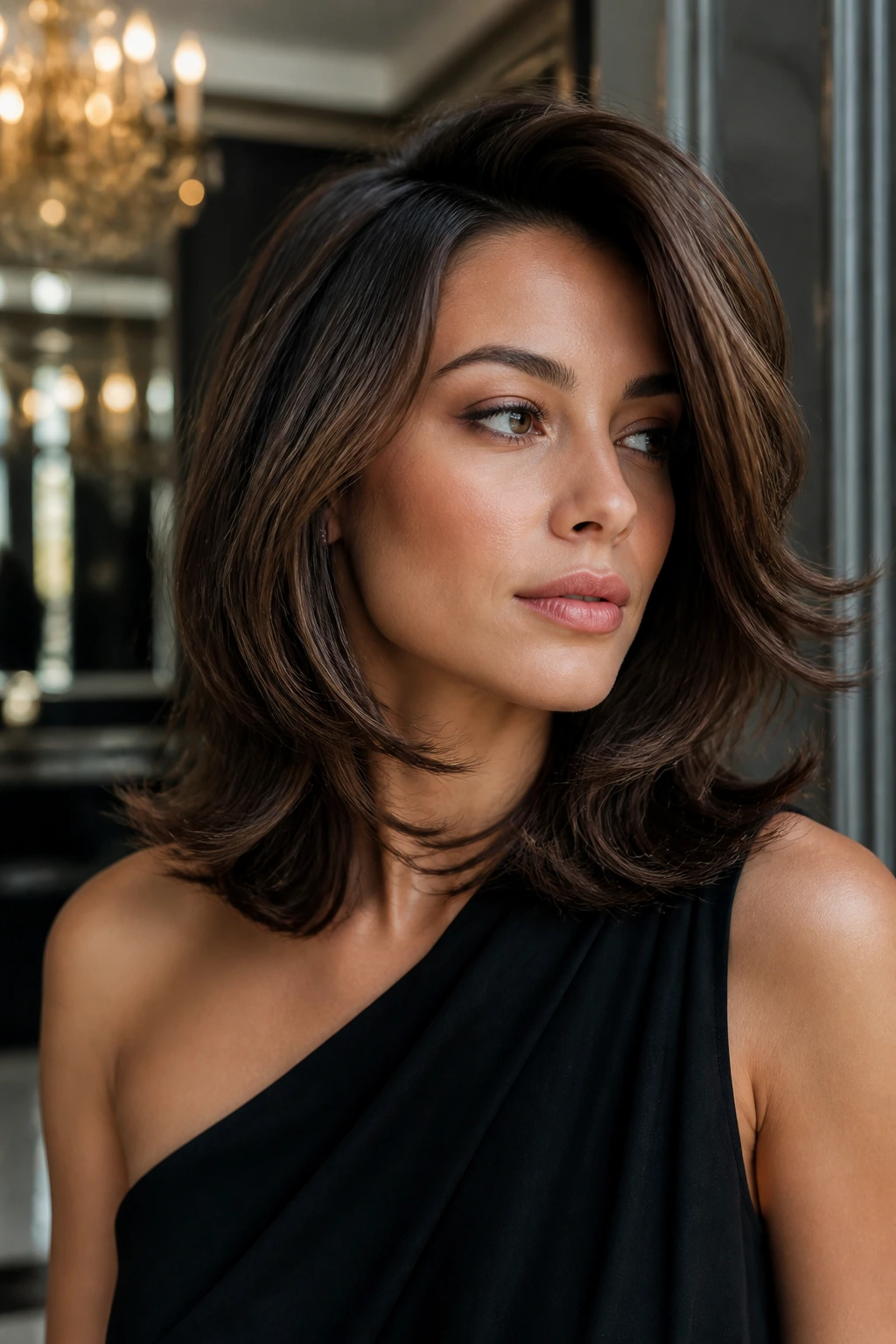
Not every shag has to look like it slept on a couch. A deep side-part glam shag leans into volume, sweep, and polish. Thick hair is perfect for it because the density gives the part something to hold onto, and the layers move in one clear direction instead of fighting one another.
The styling matters here. A round brush, a large curling brush, or even a set of Velcro rollers can create that soft bend around the face. The cut itself should still have layered structure, but the finish is smoother and more deliberate than a messy shag.
This is a good bridge for people who like texture but need the haircut to look put together with a blouse, blazer, or evening dress. It reads dressier without losing its edge.
18. Grow-Out-Friendly Shag

Some shags look fabulous on day one and awkward on day twenty-one. This is not one of them, if it’s cut properly. The grow-out-friendly version keeps the shortest layers long enough that they blend as they lengthen, and the fringe stays soft instead of chopped hard across the forehead.
Thick hair is a good fit because the density helps the shape stay full while the lines relax. You’re not asking the haircut to stay sharp forever. You’re asking it to soften gracefully, and that’s a much better deal in real life.
If you hate returning to the salon every few weeks, this is the version to ask for. It’s the least temperamental of the group, and that counts for a lot.
19. Soft Mullet Shag
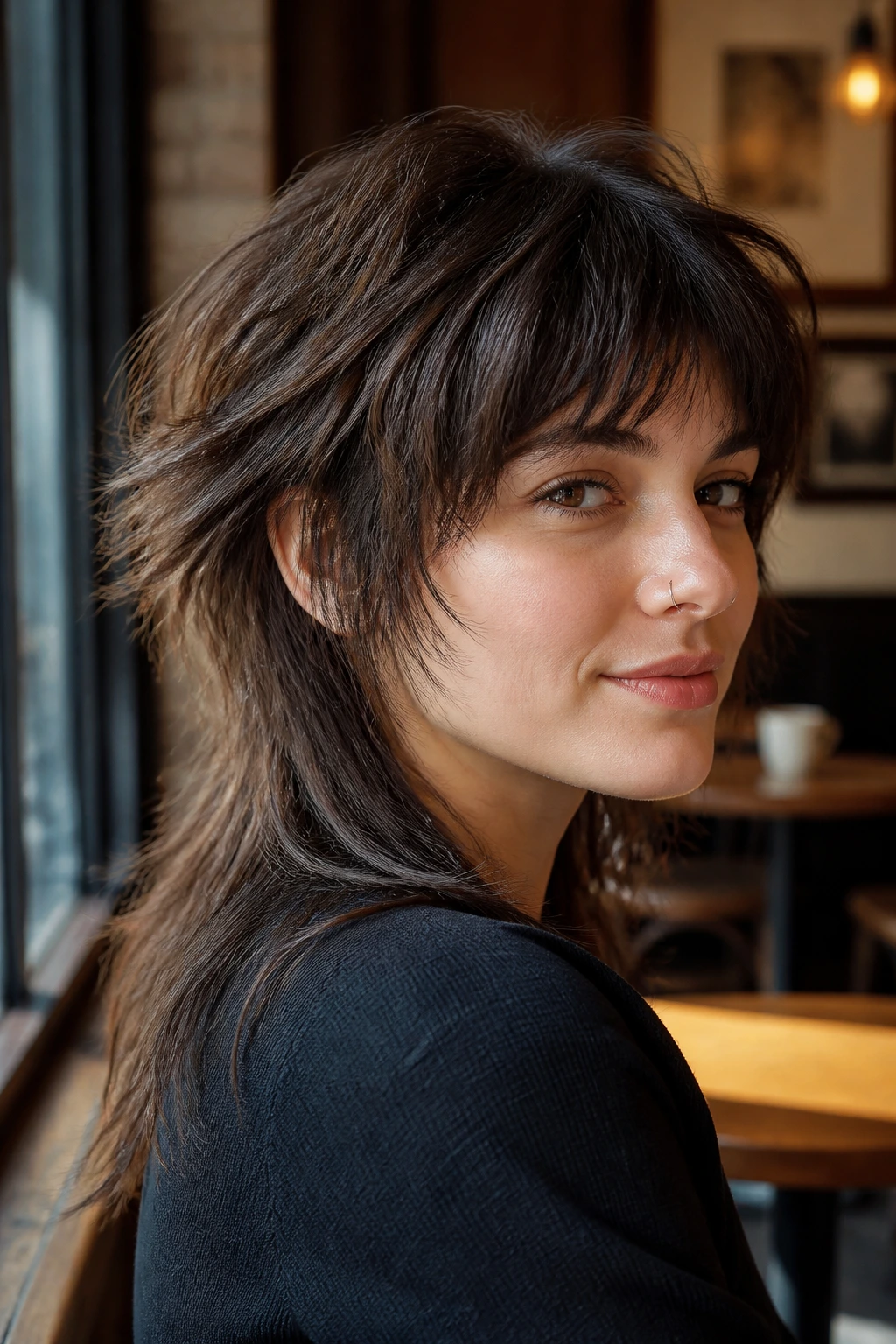
The soft mullet shag keeps a little extra length at the back while the front and crown move shorter and more layered. On thick hair, the shape can look surprisingly balanced, because the density stops the back from getting stringy. The key word is soft — without that, the cut can veer into costume territory fast.
The silhouette is more directional than a standard shag. You see the difference at the nape and in the way the sides taper. If you like fashion-forward hair and don’t mind a cut with a little attitude, this one has real presence.
I’d keep the fringe or face frame longer here. Thick hair already has enough visual weight, and a too-short front can make the back feel even longer by contrast.
20. Round-Face Balancing Shag

Round faces need space near the sides and length through the front, and this shag handles both. The layers begin below the widest point of the cheeks, the fringe opens vertically instead of crossing too low, and the length stays long enough to create a slender line around the jaw.
That doesn’t mean hiding the face. It means choosing angles that keep the haircut from stopping exactly at the cheekbones, where thick hair can get wide fast. A round face and dense hair can be a tricky combo if the cut is too short on the sides. This version avoids that trap.
What to ask for
Tell your stylist you want the widest pieces to sit below the cheekbone and the front to angle downward. That gives the haircut a longer line, which works better than a blunt, boxed frame.
21. Jaw-Softening Shag
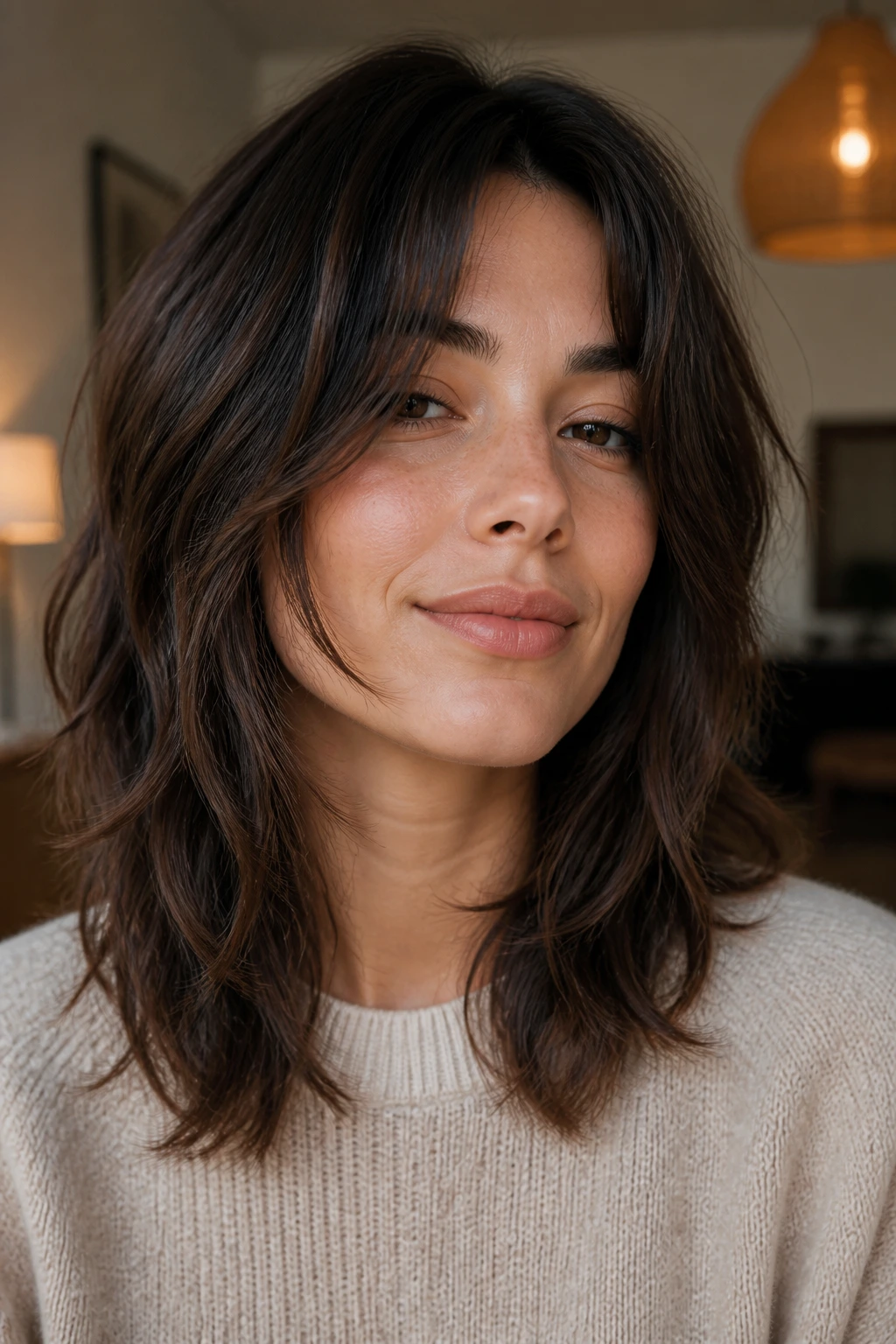
Some faces need softness right at the jaw, and this cut handles that with long, broken layers that move past the chin instead of sitting on it. Thick hair can make the jaw look stronger than it really is, so these longer face-framing pieces help dissolve that hard edge.
The haircut still has a shag structure, but the front has more curve than chop. That makes it a smart choice for square or angular faces, especially if the hair is heavy enough to hold a bend without collapsing. A little wave in the front pieces helps a lot.
This is one of those cuts that looks subtle in photos and better in motion. The way it swings around the jawline is the whole point.
22. Everyday Low-Maintenance Shag
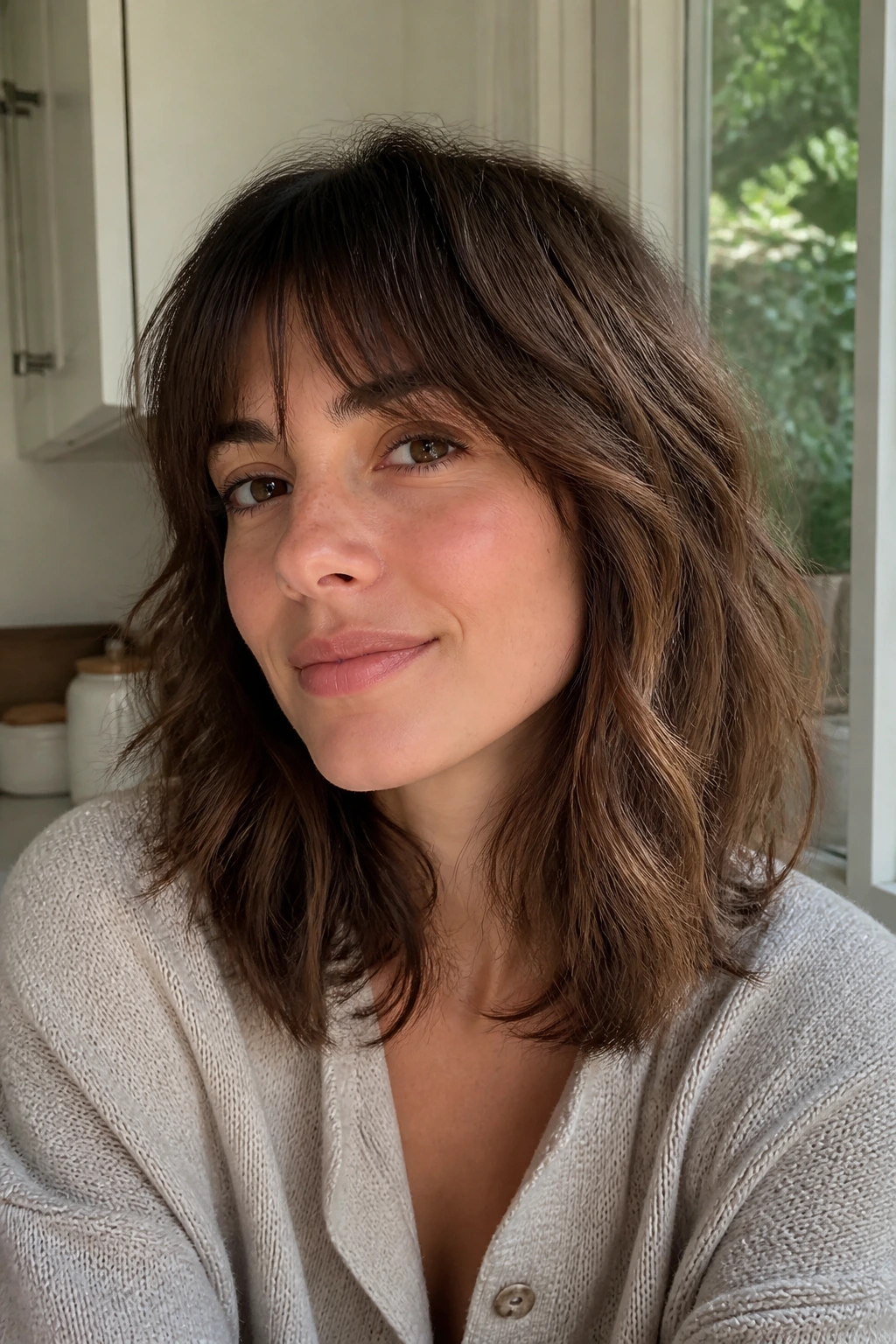
Not every haircut needs a mood board. Sometimes you just want medium-length thick hair to stop acting like a project. The everyday shag keeps the layers moderate, the fringe optional or very soft, and the ends full enough to look good even when you barely style them.
It’s the version I’d recommend to people who live in ponytails, clips, and quick air-dry routines. The cut still removes bulk, but it doesn’t demand a curling iron to make sense. That’s the real win. Thick hair is already a lot of work for most people; the haircut should take some of that work back.
If you want one shag that can survive humid weather, lazy mornings, and a rushed blow-dry, this is the one to keep in your pocket.
Why Shag Layers Beat One Heavy Perimeter on Thick Hair
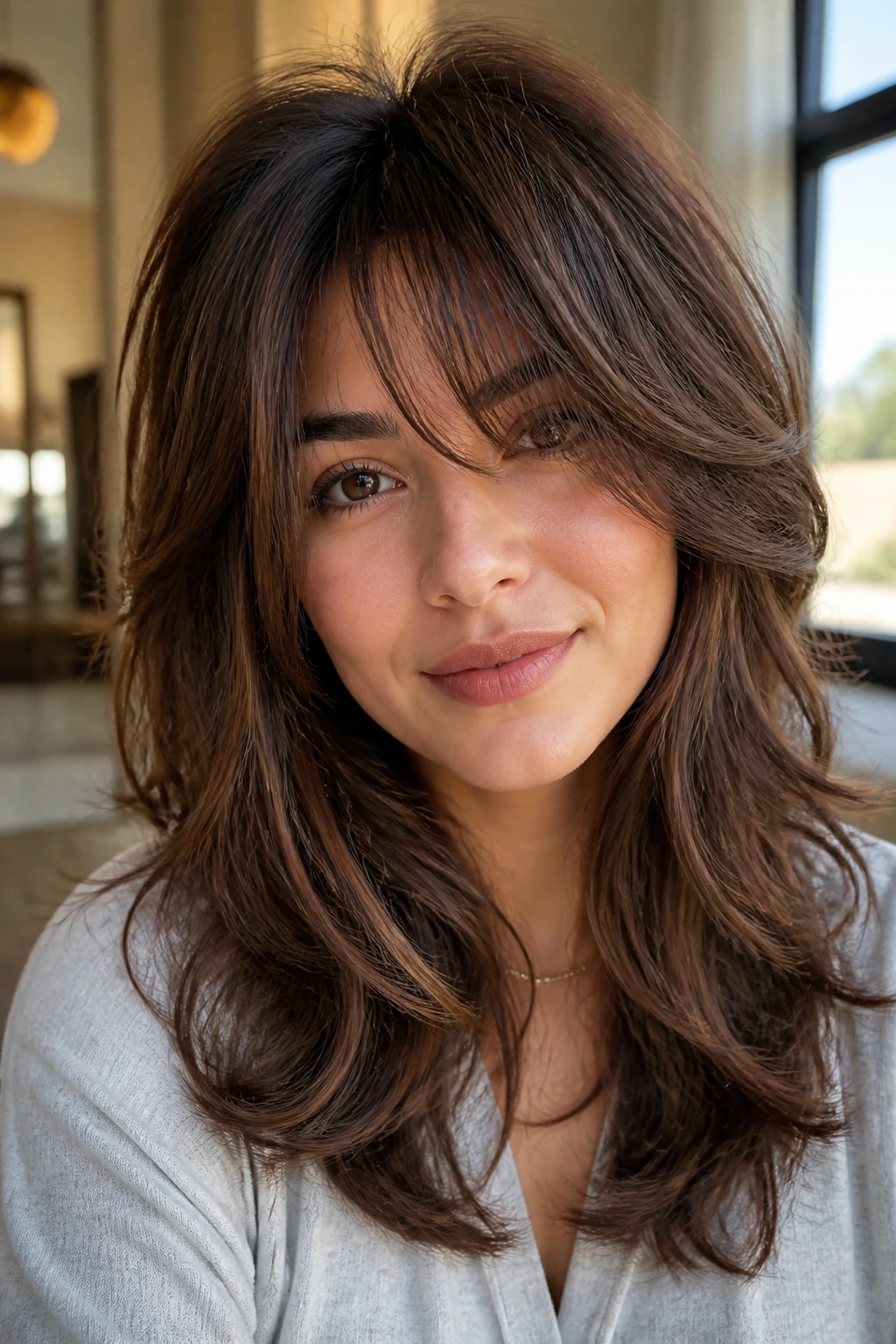
A single blunt line sounds tidy until thick hair grows into it. Then the ends get heavy, the sides widen, and the whole shape starts sitting like a box. Shag layers solve that by breaking up the mass in stages. The crown gets a little relief, the sides get movement, and the ends no longer carry all the weight.
That weight removal is the real engine behind the cut. Thick hair doesn’t need more bulk; it needs direction. Interior layers let the hair collapse into a shape instead of flaring outward, while face-framing pieces keep the front from reading as one solid curtain. The best shags keep enough density at the perimeter to look healthy. They just stop the density from behaving like a blanket.
Medium length is part of the reason these cuts work so well. Shorter layers on very long, heavy hair can create a puff at the bottom, while longer, one-length hair can feel like a rug. Around the collarbone, the hair has enough swing to show the layers and enough weight to sit cleanly. That’s why this length keeps showing up in salons when people want texture without chaos.
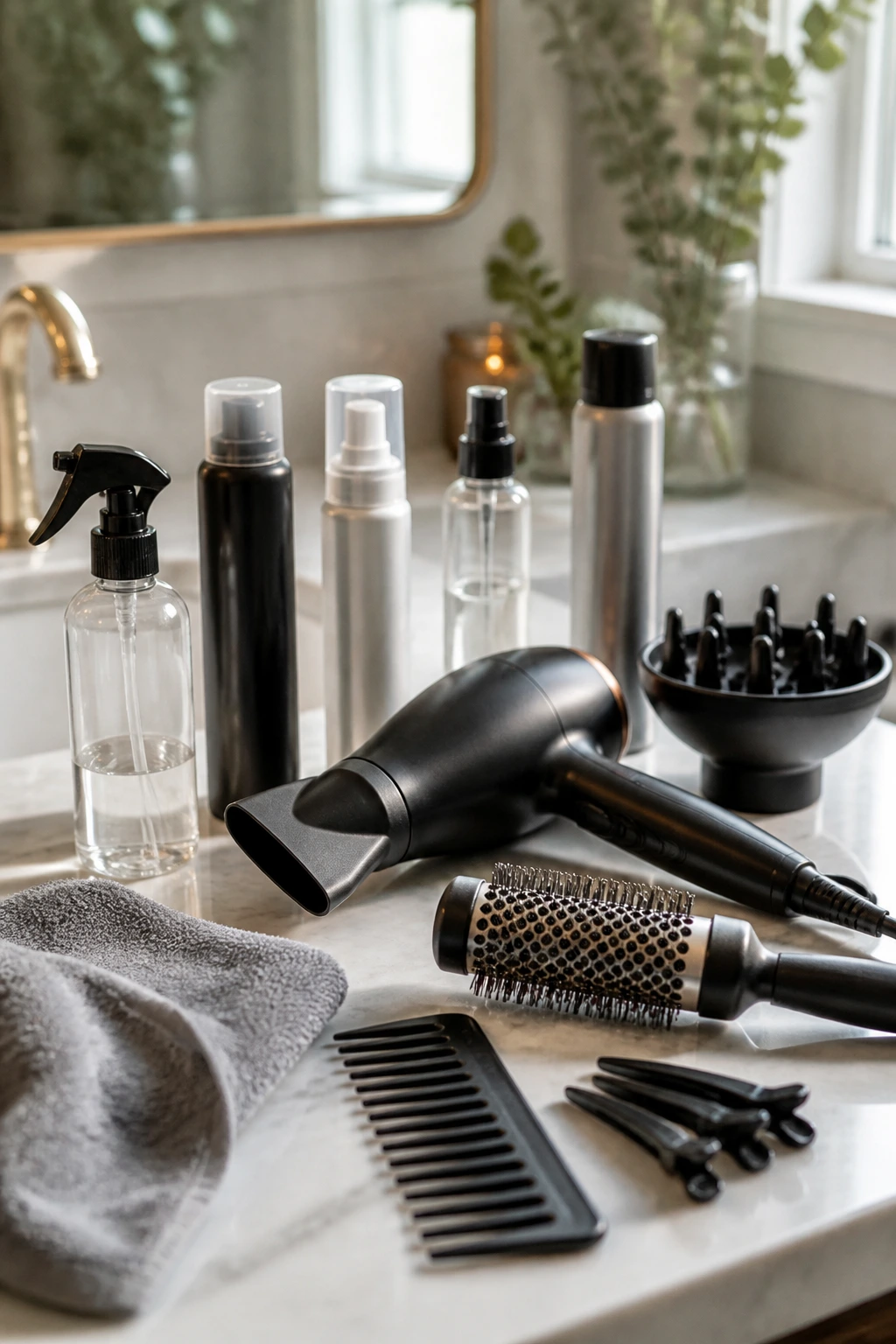
Essential Tools for Styling a Medium-Length Shag
-
Blow dryer with a nozzle attachment: The nozzle directs airflow at the roots and keeps the layers from flying every direction.
-
Round brush, 1 to 1.5 inches: Best for bending the face frame and giving curtain bangs a softer curve.
-
Diffuser: Useful if your thick hair has wave or curl and you want the pattern to hold without frizzing out.
-
Texturizing spray: Adds separation to the mids and ends without making the cut feel sticky or stiff.
-
Light mousse: Gives the crown some lift before blow-drying, especially on hair that falls flat fast.
-
Heat protectant: Non-negotiable if you use hot tools more than once a week. Thick hair hides damage until it doesn’t.
-
Wide-tooth comb: Helps you detangle without ripping apart the shape you just styled.
-
Sectioning clips: Handy for blowouts; thick hair is easier to manage in four or six clean sections than in one giant heap.
-
Dry shampoo: Good on day two and day three, especially near the crown and fringe.
-
Microfiber towel or T-shirt: Cuts down on roughing up the cuticle when you’re air-drying.
How to Ask for the Right Cut at the Salon Chair
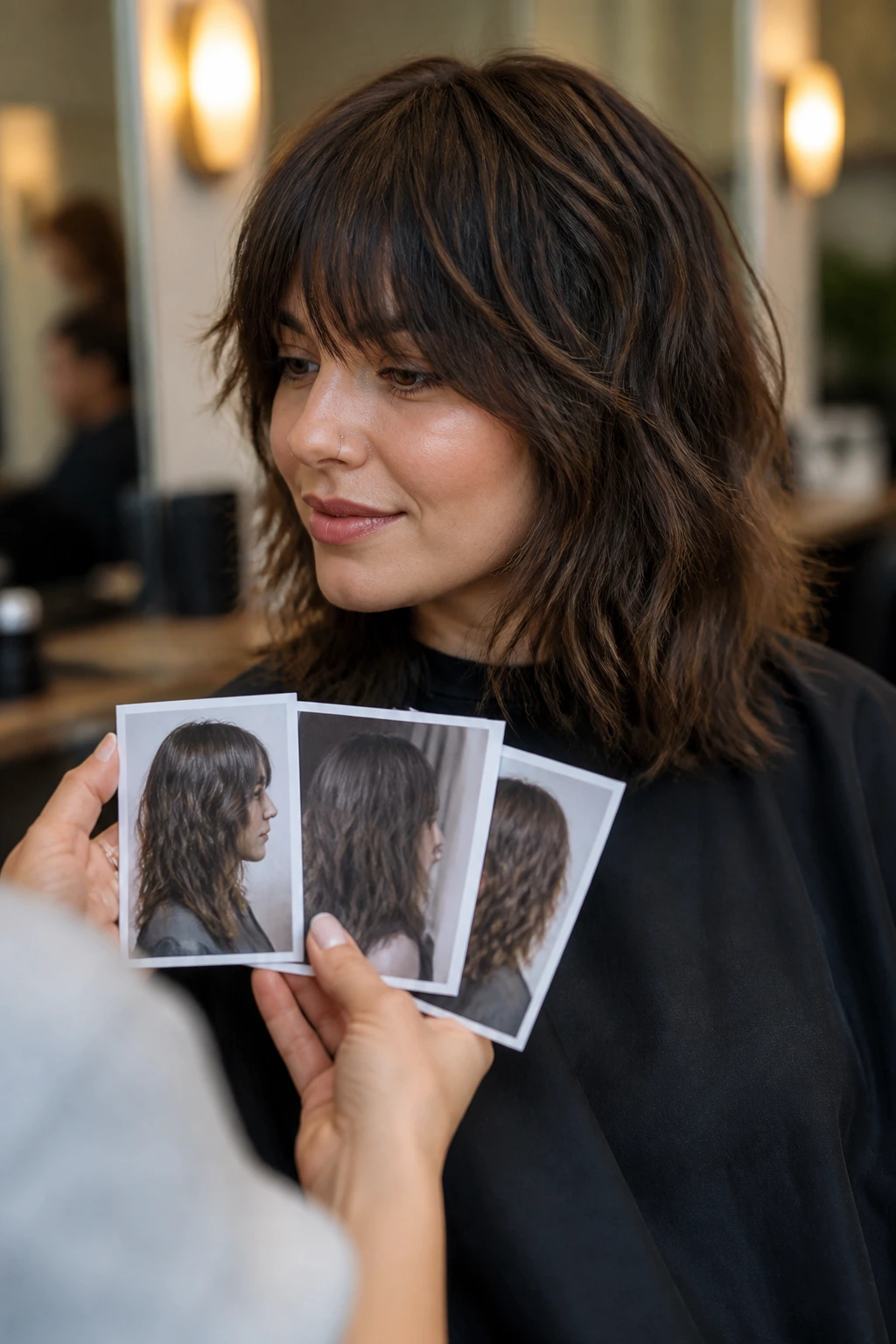
Bring photos, but bring the right kind. One front view is not enough. I’d want a front shot, a side shot, and one image of the back or a similar perimeter length. Thick hair changes the silhouette fast, and your stylist needs to see how short you actually want the shortest layers to be.
Say what you mean by “shag.” Some people mean soft face-framing layers. Others mean obvious choppiness and a broken fringe. Those are not the same cut. If you want the haircut to live around your cheekbones, say that. If you want the perimeter to stay full, say that too.
The most useful language is concrete: “I want the shortest face pieces around my cheekbone,” “I need the bottom to stay dense,” or “I style with a diffuser and air-dry 60% of the time.” That tells the stylist how the cut has to work in your real life. Thick hair is too heavy to leave to vague instructions.
And one more thing: ask for a dry check or dry refinement if your stylist offers it. Thick hair changes shape as it dries. A quick look at the dry outline can save you from layers that sit too short once the water is gone.
How to Style a Shag Without Puffing Out the Ends
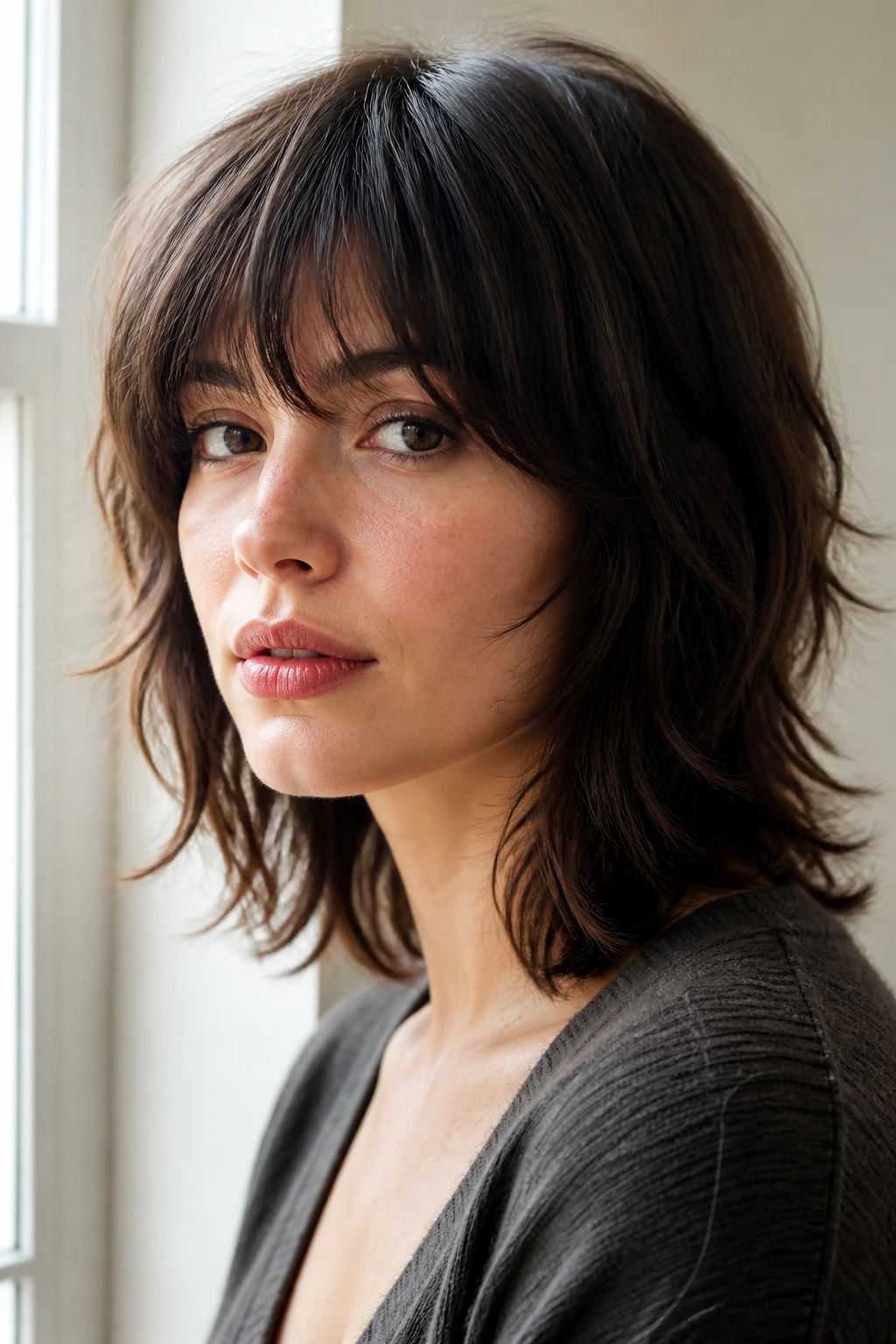
Air-Dry Finish: Work a light mousse through the roots and midlengths, then scrunch the ends gently while the hair is still damp. Don’t pile on cream from root to tip; thick hair does not need that much help, and too much product weighs down the layers you’re trying to show.
Blowout Finish: Use a round brush at the crown and through the fringe, then leave the very ends slightly imperfect. That little bit of bend keeps the haircut from turning into one smooth sheet. I like to think of it as polishing the top and relaxing the bottom.
Accessories: Claw clips, slim headbands, and small clips all work, but don’t hide the whole haircut every day. Let the front pieces fall out on purpose. The shag lives in those little broken sections around the face.
Best Rhythm: The first day after washing usually gives you the most shape. By day two, a quick blast at the roots plus a touch of dry shampoo is often enough. Thick hair tends to hold texture well, so the goal is refresh, not rebuild.
Styling Tips for Busy Mornings and Big Events

Time-Saver: Twist the front sections away from your face while the hair is damp, then clip them for 10 minutes while you do the rest of your routine. That gives the face frame a bend without a full blowout.
Texture Boost: Put texturizing spray only from midlength to ends. If you hit the roots too hard, the crown can look dusty and dry instead of airy.
Pro Move: On polished days, curl only the front two layers and the top crown pieces. Leave the underside mostly alone. Thick hair already has enough body; you usually need shape, not more curl.
Finish Line: If the ends start to balloon, rub one drop of lightweight serum between your palms and press it just onto the bottom inch. Not the whole head. The bottom inch.
Common Mistakes That Make Thick Hair Go Wide, Flat, or Fuzzy
-
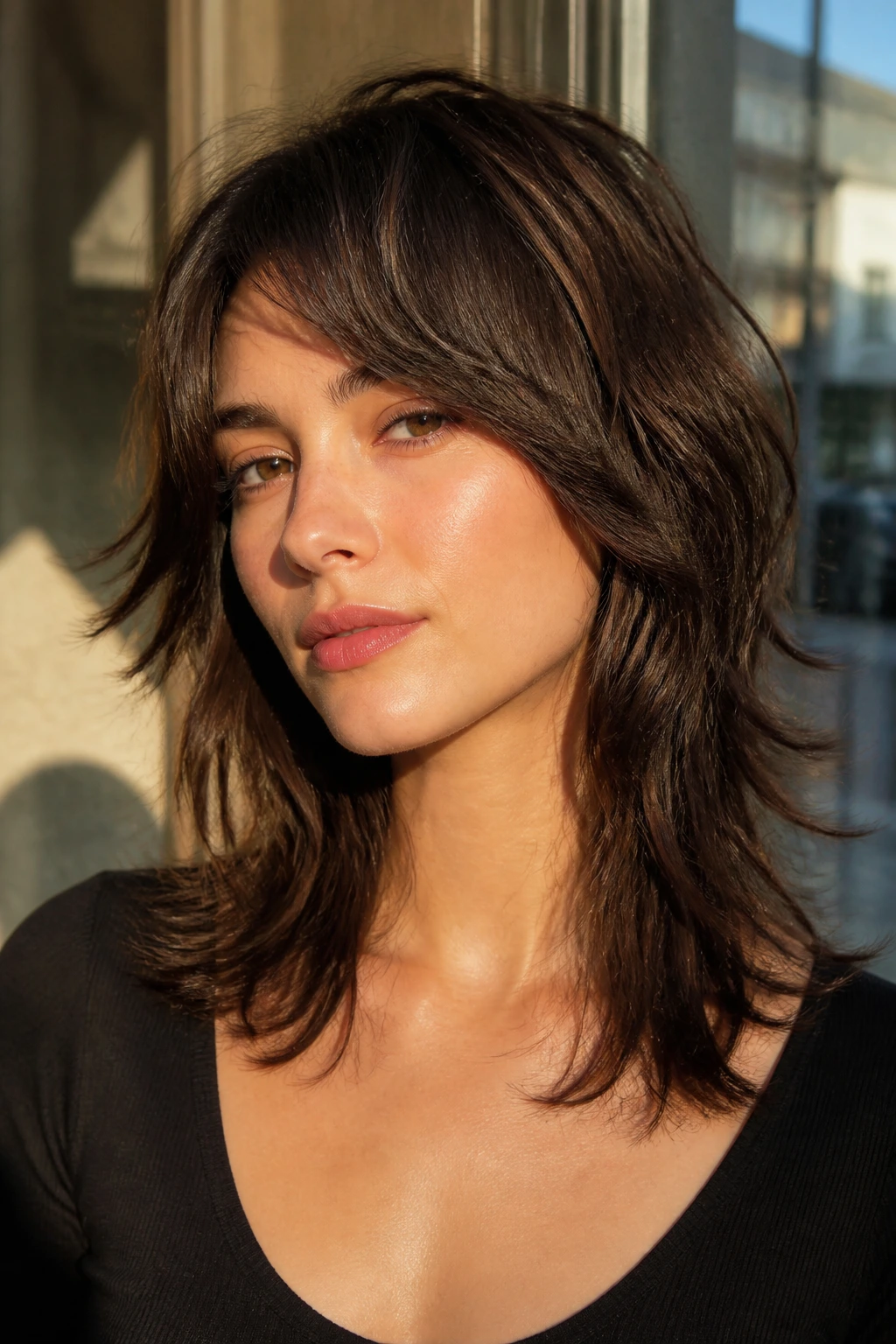
Too many short layers at once: The haircut gains height but loses control, and the sides can flare out around the ears. Fix it by keeping the shortest layers a little longer and asking for interior weight removal instead of aggressive chopping.
-
Over-thinning the ends: The perimeter starts looking see-through and rough after the first wash. The fix is a fuller hemline with softer layers inside the head, not on the outer edge.
-
Treating every shag like a razor cut: Some thick hair handles razors well; some turns fuzzy fast. If your hair is coarse, ask for point-cutting or scissors for the majority of the shape.
-
Using too much cream or oil: The layers clump together and lose their swing. Keep rich products on the last two inches only, and use very little.
-
Blow-drying everything straight down: The cut collapses into a helmet or a triangle. Lift the roots, bend the front away from the face, and keep the ends a little loose.
-
Ignoring the fringe weight: Bangs that are too heavy split in odd places; bangs that are too light disappear into the rest of the hair. The fringe has to match the density of the cut.
Variations and Adaptations Worth Trying
-
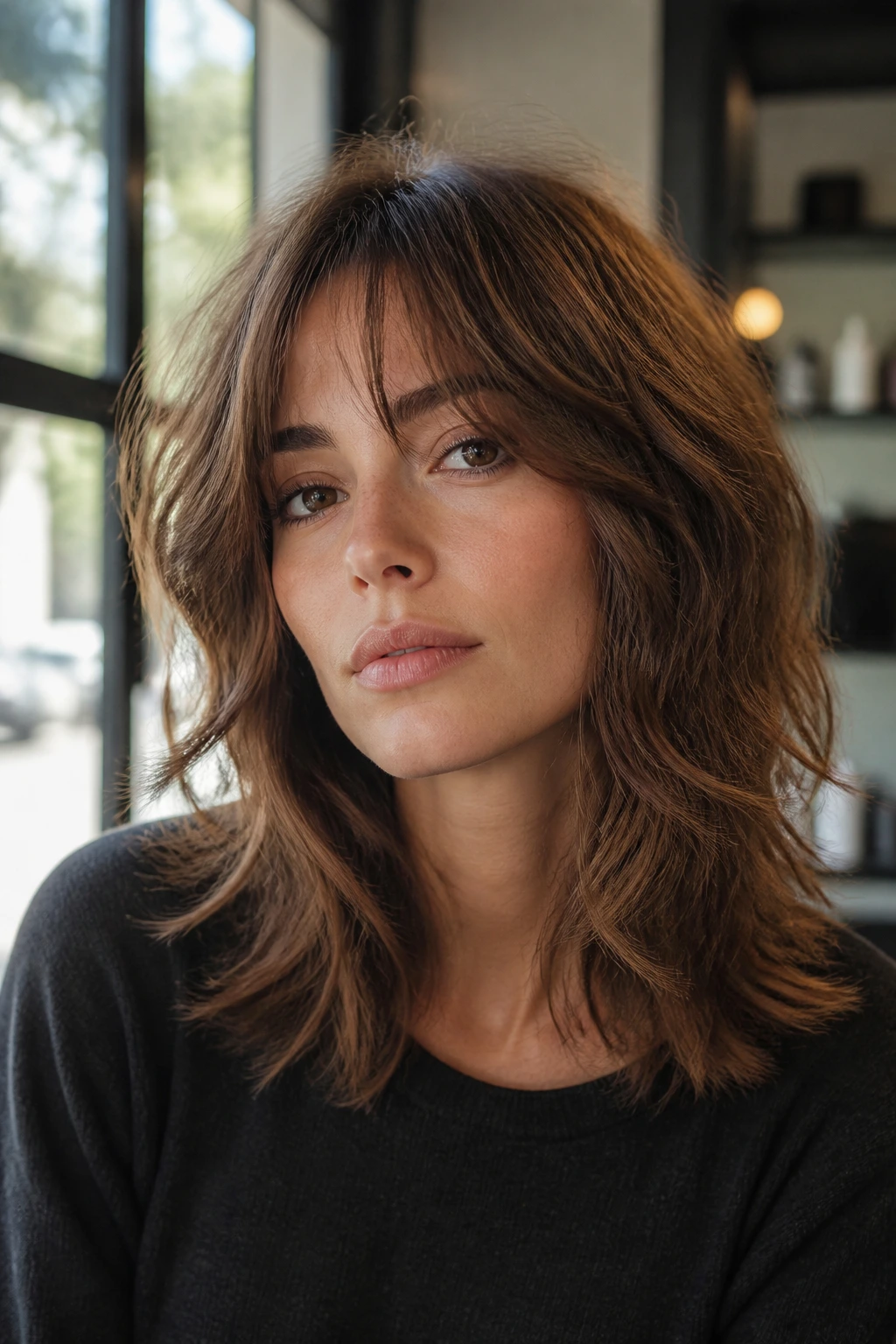
The Clean Shag: Keep the layers longer, soften the fringe, and finish with a round brush. This version suits people who want movement without obvious choppiness and works well in sharper dress codes.
-
The Air-Dry Shag: Ask for softer layers and a face frame that still looks good with a natural bend. Use mousse, scrunch, and walk away. It’s the easiest version to live with if you don’t heat-style much.
-
The Curly Layer Adaptation: Cut it dry, keep the top layers longer, and avoid excess razoring. Curly thick hair needs shape, but it also needs room to spring.
-
The Edgy Mullet-leaning Version: Keep more length in the back and shorter crown layers for a stronger silhouette. This one has attitude and works best when the hair is dense enough to support the contrast.
-
The Grow-Out Plan: Ask for fewer dramatic differences between shortest and longest layers. The cut will stay readable for longer, which matters if you like stretching trims.
Trim Schedule, Wash Rhythm, and Sleep Care
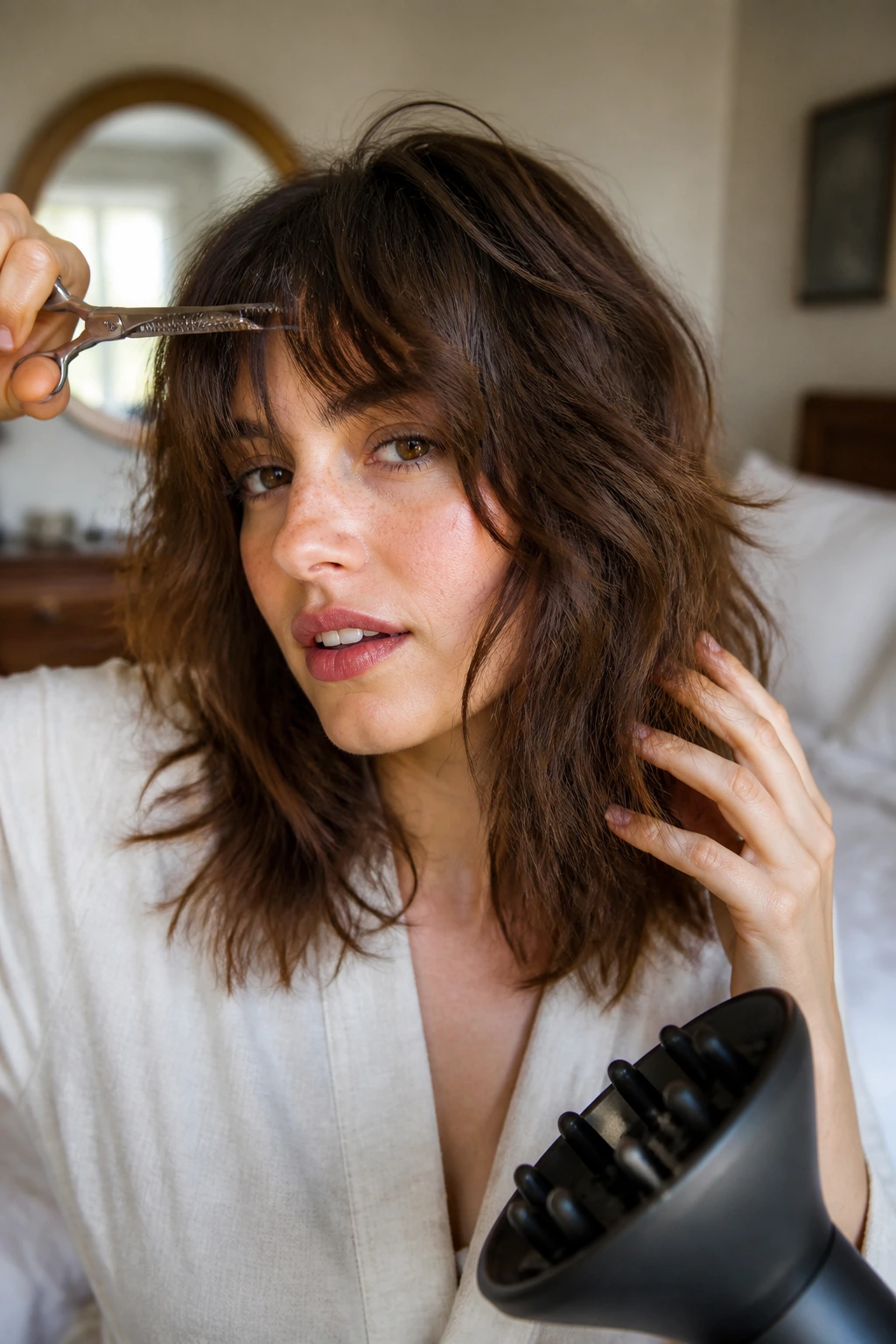
Medium-length thick shag haircuts usually look best with trims every 8 to 12 weeks. If you wear a heavier fringe, or if your shortest layers sit high on the cheekbone, you may want a bang cleanup sooner. Not because the haircut falls apart fast. Because fringe growth changes the entire read of the face frame.
Wash rhythm matters too. Thick hair doesn’t always need daily shampooing, and many shags actually behave better on day two. The crown gets a little grit, the layers separate, and the cut stops clinging together. If your roots get oily fast, a light dry shampoo at the crown can buy you an extra day without making the hair chalky.
At night, sleep in a loose braid, a low twist, or a silk pillowcase if you’ve got one. The goal is to keep the layers from tangling into a knot at the nape. If you wake up with the front pieces bent in a weird direction, a 30-second blast from the dryer usually resets them. Thick hair is forgiving, but it still likes a little nudge.
Frequently Asked Questions
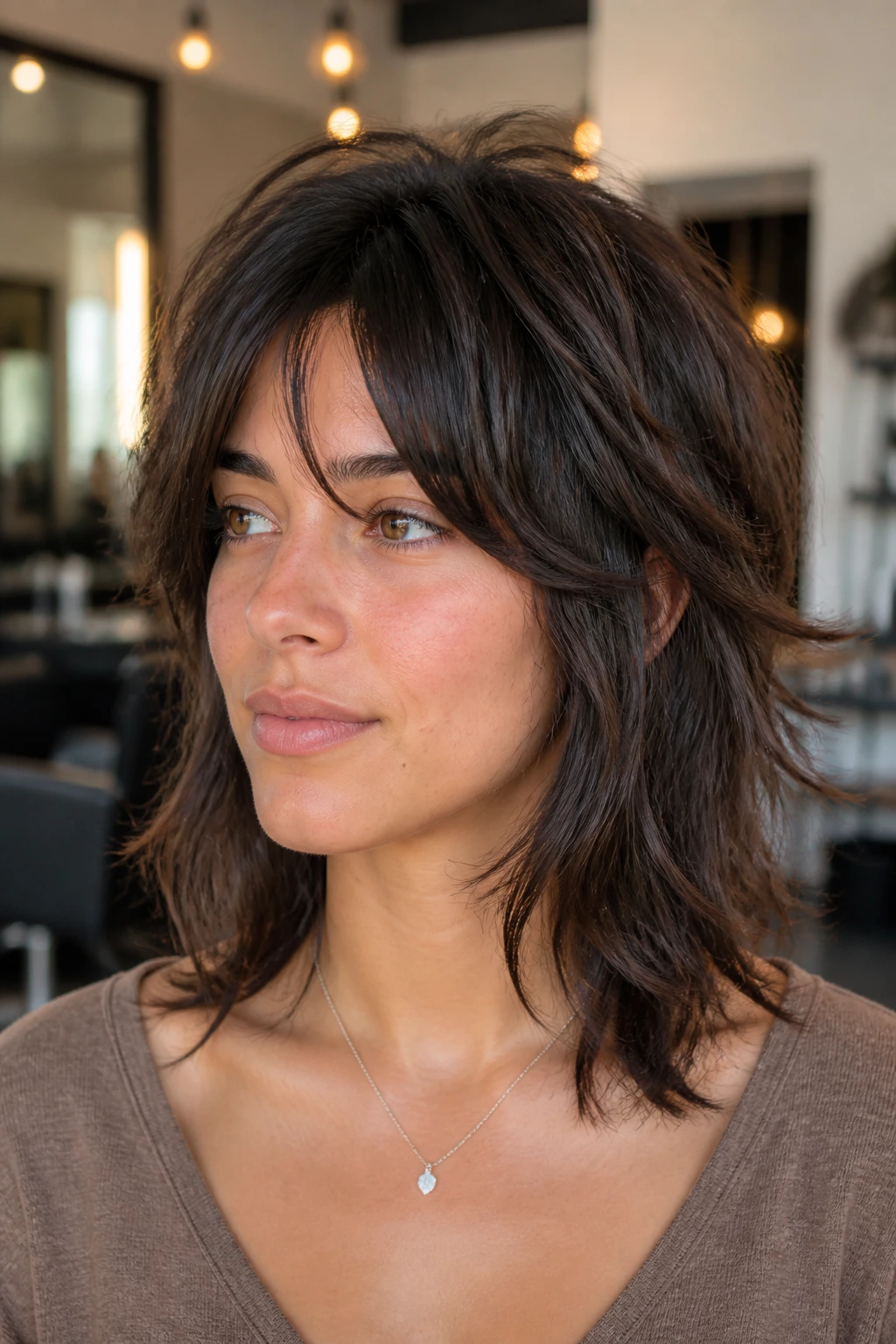
Does a shag haircut work on very thick hair?
Yes, as long as the layers are placed with some restraint. Thick hair needs weight removed from the right places, not shredded everywhere, so the cut still has a clean outline.
Will a shag make my hair look thinner?
It can if the stylist over-thins the ends. A good shag on thick hair removes bulk inside the shape while keeping the perimeter dense enough to look full.
Should I ask for layers or razoring?
That depends on your texture. Straight or slightly wavy thick hair can handle more point-cutting or light razor work, while coarse or dry hair usually looks better with scissor layering and a blunt perimeter.
Can I wear a shag without bangs?
Absolutely. A fringe is useful, but it is not required. You can keep a long face frame and still get the movement and shape that make shag haircuts work.
How often do shag haircuts need trims?
Most medium-length thick shags hold up for 8 to 12 weeks. Fringe-heavy versions need a touch-up sooner, especially if the bangs sit near the brow or cheekbone.
Is a shag hard to style every day?
Not if it’s cut for your texture. A good shag often needs less work than a blunt cut because the layers already give the hair a shape to fall into.
What if my thick hair goes puffy after washing?
Use less product than you think, and stop blasting the ends straight down with the dryer. Lift the roots, smooth the top layers, and let the lower layers keep a little movement.
Can I get a shag if my thick hair is straight?
Yes, and straight thick hair can look very sharp in this shape. The key is to keep the layers soft enough that the haircut doesn’t stick out like a pyramid when it air-dries.
The Cut That Keeps Moving
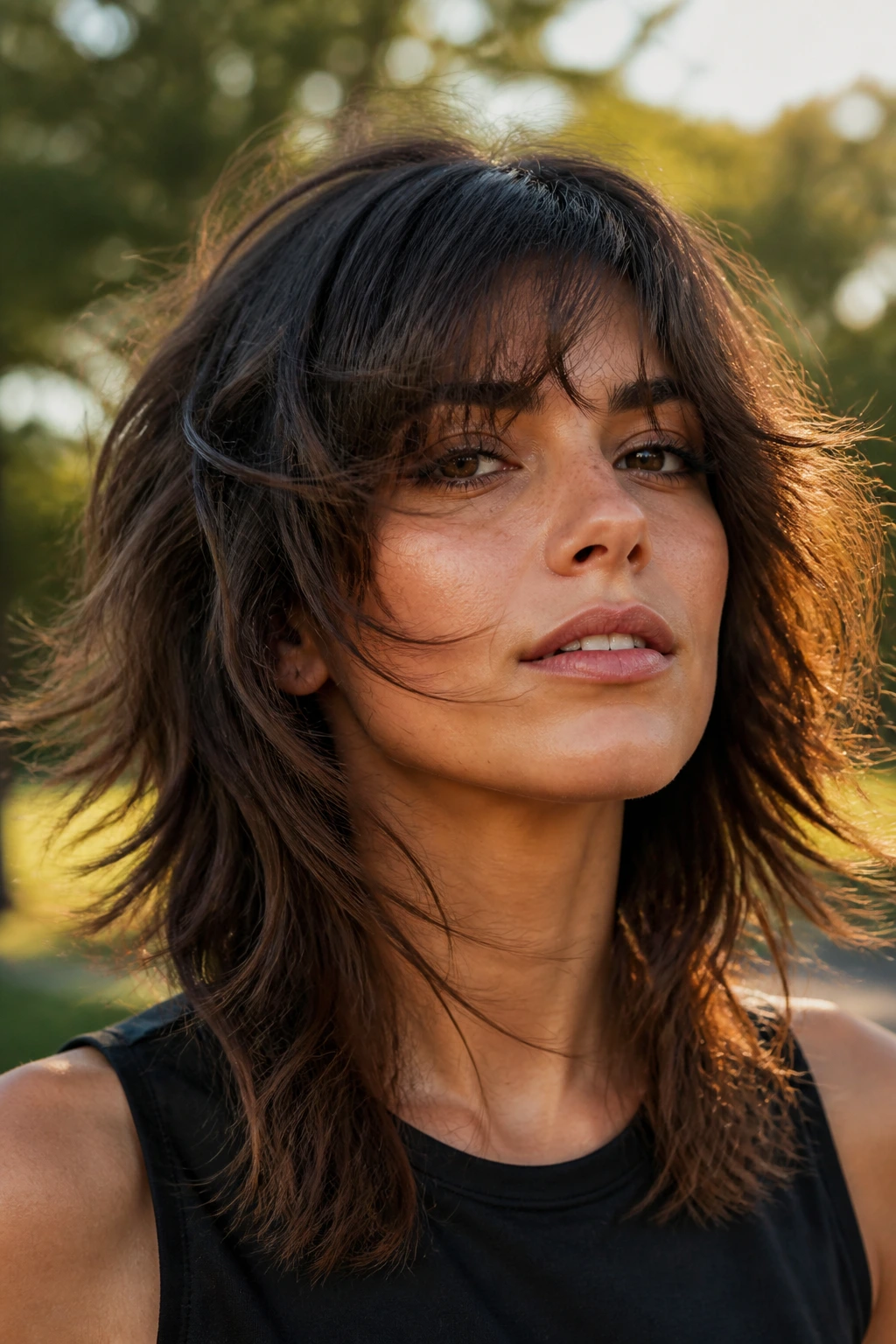
Medium-length thick hair likes a haircut with a little architecture in it. That’s the real appeal of a shag: it doesn’t fight density, and it doesn’t pretend density is a problem to erase. It gives the hair a route to fall, bend, and swing without losing the full feel that thick strands naturally bring.
If your hair has spent years living in one blunt shape, a shag can wake it up fast. The fringe changes the face, the layers change the silhouette, and the medium length keeps the whole thing grounded. That combination is why these cuts stay useful long after the salon visit is over.
The best version is the one that matches how you actually wear your hair — brushed out, air-dried, clipped back, or left a little imperfect. Pick the shape that fits your mornings, then let the layers do the rest.
