



Short curly hair after 50 has a way of telling the truth fast. If the cut is off, you see it in the mirror before the coffee cools: the sides puff out, the crown goes flat, the ends fray into a fuzzy halo, and the whole shape starts arguing with your face. When the cut is right, though, the curls lift on their own, the neckline looks clean, and you stop spending ten minutes trying to force the hair into a shape it never wanted in the first place.
That’s why curly hairstyles for short hair over 50 deserve more than the usual “just add layers” advice. Mature curls often come with a little less oil at the scalp, a little more dryness at the ends, and sometimes a curl pattern that has loosened in some places and tightened in others. A short cut can make all of that work for you. It can keep the weight off the bottom, preserve bounce at the crown, and let silver, salt-and-pepper, or dyed hair show real texture instead of sitting there like one solid block.
The best part? Short curly hair does not need to look severe, fussy, or overworked. It can be soft, airy, sharp, rounded, polished, or a little wild. The trick is choosing a shape that respects the curl pattern instead of flattening it. And once you know which cuts actually earn their keep, the whole thing becomes a lot easier.
Why Curly Hairstyles for Short Hair Over 50 Earn Their Keep
-
Less weight, more lift: Taking length off the ends lets curls rebound instead of hanging down like wet laundry by late afternoon.
-
Cleaner necklines: A short cut keeps the back looking deliberate, which matters when the hair at the nape starts growing faster than you expect.
-
Better silver texture: Gray and white strands often look crisp when the cut has a clear outline; they can look dull when the shape is too long and too blunt.
-
Less daily fighting: These cuts usually need a diffuser, a light cream or mousse, and a few finger tweaks—not a whole bathroom full of tools.
-
Easier glasses pairing: Shorter face-framing pieces can sit above or around frames instead of getting trapped under them.
-
Room for personality: You can wear the same cut airy one day, piece-y the next, and tucked behind one ear when you want a cleaner line.
What Your Curl Pattern Is Telling You Before the Chop
If your curls are loose, springy, and a little unpredictable, the cut should keep some movement in the sides and crown. Tight spiral curls usually need a shape that removes bulk without making the head look too round. Coily textures often look best when the perimeter is clean and the top has enough room to rise.
Density matters just as much. Fine curly hair tends to collapse when it gets too much length, so shorter shapes and lighter layers help. Thick curls can do the opposite; they build a lot of body fast, which means a stacked back, undercut, or interior debulking can keep the cut from turning into a mushroom.
And then there’s shrinkage. Annoying? Yes. Useful? Also yes. If your curls spring up two inches after drying, the haircut has to be planned for the dry shape, not the wet one. That’s why a stylist who cuts curls dry, or at least checks the dried outline before finishing, usually gives you a better result than someone who slices everything while the hair is stretched flat.
1. Tapered Curly Pixie With Crown Lift
This is the cut I reach for when someone wants short hair with movement, not a helmet. The sides and nape stay tight, while the top keeps enough length for the curls to stand up and make a shape. On silver or salt-and-pepper hair, the contrast looks clean instead of severe.
The real magic is in the crown. If that section is left a little longer and dried with the head tilted forward, the curls stack upward instead of collapsing sideways. It takes less product than people think. A nickel-size amount of mousse at the roots, then a light cream on the ends, usually does the job.
This cut works especially well if your hair is fine or medium in density. The short perimeter stops the ends from dragging the whole style down. The result is neat, but not stiff.
2. Soft Side-Swept Curly Crop
A side-swept crop is one of those cuts that quietly solves a lot of problems. It softens the forehead, gives the face a diagonal line, and keeps the hair from looking too symmetrical, which is handy when the curl pattern changes from one side to the other.
I like this shape on women who wear glasses, because the fringe can hover above or across the frame without swallowing it. The trick is keeping the front long enough to sweep, but not so long that it breaks apart and falls into your eyes all day. Think cheekbone length at the longest point, then slightly shorter through the back.
It’s a forgiving cut, too. If one side dries a little tighter than the other, the sweep hides it. That’s useful. Hair is not always obedient.
3. Jaw-Length Curly Bob With a Clean Edge
A jaw-length bob sounds simple, but on curly hair it has to be handled with care. Too blunt, and it puffs at the sides. Too layered, and it can lose the crisp line that makes the whole cut look intentional. The sweet spot is a soft edge that follows the jaw without biting into it.
This cut is great when you want definition without much styling drama. A light gel or foam on soaking-wet curls keeps the shape from frizzing out before lunch. Then you diffuse until the outside feels dry and the inside still has a little give. That last part matters. A bob cut too dry can turn puffy and awkward.
If your jawline is strong, this cut shows it off. If you want softness, ask for a few face-framing pieces to graze the cheek. Small change, big difference.
4. Airy Curly Shag for Loose Volume

The shag is still one of the smartest cuts for curls because it makes the hair look fuller without making it look heavy. The layers do the work. Instead of one blocky outline, you get movement all the way through the sides and crown.
Loose curls and waves especially like this shape. They get to fall a little messy, and the mess looks deliberate rather than neglected. That’s the line the shag walks so well. A good one has enough interior layering to remove bulk, but not so much that the ends go wispy and thin.
I’m fond of this on hair that tends to go flat at the roots but broad at the bottom. The shorter layers lift the top and keep the lower half from turning triangular. If you want a cut that looks better the second day than the first, this is one of the best bets on the list.
5. Asymmetrical Curl Bob With One Longer Side
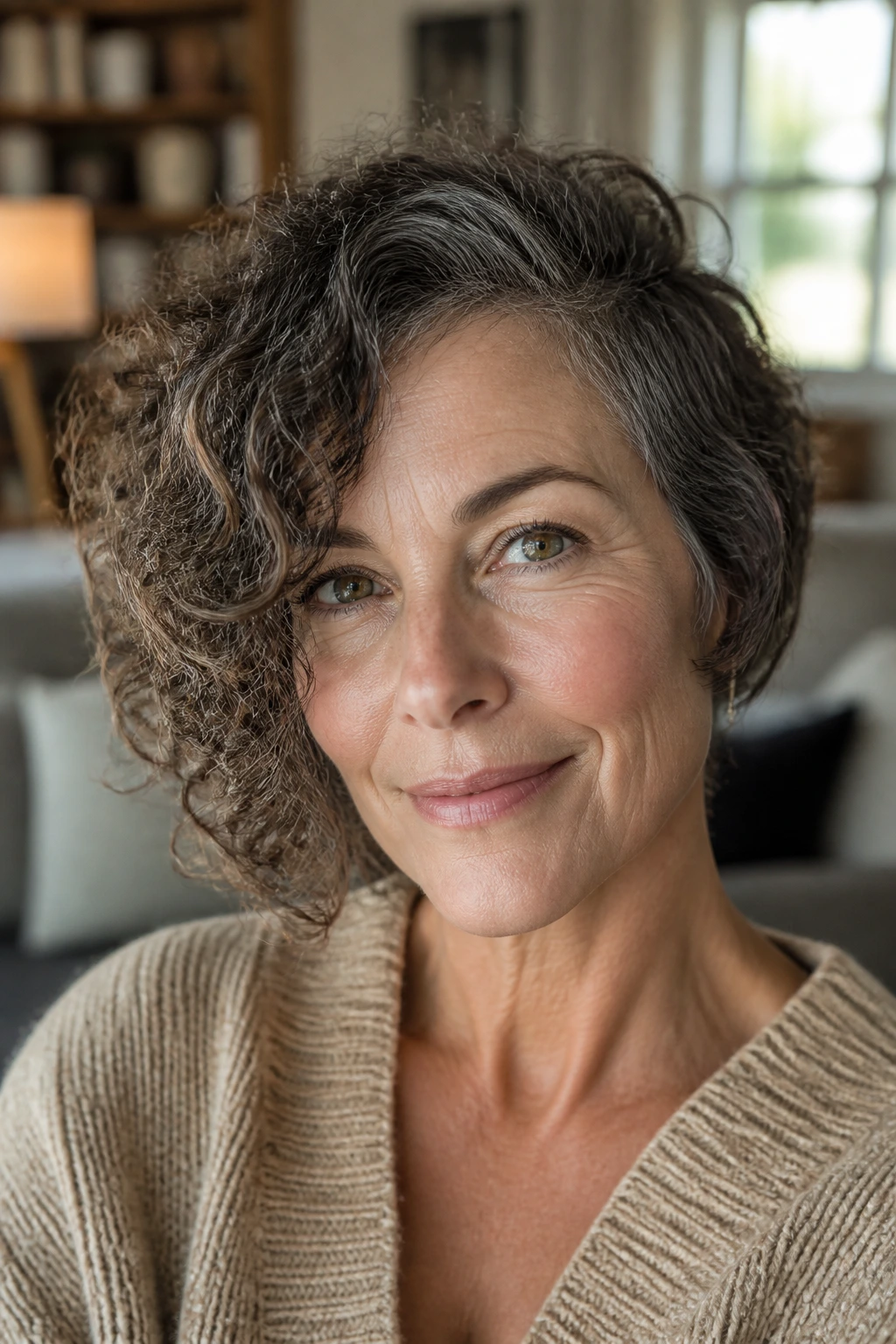
An asymmetrical bob brings a bit of edge without needing any dramatic color or shaving involved. One side sits slightly longer, usually by about half an inch to an inch, and that small difference changes the whole line of the cut. The eye goes to the longer side first. That’s the point.
It works nicely on curls that are not identical on both sides, which is more common than people admit. One temple curls tighter, one side lays flatter, one ear has a stubborn wave pattern that does its own thing. An uneven bob absorbs those differences instead of making you fight them.
Styling is straightforward: define the longer side with your fingers, then let the shorter side stack a bit closer to the cheek. It’s sharp without being hard. And for a short curly cut, that balance matters.
6. French Bob With Soft Ringlet Fringes
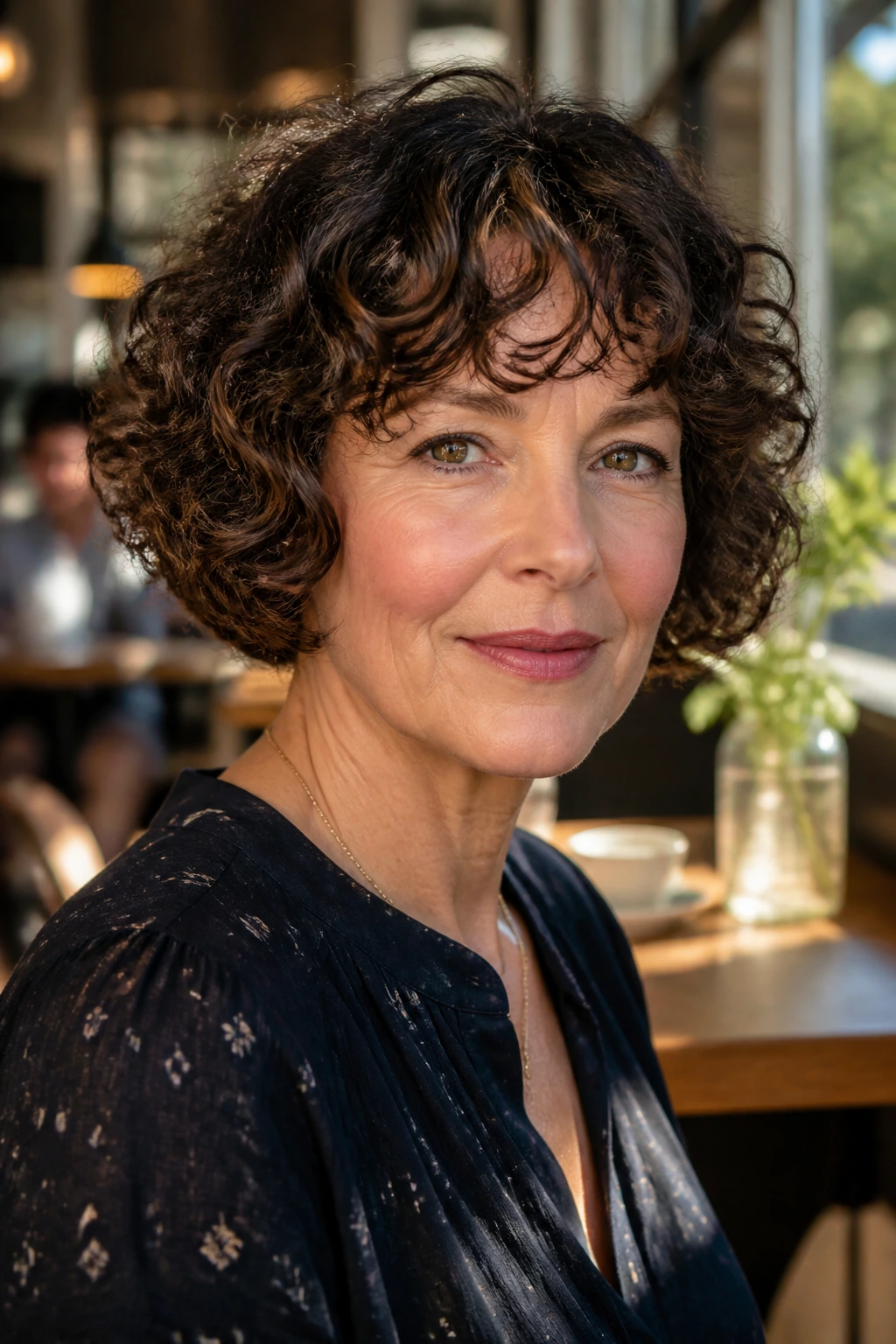
A French bob on curly hair is one of my favorite shape tricks because it can look polished without trying too hard. The line sits around the cheekbone or just under it, and the fringe breaks into soft little ringlets instead of a blunt curtain. That ringlet fringe is what keeps it from feeling severe.
This cut flatters women who like a face-forward style. The curl at the front becomes a feature, not a problem. If your hair sits close to 3A or 3B texture, the fringe can settle into a very tidy arc with little more than a diffuser and a touch of cream.
It does need regular trims. The perimeter loses its clean line faster than a shag or pixie. But when the shape is fresh, it has that easy, slightly Parisian look that never seems to overstate itself.
7. Stacked Curly Bob That Lifts in Back
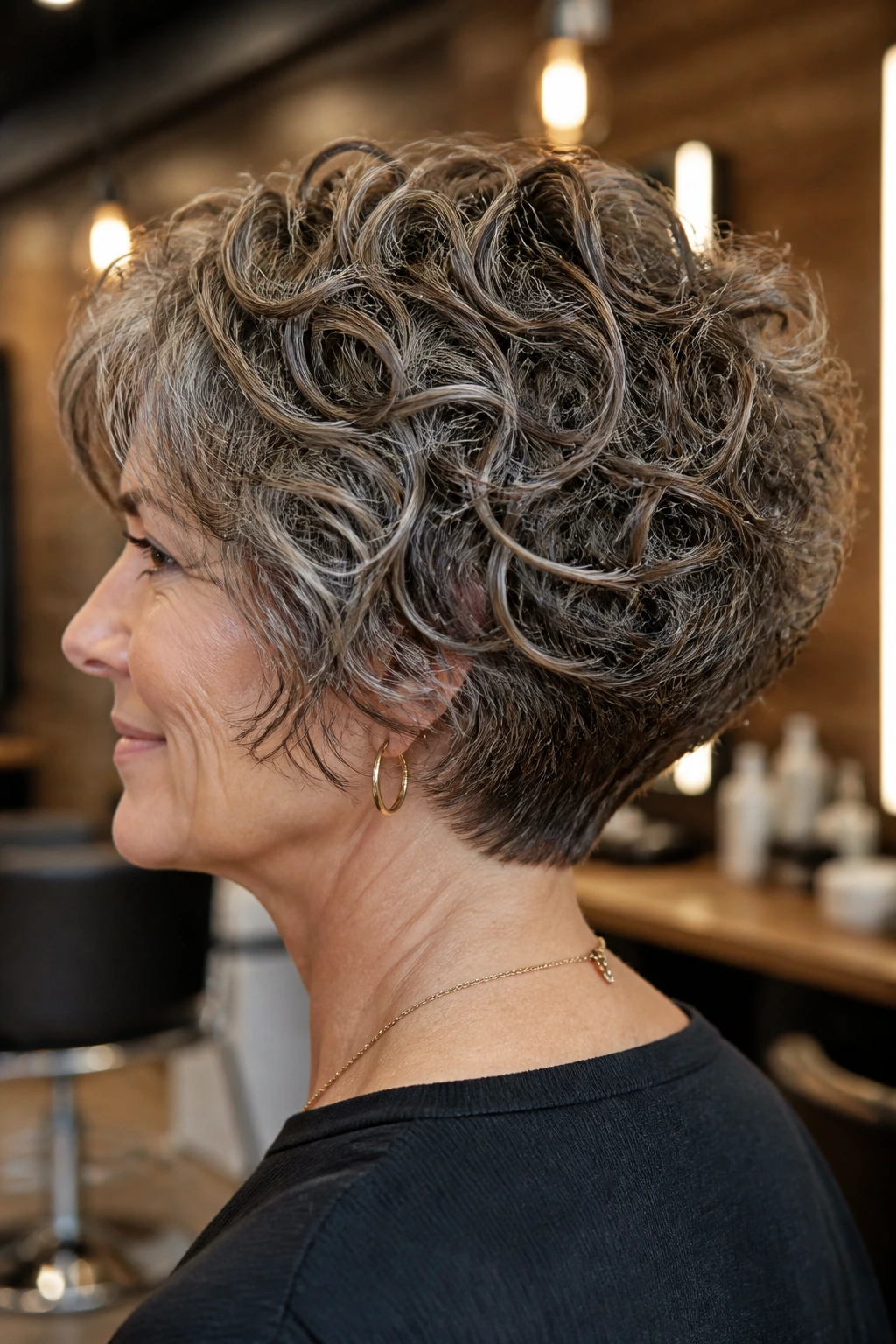
A stacked bob can be a miracle on thick curls, provided the stacking is done with restraint. The back is cut shorter to build lift, while the front stays a little longer and softer. That stops the silhouette from going square.
On dense hair, this shape removes the weight that causes curls to sag at the neckline. It also helps the back of the head look neat from every angle, which is no small thing. Some cuts look good from the front and punish you in profile. Not this one, if it’s done properly.
The one caution: don’t over-stack the back if your curls are very springy. Too much shortness there can make the top balloon. Ask for a smooth transition instead of a hard shelf. That’s where the good versions live.
8. Long-Top Curly Pixie With a Tapered Nape
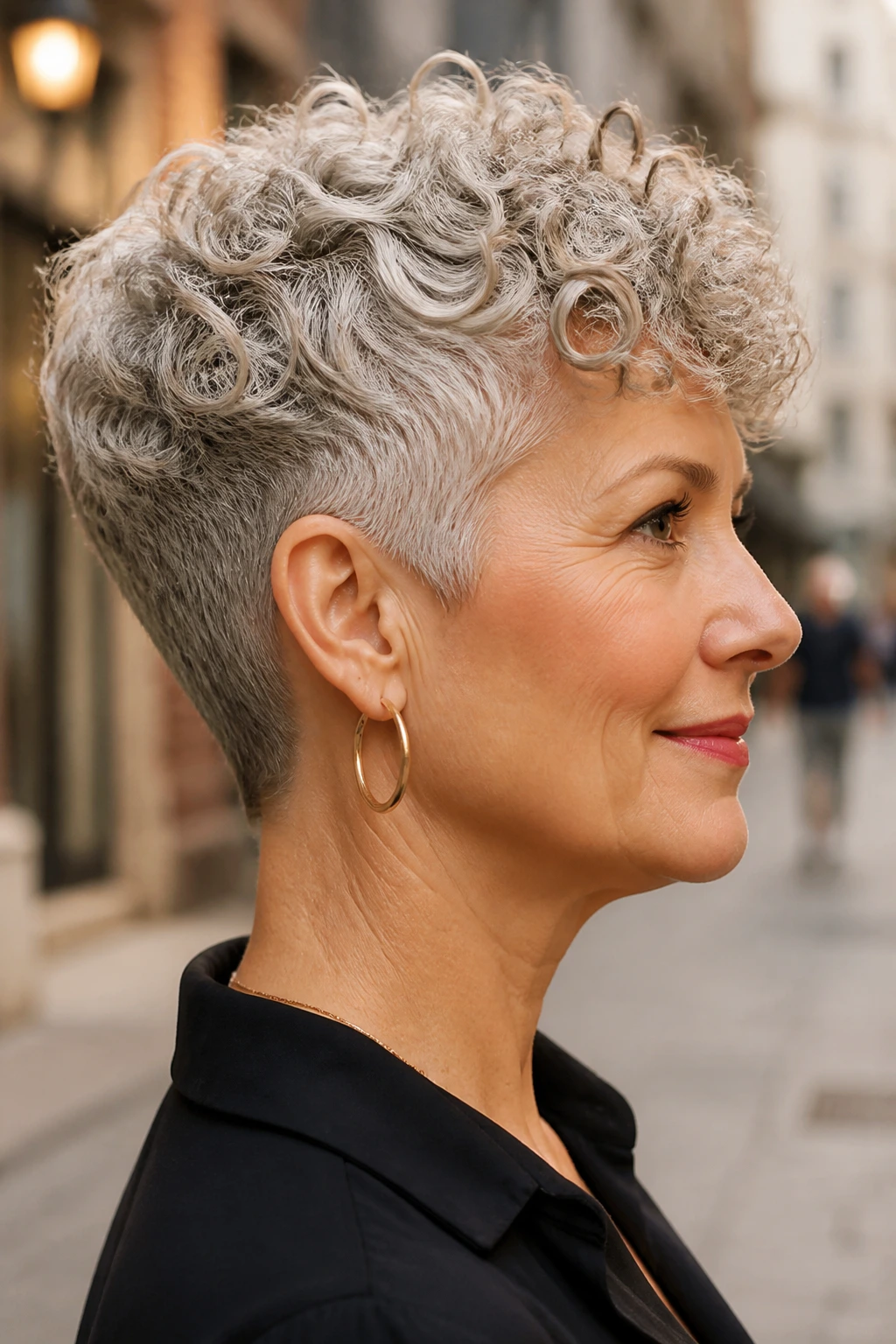
This is the pixie for someone who still wants a little drama on top. The nape is tight and neat, almost polished, while the crown and front keep enough length to swirl, lift, and move. It gives the face a bit of height, which is useful if the cheeks have softened or if the hairline has changed.
It’s a strong choice for women with finer curls that need the illusion of fullness. The short back prevents the cut from dragging, and the longer top makes the whole thing look intentional rather than minimal. A little mousse at the roots and a bit of finger coiling at the front can turn this into a proper shape in under ten minutes.
This cut also behaves well with gray hair. Silver strands catch light differently on the crown and the sides, so the texture reads clearly instead of blending into one flat tone.
9. Rounded Curly Bowl Cut for Springy Texture
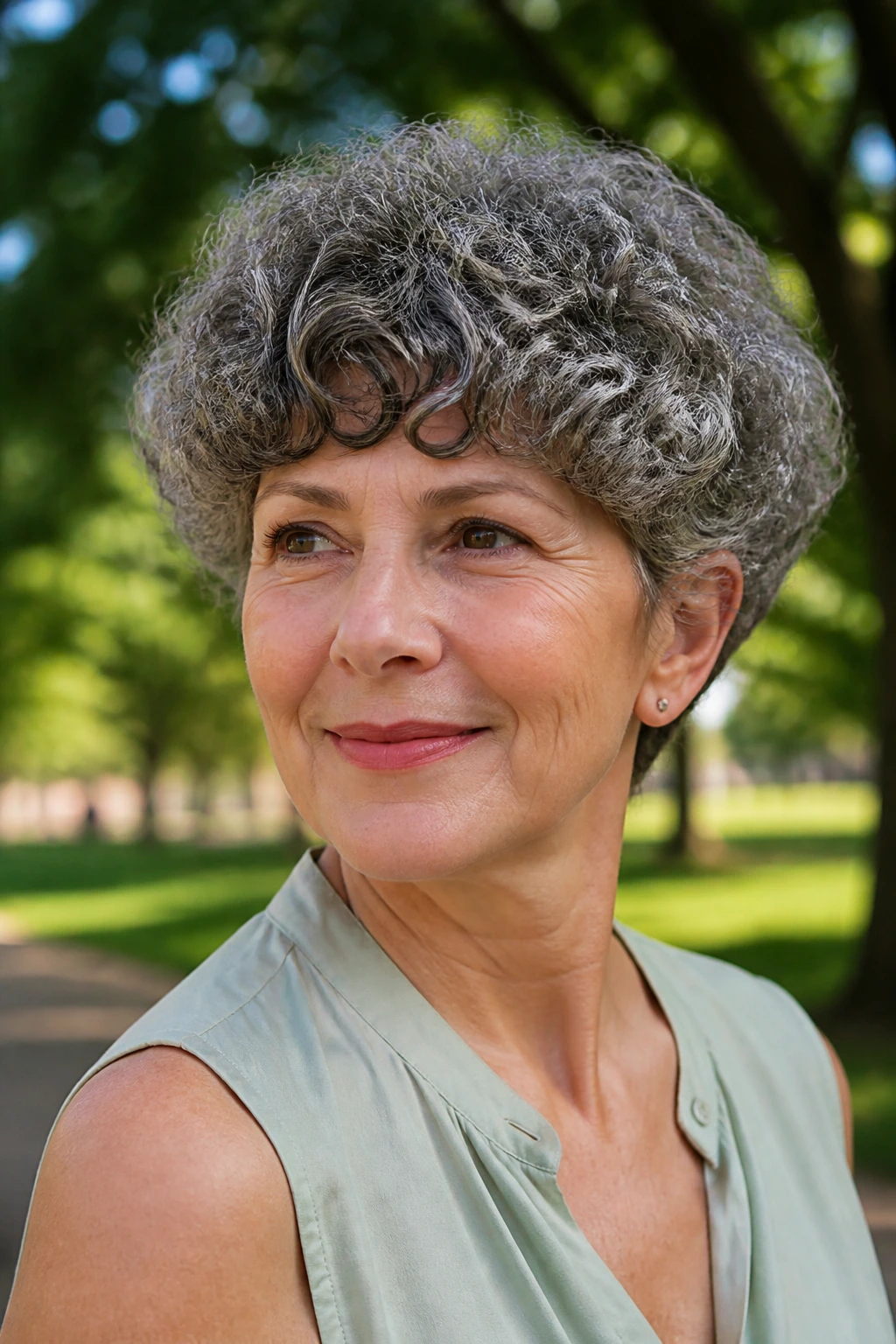
A modern curly bowl cut is nothing like the stiff, helmet-like version people picture from old photos. Done right, it’s rounded, airy, and a little cheeky. The outline follows the head, the fringe stays soft, and the curls fill the shape instead of fighting it.
This cut makes sense on springy curls that naturally want to pile up. Rather than forcing the hair into a bob or shag, you let the curl pattern create that curved silhouette. It’s especially good if you want a short cut that feels graphic from the front and soft from the sides.
The key is keeping the ends light. Heavy, blunt ends kill the shape fast. Ask for softness through the perimeter and enough room at the crown so the curls don’t sit on top of your head like a lid.
10. Center-Part Spiral Bob at the Chin
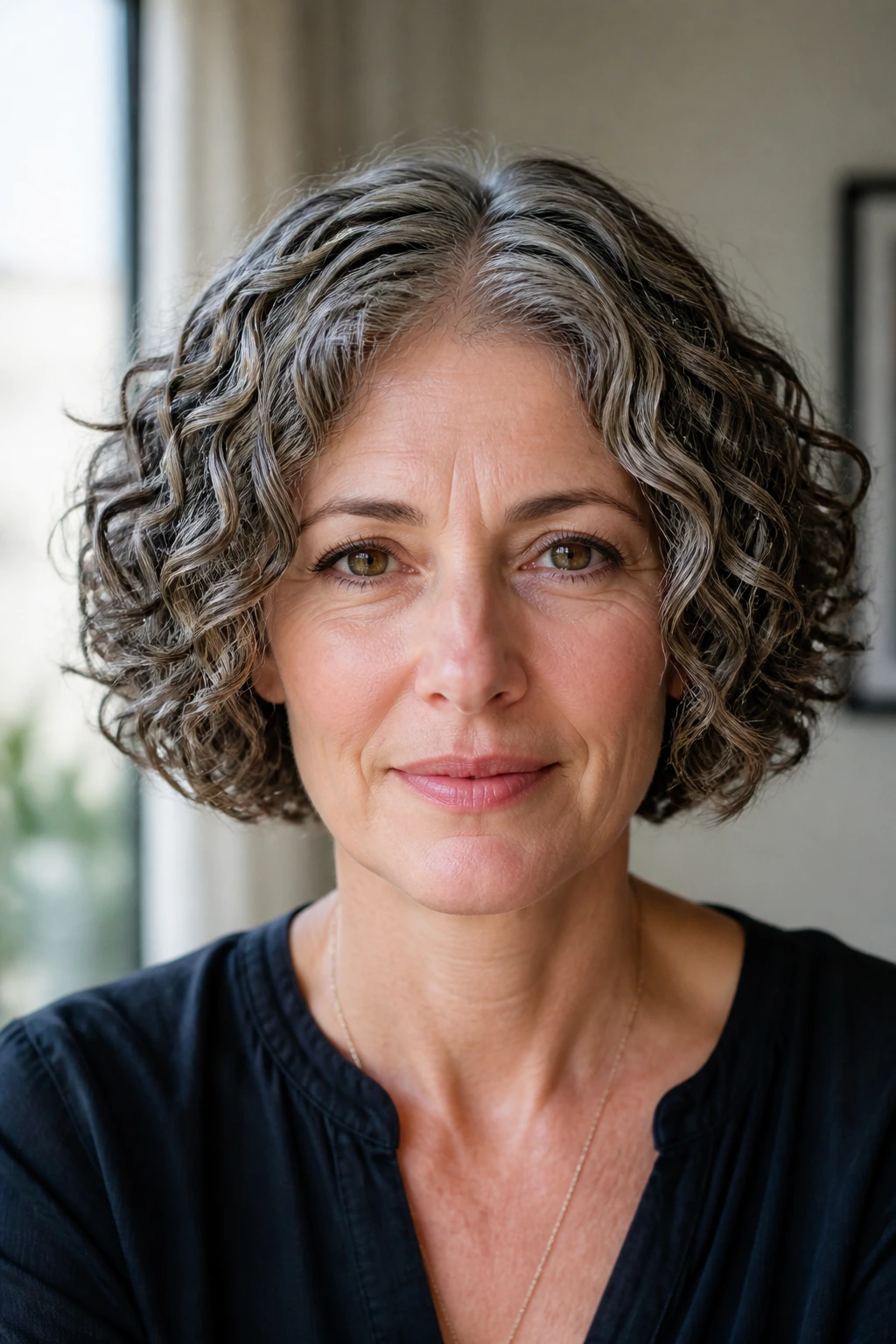
A chin-length bob with a center part can be very elegant on spiral curls. It gives symmetry, but not the boring kind. The curls split down the middle and fall like matched pieces, with enough movement to keep the style from looking rigid.
This shape works best when the hair has some density but not too much bulk. A little interior layering can stop the bob from ballooning at the cheeks. On square or oval faces, it often looks clean and balanced. On rounder faces, keep a few pieces slightly longer around the jaw to add length.
What I like most is the simplicity. No special tricks. No elaborate styling routine. Just a shape that lets the spirals do what they already want to do.
11. Nape-Grazing Wedge Cut for Thick Curls
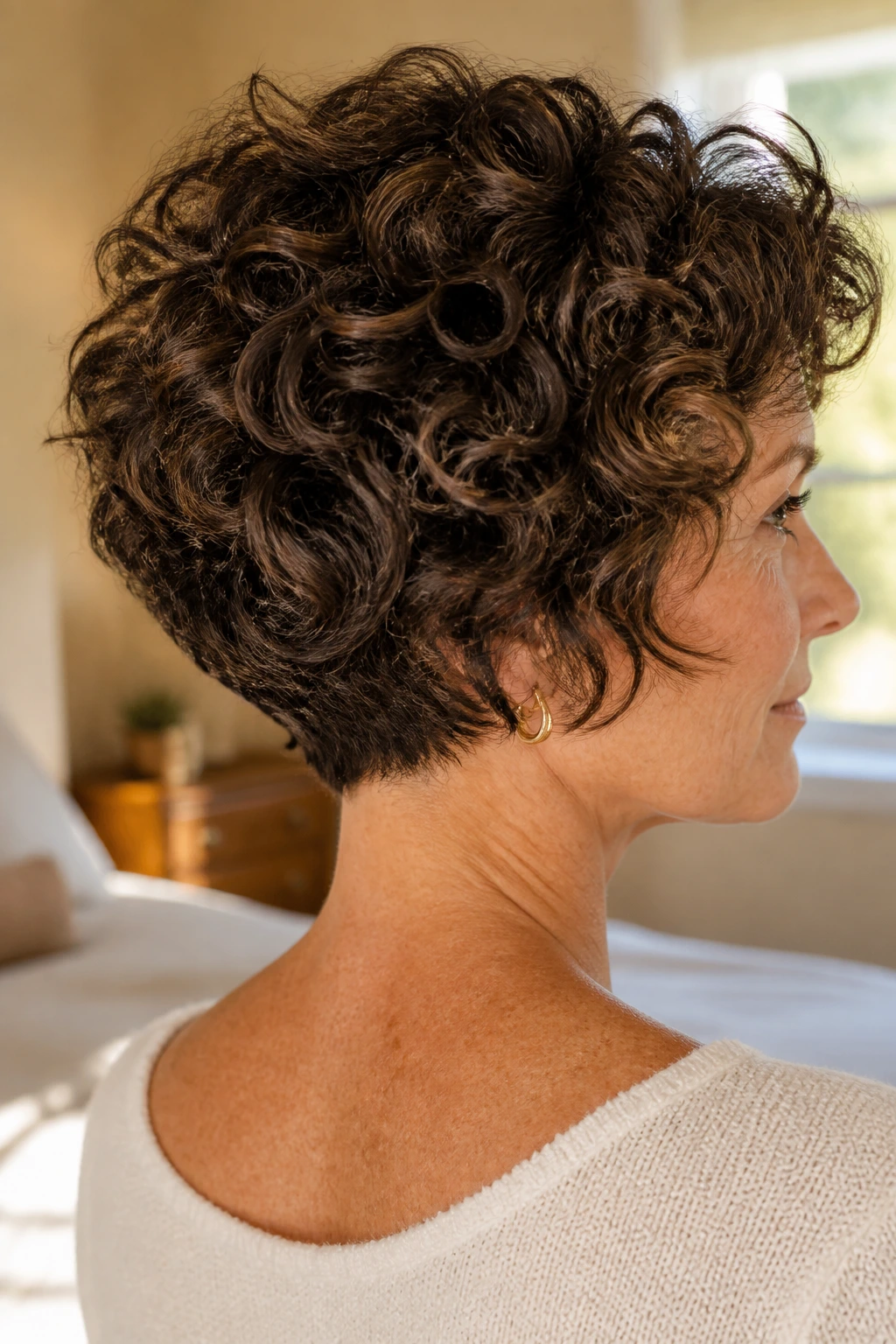
The wedge cut lives or dies on the angle at the back. On thick curls, that angle can be a gift. The hair is shorter at the nape and gradually gets fuller toward the top, which helps the whole head look lifted without adding a lot of styling work.
This is not a timid cut. It has structure. The benefit is that heavy curls get room to stack without swallowing the neck. If your hair grows out in a big triangle, a wedge can be the difference between shape and bulk.
I prefer this cut on people who want a neat outline but still like some body. It’s especially good if your hair tends to expand in humidity, because the shorter back keeps the silhouette under control. The drawback is that it needs more frequent cleanups than a shag. That is the price of a sharp line.
12. Shaglet: The Pixie-Bob Middle Ground
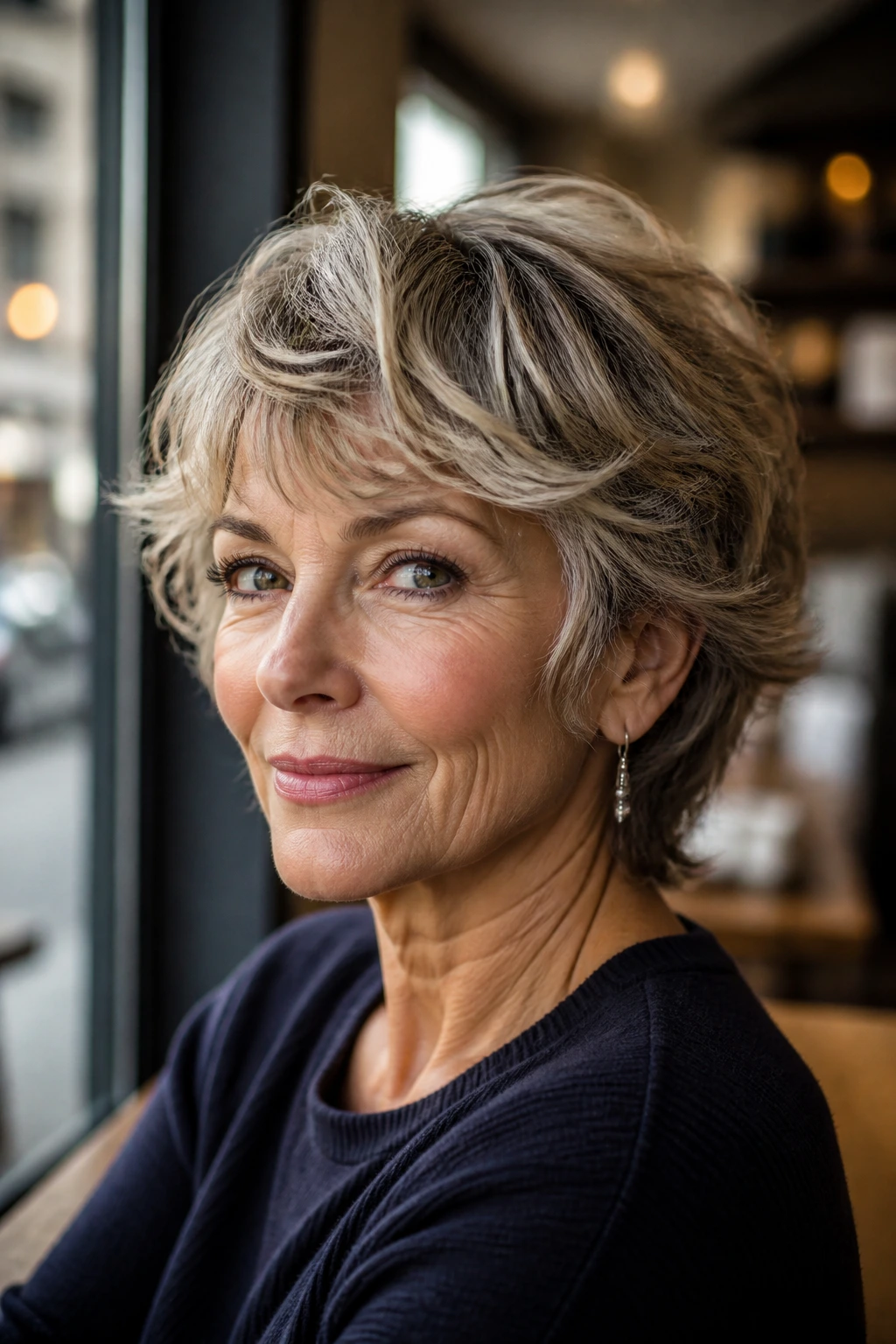
The shaglet sits between a pixie and a bob, which is exactly why so many curly-haired people end up loving it. It has the soft movement of a shag, the shortness of a crop, and enough length around the front to frame the face. The result feels casual, but not sloppy.
This is the cut for someone who says, “I want short hair, but not too short.” It gives you shape without taking away all the curl behavior you enjoy. A few longer pieces around the ears and forehead keep it feminine in a very direct, practical way.
It’s also one of the easier cuts to grow out. That matters more than people think. If you get restless after six weeks, the shaglet doesn’t punish you the way a very tight pixie can.
13. Tapered Coil Cut for Tighter Natural Texture
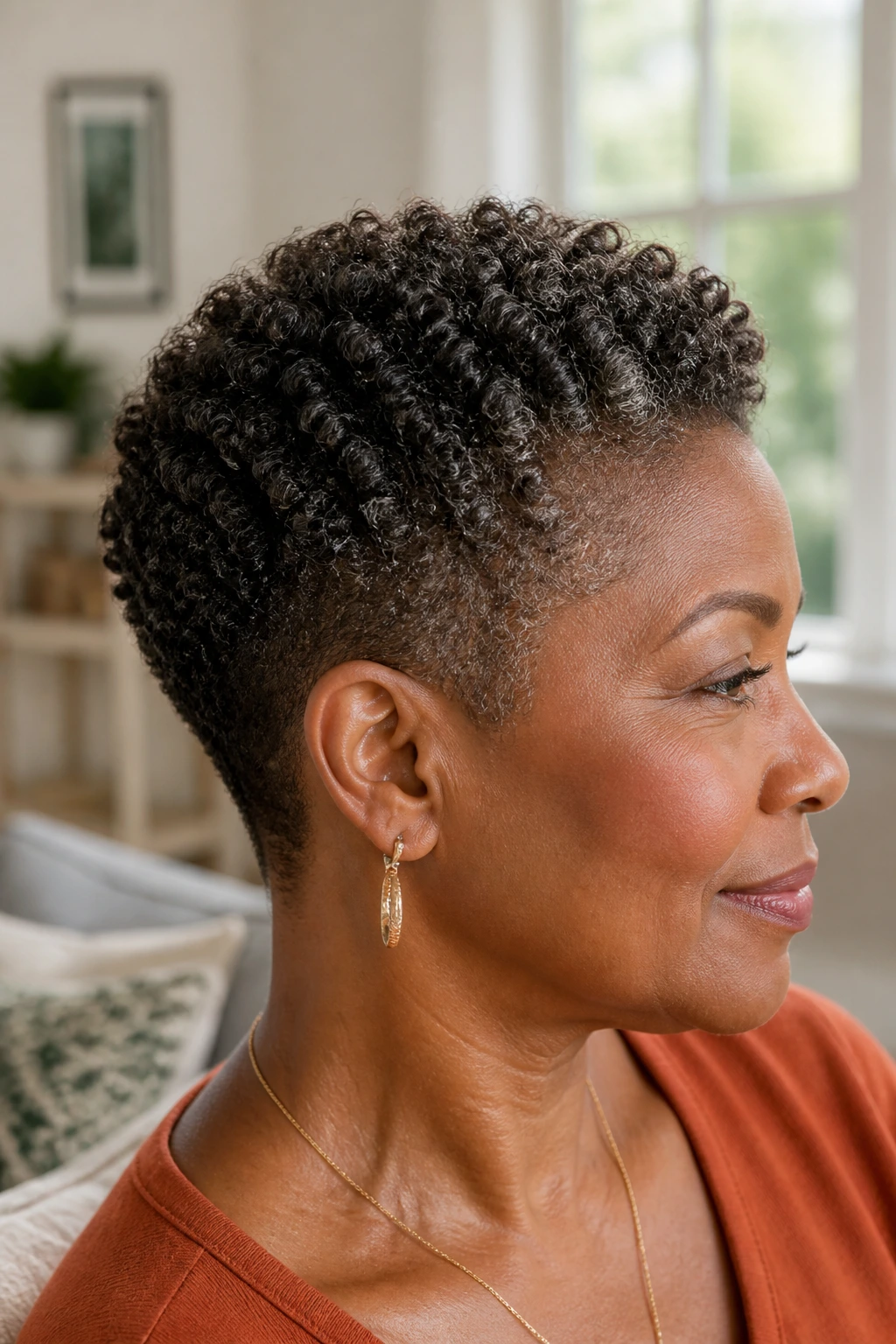
Tighter coils need a cut that respects shrinkage and density at the same time. A tapered coil cut does exactly that. The sides and nape sit closer to the head, while the top and crown keep enough length to show the coil pattern instead of compressing it.
This is one of the cleanest ways to wear short natural texture over 50 without constantly reshaping it. The taper keeps the outline neat, and the top stays soft enough to feel like hair, not architecture. If you want a style that looks polished with minimal manipulation, this belongs near the top of your list.
A dry cut is often the best approach here. Coils can hide a lot when wet. Cut them where they live, not where they pretend to be.
14. Rounded Afro Crop With a Soft Outline
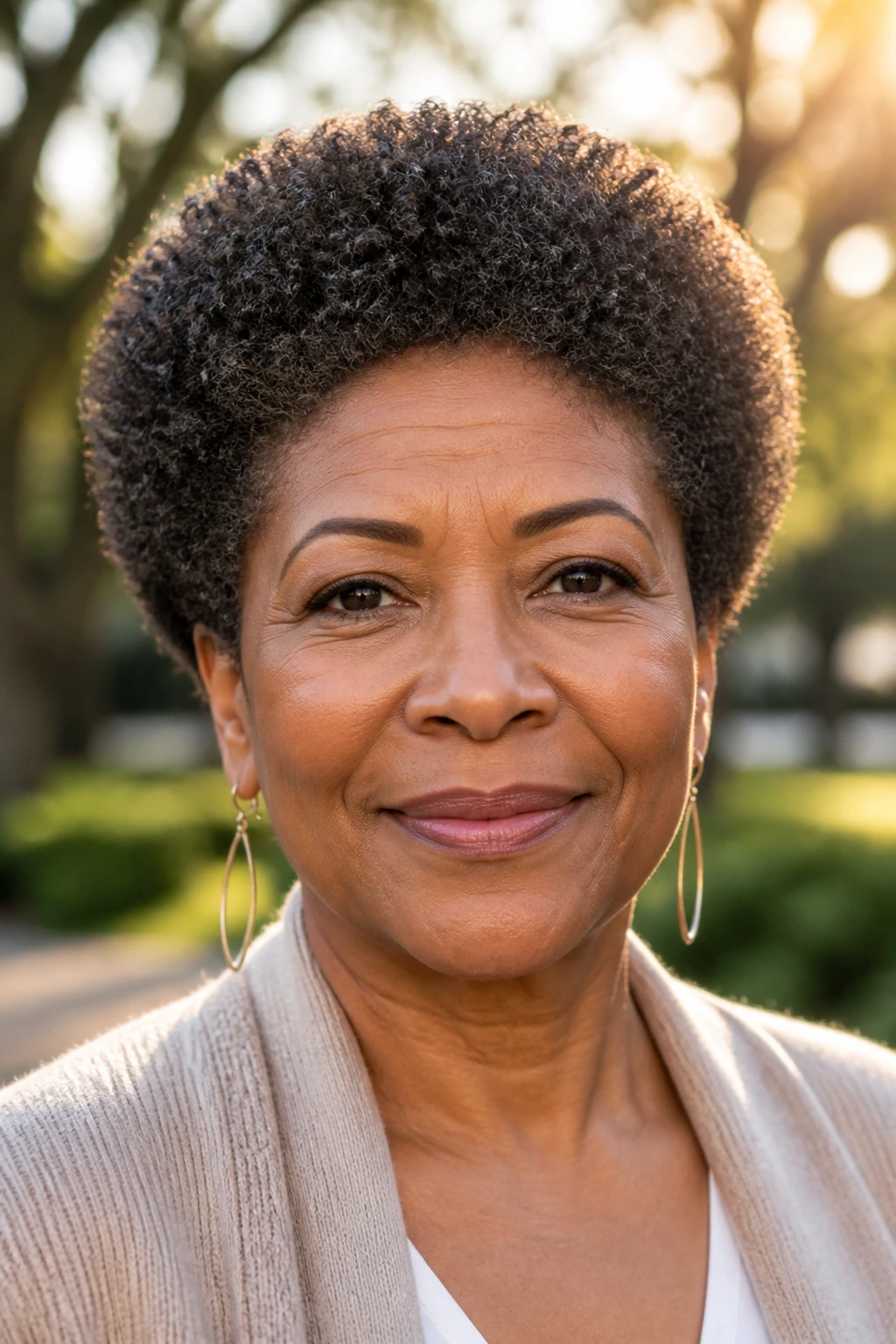
A rounded afro crop keeps the texture front and center. Instead of flattening the coil pattern or carving it into hard corners, the cut creates a soft halo around the head. It’s compact, neat, and full of personality.
The shape works especially well if you want something that wears evenly from every angle. The sides are not trying to compete with the top; they support it. A good shape-up at the hairline and nape can keep the whole thing crisp for weeks.
This style is one of the most honest cuts on the list. It does not pretend the hair is anything else. That may be why it looks so good.
15. Curly Undercut With a Bold Crown
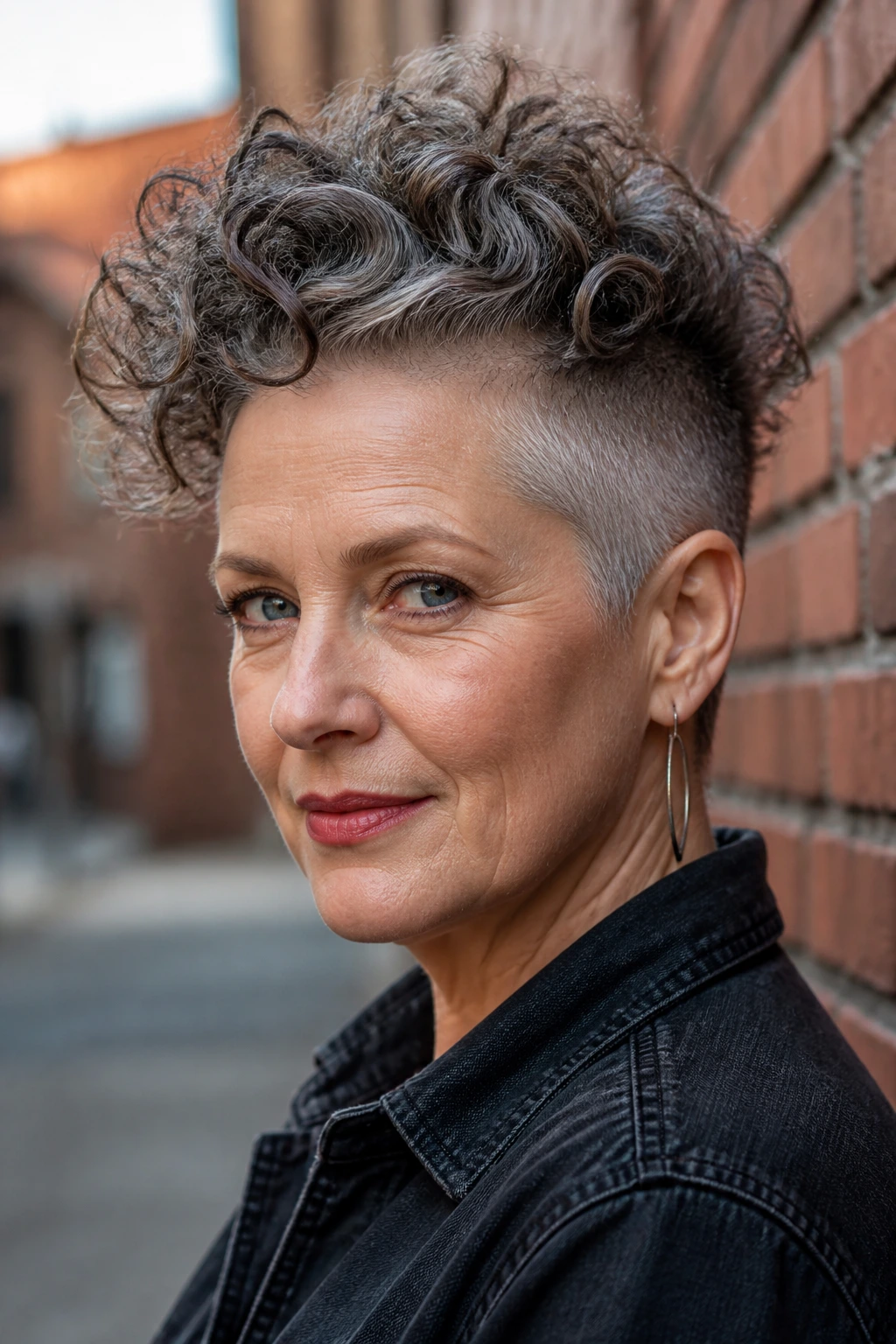
An undercut sounds dramatic, and it can be, but on curly hair it often solves a very practical problem: too much bulk. Removing weight from the sides or back lets the crown rise without turning into a mushroom. The top stays full, which is where the interest lives.
I like this especially for thick, springy curls that take forever to dry. The undercut reduces the mass underneath, so the visible hair dries faster and behaves better. If you are tired of spending half your life under a diffuser, this cut can make a real difference.
The style is not for everyone. You have to like contrast. But if you do, it gives a short curly cut a little edge and a lot of control.
16. Side-Parted Volume Crop for Fine Hair
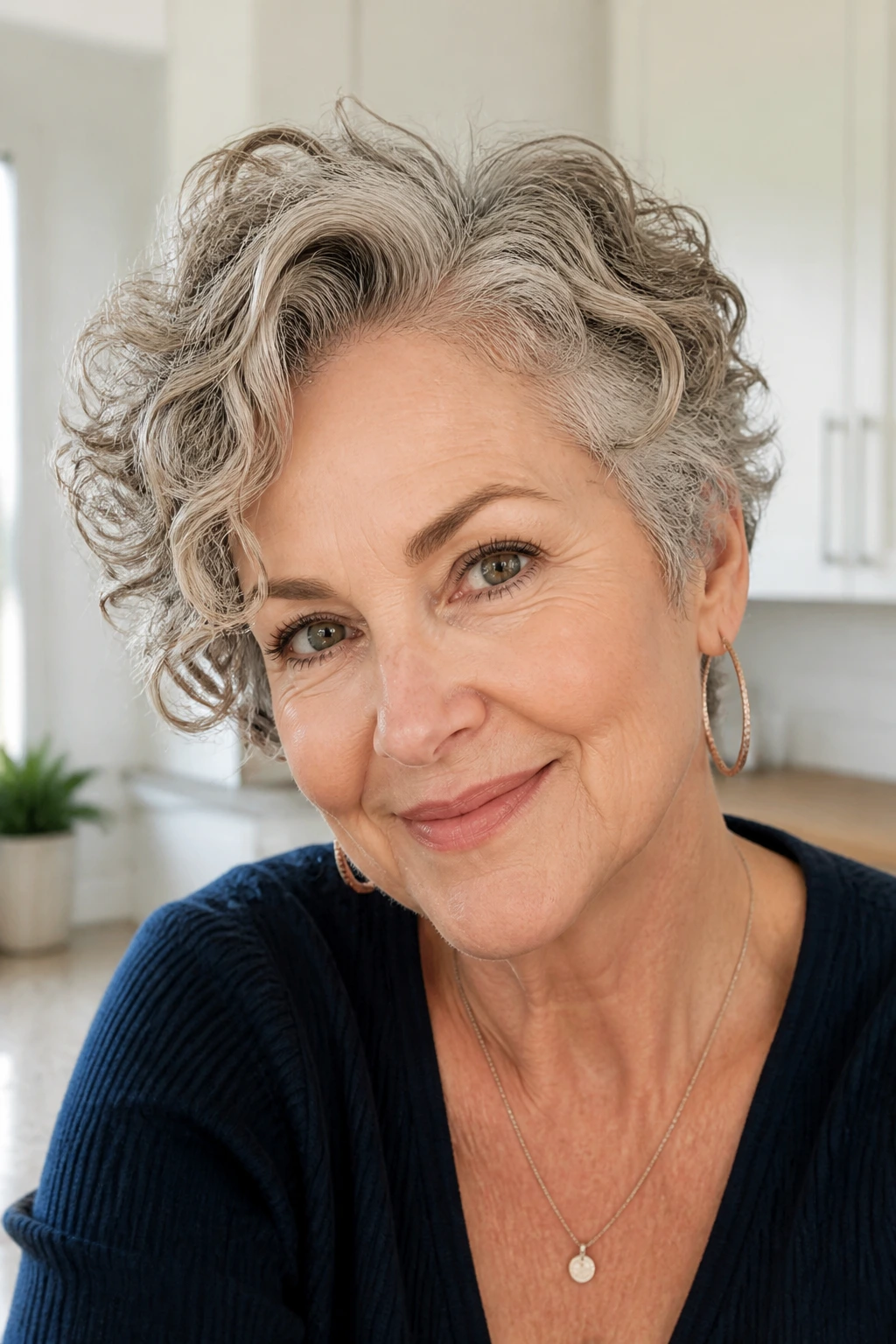
Fine curly hair needs help, and a side-parted crop is one of the simplest ways to give it. The part creates lift right away, and the shorter shape keeps the curls from collapsing under their own weight. No fancy trick. Just smart geometry.
The side part also helps disguise any thinning at the crown or temples, which becomes more common with age. A slight lift at the roots, plus a light mousse or root spray, can make the cut look denser than it actually is. That’s not cheating. That’s styling.
This cut should stay airy. Heavy creams and thick oils will only flatten it. Use the lightest product that controls frizz and move on with your day.
17. Triangle-Busting Curly Bob With Hidden Interior Layers
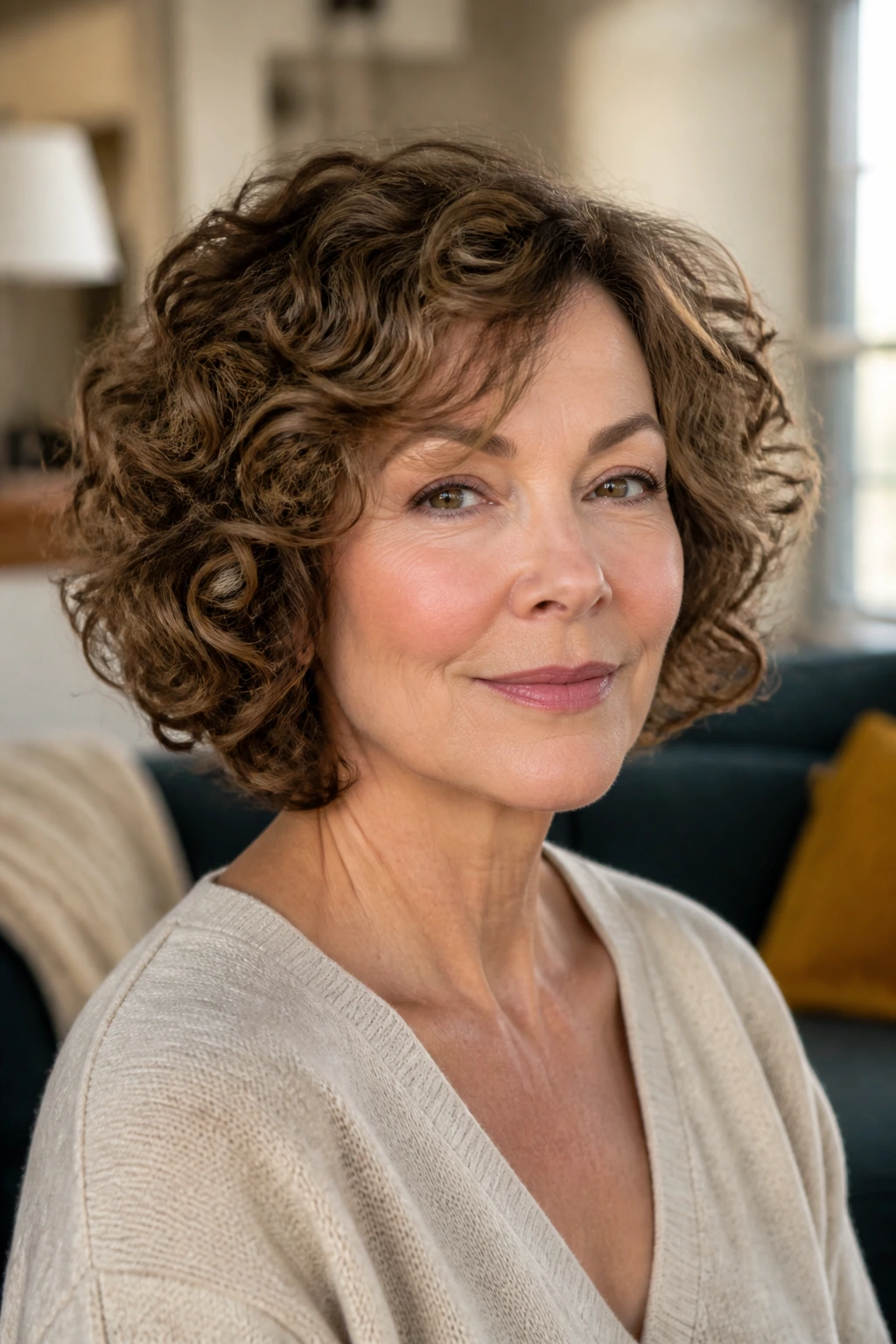
If your curls puff out at the sides but go flat on top, this is the fix. Hidden interior layers remove bulk from inside the cut without breaking the outer line too much. The bob stays clean, but the triangle shape disappears.
That’s the part people miss. They ask for “layers” and end up with a choppy cut that frizzes everywhere. What they actually needed was internal structure. A stylist who knows curly hair can remove bulk where it matters and leave the surface looking calm.
This bob is especially good for dense hair that reads too wide in humid weather. It’s controlled without being stiff, and that’s a nice place to be when you want shape but not fuss.
18. Crown-Heavy Pixie With Sleek Sides
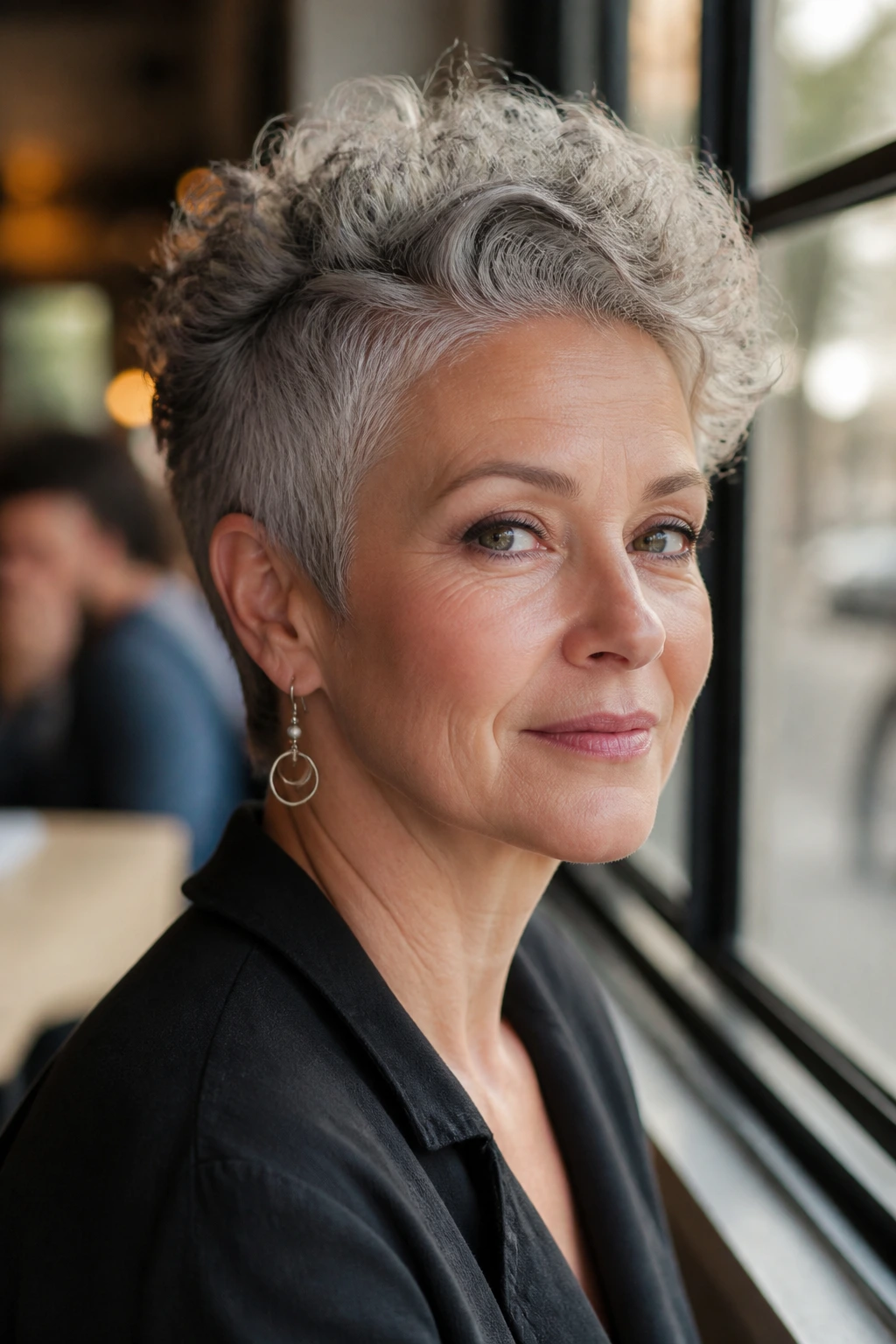
A crown-heavy pixie is all about balance. The sides stay short and close, while the top has enough length to build height and movement. It’s a smart cut when the face needs some lift or when the hairline has become a little softer.
What I like here is the contrast. The sleek sides make the crown look fuller than it really is, which is useful if your curls are starting to separate into thinner sections. A root-lifting product at the crown and a quick scrunch as the hair dries can sharpen the shape in a hurry.
It’s clean, but not severe. And that distinction matters. The best pixies on mature curls have line and softness at the same time.
19. Wispy Fringe Crop for Forehead Softness
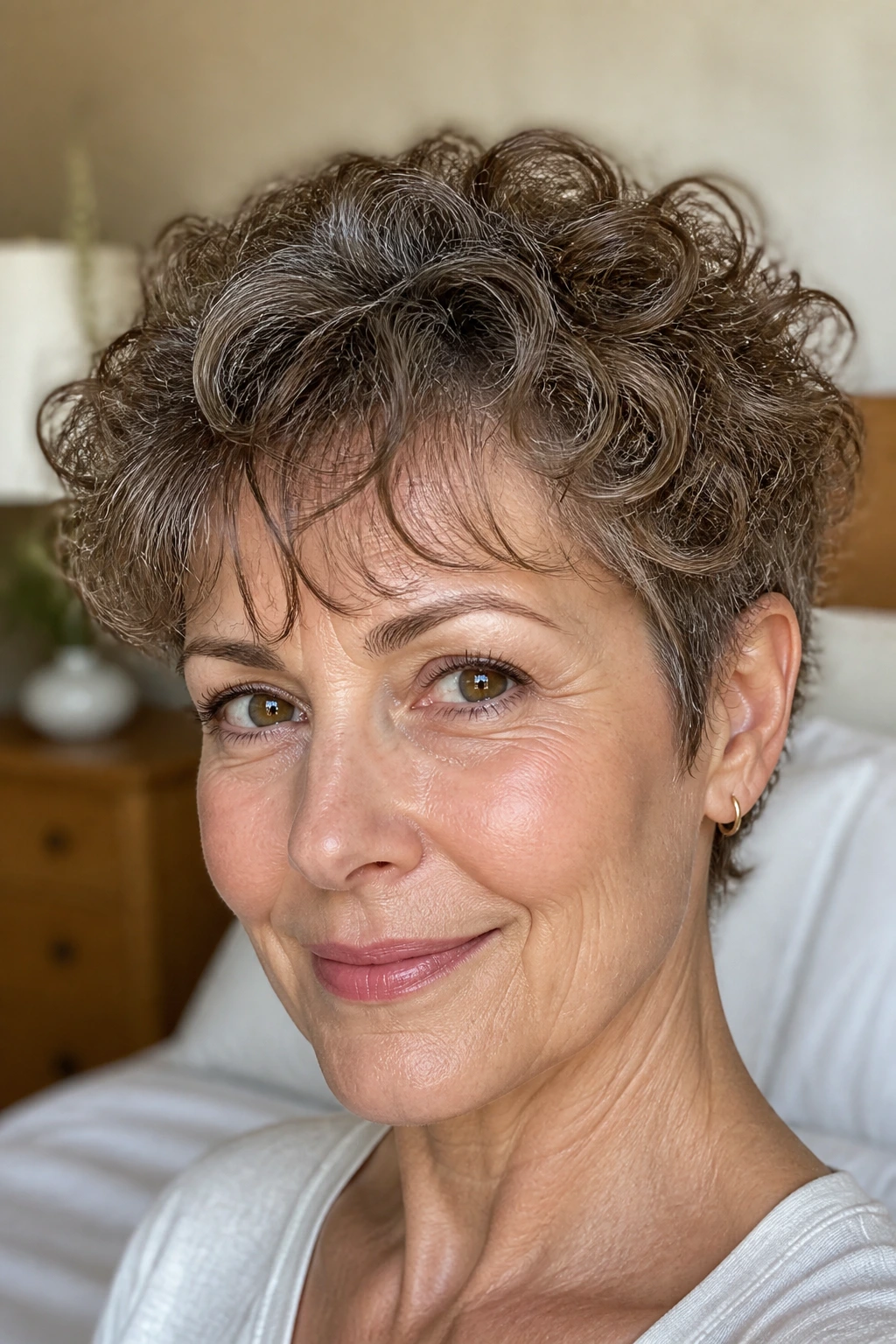
A wispy fringe can do more for a short curly cut than a whole pile of layers. It breaks up the forehead, frames the eyes, and keeps the front from looking too bare. When the fringe is soft, it moves with the curl instead of sitting like a curtain.
This is a good choice if you want some coverage without a heavy bang. The fringe can be shorter in the middle and a touch longer at the temples, which keeps it light. On looser curls, it falls casually. On tighter curls, it can be finger-shaped after washing and left alone.
The important part is restraint. Too much fringe turns into a shelf. A little fringe reads as intentional. Big difference.
20. Salt-and-Pepper Tousled Crop With Dimension
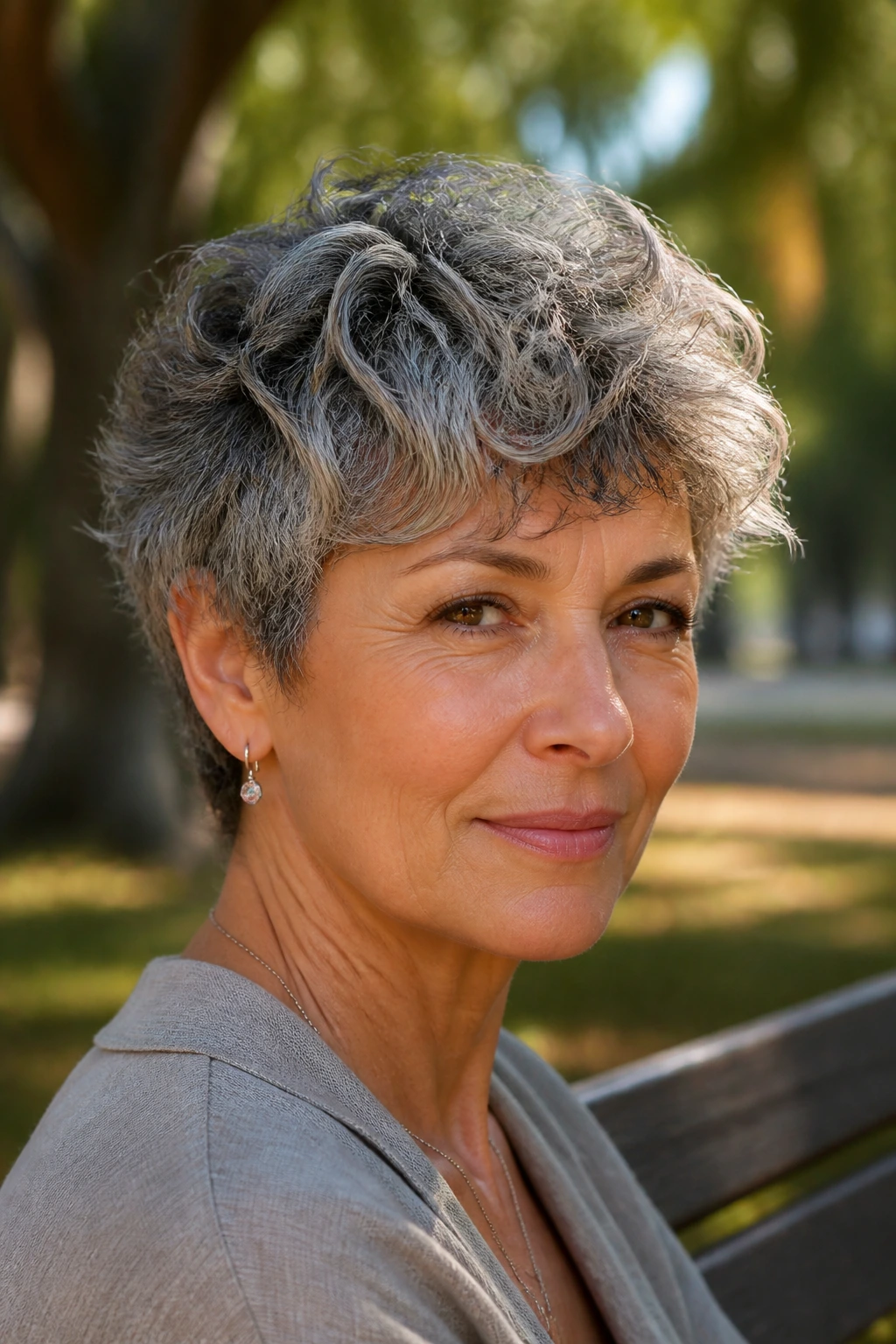
Gray and silver hair often looks best when the cut gives the color room to show off. A tousled crop does that by keeping the shape relaxed and the layers soft. The curls separate enough to show tone shifts, which is one reason salt-and-pepper hair can look so vivid in a short cut.
This style thrives on a bit of mess. Not chaos. Just enough looseness that the individual curls don’t all sit in the same direction. A small dab of curl cream and a bit of scrunching is enough for most days. I’d avoid heavy shine products here; they can make the hair look coated rather than textured.
It’s one of the easiest cuts to live with if you like a little movement around the face. The texture does the talking.
21. Curly Fauxhawk With Softer Edges
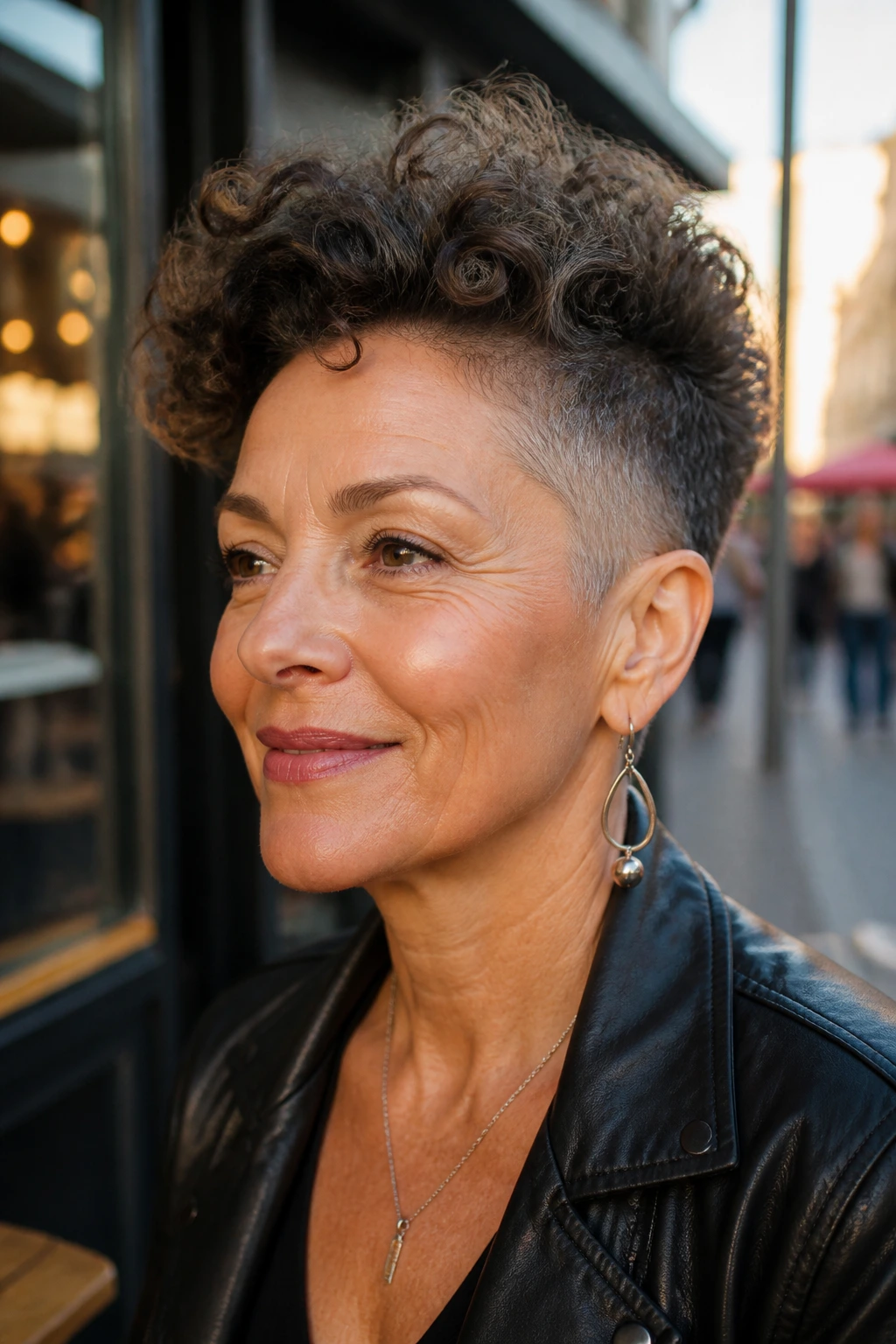
A fauxhawk on curly hair sounds bold, but it can be very wearable when the edges are softened. The sides are shorter, the center ridge stays fuller, and the top runs from the forehead to the crown with enough curl to create lift. It gives the head a long, elegant line.
This cut is useful if you want something that feels modern without being stiff. It can also solve the same problem as an undercut—too much bulk on the sides—but with more personality. The top becomes the feature, not the afterthought.
It looks best when the curls are defined, not crunchy. Soft hold is enough. Anything too hard makes the whole thing feel dated.
22. Curved Pageboy Bob With a Clean Neckline
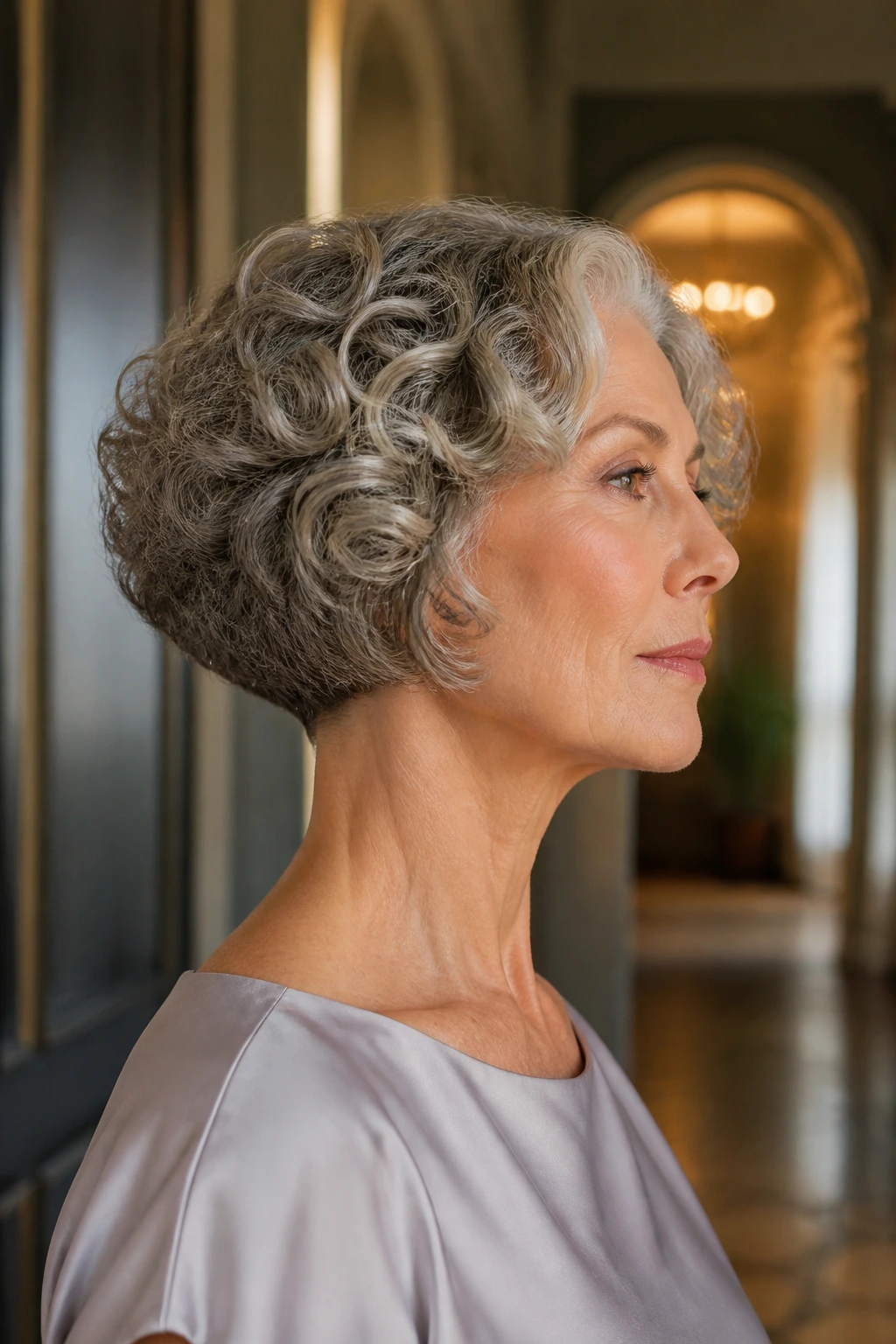
The pageboy gets a bad reputation from old school photographs, but the curly version can be lovely. The cut curves under at the ends, the neckline stays clean, and the sides sweep gently toward the face. On curls, that curve turns into a soft roll rather than a hard flip.
This is a nice choice if you like structure and neatness. It sits closer to the head than a shag, but it is less severe than a blunt bob. The shape can make the neck look long and tidy, which is one reason it works so well with short hair.
Ask for softness at the ends so the curl pattern can break the line a little. That keeps it from looking too set or dated.
23. Feathered Crop With Airy Ends
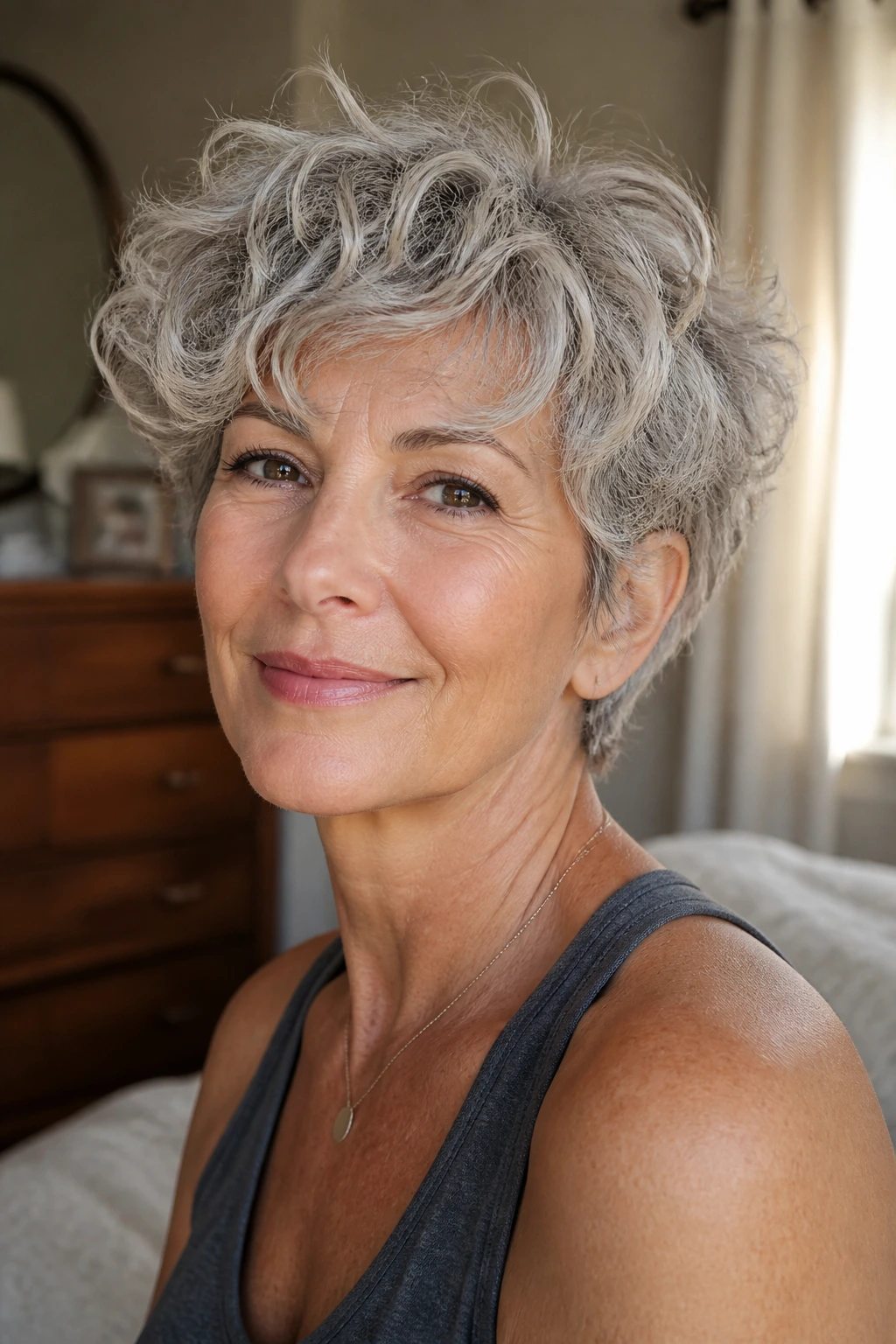
A feathered crop is the cut for anyone who wants short hair that feels light all over. The ends are softened, the layers are subtle, and the curl pattern is given room to move instead of stacking up in one dense block. It’s especially useful if your hair gets frizzy when it’s crowded.
This cut can be worn polished or tousled, which is one reason it earns its place here. You can smooth the top for a cleaner look, or you can let the ends stay piece-y and a little wild. Either way, the silhouette stays manageable.
It’s also a good finishing shape if you’re moving out of a longer bob and don’t want the transition to feel abrupt. The feathering keeps it friendly.
How to Style Curly Hairstyles for Short Hair Over 50 on Busy Mornings
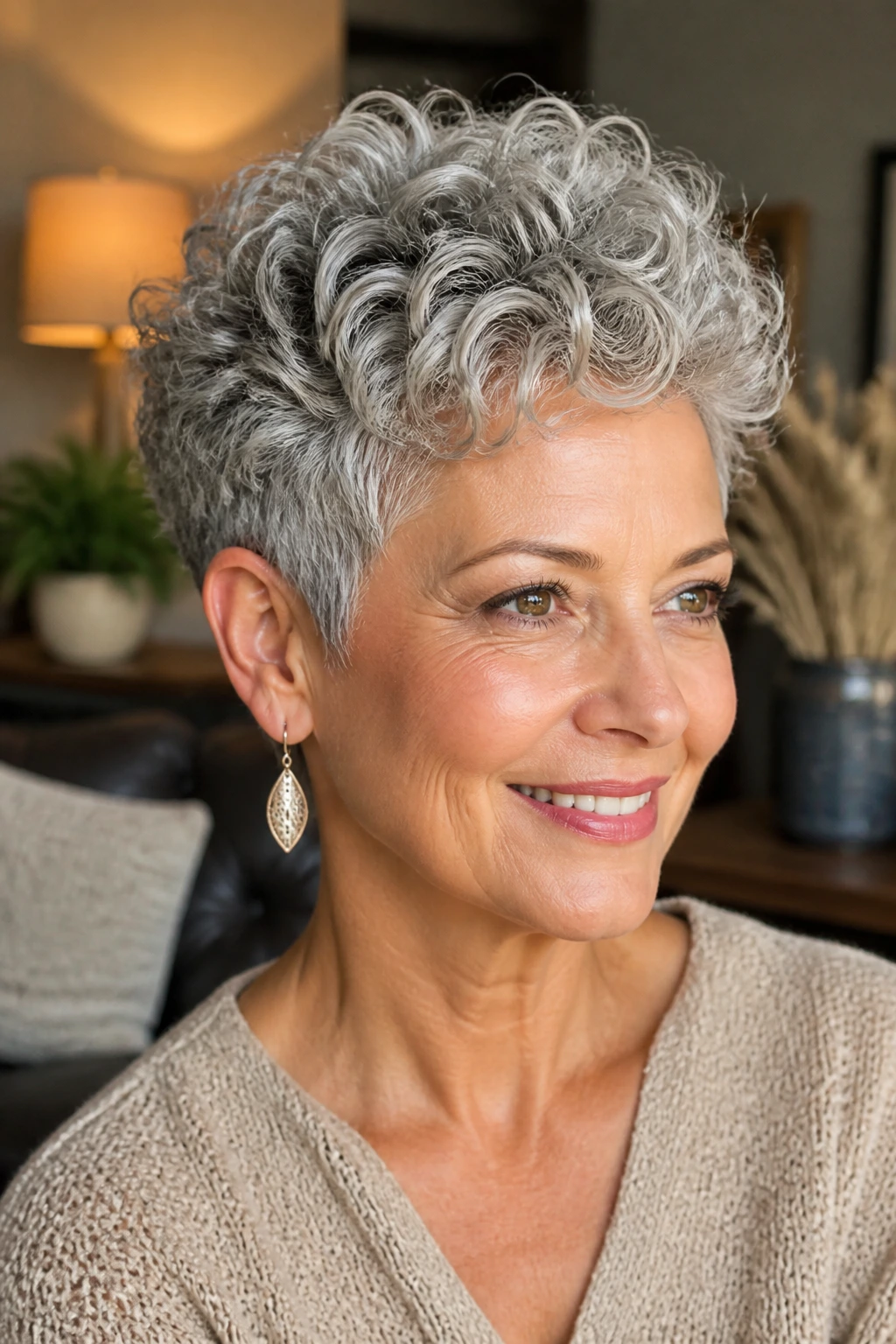
Product weight matters more than product count. A short curl cut usually needs one styler for shape and one for hold. If your hair is fine, start with mousse at the roots and a light cream on the ends. If it’s thick or coarse, swap the cream for a lighter leave-in and use gel where frizz shows first.
Diffuse in sections, not all at once. Dry the crown first if it collapses easily, then move to the sides. Keep the dryer on low heat and low speed. Hot air too close to the ends is how you get frizz that looks like static with feelings.
Refresh the front before you touch the back. The bangs, fringe, and face-framing pieces tell the whole story. A small spray bottle with water and a drop of leave-in can wake them up in seconds. The back usually needs less attention than people think.
Ask for the shape you want when the hair is dry. This sounds obvious, but it gets skipped all the time. If you want height at the crown or softness at the jaw, show that with your fingers. A vague “short and curly” rarely lands where you want it.
Sleep like the style matters. A satin pillowcase, a loose pineapple, or a satin bonnet will preserve the outline. If you smash short curls into cotton all night, you spend the next morning rebuilding the same shape from scratch.
Mistakes That Make Short Curls Look Smaller Than They Are

Cutting too much length off the top. The cut may look neat in the chair and flat at home. Short curls need some room at the crown to spring back, or the whole style collapses into the head. The fix is simple: leave more length where lift lives.
Using heavy products on fine hair. Thick creams and oils can turn short curls stringy or greasy by midday. If the roots look limp and the ends feel coated, the product is too rich. Switch to mousse, foam, or a lighter gel.
Ignoring the neckline. A grown-out nape makes even a good cut look tired. Short curly hair loses its edge fast when the back gets fuzzy. A trim every 6 to 8 weeks keeps the line clean.
Treating every side like a mirror image. Curls are rarely identical left to right. Forcing perfect symmetry can make the cut feel stiff and overcontrolled. Better to balance the shape than to chase exact sameness.
Skipping a dry check before the final trim. Wet curls can shrink in surprising ways. If the stylist doesn’t check the dry shape, the final line can land too short or too round. That’s where the “Why did my haircut change personality?” feeling comes from.
Variations and Alternatives to Try
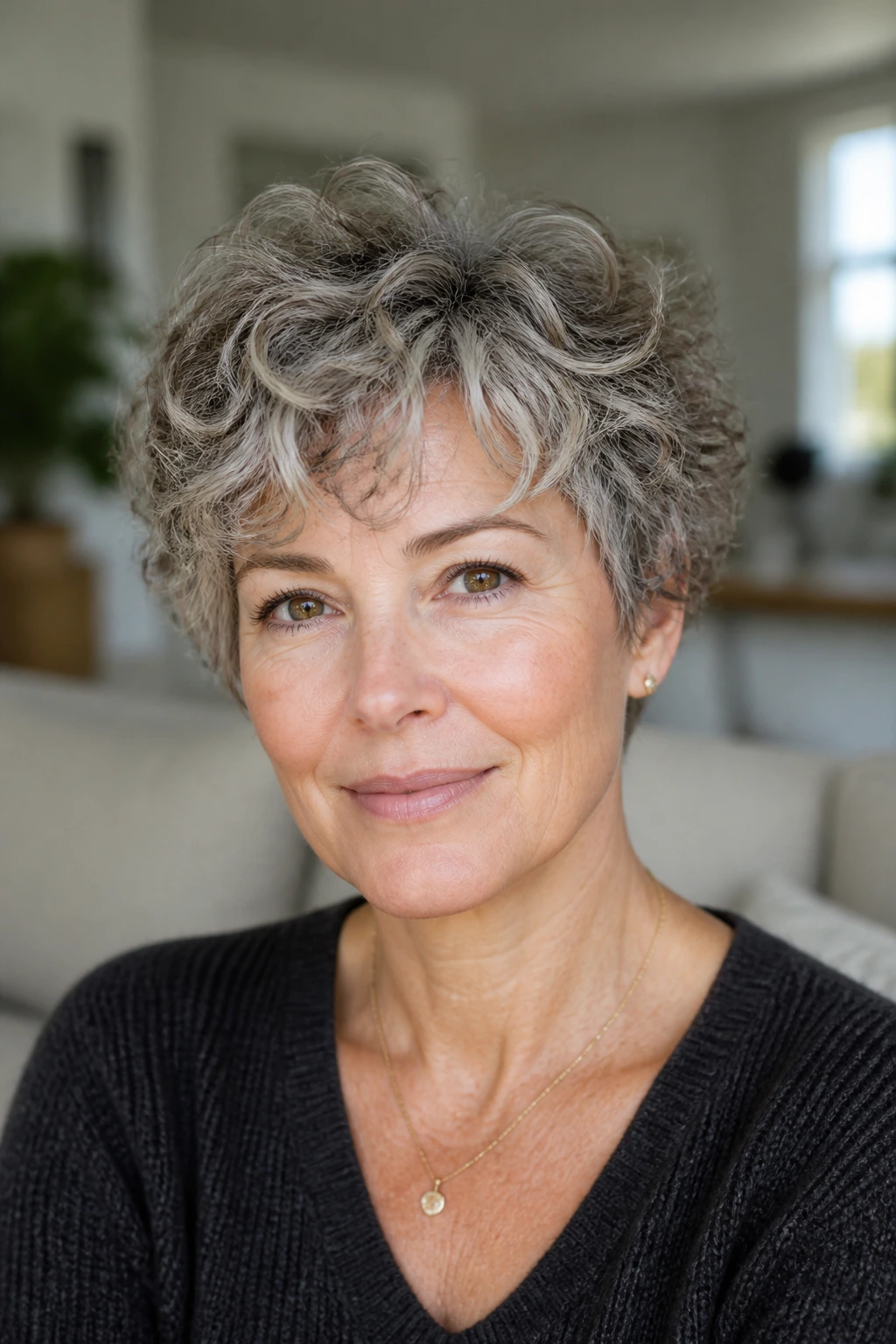
The Fine-Hair Lift Version: Ask for shorter layers at the crown, a softer perimeter, and a mousse-friendly finish. This keeps the cut from collapsing and gives the illusion of more density without piling on products.
The Thick-Curl Weight-Off Version: Go for interior debulking, a stacked back, or a tapered nape. The goal is to remove mass where the hair bulges, not to carve every curl into a separate piece.
The Silver-First Version: Keep the cut clean and the layers soft so gray and white strands can show contrast. Silver hair often looks brightest when the outline is clear and the texture has room to separate.
The Bang-Safe Version: If you’re nervous about fringe, choose side-swept or wispy front pieces that can tuck away. That gives you face framing without the maintenance of a heavy bang that needs constant reshaping.
The Tools That Earn Counter Space
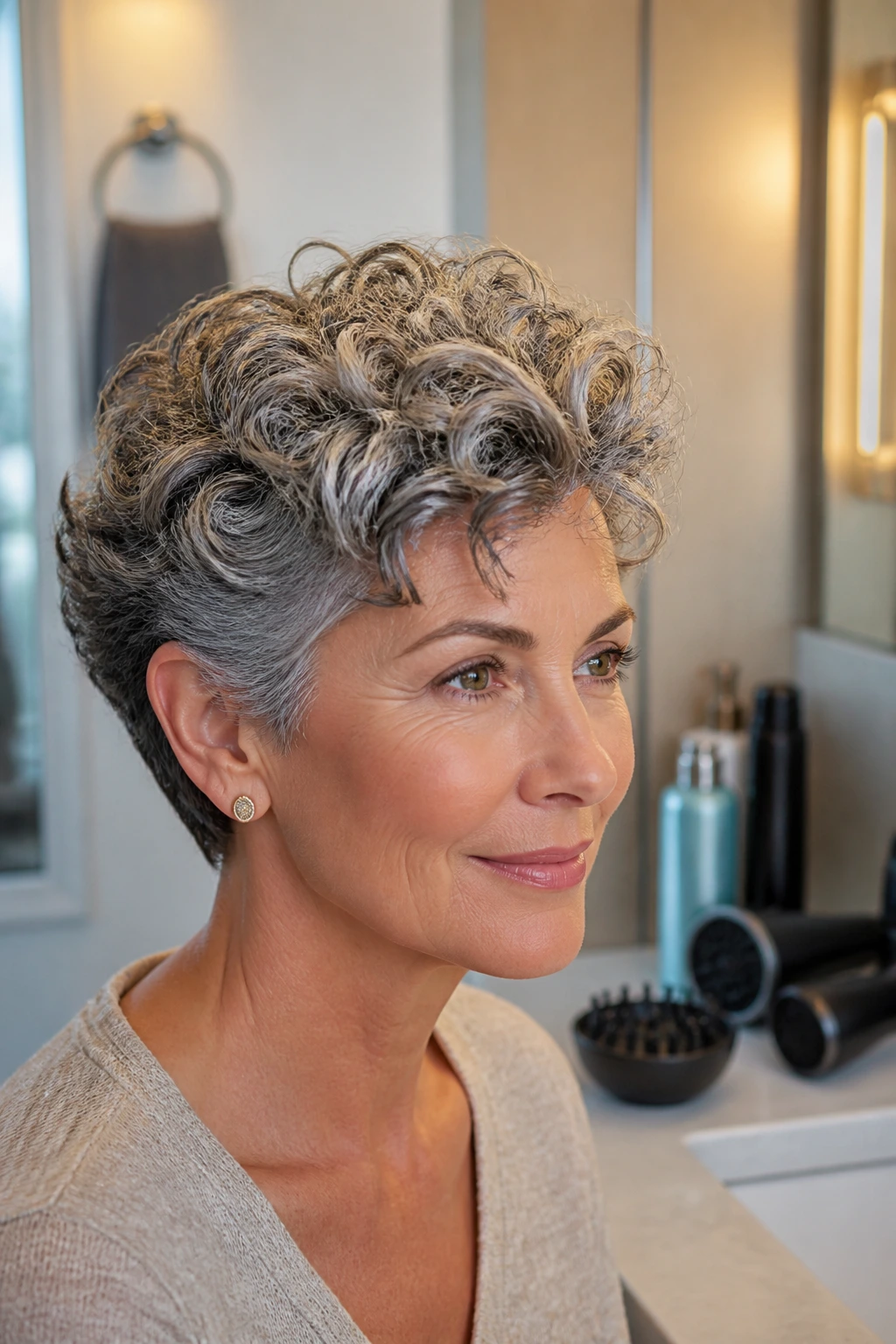
-
Wide-tooth comb: Best for detangling wet curls without ripping apart the pattern.
-
Microfiber towel or cotton T-shirt: Cuts down on frizz when you scrunch out water.
-
Diffuser attachment: Helps short curls hold their shape while drying without blasting them apart.
-
Light mousse or foam: Good for root lift and soft control on fine to medium hair.
-
Curl cream or leave-in conditioner: Useful when the hair is dry, porous, or prone to halo frizz.
-
Light-hold gel: Gives definition on the outer layer of the cut, especially around the face.
-
Clips for sectioning: Handy if your crown dries differently from your sides.
-
Satin pillowcase or bonnet: Protects the cut overnight so you spend less time rebuilding it in the morning.
Keeping Curly Hairstyles for Short Hair Over 50 in Shape Between Washes
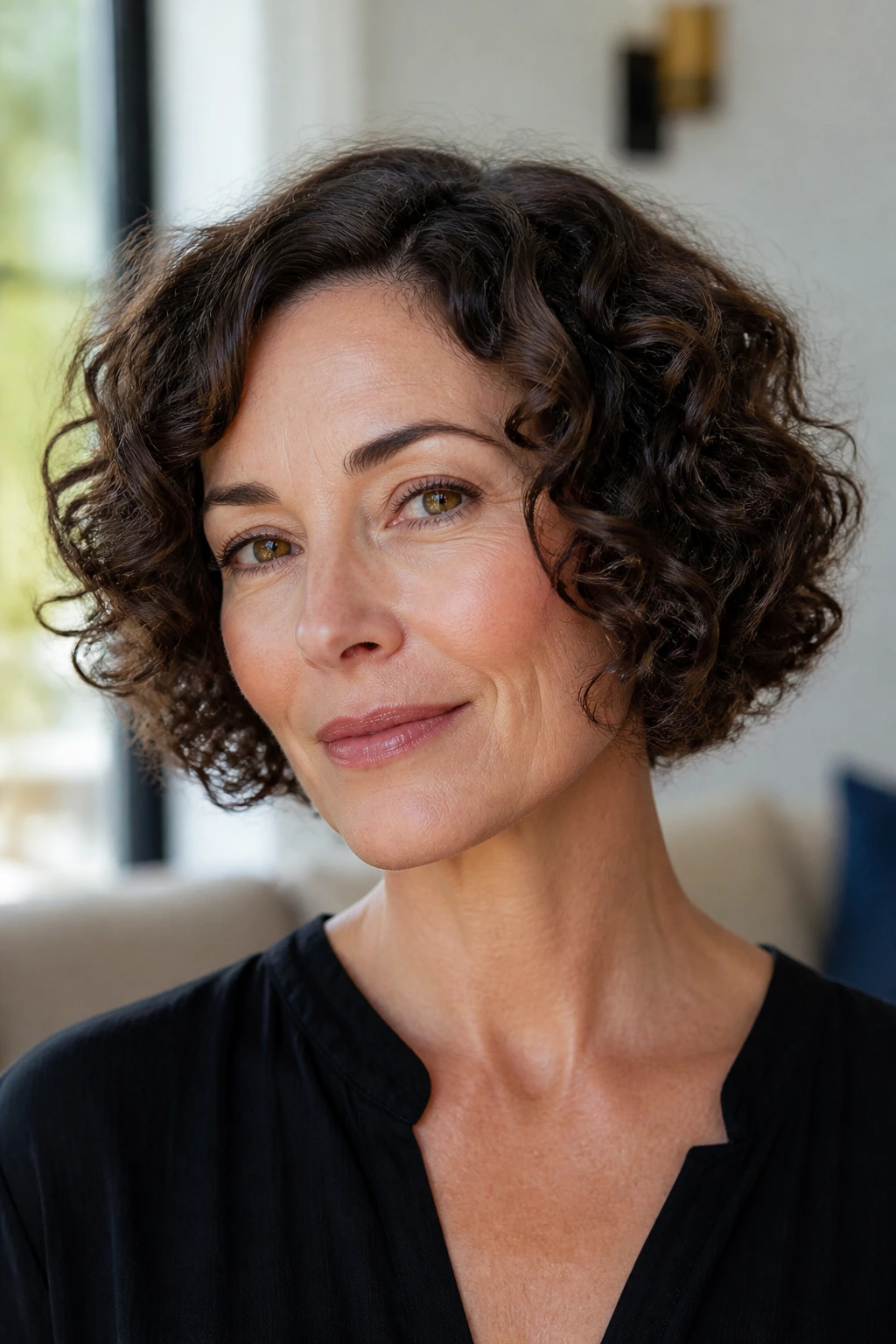
Short curly hair usually looks best for the first two days after washing, then needs a little help. That help should be light. A mist bottle, a pea-size amount of leave-in, and scrunching with clean hands can revive the top without turning the whole head damp.
Night care matters more than people think. If you sleep on cotton, the curls at the back get crushed and the crown gets rough. Satin or silk keeps the shape from getting chewed up overnight, and for short cuts that is half the battle.
Trim schedules are straightforward. Most short curly cuts need a cleanup every 6 to 8 weeks to keep the neckline, fringe, and side shape from wandering. If you wear a sharper bob or wedge, closer to 5 to 6 weeks is better. If your cut is shaggy or softer, you can stretch a bit longer.
Once every few weeks, use a clarifying wash if the curls start to feel coated or dull. Product buildup can make short styles look smaller and less springy. If your roots stay clean but the ends go sticky, that’s usually a sign to reset the routine, not to pile on more cream.
Questions People Ask Before They Book the Appointment
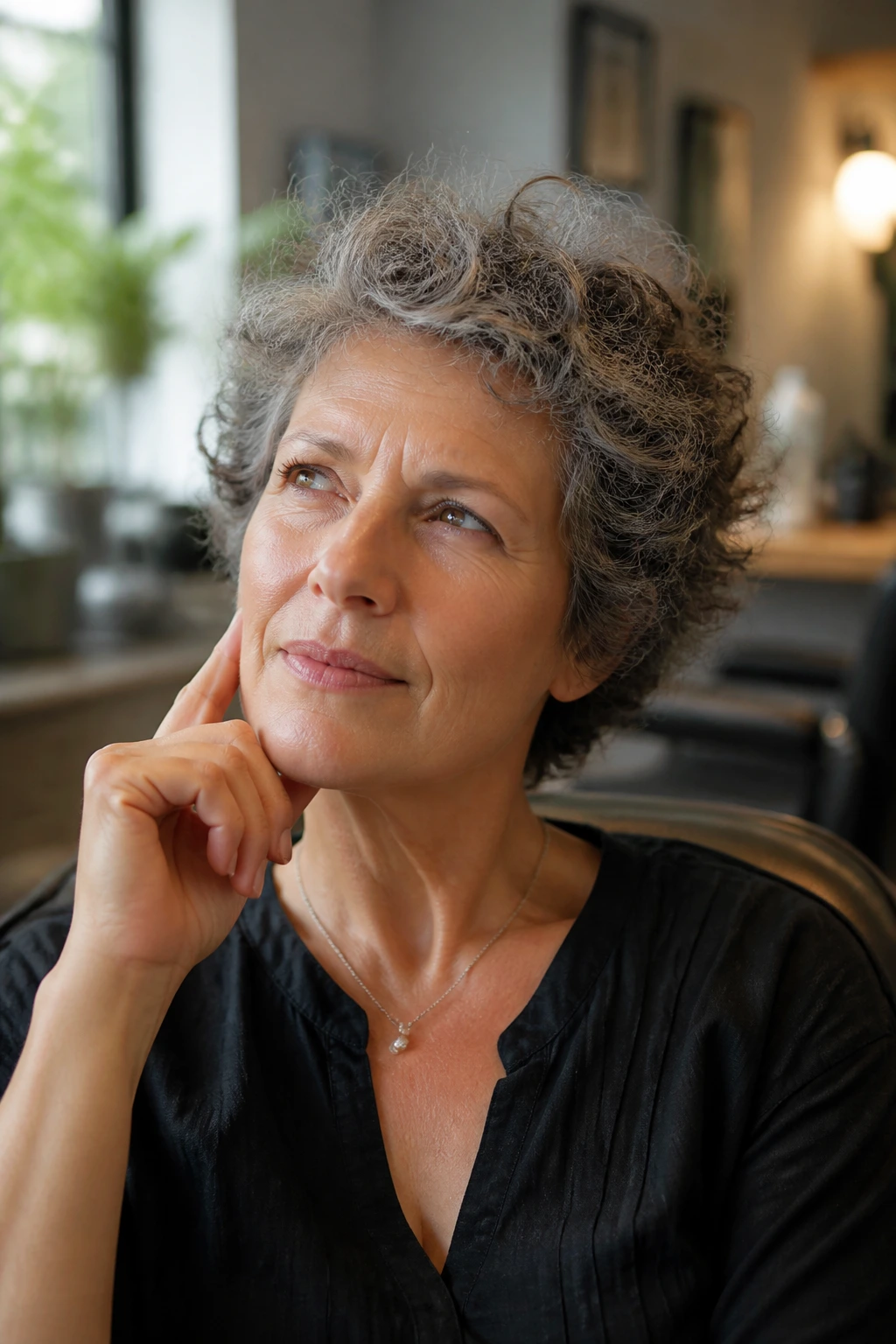
Should short curly hair be cut dry or wet?
Dry cutting is often the safer choice for curls because it shows the real shrinkage and the way the hair falls naturally. Wet cutting can still work, but only if the stylist keeps checking the dried outline before finishing the shape.
Will a short cut make my curls look tighter or looser?
Usually tighter at the eye level, because there’s less weight dragging the curl down. That can be a good thing if the ends have gone limp. If you want softness, ask the stylist to keep enough length at the crown and front.
Can fine curly hair wear a pixie without looking flat?
Yes, but the shape needs lift at the top and less bulk at the sides. A crown-heavy pixie with a light product is usually better than a heavily layered crop that steals too much density.
What if my curls shrink a lot after the cut?
Tell the stylist your hair dries shorter than it looks wet, and bring a recent photo of your natural dry shape. Shrinkage is not a side note. It is the main event with short curls.
How often should I trim a short curly style?
Every 6 to 8 weeks works for softer shapes, and every 5 to 6 weeks for sharper bobs, wedges, or pixies. If the neckline starts to puff out before that, you’re due sooner.
Can I still wear my hair curly if I color it gray or blonde?
Yes, but colored hair often needs more moisture and a lighter touch with heat. Use a gentle shampoo, a richer conditioner on the mids and ends, and keep the diffuser on low.
What if I wear glasses every day?
Choose side-swept fringe, cheekbone-length pieces, or a soft crop that keeps hair away from the temples. The goal is to let the frames sit on the face without getting buried in curls.
What if my hair texture changed after menopause?
That happens. The curl pattern may loosen in some spots, dry out faster, or feel wirier at the ends. A shorter cut with clean shape and lighter layers usually handles those changes better than a long style that depends on weight.
A Shape Worth Keeping
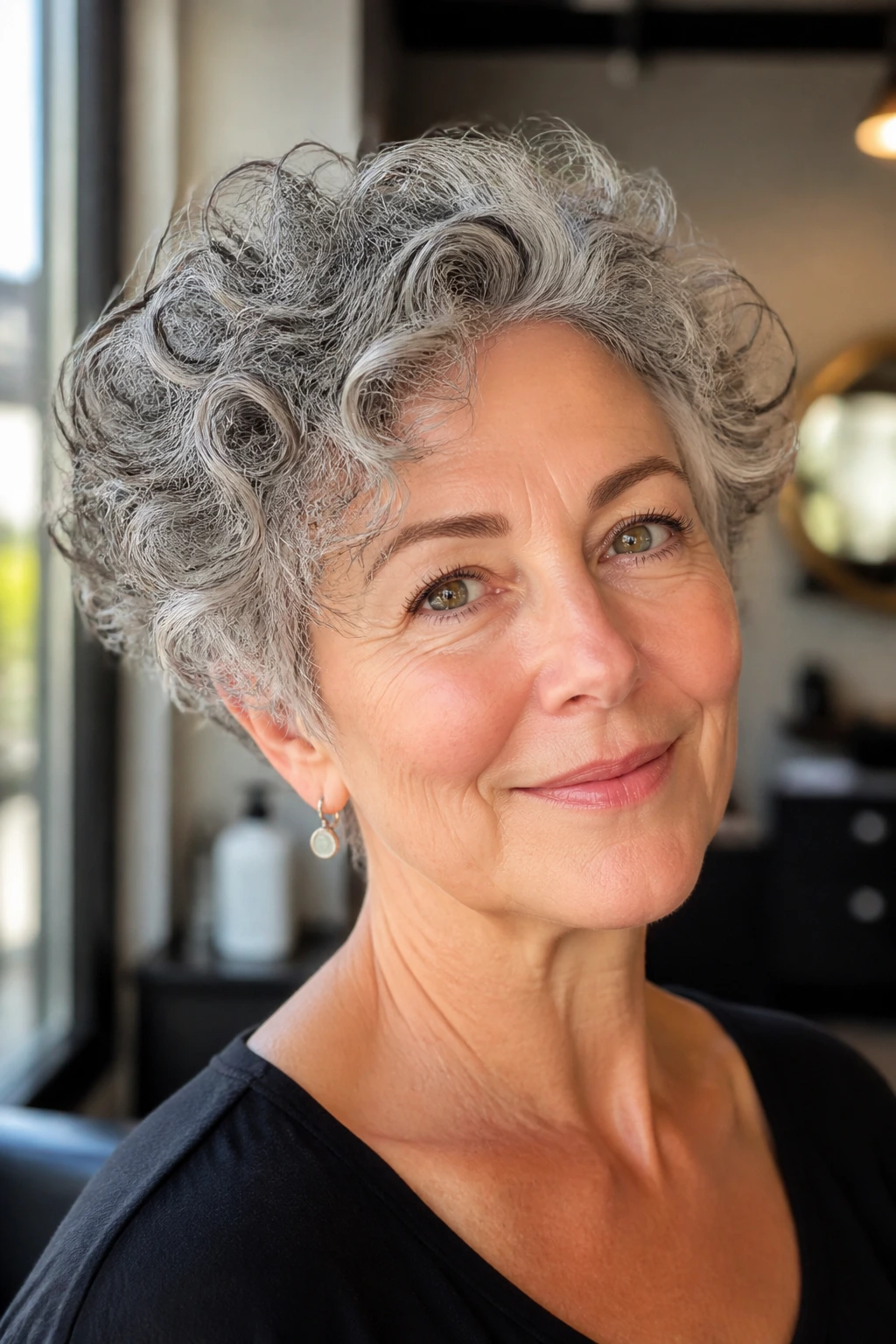
Short curly hair over 50 works best when the cut understands two things at once: curls need room, and the face needs shape. When those two ideas line up, the result looks easy even if the cut was carefully planned. That’s the real win here. Not a perfect curl day. A haircut that still looks like itself when the bathroom lighting is unkind and the diffuser is sitting in a drawer.
If you’re choosing between playing it safe and asking for a little more shape, I usually vote for the shape. A tapered nape, a lifted crown, a softer fringe, or a cleaner outline can do more for short curls than another inch of length ever will. And once the cut starts doing the work, the styling gets smaller, faster, and a whole lot less annoying.
The best short curly cut is the one that keeps its outline when you leave the salon and still looks like a good idea three days later. That’s the one worth booking.
