



Fine hair can be a tricky little thing. Leave it long and one-length, and it often hangs there like it’s waiting for permission to move. Cut it too heavily, and the shape can go wispy fast. That’s why short shag haircuts for fine hair make such a smart case for themselves: they build movement into the cut instead of asking your styling routine to fake it every morning.
The shag works best when it’s handled with restraint. You want softness around the face, some lift at the crown, and enough perimeter left behind so the hair still looks like it has substance. The wrong version of a shag shreds the ends, thins the middle, and leaves you with a cut that only looks good in a salon mirror. The right version does something far more useful. It gives fine hair a little architecture.
My favorite thing about this whole family of cuts is how specific the shaping can get. A chin-length shag bob reads fuller than you’d expect. A pixie shag can look airy instead of sparse. A tiny change in fringe length, or the angle of the layers, can turn a flat, polite haircut into something with actual life in it. And because the word “shag” covers so much ground, there’s room to find the version that suits your face, your styling habits, and how much time you’re willing to spend with a round brush.
Why Short Shag Haircuts for Fine Hair Work Better Than Heavy Layers
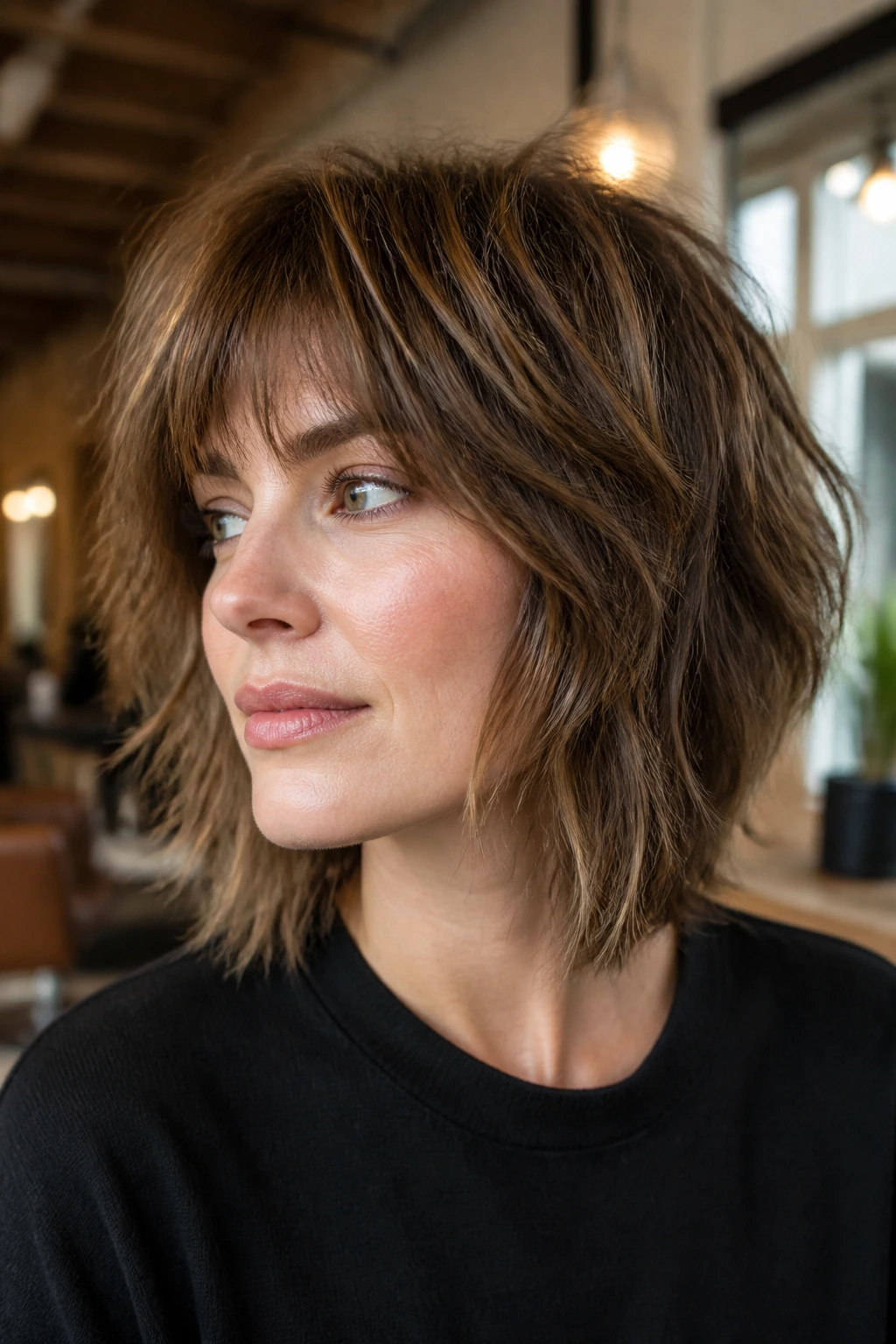
-
The perimeter still matters: A short shag with a clean edge gives fine hair something solid to hang on to, which keeps the cut from looking see-through at the ends.
-
Soft layers create motion: Instead of one blunt line, the hair breaks into little bends and pieces, so the whole shape looks lighter without losing all its body.
-
Crown lift comes from the cut, not only products: When the top is shaped well, you do not need to dump a mountain of mousse on your roots just to get them off your scalp.
-
They grow out with less drama: A well-cut shag can go several weeks before it starts collapsing into a triangle or a limp curtain.
-
The style can be tuned up or down: The same haircut can look neat with a round brush, rumpled with texture spray, or soft and bendy if you air-dry it.
-
Fine hair gets more visual depth: Small changes in length, especially around the cheekbones and nape, make the hair look fuller because the eye reads movement as volume.
1. Airy Chin-Length Shag Bob
This is where I send people first when they want a short shag without getting too clever about it. Chin length keeps the ends honest, and that alone helps fine hair look denser than it would at a longer, draggy length. The layers stay soft and mostly internal, so the haircut moves, but it does not fall apart.
The key is keeping the bottom line clean enough to read as a bob. Then you let the top and sides break up just enough to avoid that helmet effect that some chin-length cuts can get. A little bend around the cheekbones helps the face framing do its job.
If your hair is straight, ask for subtle point cutting at the ends rather than heavy razor work. That tiny difference matters. A bluntish edge with feathered interior layers is far kinder to fine strands than a cut that gets thinned to death.
2. Feathered Pixie Shag
This cut is tiny, lifted, and a little mischievous. It works because the crown gets enough height to keep the silhouette alive, while the sides stay soft instead of clipped down into a severe shape. Fine hair often likes this balance. Too much length weighs it flat. Too much removal makes it look stringy.
A feathered pixie shag is especially useful if your hair tends to lie close to the head in the back but fluffs up a bit around the front. That contrast gives you shape without requiring much styling time. A dab of lightweight paste at the ends is usually enough.
The caution is obvious but worth saying. Don’t let the stylist over-texturize the top. On fine hair, a shag that gets too airy in the wrong places can start looking see-through by the second week. Keep the bulk where the eye needs it.
3. Curtain-Bang Micro Shag
Can a micro shag work on fine hair? Yes, but only if the fringe stays soft and the layers don’t get chopped too high. The curtain bang is doing a lot of the visual work here. It opens the face, adds a little width around the eyes, and makes the cut feel deliberate instead of accidental.
What I like about this version is the way it sneaks volume into the front without demanding a lot of hair overall. The center part keeps things light, while the longer fringe pieces can be blown slightly away from the face for that airy bend. It looks especially good on straight or softly wavy textures.
If your forehead is short, keep the curtain bang longer and more broken up. If your face is long, you can bring the fringe a touch shorter so the style does not stretch everything downward.
4. Razored Bixie Shag
A bixie is that sweet middle ground between a bob and a pixie, and the shag version gives it some movement instead of making it too tidy. On fine hair, the length is short enough to stay buoyant, but the bob-like shape keeps it from becoming a flat crop. That combo is useful.
The razor should be used with a light hand here. I like a little slicing through the ends, not aggressive thinning. Fine hair can fray fast when it gets over-razored, and then the whole haircut starts looking pale around the edges. That is not the goal.
Style it with a lightweight volumizing foam at the roots and a quick rough blow-dry. If you want a more polished finish, tuck one side behind the ear and leave the other piecey. Small asymmetry gives this cut some personality.
5. Tousled French Crop Shag
This one has a bit of attitude, but it is not as hard-edged as it sounds. The French crop shape keeps the fringe short and face-forward, while the shag texture breaks up the top so fine hair does not sit like a neat little cap. The result is casual, not sloppy.
The fringe is the part to watch. It should feel light enough to move, but not so sparse that it disappears. When the hair is fine, a cropped front can either sharpen the face or make the whole head look smaller. The trick is leaving enough softness around the temples to keep the balance.
I like this cut on people who do not want to spend ten minutes with a brush. A bit of salt spray, a quick shake at the roots, and you are done. If you enjoy a slightly undone finish, this one earns its keep fast.
6. Jaw-Length Flipped Shag Bob
A blunt jaw-length bob can look very crisp on fine hair, but a shagged version gives it movement where the blunt line might otherwise feel heavy. The flip at the ends is the detail that wakes everything up. It makes the haircut look fuller at the edge, which matters when the strands themselves are delicate.
This cut is especially flattering if your face is narrow or long, because the little outward bend at the jaw adds width right where the eye needs it. The shape can also soften a strong chin. Not by hiding it. By making the line less severe.
Use a round brush or a flat iron just at the bottom third of the hair if you want that flip to hold. Don’t curl the whole section. That gets fussy fast. The goal is a hint of kick, not a retro set.
7. Soft Wolf Shag
The wolf cut gets talked about like it has to be wild to count, but fine hair does better with the softer version. Think of it as wolf-lite: the crown has lift, the front has texture, and the back keeps enough length to avoid looking overcut. That restraint is everything.
Fine hair usually needs the illusion of density more than actual removal. So the layers should be spaced out and deliberately placed, not carved all over the head. A little extra length in the back keeps the silhouette from puffing up in a weird way. It also makes the cut easier to grow out.
This is a good choice if your hair has some bend and you want that slightly lived-in shape. On straight hair, it can still work, but the style needs product and a bit of hand scrunching. Without that, the cut can read as plain short layers, which is not the point.
8. Textured Mushroom Shag
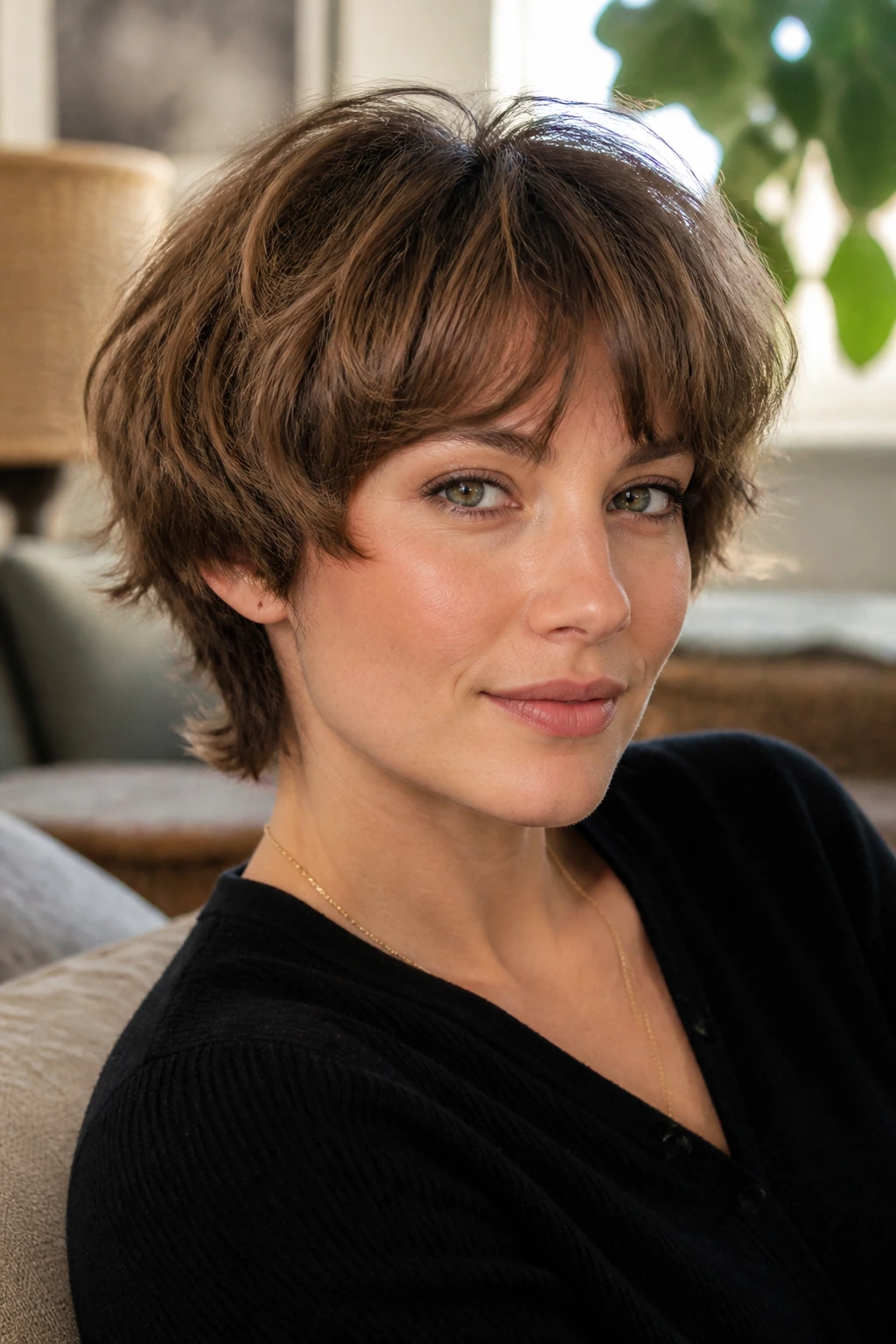
The mushroom shape sounds bold, and it can be. But on fine hair, the softened shag version is far more wearable than the heavy, bowl-like cuts people picture from old photos. The rounded top gives the crown a little height, and the broken-up edge keeps the style from looking like a helmet.
What makes this version useful is the way it stacks visual weight near the top while keeping the ends airy. Fine hair can look fuller in a rounded silhouette because the outline feels intentional. The shag texture prevents it from becoming too tidy or dense in the wrong places.
Ask for a fringe that stays soft at the temples. If the bangs are too straight and too thick, the cut loses the airy part that makes it work. A slightly broken edge around the ears helps the shape breathe.
9. Piecey Side-Swept Shag
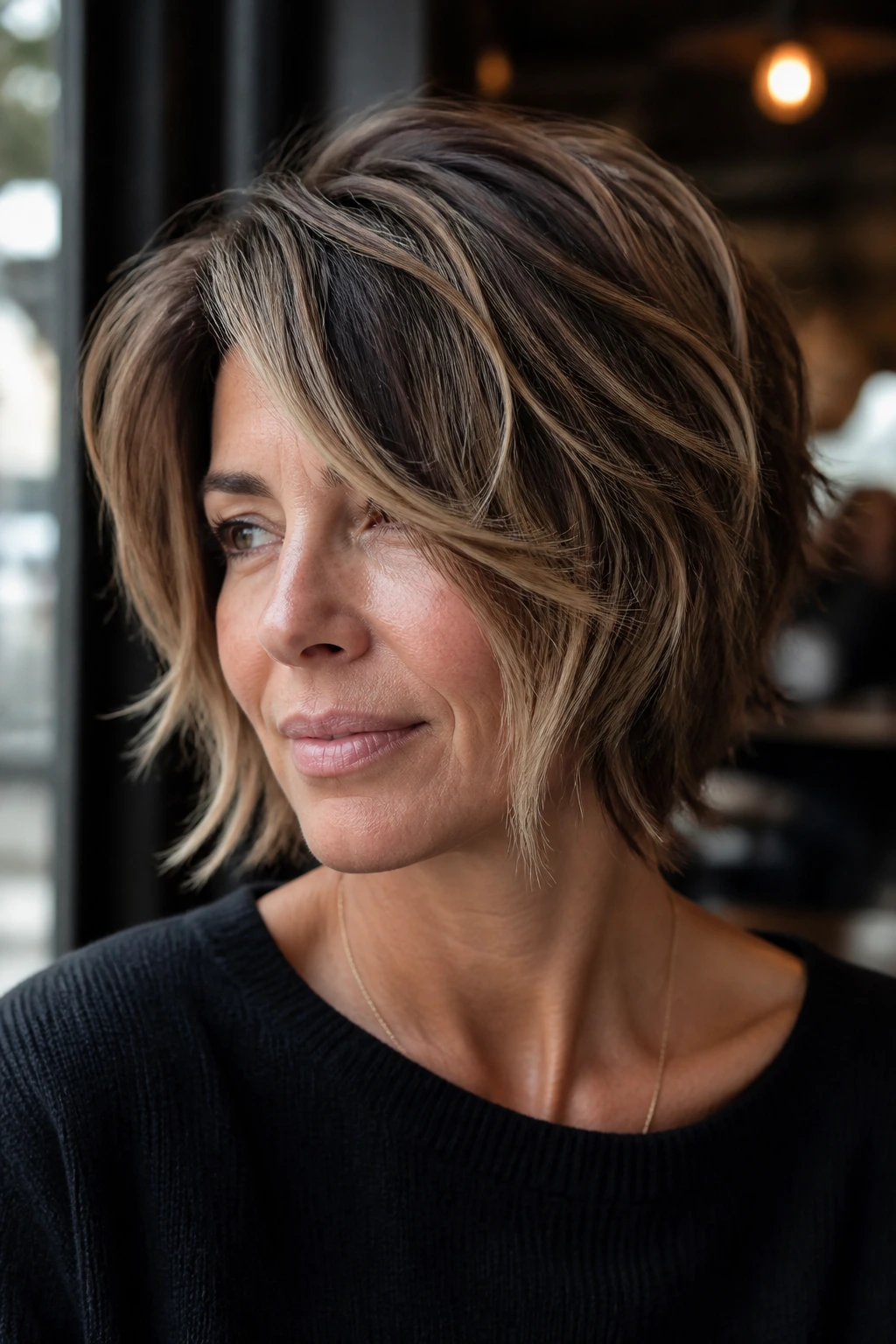
A deep side part can rescue fine hair on the days it wants to lie flat and sulk. This version uses that side sweep as the star of the show, with choppy pieces falling across the forehead and cheekbone. The asymmetry gives the roots a reason to lift.
I like this cut for people whose hair naturally wants to split in one direction anyway. Fighting the part is exhausting. Let the cut work with it, and the hair usually looks fuller for the trouble. The side-swept front also makes the face look softer without needing a heavy fringe.
The shape works best when the back stays short enough to keep the silhouette light. If the nape gets too long, the whole style can drag. Keep the sides shattered and the top mobile, and it stays lively.
10. Collarbone Mini Shag
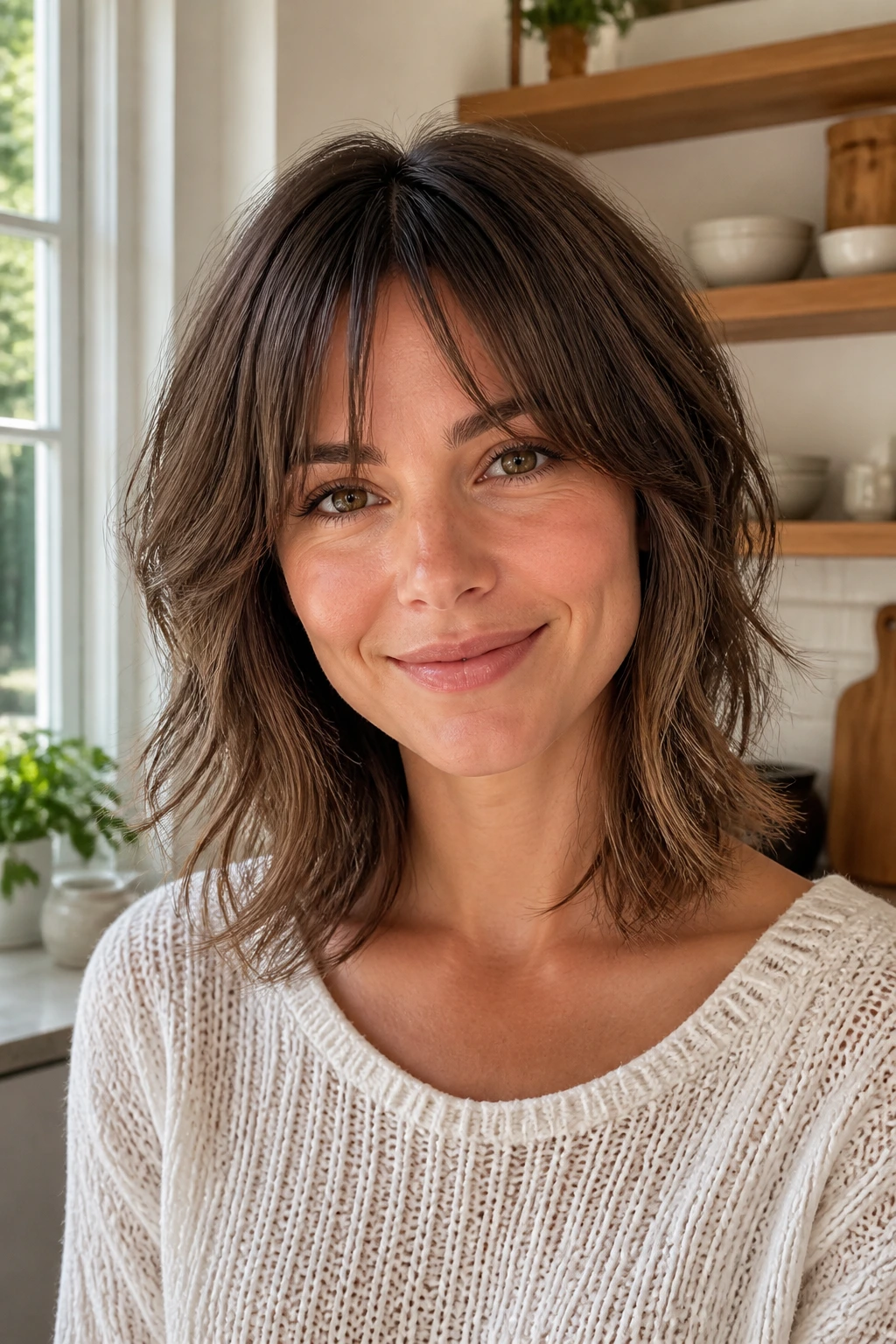
This is the longest cut in the bunch, but it still earns a place because the collarbone length gives fine hair a little breathing room. The ends do not have to bear all the weight, and the layers can sit softly through the mid-lengths instead of collapsing at the bottom. That often means better movement.
The shape is especially nice if you are nervous about going very short. You still get the shag texture, the soft face framing, and enough length to pin it back when needed. The haircut feels easy to live with, which is not a small thing.
If your strands are very fine, keep the layers subtle and the ends blunt enough to read as a line. Too much slicing can make collarbone hair look thin in the daylight, and daylight does not lie.
11. Feather-Edged Rounded Shag
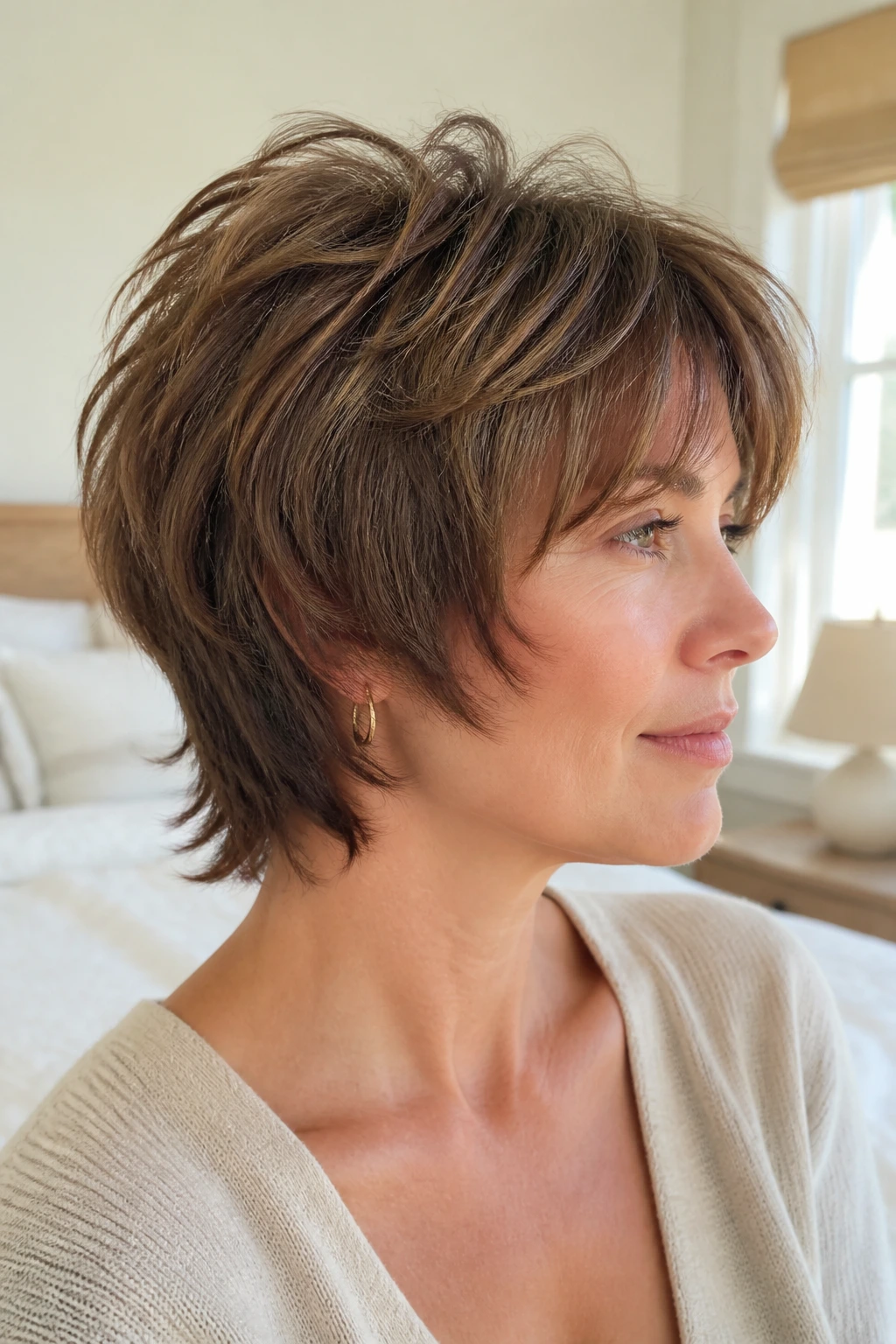
A rounded shag can look oddly lush on fine hair, and the reason is simple: the shape creates a fuller outline without forcing the hair to do more than it can. Feathered edges stop the cut from turning stiff. The whole thing feels soft around the jaw and nape.
This is a good one for people who hate severe angles. The silhouette is gentle, a little retro, and easy to wear with a side part or a loose middle part. The roundness helps the haircut keep its presence even when the hair is freshly washed and not yet styled into a bend.
You do want the stylist to keep the feathers light. A rounded shape with too much texturizing starts to fray, and fine hair is the first to show it. Ask for movement, not shredding.
12. Messy Cropped Mullet Shag
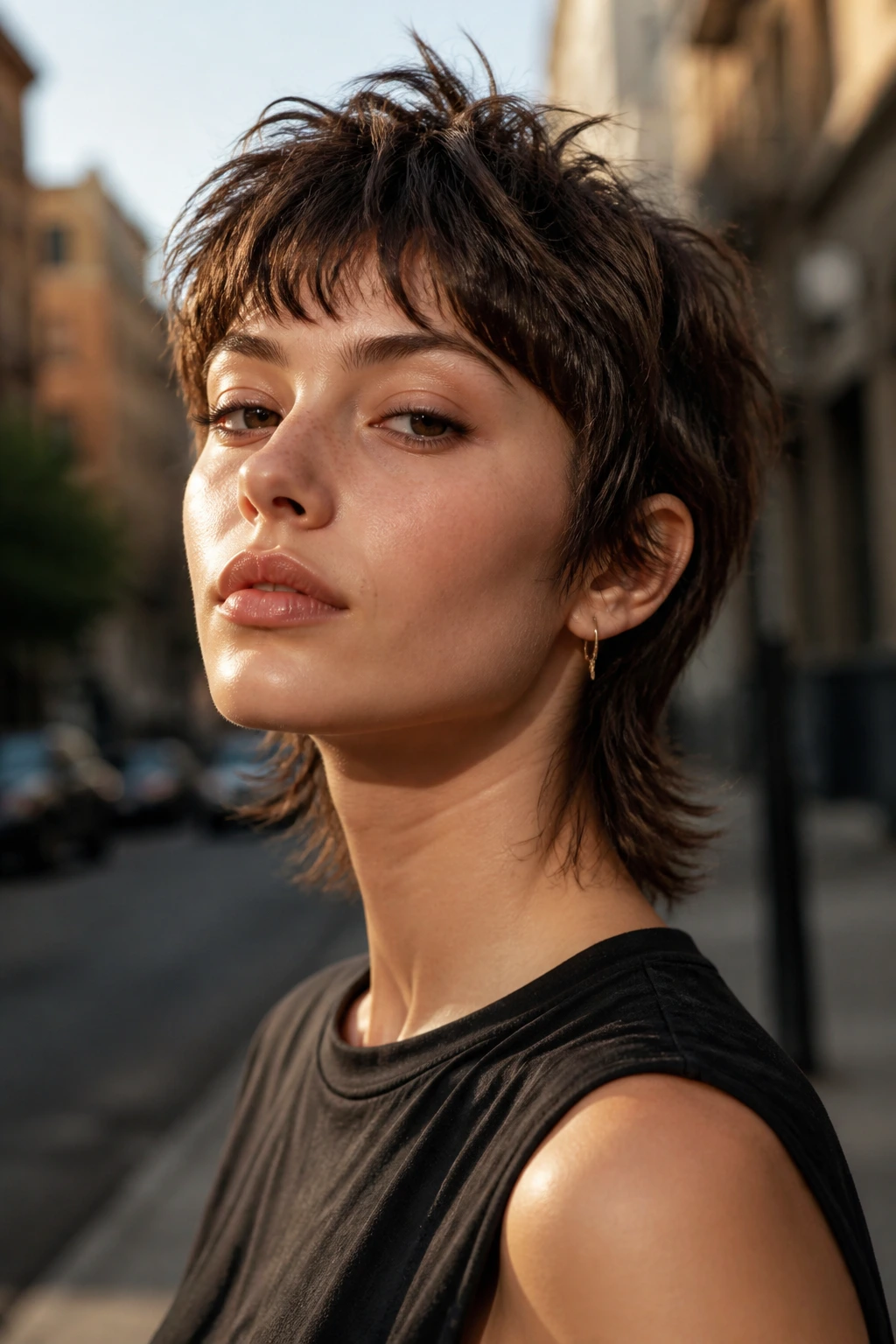
Yes, this one is bolder. And yes, it can work on fine hair if the contrast is kept under control. The front and crown stay short and choppy, while the back holds a little more length, which gives the haircut a lifted, slightly rebellious shape.
The reason it suits fine hair is that it creates visual separation. Your eye sees layers, change, and motion, so the hair looks fuller even when there is not a lot of density there. It is a cut with a point of view. That matters.
The danger is going too far and making the back too thin or too long. Keep the shape compact. If you want something edgy but still light enough to style in under ten minutes, this is a solid candidate.
13. Layered Bob with Bottleneck Fringe
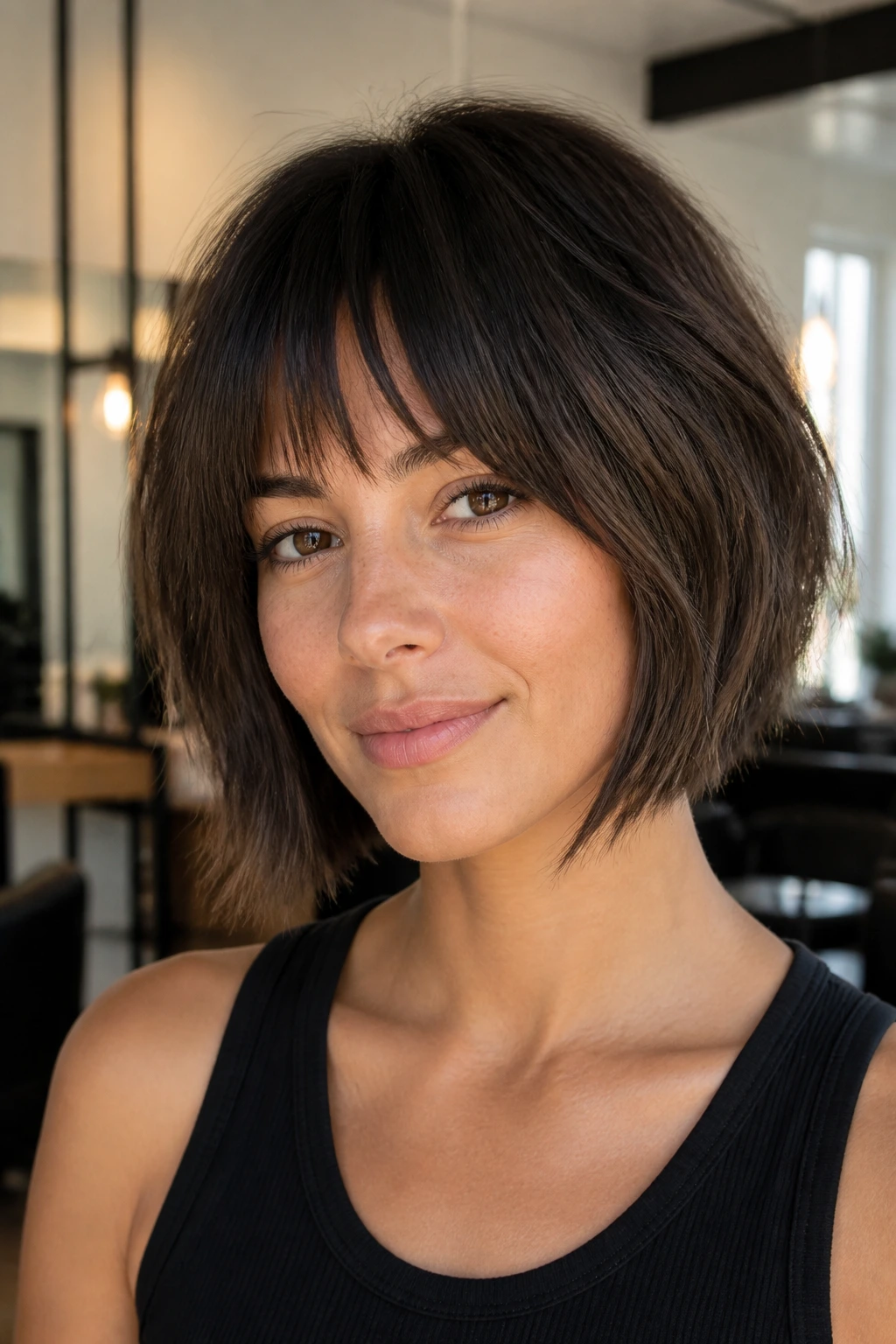
The bottleneck fringe is one of those details that looks simple until you try it. Shorter in the center, longer toward the sides, it frames the face without swallowing it. On a layered bob, that fringe gives fine hair some front-loaded volume, which is often where it needs help most.
The bob itself should stay clean and structured. The layers are there to give movement, not to destroy the outline. That’s the useful version of a shag on fine hair: shape first, softness second.
If your forehead is broader, keep the center of the fringe a touch longer so it breaks across the face more gently. If your face is small, a shorter center can open things up. Either way, the sides should taper softly into the cheekbones.
14. Tapered Nape Shag
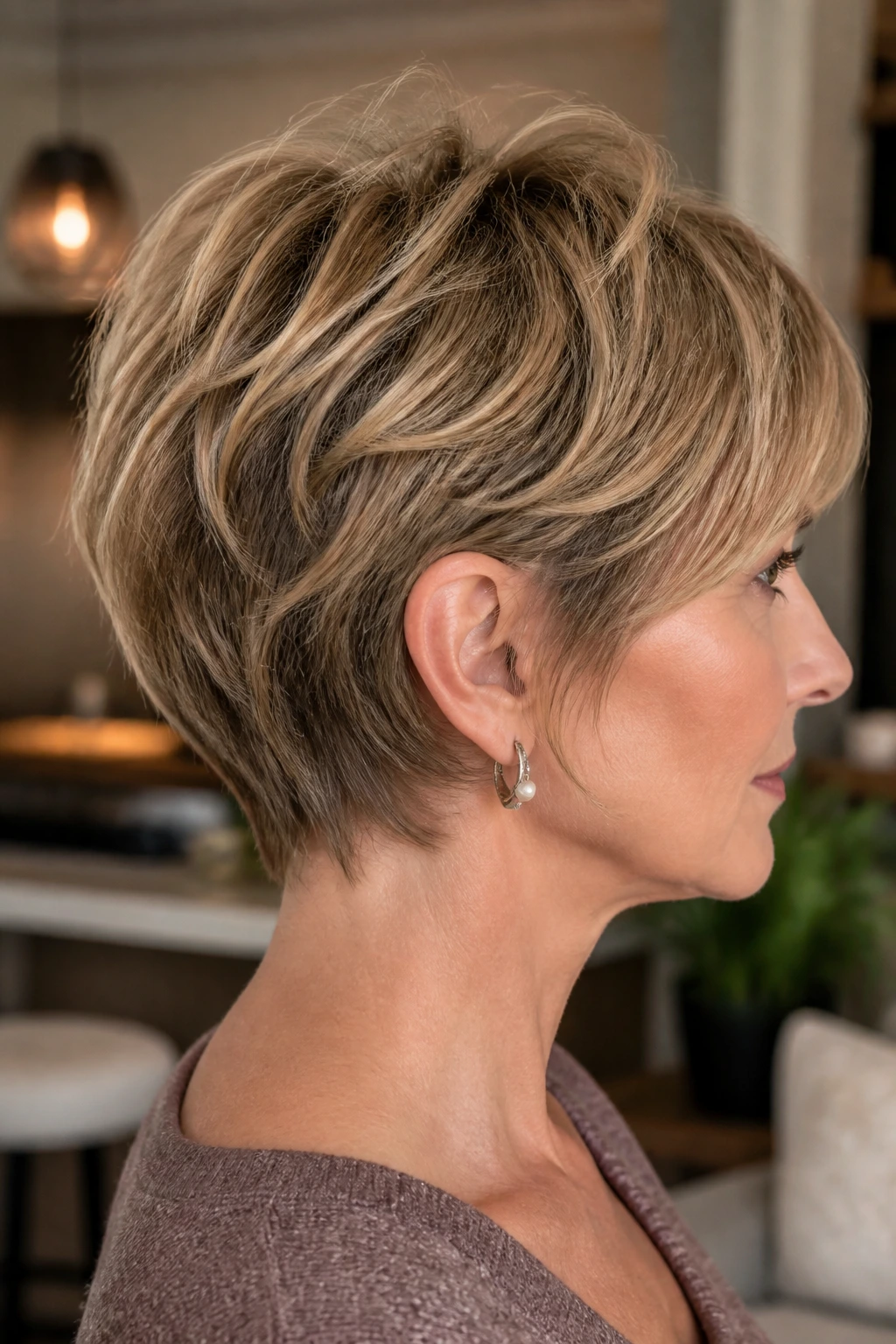
A tapered nape is a quiet little miracle for fine hair. It removes bulk where hair often lies flat anyway, and that lets the top of the cut lift a little higher. The result is a cleaner back view and a shape that does not feel bottom-heavy.
This cut is especially good if your hair tends to puff at the crown but go limp at the neck. That imbalance can make the whole head look slightly off. A tapered nape fixes the weight distribution without needing dramatic layering everywhere else.
The key is not overdoing the taper. You want a soft narrowing, not a buzzed finish unless that is truly your style. Keep a little softness at the neckline so the cut still feels like hair, not a geometry exercise.
15. Air-Dried Beach Shag
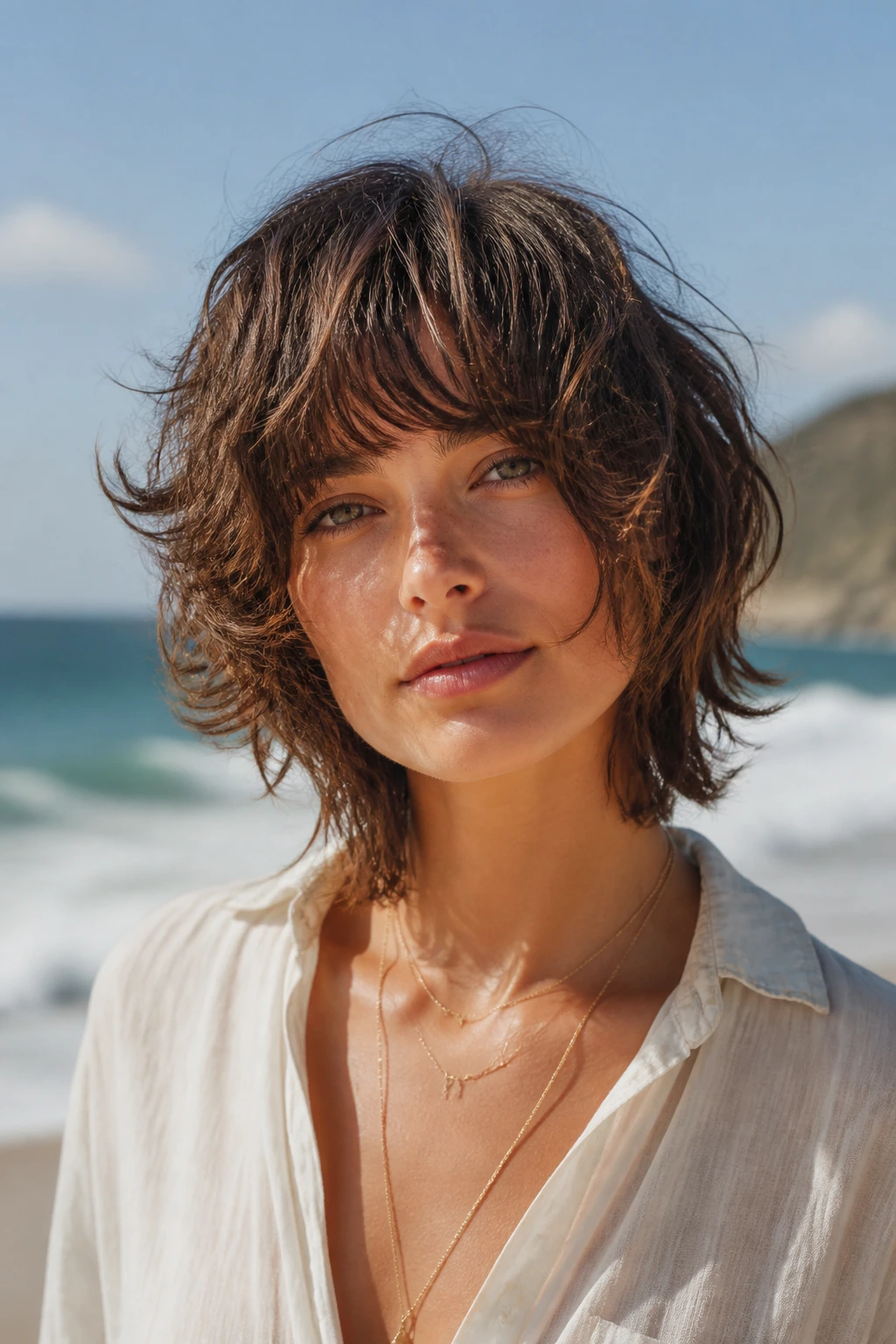
This is the cut for people who would rather let the hair set itself and then call it a day. Fine wavy hair can look especially good in a short shag when the layers are spaced so the waves separate naturally. The result is relaxed movement, not stiff curl definition.
A little mousse at the roots and a light cream through the mid-lengths are usually enough. Scrunch once, then leave it alone. Overhandling is the enemy here. Fine hair shows every squeeze, every over-twist, every extra pass with a towel.
I like this shape because it does not fight the hair’s natural bend. If your texture is somewhere between straight and wavy, it can still work. Just keep the layers soft and the perimeter enough to hold the shape.
16. Choppy Inverted Shag

An inverted shag uses a shorter back and slightly longer front to create a forward-leaning shape that can look fuller than it sounds. On fine hair, that angle gives the eye something to follow. The front pieces skim the jaw, while the back stays lifted and neat.
Compared with a straight-line bob, this version feels more active. It also gives the roots more room to breathe because the back is not dragging everything downward. That helps on hair that falls flat by midday.
Be careful with the inversion if your strands are very delicate. Too steep an angle can make the cut look sparse near the nape. Keep the difference subtle, and let the shag texture do the rest.
17. Wispy Pixie-Bob Shag
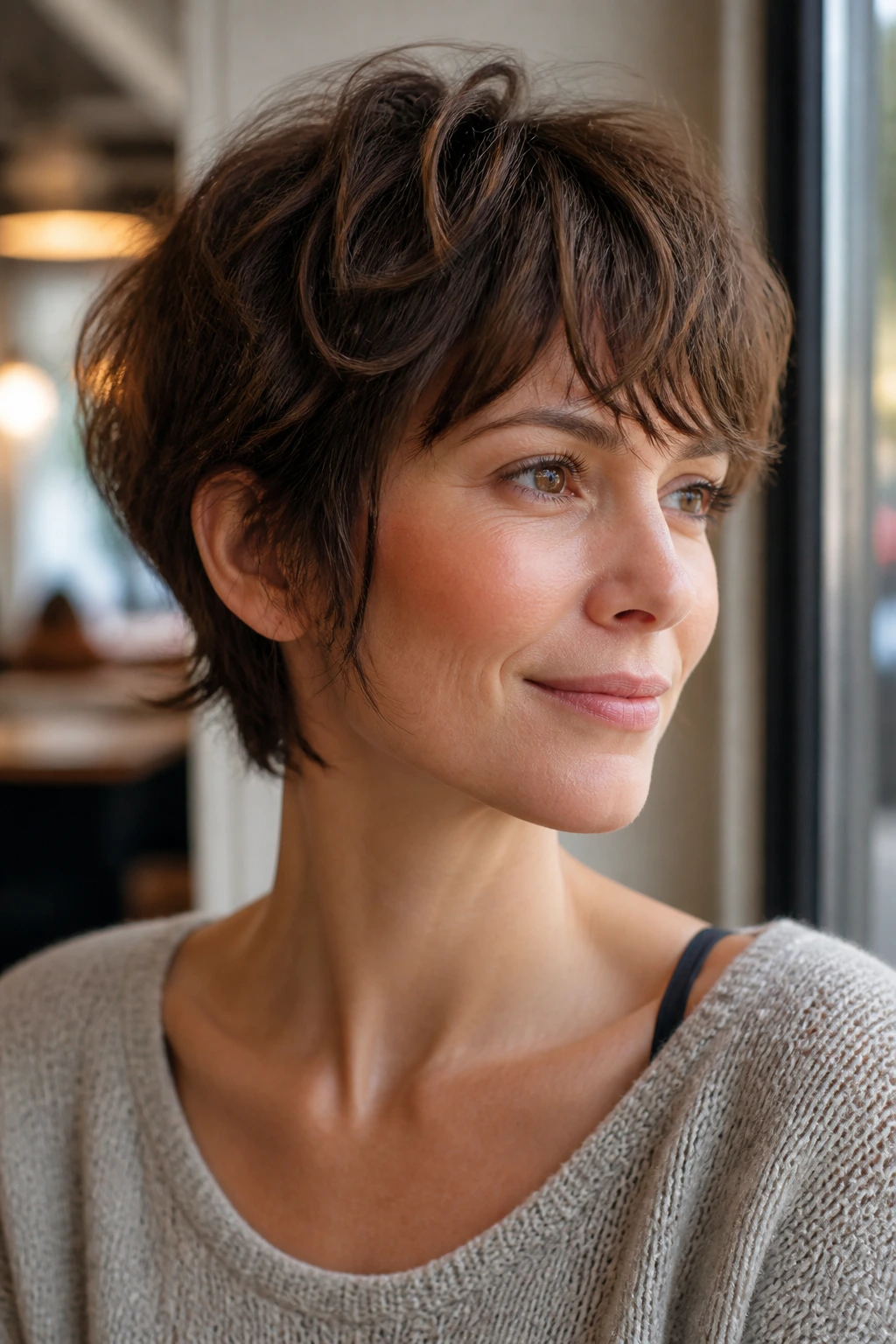
This is one of my favorites for people who want something short but not severe. The pixie-bob shape keeps a little more length around the ears and front, while the shag texture makes the ends break up softly. On fine hair, that softness matters because hard lines can expose every thin spot.
The wispy part should stay controlled. You want airy movement, not strands that look blown apart. That means leaving enough length in the top and fringe to fall in little pieces rather than tiny scrubs of hair.
A matte paste or a tiny touch of pomade at the ends will define the layers without clumping them. If you’re used to heavier styling creams, use less than you think. Fine hair goes greasy quickly, and product overload kills the whole point.
18. Deep Side-Part Shag
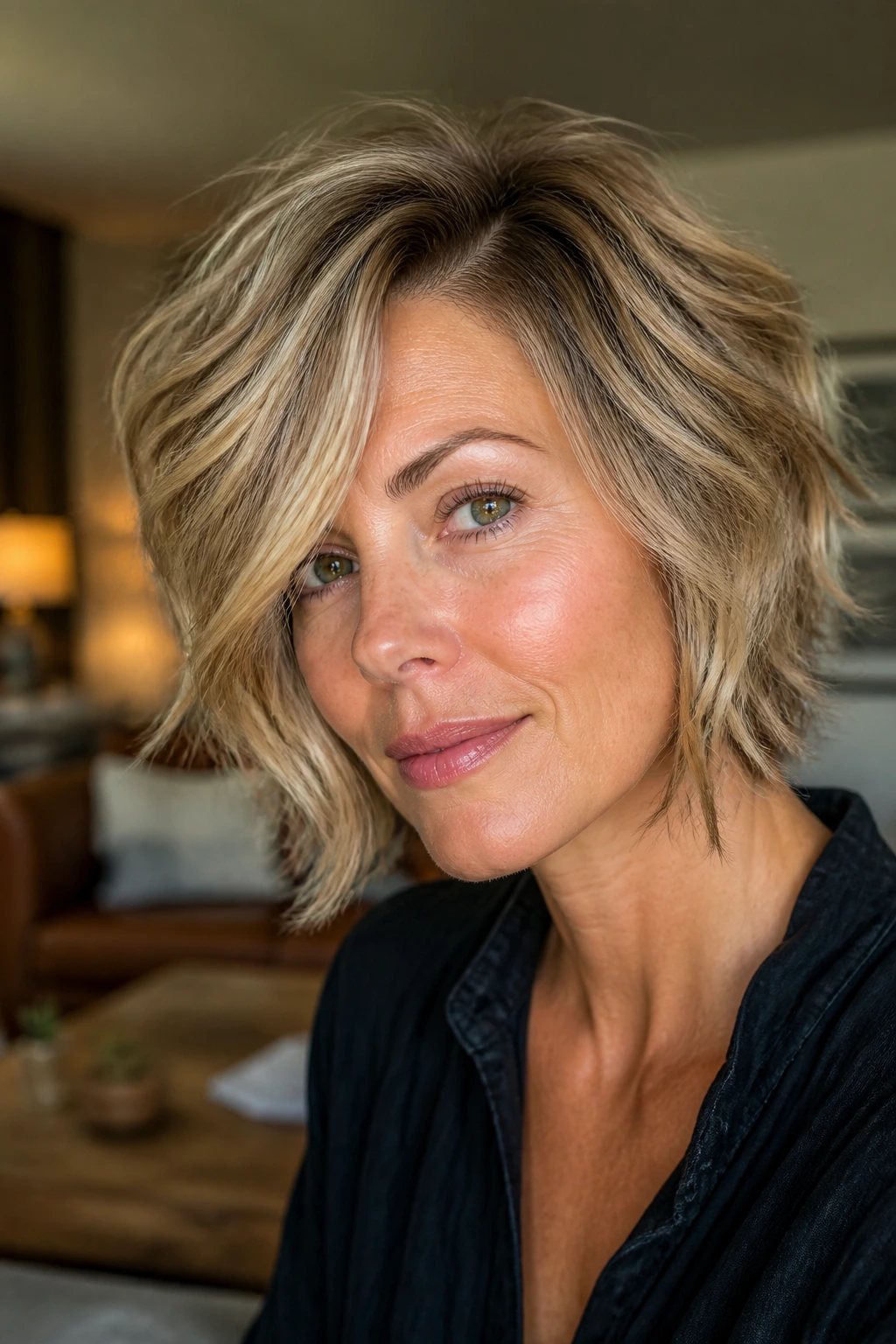
What does a deep side part do for fine hair? A surprising amount, honestly. It shifts the root line, creates instant lift on the heavier side, and gives the haircut a little asymmetry that makes the layers look more deliberate. On a short shag, that can be the difference between flat and lively.
The style works especially well when the fringe is long enough to sweep across the forehead rather than sit in a straight row. That sweep pulls the eye diagonally, which makes the hair seem denser. It also softens the face in a nice, non-fussy way.
If one side of your hair always collapses faster, this cut can hide it instead of fighting it. The part does some of the heavy lifting. That is worth embracing.
19. Ear-Length Mini Shag
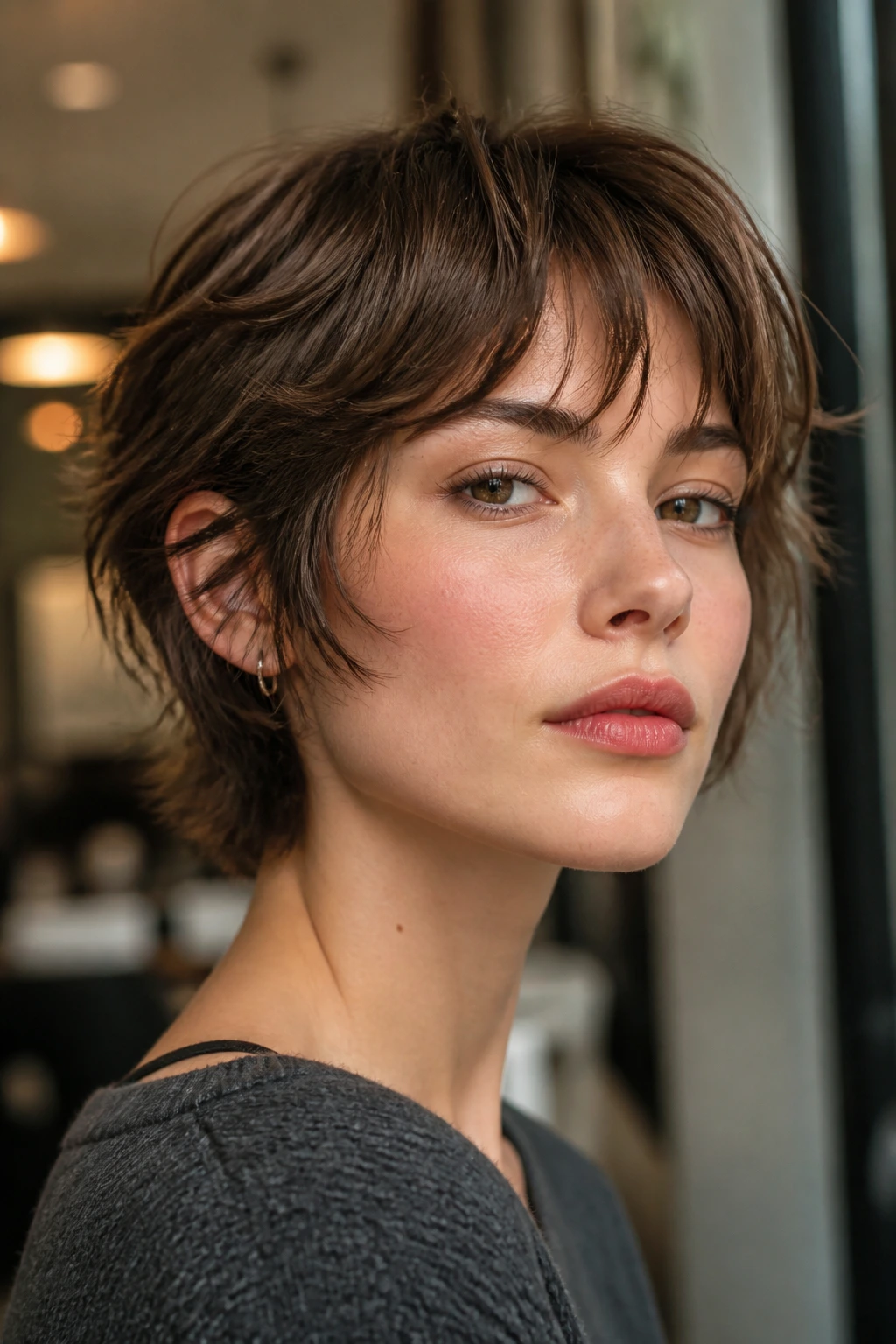
Short hair can be a little intimidating, but an ear-length shag has a certain clarity to it. The cropped length makes fine hair feel lighter on the head, while the shag texture keeps the shape from turning into a plain boyish crop. It’s neat, but not stiff.
This cut depends on the fringe and side pieces. They need enough softness to keep the style from looking clipped too close to the scalp. A few wispy pieces around the temple change the whole mood of the haircut.
Maintenance is part of the deal here. Shorter cuts grow out faster in visible ways, especially around the ears and neckline. If you like a crisp outline and quick styling, that tradeoff is fine. If you hate salon appointments, probably not.
20. Short Curly Shag
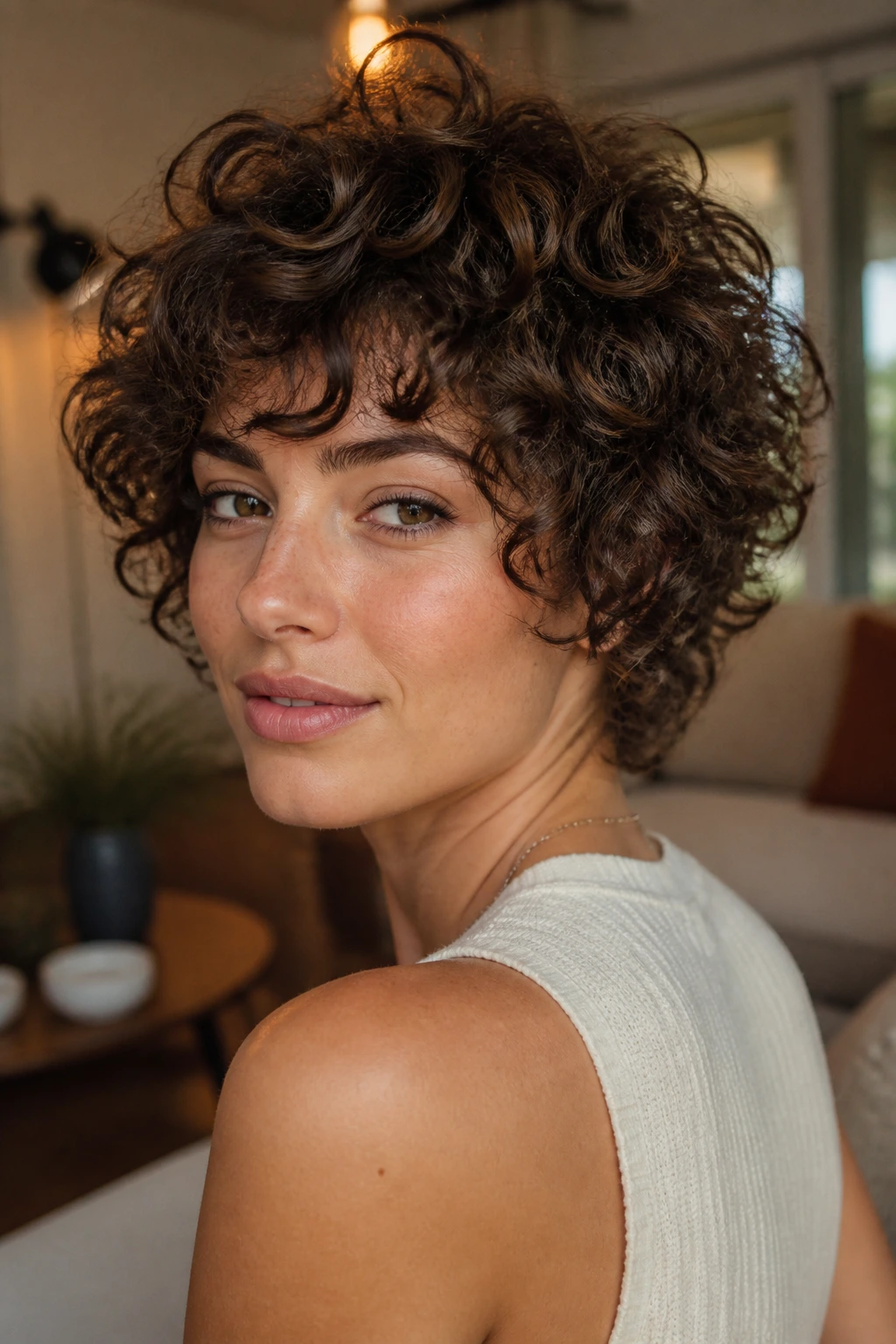
Fine curls behave differently from fine straight hair, and this cut respects that. The shag shape can separate the curls just enough to keep them from stacking into a triangle, while the shorter length prevents the bottom from pulling the curl pattern down. That gives the whole shape a buoyant look.
The cut should be done curl by curl, not as a generic shag with a few curls thrown at it. That sounds obvious, but it matters. Fine curly hair can lose its spring if it gets over-thinned, and then the ringlets stop looking defined.
A diffuser helps, but the cut does a lot of the work. If your curls shrink a fair amount when dry, keep the top a touch longer than you think you need. Shrinkage is not a rumor. It’s the whole show.
21. Sleek Razor-Cut Shag Bob
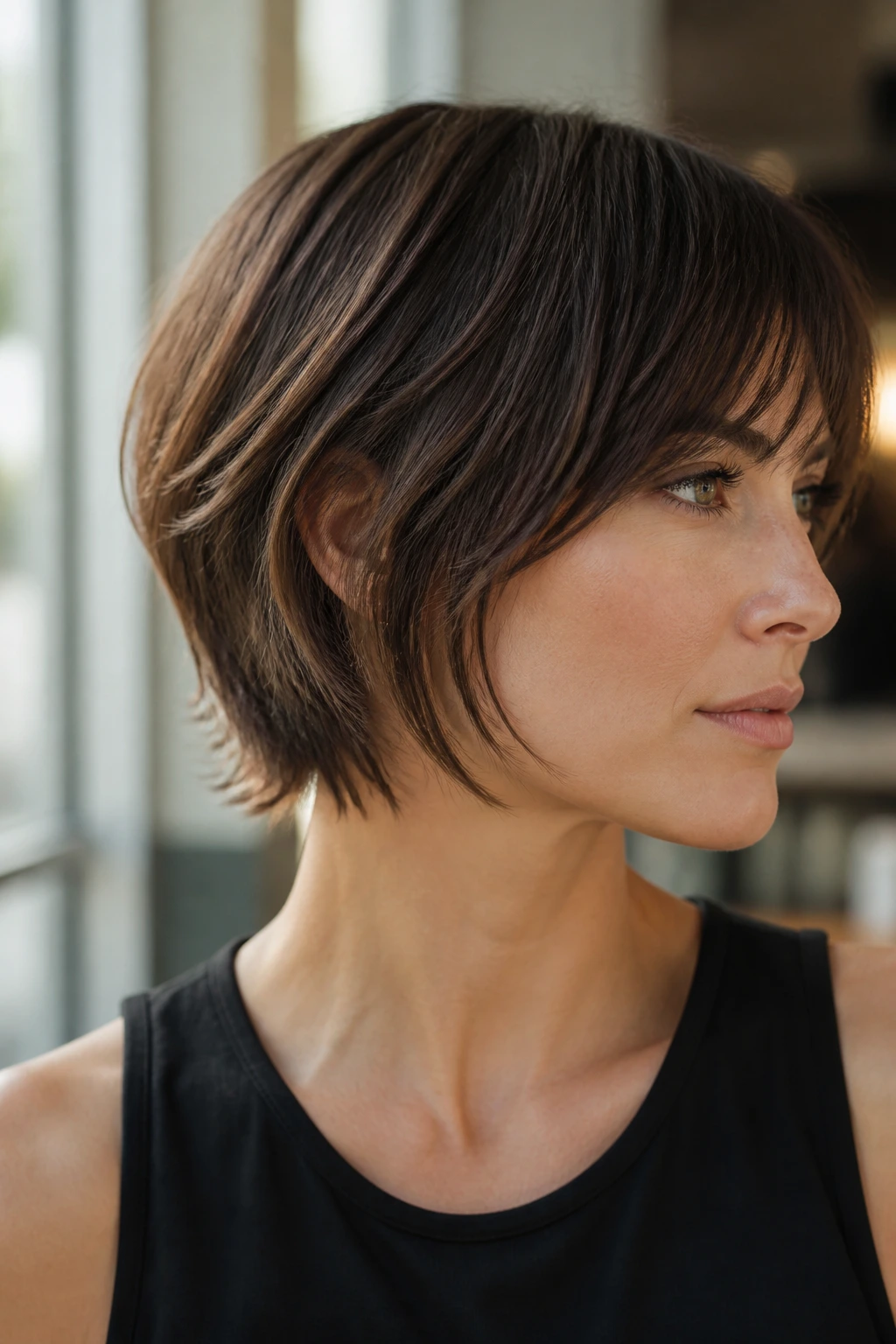
This is the more polished side of the shag family. A razor-cut bob can look very modern on fine hair when the perimeter stays neat and the interior has enough movement to keep the style from going dead straight. The result is smooth, but not blunt.
The catch is hair health. Razor work is lovely on healthy, resilient ends and less lovely on fragile, frayed ones. If your hair is already splitting, ask for slide cutting or soft point cutting instead. A prettier cut is not worth translucent ends.
This version suits people who want shape without a messy finish. A flat iron bend at the ends and a little shine serum can make it look refined fast. The haircut does not have to shout to be useful.
22. Shattered Bob with Flipped Ends
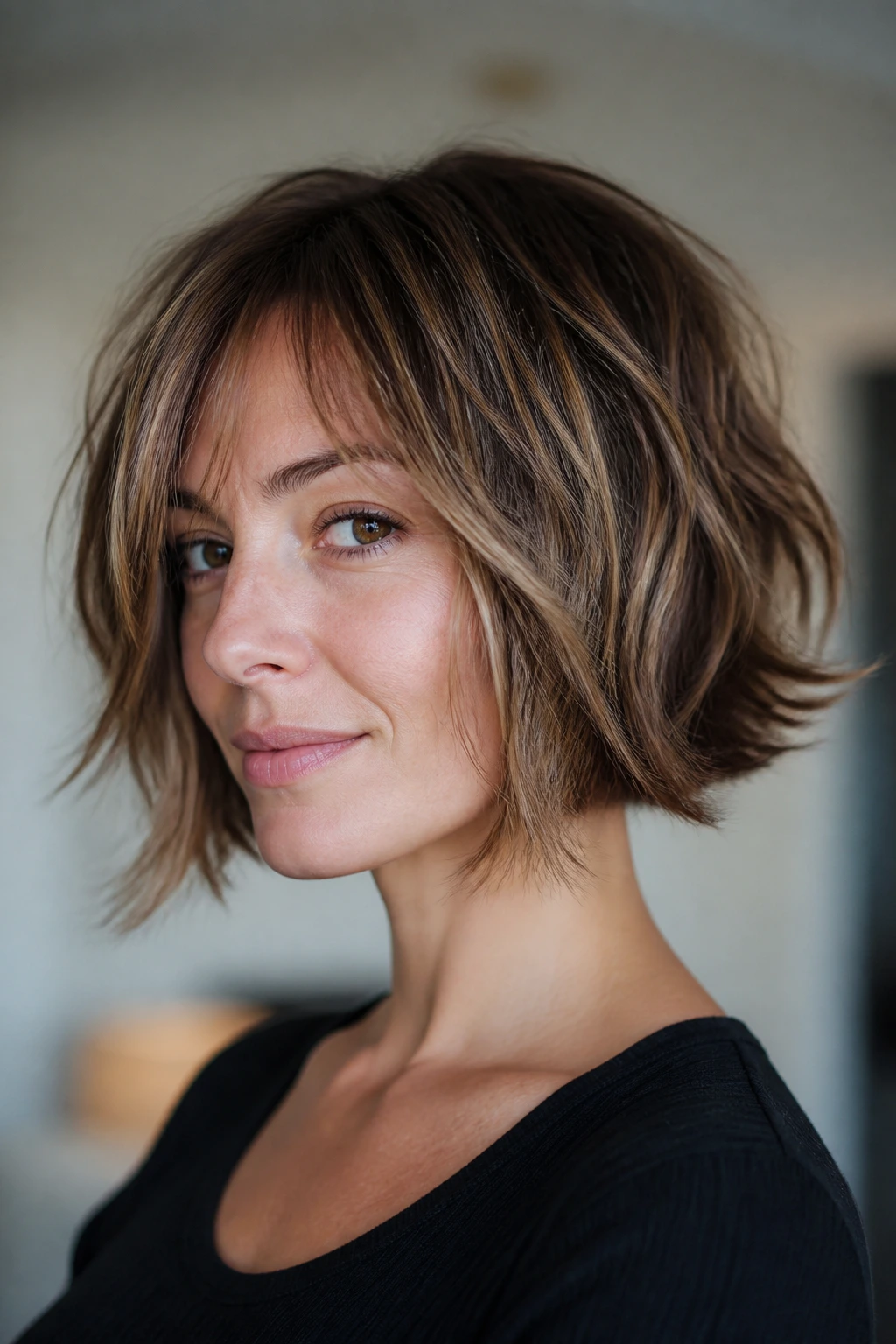
This is the haircut I reach for when someone says their fine hair looks “too polite.” The shattered texture breaks up the bob so it moves, and the flipped ends add a little width at the bottom. Suddenly the whole shape feels fuller.
The flip can be done with a round brush, a flat iron, or even a quick bend with a blow-dryer concentrator if you’re patient. The point is to keep the movement just at the ends. If the whole head is curled, the cut loses its edge.
This style is especially flattering when the hair falls flat near the jaw. That little outward turn makes the silhouette feel wider and more alive. It’s a small trick, but it changes the read of the haircut.
23. Soft Undercut Shag
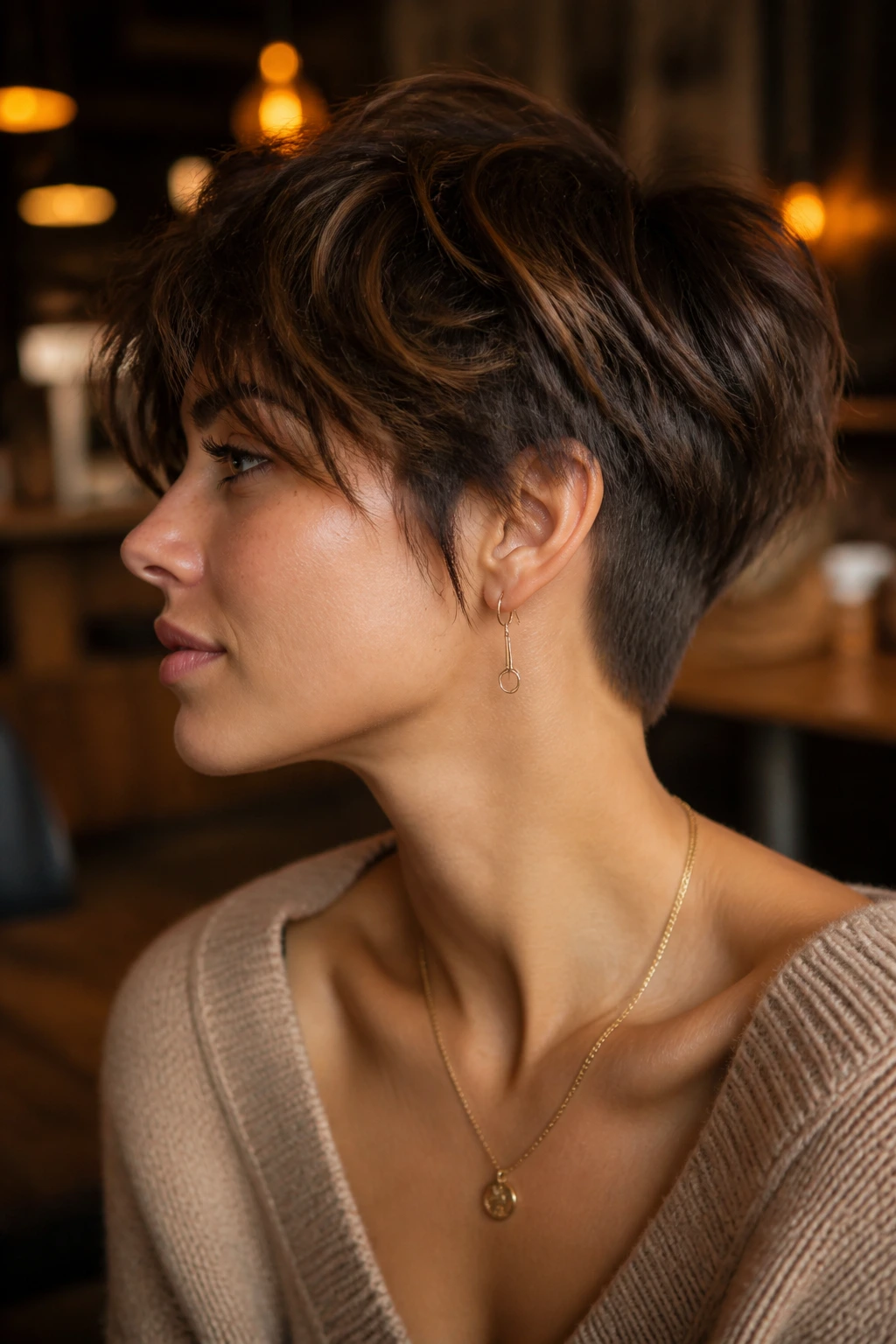
An undercut sounds aggressive, but in a soft shag it can solve a very specific problem: too much hidden bulk. Some fine-haired people do not have a lot of strand thickness, but they do have a lot of hair packed underneath. That can make a short shag sit awkwardly.
A mild undercut at the nape or around the lower back removes weight where no one needs to see it. The top layers stay airy and easy to shape, and the head stops feeling puffy in the wrong spots. That can make the whole haircut cleaner.
Do not go too far unless you want a visible undercut. A little hidden removal goes a long way. This is the sort of detail that makes a good short shag feel engineered without looking engineered.
24. Rounded Crop Shag
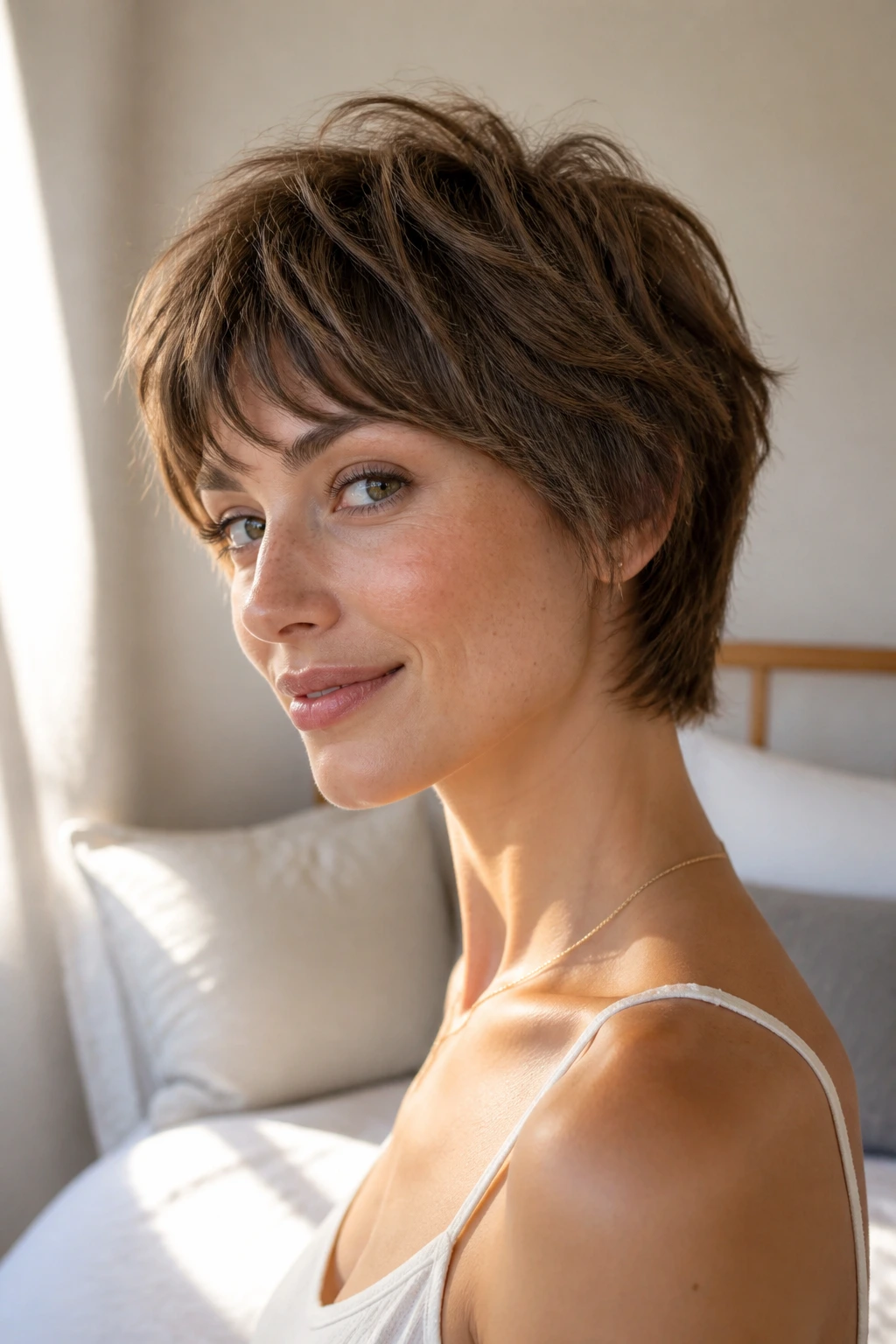
The rounded crop is one of the gentler shapes in the bunch, and that softness helps fine hair look fuller. A circular outline keeps the hair close to the head in a controlled way, while the shagging prevents the surface from looking too neat. It’s tidy with a little chaos underneath.
I like this cut for people with softer features or for anyone who wants the hair to sit close without feeling helmet-like. The rounded silhouette can make the whole head look balanced. It also plays nicely with both straight and slight-wave textures.
A touch of root lift at the crown helps, but not too much. You’re aiming for body, not a dome. That line matters more than people think.
25. Bouncy Layered Crop
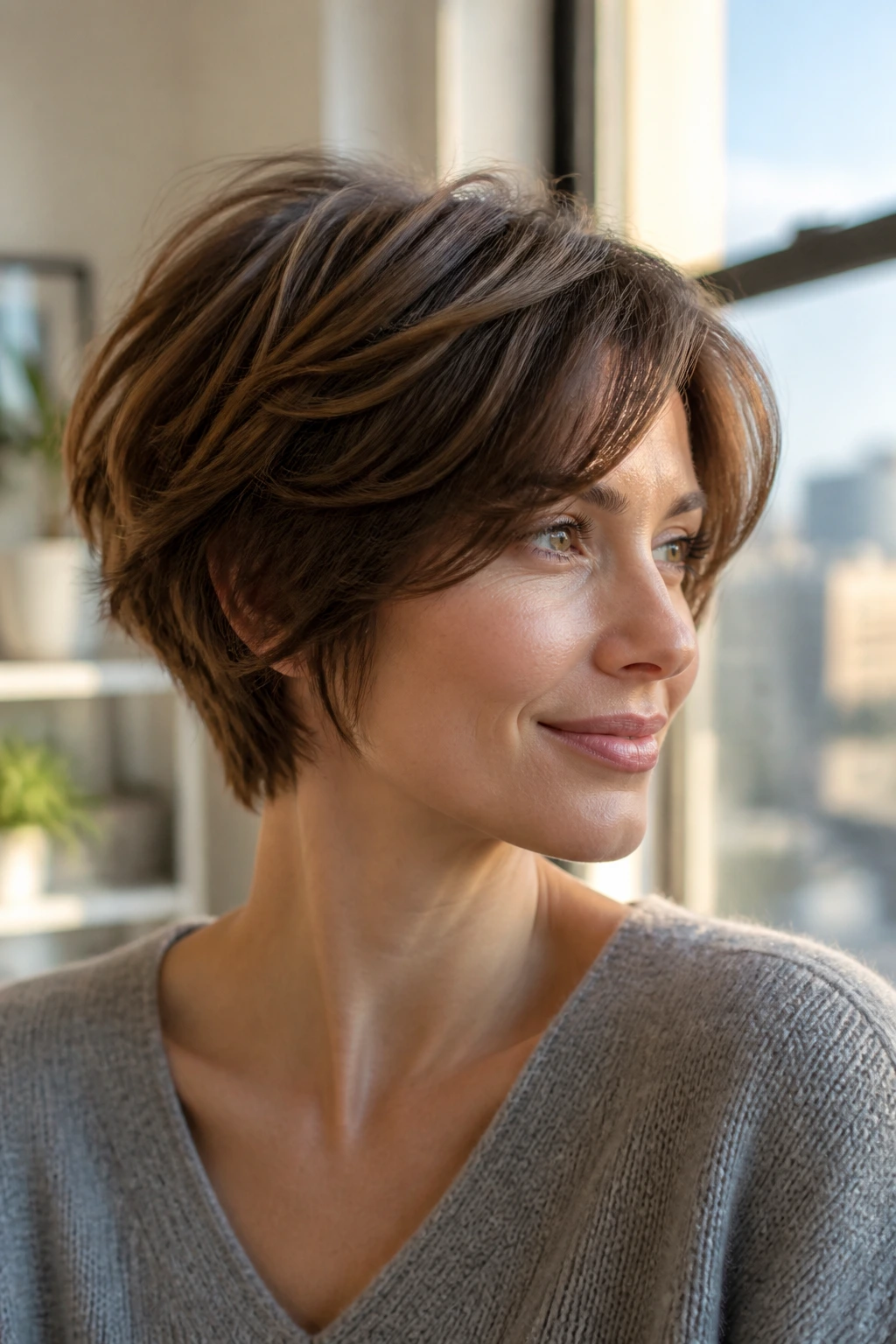
This cut is built around lift. The layers are short enough to create bounce, but not so short that the shape turns ragged. On fine hair, that bounce is the appeal. The hair moves when you turn your head, and that motion makes it look fuller.
The best way to wear it is with a rough blow-dry and a small round brush around the crown. A few bends at the front pieces help the crop read as intentional rather than accidental. The layers should stack softly, not pile into each other.
If your hair is straight and stubborn, this version will ask for a little more product than the air-dried styles. Still, it rewards the effort. Some cuts simply look better once they have been given a bit of direction.
26. Shaggy Pageboy
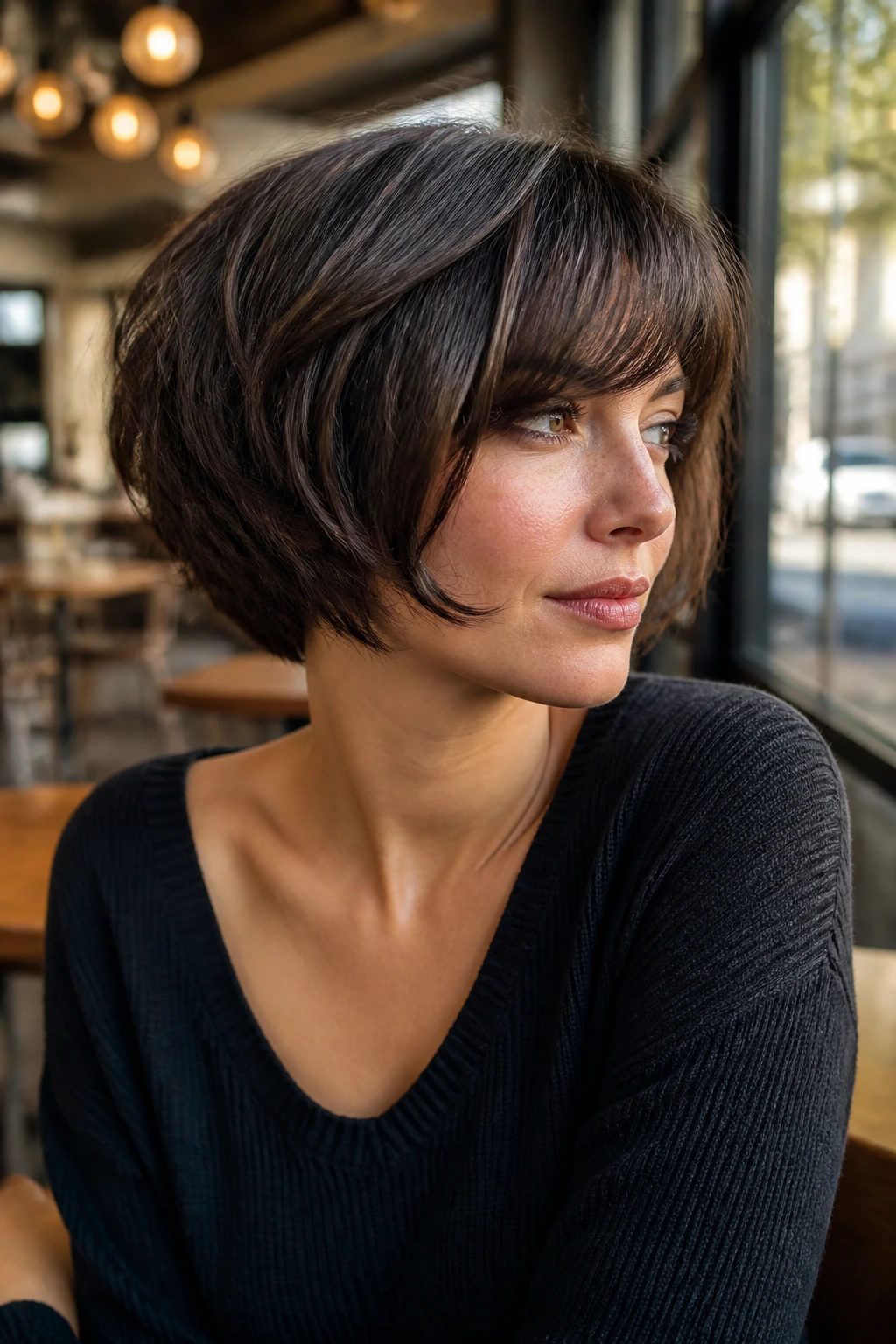
A pageboy shape gives you a curved outline, and the shag texture keeps it from feeling too old-school or too solid. On fine hair, that curved perimeter can make the hair look fuller because the eye sees a compact shape rather than loose strands floating away from the face.
The fringe usually does the most important work here. It should be soft enough to connect to the sides without building a thick block across the forehead. A little gap and separation around the cheekbones keeps the style fresh.
This is a good cut if you like a neat silhouette but still want the ends to move. It sits in that narrow territory between polished and playful. That’s a useful place to be.
27. Bottleneck Fringe Shag

The bottleneck fringe earns its popularity the old-fashioned way: it solves more than one problem at once. Shorter in the center, longer at the sides, it adds shape to the front without eating up too much density. Fine hair often needs that sort of efficient framing.
The shag behind it can stay fairly simple. You do not need aggressive layers when the fringe is already creating interest. In fact, too much layering can make the front and sides fight each other. Keep the haircut cohesive.
If your face is especially delicate, this fringe can look a little heavy unless it’s broken up properly. Ask for soft separation at the ends. A solid fringe on fine hair is rarely the answer.
28. Asymmetrical Short Shag
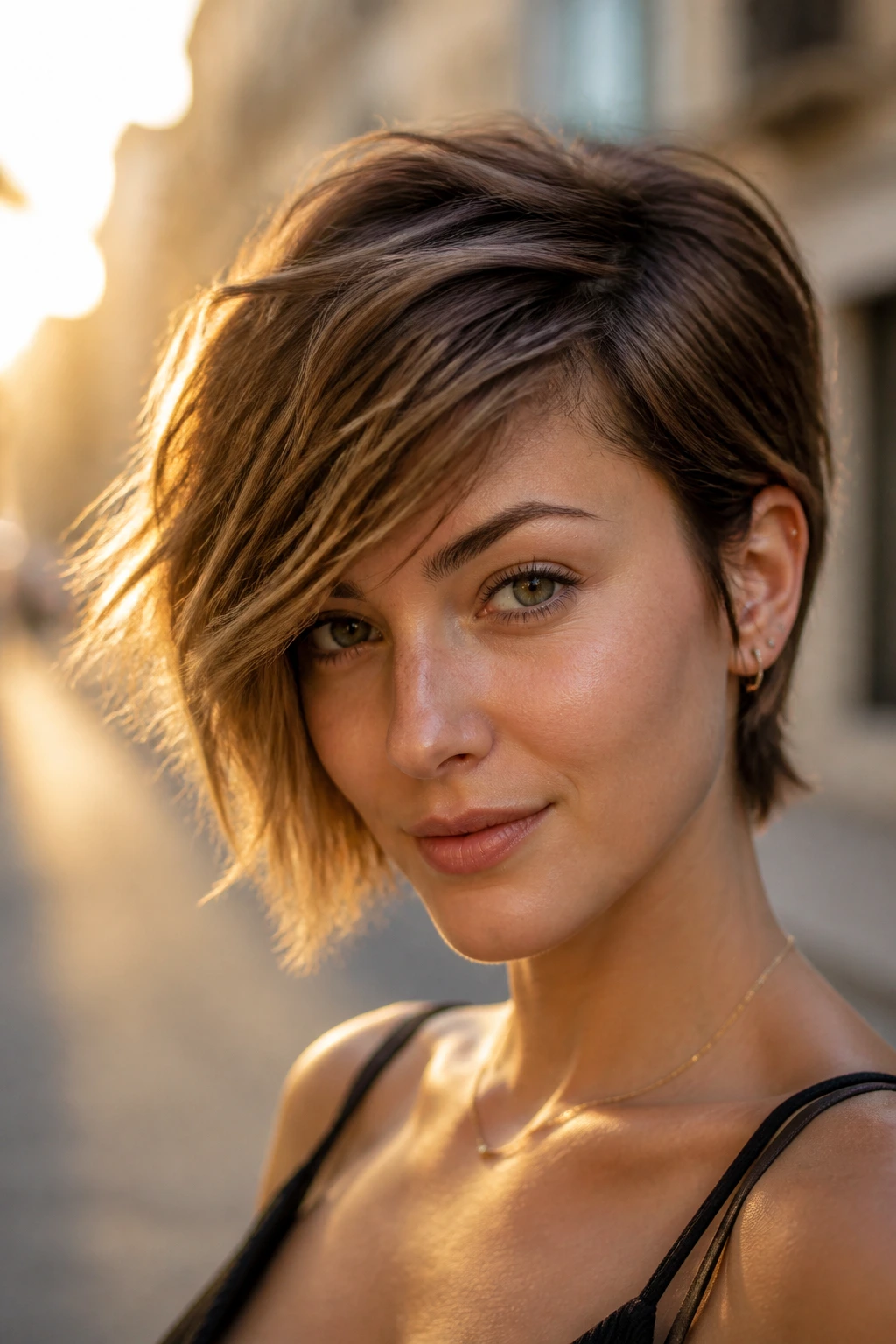
Asymmetry can be a gift for fine hair, especially when one side naturally behaves better than the other. A slight length difference gives the haircut movement and stops it from sitting too neatly. Short shag layers around an uneven line can feel modern without being sharp.
This style is good for people who want a cut with a bit of edge but not a dramatic mullet or undercut. A subtle asymmetry is easier to wear day to day. It also lets you tuck one side behind the ear and leave the other side loose.
Keep the difference small. A half inch, maybe a little more, can be enough. If the contrast gets too strong, the haircut starts to wear you instead of helping you.
29. Textured Bowl-Shag Hybrid
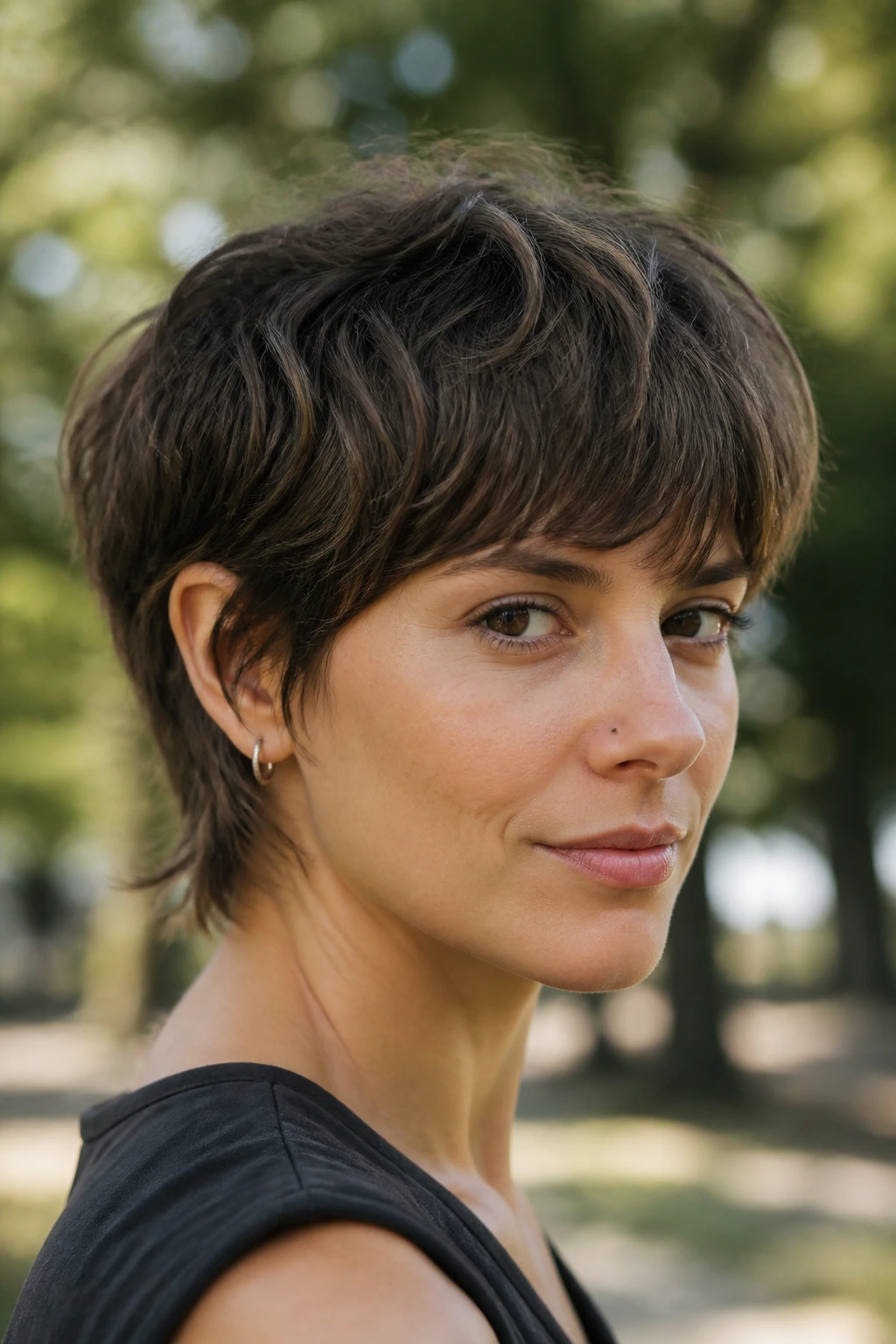
A bowl cut and a shag sound like odd companions, which is why this one works best when it is softened properly. The bowl-like outline gives fine hair a full frame, and the shag texture stops it from becoming stiff or childish. That combination can be surprisingly flattering.
The top should stay rounded, but the perimeter needs some light breaking so the shape doesn’t sit like a cap. Around the ears, a few softer pieces help the haircut breathe. That small detail matters a lot with fine hair.
This is not the place to go wild with thinning shears. The whole point is to keep the shape dense enough to read as a shape. If you like a style that feels a little architectural, this one has real charm.
30. Side-Parted Choppy Bob Shag
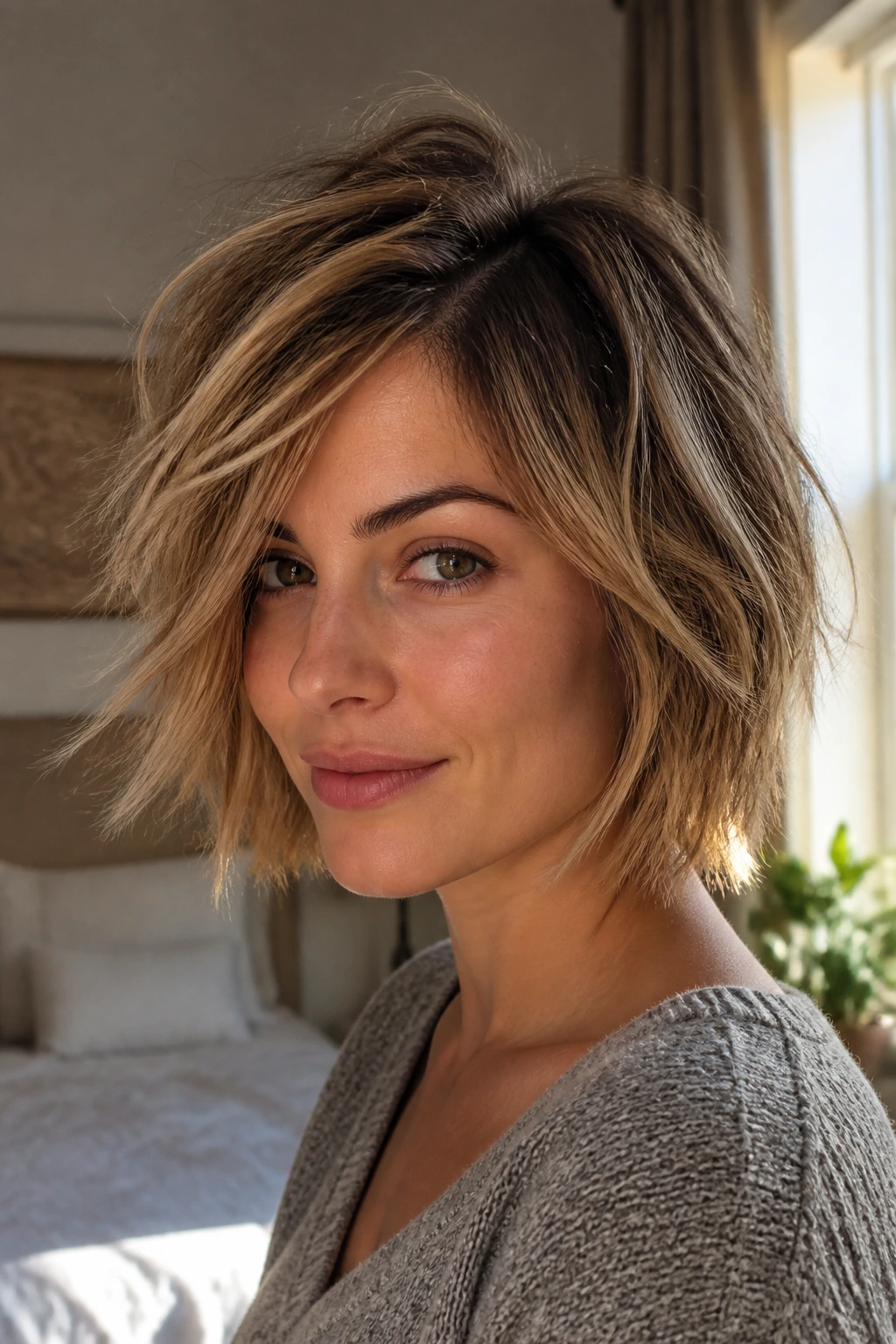
A side part gives the choppy bob shag an instant lift, and the chopped layers stop it from feeling too buttoned-up. Fine hair usually appreciates that contrast. The clean part says “structure,” while the broken-up ends say “movement.”
The cut is especially useful if your hair lies flatter on one side of the head than the other. Shift the part to the flatter side and the roots usually wake up a little. Sometimes the best styling trick is the one that starts in the mirror before the blow-dryer comes out.
Keep the layers around the face light and irregular. You want little pieces, not a blunt shelf. The difference sounds tiny. It isn’t.
31. Grown-Out Pixie Shag
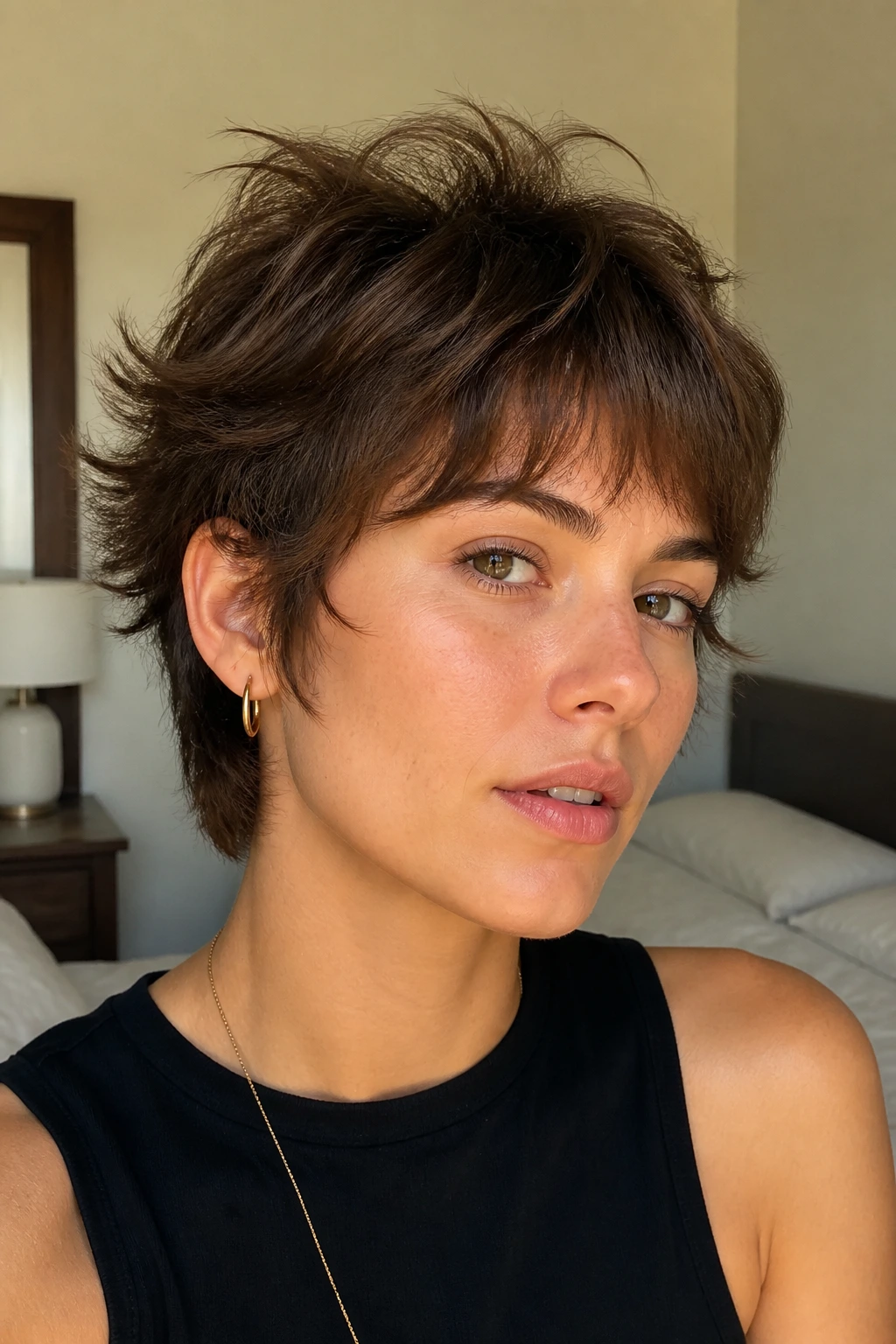
This is the cut for people between styles. If your pixie is growing out and you do not want to commit to a full bob yet, the grown-out pixie shag gives you a shape that looks intentional during the awkward phase. Fine hair often benefits from that middle ground.
The crown can stay a little longer, while the sides and nape are softened into the rest of the haircut. That helps the grow-out look layered rather than neglected. A tiny bit of bend through the top makes the whole thing feel deliberate.
I like this version because it buys you time. Not every haircut has to be a final answer. Sometimes the useful cut is the one that gets you from one stage to the next without looking unfinished.
32. Softly Disconnected Shag

A disconnected shag sounds technical, but the idea is simple: the top, sides, and perimeter do not blend too perfectly, and that separation gives fine hair a sense of fullness. Each section gets to stay readable, which is useful when the strands themselves are delicate.
The word “softly” matters here. You do not want hard gaps or a weird choppy split. You want just enough difference in length that the haircut feels airy and layered without losing its outline. Fine hair looks better when the cut has a shape you can actually see.
This is the one I’d pick for someone who wants a little edge but still needs the hair to look substantial in daylight. It’s a strong finish to the list because it captures the whole logic of the shag on fine hair: keep some line, keep some movement, and don’t sand the hair down until there’s nothing left to see.
Why This Shape Works So Well on Fine Hair
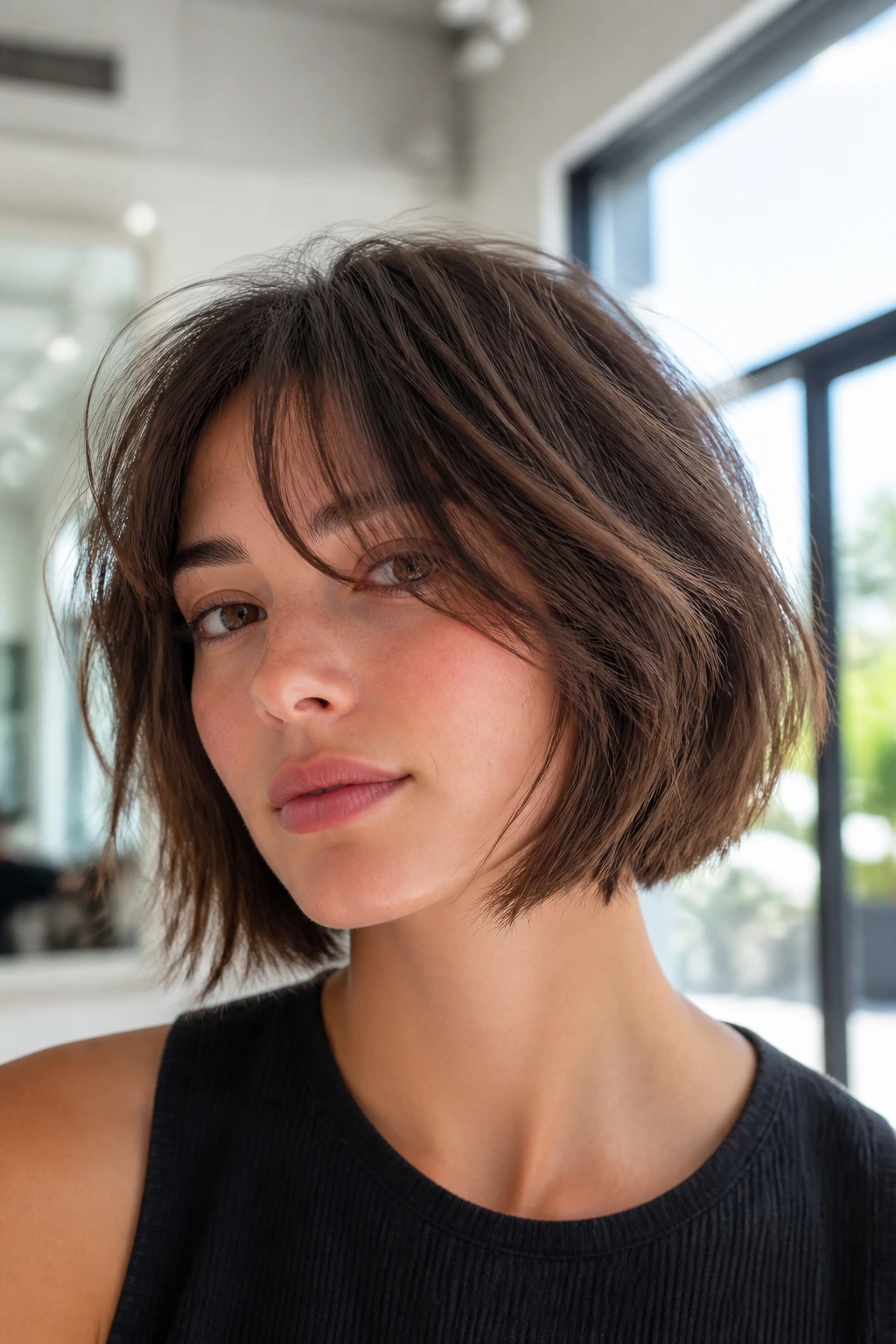
A short shag succeeds when it respects the limits of fine hair instead of pretending those limits do not exist. The perimeter stays useful. The layers stay soft. The crown gets some lift, but not so much that the hair looks frayed by the second week.
The other thing I like is how forgiving the cut can be if it is built well. A slight wave, a deep side part, a little root spray, or a quick bend at the ends can all push the same haircut in different directions. That flexibility matters more than a dramatic before-and-after photo ever will.
If you’re choosing among the 32 cuts above, start with the one that matches how you already wear your hair. That’s the honest answer. A shag that fits your texture and your patience will always beat one that only looks good in theory.
How to Ask for a Short Shag That Won’t Get Chopped Too Thin
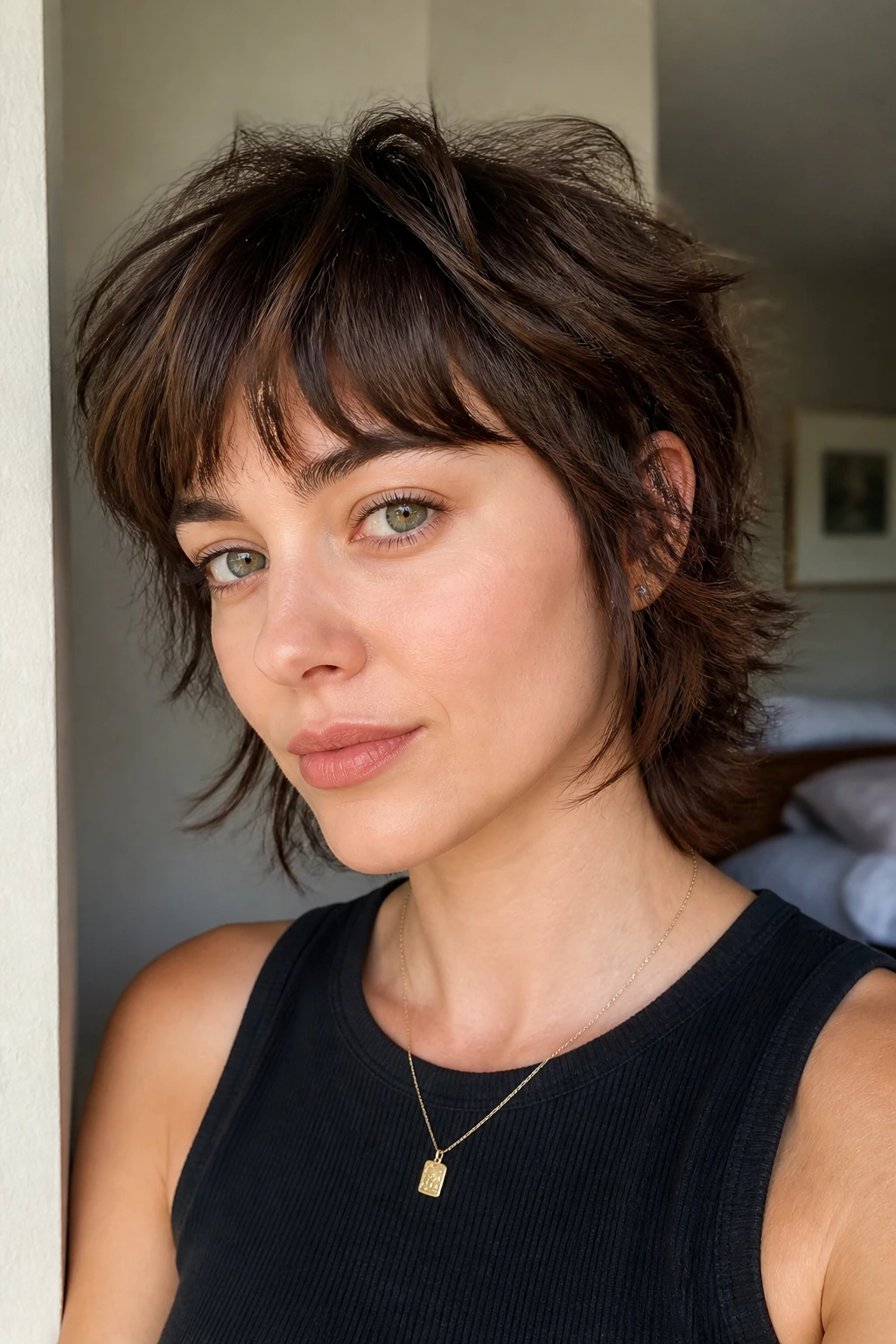
The salon chair is where a lot of shag cuts go wrong, and the language matters more than people think. If you tell a stylist you want “lots of layers,” you may get exactly that, which can be a problem on fine hair. Too much removal at the ends makes the hair look see-through, and once that happens, no shampoo fixes it.
Start with the shape. Say where you want the length to sit — chin, jaw, ear, or collarbone — and ask for a blunt or slightly softened perimeter that still reads as a line. Then talk about the layers as internal movement, not full-on thinning. That distinction keeps the cut from collapsing.
Bring a reference photo, but point out the part you actually like. Maybe it is the fringe. Maybe it is the crown lift. Maybe it is the nape. Stylists work faster when you identify the one feature that matters most, because not every shag photo is useful in every face.
Say what your hair does on its own. Does it lie flat at the roots? Flip out at the ends? Puff at the sides? That detail helps a stylist decide where to keep length and where to remove it. For fine hair, that conversation is the haircut.
Styling Moves That Keep the Crown From Falling Flat
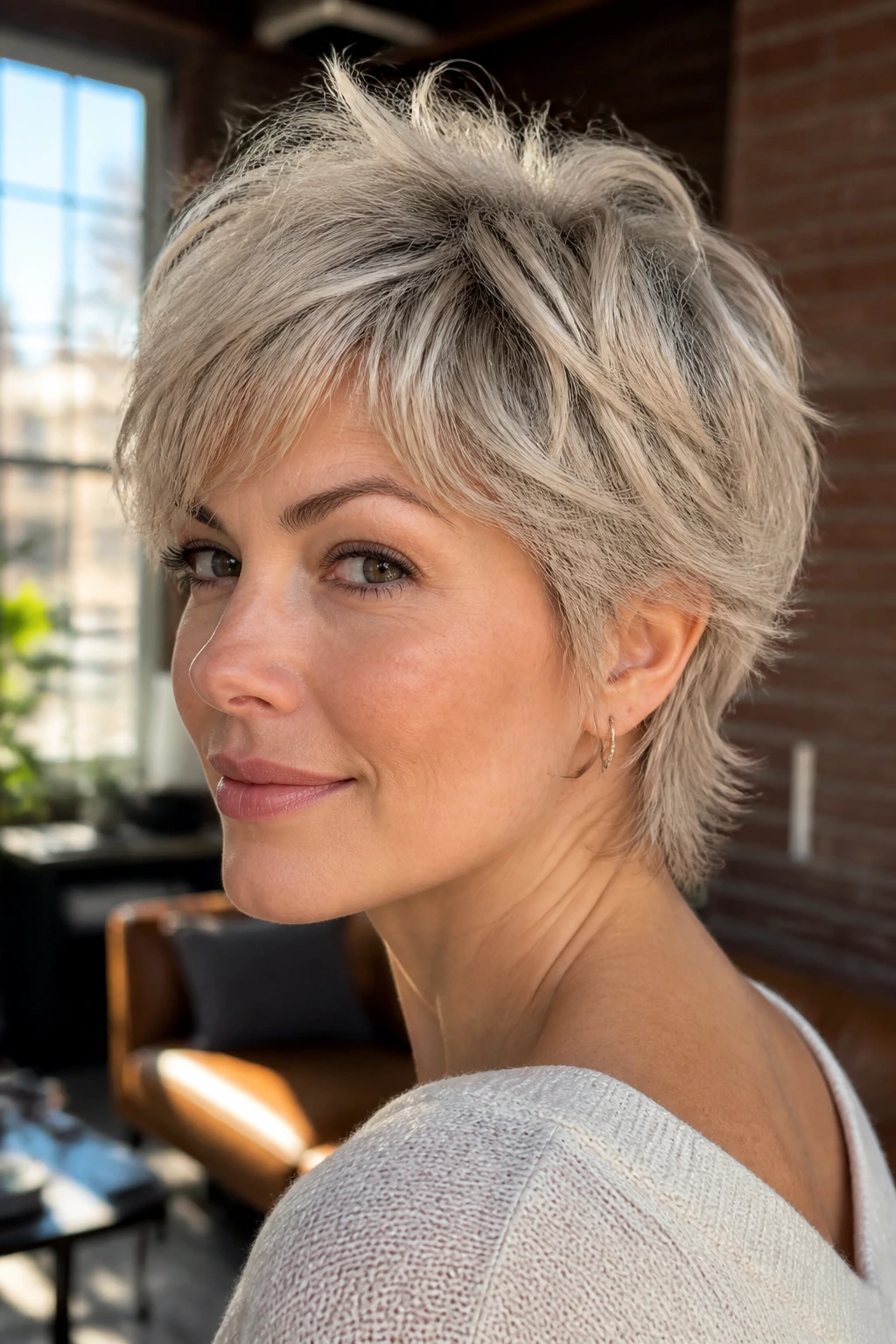
Fine hair needs a little direction at the roots, but not a mountain of product. Start with a lightweight volumizing mousse or spray on damp hair, and keep it close to the scalp through the crown and part line. If you pile it through the ends, the cut can lose its airy feel.
Blow-drying matters more than most people want to hear. Use the nozzle, lift sections at the root, and dry the hair in the opposite direction of how it wants to fall for the first few seconds. That tiny bit of tension gives the roots a memory. Then you can smooth the top back into place.
A round brush is useful, but not mandatory. If your shag is short, a small vent brush can give enough bend through the front pieces. For air-dry styles, scrunch the ends lightly and leave the crown alone until it’s mostly dry. Touching it too much while it’s damp often flattens the shape you were trying to build.
Day two hair needs a different plan. A little dry shampoo at the roots, a finger shake at the crown, and a quick re-bend of the front pieces often does more than re-washing. Fine hair tends to respond better to restraint than to rescue missions.
Common Mistakes That Make a Shag Look Sparse
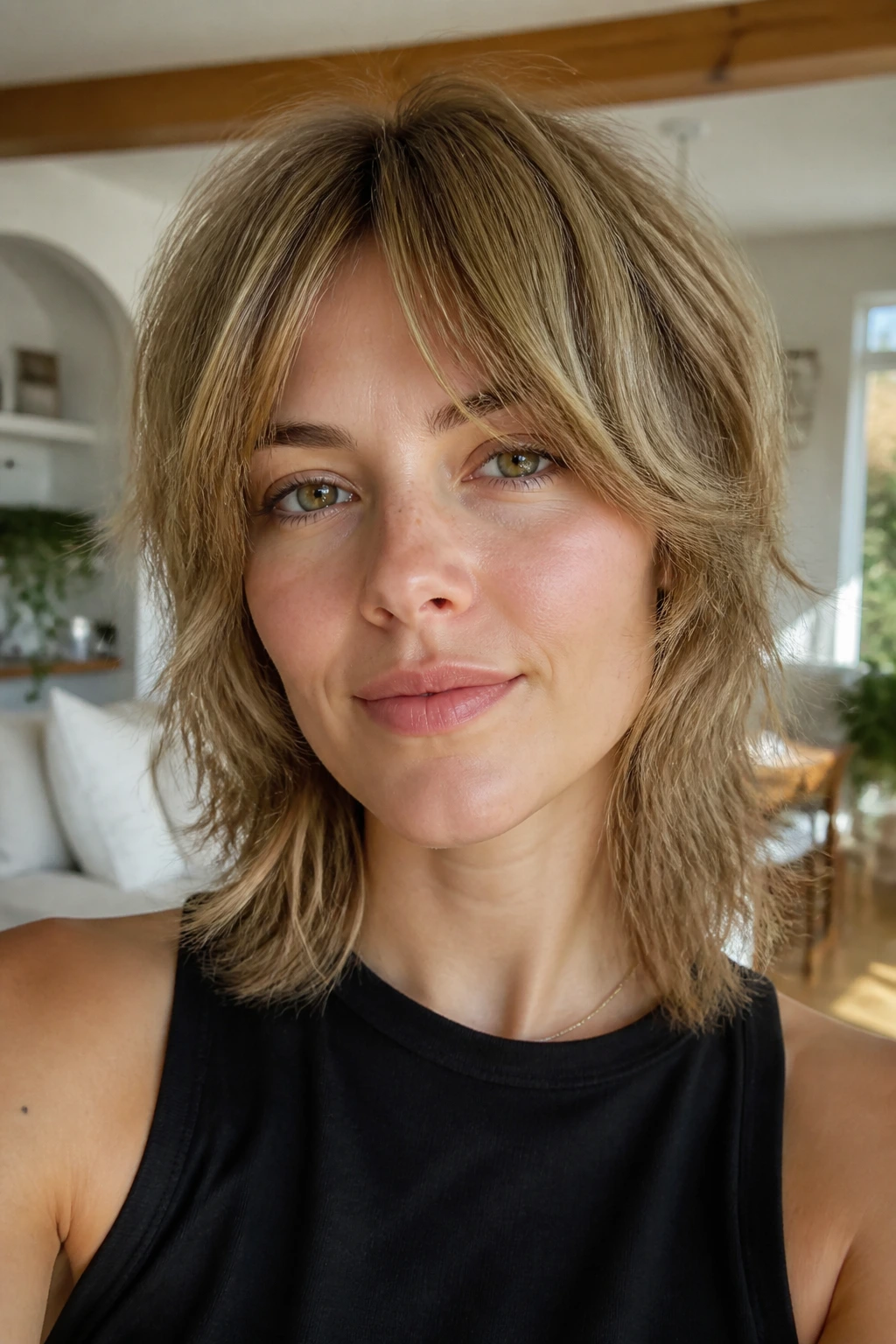
Over-thinning the ends: The hair starts to look fuzzy or transparent, especially in daylight. The fix is a stronger perimeter and softer internal layering, not more thinning shears.
Cutting too much off the crown: The top lifts for a minute, then falls flat and exposes too much scalp. Keep the crown layered, but leave enough length for the hair to overlap itself.
Using a heavy styling cream: Fine hair can go stringy and oily fast. Switch to mousse, root spray, or a very small amount of paste just on the ends.
Ignoring the part line: If the part sits exactly where the hair wants to collapse, the whole cut can seem limp. Move the part slightly off-center or try a deep side part for lift.
Choosing bangs that are too dense: Thick fringe on fine hair can hog the density from the rest of the cut. Bottleneck, curtain, or wispy bangs usually behave better.
Letting the grow-out go too long: A shag that once had shape can turn into a tired triangle if you wait too long. Trim the outline before it loses the movement that made it work.
Variations and Swaps for Different Textures and Habits
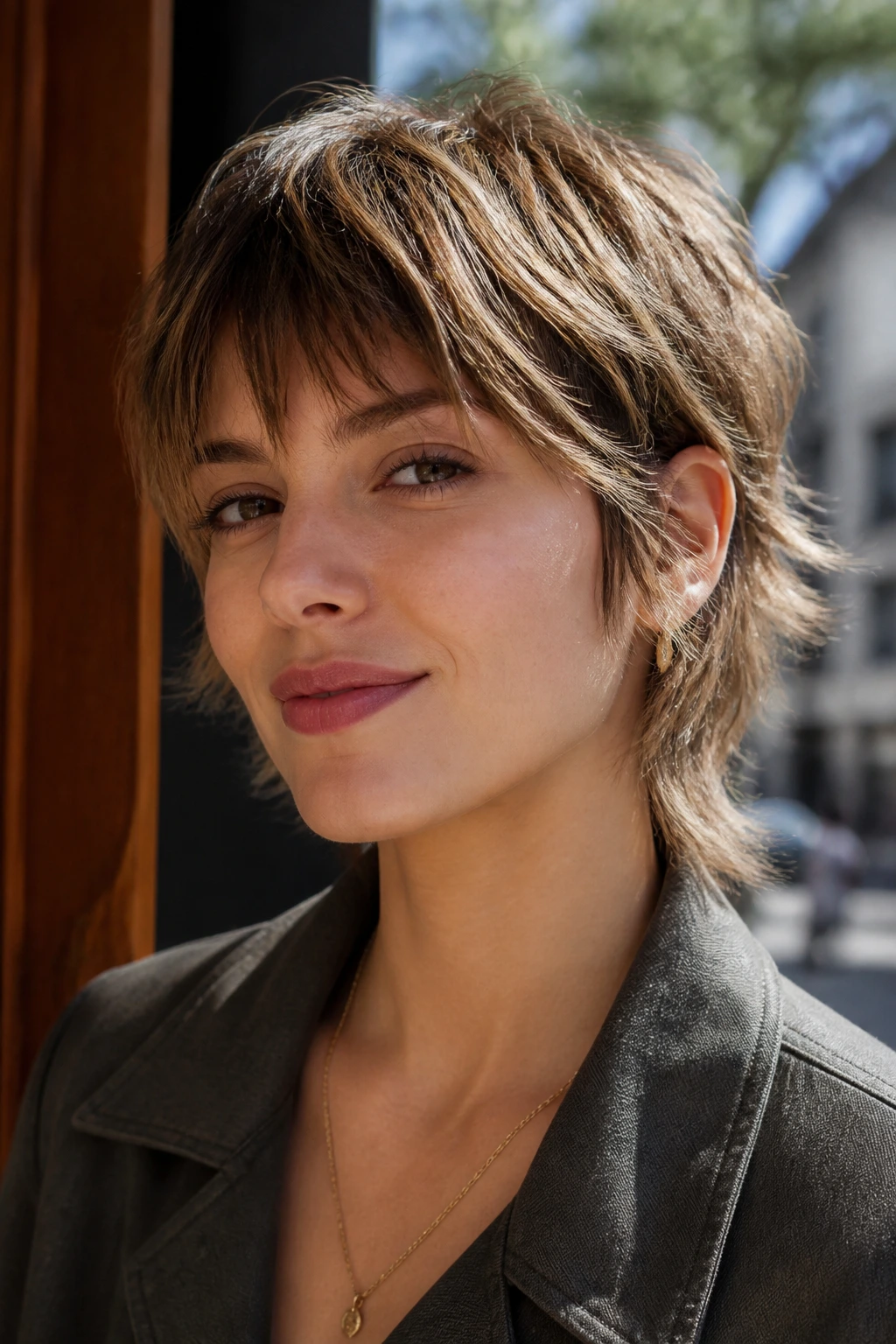
The Straight-Hair Soft Shag: Keep the layers subtle, the ends bluntish, and the fringe broken up. Straight fine hair usually needs shape more than it needs extra texture, so this version leans on the cut rather than the styling.
The Wavy Air-Dry Shag: Ask for slightly shorter top pieces and longer front framing so the waves can separate naturally. A little mousse and a hands-off dry-down are enough.
The Curly Cloud Shag: Build the cut around your curl pattern and keep the layers rounded, not shredded. Fine curls need room to spring, so the shape should support the curl instead of fighting it.
The Grow-Out-Friendly Shag Bob: If you hate frequent trims, keep the length at jaw or collarbone and avoid razor-heavy ends. This gives you more time before the outline loses its shape.
The Low-Maintenance Fringe Swap: If bangs sound like too much work, skip them and use a side part with longer face-framing pieces. You still get the shag effect without the morning fringe battle.
Tools and Products That Earn Their Place on the Counter
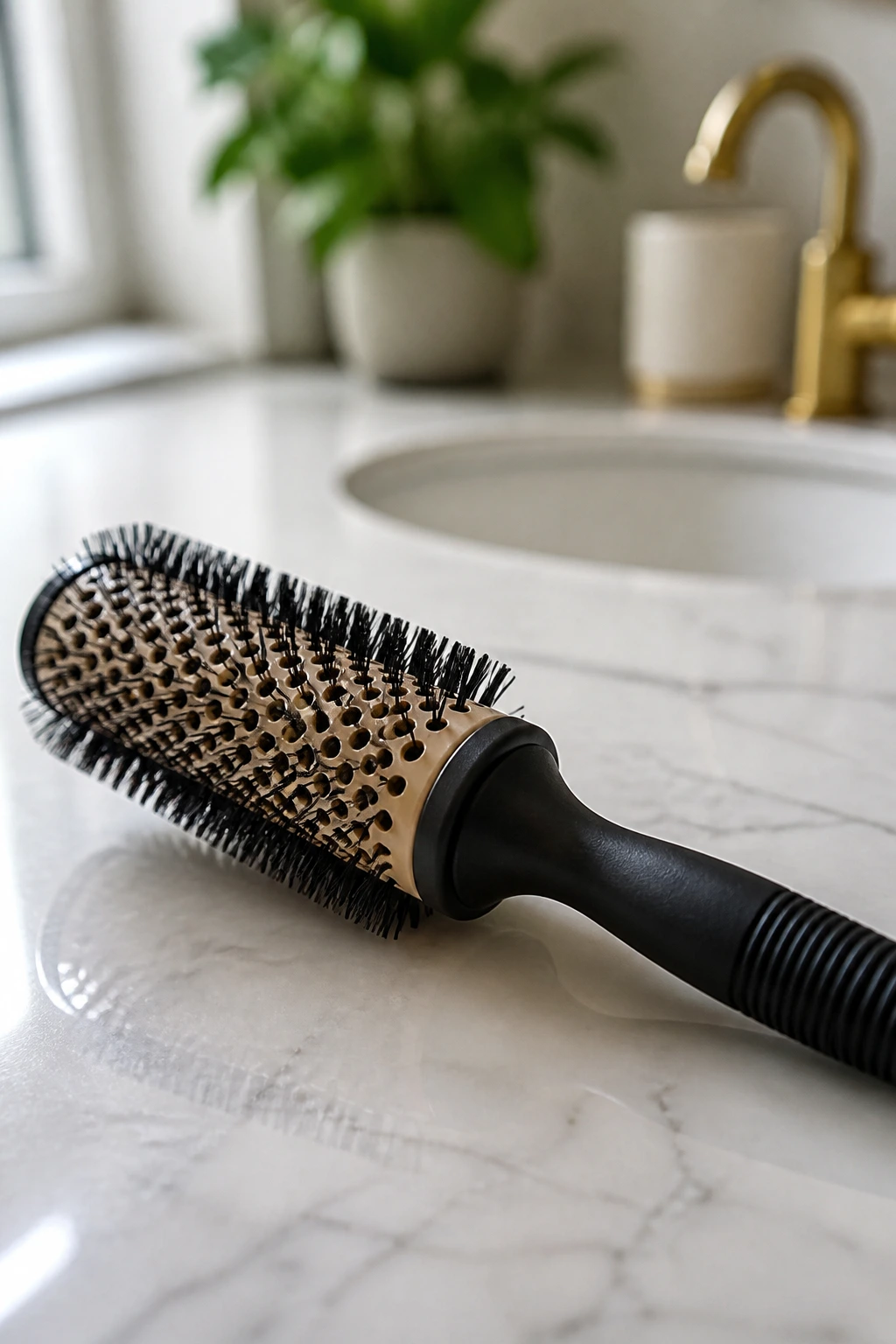
-
Lightweight volumizing mousse — Gives roots a little memory without turning fine hair sticky or stiff.
-
Root-lift spray — Best sprayed at the scalp on damp hair, especially if your crown lies flat.
-
Small round brush — Useful for adding bend to bangs and front layers on short shag cuts.
-
Vent brush — Faster and easier than a round brush when you want a rough blow-dry.
-
Blow dryer with a nozzle — The concentrator helps aim airflow at the root instead of blasting the whole head apart.
-
Dry shampoo — Helps refresh the roots and add grip on day two or three.
-
Texture spray — Good for piecey ends, but use a light hand; too much can make fine hair feel dusty.
-
Diffuser — Worth keeping if your fine hair is wavy or curly and you want the layers to keep their shape.
-
Small clips — Handy for setting the crown up while it cools after a blow-dry.
Keeping a Short Shag Looking Intentional Between Trims
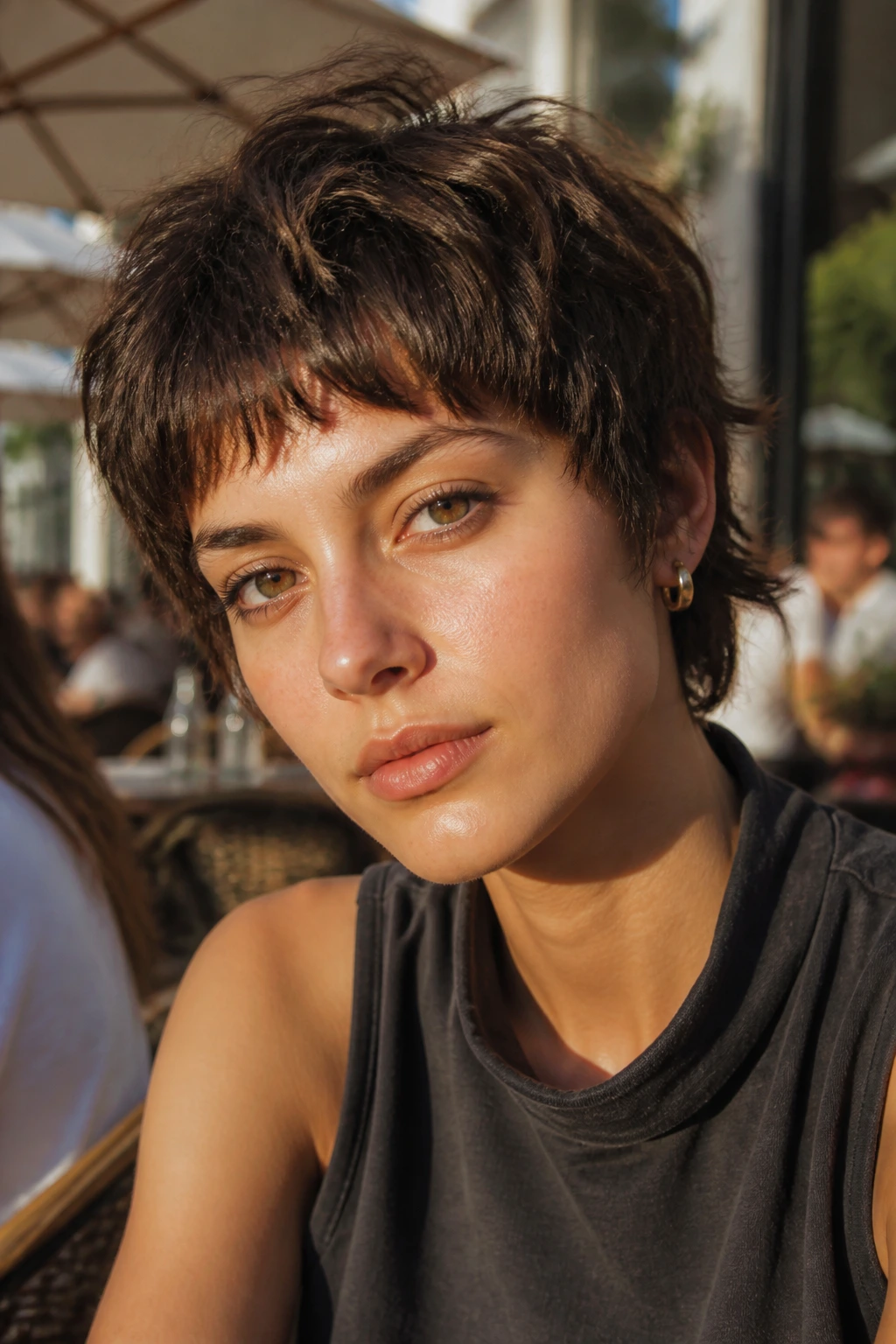
Short shag haircuts for fine hair tend to look their best when the outline stays fresh. For most people, a trim every 6 to 8 weeks keeps the layers from growing into each other and the nape from losing its shape. If the fringe is a major part of the cut, you may want a tiny bang trim sooner.
At home, the job is mainly about preserving the part, the root lift, and the ends. Sleep on a smooth pillowcase if your hair tangles easily, and don’t crush the crown into a tight bun or clip every night. That can flatten the top and bend the fringe in odd ways. A loose clip or soft tie is enough when you need the hair out of your face.
Wash frequency matters too. Fine hair often looks better with one or two days of wear between washes because the roots gain a bit of grip. If your scalp gets oily fast, use dry shampoo at the roots before the hair gets greasy, not after it has already collapsed. That tiny timing change usually keeps the cut looking cleaner.
Questions People Ask Before They Go Short and Shaggy
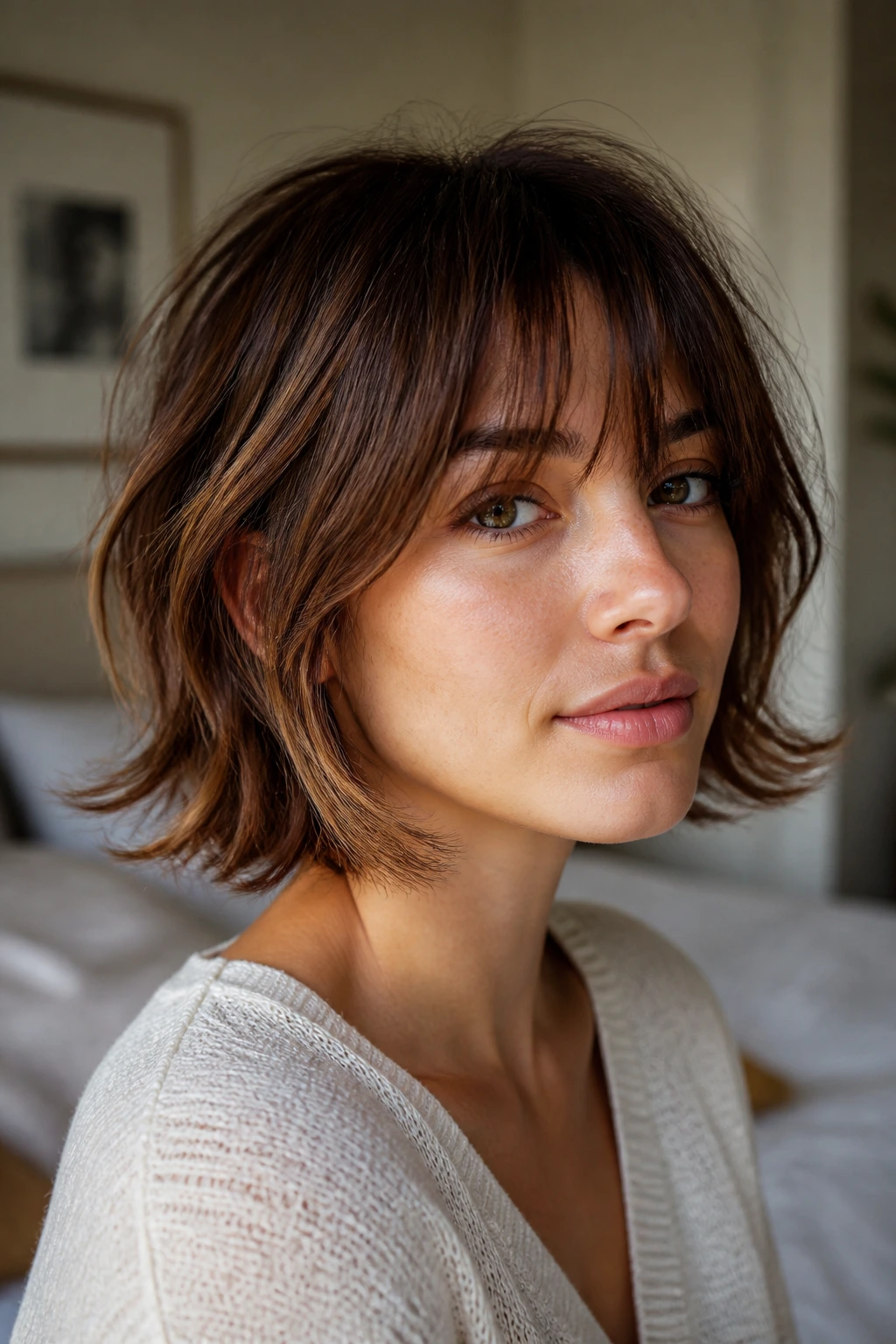
Will a shag make fine hair look thinner?
Only if it is cut too aggressively. A good short shag keeps a visible perimeter and uses soft layers for movement, which usually makes fine hair look fuller rather than thinner.
Is a shag better than a blunt bob for fine hair?
A blunt bob gives the eye a solid line, which can be useful, but a shag adds movement and can hide flat spots better. If your hair is very limp at the roots, the shag often wins.
Do I need bangs with a short shag?
No. Bangs can help frame the face, but they are not required. A side part or longer face-framing pieces can create the same softness without the upkeep.
Can straight fine hair pull off a shag?
Yes, but it usually needs a softer, more controlled version. Keep the ends tidy and rely on subtle layers rather than heavy texturizing.
How much texturizing is too much?
If the ends start looking fuzzy, see-through, or weak in daylight, it is too much. Fine hair needs movement with a line still intact.
What if my hair is fine but dense?
Then you can handle a little more layering, especially around the nape and crown. Dense fine hair often benefits from hidden weight removal so the cut sits closer to the head.
How do I make the cut last on day two?
Use dry shampoo at the roots, restyle the front pieces with a little water or texture spray, and avoid adding too much new product. The goal is to revive the shape, not rebuild the whole haircut.
Which of these cuts is easiest to live with?
The chin-length shag bob, the collarbone mini shag, and the side-parted choppy bob tend to be the least fussy. They keep enough structure that you’re not fighting the hair every morning.
The Shape That Makes Fine Hair Move

Fine hair does not need to be bullied into looking full. It needs a shape that respects how it behaves. That is the quiet strength of a good shag: it creates motion, keeps the outline useful, and leaves enough hair behind to make the whole thing feel real.
The right short shag can be airy, neat, edgy, soft, or a little messy, and that flexibility is the point. You are not picking a haircut that only works one way. You are picking a structure that can be worn with a round brush, a side part, a quick scrunch, or almost no effort at all.
If you keep one rule in mind, make it this: don’t sacrifice the perimeter just to get texture. Build the texture into the shape instead. That is where short shag haircuts for fine hair stop looking like a trend and start behaving like a very good decision.
