



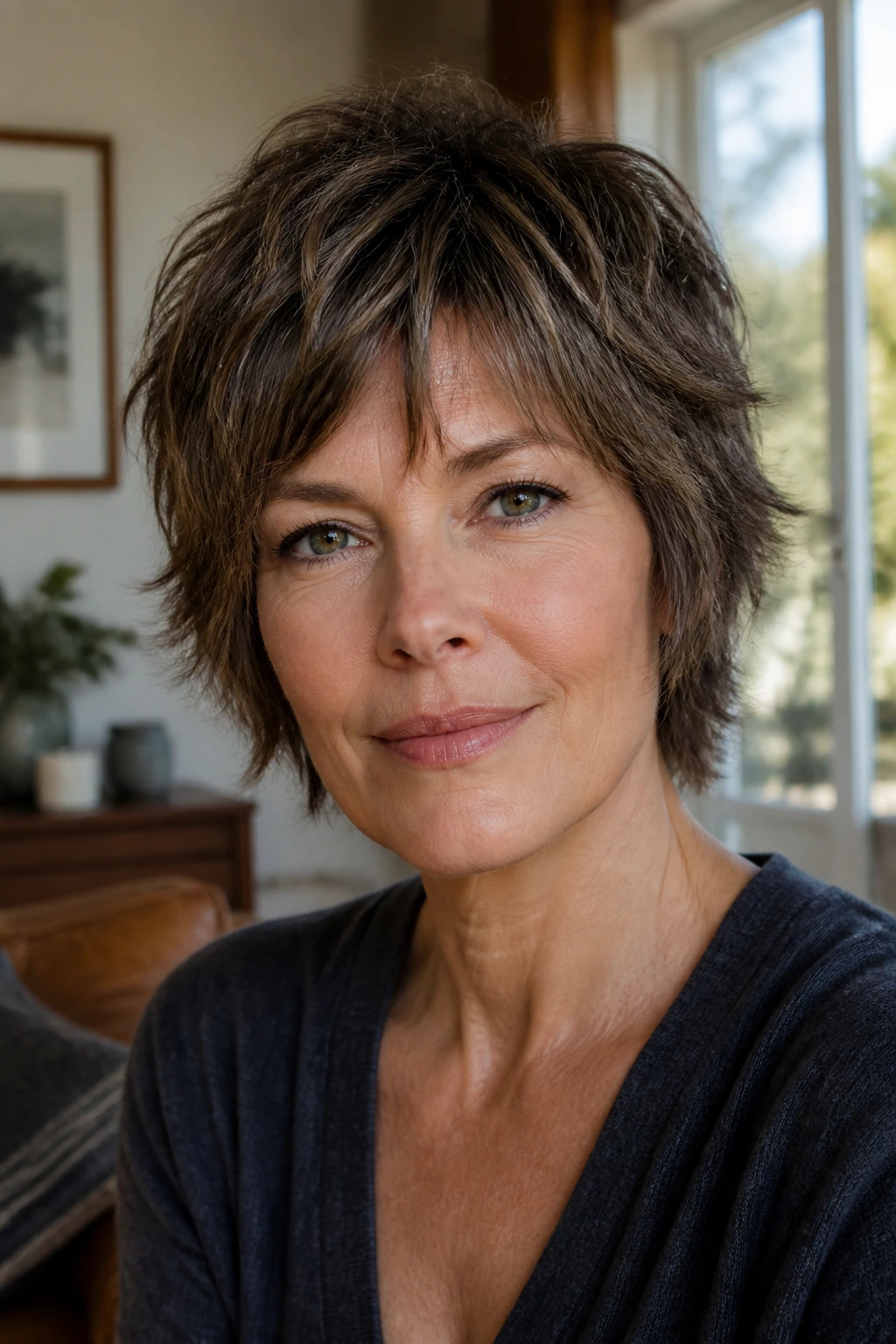
Short shaggy hair for square faces over 40 works best when the cut softens the jaw instead of arguing with it. That’s the whole trick, and it’s why a good shag can feel so much better than a blunt bob or a one-length crop that stops dead at the chin. Square faces usually have strong angles through the forehead, cheekbones, and jaw, so the haircut has to bring in movement, bend, and a little bit of air.
A shag does that without turning your hair into a big, fuzzy cloud. The right version gives you texture around the cheeks, lift at the crown, and fringe that breaks up a straight line across the face. Done well, it looks lived-in in the best way: piecey, light, and a little bit mischievous. Done badly, it can look like someone hacked at the ends with kitchen scissors. The difference is in where the layers start, how short the shortest pieces are, and whether the bangs help or fight the shape of your face.
Age matters here only in the practical sense. Hair often changes after 40 — it may get finer, drier, grayer, or more wiry at the temples — and the haircut should work with those shifts instead of demanding more effort than you want to give. That’s where these 28 short shaggy looks earn their keep. Some are polished. Some are a little rougher. A few lean soft and romantic, and a few have enough edge to keep things interesting.
Why This Collection Works So Well
-
Softens the jawline: Layers that start above or below the jaw keep your face from looking boxed in, which is the main thing a square face needs.
-
Moves attention upward: A little crown lift, a side part, or a wispy fringe pulls the eye up toward the cheekbones and eyes instead of parking it at the jaw.
-
Works with hair that’s changed texture: Fine hair gets air and lift, thick hair loses bulk, and gray hair looks deliberate instead of puffy when the cut has controlled texture.
-
Doesn’t demand a perfect blowout: Most of these cuts look better with a bit of bend and separation, which means they forgive a rough dry or a quick diffuser job.
-
Plays nicely with glasses: The right fringe can sit above the frames, skim the brow, or sweep off to one side without swallowing your face.
-
Gives you range: You can go from close-cropped and choppy to collarbone-grazing and soft without losing the shag’s easy movement.
How a Shag Flatters a Square Face

A square face already has structure. That’s not a problem; it’s the starting point. The haircut just needs to interrupt the straight lines in a smart way. If the shortest layers land right at the jaw, the face can look wider than it is. If those same pieces are cut a little higher, around the cheekbone, or a little lower, closer to the neck, the line feels softer.
Break the hard line, don’t hide it
The goal isn’t to blur your face into nothing. That usually looks overdone and a little timid. A better shag gives the jaw something to do — a bend here, a flick there, a bit of movement at the ends. That motion makes a square face look elegant instead of severe.
Bangs matter more than people think
A heavy straight fringe can make a square forehead feel heavier. A light curtain bang, a side sweep, or a wispy brow-skimmer does the opposite. It creates a vertical break without chopping the face in half.
Crown lift changes the whole mood
A little height at the top keeps the haircut from collapsing into the widest part of the face. It also helps if your hair is fine or flat. You do not need a giant tease job. A round brush at the roots or a bit of mousse at the crown is usually enough.
How to Read the 28 Cuts Before You Pick One
Think about where your hair wants to behave before you fall in love with a photo. Thick hair can carry more layers and still look full. Fine hair usually needs shorter interior layers and a lighter outline so it doesn’t disappear. Curly hair needs room to spring, or the cut turns triangular. Straight hair tends to need a little more texture product, because it can show every blunt edge.
Also, look at your daily habits. If you air-dry and go, the cuts with softer ends and longer fringe will make more sense. If you like a round brush and a few minutes with a dryer, you can wear sharper, more sculpted shag-bob shapes. There’s no prize for choosing the most dramatic cut in the room. Choose the one that behaves in your bathroom.
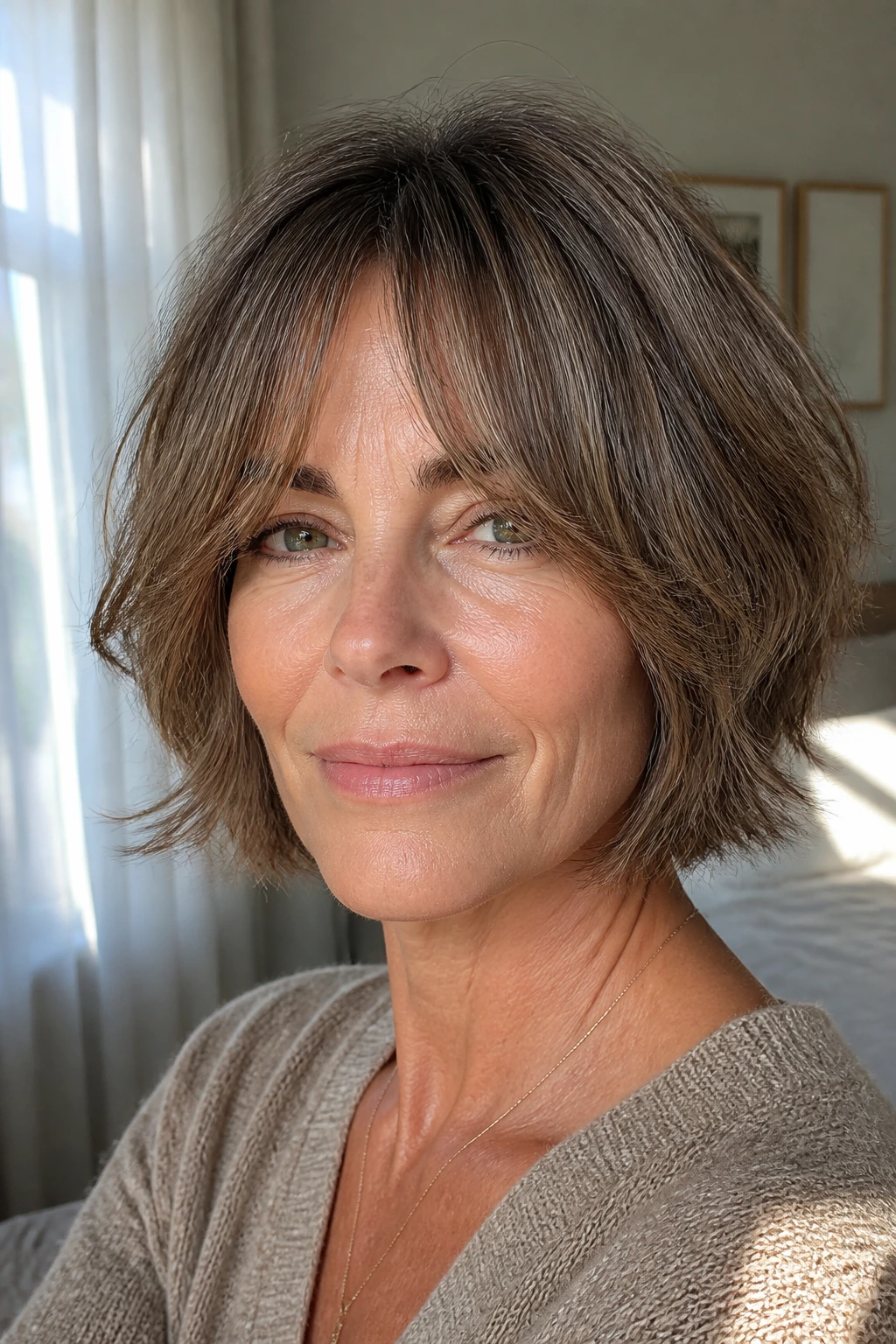
1. Chin-Grazing Soft Shag with Curtain Bangs
This version is the dependable one. The layers hover around the chin and cheekbone, which means the haircut softens a square face instead of stopping hard at the jaw. Curtain bangs split the forehead and keep the whole look open, not heavy.
Why it works
The shape is small enough to feel fresh, but not so short that it widens the face. I like this one for medium-density hair that needs movement without too much thinning. A little bend in the front pieces is enough to make it look done.
Best for: straight to wavy hair
Styling note: use a 1-inch round brush only at the front pieces
Skip if: your hair is very wispy and already collapses at the ends
2. Feathered Pixie Shag
This is the crop for someone who wants neck space, easy drying, and a little edge. The top stays soft and feathery, while the sides are kept close enough to show your cheekbones. It’s tidy, but not stiff.
The beauty here is the contrast. The nape stays neat, the crown gets lift, and the fringe can be swept forward or sideways depending on the day. If you wear glasses, this cut can be a knockout because it keeps the hair out of the lenses without looking severe.
3. Collarbone Shag with Side-Swept Fringe
A collarbone shag gives you a touch more length, which helps if you like to tuck one side behind the ear or pull it into a messy clip. The side-swept fringe breaks up the forehead without the symmetry of curtain bangs.
What makes it different
The longer length keeps the ends from ballooning at the jaw. That matters on square faces. A lot of people with strong bone structure look better with a cut that lands just below the cheekbone and then frays out at the ends.
- Ask for soft interior layers, not chunky steps.
- Keep the fringe light enough to move.
- Add a bend with a flat iron if your hair dries too flat.
4. French Shag with Airy Bangs
This one has a little attitude. The layers are loose, the fringe is airy, and the whole thing looks like it was cut with movement in mind from the start. It’s a good pick if you want shape without looking overly styled.
The bang area is the key. It should skim the brows, not sit like a curtain wall. If your forehead is a little broader, this cut can be especially flattering because it breaks the width without closing the face in.
5. Razor Bob Shag
A razor bob shag keeps the outline bob-like while softening it with wispy, cut-up ends. It’s sharper than a classic shag, which makes it nice if you like a cleaner shape. The razor finish keeps the sides from feeling bulky.
This cut works well when your hair has some natural body. It also flatters square faces because the sharpness is in the texture, not in a blunt edge at the jaw. That difference matters more than most people think.
6. Wavy Shag with Jaw-Skimming Pieces
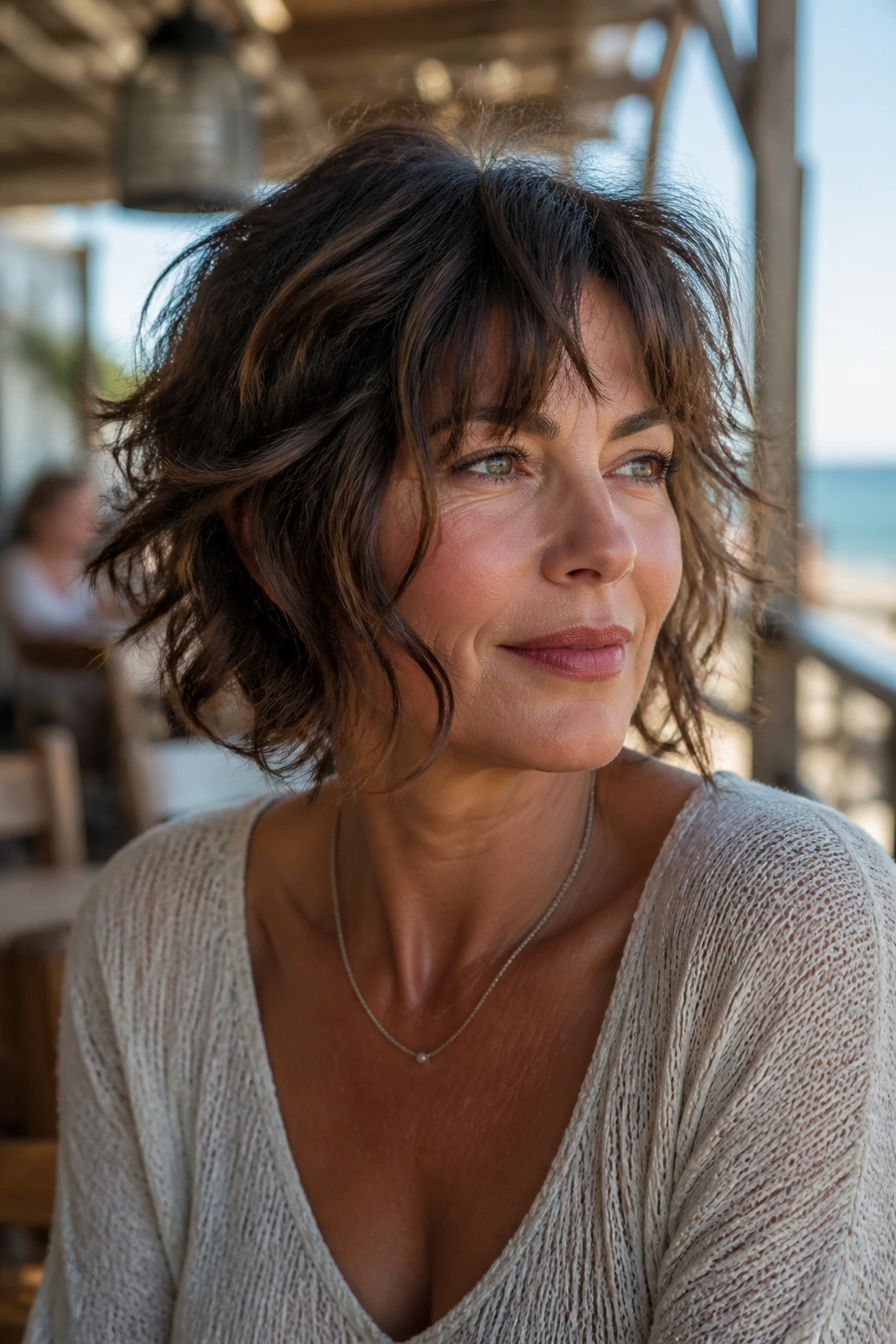
Here’s the cut that makes waves look expensive without trying too hard. The shortest pieces brush the lower cheek and jaw, but they don’t sit in one hard line. They move. They flick. They make the face look a little longer and a little softer.
When the wave pattern is already there, this haircut does half the work for you. Ask for layers that release weight around the cheekbones and keep the back a touch longer. A sea salt spray at the roots and a cream through the ends is usually enough.
7. Micro-Bang Crop Shag
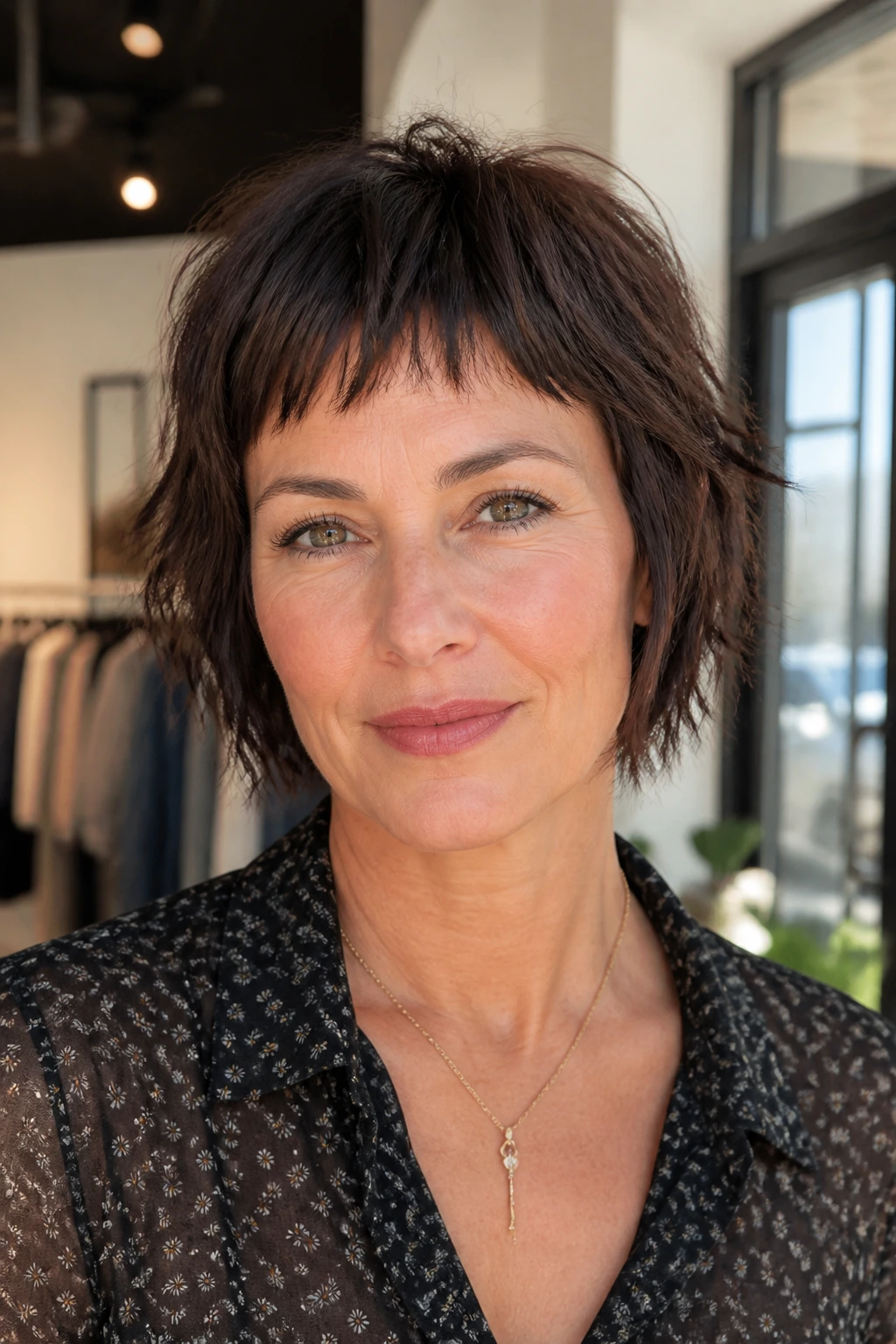
Not for the timid. Micro bangs are a strong choice, and paired with a shag, they can look very modern on a square face because the short fringe breaks up the forehead fast. The rest of the cut should stay soft, or the whole thing gets too hard-edged.
I like this on someone with a confident style and a decent amount of natural texture. If your hair lies flat, the contrast between the tiny fringe and the choppy layers can be striking. If you want soft and easy, this is probably not your first stop.
8. Layered Lob Shag
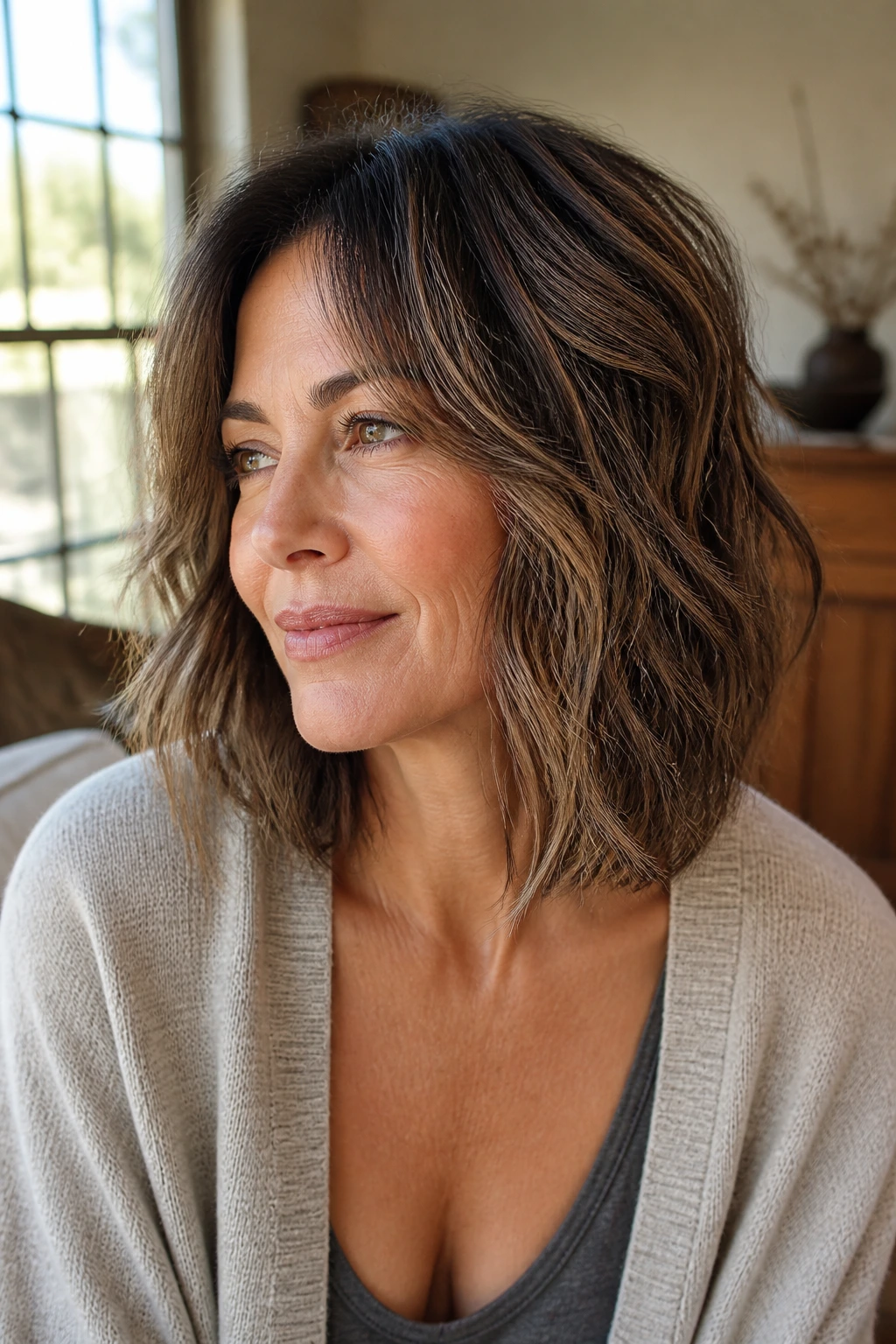
This is the “I want length, but not too much” option. The lob lands somewhere between the chin and shoulders, with shag layers to keep it from feeling heavy. On a square face, the longer outline helps drag the eye down a touch, which is useful when the jaw is already prominent.
How to wear it
A loose wave works better than a polished bend here. The ends should look touched, not curled into a salon spiral. A center part can be lovely, but a slightly off-center part often softens the whole cut more.
9. Neck-Grazing Shag with Long Fringe
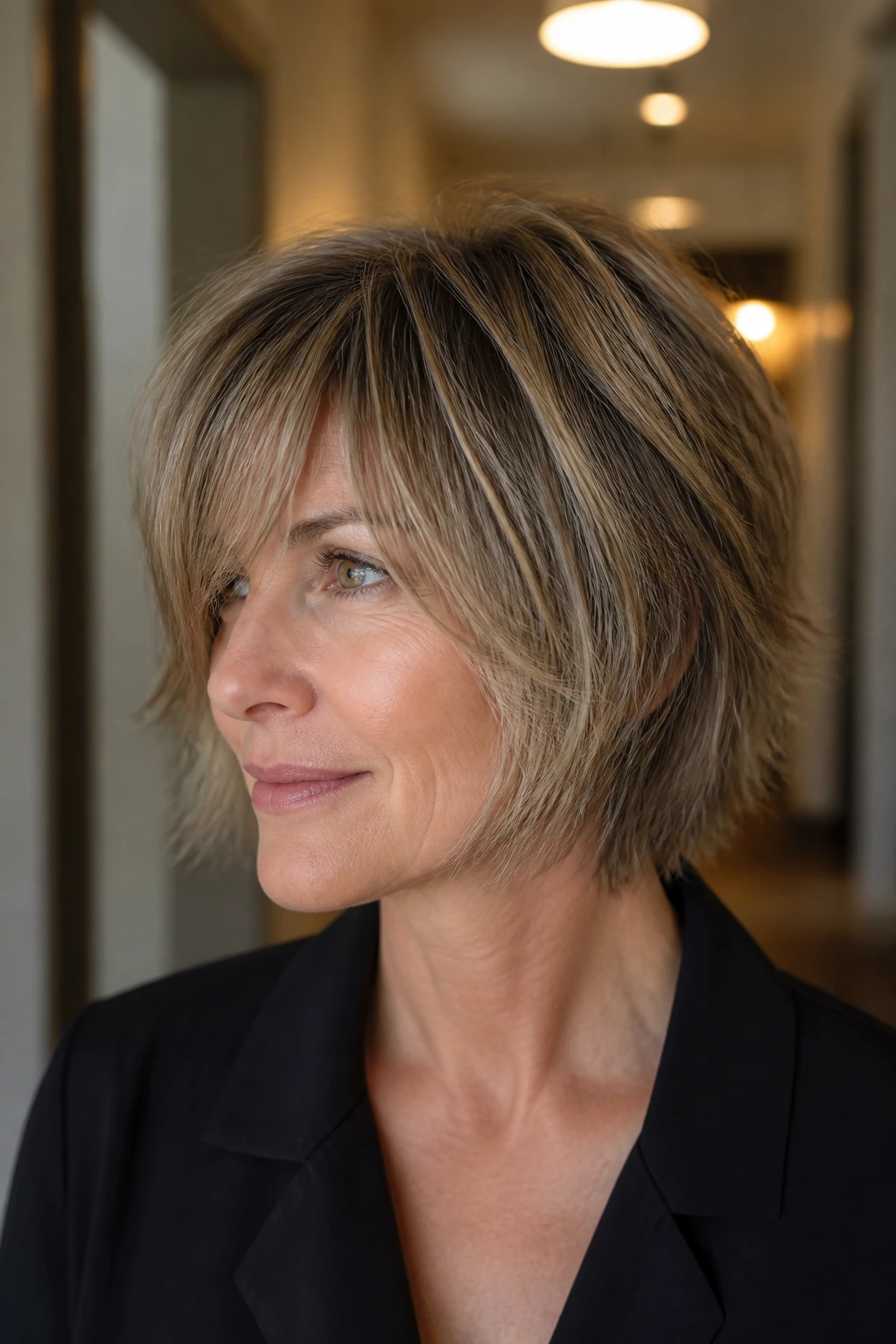
A neck-grazing cut keeps the perimeter short enough to feel modern, but long enough to tuck behind the ears on a sleepy morning. The long fringe is what makes it flattering: it gives the face a soft frame without covering too much of it.
This is a smart choice if you like low-fuss styling and want some movement around the neck and jaw. The fringe should hit around the cheekbone or just below it so it doesn’t create a shelf across the face.
10. Deep Side-Part Shag
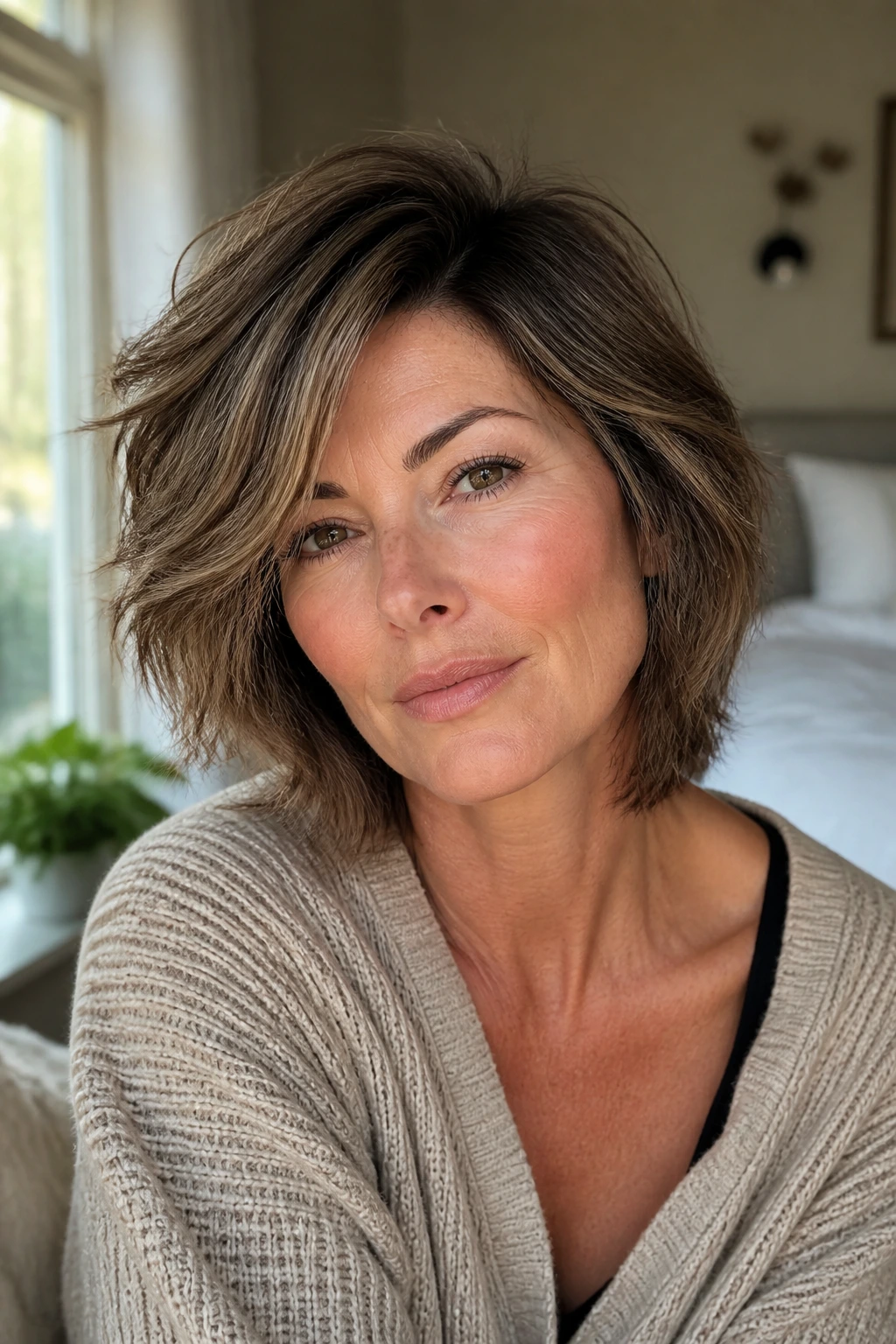
A deep side part changes the geometry fast. On a square face, it creates a diagonal line that breaks up all that straight structure. Pair that with a shag, and the result is less boxy, more lifted, and a little more dramatic.
This cut is especially useful if your hair tends to flatten on one side. The part gives you a natural reset. Add a bit of mousse at the roots on the heavier side and tuck one side behind the ear for an easy, grown-up finish.
11. Silver Shag with Piecey Ends

Gray and silver hair love texture, but they can turn puffy if the cut is too blunt. A piecey shag solves that by breaking the mass into smaller sections. The ends look light, almost separated, which keeps the shape from turning helmet-like.
The color adds a clean shine, and the cut keeps it from feeling rigid. If your silver hair is coarse, a light cream or serum on the ends will help the texture stay deliberate. Skip heavy oils. They can make the piecey effect disappear.
12. Stacked Shag Bob
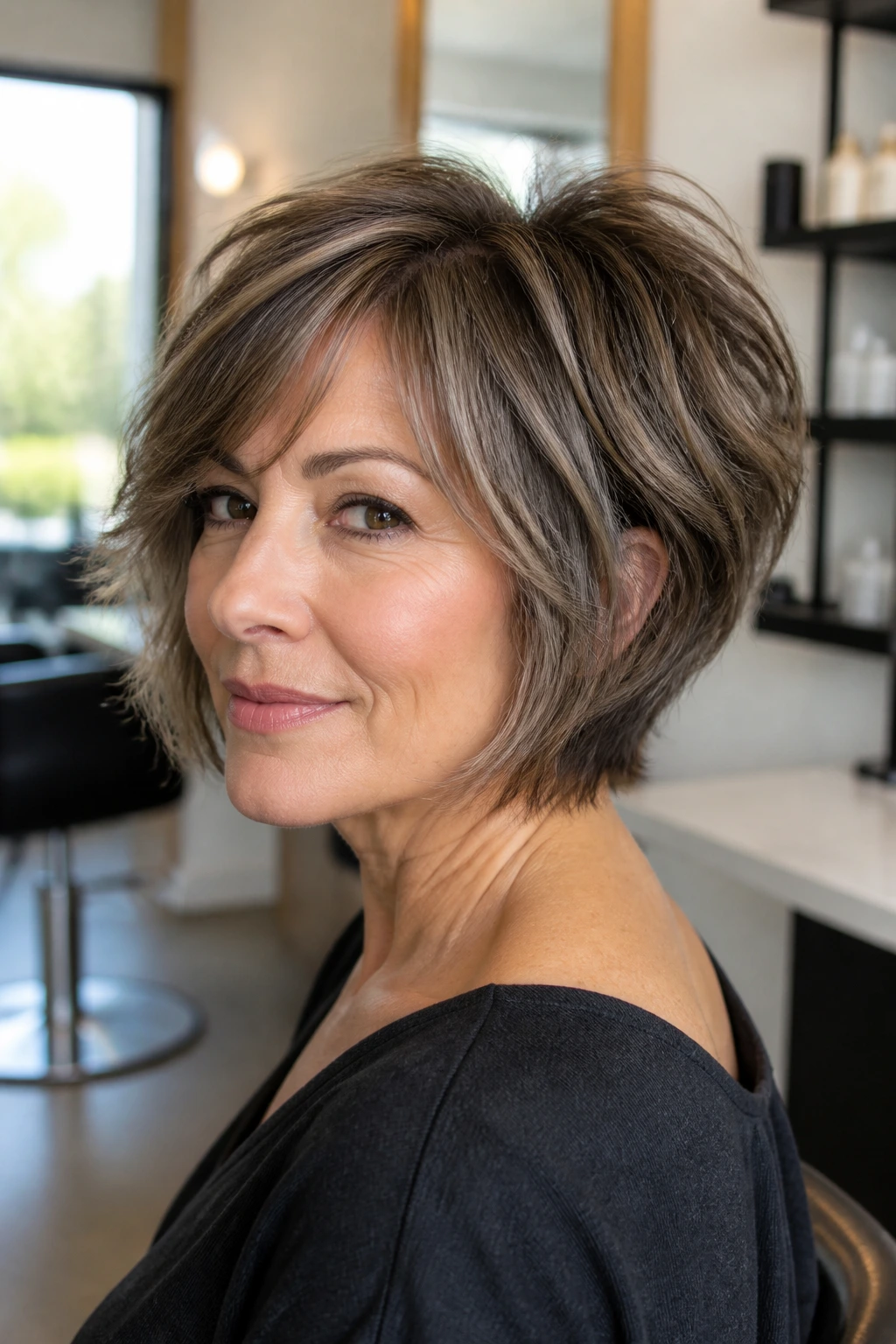
The stacked shag bob gives you a little lift at the back without the formal polish of a classic stacked bob. It works well on square faces because the back volume raises the eye while the front pieces can stay soft and cheek-skimming.
The trick is not to over-stack it. Too much volume at the back can make the cut feel dated. Keep the layers loose and let the front do the flattering work. This one has a nice balance of shape and movement.
13. Curly Shag with Internal Layers

Curly hair needs room. That’s the whole story. A curly shag with internal layers removes bulk from the center of the cut so the curls spring instead of sitting in one wide triangle around the face.
If your curls are the kind that swell at the humidity line, this cut can be a relief. Ask for layers that follow your curl pattern, not random chopping. A square face benefits when the curl volume sits a little higher and the sides are softly broken up near the cheekbone.
14. Blunt-Edge Shag with Soft Ends

This is a neat contradiction, and I mean that in a good way. The overall shape stays clean, but the ends are soft and slightly uneven. You get the clarity of a bob and the movement of a shag.
It’s useful if you don’t want a heavily layered look but still want the face-softening effect. The perimeter should feel tidy when you tuck it behind the ear, then a little undone when you shake it loose. That swing is the point.
15. Crown-Lift Shag
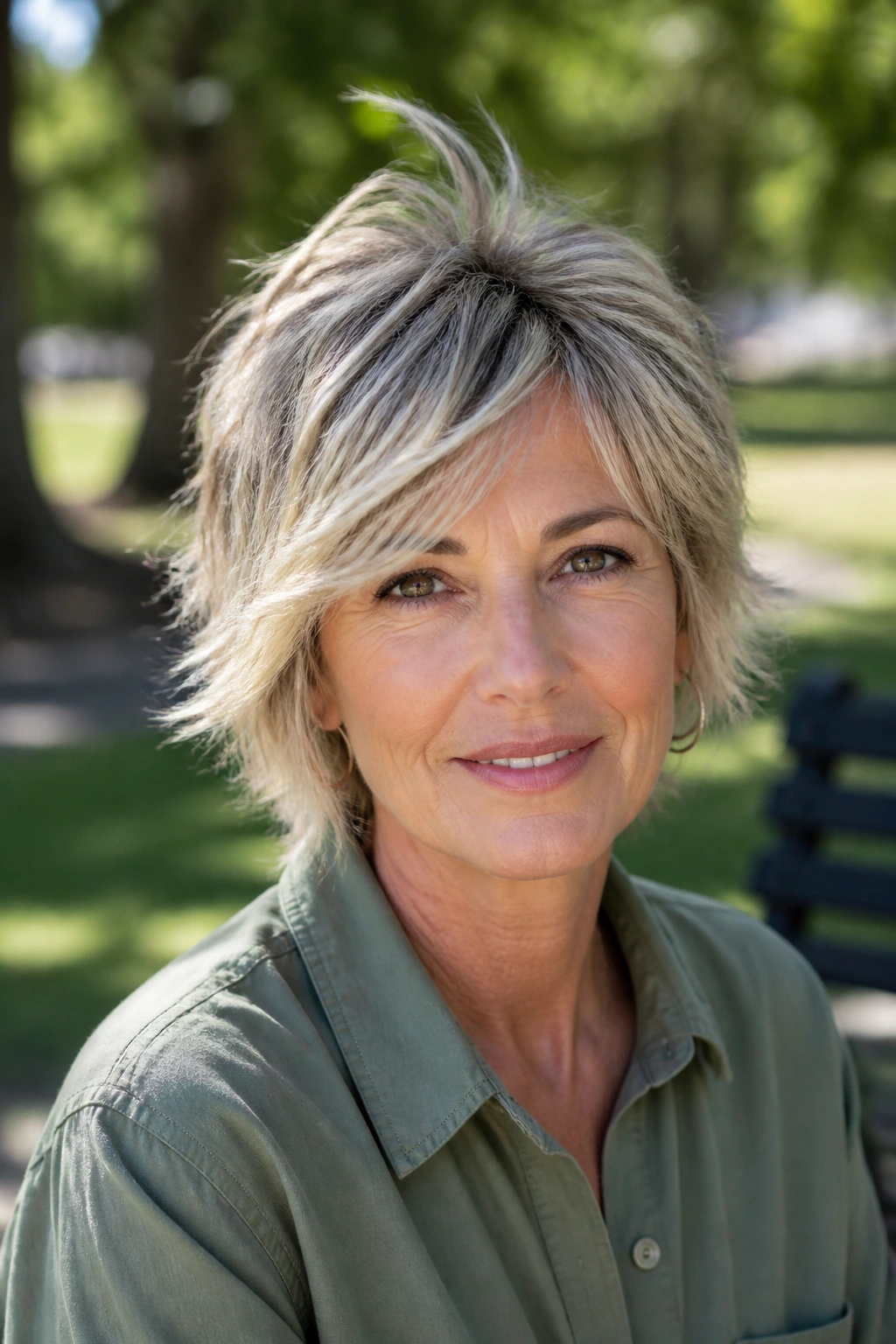
A crown-lift shag is about height where it matters. Square faces often look best with a little extra lift on top, because it lengthens the silhouette without making the face look narrow. You do not need stiff volume. A root lift and a few shorter layers at the crown will do.
This one is especially kind to fine hair. Spray mousse at the roots, blow-dry upside down for a few seconds, then finish with a round brush only on the top section. That’s enough. Really.
16. Tapered Nape Shag
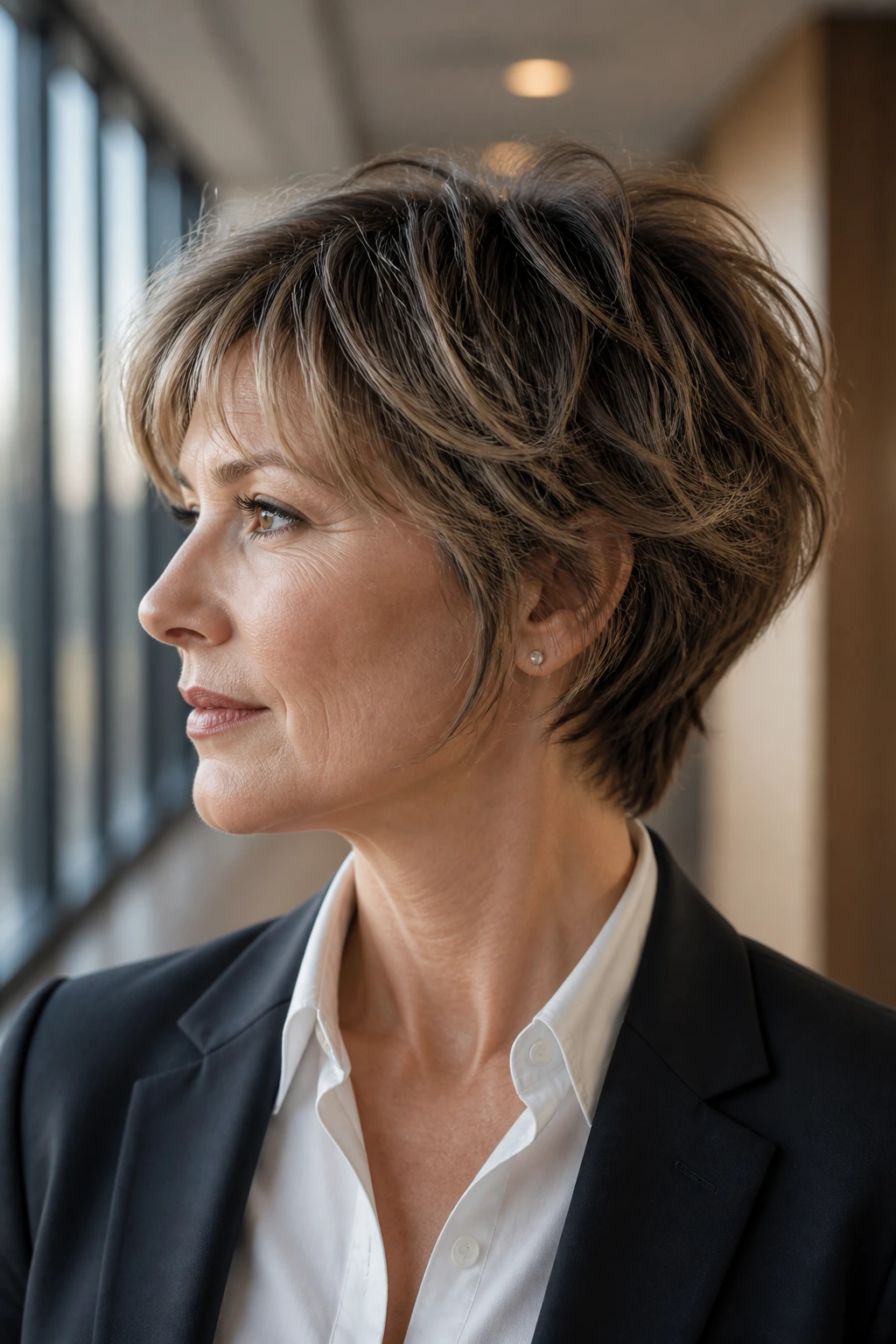
The tapered nape gives the back a clean finish, which matters if you want the shag to look intentional from every angle. The top and sides stay airy, while the nape narrows gently so the cut doesn’t puff out at the neck.
I like this on people who wear collared shirts, jackets, or sweaters a lot. The neckline stays neat. The rest of the cut still has freedom. On a square face, the taper keeps the whole look from becoming too wide at the bottom.
17. Wispy Fringe Shag

Wispy fringe is one of the easiest ways to soften a square face without committing to heavy bangs. The fringe should look light enough that you can see skin between the pieces. That small gap makes a big difference.
Pair it with short layers around the temple and cheek, and the face opens up instead of closing down. This cut works well if you want a little forehead coverage but don’t want to feel boxed in. It also grows out gracefully, which I appreciate.
18. Shoulder-Shimmy Shag with Flips

This is the longer one in the group, but it still counts as short enough to feel lively. The ends flip out rather than sit straight, so the cut doesn’t hang like a heavy curtain. On a square face, those flipped ends keep the line from getting stiff.
The style is a little retro in a good way. A round brush or a quick pass with a flat iron at the ends is enough to make it move. If your hair has a bit of natural bounce, you may not need much at all.
19. Razor Pixie Shag
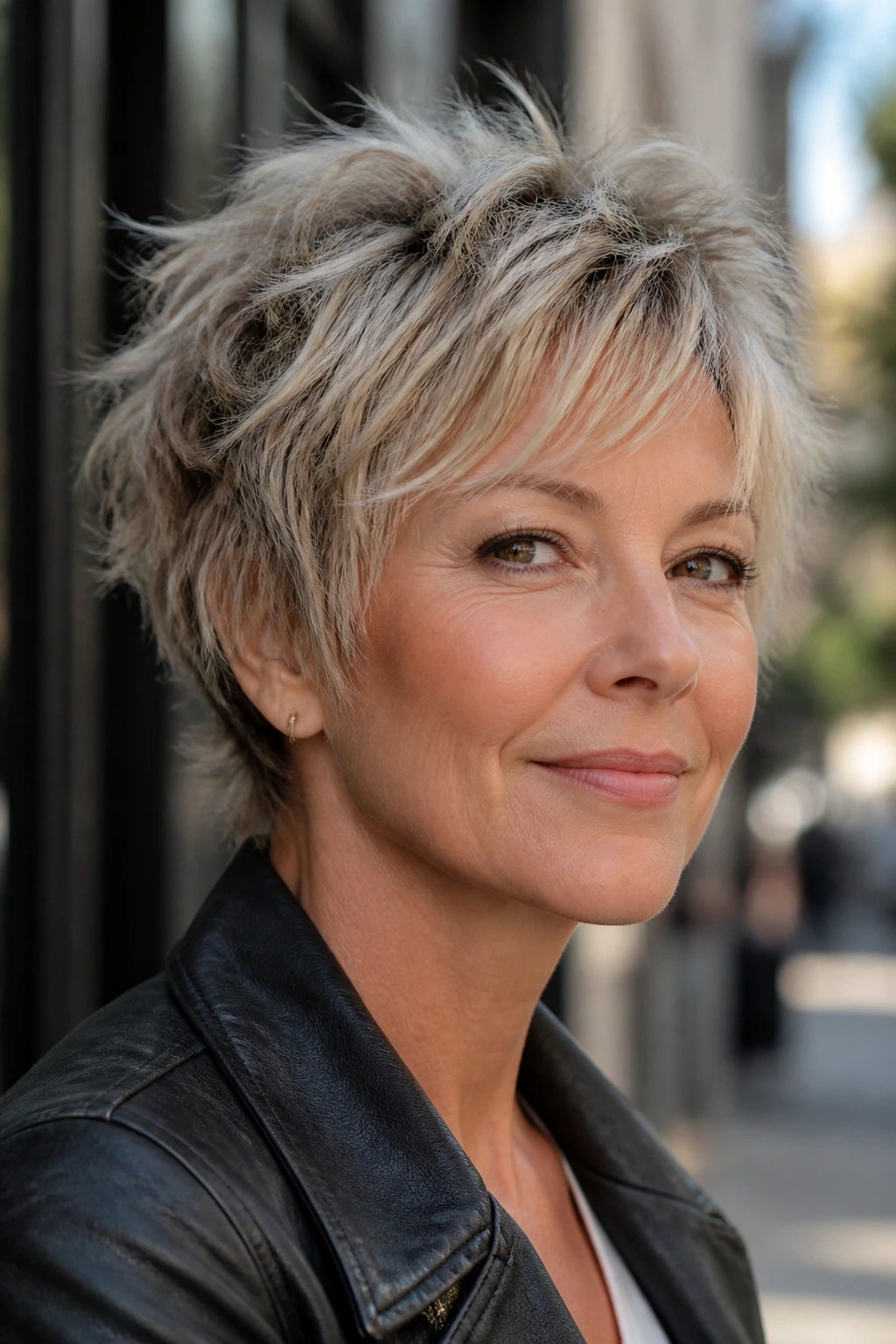
A razor pixie shag is sharp, airy, and not remotely precious. The razor work gives the ends a soft, sliced look, which helps reduce bulk around the temples and ears. That’s useful if your square face already feels strong in those areas.
It’s a good match for someone who wants a cropped style that still has personality. The crown should stay loose, not spiky. The front can sweep forward or off to the side, depending on how much forehead you want to show.
20. Salt-and-Pepper Airy Shag
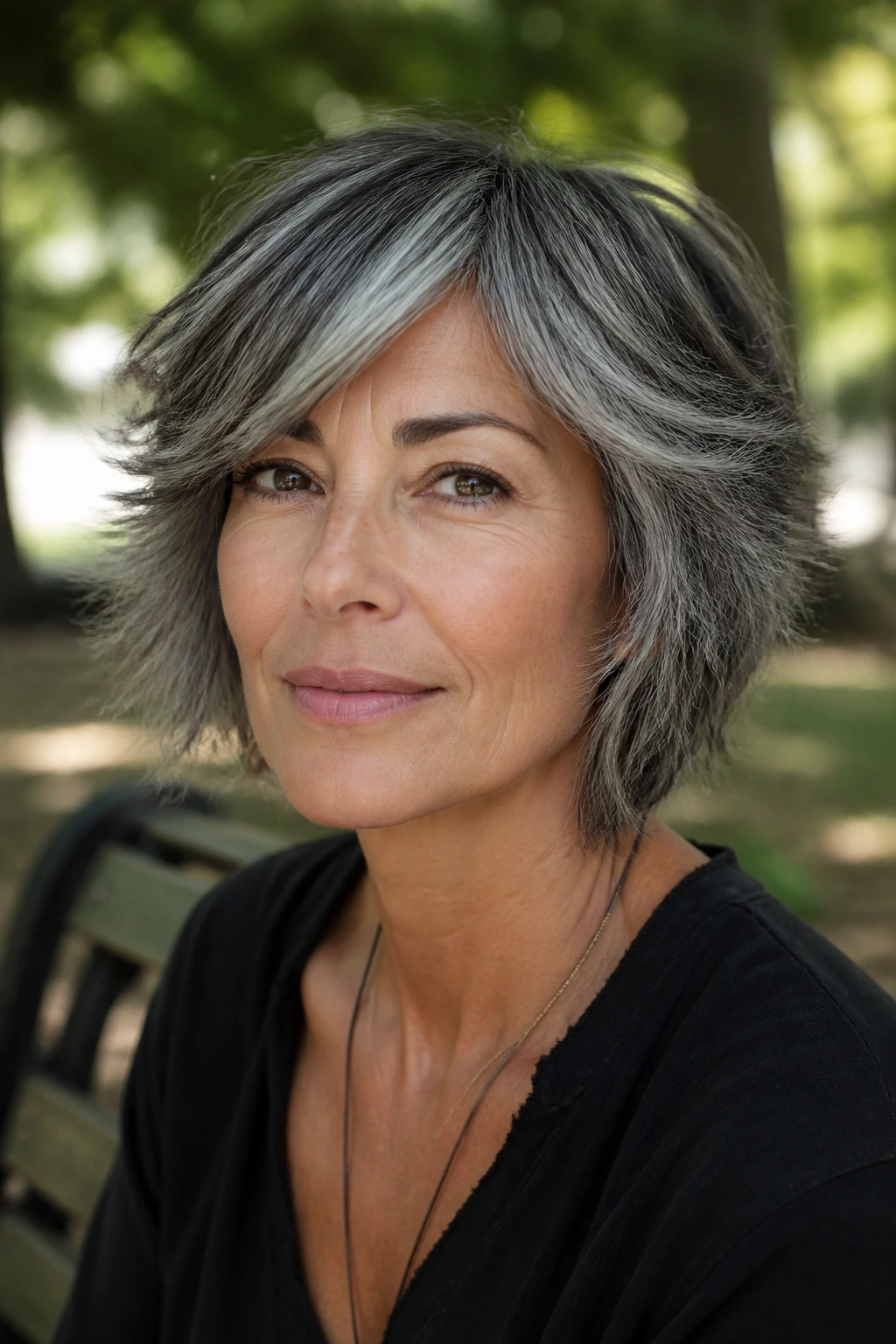
Salt-and-pepper hair can look stunning in a shag because the color contrast shows the layering. When the cut is airy, the lighter pieces around the face create movement without needing heavy styling. That’s a nice bonus.
This version works best when the layers are feathered, not choppy in a harsh way. A little shine spray on the top layer can keep the grays from looking dull. The face framing should stay soft at the cheek and a bit broken at the ends.
21. Fine-Hair Piecey Bob Shag
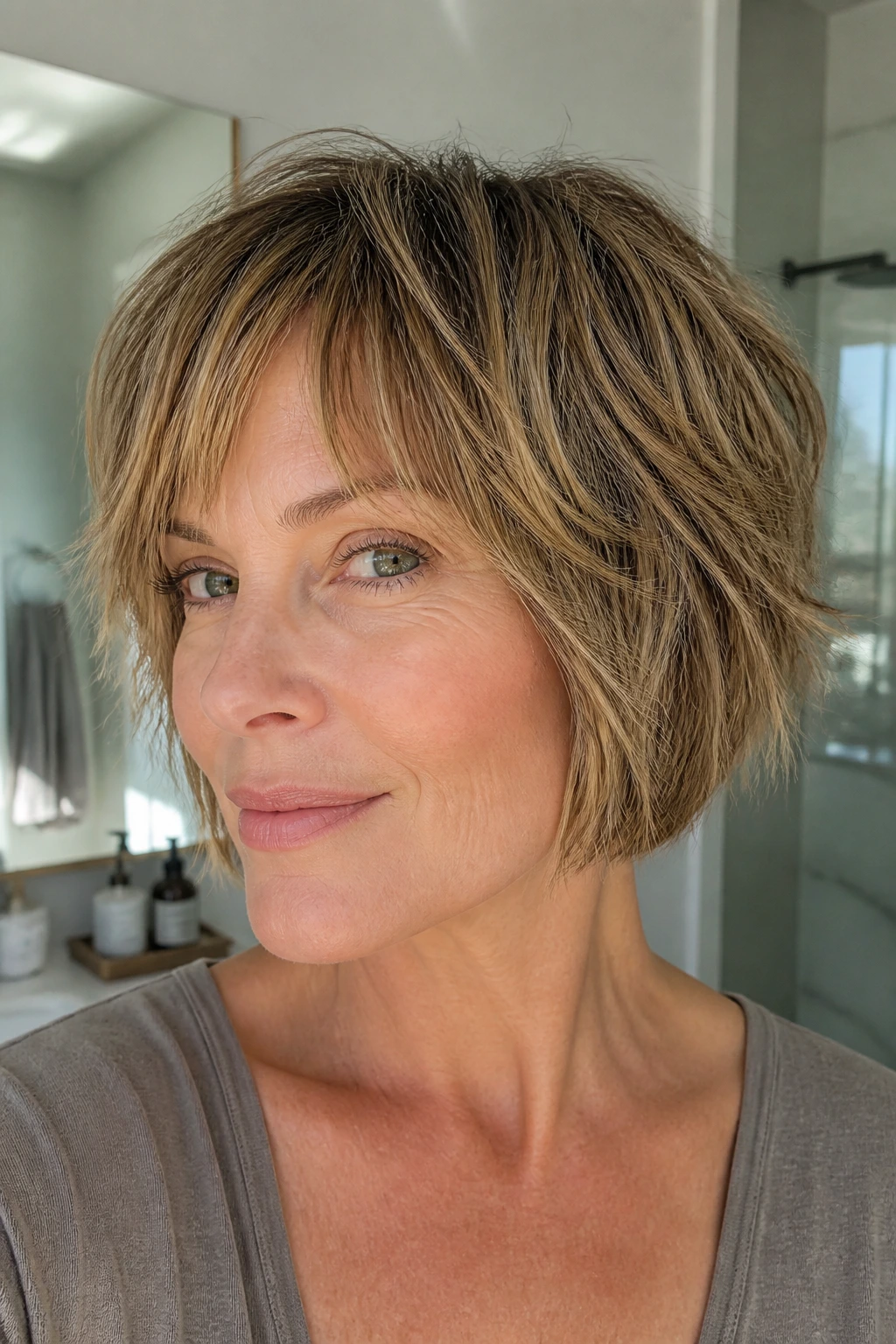
Fine hair needs a haircut that creates the illusion of density without loading on weight. A piecey bob shag does that by keeping the overall outline tidy while carving out small sections that separate easily.
The result is more lift, less limpness. Ask for internal layers rather than heavy thinning at the ends. Heavy thinning can make fine hair look scraggly, and that’s a bad trade. A lightweight mousse or spray foam will help the pieces hold.
22. Curly Coil-Friendly Shag
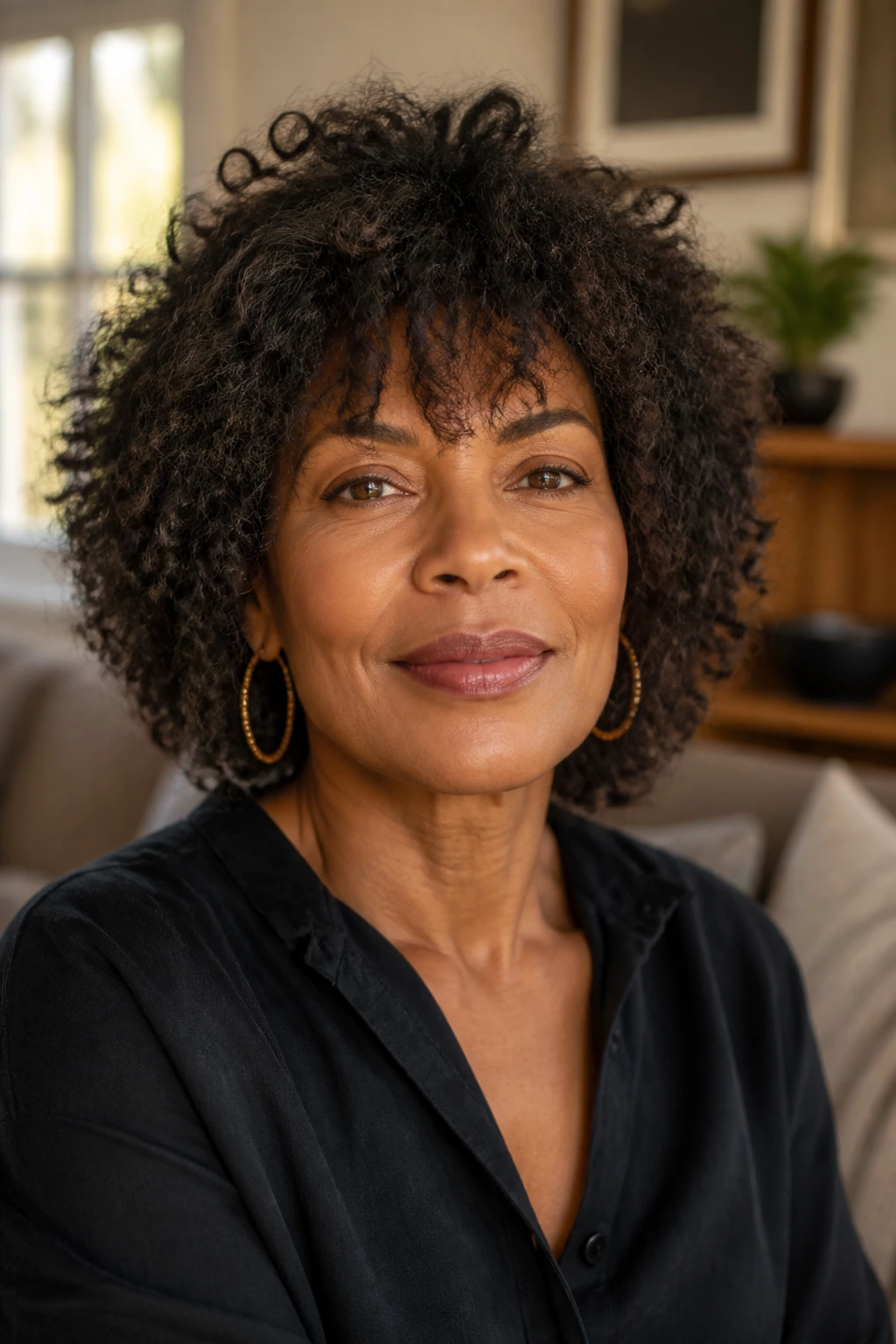
Coily hair can absolutely wear a shag, but it needs structure that respects shrinkage. The layers should be shaped so the curl pattern builds upward and around the face instead of spreading wide at the sides.
If your coils are tighter, ask for dry cutting or a curl-specific shaping method. That helps the stylist see where the face-framing pieces will land once the hair springs back. A square face benefits when the top has lift and the sides stay softly tapered.
23. Layered Crop with Longer Crown
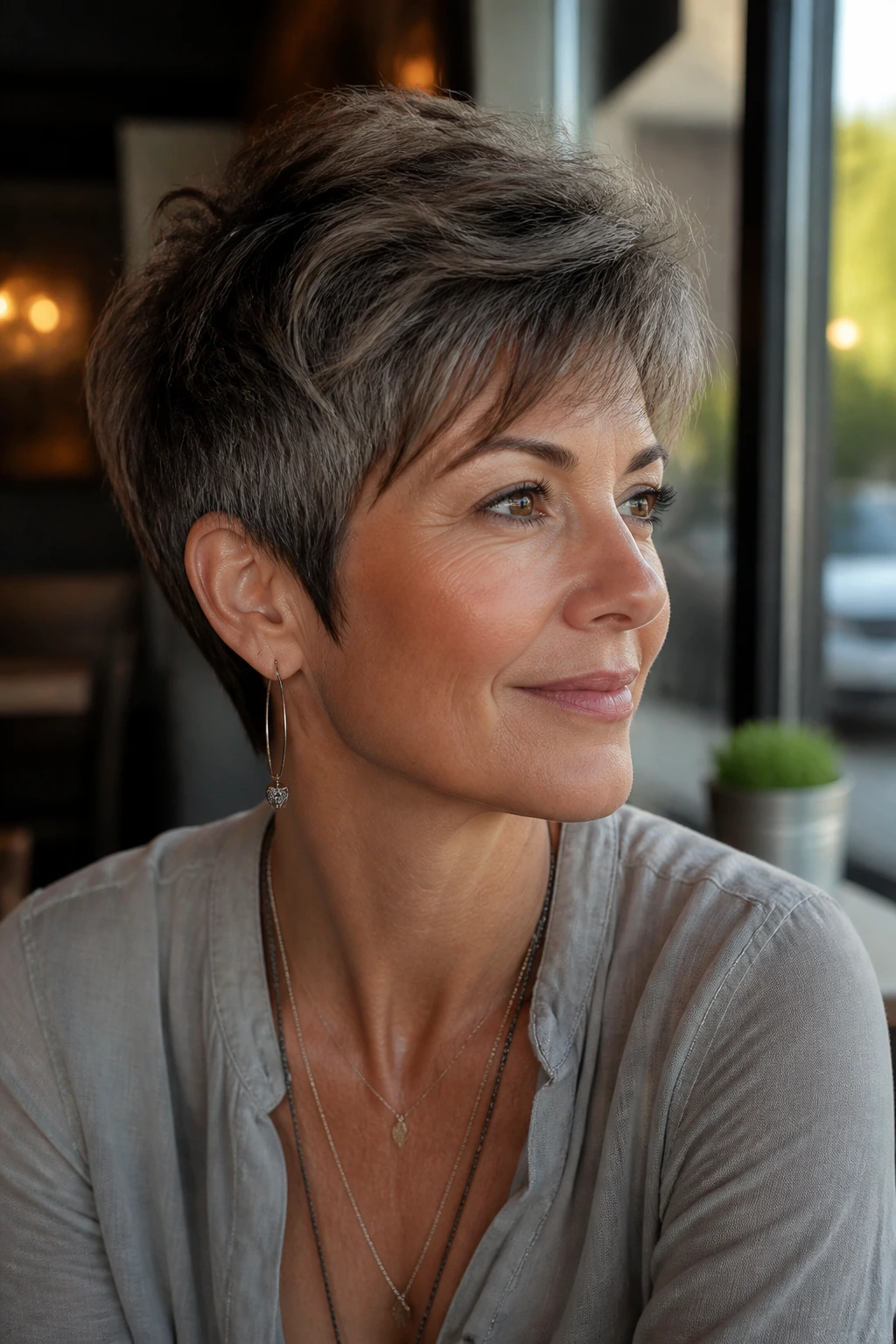
This one has a bit of attitude at the top and keeps the sides close enough to show off earrings, frames, or a strong cheek line. The longer crown gives you room to style, while the cropped sides stop the cut from feeling too heavy near the jaw.
It’s a smart choice if your hair falls flat in the front but gets bulky at the sides. A little height up top and a cleaner silhouette at the jaw can change the whole balance of the face.
24. Face-Opening Feathered Shag

The whole point here is openness. The layers feather away from the cheeks, the fringe stays light, and the ends blur instead of hanging in one blunt sheet. On a square face, that little bit of air around the face is gold.
This cut is especially nice if you wear minimal makeup or prefer a fast morning routine. It creates enough movement that you don’t have to fuss. A blowout brush or a quick finger dry can keep it looking easy.
25. Deep Side Sweep Shag
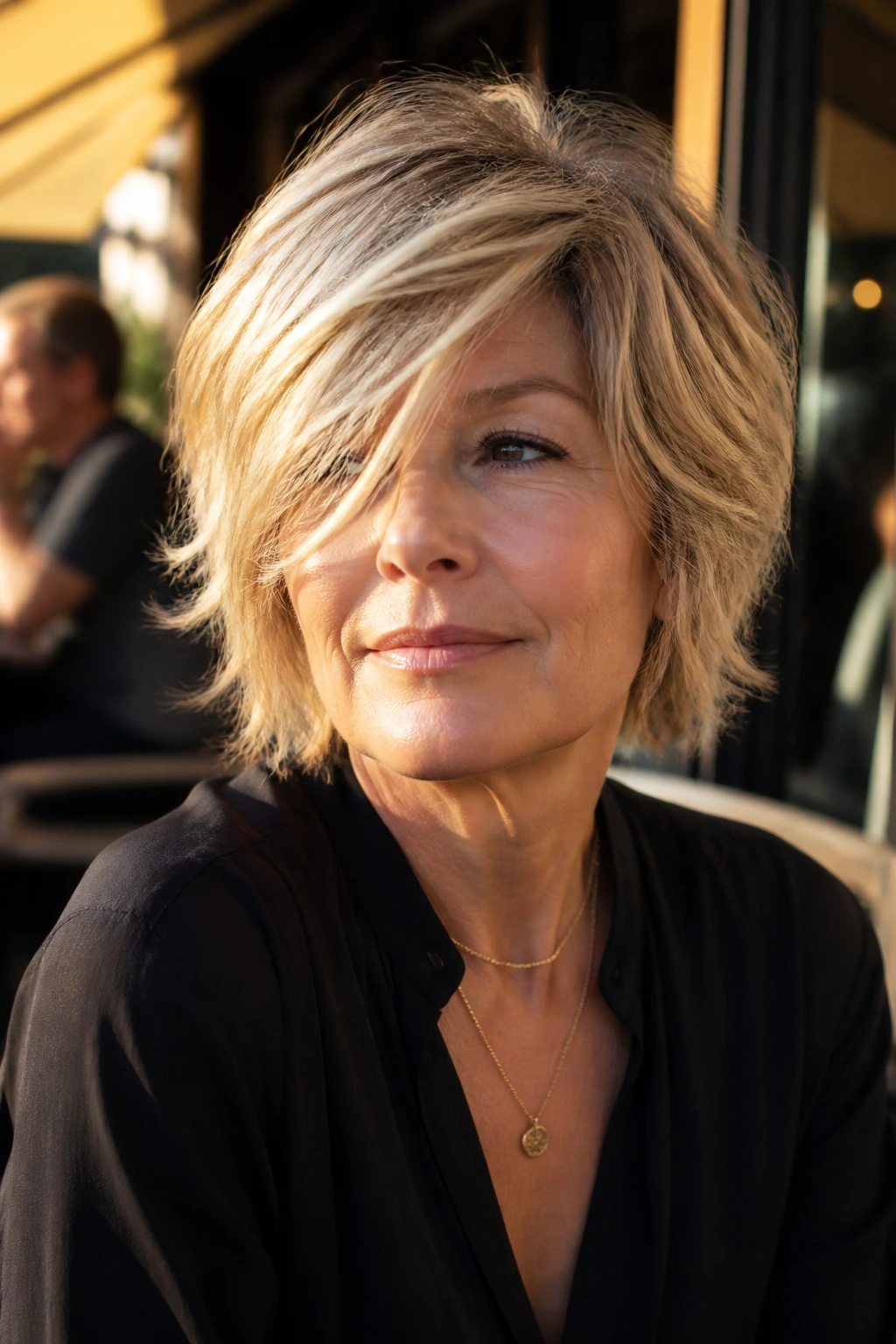
A deep side sweep gives the front of the haircut some drama, but the shag keeps it from feeling too polished. The sweep covers part of the forehead and breaks up the symmetry of a square face, which helps soften the overall outline.
The best part is that it can look elegant without a lot of work. A side part, a little root lift, and a smooth sweep across the forehead are enough. If your hair is stubborn, clip the front while it cools after drying. Old trick. Still works.
26. Wash-and-Wear Shag

Some cuts want a brush, a dryer, and patience. This one wants towel-drying and a few scrunches. The layers are placed so the texture does the job for you, which is exactly what many people want after 40 when time feels more valuable than vanity.
It suits hair that already has some wave or a bend to it. Put a light curl cream through damp hair, scrunch the ends, and leave the roots alone. Too much product kills the shag. Too little leaves it fluffy in the wrong way.
27. Glam Flipped-End Shag
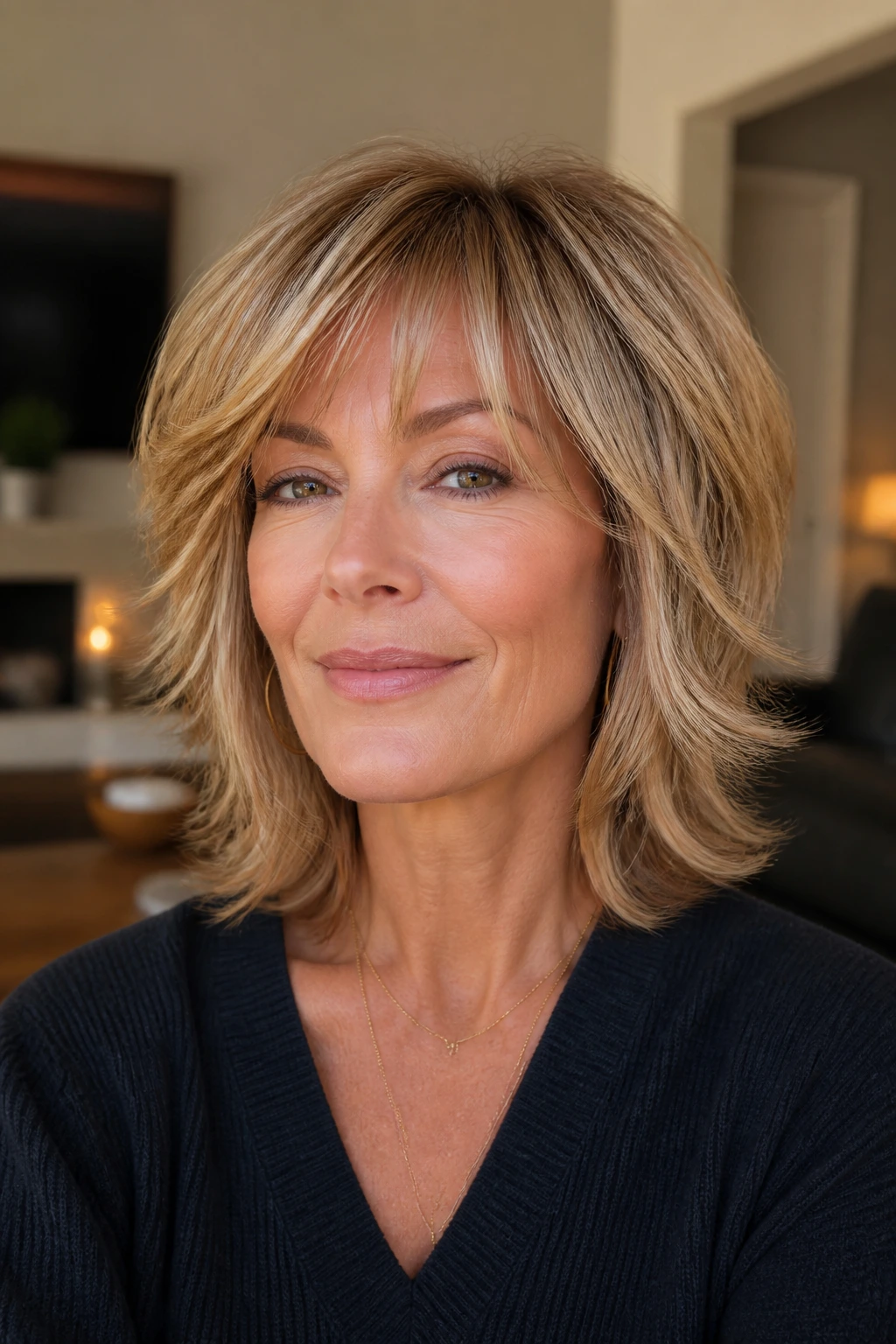
This cut has a little more polish than the grungier shags, and that can be a nice thing. The ends flip out just enough to catch the light and keep the perimeter lively. It feels put together without turning rigid.
Square faces often look good with this sort of controlled movement because it softens the jaw while keeping the cheek line clean. A medium-hold mousse and a round brush on the ends are usually enough. The key is to keep the flips soft, not pageant-bouffant.
28. Sophisticated Silver Shag with Airy Fringe

This is the graceful end of the spectrum. The silver color gets room to shine, the fringe stays light, and the layers move instead of sitting in blocks. It’s refined, but not fussy.
I like this one for hair that has gone fully silver and wants a cut that respects that change. The airy fringe stops the forehead from looking too square, and the soft layers keep the face open. It’s a good reminder that grown-up hair does not have to look heavy to look polished.
Styling Short Shaggy Hair Without Losing the Shape
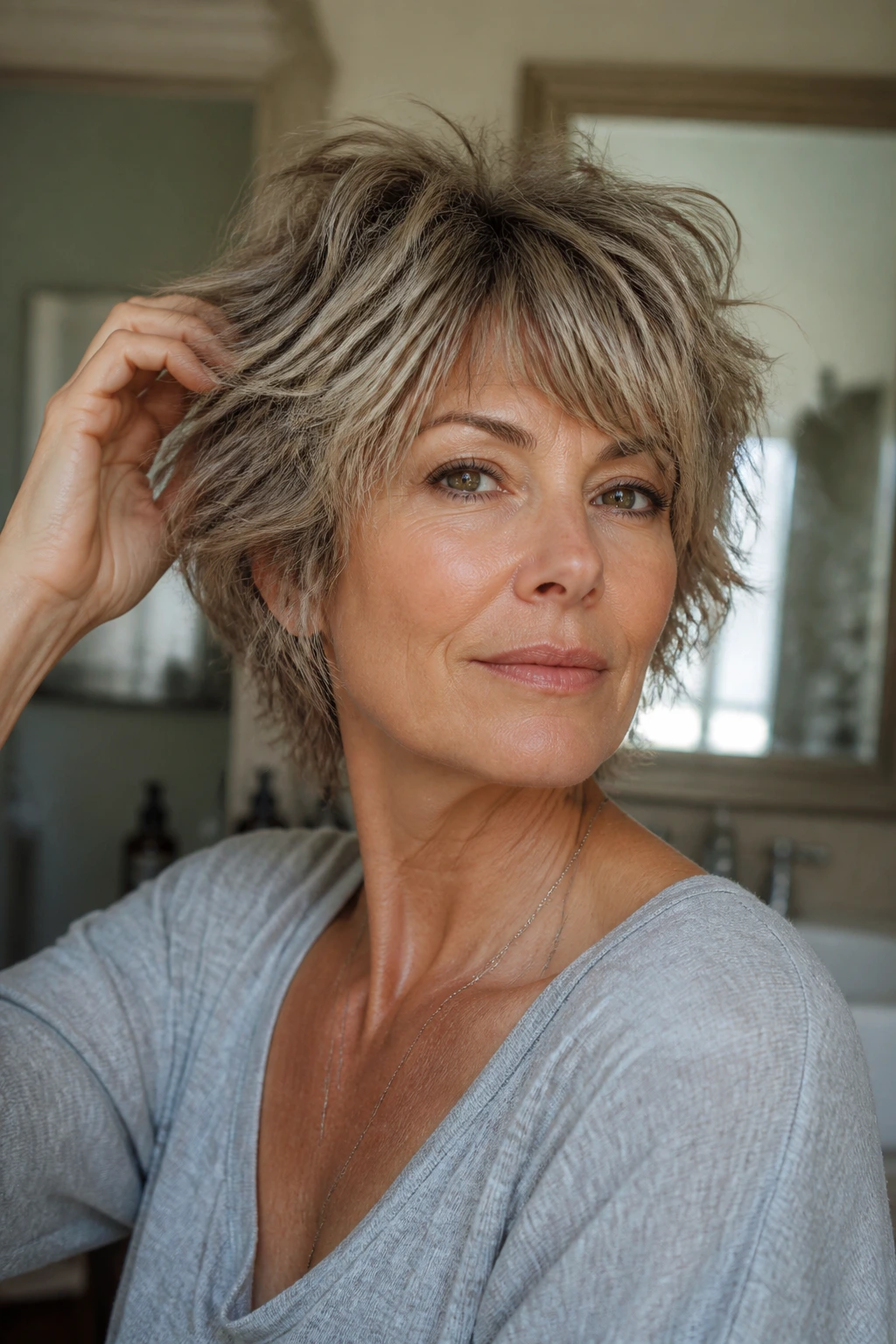
The best shag styling is a little messy on purpose. That does not mean random. It means you choose where to put the effort and where to let the hair do its thing.
Start with the roots. A light mousse or root spray at the crown keeps the cut from collapsing into the widest part of the face. If your hair is fine, this step matters more than the finishing product.
Use a brush only where the haircut needs direction. The front pieces, bangs, and crown usually need the most help. The back can often air-dry. Over-brushing shags makes them look too smooth, and smooth is not the same as flattering here.
Finish with separation, not shine overload. A pea-sized amount of cream or a mist of texture spray can define the pieces around the face. Too much serum turns the cut heavy and kills the movement that makes it work.
Tools That Make These Cuts Easier to Live With
-
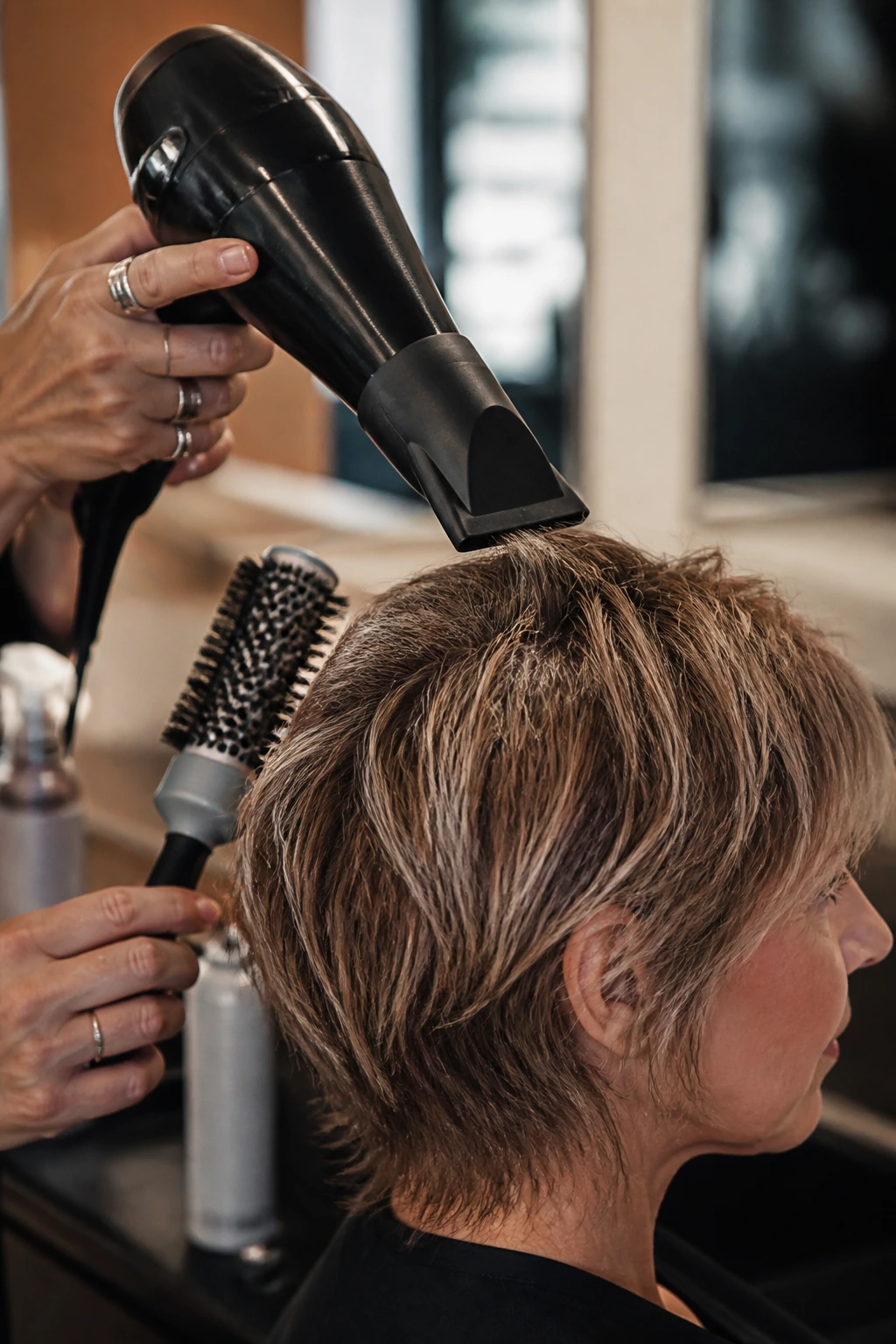
Blow dryer with a nozzle attachment: The nozzle lets you aim the airflow at the roots and bangs instead of blasting everything apart.
-
Small round brush, 1 to 1.5 inches: Best for lifting the fringe, bending the front, and smoothing short layers without flattening them.
-
Texturizing spray: Helps create separation at the ends, especially on straight or fine hair that tends to go limp.
-
Light mousse or root foam: Good for crown lift and for keeping a shag from collapsing by noon.
-
Diffuser: A must if your hair is wavy or curly and you want the shape to dry with less frizz.
-
Hair clips: Useful for sectioning the fringe and face-framing pieces while you dry the rest.
-
Wide-tooth comb: Gentle on curls and waves, and much kinder than a fine comb when the goal is movement.
Keeping the Shape Fresh Between Salon Visits
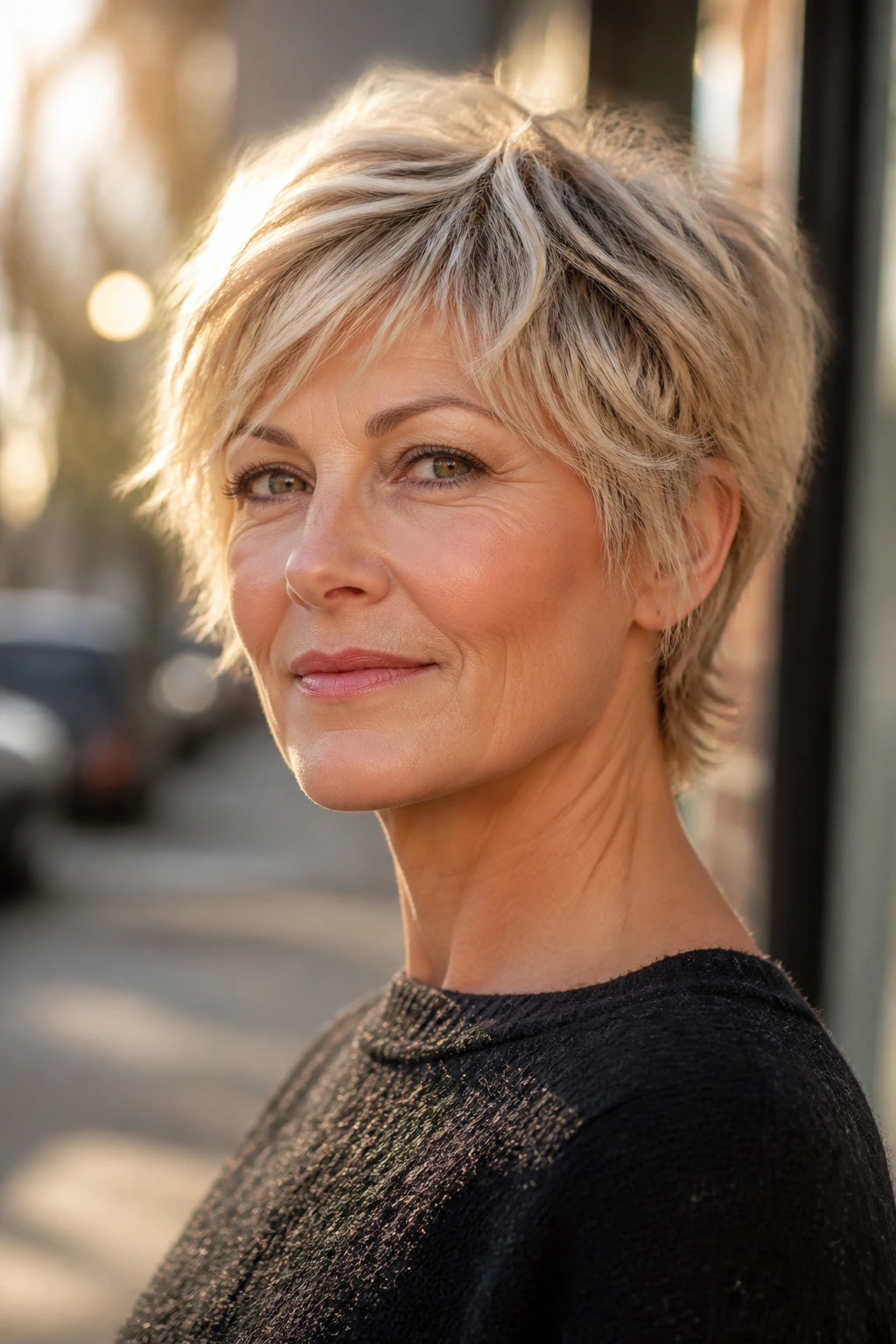
A shag loses its charm when the fringe grows into your eyes and the layers stop moving. Plan on a trim every 6 to 8 weeks if you wear it short, especially if the shortest pieces sit around the cheekbone or jaw. Bangs often need attention sooner, sometimes every 3 to 4 weeks if they’re part of the look.
Dry shampoo helps, but it should not be used as a shortcut for styling forever. A little at the roots can keep the crown from falling flat, yet too much leaves the hair chalky and stiff. If your hair is gray or silver, look for formulas that don’t leave a white cast.
At home, a quick refresh usually beats a full wash. Wet just the front pieces, bend them with your fingers or a small brush, and let the rest stay soft. That tiny reset can make day-two hair look intentional instead of tired.
Mistakes That Make a Shag Look Boxy

The first mistake is letting the shortest layers land right on the jaw. That’s the danger zone for square faces. The fix is simple: ask for those pieces to sit a little above the jaw or a touch below it so the line isn’t sliced in half.
Another common slip is too much thickness at the sides. If the hair flares out near the cheeks, the face can look wider. A good stylist will remove weight from the interior, not just the ends, so the shape stays light.
Heavy bangs are a trap too. They can make the forehead feel boxed in and throw off the balance of the whole cut. If you want fringe, choose something that breaks up the line — curtain, side-swept, wispy, or feathered usually works better than a dense wall.
Ways to Adapt the Cut for Your Texture and Routine

For fine hair: Keep the layers shorter at the crown and lighter through the ends. A shag that’s too long can droop, and droopy hair loses the point of the cut fast.
For thick hair: Ask for interior debulking and a softer outline. Thick hair can take more shape, but it needs to release weight or the shag just turns into a triangle.
For curly or wavy hair: Shape the cut so the curl pattern does the work. Dry cutting or curl-by-curl shaping can help the layers land in the right place after shrinkage.
For low-maintenance days: Choose a cut with longer fringe and softer ends. Those grow out cleaner and tolerate air-drying better than very short, heavily razored styles.
For glasses wearers: Keep the fringe light and let the front pieces skim the frames rather than fight them. The face should still read open.
Frequently Asked Questions
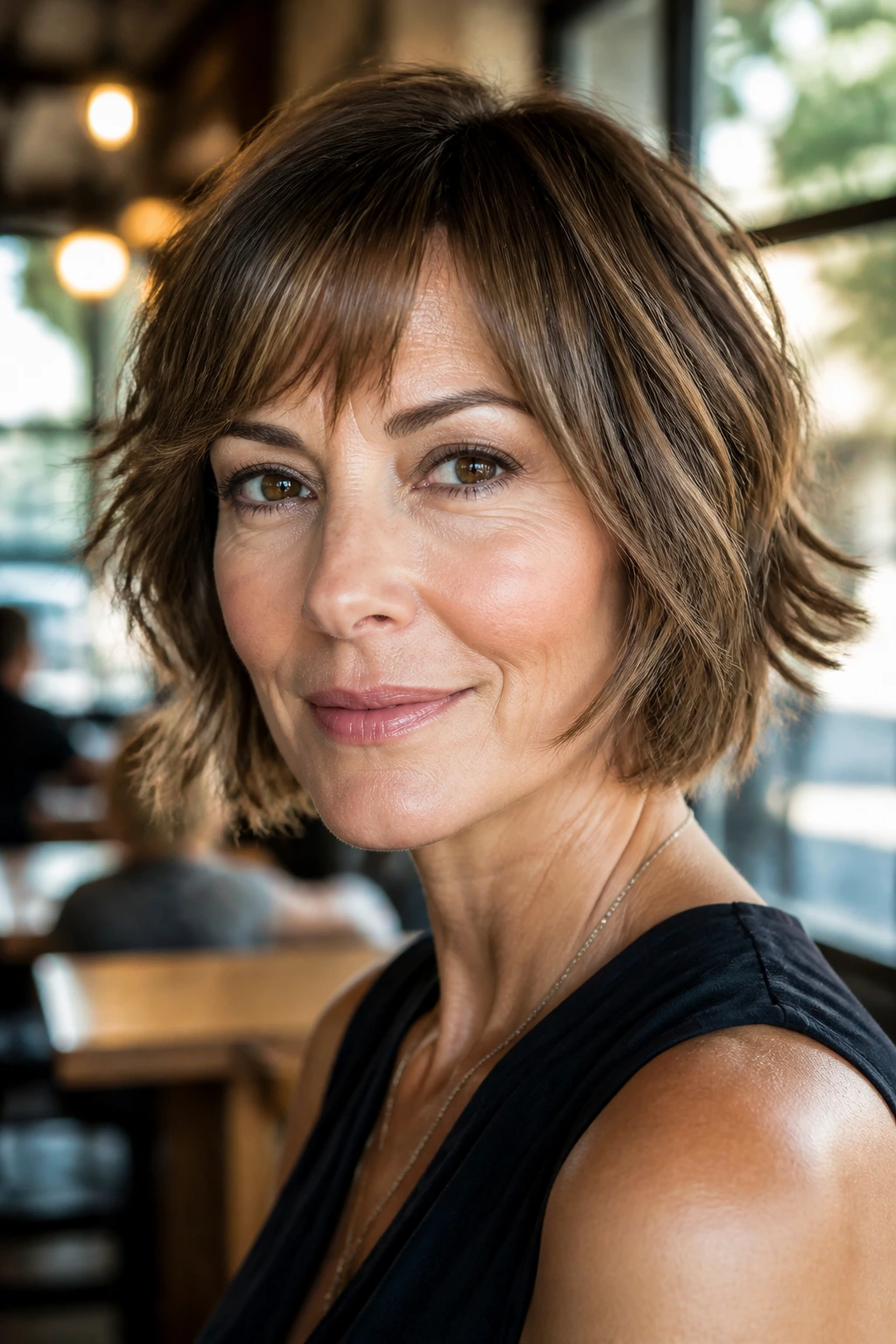
Will a shag make a square face look wider?
Not if the layers are placed well. The problem usually comes from blunt ends that stop at the jaw or from heavy volume on the sides. A good shag breaks those lines and softens the edges instead of adding bulk.
Are bangs a good idea for square faces over 40?
Yes, if they’re soft enough to move. Curtain bangs, wispy fringe, and side-swept bangs tend to work better than straight, thick bangs because they break the forehead line without making the face feel boxed in.
What if my hair is fine and flat?
Go for a shorter shag with crown lift and lighter layers, not a long, heavy one. Fine hair often looks better with a little structure at the top and a piecey finish at the ends, plus mousse at the roots.
Can curly hair wear a short shag?
Absolutely, but it needs shaping that respects curl pattern and shrinkage. If the cut is too blunt or too short at the sides, curls can puff out in the wrong places. Ask for curl-friendly layers and a face frame that opens the cheekbones.
How often should I trim a short shag?
Every 6 to 8 weeks is the sweet spot for keeping the shape clean. If you have bangs, you may want a fringe trim sooner so the cut doesn’t start falling into your eyes and swallowing your face.
Does a shag work with gray or silver hair?
It does, and often better than a blunt cut. Silver hair can look thick or puffy if the shape is too solid, while a shag keeps the color looking light, reflective, and intentional.
What should I ask for at the salon?
Use plain language: ask for soft, face-framing layers that soften the jaw, movement around the cheekbones, and fringe that doesn’t sit in one hard line. Bring a photo, but also say what you want the cut to do on a day you don’t style it much.
A Cut That Softens the Edges
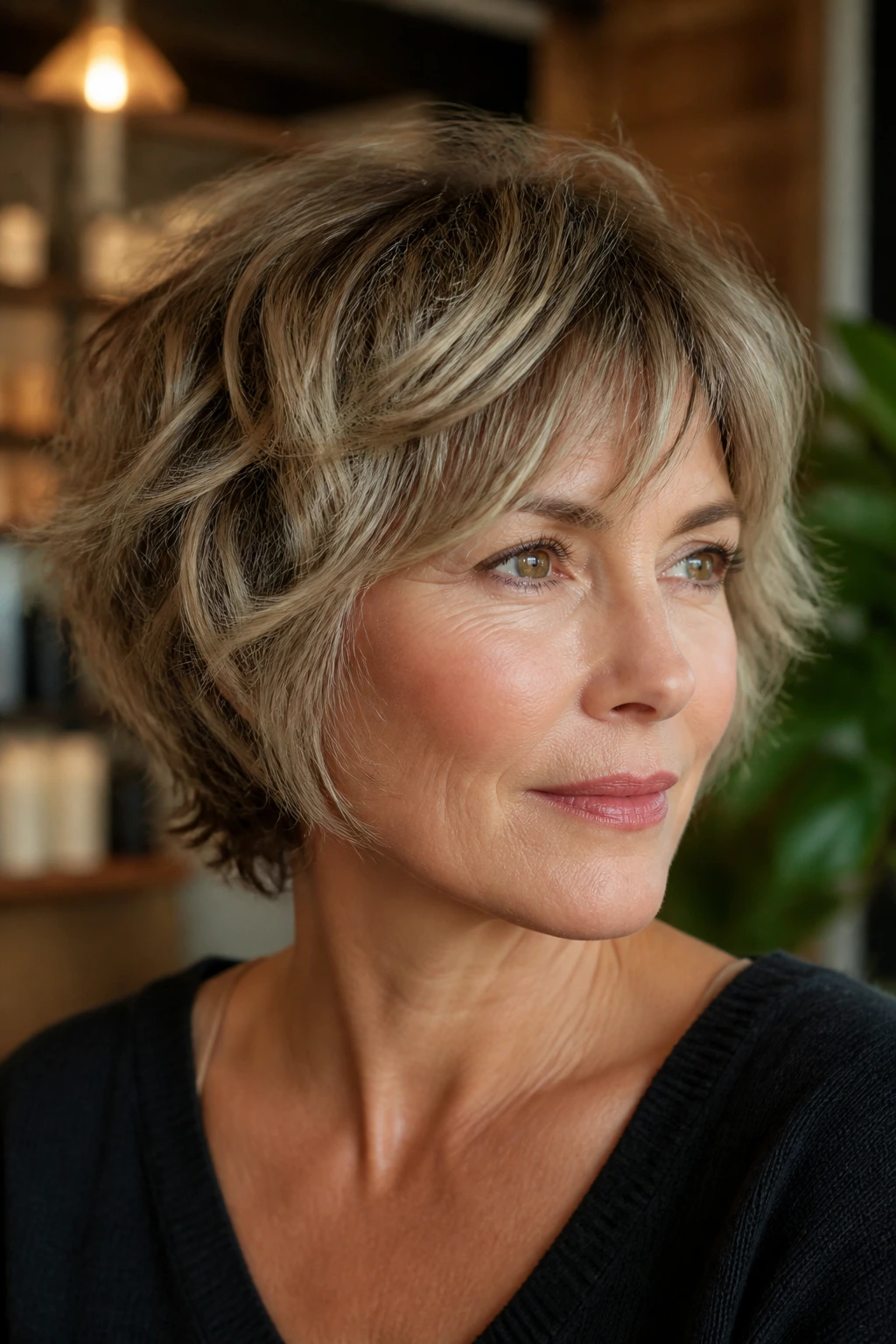
Square faces have presence. That’s the gift and the challenge. A good short shag doesn’t fight that structure; it gives it air, bend, and a little looseness around the edges so the whole face reads softer and more open.
The cuts above all do the same job in different ways. Some lean cropped and sharp. Some stay feather-light and romantic. A few are best if you want to air-dry and leave the house. Pick the one that matches your hair texture, your morning routine, and how much neck you want to show.
If you’ve been stuck between wanting something shorter and not wanting to lose softness, the shag is the place to land. Choose the version that lets your jawline stay strong and your hair move a little. That’s where the good ones live.
