



Thin hair does not need more drama. It needs better geometry.
A well-cut shag can make fine strands feel lighter at the ends and fuller where the eye lands first, which is the crown and the cheekbones. That’s why shag haircuts for thin hair keep showing up in salon chairs: the layers create movement without relying on blunt weight, and the whole shape can borrow a little of that feathered, retro air without tipping into costume territory.
The vintage vibe matters here. A good shag nods to 1970s feathering, soft 1960s fringe, and those slightly undone blowouts that look like they took more effort than they did. But if the cut is too aggressively thinned out, thin hair goes from airy to see-through fast. That’s the line worth respecting.
I’m partial to shags that keep a little density at the perimeter and use internal layers to fake fullness. That’s the sweet spot. And because there are many ways to get there, the options below run from soft and wearable to a little more edge, all with thin hair in mind.
Why These Shag Haircuts Feel Different on Fine Strands

Built for lift, not bulk: The best versions keep weight at the outline and move the lighter pieces higher up, so the hair doesn’t collapse at the neck.
Vintage without the costume effect: These cuts borrow the feathered motion of older salon styles, but the lengths stay wearable enough for everyday air-drying, blow-drying, and the occasional messy bun.
They work at more than one length: Thin hair can look stringy at the wrong length; these shags show how collarbone, bob, lob, and cropped shapes each change the silhouette.
Style time stays sane: A good shag should cooperate with mousse, a round brush, or a quick bend from a flat iron. If it needs an hour every morning, the layers are doing too much.
Bang choices matter more than people think: Curtain bangs, side-swept fringe, bottleneck bangs, and wispy fringe each change how full the front of the haircut looks.
They give you room to grow out: A strong shag can survive an awkward month better than a precise blunt cut. That matters if you don’t live at the salon.
1. Feathered Collarbone Shag
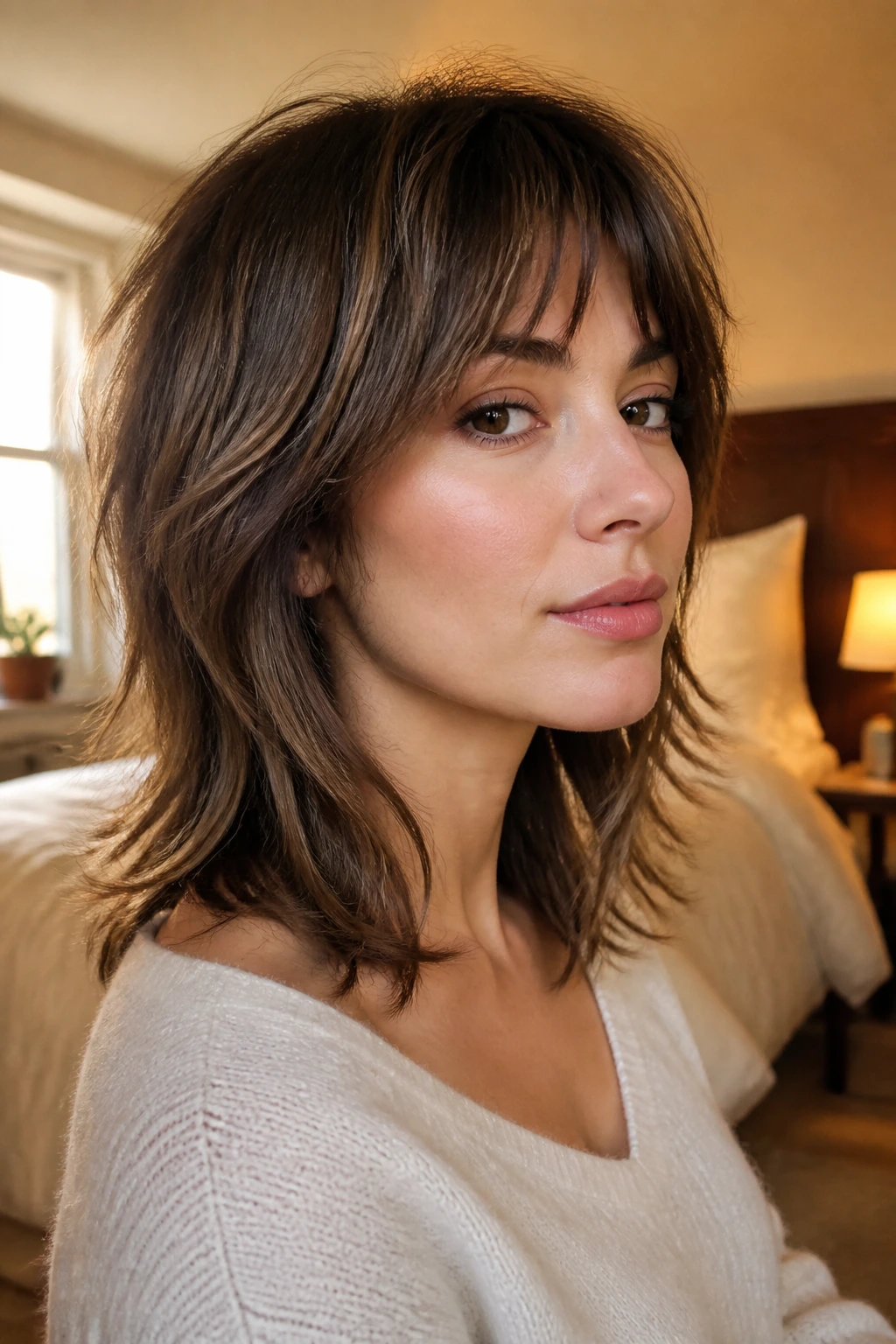
This is the version I’d hand to someone who wants movement but not a big haircut moment. The collarbone length gives thin hair enough weight to hang properly, while the feathered top layers keep the crown from sitting flat against the scalp. The result feels soft and lived-in, with ends that flick instead of stick.
Why It Works
The collarbone is a useful stopping point because it keeps the perimeter from looking too wispy. Layers can start around the cheekbone and drop into longer pieces through the sides, which gives the illusion of density without shredding the ends.
For thin hair, that matters. If every layer starts too high, the cut can expose the part line and make the hair look airy in the wrong way. This shape keeps the bulk low enough to support itself.
Best for: straight to slightly wavy hair
Vintage cue: 1970s feathering with a cleaner finish
Styling note: a medium round brush gives the ends a soft bend that reads retro without looking dated
Quick salon clue: ask for feathering through the top and sides, but keep the bottom edge soft and intact.
2. Curtain-Bang Shag with Soft Crown Lift

Curtain bangs are not an automatic win, but on thin hair they can be the difference between “flat” and “alive.” The middle part opens the face, and the longer ends of the fringe blend into the shag so the front doesn’t feel chopped up.
Here’s the part people miss: the crown lift does more work than the bangs. If the top layers are shortened only enough to sit away from the scalp, the whole head shape looks taller. That little lift is what keeps the haircut from sinking on day two.
A curtain-bang shag is especially good if your hair line is a little sparse at the temples. The fringe can blur that area instead of exposing it. Keep the shortest pieces near the bridge of the nose or just under the brow, then let the longer outer pieces hit the cheekbones.
This one gives strong Bardot energy, but it stays practical if you blow-dry the bangs with a round brush for two minutes and let the rest air-dry.
3. Chin-Grazing Shag Bob
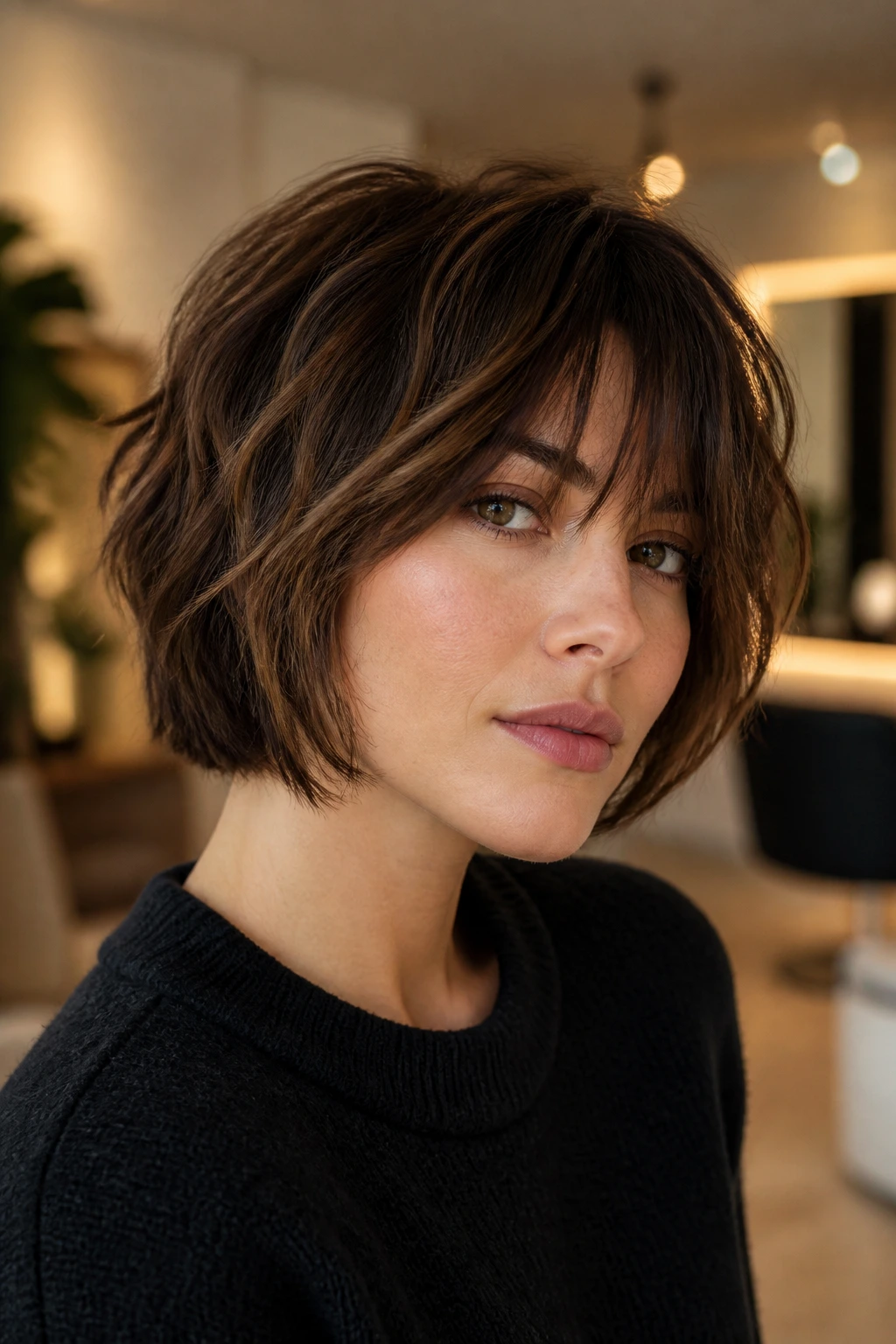
Can a bob still feel airy when your hair is thin? Yes, if the interior is cut with restraint.
A chin-grazing shag bob keeps the outline compact, which means the hair looks fuller than it would at longer lengths. The shag layering adds movement around the cheek and jaw, but the blunt-ish perimeter stops the ends from getting too see-through. It’s a good choice when you want the haircut to hold some shape even on a lazy morning.
How to Wear It
A tiny tuck behind one ear changes the whole mood. So does a side part, which can push a little extra fullness over one side of the head. If your hair tends to separate at the crown, ask for soft internal layers rather than lots of slicing through the ends.
The vintage angle here is subtle, more 1960s salon than rock-and-roll. Think polished fringe, soft bend, and a shape that sits near the jaw instead of floating away from it.
Tip: keep the lowest layer blunt enough that the bob still looks like a bob, not a stray cloud.
4. Long 1970s Feather Shag
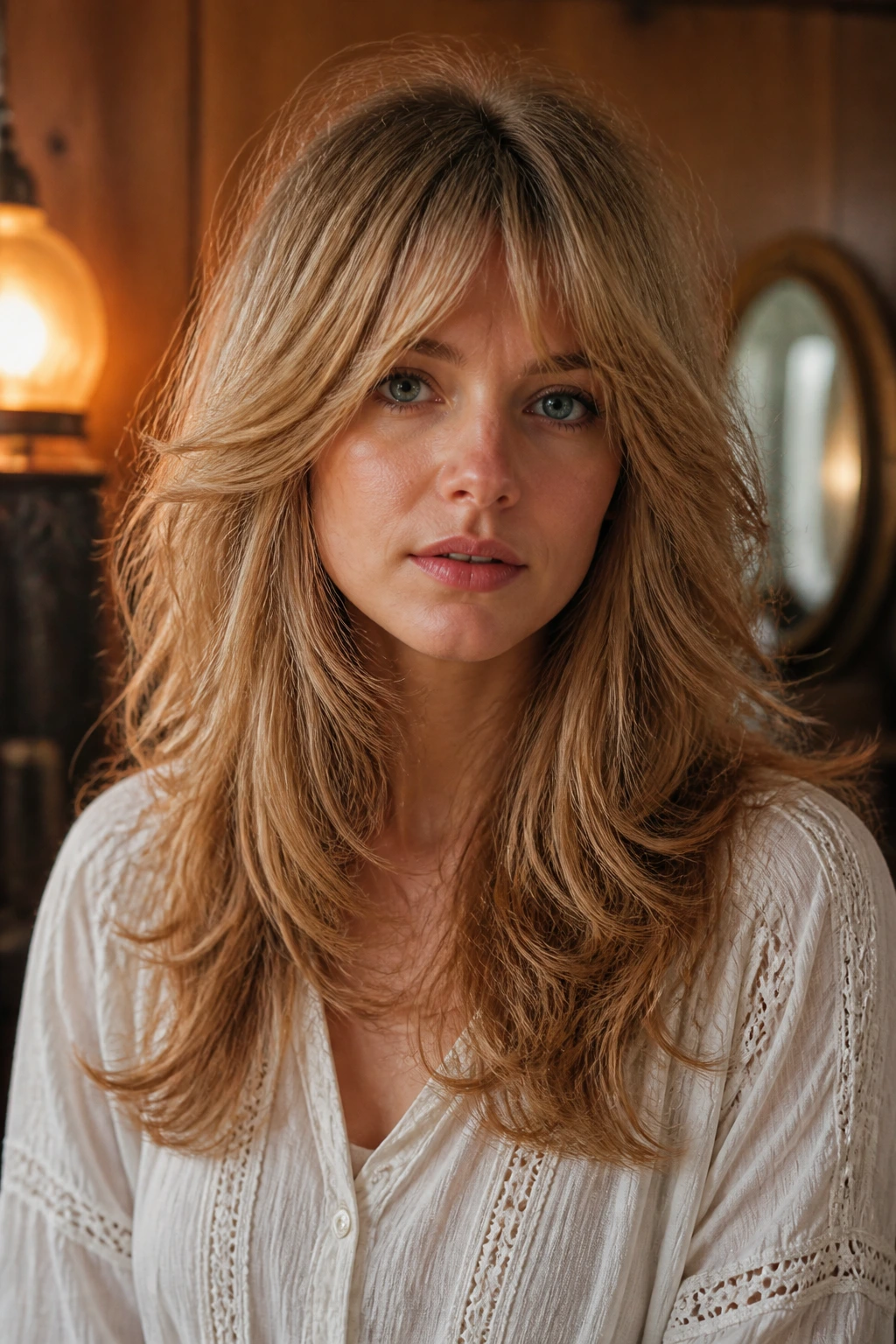
If you’ve ever grown out a haircut and wished the in-between stage looked intentional, this is the one. The long feather shag leans hard into 1970s movement: layers that start around the cheekbones, longer ends that brush the shoulders, and a shape that swings when you turn your head.
The key is restraint at the bottom. Thin hair gets trouble when the ends are over-texturized, because the longest pieces lose their job of anchoring the whole cut. With this version, the feathering lives mostly in the top half and through the face frame. The perimeter can stay long and soft.
- Length: shoulder to mid-chest
- Layer placement: cheekbone to lip level
- Best texture: fine wavy hair or straight hair with a little bend
- Vintage reference: Farrah-style lift without the pageant volume
The shape looks best with a round-brush blowout or large Velcro rollers. Air-drying can work too, but the layers need a little nudge so they don’t settle into a flat sheet.
5. Razor-Cut Midi Shag
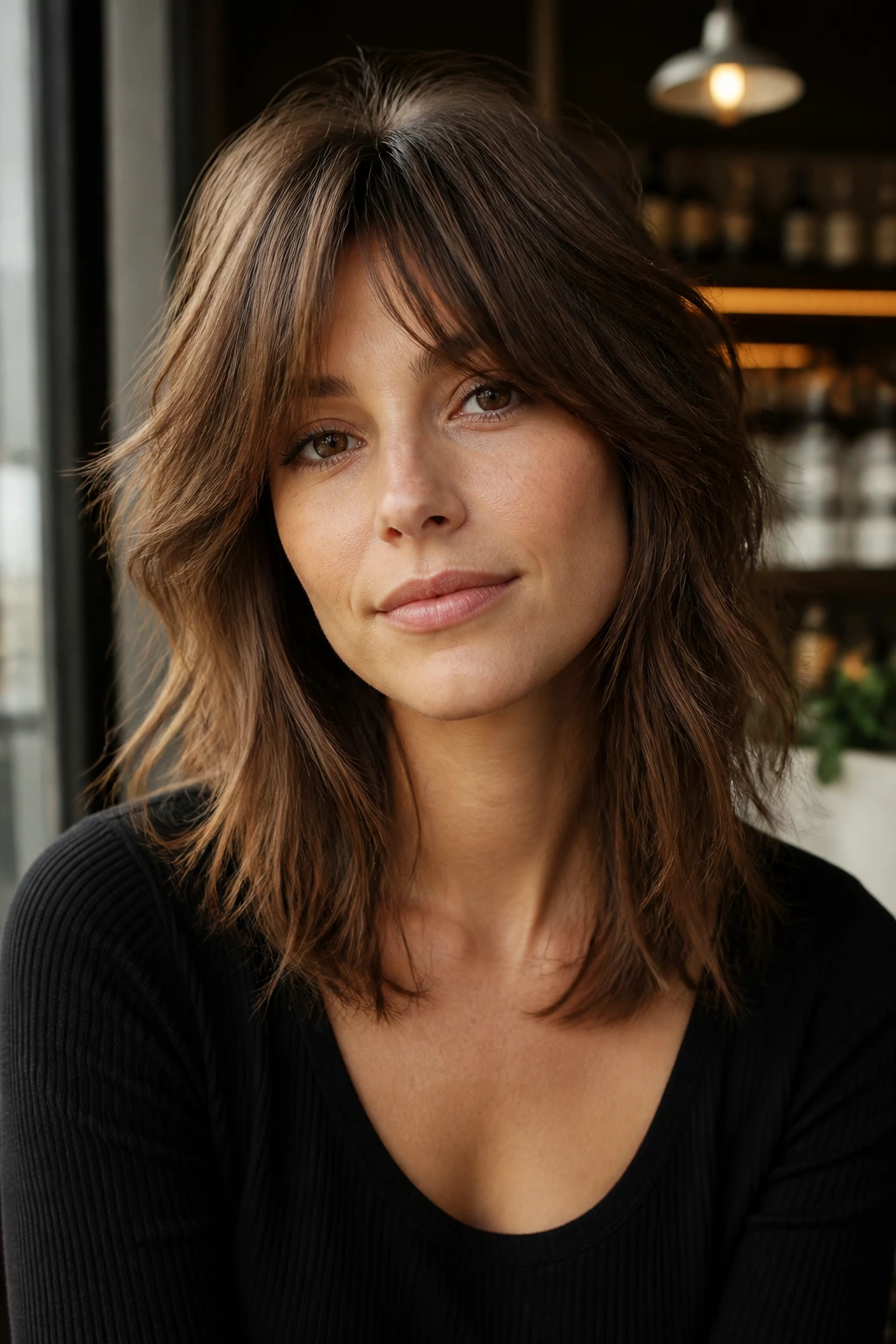
A razor can be a friend or a menace on thin hair, and I have a firm opinion here: it works when the stylist knows where to stop. Used well, it creates soft, broken edges that keep a midi-length shag from looking stiff. Used badly, it can chew the ends into little transparent tails.
This cut sits somewhere between the collarbone and the top of the chest, which gives fine hair enough length to feel feminine and enough shape to keep moving. The razor is best used on the face-framing sections and the upper layers, not across every inch of the head.
There’s a slightly insouciant, old-salon feel to it. Not messy. Just relaxed. The kind of haircut that looks good with a half-dry blowout and a pair of gold hoops.
If your hair is naturally straight, this cut can keep the line from feeling blunt and heavy. If it’s wavy, the broken edges help the texture separate a little instead of puffing out in one blob.
6. Bottleneck Bang Shag
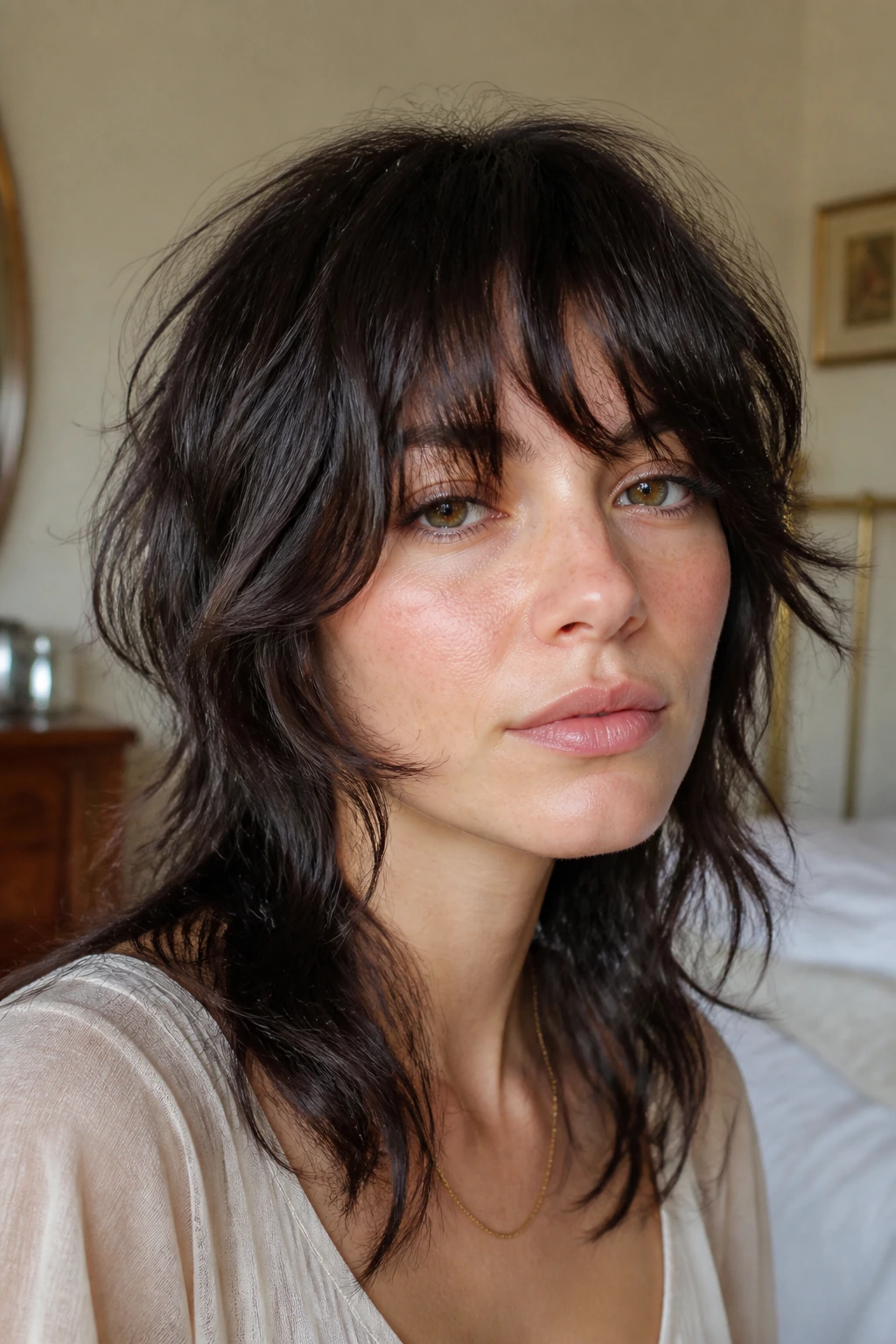
Unlike blunt fringe, bottleneck bangs open in the middle and widen as they fall to the sides, which makes them easier to live with on thin hair. The center stays short enough to show the eyes, while the outer edges melt into the cheekbones and jaw.
That shape matters because it avoids one heavy wall across the forehead. Thin hair often struggles when bangs are too dense; the fringe starts to sit like a strip of felt. Bottleneck bangs keep a little space in the middle, which makes the whole cut feel lighter.
This shag works especially well if your face is longer or if you want the top of the cut to have more presence without cutting a massive amount of hair away. The fringe creates a focal point, and the rest of the layers support it instead of competing with it.
A small round brush and a quick twist of the ends toward the face are enough. If you want a stronger retro look, tuck the sides under slightly so the fringe has that 1970s screen-star curve.
7. Airy Wolf Shag Lite

Do you want a little edge without the full wolf-cut drama? This is the gentler answer.
The airier version keeps the same general attitude — short lift around the crown, longer pieces through the back, and some separation through the ends — but it doesn’t carve the layers quite so high. That makes it safer for thin hair, which can go patchy when the top is overcut. The silhouette stays shaggy, not spiky.
What to Ask For
Tell the stylist you want texture, not bulk removal. The crown can be lifted, but the shortest layers should still blend into the rest of the cut. If the nape gets too chopped, thin hair can look like it disappears in back.
This one has a rock-and-roll feel that still reads vintage if you style it with a soft bend instead of a hard flip. A little mousse, a diffuser, and finger-styling are enough for people who hate round brushes.
It suits hair that has some wave already. Straight hair can wear it too, but the cut depends on product and direction, or it will lie down and lose the point.
8. Micro-Layered Pixie Shag
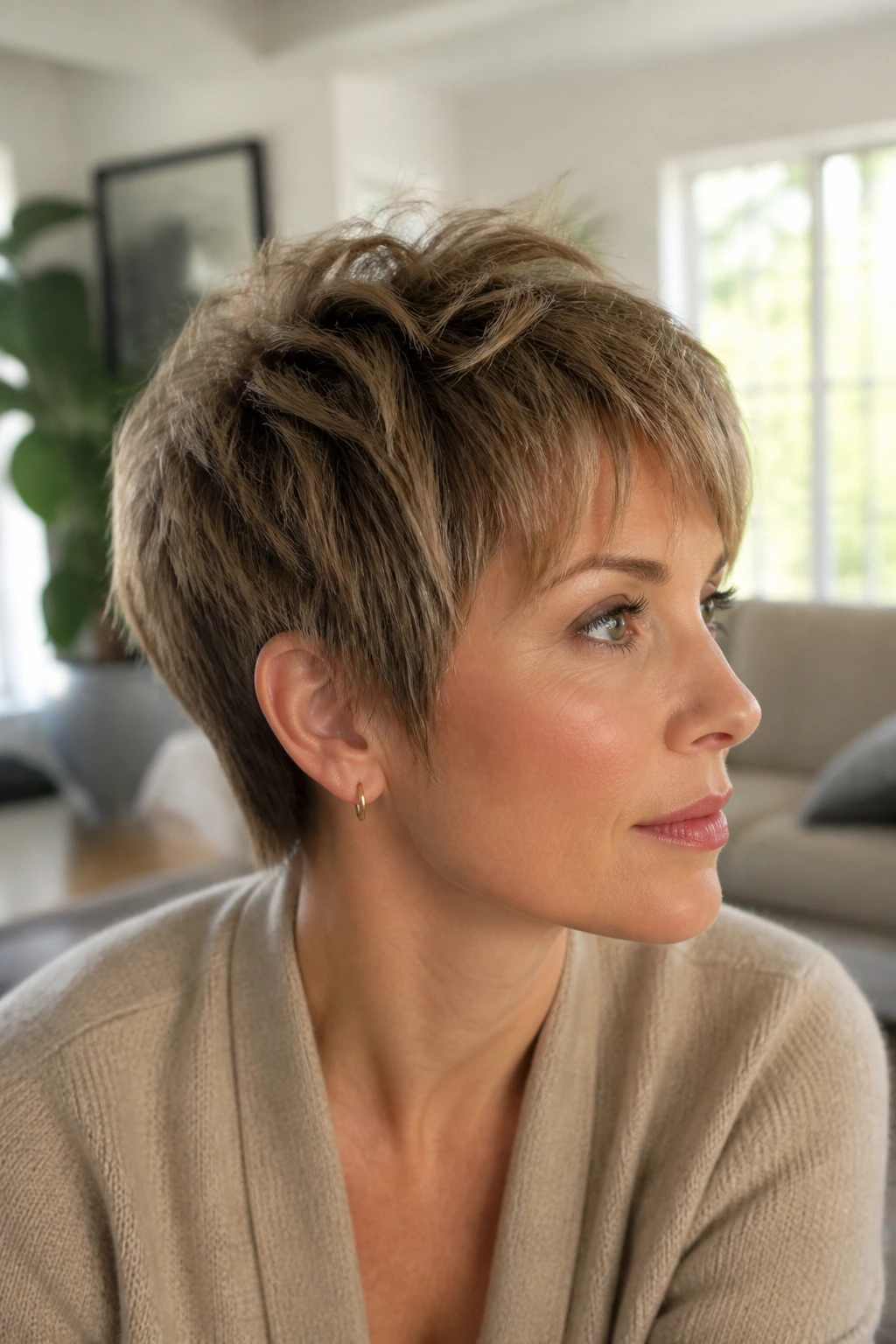
A cropped shag can be a smart move when thin hair is so fine that longer lengths drag it down. The micro-layered pixie shag keeps things short around the ears and nape, then builds a little height on top so the crown has somewhere to go.
This cut is not for people who want to hide their hair. It’s for people who want to show the shape. The vintage vibe comes from the way the top can be brushed forward, sideward, or slightly piecey, the way old mod cuts used to move around the face.
The best version leaves enough softness around the hairline to avoid looking severe. Tiny layers near the temples can help the cut feel airy, but the top should still have a bit of length so you can bend it with fingers or a small brush.
If you like earrings, turtlenecks, and strong brows, this haircut has range. If you want low-maintenance length, skip it. There’s no pretending otherwise.
9. Shag with Flipped Ends

The flipped-end shag is where the vintage vibe gets loud in the best way. The ends turn outward instead of under, which creates that playful, slightly polished 1960s-to-1970s finish that works so well on thin hair. The shape feels deliberate, not accidental.
It’s especially useful when the hair is too straight to hold volume on its own. A deliberate flip at the shoulder or collarbone gives the illusion of body because the eye reads movement at the perimeter. The haircut itself should support that bend with medium layers and a not-too-thinned bottom edge.
If you’ve got a round brush, use it. If you don’t, a flat iron can create the turn with a quick outward twist at the last inch of hair. Keep the motion soft. Sharp, uniform flips can look costume-y fast.
This style also pairs well with a side part and a little shine spray on the ends. That tiny bit of gloss helps the retro shape feel current.
10. Face-Framing Octopus Shag
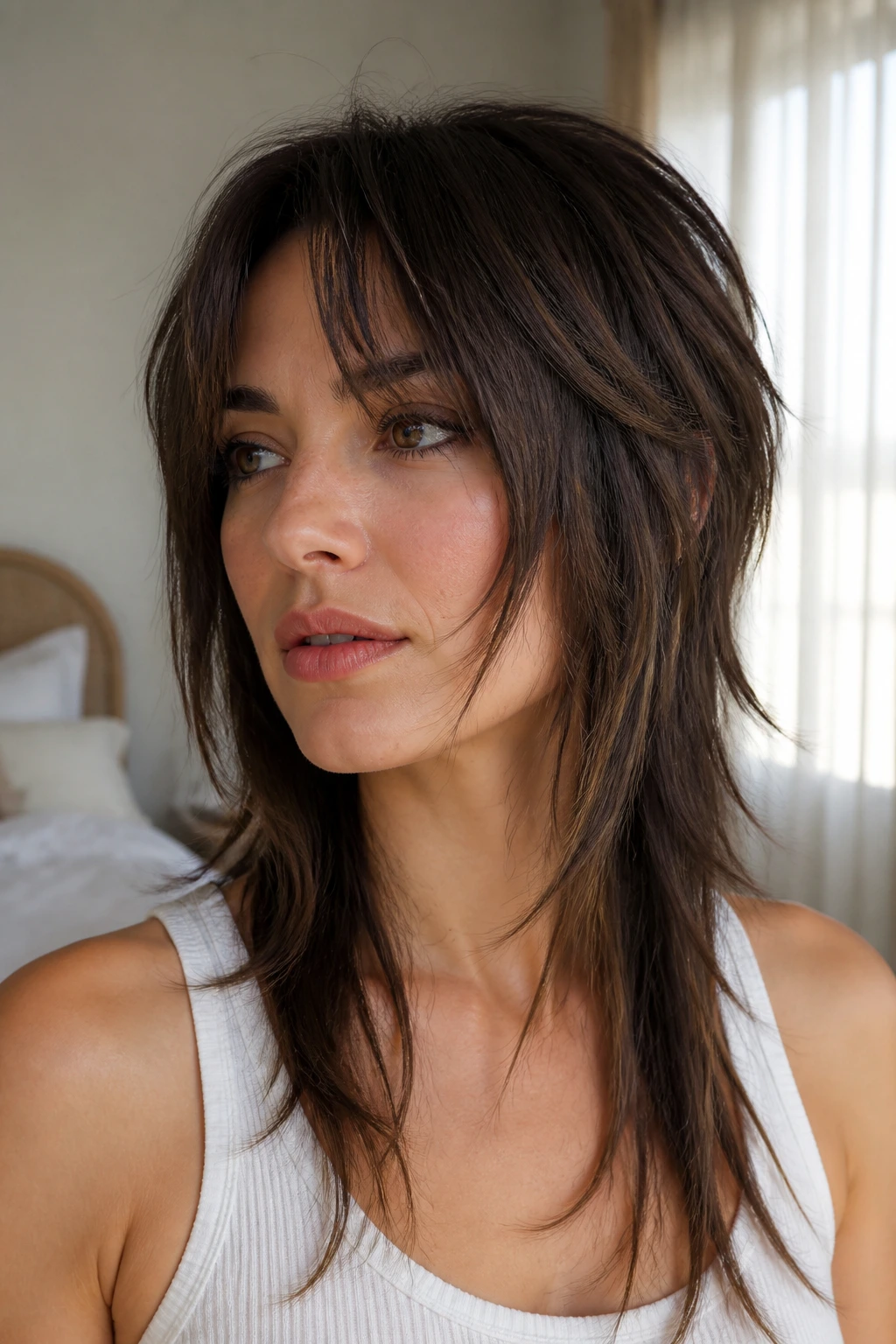
The octopus cut can be a trap for thin hair if it gets too sparse. But the face-framing version, toned down for fine strands, can be excellent. You keep length around the perimeter and let the top and face frame taper inward a little, so the hair has that draping, tent-like movement without going limp.
What makes it different from a standard shag is the separation of the outer layers. The face frame tends to fall in distinct ribbons, and that’s where the vintage vibe sneaks in — a little 1970s, a little modern boho, a little model-off-duty.
For thin hair, the trick is to keep the layers soft enough that the ends don’t split into three wisps. You want movement, not absence. A good cut keeps some thickness at the bottom and lets the top swing.
Best on wavy or slightly curly hair. Straight hair can wear it, but it needs mousse and a light scrunch or the shape loses the whole point.
11. Curly-Wavy Shag for Thin Waves
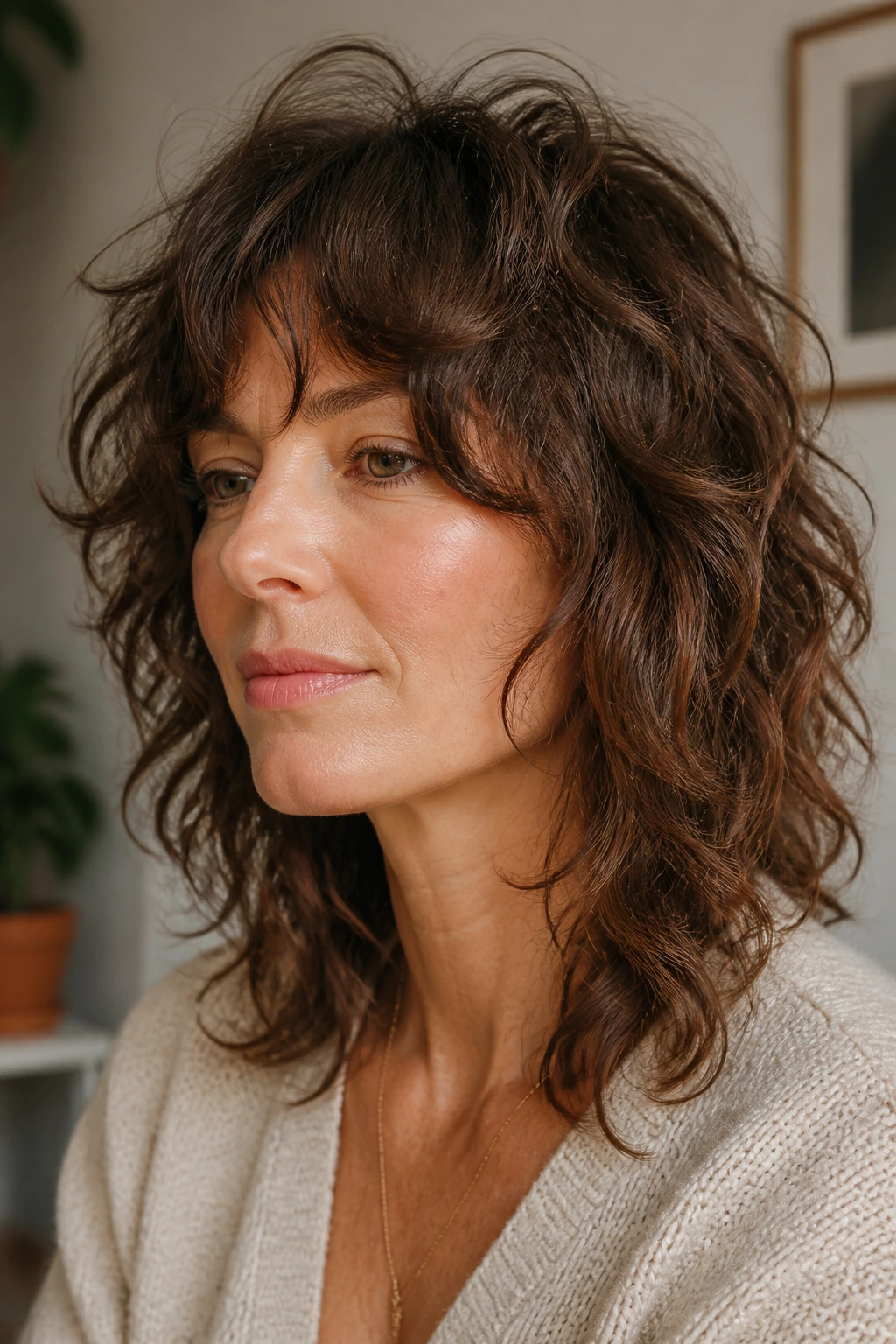
What happens when thin hair already has wave? You lean into it instead of fighting it.
A curly-wavy shag uses layers to let the bends stack and separate, which is a lot kinder than forcing the hair into one flat sheet. The top can sit a bit shorter to encourage lift, while the face frame keeps enough length to avoid a puffy triangle. If the wave pattern is loose, this is one of the easiest cuts to live with.
The vintage feel comes from the soft, airy finish — think old soft-focus photos, not crunchy curls. Diffusing on low heat helps the crown keep its shape, but the cut should still look decent when air-dried. If it doesn’t, the layers are probably too aggressive.
How to wear it
Use a light mousse on damp hair, then scrunch with a microfiber towel and leave the roots alone until they’re mostly dry. That keeps the wave clumps intact. A tiny bit of cream on the ends can calm frizz, but too much product makes the hair collapse.
This is one of the few cuts where a little imperfection helps. The more the waves break up, the fuller the head shape looks.
12. Deep Side-Part Shag

A deep side part can rescue thin hair faster than a lot of people expect. It instantly shifts volume from flat to lifted by creating a heavier-looking side and a softer fall over the opposite cheek. Paired with a shag, it gives you a shape that feels a little Veronica Lake, a little late-1970s glamour.
This is especially useful if the middle part exposes the scalp too much. The side part breaks that line and lets the fringe or front layers cover more territory. A cut with slightly longer top layers and side-swept face framing works best here.
The vintage element is strong, but it doesn’t need waves every day. Even a straight blow-dry looks richer when the part is moved off-center. If your hair is pin-straight and fine, this is one of the least demanding ways to fake density.
A few clips at the roots while the hair cools can lock in the lift. Old trick. Still works.
13. Mod-Inspired Rounded Shag
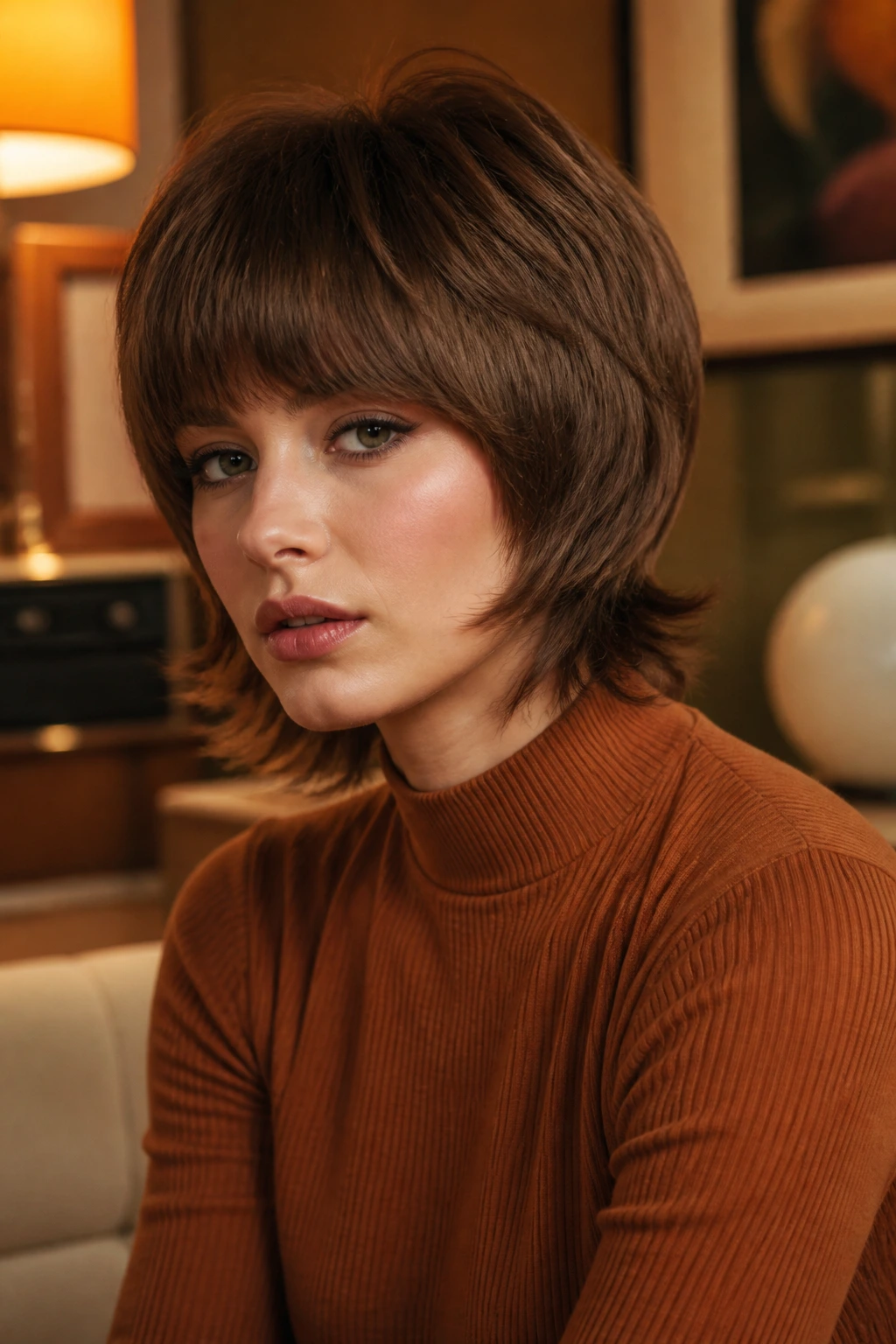
This one sits closer to the head than a floppy shag, which is exactly why it suits thin hair. The rounded silhouette gives the impression of fullness, especially around the crown and cheekbones, while the layers soften the edges so the haircut doesn’t look like a helmet.
The mod reference brings in the 1960s: eye-skimming fringe, tucked-in sides, and a clean outline around the jaw. But the shag element keeps it from becoming too precise. There’s movement in the interior, not just on the surface.
This cut loves straight to slightly bent hair. If your strands naturally swing outward at the ends, the shape gets even better. If they don’t, a small round brush or a blow-dry brush can build that inward curve around the jaw and a subtle bend at the back.
It’s a strong choice for glasses wearers, since the fringe can sit just above the frames and the sides won’t fight the temples.
14. Layered Lob with Fringe

A lob with fringe is the safe place many people land, and for good reason. It keeps enough length to feel familiar, but the added shag layers and fringe give thin hair something to do besides hang straight.
The fringe can be curtain, bottleneck, or a soft side sweep, depending on your forehead and how much maintenance you can tolerate. The lob itself should hit somewhere between the collarbone and the top of the shoulders. That range usually gives fine hair the best shot at looking full without becoming too weighted down.
I like this cut for people who want a vintage note without committing to a heavily styled look every day. Blow it out once, and the shape lasts. Let it air-dry on the weekend, and it still reads intentional enough to leave the house.
If you wear coats, scarves, or high necklines, this length sits neatly above the fabric instead of getting trapped under it. A small thing. A useful one.
15. Piecey Razor Shag with Wispy Bangs

A piecey shag lives or dies by restraint. The bangs should be light enough to separate into little strands, and the layers should move without exposing too much scalp. Thin hair likes this treatment when the stylist works with the natural density instead of hacking at it for texture.
Compared with blunt fringe, wispy bangs are easier to grow out and much less likely to overpower a fine hairline. They soften the face and let the rest of the cut carry the vintage mood. There’s a soft 1970s casualness here, the kind that looks better the second day after a wash.
Styling note
Use a pea-sized amount of lightweight cream only on the bang ends if they get too fluffy. The mistake is putting product at the roots; that’s how wispy bangs turn into sad fringe strips.
This version is good if you like pieces that separate a little. It’s not the haircut for someone who wants every strand in place. A touch of mess is part of the charm.
16. Collarbone Shag with Hidden Layers
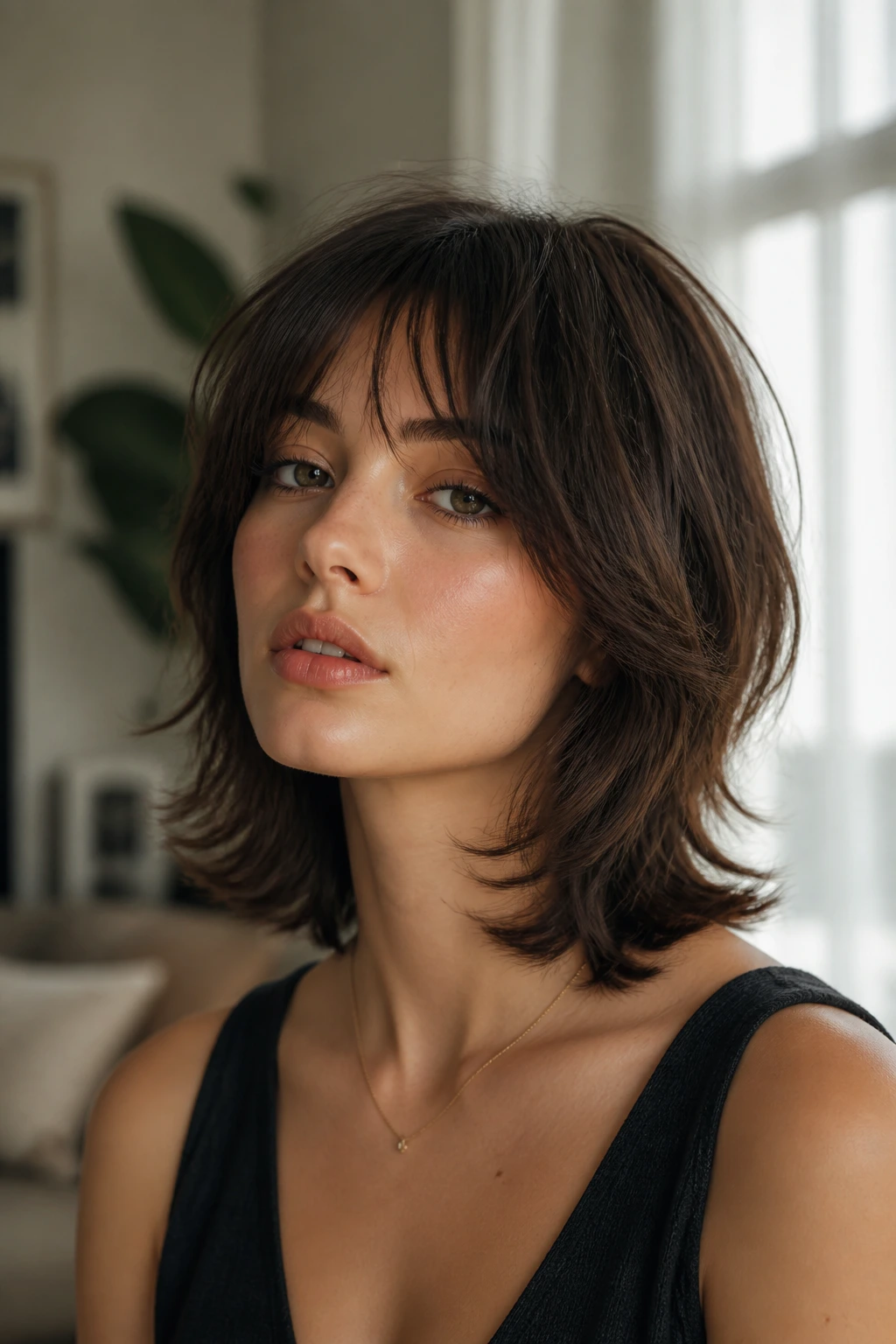
Sometimes the best shag is the one that doesn’t look obviously layered. Hidden layers preserve density at the edge while giving the inside room to move, which is a gift for thin hair that tends to look see-through when overtexturized.
This shape lands at the collarbone, with the shorter pieces tucked inside the cut rather than stacked visibly on top. The result is smoother and more expensive-looking than a heavily chopped shag, even though it still has that easy swing. The vintage vibe is quieter here — more studio portrait, less rock poster.
It’s a strong choice if you wear your hair straight most of the time. The hidden layers prevent the cut from turning into a flat board, but they don’t interrupt the line of the ends. A little bend at the front is enough.
If you want to grow your hair longer later, this is one of the easiest shags to live with during the process. The shape stays friendly while the length changes.
17. Shattered Ends Shag

Shattered ends can look wrong on thin hair when they’re overdone. Done carefully, though, they create a soft, irregular edge that keeps the haircut from feeling too heavy. The goal is to break up the perimeter enough that it moves, not so much that it disappears.
This cut works best when the density is decent but the strands themselves are fine. The ends get a little piecey, the mid-lengths keep some body, and the crown stays lifted. The whole thing feels casual in a way that suits jeans, boots, and a worn-in leather jacket.
I like it with a center part when the bangs or face frame are soft, and with a side part when the face needs more width. If your hair is naturally straight, this cut can give it some attitude without daily heat styling. If it waves, the movement gets even better on day two.
The vintage reference is less “glamour blowout” and more “street-smart 1970s.” A little undone. Still intentional.
18. Side-Swept Vintage Shag
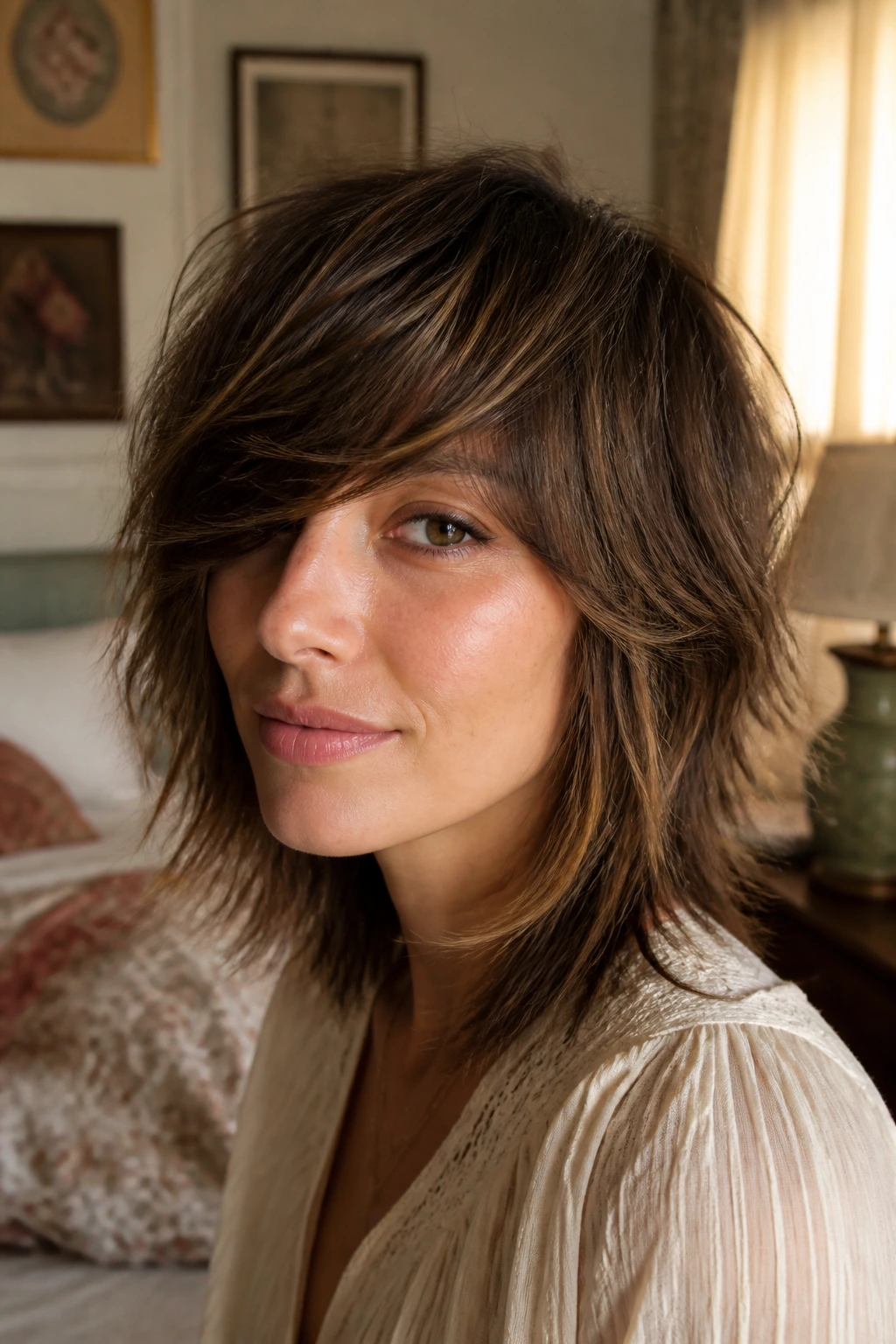
Not everyone wants bangs sitting in the middle of the forehead. Fair enough. A side-swept shag gives you the softness and framing of fringe without the commitment of a full bang line, and thin hair often behaves better that way.
The side sweep creates a diagonal across the face, which can make the front look fuller by sheer trick of angle. It’s a small bit of haircut math that pays off fast. A side part plus a long sweep over one eye brings in a quiet old-Hollywood feel, but the shag layers keep it from becoming too neat.
This cut is especially useful if you wear glasses or have a strong brow. The fringe can skim over the frames instead of fighting them. Keep the shortest front layer somewhere around the nose or upper cheek, then blend it into longer face-framing pieces.
A roller set at the front can make this shape look polished in ten minutes. And yes, that still counts as low effort.
19. Soft Mullet Shag for Fine Hair

A soft mullet is not the sharp, aggressive shape people picture first. For thin hair, the smarter version keeps the transition gentle: a little more length in back, more lift at the crown, and enough blending through the sides that the haircut reads shaggy rather than severe.
This cut has real vintage energy, the kind that pulls from glam rock and old club photos without looking like a theme outfit. It’s for people who want personality in the haircut itself. The top should still have some softness, and the back should not be hacked into nothing; that balance is what keeps the hair from looking sparse.
If your hair is wavy, this shape can be a sleeper hit. The movement in the back and around the face creates a fuller outline than a uniform length ever could. Straight hair can wear it too, but it needs a little styling help to keep the crown from lying flat.
It’s one of the few shags that can look cooler the messier it gets over the day. Convenient. And a little dangerous, in a good way.
How to Get the Most Out of a Shag on Thin Hair
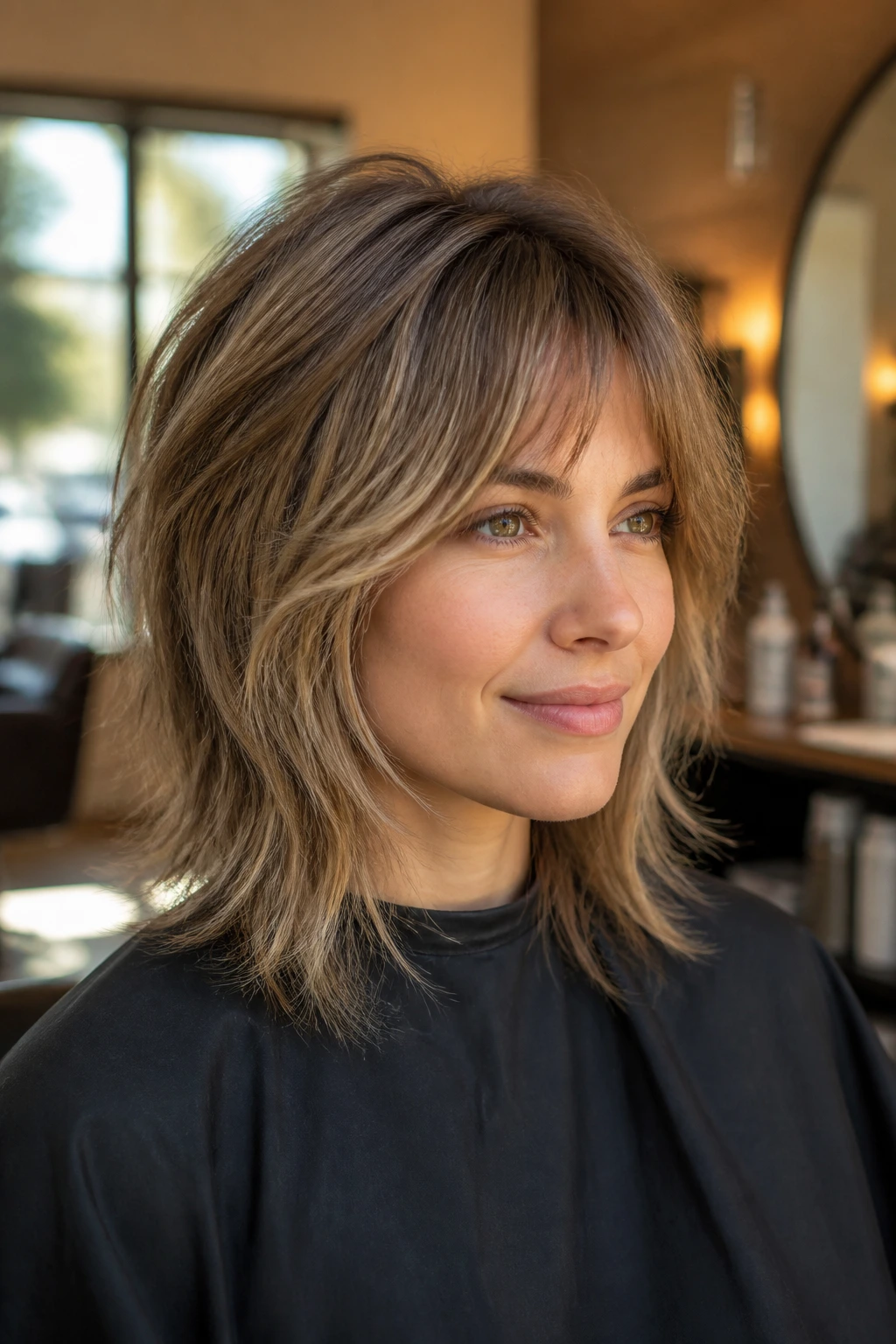
A good shag haircut for thin hair starts in the chair, not in the bathroom mirror. Tell the stylist where you lose volume first — crown, temples, ends, or all three — and bring photos that show the silhouette from the front and the side. Side shots matter more than people think, because thin hair lives or dies by the outline.
At the salon: ask where the shortest layer begins and how much weight stays at the perimeter. If the answer is vague, push for specifics. A cut that starts too high can expose the scalp; a cut that stays too heavy can hang flat. You want internal movement, not random thinness.
At home: use a lightweight mousse at the roots, then blow-dry the crown in the opposite direction of your part for the first few minutes. That one move gives more lift than piling on five products. A round brush or a hot-air brush can finish the ends with a bend, which makes the vintage shape read on purpose.
On wash days: don’t overdo oil at the ends. Fine hair shows buildup fast, and heavy cream turns a shag into a limp curtain by lunch. Keep product at the roots light and the mid-lengths touchable.
The Tools and Products That Actually Help
- Medium round brush: Good for feathering the ends and building a soft bend at the cheek and jaw.
- Blow-dry brush or hot-air styler: Handy if you want quick root lift without a wrestling match.
- Lightweight volumizing mousse: Gives the crown enough memory to hold shape without crunchy stiffness.
- Root-lifting spray: Best for thin hair that collapses at the part line by noon.
- Heat protectant spray: Necessary if you’re using a brush or iron more than once a week.
- Dry texture spray: Adds grip at the ends and makes piecey layers separate without feeling sticky.
- Wide-tooth comb: Better than a fine brush for detangling wet fine hair without pulling out shape.
- Light styling cream: Useful on the face frame and bangs only, in tiny amounts.
- Sectioning clips: Small thing, but they make crown styling much easier.
- Microfiber towel or cotton T-shirt: Reduces frizz and keeps wave patterns from getting smashed before they dry.
Why This Cut Works on Thin Hair
The reason shag haircuts for thin hair keep earning a place in salon chairs is simple: they use shape to fake density. That sounds like a trick, but it’s really a matter of where the weight sits. If the ends stay too blunt and the top stays too flat, thin hair looks tired. If the whole head gets over-layered, it looks stringy. The sweet spot lives between those two mistakes.
The best shags keep enough length in the perimeter to anchor the haircut while lifting the crown and cheekbone areas where the eye wants fullness. That’s why feathering has lasted so long. It’s not nostalgia for its own sake. It’s a cut structure that still makes sense.
There’s another reason this style keeps coming back: it forgives imperfect styling. A blunt bob can look unforgiving after a rough sleep. A shag can still look deliberate when the ends move a little, the part shifts, or the fringe falls off to one side. Thin hair likes a haircut that can bend without breaking the whole look.
Smart Product Choices for Fine, Layered Hair
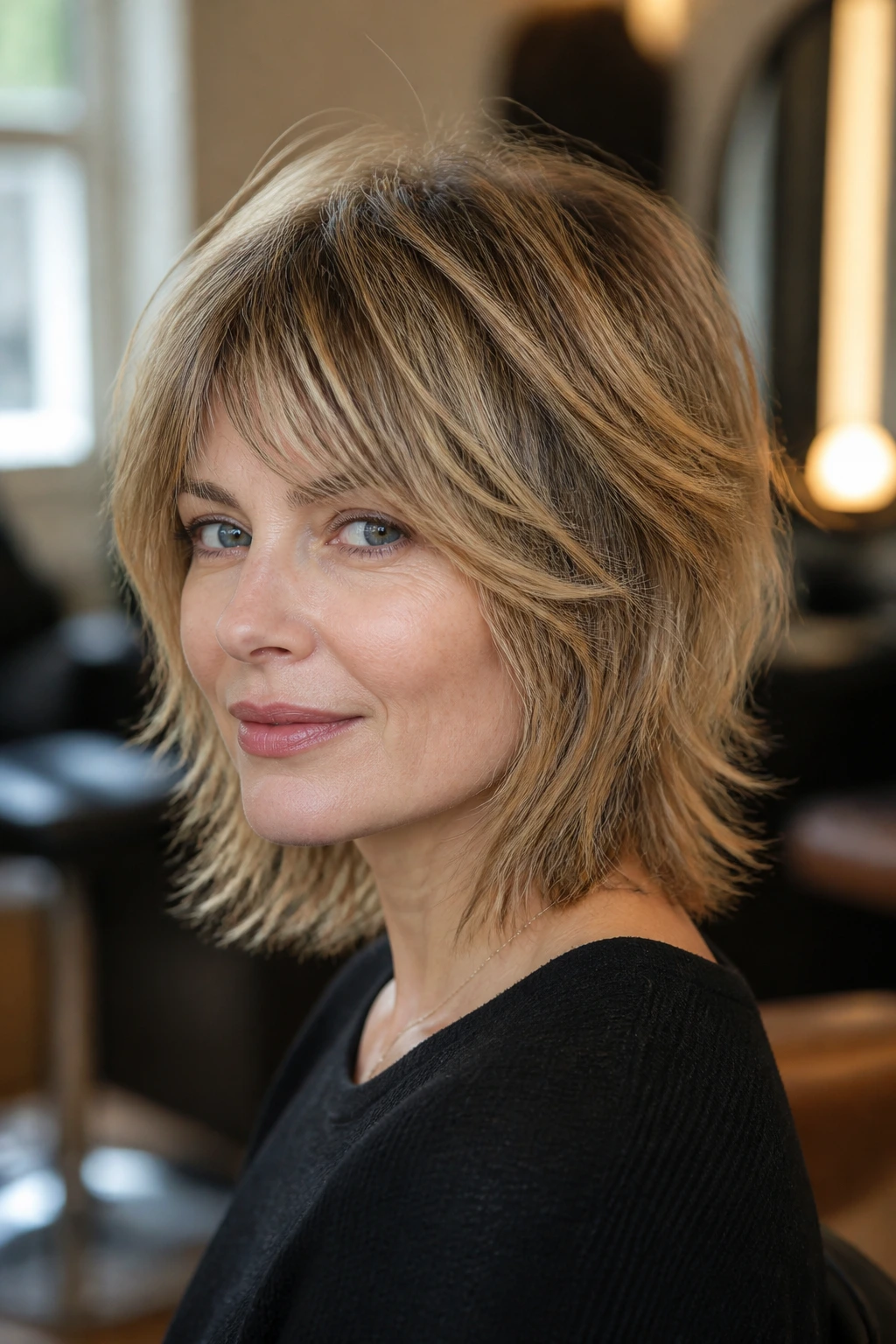
The product aisle can be a mess. Half the bottles promise volume and then behave like syrup on fine strands.
Look for mousses and sprays that say lightweight, flexible, or root-lifting, and check the first few ingredients for heavy oils or waxes if your hair collapses fast. A cream that works on thick curls can flatten thin hair in one pass. The same goes for texture sprays; a dry, airy spray is useful, while a sticky one can make the layers clump in weird places.
The American Academy of Dermatology has long advised gentle handling and limited heat where possible for hair and scalp care, and that advice fits thin hair especially well. Fine strands show damage faster. So if you use hot tools, keep them moving, and don’t skip protectant. A little discipline here saves you from ends that look frayed and lifeless by the end of the month.
If you prefer air-drying, choose a mousse or foam that supports the root without crunch. If you blow-dry, a root spray plus a round brush usually gives more useful lift than piling on a thick volumizer that never dries cleanly.
Keeping the Shape Between Salon Visits

Thin hair doesn’t stay shaped forever, especially if the shag relies on a fringe or a carefully placed crown layer. Plan on a trim every 6 to 10 weeks if you want the outline to keep its lift. Bangs may need a quicker cleanup, often every 3 to 5 weeks, depending on how fast your forehead frame grows.
At night, a loose clip at the crown or a silk pillowcase helps preserve the bend in the layers. You don’t need a museum-level routine. You do need to stop rubbing the hair into a flat sheet for eight hours straight.
Wash frequency depends on oil, but many fine-haired people do better with one or two extra days between full washes if the scalp tolerates it. A bit of dry shampoo at the roots can buy time, though it should be brushed out before it cakes. If the ends start looking straw-like, use less texture spray and more gentle conditioning on just the bottom half of the hair.
Common Mistakes That Flatten the Whole Look
Over-layering from the start: The hair looks airy in the chair and then stringy at home. The fix is keeping more length at the perimeter and making the interior layers less aggressive.
Using heavy creams everywhere: Fine hair drinks product quickly, then slumps. Keep creams and oils to the ends only, and use them sparingly.
Cutting the bangs too short for the density: Thin fringe can split and expose the forehead in a way that feels harsher than intended. Ask for softer, longer fringe first; you can shorten later.
Skipping the crown styling: The top is where the fullness illusion begins. If you only work the ends, the haircut still reads flat from the front.
Choosing a cut that needs daily heat and a full tool belt: If you hate styling, skip the most high-maintenance versions and choose hidden layers or a collarbone shape.
Ignoring the part line: A center part can be gorgeous, but on some thin hair it shows too much scalp. A side part or off-center part can save the whole shape.
Variations and Adaptations to Try
The Bardot Sweep: Keep the fringe long and split it into a soft curtain that falls past the cheekbones. It’s a good choice if you want the vintage note without committing to full bangs.
The Feathered Bob Revival: Take the chin-grazing shag bob and lean harder into inward and outward flips at the ends. That gives you a cleaner retro finish that still moves.
The Low-Drama Wolf: Reduce the height difference between crown and back, then keep the face frame soft. This works for anyone who likes the attitude of a wolf cut but not the heavy layering.
The Rounded Mod Shag: Shorten the top a little and keep the sides curved in around the jaw. It’s sharp enough to feel styled, but not so short that thin hair loses its outline.
The Soft Side Part: Pair almost any shag with a deep side part and a swept fringe. It’s the easiest way to make the cut feel fuller on the day you skip heat styling.
Questions People Ask Before Getting One
Will a shag make thin hair look thinner?
It can, if the cut is too aggressive. The right version keeps enough perimeter weight and uses internal layering to create movement instead of see-through ends.
Are bangs a bad idea for thin hair?
Not automatically. Curtain bangs, bottleneck bangs, and side-swept fringe can all work if they’re kept soft and not too dense. The wrong bang line is heavy and blunt; that’s what causes trouble.
Can straight thin hair wear a shag?
Yes, but it usually needs a little product or heat styling to show the shape. A blow-dry with root lift and bent ends helps the cut read as intentional.
What if my hair is thin but also oily?
Pick a cut with cleaner lines at the perimeter and less product on the ends. A lightweight mousse at the roots and dry shampoo on day two is usually enough; heavy creams are the enemy here.
Do shags work on older hair?
They can, especially because they create motion without demanding a lot of length. The key is keeping the layers soft and avoiding over-thinning, which can expose sparse areas too much.
How often should I trim it?
Most thin-hair shags hold their shape best with trims every 6 to 10 weeks. If you have bangs, expect them to need attention sooner.
Can I air-dry this cut?
Sometimes, yes. Wavy hair often air-dries nicely in a shag, while straight fine hair may need at least a little root lift or the shape can fall flat.
What should I bring to the salon?
Bring photos from the front, side, and back. A photo of the silhouette matters more than a celebrity face shot, because the way the layers sit on the head is the whole game.
The Shape Worth Saving
The best shag for thin hair is the one that respects what the hair can actually do. Not what it does in a salon blowout. Not what it does in a filtered photo. What it does on a normal Tuesday, when the crown has relaxed a little and the ends need to still look like they belong to the same haircut.
That’s why these cuts lean on soft layering, perimeter weight, and a little vintage motion. They flatter fine strands by working with them, not by pretending they’re thick. And when that balance lands, the result has a kind of easy confidence that never feels overworked.
Pick the version that matches your styling patience, then let the cut breathe for a week or two before you judge it. Shags change as they settle, and the good ones keep getting better.
