



Shoulder-length wolf cuts have a very specific kind of attitude. They’re messy in the good way, not the “I forgot to brush my hair” way. The shape sits right between a shag and a mullet, which is exactly why it works so well: you get crown lift, broken-up layers, and a perimeter that still lands around the collarbone instead of disappearing into a puff of hair. On the right head, the result looks lived-in, sharp, and a little dangerous. On the wrong cut, it can turn into a lopsided triangle. So the details matter.
That’s the part most people miss. A wolf cut at shoulder length is not just “lots of layers.” It’s a balance of where the shortest pieces hit, how much weight stays at the ends, and whether the fringe is doing any real work or just hanging there like afterthought bangs. The best versions move when you turn your head. They don’t sit there like a haircut helmet.
And shoulder length is the sweet spot. Short enough to feel edgy, long enough to tie back, bend with a curling iron, and grow out without an immediate salon emergency. Once you understand that middle ground, the styling options get much better. Some versions lean shaggy and soft. Some look razor-sharp. Some are almost office-safe until you rough them up with texture spray.
Why Shoulder-Length Wolf Cuts Keep Working
- The shape stays light without losing length: The collarbone gives the layers a place to fall, so the cut looks airy instead of bulky.
- The crown gets real lift: Shorter top layers create that wolf-cut lift at the roots, which is the whole point of the silhouette.
- The grow-out is forgiving: Shoulder-length layers can stretch for weeks before they start looking mushy or overgrown.
- It works with air-drying or heat styling: Some cuts only behave after a blowout. These can go either way if the layer placement is good.
- The fringe changes everything: Curtain bangs, micro bangs, bottleneck bangs, or no bangs at all each give the same cut a different personality.
1. The Soft Shattered Wolf Cut
This is the version people usually mean when they say they want a wolf cut but not something that looks too aggressive. The ends are broken up, the crown has lift, and the layers are sliced just enough to move without looking chopped to bits. On shoulder-length hair, that softness matters. It keeps the cut from reading like a half-grown mullet.
Why It Works at Shoulder Length
The shoulder line gives the layers a little bounce. Hair brushes the tops of the shoulders, flips slightly, and shows off the texture instead of hiding it under its own weight. If your hair has even a small bend to it, this cut picks that up fast.
- Best on medium-density hair that falls a little naturally.
- Looks especially good with soft curtain pieces around the face.
- Needs only a rough blow-dry and a dab of texture cream.
Best styling move: flip your part after drying. A quick switch gives the crown a lift that product alone won’t fake.
2. The Curtain-Bang Wolf Cut
This is the friendliest version of the wolf cut, and I mean that in the best possible way. The curtain bangs soften the edge, open up the face, and keep the whole cut from feeling too punk. If you want movement but not a haircut that shouts before you do, this is the one.
The magic is in the face-framing pieces. They should start somewhere around the cheekbones or just below the eyes, then blend into the shoulder-length layers without a hard step. Too short, and the bangs take over. Too long, and they lose their shape by day two. The sweet spot is a bang that parts cleanly and still folds back into the sides.
Wear this one with a round brush or a large curling iron if you like that bendy, lifted front section. Or leave it rough and let the fringe drape a little. It works either way. The cut has enough shape to survive a lazy styling day, which is why I keep recommending it to people who want edge but not maintenance drama.
3. The Razor-Sliced Wolf Cut
A razor-sliced wolf cut is sharper around the edges and more visibly textured through the ends. It’s the version that looks like someone took a careful swipe of rebellion through the haircut. On shoulder-length hair, that razor work creates separation fast, especially if your hair is thick and tends to lie flat when cut with blunt scissors.
What to Ask For
Ask your stylist for internal layers, not just surface layers. That phrase matters. It means the bulk inside the cut gets removed so the top can sit light while the outline still looks full. Then ask for the perimeter to stay ragged, not polished to a smooth line.
This cut is one of my favorites for straight-to-wavy hair because it shows movement even before you style it. A little matte spray at the roots and a touch of pomade on the ends are often enough. Don’t load it up with heavy oil. That ruins the whole point.
If you want the haircut to read sharper, keep the fringe shorter and the side pieces sliced. If you want it softer, let the razor work sit mainly in the lower layers. That small choice changes the entire mood.
4. The Curly Crown Wolf Cut
Curly hair and wolf cuts get along better than people think, provided the layers are placed with some care. This version puts the lift near the crown and the shape near the ends, so the curls don’t stack into a triangle. That’s the real danger with curly layers: too much bulk in the wrong place, and suddenly the silhouette feels wide instead of playful.
Picture a shoulder-length halo with shorter pieces sitting on top and springier lengths around the face. When the curls dry, the top has some lift and the perimeter still keeps its weight. You want a stylist who understands curl shrinkage, because shoulder length on wet hair is not shoulder length once it’s dry. Not even close.
- Ask for dry cutting or curl-by-curl shaping if your hair shrinks a lot.
- Keep the longest pieces just grazing the shoulders.
- Use a diffuser on low heat so the curl pattern doesn’t frizz open.
The nicest part is the grow-out. Curly wolf cuts age well because the shape stays soft even after a few weeks.
5. The Bottleneck Fringe Wolf Cut
This one has a little more polish than the classic curtain-bang version. The fringe starts narrower in the center, opens near the brows, and melts into layered sides. That bottleneck shape gives the eyes a frame without throwing hair across the whole forehead.
It’s a good move if you want your wolf cut to feel intentional. Less “I woke up like this,” more “I know exactly what I’m doing, and I still like texture.” The shoulder-length layers keep the look grounded, which matters because a bottleneck fringe can get fussy if the rest of the cut is too short or too airy.
Wear it with soft bends rather than tight curls. A 1-inch curling iron, dragged through the mid-lengths only, gives the fringe a little swing without turning it into a full blowout. And if your forehead gets oily fast, this fringe hides that better than blunt bangs do. That alone makes it practical.
6. The Micro-Bang Wolf Cut
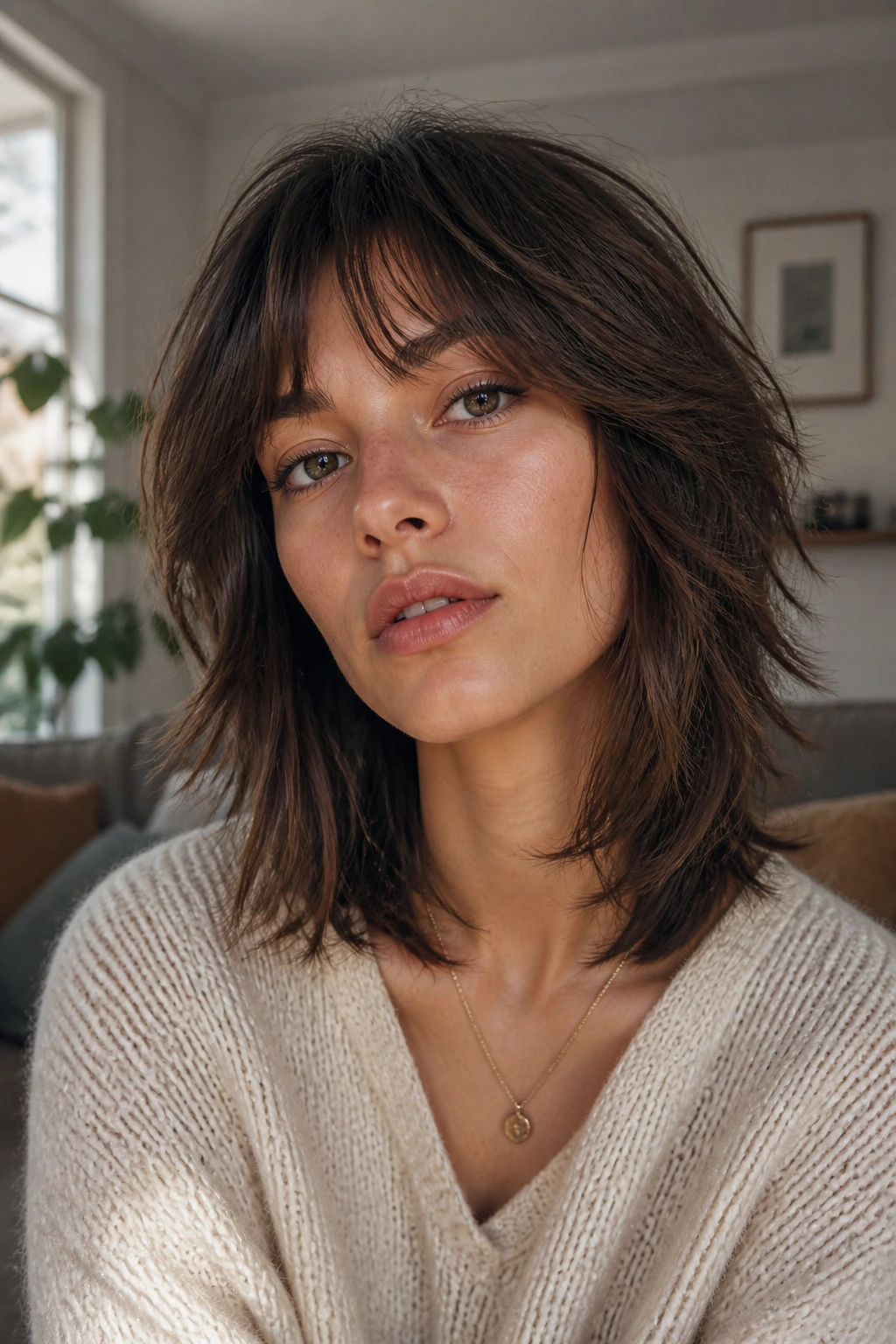
This is the sharpest version in the bunch. Micro bangs change the whole mood immediately. They turn the haircut into a statement, and they don’t ask permission. If the curtain-bang wolf cut whispers, this one walks in wearing boots.
The shoulder-length layers keep it from tipping into costume territory. That’s the important part. Micro bangs on a super-short cut can read very retro or very specific. On a shoulder-length wolf cut, the fringe has a clean contrast against all that movement below it, which makes the shape feel more modern and a little less precious.
It works best when the ends are heavily texturized and the crown has obvious lift. You want the fringe to be the crisp line and the rest of the haircut to feel broken, rough, and touchable. If your hair is very fine, go easy on the thinning. Micro bangs already create a strong visual line; you do not need to drain the rest of the hair too.
This one is for people who like the cut to be noticed from across the room.
7. The Beach-Scruff Wolf Cut
Some wolf cuts look styled. This one looks like it has spent the day near a window with salt in the air, even if you live nowhere near water. The vibe is scruffy, matte, and easy, with shoulder-length layers that separate into irregular pieces instead of smooth waves.
The key is texture that feels loose, not crispy. Salt spray at the roots, a scrunch through the mids, and a light blast with a diffuser can build that uneven, beach-worn finish. If you already have a soft wave pattern, this cut practically does the work for you. Straight hair needs a little more coaxing, but not much.
I like this version when the haircut should look a little unruly. Not dirty. Just unbothered. There’s a difference. The shortest layers should still frame the top of the head, while the bottom pieces hit the shoulder and flick out in different directions. That imbalance is what gives it character.
8. The Face-Frame Wolf Cut
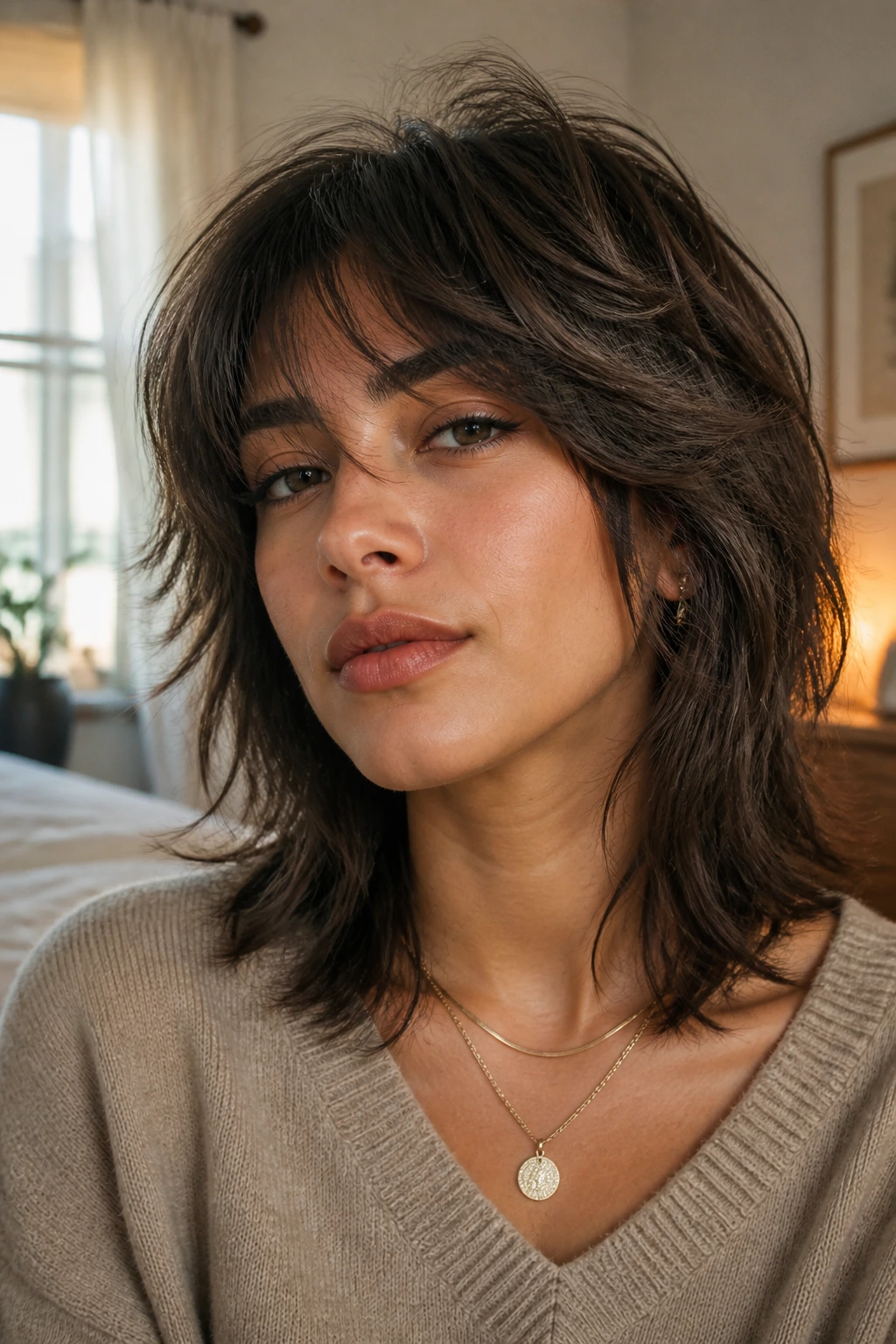
If you want the most flattering version for cheekbones, jawline, and all the little angles people pay too much attention to in bathroom mirrors, this is the one. The face-framing pieces are the point here. They start higher, fall softer, and blend into the rest of the shoulder-length shape without leaving a hard shelf.
A strong face-frame makes the wolf cut look expensive, even when the rest of it is rough. That sounds contradictory. It isn’t. The contrast between polished front pieces and choppy interior layers is what gives the haircut depth. It’s a good option if you don’t love bangs but still want something happening near the face.
Wear this version with a center part if you want symmetry, or tuck one side behind the ear to show off the length difference. Either way, the front pieces should curve in a way that draws the eye down and back out. That movement is the whole point.
9. The Crown-Heavy Wolf Cut
This is the one I reach for when the top of the head needs energy. More crown layers, more lift, more texture right where the hair tends to collapse. Shoulder length is perfect for this because there’s enough weight below to keep the shape from floating away like a bad perm.
The haircut should feel almost stacked at the top, then break apart as it moves down the head. That doesn’t mean short everywhere. It means the top is carved with intention while the ends stay longer and rougher. The result is a silhouette with a real profile. From the side, it looks alive.
This version loves a round brush at the roots and a quick rough-dry through the rest. If you sleep on your hair and wake up with flattened crown pieces, a few misted roots and a blast of hot air usually bring it back. It is not subtle. Good. It shouldn’t be.
10. The Airy Fringe Wolf Cut
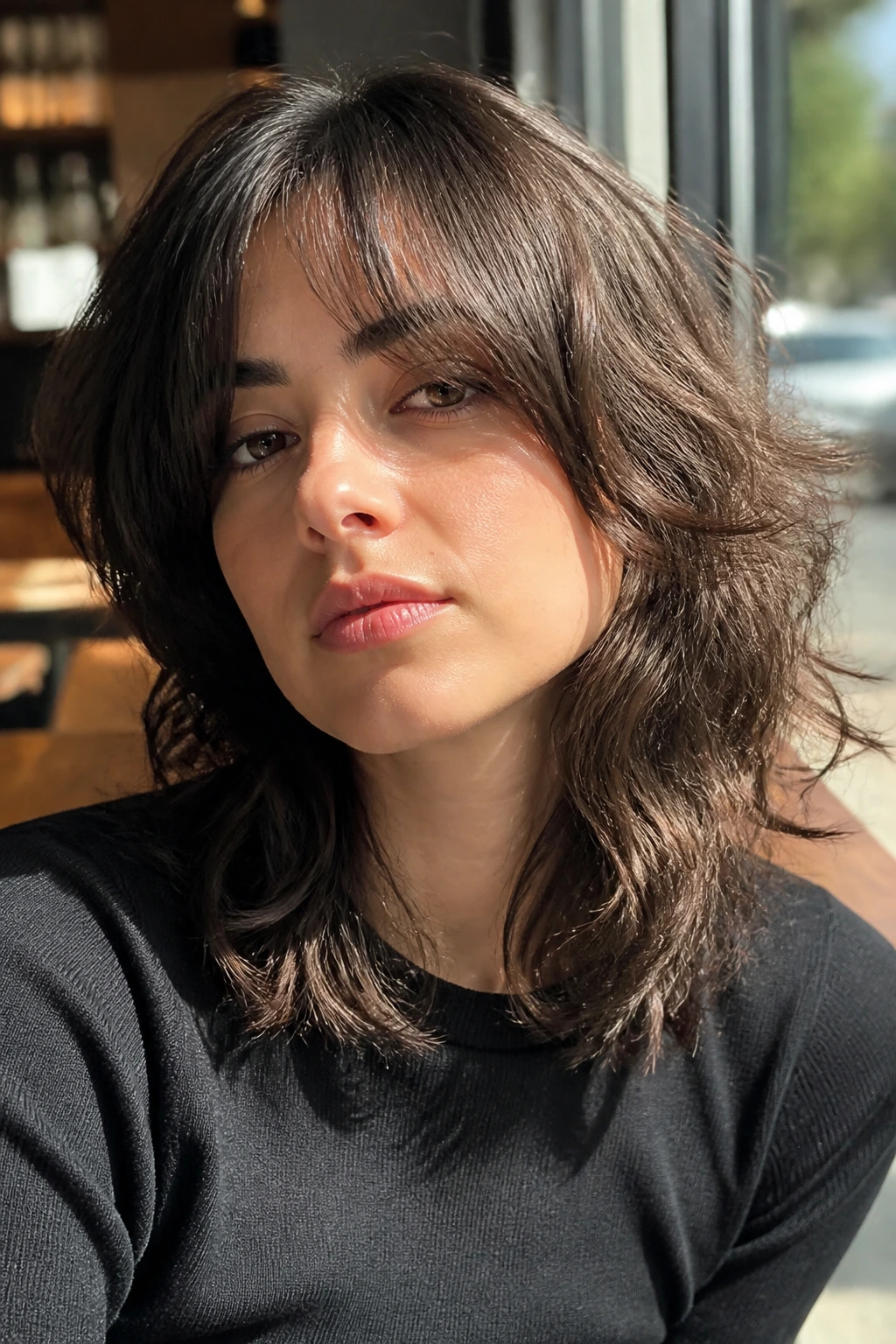
This cut is for anyone who wants bangs but gets nervous when they’re too heavy. The fringe here is wispy, broken, and a little see-through in the best sense. It sits lightly on the forehead and keeps the whole haircut from feeling dense.
The shoulder-length layers underneath should be equally light. If the fringe is airy but the mids are bulky, the haircut feels split in half. That mismatch is easy to spot. A good airy fringe wolf cut feels like one piece from top to bottom, just with varying density.
Dry it with a small round brush or a flat brush if you hate fuss. The fringe should separate a bit rather than sit in one perfect sheet. And if the front looks too clean, a touch of dry texture spray at the roots usually fixes it fast. The messiness is the feature.
11. The Thick-Hair Weightless Wolf Cut
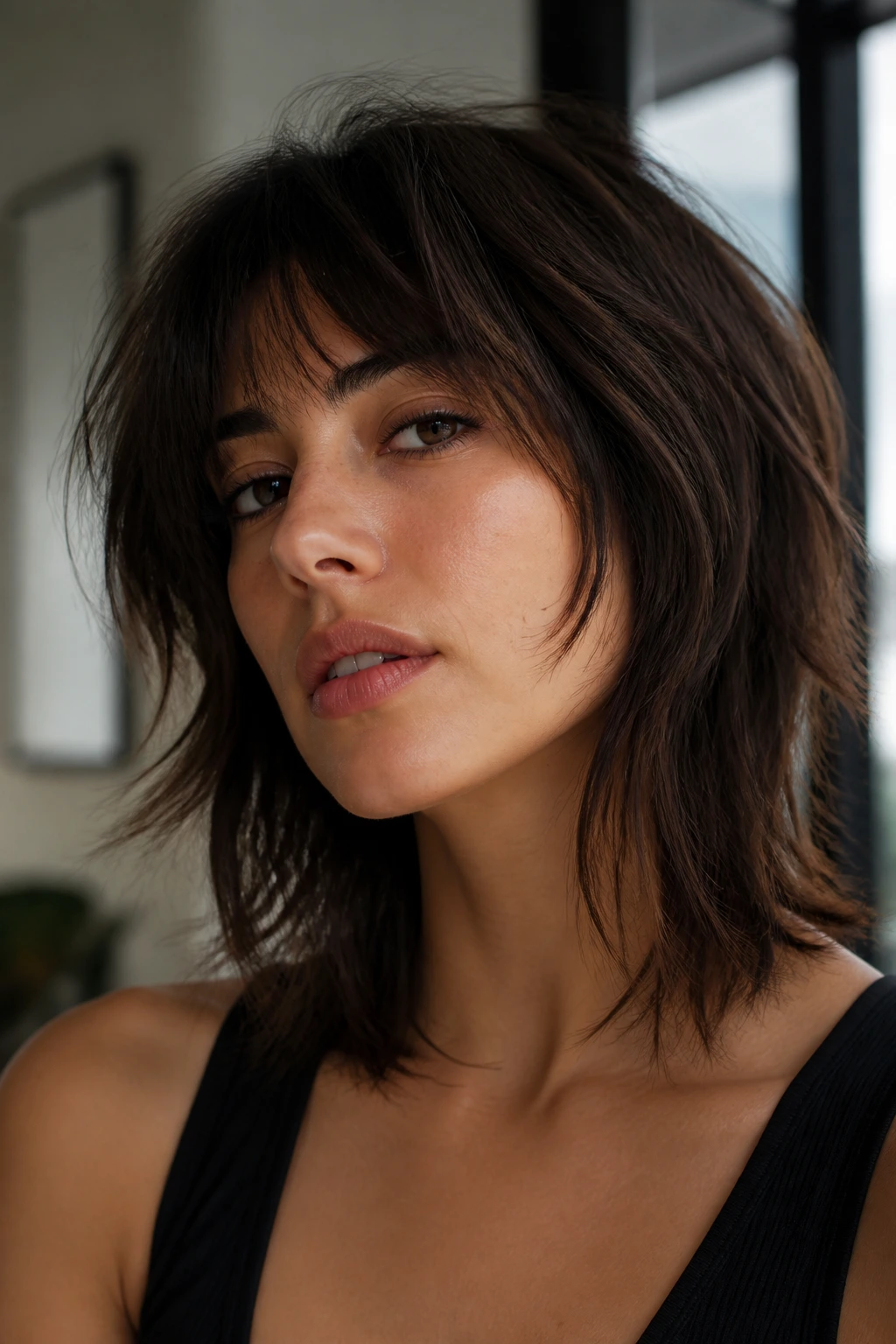
Thick hair is where a wolf cut can either sing or become a helmet. The difference comes down to how much weight gets removed inside the shape. This version is built to carve out bulk while keeping the perimeter around the shoulders full enough to matter.
The best thick-hair wolf cuts never rely on just chopping the ends. That creates a blunt shelf under all that density, which is the opposite of what you want. Instead, the stylist should work through the interior with long layers, then soften the ends so the hair can fall in pieces. It should feel lighter, not just shorter.
If your hair usually swells up after blow-drying, this version gives it room to breathe. Use a nozzle attachment and dry the roots in sections. A little smoothing cream in the mids helps, but don’t drown it in product. Thick hair can handle more, yet the wolf cut only looks edgy when the texture stays visible.
12. The Fine-Hair Boost Wolf Cut
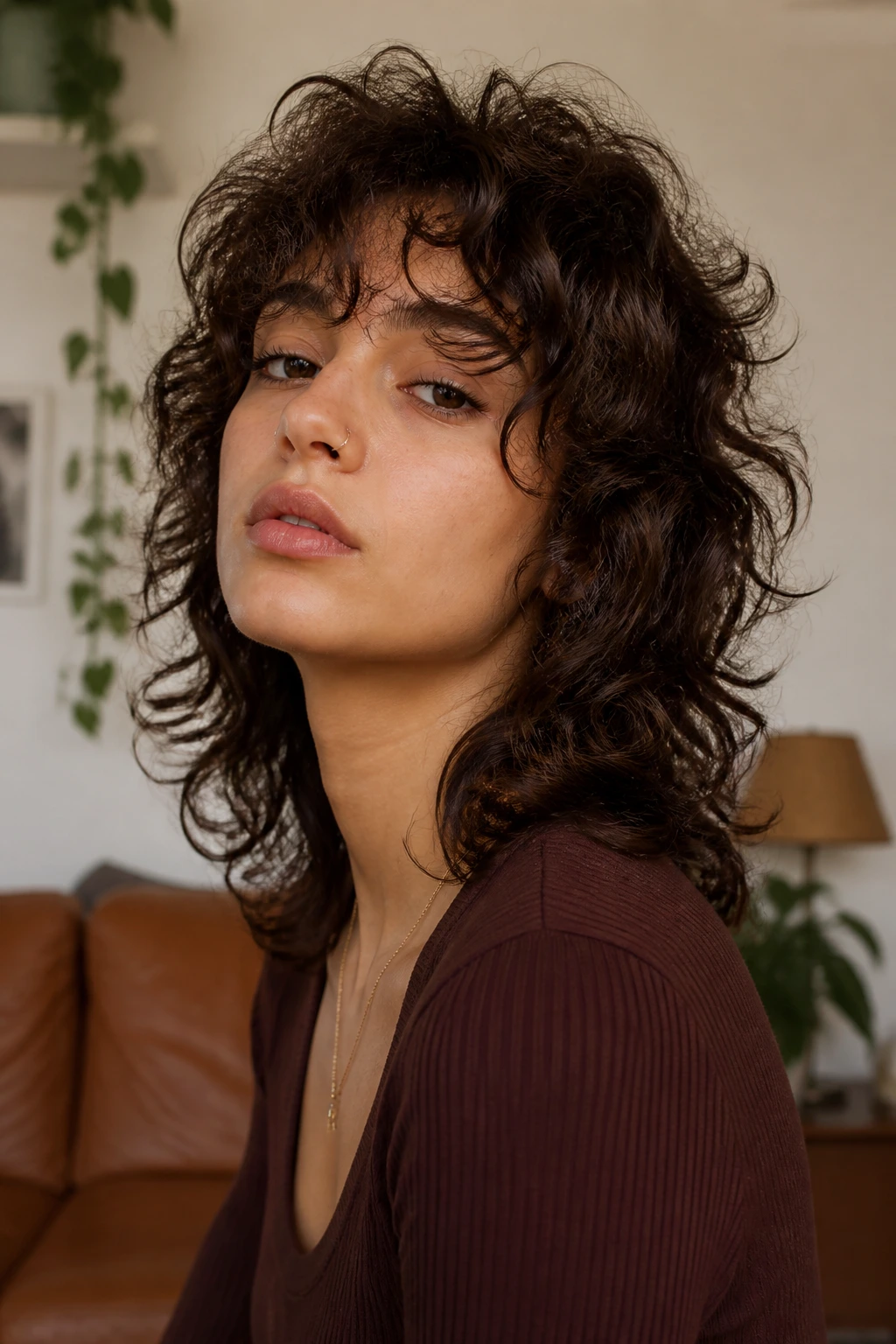
Fine hair needs a different strategy. Too many layers, and the cut turns wispy in a sad way. Too few, and it lies flat like a curtain. This version keeps the crown airy but preserves enough fullness through the ends to make the hair look denser than it is.
The trick is restraint. The shortest layers should create lift, but not a lace-like crown. The bottom should still hold some weight so the shoulder-length outline has presence. If the haircut is over-thinned, you lose that. Fast.
I like this cut best with a root-lifting mousse and a round-brush blow-dry at the crown. The mids can stay a little rough. That roughness creates the illusion of thickness. A center part often helps, because it gives the layers a clean fall on both sides instead of scattering them. And if your hair tends to separate at the ends, a tiny amount of light cream on the very tips keeps it from looking stringy.
13. The Copper Wolf Cut
Color changes the whole read of a wolf cut, and copper is one of the best pairings. The warm tone catches the broken layers and makes each piece look more deliberate. A shoulder-length wolf cut in copper has a kind of spark that darker shades don’t always show as quickly.
The haircut itself can be pretty standard: crown lift, face-framing layers, and textured ends. The color does the rest. On a copper base, the ends flash when the hair moves, which makes the cut look more dimensional from every angle. If you like texture but not obvious choppiness, this is a strong choice.
Keep the finish a little glossy. Matte texture can flatten warm color fast, and copper deserves shine. A lightweight glossing spray or a small drop of serum on the lower half of the hair helps the layers separate without dulling the tone. It’s a detail, but it matters.
14. The Sleek Straight Wolf Cut
Straight hair doesn’t always need a messy finish to sell the wolf-cut shape. In fact, the cleanest versions can look the sharpest. This cut keeps the texture in the layers but smooths the outer surface, so the silhouette stays crisp while the movement shows up when the hair shifts.
The shoulder length makes that possible. If the cut were shorter, the texture would read too jagged. If it were longer, the sleek surface might hide the whole point. Here, the layers peek out under a smoother top layer, which gives the haircut a controlled edge. It’s the least chaotic version in this list.
A flat iron isn’t mandatory, but a blow-dry with tension helps. Keep the ends slightly curved under or out—either works, as long as it isn’t pin-straight all the way to the tips. That little bend keeps it from feeling severe. This is a good pick if you want the wolf-cut shape and still need the hair to look tidy in a clean shirt.
15. The Mullet-Lean Wolf Cut

Some people want the wolf cut to stay on the tame side. Others want the mullet part to show up and do its job. This is for the second group. The top is shorter, the front pieces are more broken, and the back holds a little extra attitude without turning into a full retro throwback.
The shoulder-length perimeter matters here because it softens the transition. You still get that slight “business in the front, trouble in the back” energy, but there’s enough length to keep the cut wearable. If the back is too short, the shape can look abrupt. At shoulder length, it looks intentional.
This cut works especially well with a rough side part and some separation at the ends. I would not over-style it. A little grit is the point. Think of it as the wolf cut with the volume turned up and the manners turned down.
16. The Flipped-End Wolf Cut

This version has one job: make the ends move. The layers build texture through the mid-lengths, and the shoulder-length perimeter kicks out or in just enough to create that bouncy, flipped finish. It has a bit of retro charm without becoming a costume.
The face-framing pieces should be long enough to catch a brush or curling iron. Too short, and the flip looks forced. Too long, and it falls flat again. The best versions have ends that seem to change direction depending on how you wear them. That unpredictability gives the cut life.
I like this one with a round brush and a quick bend at the very ends, not through the whole length. You do not need a salon blowout to make it work. A few minutes of heat at the bottom half of the hair is enough. The result should feel playful, not overdone.
17. The Rocker Wolf Cut
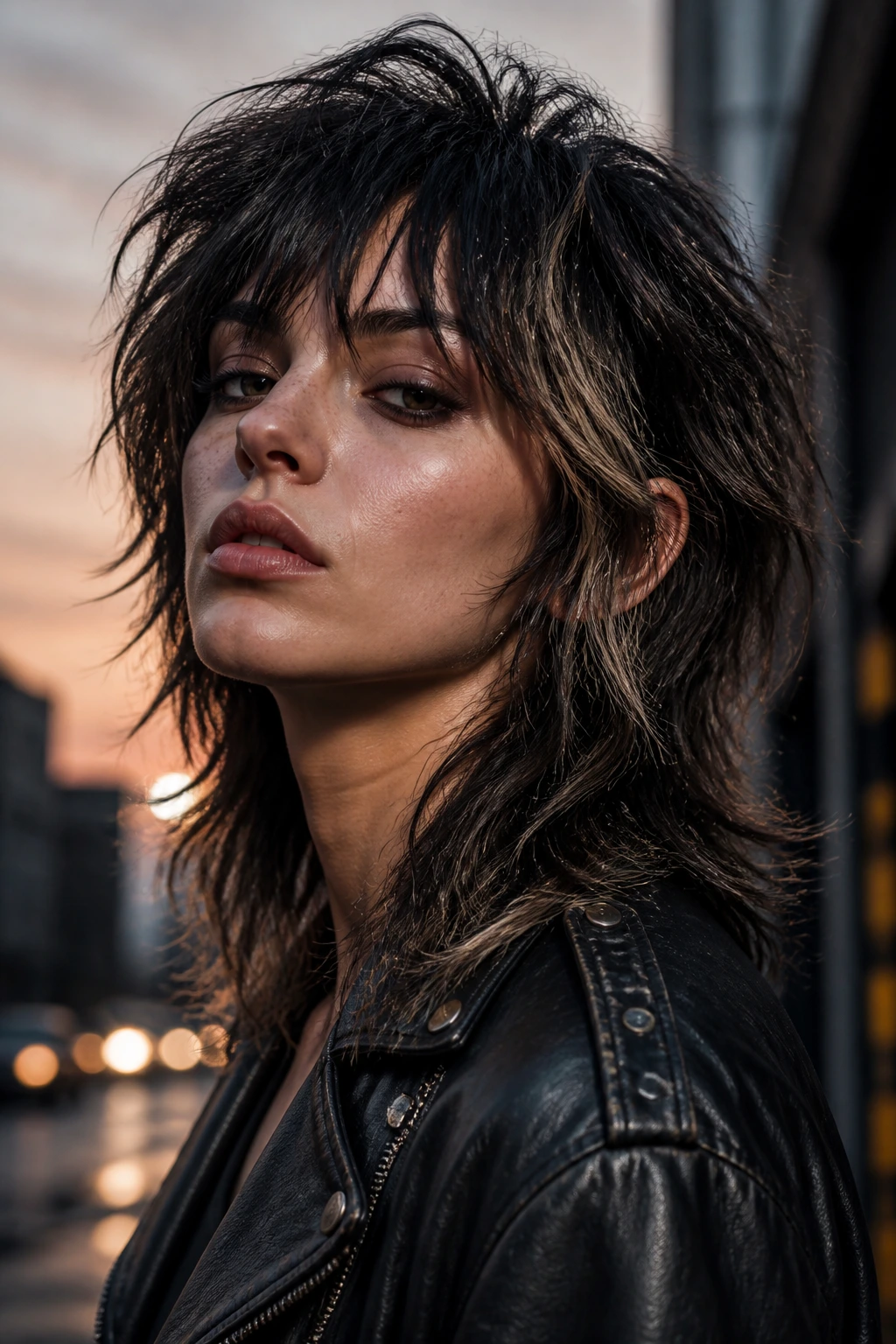
This is the loud one. The rocker wolf cut leans jagged, piecey, and slightly chaotic in the best way. It pairs hard edges with shoulder-length layers so the haircut feels sharp without becoming too short to wear every day.
Think of it as the cousin who always shows up in boots. The fringe can be torn, the ends can be uneven on purpose, and the top can have a little extra lift. The color often matters here too—darker shades or dimensional highlights make the choppy pieces stand out more. But the real work is in the cut itself.
If you like texture spray, this is your haircut. If you don’t, you may want a softer version. The rocker wolf cut wants visible separation. It wants the layers to read as layers. And it looks best when it’s a touch messy, not perfect.
18. The Minimal Wolf Cut

Not everyone wants a dramatic transformation. Some people want the wolf cut shape to be there if you look for it, but not to dominate the room. That’s what this version does. The layers are subtle, the fringe is light, and the overall line still reads polished.
This is one of the smarter choices for office life, conservative dress codes, or anyone easing into shorter layers for the first time. The shoulder length gives you the texture without sacrificing too much neatness. It works especially well on straight or lightly wavy hair, where the shape can be seen without a lot of product.
The trick is to keep the layering concentrated near the crown and around the face. Leave enough weight through the ends so the haircut still looks intentional when air-dried. If someone glances twice, good. If they think it’s just a nice shoulder-length cut with a little more movement, also good.
19. The Salt-Spray Wolf Cut
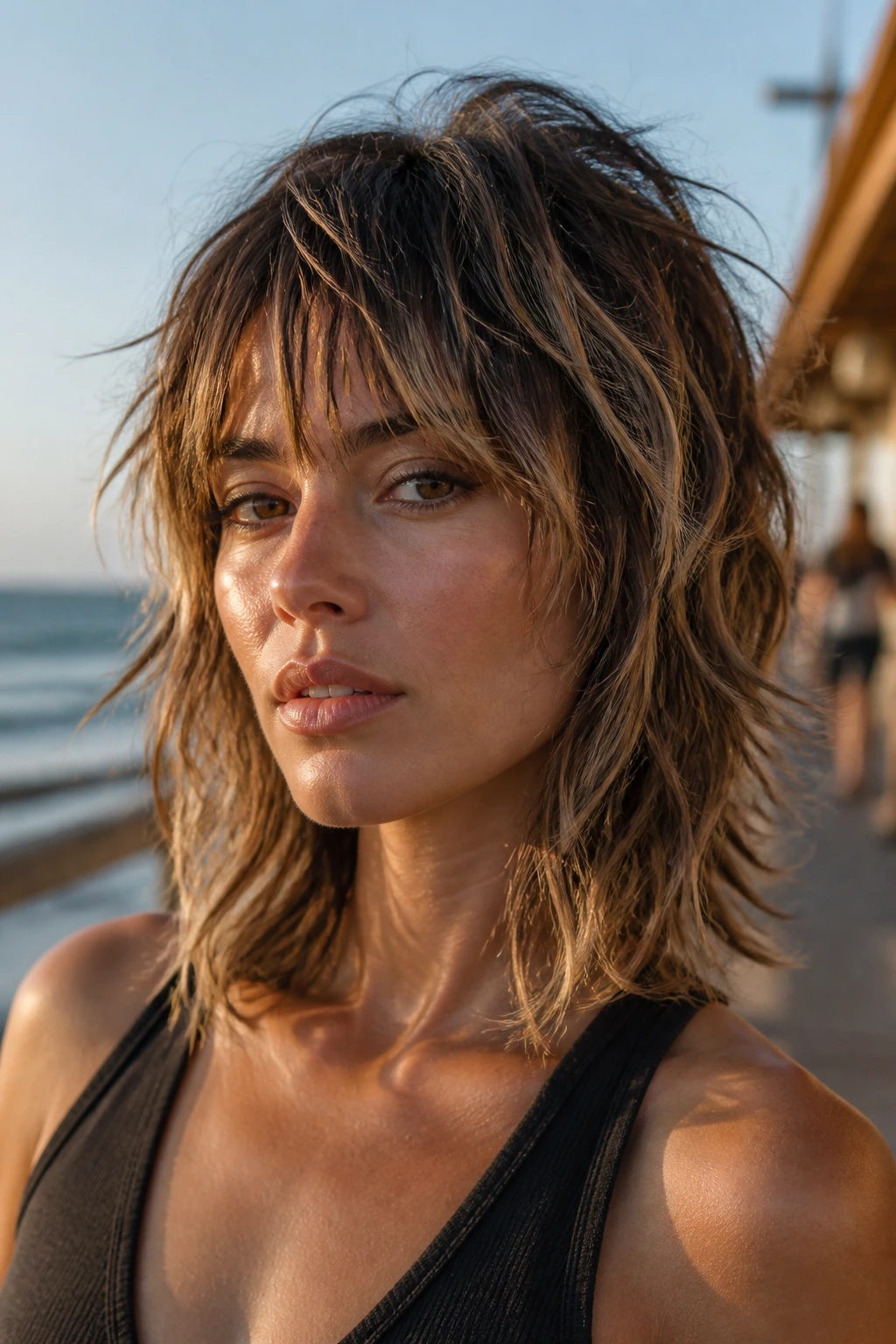
This is the hardest-working version for people who like quick styling. Spray, scrunch, rough-dry, done. The cut itself should be built to hold texture, with shoulder-length layers that separate cleanly and don’t collapse into each other.
Salt spray can be brutal if the haircut is too blunt or too heavy. On a wolf cut, though, it belongs. The product grabs the shorter layers at the crown and roughens the ends just enough to make the shape visible. I prefer this on hair that already has a bit of wave, because the result feels effortless without pretending to be effortless. There’s a difference.
Use it sparingly near the roots if your hair gets dry fast. Too much salt spray and the ends go fuzzy in a hurry. A light mist from mid-length to tip is usually enough. The best outcome looks sun-faded and textured, not crunchy.
20. The Rounded Wolf Cut

A rounded wolf cut softens the usual angular feel and gives the silhouette a little curve. Instead of making the shape look sharply broken, it keeps the layers flowing into each other so the haircut hugs the head more closely. That makes it a good option if you want texture but don’t love a hard-edged finish.
The crown still gets lift. The fringe still has movement. But the outline is more oval than spiky. On shoulder-length hair, that rounding keeps the style from widening out at the sides, which is a common problem when layers are too blunt or too high. The result is more controlled, more wearable, and a bit more flattering on rounder faces.
This cut also styles nicely with a large round brush. A little bend through the mids and a soft curve around the cheekbones are enough. You don’t need chaos to make it work. Some of the nicest wolf cuts are the ones that look almost calm until the light hits the layers.
21. The Retro Seventies Wolf Cut

This one leans into the shag side of the family tree. The fringe is longer, the layers flip outward, and the whole cut feels a little glam, a little dusty, and very deliberate. Shoulder length is perfect for that because the ends have room to flare without becoming too long and heavy.
The best part is the movement around the face. Think of feathered pieces, soft separation, and a shape that looks like it could have wandered out of an old album cover and still works with a modern wardrobe. It has nostalgia, but not costume nostalgia. That matters.
Wear it with a blowout brush, not a flat iron. The slight bend and outward flip are what sell the look. If your hair is naturally wavy, even better. This version likes volume, and it likes a little imperfection. Too smooth, and it loses the point.
22. The Grow-Out Wolf Cut

This is the practical pick. The stylish compromise. The cut that still looks good when you miss your trim appointment by a few weeks and your bangs aren’t behaving. The layers are placed so the shape softens instead of falling apart as it grows.
Shoulder length gives it room to evolve. A grow-out wolf cut can drift from edgy to soft without turning awkward in the middle. That’s a big deal if you’re not eager to live at the salon. Keep the shortest layers long enough to blend after a few months, and let the perimeter stay just long enough to tuck behind the ears or tie back.
I like this version for people who want layered texture without a high-maintenance schedule. It buys you time. And unlike some sharply styled haircuts, this one tends to look better after it loosens up a little. The haircut does not need to stay frozen to stay interesting.
Why the Shoulder-Length Zone Works for a Wolf Cut

The shoulder line does a lot of heavy lifting here. It gives the layers a shelf to bounce off, but not so much length that the cut goes limp. That in-between zone is where the wolf cut feels most alive. Shorter than this, and the silhouette can turn puffy around the ears. Longer than this, and the edge starts hiding in the weight.
There’s also a styling trick buried in the length. Hair that brushes the shoulders gets a natural bend just from moving through the day. Pull a sweater over your head, tuck it behind one ear, turn your neck a few times, and the ends shift. That tiny bit of friction makes layered texture show up without much effort.
Crown, Perimeter, and Fringe
The crown should always be the lightest zone. That’s what creates the lift. The perimeter, by contrast, needs enough weight to keep the whole shape from scattering into fluff. Fringe sits in the middle, and it’s the part most likely to change the feel of the cut fast.
A good stylist will talk about those three areas separately. If they don’t, that’s a small warning sign. You want a plan for the top, the sides, and the ends—not a vague promise that “layers will bring movement.” Sure. Layers do bring movement. The real question is where the movement lives.
How to Ask Your Stylist for the Right Shape

Bring photos. Better yet, bring photos of people whose hair type is close to yours. A curly wolf cut on dense hair and a straight-hair wolf cut with wispy ends are not the same haircut, even if the silhouette looks related. That difference matters a lot once scissors touch the hair.
Say what you want the top to do. Say how much fringe you can live with. Say whether you style with heat or air-dry most days. A stylist can adjust the layer placement once they know your habits. If you never pick up a round brush, don’t ask for a blowout-only shape and hope for magic.
Ask for These Details
- Internal layers if you want movement without losing the outline.
- Point-cut or razor-softened ends if you like texture over bluntness.
- Face-framing pieces starting at the cheekbone or jaw if you want the cut to open the face.
- A fringe plan that matches your forehead, cowlicks, and styling patience.
- A grow-out note if you want the shape to stay decent for longer than six weeks.
And say this out loud if it applies: “I don’t want the ends thinned too much.” Fine hair and over-thinning are a bad pair. Thick hair can handle more removal, but even then, too much texturizing can leave the silhouette frayed. I’ve seen plenty of wolf cuts lose their bite because the ends were shredded to death.
Essential Tools for Styling the Cut
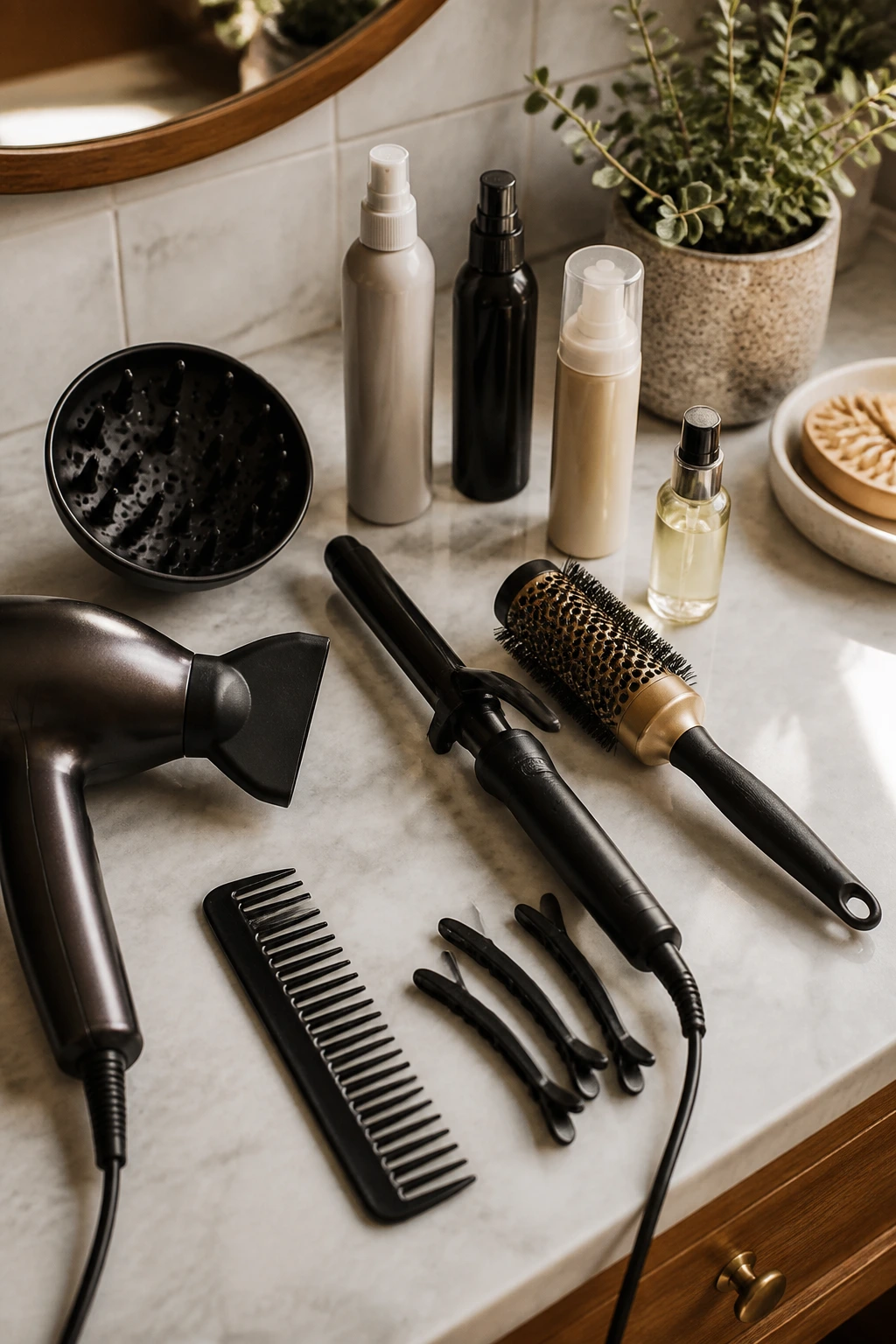
- Blow dryer with a nozzle attachment: Helps direct the roots and keep the crown from puffing out in the wrong direction.
- Diffuser: Best for curly or wavy versions when you want lift without frizz.
- 1-inch curling iron or wand: Gives those loose bends and flipped ends that make the layers read clearly.
- Round brush: Useful for curtain bangs, face-framing pieces, and a little root lift.
- Heat protectant spray: Non-negotiable if you use hot tools even a few times a week.
- Texture spray or dry texturizer: Adds separation at the ends without making the hair sticky.
- Light mousse: Good for fine hair that needs body at the crown.
- Sectioning clips: Handy when you’re styling the top and fringe in parts.
- Wide-tooth comb: Better than brushing curls or waves flat.
- Light oil or serum: Use sparingly on the lower half if the ends get fuzzy.
How Shoulder-Length Wolf Cuts Hold Up Between Washes

The good news: these cuts tend to age better than blunt shoulder-length hair. A clean one-length cut can start to flip into weird places as it grows. A wolf cut already expects some movement, so a little bedhead often helps. Day two can look better than day one if the shape was cut well.
The practical routine is simple. Root oil or dry shampoo on day two or three. A quick mist of water on the front pieces if they’re sticking out. A finger-twist through the fringe if you wear one. That’s usually enough to revive the shape without starting from scratch.
The Best Maintenance Rhythm
- Wash every 2 to 4 days if your scalp gets oily fast.
- Use dry shampoo at the roots on day two before the hair goes flat.
- Trim every 8 to 12 weeks if you want the layers to stay crisp.
- Push fringe trims closer to 4 to 6 weeks if your bangs fall into your eyes.
A silk or satin pillowcase helps keep the layers from getting roughed up overnight. So does a loose topknot with a soft scrunchie. Skip the tight elastic. It dents the crown and bends the face-framing pieces in ugly ways.
Common Mistakes That Flatten the Shape
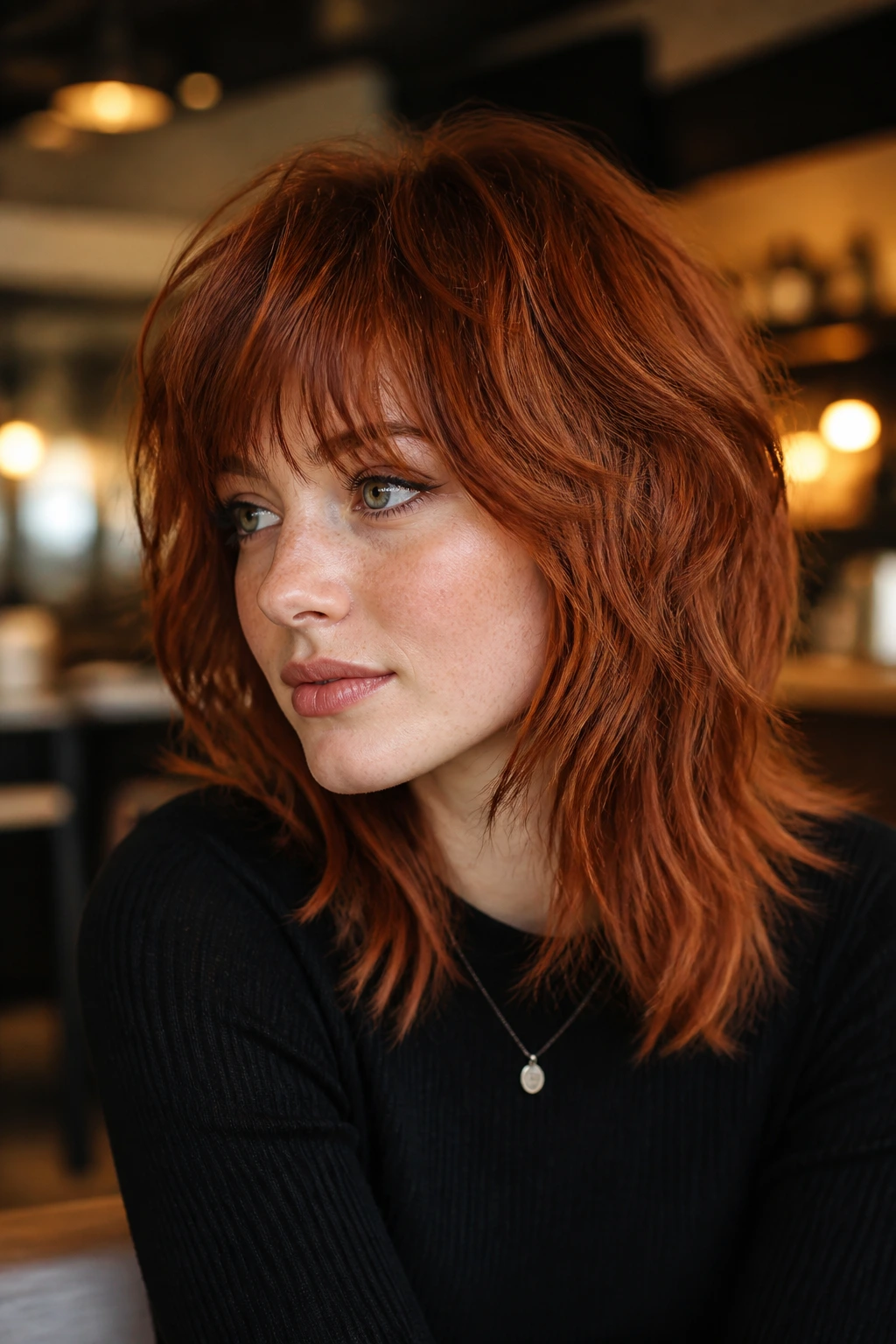
The biggest mistake is removing too much weight from the ends. The cut starts with good movement, then turns wispy and hollow after a few weeks. The fix is simple: keep some density through the perimeter so the shoulder-length line still has presence.
Another problem is crowding the crown with too many short layers. That makes the top puff out like a mushroom, especially on thick or wavy hair. Ask for lift, yes, but not a stack of tiny pieces all trying to sit at the same height. A good wolf cut has direction. It does not need a nest on top.
Heavy styling creams cause trouble too. They flatten the separation, which is the whole point of the cut. If your hair needs moisture, put it on the lower half and keep the roots light. The top should feel almost airy.
Bang placement can go wrong as well. Micro bangs that sit too high, curtain bangs cut too short, fringe that ignores a cowlick—those things age badly. The fix is to leave a little length. Hair shrinks when it dries, and bangs need room to move.
And then there’s the classic salon mistake: asking for “a wolf cut” and nothing else. That phrase means different things to different stylists. You need to say how shaggy, how short at the crown, how long at the fringe, and how much daily styling you’re willing to do. Otherwise you’re rolling the dice.
Variations and Adaptations to Try
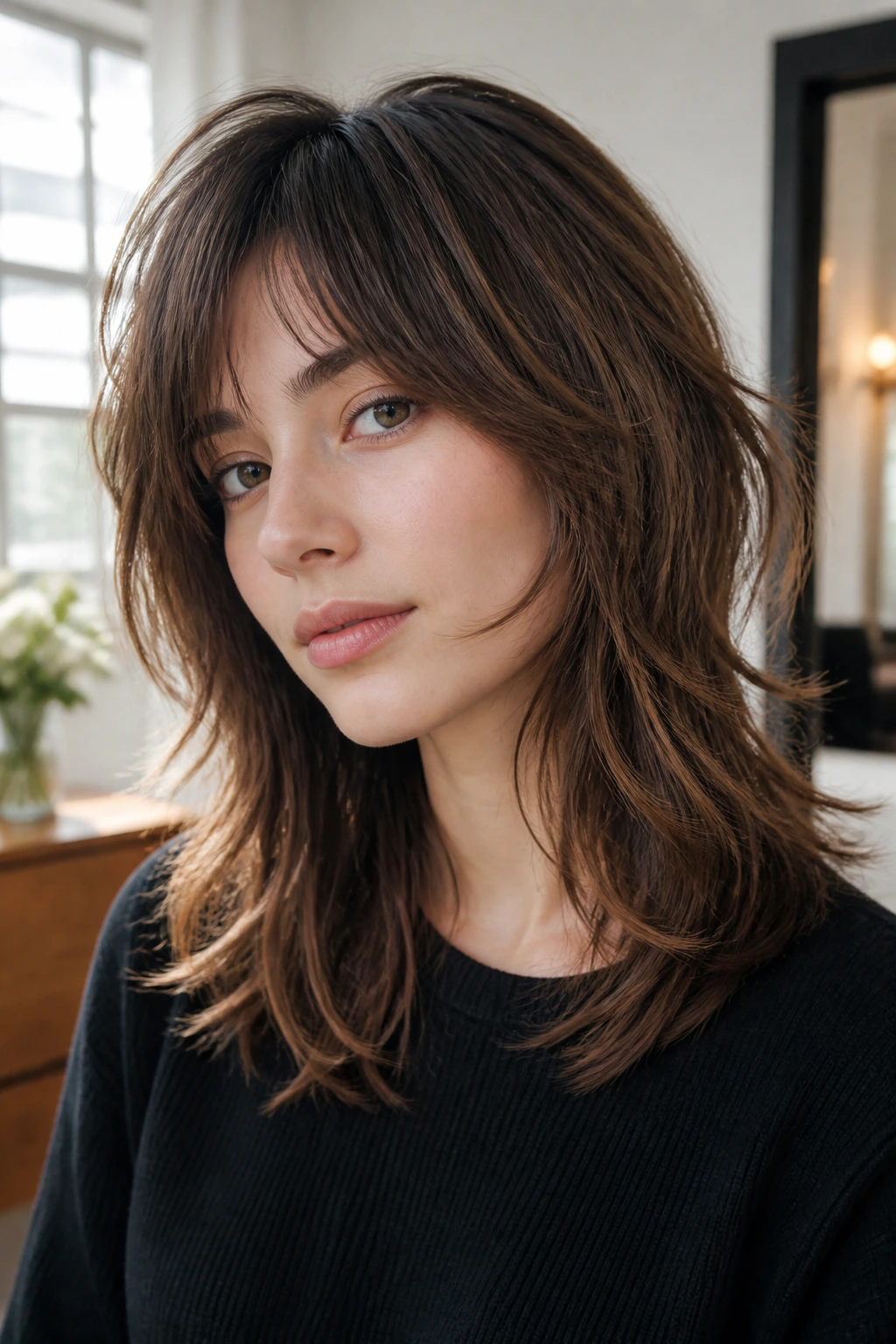
The Soft Editorial Wolf
This version keeps the structure but softens every edge. The layers are there, yet they melt into each other instead of shouting from the roof. It’s a good fit if you want the trend without the full rawness.
The Curly Cloud Wolf
Built for curls that want volume at the top and bounce at the bottom. The crown stays lifted while the perimeter keeps enough length to show the curl pattern. It works especially well when the curls have different sizes, because the layers help them blend.
The Office-Safe Wolf
A subtler cut with clean face-framing and only light texturing through the ends. From a distance it reads like a polished shoulder-length style. Up close, the broken layers give it away.
The High-Drama Wolf
This is the heavier fringe, sharper edge, stronger crown lift version. It suits people who like their haircut to carry some personality on its own. A little texture spray and a center part make it feel even bolder.
The Grow-Out Friendly Wolf
Longer fringe, softer transition layers, and a perimeter that stays full enough to survive six to ten weeks without a trim. This is the one for people who hate committing to the salon calendar. It still looks intentional when it relaxes.
The Glossed Wolf
Same layered structure, but styled smooth and shiny instead of rough. It’s a smart option when you want the wolf-cut shape to work with cleaner clothes, sharper makeup, or a sleeker wardrobe.
Frequently Asked Questions
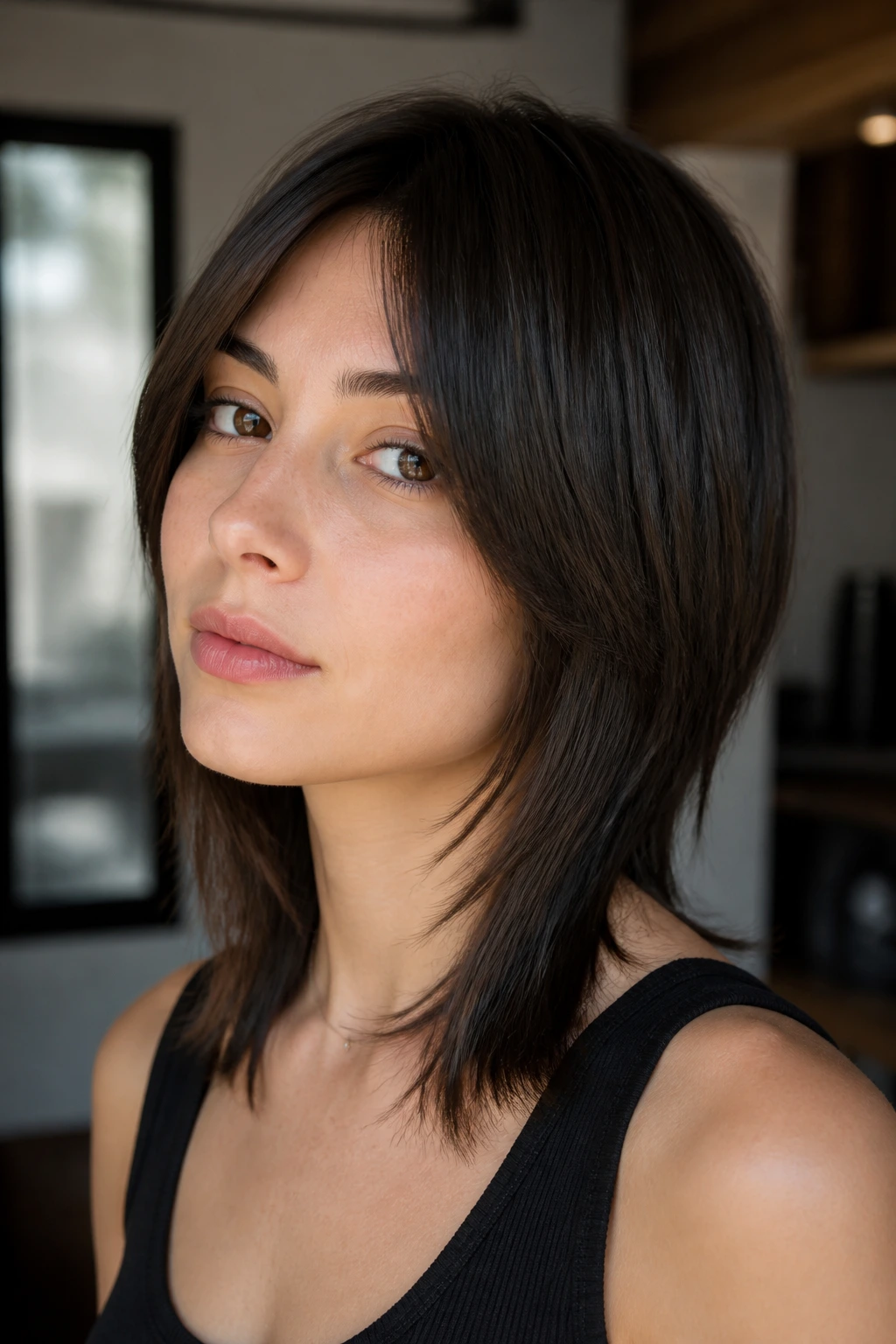
Will a shoulder-length wolf cut work on fine hair?
Yes, if the layers are kept controlled. Fine hair needs lift at the crown without too much thinning at the ends, or the shape goes see-through fast. Ask for movement, not heavy texturizing.
Is this cut good for curly hair?
It can be excellent for curls when the stylist understands shrinkage and shape. The layers should be placed to avoid a pyramid silhouette, and the cut often looks best when some of it is done dry.
Do you need bangs for a wolf cut?
No. Bangs change the mood, but they’re not required. A face-frame or longer front pieces can give you the same edge with less upkeep.
How often should I trim it?
Most shoulder-length wolf cuts stay sharp for about 8 to 12 weeks. If you wear fringe, the bangs may need attention sooner than the rest of the cut.
Can I air-dry this haircut?
Yes, and some versions look better that way. A little mousse or texture spray helps the layers separate instead of drying into one flat sheet. Scrunch, then leave it alone.
What if my hair is very straight?
A straight-haired wolf cut needs sharper layer placement or it can fall limp. Ask for internal layers and some texture through the ends, then use a bend through the mids with a wand or flat iron.
How do I stop the crown from puffing out too much?
Keep the roots directed while drying and avoid over-layering the top. If the crown gets big, the cut loses its shape. A nozzle attachment and controlled tension at the roots help a lot.
Can I grow this cut out cleanly?
That’s one of its best traits. Because the shape is already broken up, the grow-out tends to soften instead of turning blunt and awkward. A trim every couple of months keeps it looking deliberate.
The Shape That Keeps Its Bite

The nicest thing about a shoulder-length wolf cut is that it can be loud or quiet depending on how you wear it. Rough it up, and it turns into a statement. Smooth it down, and it behaves like a smart layered haircut with a little edge hiding under the surface. That range is why people keep coming back to it.
If you want the cut to work, pay attention to the details that most guides brush past. Fringe length. Crown weight. Where the layers stop around the shoulders. Those choices decide whether the haircut feels crisp or chaotic.
The version you pick should fit your actual life, not some fantasy life where you own a diffuser, a round brush, and perfect hair every morning. Pick the shape that bends with your routine, and it’ll keep its bite longer.
