



Round faces can wear a wolf cut with more attitude than most people expect. The trick is not hiding the face under curtain bangs and hoping for the best. A good wolf cut hairstyles for round faces choice puts height where the face wants lift, breaks the width at the cheeks, and keeps the ends ragged enough that the whole shape feels sharp instead of padded.
That’s the part a lot of bad wolf cuts miss. The shortest layers land right at the fullest part of the cheek, the sides puff out like a triangle, and the fringe gets so heavy it cuts the face in half. No thanks. A round face needs movement, but it needs that movement in the right places: a little more height at the crown, a little more length through the face frame, and a little less bulk sitting right beside the jaw.
The 24 cuts below cover the full range, from soft and wearable to full-on razor-shag drama. Some lean short and punky. Some keep the length. A few are friendly to curls, a few are built for fine hair, and a few are the sort of cuts that look better the messier they get. First, the geometry.
Why These Wolf Cuts Read Better on Round Faces
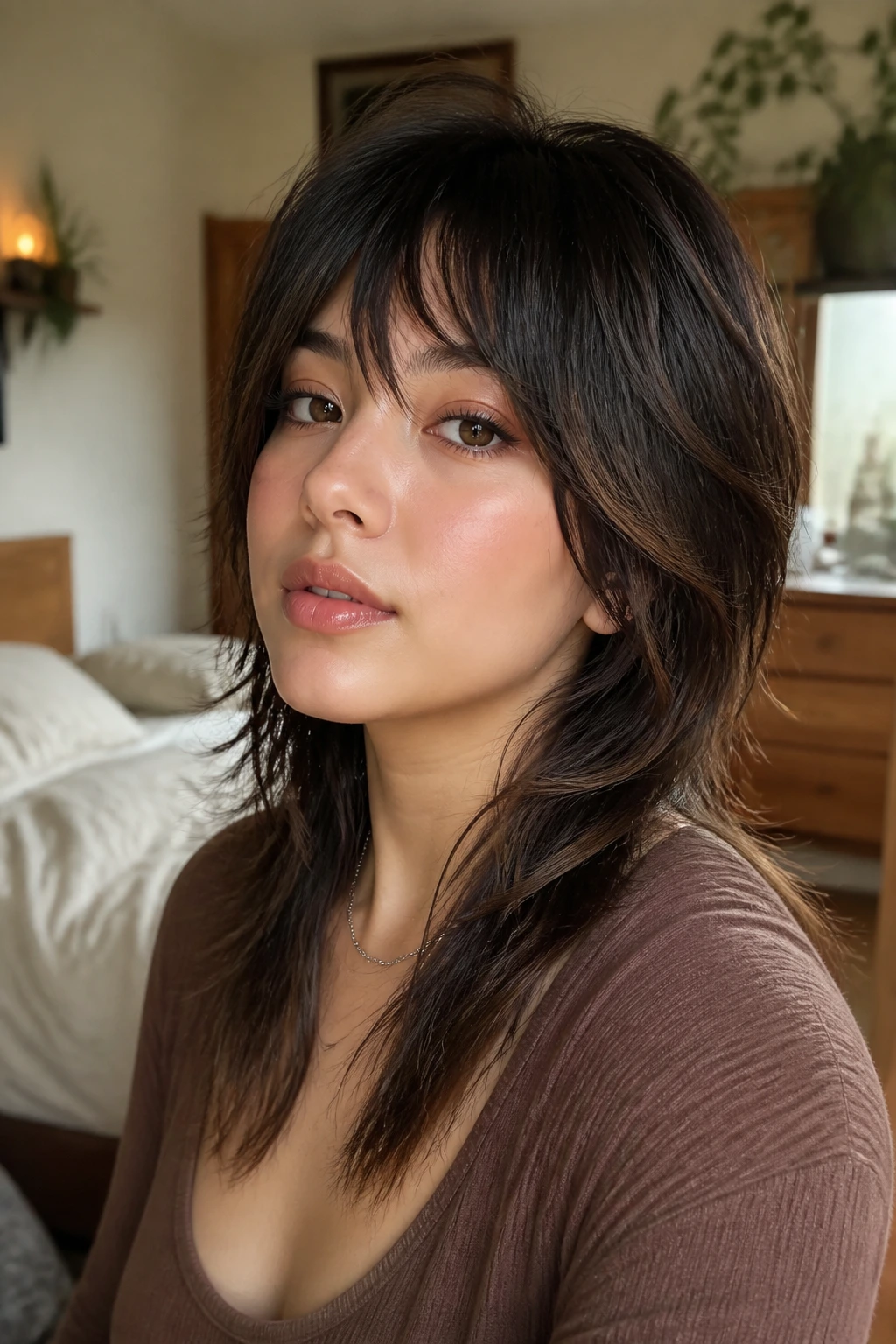
Face-lengthening layers: Every style in this collection keeps some weight above the cheeks or below the jawline, which stops the haircut from making the face look wider than it is.
Crown lift over side puff: The volume sits higher, not lower. That matters because lift near the top of the head pulls the eye upward fast.
Texture with shape, not fluff: These cuts are edgy, but they are not meant to explode outward around the ears. That’s the difference between a cool shag and a mushroom.
Clear salon language: Each look gives you a practical way to talk to a stylist without pointing at a photo and hoping they read your mind.
Grow-out that still looks deliberate: Several of these cuts soften nicely after a few weeks, which is handy because wolf cuts should not fall apart the second they lose their fresh edge.
What to Tell Your Stylist Before the First Snip
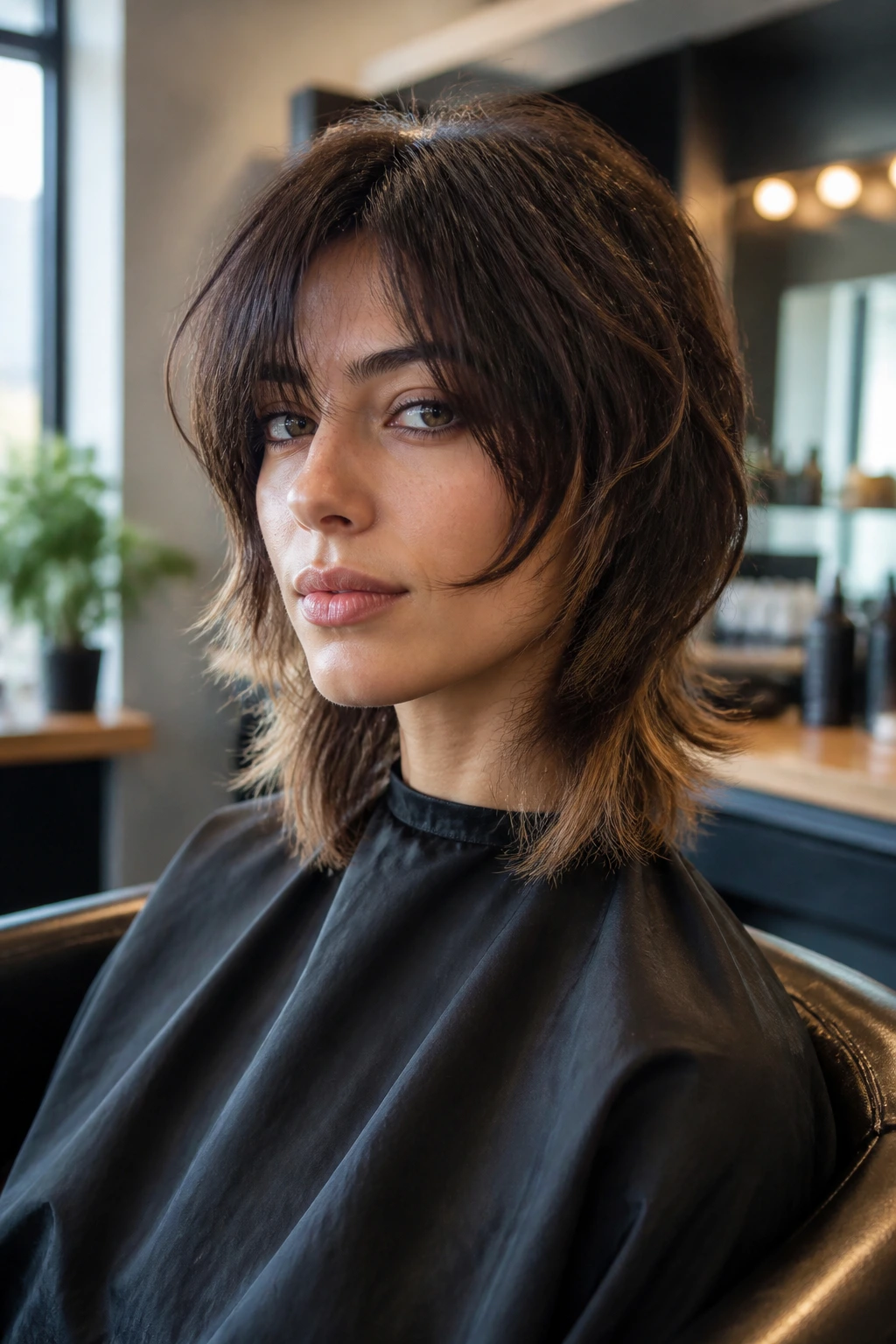
Say the useful part out loud. Not “I want something edgy.” That tells them almost nothing. Tell them where you want the shortest layer to land, how much forehead you’re happy to show, and whether your hair needs bulk removed or body added back in.
If your face is round, the most useful phrase in the chair is this: keep the shortest face-framing layer below the widest part of my cheek. That one sentence fixes a lot. If the shortest layer lands exactly at the cheekbone, some hair types flare outward there and create a wider visual line. Move it an inch lower, or build it higher with crown lift, and the whole cut changes.
Bring a photo, yes, but also bring a tiny bit of opinion. Say whether you want the fringe to split, sweep, or sit blunt and messy. Say if you wear your hair air-dried, blown out, or curled. A wolf cut that looks good on a round face is rarely about one magical layer pattern. It’s about placement, density, and how much movement the hair is allowed to keep.
1. Chin-Grazing Wolf Cut With Curtain Bangs
This is the one I recommend when someone wants the wolf-cut shape without looking like they raided a punk archive. The length lands near the chin, the curtain bangs split softly at the center, and the whole cut draws the eye downward in a clean line. On a round face, that chin-grazing edge matters. It gives the lower half a little definition without turning the haircut into a blunt bob.
Why It Flatters a Round Face
The longest front pieces should skim the chin or sit a touch below it. That gives the cheeks room to breathe. Ask for soft layers that start around the outer cheekbone, not the middle of the cheek, so the face frame opens instead of balloons.
A light round-brush bend through the fringe keeps the front from collapsing flat. That tiny lift at the root does a lot more than people think.
- Keep the curtain bangs long enough to split and sweep.
- Let the ends stay broken and piecey.
- Use a 1-inch curling iron only on the front pieces if your hair dries too straight.
Pro tip: If your hair is thick, ask for internal weight removal, not aggressive thinning at the ends.
2. Razor-Sharp Micro Bang Wolf Cut
This one does not whisper. The micro bang gives the cut an immediate bite, and the shaggy layers keep it from feeling severe. For a round face, the short fringe works because it creates a hard horizontal line up top, then the rest of the haircut drops into messy vertical texture. That contrast is the whole point.
The danger is obvious: micro bangs can make the forehead the star of the show. If you love that, fine. If you want softness, skip this one. But if you like a bit of mischief, it’s a strong choice.
I’d keep the sides lean and the crown slightly lifted so the face doesn’t read shorter. Matte paste at the fringe, a light spray on the ends, and you’re done. No need to over-polish it. That would ruin the attitude.
3. Shoulder-Length Wolf Cut With Cheekbone Layers
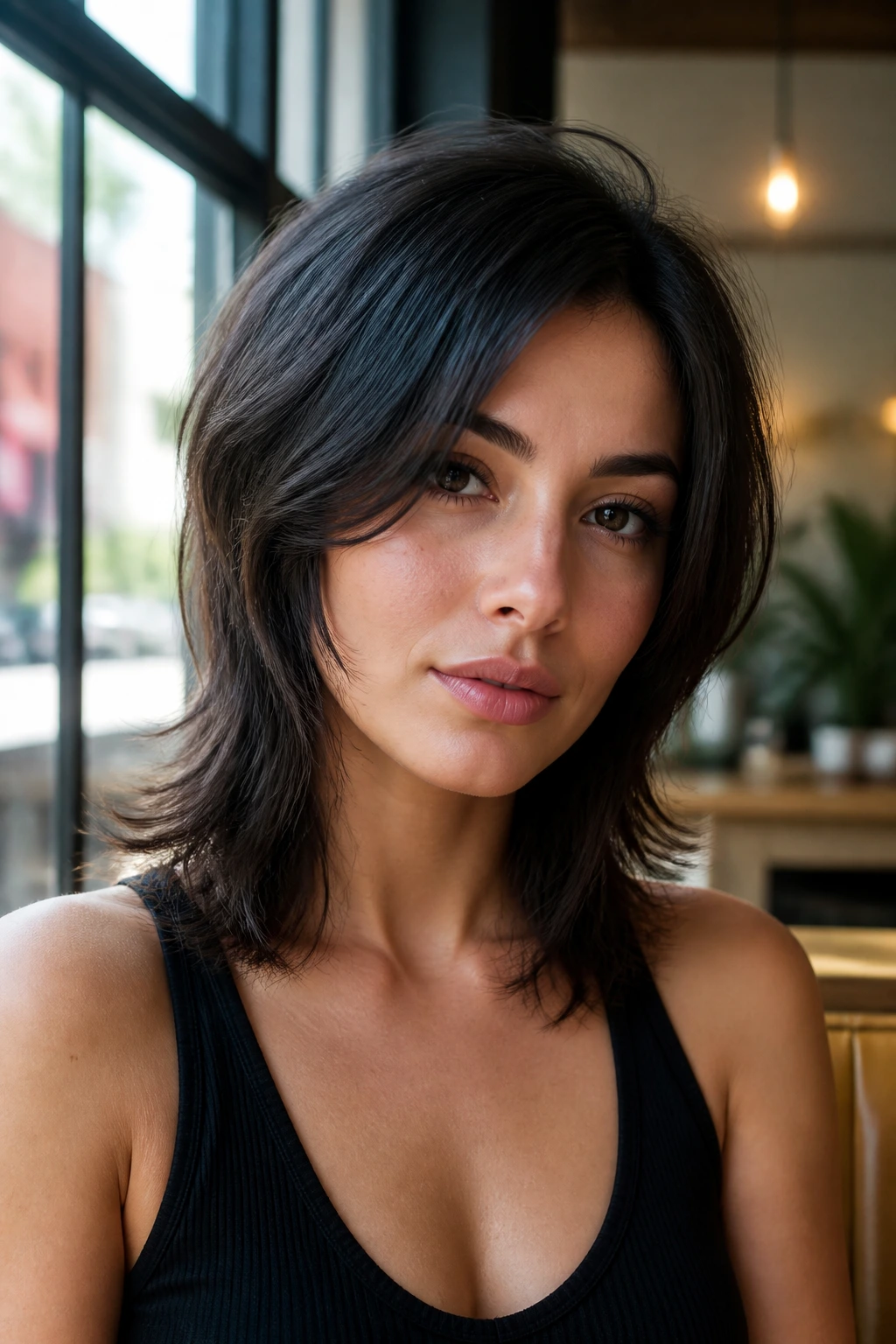
Why is this one so easy to wear? Because shoulder length gives you room to shape the face without committing to a drastic chop. The layers begin around the outer cheekbone and fall toward the collarbone, which creates a narrow vertical path down the front of the face. On a round shape, that matters more than a lot of people realize.
What Makes It Different
The cut has enough movement to feel like a wolf cut, but not so much shortness that it turns fluffy. That’s a line worth protecting. If your hair is medium thickness, ask for a little more length in the back and a softer front so the perimeter stays sleek.
This one works especially well with side parts. A deep side part adds asymmetry fast, and asymmetry is your friend here.
4. Curly Wolf Cut With Crown Lift
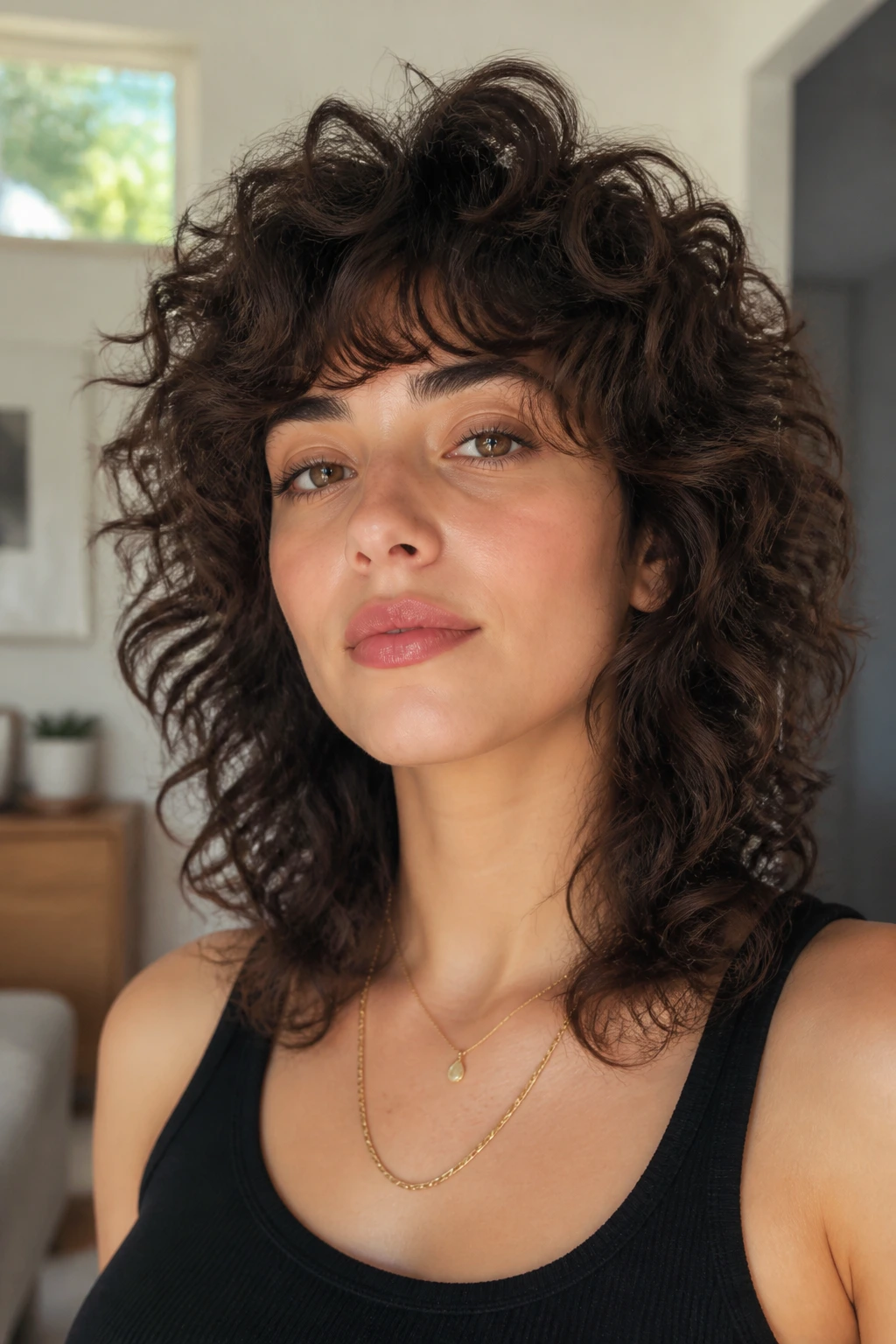
Curls need a different kind of wolf cut. If you carve the layers the same way you would on straight hair, the result can go triangular in a hurry. The better move is to keep the crown lifted, preserve spring through the mid-lengths, and let the fringe or face frame sit a bit longer than you think. Shrinkage is not a rumor. It’s the haircut.
Ask for the shape to be cut with your curl pattern in mind, ideally dry or mostly dry, so the stylist can see where the curl sits once it settles. The most flattering version on a round face keeps the widest curl volume up high and leaves the sides a little lighter. Diffuser, low heat, a bit of curl cream, done.
If your curls are loose, this can feel soft and wild at the same time. If they’re tight, the shape gets bolder. Either way, avoid over-thinning the ends. Curls need some body to keep the face from reading wider.
5. Long Wolf Cut With S-Curve Face Frame
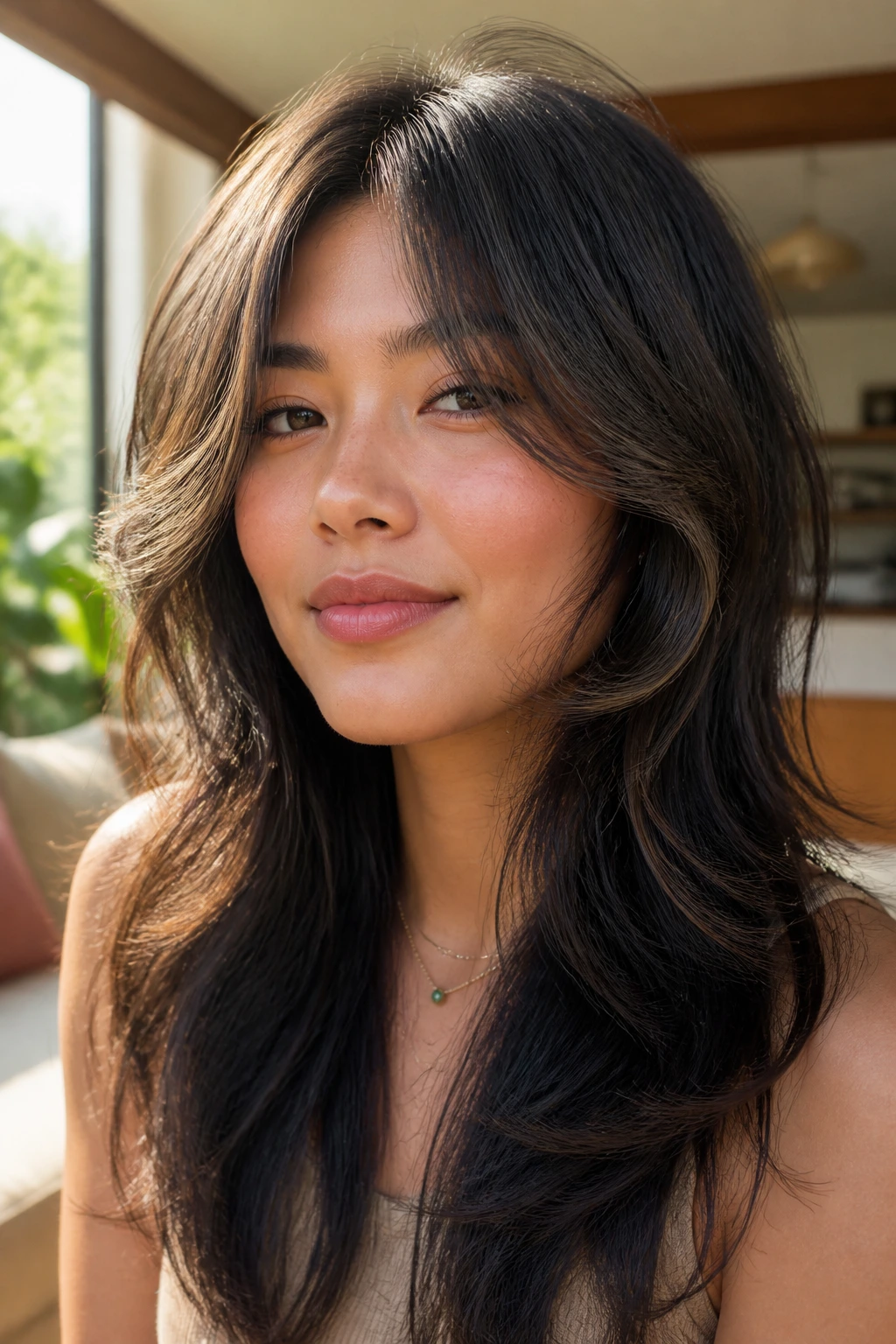
Long hair can absolutely be wolf-cut hair. It just needs shape, not random chopping. The S-curve face frame is what saves it from looking like long layers from a mall salon in the wrong decade. Those front pieces should bend away from the cheeks, then sweep back toward the jaw in a loose, broken line.
That curve is doing a sneaky amount of work. It breaks up the roundness of the face without plastering hair flat against it. Keep the crown airy, keep the ends textured, and resist the urge to make the front pieces too thick. Thick front pieces are where long wolf cuts go to die.
If you like a blowout, this version gives you room to use a large round brush or a 1.5-inch curling wand. If you air-dry, scrunching a little mousse into the mid-lengths helps the front keep its curve instead of hanging like curtains.
6. Soft Mullet Wolf Cut With Tapered Nape
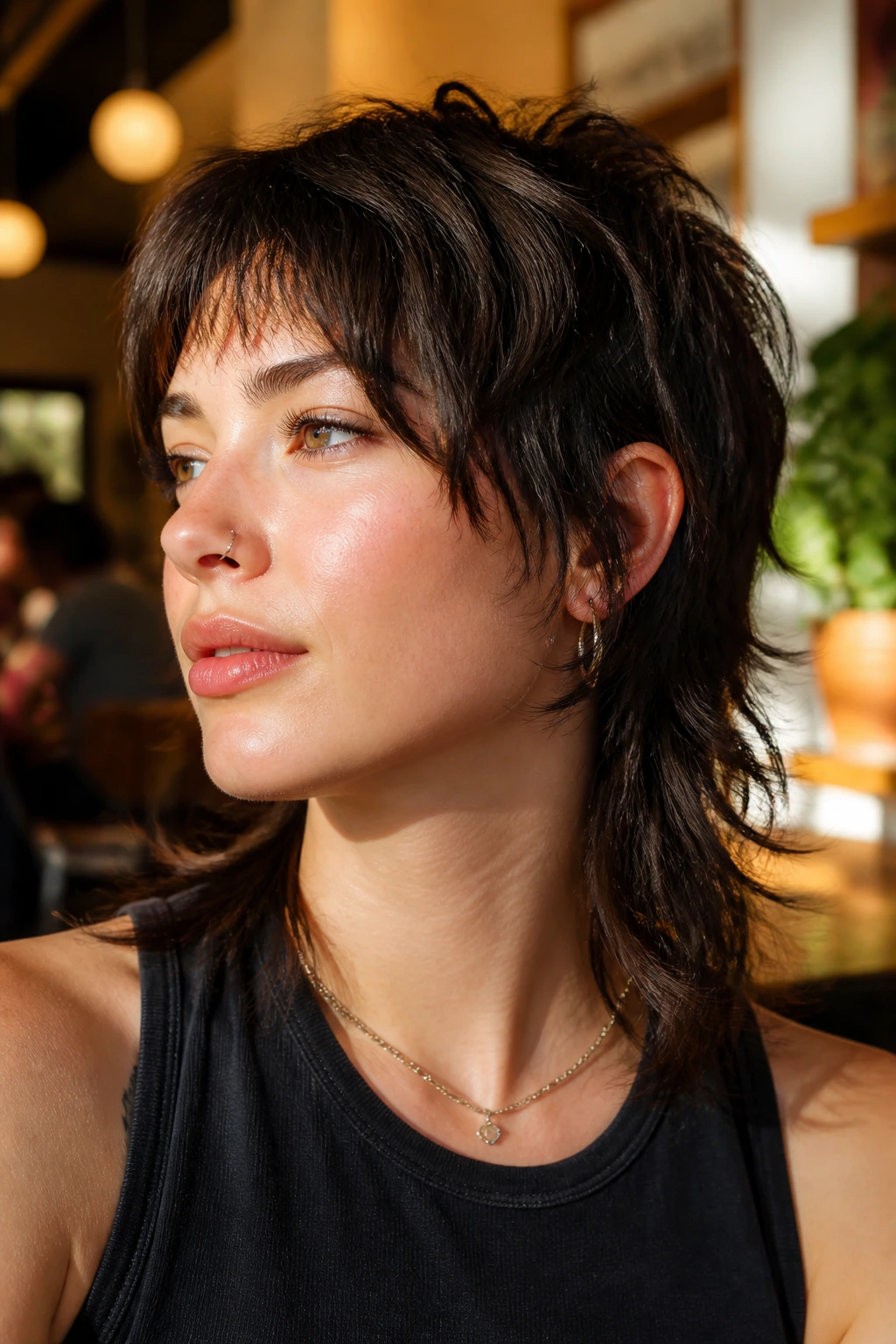
The word “mullet” still scares some people, which is funny, because the soft version is one of the smartest shapes for a round face. Shorter through the back, tapered at the nape, longer toward the front — that structure pulls the eye backward and upward. The face doesn’t get boxed in. It gets framed.
Keep the sides controlled. That’s the whole trick. If the side volume gets too wide, the cut loses its edge and starts making the head look broader. A clean taper at the nape, plus piecey front sections, keeps it sharp.
This is the one I’d choose for someone who wants the haircut to have a little bite in the back when they turn around. It looks even better with a messy collar, a little neck exposed, and texture that doesn’t apologize.
7. Bottleneck Bang Wolf Cut

Bottleneck bangs are a small design choice that changes everything. They’re narrower near the center of the forehead, then open out wider toward the temples. On a round face, that shape helps carve the upper half without cutting the face into a blunt block. It feels softer than micro bangs and less heavy than a full curtain fringe.
The rest of the cut should stay choppy and light around the jaw. That balance matters. If the bangs are doing elegant work up top, the layers below need to stay broken and a little wild.
Ask your stylist to keep the center of the fringe short enough to show some brow, but not so short that it sits like a straight line. A quick round-brush dry and a little texturizing spray at the ends are usually enough. This one is more about shape than effort.
8. Collarbone Wolf Cut With Wispy Fringe
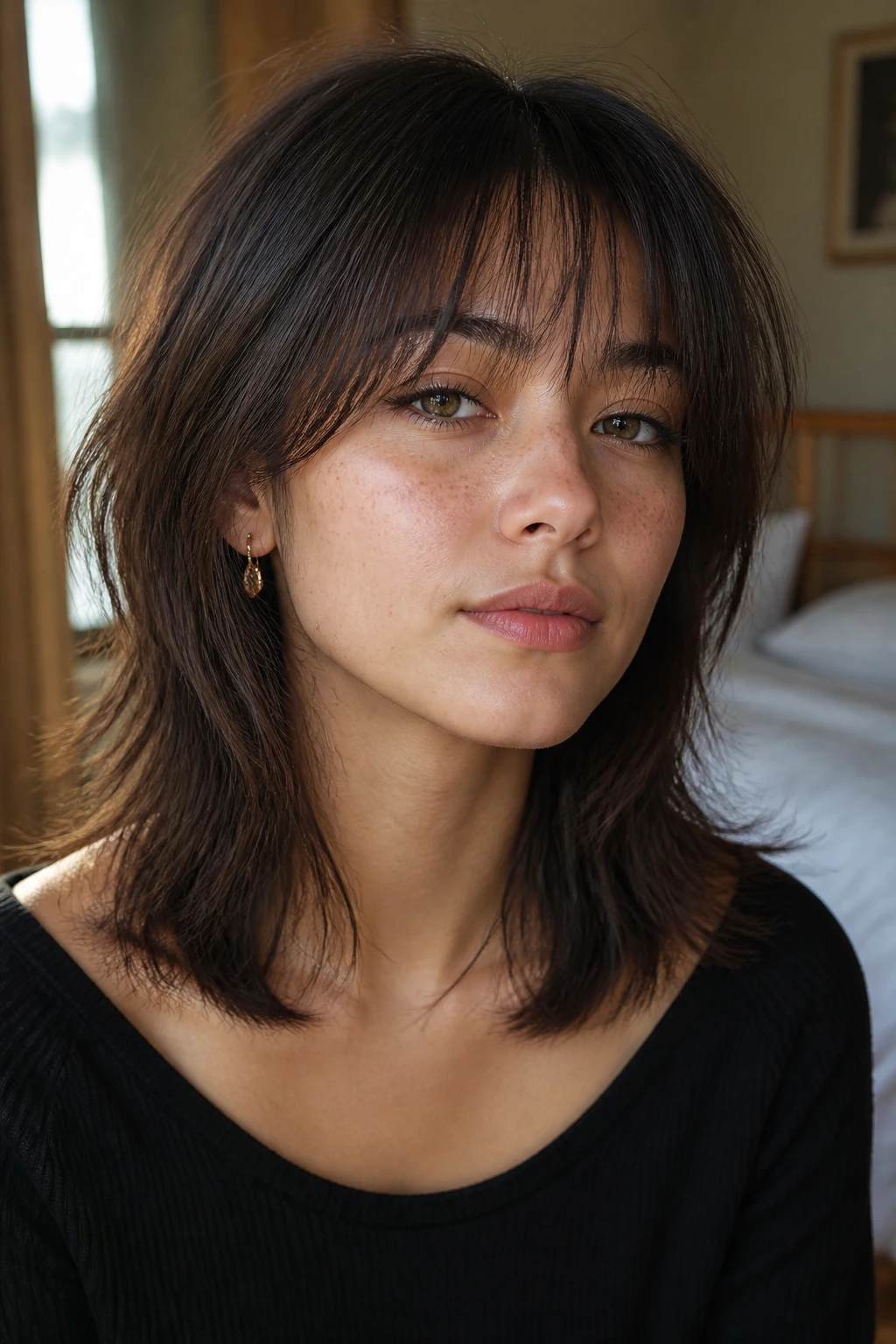
Collarbone length is a sweet spot for round faces because it gives you enough length to drag the eye down without feeling like you’re hiding your neck under a curtain of hair. Add a wispy fringe, and the cut gets movement without swallowing the face. That’s a useful trade.
The fringe should be light enough that you can see skin through it. If it’s too dense, it loses the airy effect and starts to sit like a shelf. I’d keep the layers soft through the sides and a little rougher through the ends so the whole haircut stays relaxed.
This cut grows out nicely, which is a bonus if you hate salon maintenance. It also styles fast. A bit of mousse, a rough dry, and a few bends with a curling iron will get you there. Easy does not have to mean boring.
9. High-Crown Wolf Cut With Flipped Ends

This is the wolf cut for anyone who likes a bit of glamour with the grit. The crown sits high, the top has some lift, and the ends flip outward instead of hanging dead straight. On a round face, that vertical lift at the top gives the illusion of more length right away.
The Shape Trick
The face frame should not sit heavy at the cheeks. Keep the shortest layers above or below that widest point, then let the ends kick out around the collarbone. That flipped finish creates movement near the bottom without adding width at the center of the face.
A round brush and a blow-dryer nozzle make a bigger difference here than fancy products. Use the brush to lift the roots, bend the ends, and set the shape while it cools. Old-school, but it works.
10. Asymmetrical Wolf Cut With Side Sweep

A little asymmetry goes a long way on a round face. This cut keeps one side slightly longer or heavier than the other, which breaks the symmetry that can make a face feel more circular. The side sweep should be noticeable, not fussy. Think deliberate, not bridal.
The best version has a strong part and a clear line of motion across the forehead. It gives the haircut a slash of energy. That visual angle matters more than people expect. A round face often benefits from something that interrupts the soft symmetry, and this does it cleanly.
Tuck the shorter side behind the ear if you want the jaw to look a bit narrower. Leave the longer side loose if you want drama. Either way, keep the crown lifted and the lower half airy.
11. Wolf Pixie Hybrid
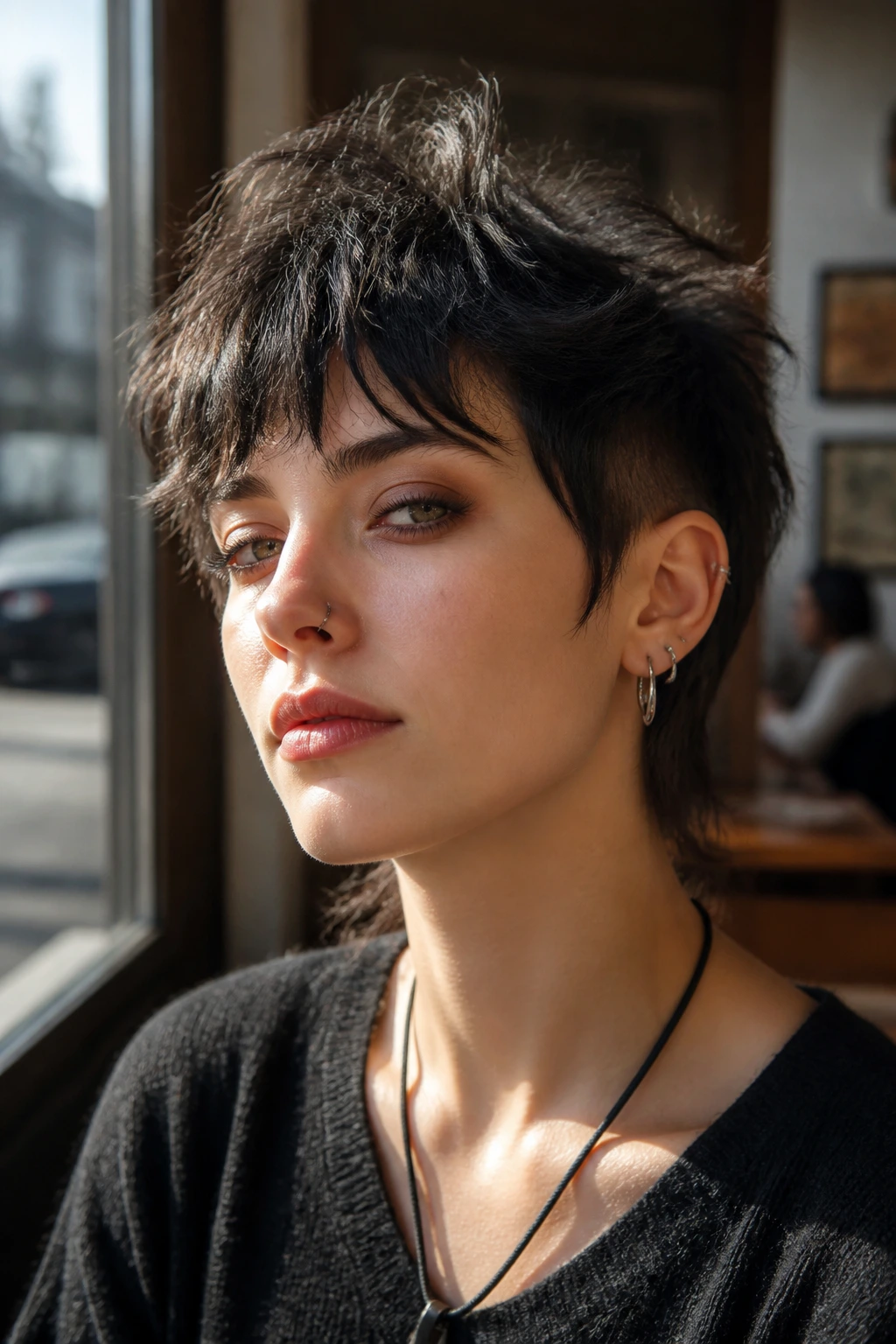
Short hair can still play the wolf cut game. In fact, the hybrid version can be brutal in a good way — cropped sides, messy crown, longer choppy top, and a bit of length left where the fringe can fall forward. For a round face, that vertical lift is gold.
The key is restraint. If the sides are too full, the cut starts reading like a rounded crop, and that is not the point. Keep the nape lean, the crown rough, and the fringe uneven enough to move. The result feels sharp, not cute.
This cut suits people who don’t want to spend fifteen minutes fighting the front pieces every morning. A dab of paste, finger-style the top, and walk away. No elaborate routine. No drama. Just shape.
12. Wavy Shattered Wolf Cut

Waves love a shattered layer pattern. The broken ends spread the movement out, so the hair doesn’t collect into one big bubble on the sides. That matters on a round face because the eye needs a little visual break as it moves from crown to jaw.
The best version keeps the waves loose and the shortest layers long enough to avoid puffing at cheek level. Ask for razored ends if your hair can take them, but not so much razor work that the waves lose their body. There’s a line there. Cross it, and you get frizz instead of texture.
This cut is especially good if your hair already bends on its own. You’ll spend less time styling and more time deciding whether to let it look a little wild. My vote? Let it.
13. Side-Swept Fringe Wolf Cut
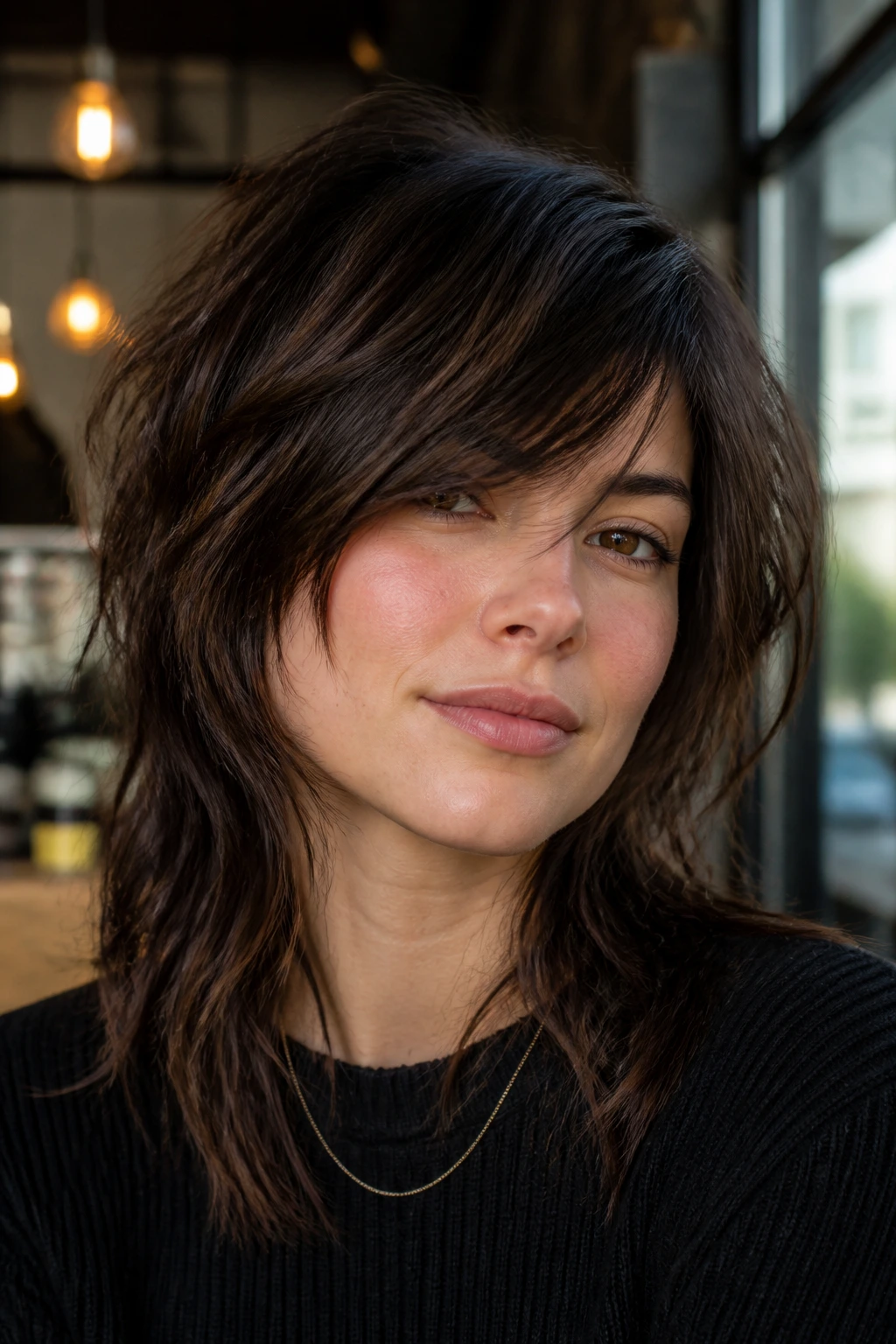
If curtain bangs feel too open and micro bangs feel too loud, the side-swept fringe sits in the middle and does its job quietly. It cuts diagonally across the forehead, which breaks the roundness of the face without adding a blunt line. That diagonal is the useful part.
Keep the fringe light and movable. Too much density turns it into a helmet, and nobody needs that. The rest of the cut should stay shaggy and layered, with enough length to keep the overall silhouette vertical.
This is one of the easiest wolf cuts to wear with glasses, too. The fringe can sit just above the frame or sweep across it, which avoids that awkward clash where bangs and glasses compete for the same space.
14. Color-Boosted Wolf Cut With Tinted Ends
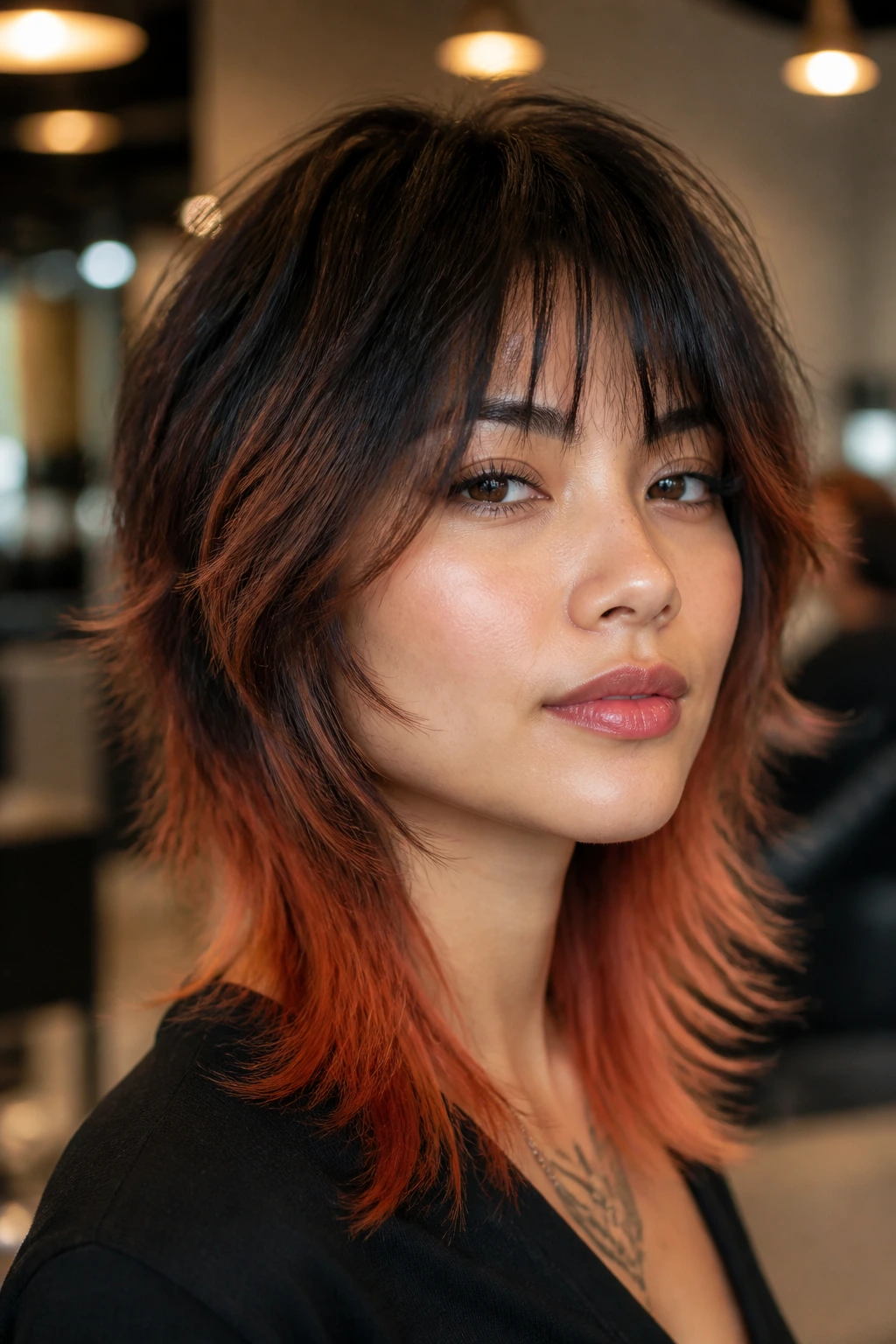
Sometimes the cut is only half the story. A wolf cut with tinted ends — copper, plum, smoky blonde, ink black with a soft fade — creates movement even before you style it. Color pulls the eye down the length of the hair, and that helps a round face read longer.
The haircut still needs structure. Color is not a substitute for good layering. But if you want something a little darker, sharper, or more theatrical, a tint at the ends gives the texture a visual edge. Shadow roots help, too. They make the crown look deeper and the lower lengths lighter, which is flattering on rounder face shapes.
This one is for people who want the haircut to look intentional from across the room. Not subtle. Intentional.
15. Sleek Wolf Cut for Straighter Hair
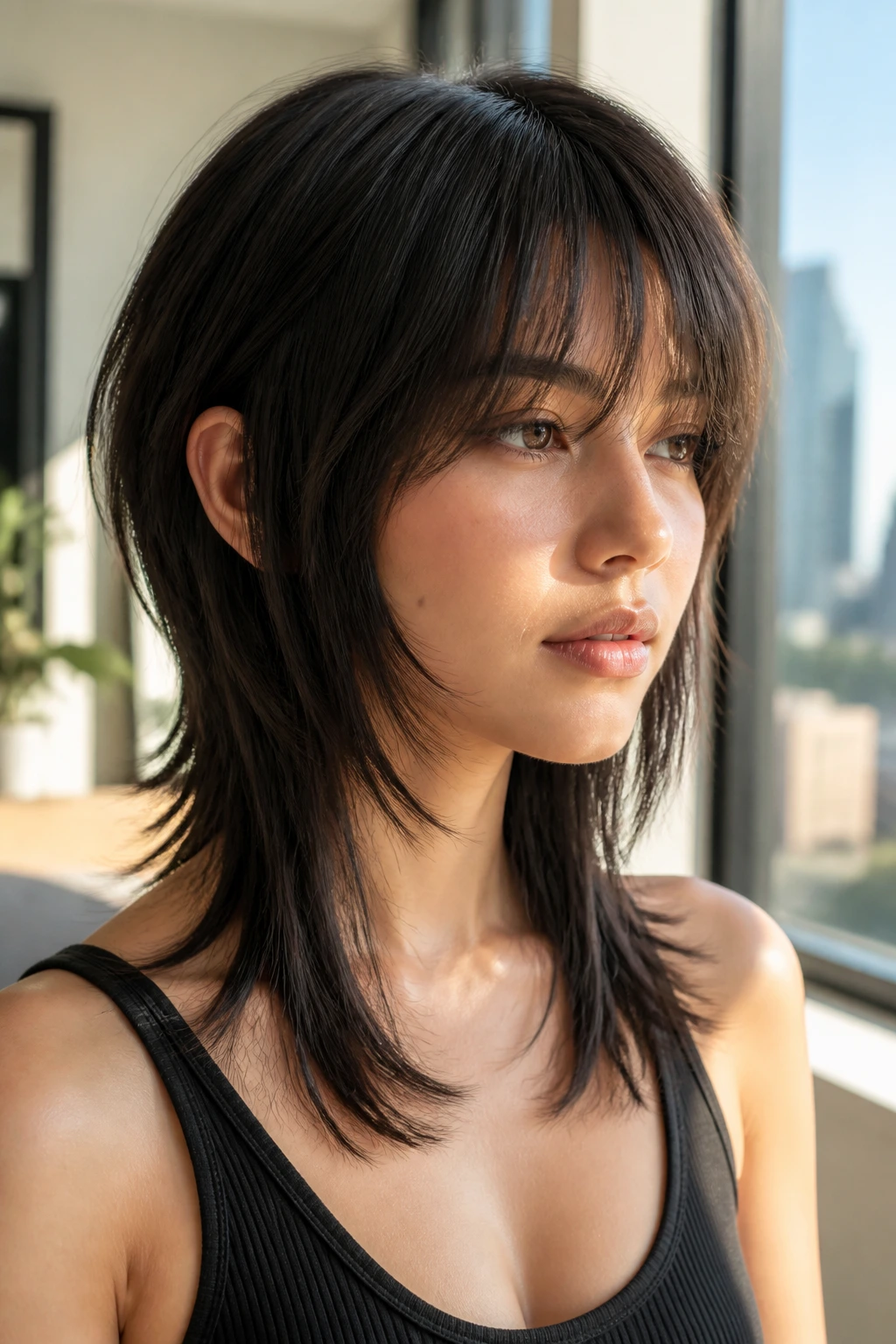
Not every wolf cut has to look windswept. A sleeker version can be cleaner and more modern, especially on straight hair that tends to fall flat. The shape still needs movement through the layers, but the finish is smoother, with a little bevel at the ends instead of a full mess.
That’s good news for round faces. A straighter finish keeps the sides from puffing up too much, which can happen when texture gets overdone. Ask for light internal layering and a face frame that starts lower, then style with a brush and a nozzle so the hair curves rather than flares.
I like this version when someone wants edge without the “I just woke up in a music rehearsal space” vibe. It has bite, but it still looks clean.
16. Big-Volume 90s Wolf Cut
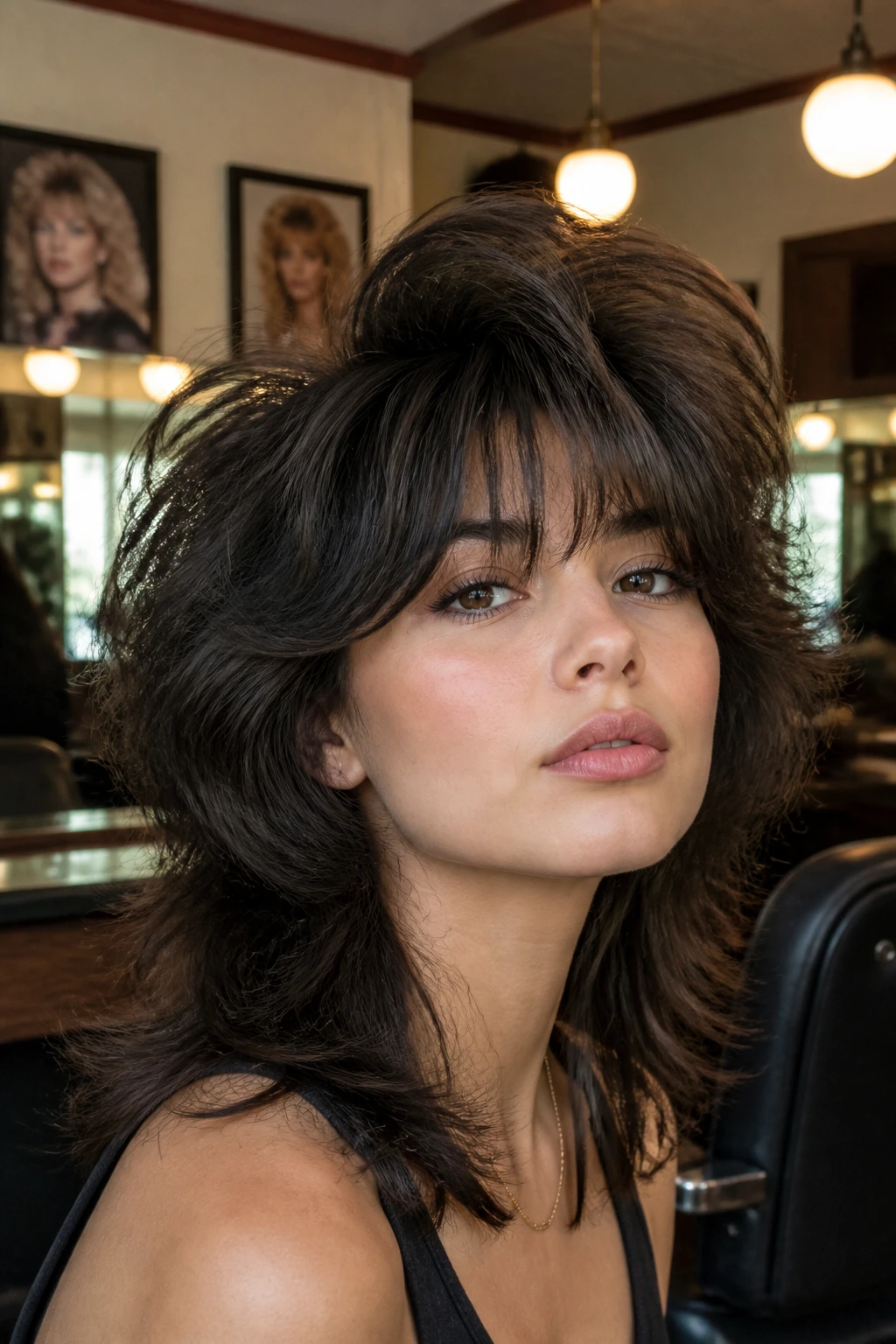
Some people want the height. This is for them. The 90s-inspired version leans into root lift, fluffy crown volume, and end bends that kick out just enough to show shape. On a round face, the whole thing works because the eye goes up first and out second.
The danger is obvious: too much side volume creates a broad silhouette. Keep the fullness concentrated at the top and the upper back, not beside the cheeks. That’s the difference between glamorous height and accidental expansion.
Use a blowout brush or a round brush with a dryer. Clip the crown while it cools. Then let the front pieces fall where they want. This one rewards a little patience and a little drama.
17. Air-Dried Low-Maintenance Wolf Cut
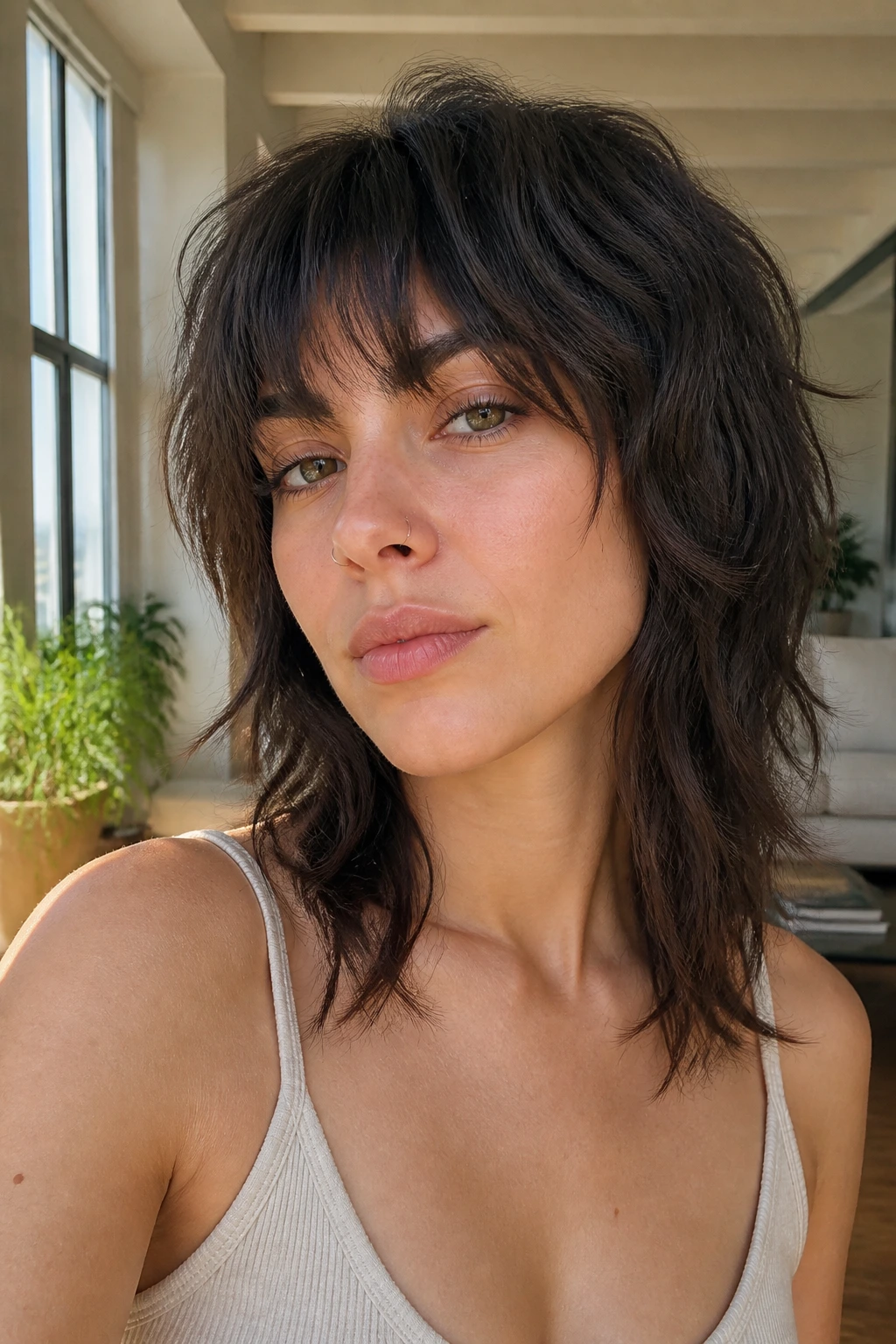
Some wolf cuts are made for people who are not going to stand in front of a mirror with three hot tools and a prayer. This is the air-dried version. The layers are placed so the hair falls into a good shape with only a bit of mousse or curl cream, depending on texture.
For a round face, the important part is to keep the shortest layers from landing at the cheek fullest point. The rest can be loose. Actually, loose helps. A too-perfect air-dry often looks puffy at the sides, while a controlled, slightly messy finish keeps the outline narrower.
This is the cut I’d trust on a morning when you need your hair to cooperate without being bossed around. It’s not lazy. It’s efficient.
18. Wolf Cut With a Peekaboo Undercut
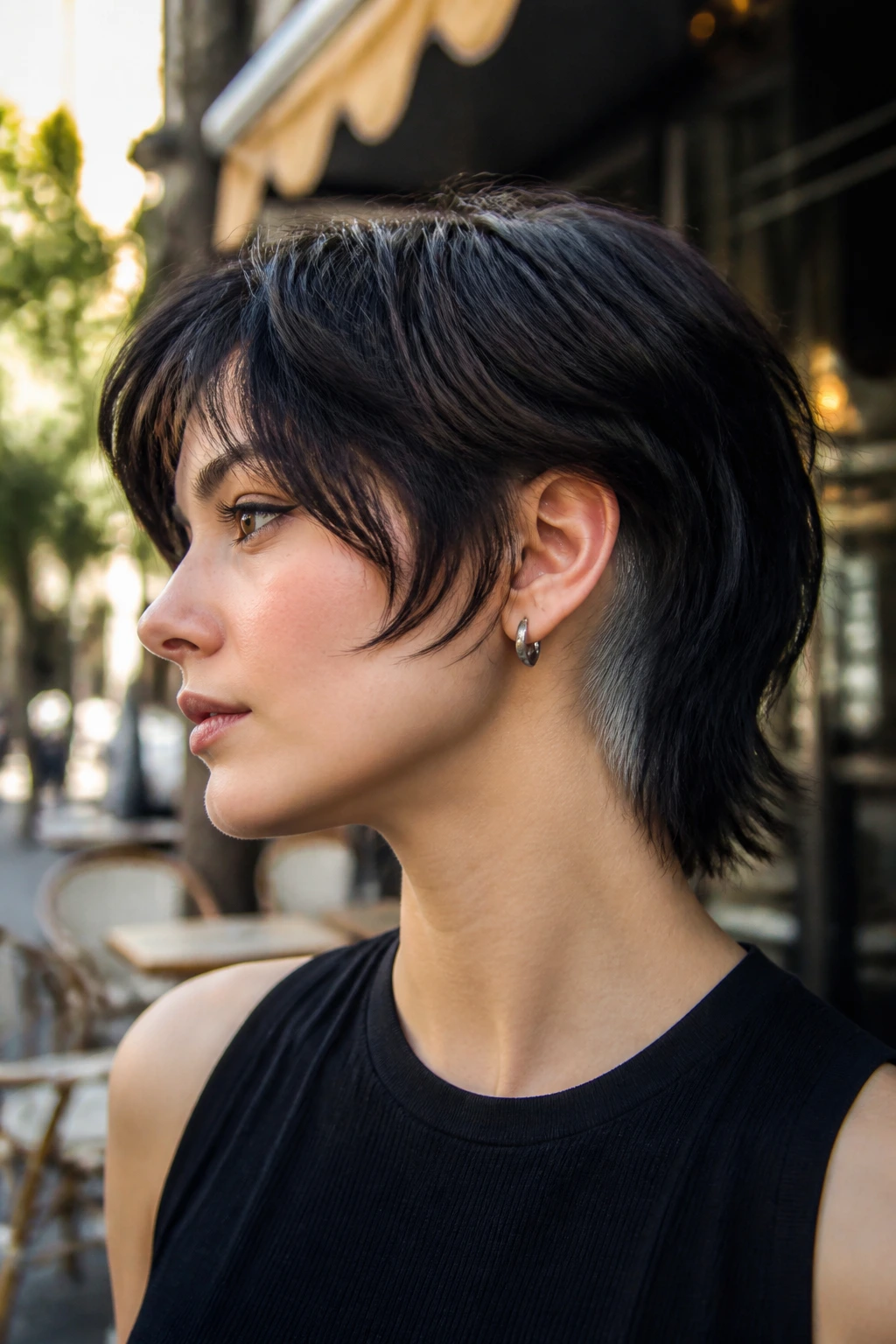
Hidden undercuts are the best kind of sneaky. You get the edge, but the haircut still wears like a normal wolf cut from the outside. For thick or heavy hair on a round face, that hidden removal can make a massive difference. It strips bulk from the lower interior, so the sides don’t flare out.
The surface layers stay shaggy and visible. The undercut just keeps the mass under control. That means the haircut can be dramatic without turning into a helmet. If you like wearing your hair up sometimes, the undercut also gives the shape a little surprise when it’s pinned back.
This one needs upkeep, though. Hidden undercuts grow out fast. If you hate maintenance, pick a different style.
19. Soft Blowout Wolf Cut
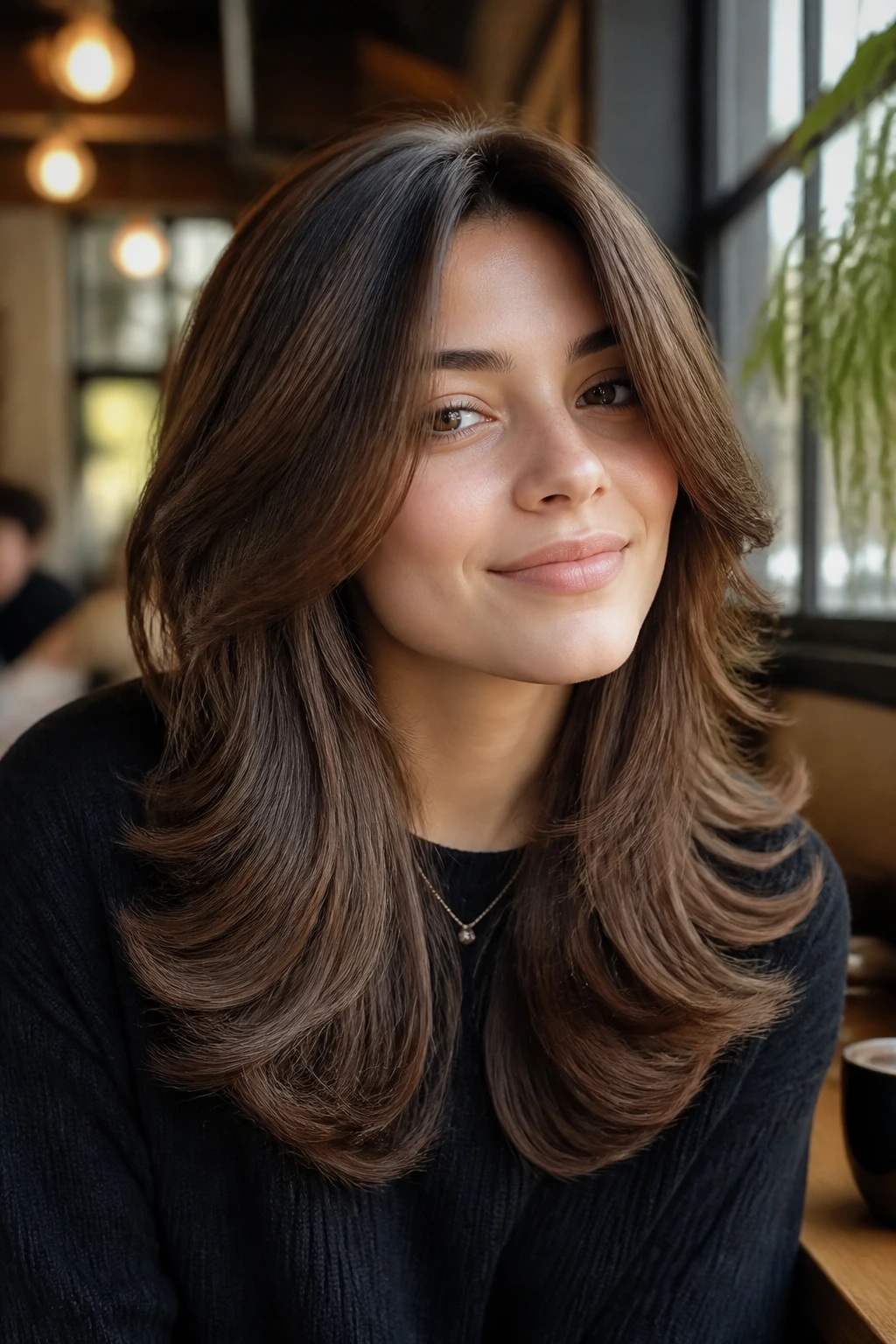
This is the polished cousin in the family. Same layered structure, but the finish is glossy, soft, and bent into a clean blowout rather than rough texture. On a round face, a blowout wolf cut can be especially good because the smooth bend creates vertical movement without the extra puff that comes from heavy texturizing.
Ask for a face frame that starts below the cheekbone and opens away from the face. The ends should curve, not curl tight. That keeps the silhouette elegant without losing the edge.
I like this version when someone wants the haircut to read expensive without actually requiring a hard haircut. It looks good at dinner, at work, and on day two if you sleep on a silk pillowcase.
20. Thick-Hair Wolf Cut With Internal Weight Removal
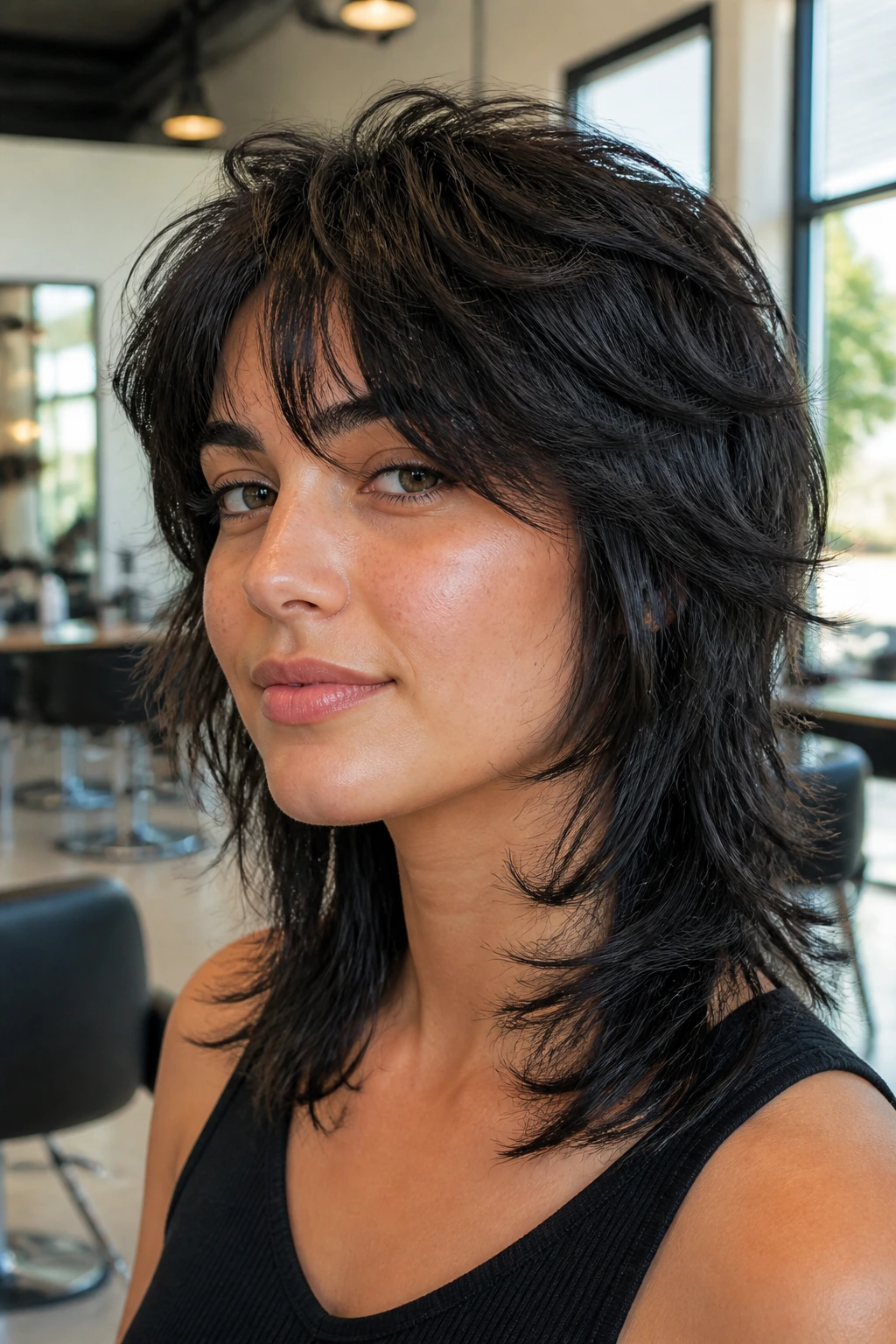
Thick hair needs a firm hand. If the stylist layers only the outside, you get shape on the surface and a dense block underneath. That’s where the round-face trouble starts. The better move is internal weight removal, which takes bulk out from inside the haircut while keeping the outer line intact.
This is especially useful if your hair tends to widen at the sides. You want the shape to move down, not out. The shorter face frame can still be edgy, but the lower half needs to stay light enough that it doesn’t fill in around the jaw.
Tell your stylist you want the haircut to sit closer to the head at the sides and stay active through the crown. That one adjustment can save you from the triangle.
21. Fine-Hair Wolf Cut With Invisible Layers

Fine hair needs a gentler version of the wolf cut. Too many short layers and the whole thing can look skimpy by lunch. Invisible layers solve that by keeping the cut mostly intact while adding subtle movement where it actually helps.
For a round face, the trick is to keep the body up top and the ends soft, but not wispy. Wispy is often where fine hair goes wrong. It starts reading like a thin veil instead of a haircut. Ask for light layering, a soft face frame, and a perimeter that still has enough density to hold shape.
Root spray, mousse, or a lightweight volumizing foam can help, but don’t pile on heavy oils. They collapse the lift before it has a chance to exist.
22. Lob-Length Wolf Cut With a Blunt Perimeter
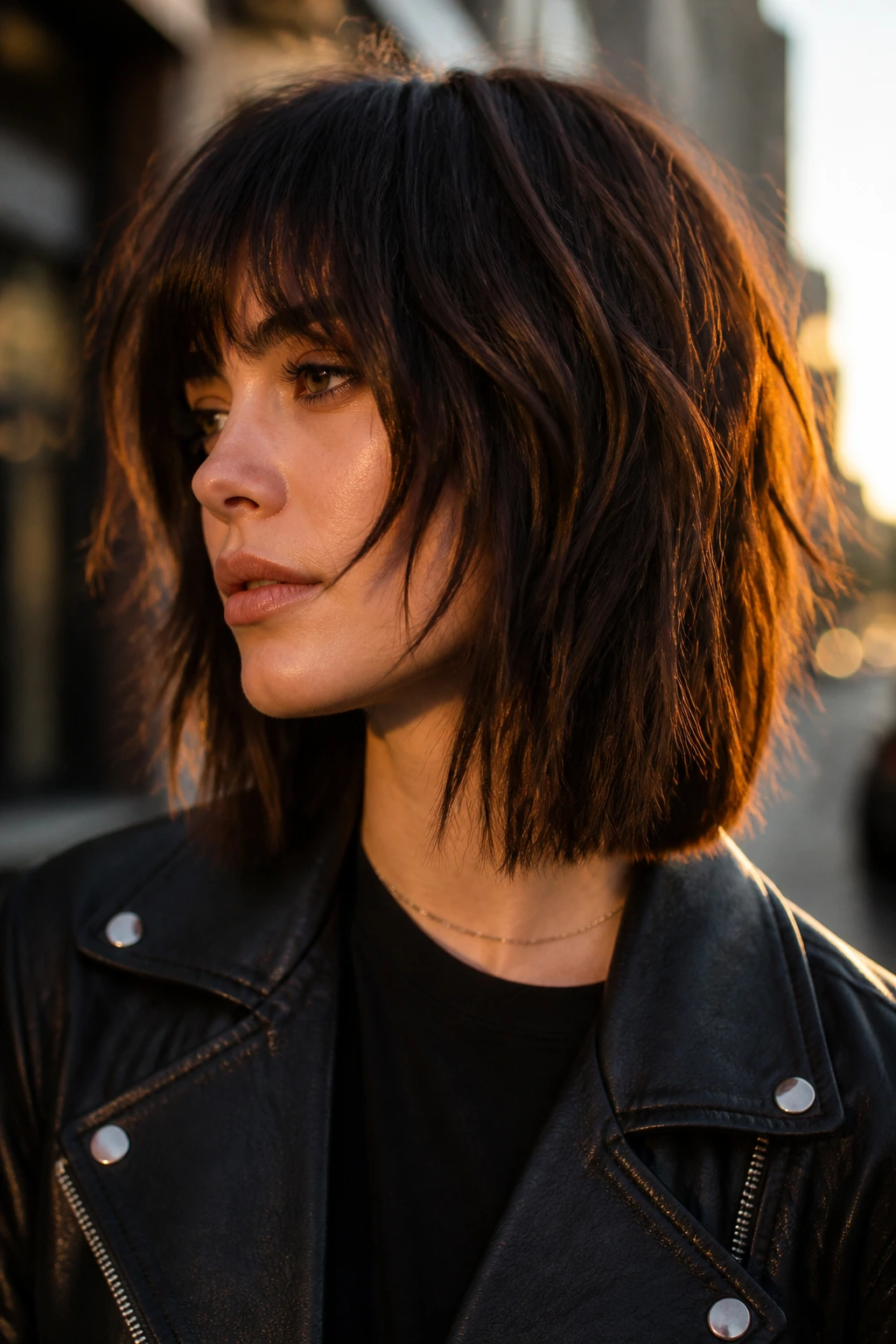
This one is cleaner than most wolf cuts, and that’s why it works. The lob-length perimeter gives the haircut a strong outer line, while the interior layers provide movement. On a round face, the blunt edge stops the style from puffing out sideways and keeps the silhouette long.
The result feels modern, not muddy. You get the shaggy energy up top and the discipline at the bottom. That mix is smart. It also grows out in a way that still looks deliberate after the first trim, which is a nice bonus if you do not love salon visits.
If you want edge but also want the haircut to behave on your worst hair day, this is a very good place to start.
23. Curved Curtain-Bang Wolf Cut
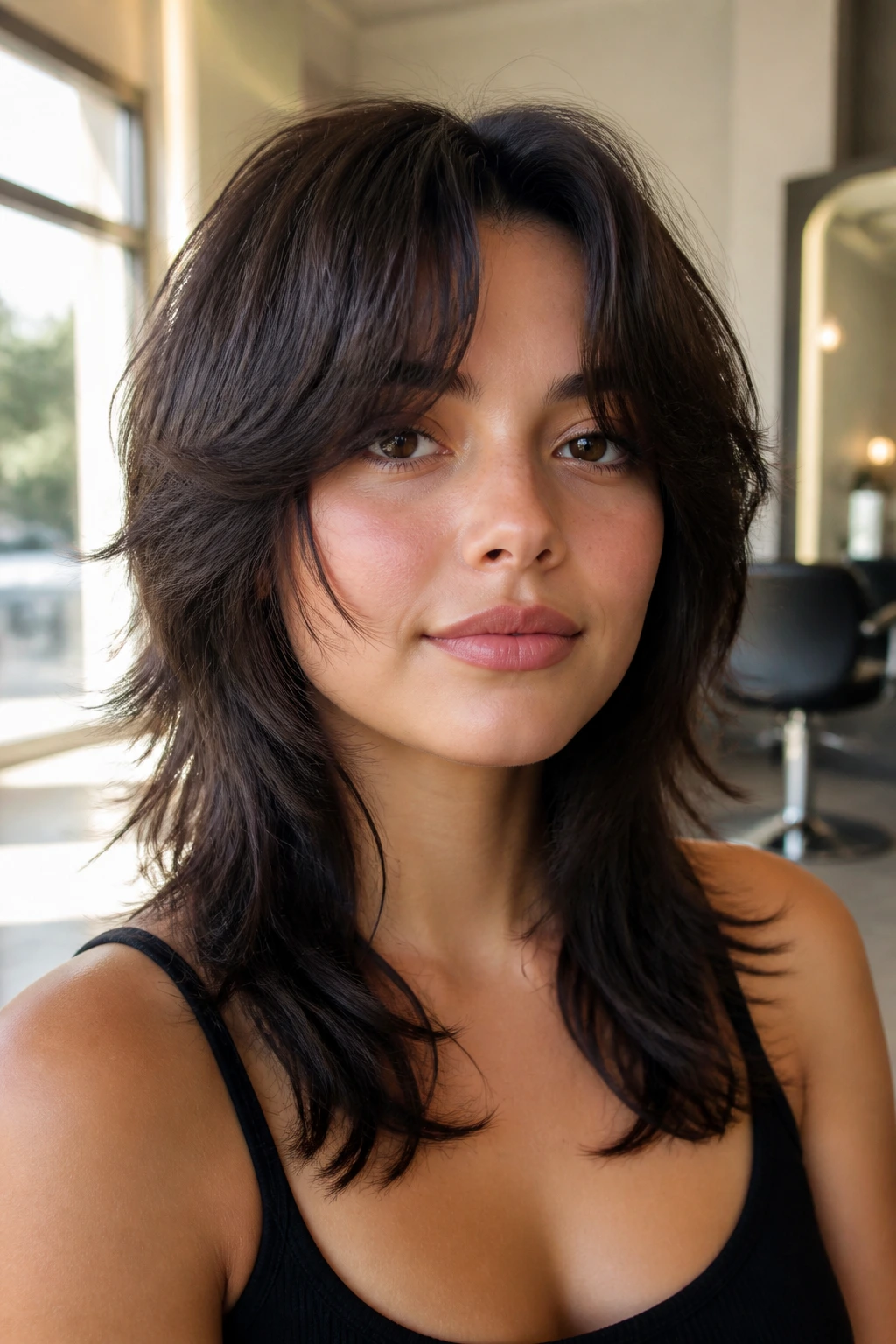
Straight curtain bangs can work, but a curved version often suits a round face better. The sweep should arc softly away from the center, then taper into the cheek line without sitting too square across the forehead. That curve changes the whole expression of the cut.
The layers underneath should echo that movement. Keep the ends feathered, not feather-duster soft. The difference matters. One looks intentional. The other looks over-thinned. A curved curtain-bang wolf cut works well when you want softness without losing the edge that makes the style feel current.
This is a strong pick if you like the face-framing effect of bangs but don’t want them to dominate the haircut.
24. Razor Shag Wolf Cut With Heavy Texture
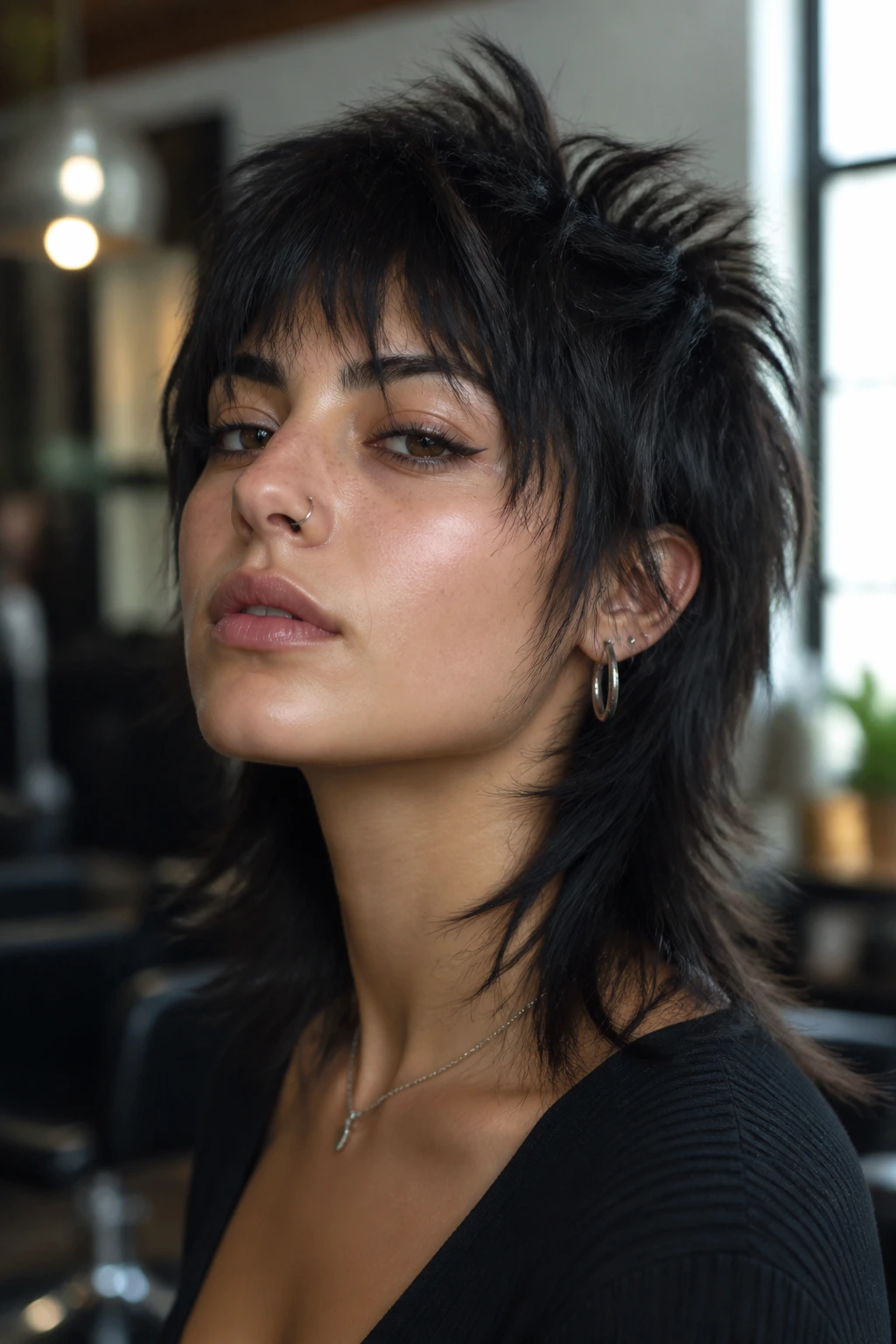
This is the most editorial option in the group. Razor-cut pieces, broken fringe, aggressive texture, and a shape that feels a little untamed on purpose. For a round face, the razor shag works if the crown stays lifted and the sides stay hollow enough to avoid bulk.
The texture should look sliced, not frayed. That’s a useful distinction. Sliced ends move; frayed ends just look tired. Ask for the shortest layers to stay away from the widest cheek point, then keep the perimeter rough and mobile.
This cut suits people who want the haircut to show up before the outfit does. It has presence. It also needs a decent stylist, because a bad razor shag can slide straight into chaos.
The Styling Moves That Keep the Shape Sharp
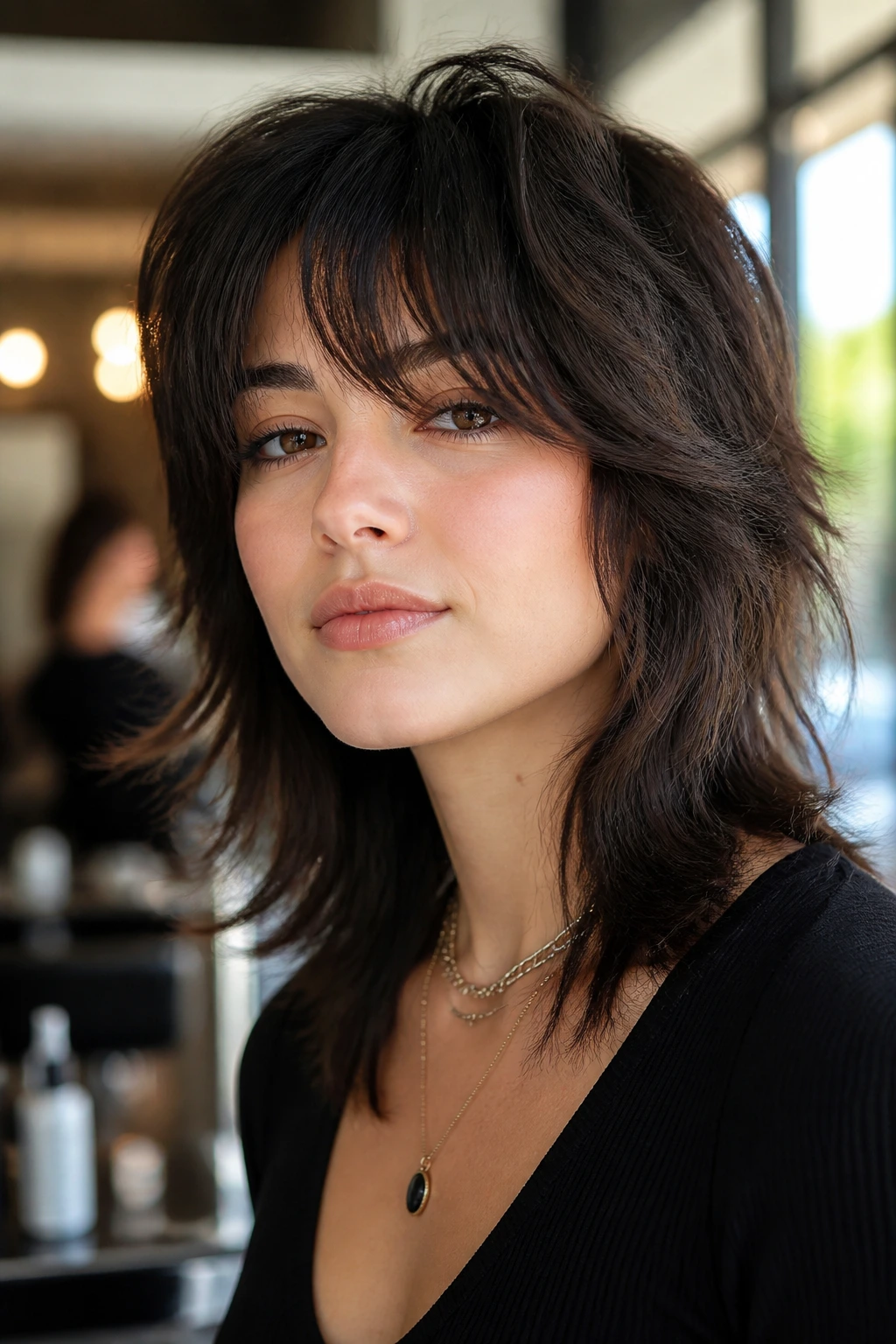
A wolf cut on a round face lives or dies by styling. The cut matters, sure. But the way you dry it is what decides whether it looks sharp or like the sides puffed up after a bad nap. I’m not precious about tools, but I am picky about placement.
Texture: Start with a lightweight mousse or root-lift spray at the crown on damp hair. If you want the top to read taller, put the product at the roots, not just through the lengths. Then rough dry until the hair is about 80 percent dry before you start shaping.
Shape: Use a round brush if you want the front to bend away from the cheeks. Use a diffuser if your hair is curly or wavy and you want the texture to stay broken up instead of frizzy. Either way, keep the air moving upward at the crown and downward at the sides.
Finish: A pea-sized bit of matte paste on the ends gives that piecey wolf-cut finish. Don’t drown the hair in oil. Oil can make the layers collapse, and collapsed layers do not flatter a round face.
Time Saver: On second-day hair, mist the roots with water, scrunch the front, and hit the crown with a quick blast from the dryer. Five minutes. Maybe less.
Common Mistakes That Make a Wolf Cut Puff Out
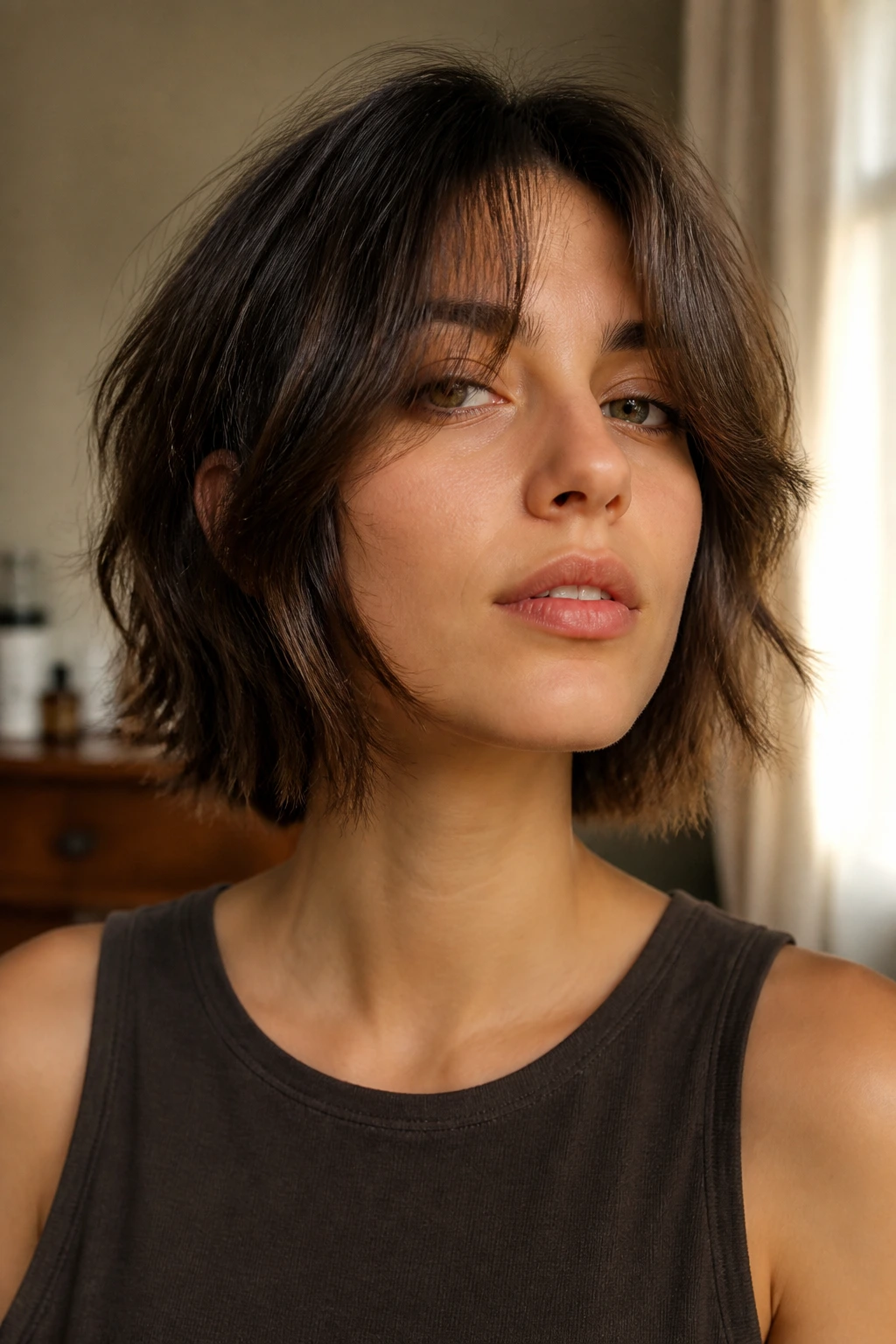
The biggest mistake is putting the shortest layers right where the face is widest. You can see the problem before the hair even dries. The sides balloon near the cheeks, and suddenly the haircut is working against the face shape instead of with it. Move those layers higher or lower, and the whole thing settles.
Over-thinning is another one. A lot of people think “edgy” means “remove more hair.” Sometimes it does. Often it does not. Too much thinning in thick or curly hair leaves frizz and weak ends, which makes the haircut lose shape faster.
Then there’s fringe trouble. Bangs that sit too heavy across the forehead can shorten a round face, especially if the rest of the haircut is already full. If you want bangs, keep them split, swept, or lightly broken up.
And please, do not flatten the crown. That top lift is half the reason this haircut works. Lose it, and you lose the length effect.
Named Variations and Personal Tweaks
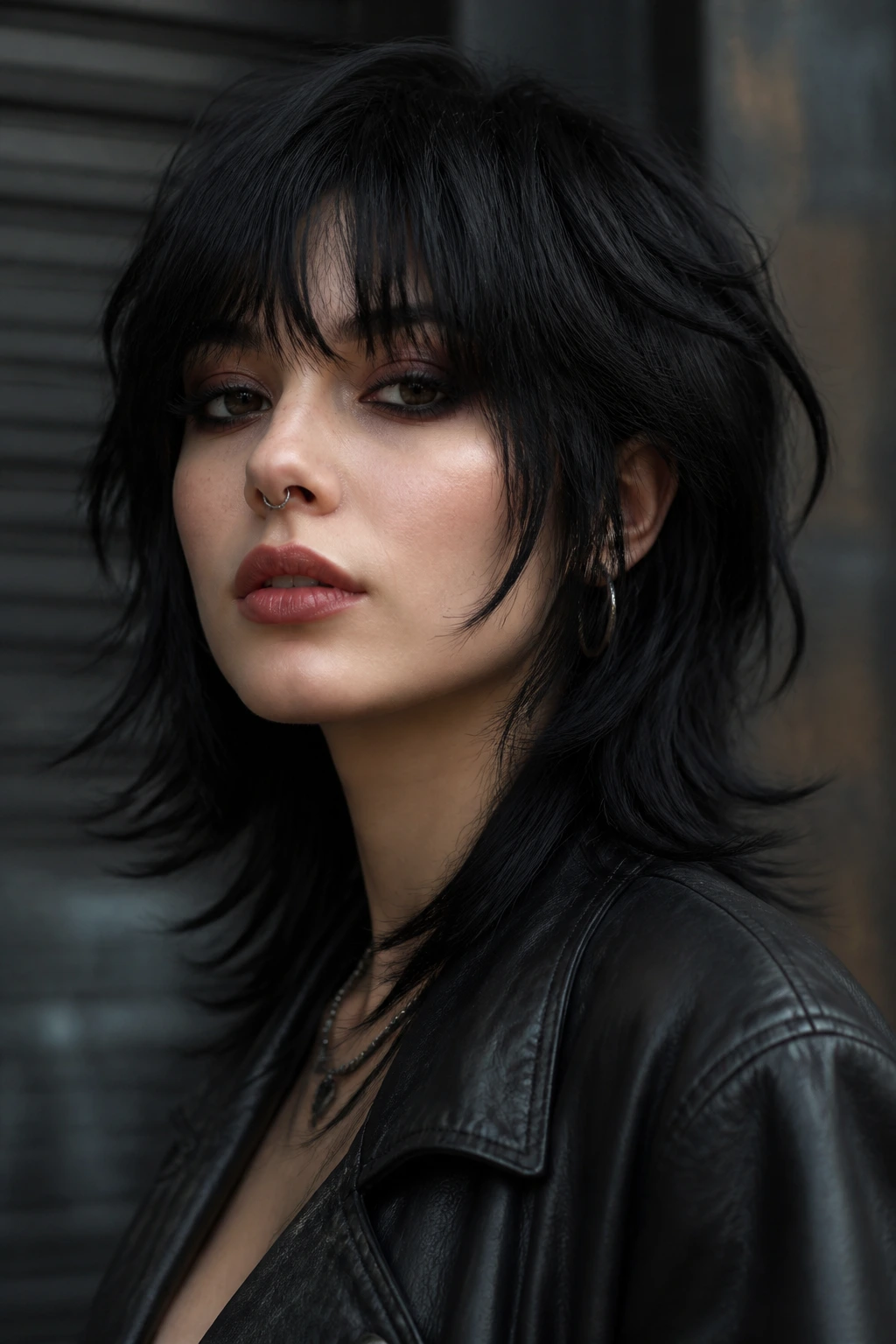
Soft Goth Wolf: Keep the layers choppy, the fringe longer, and the finish darker and shinier. This version feels more dramatic without being heavy around the cheeks.
Office-Friendly Wolf: Keep the perimeter cleaner, the fringe softer, and the texture controlled. You still get movement, but the haircut reads neat enough for a blazer.
Curly Halo Wolf: Let the curls build height at the crown and keep the face frame a touch longer. This is the version that lets natural texture do the talking.
Blunt-Edge Wolf: Pair shaggy interior layers with a straighter outer line. That clean perimeter helps round faces read slimmer while the inside keeps the edge.
Long Grow-Out Wolf: Leave the front pieces long and the internal layers less aggressive. It’s the version that survives four months of grow-out without looking shaggy in the wrong way.
Tools and Products That Help
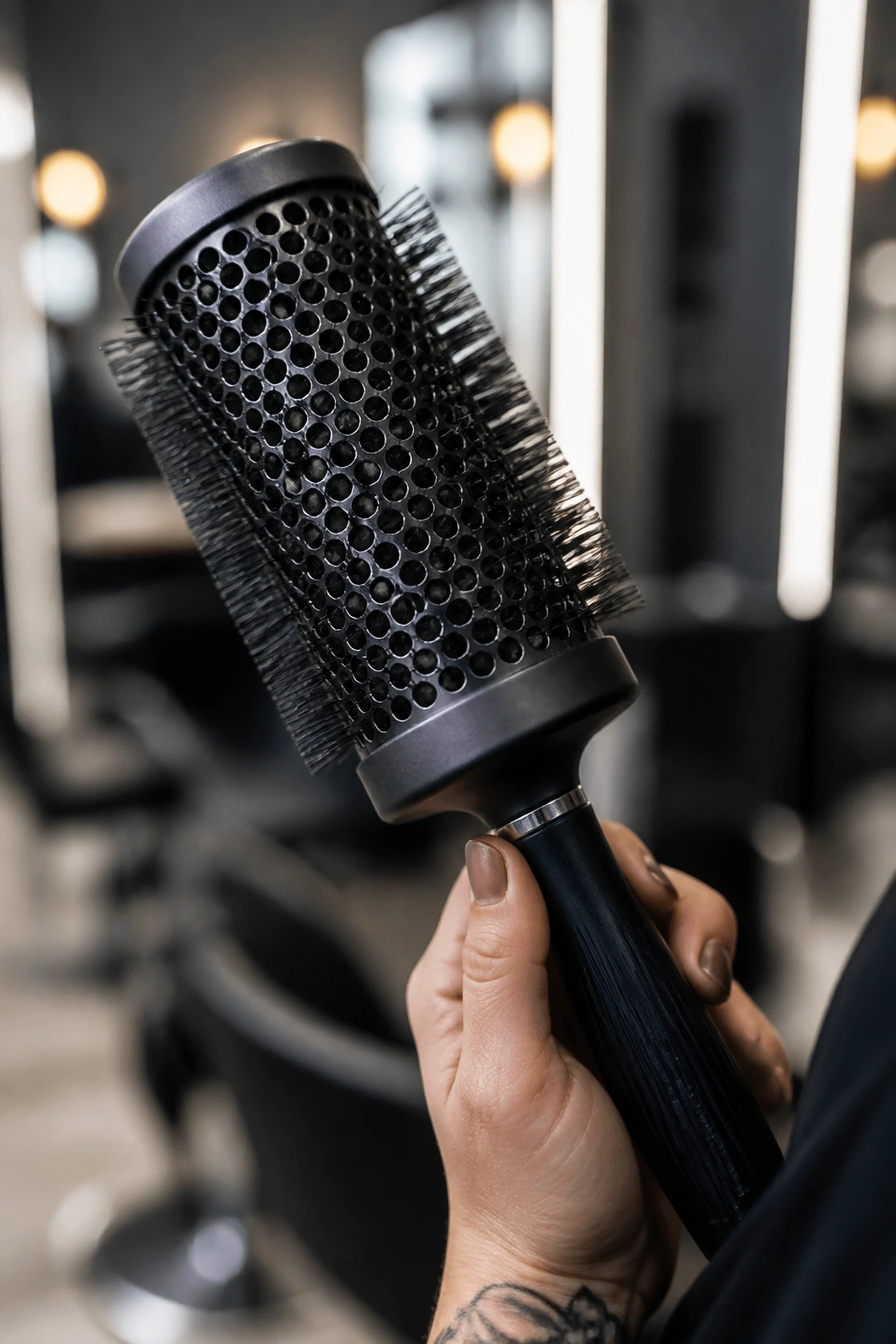
- Stylist’s razor or texturizing shears: Best left to a professional, and only when the hair type can handle it.
- Round brush: Useful for lifting the crown and bending the face frame away from the cheeks.
- Blow dryer with a nozzle attachment: Gives you more control at the roots and keeps the shape from spreading.
- Diffuser: The friend of curls and waves. It preserves texture without blasting everything flat.
- Lightweight mousse or root spray: Helps the crown stay tall, which matters more than most people think.
- Matte paste or texture cream: Good for piecey ends and that slightly undone finish.
- Heat protectant: Non-negotiable if you use a dryer, wand, or hot brush.
- Wide-tooth comb and clips: Simple, boring, useful. Sectioning keeps the layers from turning into a tangle.
Keeping the Layers in Shape Between Visits

Wolf cuts look best when they are maintained, not babied. The fringe usually needs the most attention. If you wear bangs of any kind, plan on a small trim every 3 to 5 weeks. The rest of the layers can usually go 8 to 10 weeks before they start to lose their structure, though thick or fast-growing hair may want a dusting a little sooner.
Wash pattern matters too. If your hair gets puffy when you wash it daily, back off and use dry shampoo at the roots on the off days. If your hair gets limp by day two, refresh the crown with a little water and mousse, then re-shape just the front pieces. Sleep on a silk pillowcase if you can. It cuts down on the morning frizz that makes wolf cuts lose their edges.
If you air-dry, don’t let the front pieces dry stuck to the cheeks. Clip them away from the face for the first part of drying, then let them fall once they’ve set. That small habit keeps the shape cleaner for longer.
Frequently Asked Questions
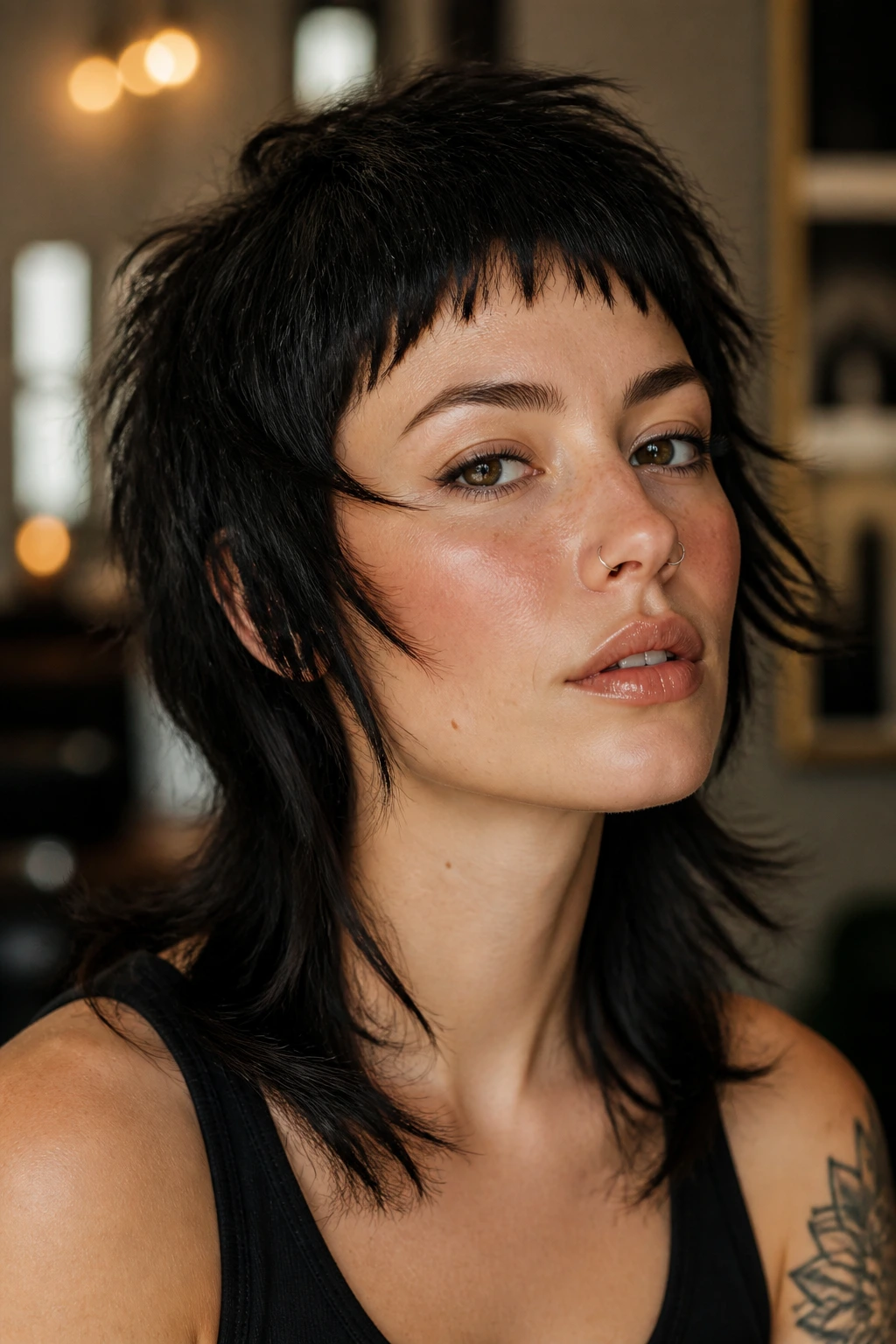
Do wolf cuts make round faces look wider?
They can, if the shortest layers land right at cheek level and the sides are too full. A well-placed wolf cut does the opposite: it builds height at the crown and keeps the face frame moving vertically, which makes the face read longer.
What length is best for a round face?
Chin to collarbone length is a very safe zone, especially if you want visible layering. Longer cuts can work too, but they need stronger face-framing pieces and a cleaner perimeter so the shape doesn’t drift outward.
Are curtain bangs good for a round face?
Yes, when they’re cut long enough to split and sweep rather than sit heavy across the forehead. Curtain bangs are useful because they open the center of the face and soften the cheeks without boxing them in.
Can curly hair pull off a wolf cut on a round face?
Absolutely, but the curl pattern has to guide the cut. If the stylist ignores shrinkage, the layers can spring up too high and create width. Dry cutting or cutting with the curl’s natural fall usually gives the best result.
How do I ask for edge without going too short?
Ask for internal layers, a strong crown, and a face frame that starts below the widest part of your cheek. That gives the haircut attitude without forcing you into a dramatic crop.
What if my hair is fine?
Keep the layers longer and lighter. Fine hair usually looks best with invisible layers, not aggressive thinning. You want movement, not gaps.
How often should I style it with heat?
As little as you can get away with. If you blow-dry every day, keep the heat low and use protectant. A good wolf cut should still look decent after an air-dry or a quick refresh on day two.
What if the cut turns puffy at the sides?
That usually means too much volume is sitting at the cheek line. Ask the stylist to remove some bulk lower in the shape or keep more length through the front. At home, use less product at the sides and more lift at the crown.
The Cut That Does the Work
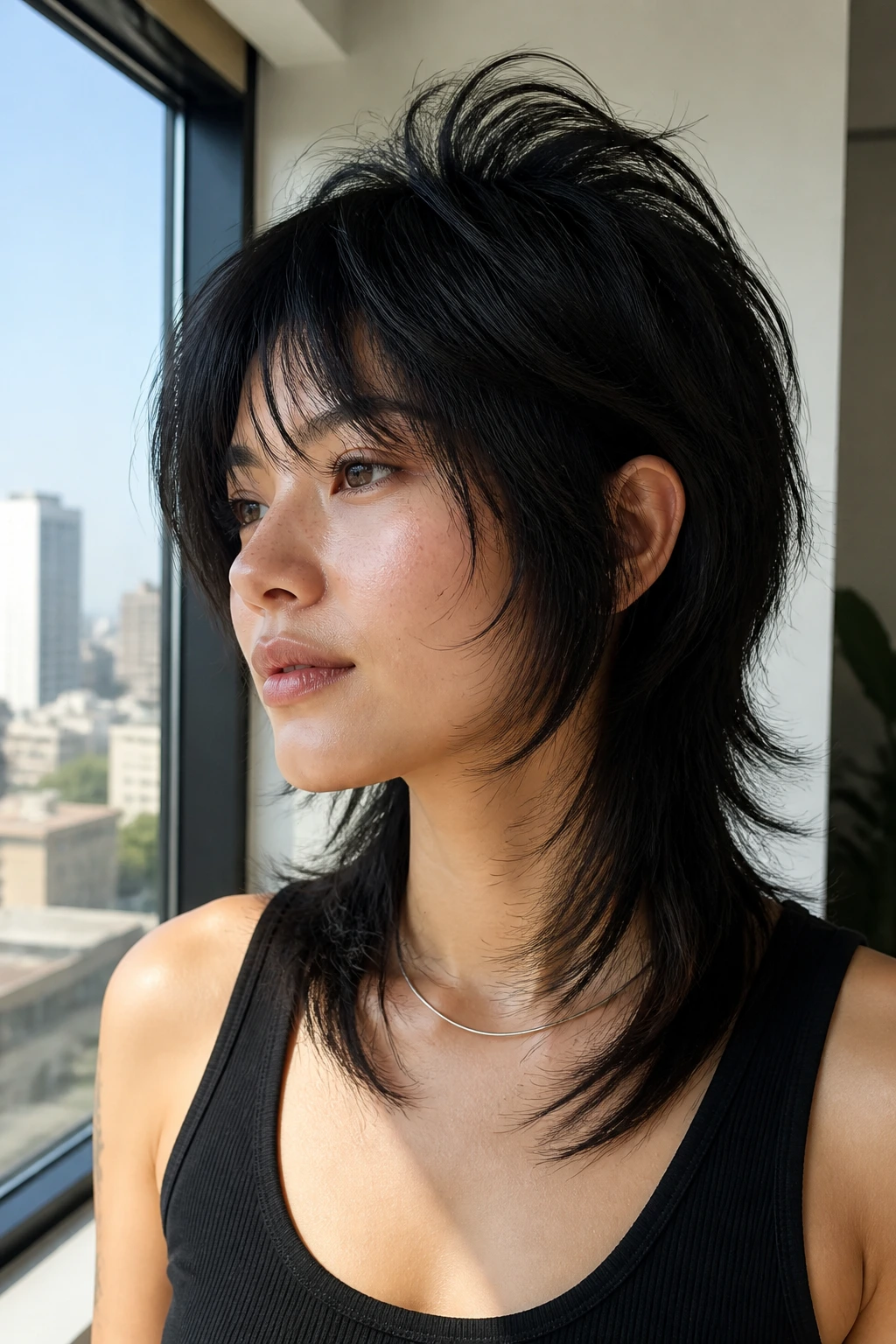
A round face does not need to be hidden, and it does not need a haircut that tries too hard to “correct” anything. The better wolf cuts are smarter than that. They use height, angle, and texture to give the face room, then they keep enough edge that the style still feels current and alive.
That’s why the best versions here are the ones with a clear plan: crown lift, cheekbone control, and ends that break up the outline instead of widening it. Nail those three things, and the haircut starts helping before you even reach for a styling tool.
If you’re taking one thing from this list, take this: placement beats drama. A little adjustment in where the shortest layer falls can change the whole read of the cut. Choose the shape that fits your texture, your routine, and how much attitude you want to wear on your head, and the rest falls into place.
