



A shaggy wolf cut on medium straight hair can look razor-sharp, airy, and expensive-looking in all the right ways — or it can go flat and awkward in a hurry if the layers are placed badly. Straight strands show every decision. Every snip. Every bit of weight that stays or disappears.
That’s why this haircut is such a good test of skill. Medium length gives the wolf cut enough room to build crown lift, cheekbone framing, and a little kick at the ends without collapsing into a mullet or turning into a blunt lob with attitude problems. It’s a narrow balance, but when it lands, it lands hard.
And no, you do not need curls to make it work. Straight hair can actually be the better canvas because the shape reads cleanly: the fringe sits where it should, the interior layers show up, and the perimeter still has enough body to keep the whole thing from looking stringy. The versions below run from soft and wearable to sharper and more rebellious, so you can pick the one that matches your face, your routine, and how much styling you’re willing to do before coffee.
Why This Collection Is Worth Bookmarking

Straight-Hair Friendly: These cuts are chosen for hair that lies smooth at the roots and doesn’t naturally puff out, so the layers are placed where they actually show.
Face-Framing Options: You’ll see curtain bangs, bottleneck bangs, cheekbone pieces, and no-bang versions, which matters more than most people realize.
Low-Maintenance Choices: Some of these styles need only a round-brush bend on the front pieces, while others look best with a quick air-dry and a dab of texture spray.
Salon-Ready Language: Each look gives you a clearer sense of what to ask for — crown lift, internal layers, heavier perimeter, softened ends, or a sharper disconnect.
Grow-Out Friendly Picks: A good wolf cut should keep its shape for weeks, not days, and several of these versions do that without turning into a mess.
From Soft to Edgey: If you want a cut that feels subtle at work but still has some bite when you wear it loose on a weekend, there’s room in this lineup for both moods.
1. Soft Curtain Wolf Cut
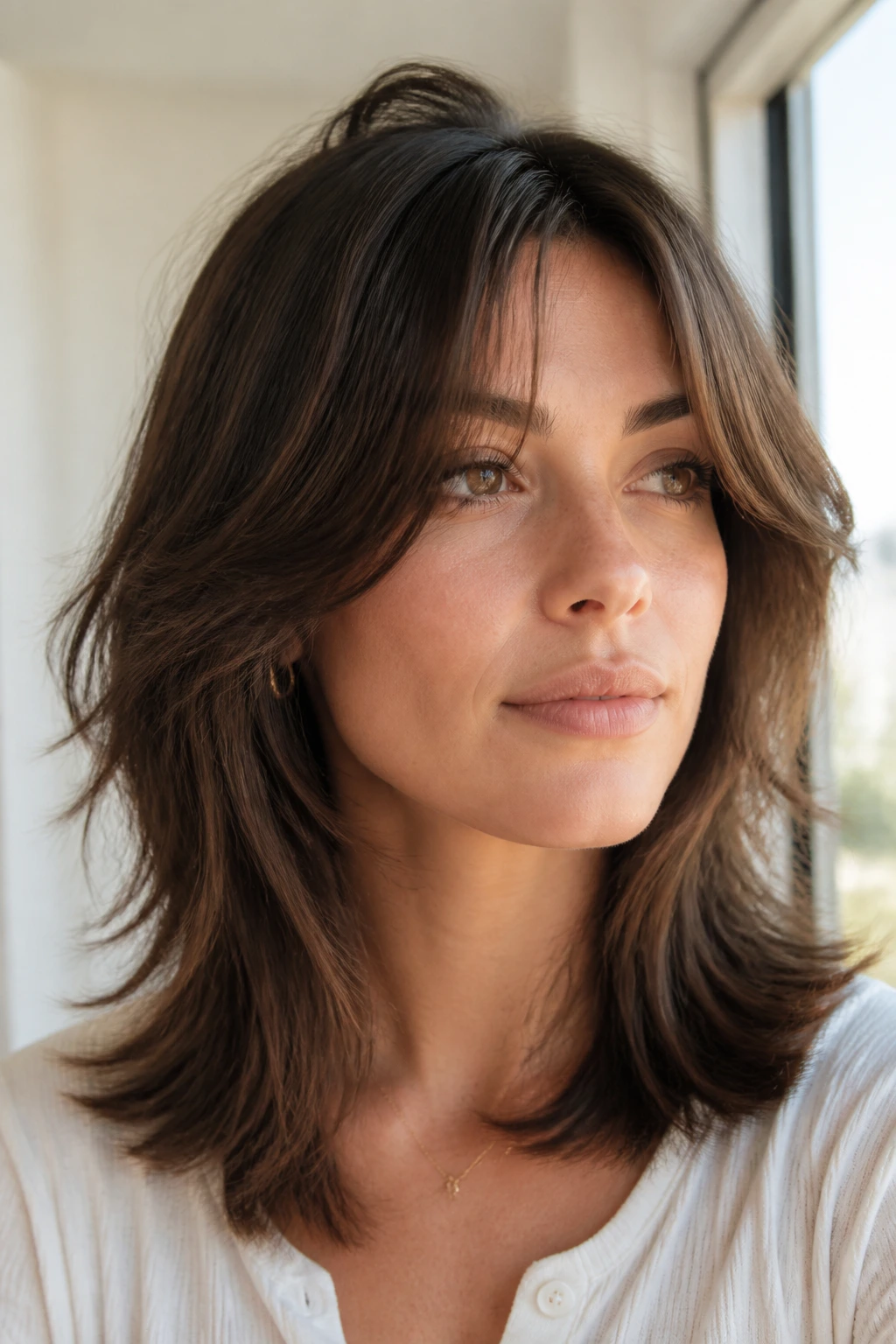
A soft curtain wolf cut is the easy entry point for medium straight hair. The fringe opens gently from the center, the crown gets a little lift, and the ends stay full enough that the haircut still looks like a haircut, not a collection of random layers. It’s the version I’d hand to anyone who wants texture without drama.
Why It Works on Straight Hair
Straight hair shows curtain bangs cleanly, so the parting line and the face-framing angle do a lot of the work. Ask for the shortest front pieces around the cheekbones or lip level, then keep the top layers only slightly shorter than the side layers. That keeps the shape soft.
- Best for hair that falls flat at the crown but still has decent density through the lengths.
- Ask your stylist for point-cut ends rather than a hard, chopped edge.
- A quick bend from a round brush at the front pieces is enough.
Small tip: keep the fringe light around the temples. If it gets too heavy there, the whole cut starts looking boxed in.
2. Razor-Edge Collarbone Wolf Cut
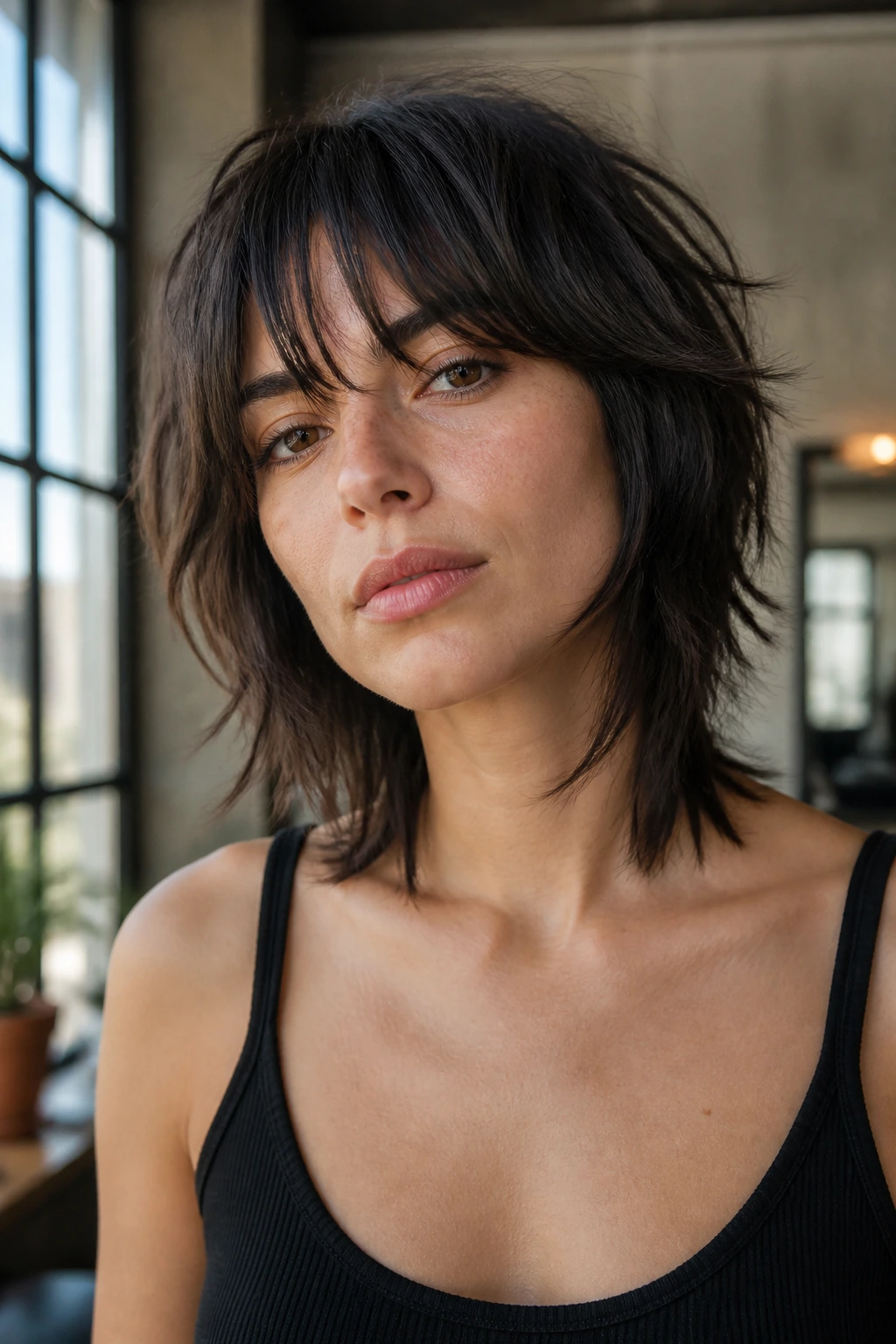
This one has a sharper mood. The collarbone length gives the cut a clean base, while razor-soft layers through the midlengths stop it from feeling heavy. On straight hair, that contrast is the whole appeal. It looks deliberate, not fluffy.
The trick is not to overdo the thinning. A light razor pass or point cutting through the interior is enough; if the ends are carved too hard, the haircut starts separating into sad little wisps. Better to keep the bottom line fairly solid and let the upper layers do the moving.
I like this version for people who wear black tees, structured jackets, or anything that benefits from a little edge at the hairline. It also photographs well in profile because the silhouette stays clean around the jaw and collarbone. If your hair is fine, ask for less removal at the ends. If it’s denser, the razor work can go a little further.
3. Bottleneck Bang Wolf Cut
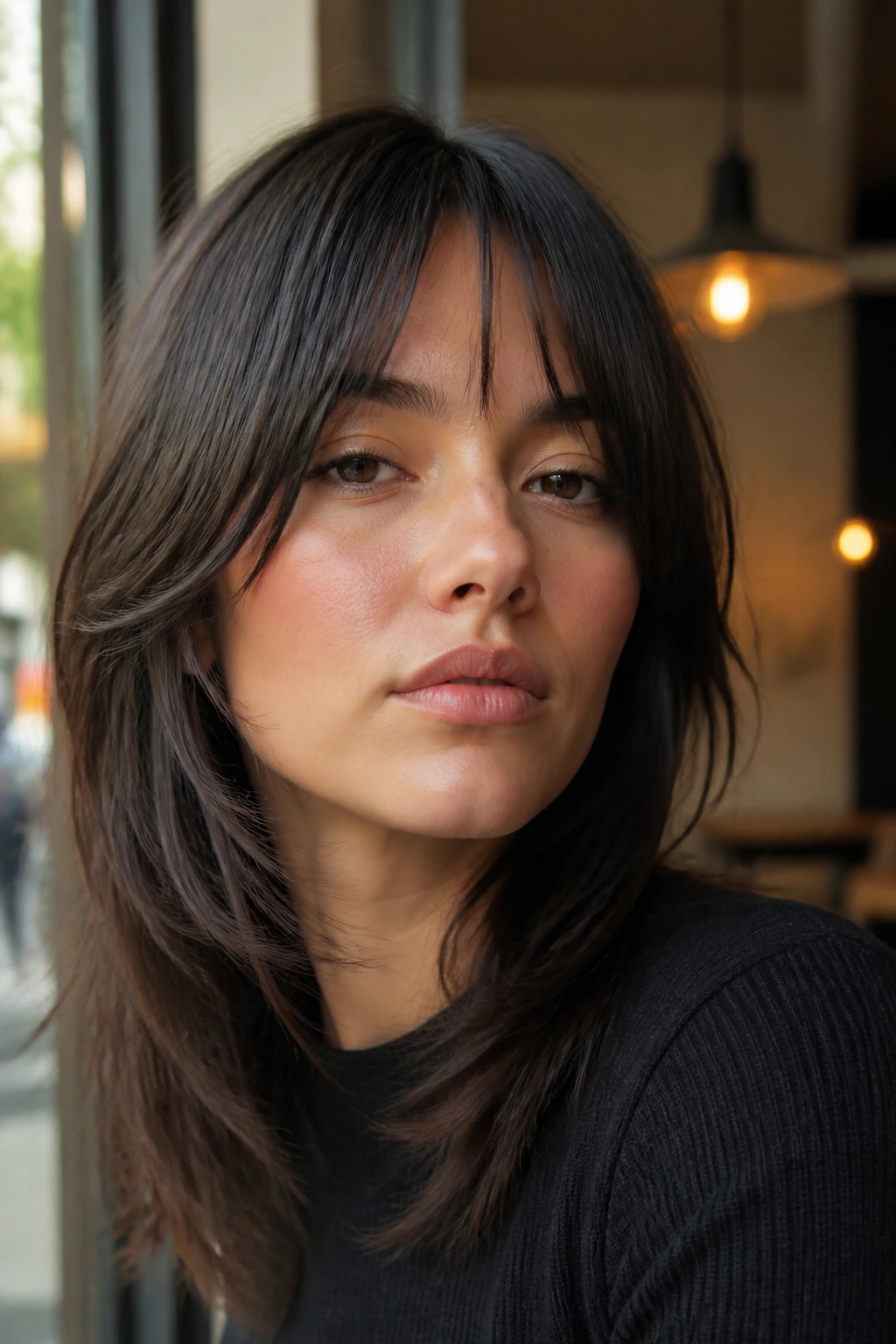
Bottleneck bangs are a clever fit for medium straight hair because they bridge the gap between blunt fringe and curtain fringe. The center sits a touch shorter, then the sides open out and skim the cheekbones. That shape softens the forehead without swallowing it.
Ask for This at the Salon
Tell your stylist you want a fringe that sits narrow in the middle and widens toward the temples. On straight hair, the goal is movement, not a helmet. You want enough fringe to frame the eyes, but not so much that it blocks the face when you tuck the hair behind your ears.
This cut works especially well if your hair tends to lie flat around the front hairline. The bangs add a little architecture where the rest of the style stays smooth. It’s also a good choice if you’re nervous about committing to full bangs. Bottleneck fringe can grow out into curtain pieces with less fuss.
Best pairing: a medium-length perimeter with lightly shattered ends. That keeps the fringe from looking disconnected.
4. Face-Framing Feather Wolf Cut

This version is all about the front. The layers begin around the cheekbones and glide down toward the jaw, then keep softening through the length. Straight hair makes those feathered pieces very visible, which is exactly why the cut works.
Picture hair that tucks neatly behind one ear but still falls forward in slim ribbons when you shake it loose. That’s the vibe. It’s polished enough for office days and relaxed enough for a T-shirt and jeans.
If you wear glasses, this is one of the better choices on the list. The feathering keeps the frames from fighting with the haircut, and the side pieces can be adjusted to sit above or just beside the lenses. I’d ask for the shortest face-framing piece to land at the cheekbone, not higher, so the front doesn’t spring up too much on straight hair.
5. Quietly Shaggy Wolf Lob
A wolf lob is for people who want the shape without the obvious mullet edge. The length sits around the collarbone, the crown gets some lift, and the interior layers are tucked in rather than broadcast. It’s calm. Smart. A little cool.
This is the version I’d call the most office-safe of the bunch. It still has movement, but the perimeter stays substantial enough to keep the haircut from looking choppy in a ponytail or half-up clip. On medium straight hair, that matters because thin ends can show in a hurry.
Ask for a soft U-shaped outline and restrained layering through the top. If the layers start too high, the lob loses its grown-up feel. A clean blow-dry with a paddle brush and one bend at the ends is usually enough. No need for a lot of product. A little texture spray at the midlengths, maybe.
6. Side-Swept Volume Wolf Cut

A deep side part changes everything. On medium straight hair, it creates instant lift at the roots and a little sweep across the forehead, which gives the wolf cut a softer, more dramatic shape without adding more layers. Sometimes the part is the haircut.
This one is for flat-rooted hair that refuses to cooperate in the middle. Side-swept volume gives you a clear direction to blow the hair, and that direction creates body where you need it. If your hair falls limp by noon, this is one of the most useful options in the entire lineup.
What to Ask For
Ask the stylist to keep enough length at the top so the side part doesn’t expose too much scalp, then build the front layers to fall diagonally across the face. That diagonal line makes straight hair look fuller. A root-lift spray at the crown and a quick lift with the brush while blow-drying help the shape stay put.
7. Piecey Crown-Lift Wolf Cut
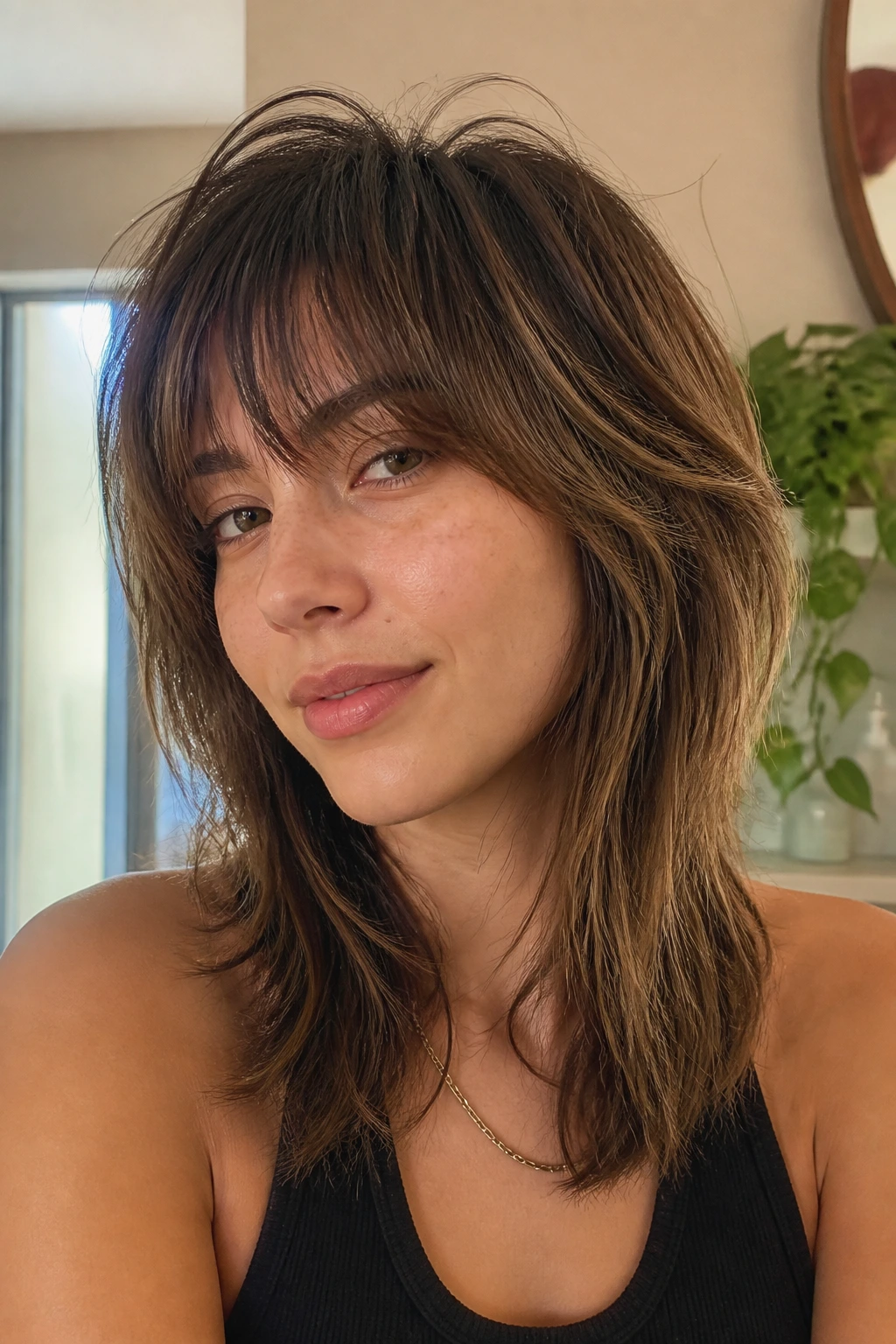
This is the version for people who want a little attitude near the roots and a lot of separation through the top layers. The crown is trimmed so the hair can rise, but the ends stay loose and distinct. Straight hair responds well to this because the pieces show rather than melt together.
A piecey crown gives the haircut some backbone. Without it, straight hair can look too tidy and lose the shag effect. With it, the haircut suddenly has movement from the top down, not just at the fringe. It feels younger, but not childish.
The styling move here is simple: blow-dry the roots upward with a nozzle attachment, then pinch a touch of matte paste or texture cream into the front pieces. Not much. A pea-sized amount is plenty. Too much product and the separation turns greasy fast.
8. Choppy Ends Wolf Cut
Choppy ends are the obvious choice if you want the haircut to look less polished and more lived-in. The perimeter is broken up enough that the ends don’t sit like a single line, which helps medium straight hair avoid that heavy, shelf-like look.
You need restraint here. The best choppy wolf cuts still have a clear silhouette; they just don’t have a blunt bottom edge. Ask for texturizing that focuses on the lower third of the haircut, not a full-on thinning everywhere. That keeps the length from going see-through.
This cut looks best with simple styling. Blow it out roughly, flip a few ends with a flat iron, and stop before every section looks identical. A little mess is the point. If the result feels too neat, you’ve probably over-smoothed it.
9. Glassy Straight Wolf Cut
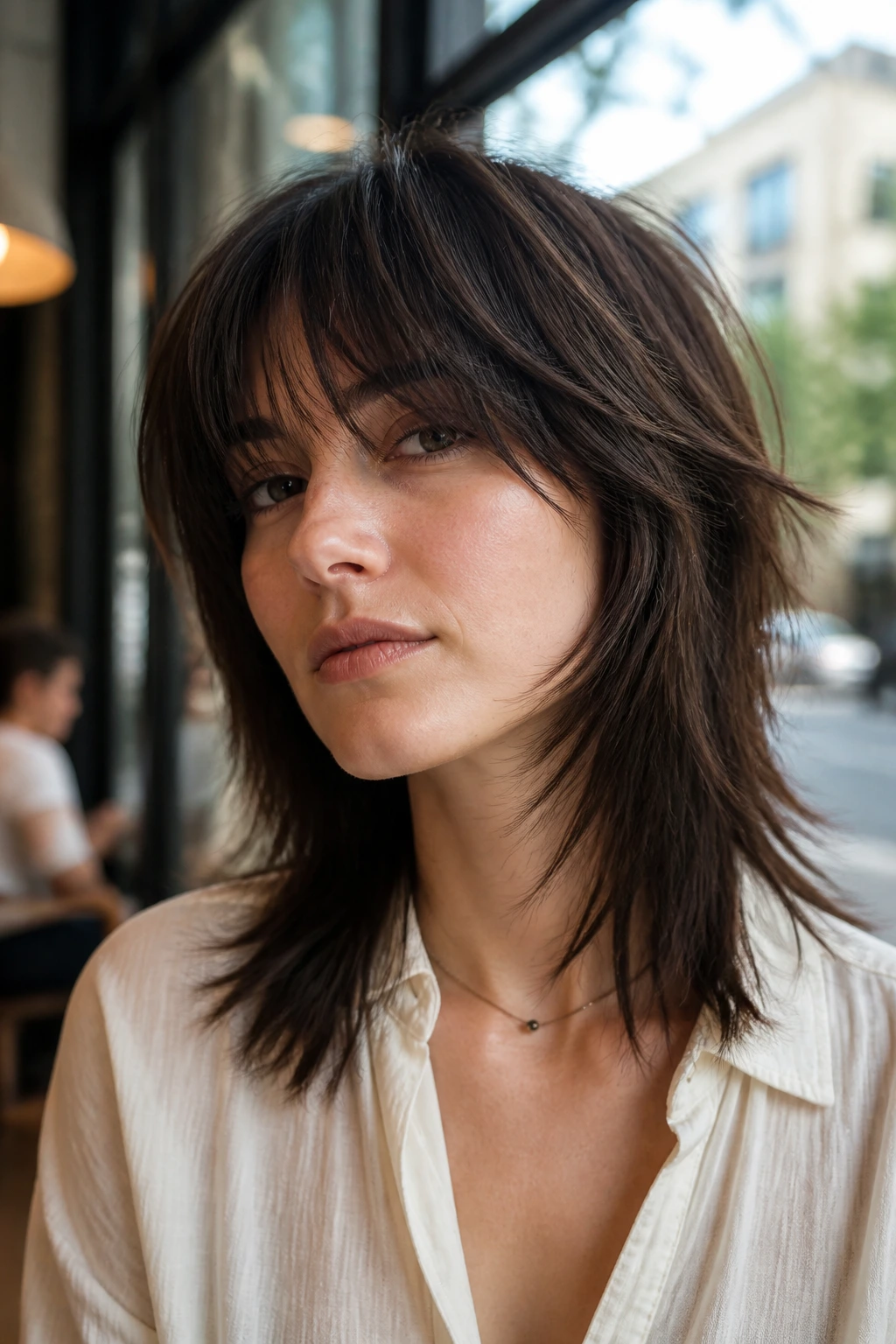
A glassy wolf cut is the polished version of the whole idea. The layers are still there, but the finish is smooth, reflective, and controlled. Straight hair is perfect for this because the natural texture already leans clean and shiny.
Why It Stands Out
The trick is keeping the layers internal instead of overly shredded. You want to see the movement when the hair shifts, not all the time. That means a glossy blow-dry, a light serum on the ends, and a perimeter that still has weight.
- Best if you like your hair looking neat from the front and a little sexier from the side.
- Flat iron only the last inch or two if the ends kick out too much.
- Use heat protectant, always. Straight hair shows heat damage fast.
This is not the shaggiest version on the list, and that’s the appeal. It gives you wolf-cut shape without giving up shine.
10. Feathered Fringe Wolf Cut
Feathered fringe works when you want softness right at the eyes. The bangs don’t sit in one heavy sheet; they break apart into light pieces that sweep across the forehead. On straight hair, that detail matters because the fringe can otherwise look too blunt.
This cut feels airy around the face and fuller through the ends. It’s a good balance for medium straight hair that needs some movement but doesn’t need a lot of rough texture. Ask for the fringe to be point-cut and slightly longer at the temples so it can blend into the side layers.
If your forehead is narrow, this is one of the safer fringe choices. It opens the face without swallowing it. If your hair tends to separate in weird clumps, use a tiny round brush or even your fingers while blow-drying the fringe so the pieces fall together in a controlled way.
11. Mid-Length Mullet Wolf Cut
This is the bolder version, the one with more obvious contrast between the top and the back. The crown sits shorter, the lengths drop longer, and the shape has that unmistakable mullet wink without going full costume. On straight hair, the line reads crisply.
I like this for someone who doesn’t mind a haircut with personality. It looks especially good when the back is kept a little heavier, because medium straight hair can lose structure quickly if the lower section is too thinned out. The result should feel deliberate, not accidental.
Wear it with a center part if you want the shape to read more fashion-forward. Wear it slightly off-center if you want the top to soften. Either way, the neckline matters. A clean nape line keeps the whole thing from looking unfinished.
12. Air-Dried Bend Wolf Cut
An air-dried bend wolf cut is the easiest route for people who do not want to fight a blow dryer every morning. You’re not trying to create curls. You’re just encouraging a little bend in the front and along the ends so the layers show up instead of lying like flat ribbons.
Use mousse on damp hair, twist the front pieces away from the face, and clip the crown up for a few minutes if it tends to collapse. Then let it dry with as little touching as possible. That’s the part people skip, and then they wonder why the layers disappear.
This version is best if your straight hair has the faintest natural wave hidden in it. If not, it can still work, but you’ll need a light texture spray or a soft scrunch with your hands once it’s about 80 percent dry. Not wet. Not bone-dry. Right in the middle.
13. U-Shape Wolf Cut
A U-shaped wolf cut keeps the perimeter rounded and the ends visually thicker, which is a smart move on medium straight hair. Instead of a straight line across the bottom, the hair curves slightly longer at the sides. That soft outline helps the layers blend.
Where the Shape Pays Off
The U-shape keeps the haircut from feeling too fractured. It gives the interior layers somewhere to sit, so the cut looks full even when the top is lighter. If your ends tend to get thin fast, this version is kinder than a harshly straight perimeter.
- Ask for a rounded outline rather than a blunt chop.
- Keep the shortest face-framing pieces below the cheekbone if you want more length around the face.
- Finish with a small bend under or out, not both.
This is one of the better choices if you want movement but still care about making the length look healthy.
14. Cheekbone-Bang Wolf Cut
Cheekbone bangs do exactly what the name says: they frame the highest point of the face and make the rest of the haircut feel lifted. Straight hair helps the shape read clearly, so the bangs don’t disappear into the sides.
This cut works especially well on round or square faces because the diagonal bang line pulls the eye upward and inward. That little angle matters. It can make the whole haircut feel lighter around the cheeks even when the rest of the length stays medium and full.
If you’re nervous about bang maintenance, keep the fringe long enough to split in the middle or sweep sideways. That gives you options on days when you don’t want full coverage. And yes, that’s the whole point: a good wolf cut should have more than one way to wear it.
15. Tapered Nape Wolf Cut
A tapered nape wolf cut is cleaner in the back than people expect. The back is shaped so it hugs the neckline instead of flaring out, which is useful if you hate that bulky triangle some layered cuts can create on straight hair.
The front can still be shaggy. The crown can still have lift. But the nape stays neat, which makes the cut easier to live with under collars, jackets, and scarves. That practical piece is underrated.
This version is particularly good if you wear your hair down a lot but still want the option of a tidy low clip. The neckline won’t fight the fabric of your clothes. That sounds small, but it changes how often you reach for the style.
16. Long-Front Wolf Cut
Long-front wolf cuts keep the dramatic framing in the front and the softness in the back. The front pieces can fall well below the chin, while the crown layers stay lighter and shorter. On medium straight hair, that asymmetry gives the haircut a long-line effect that still moves.
I like this when someone wants to keep length near the face for styling versatility. You can tuck the fronts, curl them under, or let them hang straight and use the rest of the cut as a backdrop. It’s flexible in a way that shorter fringe-heavy versions are not.
A small warning: if the front pieces are cut too steeply, the shape can start looking like two different haircuts stitched together. Keep the transition gradual. The best versions feel like the layers are sliding into each other, not fighting for attention.
17. Retro Blowout Wolf Cut
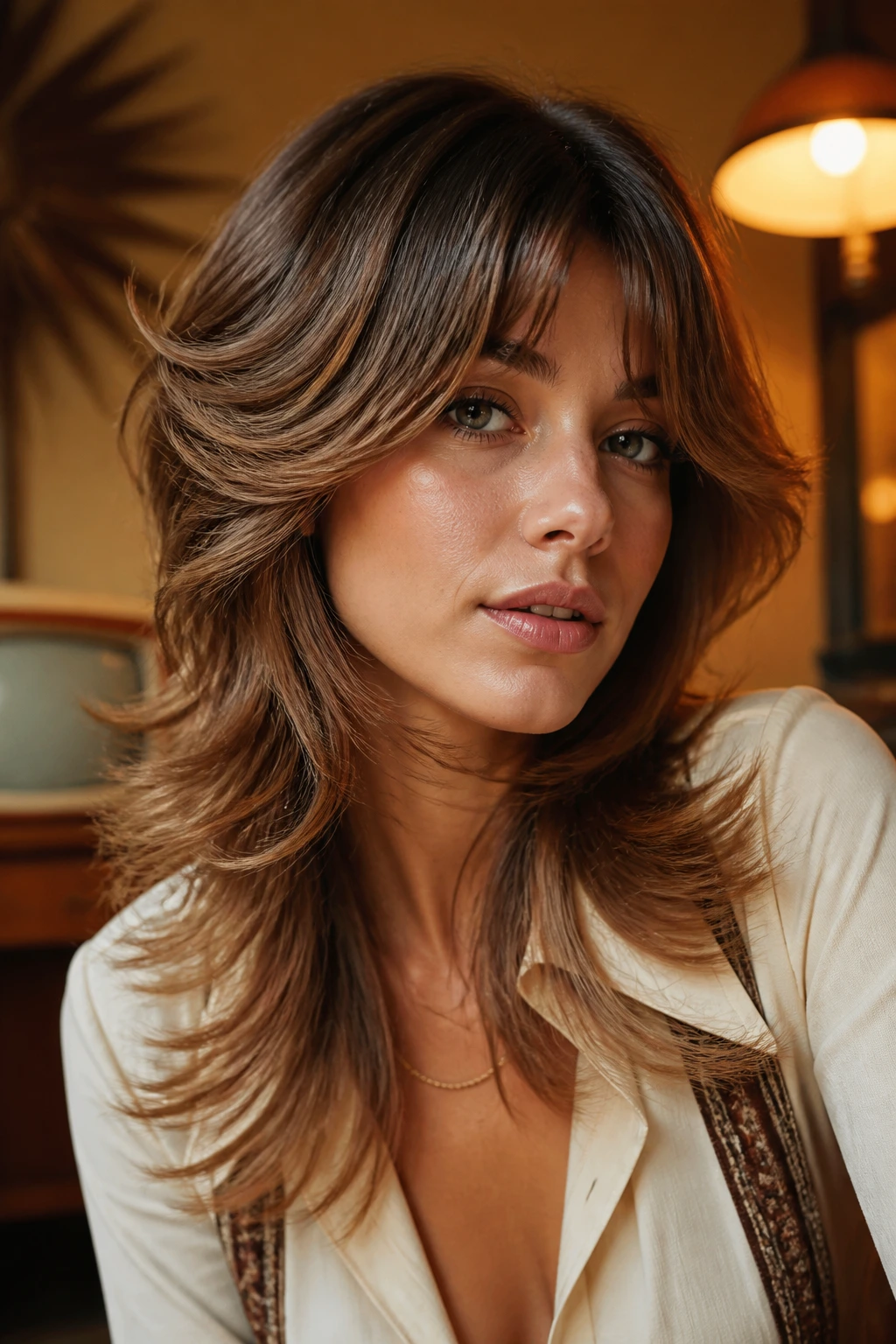
This is the bouncy one. The retro blowout wolf cut leans into rounded volume, flipped ends, and a front section that gets polished with a round brush. Straight hair loves this because the hair can hold the shape neatly once it’s cooled.
What Makes It Different
The cut itself doesn’t need to be wild. The styling creates the attitude. Ask for long layers through the top and front so the blowout has enough length to roll, then keep the ends soft rather than feathered to death. A 1.5-inch round brush and a concentrator nozzle make the biggest difference.
It works best when the hair is set in sections and allowed to cool before you brush it out. If you skip the cooling step, the shape falls fast. That’s one of those annoying little truths of straight hair. It remembers what gravity wants.
The result is polished without feeling stiff. Good thing, too.
18. Invisible-Layer Wolf Cut

Invisible layers are for people who want the movement but not the obvious chop. The layers sit inside the haircut, so the surface looks smooth while the interior does the lifting. Straight hair is ideal for this because the top layer can stay sleek.
This is probably the most understated version in the bunch. It works when you want a haircut that feels considered up close and effortless from across the room — though honestly, “effortless” is the wrong word. It just means the work is hidden.
Ask the stylist to remove bulk from the middle and upper back sections without carving obvious steps into the outer line. That helps medium straight hair hold fullness at the ends. If you love a clean silhouette but still want some swing when you turn your head, this is the one to save.
19. Rounded Shag Wolf Cut
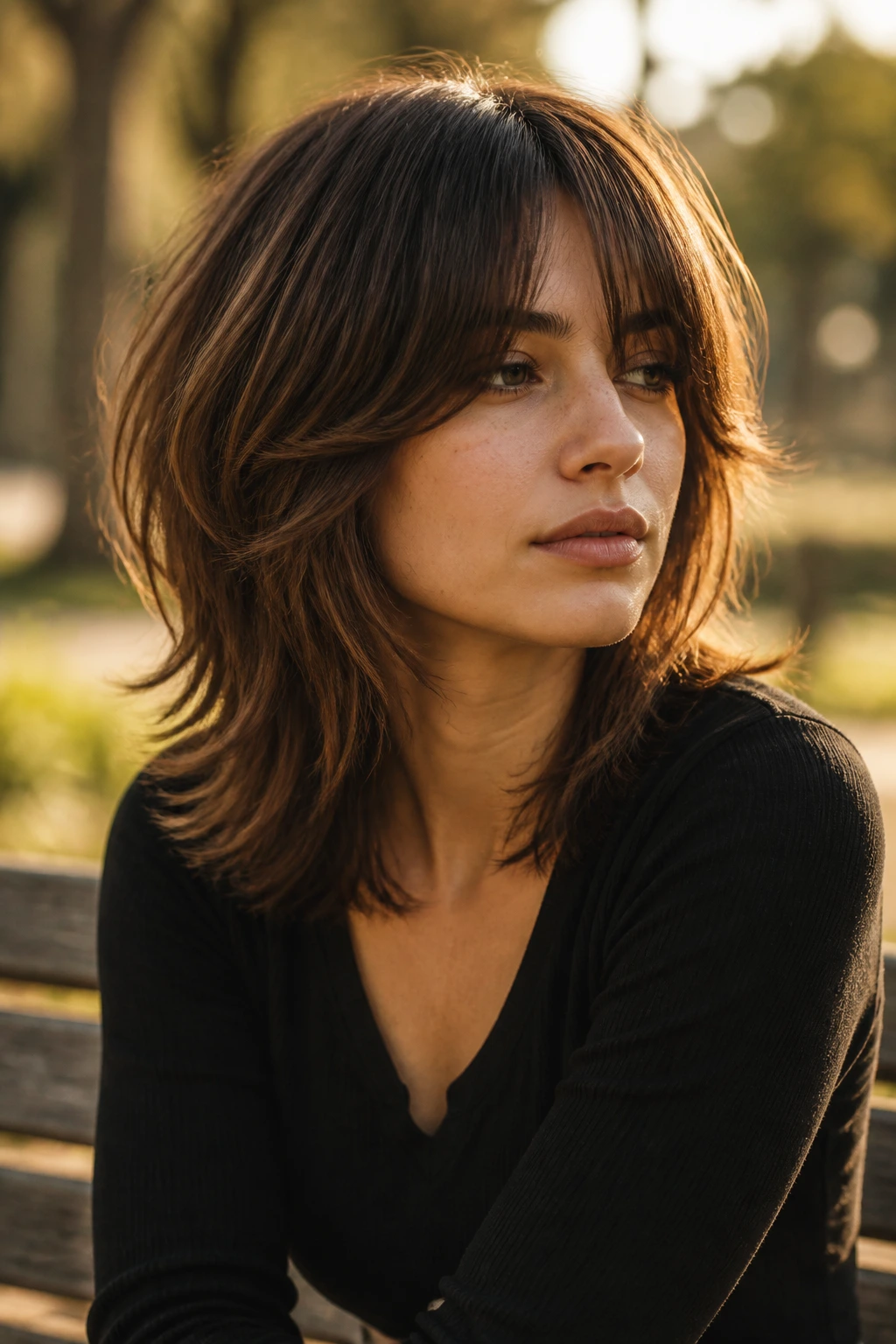
A rounded shag wolf cut softens the mullet edge and builds a halo-like shape around the head. The top and sides follow a curve, not a jagged line, which makes straight hair feel fuller without looking too sculpted.
This cut is a good middle ground for people who want shag texture but dislike harsh disconnect. The layers move, the fringe can skim the brows, and the outline stays gentle enough for everyday wear. On medium straight hair, that roundness also helps the cut grow out better because there isn’t one hard cliff of length.
If your hair tends to widen at the sides, ask for narrower layers through the cheek area and a bit more activity through the crown. That keeps the shape from ballooning. The silhouette should feel rounded, not puffy. Big difference.
20. Blunt-Perimeter Wolf Cut
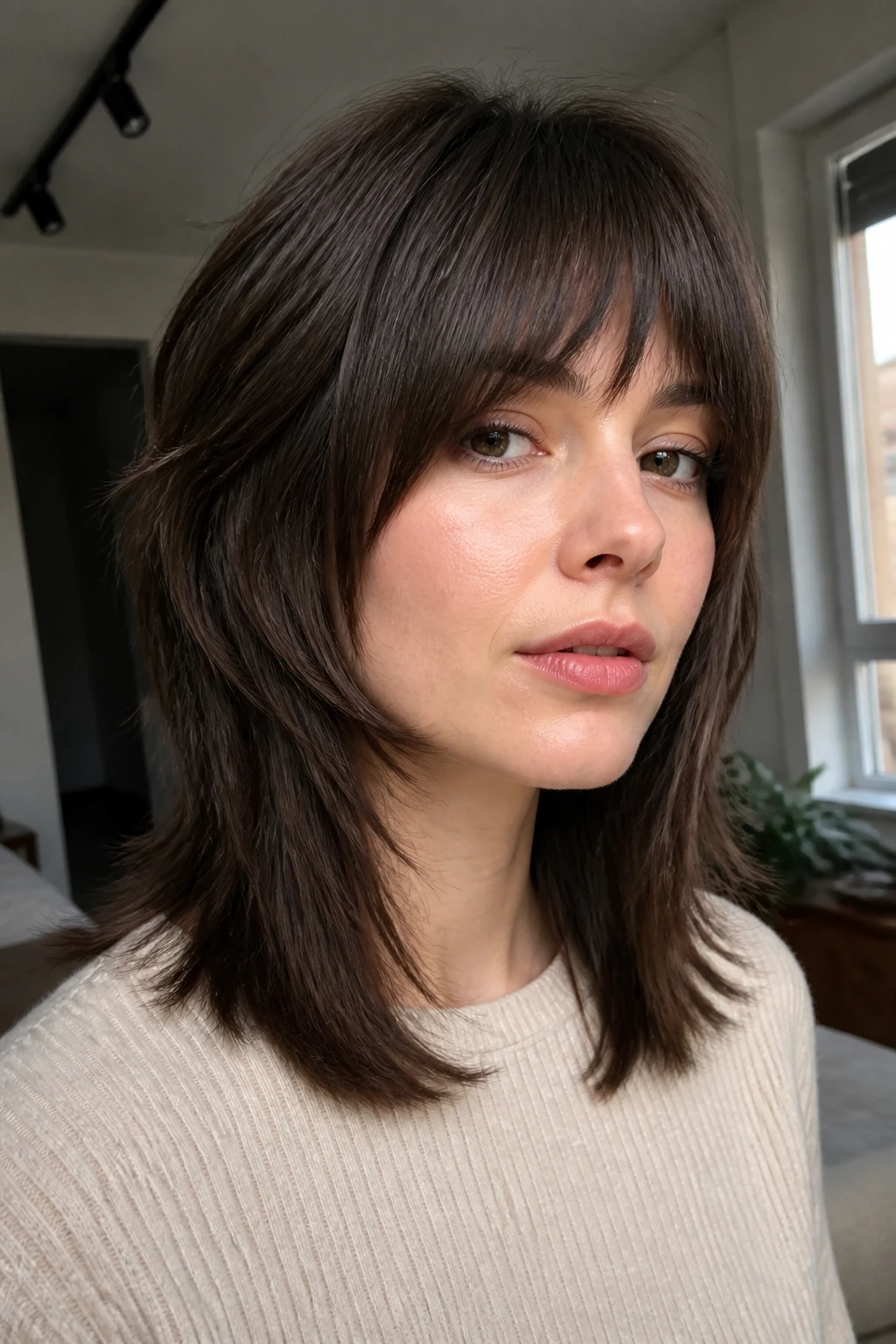
This one has a stronger bottom line, which makes the top layers look even more textured. The blunt perimeter gives medium straight hair some weight, while the crown and interior get the shaggy treatment. It’s a smart setup if your hair feels thin at the ends.
A blunt edge also helps the haircut look more intentional when air-dried. The ends sit together instead of fraying out. That clean line gives the layers above something to contrast against, which is exactly why this style works.
I’d choose this if you want movement but don’t want to lose the feeling of thickness. It’s also easy to style in a hurry: a fast blow-dry, a bit of root lift, and you’re done. No need to fuss with every layer.
21. Side-Part Wolf Cut
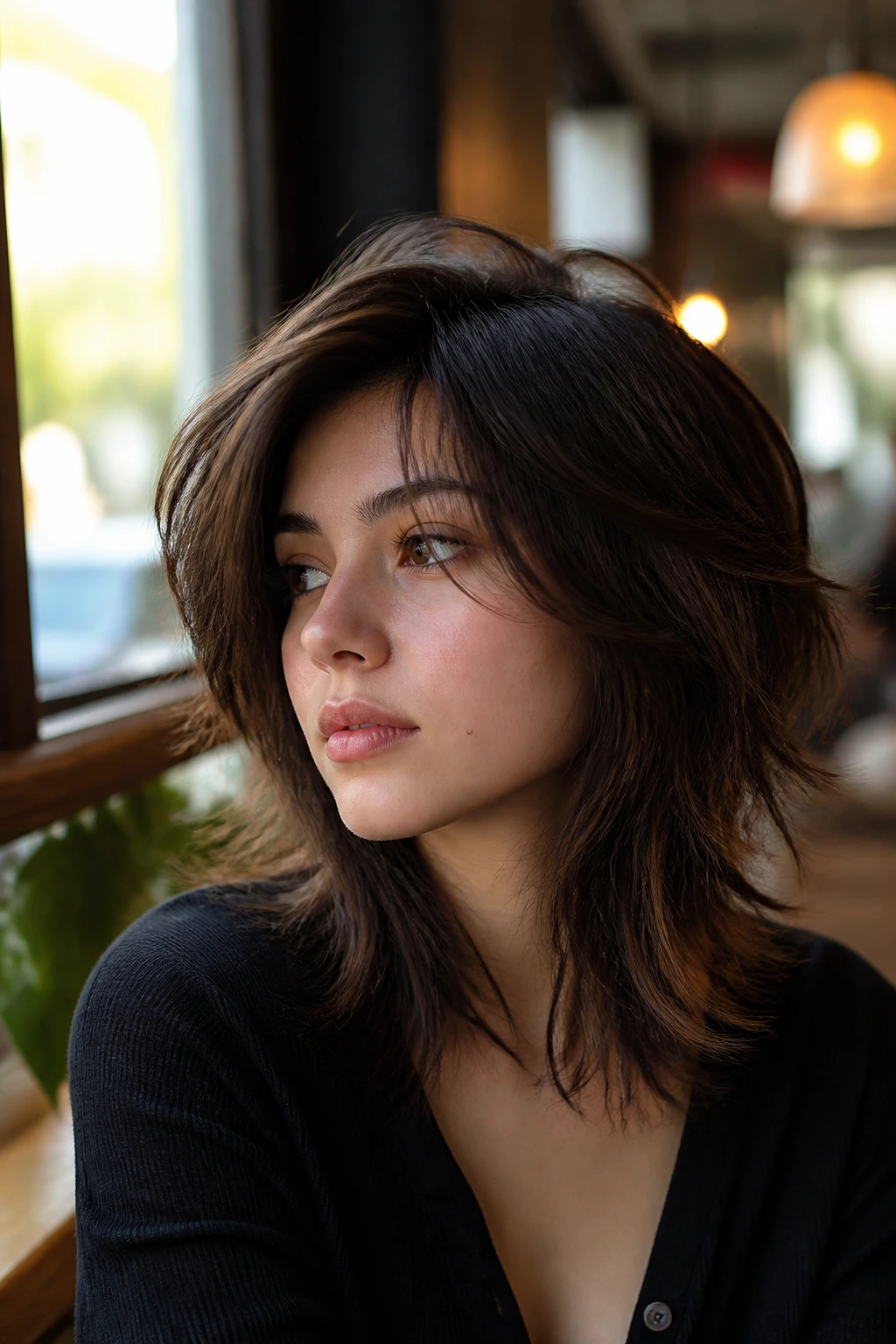
A side part can make a wolf cut feel more grown-up and more flattering in one move. It lifts the roots on one side, softens the forehead line, and keeps the haircut from looking too symmetrical. Straight hair often needs that asymmetry to wake up.
Why the Part Matters
The side part helps the fringe and layers fall in a way that looks intentional rather than rigid. If your crown lies flat, the off-center part creates instant lift. If your face feels too long, the side sweep brings softness back near the eyes.
- Good for days when your hair is refusing a middle part.
- Works well with long bangs, curtain fringe, or no fringe at all.
- Use a small clip at the roots while the hair cools if you need extra lift.
This is a simple change, but it changes the haircut more than people expect.
22. Wispy Micro-Fringe Wolf Cut
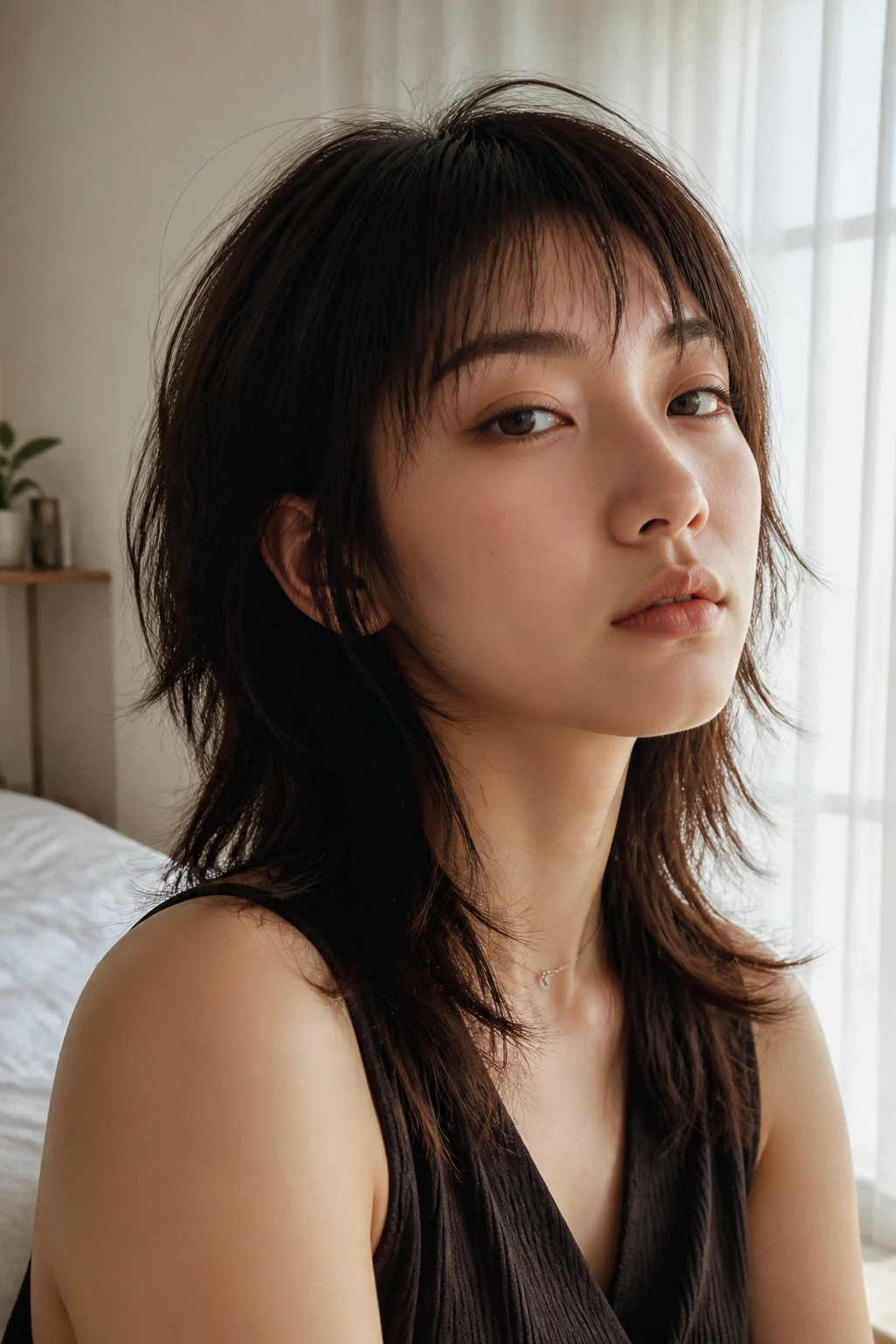
Micro-fringe brings a little bite. On medium straight hair, short wispy bangs can look sharp and fashion-forward because the texture shows so clearly. The cut is not for everyone, and that’s part of the charm.
The key is keeping the fringe soft, not blocky. It should sit lightly across the forehead and leave a bit of skin visible between the pieces. If the fringe is cut too blunt, it can look severe fast. If it’s too sparse, it loses the point entirely.
I’d pair this with slightly heavier layers through the rest of the cut so the bangs don’t feel like they belong to a different person’s haircut. It also looks better when the rest of the hair is either very smooth or deliberately piecey. Halfway styling tends to make it look confused.
23. Crown-Heavy Wolf Cut
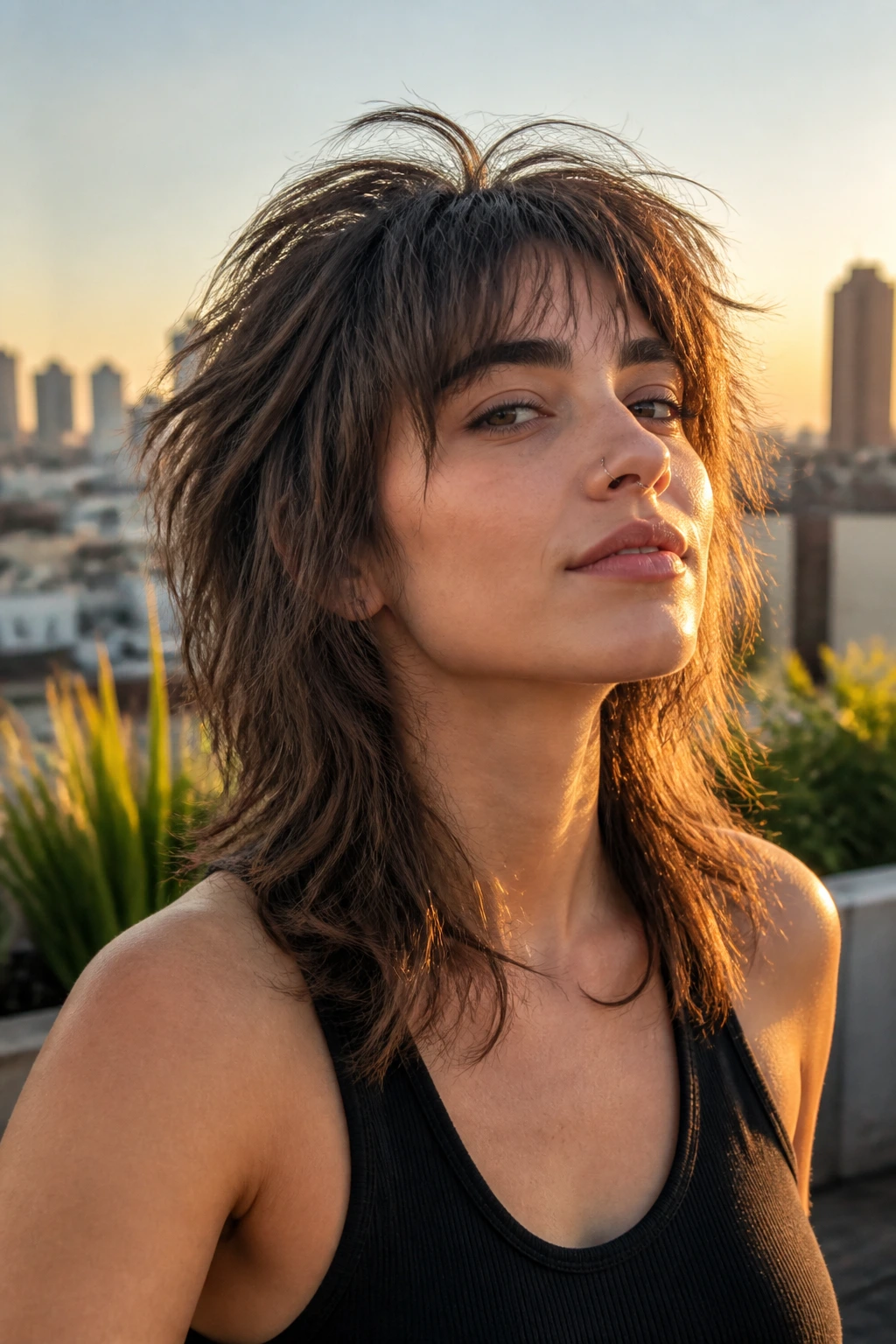
A crown-heavy wolf cut is for people who want lift first and everything else second. The shortest layers live near the top, which creates height and movement before the ends even enter the conversation. Straight hair often needs that kind of direction.
If your roots collapse fast, this cut can be a lifesaver. The crown carries the shape, so the whole haircut looks less heavy at the top and more animated when you move. It pairs well with a texture spray or a root mousse because the styling products reinforce the architecture.
Just be careful with density. If your hair is already fine, too much removal at the crown can leave the top see-through. In that case, ask for lift rather than aggressive thinning. Those are not the same thing, and a good stylist knows the difference.
24. Flipped-End Wolf Cut
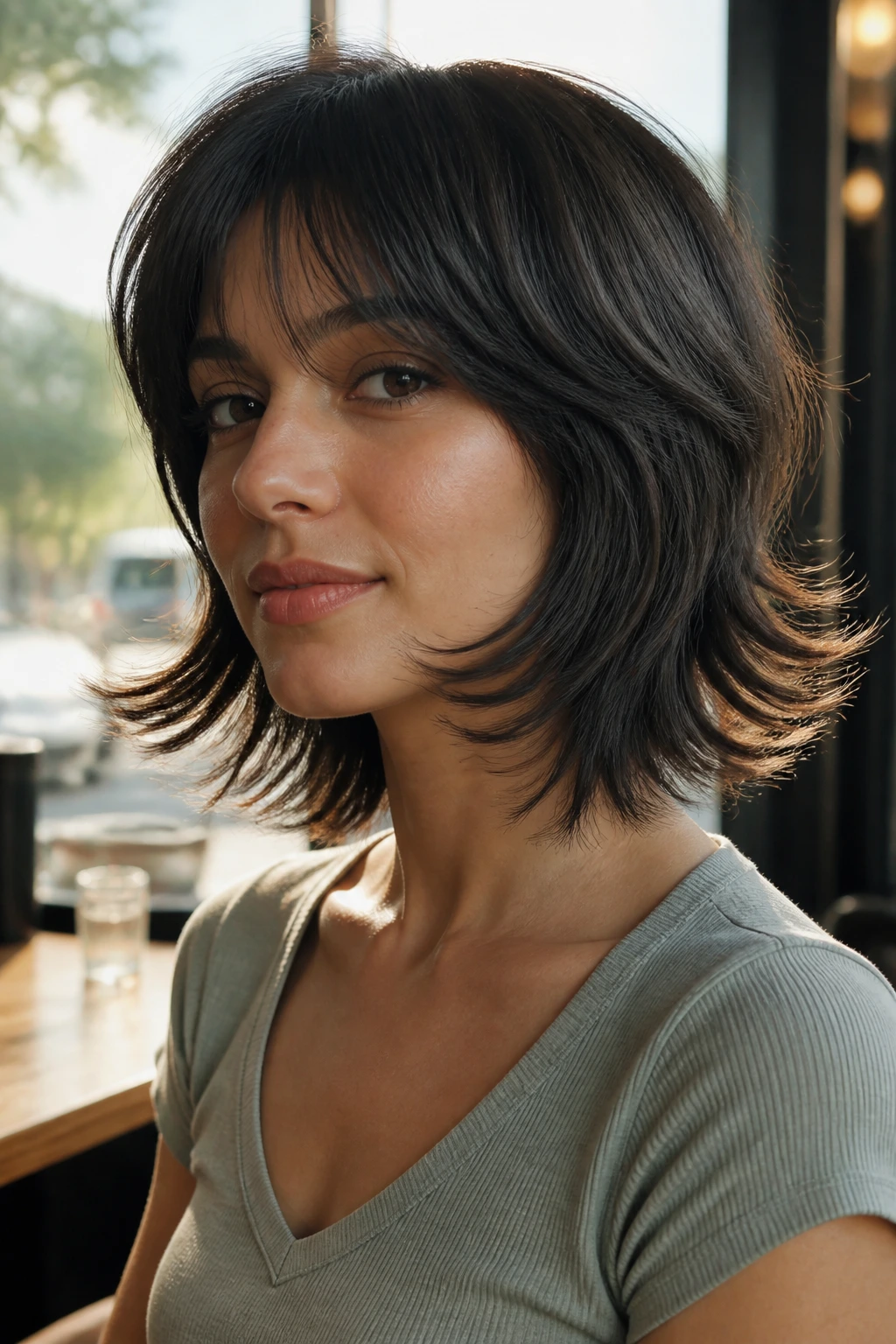
Flipped ends give straight hair a little motion without needing curls. The cut is shaped so the perimeter naturally wants to kick out, especially around the collarbone and jaw. That movement keeps the wolf cut from feeling too still.
This is one of those cuts that looks better with a small amount of styling than with none at all. A flat iron or round brush flip at the ends makes the layers come alive. Nothing dramatic. A half-turn outward is enough.
The style works best when the upper layers stay soft and the ends stay a bit heavier. If both the top and bottom are over-texturized, the shape can look nervous. You want flick, not fuzz.
25. Low-Key Rocker Wolf Cut

This is the wolf cut for someone who wants edge but not costume. The layers are broken up, the fringe is a touch irregular, and the silhouette carries that slightly rebellious feeling without screaming for attention. Straight hair is good at this because the lines stay crisp.
The haircut looks especially strong when the front pieces are slightly longer than the center fringe and the ends are not overly thinned. That imbalance gives the style some grit. It’s the kind of haircut that looks better with a leather jacket, sure, but it also works with a plain white tee, which is what makes it useful.
If you style it, keep the finish a little rough. A brush can smooth the surface, but don’t polish away all the separation. The whole point is to keep a few pieces from behaving.
26. Soft Razor Lob Wolf Cut
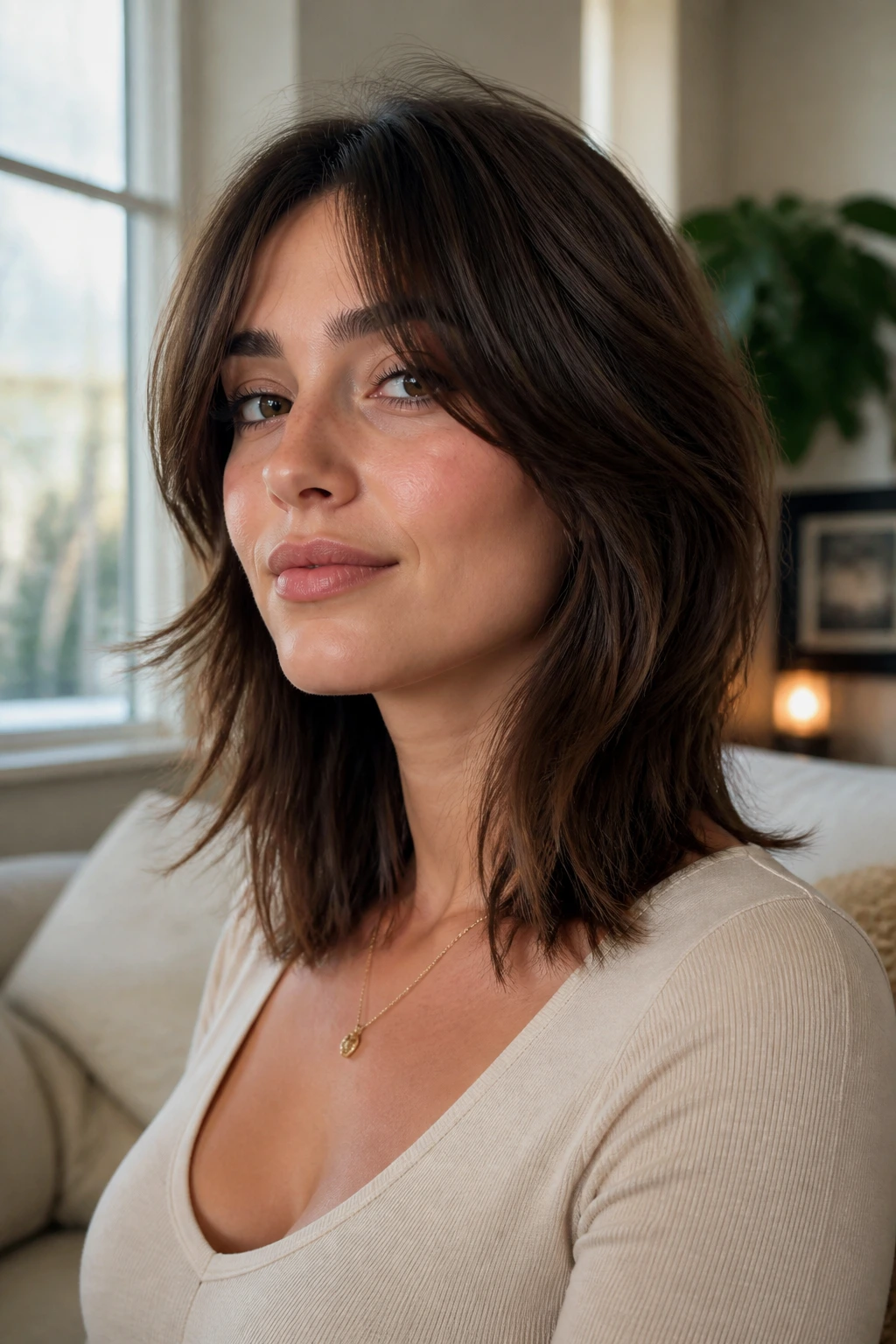
A soft razor lob wolf cut keeps the length around the collarbone and uses razor-soft layers to create movement through the mids. It’s a safer option if you like a shaggy shape but don’t want the shorter crown that some wolf cuts lean on. On medium straight hair, that restraint matters.
The Salon Note That Helps
Ask for a lob base with internal softness rather than a fully disconnected mullet shape. That gives you a cleaner outline in the mirror and less chance of the ends getting shredded. The best versions still move when you walk, but they don’t fall apart when you tie them back.
This cut is especially nice if your hair is dense and heavy around the shoulders. The razor work removes some of that bulk without making the bottom look thin. One good pass can do more than three inches of unnecessary layering.
27. Airy Curtain Layers Wolf Cut
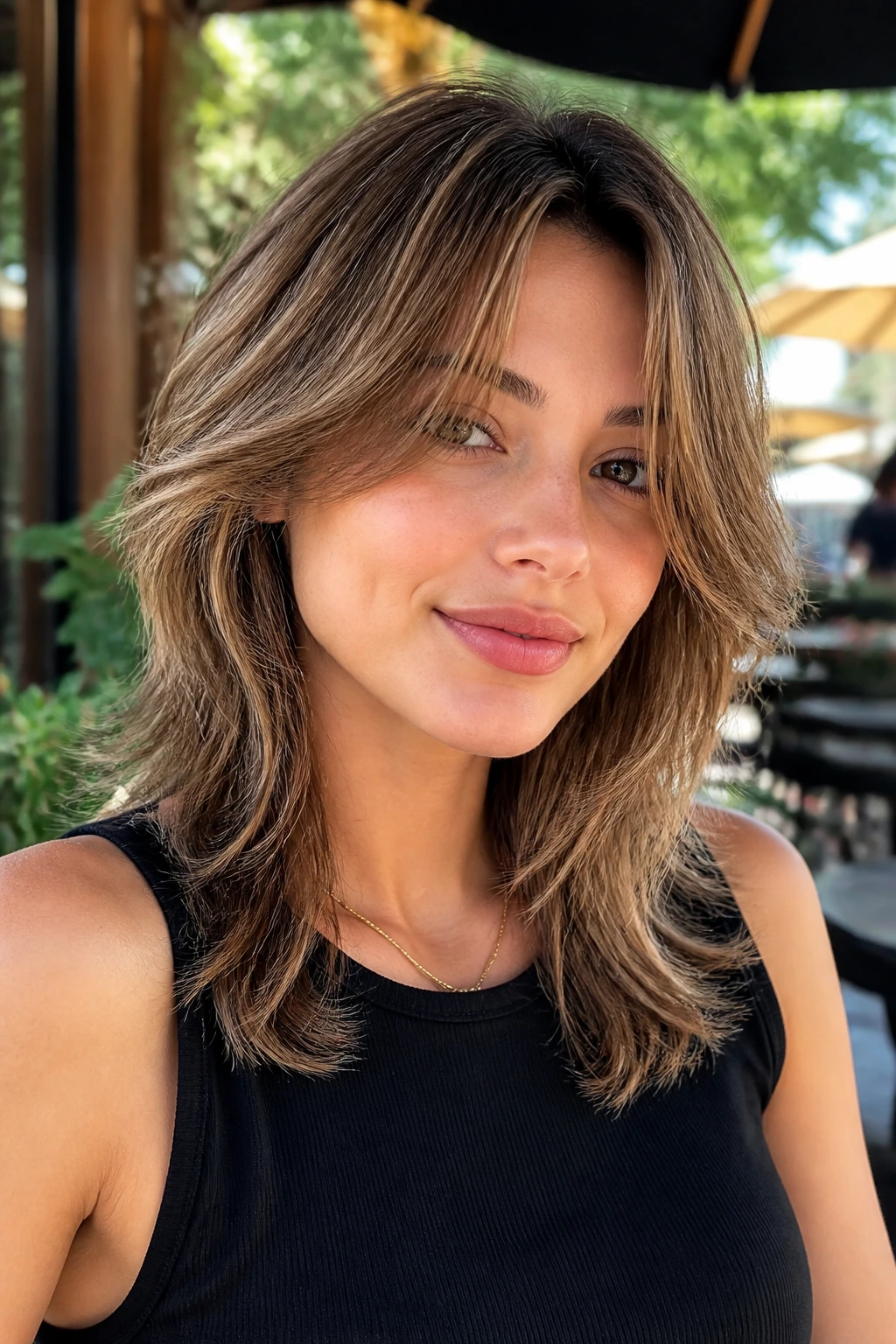
Airy curtain layers are the gentler cousin of the full shaggy cut. The fringe opens in the center, the front pieces feather outward, and the rest of the cut stays light without getting overly broken up. Straight hair makes the airiness visible.
This is a good option if you like the idea of texture but don’t want visible choppiness everywhere. It gives the face a frame and the crown a little lift, then leaves the lengths calm. That contrast feels balanced on medium straight hair.
Use a round brush only where you need it: fringe, temples, maybe the first few inches around the face. The rest can stay smooth. That saves time and keeps the haircut from looking overworked, which happens fast with this style if you start bending every section.
28. Ear-Tuck Friendly Wolf Cut
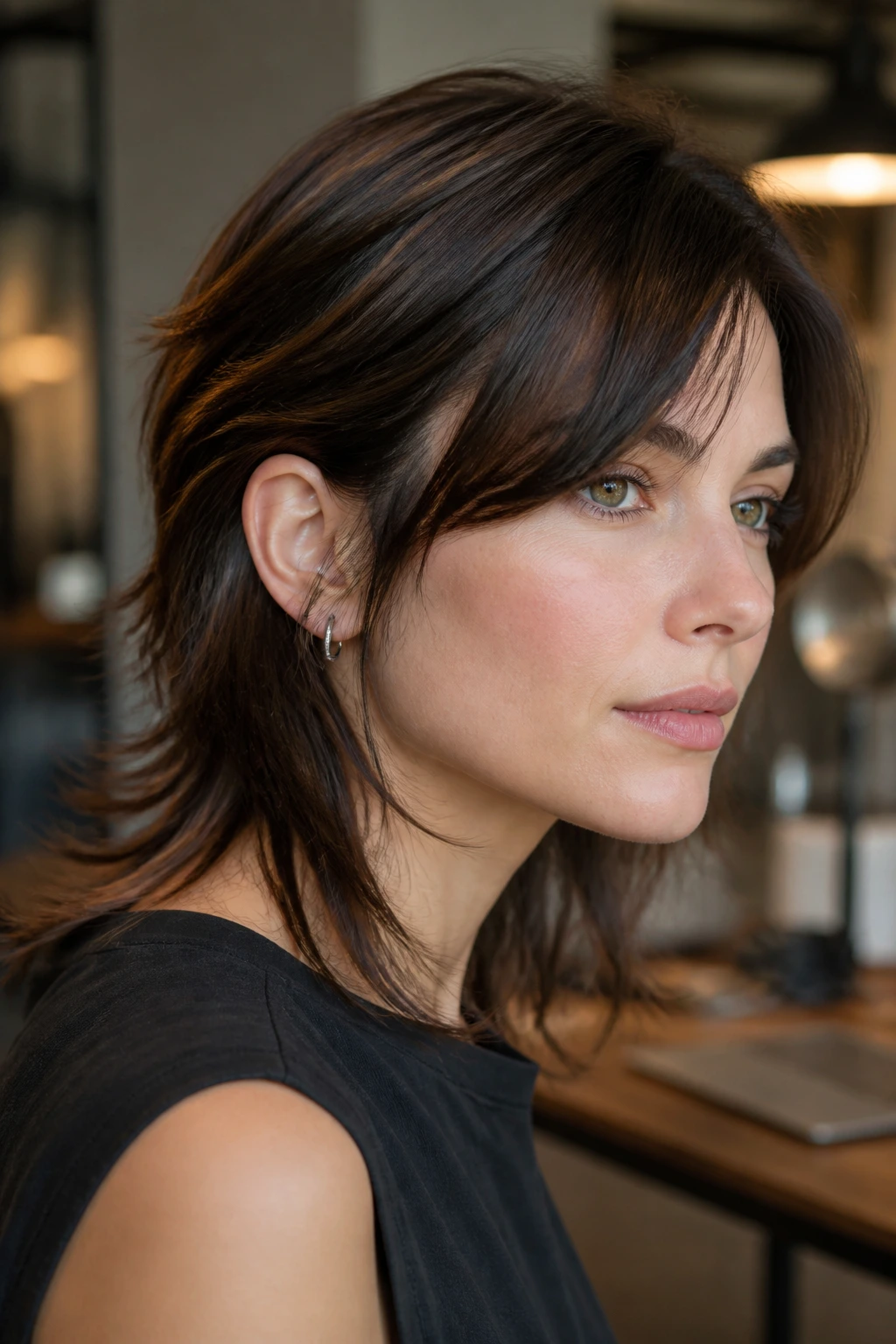
An ear-tuck friendly wolf cut is a practical shape disguised as a stylish one. The front pieces are cut so they fall neatly when tucked behind the ears, and the shorter layers around the face don’t pop out in odd directions. If you wear glasses, earrings, or both, that matters.
This cut feels especially useful for straight hair because straight strands either tuck cleanly or they don’t. There’s no in-between. With the right layering, the hair slides back without sticking out at the cheek or making the front look too hollow.
I’d choose this if you spend half the day taking your hair behind your ears, then letting it down again. The haircut should cooperate with that habit instead of punishing it. Small detail. Big difference.
29. Long-Textured Fringe Wolf Cut
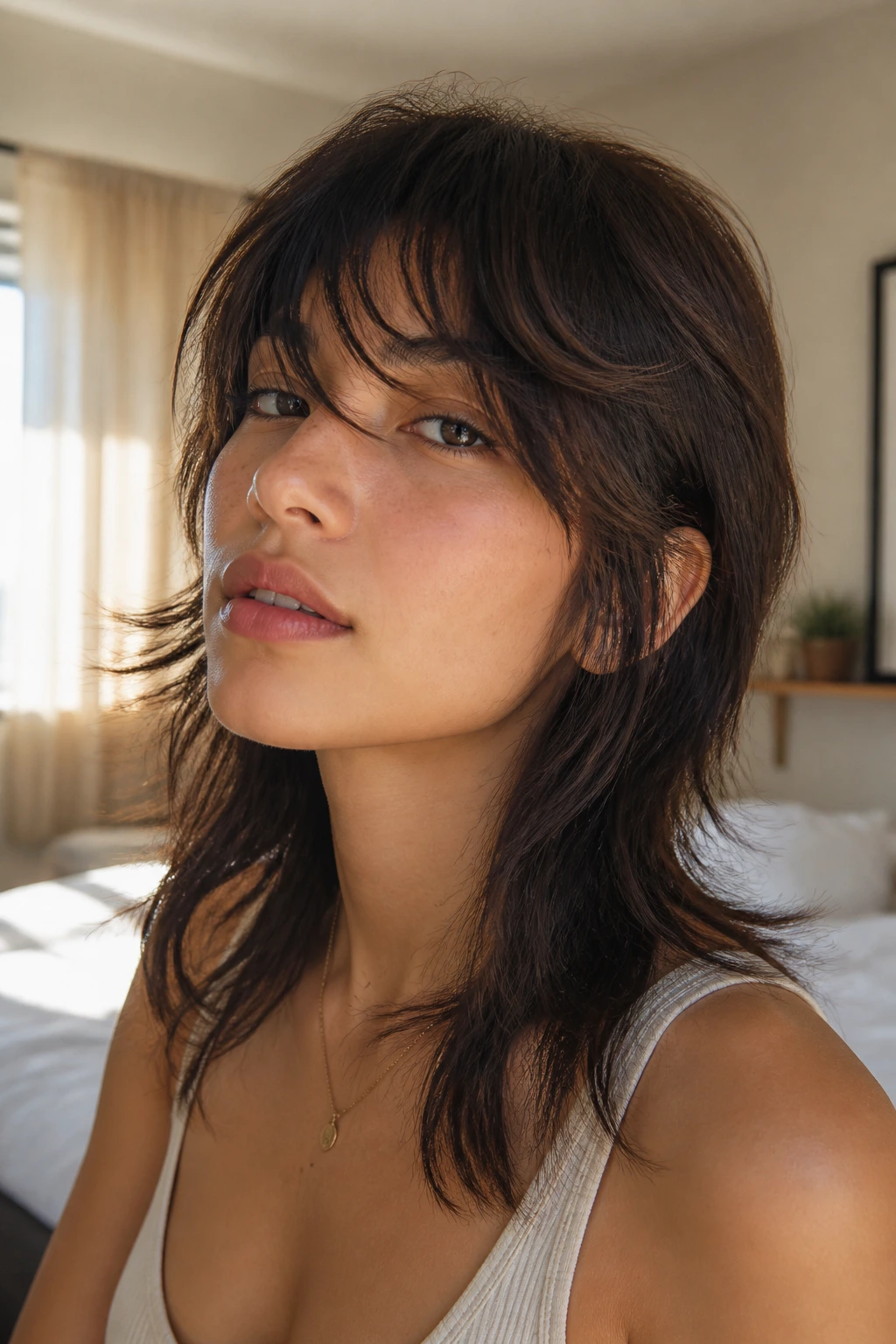
A long textured fringe gives you options. You can split it in the center, sweep it to the side, or let it hang loose across the brow. On straight hair, that flexibility is gold because the fringe still reads clearly even when the rest of the cut is smooth.
What to Ask For
Keep the fringe long enough to hit the brows or slightly below, then add texture with point cutting rather than blunt shortening. The idea is to make the front pieces movable. Not wispy to the point of disappearing, but soft enough to change shape with a quick brush.
- Good if you like to switch parts often.
- Works well with a medium perimeter and soft crown layers.
- Needs only a little dry texture spray to separate the ends.
This version is one of the easiest to live with because it can act like bangs on one day and face-framing layers on the next.
30. Grow-Out-Friendly Wolf Cut
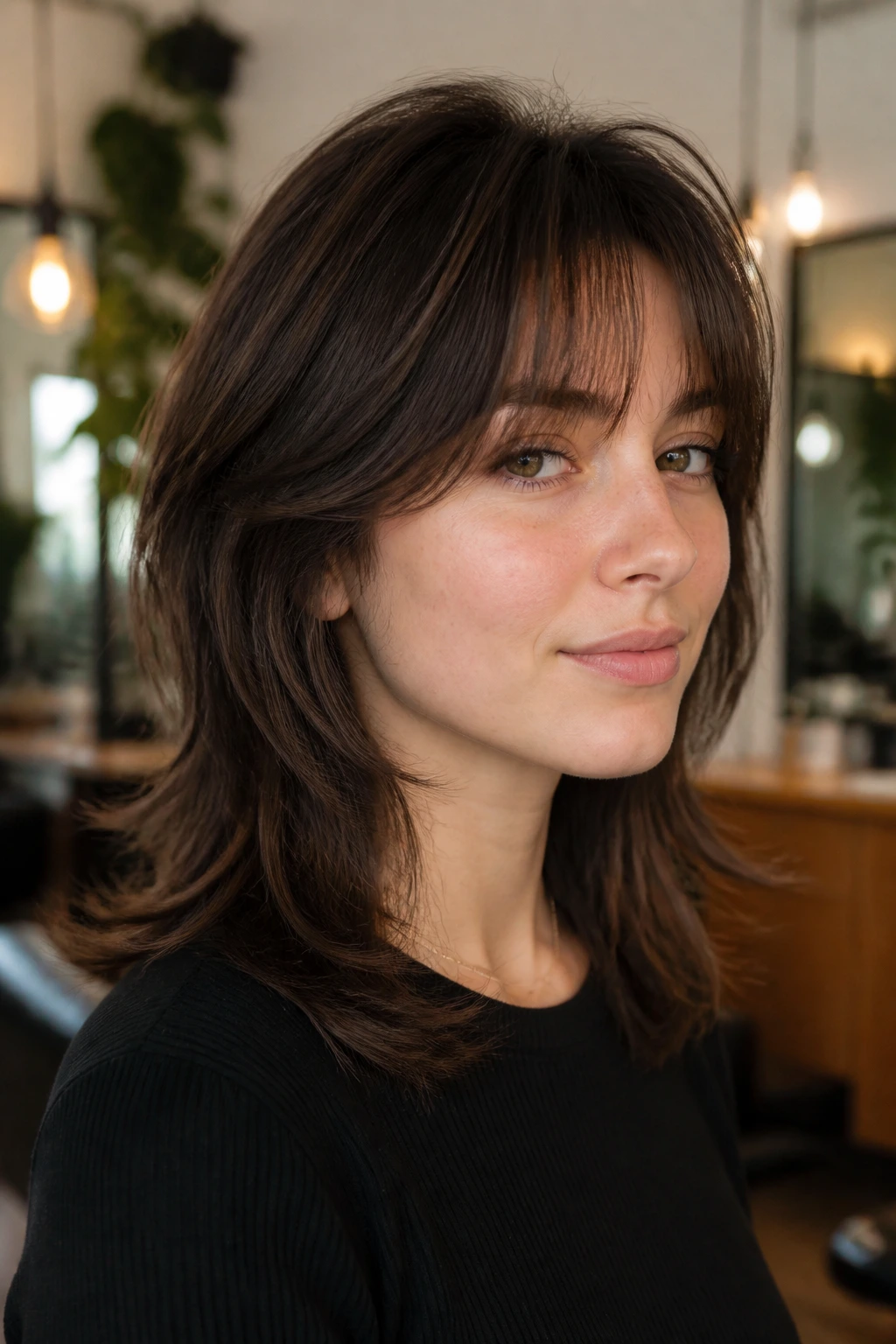
A good wolf cut should age well. This grow-out-friendly version is shaped so that the layers don’t turn ugly the second they lose a little precision. The fringe stays long enough to blend, the crown doesn’t get cut too high, and the perimeter keeps enough weight to hold the whole thing together.
That matters more on straight hair than people expect. Straight strands reveal uneven growth quickly, so a forgiving shape saves you from that awkward in-between stage. Ask for soft transitions, not hard steps. The haircut should still make sense six to eight weeks later, not just on day one.
If you want a low-maintenance version of the trend, this is the one to show your stylist. It doesn’t sacrifice personality. It just keeps a little order in the chaos, which is usually the smarter move.
Why the Shaggy Wolf Cut Shape Works So Well on Straight Hair
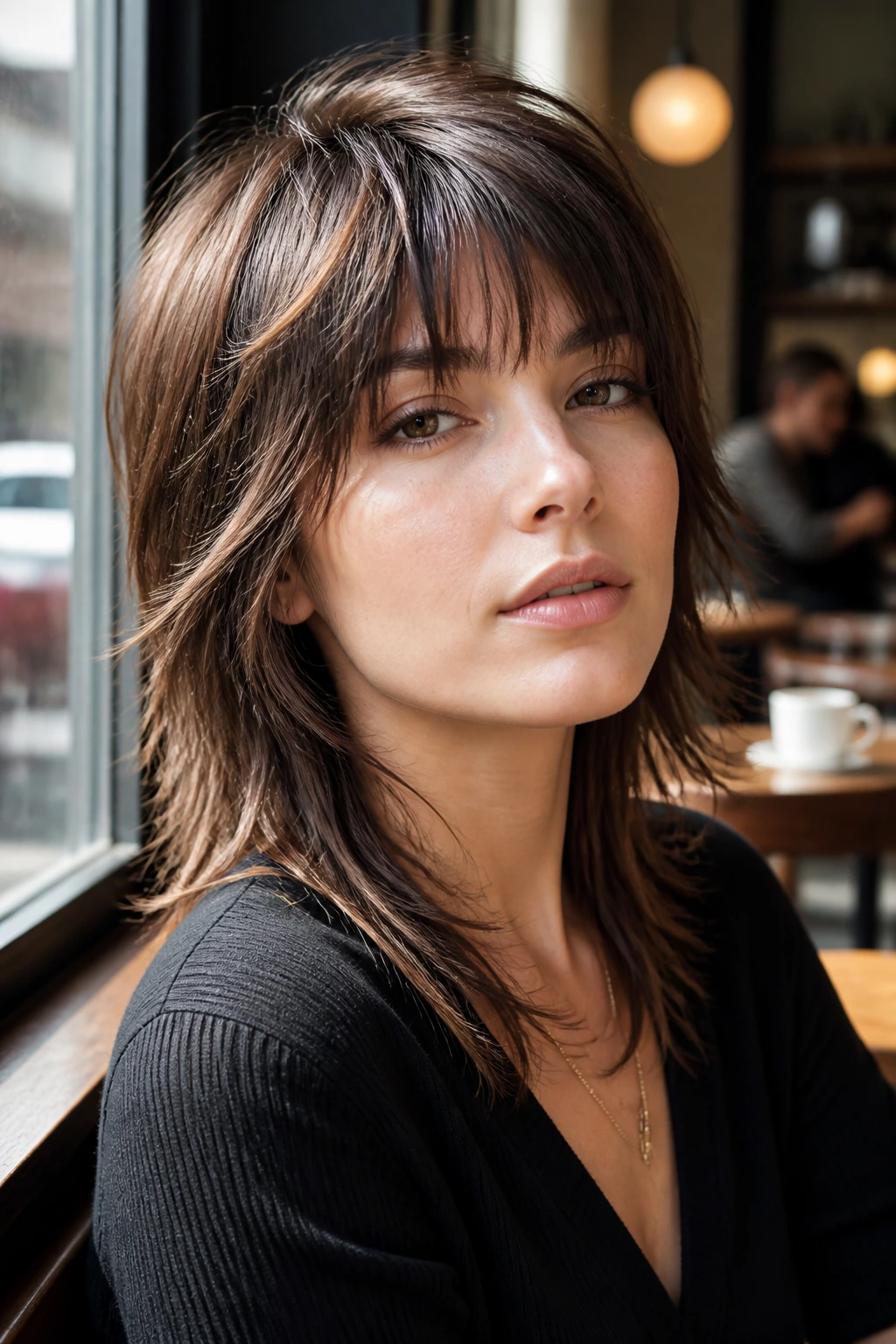
Straight hair is honest. It does not blur bad layering the way waves sometimes can. That’s exactly why shaggy wolf cuts can look so crisp on medium straight strands when they’re cut well. The crown lift reads cleanly, the fringe lands where it should, and the interior texture stays visible instead of disappearing into the length.
The biggest reason the style works is weight placement. If the top gets too short too soon, the cut puffs up and the ends go stringy. If the layers stay too long, the whole thing loses the wolf-cut feel and turns into a standard layered cut with a fringe. The sweet spot is usually a heavier perimeter with soft internal removal through the mids and crown.
Medium length helps, too. There’s enough hair to build shape, but not so much that the style gets swallowed by bulk. A collarbone line, a cheekbone frame, and a controlled amount of texture around the top give straight hair just enough attitude to feel current without looking overbuilt.
The Tools That Make Styling Easier
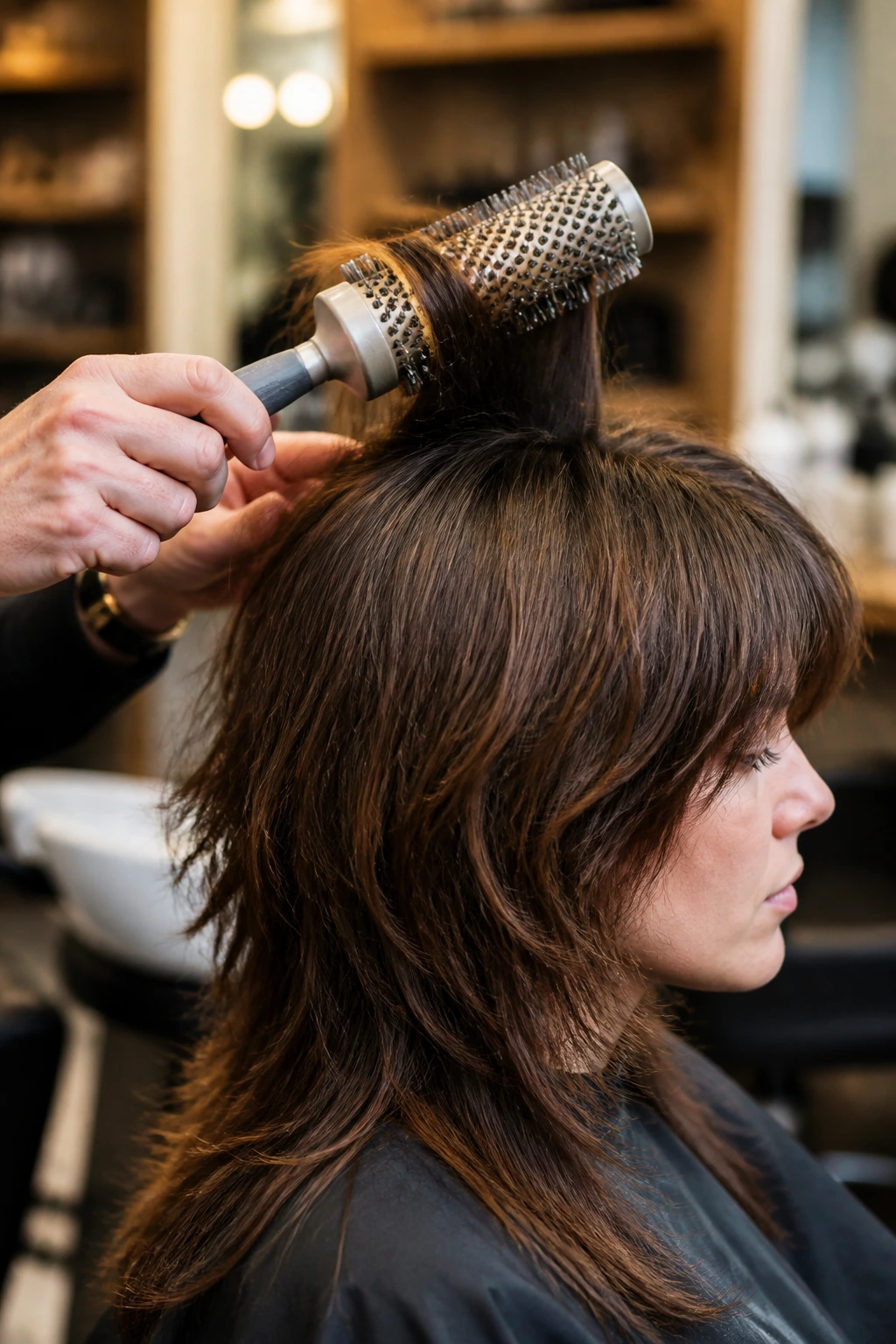
A shaggy wolf cut doesn’t need a crowded bathroom shelf, but a few tools make the difference between “done” and “why does this look flat by lunch?” The good news is that the list is short.
- Blow dryer with a concentrator nozzle: This lets you aim airflow at the roots and smooth the fringe without blasting the whole shape apart.
- 1- to 1.5-inch round brush: Perfect for bending the front pieces, flipping the ends, and giving the crown a bit of height.
- Paddle brush: Useful when you want a smoother, sleeker finish with less curl in the ends.
- Heat protectant spray: Straight hair shows heat damage fast, especially on lighter or finer ends.
- Light mousse: Gives the crown some support without making the hair stiff.
- Texture spray or dry shampoo: Helpful at the roots and mids when the haircut starts to lose grip.
- Flat iron with rounded edges: Good for soft bends and flipping the ends, not for pin-straight ironing every inch.
- Duckbill clips or sectioning clips: Keep the top layers out of the way while you work on the fringe or crown.
Choosing the Right Fringe, Layer Height, and Perimeter
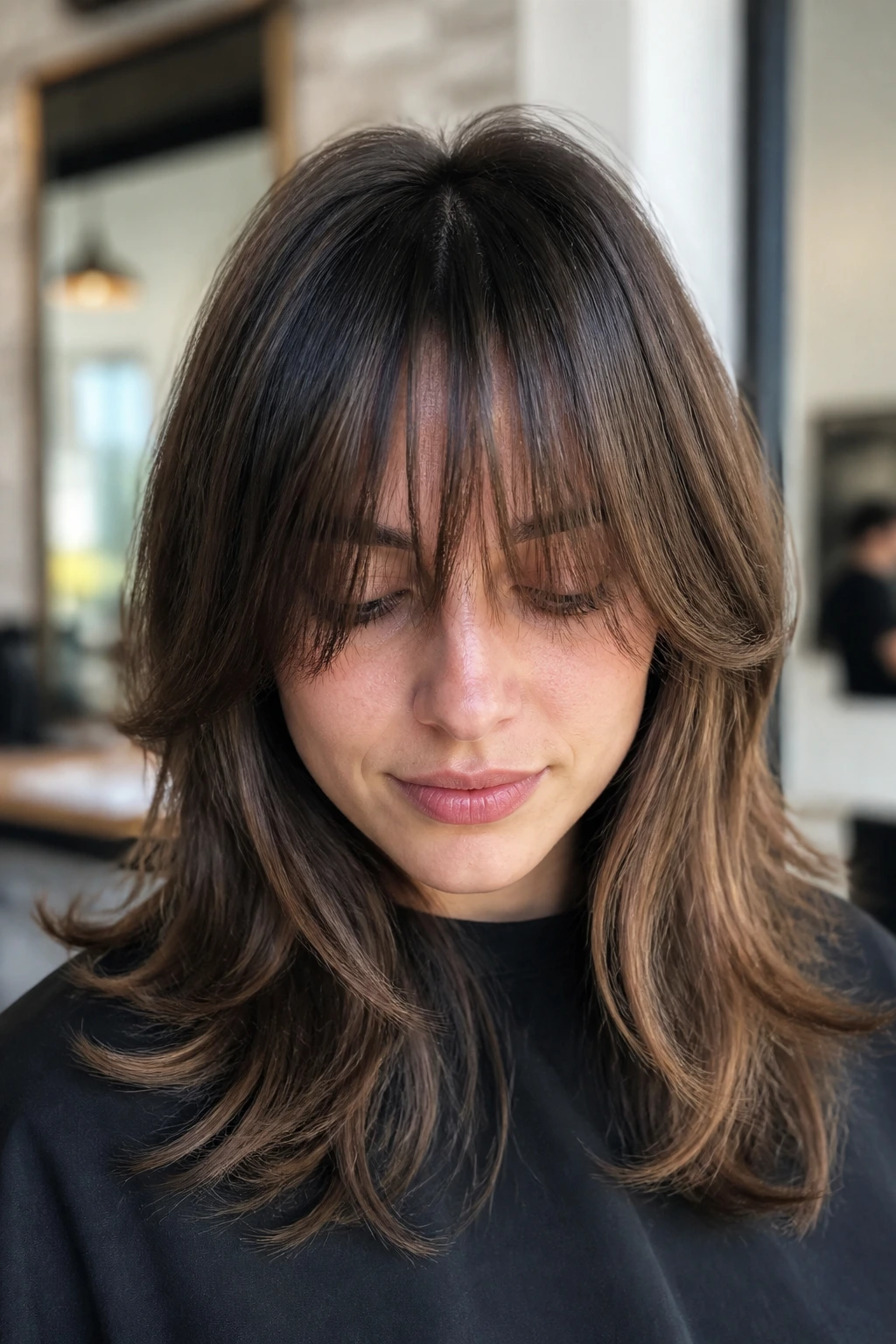
The difference between a flattering wolf cut and a floppy one usually comes down to three things: where the fringe sits, how high the layers start, and whether the bottom edge carries enough weight. Medium straight hair punishes bad choices here. It’s not forgiving in the way dense curls can be.
If your hair is fine, keep the shortest layers lower and the perimeter stronger. Too much crown removal can make the top look see-through within a week. If your hair is thick, you can handle more internal texturizing, but the ends still need enough bulk to avoid that feathered-out tail effect.
Face shape matters, too. Rounder faces usually benefit from cheekbone or lip-level framing that pulls the eye downward. Longer faces often look better with a curtain fringe or bottleneck bang that shortens the vertical line a little. Square faces soften nicely when the front pieces are not cut too blunt or too short.
One thing I’d stress: bring a photo, but also bring a sentence. Say what you want the haircut to do. More lift at the crown. Softer sides. Easier air-dry. Better tuck behind the ears. That gives a stylist more to work with than saying, “Make it shaggy.”
How to Wear the Cut Day to Day

A shaggy wolf cut should have more than one mood. If it only looks good one way, the cut is too fussy for medium straight hair.
Air-Dry Finish: Work a small amount of mousse through damp roots and mids, twist the front pieces away from the face, and let the hair dry with as little touching as possible. A tiny bit of separation at the ends is enough.
Blowout Finish: Use a round brush to lift the crown, smooth the front, and bend the last inch of the hair inward or outward depending on the shape you chose. Let the hair cool before brushing it out.
Fast Morning Fix: Mist the roots with dry shampoo, tuck one side behind the ear, and refresh the fringe with a dry brush or a quick pass of the blow dryer. Done.
Dress-It-Up Finish: Add a stronger bend at the face frame and a clean side part. The haircut suddenly looks more deliberate, almost like it had a second appointment.
Small Styling Tweaks That Change the Whole Mood
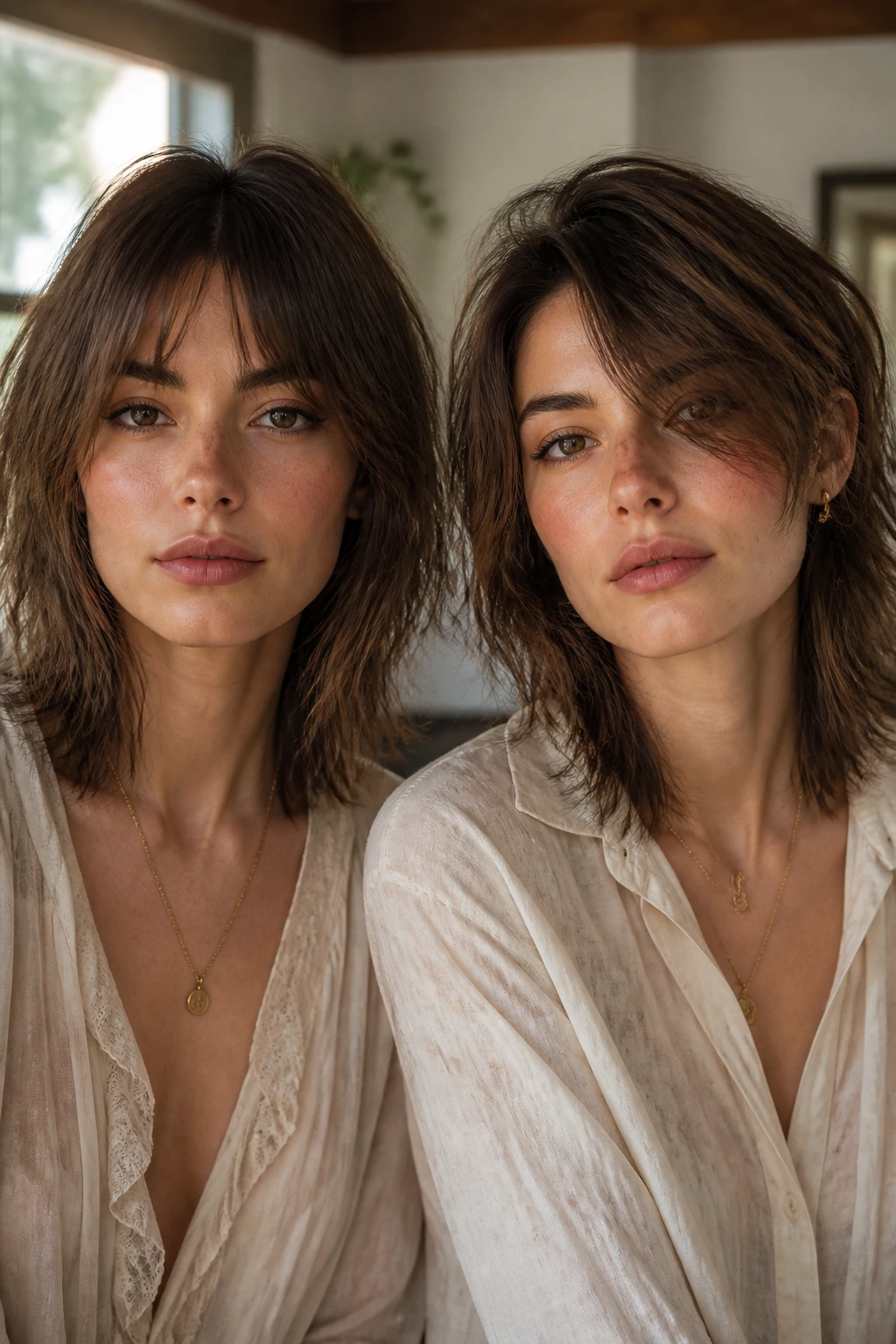
A haircut like this can shift a lot with very little effort. That’s part of its appeal. A center part makes the shape feel more balanced and modern. A deep side part turns up the volume and softens the face. Tucking one side behind the ear changes the silhouette without touching the cut itself.
Texture Boost: A pea-sized amount of matte paste worked only into the ends can make the layers look more separated.
Root Lift: Spray at the crown, then blow-dry the roots upward for ten to fifteen seconds before you smooth the length.
Polish: A drop of serum on the last inch of the hair keeps the perimeter from looking dry or frayed.
Make-It-Yours: If you like a softer look, keep the fringe longer and the layers more blended. If you want more attitude, ask for a little more disconnect and wear the front pieces piecey.
Common Mistakes That Flatten the Shape
The most common mistake is starting the layers too high on medium straight hair. That creates a see-through top and a thin-looking tail. The fix is simple: keep the shortest layers lower and let the crown stay a little heavier.
Another problem is over-thinning the ends. Straight hair loses visual bulk fast when the perimeter is stripped too much, and then the cut starts looking tired instead of shaggy. Ask for point cutting or soft interior removal instead of aggressive texturizing all over.
People also use too much product. A wolf cut wants support, not a helmet. If the hair feels sticky or heavy, the layers collapse and the movement disappears. Start with less mousse, less paste, less spray than you think you need.
Last one: skipping the fringe maintenance. If bangs grow past the sweet spot, the whole front can lose its shape. A trim every few weeks keeps the line clean and saves the cut from drifting into awkward territory.
Variations and Alternatives to Try
Soft Office Wolf: Keep the fringe longer, the layers blended, and the perimeter heavier. This works well if you want the haircut to look tidy with a blazer or button-down.
Sharper Rocker Version: Shorten the crown layers a little more and let the ends look broken up. This one has more bite and looks best with a rougher finish.
No-Bang Wolf Cut: Skip the fringe and rely on cheekbone-framing pieces instead. That keeps the face open and lowers the maintenance load.
Air-Dry Version: Ask for softer internal layering and avoid over-texturizing the perimeter. It will still move, but it won’t depend on heat styling to make sense.
Keeping the Shape Between Haircuts
A wolf cut on medium straight hair usually keeps its shape for six to ten weeks if it’s cut with a sensible perimeter. Fringe trims may need attention sooner, especially if the bangs are central to the look. Once the front falls into the eyes, the whole style starts acting heavier.
Wash frequency depends on how much oil your roots produce, but many straight-haired people do well washing every two to four days and refreshing the crown with dry shampoo in between. If the ends start looking rough, a drop of serum on dry hair can calm the fray without making the cut limp.
At night, a loose clip, a silk pillowcase, or even a low ponytail with a soft tie helps the front pieces keep their direction. If you blow-dry the fringe, let it cool before bed. That one detail keeps the shape from collapsing overnight.
If you want the grow-out to stay flattering, ask for dusting trims rather than letting the haircut drift until it becomes a different shape altogether. A few small touch-ups beat a full reset.
Frequently Asked Questions
Does a shaggy wolf cut work on straight hair, or does it need waves?
It works on straight hair precisely because the shape shows clearly. The trick is keeping the layers balanced, the fringe soft, and the bottom line heavy enough to stop the cut from going stringy.
Will this haircut make fine straight hair look thinner?
It can if the layers start too high or the ends get over-thinned. For fine hair, ask for a stronger perimeter and lighter internal texturizing so the shape looks full instead of sparse.
What should I ask my stylist for?
Use plain language: crown lift, soft face-framing layers, and a perimeter that stays thick. If you want bangs, say whether you want curtain, bottleneck, or no fringe at all.
Can I get a wolf cut without bangs?
Absolutely. A no-bang version with cheekbone or jaw-skimming front pieces can still give you the wolf-cut shape without covering the forehead.
How often does it need trimming?
Most versions hold up for six to eight weeks, though fringe-heavy cuts may need a bang trim sooner. If the front starts swallowing your eyes, the haircut will feel heavier than it should.
What if my hair is medium but not very dense?
Keep the layers softer and the ends fuller. A dense, heavily shredded wolf cut can make thinner mid-length hair look patchy fast.
Is this cut hard to style every morning?
Not if the structure is right. A few minutes with a round brush or even a quick air-dry routine is enough for many versions, especially the softer ones.
Will it still look good when it grows out?
The better versions do. A grow-out-friendly wolf cut keeps the perimeter stable and the fringe long enough to blend, so it stays wearable as the layers soften.
The Shape That Keeps Its Edge
The best shaggy wolf cuts for medium straight hair don’t try to do everything at once. They give you just enough lift at the crown, just enough softness around the face, and just enough weight at the ends to keep the haircut from fraying apart. That balance is the whole game.
If you pick the right version for your density, your face shape, and your willingness to style, the cut earns its keep fast. It looks sharper on some days, softer on others, and never feels stuck in one mood. That’s the part I like most. It has range, but it still has a point.
