



Textured bob haircuts are what happen when a short cut is allowed to move. Not bounce like a helmet. Move. The ends bend a little, the outline stays clear, and the whole shape feels like it has air in it instead of lacquer.
That’s the real trick with a good textured bob: the haircut still has a spine. It is not chaos. The perimeter can be blunt, choppy, feathered, or shattered, but it should still read as a bob when you catch your reflection in a shop window or swipe hair behind one ear. The texture lives inside the shape, not at the expense of it.
I love that range. Some versions make fine hair look fuller at the ends. Some break up thick hair so it doesn’t sit like a block. Some lean polished, some lean lived-in, and a few sit right in that useful middle ground where you can let them dry on their own and still look deliberate.
Why These Textured Bobs Keep Getting Saved
-
They keep a clean outline: A good textured bob still has a shape you can read from across the room, even when the ends are piecey or broken up.
-
They work with different densities: Internal layers, point cutting, and light razoring let thick hair shed weight while fine hair keeps enough line to look full.
-
They make styling easier, not fussier: A little bend at the ends and a rough-dry finish often looks better than a full curl set that takes twice as long.
-
They grow out in a softer way: Texture softens the first few weeks of grow-out, so you do not get that harsh shelf line as fast as you do with a strict blunt bob.
-
They play well with bangs and parts: Curtain bangs, side parts, baby fringe, and center parts all change the mood without needing a fresh cut every time.
-
They can be tailored hard to the person wearing them: Same bob length, completely different result. A chin-length version can look neat and tailored on one person, then completely edgy on someone else.
What Makes a Bob Look Textured Instead of Choppy
Texture is not the same thing as damage. That sounds obvious, but plenty of bobs miss the line because someone thinned the ends until they looked see-through. The best textured bob haircuts keep a clear perimeter and then break up the inside of the shape with point cutting, slide cutting, or carefully placed layers.
A blunt bob gives you one solid edge. A textured bob gives you movement in that edge. The hair can kick out a little at the jaw, sweep softly over the cheekbones, or fold under at the nape without losing its overall outline. That shift sounds small. It isn’t. It changes how the whole haircut sits on the head.
Point Cutting vs. Razor Cutting
Point cutting snips into the ends with the scissors angled vertically, which creates tiny bits of separation without shredding the line. Razor cutting does something different: it shears the hair into a softer, more feathered end. Both can work, but not on every head of hair. Fine, fragile hair usually needs a lighter hand. Dense hair can take more removal.
Why the Perimeter Still Matters
The perimeter is the part people notice first. If that edge is ignored, the cut starts to look unfinished. If it is too blunt, the hair can look boxy. The sweet spot lives between those two extremes. You want enough structure that the bob reads as intentional, and enough texture that it does not sit like a copy of itself from every angle.
That is why the best textured bobs feel a little alive. They change when you move.
1. Soft Piecey Chin-Length Bob
This is the cut I reach for when someone wants short hair but does not want a hard shelf at the jaw. The length lands right at the chin, then the ends break into little separated bits instead of one thick line. It softens the lower face and gives straight or slightly wavy hair a bit of lift without making the whole shape puffy.
The charm is in the restraint. You do not need a huge amount of layering here. A few internal cuts, some point-cut ends, and a careful blow-dry are enough. On finer hair, it keeps the bob from disappearing. On thicker hair, it stops the shape from turning into a blunt cube.
Ask for a clean chin line with light texturizing through the ends, then style with a mousse at the roots and a one-inch iron for just a few bends. You want the hair to look separated, not curled into ringlets.
2. Choppy Jaw-Length Bob
A jaw-length bob with chopped-up ends has a little more attitude. The shape sits just below the ears or right at the jaw, which makes it feel crisp, but the interior is roughened so the cut does not look severe. It is a good option if you like a short bob but hate the feeling of all that hair sitting in one flat mass.
This one works especially well on thicker hair because the choppiness removes visual bulk without removing the outline. The haircut still has a clear line at the bottom, which keeps it from drifting into shag territory. That matters. Too much texture and the bob stops looking like a bob.
I like this version with a center part or a loose side part, depending on whether you want the face to look more open or more sculpted. If your hair flips under at the jaw, this cut lets that happen without turning it into a helmet.
3. Feathered Layered Bob
Why does a feathered bob feel lighter even when the length barely changes? Because the shape is built to move away from the face instead of sitting in a blunt curtain. The layers are soft, narrow, and usually blended rather than stacked, so the hair gets lift without looking chopped to pieces.
This style is a good fit for people who want the bob to feel airy around the cheekbones. It flatters faces that need a little width near the middle and hair that has some bend but not a ton of natural volume at the crown. If your hair is dense, feathering can pull down the weight without making the ends wispy.
How to Style It
Blow-dry with a small round brush and direct the hair slightly away from the face on the top layers. Keep the ends loose. A dab of lightweight cream on the fingers is enough to separate the feathers at the bottom. Too much product kills the whole point.
4. French Bob with Soft Fringe
A French bob with a soft fringe is short, tidy, and a little romantic without trying too hard. The line usually sits around the cheekbones or just below the ears, and the fringe skims the brows instead of cutting them off in a heavy block. With texture in the ends, the cut reads less stern and more effortless—though “effortless” is only true after a careful cut.
I like this shape on finer hair because the fringe gives the illusion of density where the eye lands first. It also works for people who wear glasses, since the fringe can be adjusted to sit above the frame or brush it lightly. If your hairline has a strong cowlick, mention it before the scissors come out. That little detail changes where the fringe wants to split.
The best version has a soft outline, not a puddle of hair around the face. That clean edge is what keeps the cut from drifting into a grown-out bowl.
5. Curly Textured Bob
Curly bob haircuts live or die by shape, not just length. If the curl pattern is ignored, the bob gets bottom-heavy or lopsided as soon as it dries. A textured curly bob should be cut with the spring of the curls in mind, often dry or nearly dry, so the stylist can see where the coils actually fall.
The texture here is not about breaking up the hair with a razor. It is about leaving enough room for curls to stack and bounce without building a pyramid. A well-cut curly bob has a rounded outline, but the ends still look light. That balance is harder than it sounds.
Skip heavy layers if your curls already shrink a lot. Instead, ask for shape around the face and controlled weight removal through the interior. Then style with a curl cream or gel, scrunch gently, and leave enough space for the curls to form their own pattern.
6. Wavy Collarbone Bob
The collarbone bob is the version for people who like length, but want the movement of a shorter cut. It grazes the collarbone, which gives you enough room to tuck it behind your ears, clip it up, or leave it loose without it feeling like a full commitment. With soft waves, the result looks relaxed in a way that has to be engineered.
This cut is especially useful if your hair does that half-bend, half-straight thing. A few loose waves in the mid-lengths keep the silhouette from looking flat, and the extra length means the ends do not spring out as aggressively as they do in a chin-length bob. It is a nice place to live if you are nervous about going short.
I like this shape with a middle part and a bent finish at the ends. Not beachy in the overdone sense. Just enough movement so the hair never feels nailed to the shoulders.
7. Razor-Cut Bob
What a razor-cut bob does better than most other textured bobs is soften the edge without making the haircut look bluntly styled. The blade slices through the ends in a way scissors cannot, which gives the hair a broken, airy finish. When it works, it looks expensive in that quiet, slightly undone way hair people always pretend not to care about.
This cut suits medium-density hair best. If your strands are fragile, a razor can fray them too much and leave the ends looking dry. That’s the catch. People see “soft texture” and go wild with it. Bad move. The right amount of razor work should be barely visible, not obvious.
What to Ask For
Tell your stylist you want softened ends with movement, not heavy thinning. If you already have a blunt bob, a little razor work through the outer edge and face frame can change the feel without wrecking the shape. Style it with a smoothing cream first, then add a tiny bit of texture spray only at the mid-lengths.
8. Shaggy Bob with Curtain Bangs
This one has a little rocker energy without tipping into costume. The curtain bangs split around the center, open at the cheekbones, and blend into a shaggy bob that moves in layers instead of sitting in one block. It is a smart cut for thick hair because the fringe and the layers share the job of removing weight.
The important part is the transition. The bangs cannot look like a separate section bolted onto the front. They should melt into the sides so the whole haircut feels connected. If the top is too short and the ends too blunt, the cut turns awkward fast.
I like this shape on faces that benefit from softness around the temples. It has a built-in frame, and that makes it easier to wear with minimal styling. A quick blow-dry with a round brush at the bangs and a little scrunching through the sides is enough on most days.
9. Angled Textured Bob
An angled bob does a lot of work before texture even enters the picture. Shorter at the back, longer at the front, it pulls the eye downward and gives the neck a cleaner line. Add texture through the ends, and the shape stops looking stiff or severe.
This cut is useful if your hair tends to flip out at the jaw. The angle gives the hair a direction, so instead of kicking everywhere, it falls forward in a controlled sweep. It also flatters straight hair that needs some shape but not a ton of layer breakup.
The trick is not to angle it so sharply that it turns into a wedge. Keep the difference subtle enough that the front still feels like part of the same haircut. Then rough-dry the crown for lift and bend just the ends under or out, depending on how polished you want the finish.
10. Asymmetrical Bob
An asymmetrical bob is for someone who wants the haircut to make a point. One side hangs slightly longer than the other, and that uneven line gives the texture somewhere to land. The result feels sharper than a standard bob, but it can still be soft if the ends are lightly shattered instead of blunt.
This cut needs a steady hand at the salon and a decent parting habit at home. If you constantly flip your part around, the asymmetry will fight you. It looks best when the longer side has a reason to be longer, not when it seems accidental.
I like this version with a smooth crown and piecey ends. That contrast is what makes it read as intentional. If everything is equally messy, the shape gets lost.
11. Inverted Bob with Lift
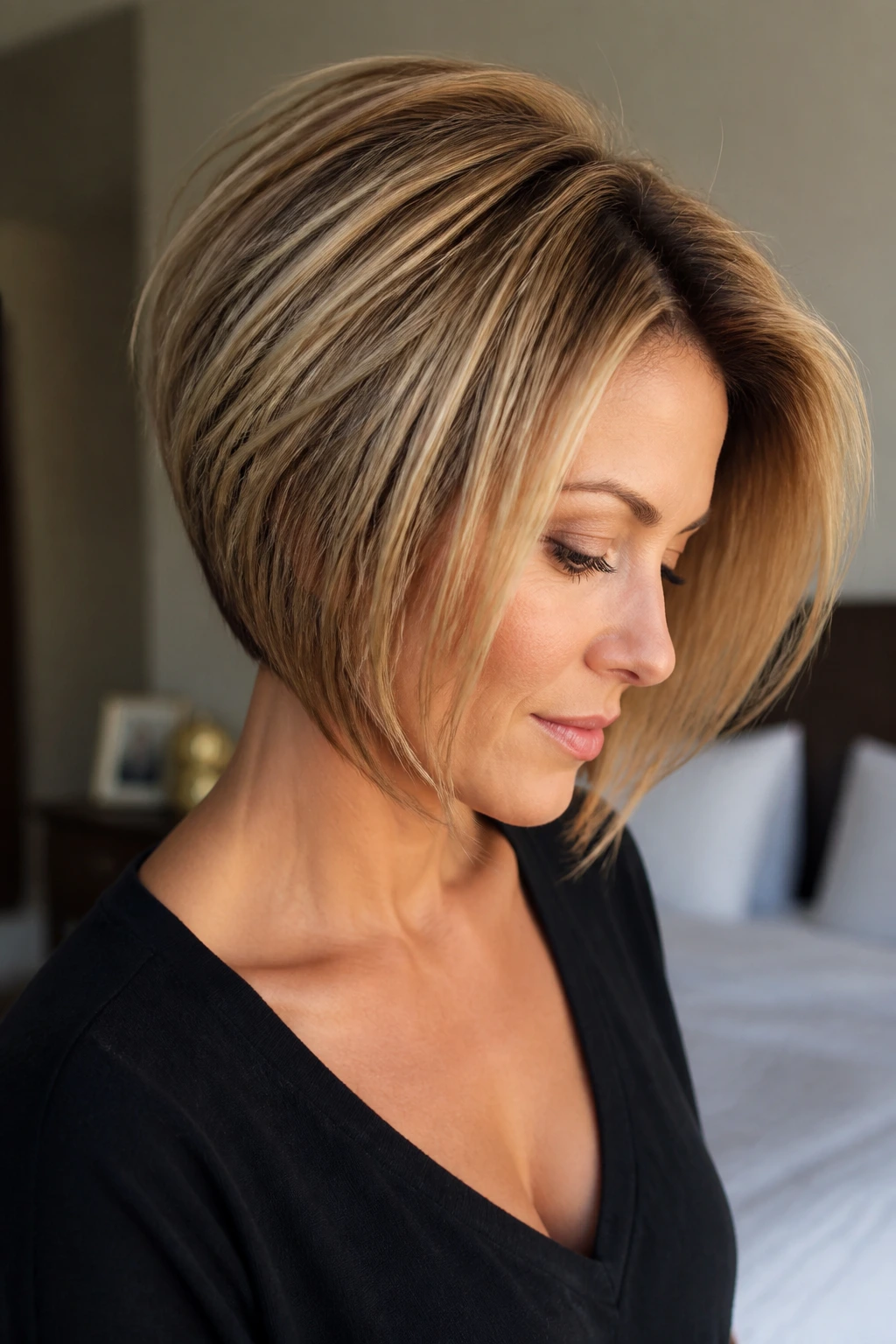
Need more height at the crown without teasing the top into a nest? The inverted bob handles that problem neatly. The back is built shorter and a little fuller, the front stays longer, and the whole shape tilts forward in a way that adds lift at the back of the head.
This is a strong cut for fine hair that tends to collapse near the roots. The stacking in the back gives the illusion of density, while the textured ends keep it from looking too stiff. It also helps if you wear earrings, because the front lengths frame the jaw without burying the face.
Best Styling Move
Blow-dry with the head tipped slightly forward and aim the airflow at the roots near the crown. A small round brush at the back creates shape fast. Do not over-flatten the top with a paddle brush unless you want to erase the whole point of the cut.
12. Stacked Bob with Loose Ends
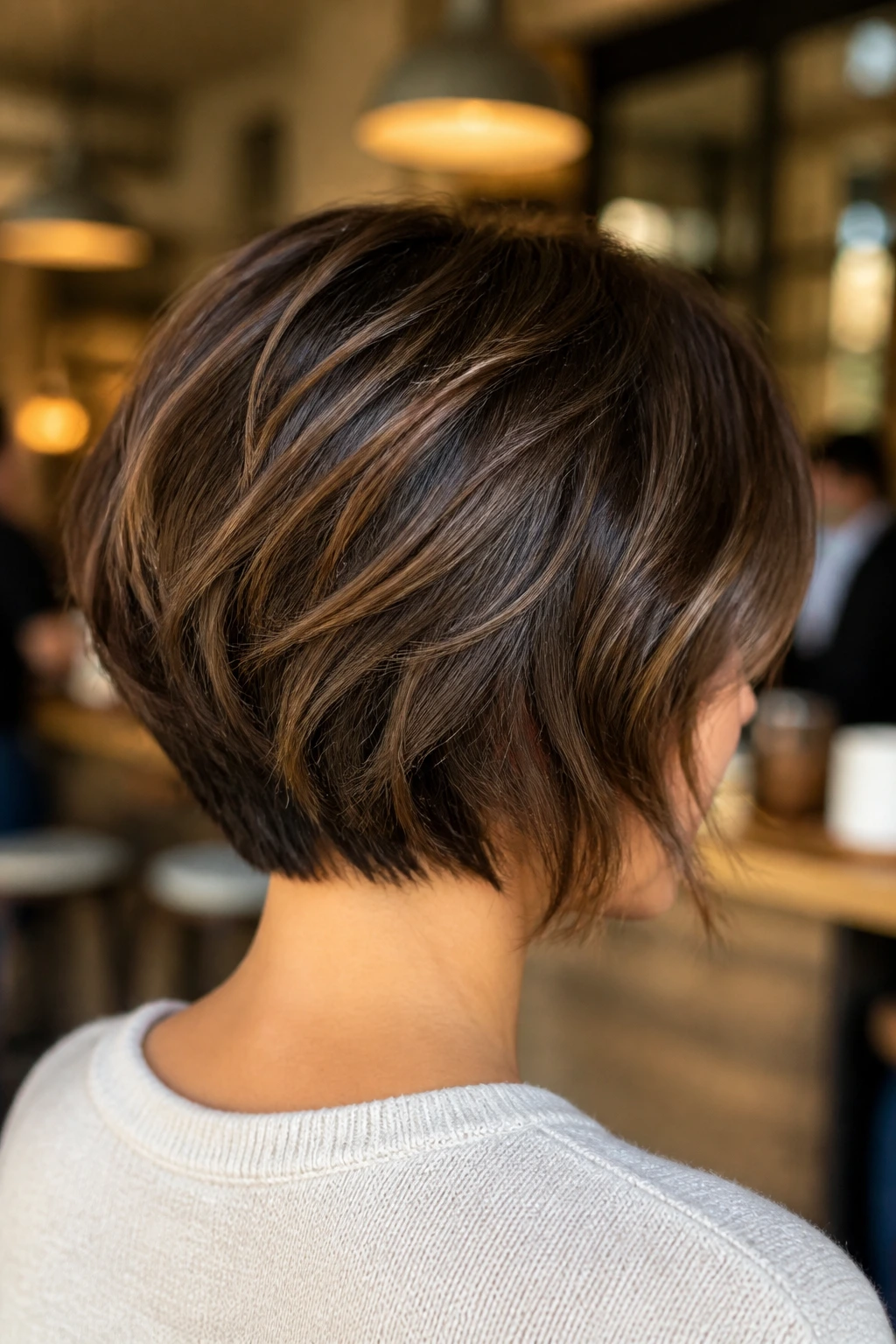
A classic stacked bob can look a little formal if the nape is too tight and the top is too polished. Loosening the ends changes that. You still get the shorter layers in the back, which build lift and shape, but the perimeter is softened so the haircut does not feel stiff.
This is one of the best textured bob haircuts for thick hair that grows out in a heavy line. The stacking takes some of the bulk out of the back of the head, and the looser ends keep the silhouette from looking like a wedge. It sits especially well on people who wear scarves, collared shirts, or jackets that hit the nape.
If your stylist over-stacks it, the cut can date itself fast. Keep the graduation visible but not extreme. You want the bob to move when you turn your head, not stick out like a hard shell.
13. Micro Bob with Messy Texture
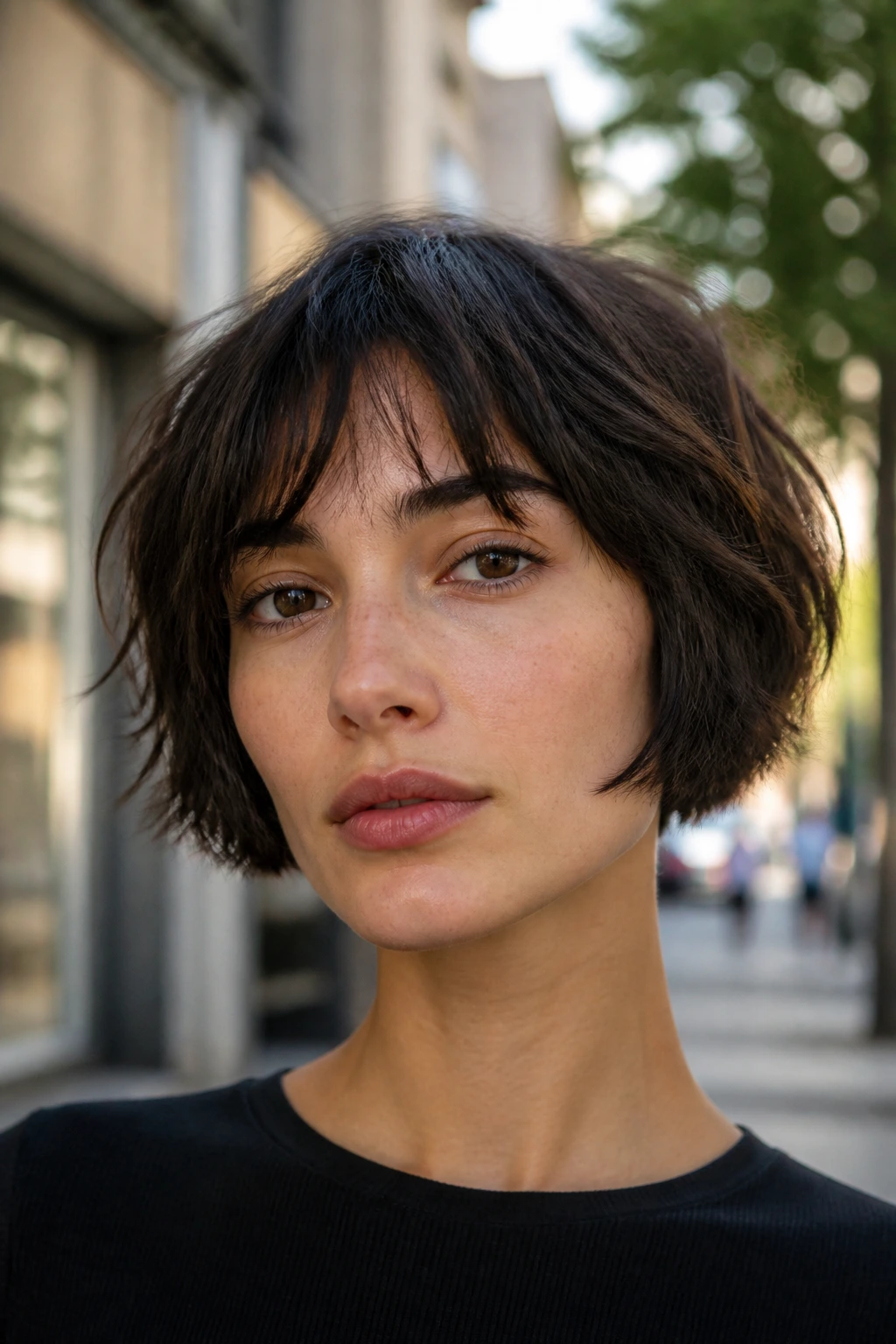
The micro bob lives close to the ear and the jaw, which means the texture has nowhere to hide. That’s why this cut works best when the ends are broken up just enough to keep the shape from looking blocky. It is tiny, clear, and surprisingly elegant when the texture is controlled.
This cut loves a strong neckline and decent face definition. It also pairs well with bold earrings, clean collars, and glasses, because the short length leaves the rest of the frame visible. If you have very dense hair, ask for internal weight removal so the micro bob doesn’t puff out at the sides.
No, it is not the easiest bob to fake with a ponytail. That’s the tradeoff. But when it’s cut well, it has a sharpness that longer bobs can’t quite match.
14. Long Bob with Beach Waves

The long bob, or lob, is the forgiving cousin in the bunch. It keeps enough length to tuck behind the shoulder, but with beach waves and texture, it avoids the flatness that often makes longer bobs feel indecisive. I like this version on people who want movement without losing the option to tie hair back.
The texture should sit mostly through the mid-lengths and the last few inches. If the waves start too close to the roots, the whole cut can swell up and lose its line. If they sit only at the ends, it looks pasted on. The middle is where the shape wakes up.
A 1.25-inch iron or a quick twist with a flat iron can build loose bends. Keep the wave pattern irregular. Uniform curls make a lob look styled. Broken, uneven movement makes it look lived in.
15. Bubble Bob with Airy Ends

A bubble bob sounds playful because it is. The silhouette rounds out softly around the head, then the ends tuck in just enough to create that airy, lifted shape. With texture added to the interior, the haircut feels lighter and less rigid than the name suggests.
This cut is a nice choice if you like a neat outline but hate a severe blunt edge. It can look expensive on thick straight hair because the rounded shape keeps the bulk under control. On finer hair, it needs careful layering so it does not collapse into a flat curve.
The key is restraint around the crown. Too much volume there and the bubble reads as helmet. Too little and you lose the soft roundness that makes the haircut interesting.
16. Cropped Bob with Undercut
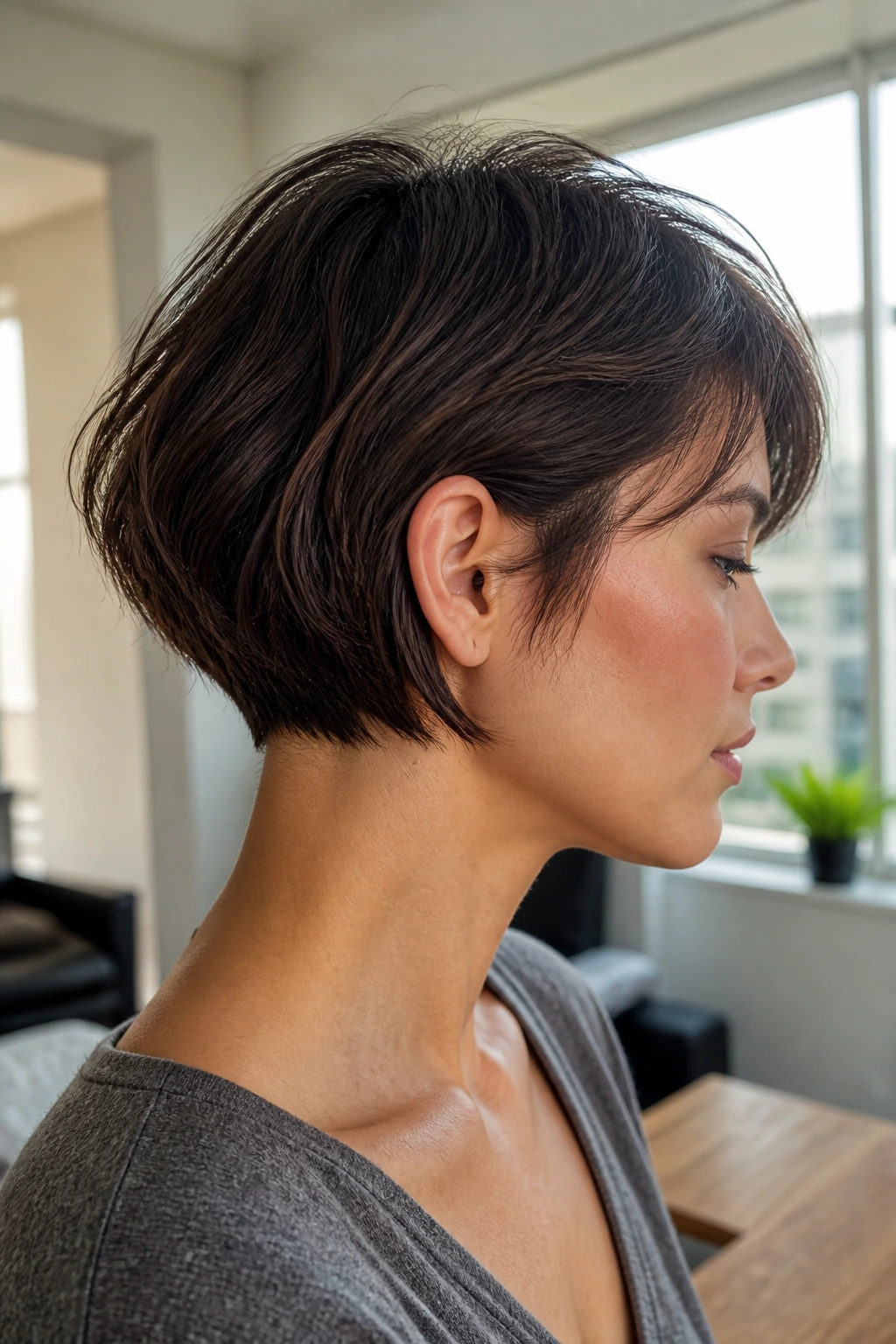
When hair is thick enough to eat its own shape, an undercut can save the whole haircut. A cropped bob with a hidden undercut at the nape, or sometimes just under one side, removes bulk where it piles up most. The top layer keeps the bob look; the undercut takes the weight off.
This is not a timid haircut. It is practical. If your hair feels hot, heavy, or impossible to dry in the back, this cut can change daily life in a real way. The visible length stays neat while the underside stops the shape from ballooning out.
That said, the undercut should be hidden unless you want it to show. Too much removal and the cut starts to feel disconnected. A clean outer line with hidden relief underneath is the better move.
17. Tousled Side-Part Bob
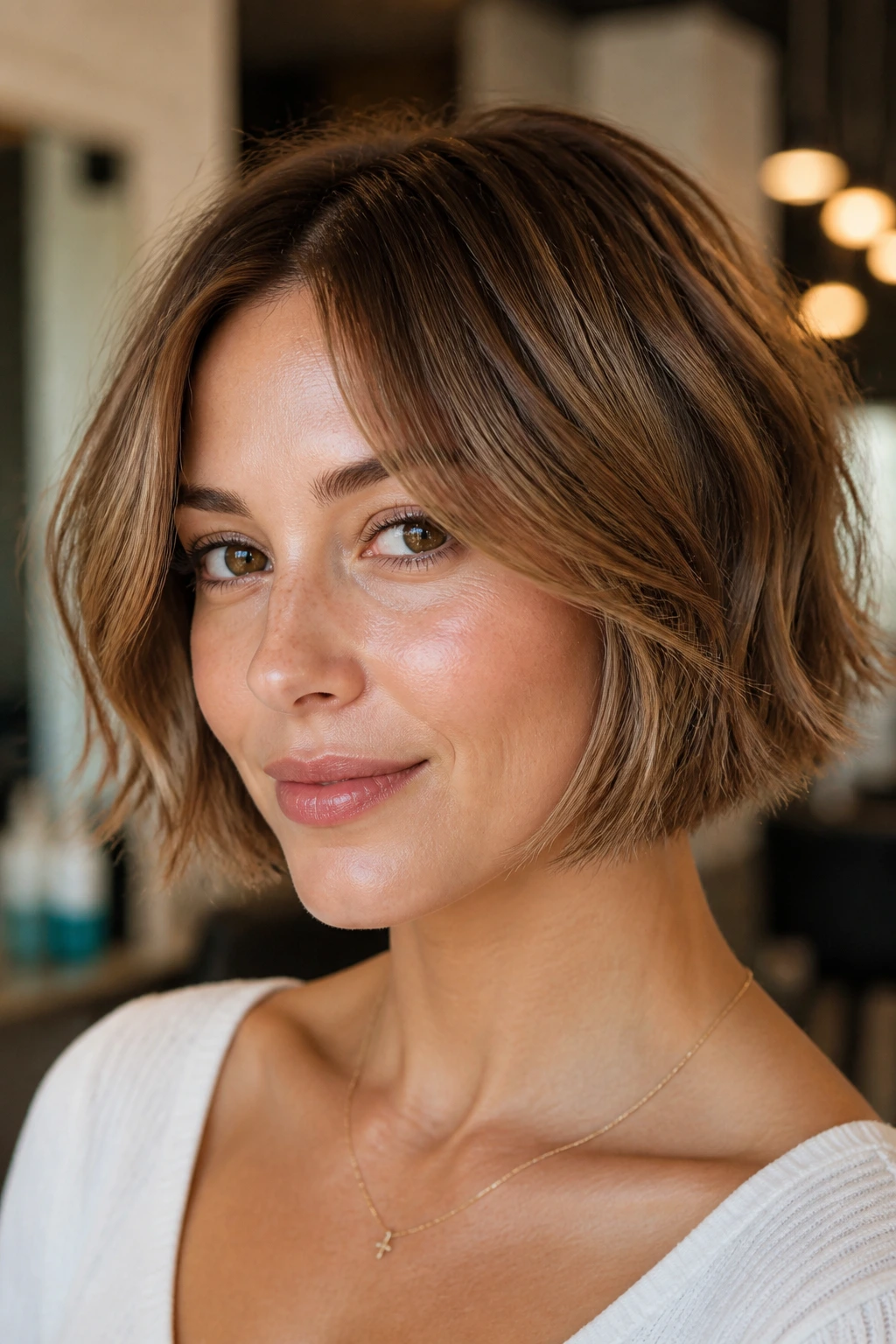
A side part can fix a flat bob faster than a whole new haircut. Shift the weight to one side, and the roots lift on the opposite side automatically. Add some tousled texture through the mid-lengths, and the bob gains movement without needing extra layers everywhere.
This version is especially good for straight hair that lies too close to the scalp. The side part breaks the symmetry and gives the front a little sweep. It also plays nicely with hair that naturally falls heavier on one side, because you are working with the bend instead of fighting it.
A little root-lift spray at the part and a quick rough-dry with your fingers can do most of the styling. Finish by bending only a few ends around the face. You want a visible part and a relaxed body, not full curls.
18. Blunt Bob Softened with Internal Layers
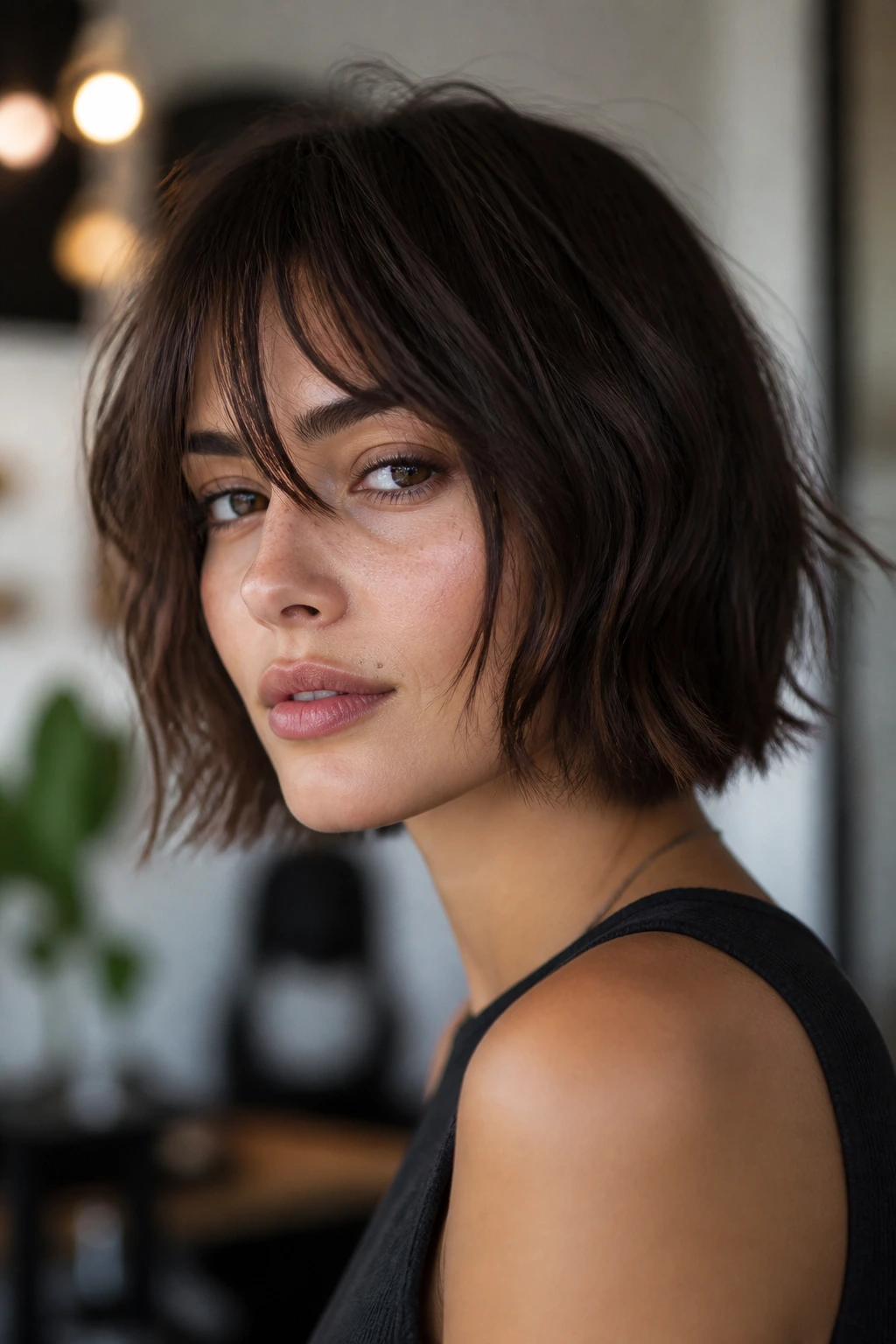
This is one of my favorites because it gives you both things people usually think they have to choose between: a solid line and movement. The outside remains blunt, so the bob looks thick and tidy. Inside, the layers are carved just enough to prevent the cut from sitting like a solid block.
It is a smart option for fine hair that still needs body. A completely shattered bob can make fine hair look sparse at the ends. Keeping the perimeter blunt solves that problem, while the hidden layers keep the inside from feeling heavy.
Why It Looks Better Than It Sounds
You do not see the internal layers first. You feel them. The hair falls easier, bends more naturally, and dries with less effort. That is the whole appeal. The cut still looks neat when you tuck it behind your ear, which is more useful than most people admit.
19. Air-Dried Natural Texture Bob
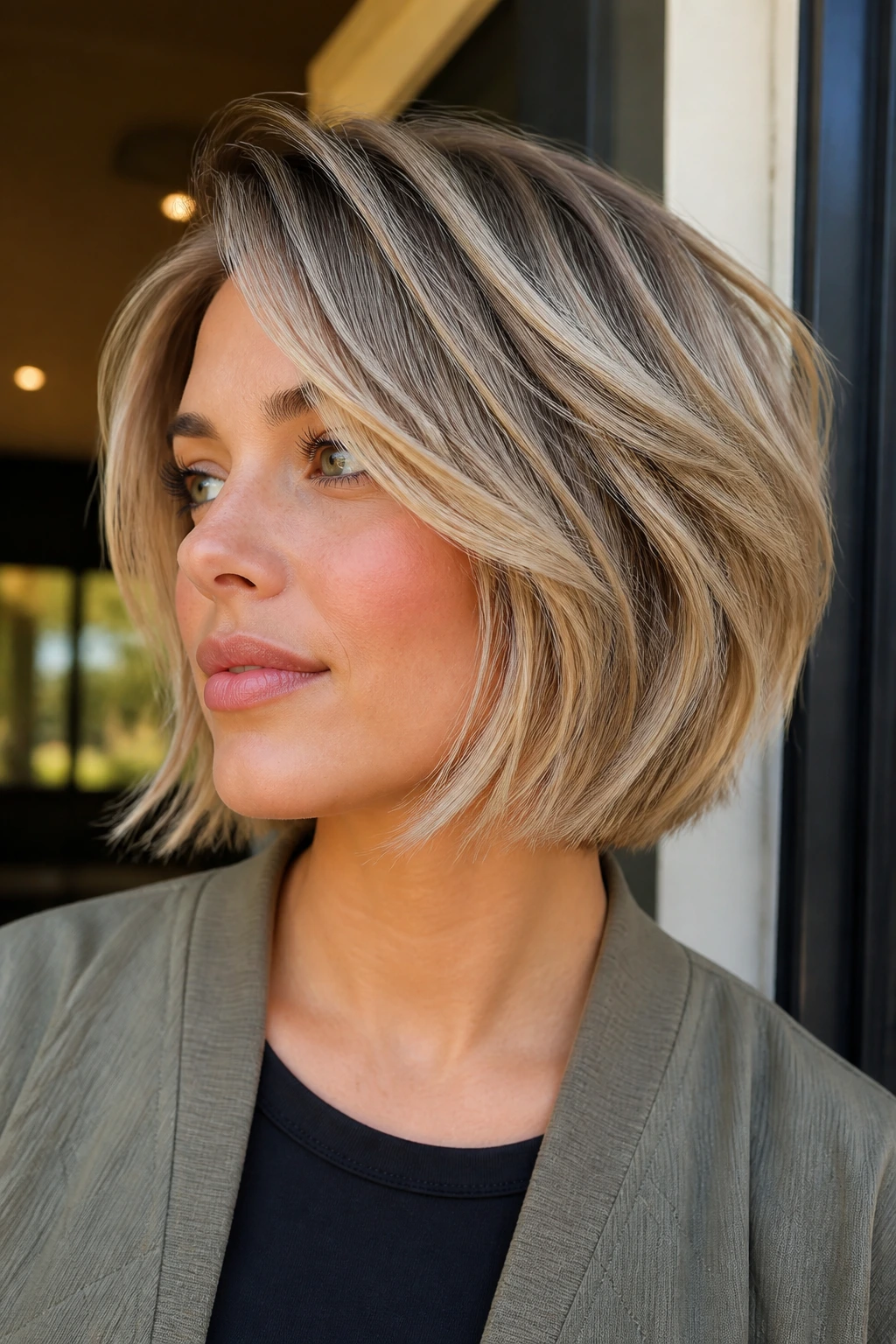
Some hair wants a blowout. Some hair wants to be left alone. An air-dried textured bob works when the natural wave or bend in the hair already does most of the lifting. The cut is shaped to respect that pattern, so it does not fight the way your hair wants to fall.
The secret here is length and weight placement. If the bob is too short, natural texture can spring up and frizz outward. If it is too long and heavy, the bends disappear under their own weight. A good air-dried bob sits in the middle and gets a little help from leave-in cream or foam.
I like this cut for people who are tired of heat tools. Let it dry about 80 percent of the way on its own, then scrunch the ends with your hands and leave the shape a little imperfect. That softness is the point.
20. Razored Bob with Fringe

A razored bob with fringe has more edge than the French bob and less shag than a full shag cut. The fringe gives the haircut a front-facing personality, while the razor work lightens the ends so the whole thing feels softer when it moves. It is a neat way to make a bob look a little rebellious without turning it messy.
This one is best when the fringe is kept in proportion to the rest of the cut. Too heavy, and the forehead gets buried. Too wispy, and it looks accidental. The fringe should connect to the bob, not sit on top of it like an afterthought.
If you have a cowlick at the front, say so. Razor-cut fringe can split in a stubborn spot if the hairline pushes against it. A stylist who knows that in advance can adjust the angle and save you a lot of annoying morning rearranging.
21. Deep Side-Part Bob
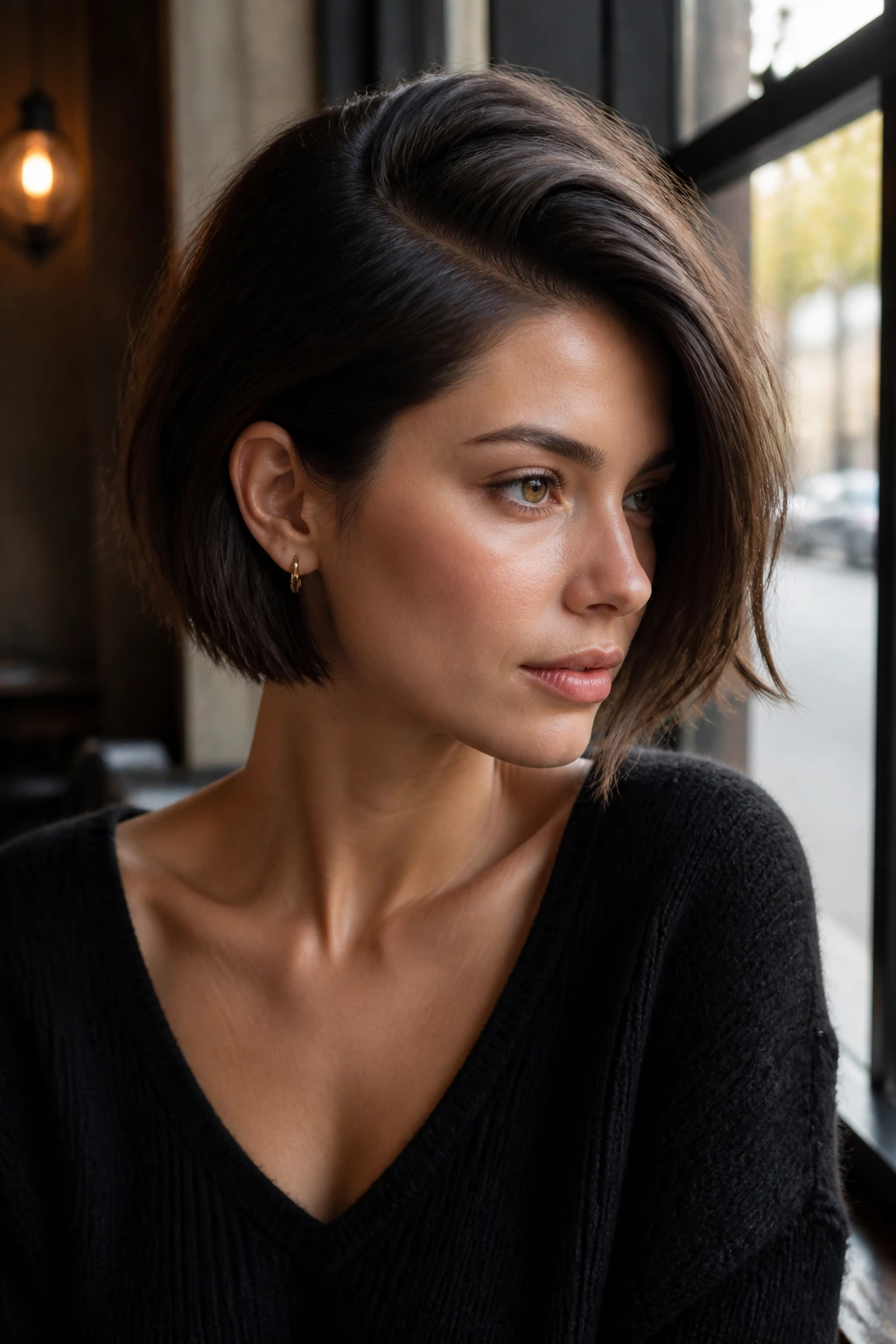
A deep side part can change a bob more than a few people expect. The same cut that looks neat in the center suddenly gets drama and lift when the part shifts over. It pulls the hair up at the root on one side and lets the other side drape longer, which gives the texture a clear direction.
This is a good move if your face feels a little too symmetrical with a center part. It also helps if one side of your hair lies flatter than the other. The deep part gives the bob an obvious top line, and that line makes the whole haircut feel more sculpted.
For styling, lift the roots at the heavy side with a vent brush or your fingers, then smooth the other side close to the face. You do not need a lot of product. The part does most of the work.
22. Chin-Grazing Shattered Bob

A chin-grazing shattered bob sits in that sweet spot where the jawline still looks sharp, but the ends do not cut across the face like a ruler. The shattered texture breaks up the line around the chin and cheekbones, which keeps the haircut from feeling too blunt or too precious.
This is a good cut for people who want definition without heaviness. It also works nicely with glasses because the broken ends don’t crowd the frames. The overall effect is clean, but not severe.
If your hair tends to puff at the sides, ask for the weight to stay low and the breakup to happen mostly at the perimeter. That keeps the texture controlled. The haircut should move in small pieces, not flare outward at every turn.
23. Rounded Bob with Soft Volume
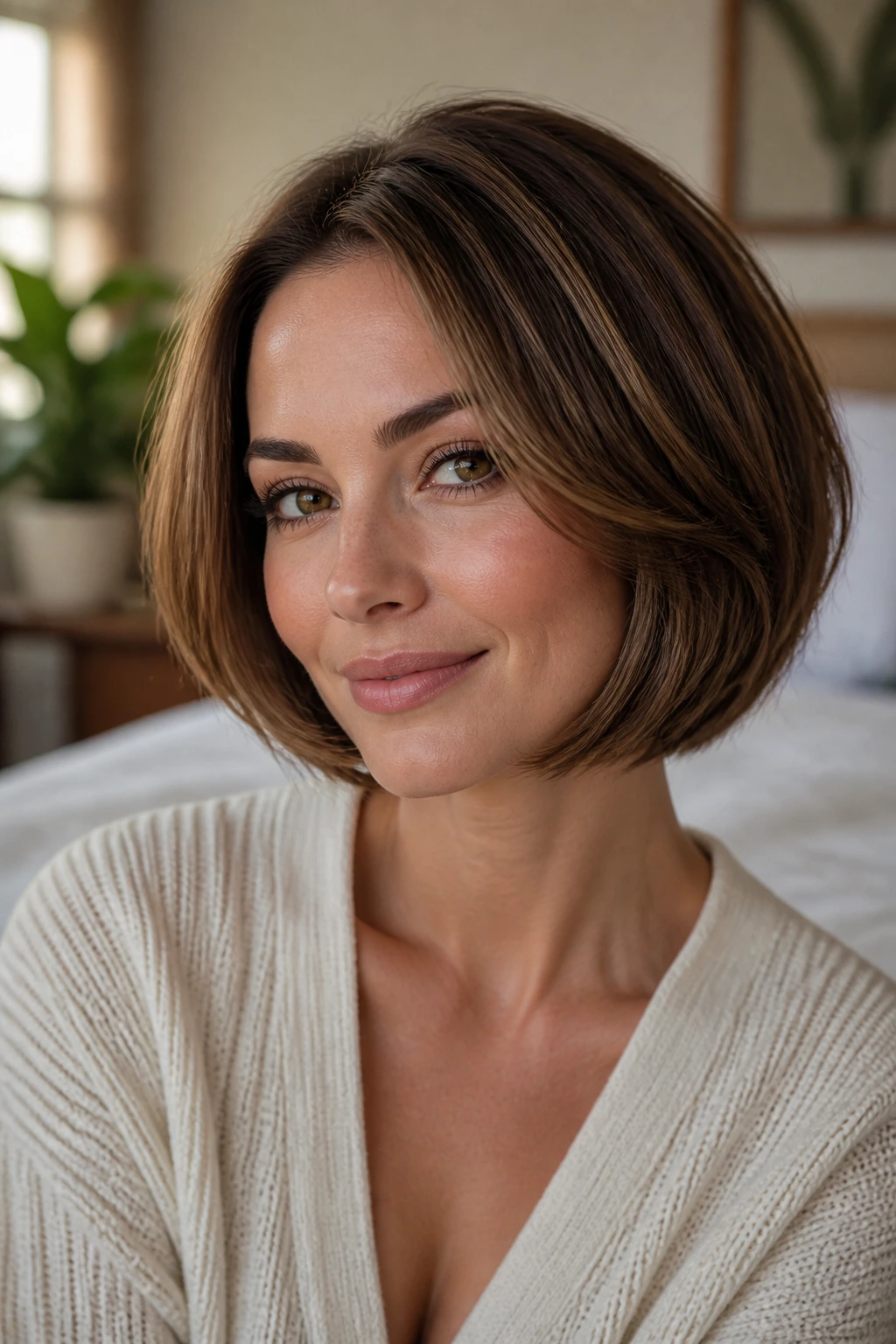
A rounded bob has a softer outline than a classic square one. The curve hugs the head a bit more, and the texture keeps it from feeling too formal. This version is a favorite for people who want polish without a hard edge around the jaw.
It works especially well when the crown needs a little lift and the ends need to tuck under without looking stiff. A large round brush, a few clips at the crown, and a light pass of smoothing cream can build the shape fast. The volume should sit gently, not sit on top like a stack of cushions.
I like this cut on hair that naturally wants to puff up a little. The rounded shape gives it a job to do. Instead of fighting the bend, you steer it.
24. Mushroom Bob with Movement
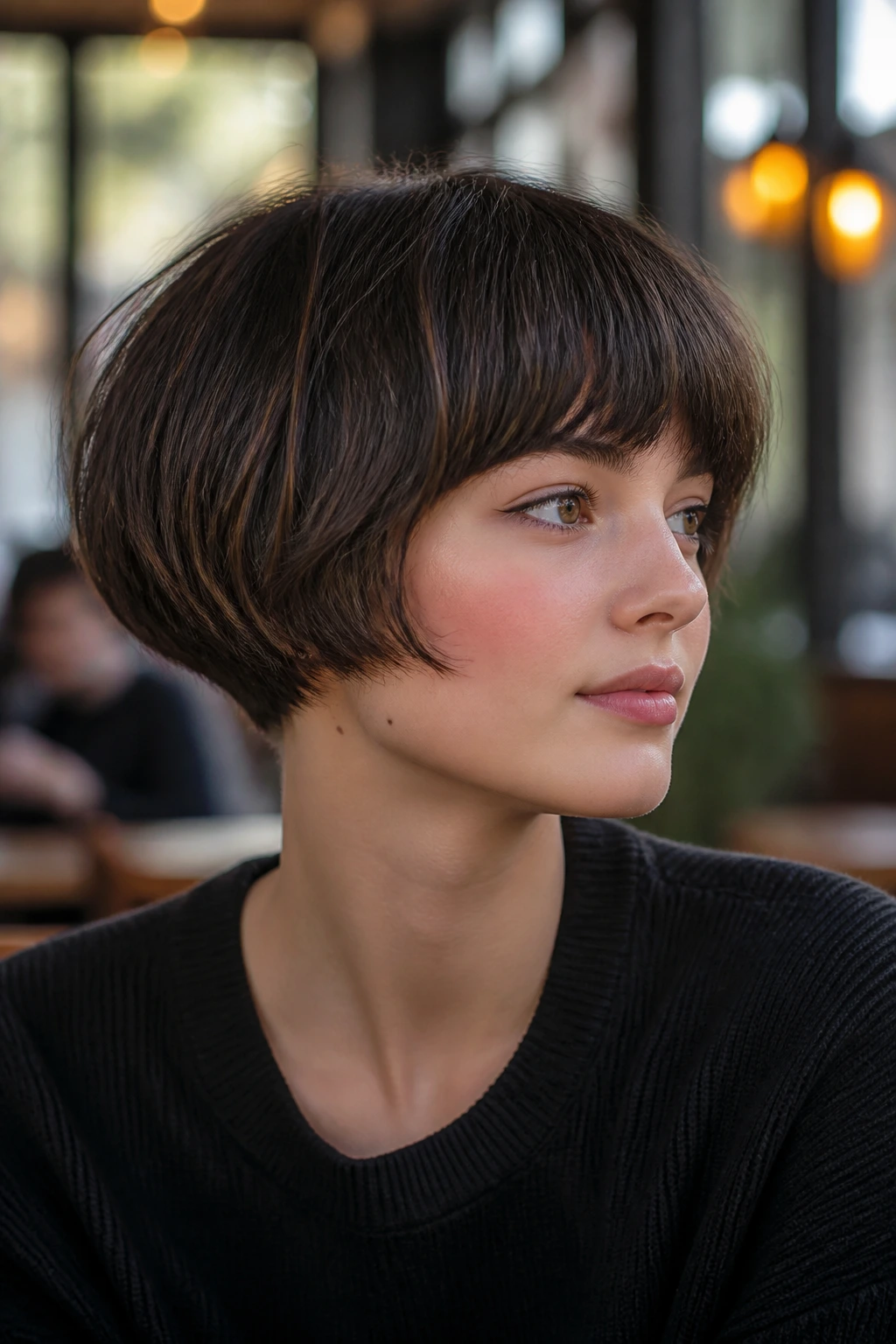
A mushroom bob can sound dated if you picture it as a heavy dome. That’s not the version I mean. A textured mushroom bob keeps the rounded silhouette but removes enough weight through the interior that the cut has swing and a little lift at the edges.
This style is a strong fit for thick straight hair. The curve around the head keeps bulk under control, and the movement stops it from reading as a block. If the lines are too sharp, it turns harsh. If the layers are too aggressive, it loses the mushroom shape altogether. The balance is delicate.
The Shape To Ask For
Tell your stylist you want roundness with movement, not a stacked bowl. That sentence matters. It points the cut toward softness and away from the overly rigid versions people still remember from bad school photos.
25. Wolfish Bob with Soft Ends

A wolfish bob is what happens when a shag and a bob decide to share a haircut but not the same rules. The ends are broken up, the fringe is often longer, and the shape feels a little wild around the edges while still keeping a bob’s outline. It is not a full shag. That matters. The bob line stays present.
This cut is great if you like texture that shows. Not hidden texture. Visible texture. The layers can be more irregular, and the fringe can fall in soft pieces around the forehead and cheekbones. On thick hair, it removes weight fast. On fine hair, it needs a gentler hand so the shape doesn’t go sparse.
The best version still has a clean anchor point somewhere near the jaw or neck. Without that, it turns into a shaggy mess. With it, the haircut has edge, movement, and enough structure to wear to dinner without looking like you forgot to brush it.
How Texture Changes the Weight Line

A textured bob is only good when the weight lands where you want it. That sounds technical because it is. Hair is basically architecture with mood swings. If all the weight sits at the bottom, the bob looks heavy. If too much is removed near the ends, it looks fuzzy and weak.
The job of the cut is to redirect the weight line. That can mean leaving more fullness at the perimeter for fine hair, or removing bulk from the interior for dense hair. It can mean a stacked back, a longer front, a soft fringe, or nothing but a few well-placed point cuts. Each move changes how the hair falls at the jaw and neck.
The part people skip is that the shape has to be designed for the way the hair behaves when it dries. Straight hair lies down differently from wavy hair. Curly hair shrinks. Cowlicks push. Thick hair swells. A textured bob works when the stylist cuts with those patterns in mind instead of hoping mousse will fix everything.
Essential Tools for Styling a Textured Bob
-
Blow dryer with a concentrator nozzle: The nozzle helps you direct airflow at the roots and stop the hair from ballooning outward.
-
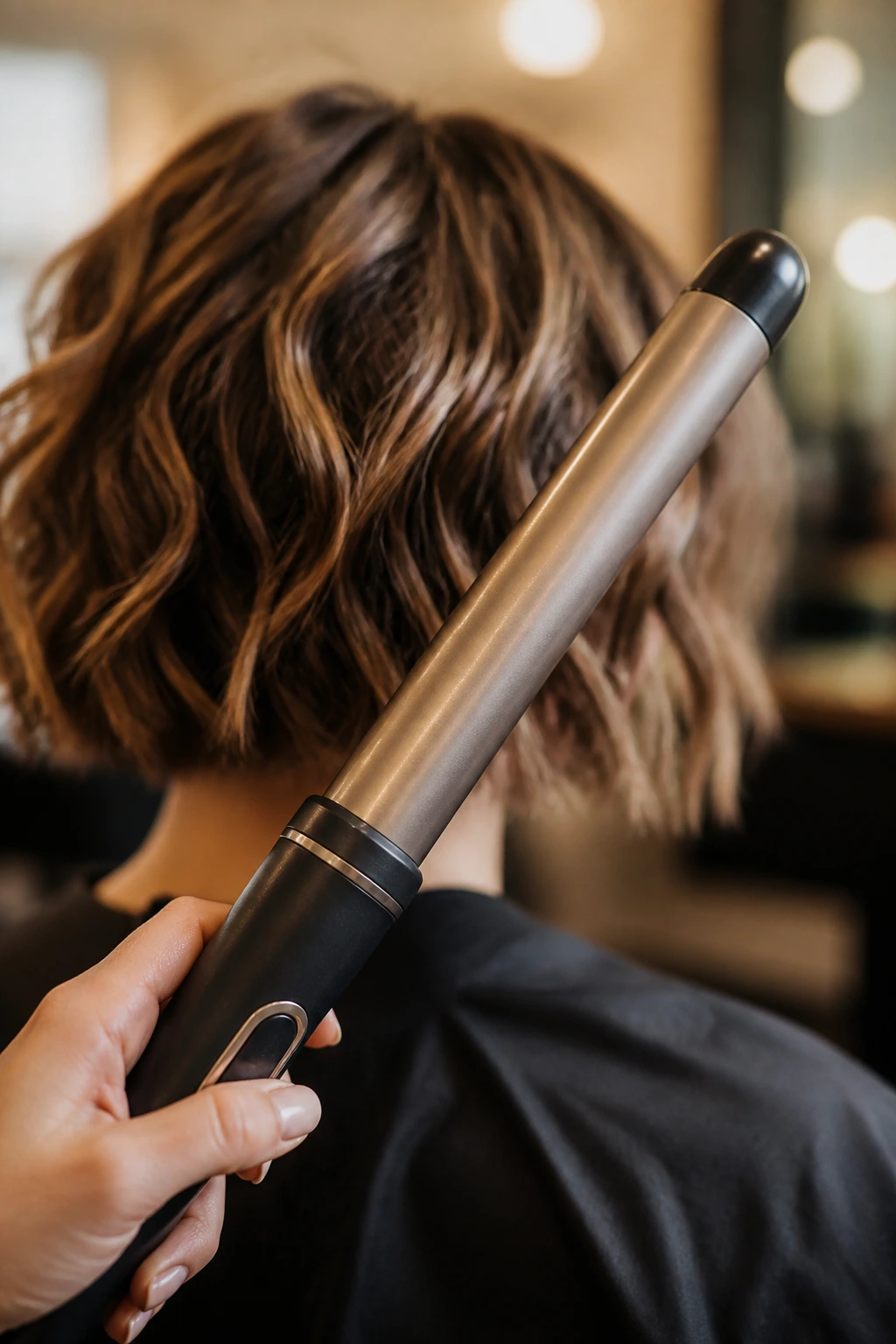
1-inch curling wand or iron: Best for adding small bends to piecey bobs, chin-length cuts, and soft waves through a lob.
-
Medium round brush: Useful for rounded shapes, flipped ends, and a little lift at the crown.
-
Vent brush: Good for rough-drying fast, especially if you want the texture to stay loose rather than polished.
-
Lightweight mousse or root foam: Gives body without the crunchy, stuck-together feel that heavy sprays can leave behind.
-
Texturizing spray or dry shampoo: Use it on clean hair if the roots slip flat or on day two if the ends need separation.
-
Small flat iron with rounded edges: Handy for shaping a few face-framing pieces or bending the ends under without a full curl.
-
Sectioning clips: Not glamorous, but they keep the top layers out of the way when you’re styling the underside or nape.
-
A small amount of finishing cream or wax: A pea-sized amount can define ends on a shaggier bob; too much will flatten the cut fast.
Smart Salon Notes for Your Appointment

Bring photos, yes. But bring the right photos. One should show the silhouette you want, and the other should show the texture level you like. That keeps the conversation from getting trapped in vague words like “messy” or “soft,” which mean different things to every stylist.
Tell them how you actually wear your hair. If you air-dry most days, say that. If you round-brush it every morning, say that too. A textured bob that only looks right with a 20-minute styling session is not the same haircut as one that works with a towel and a little mousse.
Mention your cowlicks, growth patterns, and the spots where your hair fights you. The temple swirl, the nape kick-out, the front whorl—those details shape the final cut more than people expect.
Ask for these specifics
- Length: chin, jaw, cheekbone, or collarbone
- Perimeter: blunt, softly shattered, or heavily piecey
- Internal weight: light, moderate, or heavy removal
- Fringe: none, curtain, side-swept, or brow-skimming
- Finish: air-dry-friendly, blowout-friendly, or both
How to Style These Cuts Without Making Them Puffy
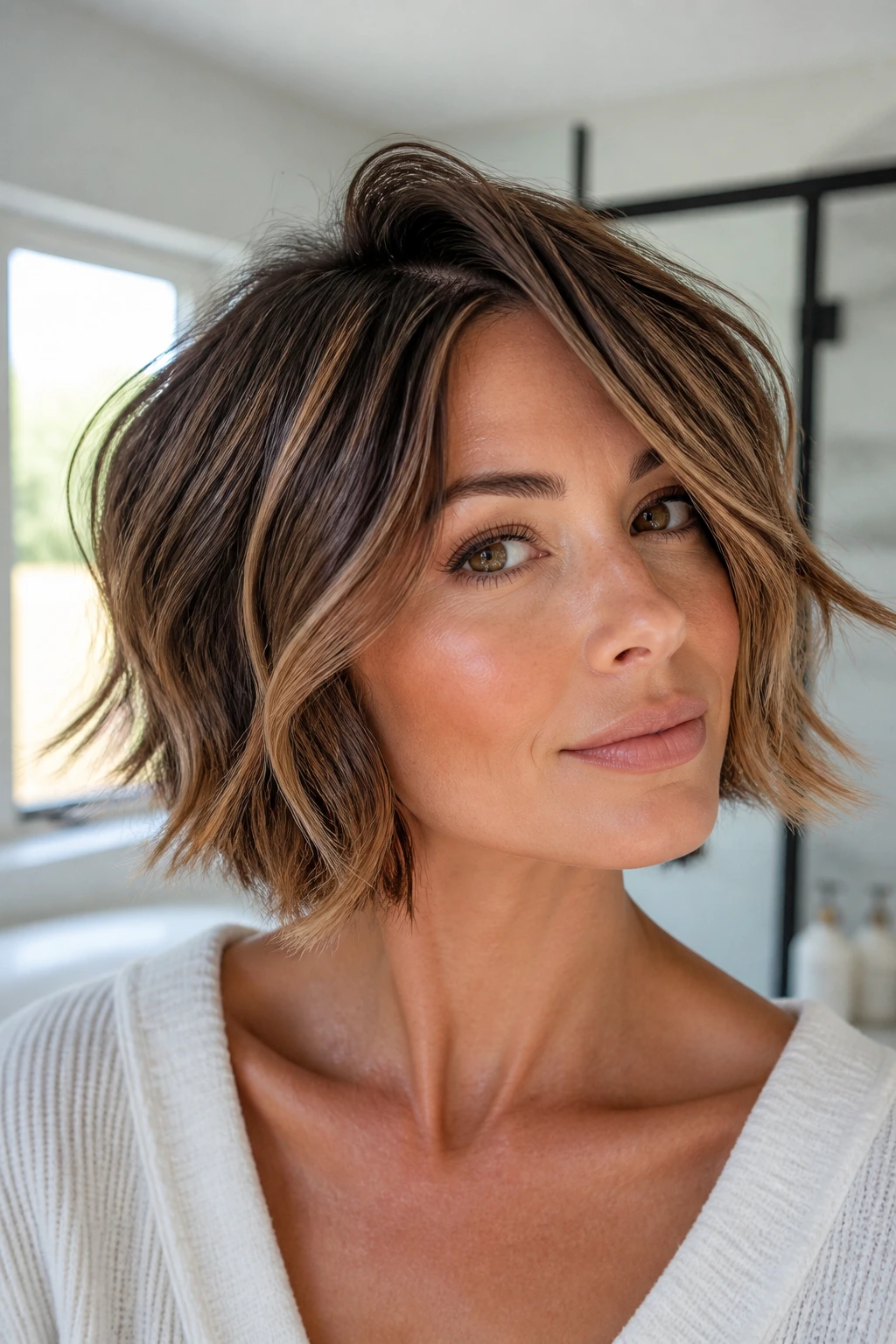
Root Lift: Put mousse or root foam at the crown and through the top two inches only. That gives the bob some height without turning the ends into a frizz cloud.
End Separation: Use a tiny amount of cream, balm, or wax on the fingertips and pinch the ends apart. Think “separated,” not “slicked.”
Heat Control: If you use a blow dryer, keep the nozzle moving and stop before the hair gets bone dry. A little dampness makes the ends bend more naturally and keeps the finish from looking overworked.
Straight Hair: Bend the last inch of hair under or out with a flat iron or round brush, then leave a few strands alone. Too much consistency makes the cut look machine-made.
Wavy Hair: Scrunch in product, then diffuse or air-dry until about 80 percent set. Resist the urge to touch it every five minutes. That is how nice waves turn into fluff.
Curly Hair: Shape the curls while they’re damp, let them set, then break the cast with a pea-size amount of oil on the palms. Do not rake through the crown unless you want the whole outline to collapse.
Common Mistakes That Flatten or Frizz a Bob
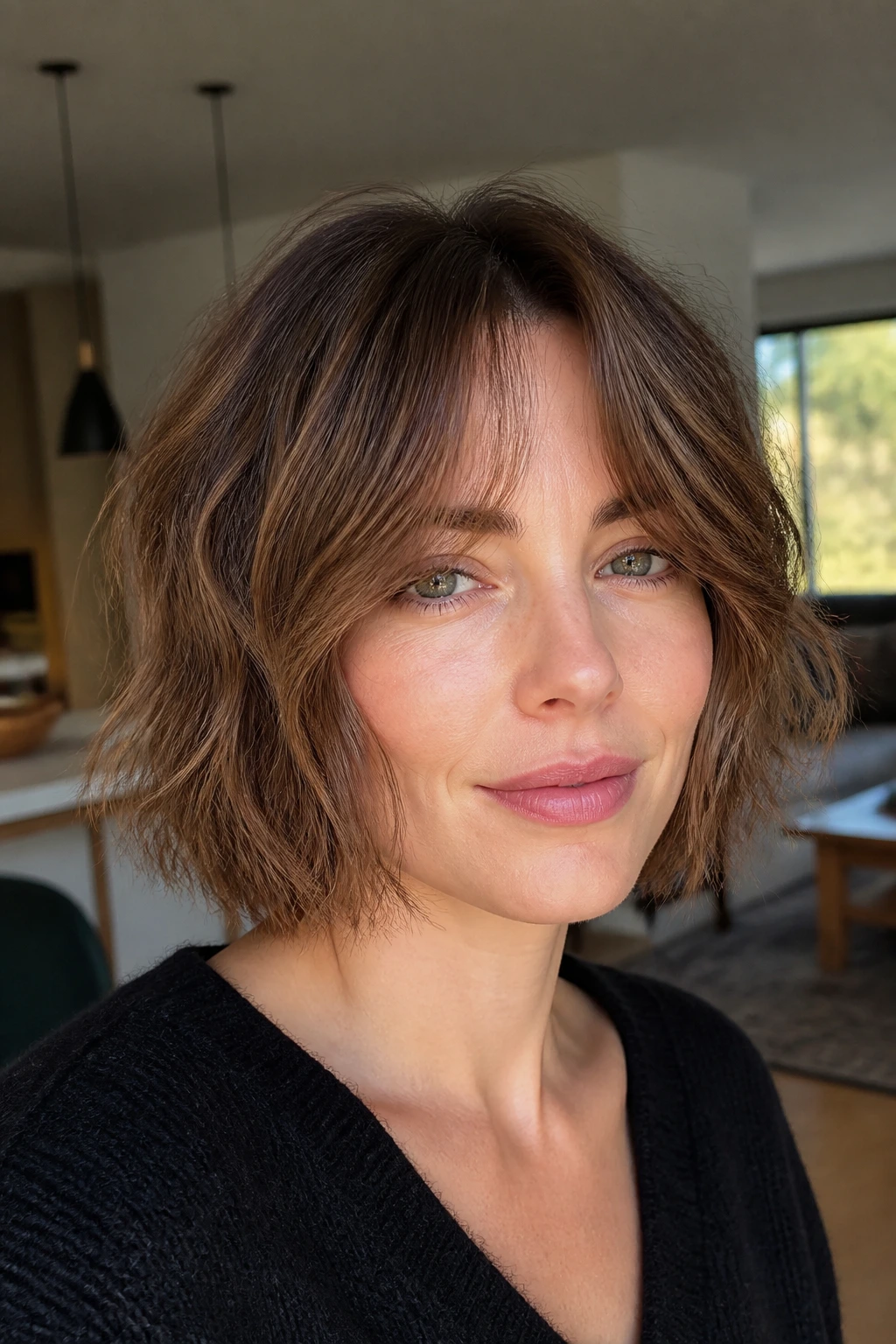
-
Over-thinning the ends: The bob starts to look see-through and the line gets weak. Fix it by asking for point cutting or internal removal instead of shaving the ends down.
-
Removing the perimeter entirely: Too much texture around the bottom turns the haircut shaggy in a bad way. The outline needs to stay readable.
-
Using heavy oil near the roots: The crown drops, the sides stick together, and the bob loses shape by lunchtime. Keep oil on the mid-lengths and ends only.
-
Curling every section the same direction: The result looks too neat and a little stiff. Alternate directions or leave the ends straight so the texture feels broken up.
-
Skipping trims too long: The shape loses its clean edge and starts to look rounder or heavier than intended. Short bobs need maintenance, plain and simple.
-
Styling it while it’s too wet: Water-weight drags the cut flat. Get more of the drying done first, then shape the end behavior with the last bit of heat or product.
Fresh Ways to Adapt the Cut
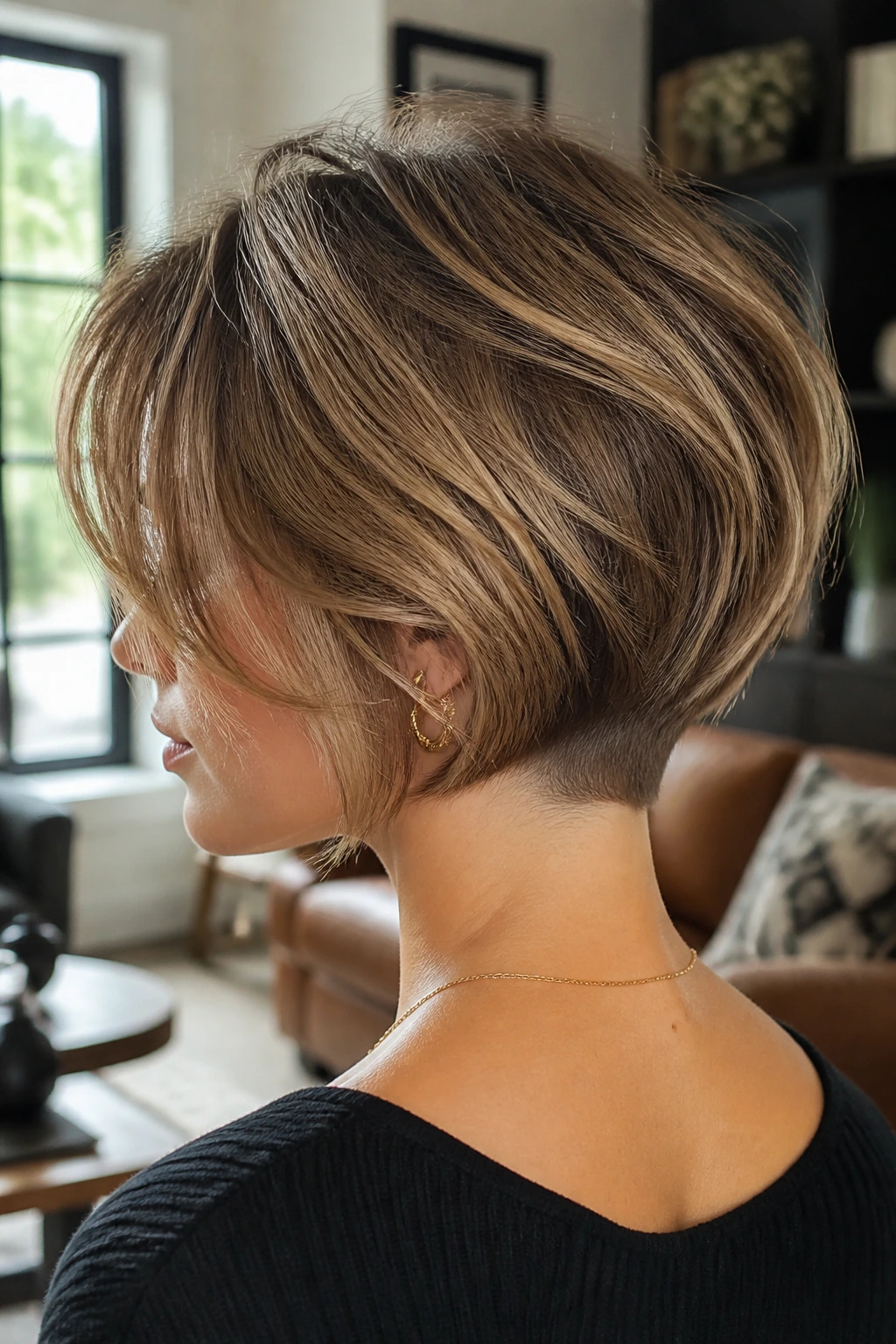
Fine-Hair Float: Keep the perimeter blunt and use only light internal layers. This preserves the look of density at the edge while still giving the inside room to move.
Thick-Hair Thinner: Add hidden undercut work or stronger internal removal. That cuts down on bulk at the nape and sides so the bob doesn’t puff outward.
Curl-First Shape: Have the cut done dry or nearly dry and keep the layers longer. That respects the spring of the curls and stops the shape from shrinking into a triangle.
Low-Heat Air-Dry: Leave the hair a touch longer and add texture with product instead of tools. A foam or leave-in cream plus a soft scrunch does the work with less heat.
Office-Neat Version: Keep the outline cleaner, soften the ends only a little, and use a side part or tucked-behind-the-ear finish. The bob still has movement, but it reads tidier.
Sharper Weekend Version: Ask for more piecey ends and a slightly messier fringe or face frame. Same cut, more attitude. A little texturizing spray wakes it up fast.
Keeping the Shape Between Trims
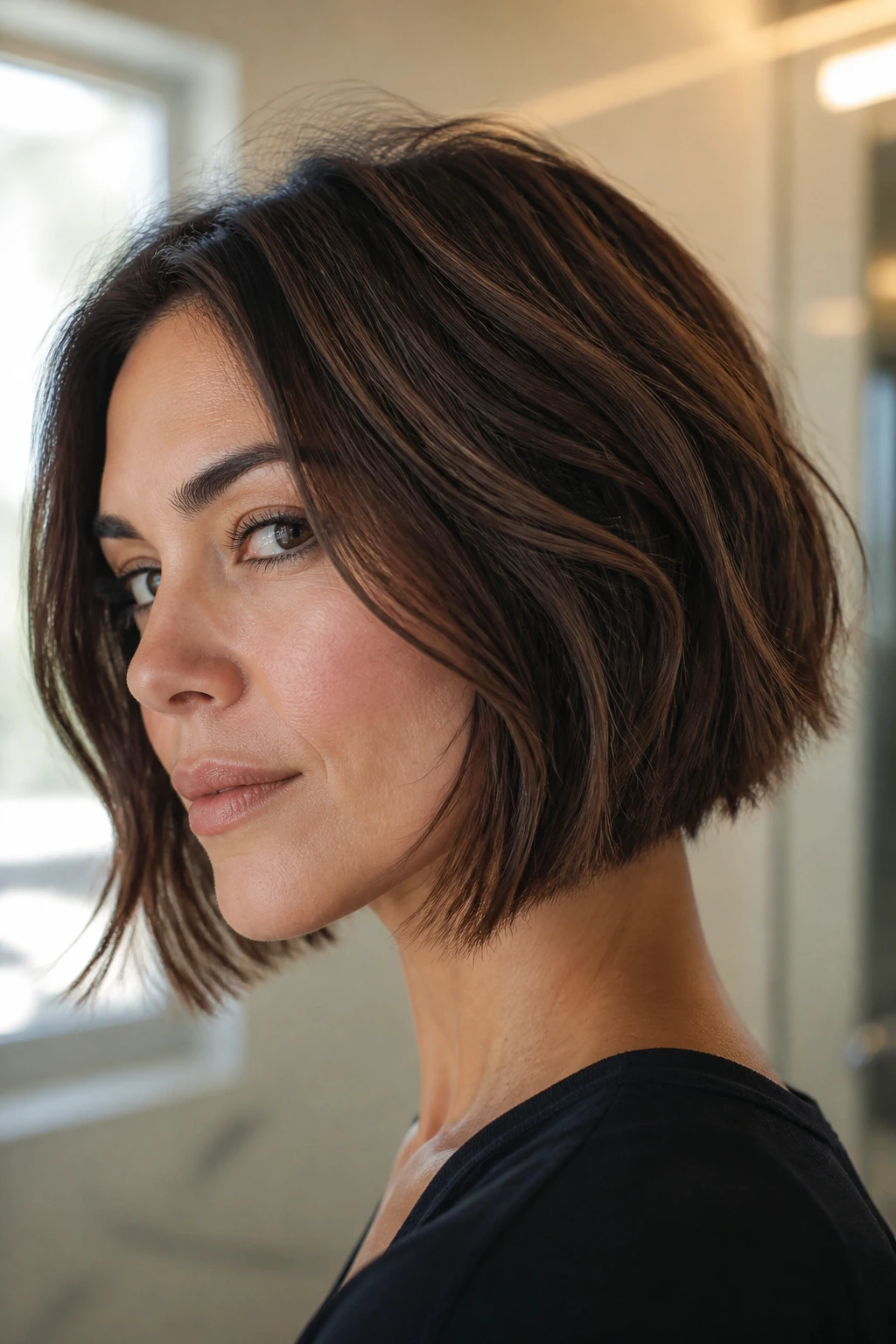
A textured bob does not need constant salon visits, but it does need regular ones. Shorter versions usually need a trim every 6 to 8 weeks if you want the line to stay crisp. Lobs can stretch a little longer, often 8 to 10 weeks, because the extra length disguises grow-out better.
Between cuts, the goal is not to rebuild the haircut every morning. That is a waste of time. Instead, keep the shape clean by refreshing the roots when they flatten and reworking the ends only when they start to split apart too much. A mist of water, a little foam, and a quick 3-minute rough-dry can bring the bob back to life faster than a full restyle.
Product buildup is the enemy of a good textured bob. If your hair starts feeling sticky or coated, use a clarifying shampoo every 2 to 4 weeks depending on how much spray or cream you use. Thick hair can hide buildup for a while. Fine hair shows it faster.
A satin pillowcase helps more than people think. So does not sleeping with the bob trapped in a tight clip. Flattened roots and bent ends are easier to prevent than to fix at 7:10 in the morning.
Frequently Asked Questions
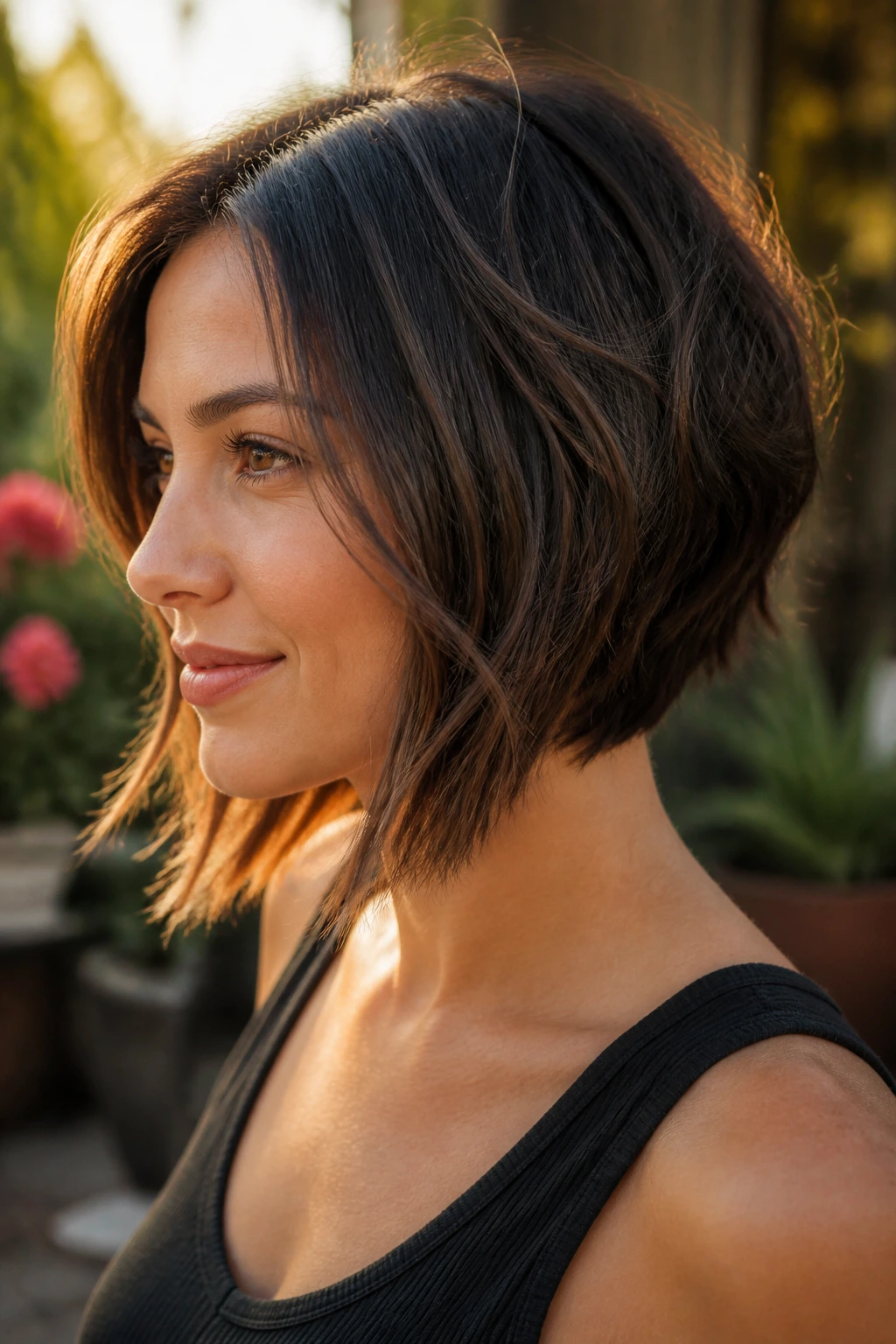
Will a textured bob work on fine hair?
Yes, if the cut keeps enough perimeter to make the ends look full. Fine hair usually does better with light internal texture and a cleaner outer line than with aggressive thinning.
Is a textured bob good for thick hair?
Very, as long as the stylist removes weight in the right places. Thick hair often benefits from hidden layers, undercut relief, or a softer perimeter so the bob does not sit wide at the sides.
What’s the difference between layers and texture?
Layers change the length in different zones; texture changes how the ends look and move. A bob can have layers without looking piecey, and it can look textured without having a lot of visible layering.
How do I stop my bob from looking poofy?
Use less product near the roots, keep the crown from over-drying, and ask for a shape that controls the weight line. If the ends are too feathered and the top too full, the cut will puff out fast.
Can I air-dry a textured bob?
Absolutely, if your natural pattern has some bend. Wavy and curly hair often air-dries well in this shape, especially when the cut is designed for that finish. Straight hair usually needs at least a little help at the ends.
What should I tell my stylist if I want movement but not a shag?
Ask for a bob with a clean perimeter and light internal texture. That phrase matters. It tells them you want motion without losing the bob’s outline.
Which part looks best with a textured bob?
Center parts suit balanced, soft shapes. Side parts add lift and can save flatter roots. The better question is which part your cowlicks already prefer.
How often should I trim a short textured bob?
Every 6 to 8 weeks is the safe range if you want the shape to stay sharp. If you let it drift longer, the ends can flip or widen and the textured effect starts to look accidental.
Can a textured bob grow into a lob without looking awkward?
Yes, if the cut is layered with the grow-out in mind. Softer ends and moderate texture make that transition less abrupt than a brutally blunt bob.
The Shape That Keeps Moving

The nicest thing about textured bob haircuts is that they don’t ask hair to pretend. Fine hair can stay light. Thick hair can lose some of its bulk. Curly and wavy hair can keep their own pattern instead of being ironed into a lie. That honesty is part of why the cut works so well.
The other reason is simpler: a good textured bob still has bones. It is not a free-for-all. The line matters, the weight matters, and the finish matters. Get those three pieces right, and the haircut can shift from neat to soft to edgy without losing its core shape.
Pick the version that matches how your hair actually behaves, not the version that looks best in a perfect-styled photo. That choice is the one that pays off every morning.
