



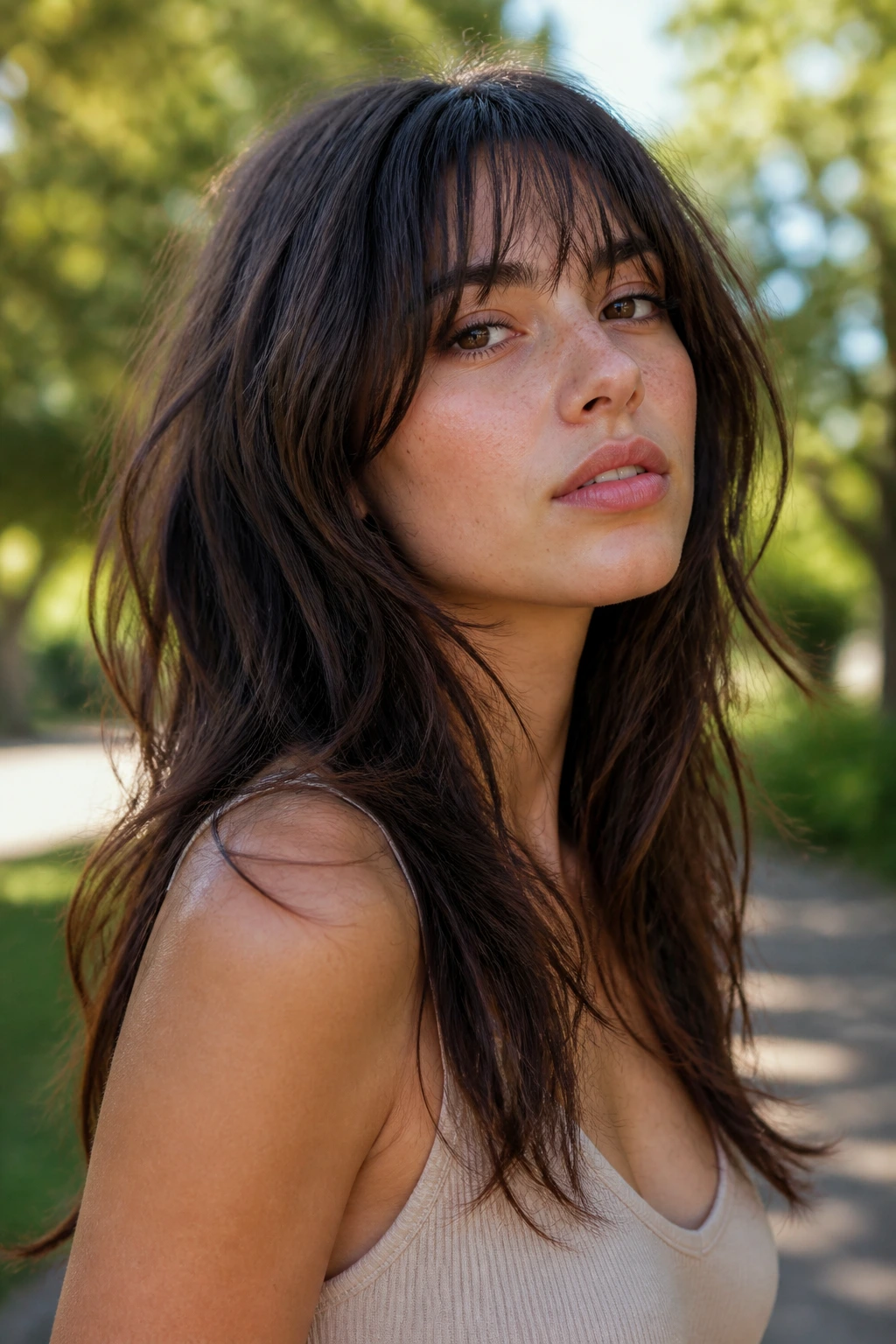
A wolf cut with bangs lives or dies on the fringe. Get that part right, and the haircut feels soft, sharp, and a little unruly in the best way; get it wrong, and the whole shape can slump into something heavy at the crown with no real face framing. The reason is simple. A wolf cut depends on contrast: shorter, airier layers at the top, longer lengths underneath, and a front section that either melts into the rest or stands up as the point of view.
What I like about wolf cuts with bangs is how much room they leave for personality. Curtain bangs make the cut feel lived-in. Bottleneck bangs pull it toward something neater. Micro bangs push it toward punk. Curly bangs do their own thing, which is honestly part of the charm. You do not need every version to suit every head. You do need the right one for your texture, your face, and how much styling you’re willing to do before coffee.
That’s where most people get tripped up. They save a photo of a shaggy, piecey wolf cut and forget that the fringe in the photo was probably cut for a specific density and growth pattern. Bangs sit differently on fine hair than on thick hair. Curls shrink. Straight hair shows every blunt line. The good versions account for that. The better ones make the haircut look deliberate without feeling stiff.
Why These 22 Wolf Cuts With Bangs Stand Out

Face framing does real work here: The bangs are not decoration; they change where the eye lands, which is why a one-inch shift in fringe length can make the same wolf cut feel softer, sharper, or more dramatic.
The shape can be tuned, not just copied: A wolf cut is one of the few layered cuts that can move between airy, edgy, polished, and shaggy without changing the whole architecture.
Texture gets a vote: Straight hair, waves, curls, and dense hair all read differently in a wolf cut, and the fringe is the part that decides whether the cut looks tailored or accidental.
Grow-out is part of the appeal: A well-cut wolf shape can soften over 6 to 10 weeks and still look intentional, especially if the bangs are point-cut or left slightly longer at the temples.
It gives you styling options without demanding perfection: You can blow it out, scrunch it, bend the ends with a flat iron, or let it dry with a little grit left in it.
The right fringe changes the whole mood: Curtain bangs make the style feel relaxed. Blunt bangs make it feel sharper. Micro bangs make it read as more editorial and less polite.
1. Soft Wolf Cut With Curtain Bangs
Curtain bangs and a wolf cut are old friends. The center split opens the face, while the longer sides blend into cheekbone layers instead of stopping dead at the brow. The result is soft, but not sleepy.
Why It Works
This version is the easiest place to start if you want the wolf-cut shape without too much bite. Curtain bangs give the front a gentle curve, and that matters because the wolf cut already has enough movement through the crown and ends. If the front is too heavy, the whole haircut starts to look boxed in.
Ask for the shortest point of the fringe to sit around brow level when dry, then let the sides taper toward the cheekbones. That little difference keeps the face opening clean instead of making the bangs collapse into one flat curtain. I also like this cut on hair that wants to separate naturally. It looks better when the pieces aren’t trying to behave.
- Best for: first-time wolf cut wearers and anyone who wants movement without a hard line.
- Styling note: a round brush bend at the roots, then finger-separate the ends.
- Watch for: over-thinning the fringe; too much removal and the front can look wispy in a weak way.
- Best finish: soft bend, not tight curl.
Best tip: keep the center part a touch off-center if your cowlick pushes one side harder than the other.
2. Shaggy Wolf Cut With Bottleneck Bangs
Bottleneck bangs are the cleanest way to tame a wolf cut without sanding off its edge. The fringe starts slimmer at the center, then opens out around the temples and cheekbones, which gives the face a more tailored frame.
What Makes It Different
This version has a little more structure than curtain bangs, and that’s the point. Bottleneck bangs make the front feel intentional even when the rest of the cut is messy, airy, and full of movement. They also work nicely if your forehead is wider than you want to emphasize, because the opening happens lower and wider instead of bluntly across the top.
The trick is to keep the shortest point short enough to show shape, but not so short that the bangs jump above the brows every time you bend over. Most people do better with a fringe that sits just under the brow line when dry. That leaves room for the inevitable bounce.
If you like a wolf cut that reads a little more polished than punk, this is the version I’d steer you toward. It still has texture. It just doesn’t shout.
3. Curly Wolf Cut With Fringe That Follows the Coil Pattern
Why fight the curl pattern when the curl pattern is doing the best part of the work? A curly wolf cut with bangs looks best when the fringe is cut to move with the coil, not against it.
How It Works
Curly bangs need length more than straight bangs do. That sounds backwards until you watch them spring up an inch or two after drying. If the fringe is cut too short while wet, the curls can pop above the brow and stay there like a bad surprise. Leave more length than you think you need, then shape the line once the curl has settled.
This cut thrives on softness at the crown and real weight control through the layers. You want lift, not a pyramid. A good curly wolf cut lets the top breathe while leaving enough density in the lower lengths to show off the curl. The bangs should feel like part of the curl story, not a separate scene.
How to Wear It
- Use a diffuser on low heat.
- Scrunch in a light mousse or foam while the hair is damp.
- Let the fringe dry in its natural fall before touching it.
- Trim curls dry, or at least stretched to their true length.
A curly wolf cut with bangs looks best when you stop trying to make the bangs behave like straight hair. They are not supposed to. That’s the whole point.
4. Short Wolf Cut With Micro Bangs
A short wolf cut with micro bangs is a little blunt, a little mischievous, and impossible to confuse with something safer. The short fringe gives the haircut an immediate graphic edge, while the layered body keeps it from reading as a plain pixie grow-out.
Picture the line above the brows, the cheekbones exposed, and the crown lifted just enough that the top does not sit flat. That’s the sweet spot. If the layers are too soft, the micro bangs feel detached. If the layers are too shaggy, the bangs start to look like an afterthought. The cut needs conviction.
This is one of those styles that looks best when the edges are controlled but not perfect. Slightly broken texture helps. A little separation at the ends helps more. Too much smoothing and the micro bangs start to look severe in a way that fights the rest of the haircut.
5. Long Wolf Cut With Wispy Bangs
Long hair and a wolf cut can coexist beautifully, but only if the front keeps pace with the rest of the length. Wispy bangs are the bridge. They soften the contrast between the short crown layers and the longer body without turning the front into a solid wall.
This version is especially useful if you like keeping your length. The bangs bring the shape up to the face, while the long lower layers keep the silhouette from feeling chopped. It’s a smart compromise, and I mean that in the best way. Not timid. Smart.
The wispy fringe also helps if your hair gets heavy fast. A strong, blunt bang line can make long layers feel dragged down. Wispy fringe fixes that by letting light through the front, which keeps the haircut from taking over your face.
If you want the effect to stay soft, ask for the fringe to be feathered with point-cutting rather than sliced into a hard line. The difference is subtle in the chair and obvious in the mirror.
6. Wolf Cut With See-Through Bangs
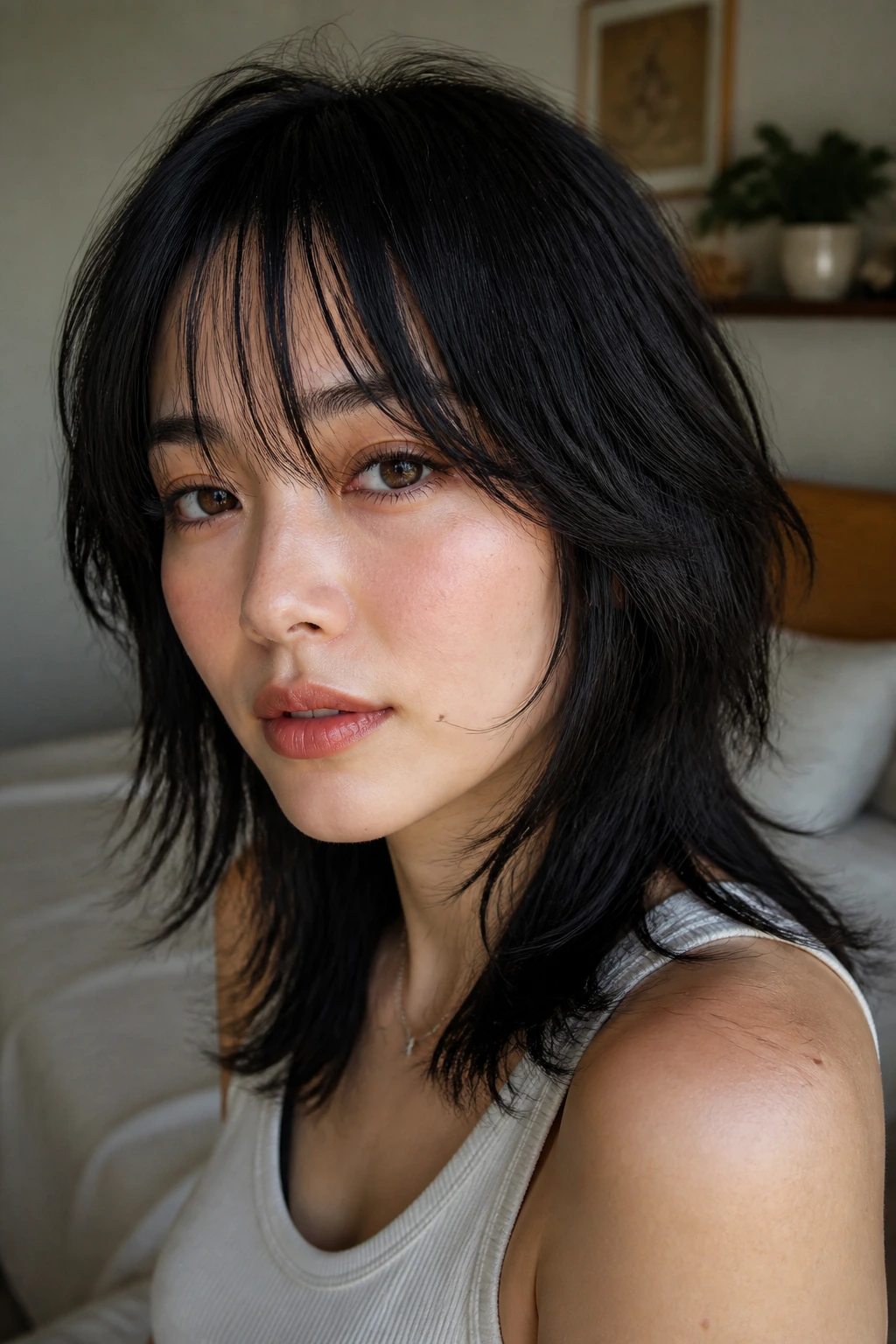
See-through bangs are for people who want the bang effect without the full forehead commitment. The fringe is sparse on purpose, which keeps the front airy and makes the rest of the wolf cut look lighter.
Why This Version Feels Different
Compared with curtain bangs, see-through bangs sit flatter and read more delicate. Compared with blunt bangs, they let more skin show through, which keeps the haircut from feeling dense around the eyes. If your hair is fine or medium in thickness, this can be the sweet spot. You get shape without bulk.
They also make the wolf cut feel a little more refined. There’s texture, yes, but it isn’t rough. The front looks touched, not hacked. That matters if you like the wolf cut shape but do not want your hair to look like it wrestled with a pair of kitchen scissors.
Best used with
- Soft waves
- Loose blowouts
- Light layering through the crown
- A dry texture spray, not a sticky paste
If your hair line is cowlick-heavy, this fringe may need a small round-brush bend at the root every morning. Not a huge deal. Just enough to keep the front from splitting in odd places.
7. Choppy Wolf Cut With Piecey Bangs
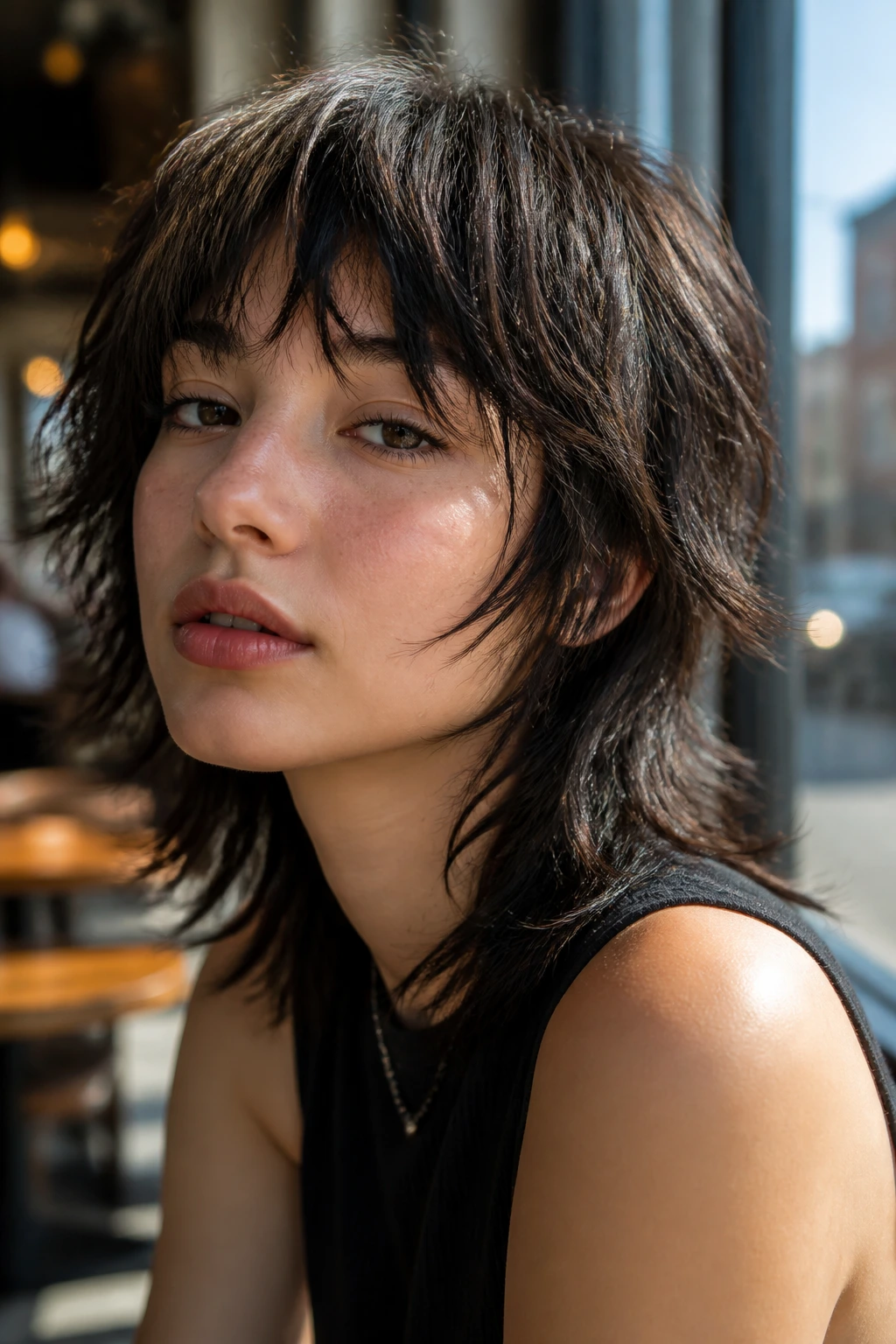
Piecey bangs belong with a choppy wolf cut the way cracked pepper belongs on eggs. The front should look separated, not uniform. A little grit is the goal.
This version works because the bang texture repeats the texture in the rest of the haircut. You are not hiding the fact that the cut has layers. You are showing it off. That makes the style feel consistent from crown to ends, which is where a lot of wolf cuts fall apart. They have a great top and a sleepy front, or a dramatic front and limp sides. Here, the whole thing speaks the same language.
How to Keep It Piecey, Not Spiky
Use a matte styling cream or a tiny bit of paste on dry bangs, then twist the ends with your fingers. Stop before they clump. If the product starts looking shiny, you’ve used too much. That’s usually the moment things tip from textured to greasy.
This cut loves a little mess, but it still needs direction. The pieces should fall where you place them. They should not stand at attention.
8. Side-Swept Wolf Cut With Long Fringe
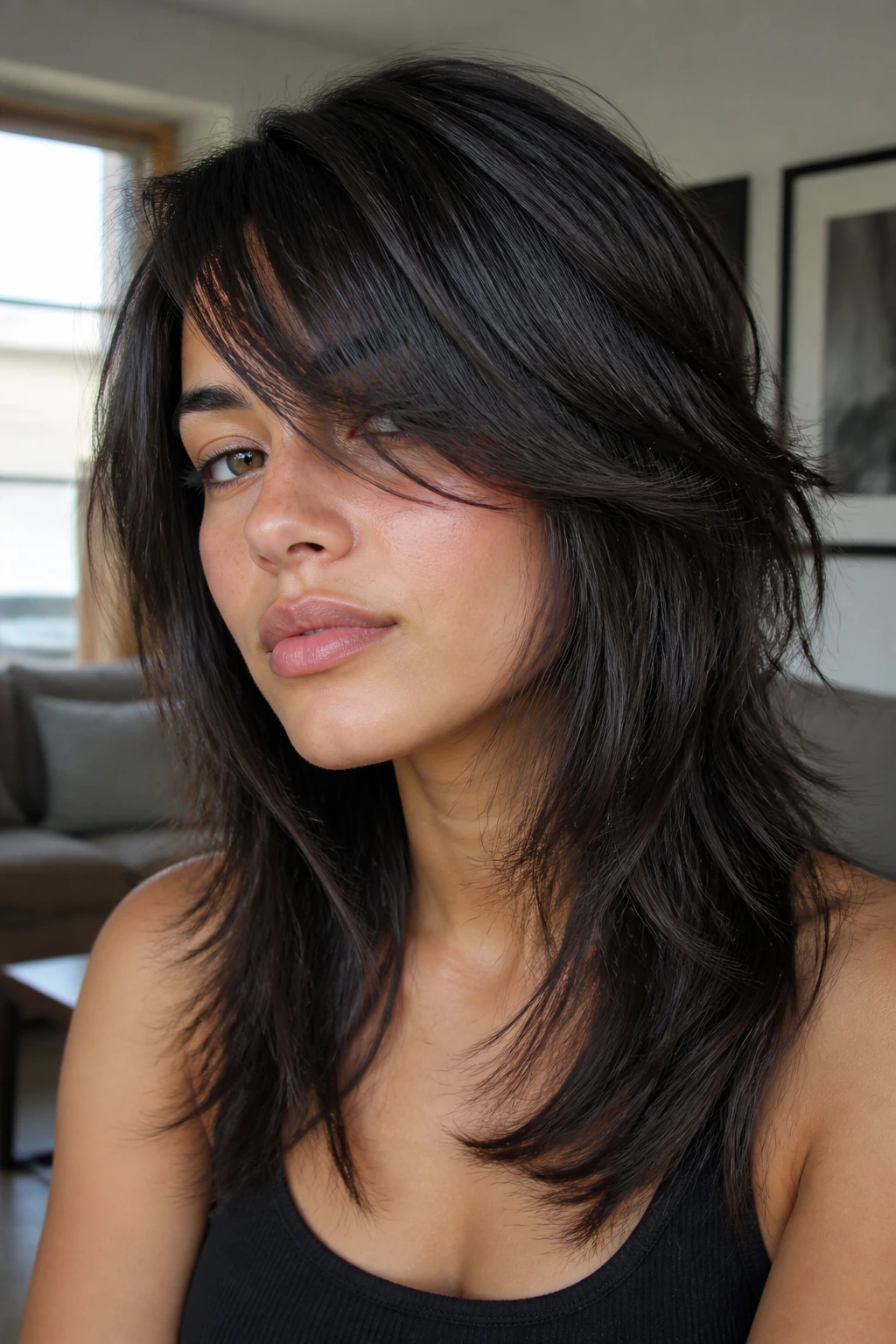
A side-swept fringe makes a wolf cut feel less severe the second it hits the face. The diagonal line softens the front, which is handy if you don’t love the feeling of hair sitting straight across your forehead.
This version is especially kind to cowlicks and stubborn growth patterns. If your fringe insists on pushing one way, let it. A side sweep can turn a nuisance into part of the design. It also works nicely for square or angular features because the line moves across the face rather than stopping bluntly on it.
The cut still needs internal layers and crown lift, or else the side sweep can look like a long bang trying to escape. Keep the ends broken up a little. Let the fringe overlap the cheekbone instead of hanging like a separate panel. That overlap is what makes the haircut feel connected.
If you want a softer finish, tuck one side behind the ear after drying. Small move. Big difference.
9. Wolf Cut With Full Blunt Bangs
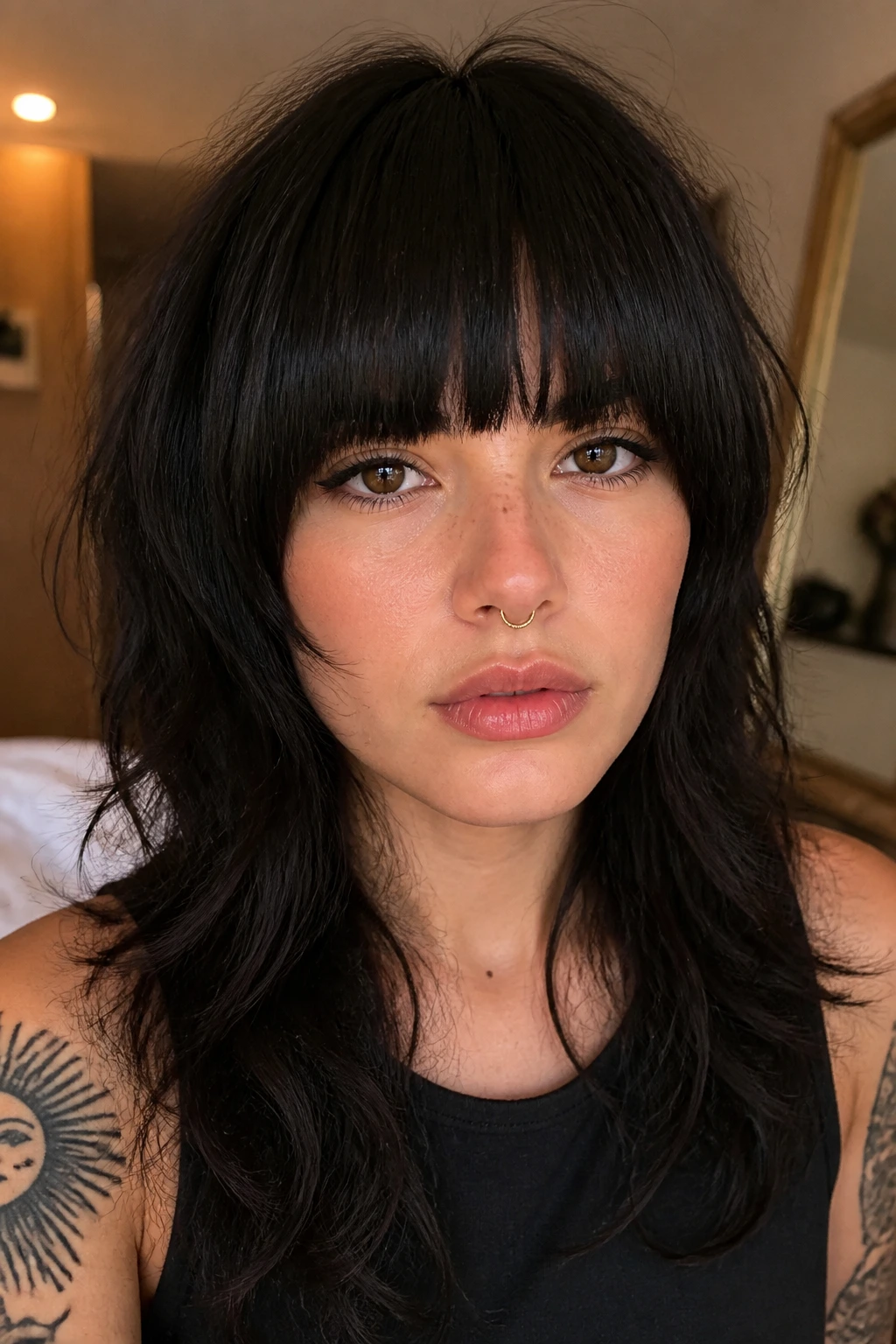
Blunt bangs and a wolf cut are a bolder pairing than people expect, and that’s exactly why they work when the rest of the haircut is kept slightly softer. The straight fringe gives the front a hard stop, then the layers underneath break it up.
The danger here is weight. Too much density through the crown and too blunt a bang line can make the haircut feel boxy. So the balance matters: keep the front full, but carve enough movement through the sides and back that the cut still has lift. This is not the place for overgrown, shapeless ends.
I like this look on straight hair that can hold a clean line without puffing out. It can be dramatic in a good way. It can also look expensive in the old-fashioned sense of the word—controlled, intentional, and very clearly not an accident.
Use a flat iron only if the fringe needs a little bend at the ends. Bone-straight is fine. Just do not let the rest of the haircut go limp, or the blunt bangs will feel pasted on.
10. Feathered Wolf Cut With Textured Fringe

Feathered layers give a wolf cut that loose, touchable finish people keep trying to describe with vague words and never quite get right. The fringe is cut to move, not sit.
What matters here is the breakup inside the hair. You want the ends to taper, the bangs to separate naturally, and the crown to carry just enough height to keep the silhouette alive. Feathering works well if you hate the feeling of hair hanging in one heavy mass across your face. It lightens the front without erasing it.
This version looks particularly good when the hair has some natural bend. The broken ends catch the light in a more honest way than a blunt line does. Not shiny. Just alive. If you’ve ever looked in the mirror and thought a cut was technically fine but felt too solid, feathering is usually the fix.
Ask your stylist to keep the fringe soft at the sides and to avoid over-thinning the middle. That prevents the “see-through at the center, fuzzy at the edges” problem that ruins a lot of feathered bangs.
11. Wolf Cut With Baby Bangs and Soft Layers

Baby bangs change the whole mood of a wolf cut. The shorter fringe makes the haircut feel a little sharper and more fashion-forward, while the long layers underneath keep it from becoming too rigid.
This is not the friendliest bang length for every face, and I appreciate that. It has a clear point of view. If you want something subtle, skip it. If you want the haircut to read with more edge, baby bangs deliver that immediately. The best versions are not cut with a heavy straight line. They’re slightly broken, slightly uneven, and just soft enough at the edges that they don’t fight the rest of the layers.
The key is balance through the body of the haircut. If the layers are too soft, baby bangs can look detached. If the layers are too aggressive, the whole thing gets busy. The sweet spot sits in the middle: enough texture to keep the fringe from feeling severe, enough shape to keep the wolf cut from going flat.
This one looks especially good with matte styling. Too much gloss and the bangs can steal the whole show.
12. Shoulder-Length Wolf Cut With Face-Framing Bangs
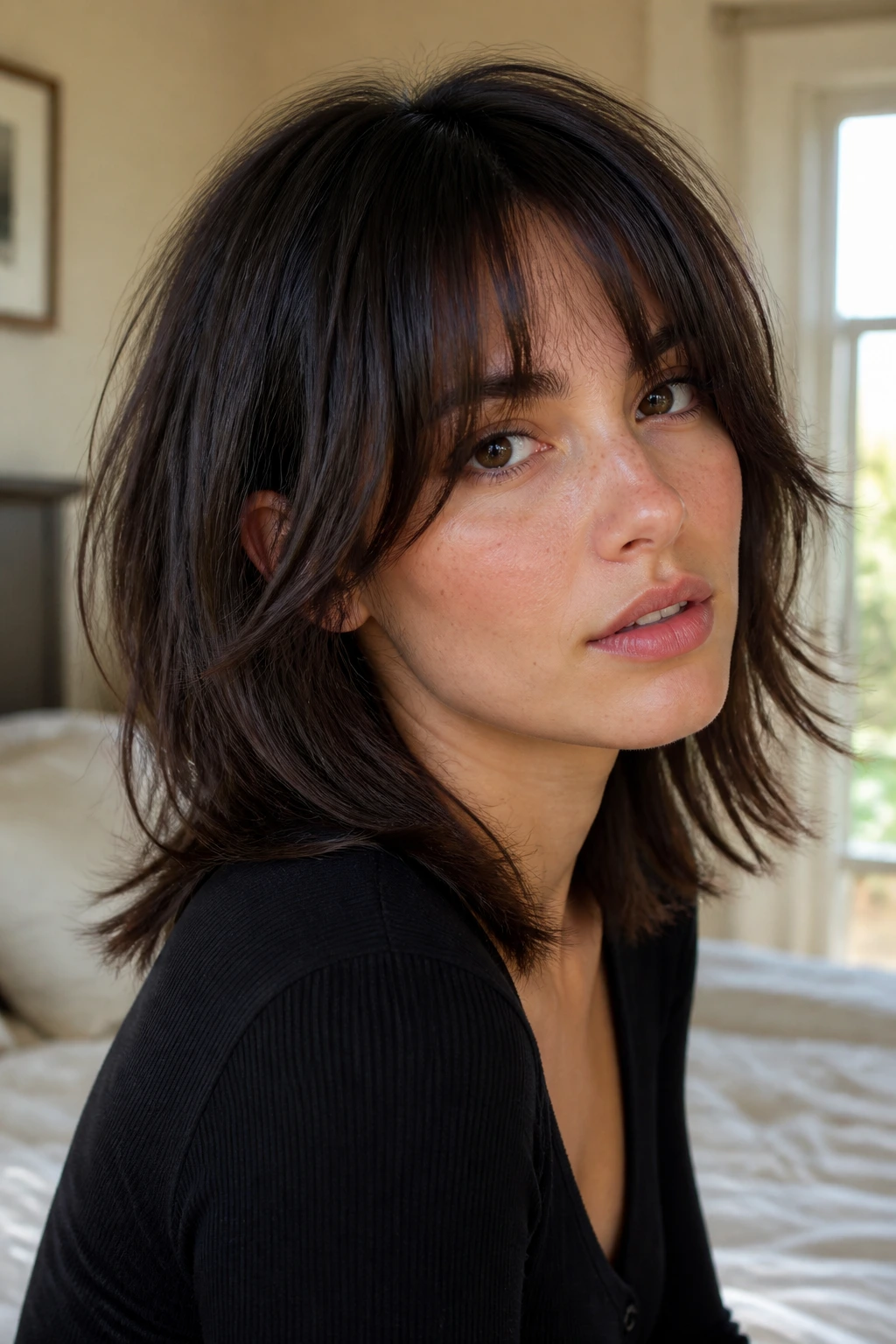
Shoulder-length wolf cuts are underrated. The length hits a practical zone, but the layered shape keeps it from feeling plain. Add face-framing bangs, and you get a cut that moves without losing all its usefulness.
The bangs here are not a separate piece. They’re part of the front architecture. They should skim the cheekbones and melt into the front layers so there isn’t a hard line at the jaw. That soft transition is the whole trick. Without it, shoulder-length hair can look broad around the face in a way that makes the cut feel wider than it is.
This version is also one of the easiest to grow out. The shoulders give you room to shift the silhouette later, and the fringe can slide into a curtain shape as it gets longer. If you’re the type who wants a haircut that can evolve without a full reset, start here.
A quick blow-dry with a medium round brush gives the front enough bend to stay intentional. No need to round every piece. Just the parts nearest the eyes.
13. Thick-Hair Wolf Cut With Split Bangs
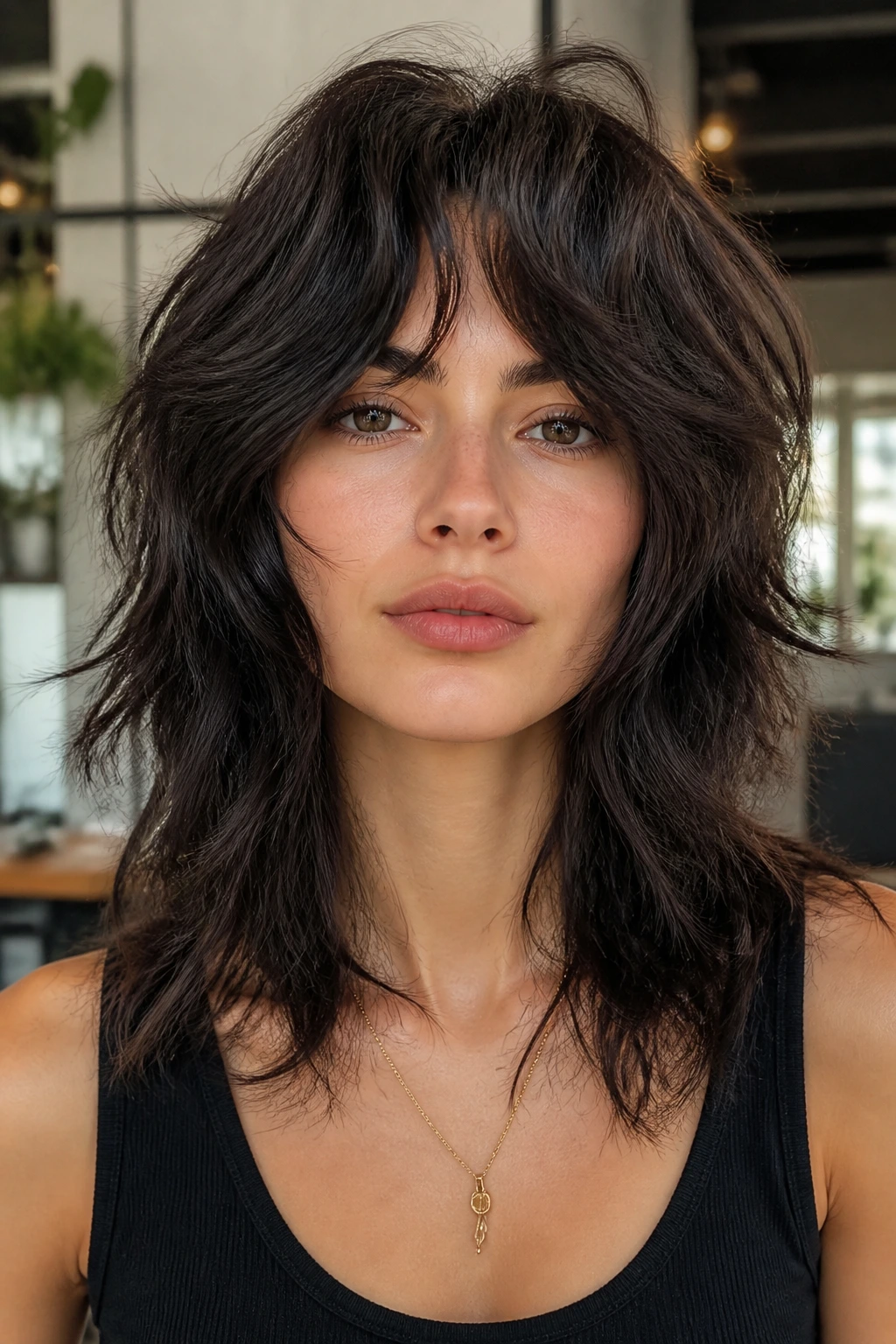
Thick hair needs a different kind of diplomacy. A split fringe helps because it removes weight from the center and lets the front breathe. Instead of sitting like a solid curtain, the bangs open through the middle and drift toward the temples.
This is one of the smartest wolf cut options for dense hair because it prevents the front from eating the face. Thick hair loves to bulk up where you least want it, and bangs can make that worse if they’re not shaped properly. A split fringe solves some of that by giving the forehead room and distributing the weight.
The rest of the haircut should still be layered with care. Too much thinning can leave thick hair frizzy at the ends, and that defeats the whole point. I’d rather see a controlled removal of bulk than a dramatic chop that leaves the ends fuzzy and thirsty.
If your hair gets big in humidity, this is a good line to ask for. It holds shape better than a straight, heavy fringe.
14. Fine-Hair Wolf Cut With Airy Bangs

Fine hair needs lift, not clutter. Airy bangs help because they add the suggestion of a fringe without putting too much weight at the front.
The biggest mistake with fine hair is trying to force density where there isn’t much to begin with. That usually makes the bangs collapse. Instead, keep the fringe light, make the crown layers subtle, and let the cut rely on motion rather than heaviness. The result feels fuller because the eye reads movement as volume.
This is also where styling product matters. A light mousse at the roots gives the hair some structure before drying. Heavy cream near the bangs is a bad idea. It flattens the front fast, and once fine hair loses lift, it tends to stay down until the next wash.
Airy bangs work best when they sit at or just below the brows and separate into a few soft pieces. That small amount of break-up keeps the front from looking sparse in a sad way.
15. Razor-Cut Wolf Cut With Jagged Fringe

Razor-cut bangs have a sharper edge, and when they’re paired with a wolf cut, the whole style gets a leaner, more lived-in finish. The fringe should look carved, not chopped.
This cut depends on texture. Straight to slightly wavy hair usually handles a razor well. Extremely frizzy or fragile hair can get fuzzy at the ends if the blade is used too aggressively, so this is one to discuss carefully in the chair. The goal is not to shred the hair. It’s to break the line enough that the fringe looks moving even when it’s still.
Jagged bangs work beautifully when the rest of the haircut also has a little bite. If the layers are too polished, the front can look like it belongs to a different haircut. Match the energy. Short internal layers, separated ends, and a little grit through the mids all help.
If you like to wear your hair air-dried, this version has a lot going for it. It gets better when it’s not over-styled.
16. Wavy Wolf Cut With Long Curtain Bangs
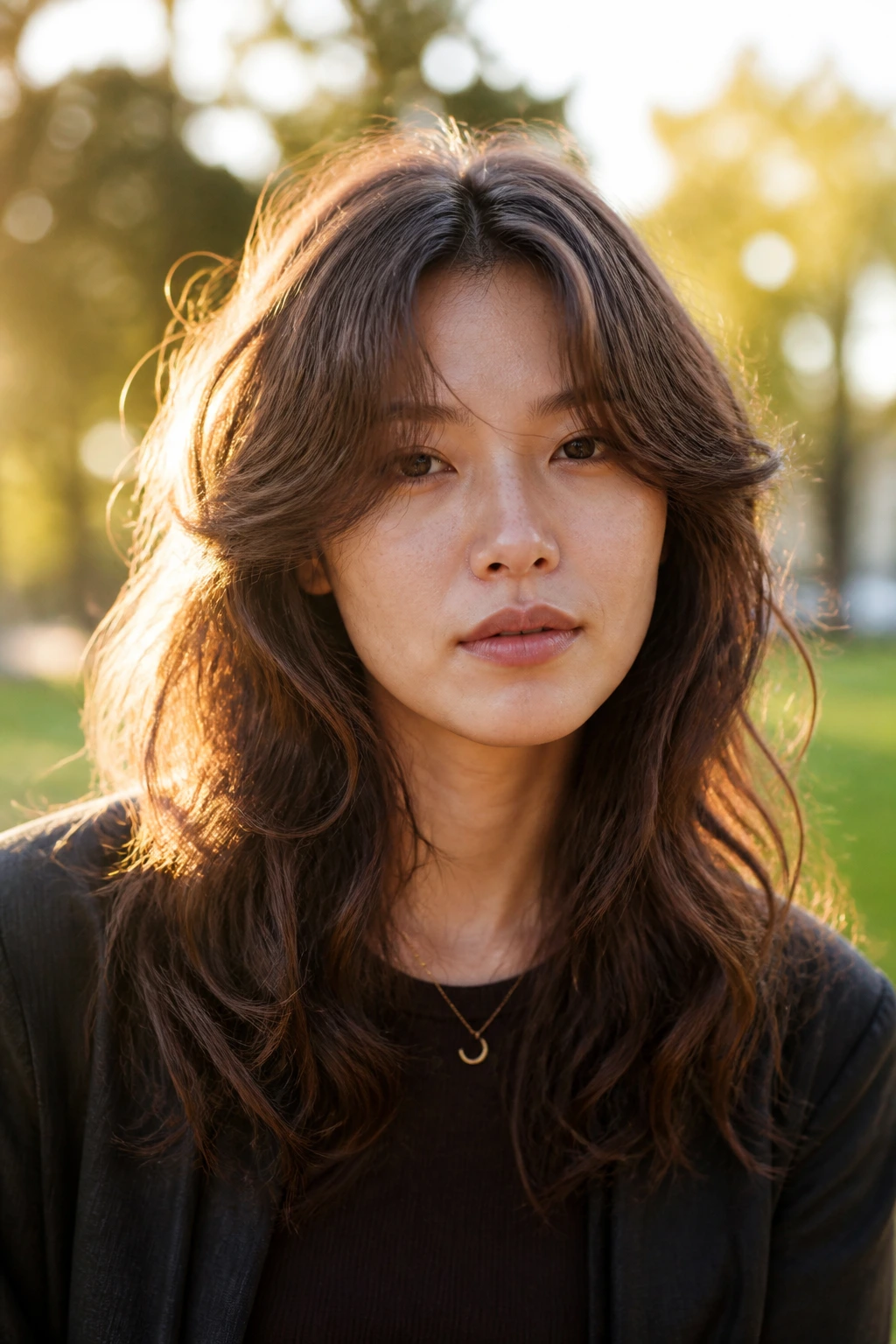
Waves and long curtain bangs are one of the safest bets in the whole wolf-cut family. The natural bend in the hair helps the fringe fall into place, and the longer length gives the waves room to do what they do.
This is the kind of cut that looks best after a little half-effort, which is a compliment. Blow-dry the roots, bend the fringe away from the face, and let the mids stay imperfect. The bangs should land around the cheekbones, not rush to the temples too fast. That keeps the face framed without making the front vanish.
Long curtain bangs are especially forgiving if you’re nervous about maintenance. They can be parted, pinned, tucked, or left loose. They also transition well as they grow, which is one of those practical details people forget until they’re three weeks into regrowth and annoyed.
If you want movement without a big styling commitment, this is one of the better choices on the list.
17. Round-Face Wolf Cut With Sweeping Bangs

Round faces tend to do well with lines that move diagonally, and sweeping bangs help the wolf cut do exactly that. Instead of stopping at the widest part of the face, the fringe crosses it and creates a longer visual line.
That diagonal shape matters. It changes how the haircut sits against the cheek area, which can otherwise get swallowed by too much volume. Keep the layers airy through the upper sides and avoid cutting the fringe too short at the center. A slightly longer front gives the face room to lengthen without losing the layered feel.
I’d call this one practical with a little polish. It still has the wolf-cut messiness, but the sweep keeps it from reading too busy. If your hair naturally parts off to one side, even better. Let that work for you instead of forcing the center part just because it’s common.
A side-facing blow-dry makes this shape easier to live with. You do not need perfect symmetry here. You need direction.
18. Oval-Face Wolf Cut With Mid-Length Bangs
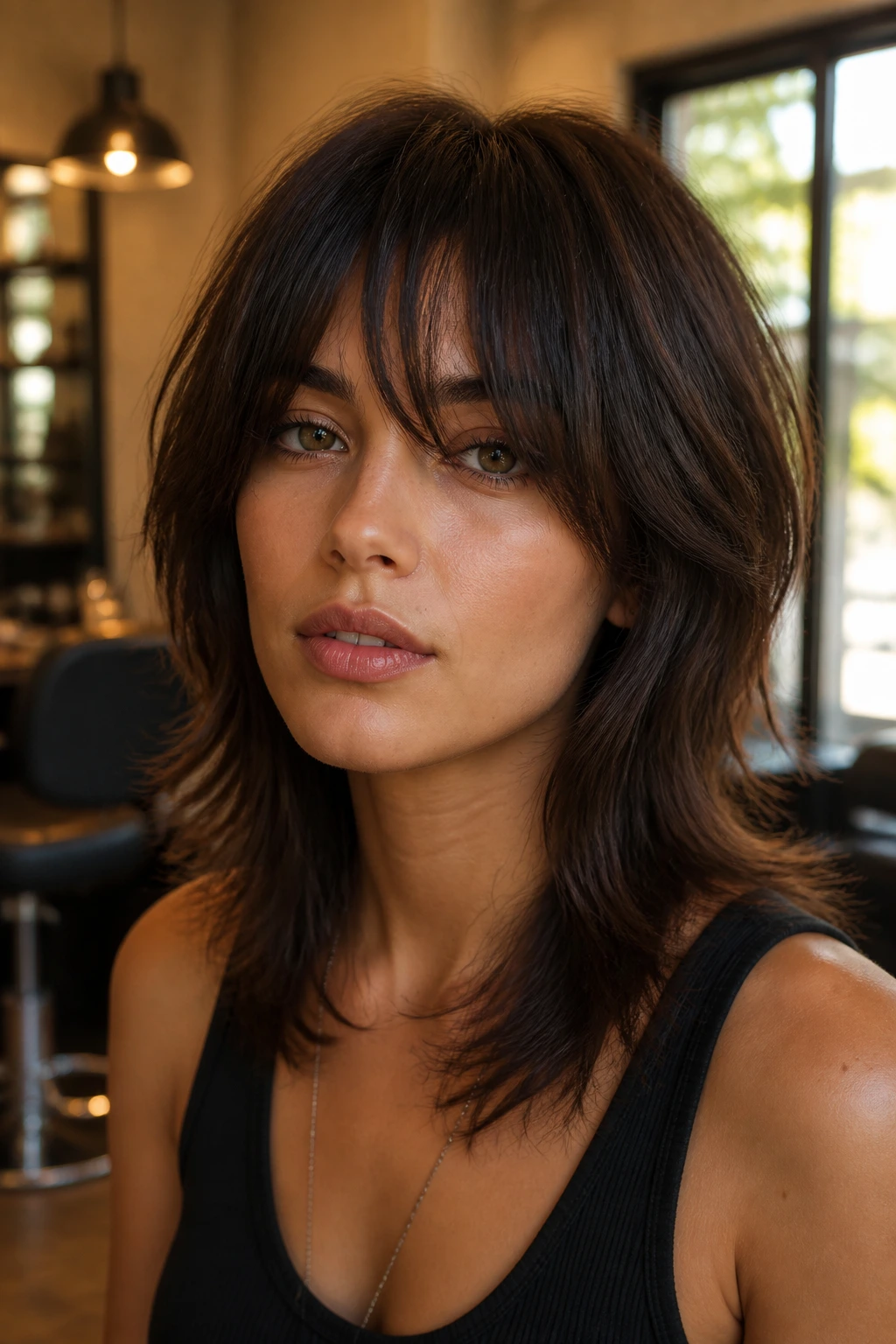
Oval faces can carry a lot, which is useful, but it also means the haircut can drift into generic territory if the fringe is too vague. Mid-length bangs keep the wolf cut anchored without overpowering the face.
This version sits in the practical middle. The bangs are long enough to tuck or part, short enough to make the cut read as intentional, and flexible enough to move between polished and undone. That’s a useful place to be. Not dramatic. Not plain.
The best part is that the layers around the front can do some of the visual work for you. You don’t need a highly sculpted fringe if the cheekbone layers are doing their job. Keep the center a touch shorter than the sides, and let the front taper into the body of the haircut rather than ending with a hard edge.
If you like changing your part from time to time, this is one of the easiest options to shift around.
19. Heart-Shaped Face Wolf Cut With Tapered Bangs
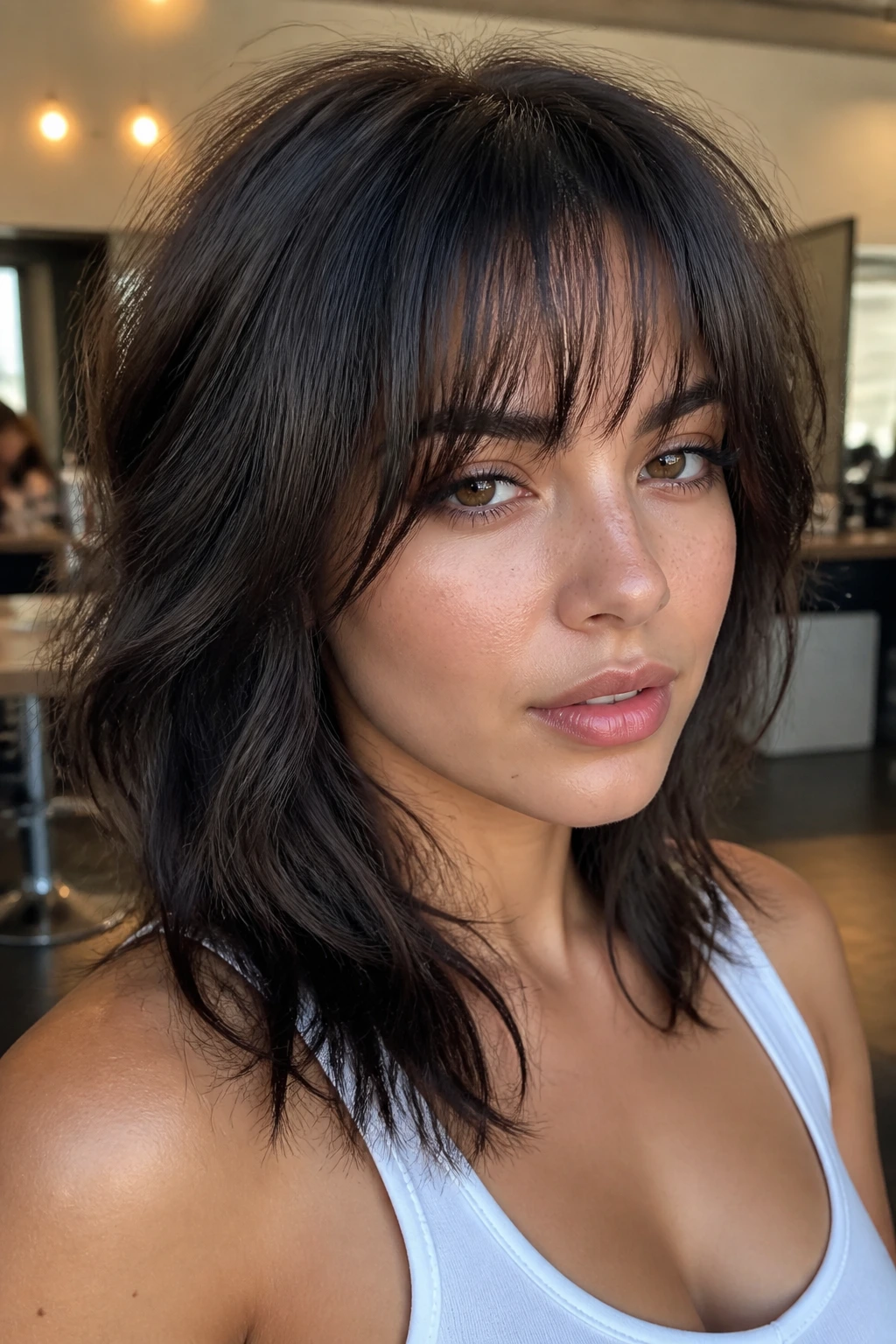
Heart-shaped faces usually benefit from softness around the forehead and a little visual weight lower down, which is where tapered bangs pull their weight. The fringe starts fuller near the center, then loosens out toward the temples.
That taper matters because it keeps the forehead from feeling too wide compared with the chin. It also helps the wolf cut blend into the rest of the face instead of cutting across it. When the sides of the bang are longer, the haircut flows into the cheek area in a way that feels balanced rather than top-heavy.
This is a good place to keep the crown layers controlled. Too much volume at the top can exaggerate the width up there. A little lift is enough. The fringe should be the frame, not the whole spectacle.
If you wear glasses, tapered bangs can be easier to live with than a blunt line. They sit beside the frames instead of fighting them.
20. Edgy Wolf Cut With Micro Curtain Bangs
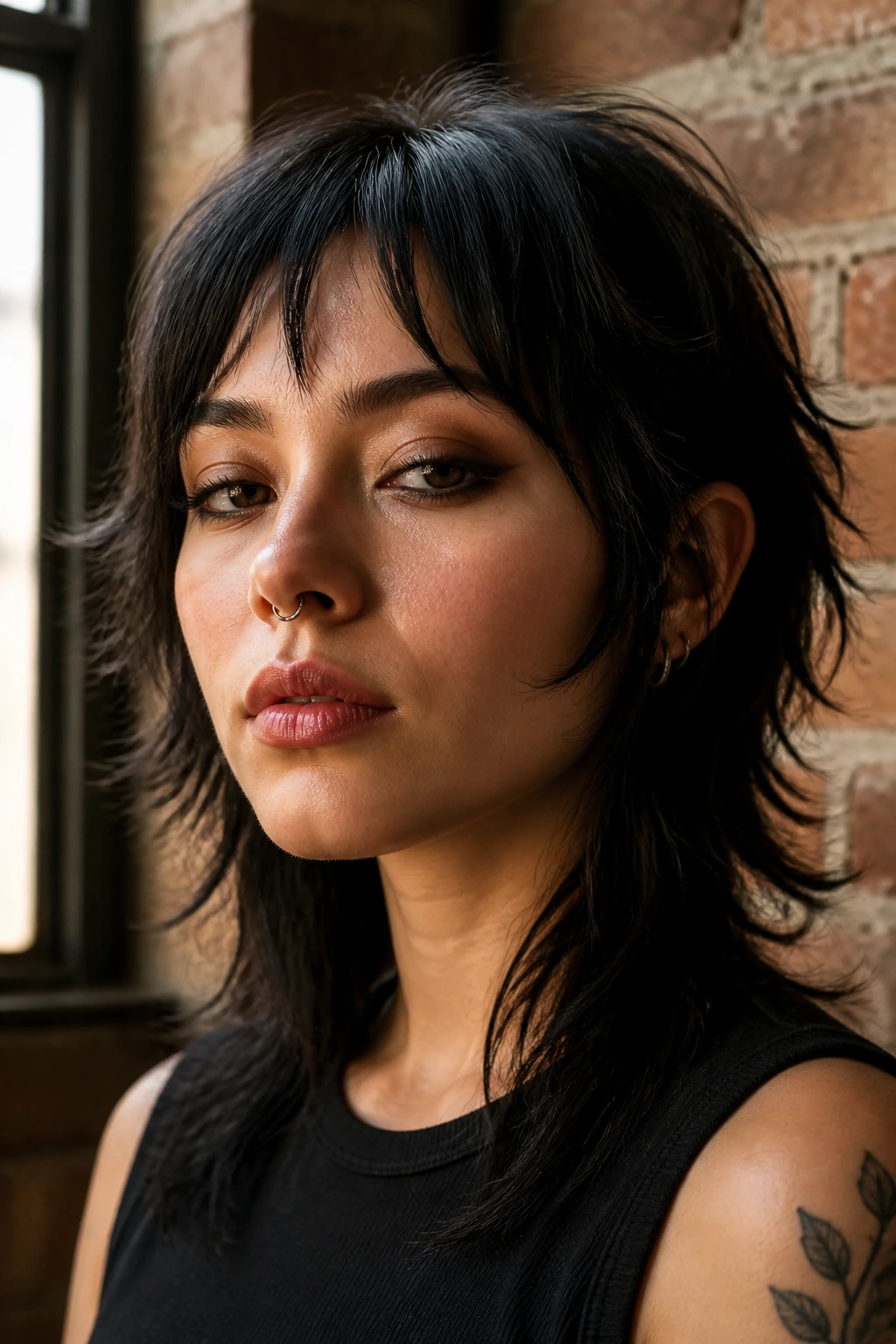
Micro curtain bangs are a fun contradiction. They’re short, but still split. That tiny open center softens the severity of the shorter length and keeps the fringe from looking like a block across the forehead.
This version is for people who want edge but still need a little flexibility in the front. The split means the bangs do not trap the face in one hard line. The shorter length gives the cut a sharper, more graphic feel. Together, they make the wolf cut look a little less sweet and a little more specific.
The rest of the haircut should stay textured, not over-washed out. If you flatten the crown too much, the micro curtain fringe starts to look isolated. Let the layers carry some energy. That’s what keeps the whole cut from feeling too precious.
A tiny amount of styling paste at the temples can help the fringe sit where you want it. Tiny. Seriously.
21. Low-Maintenance Wolf Cut With Grow-Out Bangs
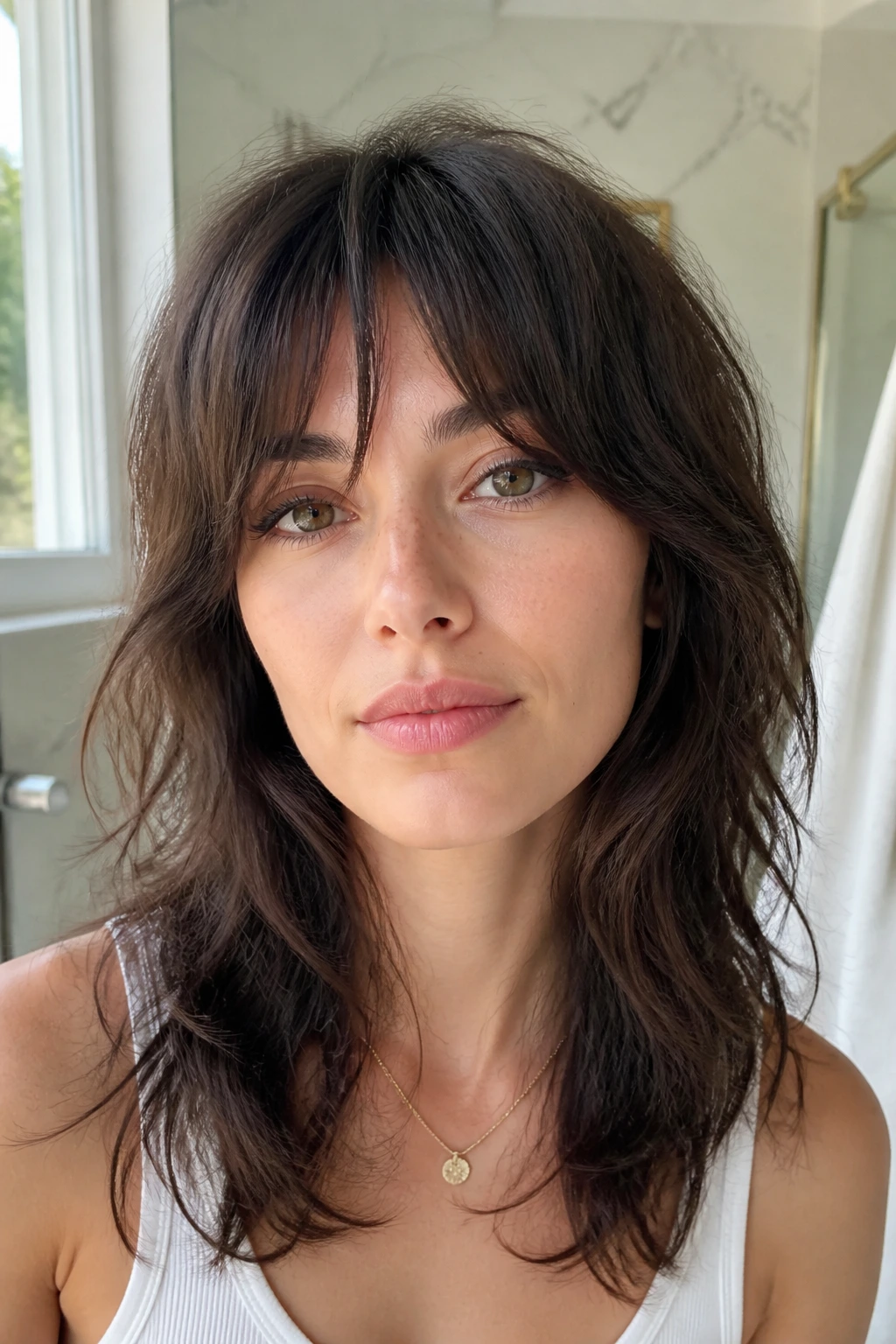
Some haircuts are built for the day you leave the salon. This one is built for week six, which is a better test. Grow-out bangs keep the wolf cut looking good as the fringe gets longer and loses some of its original shape.
That means the bangs shouldn’t be cut so short that they turn awkward in two weeks. Keep them a little longer at the temples and slightly softer through the center. As they grow, they’ll slide into curtain territory instead of dropping into the eyes like a curtain rod.
This is probably the most practical version on the whole list if you do not want to revisit the salon constantly. The trick is to preserve structure through the layers while leaving the front loose enough to shift. You’ll still need trims, but not with the same urgency as a micro fringe.
If your life does not make room for weekly styling, start here. It’s the least fussy path into the style.
22. Blowout Wolf Cut With Bouncy Bangs
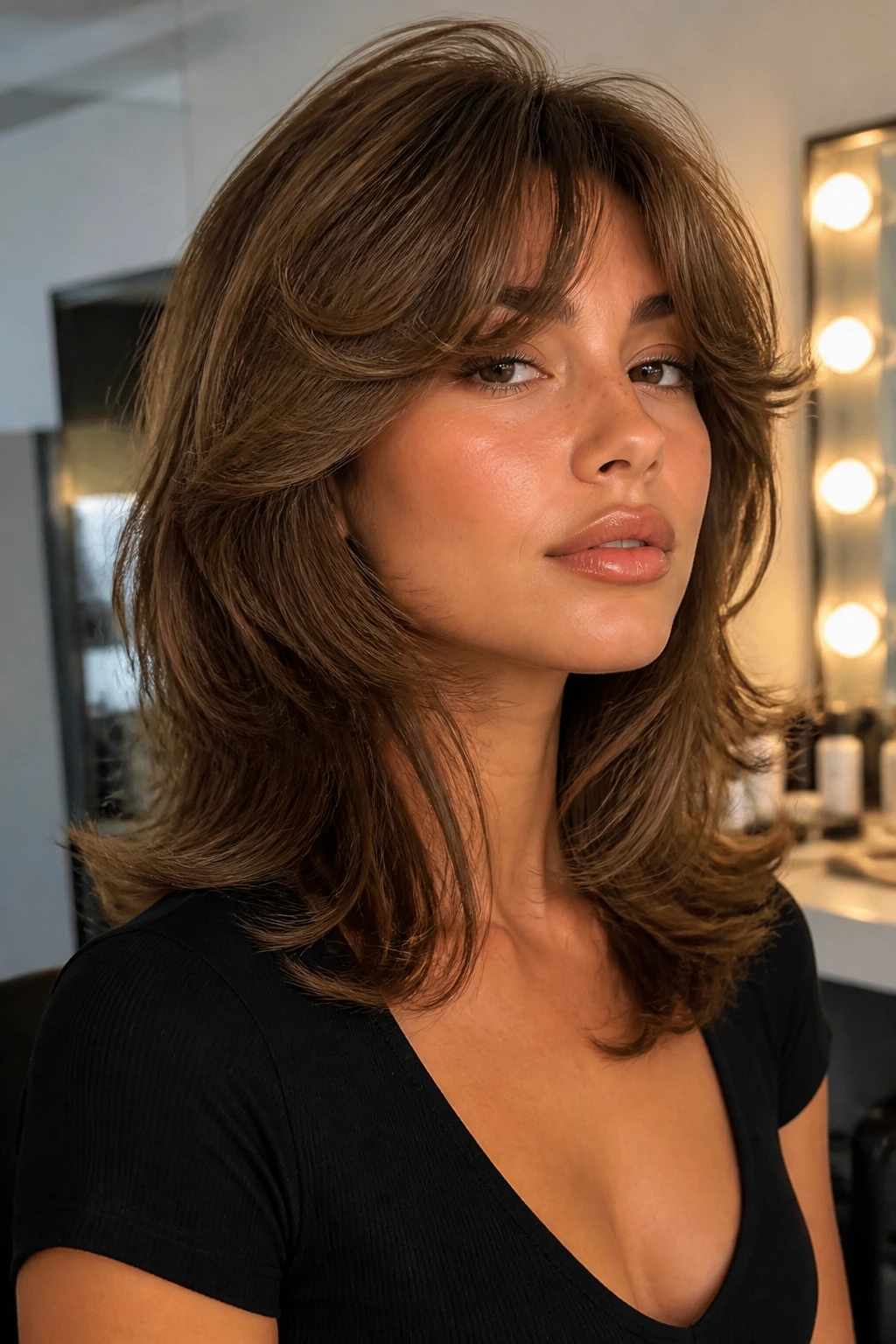
A blowout wolf cut is what happens when the shape leans glamorous instead of rough. The layers still have lift, but the finish is smoother, the fringe bends cleanly, and the whole haircut has a little bounce at the ends.
This one shines on hair that can hold a rounded brush set. The bangs should curve away from the face instead of sitting flat, and the crown should have enough root lift to keep the silhouette from collapsing. It’s a different mood from the air-dried versions. Less grit. More movement.
I like this look when someone wants the wolf cut silhouette but not the full shaggy texture. It’s still a layered cut. It just reads neater. A medium round brush and a blow-dryer nozzle do most of the work. If you want the fringe to last, pin it to cool for a minute after drying. That tiny pause helps the bend hold.
The finish feels cleaner, but not stiff. That balance is what makes it work.
Why the Wolf Cut Shape Changes So Much With Bangs
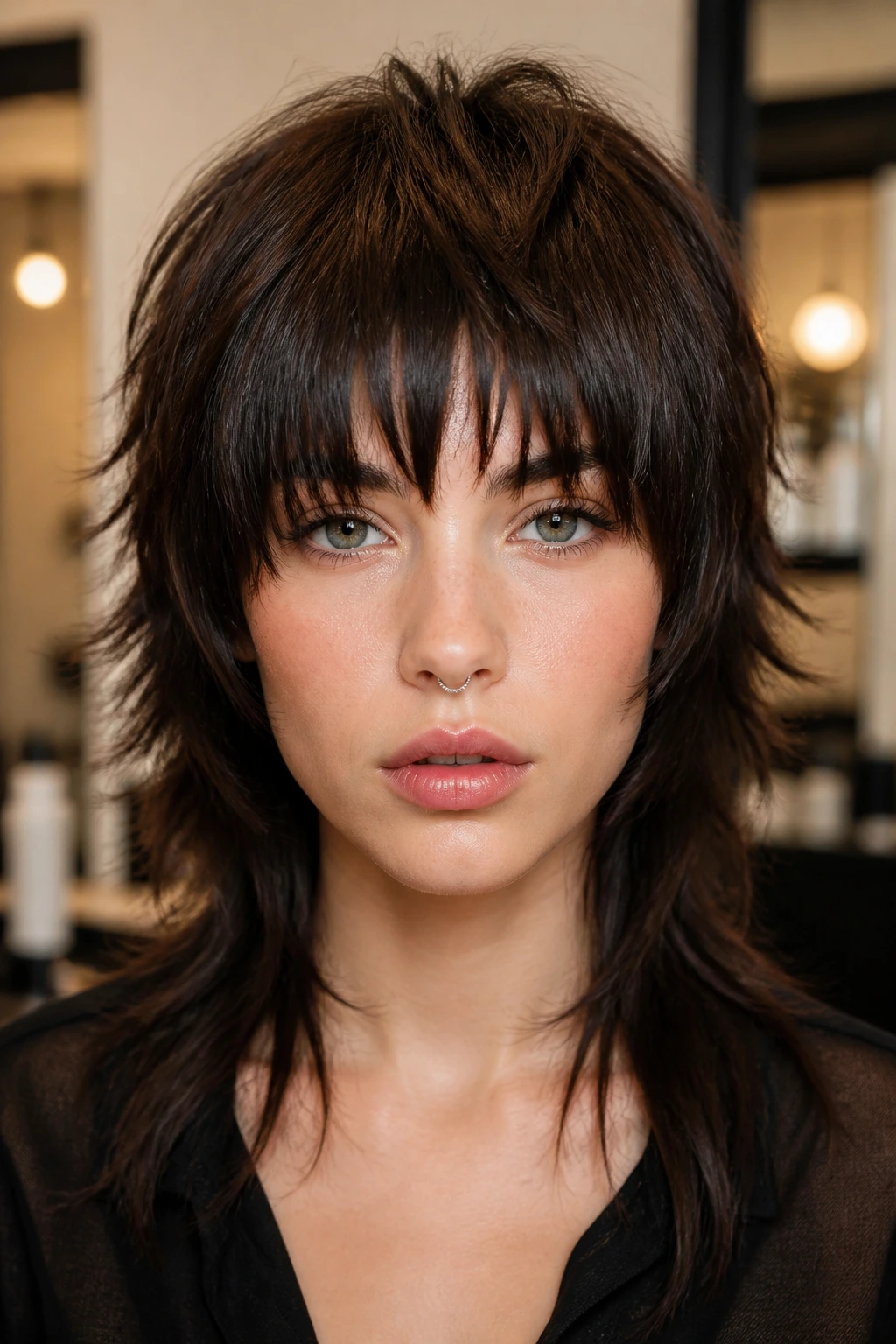
The wolf cut looks like one haircut from a distance and five different haircuts up close. Bangs are the reason. They sit at the front edge of the shape, so they change the first impression before the layers in back even get a vote.
A fringe also changes weight distribution. A fuller bang line adds visual density at the face. A split fringe opens it up. A micro fringe shifts attention upward. Curtain bangs draw the eye down and out. That’s not just styling talk; it’s basic shape management. Where the bang sits changes how the rest of the cut reads.
Crown lift matters more than people think
If the top is flat, the wolf cut loses its point. The short crown layers are what stop the style from turning into long hair with a few random steps cut into it. The bang should echo that movement, not compete with it.
The front line decides the mood
A blunt bang makes the cut read sharper. A wispy bang makes it softer. A side-swept bang makes it easier to wear. The rest of the haircut can stay the same and still land in a different style lane.
Texture tells the truth
Straight hair shows the geometry. Waves soften it. Curls complicate it in a good way. That is why one wolf cut photo never tells the whole story. You need to know how the hair falls when it’s dry, not just how it looks in a salon mirror.
What to Bring to the Salon Before You Commit

A good wolf cut is easier to get when you show up prepared. Not with a giant folder of random screenshots. With a handful of photos that actually match your texture and length.
- 2 to 4 reference photos — Bring styles that match your hair density and face shape, not just the color or the lighting.
- A note on your daily routine — Tell the stylist whether you air-dry, blow-dry, diffuse, or do a little of everything.
- Your honest trim tolerance — If you hate coming back often, say so. That changes the bang length and the crown layering.
- A picture of your front hairline — Cowlicks, widow’s peaks, and strong growth patterns matter more than people think.
- Photos of what you dislike — A blunt fringe? Too much volume? Say it out loud.
- Your usual part — The way your hair naturally splits affects how curtain bangs and side-swept fringe will sit.
A stylist can work with almost anything if the request is clear. Vague inspiration is where the trouble starts.
How to Choose the Right Fringe for Your Hair Texture and Face
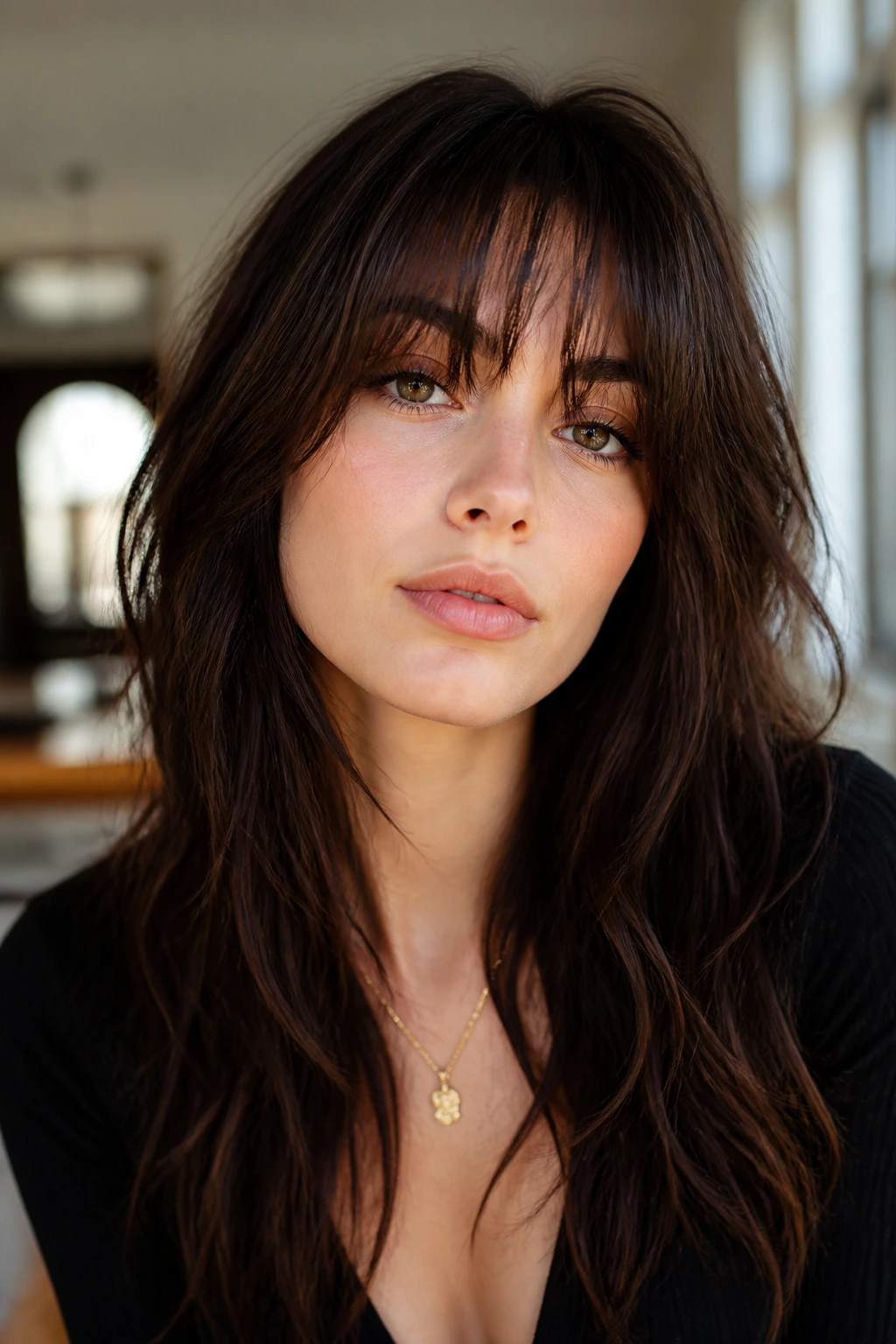
The fringe is the hinge of the whole haircut. It decides whether the wolf cut feels soft, cool, sharp, or accidental. That’s why I’d rather see someone think hard about the bang shape before they worry about how shaggy the ends get.
If your hair is fine, keep the fringe lighter and a bit longer. Fine strands collapse fast when they’re overcut, and the bangs need enough length to show movement. If your hair is thick, splitting the front or tapering the temples helps the cut breathe. Otherwise the fringe sits there like a curtain with no windows. Curls need room to spring, so cut them with shrinkage in mind. Straight hair can carry a blunt line or a sharp micro fringe because the line stays where you put it.
Face shape matters, but not in the cartoonish way people like to explain it. It’s more about where the eye travels. Rounder faces often do well with diagonal or longer front pieces. Heart-shaped faces usually benefit from tapered sides. Longer faces can take more width through the fringe. Oval faces can wear almost anything, which sounds lucky until you realize it’s easier to make a boring choice.
Practical Styling Tips for Wolf Cuts With Bangs
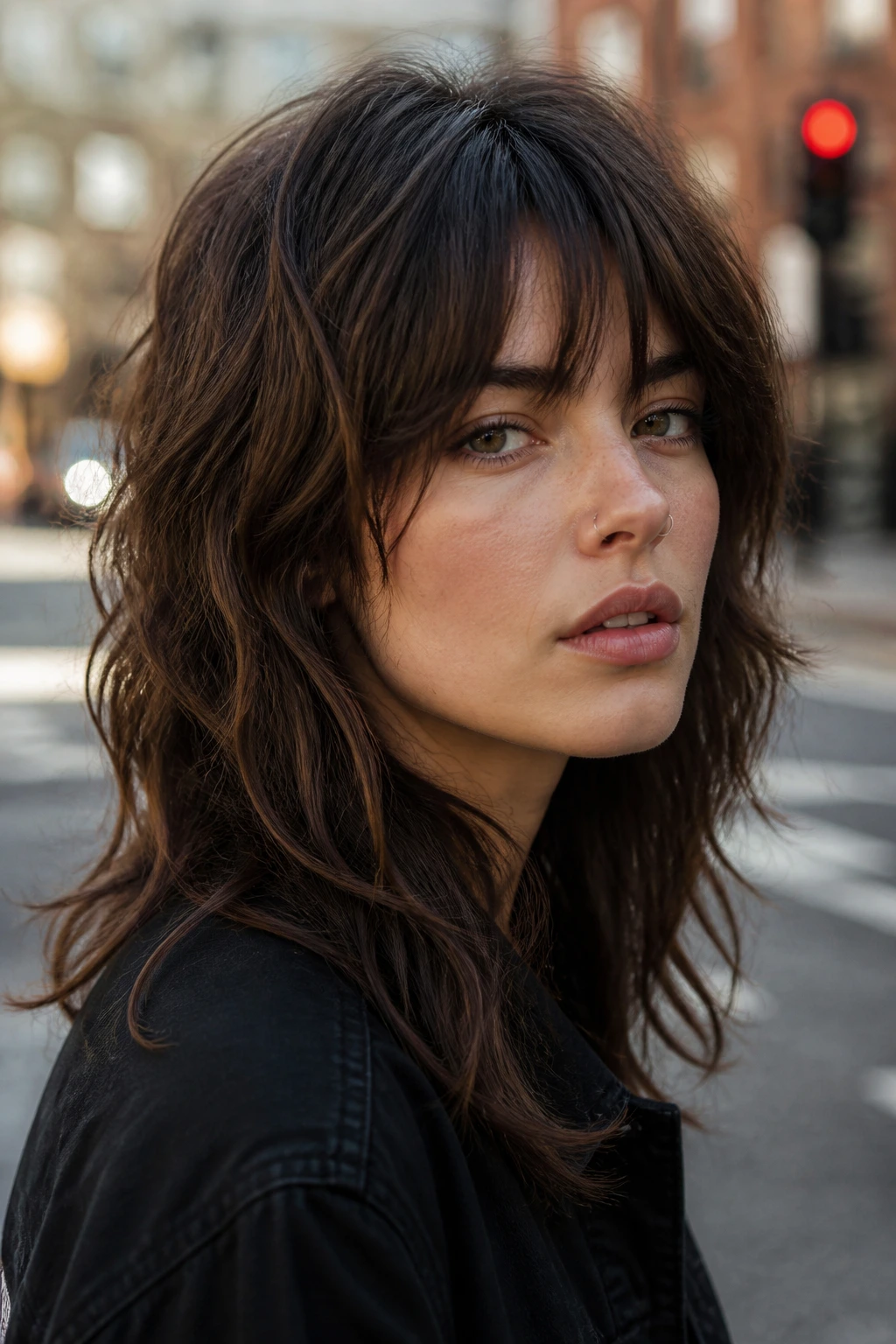
Root lift: Start at the crown. A small amount of mousse or foam at the roots gives the wolf cut the lift it needs, especially if your hair tends to fall flat by lunchtime.
Fringe control: Dry the bangs first, not last. They set the tone for the whole haircut, and if they dry crooked, you’ll spend the rest of the routine fixing a problem you could have avoided in the first five minutes.
Texture balance: Use less product on the fringe than on the mids. Bangs weigh themselves down fast, and a shiny cream near the roots can flatten the front before you’ve even left the house.
Second-day rescue: Dry shampoo at the roots and a quick finger twist through the bangs usually buys you another day. If the front is bent the wrong way, a small round brush and a blast of warm air can reset it in under two minutes.
Air-dried wolf cuts can look excellent, but the front usually needs a little intentional help. Not a lot. Just enough to keep the bangs from drying into a split that looks like a mistake instead of a choice.
Common Mistakes That Turn the Cut Flat

The most common problem is cutting the bangs too blunt for the rest of the shape. When the fringe is heavy and the layers are light, the haircut looks split in two. The fix is to match the front weight to the crown and ends, so the whole cut speaks the same visual language.
Another frequent mistake: ignoring shrinkage. Curly and wavy hair can bounce up higher than expected, which is how a fine-looking fringe turns into a tiny shelf. The answer is boring but true. Leave more length. Check it dry. Trim later if needed.
Over-thinning is a sneaky one. People think it will create softness, but too much removal leaves the ends fuzzy and the bang area flimsy. That’s especially rough on fine hair, which can go stringy fast. Ask for controlled texture, not aggressive thinning.
Cowlicks deserve respect. If your fringe grows in a strong direction and you cut it against that pattern, the bangs will split, buckle, or pop up at the wrong time. A good stylist will cut with the growth, not against it.
And then there’s styling overload. Too much oil, too much cream, too much flat ironing. The hair ends up limp at the roots and bent only at the ends, which is the opposite of what a wolf cut needs.
Variations and Alternatives to Try
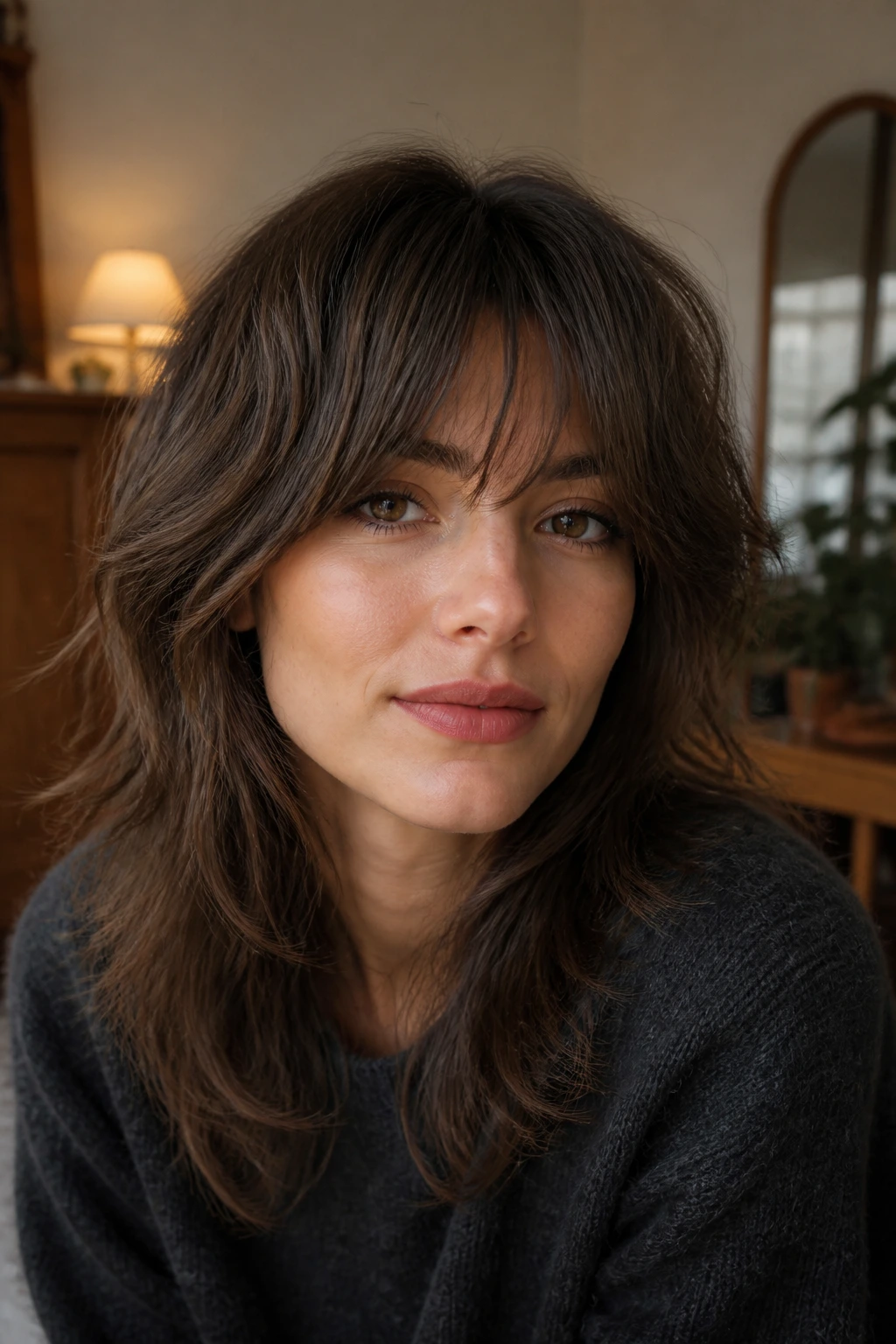
Soft Indie Version: Keep the layers airy and the bangs long enough to tuck behind the cheekbones. This version feels relaxed and works well if you want a wolf cut that can live in a messy bun on the third day.
Razor-Edge Version: Go sharper through the fringe and a little more broken through the ends. It has more bite, but it needs hair that can tolerate a lighter, jagged finish without frizzing out.
Curly Cloud Version: Leave the bangs longer, shape them dry, and let the curls form their own fringe line. The result is softer and rounder, with less of that spiky, overworked look that some curly cuts get.
Office-Friendly Version: Keep the bangs at brow length, reduce the crown height slightly, and let the front pieces blend instead of separate. It still reads as a wolf cut, just with fewer sharp edges.
Grow-Out Version: Start with a longer fringe and softer internal layers so the haircut can slide into a new shape over time. This is the one I’d choose if you know you won’t keep up with frequent trims.
How to Keep the Shape Sharp Between Trims

Wolf cuts do not need constant salon visits, but they do need a little attention. The bangs are usually the first part to go soft, so trimming those every 2 to 4 weeks keeps the front from swallowing the face. The rest of the cut can usually go 6 to 10 weeks before it needs real shaping, depending on how fast your hair grows.
Dry shampoo helps more than people admit. It adds grip at the roots, which keeps the crown from collapsing, and it also buys you a little time when the fringe starts getting too shiny or separated. A tiny mist near the roots is enough. If it looks powdery, you’ve gone too far.
Washing less often can help the cut hold its shape, especially if your hair is fine or prone to slipping flat. That does not mean letting it get greasy. It means stretching wash days with product that gives the roots a bit of body. A scalp-friendly routine and a light mousse can do more for a wolf cut than a drawer full of styling creams.
If the bangs start misbehaving, do not rush to cut them yourself in a panic. Pin them back, bend them with a brush, or ask for a quick fringe trim. A bad home chop is still one of the fastest ways to turn a good wolf cut into a repair job.
Frequently Asked Questions
Do wolf cuts with bangs work on straight hair?
Yes, and straight hair shows the structure very clearly. The cleanest versions use point-cut layering and a fringe that has some softness at the edges so the cut does not look blocky.
Are wolf cuts with bangs good for curly hair?
They can be excellent, but the bangs need extra length because curls shrink as they dry. A dry trim or a stretched trim is usually safer than cutting the fringe too short while it’s wet.
What bangs are easiest to grow out?
Curtain bangs and long side-swept bangs tend to grow out with the least drama. They can split, tuck, or slide into the layers instead of sitting there like a hard line that needs immediate correction.
Can a wolf cut make fine hair look thinner?
It can if the layers are too aggressive or the bangs are over-thinned. Fine hair usually needs softer internal layering, a lighter fringe, and enough root lift to keep the top from collapsing.
What if my bangs split in the middle?
That usually means a cowlick or strong growth pattern is pushing the hair apart. Try drying the fringe in the opposite direction at first, then guide it into place with a round brush and a touch of heat.
How often should I trim the bangs?
Most fringes need a touch-up every 2 to 4 weeks if you want to keep the original shape. If you like a softer grow-out, you can stretch that longer, but the line will lose definition.
Can I wear a wolf cut without daily styling?
Yes, if you choose a softer version like curtain bangs, long fringe, or a grow-out-friendly shape. Micro bangs, blunt bangs, and razor-edged versions ask for more daily upkeep.
Which version is best if I’m nervous about the cut?
Start with soft curtain bangs or a shoulder-length wolf cut with face-framing pieces. Those versions give you the shape without boxing you into a fringe that feels too committed.
The Shape That Keeps Its Personality
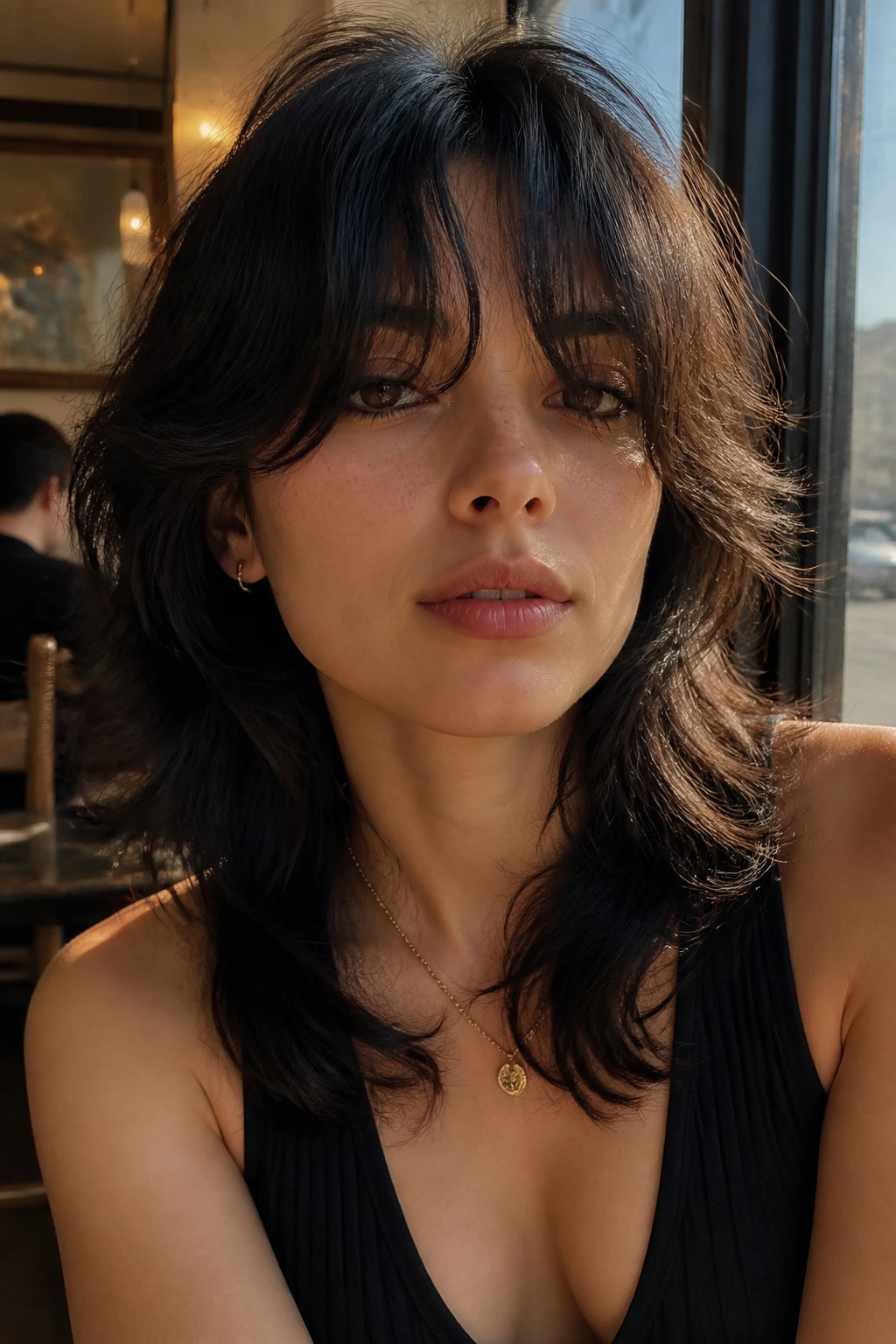
A wolf cut with bangs works because it gives you room to decide how loud you want the haircut to be. Soft curtain fringe, blunt bangs, piecey texture, curly bangs, micro fringe — each version changes the mood without changing the basic architecture. That is the appeal, really. The bones stay interesting even when the styling shifts.
The best choice is the one that fits your hair as it actually lives, not as it behaves in a single salon photo. Once the fringe and layers are matched to your texture, the haircut starts doing that satisfying thing where it looks a little undone and still feels deliberate. That is the sweet spot, and it’s worth chasing.
