



Wolf cuts with curtain bangs live or die on restraint. Push the layers too hard and the shape turns fuzzy in all the wrong places; leave them too blunt and you end up with a heavy outline that never really opens around the face. The sweet spot is a cut that feels a little wild through the crown, then softens exactly where the fringe splits and falls toward the cheekbones.
That combination is why I keep coming back to this family of cuts. The top has lift. The ends have movement. The front does the quiet, flattering work that makes the whole thing look intentional, even when the hair is air-dried and a little messy. When the curtain pieces hit around the cheekbone or skim the lip, the whole haircut suddenly has shape. Not just texture. Shape.
There’s a huge range inside this look, and that’s the part people miss. Some versions are soft enough for a school-run haircut. Some have enough bite to look like they belong in a black T-shirt and boots. A few are built for thick hair that eats every haircut alive. Others are made for fine hair that needs every ounce of lift it can get. If you know what your hair actually does, not what you hope it does, you can pick the version that behaves.
Why These Cuts Keep Working on So Many Hair Types
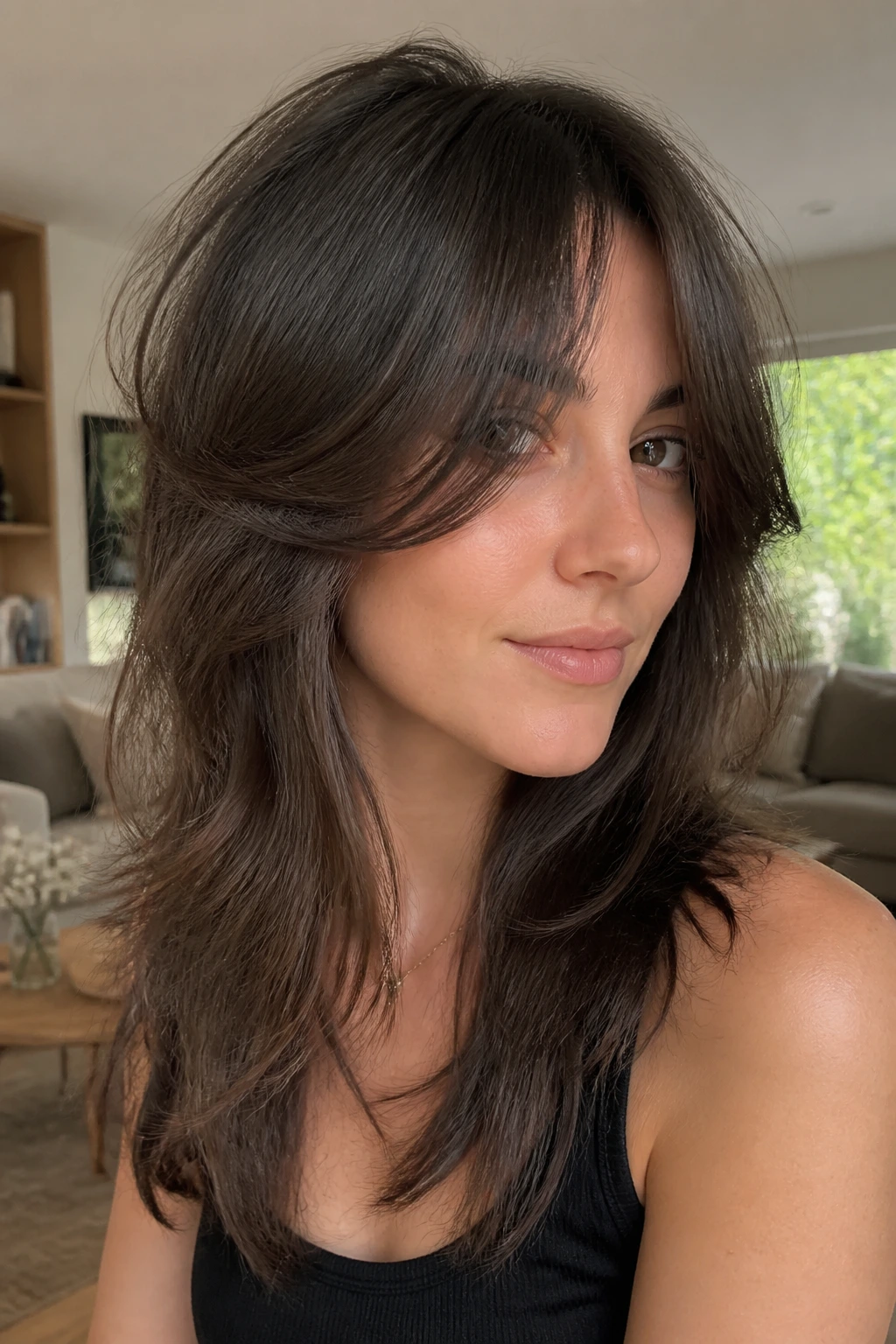
- Face-framing without a hard line: Curtain bangs split the face instead of boxing it in, so the eyes and cheekbones stay visible even when the rest of the cut is shaggy.
- Crown lift where flat hair needs it: The shorter layers at the top create air around the roots, which matters on straight or fine hair that usually falls heavy by noon.
- Built-in grow-out: Because the fringe lives longer on the sides, you can let it grow for weeks without the cut collapsing into one blunt block.
- Texture-friendly shape: Wavy hair gets movement from the layers, thick hair gets weight removed where it puffs, and curls get room to spring instead of swelling into a triangle.
- Styling takes less arguing: A diffuser, round brush, or rough dry with mousse usually does enough. The haircut does not need a perfect blowout to read well.
How the Crown, Cheekbones, and Ends Do the Heavy Lifting
A good wolf cut with curtain bangs is really three haircuts pretending to be one. The crown gives you lift, the face frame gives you softness, and the perimeter keeps the whole thing from turning into a puffball. If one of those parts is off, you feel it immediately.
The crown is where a lot of stylists get nervous and overdo it. Too much removal at the top and the haircut loses weight in a way that makes the ends flick out like broom bristles. Too little and the style goes flat. I like a crown that’s short enough to move, but not so short that it looks like a separate cap sitting on the rest of the head.
Curtain bangs are doing more than making the front look pretty. They control where the eye goes. A split fringe that starts around the bridge of the nose, then lengthens toward the cheekbone or jaw, gives the face a center part without that stiff, straight-down curtain some people hate. That’s why the exact starting point matters so much. An inch too short changes the mood completely.
The ends need their own kind of respect. Point-cutting, slide-cutting, and light internal texture can keep the shape soft without shredding the perimeter. If the stylist makes the whole lower half too wispy, the cut stops having architecture. It just looks thinned out. And that’s a different thing entirely.
The part people forget
If your hair bends, puffs, or shrinks when it dries, the final cut has to be planned around that, not around the wet version in the chair.
1. Soft Feathered Wolf With Airy Curtain Bangs
This is the version I point to when someone says they want a wolf cut but do not want to look like they got lost on the way to a punk show. The layers are soft, the movement is gentle, and the curtain bangs are long enough to skim the cheekbones without feeling heavy over the eyes. It has texture, but it doesn’t shout.
Best for people who want to test the water
The shape works especially well on medium hair with a little natural bend. You get lift at the crown and feathering through the sides, but the overall outline still feels tidy enough for everyday life. Ask for the shortest layers to stay modest around the top and for the front pieces to start just below the brow, then taper longer as they move out.
- Styling: A quick rough-dry with mousse and a paddle brush usually gets this one there.
- Maintenance: The bangs can grow out gracefully for a while before they need a trim.
- Salon note: Ask for soft point-cutting, not aggressive thinning.
Tiny truth: if you want movement without a lot of drama, this is the safest bet in the whole lineup.
2. Choppy Jaw-Length Wolf With Long Curtain Bangs
This cut has teeth. Not sharp, not harsh, just enough edge to keep the jawline from disappearing into the rest of the hair. The layers hit around the chin and jaw, while the curtain bangs stay long and sweep past the cheekbones, which keeps the front from looking too severe.
What I like here is the contrast. The crown sits a little shorter, the lower lengths stay visible, and the texture reads clearly even when the hair is flat-ironed straight. It’s one of the better wolf cuts with curtain bangs for straight hair that needs shape without big volume tricks.
If you have a round face, this version can work nicely because the longer front pieces draw the eye downward. If your hair is coarse, though, don’t let the stylist go wild with the razor. You want deliberate choppiness, not a frayed edge that sticks out in the humidity.
3. Curly Wolf Cut With Split Fringe
Can curls handle a wolf cut with curtain bangs? Absolutely, but only if the cut follows the curl pattern instead of fighting it. A dry cut is usually the smartest move here, because curls spring up in ways wet hair hides. The curtain bangs need to be left long enough to split, not carved into a short fringe that bounces to the wrong place.
What to ask for
- Keep the longest bang pieces around cheekbone length.
- Cut the top layers to remove bulk, not curl shape.
- Leave enough weight through the perimeter so the ends do not frizz out.
- Shape the sides so the curl pattern falls forward, not outward.
This version looks best when you style it with a leave-in conditioner, a curl cream, and a diffuser on low heat. Don’t rough-dry the front too much. That’s the fastest way to wreck the split and create a puffed-up triangle at the temples.
4. Wavy Mushroom Wolf With Face-Framing Pieces
If you like a rounded silhouette but hate the helmet effect that some mushroom cuts can get, this is the compromise I’d reach for. The crown is soft and full, the sides curve in a little, and the curtain bangs break the shape so it doesn’t feel too neat. There’s a playful, almost retro line to it.
This cut loves natural waves. The waves create that little kick at the ends, and the face-framing pieces keep the roundness from swallowing your features. It’s especially good if your hair lives somewhere between shoulder and collarbone length, because the proportion stays balanced instead of collapsing into a blob.
I’d ask the stylist to keep the shortest interior layers fairly controlled. The magic here is in the silhouette, not in shredding the interior to bits. A touch of texture spray at the mids and a bit of finger-twisting around the bangs is usually enough.
5. Shaggy Midi Wolf With Wispy Curtain Bangs
There’s a reason mid-length cuts hang around for so long. They can be worn up, pinned back, twisted, and still keep enough shape to look deliberate when they fall loose again. A shaggy midi wolf with wispy curtain bangs sits right in that useful middle ground. It’s not too short to feel fussy, and not so long that the layers disappear.
The wispy fringe matters here. If the bangs are too dense, the whole look turns heavy at the front. If they’re too thin, they can look like stray pieces instead of a planned split. The sweet spot is a soft, feathered center part that opens around the eyes and then melts into the sides.
This is one of my favorites for people who want a haircut that survives imperfect styling. A little mousse, a twist with the fingers, and a rough dry are enough most days. On better days, a round brush through the bang pieces makes the face frame fall with a clean bend that reads polished without looking frozen.
6. Short Wolf Bob With Bottleneck Bangs
This is the version for people who like structure but don’t want a classic bob with a blunt bottom line. The length sits somewhere between jaw and neck, the back is lightly stacked, and the curtain bangs narrow in the center before opening wider at the sides. Bottleneck bangs give the cut a cleaner front than a very shaggy fringe would.
The comparison matters. A standard bob can feel too static here. A wolf bob keeps the top alive and the ends a little broken up, so you still get that lived-in movement. On dense hair, that little bit of disruption stops the cut from going helmet-shaped. On finer hair, it gives the illusion of body without asking for a full styling session.
I’d recommend this one if you want shorter hair but still like to tuck it behind the ear or flip the ends with a brush. It sits nicely on the neck and works with a side-facing profile in a way longer wolf cuts sometimes don’t.
7. Razor-Cut Wolf With Piecey Curtain Bangs
A razor cut changes the whole mood. The ends come out soft and blade-like instead of blunt, which gives the haircut a slightly airier, more piecey finish. That can look fantastic on medium-density straight or wavy hair, especially when the curtain bangs are separated into little ribbons instead of one thick sweep.
The catch? Razor work is not forgiving on damaged ends. If your hair is bleach-fragile or already splitting, the razor can make the fray more obvious. In that case, point-cutting with shears is a better move. You still get texture, but the cut stays cleaner as it grows.
This version likes a small amount of styling cream worked through the mids, then a touch of texture spray at the ends. Too much product and the piecey look turns greasy fast. Too little and the razor detail gets lost. It’s a narrow lane, but a very good one.
8. Long Wolf Cut With Heavy Center Part
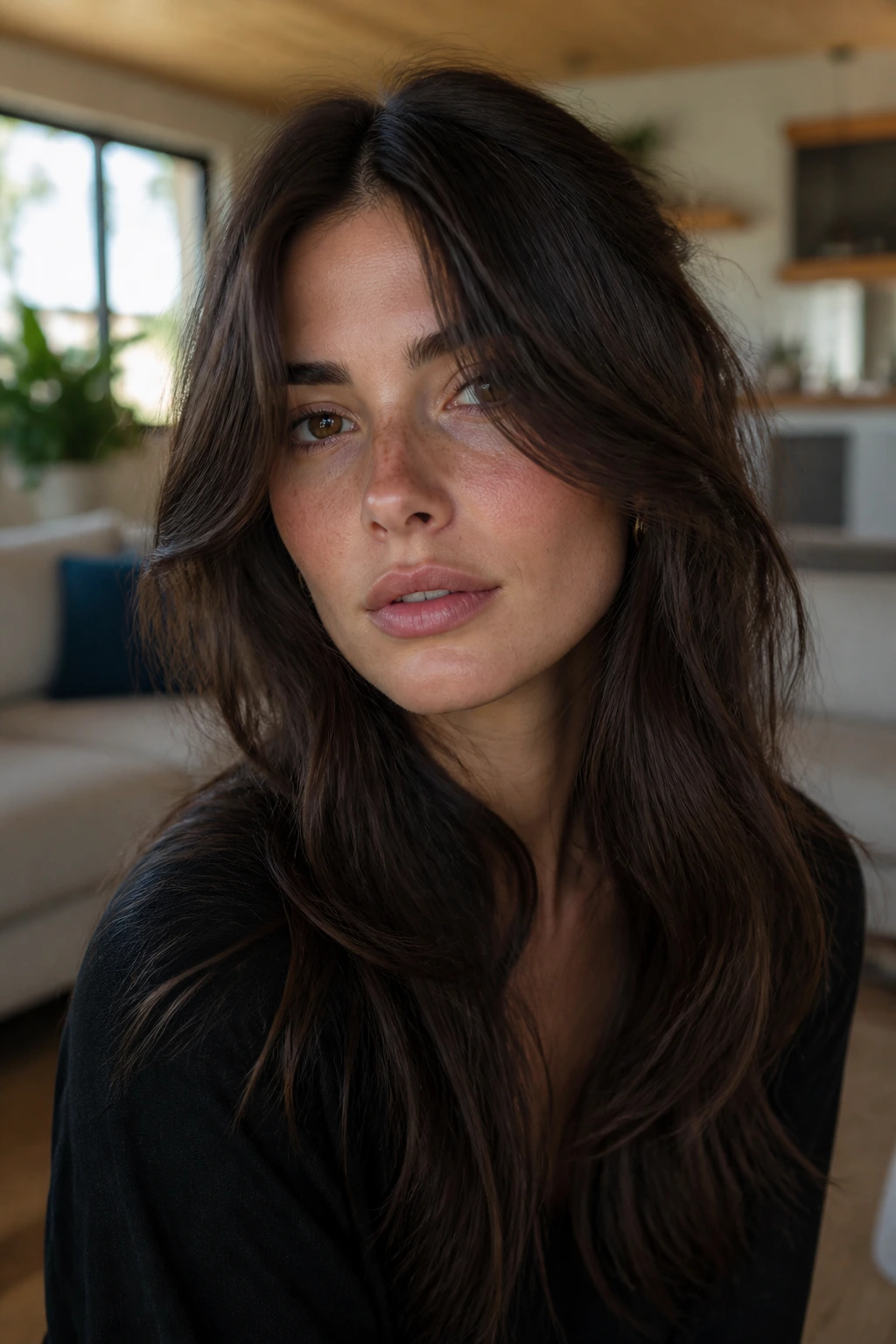
Long hair can carry a wolf cut better than people expect, as long as the layers are placed where they’ll actually be seen. A long wolf cut with curtain bangs keeps the length through the back and sides, then uses layers around the crown and face to stop everything from hanging like one long sheet. It’s movement without sacrificing the length you grew for.
The heavy center part is the trick. Instead of a wispy, barely-there fringe, the bangs have enough density to fall with some weight on each side. That keeps them from looking stringy, which is a common problem on very long cuts. The front pieces can start around the cheekbone and travel down into the jawline, which gives the face a frame even when the rest of the hair is pinned back.
This is a smart choice if you wear your hair up a lot. A bun or claw-clip twist still leaves those front layers and bangs doing visible work, which makes the haircut feel finished even on lazy days.
9. Mullet-Forward Wolf With Sweeping Bangs
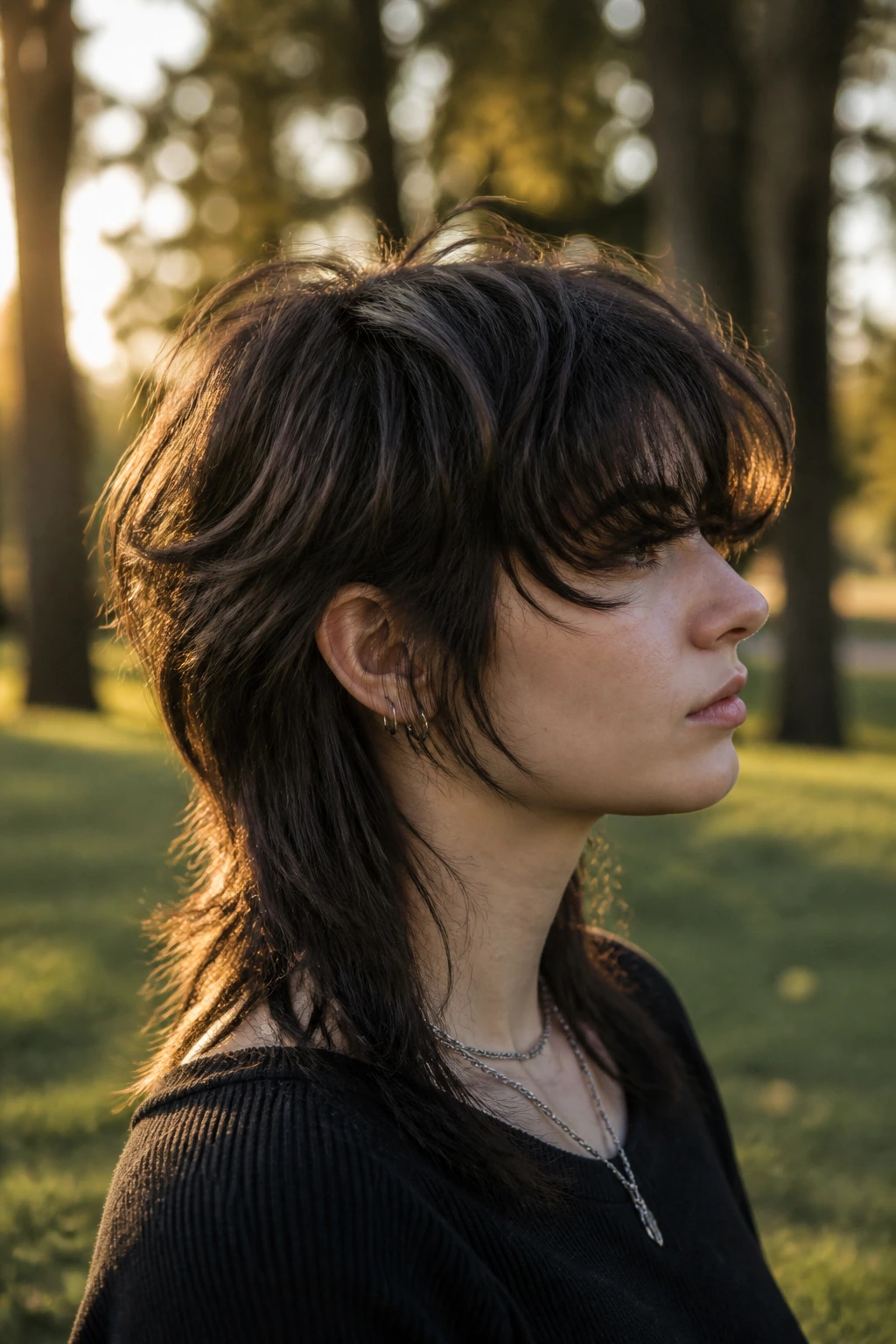
If you like a little attitude in your hair, this is where the wolf cut stops whispering and starts talking back. The front sits shorter, the crown has clear lift, and the back keeps more length, so you get that mullet lean without crossing into costume territory. Sweeping curtain bangs soften the front enough that the haircut feels cool instead of blunt.
What makes this version work is the imbalance. It’s supposed to be a little surprising from the side. The bangs sweep across the face in a broad arc, then blend into shorter layers above the ears and longer lengths below. That contrast is the whole point.
This shape looks strongest on straight to wavy hair with medium density. Very fine hair can lose the drama if too much length is removed in the back. Very thick hair can turn puffy unless the interior is debulked properly. If your stylist understands those limits, this cut can feel sharp and surprisingly wearable.
10. Bottleneck Bang Wolf With Tapered Layers
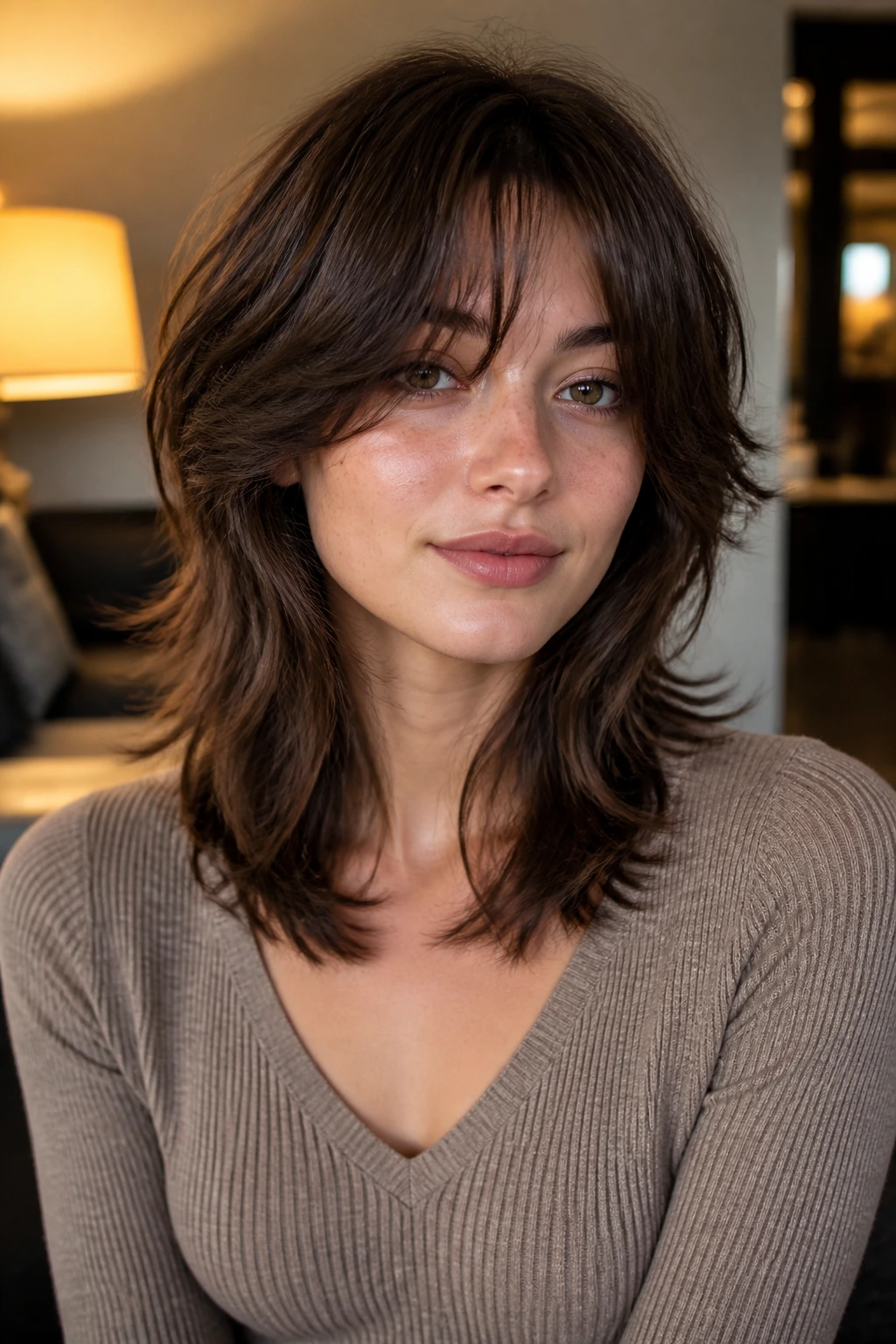
Bottleneck bangs are a useful middle ground when you want curtain bangs, but you don’t want a huge cheekbone curtain taking over your face. The center is shorter, the sides stretch out longer, and the layers taper gently into the rest of the haircut. On a wolf cut, that gives the front a cleaner architecture.
Why this shape helps
The narrower center lets the fringe sit close to the forehead without feeling heavy. The longer outer pieces keep the line soft, so the cut still opens around the eyes and jaw. If you have a broader forehead or you like the front to look controlled rather than wildly feathered, this is a strong choice.
I especially like it on hair that tends to collapse at the sides. The tapered layers give enough movement to keep the top from looking flat, but they do not flood the face with too much hair. That balance is rare. And handy.
11. Copper Wolf Cut With Full Fringe Lift
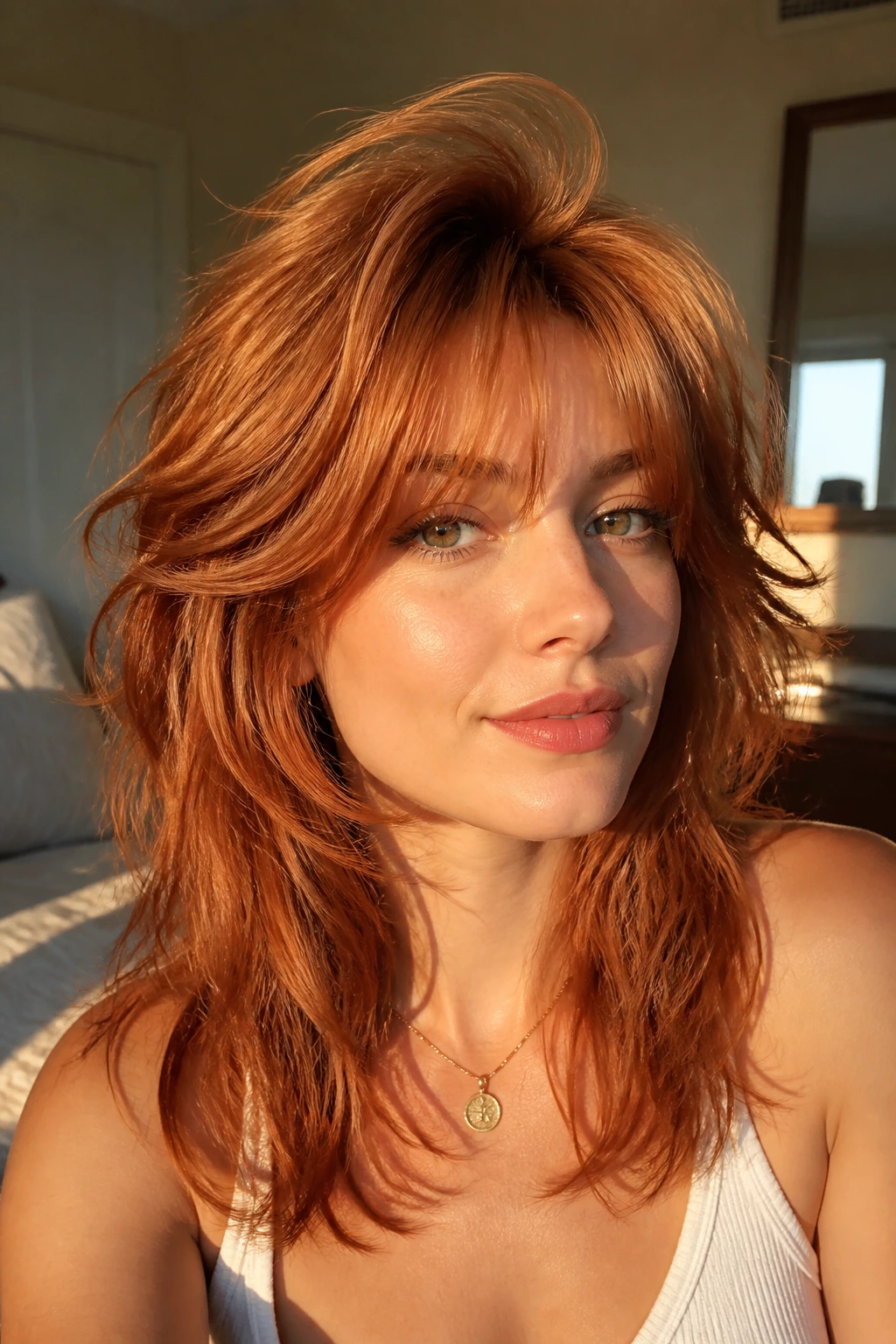
Color changes how a haircut reads. A copper wolf cut with curtain bangs shows off the layers in a way darker hair sometimes hides, because warm light bounces off every bend and separation. The cut itself can be soft or sharp, but the color makes the movement pop.
This works beautifully when the bangs are lifted slightly at the roots and the sides of the fringe are kept long enough to blend into the front layers. The warmth of copper gives the face frame extra glow, which is useful if you want the haircut to do some of the visual work that makeup would otherwise do. It’s not subtle. That’s fine.
I’d avoid making the layers too choppy if the color is already loud. Too many sharp lines and the haircut starts fighting the tone. A smoother feathered wolf shape keeps the copper looking rich instead of noisy.
12. Minimalist Soft Wolf With Barely-There Layers
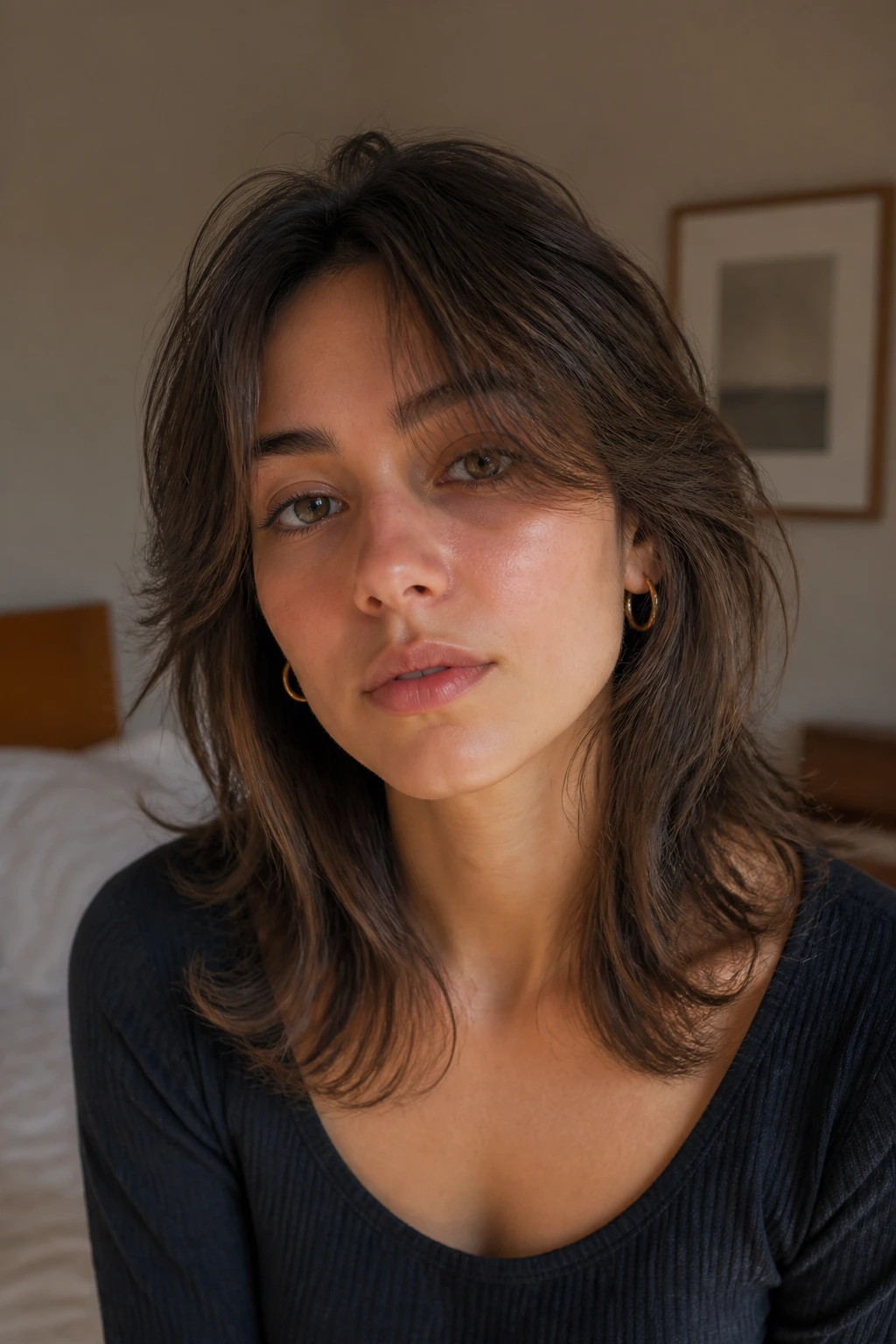
Not every wolf cut has to look like it came from backstage at a concert. A minimalist soft wolf keeps the layers understated, almost hidden, until the hair moves. The curtain bangs are there, but they’re clean and controlled, not overly shaggy. Think of it as the quiet cousin in the group.
This is a very good option if you want face-framing without obvious texture marks. The crown gets a little lift, the ends keep enough weight to sit neatly, and the whole cut grows out in a calm way. It’s a friendly haircut for people who are curious about the trend but not eager to commit to a fully choppy version.
The best part is how little it asks from your styling routine. A quick blow-dry through the front and a small round brush through the bangs can be enough. If you prefer to air-dry, a leave-in cream and a touch of root spray usually keep it from collapsing.
13. Big Volume Blowout Wolf With 90s Curtain Bangs
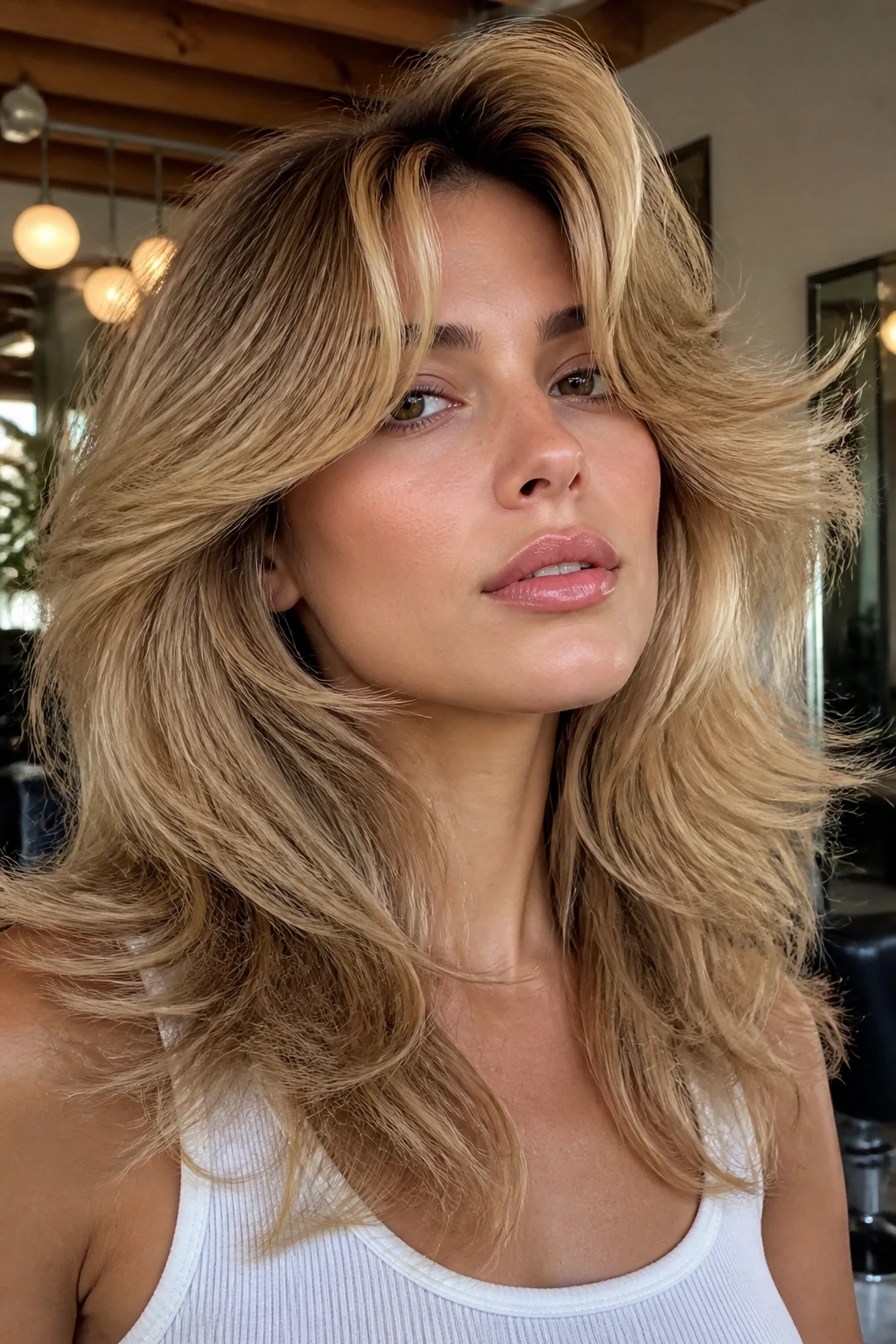
This one has a very specific mood: full hair, lifted roots, clean face frame, and bangs that bend away from the center like they’ve had a good blowout and a hot brush. It’s the glamorous side of wolf cuts with curtain bangs, and when it’s done right, it has a lot of movement without looking stiff.
The styling matters here more than the cut alone. A round brush in the 1.5- to 2-inch range, a concentrator nozzle, and a cool shot at the end all help set the bend through the fringe. Velcro rollers at the crown can make a difference too. Old trick. Still works.
This is not the version for someone who hates heat styling. It’s for people who don’t mind spending ten extra minutes getting the shape to sit a little higher and swing a little cleaner. On thick or medium hair, it can look very rich. On fine hair, you need a good mousse at the roots or the volume falls out too fast.
14. Short Wolf Crop With Petite Curtain Bangs
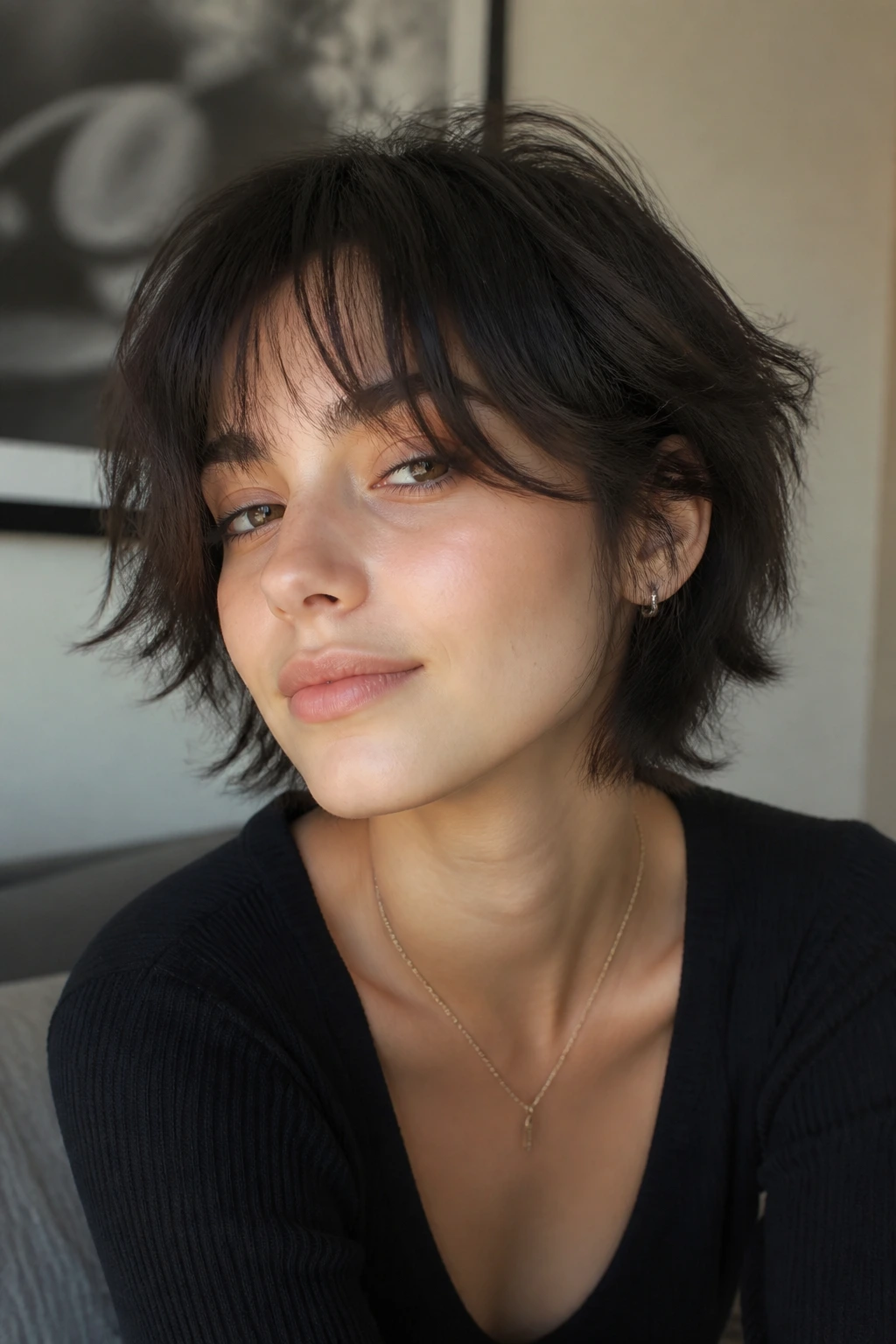
Short hair doesn’t have to give up the wolf shape. A cropped version can still keep the crown short, the sides textured, and the fringe parted in the center if the front pieces are left long enough to move. Petite curtain bangs sit between the brows and the cheekbone rather than dropping all the way to the chin, which keeps the look playful.
The main thing to watch is proportion. If the bangs are too short, they stop being curtain bangs and turn into a regular fringe. If the crown is too aggressively thinned, the cut loses body and starts looking sparse. The best short wolf crops keep a little more weight than people expect.
This is a smart cut for someone who wants a fast wash-and-go routine but doesn’t want a plain pixie or a standard bob. It has enough edge to feel current without asking for a lot of daily work.
15. Thick-Hair Wolf Cut With Debulked Interior Layers
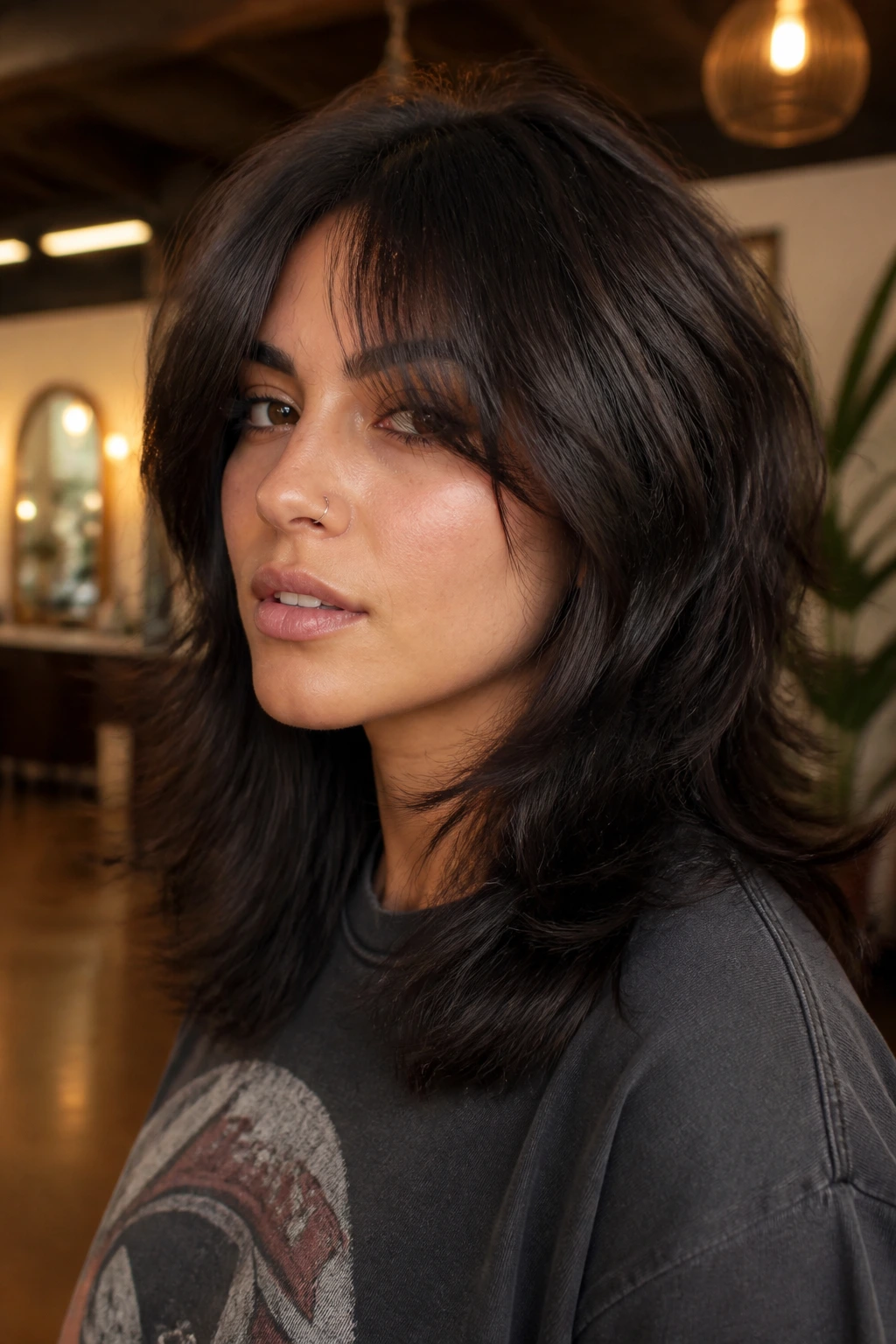
Thick hair can make a wolf cut look incredible, but only if the bulk is handled properly. The goal is not to just carve random layers into it. The goal is to remove weight where the shape swells, while keeping enough structure that the cut does not puff out into a triangle. Interior layers are the useful part here.
I’d want the stylist to focus on the inside of the shape first, then soften the face frame with curtain bangs that fall cleanly into the rest of the haircut. If the bangs are too dense, thick hair tends to overwhelm them. If they’re too thin, they vanish. That middle ground is where the cut behaves.
This version usually benefits from a heavier styling cream or a smoothing serum on the mids and ends. Not at the roots. Never at the roots. Thick hair already has enough confidence up there.
16. Fine-Hair Wolf Cut With Lifted Crown Layers
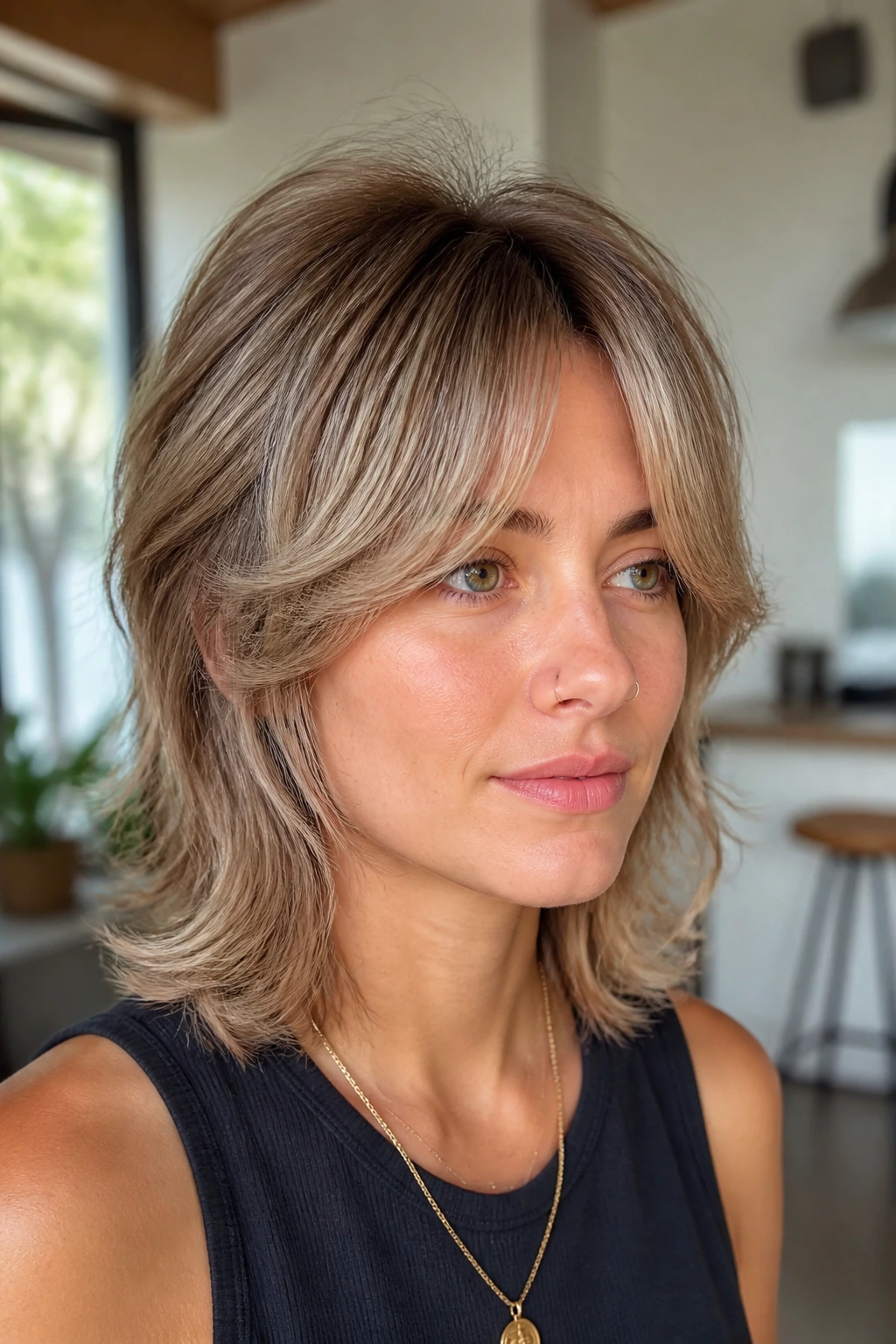
Fine hair needs a different kind of strategy. Too many short layers and the cut starts looking see-through. Too little layering and it collapses. A fine-hair wolf cut works best when the crown is lifted just enough to create shape, while the lower length stays relatively intact so there’s still something for the eye to grab.
The curtain bangs should be cut a touch fuller than you might expect. Fine fringe can go stringy fast, especially if it’s too wispy at the center. A little density through the front makes the split read properly and gives the whole cut a more expensive-looking finish. That’s the real trick here.
A root-lifting mousse and a quick round-brush pass at the bangs can make this cut look fuller than it is. If you air-dry everything and hope for the best, the shape usually disappears by lunch.
17. Low-Maintenance Air-Dry Wolf With Long Face Frame
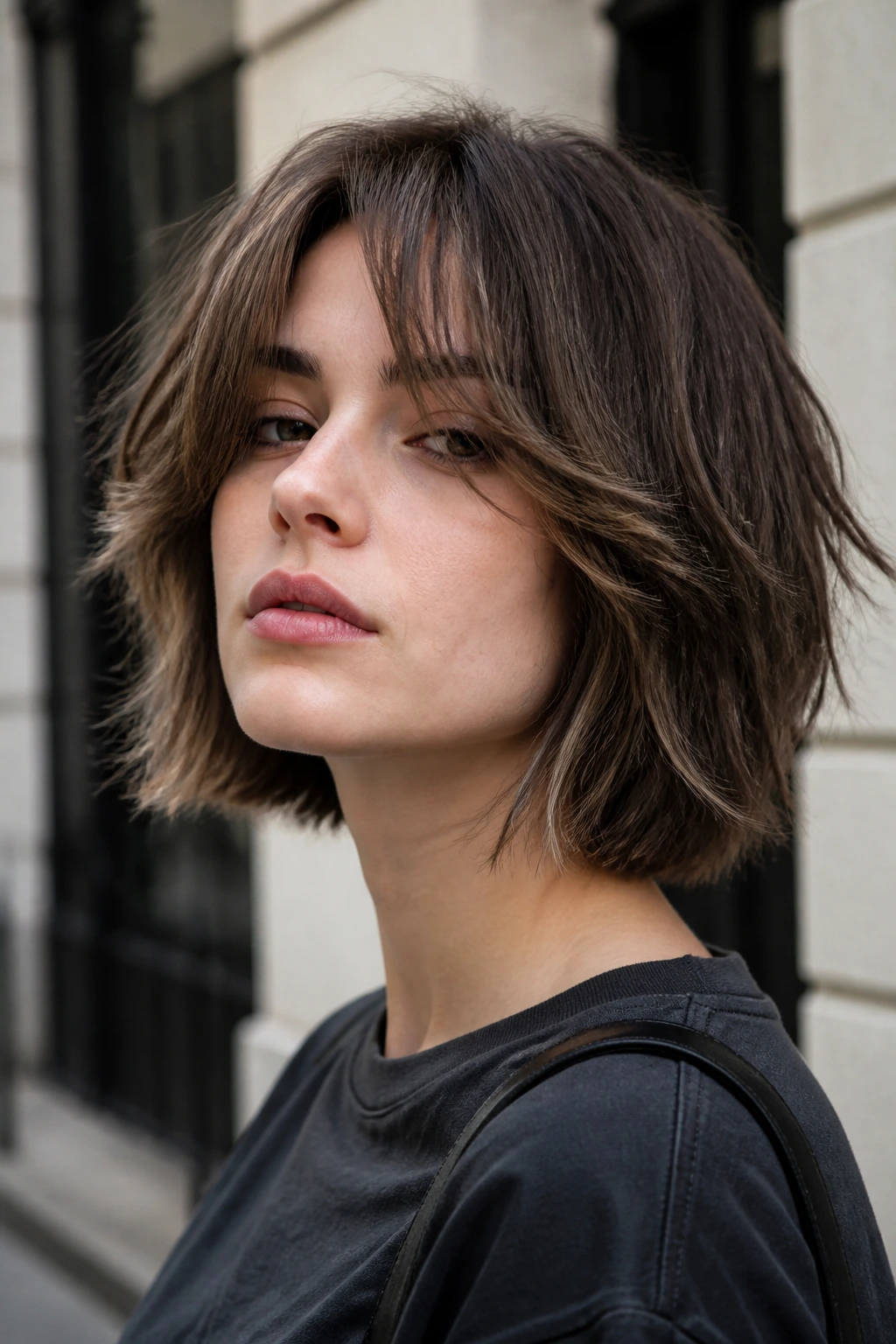
This is the version for people who want the haircut to do the work after they leave the shower. The layers are placed to follow the natural bend in the hair, the curtain bangs are kept long enough to split on their own, and the face frame stays soft so it can fall into place without a lot of help.
It’s especially nice on hair that already has a little wave. A leave-in conditioner, a dab of cream, and a quick scrunch can be enough. For straighter hair, a twist-and-air-dry method helps the front pieces bend away from the center instead of hanging flat. You do not need a full salon blowout for this cut to read well.
I like this version because it respects real life. Some haircuts are built for photos. This one is built for Tuesday morning.
18. Glam Wolf Cut With Polished Curtain Bangs
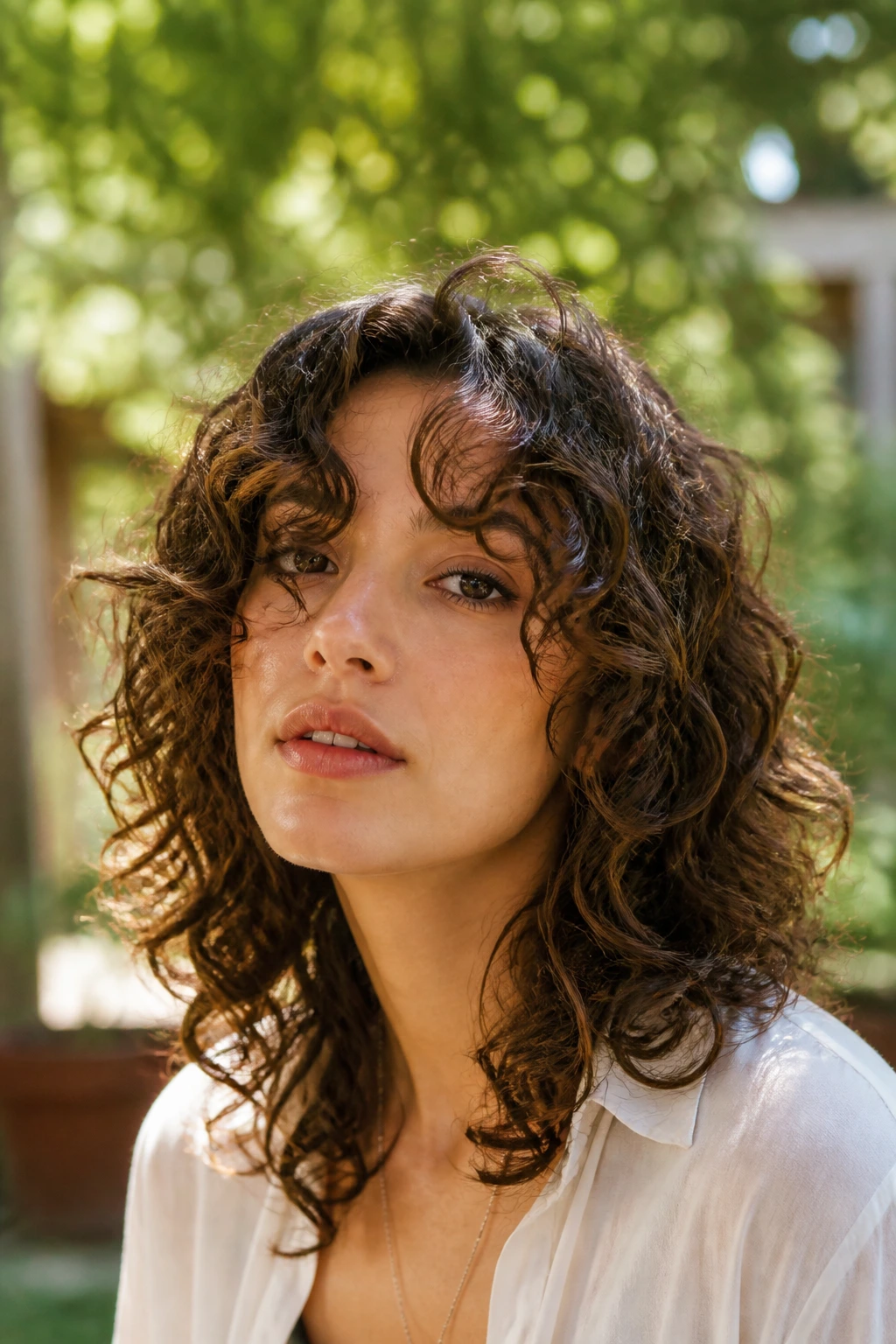
There’s a smooth, shiny side to wolf cuts that gets overlooked because people keep picturing messy texture and lived-in ends. A glam wolf cut keeps the layers, but the finish is polished. The curtain bangs are brushed smooth and curved away from the face, the ends are soft but clean, and the whole shape looks deliberate.
This version works best if you like a blowout finish. A round brush, heat protectant, and a little serum on the mids and ends are enough to give it that controlled swing. The bangs should not be flat ironed pin-straight unless you want to lose the softness. A bend matters. That bend is the point.
It’s a good choice for events, office settings, or anyone who loves the cut but wants the rougher versions to stay in the inspiration folder. Same architecture. Different outfit.
How Wolf Cuts With Curtain Bangs Change by Hair Texture
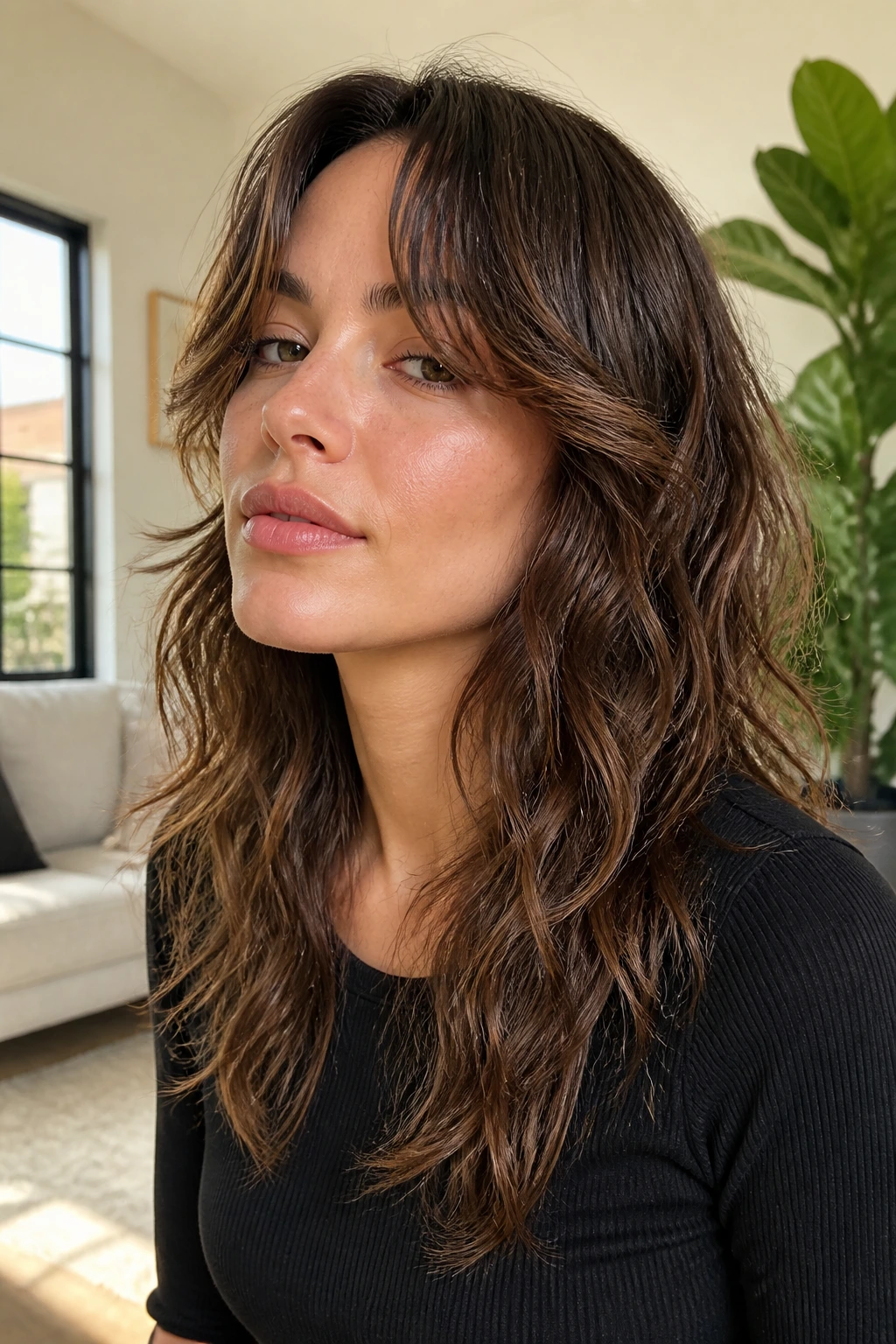
Texture changes everything here. Straight hair shows every line in the cut, which means the layering has to be deliberate or the whole thing falls flat and obvious. Wavy hair is the easiest middle ground because it naturally fills in the soft bends that make the cut feel alive. Curly hair can look the best of all, but only if the layers respect the curl pattern instead of interrupting it.
Fine hair needs lighter, smarter layering. Too much texturizing and you lose density around the face. Thick hair needs internal weight removal or the silhouette swells at the sides. If your hair sits somewhere between, ask for a softer perimeter and keep the curtain bangs long enough that they can move.
How to Ask for the Cut Without Losing the Shape
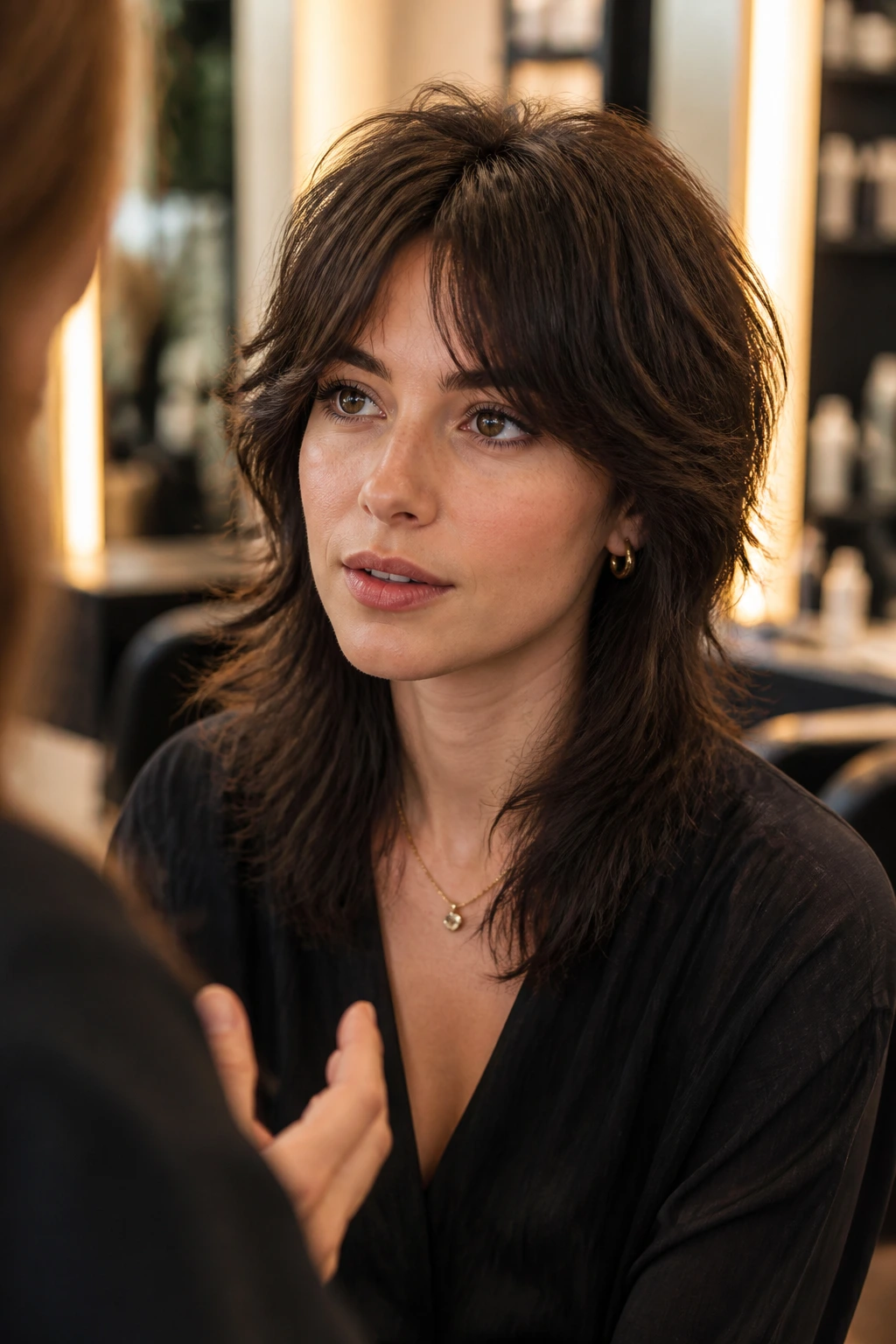
A lot of bad wolf cuts happen because the words are vague. “Just make it shaggy” is a fast route to disappointment. Better to name the parts you care about: crown lift, cheekbone-length curtain bangs, texture through the mids, and a perimeter that still has some length. That gives your stylist a map.
Bring two or three photos, but make them different angles. One front view, one side view, and one from a person with a similar texture to yours is more useful than ten glossy shots of hair you can’t actually wear. Tell the stylist whether you plan to blow-dry, diffuse, or air-dry most days. That detail changes where the layers should sit.
If you’re nervous, ask for the fringe to stay a little longer on the first cut. Curtain bangs can always be shortened later. Growing them back out is the annoying part.
Tools That Make Styling Less Annoying

- 1.5- to 2-inch round brush: Best for bending the curtain bangs away from the face without making them puffy.
- Blow dryer with a concentrator nozzle: Helps direct the front pieces and control the crown lift.
- Diffuser attachment: A must for curls and a good idea for waves that frizz if you rough-dry them.
- Sectioning clips: They keep the bang pieces separate while you dry the rest of the hair.
- Heat protectant spray or cream: Use it any time hot air touches the front layers or the bangs.
- Texturizing spray: Good for adding grit to the ends on straight or fine hair; use a light hand.
- Light mousse: Gives body at the roots without turning the cut sticky.
- Wide-tooth comb: Useful for curls and for detangling the face frame without breaking the wave pattern.
The Mistakes That Flatten the Whole Look
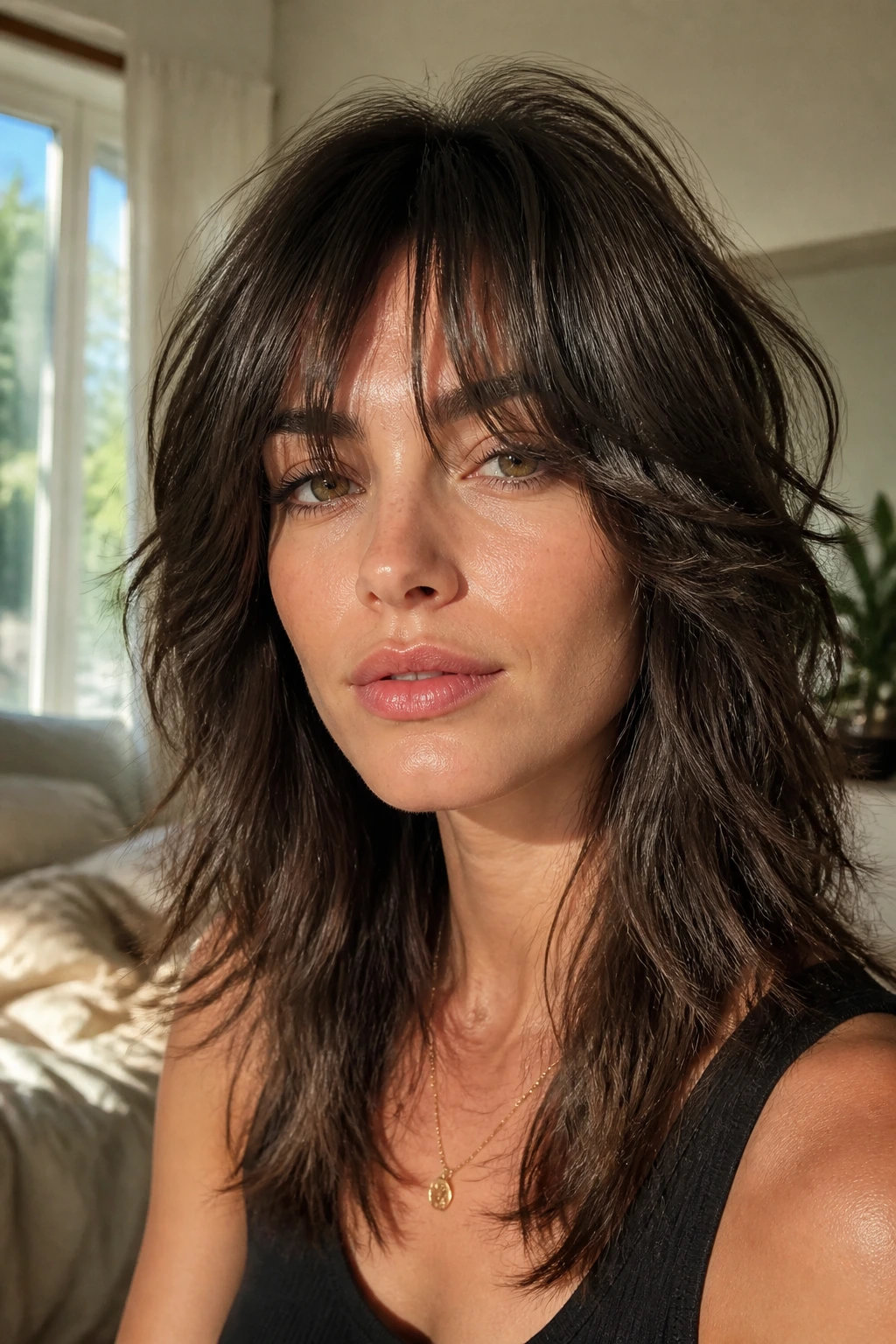
The first mistake is cutting the curtain bangs too short. Short bangs stop splitting cleanly and start sitting like a blunt fringe, which changes the mood completely. Keep the first cut longer than you think you need; it’s easier to shorten later than to wait for damage control.
Another common problem is over-thinning the layers. The haircut may look airy in the chair, then go limp or stringy once the hair settles. If the ends start to feel see-through, you’ve gone too far. Ask for controlled texturizing instead of a full thinning session.
Blow-drying the bangs straight down is a sneaky mistake too. It kills the face frame and makes the fringe sit flat across the forehead. Lift the root slightly, bend the hair away from the center, and finish with a cool shot. That tiny bit of direction changes the whole front.
Heavy oil at the roots is another one. It weighs down the crown and erases the wolf shape fast. If you use serum, keep it on the mids and ends only.
Variations and Alternatives Worth Saving
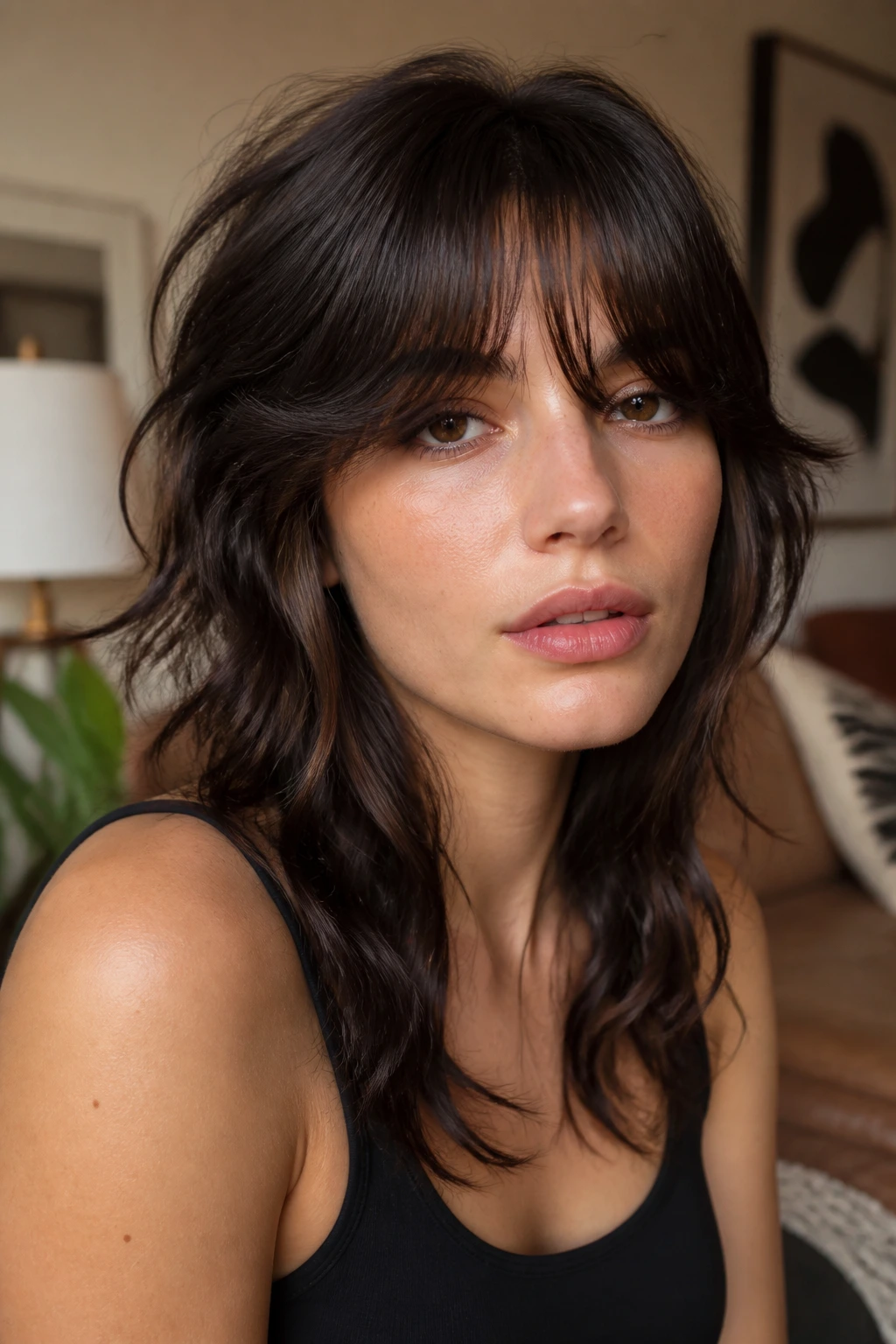
- Soft Shag Swap: Keep the same curtain bangs, but reduce the contrast between the crown and the perimeter. This works if you want movement without the mullet edge.
- Curly-First Version: Start the cut dry, leave the bangs long, and shape the layers around the curl spring. Good for coils, waves, and mixed textures that shrink unevenly.
- Blowout-Ready Version: Ask for smoother internal layers and a fuller bang section, then style it with round-brush bend and root volume. Best if you like polished hair.
- Mini Wolf Bob: Shorten the length to the jaw or neck, keep the crown textured, and let the curtain fringe stay soft. This gives you a cleaner outline with the same attitude.
- Grow-Out Friendly Version: Preserve more length through the back and keep the front pieces long enough to tuck. Useful if you hate frequent salon visits.
- Straight-Hair Edge Version: Use point-cutting or a light razor to make the ends piecey. This version needs less volume and more separation.
Trim Schedule, Wash Days, and Grow-Out

Curtain bangs usually need attention before the rest of the haircut does. If you want them to stay crisp, plan on a fringe trim every 4 to 6 weeks. Softer, longer versions can stretch farther. The full wolf shape often holds up for 8 to 12 weeks, depending on how fast your hair grows and how much length you’re willing to sacrifice.
Wash frequency depends on texture, not trends. Fine hair may need a wash every day or every other day because the crown collapses fast. Wavy and curly hair usually last longer between washes if you protect the bangs at night and refresh the front in the morning with a little water or leave-in spray.
At night, clip the curtain pieces away from the face or wrap them loosely around a soft roller if you like a clean bend. A satin pillowcase helps too. Not glamorous advice. Useful advice.
Frequently Asked Questions

Will wolf cuts with curtain bangs work on straight hair?
Yes, but the cut needs more intentional layering than it does on wavy hair. Straight strands show every line, so ask for soft texture through the crown and a longer fringe that can bend away from the face instead of hanging flat.
Can I get this cut if my hair is thin?
You can, but the layering has to stay controlled. Fine hair needs a fuller bang section and a lifted crown without too much texturizing at the ends, or the haircut can look sparse fast.
How often do curtain bangs need trimming?
Most people need a touch-up every 4 to 6 weeks if they want the shape to stay clear. If you like a softer, grown-out fringe, you can wait longer and let the pieces graze the cheekbone or jaw.
What if my bangs split in the wrong place?
That usually means the root is being dried straight down or the fringe is too short for your face shape. Use a round brush or a velcro roller to reset the bend, then leave the bangs slightly longer at the next trim.
Is a wolf cut the same as a shag?
They overlap, but they’re not identical. A shag usually feels more uniformly layered, while a wolf cut often has more contrast between the shorter crown and the longer lower length.
Does this haircut work on curly hair?
Yes, and it can look excellent. The trick is a dry cut or curl-by-curl shaping, plus curtain bangs that are left long enough to account for shrinkage.
How do I style it fast on a busy morning?
Focus on the front. A little mousse at the roots, a quick bend through the curtain bangs with a round brush, and a touch of texture spray on the mids will do more for the overall shape than fussing over every strand.
What should I ask for if I want a softer version?
Ask for a softer wolf-shag hybrid, longer curtain bangs, and gentle point-cutting instead of aggressive texturizing. That wording helps keep the shape airy without making the ends look shredded.
The Cut That Keeps Its Edge
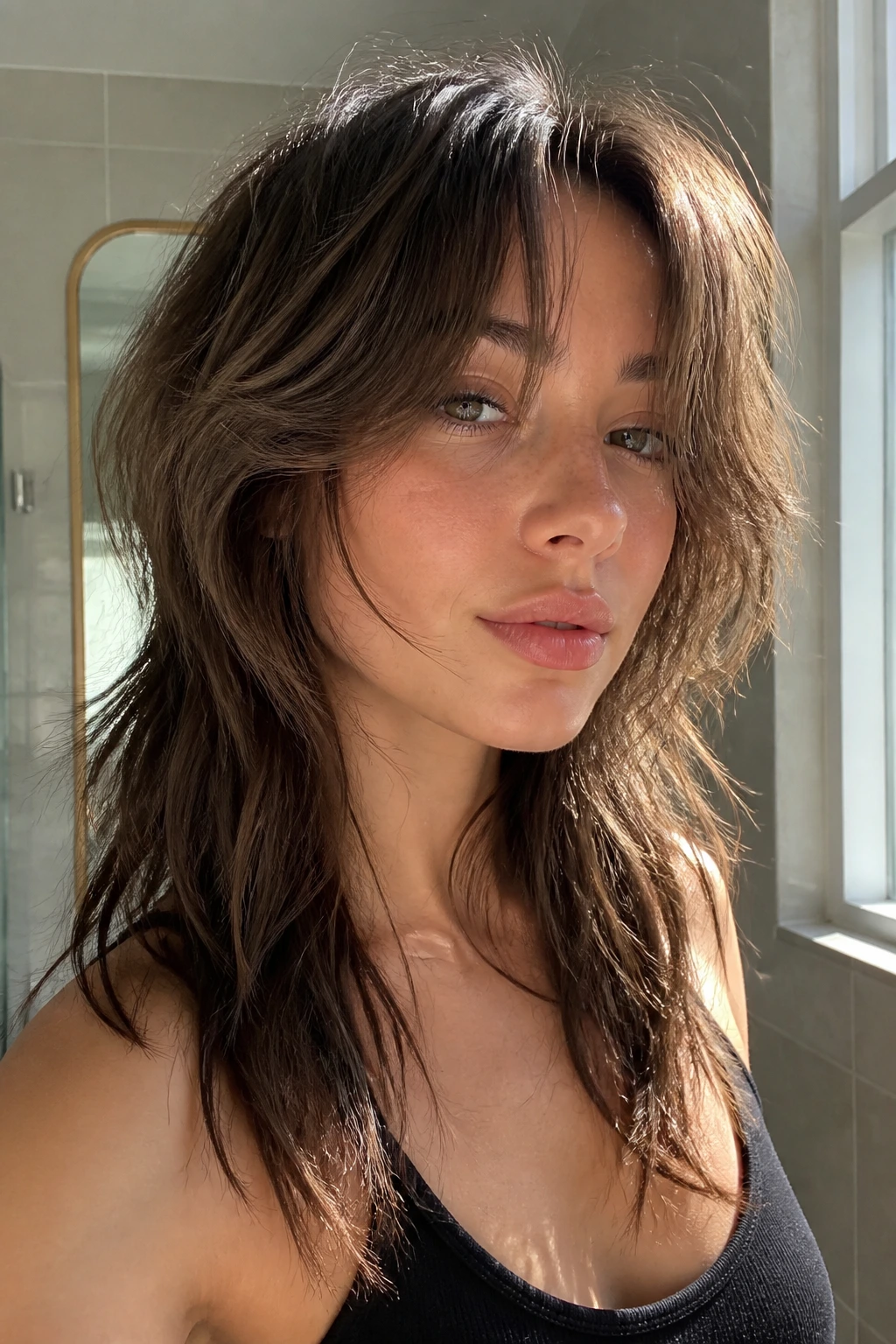
The best wolf cuts with curtain bangs do something rare: they give you shape without pinning your hair into one fixed mood. You can wear them rough, brushed, air-dried, blown out, or tucked behind the ear, and the haircut still reads. That flexibility is why this look keeps showing up in salons and on real heads instead of just in saved-photo folders.
Bring a clear photo, name the parts that matter, and be honest about how much styling you’ll actually do. Those three things will save you from the usual haircut regret, and they matter more than chasing the most dramatic version in the room.
