



A medium-length wolf cut has a very specific kind of attitude. It keeps the hair moving at the crown, breaks up the bulk through the middle, and leaves enough length at the ends to avoid the stiff, overcut look that ruins so many shaggy layers. When it’s done right, the shape looks a little wild in motion and surprisingly neat when you’re standing still.
That collarbone-to-shoulder zone is the sweet spot. Shorter than that and the silhouette starts leaning too hard into mullet territory; longer than that and the layers lose the snap that gives the cut its edge. Straight hair needs the extra texture. Thick hair needs the weight removed in the right places. Curly hair needs the layers placed where they won’t kick outward and make the head look wider than it is.
The best versions also change character fast. A middle part makes the haircut read sharper, curtain bangs soften the front, and a bit of bend through the ends can take the whole thing from rough to polished in about ten minutes. That range is why these 25 medium length wolf cuts work so well.
Why This Collection Is Worth Your Time
- The length window is forgiving: Collarbone and shoulder-skimming cuts keep the wolf-cut shape visible without forcing you into a dramatic grow-out phase.
- Texture stays readable: Medium length gives the crown layers, face frame, and ends enough separation that the haircut still looks intentional after a long day.
- There’s a version for every texture: Straight, wavy, curly, fine, and thick hair all need different layering choices, and this list gives those differences real attention.
- You can soften or sharpen the mood fast: Change the fringe, the part, or the finish and the same base cut can feel polished, grunge, glossy, or almost soft-shag.
- It helps you talk to a stylist with more confidence: Once you know where the layers should start and how much weight to leave at the perimeter, the consultation gets a lot easier.
1. Collarbone Wolf Cut with Curtain Bangs
This is the version I’d hand to someone who wants the wolf cut shape without going full punk. The collarbone length keeps the ends swinging, while curtain bangs open the face and make the cut look deliberate from the front instead of just choppy from the side.
Why it works
The shortest layers can sit high enough to create lift, but the perimeter still has enough weight to keep the haircut from puffing out. Curtain bangs are the bridge here—they soften the jump from the crown to the cheekbones and make the whole shape easier to wear with a center part.
- Best for: medium-density straight or wavy hair
- Stylist note: ask for curtain bangs that start around the cheekbone, not the brow, if you want a softer drop
- Finish: a round brush bend through the face frame, then let the rest dry naturally
Best move: keep the very ends a little blunt so the haircut does not float away from your head.
2. Choppy Razor Wolf Cut for Straight Hair
Straight hair can make a layered cut look like one flat sheet if the weight stays untouched. A razor cut breaks that sheet into smaller pieces, so the ends catch light in thin sections instead of one solid block.
The key is restraint. Ask for razor work through the mid-lengths and face frame, not a shredded perimeter from root to tip. That keeps the shape edgy without turning the ends wispy. A light texture spray at the middle of the hair does more here than a heavy cream near the roots.
If your hair is fine, this version needs a careful hand. Too much slicing and the ends start to look dry before they ever look cool.
3. Curly Wolf Cut with Rounded Layers
Can curly hair wear a wolf cut without ballooning? Absolutely, but only if the layers follow the curl pattern instead of fighting it. That usually means a dry cut, or at least a stylist who knows how the hair springs once it’s dry.
How to wear it
Use curl cream on soaking-wet hair, then scrunch in gel from the ears down. Diffuse just until the roots are set; if you dry every curl bone-dry, the crown can go fuzzy fast. The nicest version keeps the face frame a touch longer than the top layers, which lets the curls coil instead of kicking outward.
This cut is at its best when the shape is rounded, not triangular. You want movement from the layers, not width at the sides.
4. Wavy Air-Dry Wolf Cut
If your hair already bends a little on its own, this is the easiest wolf-cut lane to live in. The medium length gives the wave enough room to show up, and the layers keep it from collapsing into a heavy triangle at the bottom.
A tiny bit of mousse, scrunched in while the hair is damp, usually does the job. Then leave it alone. The temptation is to keep touching it, which only stretches the wave and frays the ends. If the crown goes flat, clip the roots up for ten minutes while the hair dries.
This one is quietly good. No drama, no fuss, just hair that looks a little better when you let it be itself.
5. Sleek Center-Part Wolf Cut
A sleek wolf cut sounds contradictory, and that’s exactly why it works. The layers still live inside the haircut, but the surface is smoothed enough that you get movement instead of frizz.
Keep the perimeter a little heavier than you would in a grungier version. That weight matters when the hair is straightened, because it prevents the shape from turning stringy. A flat iron bend through the last inch or two is enough; you do not need to curl every section into submission.
This is the version for people who like edge but also like looking put together. It reads sharper than a shag and cleaner than a mullet.
6. Blowout Wolf Cut with Big Ends
A big blowout changes the whole personality of a wolf cut. Instead of rough texture, you get lifted roots, flipped ends, and a face frame that swings when you turn your head.
The trick is to wrap the front sections around a round brush and pull them away from the face before setting them with cool air. Let the ends kick out a little. If they sit too straight, the haircut loses its shape and starts looking like a plain layered cut. Velcro rollers at the crown can help if your hair forgets volume the second you stop styling it.
This version loves medium-density hair. It also loves a little patience. Rushing the blow-dry always shows.
7. Bottleneck Bang Wolf Cut
Bottleneck bangs sit in that narrow, flattering space between curtain bangs and a heavier fringe. They start a little tighter near the center, then open at the cheekbones, which makes them a smart match for a wolf cut that already has strong layers.
What makes it different
The fringe gives you more face framing than a simple curtain bang, but it does not swallow the forehead the way a thick blunt bang can. That matters on medium-length hair, because the cut already has enough texture going on. The bangs should feel connected to the crown layers, not pasted on top.
A little dry shampoo at the roots keeps this one lifted through the day. If the bangs sit too flat, the whole haircut loses that effortless bend.
8. Side-Swept Fringe Wolf Cut
A side-swept fringe softens the wolf cut fast. The diagonal line pulls the eye across the face, which is useful if you want the haircut to feel a little less aggressive and a little more lived-in.
It also buys you easy grow-out time. Side bangs can be pinned back, tucked behind the ear, or blended into the front layers when you get tired of them. That flexibility makes them one of my favorite choices for medium length hair, because the rest of the cut can stay choppy while the front stays forgiving.
This version is especially good if you wear your hair parted off-center already. The shape feels less staged that way.
9. Heavy Fringe Wolf Cut with Rocker Texture
A heavy fringe changes the whole mood. Suddenly the haircut has weight at the front, which makes the rough layers underneath feel even sharper by comparison.
The important thing is balance. Keep the fringe dense, but do not let the rest of the cut get too thin. If the ends are over-texturized, the haircut starts to look tired instead of tough. A matte texture spray gives this version the right finish; shiny product makes it read softer than it should.
This is the wolf cut for people who want the front to do the talking. It looks best when it’s not overstyled.
10. Micro Bang Wolf Cut
Micro bangs are the opposite of shy. Put them with a medium-length wolf cut and the result has real contrast: a short, sharp fringe above a long, loose, textured body.
That contrast works because the rest of the cut can stay a little softer and more irregular. The bangs provide the edge; the layers provide the movement. Keep the hair around the temples and cheekbones slightly longer so the crop does not feel too severe.
This version is not subtle. That is the point. It suits people who want the cut to look like a choice, not just a haircut.
11. Fine-Hair Wolf Cut with Lifted Crown

Fine hair needs a wolf cut that creates the idea of density instead of stripping too much away. The crown should be lifted, yes, but not hacked so short that the top looks sparse and the ends go see-through.
The real trick
Ask for internal layering rather than aggressive thinning. That means the stylist removes some bulk inside the shape while leaving enough perimeter to hold the line. A root mousse at the crown, then a blow-dry with the head tipped slightly forward, usually gives this version enough body to last.
The most common mistake on fine hair is over-texturizing the ends. Once they start looking frayed, the whole haircut loses structure. Keep the bottom edge a touch heavier than you think you need.
12. Thick-Hair Wolf Cut with Interior Debulking
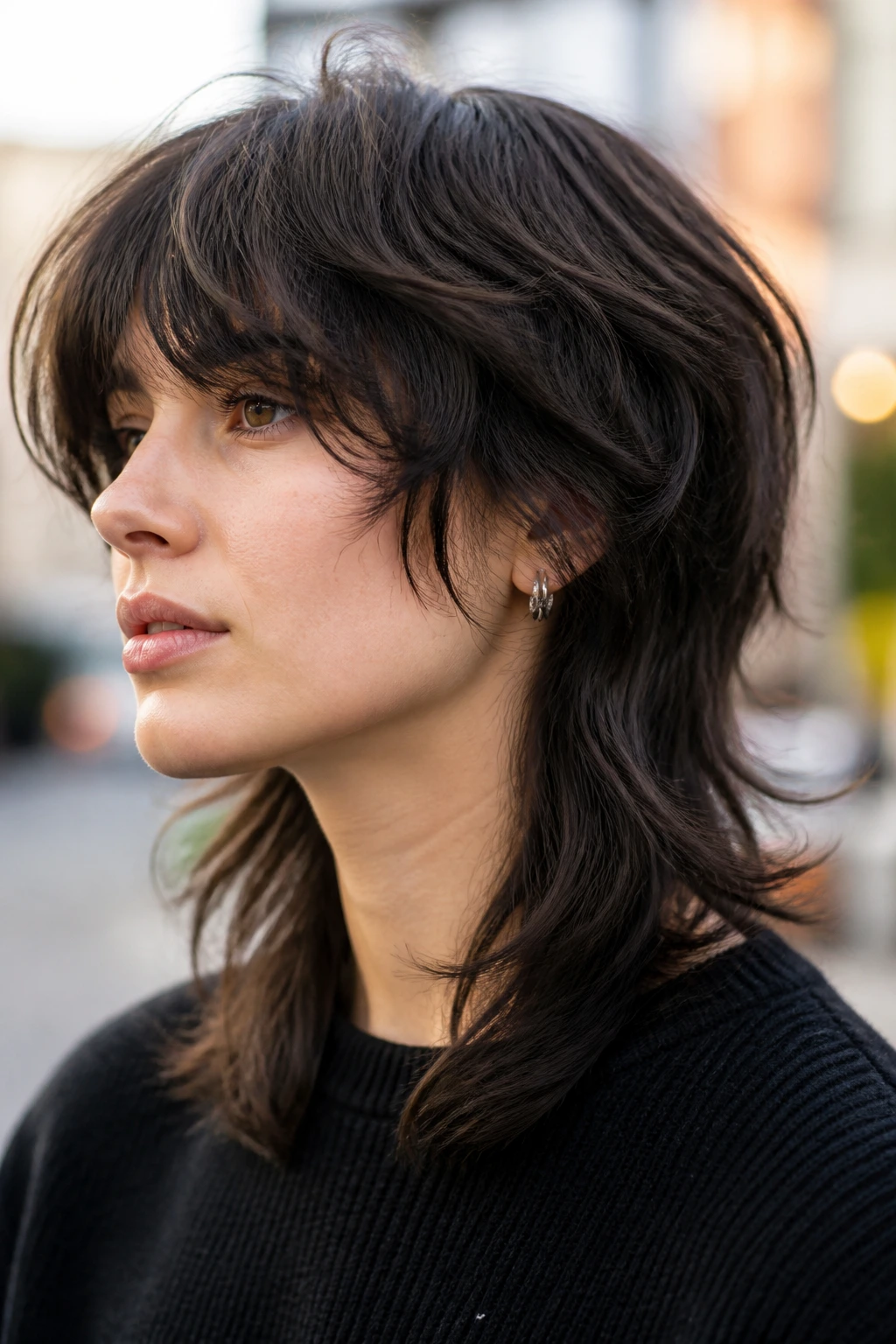
Thick hair can wear a wolf cut beautifully, but it needs weight removed from the inside, not just the surface. If the bulk stays packed through the mid-lengths, the shape turns into a helmet with a fringe attached. Not flattering. Not even a little.
This is where point cutting and careful internal debulking earn their keep. The outer silhouette should stay clear, with enough shape at the perimeter to avoid puffiness. Use a smoothing cream before blow-drying, then finish with a little flexible hairspray so the layers stay separated instead of collapsing into each other.
Thick hair often looks best when the shortest layers are kept slightly longer than usual. That gives the cut movement without making it explode outward.
13. Shoulder-Skimming Wolf Cut Lob
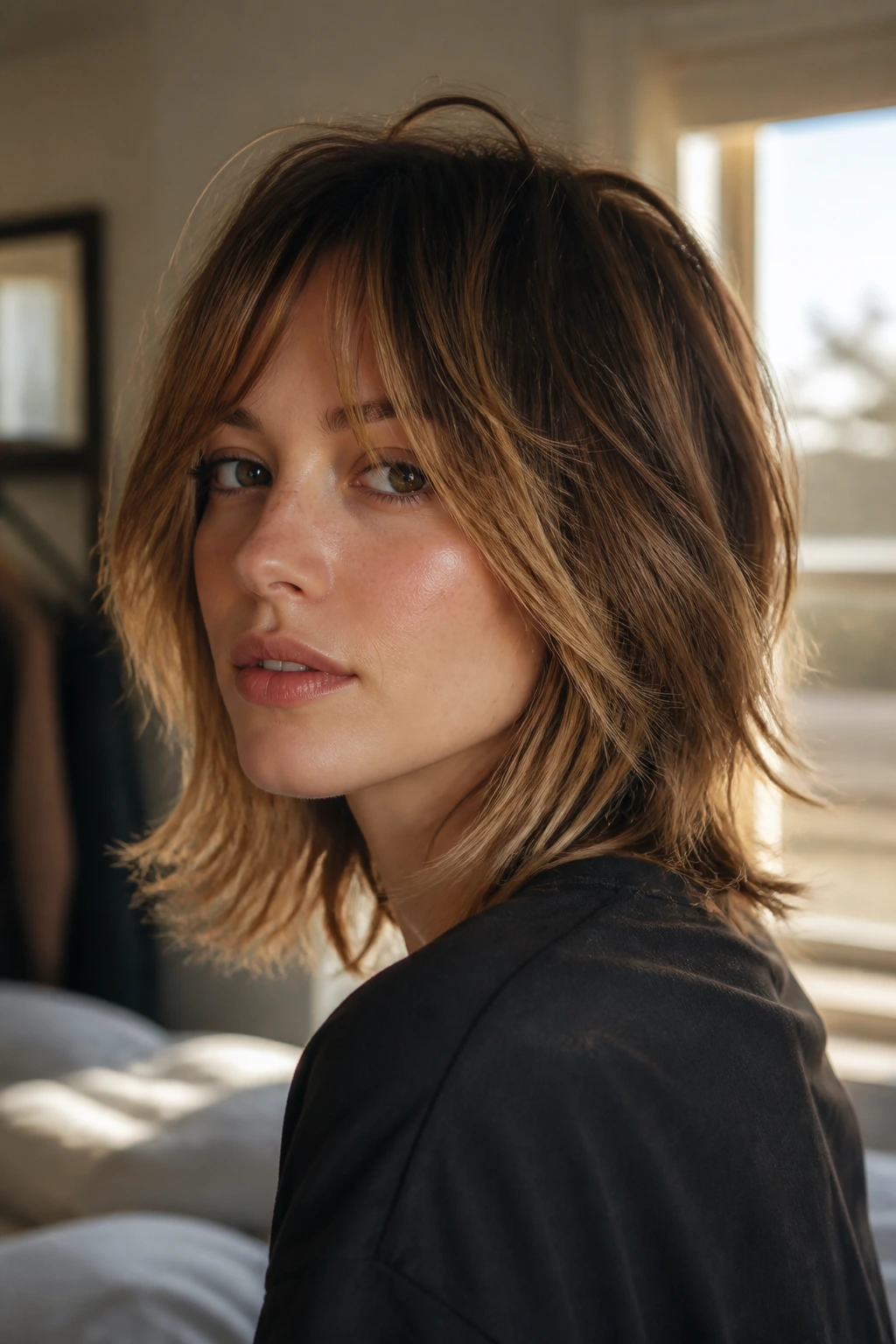
This is the softer, more wearable cousin in the family. A shoulder-skimming lob still has the wolf-cut attitude, but the slightly longer length keeps the shape calm enough for people who do not want a lot of visible disconnection.
The best version keeps the front lighter and the back only a little longer, not dramatically longer. That subtle difference is enough to create movement. It also grows out beautifully because the line remains clear even when the layers start to settle.
If you want a wolf cut but you work in a more traditional setting, this is one of the easiest places to land. It gives texture without turning every morning into a styling project.
14. Long Face-Framing Wolf Cut

If your face is long, the goal is to build width where you need it and avoid dragging everything downward. That means the face frame should start around the cheekbone or jaw, not way up near the temple.
The layers around the front need to open sideways a little, not just hang straight. That creates balance without making the haircut look boxy. I like this version because it gives structure to the front while leaving the back soft and mobile.
A center part can work here, but a slight offset often reads better. It breaks up the length in a more relaxed way.
15. Asymmetrical Wolf Cut
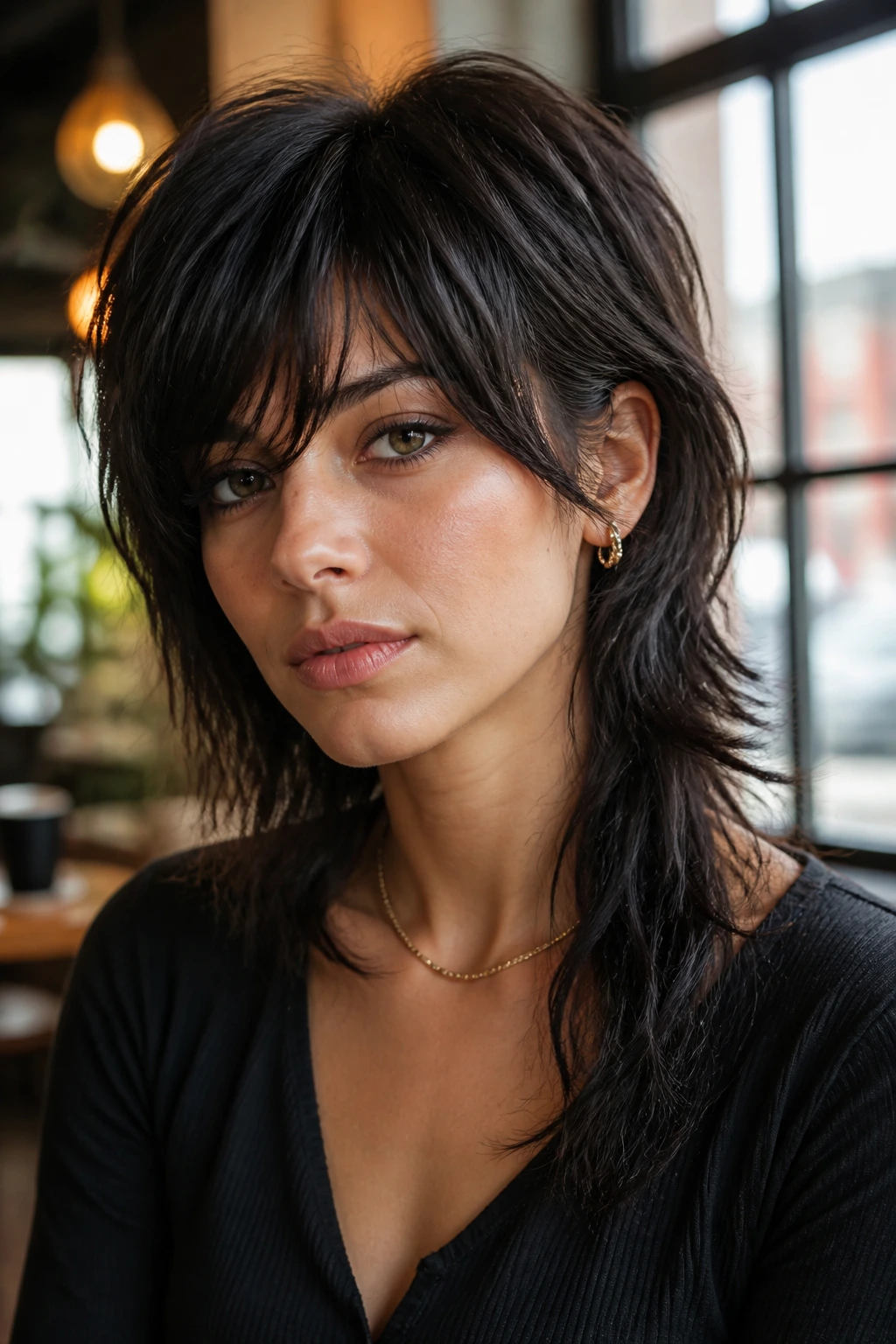
A tiny bit of asymmetry makes a wolf cut feel less predictable. One side can fall a little longer, or the fringe can sit off-center, or the face frame can be more lifted on one side than the other.
The key is control. If the imbalance looks accidental, it just reads as a bad cut. If it looks deliberate, it feels fashion-forward and sharp. This version works best when the rest of the texture is kept slightly messy so the asymmetry has room to stand out.
It’s a strong choice for anyone who likes tucking one side behind the ear and letting the other side fall forward. The haircut does half the work for you.
16. Grunge Wolf Cut with Rough Texture
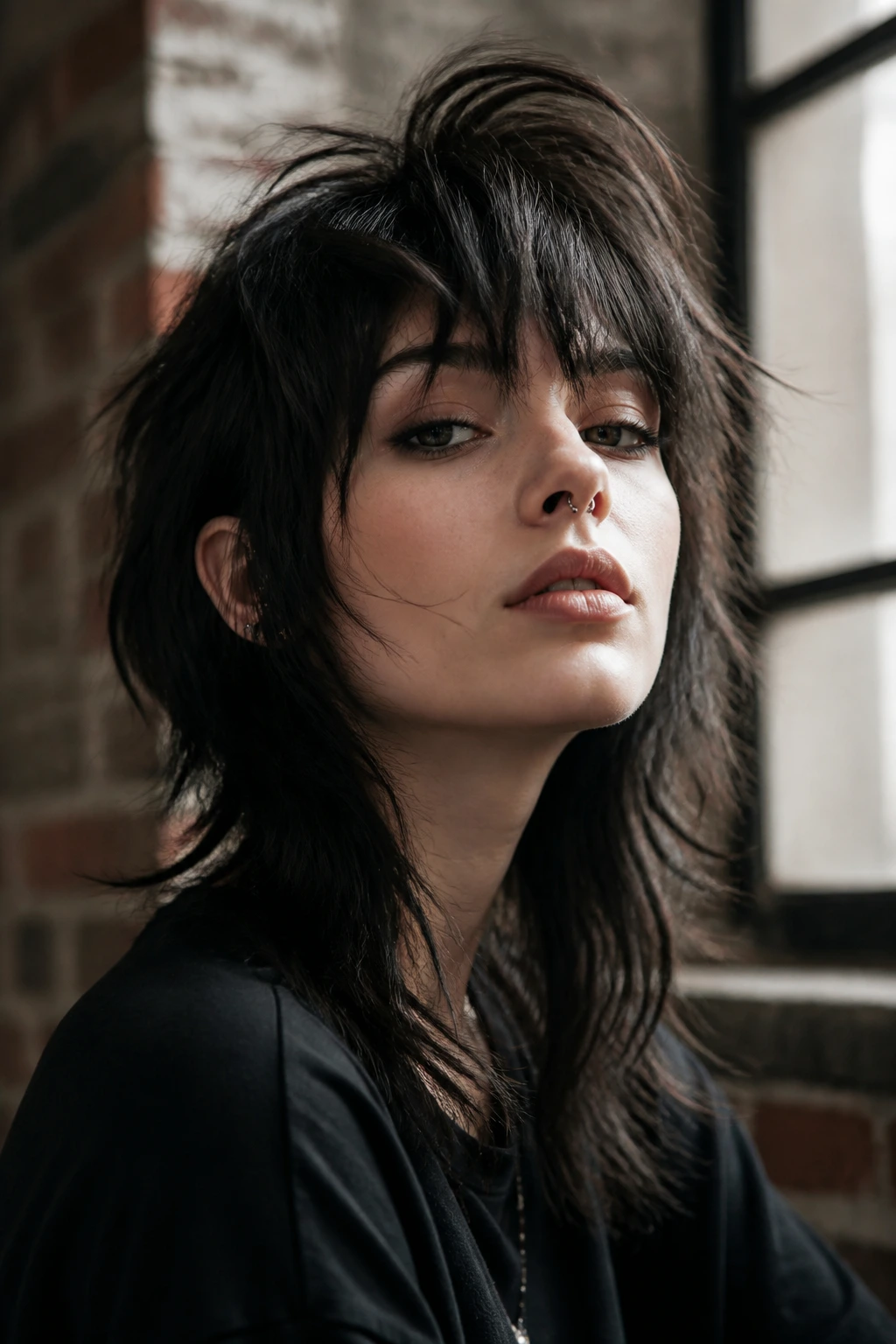
The grunge version of a wolf cut leans into imperfect texture on purpose. It looks best when the ends are piecey, the crown has a little lift, and the front pieces are bent in different directions instead of matched neatly.
That roughness is not sloppy if the cut underneath is clean. In fact, the cleaner the shape, the messier you can style it without it looking like bedhead. A matte paste or dry texturizing spray does more here than shine serum ever will.
This one suits medium-length hair that can hold a little bend. Flat irons and barrel curls are optional, but if you use them, alternate the direction so the pieces do not all clump together.
17. Soft Romantic Wolf Cut with Feathered Layers

Not every wolf cut has to shout. A feathered version keeps the movement, but the layers are softened enough that the haircut feels airy instead of sharp.
Why it works
Feathering removes the heavy edge from the ends and lets the hair fall in light, brushed-out sections. That makes it a nice option if you like the shape of a wolf cut but dislike the hard separation some versions have. It pairs well with a loose side part and a gentle bend through the front.
A light styling cream on the ends can keep this version from puffing. Use too much, and the softness turns limp fast.
18. Wet-Look Wolf Cut
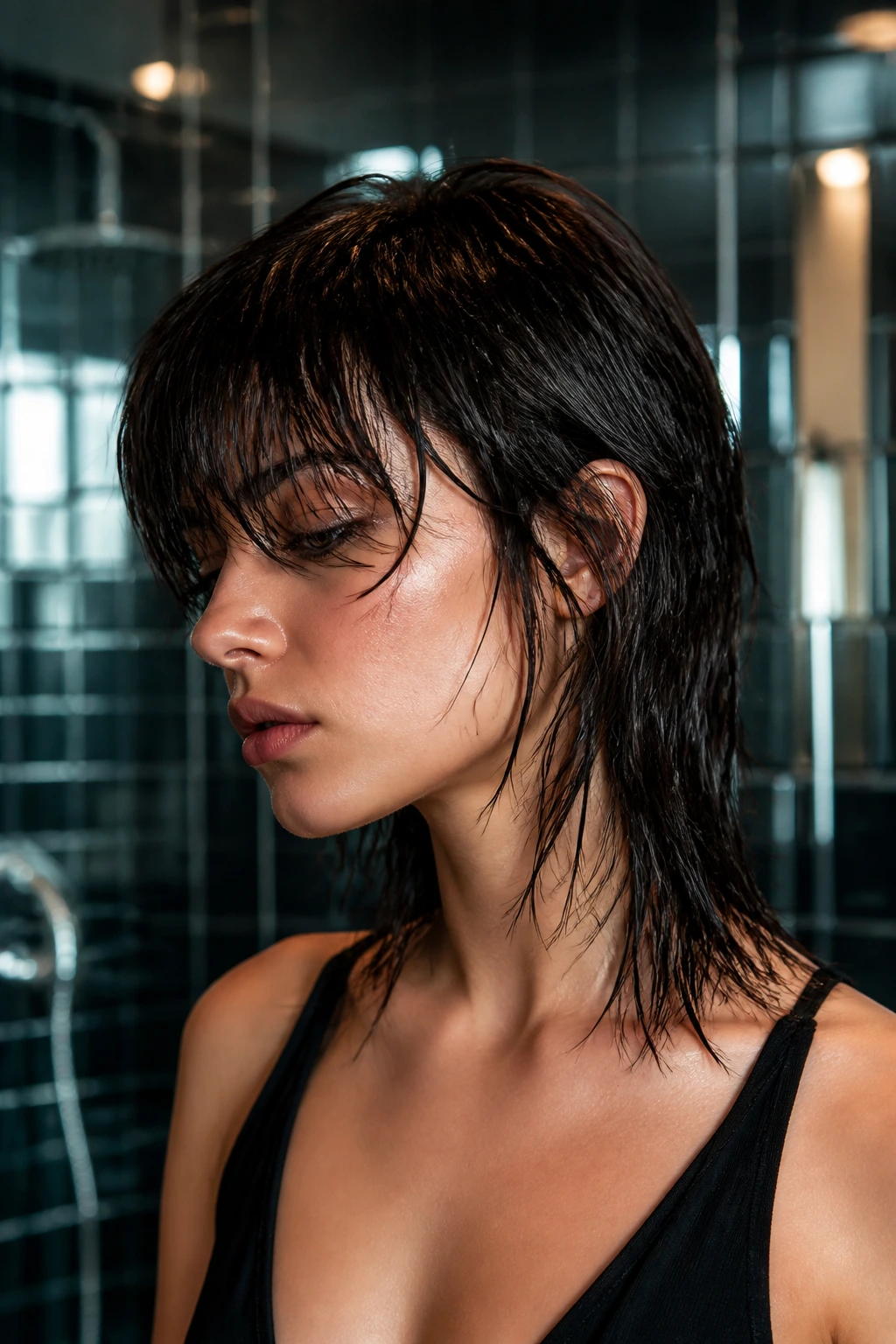
A wet-look wolf cut is pure contrast. The haircut itself may be layered and a little wild, but the styling pulls everything together with shine and clean separation.
Gel is the main player here. Work it through damp hair with your fingers or a wide-tooth comb, then let the sections dry in defined pieces. The crown should stay controlled, not fuzzy. The ends can stay slightly uneven as long as the silhouette reads clearly.
This version is dramatic in the best way. It turns the wolf cut into something more editorial and less casual without changing the actual shape.
19. Balayage Wolf Cut with Ribbon Highlights
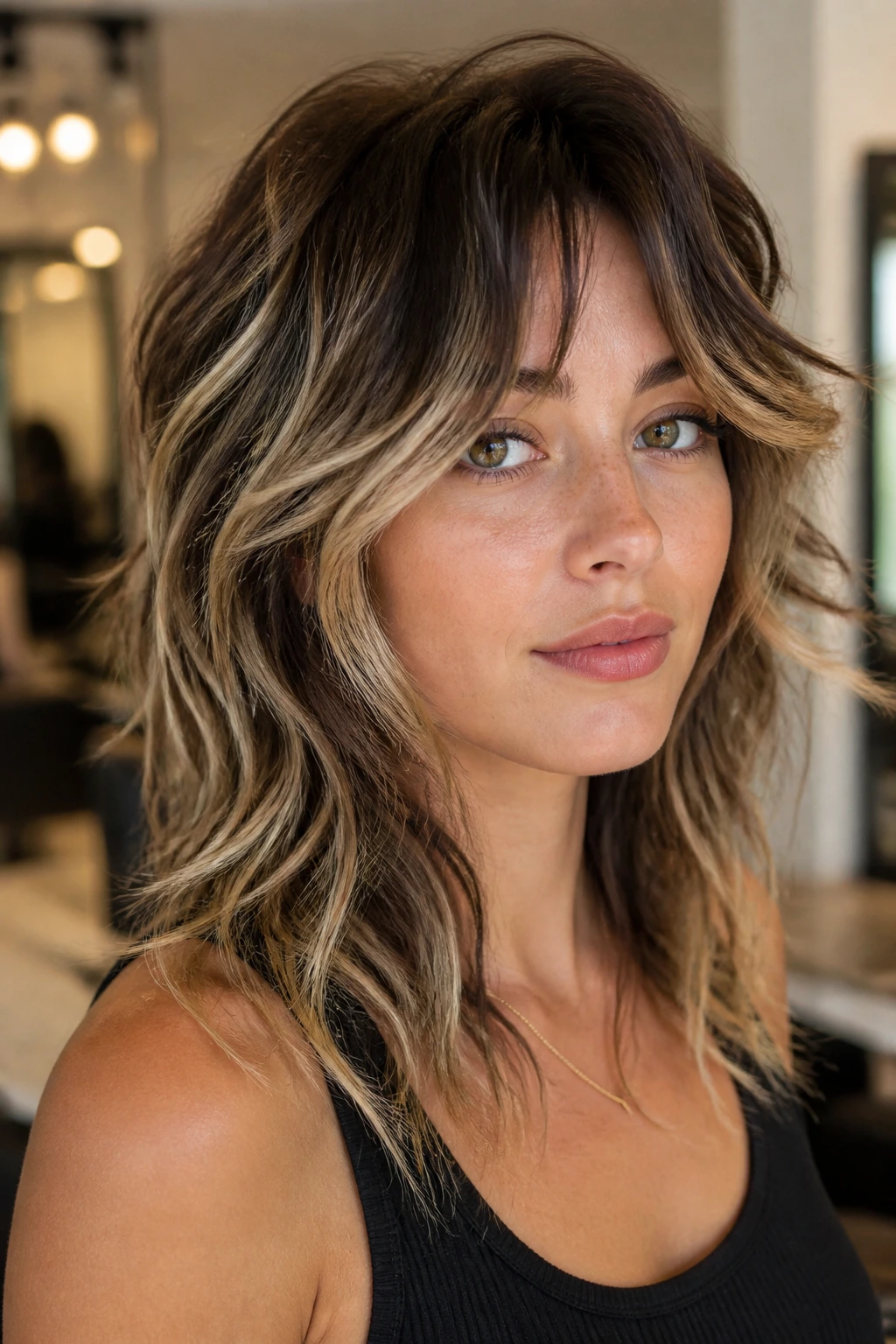
Color changes how layers read, and balayage is a very good match for medium-length wolf cuts. Ribbon highlights trace the movement through the cut, so the crown, face frame, and ends stop blending into one dark mass.
The smartest placement usually sits around the front pieces and through the lower layers, where the texture needs help showing up. Ask for a soft hand near the crown so the color does not turn stripey. The haircut should still be the main event; the color is there to underline it.
If you air-dry often, this version looks especially good because the highlights catch every bend and flip. That little flick of light makes the layers easier to read.
20. Copper Wolf Cut with Warm Layers
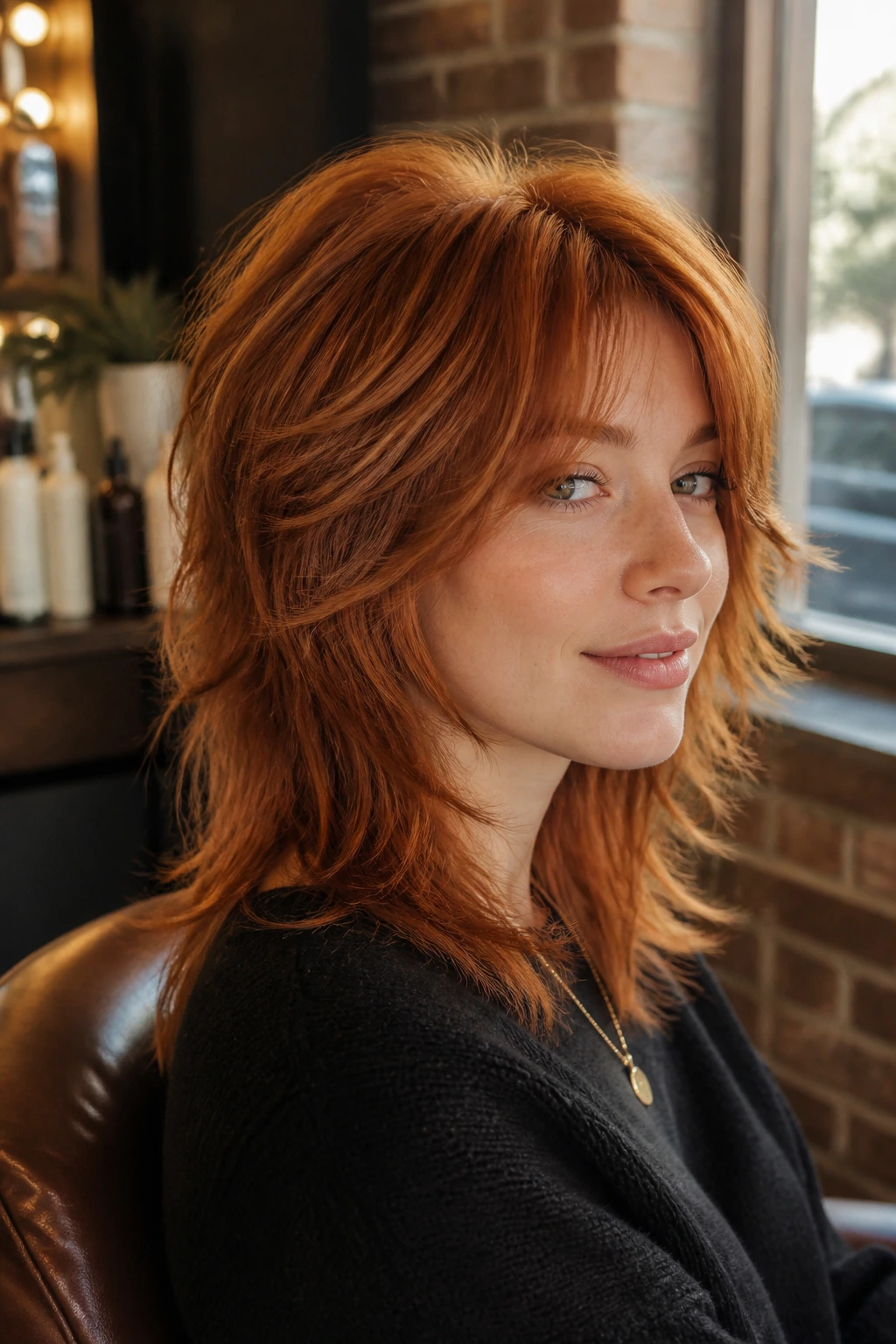
Copper hair and a wolf cut have a nice chemistry. The warmth makes the layers look fuller, and the movement through the ends becomes easier to see than it would be in a flat, one-tone color.
This works best when the cut keeps some softness around the face. Copper can look loud very fast if the layers are too blunt or the fringe too severe. A bit of feathering keeps the whole shape from feeling hard.
Maintenance matters here. Warm tones fade if you wash them too often with harsh shampoo, so a gentle cleanser and a color-safe routine help the haircut keep its depth.
21. Platinum Wolf Cut with Dark Roots

High contrast does heavy lifting in a wolf cut. Dark roots against platinum lengths make the layering more visible, especially around the crown and the ends, where the shape can disappear if the color is too flat.
This version needs a little more upkeep than the others, but the payoff is clear. The darker root gives the haircut a grounded base, while the lighter ends make the texture pop. It looks strongest when the styling is a little undone instead of too polished.
If you like a cut that reads bold from across the room, this is the one. The contrast does the shouting for you.
22. Undone Glam Wolf Cut
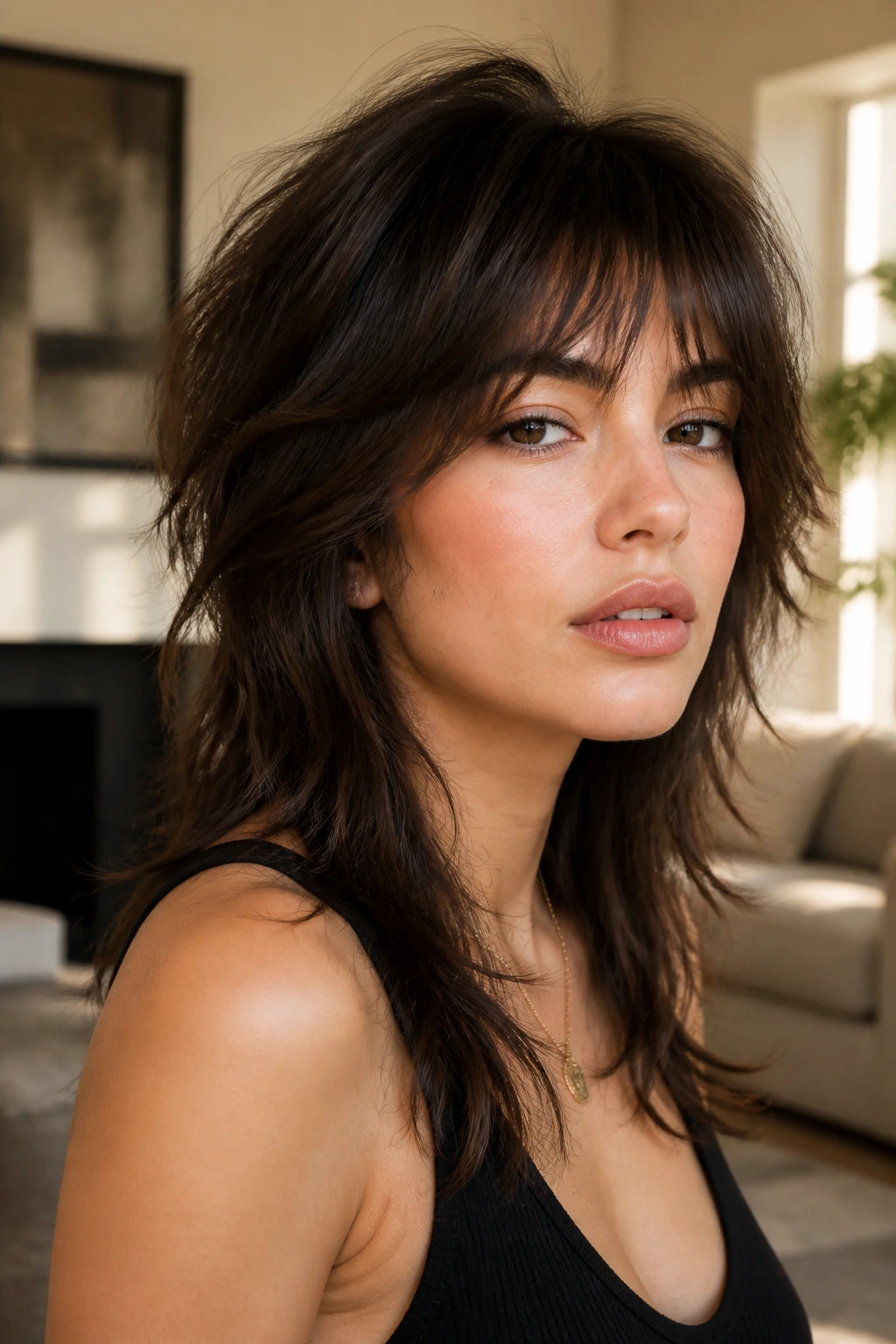
This is the version for people who want the haircut to look expensive but not precious. The hair should have movement, shine, and a little separation in the ends, but nothing should look over-sprayed or stiff.
What makes it different
The roots get volume, the face frame gets a soft bend, and the ends stay piecey enough to keep the wolf-cut shape visible. A large-barrel curl or a round-brush blowout can do the job, but the finish should be finger-combed out so it does not read too done. Think polish with a little air in it.
A tiny drop of serum on the last inch gives the ends a smoother look without flattening the whole cut.
23. Low-Maintenance Grow-Out Wolf Cut
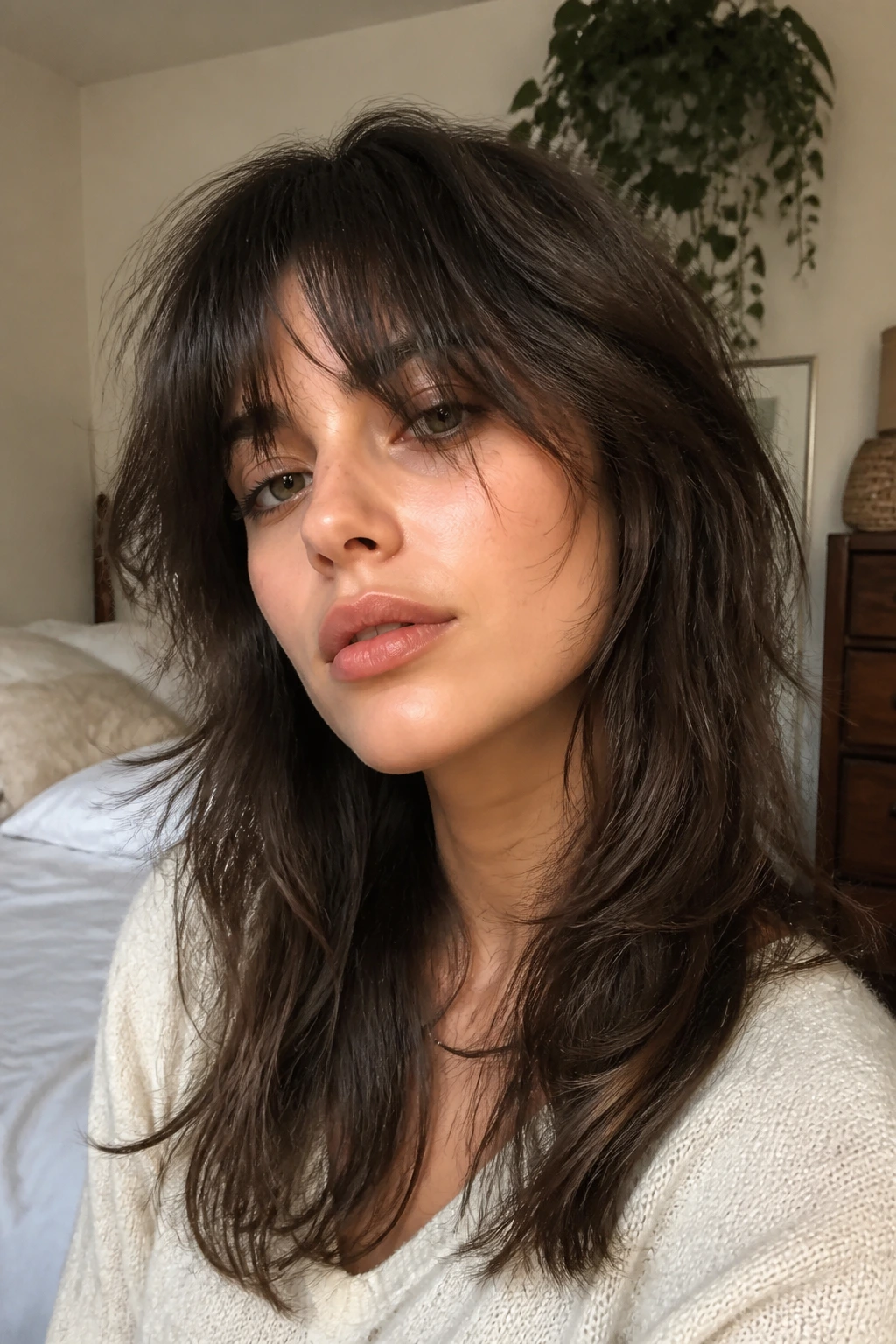
This is the version for people who want edge without having to babysit the shape every morning. The layers should be softer, the fringe longer, and the contrast between the crown and the perimeter less severe.
The cut grows out better when the shortest pieces are not too short in the first place. That way, after a few weeks, the silhouette still feels like a layered haircut rather than a random in-between stage. It’s a smart choice if you dislike frequent trims or want something that can survive a busy stretch.
Dry shampoo helps, but the real hero here is restraint at the initial cut. Less drama upfront usually means less regret later.
24. Mullet-Leaning Wolf Cut with Sharp Disconnection
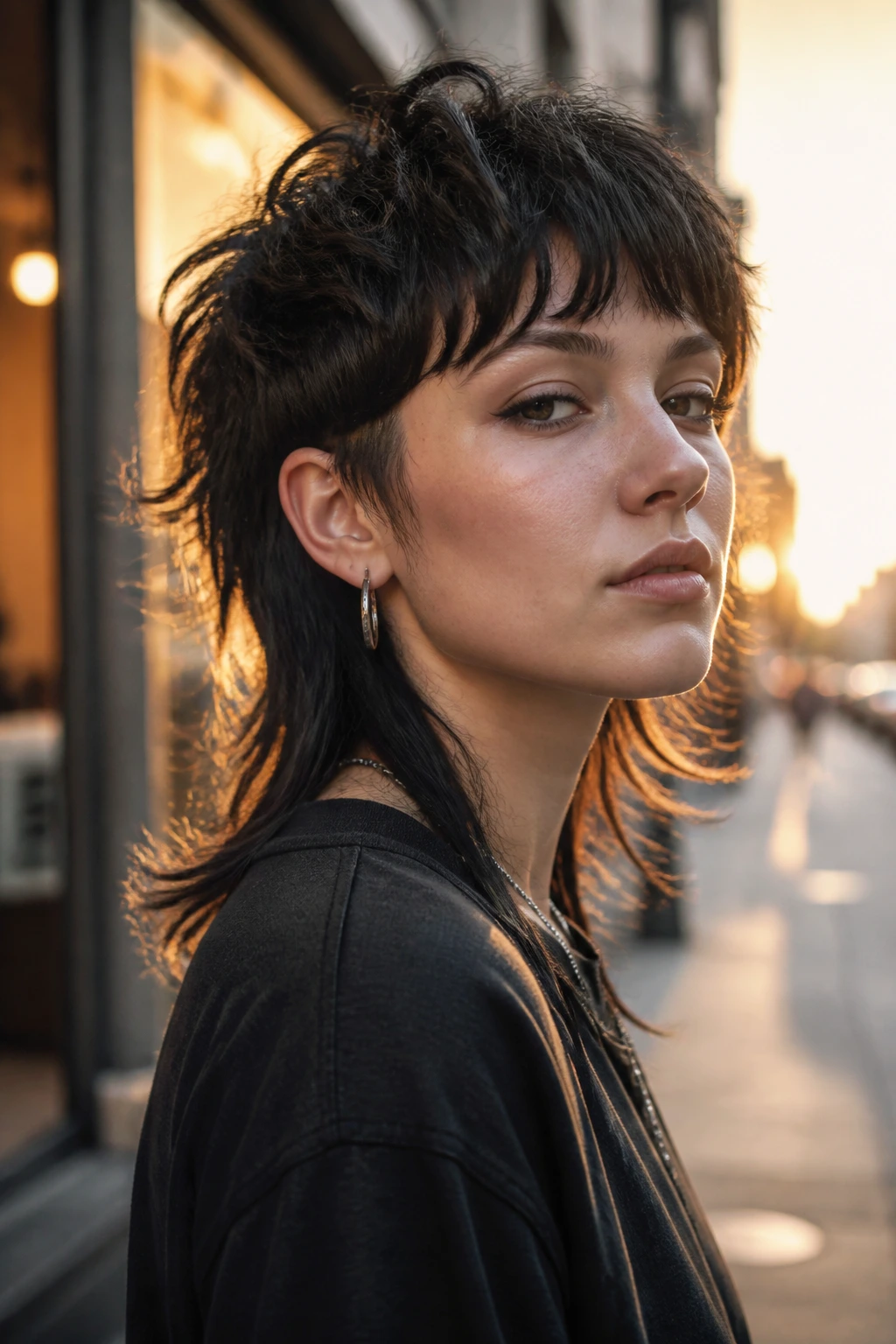
This is the boldest version in the bunch. The crown sits shorter, the back stays longer, and the disconnection between the front and rear is obvious on purpose.
It’s the right choice if you want the wolf cut to lean into its mullet roots instead of softening them away. The styling should stay rough and piecey so the shape feels intentional rather than costume-like. Too much gloss makes it look confused.
If you like a haircut that announces itself, this is it. If you want something quiet, skip straight to the last item.
25. Minimalist Wolf Cut with Quiet Layers
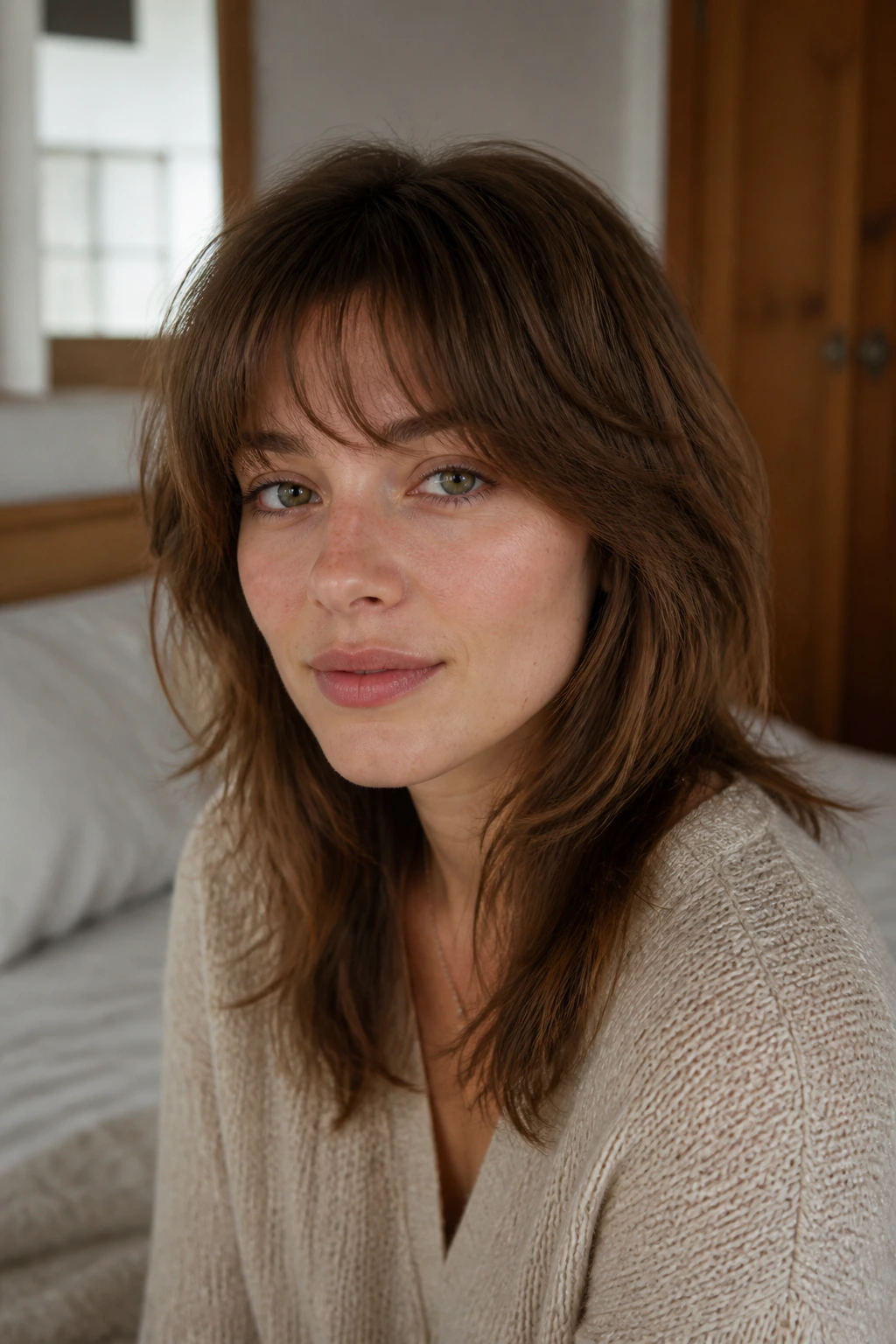
A minimalist wolf cut keeps the spirit of the shape but trims back the obvious choppiness. The layers are softer, the fringe is lighter, and the perimeter still carries enough weight to keep the haircut from falling apart.
This version is ideal if you want movement without visible rebellion. It works especially well on medium-length hair that needs a little lift around the crown but not a full texture overhaul. A slight bend through the front pieces and a clean center part can make it look polished in a way that still feels current.
It’s the proof that a wolf cut does not have to be loud to be interesting. Sometimes the quietest version is the one people keep looking at.
Why Medium Length Is the Wolf Cut’s Sweet Spot
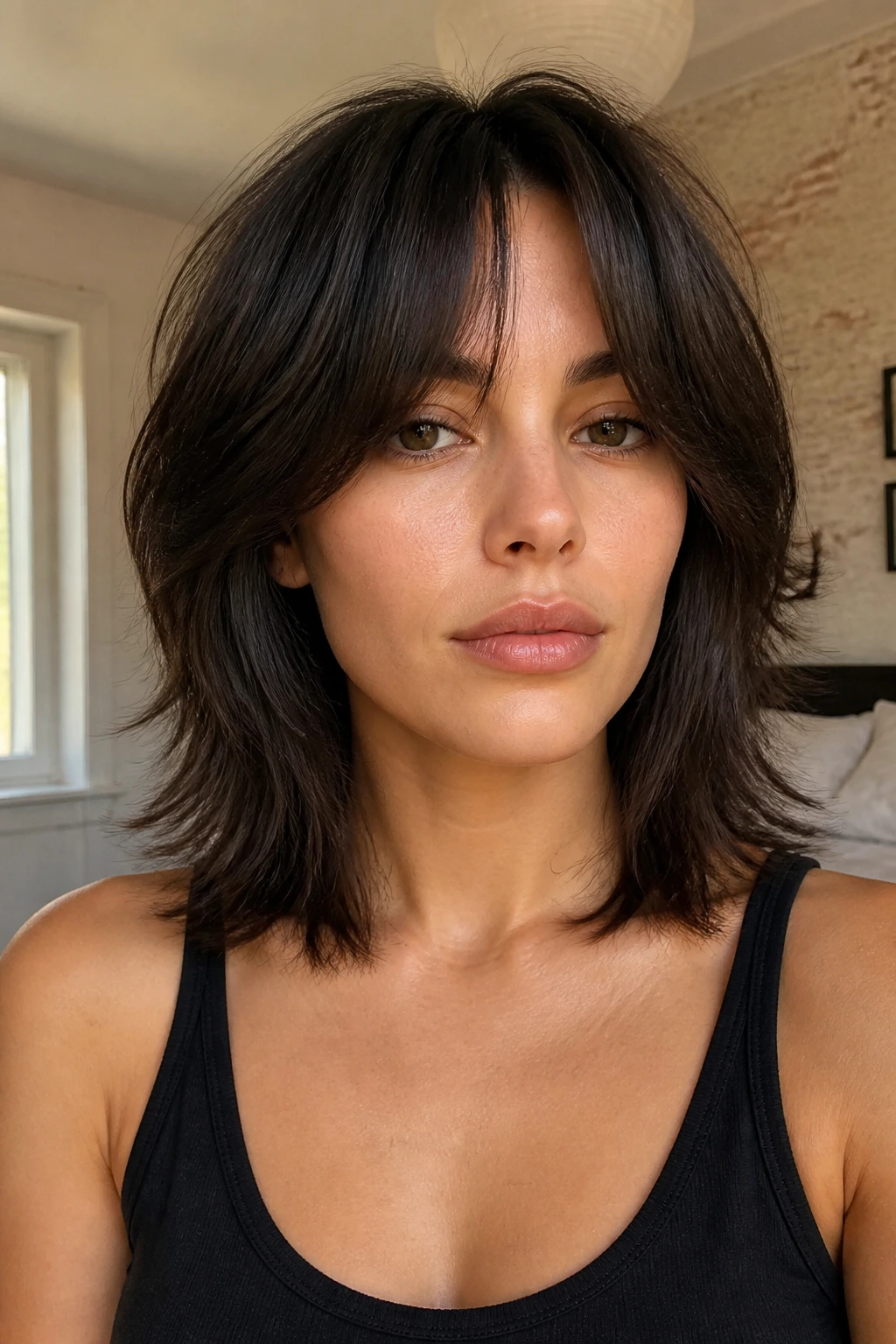
Collarbone length is where the silhouette stops fighting itself. The short layers have enough hair beneath them to show movement, and the longer ends still carry enough weight to keep the shape grounded. That balance is the whole reason the wolf cut behaves so much better at medium length than it does either shorter or much longer.
Go too short and the crown starts taking over. The haircut can turn top-heavy, especially on fine hair or tight curls that spring up the second moisture leaves the room. Go too long and the layering gets buried under weight, which is a shame because the whole point of the cut is to let the internal shape be seen.
Medium length also gives you room to choose a finish. You can rough-dry it for texture, blow it smooth for a cleaner line, or bend the ends with a flat iron and call it done. The haircut keeps enough structure to survive those changes without looking like a different style every time.
Choosing Hair Products That Match Your Density and Texture
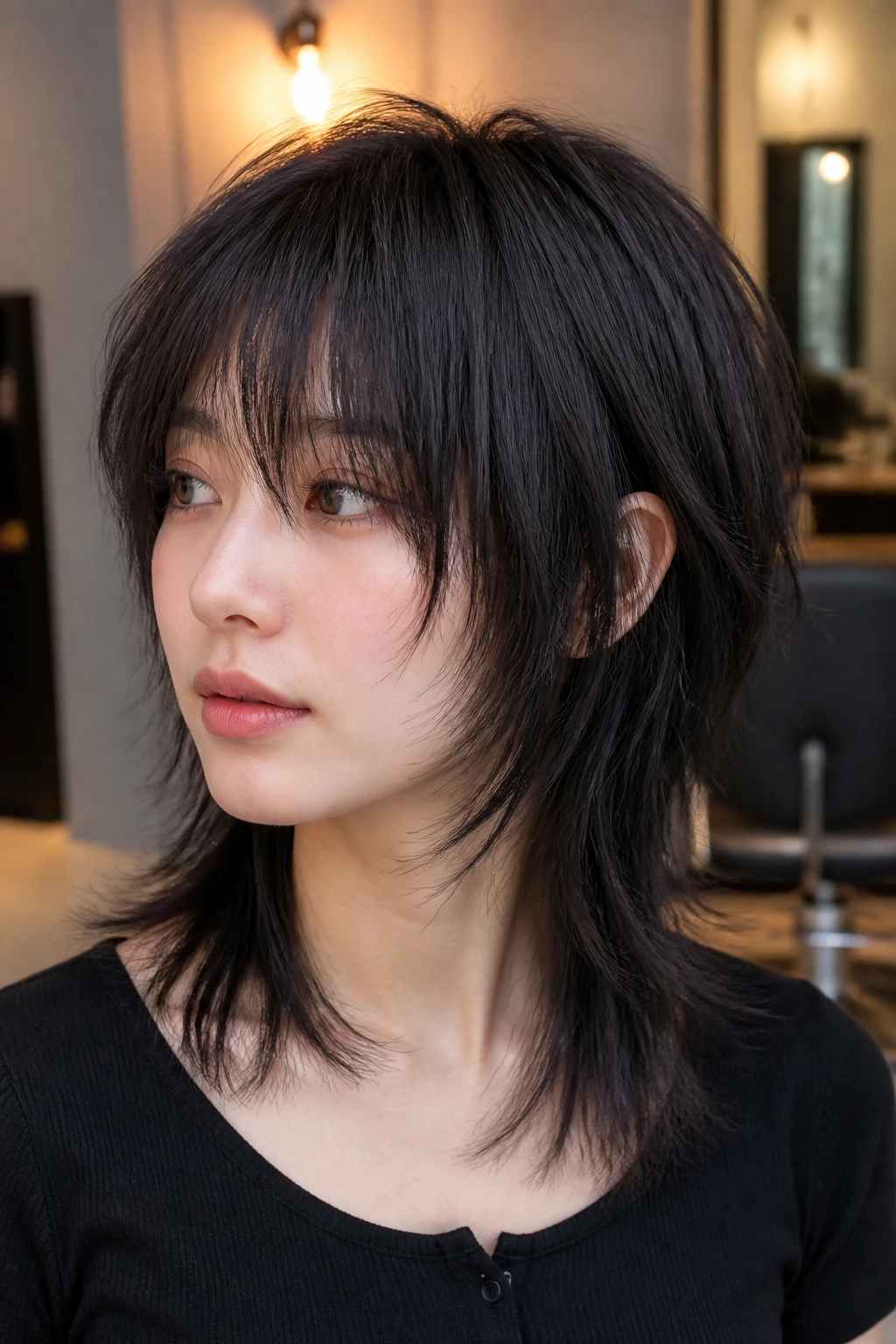
Fine hair usually needs lighter products than people think. A foam mousse, root-lift spray, and a dry texturizing mist are usually enough; thick creams near the crown can drag the whole thing flat by lunch. If your hair is fine and straight, start with small amounts and build slowly.
Thick hair needs a different kind of help. A smoothing cream or blow-dry balm can keep the outer layer from puffing while a flexible hairspray keeps the pieces separate at the ends. Heavy oils can be useful on the last inch or two, but not much higher than that.
Wavy and curly hair usually do best with slip and hold together. Curl cream or leave-in conditioner gives the hair enough glide, while gel or a firmer mousse keeps the layers from frizzing apart. Straight hair tends to like texture spray and a little root support, especially if you want the cut to look rough instead of flat.
If you are unsure about a product, buy the smaller bottle first. Hair is expensive enough without ending up with a heavy cream that sits in the bathroom cabinet for a year.
Styling Tools That Make the Layers Behave

- 1.5-inch round brush: Big enough to create bend, small enough to shape the face frame without making the ends look curled under.
- Blow dryer with a concentrator nozzle: Directs the airflow so the crown lifts instead of frizzing everywhere.
- Diffuser attachment: A must for wavy and curly versions, because it lets the texture dry without being blasted flat.
- Flat iron with rounded edges: Useful for bending just the last inch or two of the hair without putting a hard crease in it.
- Tail comb: Helps section the crown and face frame cleanly when you want the layers to sit in the right place.
- Sectioning clips: Keep the top pieces out of the way while you work on the lower layers.
- Wide-tooth comb: Better than a brush for curls, waves, and wet detangling.
- Microfiber towel or cotton T-shirt: Cuts down on roughing up the hair after washing.
- Dry shampoo: Keeps the crown from collapsing on day two or three.
- Texturizing spray: Adds grip to the mid-lengths so the layers separate instead of slipping together.
- Heat protectant: Non-negotiable if you use a blow dryer or iron often.
How to Ask for the Shape You Want at the Salon
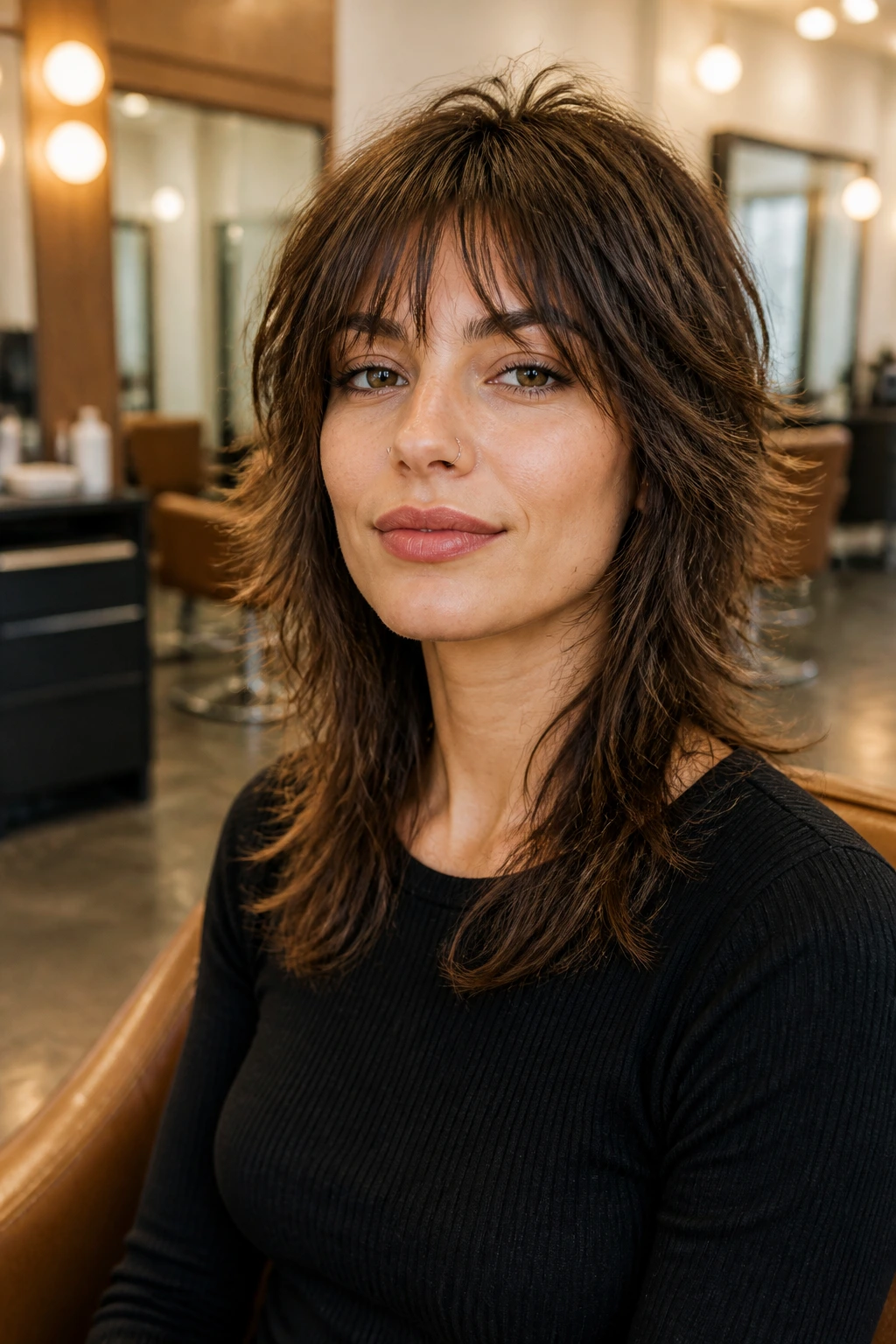
Bring photos. Two or three is enough, and they should show the same general length and texture you want rather than just “vibes.” One photo can show the fringe, one can show the back, and one can show the finish. That saves a lot of awkward guessing.
Say the useful parts out loud
Tell your stylist where you want the shortest layers to start. Cheekbone, jaw, or crown all create different results, and those details matter more than the word wolf cut itself. If you want something softer, ask for the back to stay only slightly longer than the front. If you want sharper disconnection, say so plainly.
Also mention how you actually style your hair. If you air-dry most days, say that. If you blow-dry and round-brush the front only, say that too. A cut that looks amazing with a full salon blowout can fall apart fast if your real routine is five minutes and a towel.
One line I like is: “I want a medium-length wolf cut with movement at the crown, a face frame that starts around the cheekbone, and enough weight at the perimeter to keep the ends from looking wispy.” That gets to the point fast.
How to Wear a Medium Length Wolf Cut So It Looks Intentional
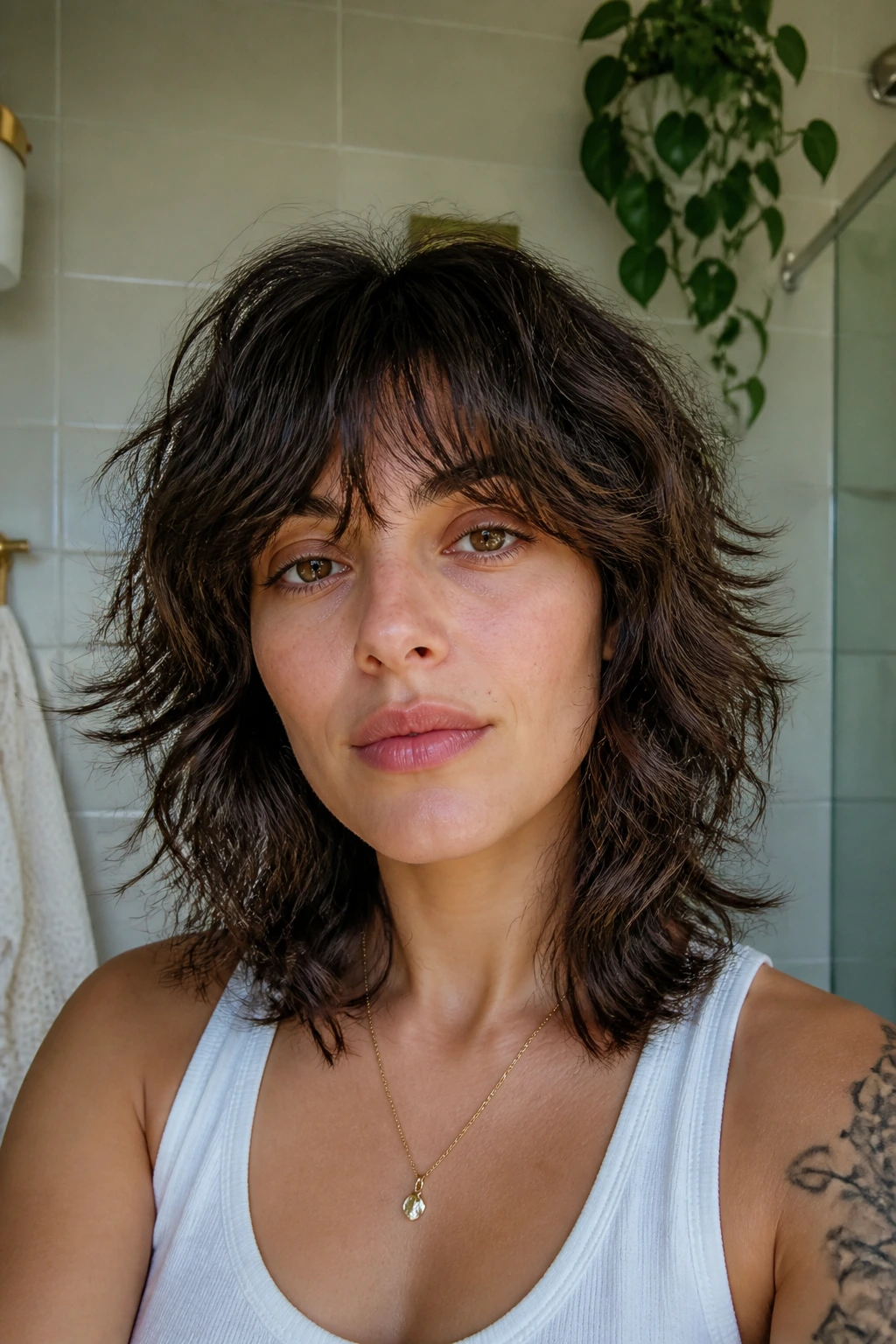
Presentation: A center part gives the cut a sharper spine, while a slight off-center part softens the front and helps the fringe fall more naturally. If you want the layers to read clearly, keep the crown lifted and the ends separated rather than perfectly tucked in.
Accompaniments: Clean necklines, simple hoops, and collarbone-baring tops let the haircut do its work. Heavy turtlenecks can swallow the shape, especially on shoulder-skimming lengths, while open necklines keep the layers visible.
Proportion: Fine hair usually needs more help at the roots and less product at the ends. Thick hair usually needs the opposite: a bit of interior weight removal and a stronger outline through the bottom inch or two. Curly hair needs room to spring; straight hair needs a little bend so the layers don’t sit like a sheet.
Best Moments: This cut looks especially good on second-day hair with a mist of water at the front and a quick lift at the crown. It can be polished, but it does not need to be pristine. A little movement is the point.
Styling Moves That Bring Out More Edge
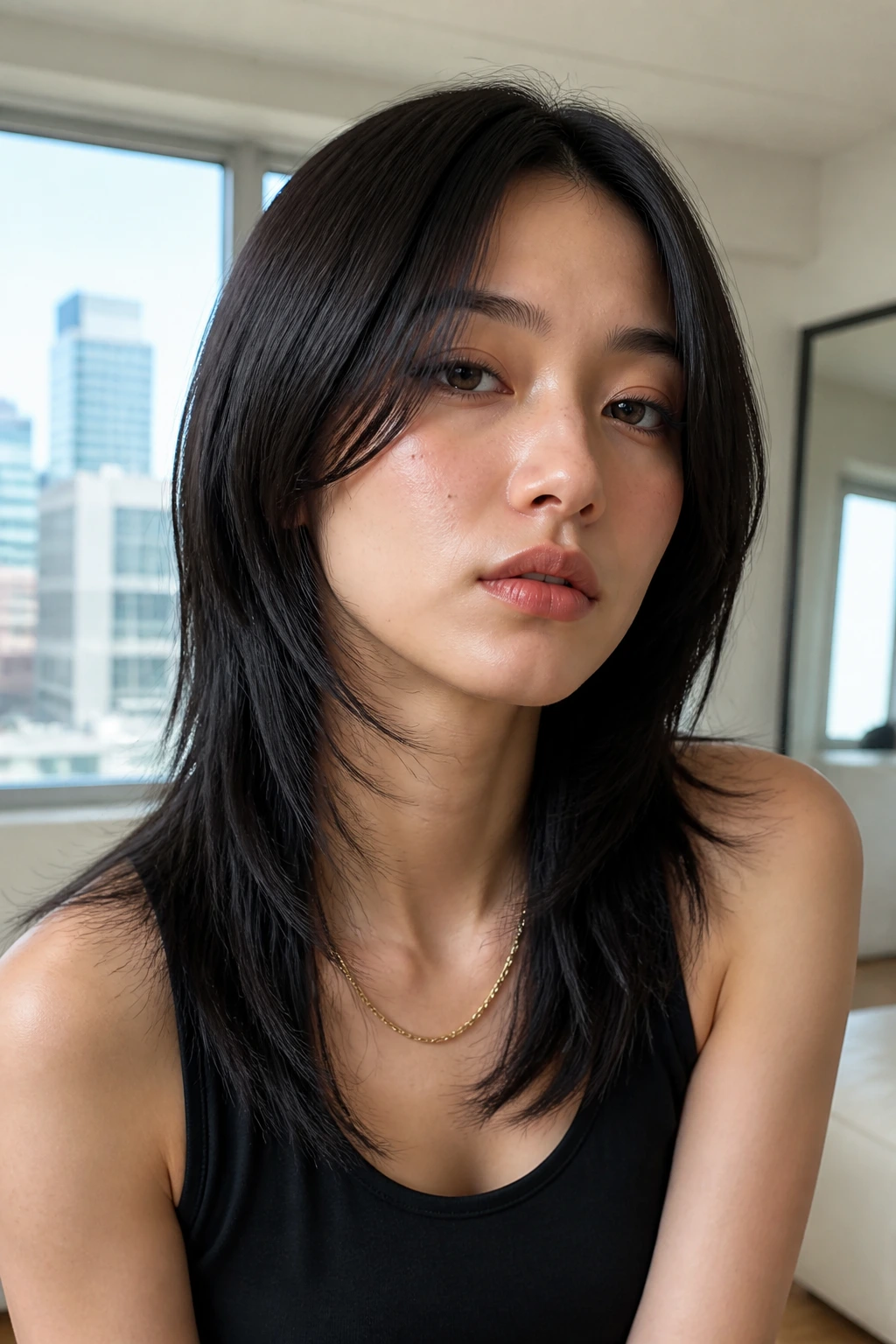
Texture Boost: Rough-dry the roots until the hair is about 80 percent dry, then twist 1-inch sections around your fingers and let them cool before you break them up. That gives the layers a piecey finish without making the whole head frizzy.
Time-Saver: If you’re rushed, bend only the face frame and the top layer with a flat iron. The rest can stay natural, and the haircut will still read as styled because the front does the heavy lifting.
Pro Move: Put dry shampoo in before the roots turn oily. People wait too long, and then they’re trying to rescue flat hair instead of preventing it. On a medium-length wolf cut, prevention is much easier than repair.
Make-It-Yours: For a softer mood, choose curtain or side-swept bangs. For a sharper mood, go with micro bangs or a more pronounced disconnection at the back. The fringe changes the whole conversation in one move.
Common Mistakes That Flatten the Shape
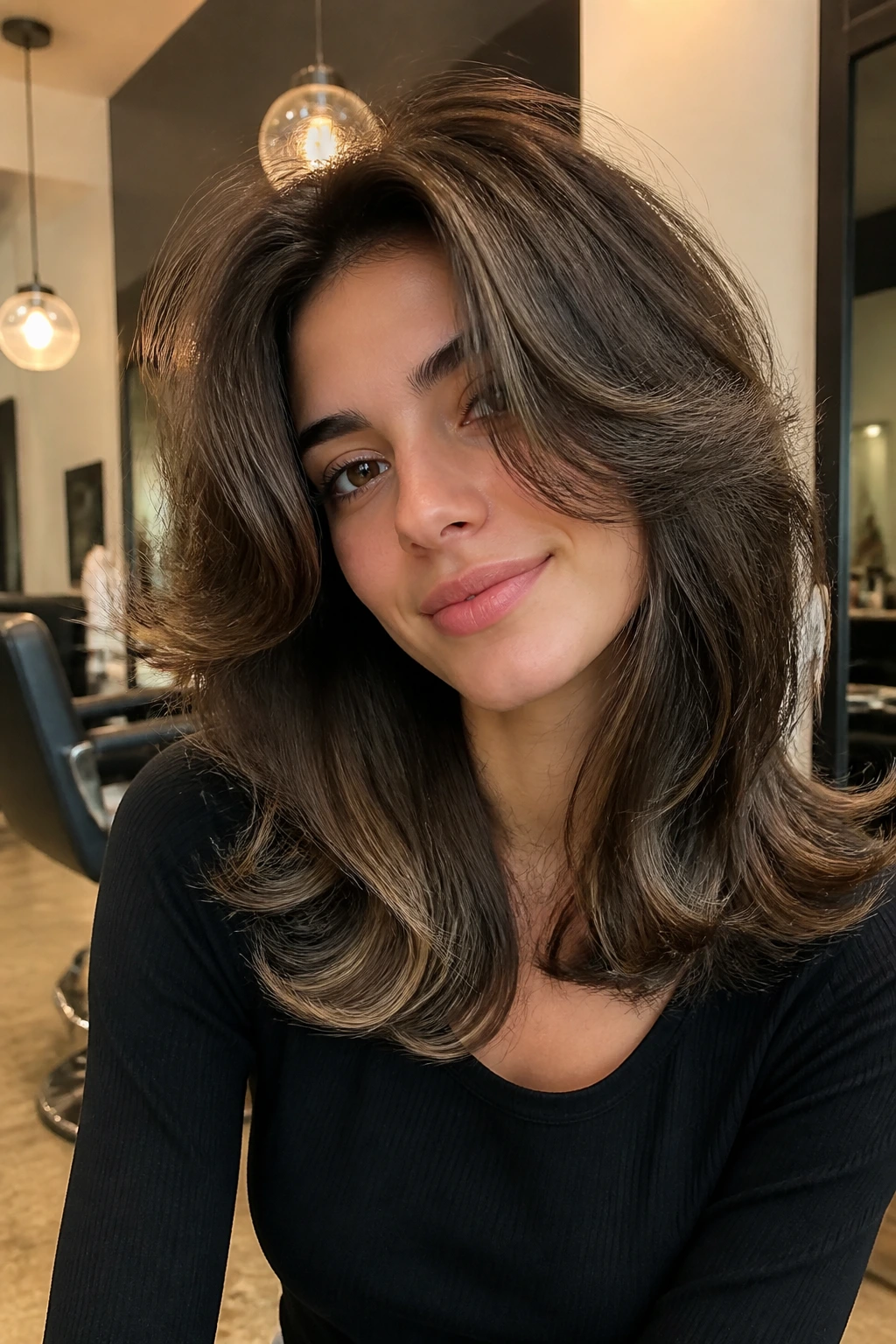
The biggest mistake is over-thinning the ends. When the perimeter gets too light, the haircut starts to float apart and the layers lose their anchor. The fix is simple: keep some weight at the bottom so the shape has a base.
Another common problem is cutting the fringe too short without thinking about shrinkage. Wavy and curly hair can bounce up more than you expect once it dries, and suddenly the bangs look accidental. Leave extra length if your hair has any bend at all.
Heavy product can ruin a wolf cut fast. If the crown gets loaded with cream or oil, the layers collapse into each other and the haircut looks flat by noon. Keep richer products on the lower lengths, and use lighter hold near the roots.
The last trap is asking for a wolf cut but not explaining where you want the edges to live. A stylist can cut a dozen good-looking versions of this shape, and they are not the same thing. Be clear about the fringe, the crown, and the perimeter, or you may leave with a haircut that looks technically fine but not right for you.
Variations and Adaptations to Try

The Soft Shag Shift: Keep the crown layers, but let the perimeter stay a little cleaner and heavier. This version works when you want movement without looking aggressively choppy.
The Curly Halo: Let the curl pattern decide the shape and keep the shortest layers long enough to avoid a puffed-out crown. It suits people who want visible texture without losing width control.
The Office-Friendly Sweep: Use a longer fringe, a slightly smoother finish, and less obvious disconnection in the back. The haircut still has texture, but it reads more polished in a meeting or on a camera.
The Punk Lean: Shorter fringe, stronger crown layers, and a rough matte finish. This is the version that leans hardest into the wolf cut’s mullet roots.
The Glossy Editorial Finish: Same base cut, but styled with shine serum, a round brush, and a cleaner bend through the ends. The shape stays edgy, just a little more dressed up.
The Low-Fuss Grow-Out: Start with softer layers and a fringe that is not cut too high. This makes the haircut easier to live with when you cannot get to the salon often.
Keeping the Cut Fresh Between Salon Visits
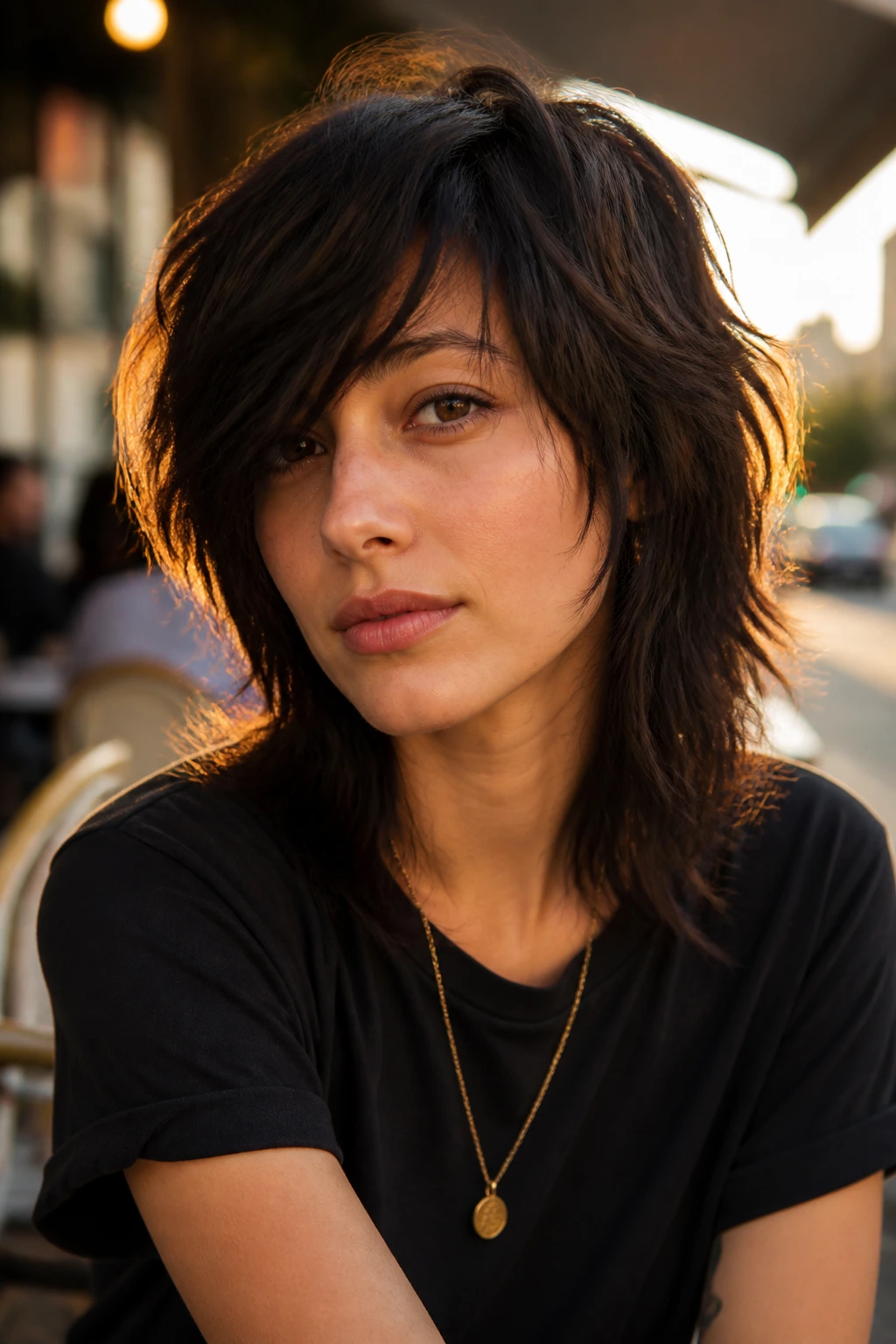
Medium length wolf cuts usually hold their shape for about six to eight weeks before the fringe and crown start to drift out of sync. If you wear bangs, the front may need a tiny trim sooner. If you keep the fringe longer and the layers softer, you can often stretch it closer to ten or twelve weeks.
Sleeping habits matter more than people admit. A loose claw clip, a soft scrunchie, or a satin pillowcase can keep the crown from getting mashed flat overnight. You do not need a lot of gear; you just need to stop pressing the same fold into the hair every night.
Refreshing the shape is usually a two-step job. Mist the front with water, scrunch or bend the ends back into place, then hit the roots with dry shampoo if they’ve gone oily. If the cut starts to lose its outline, it usually means the shortest layers have grown past the point where they can support the shape, and that is your sign to book a trim.
Frequently Asked Questions About Medium Length Wolf Cuts

Is a medium length wolf cut good for fine hair?
Yes, as long as the layers are not cut too aggressively. Fine hair usually needs a lighter hand, a heavier perimeter, and product that lifts the roots without making the ends sticky.
Can curly hair wear a wolf cut without puffing out?
Absolutely, but the layers need to follow the curl pattern. A dry cut or curl-by-curl approach helps the stylist see where the hair expands, which keeps the shape rounded instead of wide.
How do I ask for a wolf cut if I do not want it to look like a mullet?
Tell the stylist you want the crown lifted and the face frame textured, but keep the back only slightly longer than the front. That small detail changes the mood a lot.
Do I need bangs for a wolf cut?
No. Bangs change the look quickly, but they are not required. A face frame that starts around the cheekbone can give you enough movement if you want to keep the forehead open.
How often should I trim it?
Most medium-length versions look best with a refresh every six to ten weeks, depending on how much fringe you have. Softer, longer versions can go longer; micro bangs usually cannot.
Can I style it straight and still keep the texture?
Yes. A slight bend at the ends and a clean face frame are enough to preserve the shape. The cut does not need to be curly to read textured.
What if my hair is very thick?
Then the inside of the cut matters more than the outside. Ask for internal debulking and a clear outline so the shape moves without ballooning.
How do I grow it out without losing the style?
Keep the fringe longer, soften the shortest layers, and trim the perimeter in small steps instead of waiting for a huge rescue cut. That way the shape stays in the same family as it grows.
The Shape That Keeps Moving
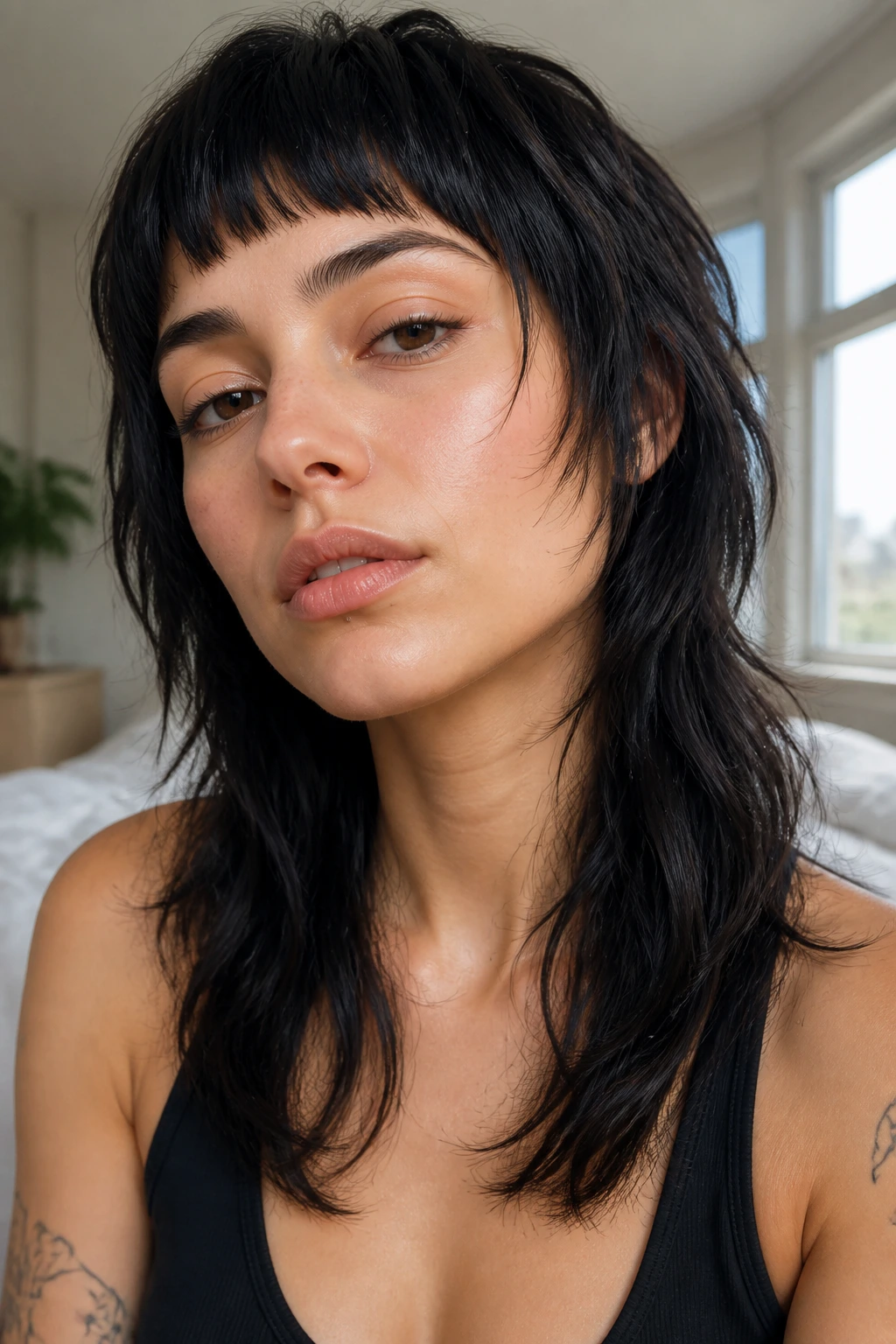
The best medium-length wolf cuts do not sit still, and that is the whole point. They keep enough edge to feel modern, enough length to stay wearable, and enough texture to look different every time you rough them up, smooth them down, or let them dry on their own.
If you want a cut that gives you some attitude without eating your length, pay attention to the three places that matter most: the crown, the fringe, and the last inch at the ends. Get those right, and the haircut keeps paying you back long after the salon chair.
