



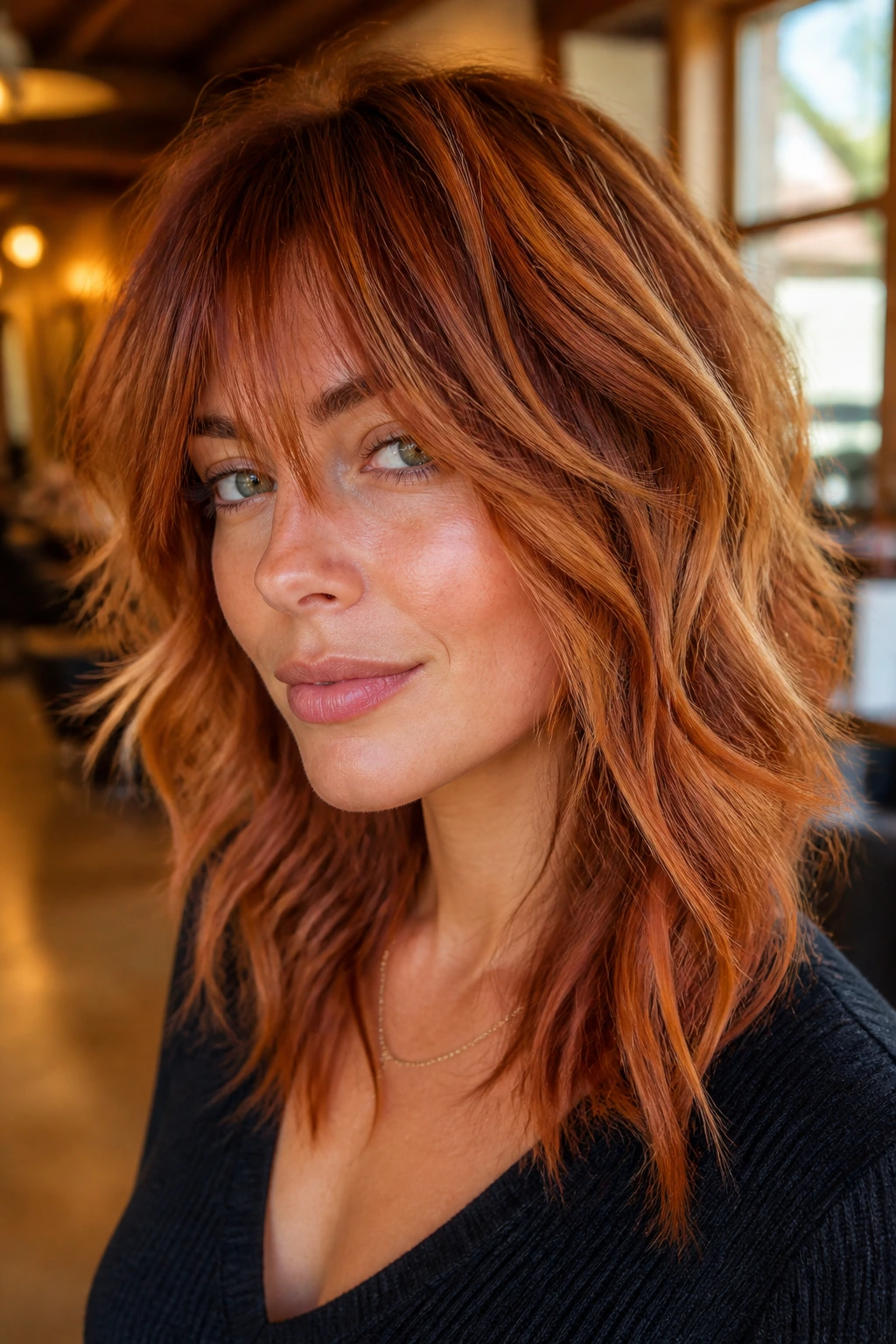
Copper wolf cuts have a funny way of looking a little wild and a little polished at the same time. The chopped layers give you movement; the copper does the rest. Warm light hits the bends, the ends, the fringe, and suddenly the whole cut reads richer than it did in the chair.
That’s the real trick with copper wolf cuts: the shape already has attitude, but the color turns every ridge and face frame into part of the design. A flat brunette wolf cut can disappear between wash days. A copper one rarely does. Even on a rough air-dry, the orange-gold reflect catches the eye, and a good gloss keeps the layers from looking dusty or hollow.
I like this pairing because it gives you options without losing personality. Some versions are soft enough for everyday wear. Some lean sharp and shaggy, with a little mullet energy and a lot of texture. All of them depend on the same idea: the cut should move, and the color should make that movement easier to see.
Why These Copper Wolf Cuts Stand Out
-
The color does half the styling work: Copper reflects light across the shortest layers, so even a messy finish still looks intentional.
-
The shape stays interesting as it grows: Wolf cuts loosen up instead of collapsing into one blunt mass, which matters when you don’t want a strict trim schedule.
-
You can push the vibe in either direction: A cinnamon glaze and soft fringe feel airy; a penny tone and choppier ends read bolder and sharper.
-
The cut plays well with texture: Wavy, curly, and straight hair each change the silhouette in a different way, which is part of the appeal.
-
Face-framing pieces do a lot of work: Copper around the cheeks and jawline can soften the edge of the cut without sanding off the attitude.
-
The shine matters: On copper, a dull finish can flatten everything. A good gloss or color mask keeps the layers readable from the first wash to the fifth.
1. Soft Cinnamon Copper Wolf Cut
This is the version I’d hand to someone who likes the wolf cut shape but doesn’t want the haircut to announce itself from across the room. The cinnamon copper tone sits in that cozy middle ground between ginger and auburn, and the layers are soft enough that the crown gets movement without looking choppy. It’s the kind of cut that looks best when the front pieces graze the cheekbone and the longest layers still reach past the shoulders.
What makes it work is restraint. Keep the shortest layers around the cheekbone, not up near the temple, and ask for the ends to be point-cut rather than sliced bluntly. That lets the copper catch the light without leaving the silhouette too ragged. If your hair is naturally straight or barely wavy, a 1-inch wand on just the front half can wake the shape up fast.
Best for a softer first-time wolf cut
- Medium density hair that loses shape when it’s all one length
- Anyone who wants copper without a loud orange finish
- People who air-dry more often than they heat-style
A pea-sized bit of cream on the ends is enough here. Too much, and the whole thing goes limp.
2. Copper Wolf Cut with Curtain Bangs
Curtain bangs are the easiest way to make a wolf cut feel wearable from day one. The split fringe gives your face some room, and the copper color makes the bang line show up even when the hair is loose and unbrushed. This version feels airy, not heavy, especially if the fringe is cut so it opens around the cheekbones instead of hanging straight down.
The part that matters most is the bridge between the bangs and the layers. Ask for the front pieces to blend into the cheek and jaw area, not stop abruptly at the fringe. That’s what keeps the haircut from looking like two separate ideas stuck together. I also like this style when the copper has a little gold in it; the warmer reflect keeps the curtain shape from looking muddy.
If your forehead is on the shorter side, keep the bang length a touch below the cheekbone. That small difference makes the whole cut breathe.
3. Penny Copper Wolf Cut
Penny copper is the loud one. Bright, reflective, and just a little metallic if the gloss is fresh, it makes the wolf cut look sharper because every layer catches light on its own. This is the version I’d choose when the haircut itself is fairly simple but you want the color to do the shouting.
A bright copper looks best with more internal movement than external fluff. That means the top should stay light and airy, while the ends keep some piecey separation. If the cut gets too layered from root to tip, the color can start to look busy instead of bold. A copper glaze every few weeks helps here, because penny tones fade fast if you wash with hot water and heavy sulfate shampoos.
Use this one if you like a cleaner outfit and want the hair to bring the drama. It does the job without needing much makeup at all.
4. Cherry Copper Wolf Cut
Cherry copper adds a deeper red note, and that shift changes the mood fast. Instead of reading sunny, it reads glossy and slightly darker, which works especially well on a wolf cut with stronger face-framing layers. The result feels less beachy and more night-out, but it still keeps the messy texture that makes the cut good in the first place.
This shade is a smart move if you want dimension without bright orange ends. The deeper base lets the shaggy layers show up without screaming for attention. I’d ask for a subtle root shadow and a brighter veil around the face, so the cut doesn’t go flat at the crown.
A good cherry copper wolf cut doesn’t need heavy styling. A round brush on the fringe and a little texture spray through the back is enough. Too much curl would fight the richness of the color.
5. Copper Shag-Wolf Hybrid
This is what happens when the shag and the wolf cut stop arguing. The crown stays short and piecey, the perimeter stays longer and a little loose, and the copper color gives the whole thing a lived-in glow that looks better the messier it gets. If you want movement but don’t love obvious disconnection, this hybrid is the sweet spot.
It works because the layers are spread out more evenly than on a harder wolf cut. You still get that lifted top and the little tail in back, but the silhouette is rounder and easier to wear. Copper helps by making each bend show up, especially if you add a few lighter ribbons through the top layer.
What I’d ask for: soft internal layers, a face frame that lands near the mouth, and ends that are textured but not shredded. That keeps the haircut from tipping too far into mullet territory.
6. Long Copper Wolf Cut
Want the wolf cut shape without giving up inches? Keep the length and let the layers do the talking. A long copper wolf cut usually lands best when the shortest pieces start around the collarbone or just above it, while the back keeps enough length to swing. The copper tone keeps the length from looking heavy, which is why this version works better in warm shades than in flat brown.
The risk with long wolf cuts is over-layering. If the top gets too short, the bottom starts to look stringy and the shape loses its line. I prefer longer face-framing layers and a softer tail in back so the cut still feels like a haircut, not a pile of disconnected bits.
This is also the easiest version to grow out. The color and the layers soften together, and that makes the in-between stage less annoying.
7. Short Copper Wolf Cut
Short wolf cuts can look a lot cooler than people expect. Once the hair sits near the chin or just below it, copper turns the whole thing into a sharp little shape with movement at the edges. The trick is to keep enough length in the top so the crown lifts, rather than ballooning outward.
This version is good for hair that collapses when it gets too long. A shorter copper wolf cut takes weight off the right places and leaves the perimeter lively. If your hair is fine, keep the layers controlled and the ends a little blunt. If it’s thick, the stylist can remove more bulk through the interior so the shape doesn’t puff out.
I’d skip a heavy serum here. A matte texture spray or a light cream keeps the cut piecey. Too much shine can make the short layers stick together in all the wrong spots.
8. Copper Mullet Wolf Cut
The mullet side shows up here, and that’s the point. The top is cut shorter, the front gets a sharper frame, and the nape hangs on just long enough to keep the silhouette from turning into a standard shag. On copper hair, that contrast gets even clearer because the color picks up the different lengths fast.
This is a stronger look, so the cut needs confidence from the start. Ask for clear separation between the crown and the back, but not such a hard line that the style looks costume-y. Soft edges around the ears and jaw help keep it modern. I like this version most in deeper copper tones, where the shape feels a little moodier and less costume-red.
It’s a good cut if you like styling with a bend rather than a curl. A wand, a rough dry, and some root lift are enough.
9. Bottleneck Bang Copper Wolf Cut
Bottleneck bangs are sneaky. They start narrow in the center, then open wider as they fall toward the cheekbones, which makes them a nice match for a wolf cut that already has motion around the face. The copper color helps the bang shape show up without making the fringe look dense.
This version flatters people who want fringe without the full curtain-bang curtain. The center keeps the forehead open, and the sides do the framing work. That’s useful if your face is shorter or if straight-across bangs tend to box you in. Copper makes the whole thing read warm instead of severe, especially when the fringe is slightly lighter than the rest of the hair.
Keep the surrounding layers soft. Bottleneck bangs can look fussy if the rest of the haircut is too blunt.
10. Ginger Copper Wolf Cut
Ginger copper is the classic orange zone, and it loves a shaggy finish. The color reads bright but not neon, and the wolf cut shape gives it a bit of grit so it never turns syrupy. This is the version that looks best with real texture in the hair, not perfect curls or polished bends.
It can feel loud, so the cut should stay balanced. A little shorter at the crown, a little longer at the sides, and enough face frame to soften the glow. If you’re nervous about brightness, ask for ginger copper with a brown-smoked root area; that keeps the color from overwhelming the shape.
This shade is one of the easiest to read in natural light. The layers pop, the fringe lifts, and the ends keep their own outline.
11. Auburn Copper Wolf Cut
Auburn copper tones the whole thing down just enough to make it easier to wear in a sharper wardrobe. It sits deeper than ginger or penny, with more brown in the mix, and that depth is useful when the wolf cut has a lot of texture. The haircut gets quieter, but not boring.
I like this version when someone wants the wolf cut shape but needs the color to feel grounded. A deeper auburn through the base and a warmer copper through the face frame can make the layers look expensive without making them flashy. It’s also one of the friendlier choices for cooler weather dressing, if that matters to your closet.
The styling is simple: a medium round brush, a little bend in the front, and texture spray only at the ends. Too much root lift can make auburn look helmet-like.
12. Balayage Copper Wolf Cut
A balayage copper wolf cut is all about depth. Instead of one flat copper shade from scalp to ends, you get painted ribbons through the layers, and the wolf cut’s movement makes those lighter pieces show up where they matter. It’s a good choice if you want the haircut to look fuller without going brighter everywhere.
The nice thing about balayage here is that it works with the shape instead of fighting it. The face frame can be lighter, the crown can stay deeper, and the ends can carry the warmest pieces. That keeps the haircut from looking stripey, which is the easiest way to ruin copper dimension.
If your stylist is using foils or hand painting, ask for placement that follows the movement of the layers. Random copper ribbons don’t do much. Ribbons that land on bends and edges do.
13. Razor-Textured Copper Wolf Cut
A razor-textured wolf cut has a softer edge than a blunt scissor cut, and copper makes that detail obvious. The ends feather out a little, which can be gorgeous if the hair has some density and you want the shape to look airy. It’s the kind of cut that looks best when the strands separate on their own.
This is not the one to overdo if your hair is fine. Razor work can make fine ends feel wispy too fast, and copper will expose that immediately. On thicker hair, though, it can remove enough weight to keep the shape from ballooning out. I’d pair it with a copper tone that has a brown base so the texture shows without becoming too loud.
A quick note: if you style with heat, use less tension than you think you need. The feathered ends already carry movement.
14. Curly Copper Wolf Cut
Can a wolf cut work on curls? Absolutely, but it needs a different hand. The curl pattern should lead the shape, not fight it, which means the cut is usually done dry or at least partly dry so the stylist can see where the curls spring. Copper gives curly layers a depth that flat darker shades sometimes miss, and the color makes each ringlet look more defined.
The key is to leave enough length in the top and sides so the curls don’t spring up into a triangle. A good curly wolf cut usually removes weight in the interior while keeping the perimeter soft. On copper hair, that balance matters even more because the shape is visible from every angle.
Use a curl cream, not a heavy butter, unless your hair is coarse. Then diffuse until the roots are dry and the ends still have a little bounce.
15. Thick-Hair Copper Wolf Cut
Thick hair loves the wolf silhouette when the weight is removed in the right places. That’s the whole game. The crown gets lift, the sides shed bulk, and the back keeps enough length to stay visible instead of puffing into one heavy shape. Copper helps because warm color breaks up the mass and makes the layers easier to read.
Ask for internal debulking rather than lots of short exterior layers. If the outside gets too chopped up, thick hair can turn into a wedge. A better approach is to keep the face frame controlled and let the stylist remove weight where the hair naturally stacks. I also like a deeper copper shade here; it looks rich against density and doesn’t get lost.
If your thick hair frizzes, a light smoothing cream on the mids and ends is enough. No need to smother it.
16. Fine-Hair Copper Wolf Cut

Fine hair needs restraint, not punishment. A wolf cut can work beautifully on it, but only if the layers are placed with care so the ends don’t disappear. Copper helps because the color gives fine strands more visible definition, especially around the face and crown. The right shade can make the whole head look fuller without requiring a ton of teasing.
I’d keep the shortest layers a little longer than you might expect, and I would not over-thin the ends. Too many short pieces can leave fine hair looking sparse by noon. A copper glaze with some gold in it usually looks better than a flat orange on fine hair, because the warmth gives the illusion of thickness.
Root lift spray is your friend here. So is a blow-dry that starts at the crown and finishes with the ends barely bent.
17. Strawberry Copper Wolf Cut
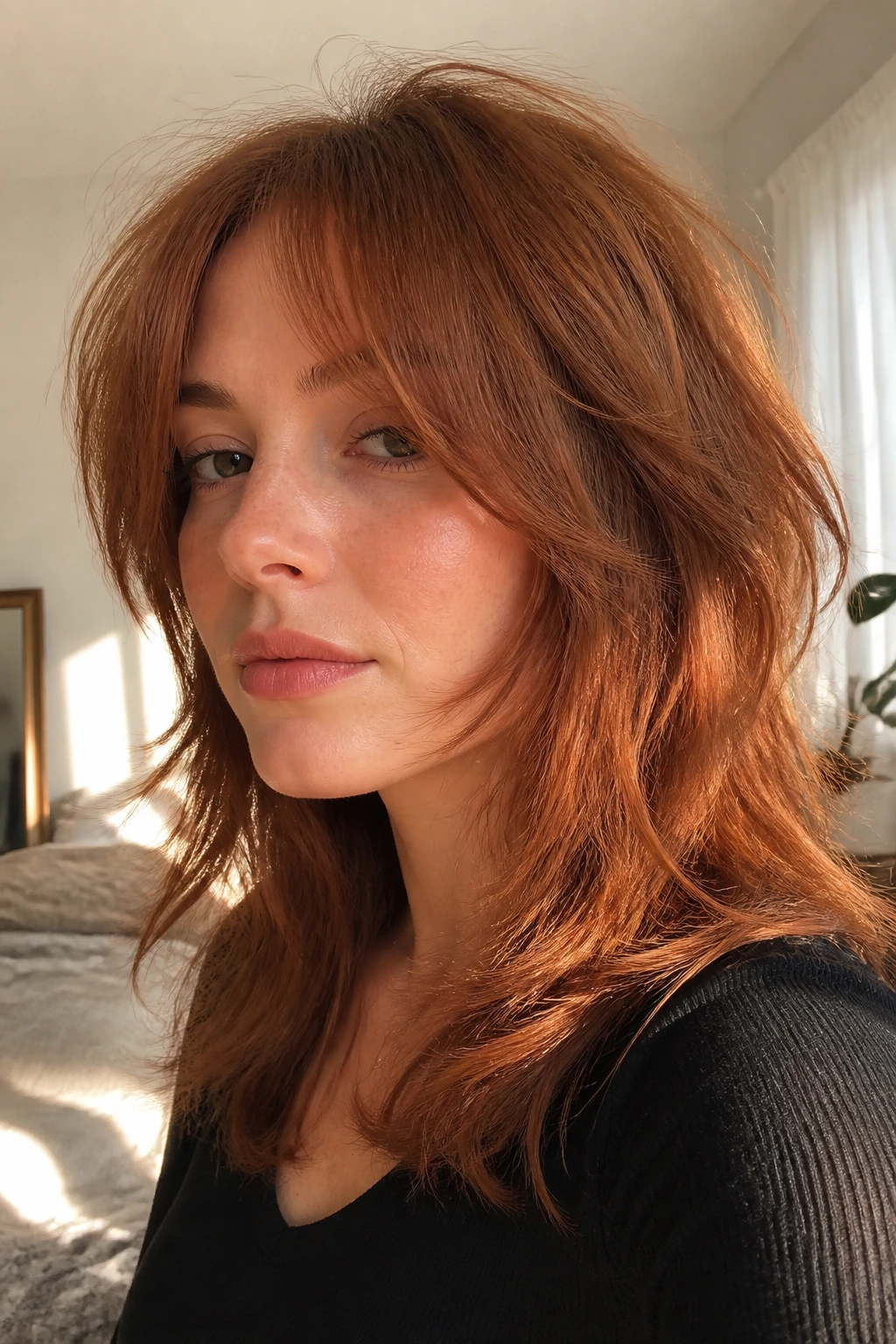
Strawberry copper softens the whole look. There’s a pink-gold note in it that keeps the haircut from feeling too fiery, which is useful if you want warmth without the harder red edge. On a wolf cut, that softer reflect can make the layers look more romantic than rebellious.
This shade works best when the cut has a lot of movement but not too much choppiness. The color is already doing some of the visual work, so the haircut can stay a little cleaner through the perimeter. I especially like strawberry copper with curtain bangs or wispy fringe, because the tone keeps those pieces delicate instead of harsh.
If your base is light, strawberry copper may be the easiest warm tone to keep bright. A color-depositing mask once a week can slow the fade and keep the pink warmth from washing out.
18. Smoked Copper Wolf Cut

Smoked copper is for people who like warmth but don’t want the color to feel loud. The tone sits deeper, almost brown in low light, then flashes copper when it catches the sun or a lamp. On a wolf cut, that shifting tone gives the layers a little drama without forcing them.
This version is one of my favorites because it’s forgiving. The roots can grow out a little and the shape still looks planned. The layers don’t need to scream to be noticed; the color already has enough depth to do the work. Ask for a brown-copper base with soft copper reflecting through the mid-lengths if you want the cut to stay wearable.
It’s a good choice when you need something that works with a sharper wardrobe and a low-maintenance schedule.
19. Copper Wolf Cut with Money Piece

The money piece changes the whole face. Bright copper around the front hairline can sharpen the wolf cut instantly, especially if the rest of the color is a few levels deeper. That contrast draws the eye to the layers that matter most, which is handy when the cut itself has a lot of texture.
This is a smart option if you don’t want full-head brightness. Two lighter panels near the face can make the haircut look fresher without forcing the whole head into high-maintenance copper. I’d keep the money piece blended into the fringe area so it doesn’t look like two separate colors fighting each other.
If you wear glasses, this version can be especially good. The bright front pieces show even when the rest of the hair is tucked back.
20. Collarbone Copper Wolf Cut

The collarbone length is where a lot of people stop fighting the wolf cut and start liking it. It has enough length to swing, enough room for layers, and enough shape that the copper tone can still shine from root to end. This version is less extreme than a short wolf cut and less heavy than a long one.
I like it because it behaves well. You can wear it tucked, loose, curled, or air-dried, and the shape still reads. If your hair tends to flip weirdly at the ends, collarbone length usually gives the layers enough weight to settle without going flat. Copper keeps the line from feeling heavy.
Ask for the front layers to hit between the chin and collarbone, not all the way at the jaw. That slight drop makes the grow-out less awkward.
21. Micro Fringe Copper Wolf Cut

Tiny fringe, big attitude. A micro fringe on a copper wolf cut is the most fashion-forward version in the bunch, and it only works if you’re okay with a little maintenance. The short bang line makes the eyes and brows the center of the haircut, while the shaggy layers keep the rest from feeling severe.
Copper makes the micro fringe less stark than black or platinum would. The warmth softens the shape just enough to keep it wearable, especially if the fringe is cut with a bit of texture instead of a hard line. I’d keep the rest of the cut airy and slightly longer so the bangs can carry the visual weight.
This one is not shy. If you want your hair to be a conversation piece, this is the move.
22. Invisible Layer Copper Wolf Cut

Invisible layers are for people who want movement without obvious slicing. The outside still looks smooth, but the inside has been shaped so the hair bends and falls differently. Copper is perfect for this because the color reveals the hidden movement the second light hits it.
This version is especially good when you hate the look of too many choppy ends. You still get the wolf cut energy, but the silhouette stays softer and more expensive-looking. Ask for internal layering through the crown and mid-lengths, then keep the perimeter a touch heavier. That balance keeps the cut from going wispy.
It’s one of the smartest choices for office settings or anyone who wants the trend without the obvious edge.
23. Wispy Bang Copper Wolf Cut

Wispy bangs are the easiest fringe to live with because they leave space on the forehead and around the eyes. On a copper wolf cut, they look feather-light and keep the haircut from getting too heavy in the front. The warm tone helps the delicate pieces show up even when they’re separated by movement.
This version works best when the rest of the cut stays shaggy but not overcut. If the bangs are wispy and the layers are also shredded, the whole style can look unfinished. I’d keep the fringe soft, then let the face frame get most of the texture. Copper around the front makes the bangs feel more deliberate than sparse.
A quick pass with a small round brush or a flat brush and a blow dryer usually does the job. No need to fuss.
24. Rust Copper Wolf Cut

Rust copper has more depth than the brighter shades, and that depth gives the wolf cut a grounded, almost earthy finish. It sits between red-brown and true copper, which means the cut can feel bold without going too bright. I like it on people who want warmth that doesn’t shout every time they step outside.
The rust tone works well with chunkier layers and a slightly messier fringe. It makes the texture look deliberate instead of accidental. If your natural base is dark, this shade can blend into it better than lighter copper while still giving the whole cut a glow.
Ask for a gloss that keeps the red side from getting too muddy. Rust copper is gorgeous when it stays clear.
25. Lived-In Copper Wolf Cut
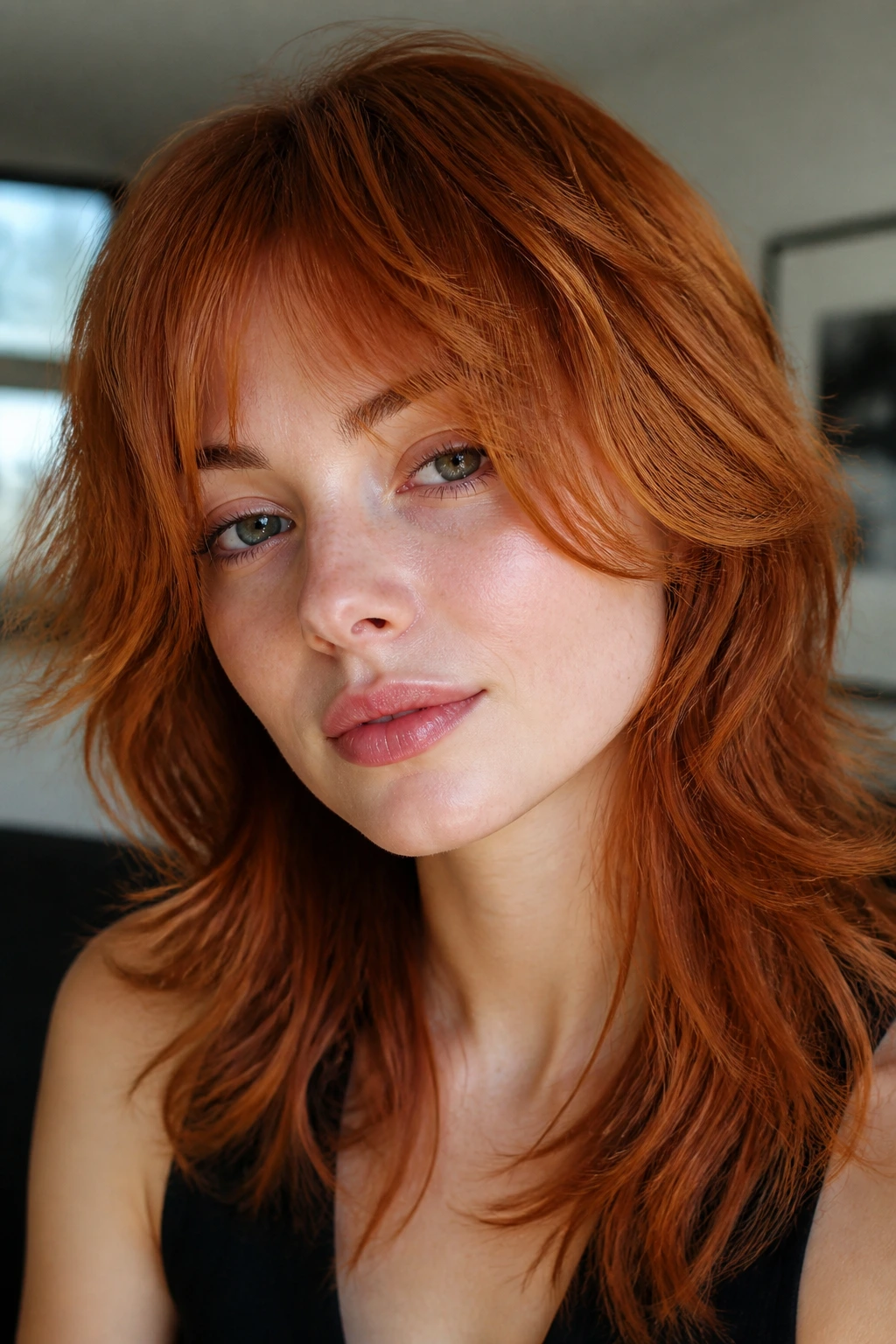
This is the one that gets better after a day or two. The roots lift a little, the texture settles, and the copper moves from fresh-salon sharpness into a softer, more lived-in shape. If you want a wolf cut that doesn’t need perfect styling, this is the most forgiving version in the bunch.
Keep the layers slightly longer, the fringe a touch softer, and the color a shade closer to your natural base. That way the grow-out looks intentional instead of neglected. A small amount of dry shampoo at the roots and a pinch of texture spray through the ends is usually enough to revive it.
I like this version for people who wear hair a little messy on purpose. It doesn’t need to be fixed every morning. It needs to be nudged.
Why Copper Makes the Wolf Cut Shape Look Fuller

Copper does something dark brown and ash tones often do not: it separates the layers visually. That matters in a wolf cut, where the shape lives or dies on movement. A warm copper shade catches light on the short crown pieces, the face-framing layers, and the longer tail in the back, so the haircut looks more dimensional even when the texture is loose.
The color also softens the edges of the cut. A wolf cut can look a little severe if the layers are too dark and too crisp. Copper changes that. Cinnamon and auburn tones blur the outline just enough to keep the style from reading harsh, while brighter penny or ginger shades make the choppiness feel playful instead of accidental.
There’s another reason the pairing works. Wolf cuts grow out in stages, and copper hides the awkward middle better than flat shades do. The color fade is not a flaw here; it gives you a second look as the cut loosens. A root smudge, a softer gloss, or a slightly deeper base can stretch the life of the style without making it look tired.
Essential Tools for These Looks

-
Sectioning clips: Keep the fringe, crown, and back separated when you blow-dry or style; wolf cuts get messy fast if you skip this.
-
Tail comb: Useful for clean parts, bang shaping, and lifting sections at the crown before you add heat.
-
1-inch curling wand or iron: Best for quick bends in the face frame and the ends; wider barrels can flatten the texture.
-
Round brush, 1.5 to 2 inches: Helps polish the fringe and give the crown a little lift without turning the cut into a pageant blowout.
-
Diffuser: Worth using on wavy or curly hair so the layers dry with shape instead of frizz.
-
Volumizing mousse or root lift spray: Gives the crown some structure before heat or air-drying.
-
Heat protectant: Mandatory if you’re using a wand, brush dryer, or flat iron near the fringe.
-
Texture spray: Good for the ends, the crown, and any spot that starts to collapse by midday.
-
Color-safe, sulfate-free shampoo: Helps keep copper from fading too quickly, especially if you wash often.
-
Glossing mask or color-depositing conditioner: Optional, but useful if you want to keep the copper tone from turning flat between appointments.
Smart Shade and Layering Advice

Copper is not one color, and the cut changes depending on which shade you choose. Bright penny copper makes every layer visible. Smoked copper makes the shape feel softer and deeper. Strawberry copper pulls the whole look toward light and airy. If you want the haircut to read from a distance, choose a copper with more orange-gold reflect. If you want something that sits closer to a brunette base, lean toward auburn or rust.
The base matters too. Hair that starts around a level 7 or 8 usually takes bright copper faster and more evenly. Darker hair can still wear copper well, but the tone will usually need lifting or a richer brown-copper glaze instead of a pure bright orange. That’s not a limitation; it just changes the finish. Ask for a root shadow or deeper base if you want the grow-out to stay soft.
Layer placement is where a lot of people miss. Fine hair needs fewer, longer layers so the ends don’t disappear. Thick hair needs internal removal so the cut doesn’t go puffy. Curly hair needs the shape built around the curl pattern, not against it. A wolf cut is not one haircut stamped onto every head. It’s a shape that should adapt to the texture it lands on.
How to Style a Copper Wolf Cut for Everyday Wear
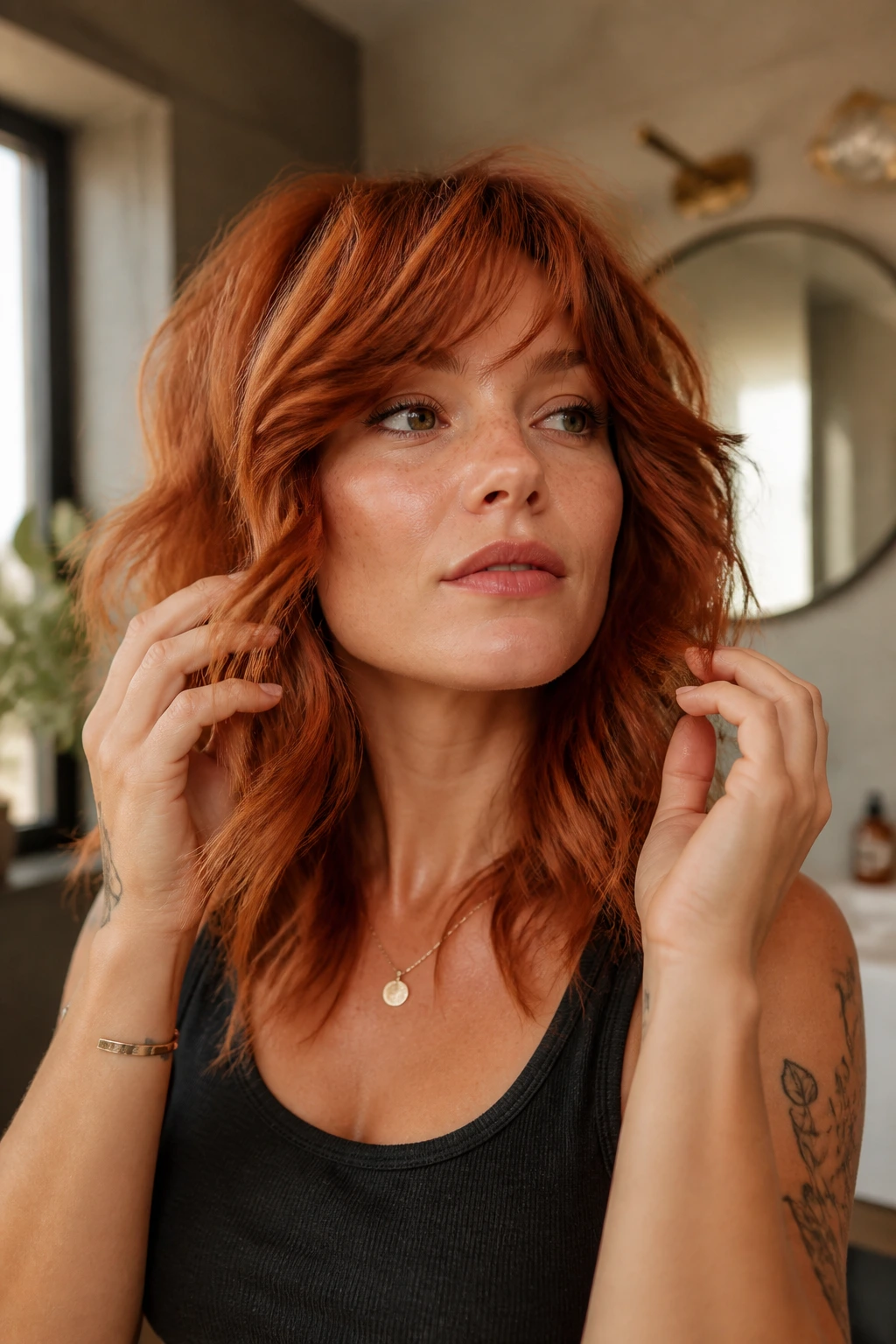
Air-Dry Base: Work a small handful of mousse through damp roots and mids, then scrunch the hair with your hands and let it dry about 70 percent before touching it again. If the crown needs help, clip the top section up while it dries so you get more lift at the root and less collapse at the scalp.
Heat Help: Wrap the front pieces around a 1-inch wand, away from the face, and leave the last half-inch of each end out. That keeps the texture piecey instead of too polished. For curtain bangs or bottleneck fringe, bend the hair under with a round brush and set it for a minute while it cools.
Finish: Use texture spray on the mids and ends, not the roots first. If the root gets heavy with product, the wolf cut loses the airy top that makes it work. A tiny bit of pomade on the very ends can separate layers that start to stick together.
Day-Two Reset: Mist the front and crown with water, smooth in a pea-sized amount of leave-in, and twist a few pieces around your fingers. Copper hair often looks better on the second day because the texture settles, and you do not need to fight that.
Additional Tips and Color Boosters
-
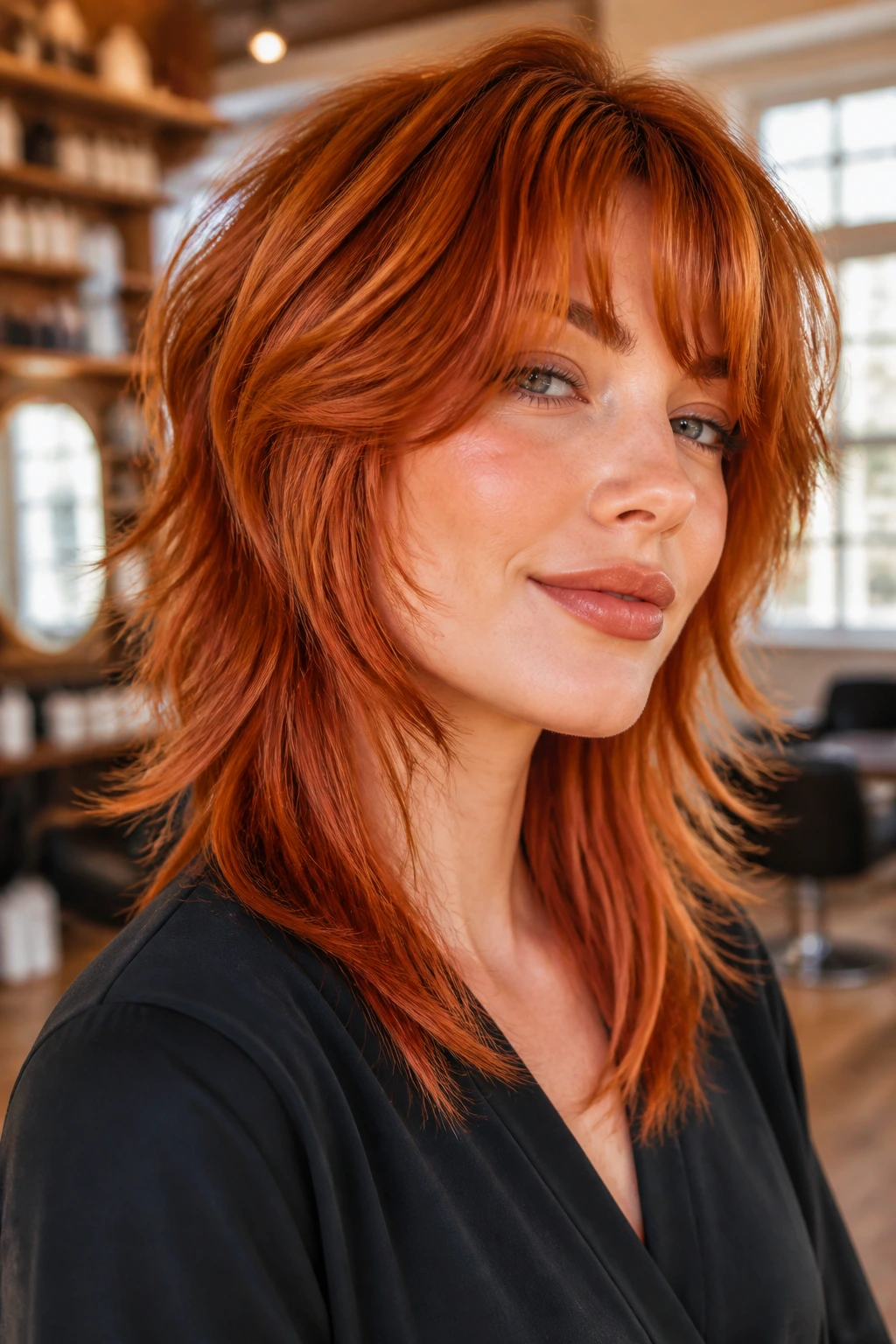
Gloss Boost: A clear or copper gloss every 4 to 6 weeks keeps the tone from looking dusty, especially on brighter penny and ginger shades.
-
Root Shadow: A slightly deeper root buys you a softer grow-out and keeps the top from looking stripey as the color fades.
-
Bang Control: If you’re getting fringe with this cut, cut it a touch longer than you think you need. Copper makes uneven bang lines more visible than brunette shades do.
-
Texture Match: Straight hair usually benefits from a little more perimeter texture; wavy or curly hair usually needs less aggressive layering so the pattern can do the work.
-
Make-It-Yours: Fine hair likes longer face-framing pieces and less thinning. Thick hair likes internal debulking. Curly hair wants a dry cut or curl-by-curl cleanup. That’s the whole game.
Common Mistakes to Avoid
-
Over-texturizing fine hair: The ends start to look see-through and the cut loses the foxiness people want from a wolf cut. Keep the shortest layers longer and ask for soft blending instead of aggressive slicing.
-
Choosing a copper that fights your base: A bright orange on very dark hair can look disconnected if it isn’t lifted well. A brown-copper glaze or a rooted balayage usually looks cleaner and grows out better.
-
Using too much oil or serum: Copper shine is good; greasy shine is not. Heavy product drags the layers down and makes the crown sit flat, which defeats the point of the shape.
-
Skipping maintenance on the fringe: Bangs grow fast and show every uneven edge. If the front pieces are part of the design, plan a small trim between full cuts or keep the fringe slightly longer so it doesn’t get awkward.
-
Ignoring your texture pattern: A curl that springs upward after the cut, or a straight section that refuses to bend, can change the silhouette fast. Ask the stylist to shape around how your hair actually falls, not how it looks when wet.
Variations and Adaptations to Try

Soft Office Copper: Keep the layers longer, the fringe softer, and the copper closer to auburn than orange. This version still has movement, but it slides into work settings with less drama.
High-Contrast Penny Frame: Ask for a bright money piece, deeper mids, and sharper face-framing layers. The front becomes the focal point, which is handy if you want the haircut to pop in photos.
Curly Halo Copper: Let the curls define the silhouette and keep the internal layers light. A warm strawberry or cinnamon tone makes the curl pattern look fuller without forcing the cut into a triangular shape.
Smoked Root Copper: Blend a deeper base into lighter mids and ends. This is the easiest adaptation if you want copper glow without constant color upkeep.
Micro-Fringe Edge: Add a short fringe and keep the rest of the haircut shaggy but controlled. The look is bold, but the copper tone softens the severity just enough to keep it wearable.
Grow-Out Friendly Wolf: Keep the shortest layers below the cheekbone and the back long enough to sit past the shoulders. It softens the silhouette as it grows and saves you from a harsh in-between stage.
Maintaining the Shape and Keeping the Copper Fresh
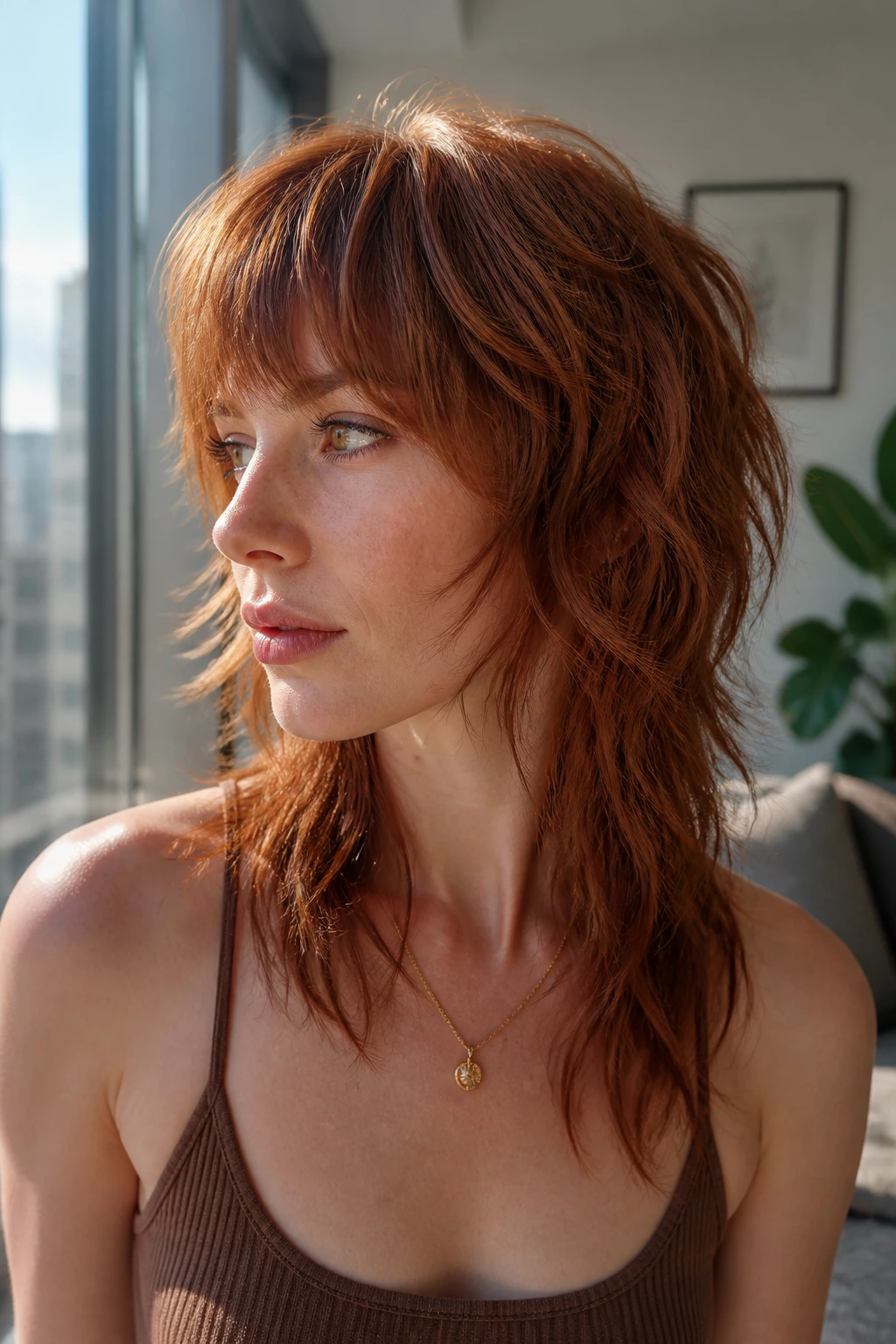
Copper asks for a little more attention than brunette, and the wolf cut asks for a little more shape maintenance than a blunt cut. Put the two together, and the routine gets simple but not lazy. Plan on a trim every 8 to 12 weeks if you want the silhouette to stay crisp. If you like a softer, grown-out look, you can stretch that a bit longer, but the fringe usually needs a tidy-up before the rest of the cut does.
Color refreshes matter just as much. Glossing every 4 to 8 weeks keeps the copper from going muddy, especially if you wash often or use hot tools. Use cool to lukewarm water when you shampoo, and keep cleansing focused on the scalp rather than scrubbing the mids and ends. That alone helps the warm reflect last longer.
For heat styling, use protectant every time. Every time. Copper can lose its glow fast if the cuticle gets fried, and the layered ends show damage sooner than one-length hair does. If you air-dry a lot, a leave-in and a small amount of mousse are enough to keep the shape from fraying.
Frequently Asked Questions

Does a copper wolf cut work on straight hair?
Yes, but it usually needs a little more styling than wavy hair. Straight hair can go flat at the crown, so a root lift product, a round brush, or a quick bend through the front pieces helps the cut keep its shape.
What’s the difference between a shag and a wolf cut?
A shag leans softer and more evenly layered, while a wolf cut usually has a shorter, fuller top and a longer tail in back. The wolf shape feels a little sharper and more disconnected, especially when the layers are pushed hard.
Which copper shade fades the least?
Deeper auburn, rust, and smoked copper shades usually hold their shape longer than bright penny or ginger tones. The brighter the copper, the more often you’ll need a gloss or color-depositing conditioner to keep it lively.
Will this haircut make fine hair look thinner?
It can if the layers are too short or too heavily thinned. The safer move is to keep the layers longer, preserve some weight at the ends, and let the copper color provide the visual fullness.
How often should I trim a wolf cut?
Most people do well with a trim every 8 to 12 weeks. Bangs or short face-framing pieces may need attention sooner if you want the shape to stay balanced.
Can I keep my length and still get the wolf cut look?
Absolutely. A long copper wolf cut keeps the back length and uses internal layering and face-framing pieces to create the movement. It’s one of the easiest ways to test the style without going short.
How do I stop copper from looking brassy?
Use color-safe shampoo, avoid very hot water, and refresh the tone with a gloss or color mask before the color gets too faded. Brass usually shows up when copper gets washed out and the base peeks through too hard.
Do bangs help or hurt this cut?
They help when they fit the rest of the shape. Curtain bangs, bottleneck bangs, and wispy fringe tend to work best because they blend into the layers instead of boxing the face in.
The Glow That Keeps Moving
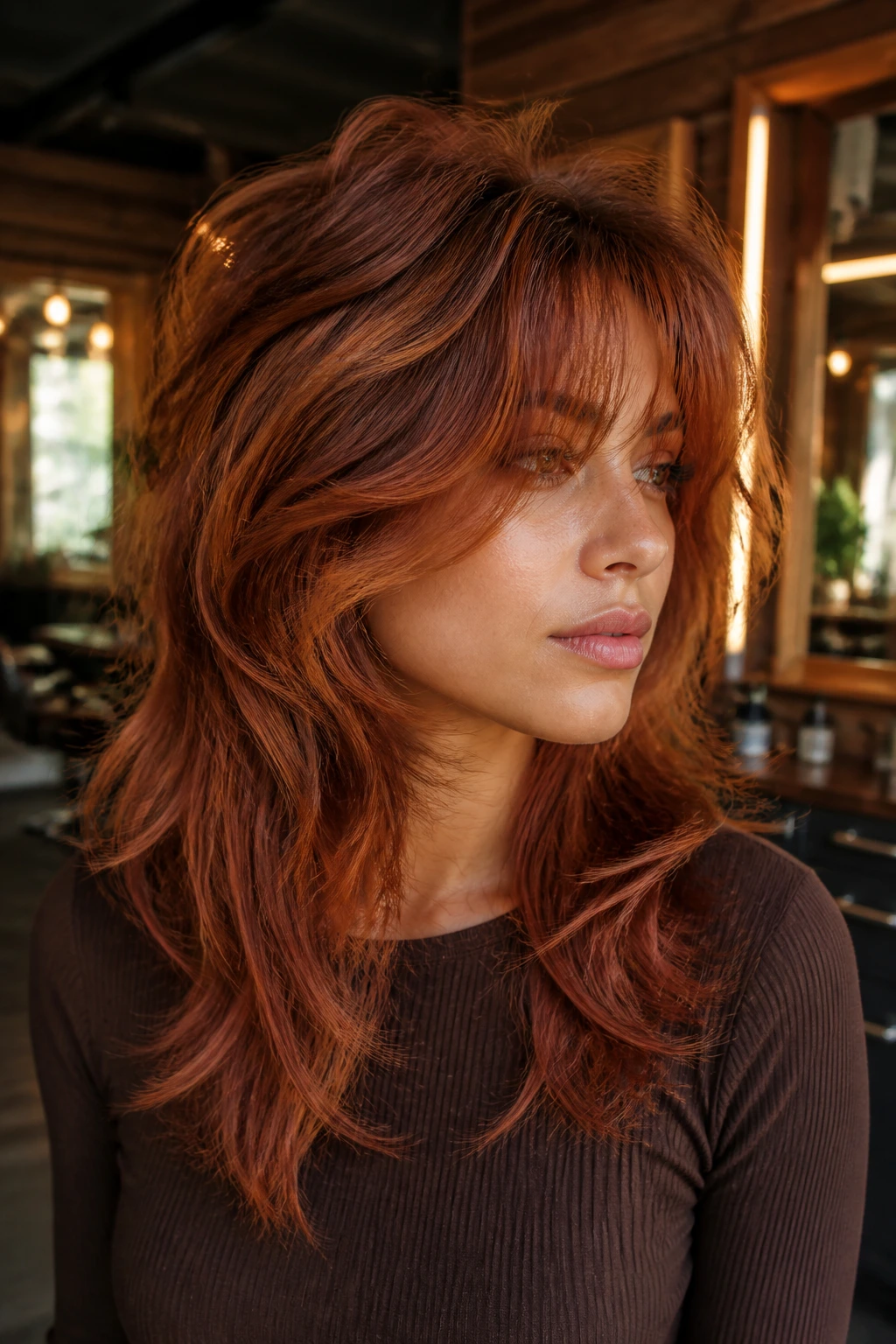
Copper wolf cuts work because they don’t sit still. The shape brings the movement, and the color gives that movement somewhere to go. If you want a haircut that looks better with texture, better with a little grow-out, and better when the light shifts across the room, this is one of the strongest pairings out there.
The smartest move is to bring a photo of both the color and the cut. One without the other never tells the whole story. A good copper wolf cut should feel warm at the face, loose through the body, and a little bit unruly at the ends — and if it does that, you’ll know you chose the right one.
