



Long hair is where balayage stops whispering and starts moving. Balayage looks for long hair can be soft as silk or bright enough to catch the eye from across a room, and the difference usually comes down to placement, not sheer lightness.
Length gives a colorist more room to work with. A few painted ribbons can drift from a deeper root through the mids and land in lighter ends without looking stripey, which is exactly why long hair can carry tones that would feel too busy on a shorter cut. But the flip side is real: when the ends are dry, porous, or over-lightened, every mistake shows. On waist-length hair, a flat toner looks flatter. Brass looks brassier. And the wrong highlight map can make the whole head feel heavy at the root and thin at the bottom.
My favorite balayage on long hair always uses that extra canvas on purpose. There’s room for a face frame, room for a root melt, room for lighter pieces that only show when the hair moves. The best looks don’t scream for attention. They catch it on a turn of the head, in a braid, in a low ponytail, in the half-second before a wave falls back into place. That’s the magic here, and the 23 looks below lean into it from every angle.
Why These Balayage Looks Earn Their Place
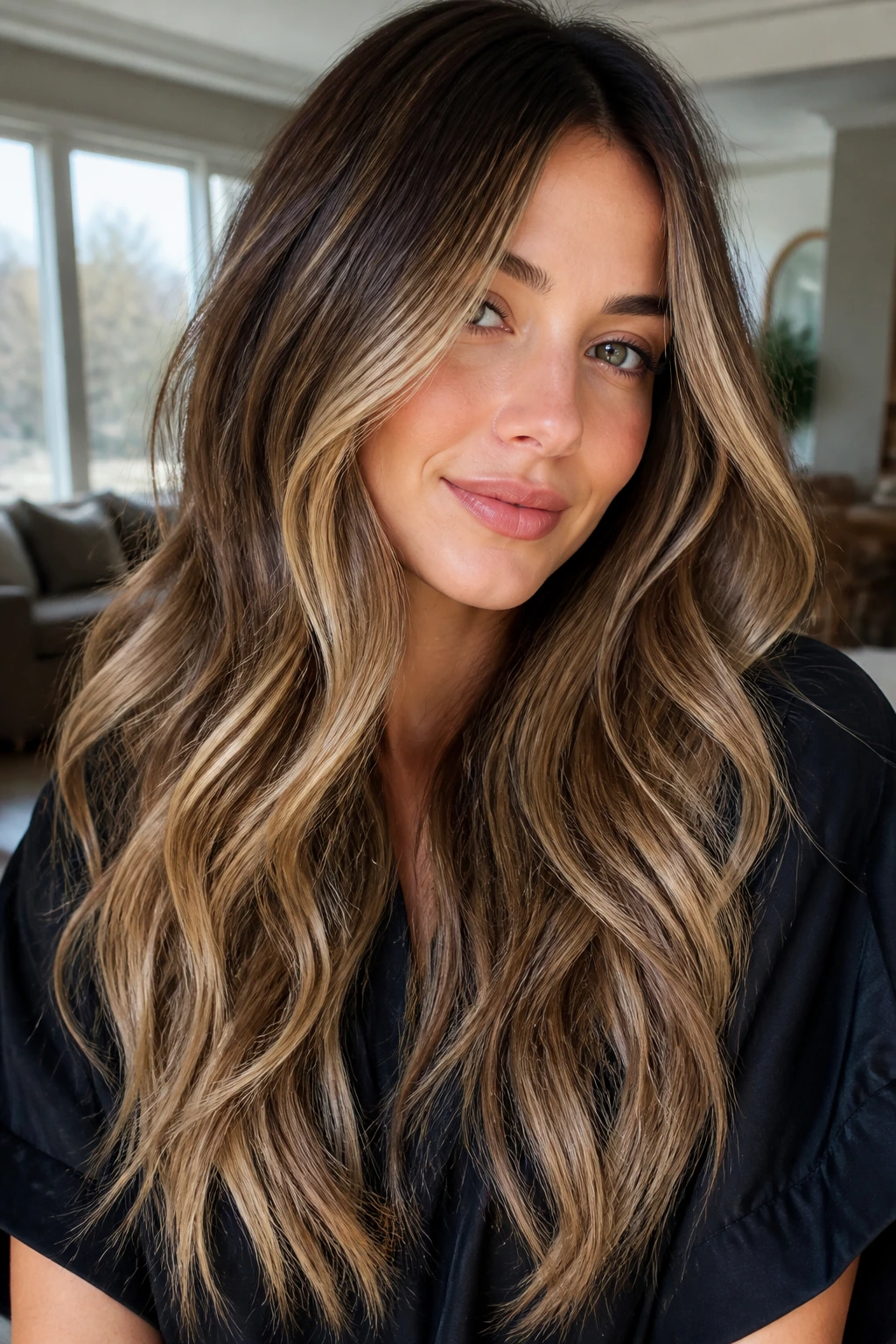
- Longer canvas, softer blend: Long hair lets the lightest pieces fade gradually, so the color can move from deep root to brighter ends without a hard line.
- Better grow-out: Painted placement keeps the regrowth line softer than a blunt highlight, which means you can stretch salon visits a little farther.
- More room for tone play: Beige, caramel, ash, copper, and pearl each read differently when they have several inches to travel down the hair shaft.
- Face-framing matters more: A few bright pieces around the cheekbones can change the whole look on long hair, especially when the rest stays deeper.
- Styling changes the color: Waves, braids, and straight blowouts all show the dimension differently, so one color can feel surprisingly versatile without being generic.
1. Honey Ribbon Balayage
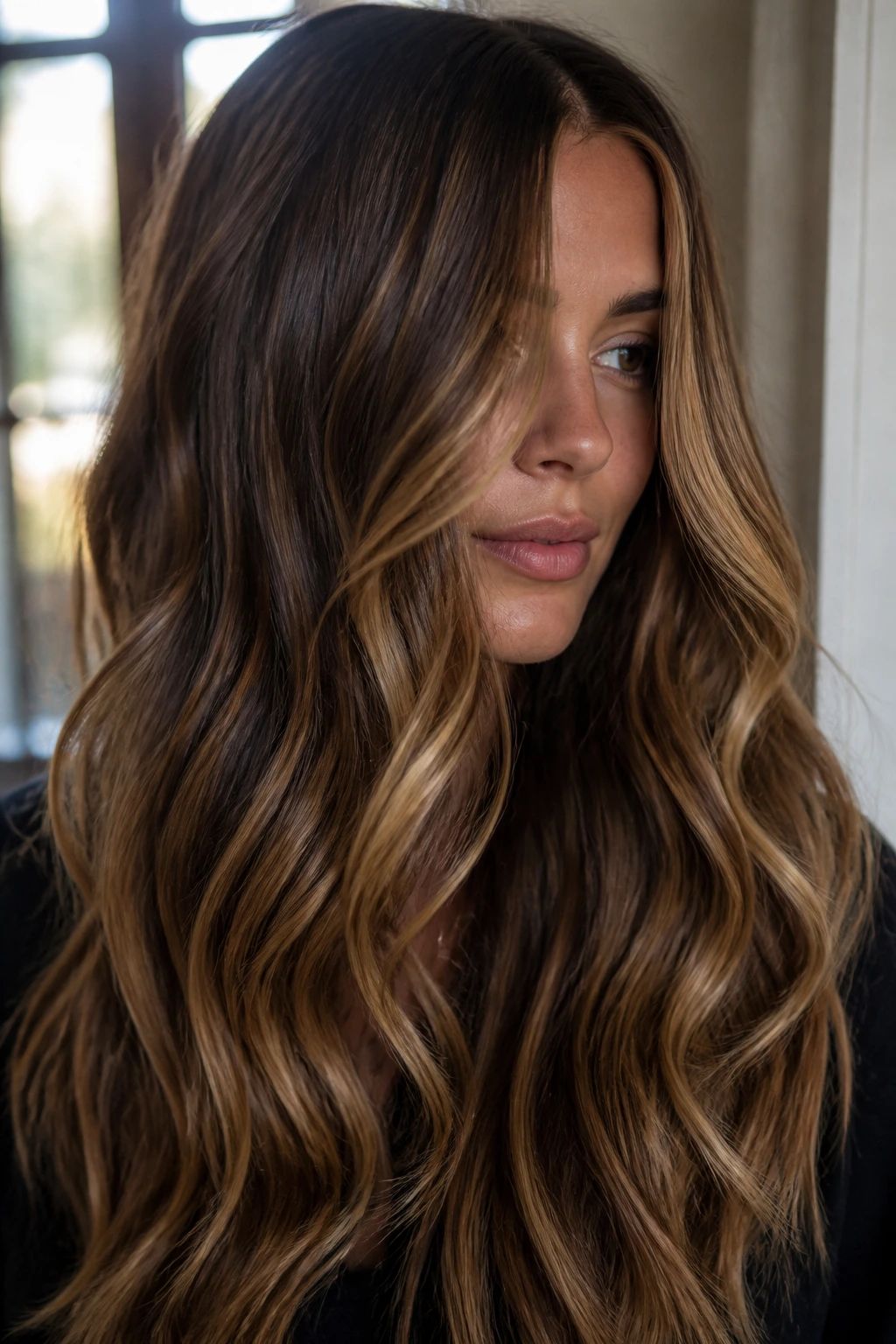
Honey ribbon balayage is the look I reach for when someone wants warmth without the orange cast that can creep into lighter caramel shades. On long hair, those honey pieces drift through the mids and ends like sunlight slipping through blinds. The effect is soft, glossy, and a little more expensive-looking than straight blonde because the depth stays intact at the root.
Why It Works on Long Hair
The length gives honey tones time to breathe. A handful of ribbons placed below the cheekbone and through the last third of the hair creates movement without flooding the whole head with brightness.
- Best base: Medium brown to dark blonde, especially if the natural undertone is warm.
- Ask for: A soft root shadow and a beige-honey toner, not a yellow blonde lift.
- Watch for: Ends that are already porous; they can grab honey color too dark if the formula is heavy.
Long waves show this shade best. Straight hair makes it look sleeker and more polished, but loose bends reveal the variation between the warmer mids and the lighter ends. I like it most on layered cuts, where the ribbons can sit on different planes instead of lying in one flat sheet.
2. Beige Blonde Balayage
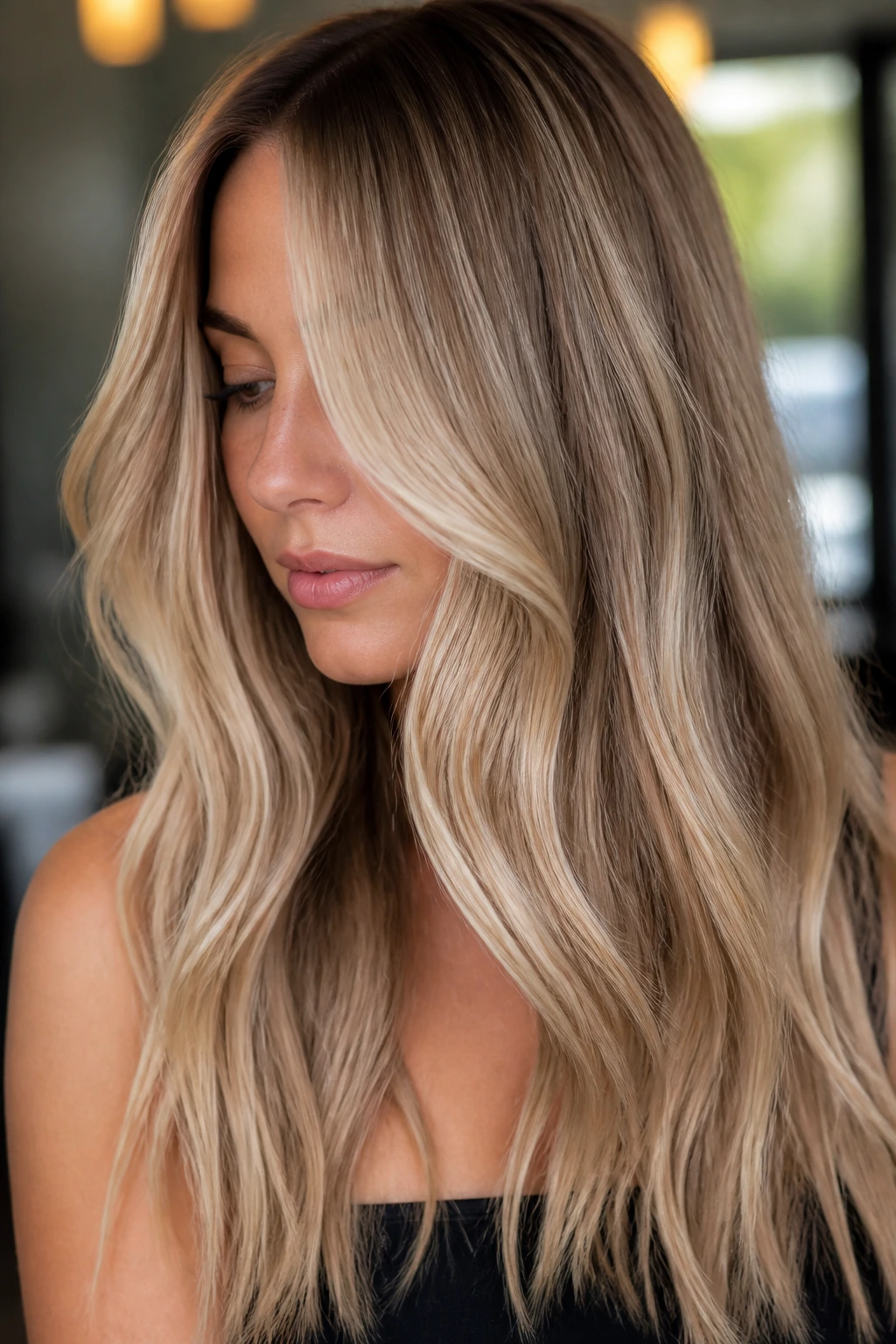
Beige blonde is the quiet classic that people keep coming back to because it doesn’t shout. It’s blonde, yes, but the beige keeps it from turning icy or lemony. On long hair, that matters. There’s enough length for the tone to look dimensional instead of washed out, and the result reads clean rather than chalky.
This one is especially good if you like a soft, cool-neutral finish and you hate constant toner maintenance. Beige blonde grows out with less drama than a high-lift platinum, and on longer hair the root shadow helps the whole thing look intentional rather than overprocessed. I’m a fan when the mids stay one to two shades darker than the brightest ends; that tiny shift gives the style more shape.
The trick is balance. Too much cool pigment and the hair goes flat. Too much warmth and it slides into cookie-dough blonde. Beige sits in the middle, which is why it flatters long layers so nicely. It also looks sharp in a smooth blowout, where the shine lets the color read as creamy instead of pale.
3. Caramel Mocha Balayage
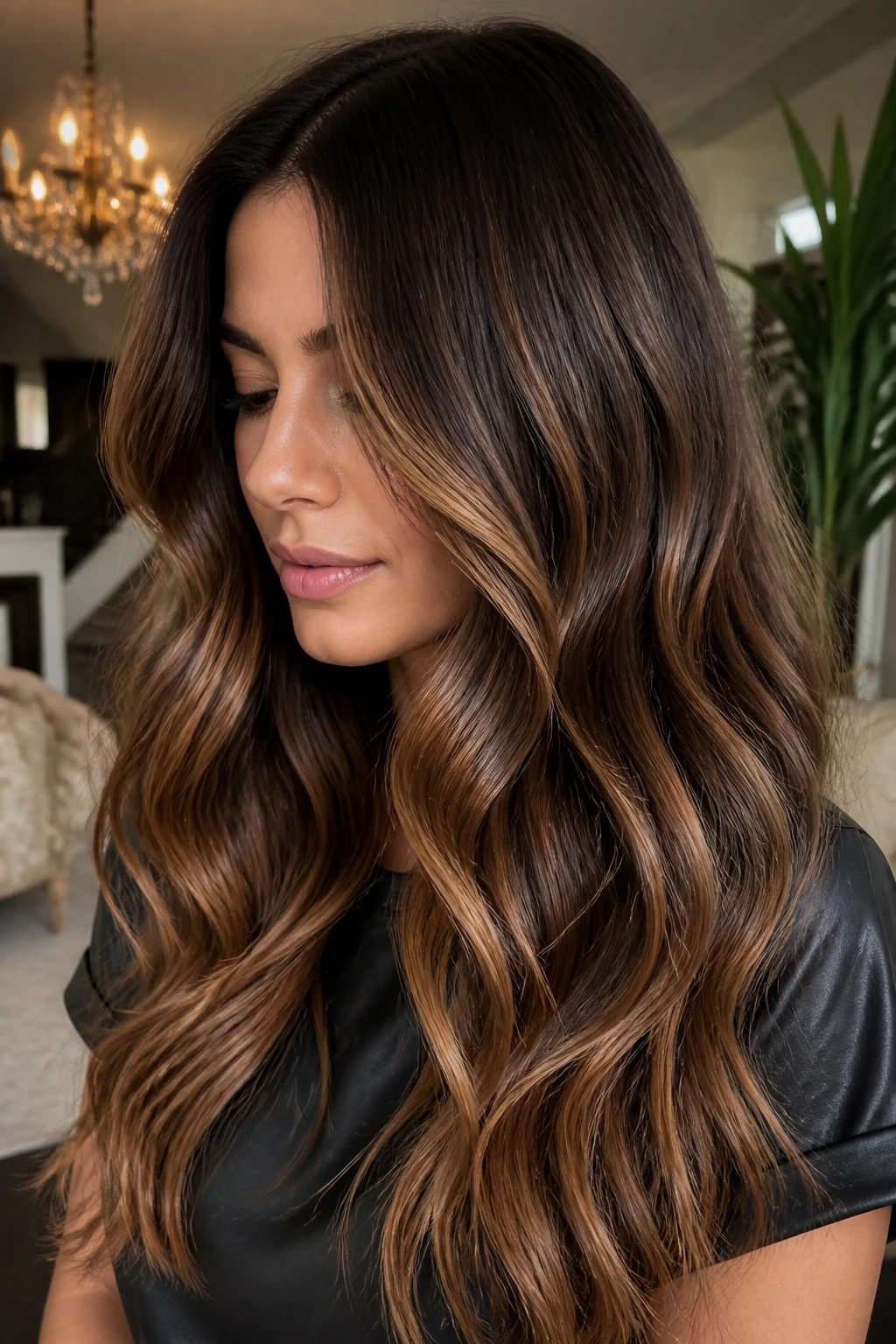
Caramel mocha balayage is for someone who wants the dimension to feel rich, not airy. The base stays chocolatey, the painted pieces lean toward caramel, and the whole thing has a glossy, multi-tonal finish that long hair handles beautifully. It’s one of those colors that looks even better two days after styling, when the waves loosen a little and the ribbons separate.
What Makes It Click
On long hair, this look benefits from a deeper root zone and a few brighter threads only through the mids and outer layers. You want contrast, but you don’t want the ends to look thirsty.
A stylist usually has room to place caramel near the face and around the front layers while leaving the back a shade darker. That keeps the color from feeling overly sweet. It also makes long hair look thicker, which is one reason I like this shade on fine hair that needs visual density.
If you wear your hair in big curls, the lighter pieces flash in and out as the curl turns. If you keep it straight, the mocha base does more of the work. Either way, this one is less about brightness and more about depth with movement.
4. Cinnamon Copper Sweep
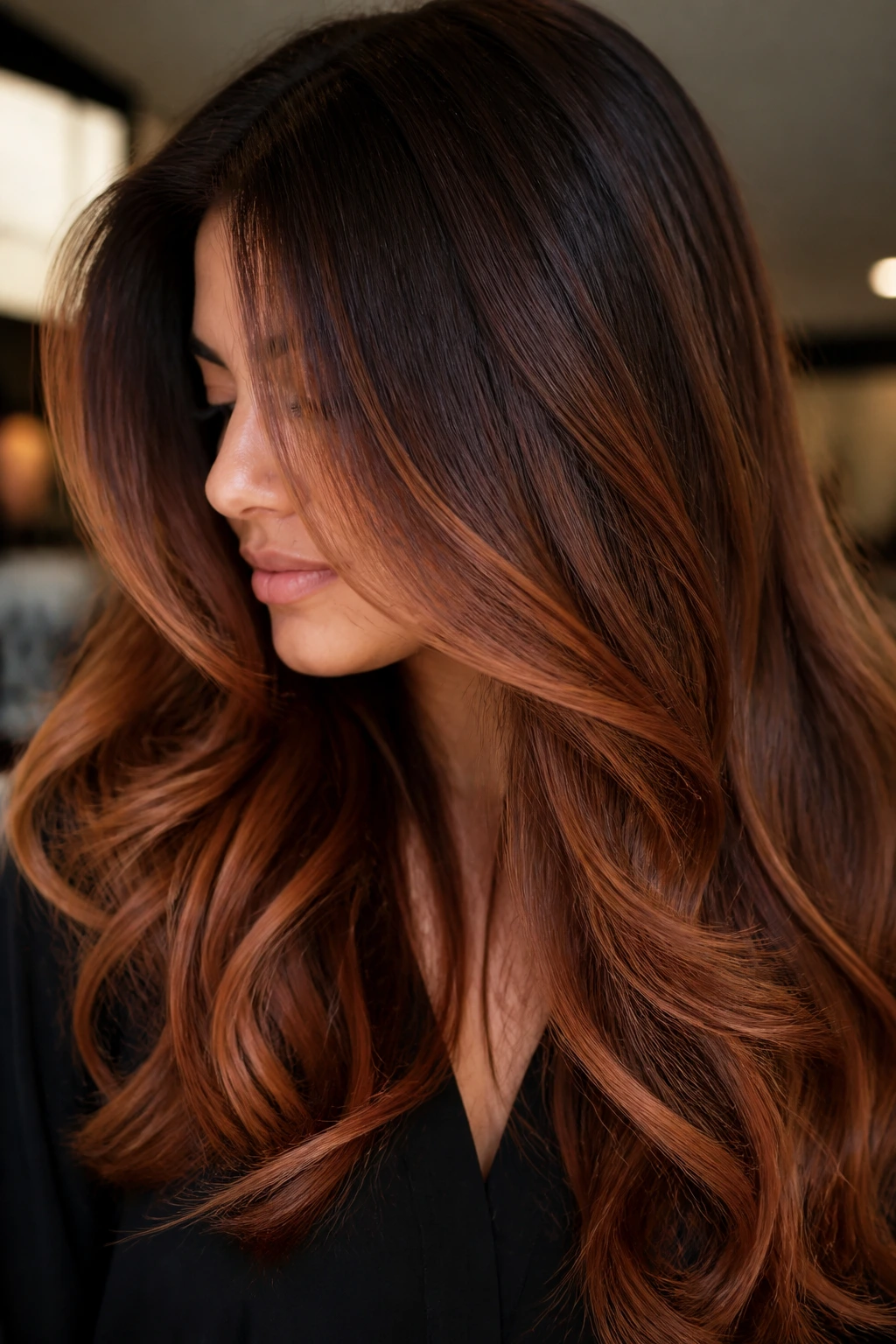
Cinnamon copper sweep is warmer, bolder, and a little spicier than honey or caramel. The copper doesn’t need to cover the whole head; in fact, it looks better when it doesn’t. Long hair gives you enough surface area for the cinnamon tones to appear in ribbons, especially through the lower mids and front sections.
This is a look with personality. It catches light fast, and on layered long hair the movement can be almost theatrical when the ends curl slightly. A colorist who understands copper will usually keep the root area deeper and use the warmest pieces where the hair naturally bends, which keeps the result from reading flat or helmet-like.
Best Base Shades
- Level 4 to 6 brown bases
- Dark auburn starting points
- Natural warm brunettes with red undertones
I’d avoid forcing this onto hair that’s already too orange unless the goal is full copper. Cinnamon looks better when it has a brown backbone. That’s the difference between rich and muddy, and on long hair the difference is obvious.
5. Mushroom Brown Balayage
Mushroom brown is the color for people who don’t want warmth sneaking up on them. It’s cool, earthy, and slightly smoky, with taupe and ash tones woven into a brown base. On long hair, mushroom balayage can look almost velvet-like because the tone changes are subtle enough to create movement without bright contrast.
This shade flatters long lengths best when the lightest pieces stay in the mids, not at the tips only. That keeps the color from collapsing into a dark top and a washed-out bottom. You want a soft drift, not a sudden fade. The best versions have a root shadow that stays a half-step deeper than the rest of the hair, which keeps grow-out graceful.
It’s also a smart choice for anyone who wants to cool down previous warmth without going fully blonde. Mushroom brown doesn’t fight the natural base; it edits it. On a long bob, that can feel understated. On waist-length hair, it feels deliberate.
6. Espresso with Toffee Ends
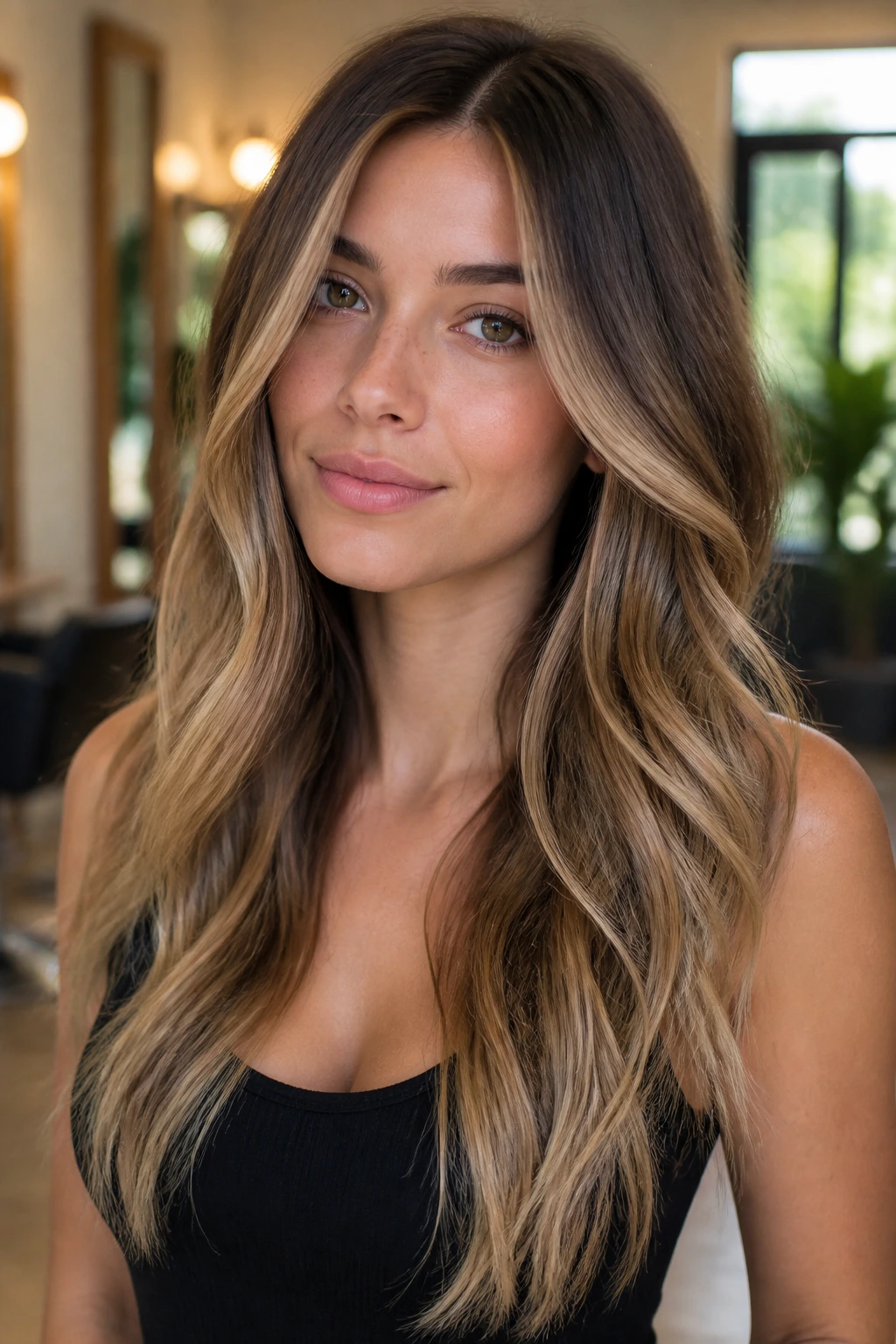
Espresso with toffee ends is high contrast, but not in a cartoonish way. The root stays deep and almost inky, while the lower lengths lighten into a toffee brown that still belongs to the same family. Long hair gives this look the space it needs, because the transition can take several inches instead of jumping from dark to light in one obvious step.
What makes this one work is restraint. If the ends are lifted too far, the whole style loses the richness that makes it interesting. Keep the toffee in the warm brown zone and the hair still looks substantial, even when the ends are brushed out.
Why I Like It
The shape of the haircut matters here. Long layers help the lighter pieces separate, while blunt ends can make the contrast feel boxy. A big round brush or soft barrel wave also helps; the toffee catches the curve and the espresso base frames it like an outline.
If you want a bold look without drifting into full blonde, this is one of the smartest choices on the list. It has drama, but the drama is controlled.
7. Champagne Money Piece
A champagne money piece can change the whole mood of long hair in two slices of color. That’s the point. The face-framing strands lift brighter and cooler than the rest, while the lengths behind them stay softer and more blended. It’s a small move with a big payoff, especially if the haircut already has curtain bangs or front layers.
I like this look when the champagne tone stays refined, not stark. Think pale beige with a little sparkle, not white-blonde streaks that sit on top of everything else. On long hair, the money piece should guide the eye down into the rest of the balayage, not break away from it.
The best version has a gentle root smudge and just enough brightness near the cheekbones to make the skin look fresher. It’s the kind of thing you notice in motion. Standing still, it can look subtle. In a ponytail or a half-up twist, it suddenly does a lot of work.
8. Sunlit Sand Blonde
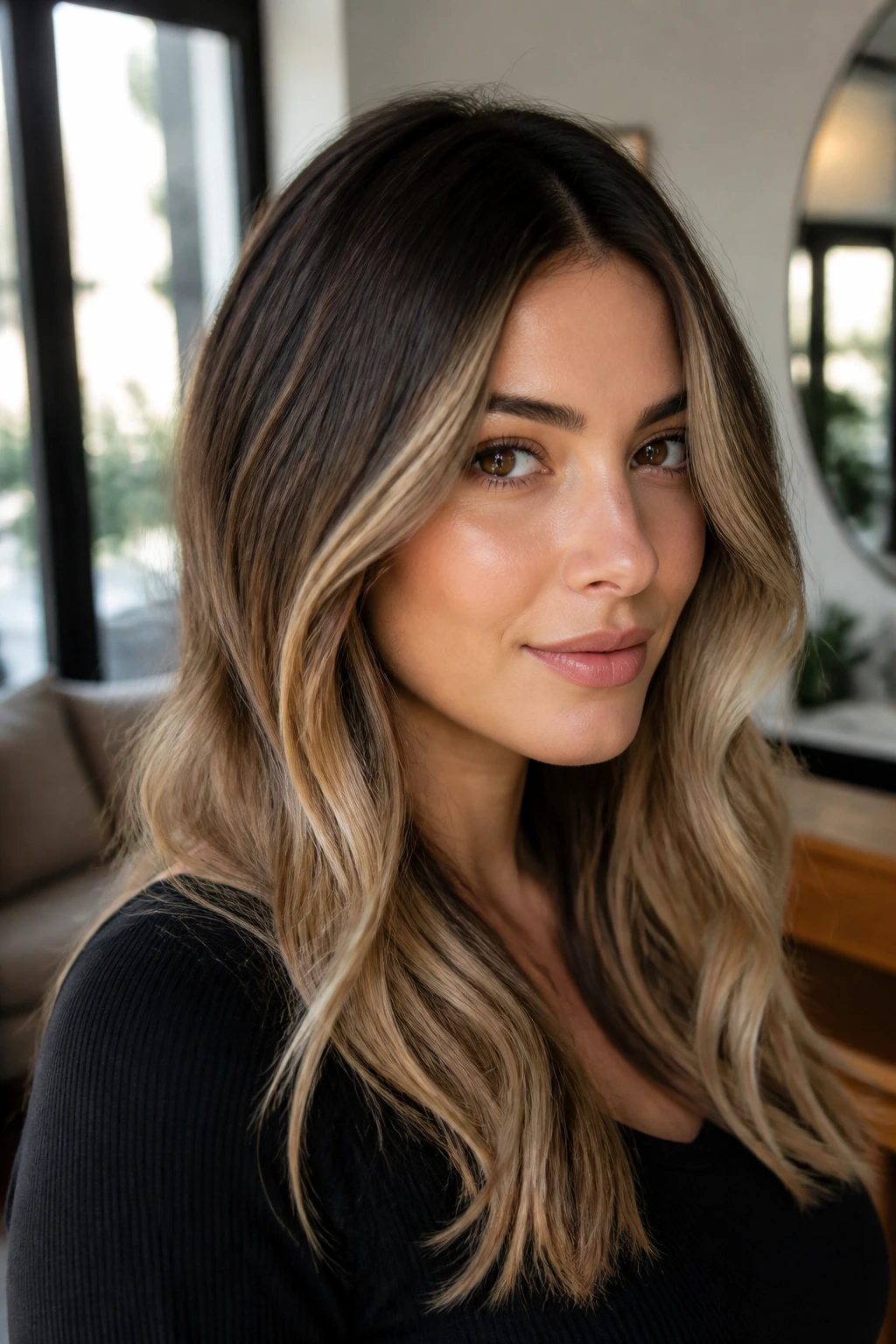
Sunlit sand blonde is the sort of color that looks like it has been outside a little, in the best possible way. It leans warm-neutral, not golden enough to turn brassy and not cool enough to look dusty. On long hair, the sandy tone gives depth to the mids and keeps the ends from turning too white or dry-looking.
The trick with sand blonde is to let the color drift. You want brighter pieces where the sun would hit naturally — around the face, over the crown, and on the outer layers — while the underneath stays a shade deeper. That contrast keeps long hair from looking one-dimensional, especially when it’s worn straight.
What to Ask For
- Soft face-framing brightness
- A neutral-beige toner
- Root depth left intact for movement
- Ends that stay creamy, not bleached-out
I like this on long hair that’s already a bit wavy. The wave makes the color feel relaxed and slightly beachy without pushing it into obvious highlight territory. It’s one of the easiest shades to style because it doesn’t need perfection to look good.
9. Rose Gold Veil
Rose gold balayage can go wrong fast if it’s too pink or too metallic. The version I like on long hair is more veil than statement: a blush-peach tint laid over blonde or light brown pieces so the color glows instead of screams. It’s subtle enough to wear daily, but it still reads as a choice.
The Science Behind the Softness
Rose tones look best when they’re anchored by beige or gold. On long hair, that means the color should shift rather than sit in one flat pastel block. A root shadow or deeper midsection gives the pink-gold pieces somewhere to land.
This shade works especially well on long layers because the lighter pieces show in motion. If the hair is all one length, the rose effect can blur. With some movement, though, the tone catches the light on the outer curve of the waves and disappears gracefully underneath.
I’d call this a better salon color than DIY color for most people. Pastel warmth needs careful toning, and the ends on long hair can take it faster than expected if they’re porous. Too much pigment, and the rose turns muddy. Kept light, it looks soft and expensive.
10. Chestnut Balayage with Auburn Ribbons
Chestnut with auburn ribbons has a warm, almost autumnal depth, but it doesn’t need to feel seasonal at all. The chestnut base keeps the style grounded, while the auburn pieces run through the lengths like copper thread in dark fabric. Long hair gives those red-brown ribbons room to show up without taking over.
This is one of my favorite looks for people whose hair naturally leans brown-red or brown-gold. It works with that undertone instead of fighting it. The contrast should be visible, but not so sharp that the auburn looks painted on top. When it’s done well, the color shifts as the hair moves, and the red only shows in the right light.
A little wave helps here. Straight hair can still look rich, but curls and bends make the auburn bits catch more cleanly. If you want a warm brunette that doesn’t slide into basic brown, this is a smart turn.
11. Bronde with Root Shadow
Bronde is one of those words that gets overused, but the look itself earns the name. It sits between brown and blonde without forcing either side to win. On long hair, the root shadow is what makes it sing. You get depth at the scalp, softness through the mids, and lighter ribbons toward the bottom half that keep the whole head from feeling heavy.
I like bronde when the blonde pieces are painted in a loose, irregular pattern. Too much symmetry makes the color look salon-perfect in a way that can feel stiff. A little unevenness — not sloppy, just natural — keeps the effect believable.
The best part? It plays nicely with long hair that’s worn in different ways. A sleek blowout reads more polished. Beach waves read softer. A braid picks up the lighter strands without showing every single placement line, which is useful if you live in braids half the week.
12. Icy Pearl Ends
Icy pearl ends are for the person who likes cool blonde but doesn’t want the whole head blasted to the same pale level. Long hair gives the pearl effect room to appear at the bottom while the mids stay a touch deeper and the root remains soft. The result is crisp, bright, and a little reflective, like the hair has a satin finish.
What to Watch For
- Porosity: already-light ends can turn frosty fast, so the toner has to be watched closely.
- Maintenance: purple shampoo helps, but too much will dull the shine.
- Styling: smooth bends show the pearl tone better than rough, dry waves.
Icy pearl is not a look for someone who wants to skip maintenance. It asks for gloss, moisture, and an honest look at the ends before lifting them any further. But when the hair is healthy enough to carry it, the effect is clean and striking on long lengths.
13. Smoked Vanilla Blonde
Smoked vanilla blonde sits in the creamy middle ground between beige and ash. The roots stay a shade deeper, the mids are softly warmed, and the ends land in a pale vanilla tone that still has enough smoke in it to avoid turning bright yellow. On long hair, that smoky edge keeps the blonde from looking sugary.
What I like about this shade is the way it behaves in low light. In direct light, it looks creamy and smooth. In shade, the smoke gives it shape. That’s useful on long hair because the color has more surface area to reflect light, and too much warmth can make the whole thing look loud.
This is a smart choice if you want blonde without the hard brightness of platinum. The tone reads polished on a blowout and relaxed in loose waves. It also pairs well with long layers, where the different lengths let the smoky vanilla pieces sit at different depths.
14. Golden Ombré Balayage
Golden ombré is where the lightness gathers toward the bottom, but the transition still feels painted rather than dipped. On long hair, ombré has a natural advantage because the length allows the shift to stretch out without looking abrupt. Golden ends bring warmth and shine, while the upper half stays a little darker for balance.
This is a good pick if you want a more obvious fade. Some balayage is whisper-soft; this one has a little more presence. Even so, it works best when the gold is honeyed rather than brassy. A warm golden blonde with a soft root melt gives the hair that sunlit finish without pushing it into orange territory.
I like this style on long waves because the ends pick up the light and the deeper top keeps the scalp area looking full. If you have very fine hair, that darker top can help the length feel thicker. If your hair is dense, the gradient keeps it from looking like one heavy curtain.
15. Cocoa and Cream Contrast
Cocoa and cream contrast is bolder than many of the softer looks here, and it has real presence on long hair. The cocoa base gives the hair weight, while creamy ribbons cut through the mids and surface layers to break it up. That kind of contrast is useful when long hair is thick or naturally dark, because it keeps the shape from disappearing into one dark block.
Best For
This look works best if you want dimension you can see from a distance, not just in a mirror under bright lights. It’s especially good on layered cuts, where the lighter pieces can sit on top of the darker base and move independently.
The key is keeping the cream pieces broad enough to read as intentional but soft enough not to look striped. If the sections are too skinny, the contrast loses its punch. Too chunky, and the color starts fighting the haircut. The sweet spot is somewhere in the middle, with a few bolder face-framing pieces and softer ends.
16. Brushed Copper on Dark Brunette
Brushed copper on dark brunette is one of the prettiest ways to add warmth without losing the depth that makes long hair look full. The copper should look swept in, not painted flat across the head. That subtle placement means the brunette base still does most of the work, while the copper flashes through the mid-lengths and front layers.
This look is especially good if your natural hair is very dark and you don’t want to go to blonde. Copper wakes up dark hair in a way beige blonde often can’t, because the warmth is visible even when the hair isn’t in full light. On long lengths, that matters. The color has enough room to shimmer as you move.
I’d keep the copper more restrained at the ends, especially if they’re already dry. A few brighter pieces near the face and along the outer layers will do most of the lifting. Too much copper everywhere can look loud. A brushed effect looks expensive.
17. Sandalwood Balayage
Sandalwood balayage is earthy, muted, and quietly flattering. It blends taupe, beige, and soft brown into a long-hair canvas that doesn’t need much styling to look finished. If honey is a little too warm and mushroom brown is a little too cool, sandalwood sits in the middle and keeps things balanced.
This shade has a way of making long hair look thicker because the tones are close enough to each other to create depth without obvious jumps. The mids stay interesting, the ends don’t go too pale, and the root can remain soft. I like it on people who want color that feels thoughtful rather than flashy.
Placement Notes
- Keep the brightest pieces around the front and outer layers
- Let the nape and underside stay a half-shade deeper
- Use a beige toner, not a silver one, to keep the warmth controlled
Sandalwood is the kind of color that rewards a good blowout, but it doesn’t fall apart when you air-dry it either. That makes it a strong everyday choice for long hair that gets worn in different ways.
18. Strawberry Bronze
Strawberry bronze leans warm, glowing, and a little red without crossing fully into copper. It’s a smart in-between color for long hair because the bronze gives the red something grounded to sit on. The result looks dimensional instead of flatly tinted.
I like this shade best when the strawberry notes are concentrated through the mids and front pieces, not washed over the entire length. That keeps it elegant. On long waves, the red-gold shifts appear and disappear as the curl bends, which is exactly what makes the color feel alive. Straight hair can carry it too, but the tone reads stronger in motion.
If your skin leans peach, olive, or golden, this can be an easy win. It also flatters long hair that already has a bit of warmth in the base. The key is not to overcook the red. A little goes a long way, and bronze keeps it from tipping into vivid territory.
19. Cool Ash Brunette
Cool ash brunette is the look for someone who wants brunette depth without warmth sneaking in at the edges. On long hair, ash pieces can be gorgeous because the hair has enough length for the cool tones to shift instead of sitting like one dark overlay. It gives the hair a smoky, polished finish.
What Makes It Work
Ash brunette is best when the contrast stays gentle. If the light pieces are too pale, the look loses its softness and starts to feel streaky. If they’re too dark, the whole style flattens. The sweet spot is a few cool ribbons one to two shades lighter than the base, plus a root area that stays rich.
This color also hides grow-out well because the ash and brunette tones stay close together. That makes it a smart option for long hair that isn’t getting frequent salon visits. I’m especially fond of it on straight hair, where the cool sheen becomes obvious, but loose waves give it more texture.
20. Warm Chestnut Melt
Warm chestnut melt is what happens when you want the hair to look rich all the way through instead of highlighted in obvious sections. The base and lighter pieces melt together in a warm brown family, so the color feels seamless at a glance and more complex as you move closer.
That softness is where long hair helps. The transition can be stretched across several inches, which lets the chestnut and lighter brown tones blend without a hard break. This is one of the easiest looks to wear if you like warmth but don’t want to chase brightness.
I’d especially recommend it for thick, long hair. The warmer melt keeps the hair from looking too heavy, and the color reads as healthy rather than overprocessed. That said, it still needs shape. Long layers or a bit of face framing help the melt show its dimension instead of looking like one uniform brown.
21. High-Contrast Platinum Sweep
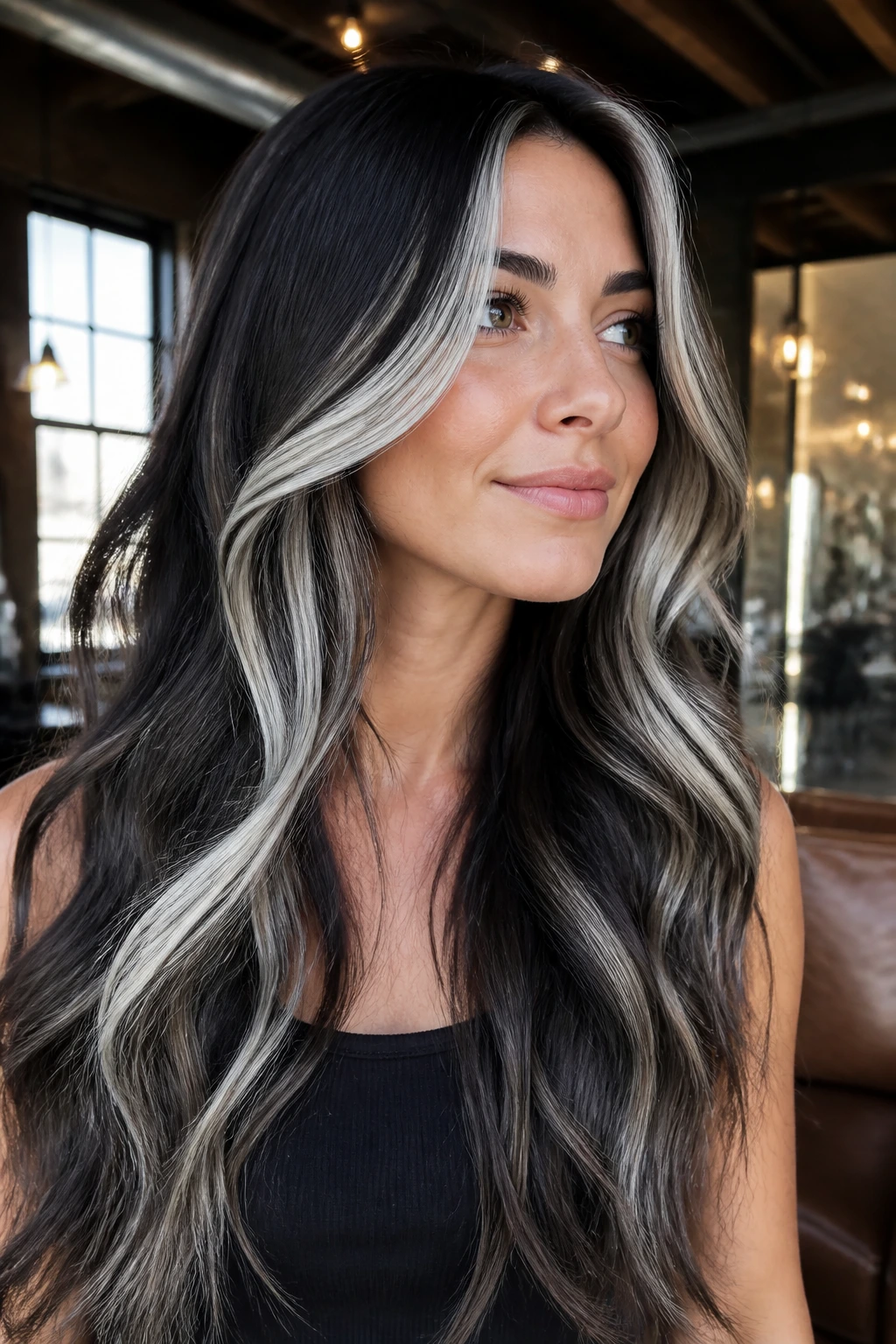
High-contrast platinum sweep is the boldest look in the group, and long hair gives it the room to behave. The platinum pieces are swept in broad strokes through darker lengths, so the brightness feels dramatic but not random. It’s a look that depends on placement discipline. A sloppy version looks patchy fast.
What makes this one work is the contrast between the deep base and the very light sweep. On long hair, that contrast can feel almost graphic in a braid or a twisted half-up style. In waves, the platinum pieces soften a little and become more wearable. That’s why I like this look more on layered long cuts than on blunt ends; the layers help the platinum move.
It does ask for maintenance. There’s no pretending otherwise. The lighter pieces need glossing, and the ends need moisture more than they do with softer balayage shades. But if you want long hair that has edge, this is a strong choice.
22. Dimensional Sable Balayage
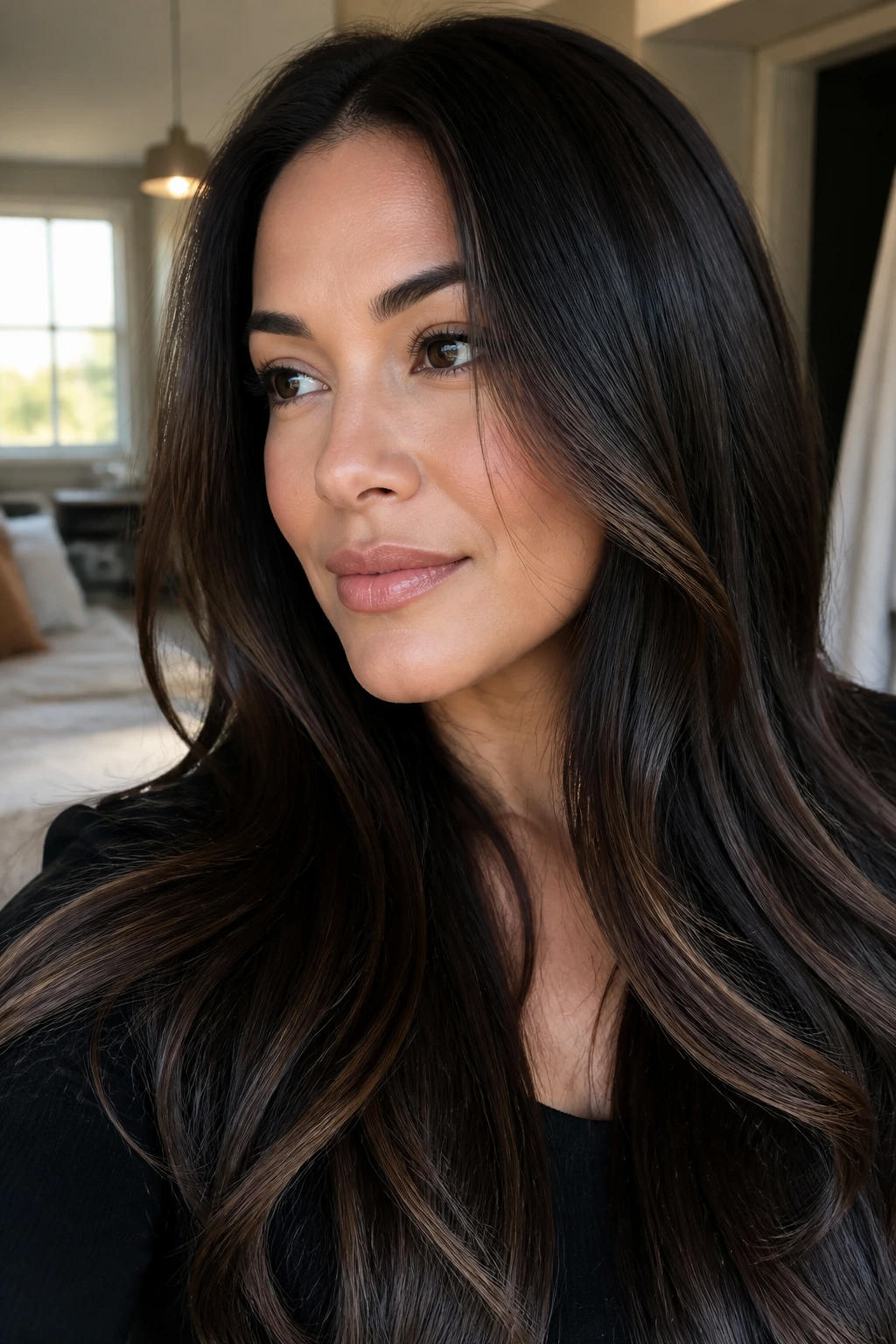
Dimensional sable balayage is deep, dark, and full of quiet movement. Think black-brown with espresso and mocha pieces painted through it, not as contrast for contrast’s sake but to keep the whole surface from going flat. Long hair can swallow dark color if it isn’t broken up, and sable solves that neatly.
I like this look because it respects depth. It doesn’t force brightness where it isn’t needed. Instead, it uses subtle changes in tone to make the hair look glossy and full. The best versions are the ones where the lighter strands are visible only when the hair shifts or the light moves across it.
A Good Fit If You Want
- A darker result with dimension, not blonde pieces
- Lower maintenance than high-lift balayage
- A soft frame around the face without obvious streaks
This is one of the easiest long-hair balayage ideas to wear if you work in conservative settings or just prefer a darker finish. It still gives the eye something to follow, which is the whole point.
23. Curly Ribbon Balayage
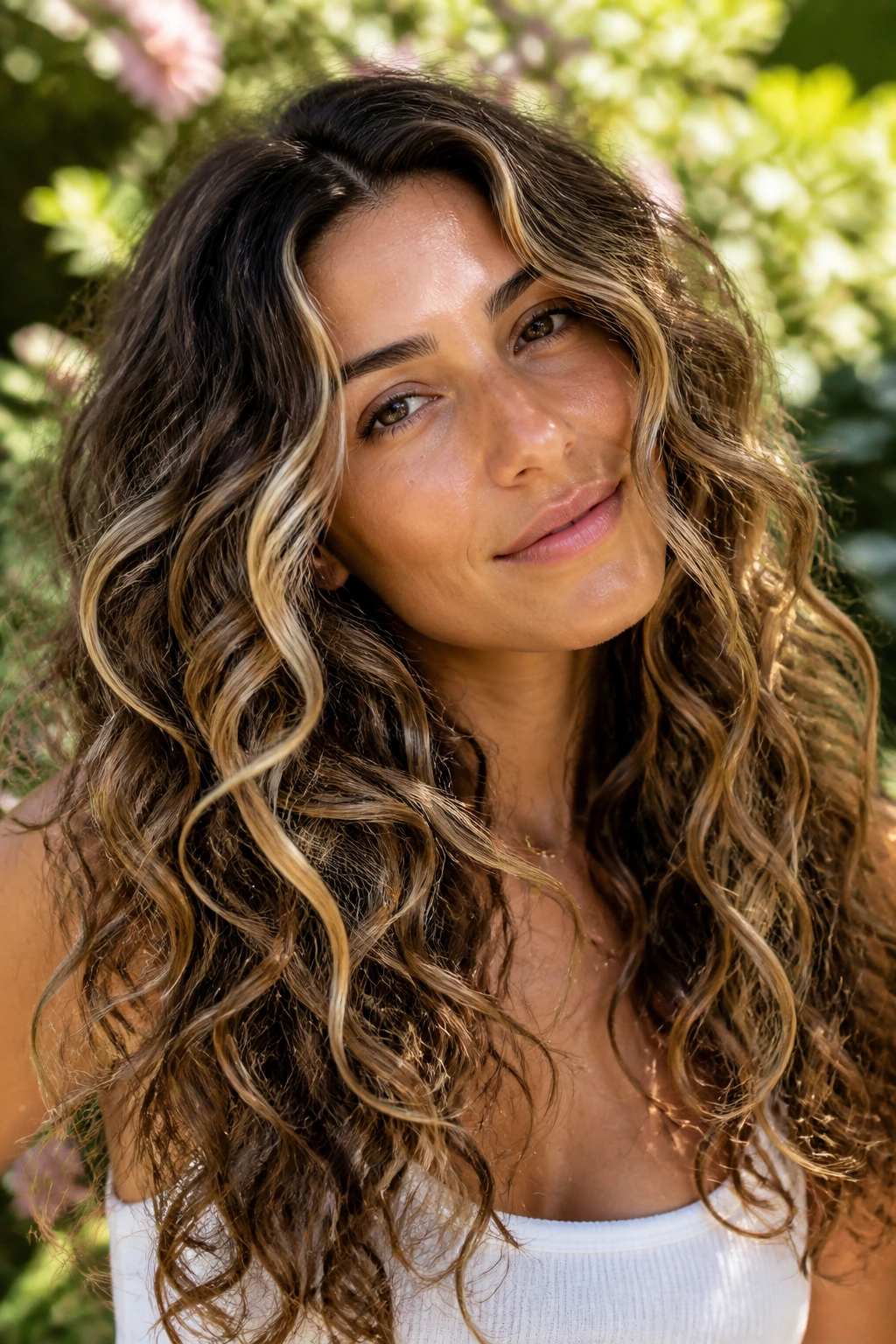
Curly hair needs its own rules, and long curls make balayage look alive when the placement respects the bend pattern. Curly ribbon balayage paints light and dark pieces where the curls naturally stack, so the highlights show up on the outer curves instead of disappearing in the bulk. On long curls, that gives the hair a halo of movement without turning it into a frosted blob.
How It Should Be Placed
The front pieces should be a touch brighter, but not so light that they steal the whole show. The mids and lower lengths can carry the rest of the dimension. That keeps the curl pattern readable and helps the color avoid that over-lightened triangle effect that some curly hair gets.
I like this look because it rewards texture instead of flattening it. When the curls spring, the ribbons separate. When they settle, the color still looks dimensional. If your long hair is naturally curly or wavy, this might be the most flattering way to use balayage at all — not because it’s trendy, but because the placement follows the shape of the hair instead of fighting it.
Why Long Hair Balayage Gives Color Room to Move
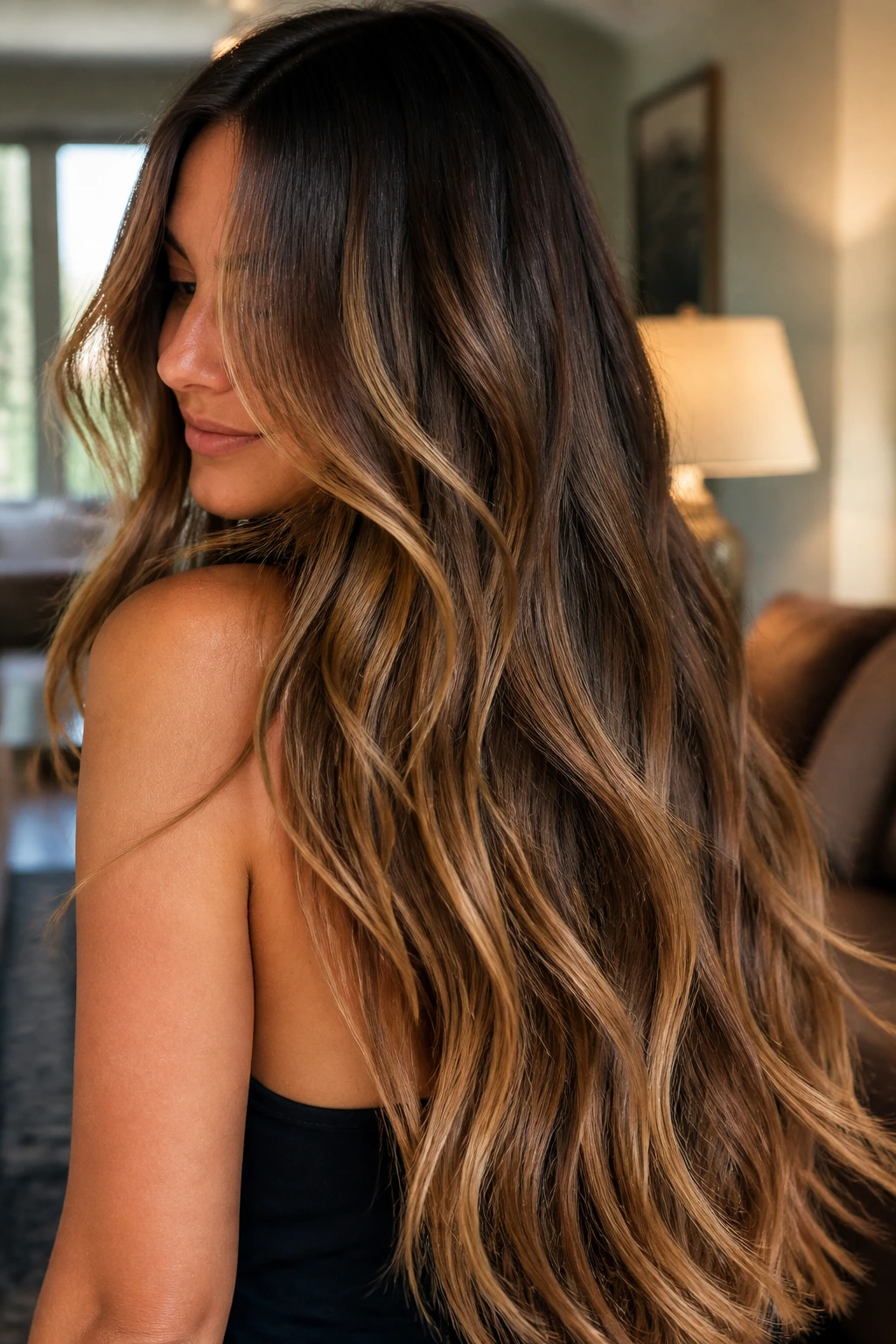
Long hair makes balayage more interesting because the eye has somewhere to travel. A painted highlight on shoulder-length hair can be pretty; on waist-length hair, the same placement can look layered, soft, and almost cinematic when the hair swings. The color has time to change as it moves from root to mid-length to end, and that changes how the tone reads in real life.
The best long-hair balayage rarely starts and stops at the same height all over. A stronger face frame, softer mids, and a deeper underside usually look better than one uniform band of lightness. That keeps the color from feeling heavy at the bottom or too busy near the scalp. If the haircut already has movement, balayage can make the layers show up without needing dramatic contrast.
There’s another reason long hair is such a strong match for this technique: grow-out. Because the paint is diffused, your roots don’t scream for attention the way they do with a solid foil line. That matters if you want a look that can stretch between visits without turning sloppy. The better the placement, the better it ages.
Tools, Photos, and Products Worth Bringing to the Appointment
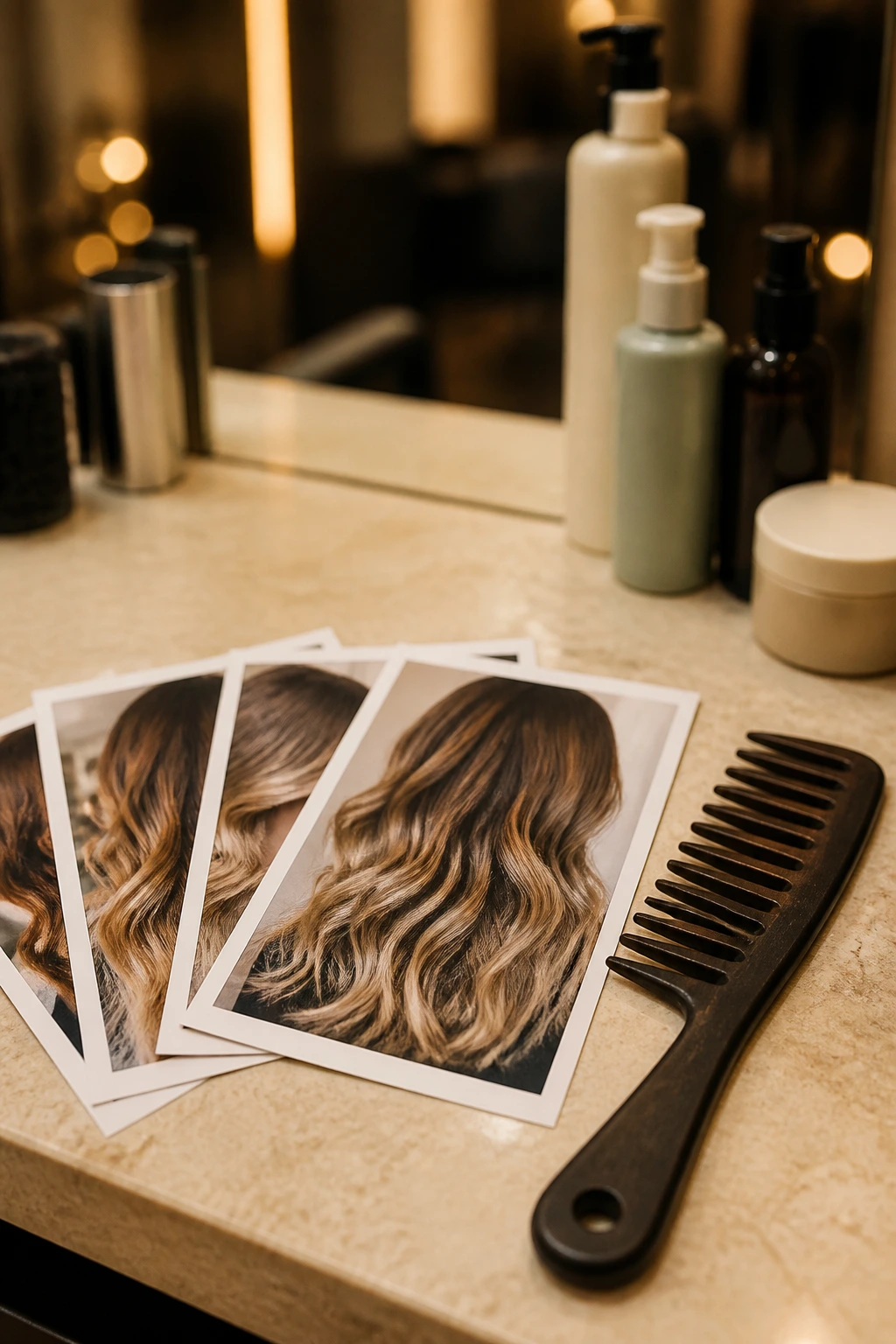
A good salon conversation saves more trouble than a clever formula ever will. Bring photos of the same color on different hair textures if you can — one image of loose waves, one of straight hair, one from the back. Long hair can look lighter or darker depending on styling, and the photo set helps your colorist see what you actually want, not just what looked good in a filtered mirror shot.
- Reference photos: Bring 2-4 pictures with the tone and placement you want, not just a vague vibe.
- Wide-tooth comb: Helps distribute conditioner and keep long lightened ends from snapping while wet.
- Heat protectant: Non-negotiable if you style with hot tools; lightened long hair takes heat damage fast.
- Sulfate-free shampoo: Gentler on glosses and toner, especially if your hair is on the porous side.
- Purple shampoo: Best for beige, blonde, pearl, or icy looks; use sparingly so the tone stays shiny.
- Blue shampoo: Better for brunette balayage that needs brass control without looking purple.
- Deep conditioner or bond mask: Use this when the ends feel rough or snaggy after a few washes.
- 1.25-inch curling iron or wand: A size like this creates soft bends that show off the ribbons without turning the look too pageant-bright.
If you’re getting color done in a salon, also bring a plain sentence about maintenance. Say whether you want low upkeep, medium upkeep, or don’t mind monthly toning. That answer matters more than people think.
Choosing the Right Tone, Lift, and Base Shade
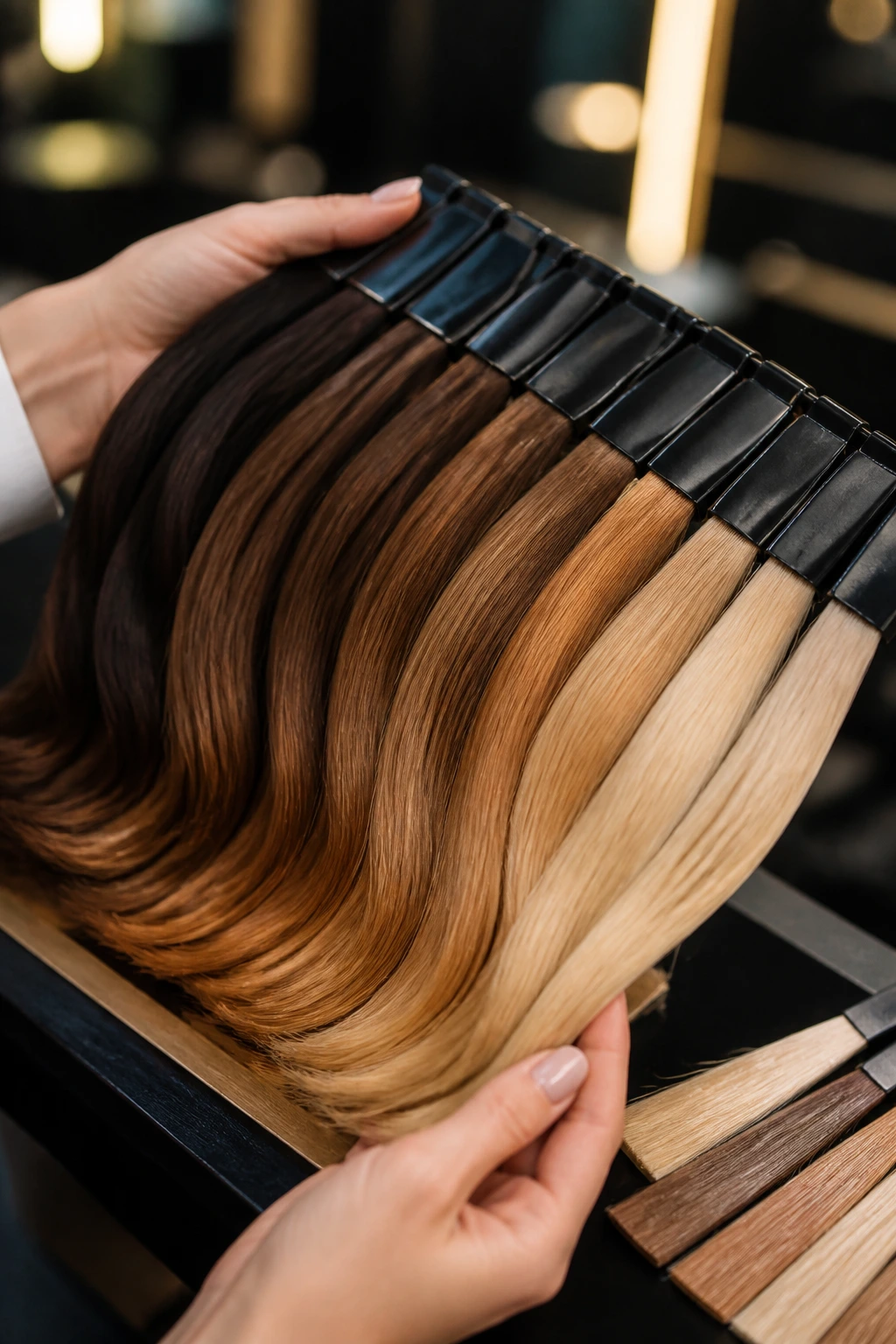
The easiest way to choose a balayage shade on long hair is to start with the base, not the inspiration photo. A level 4 or 5 brunette usually looks best with caramel, chestnut, copper, mocha, or bronze ribbons. A level 6 or 7 dark blonde or light brown can carry beige, honey, sand, champagne, and soft pearl much more easily. If the hair is already light, cooler tones can work without making the ends look chalky.
Porosity matters too. Old, porous ends will drink up toner faster than healthy mids, which is why the bottom few inches can turn muddy if the formula is too heavy. On long hair, I’d rather see the ends stay one shade softer than force them too light. The result lasts longer and looks better when the hair is in a braid or ponytail.
Undertone is the other thing that gets ignored. Warm skin doesn’t require warm hair, and cool skin doesn’t demand ash. But if you’re trying to decide between copper and beige, or mushroom and honey, your natural undertone and the base level are the fastest clues. The best balayage doesn’t fight the hair’s starting point; it edits it.
How to Wear These Shades in Waves, Blowouts, and Braids
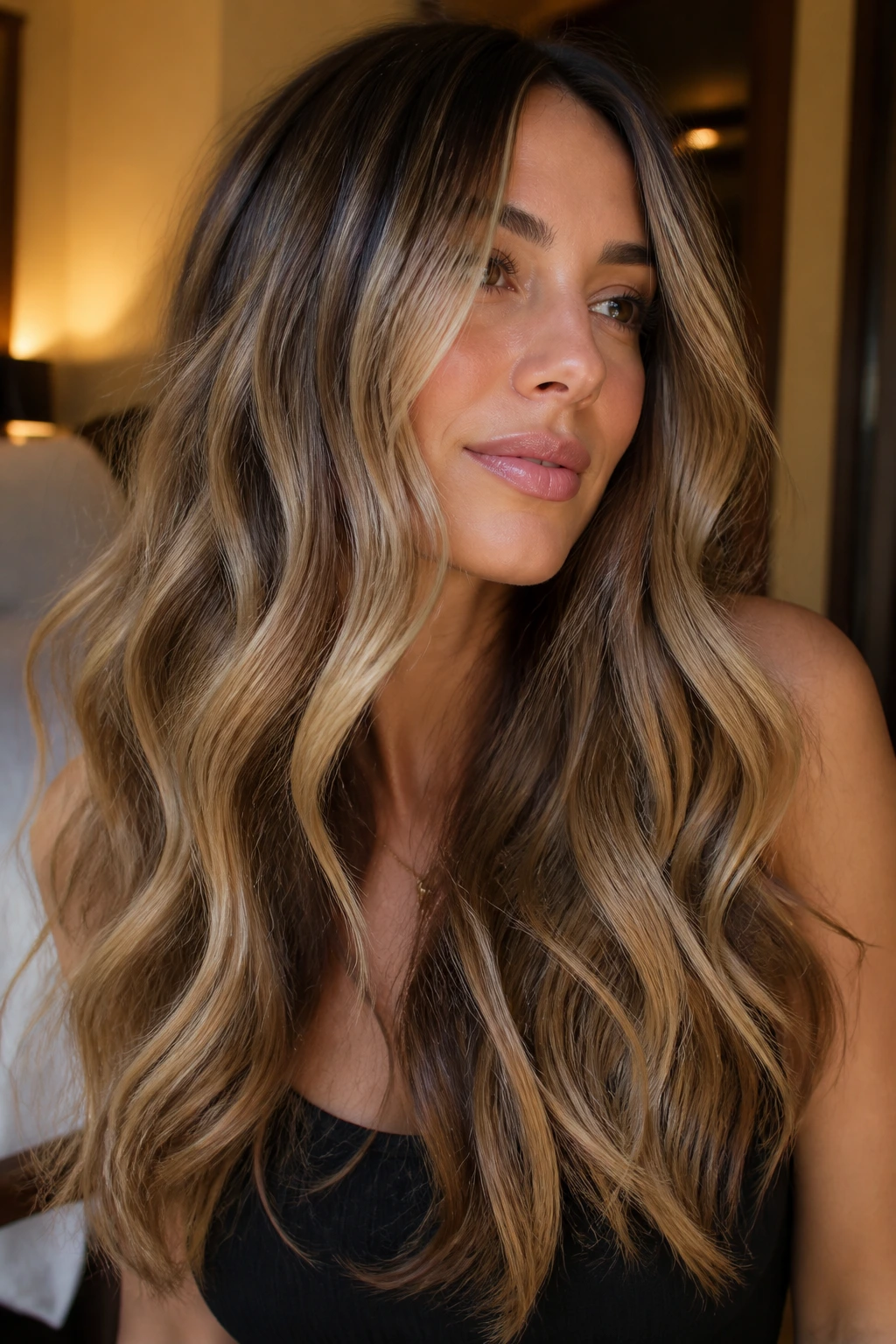
Loose Waves: This is the easiest way to show off ribbons, because each bend gives the color another surface to catch. A wave with a soft S-shape usually shows balayage better than tight curls, which can hide the placement.
Straight Blowouts: Straight hair makes the contrast cleaner. If the look depends on a root melt or a money piece, a blowout lets the tone shift read more clearly from top to bottom.
Braids and Half-Ups: These styles are underrated for long hair because they reveal the lighter underlayers and make the dimension look richer. A loose braid especially can show three or four tones at once.
Air-Dried Texture: Wavy and curly hair often looks best when the color follows the natural bend. You don’t need to smooth every bit of texture to make balayage work; sometimes the color is doing the heavy lifting already.
If you want the finish to look expensive, keep the styling soft. Sharp curls can be fun, but a loose bend and a little shine serum usually flatter long balayage more.
Extra Shine and Dimension Tricks That Make the Color Read Better
Gloss Trick: Ask for a clear or slightly tinted gloss between major color sessions. It refreshes the shine, smooths rough ends, and makes the whole balayage look more intentional.
Shadow Root: A deeper root melt buys you time and keeps the color from looking like a strip at the scalp. On long hair, that soft edge is doing a lot of work.
Layer Sync: If your haircut has long layers, ask that the lightest pieces follow the layers rather than sit in one band. Color that matches the cut moves better.
Heat Habit: Use a heat protectant every time, and keep hot tools around 300°F to 350°F unless your texture truly needs more. That matters more on lightened ends than people want to admit.
Finish with Shape: A 1.25-inch iron or a large round brush gives the color curves to live on. Straight, over-flattened hair can make even beautiful balayage look dull.
I also like a tiny bit of serum on the ends only. Not at the root. Never at the root. Long balayage looks best when the mids stay airy and the ends have just enough slip to catch light.
Keeping Balayage Fresh Between Salon Visits
Long hair balayage usually holds up better than blunt highlight work, but it still needs a maintenance rhythm. Most people do well with a salon gloss every 4 to 8 weeks if the tone is blonde, beige, pearl, or copper. Brighter looks, like platinum or icy pearl, often need more attention than caramel or sable because the tone shifts faster.
Shampoo less than you think. Two or three washes a week is enough for many people, especially if the roots aren’t oily. When you wash, keep the water lukewarm or cool. Hot water opens the cuticle and can strip the toner out faster, which is annoying when the ends were expensive to get right in the first place.
If your hair is lightened, use a deep conditioner or bond mask every 7 to 10 days. The ends on long hair are the oldest part of the head, and they’re usually the first to feel rough. A trim every 8 to 12 weeks helps too, not because the color needs a haircut, but because dry ends make balayage look tired even when the tone is fine.
For brunettes with copper or caramel, a color-safe glossing conditioner can keep warmth from going flat. For cooler blondes, purple shampoo once a week is usually enough; using it every wash can turn the hair dull and slightly chalky. That chalky look is the giveaway that the hair has been over-corrected.
Ways to Bend the Look Without Losing the Blend
Soft Grow-Out Edit: Keep the root deeper, make the face frame subtle, and let the lightest pieces live from mid-length to end. This works when you want low upkeep without losing dimension.
Bright Face-Frame Version: Push the money piece one shade lighter than the rest of the balayage. It’s a strong move for layered long hair and makes the face read fresher.
Cool-Tone Shift: Use ash, beige, pearl, or mushroom tones to quiet warmth without turning the hair flat. This is useful if your base pulls orange after lightening.
Copper-Warm Version: Swap beige or blonde pieces for cinnamon, bronze, or auburn if you want more glow. Long hair carries warm tones well because the color has room to travel.
Curly Placement Adaptation: Paint the lighter pieces where the curls naturally separate instead of only on the outer top layer. That keeps the color visible when the curls spring up.
Gray-Blend Approach: Keep the root soft and weave in silver-beige or smoky brown pieces so grays look intentional, not covered. Long hair often benefits from this because the blend can stretch farther down the lengths.
Balayage Mistakes That Show Fast on Long Hair
The first mistake is chasing too much light at the ends. On long hair, the bottom section already takes the most wear, so lifting it until it looks pale and dry only makes the whole style feel stringy. The fix is to leave a little depth and use gloss, not extra bleach, to create shine.
Another common miss is using one flat tone across the whole head. Long hair needs some variation or it starts looking like a blanket. If every section is the same beige, the result can feel dull. Ask for a root shadow, mids with movement, and brighter face-framing pieces so the eye has somewhere to go.
Skipping the haircut is a sneaky problem. Balayage can’t hide a blunt, triangle-shaped long cut for long. Long layers or a few face-framing pieces let the color separate and move, which makes the dimension easier to see.
Over-toning is a big one too. The hair comes out of the chair looking cool and crisp, then a few washes later it looks flat and smoky in the wrong way. A toner should polish the shade, not erase it.
And yes, too much purple shampoo can wash the life out of blonde ends. Use it like a correction tool, not a daily shampoo. Your hair will look softer, shinier, and a lot less brittle if you back off.
Questions People Ask About Long Hair Balayage
Is balayage better than highlights for long hair?
For many people, yes, because the painted placement looks softer as it grows out. Long hair has enough length for balayage to show movement, while traditional highlights can start looking more obvious if the regrowth line gets harsh.
How often does long hair balayage need refreshing?
Most people refresh the tone every 4 to 8 weeks and do a bigger color redo every 10 to 16 weeks, depending on how light or cool the look is. Platinum, pearl, and icy shades need more frequent toning than caramel or brunette blends.
Can balayage work on curly long hair?
Absolutely, but the placement has to follow the curl pattern. Light pieces should sit where the curls open and turn, not just on the top layer. That keeps the dimension visible instead of hidden inside the curl mass.
Will balayage damage my long hair?
Any lightening can cause stress, especially on older ends, but careful placement and sane lift levels matter a lot. If the hair is already dry, ask for a softer result and plan on bond care or glossing.
What if my hair pulls too warm?
That usually means the toner or lift level wasn’t matched well to the base. Beige, ash, or mushroom tones can calm it down, but the fix should fit the starting color rather than burying it under dark pigment.
Can I ask for balayage if I want low maintenance?
Yes, and you should say that out loud. The answer is a deeper root, softer blend, and less contrast through the mids. That gives you a look that can stretch farther between appointments.
Do I need layers to wear balayage on long hair?
No, but layers make the color move more easily. Without layers, the look often depends more on styling. With layers, the dimension shows up even when the hair is just air-dried.
Soft Grow-Out
Long hair balayage works best when it feels like part of the cut, not a sticker on top of it. The strongest looks use depth, placement, and tone together so the color can move with the hair instead of sitting still and announcing itself. That’s why the best versions feel easy to wear even when they’re carefully planned.
If you’re choosing between two shades, I’d usually pick the one that leaves the ends looking healthier and the root a little richer. That small restraint gives the color more staying power. And on long hair, staying power matters.
A good balayage should still look interesting when you tuck it behind your ear, braid it, or throw it into a loose twist. If it does that, you’ve probably picked the right one.
