



Some haircuts make fine hair look like it’s trying hard. The right ones make it look expensive, even when you’ve spent exactly seven minutes on it and used a little dry shampoo at the roots. Short haircuts for fine hair over 50 work best when they stop fighting the hair’s natural behavior and start shaping it with purpose: a cleaner edge, a smarter part, less weight in the wrong places, more lift where the head actually needs it.
Fine hair is a sneaky thing. It can look full after a fresh wash, then go limp around the crown by lunch, and it tends to show every rough choice a cut makes. Add a little age-related change — a softer hairline, a flatter crown, a cowlick that has decided to develop opinions — and the wrong cut starts exposing itself fast. The right one does the opposite. It gives the ends enough structure to read denser, keeps the neckline tidy, and leaves the face with shape instead of a blurred curtain.
What I like most about short cuts on fine hair is how honest they are. They don’t need to pretend the hair has more bulk than it does. They just place the bulk where the eye wants it: at the perimeter, at the crown, around the cheekbones, or under a fringe that softens the forehead without swallowing the face. That’s where the good stuff happens.
Why This Collection Works So Well
-
The shape does the heavy lifting: Fine hair looks fuller when the outline is clean, because a blunt or carefully stacked perimeter gives the eye a stronger edge to follow.
-
Lift happens faster on short lengths: A few inches of root lift at the crown matters more on short hair than on longer hair, where the weight drags everything down.
-
The cut can work with silver or gray hair: Shorter styles keep gray from looking stringy at the ends, and they let natural shine show up in a neat, polished way.
-
You can match the cut to your face shape without overthinking it: Chin length, cheekbone length, nape length, and fringe placement all give you useful levers to pull.
-
Maintenance stays realistic: Most of these shapes hold up with regular trims and a couple of styling products, not a 20-minute blowout and a prayer.
-
They’re kinder to fine hair than too many layers: Too much thinning can leave gaps and wisps; the better cuts keep enough weight to make the hair look like hair.
1. Feathered Pixie with Crown Lift
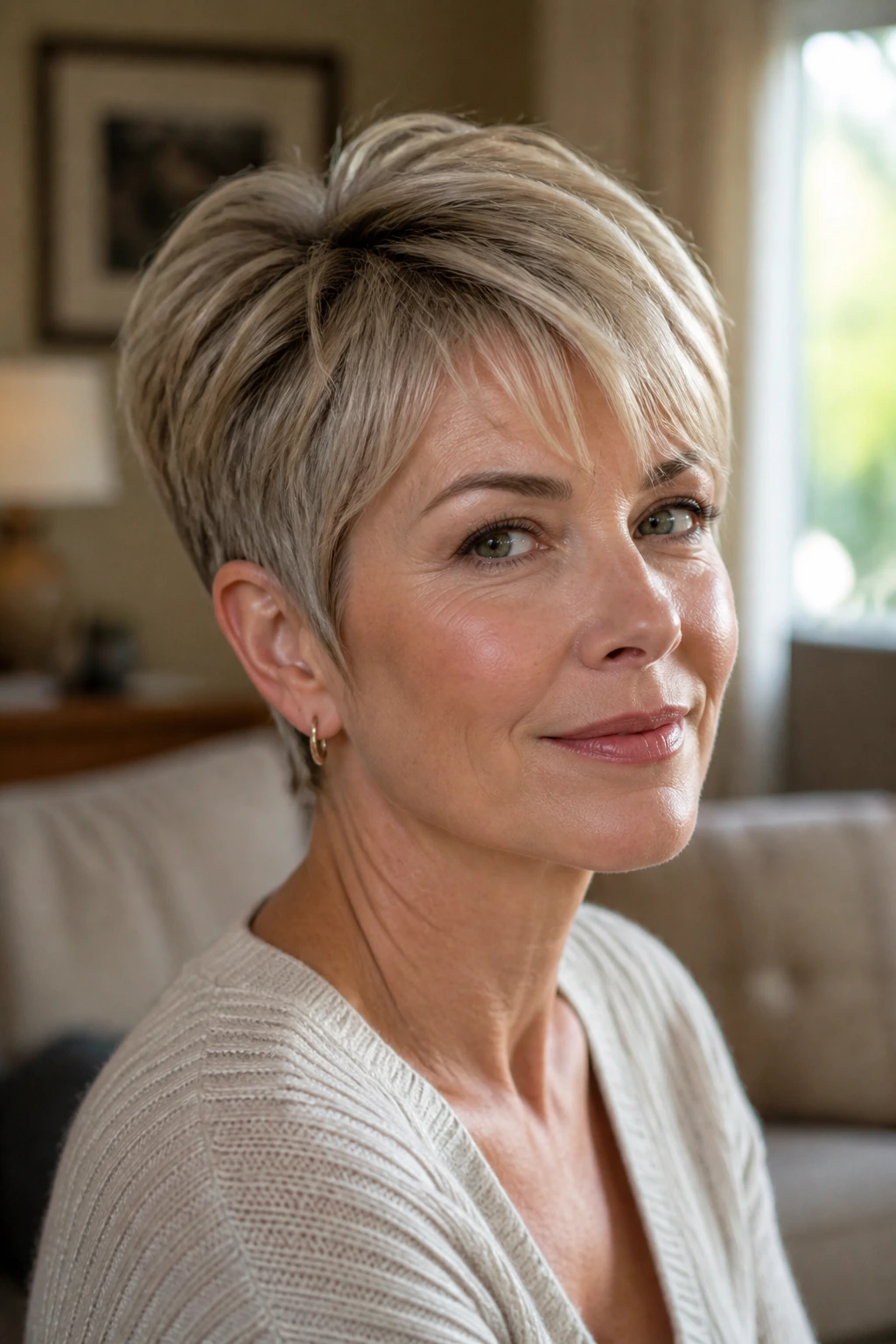
A feathered pixie is the cut I reach for when someone says, “My hair goes flat on top no matter what I do.” The answer is usually not more length. It’s better placement. Keep the nape close, leave enough length on top for movement, and let the crown rise just a little so the silhouette doesn’t collapse.
Why It Works on Fine Hair
The crown is where fine hair often gives up first. A feathered pixie uses short, directional layers to create lift without building a helmet shape. The sides stay sleek, the top stays soft, and the whole cut looks lighter because the hair isn’t hanging from a long, tired outline.
What to Ask For
- Tapered nape and sideburns
- 2 to 3 inches on top
- Soft feathering through the crown, not heavy texturizing
- A fringe that can be swept to one side or brushed up
Styling Note
A pea-sized amount of mousse at the roots and a quick blow-dry with your fingers can change the whole thing. Direct the front up and slightly back, then finish with a touch of lightweight paste just on the ends. Skip thick creams here; they drag the lift down fast.
2. Chin-Length French Bob
There’s a reason the chin-length bob keeps coming back. On fine hair, a blunt line at the jaw can make the ends look denser than they are, and that little bit of visual weight goes a long way. Add a soft bend or a side part, and the cut suddenly looks calm, deliberate, and much fuller than a longer, wispy style.
This is a good choice if you want hair that tucks behind the ear cleanly, works with earrings, and doesn’t depend on perfect styling. It also plays nicely with glasses, because the line sits below the frames without crowding the face.
If your hair is especially fine, I’d keep the internal layers minimal. A little movement is enough. Too much slicing into the interior can make the bob lose its edge, and then you’re back to that see-through problem at the ends.
3. Stacked Bob with a Clean Nape
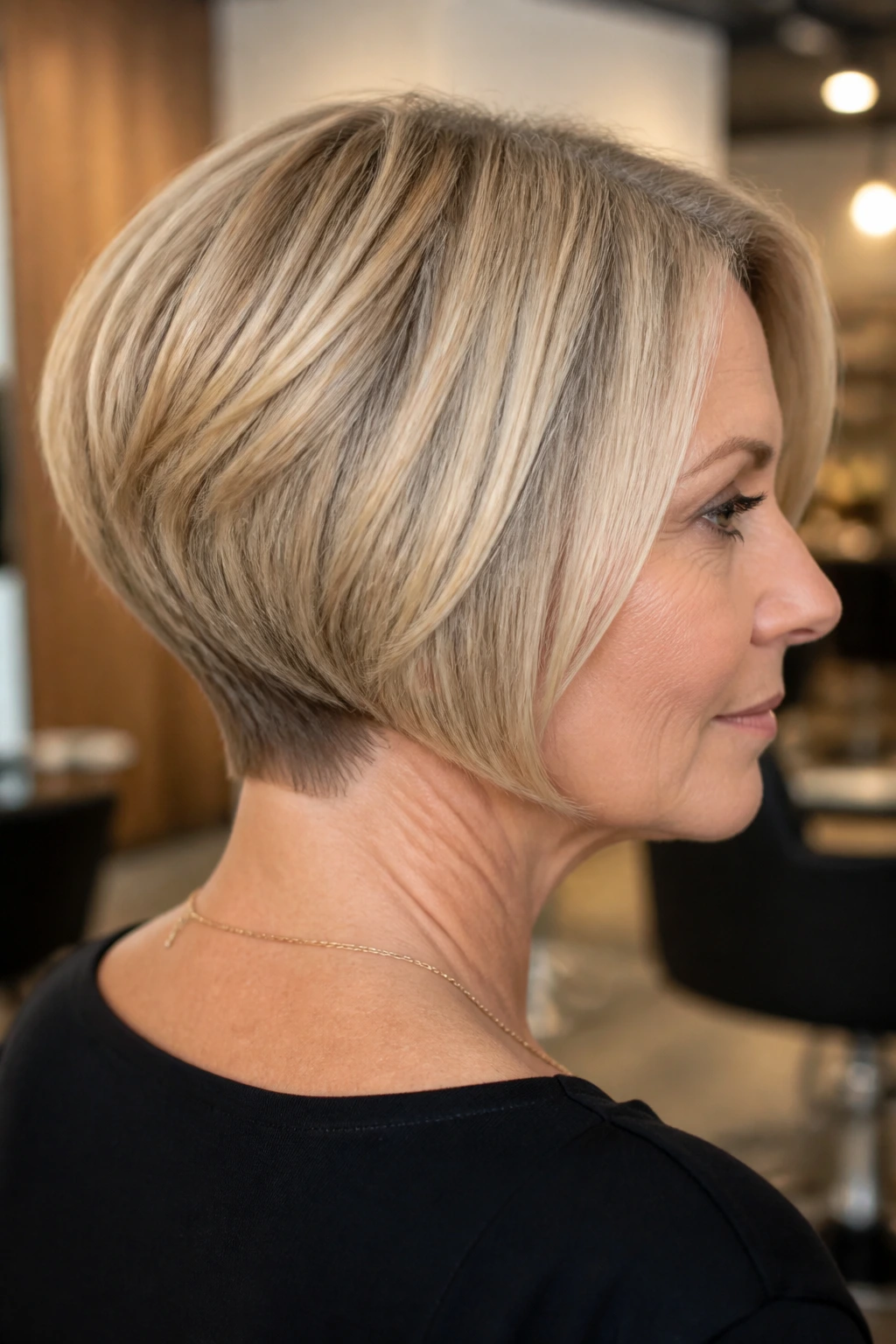
If the crown is your trouble spot, a stacked bob knows exactly where to help. The back is graduated shorter, the nape is cleaned up, and the head gets a rounder profile without needing a lot of teasing or product. That hidden lift at the back changes how the whole haircut sits.
Salon Details That Matter
- Ask for graduation through the back, not just “layers”
- Keep the front around jaw to chin length
- Request a clean, soft nape line
- Use point-cutting only where the ends need movement
A stacked bob can be too much if it’s cut harshly, so I like the back to be structured but not bulky. The goal is a shape that sits snugly against the head and then opens out near the jaw. That little shift makes fine hair look stronger.
It’s also one of the best cuts for anyone who hates hair brushing the neck. Clean, cool, and easy to maintain. Very little fuss.
4. Bixie Cut with Sweeping Bangs
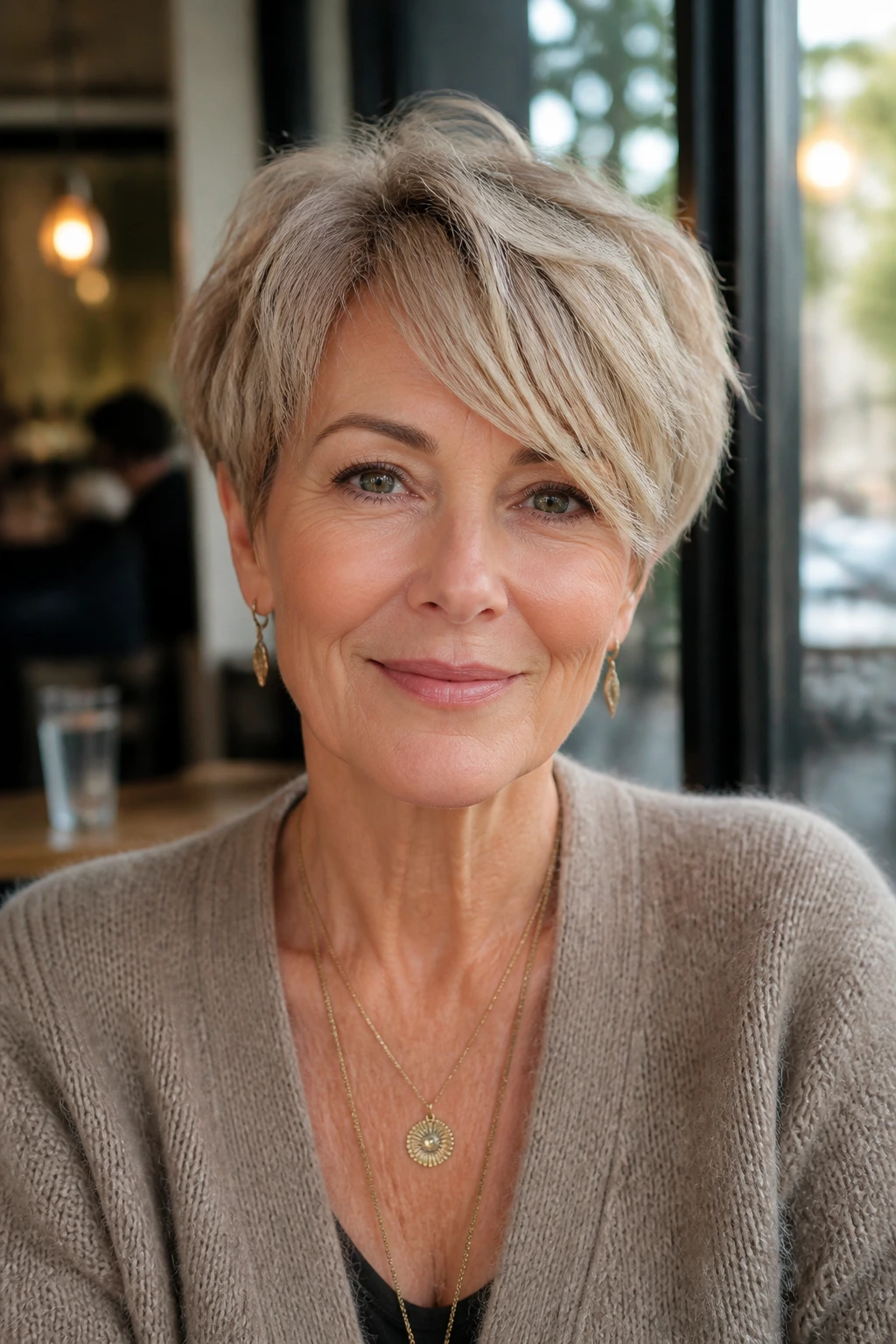
Want short hair without jumping straight into a pixie that feels exposed? The bixie sits in the middle. It keeps enough length around the top and sides to feel soft, but the shape is still compact, which matters when fine hair starts to lose density.
What Makes It Different
A bixie works because it breaks the hair into sections that move separately. The top can be a little longer and swept forward or sideways, while the nape stays tucked in. That contrast keeps the haircut from looking flat. Sweeping bangs help too, especially if you want to soften the forehead without cutting a hard, short fringe.
The best version of this cut is never too fluffy. You want controlled texture, not a cloud. Ask for the ends to be lightly chipped, then stop there. If the hair is over-thinned, the whole shape starts to look thirsty.
How to Wear It
Scrunch in a little mousse, rough-dry the roots, and use your fingers to set the bangs where they naturally want to fall. If the front flips oddly, a tiny round brush and thirty seconds of heat will usually fix it.
5. Cropped Shag with Wispy Fringe

The shag is not one haircut. It’s a range. On fine hair, the version that works keeps the layers soft and the fringe airy, so the cut gets movement without turning into shredded ends. Done well, it has a little swing and a little attitude. Done badly, it can look thin at the perimeter. The difference is control.
I like this cut for hair that has a wave hiding in it, or hair that goes puffy if you fight it too hard. A cropped shag lets the texture show up in a useful way. It doesn’t ask for straightness. It asks for shape.
Why It Suits Fine Hair Over 50
Fine hair often looks best when it has intentional irregularity. A few short layers around the crown, a soft fringe, and tapered ends can make the hair feel fuller because the eye sees movement instead of one flat line. Just don’t overdo the razoring. That’s where the ends start to look see-through.
6. Side-Parted Layered Bob
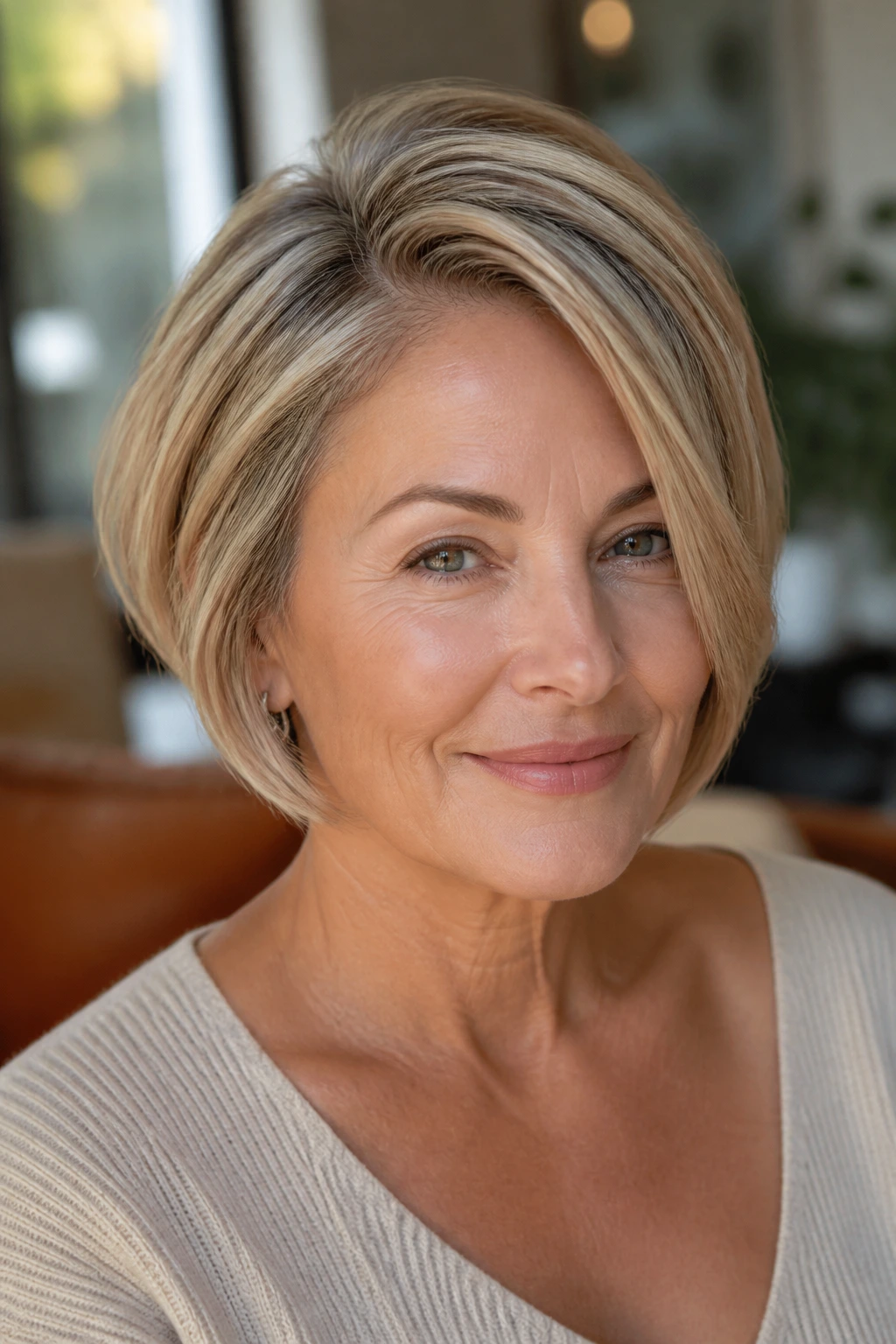
A deep side part is free volume. That’s the blunt truth of it. Move the part over by an inch or two and the hair on top has a chance to stand up instead of lying in the same old place, which matters a lot when the crown is calm in the worst way.
This cut works especially well if you wear glasses or want a little softness at one side of the face. The side part breaks up symmetry, and the layers give the hair enough bend to keep it from looking boxy. Keep the layers subtle, though. You’re aiming for lift and shape, not a staircase.
If your hair falls naturally to one side, lean into that instead of fighting it. The best side-parted bob always looks like it belongs to the head it’s on. That’s what makes it look effortless, even when it took a round brush and a couple of clips to get there.
7. Textured Crop with Piecey Ends
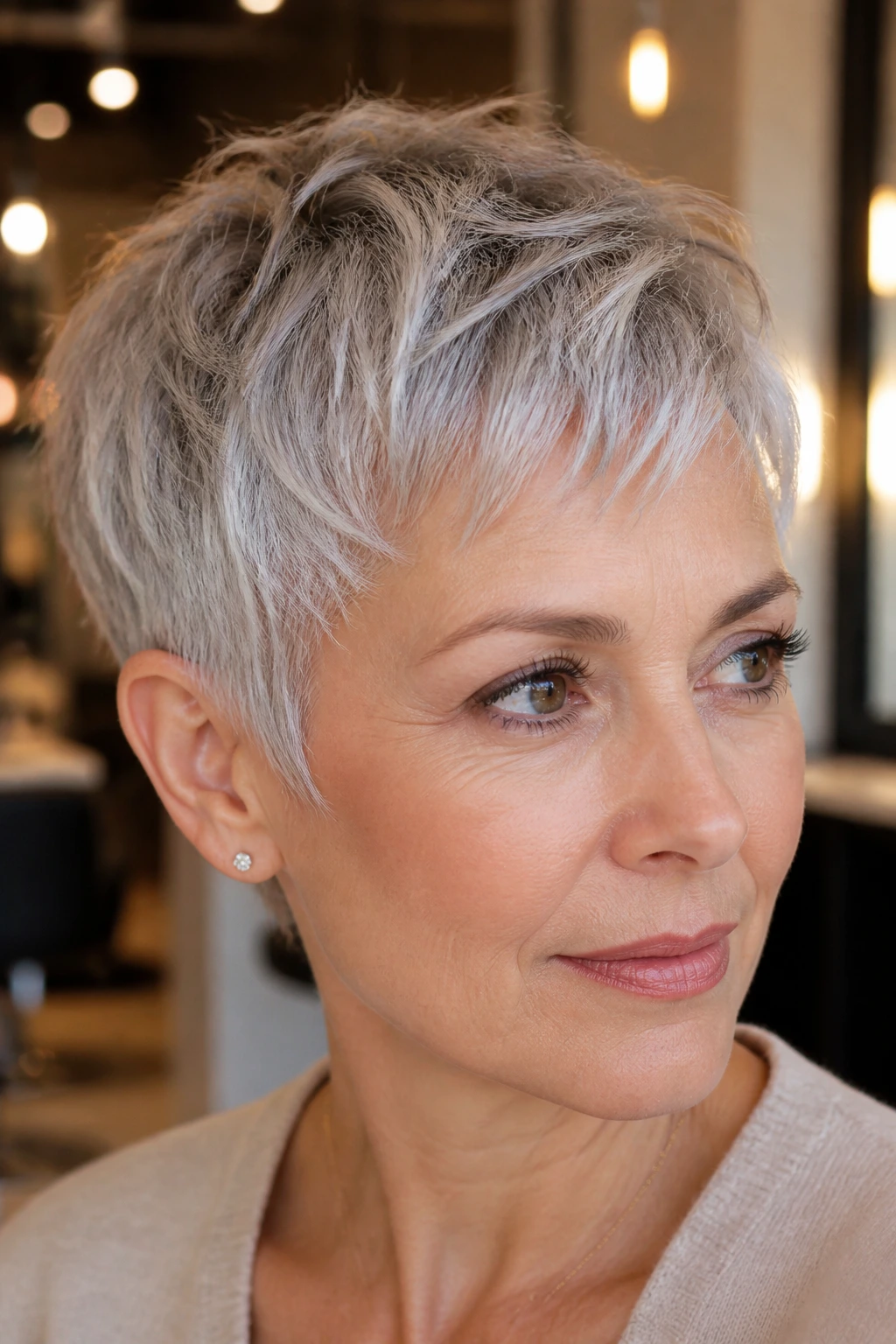
This is the cut for anyone who wants short hair that doesn’t feel precious. The textured crop has a bit of attitude, a bit of separation, and enough edge to keep fine hair from reading as baby-soft. The key is to keep the base clean and add texture only where the shape can handle it.
What to Ask for at the Chair
- A short perimeter with a firm outline
- Piecey texture on top, not all over
- Light fringe, if any, so the forehead doesn’t disappear
- Side and back lengths that stay close to the head
This cut is strongest when it looks intentional in motion. A tiny bit of paste between the fingers is enough to define the top and keep the ends from blending into one soft blur. If the product is too heavy, you lose the airy piecey effect and the hair just looks damp.
The crop also works well for people who want a haircut that can be messed up a little and still look fine. That is a gift. Not every style needs to be obedient.
8. Jaw-Length A-Line Bob
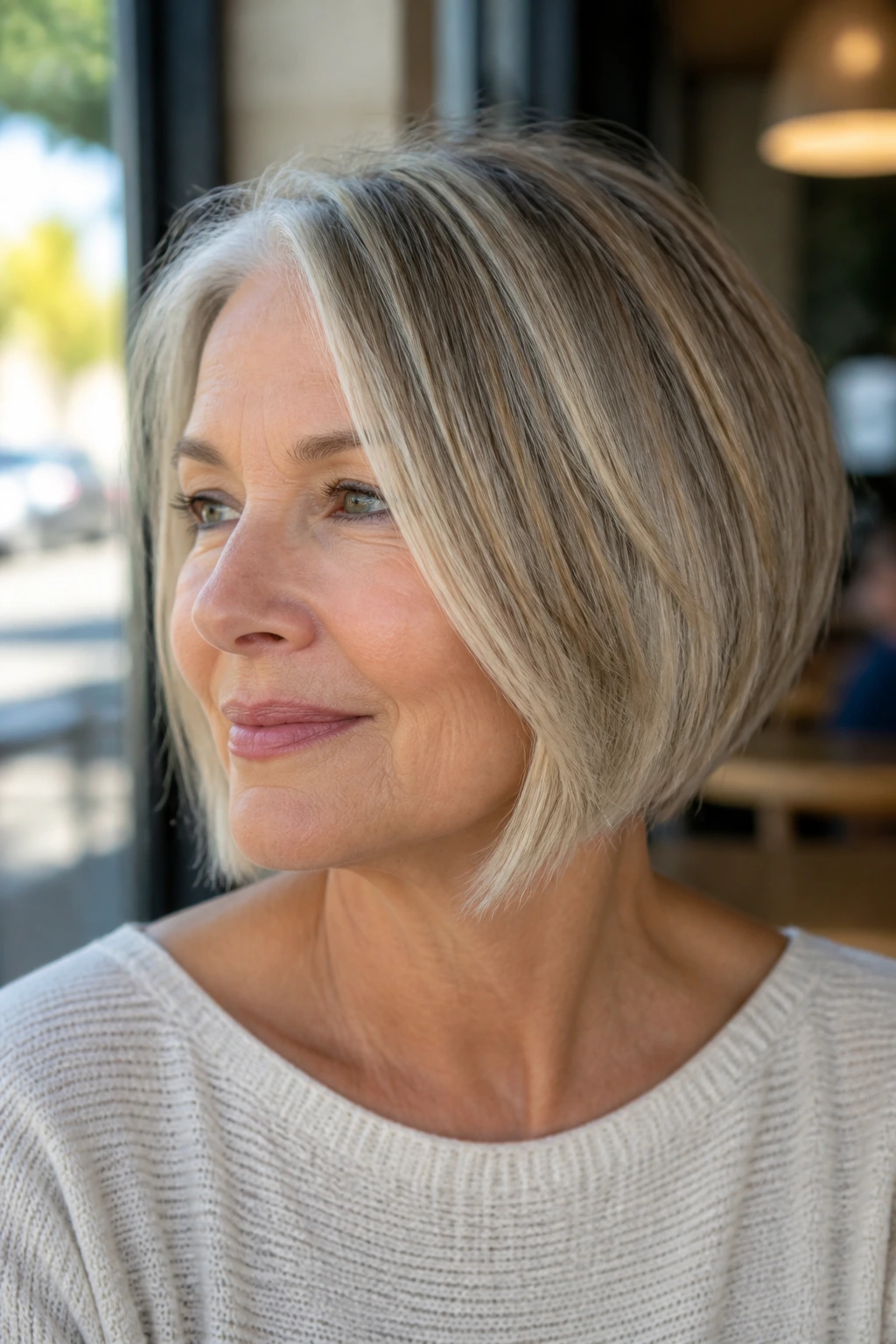
If you want a bit of edge without going short-short, the jaw-length A-line bob earns its place. The front hangs slightly longer than the back, which stretches the face and gives fine hair a stronger front edge. It’s a smart choice when the jawline needs a little softening or when you want the neck to look a bit longer.
Unlike a round bob, this shape has direction. The slant creates motion before you even blow-dry it. Fine hair benefits from that kind of built-in shape because the haircut itself is doing some of the visual work.
Keep the difference between back and front subtle. A dramatic angle can look sharp in a photo and fussy in real life. A quiet A-line is better: clean, modern, and easy to keep in shape with a quick pass of the brush.
9. Tapered Pixie Bob
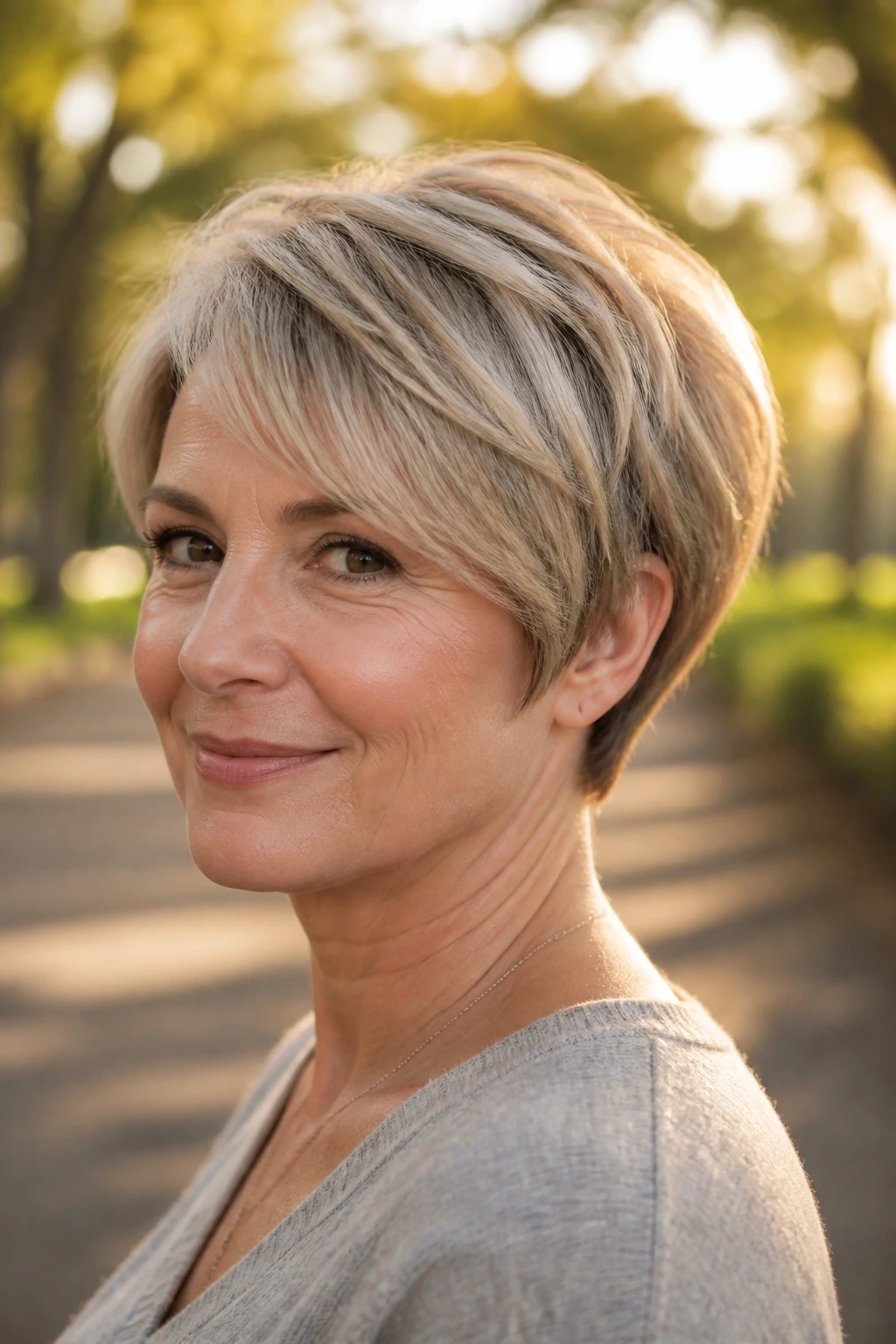
The pixie bob is what happens when someone likes the practicality of a pixie but still wants a little curtain around the face. The back stays short and close, the crown gets enough length to move, and the front is left a touch longer so the cut doesn’t feel severe.
That extra bit of length matters on fine hair. It gives you something to sweep, tuck, or lift. Without it, the haircut can feel too bare. With it, the shape reads soft and purposeful.
I like this cut for people in the middle of a transition — growing out a shorter style, trimming down a longer one, or just wanting a shape that feels clean without going extreme. It’s a useful in-between, and sometimes that’s the smartest place to be.
10. Rounded Bob with Soft Graduation
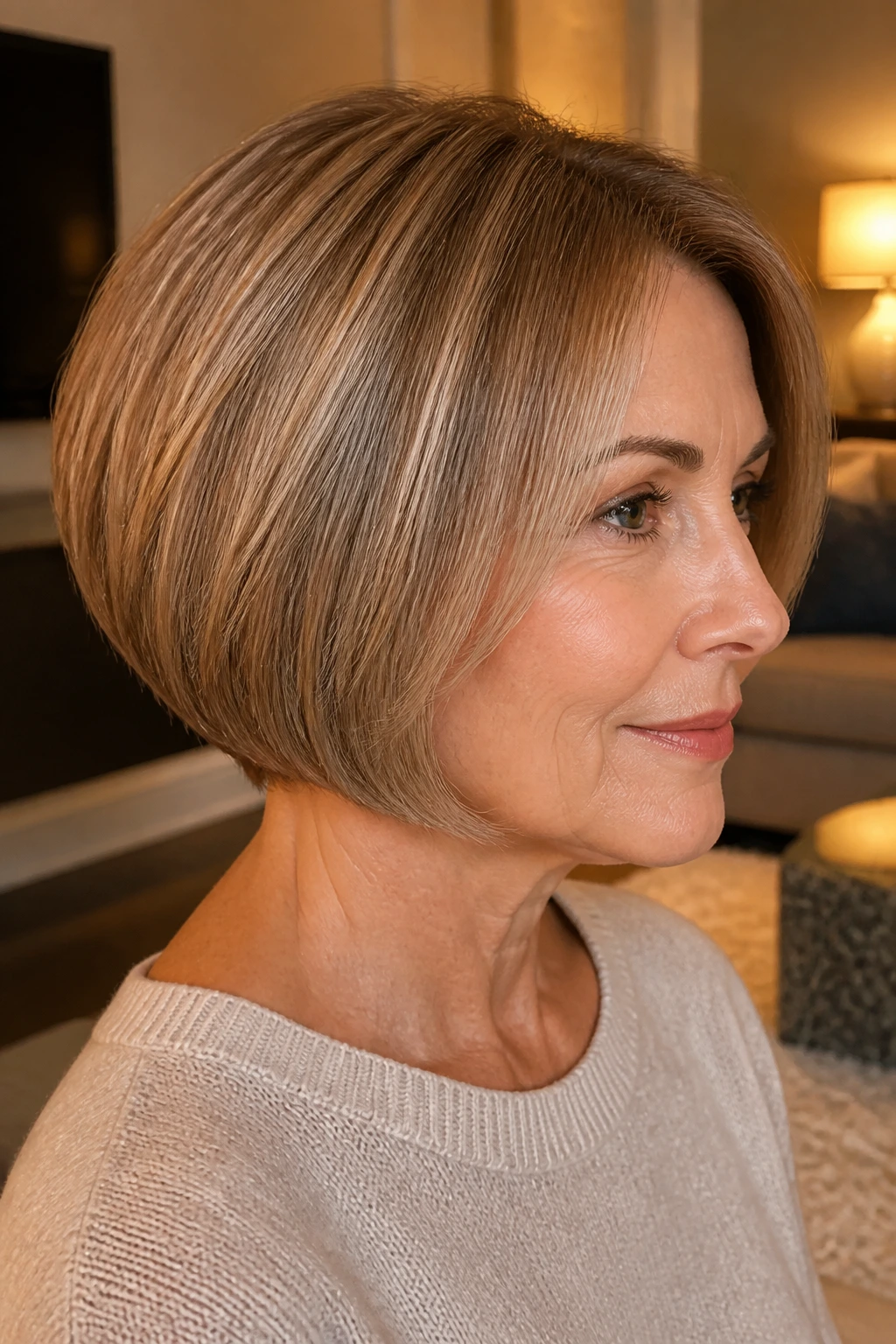
A rounded bob is a little old-school in the best way. It gives the head a fuller outline, which fine hair often needs more than extra length. The soft graduation in the back keeps the neck clean while the roundness makes the top and sides look more substantial.
The trick is softness. If the cut gets too stacked or too stiff, it can feel dated fast. Keep the edges blended, let the front skim the jaw, and leave enough fullness to create that nice curved silhouette.
Why This Shape Wins
- The back supports the crown
- The sides add width where fine hair tends to disappear
- The outline looks dense even when the individual strands are fine
- It styles well with a round brush and a quick bend at the ends
This is a very good choice if you dislike “messy” hair. It behaves.
11. Curly Crop for Natural Wave
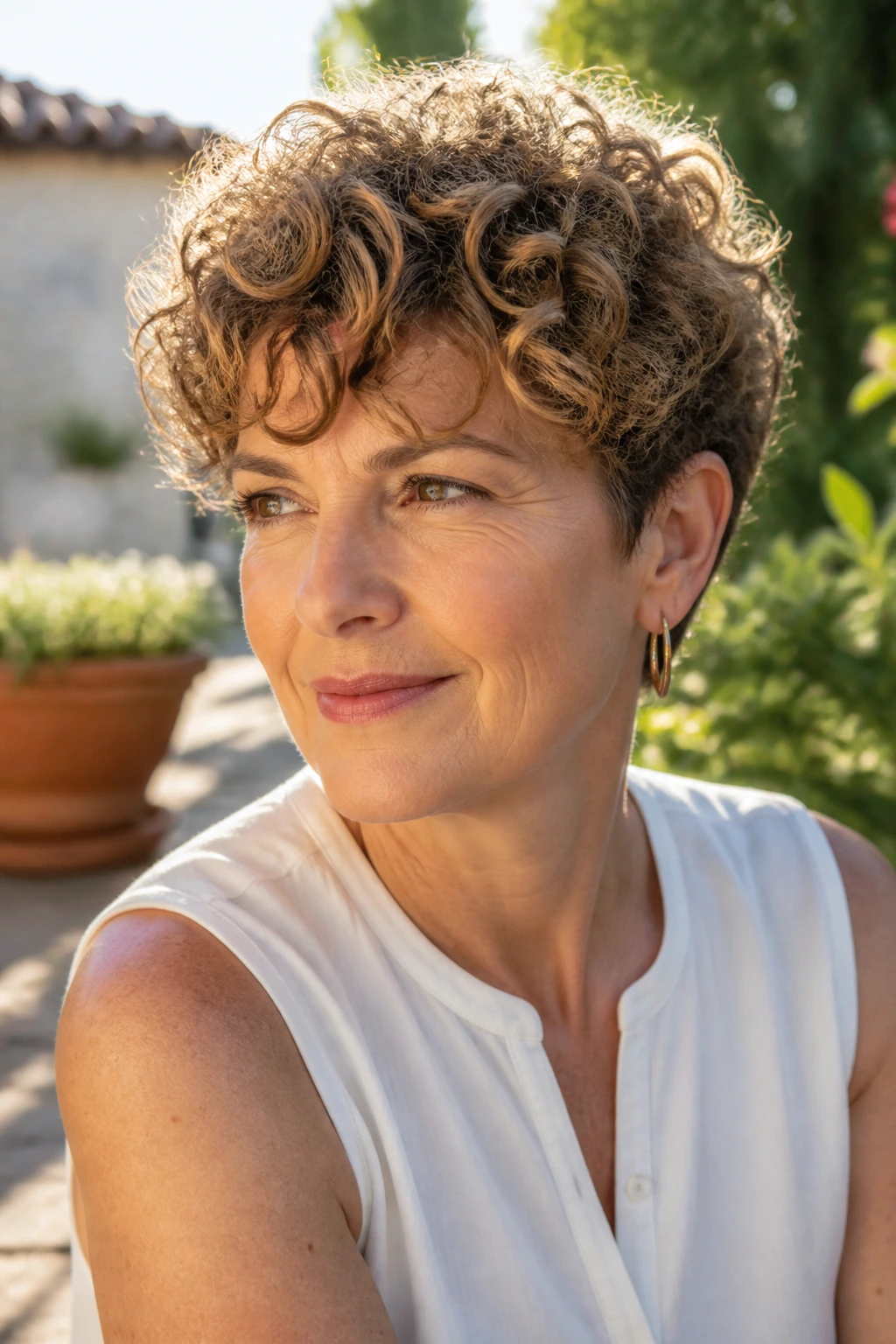
Fine hair with wave or curl needs a different haircut than straight fine hair. If you cut it too flat, the curls hang. If you cut it with care, they spring and separate in a way that makes the whole head look fuller. The crop lets the texture do the visible work.
Dry cutting helps here. Wet hair lies and lies and lies, especially when curl patterns are loose or uneven. A stylist who knows how your hair behaves when it’s dry can save you from losing too much length in places that need it.
This style is best when the perimeter stays clean and the curl is allowed to live on top. A little cream, a little scrunching, and a diffuser on low heat can be enough. Fine curls hate being smothered.
12. Micro Bob with a Blunt Edge
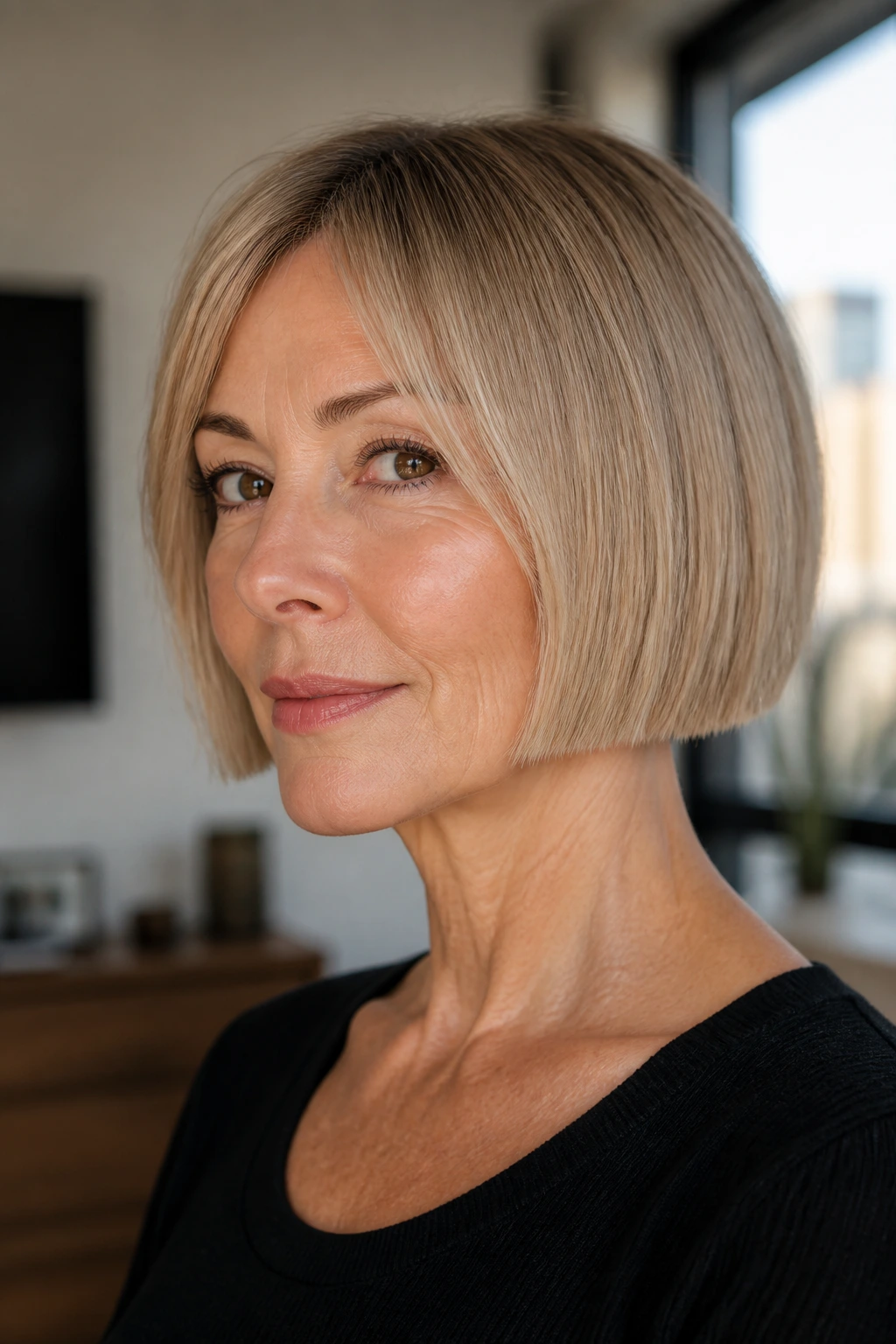
A blunt edge is one of the simplest cheats for fine hair. A micro bob cuts just below the ear or right at the jaw, and because the line is clean, the hair reads denser than it would in a softer, more shattered cut. It’s not flashy. It just works.
The shorter length also keeps ends from feeling stringy. That matters a lot. Long, fine ends can look see-through in a mirror that tells the truth. A micro bob removes that problem before it starts.
What to Watch For
Don’t let the interior get over-layered. The base needs to stay firm. If you want movement, ask for a tiny bit of point-cutting around the front, not all over the head. The blunt line is the point of the haircut; once it’s gone, the whole effect gets diluted.
This is one of the best cuts for straight or slightly wavy hair that needs body more than drama.
13. Long Top, Short Back Crop
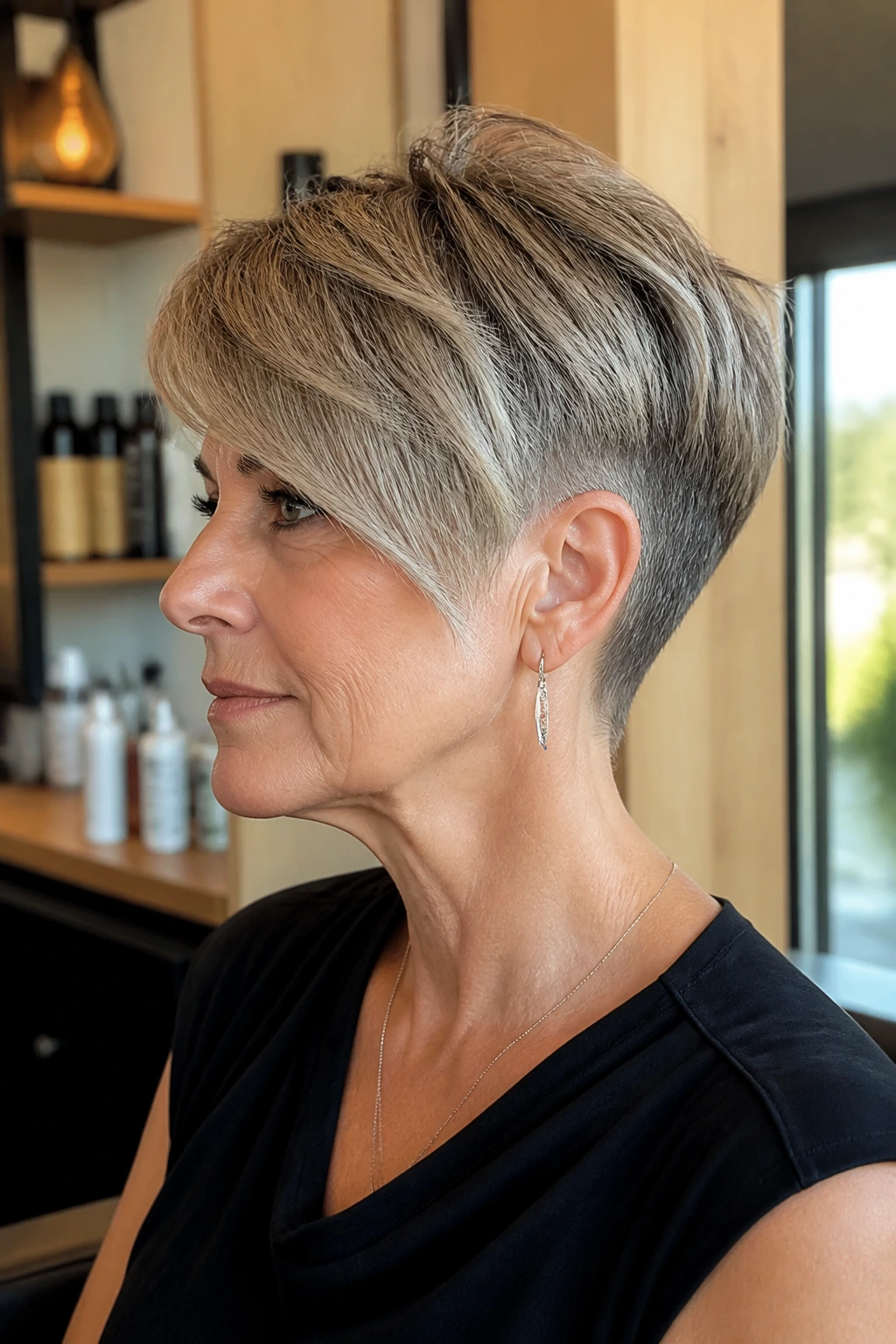
This is a neat little haircut for someone who wants contrast. The back is cropped close, the top stays longer, and the whole thing looks sharper because the difference in length creates shape on purpose. It’s a cousin to the pixie, but with a little more attitude.
The long top gives you styling options. You can push it forward, part it to one side, or lift it with a bit of mousse and fingers. The short back keeps the neckline clean so the style doesn’t lose itself in too much hair.
This cut is especially handy if your hair tends to collapse at the nape but still has decent strength on top. It keeps the head looking balanced without asking the fine sections to do more than they can.
14. Feathered Boyish Cut
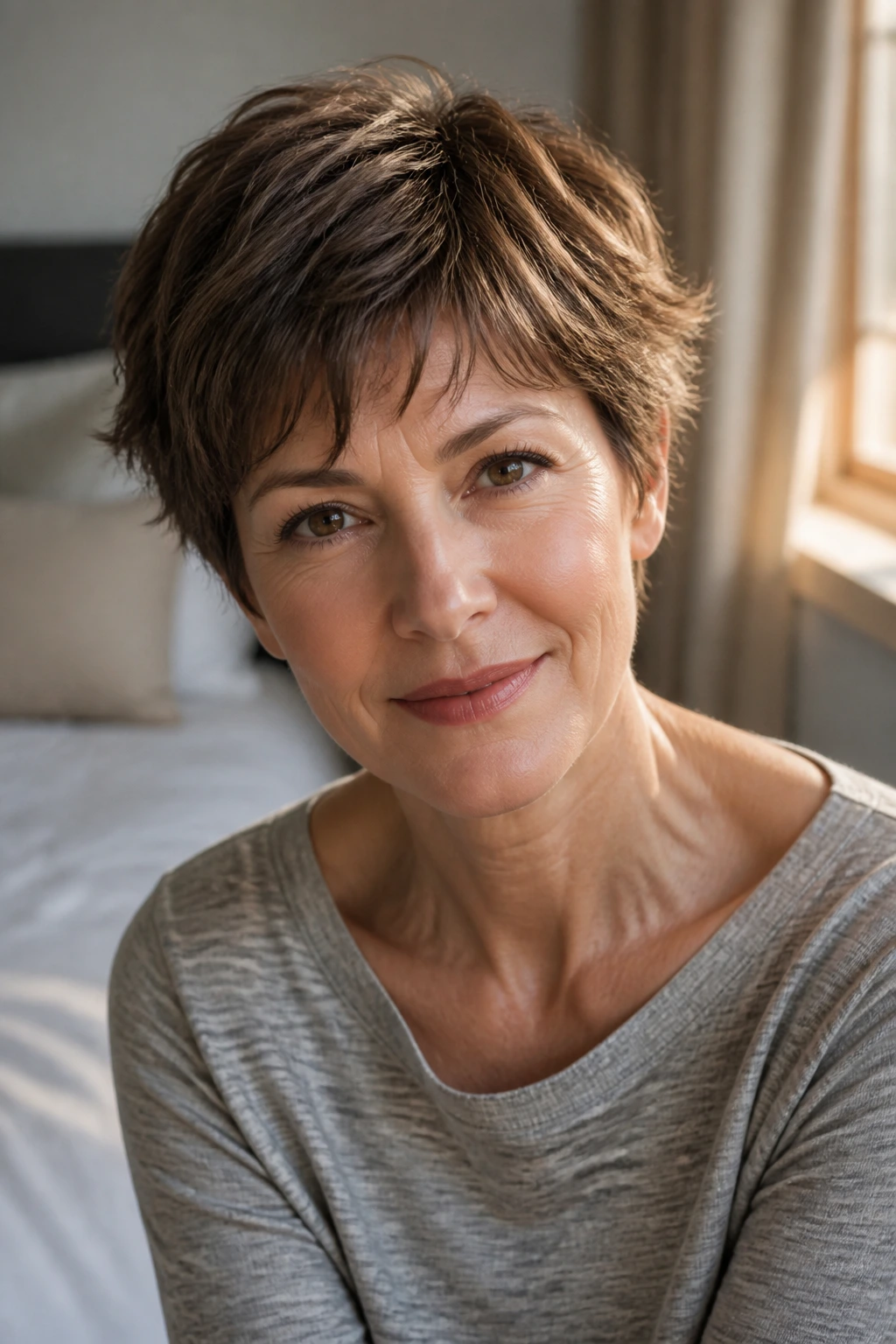
The feathered boyish cut has a softness that a severe crop doesn’t. It’s short, yes, but the edges are lightly feathered so the shape moves instead of sitting like a cap. On fine hair, that little bit of motion makes a surprising difference.
It’s a good fit for narrow faces, delicate features, or anyone who wants a cut that feels easy without looking plain. The feathering should be subtle. Too much thinness and you lose the line; too little and the haircut starts to read as helmet-shaped.
I like this style with a side-swept fringe or a gentle piece over the forehead. It keeps the cut from feeling too exposed and gives the face a little softness at the front.
15. Asymmetrical Bob with One Longer Side
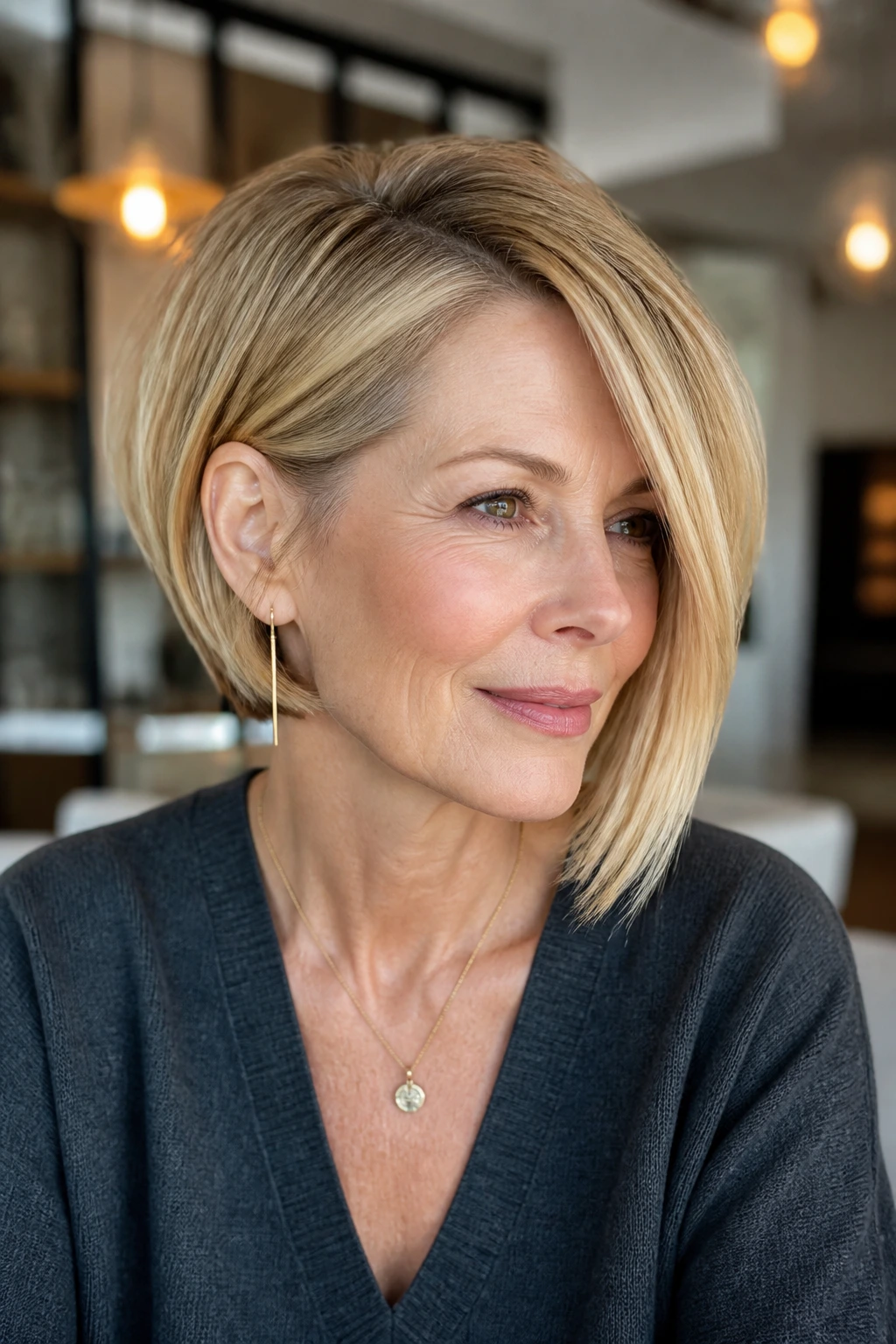
The asymmetrical bob is for someone who likes a bit of edge but doesn’t want a dramatic color or a complicated style routine. One side drops a little longer, the other stays tucked up, and the whole cut gets instant personality from the imbalance.
On fine hair, asymmetry helps because it creates a point of interest where the eye can land. The haircut does not have to rely on volume alone. It uses line. That’s a better bargain.
This cut works especially well when one side naturally falls flatter or when you want to frame one side of the face more than the other. Tuck the shorter side behind the ear, let the longer side swing forward, and the whole shape starts to breathe.
16. Curtain Fringe Crop
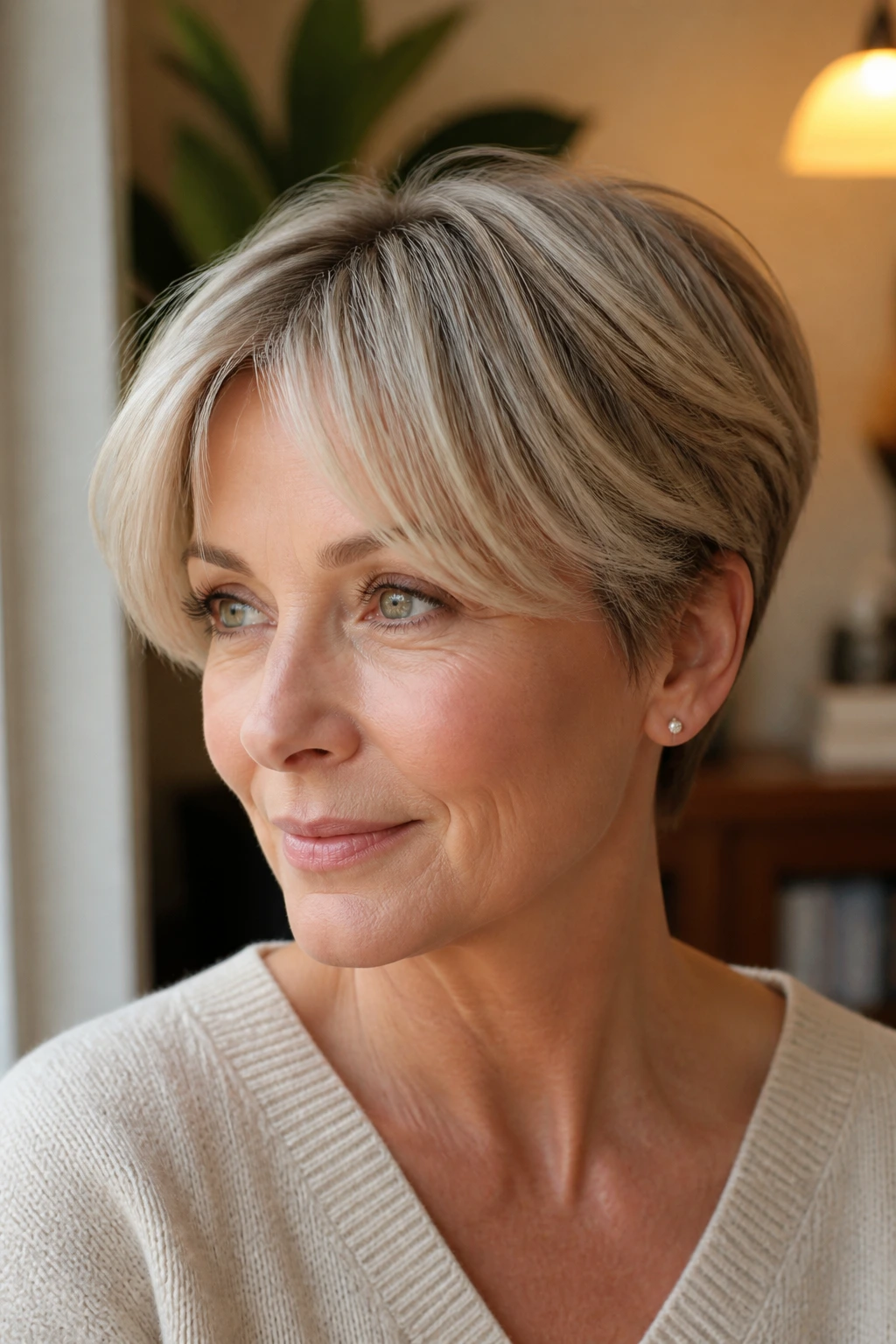
A curtain fringe can rescue a short cut that feels too exposed. Split in the middle or slightly off-center, it softens the forehead and draws attention toward the eyes and cheekbones without building a heavy wall of hair across the face.
The crop beneath it should stay compact. That contrast is what gives the fringe room to do its job. If the top is too heavy, the curtain bangs start competing with the haircut instead of finishing it.
For fine hair, keep the fringe longer than you think at first. It’s easier to trim them up than to live with bangs that bounce above the brow and make you swear under your breath every morning.
17. Soft Undercut Pixie
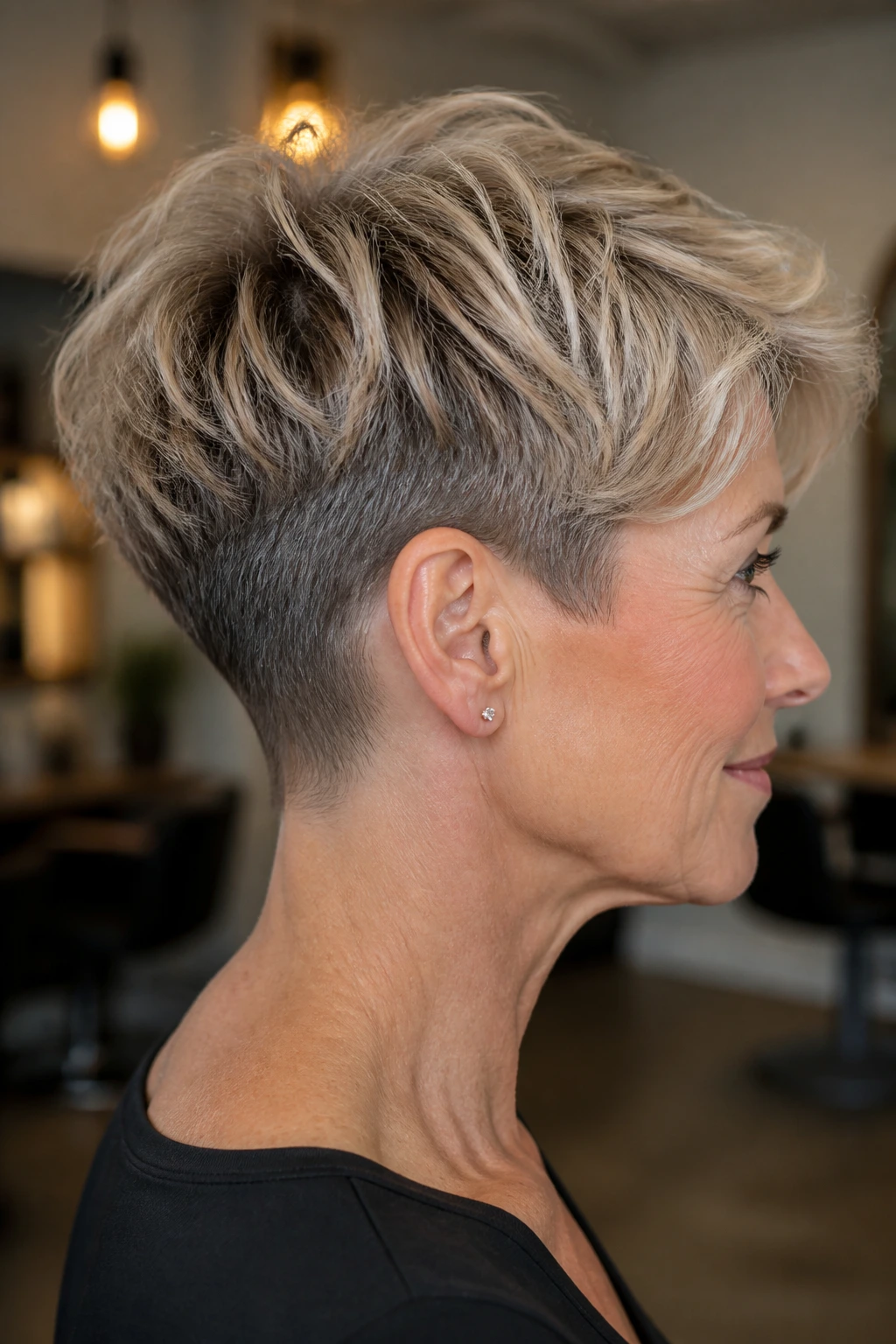
An undercut sounds bold, and it can be, but a soft one is far more wearable than people expect. The point is not to shave half the head. It’s to remove a little bulk at the nape or sides so the top can sit more lightly and look fuller.
That can be a lifesaver for fine hair that still has a lot of density in the wrong places. Heavy sides can make a short style look puffy or boxy. Removing a little weight underneath lets the top rise and the outline sharpen.
Use It Carefully
- Keep the undercut low and hidden
- Leave enough top length to cover it
- Ask for a soft blend, not a hard disconnect
- Avoid taking the cut so high that the scalp shows through
This is not the first cut I’d suggest for someone nervous about short hair. But if you want a sharper silhouette, it’s a useful one.
18. Ear-Length Rounded Crop
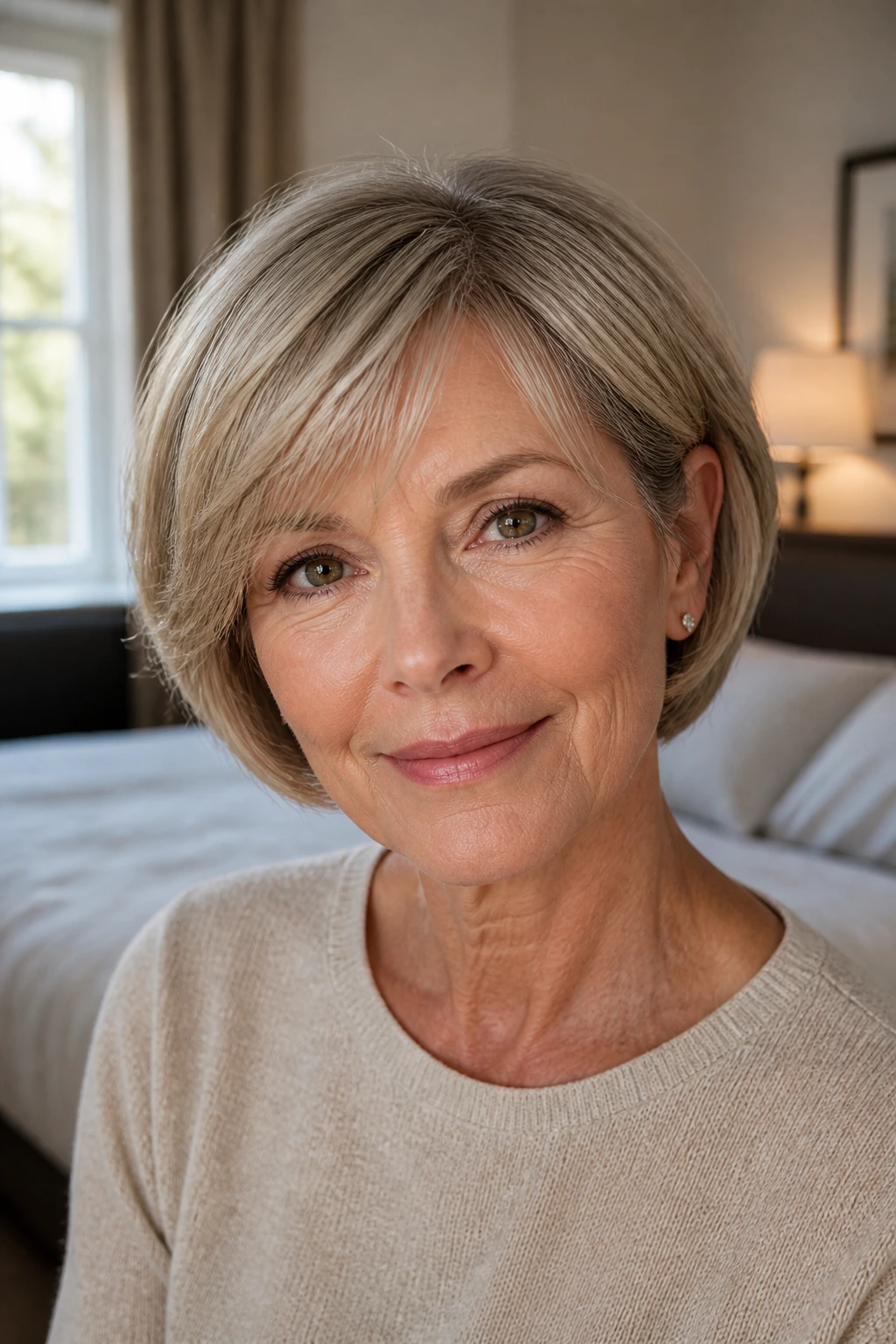
An ear-length crop is one of those cuts that looks simple until you try to grow it out. Then you remember how much work the shape was doing. At ear length, the hair can curve around the head and show off earrings, glasses, and the line of the jaw in a clean way.
The rounded shape keeps the haircut from looking choppy. Fine hair often benefits from that smoother outline because it looks intentional rather than sparse. A soft bend under the ear can give the style a nice tucked-in finish.
This is a great cut if you want to keep some softness around the sides while still going short. It feels polished without feeling stiff, which is a nice change from the over-textured looks that start to fray by noon.
19. Wedge Cut with a Modern Sweep
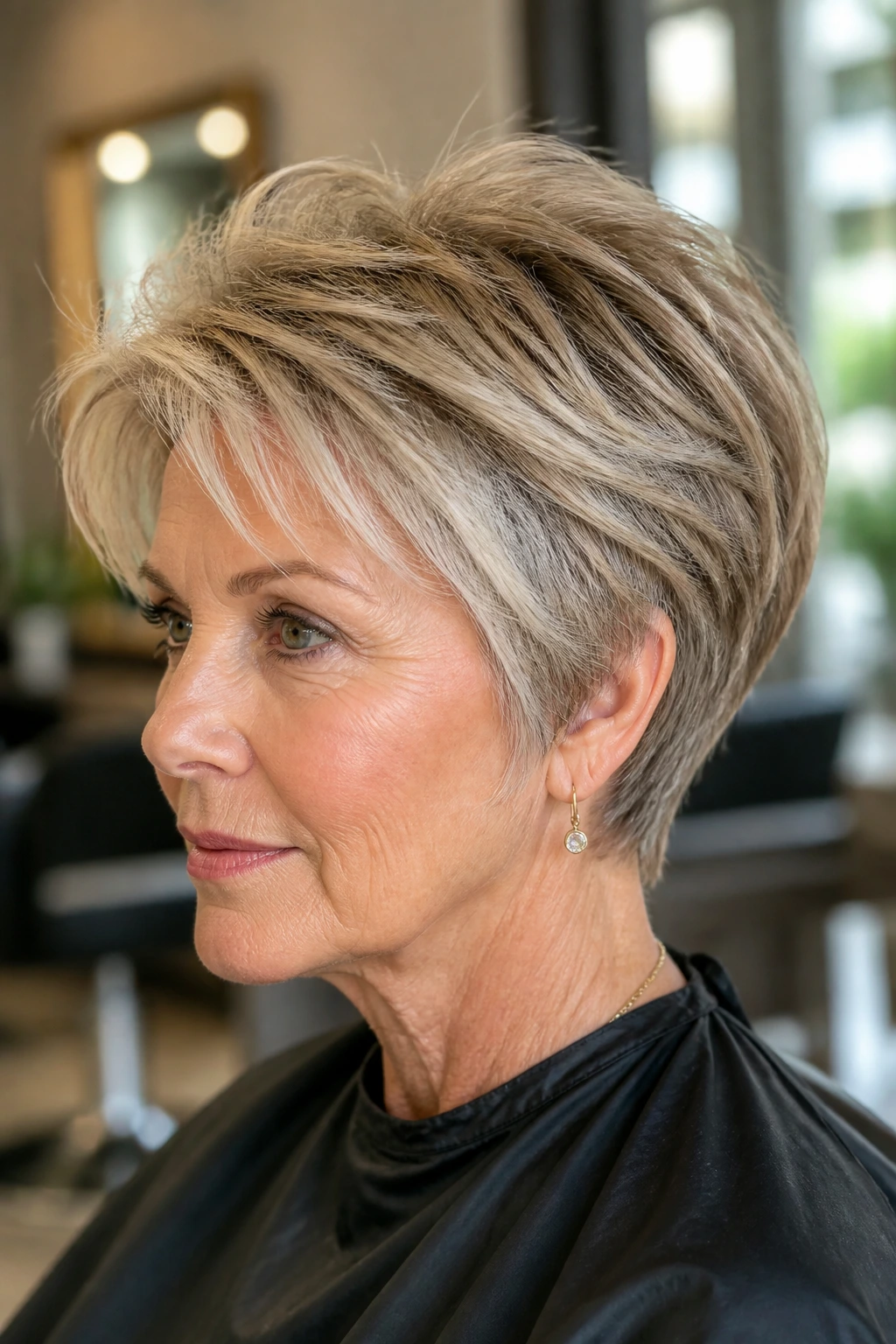
The wedge gets a bad reputation because people picture a dated version with a hard helmet shape. Ignore that. The modern wedge can be smart, tidy, and full of lift if the back is stacked softly and the top sweeps forward instead of sitting flat.
That backward-to-forward shape is helpful for fine hair. It builds height where the crown needs it and keeps the profile neat at the nape. The clean geometry also suits salt-and-pepper hair nicely because the lines show up clearly.
What Makes It Feel Current
A softer fringe, less rigid stacking, and a bit of motion through the top keep the wedge from looking frozen in time. It’s a cut for someone who likes structure and doesn’t mind being seen as practical. Frankly, I respect that.
20. Tousled Crop with Sideburn Length
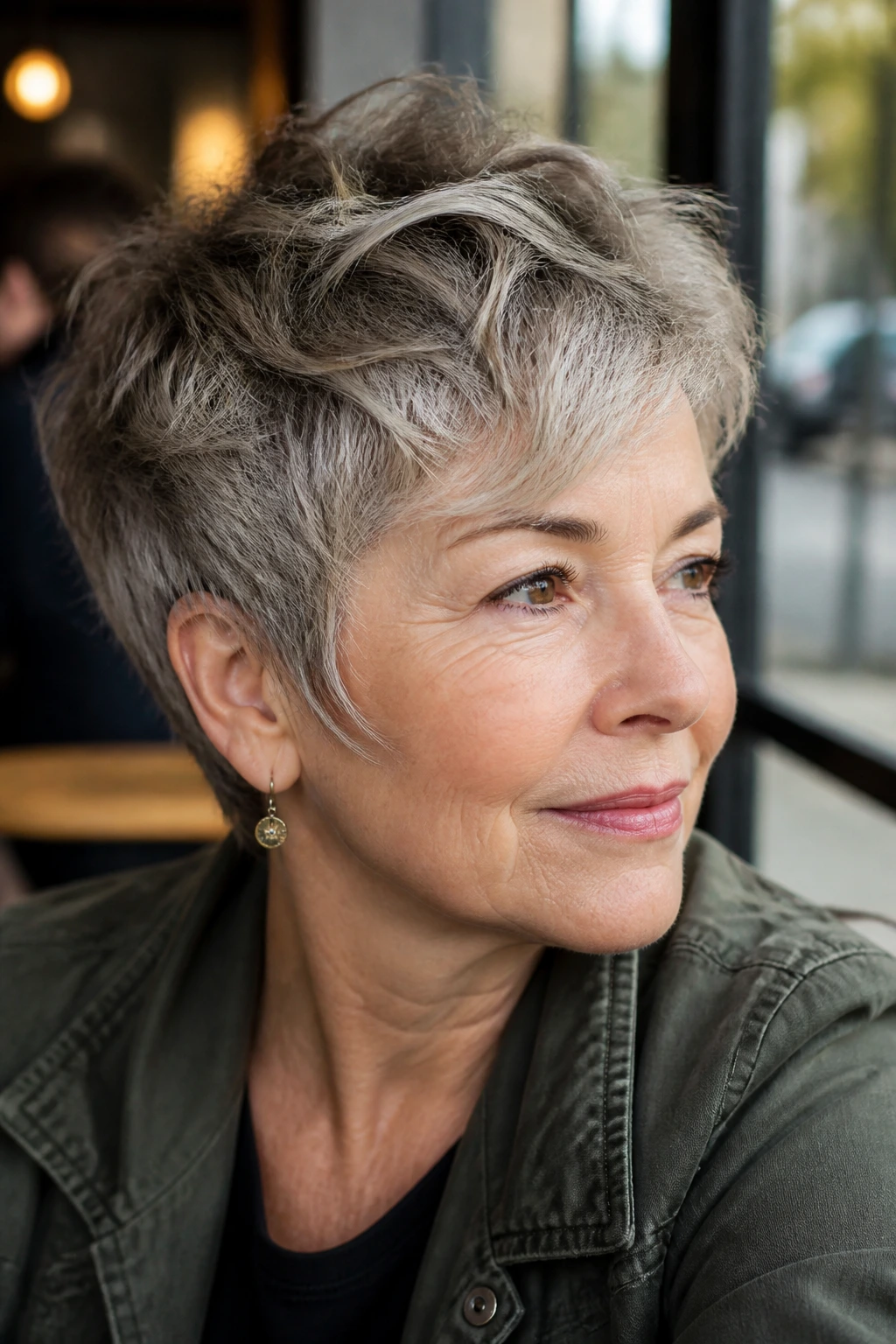
A little length at the sideburns changes more than people expect. It softens the line around the ears, helps the haircut sit better with glasses, and keeps the crop from feeling too bare. Pair that with a tousled top and you get a cut that feels relaxed instead of severe.
This is one of the better options for anyone who doesn’t want to expose every contour of the face. The sideburns and soft front pieces act like a frame. The top still stays short, but the edges have room to move.
A matte texture spray or a tiny bit of paste between the fingers can separate the ends without making them sticky. I like this cut when the goal is casual, not precious. It looks better a little touched, not over-tidied.
21. Face-Framing Crop with Tapered Nape
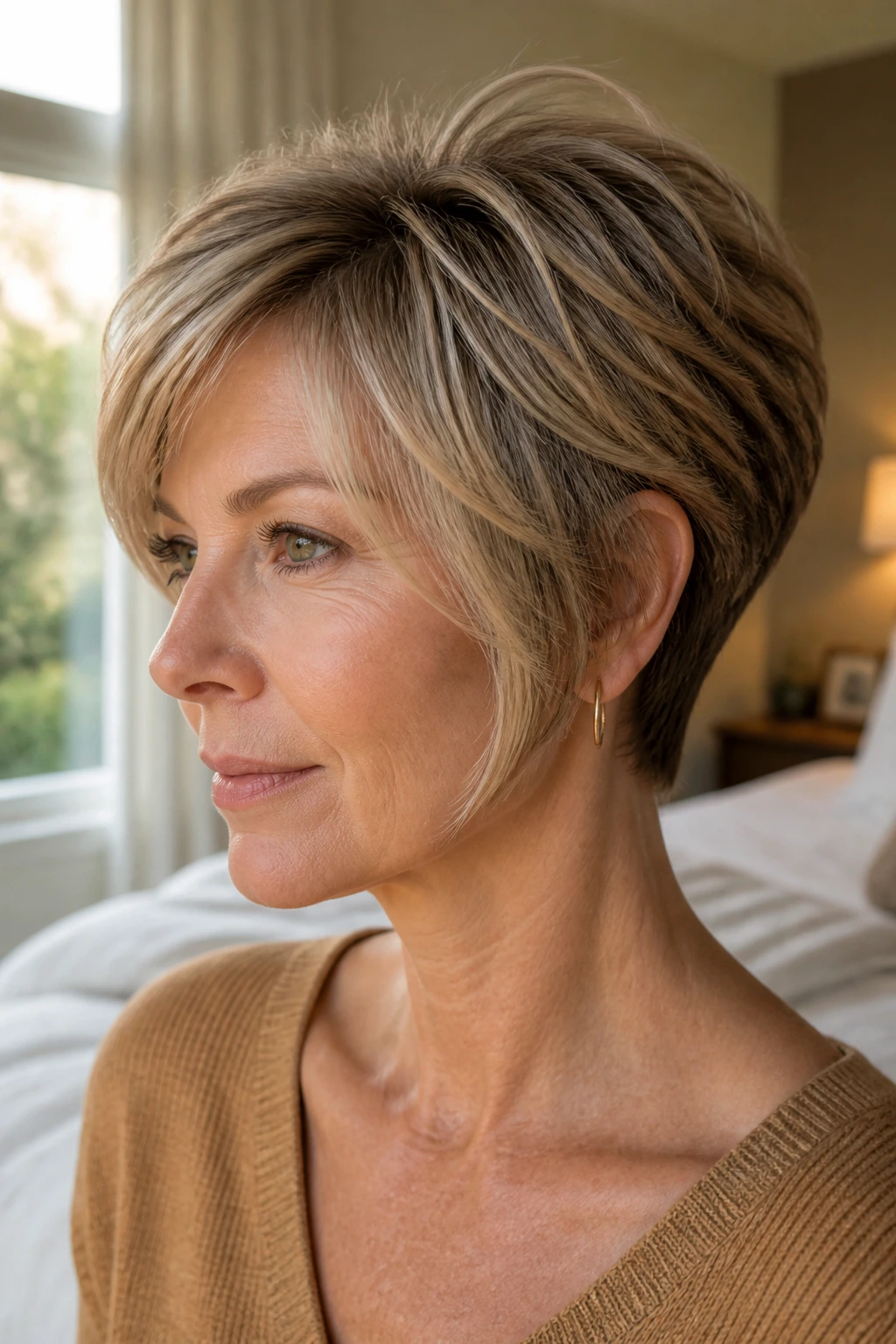
A face-framing crop is the safest kind of short haircut, and I mean that in a good way. It gives you a narrow, tapered back so the neck stays clean, then leaves enough length around the front to soften the cheekbones and jaw. That balance is why it works so well on fine hair.
The shape can be adjusted a few different ways: a little longer at the temples, a little shorter around the ears, or a soft fringe that melts into the sides. The point is to keep the outline controlled. Fine hair likes control more than decoration.
If you want one cut that can slide between polished and relaxed, this is the one I’d put near the top of the list. It’s not loud. It just makes the hair look like it knows where it belongs.
Why Short Haircuts Hold Their Shape Better on Fine Hair
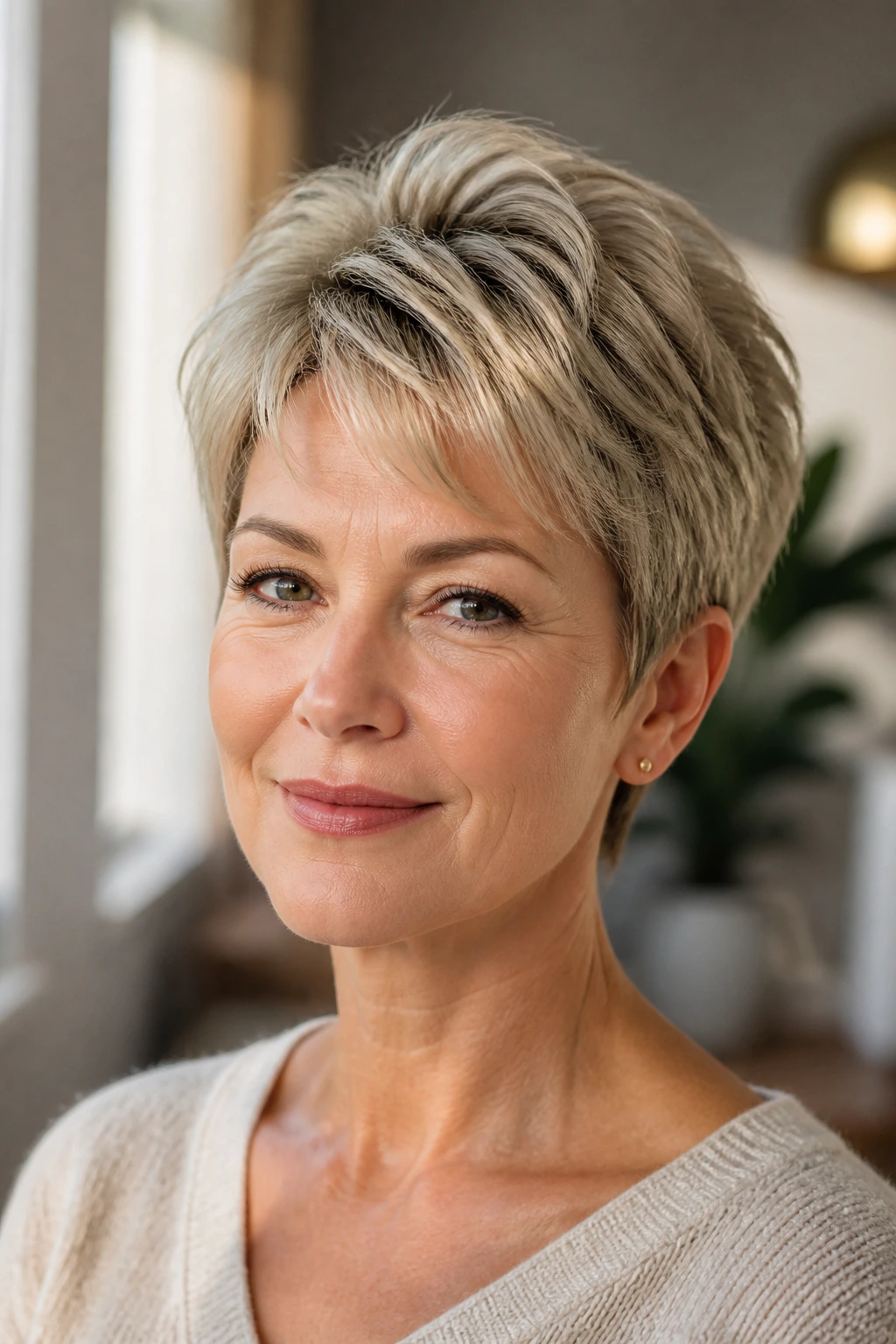
The main reason short haircuts work so well here is simple: fine hair loses visible support as it gets longer. Every extra inch adds weight, and weight pulls the root flatter and the ends thinner. A shorter cut reduces the distance the strands have to travel, so the hair keeps more of its own lift.
There’s also the matter of the perimeter. A strong outline makes the hair look fuller because the eye sees a clearer edge. Blunt ends, gentle graduation, and smart layering all help the haircut read as denser than the raw strand count would suggest. That’s the trick, and it’s not a fake trick. It’s just good shape.
One thing people mix up all the time: fine hair is not the same as thin hair. Fine means each strand is small in diameter. Thin means you have fewer strands per square inch. You can have fine hair that looks abundant, or thicker strands that sit sparse because the density is low. The haircut should respond to whichever problem is actually there.
And after 50, the growth pattern matters too. The crown may settle flatter, the temples may need softer framing, and the neckline may be more sensitive to bulk. A short cut can respond to all of that without looking overworked.
The Tools That Make Styling Easier
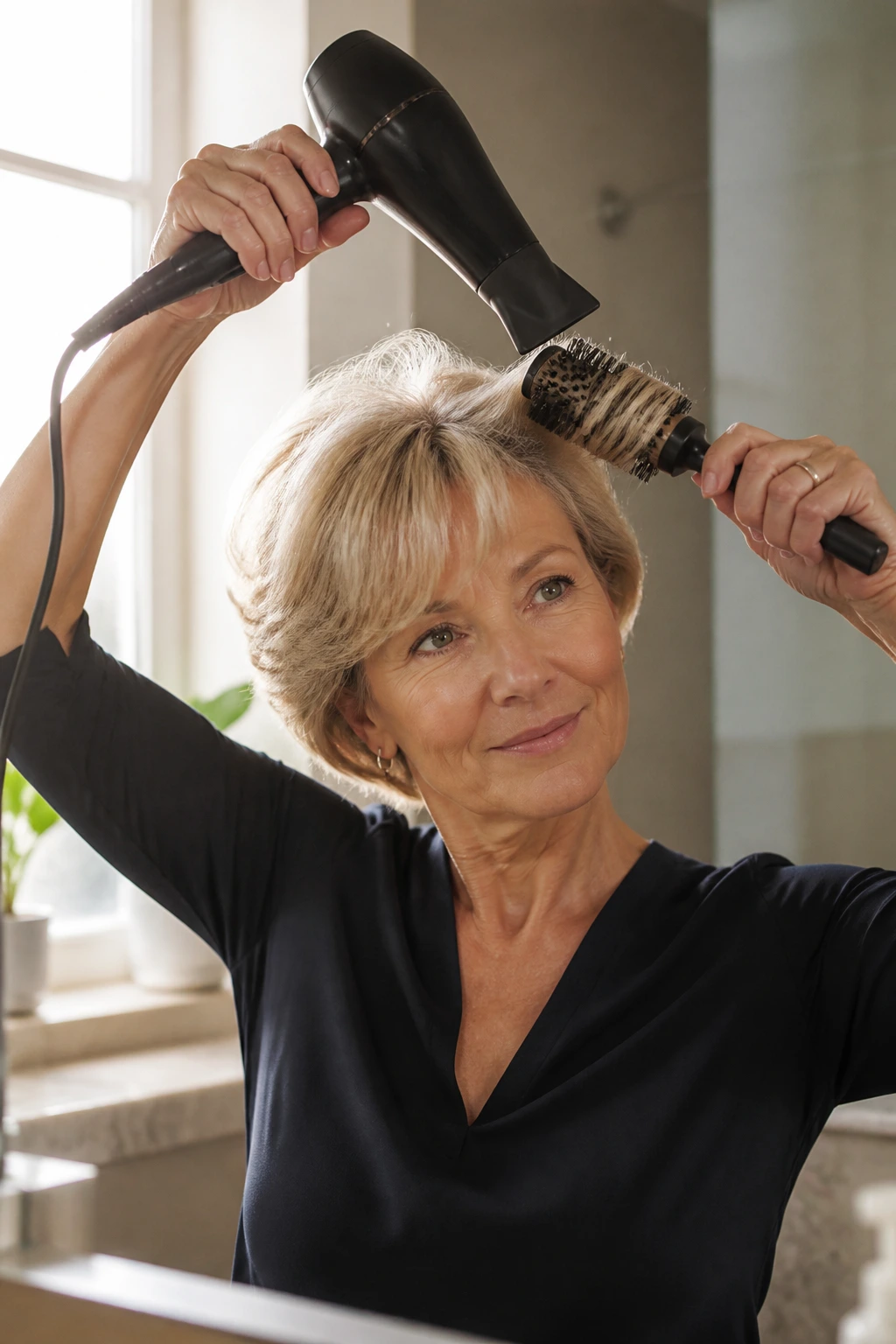
You do not need a giant drawer full of gadgets. A few good tools do more than a basket of nonsense products ever will.
-
Blow-dryer with a nozzle: Direct airflow matters on fine hair, because random wind just pushes the roots around.
-
Small round brush, 1 to 1.5 inches: Best for creating bend at the crown, side fringe, and ends that curve under instead of flipping out.
-
Vent brush: Fast drying with less fuss, especially for pixies, crops, and short layered bobs.
-
Wide-tooth comb or tail comb: Handy for setting a clean part and lifting pieces without roughing up the cuticle.
-
Sectioning clips: Small clips make crown work easier. Four clips are enough for most short styles.
-
Lightweight mousse: Gives root support without the crunchy feel that can make fine hair look dry.
-
Root-lift spray: Good at the crown and along the part line, where the hair usually gives up first.
-
Texturizing spray: Best on cropped styles and piecey bobs when you want separation, not stiffness.
-
Dry shampoo: Useful on day two or three, but put it at the roots only. Don’t blanket the whole head with it.
-
Lightweight paste or cream: Tiny amounts. Half a pea can go far on short hair.
How to Choose the Right Cut and Bring the Right Reference Photos
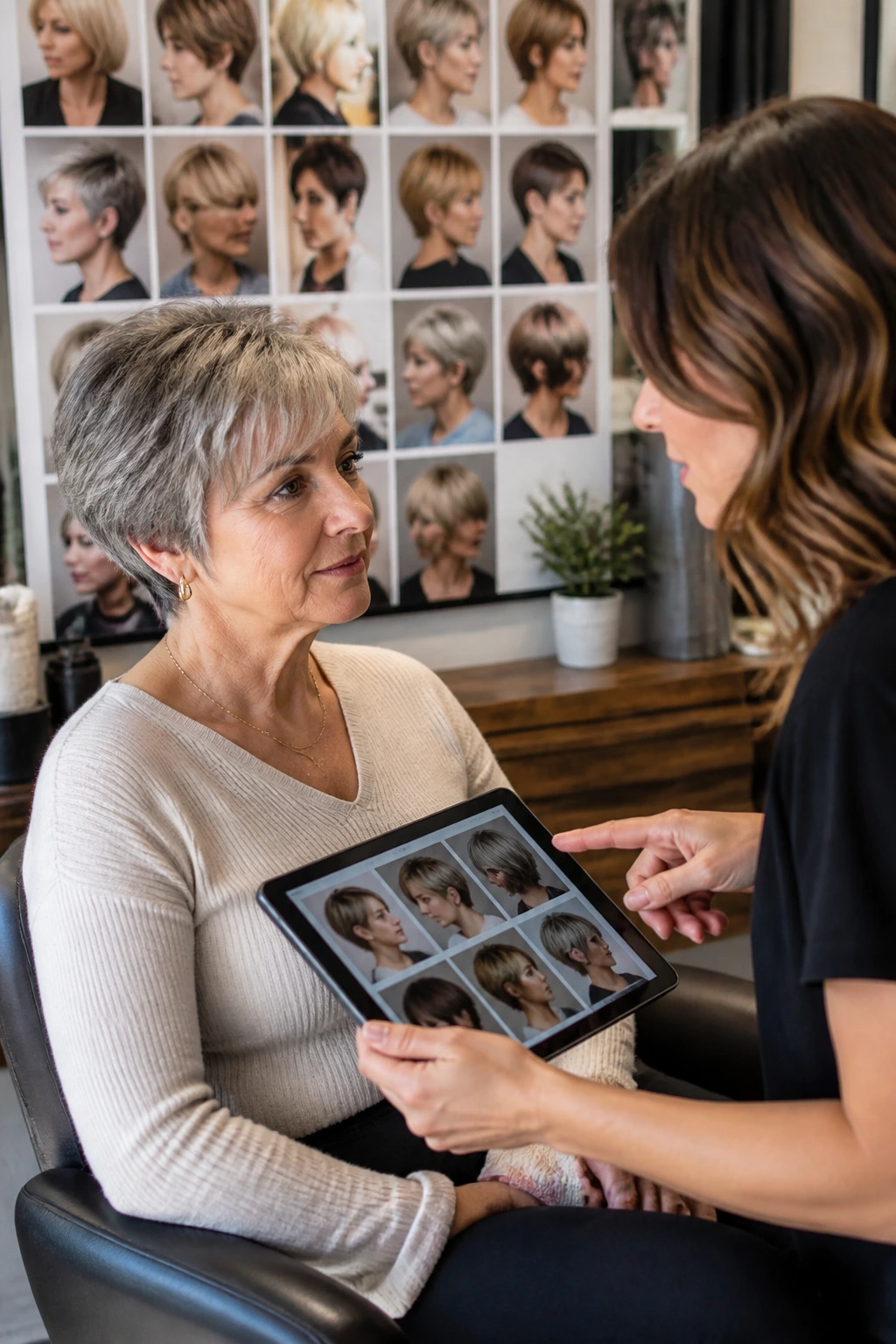
The salon chair is not the place for vague wishes. Bring photos, yes, but bring the right ones. A picture of thick hair cut into a shag tells you almost nothing if your strands are fine and your crown goes flat by noon. You want pictures that match your density, your wave pattern, and your maintenance habits.
Say what you keep and what you want to lose. Keep the part if it already works. Keep the fringe if your forehead feels better framed. Lose the heavy ends if they drag your hair down. That sounds obvious, but people forget to speak in those terms, and then the stylist has to guess what matters most.
Mention your cowlicks. Mention where the hair splits at the back, whether one temple is thinner than the other, and how much time you’re willing to spend in front of a mirror. If you wear glasses, bring them with you. Seriously. The way a bob sits around frames can change the whole haircut.
A Useful Salon Script
- “I want shape at the crown without over-thinning the ends.”
- “My hair is fine, so I need the perimeter to stay strong.”
- “Please keep the fringe long enough to tuck or sweep.”
- “I want something that still looks decent air-dried.”
That kind of language gets you farther than “I want volume.” Volume where? At the crown? The sides? The back? Be exact.
How to Wear These Cuts on Real Mornings
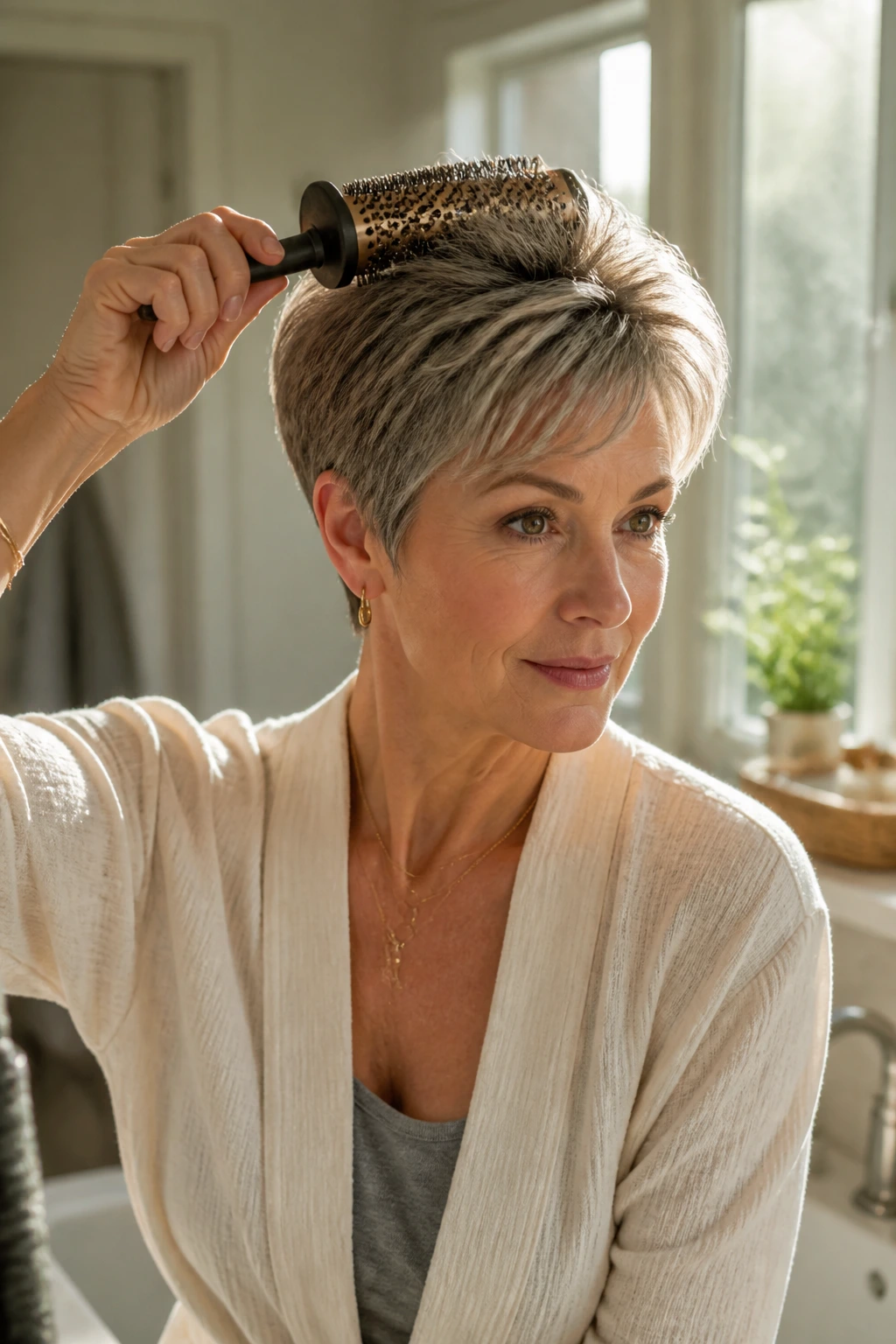
Everyday Wear: Start with a root-lift mousse or spray on damp hair, then rough-dry the crown first. If you get the roots dry and set before the ends, the cut holds its shape much better.
Polished Finish: Use a small round brush on the top sections and bend the ends under or forward, depending on the cut. That tiny bend is what makes a bob or pixie look deliberate instead of accidentally slept-on.
Fast Refresh: Mist the roots with water, hit them with dry shampoo only where the scalp needs it, and reshape the front with your fingers. Fine hair usually responds better to a light touch than to a full redo.
Accessory Pairings: Short cuts look sharp with earrings, glasses, clips, and headbands, but the accessory should not fight the haircut. A single barrette or a tucked side can be enough. You do not need a costume.
Extra Styling Moves That Add Body and Shine
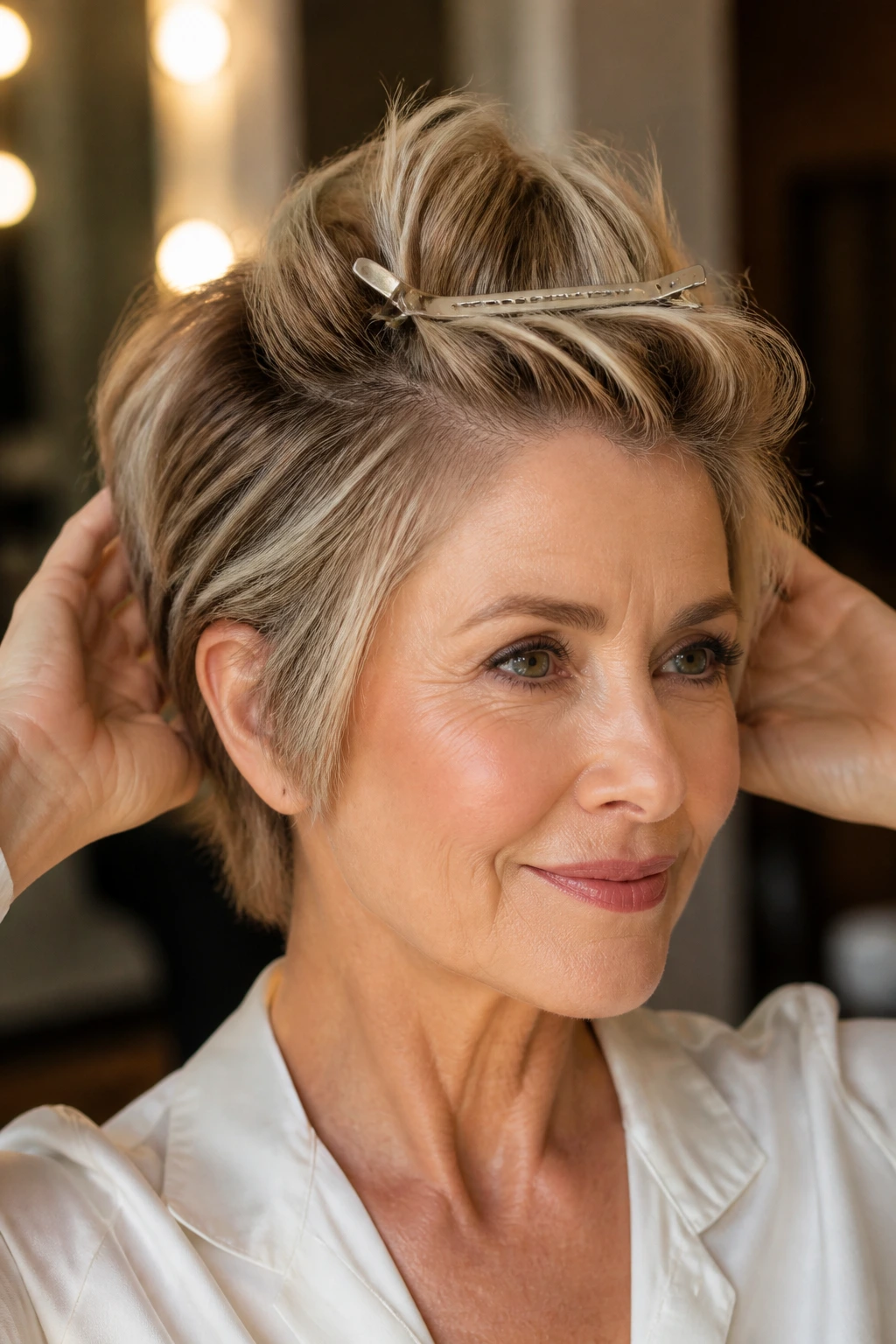
Root Lift: Clip the crown while hair cools after a blow-dry. Two or three small clips near the part can set a little lift that survives the afternoon better than product alone.
Color Placement: A few lighter pieces around the face, or a soft gloss through silver hair, can make a short cut look fuller because the color reflects light across the shape. A flat, single-tone color tends to flatten fine hair out.
Finish Choice: Use a matte paste if you want piecey separation, or a light serum only on the very ends if you want a smoother bob. Put shiny products near the roots and the whole head goes limp. Fast.
Make-It-Yours: If your hair is straight, ask for a blunt edge and minimal internal layering. If it’s wavy, leave a little more length and allow the texture to do the work. If your scalp is sensitive, skip the razor and keep the cut finished with scissors.
Maintenance, Refreshes, and Grow-Out Plans
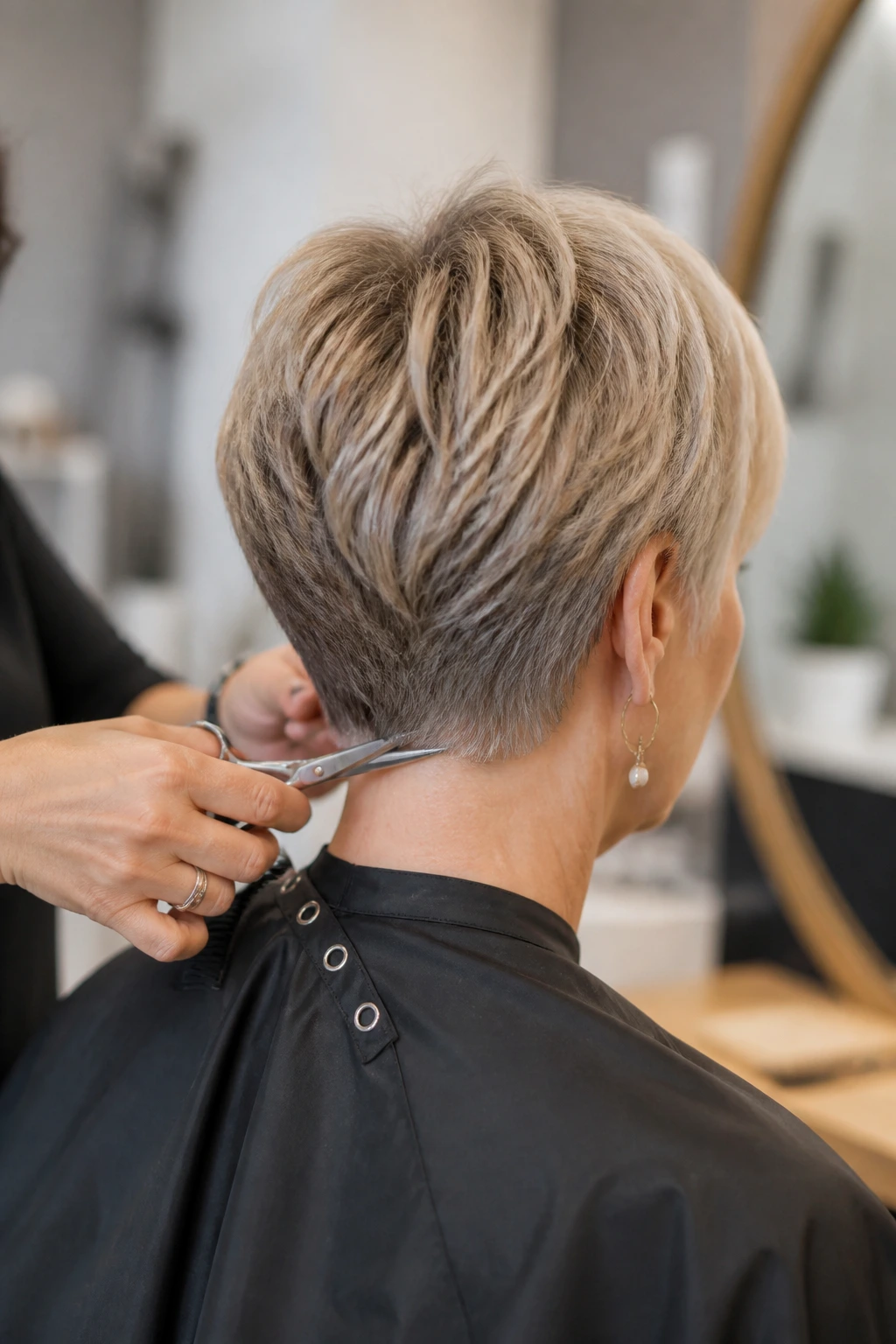
Short hair looks best when the shape is still clear, so trims matter. Pixies usually want attention every 4 to 6 weeks, because the outline changes fast once the nape and sideburns start filling in. Bobs can go a bit longer, often 6 to 8 weeks, depending on how much structure they need around the jaw.
If you’re growing one of these cuts out, do it in stages. Let the top and fringe catch up first if you want to move toward a bob. If you’re coming from a bob and want to go shorter, trim the back and keep the front a touch longer until the shape settles. It’s less awkward that way.
Day to day, sleep matters more than people like to admit. A satin pillowcase cuts down on friction, and short hair that bends easily should never be left wet and squashed into a pillow. It wakes up with weird dents. Fine hair remembers everything.
For color-treated or gray-blending hair, a gloss or root refresh every 6 to 8 weeks can keep the cut from looking dull. That’s especially useful on short shapes, because the line of the haircut shows every color shift.
Variations and Adaptations to Try
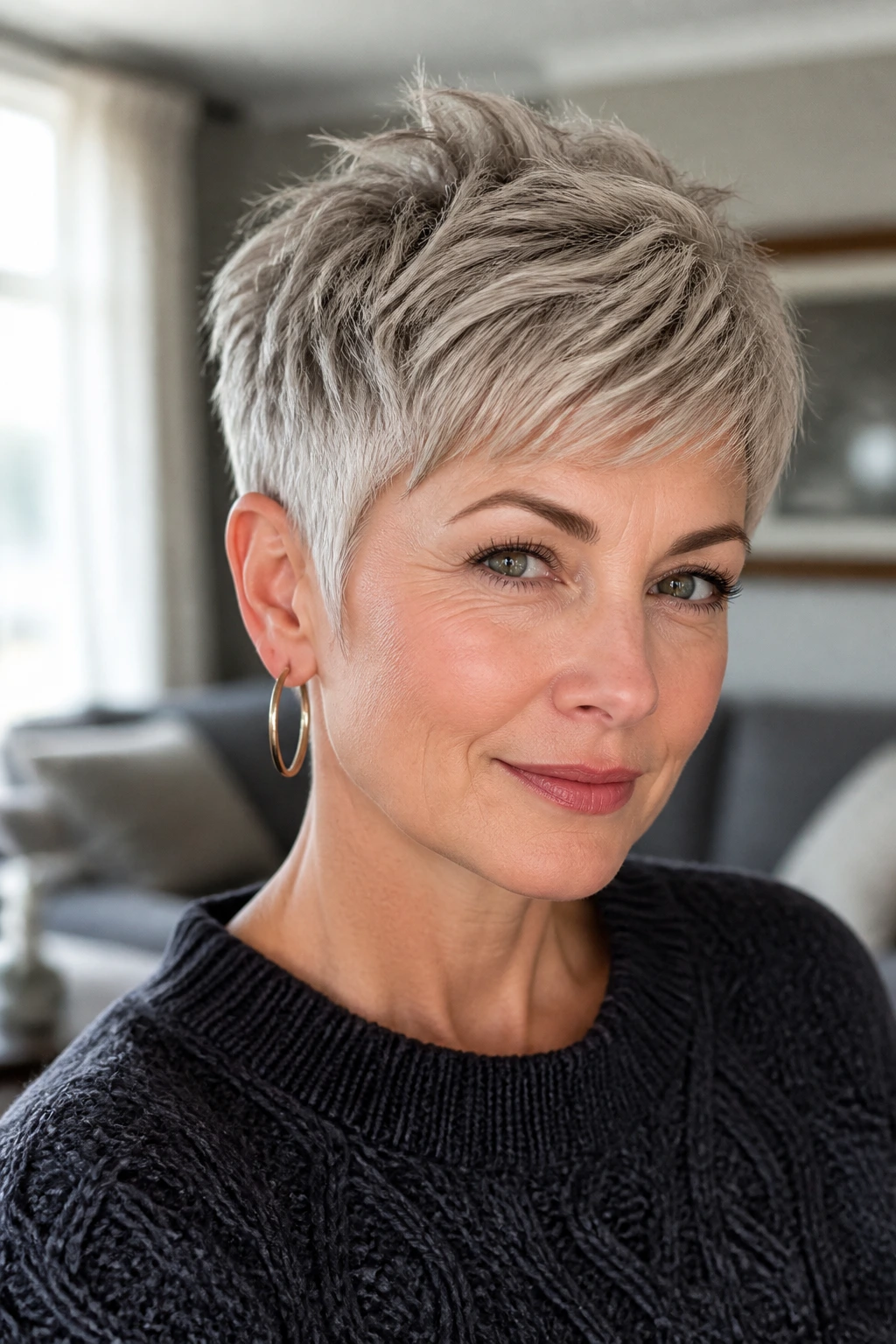
For Very Fine Hair: Choose blunt bobs, micro bobs, or a feathered pixie with a firm edge. These shapes keep the perimeter dense, which helps the haircut read fuller than it is.
For Wavy or Curly Hair: Use a cropped shag or curly crop and ask for a dry-cut shape if possible. Curls shrink, and if you cut them too short while wet, the final look can come out tighter than planned.
For Glasses Wearers: Side-parted bobs, curtain fringe crops, and face-framing cuts tend to sit well around frames. Keep the temples a little softer so the haircut doesn’t crowd the glasses arms.
For a More Polished Look: Try the rounded bob, chin-length French bob, or micro bob with a blunt edge. These need less deliberate texture and look sharp with a neat bend at the ends.
For a More Edgy Look: Go with the asymmetrical bob, soft undercut pixie, or long top, short back crop. A little imbalance gives the cut energy, and fine hair often benefits from that extra visual interest.
For Low-Styling Days: A tapered pixie bob or ear-length rounded crop is easier to live with than a heavily layered shag. The shape does the work, so your morning routine stays short.
Common Mistakes That Flatten Fine Hair
-
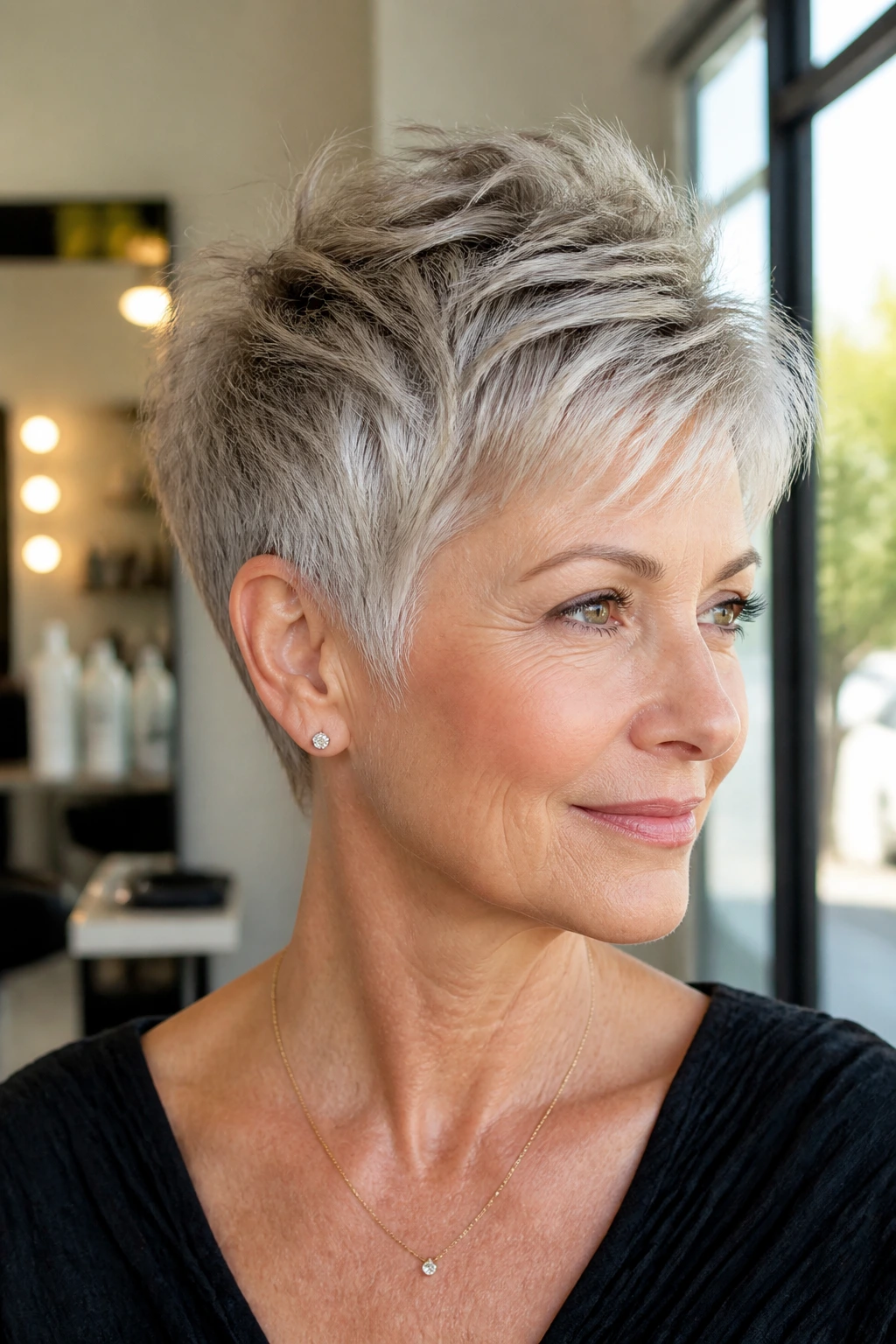
Too many wispy layers: Hair starts to look see-through at the ends, especially in daylight. Ask for a stronger perimeter and keep the interior texture light.
-
Heavy product at the roots: Creams, oils, and thick leave-ins drag the crown down fast. Put those from mid-length to ends only, and use mousse or root spray up top.
-
Bangs cut too short on the first pass: Fine hair often springs up after drying, which means a fringe that looked fine in the chair can jump above the brow line. Leave length, then trim after the hair is dry if needed.
-
Ignoring the natural part or cowlick: A cut that fights the growth pattern spends every morning losing. Work with the way your hair already falls unless you enjoy an unnecessary battle.
-
Over-thinning with shears or a razor: This is where a good-looking cut becomes threadbare. Fine hair usually needs smart shaping, not aggressive removing.
-
Letting short hair grow too long between trims: Once the outline starts collapsing, the haircut stops supporting the face. A small trim can reset the whole thing.
Questions People Always Ask Before Going Short
What short haircut makes fine hair look thickest after 50?
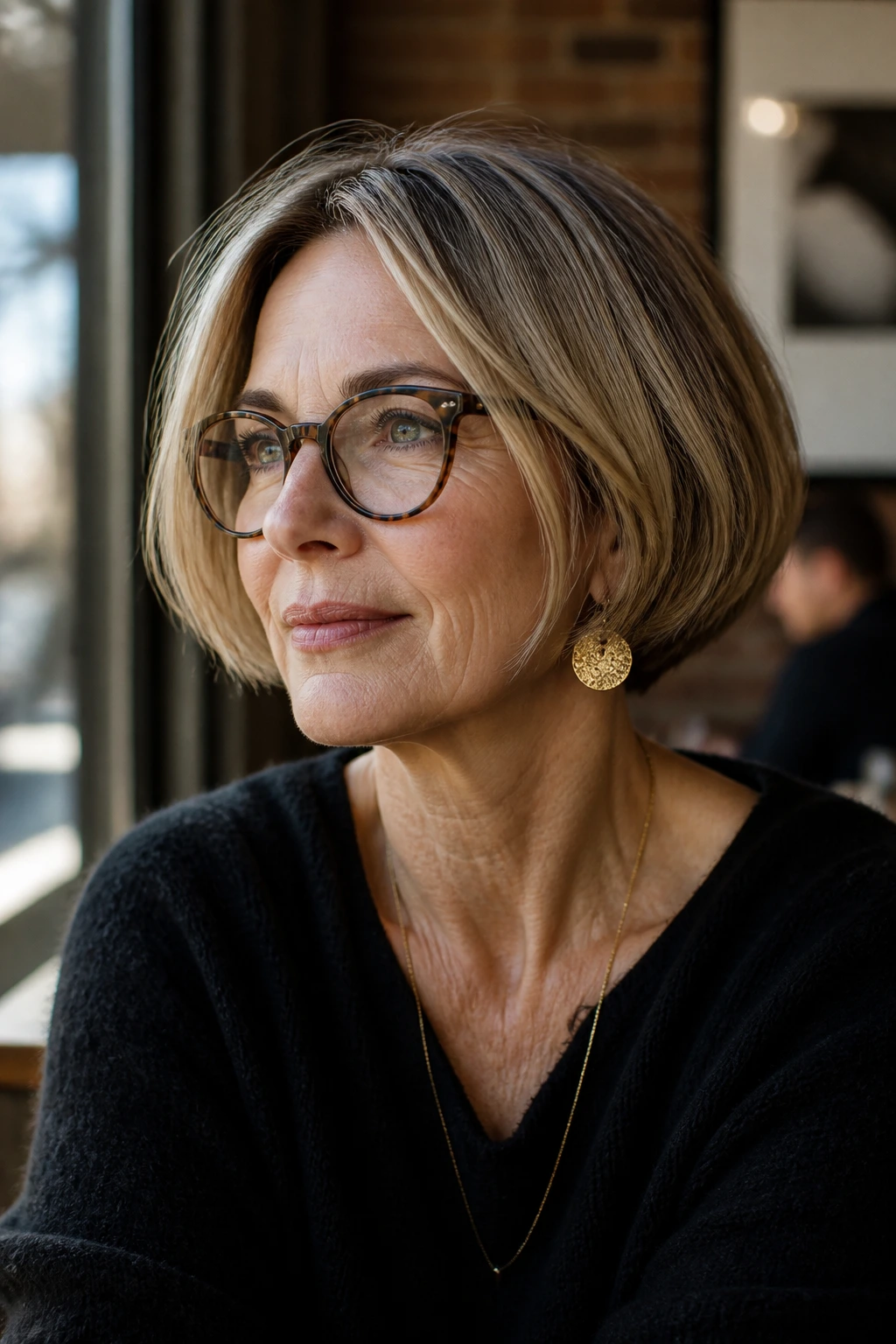
A blunt bob, micro bob, or a pixie with a strong perimeter usually gives the best density illusion. The common thread is a clear outline, not a lot of shredded layers. That shape keeps the eye from seeing gaps at the ends.
Are layers bad for fine hair?
Not at all, but they need to be used with restraint. Fine hair can look fuller with a little layering near the crown or around the face, yet too much interior layering leaves the bottom looking sparse.
Should I get bangs if my hair is fine?
Yes, if the fringe is kept light enough to move. Sweeping bangs, curtain bangs, or a soft fringe can frame the face and hide a flat hairline; a heavy, blunt bang can swallow fine hair fast.
Is a pixie better than a bob for thin hair?
A pixie can feel easier because there’s less length to pull the hair down, but a bob can be stronger if you want density at the ends. Thin hair usually benefits from the shape that gives you the clearest perimeter, whether that’s a crisp bob or a well-built pixie.
How often should short fine hair be trimmed?
Pixies usually need trimming every 4 to 6 weeks, while bobs can often go 6 to 8 weeks. Once the shape loses its outline, the haircut starts doing less work and styling gets harder.
Can I wear my hair short if I have a flat crown?
Absolutely. In fact, short hair is often easier to lift at the crown than longer hair. Ask for stacking, a side part, or a bit of root support in the styling plan.
What if my hair is curly or wavy and fine at the same time?
Then the cut has to respect shrinkage and texture. A cropped shag or curly crop is usually better than a blunt line cut too short, because the curl pattern will spring and move differently once it dries.
How do I stop a short cut from looking puffy?
Keep the sides and nape controlled, and avoid over-building volume everywhere at once. Lift the crown, yes, but let the lower sections stay closer to the head so the shape remains clean.
The Shape That Lets Fine Hair Breathe
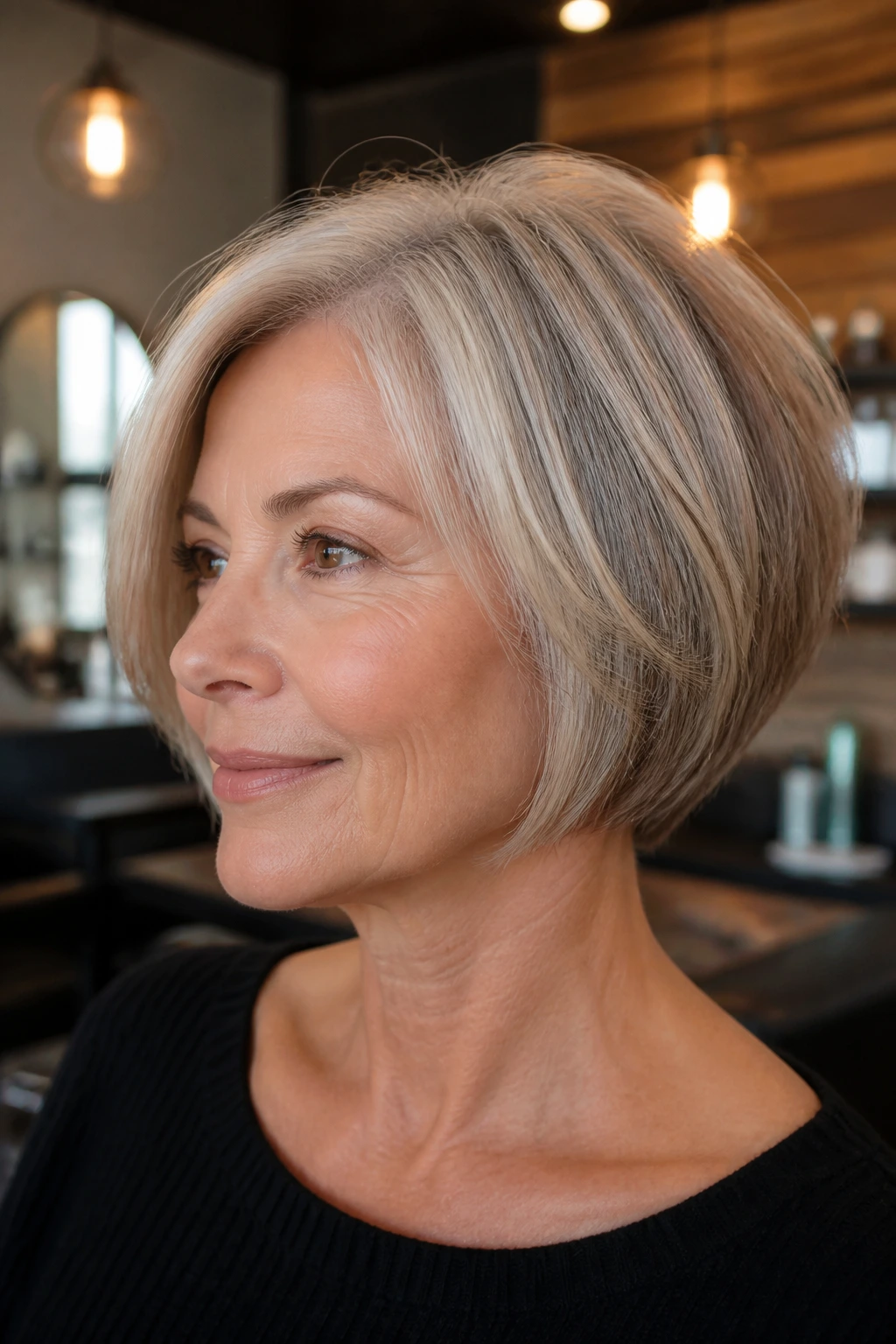
The best short cuts for fine hair over 50 don’t try to fake thickness in a cartoonish way. They build a better outline, give the crown a little help, and keep the ends from looking tired. That’s a more honest kind of beauty, and it usually lasts longer between salon visits too.
If you’ve been fighting your hair with layers that vanish or length that hangs too long, this is the moment to try a cleaner shape. Bring a few reference photos, mention your part and your cowlicks, and ask for the line that makes your hair look densest where it actually matters. The haircut should do the lifting. You get to enjoy the result.
