



Fine hair has one stubborn habit: the moment it loses a little support, it drops flat at the roots and turns blunt at the ends. A razor-cut short hairstyle changes that equation fast. The ends stop acting like a hard shelf, the shape loosens up, and the whole cut starts to move the way fine hair wants to move when it’s not being forced into submission.
The trick is balance. A razor can make fine hair look airy and modern, but too much of it can leave the ends wispy and see-through. That’s why the best short cuts for fine hair are never random. They’re controlled, a little feathered, and usually a lot smarter than they look at first glance. A good razored bob or pixie doesn’t scream for attention; it keeps its shape when you turn your head, tuck one side behind an ear, or let it air-dry with a little bend.
And honestly, that’s what makes these cuts worth studying. They solve a specific problem: hair that feels limp, heavy at the crown, or oddly sparse at the perimeter. Done well, they give you lift without making the cut look choppy in a cheap way. No helmet hair. No stiff outline. Just a shape that breathes.
Why These Razor-Cut Styles Stand Out on Fine Hair
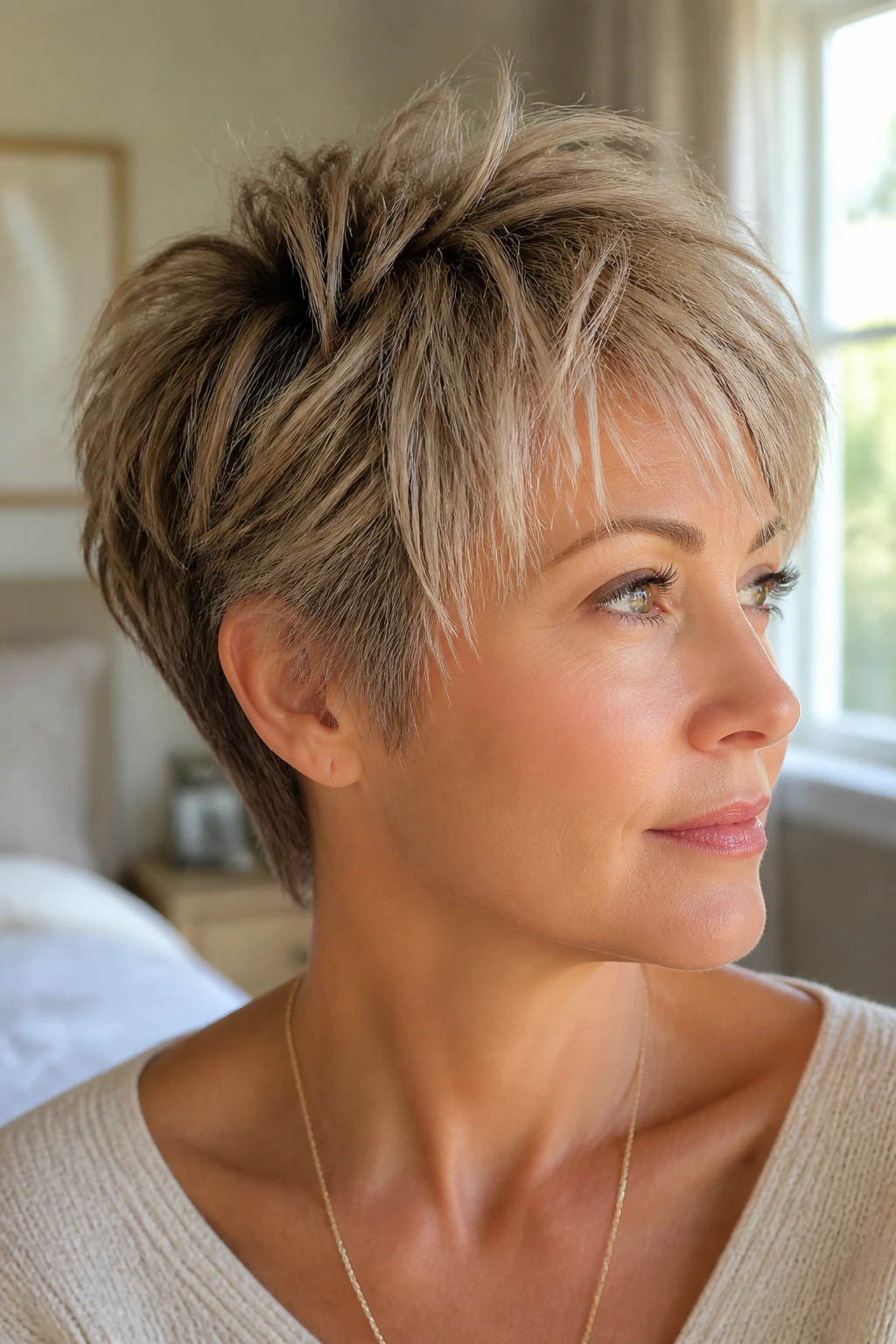
- Soft edges do the heavy lifting: A razor removes bulk at the ends, so fine hair doesn’t sit in a hard line that makes it look thinner than it is.
- Shorter shapes keep weight from dragging everything down: The less length fine hair has to support, the easier it is to keep volume at the crown and around the cheekbones.
- The finish can go sleek or messy: These cuts don’t need a complicated blowout; a side part, a root lift spray, or a quick rough-dry can change the mood fast.
- Grow-out looks less awkward: Feathered ends blur the line between salon visits, so you don’t get that blunt, mushroomy stage so many short cuts hit.
- They make texture look intentional: Tiny bends, wave patterns, and air-dried movement show up better when the perimeter isn’t cut like a ruler.
Why the Razor Makes Fine Hair Look Airier
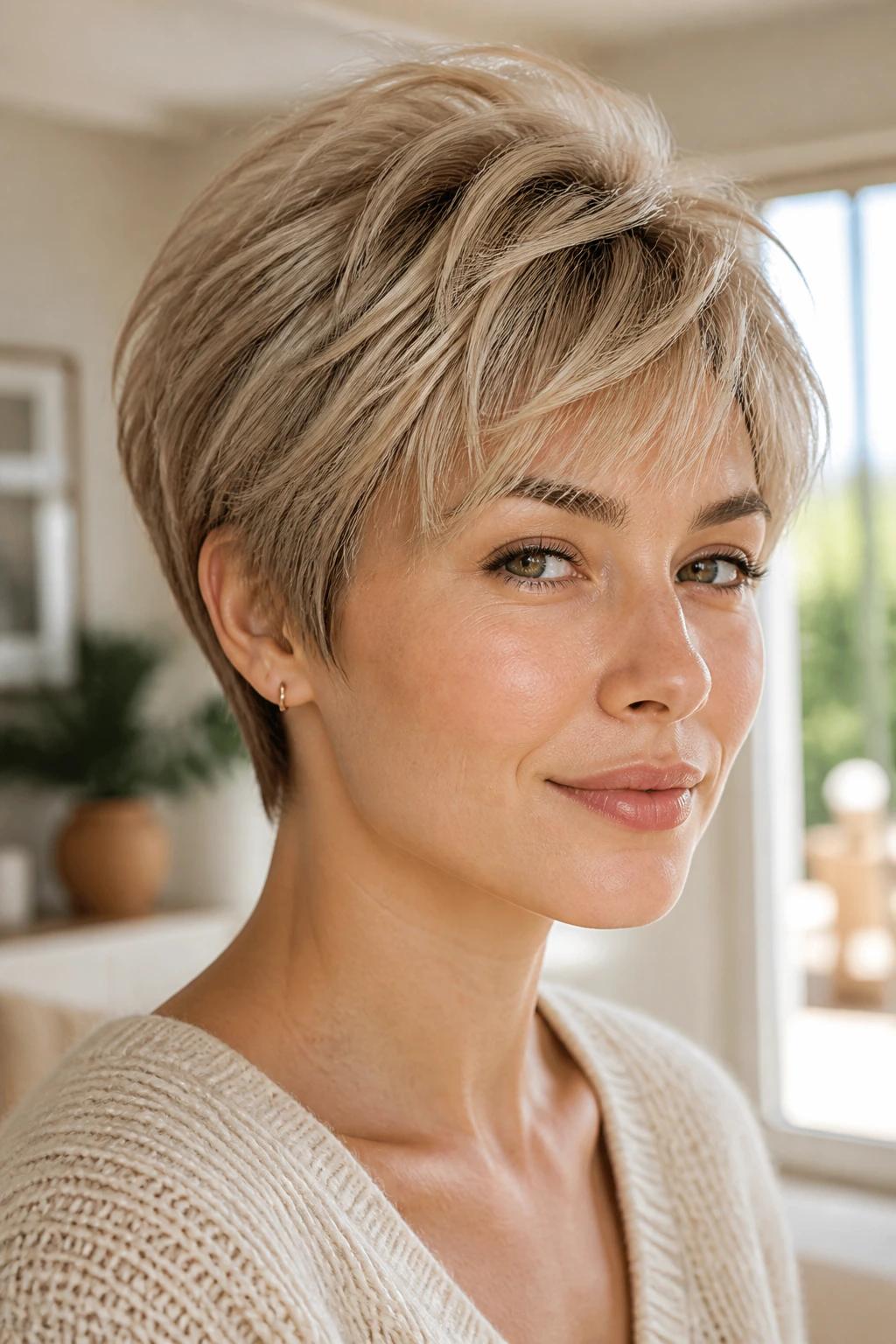
A razor is not a magic wand. It’s a blade, and on fine hair that matters. Used well, it softens the edge of the cut, removes just enough bulk to keep the shape from drooping, and gives the ends a little separation so they don’t clump into one flat line. Used carelessly, it can shred the perimeter and leave the hair fuzzy before you’ve even left the salon chair.
That’s why the best razor work on fine hair is usually selective. The crown, the sides around the cheekbones, the nape, and the end of a fringe often benefit the most. Those are the places where hair either puffs out in the wrong way or collapses into nothing. A controlled blade cut lets the stylist keep a shape while still taking away the dead weight that makes short hair feel limp.
Where the blade helps most
On a fine-haired bob, the razor can soften the last half-inch so the cut doesn’t sit like a box. On a pixie, it keeps the top from looking blocky when the hair is brushed forward or sideways. On a shaggy crop, it gives the layers enough separation to show movement without needing a lot of product.
Where scissors still win
The neckline, dense cowlick areas, and any spot where the hair already feels sparse usually need a gentler hand. I’d rather see a stylist switch to point cutting there than keep carving with a razor and hope for the best. Thin hair can look fabulous with softness, but it cannot hide damage. Once the ends fray, the whole cut starts to look tired.
1. Feathered Pixie with a Long Razor-Cut Top
This is the pixie I reach for when fine hair needs lift without looking overstyled. The sides stay close, the top stays longer, and the razor does the thing it does best: it lightens the fringe and crown so the cut has a little sway instead of sitting stiffly on the head. It looks especially good when the top is brushed forward and then broken up with your fingers.
Why it works: The short sides take weight out of the equation, while the longer top gives you enough length to build volume at the roots. Fine hair usually loses lift where it’s heaviest, so this cut solves the problem by keeping the bulk where it matters least. A matte paste or a pea-size mousse is enough. More than that and the shape turns stringy.
If your hairline is a little uneven, this is a forgiving shape. The feathered top blurs things out in a flattering way.
2. Choppy French Bob with Side-Swept Fringe
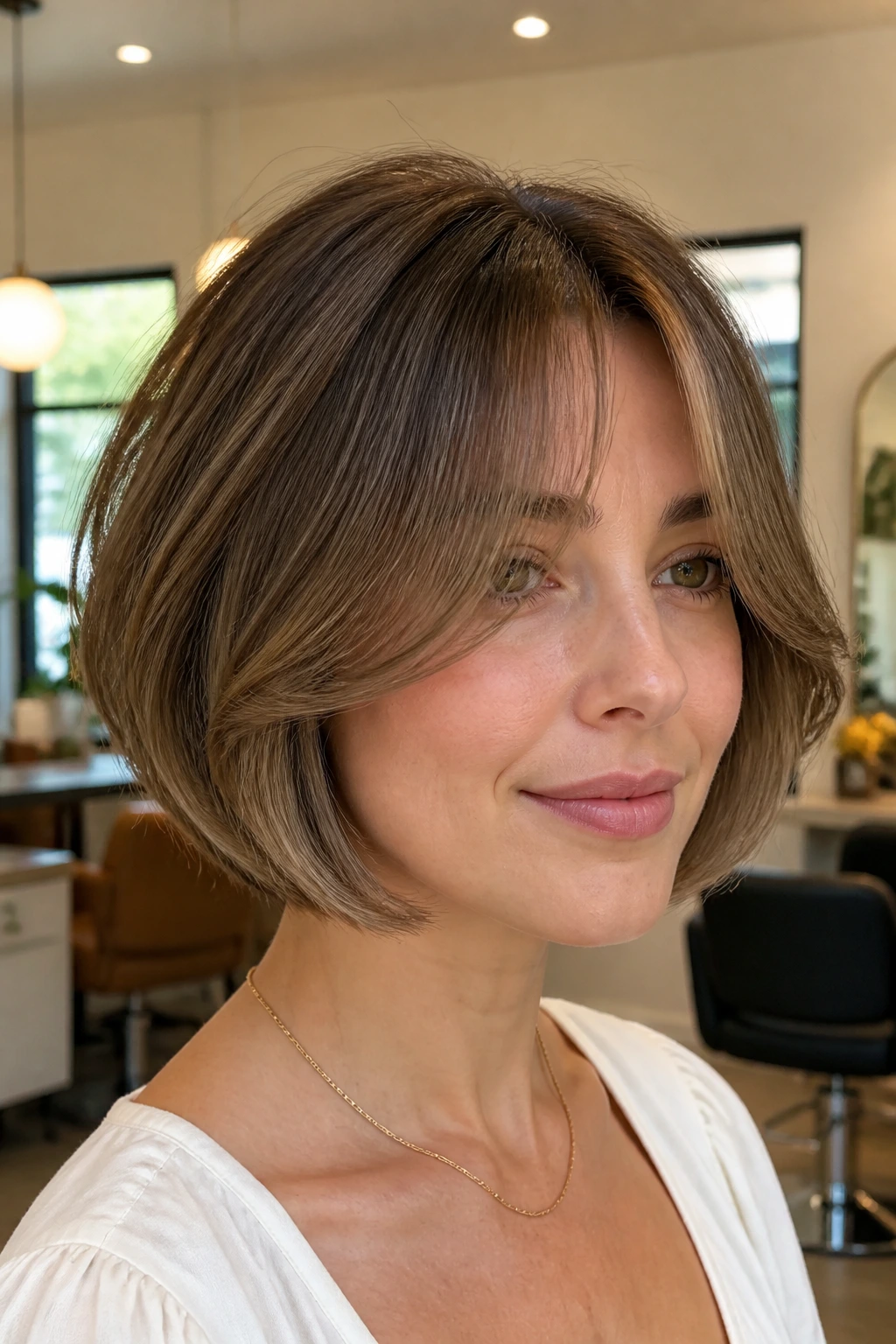
The French bob gets friendlier on fine hair when the ends are razor-soft instead of blunt. That clean jaw-length line still reads as sharp, but the choppy fringe and lightly shattered perimeter stop it from feeling heavy. The whole cut has that effortless-to-maintain quality people talk about and rarely explain well. Here, it’s the soft edge doing the work.
- Best part: The fringe gives you instant density at the front, which is where fine hair often looks most see-through.
- Styling cue: Blow-dry the fringe side to side with a small round brush, then let it fall naturally.
- Who should wear it: Women who want a bob that looks polished without needing a perfect round-brush finish every morning.
- Texture note: Straight and slightly wavy hair both handle this shape well, but very curly hair needs a softer variation.
A deep side part makes the whole cut look fuller on top. A center part works too, but only if the fringe is long enough to break up the forehead area a little.
3. Bixie with a Tapered Nape
If a bob feels too grown-up and a pixie feels too tiny, the bixie sits in the middle with good manners and a little attitude. On fine hair, the tapered nape matters more than people think. It removes the thick-looking back corner that can make a short cut sag, while the longer crown keeps the top from lying flat.
Why this shape stays light
The bixie is built in layers, but not the kind that chew up the hair. The top stays mobile, the sides graze the cheekbones, and the nape stays neat so the outline never gets bulky. Ask for the razor only on the ends and around the face-framing pieces if your hair is fine; too much thinning in the wrong spot can make the shape collapse.
It suits someone who likes a little edge but doesn’t want to commit to a full pixie. A light wax, rubbed into the back of the fingers and pinched through the top, is usually enough.
4. Asymmetrical Crop with a Deep Side Part
A slightly uneven crop can be a gift for fine hair, especially when one side is kept a touch longer and the part is pushed deep. That diagonal line tricks the eye into seeing more body where there isn’t much to begin with. It also gives you a built-in styling choice: smooth it down for a sharper finish or rough it up for more lift.
The nice thing here is that the asymmetry does not need to be dramatic. Half an inch of difference can change the whole mood. More than that starts to look like a style statement first and a haircut second, which is not always the point if you want something wearable.
Fine hair likes this shape because it stops trying to behave symmetrically. Symmetry exposes thin spots. A little imbalance hides them.
5. Jaw-Length Razor Bob with Soft Ends
This is the bob for women who want the structure of a classic cut without the hard, heavy bottom line that can make fine hair look flat. The jaw-length mark is the sweet spot. It gives enough length to tuck one side behind the ear, but not so much that the ends start dragging down the profile.
Razor-soft ends matter here. A blunt jaw-length bob can look sleek, sure, but on very fine hair it often looks like one thick strip sitting beside the face. Soften that edge and the whole cut gets air around it. That little bit of air is doing more than people realize.
This cut works best with a gentle blow-dry or a flat brush pass that keeps the root lifted. If your hair bends awkwardly at the nape, ask for a tiny bit of graduation there. Tiny. Not a stacked triangle.
6. Curtain Fringe Bob with Under-Layer Lift
A curtain fringe is one of the easiest ways to make fine hair look fuller at the front without adding heavy bangs that stick to the forehead. On a short bob, the fringe splits away from the center and opens around the face, which creates width right where a narrow cut can start to feel sparse. The razor keeps the front pieces soft so they don’t hang in a stiff curtain.
This style is especially useful if your hairline is finer near the temples. The fringe bridges that gap nicely. It also grows out with less fuss than blunt bangs, which is worth saying out loud because not every good-looking haircut behaves well after week three.
Pair it with a little lift underneath. Not a full round-brush marathon. Just enough root support that the top doesn’t melt down by lunchtime.
7. Shattered Micro Bob
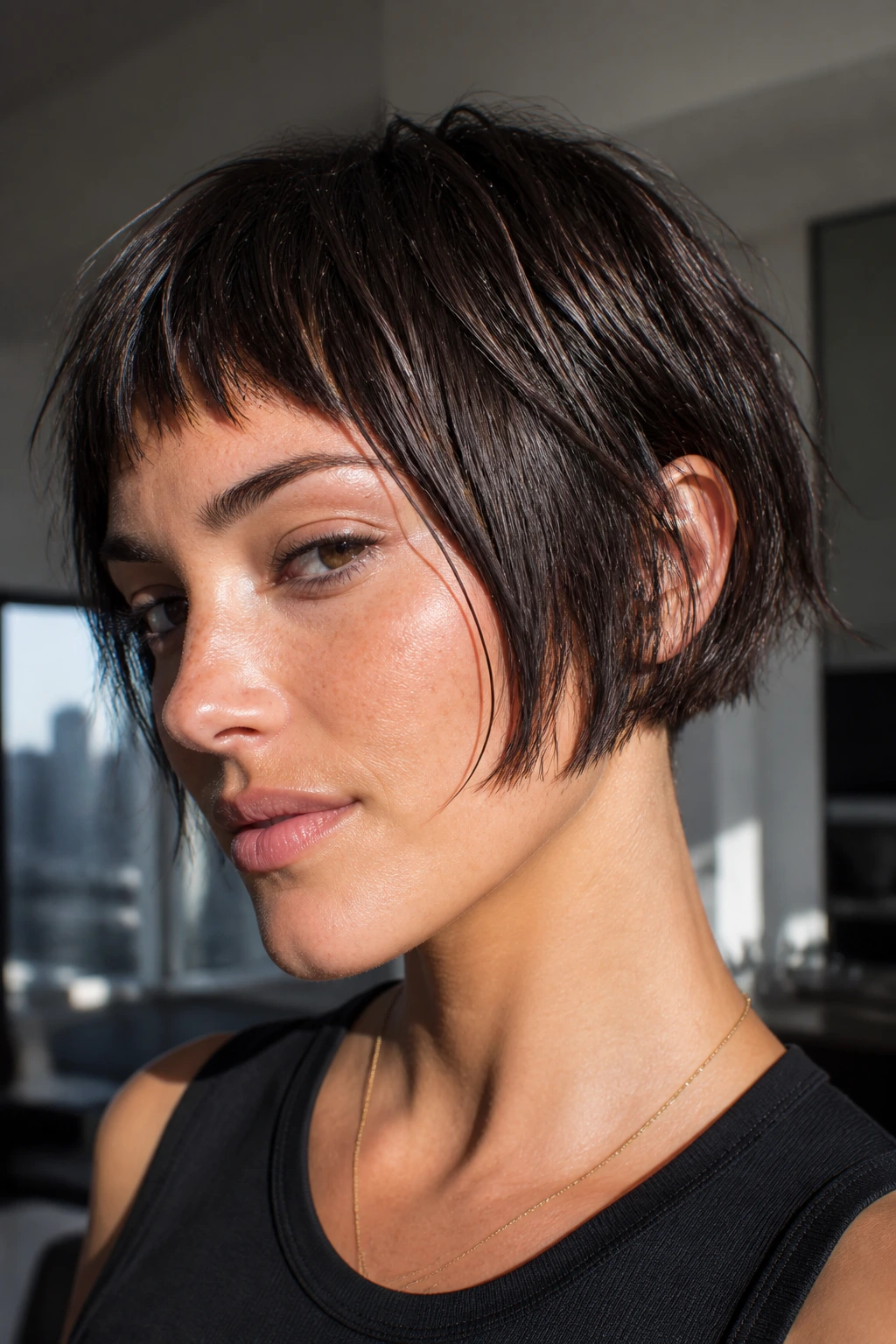
Shorter than a classic bob and cleaner than a shag, the shattered micro bob has enough edge to feel modern without losing shape. It sits high around the jaw or just below it, and the razor-work happens mostly on the perimeter and a few face-framing pieces. On fine hair, that can be the difference between a chic short cut and a sad little triangle.
You need confidence for this one. Not because it’s difficult, but because the shape is honest. It shows your bone structure, your neck, and your parting habits. If you like a lot of hair around your face, this may feel too exposed. If you like a crisp outline with some movement in it, it’s excellent.
A side part gives the micro bob more personality. A center part makes it feel sleeker and a bit cooler. Either way, keep the product light. This cut wants a touch, not a coating.
8. Tucked-Behind-the-Ear Crop
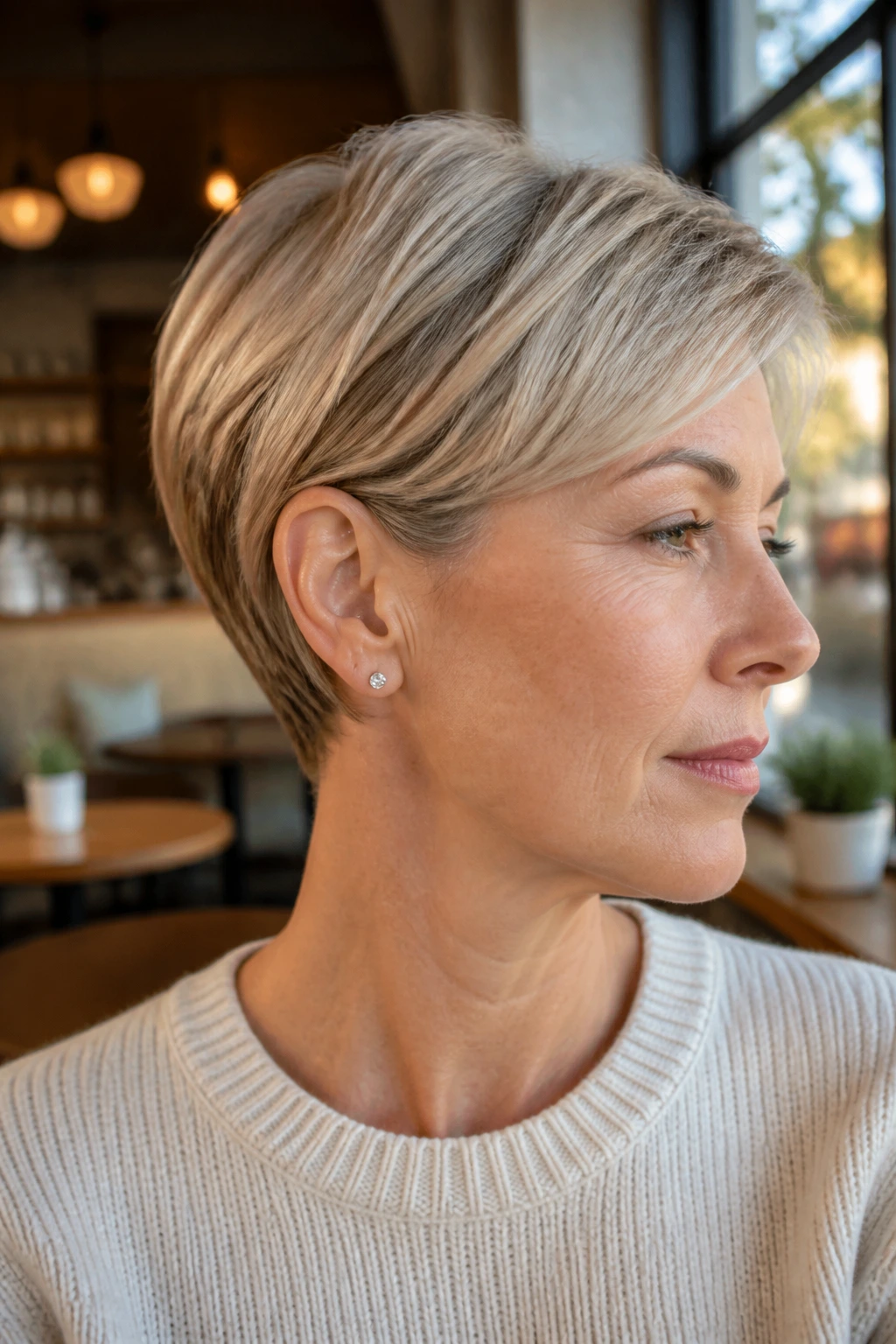
This is one of those cuts that looks simple until you notice how much shape is happening at the ear line. The front stays long enough to tuck, the back stays neat, and the razor softens the edges so the ear tuck doesn’t create a sudden shelf. Fine hair benefits from that kind of controlled softness because it makes the style look intentional instead of unfinished.
What I like here is the ease. You can wear it smooth and office-ready one day, then rough it up with dry texture spray the next morning and it reads as a different haircut. That flexibility is useful when your hair is delicate and won’t hold a heavy style for long.
If your glasses sit high on the face, this crop behaves well. The tucked pieces play nicely with frames instead of fighting them.
9. Soft Shag Bob with Wispy Layers
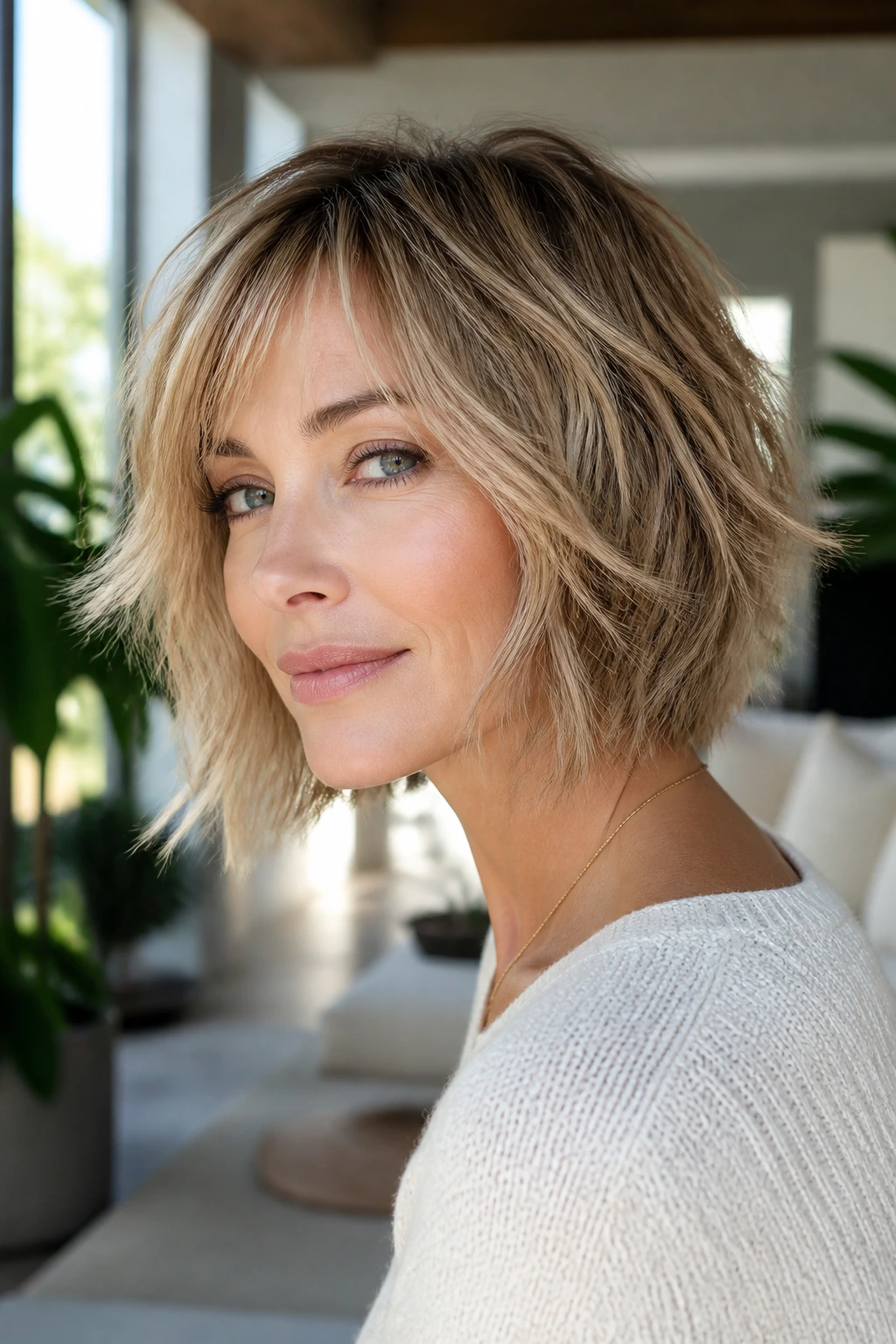
A shag can go wrong on fine hair when the layers get too hungry and the ends start looking see-through. Keep it soft, though, and the shag bob becomes one of the best ways to fake density. The movement around the crown and cheekbones makes the hair look busier than it is, which is the entire point.
The razor should be used with restraint. Think soft edges, not shredded ends. The best versions leave enough substance at the bottom so the cut still has a perimeter. Without that anchor, the layers just float.
What to watch for
- The top should move, not frizz out.
- The sides should skim the face, not flare out.
- The bottom line should stay visible.
- The fringe, if you have one, should sit a little longer than you think.
This is one of the few cuts where a little bedhead helps. Not chaos. Just bend.
10. Undercut Pixie Bob
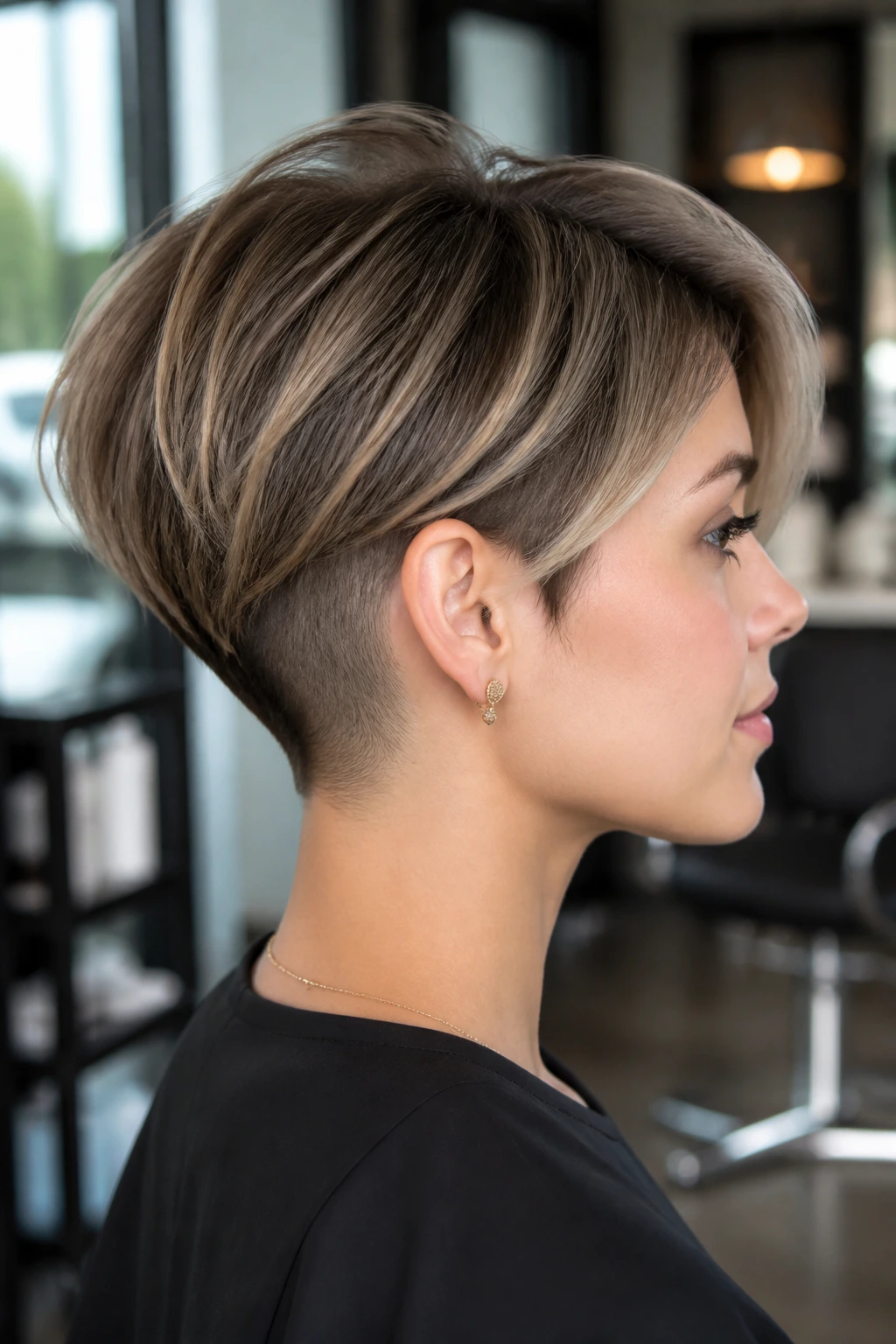
Here’s the blunt truth: if fine hair keeps puffing at the sides and collapsing on top, an undercut pixie bob can solve both problems in one shot. The hidden or partially hidden undercut removes bulk at the nape or around the lower sides, while the top keeps enough length for volume. The razor comes in at the top layers and fringe, keeping everything light and movable.
It is not the softest look in this list. It has a bit of bite. That’s the appeal. You get a clean shape that still feels feminine, especially when the top is swept diagonally across the head.
Best for women who like neat edges but hate spending half an hour shaping them. If you’re nervous, start with a subtle undercut. You can always go shorter underneath later. You can’t put the hair back once it’s gone.
11. Piecey Layered Lob
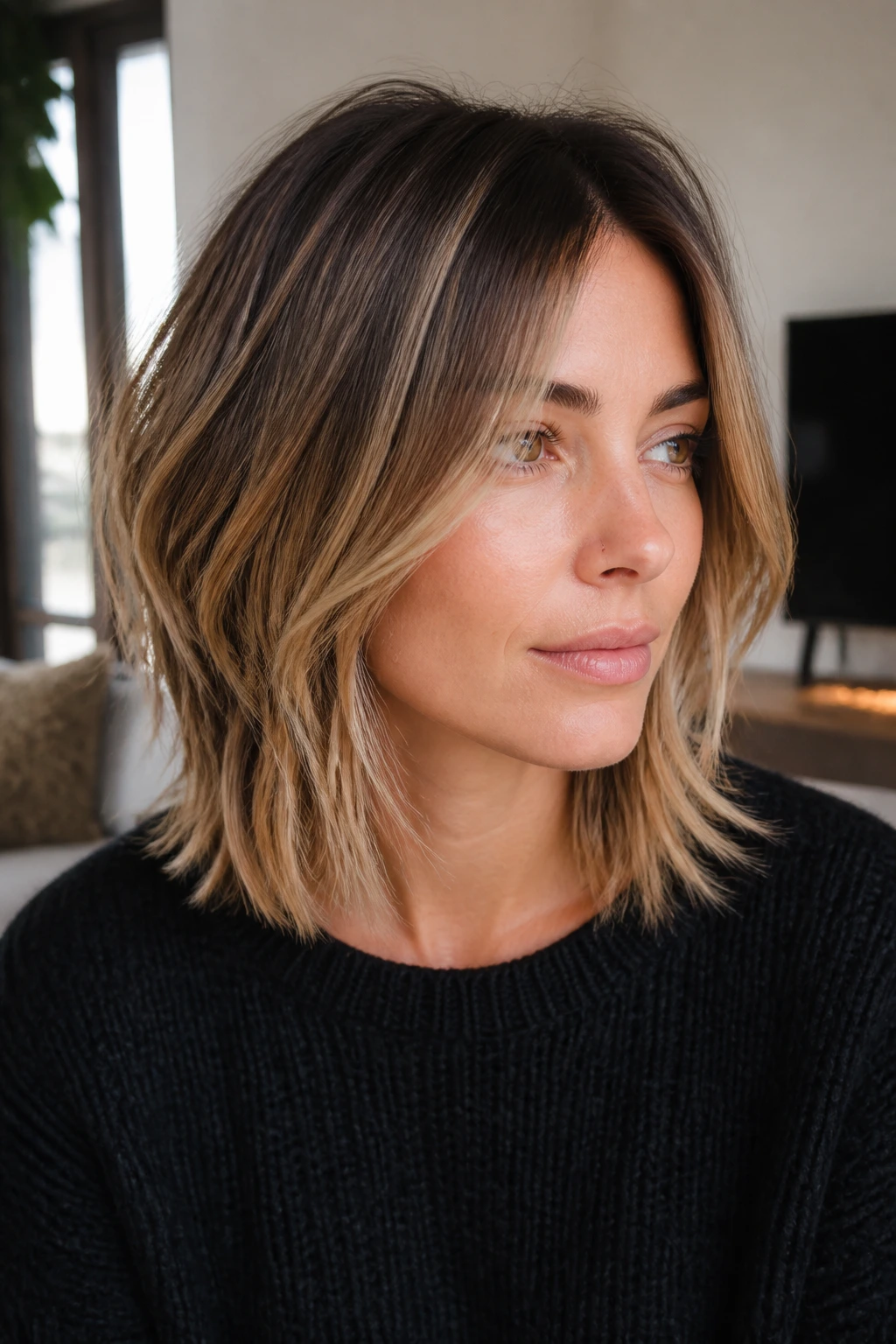
The layered lob is the longest style here, and I’m including it because fine hair often needs a little extra length to feel like itself. The trick is not to let it get too heavy. Razor-cut ends keep the lower half from dragging, while a few well-placed layers create movement around the collarbone and shoulders.
This cut is the bridge for someone growing out a bob but not ready to live with a blunt shoulder-length sheet of hair. It keeps enough shape to look deliberate, but the feathered ends stop it from looking flat. A bit of wave spray through the mid-lengths does a lot.
It also gives you room to tuck, clip, pin, and change the part. Fine hair likes options when the texture itself is limited.
12. Nape-Hugging Graduated Bob
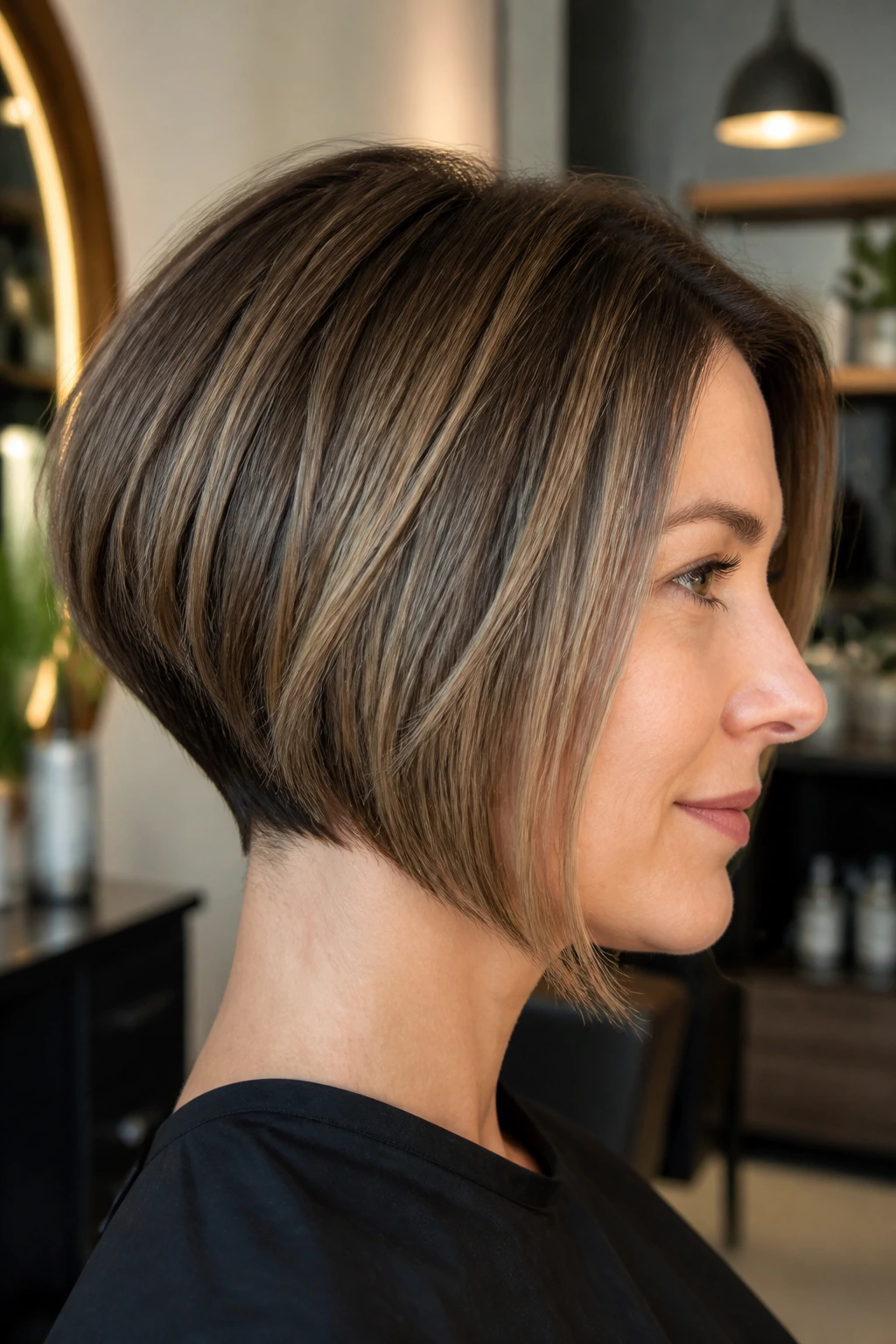
A graduated bob can be brilliant on fine hair if the graduation is subtle and the nape is tight. The short back lifts the silhouette, while the front length keeps the cut from looking too severe. Razor softening at the ends prevents the front from turning into a clean but lifeless line.
This is the haircut I’d hand to someone who likes polish. It reads neat in the morning and still holds its shape after a long day, which matters more than people admit. Fine hair tends to lose structure faster than thick hair, so a cut with a built-in shape is a smart move.
A glossing serum can work here, but keep it off the roots. A pea-size amount, warmed in the hands, is enough.
13. Side-Swept Razor Crop
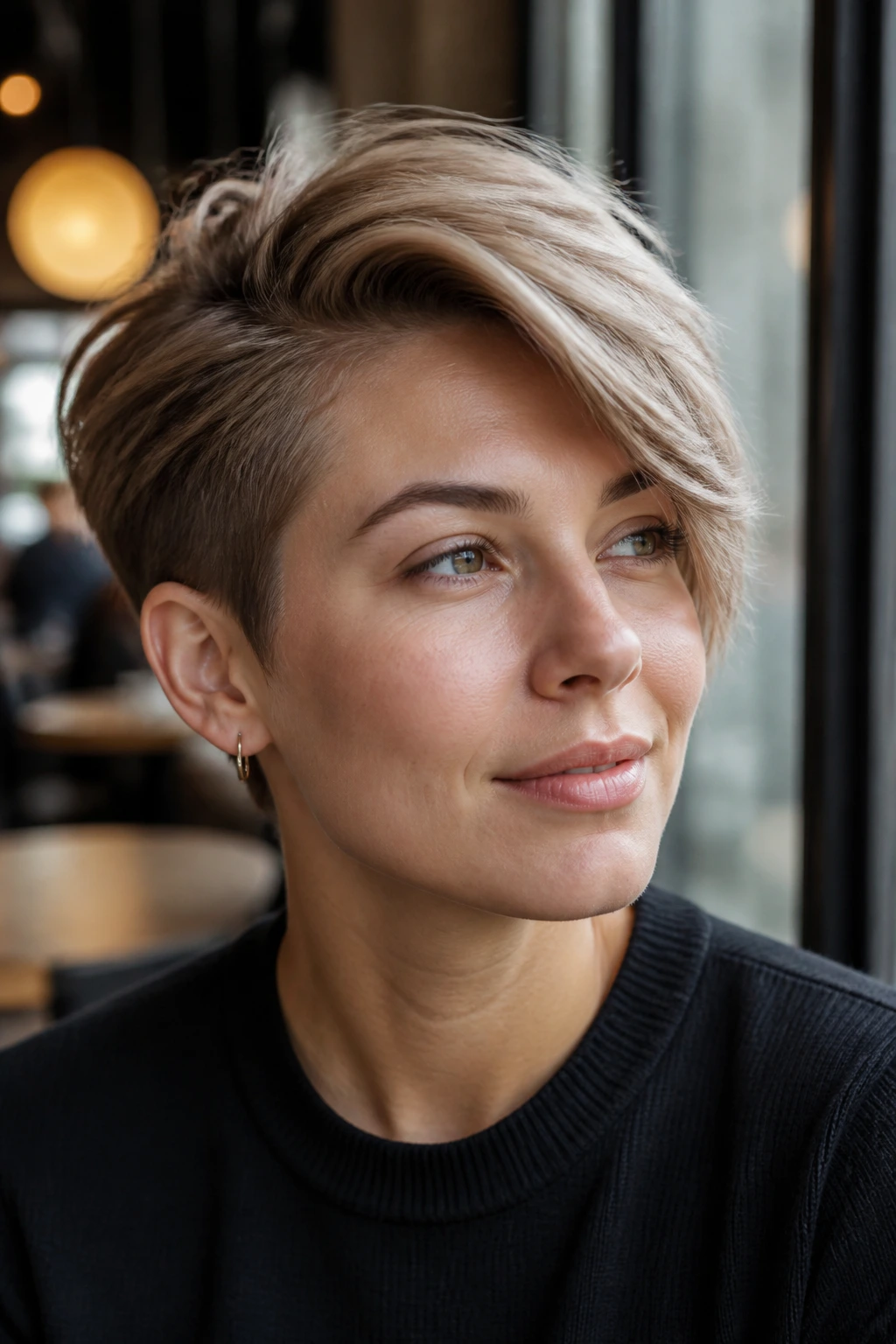
This is the cut for the days when you want the front to do the talking. The side sweep gives instant lift and creates the illusion of more hair across the forehead and temple area. Razor-cut ends keep the sweep soft, so the front doesn’t look carved or helmet-like.
Why the side sweep matters
Fine hair often needs direction. Without it, the strands fall straight down and reveal every thin patch. A side sweep changes the line of sight. It also gives you a place to hide a cowlick if your front hair refuses to cooperate.
Keep the opposite side shorter and cleaner. That contrast helps the sweep feel fuller. A tiny amount of root mousse at the front and a quick blast with the blow-dryer does most of the work. No need to overbuild it.
14. Mini Wolf Cut with Feathered Ends

A full wolf cut can be too much for fine hair. A mini version, though, keeps the wild shape but reins in the chaos. The crown gets a bit of lift, the layers around the face stay light, and the ends are razor-soft so they don’t puff out like a triangle in bad lighting.
This works best on hair with a slight wave or at least some bend. Straight, silky hair can wear it too, but it usually needs a little texture spray or a small bend from a flat iron. The point is not to make the hair look messy. The point is to make the movement visible.
I’d keep the fringe longer on this one. Too-short wisps can vanish on fine hair.
15. Wisped Pageboy
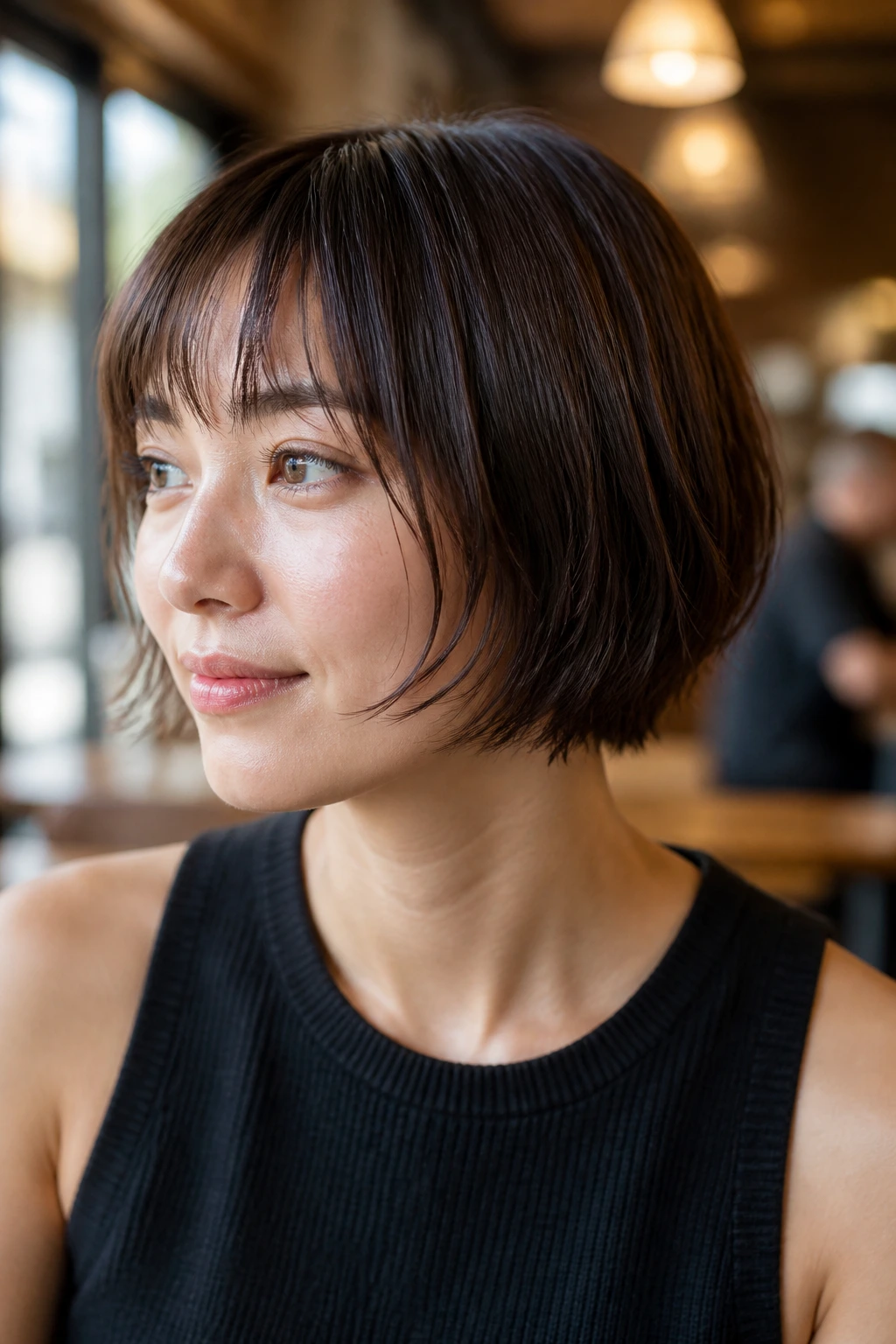
A pageboy sounds old-fashioned until you put a modern razor edge on it. Then it gets interesting. The line around the jaw stays recognizable, but the ends are softened enough to move instead of sitting in a rigid curve. Fine hair loves that compromise.
This cut feels especially good if you like a slightly retro shape without the full commitment of a vintage blowout. It has a neatness to it, but the wispy finish keeps it from looking stiff. A flat brush and a little bend under the ends can make it look polished in five minutes.
If your hair is very straight, this style can still work. Just ask your stylist not to over-thin the perimeter. The shape needs enough substance to hold its outline.
16. Cropped Curl-Enhancing Shag

Fine hair that also has a wave or loose curl pattern needs a different kind of razor work. The goal is not to shred the curl. It’s to let the curl bounce without getting trapped under too much weight. A cropped shag with careful razoring around the ends can keep the shape lively and stop the bottom from puffing into a shelf.
Best when you want motion
The top and sides should be short enough to show the bend in the hair, but not so short that the curls spring up unpredictably. If your hair gets frizzy fast, ask for more point cutting and less blade work on the outer surface. The difference matters.
This cut looks best with a diffuser or air-drying and a light curl cream. Heavy creams are a bad match. They flatten the very movement you’re paying for.
17. Slicked-Back Razor Pixie
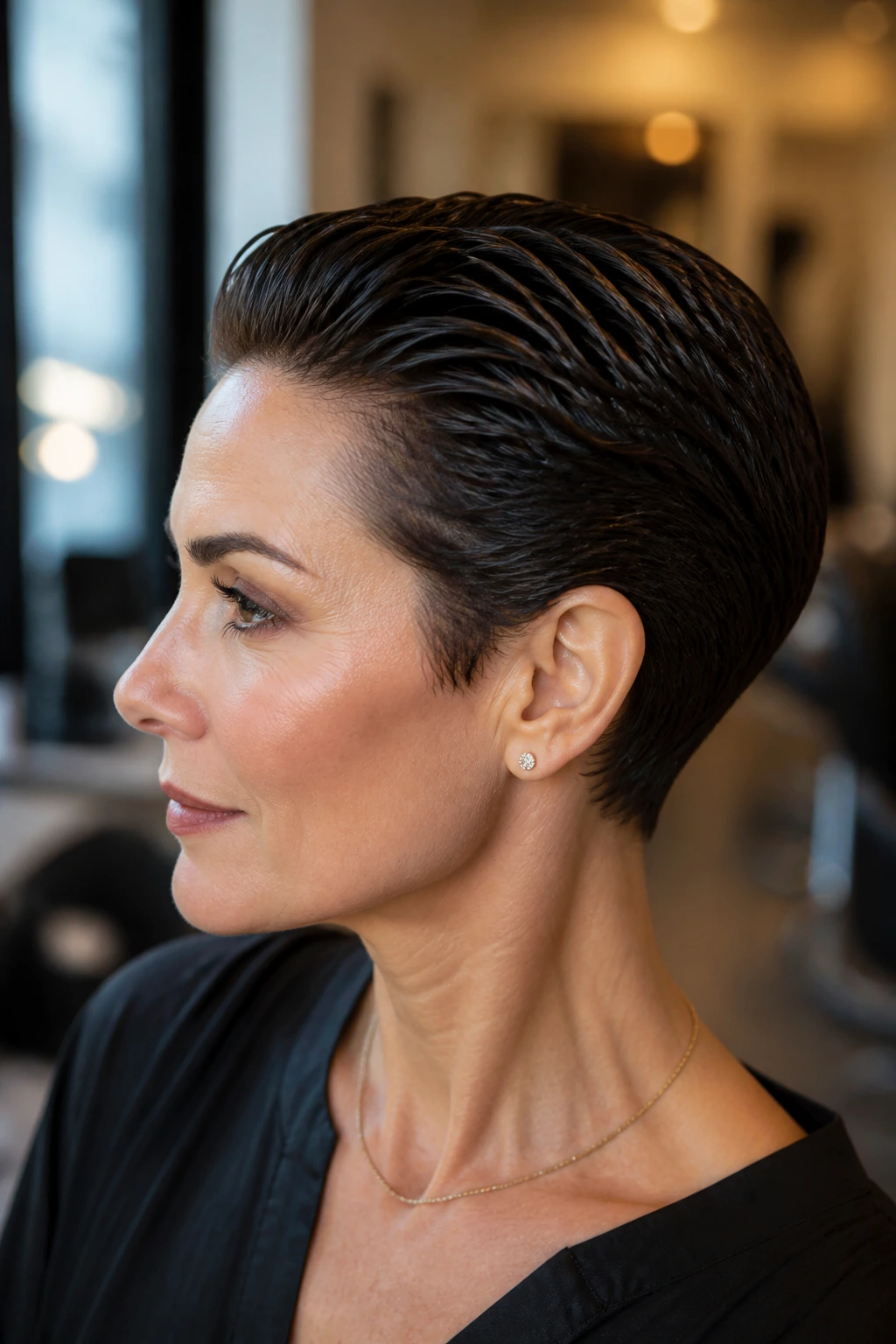
A slicked-back pixie can be a relief when fine hair refuses to cooperate. The razor keeps the top light, the sides stay neat, and a small amount of styling cream or gel pulls everything backward into a glossy, deliberate shape. It’s short, sharp, and a little glamorous in a way that doesn’t need much explaining.
This is one of the best short styles for a day when your roots are oily but your ends still need shape. That sounds like a bad hair day. On a pixie like this, it’s a feature. The natural oil at the root helps the slicked-back finish hold.
The key is restraint. Use enough product to smooth, not enough to soak. If the hair turns wet-looking and limp, the cut loses all the clean edges that make it work.
18. Collarbone-Grazing Razor Lob
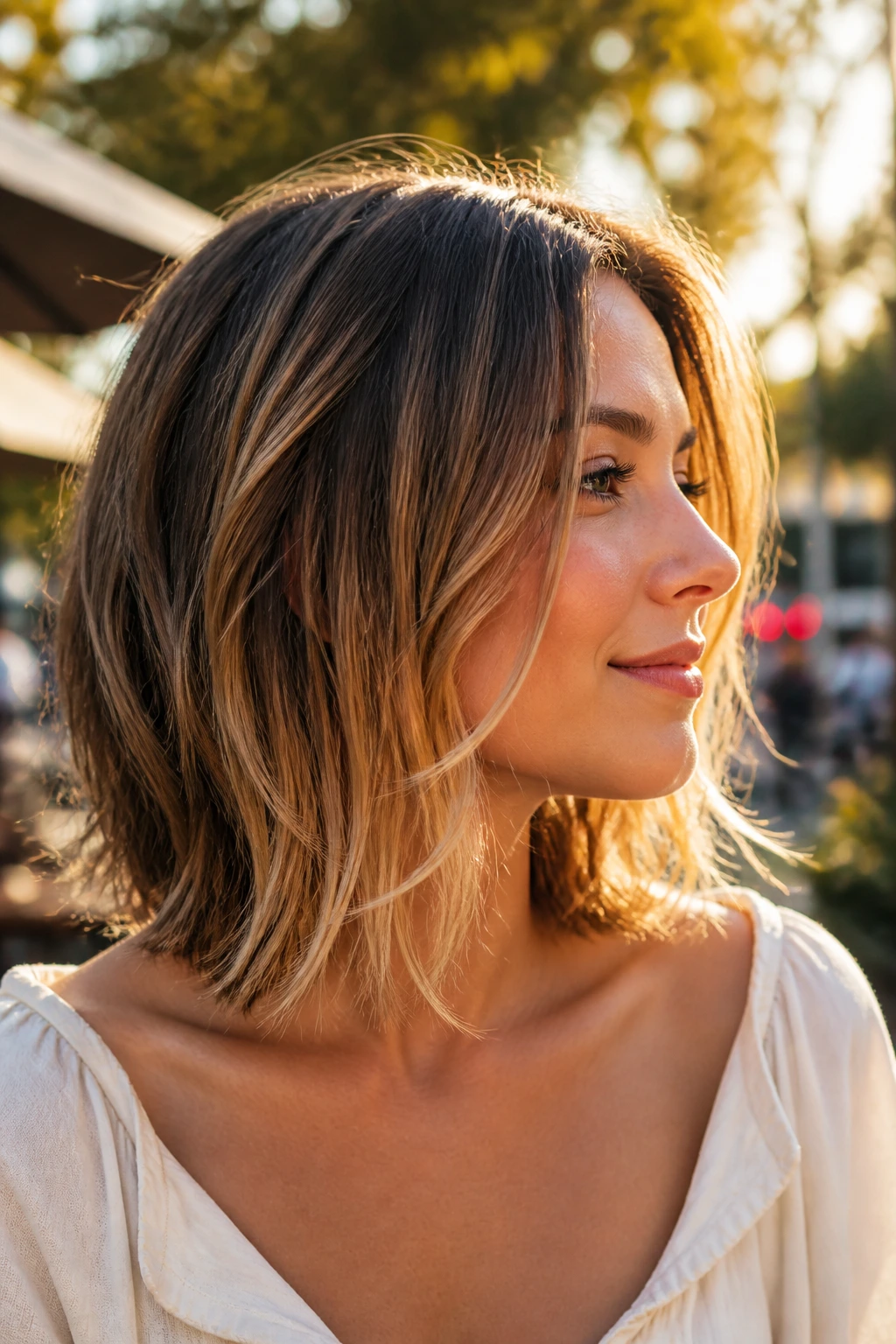
This is the longest cut in the group, and I’m including it because some fine-haired women need a little extra length to feel comfortable. A collarbone-grazing lob with razor-soft ends can still read as light if the perimeter isn’t blunt. The hair brushes the collarbone, moves when you walk, and doesn’t sit there like a heavy curtain.
The upside here is versatility. You can tuck it, wave it, clip it, braid it, or wear it sleek. The downside is that too much length will drag the volume down, so keep the ends clean and the layer placement disciplined. Ask for softness, not mush.
If your hair breaks easily, this longer short cut is often kinder than a super-short crop. Less stress. More options.
19. Brushed-Forward Short Bob with a Light Fringe
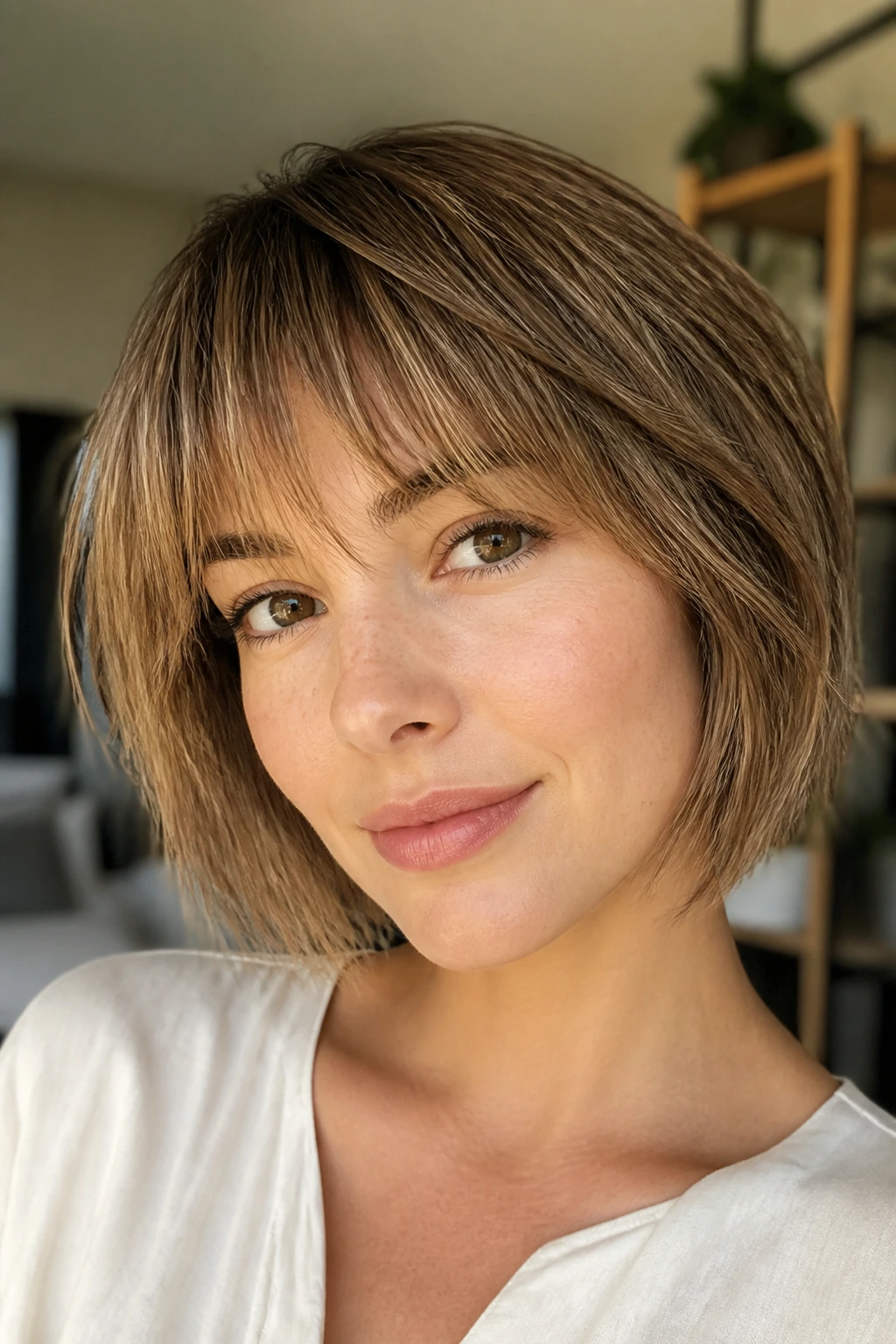
Short bobs don’t always need to be brushed back or tucked. Brushing the hair forward can create a fuller-looking front, especially when the fringe is light and the razor has softened the ends. The shape lands somewhere between sweet and slightly cool, which is a nice place to be.
A forward brush helps disguise sparse spots near the temples and makes the top look denser. That’s the practical part. The visual part is the soft frame around the eyes and cheekbones, which gives the whole cut more presence.
Keep the fringe narrow and feathered. If it gets too thick, it steals density from the rest of the cut. Fine hair works better when the bang area feels airy, not heavy.
How to Ask for the Right Razor-Cut Shape at the Salon
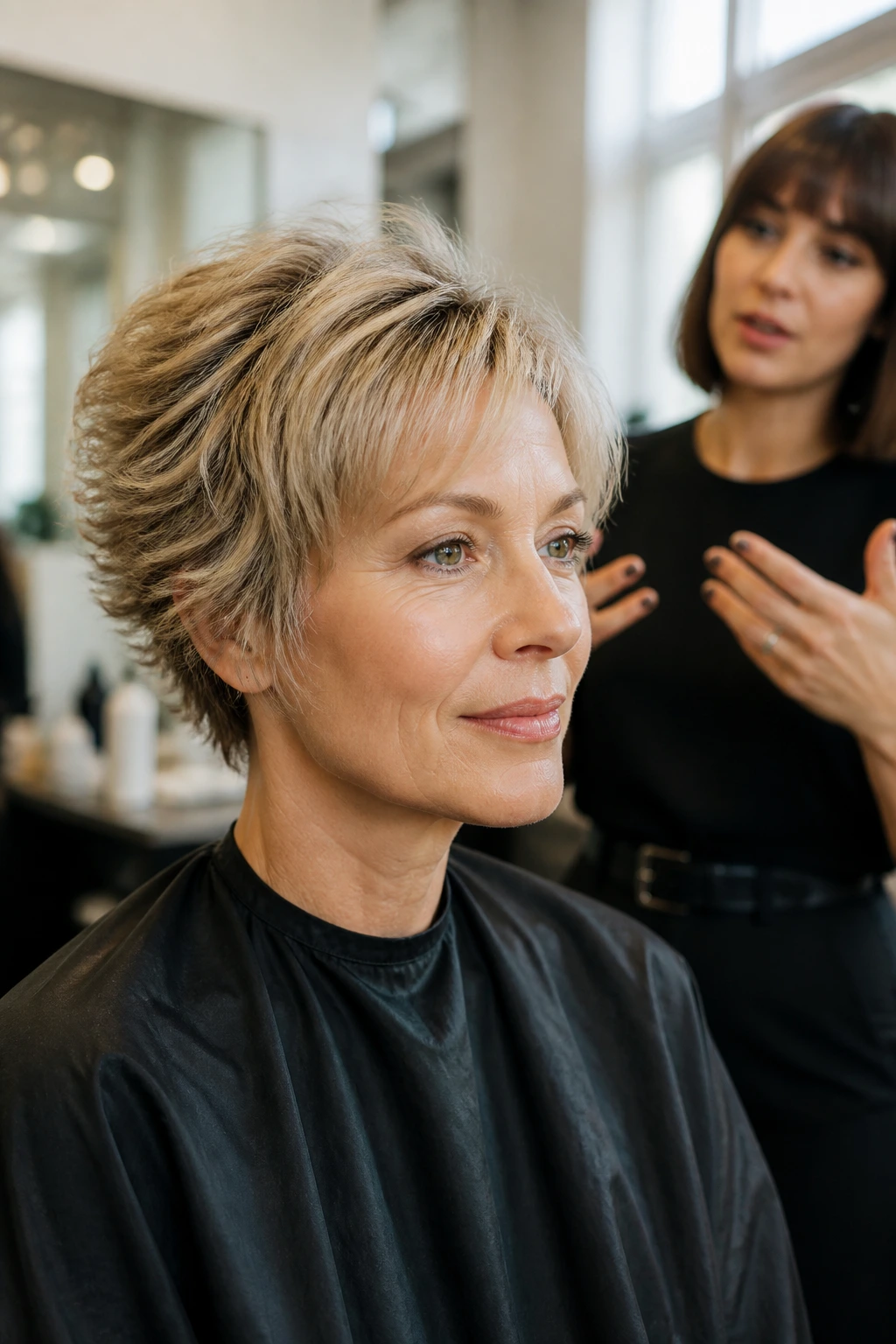
Fine hair is one of those situations where the photo on your phone matters less than the sentence you say after it. You need to describe the behavior you want: lift at the crown, softness at the ends, movement around the face, and no bulky bottom line. That gives the stylist something practical to work with instead of a vague “I want volume” request that can turn into a layering experiment.
Bring two photos if you can. One should show the shape you want from the front. The other should show the side or back. That second angle saves you from surprises, especially with short cuts where the nape and crown can change the whole read of the hairstyle. If your hair lies flat at the sides or kicks up at the crown, say so. Stylist logic changes fast once cowlicks enter the room.
Ask whether the cut will be razor-finished, point-cut, or a mix. I prefer a mix for fine hair. Full razoring everywhere can make the ends feel too thin. A smart stylist will use the blade where you need softness and keep scissors near fragile areas that already feel sparse. That’s the difference between a flattering short cut and one that looks cool for a week and fussy after that.
Essential Tools for These Cuts
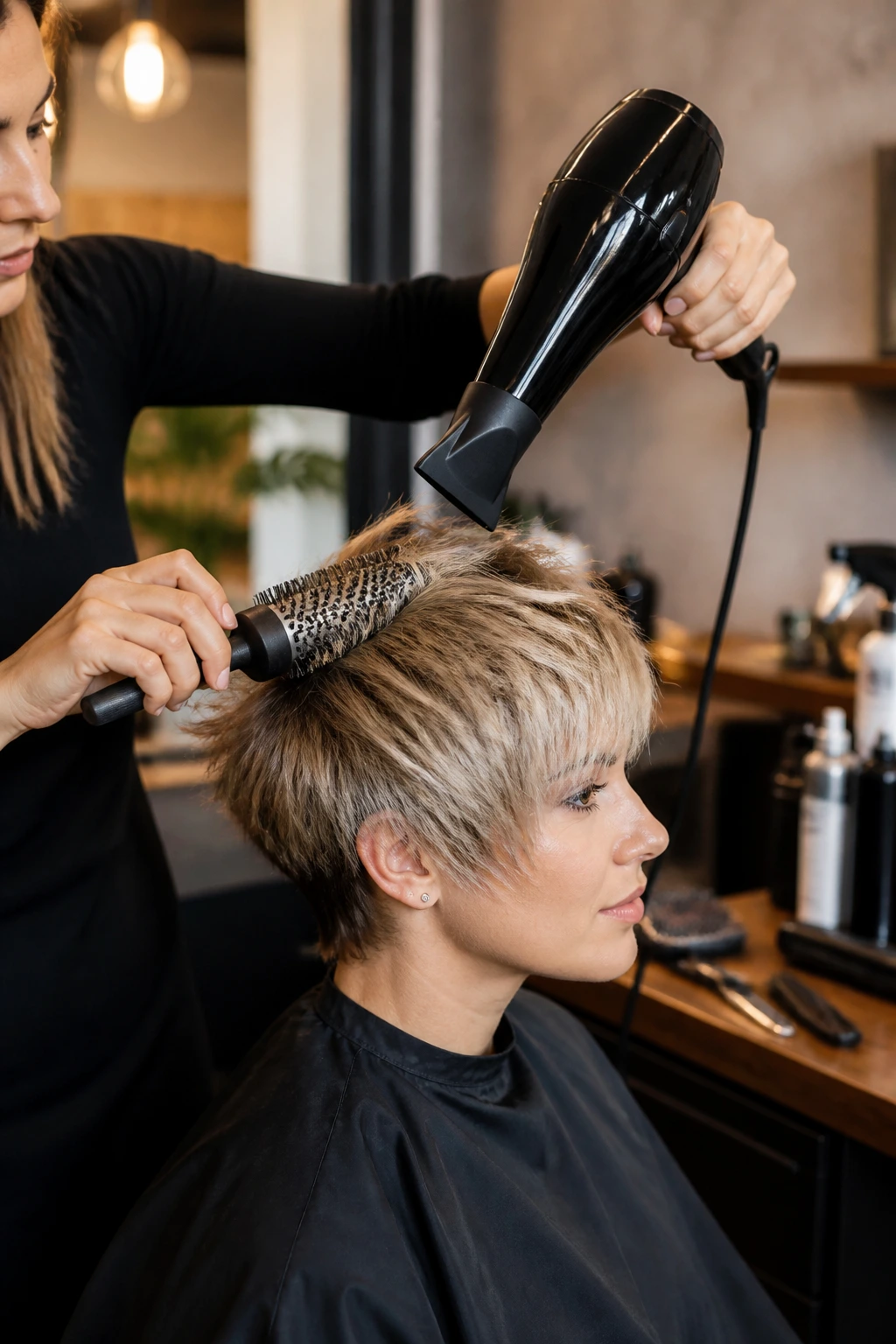
- Blow dryer with a nozzle attachment — The nozzle keeps the airflow directed so fine hair doesn’t puff into a halo while you dry.
- Small round brush, 1 to 1.5 inches — Best for lifting the roots on bobs, bixies, and pixies without bending the ends too much.
- Vent brush or paddle brush — Useful for rough-drying a short crop fast when you don’t need a polished finish.
- Lightweight mousse — Gives root support without the crunchy feel that fine hair hates.
- Texture spray — Adds a little grit at the mid-lengths and ends so the cut doesn’t look slippery.
- Matte paste or soft clay — Better than oily pomades for piecey pixies and short crops; use a pea-size amount.
- Tail comb — Helps set parts, lift sections at the crown, and keep the shape clean while styling.
- Sectioning clips — Handy when you want to dry the top separately from the sides.
- Flat iron with slim plates — Optional, but useful for adding a slight bend to a bob or polishing a side sweep.
- Dry shampoo — A decent one can buy you a day between washes, which matters when fine hair gets oily fast.
The Salon Brief That Gets the Cut Right
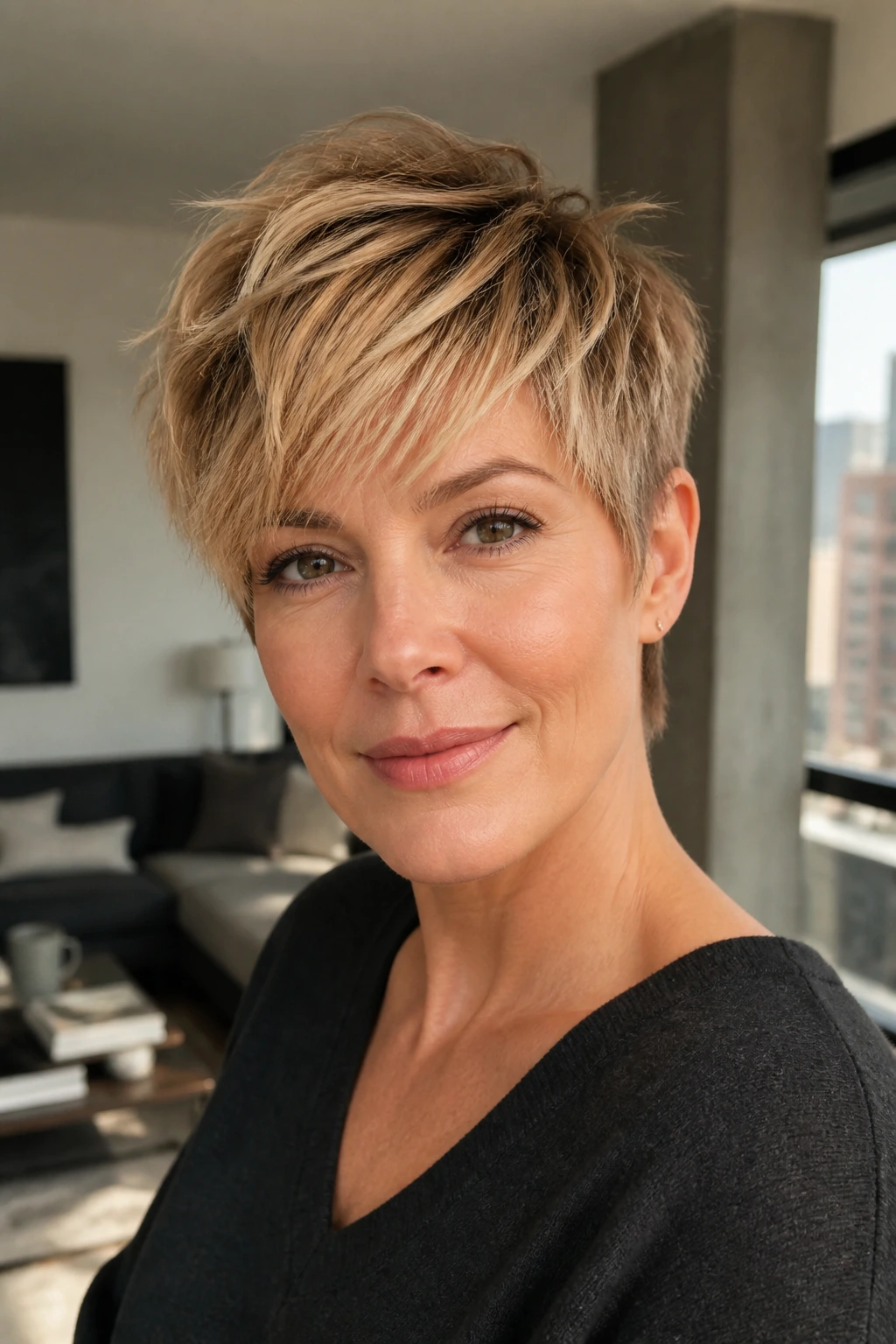
Tell the stylist what your hair does when you do nothing to it. That sounds small, but it’s the useful part. Does it collapse around the ears? Does it separate at the crown? Does one temple sit flatter than the other? Fine hair cuts need that information more than they need mood words like “edgy” or “soft.”
Be plain about your maintenance limit. If you only want to style your hair for six minutes, say six minutes. If you can handle a brush and blow-dryer but not a round-brush marathon, say that too. A razor-cut short style can be very low-fuss, but only if the shape is built around the way you actually live.
Ask for a perimeter that stays visible. I’d rather see a bit of edge left in the bob or pixie than have the cut thinned to the point where it looks airy in the chair and empty at home. Fine hair needs structure more than it needs aggressive feathering. That one request alone can save the haircut.
How to Wear These Cuts Day to Day
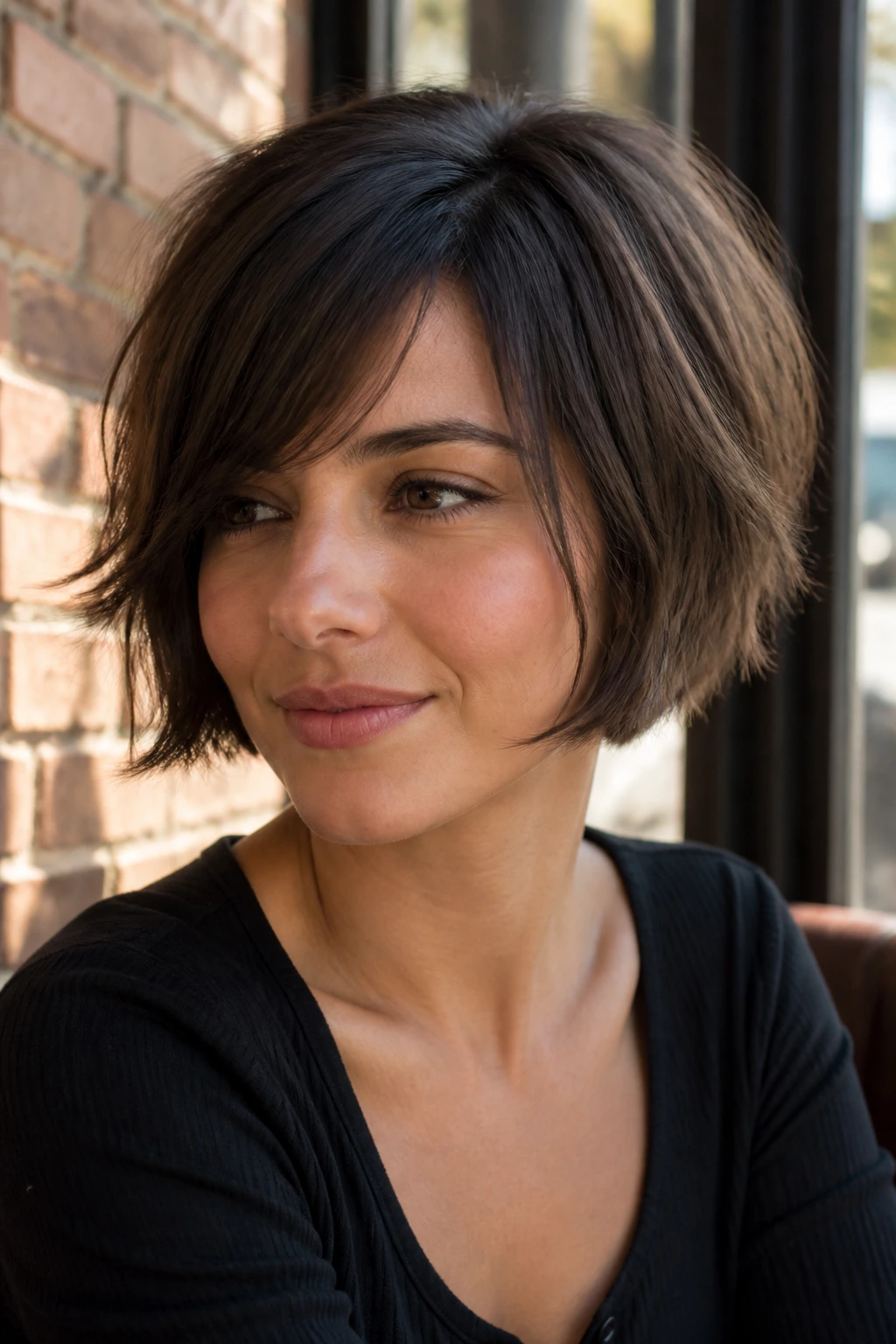
Presentation: Keep the finish aligned with the cut. A feathered pixie looks best when the top is separated into small pieces, not brushed into one smooth cap. A bob with razor-soft ends can go sleek if you want polish, or slightly roughed up if you want the shape to feel fuller. The point is to show the texture, not bury it under product.
Accompaniments: Earrings, collars, and glasses all change the way a short cut reads. Small hoops and sharp frames suit crops with clean lines. Softer, rounder frames can mellow out a spiky pixie or a shag bob. High collars and thick turtlenecks can crowd a very short neckline, so if you wear those often, leave a touch more length at the nape.
Portions: On fine hair, the balance between crown, sides, and fringe matters more than overall length. Keep a little more length where you need movement, usually at the top or around the face, and a little less where the hair tends to sit flat. A short bob that’s too long at the bottom loses lift fast. A pixie that’s too short everywhere can expose a sparse hairline. The sweet spot is usually somewhere in the middle, which is annoyingly unsatisfying to hear but true.
Lift: Your daily routine should be simple. Root mousse near the scalp, a quick blow-dry with direction, then a small amount of paste or spray at the ends. That’s enough for most of these cuts. If you need more than that every morning, the shape probably needs adjusting.
Additional Tips and Texture Boosters
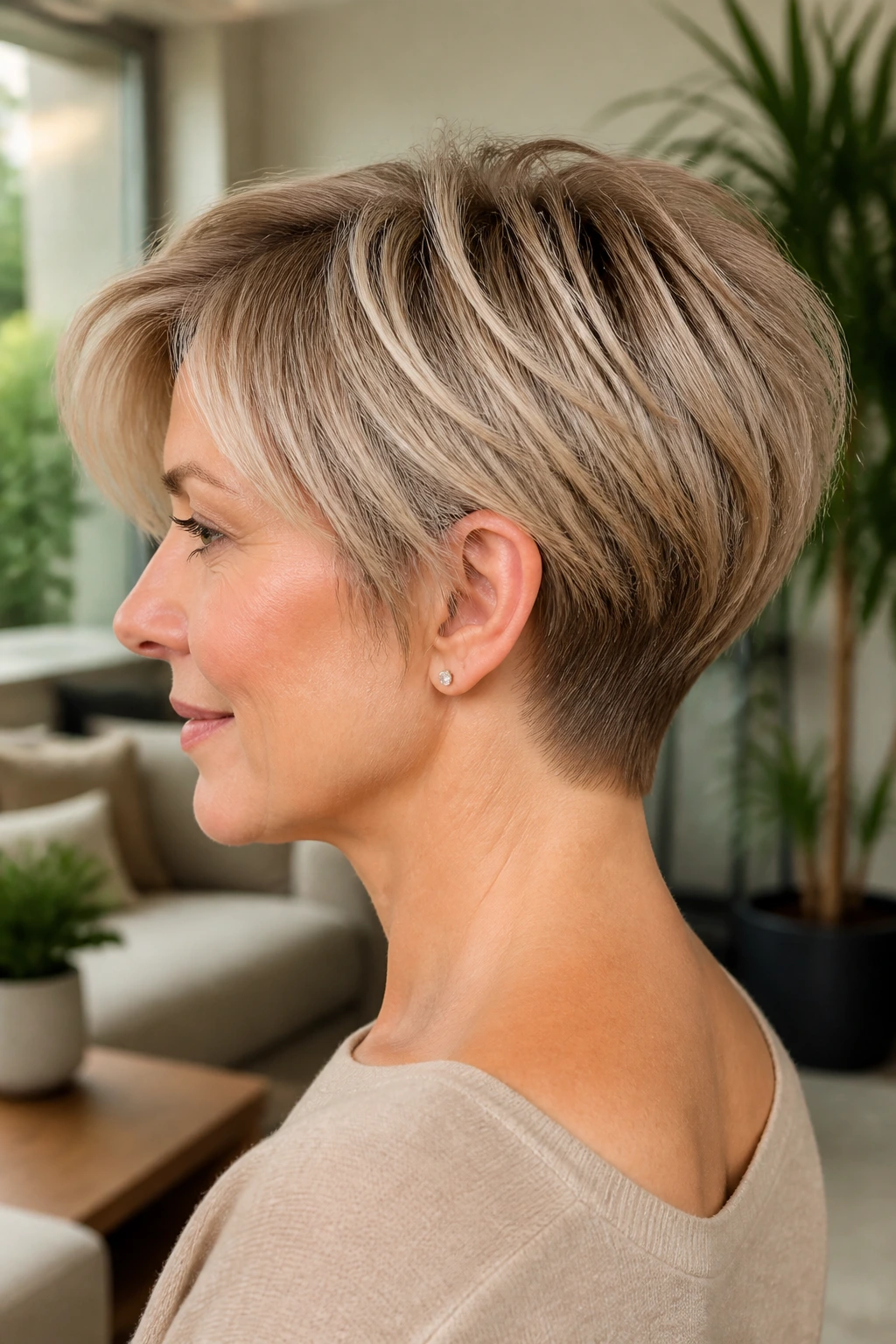
Root Lift: Blow-dry the hair about 80 percent dry before you reach for a brush. At that point, the roots are still pliable, and you can direct them up and away from the scalp without fighting a soaking-wet bend. A cool shot at the end helps lock the shape in place.
Texture Boost: Use texture spray on the mid-lengths, not the roots. Fine hair at the root gets greasy fast; mid-length grit is where the volume lives. Two short sprays, lifted from underneath, usually beat one heavy cloud from above.
Color Strategy: If your hair is extremely fine, soft highlights or a slightly deeper root can give the illusion of density. The cut does the shape work, but color can keep the scalp from showing through too sharply. Subtle is the word. Stripey highlights are a bad bargain.
Finish: If the ends feel too soft after styling, pinch a tiny amount of matte paste between your fingertips and tap it only on the tips. That little bit of separation can make a short cut look sharper without turning it sticky.
Common Mistakes That Flatten Fine Hair
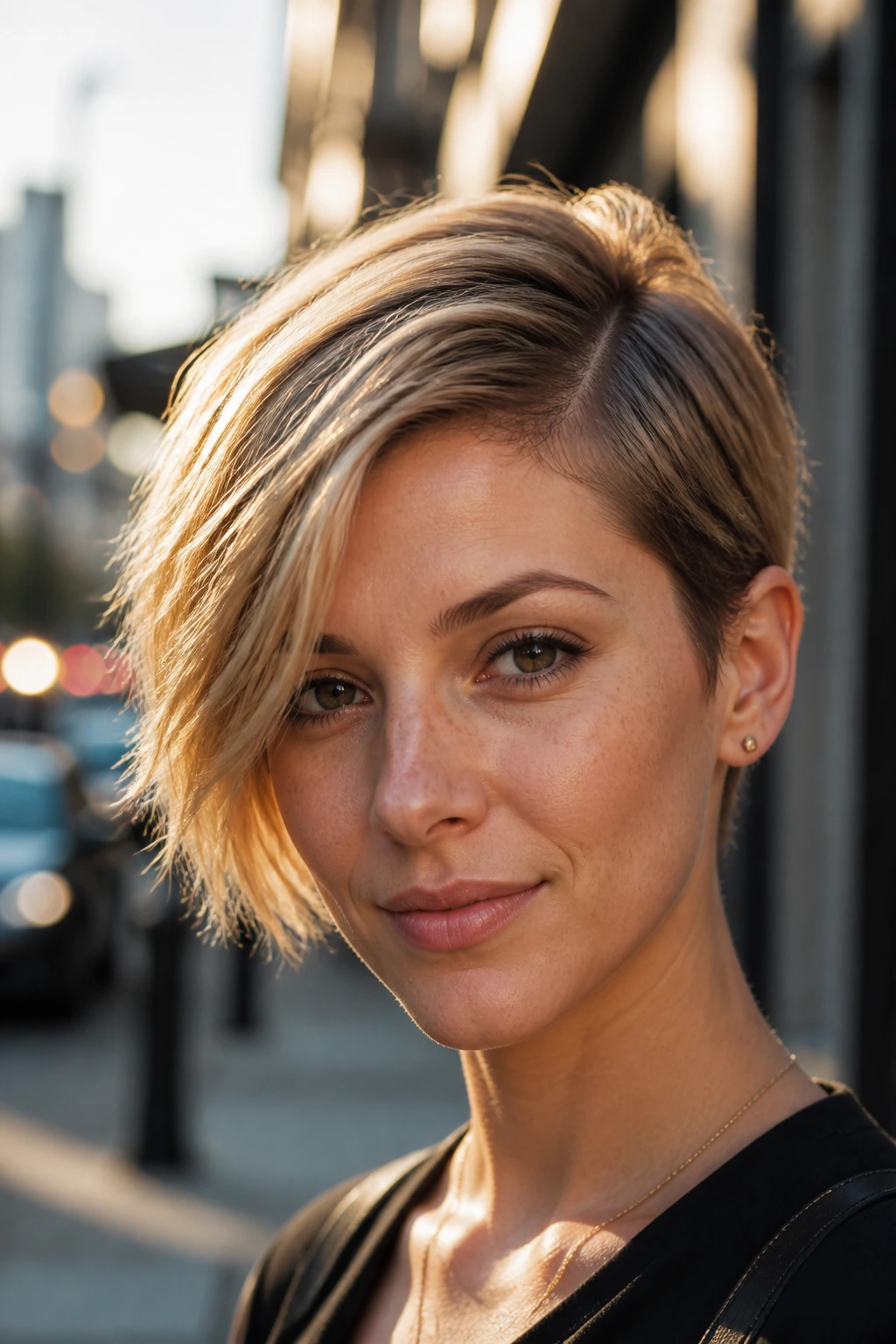
- Over-thinning the whole head: The haircut may feel light in the chair, but the ends start to look hollow after the first wash. Ask for softness only where the shape needs it.
- Using heavy cream from root to tip: Fine hair drinks up oil and cream fast, then drops. Keep rich products off the scalp and use them sparingly, if at all.
- Ignoring the part and growth pattern: A cut that fights your cowlick will never look tidy for long. Show your stylist where the hair splits and where it sticks up.
- Making the perimeter too blunt: A hard line can make fine hair look stringy by contrast. A little razor-softening keeps the bottom from looking like a shelf.
- Skipping the blow-dryer entirely on certain shapes: Air-drying can work for some cuts, but a short bob or pixie often needs a quick root set to keep the profile from collapsing.
- Letting dry shampoo pile up: It can save a day, then quietly dull the cut if you never wash it out. Clarify regularly so the scalp and roots can breathe.
Variations and Adaptations to Try

The Polished Office Crop: Keep the sides neat, the top controlled, and the fringe longer than eyebrow length. This version behaves well with a side part and a small dab of smoothing cream, which makes it easy to wear when you want a short cut that still looks composed.
The Air-Dry Bixie: Leave a little more length on top and around the face, then ask for soft razoring only on the ends. It’s the version for women who want movement without having to pick up a brush every morning. A little mousse and a scrunch usually do enough.
The Curly-Friendly Mini Shag: If your fine hair has a wave or curl, keep the layers longer and ask for less blade work on the outer surface. The cut should support the curl pattern, not slice it away. Diffuse gently and stop before the hair gets too puffy.
The Sleek Glass Bob: Go for a chin-length shape with razor-soft ends and a clean middle or deep side part. Use a light serum on the mid-lengths only and a flat brush to smooth the top. It’s sharper, cleaner, and better for people who like a neat outline.
The Grown-Out Razor Lob: Keep the front pieces a little longer and the perimeter feathered so the cut still looks deliberate while it grows. This is the most forgiving option if you hate frequent trims but still want the lighter feel a razor gives to fine hair.
Keeping the Shape Between Appointments
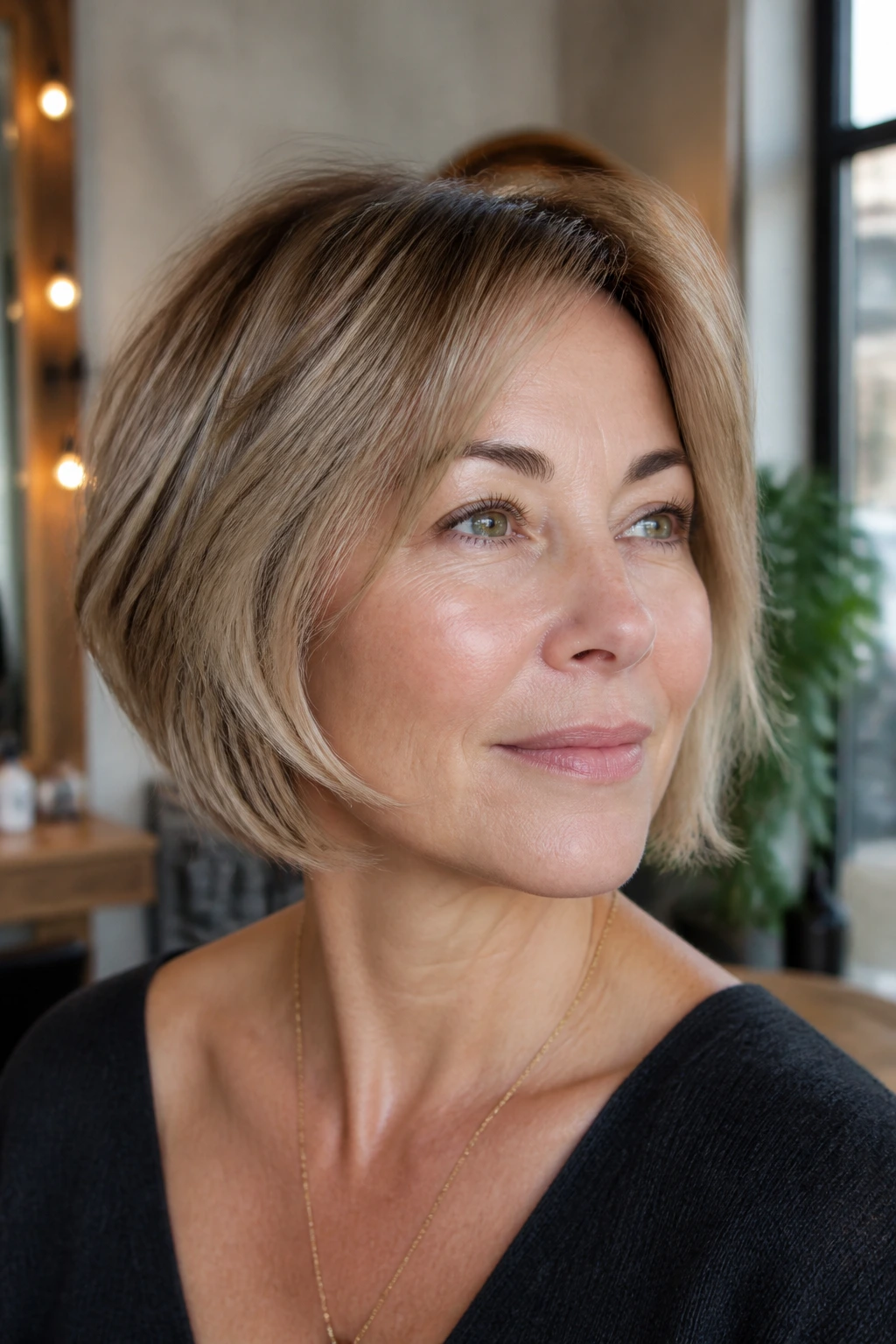
Short cuts on fine hair usually need touch-ups more often than long cuts, and there’s no clever workaround for that. Pixies and very short crops often want a trim every 4 to 6 weeks if you care about the shape staying crisp. Bobs can stretch to 6 to 8 weeks. A lob might last 8 to 10 weeks before the ends start looking tired.
Wash schedule matters too. Fine hair tends to show oil faster, especially around the crown and fringe, so many women end up washing every 1 to 2 days. If that sounds excessive, it isn’t for this hair type. The scalp and the cut both look cleaner when buildup stays under control. A light shampoo, a small amount of conditioner just on the ends, and a quick root lift while drying usually beat a pile of heavy products.
Sleeping habits make a difference. A satin pillowcase helps short, fine hair stay smoother and keeps the ends from roughing up overnight. If the cut flips weirdly in the morning, mist the roots with water, shape the part, and dry just the top section for 30 to 60 seconds. That little reset often fixes more than a full restyle.
If you’re growing the cut out, don’t wait until it looks shaggy to book a cleanup. Ask for a neckline tidy or a fringe trim between major appointments. That tiny maintenance visit keeps the cut readable, which is what matters most when hair is fine and shape-sensitive.
Frequently Asked Questions
Does a razor cut make fine hair look thinner?
It can, if the blade is used too hard or too often. A controlled razor cut removes bulk from the edges while leaving enough substance to keep the outline visible, which is why the stylist’s hand matters more than the tool itself.
What’s the safest short haircut for very fine hair?
A jaw-length bob with soft ends or a bixie with a tapered nape is usually the safest place to start. Both keep enough structure to avoid the see-through look that can happen with over-layered cuts.
Should fine hair be cut wet or dry?
Either can work, but dry refinement is useful when the hair has a cowlick, a strong part, or a tricky nape. Wet cutting gives the stylist a clean base; dry detailing shows how the hair actually falls. The best cuts often use both.
Can straight fine hair wear a razor cut without frizz?
Yes, as long as the razor work is controlled and the ends aren’t over-shredded. Straight hair shows every mistake, which is why a soft perimeter and light product are safer than aggressive texturizing.
How do I keep a short cut from puffing out at the sides?
Ask for a shape that narrows gently toward the nape and keeps the side volume from landing too low. At home, direct the airflow downward on the sides and upward at the roots so you don’t create a triangle.
What products weigh fine hair down the least?
Light mousse, dry texture spray, and a small amount of matte paste usually behave better than heavy creams or oils. If the product leaves your hands slick, it may be too rich for the roots.
Will these styles work if I have a cowlick?
Yes, but the cut has to respect the cowlick instead of fighting it. A deep side part, a longer fringe, or a little extra length at the stubborn area can keep the whole shape from flipping in the wrong direction.
How often should I get it trimmed?
Very short cuts need attention roughly every 4 to 6 weeks, while short bobs and lobs can go longer. Once the edges stop looking crisp and the crown starts to lie flat, the style loses the lift that makes it work.
Can I air-dry these styles and still get volume?
Sometimes, especially with bixies and soft shags. Fine hair usually needs a bit of root direction first, though, so even a 3-minute blast with a dryer can make the air-dry finish look fuller.
The Cuts That Keep Their Shape
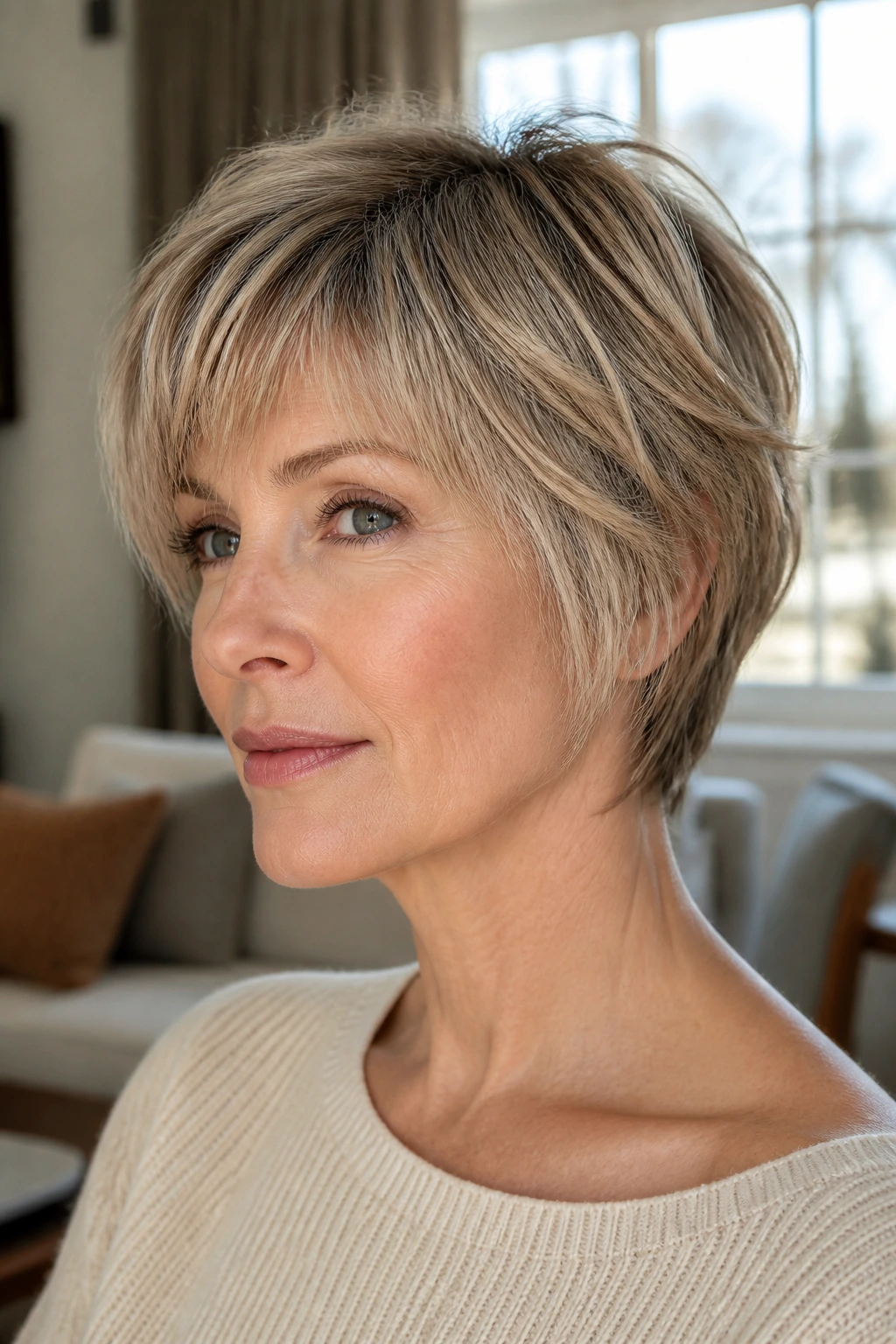
The best razor-cut short hairstyles for women with fine hair do one simple thing well: they give the hair room to move without taking away its body. That sounds small until you’ve lived with a blunt bob that hangs like wet ribbon or a pixie that puffed up in the wrong places. A clean razor hand, the right fringe, and a shape built around your own hairline make all the difference.
If you’re taking one idea from all of this, take this one: ask for softness where the hair needs movement, not everywhere at once. That’s the whole trick. The cut should look alive on a busy morning, after a quick wash, and again three weeks later when the shape has started to relax.
Bring a photo, bring your stubborn cowlicks, and be specific about how much time you want to spend styling. That tiny bit of clarity usually gets you a much better short cut than any vague request ever will.
