



Fine hair can look flat in a heartbeat, and bangs with choppy layers for fine hair are one of the few cuts that change that without turning your morning into a full styling project. A blunt fringe can sit like a tidy little shelf on the forehead; a choppy one breaks the line, lets air move through the front, and makes the whole cut look lighter on its feet.
That sounds small. It isn’t.
The difference shows up in the mirror fast: more lift at the roots, more movement around the cheekbones, less of that heavy, pasted-down feeling that can make fine strands look tired by lunchtime. The trick is restraint. Fine hair does not need to be shredded to look textured. It needs a smarter perimeter, a little irregularity at the ends, and layers placed where they can help instead of hollowing everything out.
Why These Cuts Earn Their Keep
-
They keep the front from collapsing: Choppy ends break up a solid fringe line, so the hair doesn’t fall into one flat strip across the forehead by noon.
-
They protect the perimeter: The better versions keep enough weight at the ends to make fine hair look fuller, not wispy.
-
They grow out with less drama: Soft, broken edges turn into face-framing pieces instead of a hard shelf that begs for a trim.
-
They work with second-day hair: A little bend and separation usually look better on these cuts than a perfect, freshly flattened blowout.
-
They give you styling room: Dry shampoo, a round brush, or even a quick bend with a flat iron can do a lot when the cut already has movement built in.
What Fine Hair Needs From a Fringe
Fine hair is not the same thing as thin hair, and that distinction matters here. Fine hair means each strand has a smaller diameter. You can have fine hair with plenty of density, which is why some people can wear a fuller fringe while others need something lighter and more broken up. Mixing those two ideas up is how people end up with a bang line that looks great for one day and then starts acting like a sad little curtain.
Diameter vs. Density
Small-diameter strands need a cut that keeps shape without asking the hair to hold too much weight in one place. That usually means a cleaner outer line and some choppy movement at the front, not a pile of aggressive internal layers that turn the ends see-through. If your hair is fine and sparse, the safest versions on this list are the ones that keep the fringe longer and the layers softer.
Where to Remove Weight
The front and the cheekbone area are where the illusion happens. That’s where a stylist can create lift without gutting the body of the cut. I’d be cautious with heavy thinning shears through the mids and ends; on fine hair, they can leave the whole shape looking frayed after one wash.
Why Dry Cutting Helps
Fine hair often lies to you when it’s wet. It stretches, clumps, and makes the front look denser than it really is. A good cut, or at least the final shaping, often benefits from seeing the hair almost dry so the fringe lands where it actually lives. That one detail saves a lot of regret.
1. Curtain Bangs with Feathered Ends
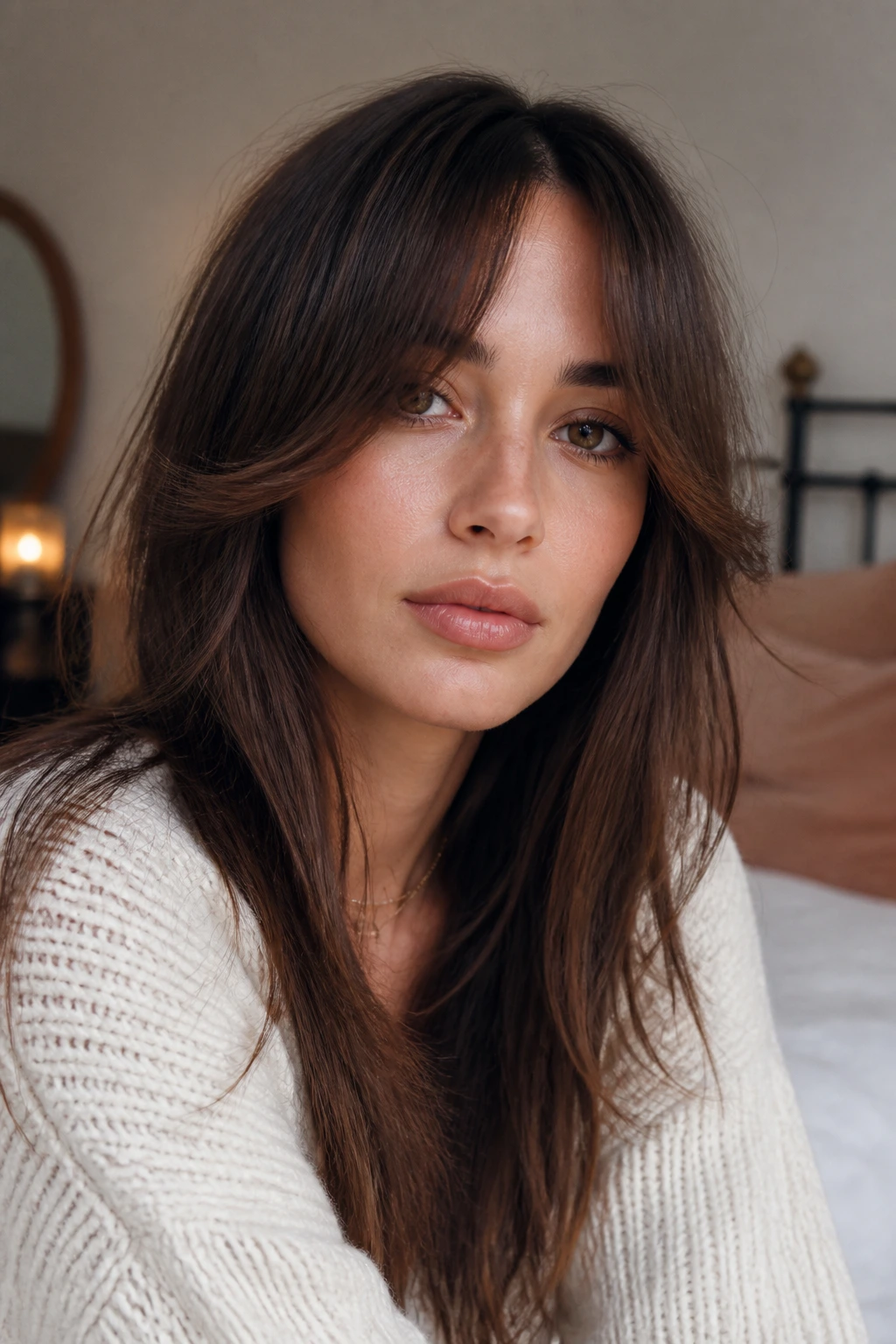
Curtain bangs are the safest way into fringe if you’re nervous about losing density in the front. The split at the center lets the hair fall away from the face instead of piling into a heavy block, and the feathered ends keep the line soft enough that fine hair still looks airy. The style works especially well when the shortest pieces hit around the bridge of the nose and the longest pieces blend near the cheekbone.
What makes them work on fine hair
The middle part creates a natural opening, which means the fringe doesn’t need to hold itself up all day as one solid mass. That matters. Fine hair appreciates any cut that avoids making one section carry too much visual weight.
Ask for the ends to be point-cut, not hacked straight across. You want texture at the edges, not holes in the body. If your hair leans flat at the root, blow-dry the front from side to side for the first 30 seconds, then sweep each side away from the face with a round brush. That tiny bit of movement gives the fringe a bend instead of a crease.
A good curtain bang on fine hair should look relaxed, not sparse. That’s the line.
2. Bottleneck Fringe with Soft Layers
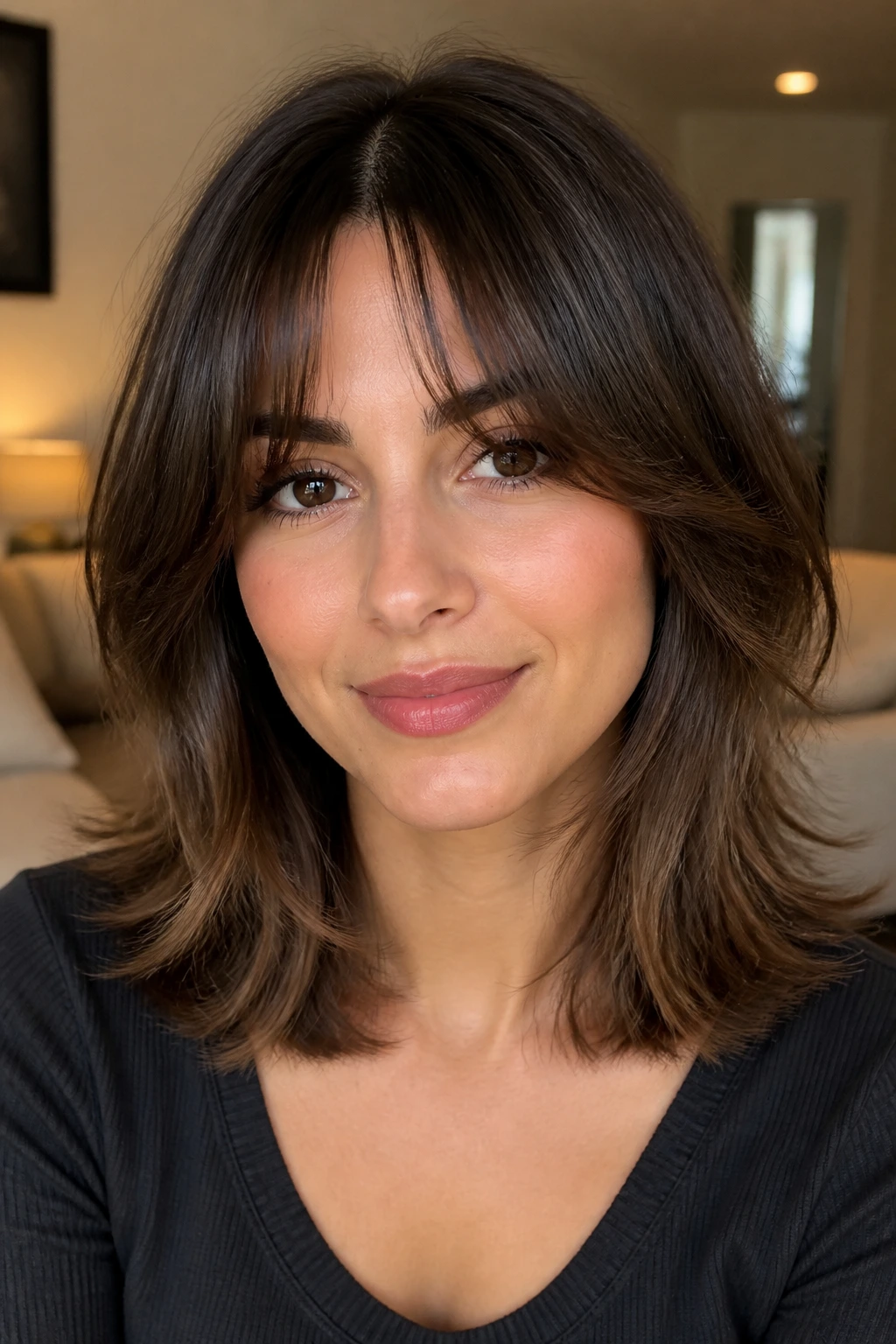
This is the most forgiving fringe shape on the list, and I say that without hesitation. A bottleneck fringe is narrowest at the center and widens as it moves toward the temples, which gives fine hair a little structure without trapping it in one flat line. The soft layers around it help the front blend into the rest of the cut instead of sitting on top like an afterthought.
If you’ve ever wanted bangs but worried they’d swallow your face, this shape solves a lot of that. The center stays light enough to expose a little forehead, while the side pieces create a frame that makes the whole haircut look more deliberate.
Best way to wear it
This cut likes a slight bend, not a stiff curl. Use a small round brush or a flat iron with rounded edges to tuck the sides away from the face just enough to open the cheekbones. If the fringe starts too thick at the center, it will drag fine hair down. Keep the center piecey and the side pieces longer.
It’s a smart choice for anyone who wants bangs that still read clean on day two.
3. Wispy Brow-Grazing Bangs
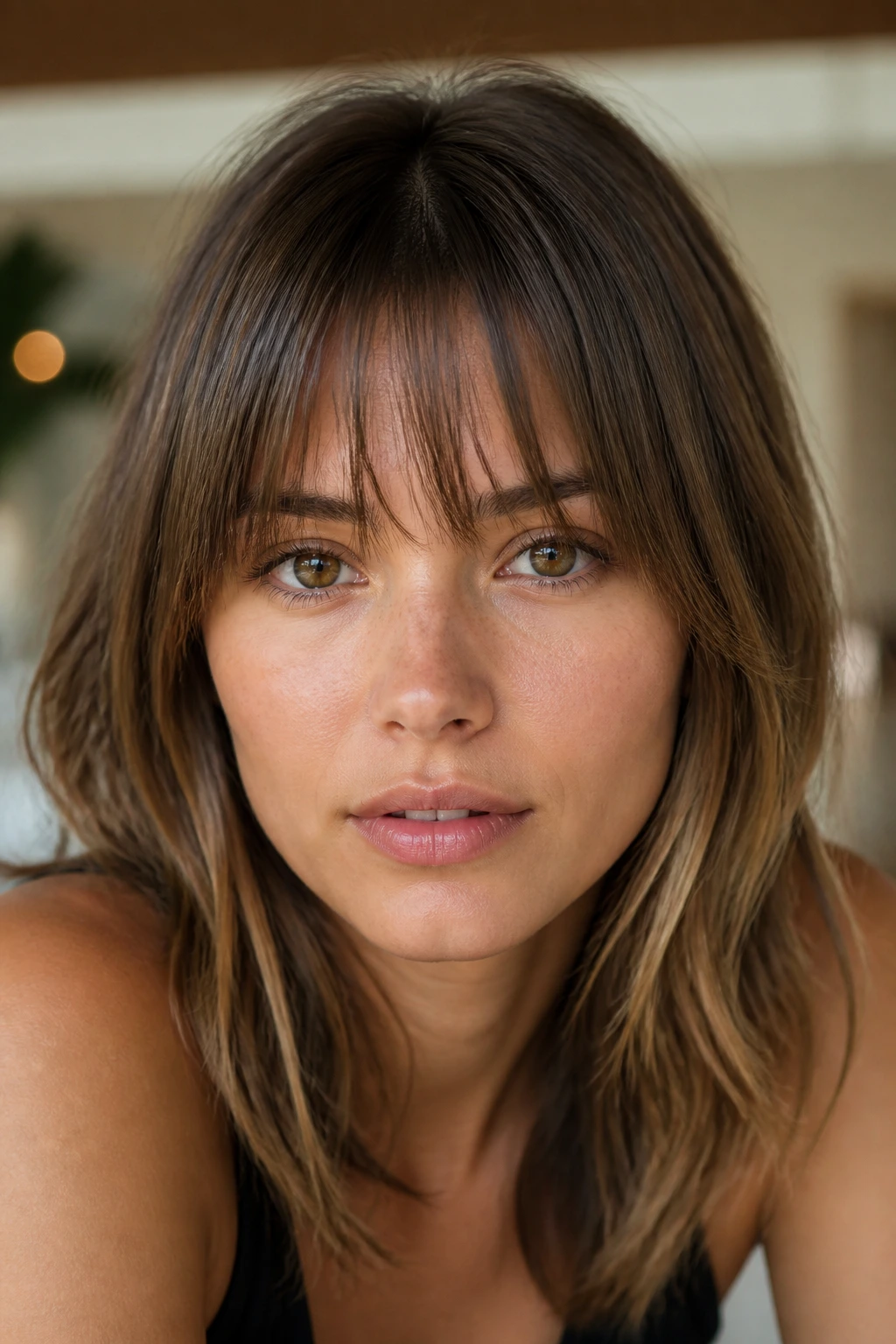
Why do wispy bangs work so well on fine hair? Because they never ask the front section to behave like a wall. The lightness is the point. These bangs skim the brows, usually land a hair or two above the eye line, and let a little skin show through so the cut feels soft instead of heavy.
The best version is not stringy. That’s the mistake. Wispy does not mean see-through. It means the bangs are cut with enough separation that they move, but not so much separation that you can count the hairs from across the room.
How to use it
Keep the ends blunt enough to hold a line, then soften the tips with point-cutting. That gives fine hair a bit of shape without destroying the edge. I like this on straight hair, but it also works on hair with a slight natural bend, because the fringe can break apart just enough to look lived-in.
If your forehead is small, leave a touch more length. If it’s larger, let the bangs sit nearer the brow. Tiny adjustments matter here. A quarter inch changes the whole face.
4. Side-Swept Fringe with Choppy Lob Layers

A side-swept fringe is underrated because it doesn’t try to be the star. It just solves problems. Fine hair that grows in a weird direction or flips at the front often behaves better when the bang line is swept off-center and tied into a choppy lob. The diagonal shape hides a cowlick better than a straight fringe ever will.
The lob matters too. A blunt, one-length shoulder cut can look polished, but once you add broken-up layers around the face, the whole style starts moving. The front lifts, the side part gives height, and the ends don’t sit like one heavy curtain around the jaw.
-
Best for: Cowlicks, low-maintenance mornings, and anyone who wants hair off the forehead without full bangs.
-
Styling note: Blow-dry the fringe in the direction you want it to fall, then switch sides for a few seconds to build a bit of root lift.
-
Watch out for: Too much layering near the temple. That can make the fringe disappear instead of sweeping.
This cut has a practical kind of charm. It doesn’t shout. It just works.
5. Micro Fringe with Piecey Tapering
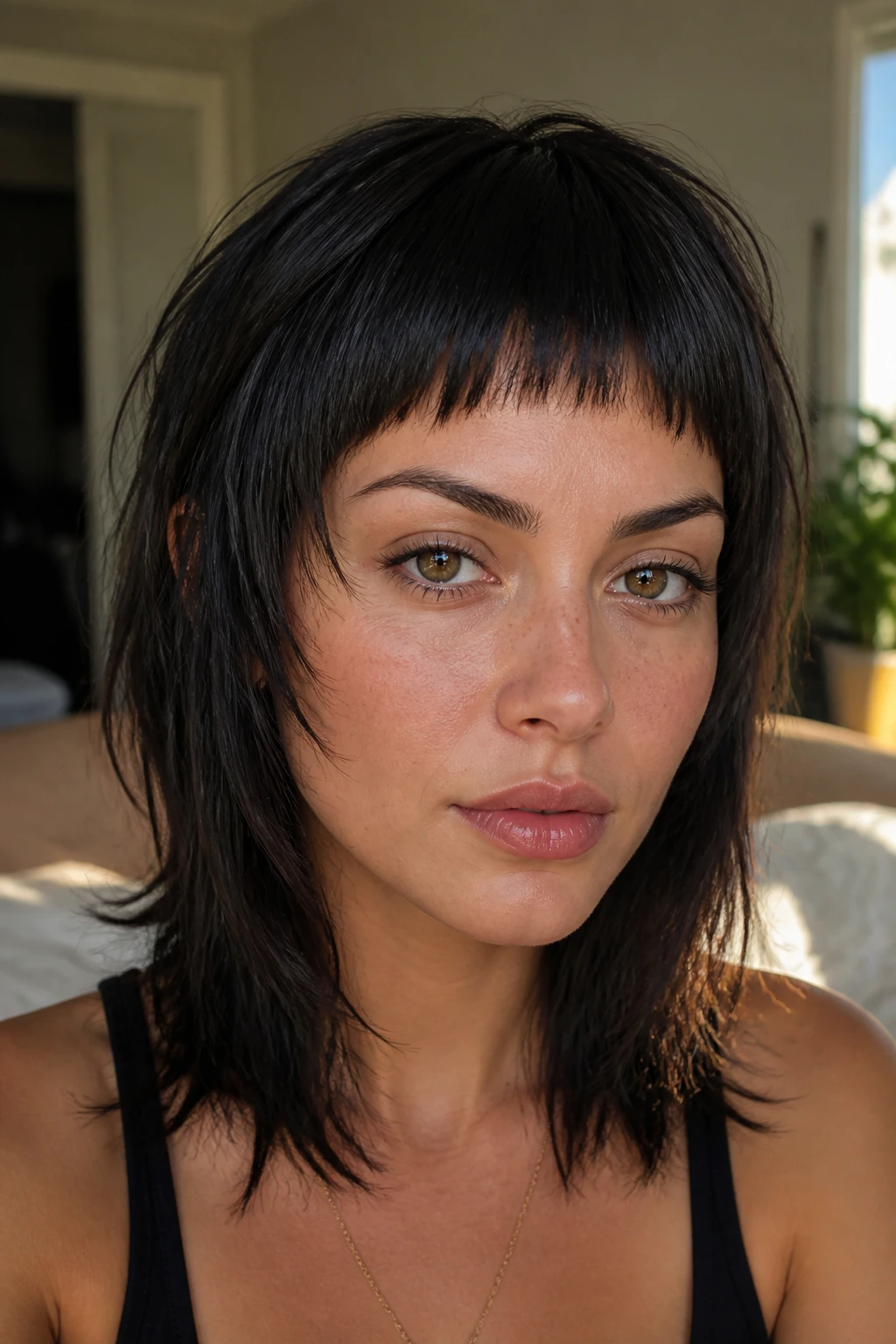
A micro fringe on fine hair is a bold move, but it can look sharp in the best way when the rest of the cut stays dense enough to balance it. The key is the taper. If the tiny bang is carved too bluntly, it can look harsh against soft strands. If it’s piecey and feathered through the edges, it reads as intentional.
I would not recommend this if you’re hoping for a full curtain of forehead coverage. That’s not the point. Micro fringe is about showing shape. It puts the focus on the eyes and cheekbones, and on fine hair it can actually make the whole cut feel thicker because the hair is shorter and lighter at the front.
This one needs a clean perimeter around the rest of the head. Keep the sides and back compact, or the fringe will look disconnected. It also needs regular trims. There’s no polite way around that. Once it starts to grow, the balance changes fast.
6. Shaggy Bangs and Collarbone Layers
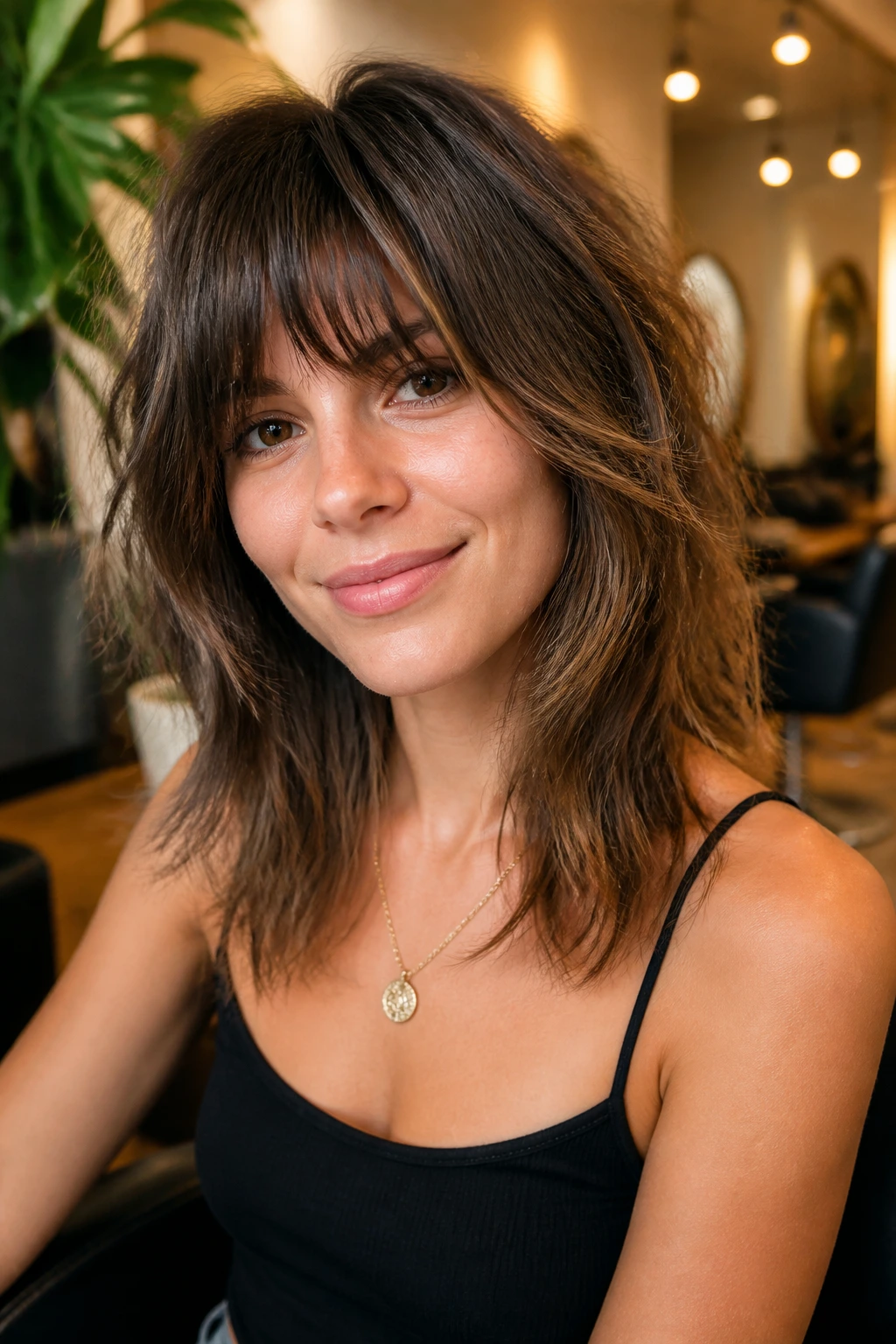
The shag works on fine hair only when it’s edited with some restraint. Too much razoring and the shape turns thin in a hurry. But a controlled shag with bangs and collarbone-length layers can give the front of the hair a lift that no round brush can fake. The bangs should feather into the side lengths, and the layers should start low enough that the ends still have weight.
The trick is on top, not everywhere
A lot of bad shag cuts happen because people remove too much from the entire head. That leaves the crown airy and the ends weak. For fine hair, I like the opposite approach: enough texture at the crown to create height, then a stronger line at the hem so the shape still feels full.
If you air-dry more than you blow-dry, this cut can be a winner. The bang area needs a little finger work, but the rest of the style should fall into place with a touch of texture spray and a quick scrunch. It’s a low-fuss cut, but only if the layers are placed with some discipline.
7. French Fringe with Broken-Up Ends
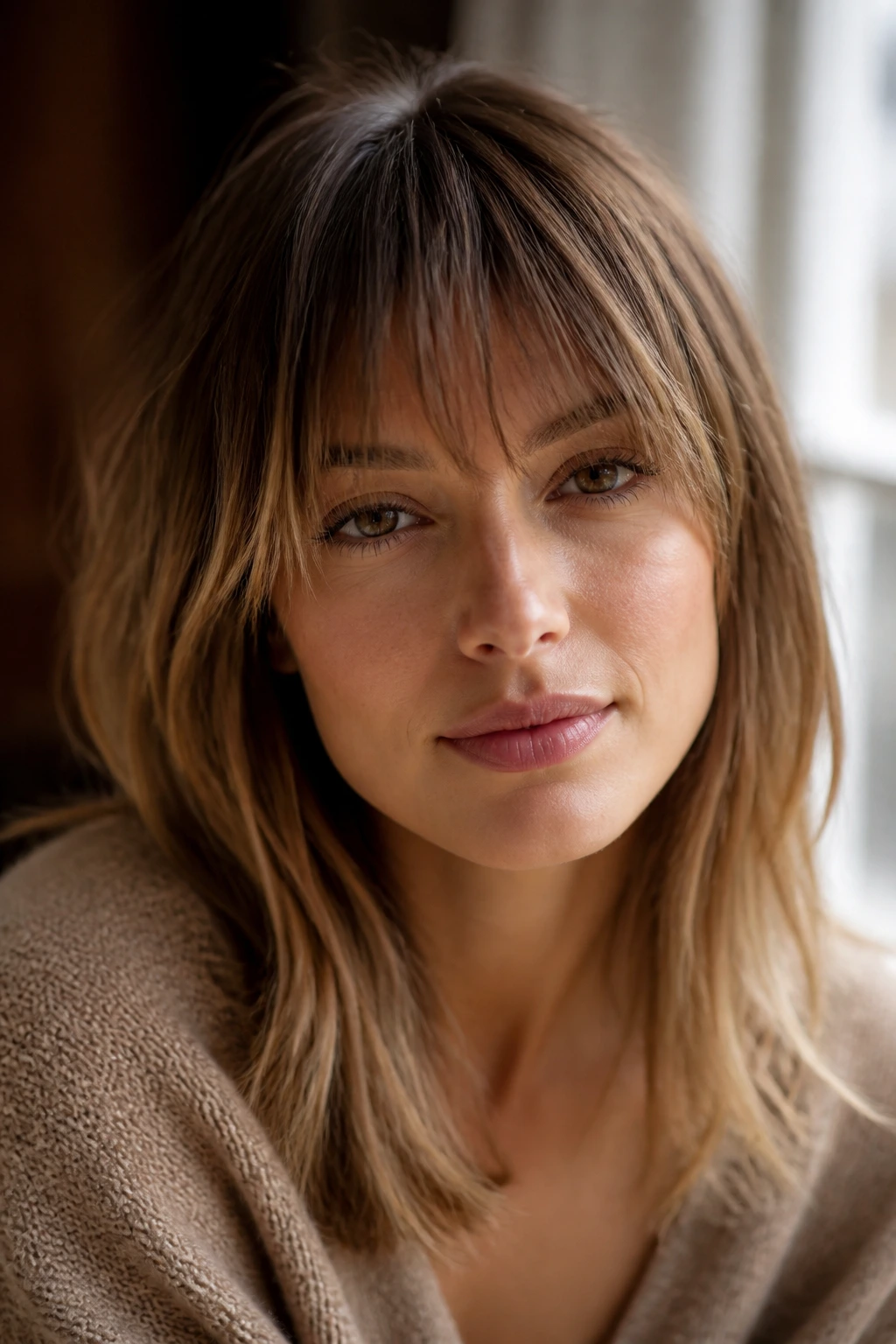
A French fringe is not a heavy, cartoonish bang. It’s looser, slightly imperfect, and cut so the center sits a little denser than the sides. On fine hair, that balance matters a lot. The fringe reads soft and cool, but it still leaves enough movement that the front doesn’t sit there like a helmet strip.
The broken-up ends are the part I care about most. They keep the edge from looking too polished, which is exactly what fine hair does not need. Too much polish makes the hair look flatter than it is. A little unevenness creates shadow and texture, and that’s where the fullness illusion starts.
This style is especially nice if your hair naturally bends a bit at the ends. You do not need perfect symmetry here. In fact, a little unevenness near the temples can make the whole fringe feel more expensive, which is a funny thing to say about hair, but there it is.
8. Long Layered Bangs and a Rounded Cut
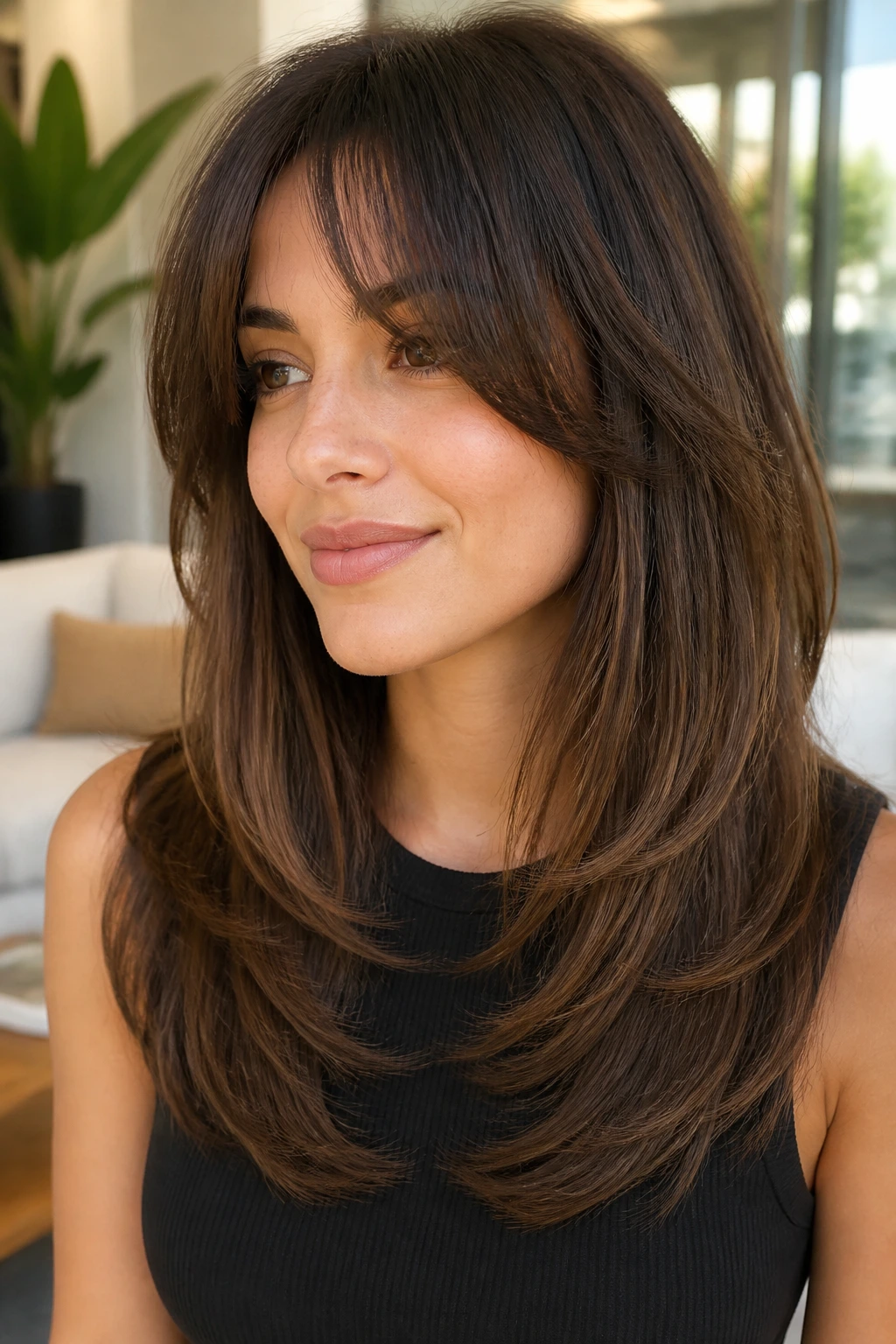
Not everyone wants to wear hair across the forehead. Fair. Long layered bangs give you the feeling of fringe without the constant maintenance, and on fine hair they can be a smarter choice than shorter bangs because they never have to fight gravity quite so hard. The rounded shape around the cut keeps the silhouette soft and controlled.
This style is especially kind to longer faces, but it can work for almost anyone if the front pieces are cut to hit somewhere between the cheekbone and jaw. That little bit of length keeps the hair from looking sparse while still giving movement around the face.
Why the shape matters
A rounded cut adds a sense of fullness at the ends, which helps fine hair read as denser. If the layers are stacked too high, the shape can go hollow. If they stay too long and flat, the front drags. The sweet spot is somewhere in the middle, where the layers bend inward slightly and the bangs disappear into the rest of the haircut instead of sitting on top of it.
This is one of those cuts that rewards a good blow-dry but doesn’t fall apart if you skip it. That’s a real selling point.
9. Birkin Bangs with Airy Face-Framing Layers
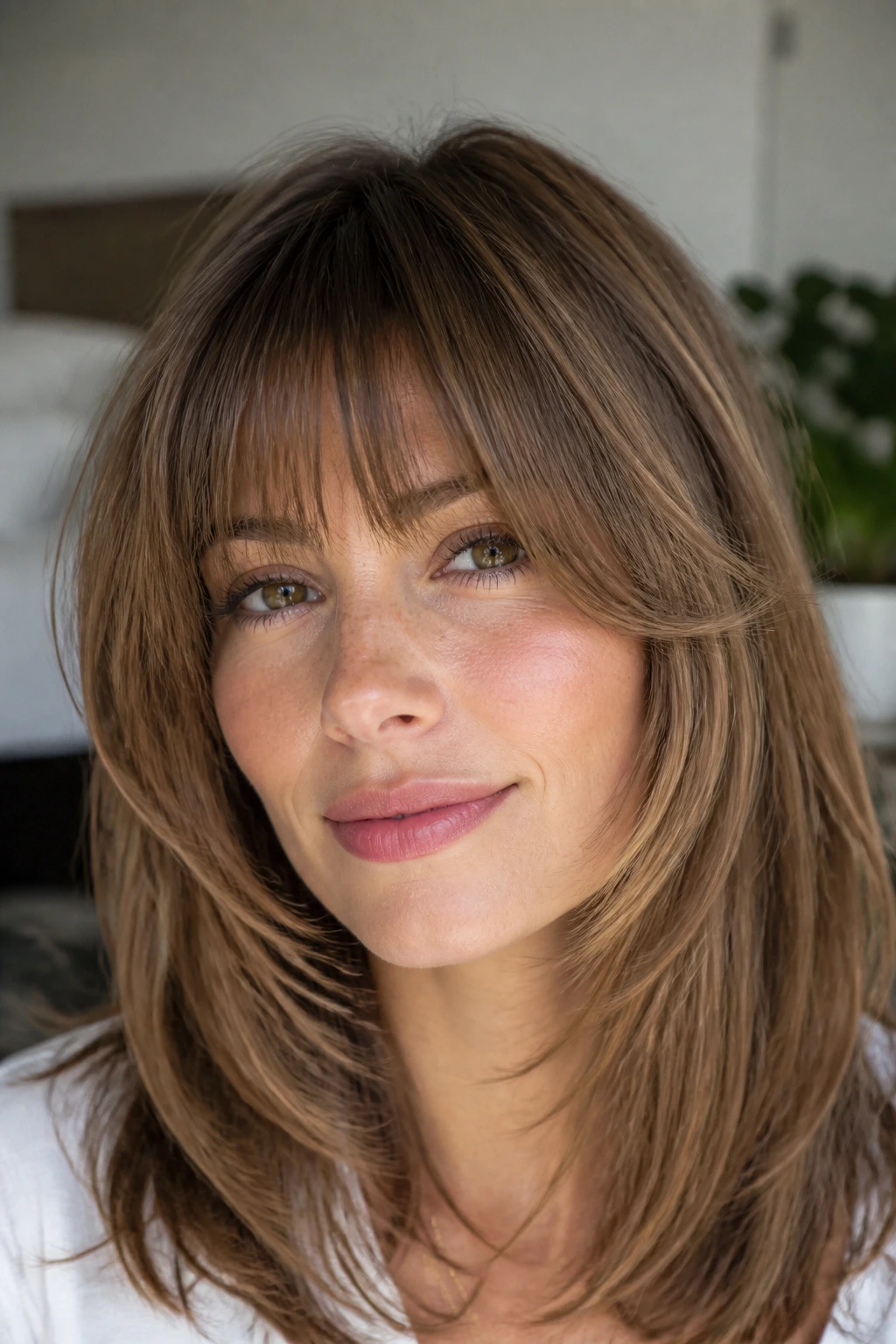
Birkin bangs have a little more body than wispy fringe, but they still feel soft at the edges. On fine hair, that makes them a useful middle ground. The bang line lands near the brows, with airy face-framing layers that keep the shape from feeling heavy or overworked.
I like this cut when the hair has enough density to support a visible fringe but not enough bulk to carry a blunt one. That’s where Birkin bangs shine. They look fuller than curtain bangs, but they don’t press flat the way a dense straight fringe can.
-
Use this if: You want the front to read as a real bang, not just a face frame.
-
Ask for: Gentle tapering at the temples and a soft center line that can be worn straight or slightly brushed apart.
-
Avoid if: Your hairline has a strong cowlick right in the middle. You’ll fight it every morning.
The style has a neat, grown-up feel, but it never looks stiff if the ends are cut with a little air in them.
10. Razor-Cut Curtain Bangs on a Long Bob
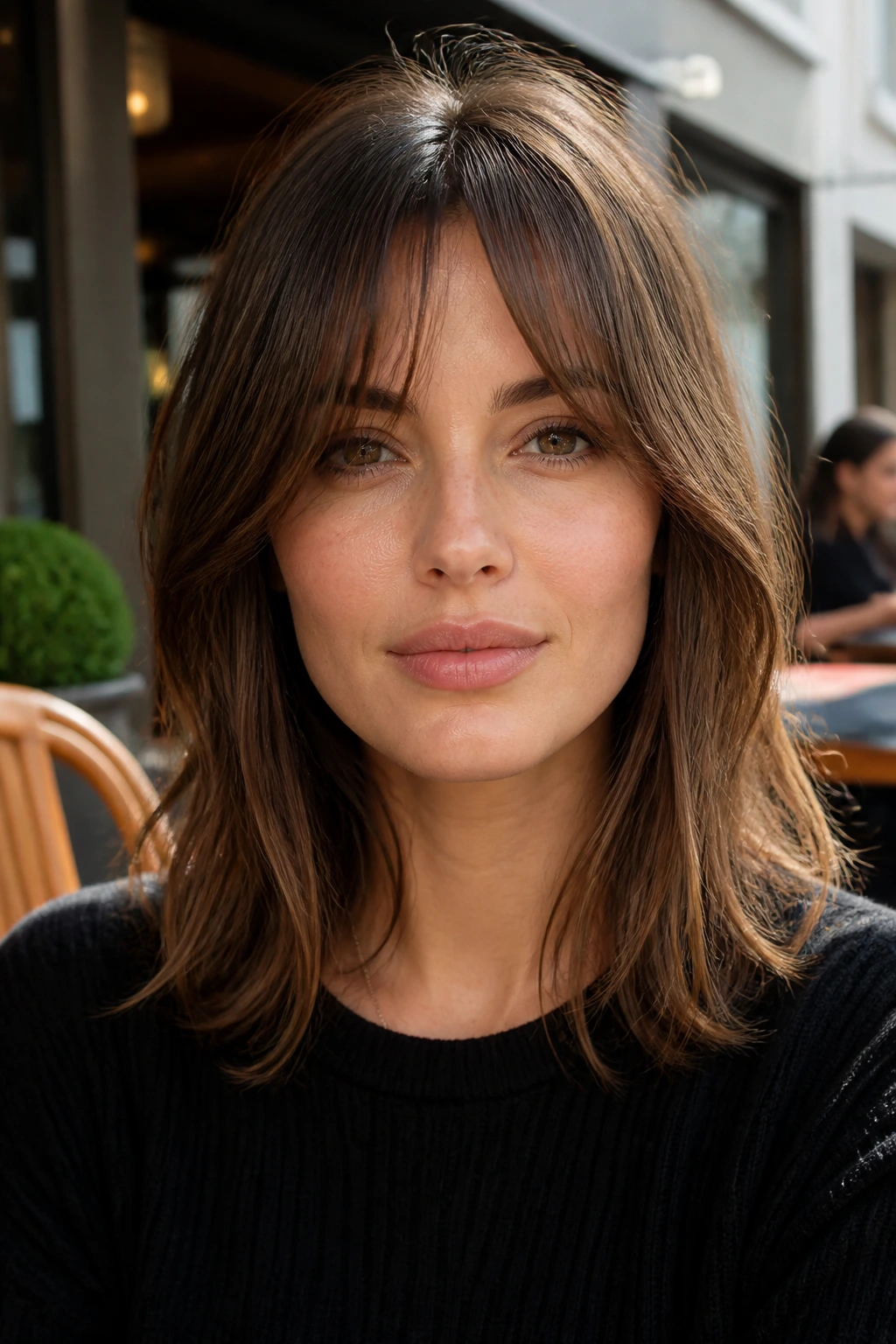
Here’s the catch with razors: they can make fine hair look alive, or they can make it look chewed up. There’s not much middle ground. On a long bob, razor-cut curtain bangs can work beautifully because the lob gives the rest of the hair enough shape to support a more textured front. The result is airy, slightly broken, and very easy to move.
The key is not to overdo the razor. The fringe should still have some edge, especially near the center part, or it will lose the sense of density that fine hair needs. I’d ask for a stylist who knows how to use a razor lightly, not one who reaches for it like it’s a magic wand.
This cut is strongest on hair that already has some slip and swing. If your ends are fragile or split, a point-cut version will probably look better and last longer between trims. Razor texture is a tool, not a requirement.
11. Split Fringe with Subtle Wolf-Cut Texture
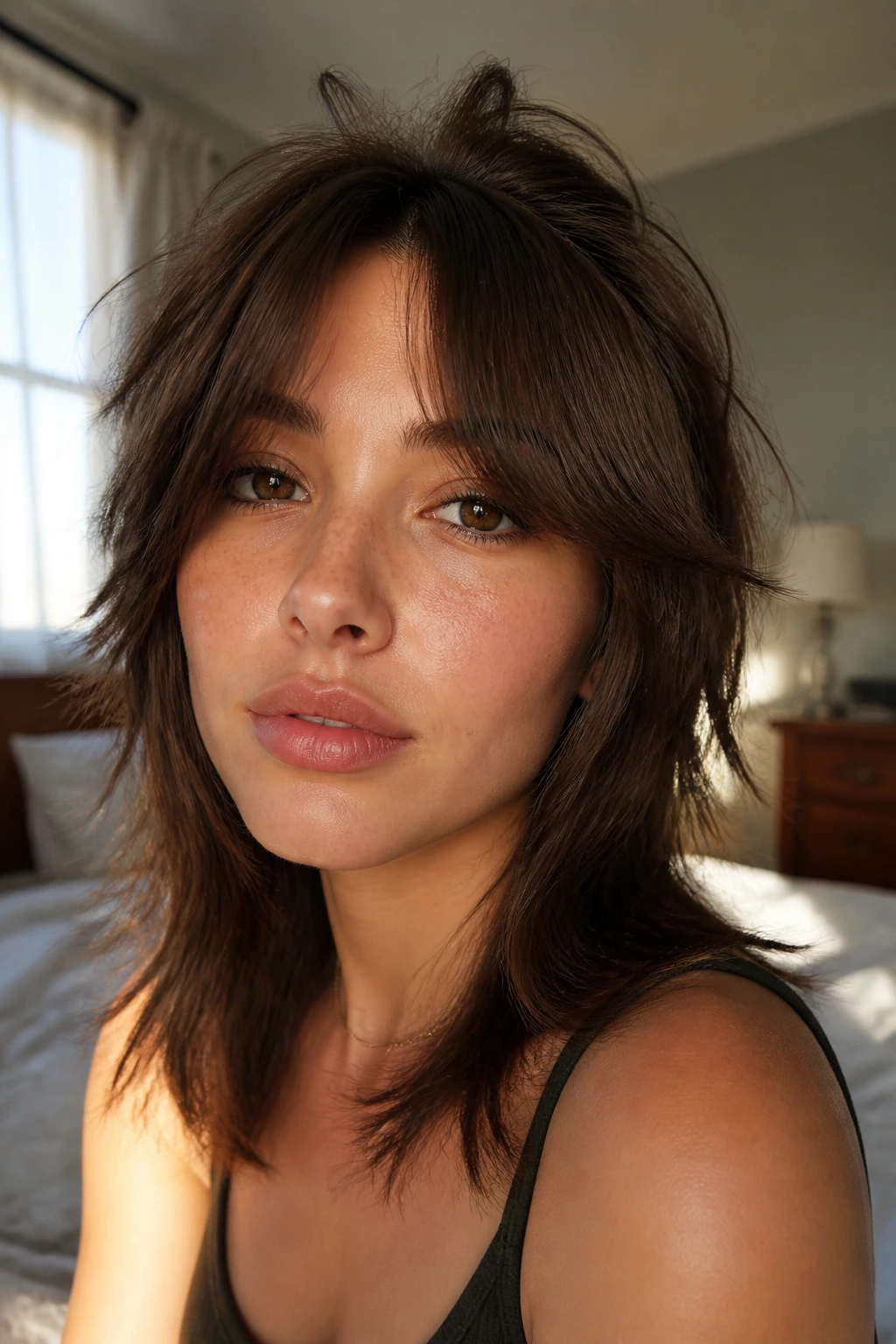
Want movement without signing up for a full shag? This is the one. A split fringe gives the front a center opening, and the subtle wolf-cut texture adds broken layers through the crown and upper lengths without turning the whole head into a thinned-out cloud. Fine hair likes this approach when the texture is controlled.
The danger with a wolf cut on fine hair is obvious: too much removal at the top, not enough weight at the bottom, and suddenly the haircut looks like it got tired halfway through. Keep the shape soft. Keep the layers visible but not hollow.
Best use case
This works for people who want an edgier shape but still need a haircut that behaves in real life. It’s especially good if your hair has a natural bend or you like to let the fringe air-dry most of the way. The split at the front helps avoid a hard line, while the layered crown adds just enough lift to keep the style from lying flat against the scalp.
It’s messy in a nice way. Not sloppy.
12. Textured Blunt Bangs with Choppy Ends
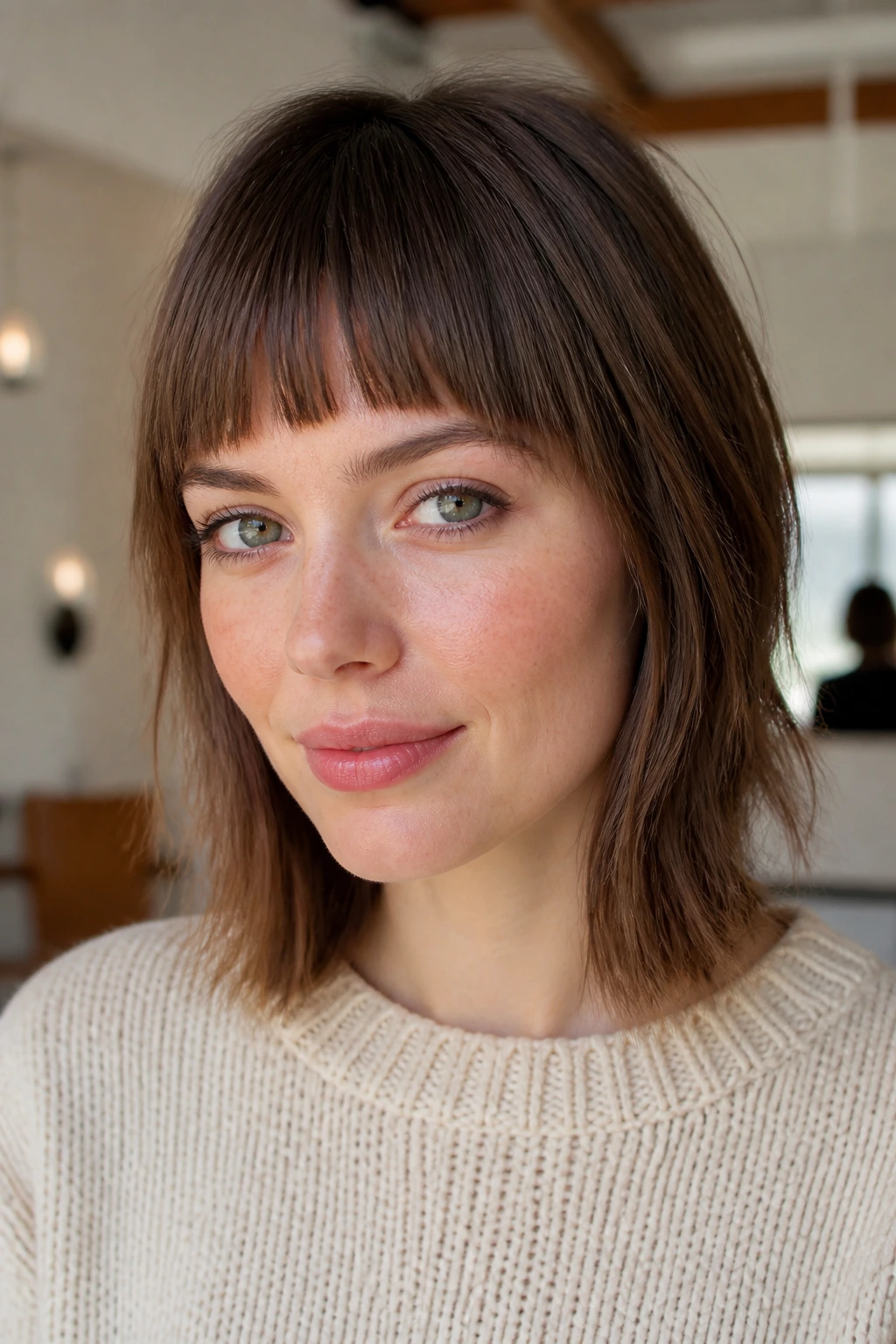
A blunt bang usually sounds like the opposite of a good fine-hair cut, and yet this version earns its place. The line stays blunt enough to make the front look full, but the ends are chipped and softened just enough that the fringe doesn’t sit like a solid block. That tension is what makes it interesting.
This style works best when the rest of the haircut stays clean. Think of the fringe as the statement and the ends as the supporting act. If the whole cut is too textured, the bluntness gets lost. If the fringe is too heavy, the hair falls forward and steals light from the face.
I like this on straight or slightly wavy fine hair that can hold a neat line. It gives you the visual density of a full bang without requiring a thick wall of hair. And yes, it does need upkeep. A blunt-ish bang on fine hair is not a “trim whenever you remember” situation.
13. Arched Bangs and a Soft Bob

Arched bangs follow the curve of the brow, which sounds small until you see how much softer the face looks with that line in place. On fine hair, the arched shape helps the fringe read intentional rather than skinny. It also works beautifully with a soft bob because the bob carries weight at the jaw while the bangs open the upper face.
This cut is one of my favorite choices for people who wear glasses. The arch keeps the fringe from pressing straight into the frames, and the bob gives the style enough structure that it doesn’t look feathery in a bad way. Fine hair often needs a shape that anchors the front. This does it.
How to keep it from collapsing
Ask for a little length at the outer edges so the bang can curve naturally into the sides. If the arch is cut too high, the hair can spring up in an awkward little bump. If it’s too low, the line loses its shape. There’s a narrow window here, but it’s worth it.
14. Feathered Side Bangs with Internal Layers
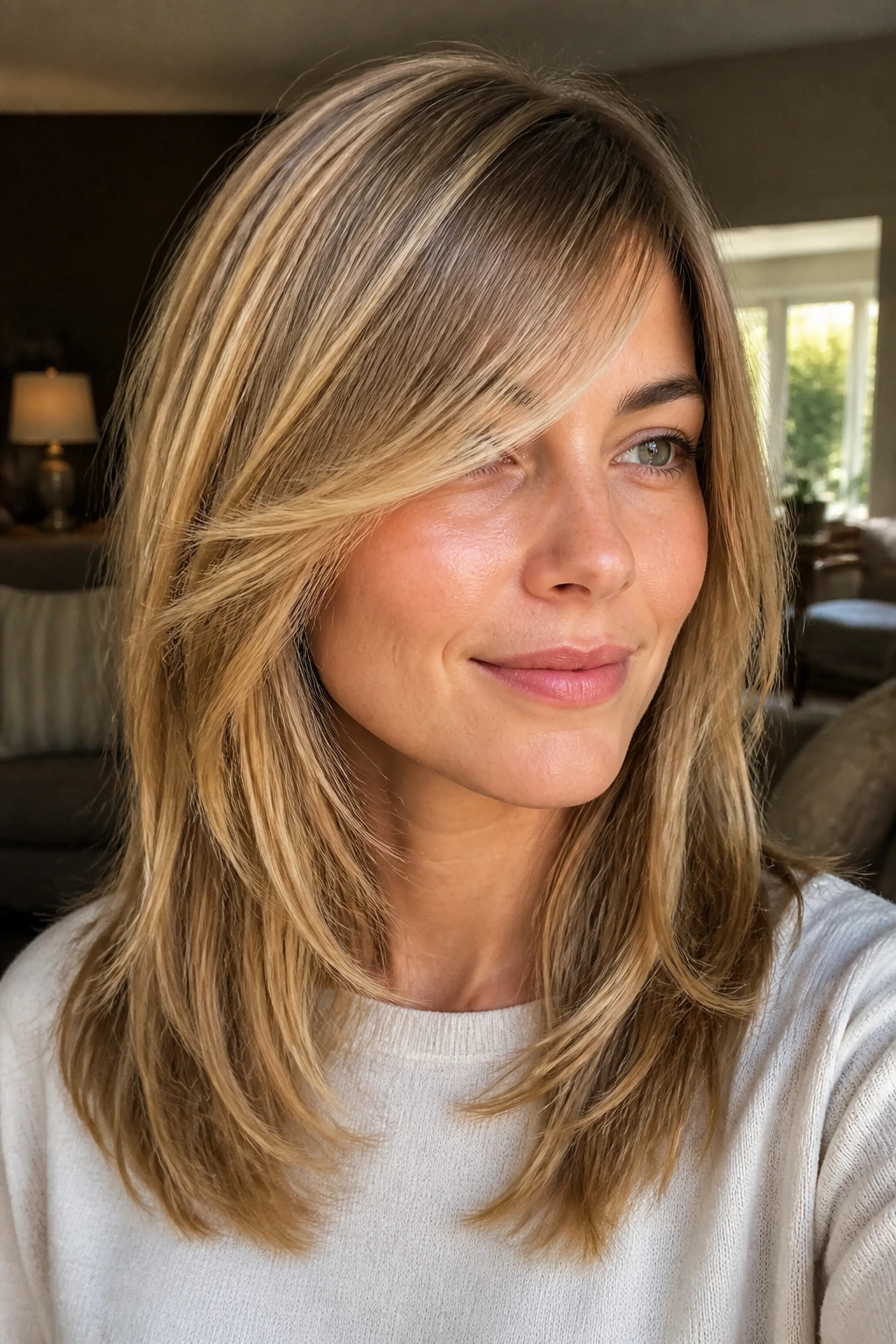
Internal layers sound technical, but all they really mean is weight removed from inside the shape without stripping the outline bare. That’s useful on fine hair because you can remove bulk where it gets puffy and keep the outside line looking full. Feathered side bangs fit neatly into that approach.
This is a good grow-out cut. When the bangs start getting long, they don’t turn into one awkward slab; they blend into the rest of the cut. The feathering also makes the front easier to brush across the forehead or tuck to the side depending on what your hair wants that day.
If your fine hair tends to separate at the temples, this style can be a relief. It doesn’t demand perfect symmetry. It just gives the front a direction and lets the rest of the cut carry itself.
15. Lived-In Fringe with a Mid-Length Shag
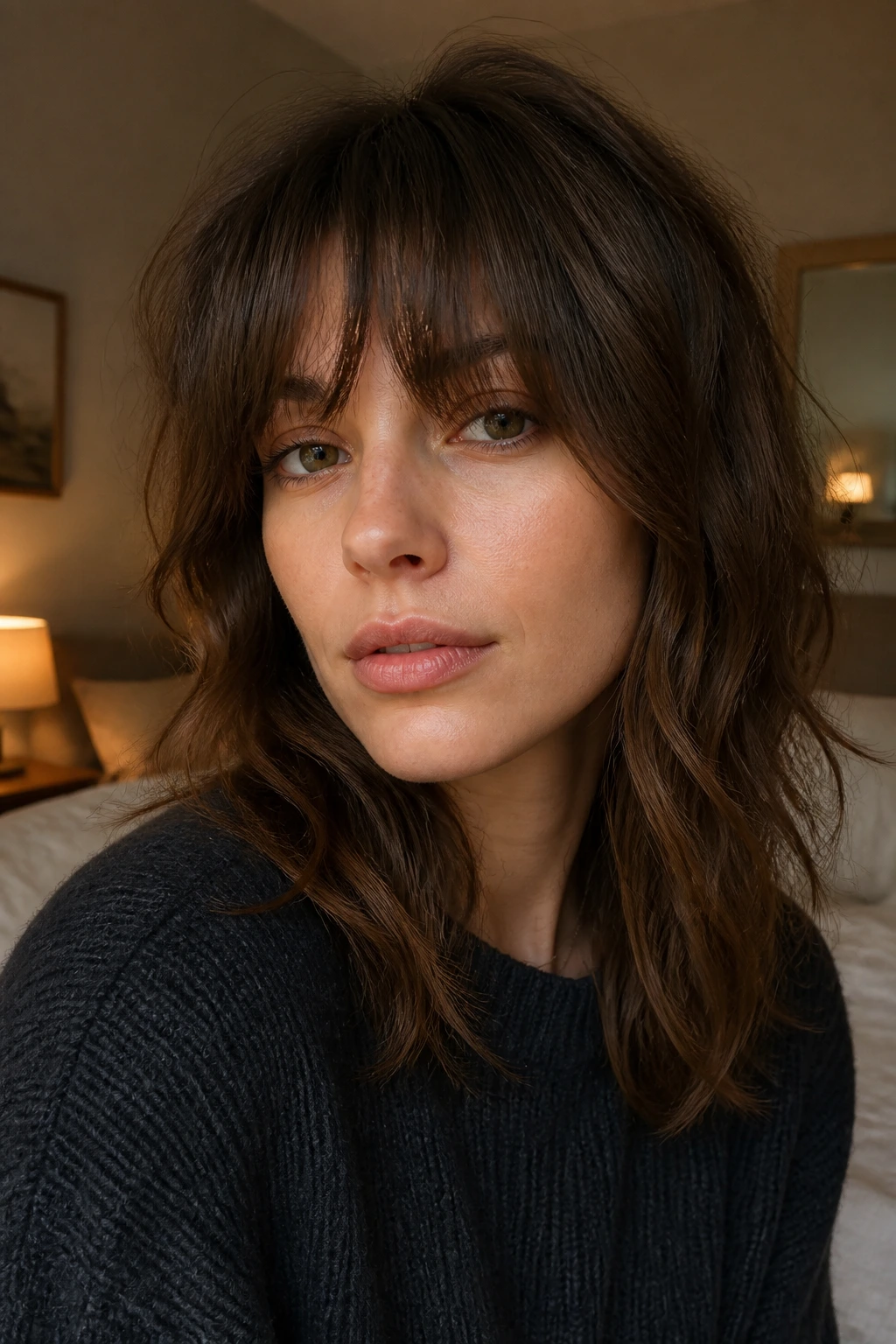
A lived-in fringe is for people who don’t want to stand in front of a round brush every morning. Good. Same. On fine hair, the mid-length shag gives the style some bend and lift without requiring a dense curtain of bangs to hold everything in place. The fringe stays soft, a little messy, and easy to push around with your fingers.
The best version is not overly layered through the ends. That part gets overdone constantly. You want enough internal movement to keep the shape from going limp, but the outer edge still needs some honesty. A mid-length shag with a lived-in fringe should look like hair that has some body, not hair that has been stripped of it.
This is especially useful if your hair dries with a tiny wave or flip. Instead of fighting that texture, the cut can use it. That’s the whole point.
16. Cheekbone Bangs with a Layered Crop
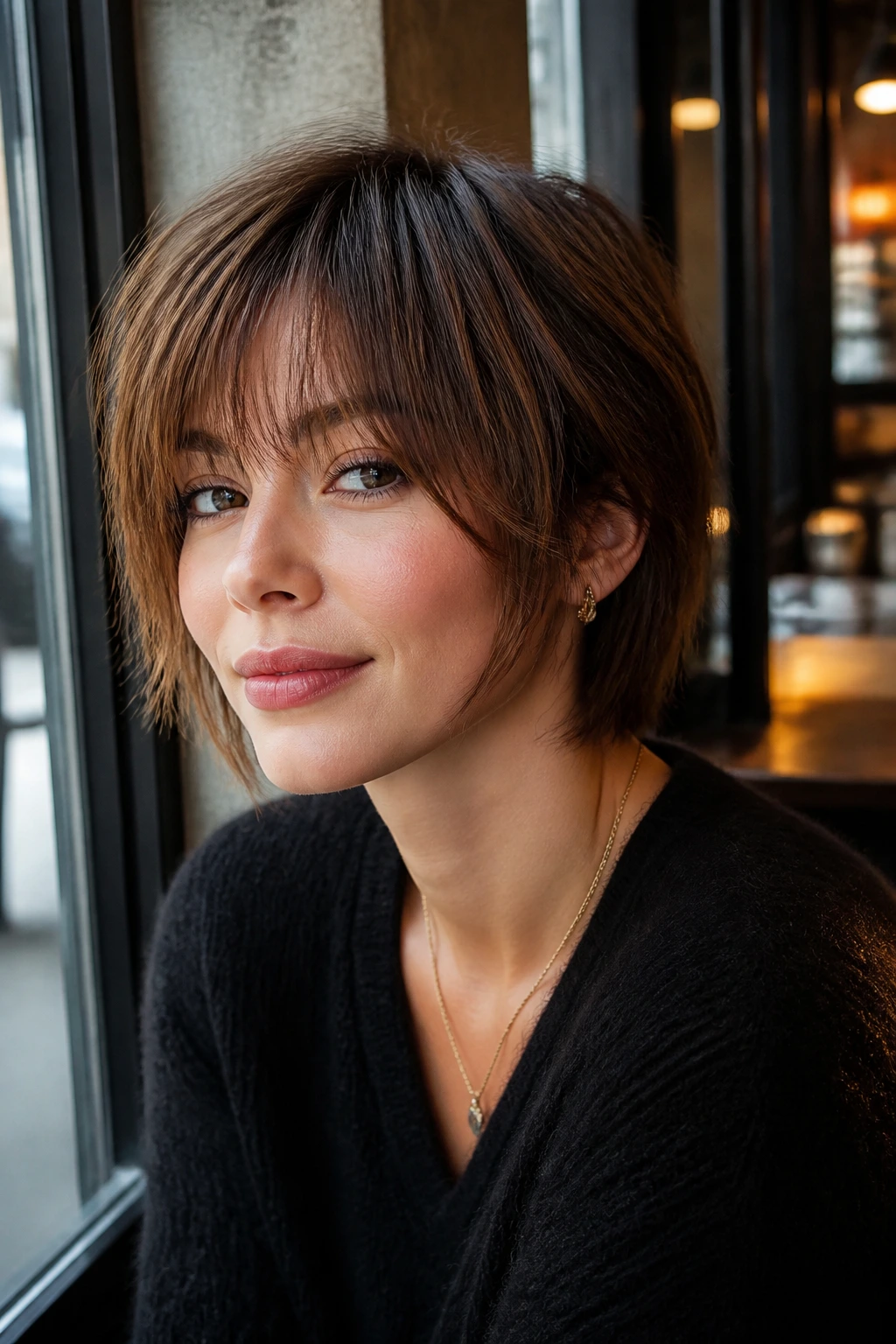
Cheekbone bangs are a small haircut with a big effect. The front pieces land exactly where the face starts to narrow, which creates lift without flooding the forehead with hair. On a layered crop, that placement is gold. Fine hair looks fuller when the layers are compact and the bang pieces are short enough to show shape.
Why this one lifts the face
The cheekbone is a smart landing zone because it gives the eye somewhere to go. The bang doesn’t have to be thick to work; it just needs to land with purpose. If the crop underneath is too wispy, the whole haircut can look airy in a bad way. Keep the layers close enough together that the shape reads as a style, not a collection of pieces.
I’d reach for this if the forehead feels a little too open with longer fringe. It gives you coverage without taking over the whole face. That balance is hard to get right, and this cut does it better than people expect.
17. Brow-Skimming Bangs with Tapered Sides
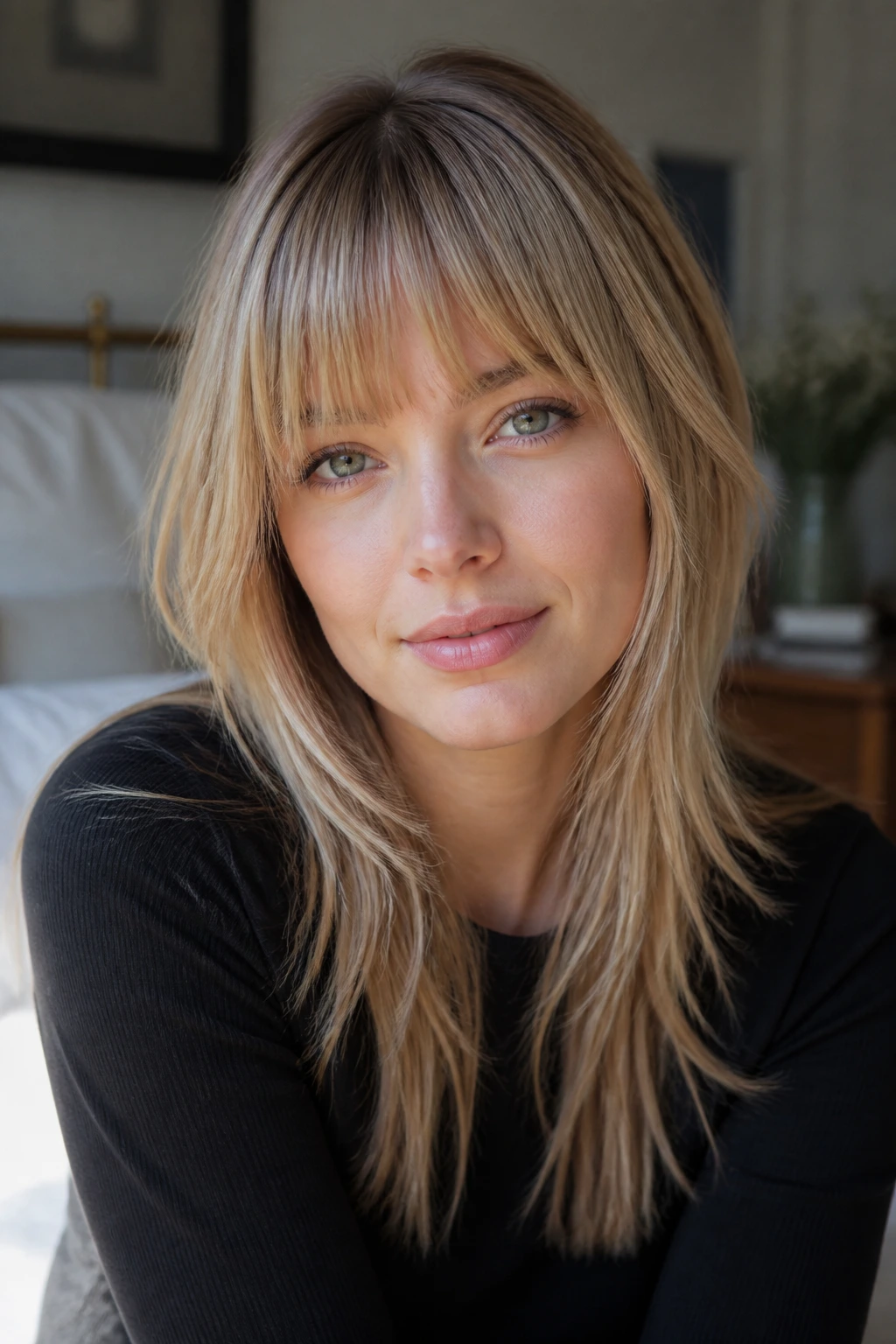
Brow-skimming bangs are the classic answer for someone who wants fringe but refuses to babysit it. On fine hair, the tapered sides matter even more than the center. They let the fringe sit in a soft line across the forehead without building a heavy wall that collapses after a few hours.
The shape is clean, but it shouldn’t be severe. Point-cutting at the ends gives the bangs a little lift, and the longer side pieces help the cut blend into the rest of the hair. That means you can wear it straighter on some days and brush it apart on others.
This is one of the easiest bangs styles to grow out because the tapered sides buy you time. That alone makes it worth considering if you like the idea of bangs but not the maintenance spiral.
18. Rounded Bottleneck Fringe with Choppy Ends
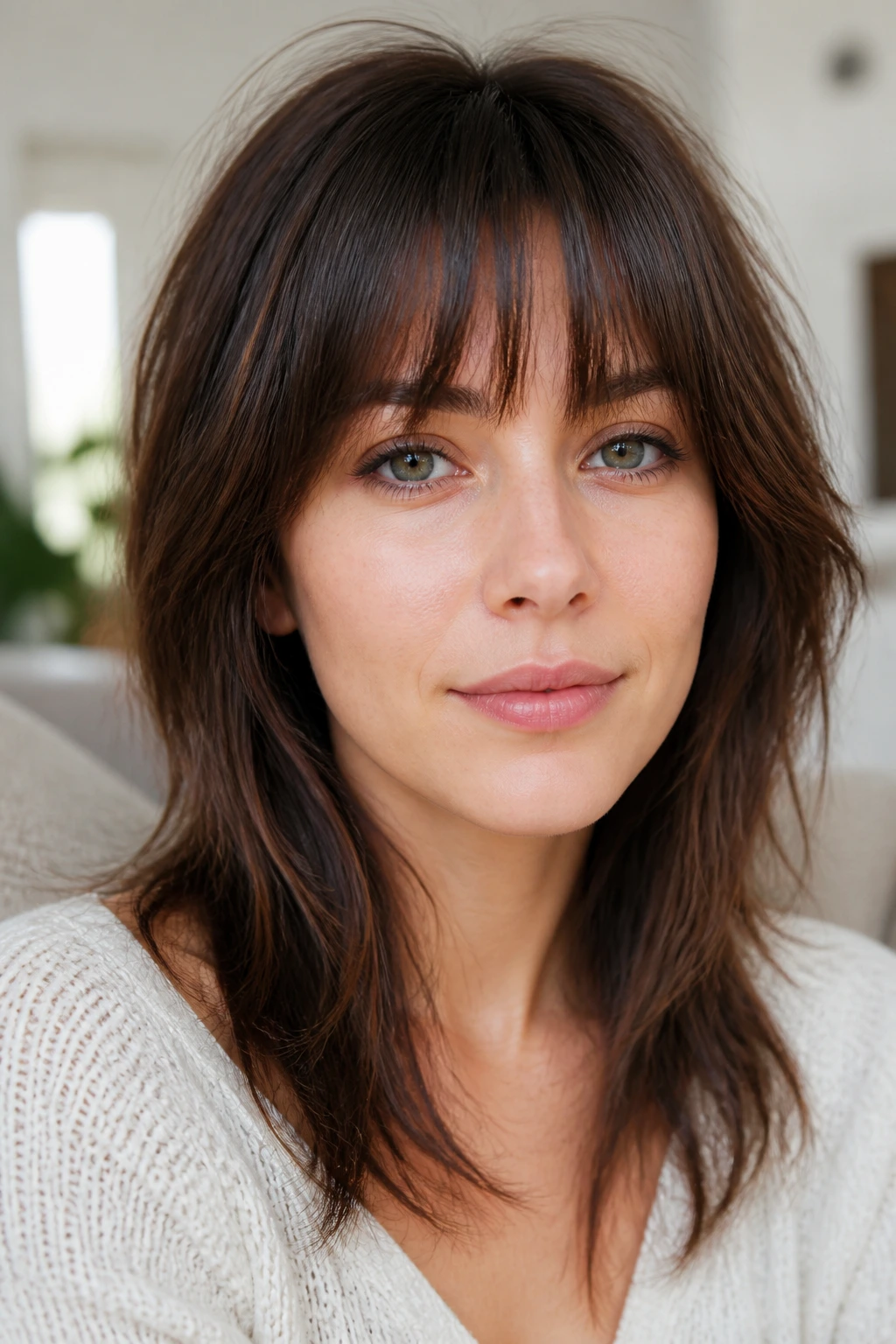
This is the softer, more curved cousin of the earlier bottleneck shape. The center still opens up the forehead, but the curve around the brows feels rounder and a little more polished. On fine hair, that rounded line keeps the fringe from looking boxy or rigid, while the choppy ends stop it from sinking into one flat shape.
The style is especially flattering on round and heart-shaped faces because it echoes the curve of the brow and cheek. It’s not fussy. It just knows where to sit.
If your hair has a tendency to split in the middle, a rounded bottleneck can help redirect the front pieces without forcing them into a stiff part. It’s a small change, but on fine hair, small changes often do the heavy lifting.
19. Shattered Bangs with a Razor Lob
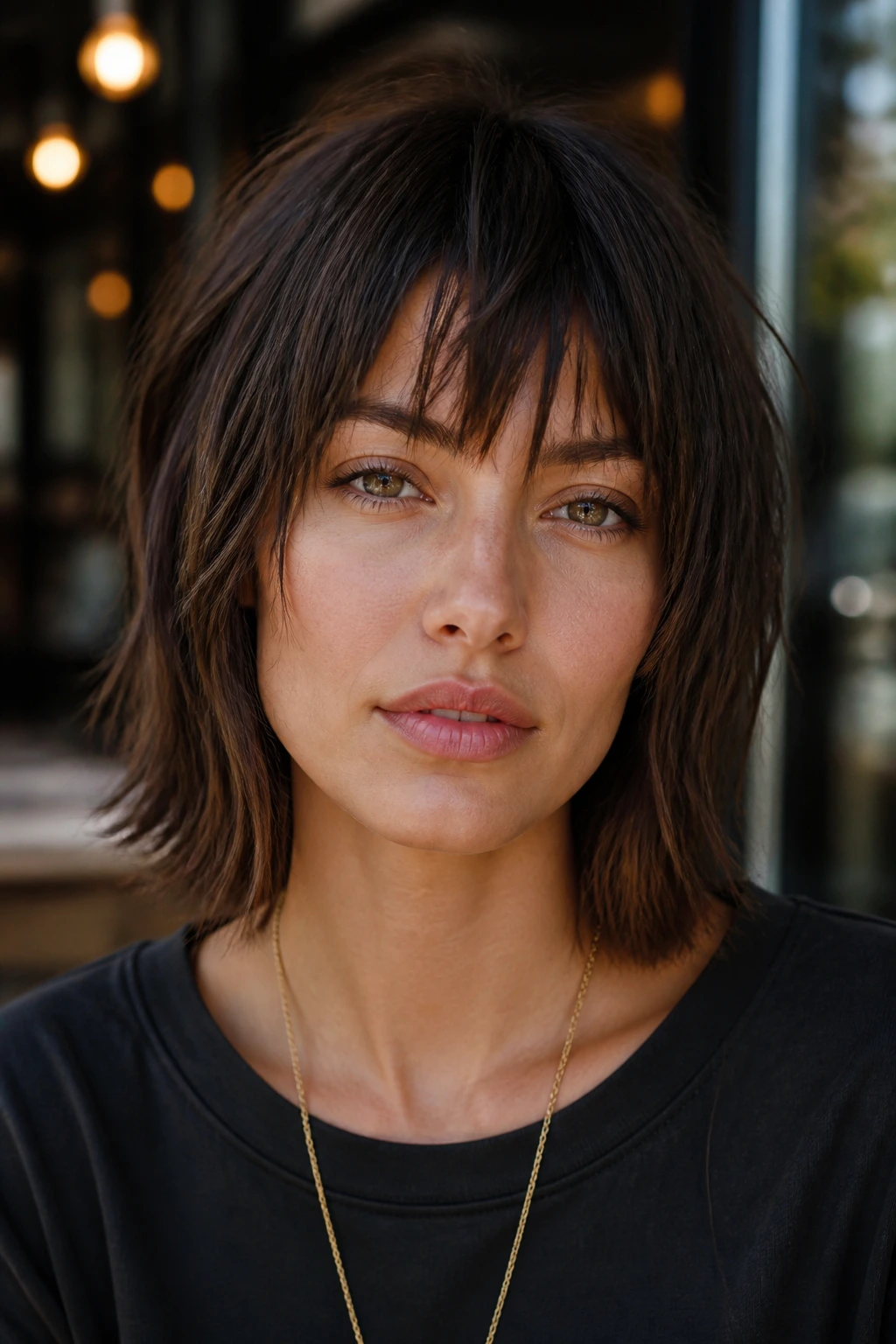
“Shattered” sounds aggressive, and a little aggression is the point here. The fringe gets broken into soft, irregular pieces, which stops fine hair from reading as one flat layer across the face. The razor lob underneath adds movement through the ends, but the shape still needs some perimeter strength or it will just look thin.
This is the style for someone who likes a sharper edge. Not severe. Sharper. The difference matters. A shattered bang should still leave you with enough hair at the front to frame the eyes, just with more separation and less polish.
-
Keep the base solid: If the lob is too fragmented, the haircut loses weight.
-
Ask for controlled pieceiness: You want deliberate separation, not random holes.
-
Best on straight-to-wavy hair: Curly fine hair can wear it too, but the texture needs more shaping.
It’s a good compromise between a blunt bang and a full shag. That’s the lane.
20. Piecey Fringe with U-Shaped Layers
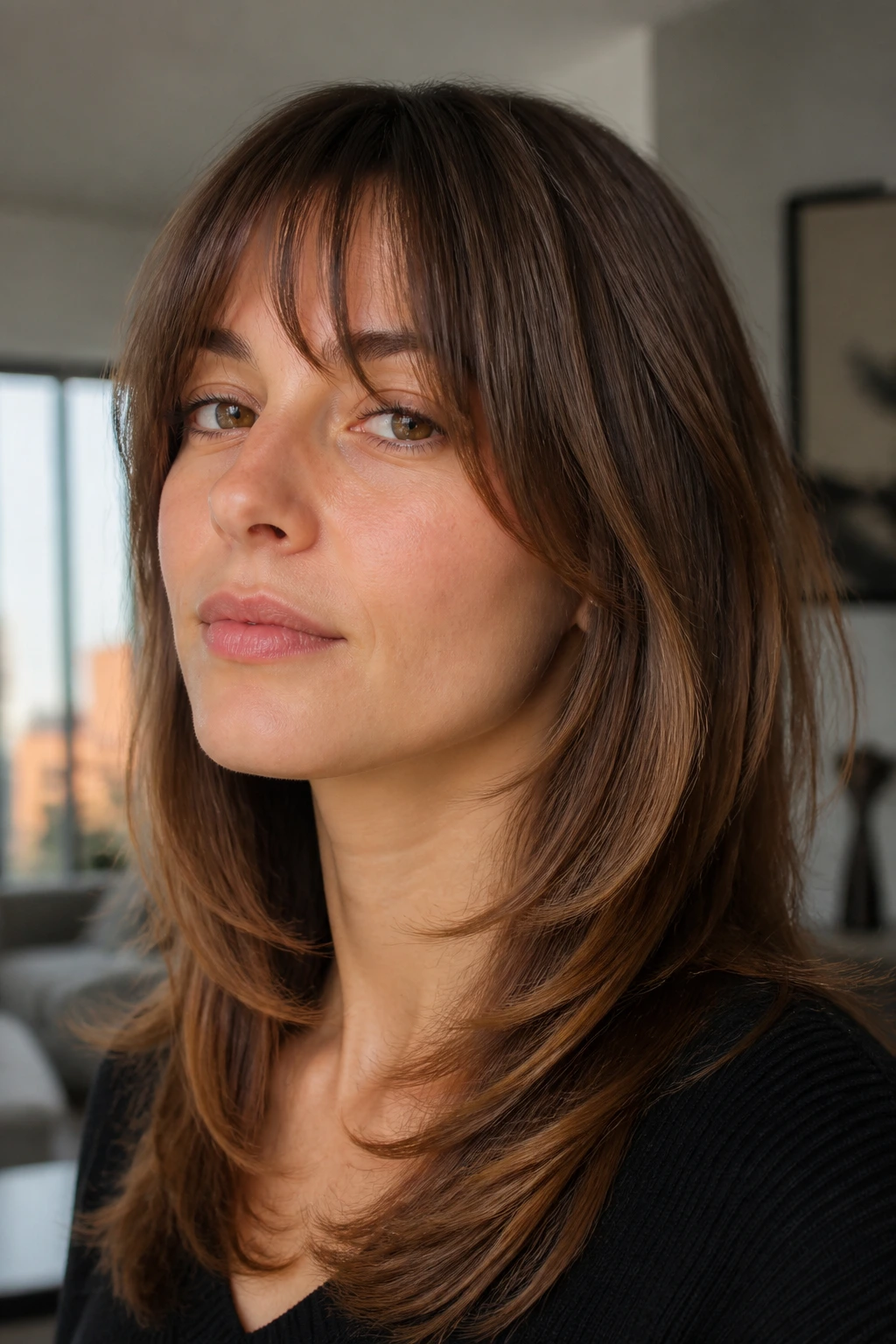
A U-shaped cut is sneaky good for fine hair because it keeps the back and sides feeling full while still giving the front room to move. Add a piecey fringe to that shape and you get a haircut that looks light without losing too much density at the hem. The U keeps the silhouette soft; the fringe gives it energy.
This is one of the more versatile options if you wear your hair long. You can tuck the bangs, part them, or let them fall forward a bit, and the U-shape keeps the ends from looking stringy. That matters more than people think. Fine hair usually looks best when the line at the bottom is still visible.
A clean center or slight off-center part both work here. The fringe does not have to dominate. It just needs to live in the front of the shape and keep the haircut from becoming one long sheet.
21. Soft Pixie Bangs with Choppy Crown Layers
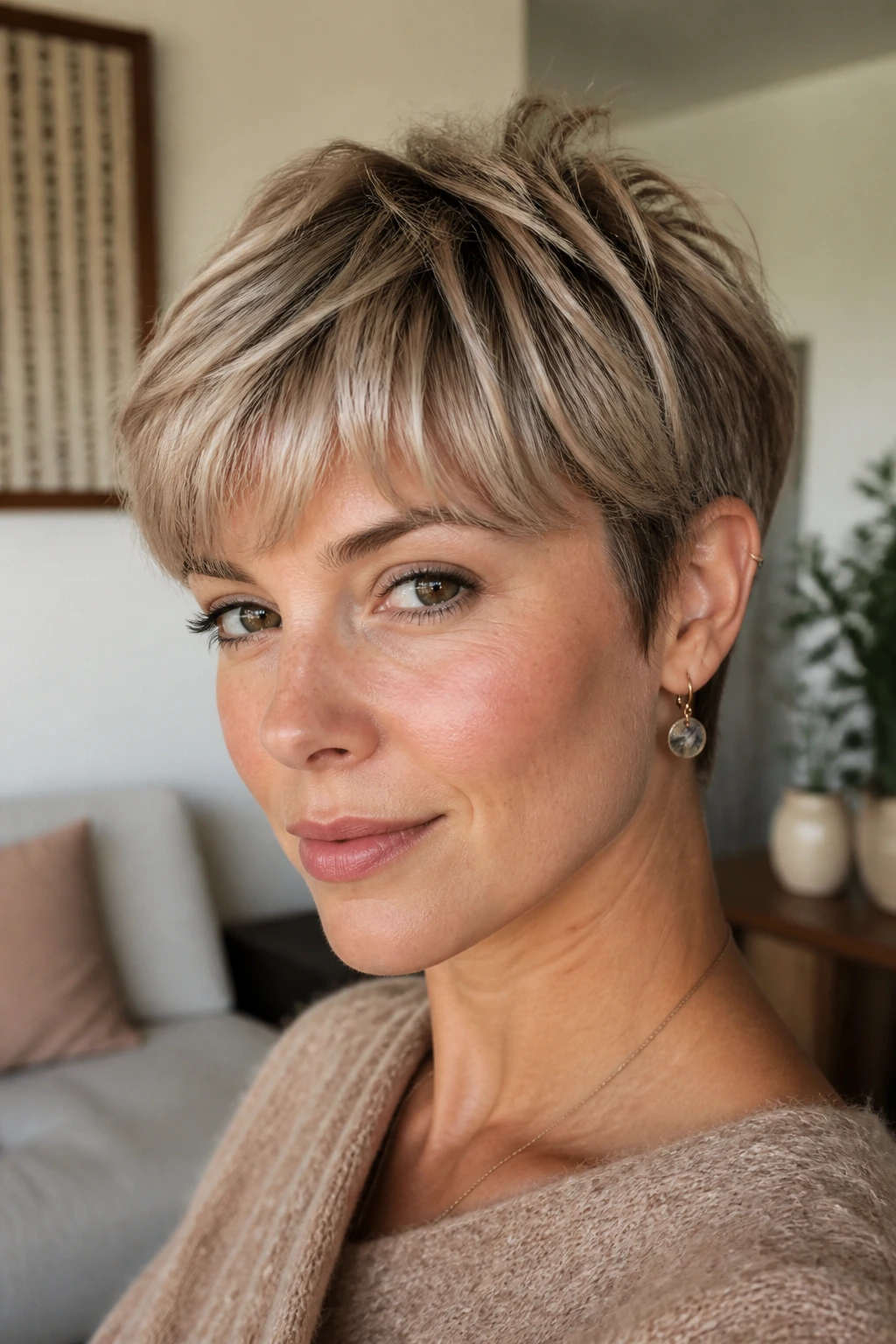
Short hair and fine hair often get along better than people expect. The reason is simple: less length means less weight dragging the shape down. Soft pixie bangs with choppy crown layers can make fine hair look fuller up top because the cut is short enough to hold its own volume.
The danger is going too airy. Pixie cuts can cross the line from textured to sparse fast. Keep the crown layers choppy but not shredded, and leave enough fringe to soften the forehead. The best pixie on fine hair still has a sense of density at the sideburns and neckline.
This cut is for someone who wants a shape that feels crisp and easy to move through. It needs trims more often than longer cuts. No getting around that. But the payoff is a style that wakes up with more body than it has any right to have.
22. Air-Dried Curtain Fringe with Long Layers
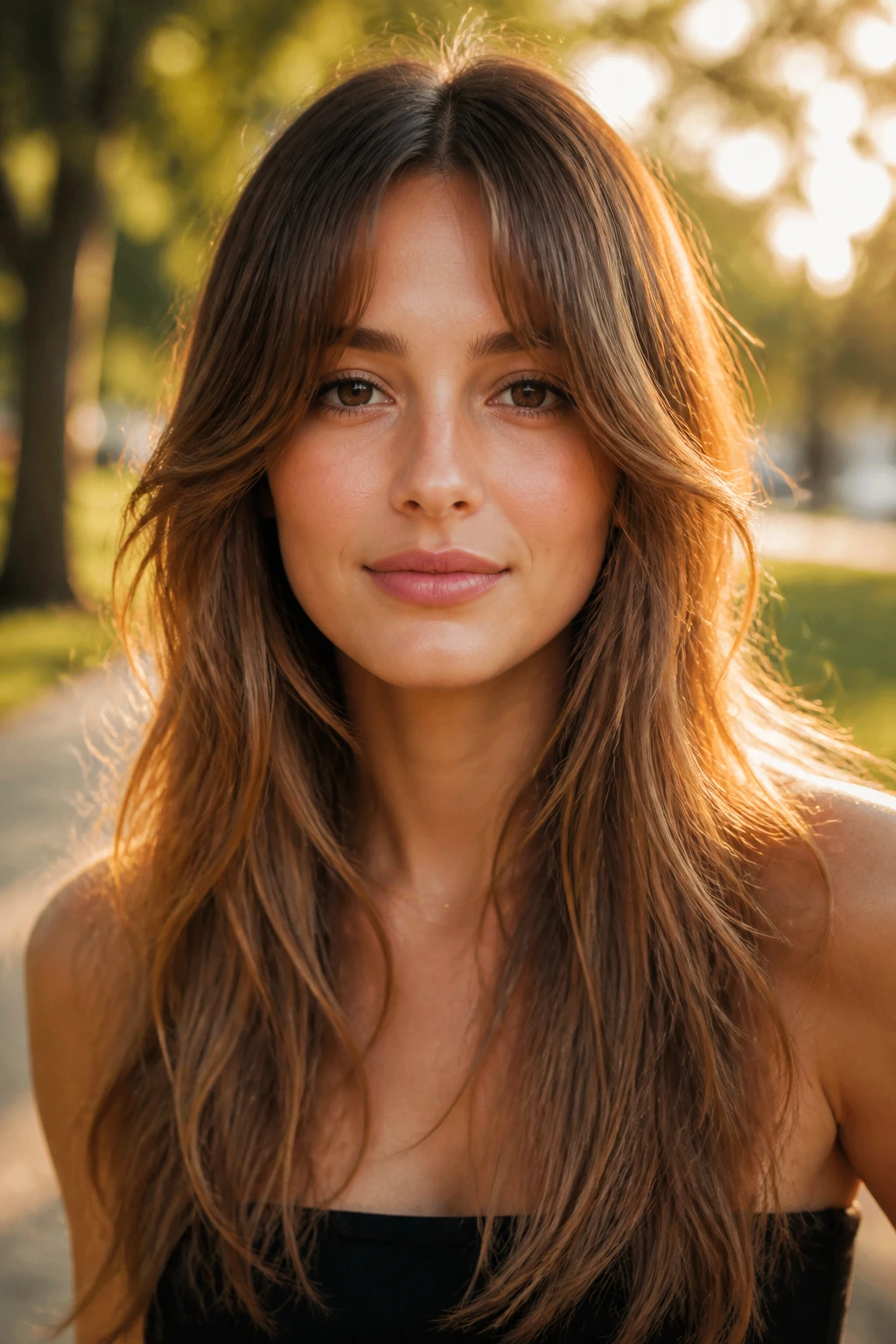
If your hair has even a little bend, this cut can save you time. The curtain fringe is long enough to air-dry into shape, and the layers stay long enough that the hair doesn’t collapse into a narrow strip. Fine hair often looks better when it’s allowed to move a bit instead of being forced into strictness.
The trick is to keep the fringe slightly longer than you think you need. Air-drying short bangs can go wonky fast, especially if your hairline has a cowlick. Longer curtain pieces give the front room to settle, and the long layers keep the rest of the style from looking overcut.
Best when you want low effort
This is one of the few styles on the list that can look better with a little imperfection. A slight bend in the front, a soft side sweep, a few pieces that don’t match exactly—those things give the cut shape. If your fine hair clumps when damp, rake the front into place with your fingers and leave it alone while it dries. Too much touching is how people wreck it.
23. Tousled Fringe with a Choppy Midi Cut
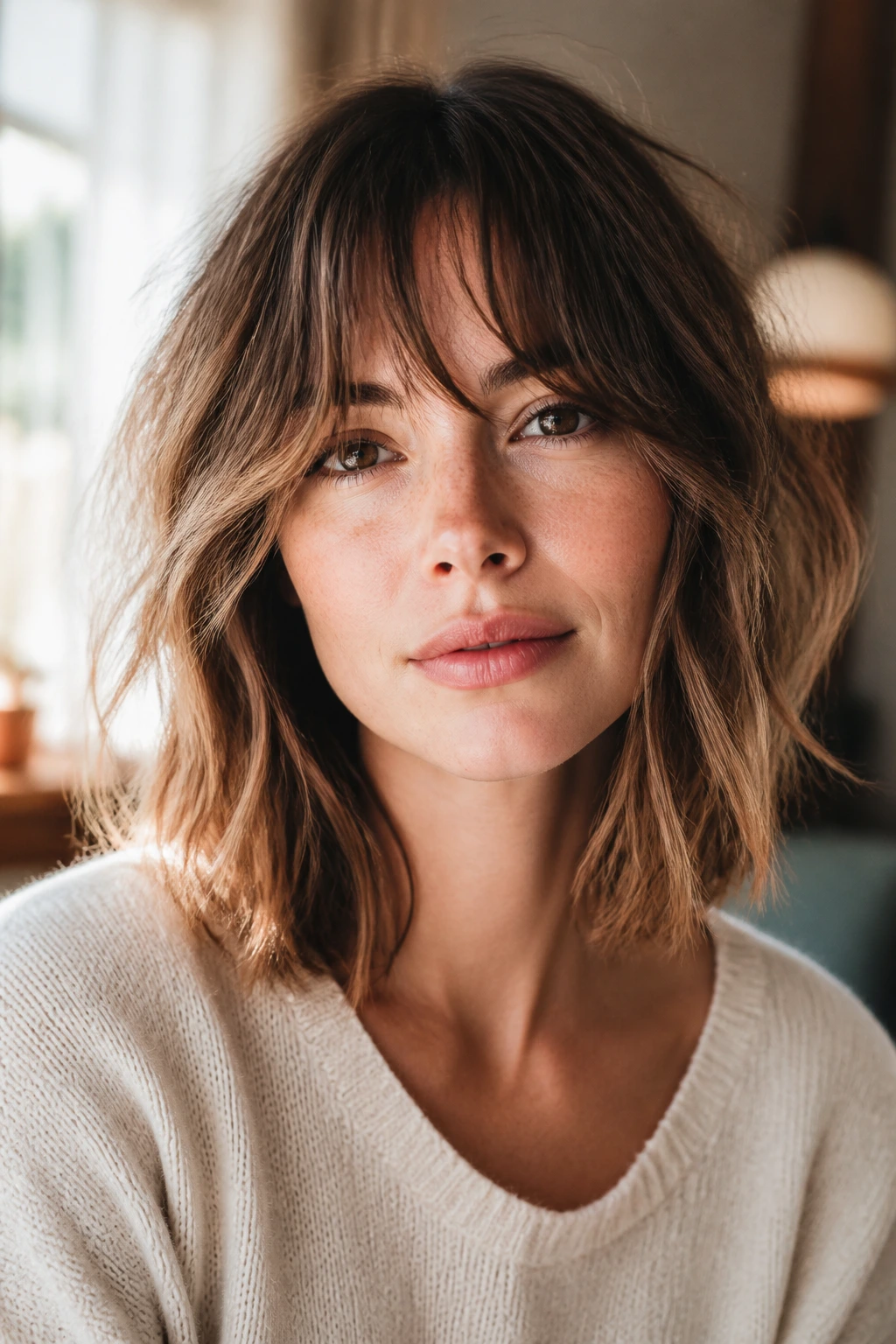
A choppy midi cut with a tousled fringe is the easygoing ending point for this whole collection. It’s long enough to feel safe, short enough to move, and textured enough that the front doesn’t flatten into a tidy ribbon. The fringe should be loose, not thick, and the layers should create a soft, broken outline around the shoulders.
This is the kind of haircut that looks better after a little living. Fine hair often responds well to that. The first day can feel almost too neat; the second day usually looks better. A bit of dry shampoo at the roots and a finger-tousle through the front are often enough.
If you want a style that lands between polished and undone, this is it. Not fussy. Not precious. Just enough choppiness to keep the hair from sitting still.
How to Ask for the Cut at the Salon
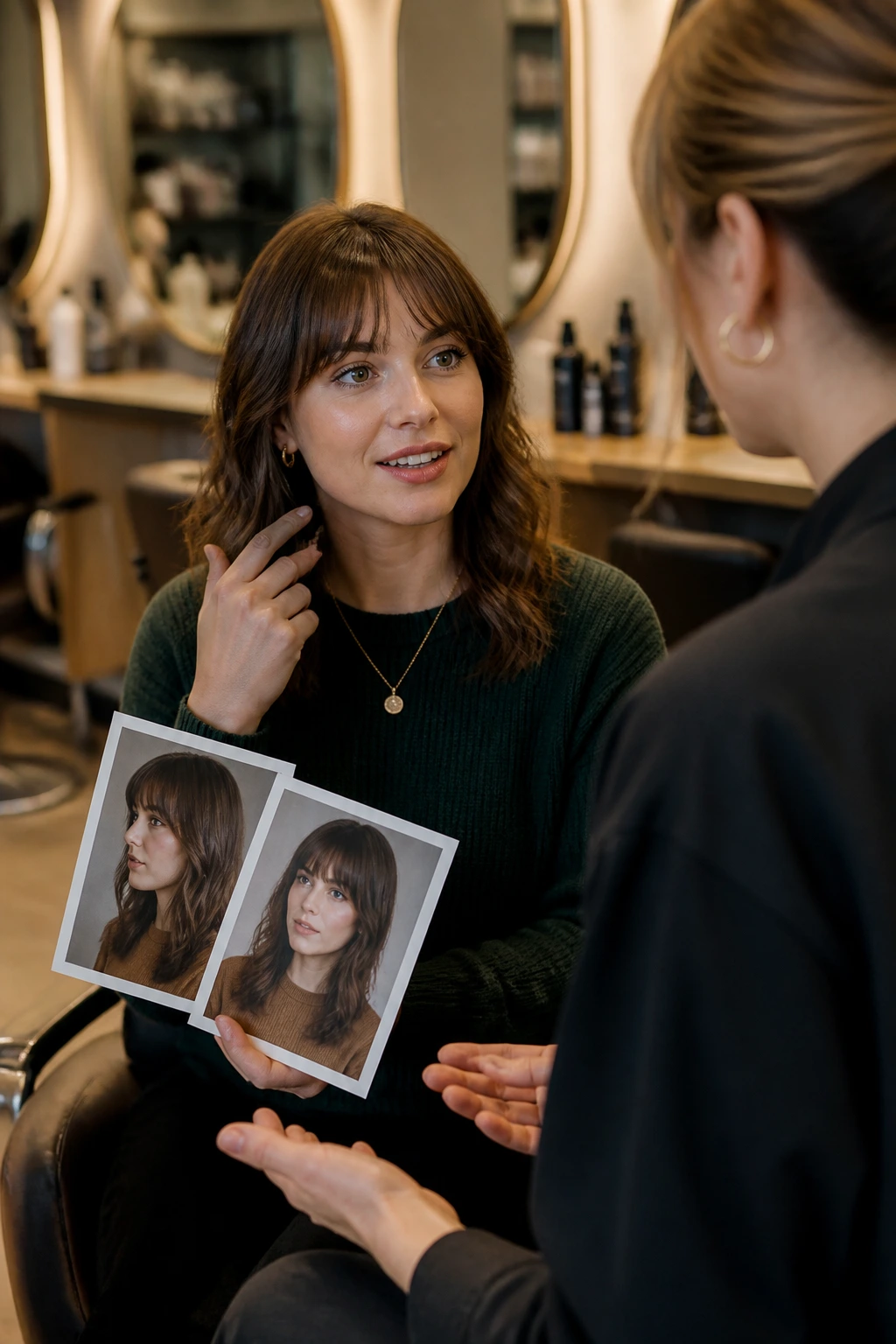
A stylist can only work with the instructions you actually give, and bangs are one of those places where vague language causes trouble fast. Say where you want the fringe to hit when it’s dry, not just wet. Tell them whether you part your hair in the middle, a slight off-center part, or a deep side part. Fine hair changes shape when it dries, and the front needs to be cut with that in mind.
Bring photos, but bring the right photos. One front view is not enough. I’d show a front shot and a side angle so the stylist can see how the layers fall into the temples and jawline. Point out whether you want the fringe to feel heavier at the center or feathered all the way across.
The phrases worth using
-
“Keep the perimeter full.” That tells them you do not want the ends thinned to death.
-
“Point-cut the bangs.” This gives texture without turning the fringe ragged.
-
“Go easy with thinning shears.” Fine hair can lose its shape fast if the mids are over-thinned.
-
“Cut it with shrinkage in mind.” Especially useful if your hair bends, flips, or dries shorter than it looks wet.
A good salon conversation saves weeks of annoyance. Worth the ten extra seconds.
Tools That Actually Help Fine Hair Hold a Fringe
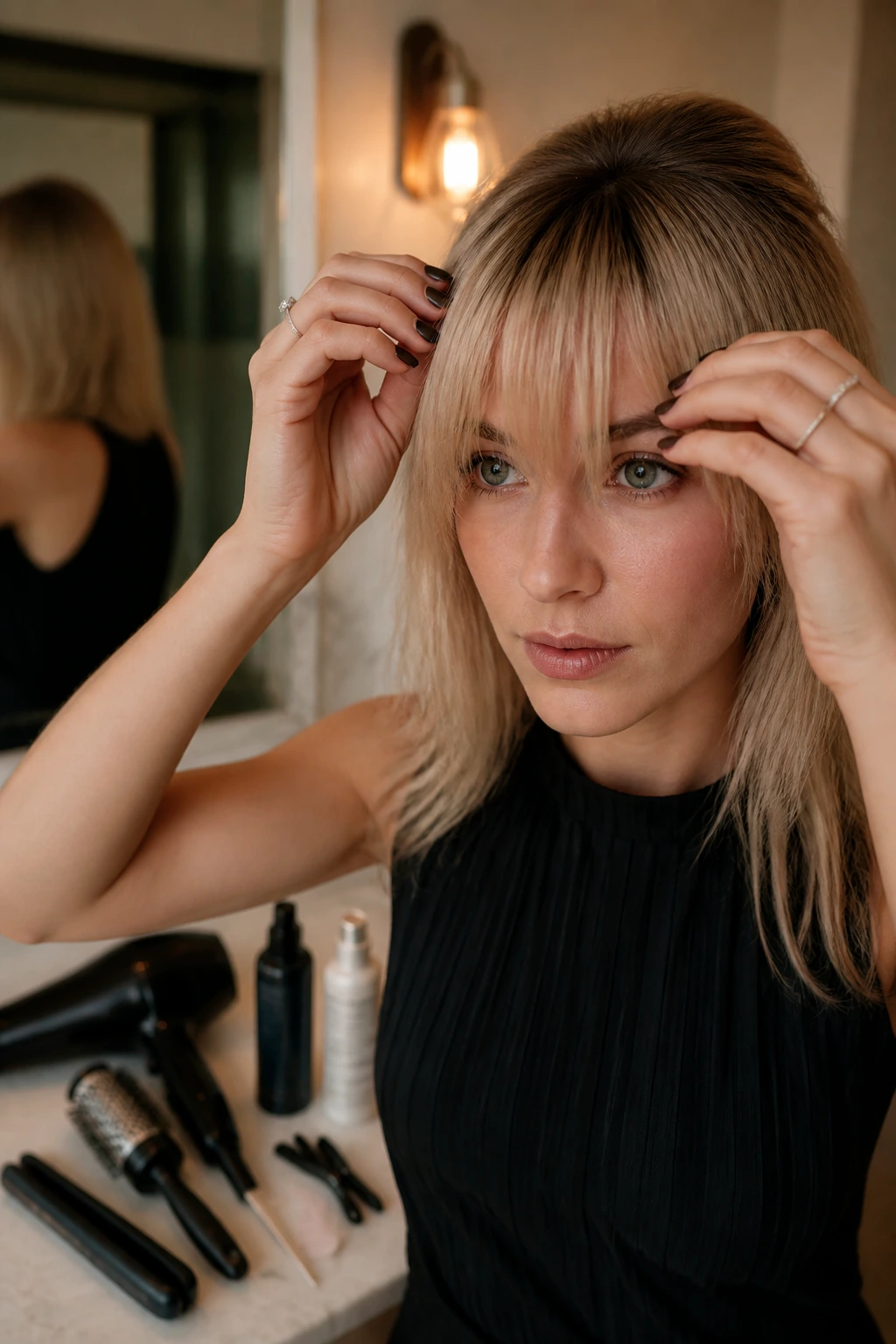
You do not need a sink full of products. You need a small, useful set of tools that help the front keep shape without dragging it down.
-
A blow dryer with a concentrator nozzle: Directs air at the bangs so they dry where you want them, not wherever they feel like going.
-
A 1-inch round brush: Small enough to create bend in the fringe and enough control to lift fine roots without over-smoothing them.
-
Duckbill clips: Useful for setting curtain bangs or holding the rest of the hair away while you dry the front first.
-
A tail comb: Clean parting matters more on fine hair because messy sections look thinner than they are.
-
A flat iron with rounded edges: Good for a quick bend or a soft curve at the ends, especially on choppy layers.
-
Light texturizing spray: Adds a bit of grip after styling, which helps separation without turning the hair stiff.
-
Dry shampoo: Best used at the roots, not all over the fringe. A little goes a long way.
-
A small roller or Velcro roller: Handy for setting curtain or bottleneck bangs while you do the rest of your makeup.
If a tool adds weight, skip it. Fine hair notices everything.
Styling Products That Add Grip Without Gunk

The whole product game changes when the hair is fine. Heavy creams and thick oils usually flatten the front before you’ve even left the bathroom. What you want instead is grip, light hold, and a finish that can be brushed through.
A light mousse at the root can help if your hair starts out limp. Apply it to damp hair, not dripping hair, and focus on the front and crown where lift matters most. For the fringe itself, a light spray or foam works better than a rich cream because it gives the hair a little memory without soaking the ends.
Texturizing spray is useful, but only after the hair is dry. Spraying it on damp hair usually wastes the product. A few short bursts at the roots and mid-lengths, then a quick lift with your fingers, is enough. If the hair feels crunchy, you went too far.
Dry shampoo is more of a styling product than people admit. On fine hair, it can give the front enough texture to stop sliding. Apply a small amount, wait a minute, then massage it in. If you can still see powder, you used too much.
Styling Moves That Keep the Cut Alive Past Lunch
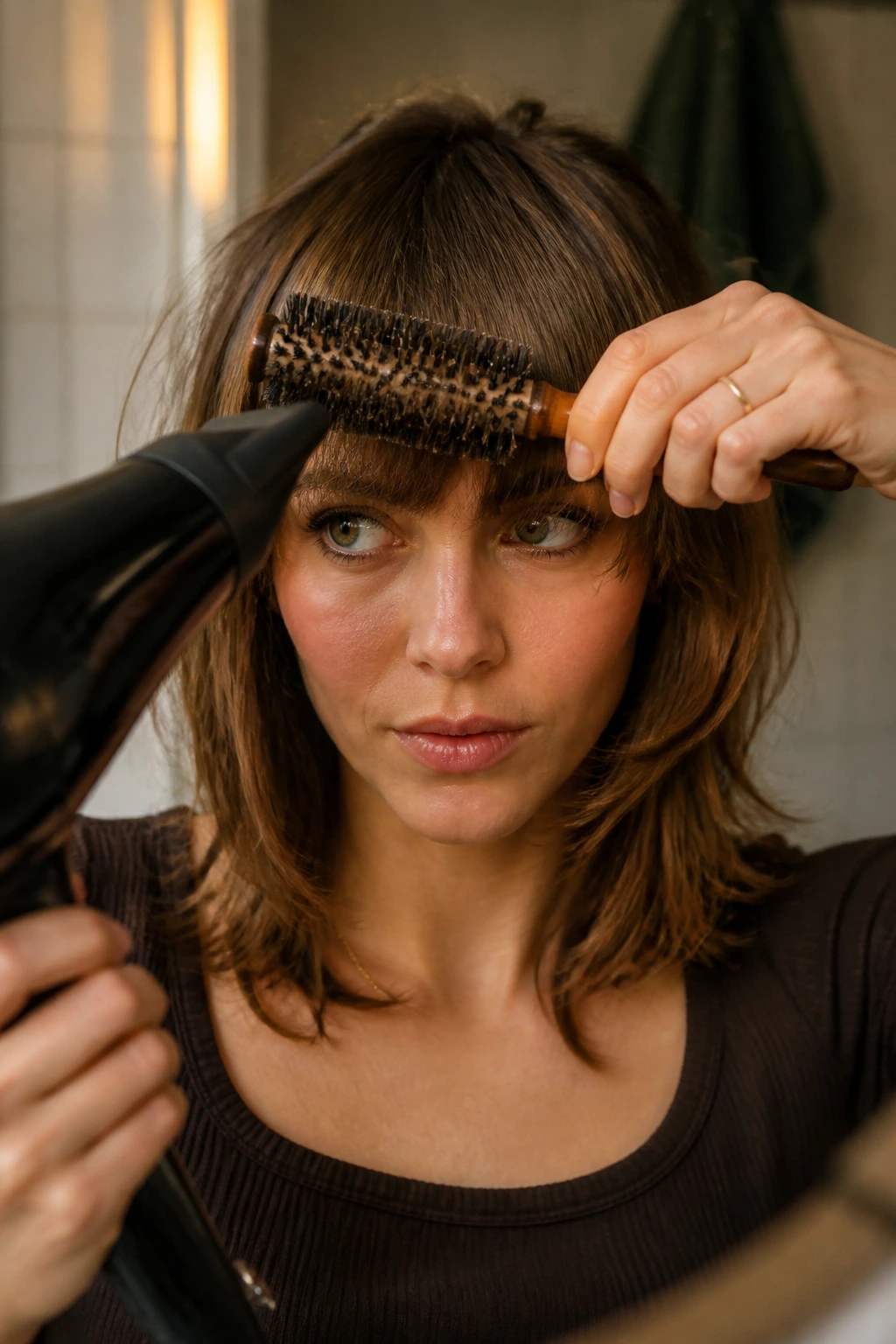
Dry the fringe first. That’s the move I keep coming back to because it saves so much trouble. Clip the rest of the hair out of the way, work on the bangs while they’re still damp, and push them side to side with the dryer for 20 to 30 seconds before shaping them with a brush. The front sets better that way.
Cool the bend before you walk away. Fine hair forgets heat fast if you don’t give it a moment to settle. Use the cool shot on the dryer or let the bangs sit in a roller for a few minutes while you finish the rest of your routine.
Separate with fingers, not a brush. Brushes can over-smooth fine bangs and make them look flat. Your fingers are better for breaking the fringe into soft pieces without destroying the shape.
Refresh the roots, not the whole head. A little dry shampoo at the hairline does more than a cloud of product sprayed everywhere. Focus near the part and the front corners where fine hair tends to go limp first.
One more thing. Don’t keep fussing with the fringe all day. Every touch pushes oil forward.
Common Mistakes That Flatten Fine Hair
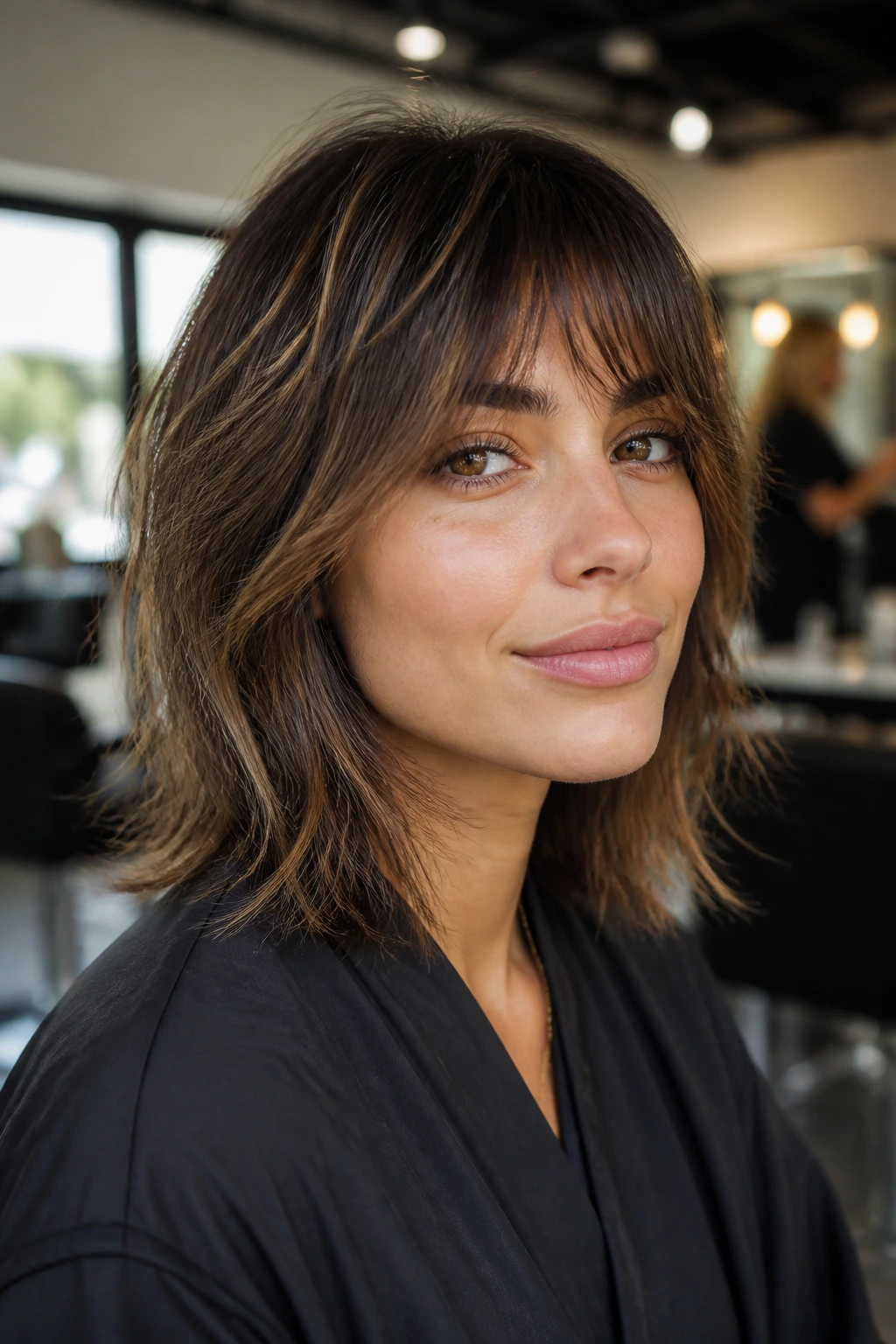
The first mistake is asking for too much texture in the wrong places. If a stylist removes weight through the mids and ends instead of keeping the perimeter solid, the cut can look airy for a day and then tired for a month. The fix is simple: ask where the layers will start and how much length will be left at the ends.
Second: cutting the bangs too short at the first appointment. Fine hair often shrinks, flips, or reveals more forehead once it dries. You want room to adjust. Starting a touch longer is almost always safer.
Third: loading the front with heavy cream, oil, or thick leave-in products. Fine hair absorbs those products fast, then collapses under them. Use lighter formulas and keep them off the roots unless you want a grease problem by noon.
Fourth: overusing thinning shears. They can be helpful on dense hair, but on fine hair they often leave the fringe stringy and the layers rough. If texture is needed, point cutting is usually the cleaner move.
Fifth: ignoring the cowlick. If the front grows in a stubborn direction, a straight-across bang may fight you every morning. A side-swept or curtain shape often behaves better and looks more intentional while it grows out.
Variations and Alternatives for Different Faces and Habits
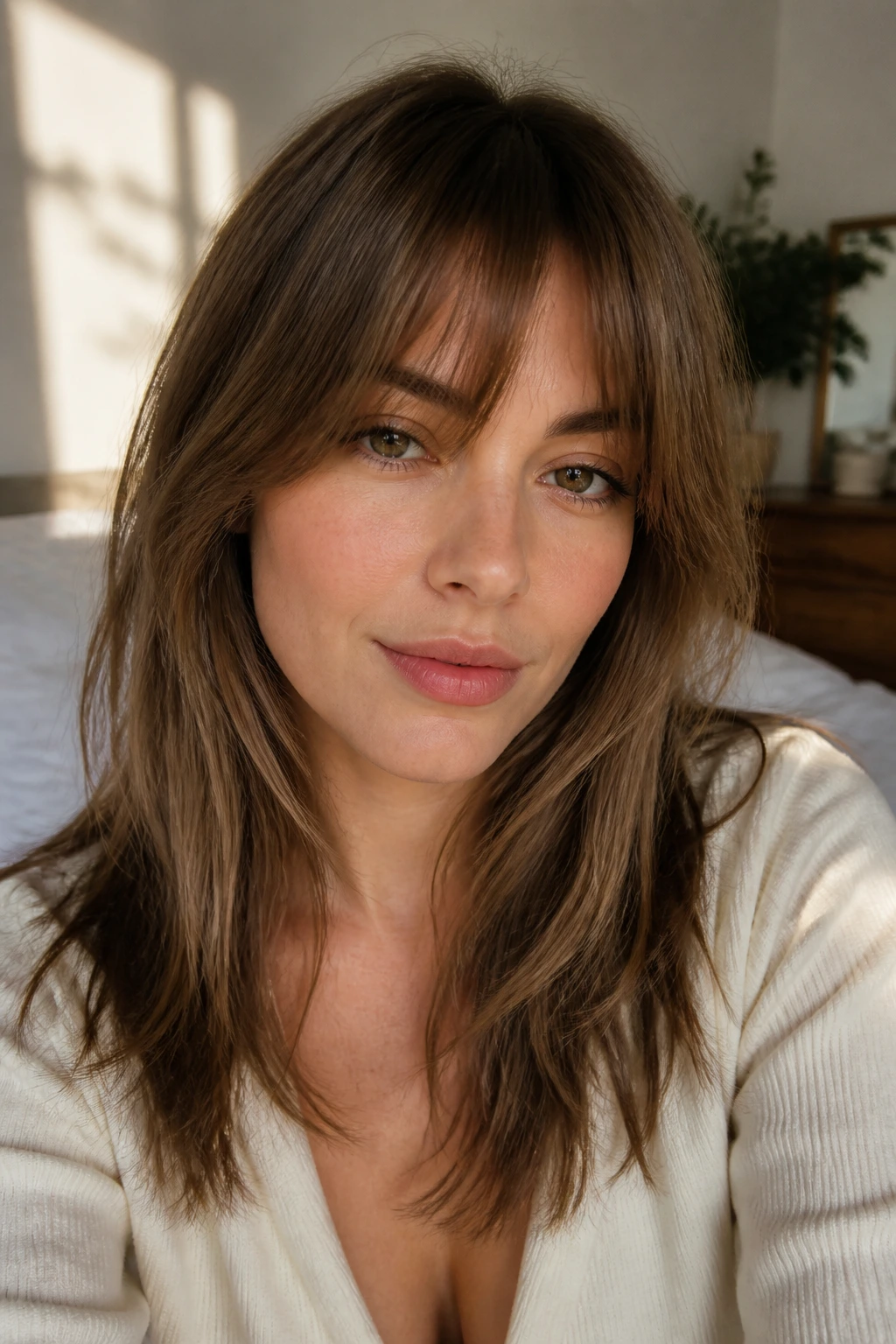
The Softest Version: Choose longer curtain or bottleneck bangs with minimal choppiness. This works well if you want movement but need the fringe to blend into the rest of the cut without daily styling.
The Edgier Version: Go for micro bangs, shattered pieces, or a razor lob. These cuts give fine hair a sharper outline, but they need more maintenance and a stylist who knows how to leave weight where it counts.
The Cowlick-Friendly Version: Pick side-swept bangs, split fringe, or tapered curtain pieces. These shapes follow the direction of the hair instead of fighting it, which makes the front behave better on messy mornings.
The Low-Maintenance Air-Dry Version: Keep the fringe long and the layers soft, then let the hair bend naturally. Curtain bangs, lived-in fringe, and a mid-length shag are the easiest places to start if you hate hot tools.
The Short-Cut Version: Soft pixie bangs or a layered crop can make fine hair look thicker because the length is short enough to hold shape. The trade-off is trim frequency. You’ll need regular upkeep, and there’s no shortcut around that.
Maintenance and Grow-Out Between Trims

Bangs on fine hair usually need attention sooner than the rest of the cut. The fringe can lose its shape in 3 to 4 weeks, especially if you wear it straight across the forehead. The layers can often go 6 to 8 weeks before they start to sag, but the front is the part to watch. That’s where a tiny amount of grow-out changes the whole mood.
If you want the style to stay airy, trim the bang before it starts touching your lashes every time you blink. Once the fringe gets in your eyes, people start pinning it back, and then the cut loses the reason you had it in the first place. That sounds fussy. It’s not. It’s just how fringe works.
Night habits matter too. Fine hair bends easily, so don’t go to sleep with wet bangs unless you enjoy a lopsided morning. If the front gets sweaty or damp, dry it first. A quick blast with the dryer or a small roller in the front section can save the shape for the next day.
A tiny trim schedule is boring, yes. But it keeps the cut looking like a style instead of a grow-out phase.
Frequently Asked Questions

Are choppy layers good for fine hair, or do they make it look thinner?
They can do either, which is why placement matters. Choppy layers are good when they break up the front and soften the outline while keeping the perimeter full. They make fine hair look thinner when the stylist removes too much weight from the ends or starts the layers too high.
Should I choose curtain bangs or blunt bangs for fine hair?
Curtain bangs are the safer choice if you want flexibility and easier grow-out. Blunt bangs can make fine hair look fuller at the front, but only if the fringe has enough density and the rest of the cut stays controlled. If your hair is sparse around the hairline, curtain or bottleneck shapes usually behave better.
Can I ask for thinning shears on fine hair?
You can, but I’d be careful. On dense fine hair, a light touch can help remove bulk. On finer or sparser strands, thinning shears often create frayed ends and make the hair look weaker than it is.
How do I stop my bangs from splitting in the middle?
Dry the fringe from side to side instead of straight down, and use a small amount of root lift product at the front. If the split is caused by a strong cowlick, a side part or bottleneck shape will usually fight less than a straight fringe.
Can fine hair wear a shag and still look full?
Yes, if the shag is controlled. Keep the layers soft, preserve the hemline, and avoid stripping too much density from the crown. A shag that’s too aggressive will usually make fine hair look airy in the wrong way.
What if my hair gets greasy fast at the front?
That’s common with bangs because the fringe sits on the skin. Wash or refresh the front section more often than the rest of the hair, and use dry shampoo at the roots before the shine gets obvious. A tiny amount goes farther than people think.
Can I air-dry this kind of cut?
Some versions absolutely can. Curtain bangs, lived-in fringe, and softer shag shapes usually air-dry better than blunt or micro fringes. If you let the front dry on its own, set the part where you actually wear it and don’t touch it every five minutes.
How short should the bangs be if I’m nervous?
Longer than your first instinct. Fine hair often looks better when the fringe lands at the brows or slightly below them, because there’s room for shrinkage and movement. Starting too short is the fastest way to end up with bangs that feel loud instead of light.
A Fringe That Still Has Air in It
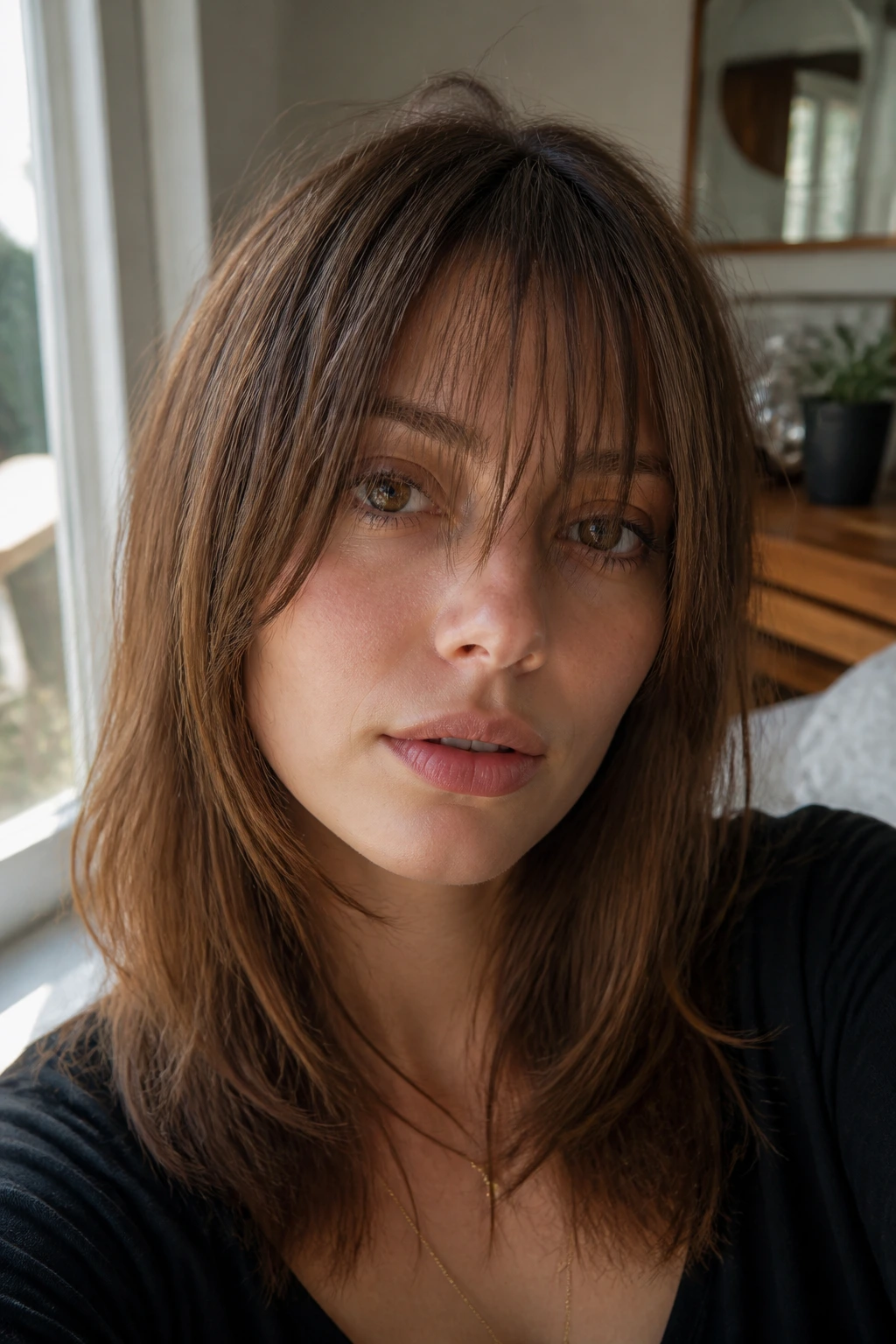
The best thing about these cuts is that they do not ask fine hair to be something it isn’t. They work with light strands instead of fighting them, and that usually produces a better shape anyway. You get movement, lift, and a front section that actually contributes to the haircut instead of sitting there like a warning label.
The smartest versions keep a firm outline, add texture only where it helps, and leave enough density to make the hair look healthy. That’s the balance worth chasing. Bring a couple of reference photos, say what part you wear, and be specific about how much forehead you want to show. The rest gets easier fast.
