



Cutting face framing bangs for long hair is one of those decisions that looks tiny on the salon cape and huge in the mirror two weeks later. Get the shape right and the whole cut feels lighter, softer, and more awake. Get it wrong and the front keeps falling into your eyes, or worse, it hangs there like two separate pieces that never met the rest of the haircut.
The sweet spot is narrower than people think. Long hair gives you room to play, which is exactly why these bangs work: the front pieces can start high, dip at the cheekbone, then melt into the lengths without looking chopped off. That little transition matters. It keeps the fringe from feeling like an afterthought, and it stops the face frame from fighting the rest of the hair every time you turn your head.
And yes, the details are fussy. Density, parting, cowlicks, glasses, wave pattern, forehead length, and how much time you want to spend with a blow-dryer all change the result. A fringe that looks airy on straight fine hair can go full mushroom on thick hair. A side sweep that behaves beautifully on an oval face can sit strangely on a very round one if the shortest piece lands in the wrong place. The good versions are specific. The bad ones are too.
Why This Collection Feels Different
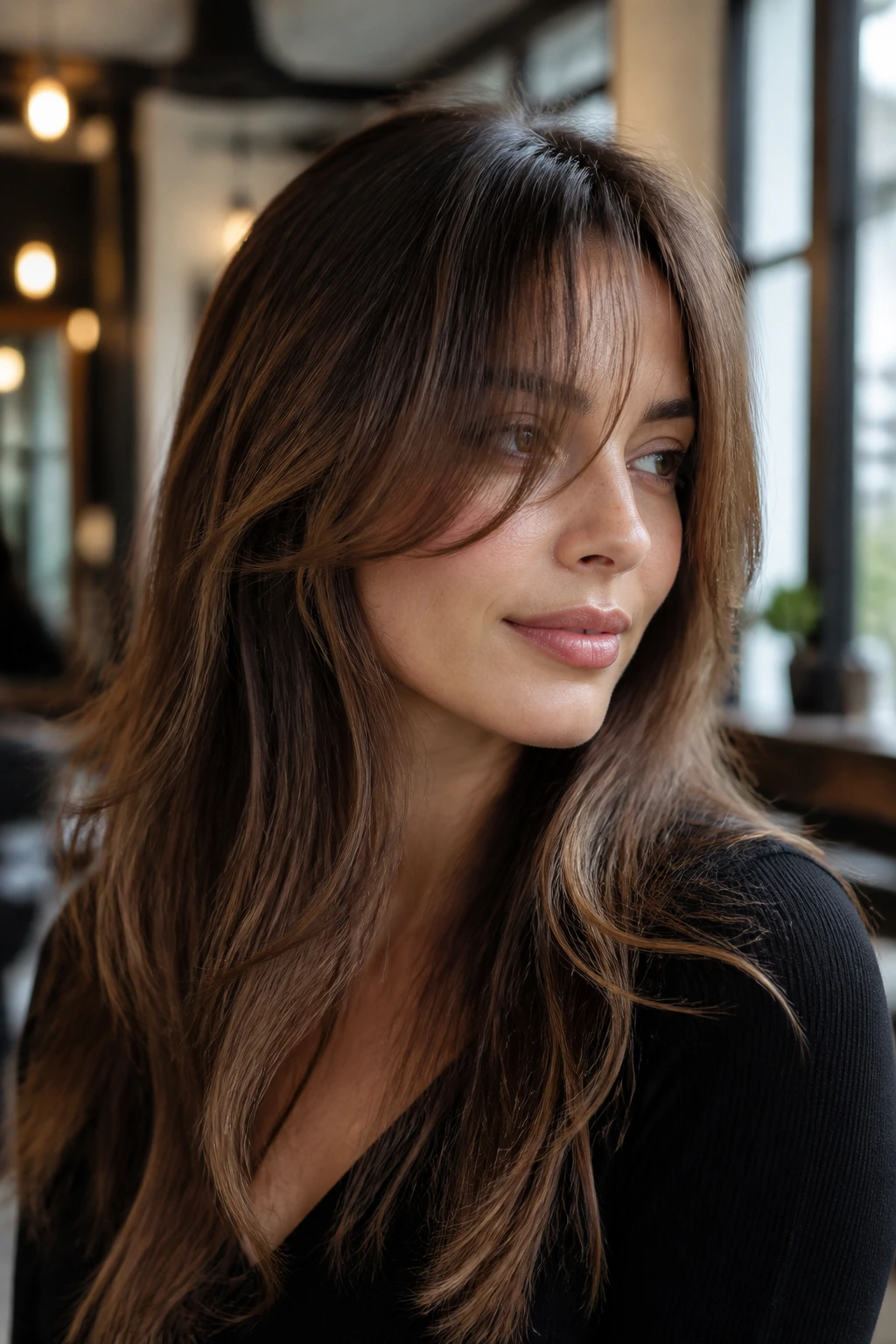
- Less commitment, more payoff: The best face-framing pieces keep working even when they grow out half an inch, which means you do not get trapped in a blunt-bang schedule.
- Built for long lengths: These styles keep the front active while the back stays long, so the haircut has shape from every angle, not only from the front.
- Room for texture: Straight hair, waves, curls, and thick hair all change how the fringe sits, and that is the fun part here — the same cut can look polished, soft, or piecey depending on styling.
- Easy to tailor: A quarter inch of length, a deeper side part, or a lighter interior weight can shift the whole mood of the fringe without changing the haircut.
- Works with real life: Ponytails, claw clips, and second-day hair can still look intentional when the front pieces are cut with movement instead of a hard line.
- Faces the camera well: Long hair with a face frame tends to break up a flat curtain of length, which helps the whole style look more dimensional in person and in photos.
1. Soft Curtain Bangs That Split at the Cheekbone
These are the bangs most people picture first, and for good reason. The middle opens cleanly, the sides dip right around the cheekbone, and the ends blend into long layers instead of stopping with a blunt shelf. On long hair, that shape gives the front some motion without stealing the show from the rest of the cut.
They work best when the shortest point is still long enough to bend — not sit stiffly on the forehead. Ask for the center to land somewhere between the eyebrow and the lash line, then let the outer pieces get longer as they move toward the jaw. That slope keeps them soft. Too short, and they start acting like full bangs. Too long, and the face frame disappears.
What to Watch For
- Keep the center light enough to part with your fingers.
- Use a round brush and bend the ends away from the face.
- Let the pieces cool before touching them. That cooling step matters more than people think.
If you like a fringe that looks nice on day one and still looks decent after a ponytail, this is the one I’d point you toward first. It’s the haircut version of a soft sweater: easy to live in, easy to dress up, and a lot less fussy than it sounds.
2. Bottleneck Bangs with a Narrow Center and Wider Sides
Bottleneck bangs are the quieter cousin of curtain bangs. The center stays narrow and slightly shorter, then the shape opens out toward the temples like the neck of a bottle turning into shoulders. On long hair, that creates a front frame with real structure, which is useful if your face needs a little width near the cheekbones.
The reason this cut keeps showing up is simple. It gives you forehead coverage without a heavy, solid line. If you have a high forehead or a stronger jaw, that gentle taper can balance both without making your hair look dense. The sides usually graze the cheek or top of the jaw, which helps the whole haircut feel connected.
Best for
- Medium to thick hair that can hold a bend
- Oval, heart, and longer face shapes
- People who want shape without a blunt bang line
The parting matters here. A deep center split can flatten the center too much, while a slightly off-center part keeps the frame from looking too symmetrical. I like this style with loose bends rather than polished curls. It should look touched, not sculpted.
3. Cheekbone-Grazing Pieces That Blend Into Long Layers
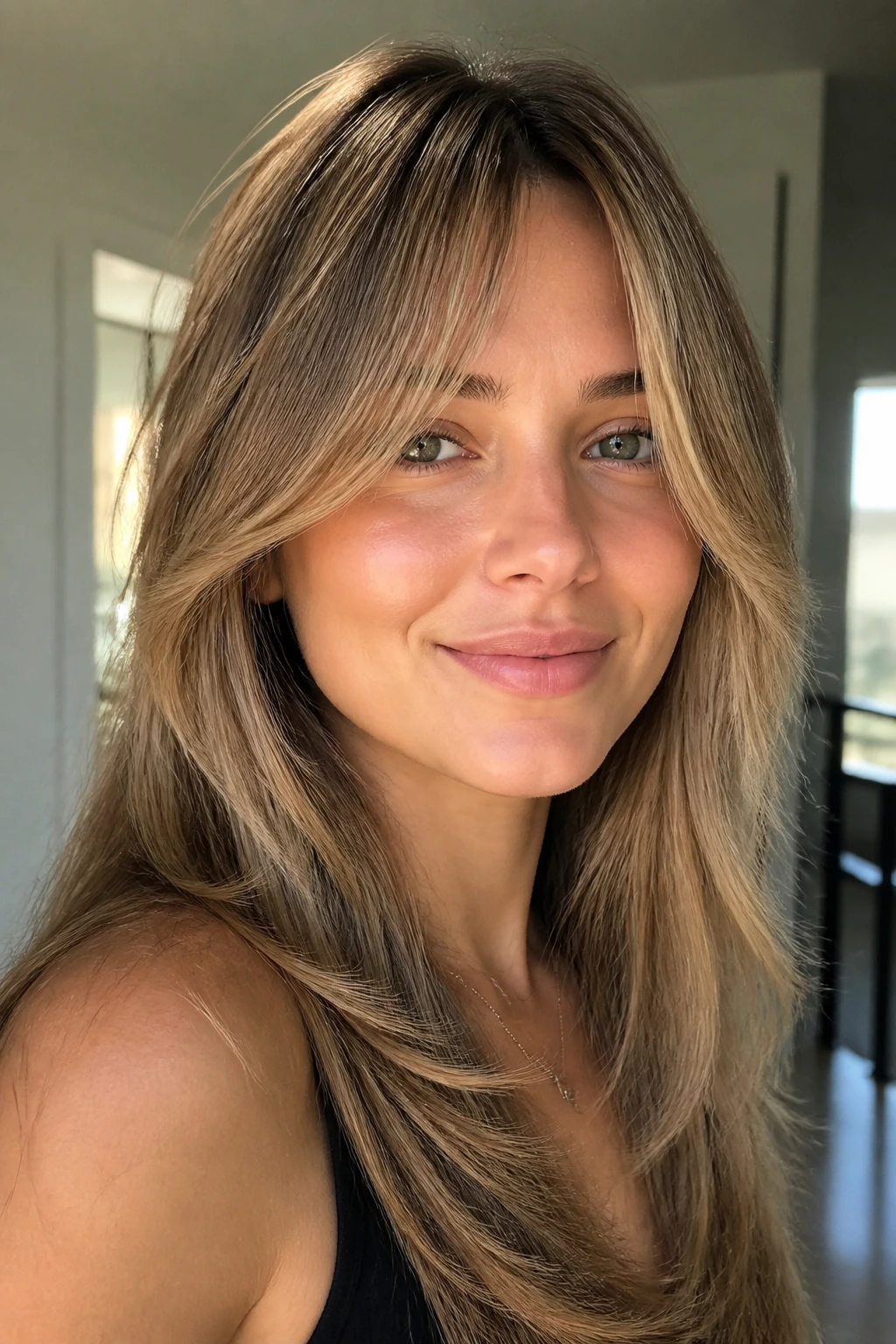
This one is less “bangs” and more “front contour,” and that’s exactly why it works. The shortest pieces hit around the cheekbone, then slide down into the rest of the haircut so smoothly that the transition barely reads as a transition. On long hair, that softness keeps the front from feeling busy.
If you hate the idea of obvious fringe maintenance, this is a smart place to start. The pieces can be tucked behind the ear, pinned into a half-up style, or pushed aside when you are over them, and they still look like part of the haircut. They also do a good job of softening the line between the forehead and the rest of the face.
A small warning: this shape needs a little internal layering. If the front is cut too square, it starts looking like two disconnected strands. Ask for a feathered finish around the ends so the pieces move instead of hanging straight.
4. Wispy Brow Skimmers with a Barely-There Edge
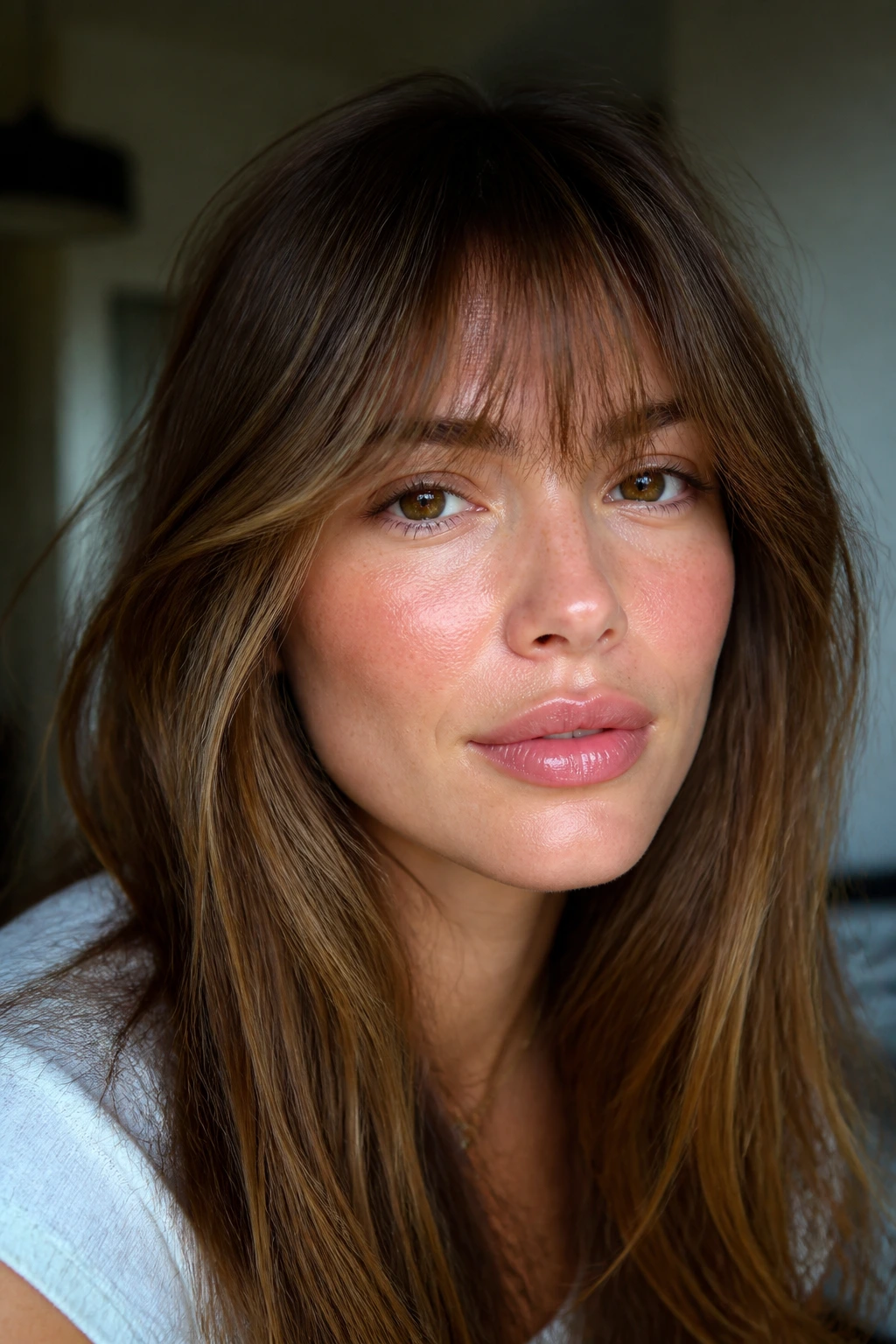
Wispy bangs are the opposite of heavy. The perimeter barely kisses the eyebrows, the density is light, and the edges let a bit of forehead show through. On long hair, that transparency is useful because it keeps the haircut from getting weighed down by the length around it.
Fine hair loves this version. So does anyone who wants movement without a chunk of hair sitting on the face all day. The trick is not to over-thin the fringe. Too much texturizing and you get see-through gaps where the hair separates into random strings instead of a soft veil.
What makes them work
- The center is short enough to show shape.
- The sides stay a touch longer for softness.
- The texture is airy, not choppy.
These bangs need regular trimming if you want them to stay clean. Once they drop past the brow, they lose the “wispy” part and just start looking grown out. Keep a light hand with product too. Heavy cream or thick oil can make them collapse fast.
5. Long Side-Swept Fringe with a Deep Part
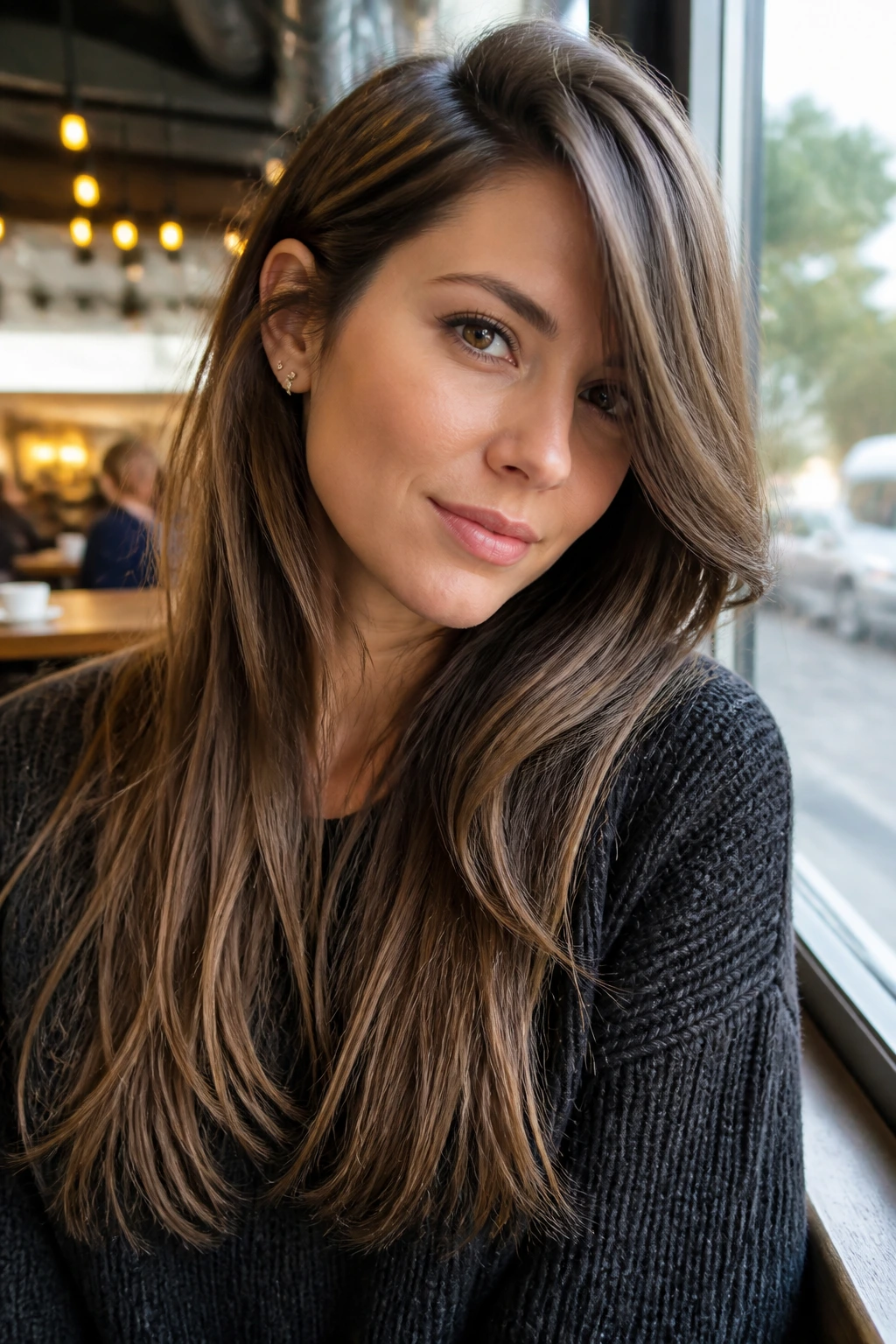
Side-swept bangs are not boring when they are cut with enough length to move. A deep part sends the fringe across the forehead in one clean sweep, then the ends taper into the long layers near the cheek. It is a very forgiving shape, which is why stylists keep falling back on it for people with tricky cowlicks or strong front growth patterns.
The best version does not look like a hard comb-over. It should have a bit of bend, a little lift at the root, and enough length that you can tuck it behind the ear without yanking. On long hair, that one swoop can soften a square jaw or slim a wider forehead in a way that feels subtle instead of obvious.
If your hair wants to split down the middle on its own, this cut can still work. You just need to set the part while the hair is damp and clip the fringe in the direction you want for a few minutes before blow-drying. That little bit of training helps more than a whole drawer full of styling products.
6. Feathered 1970s Frame with Blowout Bounce
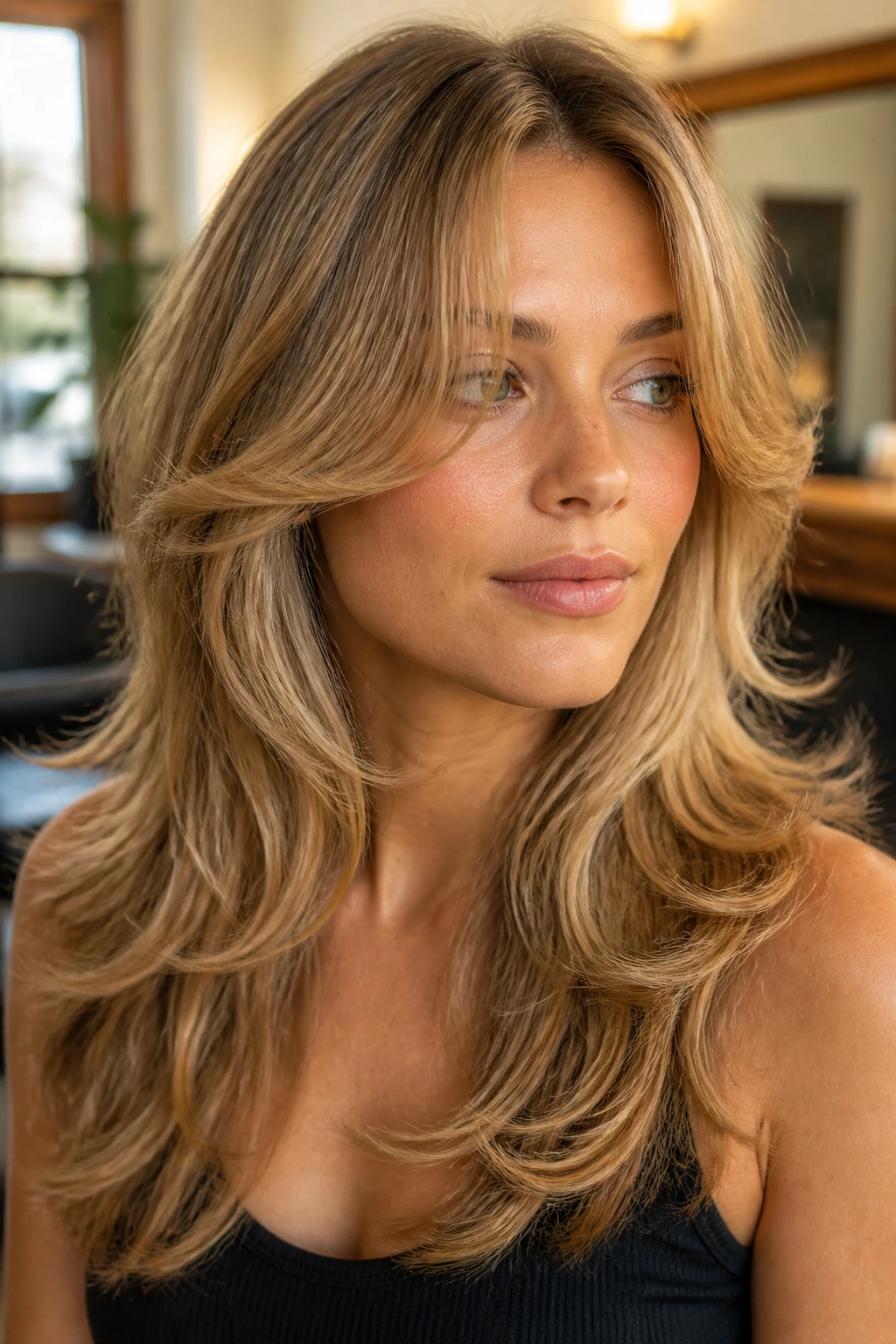
This is the glamorous one. The front pieces start near the brow, curve around the cheekbone, and then feather outward so the ends flip away from the face. When it’s done well, the shape has that soft, round blowout look that makes long hair feel expensive without looking stiff.
It’s especially good if you already like volume. The feathering adds movement where hair usually lies flat, and the long sides keep the silhouette from turning puffy at the top. You want the face frame to look lifted, not helmeted. That means using a brush big enough to create a bend but not so huge that the front goes limp.
Styling note
A round brush in the 1.5- to 2-inch range usually does the job. Dry the roots first, then pull the ends forward and roll them under or away from the face, depending on the mood you want. The finish should feel airy, almost brushed out by hand, not curled into place.
This is one of those styles that looks best with a little confidence. If you overthink it, the front pieces can turn too perfect. Let a stray bend live. It usually helps.
7. Choppy French-Girl Bangs That Stay Piecey
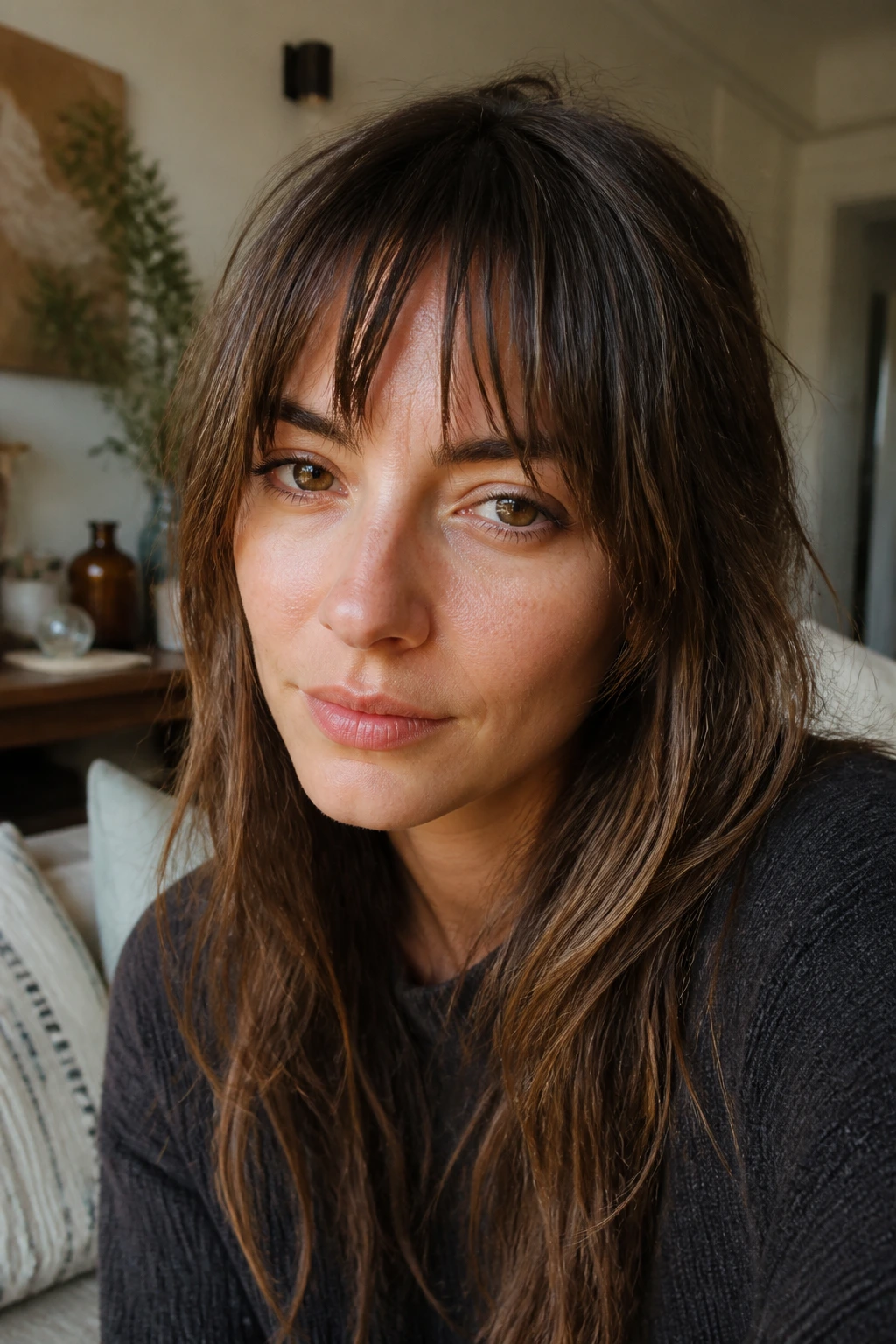
There’s a reason these bangs photograph so well in messy buns and lived-in waves: they’re meant to look a little broken up. The edge is choppy, the strands separate naturally, and the front has enough texture to keep the shape from looking flat. On long hair, that looseness stops the whole cut from feeling overly polished.
The key is density. You want enough hair to create a fringe, but not so much that it becomes a solid block. Ask for the ends to be point-cut or softly razored so the pieces move on their own. If the hair is cut blunt and then styled piecey, it usually ends up fighting itself.
How to wear it
- Air-dry with a touch of mousse for bend.
- Scrunch the ends instead of brushing them flat.
- Use a tiny bit of paste only on the very tips.
This is not the fringe for people who want every strand lined up. It looks better when it has a little edge, a little mess, and a little daylight between pieces.
8. U-Shaped Curtain Bangs for Round Faces
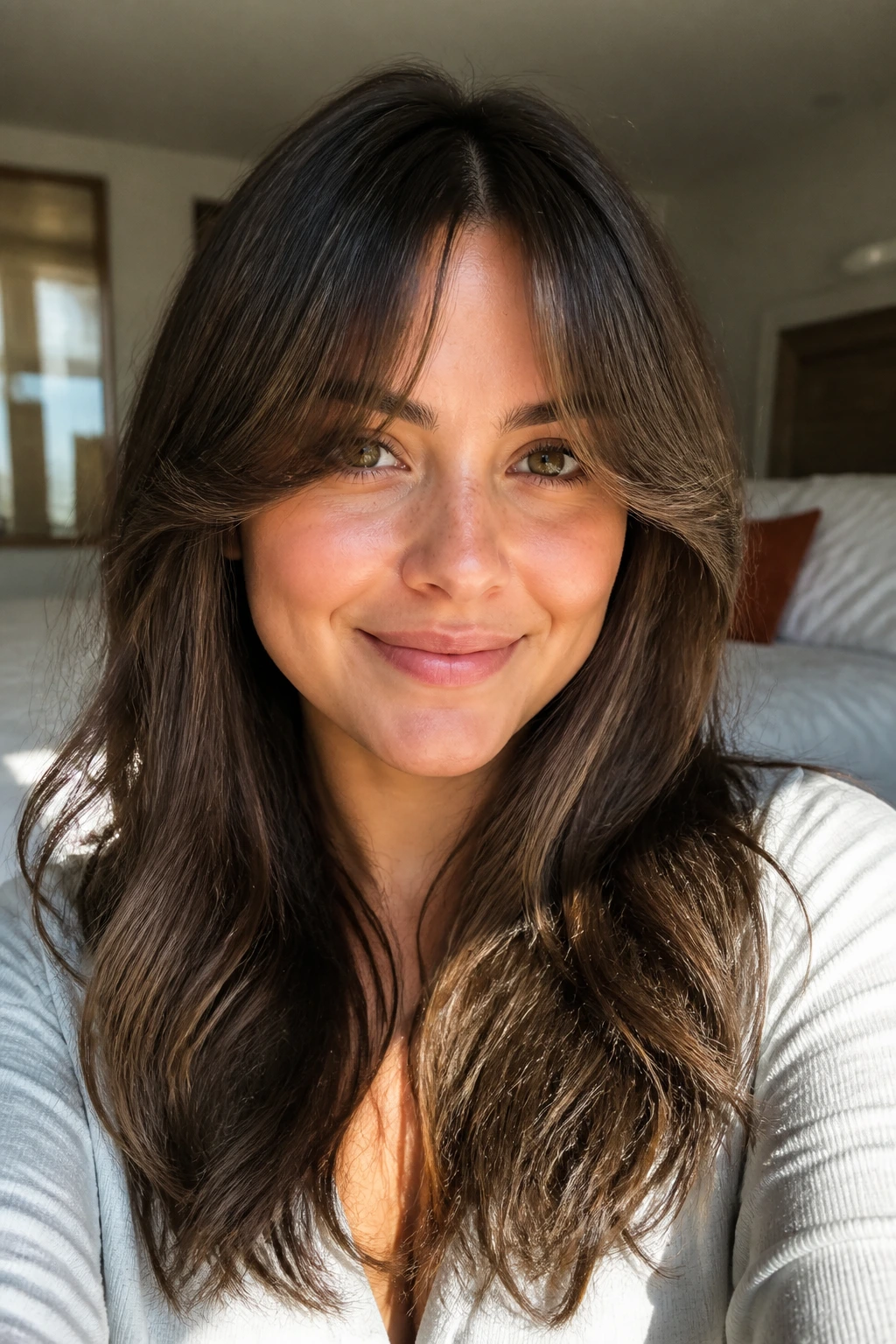
The U-shape gives this style its edge. The shortest point sits in the center, then the sides dip lower in a gentle curve that opens the face rather than closing it off. On round faces, that longer side length helps pull the eye downward and add a little vertical line, which keeps the fringe from making the face look wider.
The shape also works beautifully with long hair because the front pieces can echo the layers in the rest of the cut. Instead of a line across the forehead, you get a curve that blends into the cheek and jaw. It feels deliberate. Not severe.
If you have thick hair, ask for internal debulking around the center so the curtain opens instead of sitting heavy. Too much bulk at the middle can make the U look flat. The style should fall apart gracefully, not split like a curtain rod.
9. Waterfall Face Frame with Graduated Layers
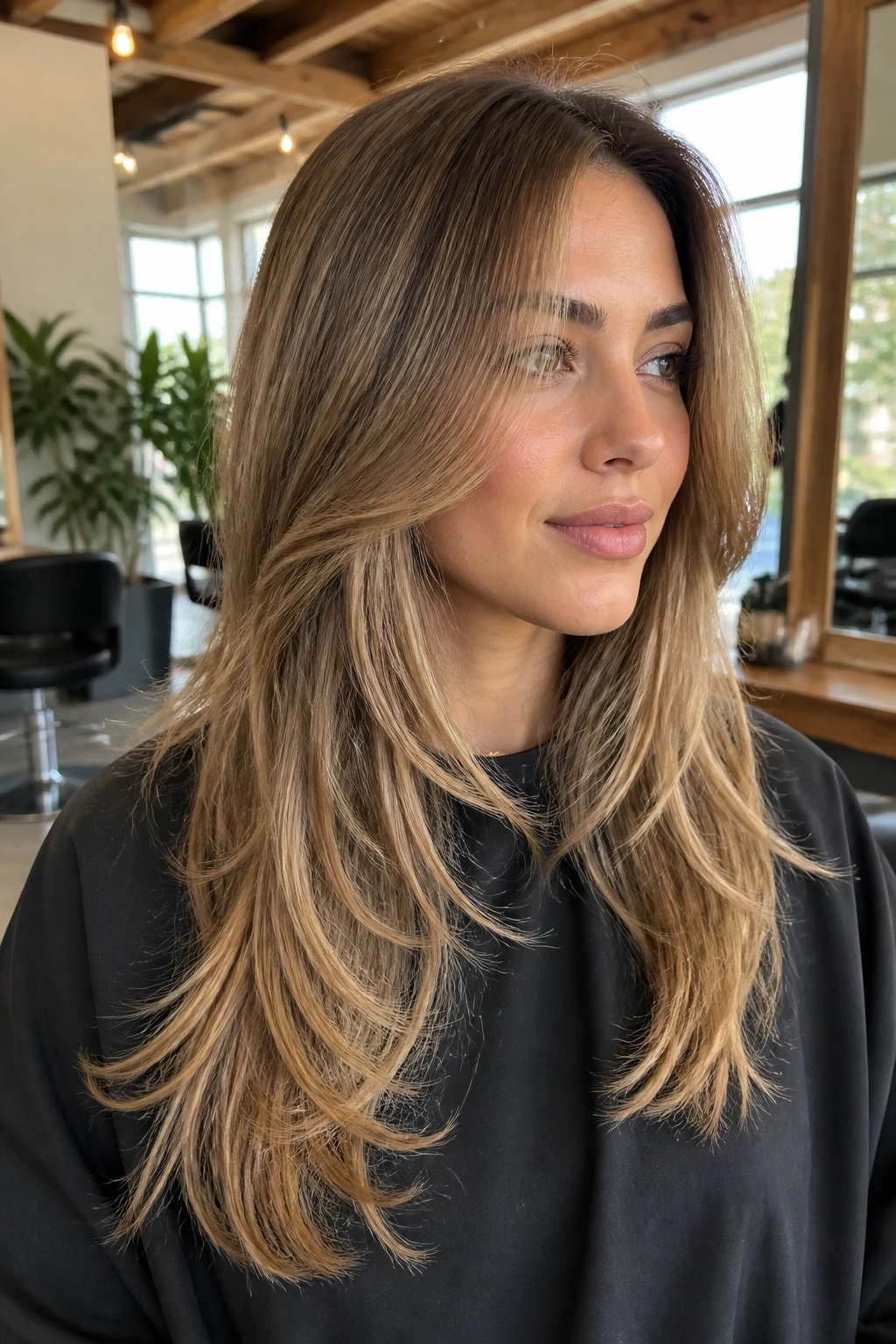
This is one of the most flattering options if you love movement in the front but do not want actual bangs sitting on your forehead. The shortest front pieces start near the cheekbone, then graduate into longer layers that cascade down the sides like a waterfall. On long hair, that shape makes the whole cut feel lighter without sacrificing length.
What makes it different from ordinary long layers is the direction of the cut. The pieces are shaped to lead the eye down and in, which softens wide cheeks and gives straight hair a little curve where it needs it most. It is especially nice if your hair tends to fall in one heavy sheet.
A subtle wave brings this style to life. On pin-straight hair, it can still work, but you may want a small bend at the ends so the layers show up. Otherwise the front can vanish into the length and the whole point gets lost.
10. Wolf Cut Front Pieces for Long Hair
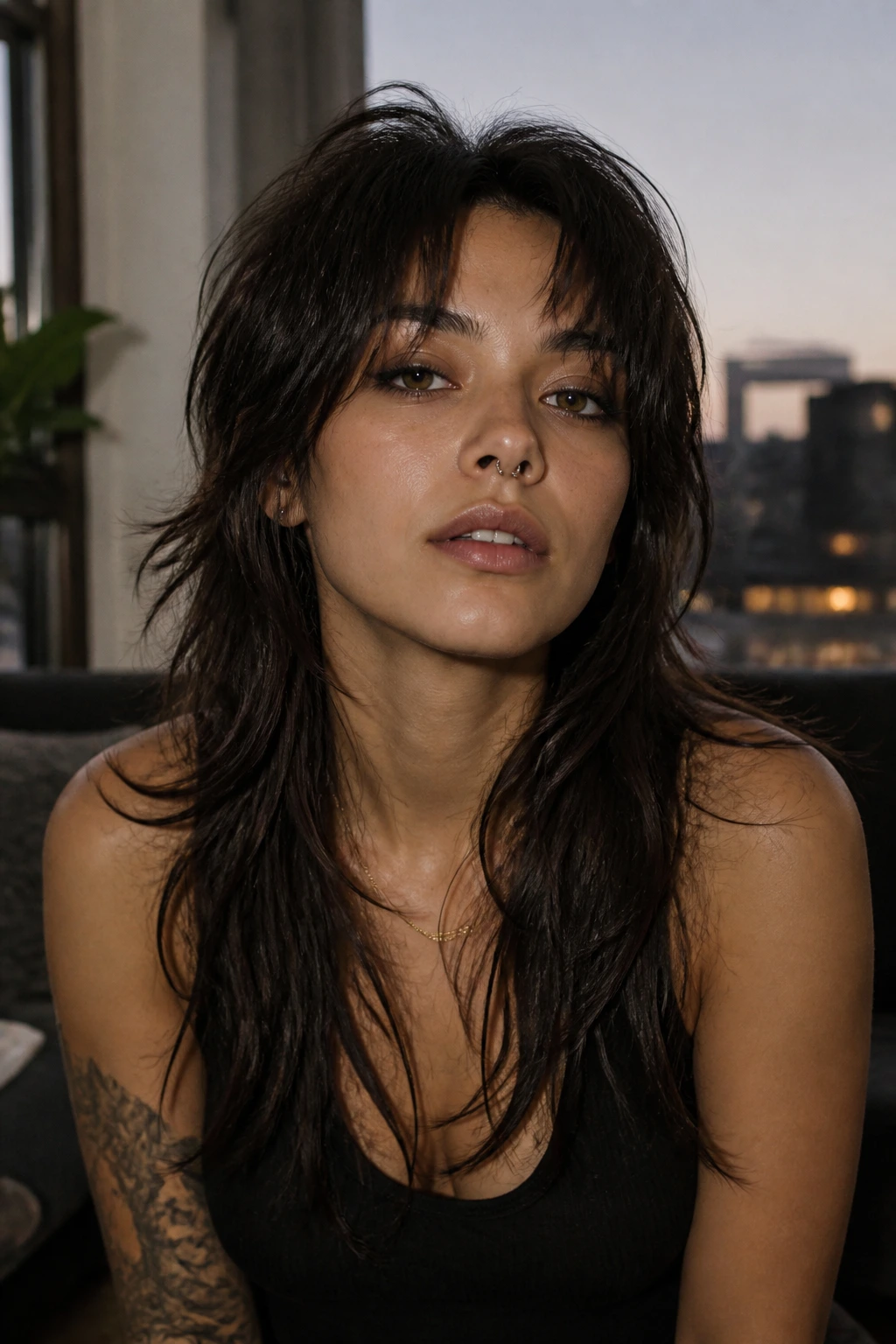
Wolf-cut bangs are for people who want edge, texture, and a bit of swagger around the face. The front is shorter, more shattered, and more layered than a classic curtain shape, then it drops into long lengths that keep the whole cut from feeling like a short shag. The contrast is the point.
On long hair, this style works because it keeps the top from lying too neatly against the head. The fringe has enough bite to stand on its own, but the long back keeps the cut wearable. If your hair is thick or naturally wavy, this can be a gift. If your hair is very fine, ask for a lighter version so the front doesn’t go sparse.
Good to know
- This fringe loves texture spray.
- It usually needs less perfect blow-drying.
- The grow-out phase still looks intentional, which is half the charm.
It is not polished in the usual sense. That is why people either love it or skip it. There’s no pretending here.
11. Arched Full Fringe with Soft Corners
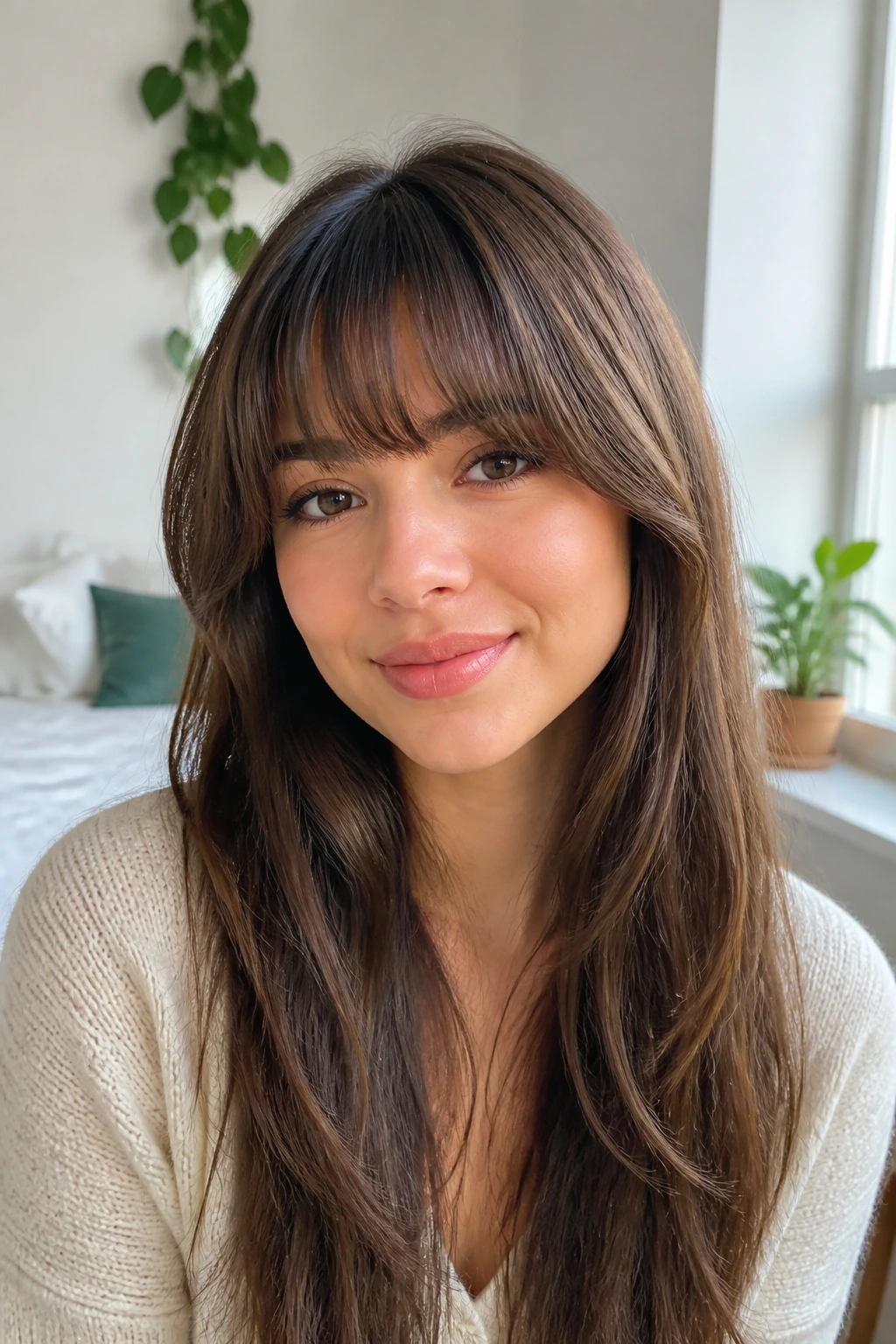
A full fringe does not have to feel hard. If the center is cut a touch shorter and the corners are rounded down near the temples, the result has a soft arch rather than a straight shelf. On long hair, that gentle curve keeps the bangs from looking too separate from the rest of the style.
This version gives the most forehead coverage of the bunch, which is useful if you like having hair in your face — just not all the way in your eyes. The arched edge opens the sides enough that the fringe does not box in the face. It also plays nicely with long layers because the corners can blend into side pieces.
You do need to think about upkeep. The heavier the fringe, the more obvious the grow-out line becomes. If you are the type who trims bangs only when they start annoyingly brushing your lashes, this is probably not your first pick.
12. See-Through Bangs for Fine Hair
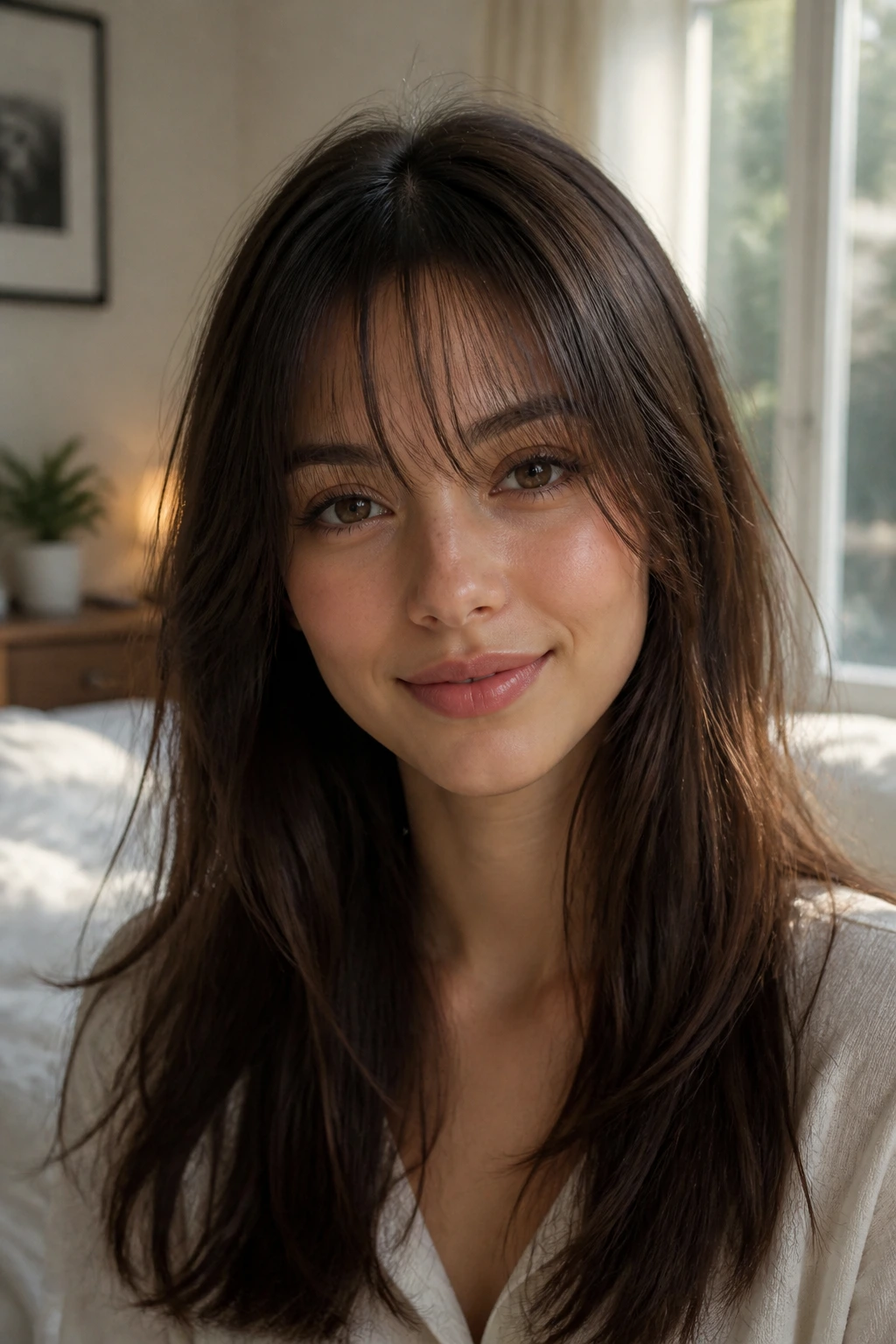
See-through bangs are all about lightness. You can see a little forehead through the fringe, which keeps the front from looking dense or heavy. On fine hair, that transparency is a strength, not a flaw. It lets you have bangs without needing a giant block of hair up front.
The trick is to keep the density honest. Don’t over-layer them until they disappear. You want a soft curtain of wisps that still reads as a fringe from across the room. When cut well, they sit somewhere between a brow skimmer and a veil.
These bangs behave best with a quick dry and a gentle bend. Too much heat can flatten them, and too much product can make the strands clump together. A small round brush and a blast of cool air at the end usually do the job.
13. Split Fringe with a Center Part

Some people want a fringe that never fully commits to covering the forehead. Split fringe gives you that. The center part is obvious, the front pieces fall on either side, and the shape stays open enough that you can wear it with long hair up or down without feeling trapped by the cut.
It works particularly well if your face is narrow or your forehead is on the shorter side. The opening in the center creates space, while the side pieces provide softness. If you want a middle part but still like the idea of bangs, this is the cleanest way to get both.
Best styling move
Pin the fringe back while it cools after blow-drying. That keeps the center from collapsing inward. If the pieces are allowed to set in the wrong direction, they’ll fight the split all day.
This style is also one of the easiest to grow out. It turns into face-framing layers instead of an awkward bang line, and that makes the transition feel less dramatic.
14. Collarbone-Skimming Front Layers Instead of True Bangs
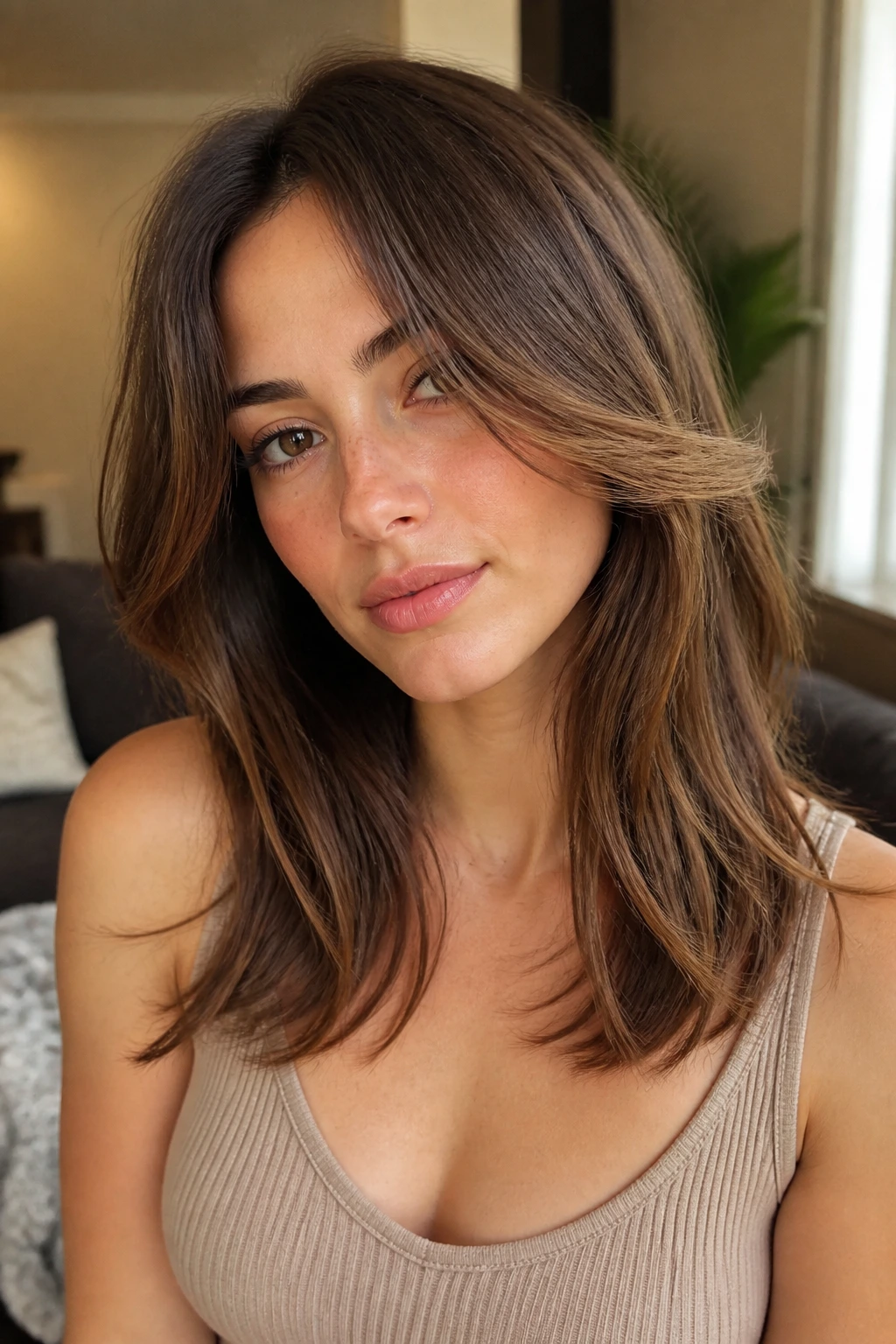
Not everyone wants bangs that actually land on the forehead. Collarbone-skimming front layers give you the face-framing effect without the daily obligation. The shortest pieces start below the cheek and graze the collarbone, which makes the cut feel soft but restrained.
I like this option for people who keep saying they want bangs and then hesitate at the last second. Fair enough. This is the compromise that still changes the haircut. It helps long hair feel shaped around the face, and it works beautifully with waves or a loose bend.
There’s one upside people do not talk about enough: these layers are easy to push behind the shoulders when you want a cleaner look. That matters. Hair should not feel like homework.
15. Bottleneck Bangs with a Stronger Center Shortest Point
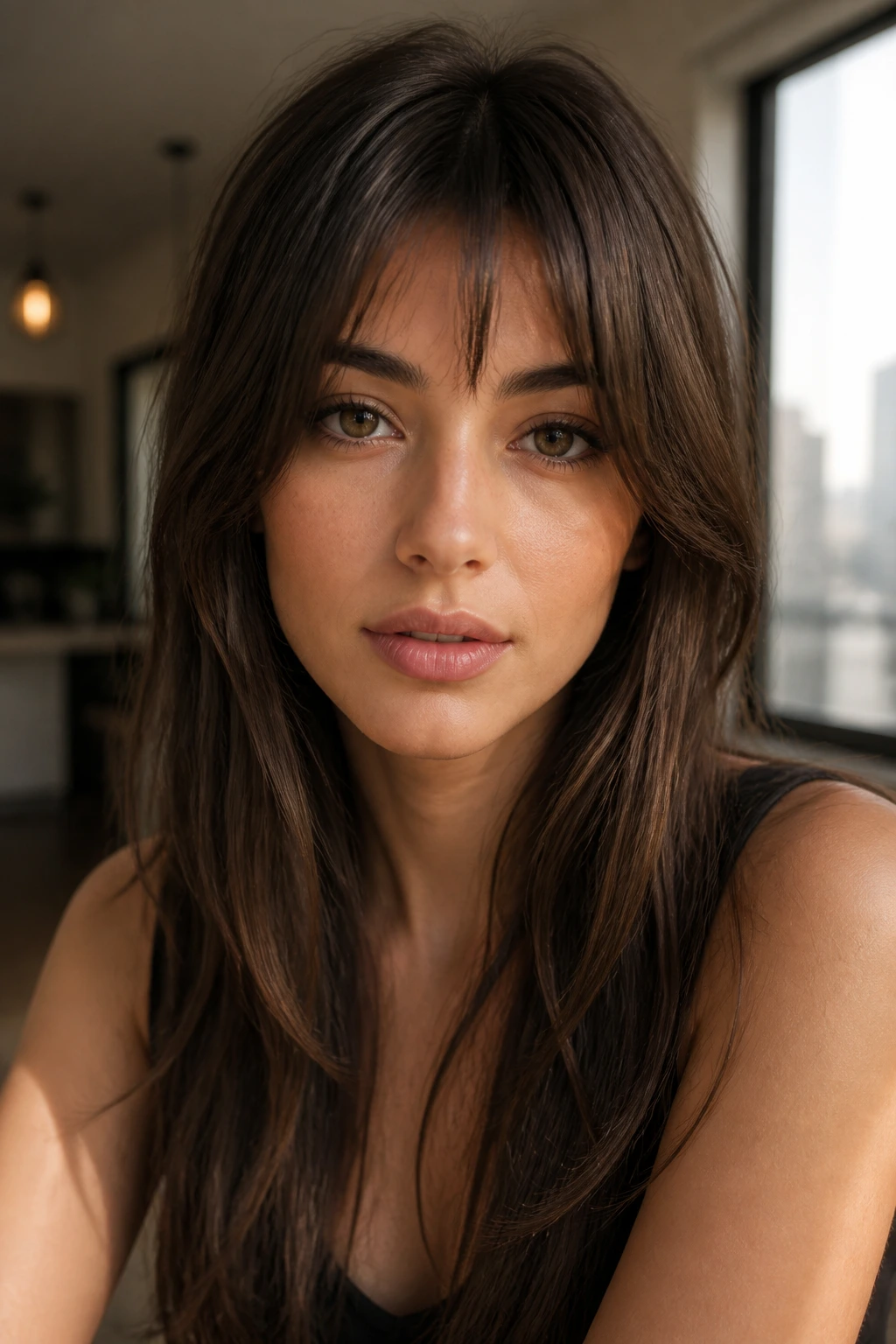
This version has a little more attitude than the softer bottleneck shape. The middle comes up higher, the center reads a touch shorter, and the outer corners still stay soft enough to blend. It gives the forehead a frame without turning the whole cut into a full fringe.
The stronger center makes the eyes pop, especially when the rest of the hair falls long and sleek. It is a smart choice for straight hair that tends to lie flat at the front. A bit of root lift gives this shape life fast.
How it differs
- More center emphasis than classic curtain bangs
- Slightly sharper shape near the brow
- Better if you want a visible fringe line without a heavy wall of hair
If your stylist cuts these too rounded, they lose their edge. Ask for a visible center point and softer corners, not a symmetrical swoop that goes nowhere.
16. Swoopy Retro Fringe with Polished Ends
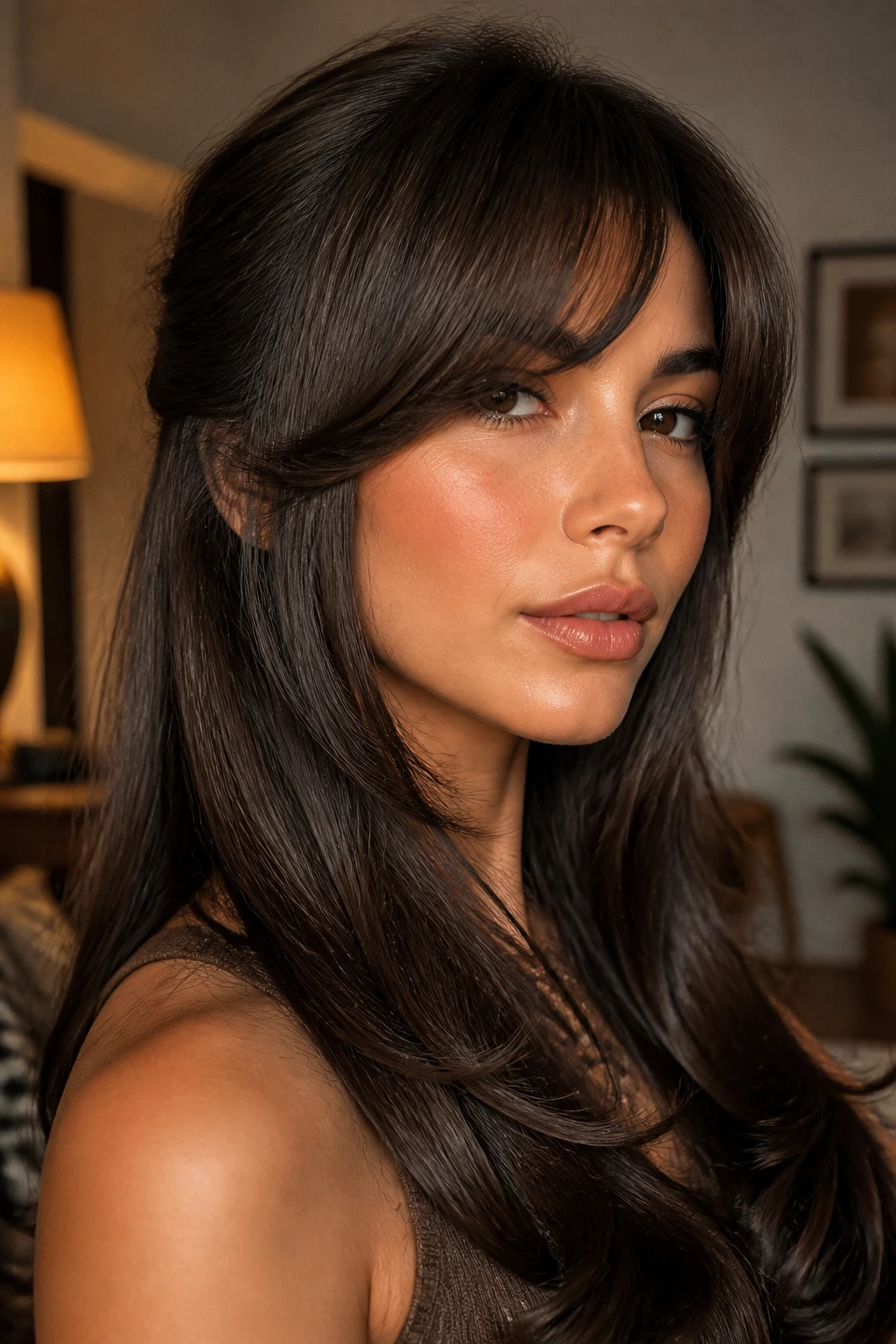
There is something satisfying about a fringe that actually sweeps. The root lifts, the front arcs over the forehead, and the ends curve in a polished line that feels old-school in the best way. On long hair, the style plays nicely with a blowout because the face frame echoes the length instead of fighting it.
This is one of those cuts that needs intention. You cannot just air-dry it and hope. A brush, some heat, and a cool-down clip at the root make a huge difference. The goal is swing, not stiffness.
It’s especially flattering if you like putting your hair into loose half-up styles. The front pieces can stay out and still look finished. If you’ve ever wanted your bangs to look like they belong in a glossy magazine without looking stiff, this is the direction.
17. Curly Face-Framing Bangs That Dry Without Puffing Up
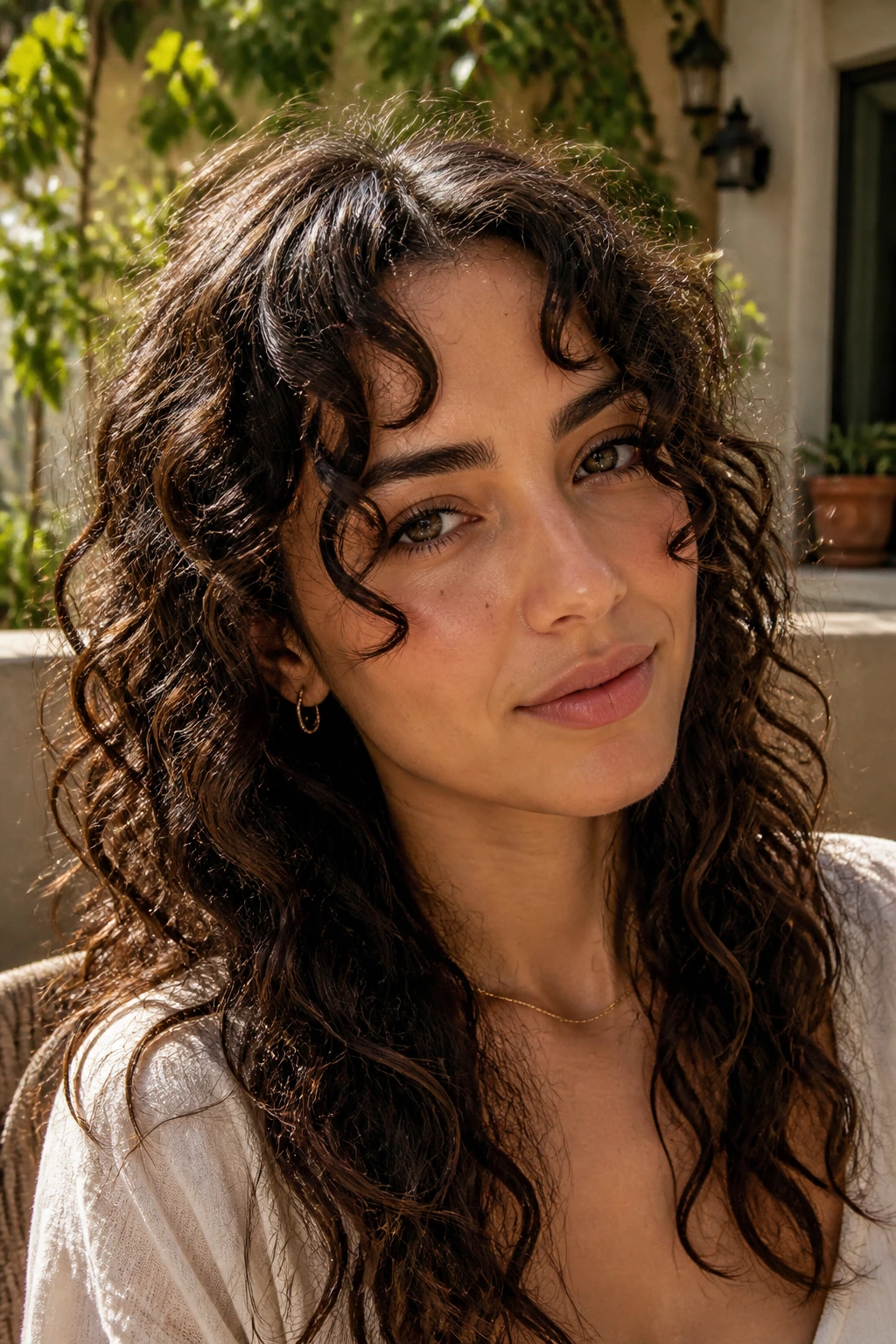
Curly bangs can be gorgeous on long hair, but only if they’re cut with the curl pattern in mind. The front pieces need enough length to spring up without bouncing straight into the forehead, and they need shape around the cheek so the curls do not cluster into one fuzzy triangle. Done well, the fringe softens the face and keeps the curls looking intentional.
The big mistake here is cutting them as if they were straight hair. Curly hair shrinks. It also moves sideways, forward, and up, usually in that order. Leave the length longer than you think and ask for a dry cut or curl-by-curl shape if the stylist works that way.
A few useful realities
- Frizz control matters more than heat styling.
- Curl cream should go on damp, not soaking wet, hair.
- A diffuser on low heat gives better shape than blasting the curls dry.
These bangs look best when you stop trying to force them flat. Let the texture breathe a little. It usually lands in a better place than perfect styling.
18. Wavy Shag Fringe with Uneven Texture
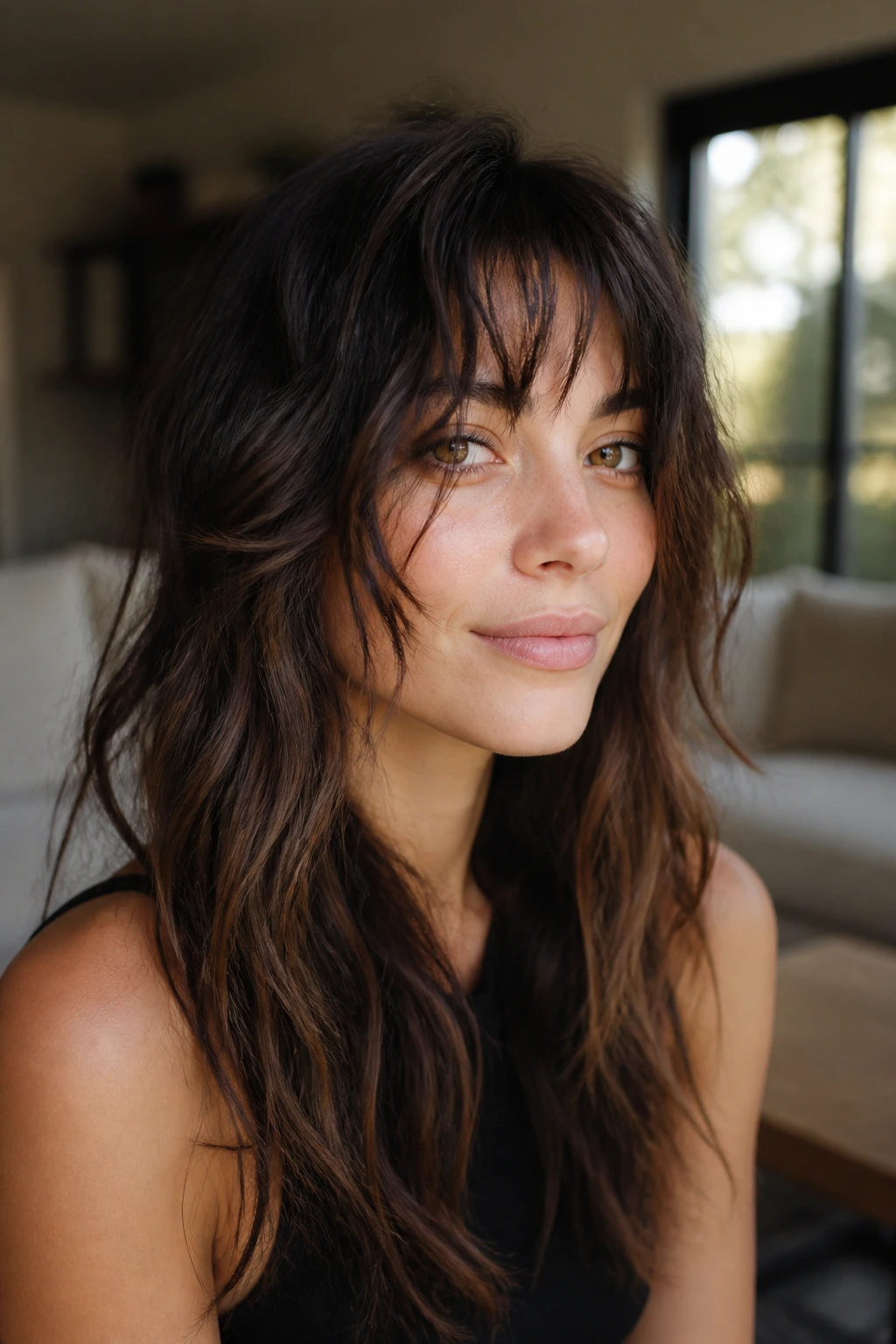
If your hair has a natural wave, a shaggy fringe can make the front feel alive in a way a polished bang never will. The ends are uneven on purpose, the texture is relaxed, and the front pieces blend into long layers with a soft, chipped edge. On long hair, that keeps the cut from feeling too dressed-up.
This style works because wave pattern loves a little imperfection. The fringe can bend, separate, and air-dry with shape, which means you do not need to wrestle it into submission every morning. A small amount of mousse or styling cream is usually enough.
I would not choose this if you want crisp lines. It is for people who think a few bent strands near the cheek are part of the charm. They are.
19. Heavy-but-Soft Brow-Grazing Fringe
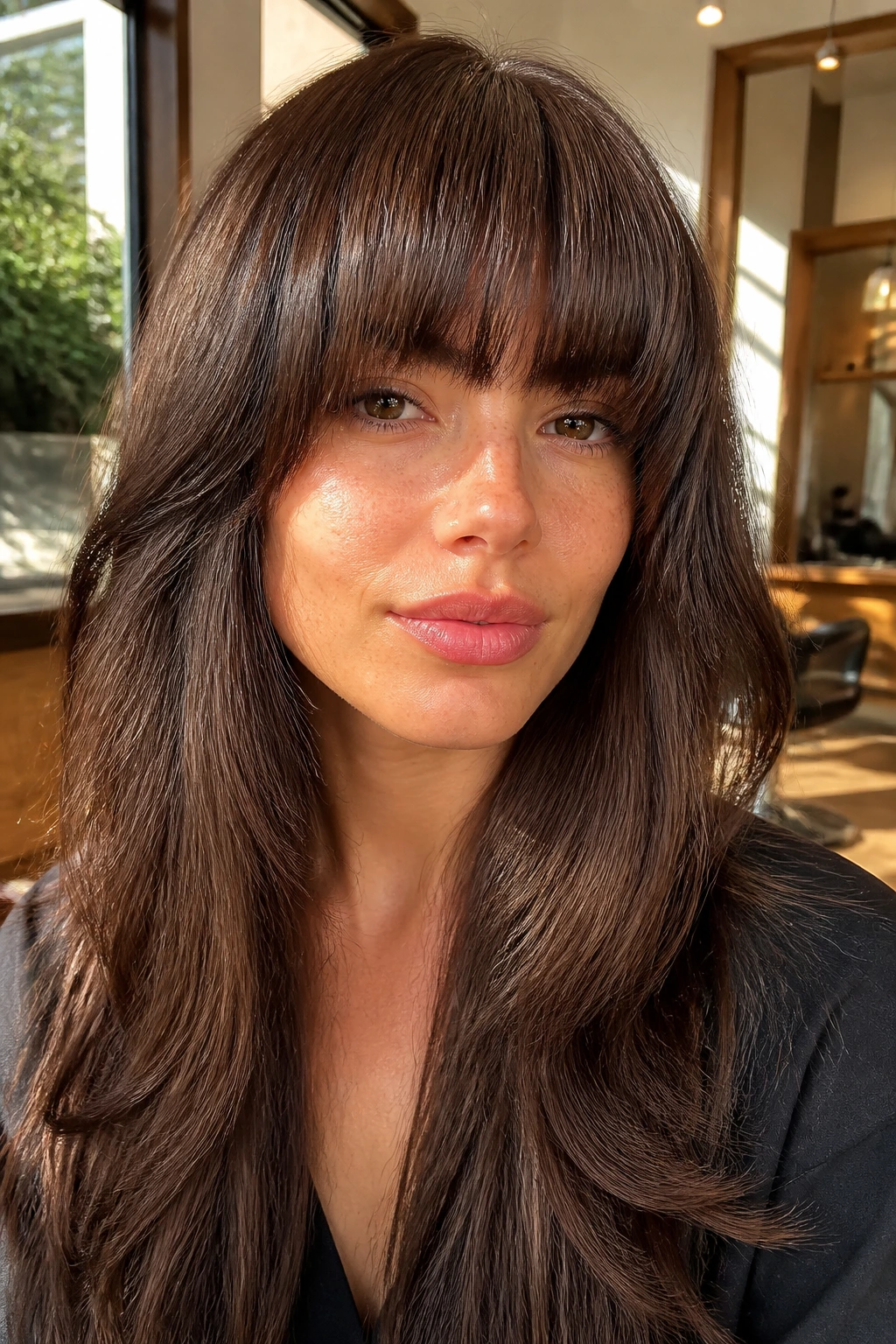
This is a fuller look, but it should still move. The fringe sits right at the brow, carries enough weight to show up from the front, and then softens at the ends so it does not look boxy. On long hair, that density can create a nice contrast, especially if the rest of the cut is layered and flowing.
The key is keeping the edges light. A blunt line across the forehead can feel severe fast, especially on long hair that already has a lot of length. Soft corners and a little internal texturing keep the shape from turning dense.
Best if you want
- More forehead coverage
- A stronger bang shape
- A cleaner outline than wispy fringe
This is one of the most flattering choices for thick hair because it can handle the weight. The downside is obvious: it needs regular trims. If you let it wander too far past the brow, the shape gets lost.
20. Long Peekaboo Bangs for Low-Maintenance Grow-Out
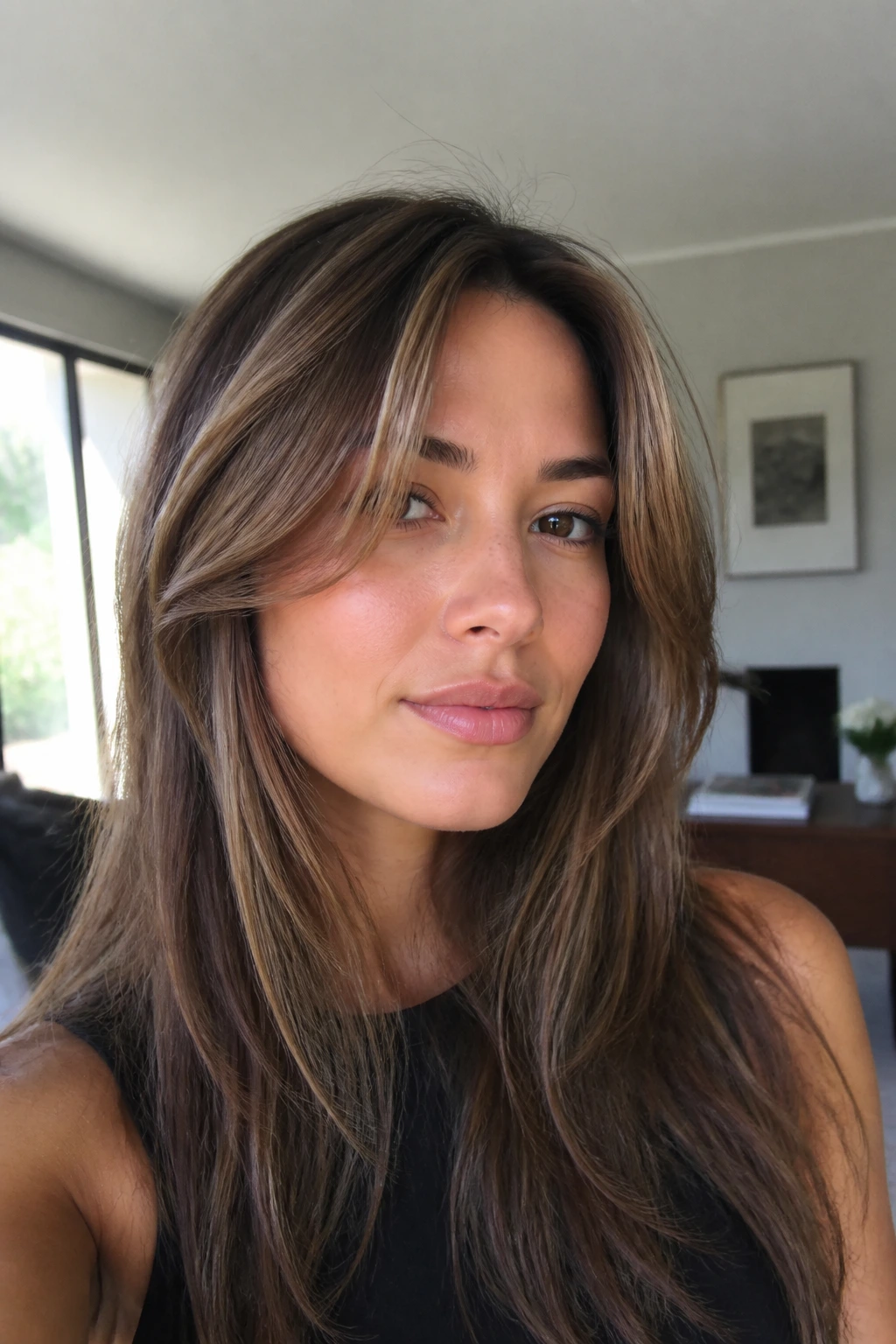
Peekaboo bangs live in that nice middle ground between real fringe and face-framing layers. They start high enough to matter, but they stay long enough to tuck, split, or sweep out of the way when you want a cleaner face. On long hair, that flexibility is gold.
I like these for people who are curious about bangs but not ready to reorganize their morning routine. They move easily into ponytails and half-up looks, and they do not scream for attention when they start growing out. In fact, they often look better once they hit that softer, cheek-skimming phase.
You still need shape, though. If they are cut too long from the start, they just become random front pieces. The shortest point should still do some work.
21. Glasses-Friendly Bangs That Start Higher on the Face

If you wear glasses, the front of your haircut has to live in a different neighborhood. These bangs start a little higher, stay lighter around the brow, and avoid collapsing right onto the frames. The front pieces still frame the face, but they do it without tangling in the lenses every time you blink.
The best part is how little adjustment they need. A small bend away from the face is enough to keep them from interfering with the glasses line. Heavy, straight-across fringe usually creates the opposite problem: constant touching, oil transfer, and a lot of annoying mid-day fixing.
This style is underrated because it respects real life. Hair and glasses can absolutely coexist. They just need the fringe cut with the frames in mind.
22. Razor-Cut Fringe for a Slippery, Airy Finish
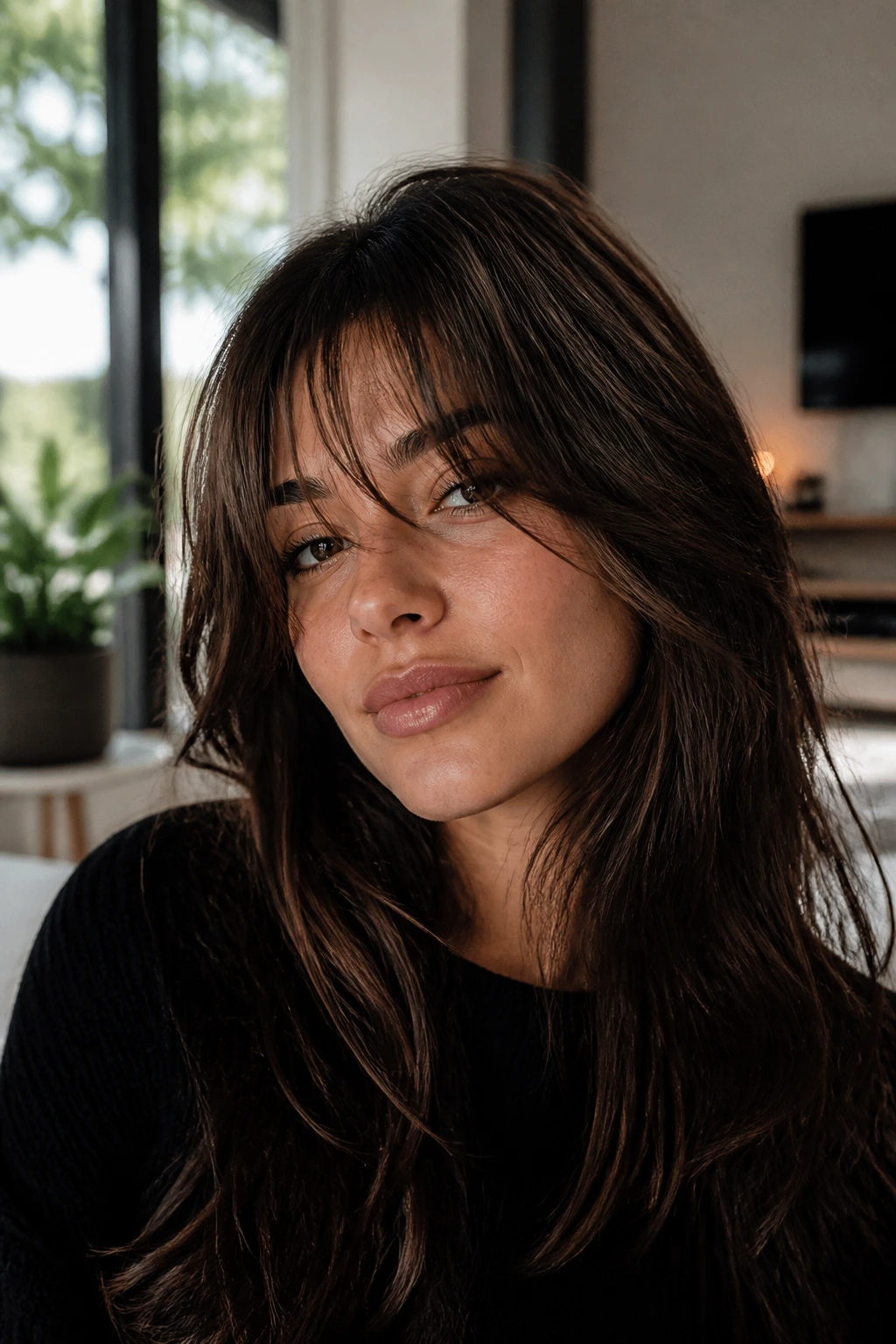
Razor-cut bangs are softer at the ends and less chunky through the body, which gives them a loose, slipping finish that flatters long hair nicely. The fringe looks light around the face instead of blunt. That airiness helps especially if your hair is coarse or prone to standing out too much at the front.
A razor is not magic, and it is not for every texture. On very curly or fragile hair, it can create frayed ends if the hand is too heavy. But on straight to slightly wavy hair, it can produce an effortless edge that a scissor cut sometimes misses.
What you’ll notice
- The ends separate more naturally.
- The fringe falls with less bulk.
- The style feels softer in motion than it does in a still photo.
I prefer this when the rest of the hair is long and layered. The softness up front balances the length without making the haircut feel heavy.
23. Piecey Lived-In Bangs with a Bit of Bend
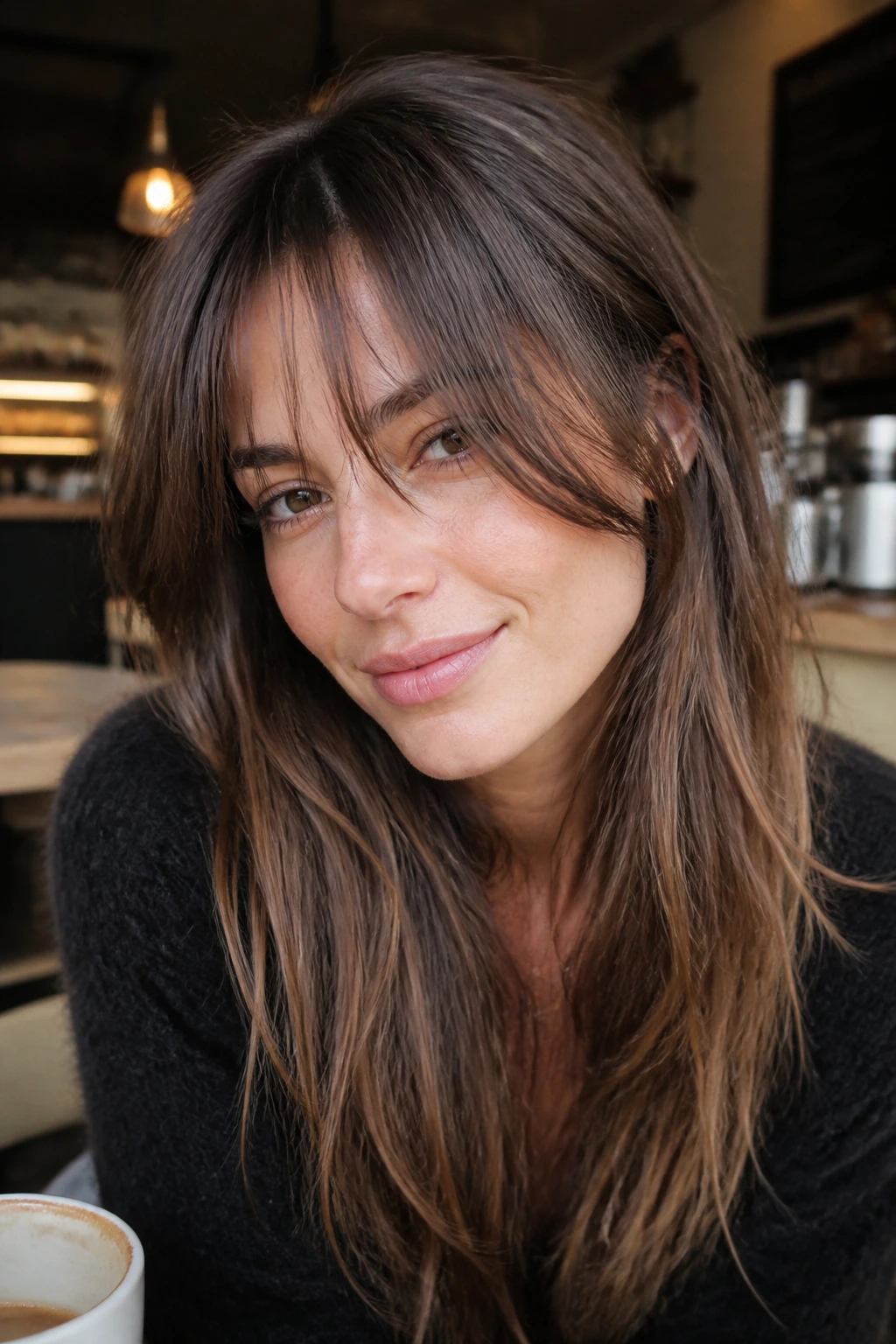
This is the fringe for people who do not want to spend half their morning thinking about hair. The pieces are separated, the bend is loose, and the front feels lived-in rather than styled to the point of stiffness. On long hair, that casual finish keeps the fringe from looking overworked.
It helps to have a little natural texture, but not much. Even straight hair can do this with a round brush and a tiny bit of styling paste at the ends. The trick is restraint. Too much product and the pieces clump. Too little and they fall flat.
A side benefit: these bangs age well. When they grow a bit, they still look like a decision instead of an accident.
24. Blunt-Soft Fringe That Carries Weight Without Feeling Boxy
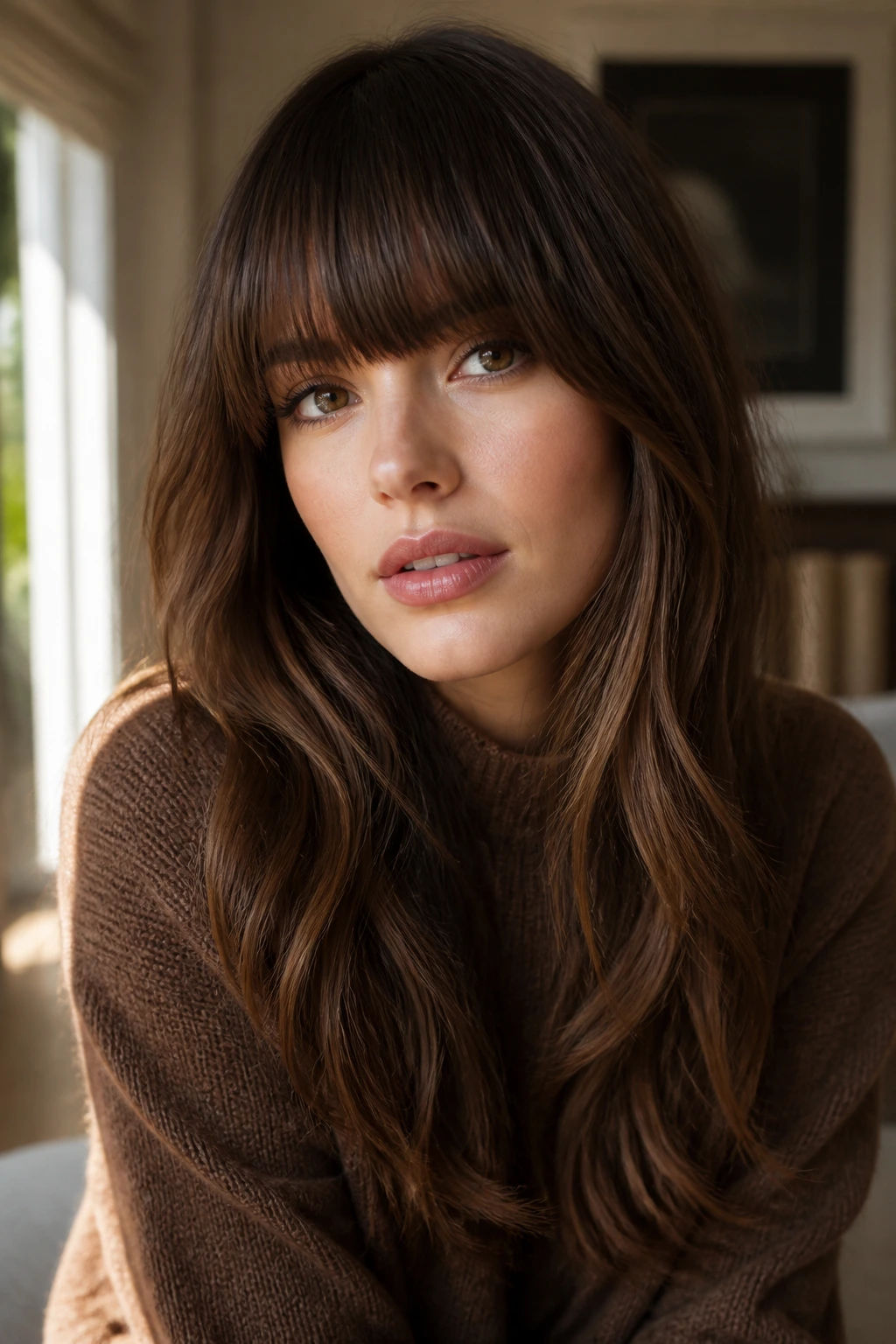
This one has a stronger line than wispy bangs, but the corners are softened so it does not feel square. The fringe sits more fully across the forehead, which gives the cut presence, while the ends are light enough to move. On long hair, that contrast can look rich and deliberate.
It is a solid choice if your hair is thick and tends to puff when it is overly layered. A bit of density keeps the front under control. I would not choose a super-thinned version here; that usually makes the fringe frizzy and uneven instead of airy.
The face frame around it should still be soft. If the rest of the haircut is too layered and the fringe too blunt, the front can feel disconnected. You want a firm line with softer edges, not a hard box.
25. Long Side Curtain Pieces for Heart-Shaped Faces
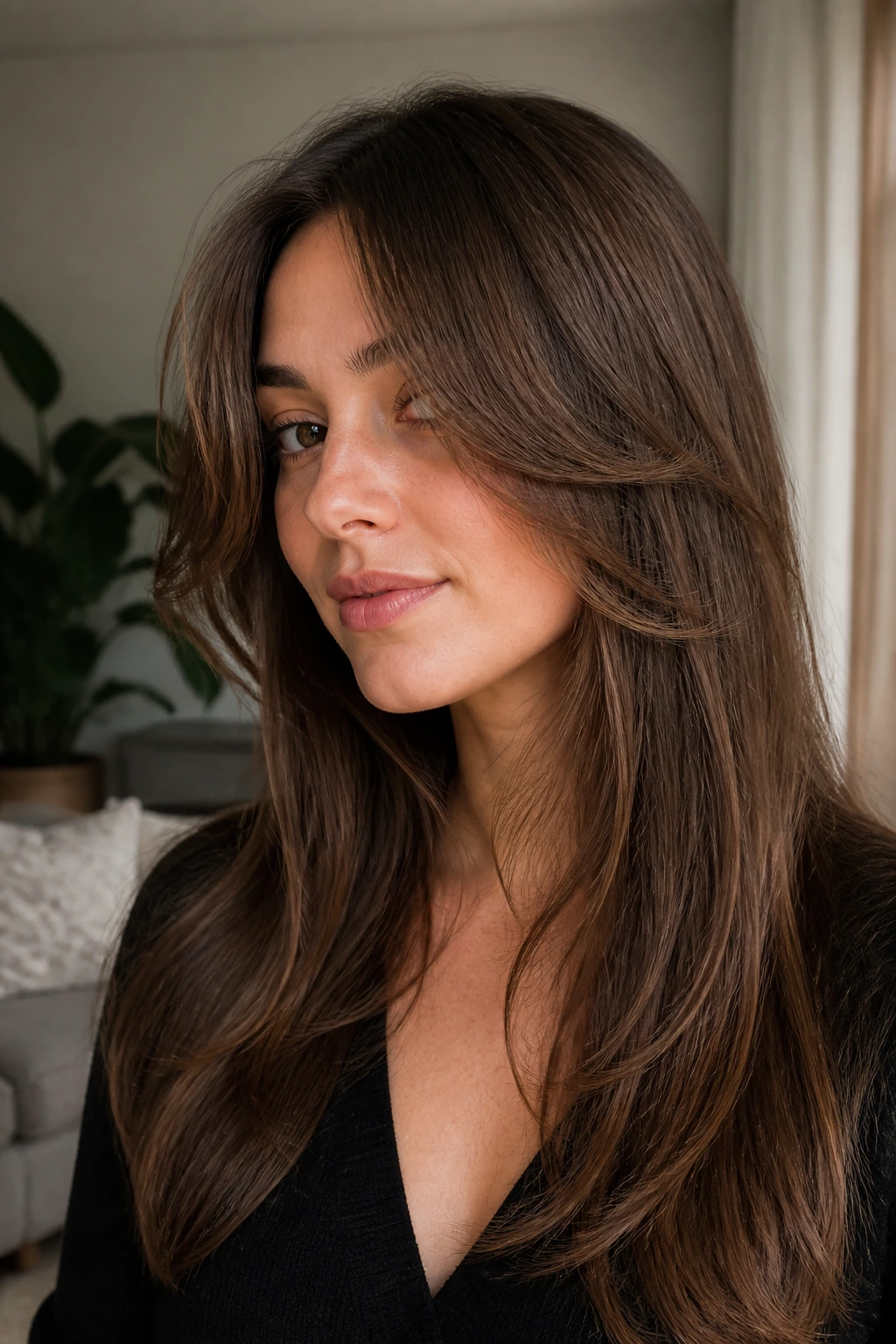
Heart-shaped faces often do well with front pieces that widen the lower half of the face just a touch. Long side curtain pieces do exactly that. They start near the temples, sweep around the cheekbone, and land closer to the jaw, which helps balance a broader forehead and a narrower chin.
The shape feels easy because it never asks the hair to sit in one fixed position. You can part it off-center, push it back, or let it fall naturally. On long hair, those pieces become part of the overall shape rather than a separate bang event.
Good pairings
- Soft waves through the lengths
- Side parts with a little root lift
- Half-up styles where the front pieces stay loose
This is one of my favorites for people who want face framing but hate anything that lands directly on the brow. It gives shape without a lot of attention.
26. Soft Baby Curtain Bangs That Barely Commit
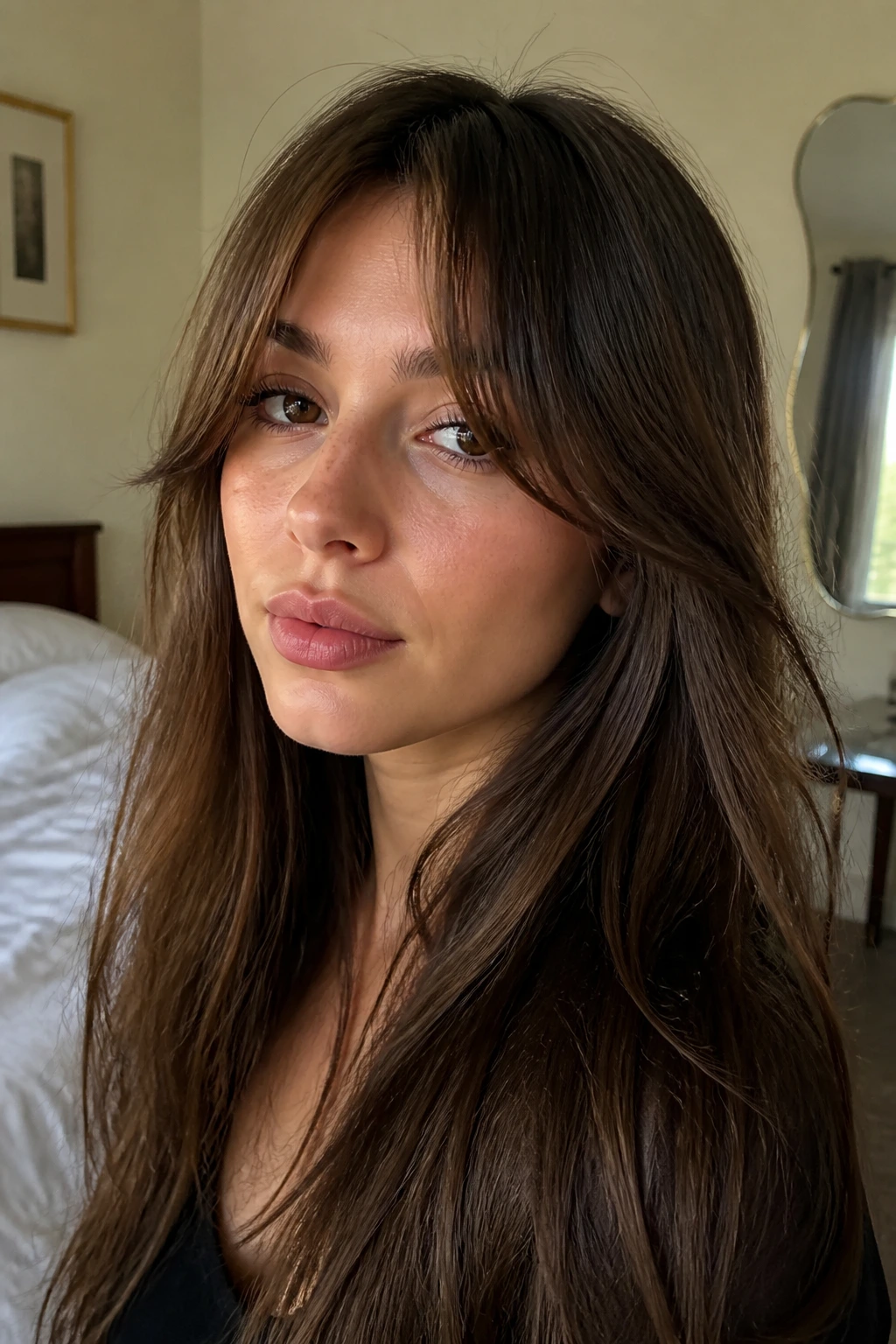
Baby curtain bangs sit shorter than the classic version, but they still split in the middle and taper outward. They give the front a little lift without becoming full fringe. On long hair, that can be a sweet spot if you want a change that does not dominate the whole haircut.
The danger is going too short. Once the center climbs too high, the bangs start feeling like they belong to a different haircut entirely. The best version still brushes the upper forehead and softens toward the cheek.
These are cute, yes, but the better word is useful. They create shape around the eyes and cheekbones, and they grow out into regular curtain bangs rather than a weird in-between stage. That makes them a less risky experiment than they first appear.
27. Angled Face Frame for Thick Hair
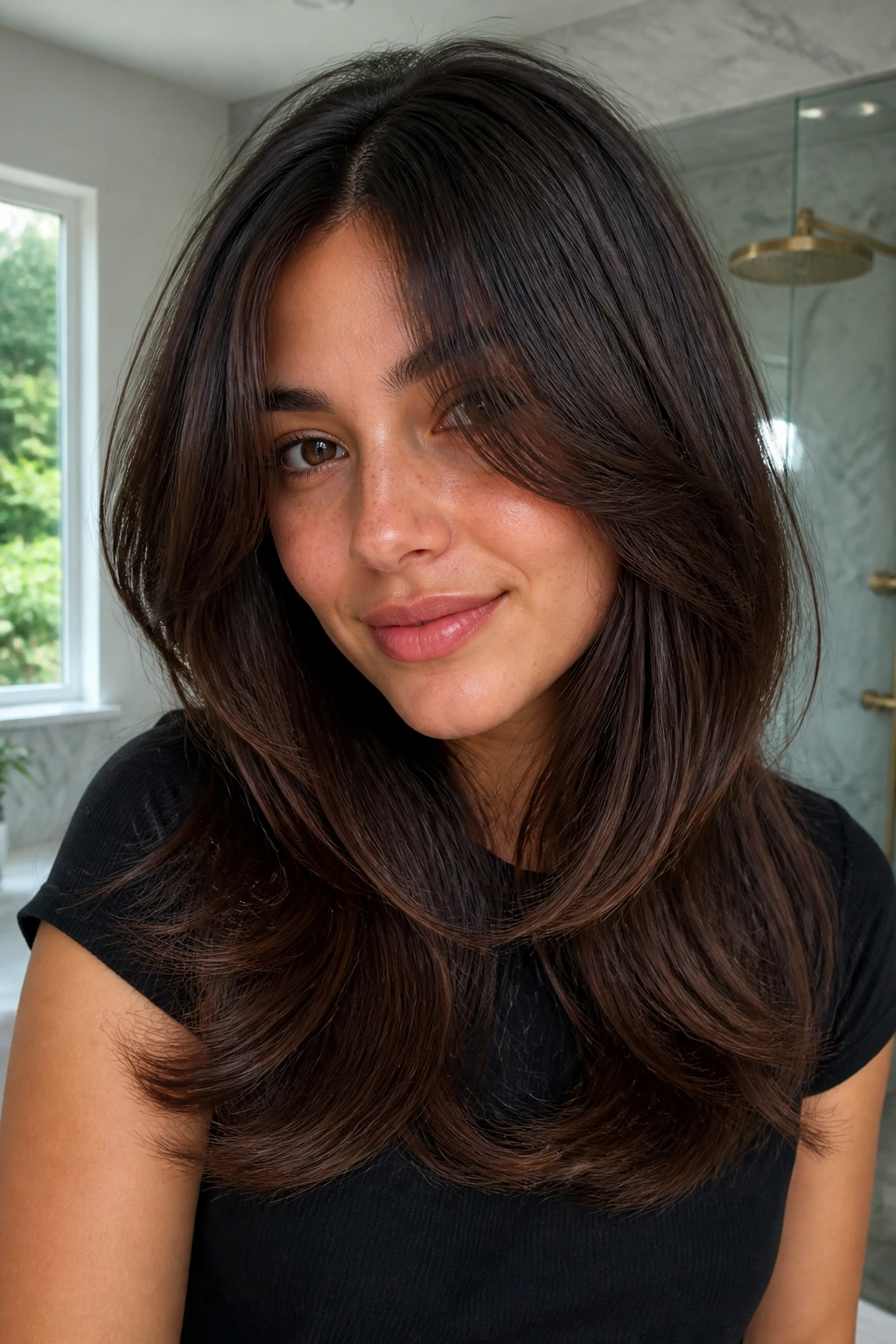
Thick hair can carry a stronger front shape, and this angled frame takes advantage of that. The shortest point lands near the center, then the sides angle down with enough weight to keep the hair from flying apart. On long hair, the result looks clean and substantial without becoming bulky.
This cut benefits from strategic thinning underneath, not random texturizing at the ends. If you remove too much from the surface, thick hair can frizz up and lose the very shape you wanted. The line should be angled, not shredded.
It also styles well in a hurry. Thick hair already has built-in body, so a rough dry and a quick round-brush pass at the front usually do enough. That is the appeal here: shape without a long ritual.
28. Grow-Out Bangs That Still Look Intentional
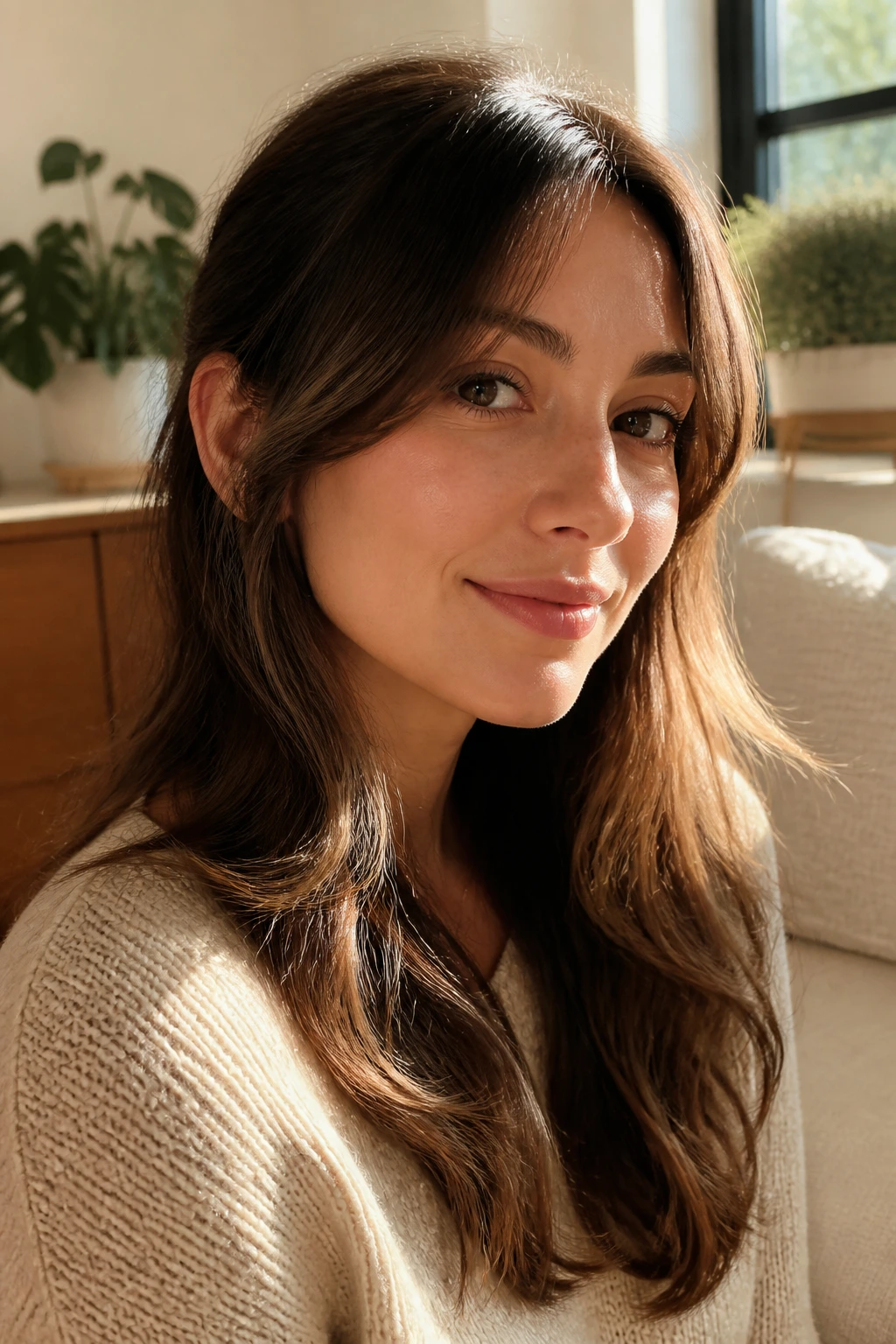
This is the style for people who know they are going to change their mind later. The front pieces are cut long enough to tuck behind the ears, split into curtains, or blend into the rest of the layers as they grow. They start as bangs, then slowly become face-framing layers without a sharp awkward stage.
The trick is cutting them with the endgame in mind. A good grow-out fringe should still look present on day one, but it should also make sense once it passes the cheekbone. That means keeping the center a bit longer than a classic bang and softening the sides early.
I like this option when someone says, “I want bangs, but not forever.” Honest answer? That is sensible. Hair grows. The best fringe styles respect that.
Why Face-Framing Bangs Work So Well on Long Hair
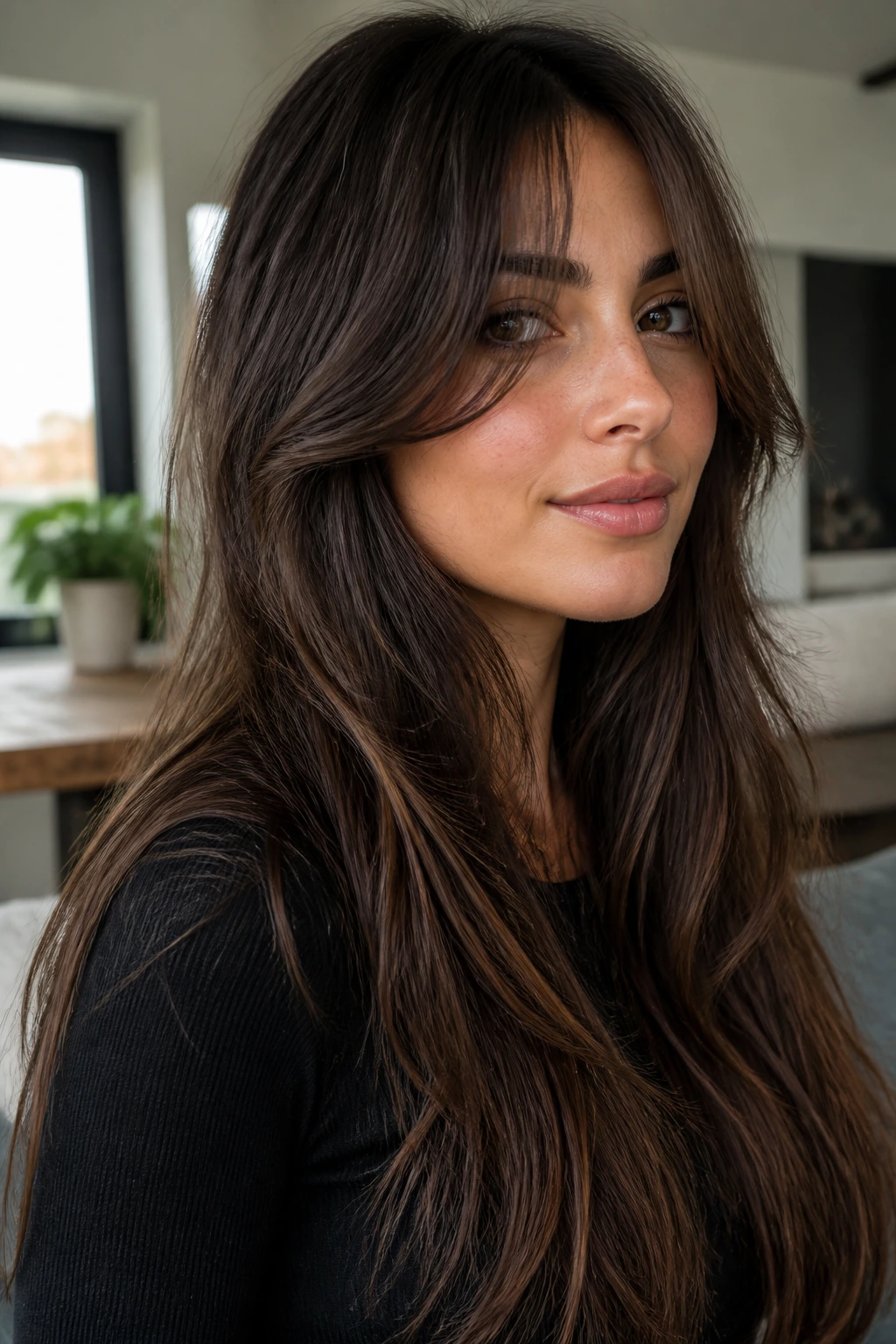
Long hair gives face-framing bangs room to breathe, and that is half the battle. A shorter cut can swallow the front pieces fast, but when the lengths keep going past the shoulders, the bangs have space to taper, feather, and soften. That means the front can change the whole haircut without stealing the whole haircut.
There is also a practical reason these styles feel so wearable. Long hair already carries visual weight. If the front is cut with some bend and internal softness, it can break up that weight right around the face, where most people want a little movement. The result is less “all one length” and more shape where it counts.
The best versions also help with grow-out. A strong blunt bang line looks obvious when it starts slipping past the brow. A face frame, though, usually keeps its shape for longer because the pieces are already traveling in different directions. That buys you time. Time is underrated in haircuts.
How to Choose Face Framing Bangs for Long Hair by Face Shape and Hair Texture
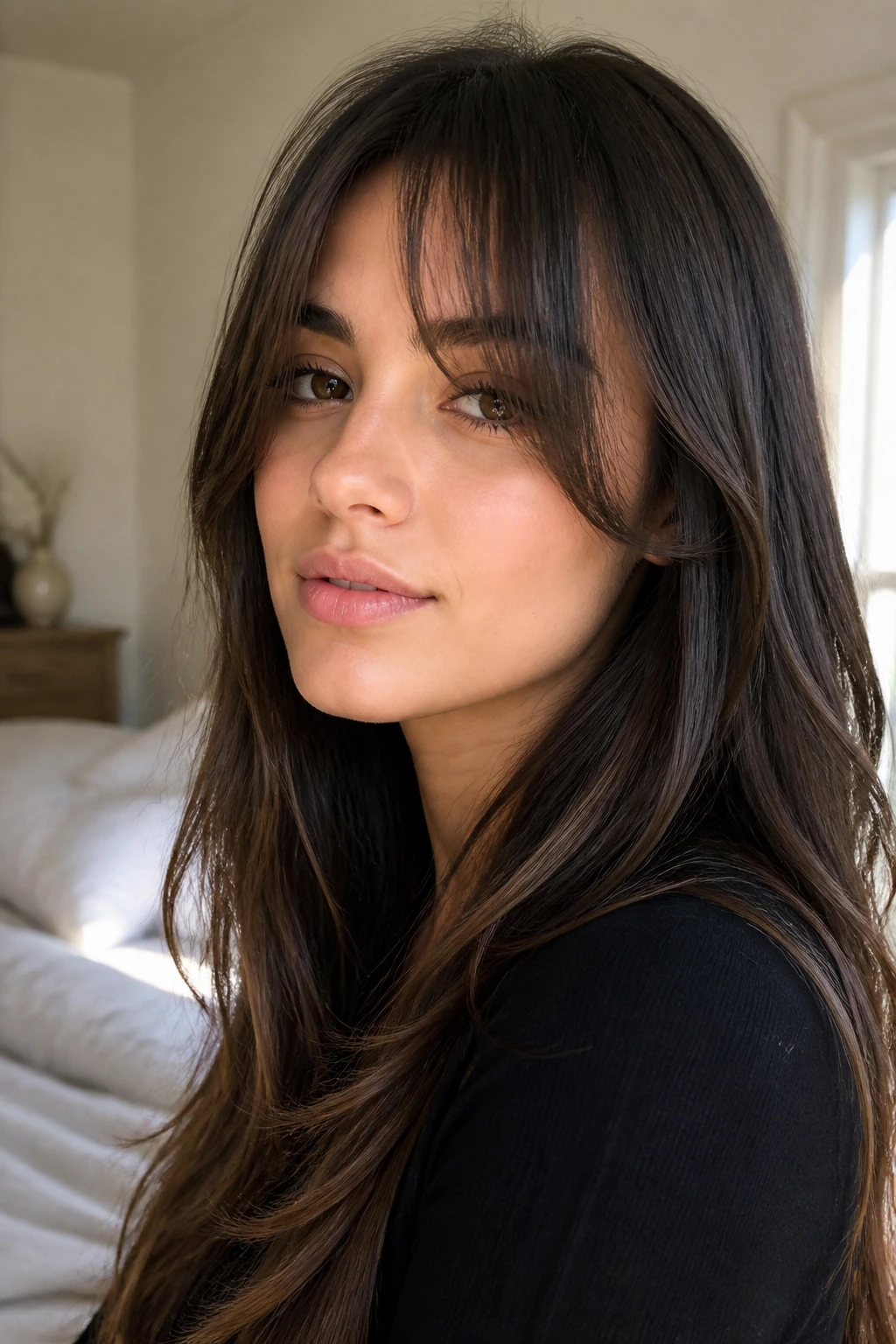
The cut should meet the hair you actually have, not the hair you wish would show up. Fine hair usually does better with lighter density, see-through edges, or soft curtain bangs that do not need a ton of bulk to look finished. Thick hair can handle heavier fringes, blunt-soft lines, or angled face frames because the hair naturally carries more weight at the front.
Face shape changes the landing point. Round faces often do well with longer sides that start near the cheekbone or jaw because those pieces add vertical lines. Heart-shaped faces tend to like shapes that soften the forehead and widen the lower half a bit. Longer faces usually benefit from a little width near the cheekbones, so the fringe should not climb too high in the center.
Cowlicks matter more than almost anyone expects. If your front hair wants to split hard to one side, a deep side-swept fringe or a split curtain bang usually behaves better than a straight-across shape. Straight hair with no obvious bend can take more symmetry. Curly and wavy hair need length to account for shrinkage and bounce. That is not a suggestion. It is math.
The Tools That Actually Matter
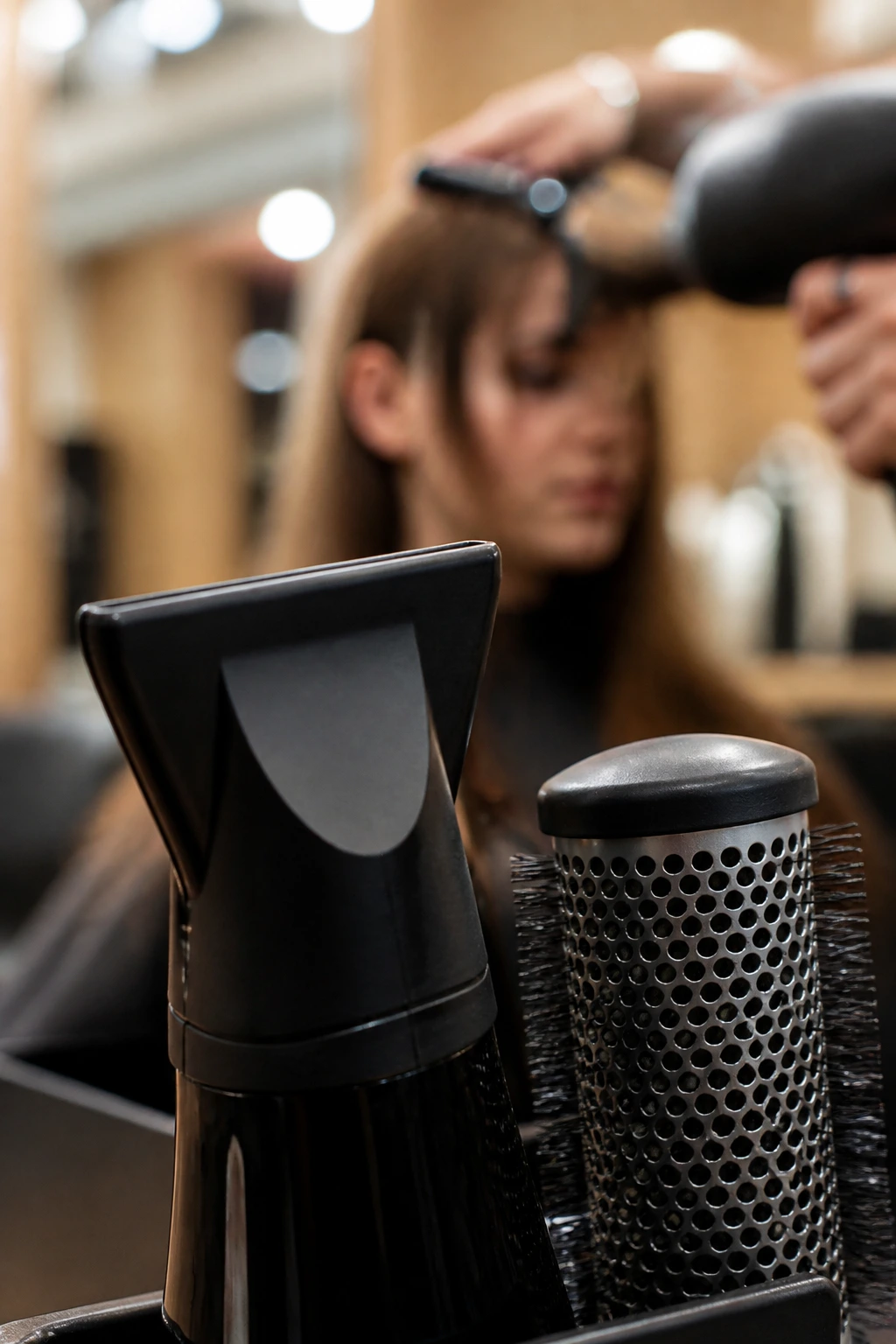
A good fringe does not require a drawer full of gadgets. It needs a few useful tools and not much else.
- Blow dryer with a nozzle: The nozzle keeps the airflow directed so the roots do not puff up in every direction.
- 1- to 1.5-inch round brush: This gives the front pieces enough bend without creating giant curls.
- Tail comb: Great for clean parts and for separating the bang section from the rest of the hair.
- Duckbill or sectioning clips: These hold the fringe in place while it cools, which helps the shape last.
- Heat protectant spray: Use it every time you blow-dry or smooth the front with a flat iron.
- Lightweight mousse or styling cream: Good for airy texture, especially on wavy or fine hair.
- Flexible-hold hairspray: Better than crunchy spray when you want movement.
- Dry shampoo: Useful on day two when the fringe starts looking slicker than the rest of the hair.
A small flat iron can also help, but only if you use it lightly. One pass is usually enough. Three passes usually means you’re overcorrecting.
How to Wear Them With Ponytails, Buns, and Loose Waves
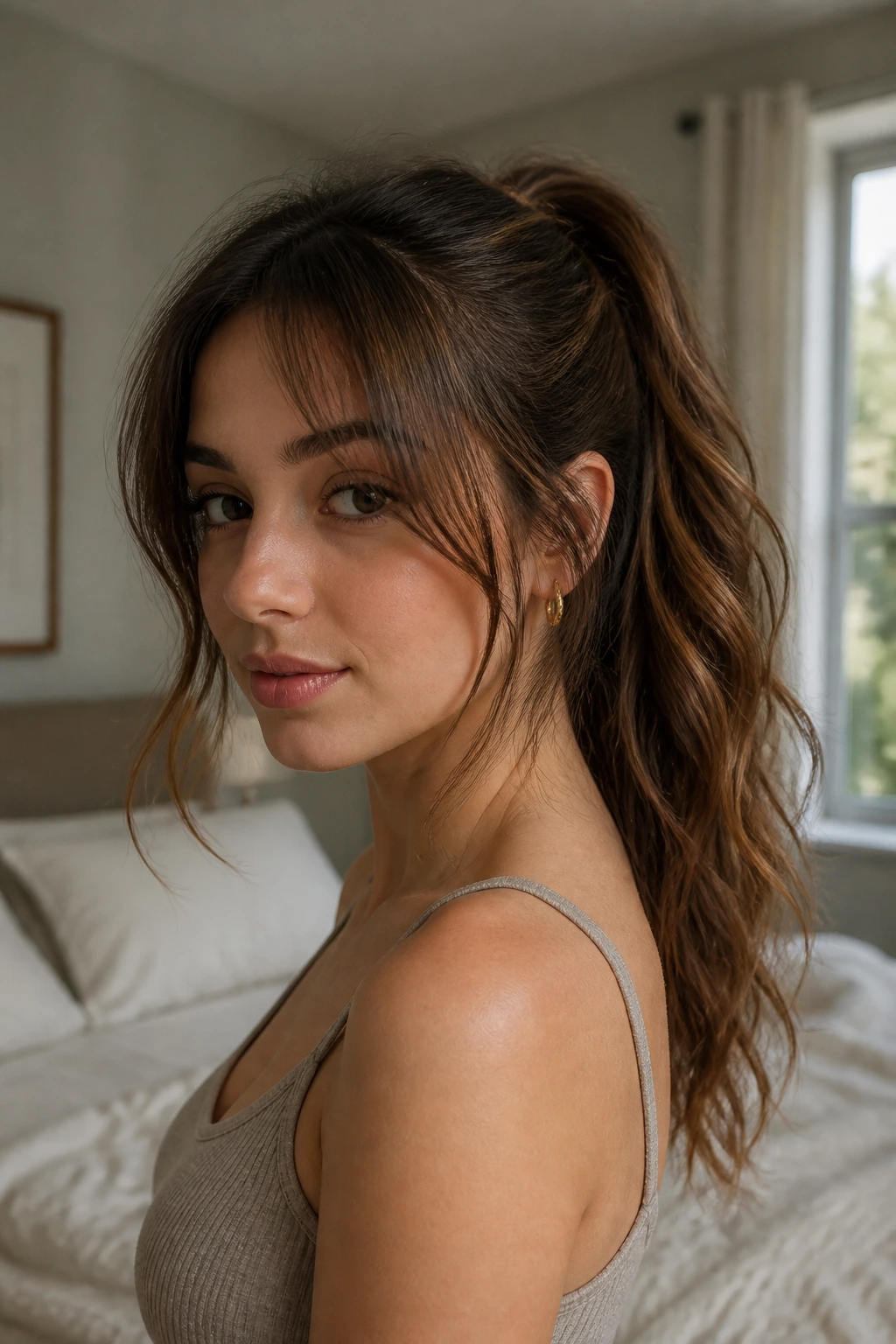
Loose and down: Curtain styles, bottlenecks, and cheekbone pieces shine here because they frame the face while the rest of the hair hangs long and soft. The front can be blown straight or given a bend, depending on whether you want polish or movement.
Half-up and clipped back: This is where long peekaboo bangs, grow-out bangs, and collarbone-skimming front layers earn their keep. Pull the crown back, leave the front loose, and the face frame keeps the style from looking severe.
Ponytails and buns: Side-swept fringe, split fringe, and soft baby curtains work well because they break up the slickness near the hairline. A tiny bit of lift at the root keeps the front from disappearing once the rest of the hair is tied up.
With glasses: Higher-starting curtain shapes and glasses-friendly bangs sit above the frame line instead of fighting it. If the fringe is too low, it ends up touching the lenses all day. Nobody wants that.
Practical Tips for a Fringe That Behaves
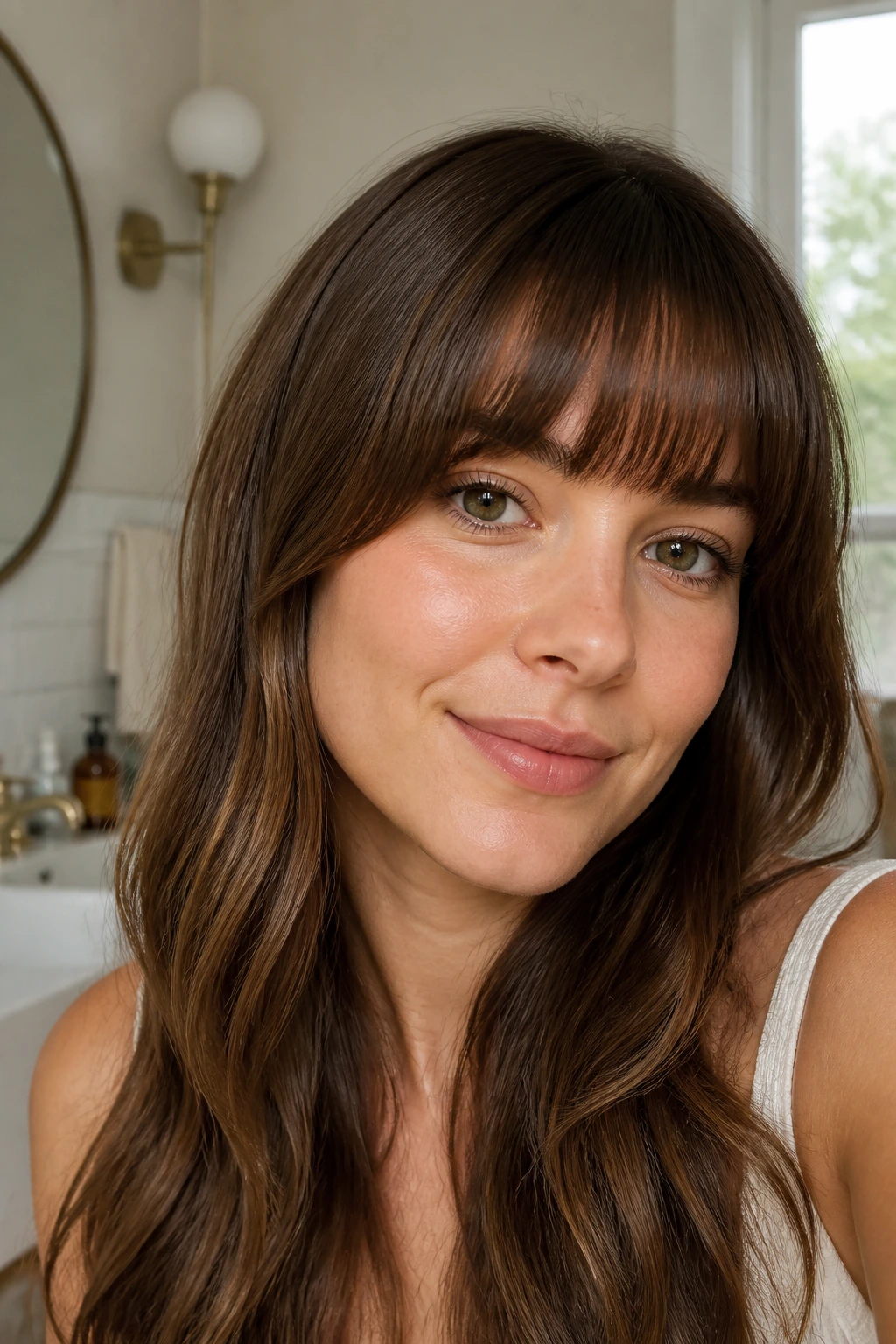
Morning Reset: If the bangs flatten overnight, mist the front lightly with water, then re-bend the ends with a round brush or a small brush and blow-dryer for 30 to 60 seconds. You do not need to restyle the whole head.
Humidity Fix: A pea-sized amount of flexible cream on damp bangs can stop them from fluffing out before you even leave the house. Too much product, though, turns them stringy, so stay stingy with it.
Round-Brush Shortcut: Roll the brush under the front only at the ends, not from root to tip. That gives you curve without turning the fringe into a helmet.
Grow-Out Trick: When a fringe starts getting long, split it a little more deeply in the center and let the sides blend. That buys you another few weeks before you need a trim.
Color Bonus: Face-framing bangs show highlights fast. Even a few lighter pieces around the front can make the haircut look more dimensional, especially on long hair that otherwise reads as one solid block.
Common Mistakes That Make Bangs Fight You
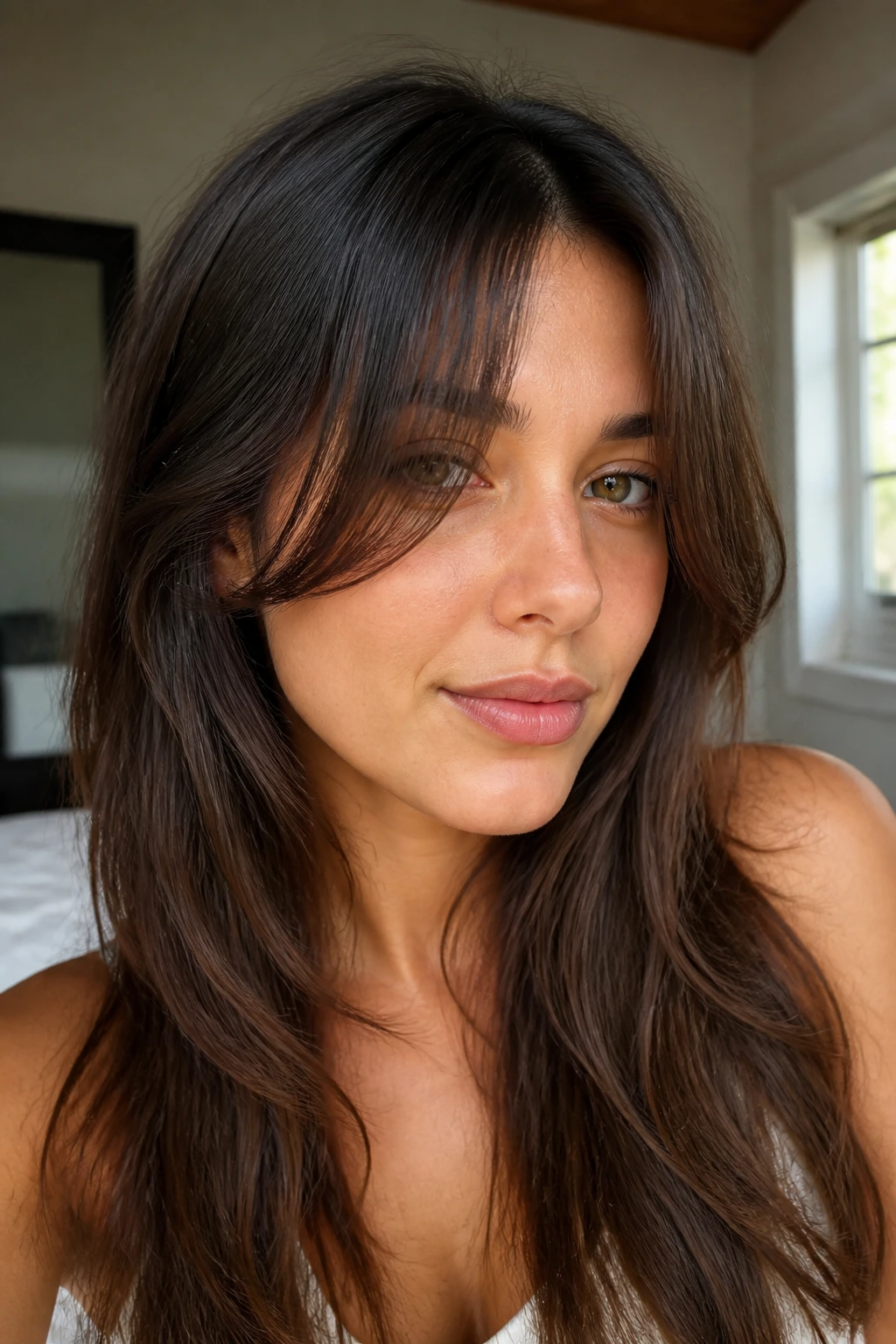
The first mistake is cutting too short on day one. Bangs always look shorter once they dry, shrink, and bend, and long hair does not hide that fact. If you want the fringe to sit near the brow, do not snip it right at the brow while it is wet. Leave a little room.
Another one: making the front too thick. Heavy bangs on long hair can feel like a lid dropped over the face, especially if the rest of the cut is soft and layered. If the fringe feels like a curtain rod instead of a frame, it needs weight removed from the interior.
Cowlicks deserve respect. If the front growth pushes hard to one side or splits in the center no matter what you do, a blunt bang may be a daily fight. A split fringe, bottleneck shape, or long side sweep usually handles that better.
Overstyling causes trouble too. The more you curl and spray the fringe, the faster it loses movement. A light bend and a cool-down clip usually beat a heavy product routine.
Finally, people forget trim timing. Bangs do not need a full haircut every time, but they do need a clean-up. Once the shortest pieces start brushing the lashes in a way that makes you blink, they are overdue.
Variations and Small Tweaks Worth Trying
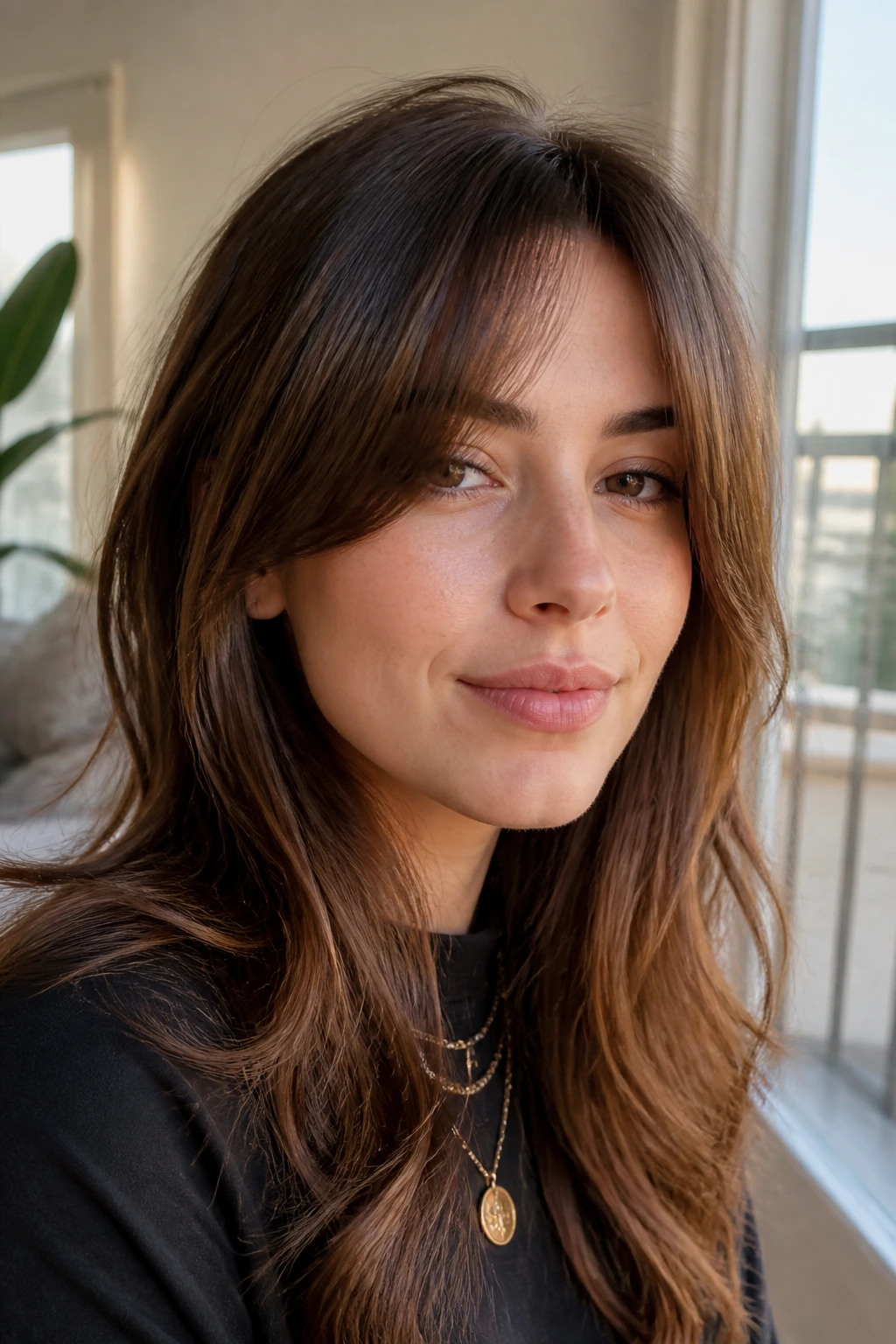
The Soft-Edge Upgrade: Keep the same bang shape but ask for point-cut ends. That small detail makes the fringe less square and easier to tuck behind the ear.
The Side-Part Shift: Take a curtain or bottleneck shape and move the part two inches off center. It changes the entire mood of the front without changing the cut.
The Curly Diffuse Version: For curls and waves, leave the front longer and let the dryer do less. The shape should be set by the curl pattern, not by heat.
The Glasses-Safe Edit: Start the fringe a touch higher and keep more length at the temples. That prevents the bangs from dropping onto the frame line.
The Grow-Out Plan: Ask for longer sides from the start. It means the fringe can drift into layers later instead of hitting an ugly halfway point.
Maintenance, Trims, and Grow-Out
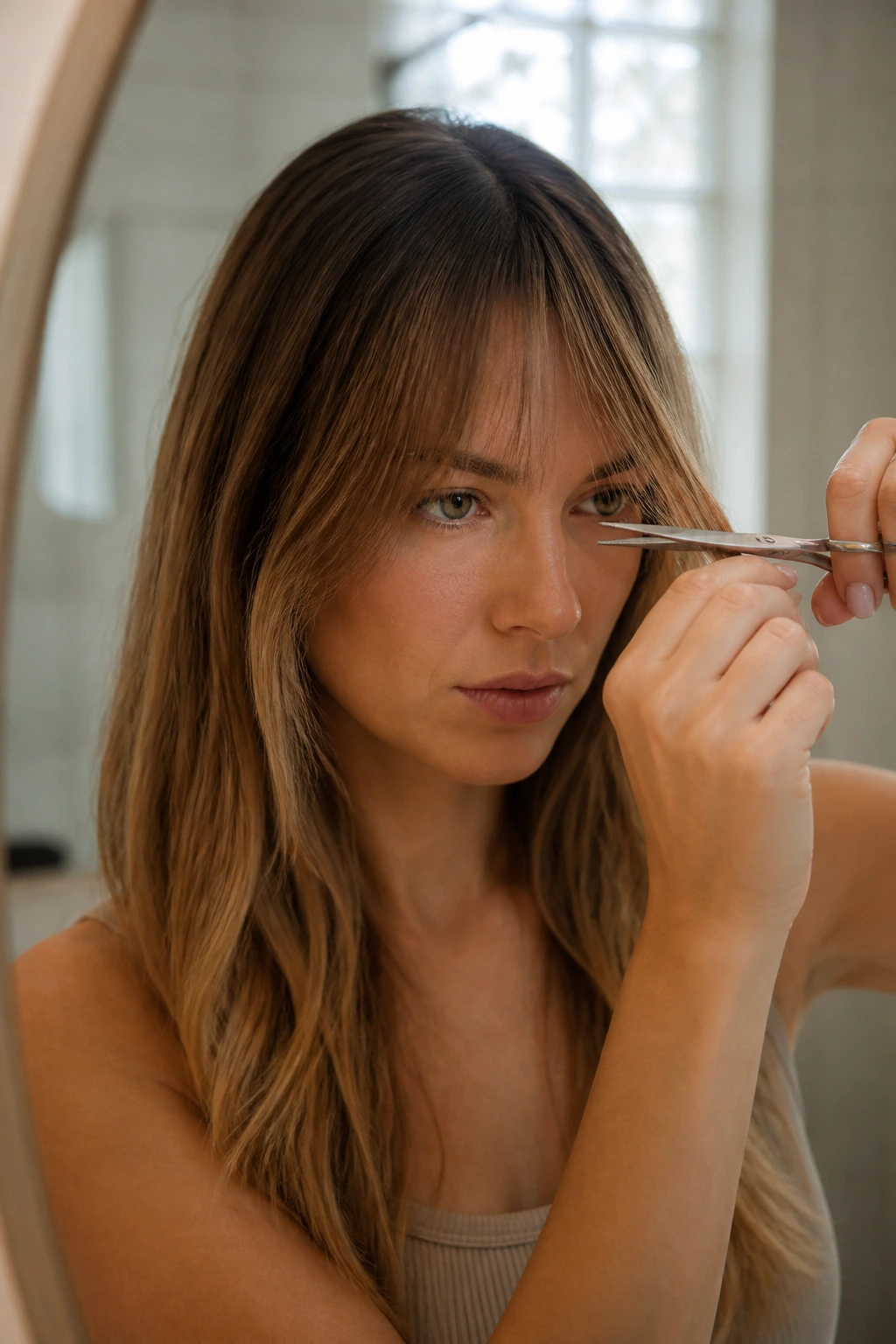
Bangs ask for more attention than the rest of long hair, but not by much. The front usually needs a shape check every 3 to 5 weeks if you like a precise line, or every 5 to 7 weeks if the cut is softer and more layered. That is enough to keep them from swallowing your eyes without making you live in the salon chair.
Daily care is usually simple. Refresh the roots with a quick mist of water or a tiny bit of dry shampoo, then restyle the front only. The rest of the hair can stay up, loose, or yesterday’s wave pattern. There is no need to start over every morning.
If you want to grow the bangs out, do not fight the process. Split them more deeply, let the sides connect to the rest of the layers, and keep the center a little longer than feels trendy. That gives you shape while the fringe grows, instead of a weird shelf sitting in the middle of your face.
Sleep can flatten the front fast. A loose clip at the crown or a soft pin curl around the fringe helps it keep its bend overnight. Small effort. Big payoff.
Frequently Asked Questions
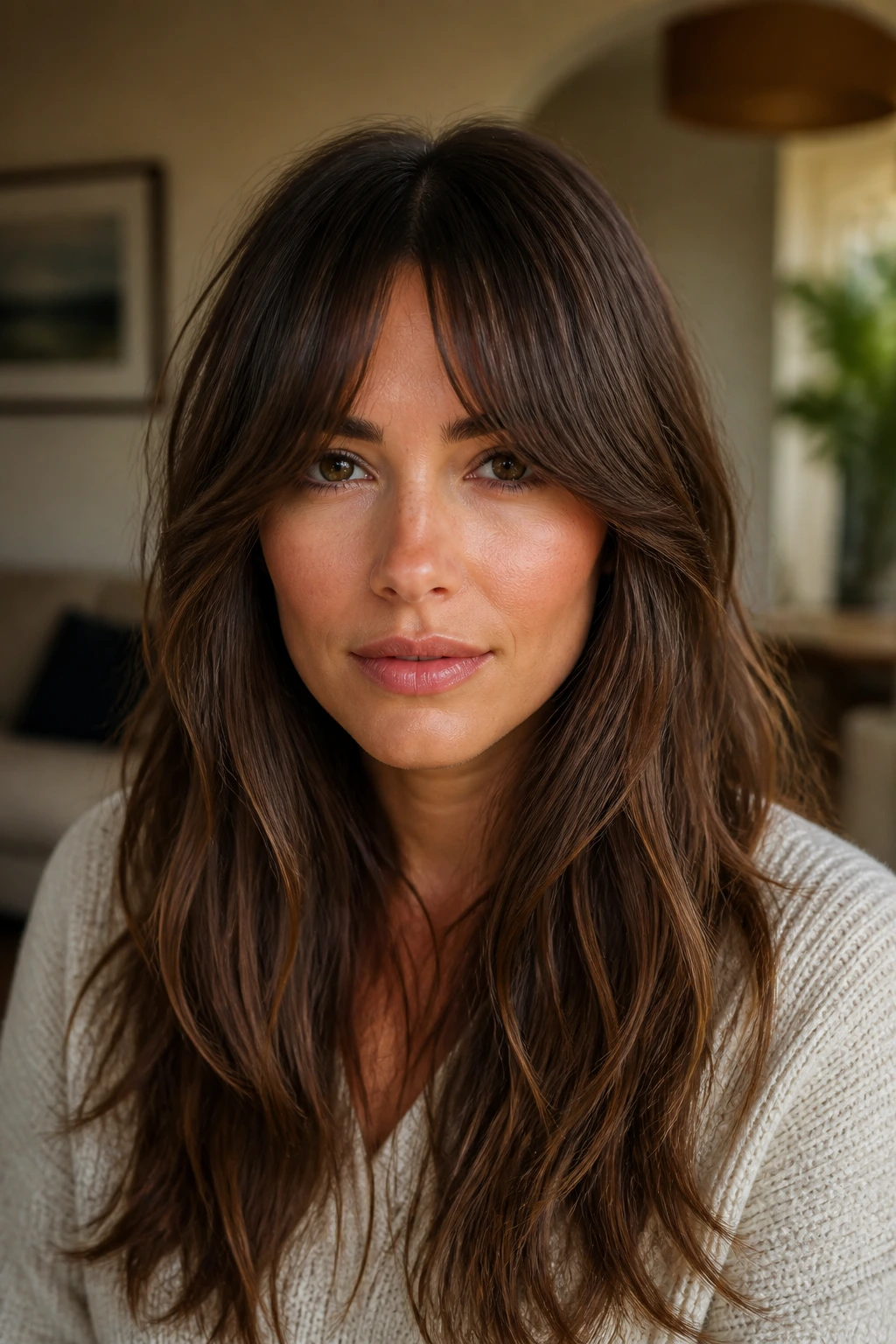
Will face framing bangs work with a middle part?
Yes, and in a lot of cases they look better with one. Curtain bangs, bottleneck shapes, split fringe, and long side curtains are all built to live near a center part without looking forced.
Are they a bad idea for fine hair?
Not if the density is kept light. Wispy brow skimmers, see-through bangs, and soft curtain pieces usually give fine hair shape without making the front look flat or stringy.
What if my hair is curly?
Curly hair can wear face-framing bangs beautifully, but the cut has to leave room for shrinkage. Ask for the fringe to be shaped dry or with the curl pattern in mind, and do not let anyone cut it as if it were straight hair.
How often do I need trims?
If you want the front to sit cleanly, plan on a dusting every 3 to 5 weeks. Softer, longer styles can stretch a bit longer, especially if the point is to let them grow into layers.
Can I pin them back on busy days?
Absolutely. Long curtain pieces, peekaboo bangs, and grown-out face frames are the easiest to pin, clip, or tuck away. That flexibility is one reason people keep returning to them.
Do bangs make a round face look wider?
The wrong bangs can, yes. Short, blunt, heavy fringe tends to widen the face visually. Longer side pieces, U-shaped curtains, and cheekbone-skimming layers usually do the opposite by pulling the eye down.
What if I hate them after the cut?
Start with a longer version than you think you want. Long face-framing bangs can be tucked, split, or blended into layers much more easily than a short blunt fringe. That is the safer move.
Can I style them without heat every day?
You can, especially if the cut is soft and already works with your natural texture. A damp reset, a bit of product, and a clip while the front dries can carry a lot of shapes without a full blowout.
The Fringe That Keeps Its Shape
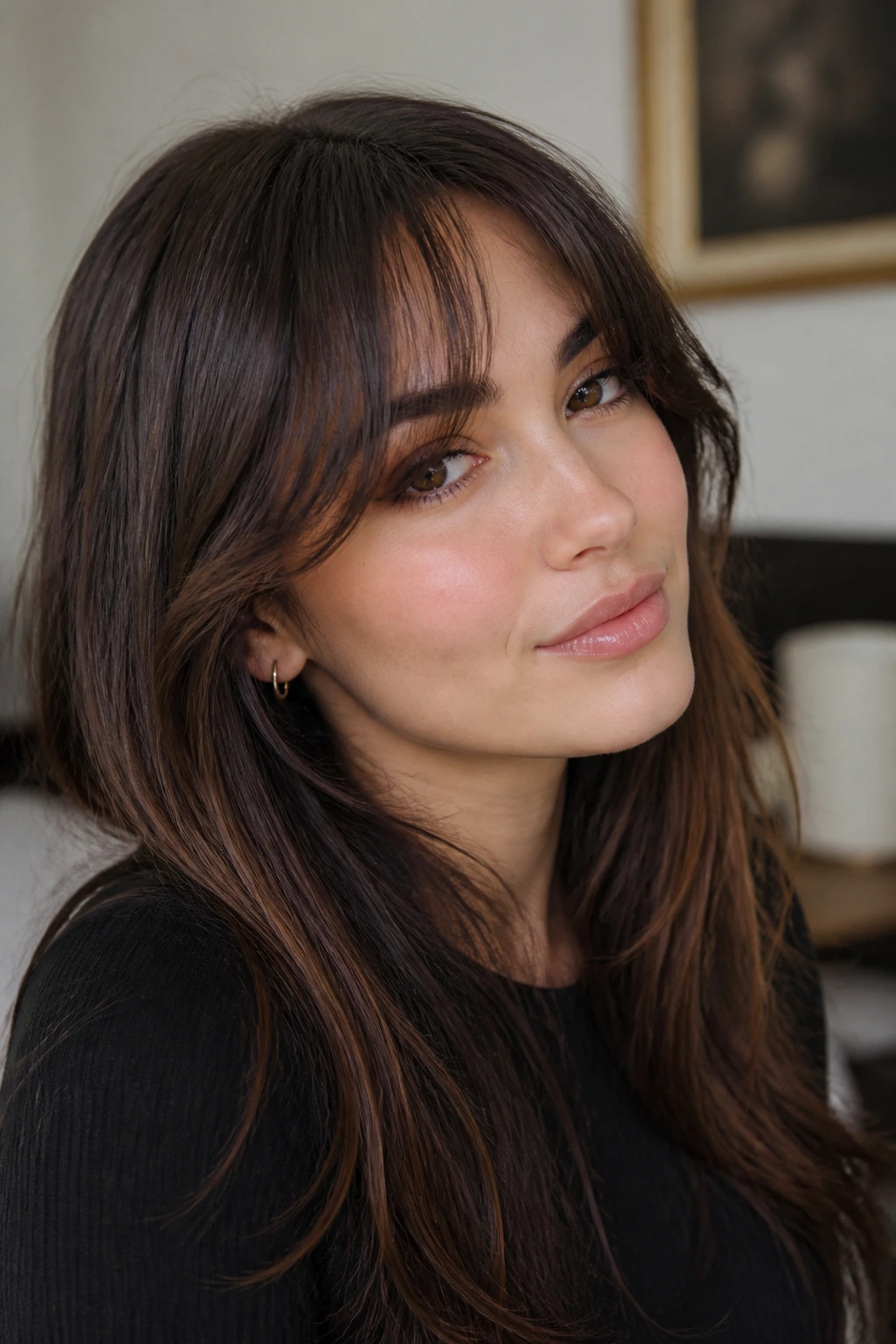
The best face-framing bangs for long hair do one thing very well: they keep the front interesting without making the haircut feel high-maintenance all the time. That’s the real appeal. Not drama. Not a reinvention. Just a smarter line around the face that keeps working as it grows.
If you are torn between a full bang and doing nothing, start longer and softer than your first instinct says. Long hair forgives that choice. It gives the fringe room to settle, room to grow, and room to become part of the cut instead of a separate project.
One good front piece can change the whole silhouette. And if it grows out better than you expected, that is not a compromise — that is the point.
