



Short hair can go sharp in a hurry. A blunt bob with a heavy front section can start to feel boxy, and a pixie with too much fringe can swallow the whole face. Wispy bangs fix that with air, not weight — a little softness at the brow, a little movement at the temples, and the haircut suddenly looks lighter without losing shape.
That tiny shift matters more than people think. On a bob, a feathered fringe can break up the hard line across the face; on a crop, it can keep the cut from reading too severe; on a shag, it can tie the layers together so the whole thing moves instead of sitting there like a helmet. The best wispy bangs for short hair don’t hide the haircut. They edit it.
I keep coming back to soft fringe because it gives short hair room to breathe. You can make it sleek, piecey, side-swept, curly, razor-cut, or grown-out on purpose, and the difference is enormous. The styles below cover the full range — polished, messy, fine-hair-friendly, glasses-friendly, curl-friendly, and the in-between stage that usually gets ignored — so you can match the fringe to the cut instead of fighting the shape you already have.
Why This Collection Feels Different
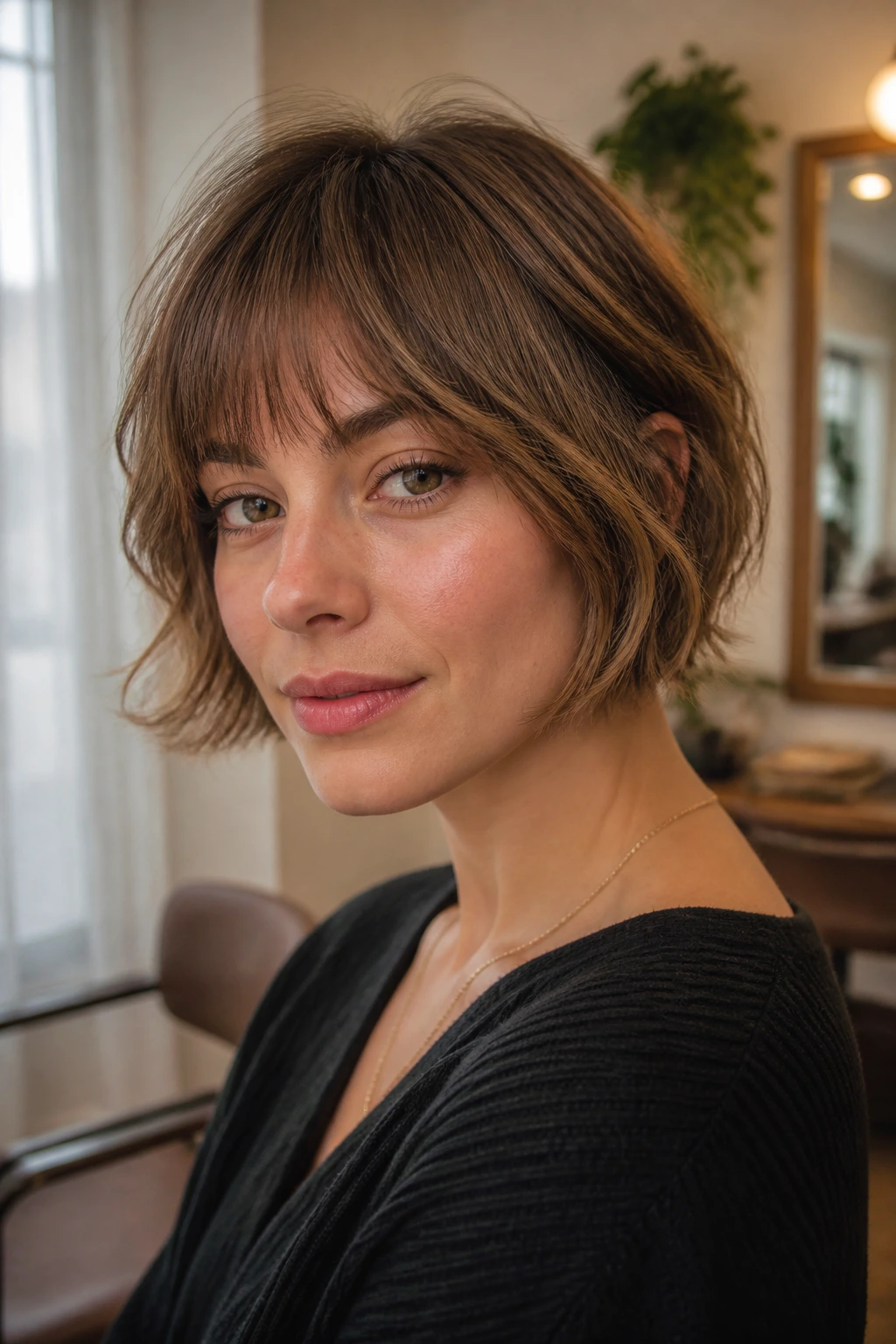
-
Face Shape Control: Wispy fringe can hide just enough forehead to soften a strong jaw or lengthen a round face, without cutting off the whole front of the haircut.
-
Less Styling Drama: A soft fringe usually needs 2 to 5 minutes of dry time, brush work, or finger styling, which is a lot kinder than a thick bang that has to be trained every morning.
-
Short-Hair Balance: Short cuts look best when there’s a little movement near the eyes and temples; airy bangs add that movement without stealing length from the rest of the head.
-
Texture-Friendly Choices: Fine, thick, wavy, curly, and cowlick-prone hair can all wear some version of wispy fringe if the cut is adjusted correctly.
-
Better Grow-Out: A softer fringe tends to blur into the haircut as it grows, which means fewer awkward weeks staring at a hard line in the mirror.
-
Salon-Friendly Ideas: These styles give you useful language for the chair — point-cutting, slide-cutting, internal weight removal, temple length, and center softness all matter here.
1. Brow-Grazing Wispy Fringe on a Clean Bob
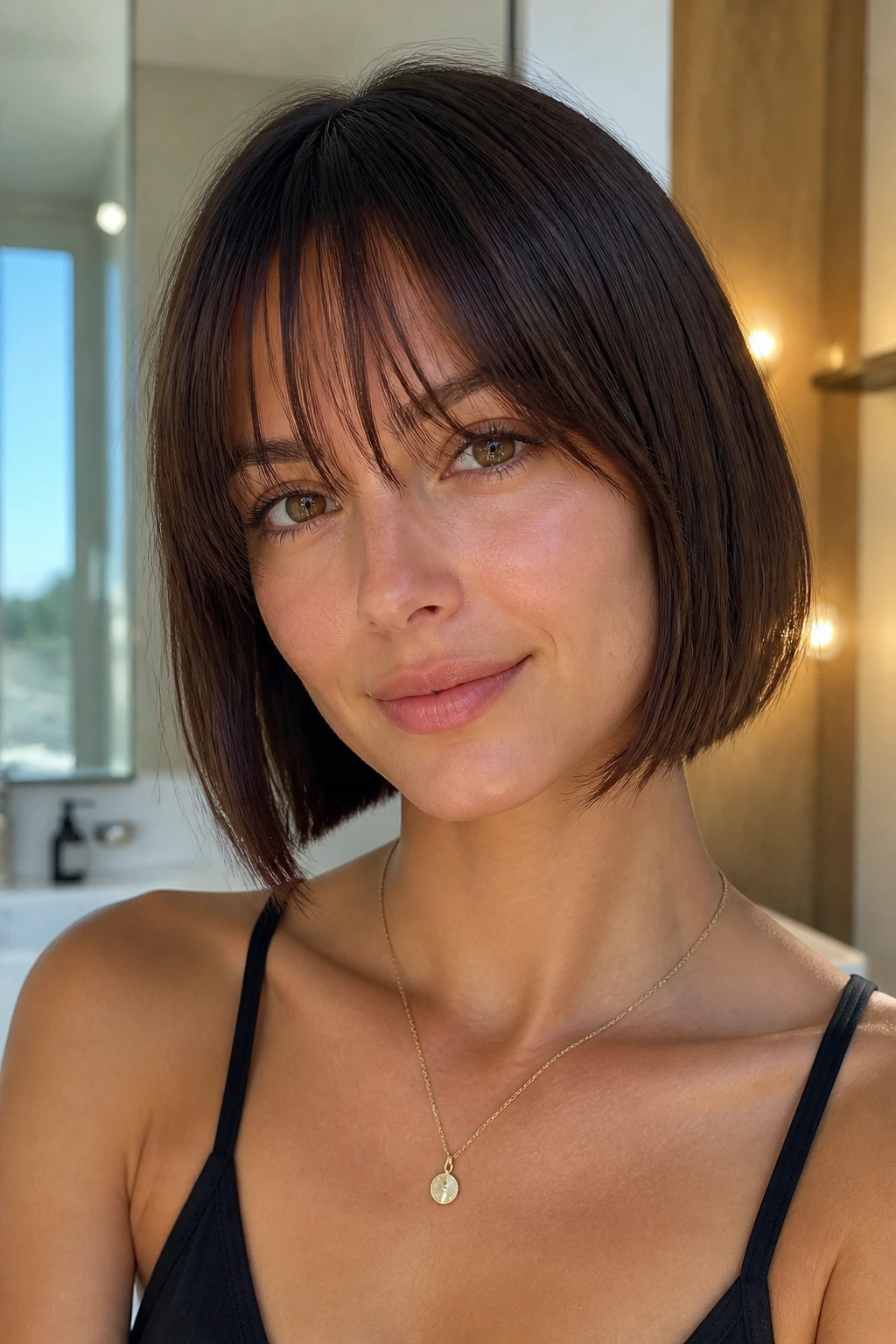
This is the classic that keeps winning because it does one job well: it softens a blunt bob without muddying the outline. The fringe sits right at the brows, then thins out at the tips so a little skin still shows through. That tiny bit of transparency keeps the haircut from feeling heavy.
Why It Works
A clean bob already has a strong visual line, so the fringe needs to be light enough to borrow that structure instead of fighting it. Brow-grazing wisps do exactly that. They give the face a little frame, but the ends stay soft, which matters if your bob hits the jaw or just below it.
Ask for point-cut ends rather than a solid blunt line. The difference is subtle in the chair and obvious in motion. The bangs should flick a bit when you move, not sit like a curtain.
Styling Note
Blow-dry them forward first, then give the roots a slight bend with a small round brush. A pea-size touch of lightweight cream on the ends is enough. Anything heavier makes the fringe stick together and lose the airy effect.
2. Side-Swept Micro-Wisps on a French Bob

A side-swept micro-fringe gives a French bob a little attitude without the maintenance of a full bang. The hair falls diagonally across the forehead, shorter at one side and longer near the temple, so the line feels soft and a little undone. It’s neat, but not stiff.
What Makes It Different
This style works especially well when you want some forehead coverage but don’t want to block the brows. The diagonal line keeps the face open, which is handy if your bob already has a strong chin-length edge. It also plays nicely with glasses because the fringe can be nudged aside without collapsing the whole shape.
Quick Styling Cues
- Part slightly off-center, not deep in the corner.
- Dry the fringe in the direction you want it to fall.
- Finish with a light mist of texturizing spray, then pinch the ends once or twice with your fingers.
That last part matters. Too much touching makes the side-sweep collapse into a flat sheet.
3. Curtain Wisps That Split a Chin-Length Cut
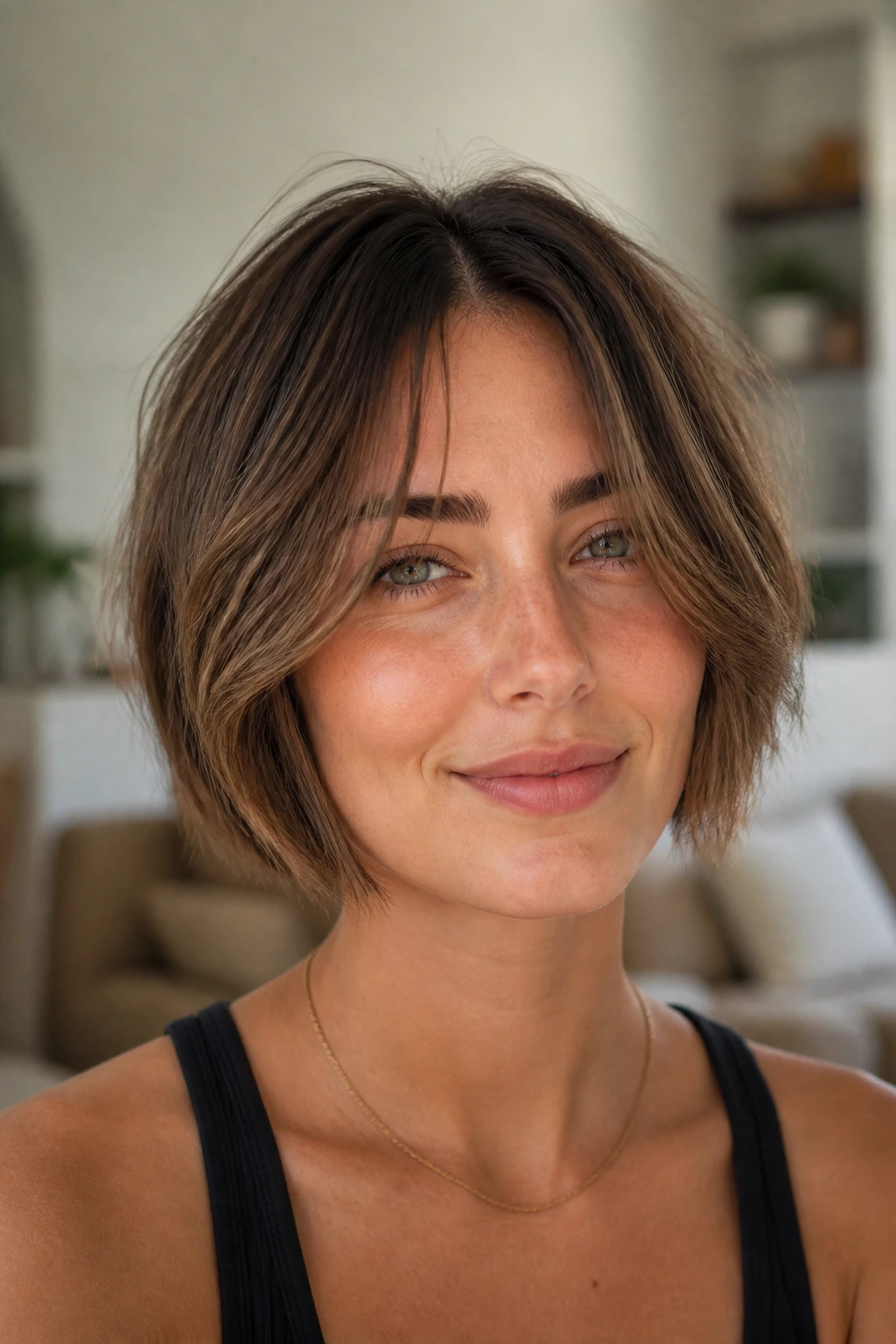
Curtain wisps on short hair are the softer cousin of a full curtain bang. The center is shorter, the sides are longer, and the whole thing opens away from the face in a gentle split. On a chin-length cut, that split helps the front feel less boxy and gives the haircut some swing.
Why It Works
The middle gap keeps the fringe from closing in on the eyes, which is a common problem with shorter bobs. Longer temple pieces pull the eye outward, so the face looks framed instead of covered. If your short haircut already has a bit of wave, this style practically styles itself.
A Useful Detail
Ask your stylist to leave the front slightly longer than you think you need. Curtain wisps look cute for about a week when they’re cut too short, then they start poking straight up and making strange little triangles. A touch more length gives you room to style them away from the face.
4. Feathered Pixie Fringe That Blends at the Crown
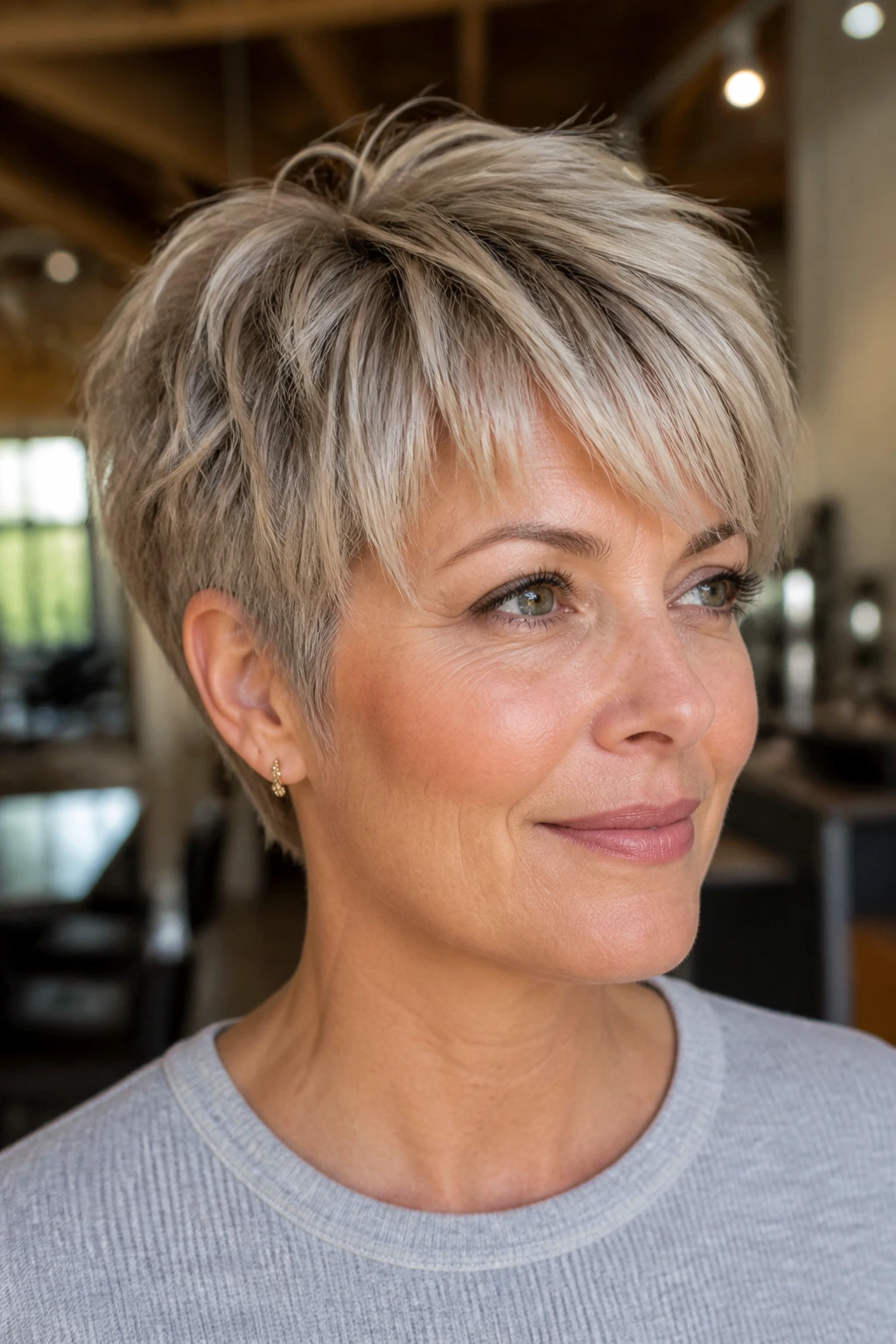
Pixie hair and heavy fringe do not always get along. Feathered fringe does. When the front blends into the crown, the cut feels lifted instead of weighed down, and the face gets a soft frame without losing the airy shape that makes a pixie interesting in the first place.
Why It’s Smart
Short hair exposes everything — bad weight distribution, awkward growth patterns, and any place where the cut was too aggressive. Feathering the fringe into the crown keeps the front from reading as a separate block of hair. The whole top should look connected, not chopped into pieces.
Style It Like This
Use a blow dryer with a nozzle and direct the roots forward first, then slightly up. That little bit of lift stops the fringe from sticking flat to the forehead. A dry matte paste, worked through the last half inch only, gives the ends a whisper of texture.
5. Bottleneck Bangs for a Soft Shag Bob

Bottleneck bangs earn their keep on a shag bob because they narrow in the center and widen at the temples. That shape echoes the haircut’s layers, so the fringe doesn’t feel pasted on. It feels built in.
What Makes Them Work
The center softness keeps the eyes open, while the longer sides bridge into the face-framing layers. That’s the trick. Instead of one flat line across the forehead, you get a little shape that moves with the rest of the cut.
Best Styling Habit
Dry the center forward and the temple sections slightly away from the face. That keeps the bang from turning into a heavy shelf. If your hair is wavy, scrunch the ends with a drop of mousse and let the wave do the work — over-brushing here usually makes it puff.
6. See-Through Bangs Above the Brows

See-through bangs are the lightest version of the bunch, and they’re a good fit for fine hair that looks crushed by too much density. The strands are spaced enough that the forehead shows through in patches, which gives the cut softness without bulk. Think airy, not sparse in a bad way.
What They Do Well
They work especially well on short cuts that already have structure in the sides or nape. Because the bangs stay translucent, the face doesn’t disappear behind the fringe. That makes them handy if you want to keep some openness around the eyes.
One Thing to Watch
Do not over-thin them in the salon. There’s a line between airy and wispy and just plain thin, and the wrong razor pass can cross it fast. You want texture at the ends, not gaps that look accidental.
7. Razored Fringe on a Cropped Crop
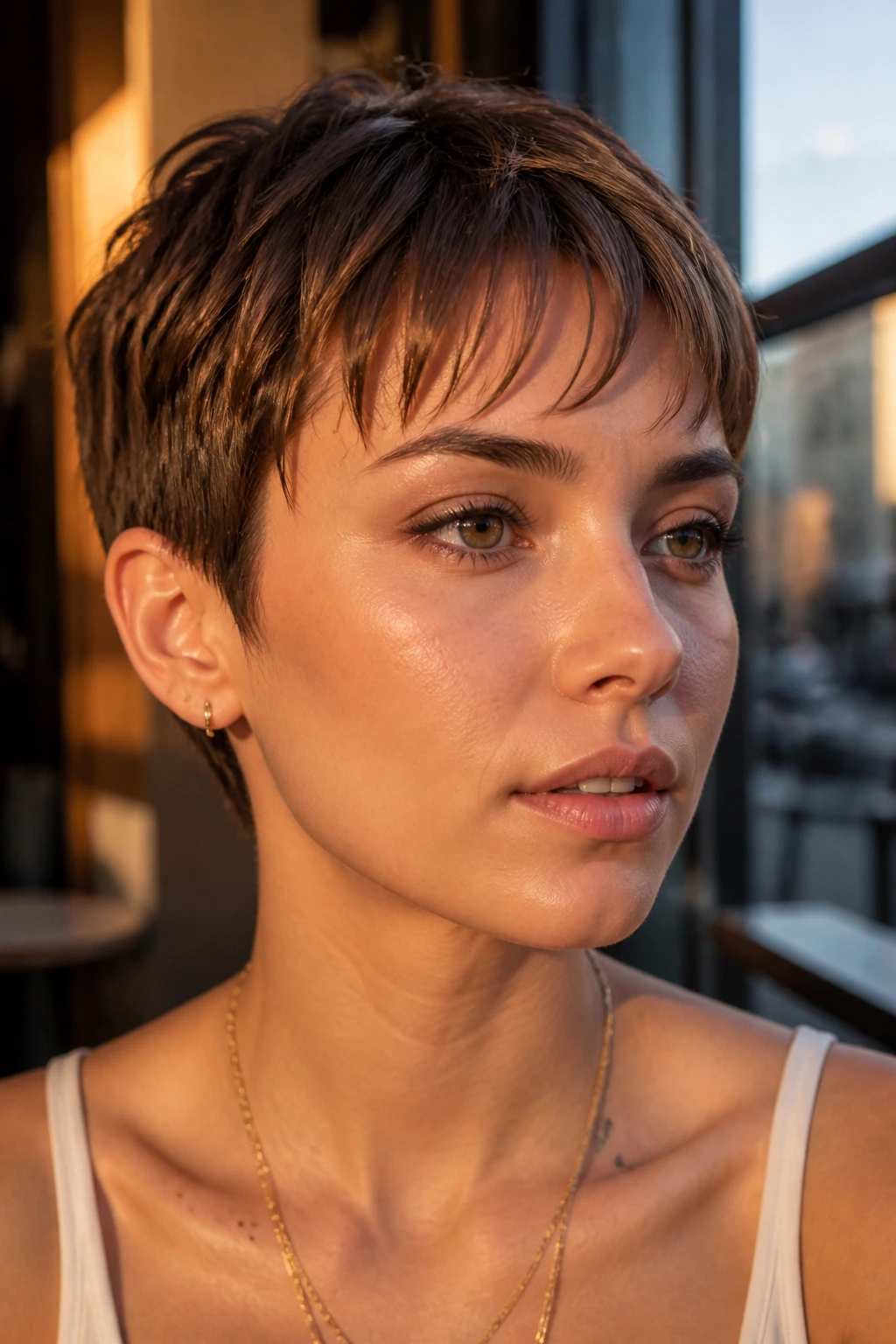
Razored fringe has a sharper attitude. The ends are sliced, not bluntly cut, so the bang separates into little pieces instead of one solid sheet. On a cropped crop, that texture keeps the cut from feeling too round or too tidy.
Why It Feels So Good on Short Hair
Short hair already shows movement at the roots and ends. A razored fringe adds another layer of that movement, which makes the front feel lighter. It also pairs nicely with a cropped style that has a bit of edge — undercut, tapered nape, strong sideburns, that sort of thing.
Styling Move
Use a tiny amount of matte pomade and rake it through with your fingertips. Not the roots. Just the ends. If you overload the fringe, the piecey texture disappears and the whole thing turns greasy in a very unhelpful way.
8. Wavy Sweep Bangs for a Tucked Bob
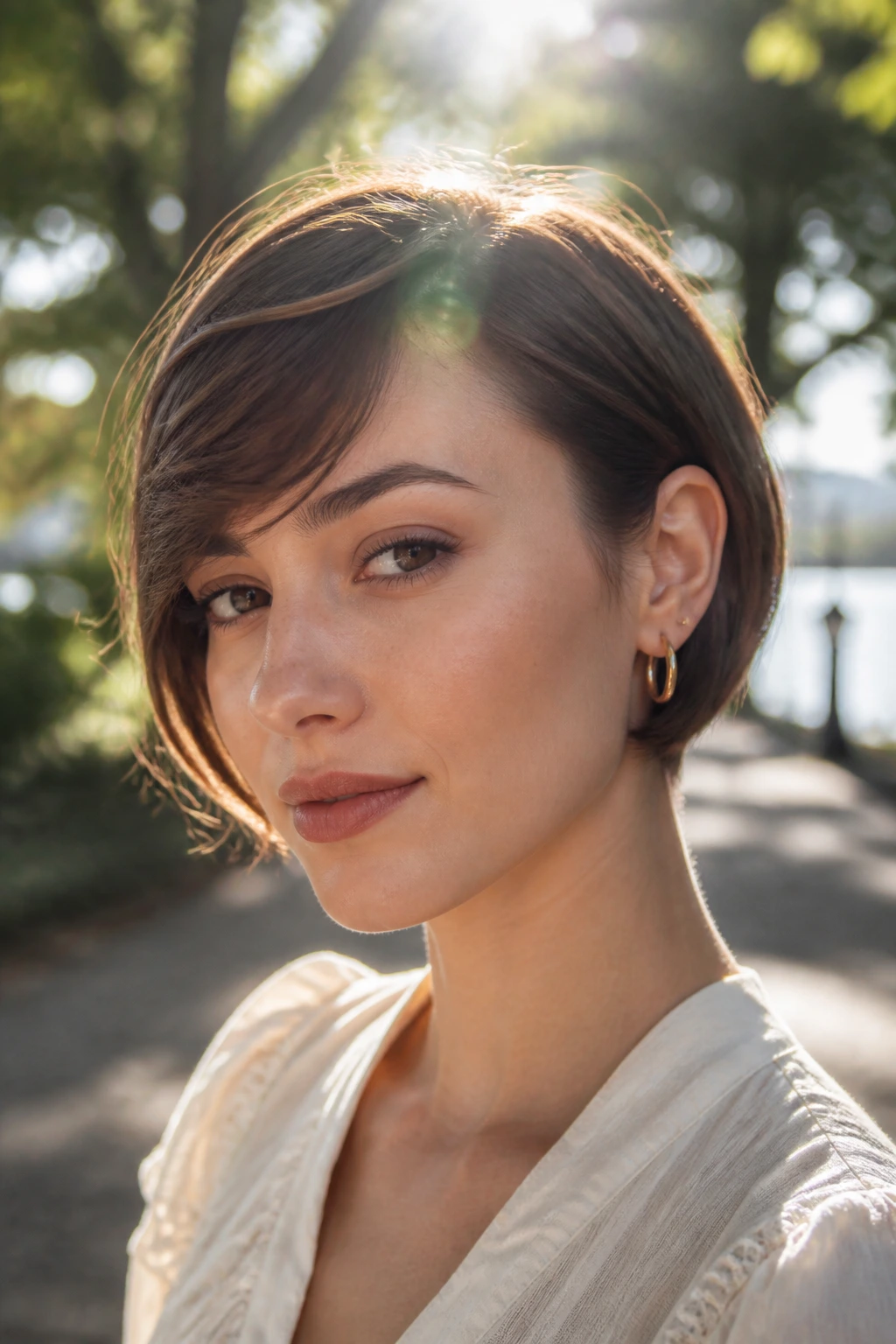
A wavy sweep bang is what I reach for when a bob needs softness but not a full front fringe. The hair sweeps across in one direction, long enough to tuck behind the ear or fall forward when you want it to. It’s useful. It’s also forgiving.
Why It Works So Often
The side sweep leaves one side of the face more open, which balances out the square shape of a bob. If your hair has a slight wave, the bend in the fringe makes the style look intentional even after a long day. That’s a nice thing to have.
Who Should Try It
People who like to change their part a lot. People who need to wear glasses on some days and contacts on others. People who want fringe without having to baby it. That’s the crowd.
9. Rounded Wisps for a Bowl-Inspired Cut
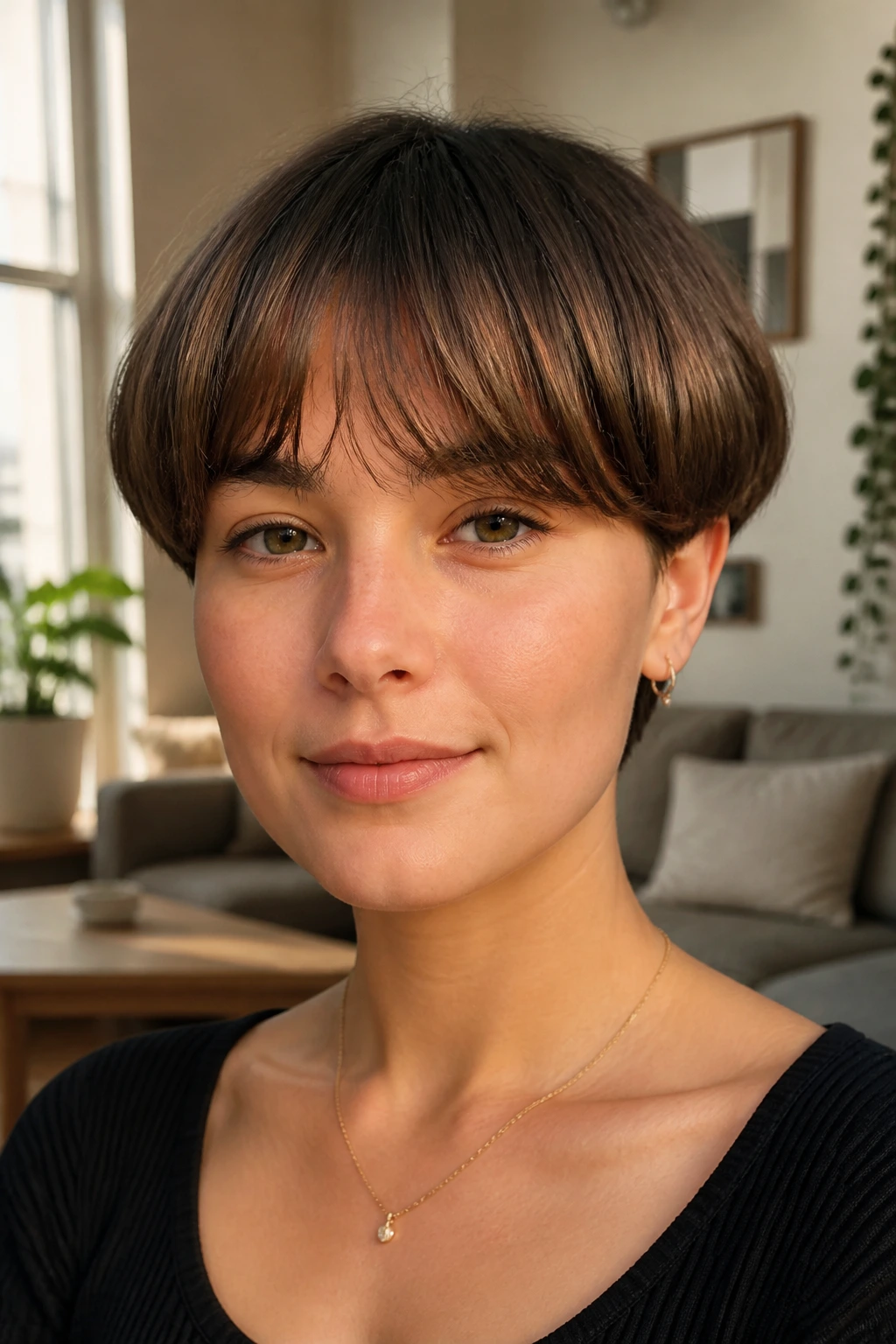
Rounded wisps can make a bowl-inspired short cut feel soft instead of severe. The fringe curves gently across the forehead with slightly longer edges at the temples, which breaks up the shape that can sometimes look too exact. It’s a cleaner finish than most people expect.
The Point of the Shape
The curve keeps the fringe connected to the rounded top of the haircut. If the edges are too blunt, the cut can read as helmet-like. If the ends are feathered, the whole silhouette becomes much more wearable.
Styling Detail
Dry the fringe with a small round brush, but don’t lift the roots too high. A little bend is enough. Too much volume at the center can turn the arc into a bump, and that’s a look no one asks for.
10. Choppy Fringe on a Jaw-Length Lob
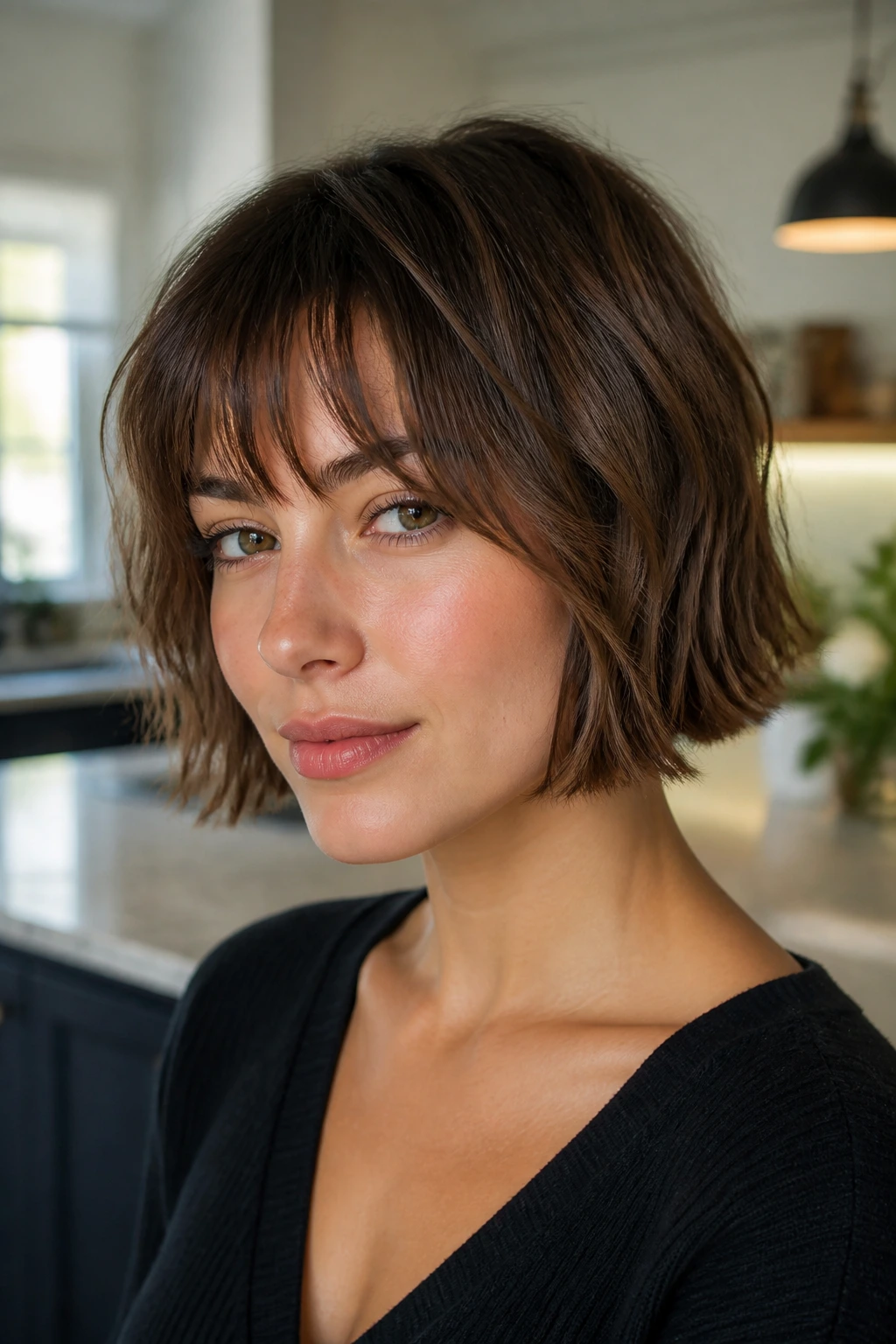
A jaw-length lob with choppy fringe has a nice tension to it. The length gives the haircut weight, while the fringe keeps the front from feeling heavy. It’s one of those combinations that looks better when it’s not too perfect.
Why It Works on Thicker Hair
Thicker hair can handle a more broken-up fringe because it needs somewhere for the bulk to go. Choppy ends break the line, so the bangs don’t lay across the forehead like a slab. On a lob, that texture looks relaxed instead of accidental.
Styling Cue
Air-dry the fringe halfway, then finish it with a flat iron bent just once through the ends. That single bend is enough. If you go over it again and again, the texture can start looking crimped instead of piecey.
11. Air-Dried Wisps for Natural Curls

Curly hair and wispy bangs can be a beautiful match when the cut respects shrinkage. Air-dried wisps sit softer than a full curly fringe, and they let the curl pattern show through instead of forcing it into a straight line. The result feels lively, not stiff.
Why It Works
A short curly cut already has movement in the sides and top. A wispy fringe adds a little focus at the front without flattening the curl. The trick is to cut the fringe dry, or at least mostly dry, so the final length makes sense once the curl springs back.
A Practical Note
Leave the bangs longer than you think. Curls can jump up an inch or more depending on texture, and short bangs are unforgiving. Use curl cream sparingly; too much product weighs the front down and makes the fringe clump in odd places.
12. Grown-Out Fringe That Still Looks Intentional

This is the bang style for the person who missed a trim and refused to panic. Grown-out wispy bangs can still look deliberate when they’re softened at the temples and shaped into the rest of the haircut. The key is to stop treating the fringe like a separate category.
Why It Still Works
A longer wispy bang can blend into a short bob, pixie, or shag without losing the face-framing effect. It gives you more styling options, which is useful if you’re not ready to commit to a strict brow-length cut. A side part can rescue a fringe that has started to split in weird places.
Best Move
Redirect the bangs with a blow dryer, not a straightener, if you want them to look soft. Heat from the front can make the fringe too flat. A little lift at the root keeps the grow-out from reading as neglected.
13. Split Fringe With Short Layers
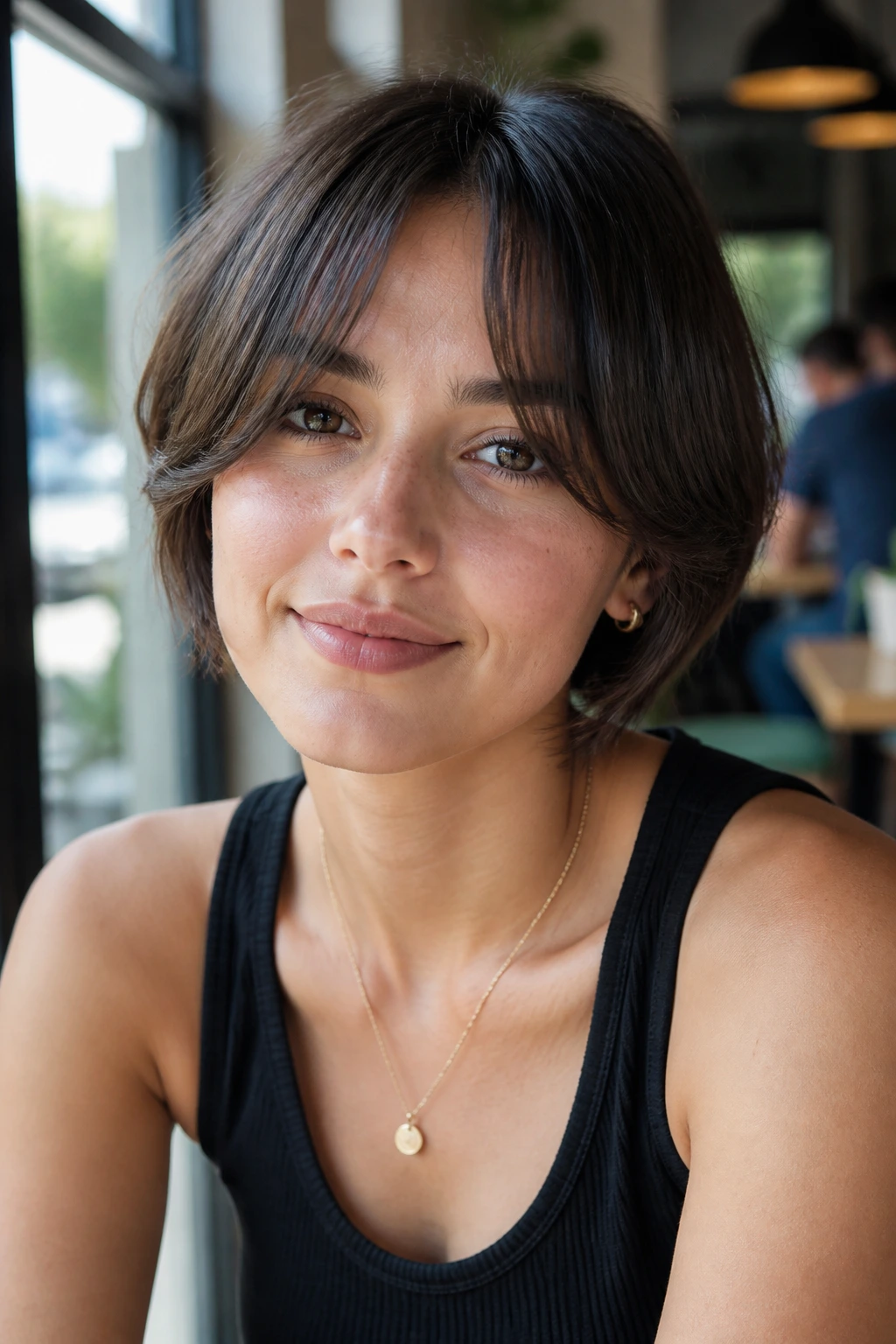
A split fringe with short layers gives short hair a bit of movement right where the face needs it. The center opens slightly, and the pieces around it fall into the side layers, which keeps the whole front soft and low-drama. It’s a good choice when you want something casual that still looks shaped.
What Makes It Useful
The split means the fringe won’t cling to the forehead all day. That matters if you sweat easily, wear a hat, or just hate the feeling of bangs sitting in your eyes. The short layers around the face help the fringe disappear into the rest of the cut instead of sitting on top of it.
Tiny Styling Adjustment
Use your fingers first, brush second. If you start with a brush, you may flatten the split right out and lose the airy center. A quick finger twist and a little root lift gets the shape back fast.
14. Piecey Bangs for a Textured Bob

Piecey bangs are all about separation. Instead of one soft blanket of hair across the forehead, you get small sections that fall where they want to. On a textured bob, that broken-up front keeps the haircut from feeling too neat.
Why It Works
A textured bob already has movement in the ends, so the fringe should match that energy. Piecey bangs create a visual rhythm that mirrors the uneven ends of the cut. The look is especially good if your bob has a choppy perimeter or a few bent pieces around the cheekbones.
Product Note
Keep it light. A quarter-size amount of texture spray or a tiny bit of dry wax is enough. Too much and the pieces fuse together, which defeats the whole point.
15. Arched Bangs for Fine Hair

Fine hair often looks best with a fringe that has some shape but not too much density. Arched bangs do that job neatly. The center sits slightly shorter, then curves longer toward the temples, which gives the impression of fullness without piling hair onto the forehead.
Why It Flatters Fine Hair
Because the shape is curved, the fringe looks purposeful even when the strands are light. Fine hair tends to show every blunt line, and that can make bangs look thin in a bad way. An arch smooths the line out and makes the front feel softer.
Styling Tip
Blow-dry over a small round brush and roll just the middle section once. Not twice. One bend is enough to give the fringe life. More than that and you’ll flatten the ends into a strange little curl that won’t sit down.
16. Internal-Layer Wisps for Thick Hair
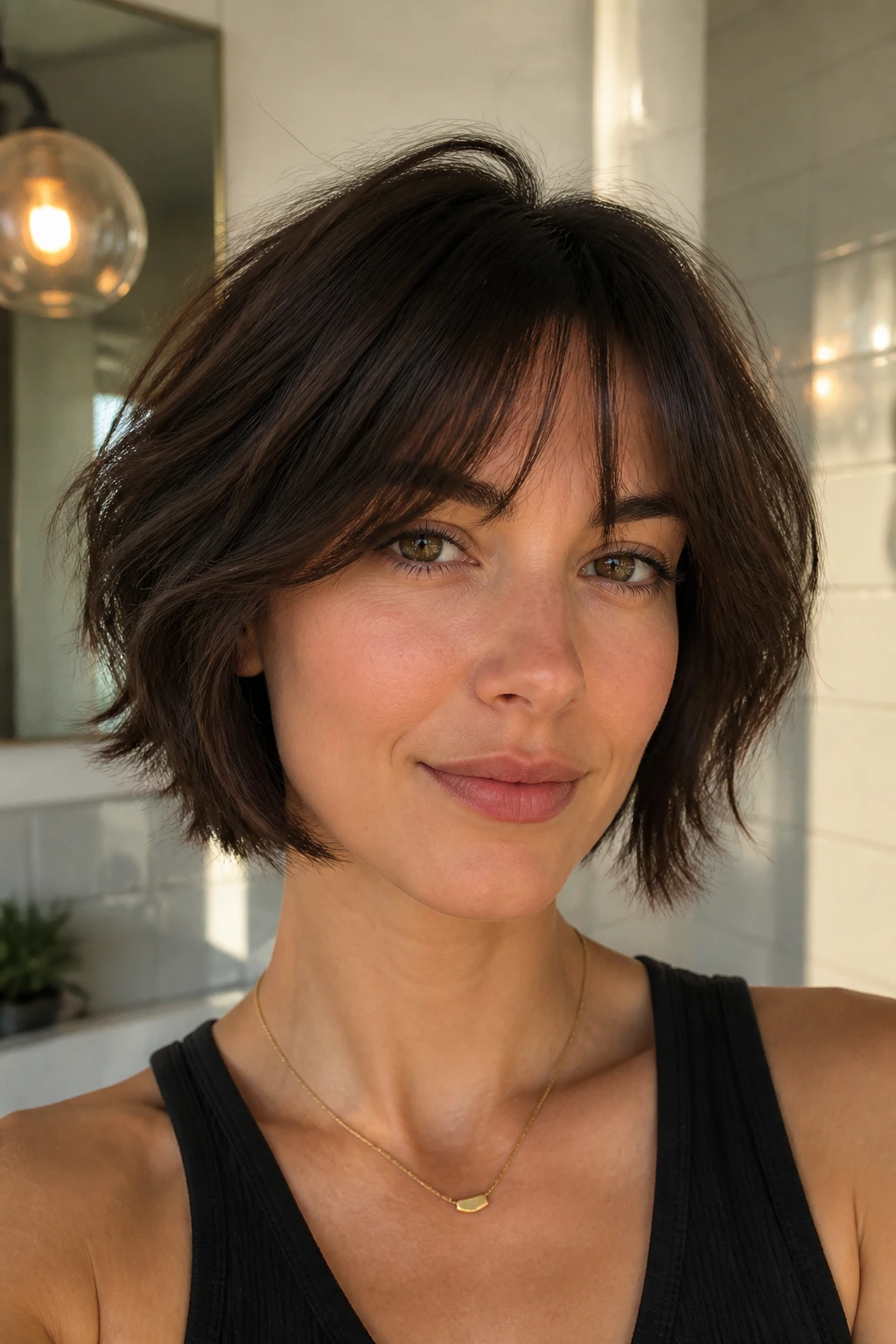
Thick hair needs space to move, and internal layers give it exactly that. Instead of thinning the ends into nothing, the weight is removed from the inside so the fringe stays soft but not stringy. It’s a smarter cut than people give it credit for.
Why It Matters
If thick hair is cut blunt at the front, the fringe can balloon out and sit heavier than the rest of the haircut. Internal layering keeps the front from sticking out like a shelf. The bangs still have body, but they don’t fight the face.
Salon Note
Ask your stylist to remove bulk underneath, not only at the ends. That distinction matters. A lot of home thinning mistakes happen because the stylist went after the surface and left the internal weight where it was.
17. Curly Pixie Fringe That Springs Up
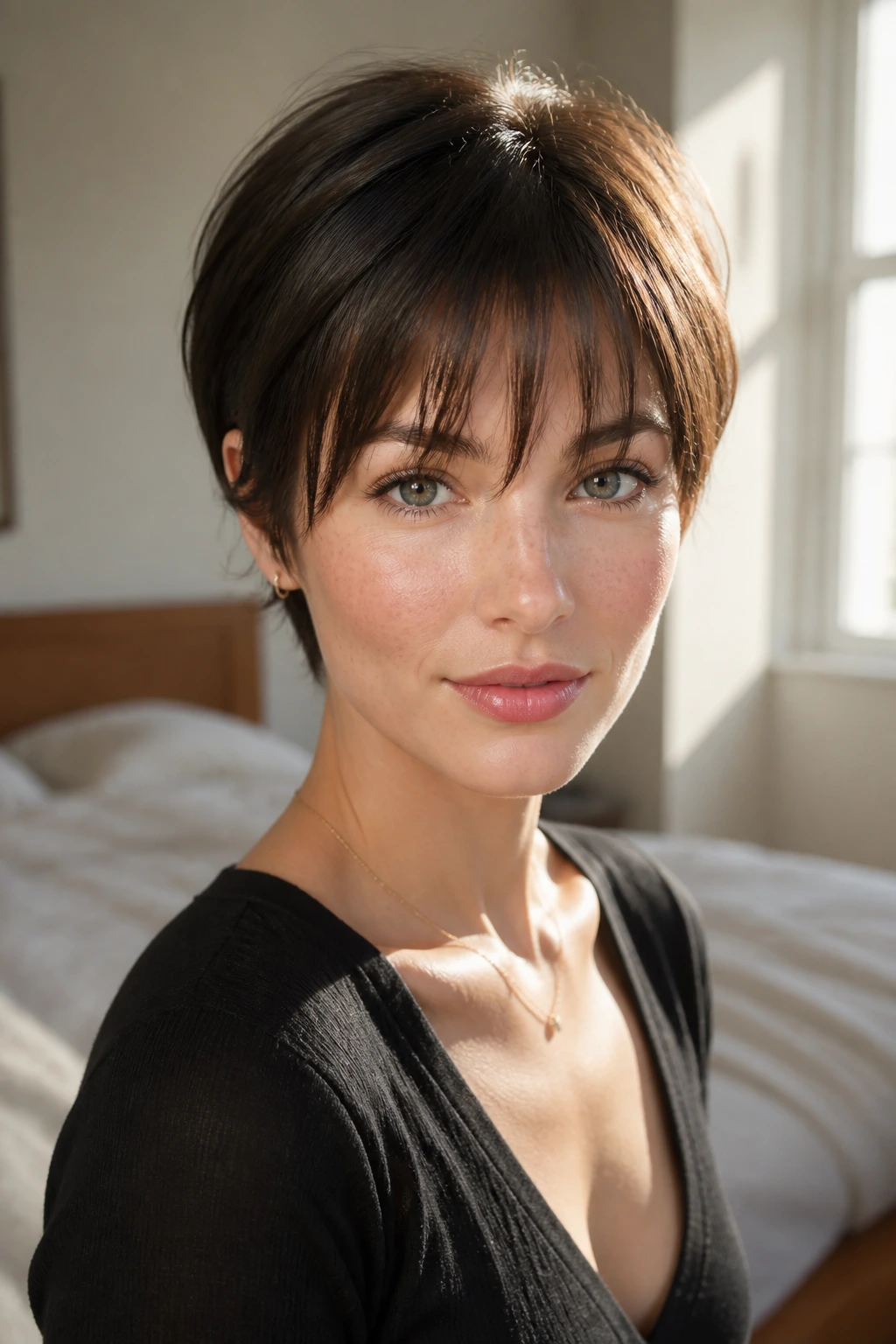
Curly pixie bangs are tiny, lively, and easy to ruin if you cut them like straight hair. The fringe should be left long enough to spring, then shaped to sit with the curl pattern instead of against it. When done well, the front has a soft halo feel.
What Makes It Different
The bangs are less about covering the forehead and more about framing it with springy texture. That matters on a pixie, where the front and crown are usually the most visible parts of the cut. A curly fringe can make the whole style look expensive, which sounds silly, but you know it when you see it.
How to Style It
Diffuse on low heat or let it air-dry untouched. Once the curls set, separate them gently with a drop of light oil on the fingers. Pulling at them too much will break the curl pattern and make the bangs frizz instead of bounce.
18. Face-Framing Wisps on a Tapered Crop
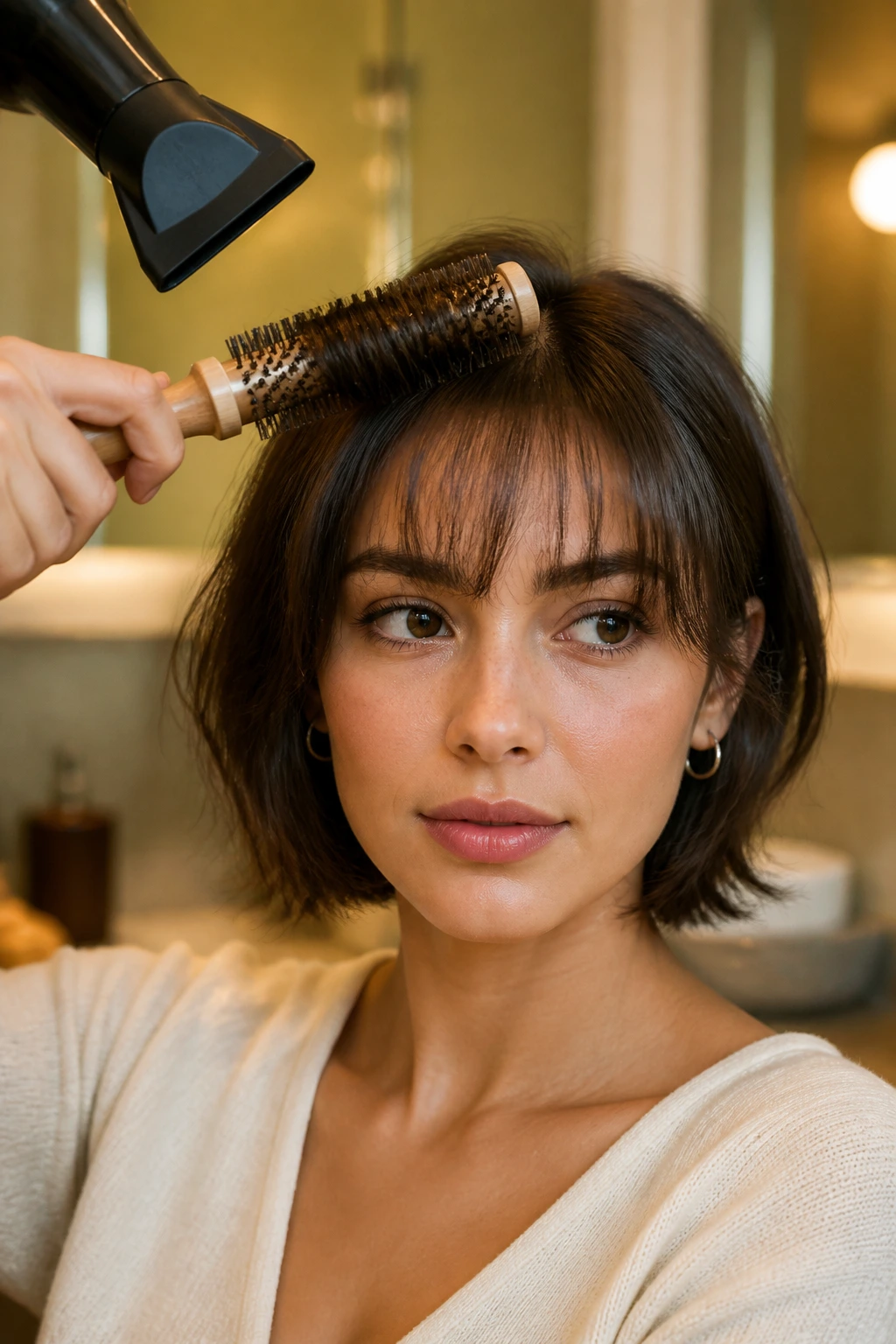
Face-framing wisps on a tapered crop are less about a strict bang line and more about a soft front edge. The bangs blend into the side pieces, which gives the haircut a clean contour near the cheekbones and jaw. It’s subtle, and that’s the charm.
Why It Works
A tapered crop already has a tidy nape and sides, so the front needs a little softness to keep the balance from feeling too severe. Wisps around the face do that job without making the haircut look overly styled. They also grow out nicely, which is practical if your schedule is not built around salon visits.
A Nice Side Effect
The style draws attention to the eyes and cheekbones instead of the forehead. That’s useful if you like short hair but don’t want the front to read too harsh or too flat.
19. Feather-Forward Bangs for a Shaggy Bob

Feather-forward bangs push the movement toward the face, which is exactly what a shaggy bob wants. The fringe falls in soft, lifted pieces that echo the layers through the rest of the cut. It feels loose, but not lazy.
Why It Works
A shag bob already carries volume and texture at the crown and ends. The bangs should echo that texture instead of sitting as a separate patch. Feathering the front makes the haircut look like one continuous shape from the brows to the ends.
Styling Move
Use a blow dryer to direct the bangs slightly forward, then break them up with your fingers once they cool. Don’t keep combing them. Shaggy fringe looks best with a bit of disorder; too much grooming kills the texture.
20. Side-Part Fringe for a Deep Part Cut
A deep side part changes everything. The fringe follows the part and sweeps across the forehead with a soft diagonal that makes the haircut feel more sculpted. It’s a smart choice if you like asymmetry and hate bangs that sit dead center.
Why It’s So Useful
The side part gives the face some lift at one temple and some coverage at the other, which can be flattering if your hairline isn’t even or your forehead feels broader than you’d like. It also gives you options on days when the fringe needs to behave and you don’t have time to coach it.
Styling Note
Set the roots with heat in the direction of the part, then clip the fringe for a minute while it cools. That tiny pause helps the shape stick. Skip it, and the bangs are more likely to drift back where they started.
21. Jaw-Skimming Bottleneck Bangs
This is the longer, moodier version of the bottleneck fringe. The center stays light and soft, while the sides fall long enough to skim the jaw and connect with the front of the cut. On short hair, that extra length creates a little drama without becoming heavy.
What Makes It Stand Out
The side pieces add a contour line that can make a rounded face look longer or a square face feel less boxy. Because the center remains lighter, the bangs don’t crowd the eyes. It’s a nice middle ground between true curtain bangs and a full fringe.
Best Pairing
Try it with a bob that has some movement at the ends. A pin-straight, ultrabright blunt cut can make this shape feel too formal. A bend in the hair softens the whole thing.
22. Soft Blended Bangs on a Mini Wolf Cut
The mini wolf cut is one of the few short styles that can handle slightly messier fringe and look better for it. Soft blended bangs merge into the choppy top layers, which means the fringe doesn’t sit on the head like a separate piece. It’s all one shape, just with attitude.
Why It Works
The cut already has texture at the crown and a bit of swing at the ends, so the bangs only need to echo that energy. If they’re too neat, the whole look gets confused. If they’re blended lightly, the shape feels rebellious in a controlled way.
Styling Cue
Work in a little mousse at the roots, then rough-dry the front with your fingers. No need to make every strand behave. The tiny bit of disorder is the point.
23. Crown-to-Brow Fringe on a Pixie Bob
A pixie bob can sometimes sit in that awkward middle zone between short and not quite short enough, and a crown-to-brow fringe helps pull the shape together. The front section starts higher and flows down toward the brows in a soft line, which gives the haircut a lifted feel. It’s sleek without being stiff.
Why It Works
The connection from crown to fringe keeps the top of the haircut from looking chopped off. That makes the pixie bob feel more balanced, especially if the nape is tight and the sides are tucked close. The fringe also helps the eyes become the focal point, which is usually the right move with this cut.
Styling Move
Use a round brush at the crown first, then drag the fringe down and slightly forward. That order matters. If you style only the bangs, you miss the lift that makes the whole cut read properly.
24. Razor-Cut Bangs With an Undercut
A razor-cut fringe on top of an undercut has a little edge to it, but the wispy ends keep it from going harsh. The front pieces fall separately, and the undercut removes the bulk underneath so the bangs can stay light. That combination works better than people expect.
What Makes It Interesting
The undercut creates room. The fringe no longer has to compete with the sides for volume, so the front can be softer and more deliberate. That’s especially useful if you like a short cut that still has personality when you tuck one side back.
A Careful Note
Razor-cut bangs need a stylist who knows when to stop. Too much slicing and the ends fray. You want feathered motion, not shredded edges that dry out and misbehave.
25. Swoopy Bangs for a Short Cut You Tuck Behind the Ear
This style is for the person who wears one side behind the ear half the time and wants the bangs to cooperate. The fringe sweeps across the forehead, then melts into the side so the tuck feels natural. It’s one of the most practical options in the whole group.
Why It Works
The swoop lets you change the silhouette without changing the cut. Wear it forward when you want face framing. Tuck it back when you need the haircut out of your eyes. The fringe acts like a built-in styling switch.
Styling Detail
Use a flat iron with rounded edges if your hair needs help staying curved. One soft pass is enough. Repeated heat gives you a crease where you wanted a sweep, and that’s a pain to fix.
26. Wisps With Bright Highlights
Color can do a lot of the work for wispy bangs. A few bright highlights through the fringe make the texture read more clearly, especially on short hair where every inch matters. The lighter pieces catch the eye and make the softness visible.
Why It Helps the Cut
Highlights separate the strands visually, which makes the bang look lighter even when the density is moderate. That’s useful on short hair because the fringe is front and center. Face-framing light pieces can also pull attention toward the eyes and cheekbones instead of the overall shape.
A Small Warning
Don’t overdo the contrast unless you want the fringe to shout. A soft lift in tone around the face usually looks better than chunky streaks, which can make wispy bangs feel dated fast.
27. Soft Fringe for Glasses Wearers
Glasses and bangs can live together nicely when the fringe is cut to sit above the frames or break softly at the top edge. The bangs should hover, not slam into the lenses. That’s the whole game.
Why It Works
A soft fringe keeps the face framed without competing with the glasses. The temples can be left a little longer, which lets the bang move away from the frame instead of nesting against it. That little bit of space matters more than most people realize.
Styling Tip
Before you finish, put your glasses on and check the fringe line in the mirror. If the bangs keep brushing the lenses, trim a touch more off the center or encourage the side pieces to fall away. Don’t guess. Glasses change the balance.
28. Wispy Bangs on a Short Afro
A short afro with wispy bangs has a softness that comes from shape, not from making the curls smaller. The front can be rounded lightly or left just a bit lower at the center, so the fringe frames the forehead without fighting the coil pattern. It’s elegant in a very lived-in way.
Why It Works
Coily hair needs room to spring, and a wispy fringe gives it that room. Cutting the bangs dry, or nearly dry, helps avoid a surprise shrinkage situation. The style can also lighten the front of the cut if the crown has a lot of volume.
Styling Move
Use a moisturizer that softens without flattening. Then pick the fringe lightly with your fingers. A brush can disrupt the curl pattern and make the bangs puff in a way that looks less intentional.
29. Mini Mullet Fringe With Soft Edges
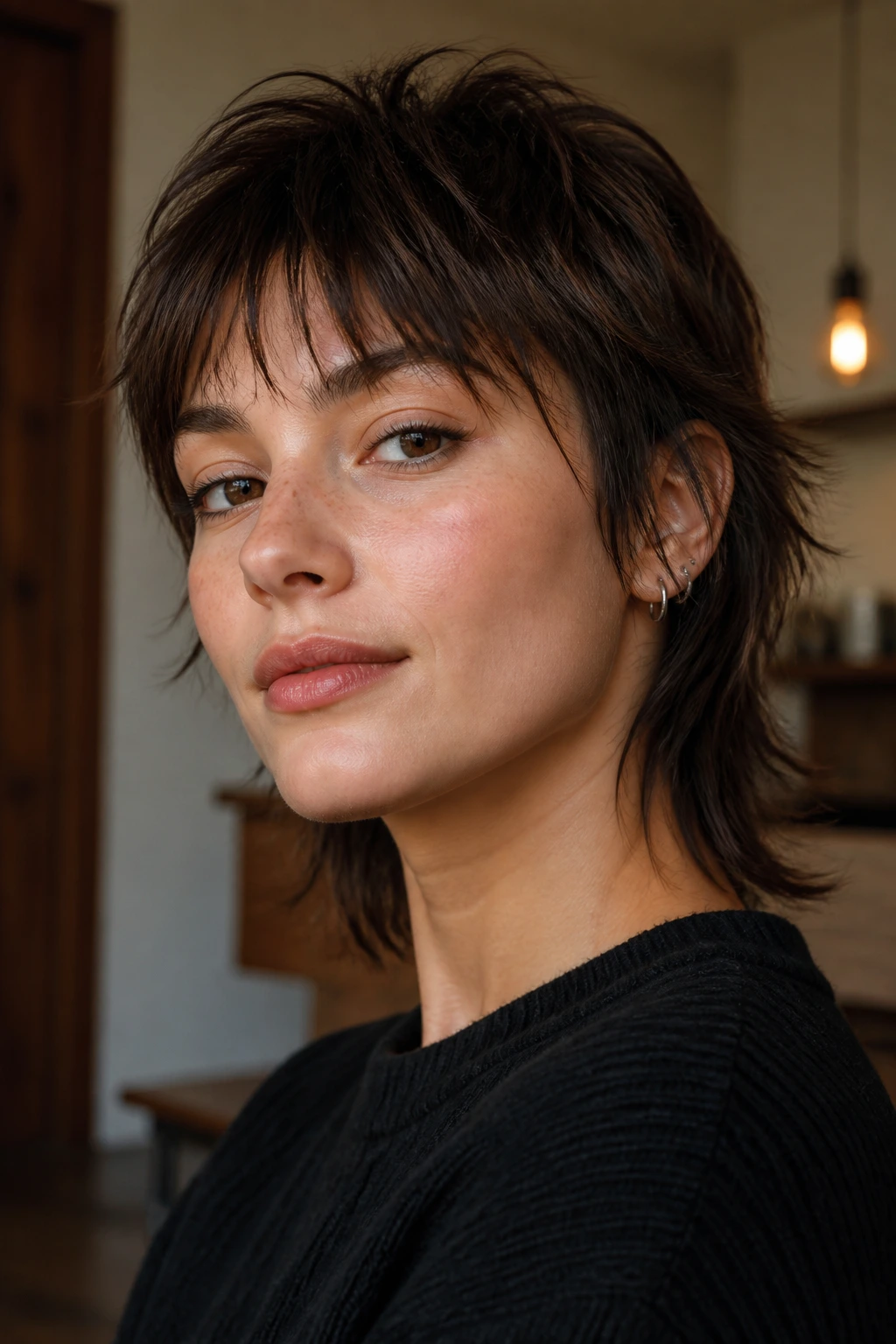
A mini mullet with wispy fringe sounds brash, and it is, but the soft edges keep it wearable. The front stays airy while the nape holds onto a little extra length. That contrast is the whole appeal.
What Makes It Work
The fringe keeps the short front from feeling too severe, while the longer back gives the style some shape and movement. On the right face, this cut has a lot of personality. On the wrong face, it can look costume-ish, so the softness at the front matters.
Styling Cue
Keep the fringe lightly separated and let the nape move. If everything is too polished, the cut loses the rough charm that makes it interesting in the first place.
30. French-Girl Crop Bangs

French-girl crop bangs are not fussy, which is exactly why they work. They’re soft, a little imperfect, and often cut with a bit more length at the sides so they blend into the rest of the crop. The result is casual without looking unfinished.
Why People Keep Coming Back to It
The fringe gives the crop a face-framing point, but the texture keeps it from becoming precious. That matters on short hair because precision can tip into stiffness fast. A slightly messy, lightly separated fringe usually looks better than one that’s ironed flat.
Styling Note
Air-dry if your hair already has a bend. If it’s straight, bend the ends with your fingers while the hair is still warm from the dryer. Don’t overthink it. The charm is in the looseness.
31. Collarbone Bob Fringe That Grazes the Lashes
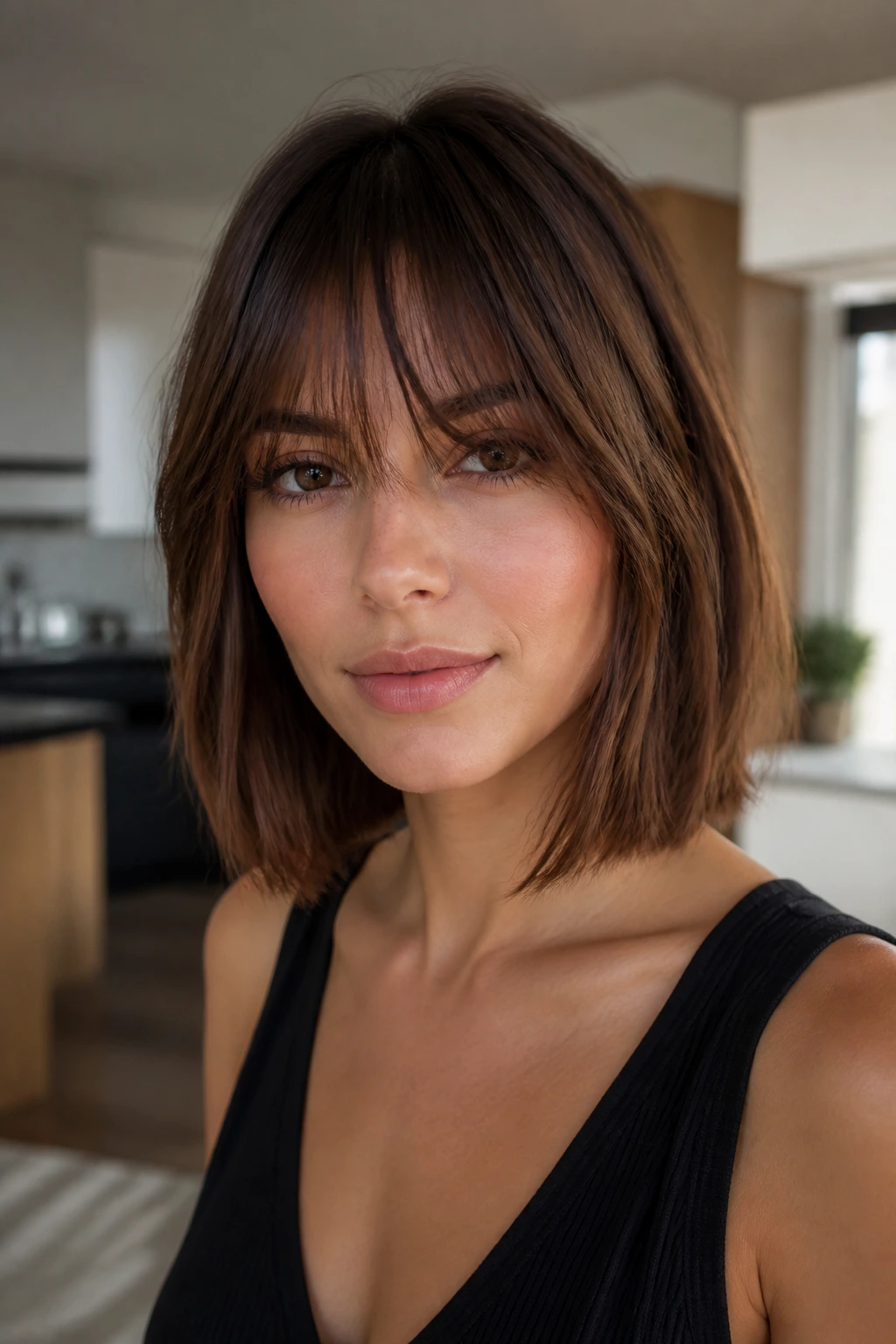
A collarbone bob sits at the edge of short hair, and that makes it a good place for a lash-grazing wispy fringe. The length is long enough to feel soft, but short enough that the haircut still reads clean and modern. It’s a quiet shape, not a loud one.
Why It Works
The fringe skims the lashes, which gives the face a little mystery without hiding the eyes. The bob length keeps the overall style grounded. If you like hair that can go from tucked behind the ear to blown out smooth, this is a useful place to land.
Best Styling Habit
Use a light blowout cream only on the mid-lengths. Leave the fringe lighter. Too much product near the eyes makes the bangs separate in a greasy way that looks messy fast.
32. Tapered Wispy Bangs for a Slicked-Back Style
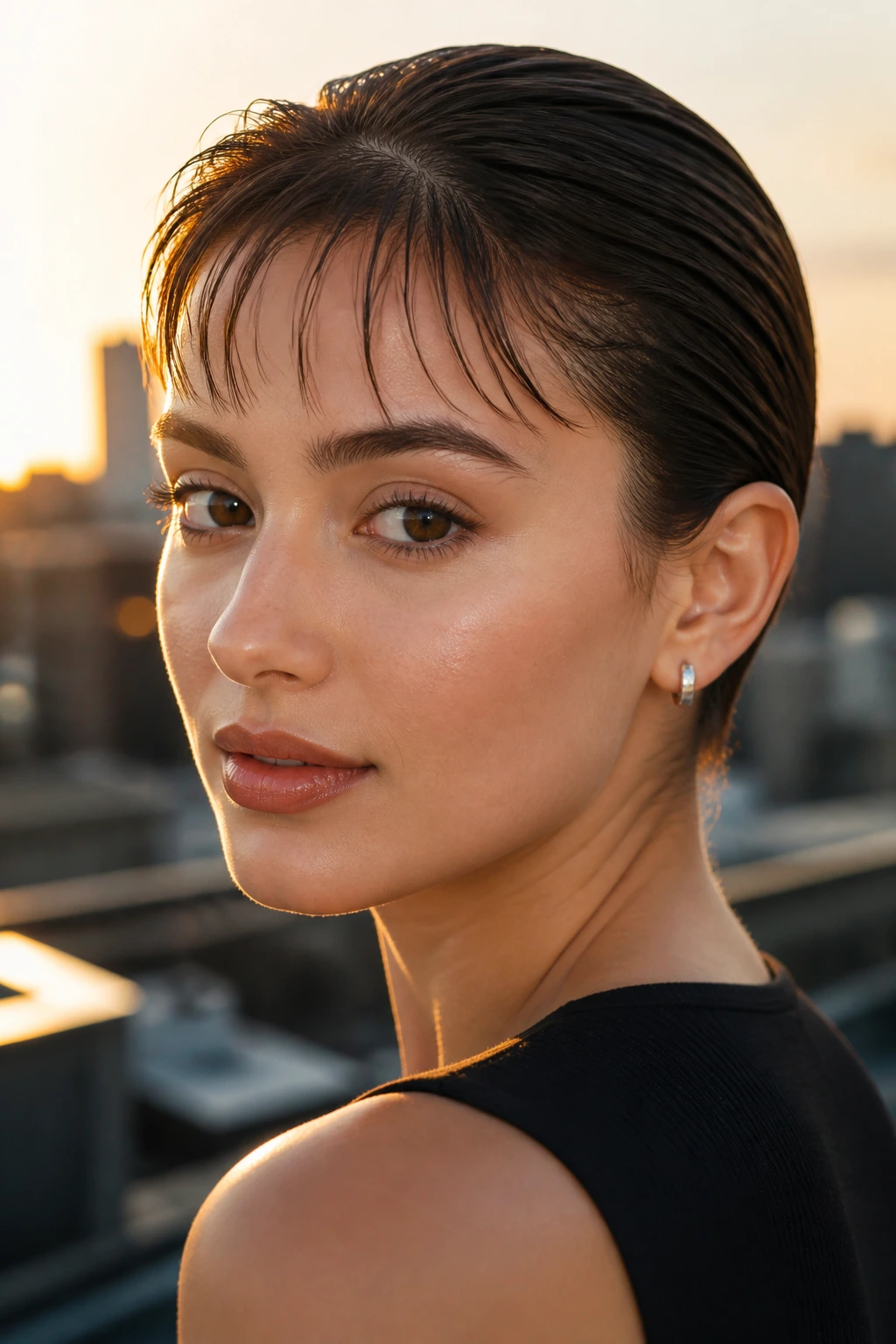
Slicked-back short hair can look severe if the front is too bare. Tapered wispy bangs solve that by leaving a soft line at the hairline while the rest of the hair is swept back. It gives the style a little humanity.
Why It Works
A slicked-back crop or bob can be all angles and shine. The tapered fringe interrupts that just enough to keep the forehead from disappearing. It’s especially good if you want a more editorial look without a hard, gel-heavy front.
Styling Cue
Apply styling cream or gel to the sides and crown, but keep the fringe soft. You want the front to show a hint of texture, not turn into a solid helmet. That tiny contrast makes the whole look breathe.
33. Split Wisps for a Pixie Shag
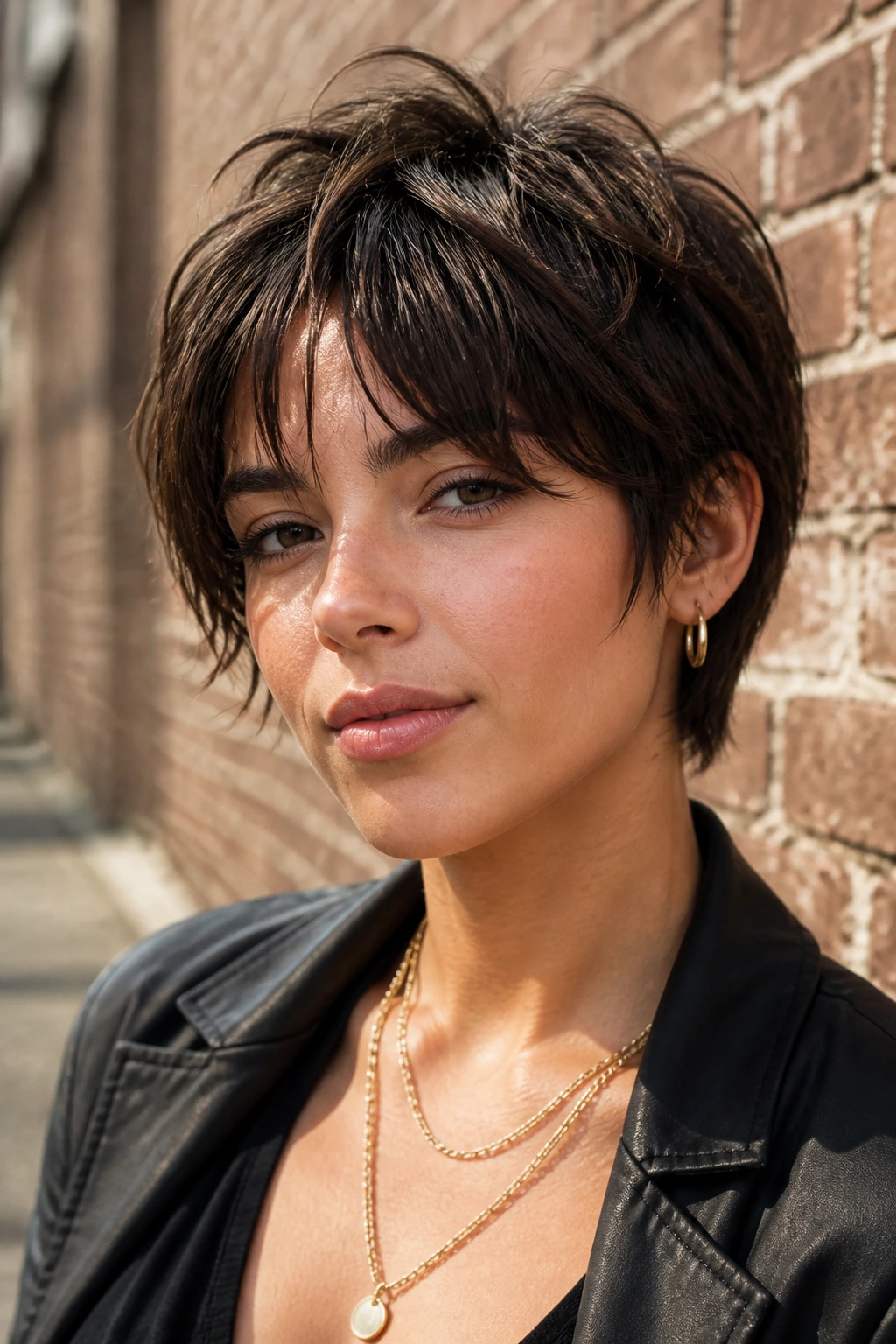
A pixie shag already has layers in motion, so split wisps fit in without much fuss. The fringe parts near the center and falls away in thin sections, which gives the face a little openness and the haircut some forward movement. It’s relaxed, but not random.
What Makes It Work
The split keeps the fringe from sitting as one block across the forehead. Because a pixie shag has short layers everywhere, the bangs need to echo that broken-up texture. The style feels best when the part is soft rather than perfectly symmetrical.
Tiny Styling Note
Use your fingers to set the split while the hair is still damp. A brush can erase the irregularity that makes the style interesting. Once dry, just pinch the ends and stop.
34. Airy Fringe for Cowlick-Prone Hair

Cowlicks are the reason some bangs give up before the day starts. Airy fringe handles them better because the cut works with the growth pattern instead of fighting it. The bangs stay light enough to move where the hair naturally wants to go.
Why It Helps
Short hair makes cowlicks more visible, especially near the front hairline. A soft fringe can disguise that without requiring a heavy, high-maintenance shape. If the bangs are cut too dense, the cowlick pushes them apart in a way that looks stubborn and messy.
Best Approach
Dry the hair in the opposite direction first, then redirect it. That double move helps train the root a little. A root-lifting spray can help, but heat direction matters more than product here.
35. Feathered Bangs That Grow Out Gracefully
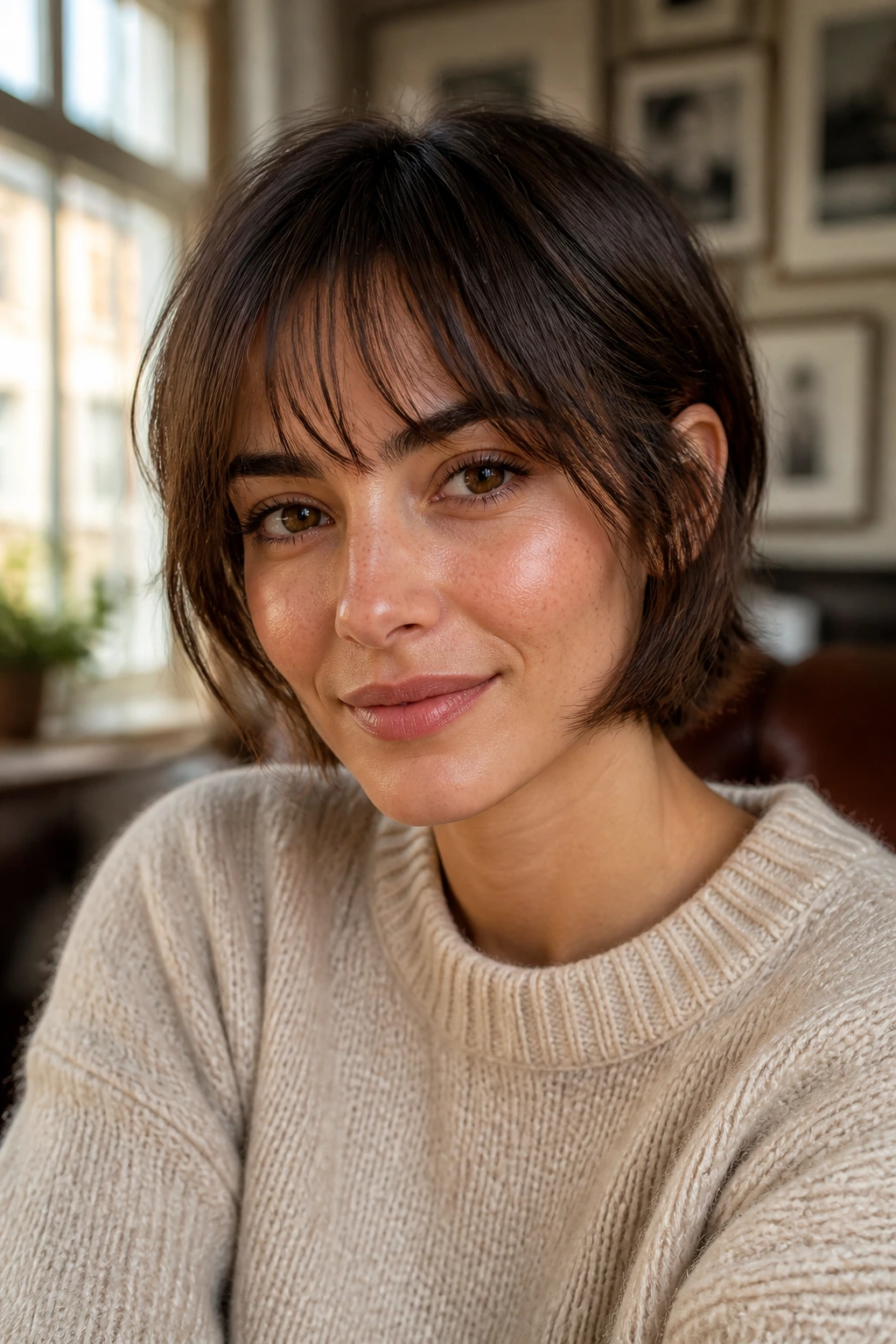
This is the style I’d call the safest long game. Feathered bangs with soft edges and longer temples don’t become awkward as quickly as sharper fringe styles. They slide into the haircut instead of announcing every millimeter of growth.
Why It Matters
Not everyone wants to babysit bangs every two weeks. A feathered fringe buys you time. It can move from a defined bang to a face-framing layer without a dramatic ugly phase, which is rare and worth something.
A Good Rule
If you’re unsure how committed you are, ask for softness at the temples and a little more length in the center. That keeps the fringe flexible. You can trim it shorter later; you cannot add back what was cut away.
Why Wispy Bangs and Short Hair Work So Well
Short cuts expose the front of the face more than longer hair does, which is why the fringe matters so much. A heavy bang can swallow a pixie or box in a bob, but wispy bangs leave room for skin, light, and movement. That little openness is what keeps the haircut from feeling overbuilt.
The other reason these styles work is simple mechanics. Short hair has less weight pulling it down, so fringe can spring, split, or bend in a way that looks natural instead of fussy. A strong line at the front can fight that movement. A softer, point-cut fringe moves with it.
And honestly, that’s the part I like best. Wispy bangs let short hair stay short. They don’t try to turn a crop into a curtain haircut, and they don’t force a bob to act like a high-maintenance blowout. They just make the shape friendlier.
Tools That Make Bang Styling Easier
-
Small round brush, 1 to 1.25 inches: Best for adding a soft bend to brow-grazing or side-swept fringe without over-voluming the front.
-
Blow dryer with a concentrator nozzle: Directs airflow so the bangs go where you want instead of flying around the bathroom.
-
Flat iron with rounded edges: Handy for a single smooth pass on swoopy or piecey bangs; the rounded plates prevent harsh kinks.
-
Lightweight mousse or foam: Gives fine or wavy fringe enough hold to keep its shape without turning crunchy.
-
Texturizing spray: Useful for piecey, feathered, or shaggy styles when you want separation instead of polish.
-
Dry shampoo: Saves bangs that have gone shiny at the roots or picked up forehead oil by midday.
-
Duckbill clips: Great for setting bangs in place while they cool, which helps the shape last longer.
-
Fine-tooth comb: Good for sectioning, but use it lightly; too much combing can flatten airy fringe.
-
Diffuser: The right tool for curly or coily fringe if you want the bang to keep its shape without frizzing into a cloud.
-
Hand mirror: Sounds obvious, but it matters when you’re checking the side profile and temple blend, not just the front view.
How to Ask for the Right Amount of Softness
A good fringe starts in the chair, not in the styling mirror at home. The safest way to ask is to show two things: where you want the fringe to land and how much forehead you want left visible. Those are not the same request. One tells the stylist about length; the other tells them about density.
The phrases that help
Say you want point-cut ends, softer temples, or weight removed from the inside if your hair is thick. If your hair is curly or wavy, ask for a dry cut or at least a mostly dry check before they finish the fringe. That keeps shrinkage from turning a soft bang into a short accident.
What to mention before the cut
- cowlicks or a strong part line
- glasses you wear every day
- how often you actually style your hair
- whether you want the fringe to grow out cleanly
That last point matters more than people think. A fringe that looks perfect on day one can be annoying by week three if it has no built-in grow-out plan.
How to Wear Wispy Bangs Day to Day
Presentation: Keep the fringe light at the center and a little softer at the temples. On a bob or pixie, that lets the eyes stay open while the haircut still feels framed. A tiny bend at the ends is usually enough; you do not need a full blowout every morning.
Best Pairings: These bangs play nicely with bobs, pixies, shags, tapered crops, undercuts, and short curls. They also work when the rest of the haircut is either very neat or a little messy, which gives you room to choose the mood.
Density: The fringe should show some forehead through the strands. If the section is too wide or too thick, the softness disappears and the cut starts to feel heavy. On short hair, less hair in the bang section often looks better than more.
Finish: Choose one lane and stick with it. Sleek fringe needs smooth roots and a clean bend; piecey fringe needs texture spray and finger separation; curly fringe needs moisture and a diffuser. Mixing all three usually just makes the bang look confused.
Small Tweaks That Keep the Fringe Soft
Root Lift: Dry the fringe in the opposite direction first, then bring it back into place. That little flip gives the front a cleaner base and helps short hair avoid a flat, pasted-down look.
Texture Balance: Use product on the ends before the roots. A pea-size bit of matte cream or a mist of spray on the lower half of the bang keeps the top from getting greasy too fast.
Color Accent: A few lighter pieces around the fringe can make the softness visible, especially on dark hair. The cut reads more clearly when the strands separate in the light.
Part Shift: Move your part about a quarter inch when the fringe starts fighting you. That tiny shift can rescue a flat morning without requiring a full wash.
Night Care: Clip the fringe loosely to one side or wrap it with a soft headband before bed if your hair bends hard while you sleep. Morning cowlicks are rude. A little prevention saves time.
Common Mistakes That Make Bangs Fight the Cut
-
Making the fringe too dense: The symptom is a bang that sits like a block across the forehead. The fix is to ask for less hair in the bang section and more softness at the ends.
-
Cutting curly or wavy bangs too short: They spring up and sit awkwardly above the brow. Leave extra length and check the dry shape before any final snip.
-
Using too much oil or serum near the front: The bangs separate into shiny strands that cling together and lose the airy look. Put heavier products on the ends of the haircut, not the fringe.
-
Ignoring a cowlick or hard part: The bangs split in strange directions by midday. Train the root with heat in the direction you want, then let it cool in place.
-
Trying to make every wispy bang look the same: A pixie fringe, a bob fringe, and a curly fringe need different density and different lengths. Copying one shape onto every haircut is how people end up disappointed.
-
Over-brushing piecey styles: The pieces fuse into a flat sheet. Use fingers first, then a light comb only if the hair really needs it.
Variations and Adaptations to Try
The Curl-Friendly Air Fringe
Keep the center longer and cut the bangs dry so the curl pattern can settle where it wants. This version works well when shrinkage is the main issue and you want softness without a lot of daily rebuilding.
The Glasses-Friendly Sweep
Shift the fringe slightly to one side and leave the temple pieces longer. It keeps the bangs from colliding with the frames and gives the face a more open shape.
The Edgy Razor Pass
Choose a razor-softened fringe with a little separation at the ends. This version is a better match for a crop, undercut, or mini mullet than a blunt, polished bob.
The Low-Maintenance Grow-Out
Ask for more length in the center and at the temples so the fringe can slide into the rest of the haircut. You’ll get weeks of useful wear before you need a trim.
The Thick-Hair De-Bulked Edit
Keep the surface light and remove weight from the inside instead of attacking the ends. This prevents the fringe from puffing out into a wide shelf.
The Fine-Hair See-Through Version
Use a smaller bang section and leave visible spacing between the strands. It gives the illusion of fullness without making the front heavy.
Keeping Wispy Bangs in Shape Between Salon Visits
Wispy bangs usually need a quick reset more often than the rest of the haircut. Plan on a daily style refresh that takes about 2 to 5 minutes, then a stronger salon trim every 3 to 5 weeks if the fringe sits high on the forehead. If you’re growing it out, you can stretch that to 6 to 8 weeks, but the front will need more side-part help along the way.
Wash the fringe area as often as the roots need it. For many people, that means a quick shampoo at the front or a dry shampoo refresh between full washes. Forehead oil builds up fast, and bangs are the first place it shows.
At night, keep the fringe from getting crushed. A loose clip, a soft headband, or a slight side sweep can preserve the shape better than sleeping face-down and hoping for the best. If the bang wakes up with a bend, mist it lightly with water, re-dry the roots, and stop before the ends get soaked.
Questions People Ask Before the Snip
Do wispy bangs work on very short hair?
Yes, but the bang section needs to be cut with the haircut’s shape in mind. A pixie or crop usually wants a softer, lighter fringe than a bob does, because there’s less length elsewhere to balance it.
Are wispy bangs good for curly hair?
They can be, as long as they’re cut with shrinkage in mind. Curly fringe usually needs extra length and a dry check before the final shape is set.
How often do I need to trim them?
Short wispy bangs often need a touch-up every 3 to 5 weeks. If the fringe is longer and softer, you can push that a little farther, but once the bangs start poking into the eyes, they stop looking airy.
What if I have a cowlick at the front?
Then the cut has to work with that pattern instead of pretending it isn’t there. A lighter fringe with some side movement usually behaves better than a dense bang that tries to force a straight line.
Can I wear wispy bangs with glasses?
Absolutely. Just keep the center short enough to clear the frames and the temple pieces soft enough to move away from the lenses. The wrong length creates constant contact, and that gets annoying fast.
Should I cut them myself?
Only if you already know how your hair behaves when it dries. Bangs are tiny, but they punish mistakes more than long hair does. A soft fringe is easier to rescue than a blunt chop, but it still deserves a careful hand.
How do I keep them from looking stringy?
Start with less product, not more. A little mousse, dry shampoo, or texture spray is enough; too much cream or oil clumps the strands together and kills the wispy effect.
What if I want to grow them out later?
Pick one of the softer, longer styles from the start. Bangs with blended temples and a little center length move into face-framing layers much more cleanly than hard brow-length fringe.
The Fringe That Lightens the Cut
Wispy bangs are one of the few short-hair details that can change the whole haircut without asking for a dramatic chop. They soften hard lines, make room for the eyes, and give bobs, pixies, shags, and crops a little motion right where the face needs it most. That’s a small thing on paper. In a mirror, it’s huge.
The best part is how much room there is to adjust them. You can go sleeker, messier, curlier, sharper, softer, more grown-out, or more graphic, and the basic idea still holds: keep the front light enough to move. Get that balance right, and short hair starts behaving the way it should — clean, lively, and never weighed down by one stubborn line across the forehead.
