



Long hair can go flat at the front in a way that feels almost rude. The ends have all the length, the face loses its frame, and the whole cut starts looking like it forgot to finish. The best bang styles for women with long hair do one job well: they put shape around the face without stealing the drama of the length.
That’s why bangs on long hair are a different conversation from bangs on a bob or a pixie. You have more room to balance weight, more ways to blend the front pieces into the rest of the cut, and a much bigger safety net when the fringe grows out a quarter inch and starts acting weird. The wrong version can feel like a wet strip on your forehead by noon. The right one can make a ponytail look styled instead of accidental.
And the details matter more than people think. Hairline oil, a stubborn cowlick, cheekbone height, how often you blow-dry, where your part naturally falls — all of that changes how fringe sits on long hair. The good news is that there’s a shape for nearly every texture and maintenance tolerance, from soft curtain pieces to sharp micro bangs, and the difference between them is not subtle once you start living with the cut.
Why These Fringe Ideas Work So Well on Long Hair
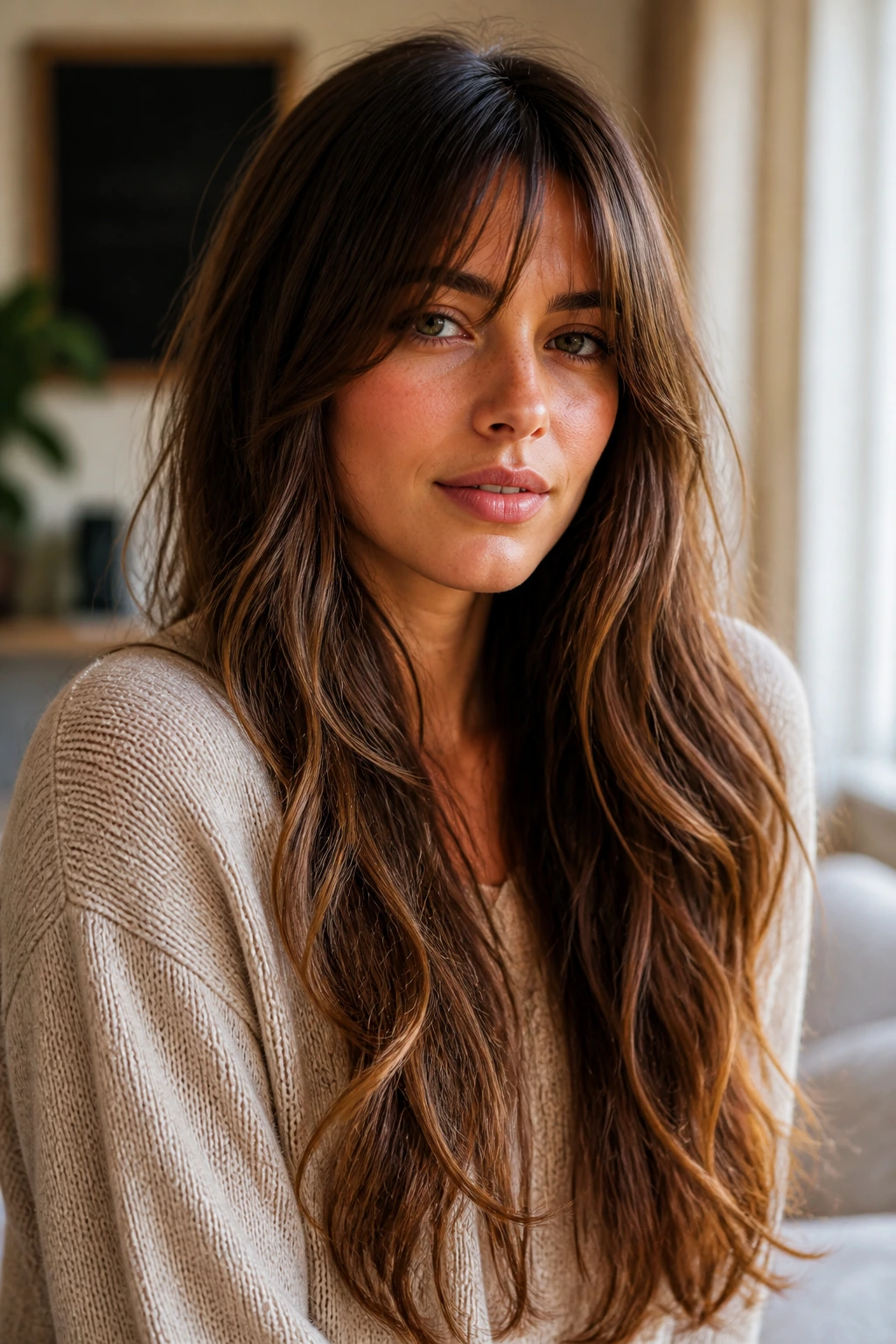
Face-framing control: Long hair can swallow your features if the front is too plain, and a good fringe puts the eye right where you want it without forcing a dramatic chop.
Grow-out grace: Styles with longer side pieces, like curtain or bottleneck bangs, can slide into layers instead of turning into that awkward helmet stage.
Texture flexibility: Thick, fine, straight, wavy, and curly hair all need different bang shapes, and long hair gives each one room to behave without fighting the rest of the cut.
Daily styling range: A fringe can disappear under a clip, swing into a side part, or sit forward and polished; long hair gives you escape routes when the front needs a reset.
Low-regret drama: If you’ve wanted change without losing length, bangs are the fastest way to alter the whole silhouette while keeping the rest of the hair intact.
1. Curtain Bangs That Split at the Cheekbones
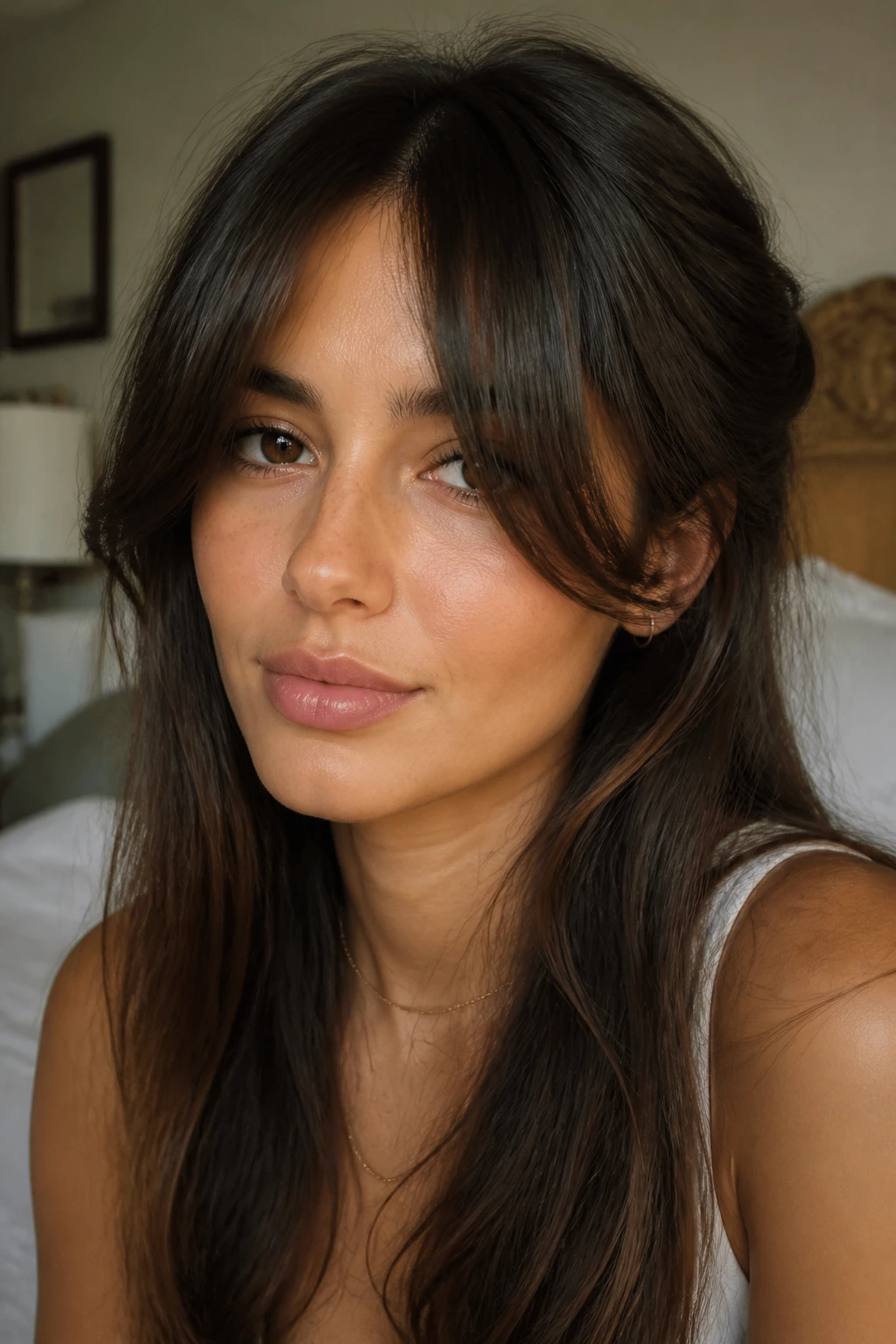
Curtain bangs are the style people keep circling back to because they do a lot without looking busy. The center is shorter, the sides fall longer, and the whole thing opens at the cheekbones instead of sitting in a hard line across the forehead. On long hair, that split gives the cut movement before the ends even start to move.
Why They Behave So Well
The reason curtain bangs work on long hair is simple: the length behind them absorbs the softness. You can keep the center piece just below the brows and let the outer pieces graze the cheekbones or jaw, and the whole front will still feel light. That makes them forgiving if your face shape changes slightly with weight loss, makeup, or a different part.
Ask your stylist for a longer first cut if you’re nervous. That extra half-inch matters. Curtain bangs can always be shortened, but they get annoying fast if they start too high and your hair shrinks when it dries.
- Best for medium to thick hair with some bend.
- Blow-dry each side away from the face with a small round brush.
- Let the ends flip under or out slightly; either one looks intentional.
- If your front pieces puff up, clip them while they cool.
Pro tip: Don’t overlayer the rest of the front hair. If the side pieces are too thin, curtain bangs start looking like two separate strips instead of one shape.
2. Bottleneck Bangs That Narrow at the Brow
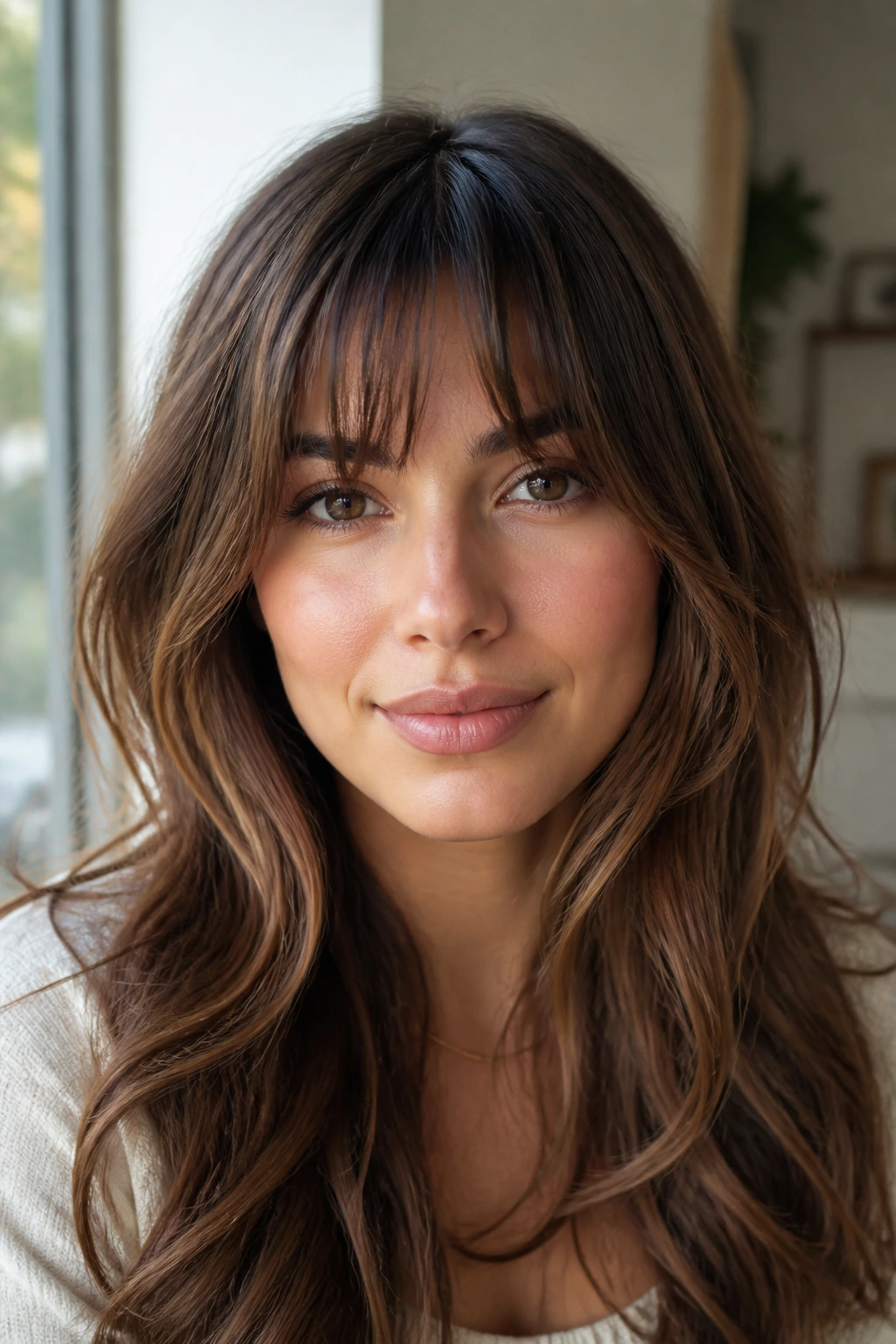
Bottleneck bangs are the quieter cousin of curtain bangs, and I mean that in a good way. They’re narrow in the middle, then widen gradually near the temples, like the shape of a bottle neck before it opens out. On long hair, that shape keeps the fringe from feeling heavy while still giving the forehead a clear frame.
The best part is how easily they melt into layers. If you like wearing your hair half-up or tucked behind the ears, bottleneck bangs keep working even when the rest of the cut shifts around. They don’t need the same daily precision as a blunt fringe, which is why so many people end up preferring them after the first salon visit.
If your hairline has a little cowlick in the front, this shape can be kinder than a straight-across bang. The longer side pieces have room to settle instead of fighting straight up.
What to ask for: a soft middle section that starts around the bridge of the nose and side pieces that reach the cheekbone or a touch lower. That gives you room to style them both forward and away from the face. No drama, no helmet effect. Just shape.
3. Full Blunt Fringe That Skims the Brows
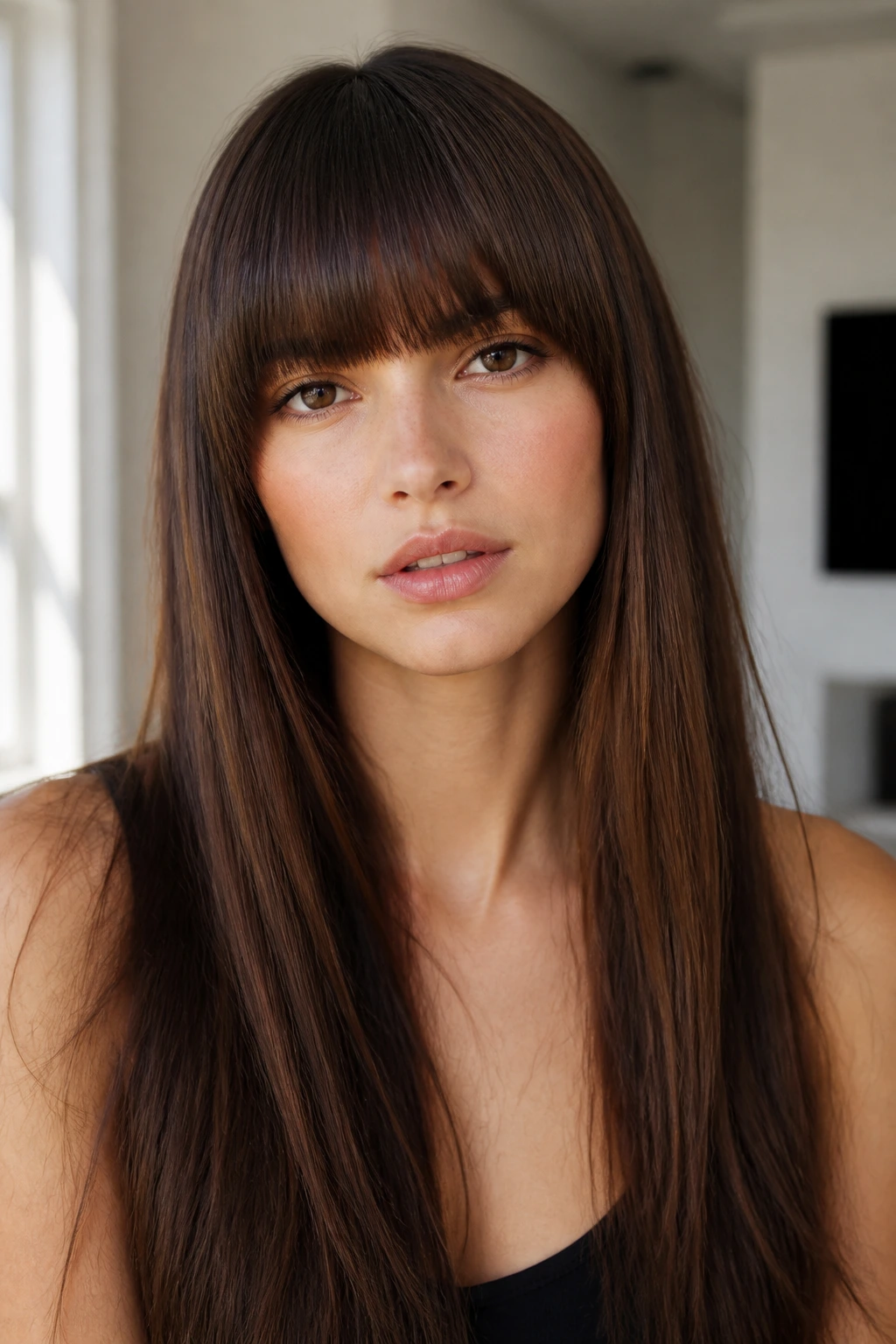
A blunt fringe is a bolder move, and it looks especially sharp with long hair because the length underneath calms it down. The front line is straight, dense, and clean, usually skimming the brows or touching them lightly when dry. It reads polished, not timid.
The mistake people make with blunt bangs on long hair is thinning them too much. If you take out too much weight, the line breaks apart and the fringe starts behaving like a sad little curtain. Keep the density. Let the bangs look deliberate.
The Shape Needs Weight
A blunt fringe works best when the rest of the cut stays sleek enough to support it. Long layers can still live underneath, but the front itself should feel full from one temple to the other. That density is what makes the look crisp.
This is the style to choose if you like a straight blowout, wear lipstick often, or want something that looks a little more editorial without going full micro-bang territory. It also pairs well with thick hair because thick hair can hold the blunt line without fraying apart by lunchtime.
Use a paddle brush or a small flat brush during blow-drying, then finish with a pass of a flat iron if the ends bend oddly. The goal is smooth, not pin-straight like a ruler. A tiny bit of movement at the ends keeps it from feeling stiff.
4. Wispy See-Through Bangs With Air Between the Strands
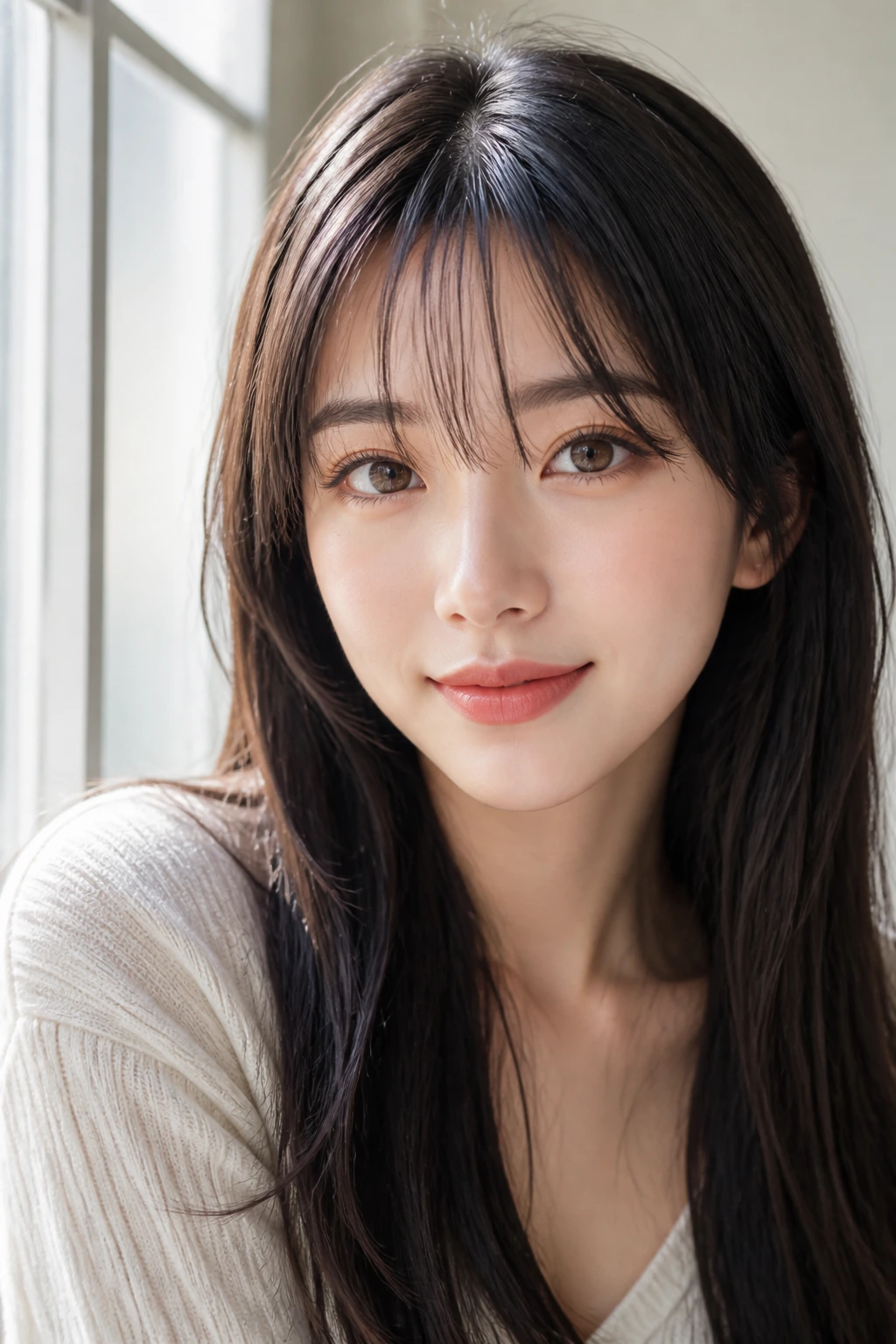
These are the bangs for anyone who wants forehead coverage without the wall of hair feeling. Wispy see-through bangs leave little gaps between the strands, so light passes through and the fringe stays soft. They’re especially useful if your hair is fine, because a heavy cut can disappear into the rest of your hair anyway.
The look is lighter than curtain bangs and more delicate than blunt fringe. That’s the charm. It can also be the drawback if you over-thin them, because too much space turns “wispy” into “unfinished” fast. Keep enough density at the root line so the fringe still reads as a shape.
What Makes Them Different
See-through bangs work best when the ends are softly textured, not chopped bluntly. Ask for light point-cutting instead of aggressive thinning shears. That keeps the fringe feathery without leaving little crunchy ends that separate in the wrong places.
If you wear your long hair straight, these sit very prettily against it. If you wear waves, they soften even more and can almost disappear into the texture, which is handy when you want the suggestion of bangs rather than the full statement.
A quick mist of water and a round brush is usually enough to reset them. Heavy products are a bad idea here. They collapse the airy look and make the bangs stick together in sad little ropes.
5. Side-Swept Bangs With a Clean Deep Part
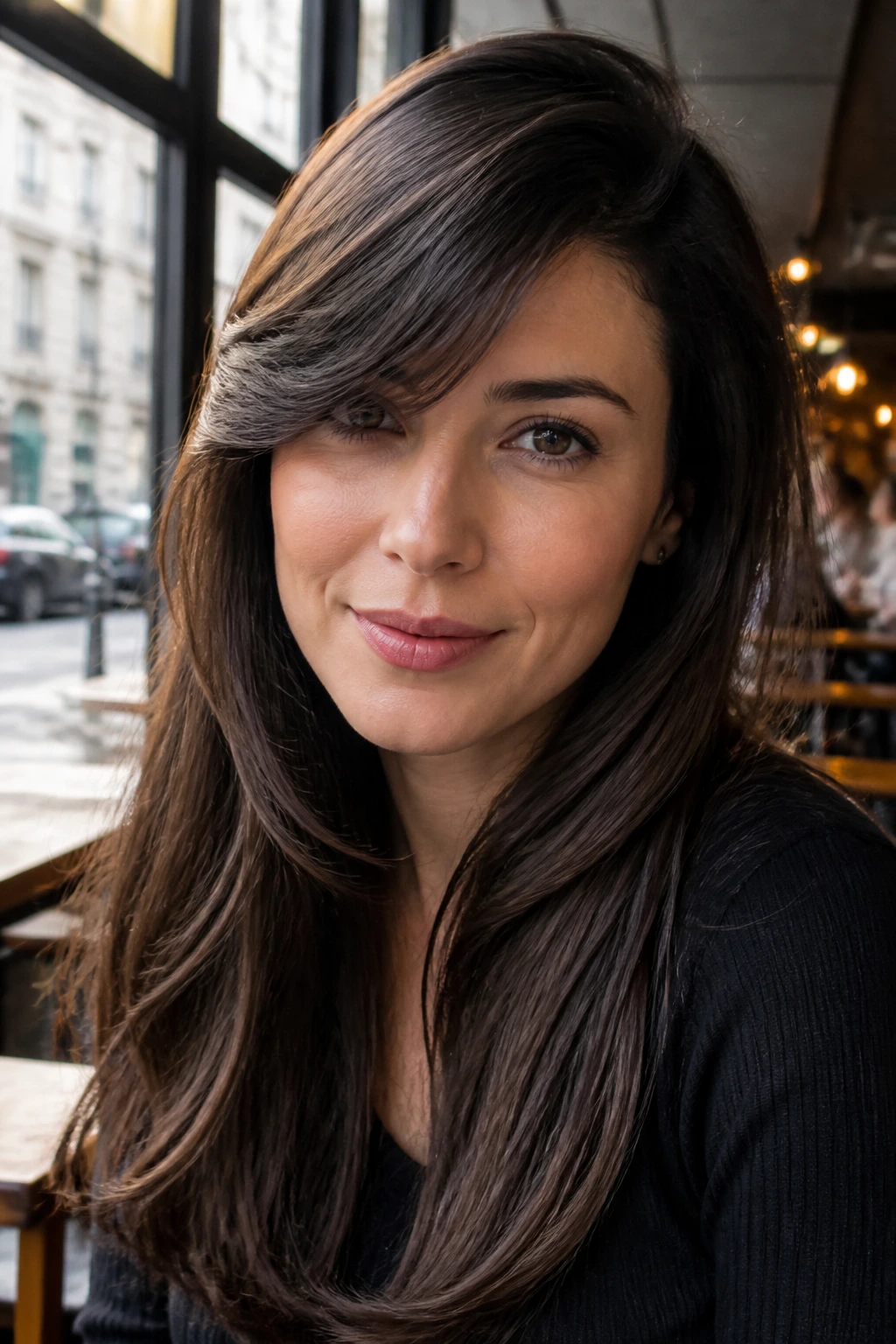
Side-swept bangs are still useful because they solve a practical problem: they let you have fringe without forcing the center of your forehead to carry the whole show. On long hair, a deep side part gives the cut a clear direction and keeps the front pieces from dropping straight into your eyes.
This style is forgiving if you wear glasses, if your hairline is uneven, or if you’re not ready for a full front shape. It also grows out well because the side sweep can drift into layers instead of turning into a blunt shelf. That matters more than people admit.
I like side-swept bangs most on long hair when the rest of the cut has some movement around the face. If everything else is heavy and still, the sweep can look like it was added later. If the layers travel with it, the whole cut feels connected.
A blow-dry with the nozzle pointed sideways, not straight down, gives the front enough bend to stay in place. Pin it while it cools if the sweep keeps splitting. That tiny pin makes more difference than another round with the dryer.
6. Choppy Textured Fringe That Looks Lived-In
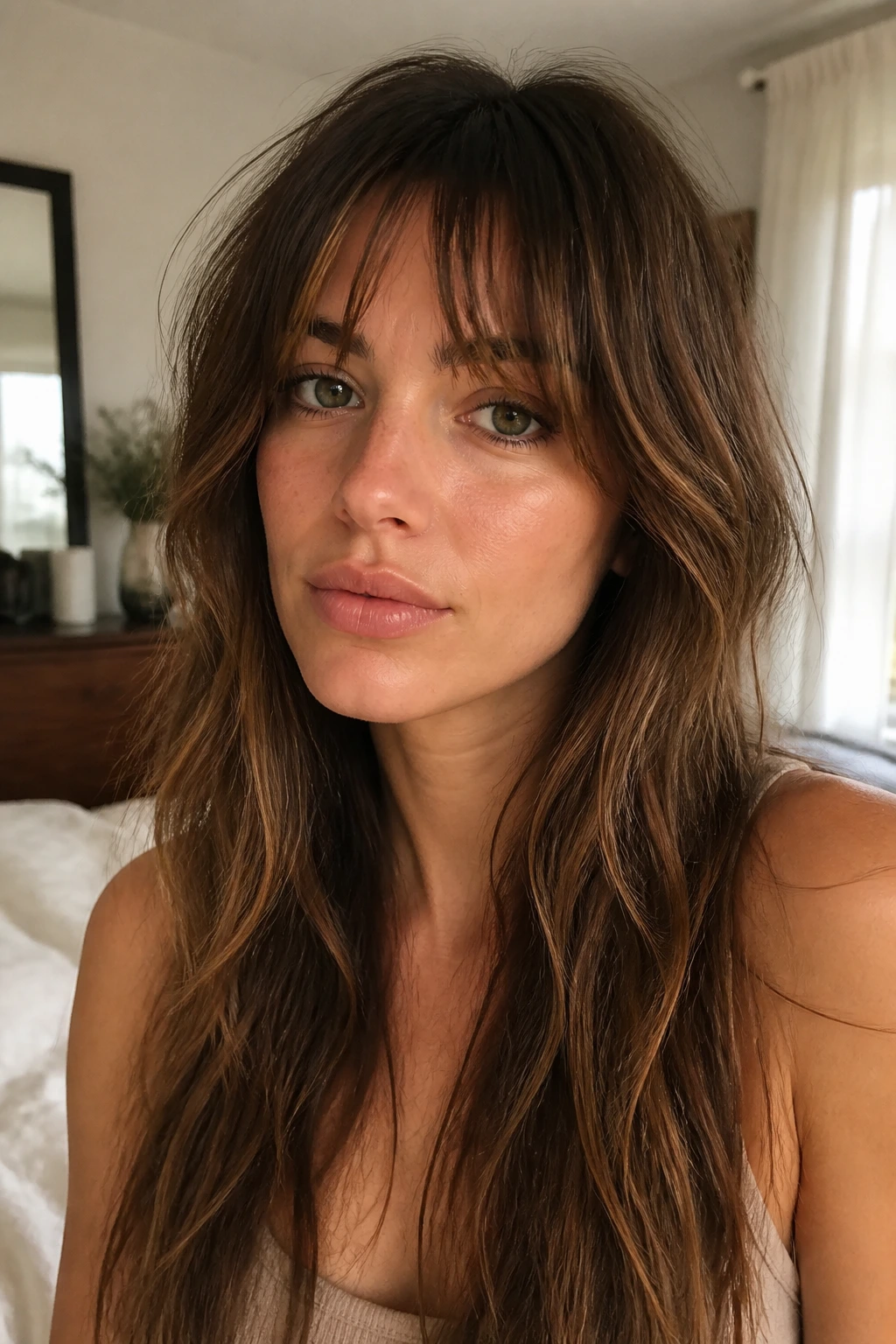
Choppy bangs are for hair that likes a little mess. The ends are broken up, the line is soft, and the fringe feels piecey rather than precise. On long hair, that texture keeps the front from looking too serious, which is handy if the rest of your hair already has movement or natural wave.
The cut can hide a stubborn cowlick better than a straight fringe because the pieces don’t all have to sit in one exact direction. That’s a nice bonus. It also means you can wear the bangs slightly separated on purpose and call it styling, not damage control.
What to Watch For
Don’t let choppy turn into ragged. There’s a difference, and it’s not subtle. Choppy bangs still need a shape — usually a soft center or a slight diagonal — so the eye knows where to land. Otherwise the front just looks like it was attacked by scissors on a rushed afternoon.
This style usually looks best when the rest of the long hair has some layered movement too. If the lengths are pin-straight and the fringe is wildly broken up, the contrast can feel accidental. A little texture everywhere keeps it coherent.
A lightweight styling cream or a tiny bit of paste rubbed between the fingertips is enough. Work it mostly on the ends, not the roots. Heavy product at the base will kill the texture and make the bangs slump.
7. Arched Bangs That Trace the Brow Line
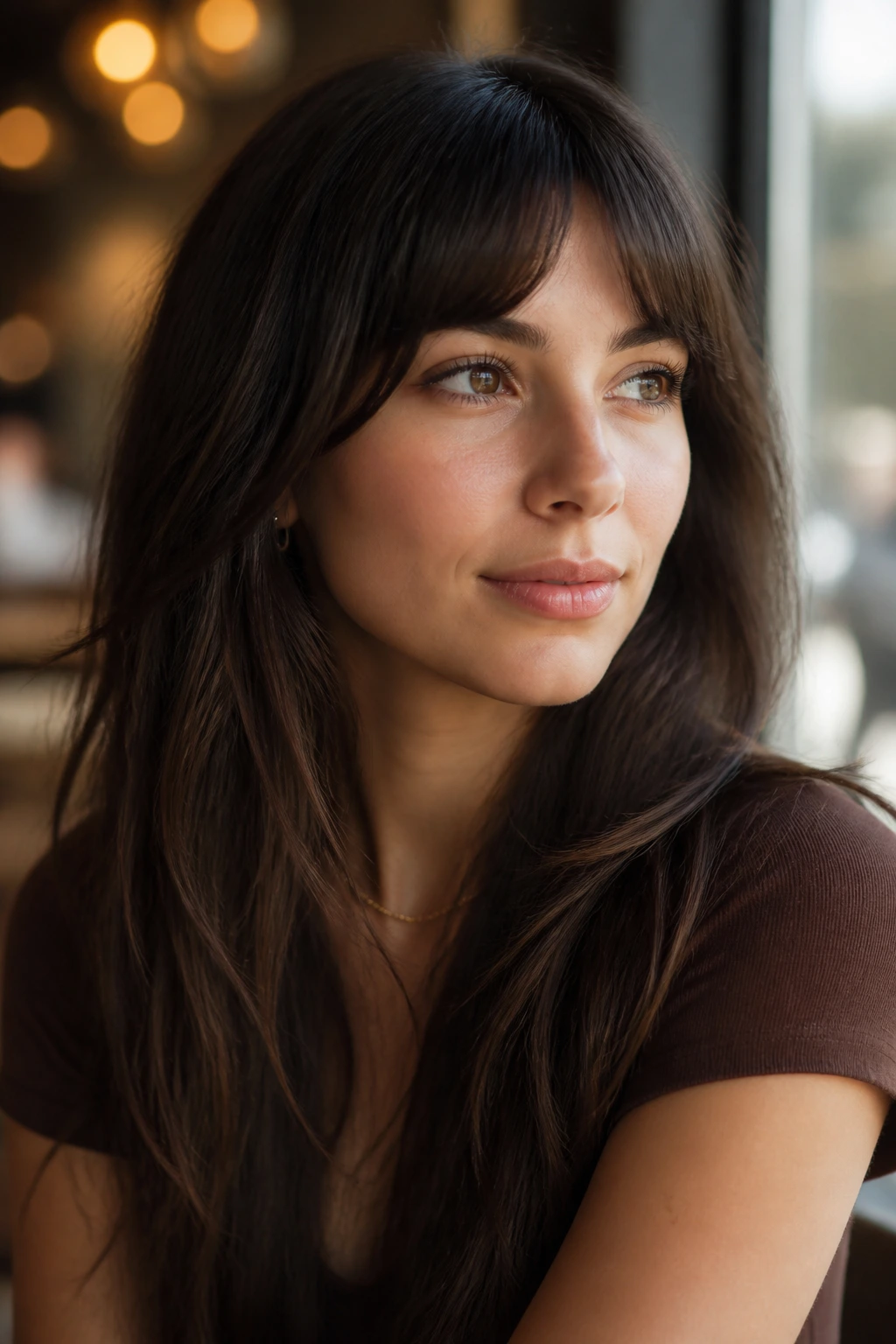
Arched bangs give the face a neat, lifted frame. The center sits a little shorter, then the sides follow the brow line in a soft curve. It’s a tidy shape, and on long hair it can look especially refined because the hair behind it keeps the style from becoming too severe.
This is a good choice if you like a neat front but don’t want blunt bangs that hit straight across. The arch creates a small opening around the eyes, which can make the whole face feel brighter. It’s subtle. That’s the point.
If you wear your hair with a middle part, arched bangs can still work because they don’t depend on a dramatic split. The curve does the work. That makes them a smart option for people who want something less common than curtain bangs but not as bold as a full fringe.
Ask for the shortest point to land around brow level when dry, not wet. Hair lifts more than people expect. If your stylist cuts it too high, you’ll spend a month waiting for it to settle.
8. Birkin Bangs With Soft, Uneven Ends
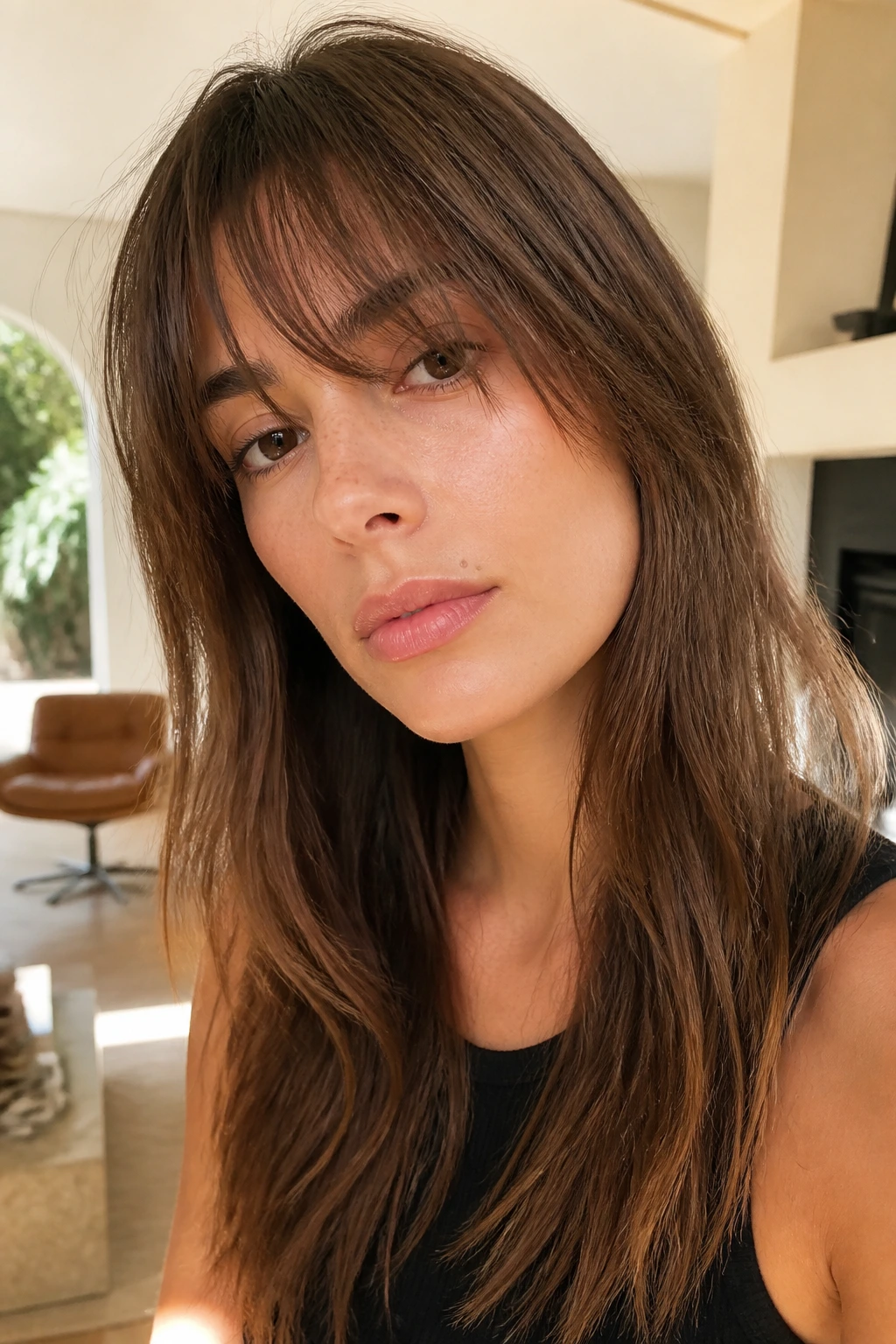
Birkin bangs have that relaxed, slightly undone feel people like because they never look too engineered. They usually sit longer than blunt bangs, with soft, irregular ends that skim the lashes or brows. On long hair, that looseness is part of the appeal. The length around the face keeps the style from reading as fussy.
They look especially good when the front isn’t perfectly symmetrical. A tiny shift to one side, a little bend at the ends, a piece that falls a touch differently on each side — all of that helps. This is not the place for over-polished hair. The fringe should look touched, not sculpted.
The thing to avoid here is over-thinning. Birkin bangs need some body or they lose their shape and drift into limp territory. If you have fine hair, ask for softness at the ends rather than thinning through the center.
A quick pass with a round brush or even a large velcro roller can give them that curved, brushed finish. Don’t overdo the heat. The charm of this style is the tiny imperfections.
9. Feathered Bangs That Melt Into Layers
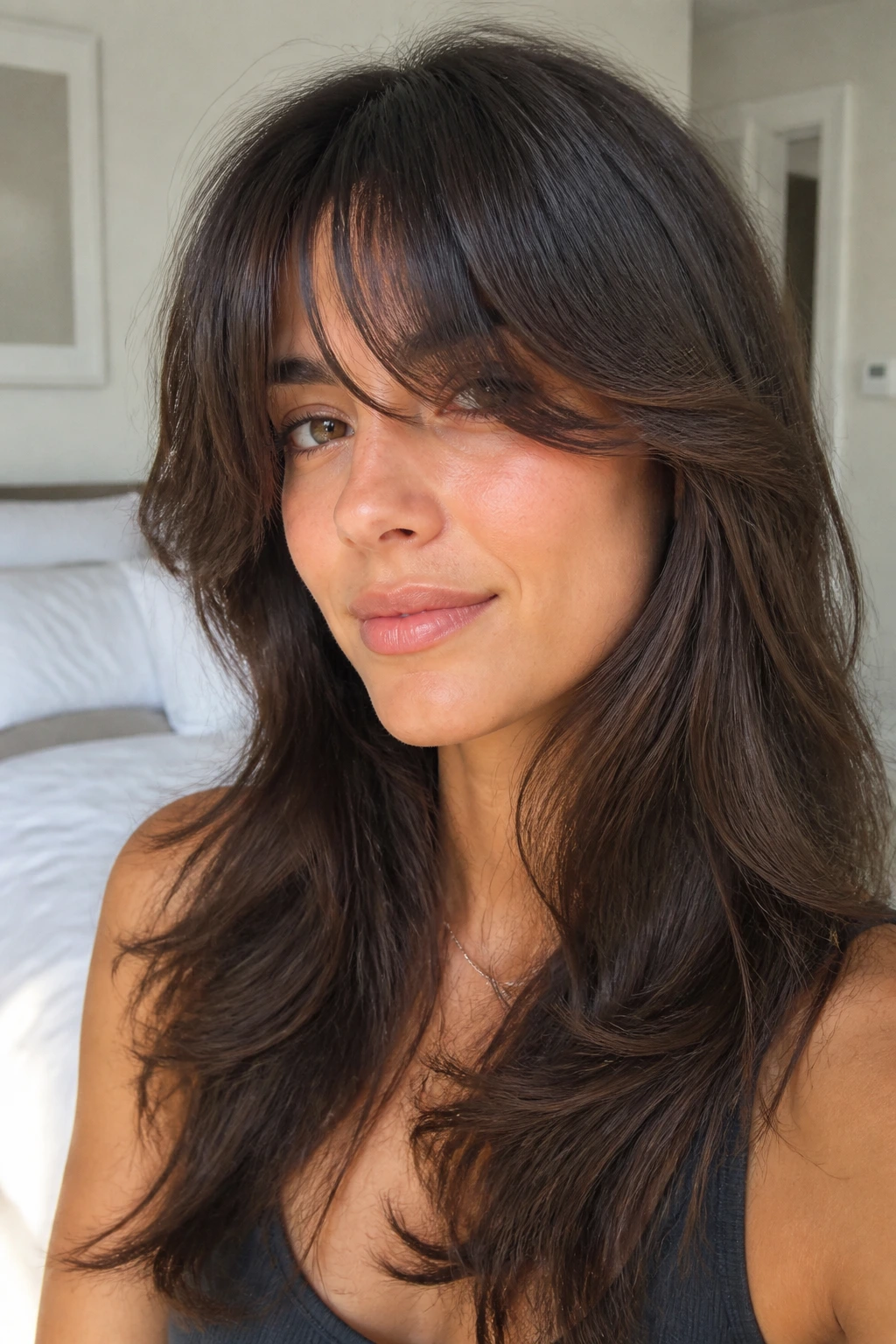
Feathered bangs are what happen when the front of the haircut is allowed to breathe. The strands taper softly, and the line melts into the layers around the face instead of sitting on top of them. On long hair, that makes the front feel lighter without making the whole cut look sparse.
This shape is good if you want the feeling of bangs without losing the easy swing of long lengths. It’s also one of the easier styles to wear on days when you don’t want to style much. A little bend is enough. If the ends separate a bit, it can look even better.
The trick is not to feather so much that the fringe disappears. You still need a visible front line, even if it’s soft. That means asking the stylist to keep enough density near the root and only soften the ends and sides.
A medium round brush works well here, but only if you guide the hair away from the face and then let it cool in that curve. If you brush it back and forth a dozen times, you’ll lose the shape and gain frizz.
10. Shag Bangs That Blend Into the Crown
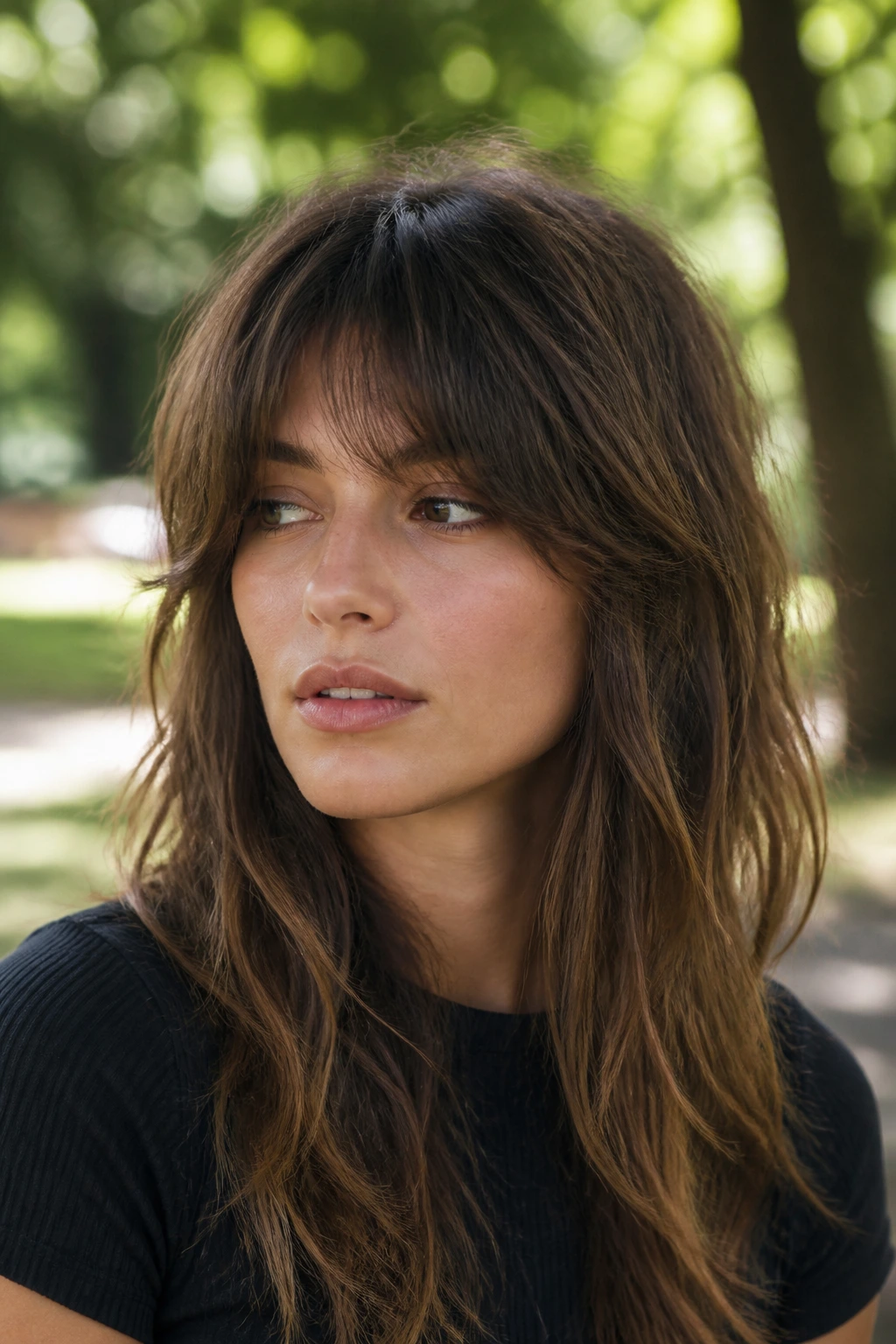
Shag bangs are built for movement. They usually connect to a shaggy cut or heavy layers, and the fringe itself is broken up, textured, and a little wild on purpose. On long hair, the style keeps the length from feeling heavy at the roots, which is where a lot of long hair starts to collapse.
This is one of the best bang styles for women with long hair who already live in waves or messy texture. It likes air-drying. It likes a little grit. It does not love being overbrushed into a flat sheet. If you force it too smooth, you strip out the thing that makes it work.
Why It Works
The shape gives the front some lift while the long lengths stay loose, so you don’t end up with a top-heavy haircut. The bangs can be cut to sit around the brows or just above them, then they taper into the face-framing layers. That connection is the whole point.
If your hair is thick, this style can remove some of that triangular bulk around the face. If your hair is wavy, it can look very natural with just a diffuser and a little finger-styling. Straight hair can wear it too, but it tends to look sharper and more piecey.
A salt spray or light mousse at the roots helps, though a little goes a long way. Too much, and the fringe gets crispy. No one wants that.
11. Micro Bangs Against Long Lengths
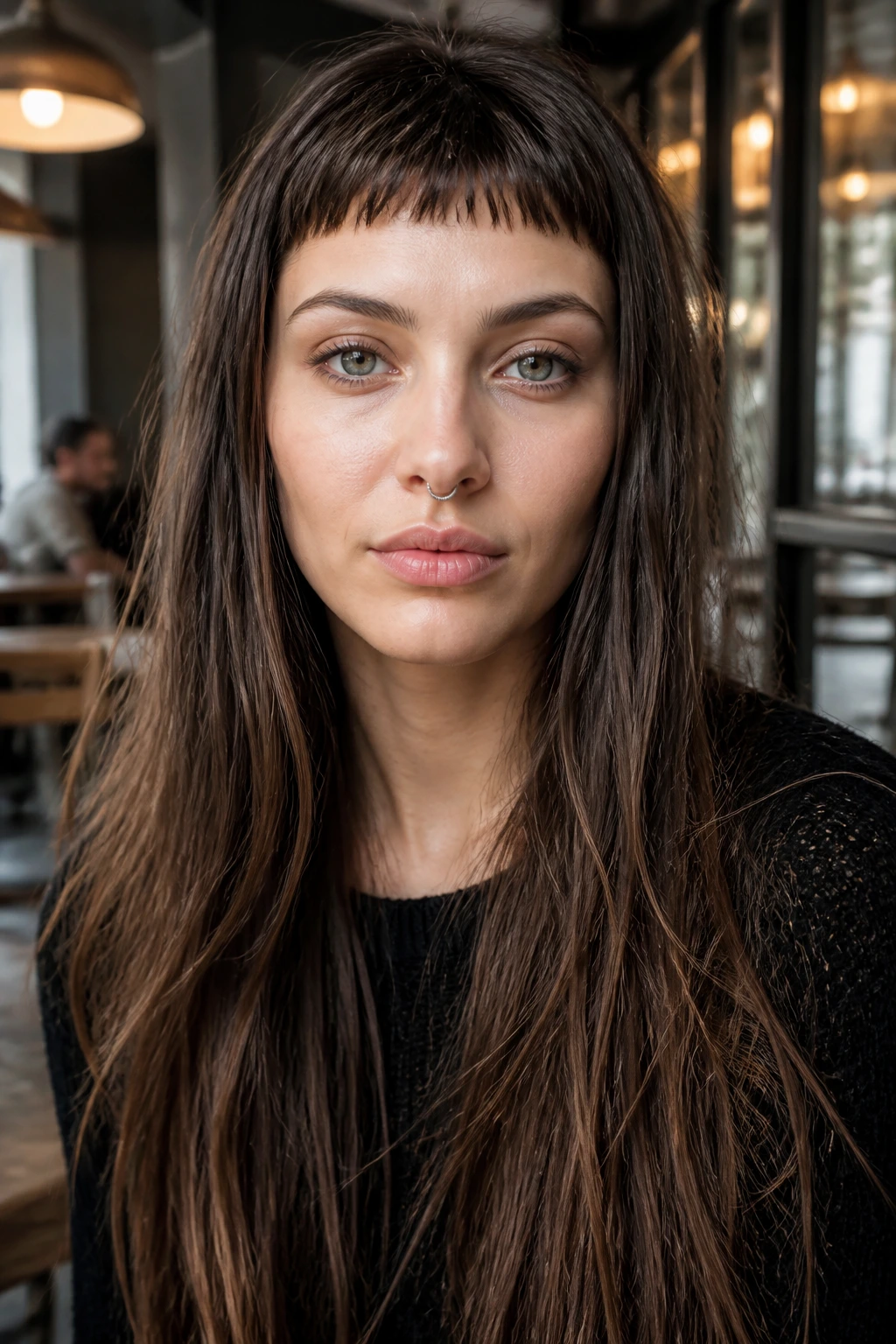
Micro bangs are the one style on this list that refuses to be subtle. The fringe sits high on the forehead, often well above the brows, and the contrast with long hair is the whole reason to wear it. Long lengths make the short front pieces look even sharper.
This cut can be brilliant on someone who wants edge without changing the entire shape of the hair. It can also go wrong fast if you’re not ready for maintenance. Micro bangs show every millimeter of grow-out, every cowlick, every uneven snip. There is no hiding them in a side sweep for long.
That said, they look fantastic when the rest of the hair is sleek, wavy, or heavily layered. The contrast draws attention to the eyes and the cheekbones. If you wear a lot of simple clothes and want the haircut to carry more of the visual load, this is one of the strongest options.
Do not cut them short on dry hair unless you already know how your hair shrinks. Leave room for bounce. A quarter-inch can be the difference between sharp and startled.
12. Face-Framing Bangs That Start at the Cheekbones
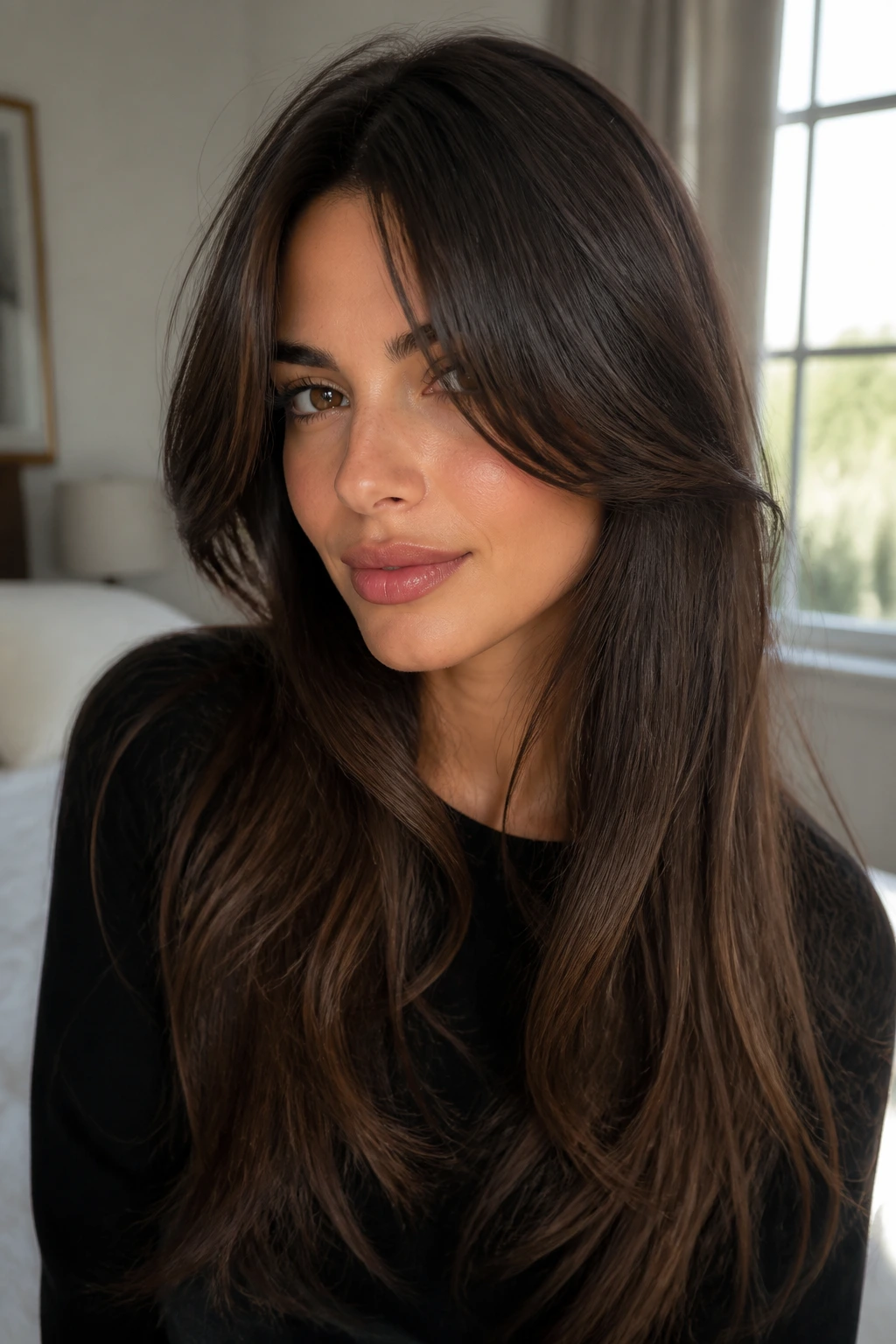
Not every fringe has to sit on the forehead. Some of the most wearable long-hair “bangs” are really front layers that start around the cheekbones and slide into the rest of the haircut. They frame the face without drawing a hard line across it, which keeps the length looking long and airy.
This style is easy to love because it plays well with nearly everything: ponytails, half-up clips, loose waves, straight blowouts, messy buns. It gives shape where you need it and disappears where you don’t. That’s a very useful trick.
A Good Choice for Nervous First-Timers
If you want the feel of bangs but not the full commitment, this is the place to start. Ask for the shortest face-framing strand to begin around the nose or cheekbone, then angle it down toward the jaw. The rest of the hair can keep moving freely.
The face-framing pieces can be pushed behind the ears, tucked into a clip, or blown forward on days you want more definition. That flexibility is what makes them live better than a lot of “bangs” that look good only after a full styling session.
A tiny round brush or even a flat brush can shape them. Nothing fancy. The goal is to guide the front, not stage a production.
13. Curly Bangs That Follow Your Natural Pattern
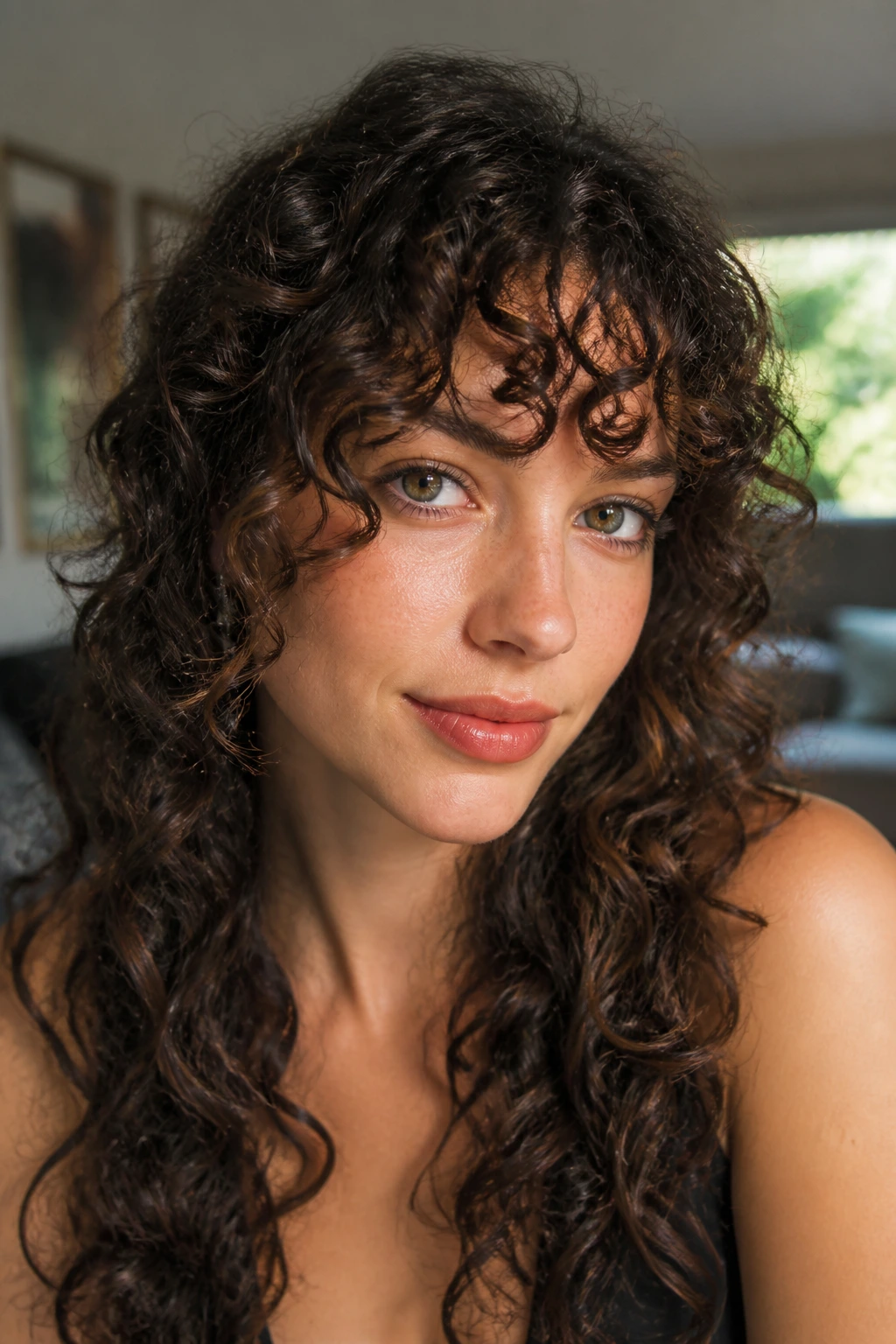
Curly bangs are a different animal, and they should be cut like one. The front should be shaped to match the curl pattern, not forced into a straight fringe that only works when stretched. On long curly hair, bangs can make the whole haircut feel lighter and give the face a real frame instead of a halo that just hangs there.
The best curly fringe is usually cut dry, or at least with the curl pattern visible. That lets the stylist see where the hair bounces up and where it collapses. If you cut curls wet and hope for the best, you may end up with a fringe that sits two inches shorter than planned.
How They Wear
Curly bangs look softest when they sit a little longer than straight bangs would. That extra length gives the curls room to spring up. If you try to cut them right at the brows, they often end up floating too high.
Use a leave-in conditioner or lightweight curl cream on the fringe, but keep it light. Heavy product drags the front down and makes the curls clump. A tiny amount scrunched through damp bangs is enough.
Long curly hair can handle a fringe beautifully because the length balances the volume. The front gets shape. The rest keeps the movement. It’s one of the few styles where a little frizz can actually look right.
14. Grown-Out Bangs That Sit Between Fringe and Layers
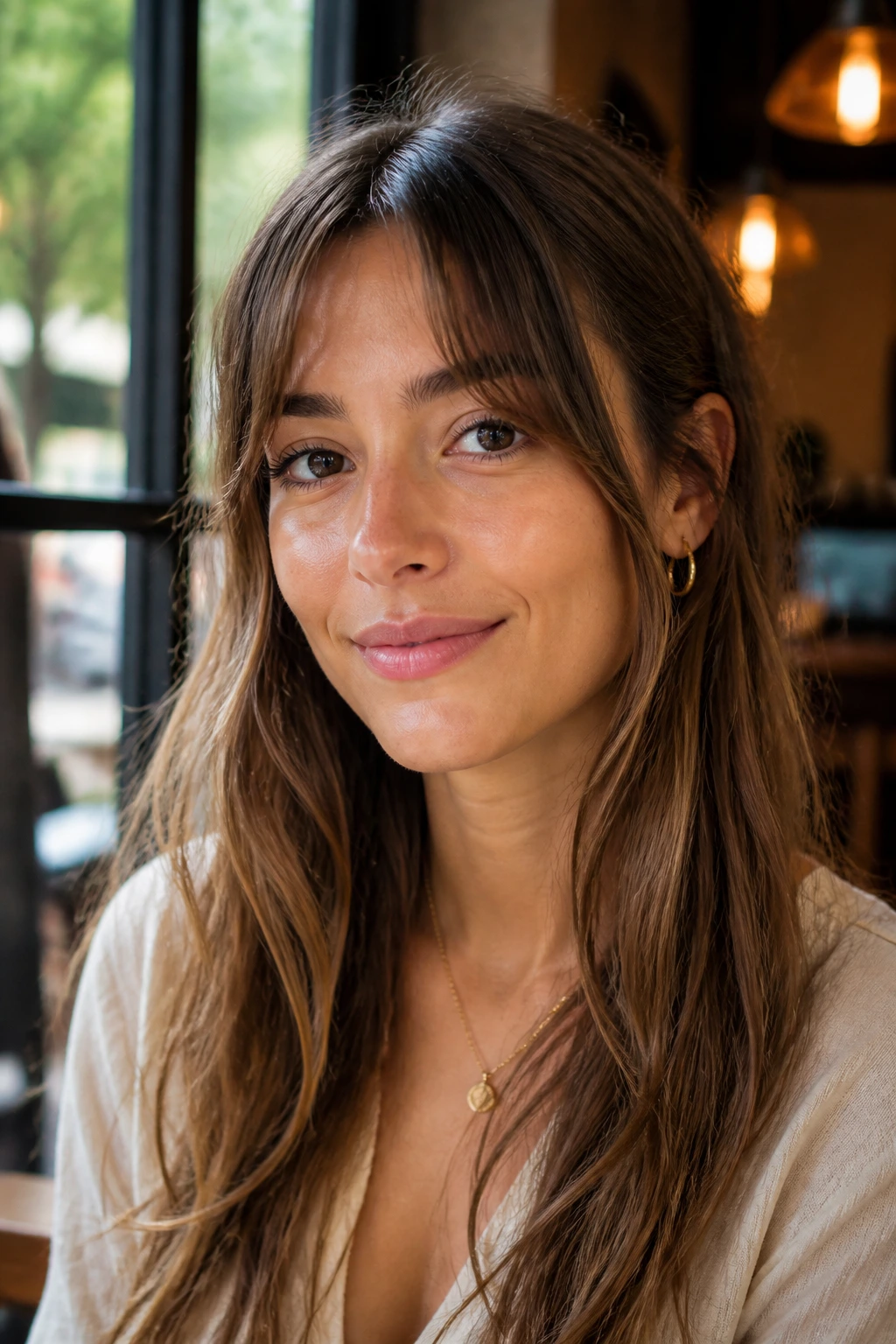
Grown-out bangs are not a compromise. They’re a style. The pieces are long enough to tuck behind the ears, fall into a part, or act like soft layers around the face, and that makes them one of the easiest long-hair fringe shapes to live with.
This is the look for anyone who wants bangs but doesn’t want a strict maintenance schedule. The front sits somewhere between a curtain bang and a face-framing layer, which gives you more styling options than a sharp fringe ever will. On long hair, that middle ground can be very flattering because it keeps the cut relaxed.
The challenge is avoiding the awkward in-between stage where the bangs are too short to blend and too long to look purposeful. A good grown-out fringe should still have intention. It needs a center or sweep, even if it’s soft.
If you’re growing out another bang style, don’t rush to cut it into something blunt. Let the front pieces stay long enough to join the rest of the hair. That patience usually pays off.
15. Bardot Bangs With a Wider Center Opening
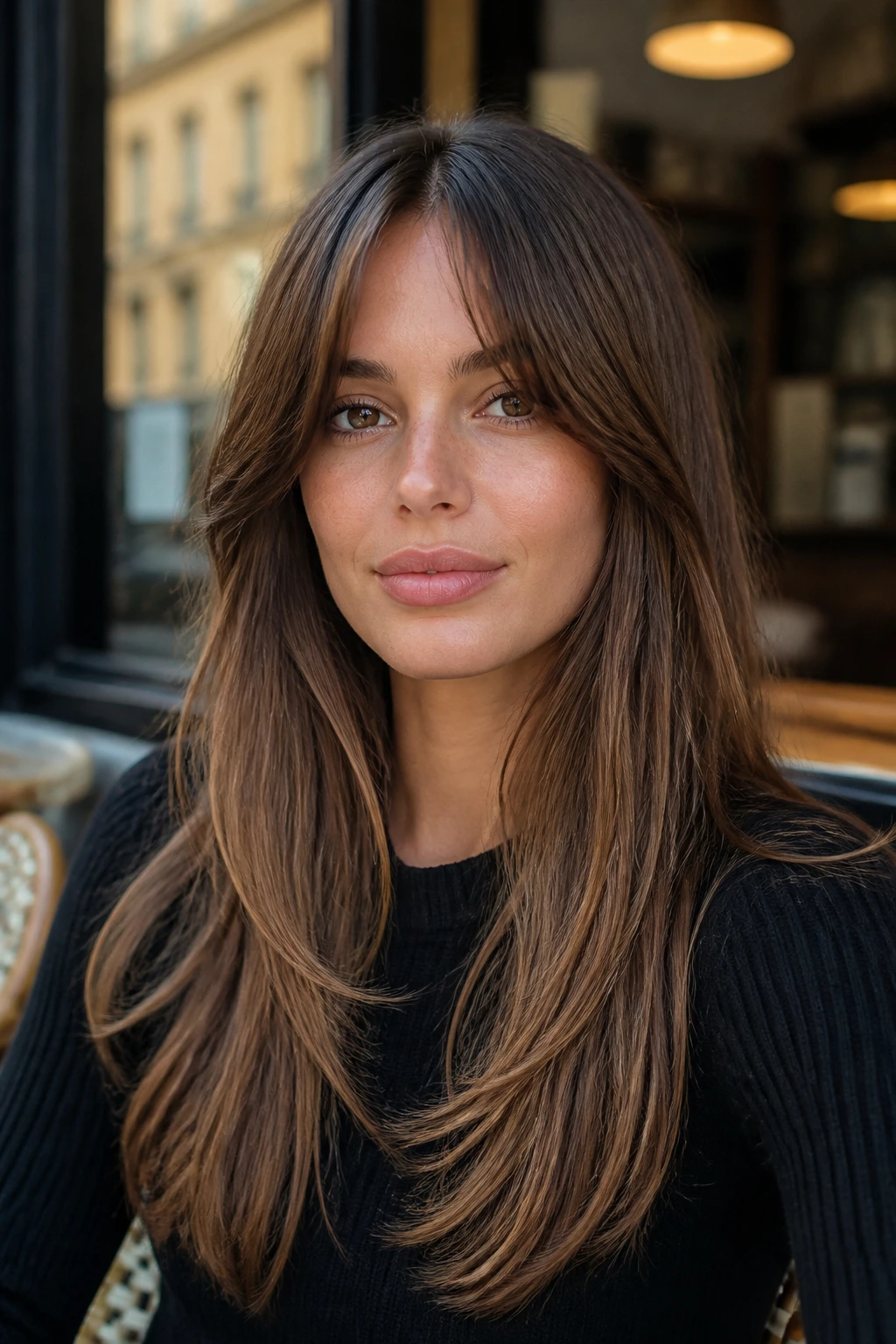
Bardot bangs are wider and softer than classic curtains, with a flattering center opening that frames the eyes and cheekbones. They feel a little glamorous, a little loose, and a little French without trying too hard. On long hair, that shape gives the cut a romantic front edge while the length keeps it grounded.
The main difference from a standard curtain bang is the width of the opening. Bardot bangs usually start farther out on the temples, so the center has more room to breathe. That makes them a nice option if you have a broader forehead or if you like the idea of bangs but don’t want them to sit too close together in the middle.
They also pair well with hair that has a soft bend. You don’t need tight curls or a perfect blowout. A loose curve at the ends is enough. If the fringe gets too polished, the whole style loses its charm.
This is one of those cuts that looks better with a bit of movement than with perfection. If a strand falls out of place, leave it. That strand is doing you a favor.
16. Razor-Cut Piecey Bangs for Straight or Fine Hair
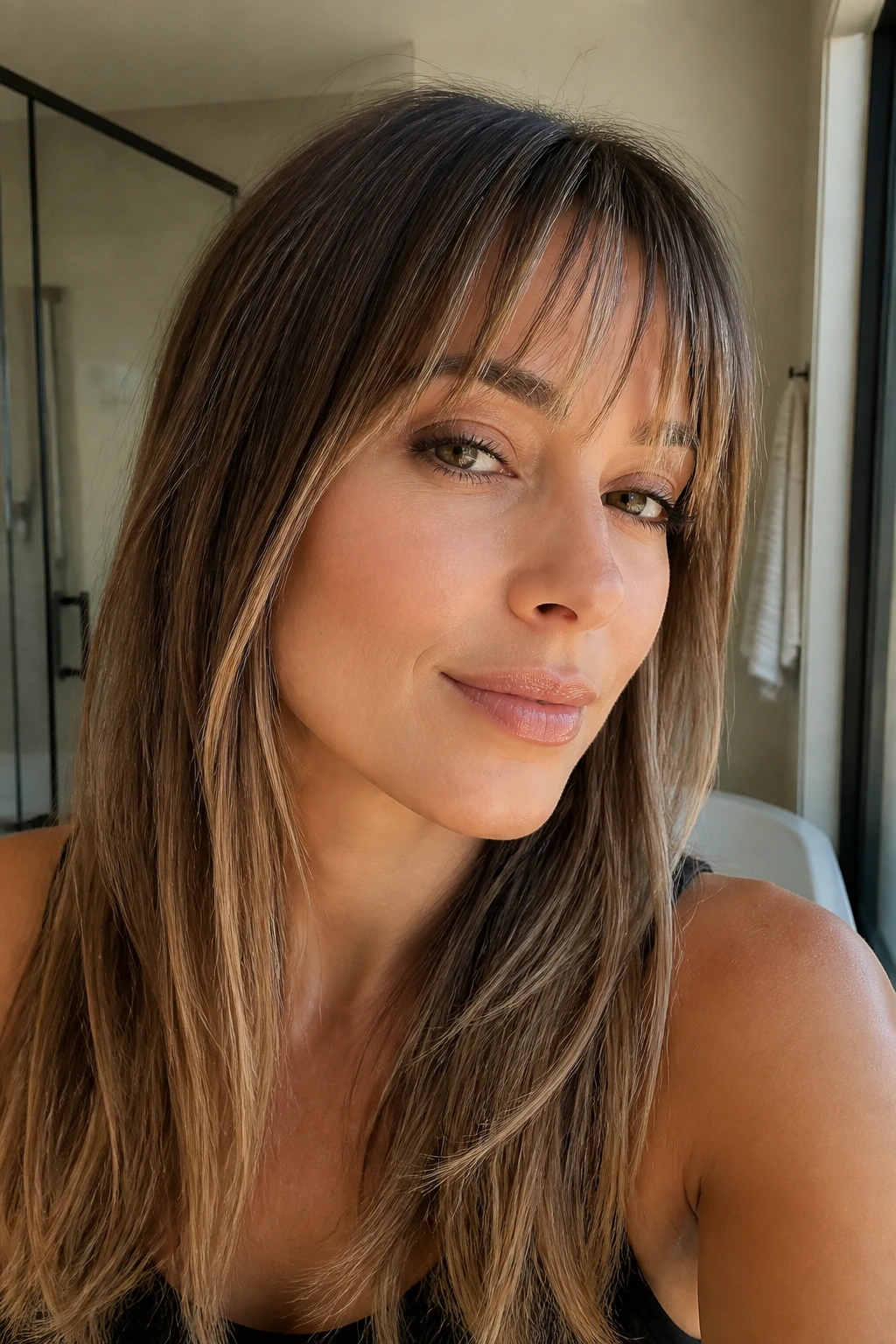
Razor-cut bangs have a sharper, thinner edge because the ends are intentionally sliced into pieces instead of cut as a heavy block. On long hair, that can be useful when you want the front to feel light and modern rather than dense and classic. The result is separated, airy, and easy to push around.
This style works well on straight hair because it already wants to lie flat. It also helps fine hair avoid that helmet look blunt bangs can create. The catch is that razors can go too far, leaving ends that feel weak or frayed if the cut is overdone.
Best Use Case
Choose this style if you like bangs that can be worn forward one day and swept partway aside the next. The piecey texture makes them flexible. They tend to dry quickly too, which is a gift if your mornings are not patient.
A light smoothing cream or a few passes with a mini flat iron can sharpen the look. You don’t need a lot of product. Too much, and the pieces clump into one dull strip.
Ask the stylist to keep the shape longer than you think you need at first. Razor-cut bangs can look shorter when they separate.
17. Deep Side-Part Fringe With a Long Sweep
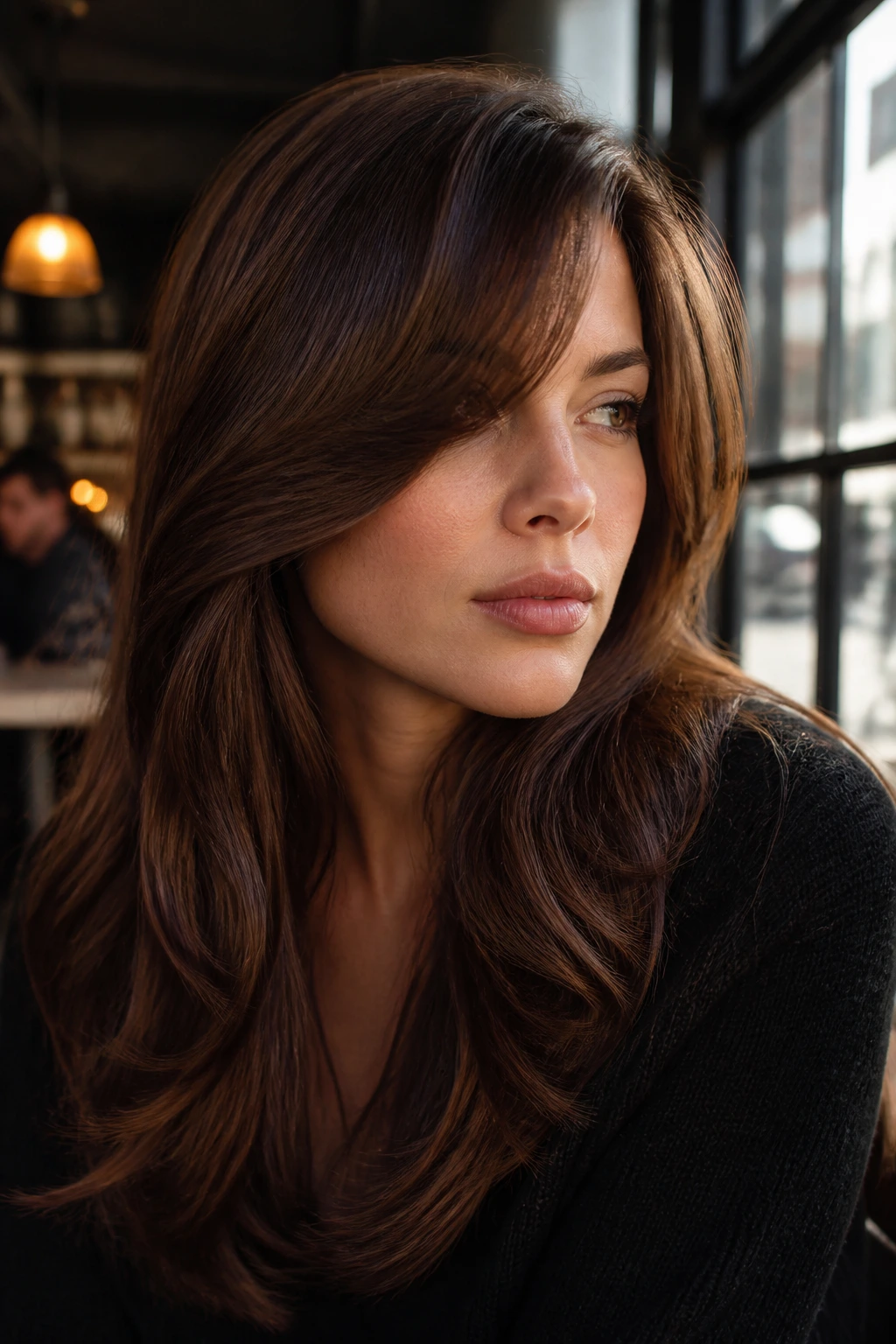
A deep side-part fringe brings instant direction to long hair. Instead of hanging straight down or splitting in the middle, the front sweeps from one side, often crossing the forehead in a soft arc. The effect is dramatic in a quiet way, which is a nice trick if you want change without a blunt statement.
It’s also one of the easiest fringe shapes to hide or pin back. That matters on days when the front is oily, flat, or just not cooperating. A couple of bobby pins and a side part can turn a bad bang day into a clean style with almost no effort.
The sweep works especially well when the long hair itself has body at the ends. If the lengths are too thin, the fringe can feel disconnected. If the hair has some weight and bend, the side piece feels like part of a larger shape.
This is a solid option if you like old-school glamour but don’t want to fight a full fringe every morning. The whole thing can be brushed, pinned, or tucked. Easy to live with.
18. Heavy Eyebrow-Grazing Bangs With Soft Edges
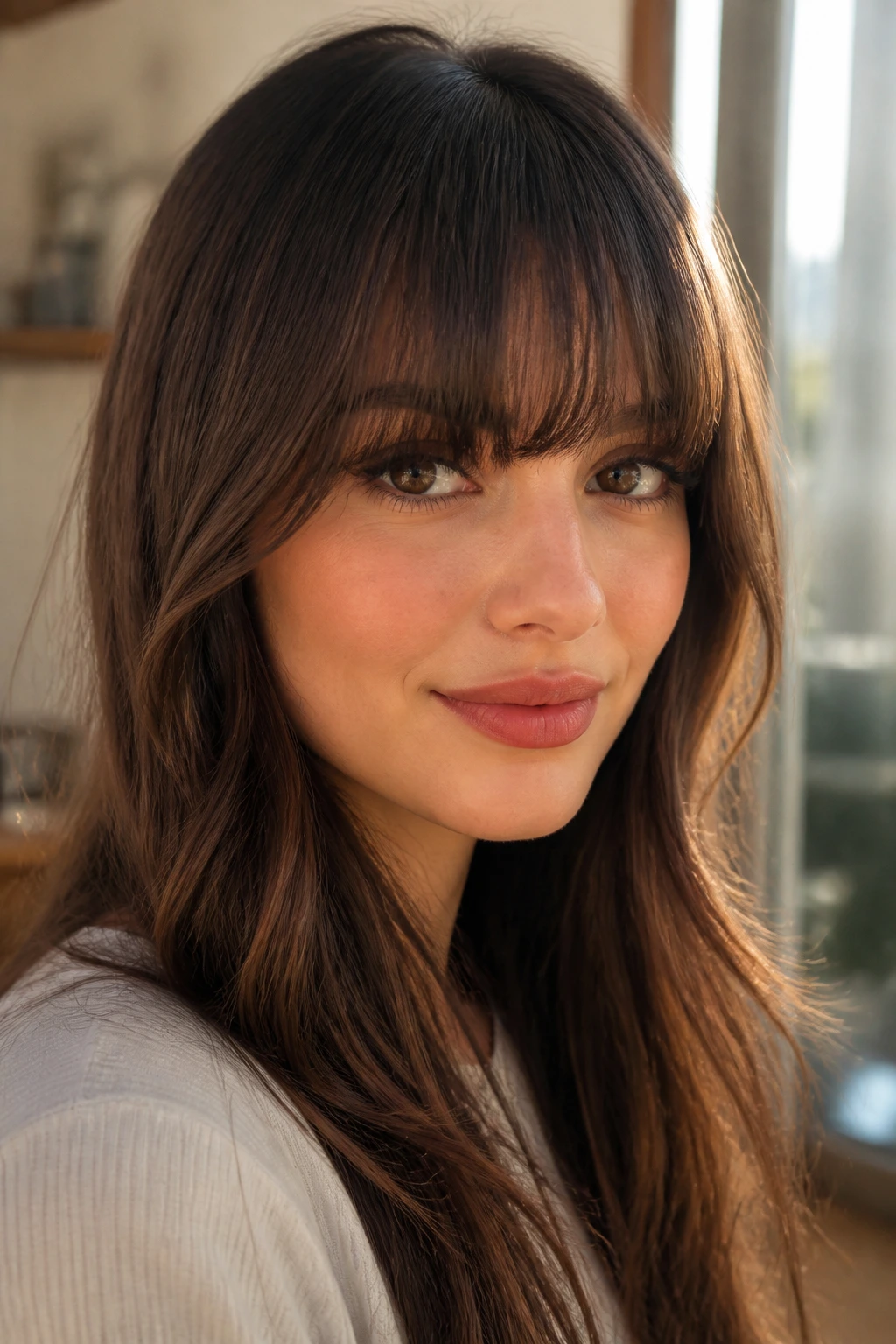
Heavy bangs are for people who want the forehead covered but still want softness at the edges. They sit just at or below the brows, with enough density to feel deliberate and enough texture to avoid looking blocky. On long hair, that weight can be beautiful because the rest of the length keeps the style from feeling too closed-in.
The density matters here. Too little hair, and the bangs separate into thin strips. Too much thinning, and they lose that solid front line that makes the cut work. You want a fringe that reads full when dry and still has a little movement at the tips.
These bangs look especially good with sleek hair, bold brows, or a centered part through the rest of the length. They make the eyes more prominent. They also tend to grow out in a way that can be reshaped into curtain pieces if you decide to soften them later.
If you’re the type who likes one dramatic feature and keeps the rest simple, this is your lane. The haircut does not need extra tricks.
19. Rounded U-Shaped Fringe That Softens the Forehead
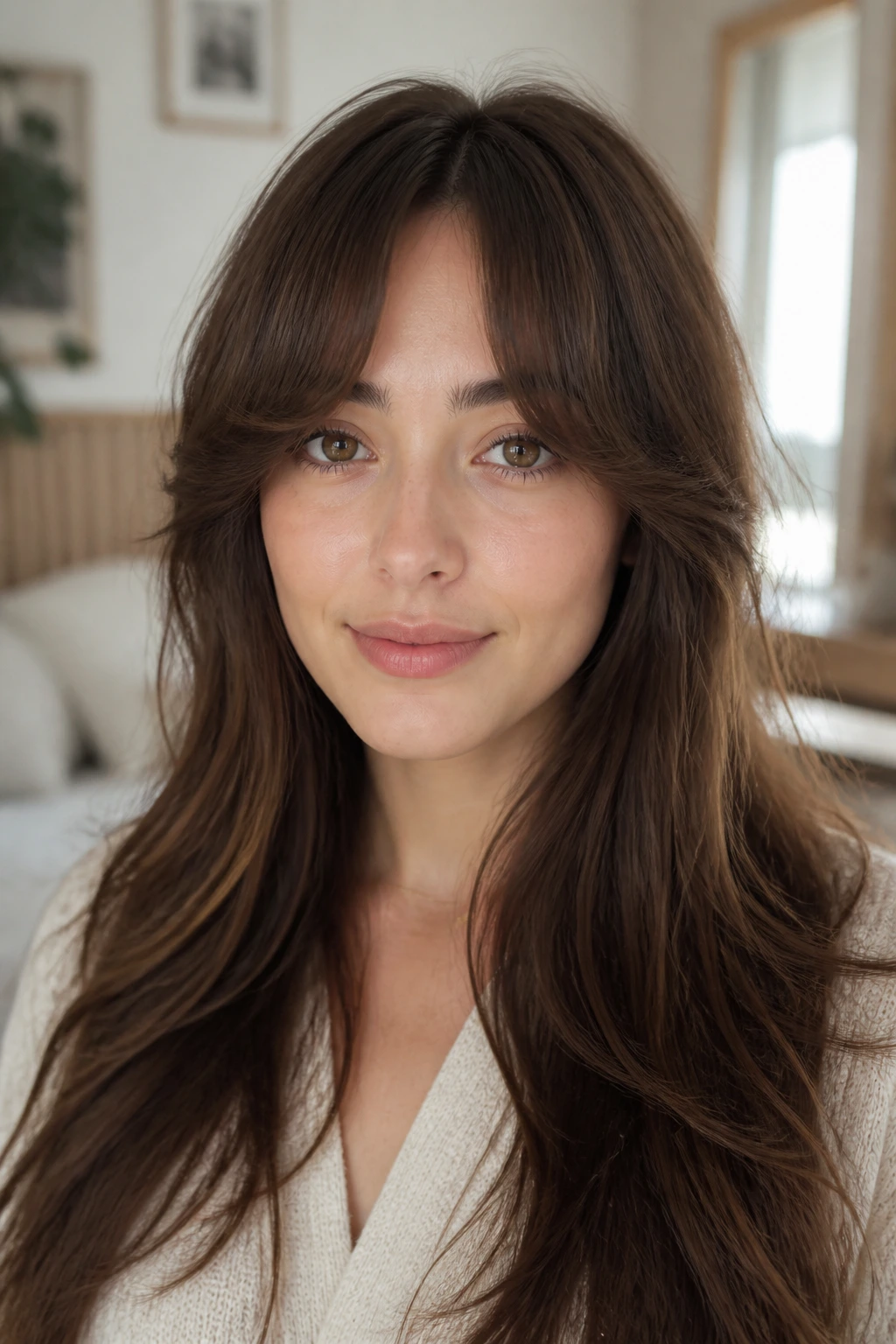
Rounded U-shaped bangs are shorter in the middle and longer at the temples, but the curve is gentler than an arch. The front line feels soft and rounded, almost like a shallow U laying across the forehead. On long hair, that shape keeps the fringe from looking severe while still giving the face a clear frame.
This is a very good option if you want a visible bang but dislike the sharpness of straight-across fringe. It has enough shape to read as a real cut, not just a few face pieces. The curve also plays nicely with long layers because both shapes move in the same direction.
Why It Feels Balanced
The center length lifts the eyes, while the sides keep the transition smooth. That balance matters on long hair because the lengths can otherwise pull the whole look down. A rounded fringe gives the top half of the haircut some presence.
Ask for the curve to be subtle, not cartoonish. If the middle is too short compared with the sides, the shape can look dated fast. A shallow U with soft edges is easier to wear and easier to grow out.
A round brush and a quick downward bend at the center are usually enough. No elaborate routine required.
Why Bang Styles for Women With Long Hair Need Their Own Playbook
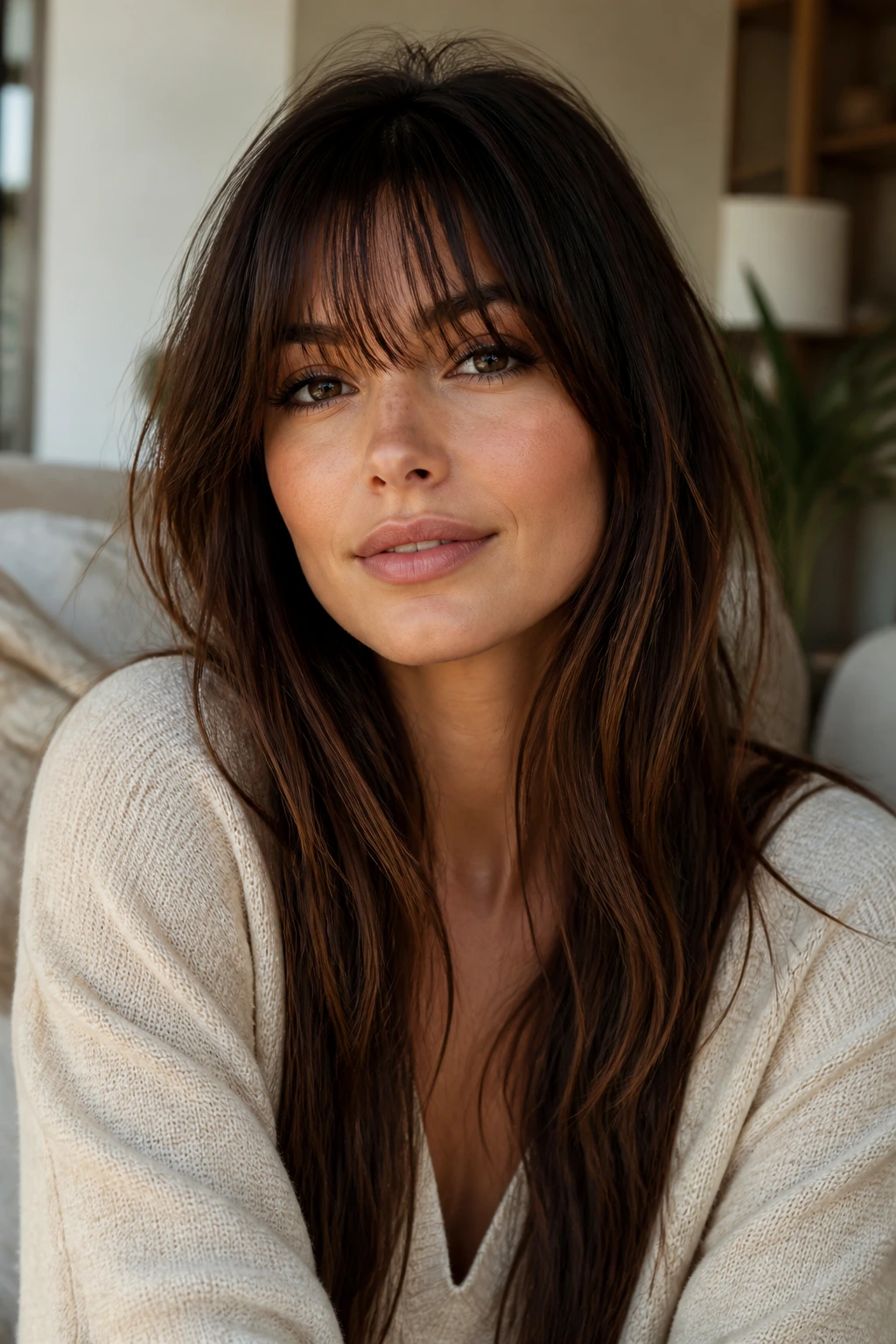
Long hair changes the math. A fringe on a shoulder-length cut can carry the entire visual load, but on waist-length or mid-back hair, the bangs have to hold their own while still letting the rest of the length feel like the star. That’s a tricky balance, and it’s why some bang cuts work so much better on long hair than people expect.
The biggest difference is weight distribution. Long lengths pull the eye down, which means a fringe has to create shape near the face or the haircut can look a little bottom-heavy. Soft curtains, bottleneck shapes, and face-framing layers do that well. Heavy blunt lines can work too, but they need enough density and polish to avoid looking pasted on.
There’s also a grow-out issue that gets ignored. With short hair, bangs can feel like a whole haircut. With long hair, you can often let the front drift into layers, side-sweep it, or pin it back while the rest stays intact. That flexibility makes long hair one of the best places to experiment with fringe. The catch is maintenance. If the front gets oily, flat, or cut too short, it shows fast. Still. I’d take that trade.
How to Ask for the Right Fringe at the Salon
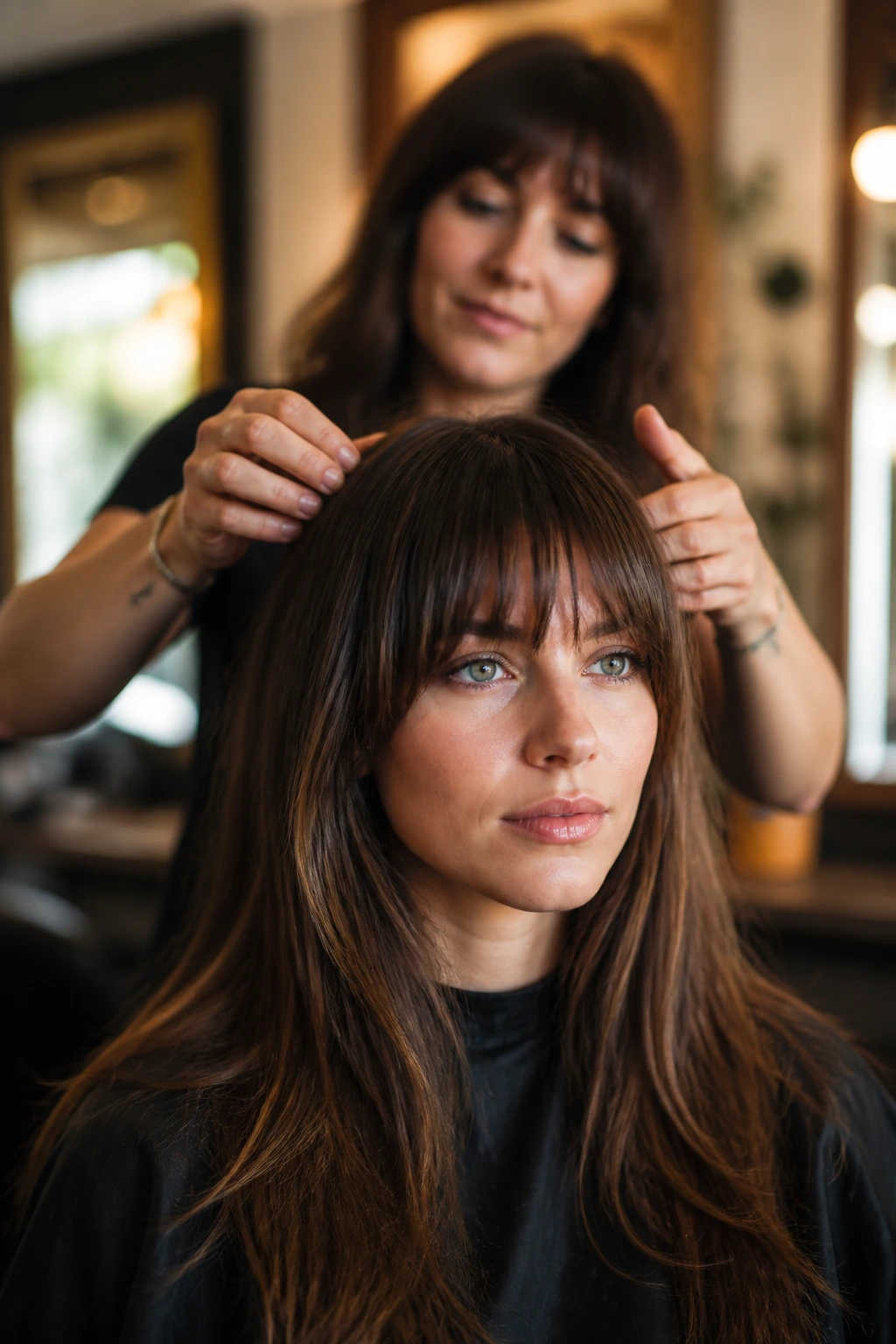
The best bang cut starts before the scissors come out. Bring photos, yes, but bring photos of hair that looks like yours in texture and density, not just a model with perfect bone structure and studio light. That saves everyone some trouble.
Tell Your Stylist Where the Trouble Starts
If you have a cowlick, say so. If your hair gets oily by lunchtime, say that too. If you wear your hair in a middle part nine days out of ten, the stylist needs to know that, because a fringe cut for a deep side part behaves differently. These are not side comments. They determine whether the bang sits flat, splits strangely, or refuses to lie down.
Ask for Longer Than You Think
The front always looks shorter once it dries. Always. A good stylist will leave a little extra length on the first pass and then refine it after the blow-dry. If someone wants to cut your bangs very short right away, I’d slow the process down and talk through it first.
Bring Up Your Routine, Not Just Your Face Shape
Face shape matters, but your morning routine matters more. If you’re never going to round-brush the front, don’t pick a fringe that demands one. If you live in ponytails and clips, choose a shape that can vanish gracefully. The best cut is the one that still works when you’re late.
Essential Tools for Styling and Resetting the Front Pieces
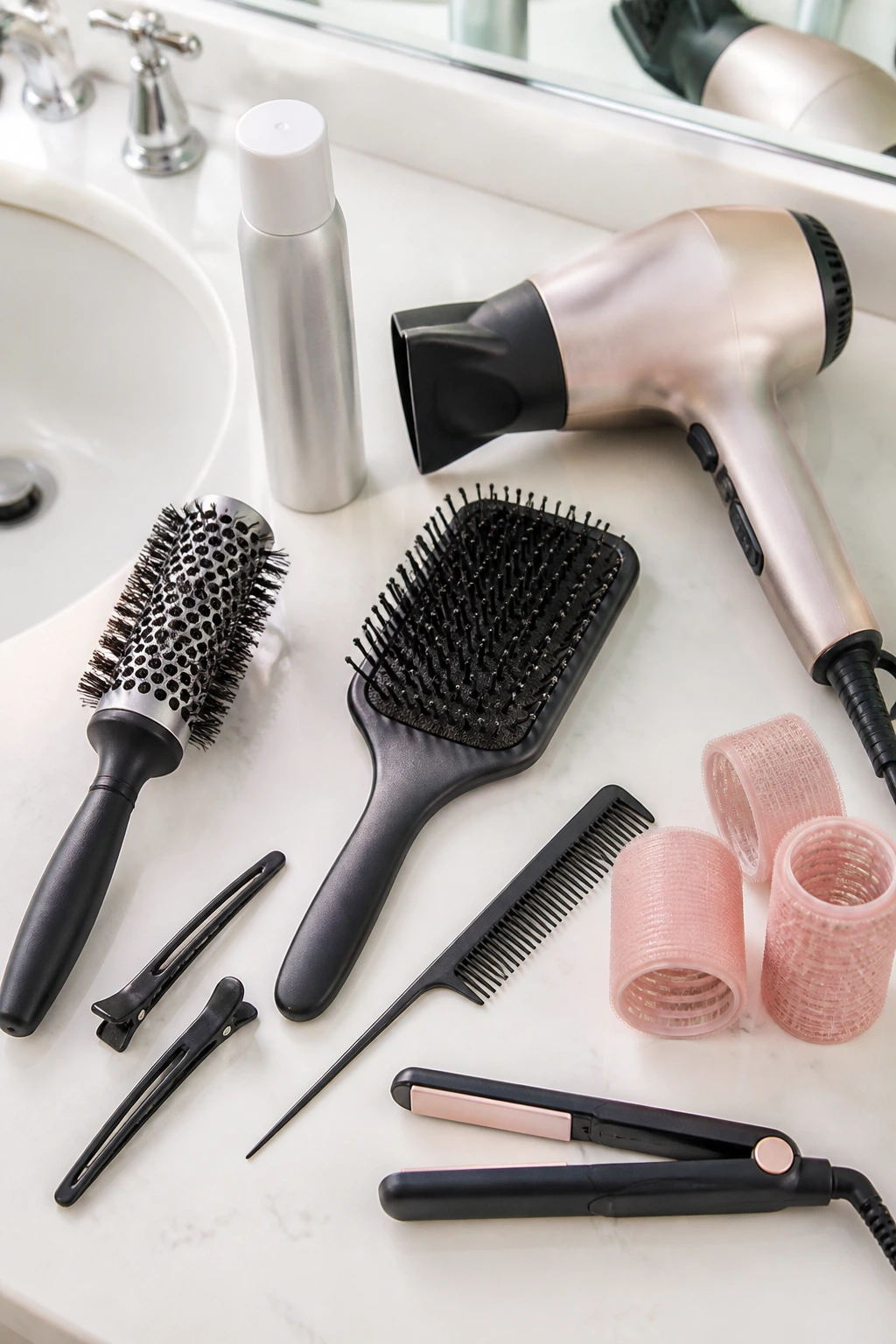
- Small round brush, 1 to 1.5 inches: Best for curtain, bottleneck, and Bardot shapes because it gives the front a bend without making it roll too hard.
- Flat paddle brush: Useful for side-swept, blunt, and feathered bangs when you want a smoother line and less curve.
- Blow dryer with a nozzle: The nozzle directs the air where you want it; without it, bangs get blasted in too many directions.
- Heat protectant spray: Bangs sit close to the face and get styled often, so they take more heat than the rest of the hair.
- Duckbill clips or small section clips: Great for setting curtain pieces while they cool or for holding a deep side part in place.
- Mini flat iron: Handy for micro bangs, piecey textures, and tiny root bends when the hair refuses to cooperate.
- Dry shampoo: Use it at the root line, not halfway down the strand, or the fringe gets chalky.
- Velcro rollers: Old-school, yes, but they still work for long bangs that need root lift after a blow-dry.
- Fine-tooth comb: Good for clean parting lines and quick shape checks before you leave the house.
Daily Styling Tricks That Keep the Front Pieces Calm
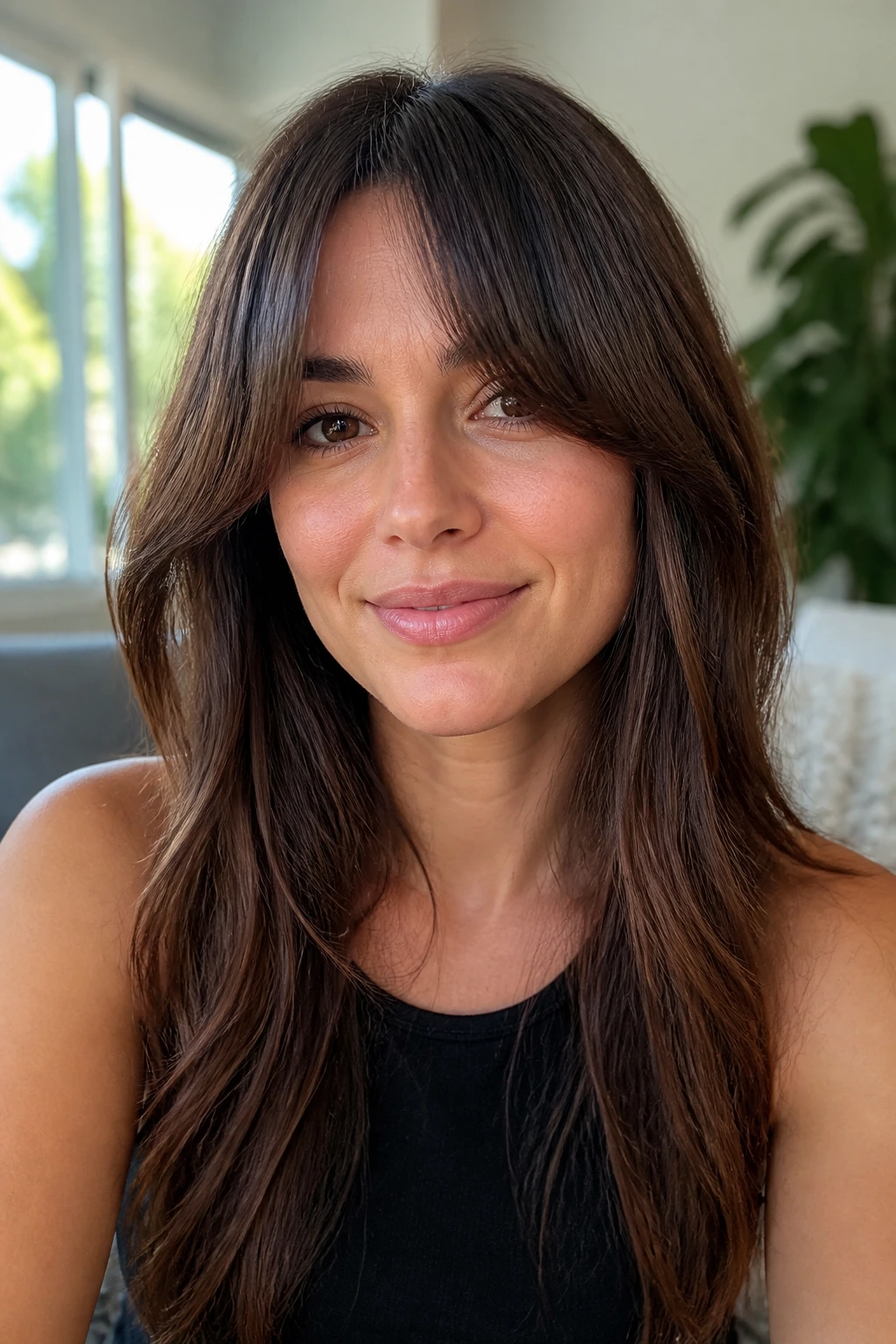
Start with the front, not the whole head. Bangs behave better when they’re reset first. Mist the front lightly with water, blow-dry the fringe into shape, and only then go back to the rest of the hair. If you try to fix bangs after your lengths are already done, you usually end up flattening the whole style.
Cool air matters more than another hot pass. Once the fringe is shaped, give it a blast of cool air or clip it in place for a minute while it cools. That little set locks the bend in. Heat without cool-down is temporary styling, not styling that lasts through lunch.
Use less product than you think. A pea-sized amount of cream or paste is often too much for bangs unless your hair is extremely coarse. Front hair gets greasy faster, so heavy product turns into a problem by noon. If you need control, aim product at the ends and keep the root line clear.
Dry shampoo is a timing tool. Put it on before the bangs look dirty, not after they’ve collapsed. That gives the powder time to absorb oil instead of sitting on top of it. If you wait too long, you’ll need twice as much and still won’t love the result.
Common Mistakes That Make Bangs Hard to Live With
- Cutting too short on day one: The fringe sits higher once it dries, especially if your hair has any wave. Leave a little extra length and trim again later if needed.
- Ignoring the cowlick at the hairline: A front swirl can split bangs down the middle or kick one side up. The fix is a longer cut, a stronger directional blow-dry, or a different bang shape altogether.
- Over-thinning the front: Bangs that are too sparse start separating into random pieces. Keep enough density so the style still reads as a fringe.
- Styling the ends but not the root: If the root line is flat or oily, the bangs collapse even when the tips look fine. Lift at the base first.
- Picking a shape that fights your routine: A round-brushed fringe on someone who air-dries every morning is a bad match. Choose the cut you’ll actually maintain.
- Skipping trims for too long: Long hair forgives a lot, but bangs do not. Once they fall into your lashes all the time, the whole front starts feeling sloppy.
Variations and Alternate Ways to Wear Them
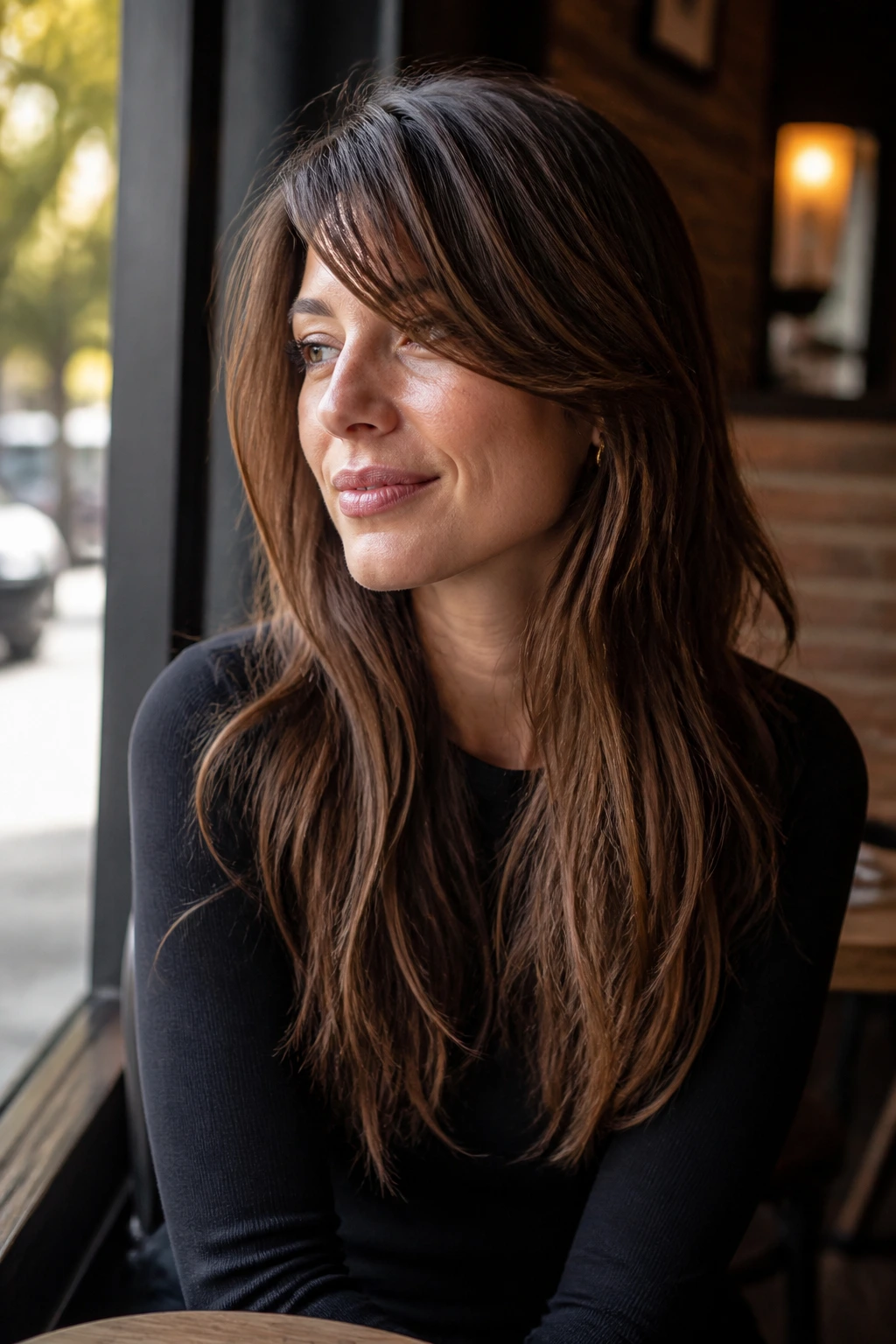
Soft Side-Sweep Conversion: If you start with curtain or bottleneck bangs, you can push the shorter front slightly to one side and turn the shape into a softer sweep for workdays. It’s the easiest way to make one cut feel like two.
Air-Dry Fringe Version: For waves and curls, ask for a longer cut and then let the front dry with a little leave-in and scrunching. The result is looser and less polished, but it fits busy mornings and humid air better.
Pinned-Back Reset Mode: If your bangs are between trims or the oil is winning, pin the front back with a small clip or two crossed bobby pins. With long hair, that looks intentional if the rest of the cut has volume.
Sleek Flat-Iron Version: Heavier blunt or eyebrow-grazing bangs can be sharpened with a mini flat iron and a tiny bend under the ends. This works well for straight hair and gives the fringe a crisp edge without overblowing it.
Trim Schedule, Grow-Out, and Long-Term Maintenance
For blunt, heavy, and micro bangs, plan on a trim every 3 to 5 weeks if you want the shape to stay true. Curtain, bottleneck, side-swept, and face-framing styles can usually stretch to 6 or 8 weeks before they start losing the line you liked. Curly bangs are their own thing; they often need tiny shape checks more than full trims because curl bounce changes the look as they grow.
Grow-out is where long hair gives you a real advantage. A fringe can slide into layers, split at the center, sweep across the forehead, or tuck behind the ears while the rest of the hair stays untouched. That means you can change the front without entering haircut limbo. Nice little loophole.
At night, keep bangs from smashing flat by clipping them loosely to the side or rolling them into a soft bend with a large clip. If you sleep on them bare, they usually wake up with a strange crease that takes more heat than it should to fix. A silk pillowcase helps, but a simple clip often does the job.
Bang roots get oily fast because they sit against skin, makeup, and hands. A dry shampoo mist at the root line, followed by a quick finger lift, is often enough for a refresh. If that stops working, it usually means the front needs a wash, not more product.
Frequently Asked Questions
Which bang style is safest if I’ve never had bangs before?
Curtain bangs or longer bottleneck bangs are usually the gentlest starting point. They give you shape and movement without locking you into a hard front line, and they grow out cleanly if you decide you want more length.
What bangs work best with thick long hair?
Blunt fringe, bottleneck bangs, and shag bangs all handle thick hair well because they use the weight instead of fighting it. The trick is keeping enough density at the root so the bangs do not separate into thin strips by midday.
Can curly hair wear bangs with long lengths?
Yes, but the bangs should be cut with the curl pattern in mind, usually dry or almost dry. Curly fringe looks best when it’s a little longer than straight bangs would be, because the curl bounces up once it dries.
What if I have a cowlick right at the front?
Ask for a slightly longer fringe and bring that cowlick up during the consultation. A stylist can often shape around it, but very short bangs tend to fight a strong swirl harder than longer pieces do.
How often do bangs need trimming?
Heavy fringe may need a trim every 3 to 5 weeks, while softer curtain or side-swept styles can usually last closer to 6 or 8 weeks. If the bangs fall into your eyes before that, it’s a shape issue as much as a length issue.
Can I still wear my hair in a ponytail or bun?
Absolutely. In fact, long hair makes bangs easier to hide or redirect when you want them out of the way. Curtain, bottleneck, side-swept, and face-framing styles are the most flexible for updos.
Is it better to cut bangs wet or dry?
For straight and wavy hair, many stylists cut the first line wet and then refine it dry. For curls, a dry or nearly dry cut is often safer because the spring pattern changes the final length so much.
How do I keep bangs from getting greasy so fast?
Keep hands off the front, use dry shampoo before the oil gets obvious, and avoid heavy creams near the roots. If the front still turns greasy by noon, wash the bang section separately instead of over-styling the rest of your hair.
Picking the Fringe You’ll Actually Wear
The best bang style is not the one that looks most dramatic in a photo. It’s the one that still makes sense when you’re on day two hair, half asleep, and trying to decide whether to round-brush the front or clip it back and move on.
That’s why long hair is such a good place to test fringe. You can go soft, sharp, airy, heavy, curved, or piecey, and the length underneath gives you room to adjust after the fact. If one style feels too high-maintenance, another can slide in quietly and do the job with less fuss.
Bring the shape you like to the chair, but bring your real routine too. That combination tends to lead to the haircut you keep, not the haircut you babysit.
