



A short haircut can look polite in a hurry. Rocker bangs fix that.
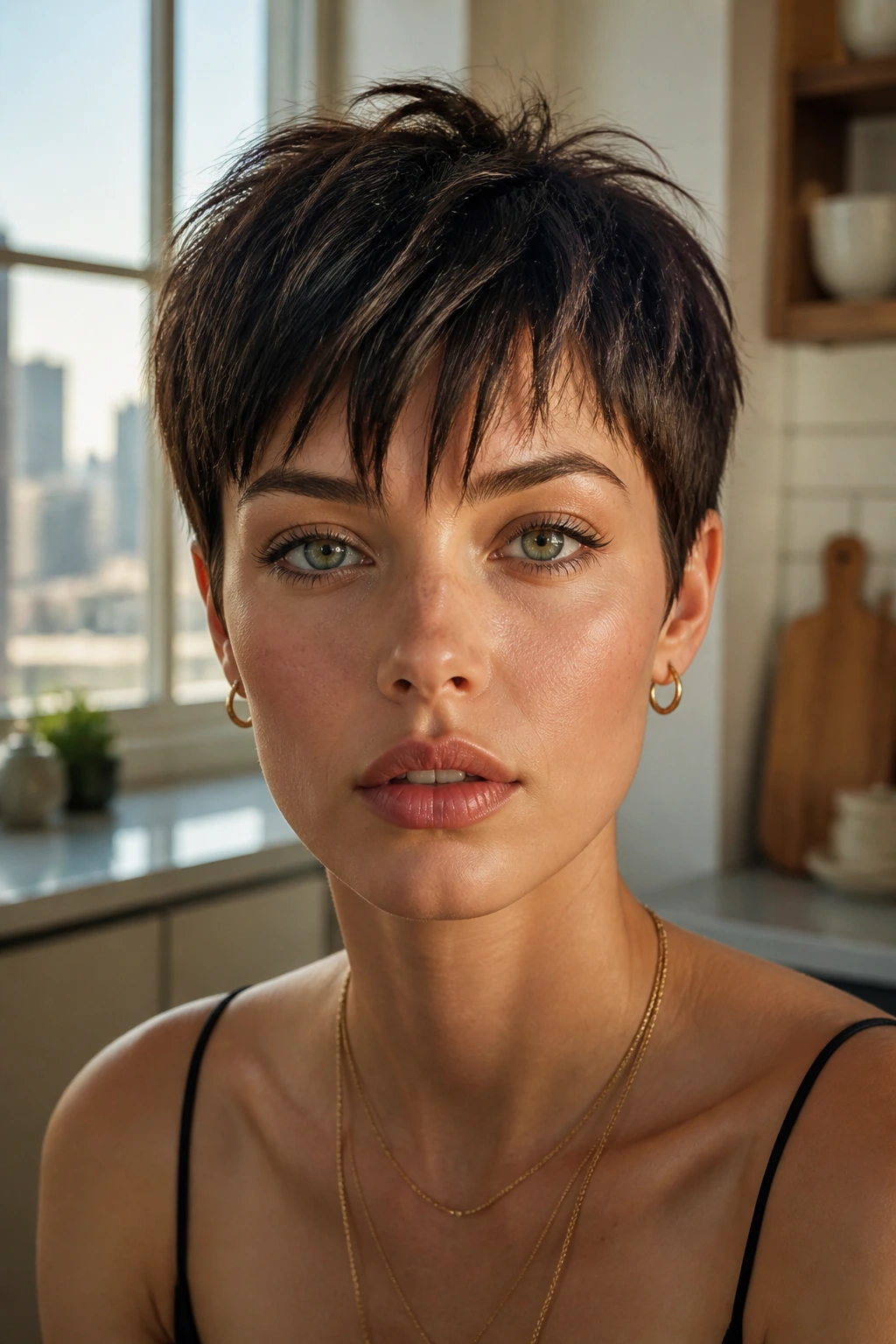
Rocker bangs for edgy short hair are the fastest way to turn a neat crop into something with teeth. Not more length. Not a drastic color job. Just a fringe with broken ends, a little swing, and enough attitude to make a pixie, bixie, bob, or shag feel deliberate instead of sweet. The best versions don’t sit there like a straight line across the forehead. They move. They separate. They look like they’ve got somewhere to be.
That movement matters more on short hair than people expect. When the sides are tight and the nape is clean, the fringe becomes the headline. If the bang is too blunt, too thick, or cut with the wrong angle for your hairline, the whole cut can feel heavy in five minutes and annoying by lunch. If it’s right, the face opens and closes in all the right places. You get shape without the fuss.
Cowlicks, forehead height, hair density, and even how often you want to dry your hair all matter here. A lot. The difference between “cool fringe” and “why is this sticking straight up?” is usually a quarter inch, a dry cut, or one smarter part. That’s why the good versions below are not just pretty ideas — they’re practical ones with enough bite to live on short hair in the real world.
Why These Rocker Bangs Hit So Hard on Short Hair
-
They change the whole silhouette fast: On a crop or bob, even a small shift in the front can make the cut read sharper, leaner, or more rebellious in one glance.
-
They keep short hair from looking too neat: Broken ends and off-center parts stop a short cut from sliding into helmet territory, which is a real risk with blunt lines.
-
They work with texture instead of fighting it: Whether your hair bends, puffs, or lies flat, the right fringe can use that behavior instead of trying to bully it.
-
They buy you contrast: Clean sides plus a rough fringe is the whole rocker formula. The contrast is what makes the style feel intentional.
-
They’re easier to refresh than a full cut: A bang can be re-styled in three minutes with a dryer, a flat iron, or a pinch of paste. That’s a much smaller daily job than reshaping the whole head.
1. Choppy Micro Fringe
A choppy micro fringe is the bang that says it doesn’t need permission. It sits short — usually somewhere between the high brow and mid-forehead — but the edge is broken enough that it never reads like a pageant bang. On a pixie or a tight crop, that tiny strip of hair can look sharper than a full dramatic fringe because the rest of the cut stays lean.
Why It Works on Cropped Hair
The magic here is contrast. A micro fringe trims down the front without adding weight everywhere else, so the eye goes straight to the face line and the eyes. I like this look on fine hair because the short length gives the illusion of density without making the front fall into your lashes by noon.
Ask for point-cutting instead of a straight blunt line. If your stylist goes in with scissors and makes tiny, angled snips, the edge will look chipped rather than childish. That one detail keeps the fringe from turning doll-like.
2. Razor-Slashed Eye-Grazer
A razor-slashed eye-grazer has a little drama baked into it. The fringe lands around the lashes, but the ends are feathered and uneven, so the whole thing drifts instead of hanging stiffly. On short hair, that extra sweep softens a crop that might otherwise feel severe.
This is the fringe I’d pick when the haircut underneath is clean and architectural — think a tapered pixie or a sharp bob with tucked sides. The bang gives you motion across the forehead while the rest of the cut keeps the shape grounded. It’s a nice mismatch. A useful one.
The trick is direction. Blow-dry it across the forehead first, then let it cool in the opposite direction for a second before setting it. That little reversal helps the bend hold without turning the fringe into a hard helmet.
3. Side-Swept Shattered Bang
Why does a side-swept fringe still feel rocker instead of office-safe? Because the ends are broken, not smoothed into one polished wave. The diagonal line gives you a little sweep, but the shattered texture keeps it from going soft at the edges.
On a short bob or a bixie, this is a smart choice if you want forehead coverage without committing to full bang maintenance. It moves away from the face, which is handy if your hair grows fast or your forehead breaks out and you want options. The cut still looks styled even when it’s slightly messy.
How to Wear It
Keep the deep part where your hair naturally wants to fall, then use a small round brush or flat brush to lift the root just a bit. Too much volume at the root makes this look 2009 in the wrong way. A little bend, a little separation, and you’re done.
4. Deep-Part Asymmetrical Fringe
This one has a built-in attitude problem, and I mean that as praise. The fringe is heavier on one side, lighter on the other, so the forehead line never lands evenly. On a short asymmetrical bob or a one-side-shorter crop, the bang makes the cut feel intentional instead of accidentally off-balance.
I like this style when the haircut already has a strong shape. The fringe should echo that shape, not compete with it. If one side is shaved or clipped shorter, let the longer bang side drape across the face and hit somewhere between the cheekbone and lash line. That length gives you movement without hiding the whole face.
This is also one of the best options for someone who likes changing the mood of the cut without trimming the whole head. Flip the part a little farther over and the fringe changes character fast.
5. Blunt Baby Bang with Grit
A blunt baby bang can look too cute if it’s cut too clean. Add grit, and it changes completely. The line stays short, but the ends are softened with tiny irregular points, so the fringe feels sharper and less precious.
This is the one for people who want a high-contrast front with a very short back and sides. It works especially well on thicker hair, because thick hair can carry the weight of a baby bang without collapsing into a little fuzz line. On finer hair, it can still work, but the cut has to be precise or the fringe will look thin fast.
Nope, it is not a forgiving style. But if you like a sharp brow line and a bit of vintage-punk energy, it’s hard to beat.
6. Wispy Overgrown Fringe
A wispy overgrown fringe is what happens when a short cut grows up a little and stops apologizing for itself. The bang sits longer, often brushing the lashes or just skimming below them, but the shape stays airy because the ends are broken up and the density is light.
This is one of the easiest rocker bangs to live with. It hides a little under-styling, it bends naturally around glasses, and it doesn’t shout for a trim every two weeks. The whole thing feels more lived-in than polished, which is exactly why it works with edgy short hair.
What Makes It Useful
- It flatters a grow-out phase without looking neglected.
- It gives you enough face-framing to soften a strong jaw or a short bob line.
- It behaves better on wavy hair than a fully blunt fringe.
- It’s the fringe most likely to survive a humid day with its dignity intact.
7. Heavy Gothic Curtain Bang
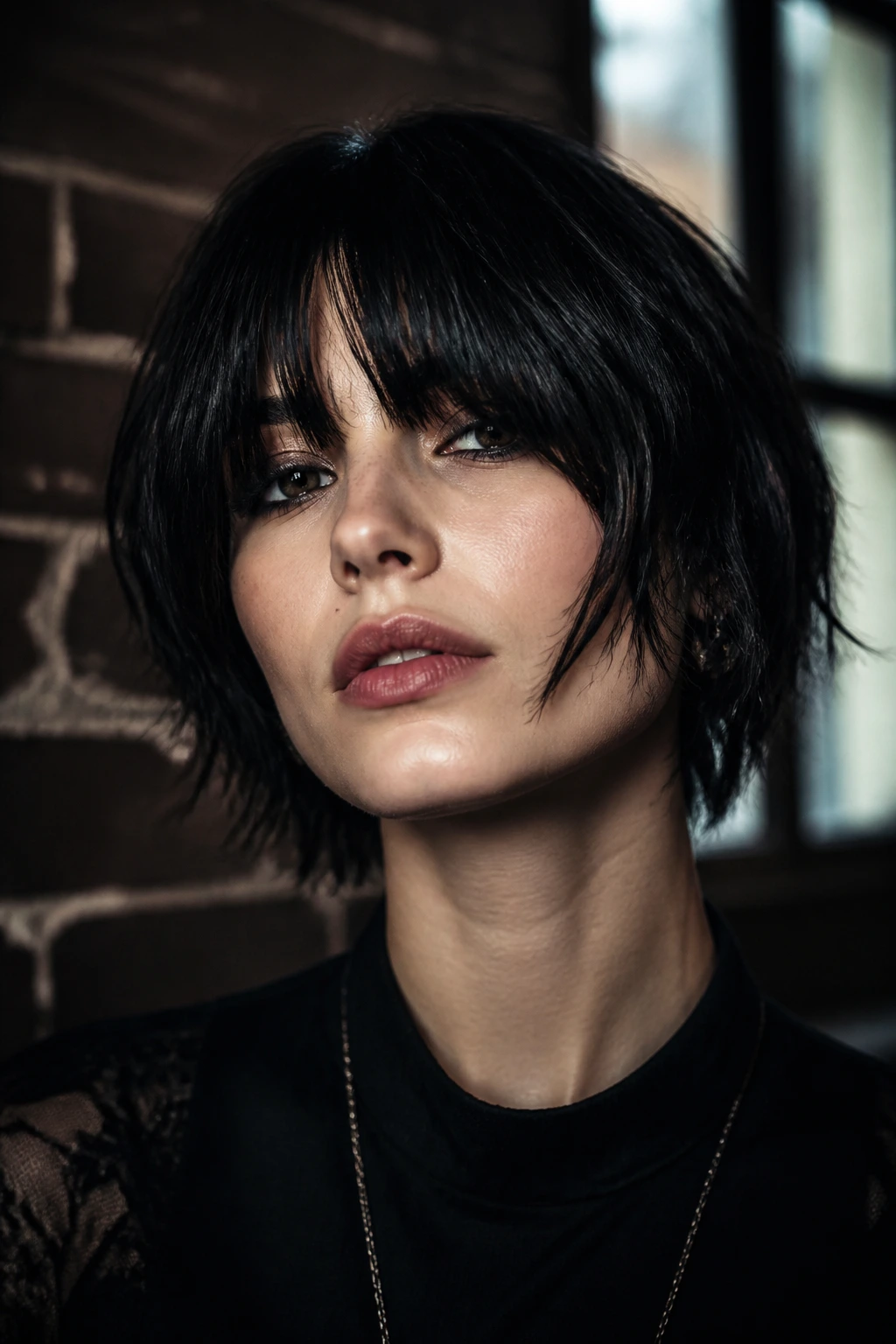
A heavy gothic curtain bang is not the soft, airy curtain fringe you see on long layers. This one is denser, darker in feel, and split down the center or just off-center so it falls around the face like a frame. On short hair, that density gives the style its weight.
This look loves a bold short cut underneath — especially a cropped shag or a chin-length bob with lots of texture. The fringe lands lower at the sides and opens at the center, which can make the face look longer and the haircut look more deliberate. If your hair is pin-straight, use a bend at the ends so the curtain pieces don’t hang like curtains, if you see what I mean.
It’s a little moody. Good. That’s the point.
8. Feathered Punk Swoop
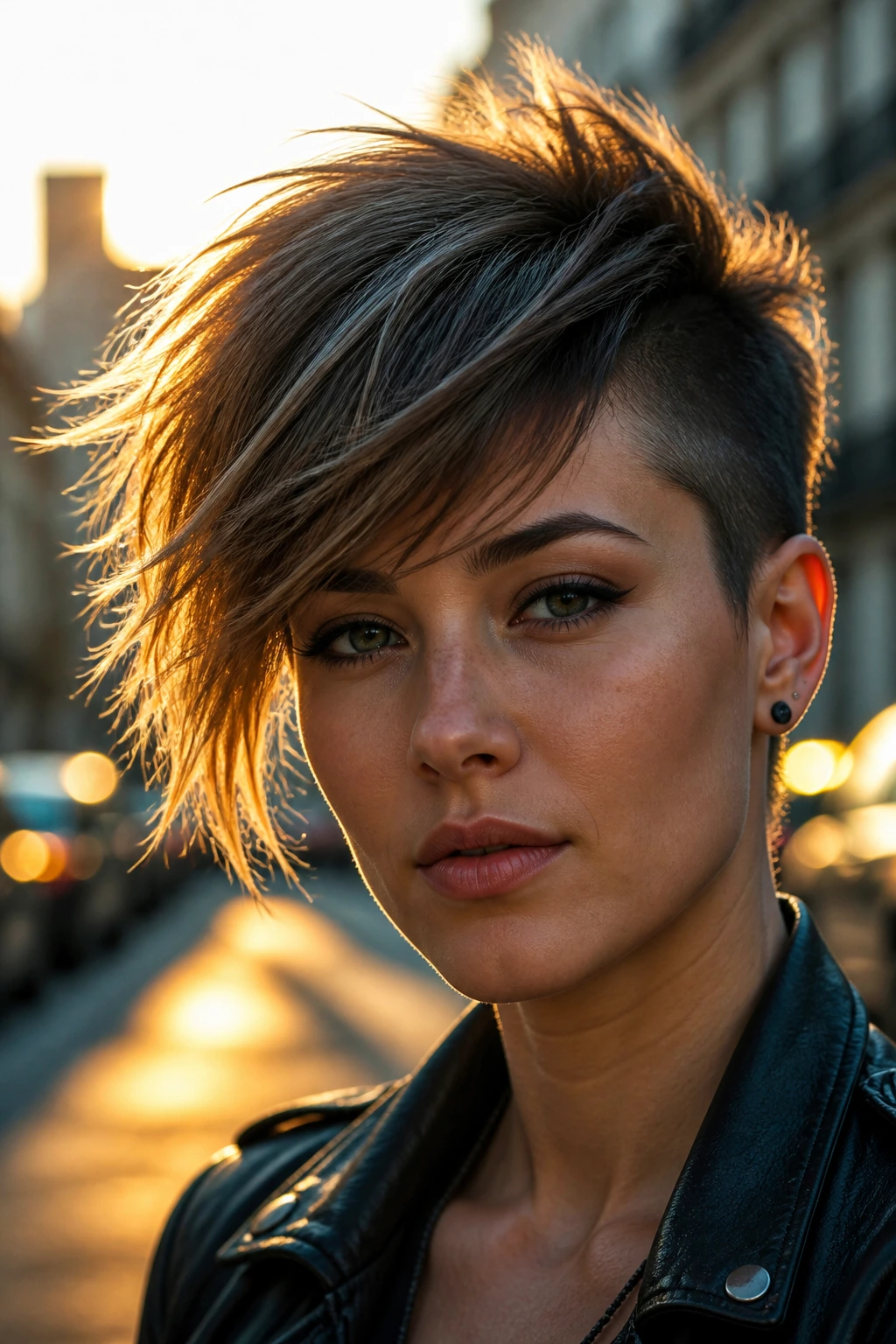
The feathered punk swoop feels almost thrown together, but the shape is doing more work than it looks like. The fringe starts with lift at the root, then sweeps across the forehead in a soft arc with separated ends. You get movement without losing control.
This one plays especially well with textured bobs and short shags. The crown can stay a little messy while the fringe keeps the face open. If your hair is thick, this cut removes enough visual weight to stop the front from collapsing. If your hair is fine, it gives you lift without needing a giant round brush.
A flat iron can help, but use it lightly. One pass, maybe two. More than that and the swoop starts to look too polished for the cut.
9. Curly Rocker Fringe

Curly hair does not need to “behave” to wear rocker bangs. It needs room. A curly rocker fringe usually sits longer than a straight fringe would, because curl shrinkage can take off a half inch or more depending on pattern. That extra length matters.
The best version is cut dry, curl by curl, so the stylist can see where the fringe springs and where it dips. Short hair with curls already has enough movement; the fringe should join that conversation, not fight it. I like this look when the sides are clean and the curls on top are left with enough length to form a little arc.
Curl Notes
- Cut the fringe longer than you think you need.
- Use a diffuser on low heat.
- Scrunch in a light cream, not a heavy butter.
- Don’t brush it once it dries, unless you want the whole front to go vague.
10. Undercut Bang Sweep
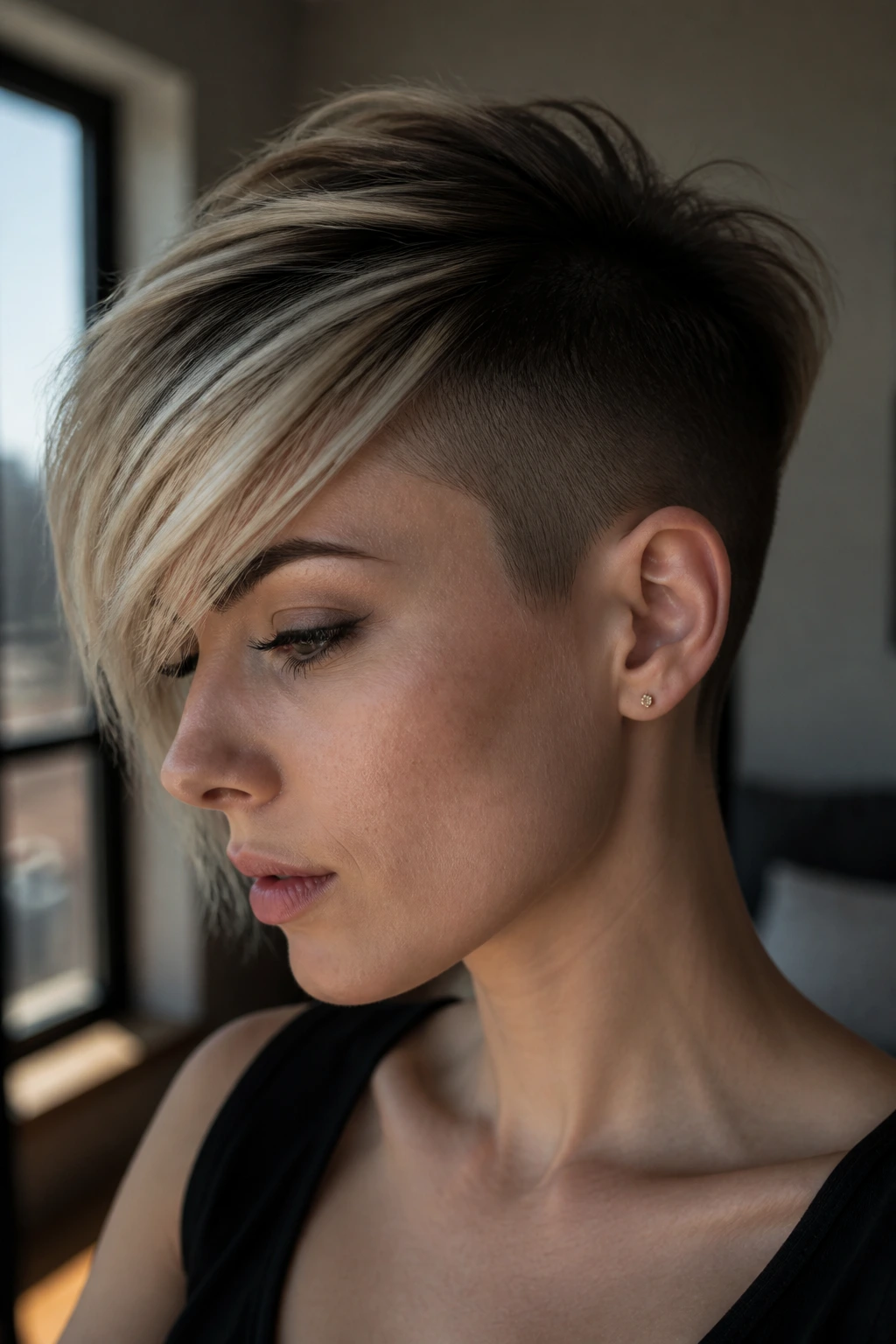
An undercut bang sweep is all about exposing the structure. The undercut keeps the sides and back tight, while the front fringe stays long enough to sweep across the forehead or tuck behind one ear. That contrast is what makes it feel sharp.
This is a good choice if you like low-maintenance sides but want the front to feel versatile. Wear the fringe down on busy days. Sweep it back or pin it when you want to show the undercut detail. The cut changes mood without changing shape, which is rare and useful.
A lot of people think an undercut makes bangs easier. It doesn’t. It just gives the front a cleaner runway. You still need to control the roots, or the sweep will puff out and lose that sleek, slanted line.
11. Shaggy Crown Fringe
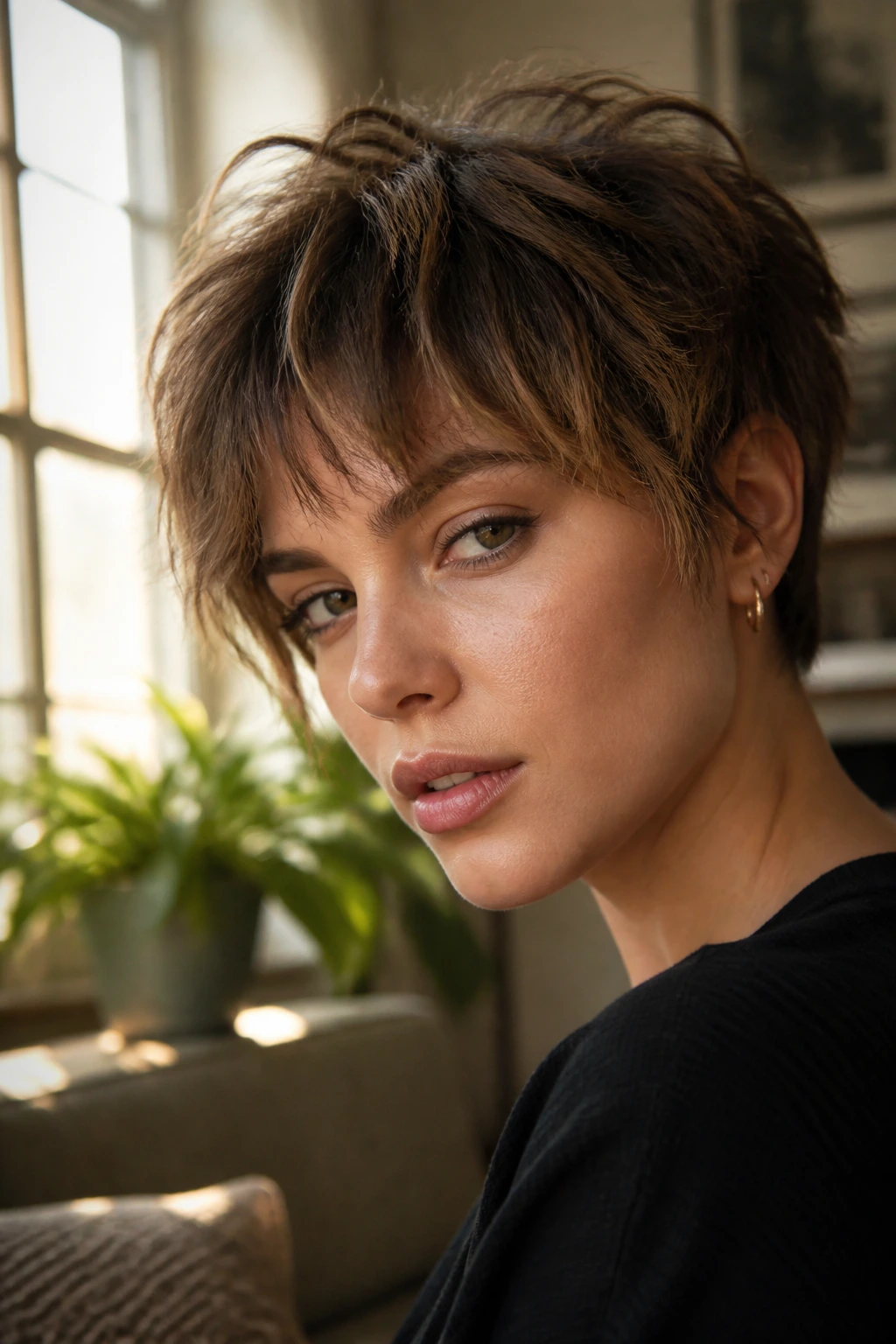
A shaggy crown fringe blends into the top layers so naturally that it almost disappears until it moves. That’s the charm. On short shag cuts, the fringe doesn’t sit alone; it falls out of the crown like part of the same messy architecture.
This style is a gift to anyone who hates obvious bang lines. The front feels textured and soft, but never boring. A little mousse at the roots and a quick rough-dry are enough to bring out the shape. If you want the hair to look cut rather than just styled, this is one of the better options on the list.
It also forgives a bad morning. That matters more than most people admit.
12. Mullet-Edge Bang
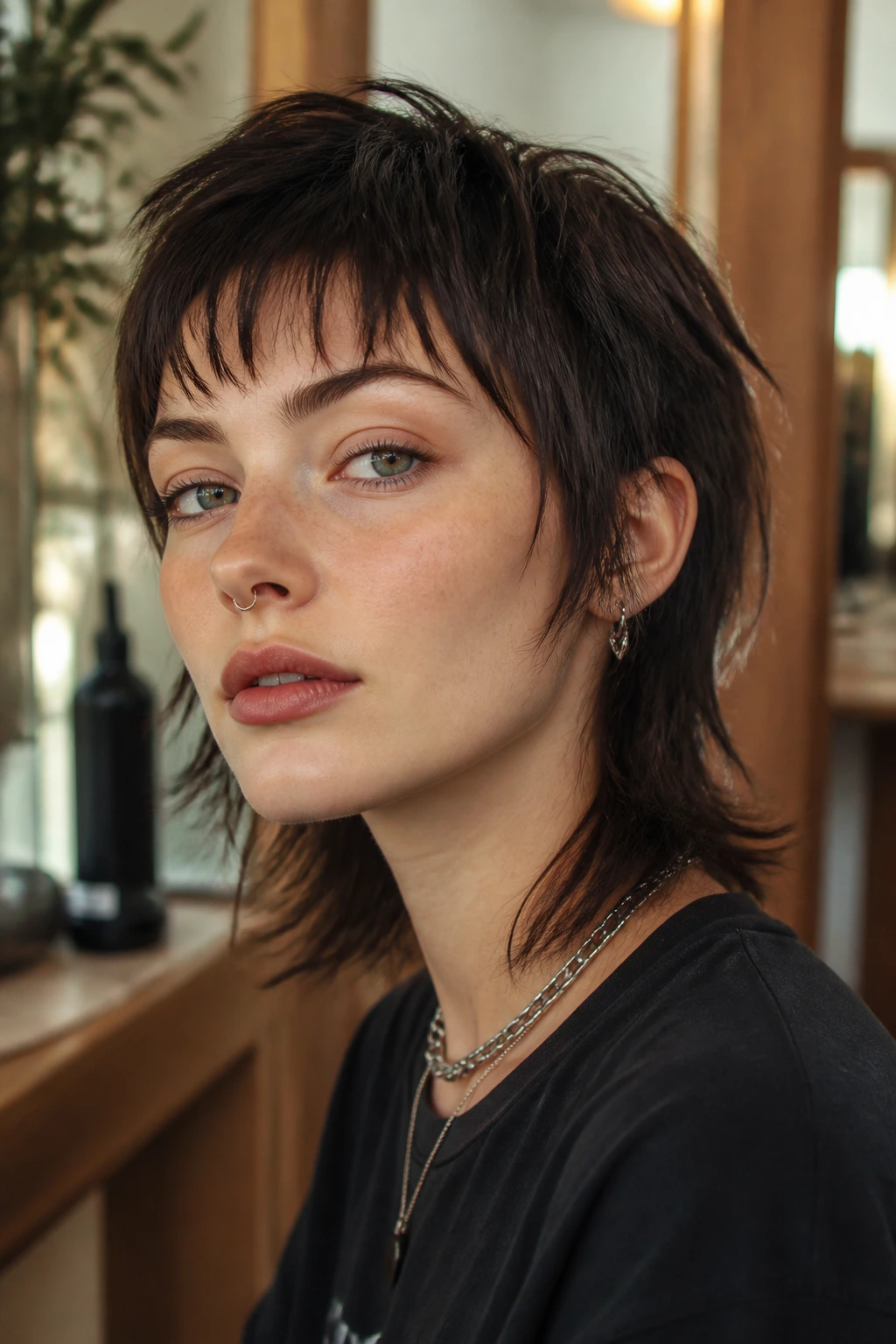
A mullet-edge bang is for people who want the fringe to look like it belongs to a slightly rebellious cut, because it does. The front is choppy and piecey, while the temples and crown leave more length to connect the bangs into the rest of the mullet shape.
This fringe works best when the haircut already has a bit of length in back. The bang should not feel isolated. It should be part of the whole silhouette, like the front and back are having a conversation. Keep the ends separated with a small bit of matte paste, not shiny pomade. Shine flattens this one fast.
If you like your hair to look a little wild even when it’s brushed, this is a strong pick.
13. Split Fringe with Face-Frame Peeks
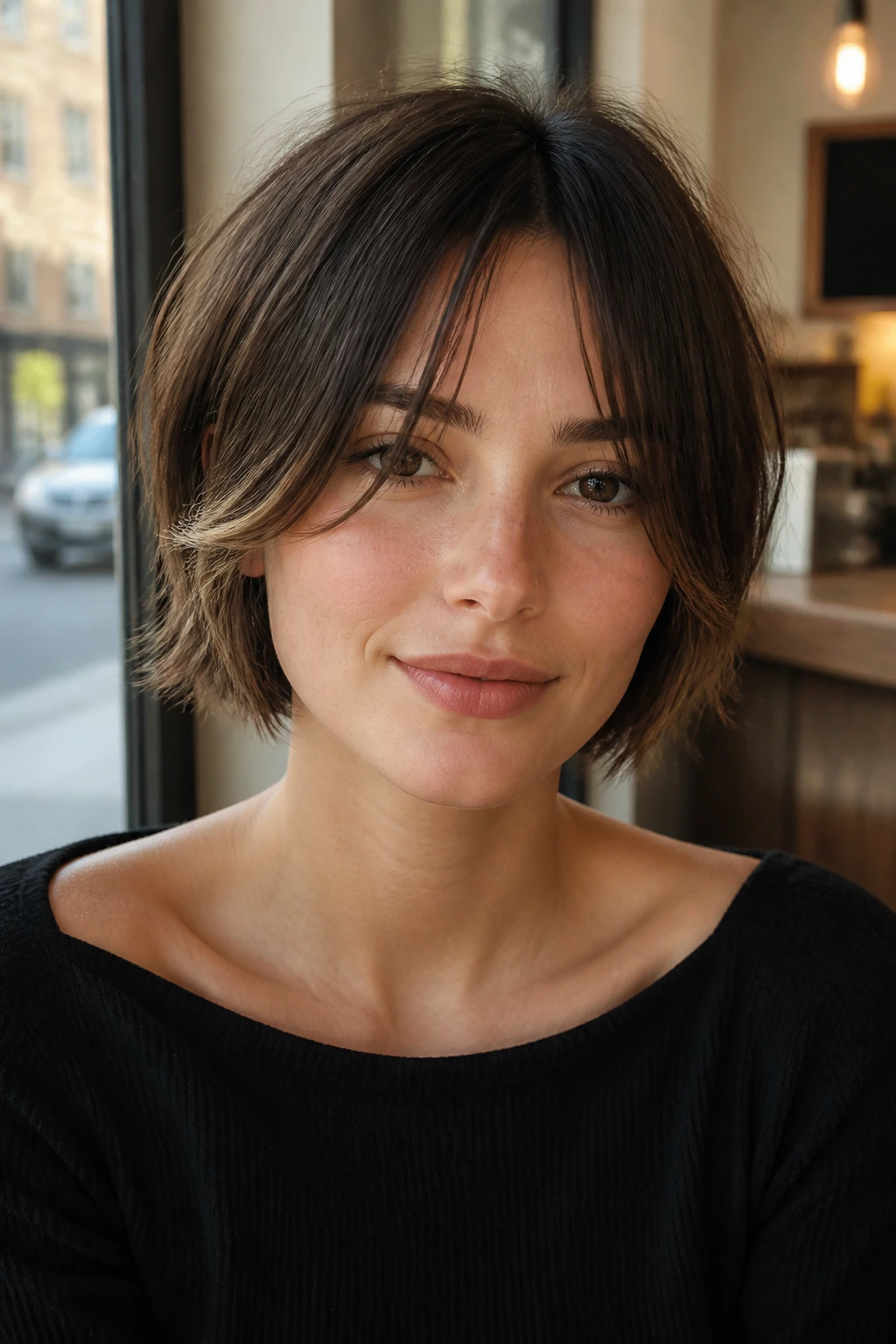
A split fringe does something clever: it breaks the front into two soft lanes and leaves little face-frame pieces near the temples. That makes short hair feel less severe around the forehead, which is useful if you do not want a full curtain or a full bang.
The shape works especially well on bobs that sit right at the jaw or just above it. The split lets some forehead show, which keeps the look airy. Meanwhile, the side pieces add enough edge to make the cut feel styled, not accidental.
Best For
- People who want bang movement without a heavy block of hair.
- Short cuts with a natural center part.
- Hair that bends easily and doesn’t need a lot of coaxing.
- Anyone who wants a grow-out stage that still looks on purpose.
14. Spiky Piecey Bangs
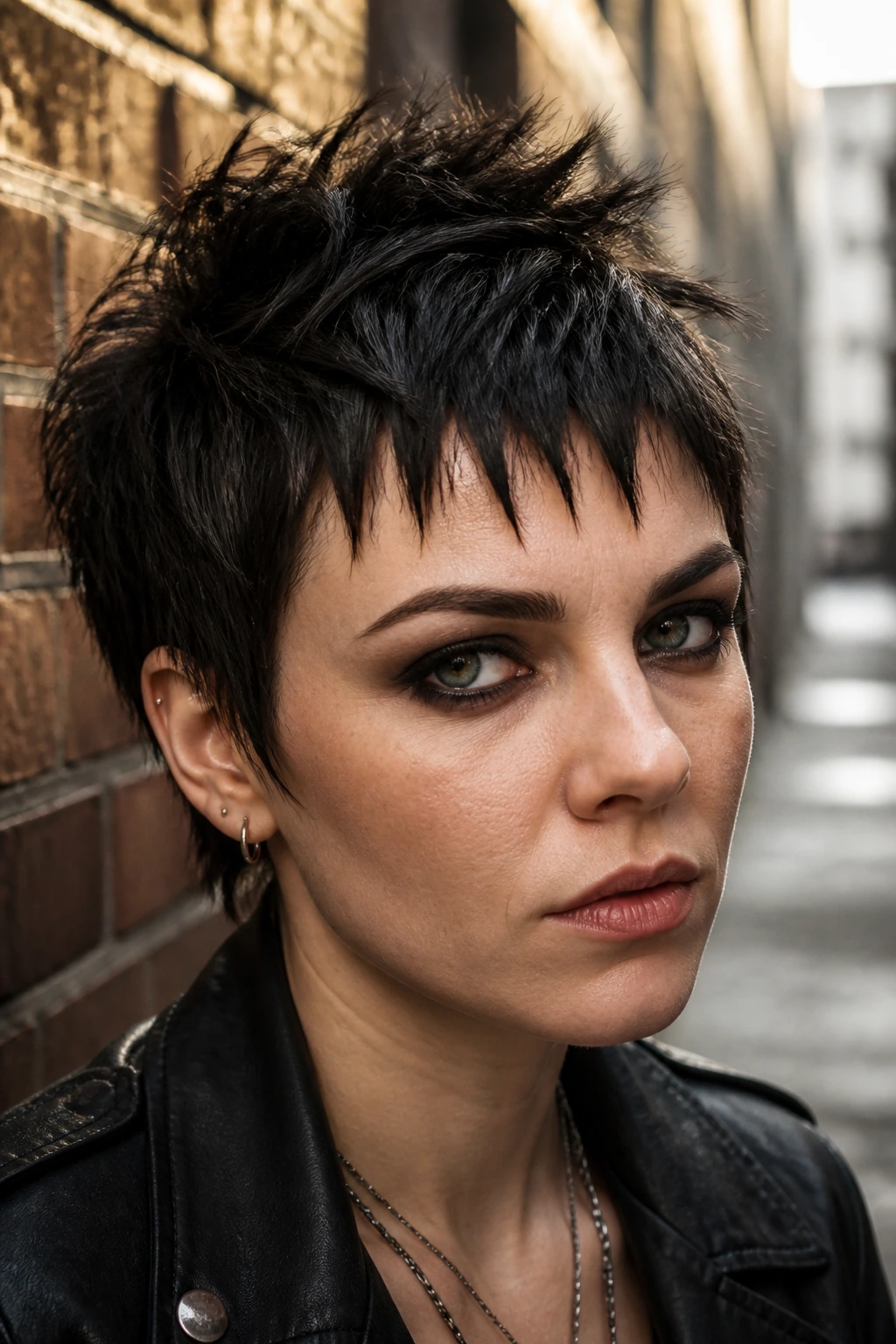
Spiky piecey bangs are blunt enough to hold their nerve and broken enough to avoid stiffness. The texture matters more than the length here. You’re not building one solid fringe; you’re building several little shards across the forehead.
This style loves matte products. A tiny amount of paste warmed between the fingers is enough. Work it through the ends, pinch the front into a few distinct pieces, and stop before the hair starts sticking to itself. Too much product turns the spikes into little greasy flags. Not the effect.
The cleanest version sits on a short crop or a pixie-bob with some top length. That extra top length gives the bangs enough material to separate.
15. Wet-Set Slick Fringe
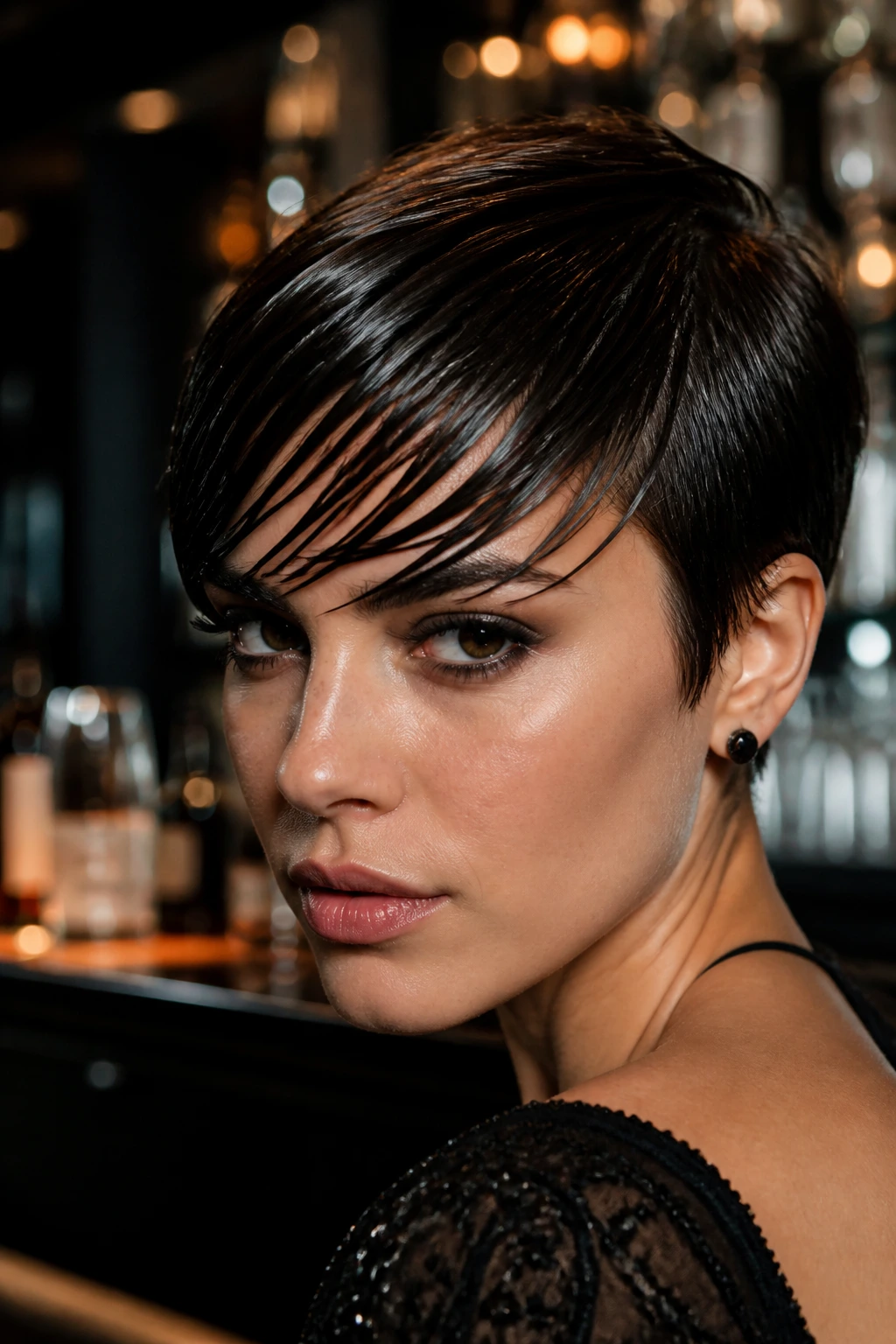
A wet-set slick fringe has a polished edge that still feels rock and roll because it’s controlled on purpose. The hair is combed into a direction while damp, then set with gel or a firm styling cream so it dries with a glossy, compressed finish.
This one is a night-out fringe. Or a runway fringe. Or a day when you want your short hair to look sharp enough to cut glass. It’s best on cuts with clean lines underneath, because the fringe itself becomes the sleek focal point. If your hair frizzes easily, this is where a strong hold product earns its keep.
Don’t finger-comb it a hundred times after it’s dry. That breaks the set and leaves weird flakes at the front.
16. Bettie-Style Broken Curve
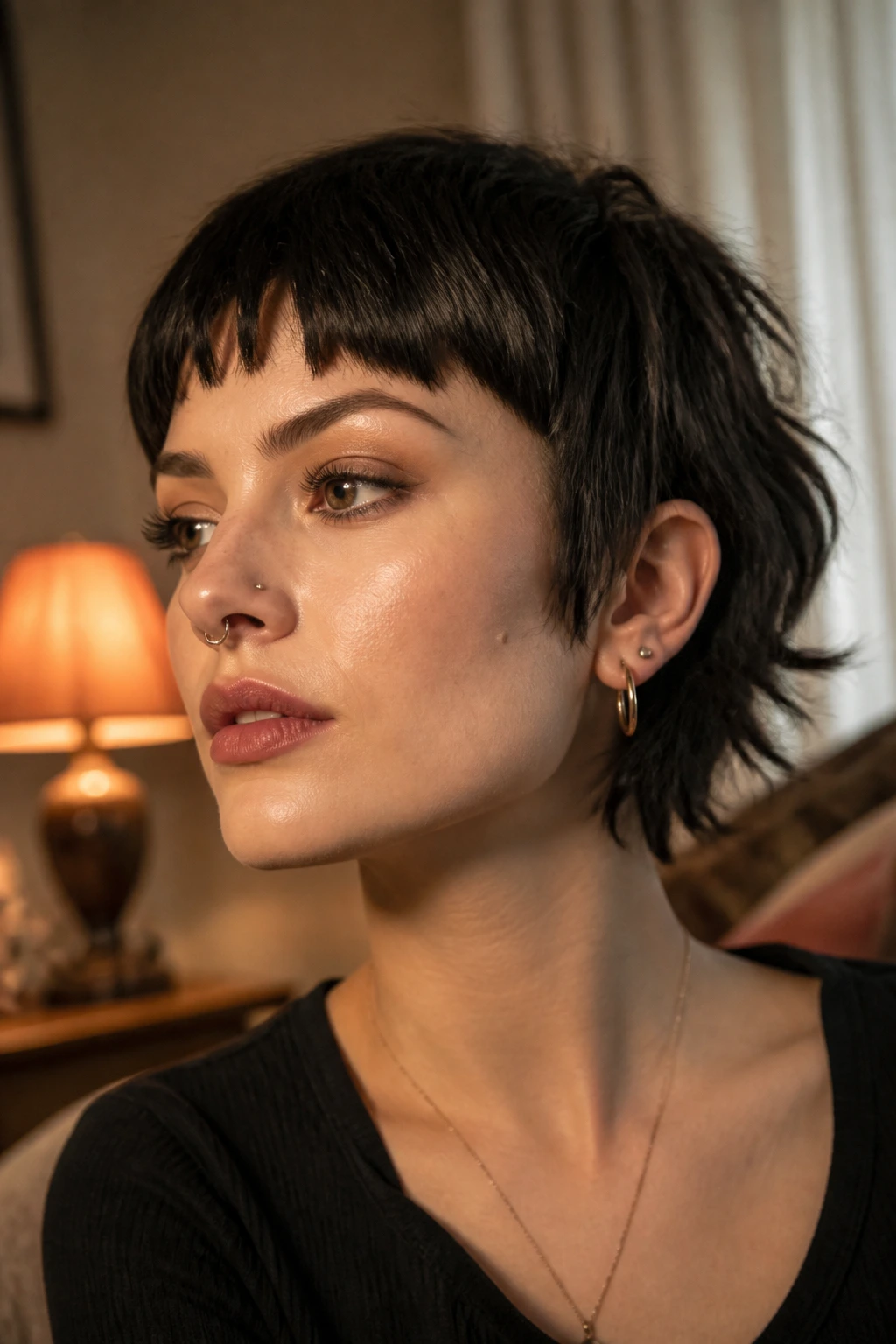
A Bettie-style bang on short hair usually brings to mind a rounded, retro shape. Break the curve a little, and it becomes harder and cooler. The fringe still arcs across the forehead, but the edge is textured and the finish is not too precious.
This is a nice pick for a short bob with a little polish in the rest of the cut. The curve frames the eyes, while the broken ends stop the style from feeling costume-like. I prefer it on hair that can hold a soft bend, because bone-straight hair can make the curve read too rigid unless you shape it carefully.
There’s a very small line between vintage homage and hair that looks like it belongs to a doll. Texture is what keeps you on the right side.
17. Pinned-Back Peekaboo Bang
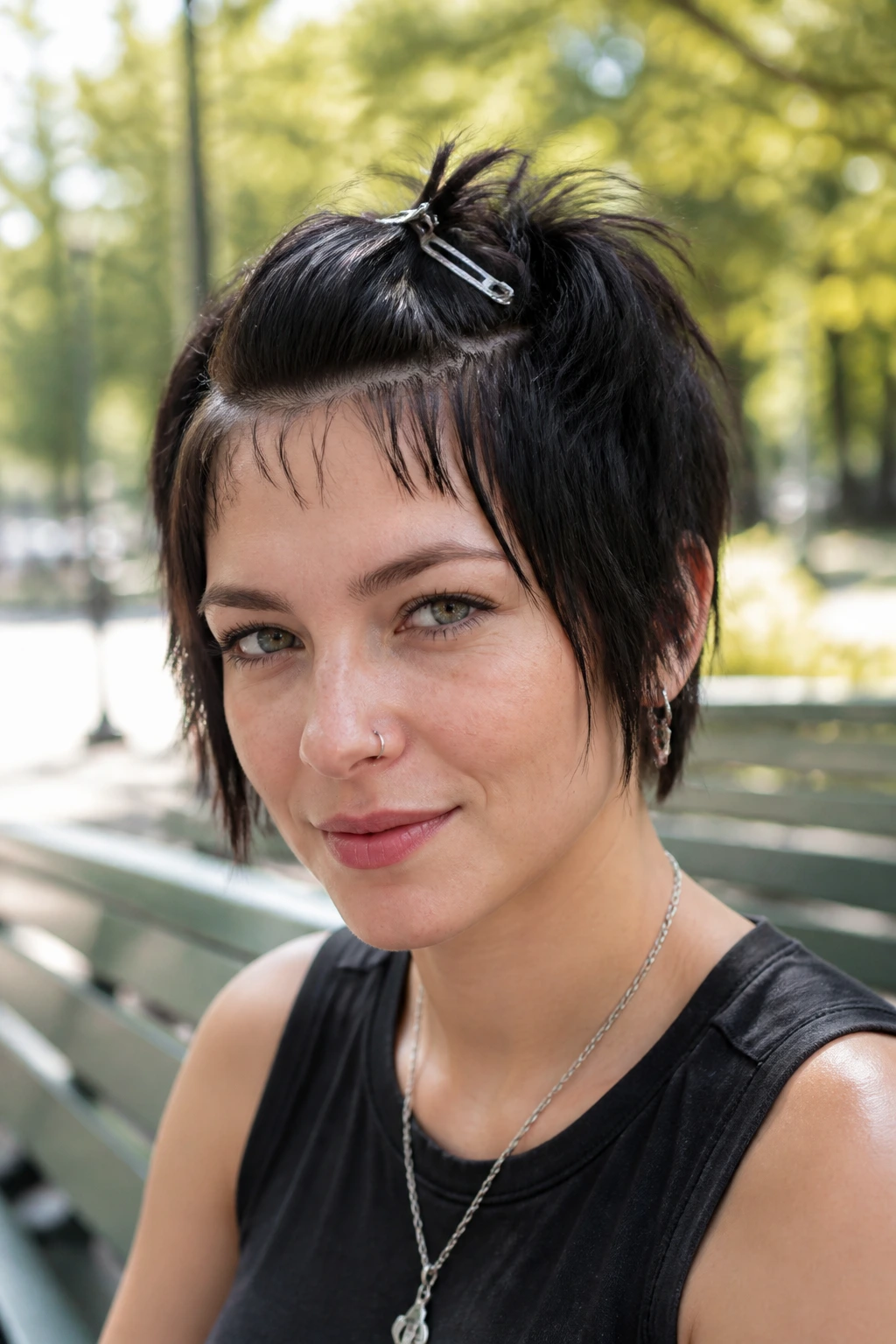
Not every rocker fringe needs to live on the forehead all day. A pinned-back peekaboo bang gives you the option to wear the fringe forward, then pin or clip it away for a more exposed face line. That flexibility matters when you’re dealing with short hair and a bang that grows fast.
This is one of my favorite practical choices for people who like change without committing to a daily battle. The cut can stay piecey and slightly long, while small clips or crossed pins push the front up and back. You get a little flash of forehead, a little attitude, and none of the weight.
If your hair gets oily at the front faster than the rest, this style is a lifesaver on second-day hair.
18. Textured Bob Bang
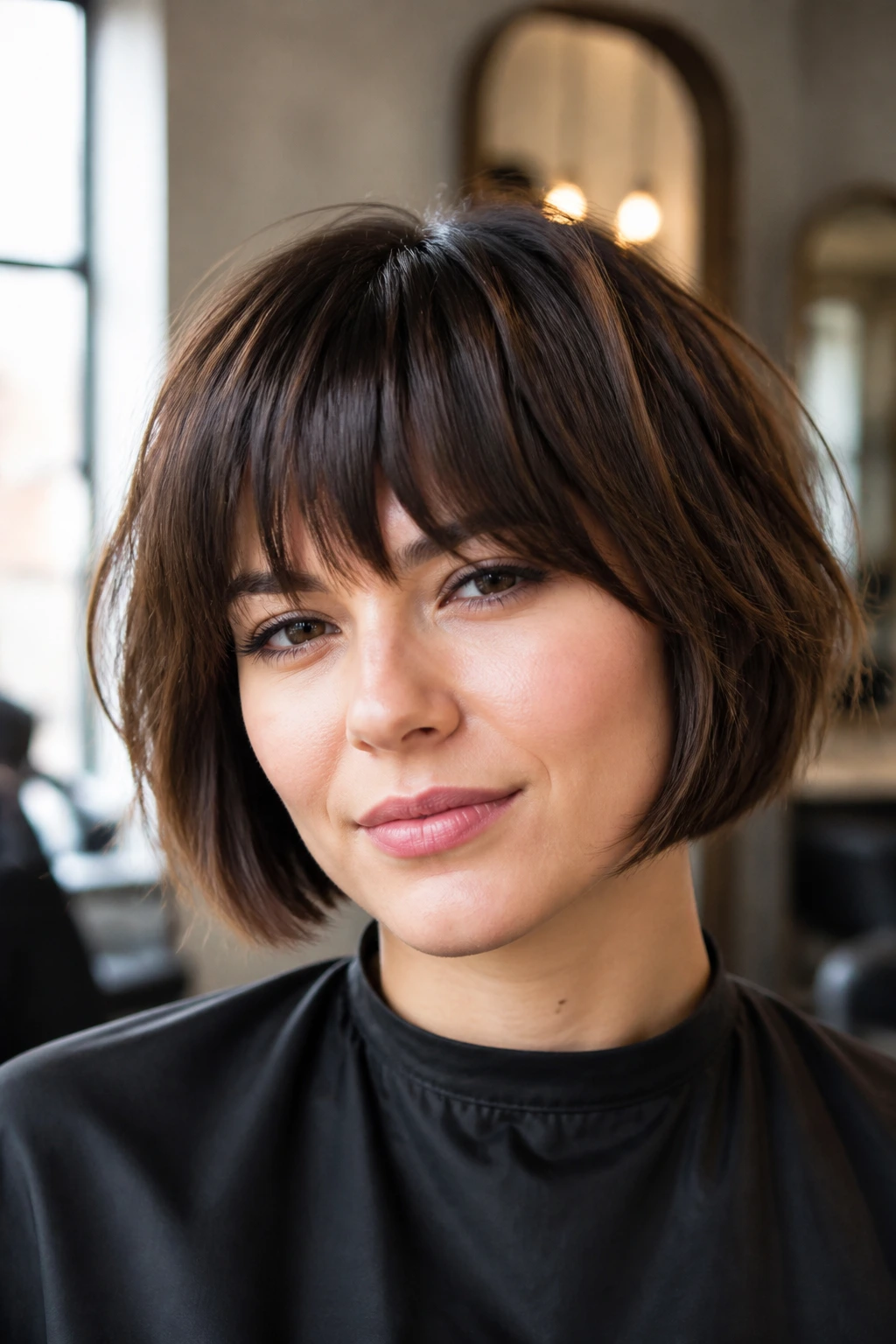
A textured bob bang breaks up the clean line of a classic bob and stops it from looking too proper. The bang sits across the forehead with movement in the ends, while the bob underneath can stay blunt or slightly undercut. That contrast gives the style its energy.
This fringe is one of the easiest ways to make a bob feel less like a haircut from a waiting room and more like an actual style choice. Keep the center slightly shorter than the edges if you want a little lift. Keep the ends chipped if you want the shape to move. Either way, the bang should never lie flat like a ruler.
A small round brush can help, but don’t roll the fringe under too much. A tiny bend is enough.
19. Grown-Out Chop Fringe

A grown-out chop fringe is the bang that refuses to look sloppy while it gets longer. The shape lands past the brows, often touching the lashes or cheekbones, and the line is uneven in a way that feels deliberate. It’s edgy because it looks as if it’s in motion.
This is one of the best options if you hate frequent trims but still want a fringe. The extra length buys time, and the choppy ends keep the cut from turning into one flat sheet. On short hair, the longer fringe helps connect the top to the rest of the cut, which is useful when the back is cropped tight.
It’s also the fringe most likely to survive a windy day without turning into a problem.
20. Rockabilly Roll Bang
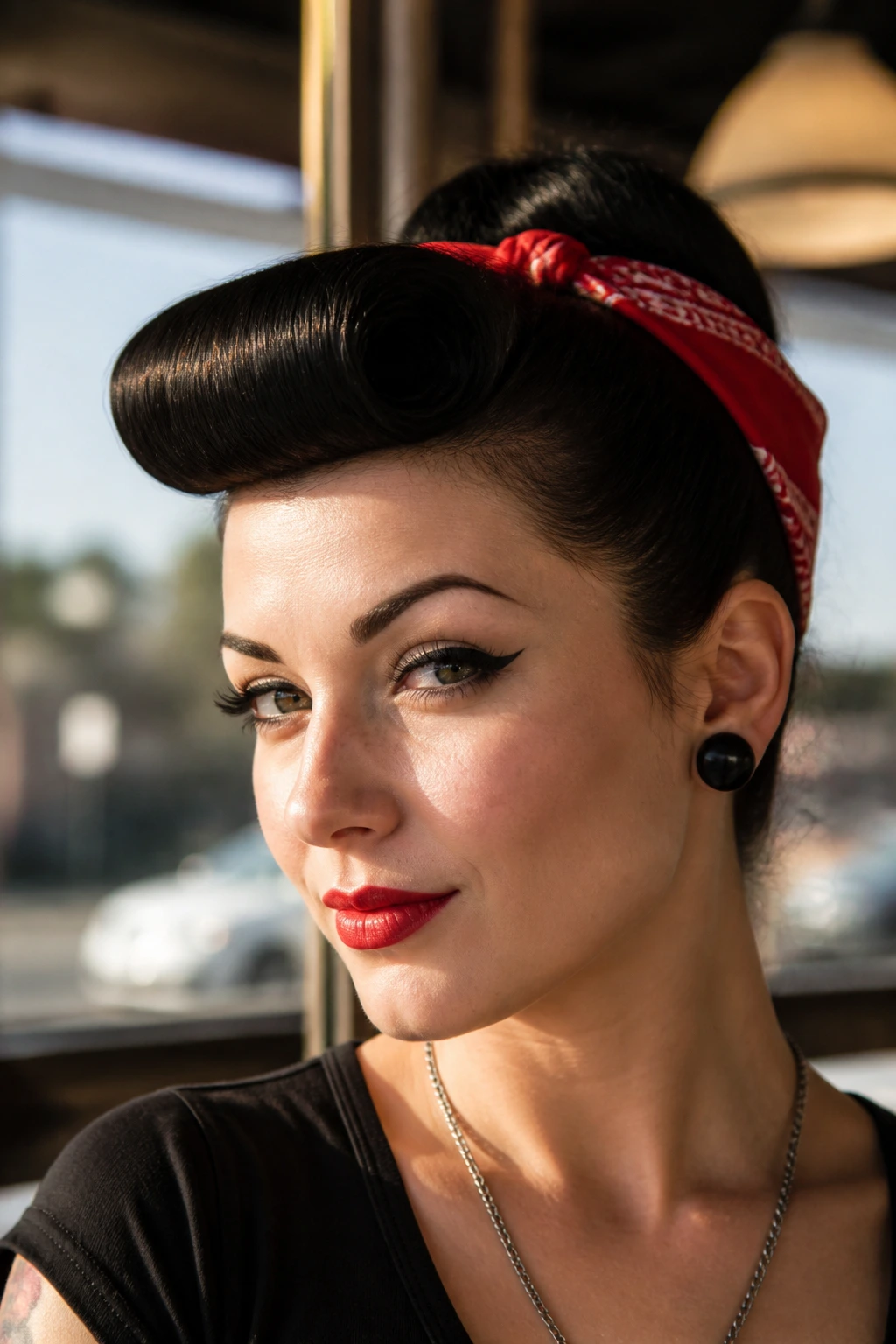
A rockabilly roll bang brings height to the front, then curves the hair into a controlled roll or wave. On short hair, that shape is a statement. It lifts the face, shows off the forehead, and adds a vintage edge that still reads rebellious when the rest of the cut is cropped.
You need enough length in the bang area to roll it, which means this is usually better on a bixie, a longer pixie, or a short bob with front length. The roll should feel sturdy, not fluffy. Use a smoothing product first, set the shape with a small roller or curling iron, then pin or spray it into place until it cools.
This is not a lazy fringe. It rewards a little effort, and it pays you back in personality.
21. Soft Mohawk Fringe
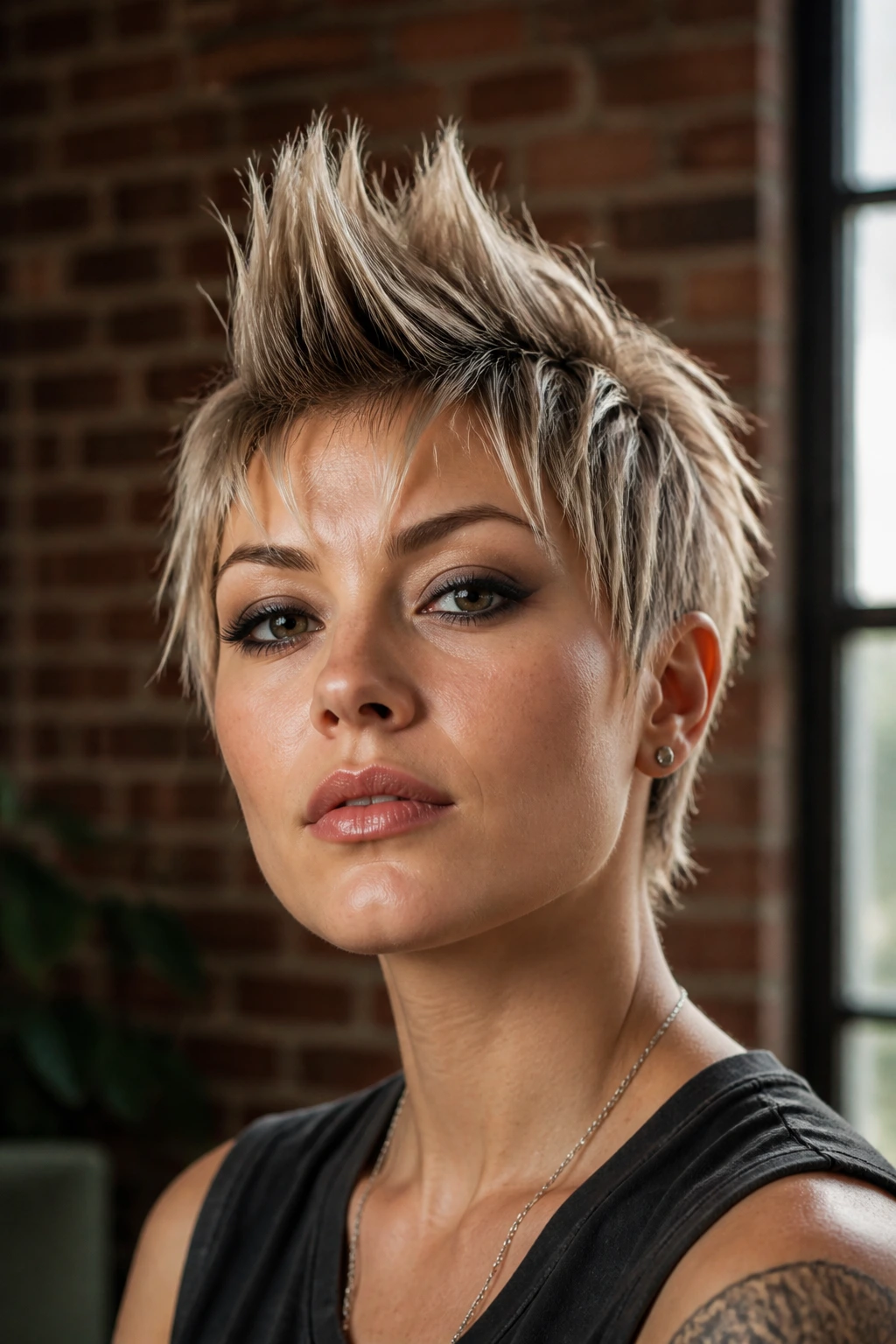
A soft mohawk fringe pushes the center section upward, then lets the sides fall away in lighter pieces. It borrows from punk, but it doesn’t need to look harsh. On short hair, the shape can make the whole cut feel taller and more directional, which is useful if your profile needs a lift.
I like this look on people who want something bolder than a side sweep but less committed than a full spiky front. The center can be brushed forward, up, or slightly back, depending on how much height you want. A little root powder helps. So does a blow-dry directed from the roots toward the crown, not straight down.
It’s a strange little fringe in the best way. That’s why it works.
What Makes a Rocker Fringe Different From a Soft One
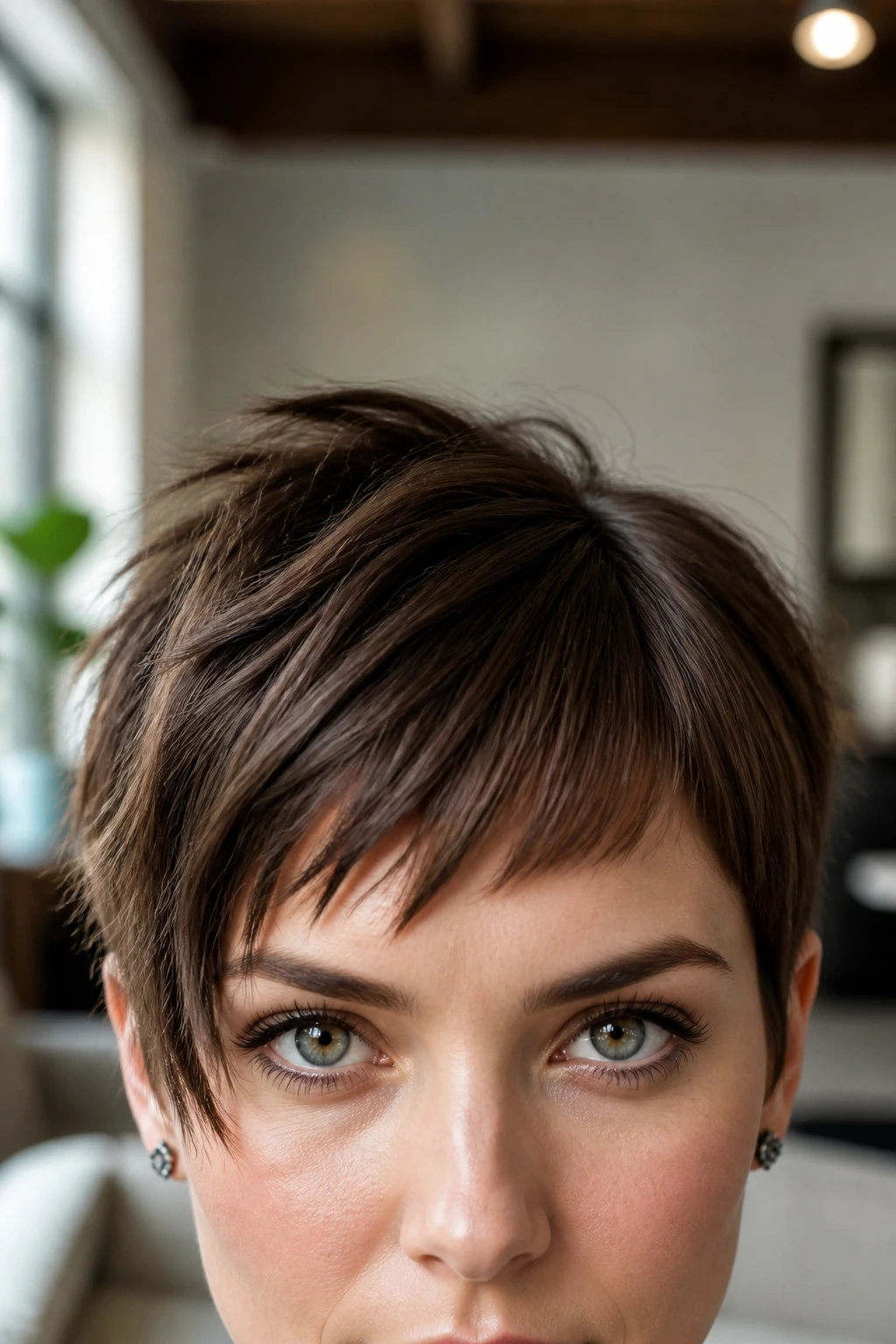
A soft fringe usually tries to disappear into the haircut. Rocker bangs do the opposite. They call attention to the line, the texture, and the way the front interrupts the face. That can mean a razor edge, a broken line, a deep part, or a piecey finish that refuses to behave like one smooth curtain.
On short hair, that difference shows up fast. A soft fringe can make a crop look tidy and gentle. A rocker fringe can make the same cut look sharper, more directional, even a little dangerous. The bones are the same; the finish is not.
The big clue is in the ends. If the fringe is all one heavy block, it reads quieter. If the ends are chipped, separated, or deliberately uneven, the whole bang starts talking back. That’s where the edge lives.
The Tools That Actually Matter
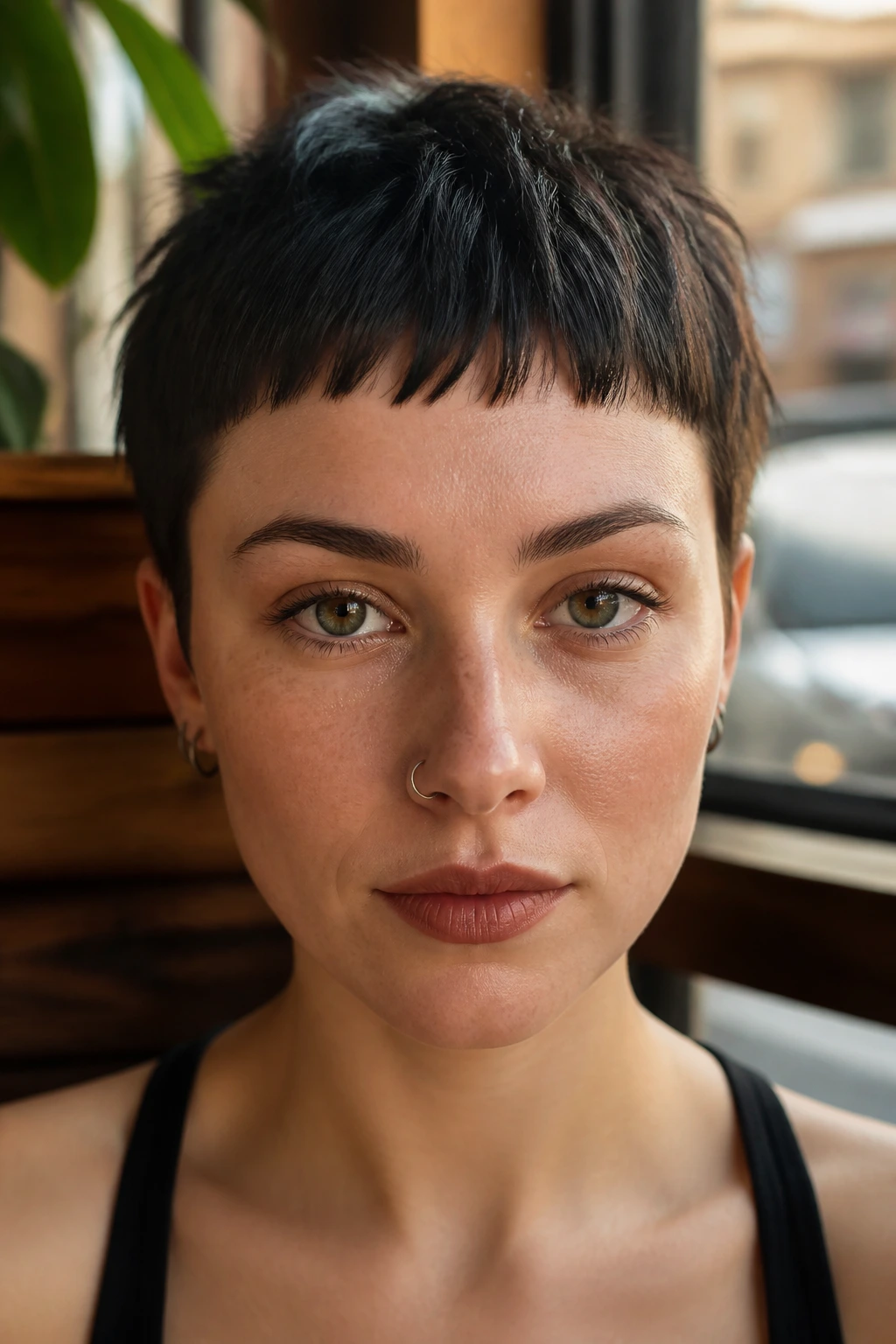
You do not need a drawer full of gadgets to wear rocker bangs well. You need the right few things, and you need to use them with restraint.
- Blow dryer with a nozzle: The nozzle keeps the air aimed at the roots instead of blasting the fringe every direction at once.
- Small flat brush or mini round brush: A flat brush gives a straighter, grittier finish; a small round brush gives a bend without too much curl.
- Heat protectant spray: Short bangs get touched with heat often, so this is not optional if you use a flat iron or dryer.
- Light mousse or root lift spray: Good for bangs that need height at the crown before they fall forward.
- Texturizing paste or matte pomade: Use a pea-sized amount at most. More than that and the fringe goes dull and heavy.
- Dry shampoo: Not just for oil. It gives short bangs a bit of grip and stops them from sliding flat.
- Small clips or duckbill clips: Useful for pinning the fringe while it cools into shape.
- Mini flat iron: Best for quick bends, not straightening every hair into submission.
How to Ask for the Right Fringe at the Salon
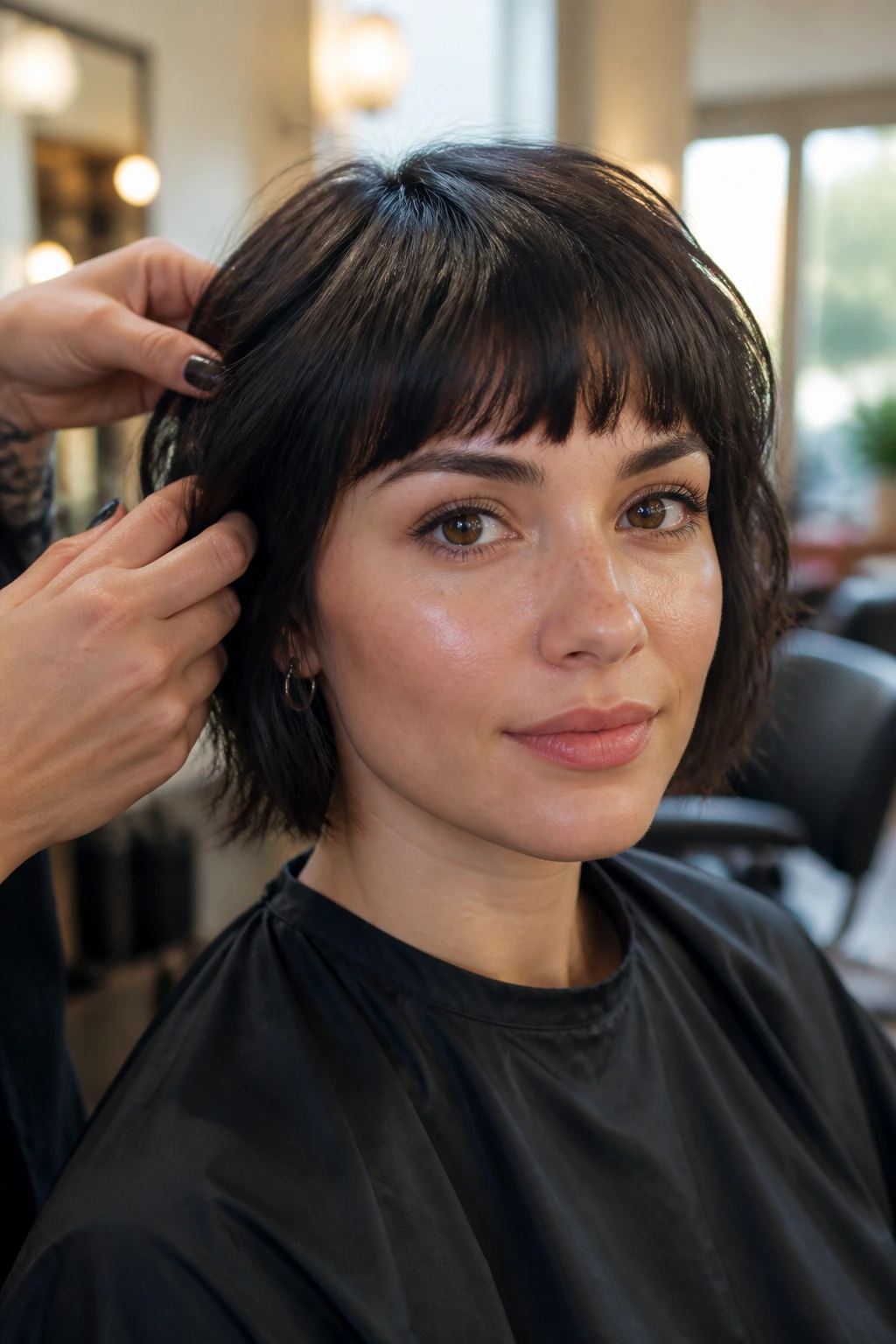
Bring pictures, yes, but bring the right pictures. A photo of a model with thick, straight hair won’t help much if your hair is fine, curly, or cowlick-prone. Look for examples with the same haircut shape, not just the same vibe. That’s the part people skip, and then they wonder why the result feels off.
Be specific about the fringe line you want. Say whether you want the center shorter, the sides longer, or the whole bang piecey and broken. If you have a strong cowlick, say so before the scissors come out. A good stylist will want to see how your hair falls dry, because that’s where the real map is. Wet hair can lie.
Ask whether the bang should be cut blunt, point-cut, or razor-cut. Those are not the same thing. Blunt keeps weight. Point-cut softens the edge. Razor creates a shattered line with more movement. For rocker bangs, that distinction matters more than the haircut name on the mirror.
How to Style Rocker Bangs Without Flattening Them
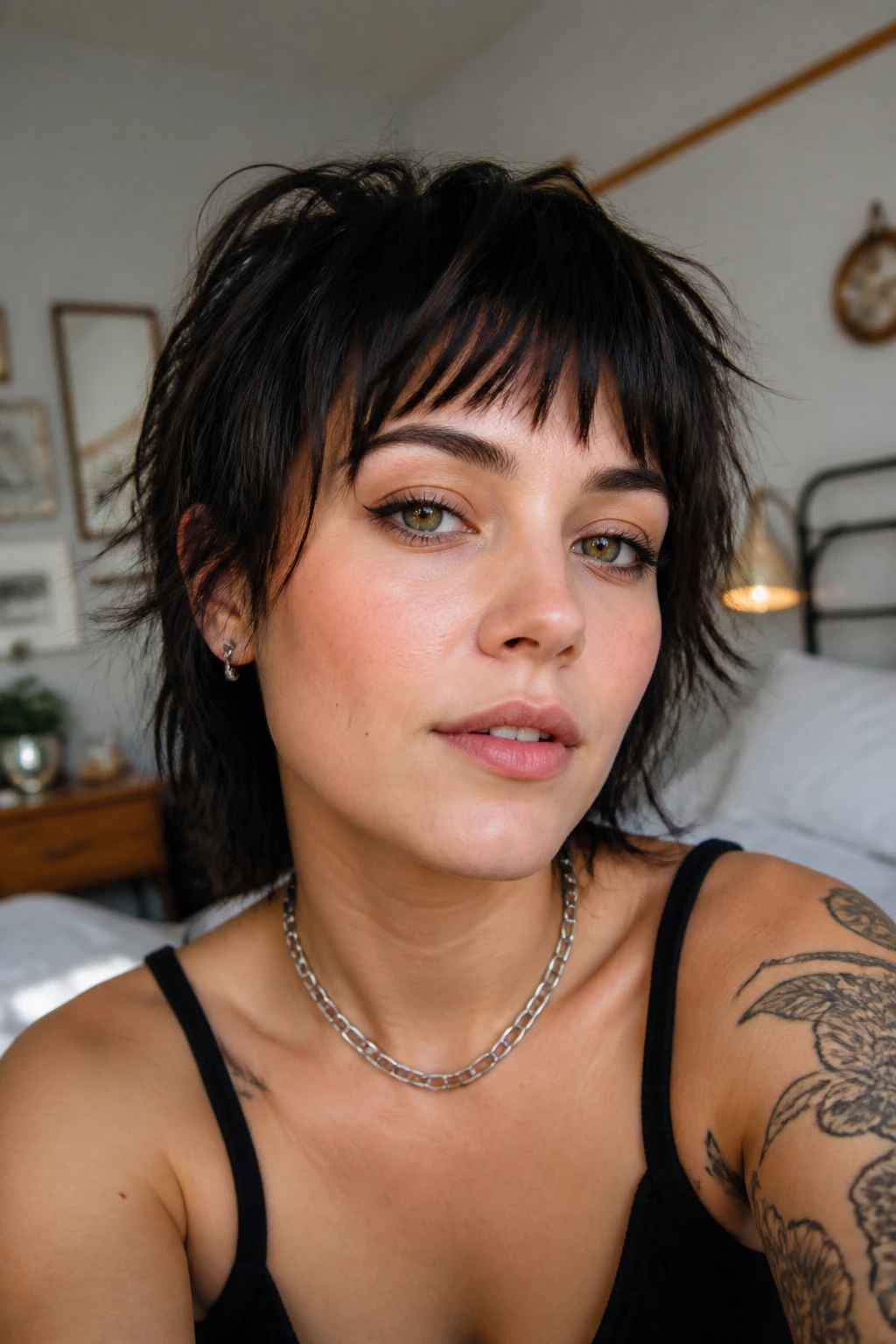
Rocker bangs usually fail for one boring reason: too much product. Heavy cream, thick oils, and big blobs of pomade make the fringe sit there like wet fabric. Short hair needs less. Much less.
Start with damp bangs, not soaked ones. Blow-dry the roots first, aiming the airflow from the side or slightly forward depending on the direction you want. If you want a side sweep, push the front that way and let it cool before you mess with it. If you want a broken center part, use your fingers to split the fringe and rough it dry in two directions. The cooling part matters. Hair sets as it cools.
For texture, rub a tiny bit of paste between your fingertips and tap it only into the ends. Don’t rake it all the way to the roots unless your hair is very fine and needs grip. A good rocker fringe should still move when you shake your head. If it doesn’t move at all, the product won.
Small Tweaks That Change the Whole Mood
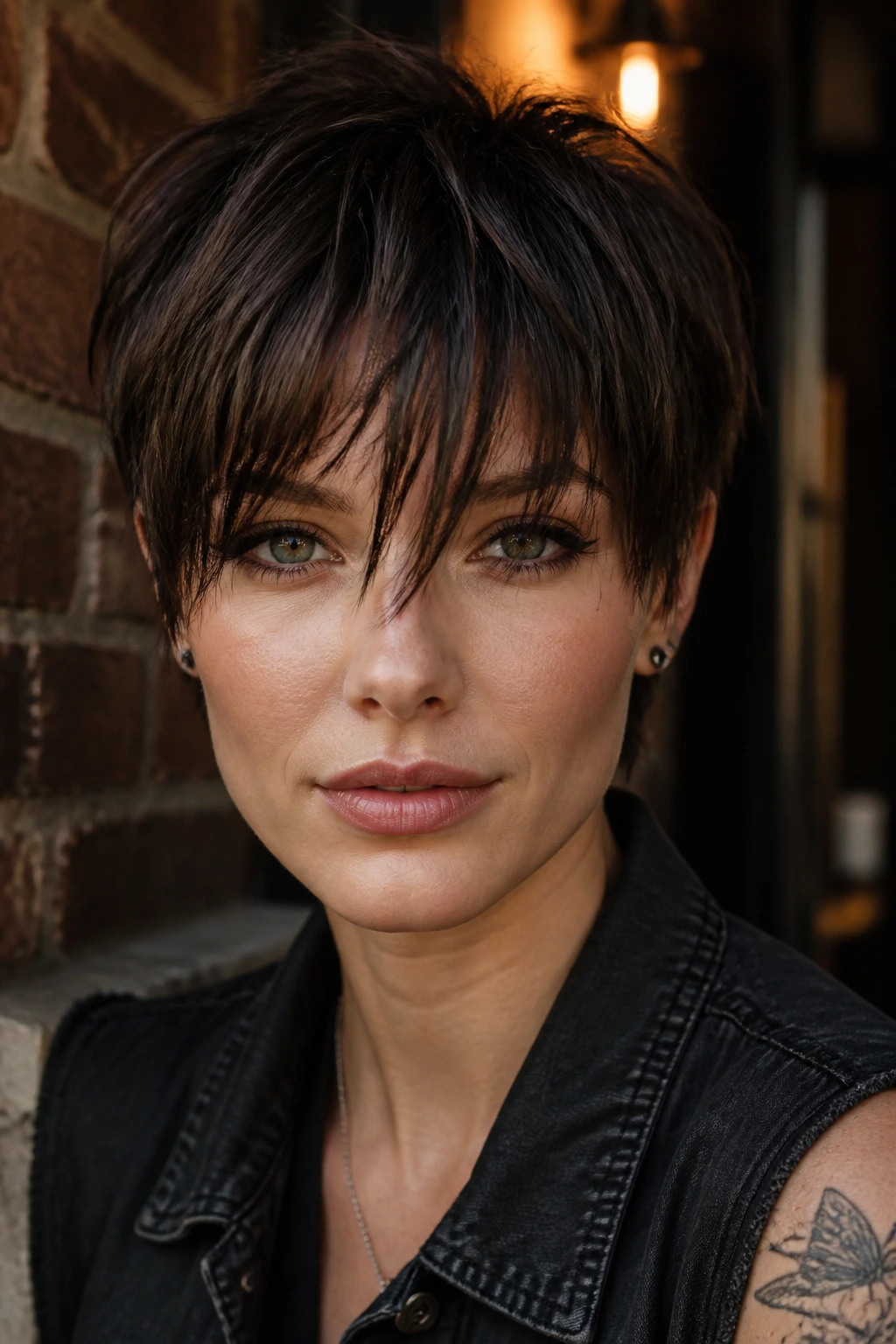
For Fine Hair: Keep the fringe a touch shorter at the center and use a root spray before drying. Fine hair goes limp fast, so a little lift at the base matters more than loaded texture cream.
For Thick Hair: Ask for internal removal under the top layer, not just thinning at the tips. Thick fringe that’s carved only on the surface can puff out into a shelf.
For Curly or Wavy Hair: Cut it longer than a straight fringe and dry it in the shape you actually wear. Shrinkage is real, and it’s rude if you ignore it.
For Glasses Wearers: Leave enough length to sit just above or around the frames, not directly into them. A bang that keeps poking your lenses gets old fast.
For Low-Maintenance People: Choose the longer broken fringe, the side-swept shattered version, or the grown-out chop. These give you movement without demanding a daily reset.
Common Mistakes That Flatten the Look
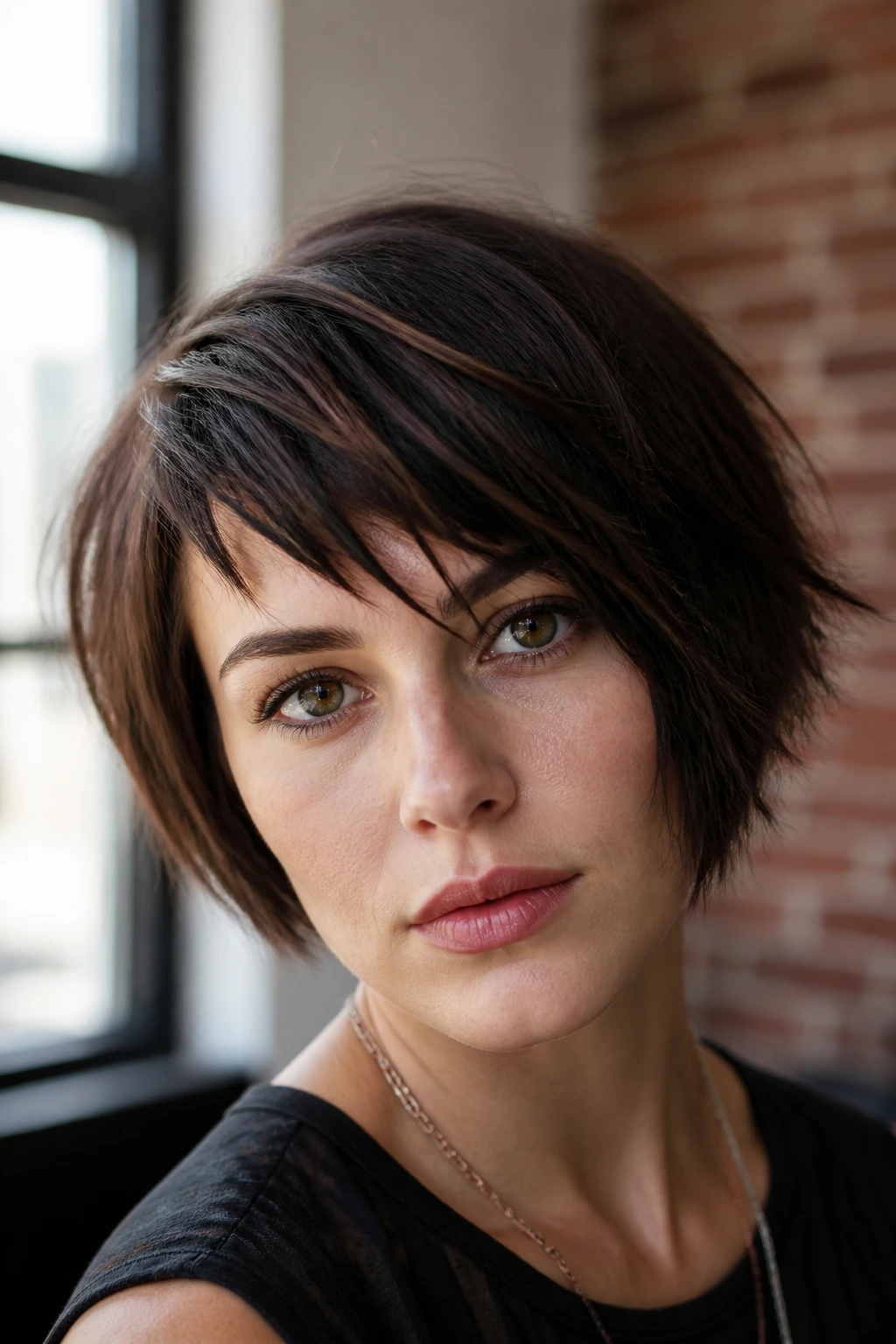
The first mistake is cutting the fringe too short at the center because it looks dramatic in the chair. Then it dries and jumps another quarter inch upward, and suddenly the bang sits way above the brows. Fix: leave more length than you think, especially if your hair springs up when it dries.
The second mistake is loading the front with product. A small smear of paste is enough. If the fringe feels sticky or looks dark at the roots, you’ve gone too far.
The third mistake is ignoring the cowlick. A stubborn front cowlick will split a bang in the middle or lift one side like a tent flap. That’s not a styling failure; it’s a cutting issue. The shape has to account for the way your hair wants to live.
The fourth mistake is trying to force every rocker bang into the same finish. Some need a raw, dry texture. Some need a slick set. Some need room to bend. One styling method does not fit all of them.
Variations and Adaptations to Try
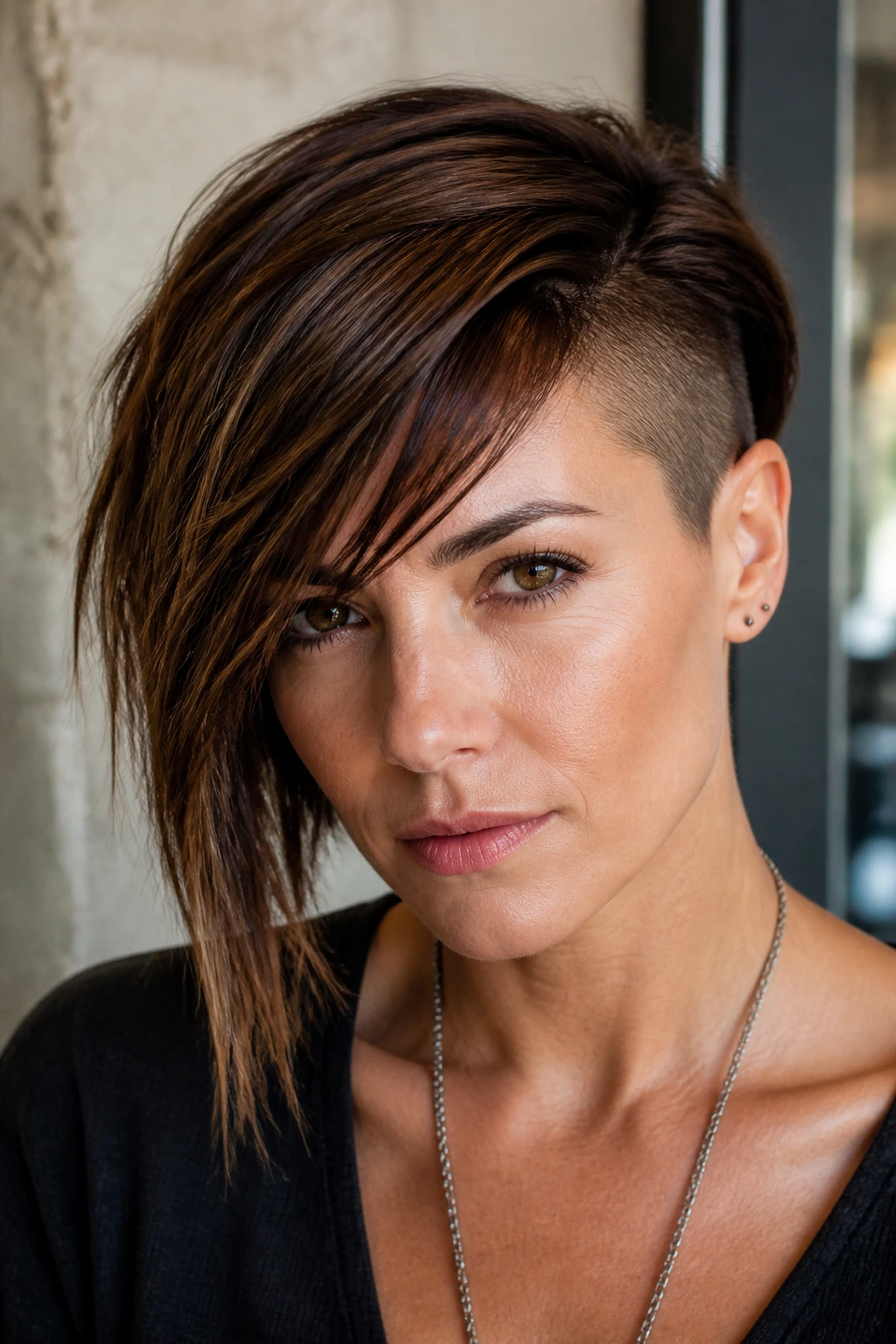
The Glasses-Friendly Fringe: Keep the bang longer and more separated at the ends, with the center grazing the brows instead of sitting above them. This works when you want edge but don’t want your frames fighting your haircut all day.
The Curly Coil Version: Cut the fringe dry, leave extra length for shrinkage, and let the curl pattern decide the finish. This is the best route if your curls would rather spring than lie flat.
The Low-Maintenance Grow-Out: Choose a shattered side sweep or a grown-out chop fringe, then trim it in small steps every few weeks. It looks intentional even when it’s getting longer.
The High-Drama Punk Version: Go micro, go spiky, or go undercut sweep. The front should be the loudest part of the cut, and the sides should stay cleaner so the shape has somewhere to land.
The Soft Office-After-Dark Version: Start with a split fringe or a pinned-back peekaboo bang. Wear it forward during the day, then tuck or clip it back when you want a cleaner face line.
The Thick-Hair Tamer: Use a deeper internal texture cut and a matte finish. Thick hair needs weight removed from underneath, or the fringe will swell into a block.
Keeping the Fringe in Shape Between Cuts
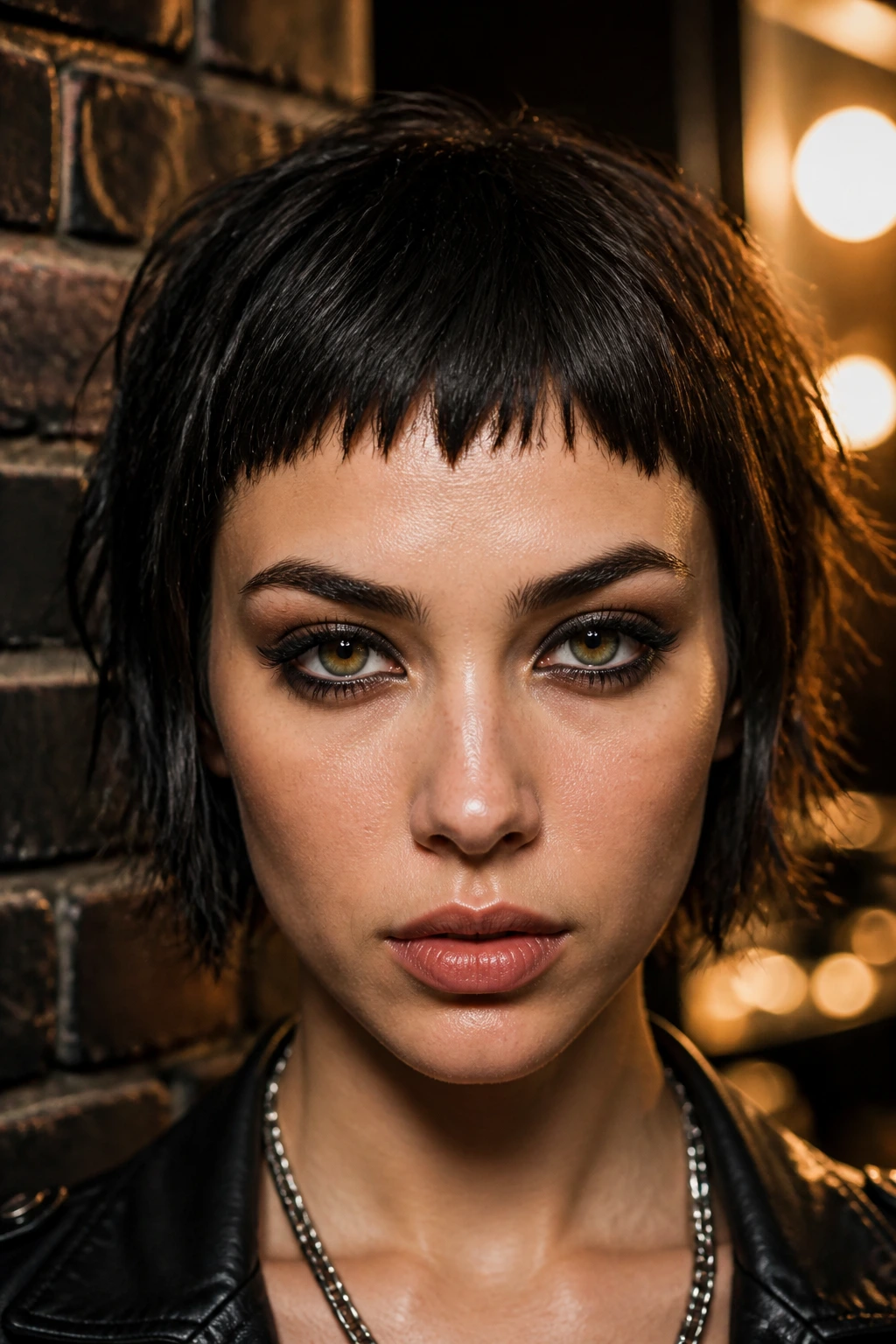
Short bangs need maintenance. Not a shocking amount, but enough that pretending otherwise is a bad plan. A micro fringe may need a tidy-up every 2 to 3 weeks if you want it sitting at the same spot. Longer rocker bangs can stretch to 4 to 6 weeks, especially if they’re shattered or grown out on purpose.
Dry shampoo is your friend on day two, but use it at the roots, not in a cloud over the whole forehead. Puff it in, wait a minute, then brush or finger it through so it doesn’t stay chalky. If the fringe bends weird overnight, mist it lightly with water or a leave-in spray and re-dry the front only. That’s usually enough.
At night, keep the bangs from being crushed flat under a heavy sleep position. A loose clip, a soft headband, or simply sweeping them away from the forehead before bed can save you a full morning of fighting with them. It sounds minor. It isn’t.
Frequently Asked Questions
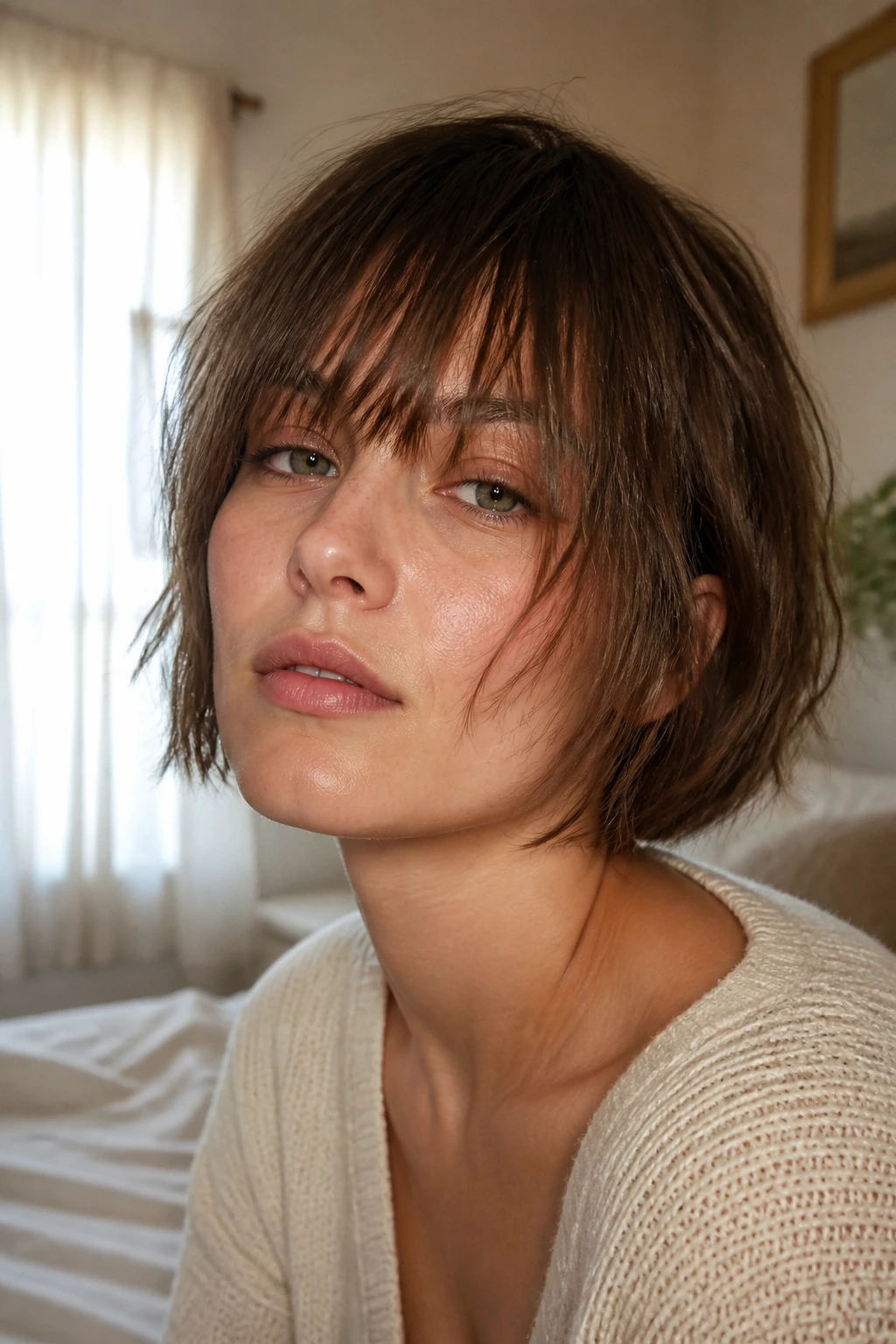
Do rocker bangs work on very short pixie cuts?
Yes, and they often work better there than on longer hair because the contrast is stronger. A short pixie with a choppy or micro fringe can look cleaner and sharper than a longer cut with the same bang.
What if my hair has a strong cowlick at the front?
You can still wear rocker bangs, but the cut has to respect the cowlick instead of forcing it flat. Longer, side-swept, or split fringe shapes usually behave better than a short blunt line.
Are rocker bangs good for curly hair?
They can be excellent on curly hair if they’re cut dry and left longer for shrinkage. The key is shaping the curl pattern you actually have, not the one you wish you had.
Which rocker bang is the easiest to grow out?
The grown-out chop fringe and the side-swept shattered bang tend to be the least annoying during grow-out. They blend into the haircut instead of sitting like a hard line that needs constant correction.
Can I style these bangs without heat?
Yes, especially if the fringe already has bend. A little damp styling, finger shaping, and air-drying with clips can set a piecey shape. Fine or stubborn hair usually needs at least a touch of heat for best results.
What product should I avoid on short bangs?
Heavy oils and thick leave-in creams are risky. They weigh the fringe down fast and can make the front separate into oily strings, which is not the same as texture.
How do I keep bangs from getting greasy so fast?
Don’t touch them all day. Hands add oil faster than most people realize. A quick dab of dry shampoo at the roots and a light brush-through can buy you another day or two.
Should I cut rocker bangs myself at home?
If the style is short, sharp, or asymmetrical, I’d skip the DIY scissors unless you already know how your hair behaves dry. Bangs show every mistake immediately, and short hair gives you less room to hide a bad line.
The Shape That Keeps Short Hair Alive
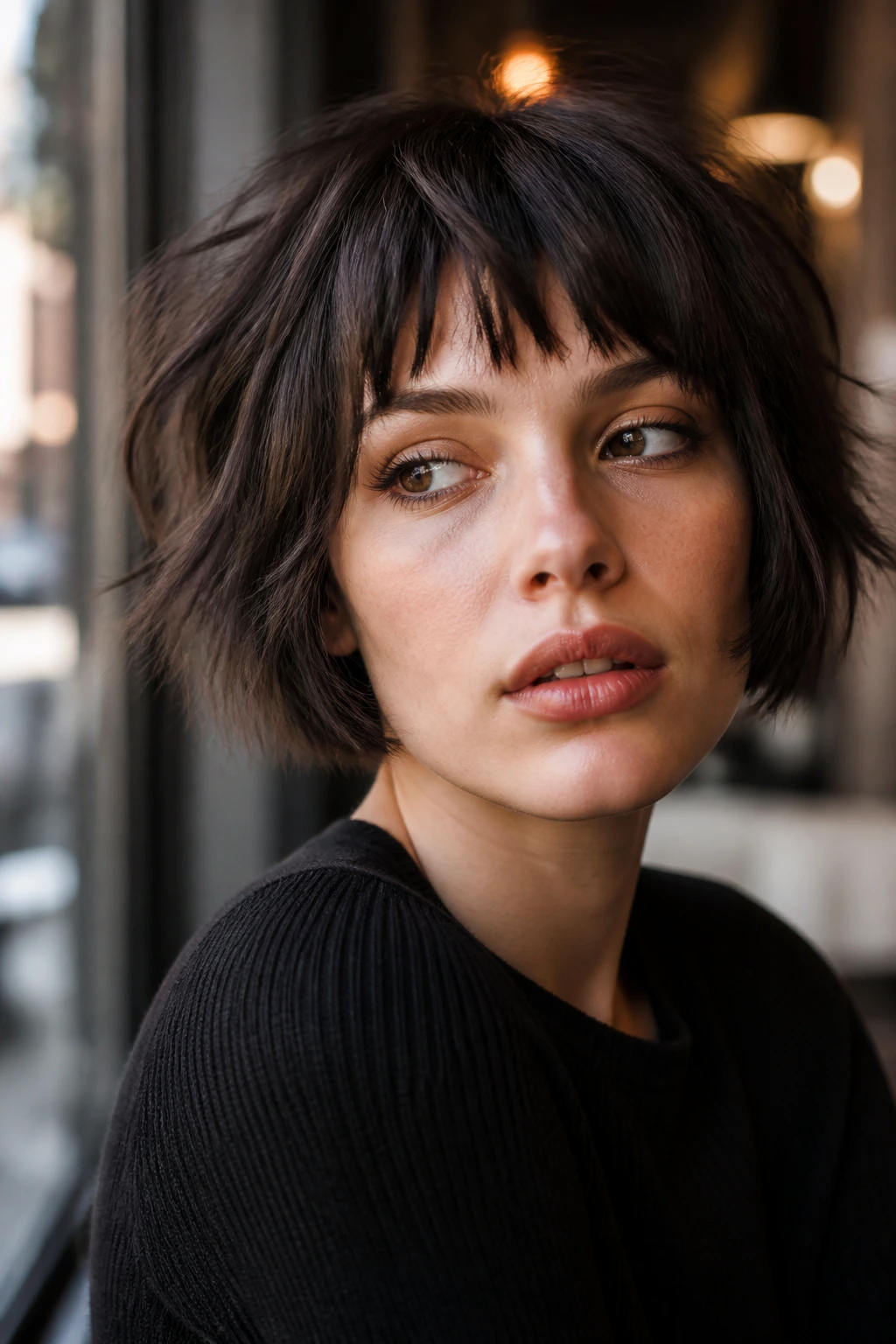
Short hair with a fringe can go two ways. It can look neat and forgettable, or it can look like the person wearing it had a point. Rocker bangs are for the second option. They bring motion to the forehead, loosen up the haircut, and make the whole shape feel less polite.
The best part is how many directions they can go. Jagged, curled, swept, rolled, pinned, or pushed into a soft mohawk — the front of a short cut has more range than people give it credit for. That’s why the right fringe can rescue a bob that feels stale or sharpen a pixie that needs some nerve.
If you’re taking this idea to a stylist, bring a photo of the cut shape you want, not only the bang. That’s the little detail that saves everyone time. And if you’re styling at home, start smaller than you think. A little lift, a little bend, and a little broken edge usually beat the overworked version every time.
