



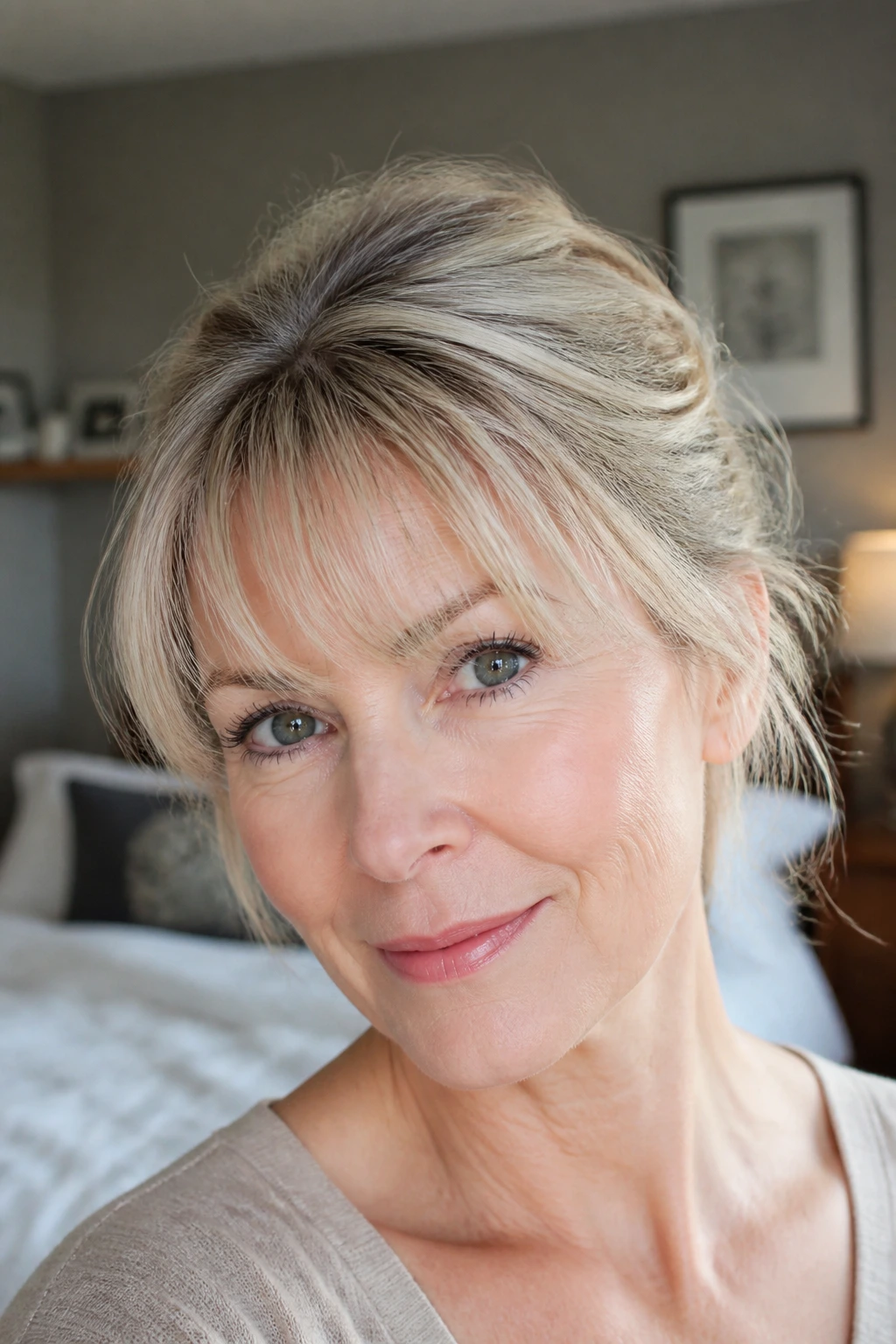
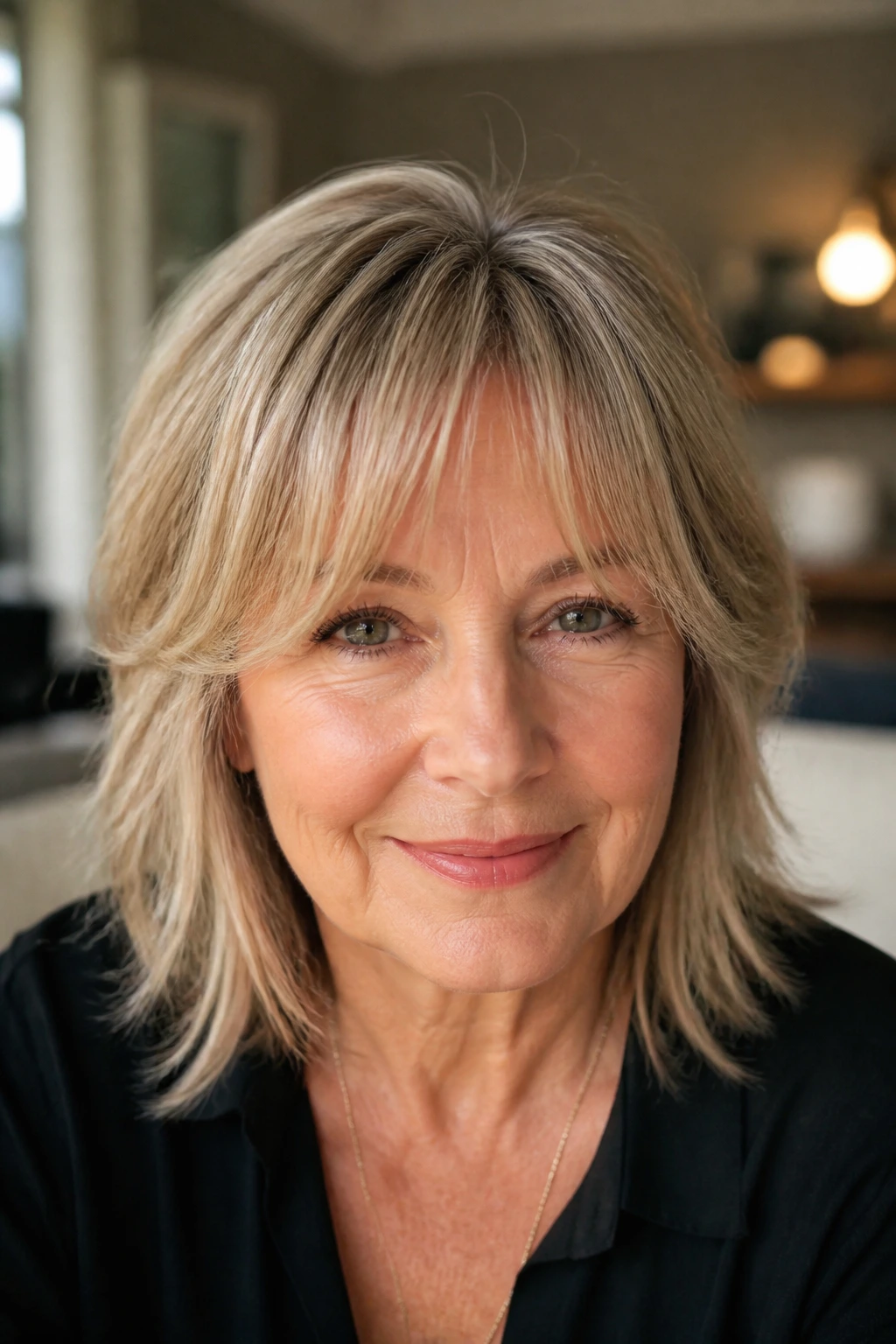
Wispy bangs for fine hair over 50 work because they cheat the eye. They give the front of the haircut a little movement, a little lift, and a little softness without asking thin strands to behave like a heavy curtain.
That matters more than people admit. Fine hair has a bad habit of looking flat the second you pile too much of it into a bang area, and once a fringe gets dense, it can drag the whole face down. A wispy cut solves that by leaving space between the strands, so the forehead shows through in a flattering way and the hair still looks intentional instead of sparse.
The best versions also play nicely with the things that start to matter more after 50: cowlicks that have opinions, glasses that sit higher on the nose, temples that need a softer edge, and crowns that lose a bit of lift when the blow-dry gets rushed. A good wispy fringe doesn’t fight those realities. It works with them. And that’s where the good haircuts live.
Why These Wispy Bangs Keep Fine Hair Looking Light
-
They keep the front from collapsing: A lighter fringe means the roots can still stand up a little instead of being crushed by too much hair at the forehead.
-
They soften the face without hiding it: The best wispy shapes break up a strong forehead line, but they still let your eyes and cheekbones stay visible.
-
They grow out with less drama: Pieces that are point-cut, feathered, or split can slide into layers instead of turning into a blunt shelf two weeks later.
-
They work with glasses and movement: Several of these cuts leave room for frames, blinking, wind, and all the things that make a stiff bang annoying.
-
They’re easier to style than dense fringe: A 1-inch round brush, a quick bend, and a touch of texturizing spray usually do the job. No wrestling match required.
1. Feathered Curtain Bangs
Feathered curtain bangs are the friendliest place to start if you want wispy bangs for fine hair over 50 without a hard commitment. The center is shorter, the sides open out near the cheekbones, and the whole thing feels airy instead of blunt. I like this shape because it gives the illusion of width across the forehead while still letting the hair move.
Why They Work on Fine Hair
Curtain bangs spread the density out instead of stacking it in one heavy line. That matters when the front section is thin, because too much bulk in the bang area can make the rest of the haircut feel limp by comparison. Keep the longest pieces grazing the cheekbone, not the jaw, or the shape starts to drag.
Quick styling cue
- Blow-dry the fringe with a 1-inch to 1.25-inch round brush.
- Aim the center downward for the first 10 seconds, then roll the side pieces away from the face.
- Finish with a light mist of flexible-hold spray, not a crunchy one.
Best tip: Ask for the center to stay a touch longer than you think you need. Fine hair springs up when it dries, and a curtain bang that looks “a bit too long” wet is often perfect once it settles.
2. Side-Swept Wispy Fringe
If you want the safest bang in the room, this is it. Side-swept wispy fringe hides a cowlick better than a straight-across cut, and it gives fine hair a diagonal line that makes the front look fuller than it is. There’s a reason this shape keeps showing up on women who want polish without fuss.
The cut works because it borrows weight from the longer side and lets the shorter side lift at the root. That diagonal also softens the face around the eye and temple area, which can be flattering when hair has thinned a little at the sides. I’d choose this over blunt fringe any day if your hair lies flat in humidity.
The styling trick is simple. Blow the bang in the opposite direction first, then sweep it back across the forehead while it’s still warm. That tiny detour gives it memory.
3. Brow-Grazing Piecey Bangs
Can brow-grazing bangs work on fine hair? Absolutely — if they’re cut with little gaps, not with a solid wall of hair. The “piecey” part is doing a lot of work here. You want visible separation, almost like the fringe was lightly finger-combed with a touch of paste, not plastered together.
What Makes Them Stand Out
A brow-grazing length keeps the eye line open and gives the face some structure without eating up forehead space. Fine hair often looks better when it’s allowed to break into soft pieces, because each strand gets its own little job instead of trying to behave like a dense strip.
How to wear them
- Use a pea-size amount of mousse at the roots before drying.
- Twist tiny sections around your fingers while they’re still warm.
- Stop the fringe just as it touches the brows; longer and it can look stringy, shorter and you lose the softness.
One detail that matters: these bangs look best when they’re slightly imperfect. If every strand is lined up like soldiers, the whole thing gets stiff.
4. Bottleneck Bangs
Bottleneck bangs are the closest thing to a soft landing for someone who wants fringe but hates the idea of maintenance panic. They start a little shorter in the center, then angle out into longer sides, almost like the shape of a bottle neck opening into a shoulder. On fine hair, that taper is gold.
Think of them as a curtain bang with better restraint. The middle gives you a little face frame, while the sides blend into the cut and keep the forehead from looking boxed in. They’re especially useful if your hairline has a few sparse spots at the temples, because the longer outer pieces camouflage them instead of showing them off.
- Best for square or heart-shaped faces.
- Works well with a shoulder-length bob or a soft lob.
- Needs a trim every 4 to 6 weeks if you want the center to keep its shape.
The quiet advantage here is grow-out. Even when these bangs get a little long, they still look like part of the haircut.
5. Airy See-Through Fringe
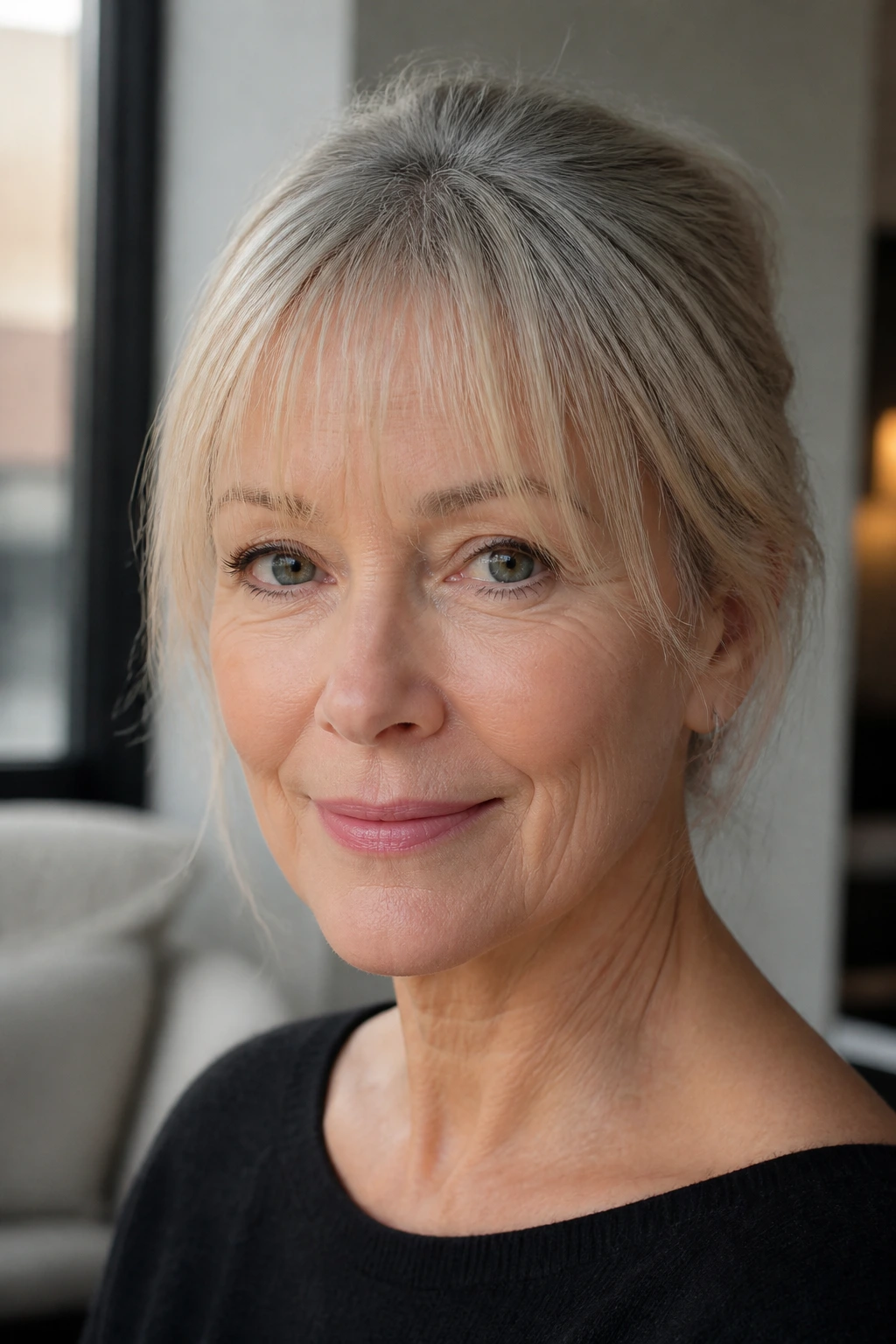
Airy see-through fringe is a Korean-inspired shape that looks almost translucent on the forehead. That sounds delicate, and it is, but that’s exactly why it suits fine hair so well. The cut uses very light density, so you get the suggestion of bangs without the weight of a full fringe.
On straight or softly wavy fine hair, this can be beautiful. The forehead shows through in little patches, which sounds odd until you see it in motion. The result is softer than a blunt bang and less fussy than a heavy side sweep.
What I like most is the honesty of it. There’s no pretending the hair is thick; it simply uses the thickness it has with better spacing and cleaner edge work.
Dry it with a paddle brush or your fingers, then finish with a tiny bit of dry texture spray at the ends. Too much product ruins the whole point.
6. Choppy Micro-Wisps
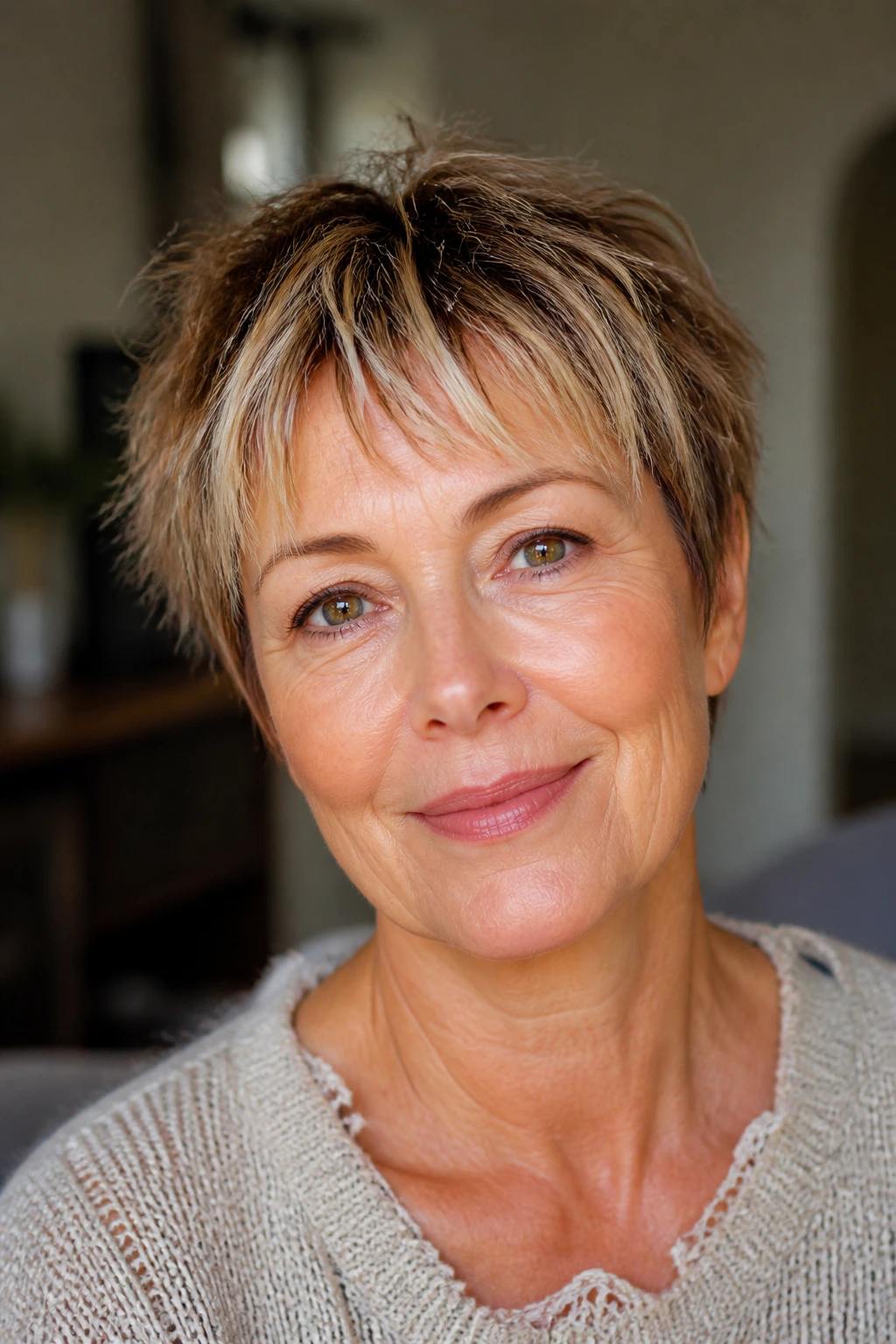
This is not the same thing as baby bangs. Choppy micro-wisps sit short, but they’re broken up and lightened at the ends so they don’t read as a hard line. I reach for this look when someone wants an edge without the weight of a classic bang.
The comparison matters. A blunt micro fringe can make fine hair look even finer because the eye goes straight to the density line. Choppy micro-wisps avoid that by leaving tiny spaces and uneven ends, which creates movement and a little texture right at the front.
They work best on short bobs, cropped cuts, or neck-length shags. If you’re wearing a lot of length, the contrast can feel too sharp. And yes, they do need regular trimming — usually every 3 to 4 weeks if you want them to stay neat.
For women over 50, this cut can feel fresh without trying too hard. It has personality, but it doesn’t shout.
7. Soft Shag Bangs
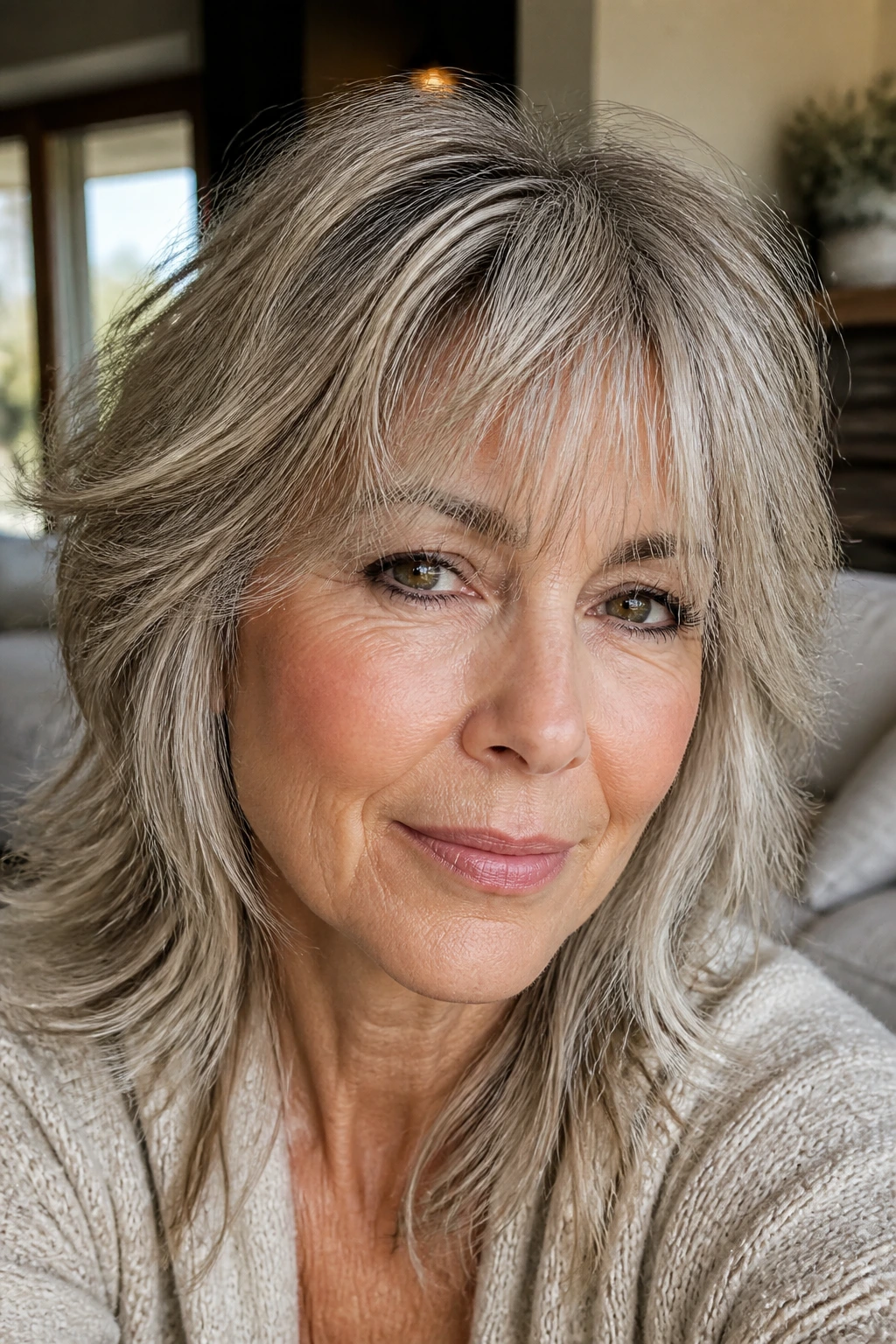
Soft shag bangs are what happen when the fringe gets invited into the rest of the haircut instead of being parked on the forehead like a separate project. They’re feathered, slightly uneven, and blended into layers that keep fine hair moving. If your hair goes flat at the crown, this shape gives the front somewhere to go.
Why they help fine hair
The shag structure creates visual fullness because the bangs and the layers echo each other. That means you’re not relying on one heavy section to do all the face-framing work. You’re building shape from the root down.
Best styling move
- Rough-dry the roots first.
- Use a small round brush only on the front pieces.
- Finish with a pinch of texturizing spray through the ends, not the roots.
A shag fringe can look a little too piecey if you overwork it. Leave some softness in the middle. That’s the part that keeps it flattering.
8. Long Arc Bangs
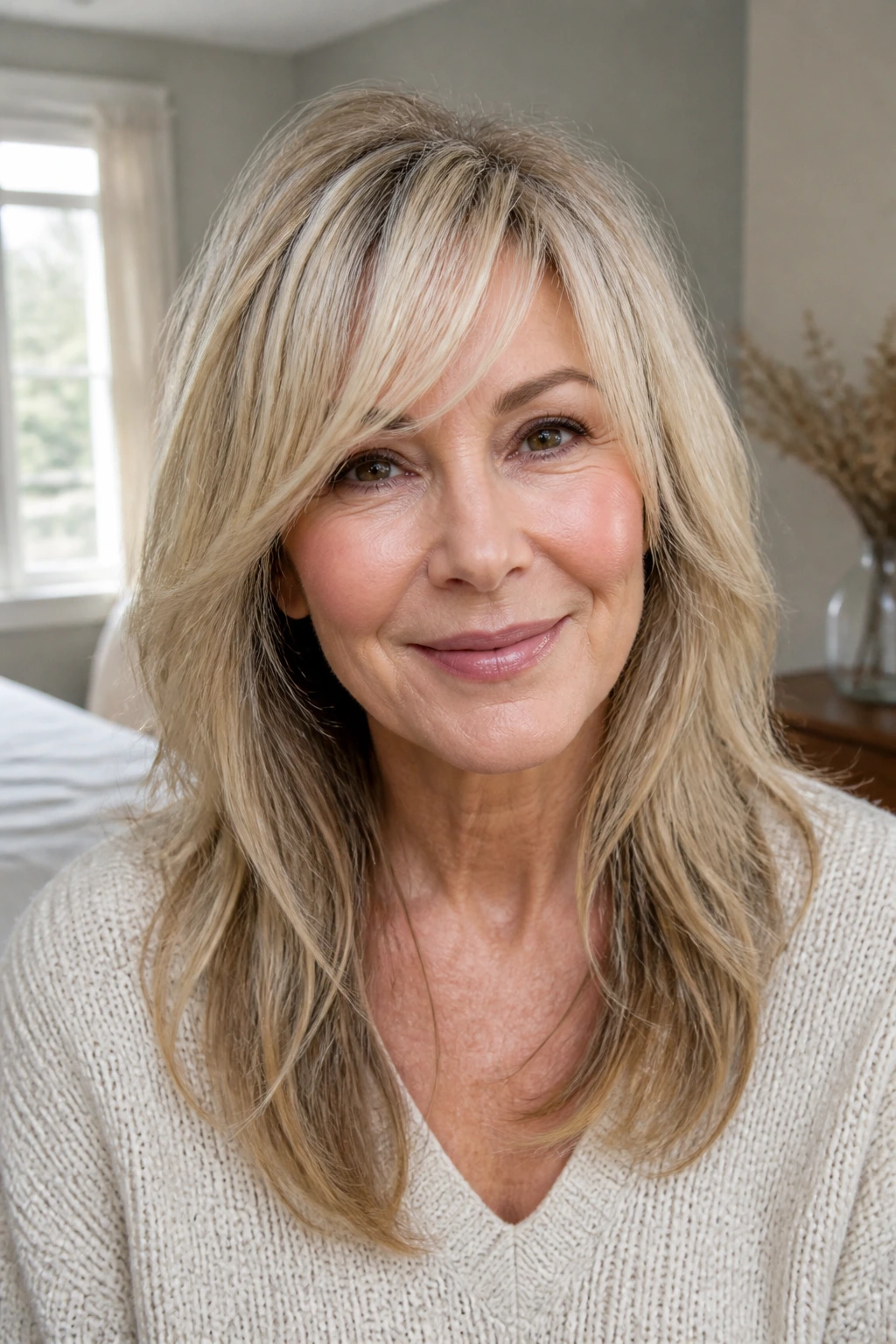
Long arc bangs are one of the most forgiving styles for fine hair over 50, and I think that’s because they behave. They curve gently across the forehead and settle into the rest of the haircut without demanding constant attention. If you wear glasses, this shape can save a lot of annoyance.
The long arc keeps the fringe away from the lens line while still giving the front a soft frame. It also tends to follow the natural curve of the brow, which makes the face look lifted rather than boxed in. On fine hair, that arc is easier to maintain than a straight line because it doesn’t need much density to read well.
I’d choose this for anyone who wants bangs but gets nervous about regret. The grow-out path is smooth, and the styling is calm. That alone is worth a lot.
9. Layered Split Fringe
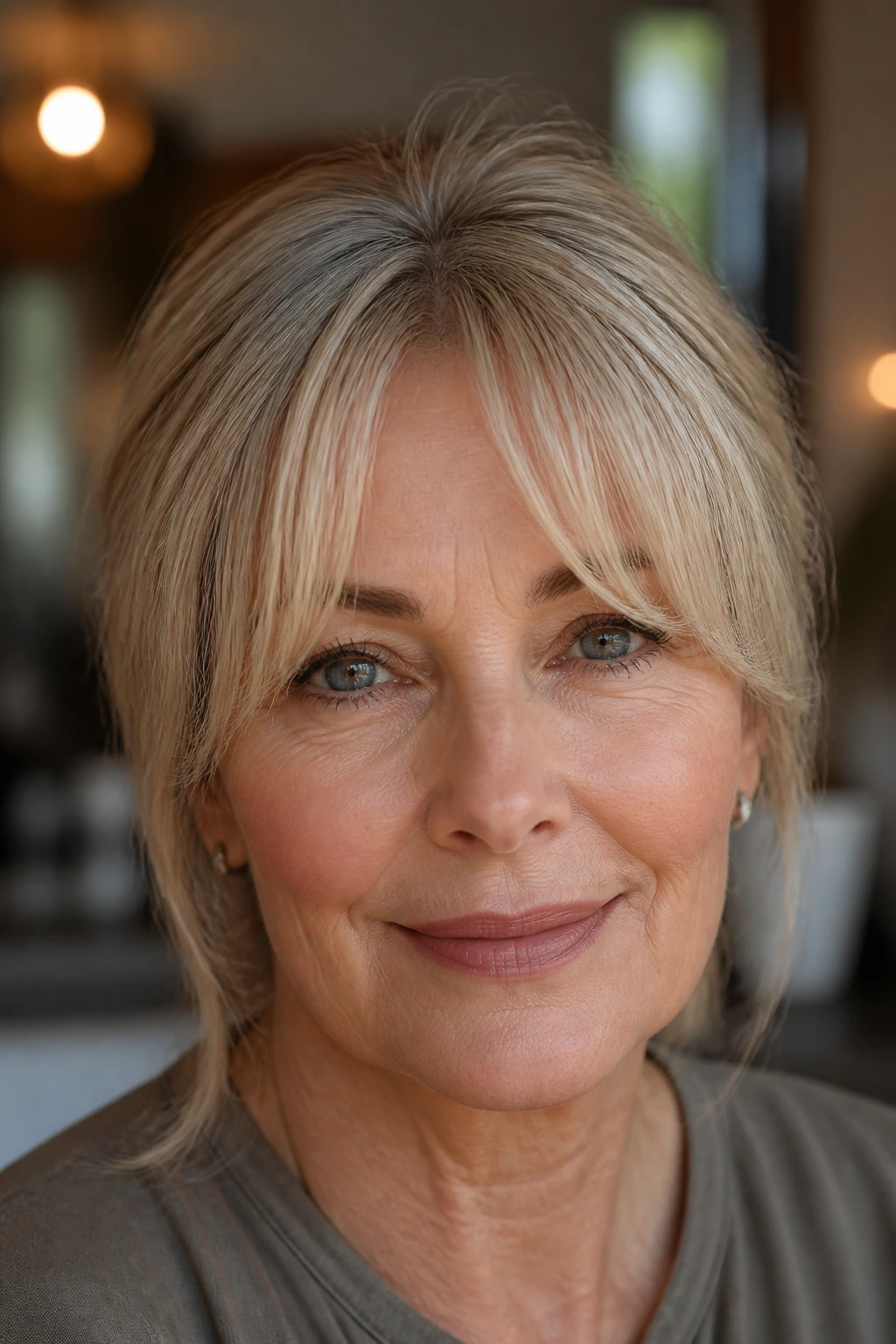
A layered split fringe is what you ask for when you want the softness of curtain bangs but with more piece and less width. The split can be center-heavy, slightly off-center, or even shifted to the side if your part insists on it. Fine hair likes this because the split keeps the front from feeling like one block of fabric.
How to use it
Dry the bangs forward first, then split them while they’re warm. That tiny timing window helps the hair remember the opening. If your fringe wants to fall flat, clip each side for a minute while you do the rest of your makeup.
This style is especially kind to longer faces, because the open center keeps the forehead from looking too short. It’s also good if you like a little movement at the temples without losing the feeling of a fringe. Not dramatic. Just right.
10. Rounded Wispy Bangs
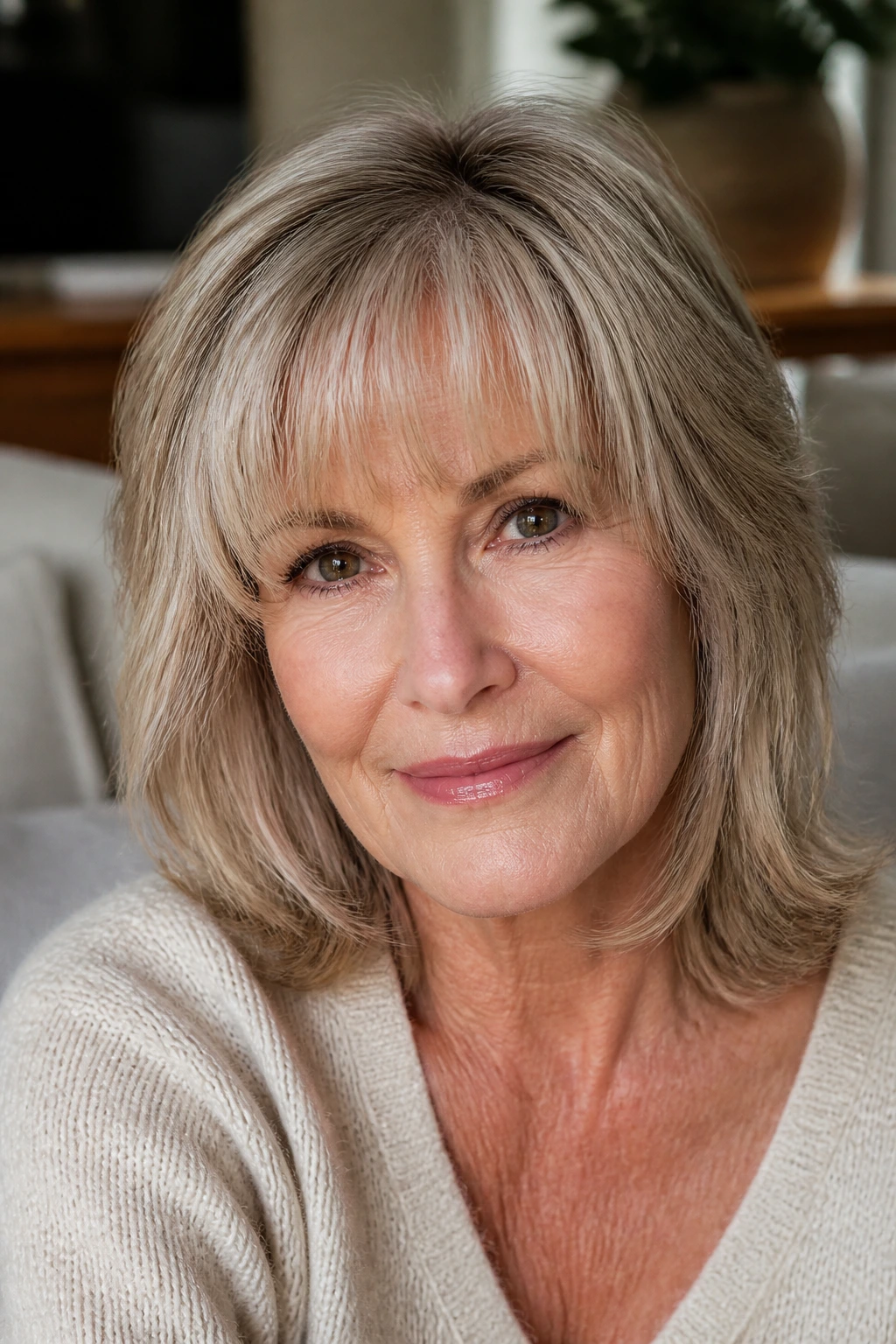
Rounded wispy bangs give the forehead a soft curve, almost like the top edge of a cloud. The shape is subtle, but it changes the whole mood of the haircut. Instead of dropping straight down, the fringe arcs a little, which helps fine hair feel fuller at the center.
This is a nice pick if your face is a little longer or if your features look stronger than you want them to. The curve opens the eyes and keeps the front from looking severe. It’s also one of the easiest bangs to pair with a bob or softly layered shoulder cut.
The trick is not to over-round it. You want a gentle bend, not a helmet. A round brush and a brief cool shot from the dryer usually do enough. If the bang feels too perfect, you’ve gone too far.
11. Feather-Light Pixie Fringe
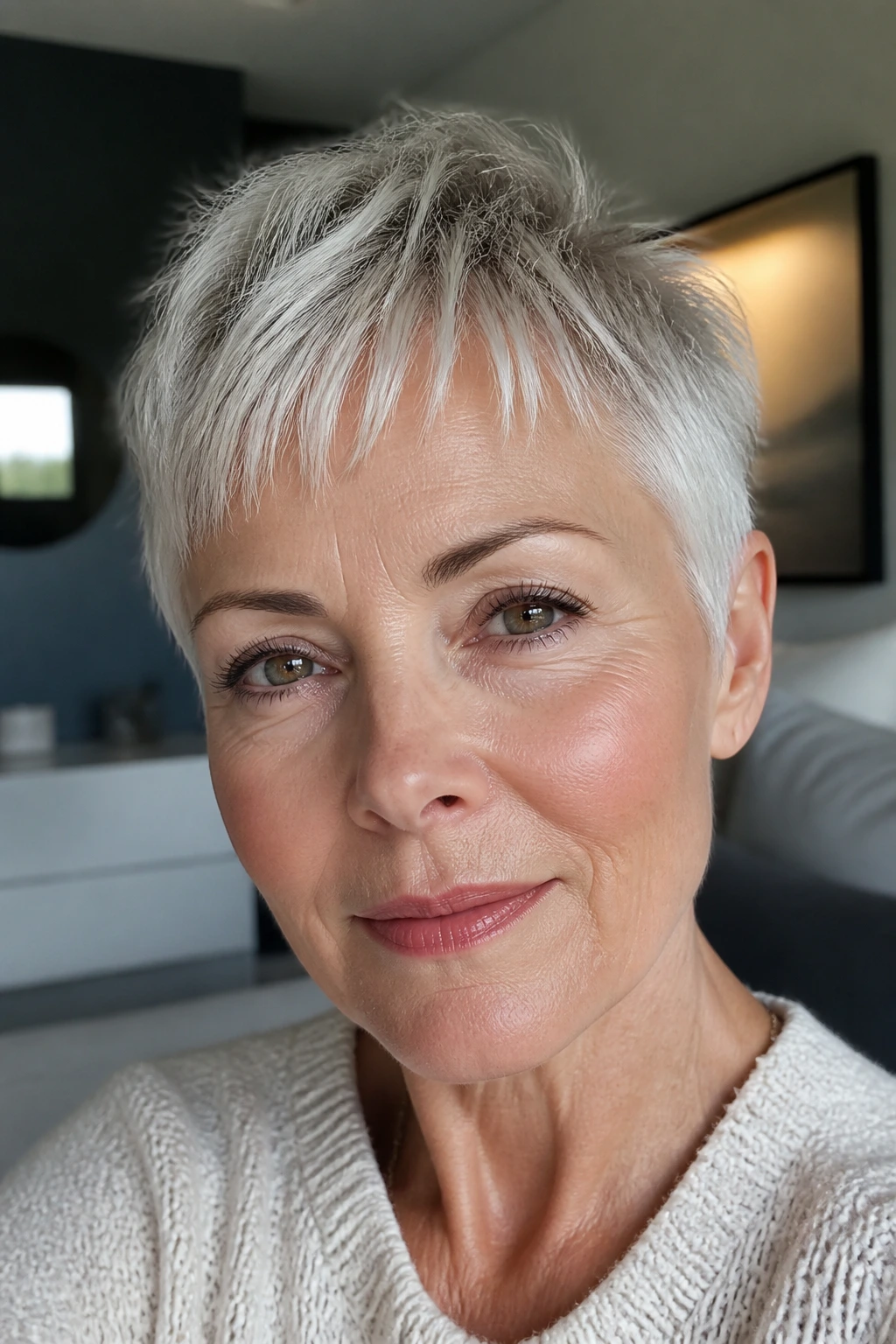
Feather-light pixie fringe is short, airy, and sharp in the best way. It sits close to the forehead, but the ends are so lightly textured that the line never feels heavy. On fine hair, that matters more than length — a short cut can still look soft if the texture is right.
What makes this different from a standard pixie bang is the edge. It’s lightly broken up, sometimes with razor work, sometimes with point cutting, so the fringe doesn’t form a dense strip across the top of the face. That leaves room for the crown to stay lifted.
This one needs regular trims. No drama, just truth. If you let it grow too long, the whole effect disappears and it starts to look like an awkward in-between cut.
12. Side-Part Sweep Bangs
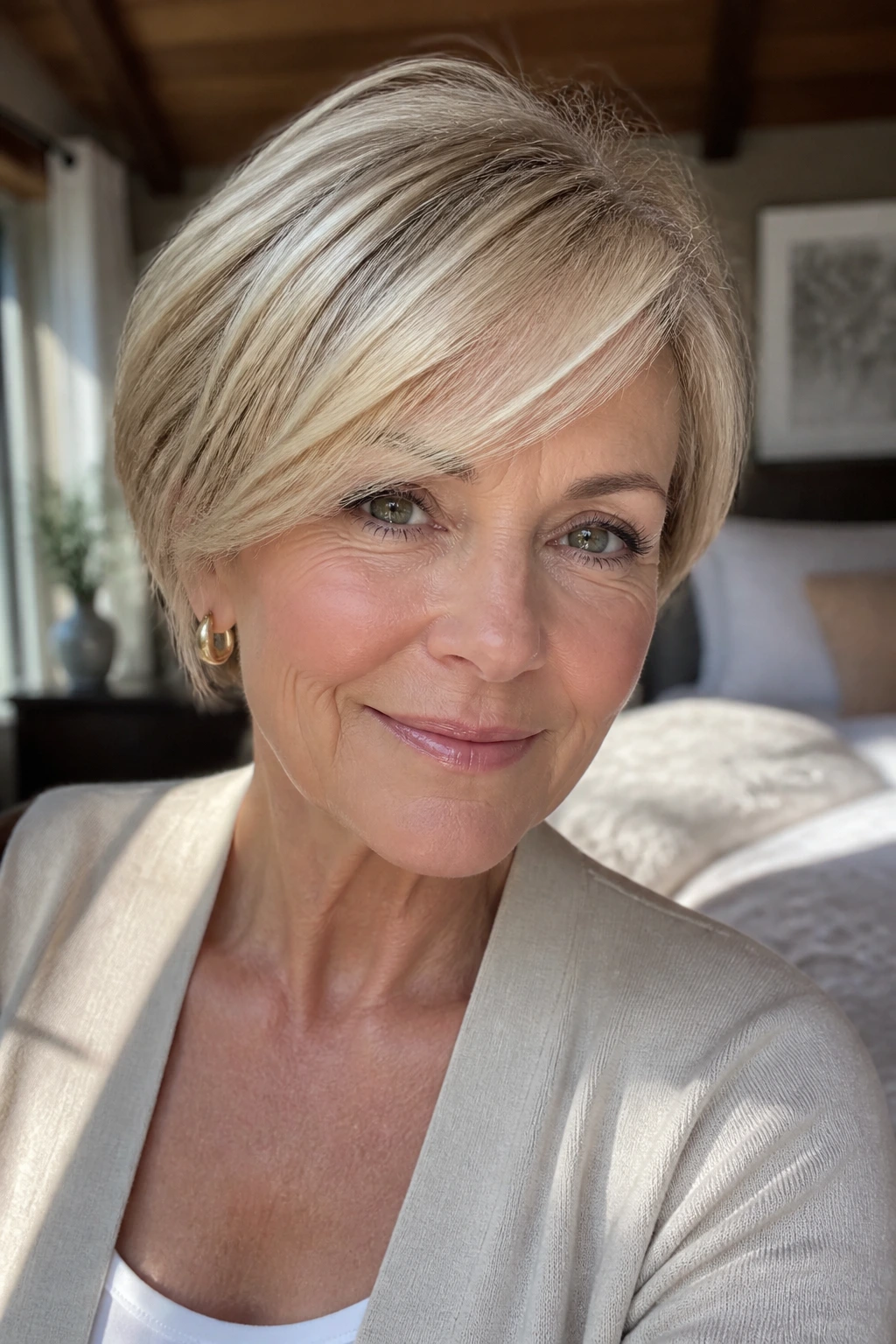
This is the cut I’d hand to someone who says, “I want bangs, but I don’t want to think about them.” Side-part sweep bangs lift off a side part and flow diagonally across the forehead, which gives fine hair a little boost where it’s usually needed most — right at the root.
Unlike a full curtain bang, this shape keeps one side lighter and higher. That makes it useful for hair that flattens near the temples or breaks apart at the front hairline. It also pairs well with a soft bob, because the diagonal line keeps the whole cut from looking too square.
I like this on days when the blow-dry is not perfect. It forgives messier styling better than a cleaner fringe does. That’s worth saying out loud.
13. Piecey Eyelash Bangs
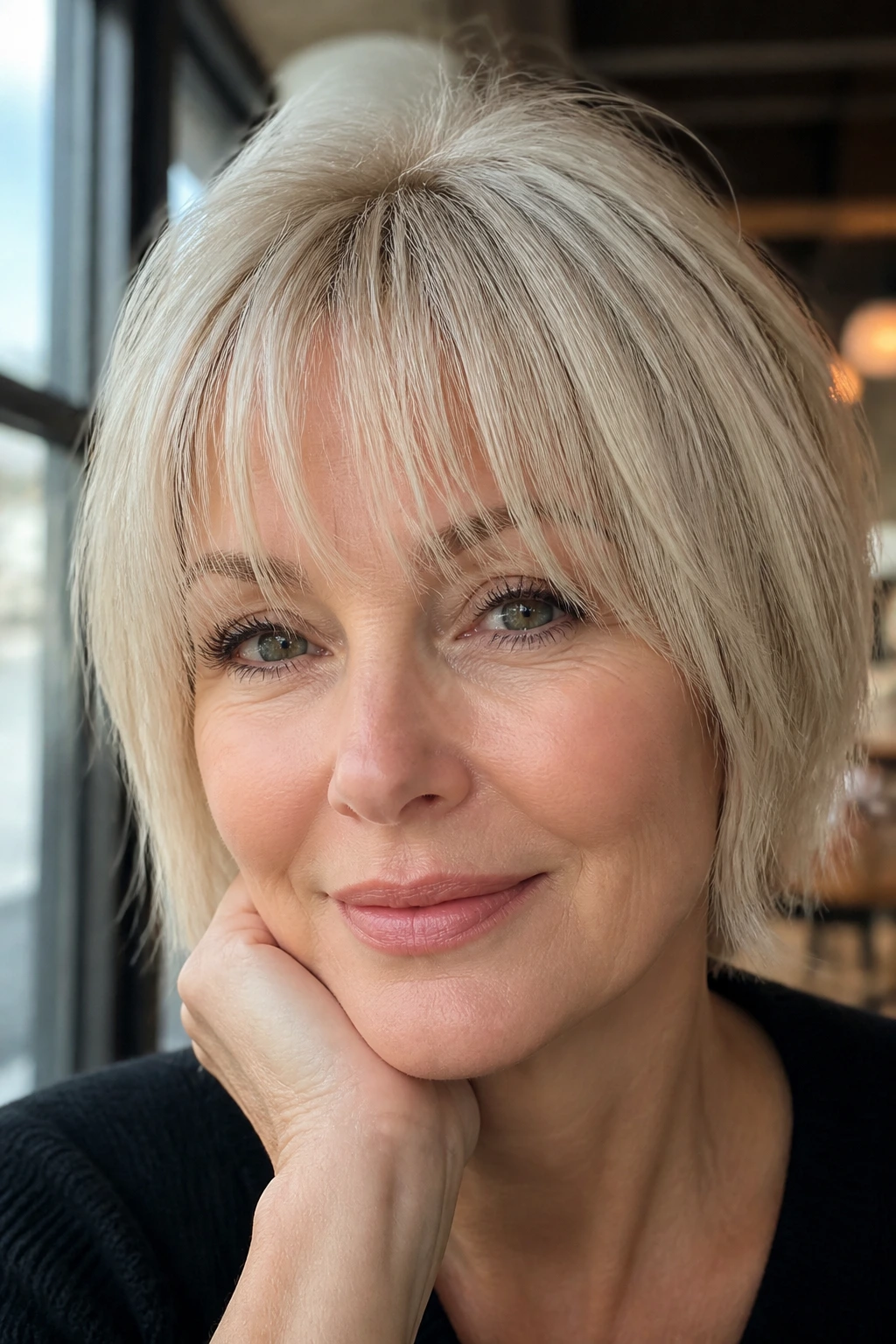
Piecey eyelash bangs skim the top of the lashes in soft little sections, which gives the eyes a lot of definition without crowding the face. They’re a smart choice if you want the fringe to feel present but not heavy. Think light, broken strands — not a thick band.
Small details, big effect
- Keep the density low enough that you can see tiny gaps.
- Ask for the longest pieces to hit just under the brows when dry.
- Use a light wax or cream only on the ends, not the roots.
These bangs work best when they’re slightly tousled. A combed-flat version loses the whole point, because the separation is what keeps them from looking dense. If your hairline is fine but your front section has a little natural bend, this shape can be very flattering.
Quick truth: they look best with a haircut that already has movement. If the rest of the style is rigid, the fringe will look pasted on.
14. Blended Face-Framing Fringe
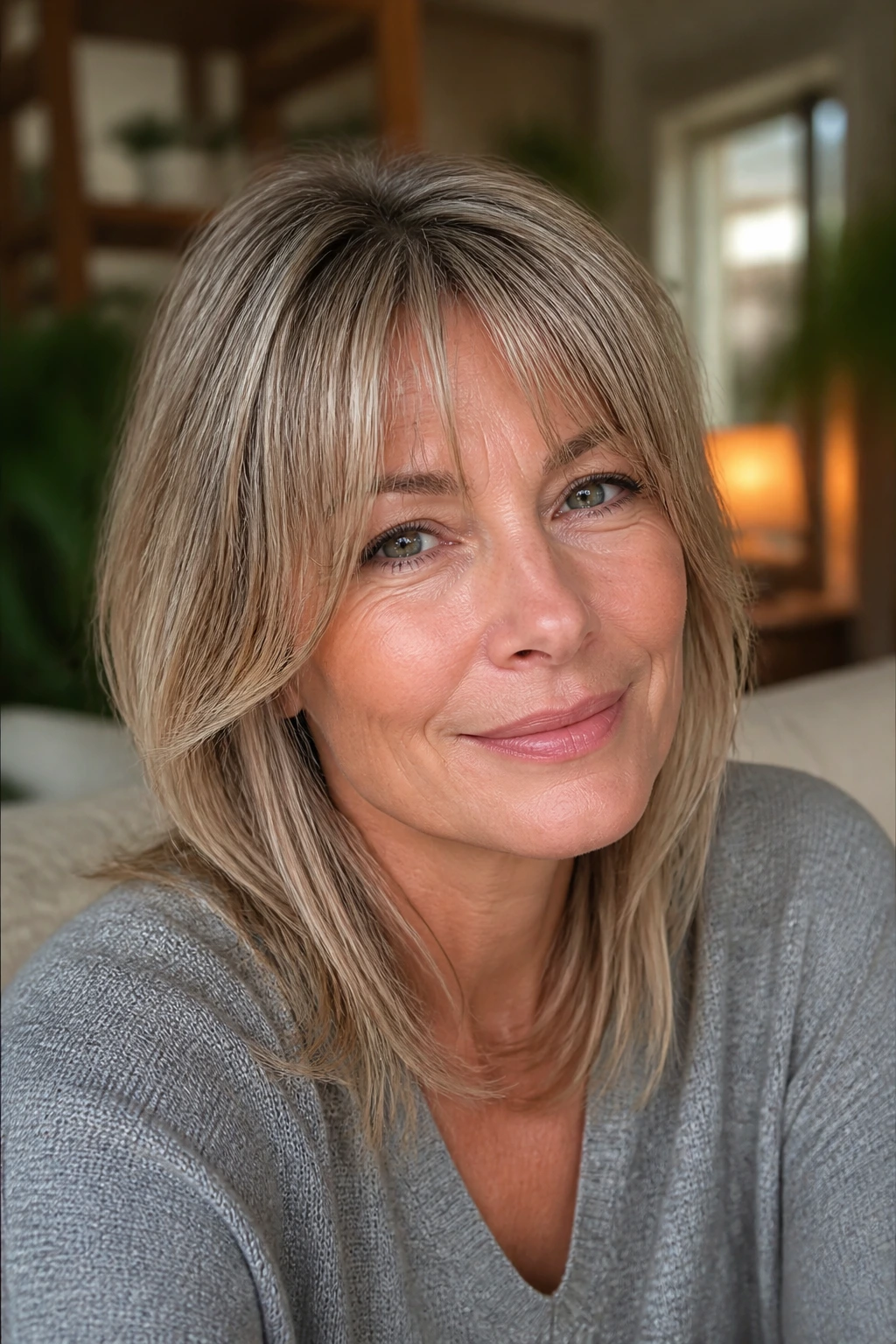
Blended face-framing fringe is for the person who doesn’t want “bangs” to look like a separate category. It starts as a soft fringe and fades into longer front layers, which makes the haircut feel one-piece and easy. Fine hair benefits from that blend because it removes the hard stop at the forehead.
The style is especially good if your hair thins near the temples or if you don’t want to expose too much scalp at the front. Those longer side pieces create a little shadow near the face, and shadow is useful on fine hair. It gives the eye something to follow.
I’d choose this over something short and blunt if you like air-drying. It behaves better with minimal styling and keeps the front from puffing out in odd places. Not flashy. Just clever.
15. Curved Lob Bangs
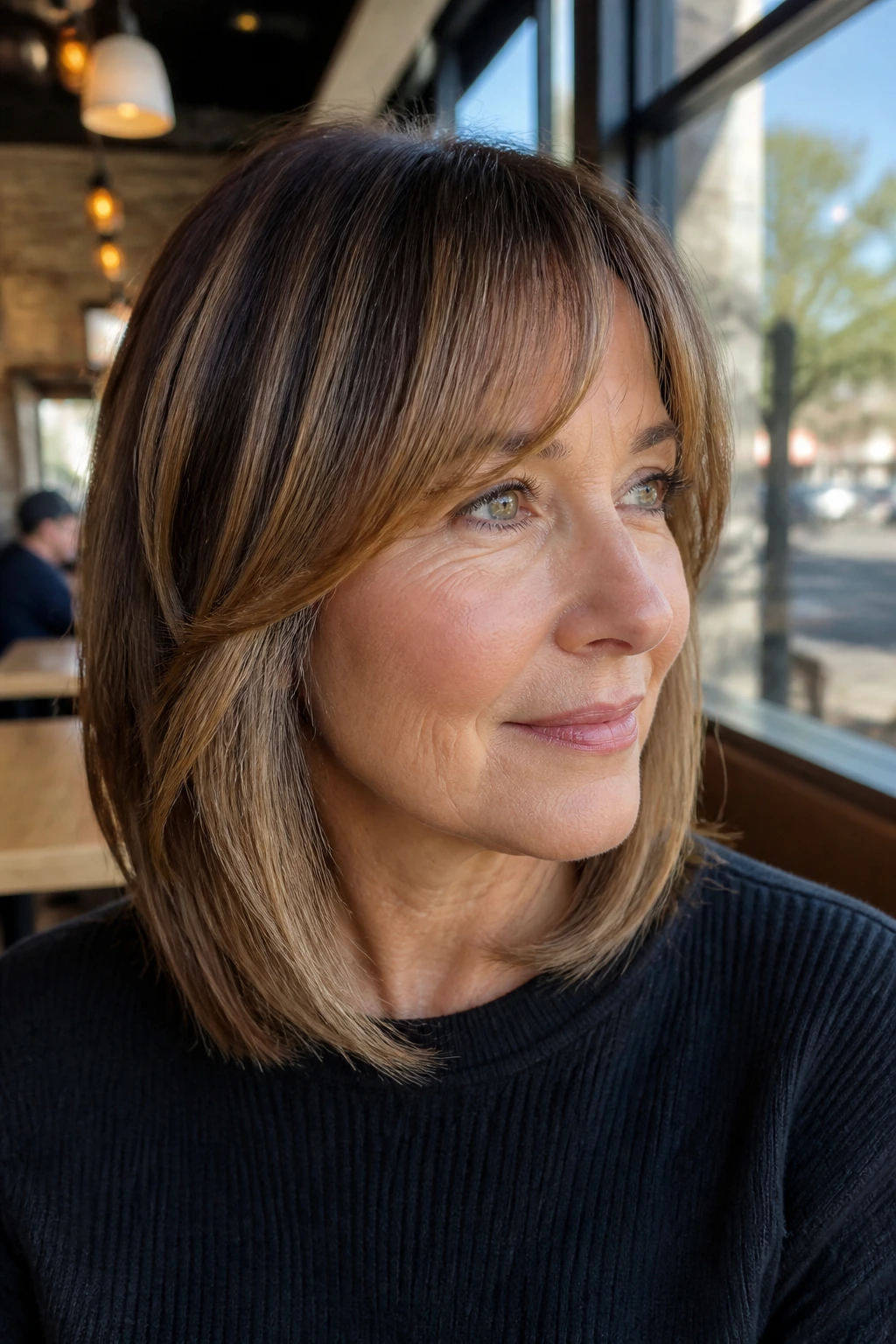
What happens when a lob and a fringe meet in the middle? You get curved lob bangs — a soft front shape that follows the line of a shoulder-length cut instead of fighting it. That harmony matters when hair is fine, because disjointed layers can make the whole head look thinner.
The shape in practice
The bangs curve out at the sides and stay a bit longer than a classic brow-grazer. That extra length gives you flexibility: tuck them slightly, separate them with your fingers, or brush them across the forehead on a side part.
Curved lob bangs are friendly to women who want softness but not obvious “bang energy.” The style reads polished, not precious. And because the length is a little generous, it doesn’t demand a perfect blowout to look good.
16. Tapered Temple Bangs
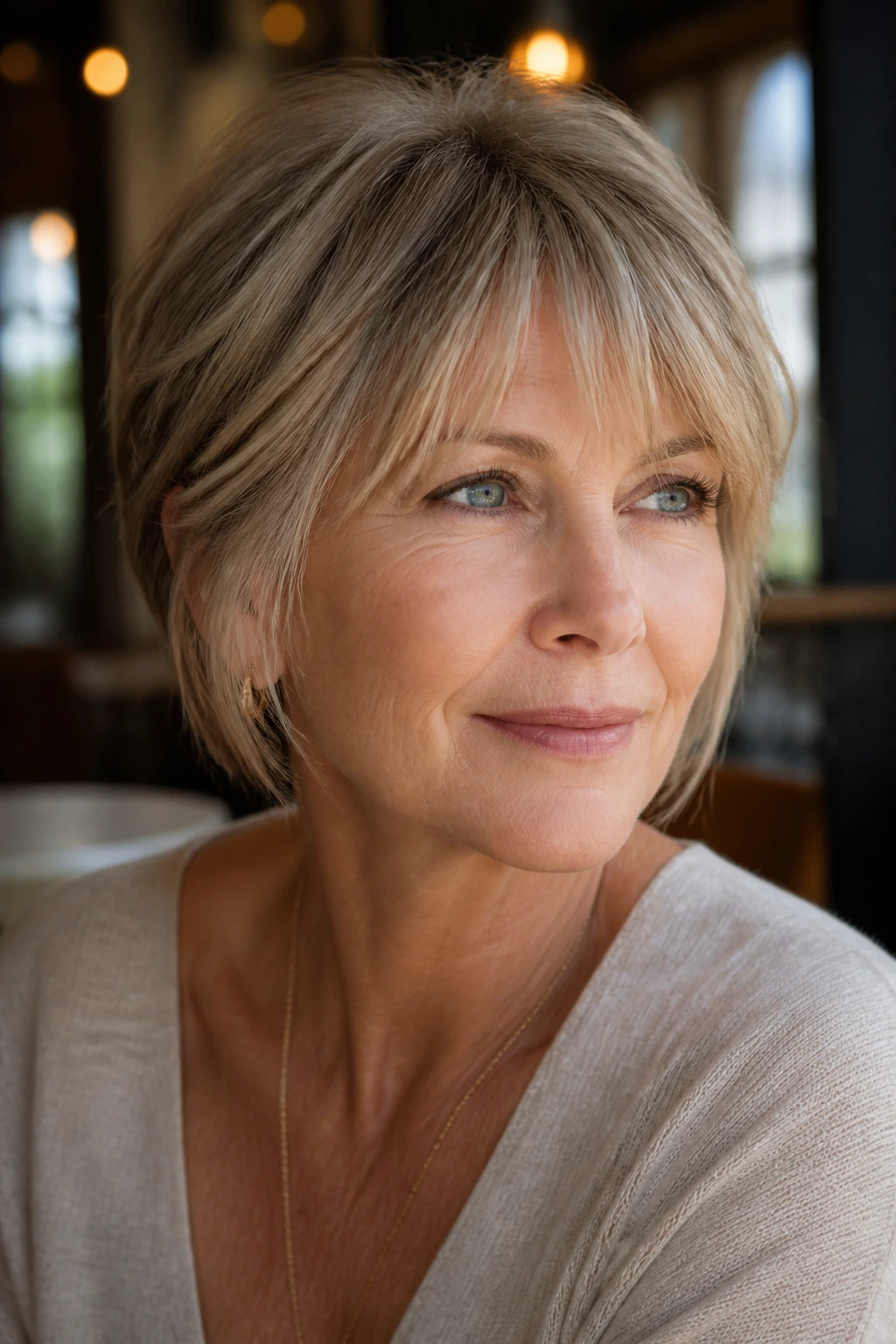
Tapered temple bangs are one of my favorite fixes for thinning at the sides. The center stays lighter and the edges near the temples fade out softly, which lets the front blend around the face instead of sitting as a hard strip. That taper can make a fine hairline look more balanced.
They’re a smart pick if the temples have gotten a little sparse or if you dislike how bangs can sometimes spotlight that area. The longer side pieces fill in the edge without adding bulk. You get coverage, but not heaviness.
This style also plays well with glasses, because the fringe can curve around the frame without smashing down over it. A little root lift at the center and a soft side bend are enough. That’s the whole point.
17. Wispy French Girl Bangs
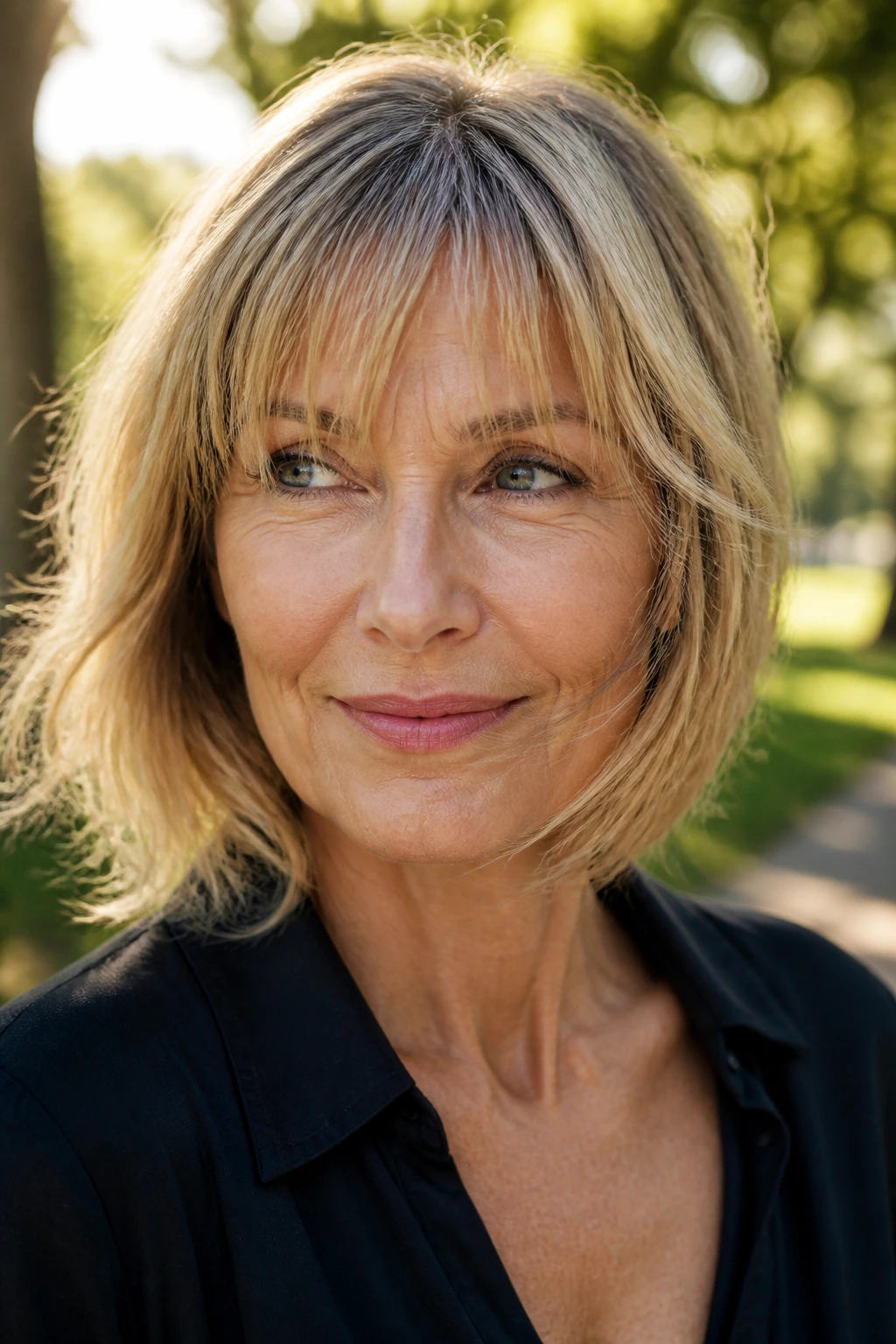
Wispy French girl bangs are the loose, slightly undone version of fringe people usually picture from glossy photos, but the real-life version is much better. It’s lighter, softer, and less fussy. On fine hair, that looseness is a gift.
The key is not to cut them too thick. A true French-style bang should look as if a few small pieces were borrowed from the front hairline and shaped into a soft veil, not a curtain. That means point cutting, a light hand, and a little imperfection at the ends.
This style works especially well with natural wave or bend. If your hair has any movement at all, the bangs will fall with enough character to keep the haircut from feeling flat. Straight hair can wear them too, but it needs a bit more styling.
18. Soft Razor-Cut Fringe
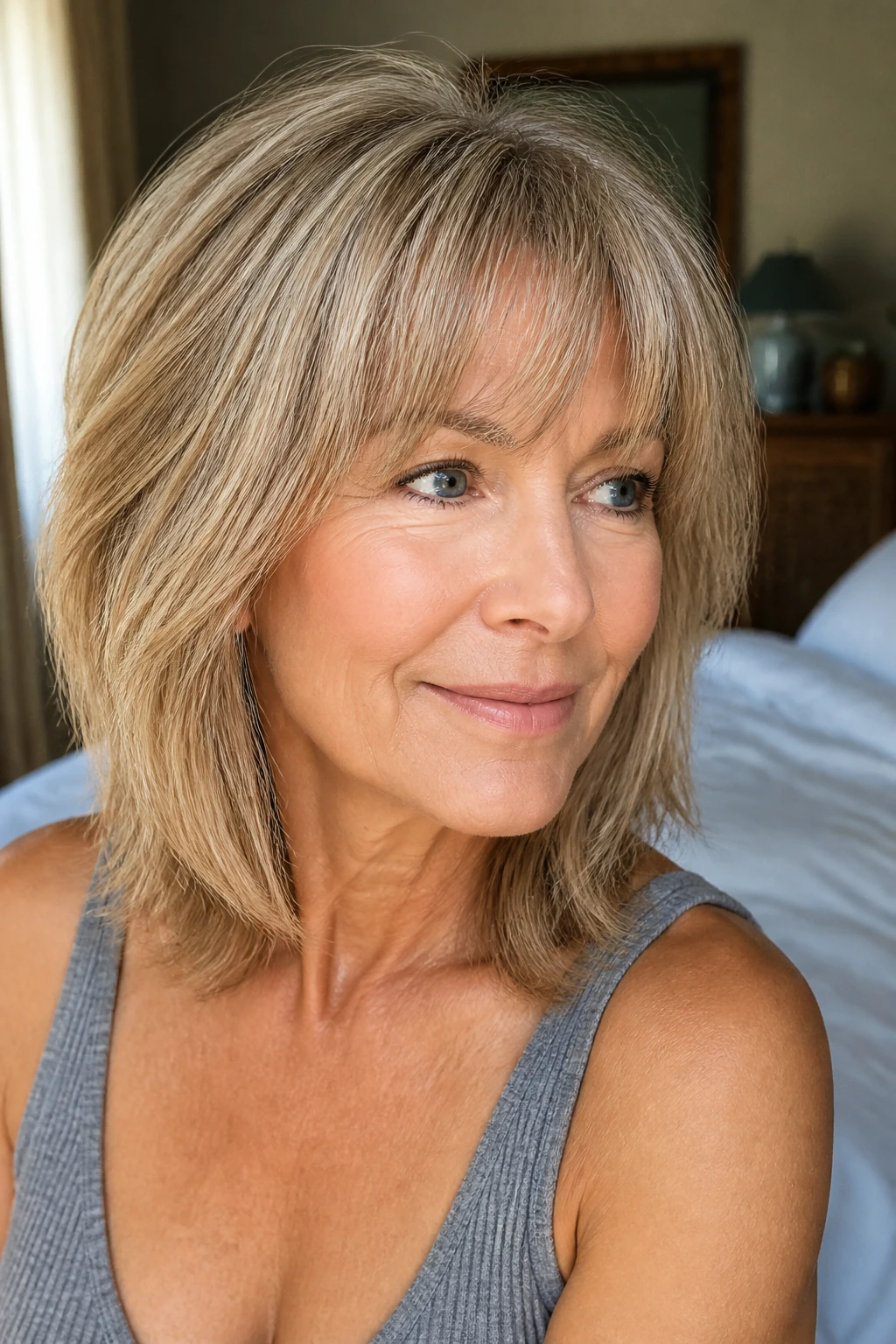
Soft razor-cut fringe has a feathered edge that can be lovely on fine hair, as long as the cut is done by someone who knows when to stop. The razor removes a bit of weight from the ends and gives the fringe a softer, airier finish. Done badly, it frays. Done well, it breathes.
That distinction matters. Fine hair does not need aggressive thinning; it needs smart reduction in the right places. A good razor cut keeps the line from becoming blunt while still leaving enough length to frame the face. It’s the sort of fringe that moves when you turn your head.
I’d pair this with a layered bob, a shag, or a soft crop. It can look too shredded on very long, one-length hair unless the rest of the cut has some texture to support it.
19. Textured Bob Bangs
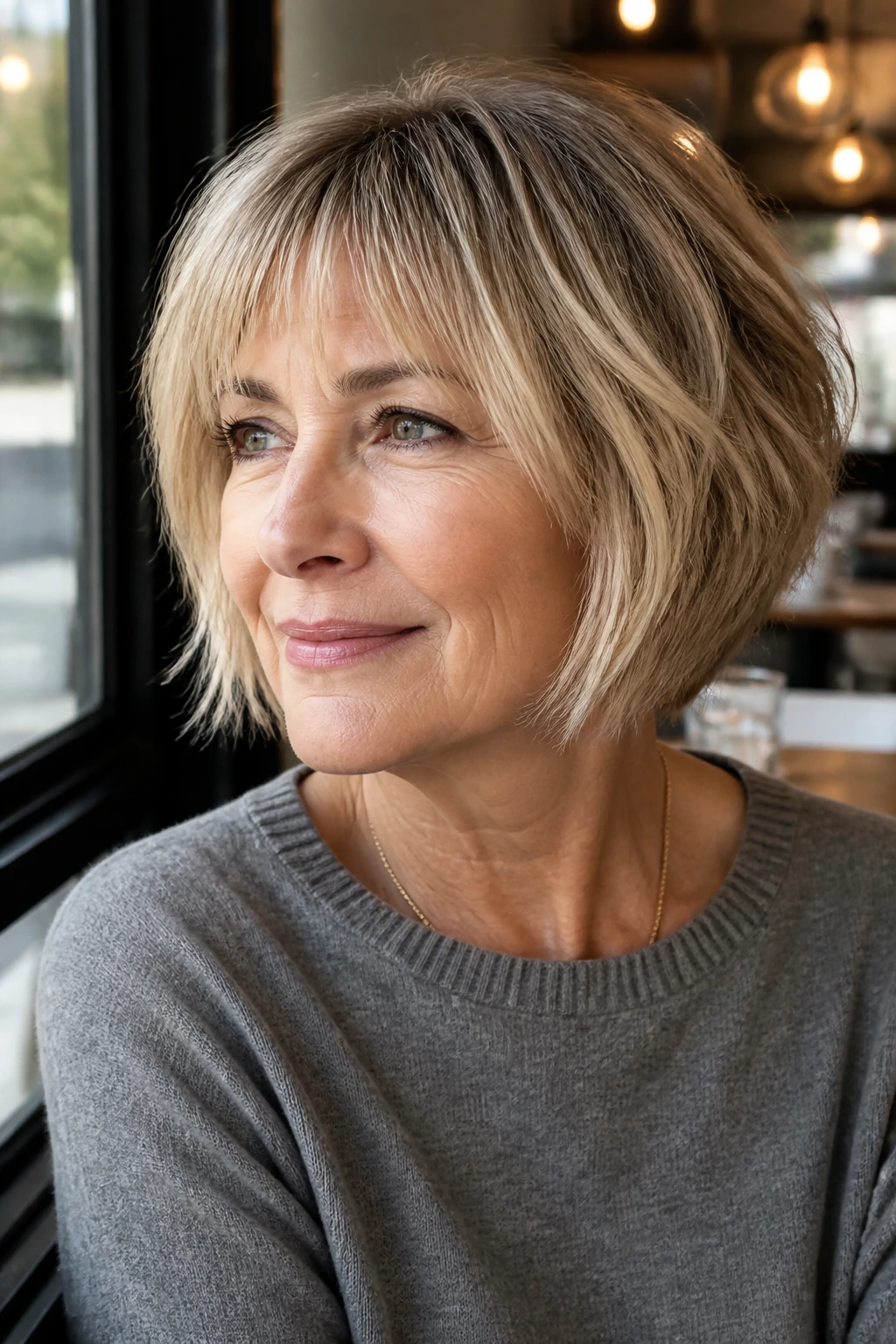
Textured bob bangs are built for a bob that already has some shape in the ends. The fringe is light, broken up, and a little irregular so it echoes the texture in the rest of the cut. That echo is what keeps the haircut from feeling flat at the front.
Quick shape notes
- Keep the bangs just at or above the brows.
- Let the sides blend into the bob at the cheekbone.
- Use a small amount of dry texture spray for separation.
This is a good option if you like your bob to feel modern but not severe. The texture in the bangs takes the edge off the bluntness that bobs can sometimes develop. Fine hair often needs that softening.
And yes, the bob matters here. If the length is too heavy, the fringe looks accidental. If the bob is light and clean, the fringe suddenly makes sense.
20. Feathered Arched Bangs
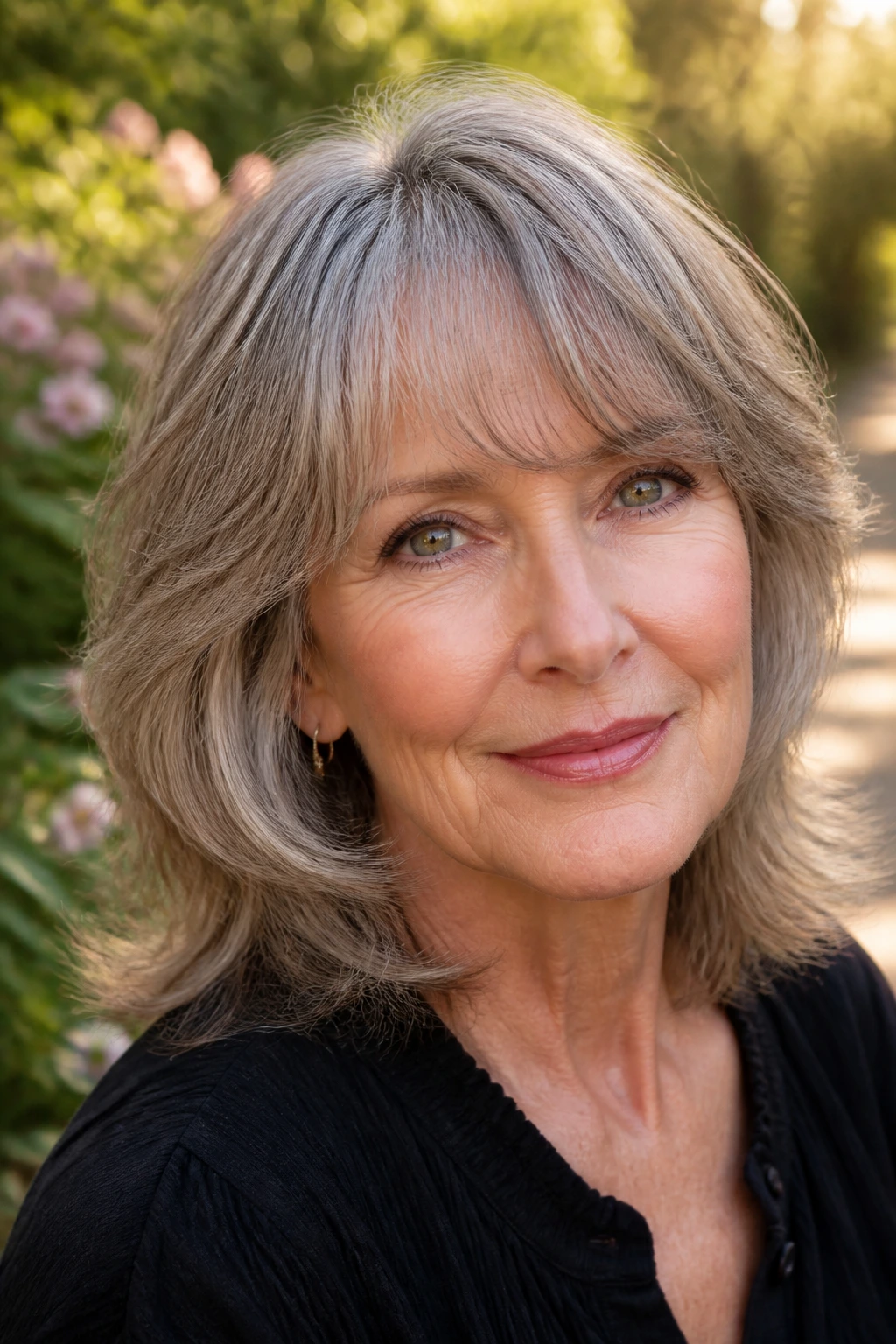
Feathered arched bangs lift the face in a way that surprised me the first time I saw them cut well. The arch rises slightly in the center and tapers off at the sides, which keeps the eye moving upward instead of straight across. That upward motion can be lovely on fine hair because it creates height where the hair may not have much natural volume.
The feathering keeps the arch from turning rigid. You want a soft curve, a light edge, and enough space between the strands that the fringe doesn’t become a wall. When it’s done right, the bang feels almost architectural — but soft enough to wear with an everyday blowout.
I’d choose this for a face that needs a little lift through the center, especially if the forehead is a bit shorter and you don’t want bangs that sit too low. The curve does the work.
21. Grow-Out Fringe
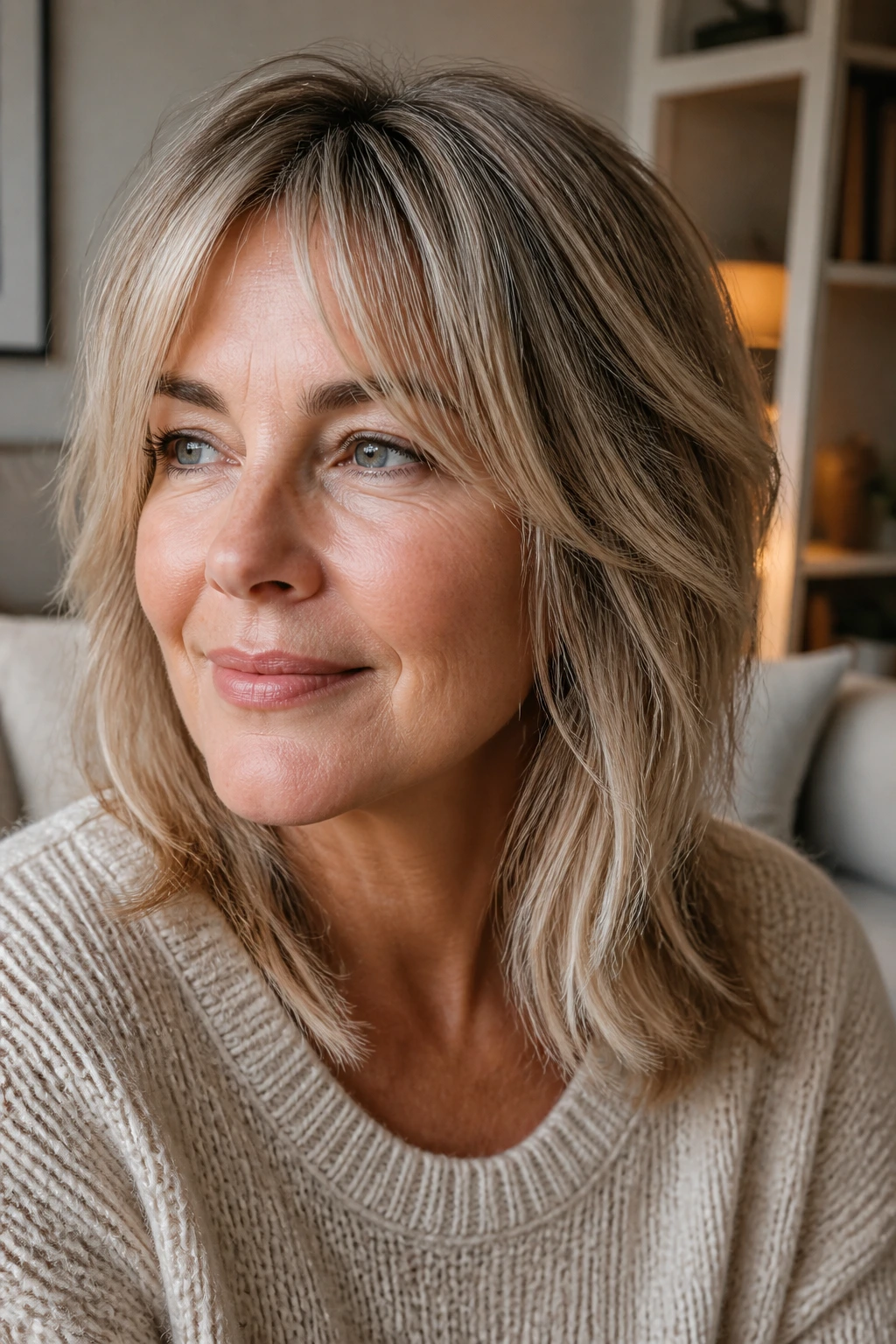
Grow-out fringe is not a compromise. It’s a deliberate shape that lets you move from bangs to no bangs without an ugly in-between stage. The trick is keeping the sides longer, softening the center, and letting the fringe blend into front layers as it grows.
That makes it a smart option for anyone who likes change but does not want to keep a strict trim schedule. You can tuck the sides behind the ears, split the center a little more, and let the front start behaving like face-framing layers. Fine hair loves that kind of flexibility.
If you’ve ever been burned by a bang that looked great for ten days and then weird for six weeks, this is the antidote. It’s built to age gracefully, which is a nice thing to say about hair.
22. Blowout-Friendly Bangs
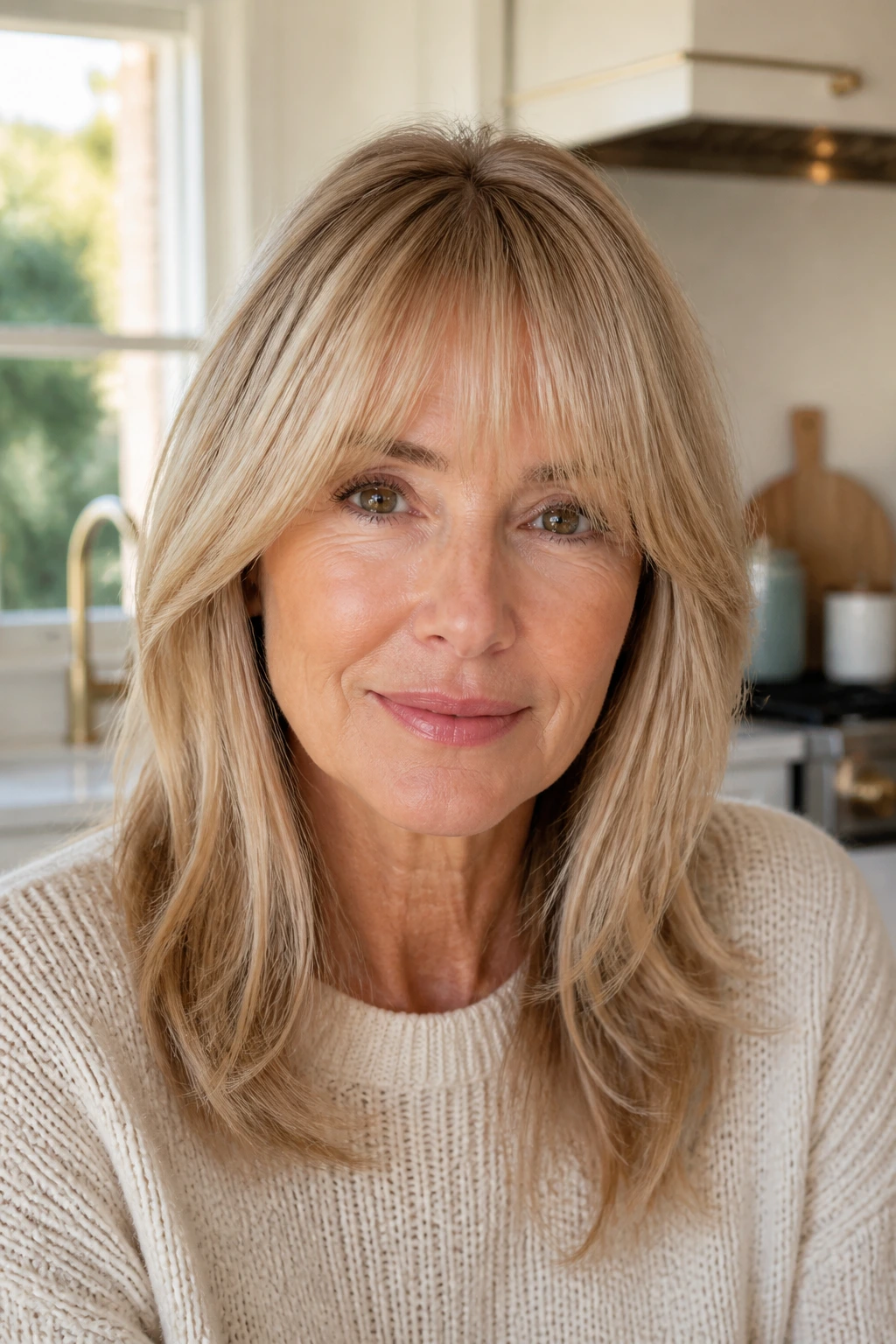
Blowout-friendly bangs are the ones that look best with a round brush and a few minutes of heat, which may sound obvious, but not every fringe behaves that way. This cut is usually a little longer, a little softer at the ends, and shaped so the brush can bend it rather than force it.
The styling payoff is worth it. A quick blowout gives fine hair a little polish at the front without flattening the rest of the head. If you like the feeling of a salon finish but don’t want a lot of product, this is a strong pick.
The one thing to avoid is over-drying. Stop when the bangs are smooth and still flexible. If they get bone-dry during styling, they’ll usually flip or split in a way you didn’t ask for.
23. Grown-In Shag Fringe
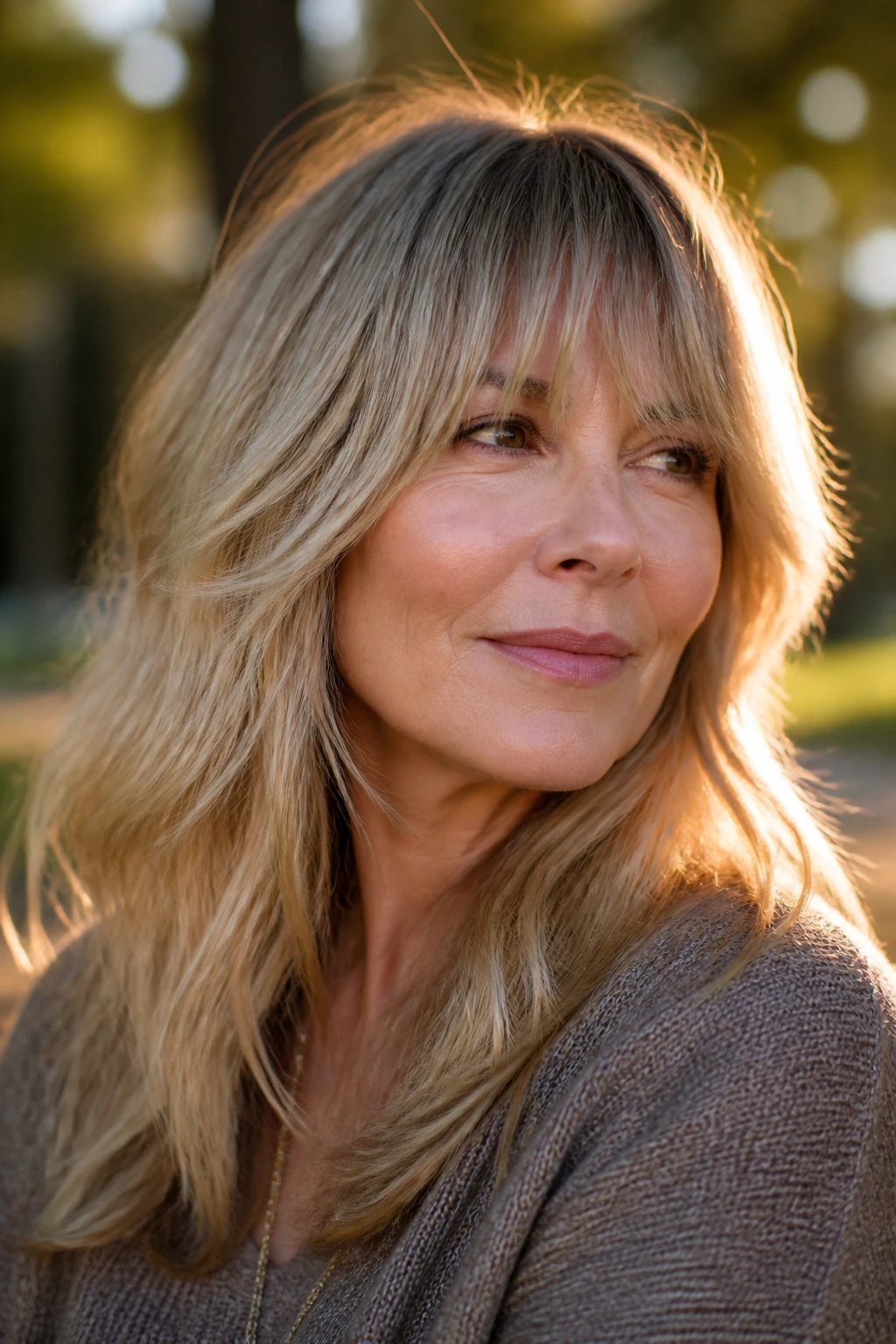
Grown-in shag fringe is the haircut version of saying, “I’m not spending my life chasing the perfect trim line.” It has length, texture, and a soft transition into the rest of the shag, so the fringe never looks like an isolated piece. That makes it especially good for fine hair that needs movement more than precision.
The grown-in look also works for women who want bangs but travel, exercise, or just dislike constant maintenance. A little messiness is part of the design. The fringe can be pushed to the side, split in the middle, or left to fall naturally with the rest of the layers.
I’d call this one practical without being boring. There’s a nice balance there.
24. Soft Split Fringe for Glasses

Soft split fringe for glasses is one of the smartest choices in the whole group, because it respects the frame line instead of fighting it. The split keeps hair off the lenses, the softness keeps the look from getting severe, and the longer sides help balance the face.
What makes this better than a straight fringe is the room it gives at the bridge of the nose. Glasses need that open space. If the bangs sit too low, you spend all day pushing hair up or brushing it aside. No one needs that.
This cut works especially well if your frames are bold or slightly oversized. The split keeps the face visible and the haircut tidy, which is a nicer combination than people think. And on fine hair, tidy usually beats heavy.
Why Wispy Bangs Work So Well on Fine Hair After 50
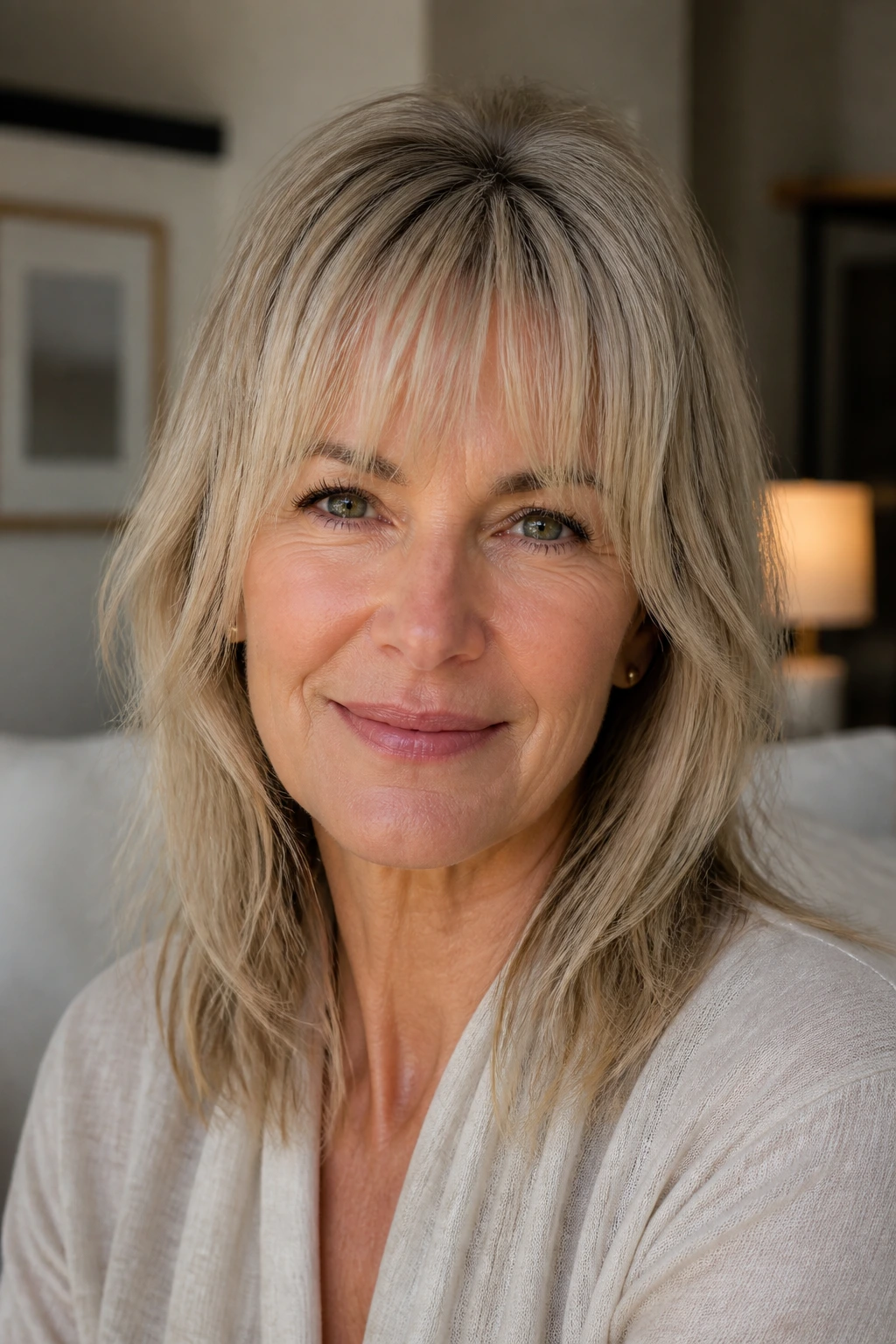
Fine hair after 50 usually needs more shape, not more mass. That’s the basic idea behind a good wispy fringe. You’re not trying to hide the forehead under a sheet of hair; you’re creating a soft front edge that makes the haircut feel fuller by contrast.
The other reason these bangs work is balance. As hair thins a little at the temples or crown, a blunt bang can feel like it belongs to a different head. A wispy bang blends. It gives the front a little air so the rest of the haircut can keep its movement and lift.
There’s also a practical side that people skip over. Fine hair often shows every mistake: too much product, too much heat, too much density, too much of everything. Wispy bangs give you a smaller target. They dry faster, they need less shaping, and they tend to forgive a less-than-perfect morning better than a dense fringe ever will.
The Tools That Make a Soft Fringe Behave
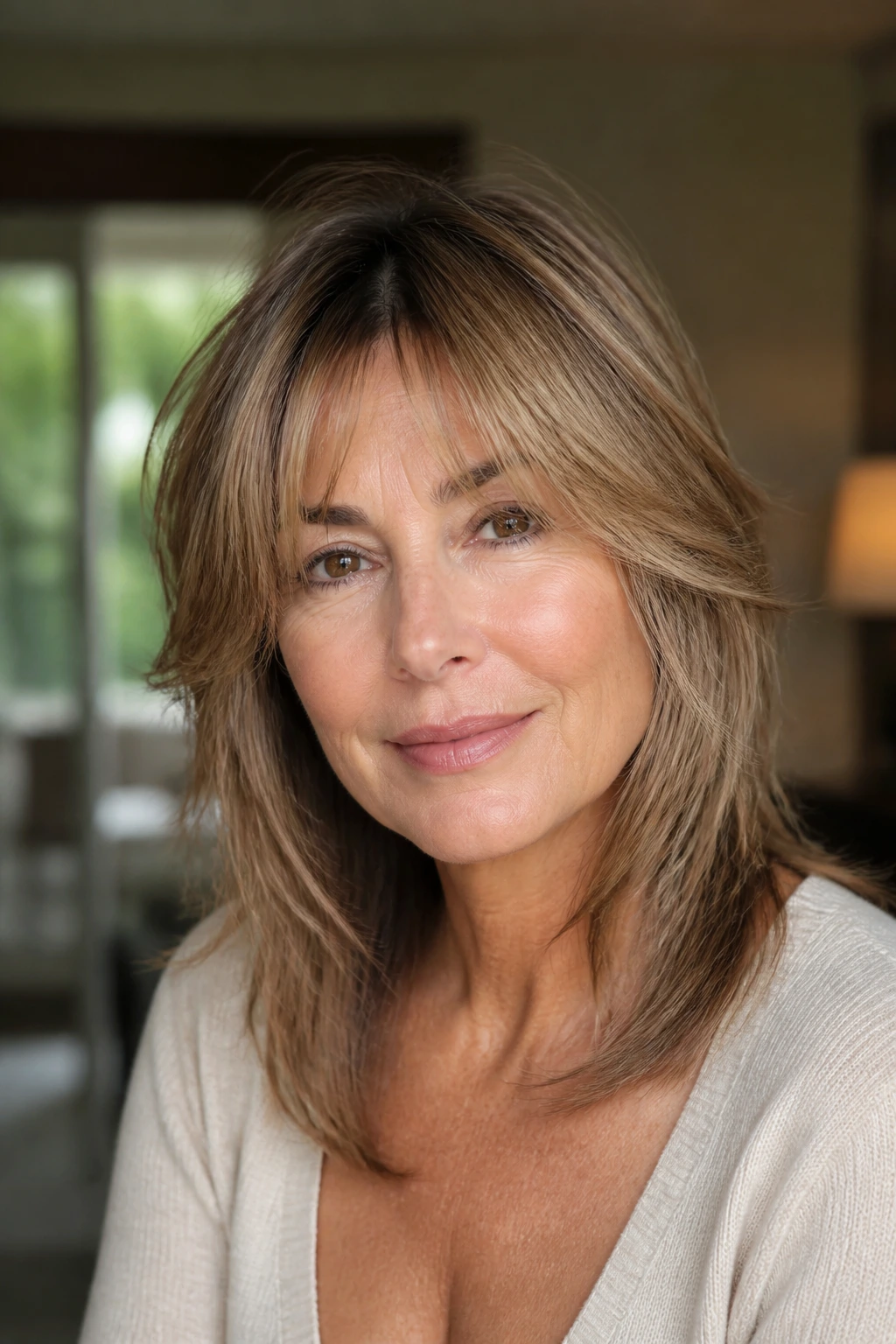
-
1-inch or 1.25-inch round brush: Best for giving a light bend without making the bangs curl too much.
-
Blow dryer with a narrow nozzle: Directs the air where you want it and keeps the roots from scattering.
-
Fine-tooth comb: Useful for sectioning the fringe cleanly, especially before a trim or blow-dry.
-
Duckbill clips: Hold the side pieces out of the way while you style the front.
-
Mini flat iron: Handy for a quick bend in stubborn pieces or a cowlick that refuses to cooperate.
-
Root-lifting mousse: Gives fine hair a little support at the scalp without making it sticky.
-
Texturizing spray: Adds separation to piecey bangs and shaggy fringe.
-
Dry shampoo: Great on day two or three, especially if the bangs tend to get oily first.
-
Velcro rollers, optional: They can help set a soft curve while you finish makeup or dressing.
What to Ask for at the Salon
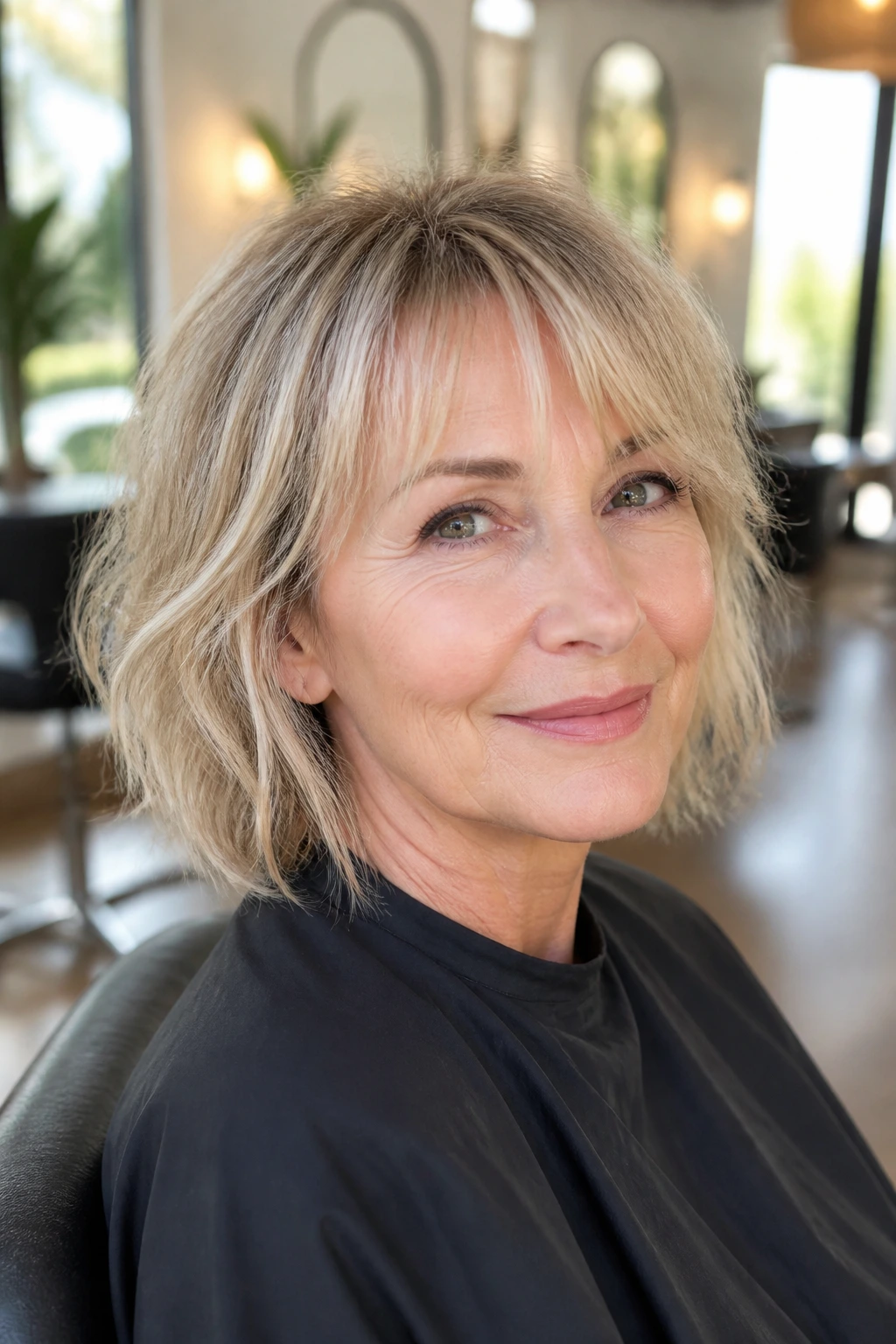
Tell your stylist you want wispy bangs that stay light at the forehead, not a thick block of fringe. That wording matters. If you say “bangs” and stop there, some stylists will assume you want more density than fine hair can comfortably carry.
Bring photos, but bring the right kind. Choose pictures where the hair is dry and the bangs are visible from the front and side. A photo of a heavily styled blowout can be misleading if your hair is straighter, finer, or easier to flatten than the model’s.
Then get specific about the cut. Ask for point cutting or soft texturizing through the ends, and ask the stylist to check how the fringe falls when dry. If you have a cowlick, say so early. That little swirl at the front can change the whole shape, and a dry check can save you from a bang that lives half an inch too high.
Smart Product and Texture Tips
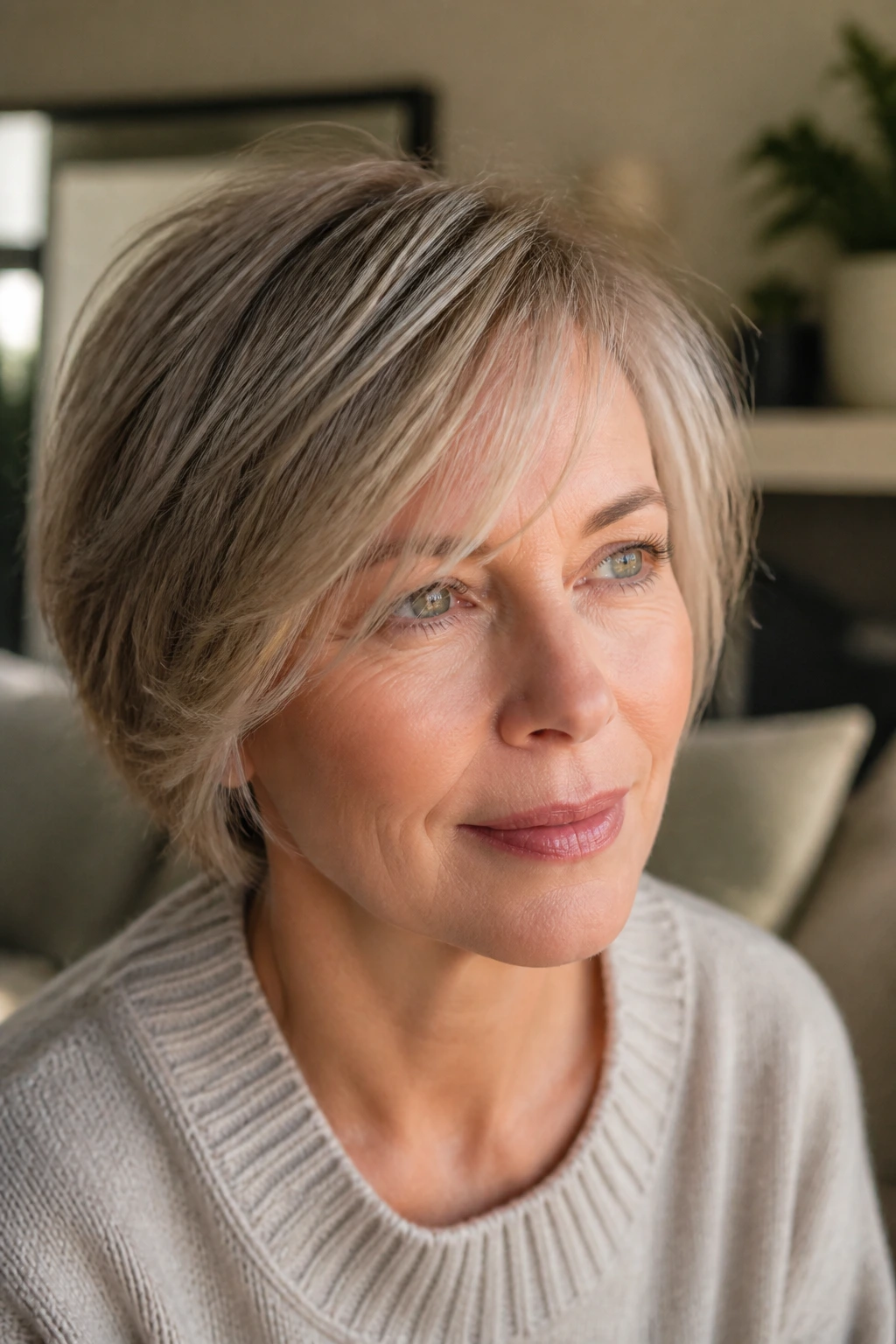
Fine hair gets weird fast when the wrong product touches the bang area. Heavy creams, thick oils, and glossy serums can turn a wispy fringe stringy in about ten minutes. I’d rather see you use a light mousse at the roots, then a texture spray on the ends, and leave the oil for the mids and ends of the haircut where it belongs.
Look for products that promise flexible hold or root lift rather than hard control. The point is not to glue the fringe in place. The point is to give it enough support that it keeps a shape. If the product leaves your fingers tacky after a second or two, it’s probably too heavy for fine bangs.
A dry shampoo can be a day-saver, but use it before the hair looks greasy, not after. A tiny burst at the roots, then a quick rub with your fingertips, keeps the front from separating into oily ribbons. That little trick matters more than the fancy stuff.
How to Style Wispy Bangs So They Stay Light, Not Limp
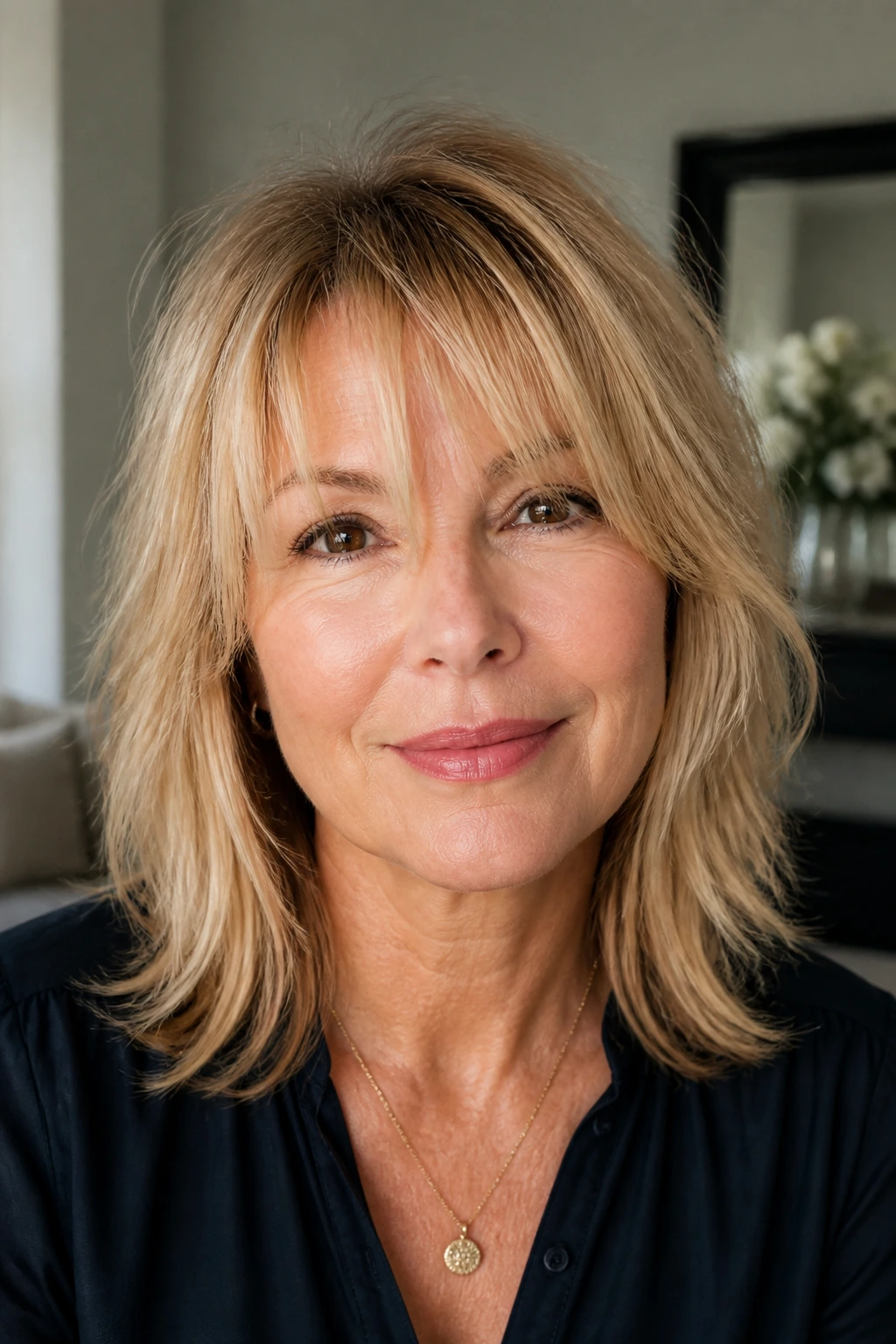
Root Lift: Start at the scalp. Blow the roots in the opposite direction of the final fall for a few seconds, then sweep them into place while they’re still warm. That tiny reset gives the bang shape without making it puff out.
Direction: Don’t fight the natural part if you can help it. A fringe that wants to split in the middle is often happier split in the middle, and a side-bent fringe often looks better when you lean into the bend instead of flattening it.
Finish: Keep product off the root zone. A touch of texture spray or a whisper of wax on the very ends is enough. If the bangs feel “done,” you’ve used too much.
Day Two Rescue: Mist the front lightly with water, re-bend the ends with a round brush or mini iron, and reheat only the pieces that have gone crooked. You do not need a full wash for a two-inch problem.
Little Styling Moves That Make the Fringe Feel Fuller
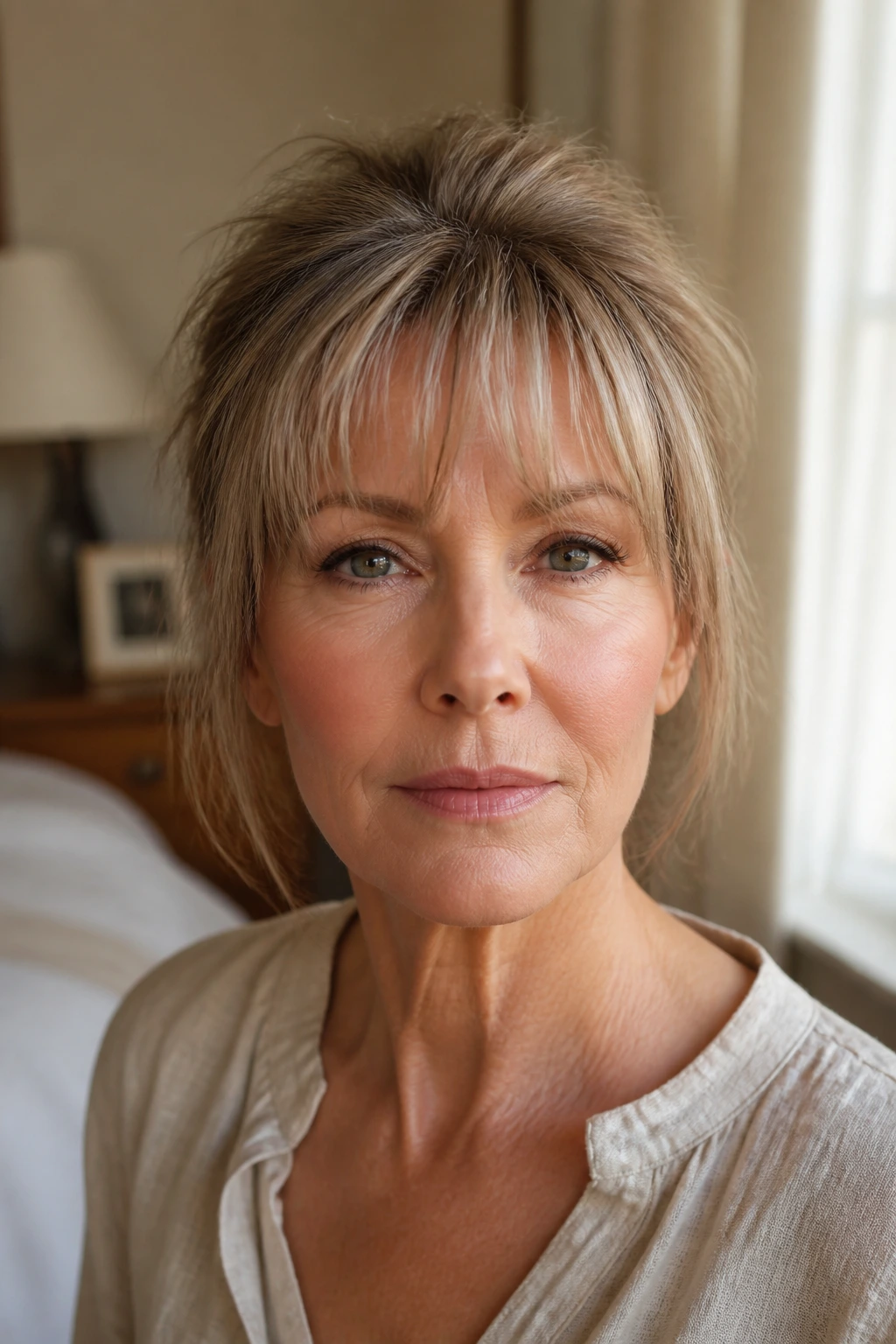
Dry-Shampoo First: A faint dusting at the root before styling can stop fine bangs from clumping, especially if they tend to separate by noon.
Pin and Cool: After you blow-dry the fringe into shape, clip it in place for two minutes while you do your makeup. Cooling in the set position helps the bend last longer.
Skip the Heavy Brush Pass: If you keep brushing and brushing, fine bangs can lose all life. Two or three clean passes is enough.
Use a Soft Bend, Not a Curl: A tight curl at the front tends to look fussy. A gentle curve is better, and it ages better too.
Keep the Ends Clean: Snipping or texturizing every few weeks keeps the fringe light. Once the ends start looking blunt, the whole thing gets heavier.
Common Mistakes to Avoid
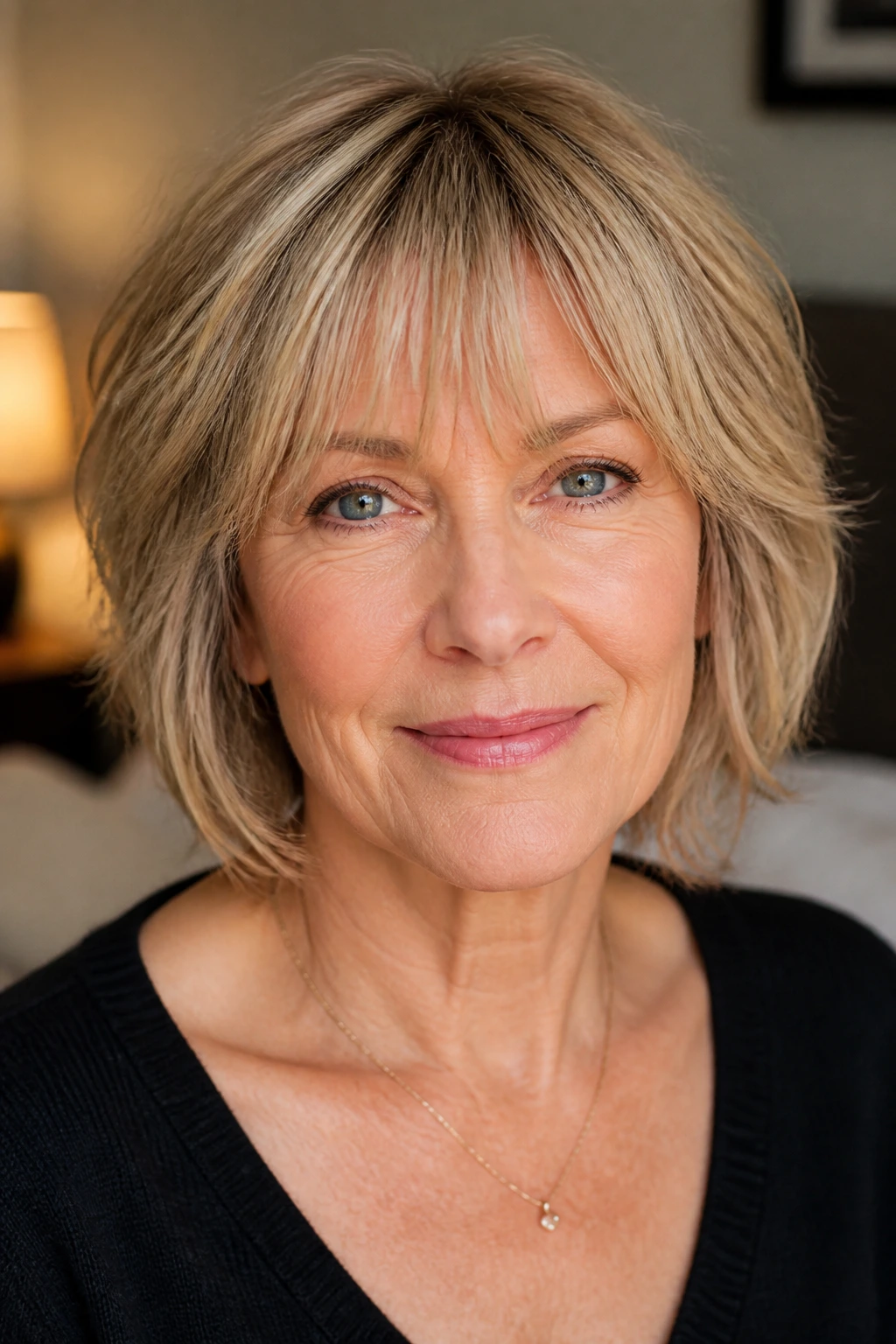
The biggest mistake is cutting wispy bangs too thick. The fringe may look cute for an hour, then it weighs down the forehead and steals volume from the rest of the haircut. If the bang line looks like a little shelf, it’s too much hair.
Another one: starting too short. Fine hair often springs upward when it dries, so a bang that seems acceptable wet can end up looking chopped once it air-dries. A little extra length gives you room to style and room to live.
Ignoring the cowlick is a classic trap. If your front hairline pushes in one direction, a straight cut will fight it all day. The fix is to let the stylist see the cowlick dry, then shape the fringe around it instead of pretending it isn’t there.
People also load on too much cream or oil. That turns airy bangs into greasy strings fast. Use lighter products, and keep them away from the roots.
Finally, don’t force every fringe into a blunt rectangle. Fine hair rarely rewards that move. It usually looks softer, fresher, and more expensive when the edge has a little movement.
Variations and Adaptations to Try

The Glasses-Friendly Split: Keep the center parted and the sides longer so the fringe clears the frame line. This is a good pick if your glasses sit low or if you read a lot and hate hair touching the lenses.
The Cowlick-Friendly Sweep: Shift the bang to the side and let the shorter section work with the natural swirl. It’s less neat, but it’s far easier to live with.
The Silver-Hair Feather: On gray or silver hair, a feathered fringe can look especially crisp because the lighter color shows every texture line. Ask for a softer edge so the cut doesn’t get harsh.
The Low-Maintenance Grow-Out: Keep the sides longer and the center soft so the fringe can slip into face-framing layers between trims. This is the easiest route if you change your mind often.
The Short-Stack Bob Fringe: Pair a wispy fringe with a bob that has a little lift through the crown. The shape makes the front look more balanced and gives the haircut some backbone.
Keeping the Fringe in Shape Between Salon Visits
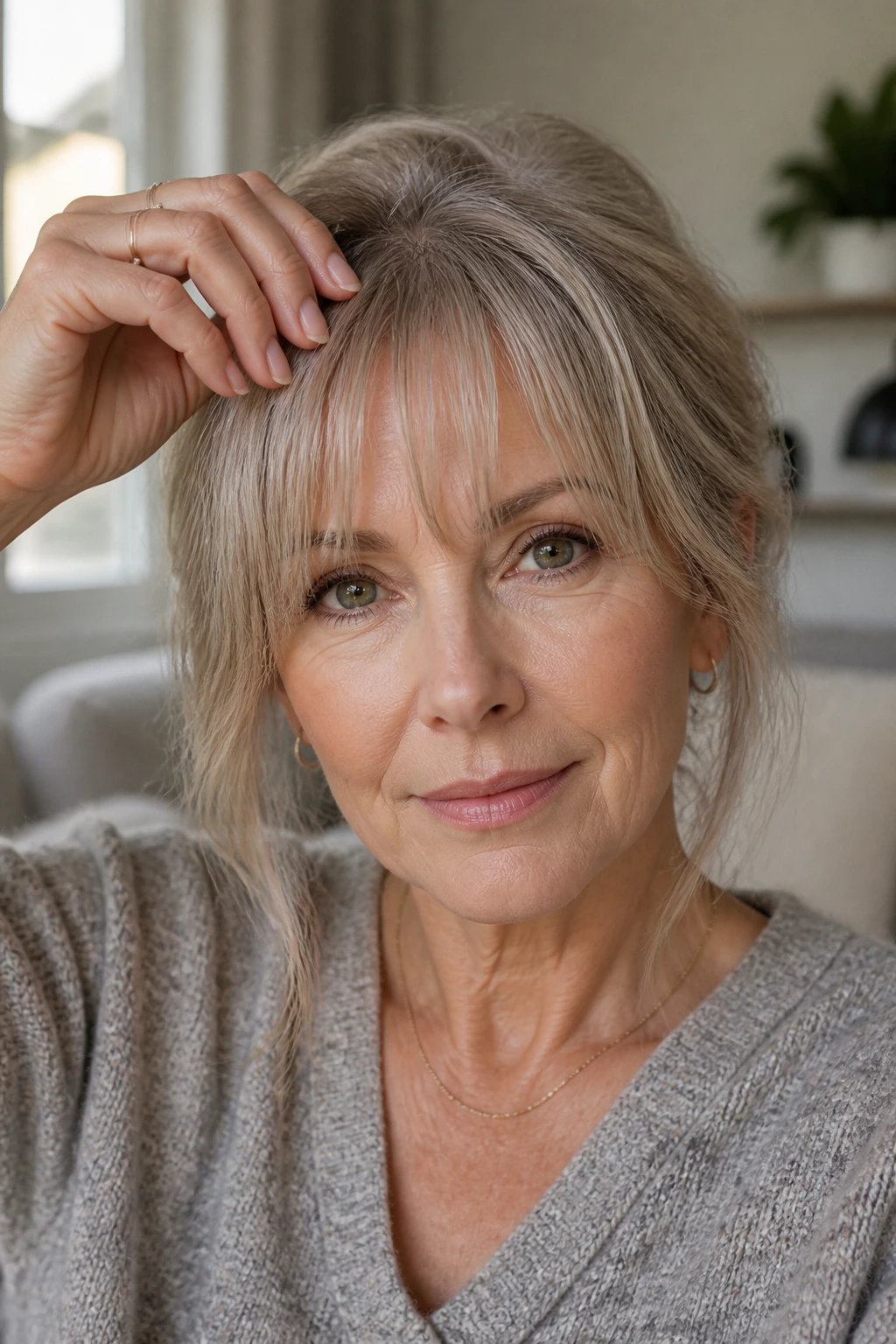
Fine bangs usually need attention before the rest of the haircut does. A trim every 4 to 6 weeks is a safe rhythm for most wispy styles, while pixie-length fringes may want a touch-up closer to 3 or 4 weeks. Longer curtain or split styles can often stretch a bit farther if the shape stays balanced.
Wash the fringe as needed, not on a rigid schedule. Bangs get oil from the forehead faster than the rest of the hair, and if the front starts clumping, the whole haircut looks tired. A quick sink wash or a targeted shampoo at the hairline can buy you another day.
At home, keep a small styling kit ready: dry shampoo, a mini brush, a clip, and a lightweight spray. That sounds fussy, but it saves time. Once the fringe has the right tools nearby, it’s much easier to reset than to rebuild.
Frequently Asked Questions
Do wispy bangs make fine hair look thinner?
Not if they’re cut with restraint. A wispy fringe that leaves a little space between strands usually makes fine hair look lighter and fuller at the same time, while a dense bang can expose how little lift the hair has.
What face shapes work best with wispy bangs over 50?
Most of them work, but the shape changes. Curtain and layered split bangs flatter longer or square faces, while side-swept and arched versions tend to soften round or heart-shaped faces. The trick is matching the curve to your features, not copying a photo blindly.
Can I wear wispy bangs if I have glasses?
Yes, and in many cases they’re the better choice. Split, side-swept, and long arc shapes sit around the frames instead of dumping hair into the lens line, which makes daily wear much easier.
How often do wispy bangs need trimming?
Shorter fringes often need attention every 3 to 4 weeks. Longer, blended, or grow-out styles can usually stretch to 6 weeks before they start losing their shape.
What if I have a strong cowlick at the front?
Do not cut the bangs based only on how they look wet. Ask for a dry check, and let the stylist shape the fringe around the cowlick’s direction so it doesn’t split awkwardly every morning.
Can gray hair wear wispy bangs well?
Yes. Gray and silver strands often show texture beautifully, which helps wispy fringe read as intentional rather than sparse. A softer edge keeps the front from looking too sharp against the lighter color.
What’s the easiest bang style to grow out?
A layered split fringe or grow-out fringe usually gives the smoothest transition. The length is already soft enough to tuck into layers, so you won’t hit that ugly shelf stage as fast.
Can I style wispy bangs without heat?
You can, especially if the cut already follows your natural part. Clip the fringe in place while it air-dries, then separate it with your fingers and a little dry shampoo. It won’t be as polished as a round-brush finish, but it can still look neat and soft.
A Softer Frame for Every Day

The best wispy bangs for fine hair over 50 don’t try to outmuscle the hair you actually have. They work with what’s there — a little lift, a little movement, a little air between the strands — and that’s why they tend to look better than heavier fringe styles.
If you keep the density light, the edges soft, and the shape tailored to your part and glasses, the front of the haircut starts doing a quieter kind of flattering. Not dramatic. Not fussy. Just better.
And that’s usually the sweet spot worth chasing.
