



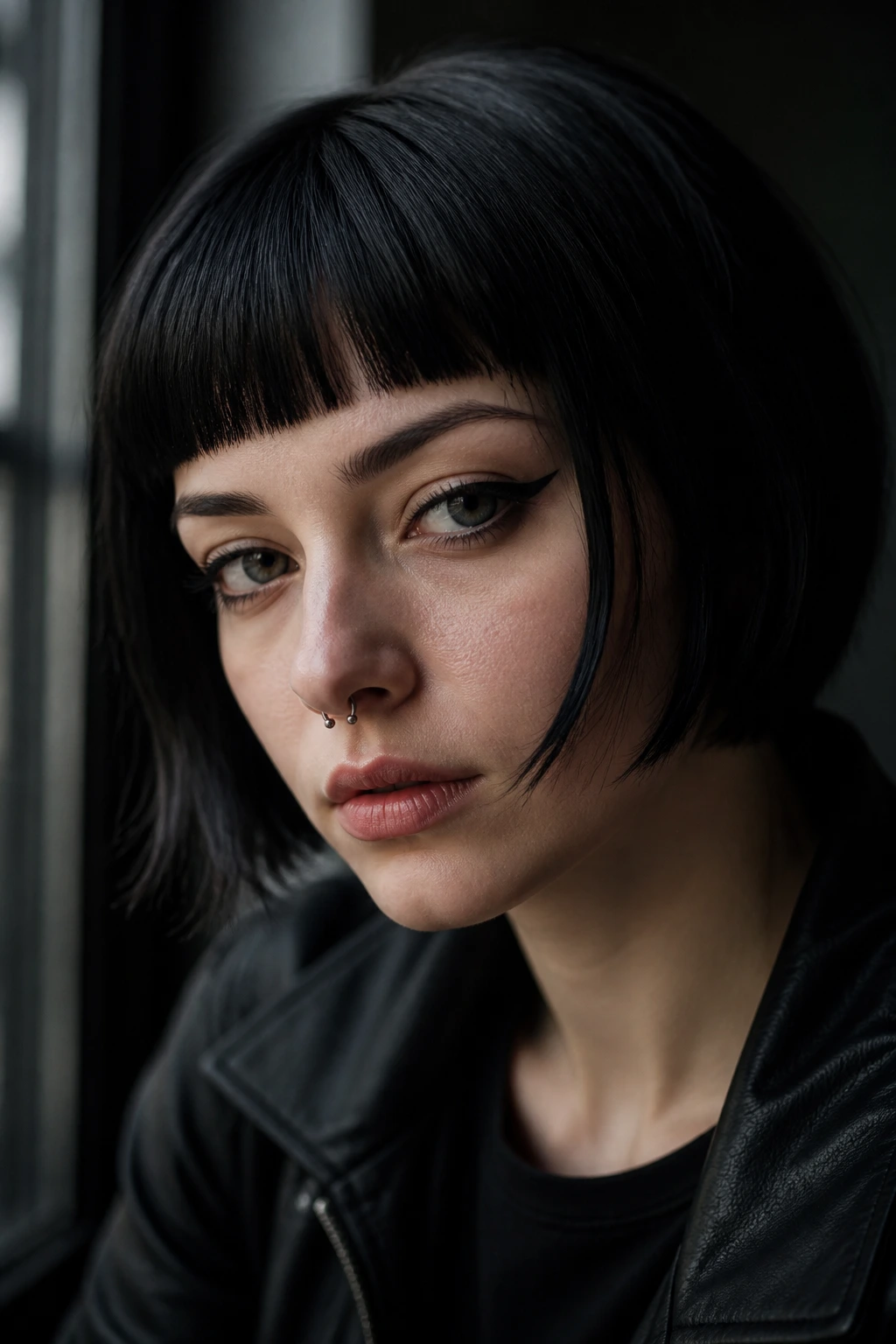
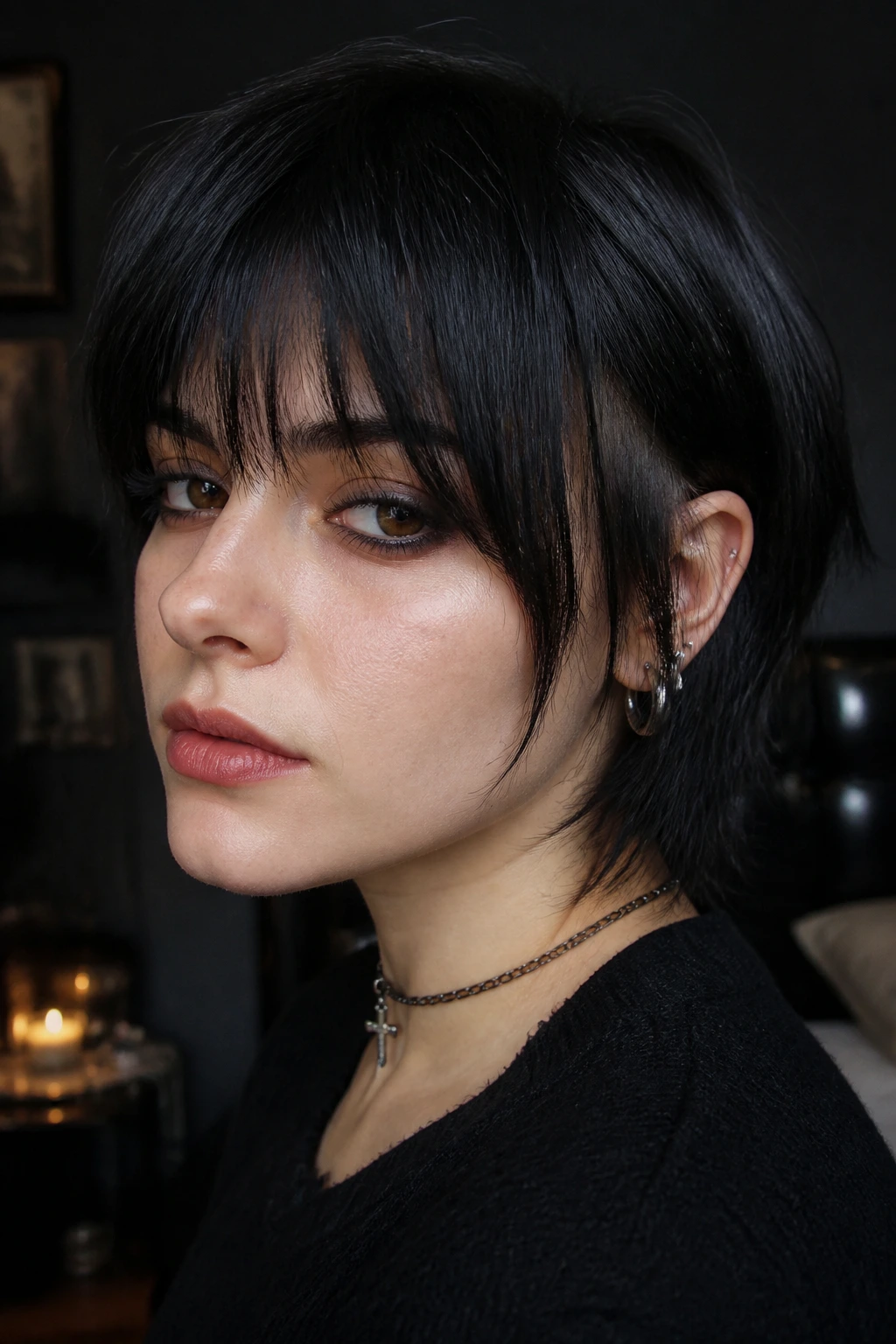
goth bangs for short dark hair are one of the few haircut moves that can make a cropped cut feel louder without making it bigger. On black or near-black hair, the fringe line reads like ink on paper: a blunt edge looks clean and severe, while a shattered one gives you that lived-in, locker-room-mirror, eyeliner-smudged energy that goth hair does so well.
Short hair changes the stakes. Fast. A quarter inch at the brow can decide whether a fringe looks sharp, awkward, heavy, or perfectly mean. That’s why the best versions of this look aren’t random bangs slapped onto a bob or pixie. They’re cut with the hairline, the brow shape, the crown, and the amount of density in mind. If the fringe is too thick, it can swallow the face. Too wispy, and it goes costume-y in a hurry.
The styles below cover the whole range: hard-edged, piecey, curtain-like, side-swept, jagged, glossy, and a few that sit somewhere between “crypt keeper chic” and “I woke up like this, but colder.” Some are clean enough for a straight razor and a flat iron. Some look better roughed up with your fingers and a little matte paste. The common thread is shape — strong shape, on short dark hair, with enough attitude to carry the cut.
Why These Fringe Ideas Work So Well on Short Dark Hair
-
The line shows up immediately: Dark hair makes the edge of a fringe read from across the room, so a blunt or razored cut has more visual weight than it would on lighter hair.
-
Short length keeps the focus up top: On a pixie, bob, or shag, the bangs sit close to the eyes and brows, which is exactly where a goth cut gets its bite.
-
Texture gets clearer: Black hair turns every tiny notch, feathered end, and separated chunk into a real design choice instead of a faint detail.
-
You can go hard or soft: A fringe can be severe and glossy one day, then broken up with paste the next. Same cut. Different mood.
-
It works with low-maintenance length: Cropped hair grows out faster than you’d think, but bangs let you keep the shape interesting while the rest of the cut settles in.
-
There’s a style for every density: Fine hair can handle airy or piecey fringe; thick hair can carry a dense block without collapsing into the face.
1. Micro Baby Bangs With a Hard Line
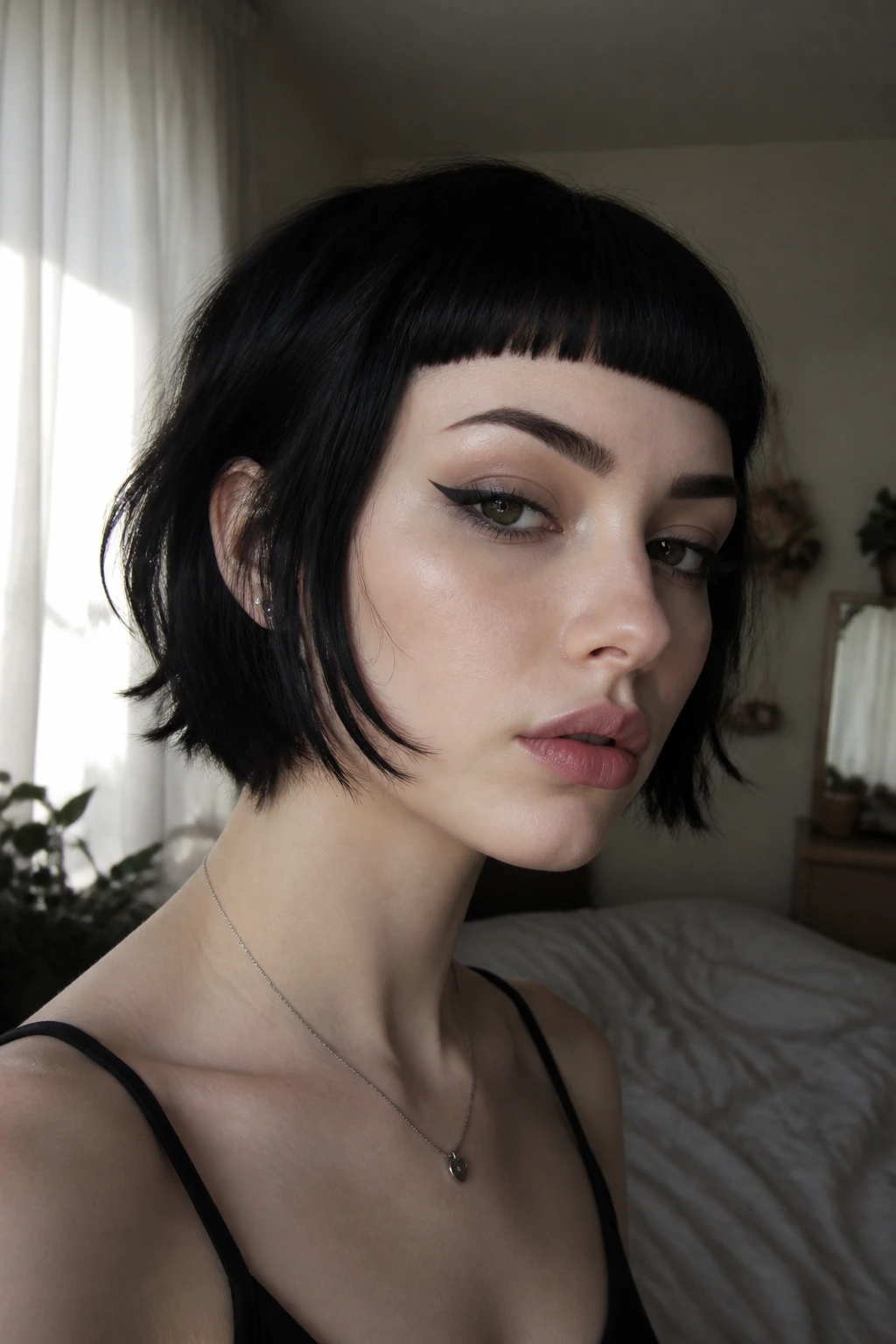
Micro bangs are the blunt little knife edge of goth hair, and on short dark cuts they hit fast. They sit well above the brows, show off the forehead, and turn a simple pixie or cropped bob into something much sharper. On jet-black hair, that short line can look severe in the best way.
The trick is density. Too much hair, and the fringe turns boxy. Too little, and it looks like an accident. Ask for a narrow section with clean, blunt ends and a slight softening at the corners so it doesn’t sit like a helmet. A tiny bit of point cutting near the temples helps it meet the rest of the cut without a hard shelf.
Best on
- Petite foreheads and strong brows
- Pixies, micro bobs, and cropped shags
- Hair that can hold a flat, controlled shape
A dab of smoothing cream or a pass of a small flat iron keeps the line neat. Leave the rest of the cut a little messy if you want contrast. That balance matters more than perfection.
2. Choppy Razor Fringe
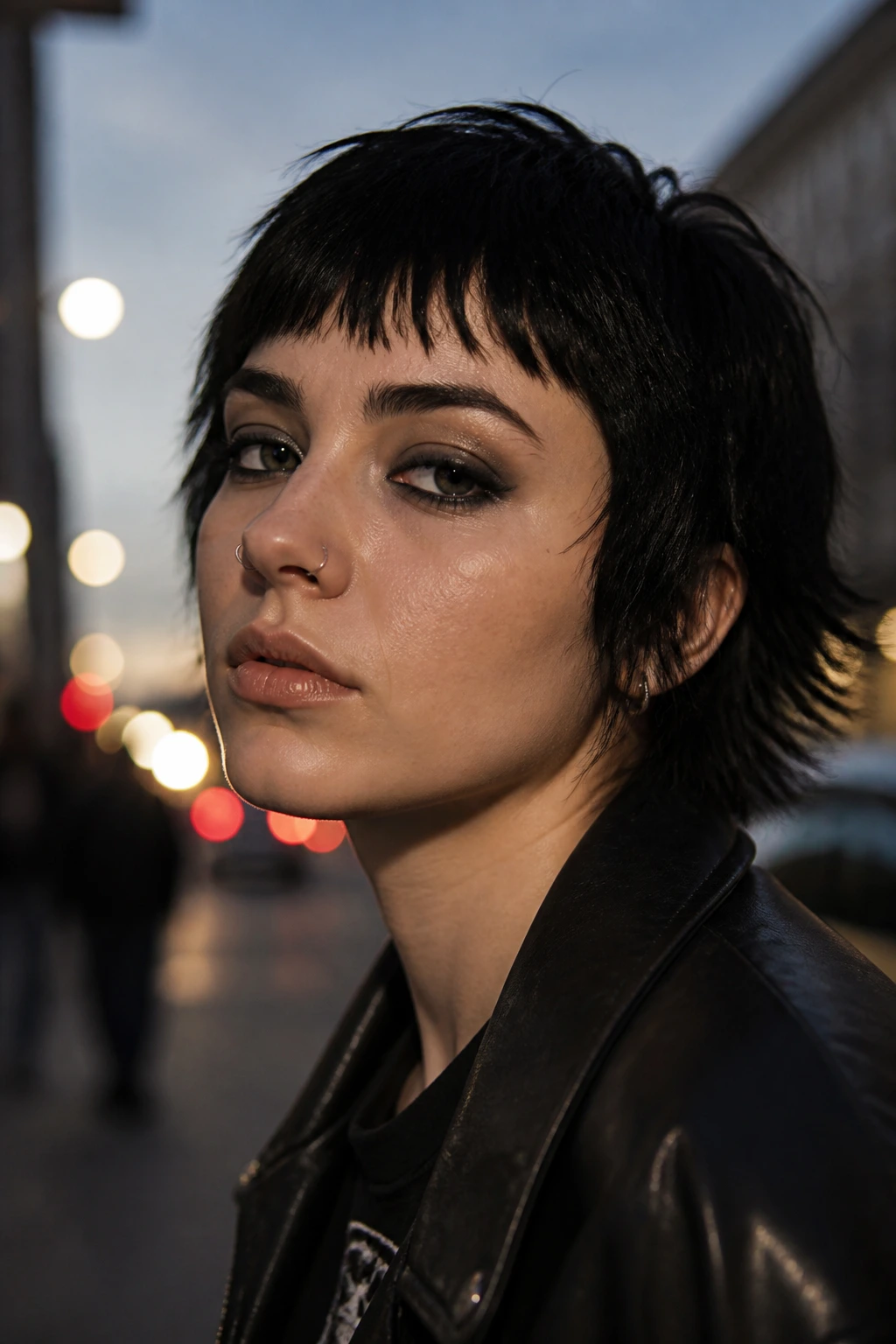
If micro bangs are the blade, choppy razor fringe is the scraped edge. It breaks up into tiny pieces instead of forming one solid curtain, which makes it a good choice when you want goth texture without a heavy block of hair sitting on your face. Short dark hair makes every little separation visible.
A razor or point-cut finish works best here, especially if your hair has any natural bend. The goal isn’t soft and fluffy. It’s broken, light, and slightly jagged, like the fringe was cut with movement in mind. Keep the center just a touch shorter than the sides so it falls in a controlled, messy way instead of flaring outward.
Use a matte paste or dry texture spray, then push the fringe into place with your fingertips. A comb can make it too neat, which kills the whole point. This one looks best when the ends are a little uneven.
3. Curtain Bangs on a Jaw-Length Bob
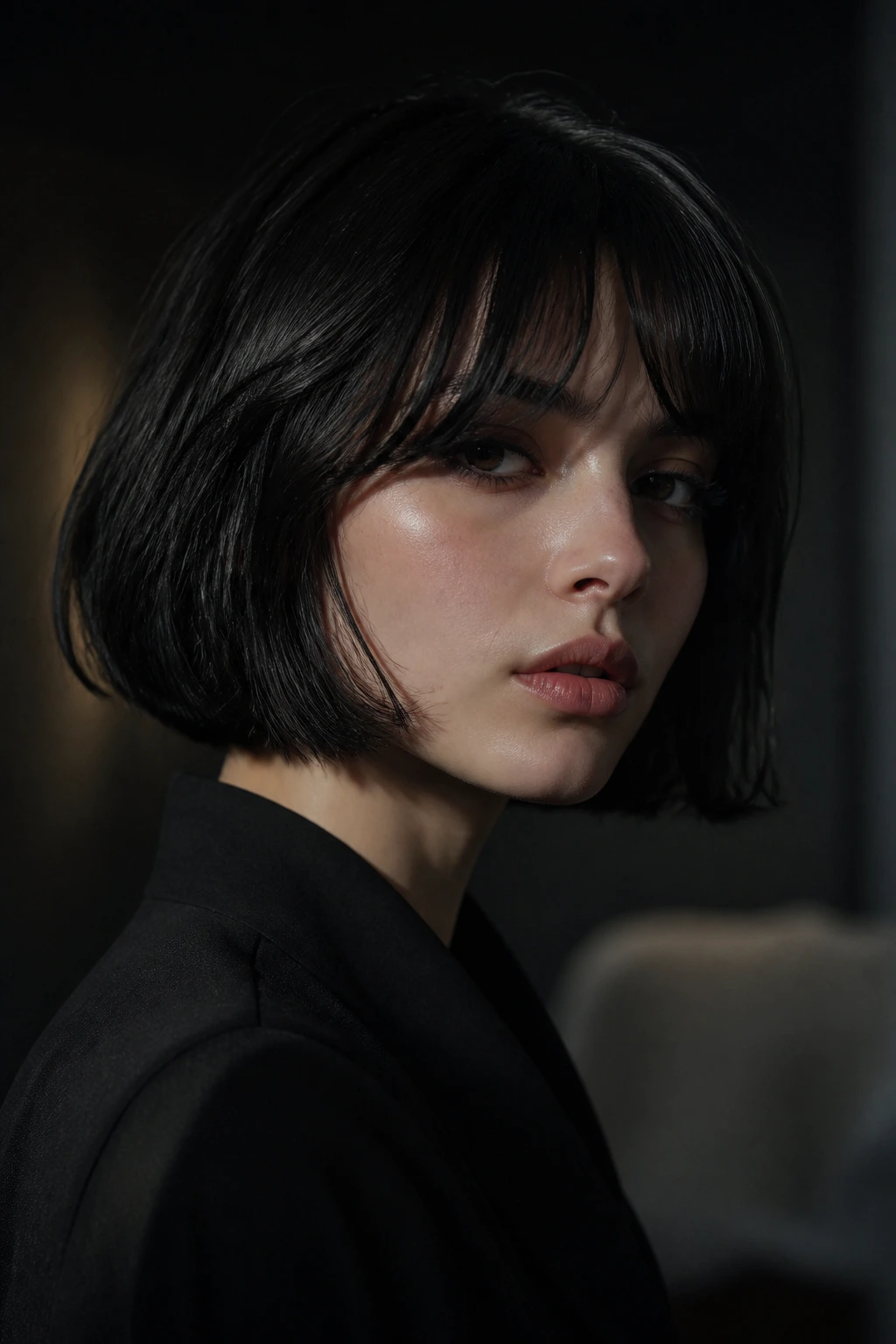
Can curtain bangs feel goth on short hair? Absolutely — if they’re cut with enough weight. On a jaw-length bob, a center-parted fringe that opens at the nose and falls toward the cheekbones gives you that moody frame without hiding the whole face. It’s softer than a blunt fringe, but not soft in a cheerful way. More like smoked velvet.
The parting has to be deliberate. If the center is too far back, the bangs vanish into the bob. If it’s too narrow, they become two little strips with no shape. Ask for a short curtain fringe that starts around the brow or just below it, with the outer pieces grazing the cheekbones. That extra length on the sides is what keeps the cut from feeling chopped off.
This works especially well if your bob has a blunt perimeter. The contrast between the neat bottom line and the open fringe gives the style some tension. And tension is half the goth vibe.
4. Side-Swept Widow’s Peak Fringe
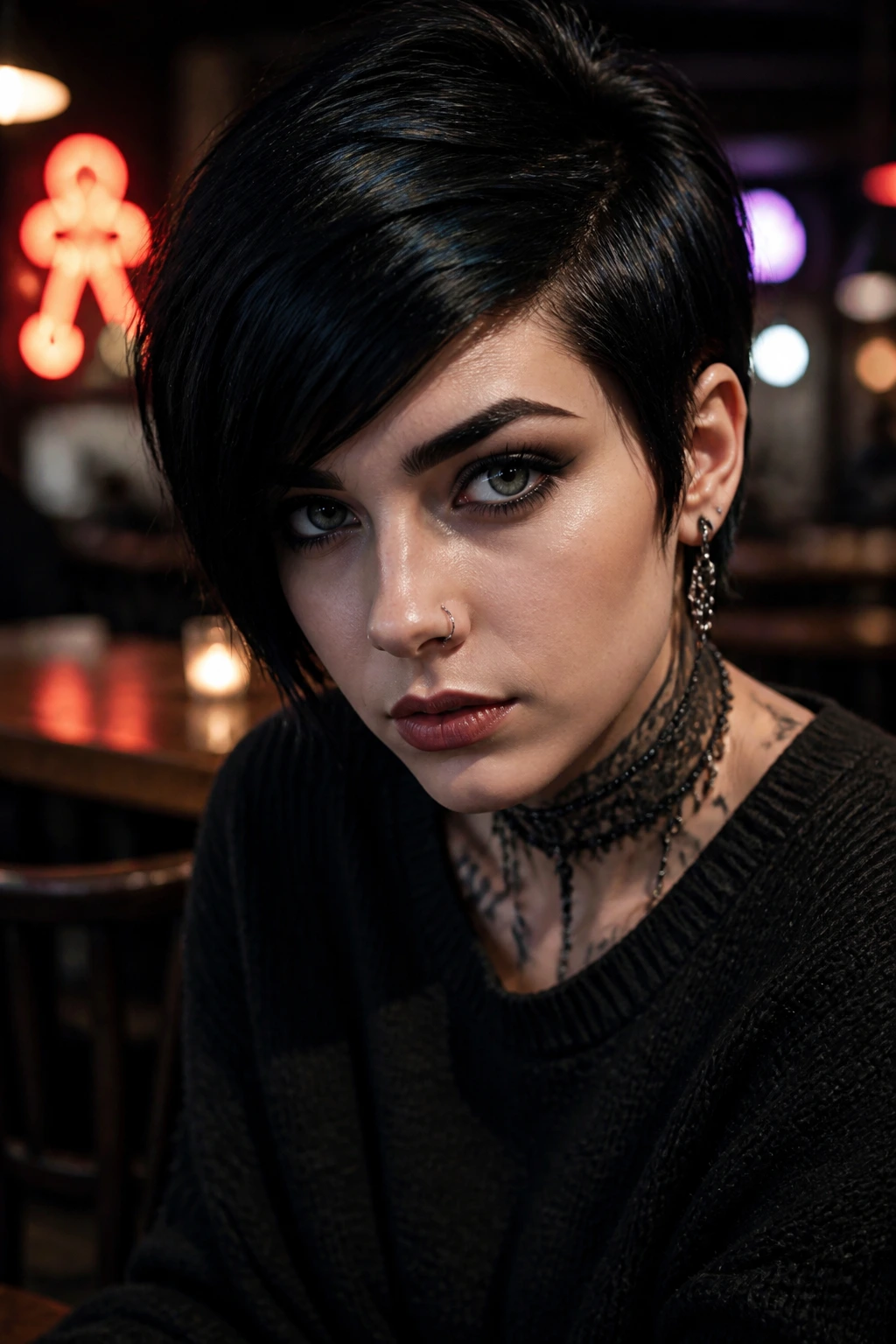
A deep side sweep can do what a blunt bang can’t: it can show off a widow’s peak or a strong forehead line instead of hiding it. On short dark hair, that diagonal shape has a sharp, dramatic lean that feels old-school gothic without looking dated. It also gives you a clean way to balance a face that wants more length than width.
The side part should be deep enough to create a clear fall across the forehead, not just a lazy bend in the hair. Ask for the fringe to start fuller near the heavier side and taper as it crosses the face. If the hair is thick, point-cut the ends so the sweep doesn’t sit like a blanket. If it’s fine, keep the root area dry and lifted so the shape doesn’t collapse.
This style plays well with a smoky eye or dark liner because it leaves one side of the face more open. That asymmetry gives you movement, even on a short cut.
5. Piecey Pixie Bangs
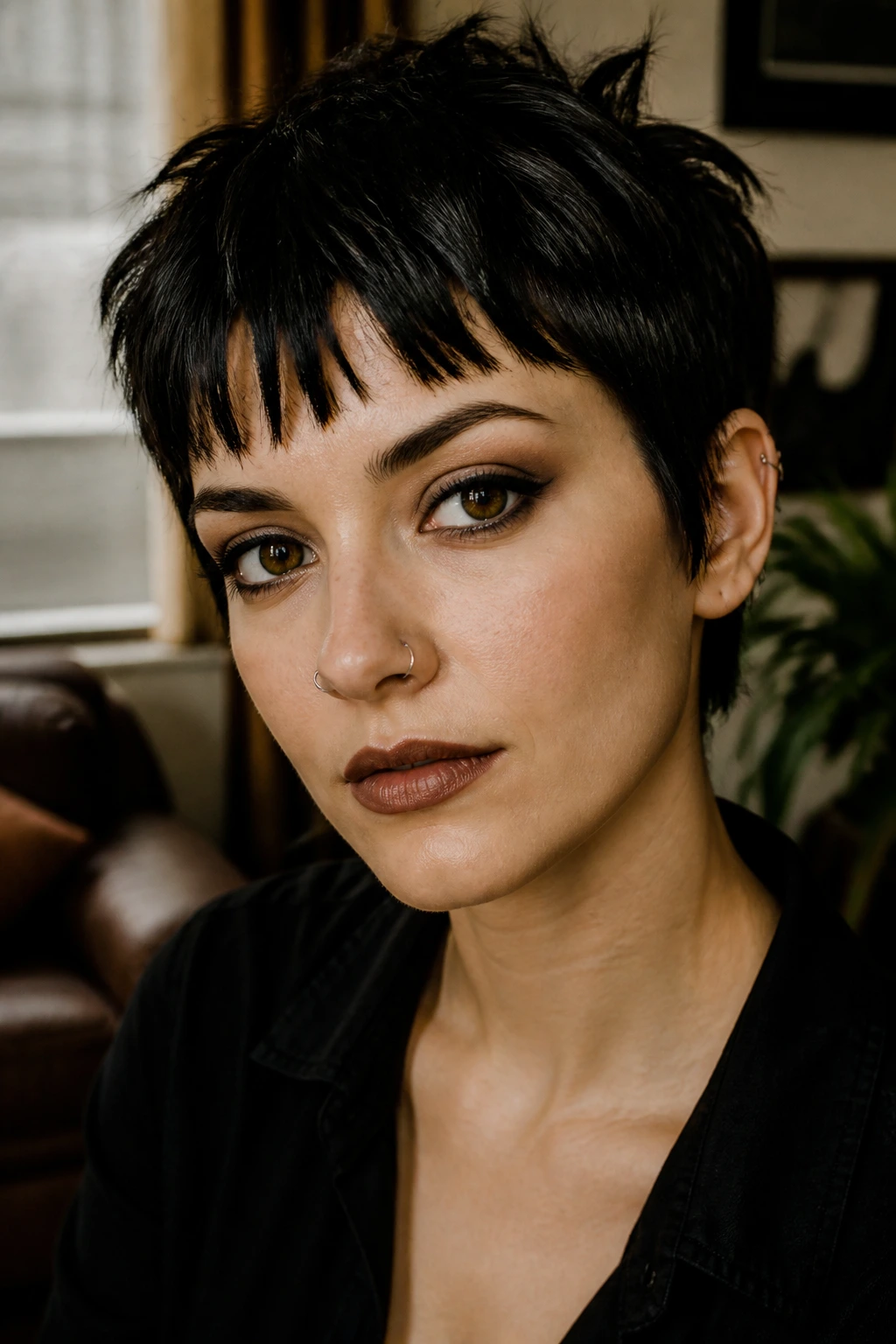
Piecey pixie bangs are all about separation. Instead of one line across the forehead, you get a few deliberate strands that fall at different lengths and leave bits of skin showing through. On short dark hair, that scattered texture looks a little sly and a little underlit, which is exactly the mood.
The cut needs internal shaping. If the bangs are trimmed straight across and then just roughed up with product, they’ll fall apart in a sad way. Ask for short, pointed sections with some longer bits left near the temples. That gives you a fringe that can be pushed forward, split, or swept to one side depending on the day.
A matte paste works better than shine here. Warm a pea-sized amount between your fingers, pinch out tiny sections, and leave a few ends imperfect on purpose. If every strand is perfectly separated, the fringe starts looking fussy. A little disarray is the point.
6. Blunt Straight Fringe With a Sleek Mini Bob
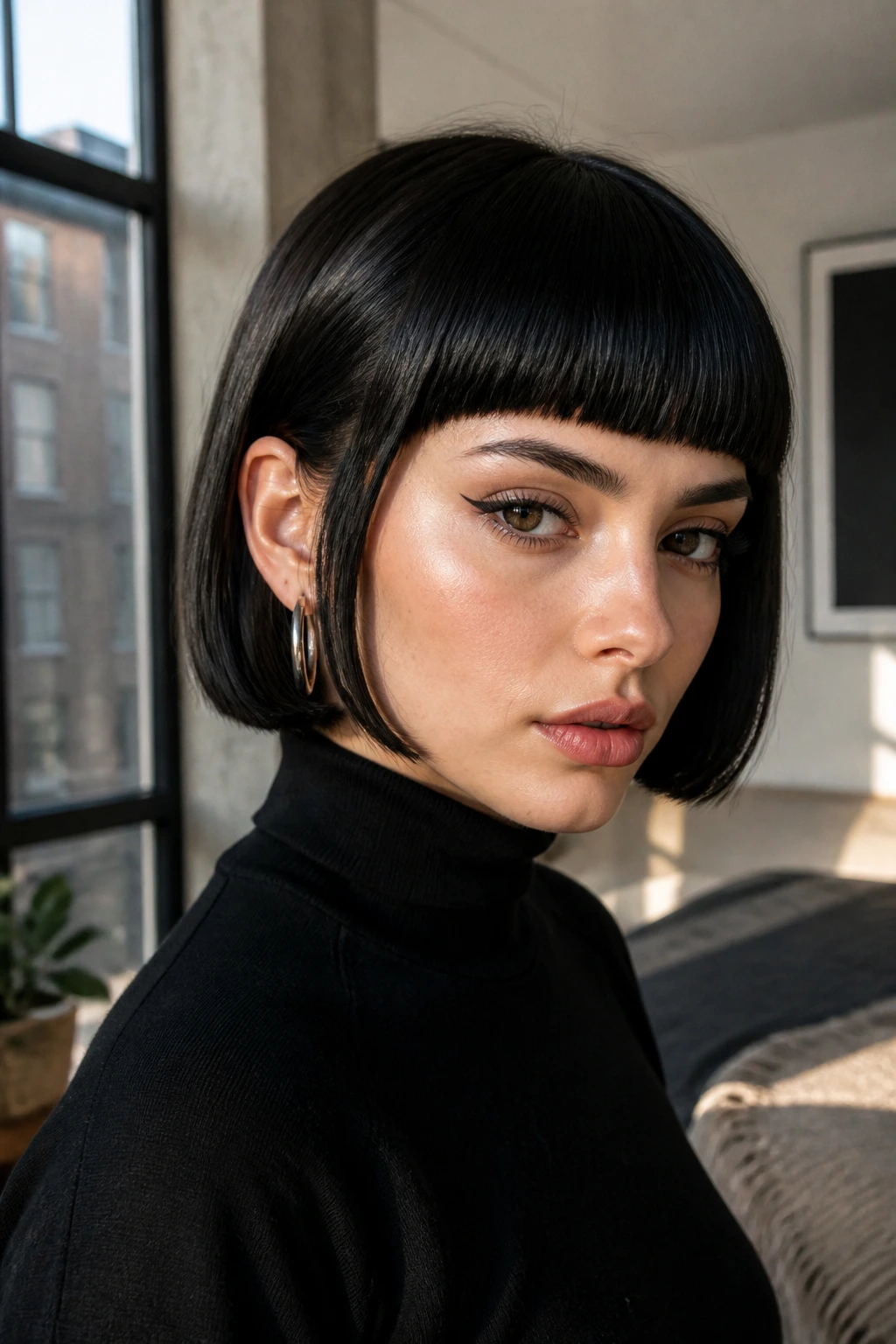
This is the no-nonsense option. A blunt fringe sitting over a polished mini bob is the kind of cut that looks almost architectural, especially on black hair. It’s clean, direct, and a little cold — which, yes, is a compliment here.
The length matters more than people think. If the fringe lands exactly at the brows, it reads full and intentional. If it sits too far above them, it can feel clipped. If it grazes the lashes, it turns from severe to heavy fast. Keep the line straight, but don’t cut it so dense that it blocks the face completely. A tiny bit of internal texture near the ends prevents that hard rectangle effect.
A mini bob with this bang looks best when the ends are tucked under with a flat brush or left pin-straight with a gloss finish. If your hair is thick, ask for a slight underbevel at the bob perimeter so the whole shape cups the jaw instead of puffing out.
7. Asymmetrical Sweep With an Undercut
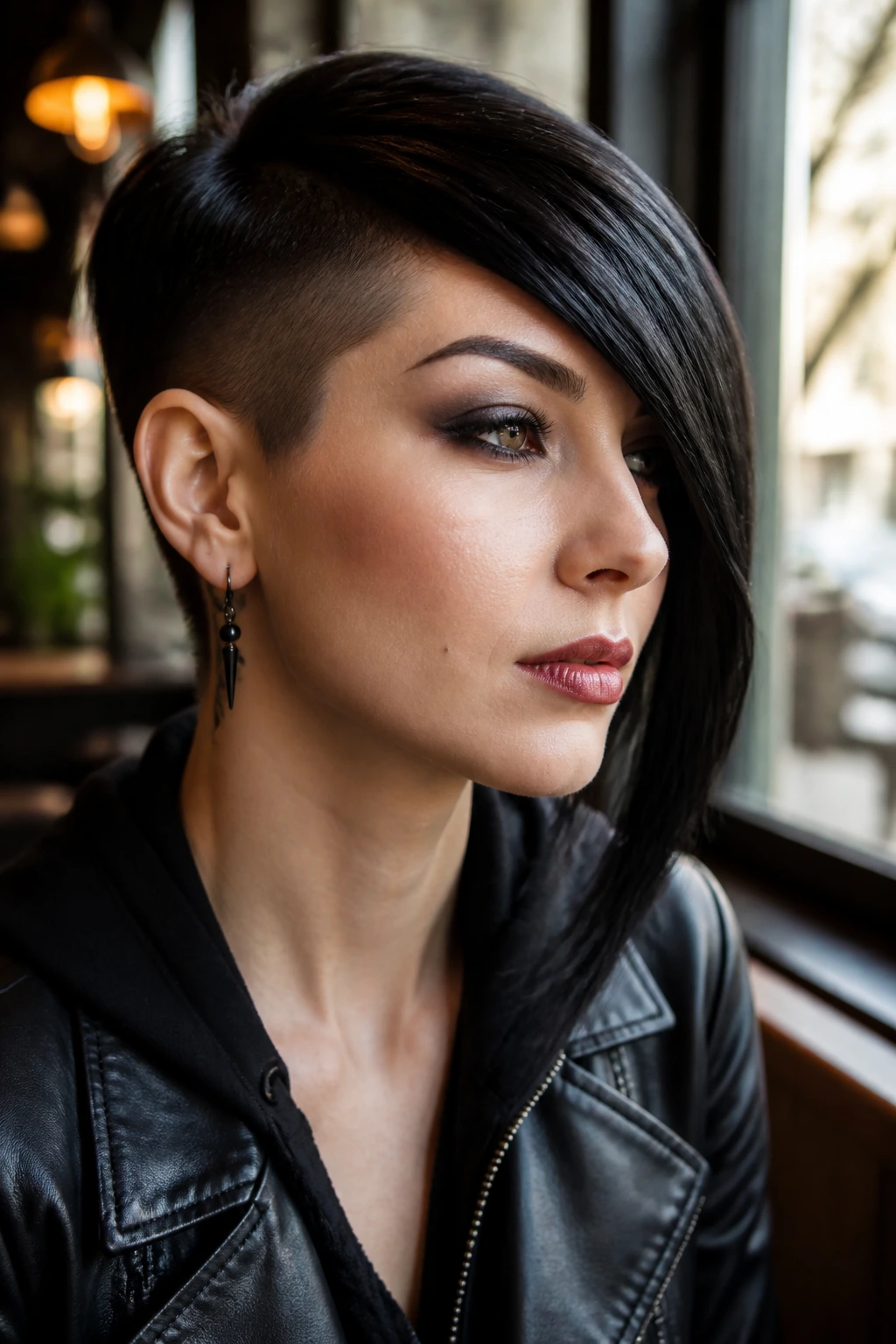
One long side, one short side. That’s the whole idea, and it works because short dark hair can take asymmetry without looking unbalanced. An undercut on one side keeps the weight from getting bulky, while the longer fringe sweeps across the forehead like a black ribbon with an edge to it.
The beauty of this cut is how much it changes just by changing where the longest piece lands. Near the cheekbone, it feels sleek. Near the jaw, it feels harsher. Ask your stylist to keep the shortest side close enough to reveal the undercut’s outline, because that negative space is what makes the shape feel sharp instead of merely uneven.
This one likes a bit of flat-ironed bend on the longer side, but not a full curl. A slight curve is enough. If you over-style it, the asymmetry gets soft and loses its bite.
8. Brow-Grazing Curved Fringe

A curved fringe that kisses the brows can look unexpectedly gothic when it’s cut with weight and worn on dark hair. It frames the eyes without the heavy wall you get from a blunt bang, and that curve gives the face a more theatrical shape. Not sweet. Theatrical.
The arc should follow the brow line without copying it exactly. That small difference matters. If the center is just a touch shorter and the outer edges blend into the sides, the fringe sits like a dark crescent rather than a rectangle. It’s a good choice if you want a cleaner line than curtain bangs but less severity than full blunt bangs.
Keep the styling simple. Blow-dry forward with a small round brush, then let the fringe cool before touching it. That cooling step sets the curve. Skip it, and the bangs will split or drop flat by lunch.
9. Wispy Shadow Bangs
Wispy shadow bangs are for people who want the goth mood without a heavy curtain on the face. They’re thin enough to let your brows peek through, but they still cast a shadow over the eyes — especially on dark hair, where the line reads even when the fringe is feather-light. That shadow is the whole trick.
These bangs work best when the hair is fine or medium-density. On thick hair, they can disappear into the rest of the cut unless they’re carved out carefully. Ask for a soft, sparse section with slightly longer ends and a few shorter bits in the center. You want the fringe to hover, not sit.
A light mist of texturizing spray helps them stay separated. Too much product and they clump; too little and they flop. This is one of those cuts that looks delicate but still wants structure underneath.
10. Dense Straight-Across Fringe
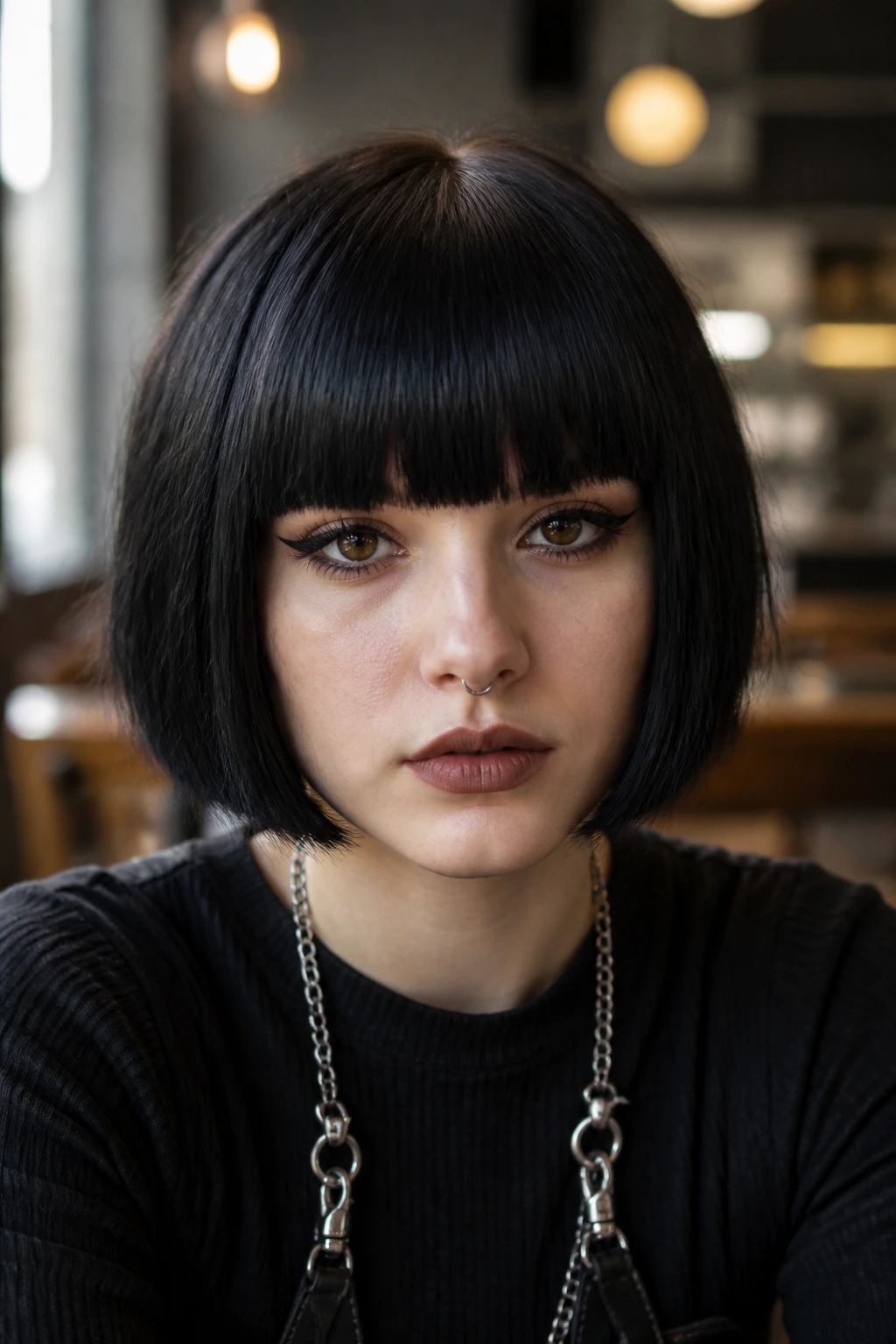
Dense straight-across bangs are the classic goth move, and on short dark hair they have real weight. The line is blunt, the coverage is full, and the whole face gets framed in a way that can look almost severe in daylight. That’s the point.
A dense fringe needs balance elsewhere. If the bob or pixie underneath is already bulky, the hair can crowd the face. Keep the sides tighter or more tapered so the fringe stays the main event. This style also works better if the ends are cut cleanly rather than razored into fluff. You want a compact curtain, not a fuzzy one.
This is the fringe I’d choose if you wear dark liner, lipstick, or sharp collars. It likes strong styling choices around it. Soft, airy clothes can make the haircut feel disconnected; structured pieces bring it back into focus.
11. Long Goth Curtain Fringe
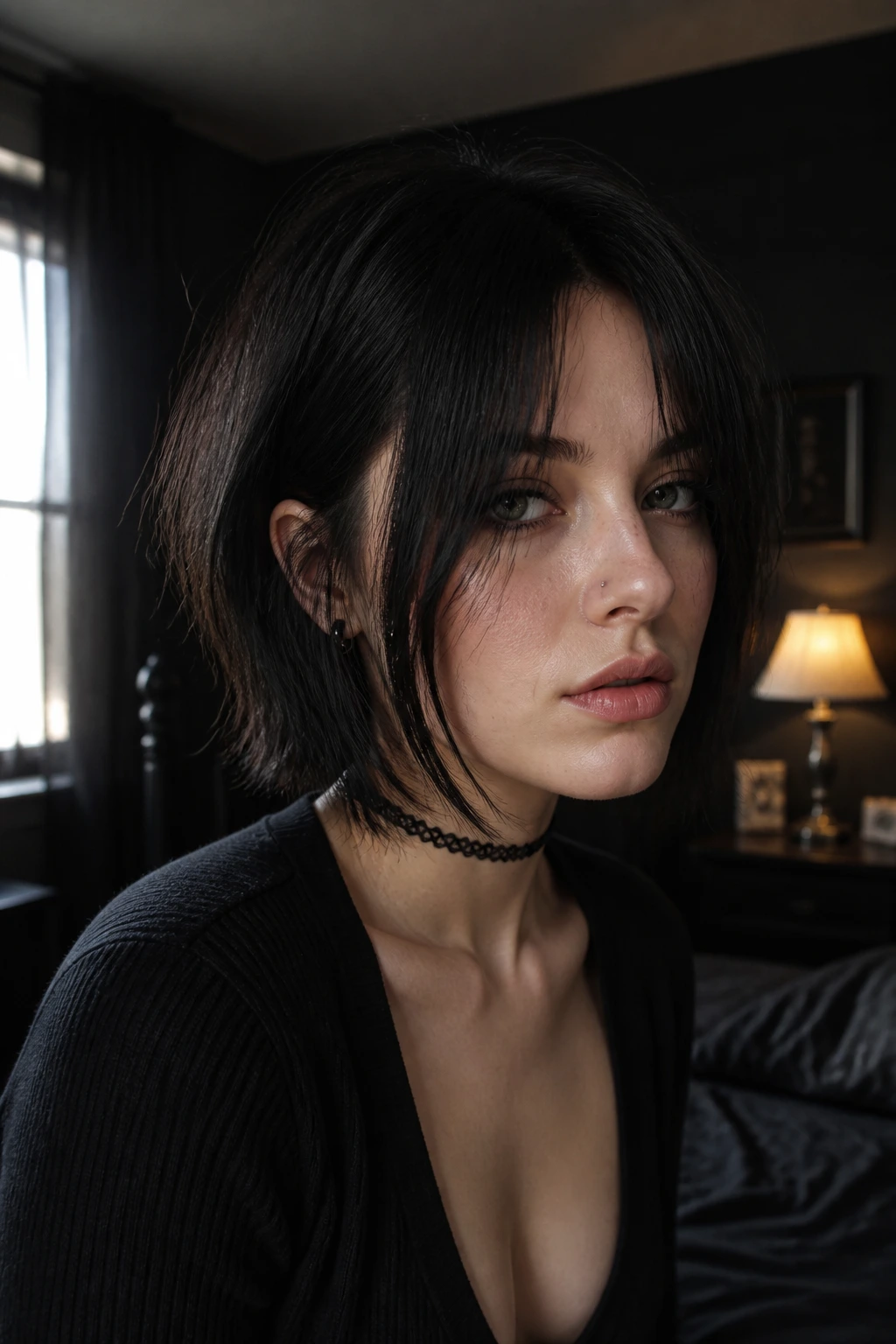
Long curtain fringe on short hair gives you a little more flexibility than the cropped versions. The center still parts cleanly, but the sides can graze the cheekbones or even skim the top of the jaw. That extra length lets the cut feel moody without pinning everything to the forehead.
The shape matters most at the part and the fall. The center should be short enough to stay visible, while the sides taper gradually so they don’t hang like two disconnected strips. On a short shag or bob, this fringe softens the top edge of the cut and helps it move when you turn your head.
I like this one for people who want a goth look they can tuck back on off days. It’s less committal than a blunt fringe, but still has enough presence to read as a deliberate style. A round brush and a few seconds of bend at the ends are enough.
12. Split Fringe on a Wolf Cut
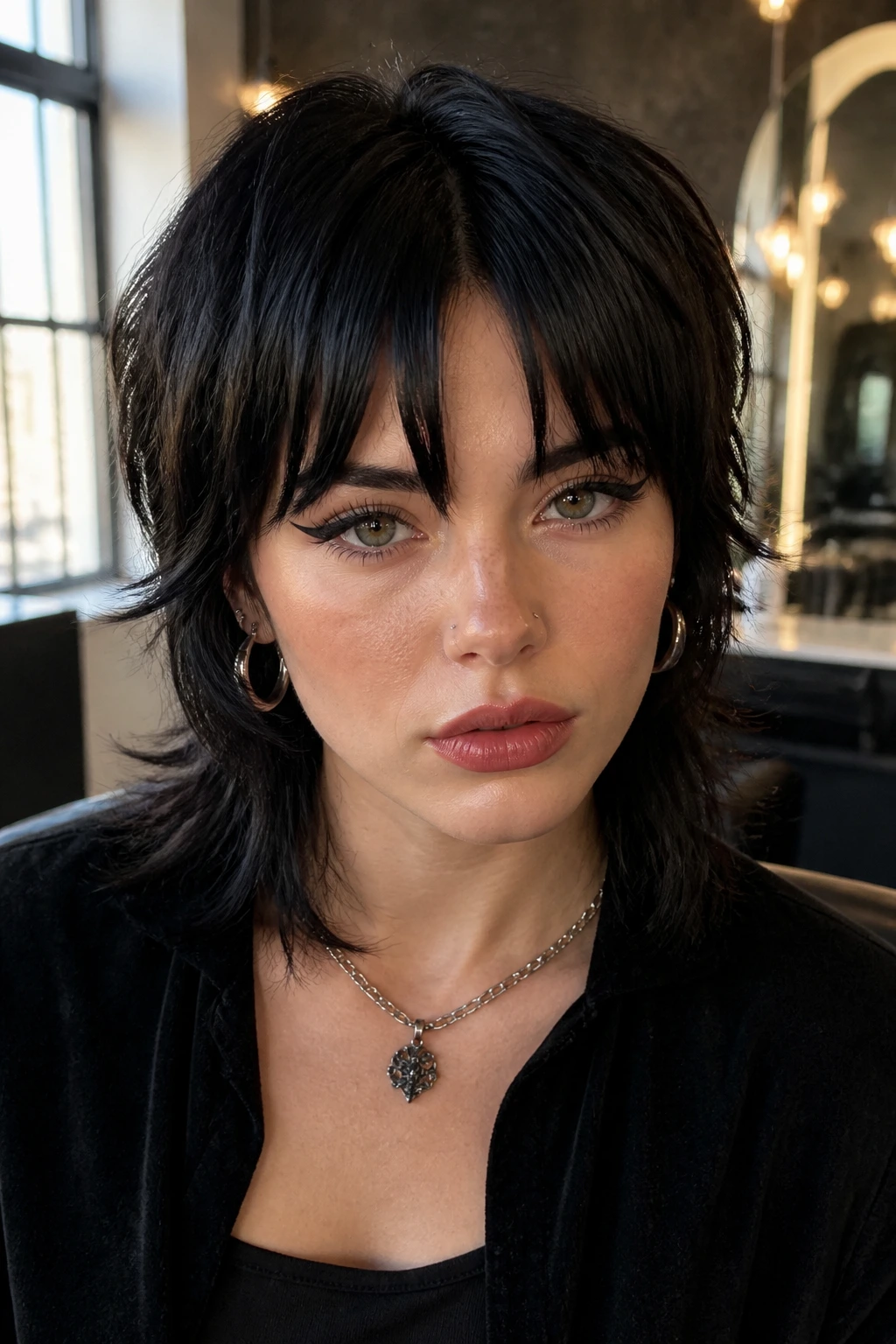
A split fringe on a short wolf cut looks a little wrecked, in the best way. The center gap keeps the forehead visible, while the longer pieces on either side drop into the shaggy layers around the cheekbones. On dark hair, that broken shape gets extra contrast.
The trick is not to let the split feel accidental. The fringe should be cut to open naturally at the center, with enough shorter pieces to stay put when you move. If the hairline is tricky, a soft root lift spray can help the center from clinging flat to the forehead.
This cut likes movement. Finger-styling beats combing. If the layers around the ears and temples are also choppy, the split fringe feels like part of the whole shape rather than a separate front section.
13. Bottleneck Bangs

Bottleneck bangs start narrow in the center and widen as they move outward. That shape looks especially good on short dark hair because the opening at the center keeps the face visible, while the fuller sides drag the eye toward the cheekbones. It’s one of the more wearable goth-adjacent fringe shapes.
Ask for a shorter center piece with longer, curved sides that blend into the front layers. The transition should be soft enough that the bangs don’t read as two separate chunks, but strong enough that the shape is still obvious. On a cropped bob, bottleneck bangs keep the line from feeling too square.
This is also a good option if you want to grow out a heavier fringe without giving up shape. The center can be nudged longer, and the sides can slide into the rest of the cut without a dramatic awkward stage. Handy. Not boring.
14. Textured Micro Fringe
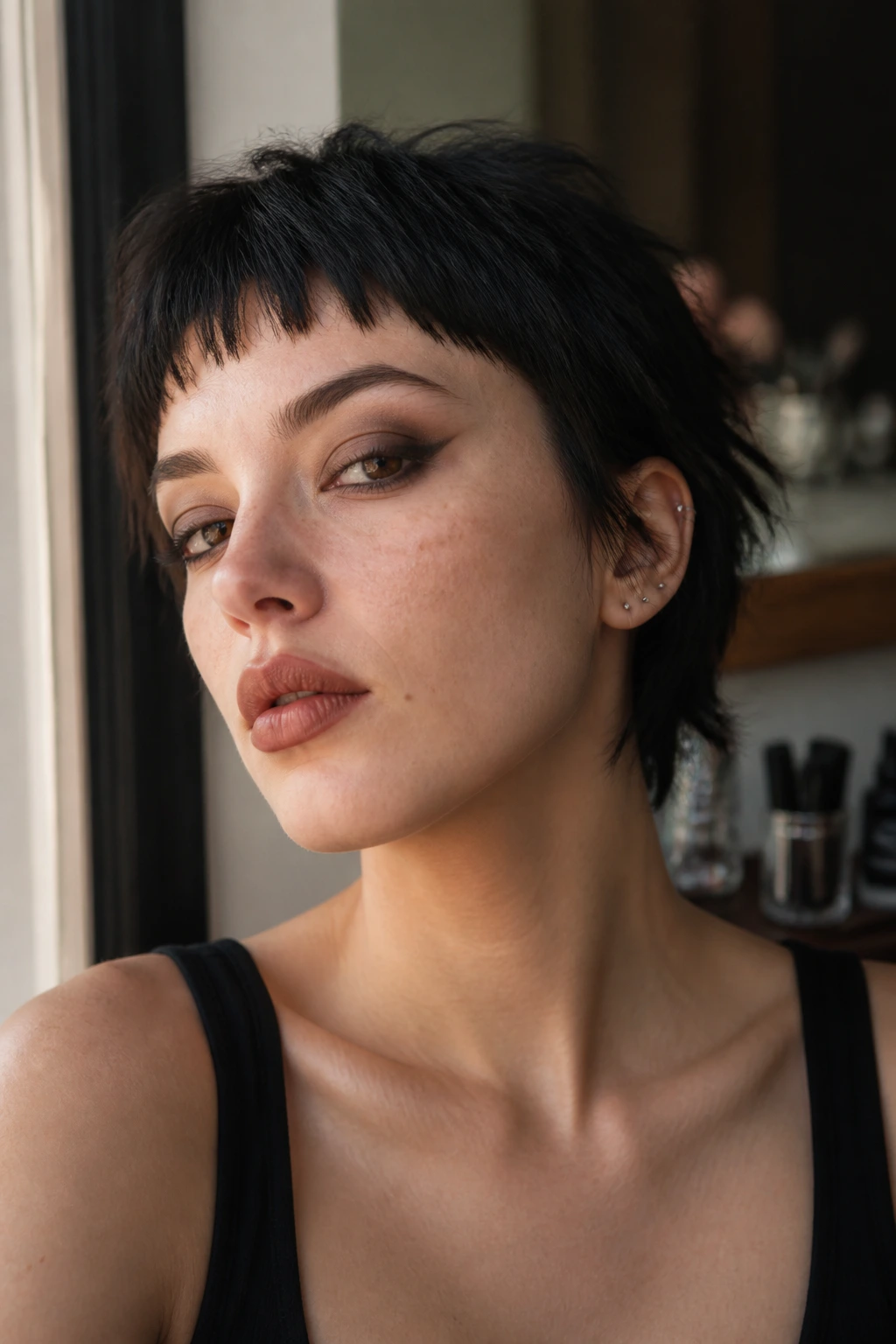
This version is tiny, jagged, and a little feral. Textured micro fringe sits high on the forehead like a broken line, not a neat one, which gives short dark hair a rougher edge than classic baby bangs. It’s the kind of fringe that looks better when the ends aren’t perfectly matched.
The cutting technique matters here. A straight cut will make it look too neat. A series of tiny point cuts creates those uneven tips that sit well on the brow line and move a little when you blink. If you have a cowlick, this is not the fringe to fight with force; it’s better to work with the natural bend and keep the lengths short enough to stay controlled.
A tiny amount of wax rubbed between the fingers is usually enough. Push the ends in different directions and leave a few gaps. That bit of chaos keeps the fringe from turning cute, which would be a problem.
15. Heavy Eyelash Bangs
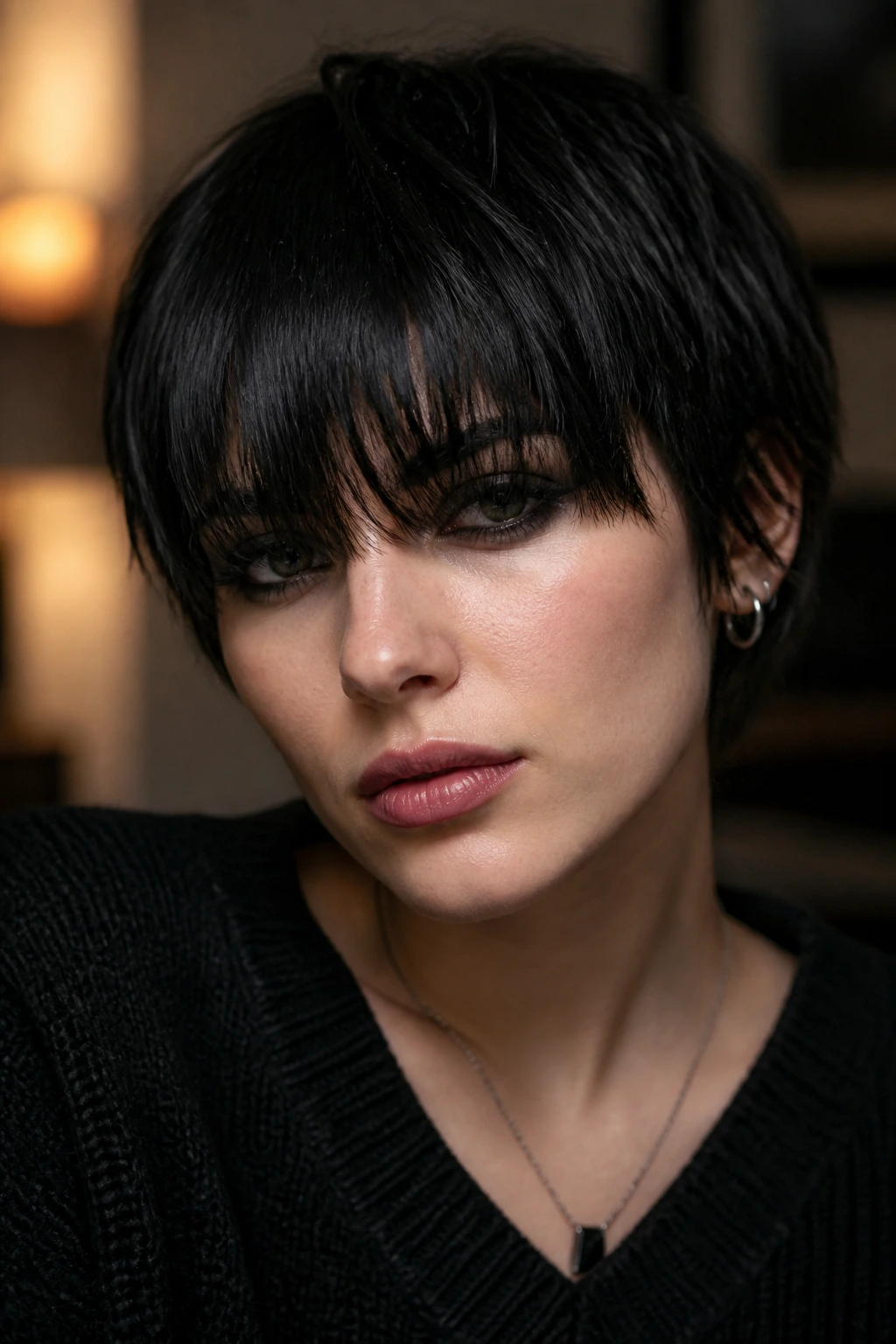
Heavy eyelash bangs graze the lashes and sit low enough to give the eyes a dark frame. On short hair, that long front edge can feel almost cinematic because the rest of the cut is so compact. The contrast is nice: a close-cropped body with a dramatic fringe falling forward.
These bangs need enough density to hold the shape without splitting into pieces. If the hair is fine, keep the fringe a little narrower and let the sides taper. If it’s thick, the weight can be stunning, but only if the ends are trimmed cleanly and not thinned too much. Too much thinning and the whole thing goes stringy.
A round brush or a quick pass with a flat iron gives the fringe a slight forward bend. Keep the roots controlled and the ends soft. That’s what lets the fringe skim the lashes without poking straight into the eyes.
16. Swoopy Side Fringe on a French Bob
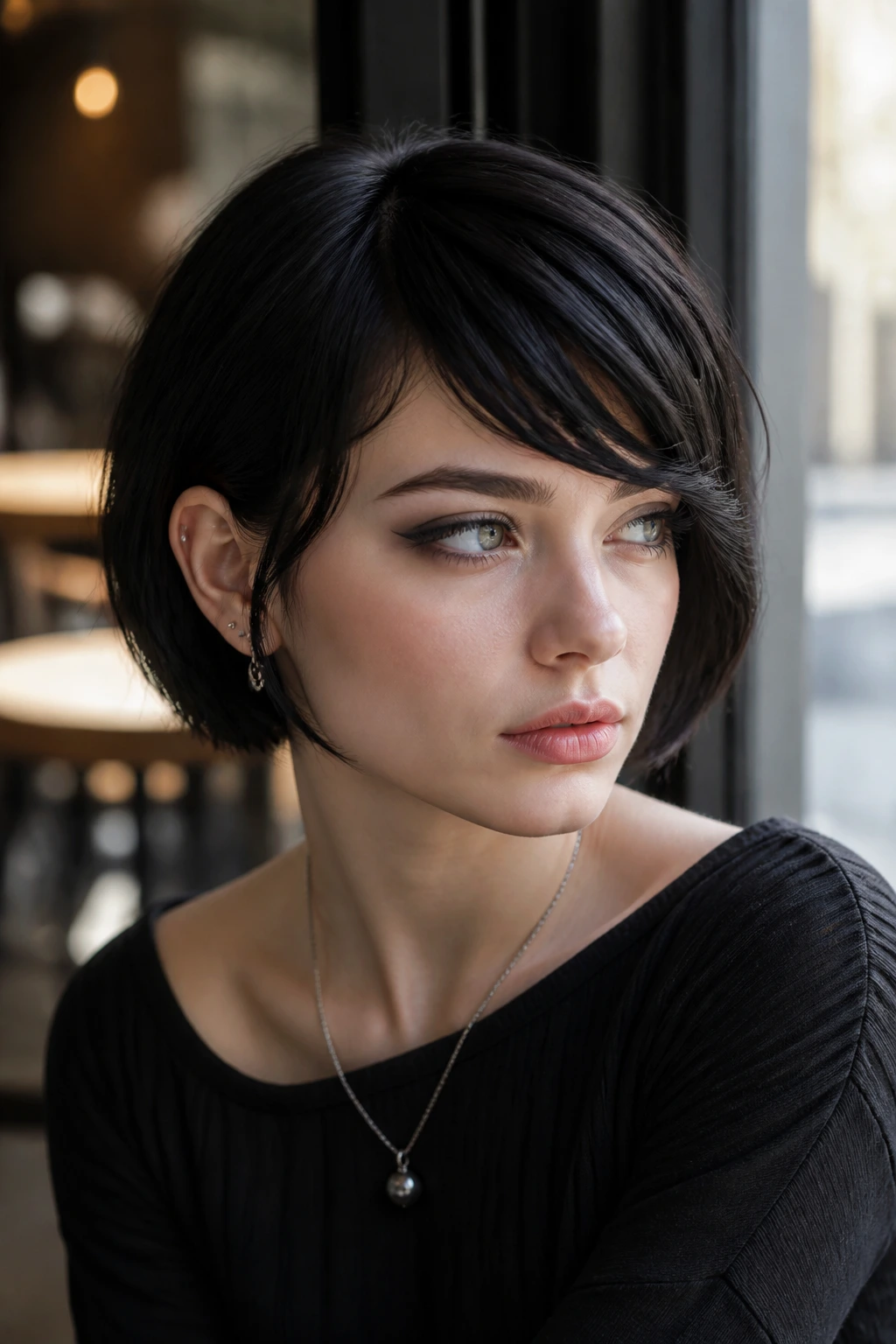
A French bob already carries attitude; add a swoopy side fringe and it turns more nocturnal than chic-cute. The side sweep works because it keeps the forehead partly open while still creating a bold diagonal across the face. On black hair, that diagonal reads cleanly.
This is a good option if your hair naturally wants to fall to one side. Don’t fight it. Ask for the fringe to be longer at the sweep and shorter at the starting point, then cut the end so it lands around the cheekbone or upper jaw. That length gives you something to tuck, pin, or brush across the face depending on the day.
The bob underneath should stay compact. If it’s too fluffy or too layered, the fringe loses authority. I’d keep the perimeter blunt and let the fringe do the moving.
17. Choppy Layered Fringe on a Short Shag
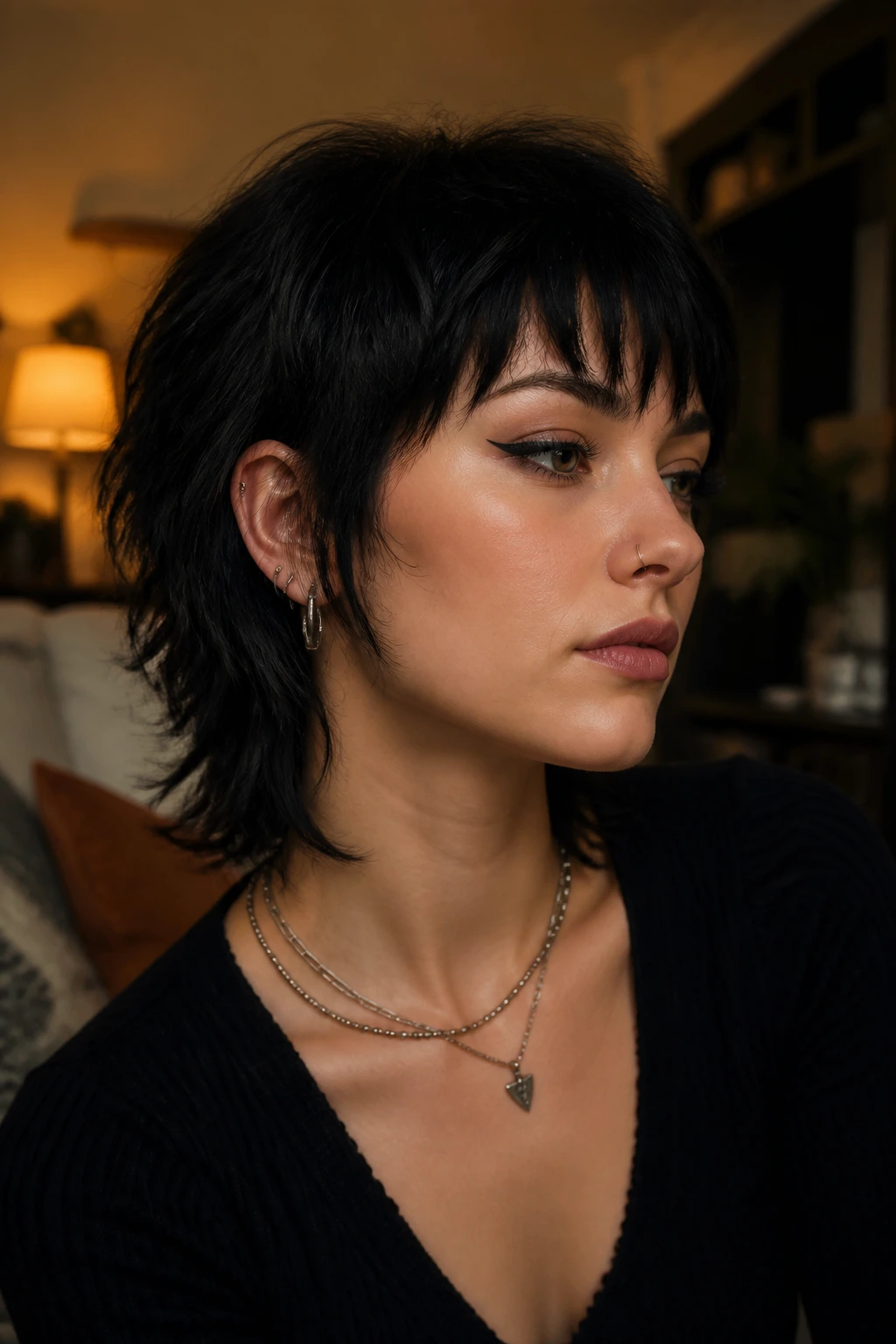
This is the messy cousin in the lineup. Choppy layered fringe on a short shag doesn’t try to sit in one perfect shape; it breaks into soft, uneven pieces that blend into the top layers. The result feels lived-in, not polished, and that suits goth styling just fine.
The layers should start high enough to keep the fringe from behaving like a separate front curtain. If the top pieces are cut with a razor or point-cut detail, they’ll fall into the sides more naturally. This works especially well on hair with a little wave, because the bend helps the bangs stack and separate on their own.
Use a light mousse or texture spray while drying. Then scrunch the fringe forward with your fingers. A comb can flatten the whole thing into a shape that looks too tidy for the cut.
18. Curled-Under Bangs
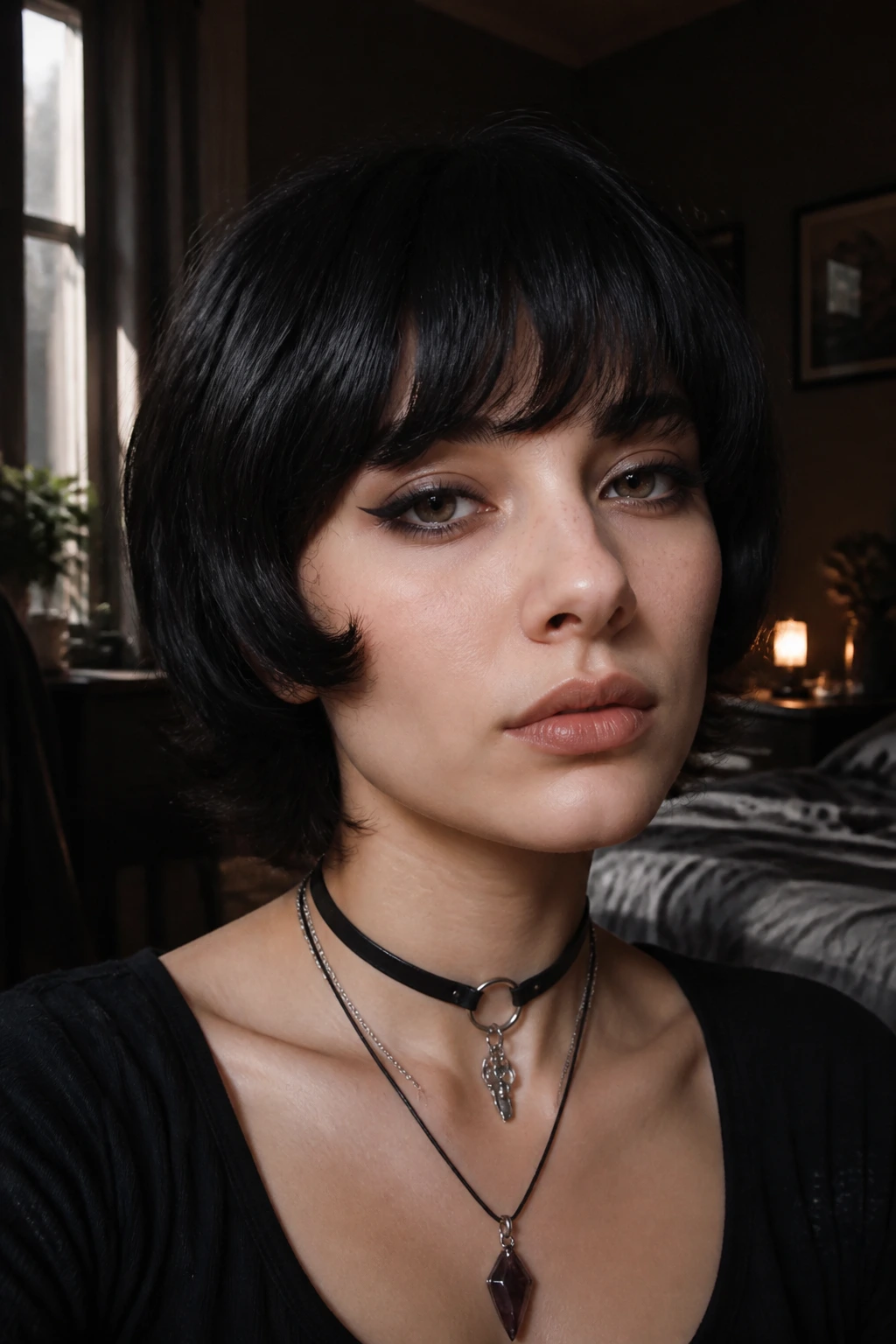
Curled-under bangs sound softer than they look. On a short dark cut, the inward bend creates a rounded, slightly old-school gothic line that feels polished but still moody. The fringe sits close to the face and turns the eyes into the focal point.
The bend should be subtle, not rolled. A large round brush or a flat brush with the dryer aimed downward is enough to tuck the ends in. If the fringe is too long, it will split; too short, and it will kick out instead of curving. The sweet spot is usually just touching the brows or landing right below them.
This style pairs well with blunt bobs, because the rounded fringe keeps the top from feeling too boxy. It’s also a nice option when you want a neat shape that still has some softness around the edges.
19. Wet-Look Fringe
A wet-look fringe is glossy, sharp, and a little severe — which is exactly why it belongs in a goth fringe lineup. On short dark hair, the shine makes the cut feel intentional from the first glance. Every strand is visible, and nothing gets hidden in a soft blur.
The styling product has to be chosen carefully. Use a gel or gel-cream that gives hold without turning the bangs into a crunchy helmet. Work it through damp hair, comb the fringe into place, and leave the ends slightly separated if you want the look to feel modern instead of theatrical. If the fringe is too smooth from root to tip, it can look stiff.
This style works best when the rest of the hair is also neat — sleek bob, tapered pixie, or controlled shag. If the back is too fluffy, the glossy front can look disconnected. The contrast needs a reason.
20. Blade-Sharp Straight-Across Bangs
This is the precision cut. Blade-sharp straight-across bangs are cut as a clean bar over the brow line, with almost no softness at the edge. On short dark hair, that line has a hard, graphic effect that feels strong rather than fussy.
The cut needs a steady hand. A slight unevenness shows quickly on dark hair, so this one benefits from careful sectioning and a finish that doesn’t over-thin the ends. The hair should lie flat but not limp. If the fringe is too light, it loses the solid block that makes the shape work.
I’d pair this with a bob that has a blunt perimeter or a pixie with a clean neckline. Keep the rest of the cut simple so the fringe can be the sharpest thing in the room. It doesn’t need help.
21. Face-Hugging Fringe
Face-hugging fringe curves along the temples and cheekbones instead of staying in one flat line. That shape is useful when you want goth energy but don’t want a heavy sheet of hair across the forehead. On dark short hair, it feels mysterious in a quieter way.
The fringe should start fuller in the center and taper as it moves outward, almost like it’s wrapping around the face. Ask for the front pieces to connect to the side layers so there isn’t a hard break. If the hair is thick, keep the interior weight low; if it’s fine, leave more density near the temple area so the shape doesn’t vanish.
This is a smart cut for people who wear glasses. The curve works with frames rather than fighting them, and the face stays open enough that the whole look doesn’t get crowded.
22. Jagged Razor Bangs
Jagged razor bangs are the scraped, broken version of a fringe line. They look slightly torn at the ends, which gives short dark hair a rougher texture and a less polished mood. If you like your hair to look as if it’s been lived in a bit, this is a good lane.
A razor cut works especially well on straight or slightly wavy hair. The tiny pointy ends catch light unevenly, and that unevenness is the whole appeal. Ask for a fringe that’s shorter near the center and more ragged toward the sides so it doesn’t read like a tiny fence.
These bangs style fast. A bit of dry texture spray, a finger twist, and you’re done. Overcombing them is the fastest way to ruin the effect, because the jagged edge needs to stay visibly broken.
23. Hidden Underlayer Bangs
Hidden underlayer bangs sit beneath a top veil of hair, so the fringe only peeks through when the head moves or the top layer separates. On short dark hair, that hidden-meets-revealed effect feels moody and a little secretive.
This isn’t a fringe that wants to be over-cut. The top layer should stay long enough to drape over the bang area, while the underlayer gets its own shorter shape. When the pieces fall together, you get depth instead of a flat front. That depth matters on short hair because there isn’t much length elsewhere to build drama.
If you wear the hair tucked behind one ear, this cut gets even better. The peek of fringe around the temple can look almost accidental, which is a nice trick when you want the style to feel less staged.
24. Messy Goth Fringe With a Pixie Mullet
This one has attitude baked in. A pixie mullet with a messy goth fringe keeps the front short and the back a little longer, so the whole cut feels lived-in and slightly unruly. The bangs should not sit perfectly still. That would defeat the point.
The fringe can be choppy, side-swept, or broken into uneven pieces, but it needs to connect to the longer crown and back so the whole cut feels like one shape. On dark hair, the separation between short fringe and longer tail is especially visible. That contrast gives the cut motion even when you’re standing still.
I like this best with matte styling. A little grit at the roots and a soft bend through the top keeps it from looking too sporty. It should feel like a haircut that has somewhere else to be.
25. Rounded Gothic Fringe
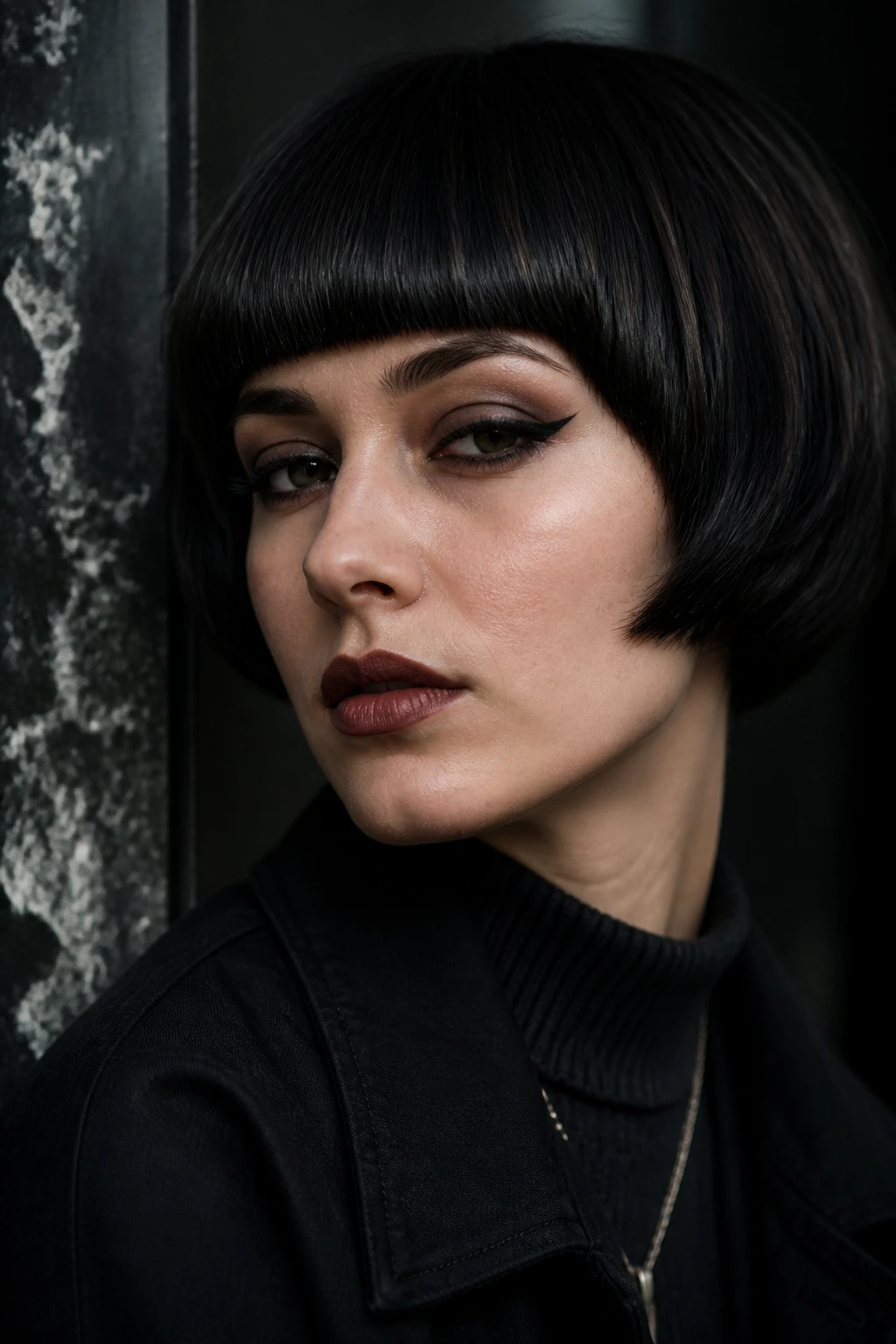
Rounded gothic fringe curves across the forehead in a soft arc, but the mood stays dark because of the weight and the dark hair color. It’s a cleaner, more deliberate version of a curved bang, and it can make a short cut feel almost sculpted.
The key is balance. The center should not be too short or you’ll lose the rounded line. The outer corners should slide into the sides without a hard drop. On a bob, the curve gives the top of the cut a dome-like shape that can look very polished, almost mannequin-clean — in a good way.
This one works if you want gothic style without harsh angles. It’s softer than a straight block, but it still frames the eyes with a clear edge. Not every goth bang needs to look angry. Some should look precise.
26. Peek-a-Boo Bangs
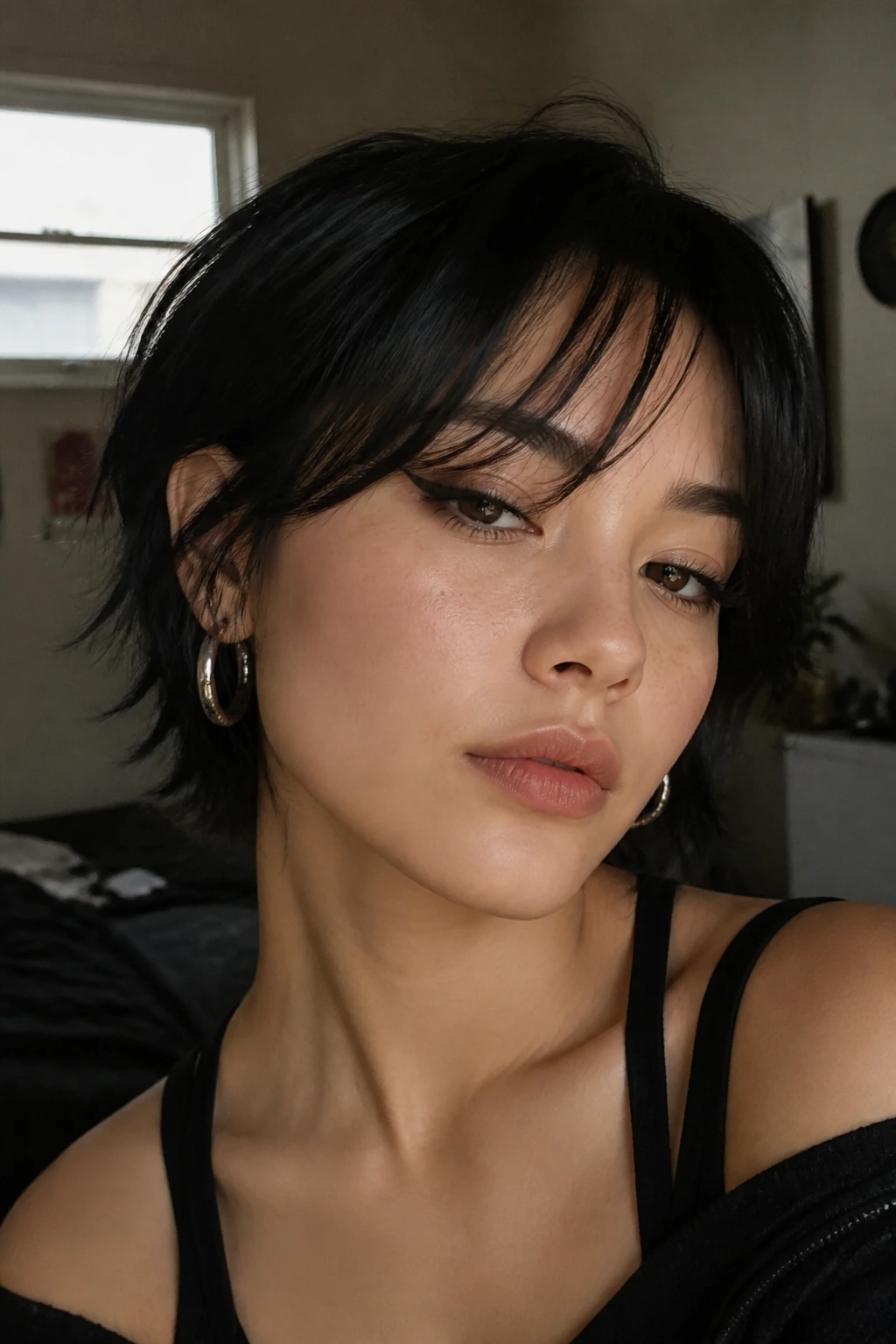
Peek-a-boo bangs fall just enough to tease the forehead, then drift aside and reveal skin, brows, or a slice of eye. On short dark hair, that glimpse-and-hide rhythm gives the cut movement without needing a big shape.
The bangs should be long enough to shift, but short enough to hold their own. If they’re too long, they become ordinary side bangs. If they’re too short, they can’t play peek-a-boo at all. The cut sits best when there’s a small weight line at the front and a little softness toward the ends so it moves naturally.
This style is handy if you change your part often. A center part can open it up, while a side part can make the fringe drape across the face. That flexibility keeps it useful on days when you want the hair to feel a little less fixed.
27. Deep Side-Part Fringe
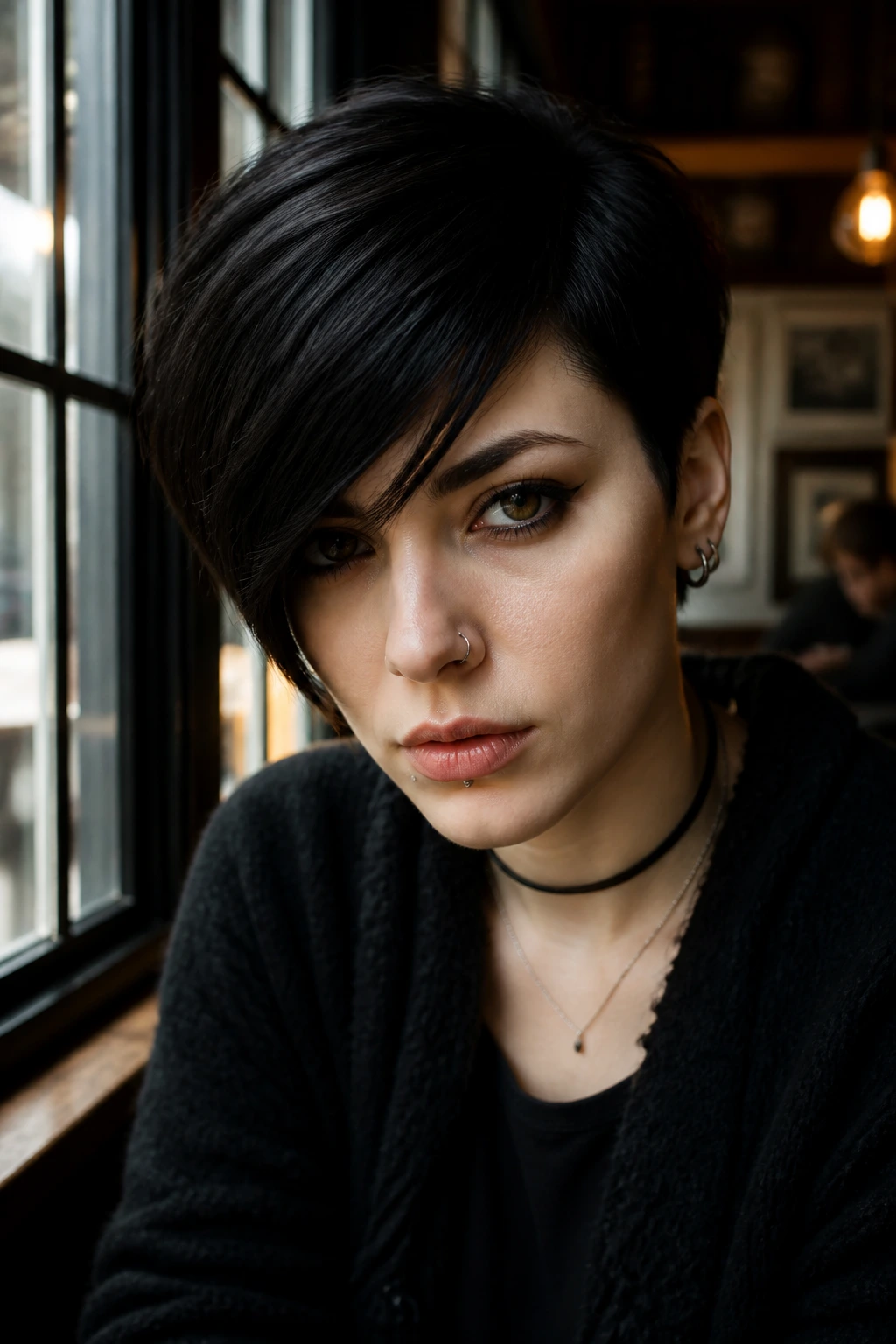
A deep side-part fringe can make short dark hair look sharper instantly, mostly because the line of the part itself becomes part of the design. The fringe falls across the forehead at an angle, and that angle gives the whole cut a slight slouchy menace.
The heavier side should have enough length to land near the eye or cheekbone. The lighter side needs to stay lean so the part doesn’t get muddy. If you have a cowlick near the front, a deep side part can be easier to manage than a center-fringe because it works with that natural push instead of fighting it head-on.
This is one of the better choices for people who want goth energy without a full frontal bang. It’s less obvious than a blunt fringe, but it still shapes the face in a strong way.
28. Airy Tooth-Cut Bangs
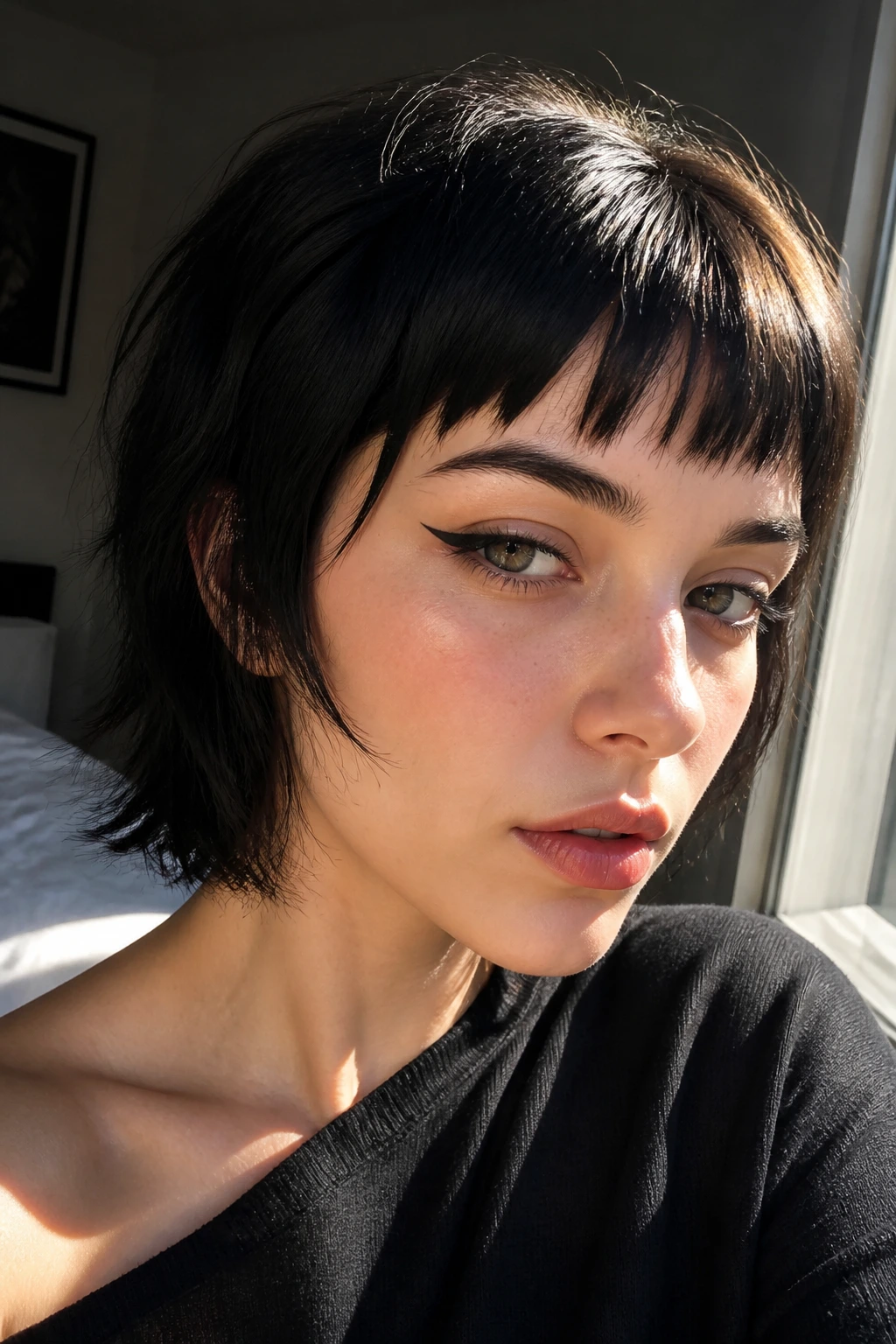
Tooth-cut bangs have tiny notches at the edge, which creates a light, broken line instead of a solid slab. On short dark hair, that airiness helps the fringe keep its shape without feeling heavy. You can still see the line. It just doesn’t behave like one big block.
The cut works best when the hair has some movement. A straight, heavy fringe can look a little too formal if it’s tooth-cut all the way across. Here, the center can be fuller while the ends are softened just enough to let light through. That balance keeps the fringe from disappearing into the rest of the cut.
A small amount of dry texture spray helps the notches stay visible. Don’t brush them out after styling. That’s the easiest way to flatten the whole idea into something plain.
29. Tapered Fringe With a Short Shag
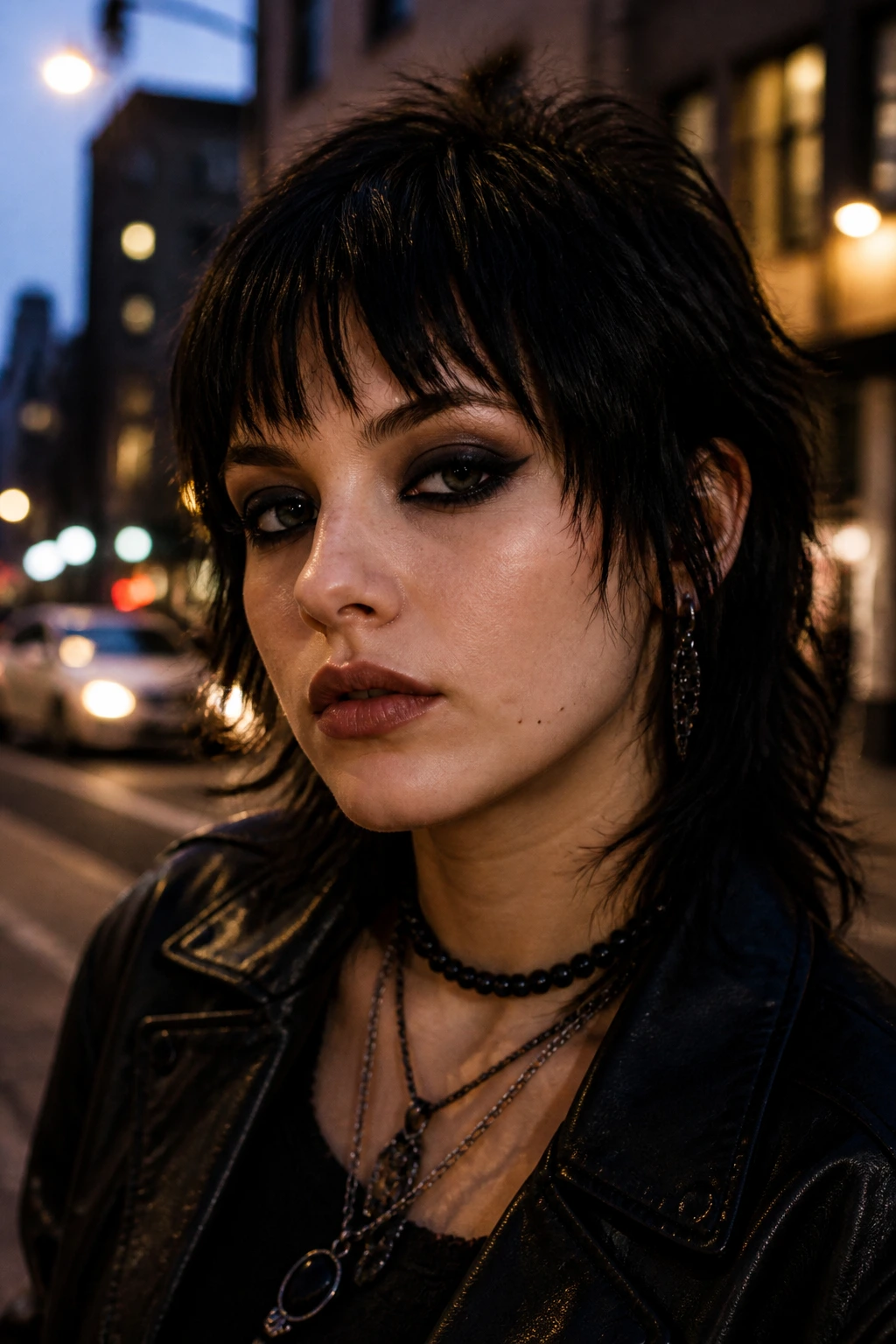
Tapered fringe starts fuller in one area and gradually thins as it blends into the rest of the cut. On a short shag, that taper gives the top shape some breathing room. It doesn’t sit like a shelf. It folds into the layers.
The best part is how natural this can look when the hair has some bend. The fringe can follow the shape of the brow at the center, then soften near the temples. If the shag is already layered around the crown, the fringe becomes part of that motion instead of a separate strip across the face.
This is a strong option if you like goth hair that looks a little messy on purpose. It’s not the hard-edged, graphic version. It’s the one that looks like it was cut after a long night and a better plan.
30. Heavy Center-Split Fringe
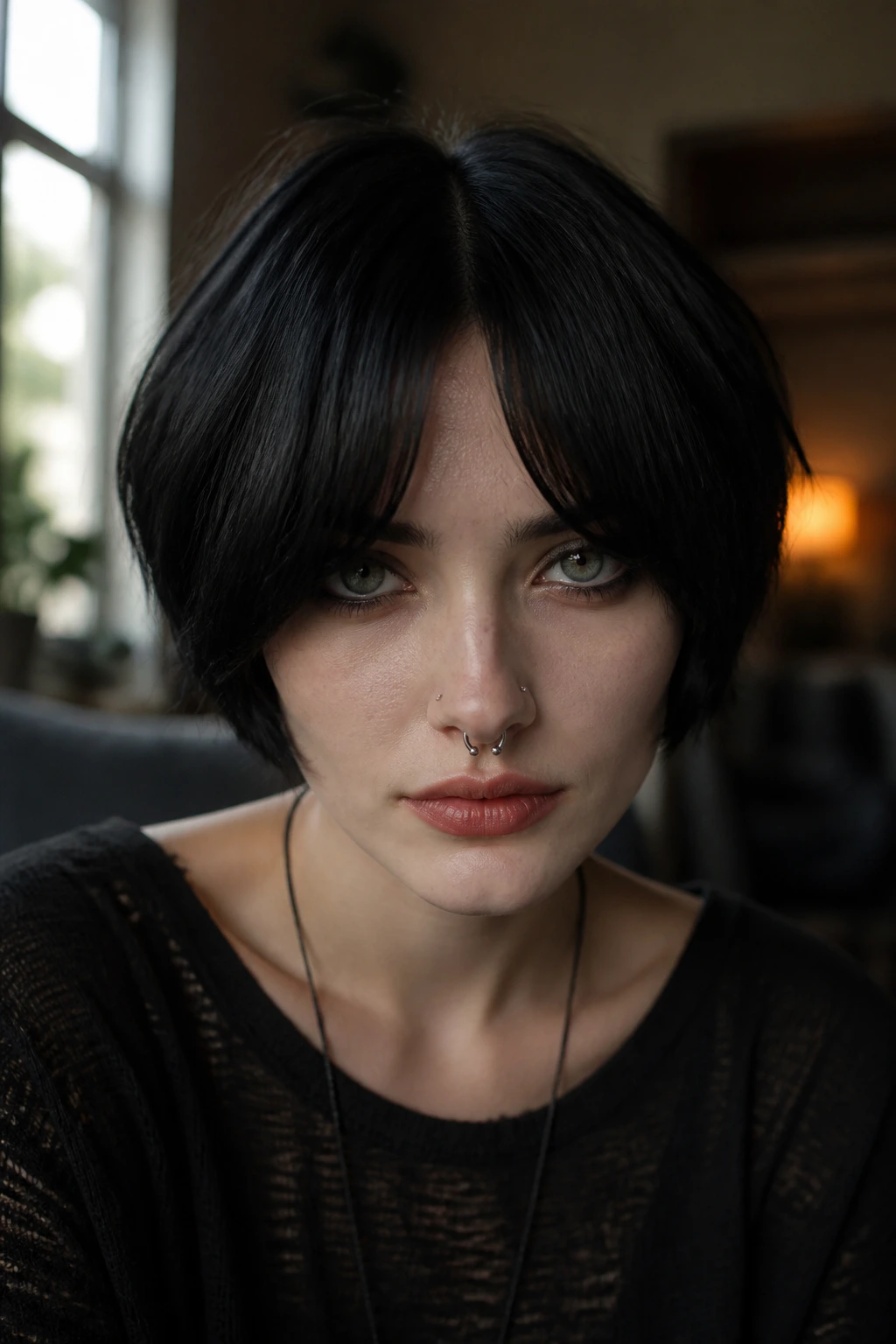
Heavy center-split fringe is the curtain fringe with more weight in the middle. Instead of a light face frame, you get a substantial split that opens at the center and still feels dense around the eyes. On short dark hair, that weight creates a dramatic frame without closing off the face.
Ask for enough length at the center that the split can sit naturally. The sides should taper into the cheekbones or jaw so the fringe doesn’t look like two detached ropes. The fullness in the middle is what makes this version feel goth rather than airy-boho.
I like this shape on short bobs with blunt ends. The clean perimeter under a split fringe gives you contrast: precise below, softer above. That contrast tends to read well in dark hair because the line work is so obvious.
31. Chunky Piecey Bangs
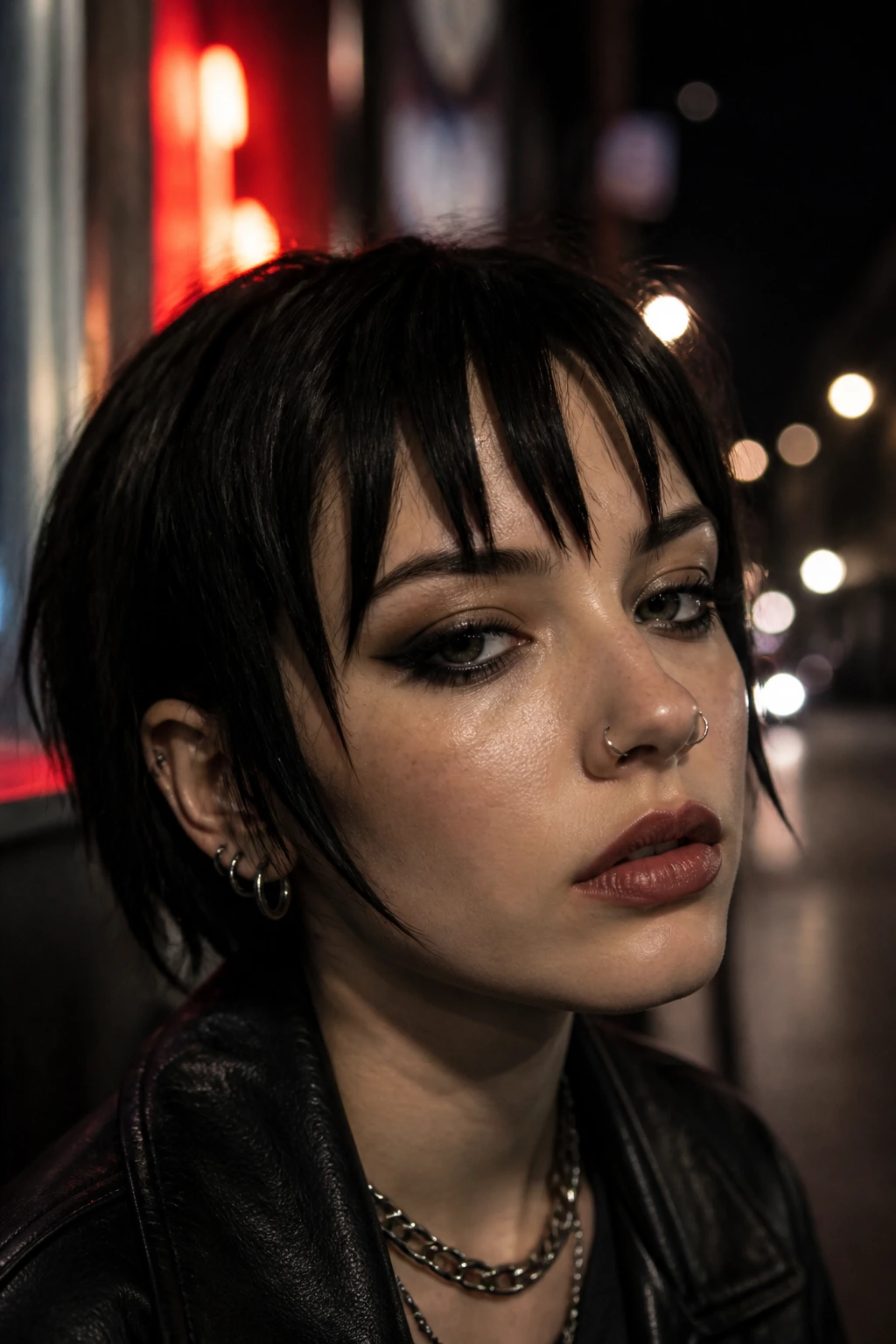
Chunky piecey bangs are built from visible sections instead of one smooth curtain. They have separation, but not the wispy kind. These are broader pieces that sit side by side and give the forehead a striped, layered look. On dark hair, that spacing looks deliberate and a little rough.
This fringe is a smart move for thick hair, because the density is already there. You just need the ends broken up enough so the bangs don’t sit like a heavy wall. Ask for internal texture and a slightly staggered finish. A few longer strands near the temples help the fringe blend into the sides instead of stopping abruptly.
A dab of pomade or cream can define the chunks. Too much, and it goes greasy. Too little, and the pieces disappear into one flat sheet. A small amount goes a long way here.
32. Soft Crescent Bangs
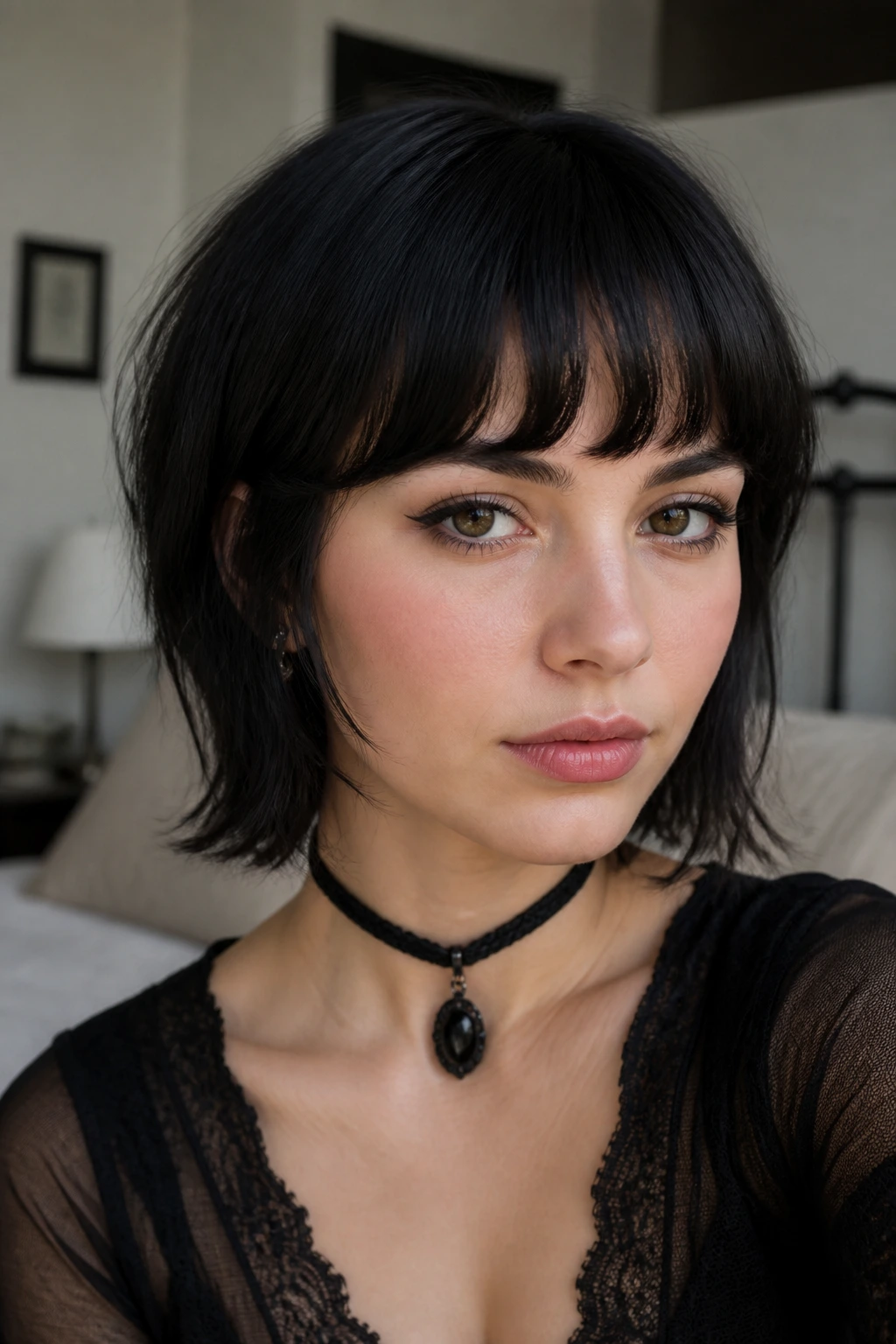
Soft crescent bangs curve in a gentle arc, with the center a bit shorter and the sides easing downward like a crescent moon. That shape works especially well on short dark hair because it frames the upper face without hard corners. It’s goth, but it’s measured.
The center shouldn’t be too thin, or the curve gets weak. The sides should be long enough to graze the temples or cheekbones so the arc has a clear shape. This cut can soften a strong jaw or balance a longer forehead, and it does it without the bluntness of a block fringe.
If you like a more romantic gothic look, this is a good place to land. A little shine at the roots and a controlled bend at the ends keep it from drifting into plain retro territory.
33. Dramatic Eye-Skimming Fringe
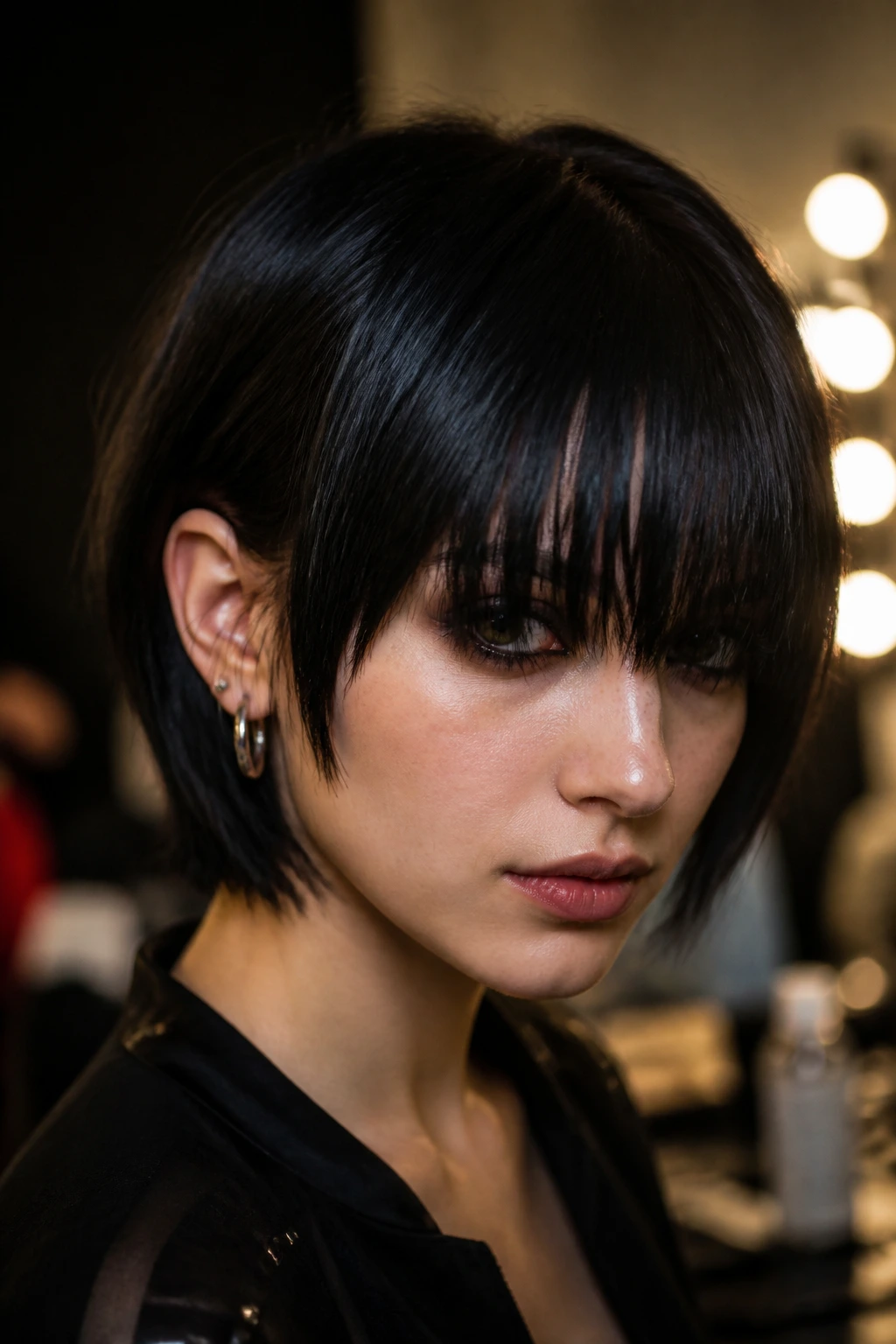
Eye-skimming fringe is the closing argument for this whole look. It hangs low enough to brush the lashes, hides and reveals the eyes in motion, and gives short dark hair a heavy front edge that feels straight out of a smoky backstage mirror. There’s no mistaking the mood.
The cut should be dense enough to stay together, but not so thick that it traps heat or feels like a curtain. A tiny bit of taper near the temples helps it connect to the rest of the hair. If the fringe is too blunt all the way across, it can overwhelm short cuts; the slight side softness keeps it wearable.
This is the style for people who want the fringe to be the first thing anyone notices. It doesn’t whisper. It lands.
Why the Shape Matters More Than the Length
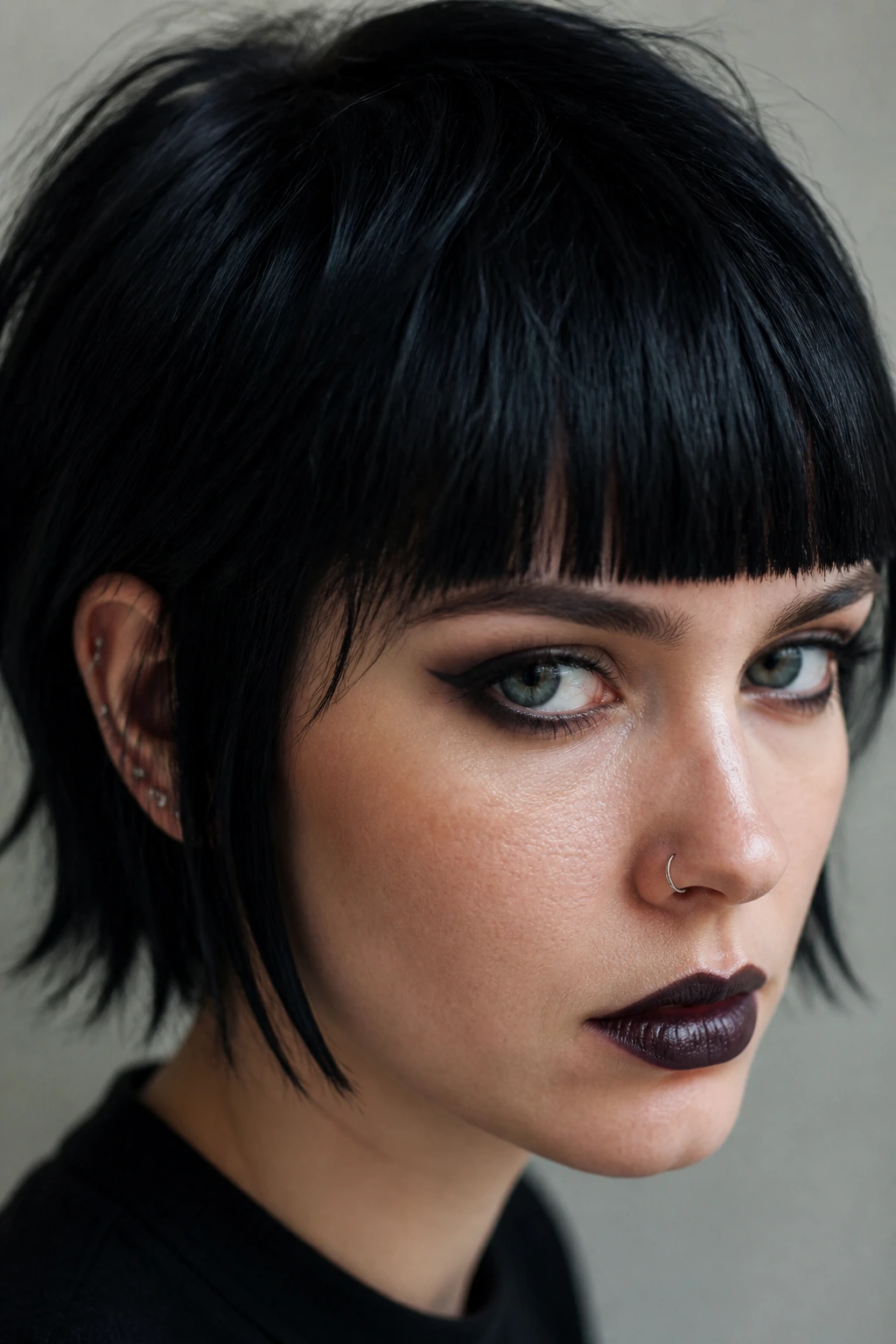
Short dark hair can take a harder fringe because the cut itself already has a built-in edge. That’s the part a lot of people miss. You’re not adding bangs to make a short cut interesting; you’re using the bangs to decide what kind of interesting it becomes. A blunt bob with a blunt fringe feels architectural. A shag with jagged bangs feels worn-in and sharp. A pixie with a micro fringe feels almost severe, which is a useful thing if that’s the mood you want.
The other reason shape matters is that dark hair exposes mistakes fast. If the edge is crooked, you see it. If the fringe is too thick, you feel it. If the part is fighting the cowlick, the whole front starts acting up by noon. That’s not a flaw; it’s the price of getting a strong silhouette.
The Styling Tools That Save These Looks
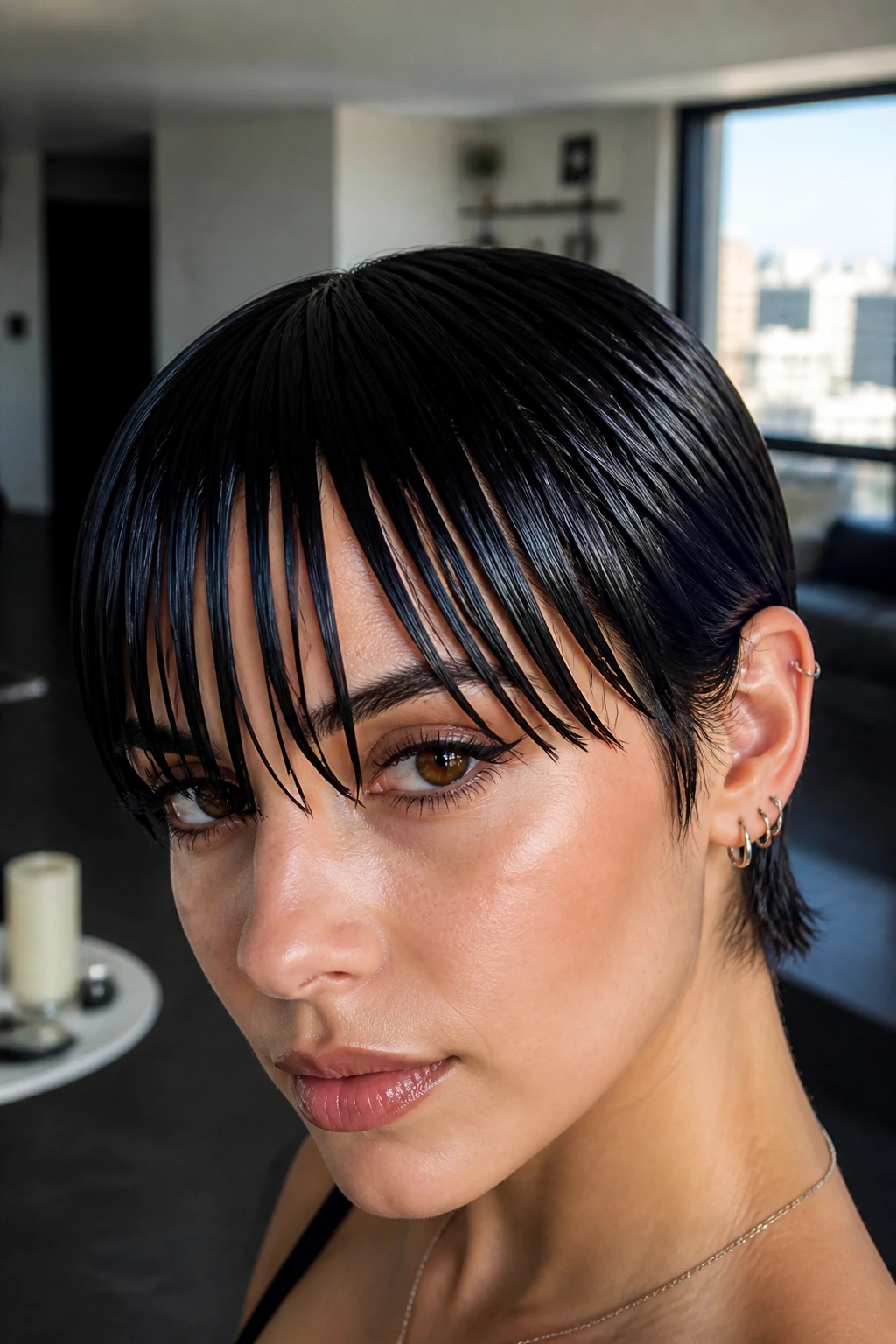
- Fine-tooth comb: Good for setting a clean part and smoothing a blunt fringe before drying.
- Sectioning clips: Useful when you’re blow-drying the fringe separately from the rest of the haircut.
- Blow dryer with a narrow nozzle: Helps direct the hair forward or sideways instead of letting it puff out.
- Small round brush: Best for curved, eyelash, and curtain-style bangs that need a bend.
- Flat iron: Handy for razor-sharp lines, eye-skimming fringe, and a glossy finish on short hair.
- Texturizing spray: Gives piecey, jagged, or shaggy bangs some separation without making them crunchy.
- Matte paste or styling wax: Good for micro bangs, pixie fringe, and anything that needs definition at the ends.
- Heat protectant: Non-negotiable if you’re smoothing short bangs often; the front section gets fried faster than the rest.
- Hand mirror: Worth having if you’re trimming between salon visits or checking the fringe from the side.
How to Choose the Right Goth Fringe for Your Face and Hairline
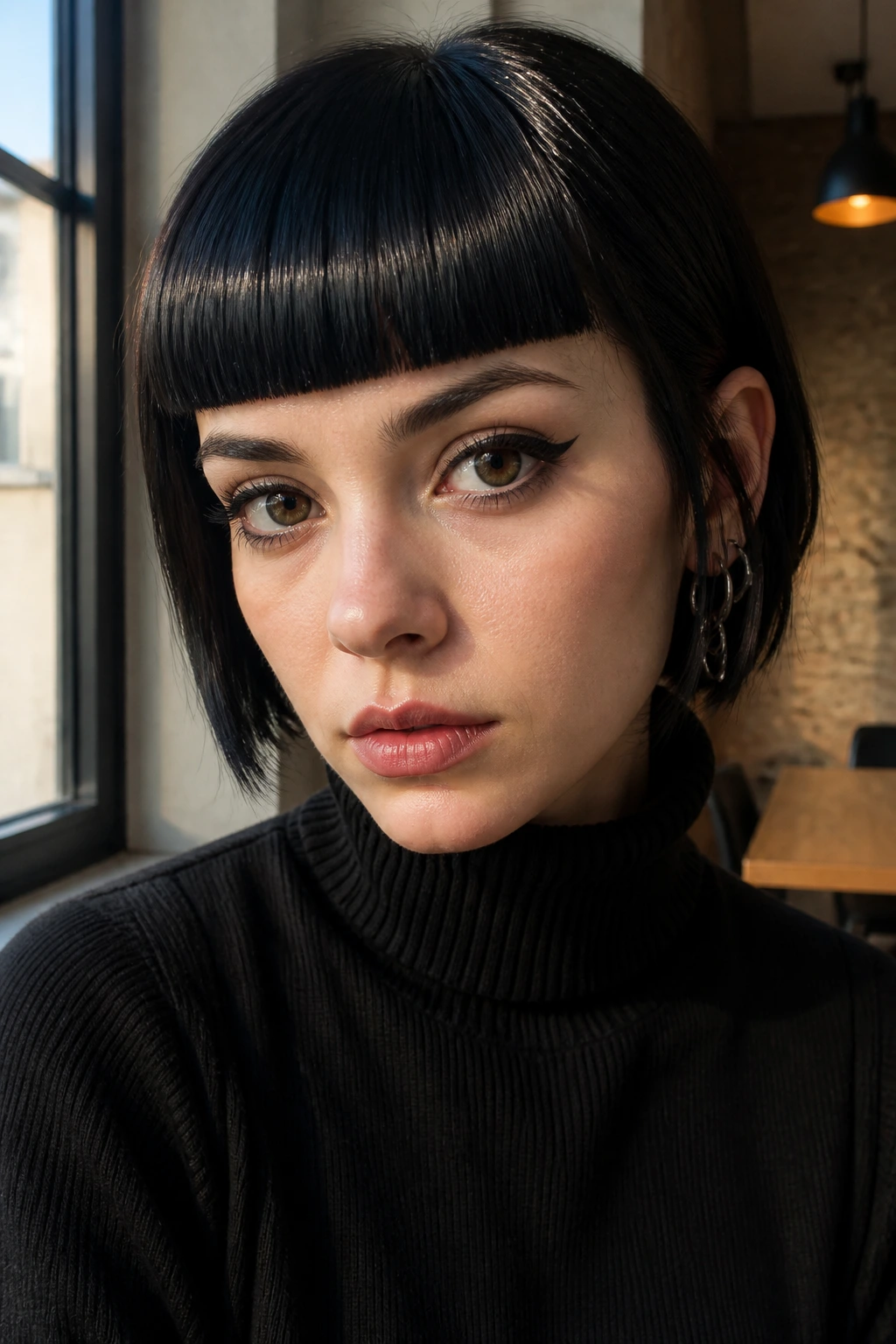
The easiest way to pick a fringe is to stop thinking about the trend and start looking at the front of your head. Hairline, cowlicks, density, brow shape, forehead length, and how much face you want to show all matter more than a pretty reference photo. A micro fringe can look brilliant on one person and unbalanced on another, even if their hair color is the same.
If your forehead is short, keep the fringe higher or more open. If your forehead is longer, a denser fringe can look dramatic without swallowing the face. Cowlicks near the part line usually do better with longer or split bangs, because the hair has room to bend instead of fighting to lie flat. Fine hair can handle airy textures and piecey cuts; thick hair can carry bluntness and weight, but it needs internal removal so the front doesn’t balloon.
Face shape matters, yes, but not in the rigid way people like to pretend. A rounded face doesn’t ban blunt bangs. It just asks you to be careful with width. A long face doesn’t demand curtain bangs. It just benefits from a fringe that creates a horizontal line somewhere near the brow or eye. The shape underneath decides how hard you can push the contrast.
Practical Styling Tricks That Keep the Fringe Sharp
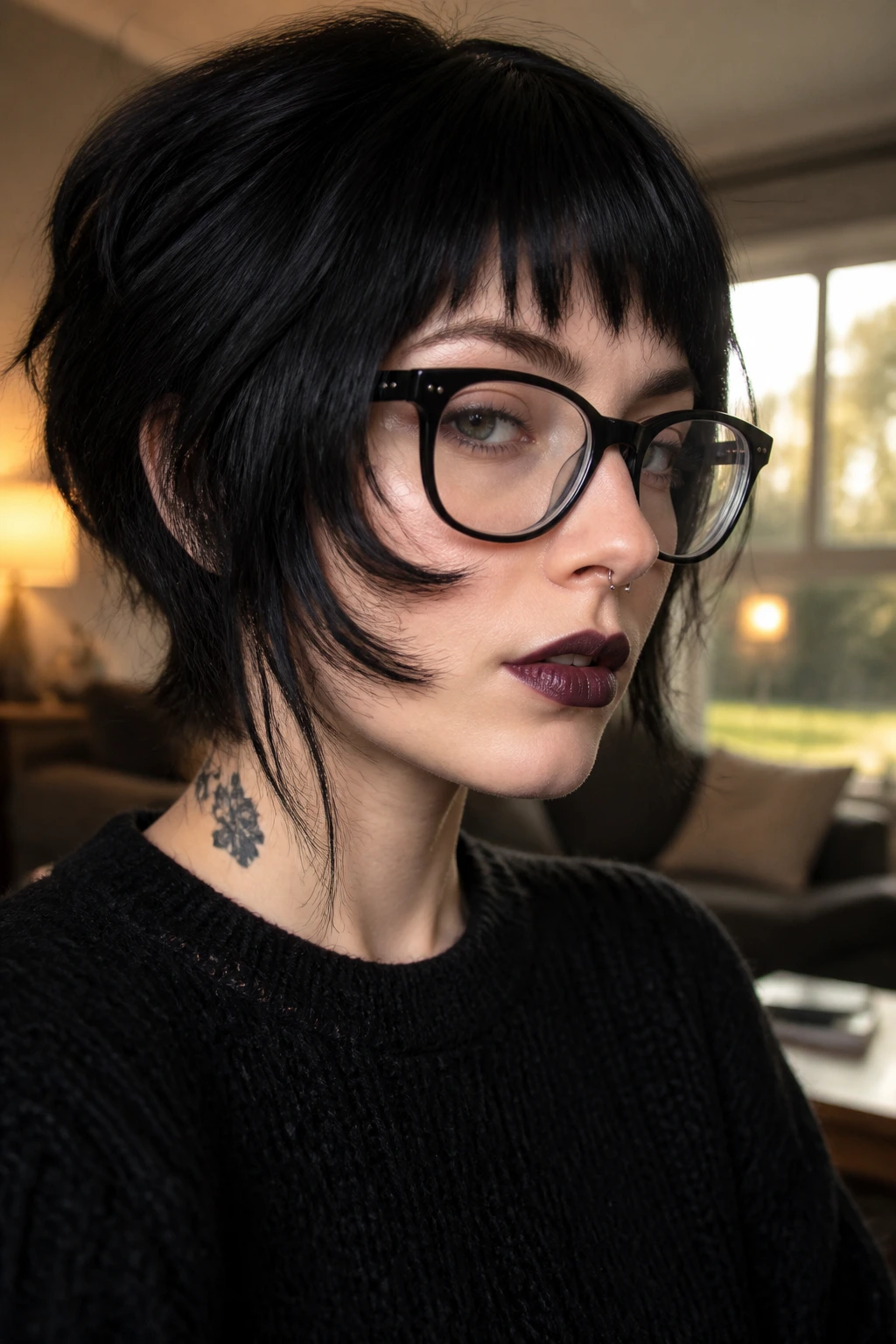
Blow-Dry Direction: Dry the bangs first, while they’re still damp enough to move. If you let the rest of the hair dry completely first, the fringe will set in the wrong direction and fight you all day.
Heat in Small Passes: Use a flat iron or round brush in short, controlled passes. One slow pass is usually enough on short fringe. Repeated hot passes just make the ends fuzzy and dry.
Product at the Ends, Not the Roots: A little wax or paste near the tips gives texture. Too much at the roots makes the fringe collapse into a greasy strip.
Trim Timing: Bangs start looking off long before the rest of the cut does. If they hit your lashes when you don’t want them to, trim or reshuffle the shape instead of waiting for the whole haircut to grow out.
Texture Control: If the fringe separates too much, mist a touch of water, comb it forward, and let it reset. If it sits too flat, flip it side to side while drying for a bit of lift.
Night Reset: Sleep with the fringe clipped loosely to the side or wrapped in a soft headband if you know it kinks easily. That small habit saves a lot of morning wrestling.
Mistakes That Make Goth Bangs Look Flat or Fussy
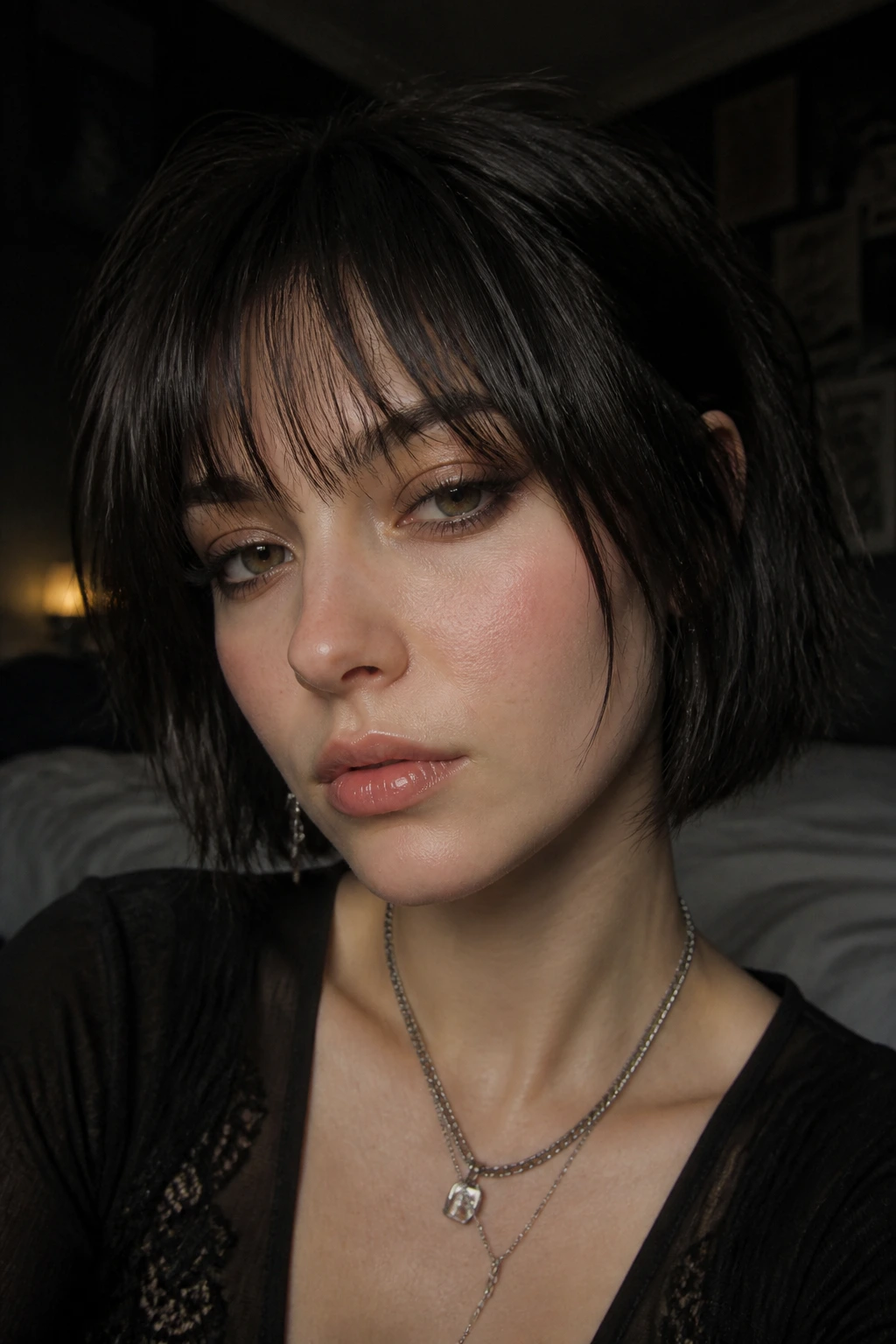
The first mistake is cutting the fringe too thick and too wide for the cut underneath. On short dark hair, that can turn a sharp look into a wall of hair that sits on the face like a curtain. The fix is to keep the density matched to the haircut’s scale. A pixie needs less weight than a bob. A bob needs less than a shag with length on top.
The second mistake is overtexturizing fine hair. People hear “piecey” and go after the ends until the fringe turns weak and see-through. That’s not texture. That’s just not enough hair left in the bang. If the cut is already light, keep the shaping clean and use product sparingly.
The third mistake is ignoring the cowlick. A fringe that fights natural growth patterns usually loses. If the front pushes one way, a split or side-swept shape is often smarter than trying to force a blunt line into place every morning.
Finally, don’t let black or very dark color trick you into thinking shape doesn’t matter. It matters more. On dark hair, edges read clearly, and any unevenness jumps out. That’s useful when the cut is good. Less useful when it isn’t.
Goth Fringe Variations Worth Trying
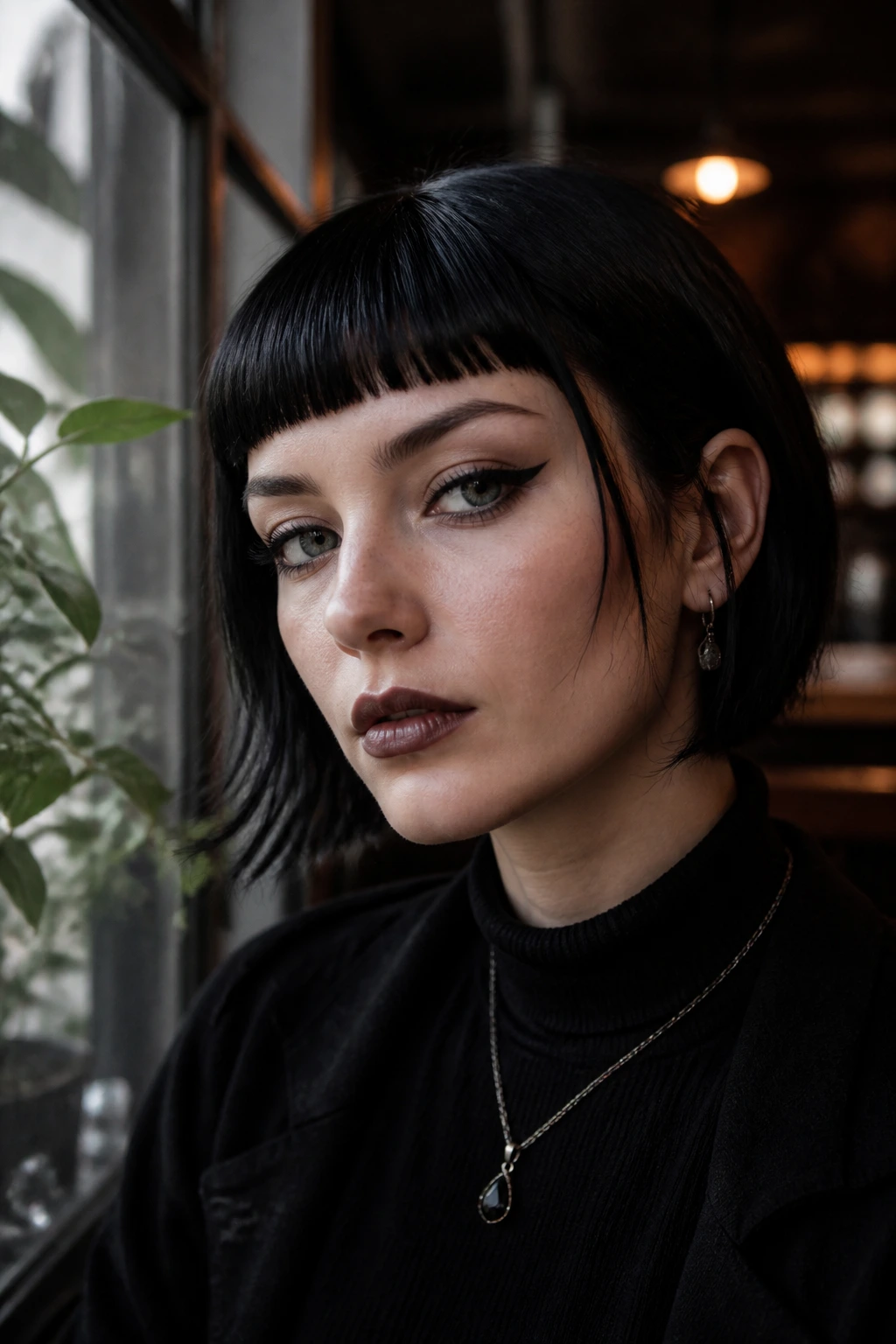
The Glossed Crypt: Take any blunt fringe and add a sleek, reflective finish with a smoothing cream and a flat iron. The line becomes harder, the hair sits closer to the face, and the whole cut leans more polished than punk.
The Ragged Chapel: Start with a shaggy, layered fringe and push it even messier with dry texture spray. This version works when you want your bangs to feel broken and airy rather than dense or neat.
The Side-Altar Sweep: Use a deep side part and let the fringe travel diagonally across the forehead. It softens a severe face shape and gives you a little more room to tuck hair behind one ear.
The Velvet Curtain: Keep the center split, but leave more weight in the sides so the fringe hangs like heavy fabric. This is a good choice if you want a dramatic frame that still opens the face.
The Clip-and-Shift Version: On days when you don’t want full bangs in your face, pin one side back and let the remaining fringe fall over the brow. It changes the mood fast and helps a growing-out fringe stay useful.
Keeping the Shape Crisp Between Cuts
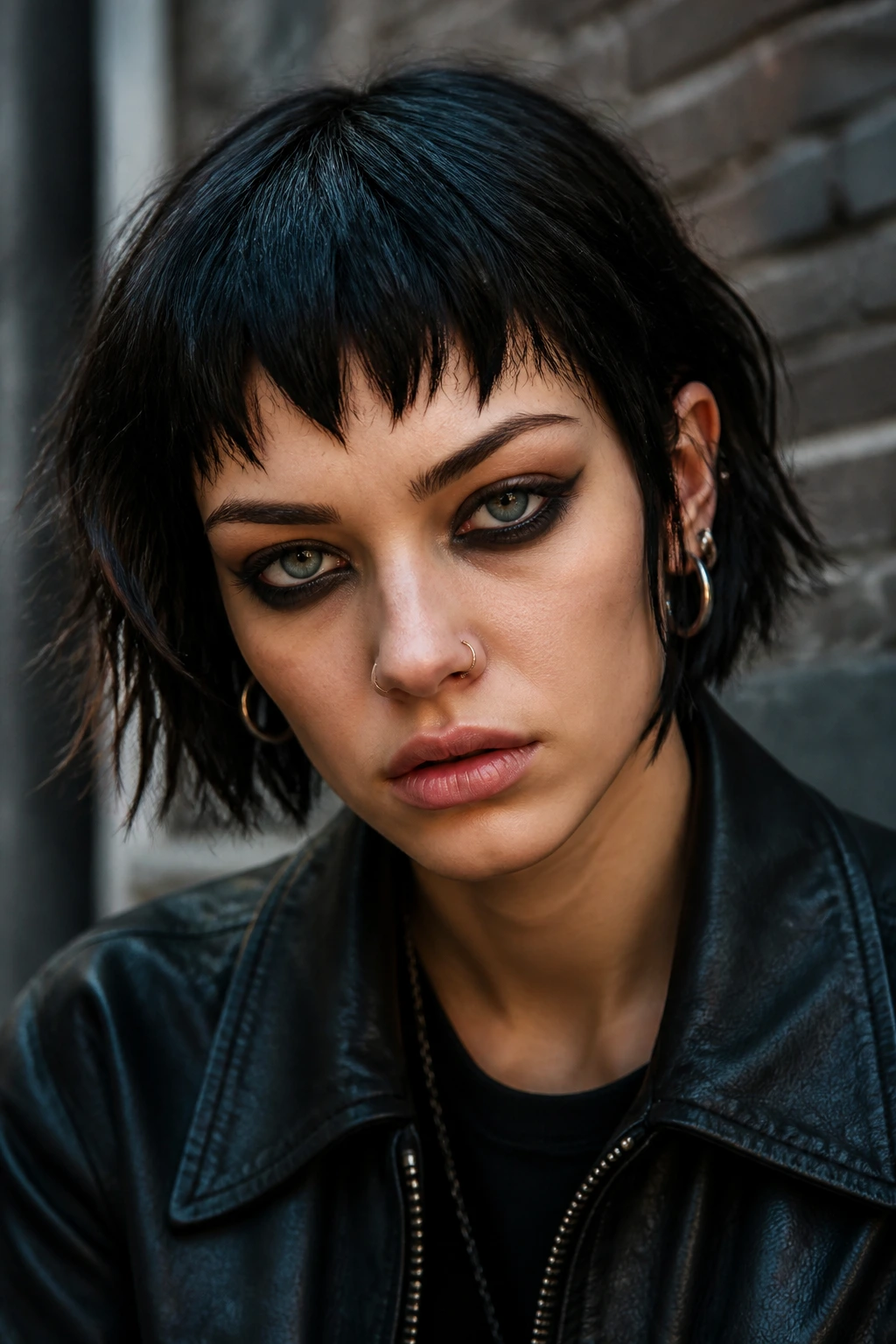
Bangs ask for more maintenance than the rest of short hair, and that’s just the deal. The front section grows into the eyes first, gets oily faster, and reacts to humidity before everything else does. If you want the fringe to stay clean, trim it every 3 to 5 weeks for micro and blunt styles, or every 5 to 7 weeks for softer curtain and side-swept versions. That’s the rhythm that keeps the shape from drifting.
Washing the fringe separately can help if the rest of your hair doesn’t need a full shampoo. A quick rinse or a little dry shampoo at the roots keeps the front from going flat. If you use heavy wax or gel, clarify once every 1 to 2 weeks so buildup doesn’t make the bangs stringy.
Sleeping habits matter too. If you toss and turn, bangs bend in weird places. A loose clip, a soft headband, or a single large roller at the crown can keep the front from setting in a weird crease overnight. That sounds fussy. It isn’t. It takes less time than re-wetting and restyling a stubborn fringe.
Frequently Asked Questions About Goth Bangs on Short Dark Hair
Will goth bangs work if my hair is fine and flat?
Yes, but the better choices are piecey fringe, wispy shadow bangs, or a soft curtain shape. Fine hair can struggle with heavy blunt bangs unless the cut has enough density at the front and a little lift at the root.
What if I have a cowlick right in the front?
Go for a longer side-swept fringe, split bangs, or a curtain shape. Those cuts work with the natural bend instead of forcing the hair straight down, which usually ends in frustration by midday.
Do I need straight hair for these looks?
No. Wavy hair can give goth bangs extra texture, and curly hair can look especially good with shorter, broken fringe shapes. The trick is choosing a cut that respects the hair’s pattern instead of flattening it every day.
Which fringe is best if I don’t want to cover my forehead fully?
Try bottleneck bangs, face-hugging fringe, or a deep side-part fringe. Those styles leave skin visible while still giving the cut a strong frame.
How often should I trim short bangs?
Micro, blunt, and eye-skimming fringe usually need attention every 3 to 5 weeks. Softer shapes like curtain bangs or side sweeps can stretch a bit longer before they start looking off.
Can I style goth bangs without heat?
Yes, especially piecey, jagged, or shaggy versions. You can air-dry them forward, pinch in a little texture spray, and push the ends into place with your fingers. The shape will be looser than a heat-set fringe, but that can suit the look.
What’s the easiest goth fringe to grow out?
Curtain bangs and bottleneck bangs are the easiest to live with during the awkward stage. They split open naturally and blend into short layers instead of sitting like a hard line that suddenly needs to disappear.
Will dark hair make bangs look harsher than they are?
Usually, yes. Black and near-black hair make lines read more clearly, so a fringe that seems soft in the chair can look sharper in daylight. That’s useful if you want definition, but it also means the cut needs to be exact.
What Makes These Bangs Worth the Maintenance
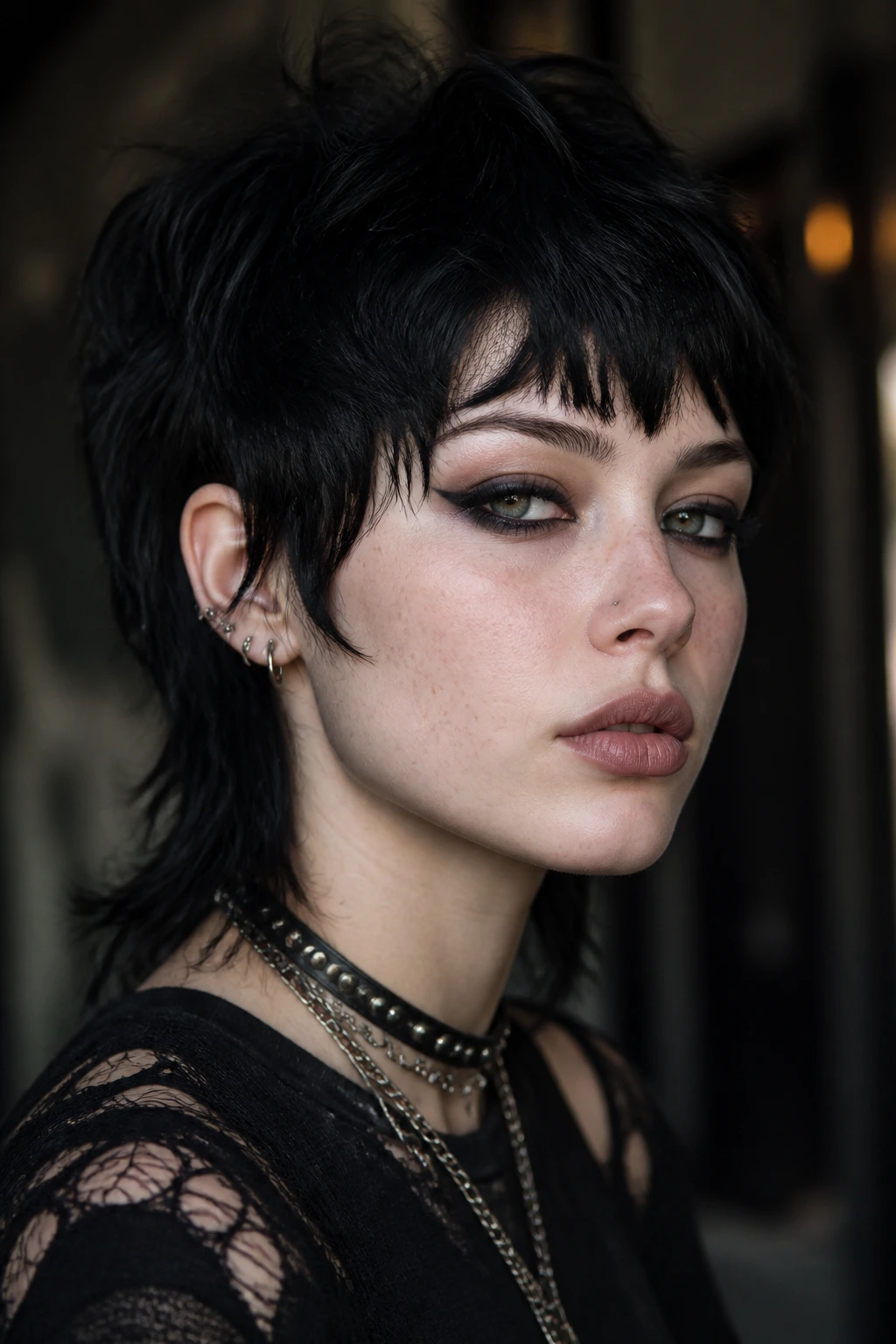
A good fringe changes the whole read of short hair. Not a little. Enough that the same bob, pixie, or shag can look polished one day and feral the next just by shifting the front line a half inch or changing the part. That’s the real appeal here. You’re not locking yourself into one mood. You’re choosing a frame.
The best goth bangs for short dark hair don’t all look the same, and they shouldn’t. Some sit heavy over the eyes. Some open up at the center. Some break into tiny choppy pieces. The right one is the one that fits your hairline, your density, and how much face you want to show when the mirror catches you from the side.
If you start with shape instead of trend, the whole thing gets easier. Pick the fringe that suits the cut you already have, then make it sharper, softer, or messier from there.
