



Long hair changes beard math.
With short hair, the beard can carry most of the face-framing work. With shoulder-length hair, a bun, or loose waves brushing the collar, the beard has to hold its own against more visual weight. That’s why beard styles for men with long hair need a different eye: the neckline matters more, the cheek line matters more, and the transition from sideburn to jaw can make the whole look feel deliberate or messy in one glance.
The best version is not always the biggest one. Sometimes it’s a sharp boxed beard that keeps a long mane from looking too soft. Sometimes it’s a heavy, natural beard that gives the face some gravity. Sometimes it’s a narrow style with a clean mustache, because the hair on top already does plenty of talking. The trick is balance. Not symmetry. Balance.
A lot of men grow both hair and beard and then stop trimming because they’re chasing length. That’s where the look starts to wobble. The good news is that a few careful lines — a neckline set a finger above the Adam’s apple, a cheek line left natural instead of hacked to the moon, a mustache kept off the upper lip — do more for the silhouette than another month of growth ever will.
Why These Long-Hair Beard Styles Work So Well Together

Balance: Long hair adds width and movement around the temples and neck, so a beard can either anchor the face or make it look bottom-heavy. The styles below solve that in different ways, from blunt structure to soft tapering.
Shape Control: A good beard shape gives the jawline a job. That matters more when your hair already falls past the ears, because loose hair can blur the outline of your face fast.
Texture Matching: Wavy hair, straight hair, and curls each push the beard in a different direction. A rugged Garibaldi looks natural beside curls, while a short boxed beard feels cleaner with straight, swept-back hair.
Low-Maintenance Options Exist: Not every long-haired style needs a dense mountain beard. A tight beardstache or heavy stubble can look sharper than a big beard if the top hair already carries a lot of presence.
Face-Shape Rescue: The right beard can lengthen a round face, soften a square one, or keep a long face from looking even longer. That’s not theory. You can see it in the mirror after a good trim.
The Neckline Is Doing More Work Than You Think: With long hair, a sloppy lower edge stands out. A clean neckline makes the beard look attached to the face instead of hanging from it.
1. Full Beard With a Center-Parted Mane
A full beard paired with a center-parted mane has a kind of old-world seriousness to it. The hair on top falls in clean curtains, and the beard fills out the lower half so the face doesn’t look top-heavy. It’s one of the easiest long-hair combinations to get right if your beard grows thick through the cheeks and jaw.
Why It Works
The center part creates vertical lines. The beard gives those lines a base. That’s why this pairing looks calmer than loose hair with no beard shape at all. Keep the beard rounded through the cheeks and slightly fuller at the chin, and the whole face reads as intentional instead of overgrown.
Shape Notes
- Keep the cheek line natural, not carved too low.
- Set the neckline one finger above the Adam’s apple.
- Let the length sit around 1.5 to 3 inches before it starts to turn into a different look entirely.
Best For
Oval, square, and diamond faces usually handle this best. If your hair has a middle part and a little wave, the beard can stay more natural. Straight hair works too, but you’ll want a brush and beard oil so the outline doesn’t frizz.
2. Short Boxed Beard and Shoulder-Length Hair
A short boxed beard is the cleanest answer when long hair starts looking a little too relaxed. It keeps the jawline crisp without fighting the length on top, and that contrast is the whole point. The beard sits close to the face, with square edges near the cheeks and a tidy lower line that doesn’t wander.
What Makes It Sharp
This style works because it behaves. The sides stay trimmed tighter than the chin, the mustache stays attached but controlled, and the lower edge is defined enough to read from across a room. It’s the beard you choose when you want long hair to look grown-up instead of bohemian.
Practical Details
- Ask for a beard length around 6 to 10 mm on the cheeks.
- Leave the chin a touch longer if you want a bit more shape.
- Clean up the neckline every 4 to 7 days so it doesn’t puff out under the ears.
Long straight hair looks especially good with this because the beard adds geometry. If you wear glasses, even better. The frame of the glasses and the frame of the beard start speaking the same language.
3. Garibaldi Beard With Loose Waves
The Garibaldi is for men who like a beard that looks lived-in, not engineered. It’s broad, rounded at the bottom, and a little rebellious at the edges. With loose waves or thick shoulder-length hair, it feels honest in a way that a tighter beard sometimes doesn’t.
What It Does
The Garibaldi keeps the lower face full, which helps when long hair makes the head silhouette feel stretched. Unlike a sharp boxed beard, it doesn’t ask for perfect lines. It asks for shape. That means the cheeks can stay natural, but the bottom needs regular rounding so it doesn’t become a triangle that swallows your neck.
A Few Ground Rules
- Keep the length around 3 to 4 inches before it starts to need serious shaping.
- Use scissors, not just a trimmer, for the bottom curve.
- Comb downward before trimming so you can see the real outline.
This is a good style if your beard grows dense and your hair has movement. It does not suit a man who hates detangling. No, really — if you skip brushing, the ends start knotting at the chin, and the whole thing goes from rugged to tired.
4. Bandholz Beard and Man Bun
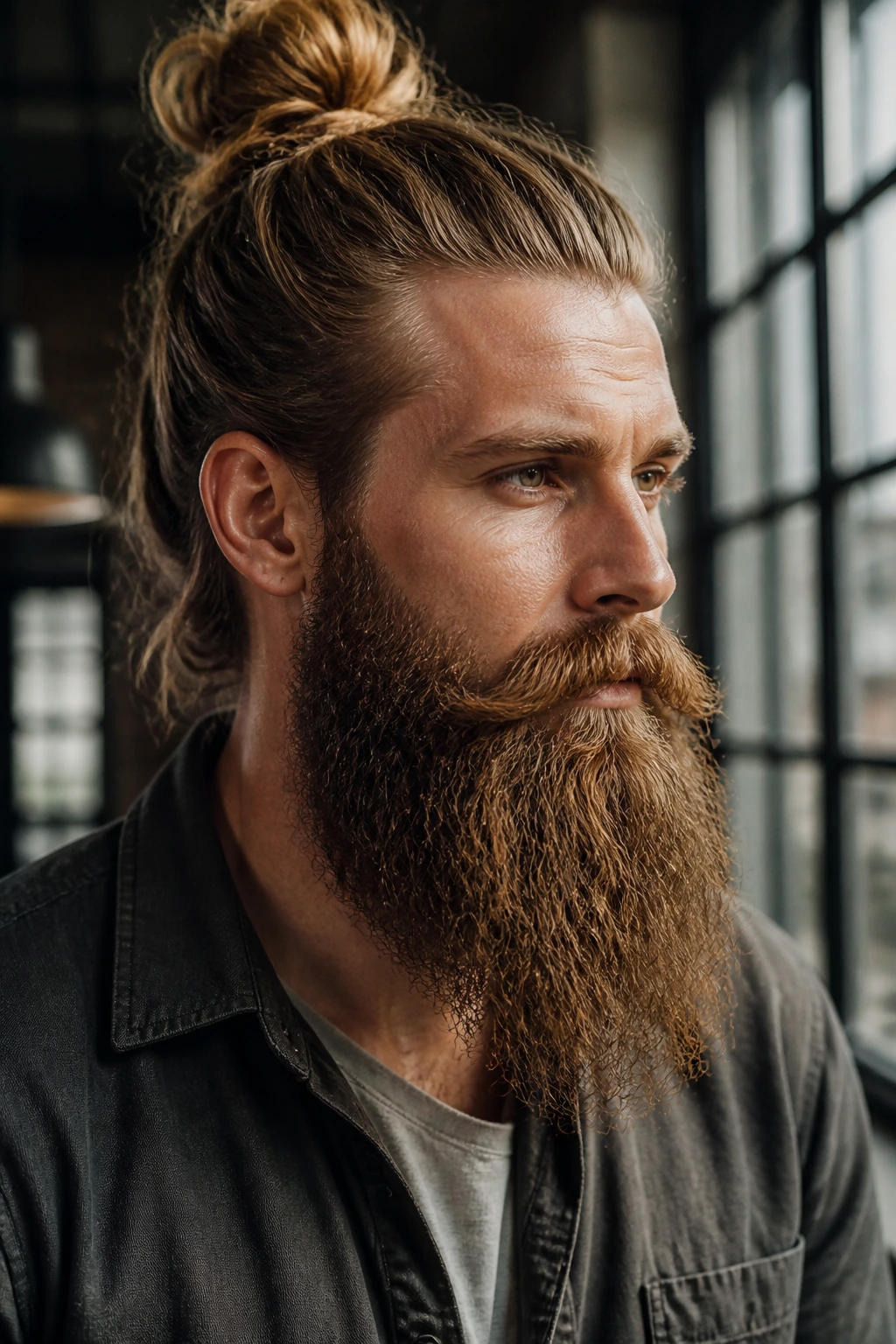
The Bandholz is the loud one in the room. It’s big, full, and unapologetically long, and when you pair it with a man bun or a tied-back mane, the result is a single strong silhouette instead of two separate statements. That’s why it works.
The mustache usually needs to stay out of the mouth. That part matters more than people admit. If the mustache starts drooping into your coffee or lunch, the style stops looking powerful and starts looking neglected. Keep the chin full, let the cheeks stay broad, and brush the length downward with a boar bristle brush so the beard lays in one direction.
Best When You Have
- Dense growth on the cheeks and jaw
- Enough patience for weekly detangling
- A face shape that can carry extra width, especially square or oval faces
If your hair is already long enough to tie back, the Bandholz can make the whole look feel almost architectural. It’s not subtle. That’s fine. Subtle isn’t the goal here.
5. Ducktail Beard for Long Straight Hair
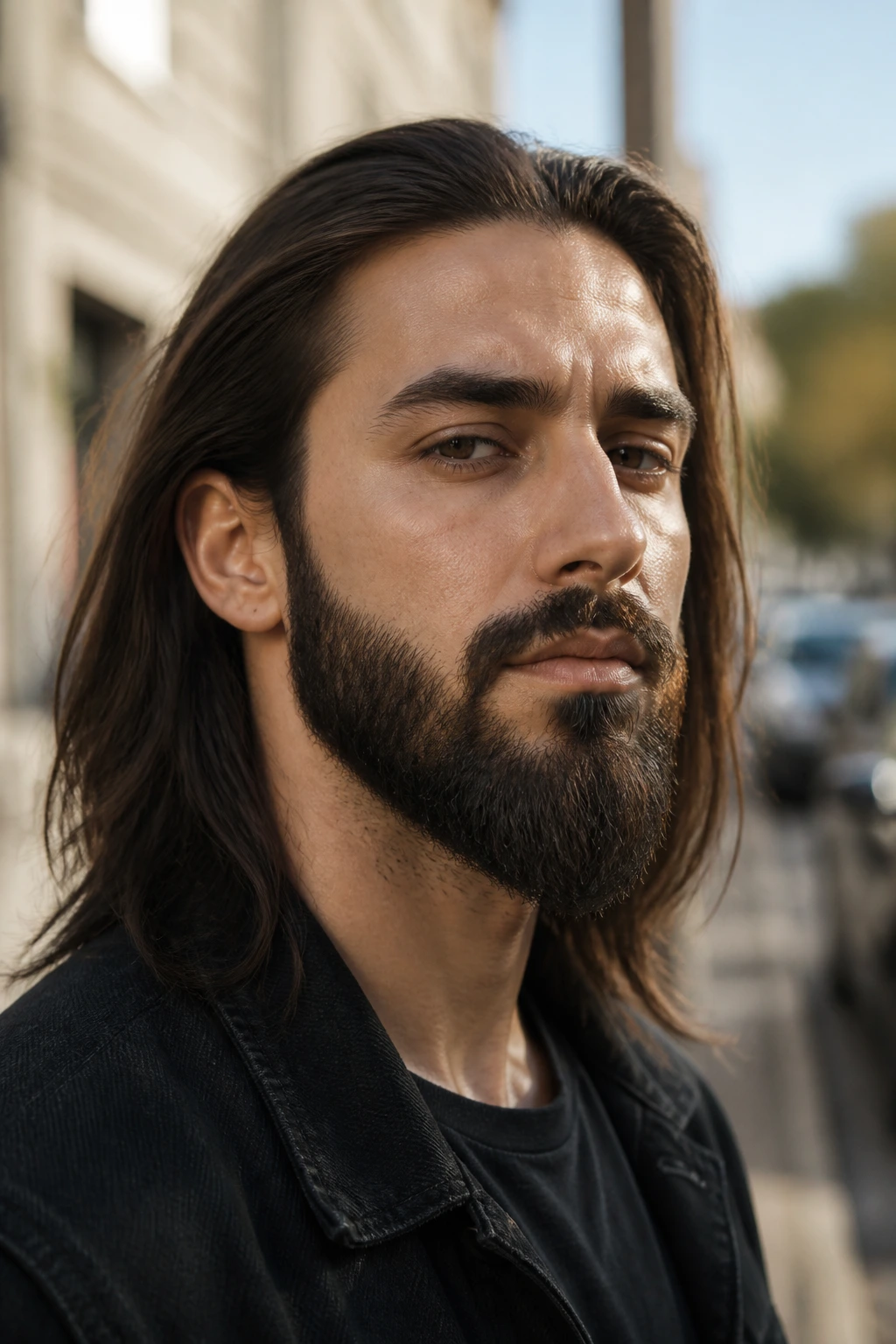
A ducktail beard narrows the lower half of the face by tapering the chin into a point. With long straight hair, that shape gives you something a little cleaner than a full natural beard. The hair on top can be loose, center-parted, or slicked back; the beard does the heavy lifting on structure.
Why It’s a Smart Move
Long hair sometimes softens the jaw too much. The ducktail fixes that by pulling the eye down to a point. It’s not a sharp point, and it shouldn’t look fake. Think gradual taper, not pencil tip.
How to Keep It Right
- Leave more fullness at the jaw corners than at the very tip.
- Trim the chin in small passes; one bad cut can flatten the shape for weeks.
- Keep the cheeks slightly fuller than a goatee so the beard still reads as a beard.
This style works especially well if your hair falls flat and long around the face. The point at the chin restores some tension. Without it, the face can turn a little too round under all that length.
6. Verdi Beard and Swept-Back Hair
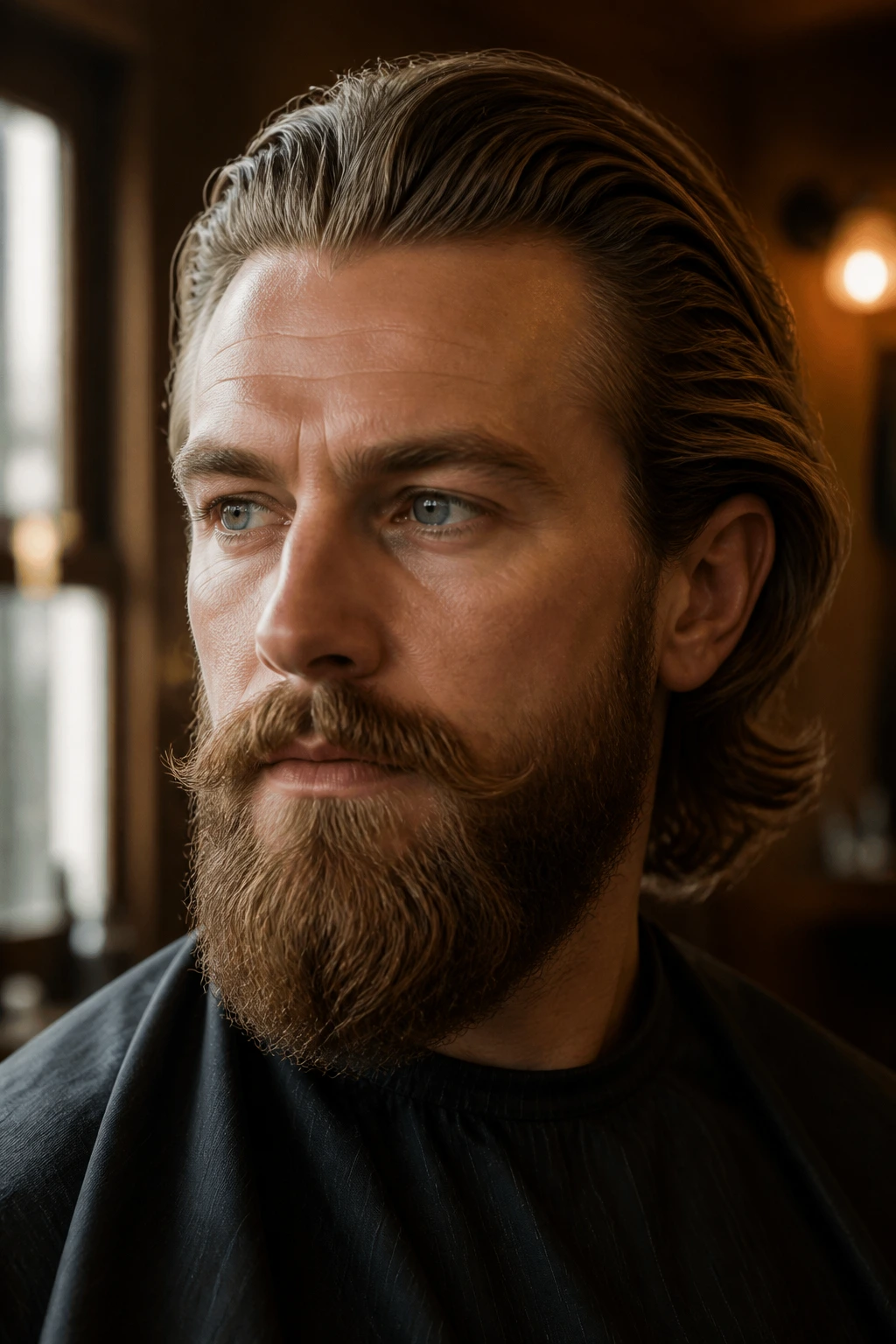
The Verdi is a beard with a neat mustache and a rounded, shaped beard below it. It has an old-shop elegance to it, but it doesn’t need a suit to work. Swept-back long hair gives it room to breathe, and the result feels polished without becoming stiff.
The mustache is the key. Keep it trimmed so it sits above the upper lip, then let the beard underneath carry the fullness. A little mustache wax can help if your hair grows downward or curls into the mouth. The beard itself should stay rounded rather than pointy.
When It Works Best
- When you want structure but not a severe outline
- When your hair has a little volume on top
- When your beard grows thick through the chin and jaw
The Verdi is one of those styles that looks more expensive than it is. Not in a flashy way. In a quiet, barbershop kind of way. It also photographs well because the mustache and beard read as separate shapes.
7. Circle Beard With Long Layers

The circle beard is tidy in a way that a lot of long-haired men secretly need. It keeps the beard centered around the mouth and chin, with the mustache connecting to a rounded goatee. Long layers on top can be loose and airy while the beard stays compact below.
Why It Makes Sense
If your hair already has movement, the circle beard stops the lower face from drifting into the same soft shape. It gives the mouth area definition. It also keeps the beard from spreading too wide along the cheeks, which can help round faces look a little longer.
Watch the Width
Keep the sides narrow enough that the outline stays obvious. Too wide, and it turns into an accidental full beard with a weak chin. Too narrow, and it starts looking patchy on purpose, which is not the same thing.
This one suits men who want facial hair that stays visible but does not dominate. Clean, simple, and easier to keep in line than most longer styles.
8. Van Dyke Beard With Shoulder-Length Hair

A Van Dyke is a detached mustache and pointed goatee, with the cheeks shaved clean. That contrast looks striking next to shoulder-length hair, especially if the hair is wavy or pushed back off the forehead. The beard becomes the sharp part of the look while the hair stays loose and soft.
It’s a style with a little attitude. Not clownish. Not costume-y. Just specific enough that people notice you thought about it. The mustache and goatee should feel separate but balanced, and the chin point needs to be deliberate rather than skinny.
Best For
- Men with patchier cheeks
- Narrower faces that can handle a little extra length at the chin
- Anyone who wants something lighter than a full beard
The Van Dyke is one of the few beard styles for men with long hair that can look almost theatrical and still feel wearable. The trick is keeping the lines clean. If the edges blur, the style loses its shape fast.
9. Extended Goatee for a Tapered Look

Want to keep the cheeks open but still give the jaw some weight? An extended goatee does that job. It starts like a goatee, then widens along the jaw corners so the chin doesn’t look like it’s floating by itself. With long hair, that extra width stops the face from going too narrow.
Why It Works
Long hair often draws the eye downward in a soft line. The extended goatee gives that line a base. It’s especially useful if your cheek growth is patchy or slow, because the style doesn’t depend on a dense beard map across the whole face.
Keep in Mind
- Blend the edges into the jaw, not straight down the throat.
- Leave the mustache attached if you want the shape to feel connected.
- Trim the soul patch area lightly so it doesn’t puff out under the lip.
This style reads clean with tucked-behind-the-ear hair, a low bun, or a middle-part curtain. It’s tidy without being bare-faced.
10. Anchor Beard for Sharp Jaw Definition

The Anchor beard gets its name from the shape: a mustache, a chin beard, and a narrow connection along the jaw. It’s one of the best choices if long hair makes your jaw disappear a little. The beard becomes a frame rather than a blanket.
The Shape It Creates
It pulls the eye to the center of the face. That’s the whole point. If your hair is thick near the cheeks or falls over the collar, the anchor gives the face a harder edge underneath all that softness.
How to Keep It From Looking Harsh
Use a trimmer with a steady hand and keep the transitions tight. The anchor style gets ugly when the lines are uneven, because then it looks like you missed the spots you meant to shave. It should be neat enough to sit under longer hair without competing with it.
This is a good style for strong cheekbones, narrow jaws, and men who like precision. If you enjoy letting the hair on top stay a little wild, the anchor below creates the right tension.
11. Mutton Chops With Long Hair

Mutton chops are not for everyone, and that’s part of their charm. Thick sideburns flow down the cheeks while the chin is left mostly bare or lightly stubbled. With long hair, the style leans into a vintage or rock-and-roll feel fast.
Why It Works With Long Hair
Because the hair on top already gives you length, the chops can take over the sides without making the face look crowded. They’re a strong move, though, so the clean space on the chin matters. If the chin gets fuzzy too, the whole thing becomes chaos.
Maintenance Notes
- Blend the sideburns into the hairline instead of stopping them abruptly.
- Keep the chin clean or nearly clean.
- Trim the edge at the jaw every few days so the shape stays readable.
This style can look excellent with a ponytail, loose layers, or an undercut. It is less forgiving than a full beard, but when it works, it really works.
12. Heavy Stubble and Long Hair
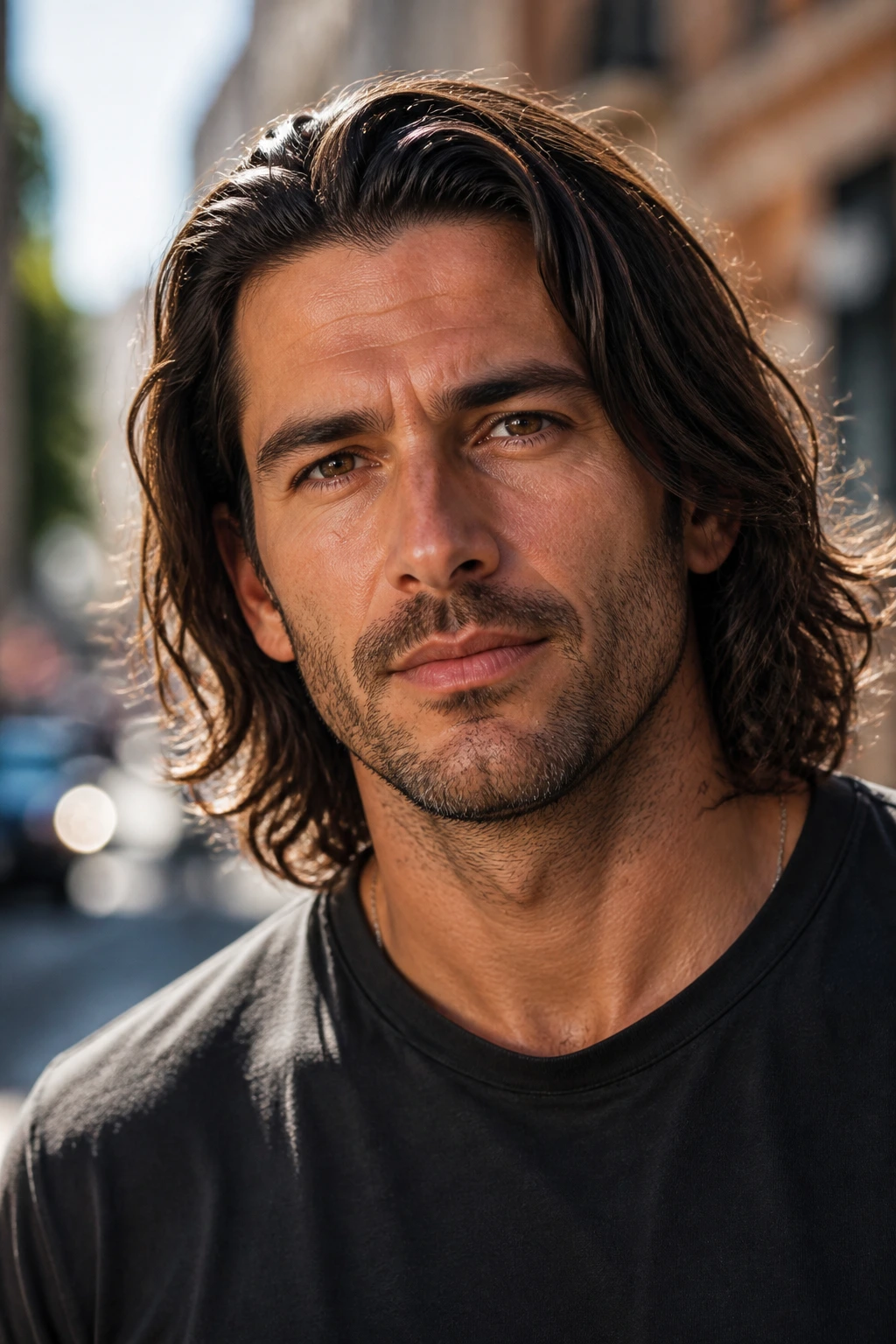
Not every long-haired man needs a full beard. Heavy stubble — roughly 2 to 5 mm — can be the cleanest answer of all. It gives the face texture and edge without adding a lot of bulk under the jaw.
Why It’s Worth Considering
When the hair on your head already carries enough visual weight, a short beard keeps the whole look from turning muddy. Heavy stubble adds shadow along the jawline, which is enough to make the face look more structured. That little bit of grit matters.
Who It Fits
- Men with patchy full-beard growth
- Men who want a lighter grooming routine
- Men whose long hair already feels like the main event
You do need to trim often. A guard setting of 2 to 4 mm keeps it tidy, and the neckline should stay clean or it starts looking like you skipped the mirror. Simple. Effective. Easy to ruin if you get lazy for a week.
13. Viking Beard and Long Hair
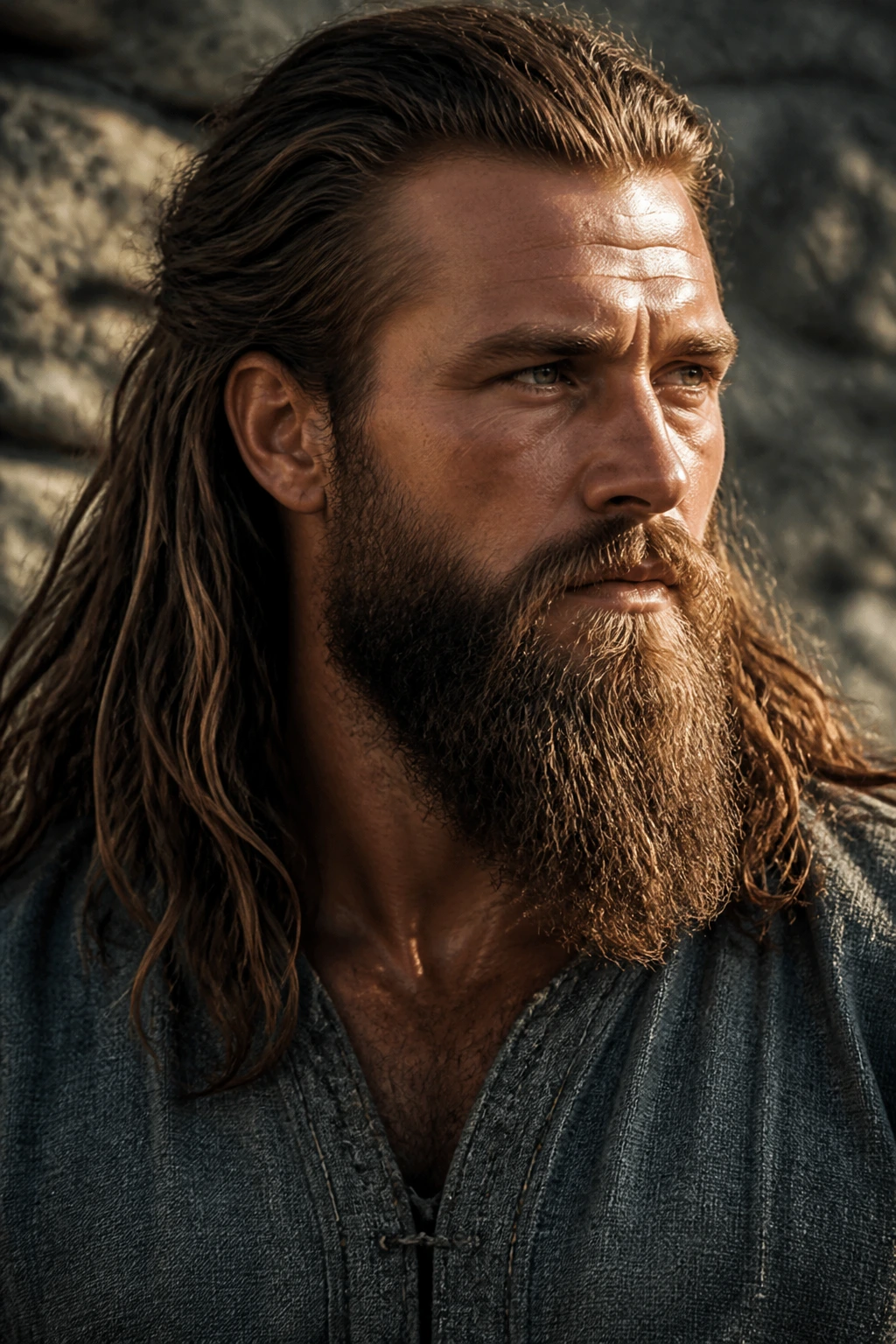
The Viking beard is the full-force version of long hair plus beard. The hair on top and the beard below become one continuous mass of length, texture, and movement. It’s dramatic, sure, but it works best when the beard has some shaping through the sides and a little more length in the chin.
What Keeps It From Going Off the Rails
A Viking beard needs care, not perfection. Detangle it after washing, use oil or balm, and keep the mustache from swallowing the upper lip. If the beard is long enough to braid, braids can stop the ends from snagging on jackets and zippers — which sounds minor until you’ve dealt with it.
Best Pairings
- Loose long hair with texture
- Half-up styles
- Thick, coarse beard growth
This is not a casual style. It asks for time, brushwork, and patience. But if your hair and beard are both dense, it can look powerful in a way shorter styles can’t touch.
14. Balbo Beard With a Clean Mustache
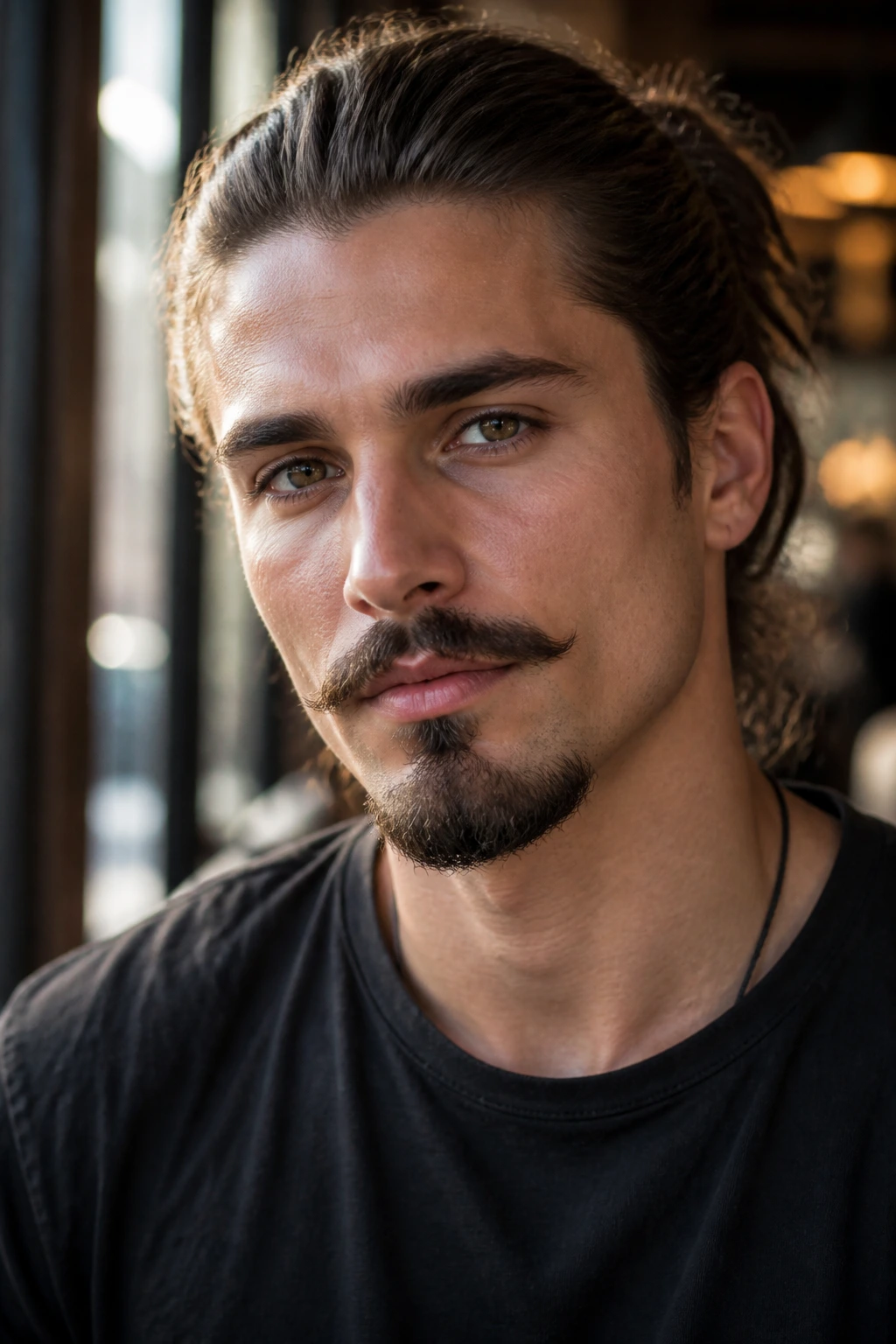
A Balbo is all about separation. The mustache stands alone, the chin beard stands alone, and the cheeks stay mostly clear. On long-haired men, that separation helps the face breathe. It keeps the beard from merging into the hair and turning into one huge dark shape.
The Appeal
The Balbo looks neat without being conservative. It has enough geometry to counter loose waves or a thick mane. If your cheeks grow unevenly, this style can hide that without looking like a compromise.
Trim It Like You Mean It
- Keep the cheek area clean, not stubbly.
- Shape the chin section with a slight taper.
- Don’t let the mustache drop over the lip more than a hair’s width.
It works well with layered hair, a brushed-back top, or a low bun. There’s a little retro energy here, but not the kind that feels costume-like.
15. Chin Strap Beard With Long Hair
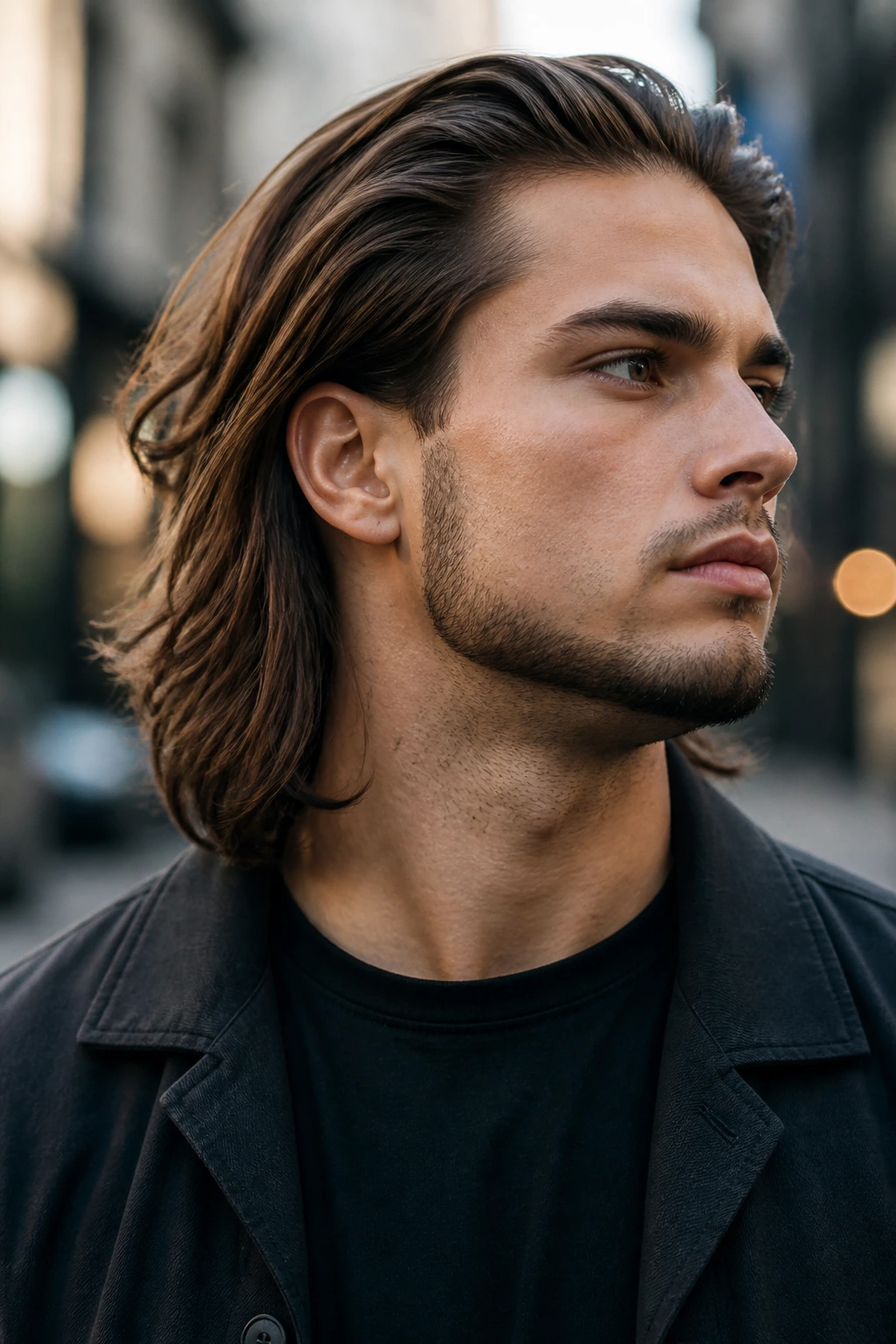
The chin strap is a narrow beard that follows the jawline closely. With long hair, it can look surprisingly modern because the beard acts like an outline rather than a mass. The key is precision. If the line wanders, the whole thing falls apart.
When It Actually Works
This is a strong choice if your jaw is solid and your beard growth is even. Long hair softens the top half of the head; the chin strap sharpens the bottom. That contrast can look clean, especially with a fade at the sideburns or a tucked-back hairstyle.
Use It Carefully
The chin strap needs frequent touch-ups — every 3 to 5 days if your hair grows fast. The line should stay attached to the sideburns in a controlled way, not trail down into a fuzzy neck situation. If you’re not willing to maintain that edge, skip it.
This style has a narrow window. Within that window, it can look excellent.
16. Beardstache With Longer Hair
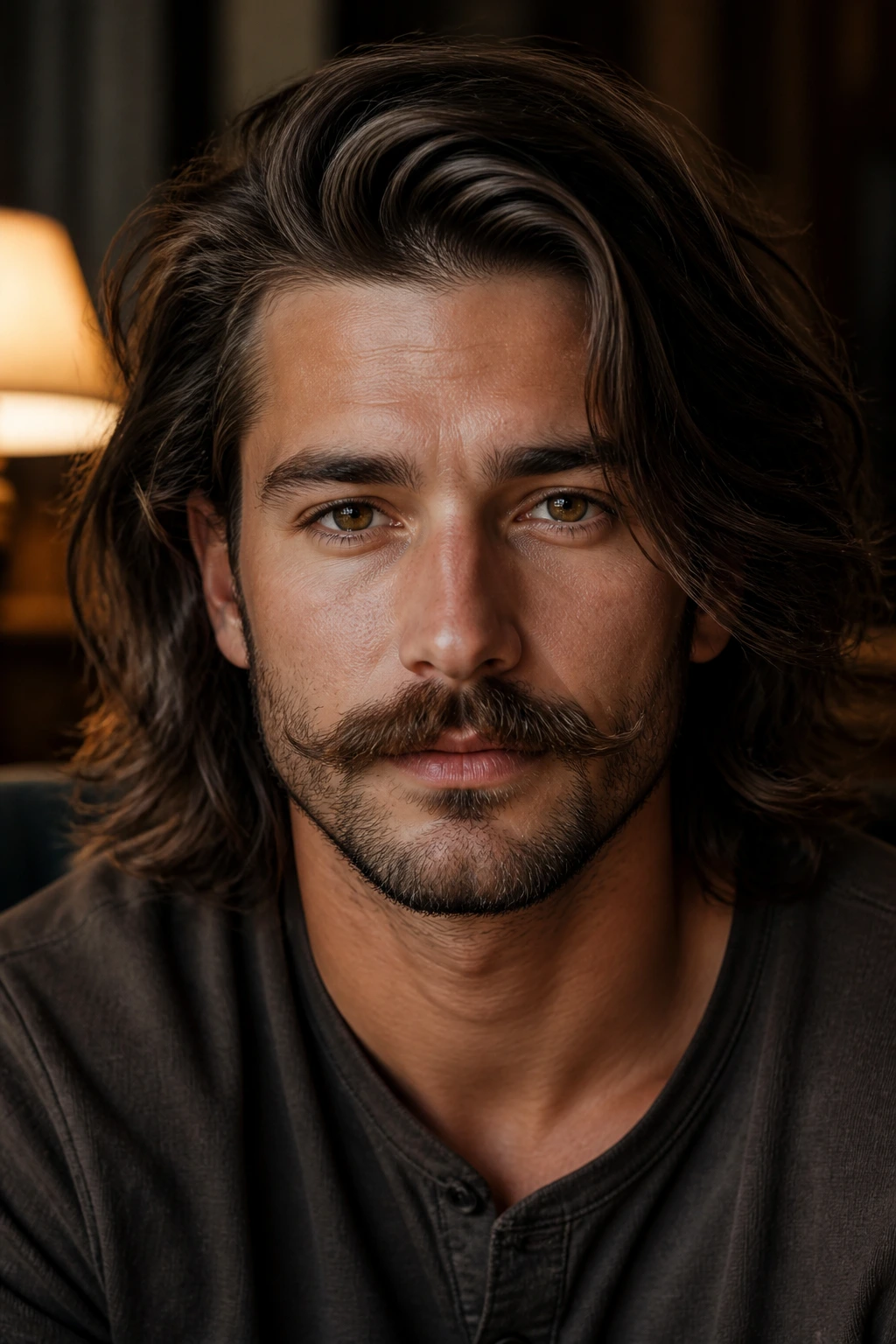
A beardstache is a mustache-forward look with short beard growth under it — usually heavier on the upper lip and lighter through the cheeks and jaw. Long hair on top gives the mustache room to stand out instead of competing with the rest of the face.
Why It Feels Different
The beardstache is sharp without being overworked. The mustache carries the personality, and the short beard provides structure so the upper lip doesn’t feel disconnected from the jaw. With long hair, that balance matters because the top half already has movement.
Keep These Details in Mind
- Let the mustache be fuller than the beard.
- Keep the beard around 2 to 4 mm or slightly longer if it grows evenly.
- Trim the cheeks cleanly so the style reads as deliberate, not patchy.
It’s a good look for men who want facial hair but don’t want to commit to a full beard. It also works well in warmer weather, since there’s less bulk around the jaw.
17. Natural Cheek Beard With Loose Texture

A natural cheek beard keeps the upper line soft and lets the growth rise a little higher on the face. With long hair, that softness can work beautifully if the neckline is still clean and the beard stays brushed. It looks less carved, more grown.
Why That Matters
Long hair already gives a relaxed feel. If you over-trim the beard into hard angles, the contrast can get weird. A natural cheek line keeps the whole thing in the same register. The beard still needs shape, though. Natural does not mean ignored.
Best Practices
- Use scissors to catch wild hairs that stick out from the cheek area.
- Keep the area under the jaw tighter than the cheeks.
- Brush the beard down after washing so the shape settles before trimming.
This is a solid choice for wavy or curly hair, because it mirrors the texture of the hair on top. If you have straight hair, it can still work — just be cleaner with the neckline.
18. Yeard Beard With Long Hair
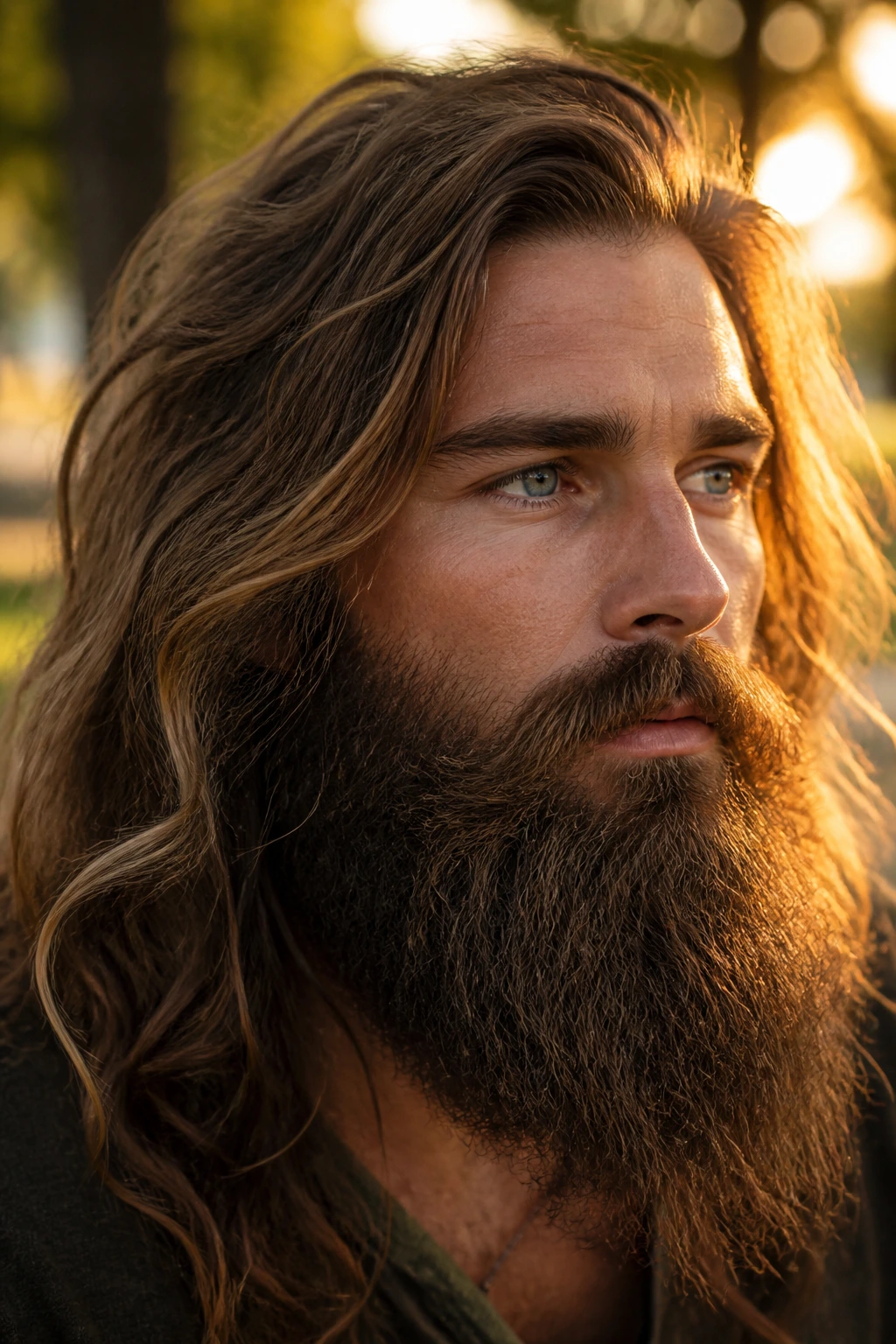
A yeard is a beard grown for a year with minimal trimming. It isn’t a polished style in the usual sense, but with long hair it can look like a deliberate, long-form statement. The point is length and patience. Nothing else.
What Makes It Work
The top hair and beard both get to occupy space without fighting for dominance. The yeard is best when you occasionally shape the bottom and clean the neckline, because otherwise the beard can grow unevenly and snag on collars or jacket zippers.
Don’t Skip This Part
A yeard still needs maintenance. Wash it, condition it, detangle it, and trim the stray ends every month or two so the shape doesn’t go lopsided. If you want the “grown for a year” look without the feral finish, a little shaping is the difference.
This one suits people who enjoy the process as much as the result. If you want instant neatness, look elsewhere.
19. Braided Beard for Long Hair
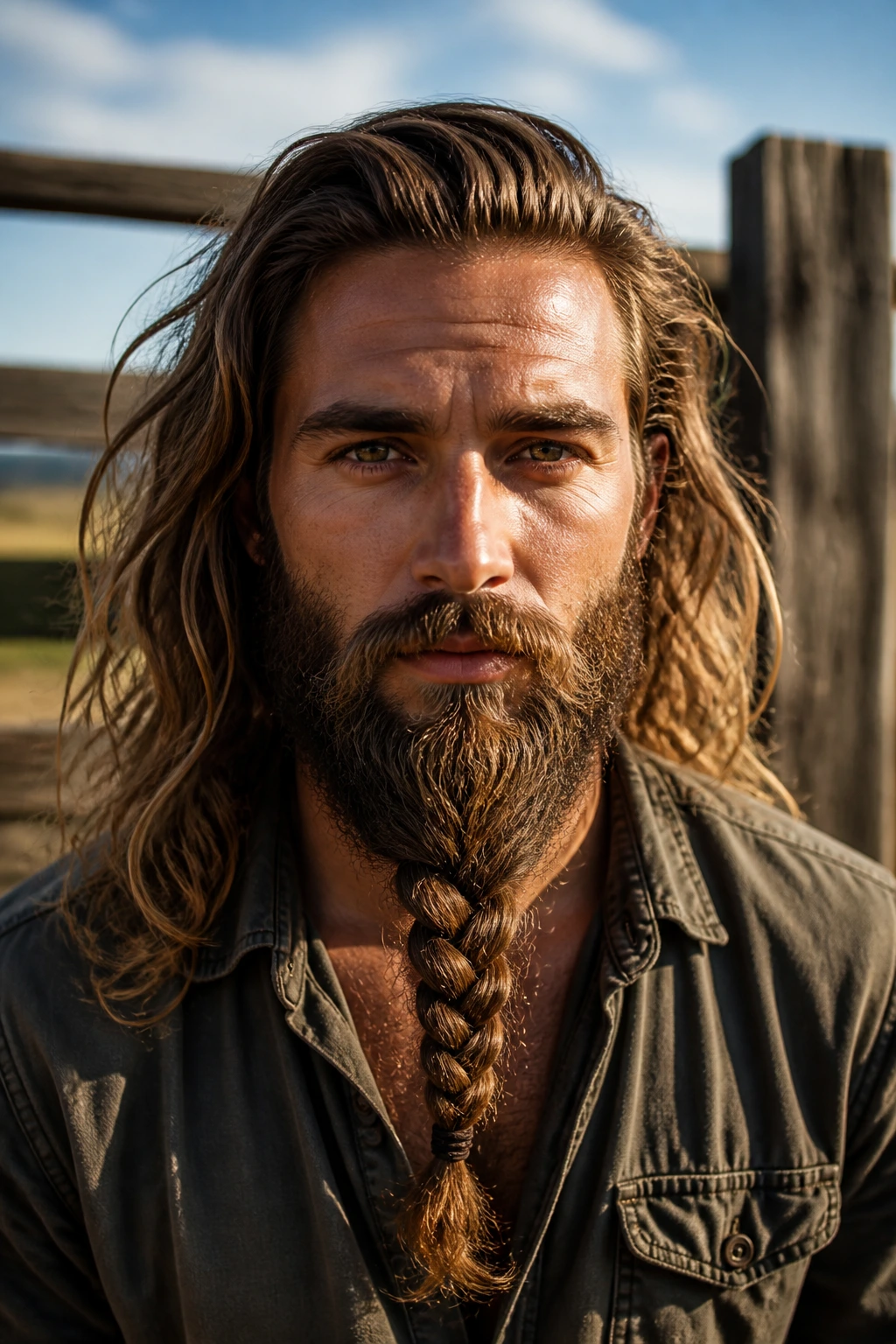
Braided beards are not everyday looks for most men, but they can be striking with long hair because the braid echoes the length on top. When done neatly, it turns the beard into a controlled texture rather than a mass. A single braid, twin braids, or a few short plaits all change the silhouette.
What It Requires
You need enough length to braid comfortably — usually several inches — and you need the beard conditioned so it doesn’t fight the braid. A little leave-in beard conditioner or oil helps the strands separate without feeling greasy. Small elastic bands or beard beads can hold the shape.
When to Wear It
- For events or nights out
- When you want to keep the beard from tangling
- When your hair and beard are both long enough to look intentional together
This style needs more handling than most. But it solves a real problem: long beards catch on everything. Braiding keeps the ends under control and can make the whole look feel cleaner.
20. Salt-and-Pepper Beard With Long Hair

Gray does not weaken long hair and beard combinations. It usually improves them. A salt-and-pepper beard gives texture and depth that flat dark facial hair sometimes lacks, especially when the hair on top is also long and loose.
Why It’s Strong
The mixed color breaks up the beard’s outline in a good way. It keeps the face from looking like one solid block of hair. That matters a lot when the hair on your head and the beard are both heavy. The gray also makes a natural beard shape read more clearly, because the edges stand out differently in the light.
Keep the Shape Clean
Don’t use too much gloss. A matte balm or light oil is usually enough. Too much shine can make gray hairs look wiry. The neckline and cheek line should stay tight so the color looks distinguished, not forgotten.
This is one of the easiest styles to wear with confidence because you’re working with the beard you already have.
21. Faded Sideburn Beard With Long Hair
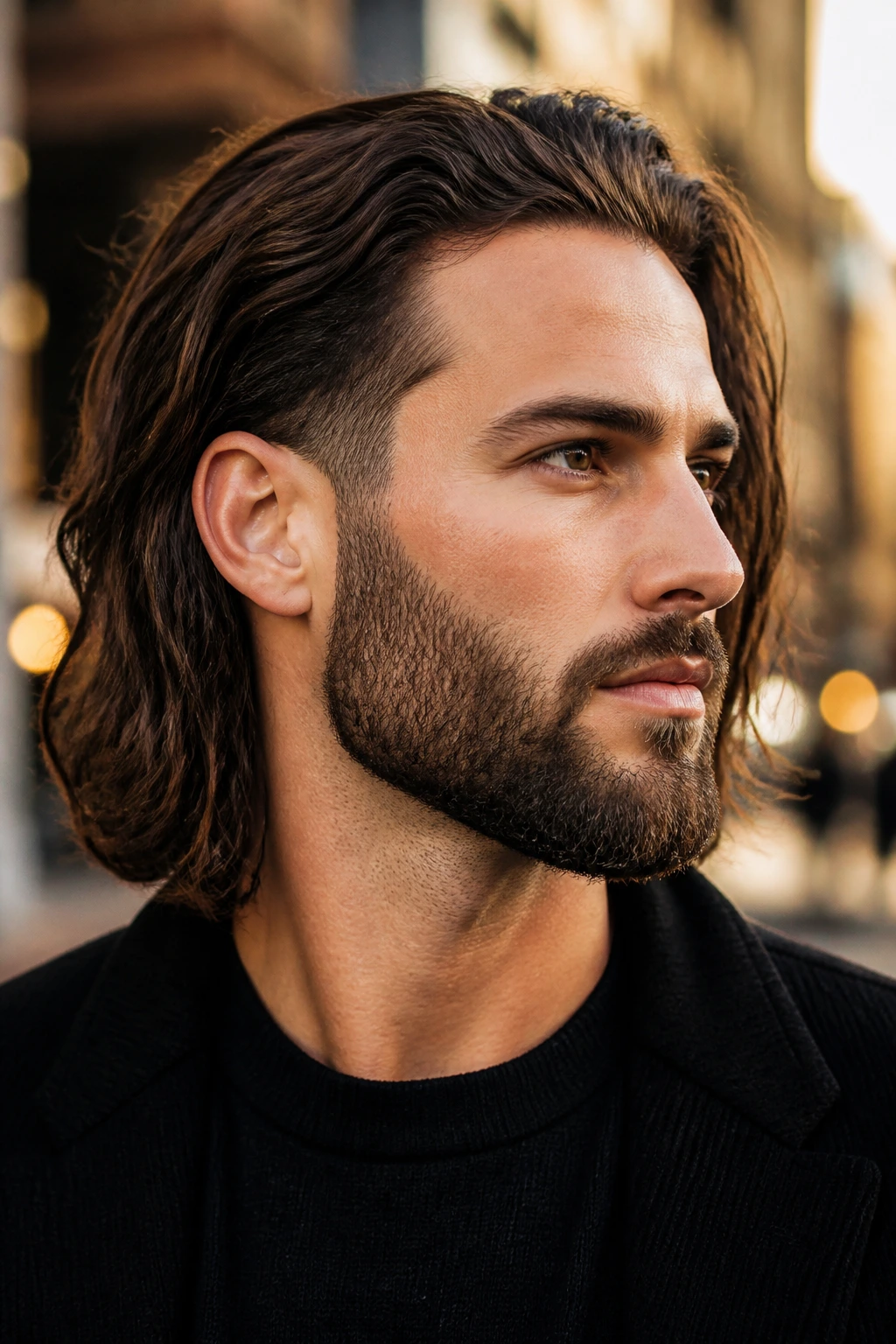
A faded sideburn beard is the barbershop answer to long hair. The sideburns melt smoothly into the beard, often with a gradual taper using different guard lengths. It looks sharp with long hair because the transition from scalp to face feels controlled instead of abrupt.
Why It’s a Favorite
The fade keeps the sides clean even when the hair on top is long and full. That matters if your hair hangs around the ears or if you like tying it back. The face keeps a clear outline, which helps the whole style read as groomed rather than grown out.
How It’s Built
- Start shorter at the sideburn and step up in guard length toward the jaw.
- Keep the cheek line shaped to the natural growth pattern.
- Blend the beard under the ear so there’s no hard shelf.
If you like modern cuts and tidy edges, this one fits neatly into the long-hair world. It works with undercuts, layered cuts, and tied-back hair especially well.
22. Sculpted Short Beard With Long Hair

A sculpted short beard is for the man who wants facial hair without letting it take over. It sits longer than stubble but shorter than a full beard, with a clean neckline and a lightly shaped cheek line. With long hair, that restraint can look expensive in the simplest sense: neat, clean, and not overdone.
Why It Works
Long hair already brings motion and volume. A short sculpted beard adds definition without adding bulk. The face keeps its shape, and the haircut still gets attention. That’s useful if you work in a setting where a giant beard would feel out of place.
Small Details Matter Here
Trim it every week or so, especially around the cheek and neck edges. Use a comb before cutting. The beard should follow the face, not float away from it.
This style is underrated because it doesn’t look like a compromise. It looks like a choice.
23. Wild Tapered Long Beard
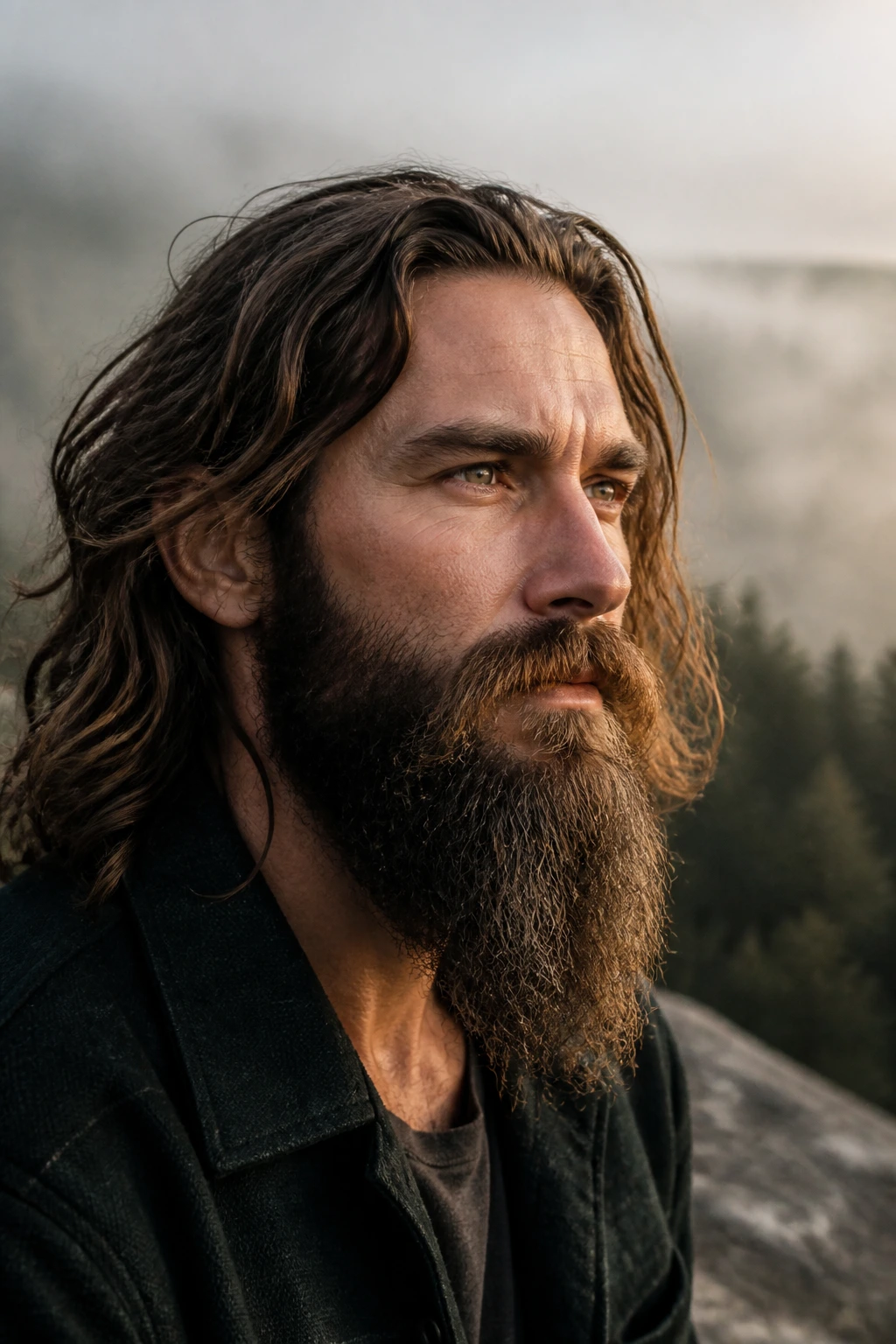
The wild tapered long beard sits between mountain-man and polished. It keeps the length, but the sides taper in toward the jaw and the chin carries a little more weight. With long hair, this style feels balanced because the taper keeps the whole head from looking like one giant shape.
Why It Has Range
You can wear it with loose hair, a low ponytail, or a half-up knot, and it still makes sense. The taper gives structure while the length keeps the personality. If your beard grows thick and your hair has some wave, this can be one of the most natural-looking options.
Keep the Edges Honest
Brush it down, trim the side bulk every couple of weeks, and keep the mustache off the lip. That last part matters more than people think. A tapered beard only looks tapered if the upper lip stays visible.
It’s the style for men who want length with shape. Messy? No. Relaxed? Yes. There’s a difference.
Why Beard Styles for Men With Long Hair Need a Different Eye
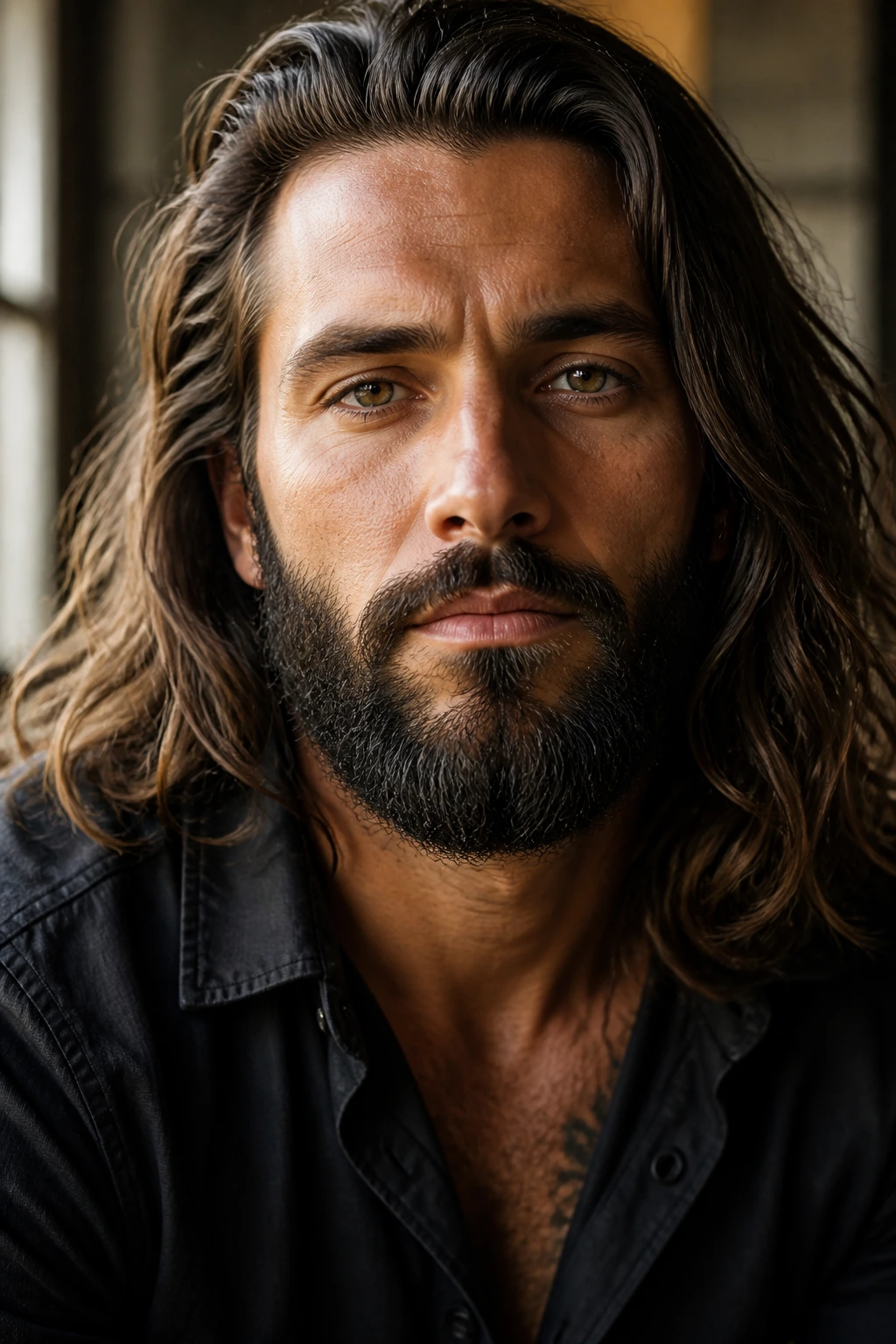
Long hair changes how the face sits in space. That sounds a little dramatic, but it’s true. A beard on a buzz-cut head works like a frame around a photo. A beard under long hair has to compete with the hairline, the ears, the collar, and sometimes the bun knot at the back of the head. The lower face can get lost fast.
The safest move is to decide what the beard is supposed to do. Add weight? Sharpen the jaw? Keep a soft hairstyle from feeling too soft? Once you know that, the shape choice gets easier. A ducktail, for instance, lengthens. A short boxed beard tightens. A Garibaldi gives bulk without looking rigid. Same category. Different job.
Another thing that matters more with long hair: the transition zones. Sideburns need to connect cleanly. Necklines need to be controlled. Cheek lines can stay natural, but they should still look chosen. If you let the beard drift, long hair makes the drift more obvious. That’s the part most guys miss.
Essential Tools for Sharper Lines
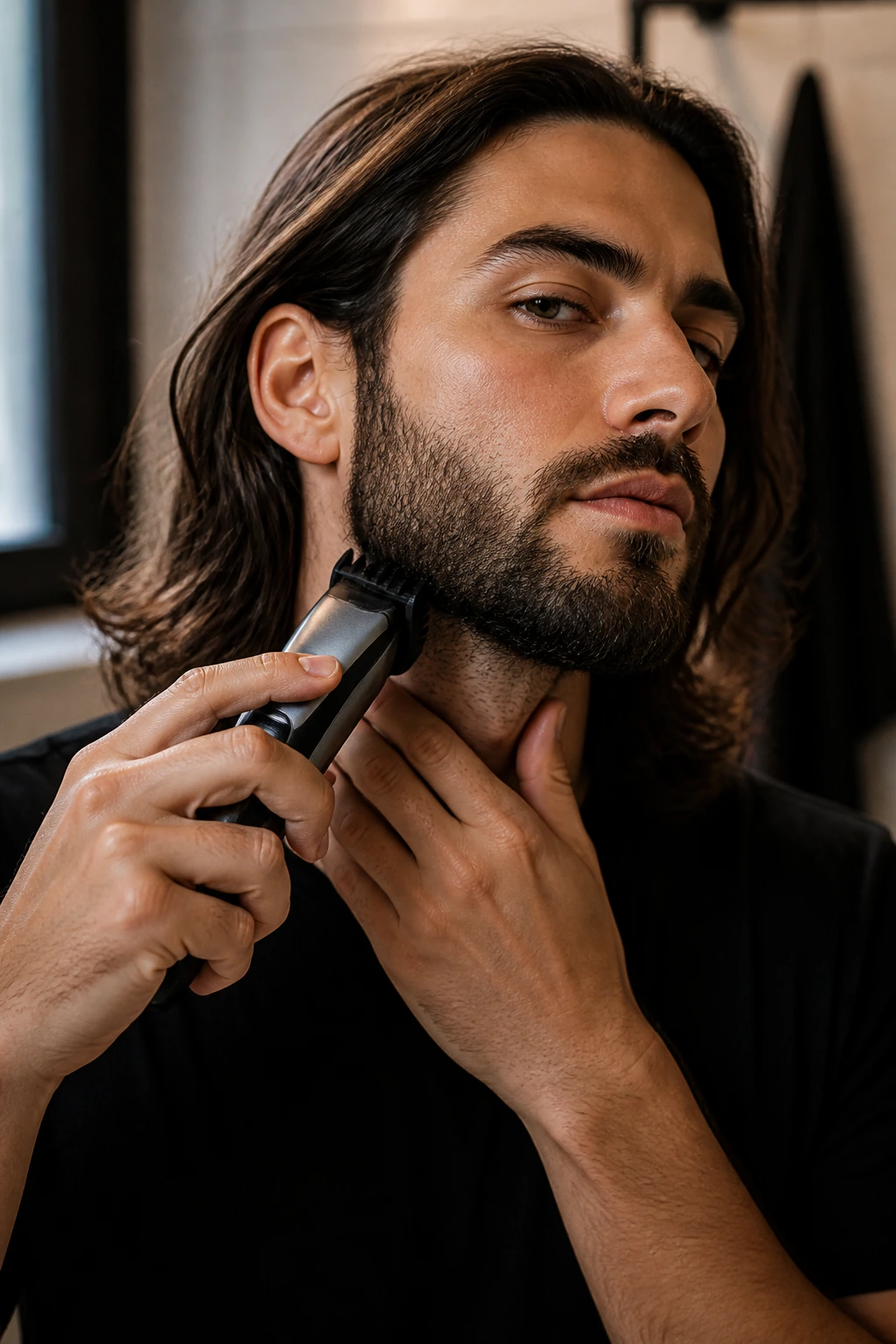
- Adjustable beard trimmer: A model with multiple guard lengths lets you move from 2 mm stubble to a longer boxed shape without guessing.
- Barber scissors: Essential for trimming mustache edges, flyaways, and the bottom of fuller beards like the Garibaldi or Bandholz.
- Beard comb: A wide-tooth comb handles long beards better than a tiny plastic pick; it keeps tugging to a minimum.
- Boar bristle brush: Good for training beard direction and distributing oil through thick hair.
- Hand mirror: You’ll need a second angle for the neckline and sideburn blend. The bathroom mirror alone lies.
- Detail razor or safety razor: Useful for sharpening cheek lines and cleaning the neckline.
- Beard wash and conditioner: Regular hair shampoo can strip long beards fast, leaving them rough and scratchy.
- Hair clips or ties: Helpful when you’re trimming the beard and don’t want head hair hanging in the way.
- Towel or microfiber cloth: A rough bath towel can frizz out the beard; a softer cloth is kinder after washing.
Picking the Right Products for Your Hair and Beard

The best product choice starts with texture, not trend. If your beard is coarse and your head hair is wavy, you need something that softens without flattening. A light beard oil with jojoba or argan-style conditioning ingredients works well for daily use because it cuts the scratchy feel and helps the beard lay down. If the beard has more length, add balm for control.
For long hair on top, don’t drown the beard in glossy products just because the hair needs help. That’s where the whole look turns greasy. Use less than you think you need, warm it in your palms, and spread it evenly through the mid-lengths and ends. The roots only need a touch.
A matte or low-shine balm is usually the smarter choice for men who wear long hair loose. It keeps the beard from looking wet under indoor light, which can be a problem with heavier oils. If your beard tends to puff out, balm gives you a bit of direction without stiffening the face into place.
Shampoo matters too. Beard hair is not scalp hair. It tends to dry out faster, especially if you wash it every day. Two to three washes per week is enough for most men, with conditioner or a beard softener after. If you braid the beard or wear a big style like the Bandholz, leave-in conditioner once a week helps more than people expect.
How to Wear These Beard Styles Without Losing Balance

Presentation: Think in silhouette. A beard and long hair should look like they belong to the same person, not like two separate grooming decisions made months apart. If the beard is full, keep the hair either tidy through the part or controlled in a bun. If the beard is narrow, the hair can stay looser and more textured.
Accompaniments: Hats, glasses, collars, and necklines all change the read of the beard. A turtleneck can make a big beard feel heavier, while an open collar gives it room. Glasses usually pair well with short boxed, circle, or sculpted styles because the lines stack neatly. Loose knit hats and very large beards can fight each other unless the sides are trimmed down.
Proportions: A rough rule: the more volume your hair has, the more shape your beard needs. A center-parted mane can handle a fuller beard. A slicked-back cut often looks sharper with a tighter jawline beard. If both hair and beard are long, taper one of them or you’ll end up with a top-heavy head shape.
Finishing Touch: A tiny bit of beard oil or balm is enough on most days. The goal is a beard that moves, not a helmet. And if the mustache touches your upper lip all day, cut it back. You’ll taste your grooming products eventually, and that gets old fast.
Extra Grooming Tips and Style Tweaks
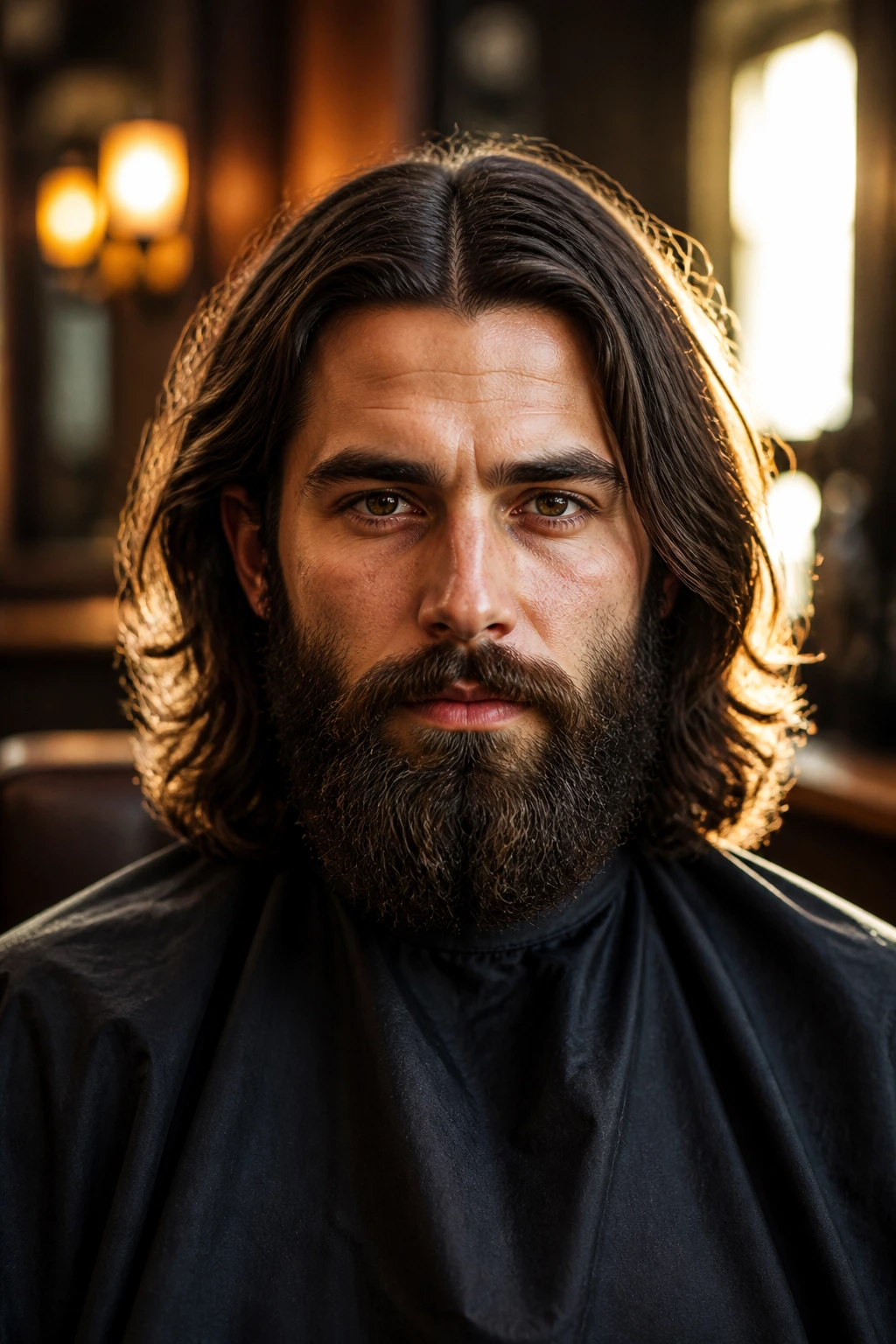
Shape Enhancement: If your beard puffs out near the cheeks, remove bulk with scissors before attacking it with a trimmer. Scissors give you more control, especially on styles like the Garibaldi, natural cheek beard, and Bandholz, where the outline matters more than a hard uniform length.
Customization: A low fade at the sideburns can make almost any long-hair beard style look cleaner. It works especially well with shoulder-length cuts, half-up hair, and undercuts. The fade gives the whole face a quieter edge.
Serving Suggestions: That’s the old way of putting it, but the idea still works: add one finishing touch. A slightly darker mustache wax, a matte balm, a clean part, or a tucked-behind-the-ear shape can make the beard feel finished. One small decision. Big effect.
Make-It-Yours: If your beard is patchy, stop forcing full-beard styles and move toward a beardstache, Balbo, or extended goatee. If your beard is dense, take advantage of that and let the length grow into a ducktail or full beard with more character. If you’ve got grays, don’t hide them unless the color is uneven enough to bother you. Gray reads as texture, not a flaw.
Common Mistakes That Make the Whole Look Sloppy

The most common error is letting the neckline disappear. Long hair can distract you from what’s happening below the jaw, and before you know it the beard has grown halfway down the throat. That makes even a good beard look tired. Clean the neckline regularly, and set it with the Adam’s apple as your anchor point.
Another mistake: trimming the cheek line too high because you’re nervous. The beard ends up looking like a chin puff with side fuzz, which is a bad trade. If you want a natural line, leave more than you think and clean up only the strays. You can always remove more later. You cannot put it back.
The mustache gets ignored a lot. It shouldn’t hang over the lip unless the style calls for it, and even then it needs trimming. A heavy mustache that covers the mouth makes eating annoying and gives the beard a slouched look. Keep it tidy. It pays off every day.
People also over-oil long beards. A little sheen helps. A wet look doesn’t. If your beard looks greasy at midday, you used too much. Start with 2 to 3 drops of oil for shorter styles and 4 to 6 for longer ones, then adjust upward only if the beard still feels dry after an hour.
Last one: matching every length exactly. Long hair and beard do not need to be twins. If both are identical in bulk, the head starts looking like a single shape instead of a face. One of them needs to lead. Usually the hair leads, and the beard supports.
Variations and Adaptations to Try

The Office-Ready Taper: Keep the beard in the short boxed, sculpted short beard, or faded sideburn zone, and let the hair stay longer on top or at the shoulders. This is the safest version for more formal settings because the edges stay tidy without flattening the long-hair personality.
The Rugged Growth Phase: Use the yeard, Bandholz, or wild tapered long beard when you want maximum length and minimum interference. This version works best if you’re willing to brush, oil, and trim the bottom line every few weeks so it still looks chosen.
The Patchy-Beard Pivot: Move toward a beardstache, Balbo, extended goatee, or Van Dyke if cheek density is uneven. These styles turn lower-density growth into a feature instead of fighting it.
The Silver-Edge Look: Let the salt-and-pepper pattern show, and keep the neckline, cheek line, and mustache edges crisp. Gray hair has more visual texture, so a clean outline keeps it from looking wild in the wrong way.
The Rock-Front Version: Try mutton chops, a ducktail, or a chin strap with long loose hair or a ponytail. This version carries more attitude and works best when the sideburns and jawline are kept sharp enough that the style reads on purpose.
The Low-Fuss Weekday Cut: Heavy stubble or a sculpted short beard can do more for long hair than a giant beard if you want a faster routine. Trim every few days, clean the neckline, and leave the hair on top doing the dramatic work.
Frequently Asked Questions
What beard style works best with shoulder-length hair?
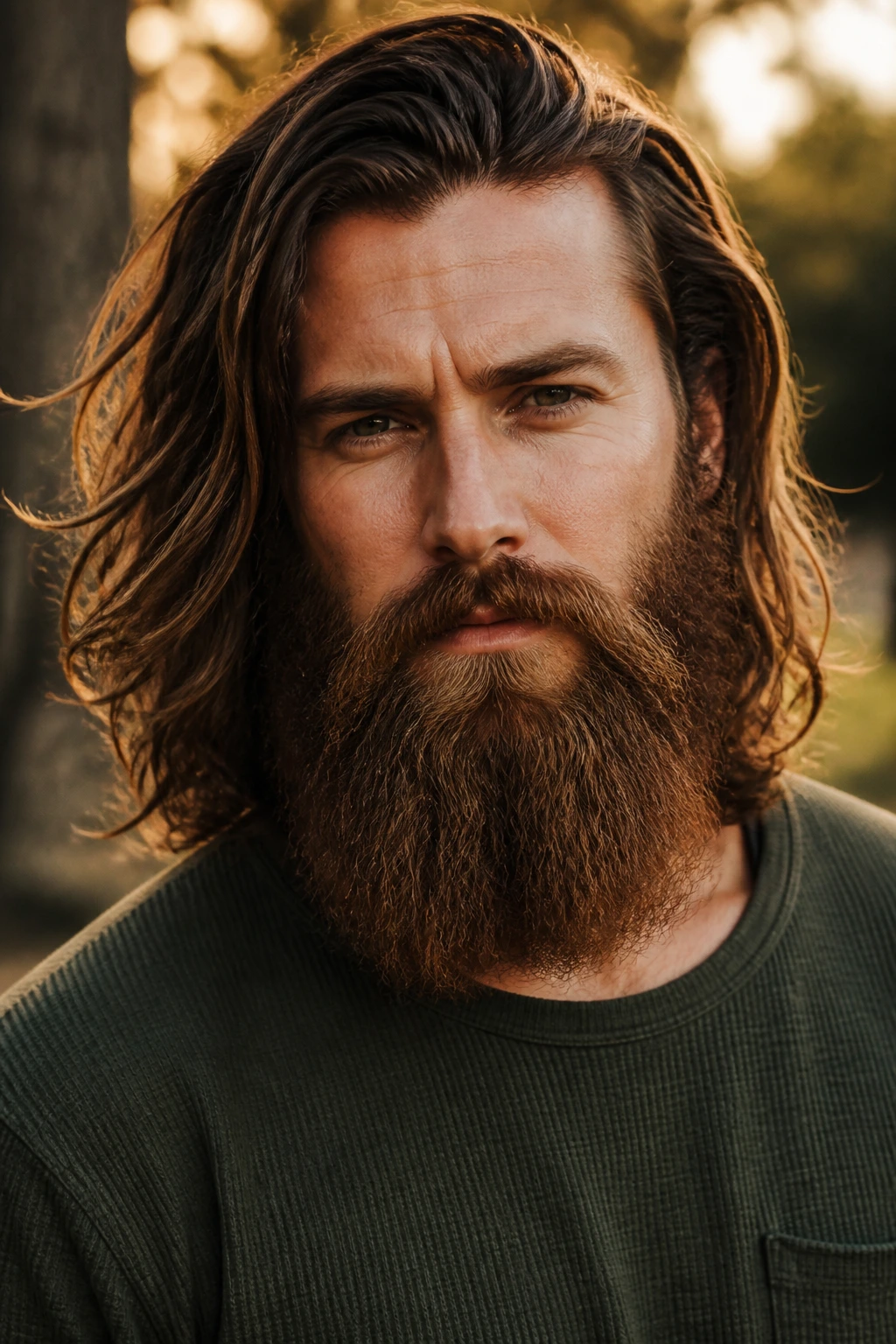
A short boxed beard, ducktail, or natural full beard usually works well because those shapes give the face structure without fighting the length on top. If the hair is thick, a more shaped beard keeps the whole look from turning too soft.
Can long hair and a big beard work on a round face?
Yes, but the beard should add length rather than width. Ducktails, extended goatees, and anchor styles help pull the face downward, while very wide Garibaldis can make a round face look even rounder if the sides aren’t trimmed back.
How often should I trim the neckline?
For most men with long hair, once a week is the sweet spot. Faster-growing beards may need it every 4 or 5 days. If the beard starts creeping down the throat, the clean shape is already gone.
Is a full beard better than stubble with long hair?
Neither is better across the board. A full beard adds weight and can make the face feel grounded, while heavy stubble keeps the look lighter and sharper. If your hair already has a lot of volume, stubble can sometimes be the smarter choice.
What if my beard is patchy on the cheeks?
Skip styles that depend on fullness everywhere. Beardstaches, Van Dykes, extended goatees, and Balbos all handle patchiness better because they put the visual focus where your growth is strongest.
How do I keep a long beard from tangling?
Brush it after washing, use a little oil on the ends, and avoid going to bed with a damp beard. If the beard is long enough to catch on collars, a small braid or a loose tie helps more than people expect.
Should my mustache connect to the beard?
Only if the style calls for it. Circle beards, short boxed beards, and full beards usually want connection. Beardstaches, Van Dykes, and some Balbos work better with separation.
Can I wear long hair and a beard in a professional setting?
Absolutely. The trick is keeping the lines clean. A sculpted short beard, short boxed beard, or faded sideburn beard usually looks sharp enough for most workplaces, especially if the hair is brushed back or tied neatly.
Keeping the Shape Over Time
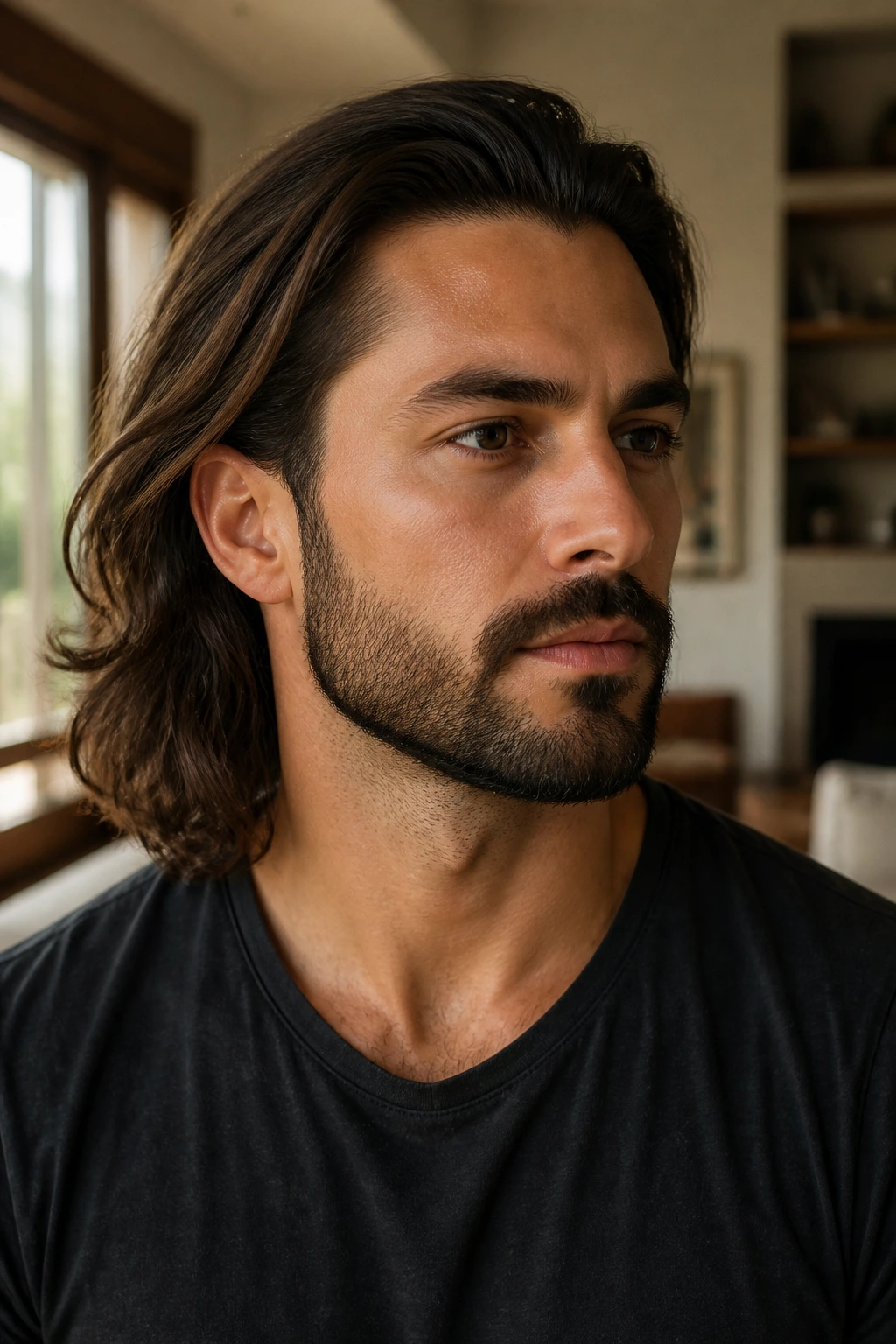
Long hair and a beard both look better when you stop treating maintenance like a big event. Small touch-ups matter more than heroic rescues. Clean the neckline before it grows obvious. Snip the mustache before it hits your coffee. Brush the beard when it’s damp, not after it has already dried into its own little weather system.
Most styles in this list survive on a simple rhythm: quick neckline cleanup every week, shape check every two weeks, deeper trim or barber visit every 3 to 6 weeks. If you wear a longer beard like a Bandholz, Garibaldi, or yeard, those intervals matter even more because the weight at the bottom starts pulling the shape down. A beard that looked tidy last month can start to sag without much warning.
Products should be stored somewhere cool and dry, away from the shower steam if you want them to last. Beard oil can go rancid if it sits in hot, bright conditions for too long. Trimmers need the hair cleared out after each use, and the blade should be oiled or cleaned based on the maker’s instructions. Boring? A little. Necessary? Completely.
A Beard That Matches the Hair
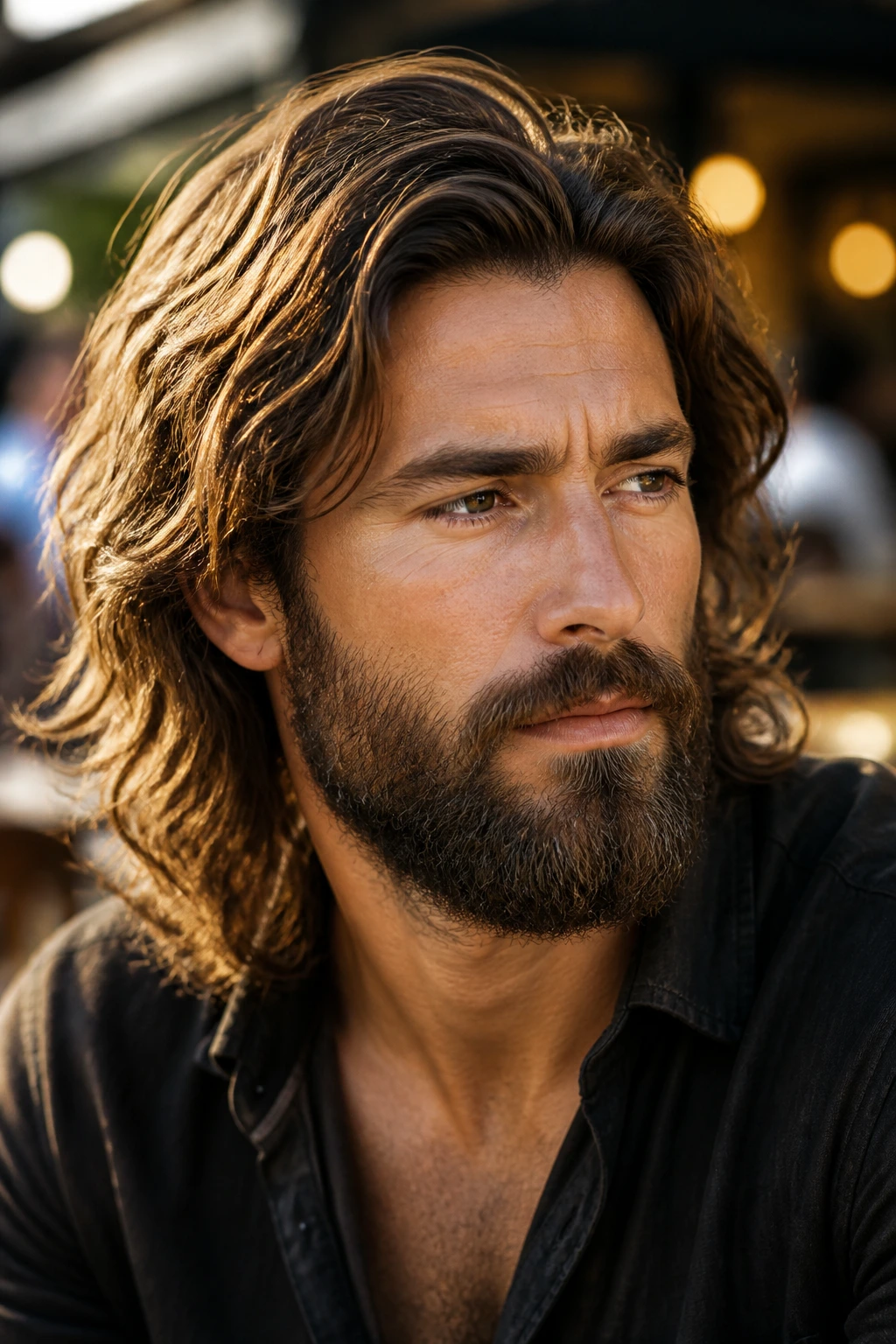
The strongest long-hair beard combinations do one thing well: they make the whole head look planned. Not stiff. Planned.
That might mean a full beard with a center part, or a sculpted short beard with loose waves, or a bigger shape like the Bandholz if your growth and your patience both run deep. The style is not the point by itself. The balance is. Keep the neckline honest, give the mustache some attention, and let the hair on top and the beard below do different jobs instead of trying to be identical.
Once you get that part right, the rest gets easier. The mirror stops feeling like a negotiation.
