



Thick beard hair is a gift, but it is not a free pass. Left alone, it grows wide at the cheeks, heavy under the jaw, and a little unruly around the mouth, which is exactly why beard styles for thick hair need shape more than they need length. The trick is not to fight the density. The trick is to put a frame around it.
A dense beard can look expensive or accidental, and the difference is usually a half-inch of trimming, not months of extra growth. I’ve seen beards that looked like a clean, solid wall of hair after a good neckline and cheek line, and I’ve seen the same beard look like a mop with one sloppy pass of the clippers. Thick hair has a memory. Cut it badly once, and it will remind you every morning.
What works best is usually the style that gives the beard somewhere to go. Sometimes that means a squared-off shape. Sometimes it means a point at the chin. Sometimes it means a fade through the sideburns so the beard does not appear to start with a hard, blunt edge at the jaw. The styles below lean into that reality instead of pretending dense growth is the same as soft, sparse stubble.
Why Thick Beard Hair Changes the Whole Shape
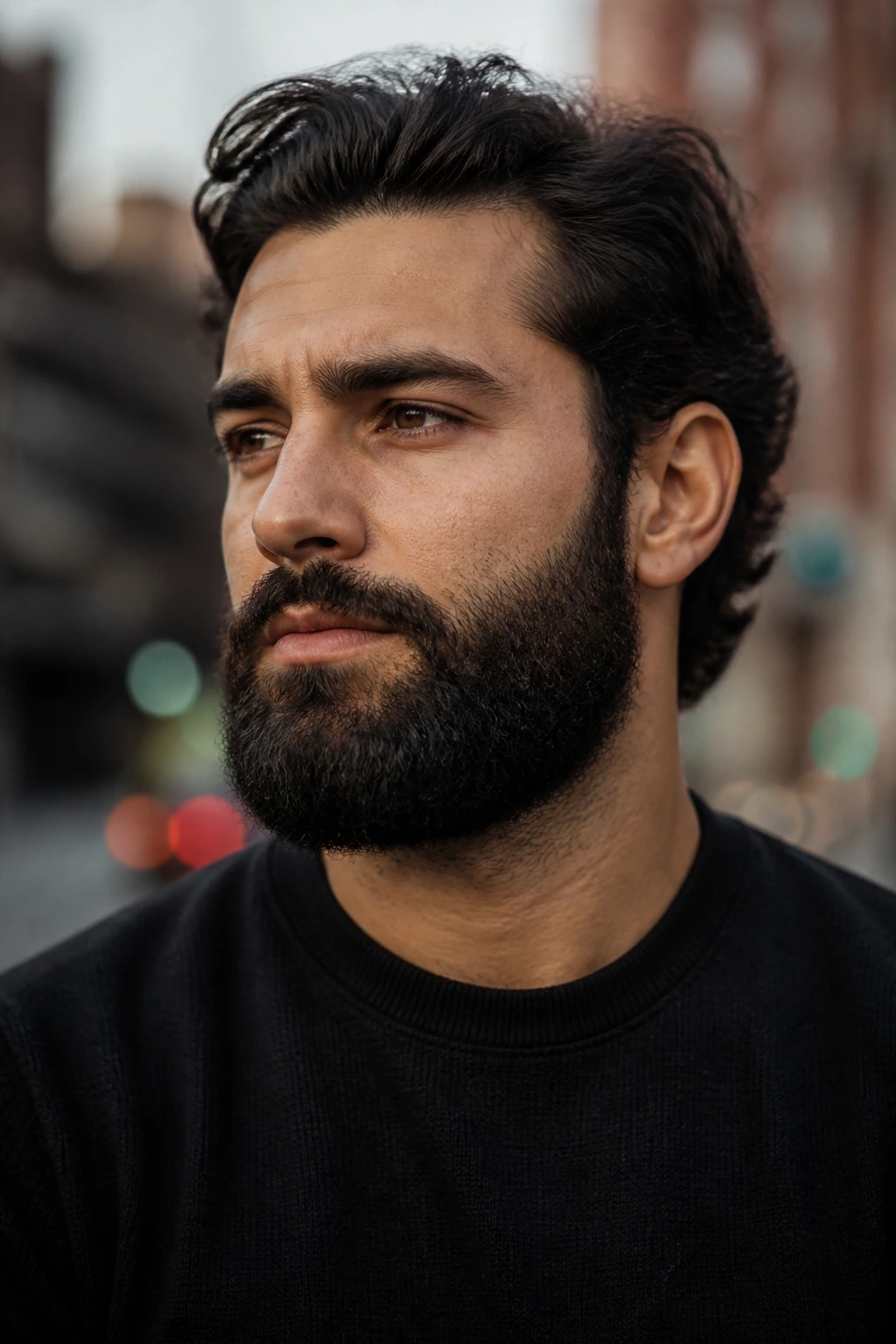
- Density fills in fast: Thick growth covers gaps quickly, which is great, but it also means a style can look bigger than you expected after just 2 to 3 weeks.
- Bulk sits under the jaw: Coarse beard hair tends to puff outward below the face line, so neckline placement matters more than most guys think.
- Length lies a little: A 6 mm guard on dense beard hair can look closer to 4 mm once it dries and curls back on itself.
- Edges matter more than volume: Clean cheek lines and a clear neckline make thick hair look intentional instead of just large.
- Mustache control changes everything: Thick beards often start looking messy at the upper lip before they look messy anywhere else.
- Shape beats growth envy: A beard that fits your face will look better than a bigger beard that ignores your jaw, chin, and cheekbones.
1. Full Beard
A full beard on thick hair can look expensive when it’s trimmed with a steady hand and a low neckline. It can also look like you gave up somewhere around week three. The difference is shape. Keep the cheeks natural, but not wild, and let the jaw carry the bulk instead of the neck.
This style works because dense hair already gives you coverage; you do not need to fake fullness. What you need is balance. I like a full beard best when the length stays even enough to look deliberate, usually around 8 to 14 mm for the shorter version, with the chin allowed to go a touch longer if your face needs more vertical line.
2. Short Boxed Beard
Want fullness without the puff? The short boxed beard is the move. It trims thick hair into a compact shape that sits close to the face, which keeps the beard from blooming outward after a long day or a hot shower.
The best version keeps the side length slightly shorter than the chin, usually by one guard step, so the jawline still reads clearly. Ask for crisp cheeks, a low neckline, and corners that don’t flare out past the jaw hinge. It’s one of the easiest beard styles for thick hair to wear to work because it looks controlled even when the growth comes in fast.
3. Medium Boxed Beard
The medium boxed beard gives thick hair room to look substantial without turning into a wall. It’s the style I’d pick for a guy who wants more presence than a short boxed beard but doesn’t want the maintenance of a long one.
What makes it work is the square outline. Keep the bottom flatter than you think you need, because thick hair tends to curve downward on its own as it dries. A medium boxed beard is especially good for long or narrow faces, since the width adds structure without dragging the chin too far down.
4. Long Boxed Beard
A long boxed beard is where thick hair stops being a nuisance and starts looking like actual architecture. The width and length can carry a face, but only if the bottom edge stays honest. If the sides start ballooning, the whole shape loses its line.
I like this style when the beard is thick enough to hold a square profile at 15 mm and beyond. The trick is not to let the lower corners go soft. A quick scissor pass every 7 to 10 days keeps the shape from turning into a rounded mass. It’s a strong choice for men who want a heavier beard without the wildness of a Bandholz.
5. Ducktail Beard
The ducktail is one of the best beard styles for thick hair because it uses density to create direction. Instead of letting the beard spread in all directions, you narrow the chin into a point and let the cheeks stay a little fuller. That point changes the whole face.
This style needs patience while you’re trimming. Comb the chin downward and slightly forward before you cut, or the point will end up too short once the hair settles. The ducktail looks especially good on round faces, since the vertical pull makes the face look longer without making the cheeks disappear.
6. Ducktail with a Taper
The tapered ducktail is the version I recommend to men who like the shape of a ducktail but don’t want the hard contrast of a dramatic point. It keeps the chin forward-facing, but softens the transition through the sides and sideburns.
That taper matters on thick hair because dense growth can make the cheeks feel too heavy if everything sits at the same length. Ask your barber to blend the sideburns down by one or two guard steps before the beard starts to widen. The result looks cleaner at a glance and easier to wear with short haircuts.
7. Bandholz Beard
The Bandholz works when you let the beard grow into its own thing and stop asking it to behave like a neat office trim. Thick hair makes this style look full fast, which is the whole appeal. The catch is that the mustache cannot be ignored.
If the mustache drops over the lip and the cheeks puff outward, the Bandholz turns sloppy. Keep the mustache trained with balm and comb it down daily, then clean the neckline enough to show where the beard actually ends. It suits men who like a bigger beard and do not mind spending time with scissors and oil.
8. Garibaldi Beard
A Garibaldi is a rounder, softer cousin to the Bandholz. Thick hair helps it hold a wide bottom without looking thin at the edges, but the shape needs a gentle hand. If you trim it too much, you lose the whole point.
I like this style on men whose beard grows in different directions, because the rounded bottom forgives a little chaos. Keep the lower edge broad and the cheeks slightly shorter so the beard reads as a shape rather than a cloud. It’s one of those styles that looks better after a few deliberate trims than it does the day you stop touching it.
9. Verdi Beard
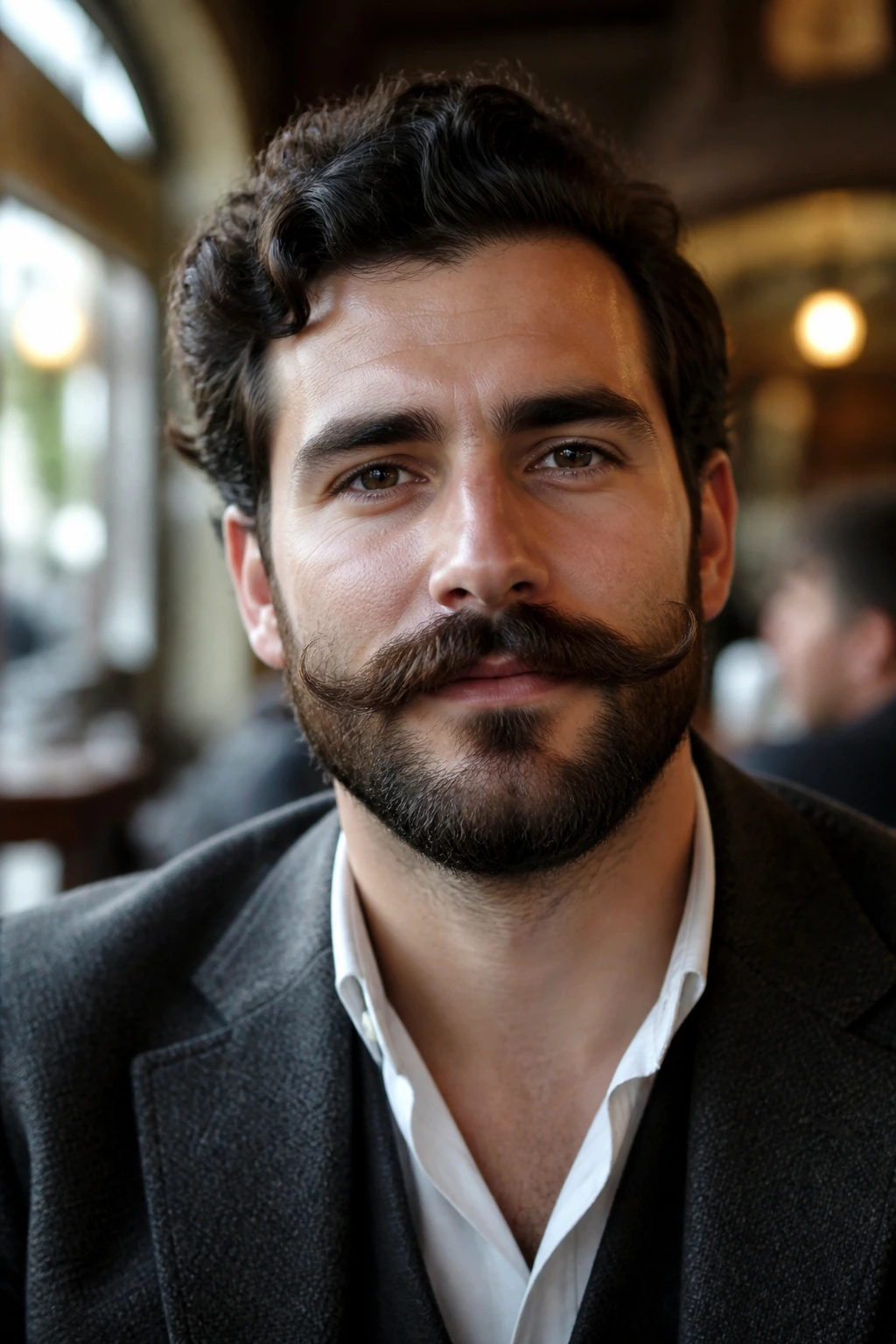
The Verdi is for the man whose mustache wants attention. Thick hair can make the mustache look heavy, almost too much, but that becomes an advantage here because the style is built around it. The beard stays shorter and tighter, while the mustache gets shaped into the lead role.
Keep the cheek lines neat and the chin rounded rather than pointy. If the mustache grows fast, trim the center just enough to keep the upper lip visible. The Verdi has a little old-world drama to it, but the dense beard keeps it from looking delicate.
10. Circle Beard
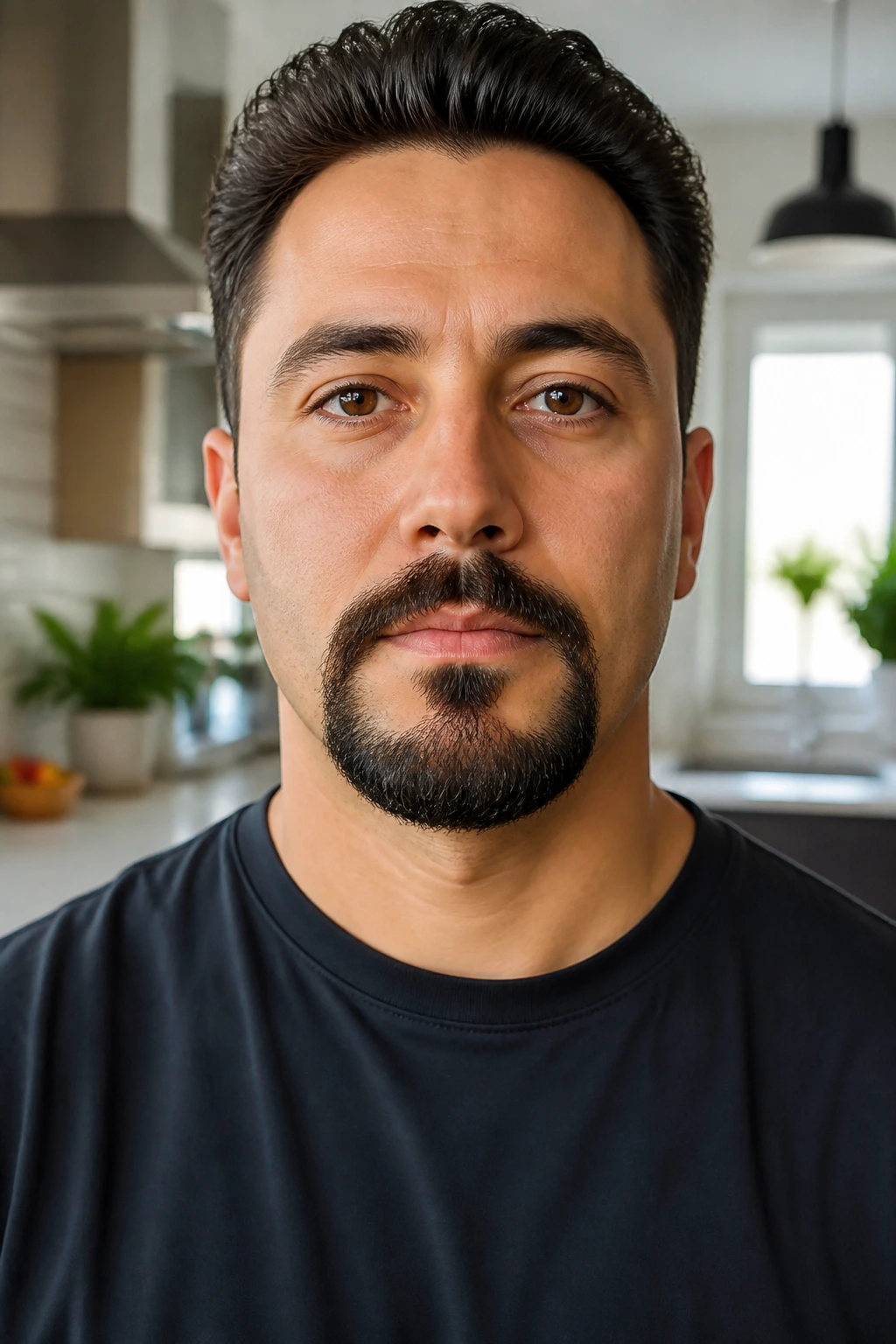
A circle beard is a good answer when the cheeks are thick but not even, or when you want the mouth framed without carrying fullness everywhere else. The style connects the mustache and chin into a neat loop, and that loop looks sharper when the hair has enough density to stay solid.
The mistake people make is letting the corners blur into the cheeks. Don’t. Shave or clip those edges clean so the shape stays circular and tight. It’s a small style, but on thick hair it can look surprisingly bold because the line is so defined.
11. Extended Goatee
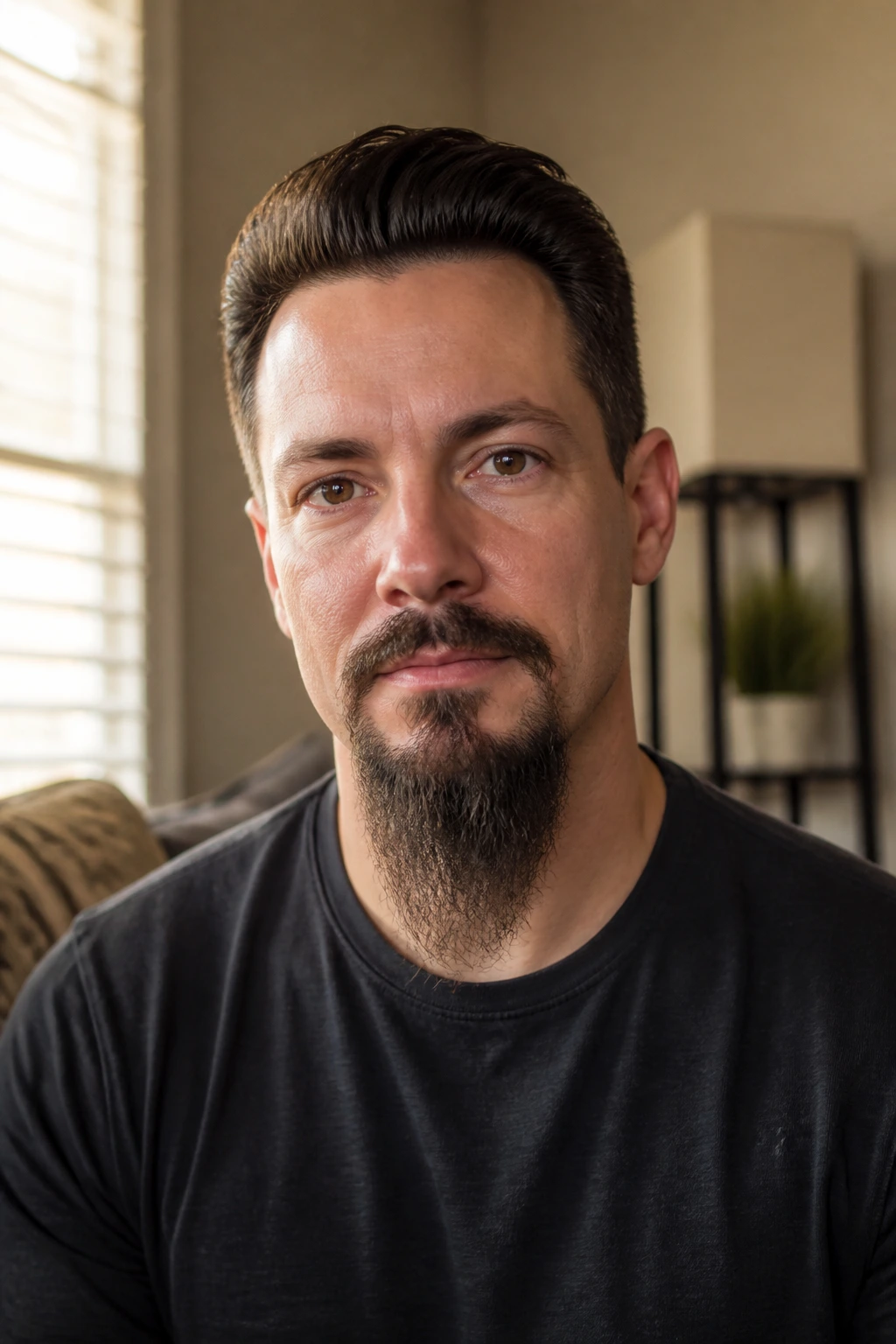
The extended goatee gives thick hair a place to land when you want chin weight without full cheek coverage. It works especially well if your cheeks grow in unevenly or if you want to lengthen a round face a bit without committing to a big beard.
Let the chin area spread a little wider than a standard goatee, usually about a finger-width past the mouth corners on each side. Keep the side sections clean so the shape doesn’t drift into a full beard by accident. The appeal is simple: it gives you density where it helps most and removes it where it would only add bulk.
12. Balbo Beard
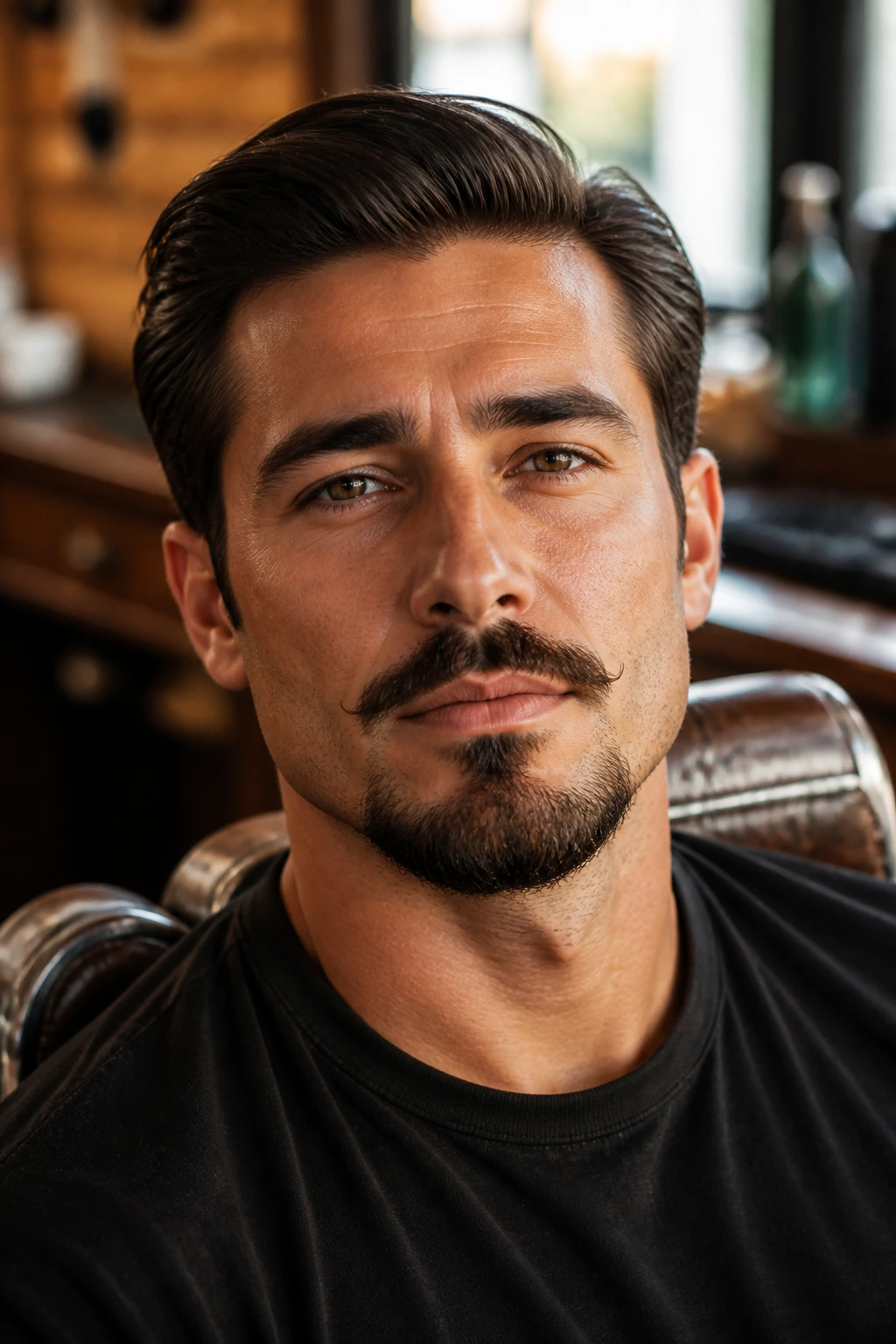
The Balbo is one of my favorite options for thick hair that grows unevenly on the cheeks. Because the style is disconnected, you don’t have to pretend every patch grows at the same rate. Instead, you build around the chin and mustache and leave the cheeks clean.
That separation makes the beard look precise. It also makes the face read wider at the jaw without cluttering the sides. Ask for the chin portion to sit directly under the mouth and for the mustache to stay clearly apart. If the lines are clean, the Balbo looks sharp rather than fussy.
13. Anchor Beard
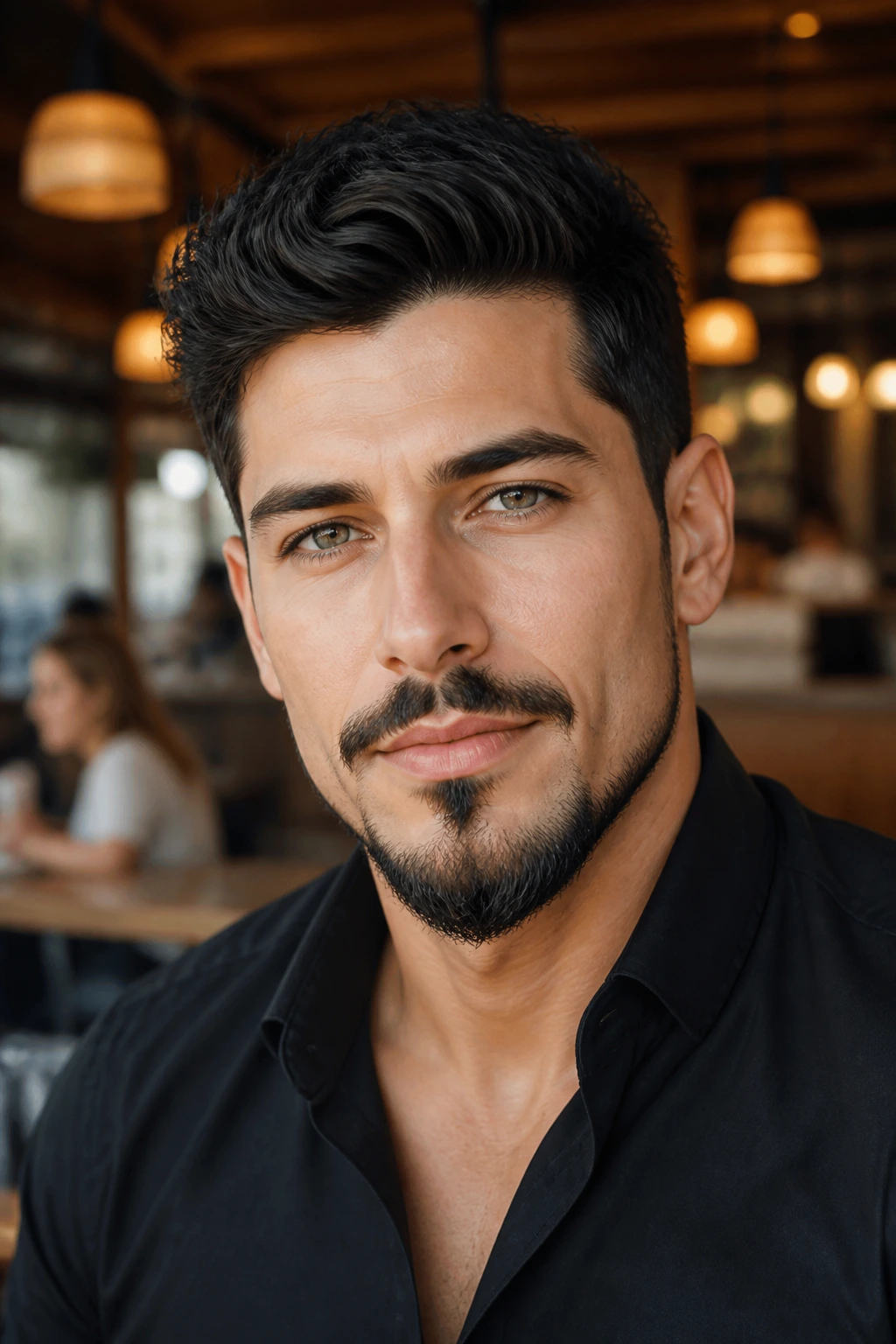
An anchor beard makes thick hair look controlled by design. The chin shape points downward a little like the bottom of an anchor, while the jaw line stays narrow and the cheeks remain clean. On a dense beard, that contrast is the whole point.
This style is a strong pick if you want to sharpen a weak chin or make a square jaw look more defined. Keep the chin area compact and don’t let the line under the lower lip spread too wide. The anchor can get messy fast if you stop trimming the central point, so a small scissor cleanup every week helps a lot.
14. Van Dyke Beard
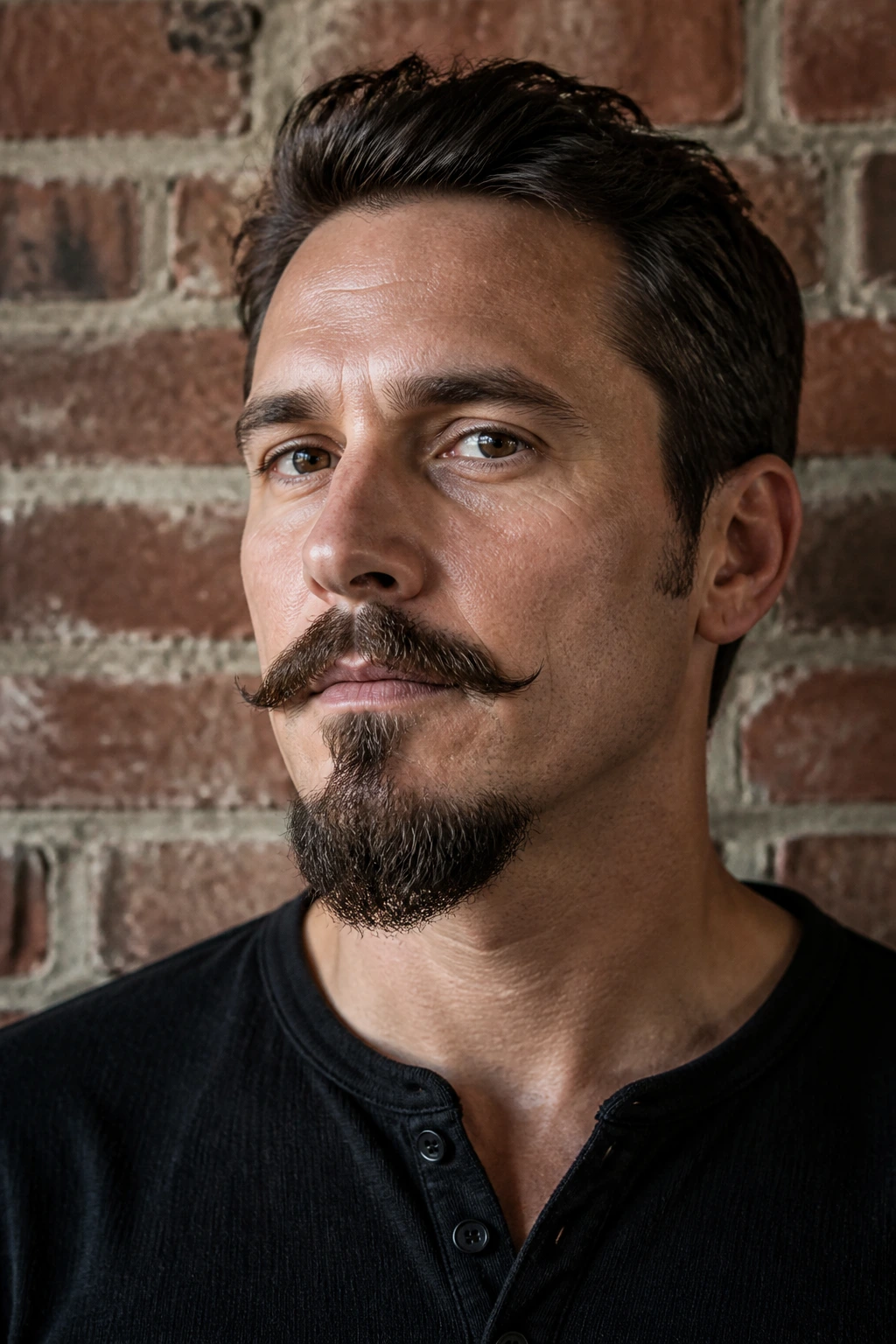
The Van Dyke is the dramatic version of the disconnected beard family. Thick hair gives it enough presence to look intentional, not theatrical. The mustache and chin are separate, and that gap is what gives the style its character.
It works best if you want your beard to look edited rather than full. Keep the chin pointed or slightly rounded, and make the mustache distinct enough to stand on its own. A Van Dyke is not for men who hate maintenance. It is for men who don’t mind cleaning up a few hard lines in exchange for a strong profile.
15. Chin Curtain
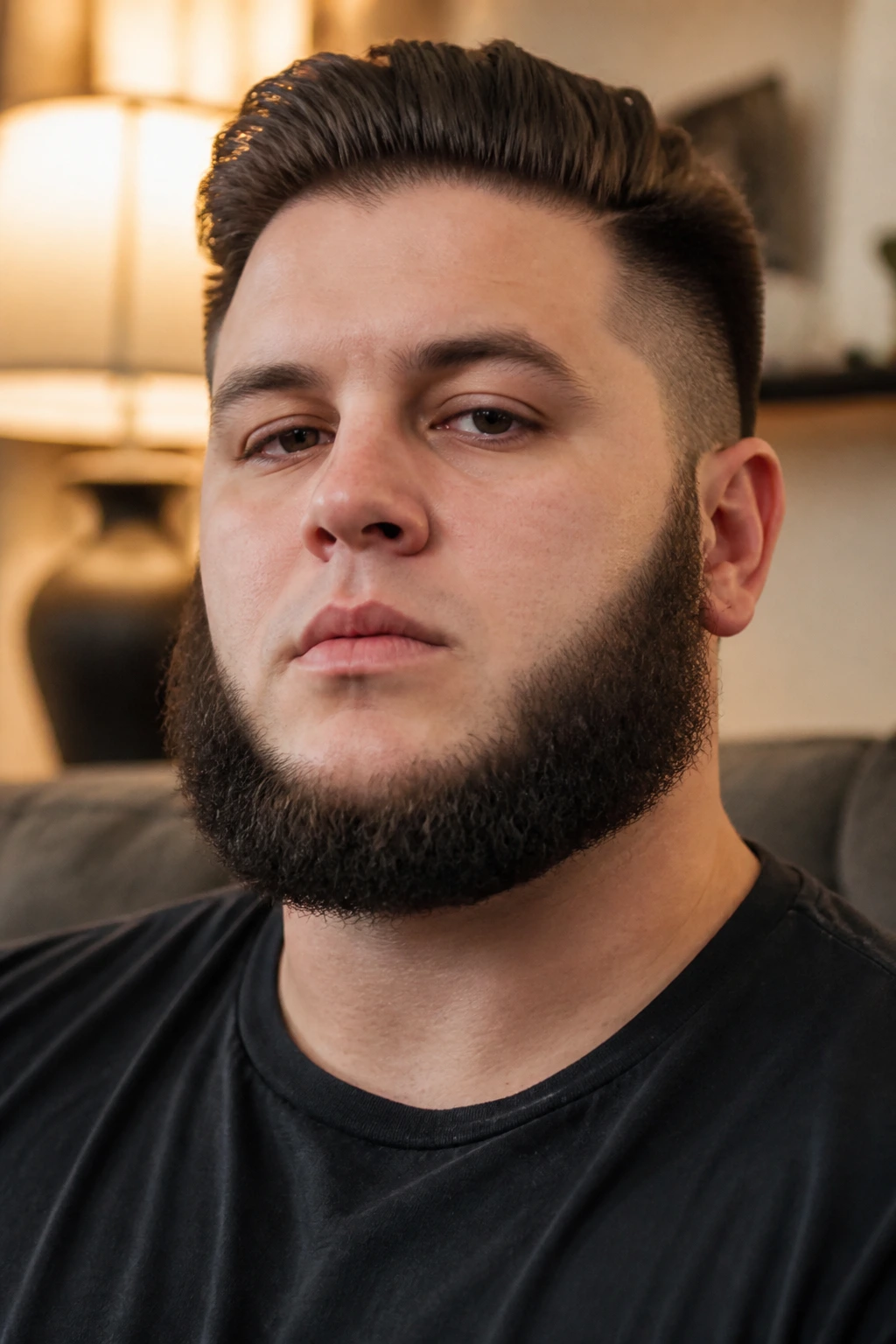
A chin curtain can be a monster if it’s left to grow without direction, but it can also be one of the most striking beard styles for thick hair. The lower face is framed from side to side, while the mustache is shaved away, so the beard sits low and broad.
The style works because the density makes the curtain look full instead of stringy. Keep the strip under the jaw even, and don’t let the neck blur into it. If you have a strong jaw or a rectangular face, the chin curtain can give you a lot of presence without needing a massive beard length.
16. Mutton Chops
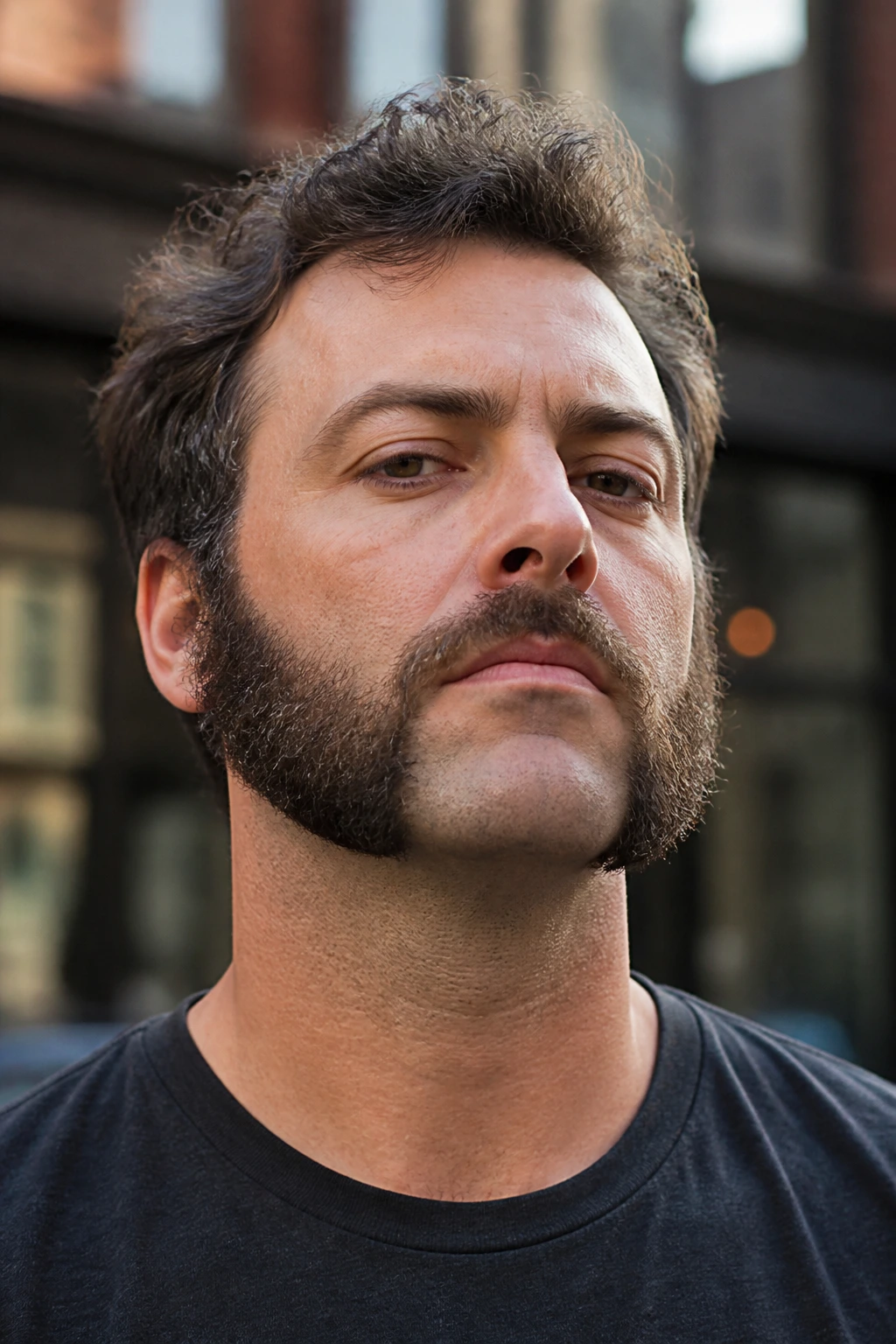
Mutton chops are for men who like a little attitude in their beard. Thick sideburns turn this old shape into something bold very quickly. The chin stays clean, which keeps the style from looking like a full beard that got interrupted.
The best version follows the jawline instead of hanging off it. Keep the chops thick enough to be obvious, but trim the lower ends so they stop cleanly at the jaw. If you’ve got dense side growth and weaker chin growth, this is one of the smartest ways to use what you already have.
17. Friendly Mutton Chops
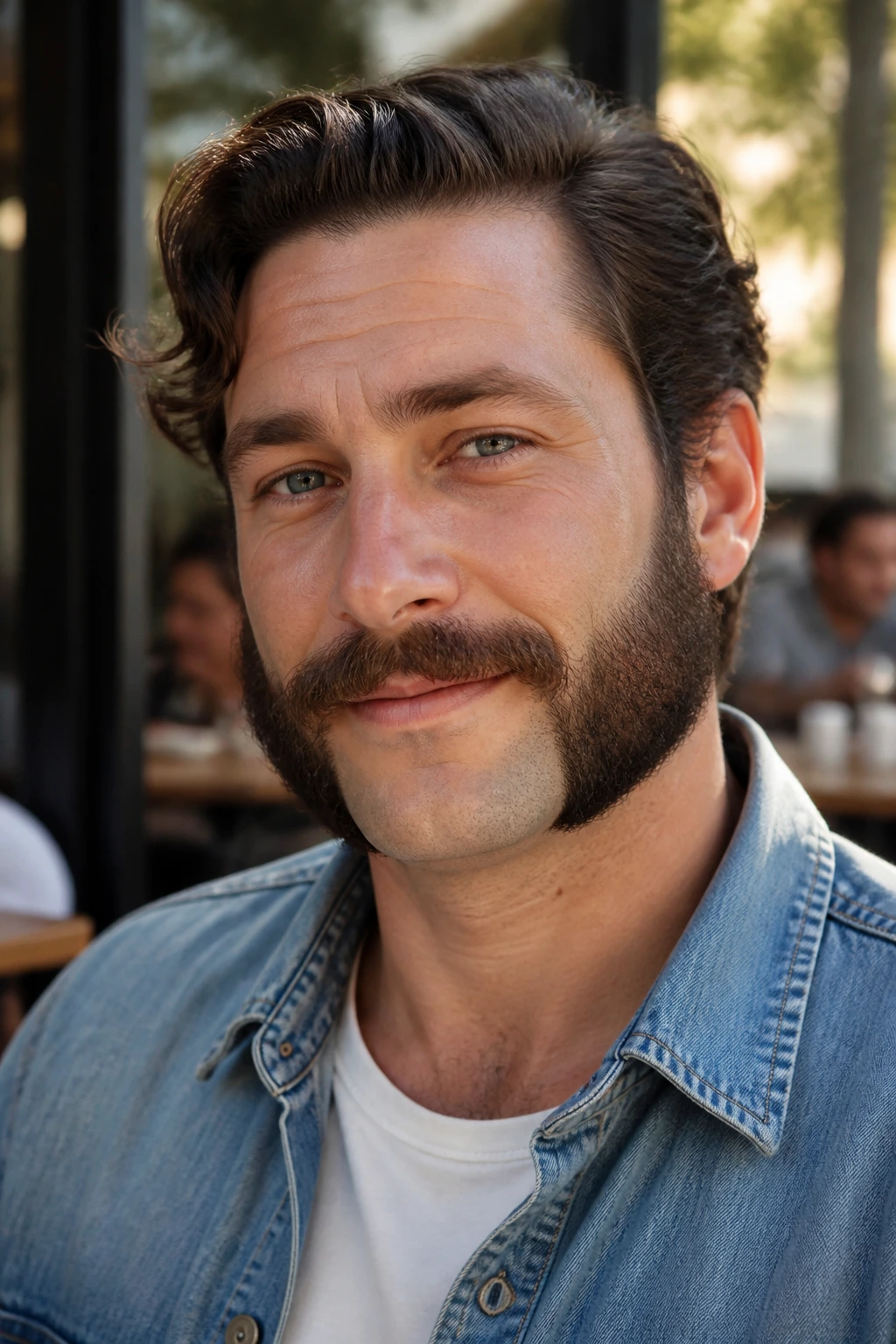
Friendly mutton chops soften the edges of the classic chop by connecting them with a mustache. Thick hair makes that connection easy to hold, and the result looks less costume-like than full mutton chops can.
I like this style when the sideburns are strong but the chin is patchier than the rest. The mustache fills the gap and makes the face read as one piece. Keep the chin clean or nearly clean, because once you let that lower area fill in, the whole style loses the sharp contrast that gives it shape.
18. Chin Strap Beard
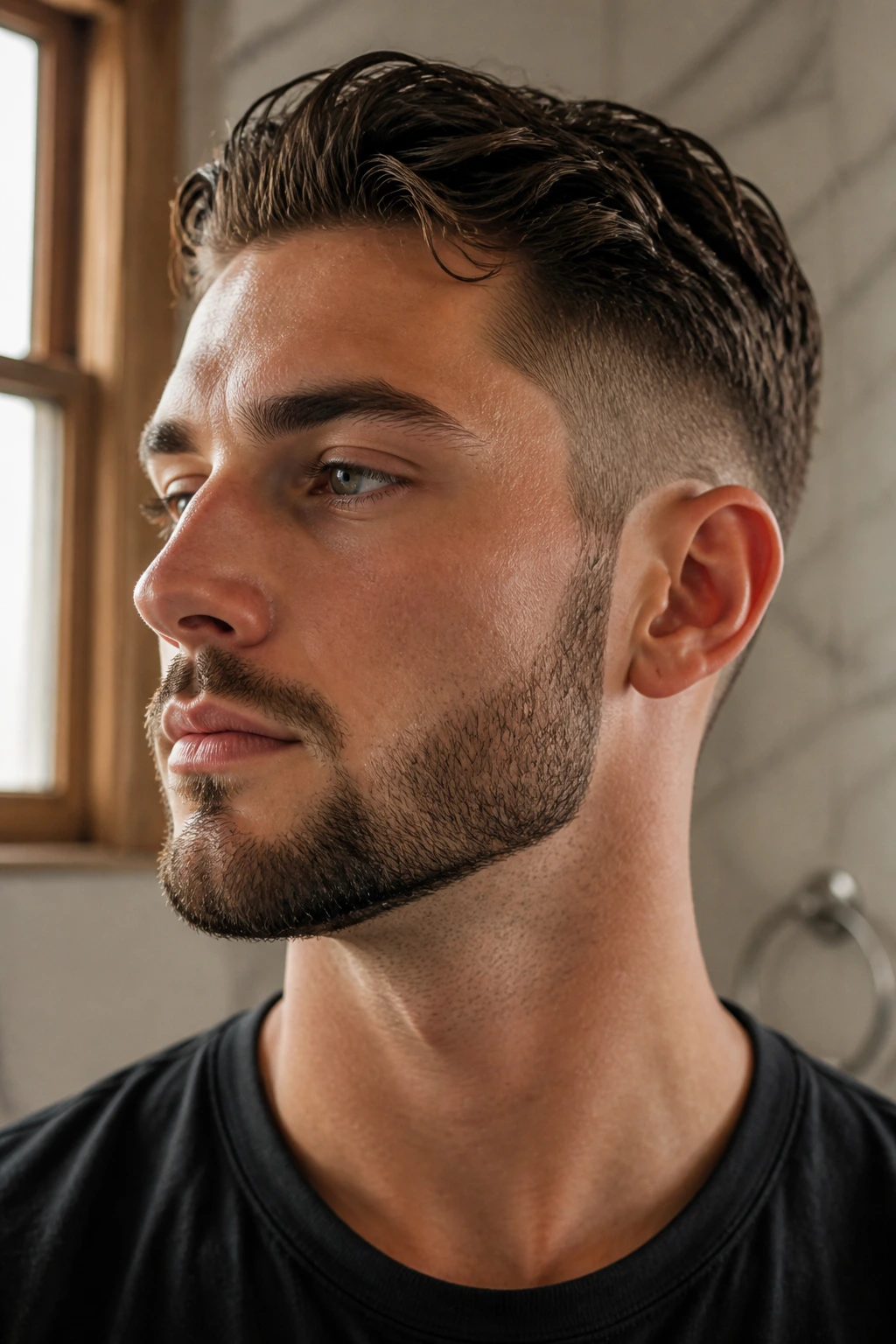
The chin strap is a line game. Thick hair helps because you can carve out a clean strap without worrying that the beard will look too thin. The downside is that every crooked edge shows.
Keep the strap no wider than your index finger, and make sure it follows the jaw cleanly from one sideburn to the other. If the line dips too low under the chin, the beard looks heavy instead of crisp. This style is at its best when the haircut above it is clean too, because the whole face depends on clear edges.
19. Heavy Stubble
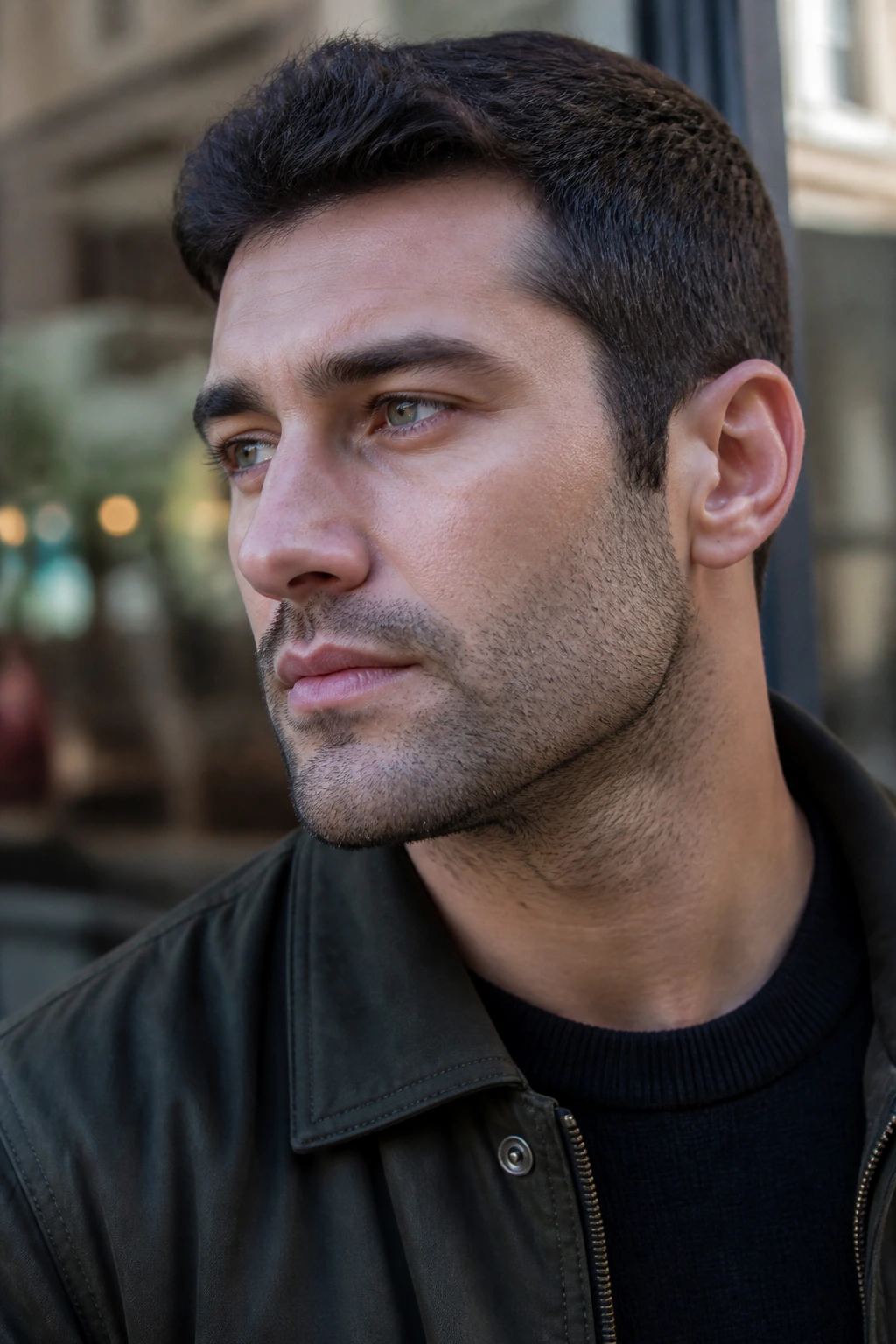
Heavy stubble is the easiest way to let thick hair work for you without committing to a full beard. It still reads as dense, because the hair grows in fast and close, but it does not have the puffiness that comes with extra length.
I like this look for men who want low maintenance during the week and don’t want to think about mustache wax or sculpted edges. Keep it around 1 to 3 mm, and clean the neckline so the stubble stays on the face rather than drifting onto the throat. It’s simple. That’s why it works.
20. Designer Stubble
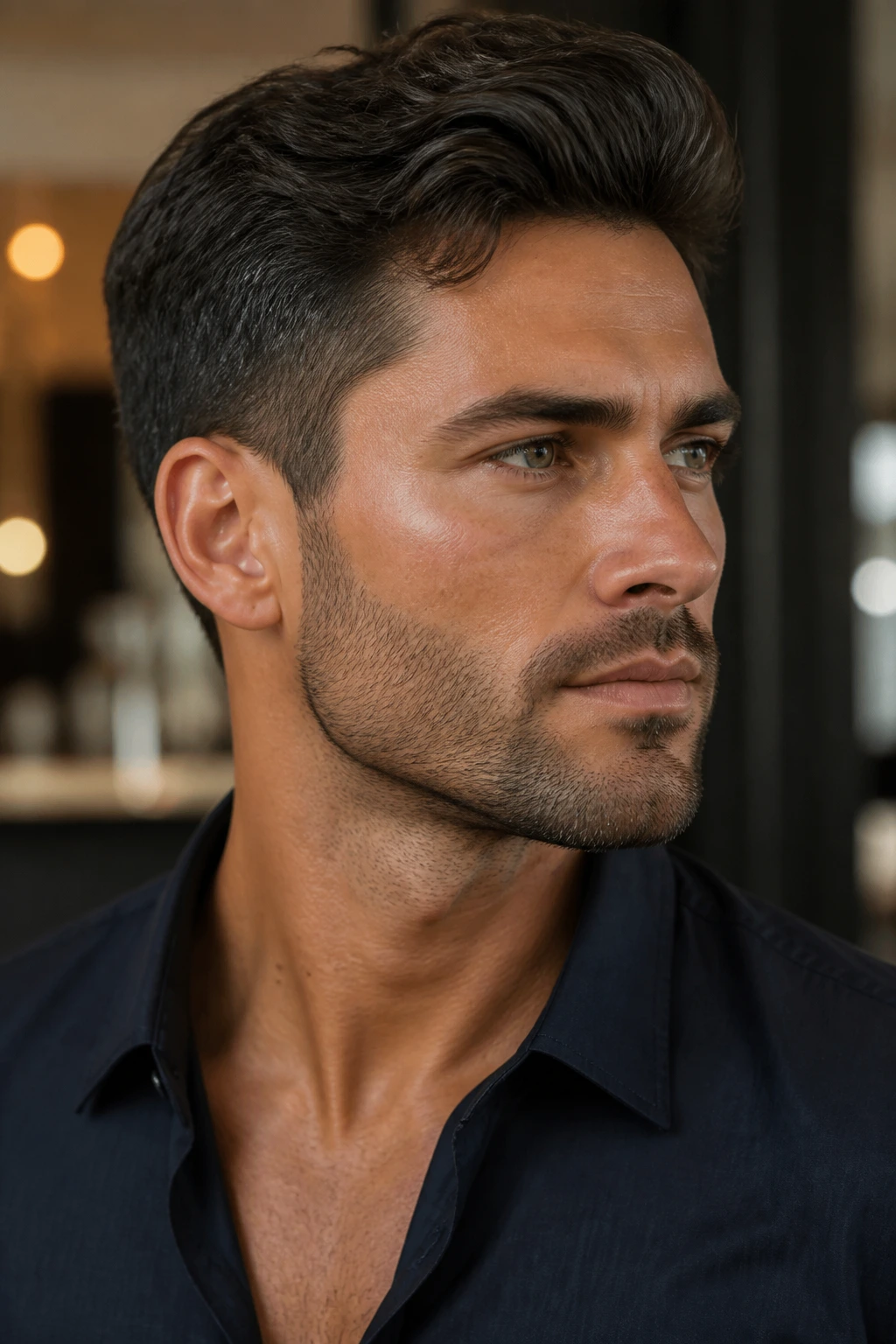
Designer stubble is what happens when heavy stubble gets a proper outline. Thick hair makes this style look fuller than the usual shadow beard, which is why it has so much more presence than people expect.
The key is the cleanup. Sharpen the cheek line, set the neck line low, and keep the mustache from swallowing the upper lip. On thick hair, even a small amount of structure changes the whole look, and designer stubble is all structure. It’s a nice middle ground if you want visible beard growth without the commitment of a full trim.
21. Beardstache
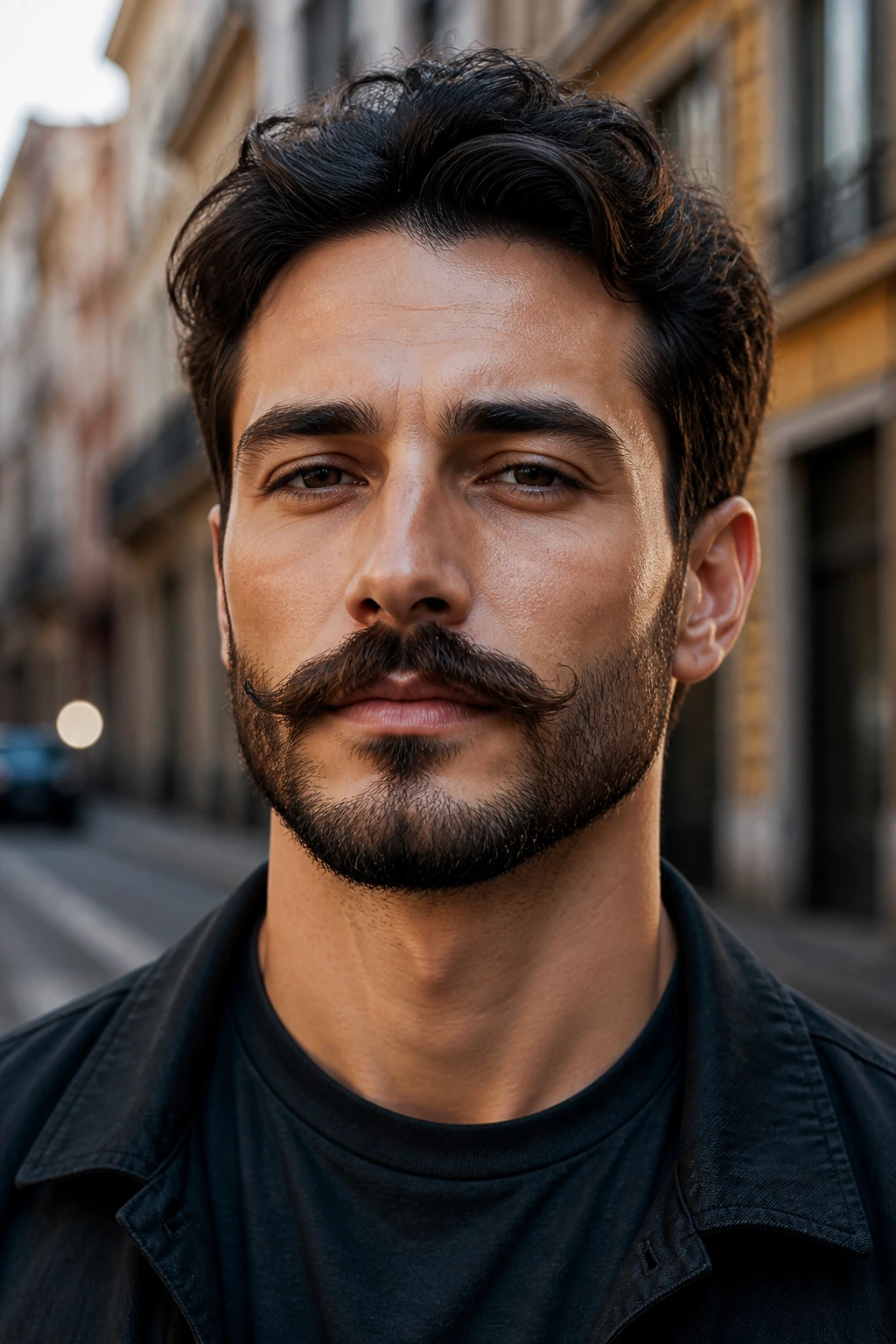
A beardstache works because it flips the usual balance. The mustache takes the lead, and the beard stays shorter, often just enough to frame the jaw. Thick hair helps here because the shorter beard still looks full, not faint.
Keep the mustache longer than the beard by a noticeable margin, usually enough that it stands out from the lip line. The beard underneath should stay trimmed and tidy so the upper lip does the visual work. If your mustache grows thick and your cheeks fill in fast, this style gives you a cleaner answer than trying to tame everything into one length.
22. Faded Beard
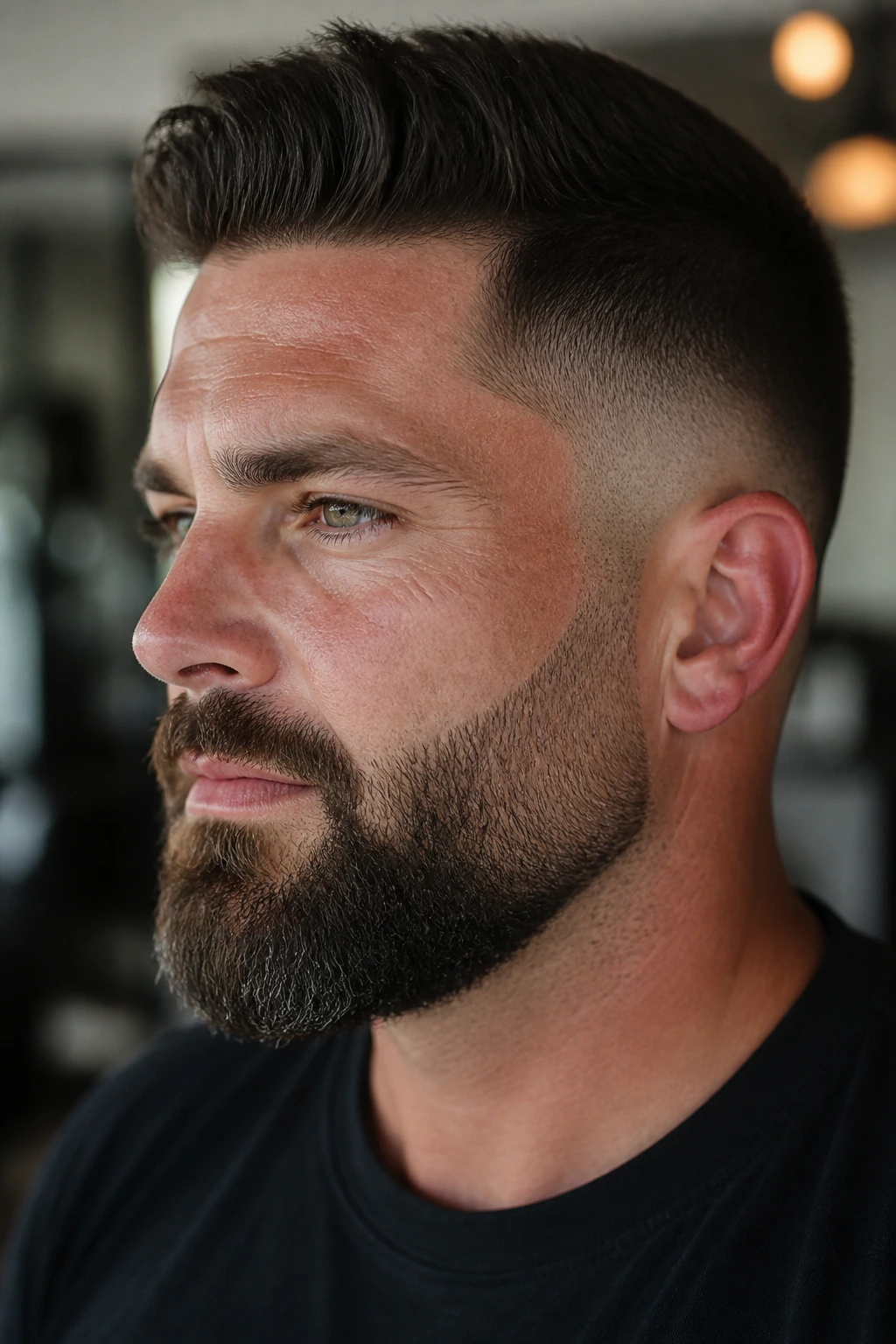
A faded beard is one of the sharpest ways to handle density. Instead of stopping the beard with a hard edge at the sideburn, you let it graduate down from the hair into the face, which keeps thick growth from looking bulky at the temples.
The fade usually starts with a shorter guard near the sideburn and steps into a fuller jaw, often by one or two guard lengths. That smooth transition matters more than people think. Without it, thick beard hair can look like two separate shapes glued together. With it, the whole face feels cleaner and more modern.
23. Tapered Beard
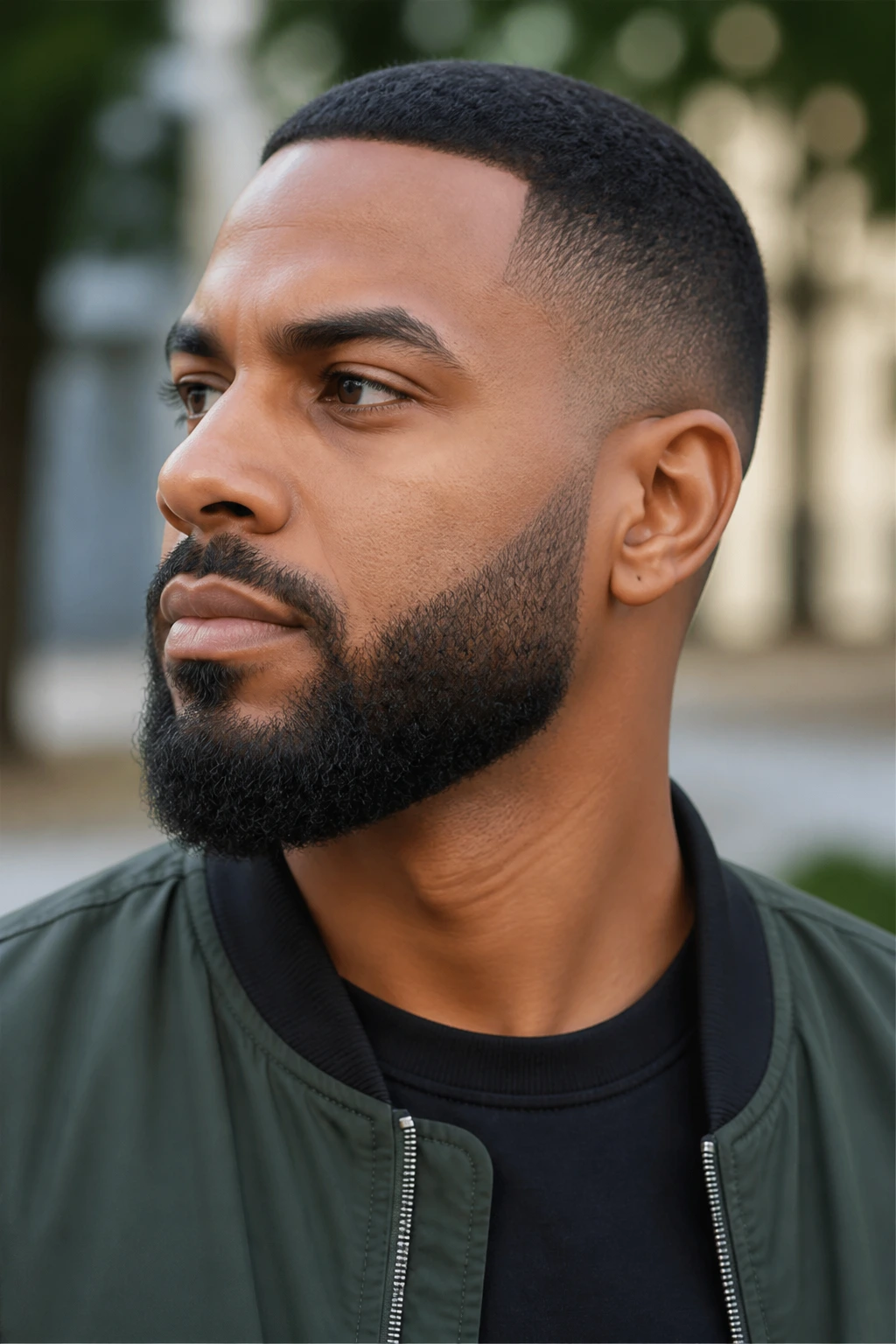
A tapered beard is the quieter cousin of the fade. It still removes bulk from the sides, but it doesn’t shout about it. On thick hair, that softer transition is useful because not every beard needs a dramatic barbershop contrast.
I like tapers when the goal is to keep the beard looking natural but not puffy. The bulk narrows gradually as it moves up toward the sideburns, which helps the jaw look defined without a hard line. If you dislike anything that looks overworked, this is a good place to stop.
24. High Fade Beard
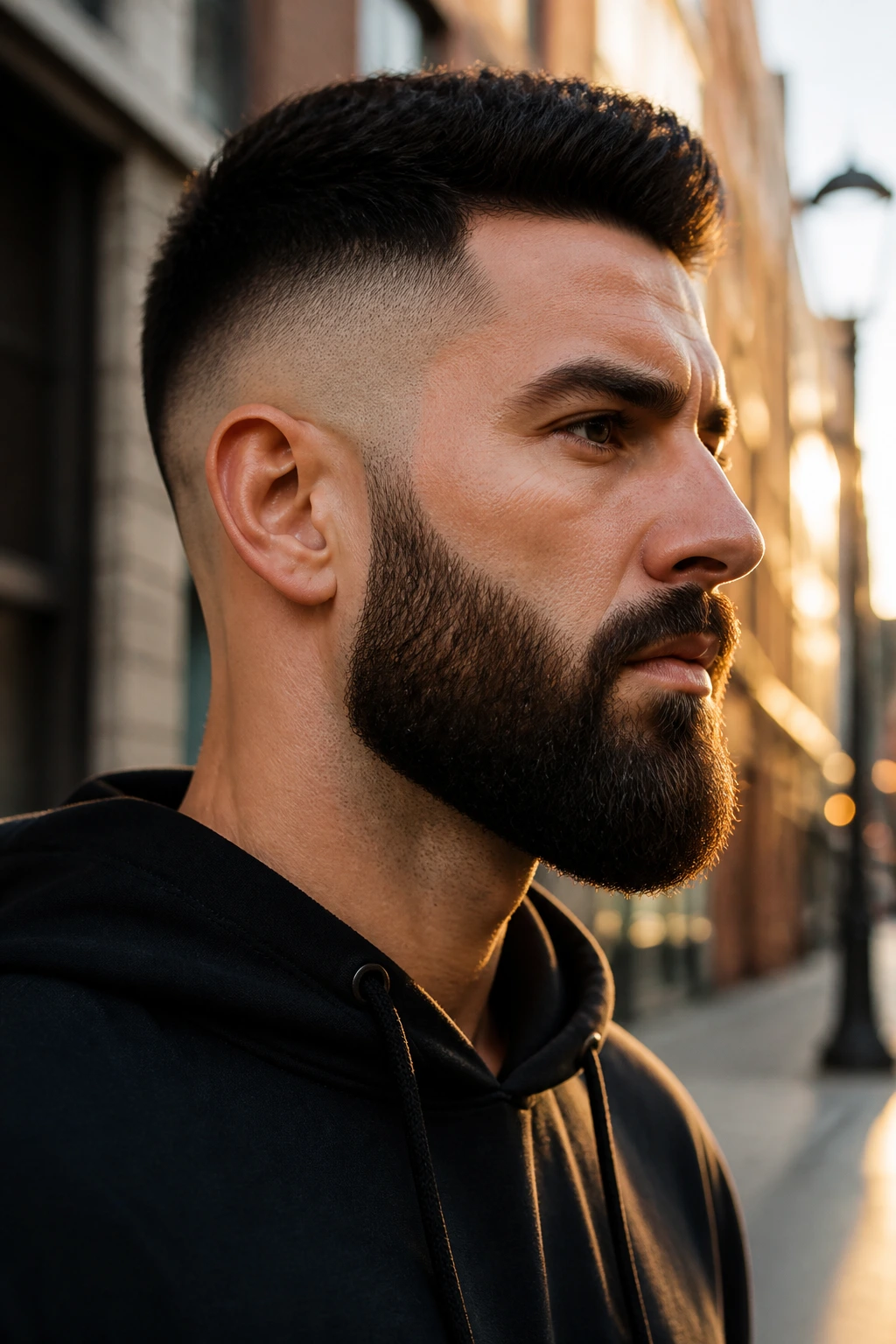
A high fade beard makes a thick beard feel younger and sharper. The fade starts higher on the face, close to the temple or upper cheek area, so the beard shape is more dramatic right away. That contrast can be excellent if you like clean haircuts with a bit of edge.
Because thick hair has so much body, the high fade keeps the sides from stealing attention from the jawline. It’s especially good with short crops, undercuts, and textured top styles. The only catch is upkeep. Miss the fade for too long, and it starts to look like a grown-out haircut instead of a chosen shape.
25. Low Fade Beard
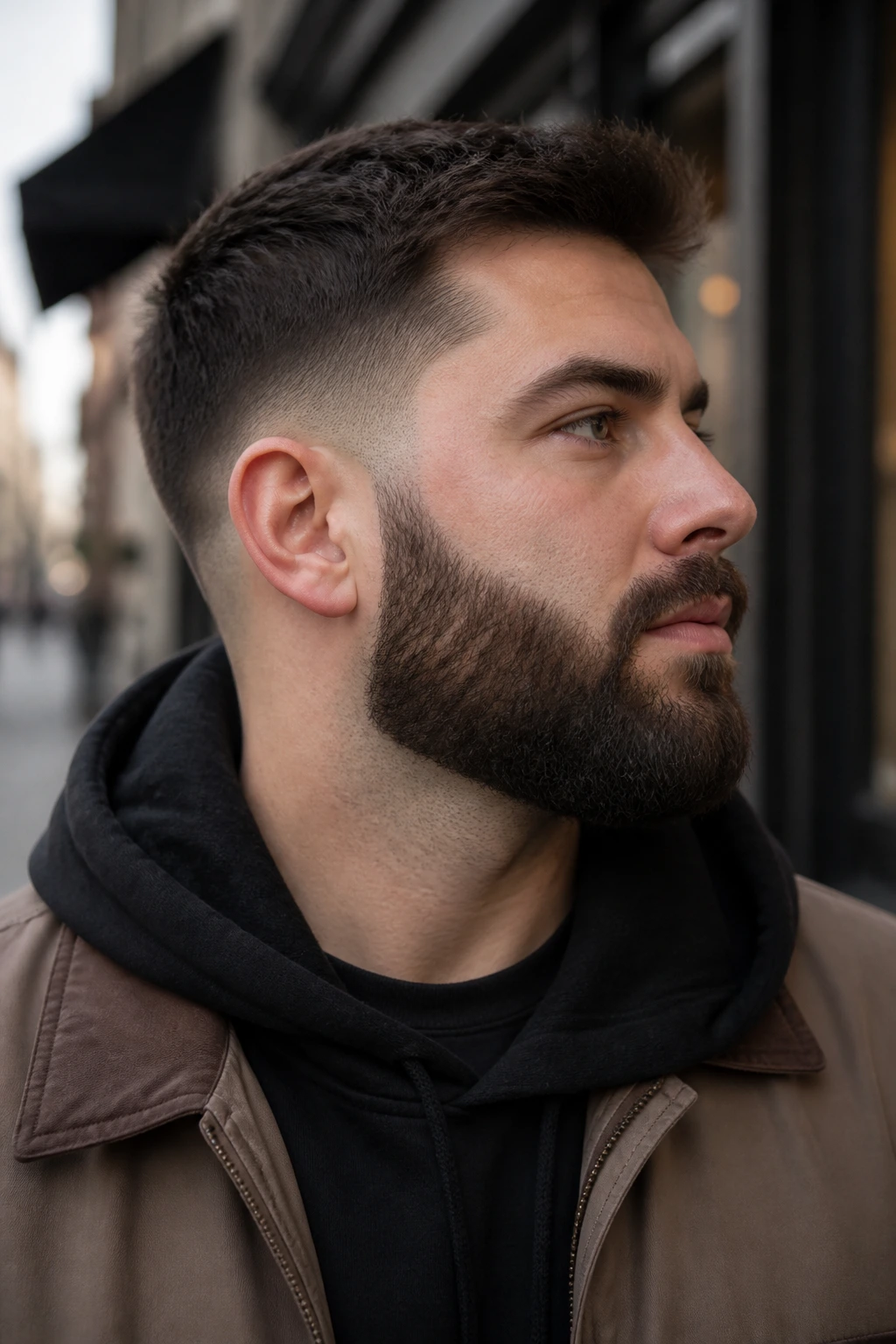
The low fade is easier to live with than the high fade. It begins closer to the jaw, which keeps the transition subtle and lets the beard still look full. For thick hair, that subtlety is useful because the beard already has enough presence.
This style is a smart pick if you want clean edges without a sharp barbershop stripe up the side of the face. The low fade softens the grow-out, and that means you can stretch the time between trims a little longer. It’s tidy, steady, and less likely to look dated if your haircut changes.
26. Temple Fade Beard
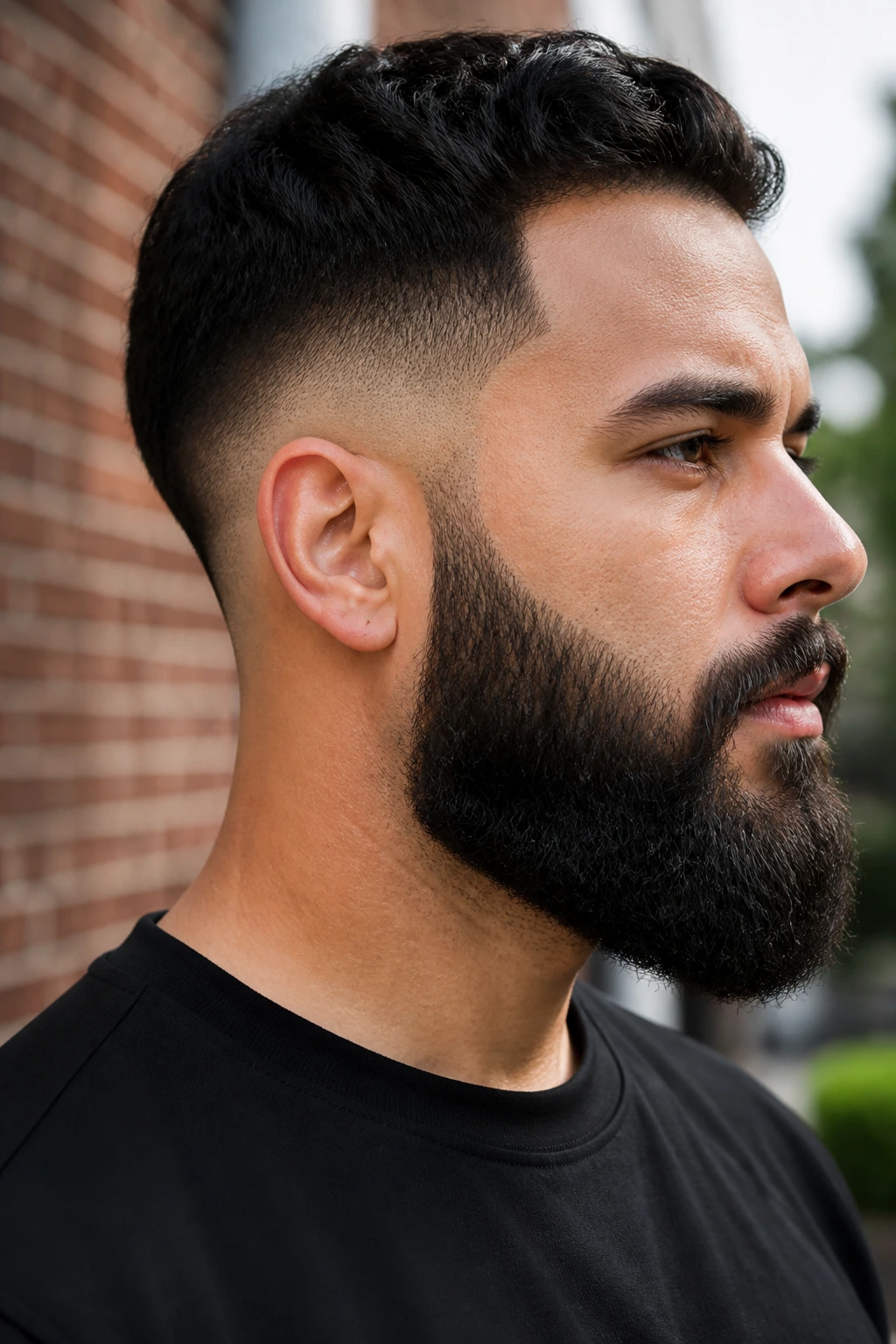
Temple fades work especially well on thick beard hair that puffs around the sideburns. By shortening the transition near the temples, you keep the side growth from competing with the shape of the beard below it. The effect is neat, but not severe.
This is a strong move if your beard and hairline need to feel connected instead of separate. It also helps curly or wavy beard hair behave better near the ears, where the volume often gets out of control first. If the sideburns are your trouble spot, start here before you touch the rest of the beard.
27. Corporate Beard

A corporate beard is basically a short full beard with manners. Thick hair makes this style look fuller than it sounds, which is why it works so well for men who want a beard that looks clean in a meeting and still has real texture.
Keep it even, usually around 4 to 8 mm, and don’t let the cheek line wander. The point is not to shave it into nothing. The point is to make the beard look deliberate, compact, and easy to maintain. If your workplace has an unspoken beard rule, this one usually slides through it.
28. Rounded Beard
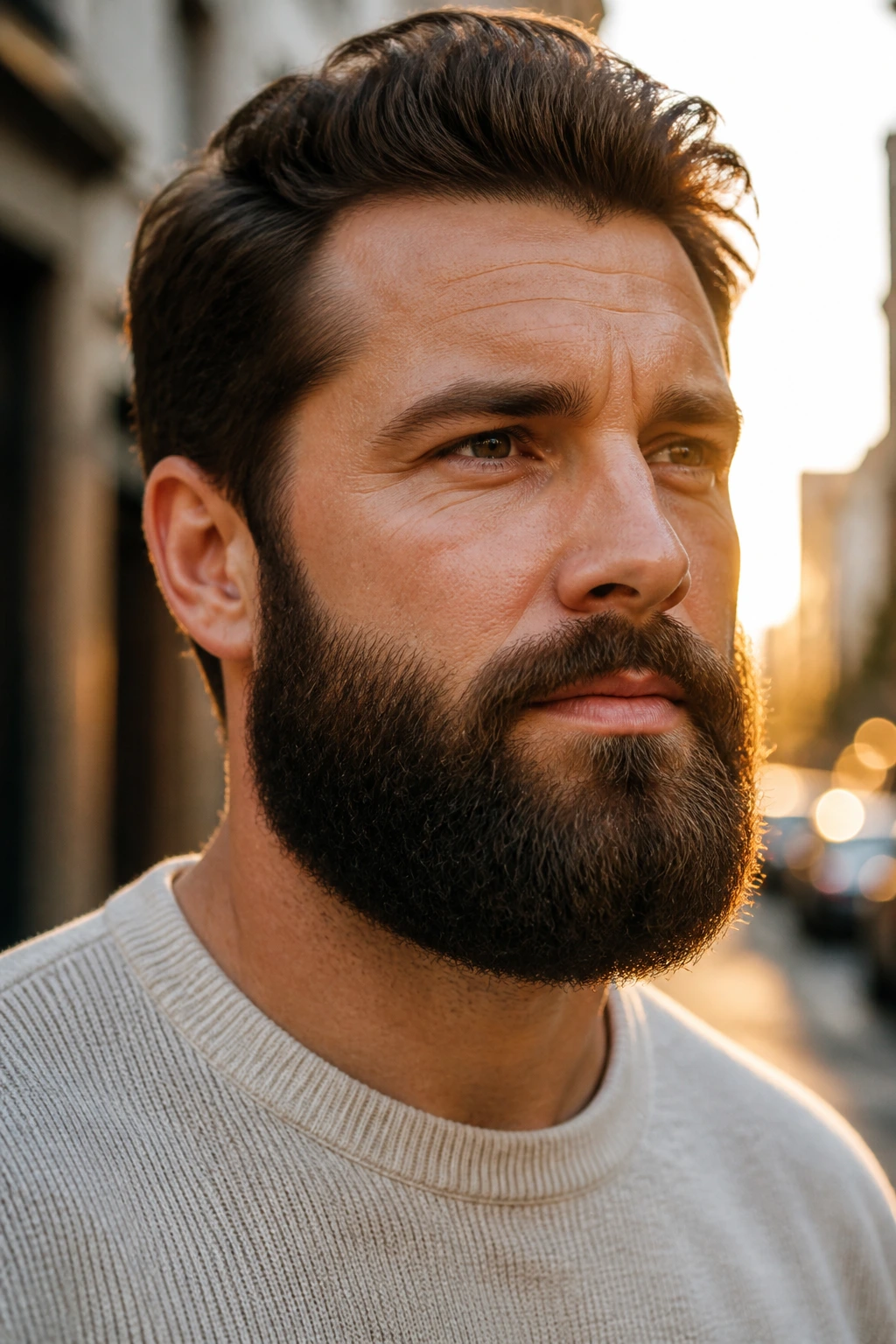
A rounded beard softens the corners of a heavy face. Thick hair is useful here because you can keep enough width to look full while curving the bottom instead of squaring it off. That roundness changes the whole mood.
It’s a smart shape for men with strong jaw angles or longer faces that need a gentler lower edge. Avoid making the beard pointy at the chin. Let the line curve naturally and keep the cheeks balanced so the beard looks like a smooth frame, not a geometric exercise.
29. Square Beard
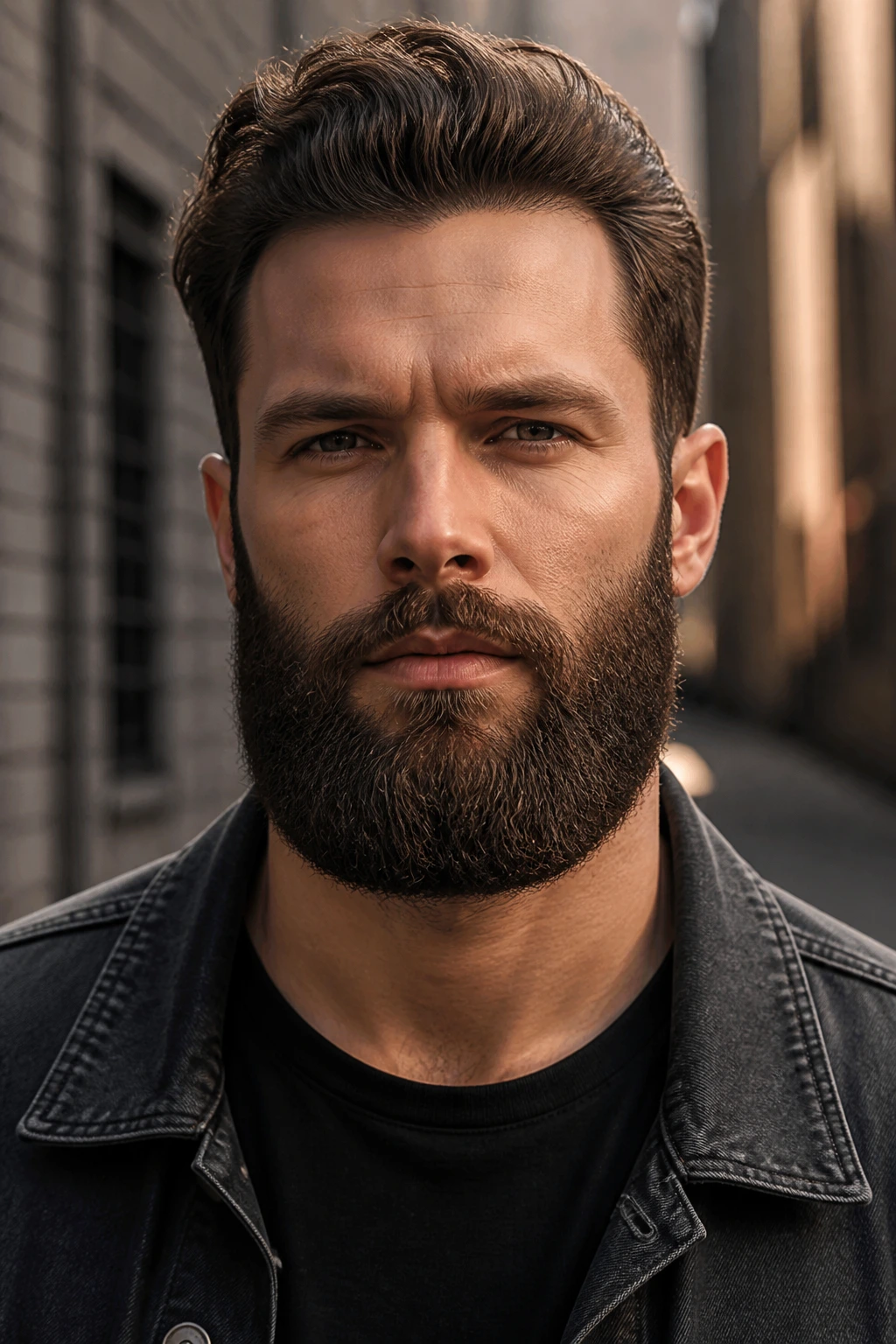
A square beard is a heavy hitter for narrow faces. Thick hair gives you enough density to build the jaw outward and make the lower half of the face look stronger. The bottom edge is flatter, the corners are more defined, and the whole beard reads as purposeful.
This style needs careful trimming at the sides so it doesn’t swell past the face line. The square shape works best when the beard stops just shy of looking boxy in a bad way. If your face is thin, long, or has a narrow chin, a square beard can add the kind of width that makes the haircut above it look better too.
30. Natural Beard
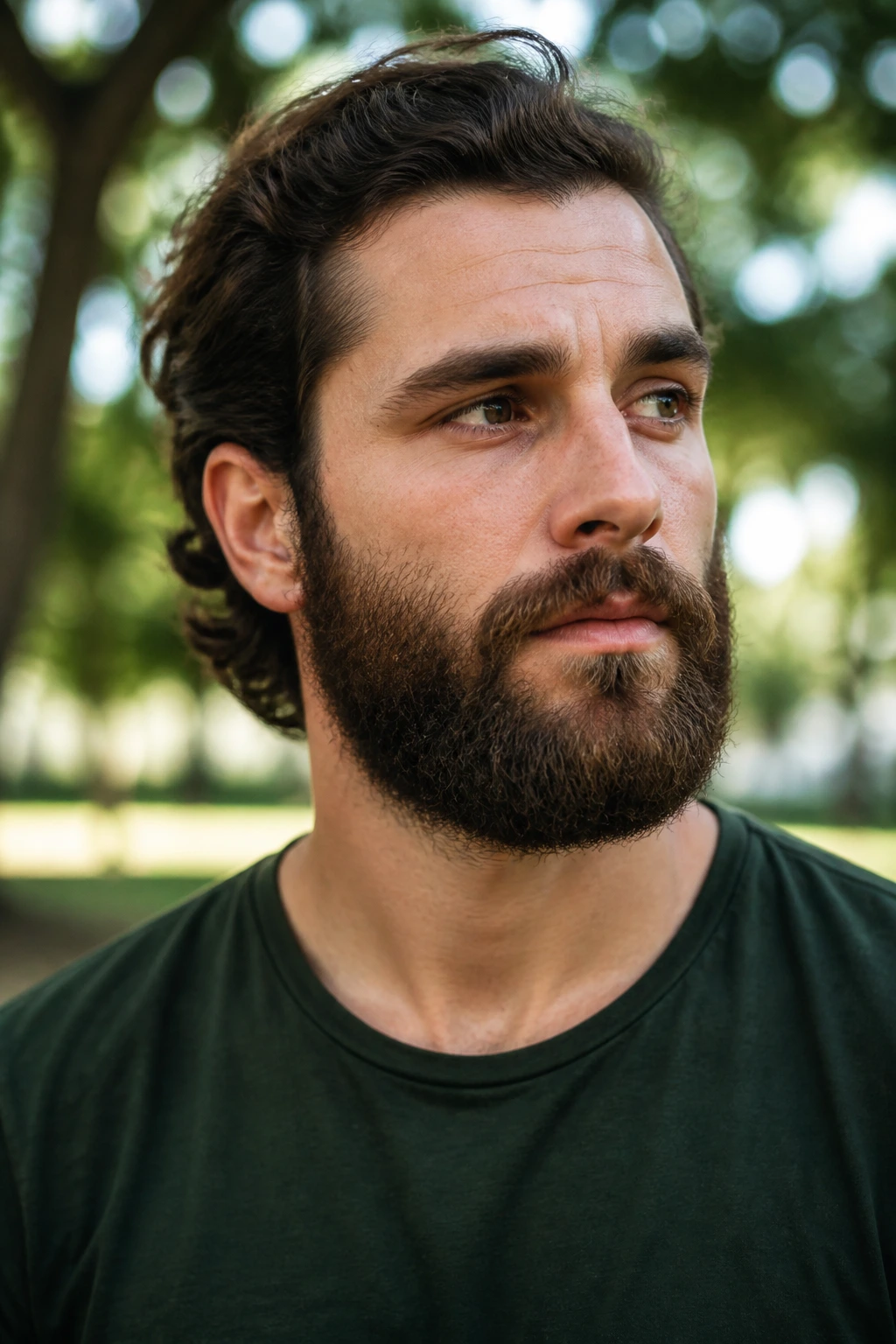
A natural beard does not mean an untrimmed beard. That’s the mistake people make. It means you keep the shape close to the growth pattern and avoid carving it into something that fights the grain of your hair.
Thick hair is good for this style because the beard already has body. You only need to clear the neckline, clean the mustache, and remove the stray edges that stick out by themselves. If you want the beard to look relaxed instead of sculpted, this is the style that gives you that feeling without letting the whole thing drift out of control.
31. Lumberjack Beard
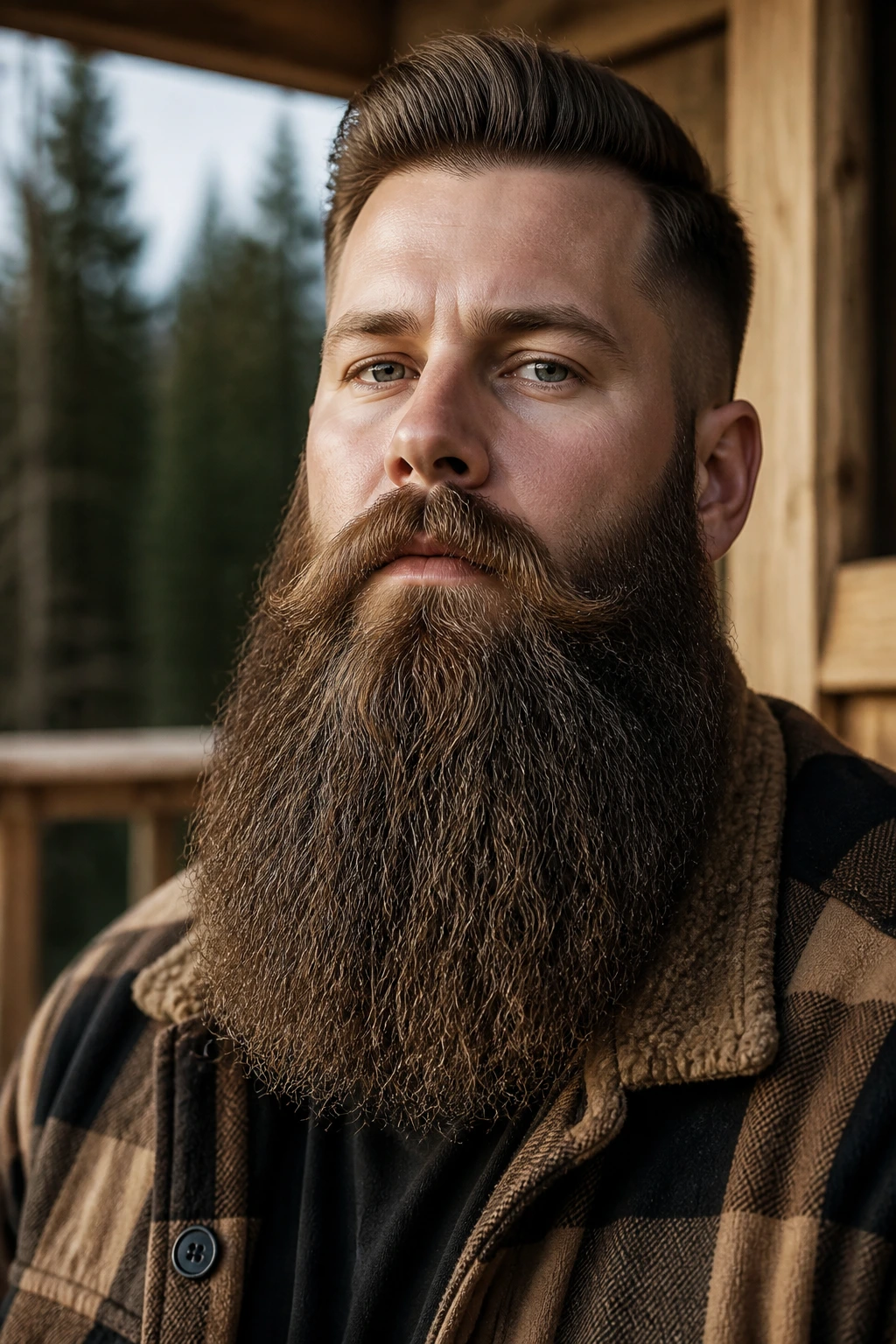
The lumberjack beard is thick, long, and unapologetically present. It suits dense hair because the style depends on weight. Thin beard hair can’t pull it off the same way. Thick hair can.
What keeps it from looking sloppy is regular cleanup at the edges and a little conditioning so the hair doesn’t go frizzy or dry. I’d pair this style with a shorter haircut on top, because a big beard plus a big hairstyle can start to feel top-heavy fast. If you like serious beard presence, this is the rough-edged classic.
32. Viking Beard
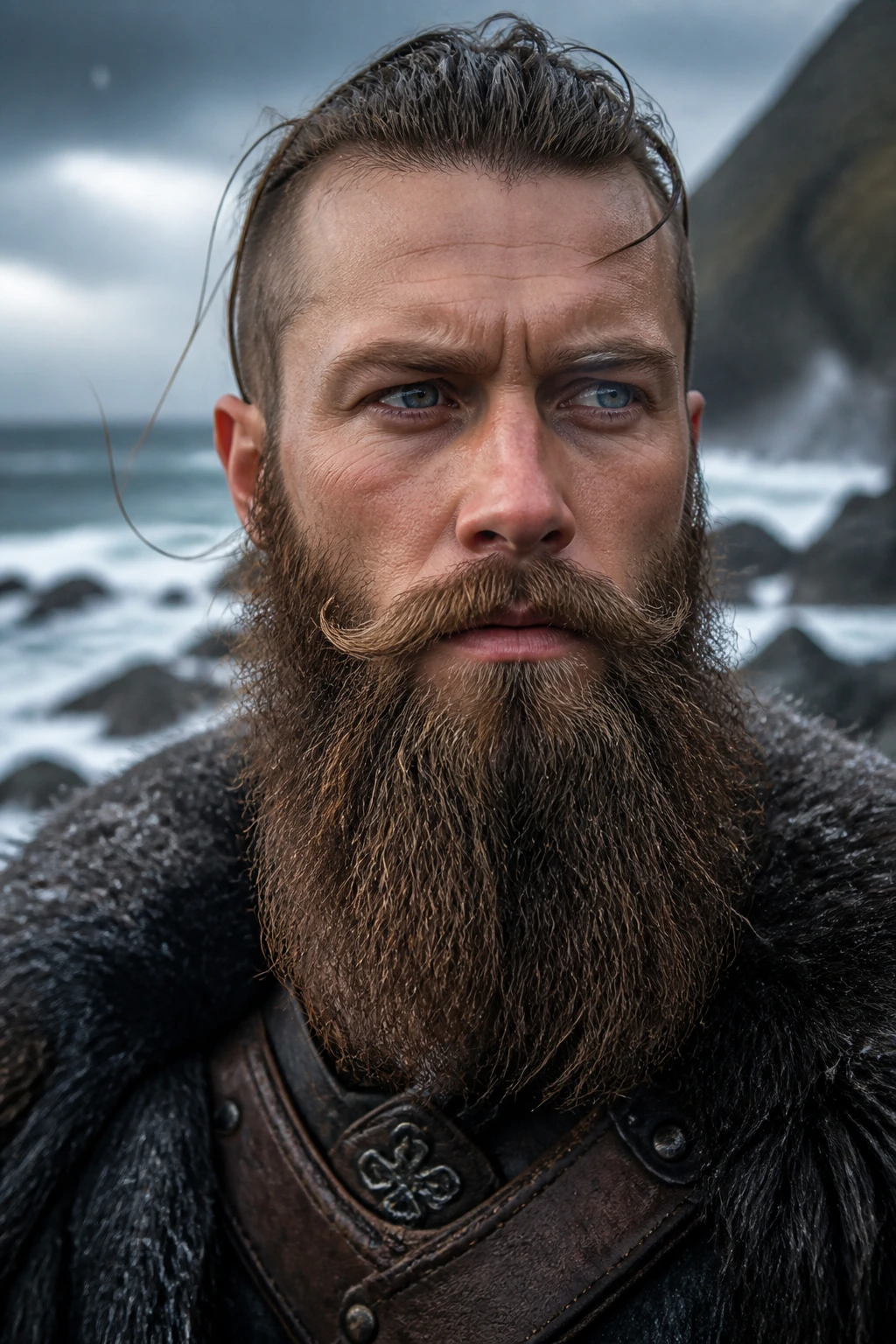
A Viking beard is less about a strict cut and more about controlled length. Thick hair gives it the mass it needs, but the shape still has to be managed or it will spread sideways before it ever gets long enough to look impressive.
Keep the center line healthy, train the mustache away from the mouth, and use balm or oil so the beard hangs instead of ballooning. If you like braids or ties, thick hair also holds them better than sparse growth does. The style has attitude, but it only looks good when the maintenance is consistent.
33. Yeard
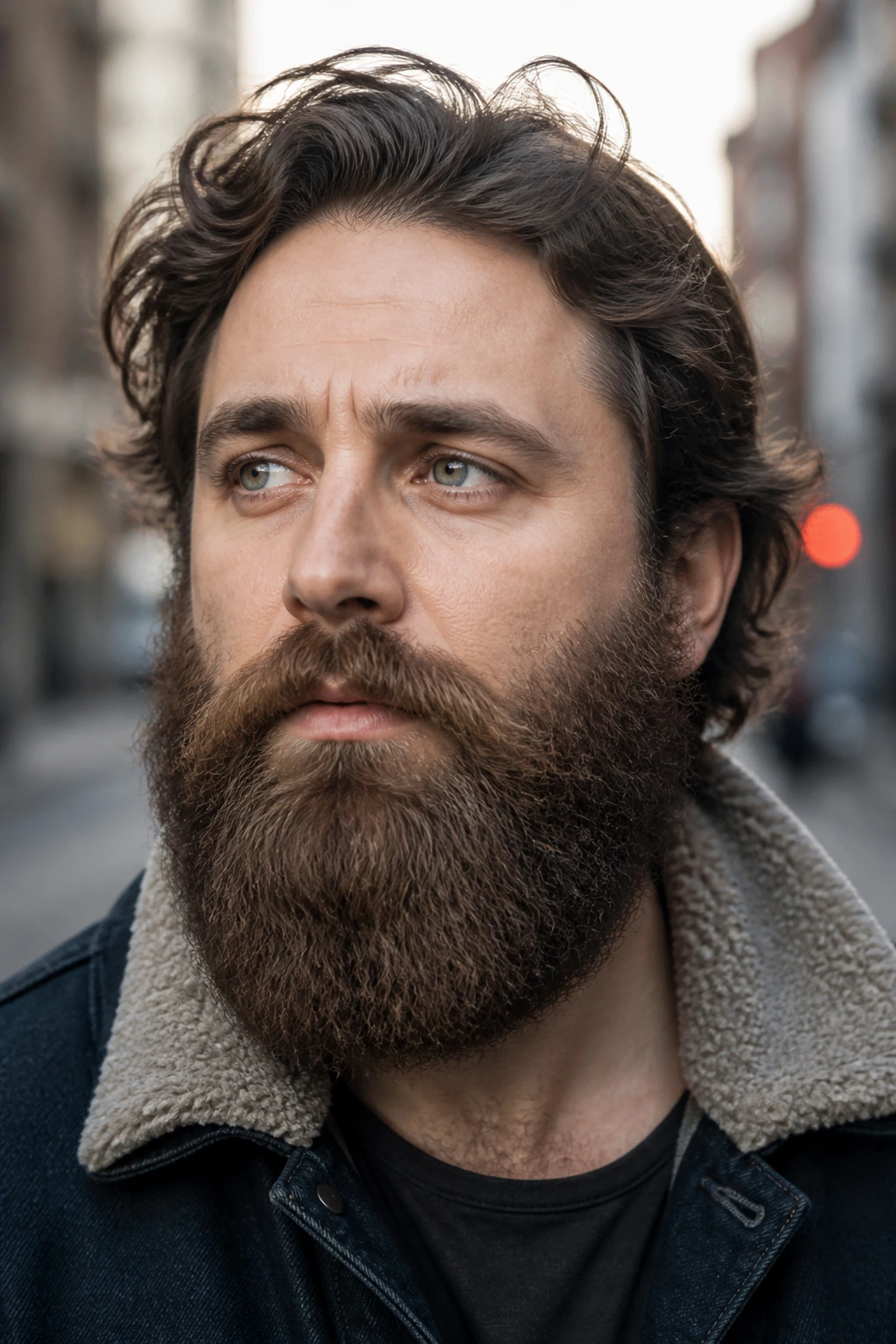
A yeard is a year of growth with only minimal shaping, and thick hair makes that process look fuller much faster than finer beard hair ever could. That’s useful, but it also means the beard will need small corrections along the way or it will look more chaotic than majestic.
The smartest way to wear a yeard is to think of it as a grow-out project, not a finished look. Keep the neckline from dropping too low, trim the mustache away from the lip, and take tiny bits off the corners every few weeks. The goal is patience with a steering wheel.
34. French Fork Beard
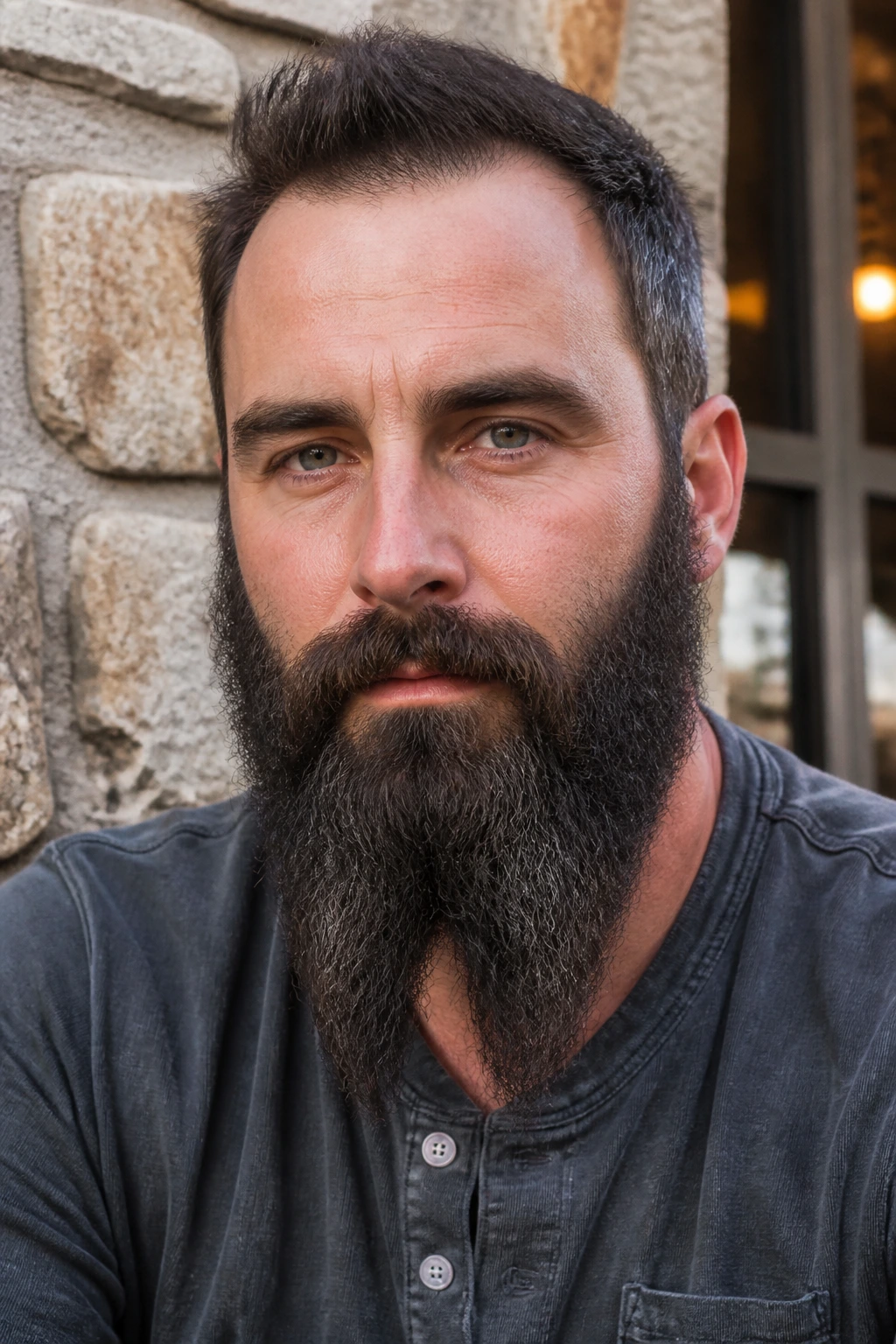
The French fork is one of the more dramatic shapes on this list, and thick hair makes it possible because the split in the chin needs real density to hold. Instead of one point, the beard separates into two prongs, which gives the style a strong, old-school profile.
It works best if the cheeks stay full enough to support the center split. Ask your barber or trim at home with a steady hand, because once the fork is crooked, the whole shape looks off. I like this one on men who want something unusual but still beard-first, not mustache-first.
35. Amish Beard
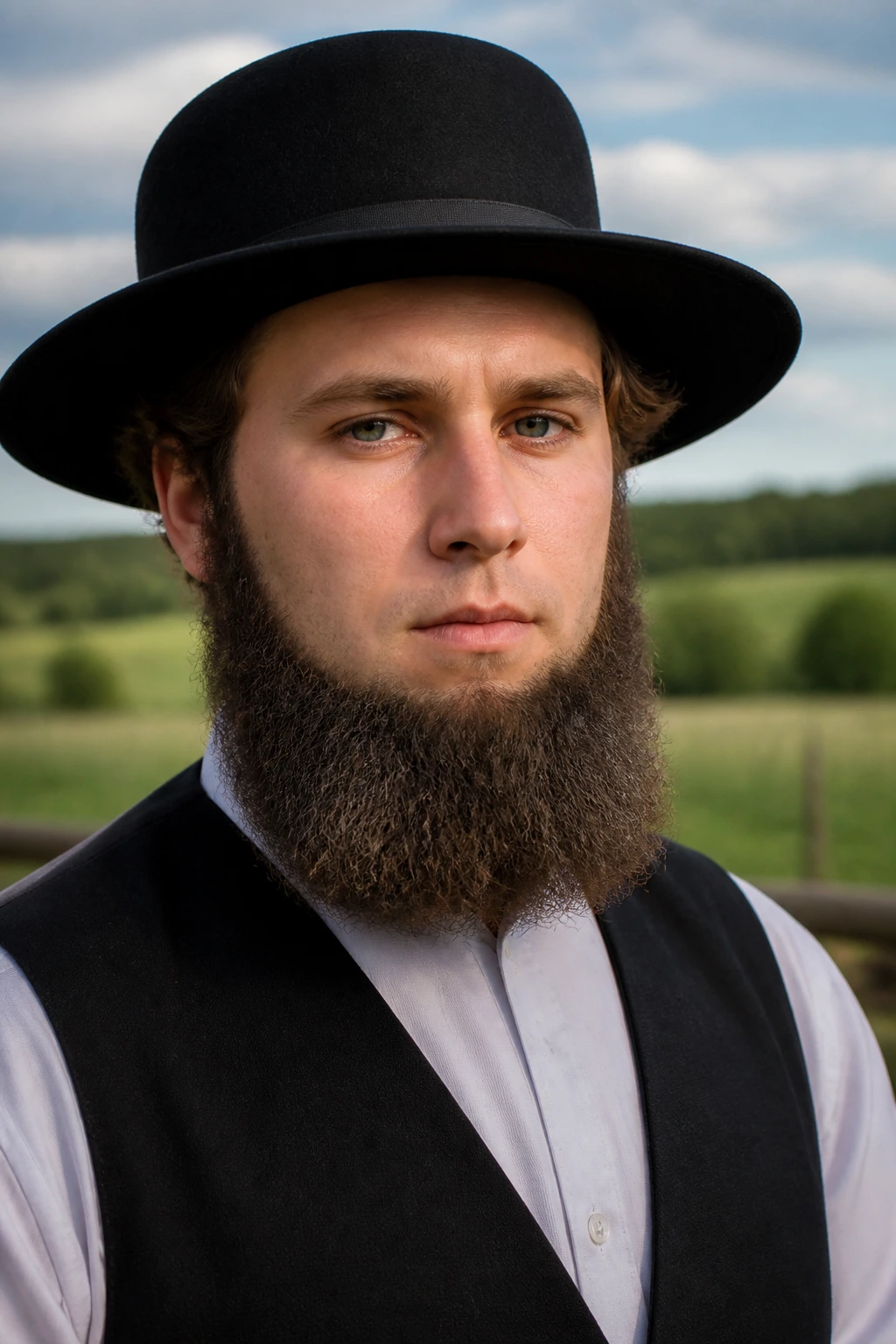
The Amish beard is bold precisely because it removes the mustache entirely. Thick hair turns the lower half into one solid, serious block of growth, which can look striking on the right face and a little severe on the wrong one.
The style relies on an even chin line and a clear absence of upper lip hair. If the beard is dense, that contrast becomes the whole point. It suits men who want a very clean upper face and do not mind the fact that this shape carries a strong visual message. It is not subtle. That’s the attraction.
36. Wolverine Beard
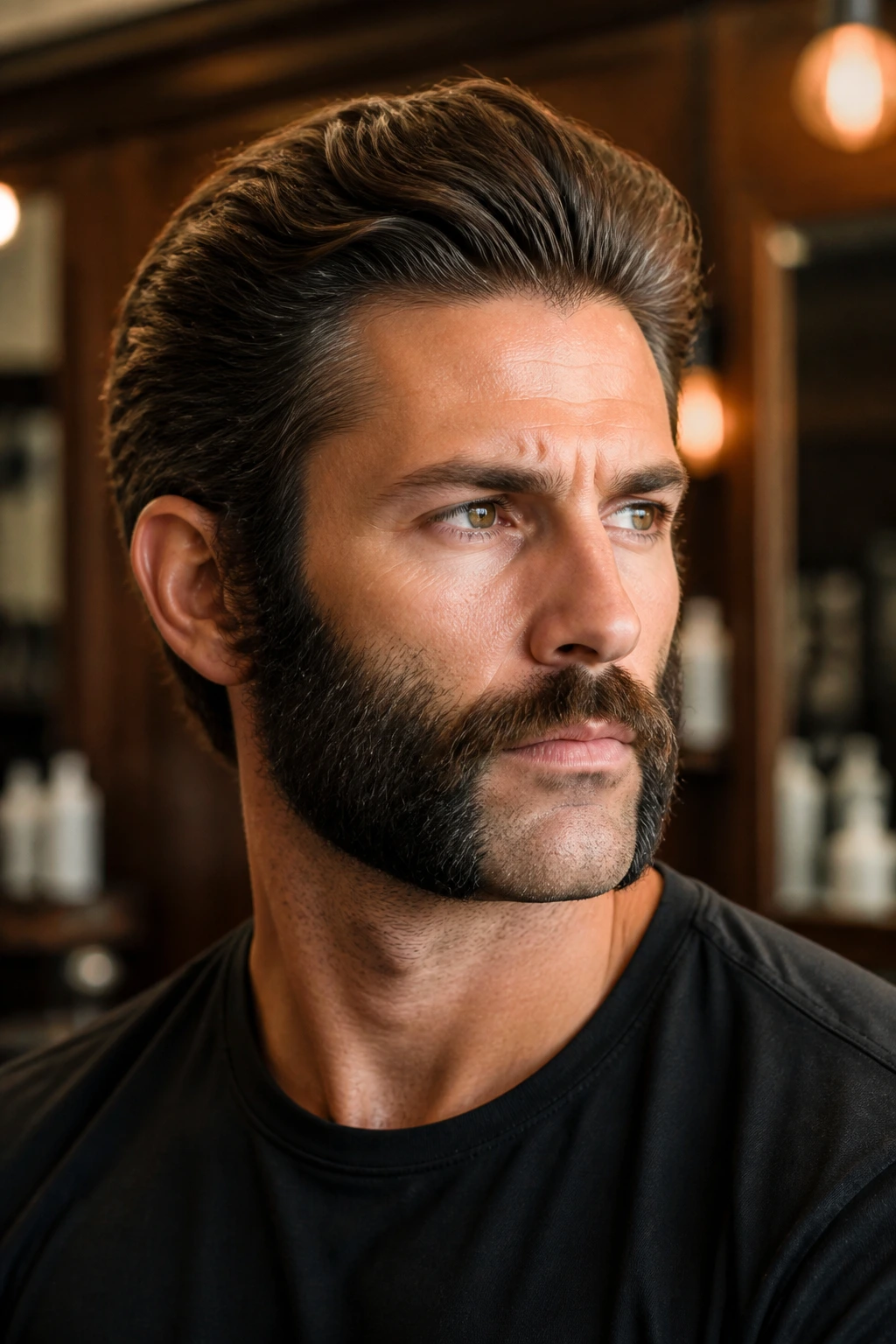
Wolverine-style facial hair leans hard on the sideburns and upper beard, with less emphasis on the chin. Thick growth is useful here because it keeps the side sections full and dramatic without looking thin or broken.
The style needs a clean center so the sideburns stay the focus. If the chin fills in too much, the profile shifts and the whole look gets muddy. This one has a bit of comic-book energy, sure, but it works best when the line is crisp and the hair above the jaw stays dense.
37. Gray Beard with a Sharp Outline
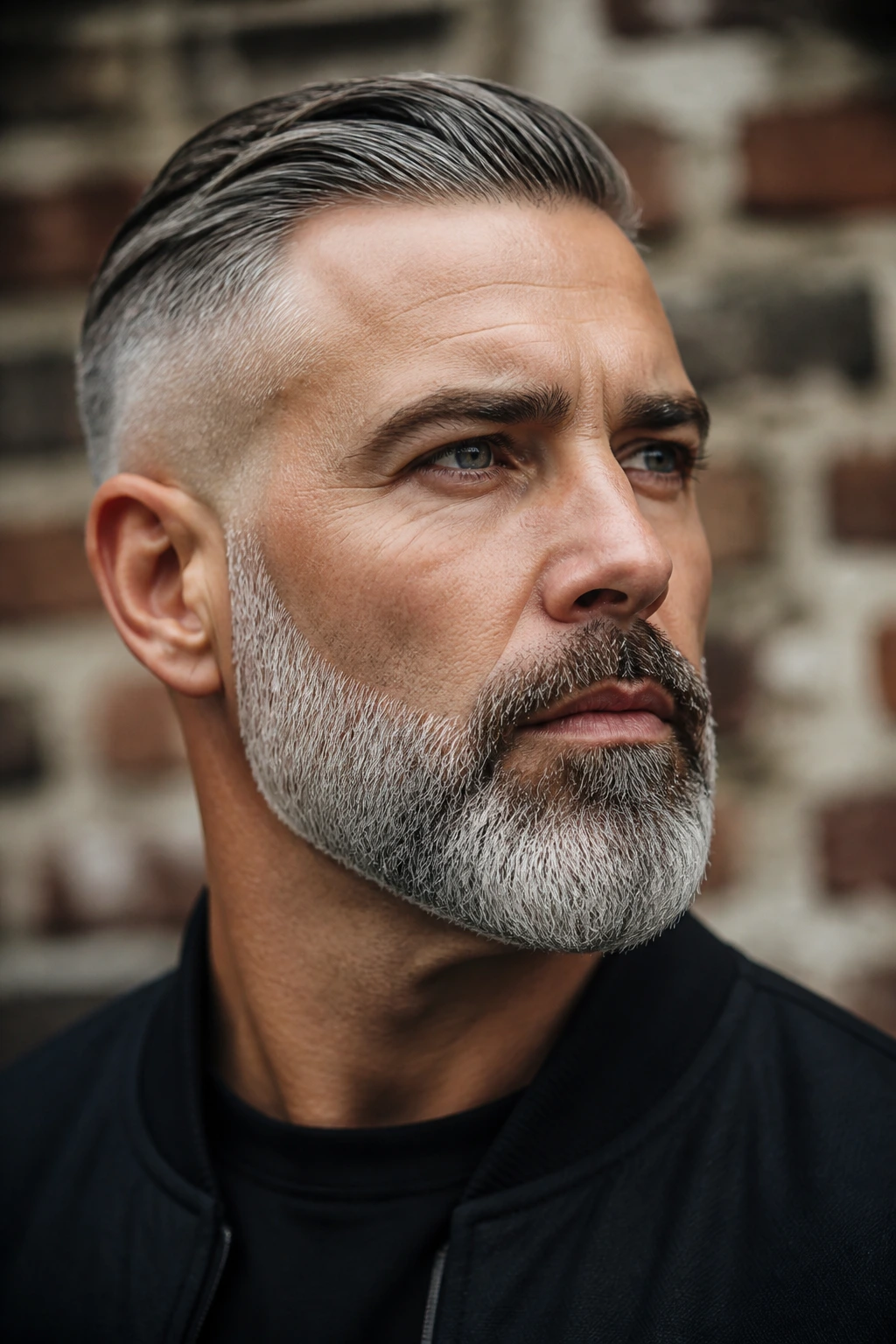
Gray beard hair looks better than people give it credit for, especially when the outline is sharp. Thick hair in silver or salt-and-pepper tones can look rugged, but it only looks polished if the edges are clean and the bulk is under control.
A crisp cheek line and a low, tidy neckline make the gray read as deliberate rather than aged. I like this style because it does not try to hide anything. It just frames it properly. If the beard is heavy and the color is turning, this is where shape saves the whole look.
38. Buzz Cut and Beard
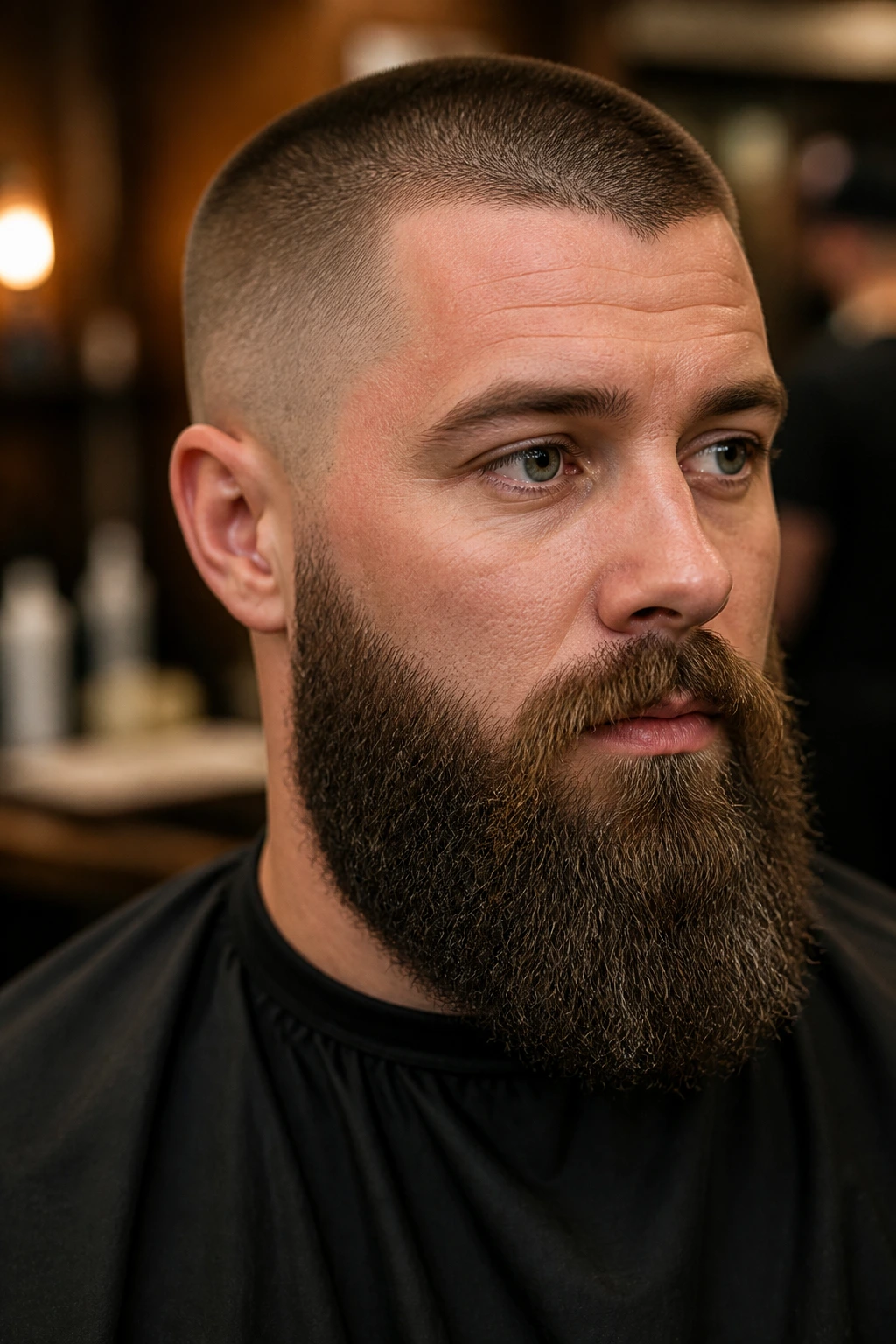
A buzz cut and beard combo is one of the cleanest ways to wear thick facial hair because the top stays simple and the beard becomes the feature. That contrast is useful. If your beard has serious density, the buzz cut keeps the overall look from feeling crowded.
The beard can be boxed, faded, rounded, or even a little wild, but the short hair up top needs to stay honest and even. I’d keep the beard at least 2 lengths longer than the buzz so the contrast is visible. When the haircut is this short, the beard does the talking.
How Beard Styles for Thick Hair Work Best With Your Face Shape

A thick beard is never only a beard problem. It changes the whole lower half of the face, which means shape matters more than heroics. If your face is round, the styles that pull downward — ducktail, extended goatee, long boxed — usually help more than shapes that spread wide at the cheeks. If your face is long, rounded or square styles add balance without stretching the face even more.
Square faces are a little easier to overdo. Too much boxiness makes the jaw look heavier than it needs to be, so a rounded beard or a tapered full beard often lands better. Thick hair can handle softness. That’s the nice part. You do not have to sharpen every line just because the beard is dense.
Round Faces
Choose styles that add vertical pull: ducktail, Balbo, extended goatee, or a long boxed beard with a cleaner cheek line.
Long Faces
Choose width and curve: rounded beard, short full beard, Garibaldi, or friendly mutton chops.
Square Faces
Choose soft edges: tapered beard, natural beard, or a rounded full beard with a controlled chin.
Uneven Growth
Choose styles that hide the weak spots instead of spotlighting them: Balbo, circle beard, beardstache, or corporate beard.
The Tools That Make Dense Beard Hair Behave
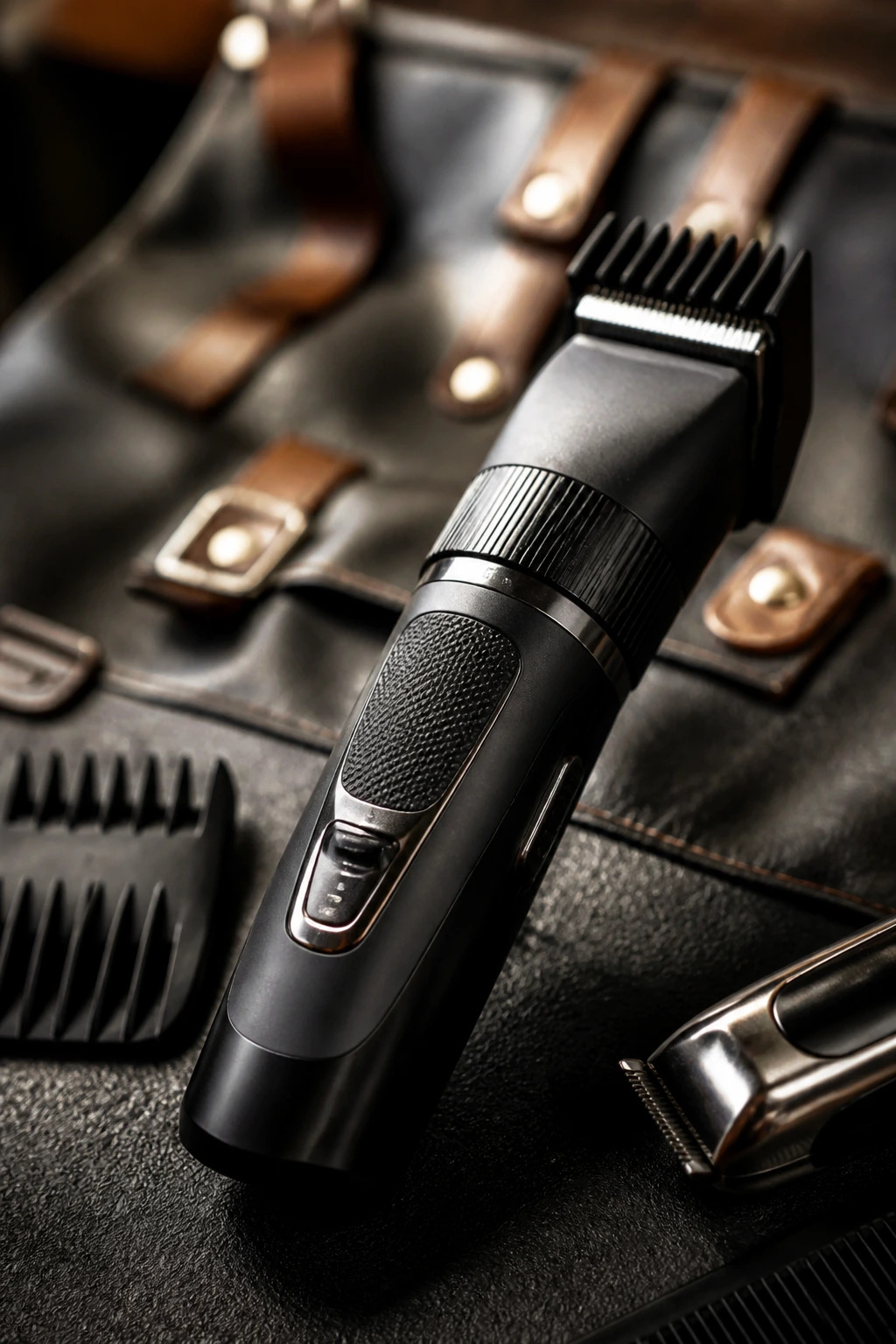
- Beard trimmer with adjustable guards: A good trimmer with guards from 1 mm to 13 mm lets you build shape instead of guessing at it.
- Barber scissors: Thick hair responds well to scissors on the mustache, chin point, and flyaway edges, especially when you want a more natural finish.
- Boar-bristle brush: This helps lay thick beard hair down and trains it to grow in the same direction instead of splaying outward.
- Wide-tooth comb: Use it when the beard is damp and conditioned; it separates dense hair without pulling.
- Detail trimmer or T-blade: This is what gives you the cheek and neckline precision that a big trimmer can’t.
- Hand mirror: Non-negotiable. The neck always lies to you in the bathroom mirror.
- Beard wash: A gentle wash clears oil and dead skin without stripping the beard until it feels brittle.
- Beard oil or light balm: Oil helps with softness; balm helps with shape. Thick hair usually needs both, but not in huge amounts.
- Hair dryer on low heat: Optional, but useful for training a beard downward while brushing.
- Clean towel: Pat the beard dry. Don’t rub it like you’re drying a car.
How to Tell Your Barber Exactly What You Want
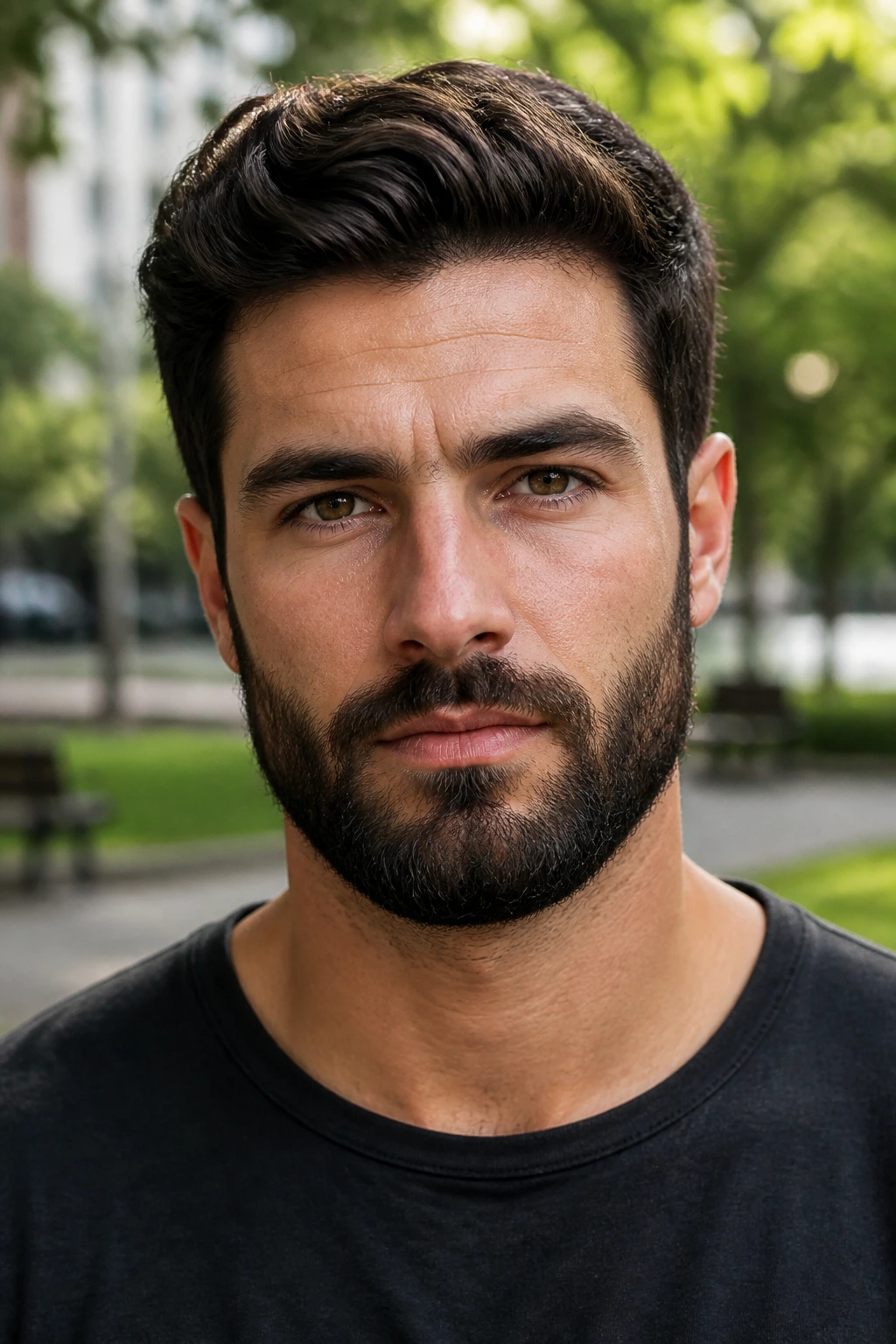
The easiest way to miss the mark is to say “make it neat.” Neat to one barber means boxed. Neat to another means faded. Thick beard hair needs clearer directions. Bring one or two reference photos, not ten, and point to the exact parts you like: the cheek line, the neckline, the sideburn blend, or the length at the chin.
Use numbers if you can. Saying “keep the sides around a #3 and the chin a touch longer” is far better than saying “short but full.” If you want a fade, tell them where it starts. If you want a box, tell them whether you want the corners hard or soft. And if you hate a giant neck beard, say that before the cape comes off.
Say This Out Loud
- “Keep the neckline low and clean.”
- “Leave the chin a little longer than the cheeks.”
- “Blend the sideburns instead of stopping them hard.”
- “Don’t round the bottom too much.”
- “Keep the mustache off my lip.”
Daily, Weekly, and Monthly Maintenance That Holds the Shape
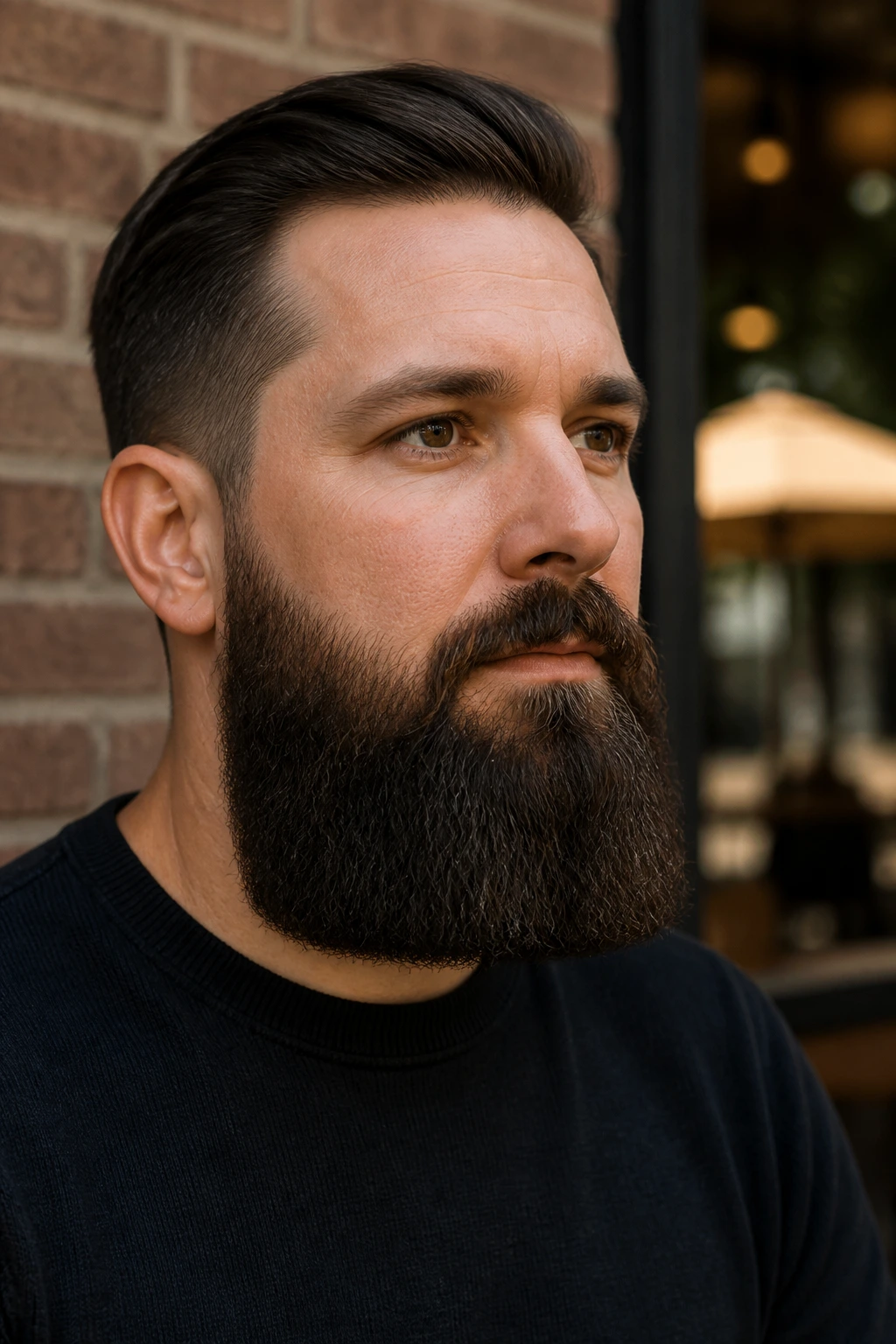
Thick beard styles do not survive on luck. They survive on boring, repeatable maintenance, and that’s the part most guys skip. Daily care takes about a minute: brush the beard after a shower, add a few drops of oil, and comb the mustache away from the lip so it does not collapse into your mouth.
Once a week, check the neckline and cheek line in natural light. If the beard is dense, stray hairs show up fast around the corners and under the jaw. Every 2 to 4 weeks, trim the bulk depending on the style. A Bandholz or yeard needs lighter shaping; a short boxed beard or corporate beard needs more frequent cleanup.
A Simple Rhythm That Works
- Daily: brush, oil, and tidy the mustache.
- 2 to 3 times a week: wash with beard cleanser, not harsh shampoo.
- Weekly: clean the neckline and check the cheek line.
- Every 2 to 4 weeks: reshape the beard with guards or scissors.
- Every barber visit: reset the outline before the bulk gets ahead of you.
Small Tweaks That Keep Thick Beards Looking Intentional
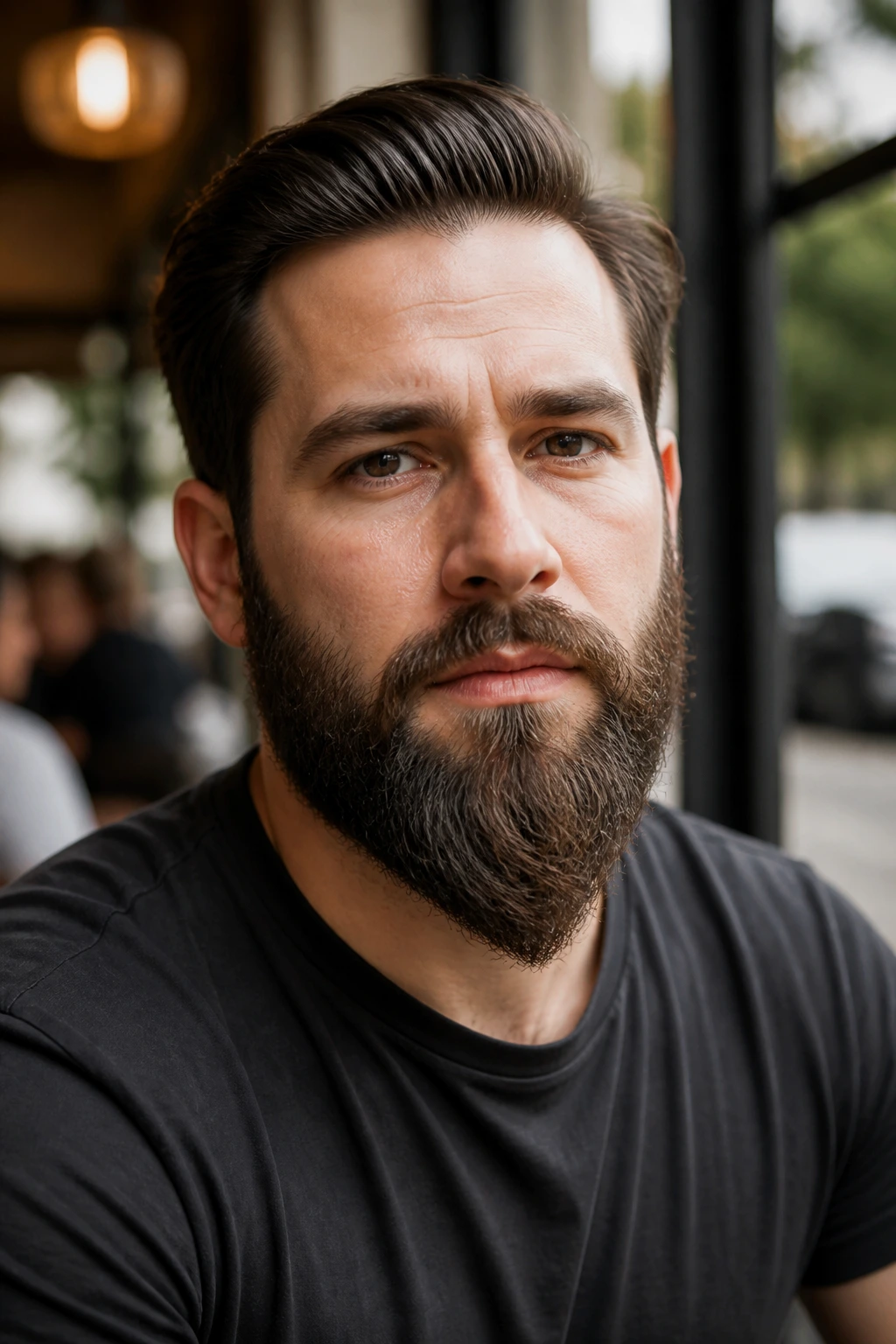
Length Bias: Leave the chin one guard step longer than the cheeks. That tiny difference keeps the beard from looking like one flat mass.
Cheek Discipline: If your beard grows high, don’t chase the highest possible line. A slightly lower cheek line usually looks cleaner, especially on thick hair that wants to spread.
Mustache Frame: Trim the mustache to the lip line or just above it. The mouth is where thick beards start to look messy first, and a clean upper lip fixes a lot.
Bulk Map: Remove weight under the jaw before you remove length from the chin. That keeps the beard from puffing outward while preserving the shape you actually want.
Common Mistakes That Turn Dense Growth into Bulk
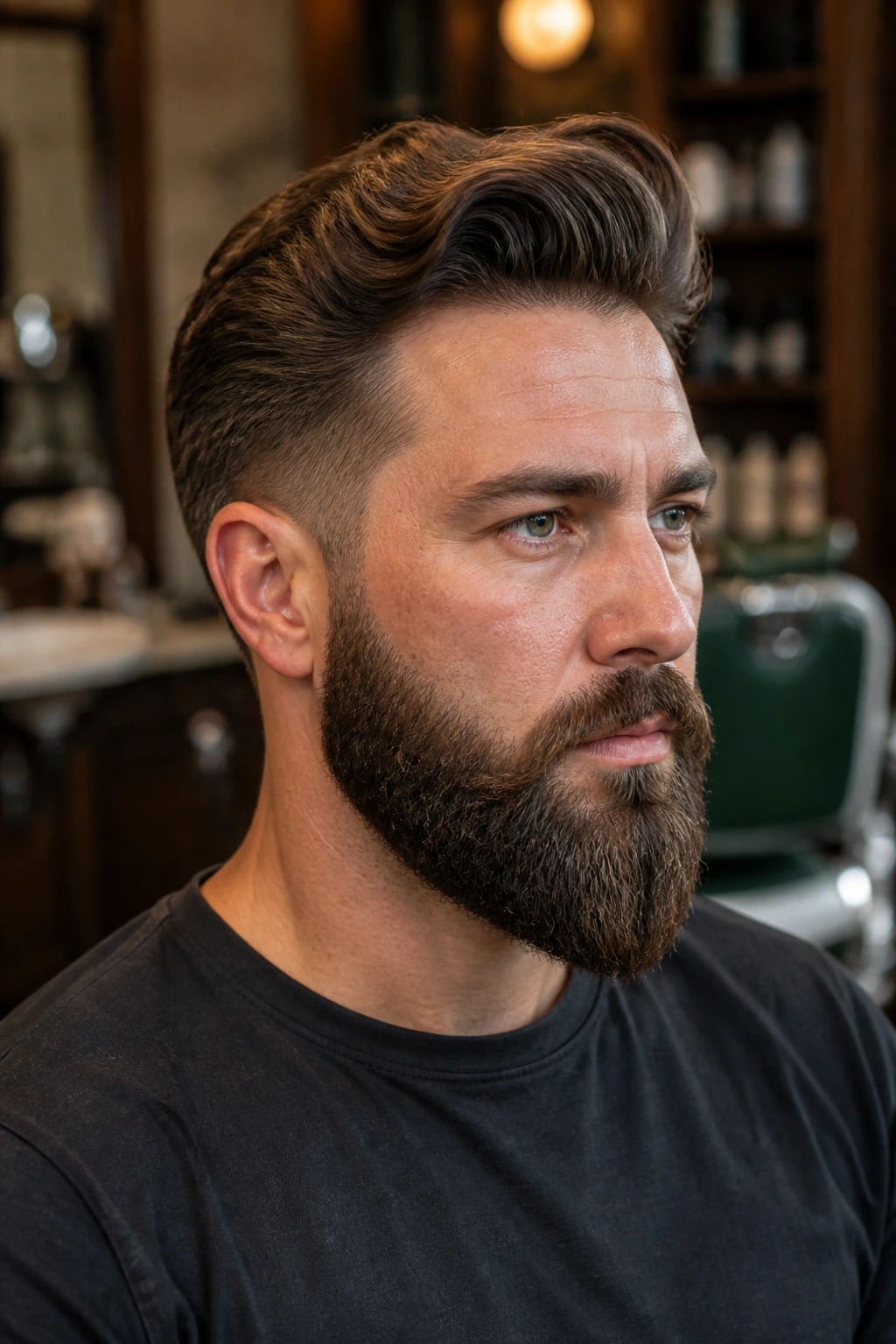
- Cutting the beard while it’s soaking wet: Wet hair hangs longer than dry hair, so the beard often ends up shorter than expected once it dries. Dry it first, then trim.
- Letting the neckline drop too low: The beard starts swallowing the throat, and the whole face looks heavier. Keep the line above the Adam’s apple, not below it.
- Making the cheeks too round: Thick hair can handle natural cheeks, but if you round them too much, the face gets wider than it needs to be. Clean them up, then stop.
- Ignoring the mustache: A thick mustache that hits the lip makes the entire beard feel untidy. Trim the center and comb it daily.
- Using too much balm: Heavy product makes thick beard hair look oily and flat. A pea-sized amount is enough for most short to medium styles.
- Triming everything to one length: Uniform length sounds safe, but it often creates a helmet effect. Leave some difference between the cheeks, jaw, and chin.
Variations and Adaptations for Different Face Shapes and Routines
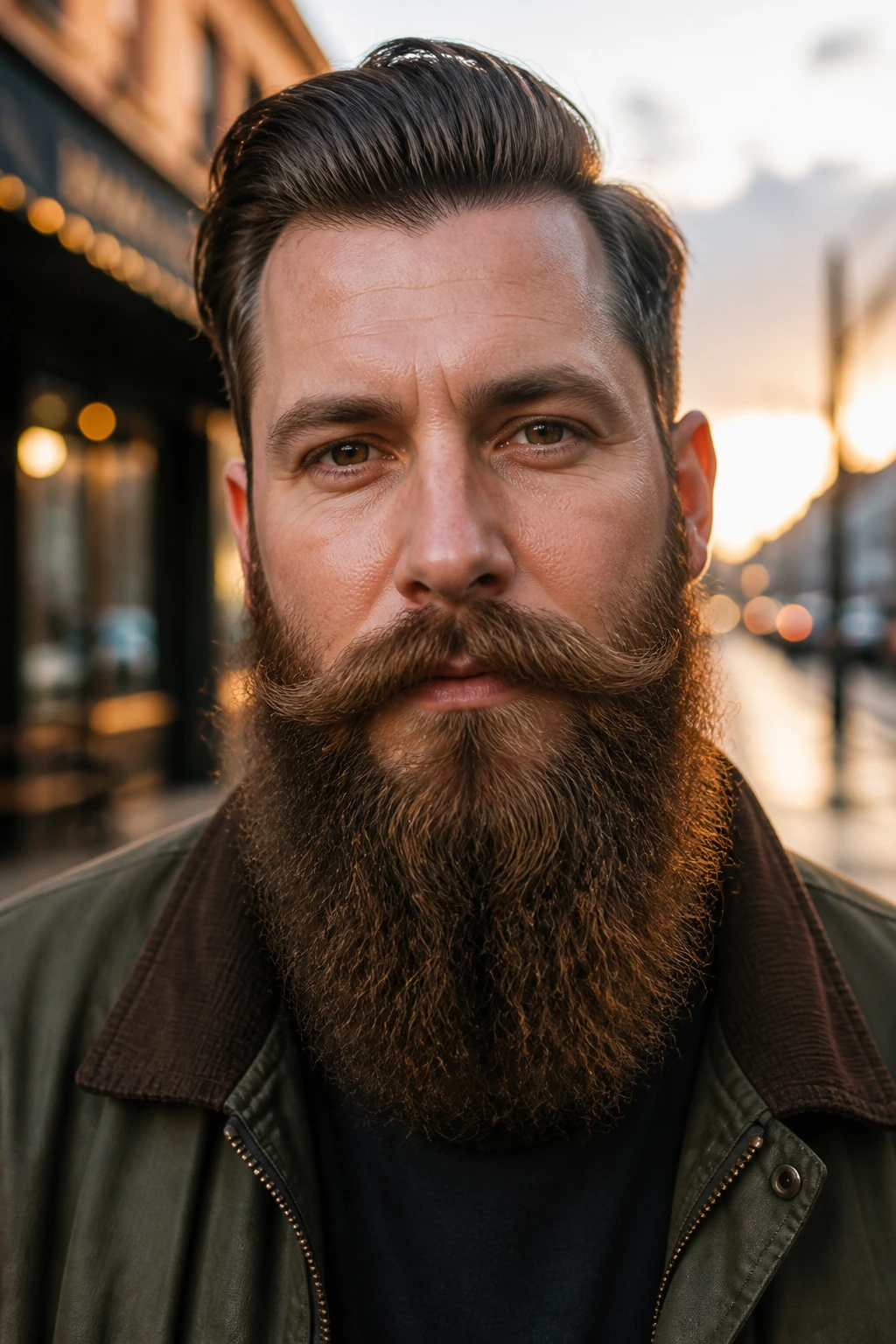
Office-Ready Version: Swap the Bandholz or Viking beard for a short boxed or corporate beard. You still get the thickness, but the outline stays calm enough for a dress shirt and a meeting.
Curly-Coil Version: If your beard curls outward, lean into tapering the sides and leaving a little more length at the chin. Dry-cutting gives you a more honest shape than cutting it damp and hoping for the best.
Round-Face Fix: Choose styles that pull the eye downward: ducktail, Balbo, French fork, or a longer boxed beard. The trick is not to add width at the cheeks.
Long-Face Fix: Rounded beards, friendly mutton chops, and fuller side growth add balance. You want the beard to widen the lower half a little, not stretch it further.
Gray-Beard Upgrade: If the beard is turning silver, sharpen the edges and keep the finish matte. Gray hair reflects light fast, so tidy lines matter even more.
Essential Beard Grooming Equipment
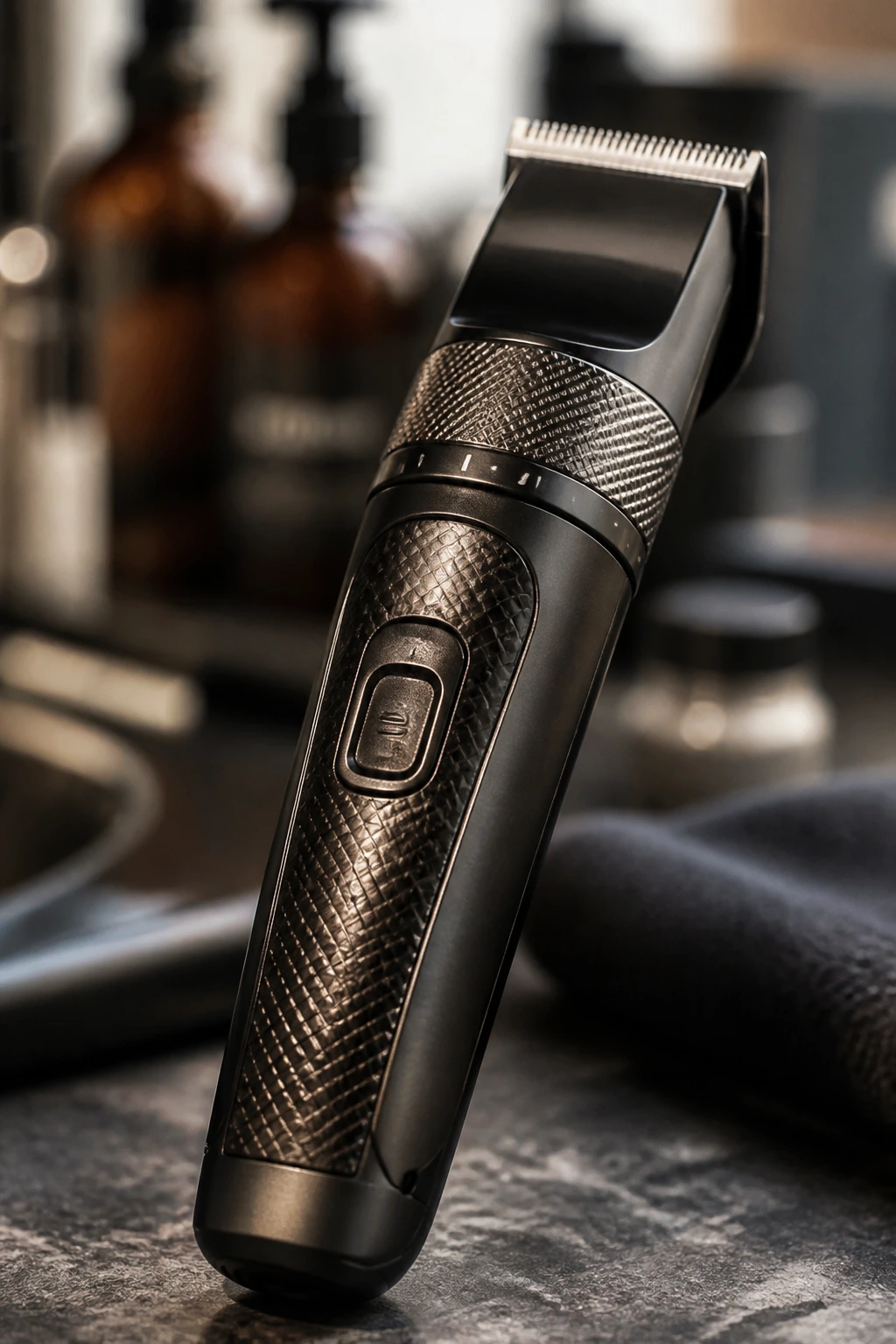
- Adjustable beard trimmer: The workhorse tool for setting length without guesswork.
- Detail trimmer or edger: Best for cheek and neckline cleanup.
- Sharp barber scissors: Useful for mustache trimming and cutting single stray hairs.
- Boar-bristle brush: Helps train thick hair downward and smooth it out.
- Wide-tooth comb: Good for detangling without snagging.
- Beard wash: Keeps thick hair from getting dry and brittle.
- Beard oil: Softens coarse hair and helps with itch.
- Beard balm: Adds shape and light hold, especially for longer styles.
- Hand mirror: Lets you check the neck and jawline from angles that the bathroom mirror misses.
- Towel and blow dryer: Optional, but helpful for shaping a beard before it sets.
Frequently Asked Questions
How often should I trim a thick beard?
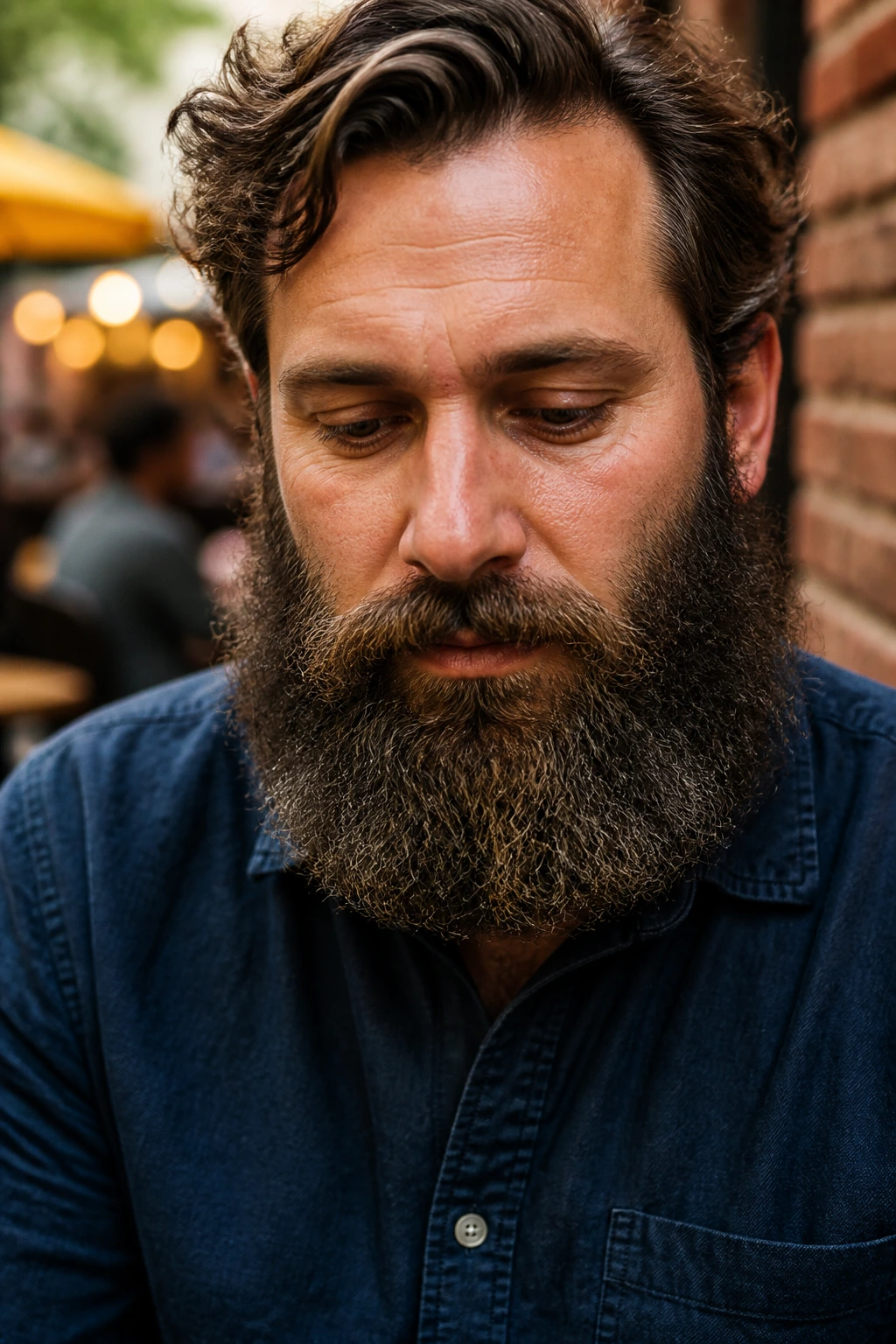
Most thick beards need some kind of cleanup every 7 to 14 days, even if you only take off a little. The bulk grows fast enough that a style can lose its outline long before it gets “long.” Shorter boxed styles need more frequent maintenance than long, natural styles.
Should I cut thick beard hair wet or dry?
Dry is safer if you care about shape. Wet beard hair stretches and lies flatter, so it can trick you into taking off more than you meant to. If you cut it dry, especially after brushing it into place, you see the real silhouette.
What beard style is best if my cheeks grow faster than my chin?
Balbo, circle beard, beardstache, and extended goatee styles handle that problem better than full beards do. They let you keep the strong parts and avoid overexposing the weak spots. Thick cheeks can also be used with a taper if you want more structure.
How do I stop thick beard hair from looking puffy?
Reduce bulk under the jaw, keep the mustache short enough to stay off the lip, and use a brush with light balm. Puff usually comes from too much width at the cheeks and too much length in the wrong place, not from the beard being “too thick” by itself.
Is a beard fade better than a boxed beard?
They solve different problems. A fade works best if you want the beard and haircut to blend cleanly, while a boxed beard works better if you want a more solid, shaped lower face. If your beard grows dense at the temples, the fade often feels cleaner.
What if one side grows faster than the other?
That’s normal. Trim to the slower side, not the faster one, and keep the beard brushed in the same direction every day so the difference isn’t amplified by curl and lift. If one side is much denser, a taper can hide a surprising amount.
Can I wear a long beard if my hair is very coarse?
Yes, but you’ll need more conditioning and more shape control. Coarse hair can look fantastic long, but it also wants to stick out and widen. A little taper and regular brushing make a long beard look deliberate instead of bloated.
How do I know when to reshape instead of just trimming?
When the beard changes the face shape instead of sitting on it, reshape it. That usually means the cheeks are spreading too wide, the neckline has dropped, or the chin has lost its point or curve. If the outline is gone, a quick trim won’t fix it.
The Shape That Holds
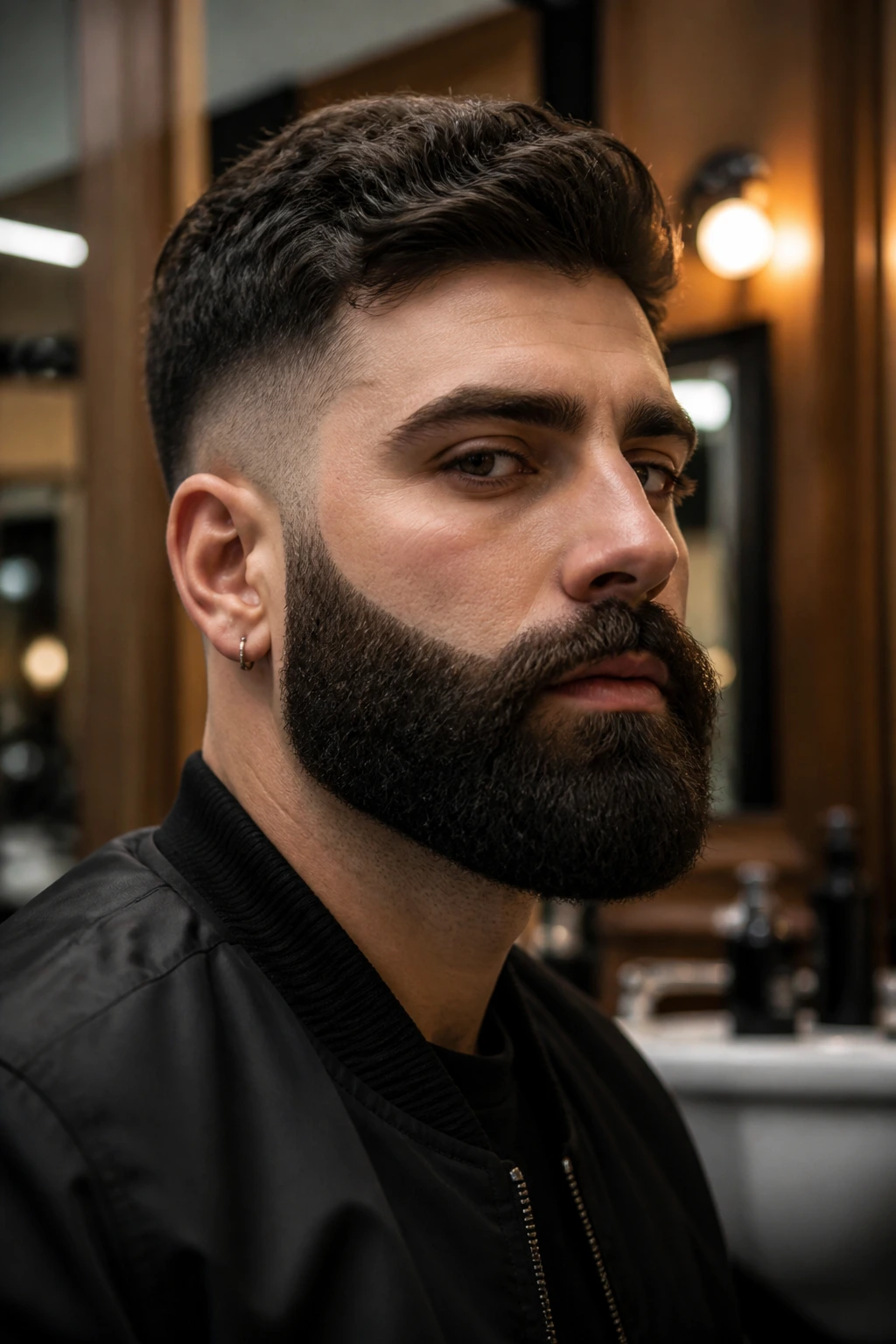
Thick beard hair gives you something a lot of men would gladly trade for: real density. The catch is that density needs direction, or it starts doing its own thing. The best beard styles for thick hair are the ones that use that weight on purpose — boxed when you want control, ducktailed when you want length, faded when you want clean transitions, and natural when you want the beard to look relaxed but not careless.
Pick the shape that matches your growth pattern first. Then keep the neckline honest, the mustache out of your mouth, and the bulk from spreading where it doesn’t belong. That’s the whole trick, really. A thick beard doesn’t need more beard. It needs a better outline.
