



A men’s ponytail can look sharp, deliberate, and a little bit ruthless — or it can look like you were five minutes late and found the nearest elastic. The difference usually isn’t magic. It’s placement, tension, texture, and whether your hair has enough length to sit without popping out at the temples. A good ponytail frames the head. A bad one just grabs it.
That’s why ponytail styles for men are worth paying attention to in a way most hair advice never really does. The same length of hair can read polished, rugged, artsy, gym-ready, or office-safe depending on where it sits and how much shape you leave around the sides. A low knot at the nape tells a different story than a high tie that exposes the ears and pulls the whole face upward. Same hair. Different message.
The details matter more than people think. A tight tie on damp hair leaves a weird bend when it dries. A wide elastic flattens thick hair into a dull rope. A little texture at the front can make the whole thing look intentional; too much product and it starts looking shellacked. If you’ve ever seen a man with long hair and thought, “That should work better than it does,” the answer is usually hidden in those small choices.
Why These Ponytail Styles for Men Keep Working
-
They solve the awkward stage: Hair that’s too long to ignore but not long enough to hang naturally can be tied back in a way that looks clean instead of accidental.
-
They respect hairline shape: A low or mid ponytail pulls less hard on the temples, which matters if your hairline is receding or your front pieces are finer than the rest.
-
They work with real life: Gym runs, office days, motorcycle helmets, humid weather, and second-day hair all get easier when the hair has one place to go.
-
They don’t need a full routine: A comb, a few elastics, and a small amount of cream or spray are enough for most of these styles. Fancy products help, but they’re not the whole story.
-
They scale up or down: The same basic tie can read casual, polished, or almost formal depending on how neat the part is and how much you smooth the sides.
-
They pair well with beards and fades: That’s one of the reasons they’re so useful. A ponytail can balance a heavy beard, sharpen a taper, or soften a strong jaw without needing a haircut every two weeks.
How to Choose Ponytail Styles for Men by Length, Density, and Face Shape
The best ponytail style is the one that fits the hair you actually have, not the hair you wish you had. A lot of bad styling starts with chasing a photo that only works because the model has a very specific density, length, and face shape. Your job is simpler. Match the tie to the hair.
Hair length changes everything
If your hair is sitting around collar length, the low nape tie, half-up tie, and loose weekend ponytail usually look the cleanest. Once hair passes the shoulders, you can start playing with braided finishes, samurai knots, and heavier ties that sit higher without feeling strained. Shorter lengths can fake fullness with texture. Longer hair needs control or it turns fuzzy at the ends.
Density decides how much tension you can get away with
Thick hair can hold almost anything, but it also punishes you if you use the wrong band. Thin elastics bite into dense hair and leave a sharp crease. Fine hair goes flat fast, so you want less pulling and more shape from product. Curly hair needs room to spring. Straight hair needs either texture or a very clean finish or it can slide loose by lunch.
Face shape changes the visual balance
A higher tie lifts the face. A lower tie stretches it. If your face is already long, a low ponytail with a bit of width at the sides usually looks better than a tight top pull. If your face is round, a higher or mid-height tie gives the hair some vertical energy and keeps the profile from getting too heavy. None of this is law. It’s just the part most people notice first when a ponytail works.
1. The Low Nape Ponytail
This is the one I’d hand to a man who wants his hair out of the way without making a show of it. The ponytail sits right at the base of the skull, usually just above the collar. It feels controlled, almost architectural, and it works especially well when your hair has enough weight to lie flat at the sides.
Why it works: The low nape placement reduces strain on the hairline and keeps the front from getting stretched into a skinny, over-tight arc. It also plays nicely with straight or slightly wavy hair, because the tie line stays hidden from the front more easily. If your hair is medium to long and you wear jackets, collars, or coats with structure, this is the one that tends to behave.
A small amount of matte cream at the temples makes a big difference. Use your fingers to smooth the top, not a brush that drags the hair too tight. The goal is neat, not severe.
Best for: Oval, square, and long faces; work settings; men who keep a clean neckline.
How to wear it: Leave the ponytail a little loose at the base instead of cinching it like a cable tie. That tiny bit of slack keeps it from looking stiff.
2. The Mid-Height Everyday Ponytail
The mid-height tie sits between the crown and the nape, and that’s why it’s the easiest style to wear without thinking too hard about it. It has enough lift to feel casual, but it doesn’t swing so high that it starts looking sporty or overly playful.
Why it works: This placement helps balance medium-length hair that wants to puff out at the sides. A mid tie gives the length somewhere to gather without crushing the front flat. On layered cuts, it keeps the shorter pieces from exploding around the ears quite as much.
I like this style for days when the hair is clean but not freshly washed. Day-two hair has a little grip, which helps the elastic hold without needing half a can of product. If the ends are dry, a pea-sized amount of cream rubbed through just the last third of the ponytail keeps the tail from looking frayed.
What it says visually: Easygoing, active, not fussy. It’s the style that looks like you meant to tie your hair back, but you didn’t spend twenty minutes building the idea.
3. The High Athletic Ponytail
This one lives near the crown and it has a different energy. Faster. Leaner. More obvious. It’s the style you choose when you want every strand out of the face and don’t care if the result looks a little sharper than everyday life requires.
Why it works: The higher placement pulls hair away from the neck and ears, which is useful for training, humid weather, or long shifts when you keep taking the hair down and putting it back up. The high tie also shows off the face more, so it can make strong brows, cheekbones, and jawlines stand out.
Use a tighter elastic here, but not the kind that digs in like a wire. If you’ve got thick hair, a small spiral band or a two-loop elastic will hold without creating the headache that comes from yanking everything into one anchor point. Skip heavy oil. That’s a fast route to a slippery, half-fallen tail by midafternoon.
It’s a blunt style. That’s the point.
4. The Slick-Back Ponytail
A slick-back ponytail is all about surface control. The hair is combed straight back from the front, often with a touch of gel or cream, then gathered into a clean tie that leaves no question about where the hair starts and stops.
Why it works: Slicking the front back keeps flyaways down and gives the head a more streamlined shape. It works especially well if your hair is straight, a little wavy, or naturally coarse. The smooth finish makes the ponytail look more deliberate than a loose tie, and it can edge toward dressy without crossing into costume.
The catch? It exposes the hairline. If your temples are thinning, a slick-back can either look excellent or too revealing. I’d test it in a mirror with a little water and cream first before committing to a full wet-look product. A matte cream is usually kinder than shiny gel unless you want that sharper, almost runway-like finish.
This style rewards clean lines. Messy sideburns, uneven growth, or a rough neckline will show faster here than in almost any other ponytail.
5. The Textured Messy Ponytail
The textured messy ponytail is what happens when the tie has a little attitude. The hair is gathered without flattening every wave and bend, and a few pieces are left loose around the temples or crown. It should look intentional, not forgotten.
Why it works: Texture gives the ponytail movement, which keeps it from reading like a strict business tie. Sea salt spray, light mousse, or a dry-texture spray gives the hair enough grip to hold shape without becoming stiff. This is especially useful for layered cuts, where the shorter pieces need a little help staying in the same conversation as the longer hair.
A useful rule
If the front looks too neat, the style loses its point. If it looks like you’ve not brushed it in a week, you went too far.
A messy ponytail is one of the few styles where a little asymmetry helps. Let one side sit flatter than the other. Leave a small bend at the tail. Push the top back with your fingers instead of a comb. That roughness is the feature, not the flaw.
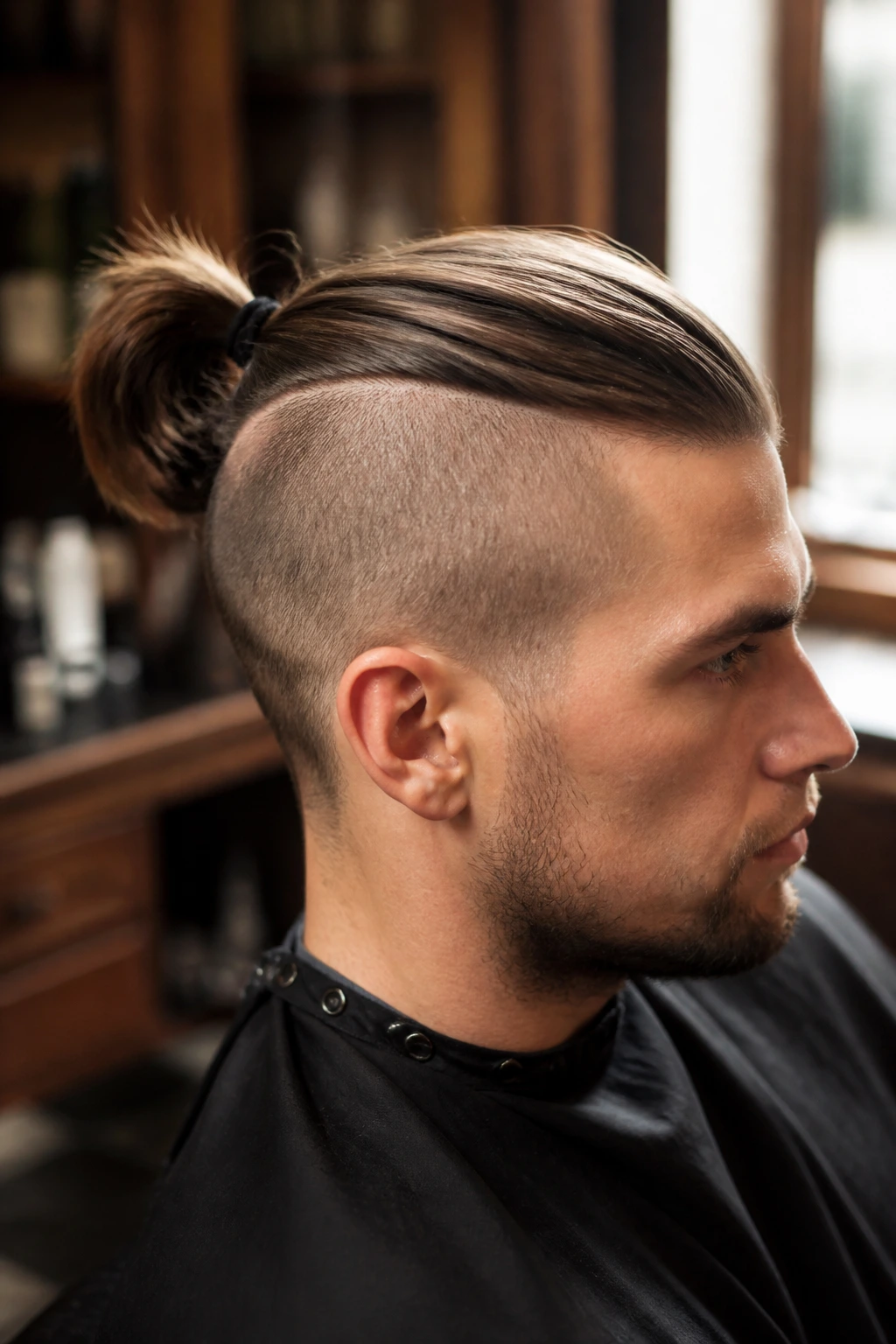
6. The Undercut Ponytail
An undercut ponytail is all contrast. Short, clipped sides. Longer hair up top. The tie makes the length on top feel even longer because the eye isn’t competing with the sides.
Why it works: The shaved or closely cropped sides keep the silhouette neat and stop the hair from puffing out at the temples. That makes this one a favorite for men who want a cleaner edge around the face while keeping the drama of longer hair on top. The shape is strong. No need to overthink it.
The downside is maintenance. The undercut starts to look fuzzy when the sides grow out, and that fuzzy stage can make the whole style feel messy in the wrong way. If you want this to stay crisp, expect touch-ups every couple of weeks, give or take, depending on how fast your hair grows.
It also pairs well with beards. A full beard plus an undercut ponytail can feel balanced if the neckline is trimmed with intent. Let both areas grow wild and the whole thing loses shape.
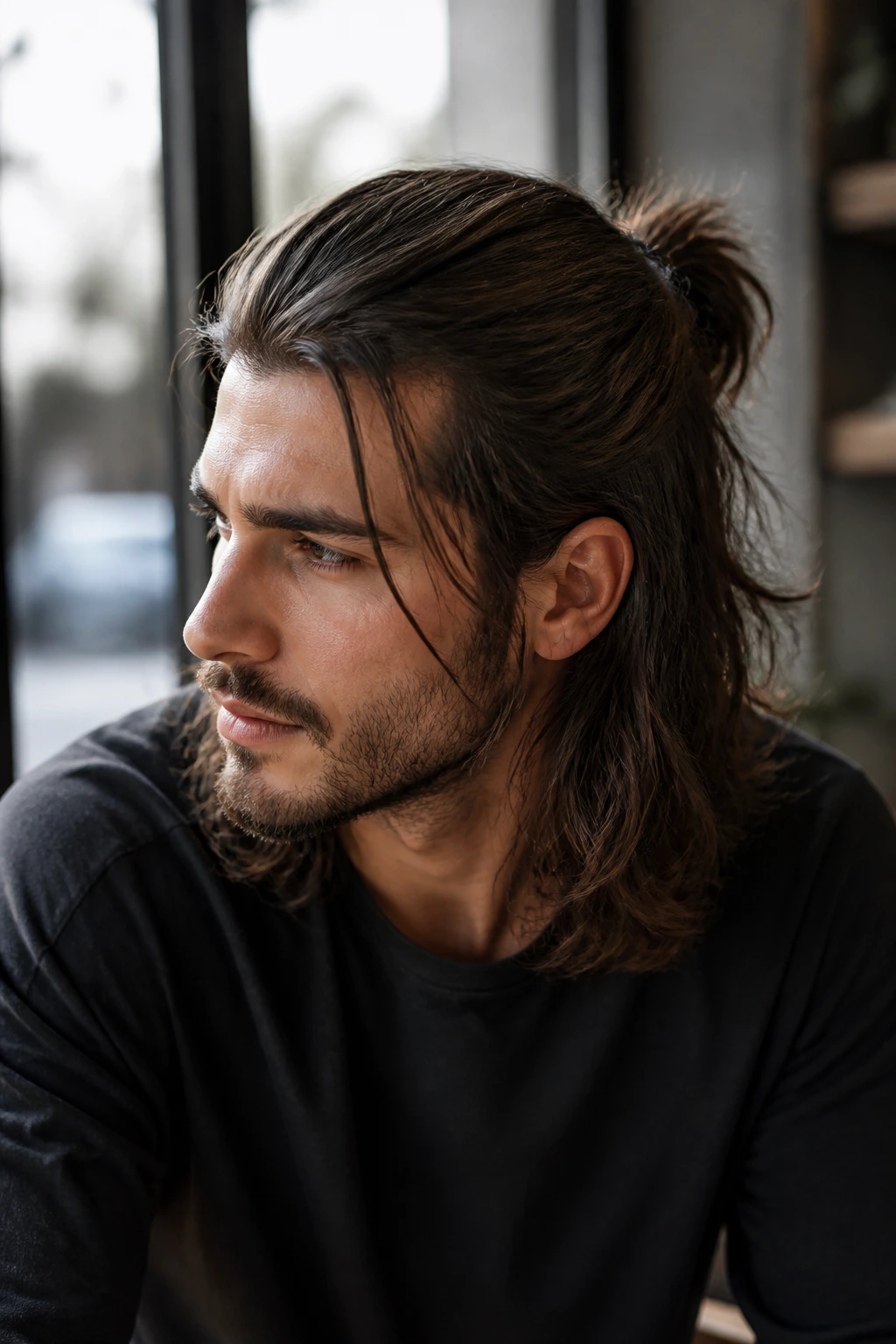
7. The Half-Up Ponytail
A half-up ponytail keeps the top section tied back while the rest falls loose. It’s a smart move for shoulder-length hair, especially when the front hair keeps landing in your eyes but you still want movement through the lengths.
Why it works: You get control where you need it and softness where you want it. That split makes the style easier to wear than a full tie when the hair is still in that awkward “not enough to fully gather, too much to leave alone” zone. It also keeps the crown from ballooning, which is a real problem for men with thick or wavy hair.
The tie should sit high enough to clear the eyes, but not so high that the lower hair looks disconnected. A small elastic or a matte tie works better than a bulky band. If the lower section is dry, run a tiny bit of cream through the ends so the contrast doesn’t look accidental.
This one has range. It can look laid-back, artsy, or a little polished depending on how smooth you make the top section.
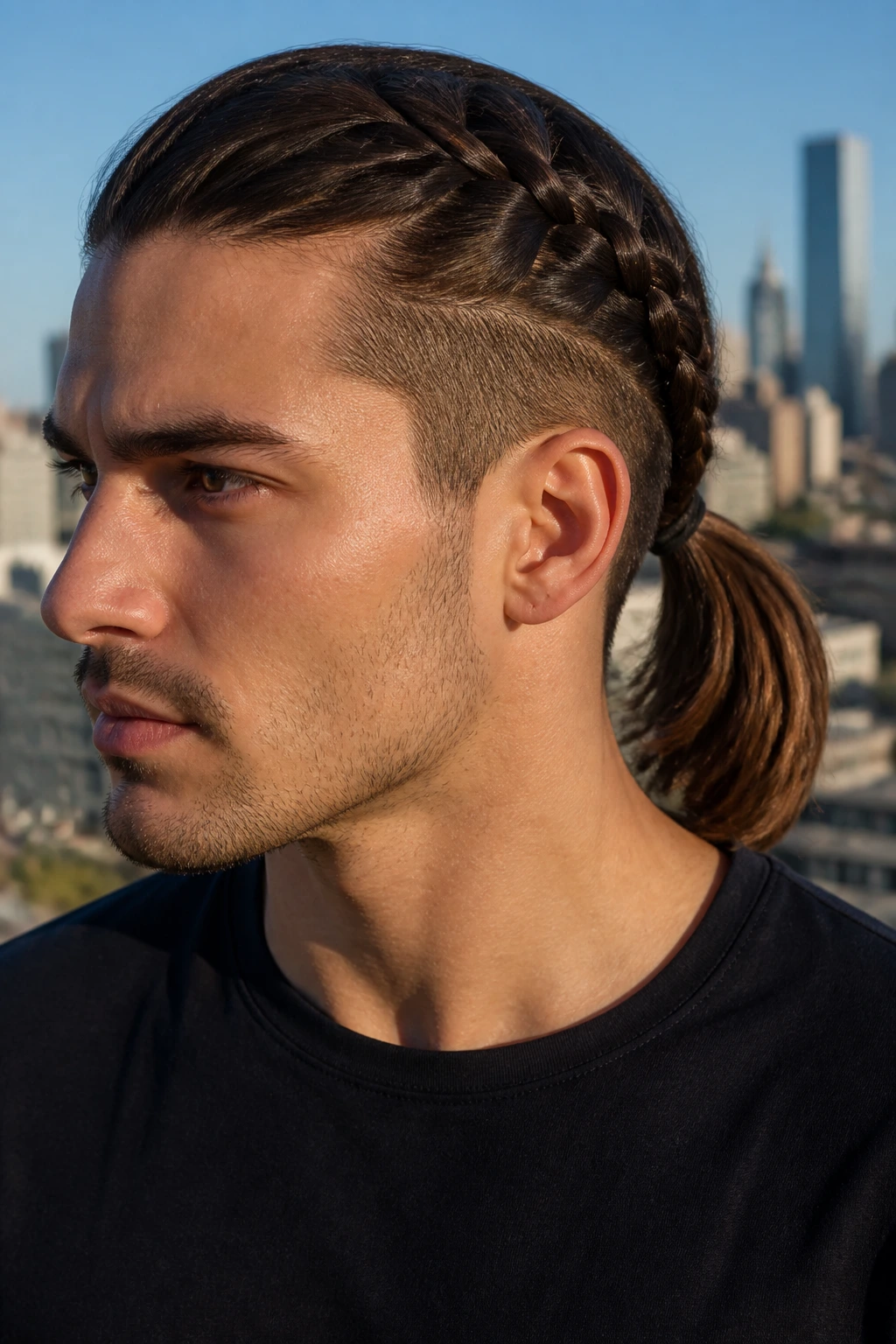
8. The Braided Ponytail
A braided ponytail does two jobs at once. It controls thickness and adds structure. If your hair is dense, coarse, or always puffing up when the weather shifts, braiding before the tie can make the whole style sit better.
Why it works: Braids compress the hair shaft and keep the tail from expanding outward like a broom. A simple three-strand braid is enough for many men, though a Dutch braid gives a bit more texture and a stronger visual line. Once the braid is tied off, the ponytail feels more contained and easier to move around without it exploding.
When to choose it
- Thick hair that slips out of plain elastics
- Long hair that tangles fast
- Styles that need more shape than a regular tie
- Situations where the tail needs to stay neat for hours
This isn’t the fastest style in the list. It takes a little practice, and the first few tries may look lumpy at the crown. Still, once your hands learn the motion, it becomes one of the most practical options in the bunch.
9. The Samurai Knot Ponytail
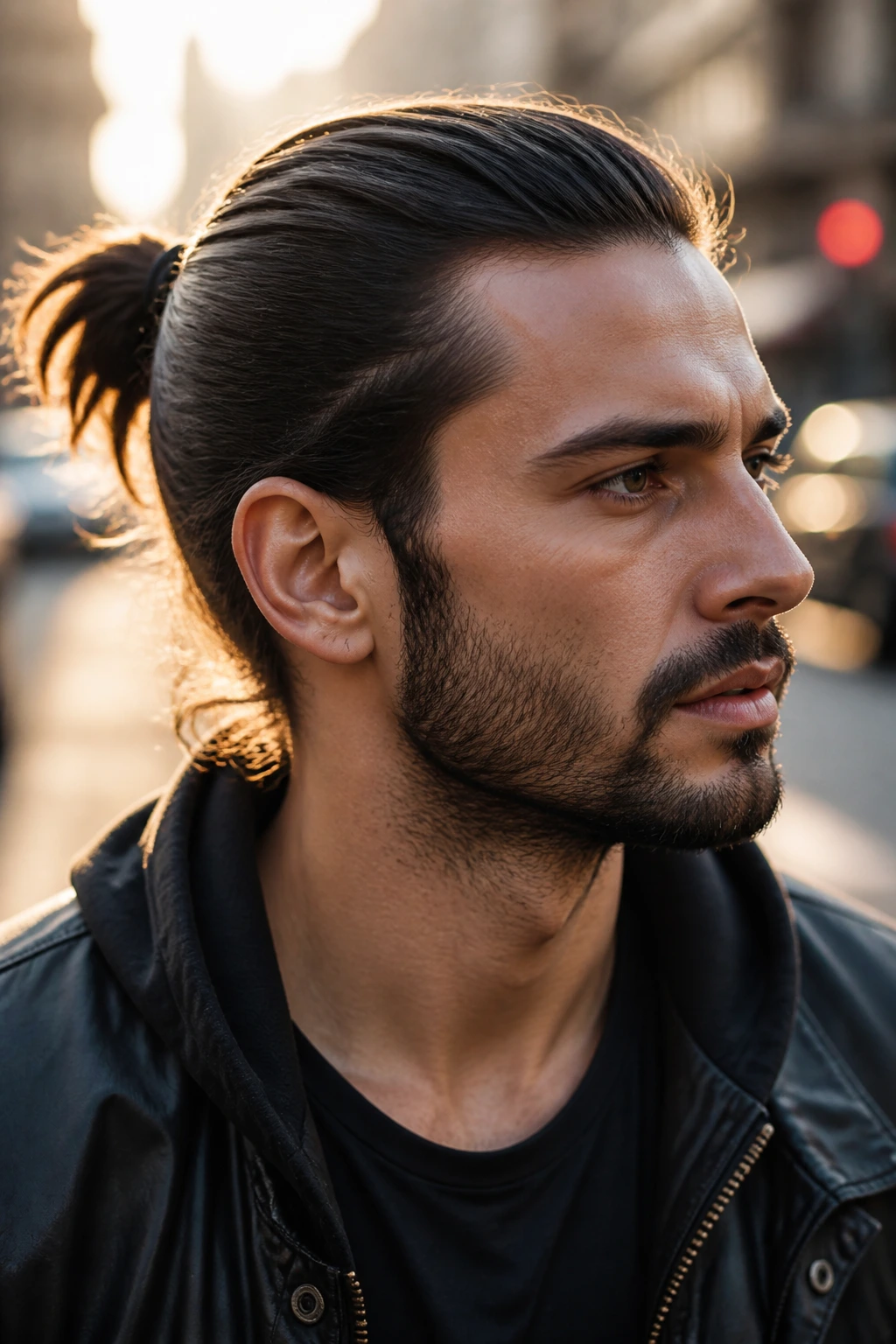
The samurai knot is a folded ponytail, where the hair is only pulled halfway through the elastic on the final wrap. It creates a compact loop instead of a free-hanging tail, and it has a rough, controlled look that sits somewhere between tied-back hair and a bun.
Why it works: It keeps long hair off the neck while still showing that you’ve got length. The fold makes the silhouette tighter, which helps if your hair gets heavy or if you want less swinging around during the day. It’s also a good heat-weather option because the folded loop doesn’t flop against the collar as much as a full tail does.
The style needs enough length to bend over cleanly. If your hair is too short, the loop won’t hold its shape and pieces will spring out. If it’s very thick, use a strong elastic and make sure the first tie is secure before folding the tail through.
There’s a practical side to it, too. Helmets, hoodies, and car headrests all behave a little better with this knot than with a long ponytail that spreads out everywhere.
10. The Curly Ponytail
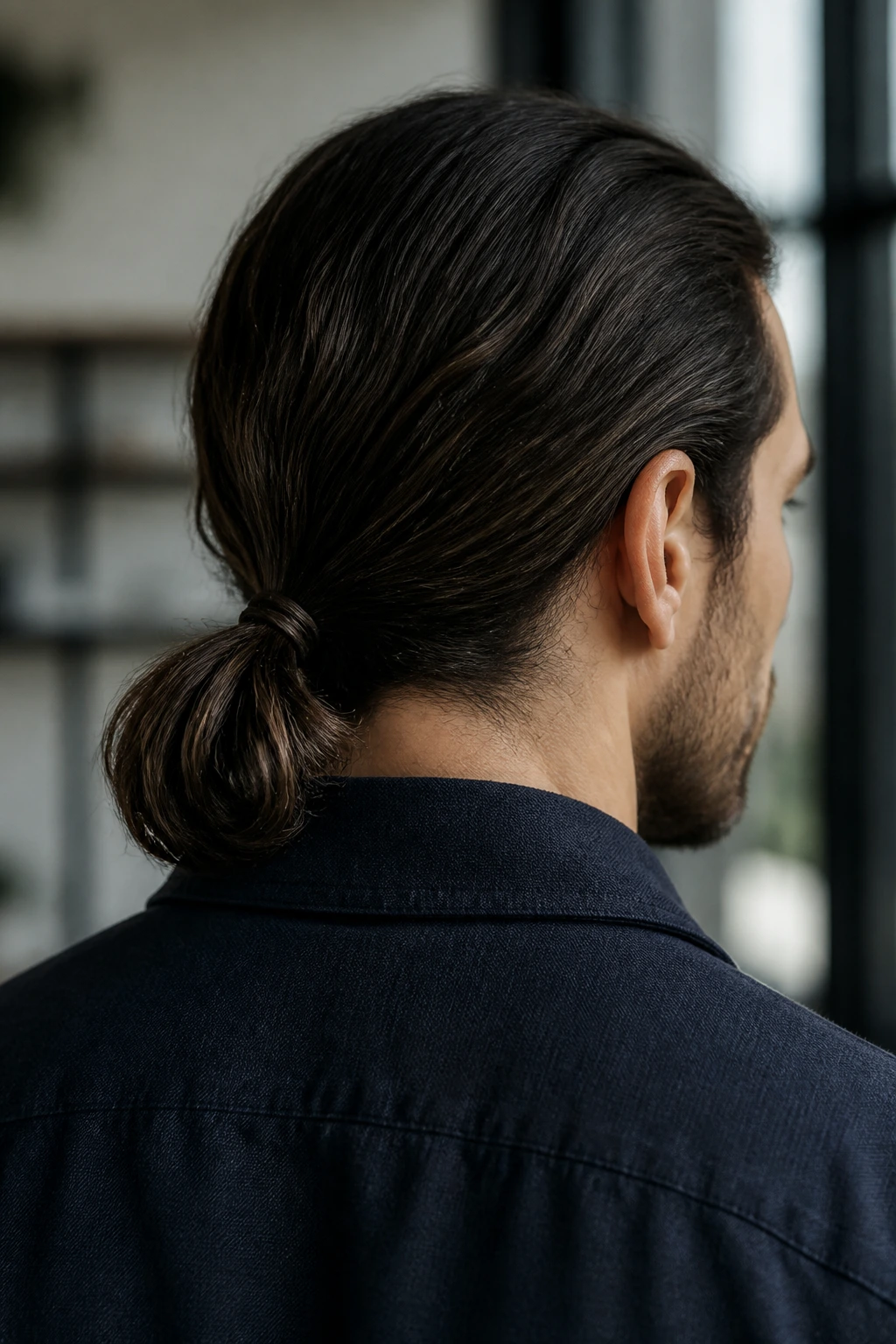
Curly hair changes the whole conversation. A curly ponytail is less about flattening the curls and more about gathering them so the shape stays visible and the shrinkage works for you instead of against you.
Why it works: Curly hair naturally has volume, so you don’t need much product to make it look alive. The trick is to preserve the curl pattern near the top and avoid brushing the hair dry, which can turn the ponytail into a halo of frizz. A leave-in conditioner or curl cream helps the tail stay defined without getting crunchy.
This style usually looks best when the tie is not too tight. Let the curls sit with a little lift at the base. If you pull them down hard, you flatten the texture and lose the whole point of wearing curly hair long in the first place.
A curly ponytail can be surprisingly refined when the edges are neat and the curl shape is intact. It also looks better on day two than a lot of straight-hair styles, because the curl pattern often tightens up after the first wash.
11. The Wavy Shoulder-Length Ponytail
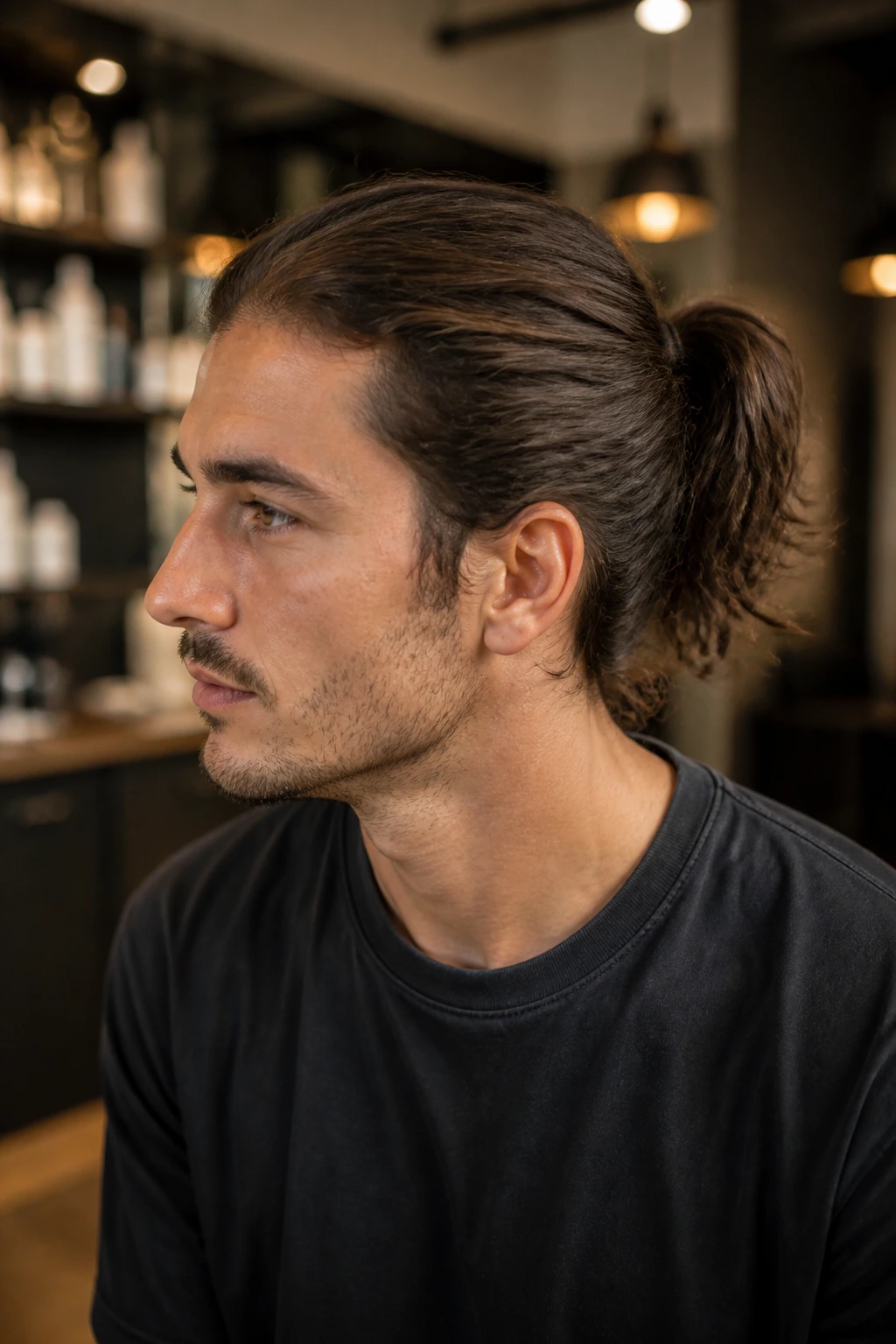
Wavy hair at shoulder length has a built-in advantage. It already wants movement, so the ponytail can feel relaxed without needing much help. This is the style that often looks best when it’s not trying to look perfect.
Why it works: Shoulder-length waves gather easily, but they still keep enough texture to avoid a flat, over-groomed finish. If you tie it too high, the wavy body can bunch up awkwardly. Low or mid placement tends to look more natural, with the tail falling into a soft arc rather than a stiff line.
A little sea salt spray at the roots can help the waves keep their shape after the tie goes in. You do not need much. Too much and the hair gets chalky and rough. If the ends are dry, smooth a touch of cream only on the bottom few inches.
This style is the one I’d call the least needy. It works with a denim jacket, a plain tee, a blazer, or a raincoat. That flexibility is why it keeps showing up in real life, not just in photos.
12. The Taper Fade Ponytail
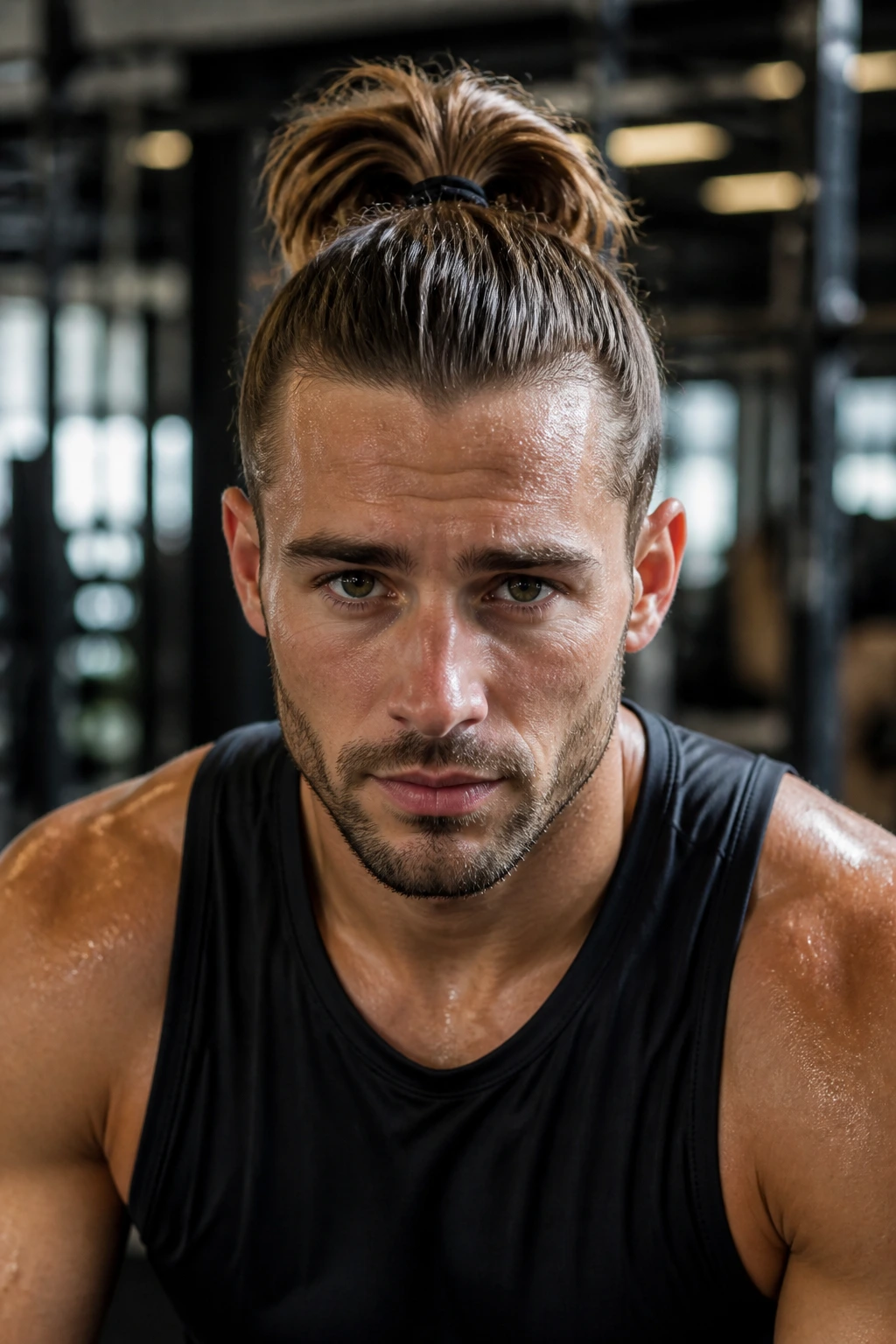
A taper fade ponytail gives you a clean gradient on the sides with longer length on top pulled back into a tie. It’s sharper than a loose mid ponytail and less stark than a full undercut.
Why it works: The taper gives shape around the ears and neckline without removing all softness. You get a neat edge, but the fade still feels human. That makes this one easier to wear if you want the ponytail to look modern without screaming for attention.
Because the sides are already handled by the fade, the top can stay a little looser and fuller. A light cream or styling lotion is enough to keep the top from puffing out. If your barber leaves the fade too high, though, the whole style can start looking top-heavy. The transition matters.
This is one of those styles that looks best when the barber and the ponytail are working together. If the cut is wrong, no amount of tie placement will save it.
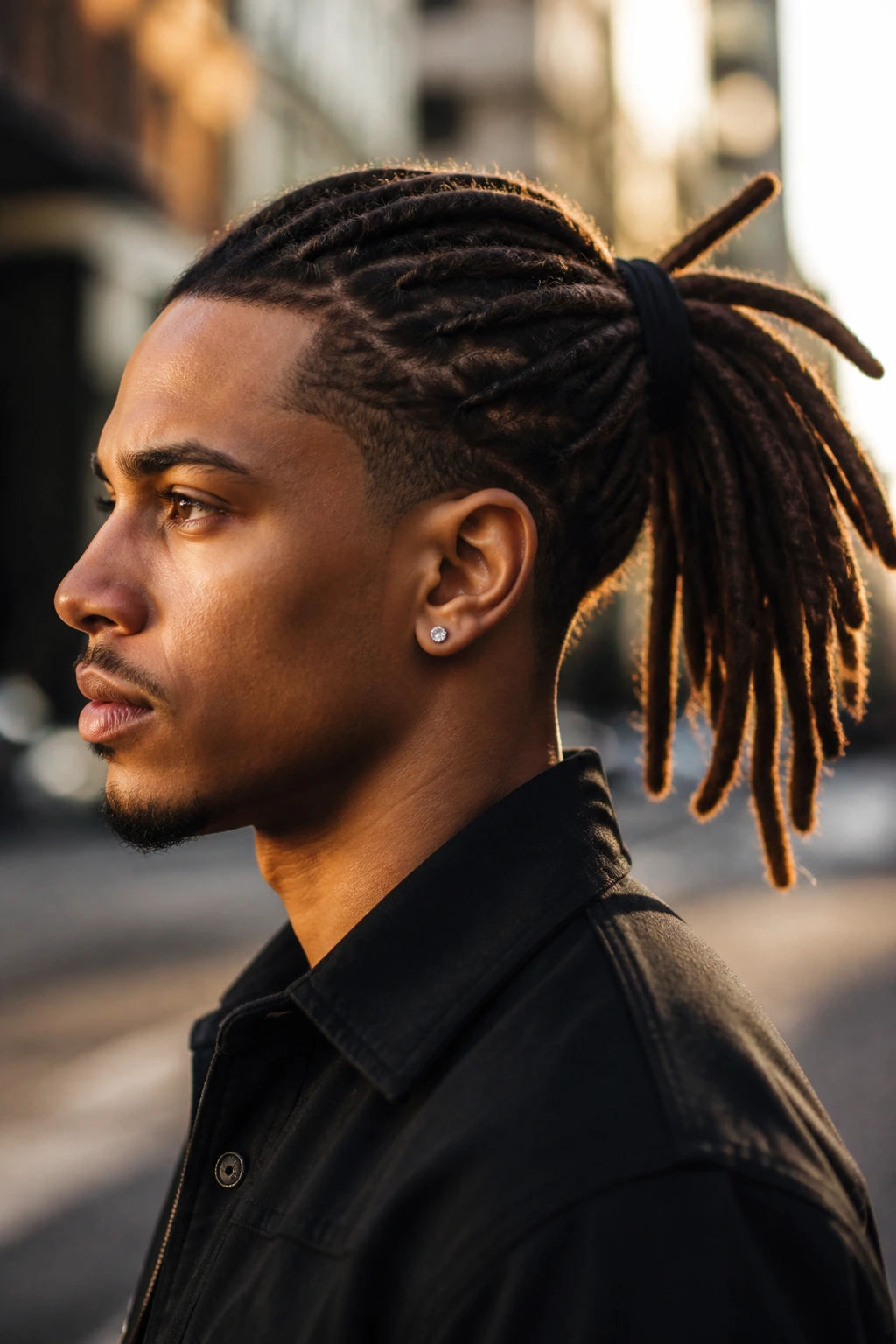
13. The Dreadlock Ponytail
With locs, the ponytail becomes more about weight distribution than control. You’re gathering something that already has structure, so the trick is keeping the roots comfortable and the tie secure without choking the base.
Why it works: Dreadlocks naturally make a ponytail look fuller and more dimensional, even with fewer locs. A wide band or strong elastic spreads the pressure better than a thin tie. That matters. Too much pull at the base can make the scalp sore fast, especially if the locs are long or heavy.
High and low placements both work, but the low tie tends to be kinder on the neck and roots. For active days, a mid-height tie keeps the locs out of the way without bouncing as much. If the hairline is delicate, avoid repeated tight pulls in the same spot.
The look has presence. You don’t need to over-style it. A clean part, a tidy edge-up, and a careful tie usually do more than extra product ever will.
14. The Fine-Hair Tied-Back Ponytail
Fine hair can wear a ponytail. It just needs a softer hand. Pull too hard, and the tail looks thin and the scalp shows more than you want. Pull too loose, and the whole thing falls apart.
Why it works: Fine hair benefits from texture and lift before it’s tied. Dry shampoo at the roots, a light volumizing spray, or a small amount of matte paste gives the strands a bit more grip so the elastic doesn’t slide. The best version of this style usually sits low or mid-height and keeps some softness around the temples.
Small choices that matter
- Use a smaller elastic so the tie doesn’t look bulky.
- Don’t overload the hair with oil.
- Rough-dry the roots before tying.
- Leave a few face-framing pieces if the ponytail looks too sparse.
This is not the style for a heavy wet look. Fine hair usually looks better with lift and a little texture than with shine and strict control.
15. The Thick-Hair Heavy Ponytail
Thick hair has a specific problem: it feels great when it’s down and can feel like a weight when you gather it. The ponytail needs to support the bulk without creating a sore spot at the crown.
Why it works: A heavy ponytail is usually best with a strong elastic, sometimes even a bungee-style tie that grips without needing three wraps. That keeps the ponytail anchored without turning the scalp into a tension test. If the hair is especially dense, a low tie often feels more comfortable than a high one because it distributes the weight better.
What helps
A little leave-in conditioner through the ends keeps the tail from looking dry and stringy. A wide-tooth comb can detangle thick hair without pulling too much out of the line. And if the hair keeps splitting into two ropes, don’t fight it. Let the ponytail sit a bit loose and the shape will look fuller.
The mistake with thick hair is trying to control every strand. You usually get a better result by controlling the base and letting the length do what it wants.
16. The Shoulder-Length Center Part Ponytail
A center part changes the ponytail’s face. Instead of pushing everything straight back, it gives the style a little symmetry before the tie starts. That can be useful if you want the hair to look a touch more composed.
Why it works: The part helps the front sit neatly, especially if the hair naturally splits that way anyway. It can make the ponytail feel more balanced on the head and stop the top from sliding to one side. Shoulder-length hair in particular benefits from this because the part gives the style a defined frame.
This version looks best when the part is clean but not harsh. Use a comb or the tip of a tail comb on damp hair, then tie the ponytail once the front has settled. If you’ve got waves, let a few pieces loosen naturally. Over-correcting with product can make the style look stiff, which defeats the point.
It’s a smart option for men who like a slightly polished finish without going full slick-back.
17. The Office-Ready Neat Ponytail
A neat office ponytail is all about restraint. The hair is smooth, the tie is low, and the edges are clean enough that the style reads as deliberate rather than casual. It doesn’t need shine. It needs discipline.
Why it works: The low placement keeps the profile quiet, which matters in more conservative dress settings. A little smoothing cream helps tame flyaways, but keep it subtle. The goal is hair that sits in one shape all day without looking lacquered.
If your neckline is scruffy, trim it. If your sideburns are uneven, clean them up. This style exposes more of the face and neck than people expect, so the cut around it becomes part of the look. A neat ponytail with ragged edges underneath never really looks neat.
This is the version I’d choose when a man wants to wear long hair into a meeting and not spend the whole time wondering if it’s too much. It isn’t flashy. That’s the point.
18. The Weekend Loose Ponytail
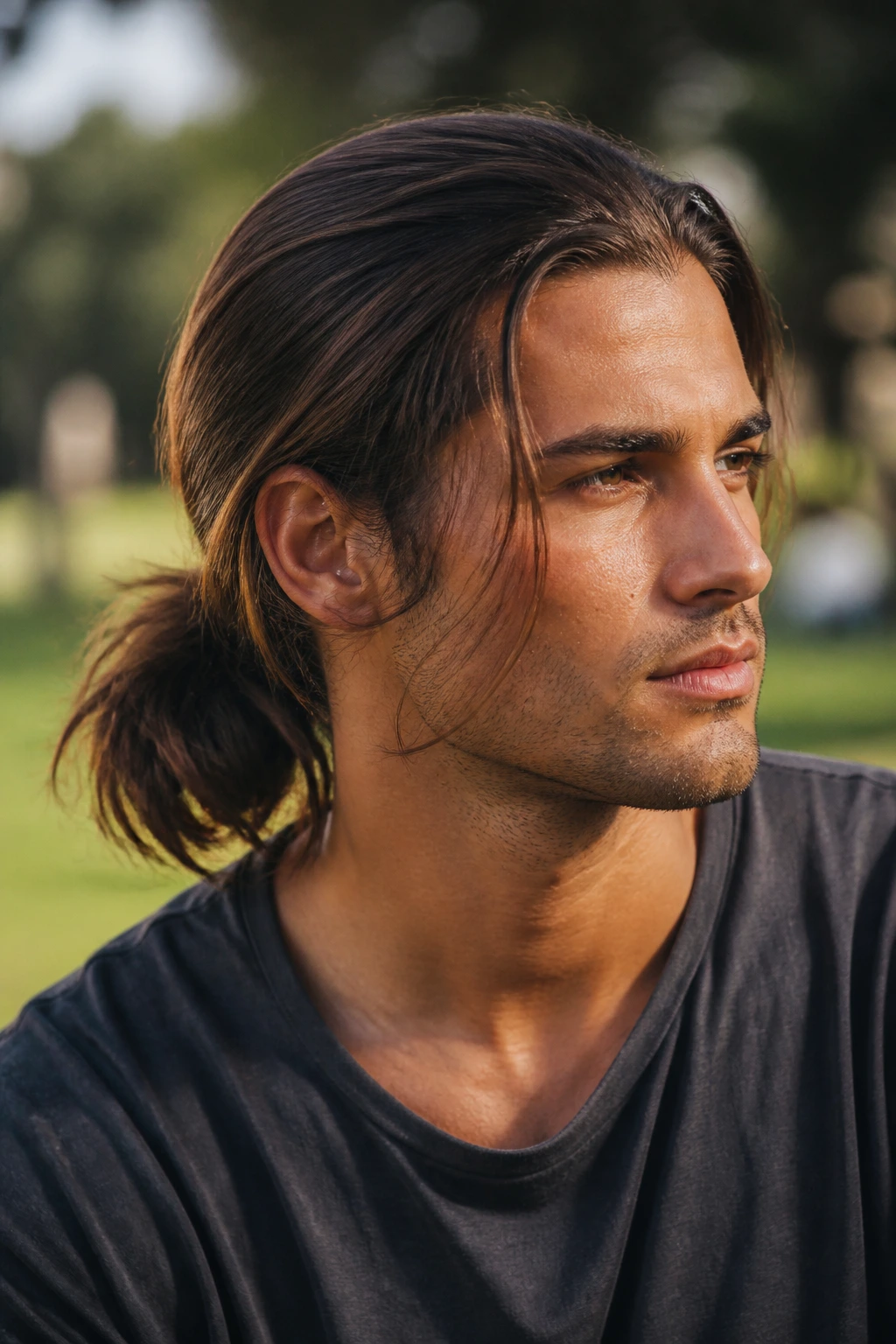
This is the ponytail that forgives a little. The tie sits low or mid-low, the hair isn’t pulled tight, and a few strands are left loose around the face. It has the kind of easy looseness that reads best when the rest of the outfit is simple.
Why it works: Less tension means the hair keeps movement. That movement matters because a fully pulled-back ponytail can start looking severe, especially on men with softer features. A loose version keeps the line relaxed and makes room for natural texture to show through.
There’s a thin line between loose and messy. If the tie sits too low and the tail slips, it looks unfinished. If the front is too wild, the style loses shape. The sweet spot is a ponytail that feels touchable, not accidental.
This one is good when you’ve got a weekend shirt, worn-in jeans, and hair that isn’t freshly styled. It doesn’t need to pretend otherwise.
19. The Accessory-Forward Ponytail
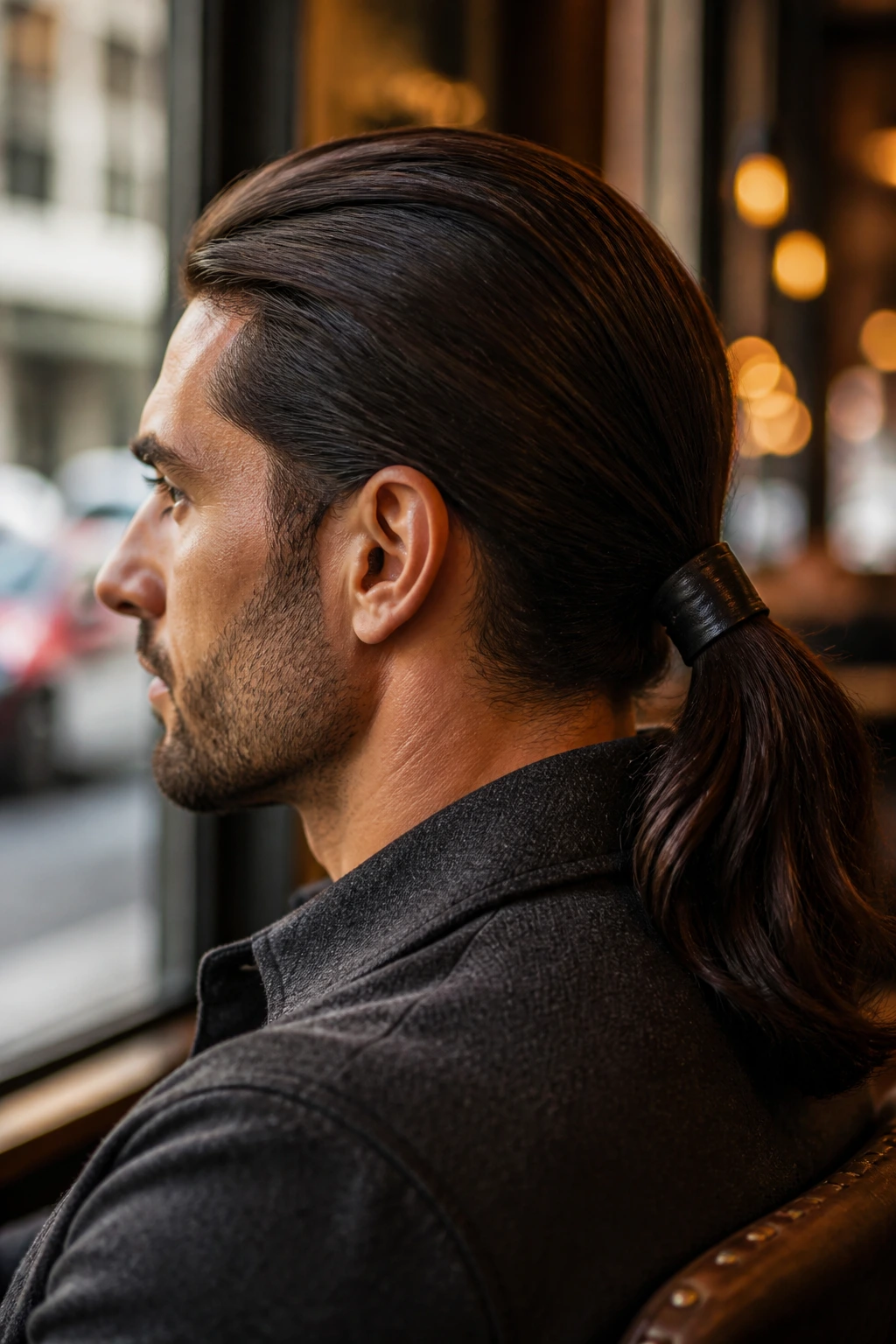
Sometimes the easiest way to make a men’s ponytail stand out is one small accessory. A leather wrap, a metal cuff, a black cord, even a simple fabric tie with a better color can change the feel of the whole style.
Why it works: Accessories give the ponytail a finish point. They make the eye stop somewhere instead of letting the tail dissolve into the shirt collar. A leather wrap can feel rugged. A slim metal cuff feels cleaner and more deliberate. A colored band can shift the style toward fashion without turning it theatrical.
Keep the rest of the look simple. If the ponytail already has an accessory, you do not need product-heavy shine, a complicated braid, and an aggressive fade all fighting for attention. One strong detail is usually enough.
This is a style for men who want the ponytail to feel personal, not generic. The accessory should look like a choice, not a rescue.
How to Pick the Right Ponytail Height for Your Face and Hairline
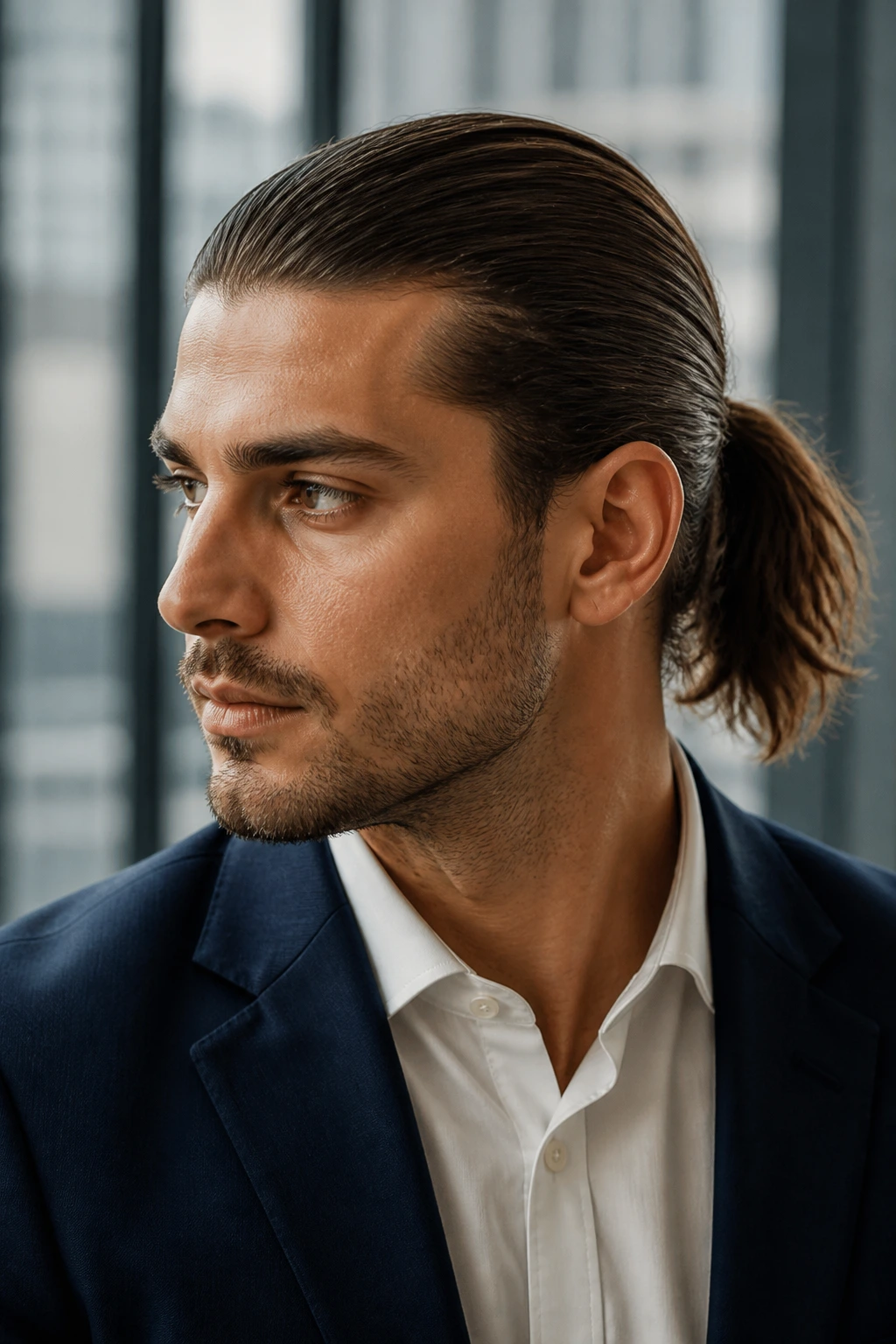
The height of the tie changes the whole read of the style. Low sits quietly. Mid-height feels balanced. High brings energy and exposes the face. That’s not just style talk; it changes how long your face looks, how visible your hairline is, and how much pressure sits on the scalp by the end of the day.
If your forehead is already tall or your temples are thinning, a low or mid tie usually keeps things easier on the eyes. A high tie can work, but it needs the rest of the cut to be in good shape. If your face is round, a higher ponytail can add vertical lift. If your face is long, a lower tie with a little width at the sides keeps the balance from getting stretched out.
A simple way to think about it
- Low: calm, clean, less tension
- Mid: most flexible, easiest to live with
- High: athletic, sharp, more face exposure
Hairline matters, too. A ponytail that pulls the front hair too hard makes thin areas stand out faster, so if your temples are delicate, a looser gather and a lower placement are kinder. Sometimes the better move is not “what looks coolest,” but “what lets you wear it all day without thinking about it.”
Essential Tools for Men’s Ponytail Styling
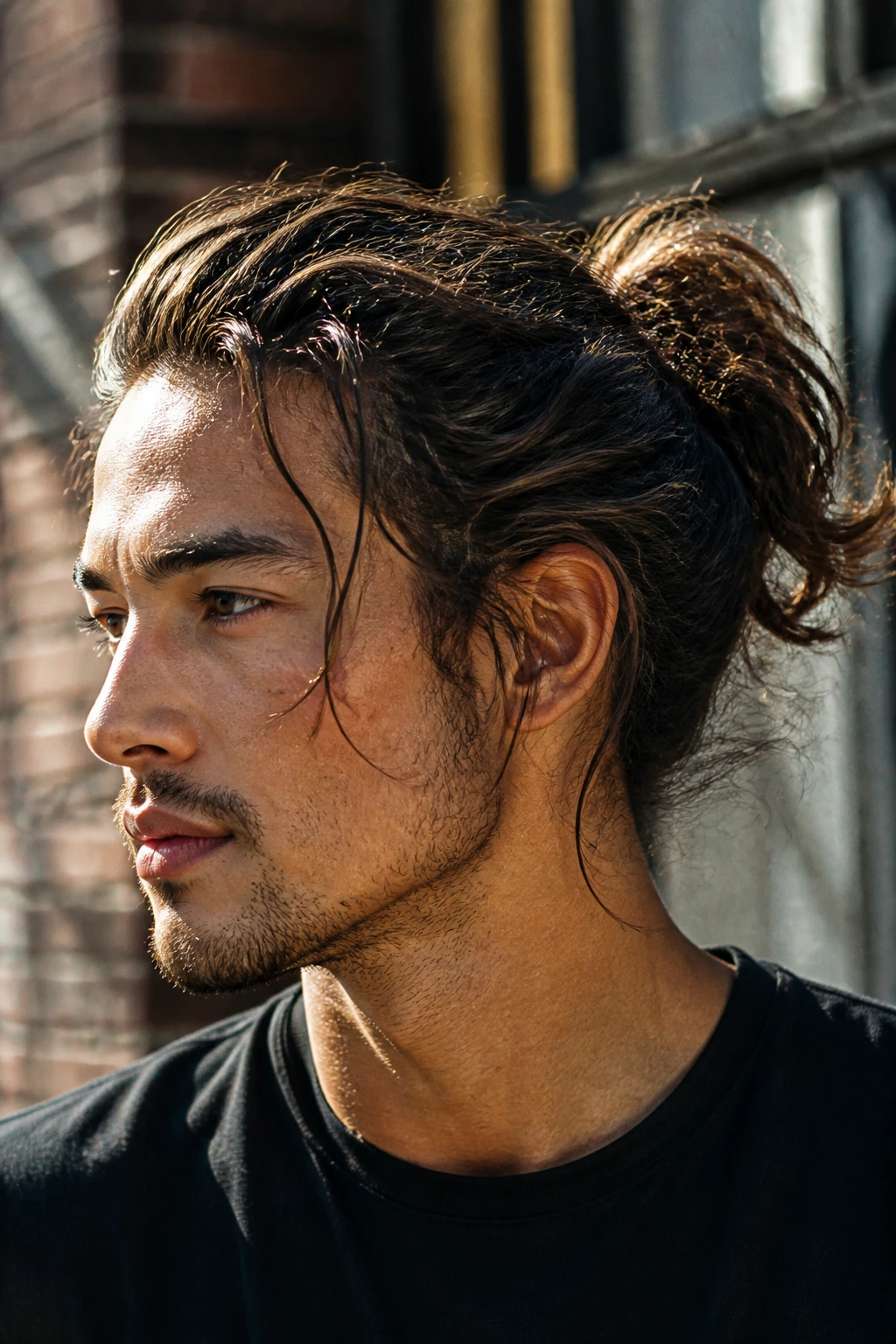
You don’t need a drawer full of gear. A few good tools cover most of these styles, and the right ones save time every single morning.
- Snag-free elastics: Small, soft bands hold without chewing up the hair or leaving a hard bend.
- Wide-tooth comb: Best for detangling thick, curly, or wavy hair before tying.
- Tail comb: Useful for clean parts, slick-back styles, and more exact placement.
- Matte styling cream or paste: Gives control without shiny buildup.
- Sea salt spray or texture spray: Helps loose, wavy, and messy styles keep shape.
- Leave-in conditioner: Handy for dry ends, curls, and long hair that tangles easily.
- Bungee tie: Worth having if your hair is thick and regular elastics keep slipping.
- Hand mirror: A small one helps check the back of the head so the tie doesn’t drift off-center.
One good elastic often matters more than three fancy products. Seriously. If the tie is wrong, the rest is just decoration.
Choosing Bands, Creams, and Sprays That Actually Hold
The styling aisle is full of nonsense, and most of it is too shiny, too sticky, or too soft to matter. For ponytails, you want products that help the hair grip, settle, and stay put without turning stiff by noon.
Look for matte creams, light hold pastes, and flexible texture sprays if you want control without crunch. Heavy gels have their place for slick styles, but they can make the hair feel tacky and expose flakes when they dry out. If your hair is fine, stay away from thick waxes that weigh it down. If your hair is coarse, choose products with a little more slip so you can comb them through cleanly.
For bands, thin is not always better. Thin elastics can be harsh on dense hair. Wider, softer ties spread the pressure and are easier on the scalp. Spiral bands can be useful if your hair slips a lot, though they sometimes leave a less polished look. Leather wraps and metal cuffs are about finish, not hold, so treat them that way.
A good rule: pick the lightest product that still gives you control after 20 minutes of normal movement. If it feels perfect in the mirror but falls apart when you put on a jacket, it’s too weak. If it feels glued down, it’s too strong.
How to Wear These Styles Without Looking Overworked
Presentation: Keep the tie where the style makes sense, not where it looks dramatic in a photo. A low ponytail should sit close to the nape with the sides smoothed back; a high one should show lift through the crown. The front matters just as much as the tail, because that’s what people see first.
Accompaniments: Beards, fades, collars, and hats all change the read. A ponytail with a beard can look balanced and strong if the neckline is trimmed. A ponytail with a fade feels sharper. A hoodie and a loose ponytail feel casual. A blazer and a neat low tie can work if the edges are clean enough.
Length: If the hair barely reaches the tie point, go lower and keep the tension soft. If it hangs past the shoulders, you can afford braids, knots, or heavier accessories. Don’t force a style that needs more length than you have. It will show.
Setting: Athletic, office, date night, weekend, travel — the same tie can move between them if you adjust the polish. More smoothing for formal settings. More texture for off-duty wear. More control for sport. It’s a small thing, but it changes how the whole head reads.
Extra Tips and Small Upgrades
Texture Boost: If your ponytail looks flat at the crown, mist dry hair with texture spray before gathering it, then lift the roots with your fingers instead of a brush.
Time-Saver: Keep one elastic on your wrist and one in your bag. The second one saves you when the first stretches out or snaps, which seems to happen at the worst possible moment.
Polish Move: Wrap a small section of hair around the elastic and pin the end underneath. It hides the band and makes the style look finished in a way that takes less than a minute.
Fix-It Tip: If the ponytail keeps sliding down, the problem is often product buildup or hair that’s too slippery. Blow-dry the roots for 20 to 30 seconds on low heat, or add a touch of dry shampoo for grip.
Low-Cost Upgrade: A wide-tooth comb and a pack of good elastics do more for the style than most expensive grooming products. Boring answer. True answer.
Common Mistakes That Make a Ponytail Look Sloppy
The first mistake is tying it too tight. People do this because they want the style to stay put, but over-tightening creates a harsh line at the scalp, flattens the top, and can make the head look smaller. Fix it by loosening the first pull just a little and anchoring the elastic with a second, softer wrap if needed.
The second mistake is placing it without checking the back. A ponytail that drifts to one side looks accidental fast. Use a hand mirror once in a while, especially with mid and low placements.
Third: too much product. Heavy cream, oily serum, and strong gel all at once can make the hair look stringy or dirty by lunch. Pick one main product and use a small amount. If the hair still needs control, add a touch more at the ends, not the roots.
Fourth: ignoring the edges around the hairline and neck. Even the best ponytail looks rough when the sideburns are wild or the neckline is fuzzy. That doesn’t mean every style needs a barber-level cleanup. It does mean the ponytail and the cut around it should look like they belong to the same person.
Fifth: pulling the same spot every day. Repeated tension at the same line can make the roots ache and, over time, can thin the edges. Rotate the height a little and give your scalp a break when you can.
Variations and Adaptations to Try
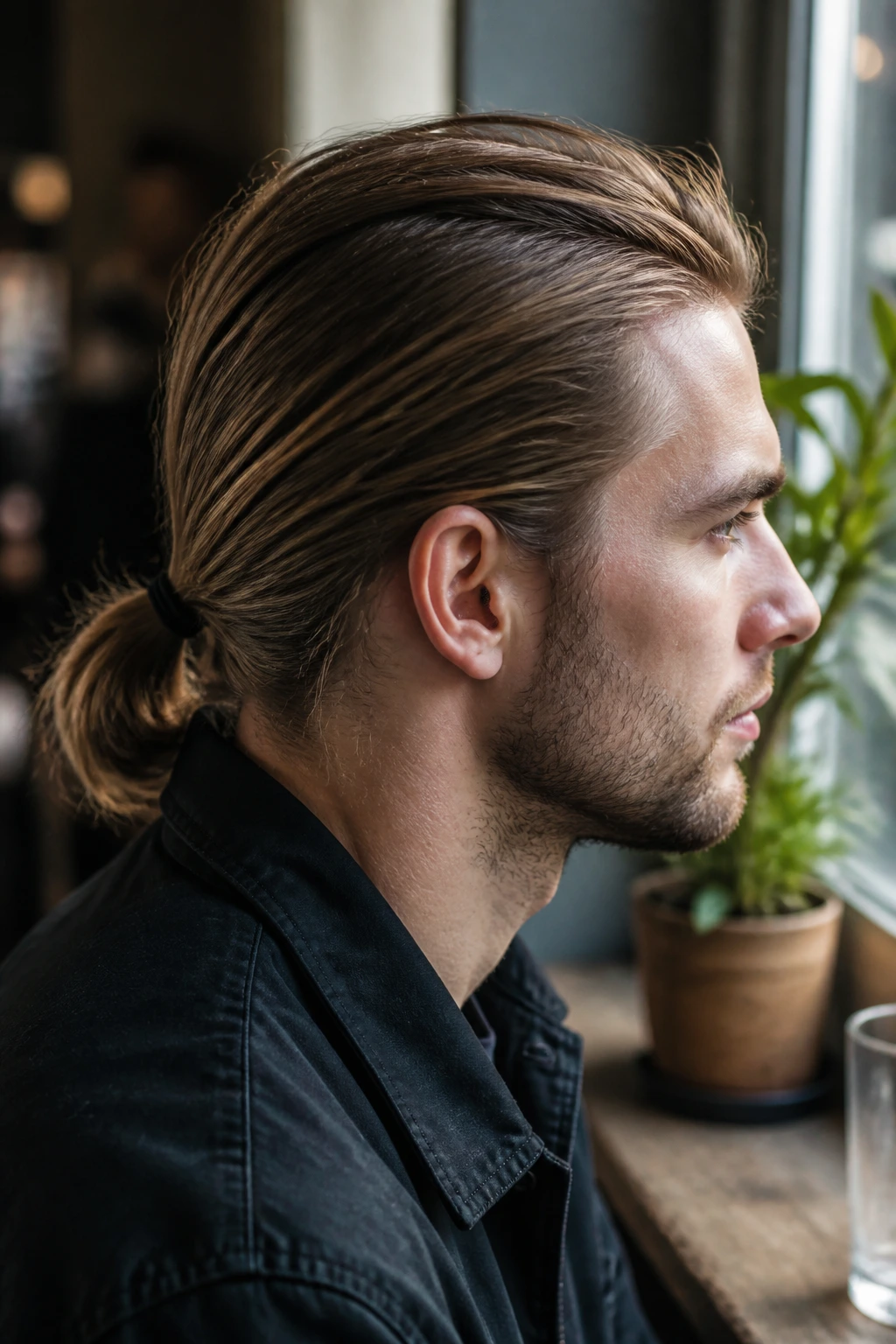
The Beard-Balanced Version: Let the ponytail stay low and neat while the beard carries some of the visual weight. This works well if you want the hair up top to stay calm and the lower face to do the talking. It’s especially clean with a tapered neckline and a medium beard length.
The Gym-to-Street Version: Start with a high athletic ponytail, then loosen the front a touch and switch to a matte finish once you’re done training. The style keeps its shape, but it won’t look like you’re still in the locker room.
The Curly Fringe Version: Keep a few curls loose at the front instead of slicking everything back. The ponytail still controls the length, but the face gets some softness. Good choice if a fully pulled-back style makes your features look too severe.
The Braided Detail Version: Add one braid on each side before gathering the hair into the tail. That little bit of structure helps thick hair stay organized and gives a regular ponytail more edge without turning it into a full braided style.
The Minimalist Office Version: Low tie, light cream, clean sides, no accessory. That’s it. If you need your hair to disappear into the background, this version is the one to trust.
Care, Wash Days, and Overnight Maintenance
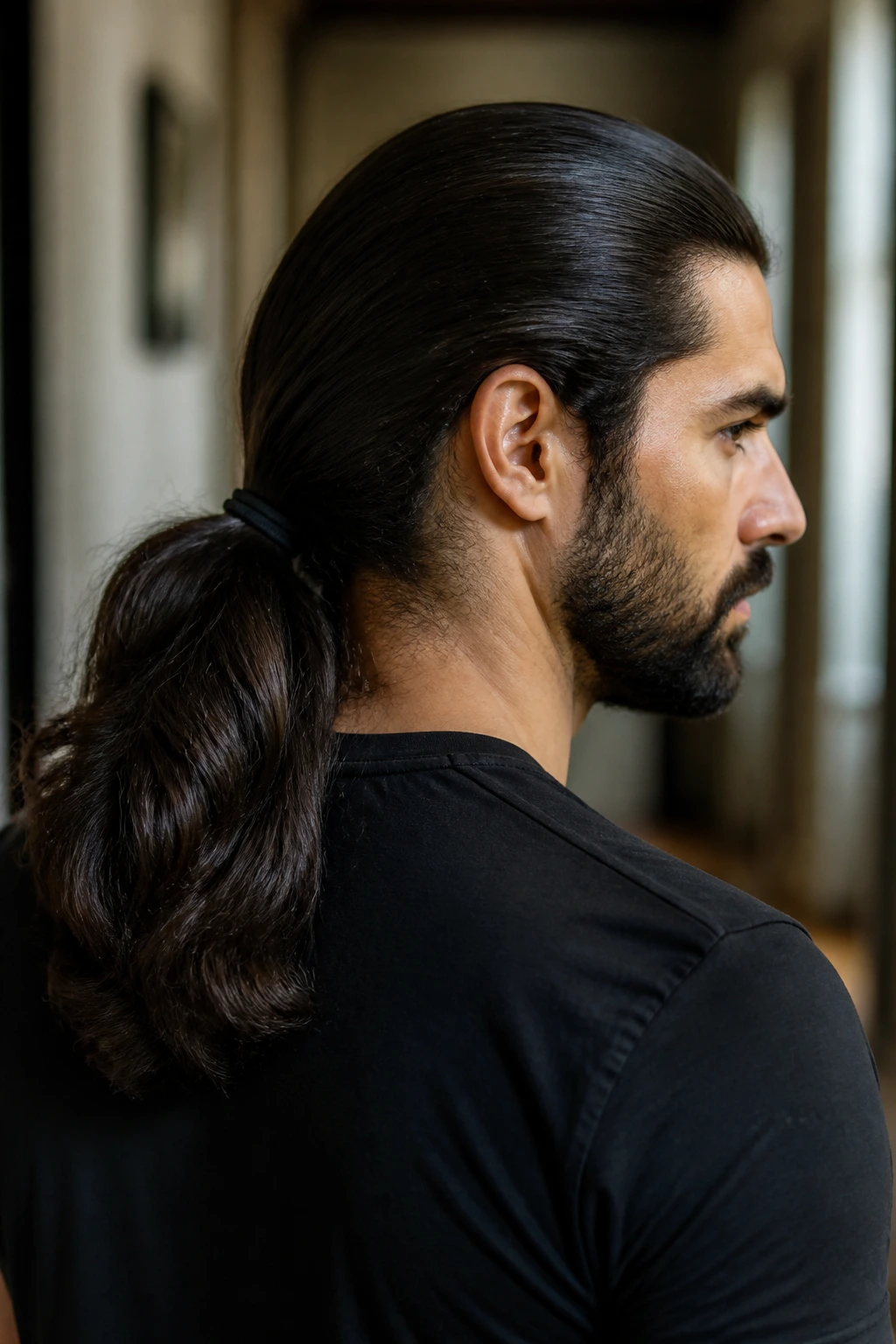
Hair that lives in ponytails needs care in a way short cuts don’t. The tension, the friction from collars, and the regular tug from elastics all add up. Wash frequency depends on your hair and scalp, but most men don’t need to shampoo every day unless they’re sweating hard or using heavy product. A light conditioner on the lengths keeps the tail from turning rough and knotty.
At night, a loose tie is kinder than sleeping with the hair free if the hair tangles easily. Use a soft band and keep it low. A satin pillowcase helps more than people expect because it cuts down on friction along the tail and the nape. If your hair is curly or very dry, a small amount of leave-in on the ends before bed can stop that brittle morning feel.
If you’re wearing the same ponytail style for several days, shift the tie placement a little each day. Not much. Half an inch can be enough. The point is to stop the roots from taking the exact same stress line over and over.
Frequently Asked Questions About Ponytail Styles for Men
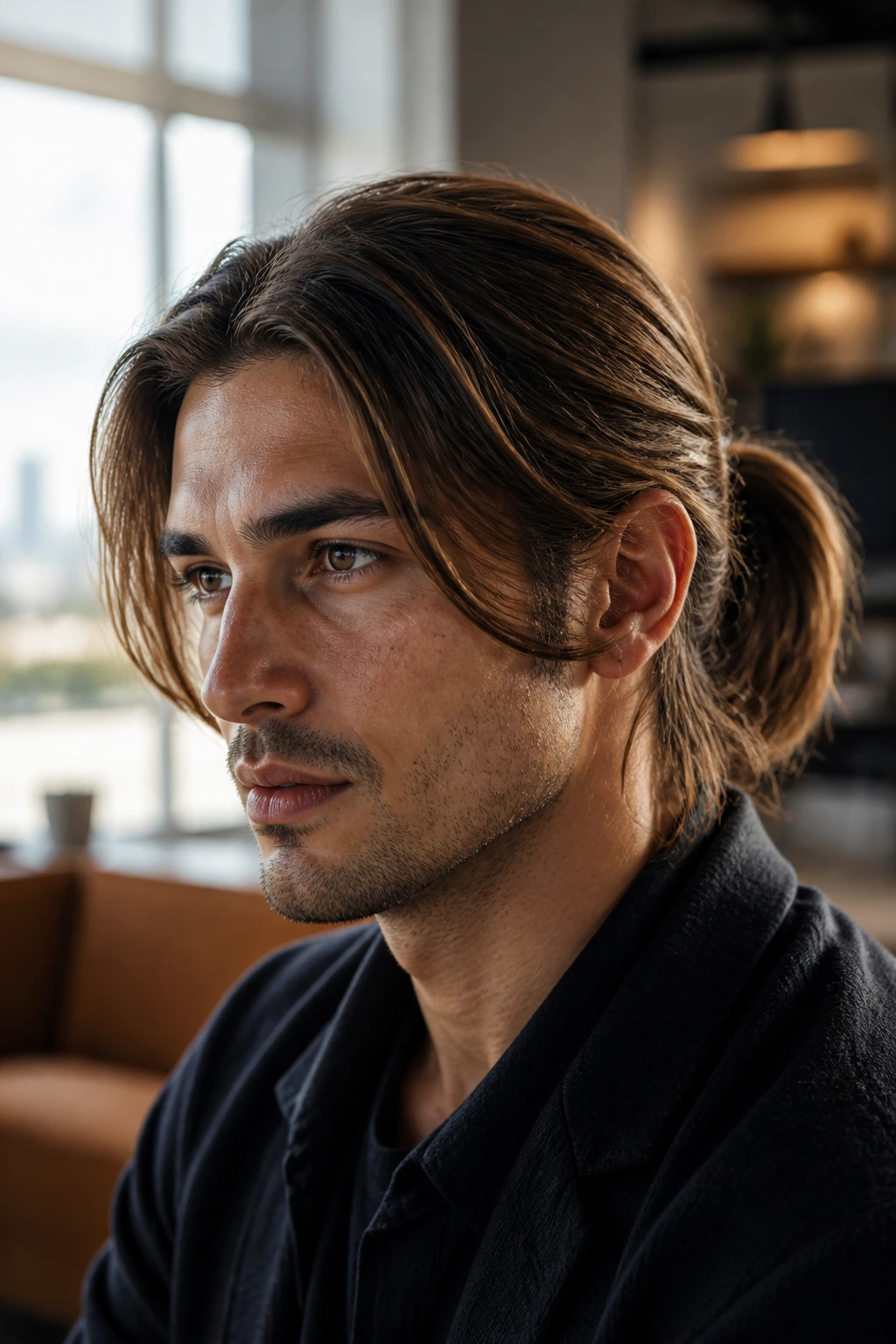
How long does hair need to be for a men’s ponytail?
Most men can gather a low ponytail once the hair reaches around 5 to 6 inches, though cleaner styles usually need more. If the hair is layered or very fine, you may need extra length before it sits without slipping apart.
Which ponytail style is best for a receding hairline?
A low nape ponytail or loose mid-height tie usually works best because it keeps tension away from the temples. Avoid pulling the hair back hard from the front, since that exposes the thinner areas more than you probably want.
Can men wear ponytails with short sides or a fade?
Yes, and that contrast is exactly why undercut and taper-fade ponytails look so crisp. The key is keeping the transition around the ears and neckline tidy so the cut and the ponytail don’t fight each other.
What’s the easiest ponytail style to start with?
The low nape ponytail. It’s forgiving, it doesn’t demand a perfect part, and it works with straight, wavy, or slightly thick hair better than most other beginner options.
How do I stop my ponytail from slipping out?
Use a smaller or stronger elastic, tie it on hair that has a bit of texture, and avoid heavy oils at the roots. If your hair is very smooth, dry shampoo or texture spray at the crown gives the elastic something to grab.
Are ponytails bad for hair?
A ponytail can be rough on the hair if it’s too tight, always tied in the same place, or secured with a harsh elastic. Rotating the placement, using softer bands, and not yanking on damp hair keeps the strain lower.
Can I wear a ponytail with curly or coily hair?
Absolutely. Curly and coily hair often looks best in ponytails that leave the texture visible instead of trying to flatten it. Wide bands and gentle product matter more than strict smoothing.
What if my hair is thick and the ponytail looks like a giant lump?
Split the styling job in two: control the roots with a clean comb-through, then let the tail sit a little looser. A braid or samurai knot can also reduce the bulk without making the hair look smaller than it is.
The Ponytail That Fits Your Hair
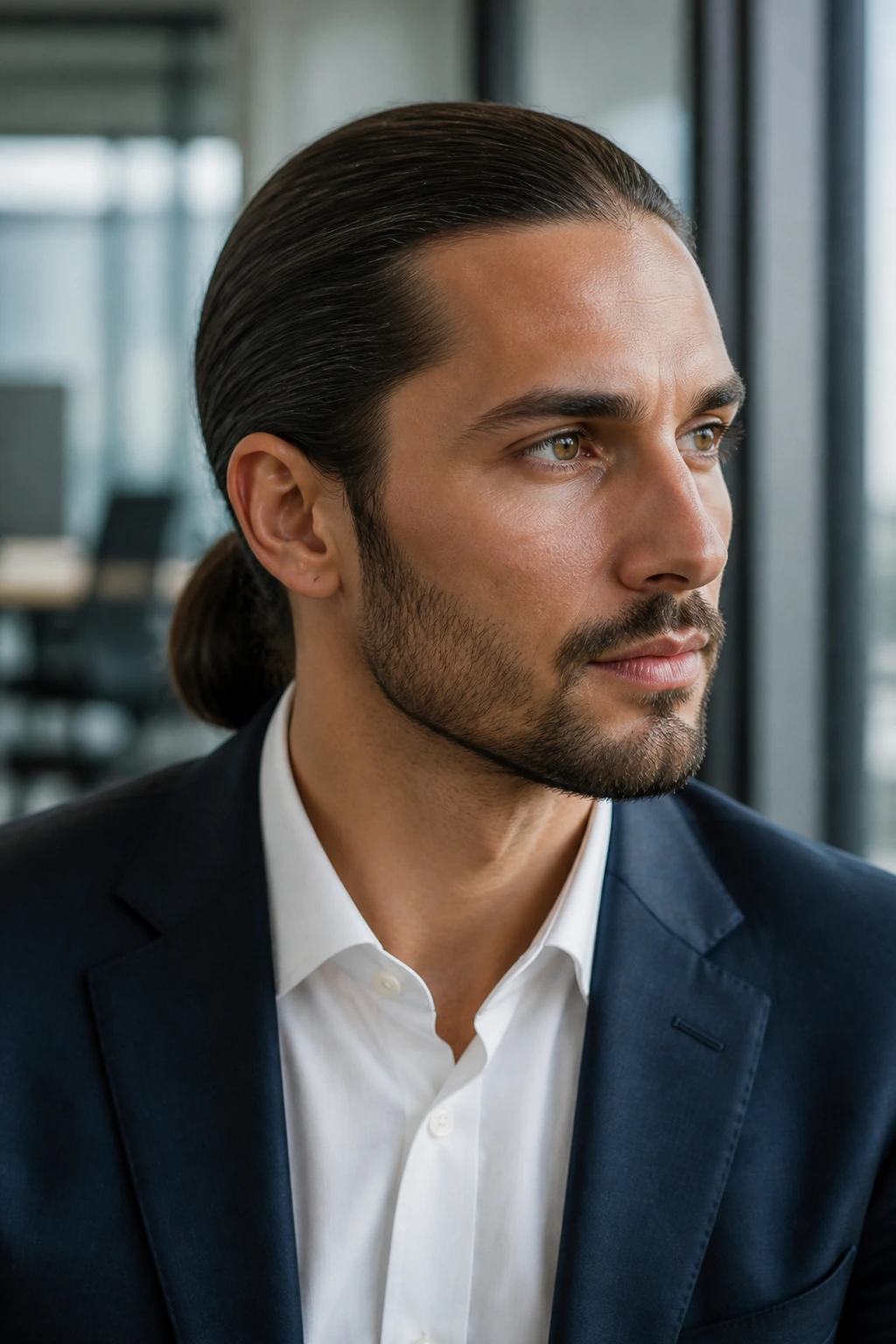
The best men’s ponytail is the one that works with your length, your hairline, and the way you actually live. Some styles lean neat and quiet. Others carry more edge. A few are built for sweat, collars, and rushed mornings. None of them need perfection. They need the right placement and a bit of restraint.
That’s the part people often miss. A ponytail is not one look. It’s a whole set of choices, and a small adjustment at the nape or crown can change the whole thing. Pick the version that matches your hair instead of fighting it, and the style starts doing the work for you.
