



Medium-length wavy hair has a stubborn little habit: it looks best when you stop trying to flatten it into submission. Leave too little length and the bends pop out in odd places. Leave too much without shape and the whole thing drifts into triangle territory, especially around the ears and crown. The sweet spot sits somewhere around 4 to 7 inches on top, with enough weight left in the front and sides to let the waves fold instead of fight.
That’s why wavy hairstyles for men with medium length hair are such useful cuts. They can look clean with a side part, loose with a center part, or rough and relaxed with layers and texture. The same head of hair can read sharp at work and easy on a weekend, which is a nice trick when you don’t want a different haircut for every part of life.
A good cut here is less about forcing shape and more about guiding the wave pattern you already have. Where the weight sits matters. So does the taper at the temples and nape. And if your hair swells a bit after washing, which wavy hair often does, the best style is the one that still looks intentional when it’s not freshly blown out. That’s the standard worth using.
Why Medium-Length Waves Work So Well

-
The wave pattern has room to show itself: At medium length, bends can stack and move instead of springing out like a short crop or collapsing like long hair with no shape.
-
Small changes make a big visual difference: Shift the part, brush the front forward, or push it back with your fingers and the whole haircut changes character.
-
The grow-out is kinder: Layered medium cuts usually look better four weeks later than tighter, shorter styles with hard lines around the ears.
-
Product doesn’t have to do all the work: A light cream, matte paste, or sea salt spray is often enough; you do not need to lacquer your hair into place.
-
Face shape gets more room to breathe: Fringe can shorten a long face, height can stretch a round one, and a center part can calm a strong jawline without making the style feel stiff.
-
Barbers can work with your texture instead of against it: A few well-placed layers, some point-cutting, and a clean taper usually beat a blunt chop every time.
1. Curtain Flow with a Soft Middle Part
The curtain flow is the easy answer when you want your waves to look deliberate without looking overworked. Hair falls away from a soft middle part, usually with 5 to 6 inches on top and enough length at the temples to let the fringe fold naturally.
Why It Works
The middle split gives the wave pattern a lane to travel down. Instead of fighting the direction, the cut lets the bends separate and settle on their own. Ask your barber for soft layers through the top and a low taper around the ears so the shape doesn’t balloon out.
A little leave-in conditioner or lightweight cream is usually enough. Comb it through damp hair, push the front apart with your fingers, and let it dry with some movement. The result should feel relaxed, not polished to death.
2. Textured Side Part with a Low Taper
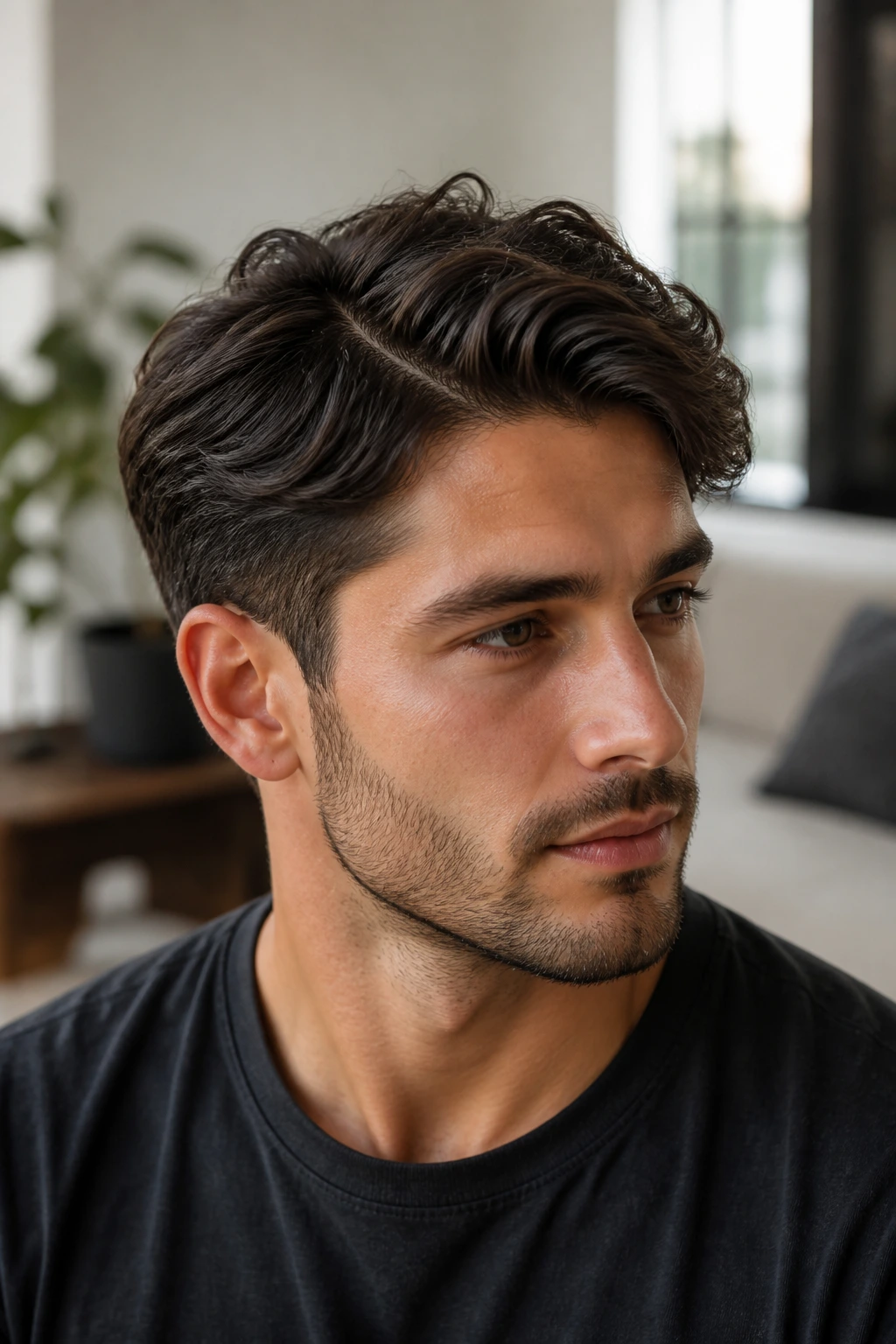
A side part on wavy hair can look sharp fast, but only if the part is soft and the top has texture. Keep about 4 to 5 inches on top, with the sides cleaned up in a low taper instead of a hard disconnect.
The nice part is that this style gives you structure without making the wave disappear. Use a matte paste or styling cream, work it through towel-dried hair, then comb the top over just enough to show the part line. Don’t chase perfect symmetry. A little uneven movement is the whole point.
If your hair tends to puff at the temples, this cut handles that better than a blunt, all-over length. It gives the sides shape and leaves the top with enough body to bend instead of puffing out. Clean. Controlled. Still human.
3. Modern Bro Flow
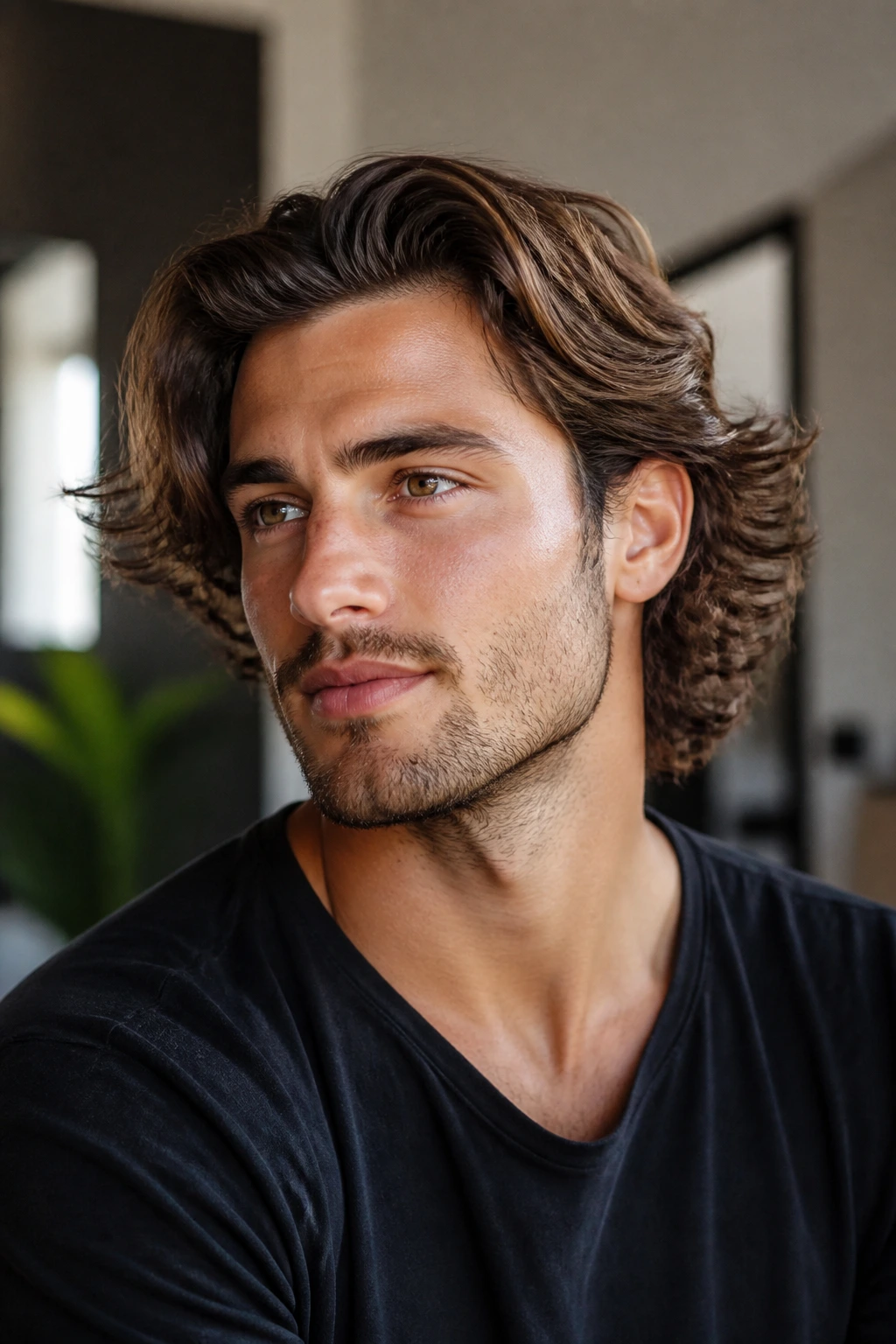
Bro flow gets a bad rap when people picture overgrown college hair. A good version is cleaner than that. The back sits past the ears, the front brushes the brow line, and the layers keep the ends from looking like one heavy curtain.
What Makes It Different
This cut works because the weight stays lower and more even through the sides and nape. On wavy hair, that means the hair moves back in soft sections instead of forming a solid sheet. Ask for long layers and a gentle cleanup around the neckline, not a harsh fade.
A bit of sea salt spray on damp hair gives it grip. Then let it air-dry or rough-dry with your hands. The best bro flow has a touch of mess to it. If it looks too neat, you’ve probably overcombed it.
4. Wavy Quiff with Lift at the Front
Need some height? The wavy quiff is your move. Keep the front long enough to stand up—around 4 to 5 inches—and taper the sides so the top has room to rise without turning wide.
A quiff on wavy hair has a nicer texture than a straight-haired version. It looks less lacquered and more alive. Blow-dry the front up and slightly back while lifting the roots with a vent brush or your fingers, then finish with a matte clay or mousse depending on how much hold you want.
The trick is not to freeze it into a helmet. Leave the front pieces a little separated. If the wave pattern breaks across the top, even better. That irregular texture is what keeps the style from looking like a bank manager’s haircut from the wrong decade.
5. Messy Brush Back
A brush-back style on medium wavy hair should never look like you combed it for a photo and then stopped. It works when the front moves back, the crown keeps some lift, and the sides are tapered enough to keep the whole head from ballooning.
Use a medium-hold cream or a small amount of pomade on damp hair. Push it back with your fingers first, then use a comb only where you need shape near the part or hairline. That’s the move. Fingers do the soft work; combs do the cleanup.
Why I Like It
This cut is forgiving on second-day hair, which is when waves often look their best anyway. It can take a bit of wind, a little humidity, and a long workday without collapsing into a flat sheet. If you want something easy that still looks like you cared, this one earns its keep.
6. Tapered Fringe with Piecey Ends
A tapered fringe is one of the smartest ways to use medium-length waves if your forehead feels long or your hairline is uneven. The fringe sits forward, not heavy, and the edges break into pieces rather than one blunt line.
Ask for texture at the front and a gentle taper on the sides and back. The goal is a fringe that skims the brows, not one that hangs in your eyes all day. Styling cream works better than stiff gel here because it lets the ends separate instead of clumping.
This style has a nice casual edge. It doesn’t scream for attention. It just fixes proportions quietly, which is often the better move.
7. Slicked-Back Waves with Natural Separation
Slicked-back waves are a different animal from straight-hair slick backs. On wavy hair, the goal is not a glassy surface. It’s a controlled back sweep that still shows the bends.
Keep enough length on top—around 5 inches or a little more—and ask for shorter sides with a low fade or taper. Use a light pomade or gel-cream on damp hair, then comb it back while the hair still has some give. If your waves are strong, they’ll create little ridges of texture across the top. That’s good.
Too much product ruins this look fast. It turns the hair dark, heavy, and sticky. Use less than you think. You want movement when you turn your head, not a shell.
8. Medium Shag with Shorter Layers
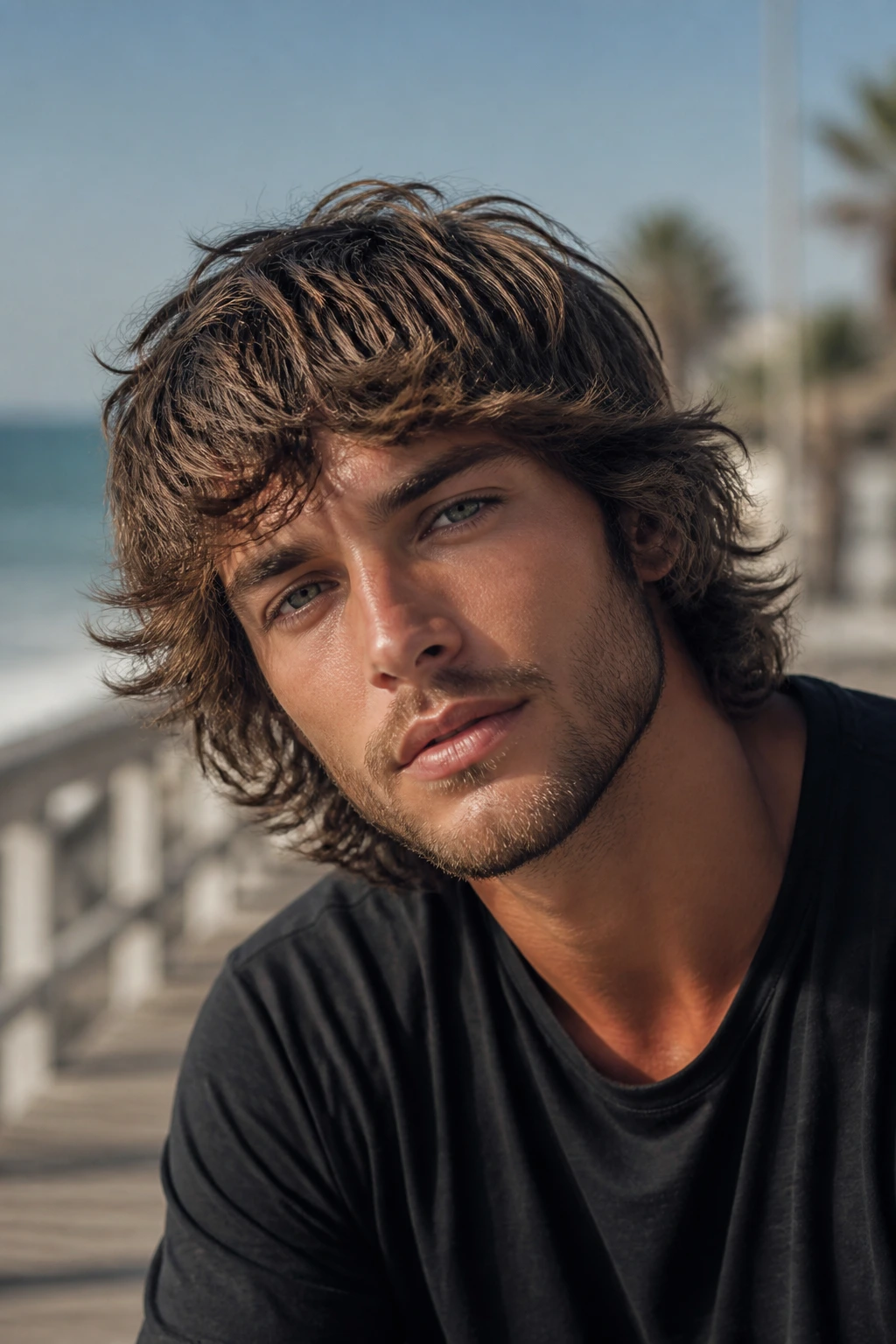
The medium shag is what happens when waves are allowed to breathe. Shorter layers around the crown and sides stop the haircut from turning into a triangle, while the length through the front keeps the shape loose and lived-in.
How to Wear It
Air-dry it when you can. If you must blow-dry, use a diffuser or rough-dry with low heat and your hands. Sea salt spray or a light mousse works well because the cut already does most of the structural work.
This one is especially good if your waves get bigger when they dry. The layers break up that bulk before it starts to puff. It’s not the neatest haircut on this list, and that’s exactly why it works.
9. Layered Mop Top
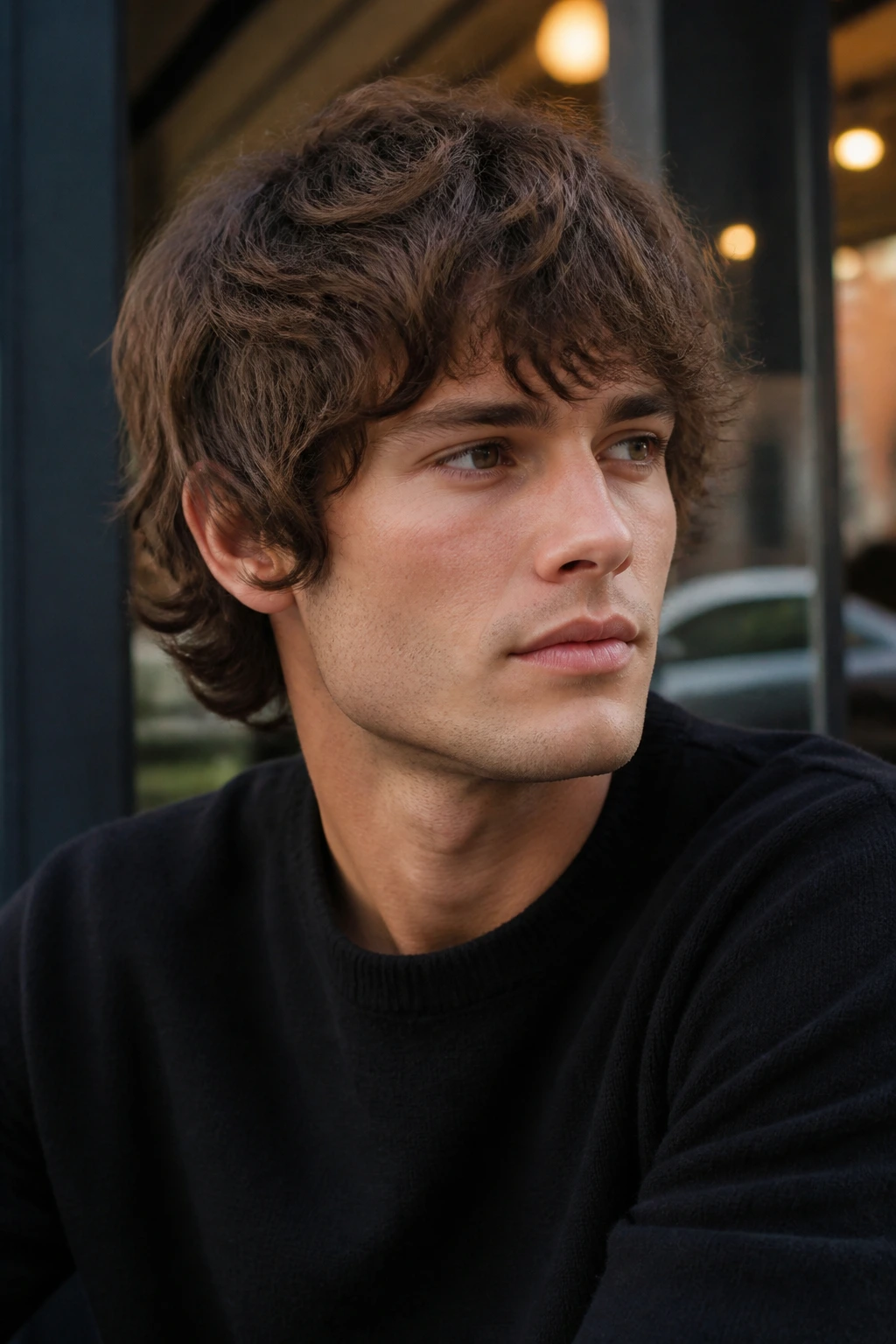
The layered mop top sits somewhere between playful and practical. The top stays full, the fringe gets texture, and the sides keep enough weight to avoid the bowl-cut problem that ruins this shape when it’s cut too blunt.
A good mop top has movement at the crown and a slightly irregular fringe. Ask for point-cut ends and soft layers around the ears. If your hair is thick, that debulking matters a lot. Without it, the style can sit like a cap.
Use a matte product or leave it almost bare with just a touch of cream. The haircut should show the wave pattern on its own. That’s the whole point. You’re not building architecture here. You’re letting the texture do the work.
10. French Crop with a Wavy Fringe
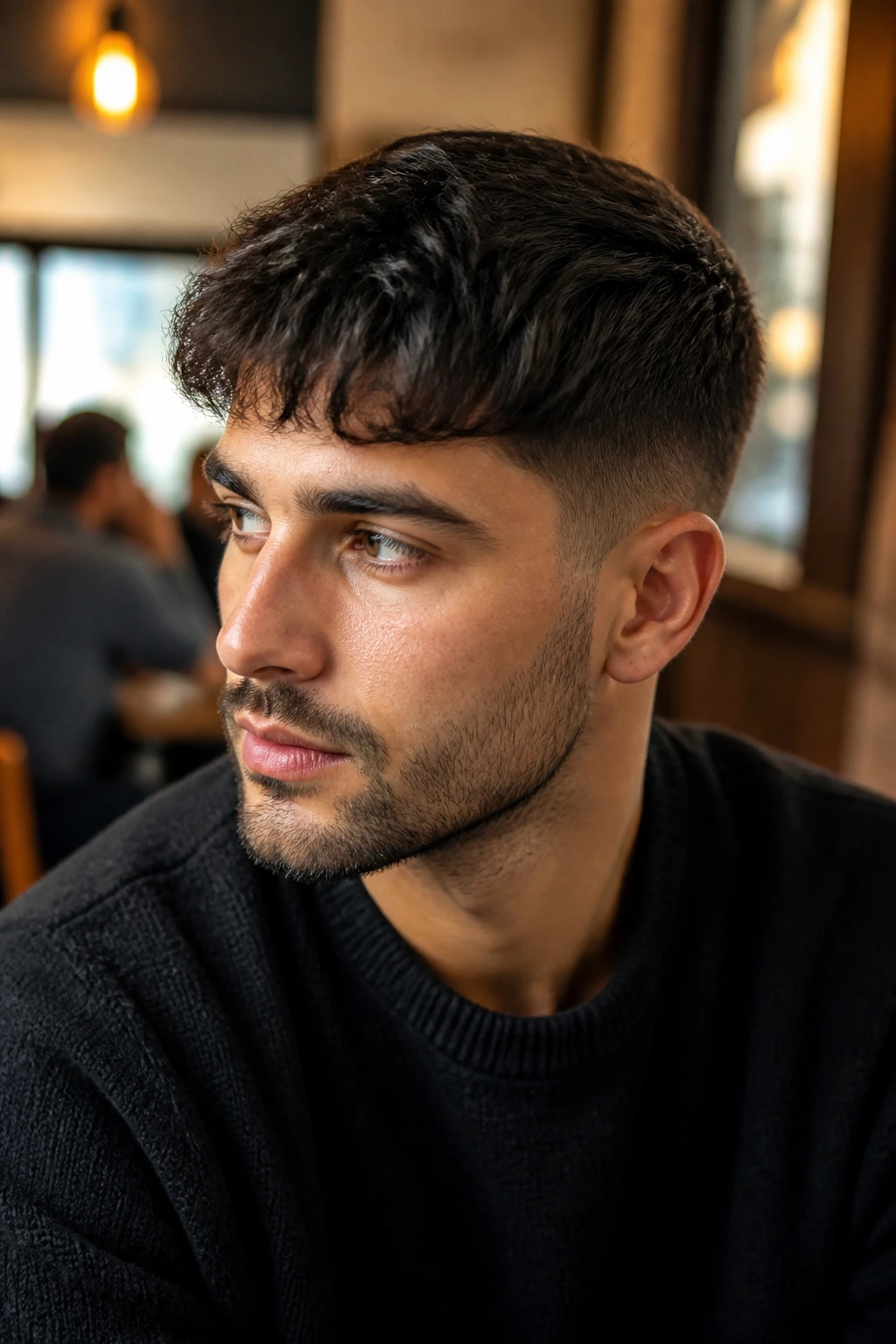
A French crop usually sounds short, but on medium wavy hair it can read much softer and more textured. Keep the fringe longer and piecey, with the sides tight enough to make the front look intentional.
This version is good for men who want something low-fuss but not severe. The waves at the front break up the crop and keep it from feeling too military. It also handles awkward cowlicks better than a blunt straight-across fringe, which is a nice bonus.
A dab of matte paste scrunched into the front is enough. If you want more definition, use your fingertips to pinch a few pieces forward. Don’t comb it flat. That kills the texture before it gets a chance to do anything interesting.
11. Center-Parted Flow
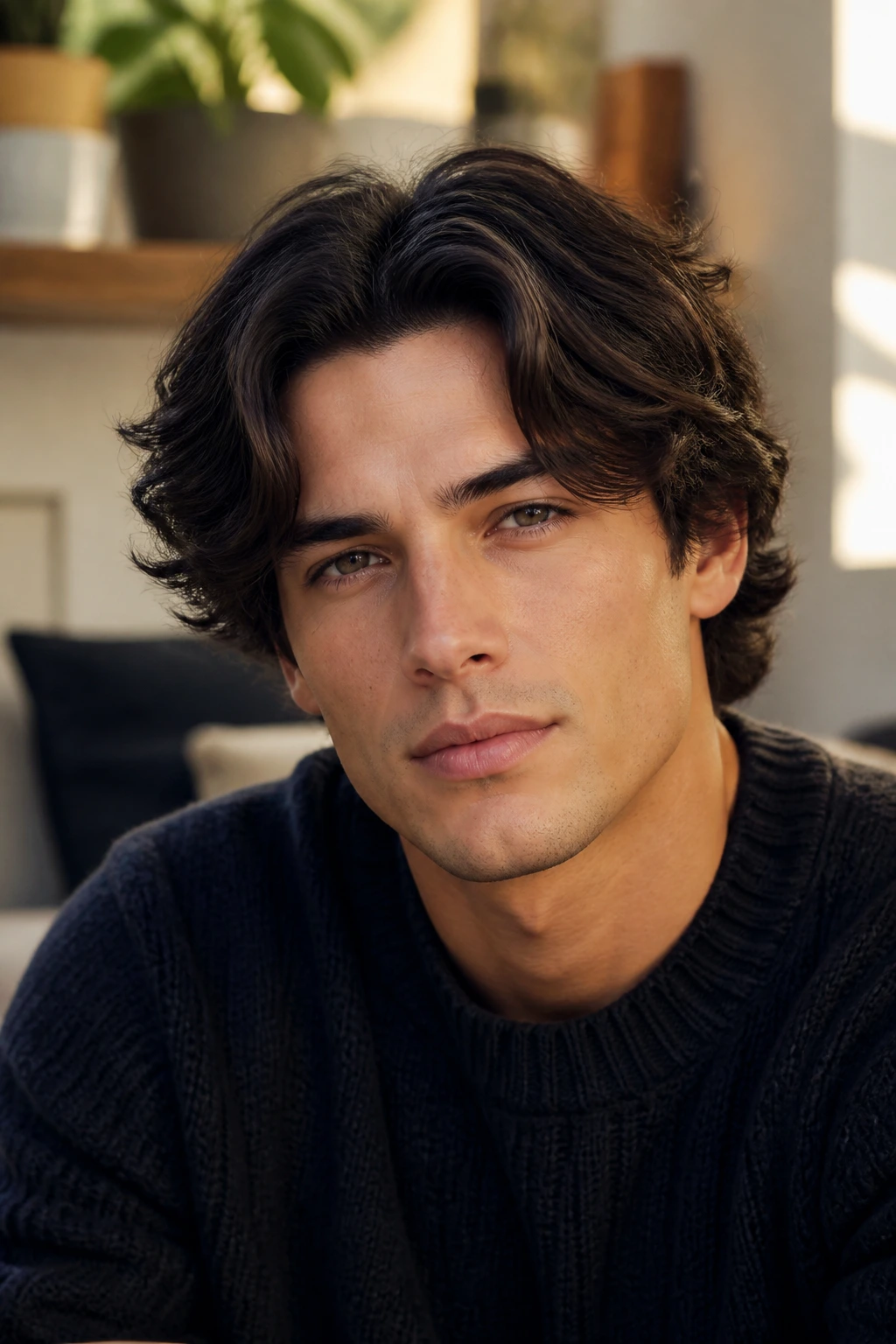
A center part on medium wavy hair can look almost refined in the right way. Not formal. Refined. The key is letting both sides fall with a bit of asymmetry so it doesn’t turn into a mannequin head.
Keep the part soft, not razor sharp. The front should frame the face and the sides should blend into the rest of the length instead of flaring out near the cheekbones. If the hair is layered well, it will settle into that easy curtain shape without much product.
This is one of those styles that rewards a light hand. Water, a little cream, maybe a few drops of leave-in. That’s usually enough. Overstyling makes it stiff. Understyling lets the wave pattern show, which is why people end up liking it more than they expect.
12. Ivy League Waves
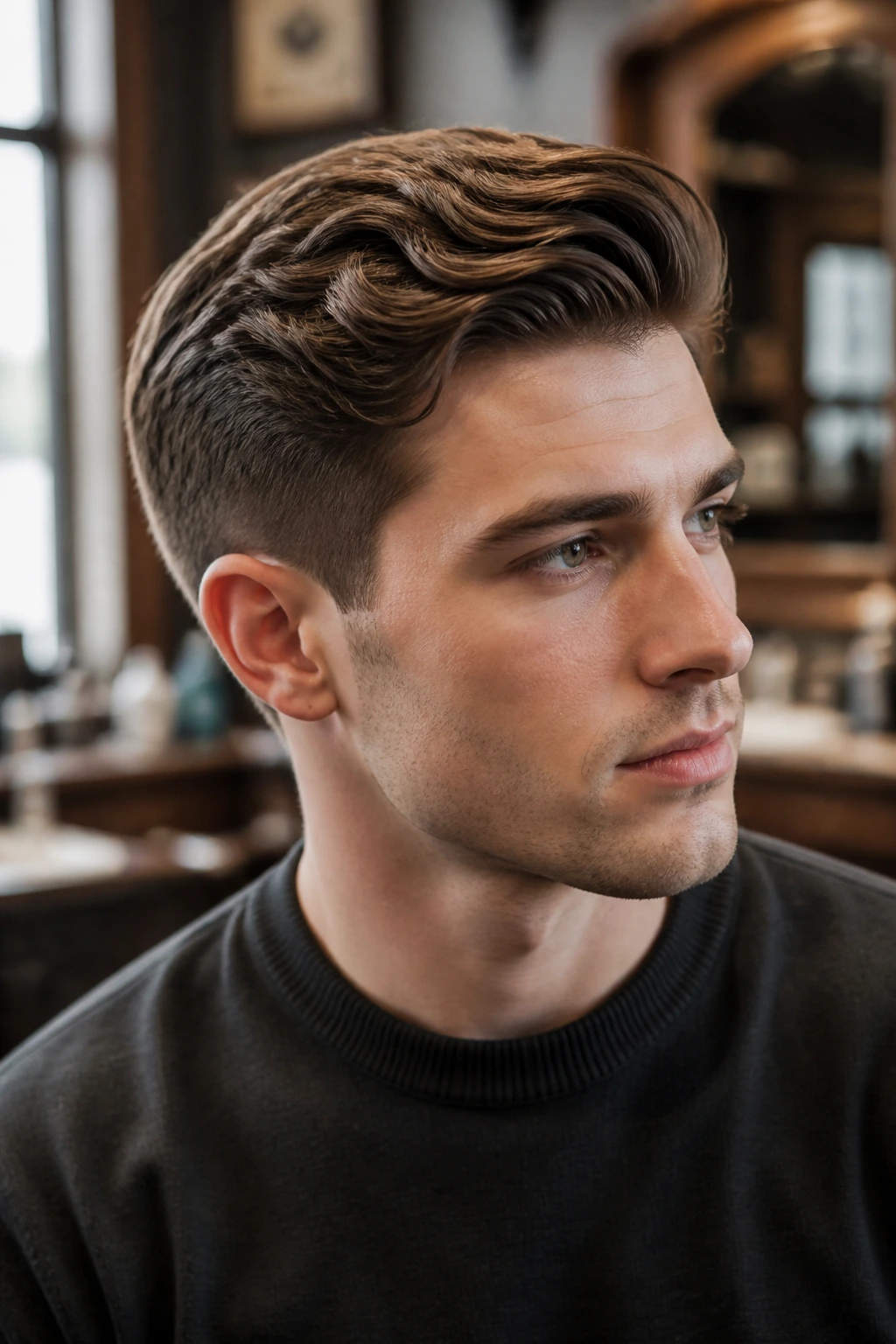
The Ivy League gets interesting on wavy hair because it keeps the polish but loses the flatness. The top stays long enough to comb to the side, usually around 3.5 to 4.5 inches, while the sides taper cleanly.
What makes it work is restraint. You’re not asking for height like a quiff, and you’re not asking for a loose flow like bro hair. You’re asking for a tidy shape with enough wave to keep it from looking stamped onto the skull.
A side sweep with a small amount of cream or matte paste is enough. If your hair is thick, tell the barber to remove a little weight at the crown. If it’s fine, keep the layers conservative so the style doesn’t go sparse.
13. Loose Comb Over with a Clean Part

A comb over sounds more rigid than it needs to. On wavy medium-length hair, it can be relaxed, loose, and almost casual if the part is soft and the top has some bend.
The haircut should keep enough length for the wave to move over naturally, not clamp down into a hard line. A clean part at the side and a low taper on the temples usually give the style enough shape to feel neat without looking stiff.
This is a strong option if you want a haircut that survives meetings and still looks fine after the jacket comes off. Keep the product light. A dry matte paste gives control; a cream gives more slip. Either one beats a heavy gel that turns the whole top shiny and flat.
14. Low Taper with Natural Waves
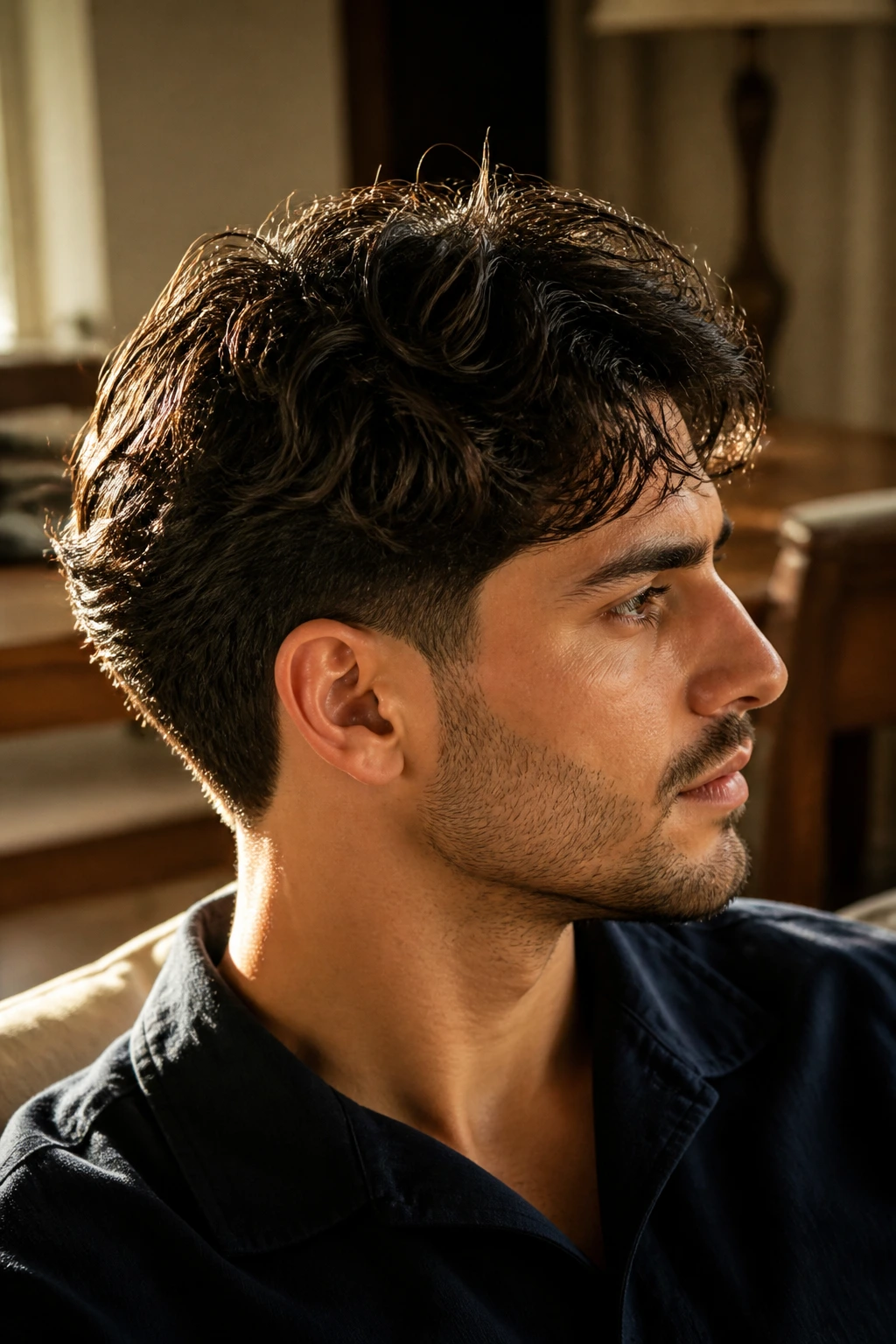
This is one of the most underrated cuts on the whole list. A low taper gives the edges a clean finish, but the top stays in its natural wave pattern instead of being carved into something fussy.
What to Ask For
- Keep 4 to 6 inches on top.
- Taper around the ears and neckline only.
- Leave internal layers so the top can move.
- Remove bulk at the crown if your hair stacks up there.
That’s the recipe. It sounds plain, and that’s why it works. You get a haircut that looks intentional with almost no styling, which is the kind of haircut people wear for years without admitting how useful it is.
15. Relaxed Pompadour

A pompadour on wavy hair should be softer than the classic lacquered version. The front rises, sure, but the wave pattern stays visible through the top so the style feels lived-in rather than carved.
Blow-dry the roots up and back using a medium brush or your fingers. Then use a matte paste or light cream to keep the shape from collapsing. If you use too much shine, the style can look old-fashioned fast. Keep it dry enough to hold, soft enough to move.
This cut is best when the front has enough length to create lift without making the hair tower over your head. About 4.5 to 6 inches usually does the trick. Less than that and you’re fighting gravity all morning.
16. Wavy Undercut
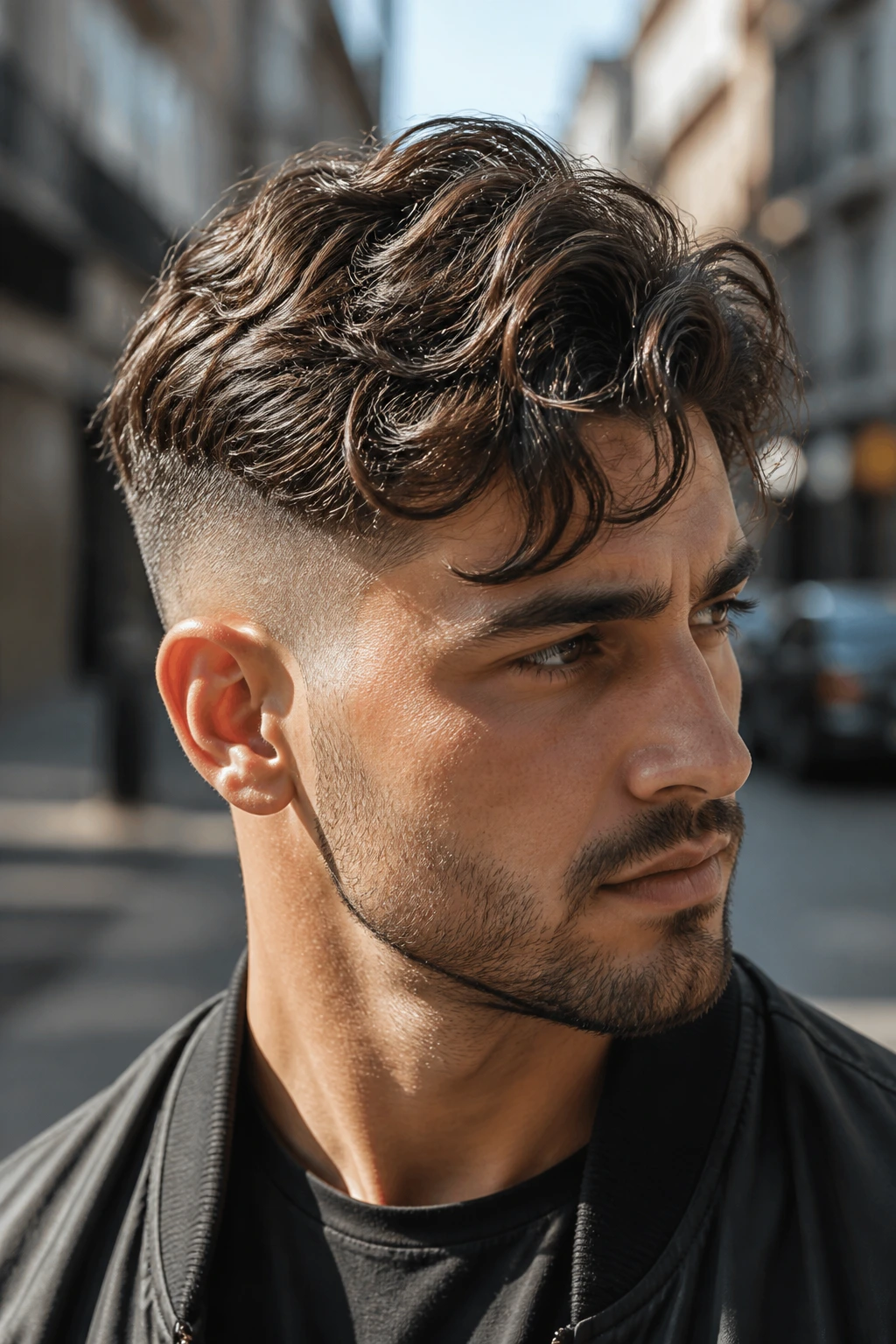
The wavy undercut gives you contrast. Short, tight sides. Longer, textured top. That clear difference makes the wave pattern on top stand out in a way softer cuts don’t always manage.
It works best when the top has real density or a stronger bend. If your waves are mild and your hair is thin, the undercut can look a little overbuilt. But with enough texture, it has a clean, sharp edge that still feels modern.
Style it with a sea salt spray or matte clay, depending on how much separation you want. And don’t let the top get too heavy. Once it starts slumping forward, the whole point of the undercut gets lost.
17. Surfer Layers
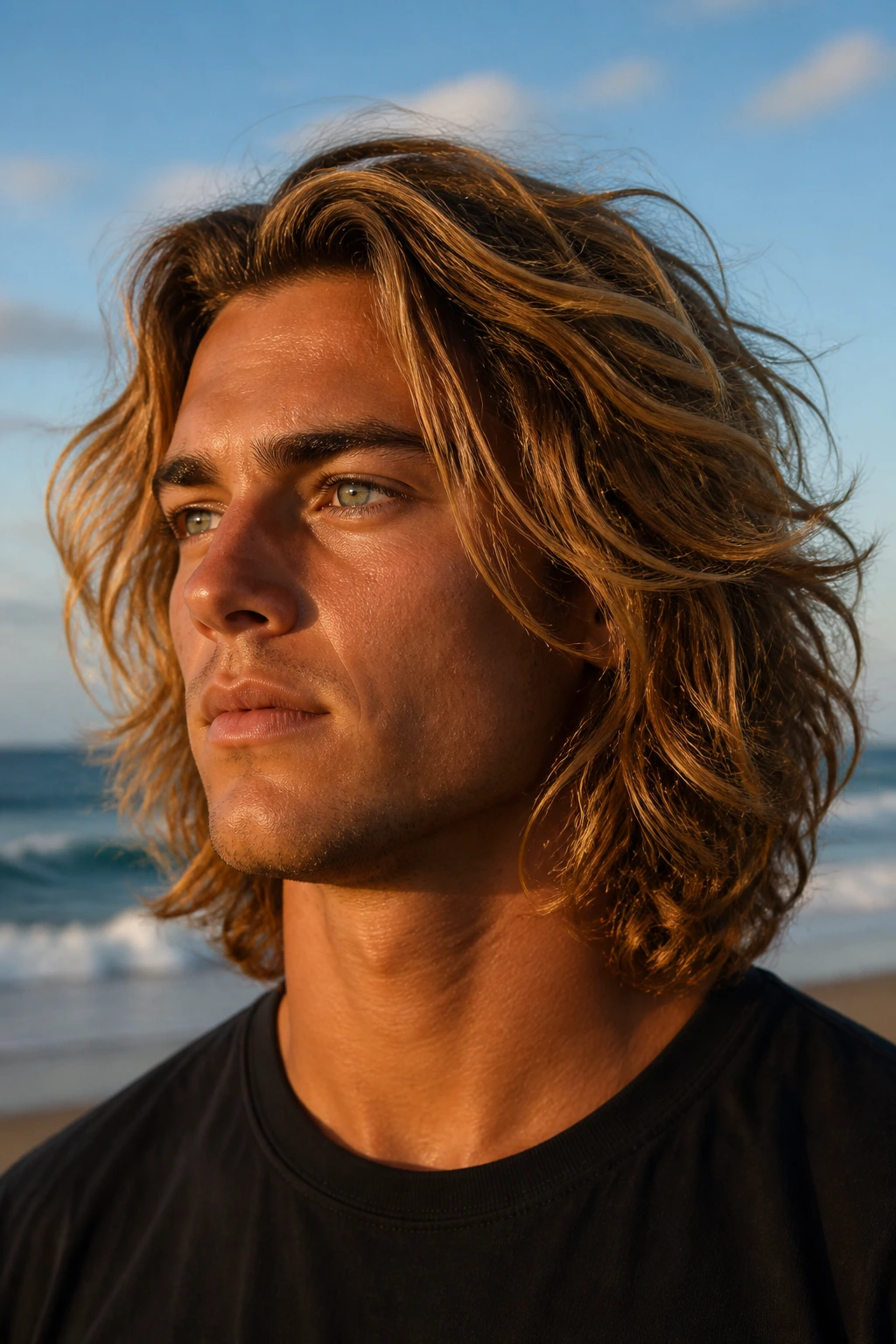
Surfer layers are less about a strict haircut and more about a shape that suggests you never wrestled the hair too hard. Longer layers, soft edges, and movement through the ends give the style its loose, windblown feel.
This cut likes a rough dry more than a polished blowout. Spray in a little salt spray, scrunch the ends, and let the wave pattern do what it wants. If the hair lands a little messy, that’s actually the right finish.
It’s a good option for men who don’t want visible styling lines. There’s no hard part, no precise ridge at the front, and no need for a perfect comb-through. Just enough structure to keep the hair from turning into a mop.
18. Soft Wolf Cut
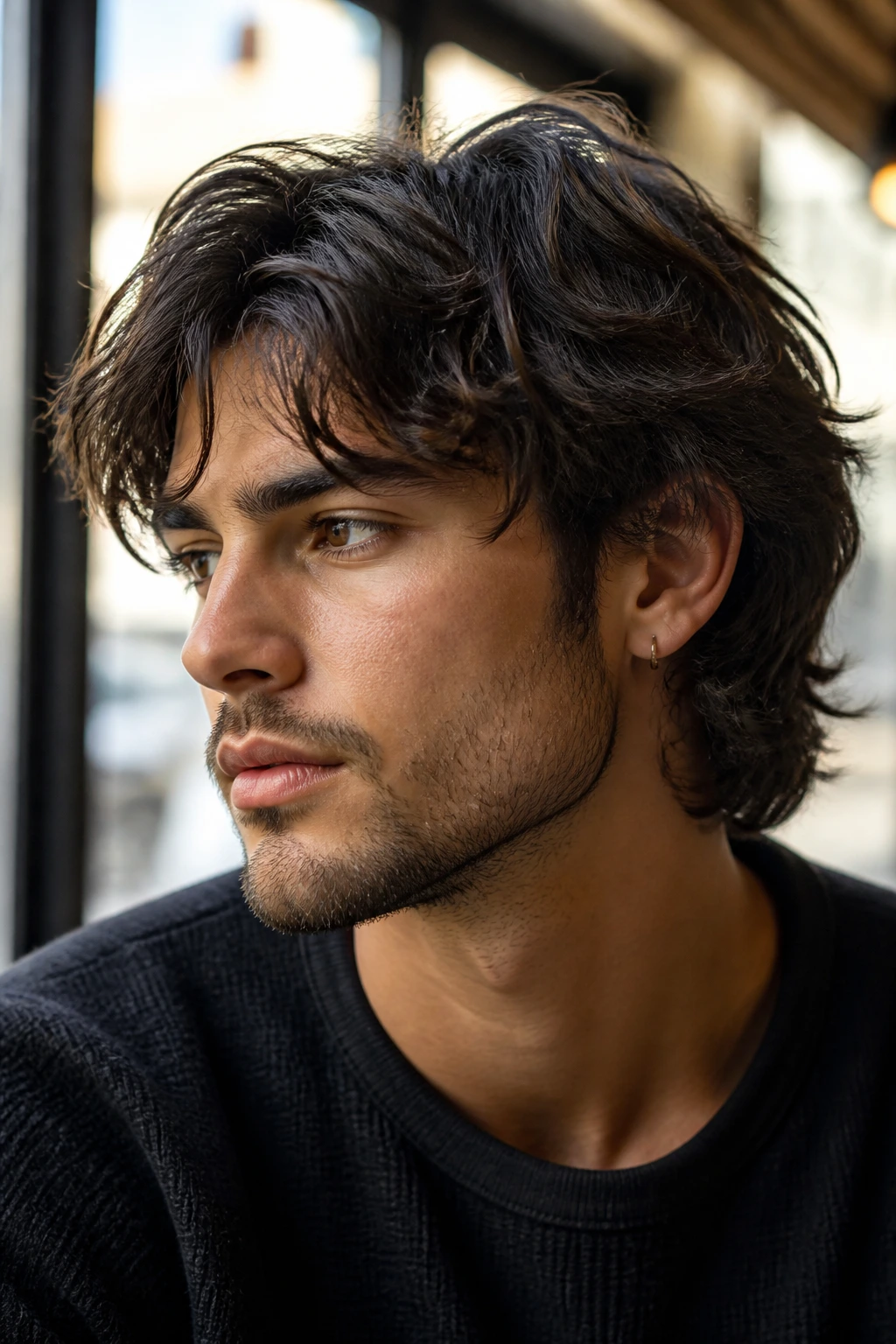
The wolf cut can go over the top fast, but a soft version on medium wavy hair is surprisingly wearable. The crown gets short layers, the sides stay looser, and the nape keeps a little length so the cut has that shag-mullet tension without becoming a costume.
The Shape in Plain English
More texture at the top. A bit of length behind the ears. Less bulk at the crown. That combination lets waves stack in an interesting way, especially if your hair grows thick and wants to puff out.
If you want this style, ask the barber not to over-thin it. The cut needs some weight to keep the layers from looking stringy. A small amount of cream on damp hair is usually enough. The roughness is part of the charm.
19. Side-Swept Fringe

Side-swept fringe is a smart fix when your waves naturally fall forward but not evenly. Instead of forcing a center part or flattening everything back, the hair is directed diagonally across the forehead with a soft edge.
The front needs enough length to sweep, usually around 5 inches. The sides can stay tapered or lightly faded. That keeps the fringe from looking too wide. A little mousse or cream helps the hair hold the sweep without turning crunchy.
This style also plays nicely with cowlicks near the front. If the hair wants to split, a diagonal sweep often looks better than fighting it head-on. Good haircuts make peace with the trouble spots.
20. Half-Up Flow

The half-up flow is a practical answer for medium wavy hair that’s getting a little long but still wants shape. Pull back the top section loosely and leave the rest down, letting some pieces frame the face and ears.
The trick is keeping the tie relaxed. Tight elastics flatten the wave and leave a hard crease. Use a soft band, gather only the top third or so, and let the lower layers move on their own. It should look casual, not staged.
This is useful on days when the front keeps falling into your eyes or when you want the face clear without committing to a full man bun. It’s not a formal style. It’s a functional one, which is why it gets worn so much more than people admit.
21. Modern Mullet
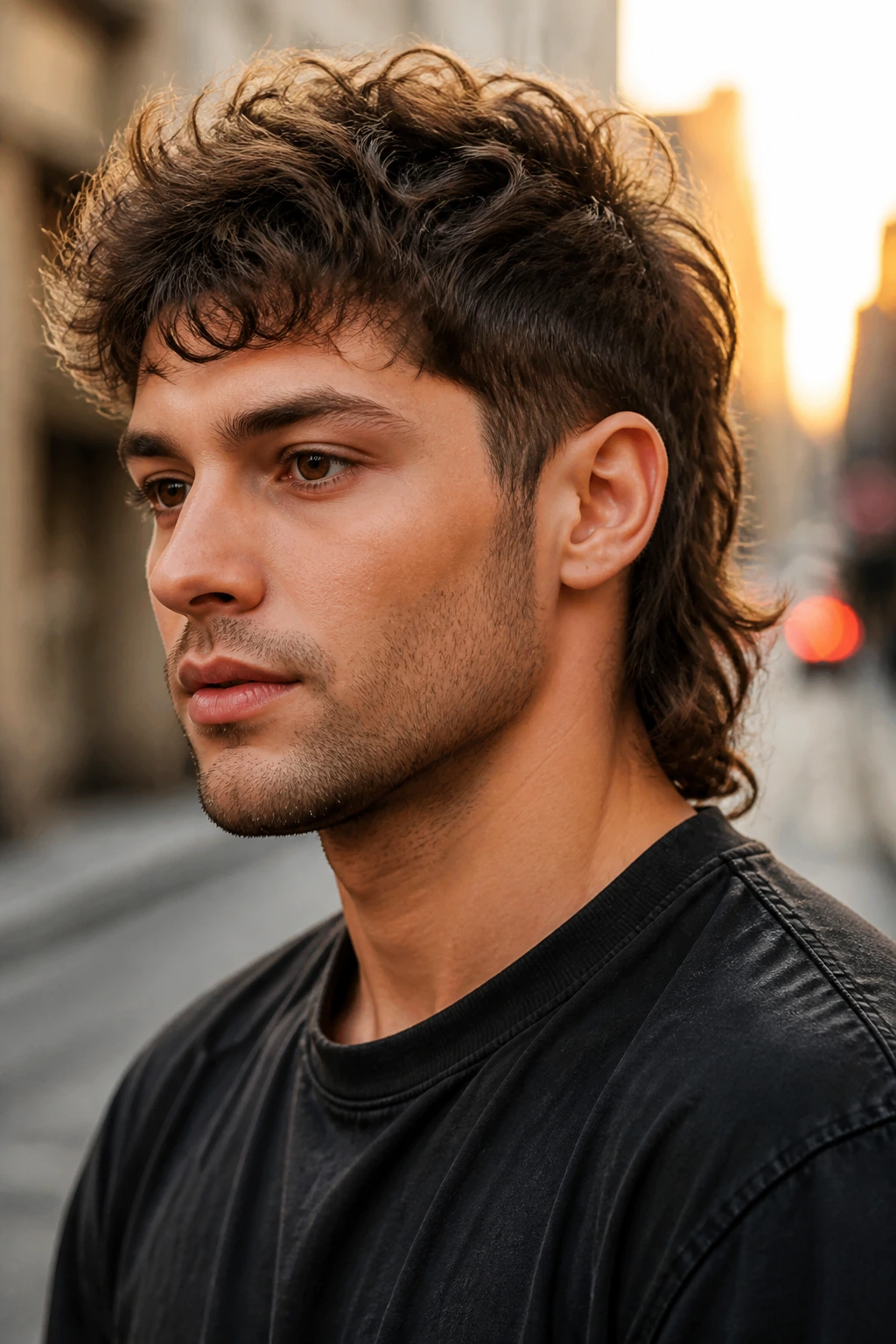
The modern mullet works because the difference between the front, sides, and back is cleaner than the old version. Keep the top medium and textured, the sides trimmed down, and the nape longer so the length flows into the back instead of dropping off a cliff.
On wavy hair, this shape can look sharp rather than ironic. The texture keeps it from feeling too rigid, and the longer back softens the whole thing. Ask for a cut that follows the head shape instead of carving a blunt shelf around the back.
This one is not subtle. That’s fine. It’s for the guy who wants movement, edge, and a haircut that looks better the less you fuss with it.
22. Tucked-Behind-Ears Flow

If you want a cut that feels easy without looking sloppy, the tucked-behind-ears flow is one of the best bets. The hair stays long enough to tuck, but the layers keep it from hanging in one heavy curtain.
It works well with medium waves because the tuck creates shape at the cheekbones and jaw. The small bit of visible ear changes the whole silhouette. You can wear it loose, tuck one side, or push both sides back depending on the day.
Use a light cream or leave-in to keep frizz down, especially if your hair starts to dry rough around the temples. A comb is optional. Fingers usually do the job better here.
23. Loose Man Bun with Face-Framing Waves
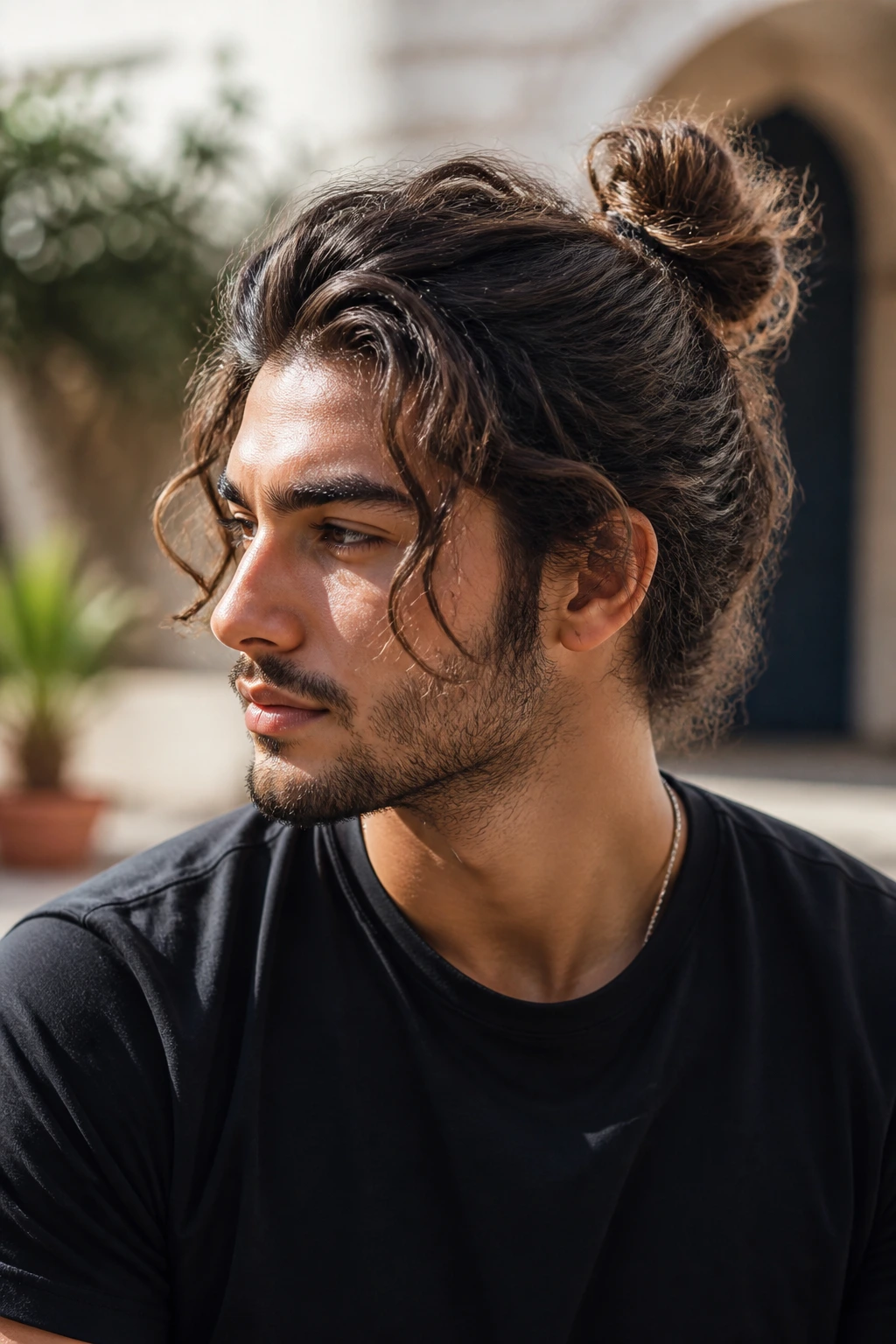
This is the grow-out style that stops the awkward in-between stage from becoming a problem. Pull the top and crown into a loose bun, let the shorter face-framing pieces fall forward, and keep the sides natural.
You need enough length to gather the hair without yanking the wave pattern flat. Usually that means a decent amount of medium length with a bit more at the back. Don’t chase a tight knot. A loose tie looks better and causes less breakage.
It’s a practical look, but it still reads like a hairstyle, which is not something every bun can say. If the front pieces curl a little, even better. That softens the whole thing.
24. Drop Fade with a Wavy Top
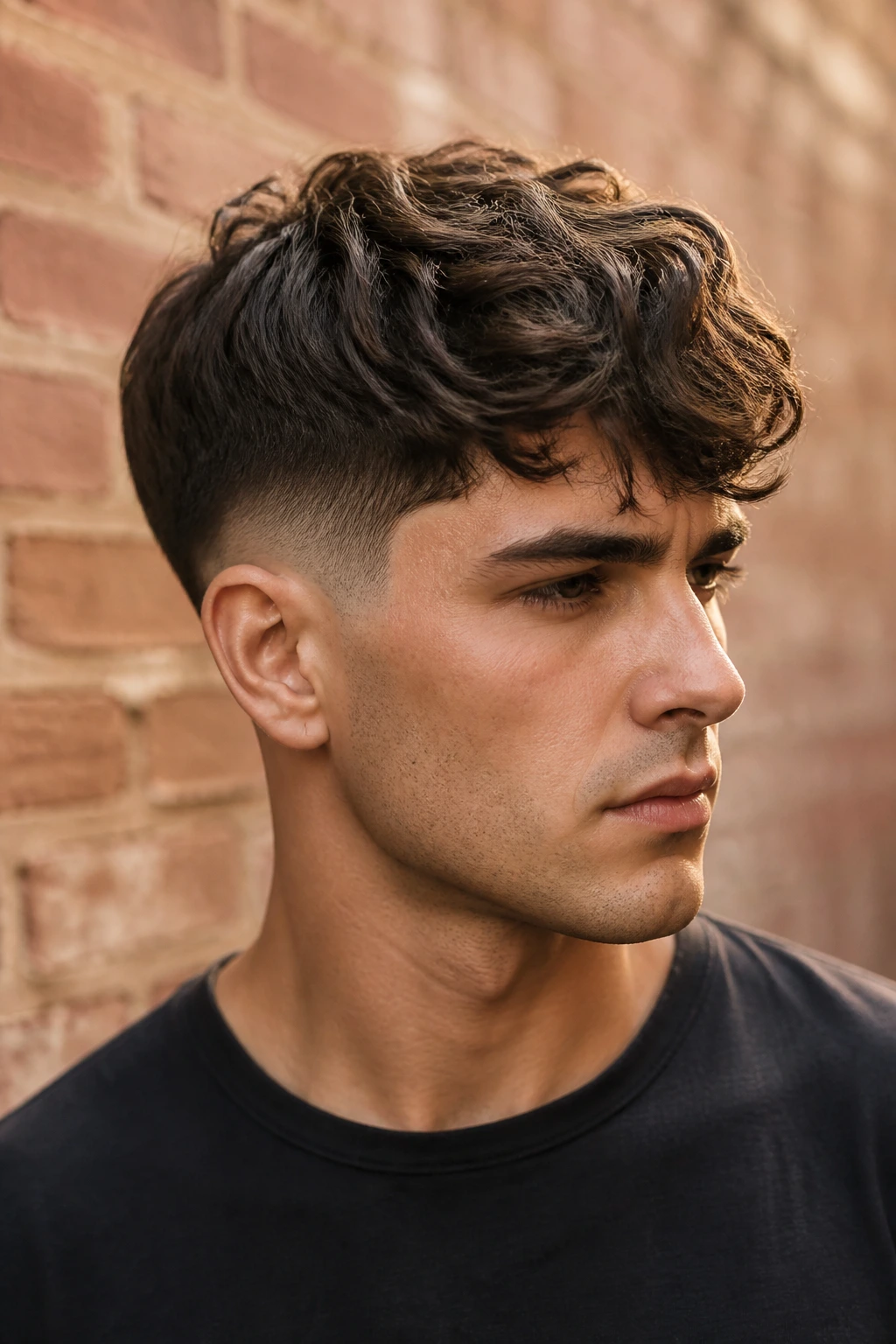
A drop fade gives medium wavy hair a nice shape because the fade curves around the head instead of cutting straight across the sides. That contour makes the top feel fuller without making the haircut look bulky.
Keep the top long enough to move—about 4.5 to 6 inches—and leave texture through the front and crown. The fade can be low or mid, but the drop line should follow the natural shape of the head. That detail matters more than people think.
This style is a good choice if you want your waves to stand out while keeping the edges crisp. It looks cleaner than a shag and less formal than a side part. A little matte paste and a quick finger dry are usually enough.
Why These Cuts Make Sense on Wavy Hair
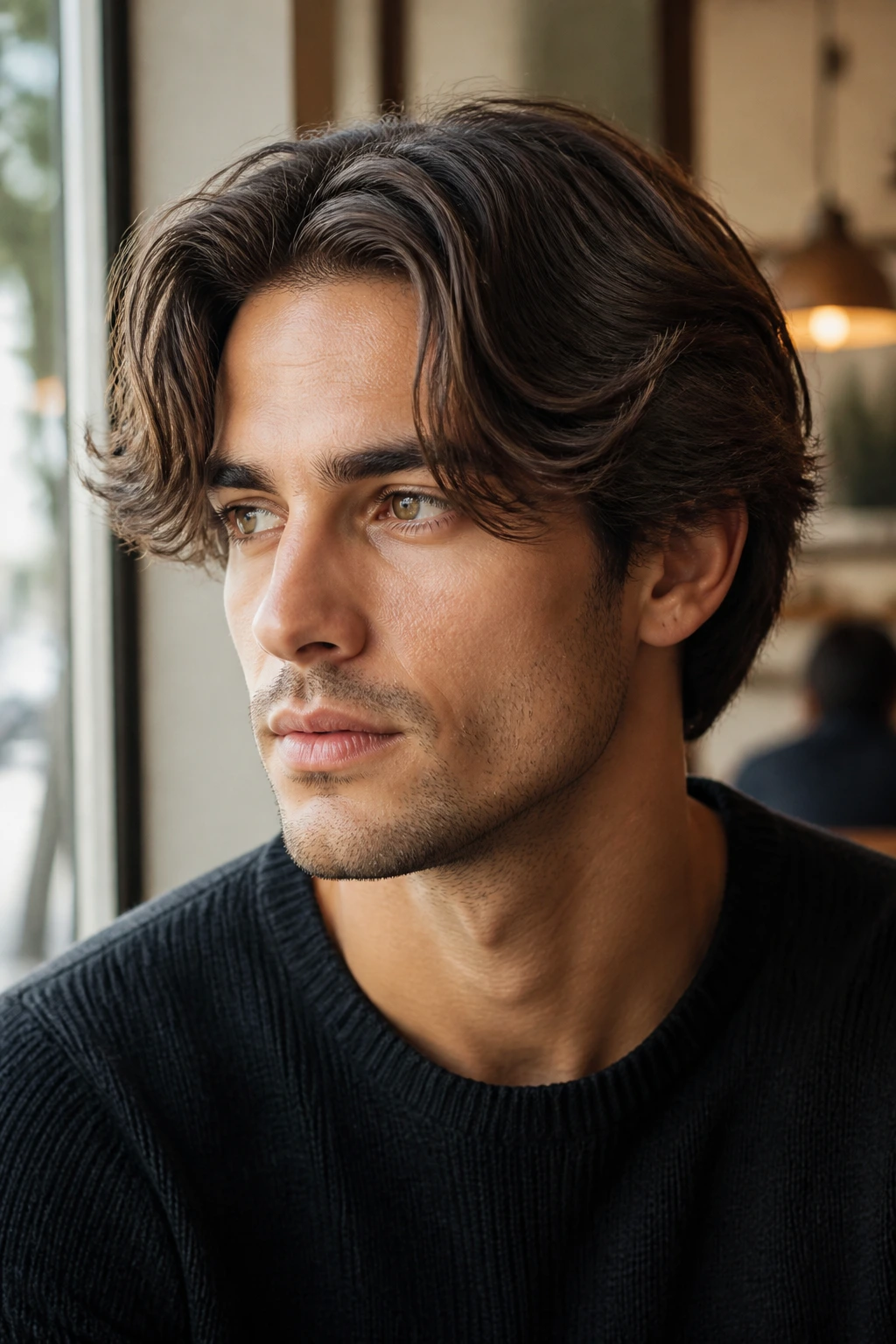
Medium-length wavy hair has enough personality to look good without a lot of coercion. That’s the trick. A solid cut gives the wave a route to follow, then leaves enough slack so the hair can move during the day instead of snapping into a rigid shape.
The best versions here all do the same quiet thing in different ways: they manage bulk at the sides, keep enough length where the texture lives, and avoid blunt lines that make waves puff or split. That’s not glamorous work. It just works.
If you’ve spent years fighting your hair with too much heat or too much product, this length is often where things start making sense. The style doesn’t have to be loud. It just has to sit right when you walk out the door.
Tools That Make Wavy Hair Easier to Handle
-
A blow dryer with a diffuser attachment: Useful for keeping wave pattern intact while reducing the frizz that comes from air-drying in a hurry.
-
A vent brush or medium round brush: The vent brush helps lift the roots on quiffs and brush-backs; the round brush gives more control if you want height at the front.
-
A wide-tooth comb: Good for center parts, curtain styles, and any look that needs separation without dragging the wave flat.
-
Matte paste or clay: Best for side parts, comb overs, and textured shapes that need hold without shine.
-
Styling cream or leave-in conditioner: Better for curtain flows, bro flow, and shaggy styles where softness matters more than rigid control.
-
Sea salt spray: Gives grip and a little roughness to otherwise slippery waves, especially on clean hair.
-
Heat protectant: Worth using if you blow-dry often. Wavy hair gets dry and frizzy fast when it’s overexposed to heat.
-
Microfiber towel or T-shirt: A rough bath towel can blast the cuticle and make waves puff. This softer option cuts that down.
-
Spray bottle with water: Useful for reactivating second-day hair instead of rewashing every time it looks tired.
-
A barber’s mirror or phone camera: Sounds minor, but checking the back and crown helps you spot where the shape is breaking down.
How to Brief Your Barber Without Guesswork
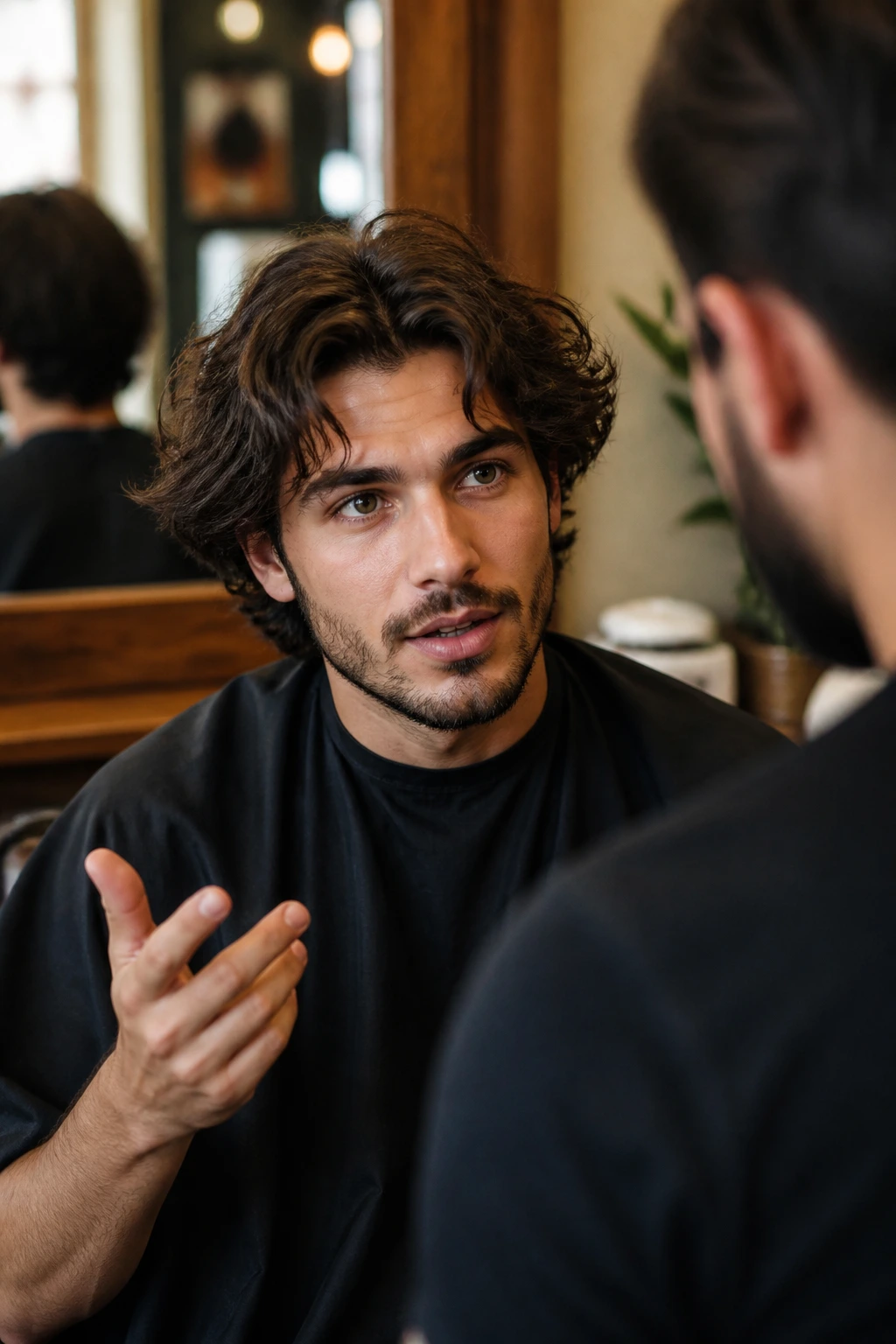
The haircut matters more than the product, and this is where a lot of guys go wrong. They ask for a vibe instead of a shape. “Something textured” sounds useful, but it’s too vague to cut from. You’ll get a better result if you talk in lengths, weight, and where the hair should move.
Say how much length you want on top in inches, not just “medium.” Mention whether you want the front to fall forward, split in the middle, sweep to the side, or brush back. If the sides matter to you, say low taper, mid taper, fade, or undercut. Those are not interchangeable.
Bring a photo, sure, but point out the parts of the photo that matter. The part line. The fringe length. The neck taper. The top length. One good haircut photo can hide four bad details if you don’t say what you’re looking at. Wet hair also lies a little flatter than it will once it dries, so describe the finished shape you want, not just the trimmed version in the chair.
How to Style Medium-Length Waves on an Ordinary Morning

The cleanest routine usually starts with damp—not dripping—hair. Too much water dilutes product and makes the top collapse while it dries. Squeeze out the excess, then work in a small amount of cream, mousse, or paste depending on the shape you’re wearing that day.
For lifted styles like the quiff, pompadour, or brush-back, blow-dry the roots first. Aim the air upward at the front and toward the direction you want the hair to travel.
For loose styles like curtain flow, bro flow, or shaggy cuts, rough-dry with your hands and stop before the hair gets bone dry. A little moisture helps the waves settle with better definition.
For structured side parts or comb overs, use a comb at the very end. Before that, use fingers. Fingers keep the wave alive; the comb just sharpens the outline.
And don’t load on product because the hair feels unruly for 30 seconds. That’s usually a sign it still needs shaping, not more wax. Give it a minute. Then decide.
Common Mistakes That Make Waves Look Wrong
-
Cutting the top too short: Waves need a little length to bend. If the top gets chopped down too far, the texture sticks up instead of folding into shape.
-
Using heavy product on fine waves: Thick pomade or too much clay can crush the hair and make it look greasy by noon. Start with a pea-sized amount.
-
Ignoring the crown: The crown is where wavy hair often splits or swells. If that area isn’t layered or controlled, the whole style can look lopsided from behind.
-
Blowing every hair straight back: This flattens the wave pattern and can make the haircut look puffy at the sides. Aim the dryer in the direction of the style, not against the grain.
-
Letting the sides get too wide: Medium length on top is only half the job. If the sides are bulky, the haircut expands outward and loses shape fast.
-
Chasing symmetry that your hair doesn’t naturally have: Most wavy hair has one side that behaves better than the other. Work with that instead of trying to force a perfect mirror image.
Variations and Adaptations to Try

The Cleaner Office Version
Keep the same cut, but shorten the sides into a tidy taper and use a side part or soft comb-over. A matte cream keeps the finish controlled without making the hair look wet or shellacked.
The Beachier Weekend Version
Let the top sit longer, add sea salt spray, and air-dry with your hands instead of a comb. This version suits curtain styles, bro flow, and surfer layers because it keeps the wave irregular and loose.
The Thicker-Hair Fix
Ask for internal debulking and more layers through the crown. Thick waves can look heavy fast, so removing weight inside the shape matters more than simply cutting length off the ends.
The Fine-Hair Version
Keep the sides a little tighter and avoid over-layering the top. Use mousse or a light cream so the hair gets lift without losing what little density it has.
The Heat-Free Routine
Skip the dryer and lean on damp styling, finger scrunching, and a microfiber towel. This works best for shags, curtain flows, and center parts where the wave itself is the main event.
Keeping the Shape Between Trims
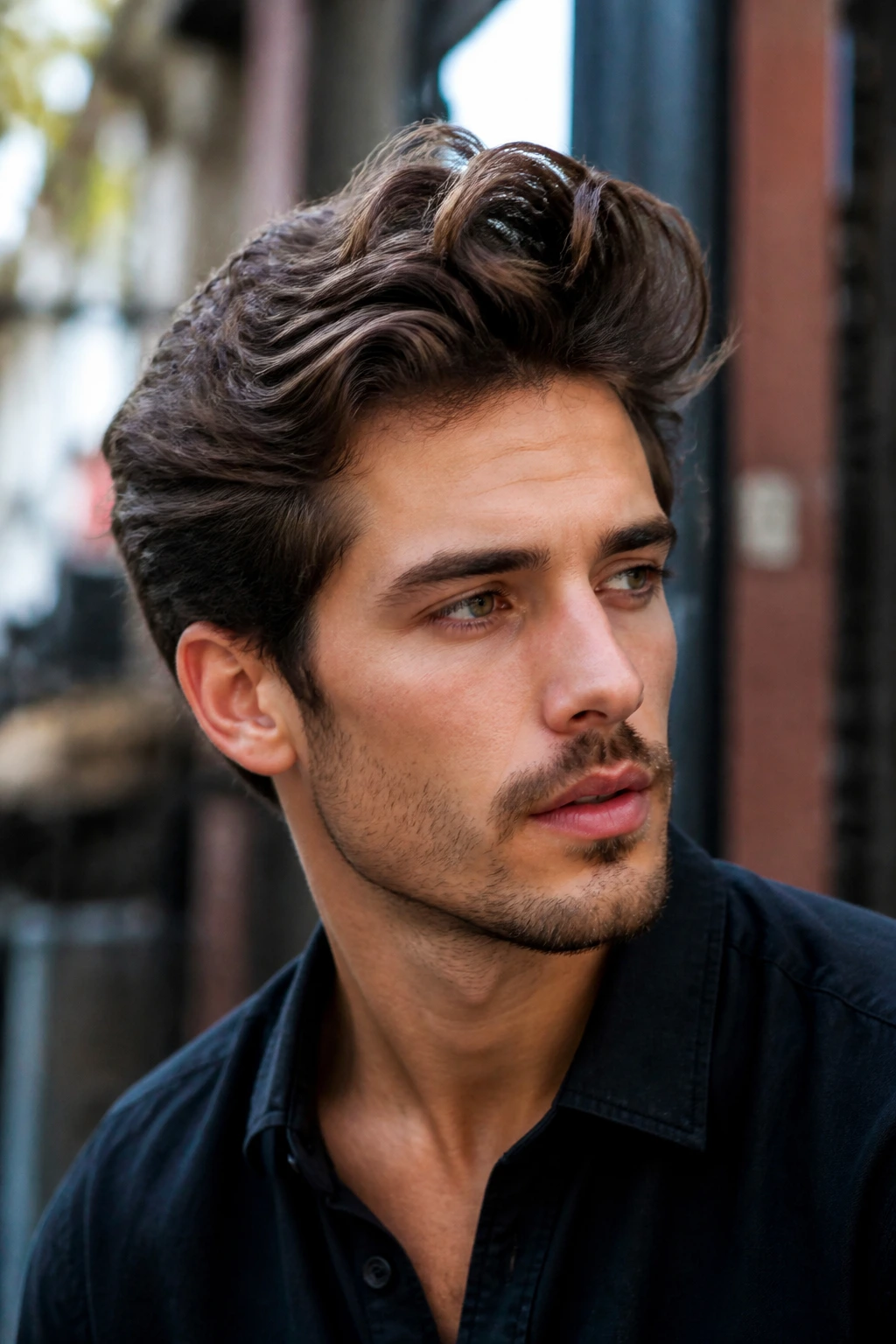
Wavy medium-length hair usually looks best when you treat trims as maintenance, not rescue missions. A low taper or faded style may need cleanup every 3 to 5 weeks if you want the edges crisp. Layered flows, shags, and bro-flow styles can often stretch to 6 to 8 weeks before they start losing shape.
Wash frequency matters too. If your scalp gets oily fast, shampoo every other day or every third day with a gentle formula. If your hair is drier, two or three washes a week may be enough. Conditioner helps, but keep it on the mid-lengths and ends unless your scalp actually needs moisture.
At night, the goal is to reduce friction. A satin pillowcase or a looser sleep position helps more than people expect. If a style is long enough to tie back, do it loosely. Tight bands leave dents and pull at the waves. In the morning, a quick mist of water often brings the shape back faster than a full rewash.
Frequently Asked Questions

How do I ask my barber for medium-length wavy hair?
Use numbers and direction. Tell them how many inches you want on top, whether you want a taper or fade on the sides, and where the hair should fall—forward, back, or to the side. A photo helps, but the length and silhouette matter more than the exact model’s face.
Should wavy hair be cut wet or dry?
Most barbers cut it damp, then check the shape dry. That’s useful because waves shrink and separate once they dry, and a cut that looks balanced wet can sit very differently later. If your wave pattern is strong, a dry detail pass around the fringe and crown can help.
What product works best on medium-length wavy hair?
For loose, airy styles, a styling cream or sea salt spray usually beats a heavy wax. For sharper styles, matte paste or clay gives control without that greasy shine. Choose the product based on how much hold you need, not on the label’s promises.
Can I wear medium-length wavy hair without blow-drying it?
Yes, and for a lot of styles that’s the better move. Curtain flows, bro flow, shags, and surfer layers often look better air-dried or roughly dried with a towel. If you want height, though, a quick blast at the roots makes a big difference.
What if my waves puff out at the sides?
That usually means the haircut is too wide or the sides aren’t tapered enough. Ask for weight removal around the temples and a cleaner outline near the ears. At home, use less product on the sides and focus styling where the shape needs lift.
Will a center part make my hair look thinner?
Sometimes, if the hair is very fine or the part is too sharp. A soft center part with texture is different. It can actually make medium wavy hair look fuller because the wave breaks the line instead of exposing a straight scalp stripe.
Which style is easiest to maintain?
Low taper with natural waves is hard to beat. It grows out neatly, needs little product, and doesn’t depend on a perfect blow-dry. Curtain flow is another smart pick if you like hair that can look good with almost no ceremony.
What should I avoid if I have a strong cowlick?
Don’t force the fringe straight down unless your hair really agrees with that move. Side-swept fringes, curtain flows, and textured crops usually handle cowlicks better because they work with the swirl instead of trying to pin it in place.
Can medium-length wavy hair work on a very round or very long face?
Yes, but the shape should change. Round faces usually do better with a little height on top and less width at the sides. Longer faces tend to look better with fringe, curtain shapes, or side-swept movement that breaks up vertical length.
Picking the Shape That Fits Your Wave Pattern
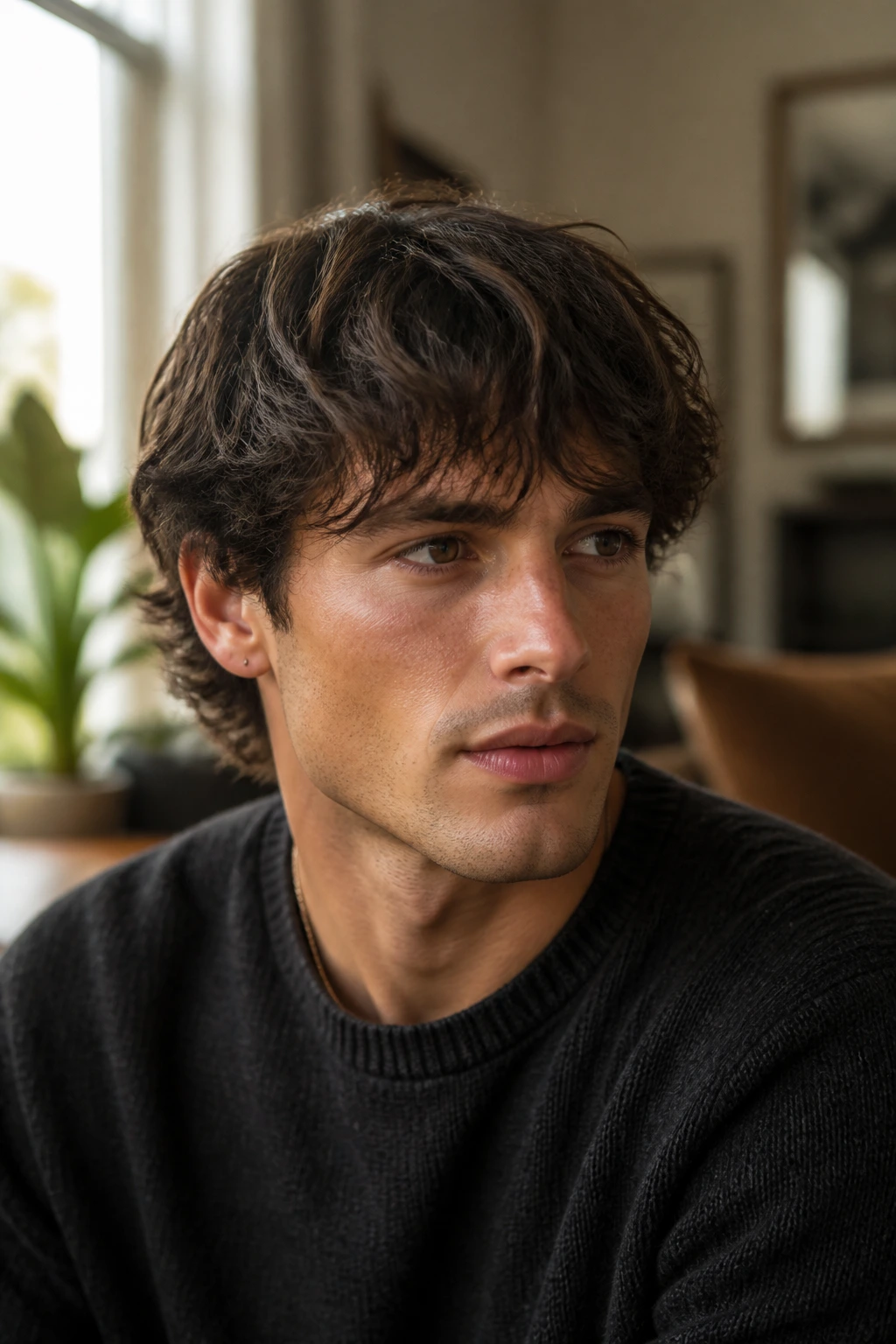
The best haircut here is the one that matches how your hair behaves on a normal Tuesday, not how it looks after twenty minutes in front of a mirror. That’s the part people skip. They choose a style based on one polished photo, then wonder why it falls apart once the weather changes or the product wears off.
Loose waves usually like curtain styles, bro flow, or center parts. Stronger bends can handle quiffs, pompadours, undercuts, and textured crops. Thick hair wants weight removed before it wants more styling products. Fine hair wants cleaner sides and less over-layering. That sounds basic, but basic is where the useful decisions live.
If you’re unsure, start with a low taper and enough length on top to shape into either a side part or a soft flow. That gives you room. You can lean neater, looser, or messier without having to grow everything out from scratch.
The Cut That Lets the Hair Do Its Job
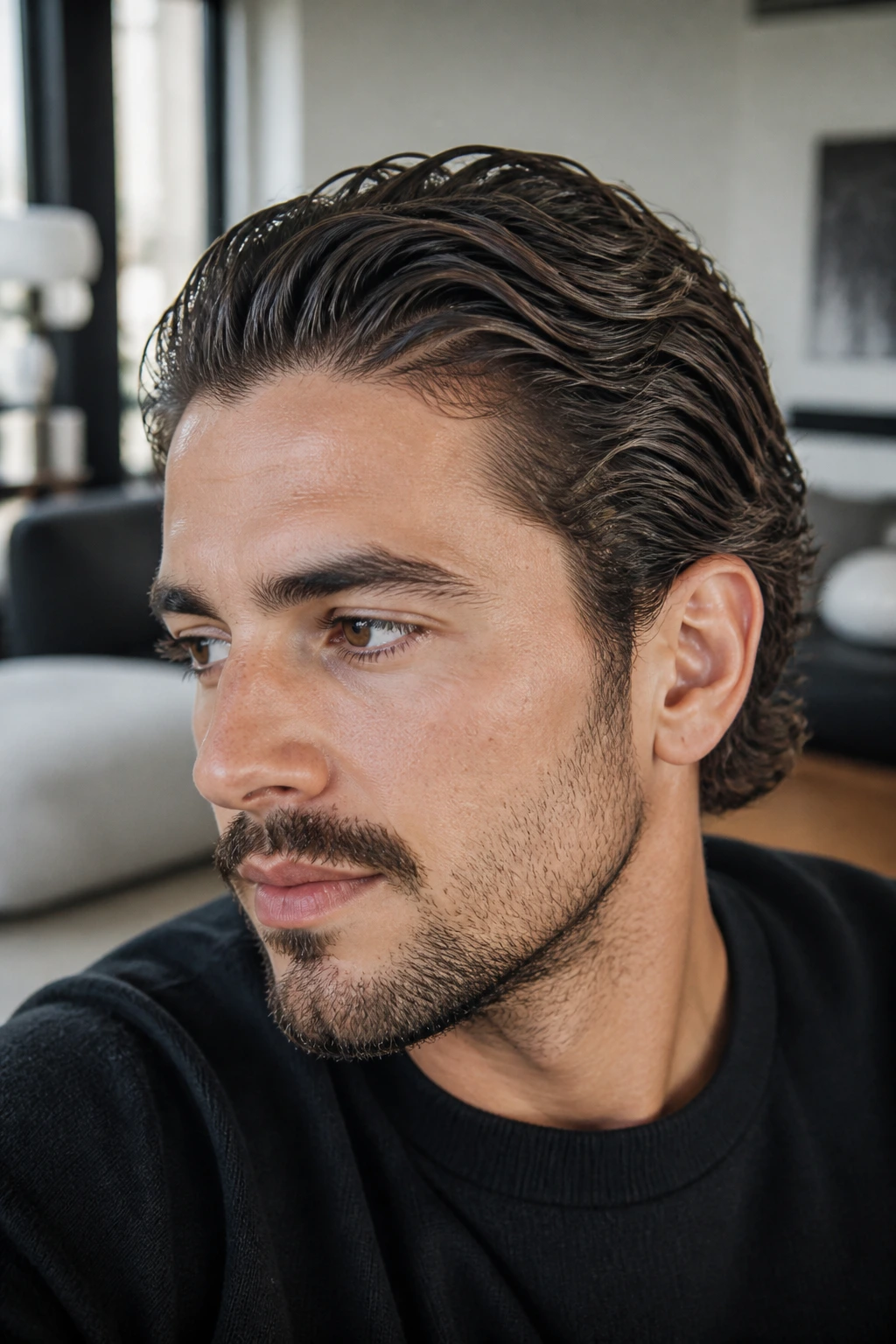
Medium-length waves don’t need rescuing. They need a shape that keeps them from spreading out or collapsing. Once the sides are cleaned up and the top keeps enough length to bend, the whole head starts looking more intentional with less effort.
That’s why these wavy hairstyles for men with medium length hair hold up so well. They give you options without demanding a perfect routine. Some are cleaner. Some are rougher. Some are better for work, some for weekends, and a few sit right in the middle where most of life happens.
Pick the version that matches your hair’s default behavior, not the one that needs the most heroics. The right cut makes your waves easier to live with, and that matters more than chasing a style that only looks good in one kind of light.
