



Oval faces are generous with beard choices, but they still punish lazy linework. A balanced face can wear more shapes than a square jaw or a rounder face, yet the wrong beard can still drag the whole thing off-center in a mirror, a selfie, or the fluorescent light in a gas-station bathroom.
That’s the part people miss. An oval face already gives you a clean forehead-to-jaw balance, so the beard is not there to repair the geometry. It’s there to choose the mood: sharper, rougher, older, leaner, fuller, or more deliberate. Let the chin run too long and the face starts looking stretched. Carve the cheek line too hard and you lose the easy symmetry that made the face work in the first place.
The good news is that this face shape gives you room to play. You can go from almost bare stubble to a long beard with a tapered bottom, and a lot of it will look right as long as the proportions make sense. The trick is knowing which styles add width, which ones add length, and which ones make the jaw look like it was drawn with a ruler.
Why These Beard Styles Deserve a Spot on an Oval Face
-
Built-In Balance: Oval faces already have even proportions, so the beard can shape the look instead of fixing it.
-
More Than One Lane: Short stubble, boxed beards, and longer beards can all work here if the cheek line and neckline stay under control.
-
Easy Barber Language: Most of these styles can be described with guard numbers, a neckline height, and a cheek-line shape, which keeps the chair conversation simple.
-
Patchiness Doesn’t Kill the Look: Some of the strongest options here use mustache focus, short length, or clean borders to make uneven growth look intentional.
-
A Style for Your Schedule: A 10-minute trim beard and a once-a-week sculpted beard can live in the same list because oval faces can handle both ends of the spectrum.
-
Haircut Friendly: These beard shapes pair well with fades, crops, curls, side parts, buzz cuts, and longer hair, so the face doesn’t have to do all the work alone.
Oval faces are forgiving, but they are not invisible. A beard still needs a plan.
Why Oval Faces Can Wear More Beard Shapes Than Most Faces
An oval face sits in a sweet spot: the forehead, cheekbones, and jaw are close enough in width that the face already looks balanced. That means the beard does not have to “correct” much. It can simply steer the eye.
That steering matters. A beard with a little width at the sides makes the jaw feel stronger. A beard with extra length at the chin can make the face look longer and slimmer. A beard that stays tight under the jawline keeps the face from drifting downward. On an oval face, those choices are style decisions, not rescue missions.
The main reason this face shape gets so many beard options is proportion. You can wear a neat short boxed beard and look disciplined, or let the beard grow fuller and look heavier in a good way. What you do want to avoid is letting the lower half run wild while the sides disappear. That’s how an oval face stops looking balanced and starts looking narrow in the wrong places.
How to Choose Beard Styles for Oval Faces Without Stretching the Chin
If the beard is short, the chin can stay close to the jawline. If it is medium length, keep the sides a touch fuller than the point under the chin. If it is long, the neckline has to stay clean or the whole look starts sinking.
A useful rule: the longer the beard gets, the more discipline the sides need. On an oval face, that usually means trimming the chin point before it gets dramatic and keeping the cheek line natural, not overdrawn. A beard that’s 1 inch long across the jaw and 1.5 inches at the chin can look balanced. A beard that’s 1 inch on the cheeks and 3 inches at the chin can start making the face feel longer than it is.
Quick Length Guide
-
0.5 to 1.5 mm: Stubble and shadow beard territory.
-
3 to 8 mm: Short boxed, faded, and boardroom-style beards.
-
10 to 20 mm: Full beard and sculpted beard range.
-
Longer than 20 mm: Ducktail, Garibaldi, and Bandholz territory, where the neckline and side volume matter a lot.
How Your Haircut Changes the Beard’s Job
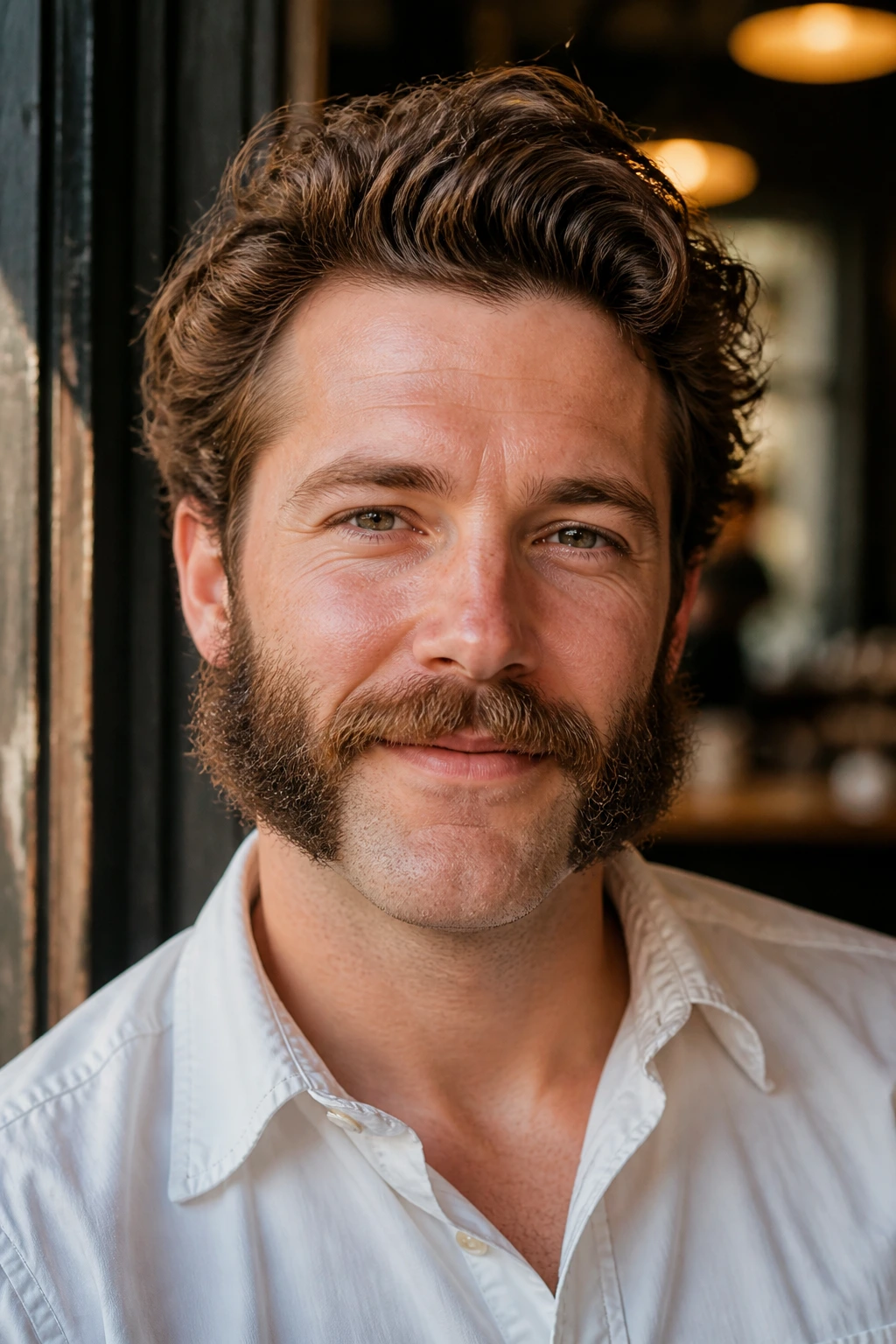
A beard never lives alone. A high fade, buzz cut, or clean crop puts more of the visual weight on the beard, which is great if you want the jaw to look stronger. A fuller hairstyle — curls, a textured top, a side part with height — can make a heavy beard feel more grounded.
If your hair is short on the sides, a beard with a taper or fade usually looks cleaner. If your hair has volume on top, a rounded full beard or a textured medium beard can keep the overall shape from becoming too vertical. And if you wear glasses, the beard edges matter more than people think. Soft, fuzzy edges under a sharp frame can look unfinished. Clean edges under glasses tend to look deliberate.
1. Light Stubble
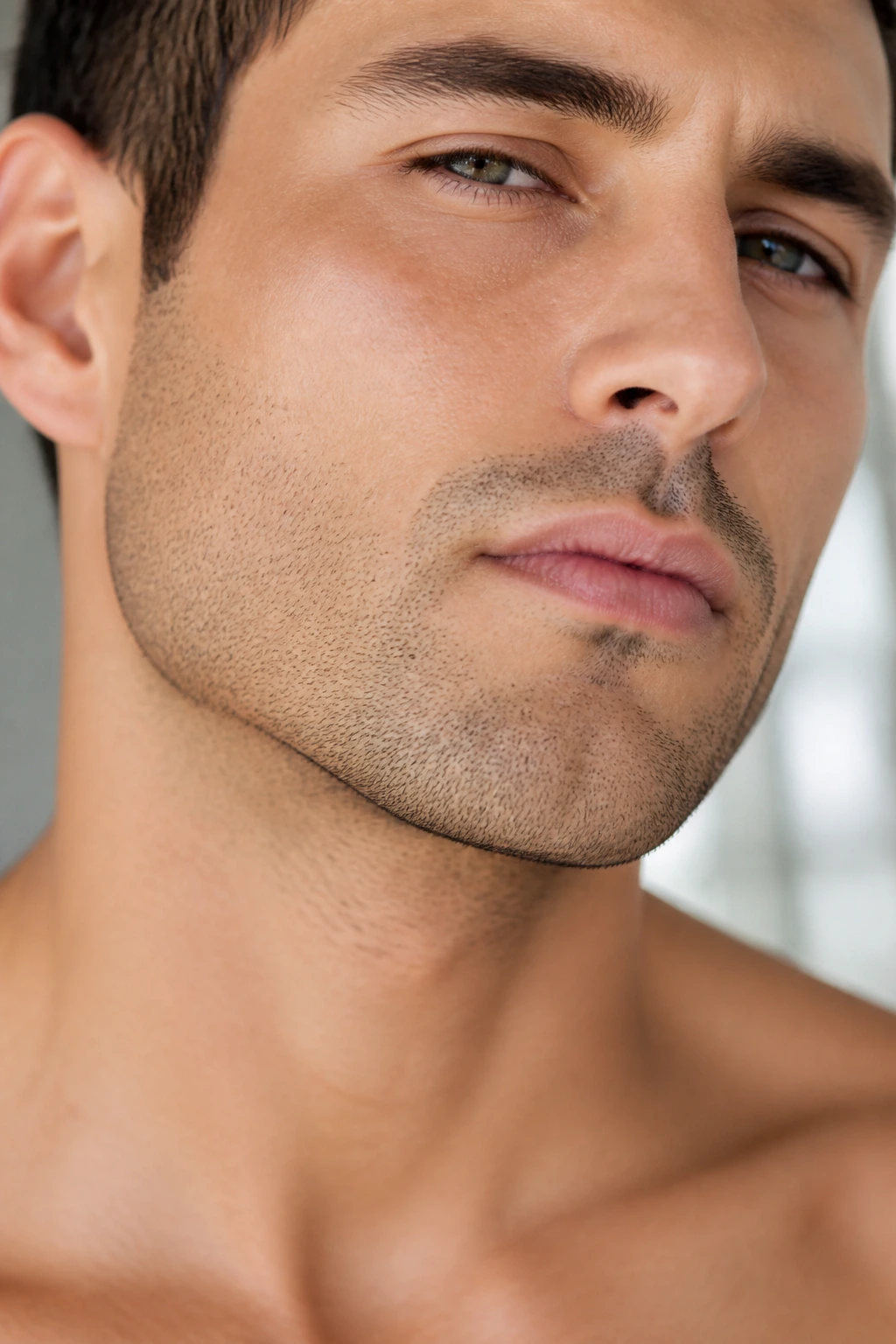
Light stubble is the easiest way to give an oval face a little bite without changing the shape too much. It sits right in that 0.5 to 1.5 mm zone where the jaw looks a touch harder, but the face still feels open.
Why It Works on Oval Faces
Oval faces already look balanced, so light stubble doesn’t have to do much heavy lifting. It simply adds texture along the jaw and upper lip, which can make the face look a little more grounded in photos and under bright lights.
The key is keeping it even. A patchy 2-day scruff situation can look accidental; a short, uniform stubble layer looks chosen. Trim it every 2 to 3 days if your growth comes in fast.
Best for: men who want low effort and a clean neckline.
Watch the cheeks: if the cheek growth climbs too high and wispy, bring the line down slightly instead of letting it wander.
2. Heavy Stubble
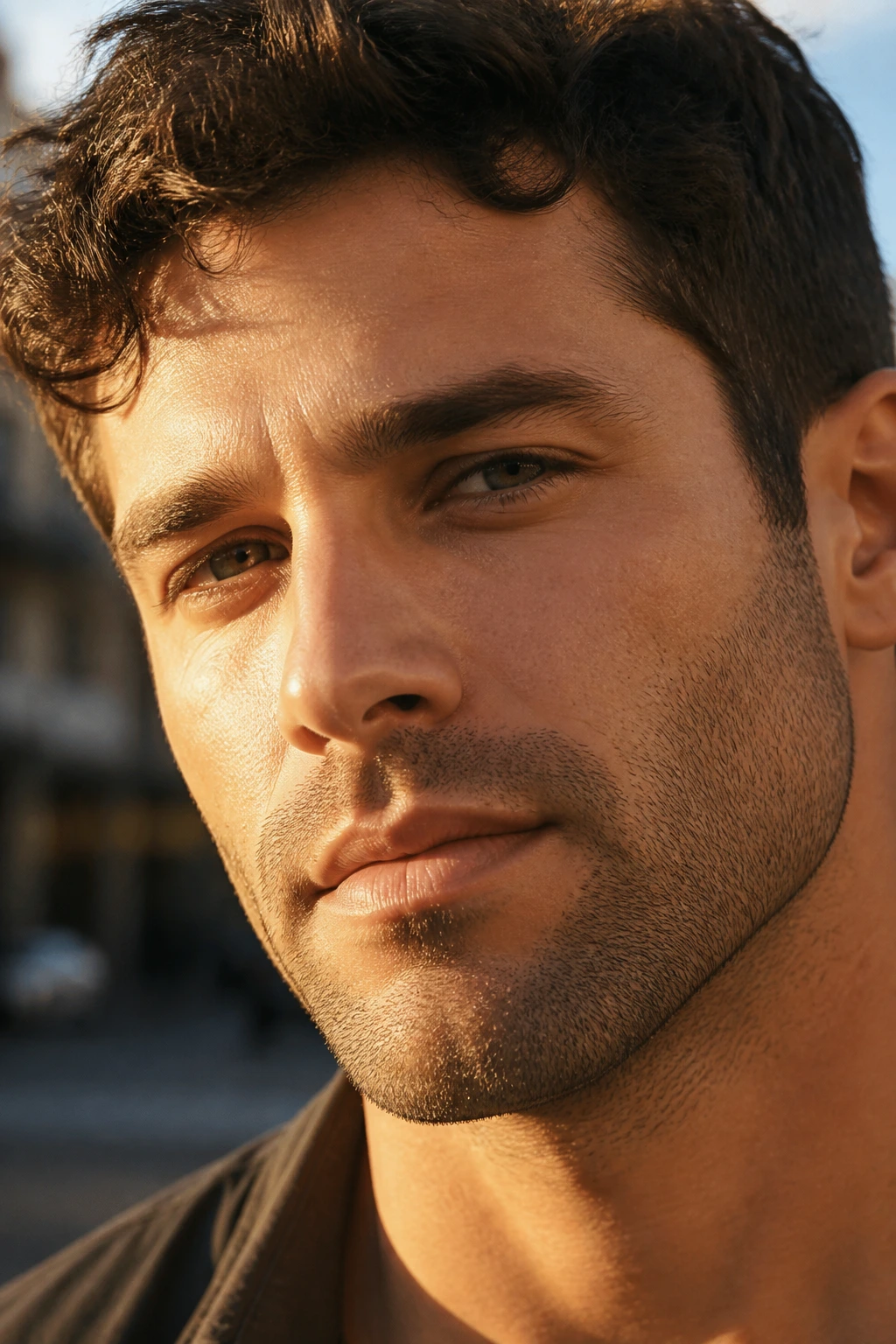
Heavy stubble is where the jaw starts to look sharper and the face gets a little more presence. It usually lands around 2 to 4 mm, which is enough to darken the lower face without turning into a full beard.
That’s why it works so well on oval faces. You keep the natural balance of the face, but the chin and jaw get enough shadow to feel stronger. It’s one of the best choices if you want your face to look a little leaner without going fully bearded.
A blunt neckline helps. Too much neck hair and heavy stubble turns into sloppy growth. Keep the lower edge about one to two finger widths above the Adam’s apple and let the rest sit naturally.
3. Designer Stubble
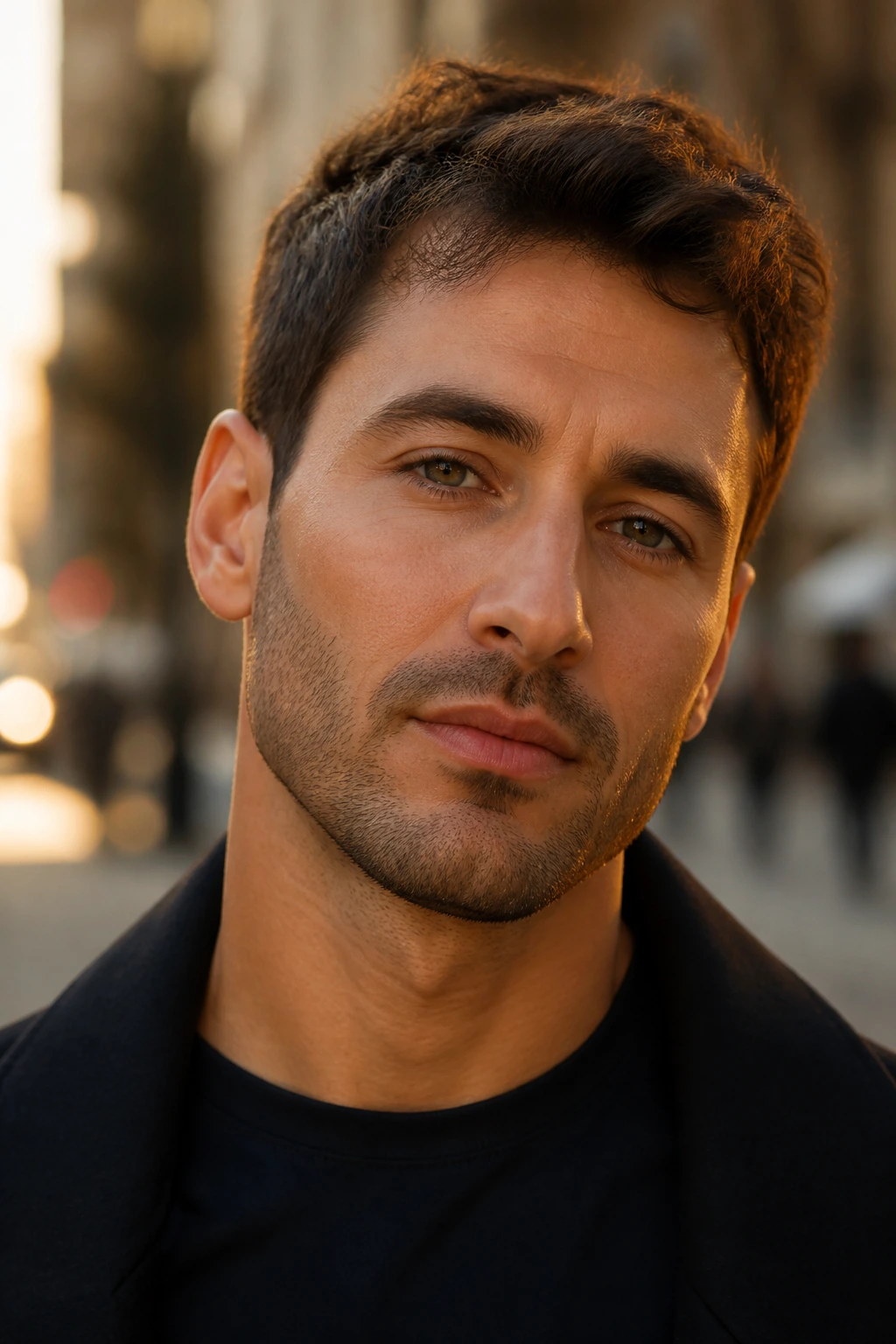
Do you want stubble that looks intentional instead of unfinished? This is the version to pick. Designer stubble keeps the length short, but the mustache, cheeks, and neckline are cleaned up with enough precision to make the whole thing feel planned.
What Makes It Different
Unlike plain heavy stubble, designer stubble usually has a more visible cheek line and a tidier mouth area. The mustache may be trimmed just enough so it doesn’t blur into the upper lip, and the neckline is held a little tighter.
On an oval face, that tidy frame helps keep the face looking balanced rather than vague. It is a strong choice if your growth is dense but not uniform, because the shape does the work that density can’t.
Good pairing: a short fade, textured crop, or side part.
4. Shadow Beard

A shadow beard is the almost-there beard. It’s close enough to be felt under the fingers, but light enough that the face still looks clean and open.
This style flatters oval faces because it doesn’t shift the face’s proportions much at all. It just adds a soft blur around the jawline and upper lip. If your beard grows fast on the chin but slower on the cheeks, a shadow beard can hide that difference better than a longer style would.
Keep the length short and uniform. The moment the chin gets a little extra bulk, the shadow effect is gone.
5. Short Boxed Beard
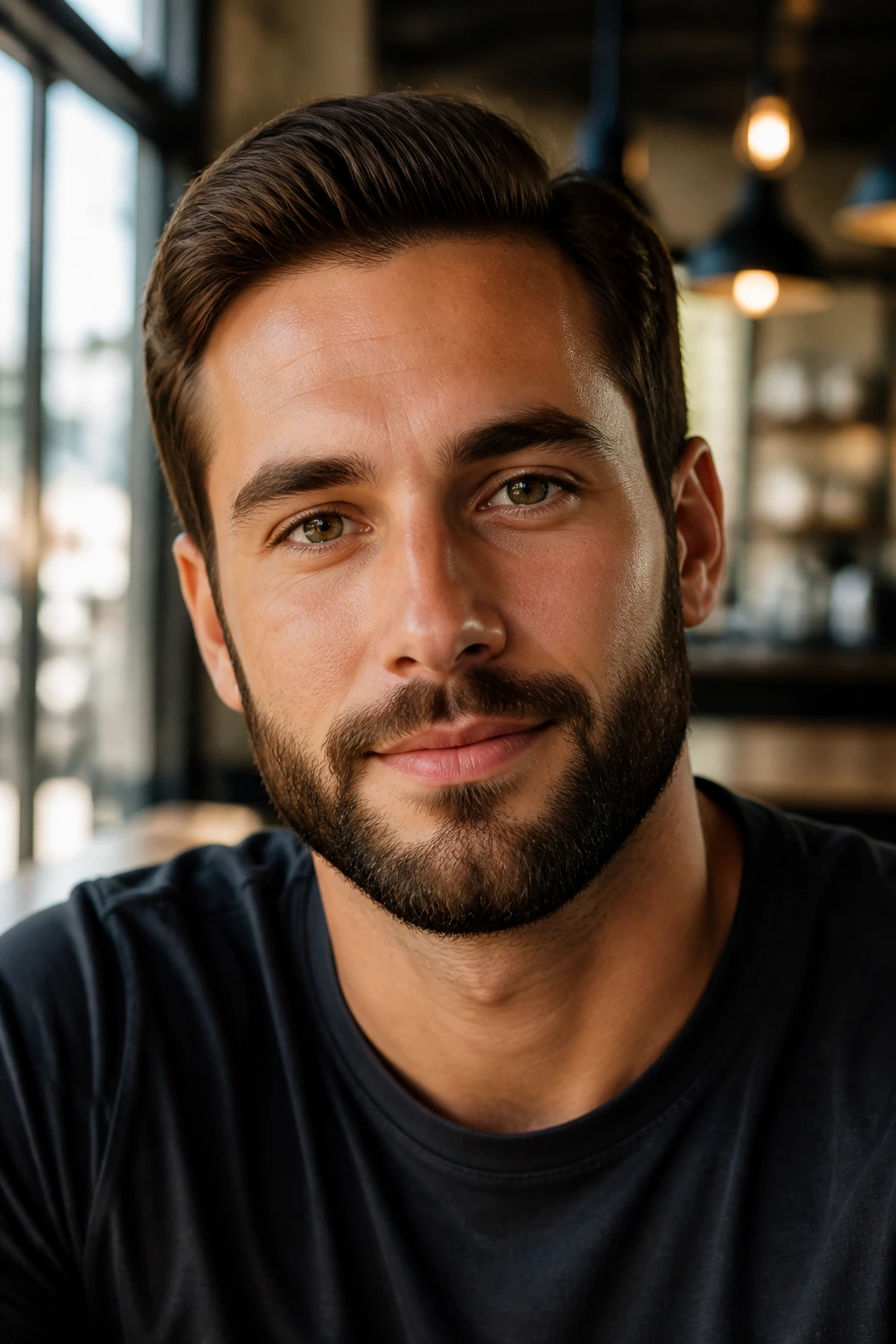
Short boxed beards are the workhorse of oval-face beard styles. They add shape without taking over, and they’re easy to keep tidy if you’re willing to trim every week or so.
The boxy edges make the jaw look a bit more structured, while the short length keeps the face from looking stretched. I like this style especially on men whose beard grows evenly on the cheeks and chin. It looks deliberate, not overworked.
Barber Note
Ask for a gradual taper from the sideburns into the beard, not a hard shelf. A hard shelf can look too square on an oval face.
6. Low Boxed Beard
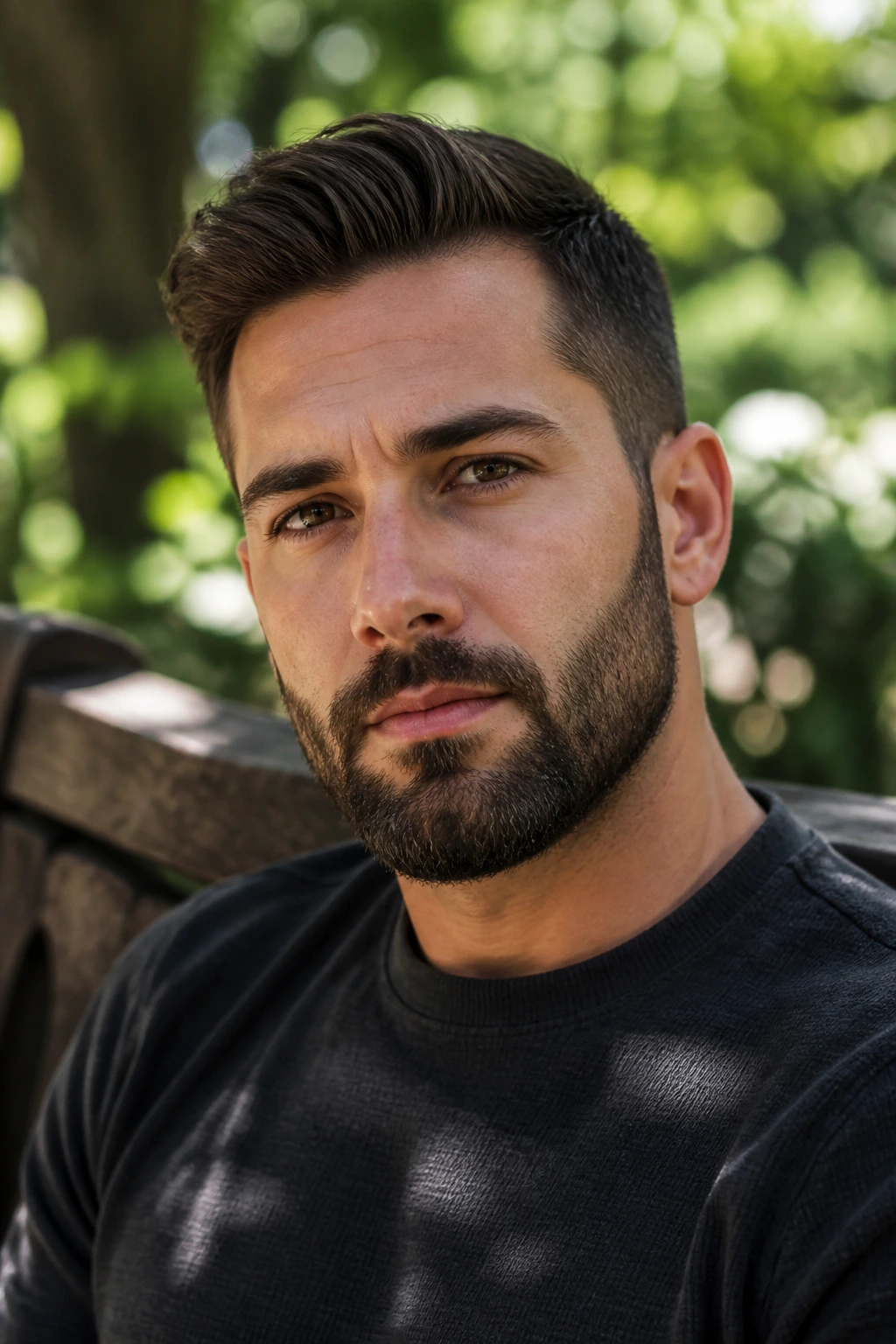
A low boxed beard shifts the cheek line a little lower and keeps the sides neat, but it doesn’t cling as tightly to the jaw as the short boxed version. That small difference matters.
On an oval face, the lower cheek line can make the jaw look broader and the face feel less delicate. The trick is not letting the chin grow much longer than the sides. If the chin starts leading the whole shape, the balance tips.
This is a good style when you want something masculine but not severe. It works well with shorter hair and a clean neckline.
7. Faded Beard
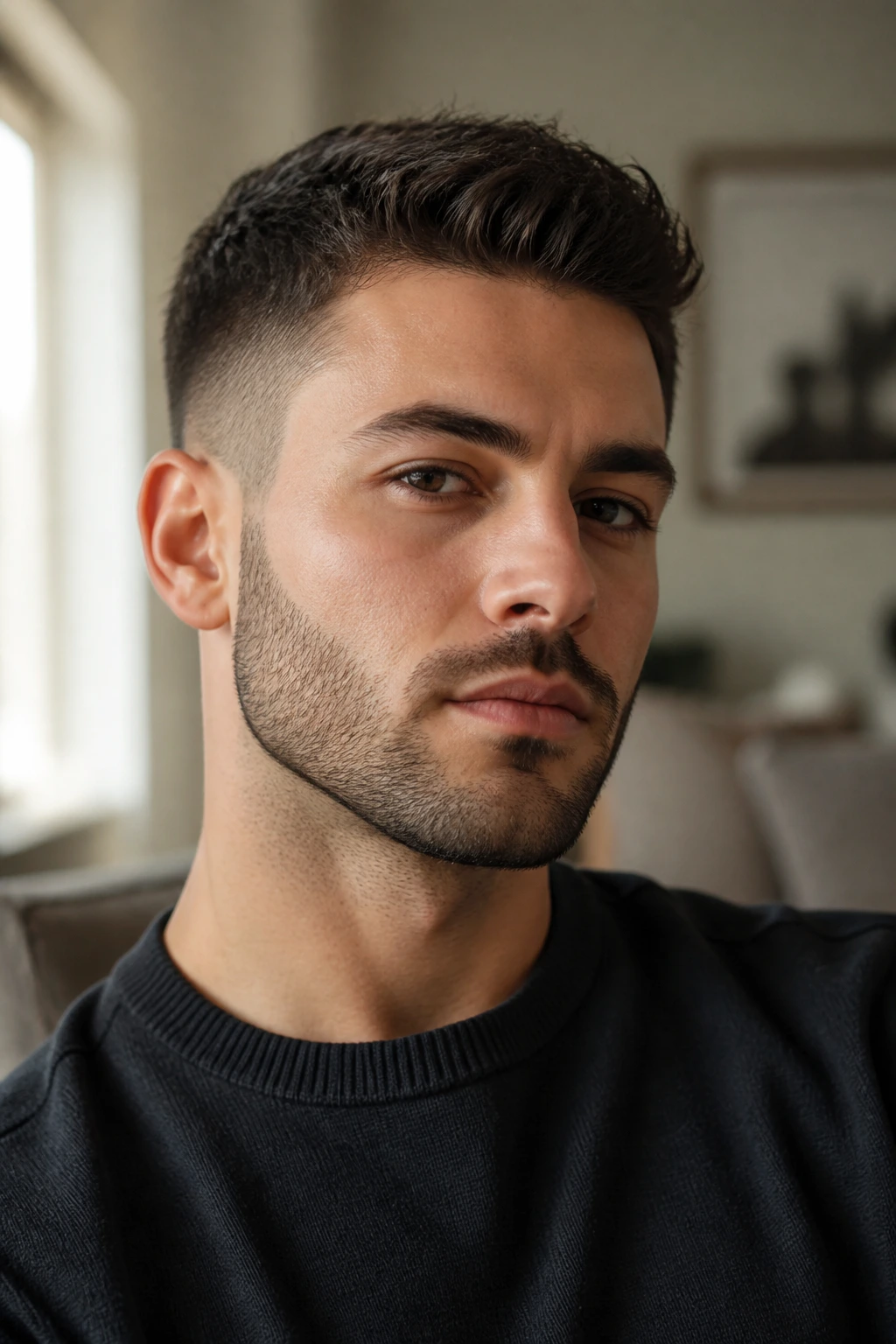
A faded beard blends the sideburns into the beard with guard lengths that step down smoothly. It’s a clean, modern shape, and it suits oval faces because it keeps the upper half of the face from getting visually heavy.
The fade helps the beard feel connected to the haircut. That matters more than people think. A beard with a fade and a low or mid skin taper on the sides looks polished without needing a lot of extra length.
What to Ask For
- A gradual fade from sideburn to jaw.
- A neckline that sits cleanly above the throat.
- A beard shape that stays fuller at the jaw than at the chin.
If you like neat edges and low drama, this one belongs near the top of your list.
8. Tapered Short Beard
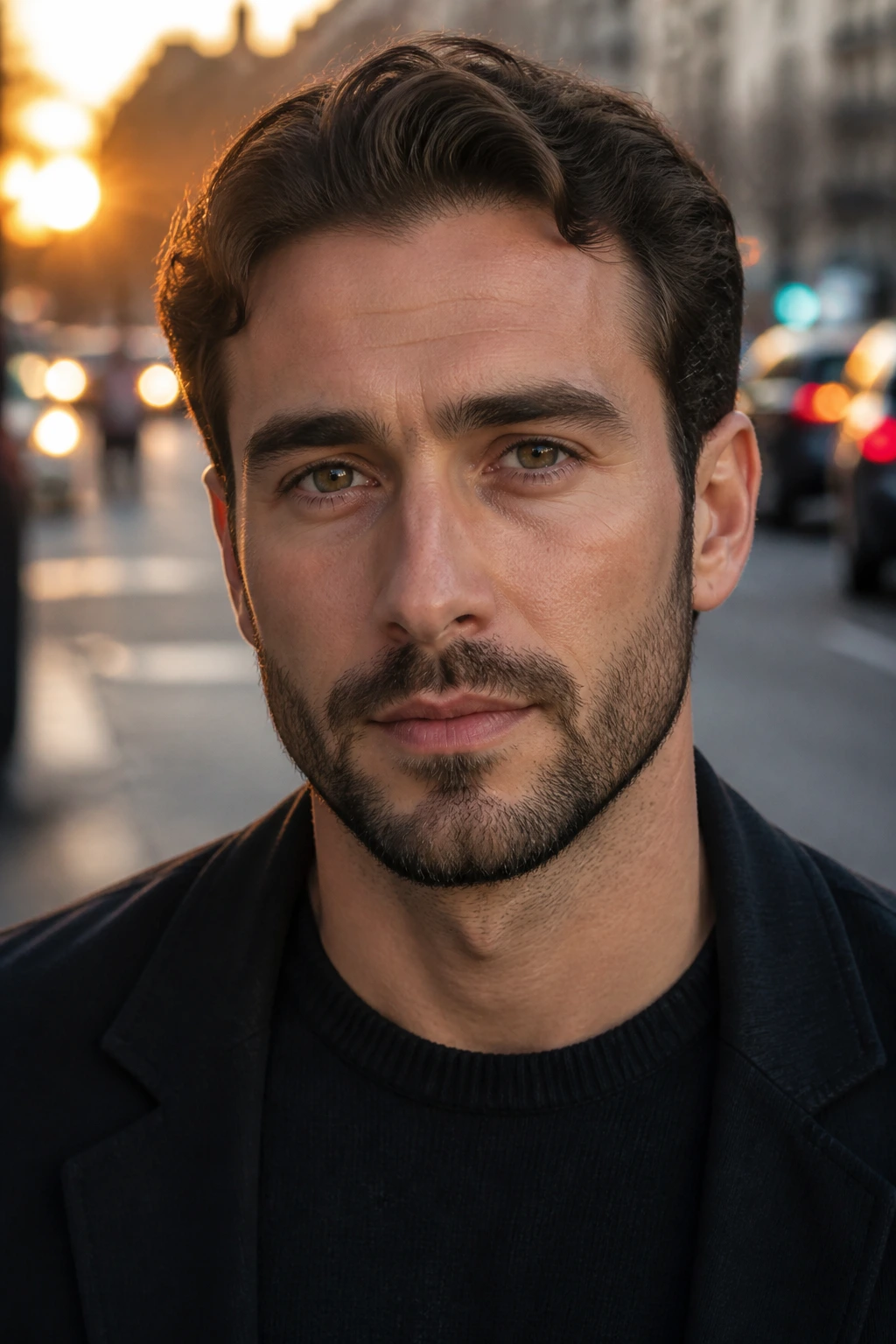
A tapered short beard is cleaner than a full beard and softer than a boxed beard. The sides narrow gently as they move down, which keeps the face from looking too wide near the jaw.
Oval faces wear this well because the taper respects the natural balance of the face. The style adds structure, but not a hard outline. It’s especially useful if your beard grows thick on the cheeks and you don’t want a square block of hair sitting on your face.
I’d trim this every 7 to 10 days. If you wait much longer, the taper gets lost and the beard turns into generic fullness.
9. Boardroom Beard

The boardroom beard is what happens when you want a beard that behaves. It stays neat, it stays short to medium, and it doesn’t announce itself before you do.
This style flatters oval faces because it keeps the lower face defined without adding bulk. The cheek line stays controlled, the neckline stays clean, and the mustache doesn’t spill over the lip. It’s one of the easiest styles to wear with a collared shirt or a blazer because the beard looks like part of the outfit instead of a separate event.
How to Wear It
A low fade or classic taper haircut makes this beard feel even sharper. Keep the length around 5 to 10 mm and avoid letting the chin go pointy.
10. Rounded Full Beard
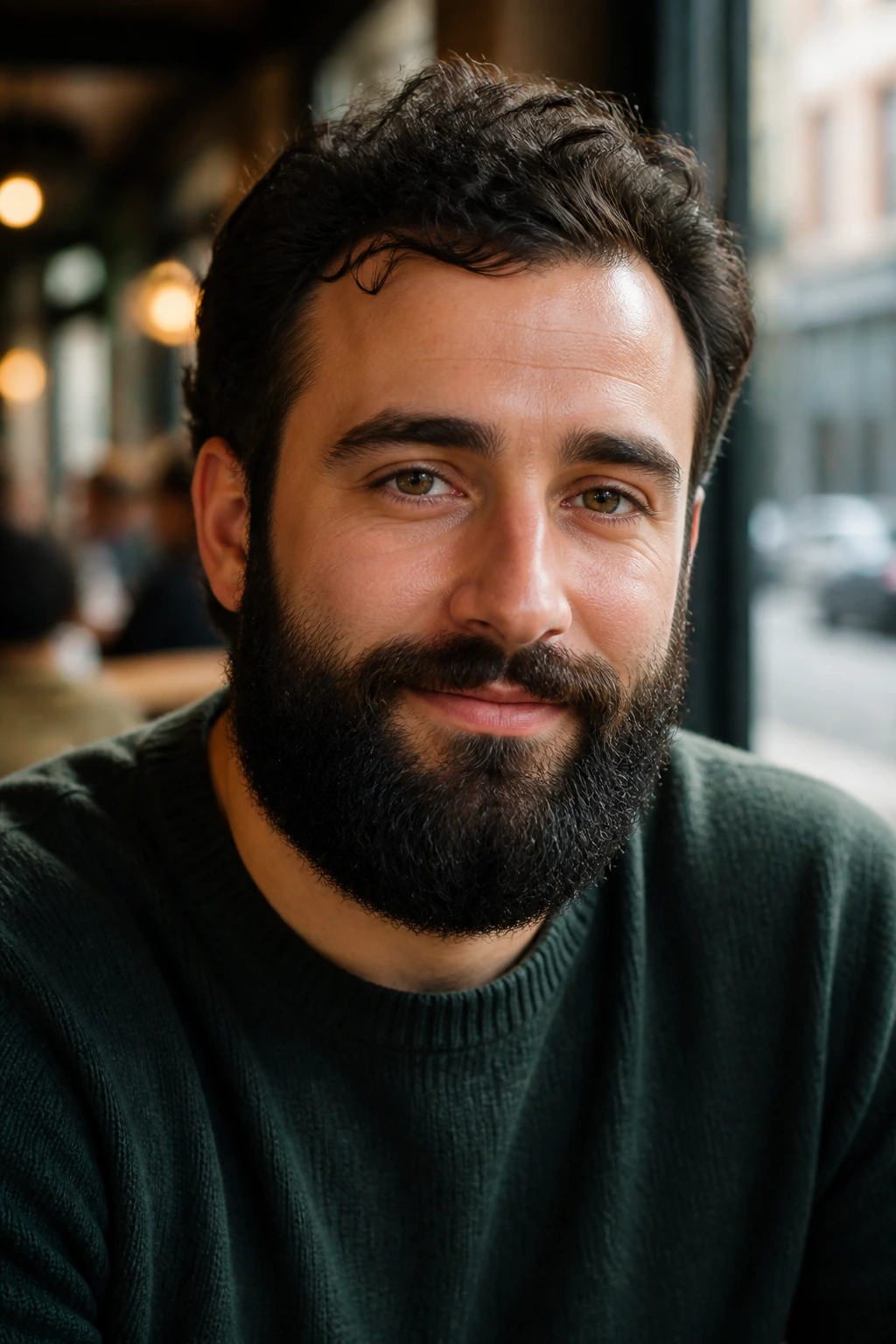
A rounded full beard is one of my favorites for oval faces because it adds fullness without turning into a box. The bottom edge curves softly, which keeps the face from looking too angular.
That rounded shape matters. An oval face already has a balanced outline, so the beard can either sharpen it or soften it. A rounded full beard does the softer job well. It gives the jaw a little more weight, but the rounded bottom stops the face from looking stretched downward.
Keep the cheeks full enough to matter. If the sides are too thin and the chin is too long, you lose the rounded effect and drift into a ducktail shape.
11. Full Beard
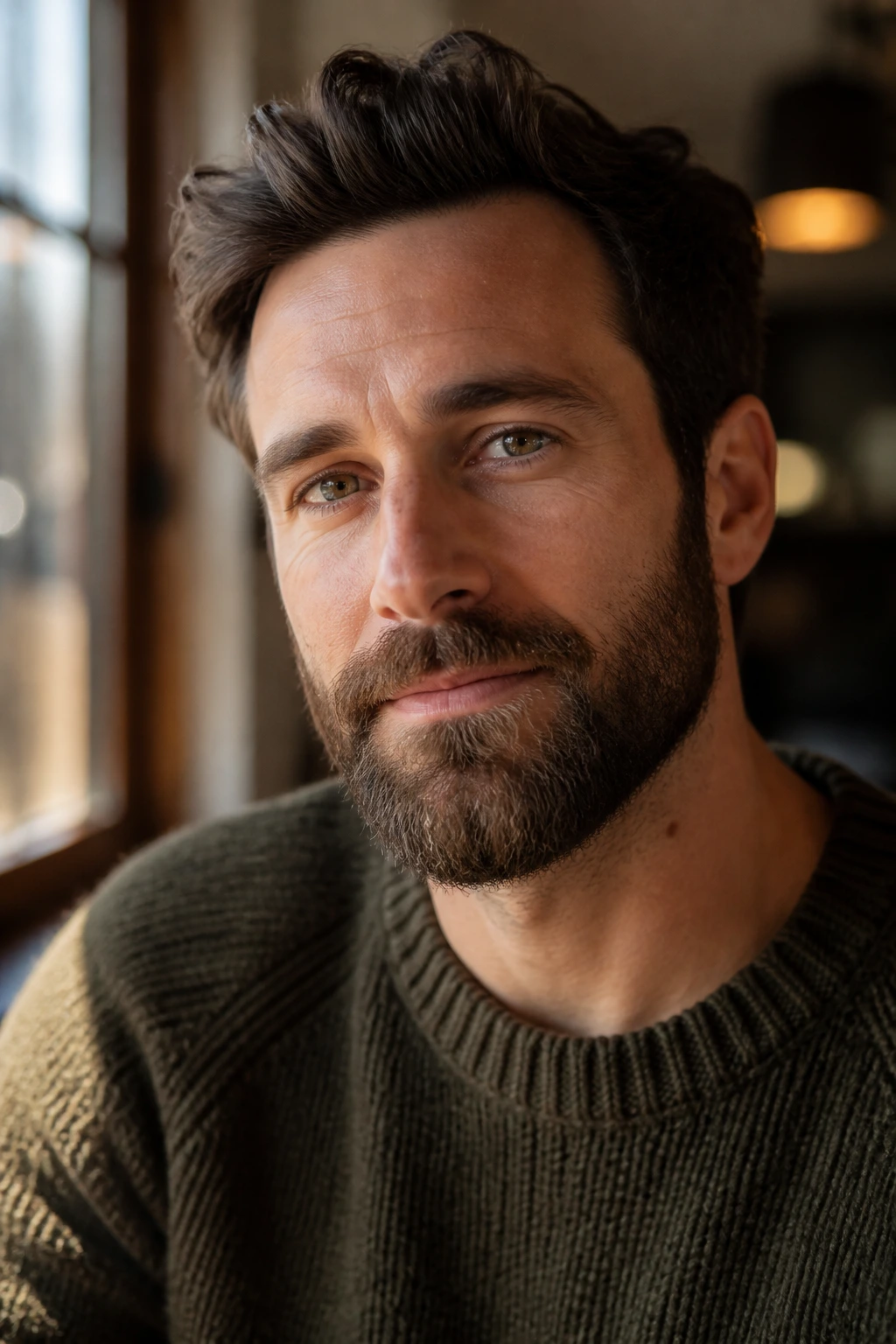
A full beard is the simplest statement of all: enough length to matter, enough density to matter more. On oval faces, it tends to work because the face shape can carry fullness without needing major correction.
The face still needs some structure, though. A full beard that grows down the throat or balloons wildly under the chin can overwhelm the natural balance. Keep the neckline clean and let the cheeks frame the face rather than swallow it.
If your growth is even, this is one of the most forgiving styles. If your cheeks fill in slowly, you may want to keep the length modest until the density catches up.
12. Sculpted Full Beard
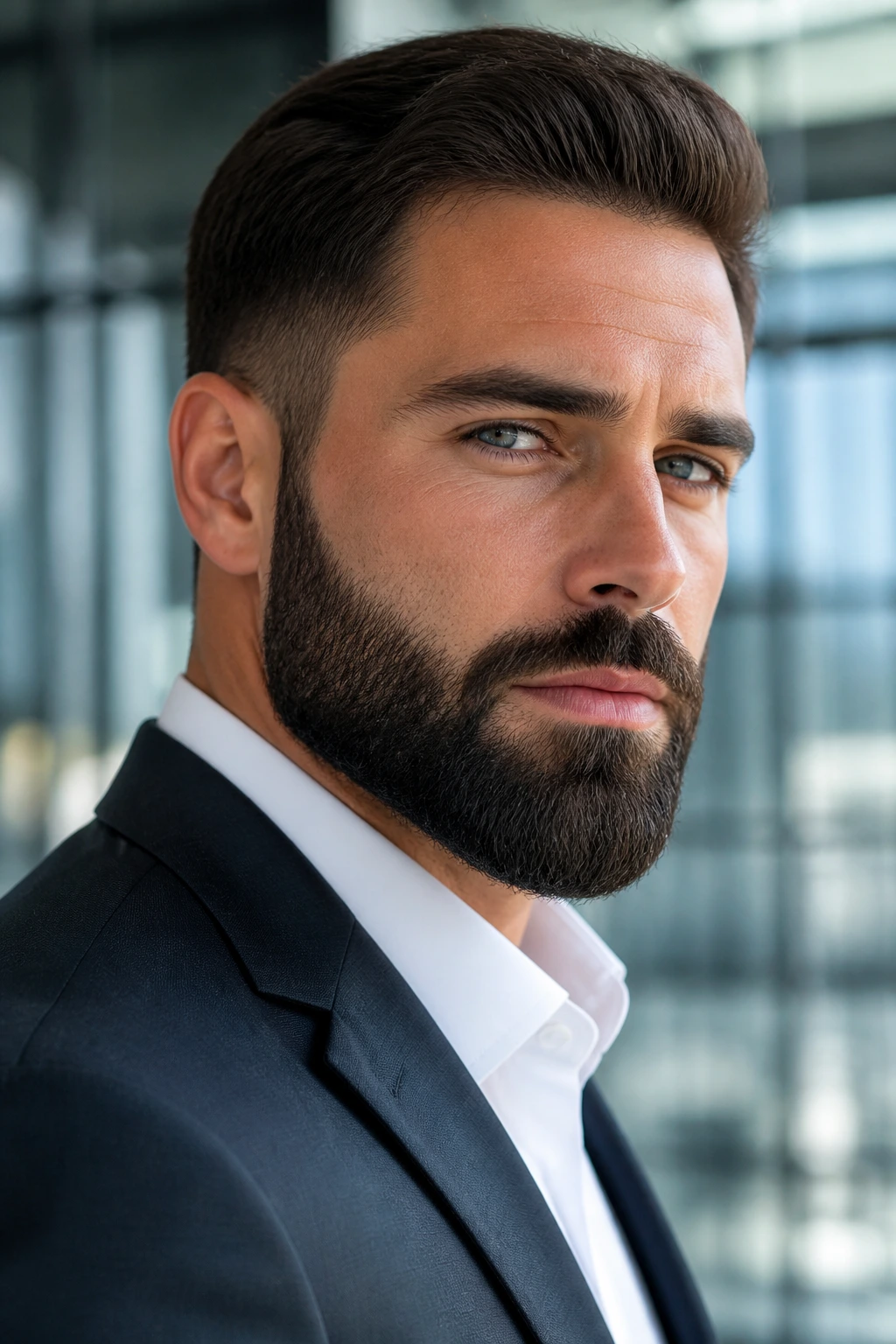
A sculpted full beard is a full beard with editing. The cheeks are shaped, the neckline is clean, and the lower edge is trimmed so the beard looks dense rather than shaggy.
That editing is what makes it work on oval faces. Instead of adding bulk everywhere, it places bulk where it helps — along the jaw and around the chin — while trimming away the parts that would blur the face’s shape. It’s the beard version of a good suit jacket: not flashy, but it knows where to sit.
Pro Detail
Ask your barber for the cheek line to follow your natural growth, not a high carved arch. Over-carved cheeks can make a full beard look pasted on.
13. Ducktail Beard
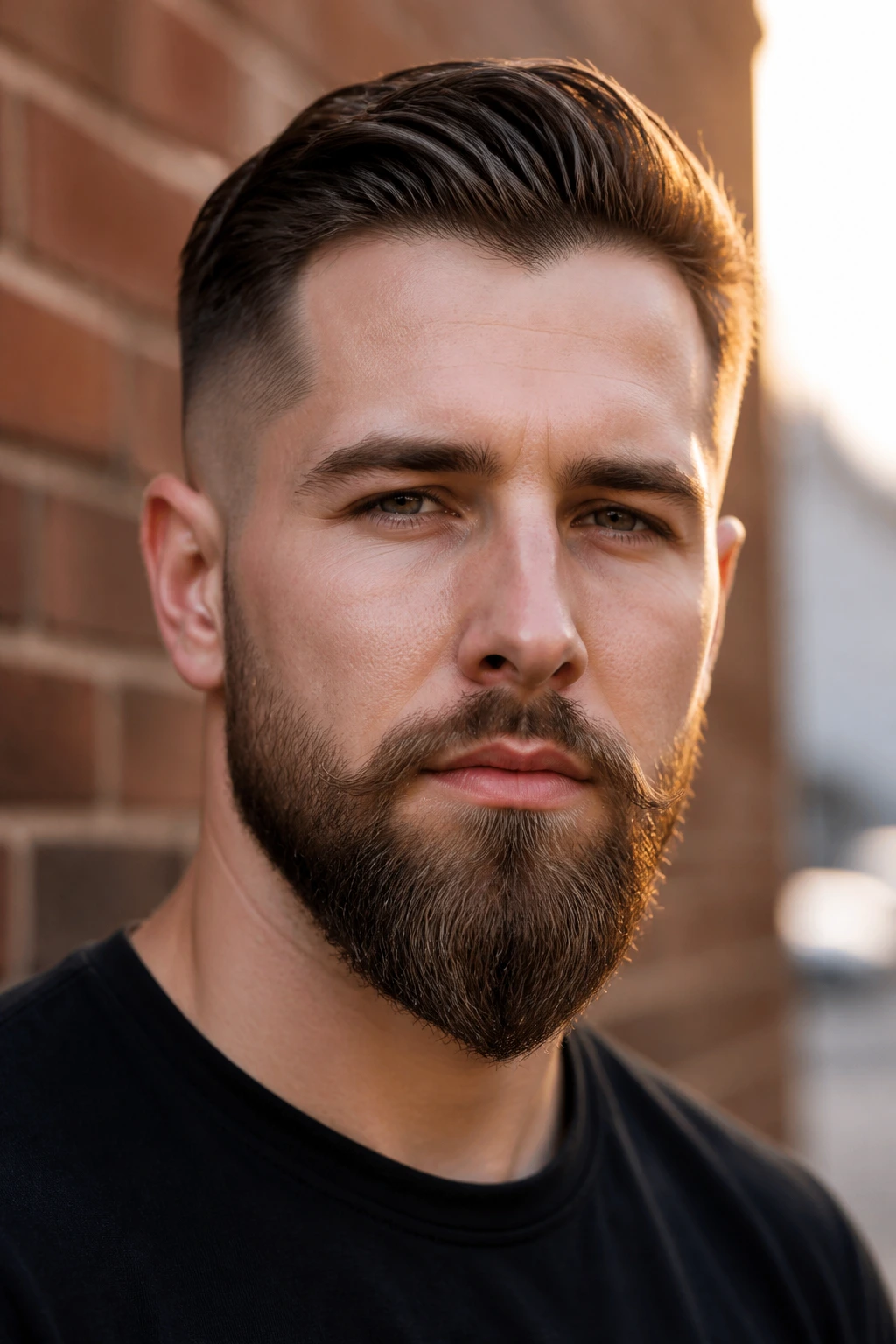
A ducktail beard puts a little extra length at the chin and tapers the sides, which gives the lower face a stronger point. On an oval face, that can look excellent if the chin length stays controlled.
The reason it works is simple: it adds emphasis without making the face flat. But there’s a line between emphasis and overextension. Keep the taper gradual and the chin point modest if you want the face to stay balanced.
This style pairs well with a shorter haircut because too much height up top plus too much length at the chin can make the face feel longer than it is.
14. Verdi Beard
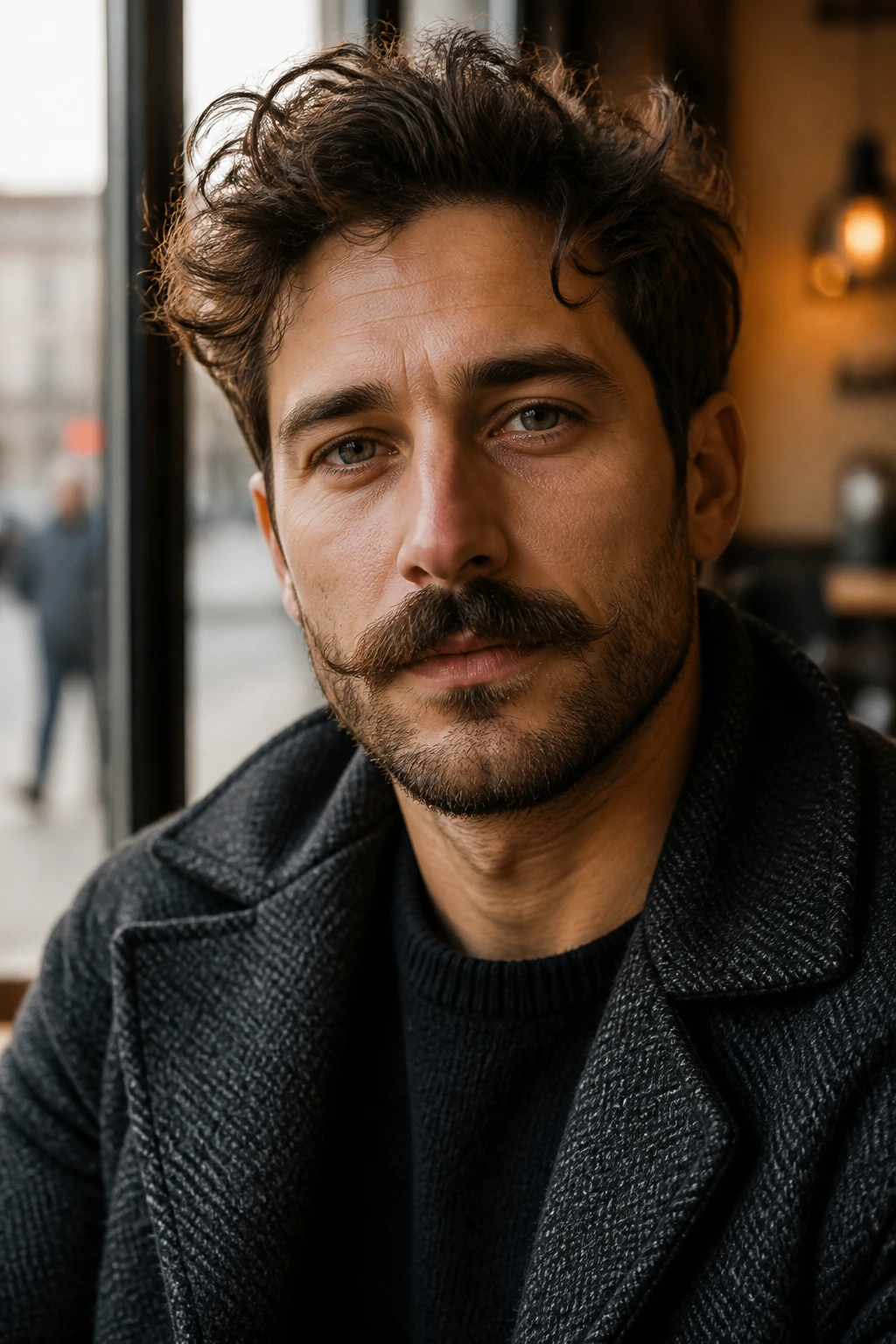
The Verdi is for men who like a mustache that does some talking. The beard stays shorter and neater, while the mustache is fuller, often with a slight curl or just a more pronounced shape.
Oval faces handle this well because the style shifts attention upward without erasing the jaw. It adds character around the mouth and nose, which can be useful if your beard growth on the cheeks is lighter than the hair on your upper lip and chin.
A Verdi needs regular mustache trimming. If the mustache starts hanging over the lip like a curtain, the style gets fussy fast.
15. Garibaldi Beard
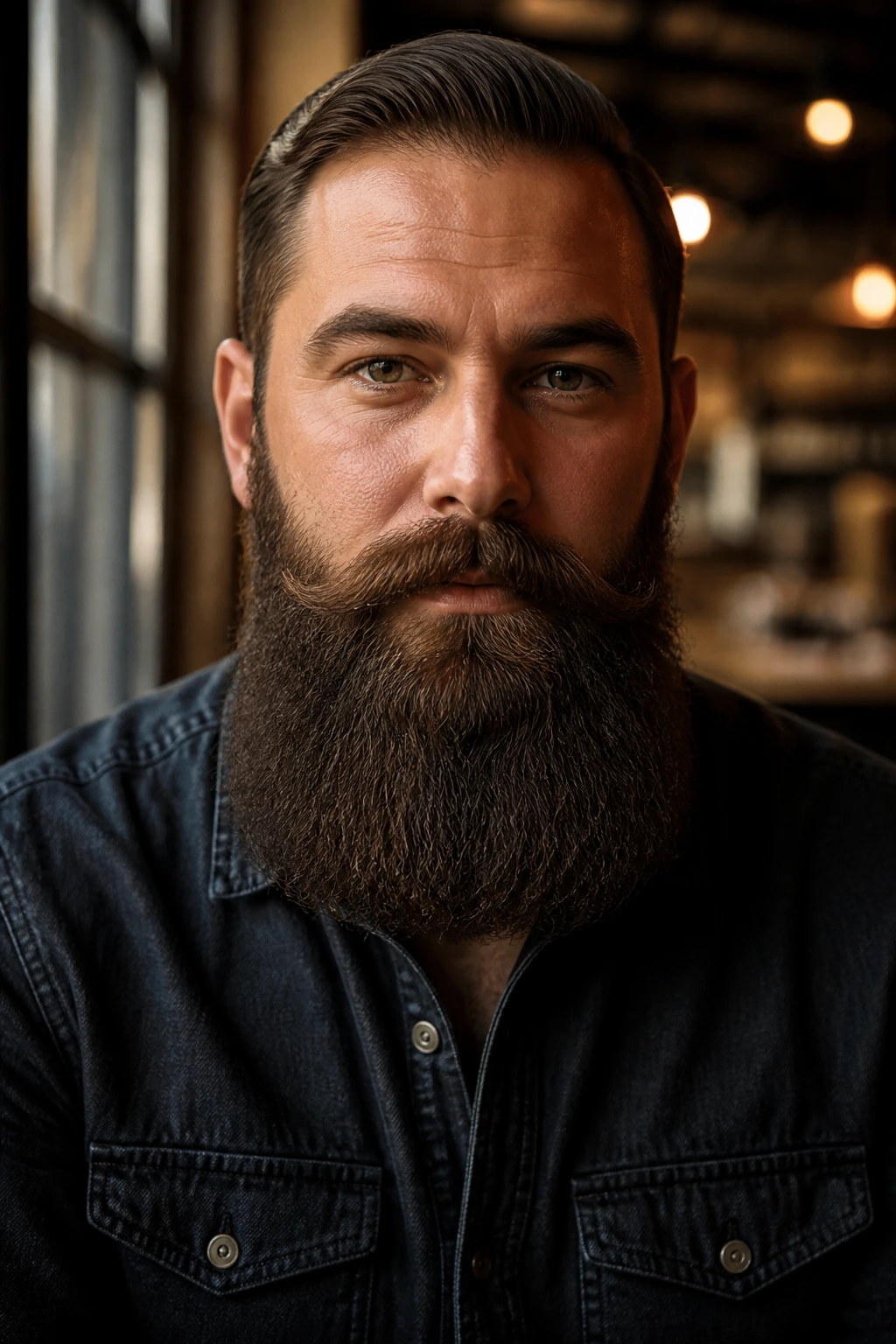
A Garibaldi is broader and more relaxed than a ducktail. It’s a full beard with a rounded, natural bottom and a strong mustache that stays in the conversation.
On oval faces, the Garibaldi can look rich and substantial as long as the neckline stays neat. It gives the lower face a heavier frame, which is useful if your face leans a little long and you want more visual width than point.
The beard should be brushed down and out, not just left to collapse under its own weight. That little bit of shaping changes everything.
16. Bandholz Beard
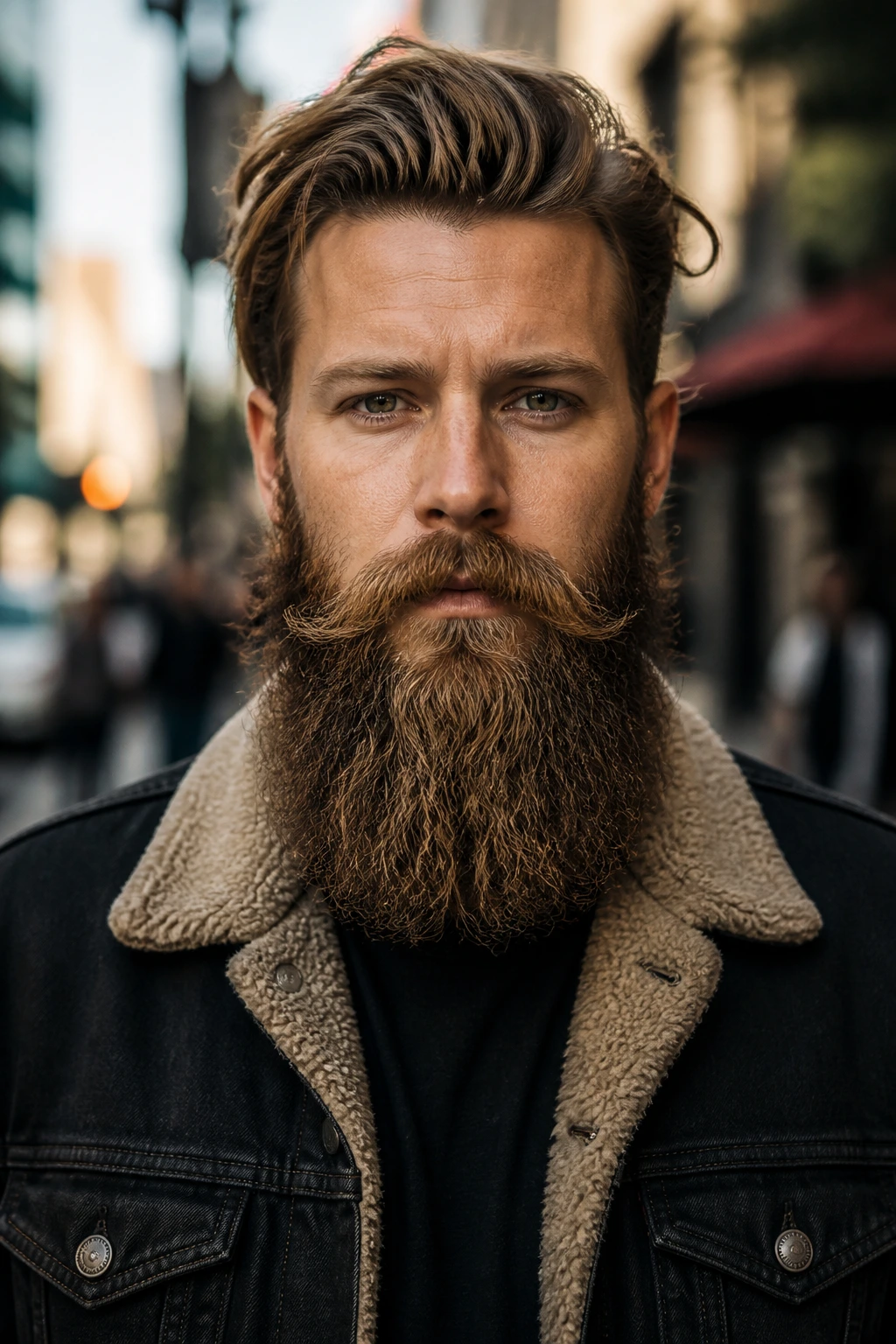
The Bandholz is the long, free-flowing beard that still needs a conscience. It’s longer, looser, and usually paired with a mustache that’s been trained rather than swallowed by the beard.
Oval faces can wear this look because the shape already has balance, so a long beard doesn’t have to rescue the geometry. Still, the neckline needs to stay clean, or the whole thing slides into bulk under the chin. Long beards look best when the lower edge is deliberate, not accidental.
If you like beards that feel lived-in rather than polished, this one has real appeal. It’s one of the few long styles that doesn’t need to look stiff.
17. Beardstache
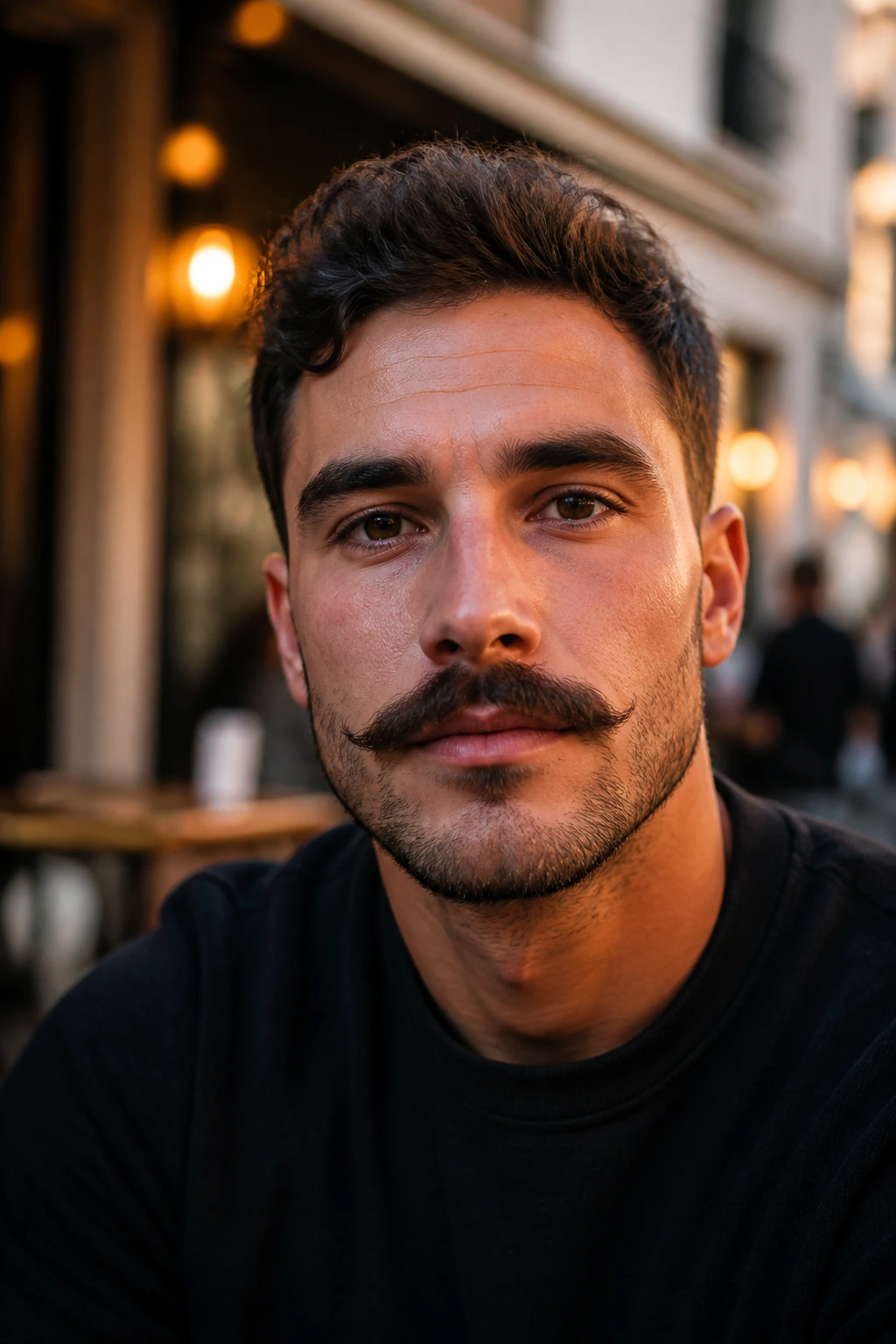
The beardstache is blunt and a little cool in the best way. The mustache is the main event, while the beard stays short enough to shadow the jaw instead of hiding it.
That makes it ideal for oval faces because it adds contrast without changing the whole silhouette. The mustache gives the face personality, and the short beard keeps the lower half from looking empty. If your cheeks are patchier than your chin and upper lip, this is a smart move.
Best With
A short fade, buzz cut, or textured crop. The beardstache looks awkward when everything else is too fluffy.
18. Circle Beard
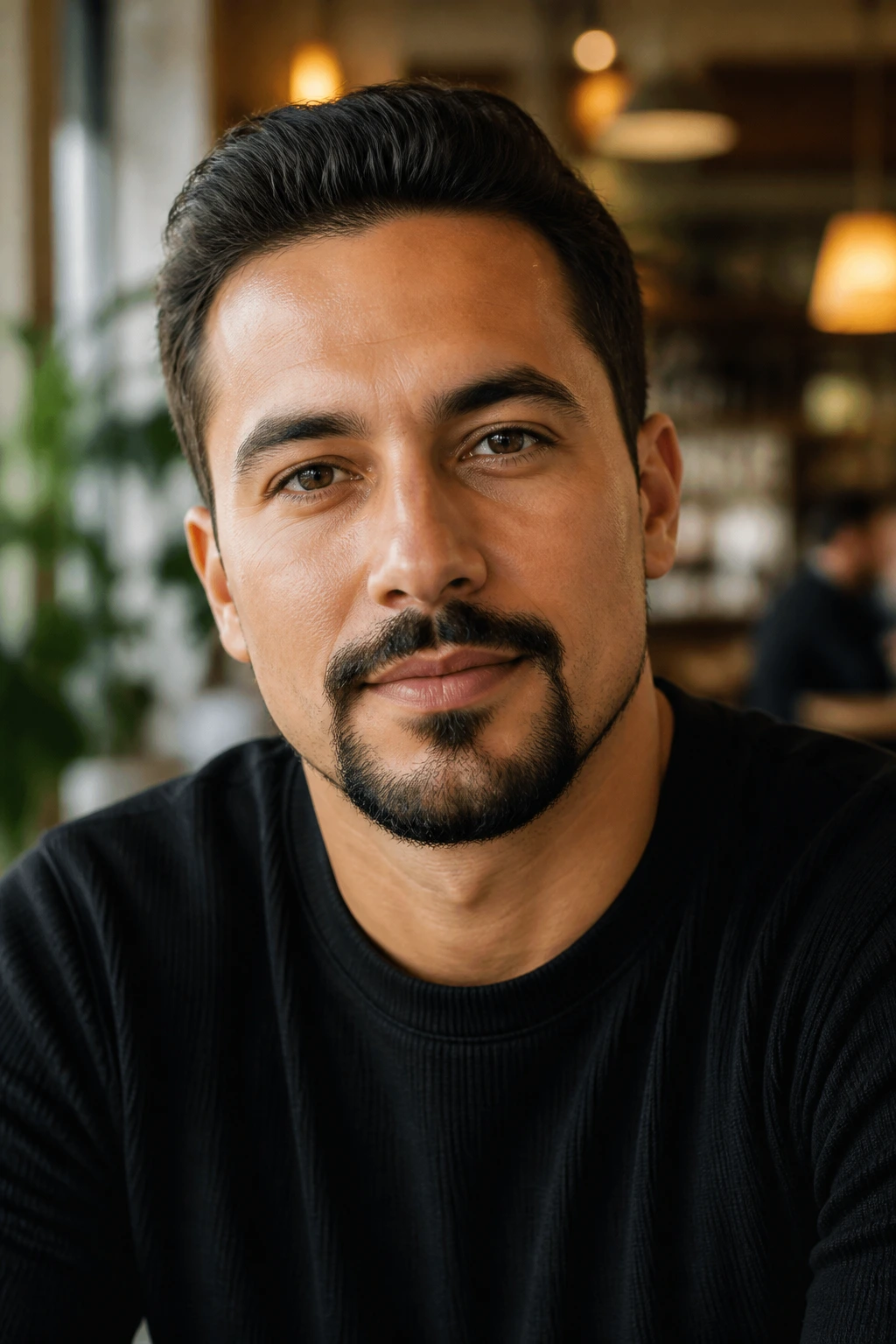
The circle beard connects a trimmed mustache to a rounded goatee and keeps the sides out of the picture. It is one of the cleanest options if your cheeks don’t grow in evenly.
For oval faces, the circle beard adds focus around the mouth without making the face heavy. The rounded shape can make the chin look a touch stronger, but it stops short of turning into a pointed goatee, which can stretch the face more than you want.
The trick is keeping the circle neat. If the connection between the mustache and goatee gets fuzzy, the whole thing loses the point.
19. Van Dyke
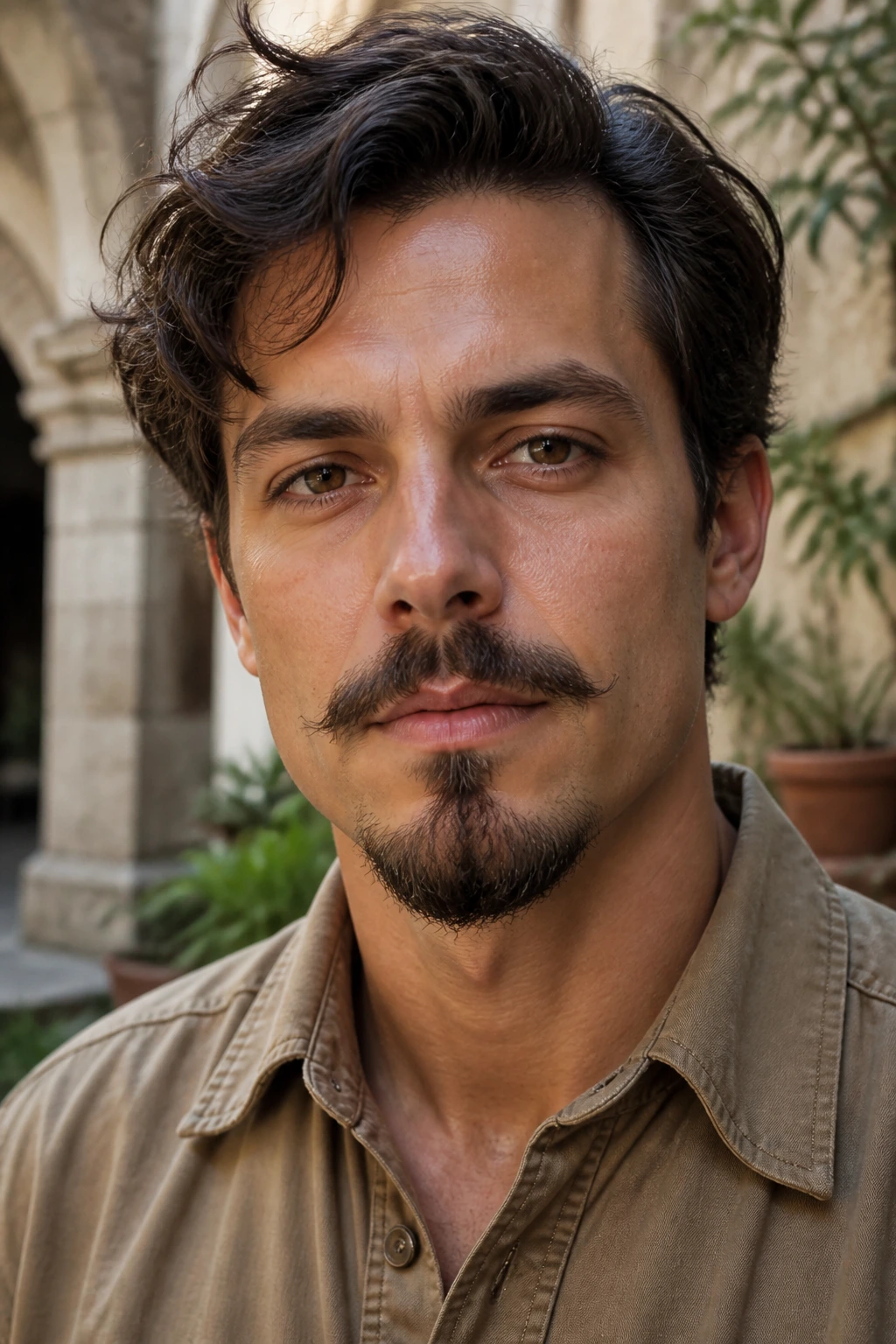
The Van Dyke separates the mustache from the goatee, and that separation is the whole charm. It has old-school energy, but it can look sharp and modern if the lines are kept clean.
On an oval face, the Van Dyke works because it creates a strong focal point at the mouth and chin without covering the cheeks. It does add some vertical interest, so keep the goatee compact if your face already reads long in photos.
I’d call this a style for men who like precision. The mustache and chin piece each need their own shape, or the whole thing turns into a grown-out mistake.
20. Balbo Beard
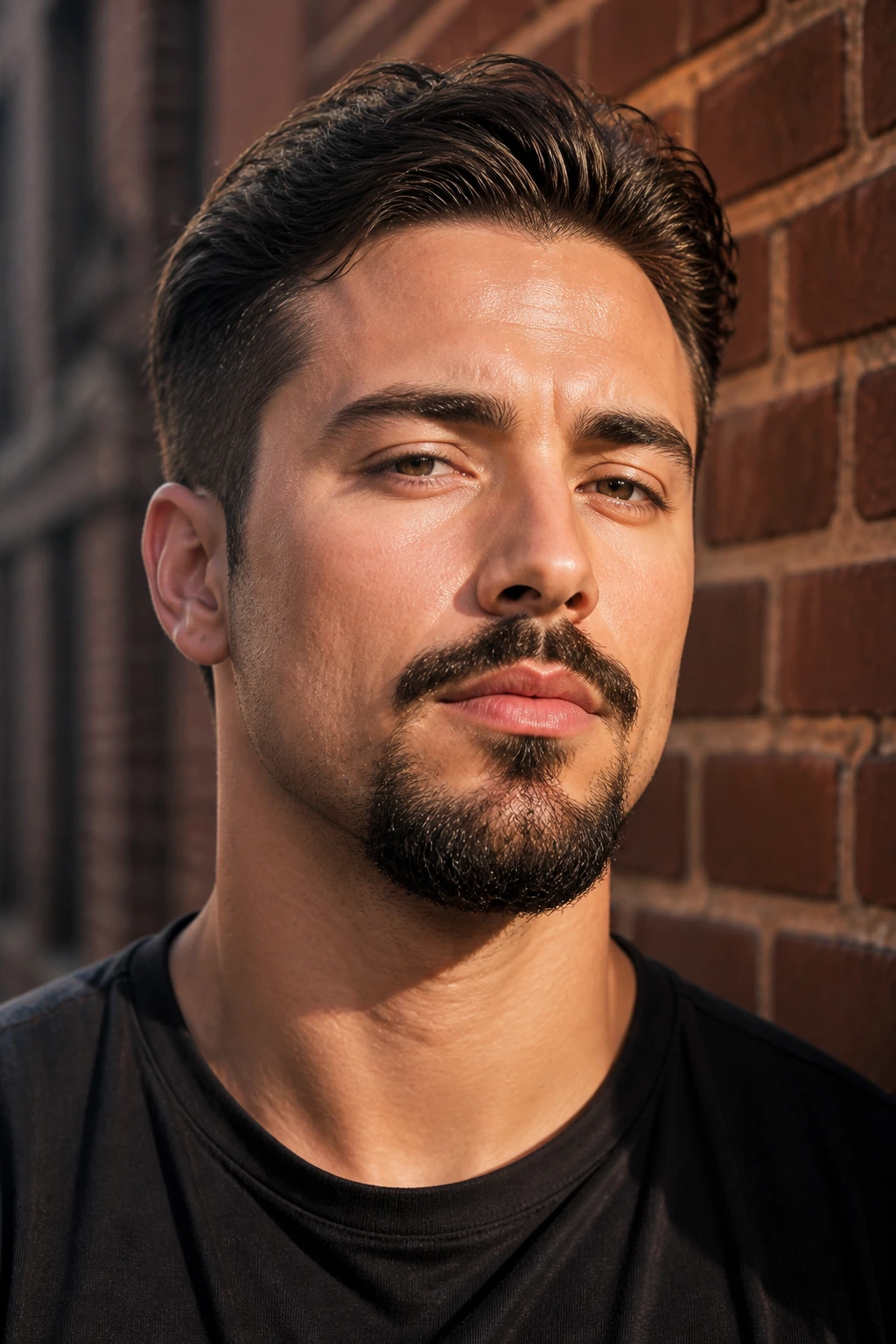
The Balbo is a good answer when the cheeks are stubborn and the chin does the best work. It usually features a disconnected mustache and a shaped chin beard that widens the jaw without filling the cheeks.
That’s useful on oval faces because it puts structure where the face can use it. The style creates definition without asking for full-cheek density. If you want the lower face to feel stronger but not heavier, this is one of the cleanest routes.
Shape Note
Keep the chin beard broad enough to matter. A tiny Balbo can look lost on an oval face, especially if your hair is thick elsewhere.
21. Anchor Beard
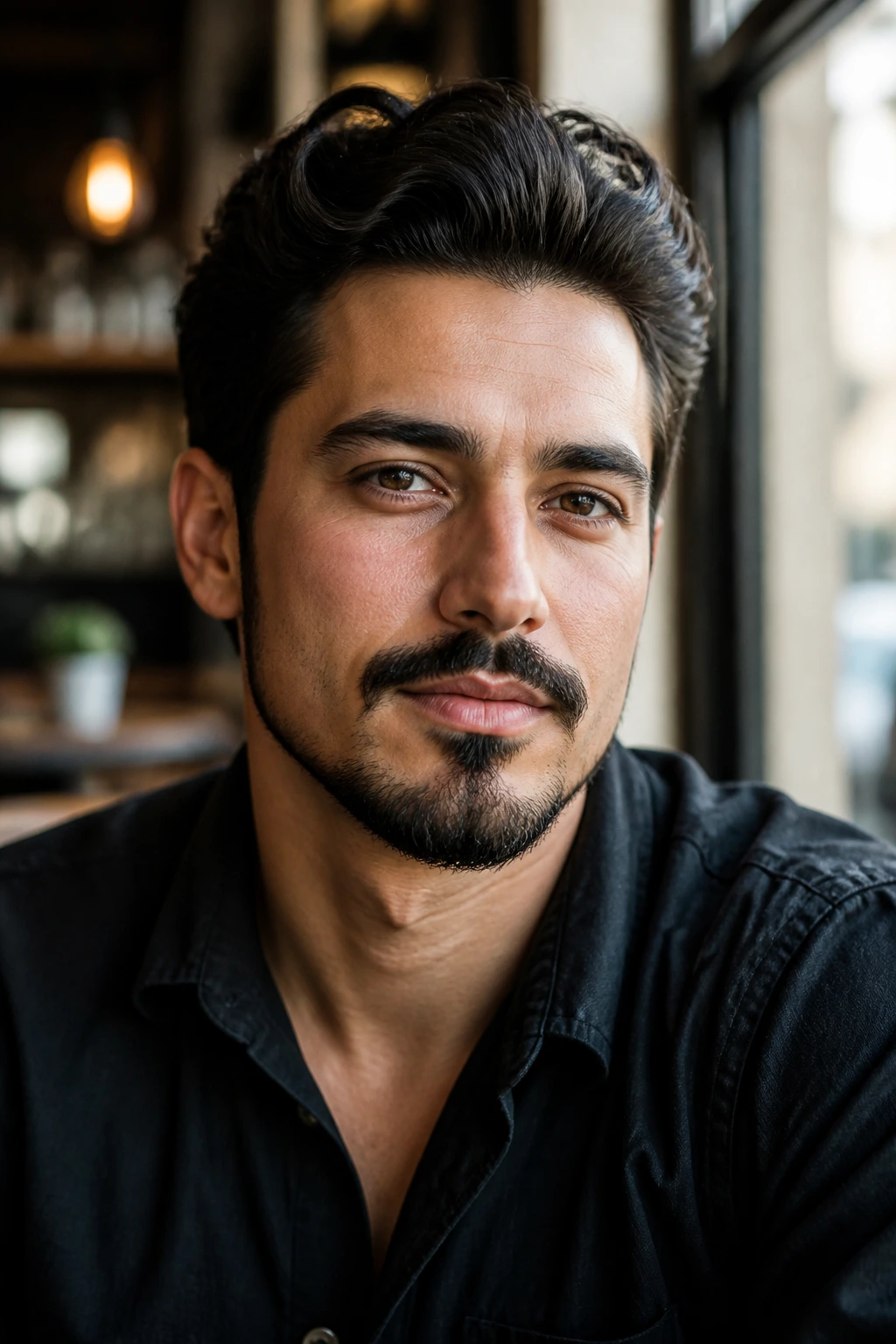
An anchor beard traces the jaw and chin in a shape that really does resemble the name. It combines a pointed chin piece with a line that follows the jaw, often paired with a mustache.
Oval faces can wear it well because it adds a crisp frame to the lower half of the face. The catch is restraint. Too much length in the chin point can make the face look narrow, and too much width at the sides can muddy the shape.
If you like defined lines and don’t mind regular upkeep, the anchor beard can look sharp in a way that feels a little more styled than rugged.
22. Extended Goatee
The extended goatee spreads a goatee shape farther along the jaw, giving more coverage than a classic goatee without going full beard. It’s a solid choice if your cheeks are lighter or your chin grows faster than the rest.
On oval faces, it can sharpen the jaw and add weight around the mouth while leaving the upper cheeks open. That keeps the face clean and uncluttered. It also works well with shorter haircuts because the beard carries enough visual detail on its own.
A decent extended goatee needs clean edges. Once the jawline fuzz starts blurring out, the style loses its shape.
23. Chin Strap
The chin strap is a bold line, not a soft one. It follows the jaw closely and keeps the cheeks bare, which gives the face a very defined outline.
For oval faces, that can work if you want the jaw to look precise and narrow in a controlled way. It’s not the style I’d choose for every man, because it can feel severe if the line is too thin or too high. But on the right face, with the right haircut, it can look clean and athletic.
Barber Direction
Ask for the strap to follow your true jawline, not a fantasy version of it. If the line floats too far above the jaw, the style starts looking disconnected.
24. Chin Strap with Goatee
This version gives you the jawline of a chin strap and the center weight of a goatee. It keeps the face defined while adding a little more substance in the middle.
Oval faces can handle that combination well because it balances width and focus. The strap gives the edges, the goatee fills the center, and the overall shape still feels light enough not to overwhelm the face. It’s a strong option if a plain chin strap feels too thin but a full beard feels like too much.
Keep the join between strap and goatee crisp. If that connection gets fuzzy, the beard stops looking deliberate.
25. Mutton Chops
Mutton chops are unapologetic. They put the emphasis on the sides of the face and leave the chin mostly clean, which can be a brilliant move if you want width instead of length.
On an oval face, that extra side volume can be a useful correction if your chin already seems prominent. The style widens the lower face in a very visible way. It’s not subtle, though. You wear mutton chops when you want the beard to be part of the outfit, not a background detail.
The best versions keep the chops dense and the edges clean. Wispy chops look like you forgot to finish the shave.
26. Friendly Mutton Chops
Friendly mutton chops keep the sideburn-heavy shape but connect it with a mustache, which makes the whole thing feel less extreme. The chin stays open or very lightly covered, so the face doesn’t get dragged downward.
That’s the reason it can work on oval faces. You get the side width, but you avoid the long chin point that can lengthen the face too much. It has a vintage feel, sure, but it can also look surprisingly modern with the right haircut and a neat collar.
If you want the mutton chop idea without going full costume, this is the version to try first.
27. Textured Medium Beard
A textured medium beard is the most quietly useful style on the list. It sits in the middle ground — fuller than stubble, shorter than a long beard, and loose enough to show natural growth patterns without looking unkempt.
Oval faces wear this well because the shape is already balanced. The beard just gives it texture and depth. Keep the sides slightly fuller than the chin, and don’t over-shape the bottom. That little softness keeps the face from becoming too long or too square.
I like this one for men who want a beard that works hard without asking for daily sculpting. It’s not flashy. It just looks right.
The Tools That Keep the Edges Clean
A beard style only looks intentional if the tools can keep up with it. The difference between a good beard and a tired one is often a trimmer that holds a steady guard or a comb that doesn’t snag halfway through.
- Beard trimmer with adjustable guards: The backbone of most of these styles; you’ll use it for stubble, boxed beards, and neckline cleanup.
- Detail trimmer or precision shaver: Best for cheek lines, mustache edges, and the little corners near the mouth.
- Beard scissors: Useful for snipping stray chin hairs and cleaning up longer beards without taking off too much length.
- Fine-tooth comb: Helps you see uneven spots before they become obvious.
- Boar-bristle brush: Good for laying longer beards flat and training growth direction.
- Hand mirror: Necessary for checking the neckline and side profile, not just the front.
- Beard oil: Keeps coarse hair from turning wiry, especially in full and long styles.
- Beard balm: Adds a bit of hold for Verdi, Garibaldi, Bandholz, and ducktail shapes.
- Shaving gel or transparent shave cream: Makes cheek and neck lines easier to see.
- Small towel and cool water: Not glamorous, but useful when cleaning up after edging.
How to Maintain the Shape Between Barber Visits
A beard on an oval face needs regular small corrections more than it needs dramatic overhauls. If you let everything grow for three weeks and then attack it with a guard, the shape usually gets lost. Small touch-ups keep the style readable.
Short stubble and beardstache styles usually need attention every 2 to 4 days. Boxed beards, faded beards, and boardroom beards tend to want a weekly trim, especially around the neckline and cheek line. Full beards and longer styles can go longer between major trims, but they still need brushing, oil, and a quick check for stray chin length.
Washing matters too. Beard hair collects oil, crumbs, smoke, and whatever else your day throws at it. Two to three washes a week is enough for most men. Daily shampooing usually dries the hair out and makes the beard puffier than it needs to be. If your beard feels rough, use oil right after the towel-dry stage while the hair is still slightly damp.
The neckline is the detail people neglect. Keep it two finger widths above the Adam’s apple for most short and medium styles. That one habit keeps the beard from sliding into neck fuzz.
Common Mistakes That Throw an Oval Face Off
The first mistake is letting the chin grow too long. On an oval face, that extra length can make the face look stretched rather than strong. The fix is simple: let the sides and jaw carry more of the volume, and trim the point before it becomes the main event.
Another problem is carving the cheeks too low or too hard. When the line is set too low, the beard starts looking like it’s hanging from the face instead of growing from it. Follow the natural cheek growth unless the hair really forces you to edit.
The neckline gets ignored all the time. If the beard drops too far down the throat, the whole shape looks heavy. Clean it up regularly and keep the lower edge crisp.
The fourth mistake is choosing a style that fights your growth pattern. A man with sparse cheeks usually has a harder time with a big full beard than with a beardstache, circle beard, or extended goatee. Work with density, not against it.
A fifth mistake? Matching a long beard with too much hair height on top. Big hair plus a long beard can make the face feel taller than it is. If the beard is going long, consider tighter sides or a lower-profile haircut.
Variations and Adaptations for Different Growth Patterns
-
The Office Trim: Keep the beard in the short boxed, boardroom, or faded range and keep the cheek line conservative. This version works when you want the beard to disappear into a dress code instead of announcing itself.
-
The Patchy Growth Fix: Choose beardstache, circle beard, extended goatee, or Balbo. These styles use the strongest growth zones and stop the cheeks from becoming the weak spot.
-
The Curly-Beard Shape: If your beard curls outward, keep the length a touch shorter than you think and brush downward after oil. Curly texture adds width fast, so oval faces usually look best when the sides are controlled.
-
The Silver Beard Edit: Gray and silver hair shows shape changes more clearly than dark hair. A slightly tighter neckline and a clean cheek line keep the style sharp instead of fluffy.
-
The Low-Maintenance Week: Light stubble, heavy stubble, and textured medium beards are your safest options if you do not want to trim every few days. They look best when the shape is simple and the neckline stays in line.
-
The Statement Beard: Ducktail, Garibaldi, and Bandholz give you more drama, but they need a disciplined neck and brushed shape. If the beard starts collapsing inward, the style loses its point.
How to Wear These Beard Styles Without Letting the Shape Get Away From You
Presentation: A beard on an oval face should frame the jaw, not swallow it. Short and medium styles look best when the cheek line is visible and the neckline sits high enough to show the throat; longer styles need brushing so they hang in a deliberate line rather than a puff.
Haircut Pairing: A fade, crop, buzz cut, or short taper makes boxed beards, stubble, and chin-strap styles feel cleaner. Longer top hair — curls, quiffs, side parts, textured volume — pairs better with fuller beards like the Garibaldi, Bandholz, or rounded full beard because the face needs balance from top to bottom.
Length Choice: If your face already looks a little long, keep the beard closer to the jaw and avoid too much chin point. If your face feels flat or soft, a little extra fullness at the chin can help, but only a little. Half an inch can change the whole read of the face.
Style Pairing: Glasses, collars, and mustache shape all change the final look. Thick frames like a beard with neat edges. Open collars can handle rougher texture. Sharp lapels and structured jackets make a sculpted beard look even more deliberate, while hoodies and tees usually suit stubble or a medium textured beard better.
What Beard Styles Fit an Oval Face Best for Everyday Wear
Some styles just live easier than others. If you want something that can survive work, errands, a gym session, and a dinner out without looking out of place, the short boxed beard, faded beard, boardroom beard, heavy stubble, and textured medium beard are the safest bets.
That does not mean the louder styles are bad. A ducktail, Bandholz, or Van Dyke can look excellent on an oval face. They just need more attention. If you’re the type to forget a neckline for two weeks, stay in the shorter range. If you enjoy the ritual of oil, brush, and careful edges, the fuller styles open up a lot more room.
Frequently Asked Questions
Can an oval face wear a full beard without looking too heavy?
Yes, as long as the neckline stays clean and the chin does not run away from the sides. A full beard on an oval face usually looks best when it has shape, not when it grows downward in one straight line.
What beard length looks safest on an oval face?
Short boxed beard and heavy stubble are the safest starting points. They add structure without changing the face shape too much, which makes them easier to live with if you are still figuring out what suits you.
Do oval faces work better with short or long beards?
They can wear both. Short beards give the face a cleaner, tighter read, while longer beards work if the sides stay controlled and the chin is not pushed too far forward.
Should I keep the beard line high or low?
High enough to clean the neck, but not so high that the beard looks like it was drawn on. For most men, that means two finger widths above the Adam’s apple, with the exact line adjusted to growth pattern.
Which style is best if my cheeks are patchy?
Beardstache, circle beard, Balbo, and extended goatee usually make the most sense. They shift attention to the stronger growth areas and stop the cheeks from becoming the weak link.
Can I pair a beard fade with any haircut?
Pretty much, but it looks strongest with fades, tapers, crops, and short sides. A beard fade and a disconnected haircut can work too, but you need the transition to feel deliberate.
Will a ducktail make my oval face look longer?
It can if the chin point gets too long. Keep the chin modest and let the sides carry some weight if you want the beard to stay flattering instead of vertical.
How often should I trim a short boxed beard?
Usually once a week, with tiny cleanups every few days if your growth is fast. The neckline and cheek line are what drift first, so they deserve the most attention.
Are chin straps still a good choice?
They can be, but they are fussy. On an oval face, a chin strap works best when the jawline is already fairly visible and the line is trimmed closely enough to stay sharp.
The Shape Worth Keeping
Oval faces give you room, but they also reward discipline. The beard styles that work best here are the ones that know when to stop — on the cheek, under the chin, or just before the whole thing turns into a different face shape.
That’s the real pattern hiding inside all 27 styles. Short or long, neat or rugged, mustache-led or jaw-led, the best version is the one that respects the face instead of trying to re-engineer it. Keep the neckline honest, keep the chin from wandering, and let the rest of the beard do what it does best: frame a shape that already has good bones.
