



The best braid hairstyles for men do one thing most cuts can’t: they make texture look intentional. A sharp set of cornrows can clean up a wide forehead. Box braids can pull thick hair into shape without flattening it into a helmet. And when the parting is off by even a few millimeters, you see it from across the room.
That’s the part people miss. Braids are not one style. They’re a family of styles, and the difference between a neat set and a sloppy one usually comes down to part size, tension, length, and whether the braids match the hair that’s actually on your head. If your hair is short, very dense, or still growing past the awkward stage, the wrong pattern will fight you the whole way. The right one settles in fast and starts looking better after the first day.
So this list leans practical. Some styles are built for short hair. Some need length or extensions. Some are the kind you wear to work and forget about until wash day, while others are better when you want the braid itself to be the point. The good ones all share the same trait: they look cleaner the closer you get, which is the real test.
Why These Braids Earn Their Keep
-
They work with real hair, not fantasy hair: Every style here can be matched to a hair length, density, and texture that shows up in the barbershop chair, not just in photos.
-
They give you control over shape: Braids can widen, lengthen, sharpen, or soften a face depending on row direction and braid thickness.
-
They buy you time between cuts: A clean braid pattern keeps hair from puffing out every morning, which matters if you hate constant styling.
-
They can look polished or edgy: The same braid base can read neat with a taper fade or loud with zig-zag parts, beads, or a top knot.
-
They’re easier to live with when they fit your routine: The best braid style is the one you can sleep on, wash, and maintain without babysitting it.
1. Classic Cornrows with Clean Center Parts
Classic cornrows are the old reliable of braid hairstyles for men. Straight, tight rows running from the hairline back give the head a tidy, structured look that works especially well when you want the braid pattern to do the talking without extra decoration. The clean center part sharpens everything up, which is why this style still shows up on guys who want low drama and high control.
What makes it work is the direction. Straight-back rows pull the eye rearward, so the face looks a little longer and the whole shape feels calmer. Ask for rows that start with neat, even sections and stay the same width from front to back. If the first inch is too tight, the style will look good for five minutes and feel terrible for five days.
If you’ve got medium-density hair, this is one of the easiest braid looks to keep neat. It also plays well with a taper at the temples, because the fade frames the rows instead of competing with them. Keep the edges soft, not crunchy. Hard gel can help the front, but too much product makes the scalp look shiny in a cheap way.
2. Straight-Back Cornrows That Pull the Face Longer
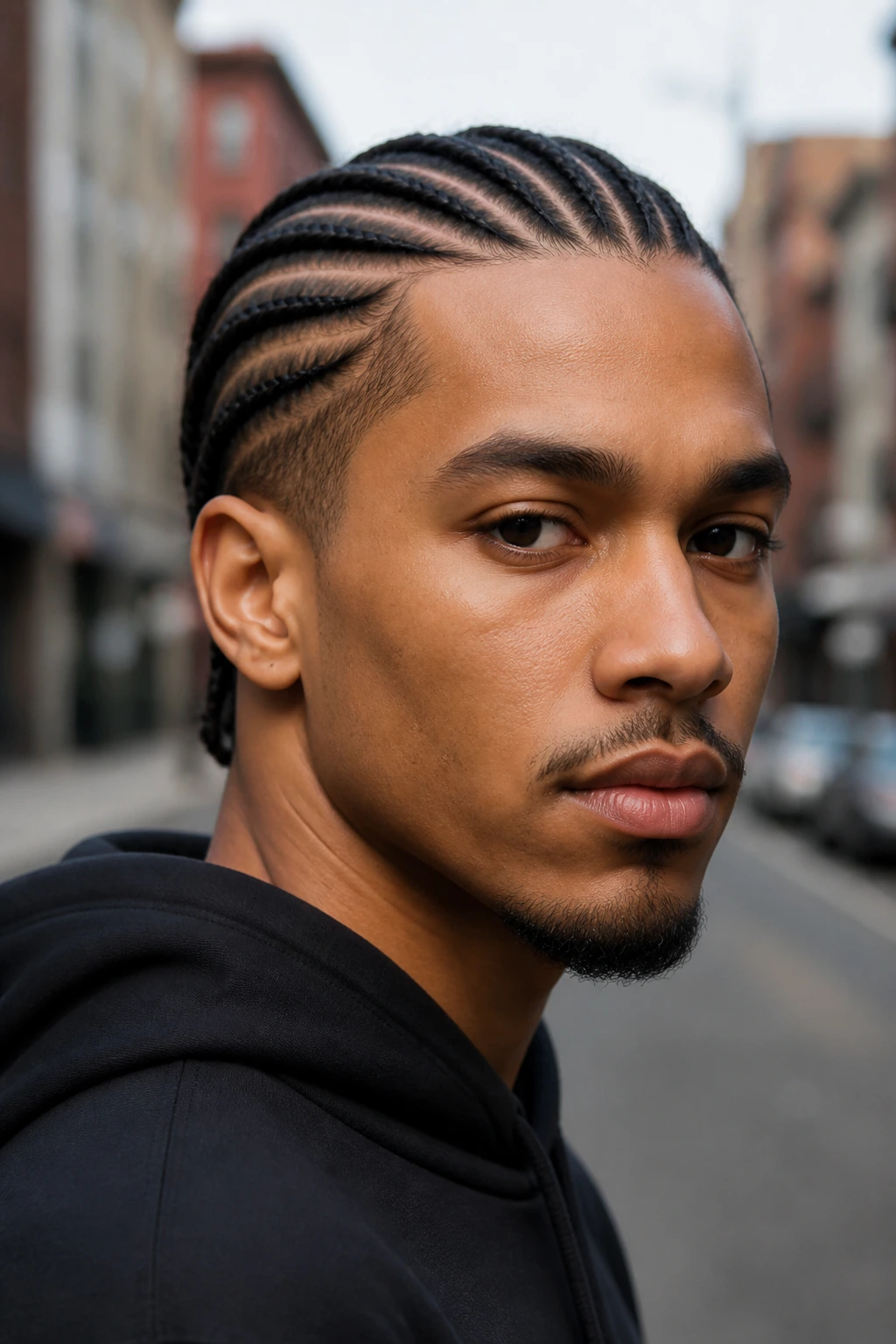
Straight-back cornrows are the cleanest version of the cornrow family. No curves. No zig-zags. Just rows laid straight from the forehead toward the nape, which gives the whole haircut a longer, slimmer feel. If you like a style that looks sharp from a distance and tidy up close, this is the move.
The appeal is in the simplicity. Straight-back braids are easier to maintain than more intricate patterns because the sections are predictable, and that means your barber or braider can keep the tension even. They’re also a good call if your hairline is a little uneven and you’d rather not frame it with a lot of extra patterning.
I like this style on guys who wear fitted tees, hoodies, clean fades, or a short beard. It has that no-nonsense look that can handle a lot of wardrobe styles without getting loud. If your hair grows in thick, ask for slightly wider rows so the scalp doesn’t disappear under too many tiny lines. Tiny rows can look busy fast.
3. Feed-In Cornrows with a Softer Front Hairline
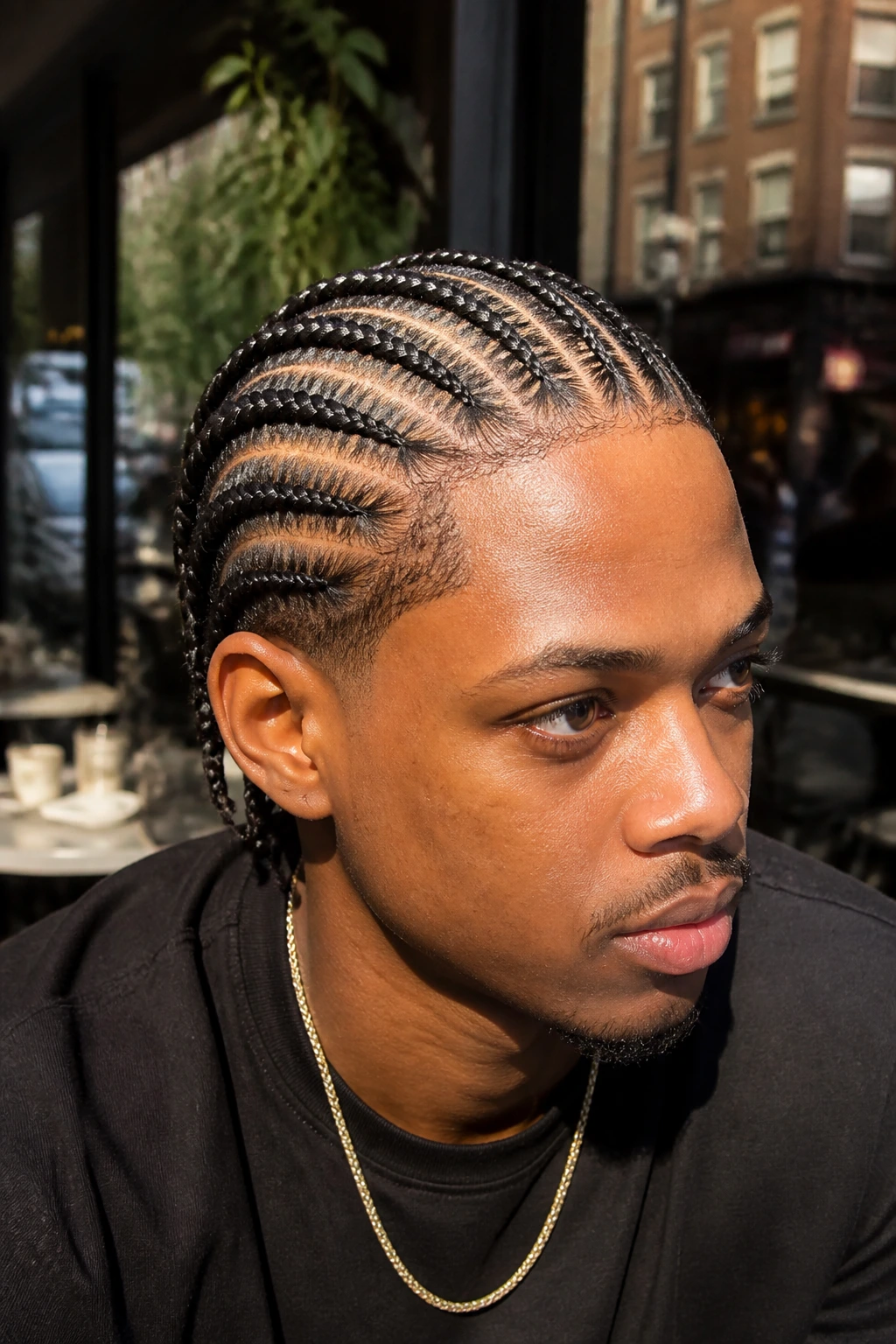
Feed-in cornrows are what you choose when you want the braid to start looking fuller without slamming a big knot at the root. Hair is added gradually, so the braid builds as it moves back instead of starting chunky right at the hairline. That detail matters. It’s the difference between a front row that sits flat and one that looks heavy in the first inch.
This style is especially useful if your hairline is delicate or you prefer a cleaner start across the forehead. The gradual build also gives the braids a more natural flow, which is why feed-ins often look a little more expensive than standard rows. They take more time. No shortcut around that.
Ask for even feeding so each braid grows at the same pace from root to tip. If one side gets thicker too early, you’ll notice the imbalance every time you look in the mirror. Feed-in braids also pair nicely with a low fade because the extra structure up top stands out against the shorter sides.
4. Box Braids with Square Parts and Plenty of Movement
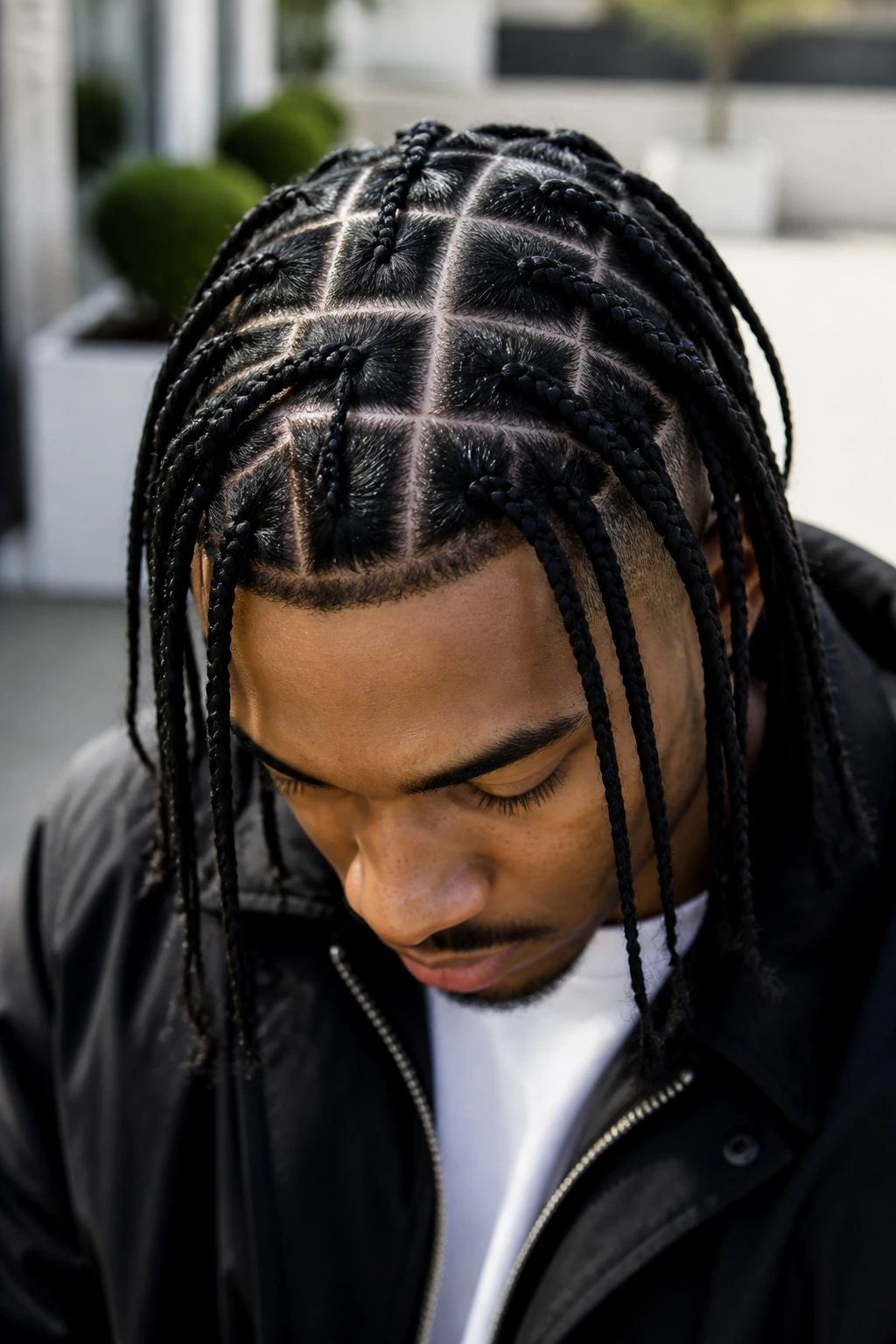
Box braids give men a different kind of shape. Instead of hugging the scalp the way cornrows do, they hang with more swing and texture, which is useful when you want motion instead of a locked-down look. The square parting is the giveaway. When the sections are clean, box braids look deliberate; when they’re sloppy, they look like you rushed a good idea.
The best thing about box braids is how adjustable they are. Thick braids read bolder and are faster to install. Smaller ones move more and can feel lighter, but they take longer and demand better sectioning. If your hair is dense or coarse, box braids often sit well because the texture helps the style hold.
Extensions are common here, and they’re worth it if your natural length is short of the shoulder level. Keep the added hair matched closely in color and texture unless you want the contrast. That little choice changes the whole mood. A clean black braid set feels polished; a slightly lighter extension can make the style pop more in daylight.
5. Two Braids Down the Center for a Simple, Athletic Look
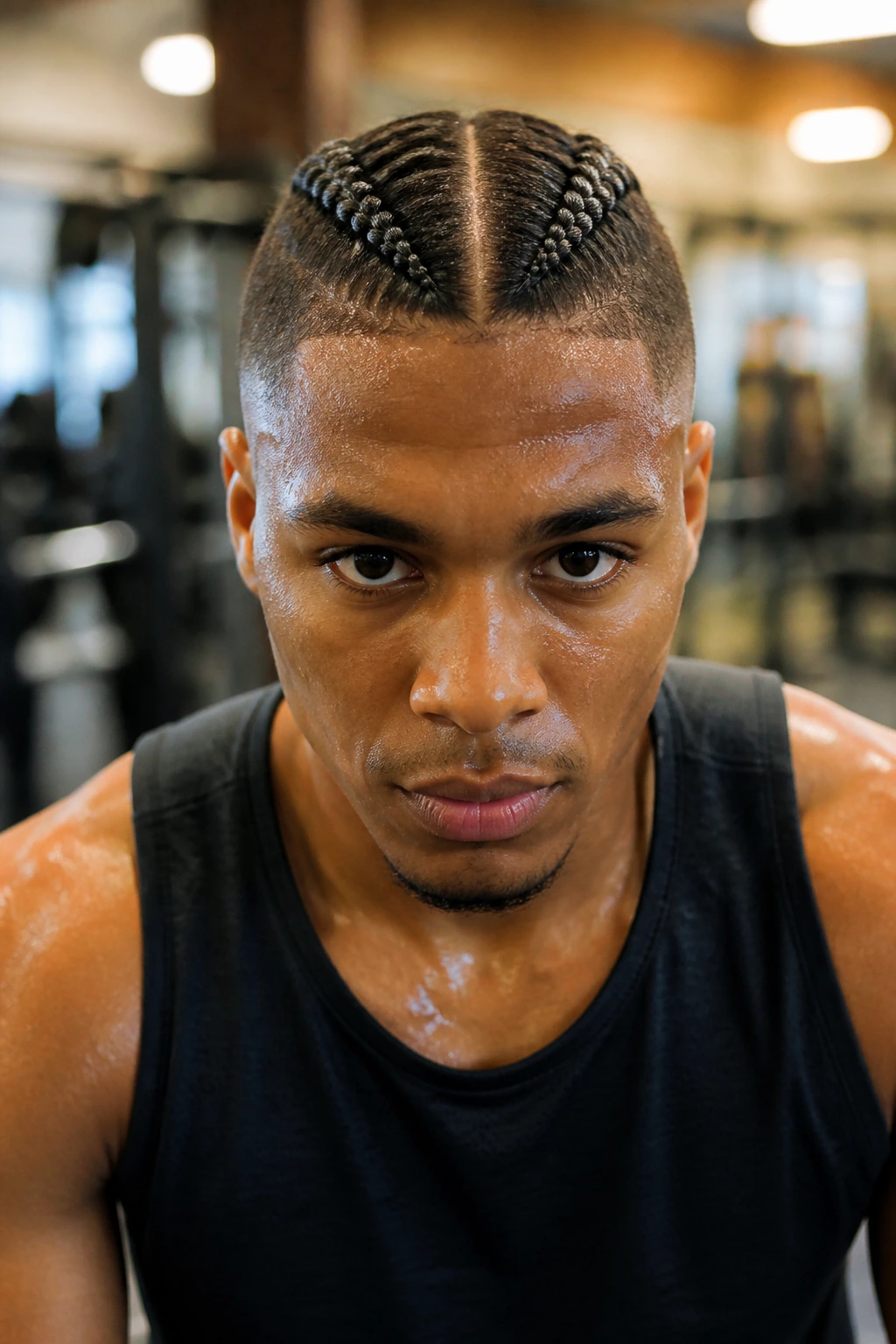
Two braids down the center are probably the easiest style to picture and one of the easiest to live with. A clean center part, two even braids, and the hair stays out of the face without asking for much attention. It’s a very direct style. No fluff. No extra pattern. Just two clean lines.
This works especially well on medium to long hair, or on shorter hair that has enough grip to hold a braid without frizzing apart immediately. You can wear the braids loose over the shoulders, tie them back, or tuck them under a cap when you need to. If you work out a lot, this style makes more sense than something with a lot of loose ends.
The trick is balance. If one braid is even a touch thicker, the whole style starts to feel lopsided. Keep the part straight, keep the braid tension even, and don’t load the roots with too much gel. You want the braids to look smooth, not glued to the scalp. There’s a difference, and people can tell.
6. Four Braids for a Balanced Middle Ground
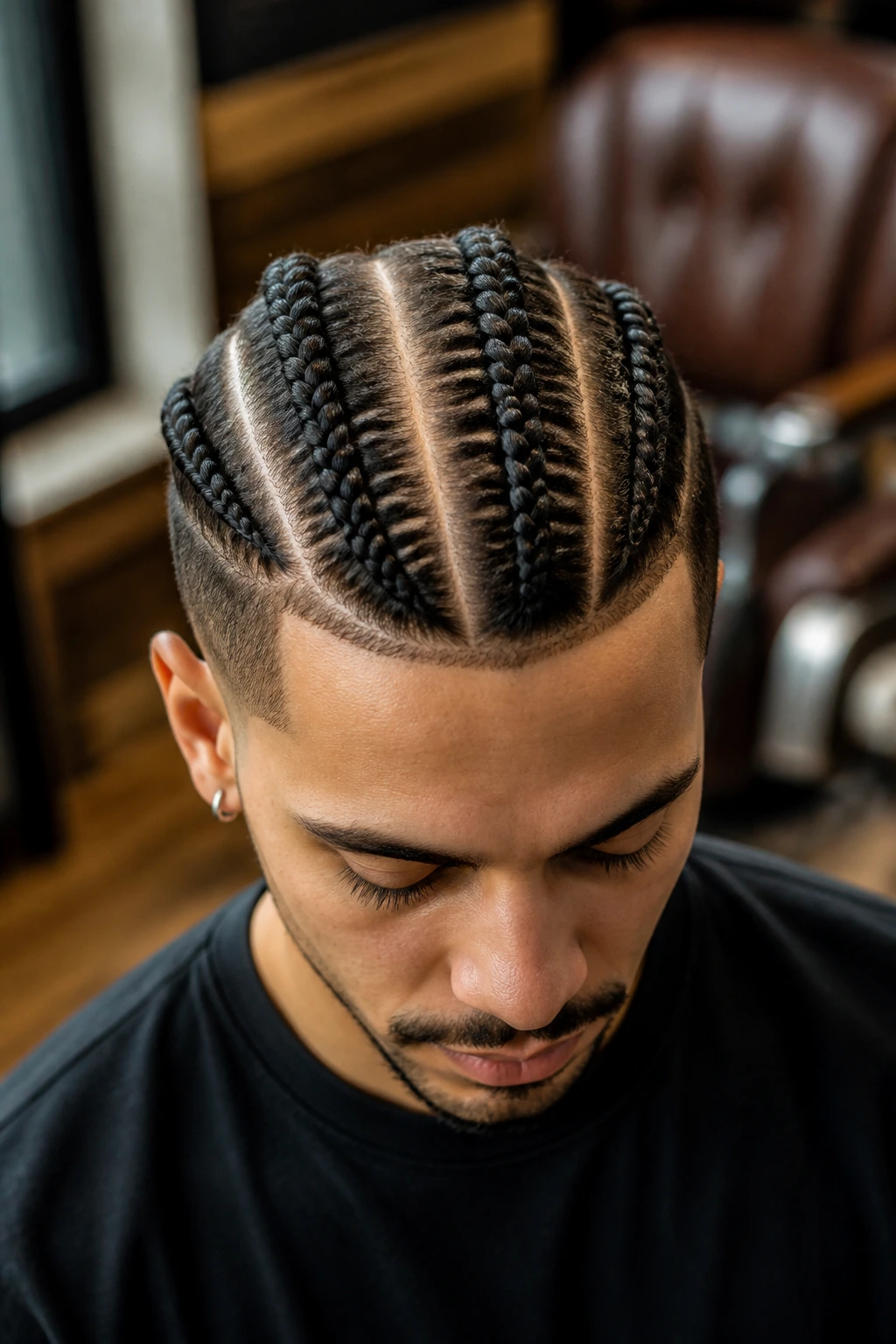
Four braids hit that nice middle zone between minimalist and busy. You get more structure than two braids, but without the dense, close-set feel of a full head of cornrows. For a lot of men, this is the sweet spot. It gives the head shape definition without turning the style into a grid.
The spacing matters. Four braids look best when the parts are consistent and the row thickness is matched across the head. If the front rows are huge and the back rows are tiny, the style starts to feel off-balance. You’ll notice it in profile, especially if the braids sit close to the scalp.
This is a good pick if you want something that works with a short fade, a beard, or a clean neckline. Four braids also make a decent base if you plan to tie them together later. They’re sturdy enough to hold shape and simple enough that a redone part doesn’t ruin the whole set. That’s a nice thing to have when you don’t want every braid to feel precious.
7. Braided Top Knot That Keeps Hair Off the Neck
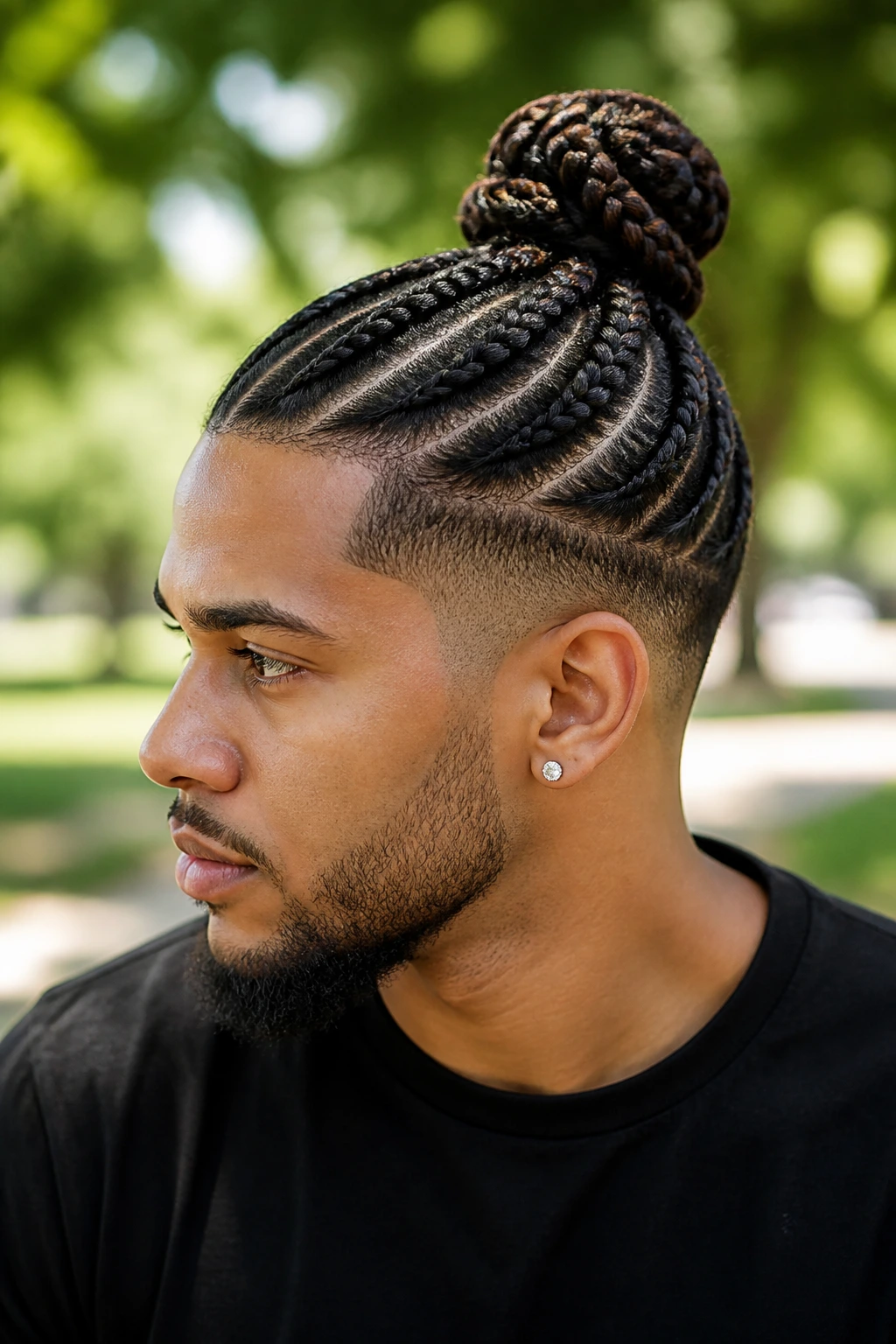
A braided top knot is one of those styles that looks tighter and cleaner than a loose bun because the braid itself controls the bulk. You braid the top or back sections first, then gather them into a knot high or mid-height on the head. The result is practical, but it doesn’t look plain.
This style shines on longer hair. If the length is there, it keeps everything off the neck and face while still showing the braid pattern at the base. That’s the part I like most. You get the detail of braids and the convenience of a knot, which makes it useful for hot days, gym sessions, or any time you just want hair out of the way.
Keep the knot secure without yanking the roots backward. A top knot can go from sharp to punishing fast if the tension is too aggressive at the front. If your hairline feels sore after a few hours, the knot is too high or too tight. Loosen it a notch and the style usually improves right away.
8. Low Fade with Braids for a Crisp Perimeter
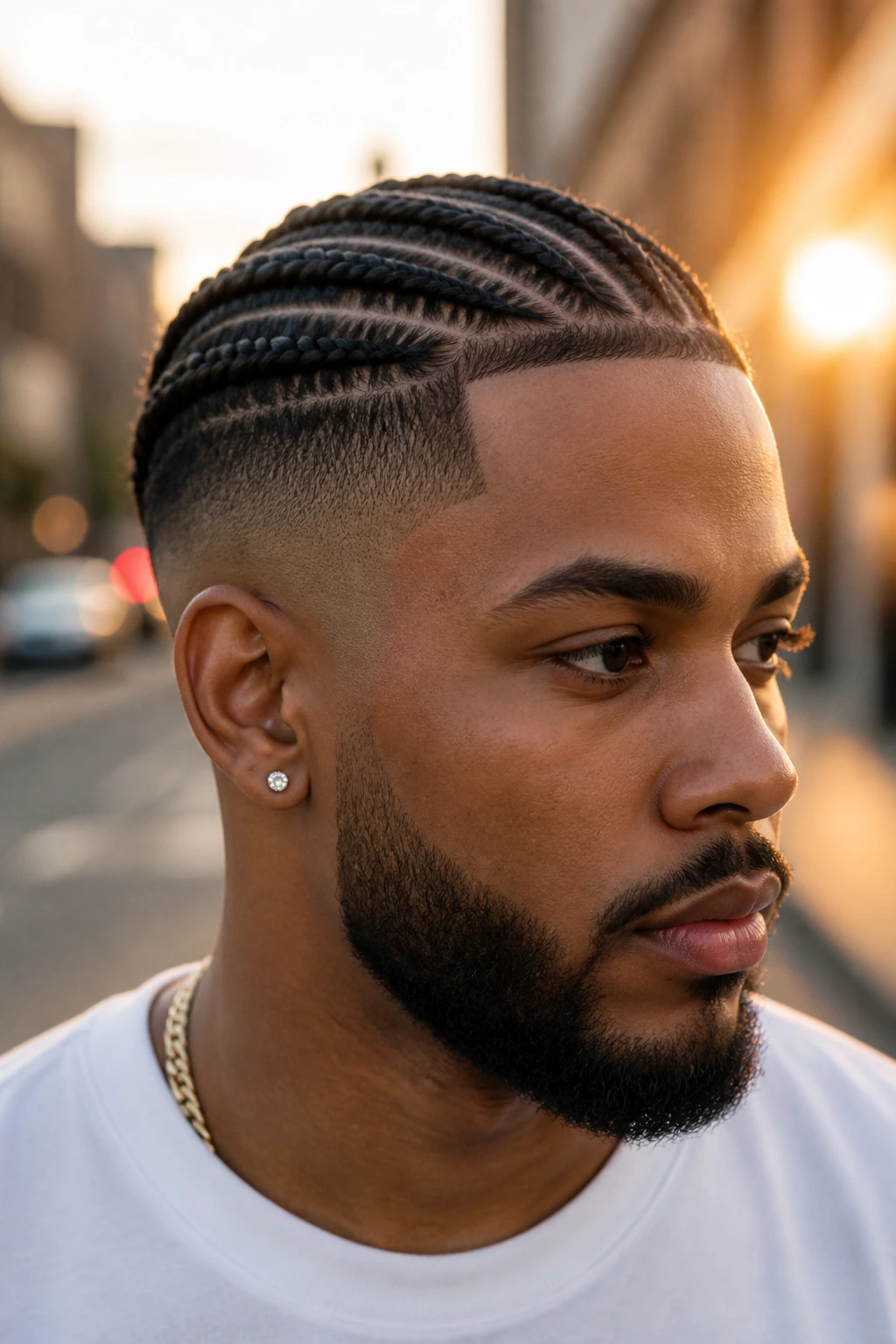
A low fade underneath braids gives the style breathing room. The fade clears out the sides and neckline, so the braids on top stand out more cleanly. This is the kind of combination that looks especially good a few days after the appointment, when the fade still looks fresh and the braids have settled into their shape.
What matters here is where the fade stops. If it climbs too high, it starts eating into the base of the braids and the whole haircut can look chopped up. A low fade keeps the contrast neat and leaves enough headroom for the braid pattern to stay readable. You want the two elements to support each other, not argue.
This is one of the easiest braid looks to wear with a beard, because the faded sides can blend into facial hair without a harsh line. It’s also a smart choice if you like wearing headphones or hats. The cleaner the perimeter, the less the style gets flattened by daily life.
9. Stitch Braids with Sharp, Visible Part Lines
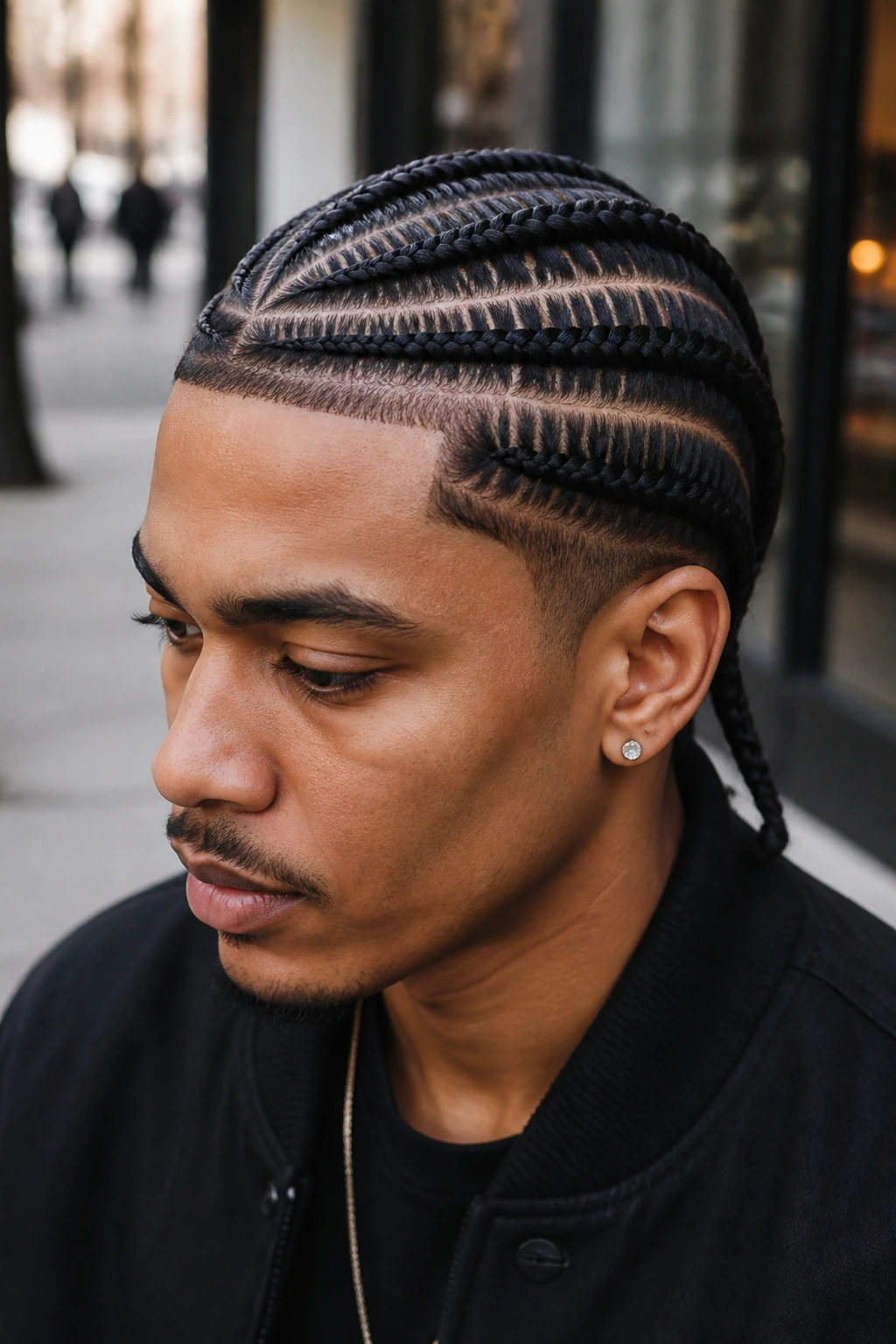
Stitch braids are for people who like the parting to be seen. The “stitch” effect comes from very deliberate horizontal sectioning, so the rows look almost cut with a ruler before they’re braided. That graphic linework gives the style a different feel from ordinary cornrows. It’s cleaner, tighter, and a little more technical.
This style tends to look best on thick hair because the rows have enough substance to hold the pattern without vanishing into the scalp. If the hair is too sparse, the parting can dominate the look and make the braids feel thin. That’s not what you want. Stitch braids should look engineered, not fragile.
They take a careful hand and a patient braider. Rushing stitch patterns ruins the point, because the whole style depends on the spacing staying consistent from front to back. When it’s done well, the result is sharp enough that you don’t need much else—maybe a clean fade, maybe a lineup, and that’s it.
10. Zig-Zag Parts That Add Motion Before the Braids Even Start
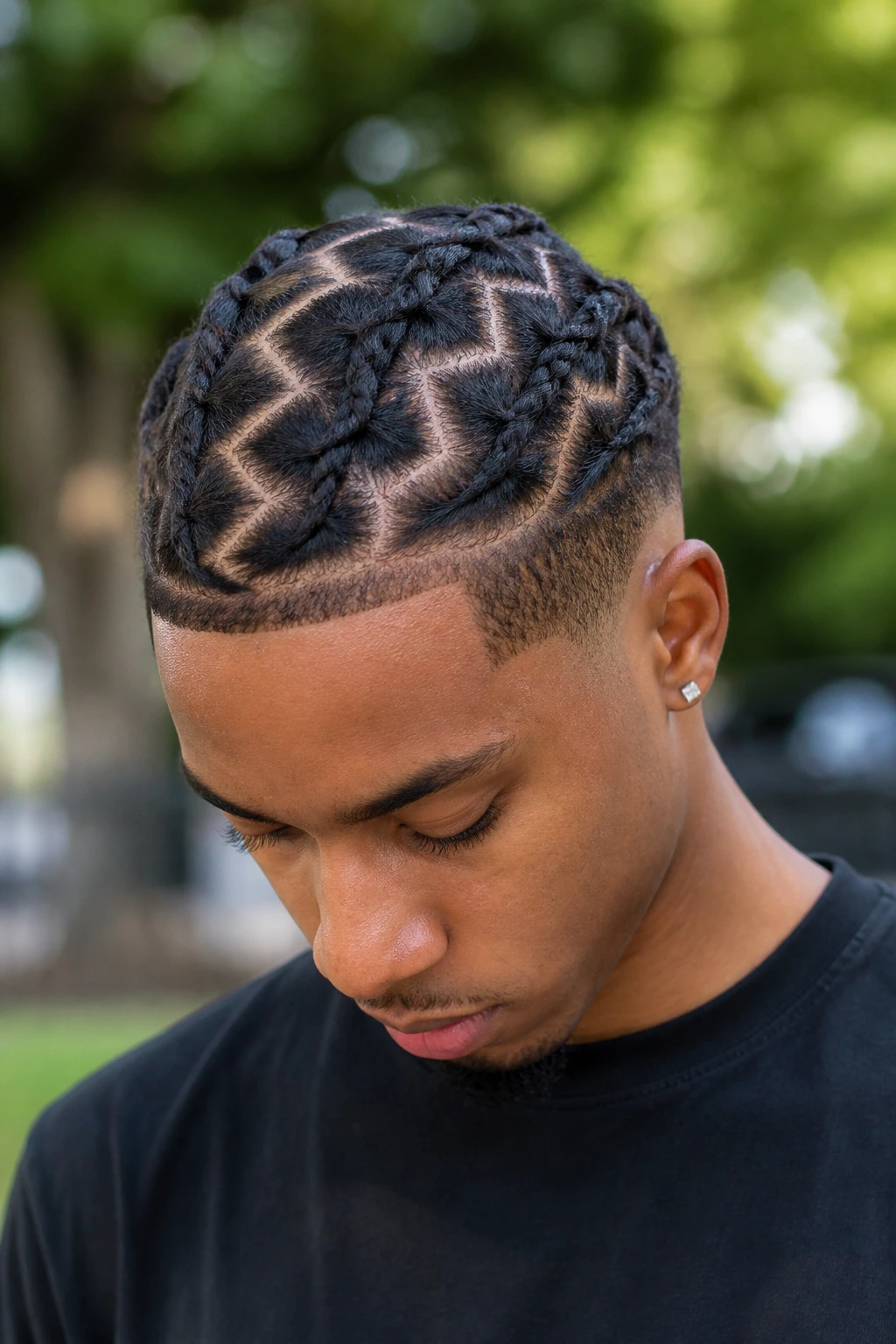
Zig-zag parting is one of the simplest ways to make a braid set look custom. The braids themselves might be straightforward, but the part pattern gives them energy before the first braid is even laid down. It’s a small change that gets noticed fast.
This is a good choice if you want something playful but not chaotic. The zig-zag line works best when the angles are clean and the spacing is even. Random squiggles don’t count. You want a deliberate path that looks drawn with a comb and a steady wrist. That kind of pattern pairs well with straight-back rows, small cornrows, or even feed-ins if you want the front to feel more styled.
The downside is that it shows mistakes. A crooked zig-zag looks crooked immediately. So this is a better pick for someone who trusts the braider or barber doing the parting. When the hands are steady, the style has a little extra personality without needing beads or color.
11. Side-Swept Braids That Soften a Strong Forehead
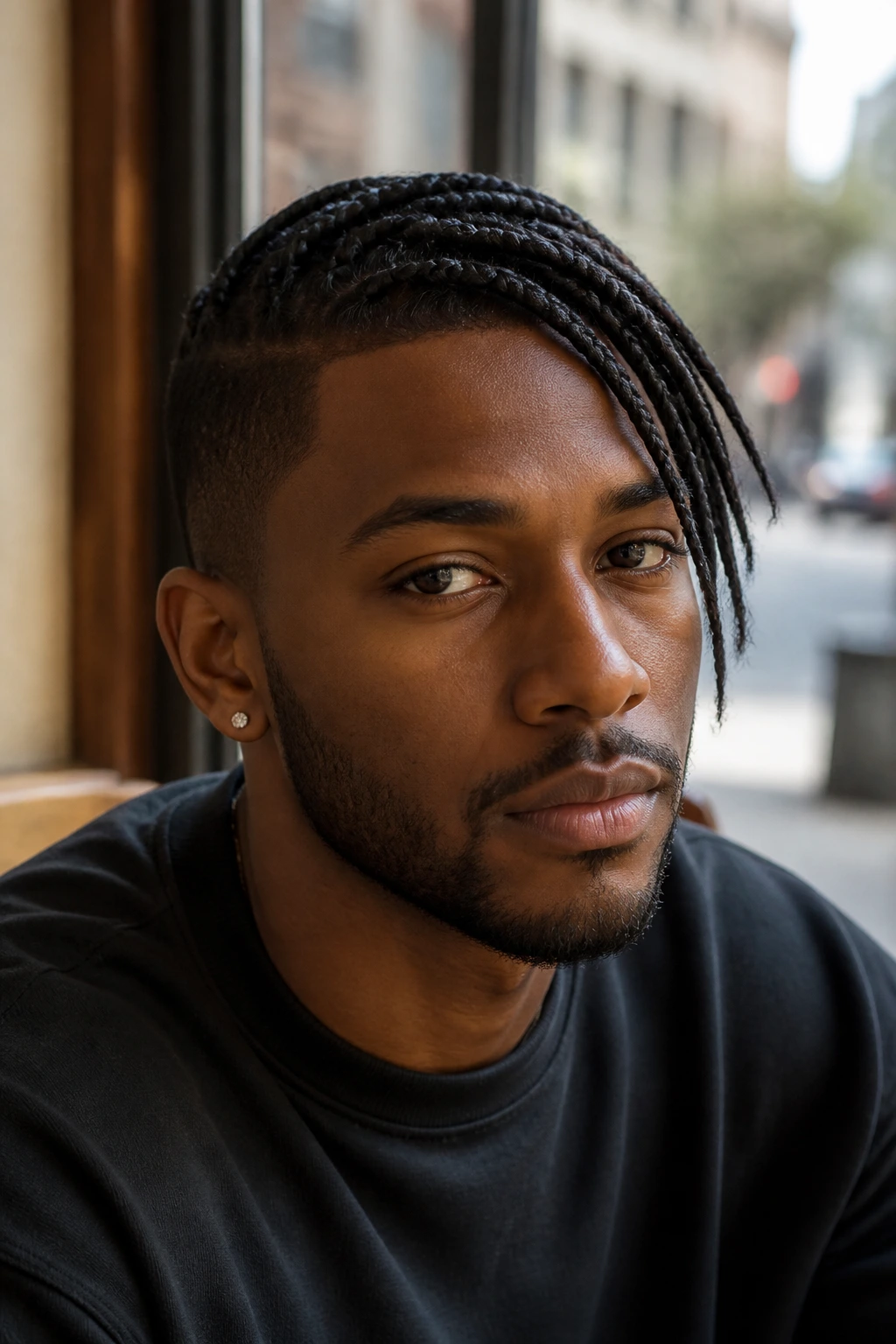
Side-swept braids give the face a little asymmetry, which can be useful if straight rows feel too severe. Instead of pulling everything back in the same direction, the braids angle off to one side and create movement across the forehead. That softens the look and keeps it from feeling locked in place.
I like this style on guys with longer faces or a lot of forehead to balance. The side sweep interrupts the vertical pull and gives the haircut a more relaxed shape. It also helps if one side of the hairline isn’t perfectly even. A centered set of braids can highlight that. A side sweep can hide it.
This is not the easiest style to maintain if you sleep rough. The direction wants to shift, and the front can start curling up if you don’t protect it at night. A satin durag or bonnet helps more than people expect. Skip that, and the style loses its shape faster than it should.
12. Braided Ponytail That Keeps Length Controlled
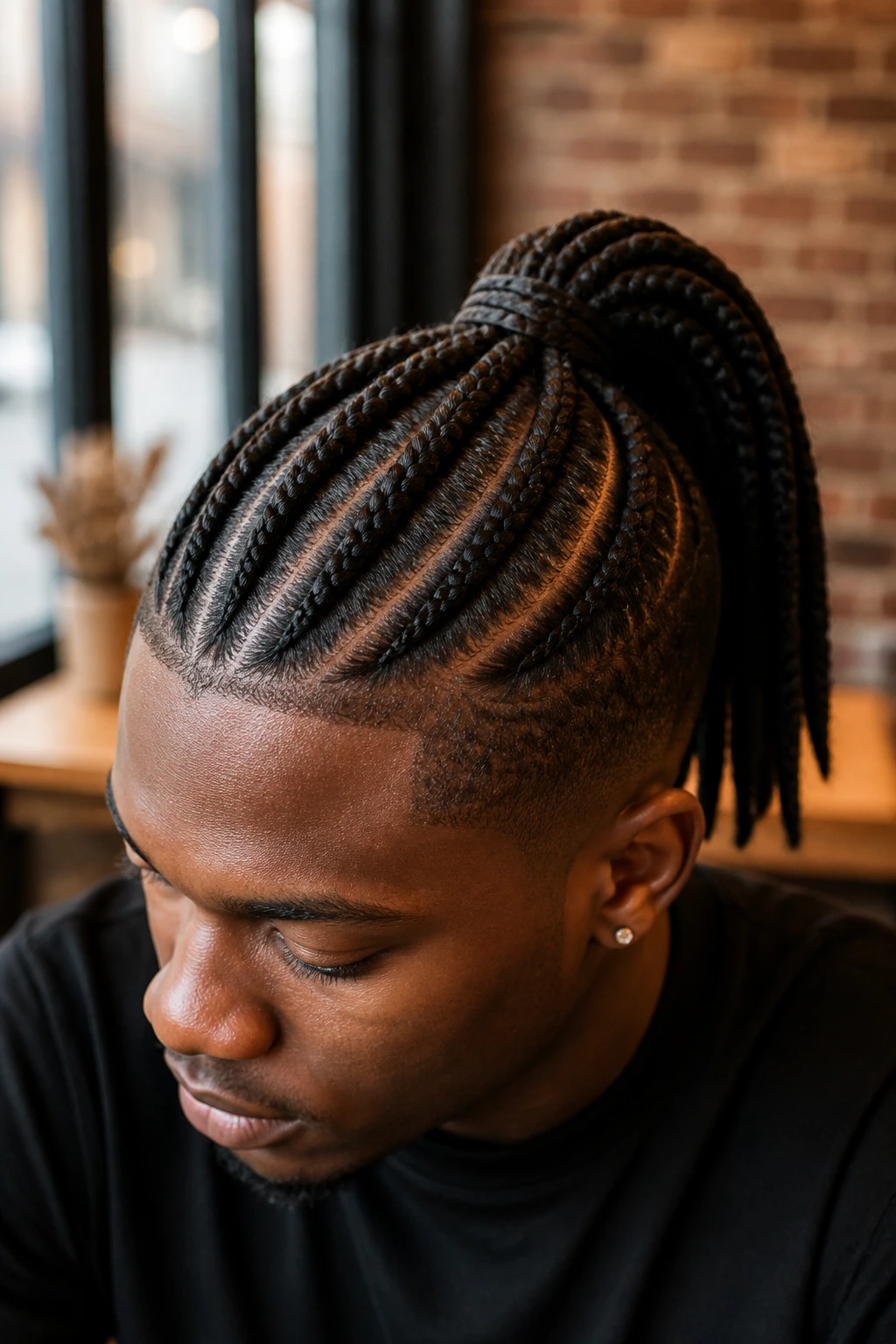
A braided ponytail is a clean answer to long hair that keeps getting in the way. Instead of wearing the hair loose or in a full braid set, you braid the top or the full length and pull it back into a ponytail at the nape or crown. It looks controlled, which is the whole point.
This style works well when you want to show length without letting it spill around your shoulders all day. It’s also useful if you have a job or routine where loose hair is a nuisance. The ponytail keeps the movement at one point instead of all over the place, and that makes the style feel tidy even when the rest of the look is relaxed.
Be careful with the tie placement. If the ponytail is too tight, the braid base starts pulling backward and the scalp gets sore. If it’s too low, the style can sag. Find the middle ground and the braid stays neat while still feeling wearable.
13. Man Bun Braids for a Cleaner Crown
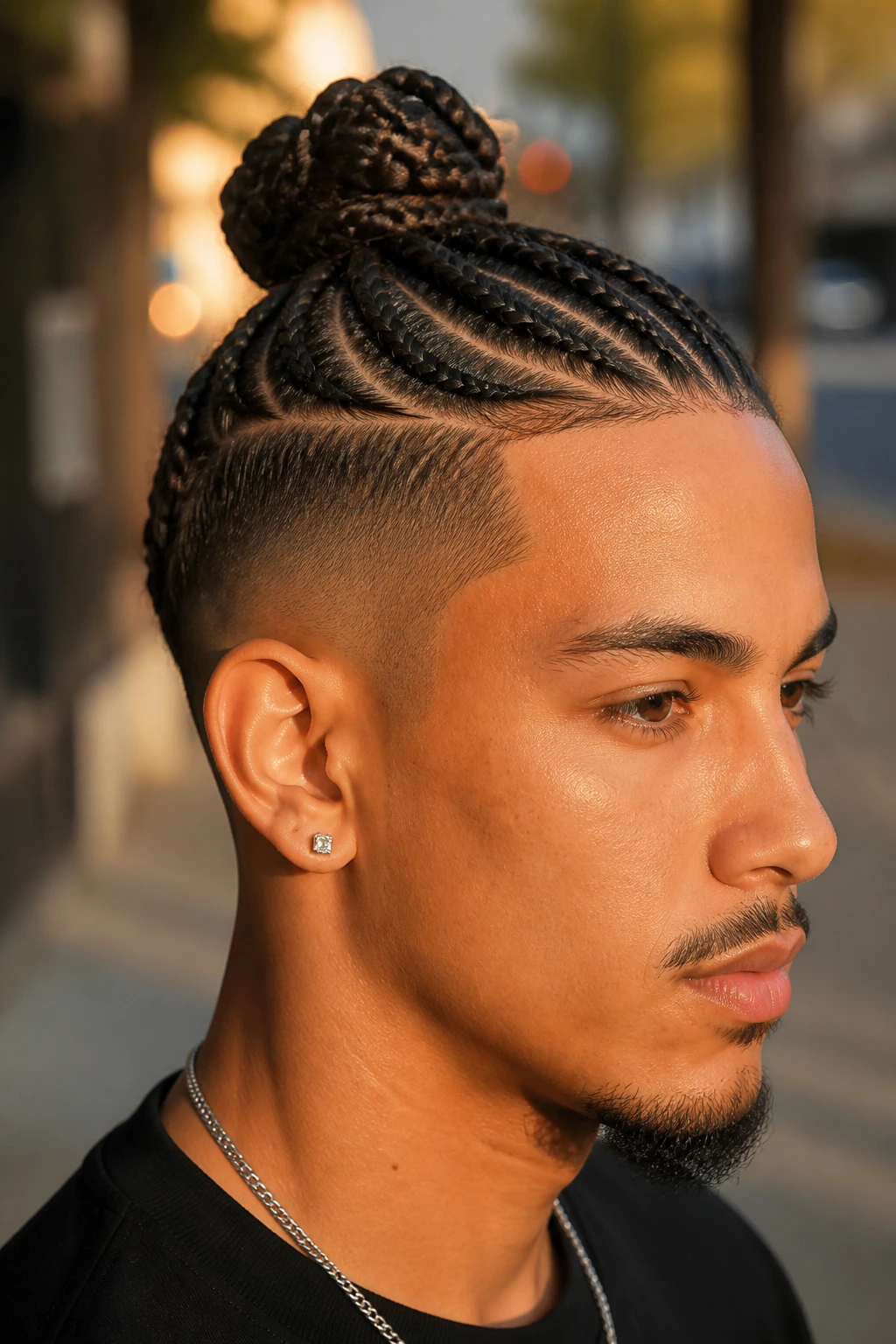
Man bun braids are a little more polished than a loose bun because the braid pattern gives the style a defined base. You can braid the sides into the top, braid the top into the bun, or use braids as the path that leads into the knot. Either way, the bun looks intentional instead of improvised.
This style makes sense when the hair is long enough to form a proper knot without a bunch of flying ends. It’s especially useful if you want a compact shape at the back of the head and don’t want the weight hanging loose. That can be a relief on hot days or during long work shifts.
The thing to watch is placement. A bun that sits too high can feel top-heavy. One that sits too low can disappear under collars and jackets. The most balanced version usually sits just above the occipital bone, where the head starts to curve. That gives the braid and bun a little lift without looking strained.
14. Freestyle Cornrows with Curves, Angles, and Personality
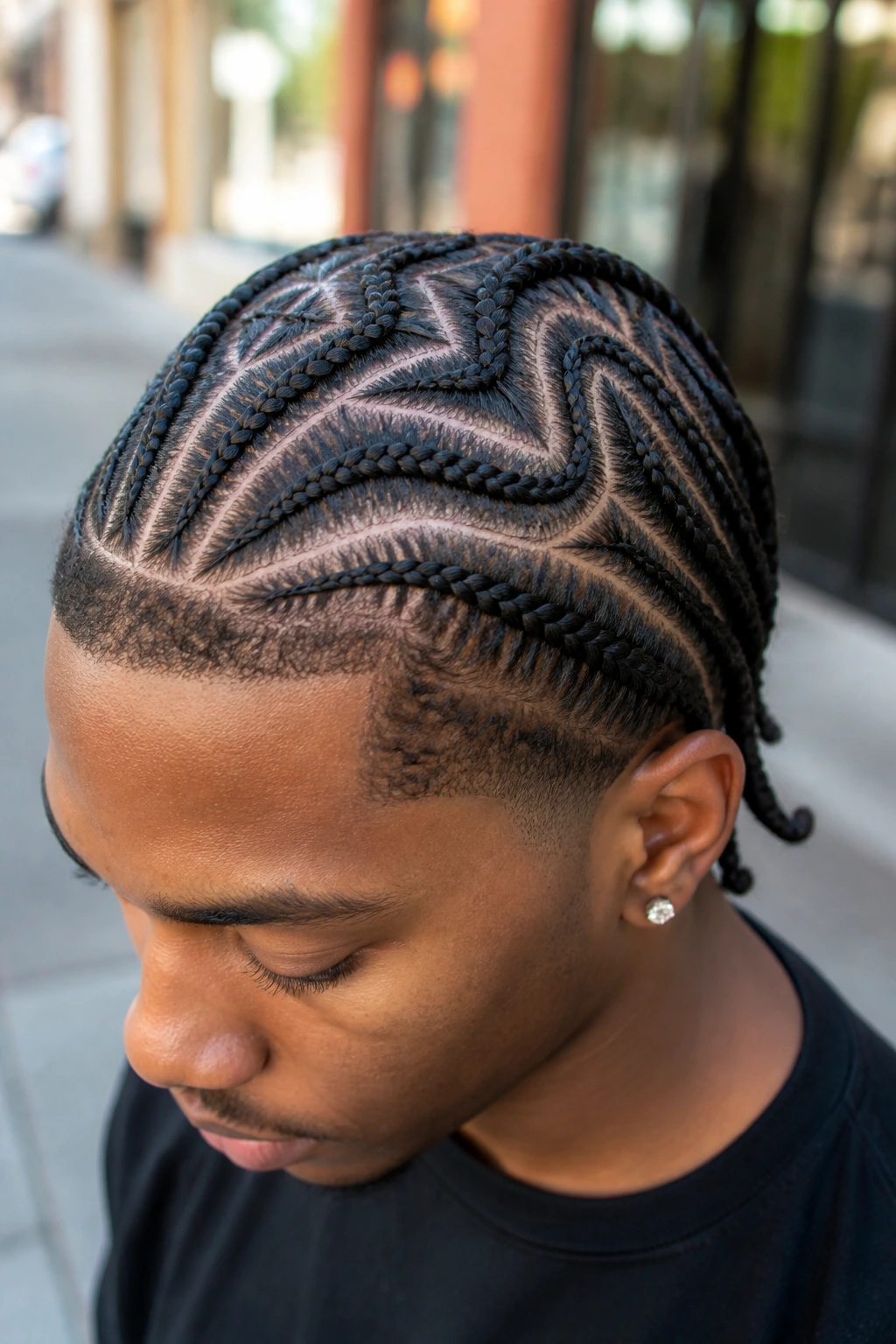
Freestyle cornrows are where a good braider gets to show off. Instead of straight rows, the pattern bends, curves, splits, and sometimes loops into shapes that feel more custom than standard rows. If you want your hair to look like it was designed for your head instead of just fitted to it, this is the style.
The appeal is obvious, but the risk is obvious too. Freestyle patterns can get messy if the lines are too busy or if the spacing shifts from one side to the other. The best versions still have rhythm. They look artistic, not random. That means the parts need to flow with the shape of the skull and the braid thickness needs to stay controlled.
This is the style I’d pick when you want one set of braids to carry the whole look. Keep the rest simple—clean neckline, maybe a tapered side, maybe no extra accessories. Let the pattern do the heavy lifting. Too much else and the style starts shouting over itself.
15. Tribal Braids with a Strong Center and Side Detail
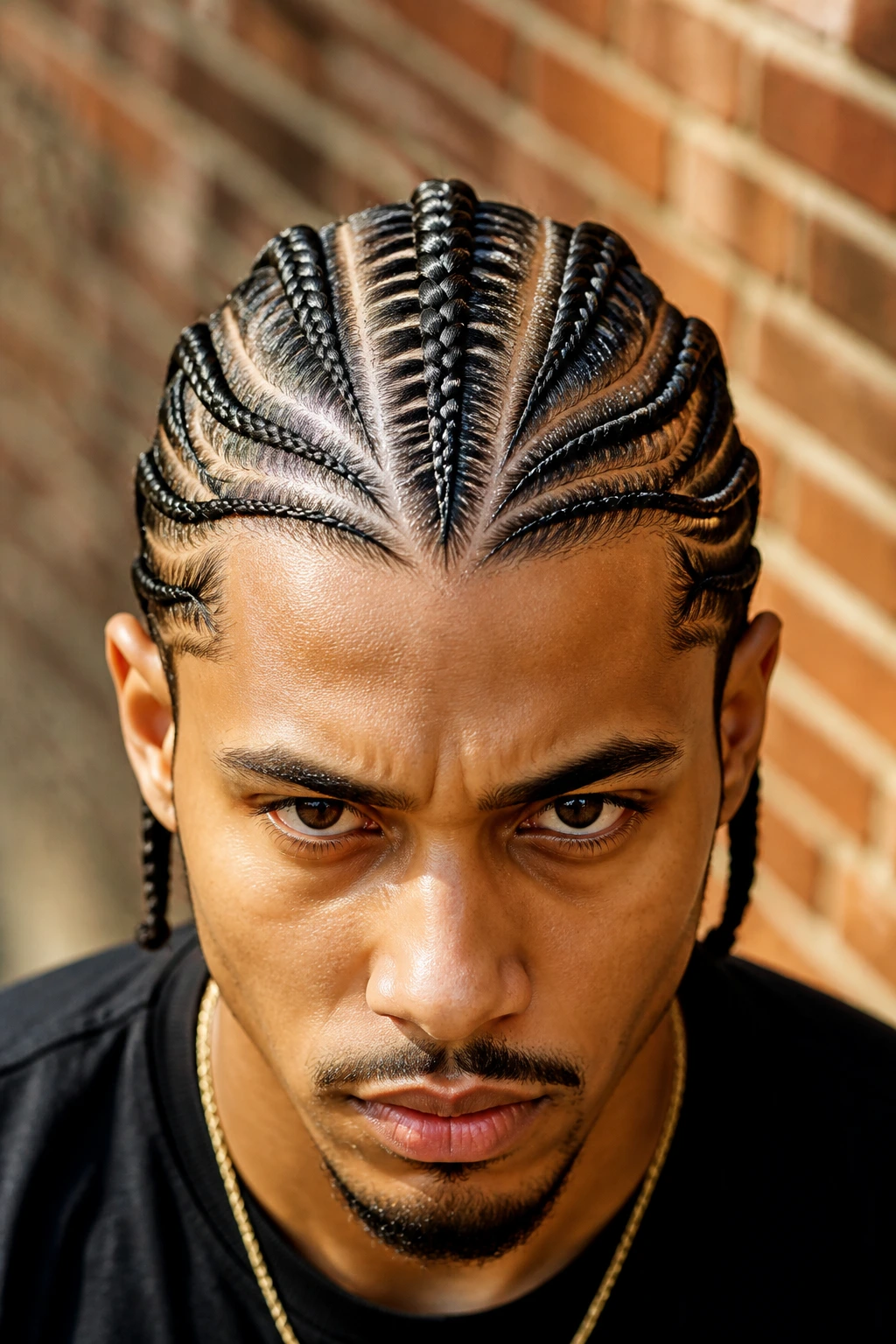
Tribal braids usually combine a central anchor braid with side rows, and that contrast gives the style its shape. The center braid draws the eye down the middle, while the side sections add texture and movement. On men, that balance can look especially sharp if the rows are neat and the accessories stay minimal.
This is a strong choice for medium to long hair because the style needs enough length to show the pattern clearly. Beads or cuffs can be added, but I’d keep them selective. One or two accents go a long way. Piling on too many details turns the braids into noise.
What I like about tribal braids is how well they frame the face when the parts are symmetrical and the braids sit evenly. A strong center line can make the jaw look cleaner and the forehead look more balanced. If you’ve got a beard, the whole setup can look very deliberate in a good way.
16. Ghana Braids That Build Width and Structure
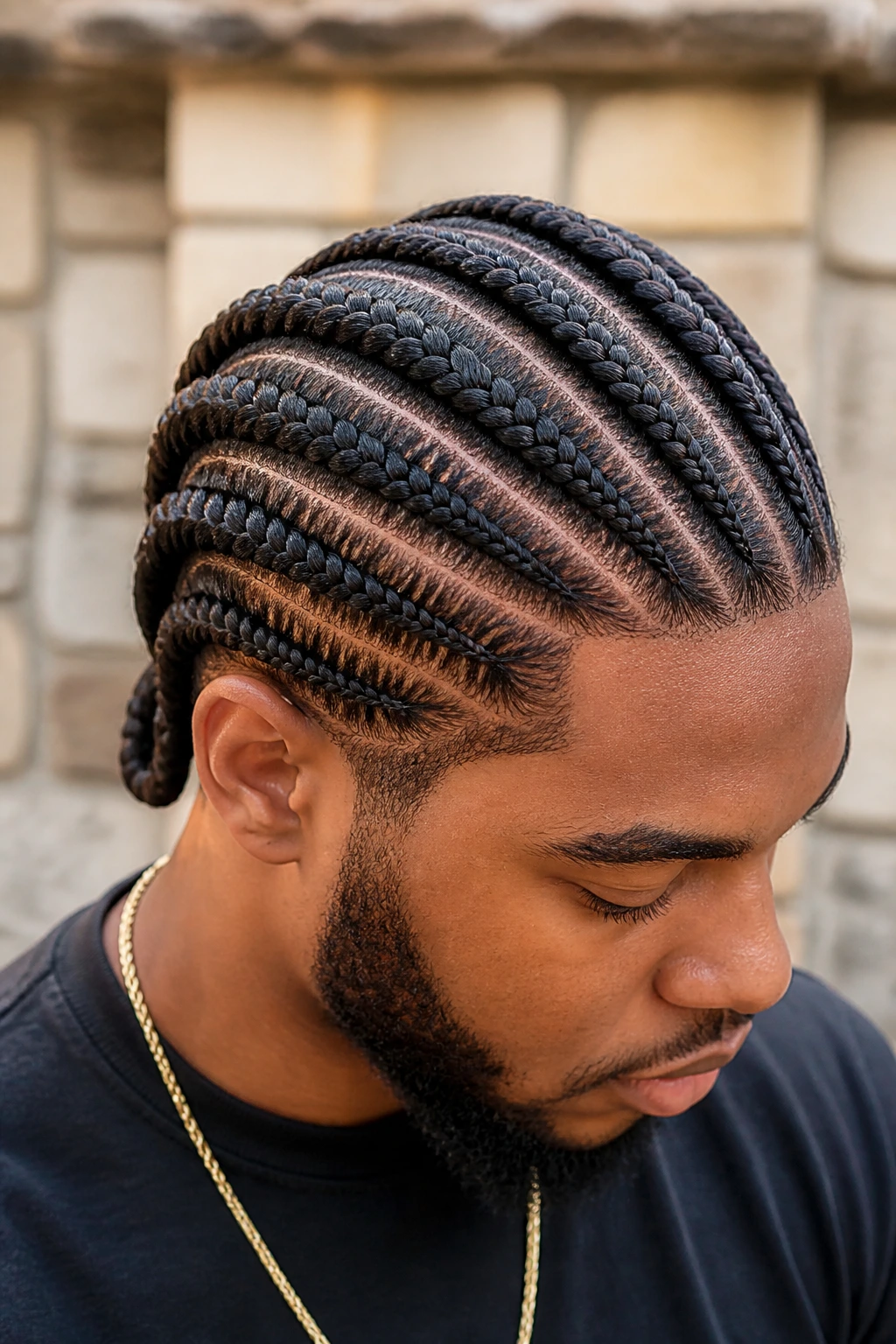
Ghana braids are thicker feed-in braids with a sculpted feel. They start smaller and build as they move back, which gives the hair a raised, almost architectural look. If you like braids that look full but not bulky, Ghana braids are worth a hard look.
They’re best when the sections are clean and the braid thickness is matched from side to side. Because the rows are thicker, mistakes are easier to spot. A crooked row shows up fast. That’s part of the appeal, honestly. The style looks confident when it’s done right, and a little severe when it’s not.
This is one of the best braid styles for men who want a strong profile without a lot of loose movement. It stays close to the head, keeps the structure clear, and works well with a fade or a sharp lineup. If your hair is dense and coarse, the style tends to hold its shape nicely.
17. Knotless Box Braids for a Lighter Start
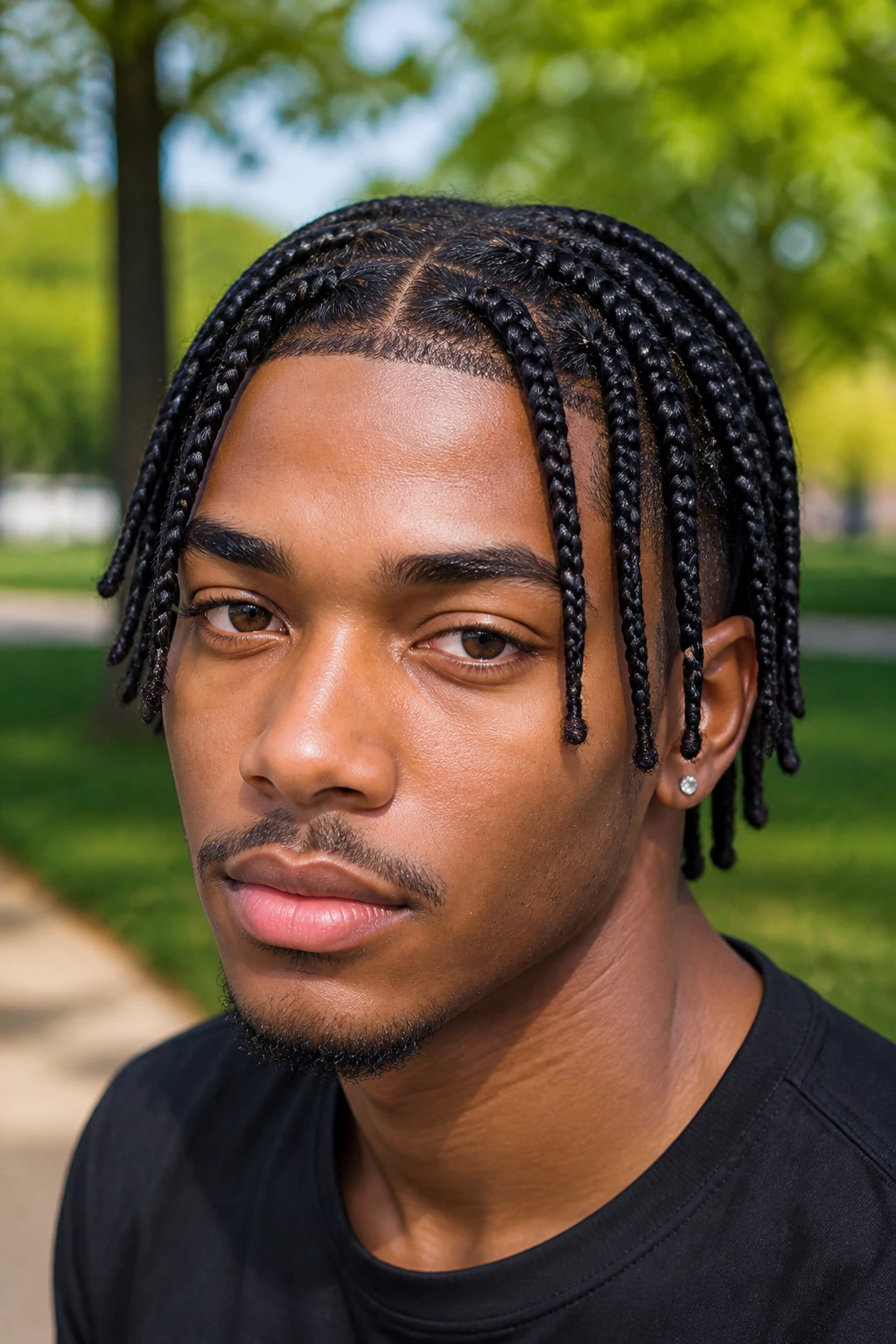
Knotless box braids start more gently at the root, which changes the feel right away. Instead of beginning with a chunky knot, the braid builds into fullness. That makes the style look softer at the scalp and usually feel easier to wear for longer stretches.
The lighter feel is the main draw. If you’ve worn braids before and felt that heavy tug at the front or along the crown, knotless braids can be a better match. They still need care, and they still need proper sectioning, but the root starts off less aggressive. That matters more than people think.
These look especially good when the extension hair matches your natural texture closely. The seamless blend is what gives knotless braids their smoother look. If the extension color or sheen is off, the braid can start looking synthetic in a hurry. A close match keeps everything calm.
18. Micro Braids for Dense Hair and Lots of Movement
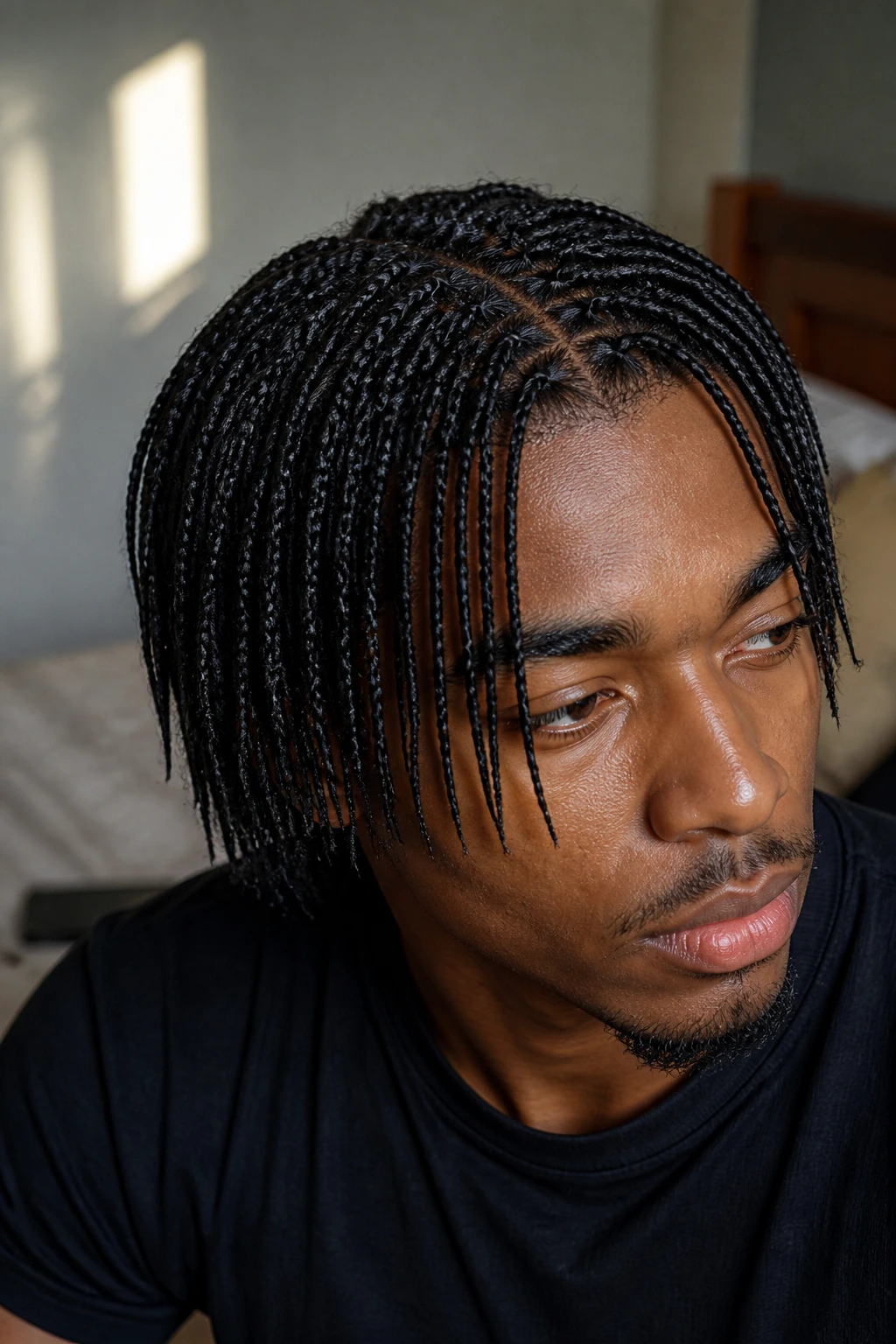
Micro braids are tiny, and that tiny size is the whole point. They move more than larger braids, create a denser curtain of hair, and work well when you want detail without big visible rows. On men with thick hair, they can look almost woven.
The trade-off is time and upkeep. Micro braids take longer to install, and they need more patience when washing and separating. That’s not a style you choose lightly. But if you want a lighter feel than chunky braids and you like the way hair moves when you turn your head, they have a lot going for them.
This style rewards neat parting. A sloppy micro braid set looks fuzzy too soon because there are so many small sections. Keep the scalp clean, keep buildup low, and don’t overload them with wax. Tiny braids plus heavy product equals a dusty, stiff mess after a few days.
19. French Braids for Men Who Want a Clean, Traditional Line
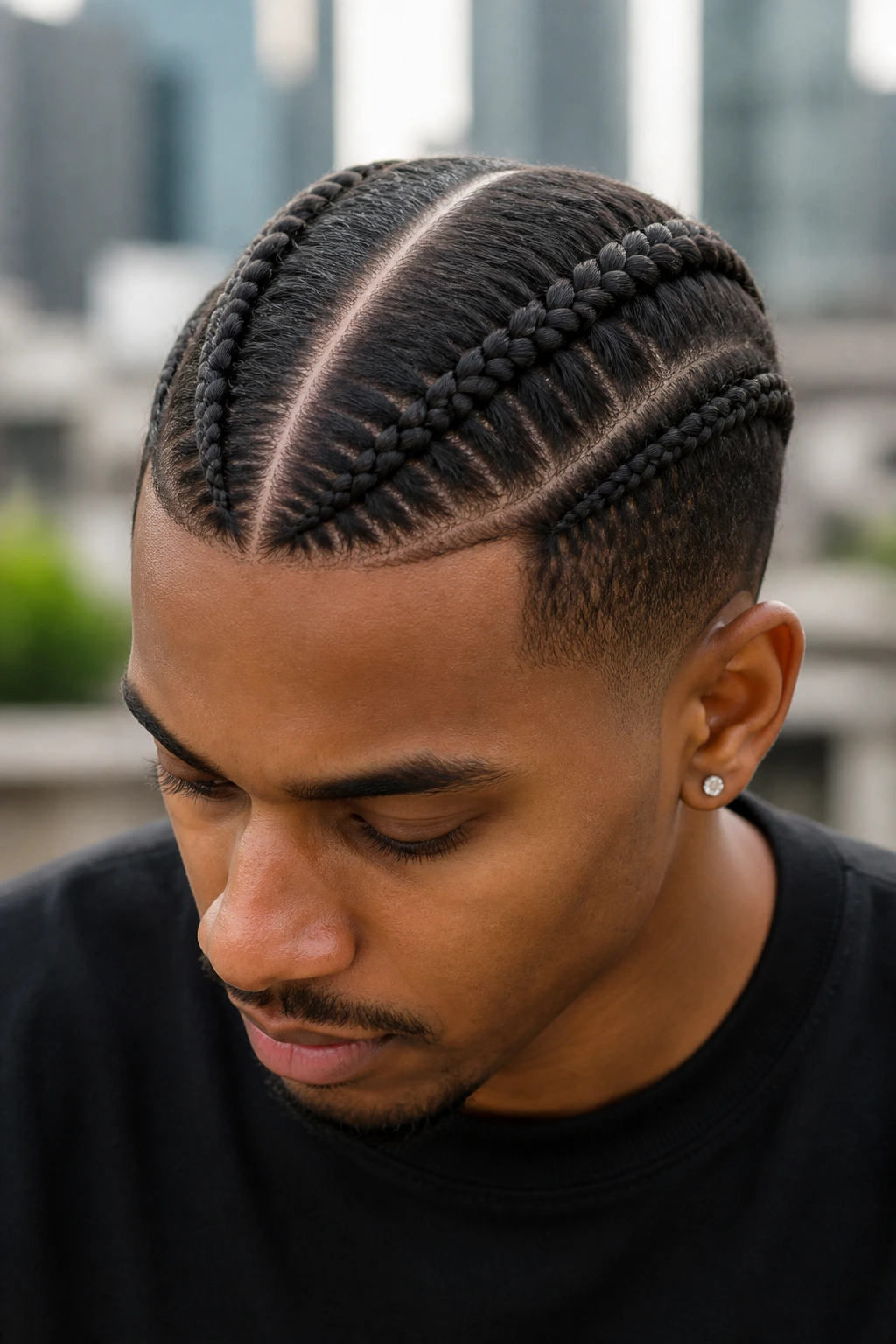
French braids on men aren’t rare anymore, but they still stand out because the style reads classic and tidy. The braid stays close to the scalp and gathers hair as it goes, which keeps the shape compact and controlled. If you’re after something that feels athletic without looking like you’re trying too hard, this is a strong pick.
French braids work well on medium-length hair that has enough reach to gather in properly. They’re also useful when you don’t want a lot of width on the head. The braid line itself gives the style shape, and that’s enough. No extra drama needed.
I’d recommend this when you want the braid to be the restraint, not the statement. It keeps the hair up, works under jackets and helmets better than loose styles, and usually looks neater than a braid that hangs low or sprawls across the shoulders. That practicality is the charm.
20. Dutch Braids That Sit Up Off the Scalp
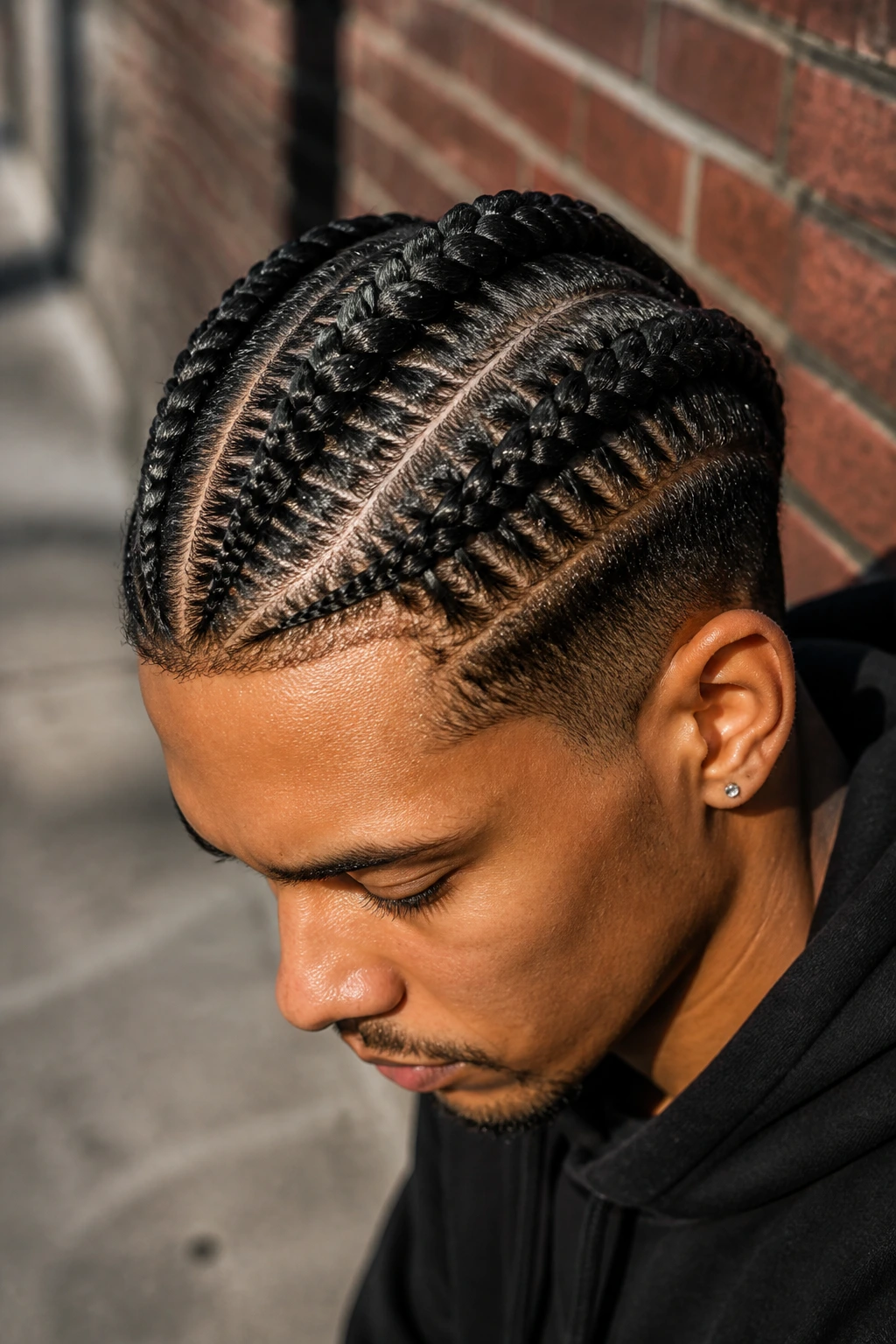
Dutch braids are the raised version of the French braid, and that extra lift changes the whole look. The braid sits on top of the hair instead of sinking into it, so the pattern is more visible and the texture stands out more strongly. It has presence.
This is one of the better braid choices if you want the style to read from the front and the side. The raised structure gives depth, which looks especially good on hair with some density. If your hair is very flat or very short, the effect won’t come through as well. The braid needs material to work with.
Dutch braids also suit men who want the style to carry a little more edge. They can look crisp with a fade, or rougher when paired with a beard and longer top. The braid itself does not need accessories. It has enough shape on its own.
21. Fishtail Accent Braids That Add Texture Without Full Commitment
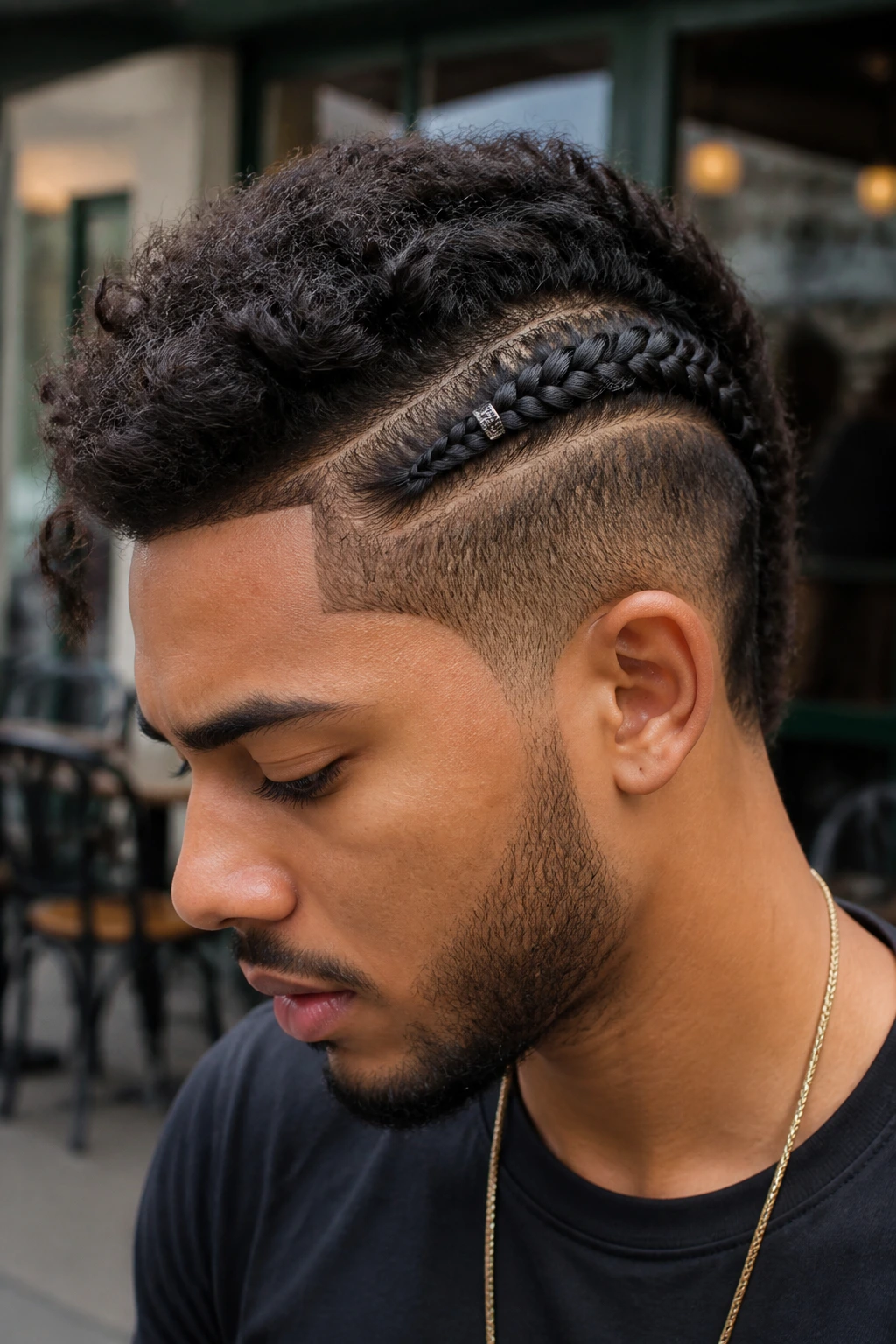
A fishtail braid isn’t the first thing most men think of, which is exactly why it works as an accent. The weave is tighter and more textured than a standard braid, and that gives it a slightly more detailed look. You don’t need to wear the whole head this way. A single fishtail section can be enough.
This is useful if you want one side or one section of the hair to stand out without turning the whole head into a braid project. It works especially well with longer hair on top and shorter sides. The contrast keeps the style readable and prevents it from becoming too soft.
Fishtails do better when the hair has a little grip. Very silky hair can make the weave slip apart. A bit of texture spray or light product helps, but don’t drown the hair in it. The braid should feel tactile, not sticky.
22. Rope-Braid Rows for a Softer, Twisted Finish
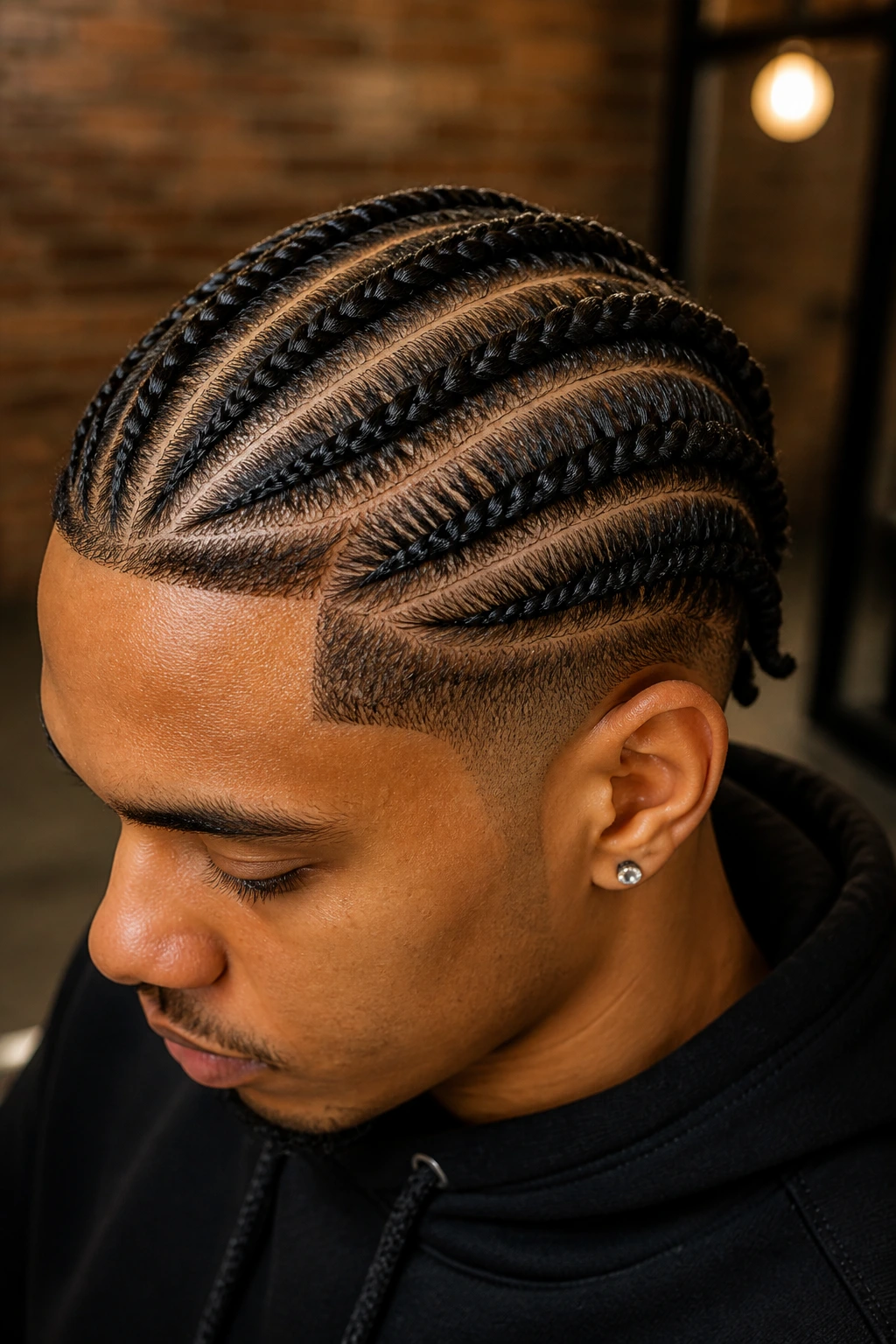
Rope-braid rows are a nice alternative when you want the look of braids but with a slightly rounder, cord-like finish. Instead of the flat, woven feel of a three-strand braid, the rope pattern twists the sections into a tighter spiral. The result is smoother and a little more relaxed.
This style is a smart choice if your hair texture makes standard braids puff out faster than you like. The rope shape can hold a neat line while still giving the hair some movement. It also works well in smaller rows or as part of a mixed pattern, where you want one section to look different from the next.
I’d pick rope braids for guys who like clean edges but don’t want a style that looks stiff. They’re not as rigid as cornrows, and they don’t ask for the same level of visual precision as stitch braids. That makes them easier to wear casually.
23. Braided Undercut with Heavy Contrast
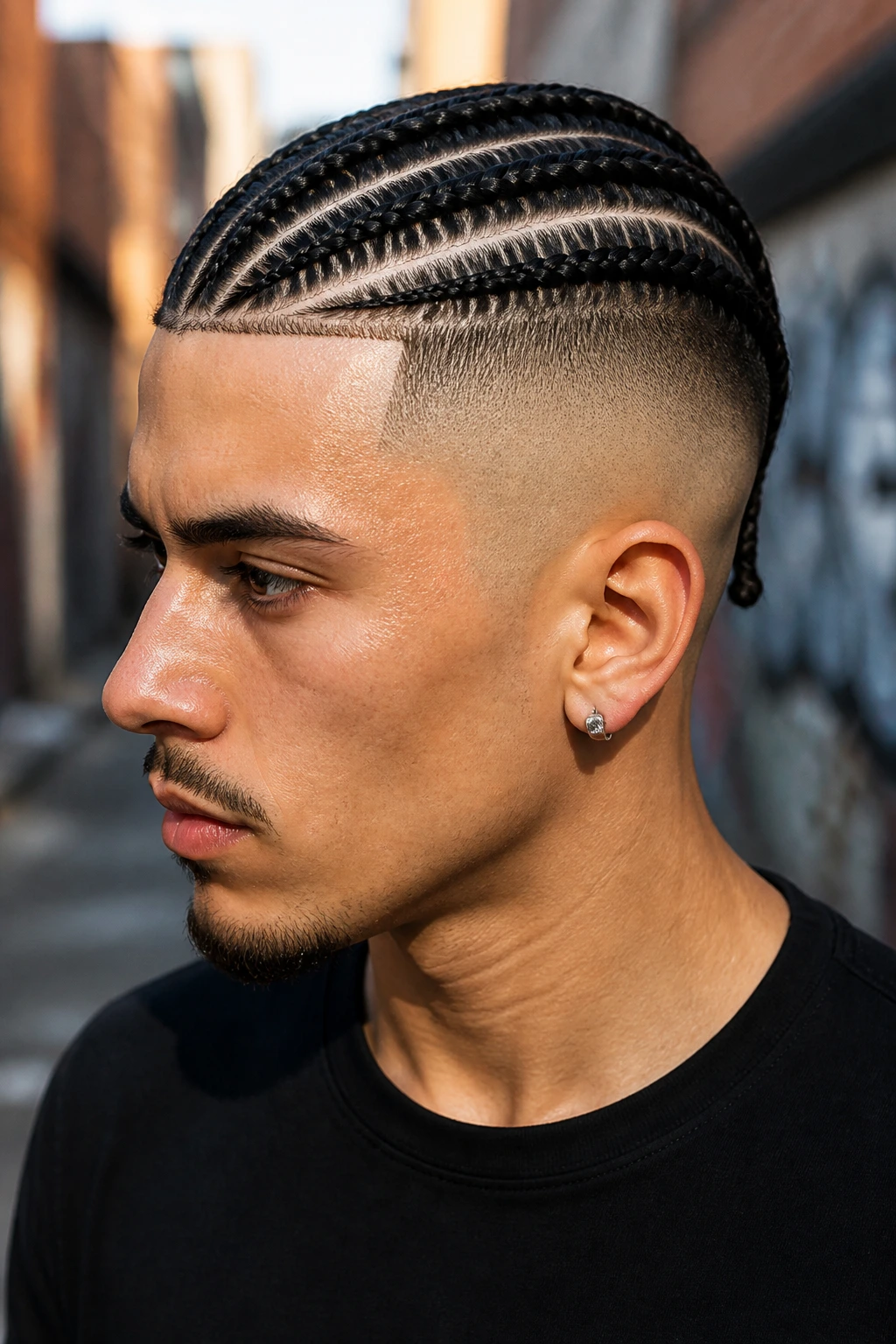
A braided undercut makes a clear statement because the top and sides are doing completely different jobs. The braids on top carry the shape, while the undercut clears out the sides and keeps the whole thing from feeling bulky. The contrast is the point. You see it immediately.
This style works well if you like structure and don’t mind a little upkeep on the sides. The undercut keeps the silhouette tight, but it also means the haircut grows out faster in the side panels than a fade would. That’s the trade-off. The upside is a bold, clean shape that frames the braids sharply.
It looks strongest when the braids on top are neat enough to justify the contrast. If the top is fuzzy and the undercut is sharp, the haircut feels split in half. Keep the top tidy, or the whole style loses its edge.
24. Braids with a Taper Fade for an Everyday Finish
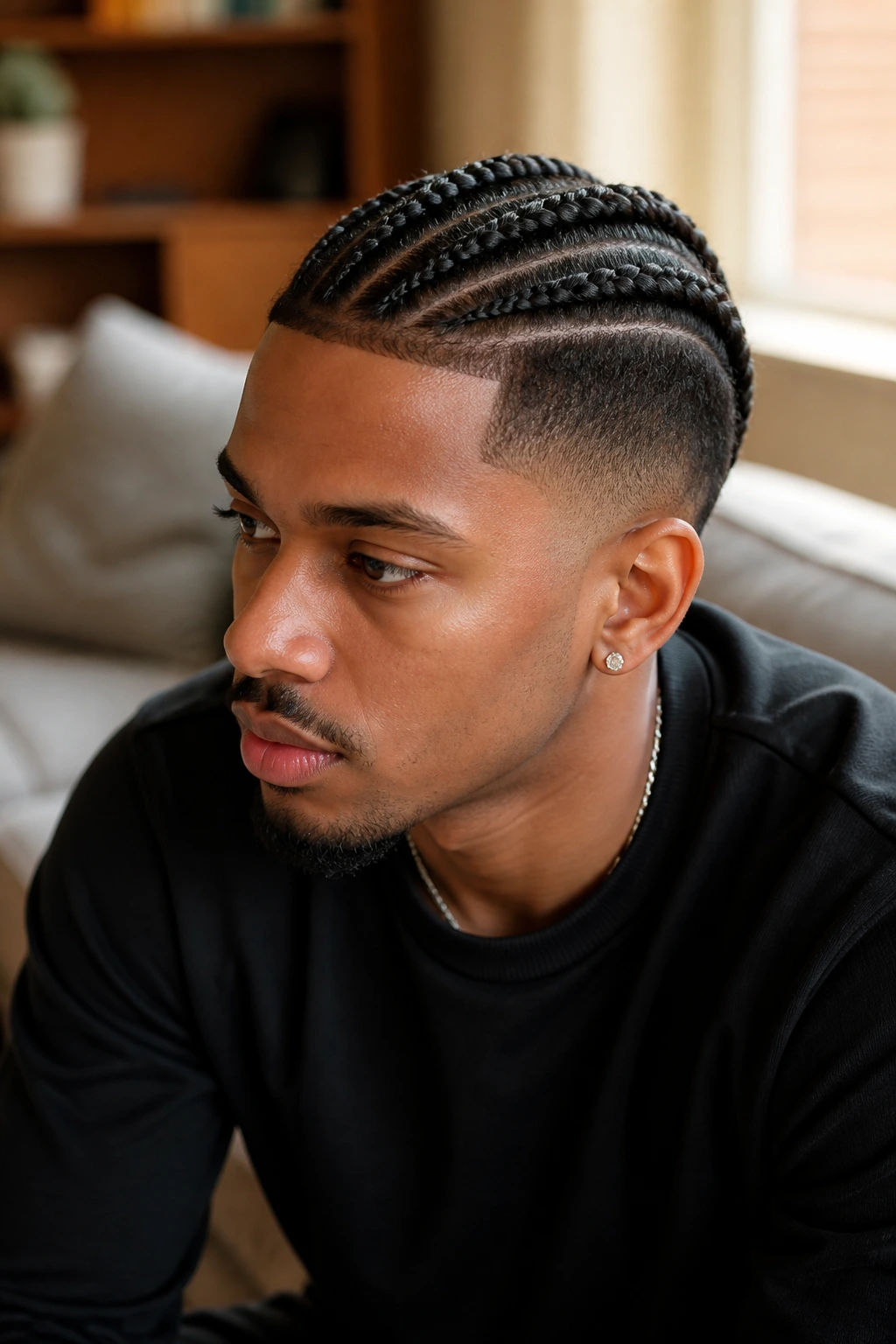
A taper fade is the quiet version of a fade, and that’s why it works so well with braids. It cleans up the sideburns, neckline, and temple area without erasing too much hair. The braid pattern stays central, and the fade simply gives it better boundaries.
This is the style I’d suggest if you want braids that can move between casual and polished without much effort. It’s neater than a full undercut, less dramatic than a high skin fade, and easier to grow out. A taper fade also tends to blend better if your braid set is going to stay in for a few weeks.
The key is restraint. Keep the taper subtle, and let the braid pattern stay the main feature. That little balance makes the look easier to wear with suits, hoodies, or a plain T-shirt. Not every braid style needs to announce itself from across the street.
25. Viking Braids with Length, Texture, and a Bit of Roughness
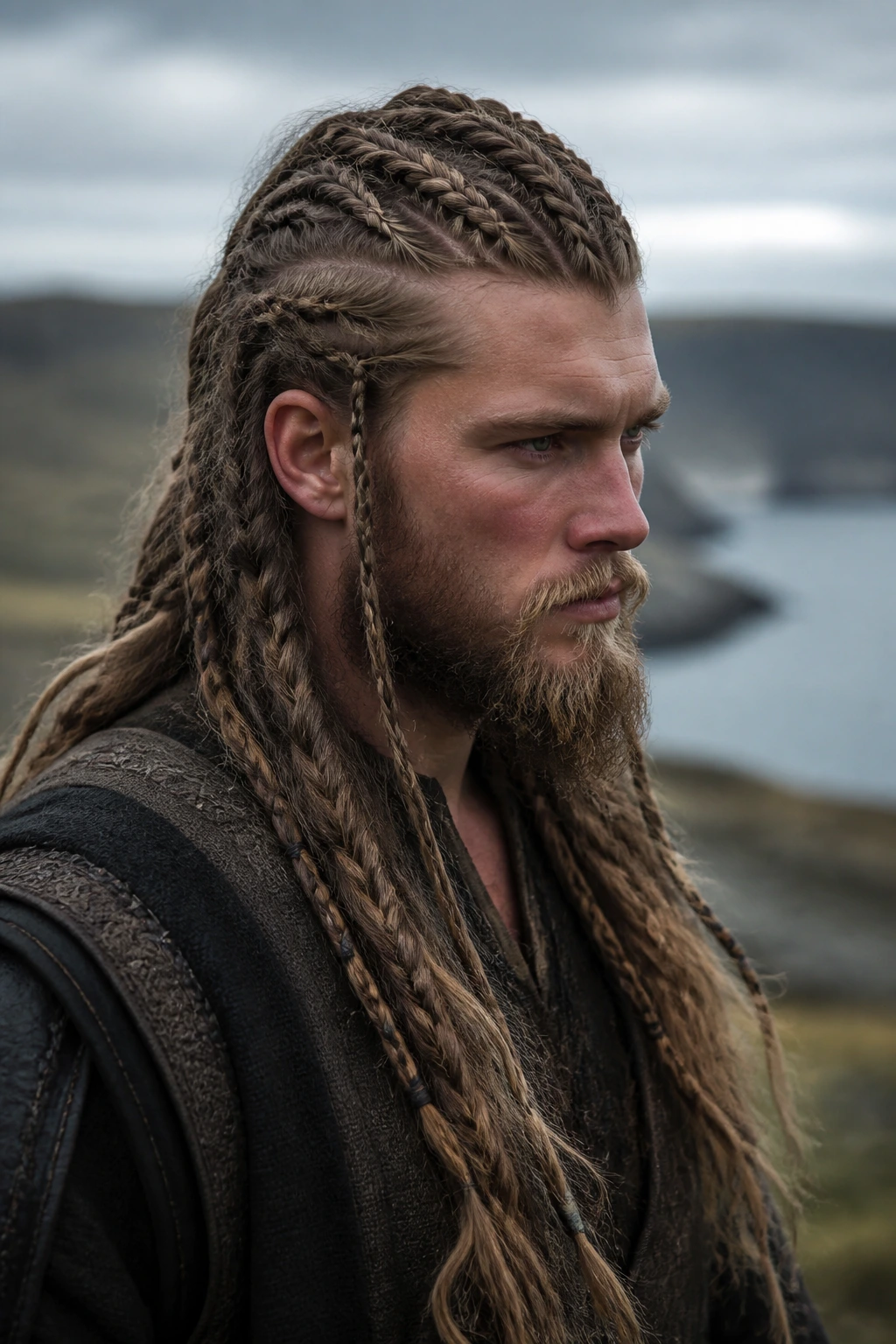
Viking braids lean into length and texture instead of chasing perfect polish. The look usually includes multiple braids, loose ends, and a shape that feels rugged rather than sleek. If you like a style that works with a beard and doesn’t mind a little mess, this is the lane.
The hair needs enough length to get real body, otherwise the style can look forced. That’s why it tends to suit longer growth stages. Keep the braids thick enough to carry weight. Tiny braids can disappear into the overall shape and lose the point of the style.
I’m a fan of this look when the finish is a little matte and the parts aren’t too precious. You want the braid pattern to feel lived in, not over-groomed. A light oil, a good brush-down, and some restraint with accessories usually do more than heavy styling ever will.
26. Half-Up Braids That Let You Keep Some Length Down
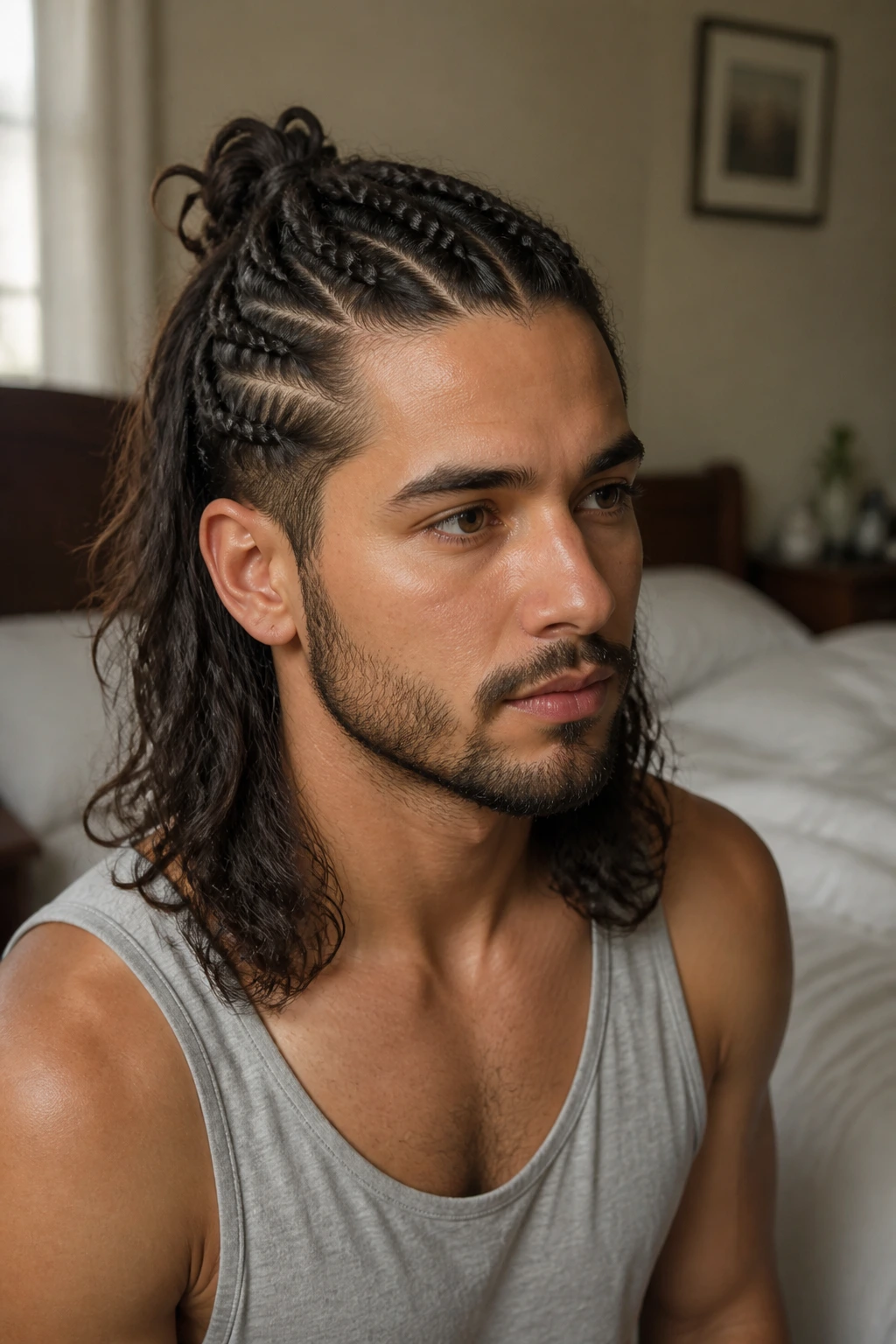
Half-up braids split the difference between wearing hair loose and wearing it fully tied back. The top or front sections get braided, while the rest stays down. That creates a nice mix of control and movement, which is why this style works on long hair that you still want to show off.
The braid portion can be as simple as two rows or as detailed as several small sections. The loose half gives the style a softer profile, so the look never gets too severe. That’s useful if your hair is long but you don’t want the whole head locked into a tight set.
This style also gives you room to adapt. Wear it cleaner with a fade and a center part, or looser with waves and a little texture on the ends. The point is not perfection. It’s balance. You get enough structure to keep hair out of the face without losing the length that makes the hair interesting in the first place.
27. Mini Braids for Short Hair That’s Just Long Enough to Grip
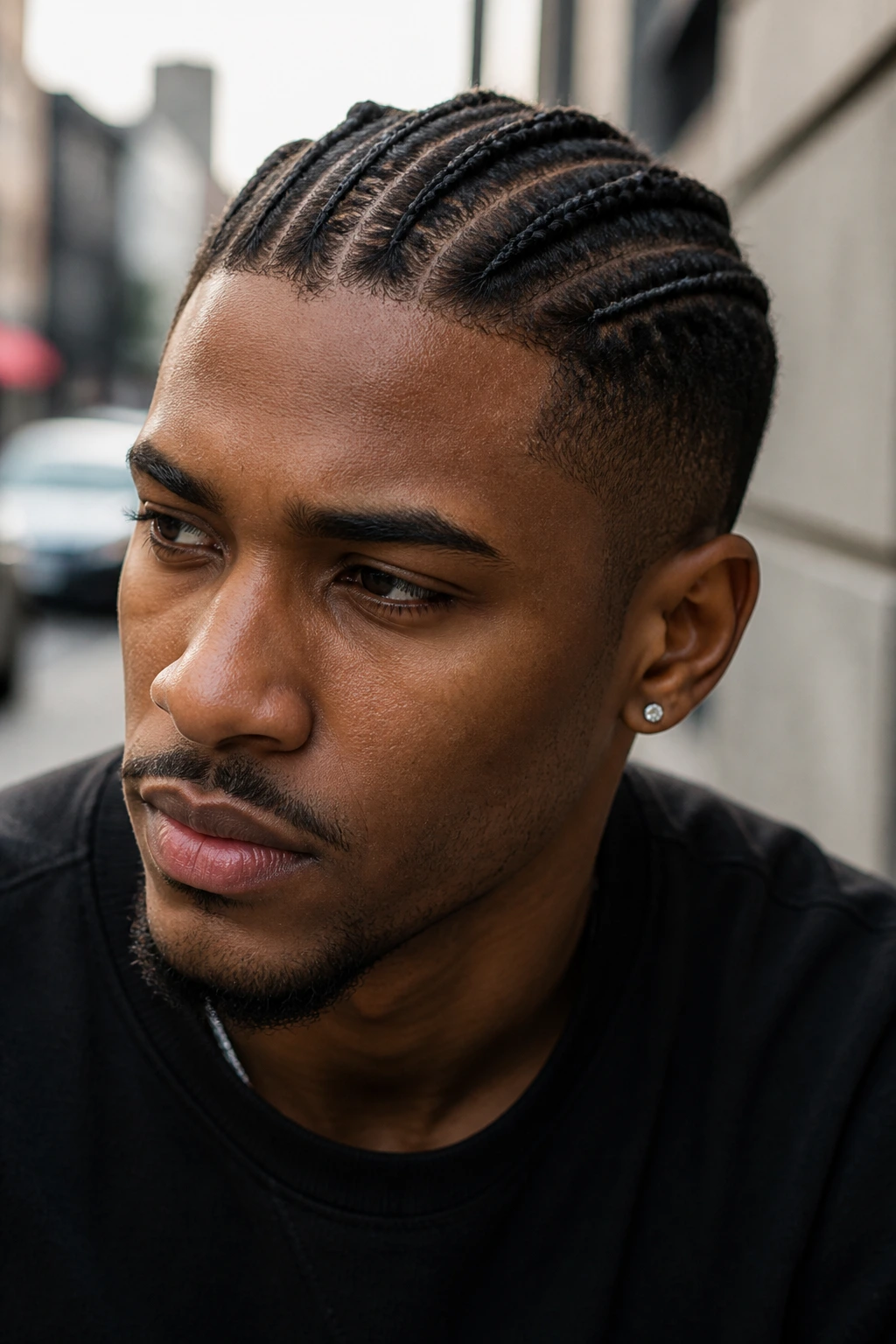
Mini braids are the style a lot of guys ignore because they think their hair is too short for anything interesting. Usually, it isn’t. If the hair can grip and the sections can hold, small braids can work on shorter lengths better than people expect. The result is tighter, cleaner, and more manageable than trying to force a bigger braid pattern onto short hair.
The smaller the braid, the more important the prep. Detangling matters. Moisture matters. Section size matters even more. If the hair is barely long enough, keep the parts neat and the braid tension light. Pushing too hard at the root only makes the style fail faster.
I like mini braids for transition phases. If you’re growing hair out and don’t want to sit through awkward puffiness, they can carry you through that stretch without looking half-finished. They aren’t the flashiest option, but they’re practical in a way that counts.
28. Beaded Braids That Add Weight and Sound
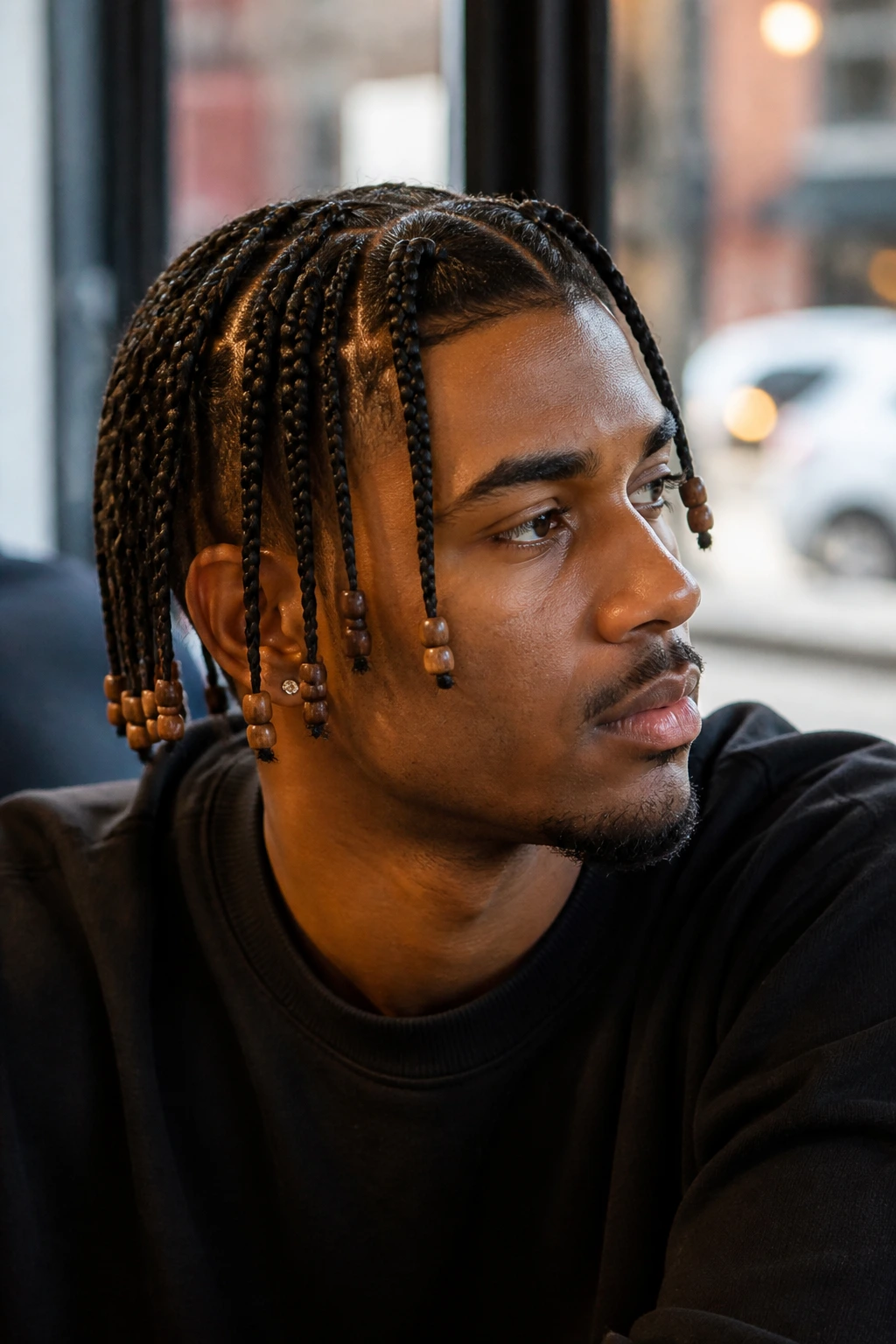
Beaded braids are one of those styles that changes the whole read with one small accessory choice. A few beads on the ends can make the braids feel intentional and finished. Too many, and it starts to look busy. The sweet spot is somewhere in the middle, where the beads act like punctuation.
This style works best when the braid itself is already clean. The beads should add to the shape, not rescue it. Wooden beads feel warmer and more natural. Metal cuffs read sharper. Clear or dark plastic can disappear a little more, which is useful if you want the accessory to stay secondary.
The practical thing nobody mentions enough is weight. Beads pull at the end of the braid, and that’s fine in small amounts. Load too many onto fine hair and the ends start to feel awkward. Keep the bead count modest unless the braid set is thick enough to handle it.
29. Curly-End Braids That Keep Movement at the Bottom
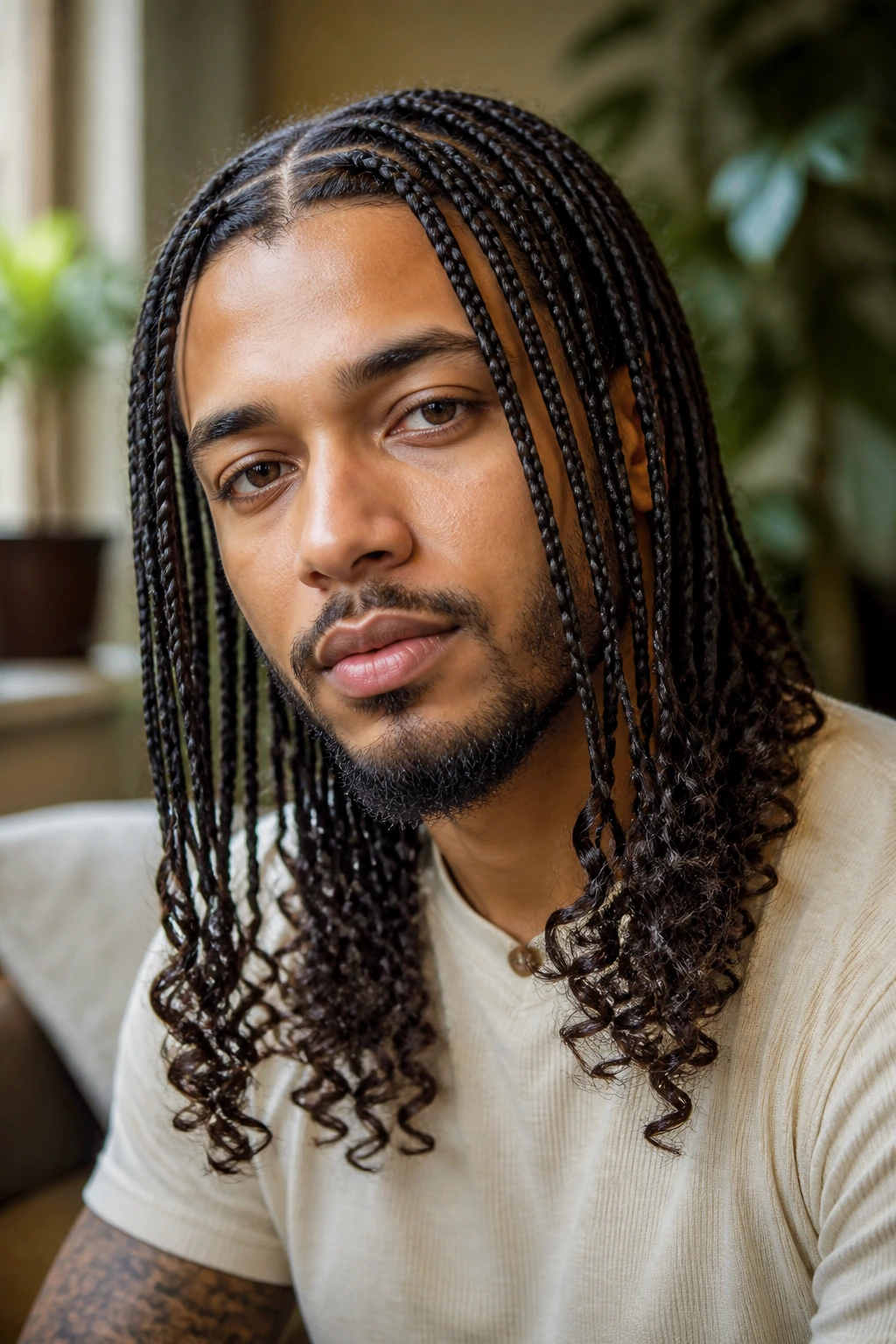
Curly-end braids are a good answer when you want the control of braids and the softness of loose texture. The braid runs partway down the hair, then the ends are left out or curled for movement. That keeps the whole style from looking too rigid or too finished.
This works well on men who like length but don’t want every inch locked down. The loose ends move around and soften the shape, which can take the edge off a very structured braid set. It’s also a nice way to change the mood without changing the braid base itself.
The key is a clean transition point. If the braid stops too high, the style can feel unfinished. Too low, and you lose the point of the loose ends. The balance usually lands somewhere around the lower third of the hair length, where the braid still has enough body and the ends can do their job.
30. Mixed Pattern Braids for a Fully Custom Look
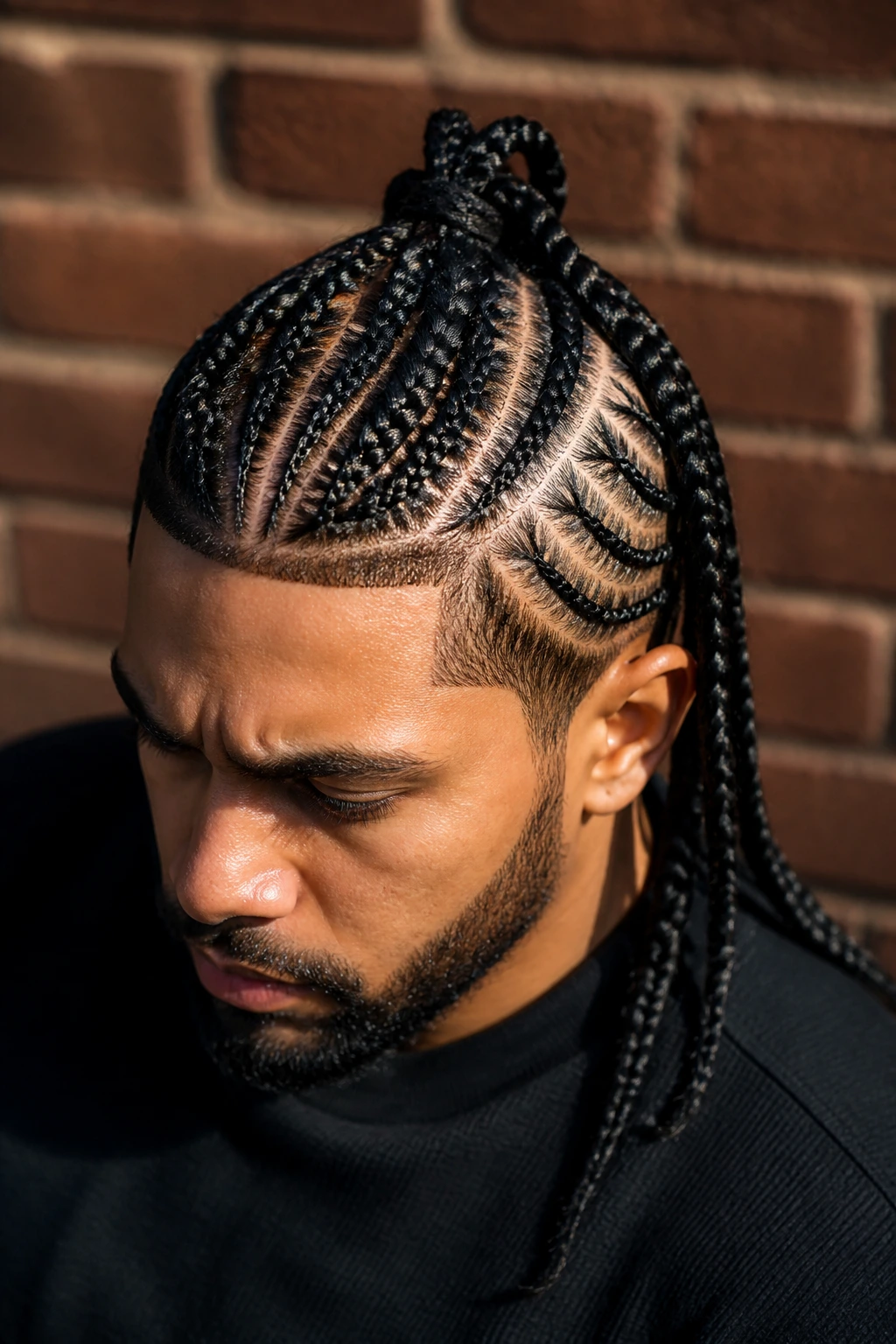
Mixed pattern braids are for people who want more than one thing at once. Cornrows can run along the sides while box braids or thicker feed-ins sit on top. A curved section can sit beside a straight one. The style works because the contrast is controlled, not random.
This is the most flexible entry on the list, but it’s also the easiest to mess up if there’s no plan. You need a pattern that has a visual anchor—usually a central braid, a fade, or a clear part line—so the whole head doesn’t look improvised. Once that anchor is set, the mixed pattern can do a lot of the heavy lifting.
I’d treat this as a statement style. It’s not the one to choose if you want the shortest possible appointment or the least maintenance. It is the one to choose if you want the braid set to feel custom to your head shape, hair density, and personality. When the sections are designed well, it looks like someone thought about every inch.
Why Braid Hairstyles for Men Hold Their Shape So Well
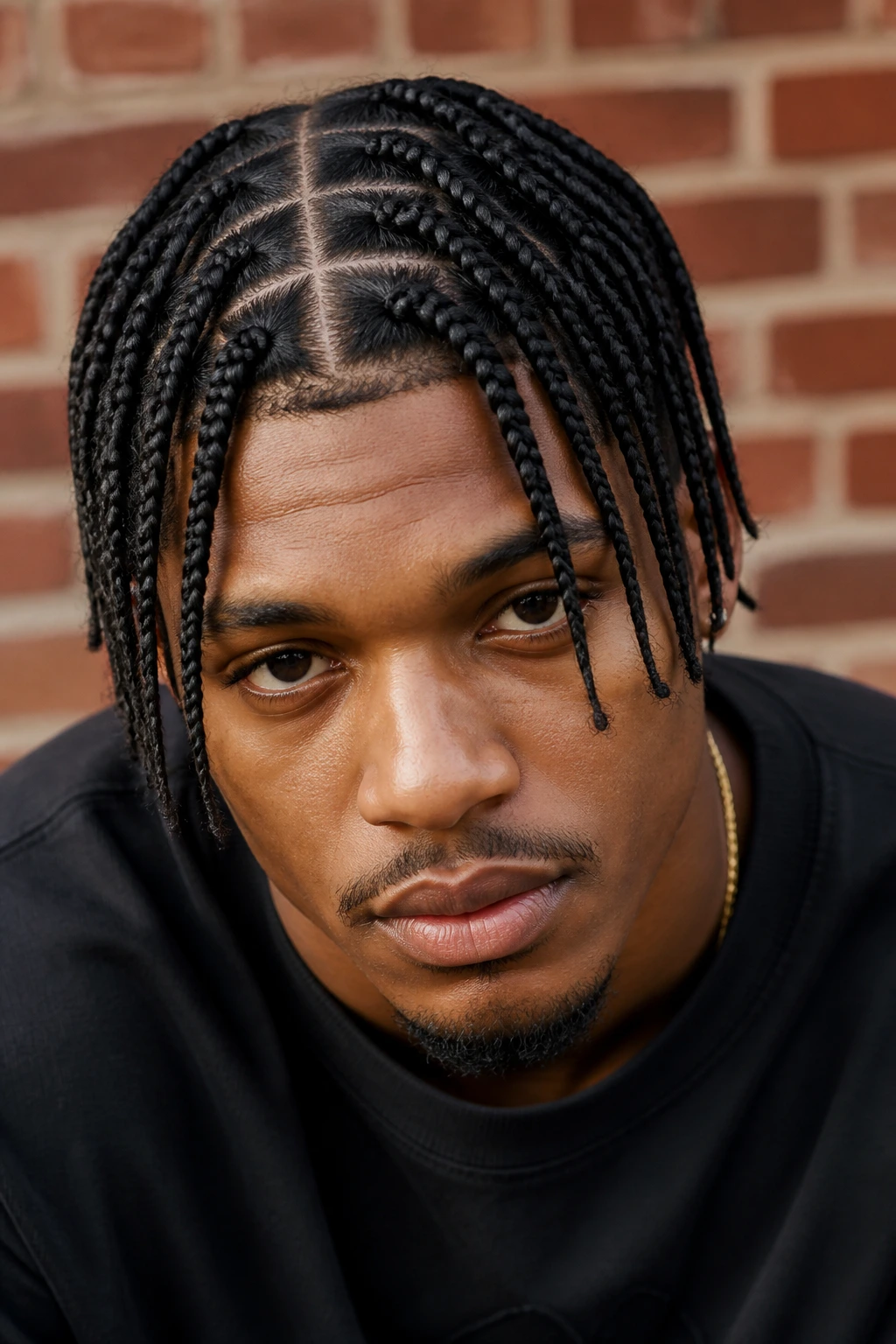
Braids hold their shape because they work with the direction of the hair instead of against it. That sounds obvious, but it’s the reason braid hairstyles for men can last through a long week and still look decent on day four. Once the hair is sectioned, tension and pattern take over. The style doesn’t depend on daily fluffing, heat, or a careful comb routine.
Hair texture changes the result, though. Coarser or curlier hair usually gives braids more grip, which helps the pattern stay put. Straighter hair can still be braided, but it often needs better prep, more product control, and sometimes a tighter or smaller section size so the braid doesn’t slip. That’s why one braid style can look perfect on one head and lazy on another. It’s not the style. It’s the match.
The other thing that keeps braids alive is the scalp line. Clean parting makes the style read as intentional even after the roots loosen a little. Messy parts, by contrast, make the whole head look older fast. If you’ve ever seen a braid set that still looked good even after a week, chances are the parts were clean enough to carry the style past the first day.
How to Choose the Right Braid Pattern for Your Hair
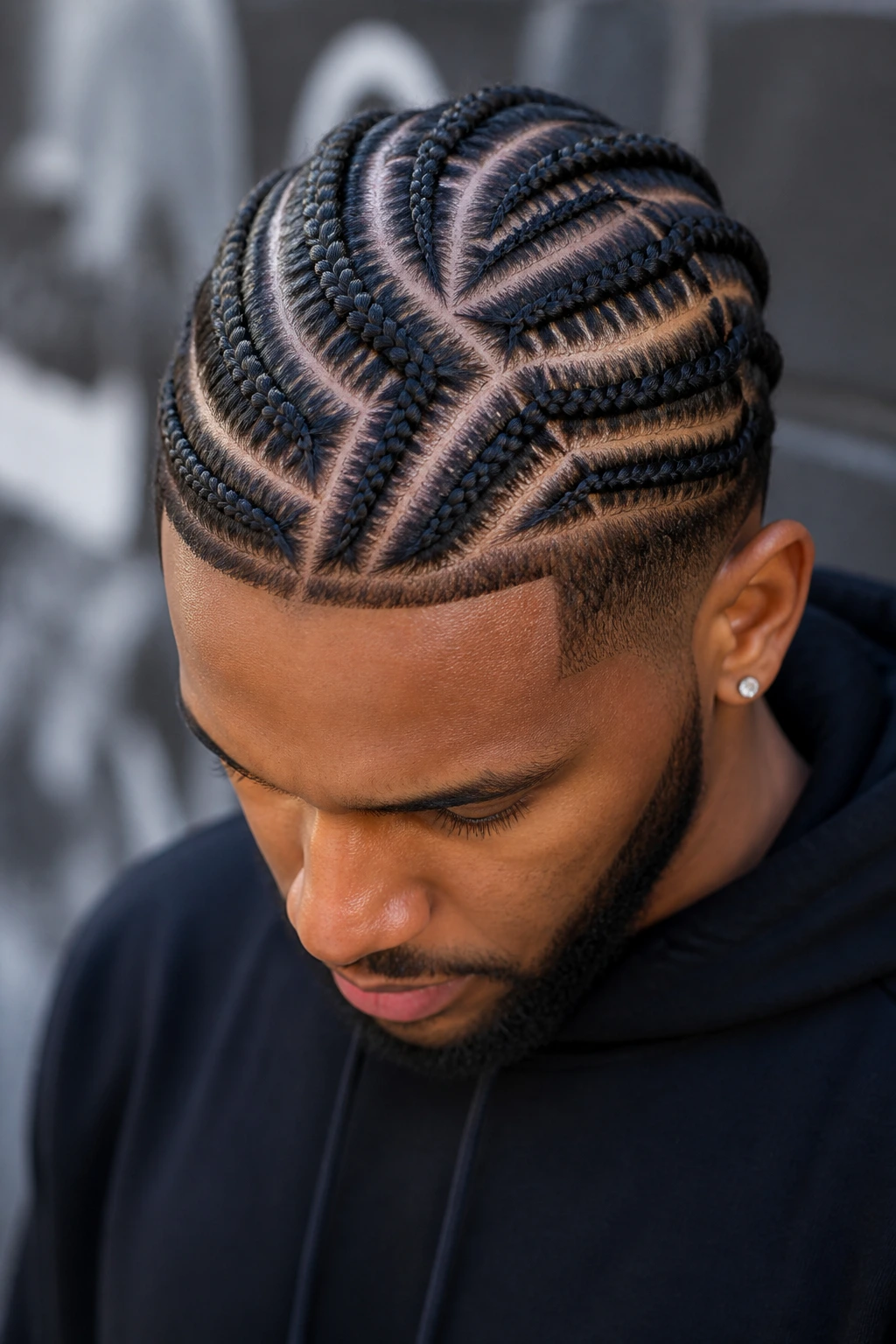
Length matters first. If your hair barely grips, start with smaller braids, two-braid styles, or cornrows that can anchor close to the scalp. If you’ve got enough length for movement, box braids, ponytail braids, and half-up styles open up fast. Trying to skip ahead usually ends in loose ends and a sore scalp.
Density matters just as much. Thick hair can handle wider rows and heavier patterns without looking thin. Finer hair often looks better with fewer, cleaner sections so the braid doesn’t get lost in the scalp. That’s why a style with six neat braids can beat a style with twelve tiny ones, depending on the head in front of you.
Face shape plays a role too, though I’d never treat it like a prison. Straight-back rows lengthen the face. Side-swept patterns soften it. Wider braids and buns can add presence to a narrow profile, while tighter vertical lines can help a rounder face look a little more defined. The braid is the frame. The haircut underneath is the canvas.
Essential Tools for Men’s Braids
-
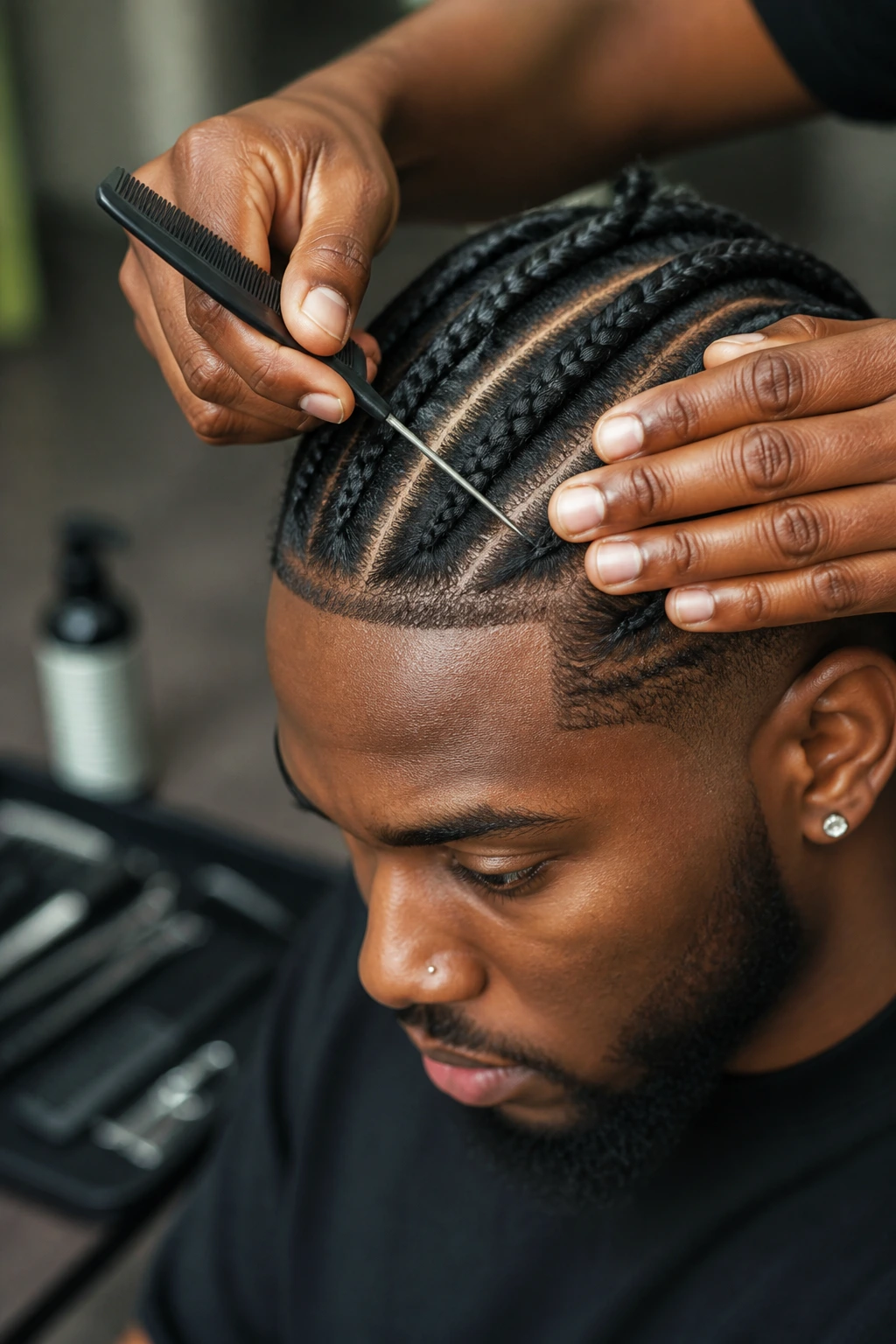
Rat-tail comb: The pointed tail is ideal for parting clean, narrow sections without tearing through the hair.
-
Wide-tooth comb: Use this first to detangle before you start braiding so knots don’t get trapped at the root.
-
Sectioning clips: These keep finished sections out of the way while you work through the rest of the head.
-
Spray bottle with water or leave-in mix: A light mist helps the hair stay flexible and easier to braid without soaking it.
-
Non-flaking styling gel or braid foam: Use a thin layer at the roots to smooth flyaways; too much leaves buildup.
-
Light hair oil or scalp oil: A small amount helps the scalp stay comfortable, especially on styles worn for more than a few days.
-
Edge brush: Handy for smoothing the hairline after the braids are in place.
-
Durag or satin bonnet: Night protection matters. It keeps frizz down and helps the parts stay sharp.
-
Braiding hair or extensions, if needed: Useful for box braids, Ghana braids, and longer styles that need extra length or fullness.
-
Small hair ties or bands: Keep a few around for ponytails, top knots, or bundling the ends when needed.
Smart Product and Prep Tips for Better Braids
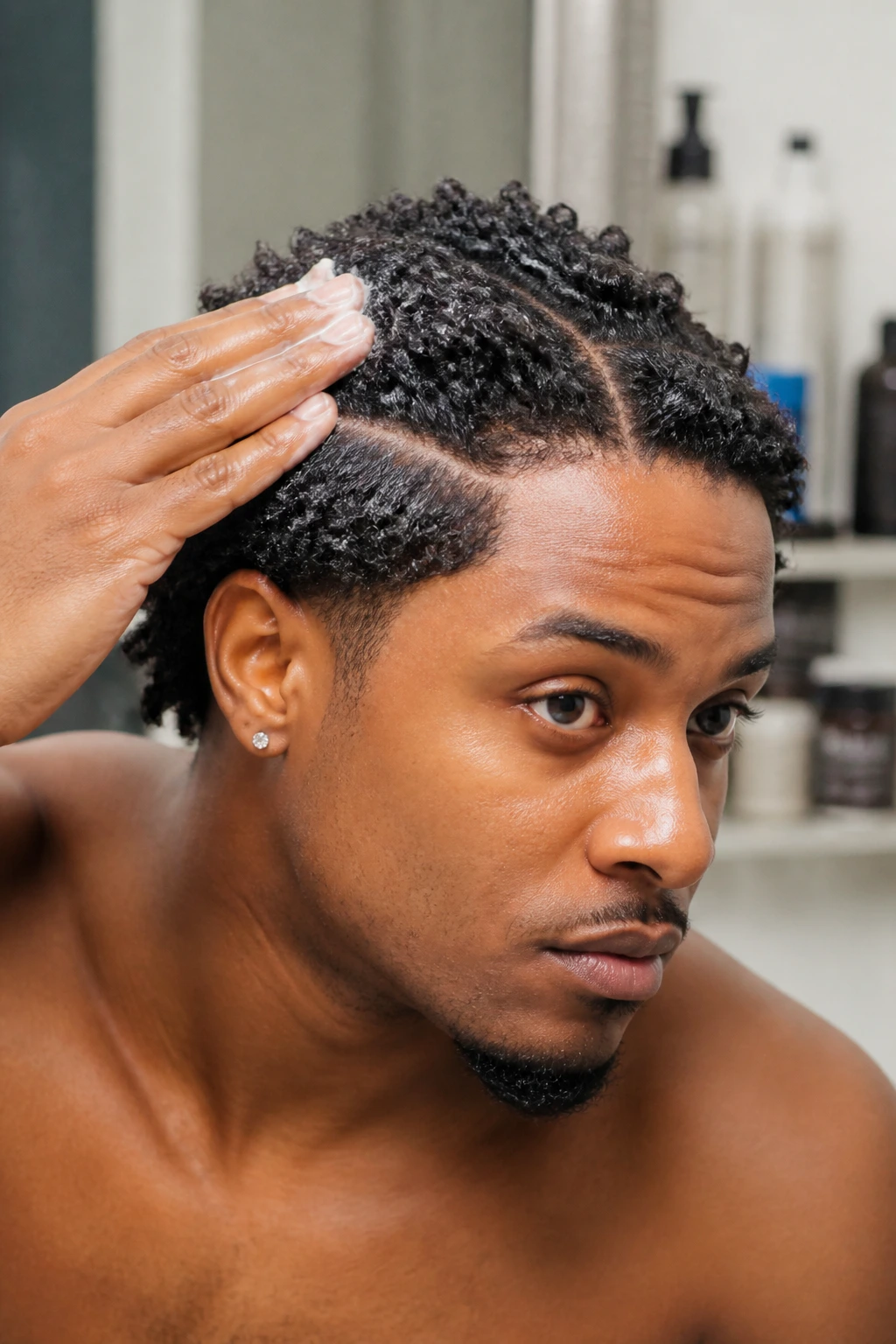
Start with clean hair that still has a little slip. Freshly washed hair that’s been fully dried and lightly conditioned usually braids better than hair loaded with old product. If there’s too much wax, pomade, or grease in there, the sections get gummy and the braid loses its clean grip. That mess also builds up fast under the scalp.
A good leave-in matters more than a heavy cream. You want moisture, not a slick film that makes every section slide apart. For men with tighter curls, a light leave-in plus a bit of oil on the scalp can keep the style comfortable. For straighter hair, a bit more hold at the roots can help the braid stay put.
Don’t ignore the size of the parts. Bigger sections mean faster styling and a chunkier result. Smaller sections mean more detail and more time. Pick based on how long you want the style to last and how much hair you actually have. Trying to force tiny braids onto short hair or huge braids onto thin hair is how people end up disappointed in the chair.
How Braid Hairstyles for Men Should Fit Your Face and Routine
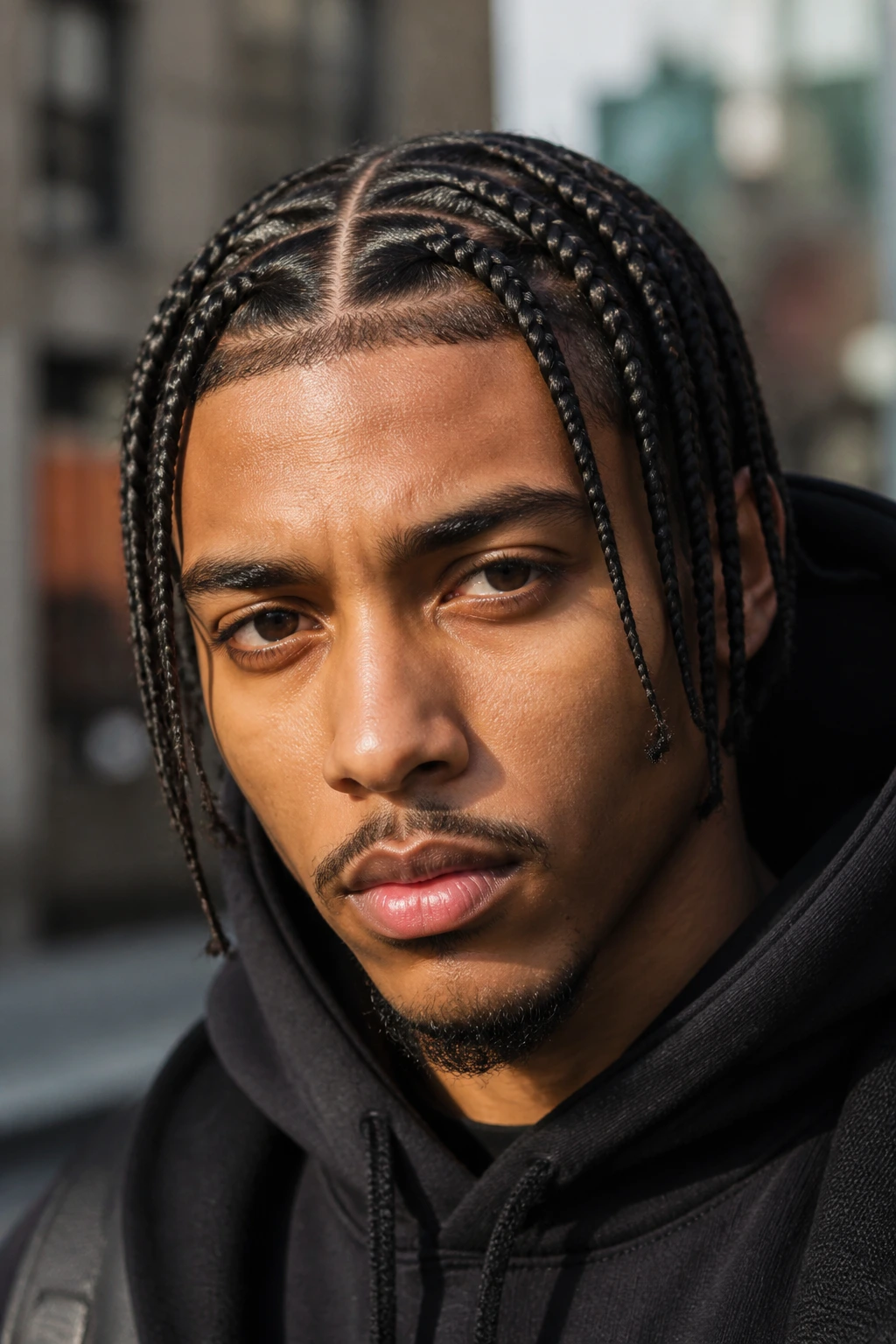
Presentation: Keep the front line clean. That’s where the eye lands first, and a tidy hairline makes even a simple set of braids look intentional. If the braid pattern is bold, let the front stay neat; if the braids are quiet, a sharper edge-up can carry the whole style.
Pairings: Braids sit well with a fade, a shaped beard, or a short mustache line because those details echo the same sense of structure. Glasses can work too, but keep the frame size in check if the braid pattern is already busy. Too many strong lines and the face starts feeling crowded.
Proportions: Wider braids usually suit thicker hair and broader faces. Narrow rows can help add height or movement to longer faces, but if you go too small on a dense head, the pattern can become cluttered. The best set looks like it belongs to the head shape instead of sitting on top of it.
Timing: If you need a style for a short event window, go for sharper, tighter patterns that will stay crisp for a few days. If you want something you can wear into work, to the gym, and out at night, pick lower-tension styles like knotless braids, taper fades, or simple cornrows that don’t demand constant fixing.
Small Details That Make Braids Look Sharper
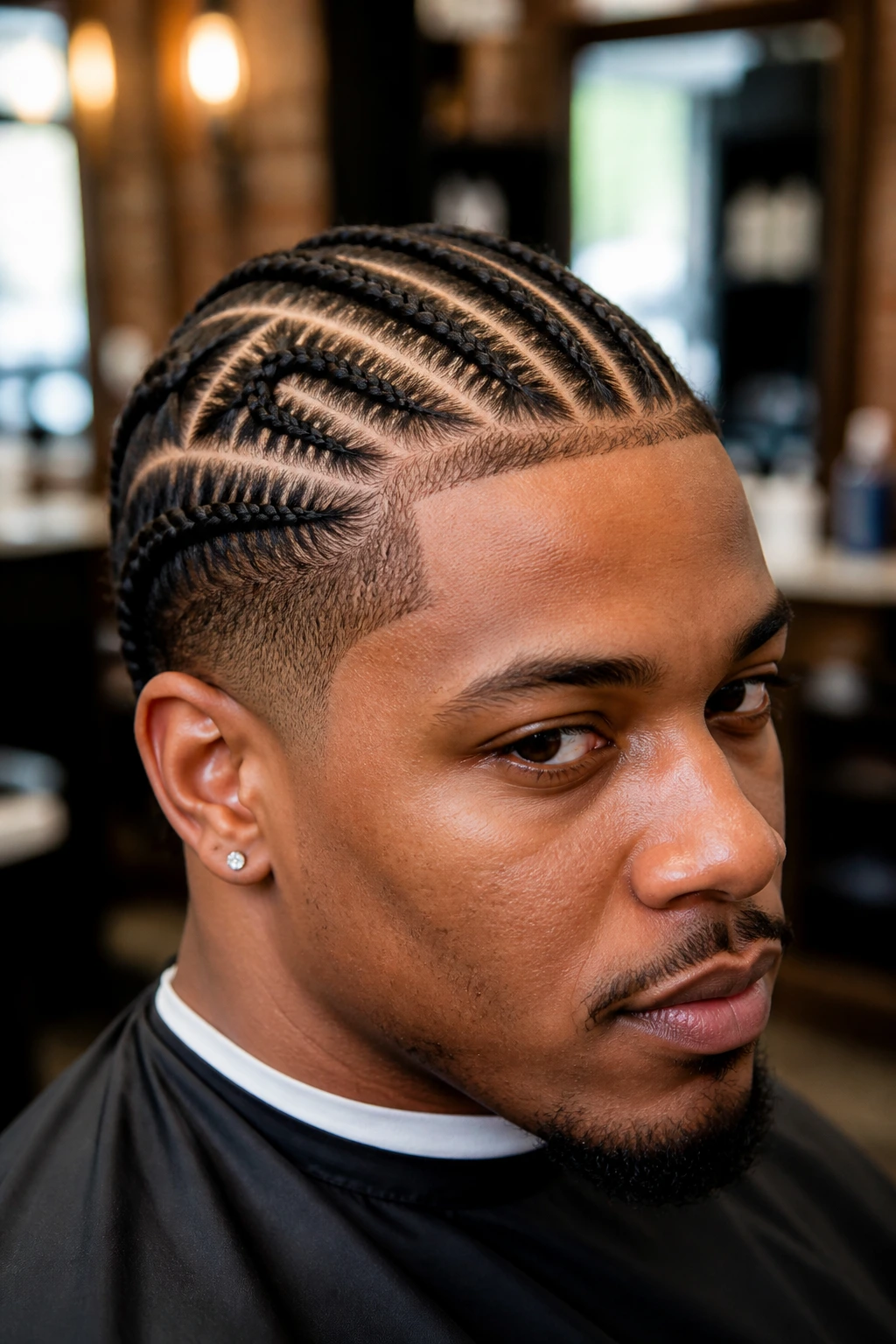
Linework: Crisp parts are the difference between “braids” and “a braid style.” A steady rat-tail comb and evenly spaced sections do more for the look than extra product ever will.
Texture: A light mousse or braid foam after styling can calm flyaways without making the hair crunchy. Use enough to smooth the surface, not enough to plaster the scalp.
Accessories: One cuff, a few beads, or a wrapped end can be enough. You don’t need a whole pile of hardware unless the braid pattern itself is very plain.
Make-It-Yours: If you want the style to read cleaner, keep the color close to your natural shade and avoid too much shine. If you want more contrast, a fade, highlighted extension hair, or a tighter pattern will change the mood fast.
Common Mistakes That Make Braids Look Messy Fast
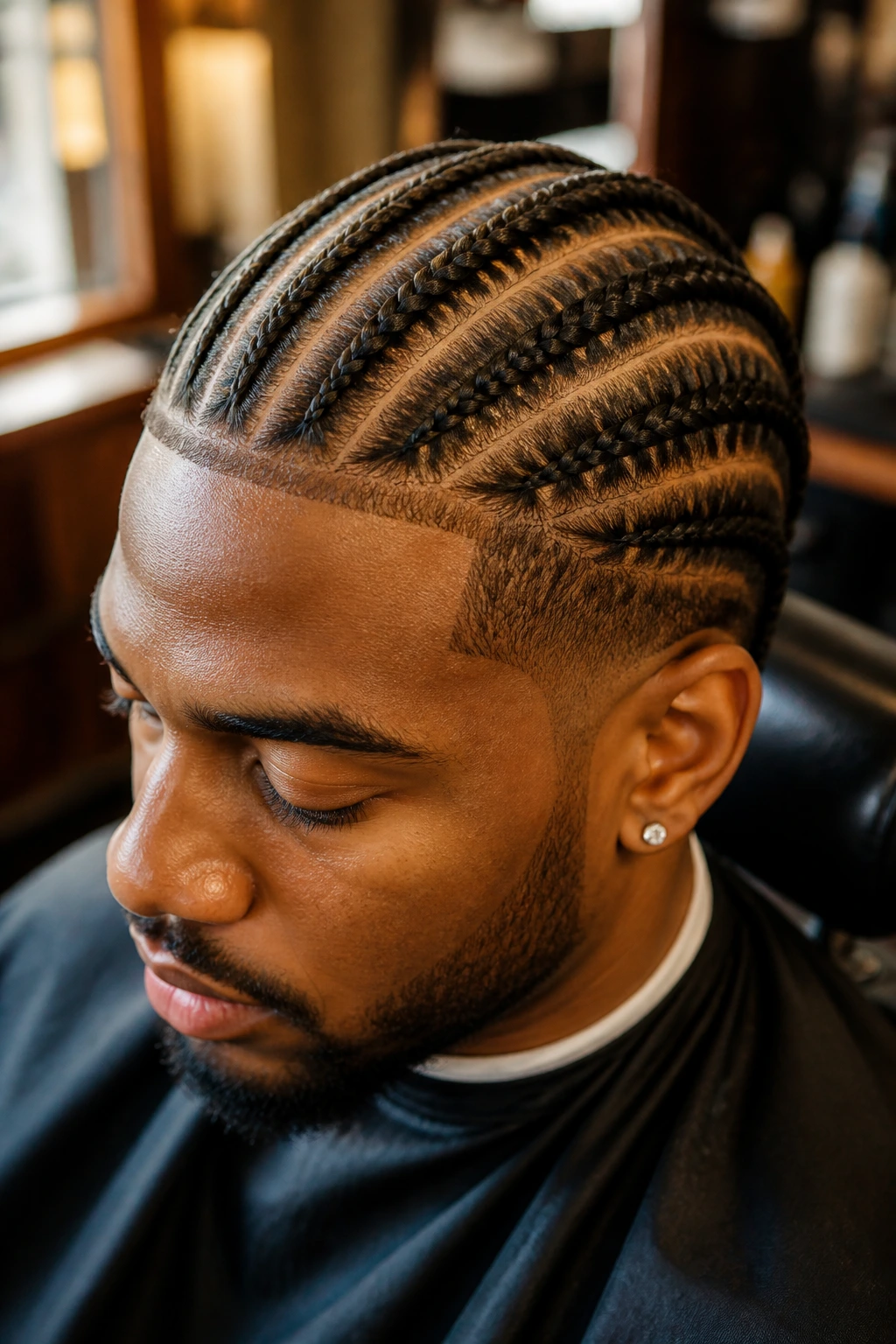
The easiest mistake is too much tension at the hairline. If the first braid row leaves the scalp sore or makes the skin look raised, the style is too tight. That can lead to headaches, bumps, or edges that look stressed by day two. The fix is simple: loosen the first inch, keep the rows even, and tell the braider if the front feels wrong before the style is finished.
Another problem is uneven sectioning. One braid bigger than the next, or one side part drifting wider than the other, makes the whole head look off even if the braiding itself is neat. This is why a good parting comb matters. Slow down at the sectioning stage and the braid set almost always looks better.
Product overload is another classic. Too much gel or wax makes the scalp shiny, collects lint, and leaves the braids stiff in a way that reads cheap. Use just enough to smooth the roots, then stop. If the hair starts clumping at the base, you’ve gone too far.
Finally, sleeping without protection ruins more braid sets than people like to admit. A satin bonnet or durag keeps the parts from rubbing loose and helps the surface stay smoother. Skip it for two nights and you’ll usually see the difference in the first row.
Ways to Adapt These Braids for Different Lengths
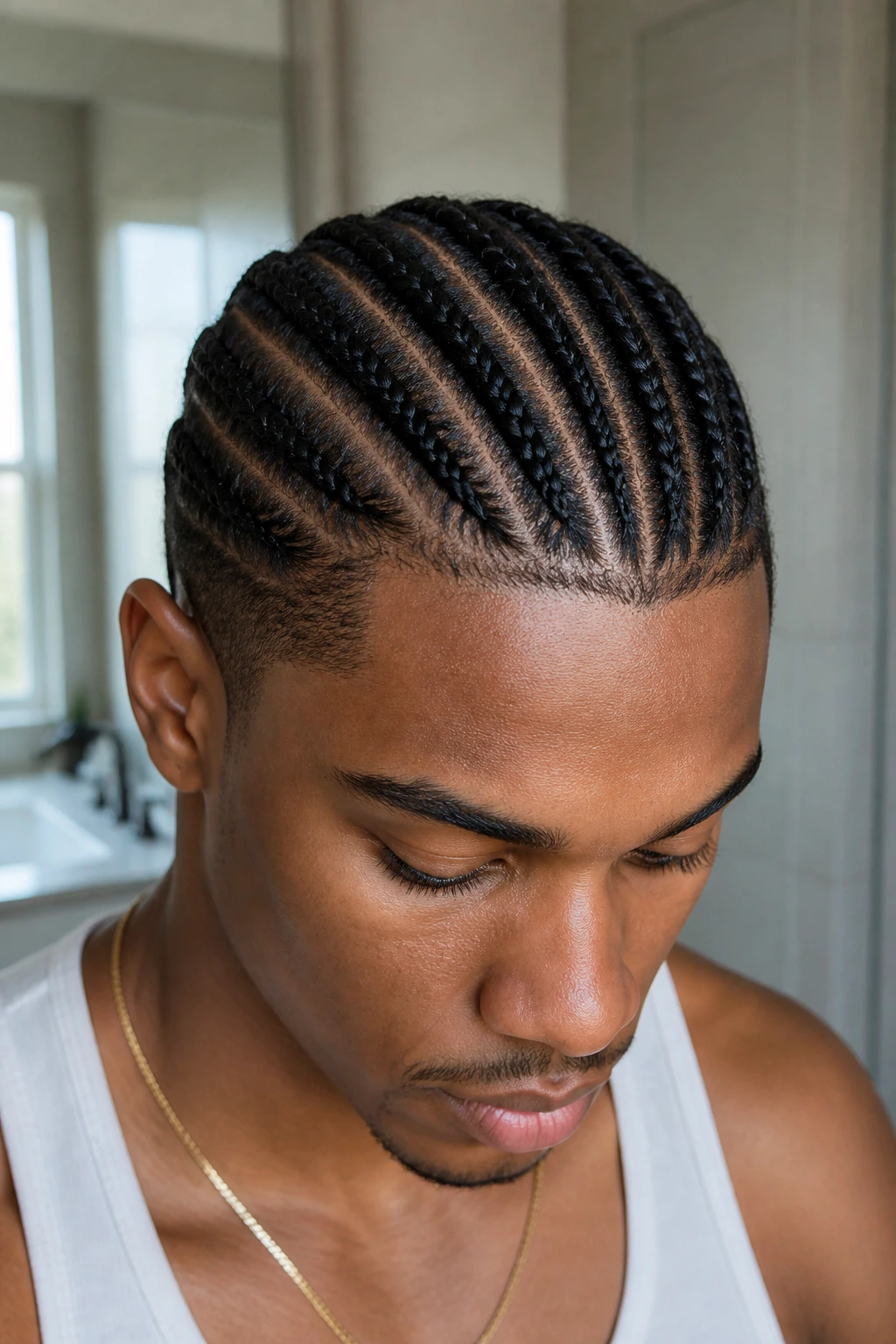
Short-Hair Starter Set: If your hair is still growing in, choose mini braids, two braids, or tight cornrows that can grip close to the scalp. These styles need less length and less hanging space, which makes them much easier to keep tidy.
Gym-Friendly Build: Go for low fade braids, braided ponytails, or straight-back cornrows. They keep the hair off your face and neck, and they don’t need a lot of daily fixing after a workout.
Office-Neat Version: Taper fades, knotless box braids, and simple straight-back rows are the cleanest choices. Keep the parts tidy, the accessories minimal, and the edges controlled.
Statement Weekend Version: Freestyle cornrows, zig-zag parts, tribal braids, and beaded sets give you more visual punch. These styles do more of the talking, so you can keep the rest of the outfit simple.
Length-Boosted Version: If your natural hair isn’t quite long enough, extensions help with box braids, Ghana braids, and top knots. Match the texture closely so the extra length looks like part of the style instead of an add-on.
Care, Re-Tightening, and Removal
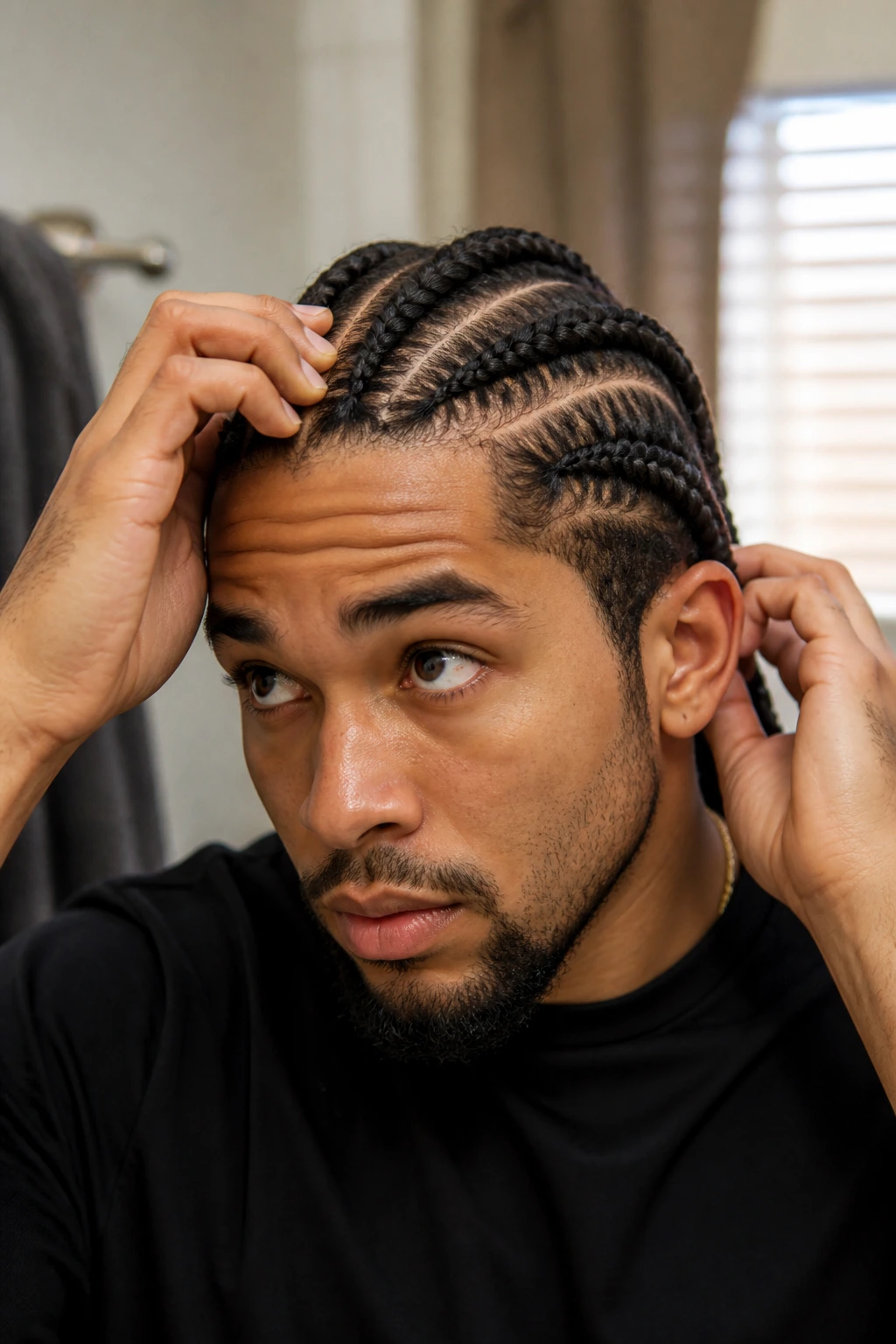
Braids usually look their cleanest during the first few days, then settle into a softer version of themselves. That’s normal. The goal isn’t to freeze them in place forever. It’s to keep them neat enough that the style still reads well as the hair loosens a little.
Scalp care matters. A light oil every few days can keep the skin from drying out, but don’t flood the roots. Too much oil turns into buildup, and buildup dulls even the best braid pattern. If the style starts feeling heavy or itchy, a gentle rinse or light cleanse can help more than another layer of product.
Most braid styles should be refreshed at night with a durag or satin bonnet, and that single habit stretches the life of the style more than people expect. If the hairline starts to pull, or the base feels sore, don’t ignore it. Braids should feel snug, not punishing. When it’s time to remove them, go slowly, condition after the takedown, and comb from the ends up. Rushing the removal is how you end up with breakage and a mess you didn’t need.
Frequently Asked Questions
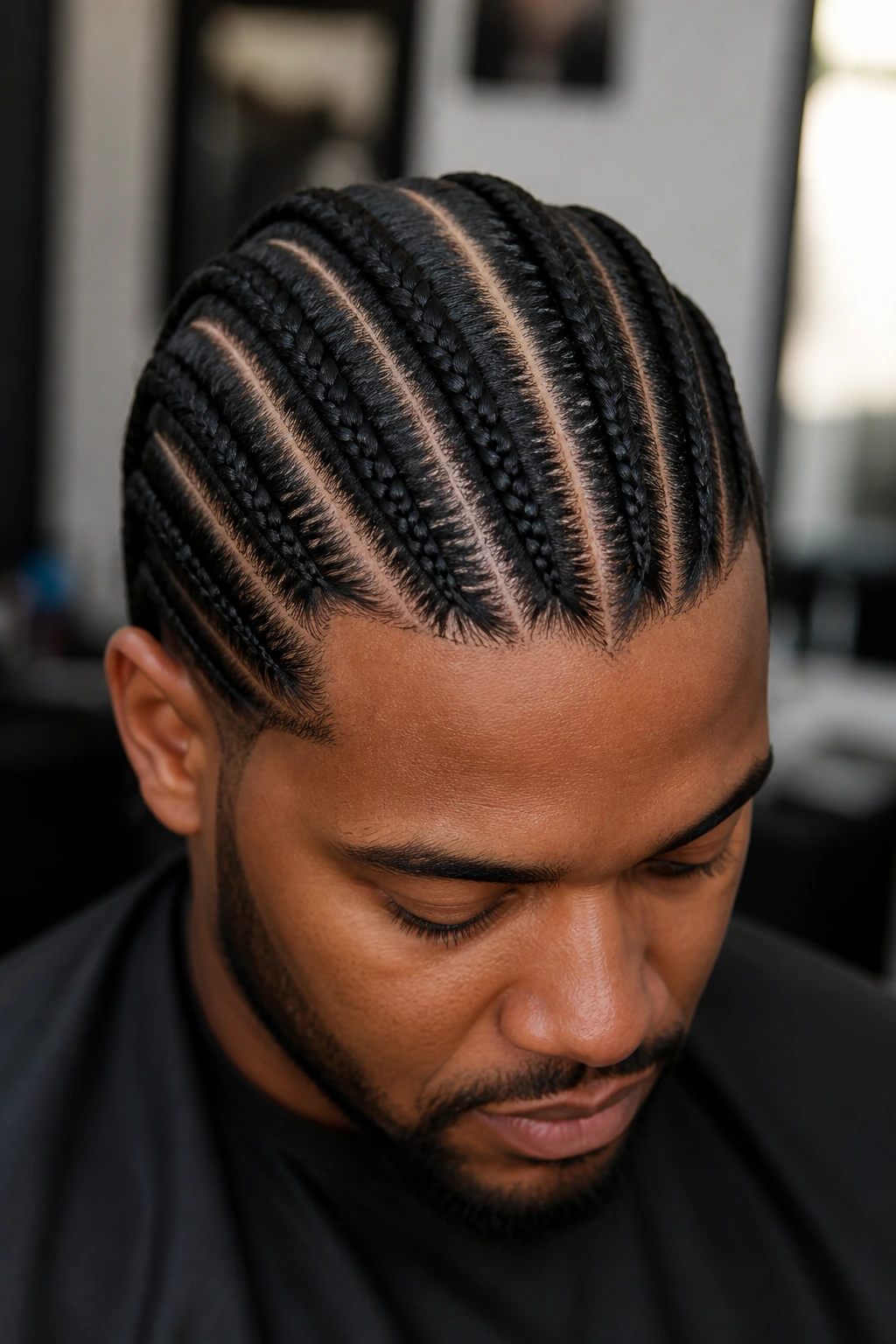
How long do braid hairstyles for men usually last?
Simple cornrows and taper-fade braid sets can stay neat for a couple of weeks, while knotless box braids, Ghana braids, or micro braids can last longer if they’re cared for well. The exact timing depends on how fast your hair grows and how much frizz you tolerate before a style feels done.
What hair length do I need for braids?
Some styles work with surprisingly short hair if the texture has enough grip, but box braids and longer top knots need more length to hold shape. If your hair is just getting there, start with mini braids or tighter cornrows instead of forcing a style that needs more material.
Can straight hair be braided on men?
Yes, but it usually needs better prep, smaller sections, or more hold at the roots because the strands don’t grip each other the same way. The braids may also loosen faster, so a style with cleaner parting and less bulk often works better than a large, heavy pattern.
Do braids damage your hairline?
They can if the tension is too strong or if the style is left in too long without care. A braid set should feel secure, not painful. If your edges are sore, the skin is raised, or the front line keeps pulling, the tension is wrong.
Should you wash your hair while it’s braided?
Yes, but do it gently. A diluted shampoo or a careful scalp wash can help control buildup without wrecking the pattern, then dry the braids well so moisture doesn’t sit at the roots. Heavy scrubbing is what causes trouble, not the wash itself.
Which braid style is easiest to maintain?
Straight-back cornrows, simple two-braid styles, and taper-fade braids tend to be the easiest because the pattern is clear and the upkeep is lighter. Styles with lots of tiny sections, beads, or mixed patterns usually need more attention.
What if my braids start looking fuzzy after a few days?
A little fuzz is normal. If it gets bad fast, you probably used too much product, slept without protection, or the parts were too loose from the start. A light foam, a satin wrap at night, and a cleaner sectioning job next time will usually fix most of it.
Can I work out with braids?
Yes, and that’s one of the reasons men keep coming back to braids. Sweat can loosen the front and build up at the scalp, so dry the hair properly after training and keep a clean head wrap nearby if you’re in the gym often.
Braids That Stay Worth the Time
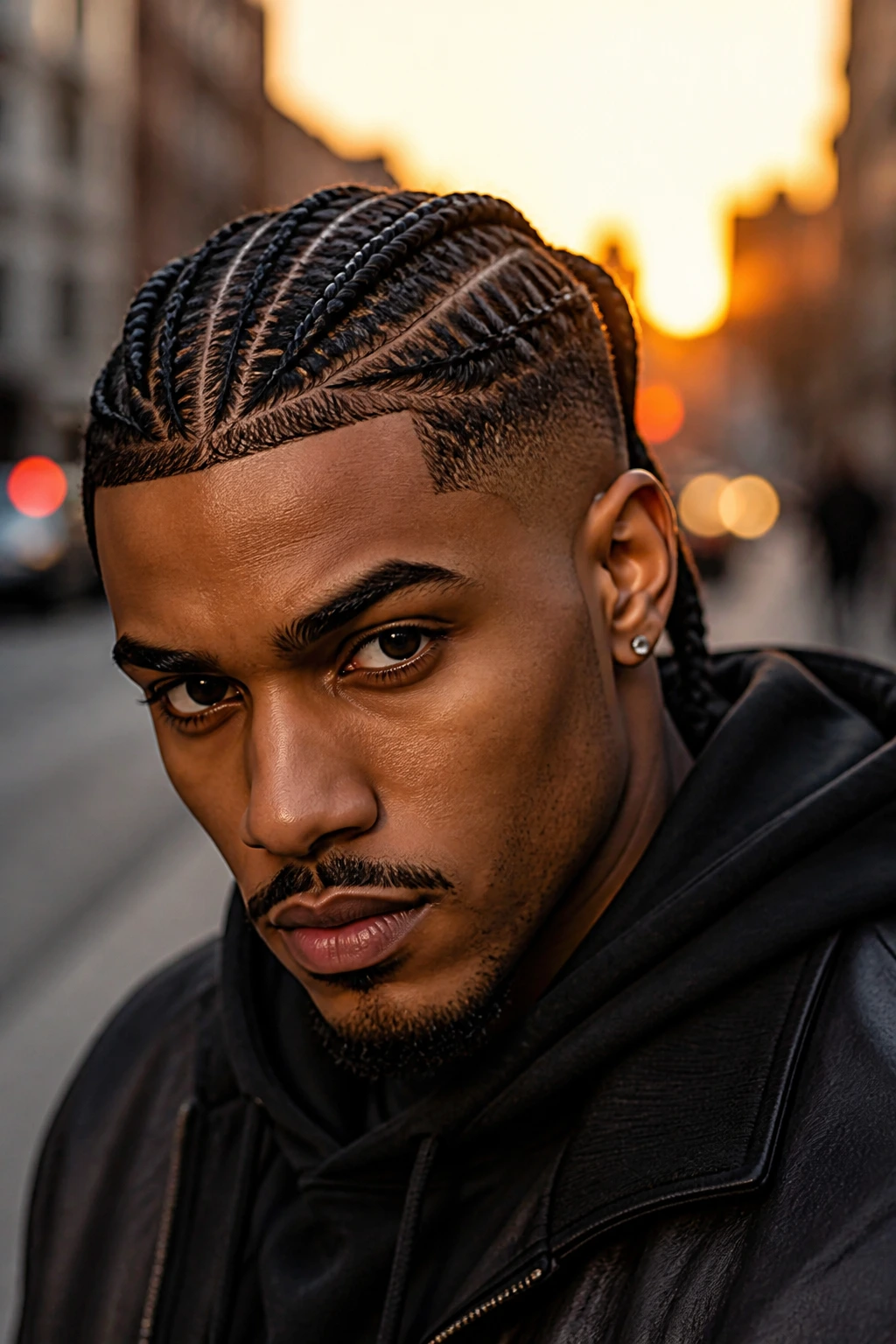
A good braid style does more than sit there. It changes the shape of the head, gives the hair a plan, and cuts down on the morning scramble that comes with loose texture and no direction. That’s why some sets look better after a week than they did on day one. The pattern settles. The parts calm down. The whole thing starts to feel like it belongs there.
The safest move is usually the smartest one: pick the braid pattern that matches your length, density, and patience, then let the details do the work. Clean parting. Honest tension. A fade or lineup that frames the braids instead of crowding them. Get those right and even a simple set can look strong.
Start with the style that fits your hair right now, not the one that only works in a perfect photo, and the rest gets easier from there.
