



Shag haircuts have a habit of looking either gloriously lived-in or strangely overdone, and the difference is usually one inch of layer placement. Get that wrong and the cut can puff at the crown, cave in at the ends, or lose the whole vintage feel it was supposed to have. Get it right and the shape does something rare: it looks better with a little bend, a little mess, and a little age on it.
That’s why a good shag still feels fresh. It isn’t about making hair look “perfect.” It’s about giving it enough movement to flip, drape, and break up in a way that feels borrowed from another decade — the 70s feather, the 80s blowout, the rock-and-roll fringe, the slightly rumpled collarbone length that never sits still for long. There’s control in that looseness. Real control.
I’ve always liked shag haircuts that keep some weight in the right places. Too much thinning and the ends fray. Too little and the whole cut reads like a regular layered style that missed the point. The best versions have a shape you can feel with your hands: soft around the face, lighter at the crown, and finished with ends that kick instead of hanging dead straight.
Why These Shag Haircuts Stand Out

- Feathered movement: These cuts keep the ends light enough to flip, so the hair looks active even on a lazy air-dry.
- Vintage shape, not costume hair: The best versions borrow from the 70s and 80s without going full throwback wig.
- Face-framing control: Layers placed at the cheekbone, jawline, or collarbone can soften strong angles fast.
- Growth that doesn’t fight you: A well-cut shag usually softens as it grows, instead of turning into one heavy shelf.
- Texture-friendly structure: Straight hair gets lift, waves get shape, and curls get definition when the layers are placed with restraint.
- Styling room: You can wear most of these cuts rough, blown out, or somewhere in between without the shape falling apart.
1. Feathered Collarbone Shag
A collarbone-length shag is the easiest entry point if you want the vintage feel without a dramatic chop. The ends skim the collarbone, the shortest layers sit around the cheekbone, and the whole cut moves with a soft swing that feels unmistakably retro. It’s the sort of shape that looks especially good when the hair has a little bend in it, not pin-straight stiffness.
What makes it work is the balance. The length keeps enough weight for shine, while the feathered layers keep the cut from looking blunt or boxy. Ask your stylist to keep the perimeter slightly solid so the ends still have substance; if they carve too much out of the bottom, the cut can get wispy in a way that looks thin rather than airy.
Best on: medium-density hair, loose waves, and anyone who wants a shag that still fits neatly behind the ears.
Styling note: A 1.25-inch round brush or a few bends from a flat iron are usually enough. You do not need a full blowout every time.
2. Curtain-Bang Shag
Want the quickest route to a retro read? Start with curtain bangs. They split the difference between soft and dramatic, and when they’re blended into a shag, they make the whole cut feel like it was lifted from an old album cover. The fringe opens from the center, grazes the brows, then melts into cheekbone layers.
The trick is not to make the bangs too short at the center. If they jump above the brows too fast, the cut starts to look theatrical. A better version lets the shortest point hit just below the brow or right at it, then angles outward so the sides fall toward the jaw.
Why it feels so lived-in
Curtain bangs take the edge off a shag without flattening it. They frame the face, hide awkward grow-out stages, and look good even when they separate a little after a few hours. That’s part of the charm. The split fringe gives you shape without making the haircut feel severe.
3. Farrah Flip Shag
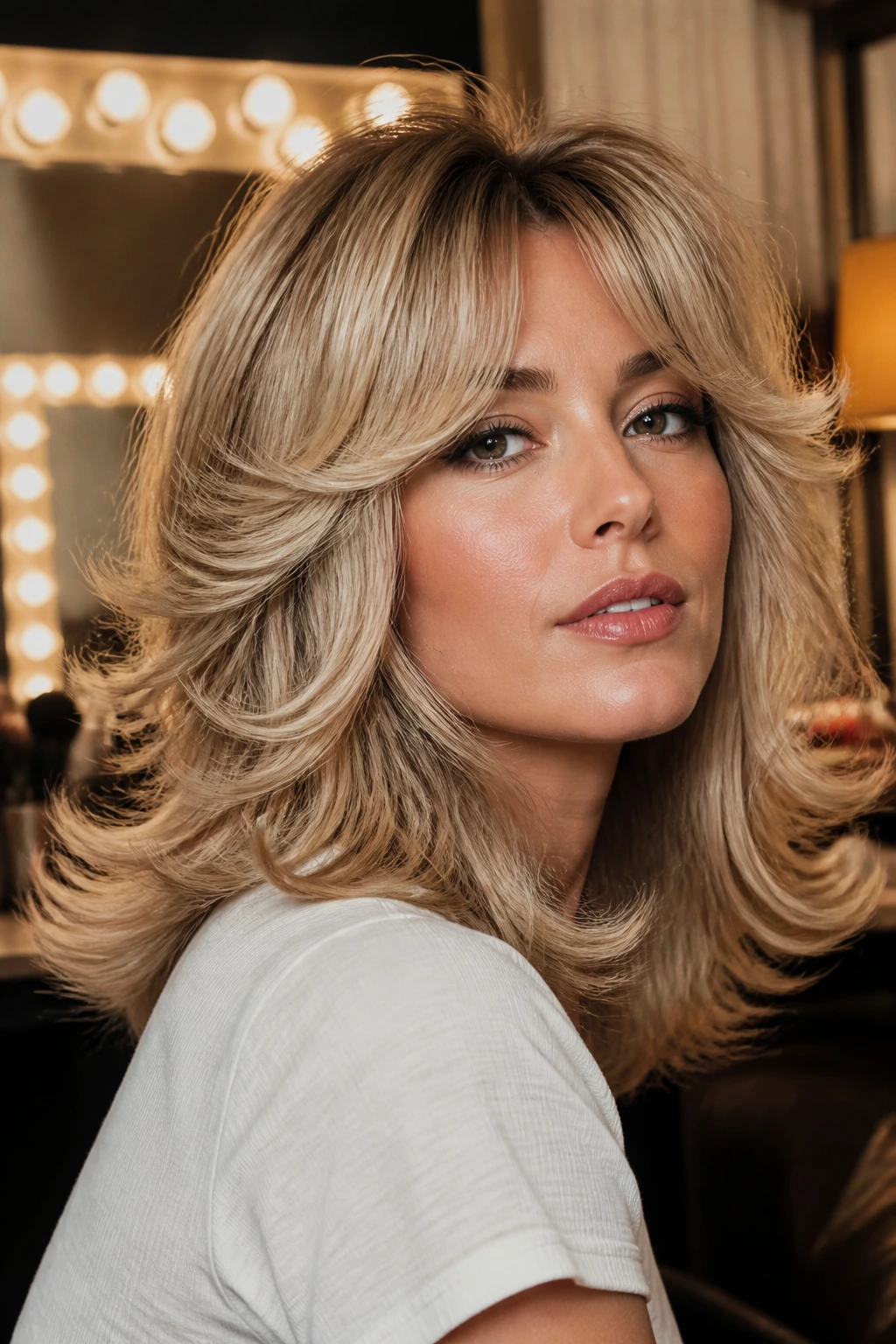
If you want bounce, not just texture, this is the shag to ask for. The Farrah Flip shag is all about outward movement at the ends, with a blown-out crown and long, feathery layers that kick away from the face. It has more polish than a rough rocker shag, but it still feels gloriously of its era.
The cut needs a clear layer plan. Too many layers at the bottom and the flip disappears into fluff; too few and you lose the swoop that makes the style memorable. Ask for face-framing layers that start around the cheekbone and continue down through the shoulders, then style with a round brush so the ends turn away from the neck.
A little mousse at the roots helps. So does rough-drying until the hair is about 80 percent dry before you start shaping. That gives the final blowout more lift and less mush.
4. Joni-Length Shag
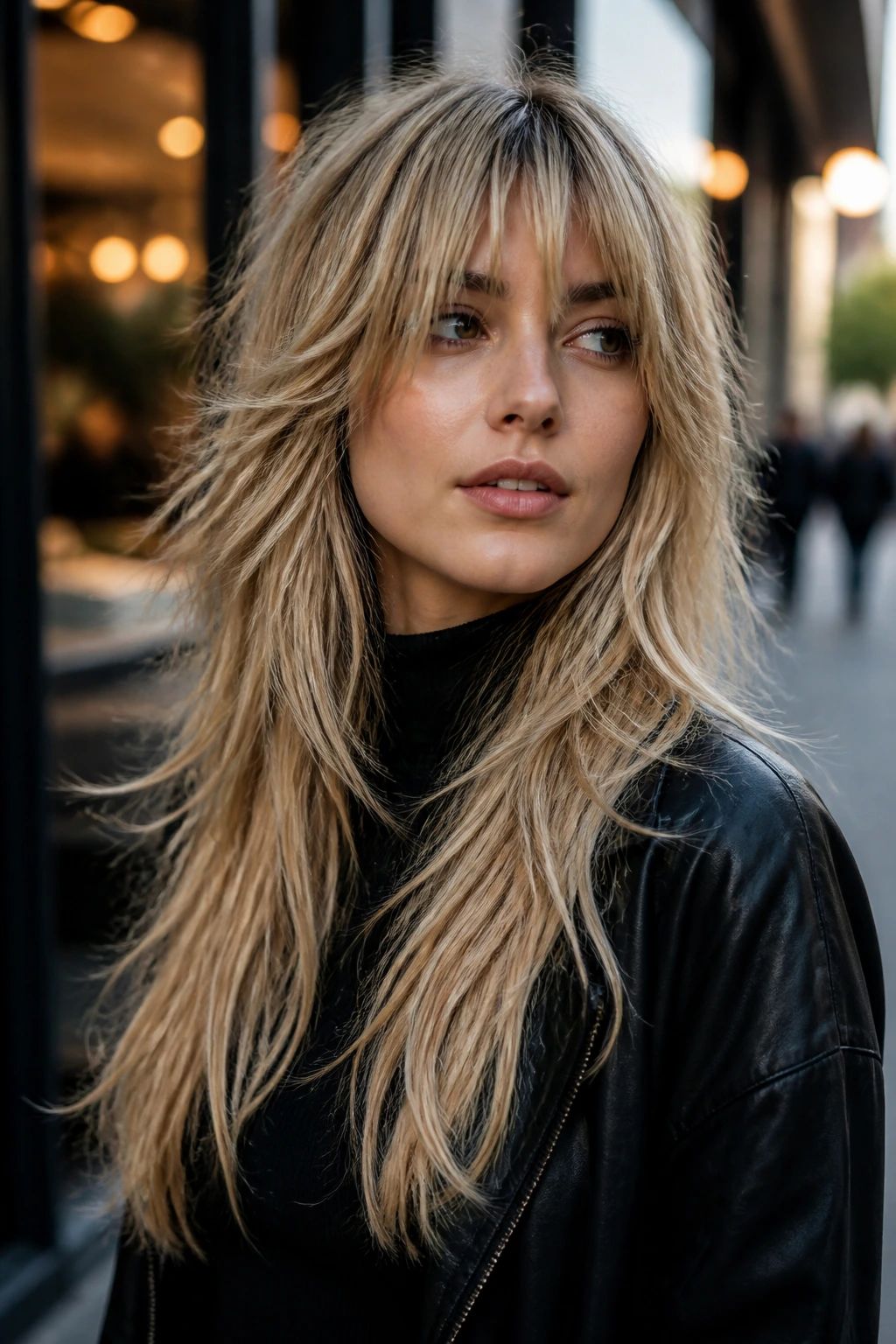
Long hair can wear a shag without losing its softness, and Joni-length shags prove it. This version keeps the length below the shoulders, usually somewhere between chest and mid-back, with layers that create movement instead of chop. It has that loose, musical, slightly weathered feeling that never looks hard or precious.
The face frame is the important part. Long layers near the front keep the cut from reading like plain long hair with a few snips taken out. If you want the most vintage feel, ask for the shortest layers to start around the cheekbone and gently taper into the rest of the length. That keeps the hair swinging when you turn your head.
This is a good choice if you like wearing your hair down more often than up. It also works when you want a shag that can survive braids, clips, and lazy ponytails without losing its shape the second it goes up.
5. Chin-Skimming Disco Shag

A chin-length shag has a sharper edge than the longer versions, and that’s the point. It sits right at the jaw, where the layers can carve out shape without swallowing your face. The result feels a little disco, a little mod, and a little rebellious in a very clean way.
This cut loves definition. The shortest layers should hit near the jawline, not above it, so the hair still has swing. If the fringe is included, it should break softly around the brows or sweep aside in one piece instead of fragmenting into a dozen little wisps. That keeps the haircut looking intentional.
- Good for finer hair that needs some lift.
- Best if you like tucking one side behind the ear.
- Works well with a side part or a soft center part.
- Needs regular shaping every 6 to 8 weeks to keep the jawline clear.
Quick take: This is one of the easiest vintage-looking shags to wear with a crisp neckline or a bold pair of earrings.
6. Curly Halo Shag

Can curls do a shag without turning into a triangle? Absolutely. The curly halo shag is built for bounce, not bulk, and the best versions use layers to distribute the curl shape around the head instead of letting everything pile up at the bottom. The result looks rounded, lifted, and soft around the cheeks.
The key is restraint. If the layers are too short, the curls can spring up and create a mushroom effect. If they’re too long, the shape can droop and lose the halo. Ask for dry cutting or near-dry cutting if your curl pattern changes a lot when wet. That’s the only way to see where the curls really sit.
How to keep the crown light
Ask for the top layers to stay long enough that the curl can stack rather than puff. A diffuser on low heat helps keep the pattern intact, and a light cream or gel keeps the texture separated instead of frizzy. Heavy oils at the roots will flatten the lift. Don’t do it.
7. Razor-Cut Long Shag
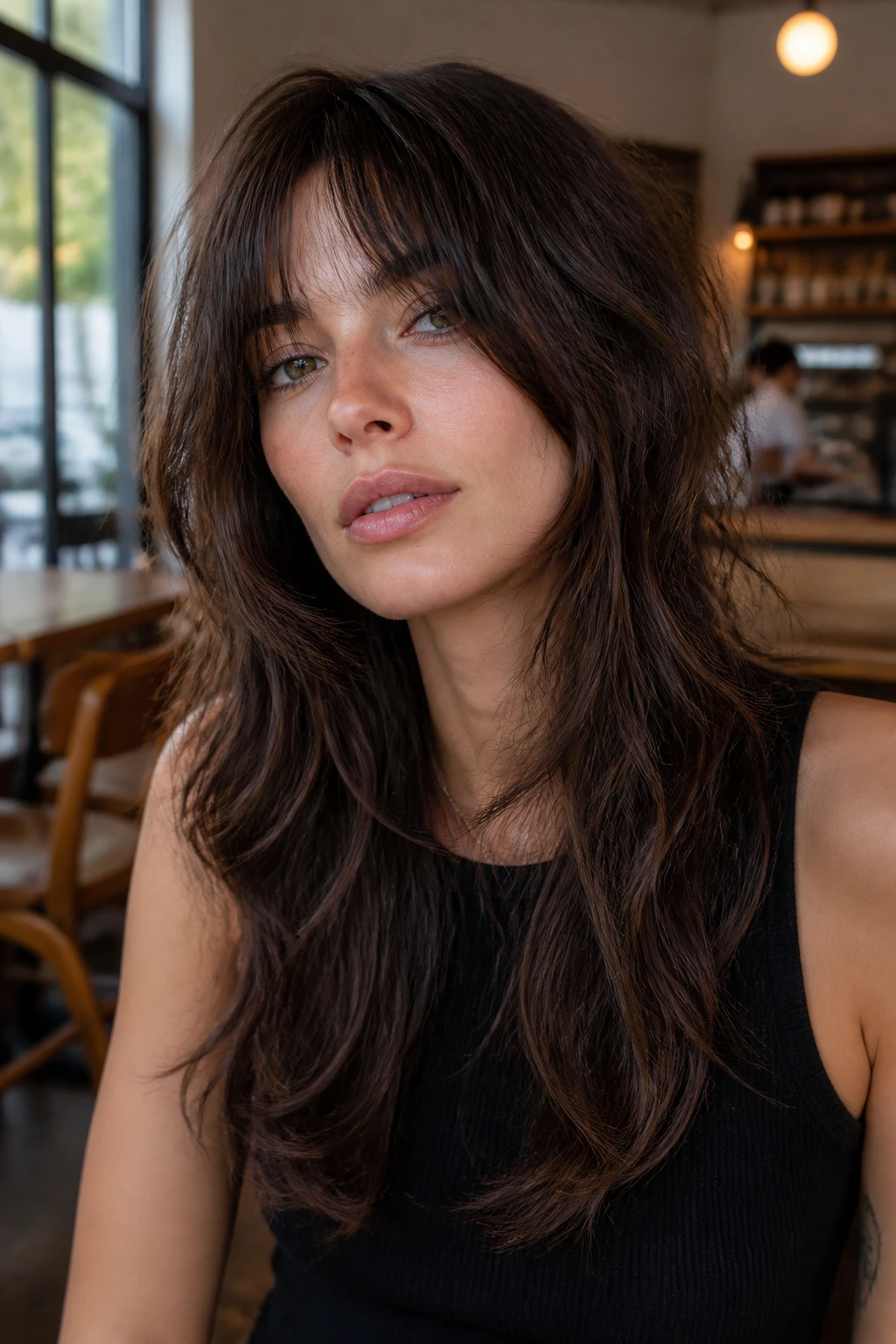
Thick hair can handle more shag than people think, but it needs the right tool and the right hand. A razor-cut long shag takes bulk out through the lengths, which gives the hair that soft, airy finish you see in old rock photos. It’s less about visible chunks and more about reducing the weight so the shape can move.
Razor cutting works best when the stylist knows exactly where to stop. Too much razor work on porous or dry hair can make the ends look frayed, so this is not the place for someone who uses a razor like they’re shaving wood. On healthy dense hair, though, it’s magic. The layers lie flatter, the movement is cleaner, and the whole cut falls with less effort.
This version is especially good if your hair tends to hang in one heavy curtain. The razor helps break that up. Add a center part and some bend through the mids, and the vintage mood gets stronger fast.
8. Bottleneck Bang Shag
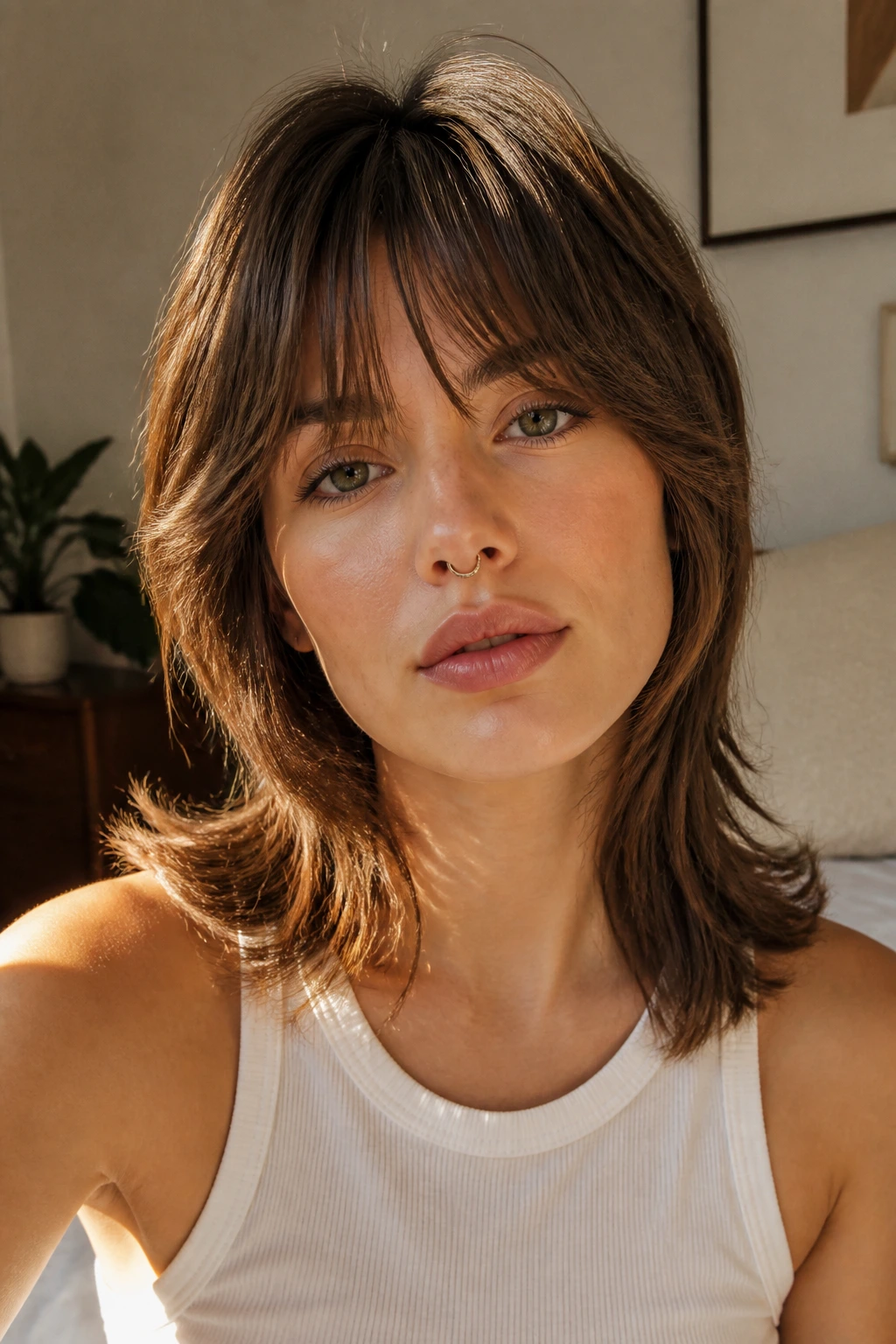
Bottleneck bangs are narrower at the center and longer at the edges, and that shape gives a shag a soft vintage read without making the fringe feel heavy. The center sits between the brows, then the sides drape out and blend into the rest of the cut. It’s a small detail, but it changes the whole face frame.
This style is flattering because it leaves room around the eyes while still closing in the forehead just enough to feel finished. If you have a cowlick at the hairline, this fringe can be a little easier to control than a blunt bang. The longer sides help it settle instead of splitting into weird little peaks.
Best details to ask for
- Keep the center short enough to see the brow line.
- Let the longest side pieces reach the cheekbone.
- Blend the fringe into the front layers instead of cutting a hard line.
- Style with a quick round-brush pass, not a full heat session.
9. Shaggy Lob with Side Part
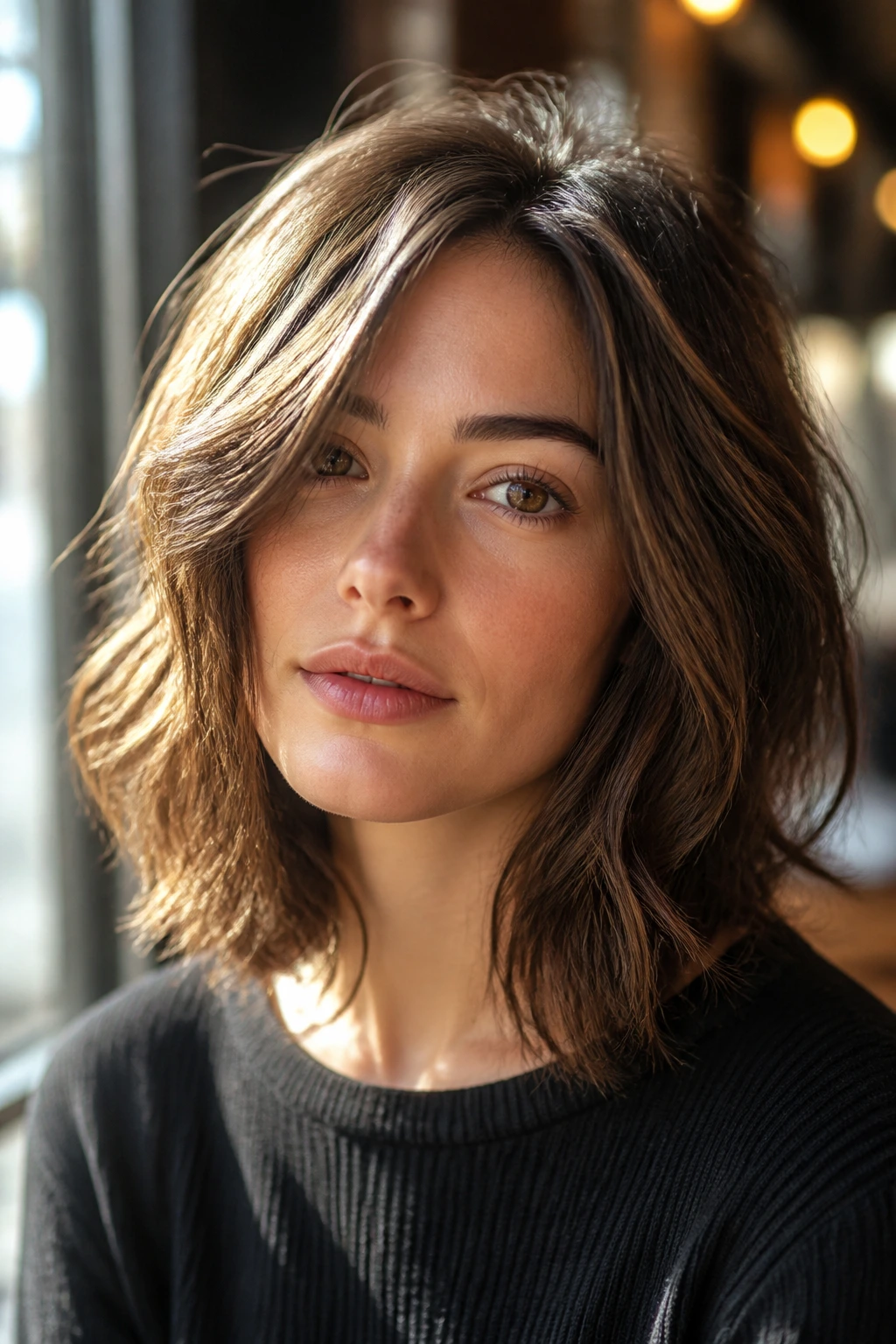
A shaggy lob with a side part is one of those cuts that quietly does a lot. It keeps the hair around the collarbone or a touch below, then uses the side part to create a little lift at the root and a little sweep across the face. It doesn’t scream for attention. It just looks better than ordinary.
The side part matters more than people think. On straight hair, it keeps the cut from falling flat in the middle. On wavy hair, it helps the layers stack on one side and loosen on the other, which gives the whole style a more relaxed, borrowed-from-the-70s feel. If your hair is fine, keep the layers long enough to preserve some body at the ends.
This is a good middle-ground shag if you want movement but not drama. It grows out well, it’s easy to tuck back, and it doesn’t ask for much beyond a bit of root lift and a bend through the bottom third of the hair.
10. Pixie Shag
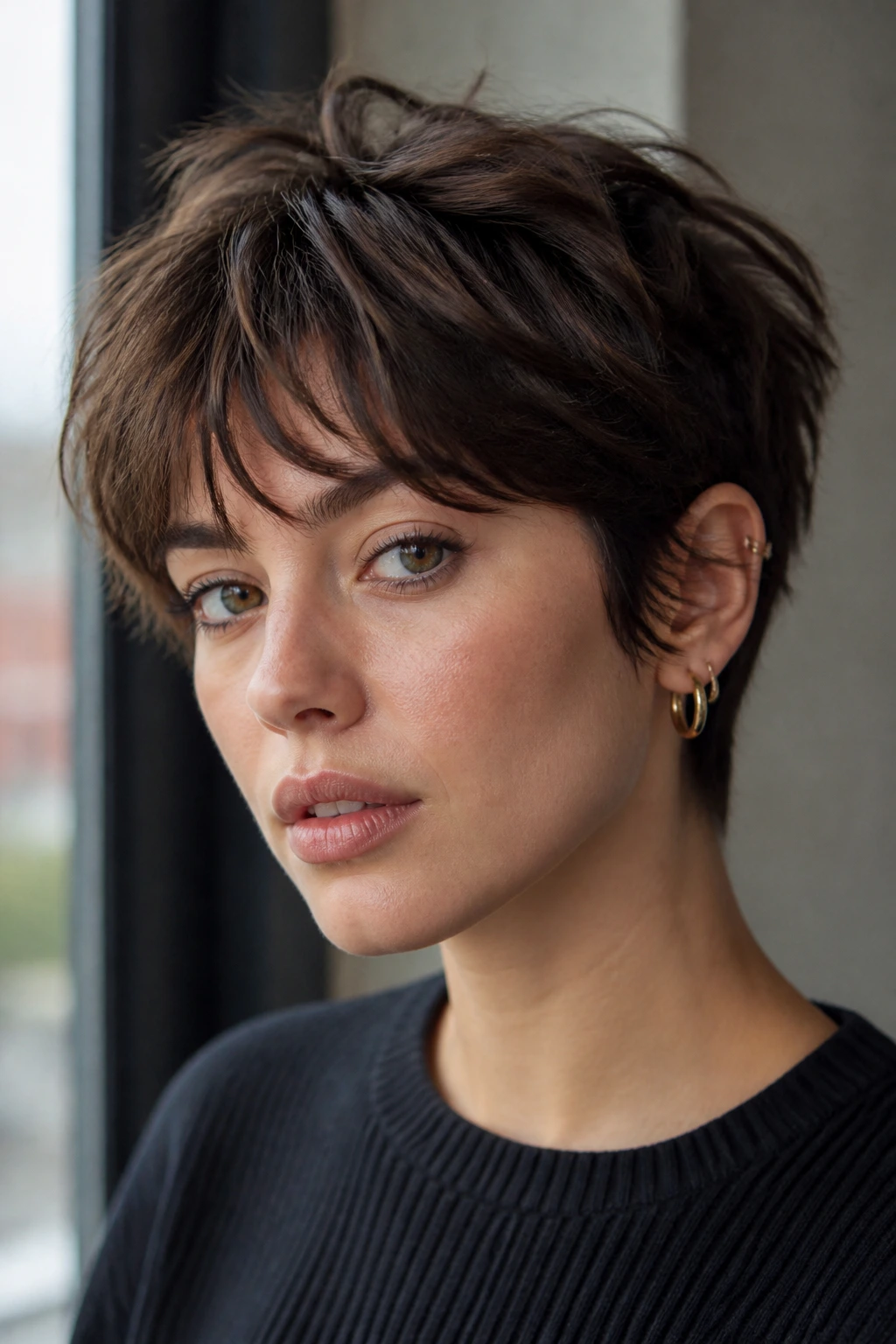
Short hair can absolutely be shaggy, and this pixie version proves it. The crown is piecey, the sides stay soft, and the nape is trimmed close enough to keep the shape clean. It feels retro in the best sense: a little rebellious, a little tomboyish, and sharp without being severe.
The difference between a pixie shag and a regular pixie is movement. You want layers that break up the silhouette so the top doesn’t sit like a cap. Ask for soft texturizing through the top, but keep enough weight near the fringe and temples so the cut doesn’t disappear into fuzz. If your hair is fine, this can add a surprising amount of lift.
A little paste or cream goes a long way here. Work it through dry hair with your fingers, not a brush, and stop before the shape gets sticky. The best version looks touched, not shellacked.
11. Soft Shullet

Is a mullet too much for you? Then the soft shullet lives in the sweet spot. It keeps the longer nape and the shorter crown shape, but the transition between the two is gentle enough that the cut reads as shag first and edge second. That matters if you want attitude without a hard line.
This cut works because the front and side pieces still frame the face in a flattering way. The back carries a little extra length, which gives the style some swing when you turn your head. If the contrast is too steep, the cut starts to look like two different haircuts fighting each other. Softer blending fixes that.
The shullet is a good match for people who like texture spray, air-drying, and a cut that looks even better on day two. It’s also one of the easiest ways to lean into a vintage-rock feel without fully committing to a bold mullet shape.
12. Blunt-Bang Shag
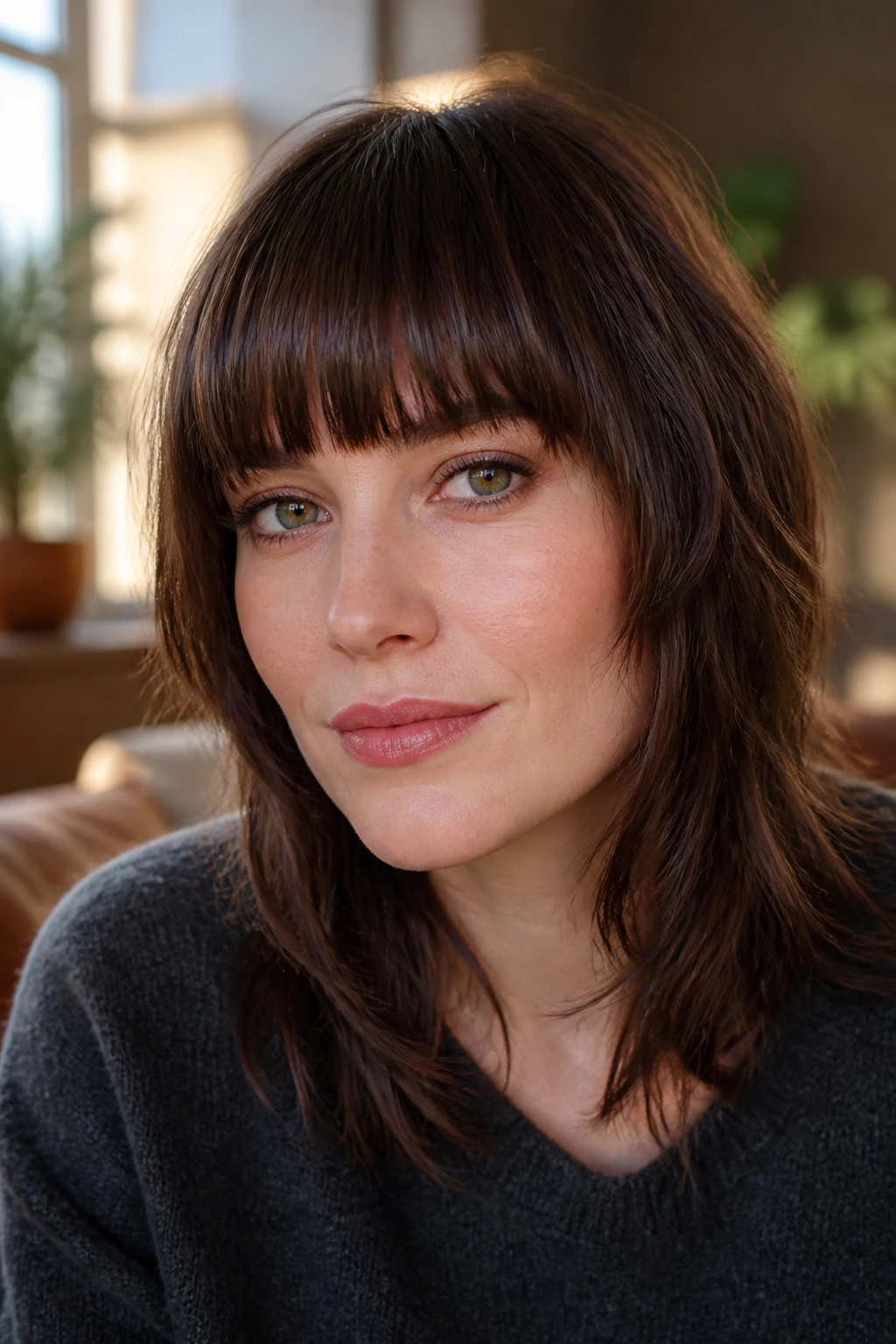
A blunt bang changes the whole mood of a shag. Instead of the fringe disappearing into the layers, it lands with a straight line across the forehead, which gives the haircut more punch and a little bit of old-school drama. The rest of the cut can stay soft and feathered, but that front edge makes a statement.
This style is strongest on hair that can hold a shape without separating too much. If your hair is very wavy at the front, you’ll need a bit more styling time to keep the bangs tidy. But when it works, it’s striking. The contrast between the crisp fringe and the choppy layers underneath is what gives it the vintage edge.
It’s also a good choice if you want to emphasize the eyes or balance a longer face. Just be honest about upkeep. Blunt bangs want trims. They do not politely grow out and behave on their own.
13. Big-Volume 80s Shag
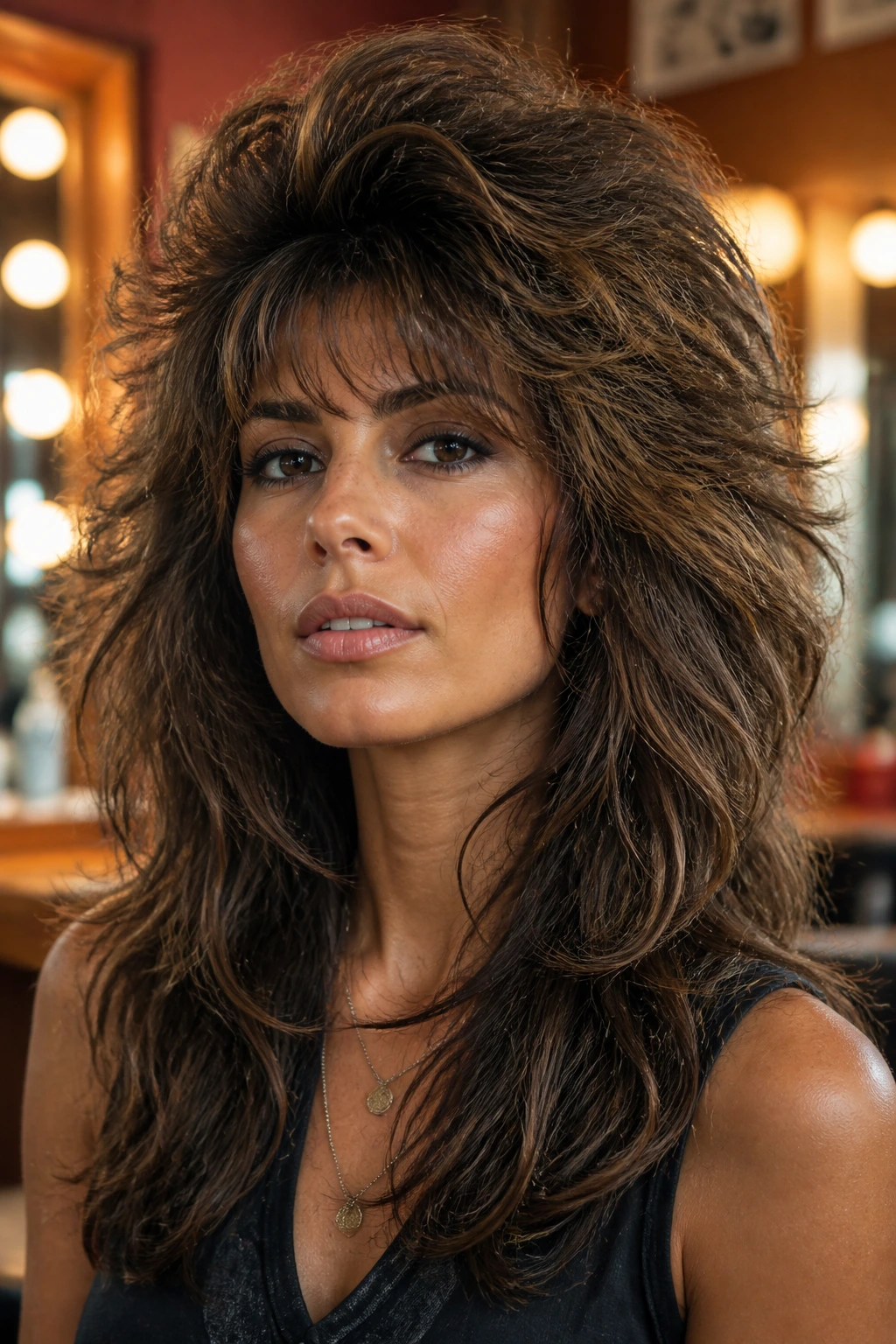
If you love height at the crown and movement that looks blown out rather than tousled, the big-volume 80s shag is your lane. It leans into lift, roundness, and those soft outward bends that start near the jaw and keep going. Done well, it feels glamorous. Done badly, it can read helmet-ish. That’s the line.
The trick is keeping the layers high enough to create volume but not so high that the top gets frizzy. Mousse at the roots, a round brush, and a blow dryer with a nozzle make the difference here. You want the crown to have air, not static. The ends should finish with a bend, not a hard curl.
This is one of the more styled options in the whole bunch, which is part of the fun. If you like a haircut that can carry a bold lip, a strong shoulder line, or a little bit of denim-and-satin energy, this one brings that mood fast.
14. Parisian Feather Shag
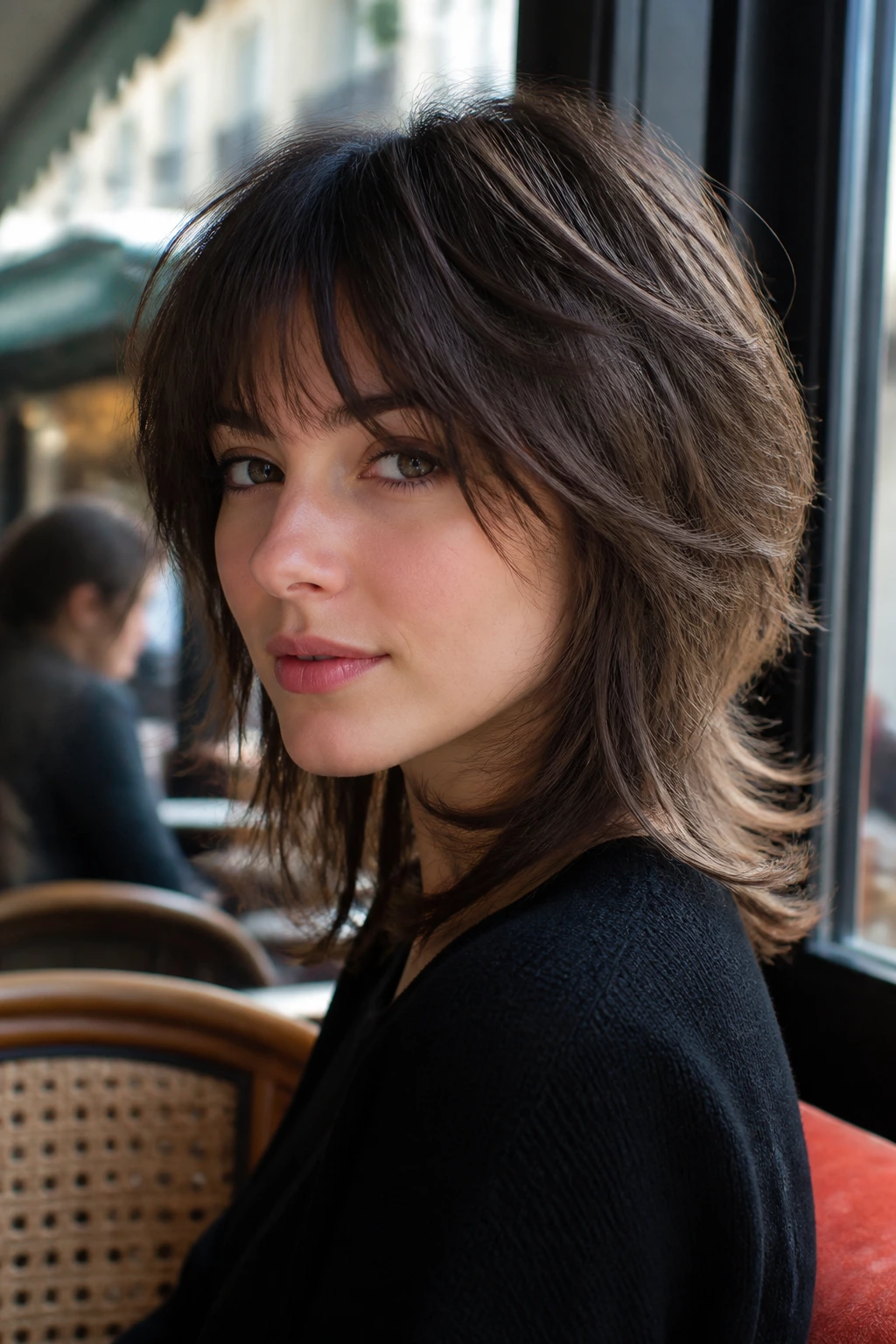
This is the polished cousin in the family. The Parisian feather shag has the softness of a vintage cut, but the layers are finer and less choppy, which keeps the shape elegant instead of loud. It’s the kind of shag that looks good with a scarf, a trench, or a white T-shirt and a very neat neckline.
The feathering around the face is the main feature. It should skim the cheekbones and open away from the face with just enough movement to keep things light. If the layers are too disconnected, you lose the refinement and drift into rock territory. If they’re too subtle, the cut turns into standard long layers. The sweet spot is right between those two.
This version suits people who want a softer vintage read and don’t want to spend forever styling it. A little blow-dry at the front, a bit of texture spray at the mids, and you’re done.
15. Micro-Bang Shag

A micro-bang shag is not shy. The fringe sits high on the forehead, sometimes well above the brows, and the rest of the cut is used to soften the severity so it doesn’t feel costume-like. It’s a strong look, which is exactly why it works when you want your haircut to have a point of view.
This style is best for someone who doesn’t mind maintenance. Micro bangs need regular trims, and they can look awkward fast if they grow even half an inch. The payoff is sharpness. The short fringe makes the eyes stand out, and the shaggy layers around the rest of the head keep the cut from feeling too rigid.
If your style leans artsy, edgy, or a little mischievous, this one fits. If you prefer low drama, skip it. No harm done.
16. Tapered Nape Shag
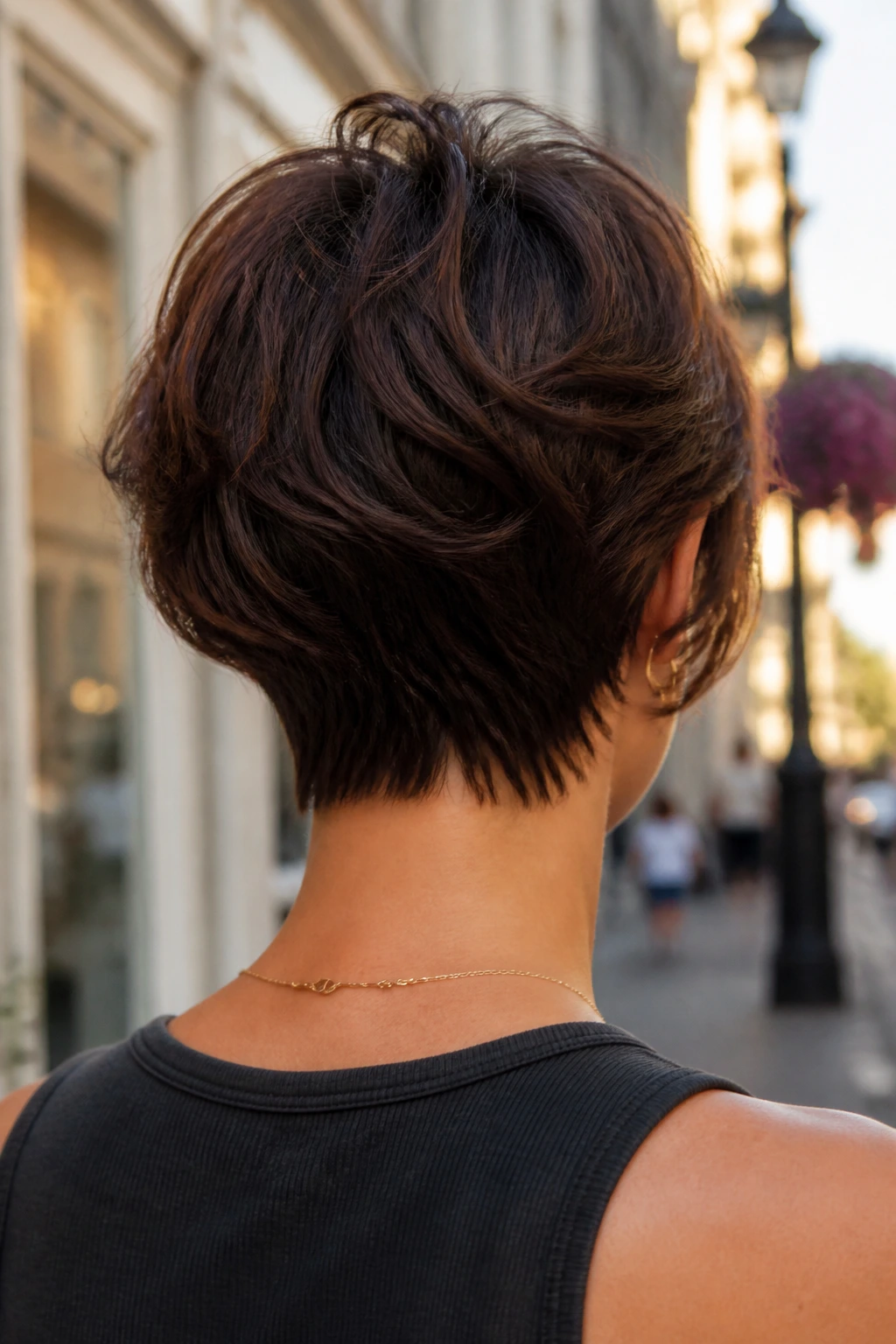
The tapered nape shag is all about contrast: a cleaner, shorter back that keeps the neck neat, paired with airy layers around the face and crown. It gives you a tidy silhouette from behind while still carrying the vintage softness in front. That balance is handy if you like a cut that looks polished from every angle.
This shape can be especially good if your hair grows out thick at the nape or if you hate that bulky feeling at the back of the neck. The taper keeps the bottom light without taking away the movement up top. Ask for the layering to stay gradual so the back doesn’t look detached from the rest of the cut.
This is one of those shags that works in real life, not just in a salon mirror. It stays neat under collars, still looks good tucked behind the ears, and doesn’t lose its shape the second you put on a jacket.
17. Wavy Air-Dry Shag
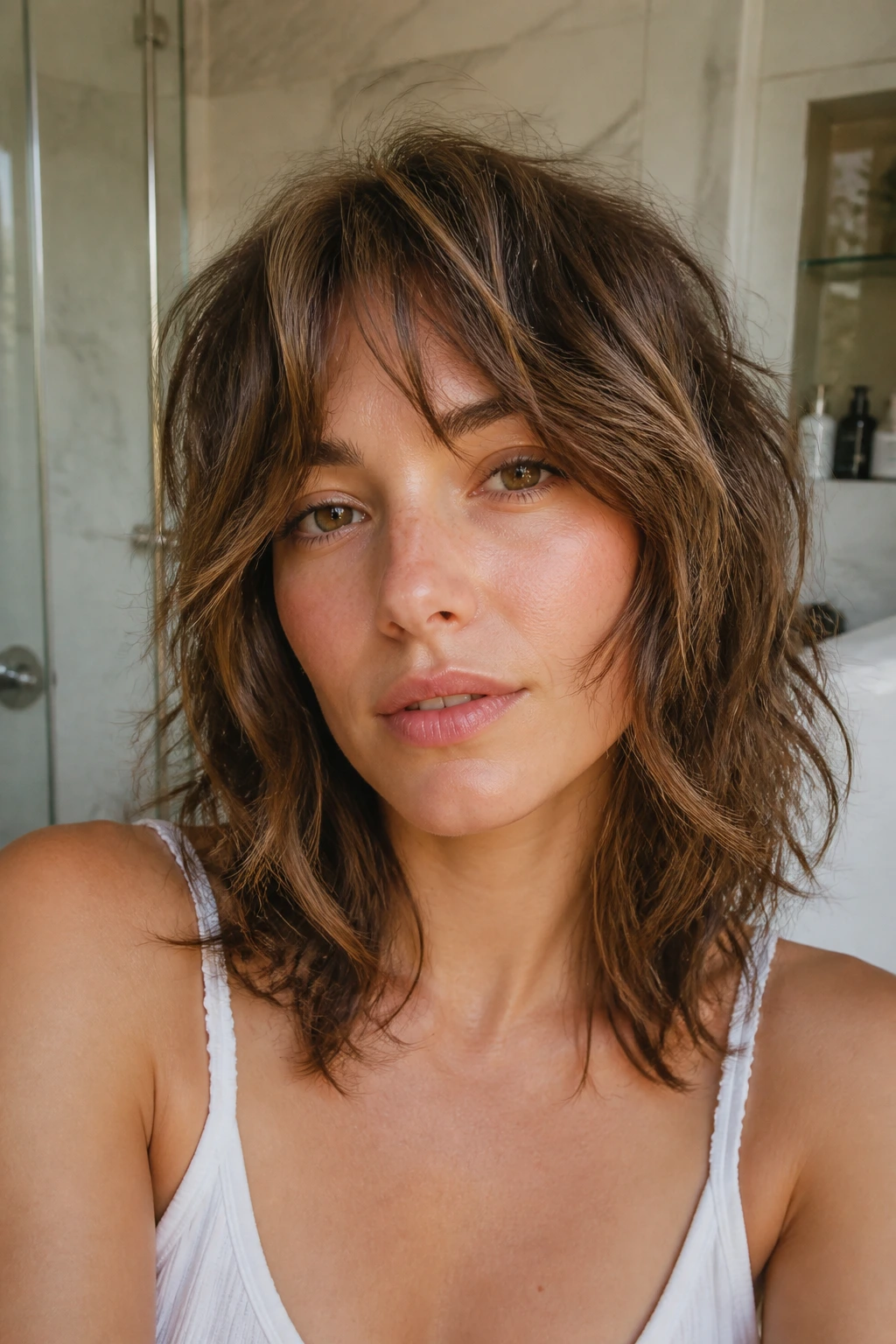
Some cuts are built for a blowout. This one is built for the walk out of the shower. The wavy air-dry shag uses your natural bend as part of the design, so the finished look feels casual, soft, and a little undone in the right way. If your hair already has a wave pattern, this is one of the easiest shags to wear.
The layer placement should work with the wave, not fight it. That usually means keeping the front pieces a touch shorter than the rest and avoiding over-thinning the ends. A light leave-in cream or mousse is enough to stop the shape from frizzing out as it dries. Then you leave it alone. That part matters.
The best thing about this cut is how forgiving it is. If one side dries slightly flatter than the other, it still looks right. Actually, that unevenness can make it better.
18. Boho Mid-Length Shag
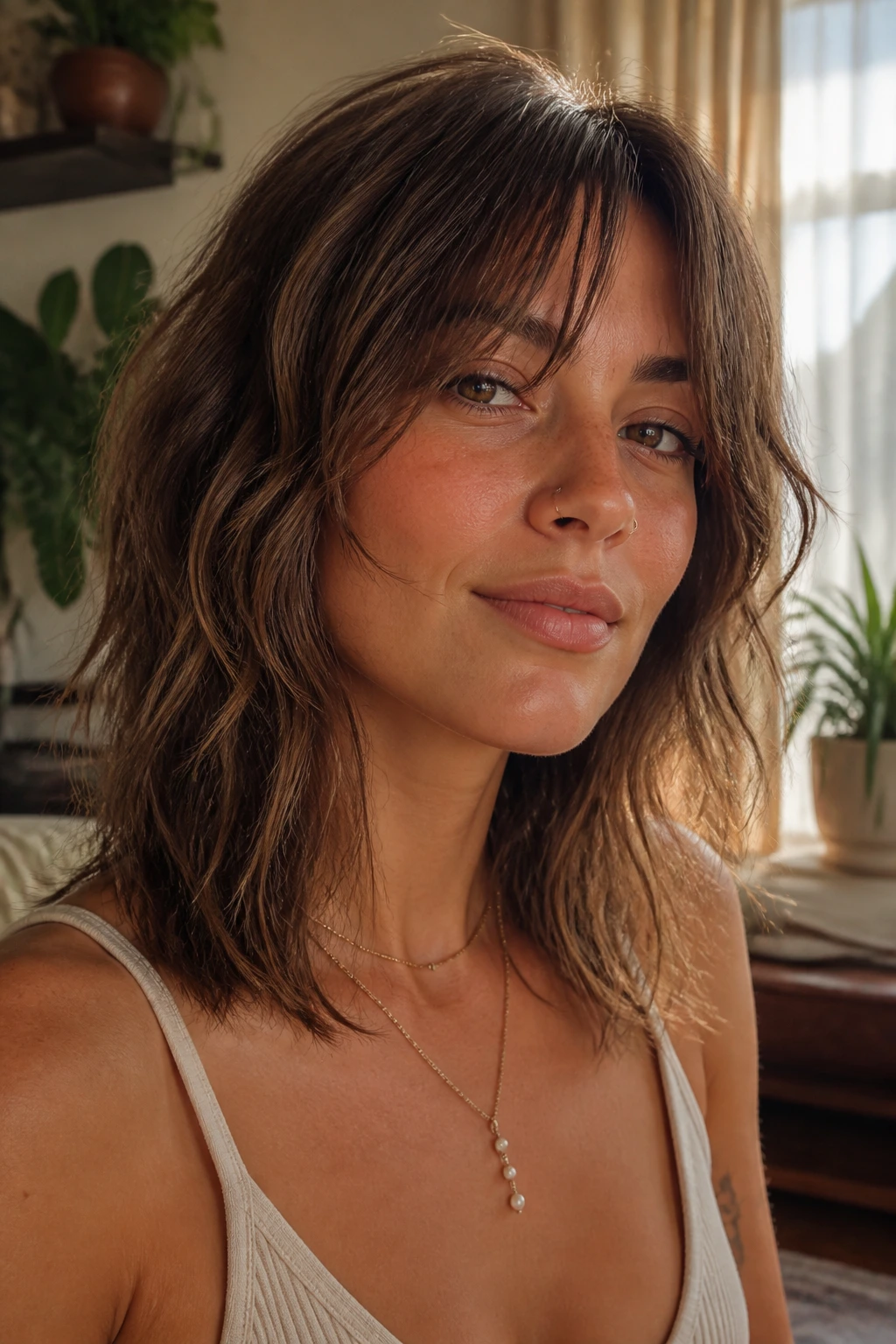
A boho mid-length shag sits in that easy zone between shoulder length and a little past it, with pieces that fall freely instead of snapping into one obvious line. It has a loose, sun-worn feel that pairs well with airy bangs, center parts, and hair that prefers to live a little imperfectly.
The layers should be soft enough that the hair still moves as one shape. If they’re too chopped, the cut loses the relaxed feel and starts looking busy. Ask for face framing that starts low, around the mouth or jawline, if you want to keep the style fluid. That keeps the front from jumping too high and gives the cut a more laid-back rhythm.
This is a good cut for people who want texture but not a full rocker edge. It looks especially nice when the hair has natural wave or a little bend from sleeping in a loose braid.
19. Silver Fox Shag
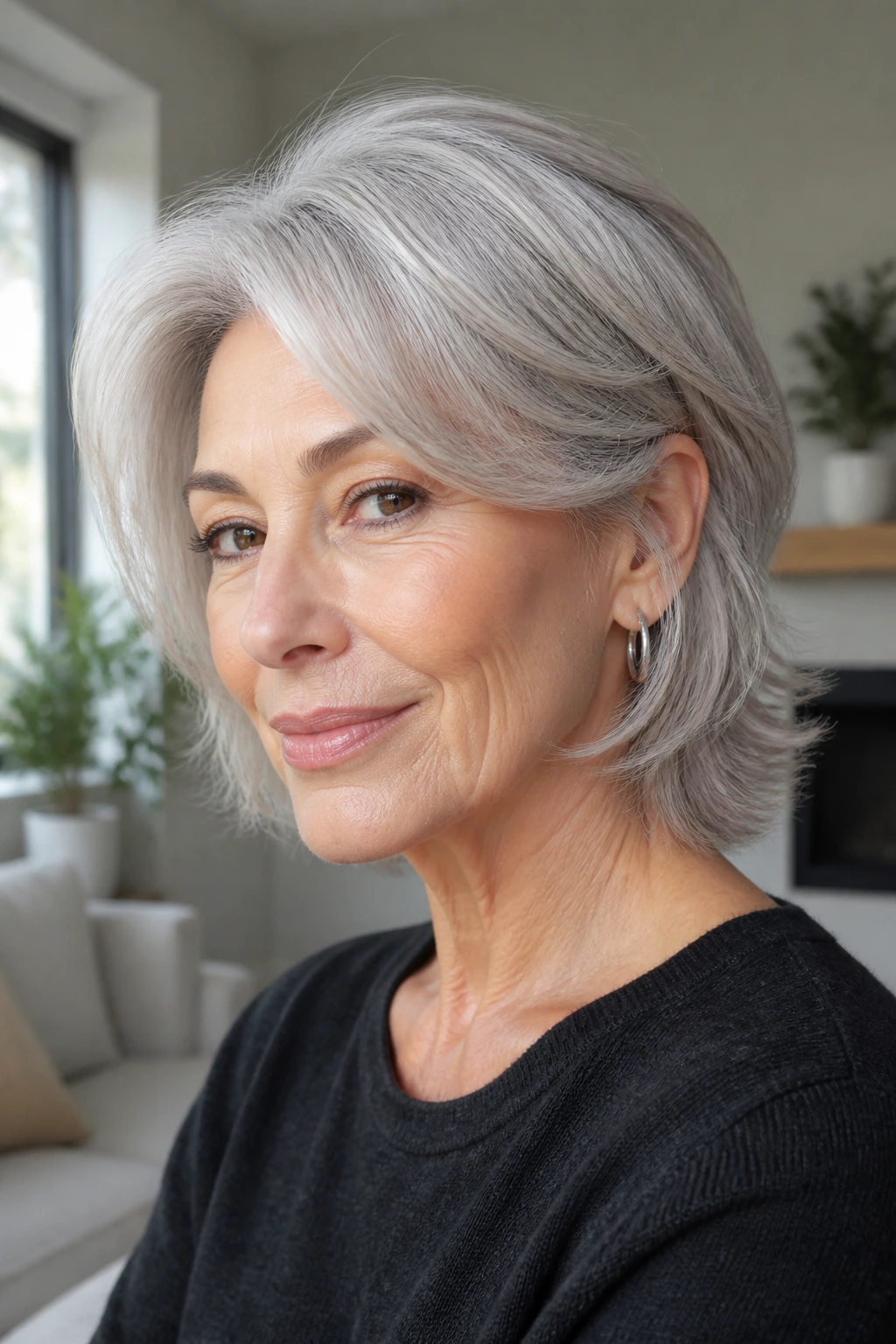
Gray and silver hair can look stunning in a shag, mostly because the layers catch light in a way that shows off every movement. A silver fox shag usually works best when the texture is left sleek enough to show shine, but layered enough that the hair doesn’t hang in one heavy curtain. It feels confident. Clean. A little cool.
The important bit is the weight line. If the cut is too heavily thinned, gray hair can start to look airy in a bad way, especially around the temples. Keep the layers soft, and let the perimeter keep some strength. That way the style still has shape when the hair is brushed or tucked back.
A purple shampoo helps if your silver tends toward yellow, but don’t use it to death. Too much can make the hair look flat and dull. A better combo is gentle cleansing, a light conditioner, and a good blow-dry at the crown.
20. Rounded Curly Shag
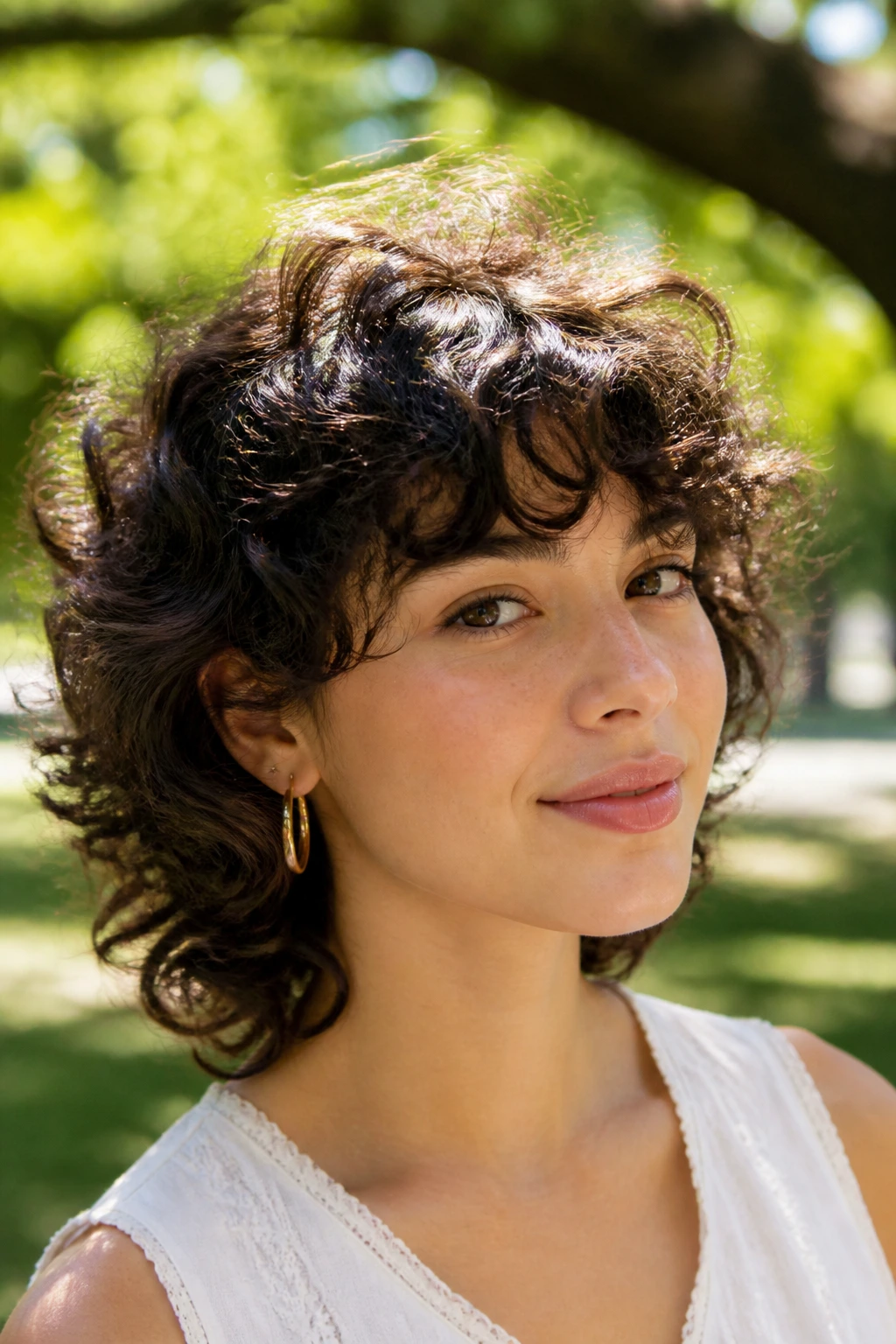
Curly hair likes a rounded shape when it’s cut well, and this shag gives it that without squashing the curl pattern. The sides stay full enough to keep the shape balanced, while the layers lift the crown so the curls don’t stack into a triangle. It’s a tidy-looking shag, which sounds strange until you see it in motion.
What makes it different
The layers should follow the curl pattern instead of slicing across it. That means less guesswork, more shape reading. If the hair is cut wet and then springs up far more than expected, you end up with short pieces where you didn’t want them. Dry cutting, or at least cutting at the natural dry length, helps the stylist judge the actual volume.
This style suits medium to dense curls that need definition more than reduction. A curl cream and a diffuser on low heat usually get you there without much fuss.
21. Rocker Shag
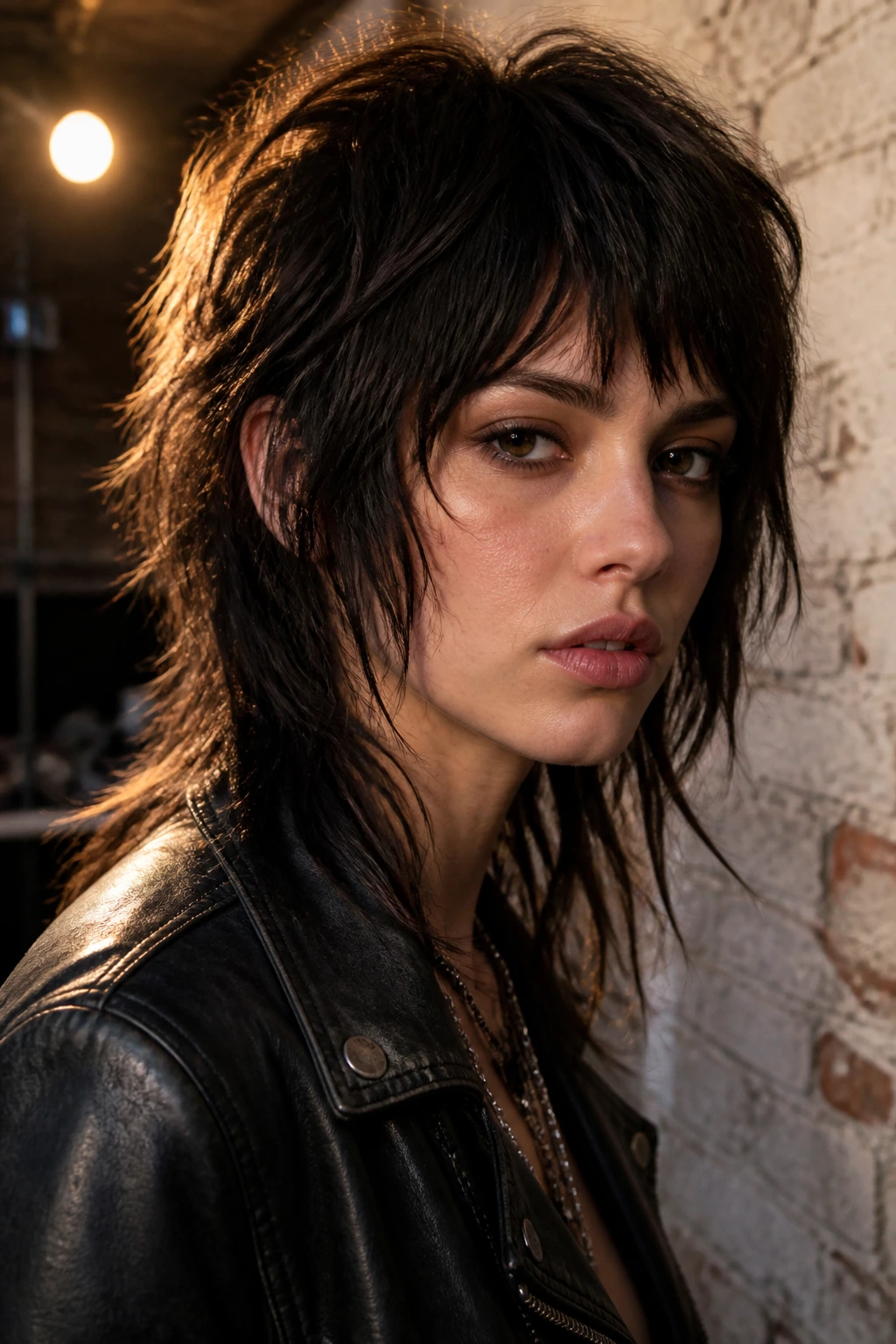
A rocker shag has more edge than polish, and it should. The layers are choppier, the fringe can be a little rougher, and the whole shape feels like it belongs in a backstage photo rather than a formal portrait. If you want a haircut with a little attitude, this is the one.
The danger is overdoing the texture. Too many short, disconnected layers can make the hair look shredded instead of styled. The cut still needs some structure, especially around the face, so the shape feels deliberate. Ask for piecey ends, not random ones.
This version looks best with a bit of grit in the styling — texturizing spray, a light wax at the ends, maybe a bend created with a flat iron. It’s not meant to be silky. It’s meant to have some dirt under its fingernails.
22. Shoulder-Grazing Retro Shag

Shoulder-grazing length is one of my favorite places for a shag because it gives you enough hair to work with but doesn’t drag the shape down. The cut sits right on the edge of feeling casual and sculpted, which is a nice place to live if you like movement without a dramatic change.
This version can be cut softer than a rocker shag or a mullet-leaning shape. The layers around the face do the heavy lifting, while the shoulders keep the cut grounded. If your hair is straight, the edges may need a little bend to keep the style from looking too neat. If it’s wavy, you’re already halfway there.
It’s a smart choice if you want a retro vibe that still fits a plain sweater, a button-down, or a blazer without clashing with the clothes. A haircut can do that. Clothing matters more than people admit.
23. Layered Perm Shag
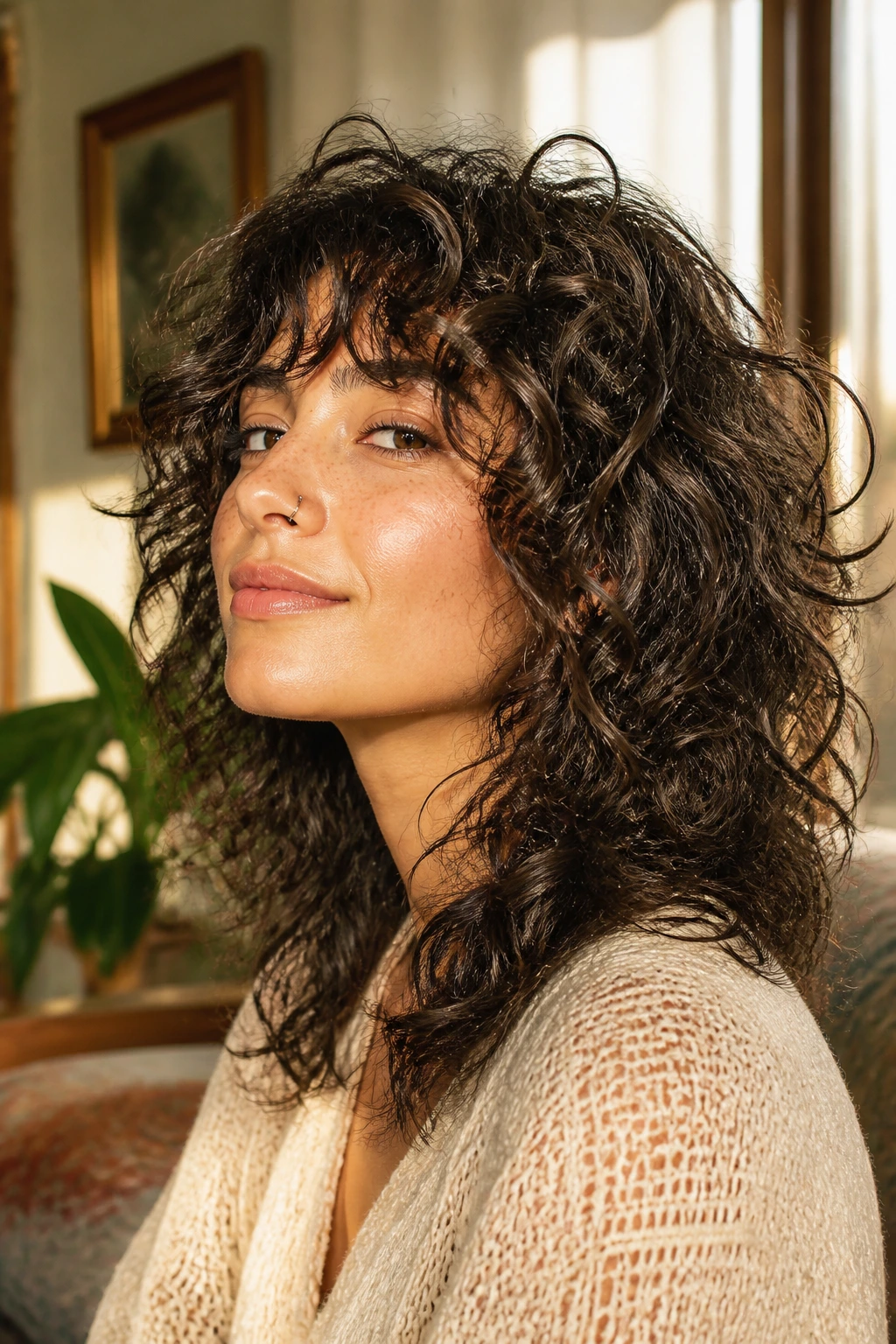
There’s a reason old photos of permed shags still hold up: the layers and the curl pattern were built to work together. A layered perm shag leans into that relationship. The curls sit with some lift, the crown stays mobile, and the overall shape feels full without becoming round in a dated way.
The cut needs enough room for the curl to expand. If the layers are too short, the perm can explode outward. If they’re too long, the pattern gets heavy and loses bounce. The sweet spot is usually a layered frame around the face with softer internal shaping through the mids.
This is a good option if you wear a perm, a body wave, or a heat-set curl pattern and want the cut to hold onto its structure. It’s also one of the most literal vintage references in the whole list, which can be fun if you want the look to really commit.
24. Glam Disco Shag
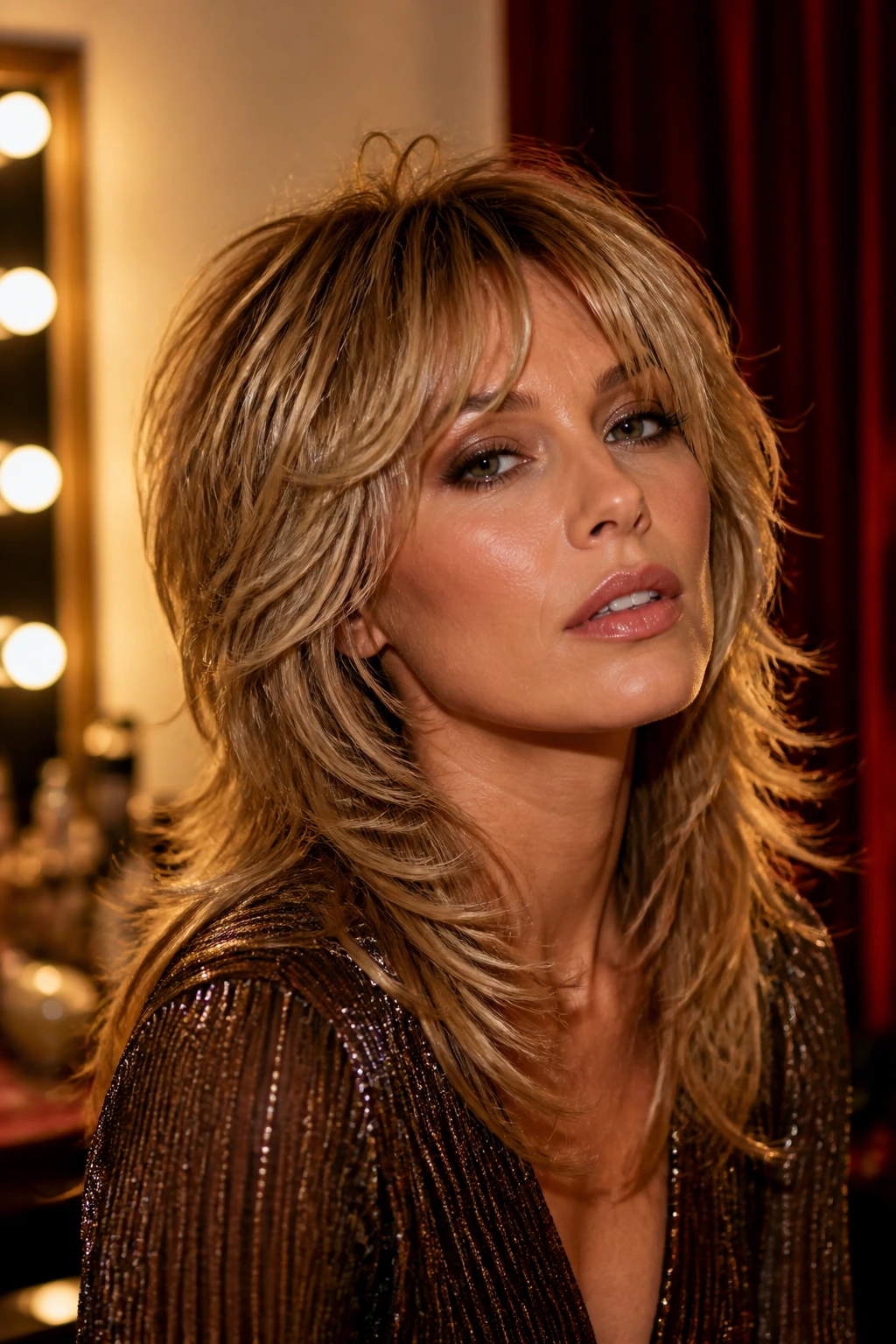
The glam disco shag is for hair that likes shine. It’s smoother and more polished than the rocker versions, with layers designed to catch light and show movement rather than rough texture. Think of it as the version that would look at home under mirror balls and still feel wearable on an ordinary Tuesday.
The finish matters a lot here. A smoothing cream through the mids, a round brush at the front, and a light serum on the ends give the layers that glossy bend. Don’t drown the roots in oil, though. The crown still needs lift or the whole shape collapses.
This is a good cut if you want your shag to read elegant instead of edgy. It pairs nicely with a side part, soft makeup, and any haircut that needs a little glam without stiffening into a formal blowout.
25. Grown-Out Wolf Shag
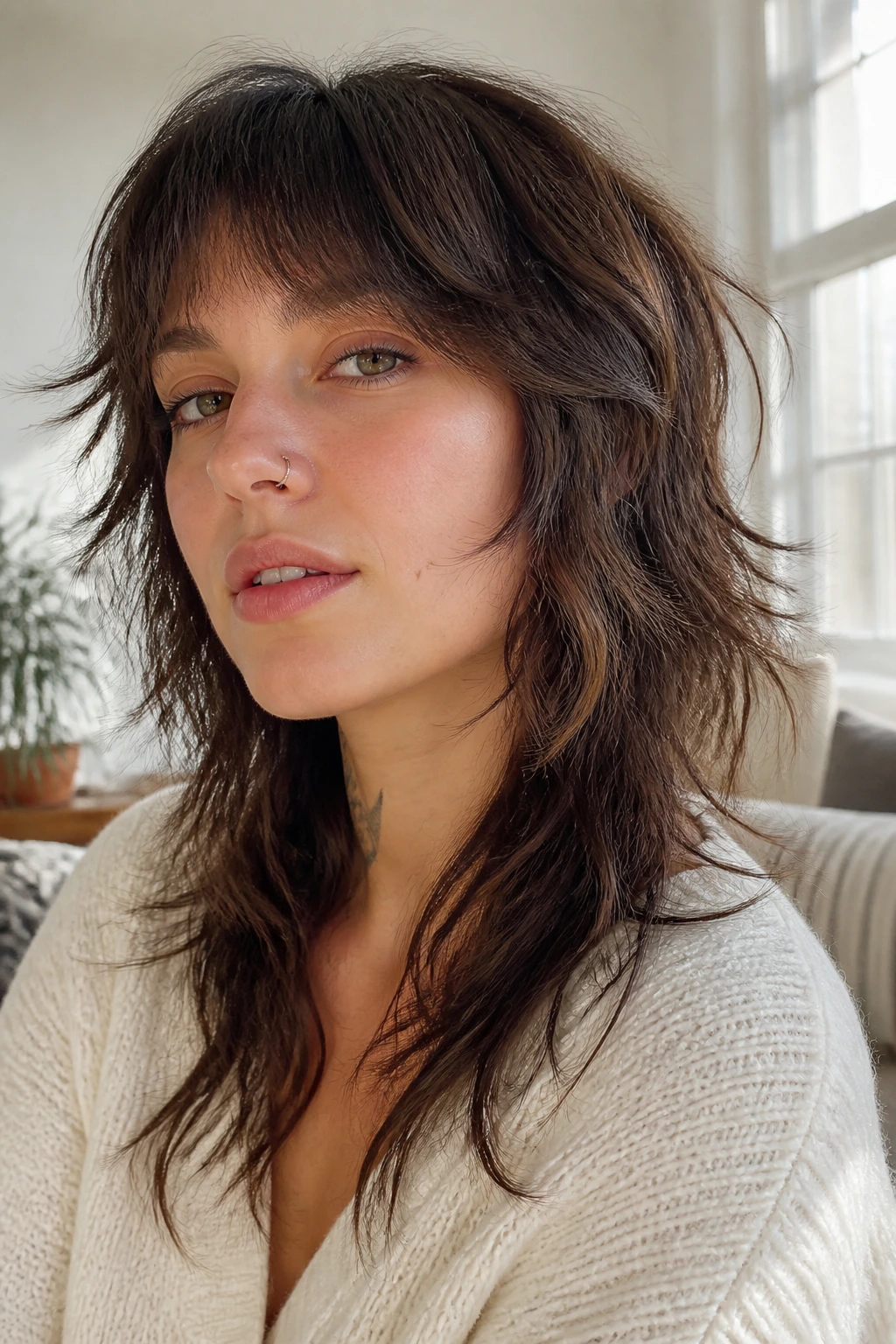
A grown-out wolf shag is the softer sibling of the sharper wolf cut. The difference is that the transition between the shorter top and longer bottom is less dramatic, which makes the shape easier to wear and less likely to date itself too quickly. It still has energy. It just doesn’t shout.
If you’ve been curious about the wolf-shag zone but worry about looking like you’re trying too hard, this is the safer move. The layers can be choppy around the crown and more relaxed through the lengths, which gives you movement without the extreme contrast. Ask for the shortest pieces to stay around the cheekbone instead of shooting way up the head.
This style suits people who like texture spray, casual styling, and a cut that looks good a little messy. It’s a good compromise. Sometimes that’s the smartest haircut choice in the room.
26. Face-Framing Bob Shag
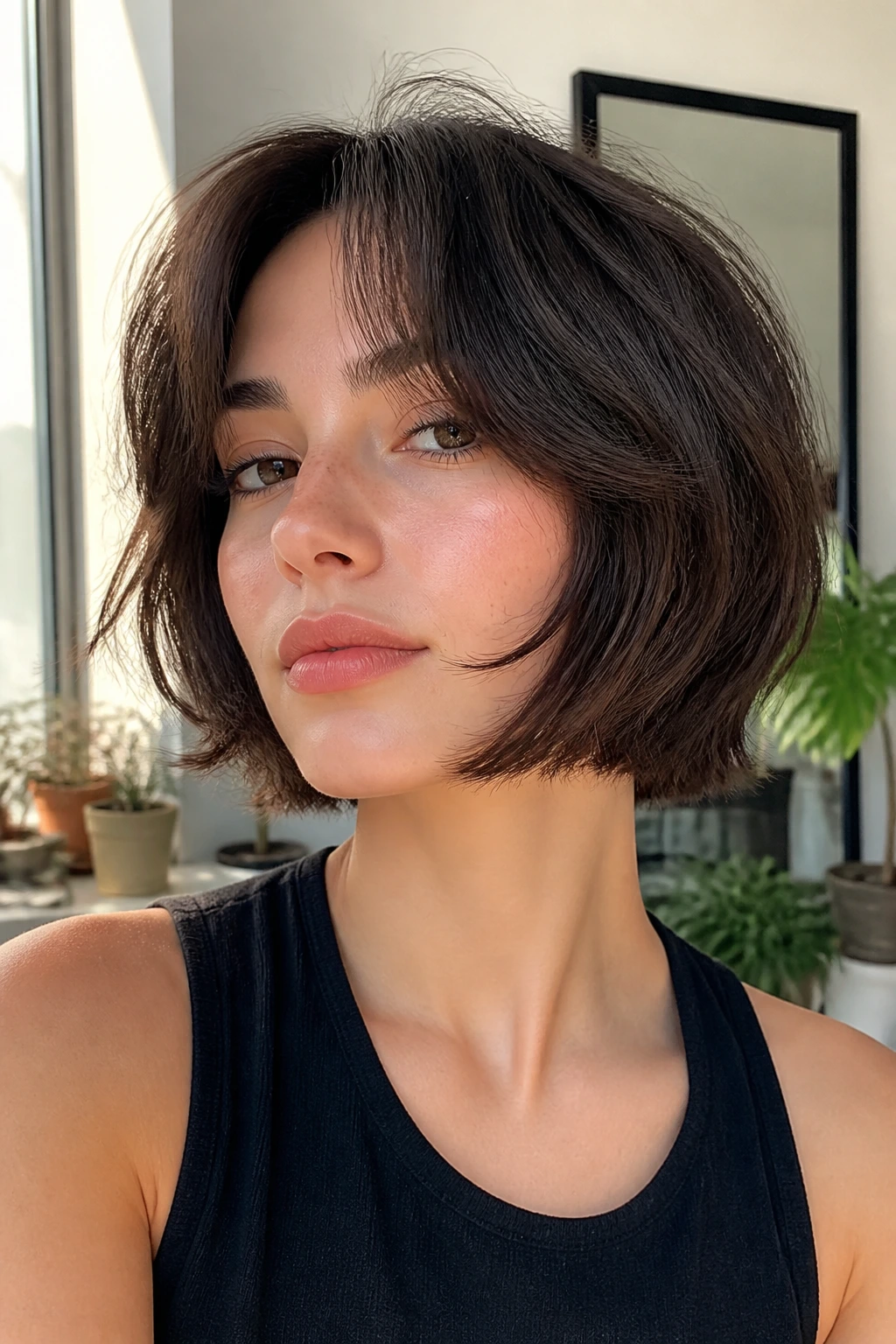
A bob with shag layering is one of the most useful hybrids on the list. The shape stays compact enough to feel neat, but the layers around the face keep it from looking flat or too exact. If you like chin-to-jaw length and want the bob to have a little swing, this is the route.
The front pieces do a lot of work here. They can sweep under the jaw, bend outward, or rest softly against the cheekbones, depending on how much movement you want. Keep the back from getting too short if you want the shag element to stay visible. Otherwise, it can turn into a regular bob with a few textured ends.
This one is especially good for straight hair that needs help looking less stiff. Add a side part or a loose center part and a quick pass with a round brush, and the vintage tone shows up fast.
27. Soft Razor Shag
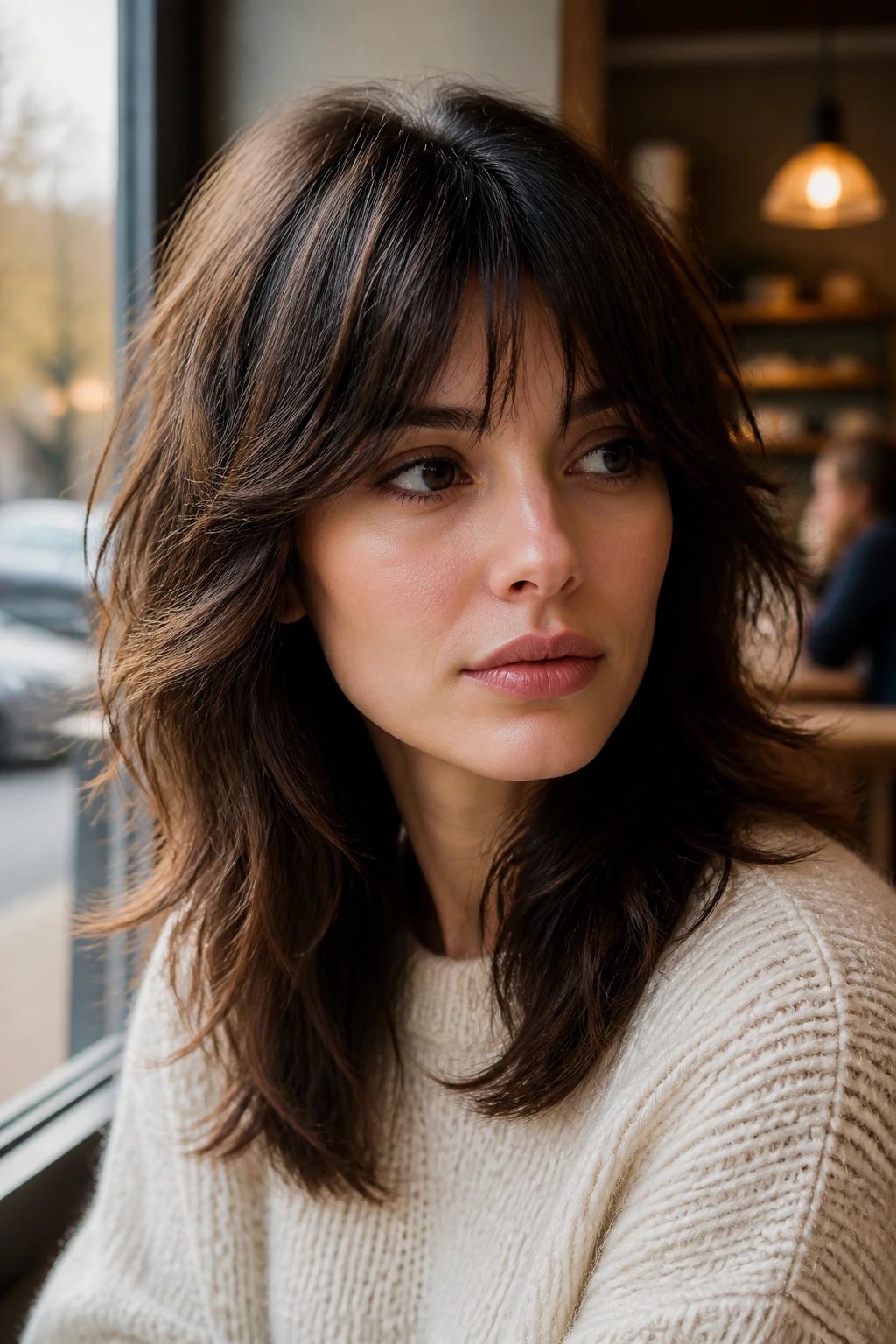
When hair feels heavy, a soft razor shag can release enough weight to make it move. The goal is not to shred the ends. It’s to create a lighter edge so the layers fall with that airy, slightly broken-up finish that shags do well. On thick straight hair, this can make a huge difference.
The “soft” part matters. A good razor cut should still leave the ends looking healthy, not frayed. If your hair is porous, damaged, or already dry, be cautious here. A heavy hand with a razor can make the bottom look see-through. But on stronger hair, it gives the style a loose, effortless swing.
This is a strong pick if you want something between polished and undone. It’s a haircut that benefits from a little movement in the mid-lengths and doesn’t need the ends to be perfectly neat.
28. Long Feathered Revival Shag
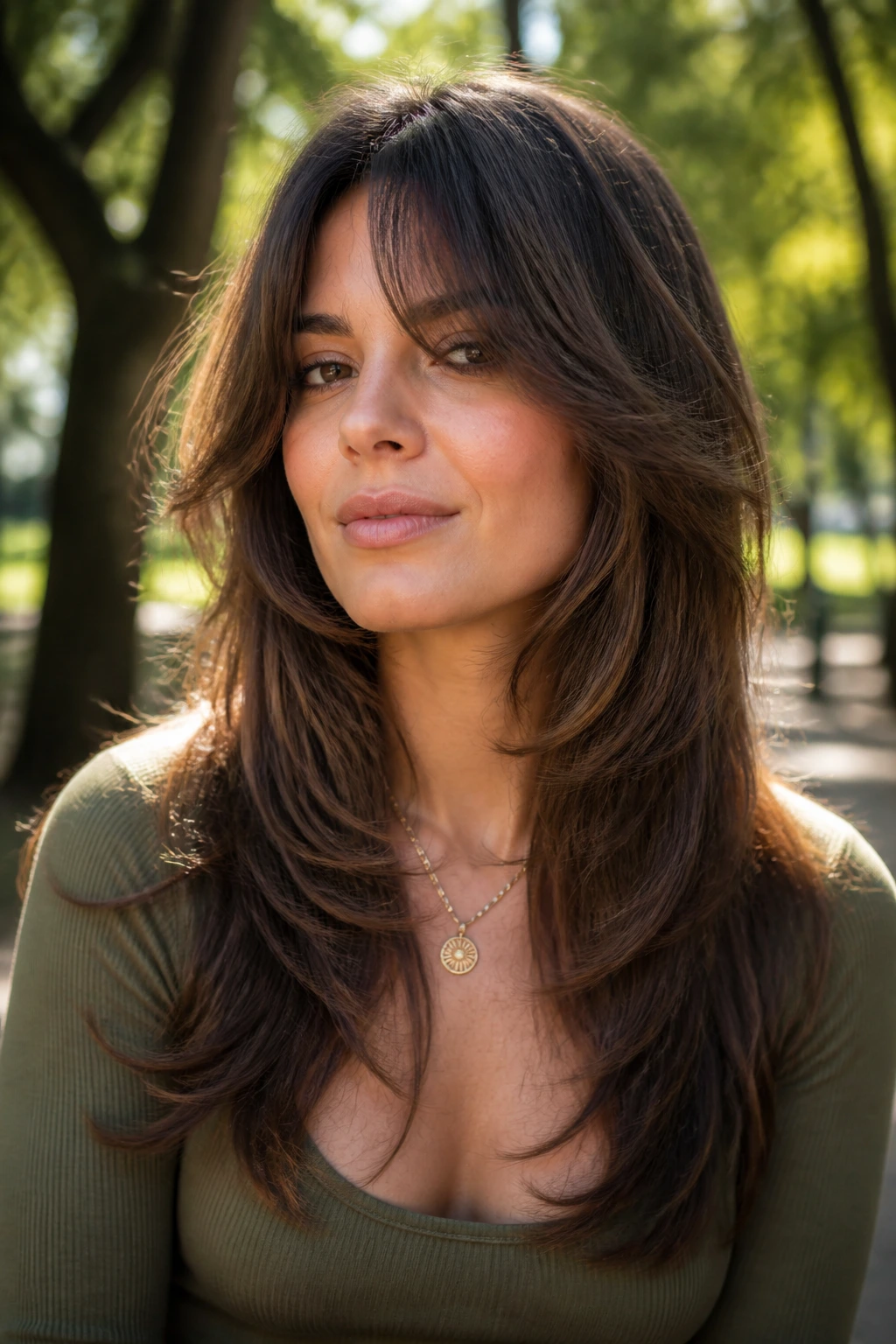
This is the most classic-feeling version of the bunch. Long feathered revival shags keep the length, soften the front, and build movement through long layers that still let the hair hang with plenty of weight. It feels like the kind of haircut that always comes back because it never fully leaves.
The best version starts with face-framing layers that hit around the cheekbone or just below, then gradually opens up through the ends. Keep the shortest layers controlled. If they jump too high, the cut loses its smooth swing and starts looking too chopped. If they stay too long, the shag disappears. It’s a narrow path, but an easy one once you know what to ask for.
If you want the most wearable vintage look in the whole set, this is probably it. It can be blown out, air-dried, pinned back, or left loose, and the shape still makes sense.
Why a Vintage Shag Works Best When the Weight Is Placed on Purpose
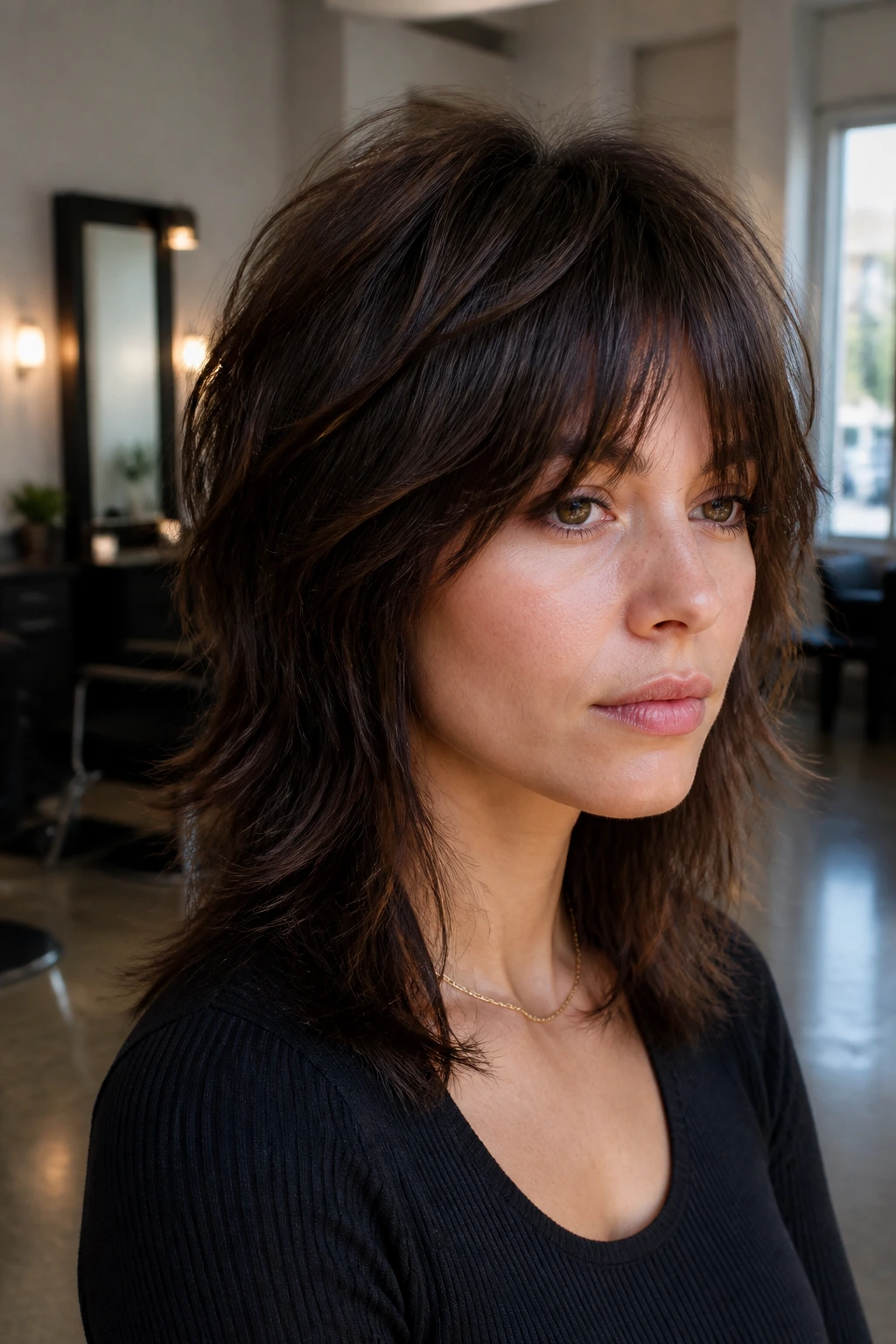
A shag only looks careless when the cut was careless. That’s the part people miss. The style isn’t random texture thrown at the head. It’s a map of weight, length, and release points, and the vintage versions feel right because they keep those lines in balance. The crown can be lifted, the face can be softened, and the ends can move — but none of that should happen by accident.
The old-school shags that still look good now have one thing in common: they know where to stop. They don’t strip the ends so much that the hair looks thirsty, and they don’t leave the top so heavy that the whole shape collapses. The best ones keep a little fullness at the perimeter, then use layers to create air through the middle. That’s why they age well.
I also like how forgiving this cut can be. A little grow-out doesn’t ruin it. A little wave makes it better. A little bit of second-day texture often helps more than a fresh wash. That’s a rare thing in haircuts, and it’s one of the reasons shag haircuts keep coming back in slightly different forms.
Essential Tools for Styling and Maintaining a Shag
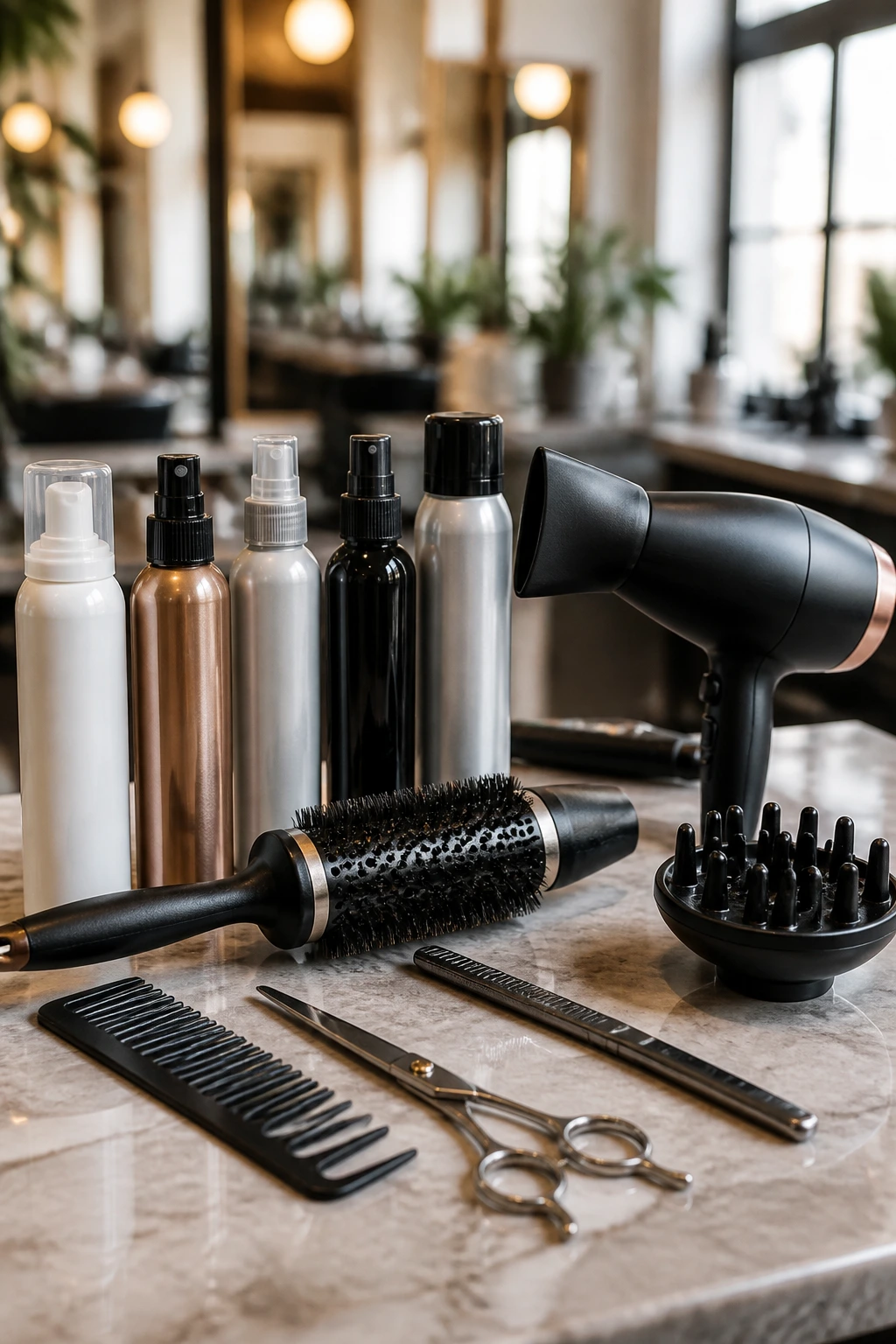
- Reference photos: Bring 3 to 5 photos with similar hair texture to yours; the front view matters, but a side view helps even more.
- Sharp haircutting shears: At the salon, clean shears give a smoother perimeter and prevent the ends from looking chewed.
- Texturizing shears or a razor: Useful when handled well, especially on thick hair that needs weight removed without losing shape.
- 1.25-inch round brush: A good all-around size for flipping ends, lifting the crown, and shaping fringe.
- Blow dryer with a nozzle: Directs airflow and keeps the layers from puffing out in every direction.
- Diffuser attachment: Best for wavy and curly shags when you want the pattern to stay intact.
- Light mousse: Gives roots grip without making the cut feel stiff or sticky.
- Heat protectant spray: Use this before round brushing or flat-ironing the ends; shag layers show damage fast.
- Texturizing spray: Great for piecey separation on straight hair and for reviving second-day movement.
- Dry shampoo: Helps the crown keep lift and buys you an extra day or two before the roots go limp.
- Wide-tooth comb: Safer than a brush on curls and waves when you don’t want to break up the shape.
- Silk pillowcase or bonnet: Keeps the fringe from turning into a flattened mess overnight.
How to Choose the Right Shag for Your Hair Texture and Face Shape

Fine hair: Keep the perimeter a little stronger and the layers longer. Fine hair often looks better with movement that comes from placement, not over-thinning, because too much internal removal makes the ends disappear.
Thick hair: You can handle more shape, but the haircut needs smart weight removal. Ask for layered sections that lighten the mids and crown without tearing the bottom apart. Thick hair wants room to breathe, not a thousand tiny slices.
Curly hair: Ask for a dry or near-dry cut when possible. Curl shrinkage changes everything, and if the stylist cuts too short while the hair is damp, the layers can spring up higher than you wanted. The goal is a shape that follows the curl, not one that fights it.
Straight hair: You’ll likely need a bit more styling to show the layers. That doesn’t mean the cut doesn’t work. It just means the shag will rely more on bend, root lift, and a bit of texturizing spray to reveal the shape.
Face shape matters too, but not in a rigid, one-size-fits-all way. Longer faces often like curtain bangs or cheekbone-framing layers. Rounder faces can take advantage of length near the jaw. Strong jawlines often look good with feathering that starts slightly higher so the front softens instead of stopping abruptly.
How to Wear These Cuts on Busy Days

Air-Dry Finish: Work a light mousse or curl cream through damp hair, scrunch the mids, and let the shape dry without too much touching. The point is to preserve the natural movement, not force every strand into place.
Round-Brush Finish: Use a round brush on the front pieces and crown only. You do not need to blow out every inch of the head; a little lift around the face and a bend through the ends usually gives the whole cut enough shape.
Curly or Wavy Finish: Diffuse on low heat and stop when the hair is about 90 percent dry. If you keep heating until every strand is bone-dry, the texture can get frizzy and lose its soft vintage swing.
Second-Day Reset: Mist the mids with water, hit the roots with dry shampoo, and rework only the front layers and ends. A shag often looks better on day two because the shape settles a little, and that softness can help the cut look more lived-in.
Small Styling Moves That Make a Shag Feel Intentional
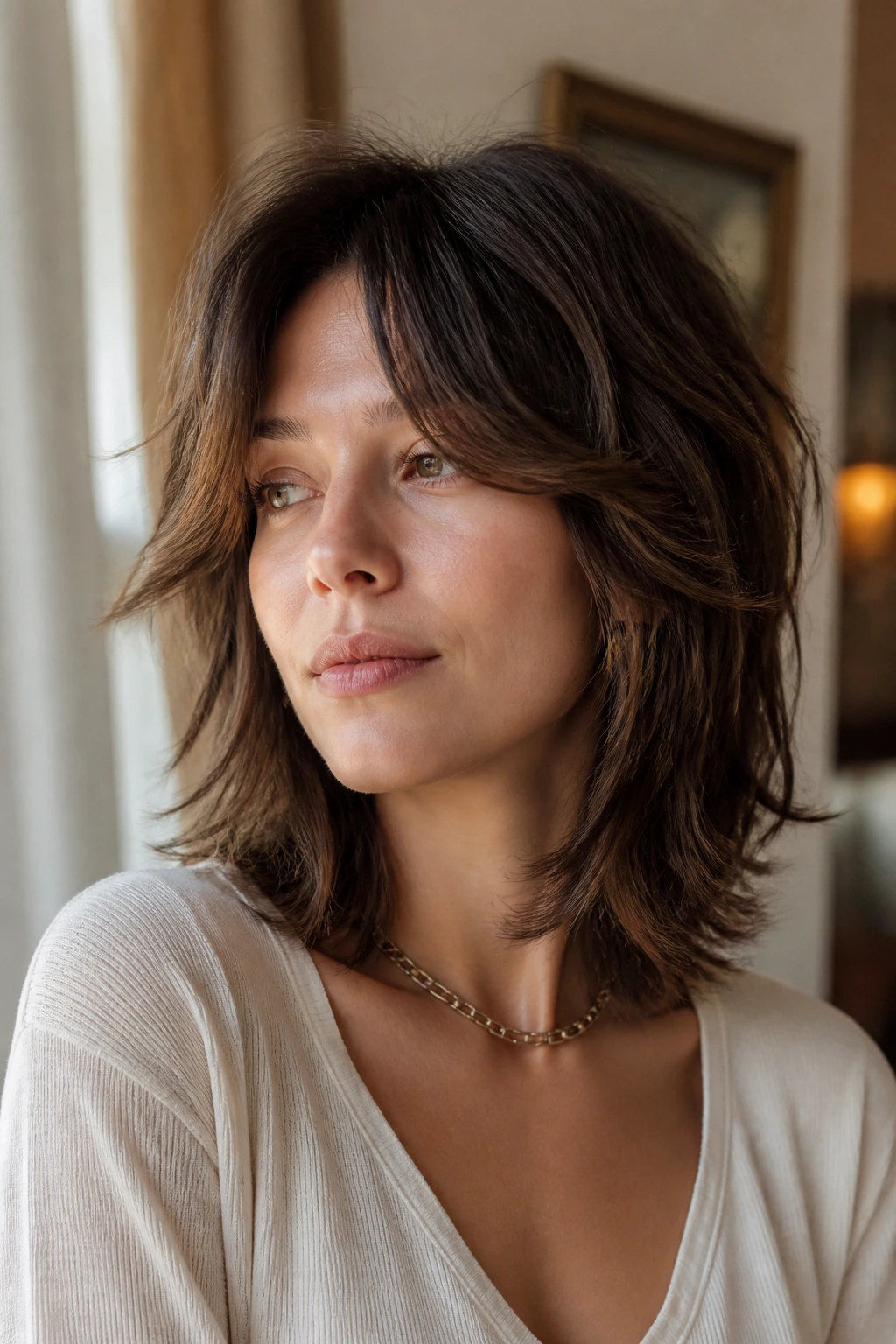
Root Lift: Put product at the roots, not just the mids, if the cut feels flat. A shag depends on a little lift at the crown, especially on fine or straight hair.
Texture Boost: A small amount of texturizing spray at the ends gives the layers separation. Use too much and the hair gets dusty. Use a little and the cut comes alive.
Face-Frame Trick: Bend the pieces closest to the cheekbones or jawline away from the face. That tiny detail is often what makes a shag read vintage instead of generic layered hair.
Polish Move: If you like the cleaner versions, smooth only the top layer with a brush or flat iron and leave the underlayers a little softer. That contrast keeps the haircut from looking overworked.
Low-Maintenance Move: Ask for layers that are longer than you think you need. Short layers look dramatic for a week; longer layers look better for months.
How to Keep the Shape Between Salon Visits
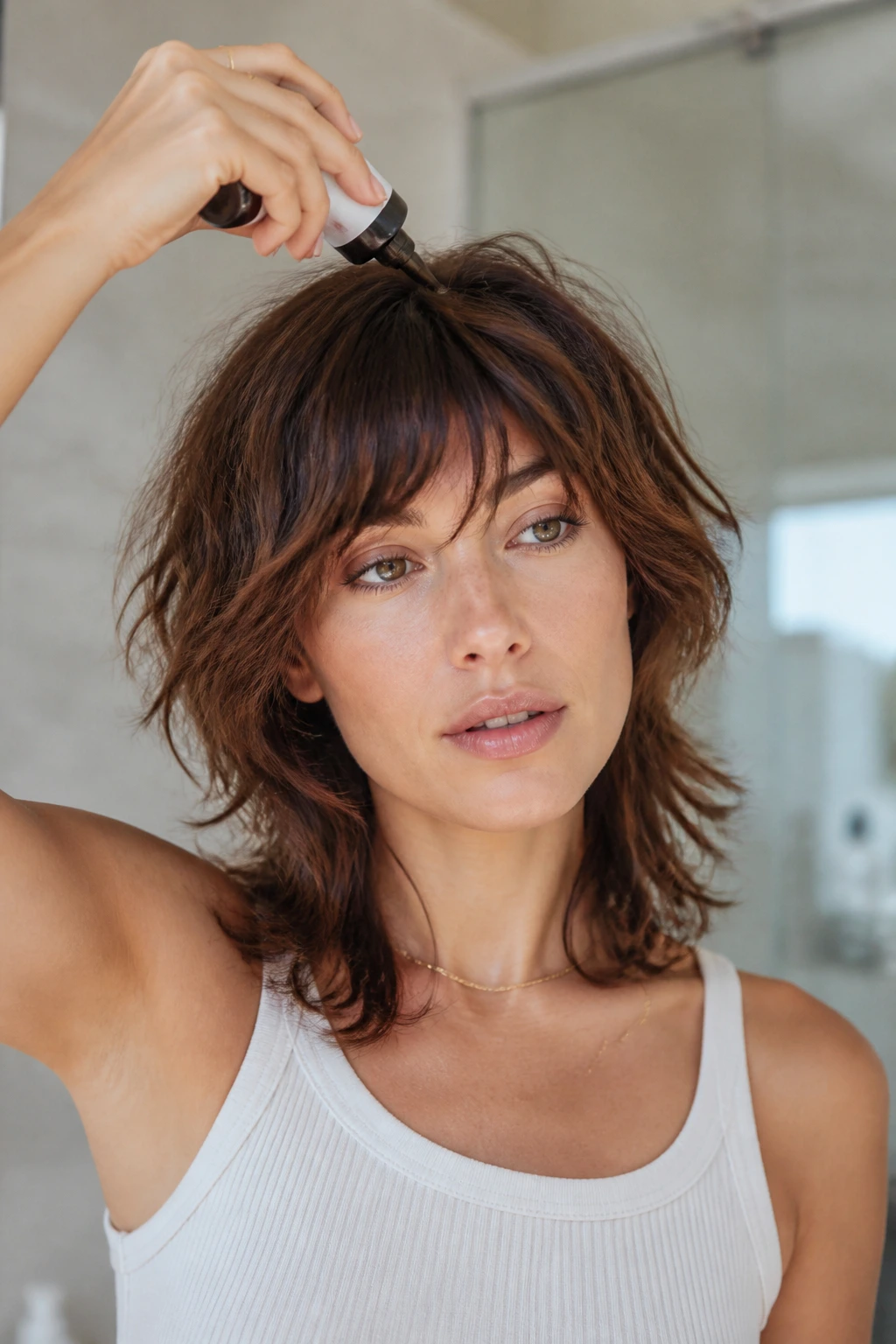
The best shag haircuts need upkeep, but not the exhausting kind. A regular trim every 6 to 8 weeks keeps the layers from wandering too far, while fringe-heavy styles like micro bangs or blunt bangs may need a tidy-up every 3 to 4 weeks. If you let the bangs go too long, they stop framing the face and start hanging in it.
Wash routine matters more than people expect. Heavy conditioners and oils can flatten the crown, especially on fine hair, so keep rich products on the ends and use lighter styling products near the roots. A clarifying shampoo every 2 to 4 weeks helps if you use dry shampoo, texture spray, or mousse often. Build-up makes a shag lose its swing.
Sleep care helps too. A silk pillowcase cuts down on friction, and if your hair is wavy or curly, a loose pineapple or a soft clip at the crown can stop the front layers from getting crushed overnight. For straight hair, a quick morning mist and a round brush pass over the front pieces usually brings the shape back to life fast.
If the cut starts to feel too heavy, don’t panic and don’t immediately chop it shorter. Often the fix is a better blow-dry, a smaller amount of product, or a clean-up around the fringe and face frame. A shag often looks dull only because the styling got lazy, not because the haircut failed.
Variations and Adaptations to Try
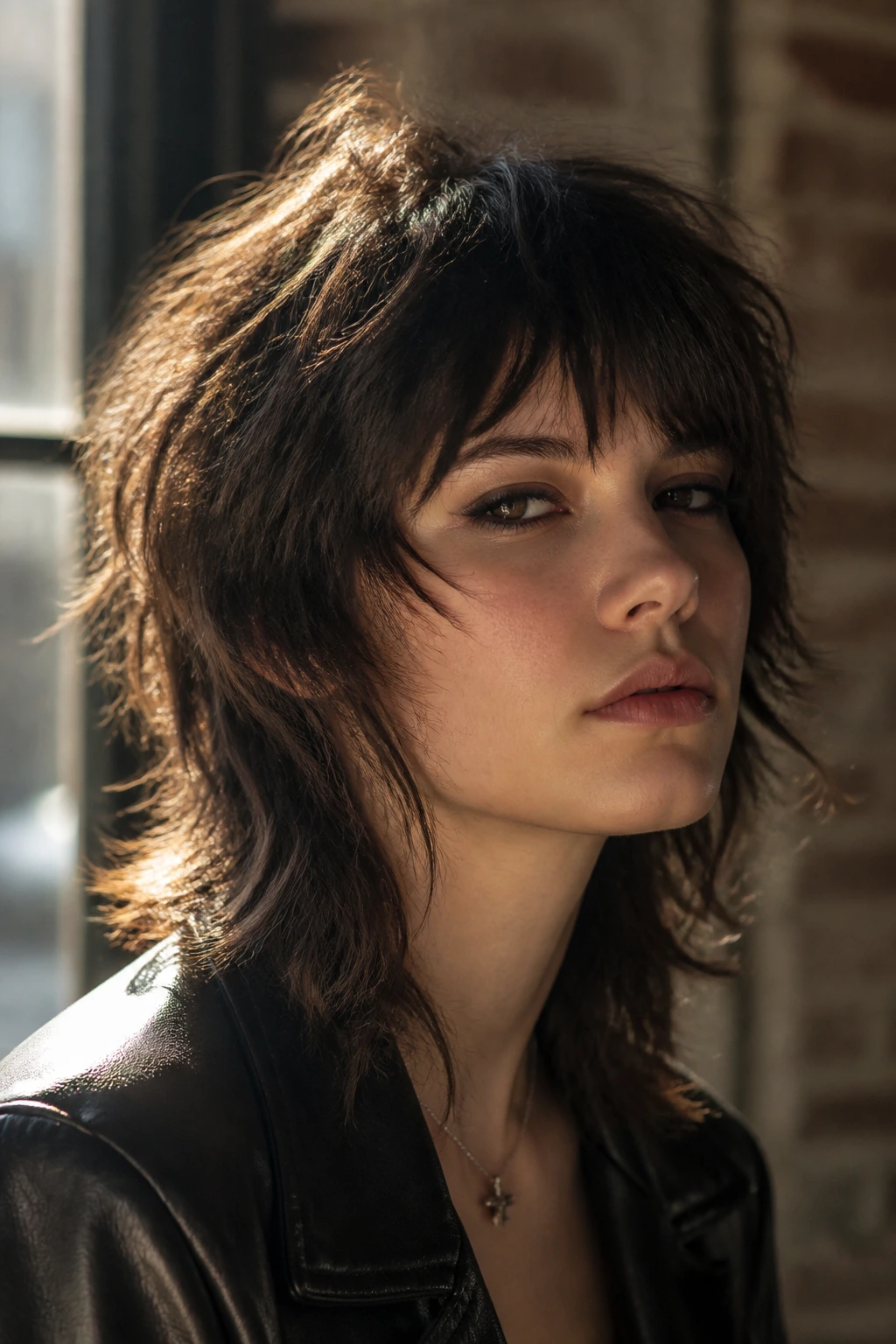
The Soft Office Shag: Keep the layers long, the fringe light, and the perimeter slightly neat. This version reads polished in a work setting but still gives you the movement that makes a shag feel interesting.
The Full-Volume Blowout Shag: Push the crown higher, use a round brush, and flip the ends out more dramatically. It’s a good pick if you want the haircut to feel glamorous rather than casual.
The Curl-First Shag: Cut and style around the curl pattern first, then refine the fringe and face frame. This keeps the shape from ballooning and works well when natural curl is the main event.
The Fine-Hair Shag: Keep the layers longer, leave the ends stronger, and avoid too much texturizing. Fine hair needs lift, yes, but it also needs enough weight to keep the ends from vanishing.
The Rocker Shag: Shorter fringe, choppier ends, and more edge through the crown. This is the version for people who want the haircut to carry a little attitude on its own.
The Gray-Gleam Shag: Use softer layering and cleaner shine so silver or gray hair can move without looking fuzzy. The color does a lot of the work here; the cut should let it show off.
Common Mistakes to Avoid
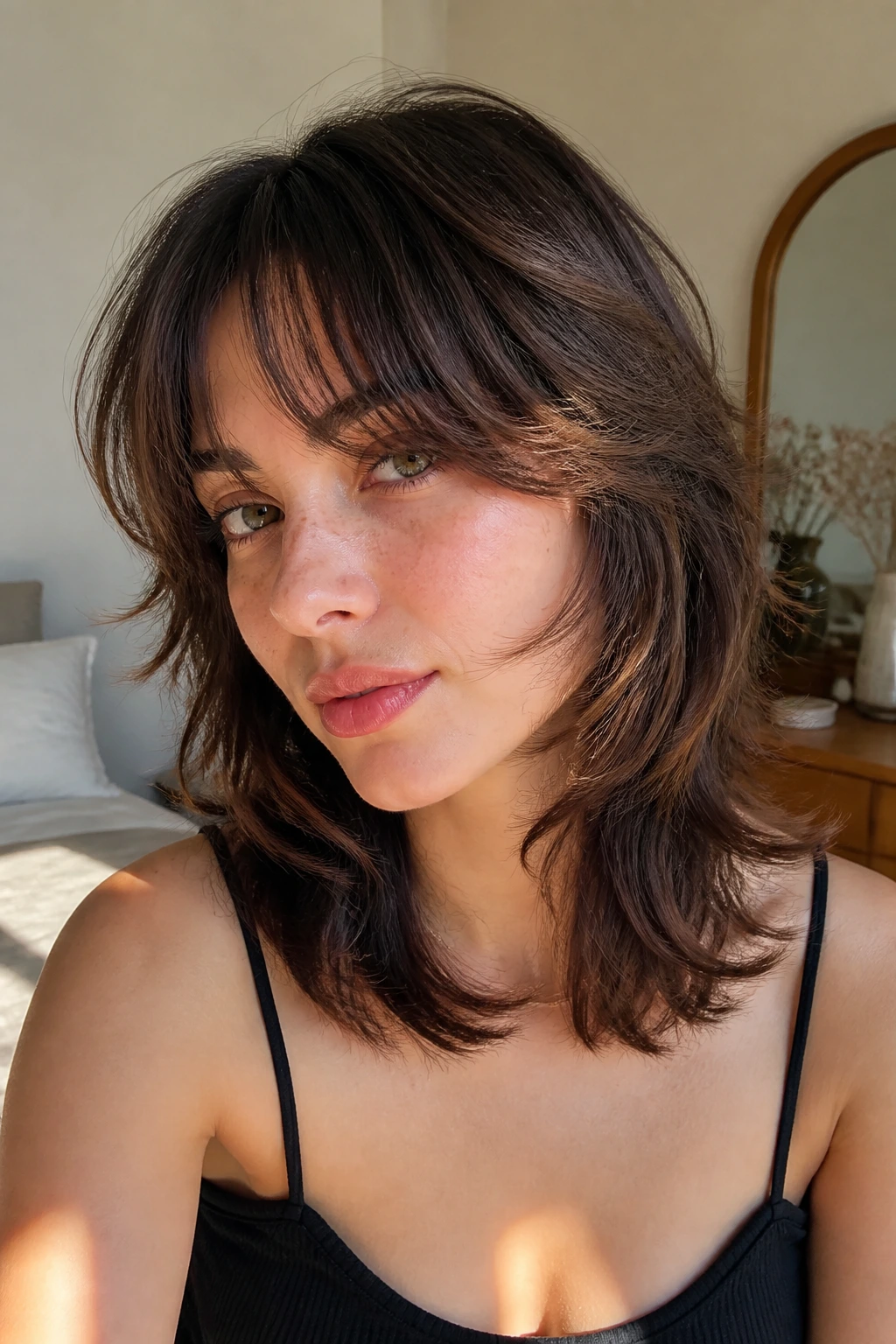
Too many short layers at the crown: The hair lifts, then puffs, and the whole top starts looking mushroom-like. The fix is to keep the shortest pieces controlled and leave some length in the crown shape.
Over-thinning thick hair: The ends start to look wispy, and the cut loses the weight it needs to swing. Ask for texture removal only where the bulk sits, not across every section.
Ignoring your natural part or cowlicks: Bangs split weirdly, side pieces fight each other, and the shape never sits still. Bring your hair to the appointment the way you usually wear it so the stylist can see the problem before the scissors come out.
Using heavy cream everywhere: The roots collapse, the layers stick together, and the shag turns flat by lunch. Keep richer products on the ends and use lighter mousse or spray near the scalp.
Letting the fringe go too long: Curtain bangs can drift into curtain hair, and blunt bangs can turn into a floppy shelf. Fringe needs regular trims if you want the vintage shape to stay visible.
Ironing out every bend: A shag without movement is just layered hair with a worse morning. Leave some bend at the ends or the whole point disappears.
Frequently Asked Questions

What makes a shag haircut look vintage instead of messy?
The difference is usually where the layers start and how much weight is left at the perimeter. Vintage-looking shags keep enough structure at the ends to look deliberate, while the movement comes from soft layers, fringe, and a bit of bend.
Will a shag haircut work on fine hair?
Yes, but the cut should stay a little longer and a little stronger at the bottom. Fine hair can look fuller with movement, but too much internal thinning makes it look sparse fast.
Can curly hair pull off a shag without turning into a triangle?
It can, as long as the layers follow the curl pattern and the top is not over-cut. Dry cutting or near-dry cutting helps the stylist see the true curl shape before making the final lines.
How often do I need trims for a shag?
Most shags stay in shape with a trim every 6 to 8 weeks. If you have micro bangs or blunt bangs, expect to tidy the fringe more often, usually every 3 to 4 weeks.
What’s the easiest shag to style every day?
A collarbone-length shag or a shaggy lob is usually the simplest. Both let you air-dry with a little product and still look intentional, even if you only spend five minutes on them.
Is a shag the same as a wolf cut?
Not quite. A wolf cut leans more dramatic, with a sharper contrast between the top and the longer layers, while a shag usually keeps the blend softer and more wearable.
What if my shag looks flat at the roots?
Use a mousse or root spray near the crown, then lift the roots with a round brush or diffuser. Dry shampoo can help on day two, but if the cut is too heavy at the top, the layers may need a small adjustment.
Can I wear a shag if I usually tie my hair up?
Yes, and that’s one of the cut’s better tricks. Face-framing layers and fringe pieces can make a bun or clip feel softer, even when the rest of the hair is pulled back.
A Cut That Keeps Its Shape
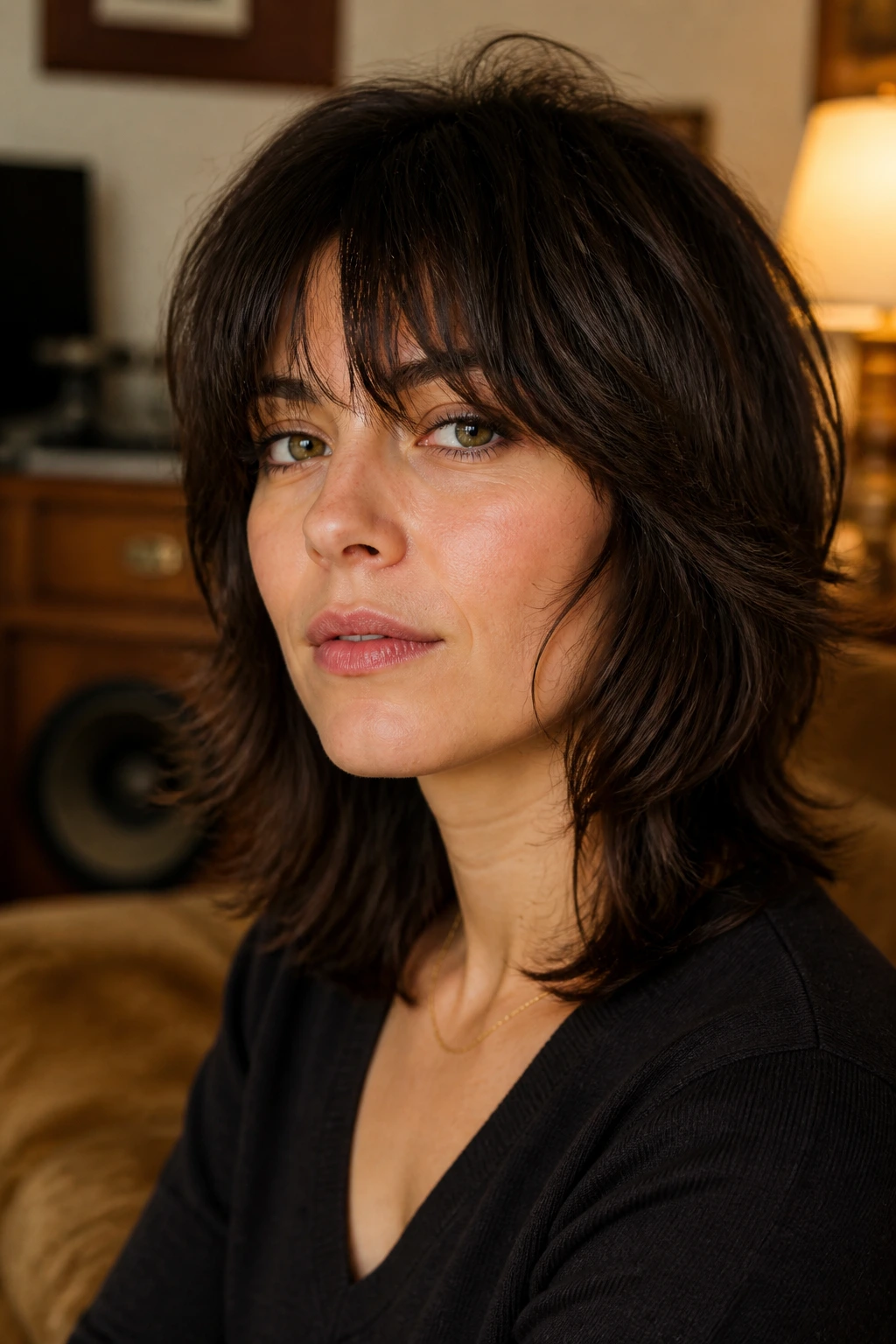
The best shag haircuts have a knack for aging well. They don’t ask for perfection, and they don’t punish you for a little movement or a little grow-out. That’s part of why the vintage versions keep coming back: they look better when the hair is touched, bent, and worn a little bit.
Choose the version that matches your texture, your styling patience, and the amount of attitude you actually want to carry every morning. A good shag should feel like it belongs to you after a week, not like a costume you have to keep adjusting in the mirror.
