



Curly hair doesn’t need one flat color. It needs movement, shadow, and a little mischief.
The best hair color ideas for curly hair are the ones that change as the curls shift. A caramel ribbon tucked into a bend reads softer than the same caramel on straight hair. A copper melt can look warm and gentle in dim light, then flash like ember tips near a window. That’s the fun part, and it’s also the trap: color placement matters more on curls than on almost any other texture.
I’ve always thought curls make color look more expensive when the tone is right and more expensive to fix when the tone is wrong. Harsh stripes, over-lightened ends, and one-note box color can flatten the whole head. But a good balayage, a gloss, or a hidden peekaboo panel can turn a simple cut into something that looks alive from every angle.
Why These Curly-Hair Color Ideas Work Better Than Flat Color
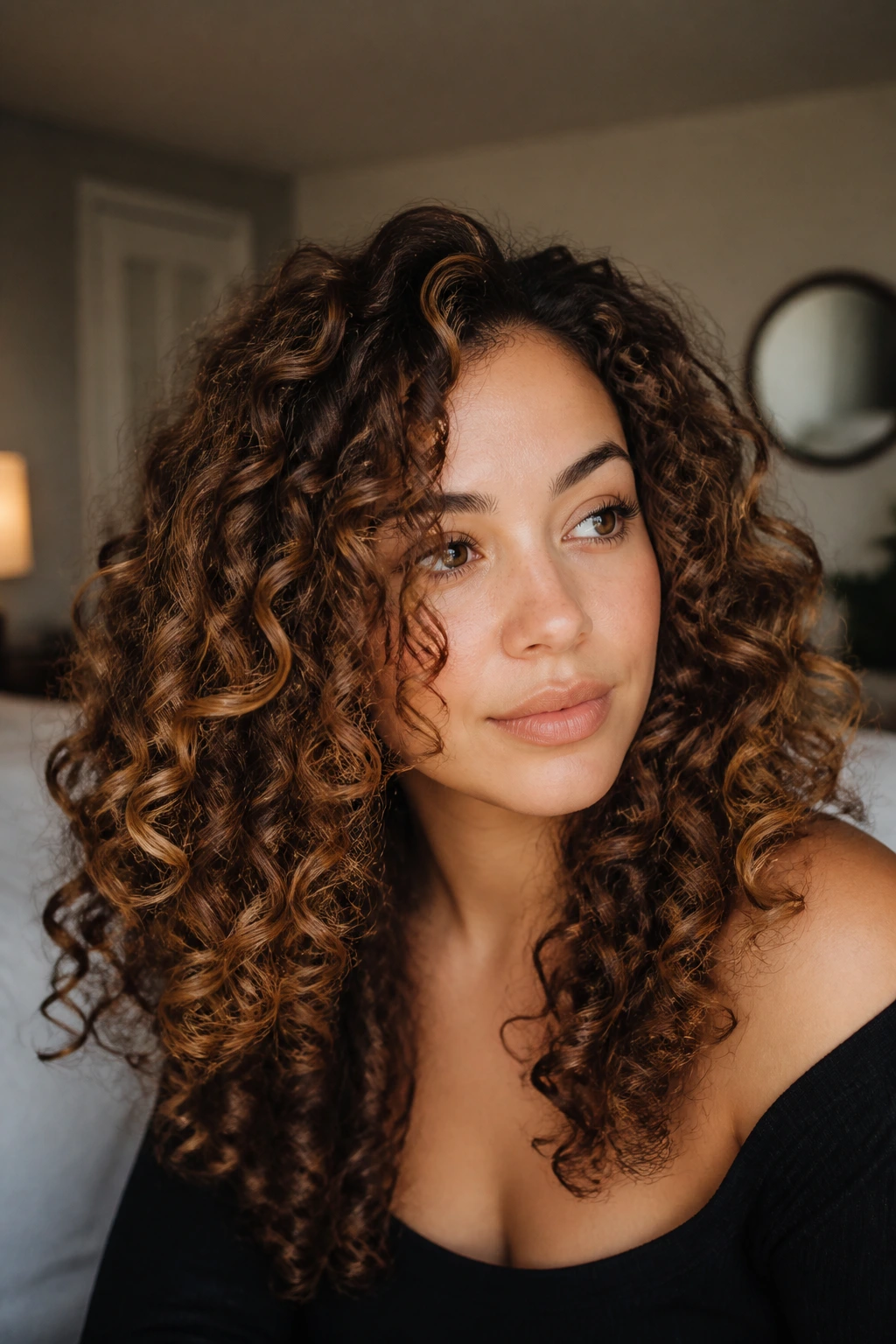
Dimension does the heavy lifting: Curls create built-in shadows, so a shade with a little depth reads richer than a single all-over color.
Grow-out is softer: A root-smudge, balayage, or underlayer usually blends into the curl pattern instead of screaming for attention at the roots.
Placement matters more than paint coverage: Bright pieces where curls open up—around the face, on the canopy, or through the outer ringlets—show more movement than an even stripy lift.
There’s room for bold color and quiet color: You can go copper, plum, navy, silver, or honey blonde and still keep the texture looking soft if the formula and placement are sane.
Healthy-looking shine changes everything: On curls, gloss and tone matter almost as much as the shade itself, because frizz and dryness can make even a beautiful color look tired.
Why Curly Hair Changes the Color Story
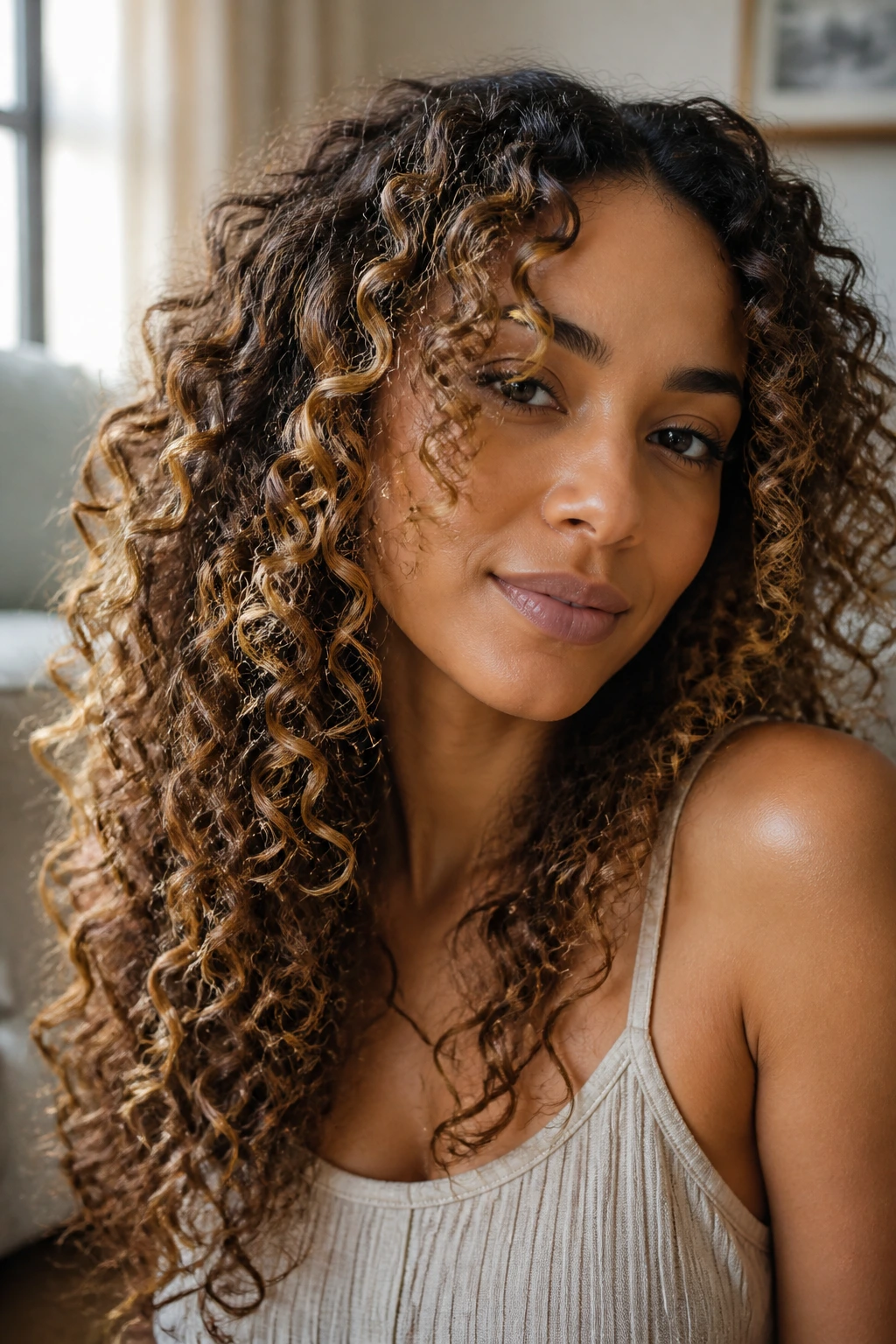
Curls do something straight hair never quite manages: they break up color into tiny pieces. One coil catches light. The next turns away. That means a brunette balayage can look almost latte-like in one section and toasted chestnut in another, even when the formula is the same.
Porosity matters too. Curly hair often takes color faster in the more open, weathered parts of the strand—usually the ends and outer layer—so the same formula can land unevenly if you’re not careful. That’s why curl-friendly color work tends to use softer developers, strategic glosses, and less aggression around the front hairline and tips.
There’s also shrinkage. A color job that looks subtle on stretched hair can read much bolder once the curls spring back. That’s not a problem. It’s the point. But it does mean you should judge a color idea by how it looks in the curl pattern, not just on a blow-dried swatch.
Porosity changes the final read
High-porosity curls drink up pigment fast. Low-porosity curls can resist it, then grab more color after heat or after the cuticle opens a little. That is why the exact same copper formula looks fiery on one head and muted on another.
Placement beats saturation
A few well-placed ribbons around the face, crown, and outer curve of the curl can do more than a heavy all-over lightening job. The eye follows contrast. It does not count foils.
Why You’ll Love These Curly Color Ideas
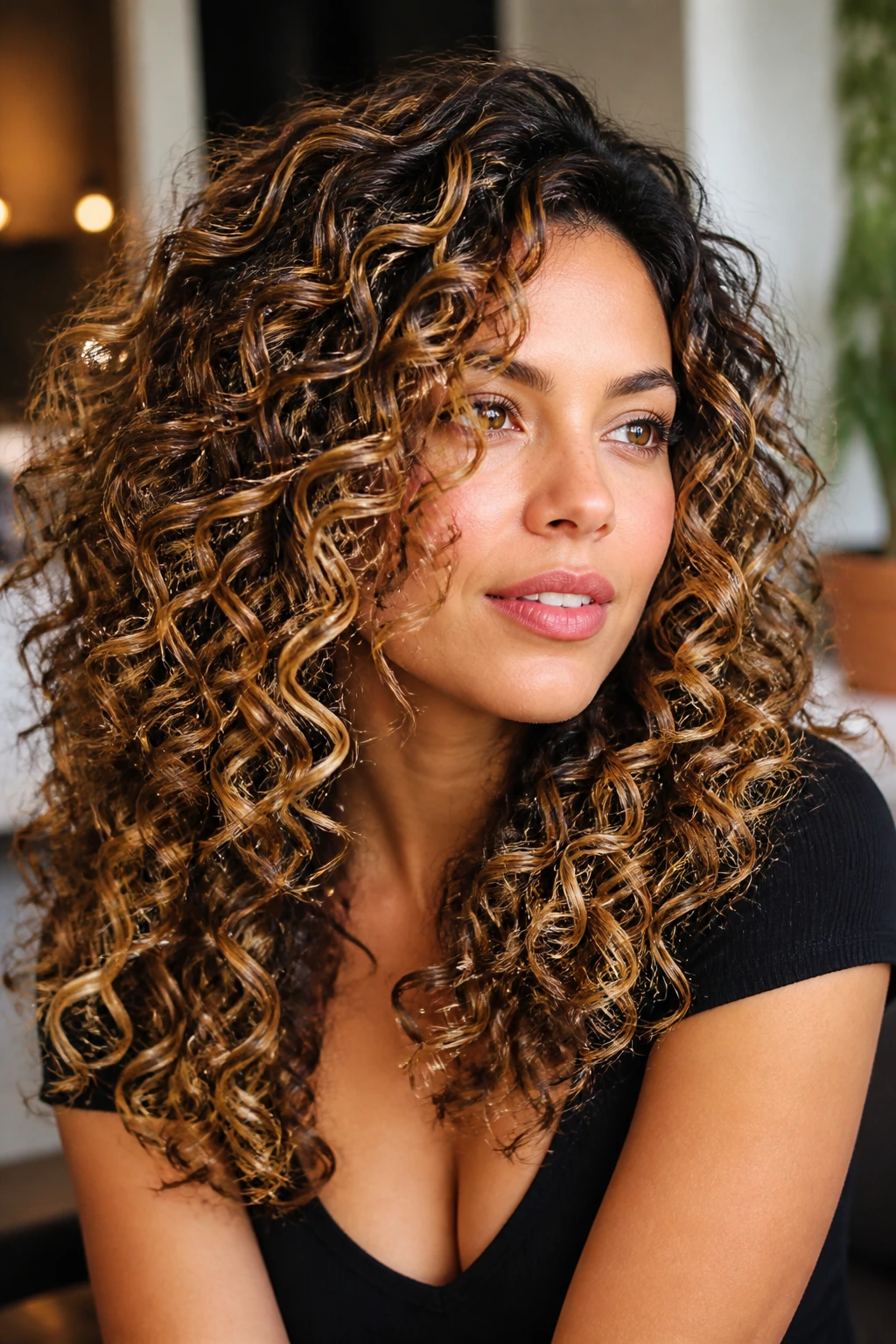
- The movement is built in: Every shade here is chosen to work with spirals, waves, and coils, so the curl pattern does half the styling for you.
- There’s something low-maintenance here: Not every idea demands root touch-ups every few weeks; several are made to grow out softly and still look intentional.
- Bold color stays wearable: Jewel tones, copper, and platinum can look polished on curls when the placement is smart and the tone is controlled.
- You can keep your depth: A lot of these ideas protect your natural base instead of covering it completely, which keeps curls from looking flat.
- They work with real life: Face-framing pieces, underlights, glosses, and soft balaysage all give you visible change without turning every wash day into a project.
1. Caramel Ribbon Balayage
Warm caramel painted through a medium brown curl pattern gives you that soft, expensive-looking movement people keep trying to fake with filters. The key is restraint. A few ribbons placed on the outer curve of the curl will read brighter than a full head of lightening ever could.
Why It Works
Caramel sits in the sweet spot for curls because it’s warm enough to catch light and soft enough not to fight the texture. On 3A to 4A hair, it shows best where the curls open and separate, which means you get dimension without losing shape. If the base is a deep brunette, the contrast is strong enough to matter but not so stark that it looks stripey.
What to Ask For
- Base: Keep your natural brown or a rich chocolate shade.
- Lightened pieces: Ask for hand-painted caramel ribbons 2 to 3 levels lighter than your base.
- Placement: Put the brightest pieces around the face, crown, and outer curl layer.
- Tone: Finish with a beige-gold gloss so the caramel doesn’t go orange.
- Maintenance: Refresh the gloss every 6 to 8 weeks; the roots can usually wait longer.
Pro tip: Leave dark space between the ribbons. Curly hair needs breathing room.
2. Copper Melt
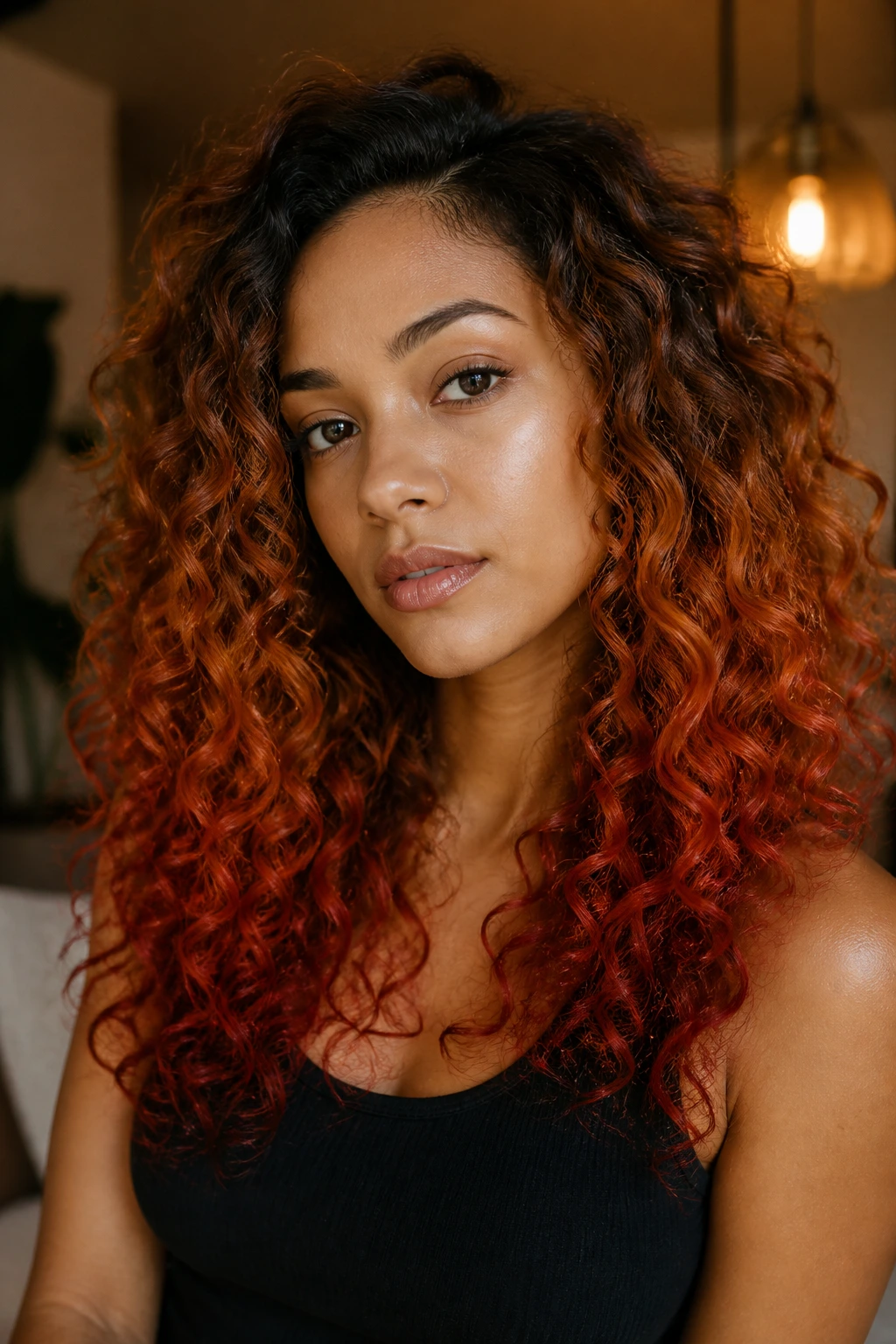
Copper on curls has a kind of electric softness that straight hair often misses. The color shows up in flashes, not slabs, which is exactly why it works so well on ringlets. A good copper melt looks warm at the roots, brighter through the mids, and almost ember-red on the ends.
It’s a smart pick if you want drama without going neon. On darker brunettes, a copper melt can start as a rich auburn and be lifted from there. On lighter bases, it can go more vivid and airy. Either way, red tones fade faster than brown ones, so this is a color for people who don’t mind a little upkeep and like hair that changes a bit between salon visits.
How to wear it
A middle part makes the warm ribbons symmetrical, while a deep side part pushes the brighter copper into one visible band. Diffused curls show the gradient better than stretched hair. If you air-dry, scrunch in a color-safe leave-in so the ends don’t look thirsty.
3. Espresso Gloss with Honey Face Frame
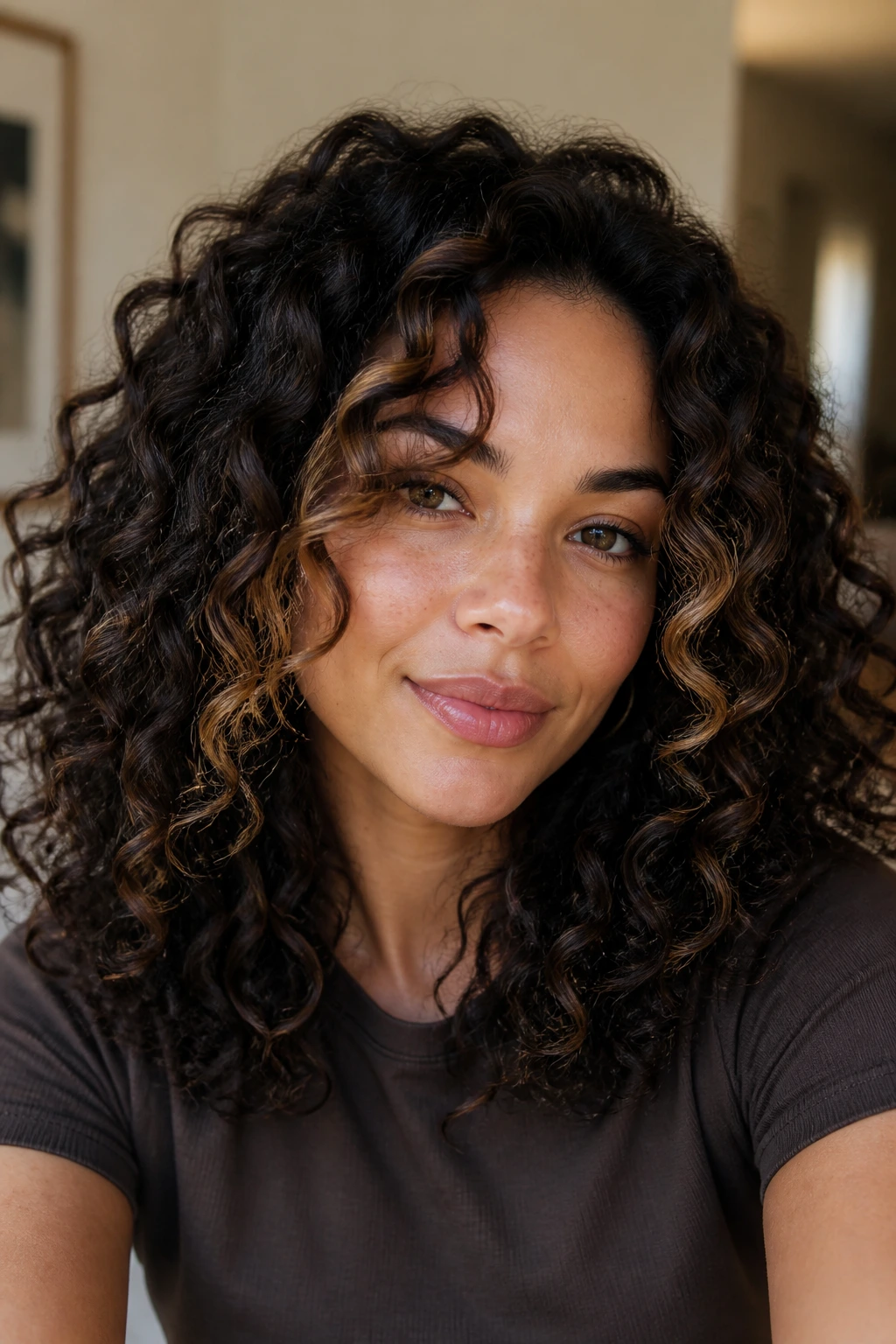
If you like deep brunette hair but want a little light around the face, this is the move. The espresso base stays rich and moody, while the honey pieces sit just at the front like a well-placed spotlight. It’s not a loud color job. It’s a smart one.
The reason it flatters curls is simple: the darker base keeps the pattern dense and plush, and the honey frame gives the eye something to land on. Ask for the bright pieces to start around the cheekbone or jaw instead of right at the root. That keeps it grown-up and prevents that cheap, over-bleached strip some salon jobs fall into.
A clear gloss or a brunette toner makes the difference between “dark hair with highlights” and “expensive-looking dark hair.” If the shine is gone, the whole look loses its edge.
4. Rose Gold Diffusion
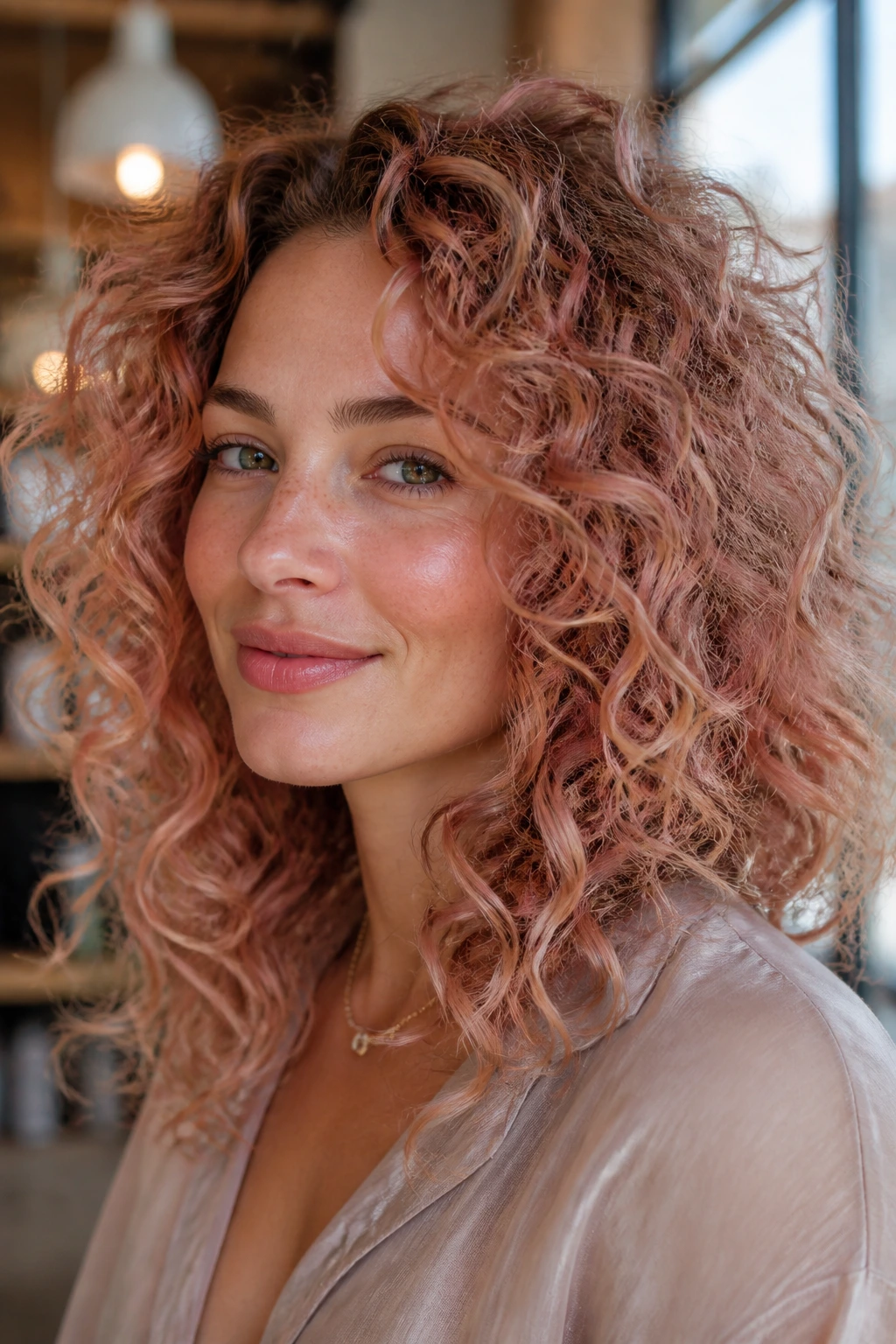
Rose gold on curly hair can go two ways: sweet and soft, or flat and pink in a way that feels like a costume. The good version is the one with beige, peach, and a whisper of blush blended into lightened curls. It should look like the color is floating, not sitting on top.
This is best on hair that’s already light enough to take pastel tones without fighting them. Think blonde, light brown with pre-lightened pieces, or a full lightened base that still has some softness left in it. The curl pattern makes the pink tones look airy instead of solid, which is why this shade looks prettier in motion than on a swatch card.
Best match
Looser curls and waves hold the pink-beige balance best. Tight coils can wear rose gold too, but the tone usually needs more careful placement. Keep the saturation muted and the roots a shade deeper.
5. Mushroom Brown Balayage
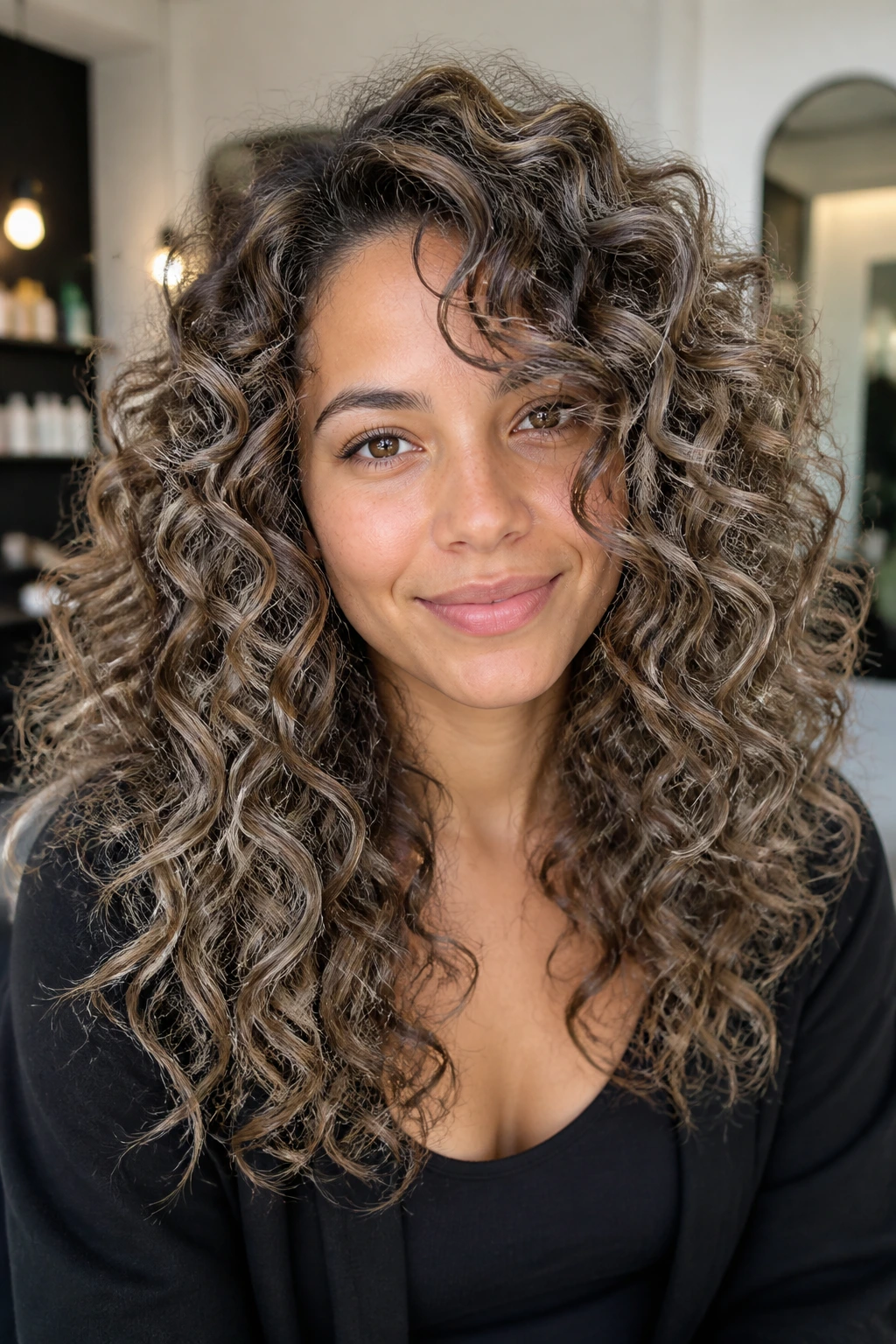
Mushroom brown is what happens when brown hair stops trying to be warm all the time. It lives in the ash-taupe-beige family, and on curls that can pull orange fast, it’s a useful correction shade. The result is cool, smoky, and very controlled.
I like this one on people whose curls go brassy the minute bleach touches them. The ash in the formula reins that in, but you still get movement if the balayage is painted with some lightness through the mids. Too much ash on porous hair can slide toward khaki, so the tone has to be watched. No one wants a dull mushroom cap on their head. Not the vibe.
This shade works especially well if your haircut has layers. The cool pieces separate the curl pattern and make the shape read cleaner.
6. Honey Blonde Poplights
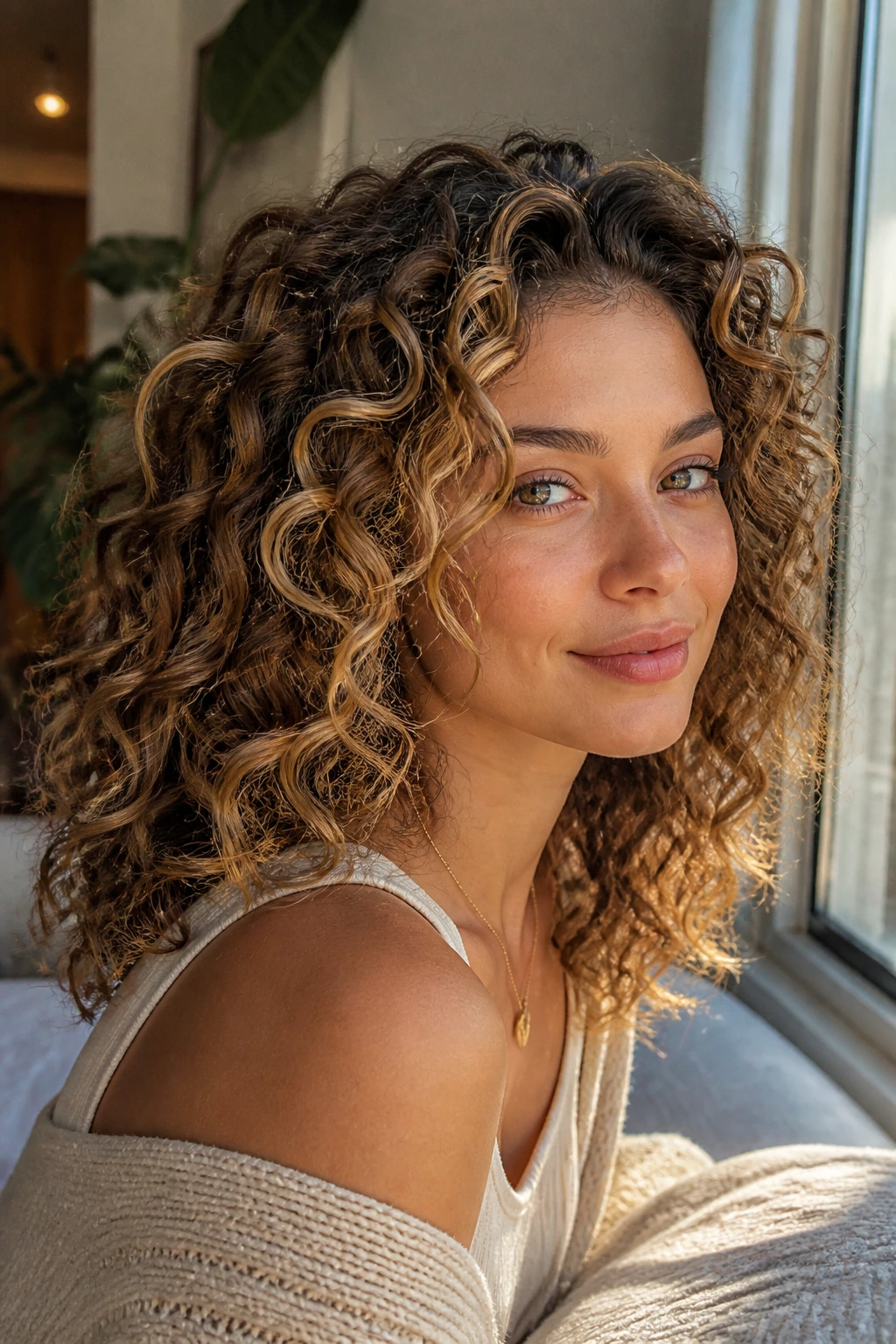
Not every blonde on curls needs to start at the root. Sometimes the smartest move is a few bright poplights on the top layer, around the face, and through the ends that naturally sit on top of the curl stack. That way, the lightest pieces show when the hair moves, which is when curls look their best anyway.
Honey blonde is a safer blonde than icy blonde for most curly hair because it keeps warmth in the tone. Warmth tends to look softer against a curl pattern, especially if your base is brown or dark blonde. The trick is to leave enough depth between the pieces so the curls don’t turn into a light blur.
What to watch for
If the highlights are too close together, the hair can look puffier because the contrast stops defining the curl. A few well-placed pieces are better than a full blonde blanket.
7. Plum Underlights
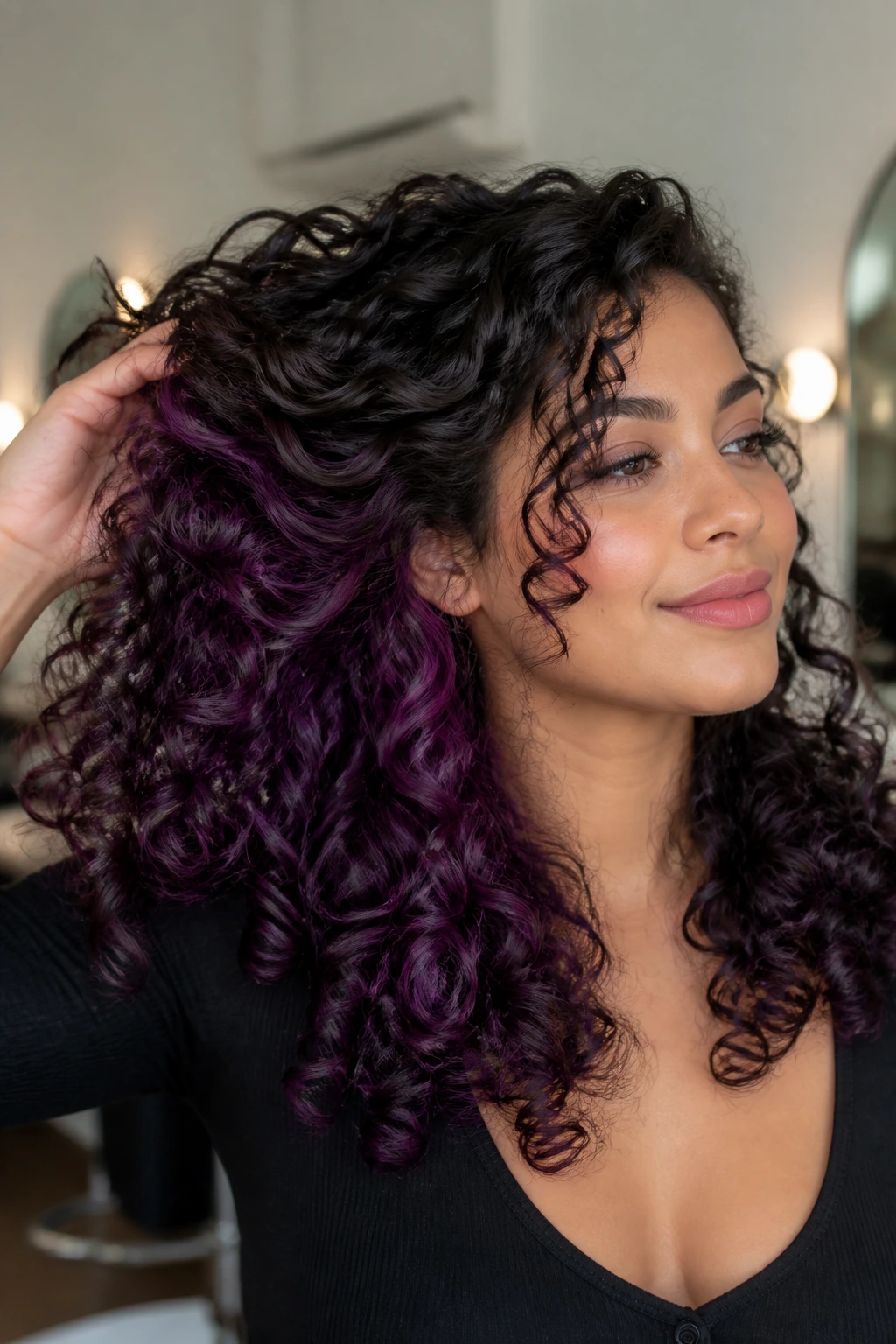
Plum underlights are one of my favorite ideas for people who want color without being loud all the time. The top layer stays dark or natural, while the hidden sections underneath carry the violet-plum shade. When the curls swing, pin up, or separate, the color flashes out.
That hidden placement suits curls because it gives you drama on your own terms. The top still reads polished and wearable at work or in conservative spaces. Then the color shows when the curls move, which is exactly what curly hair does best. If the base is dark brown, plum can show up as a deep wine tone. On lighter hair, it reads more purple.
Best for: people who want a visible change without committing their whole head to bright color.
8. Blue-Black Shine
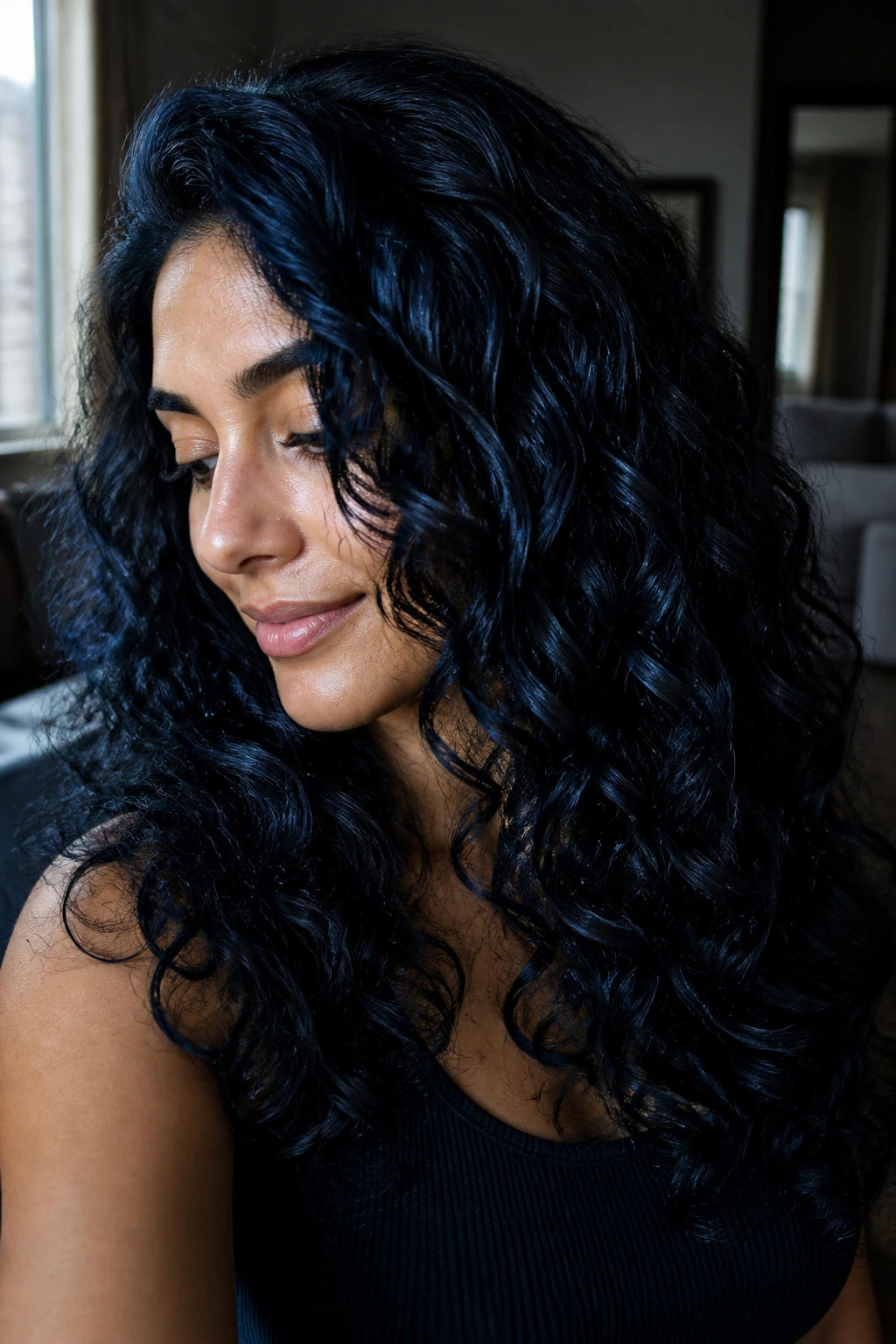
Blue-black on curly hair is all about sheen. The blue reflect keeps the black from looking flat, and curls catch that reflect in tiny flashes. On dense coils, it can look almost liquid. On softer waves, it reads cooler and more polished.
This color is underrated because people often think black is too harsh. It can be harsh if it’s matte. But with the right gloss, blue-black has depth. It’s also a good option if you want dramatic dark hair without the maintenance of fashion colors, since the base stays dark and the blue cast fades slowly into a softer black.
Use shine serums lightly. Too much oil on the crown can mute the whole effect.
9. Cherry Cola Curls
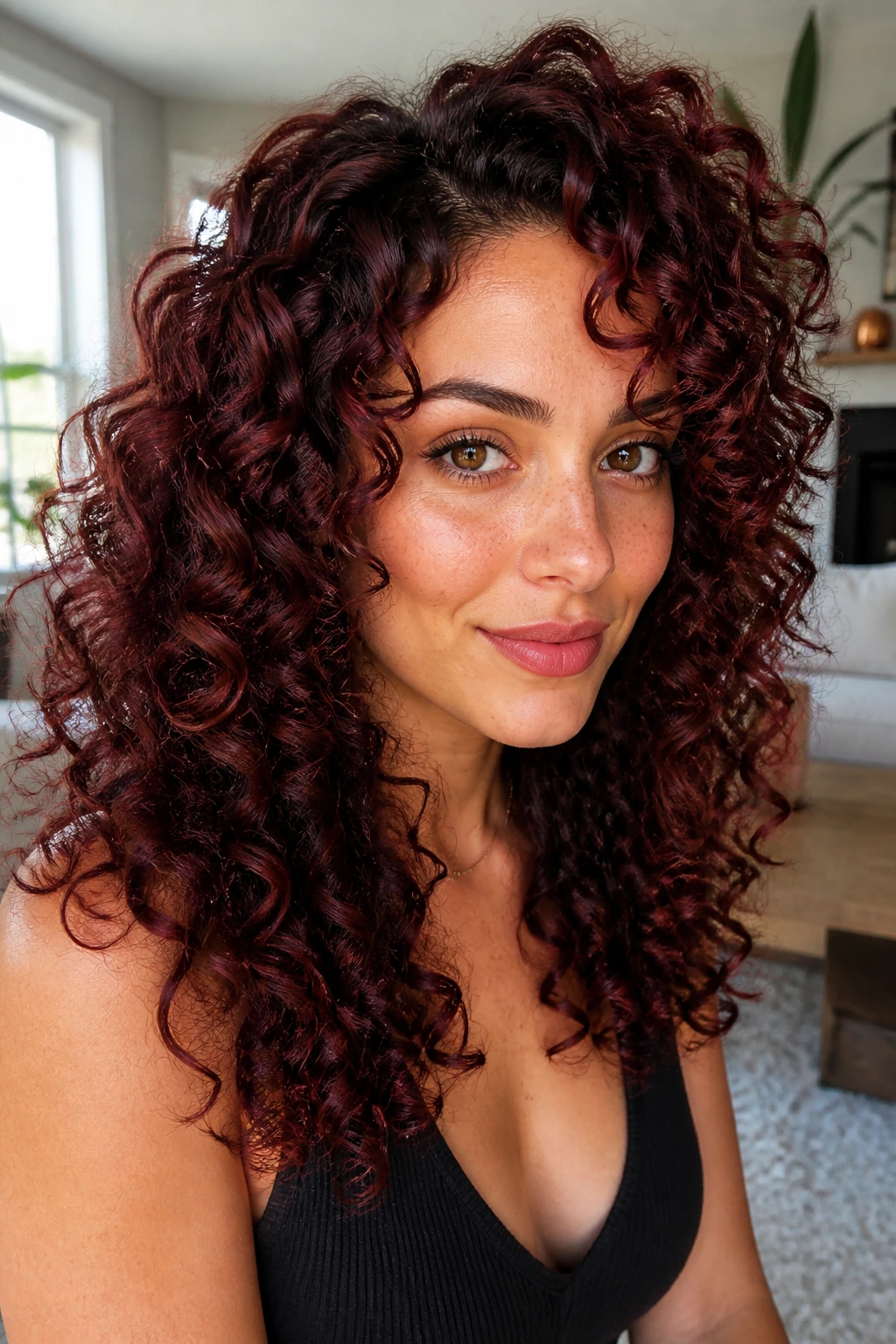
Cherry cola is one of those shades that sounds playful but wears like a grown-up brunette with a secret. It mixes burgundy, brown, and a little red-violet so the color looks rich instead of cartoonish. On curls, it shows up in layers, which makes it even better.
This works especially well if you already have medium to dark brown hair and want warmth without going copper-bright. The red tones catch light around the outer ringlets, then sink back into brown in the shaded spots. That shift is what makes it look expensive. If you’ve ever seen red hair flatten on straight hair, curls fix that problem fast.
How to keep it pretty
Use cool water when you rinse. Hot water pulls red pigment out faster than most people expect. A color-depositing conditioner in burgundy or red-brown can buy you extra weeks between salon visits.
10. Ash Brown Contour Highlights
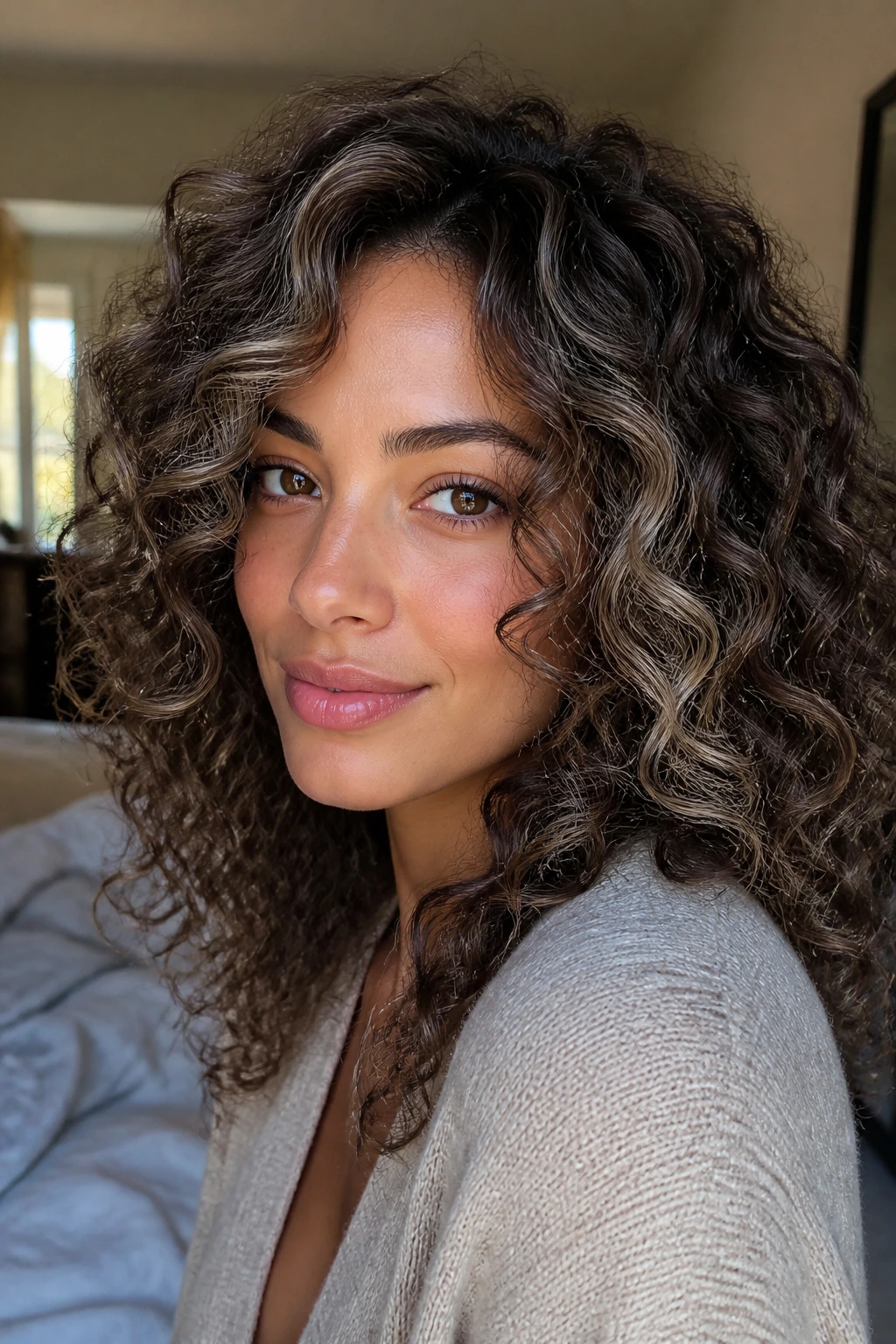
Ash brown contour highlights are not about brightness for its own sake. They’re about shaping. Cooler brown ribbons around the temples, cheeks, and crown can carve out the curl pattern and make the face look more defined without going fully blonde.
This is a smart move if your hair tends to pull orange or gold. The ash tones cut through that warmth and keep the color looking deliberate. On curly hair, the contour placement matters more than the number of highlights. A few ribbons around the face can change the whole read of the cut.
Where it works best
- Around the front hairline for a brighter frame.
- At the crown to create lift.
- On the upper curl layer where the light naturally hits.
- On layered cuts that need more shape.
11. Golden Bronde Babylights
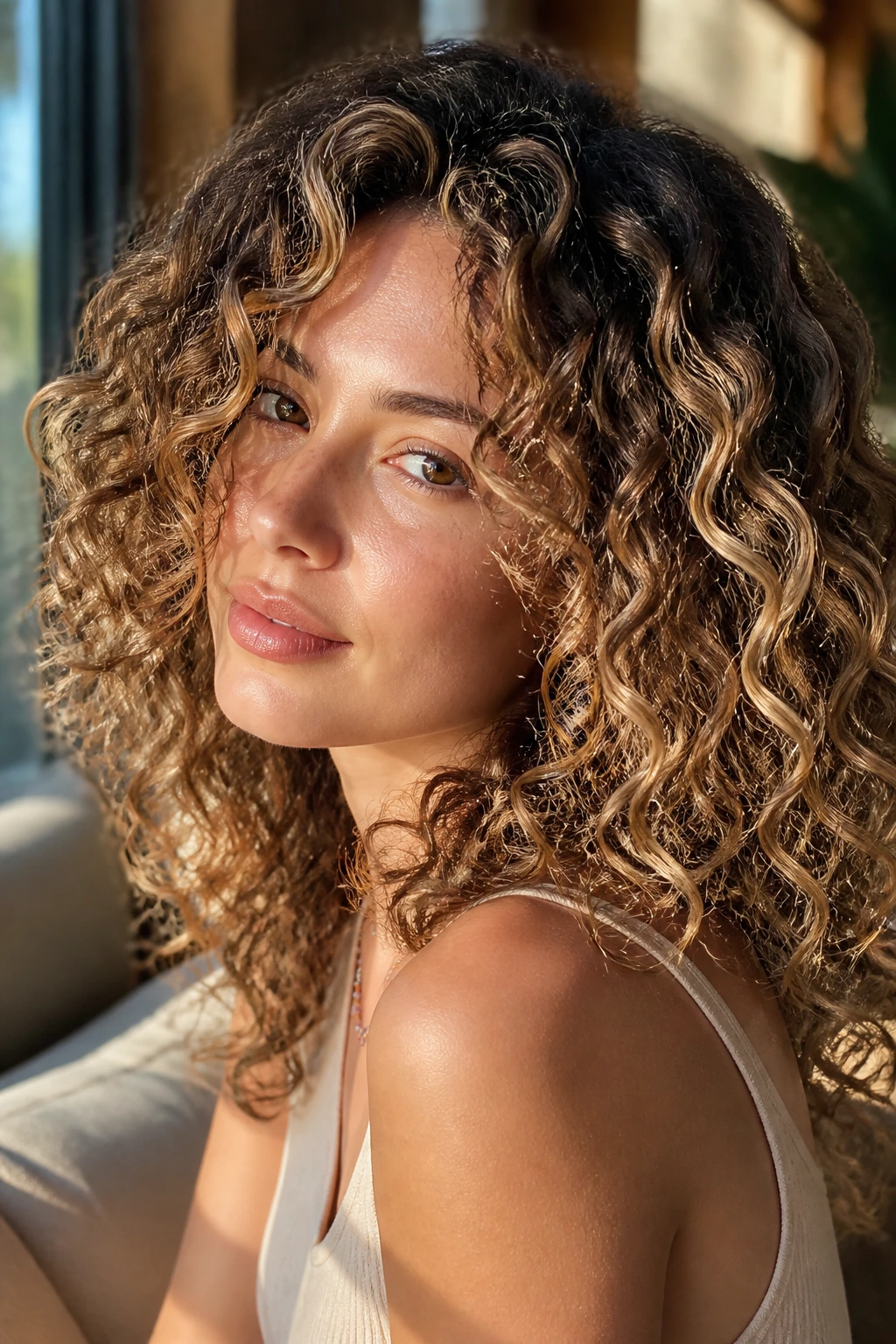
Golden bronde babylights are the softest way to bring light into curls without shouting about it. Bronde sits between brown and blonde, and babylights are tiny, feathered highlights that blend instead of stripe. On curly hair, that combination gives you little flashes of gold every time a curl bends.
This idea is great for anyone who wants sunlit dimension but hates obvious regrowth. Because the pieces are so fine, grow-out tends to blur into the natural base. It’s one of the easiest blonde-adjacent looks to live with on curls. The tone should stay warm enough to avoid that raw, over-processed look.
If your haircut is layered, even better. The upper layers will catch the lighter pieces and the lower layers will keep the depth.
12. Midnight Navy Peekaboo
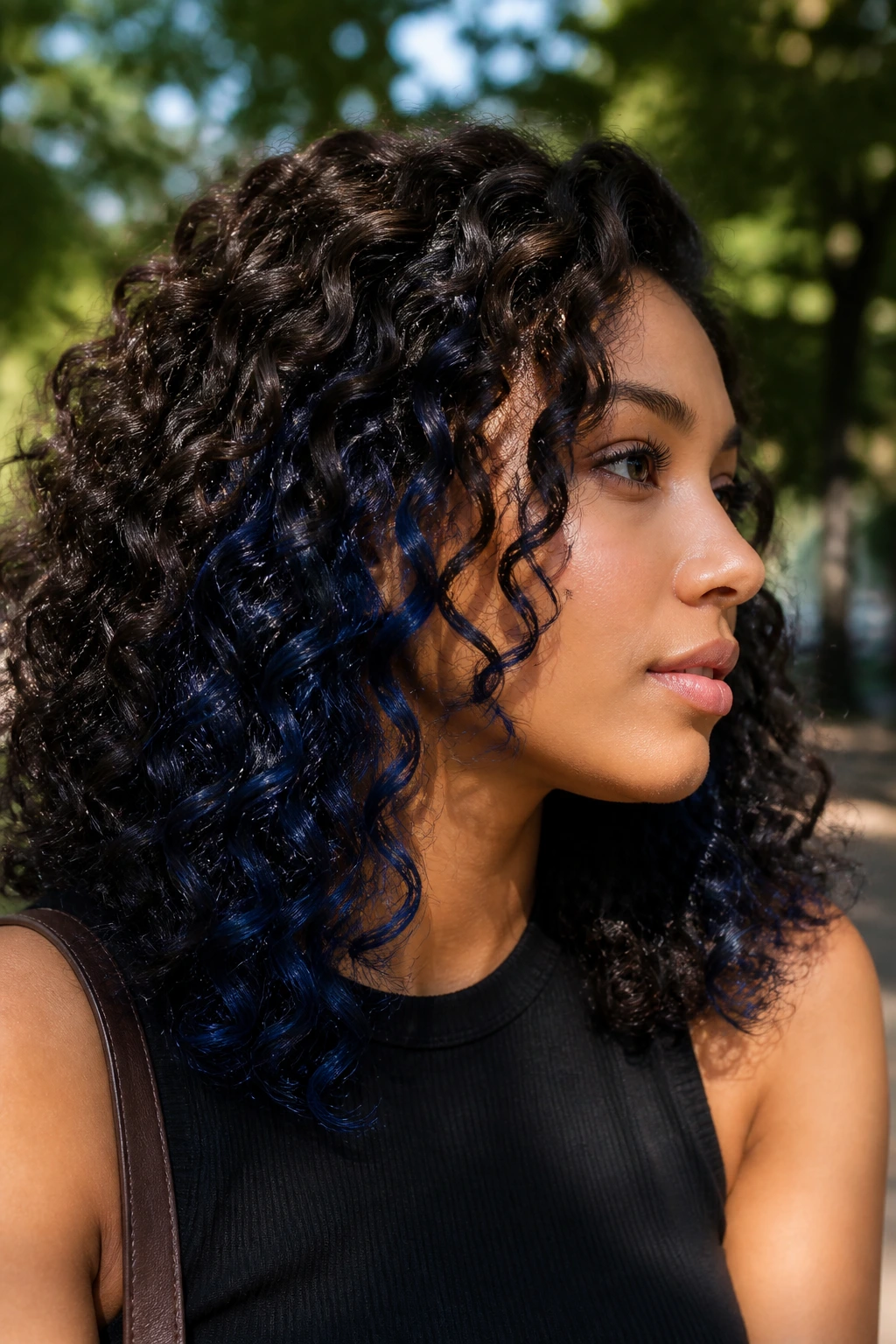
Midnight navy peekaboo color gives you dark drama with a twist. The navy stays tucked underneath the top layer, so it only shows when curls shift, lift, or get pinned back. That makes it an easy way to wear color that feels bolder than it looks at first glance.
The shade works best on darker bases, where the navy reads as a cool shadow with a blue edge. On light hair, it becomes much louder and needs more upkeep. Curly hair helps the effect because the hidden pieces peek through in uneven flashes instead of one hard strip. That unevenness is a feature, not a flaw.
If you want to keep the color crisp, use a sulfate-free shampoo and avoid washing the underlayer more than needed.
13. Auburn Copper Ringlets
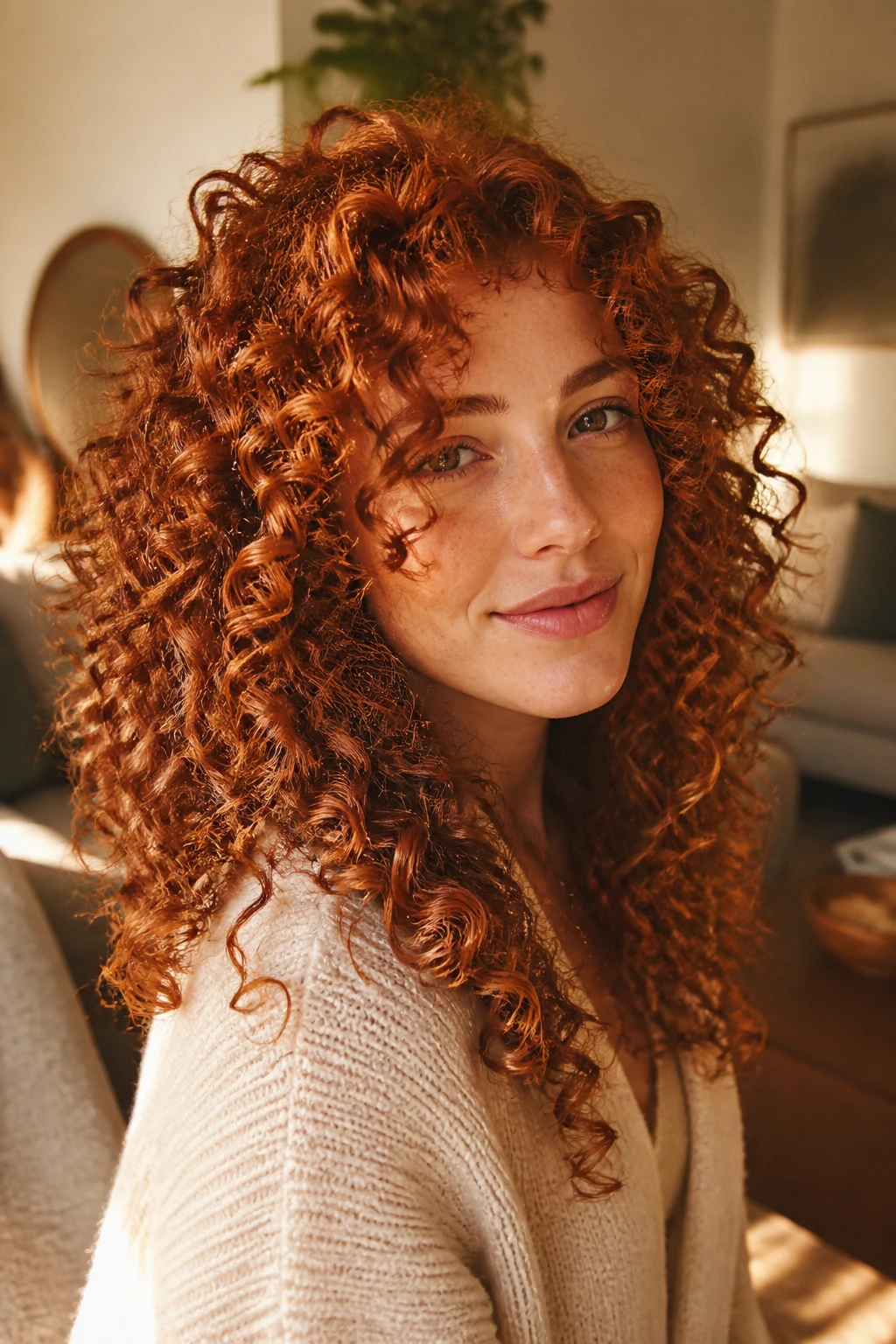
Auburn copper ringlets are for people who want warmth that feels alive. The color sits between red, brown, and copper, so it has enough depth to suit curls without turning orange. On tighter ringlets, the shade can look almost velvet-like. On looser curls, it flashes brighter through the bends.
This is a strong choice if your natural hair is already warm or if you want a shade that makes the curl pattern look fuller. Red-brown tones tend to emphasize shape because the color shifts with each coil. The catch is fade. Auburn copper needs glosses, gentle cleansing, and a little patience if you swim a lot or wash often.
Best match
Natural brunettes and redheads usually wear this with the least fuss. If your skin has warm or neutral undertones, the color tends to sit comfortably rather than fight the face.
14. Sand Bronde Melt
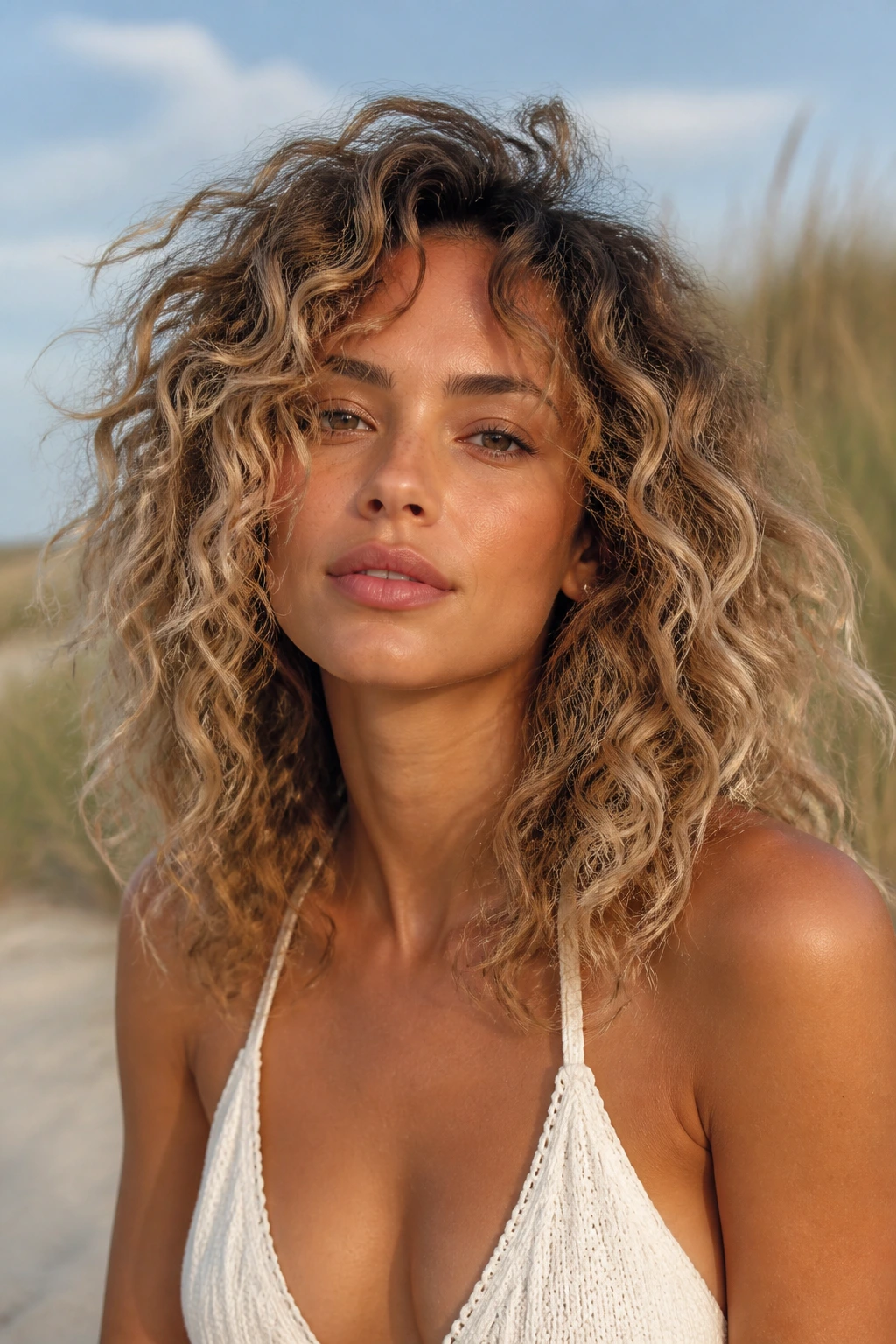
Sand bronde is softer than blonde and lighter than brunette, which is a useful place to live if you want lightness without the maintenance of very pale hair. On curls, the melt from a deeper root into sandy mids keeps the hair looking dimensional instead of dusty.
This shade can get muddy if the tone is too cool or too yellow, so the balance matters. Ask for a beige-sand finish rather than a brassy gold. The best versions still leave enough natural depth at the roots to protect the curl pattern. If you go too light everywhere, the curls can lose that rich contrast that makes them look plush.
It’s a good choice for shoulder-length or longer curls because the gradient has room to unfold.
15. Burgundy Wine Balayage
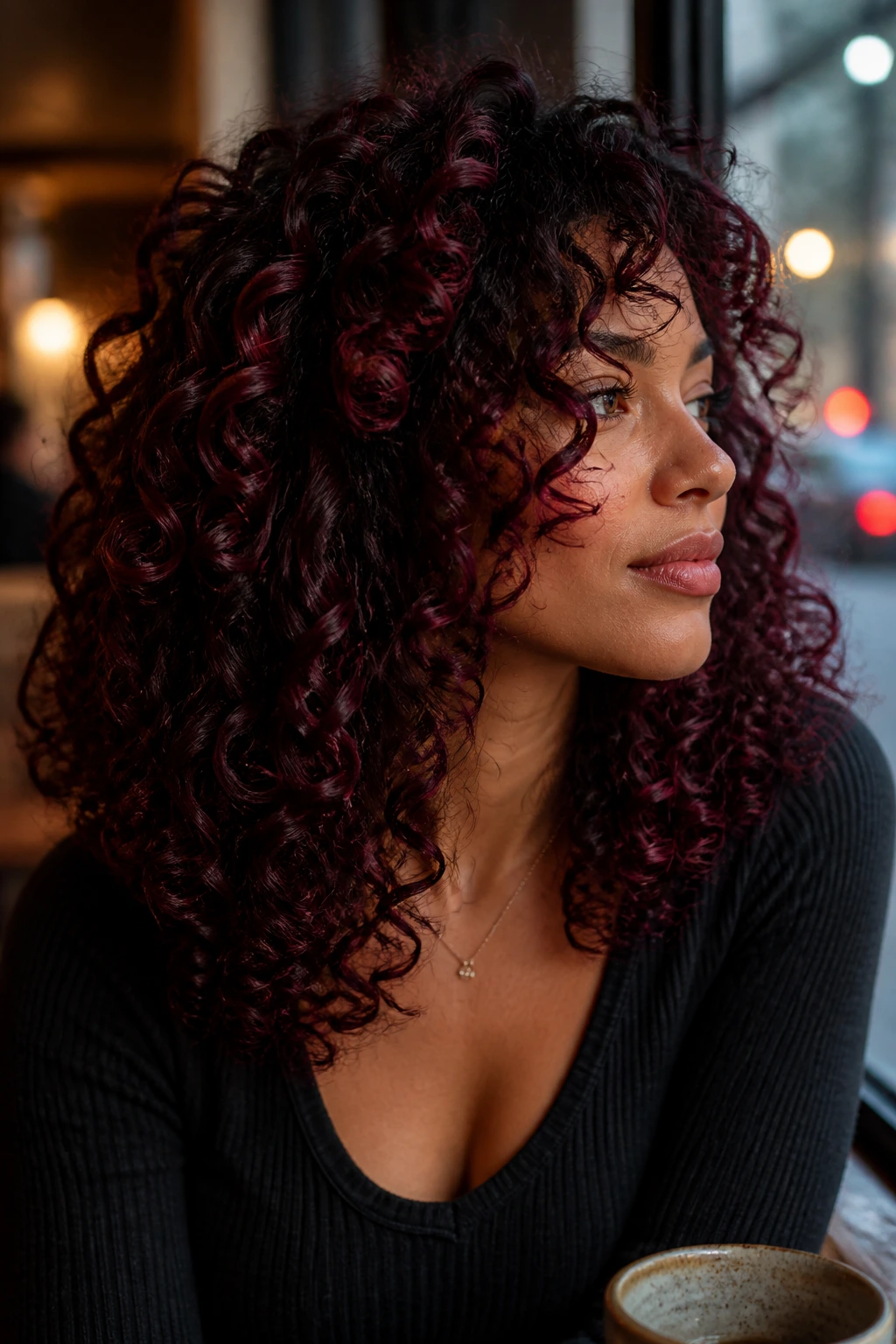
Burgundy wine balayage has a darker, more luxurious feel than bright red. The color sits in the red-violet family, so it reads deep and saturated, especially on dark curls. The balayage placement keeps it from looking like a single block of color and gives the curls little wine-colored flashes when they move.
This is one of the better bold options for people who want visible color without the upkeep of a high-lift blonde or pastel. The root area can stay closer to the natural base, which softens the grow-out. On curls, the burgundy tone tends to hide in the shadows and then return in the light. That back-and-forth is exactly why it works.
Use a color-safe mask if the ends are dry. Burgundy can look flat if the curl surface is rough.
16. Platinum Silver Frost
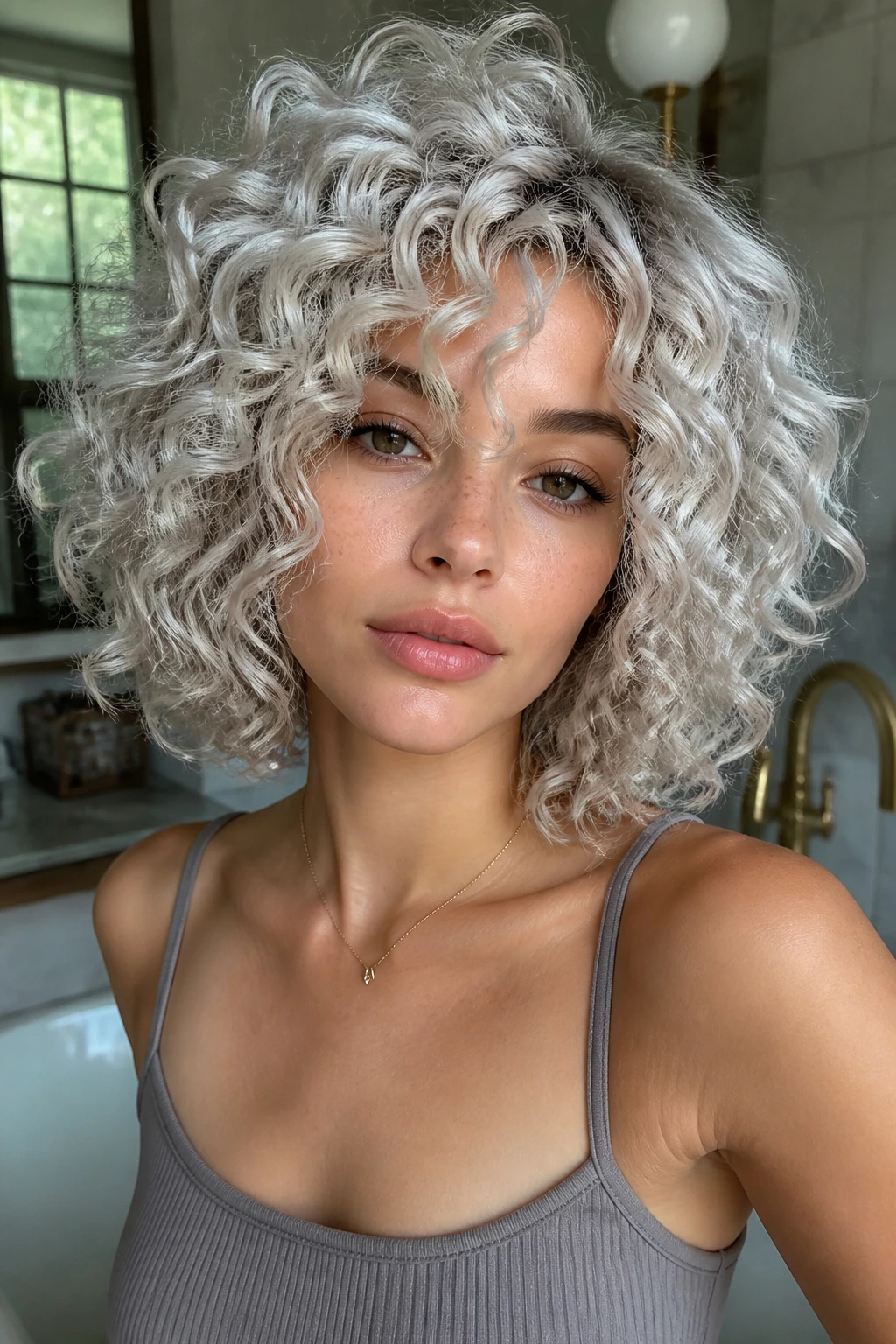
Platinum silver on curly hair is a commitment, and I won’t pretend otherwise. It can look incredible when the curl shape is healthy and the tone is clean, but it asks for discipline: bond care, toner, masks, trims, the whole lot. The payoff is that silver frost catches every bend in the hair and turns the texture into a pattern of light.
This is best for people who are already comfortable with maintenance or who have hair that can handle a lift. Curls that are fragile or heavily heat-damaged may not love this shade. But if your hair can take it, the result is crisp, bright, and almost sculptural.
What makes it work
The tone has to stay clean. Yellowing ruins the effect fast. Purple shampoo helps, but a salon toner is what keeps the shade from drifting into dull cream.
17. Cinnamon Auburn Glow
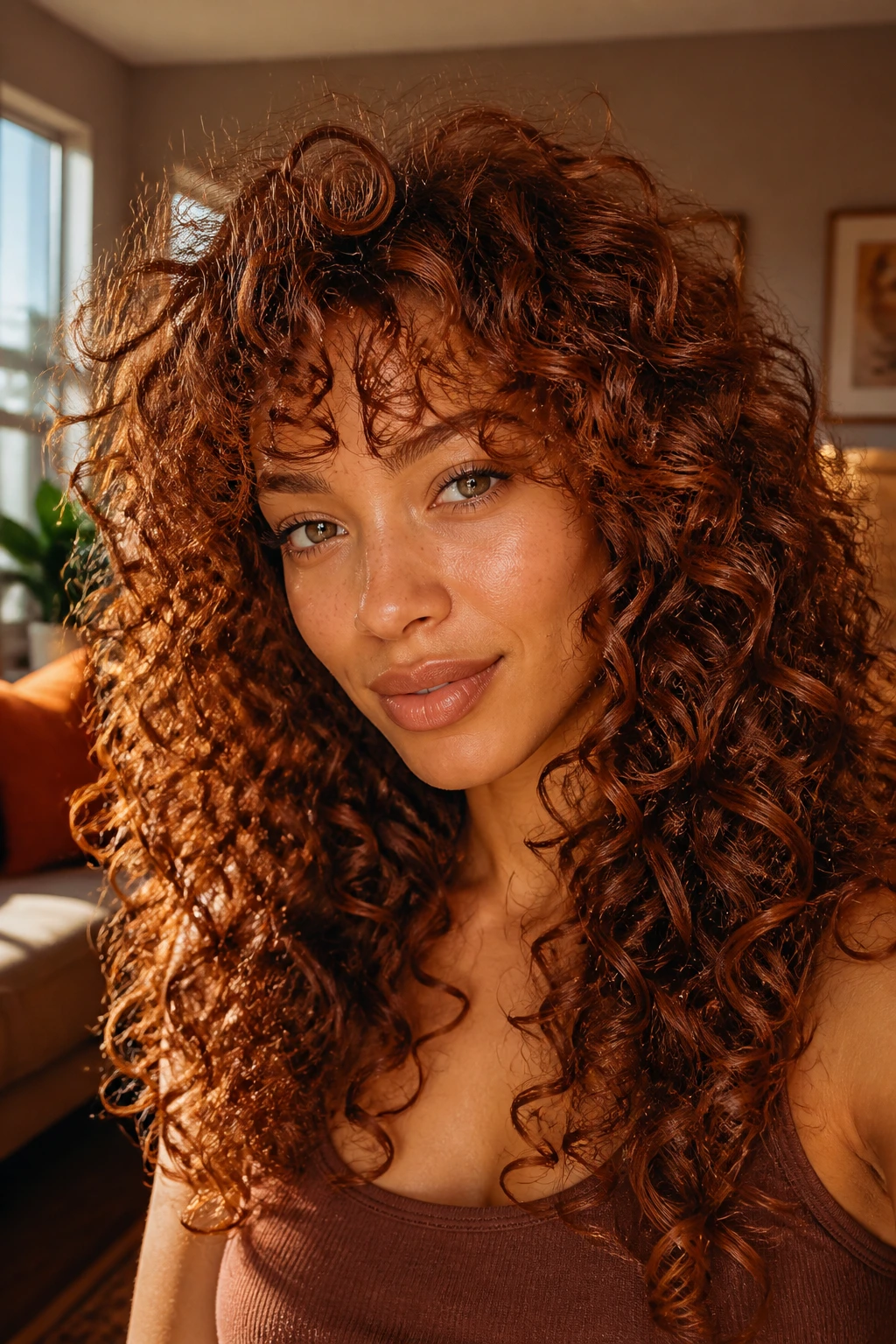
Cinnamon auburn is the quieter cousin of copper. It warms the hair without turning it into a red statement piece. On curls, that matters, because the texture itself already brings a lot of motion. You don’t need the color to shout.
This shade is good for brown hair that needs a little life or for redheads who want their tone to look richer. It also grows out gracefully because it lives close to the natural brunette-red spectrum. No harsh line. No shock at the root.
A clear or tinted gloss can keep cinnamon auburn looking fresh longer than a permanent red dye. If your hair is porous, the warmth may grab faster on the ends, so a root-to-tip consultation matters.
18. Toffee Ombre
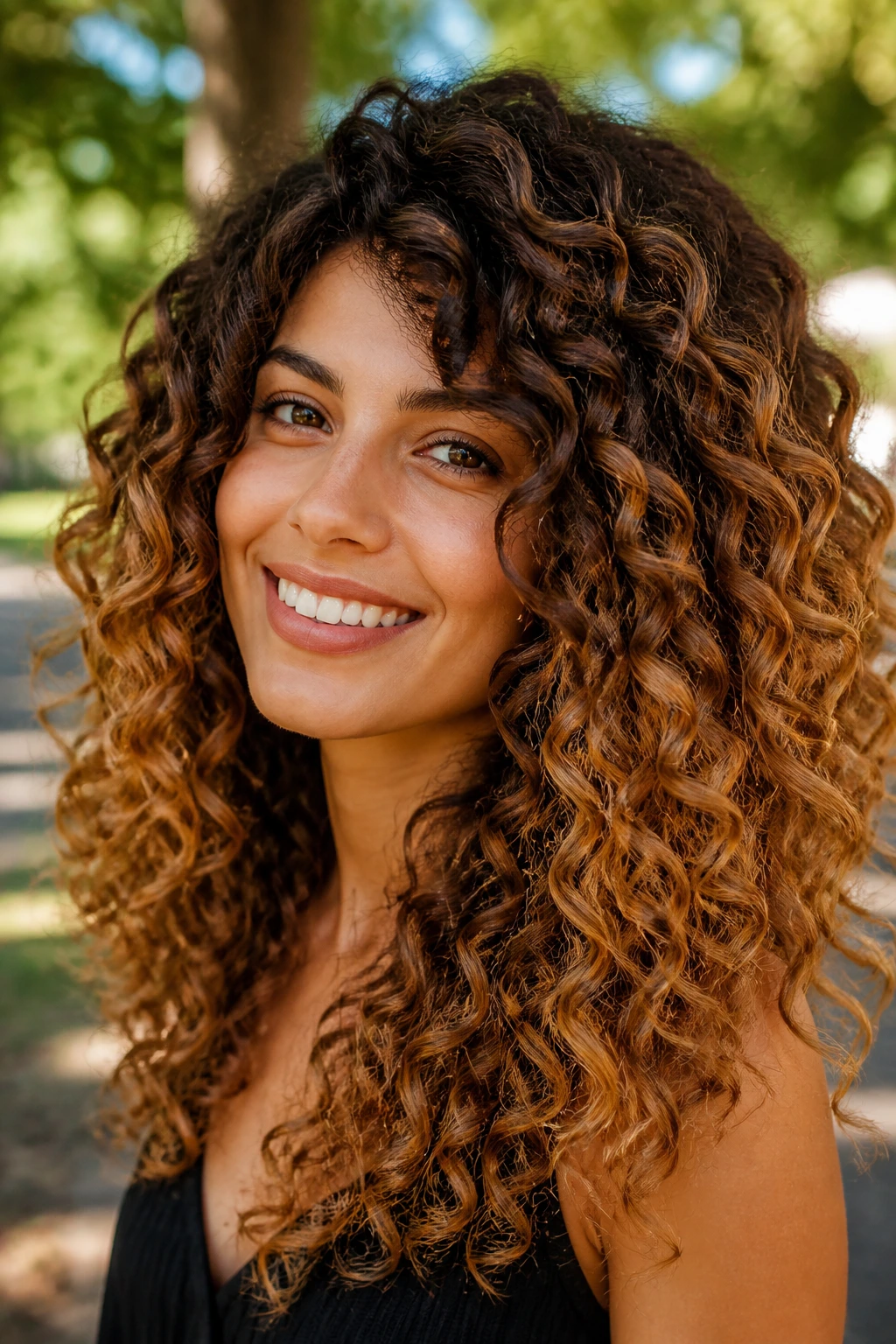
Toffee ombre gives you a darker root and a soft caramel finish, which is one of the easiest ways to lighten curls without losing their shape. The gradient helps because the eye reads the color as movement, not as a hard dye job. That works especially well on longer curls where the color can travel from root to tip.
This is a forgiving style if you’re not ready for full highlights. You can keep the base close to natural and let the lighter ends do the work. The trick is blending. The transition should be blurred enough that you can’t point to where one shade ends and the other begins. If you can, it needs more softening.
A curly cut with layers helps here. The lighter ends need room to show.
19. Mocha Melt with Chestnut Ends
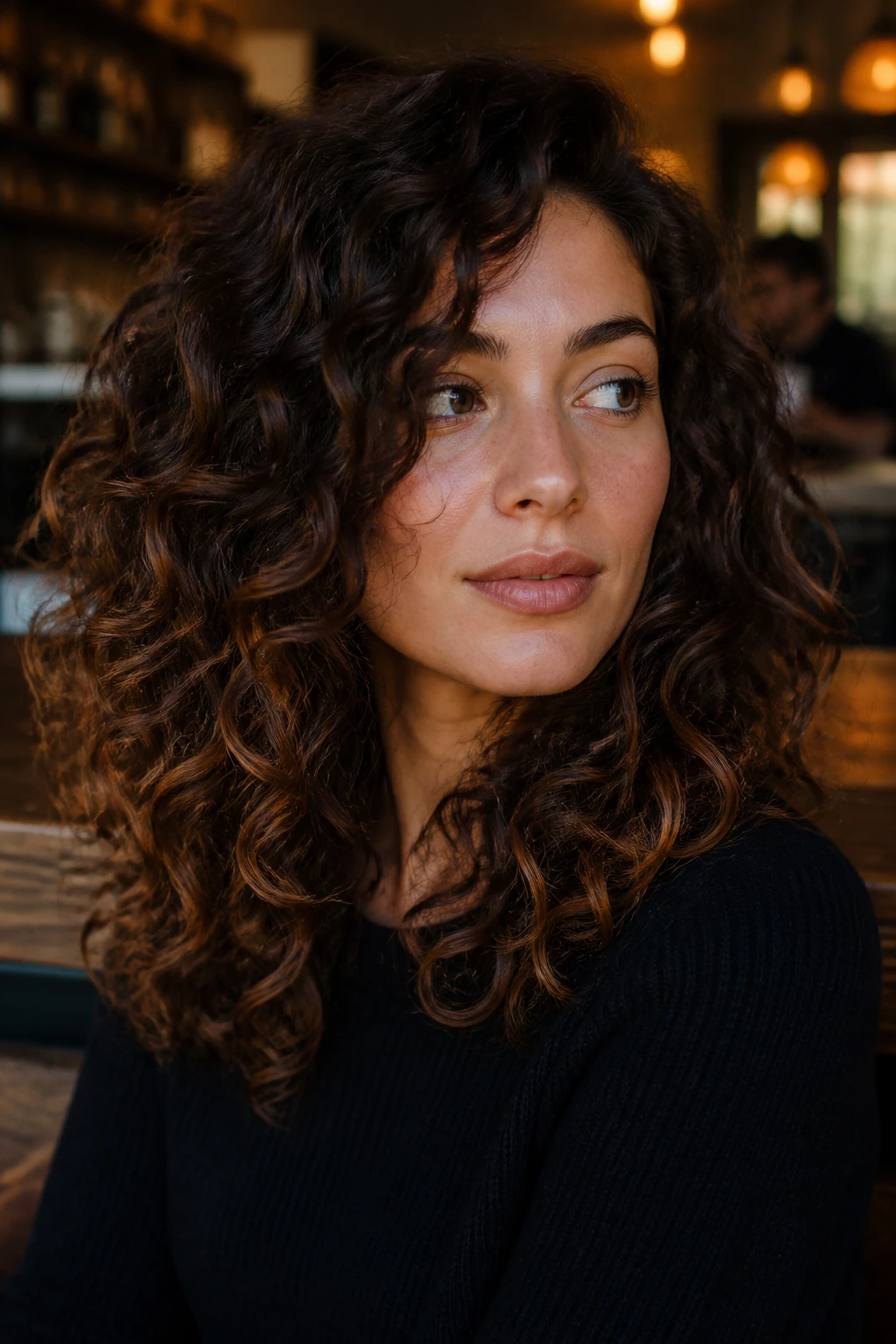
Mocha melt is for people who want brunette hair to look intentional instead of plain. The base stays deep mocha, then the color softens into chestnut at the ends so the curl pattern has a little lift. It’s subtle, but not boring. That’s the sweet spot.
This one works especially well when the hair already has natural brown variation. The melt simply refines what’s there and deepens the warm parts. Because the ends are lighter, the curl tips pick up movement and won’t disappear into one dark mass. That’s useful on thick curls, which can eat up light if the color is too uniform.
If your hair tends toward brass, ask for a neutral chestnut rather than a gold chestnut. The difference is small on paper and huge on curls.
20. Peach Apricot Tips
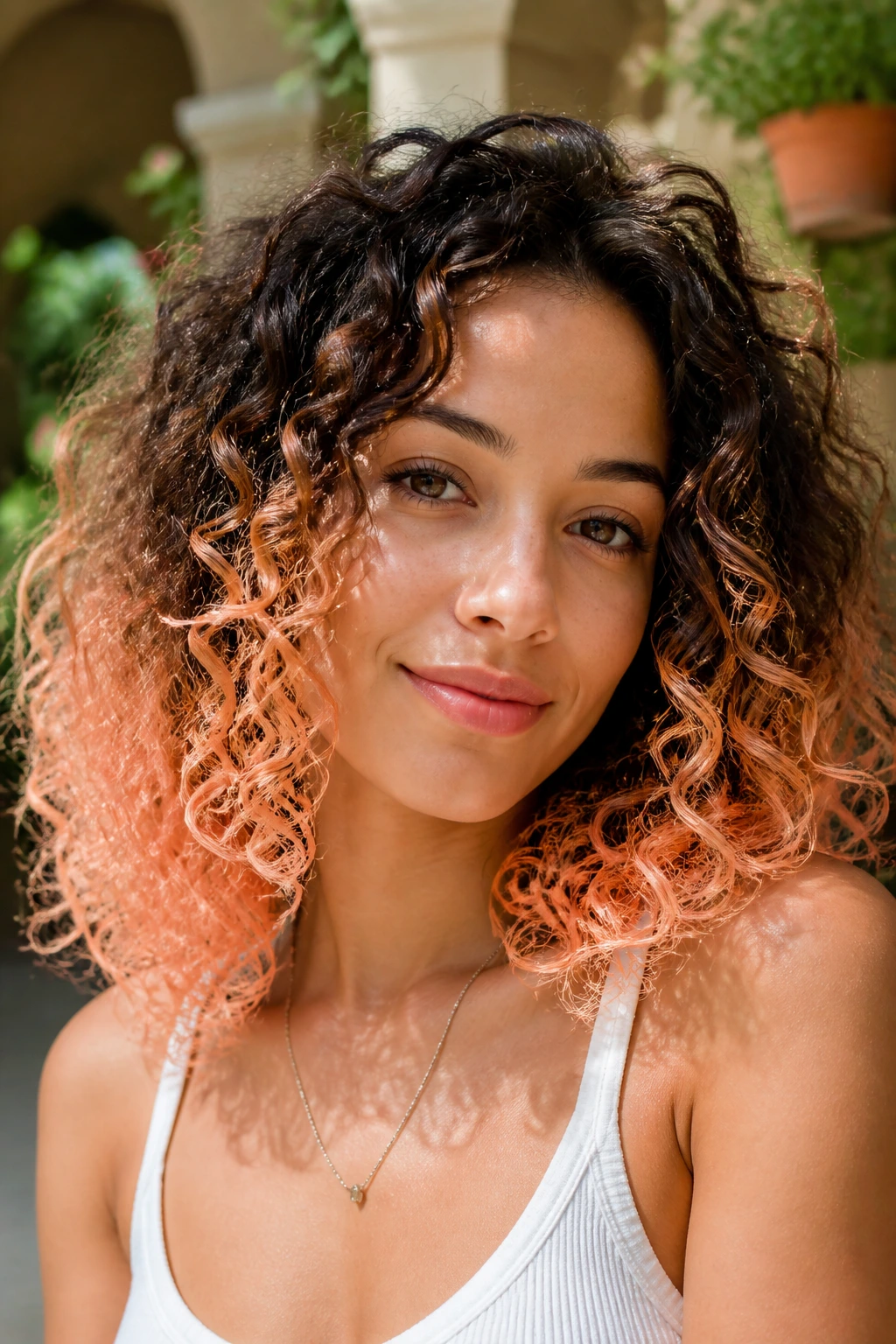
Peach apricot tips are a playful choice, but they’re not childish when the tone is right. The color should lean soft coral, pale peach, and a little apricot jam—not traffic-cone orange. On curls, the ends bounce the color around, so even a small amount shows up.
This idea works best on hair that’s already lightened at the ends or has enough lift to hold a pastel tint. The base should stay deeper so the peach has somewhere to sit. If the whole head is too pale, the color can disappear. If it’s too dark, it won’t show. That’s the balancing act.
Try this on a curly bob or shoulder-length cut. The ends are closer to the eye, and the shape makes the color look deliberate rather than random.
21. Smoky Lilac Wash
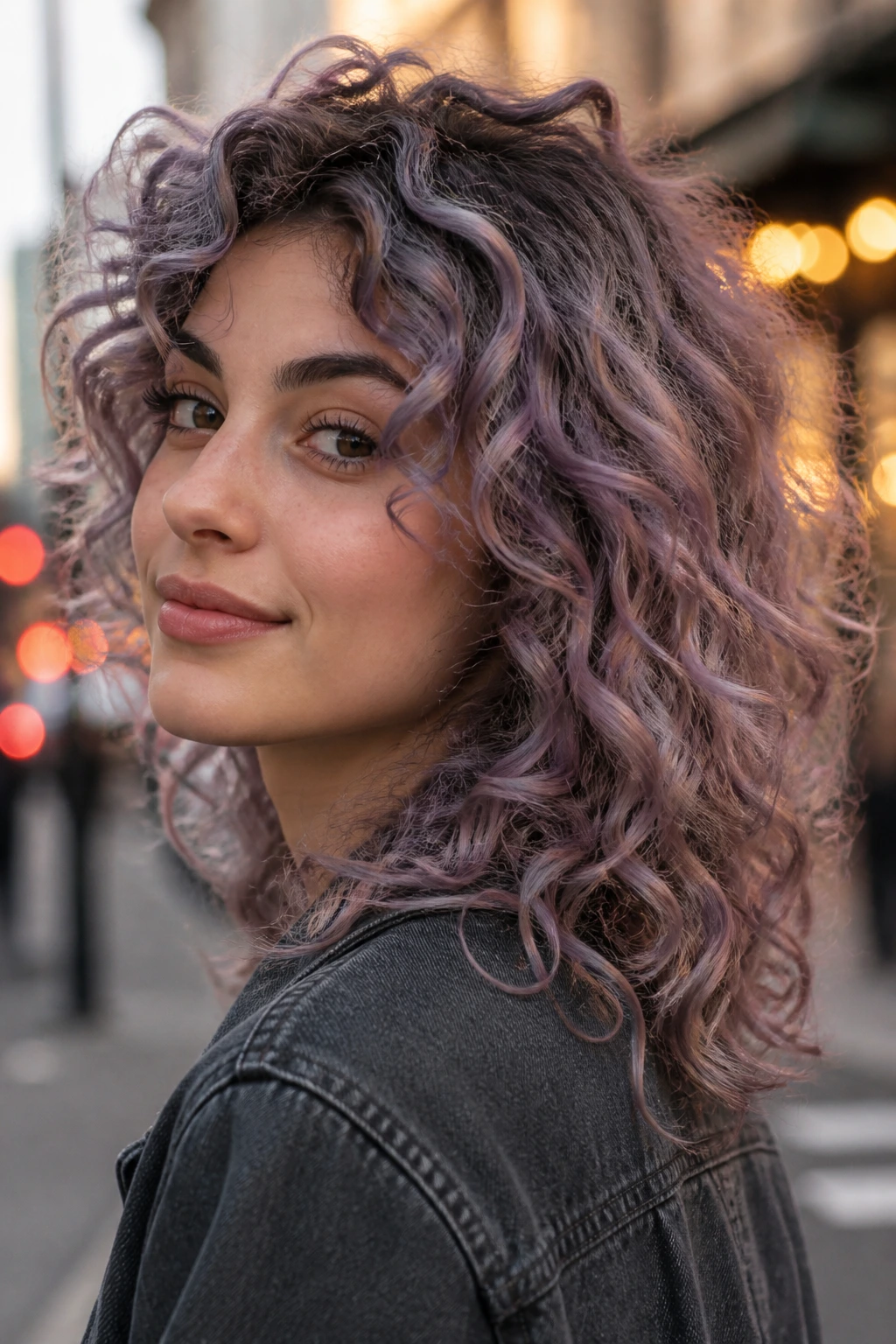
Smoky lilac is lavender with the saturation turned down. That’s why it feels wearable instead of costume-like. On curls, the muted purple sits in the bends of the hair and gives the whole head a cool haze.
This color needs a light base, but it doesn’t need to be icy blonde. A pale beige or soft yellow lift can work if the lilac is smoky enough. The best part is the way curly hair scatters the tone. On one curl it can look silver-violet. On the next, more lilac. That shift keeps it interesting.
Use a color-depositing mask to refresh the tone. Lilac fades faster than people expect, especially with frequent washing and heat.
22. Chestnut Gloss
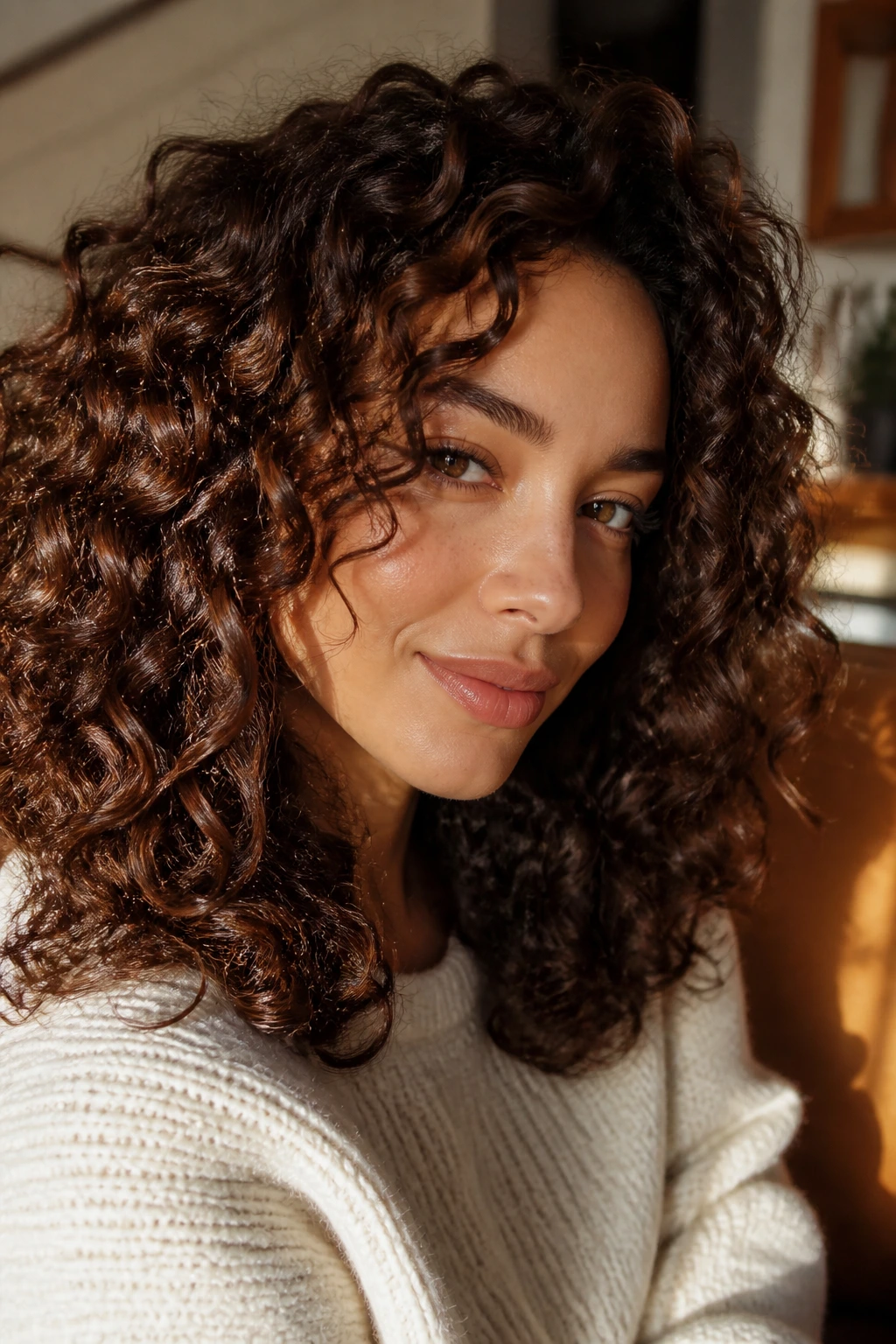
Chestnut gloss might not sound exciting, and that’s exactly why it’s useful. It is the color equivalent of polishing a good pair of boots. The shade deepens the natural brown, adds warm red-brown reflection, and makes curls look healthier without asking for a big change.
If your hair has gone dull from sun, chlorine, or too much toning, chestnut gloss can bring it back to life. It works on almost every curl pattern because it doesn’t fight the texture. It just gives the strands a richer surface. This is the color I reach for when someone wants “something” but doesn’t want a dramatic transformation.
The best chestnut gloss is glossy, not opaque. You should still see the natural curl variation underneath.
23. Warm Bronde Money Piece
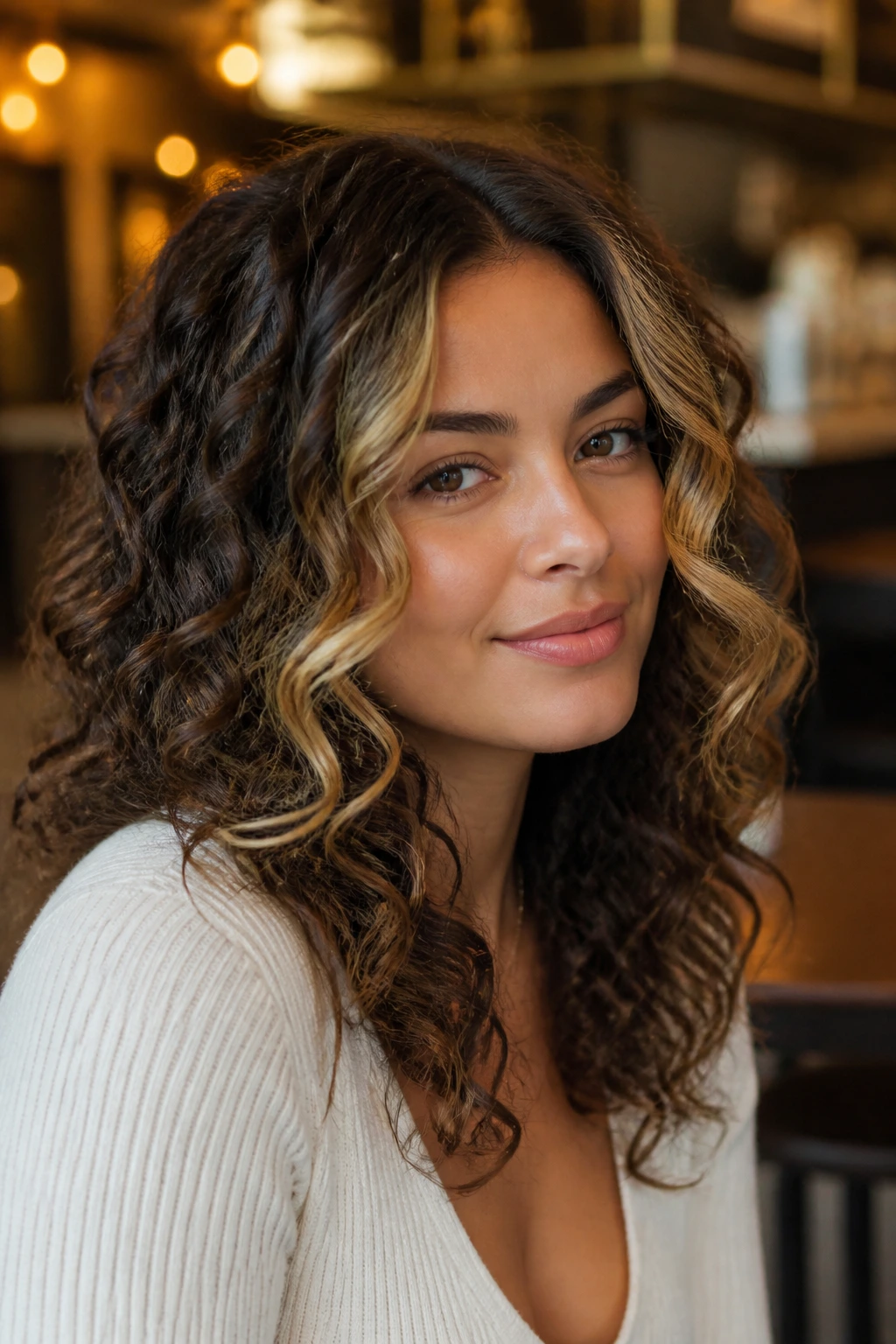
A warm bronde money piece is a tidy little color trick that does a lot of work. The front pieces are lifted to a beige-gold bronde, while the rest of the hair stays deeper. On curls, that front brightness frames the face and keeps the eye from getting lost in the bulk of the texture.
I like this option for people who want a visible change without committing to a full-head color service. Because the bright area is small, it’s cheaper to maintain and faster to refresh. It also plays well with layered curly cuts, since the front curls tend to sit where people look first.
Where to place it
Start the lightest pieces at the cheekbone or just below the temple. Too high and it can look like a streak. Too low and the frame loses impact.
24. Emerald Underlayer
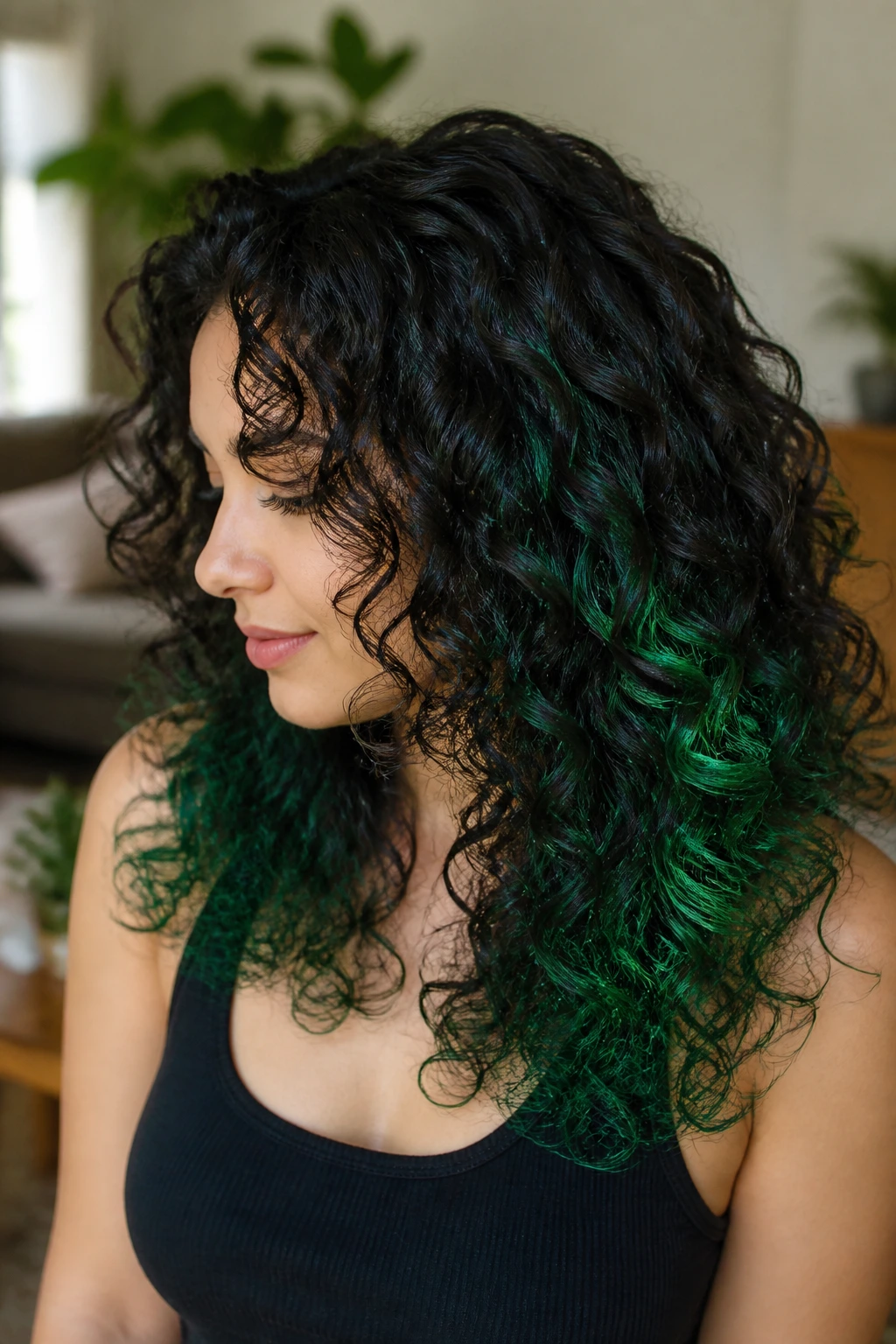
Emerald underlayer color is bold, but the hidden placement keeps it wearable. The top layer stays natural, while the underneath sections carry that deep green jewel tone. When the curls move, the emerald flashes through like a secret. That’s more interesting than a full-head bright color, at least to my eye.
The shade works best on medium to dark bases that can hold onto the green without looking muddy. If the hair is lightened first, the emerald looks cleaner and more saturated. Curly hair helps because the underlayer shows in uneven bursts rather than one flat panel. That keeps it from feeling too graphic.
If you like wearing half-up styles, this one gets even better. The hidden green becomes part of the shape.
25. Coral Dip-Dye
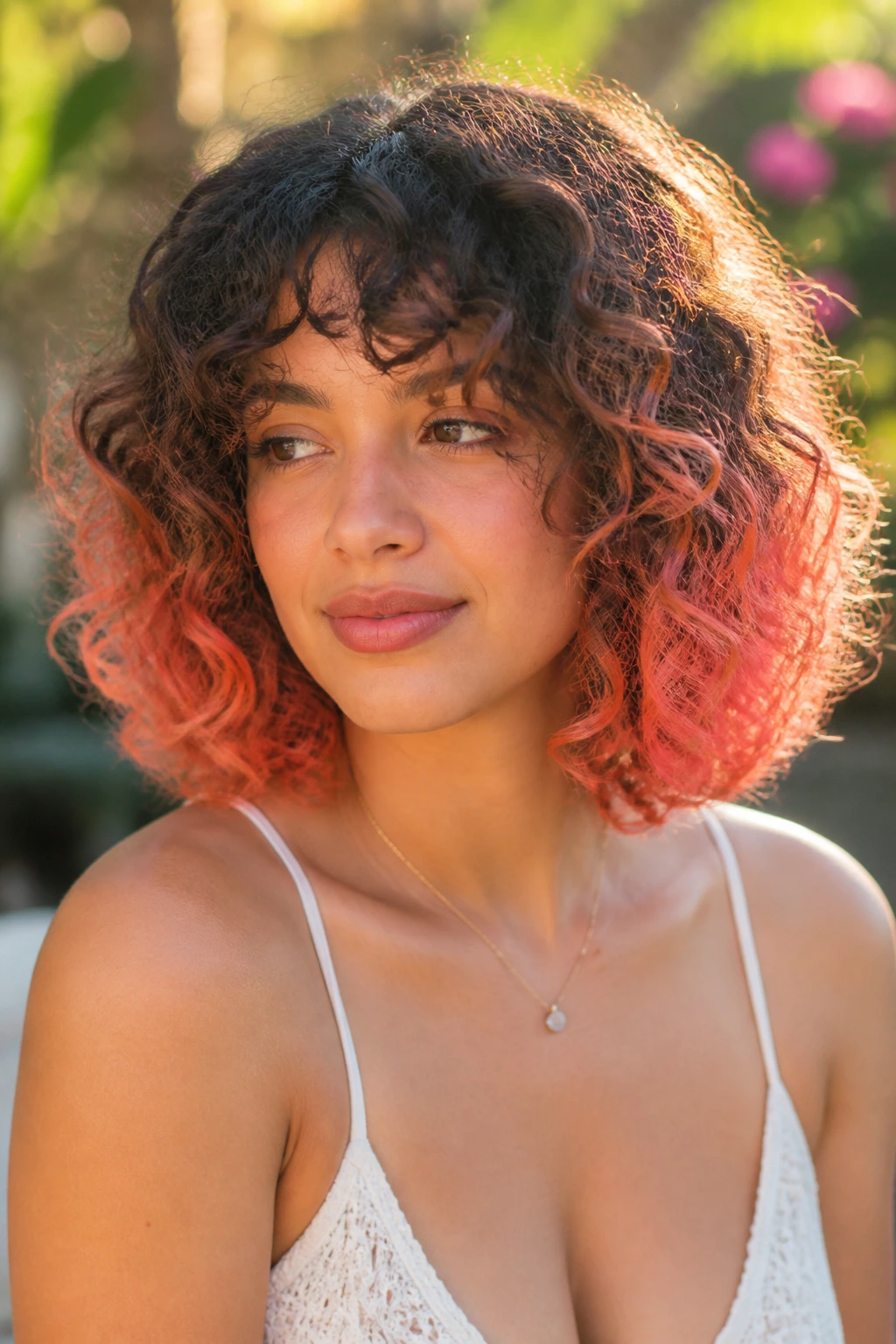
Coral dip-dye brings in brightness at the ends, where curls naturally taper and move. That makes the color feel playful without taking over the whole head. Coral sits between orange and pink, so it has enough warmth to stay soft and enough punch to be visible.
This is best on lighter or pre-lightened ends, especially in a curly bob or layered mid-length cut. The dip-dye effect should feel blended, not chopped off in a hard line. A soft fade keeps the look from turning rigid. On curls, the ends fan out and show the color in a much nicer way than straight hair ever would.
Use a color-safe styling cream and avoid heavy oils on the ends. Coral fades quickly when the hair is weighed down.
26. Strawberry Blonde Veil
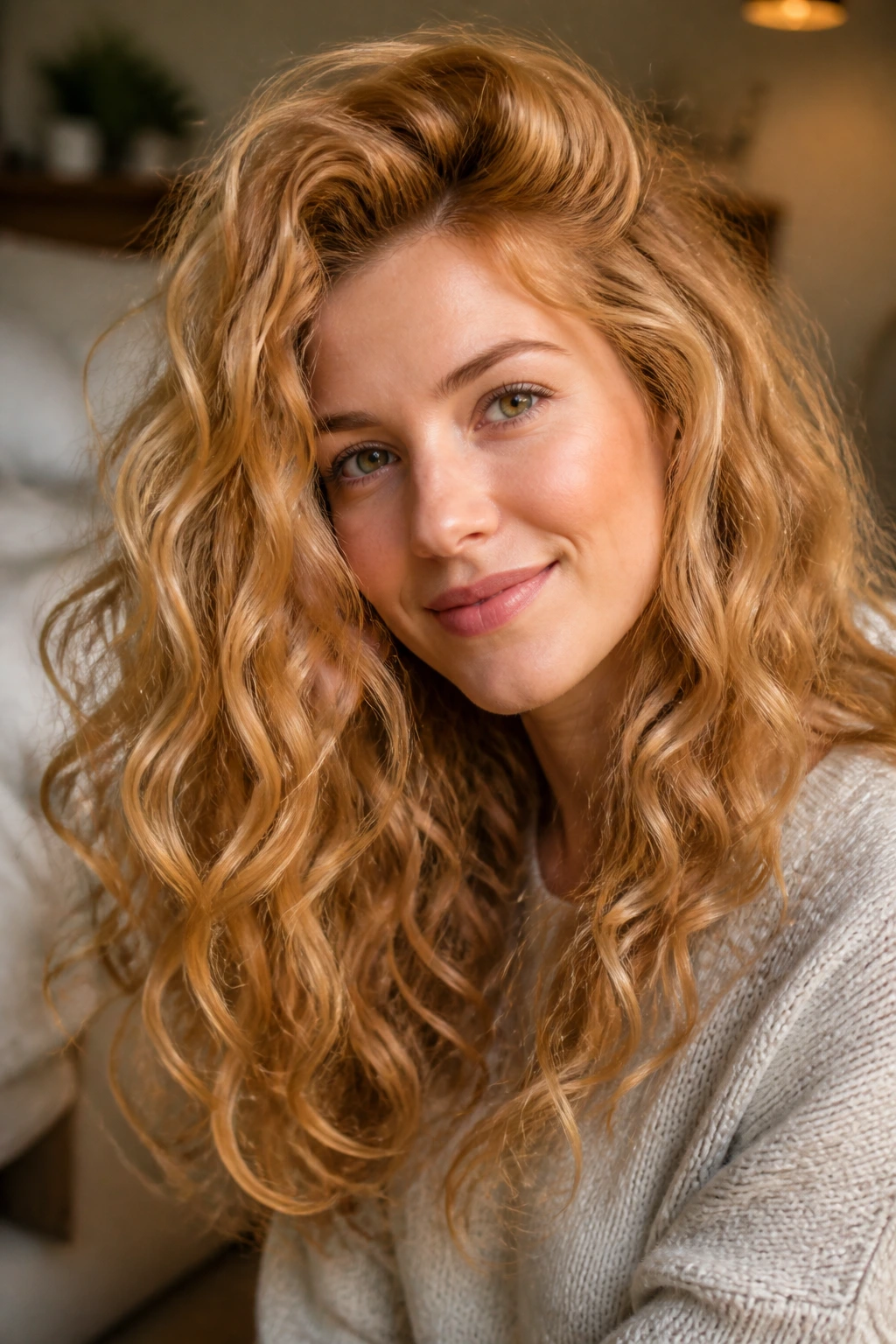
Strawberry blonde veil is one of the prettiest red-blonde shades for curls because it leans soft instead of bright. The color sits between peach, gold, and light copper, which gives the hair a warm glow without going full ginger. On curly hair, that veil-like finish keeps the strands looking airy.
This shade works best on lighter bases or hair that can be lifted gently. The root area can stay a little deeper for softness, while the mids and ends carry the strawberry tone. It’s a nice answer if you want red without the maintenance of true red dye. It also looks especially good when curls are well-defined, since the lighter tone can otherwise disappear in frizz.
A gloss refresh keeps the strawberry note from fading into plain blonde.
27. Midnight Mahogany
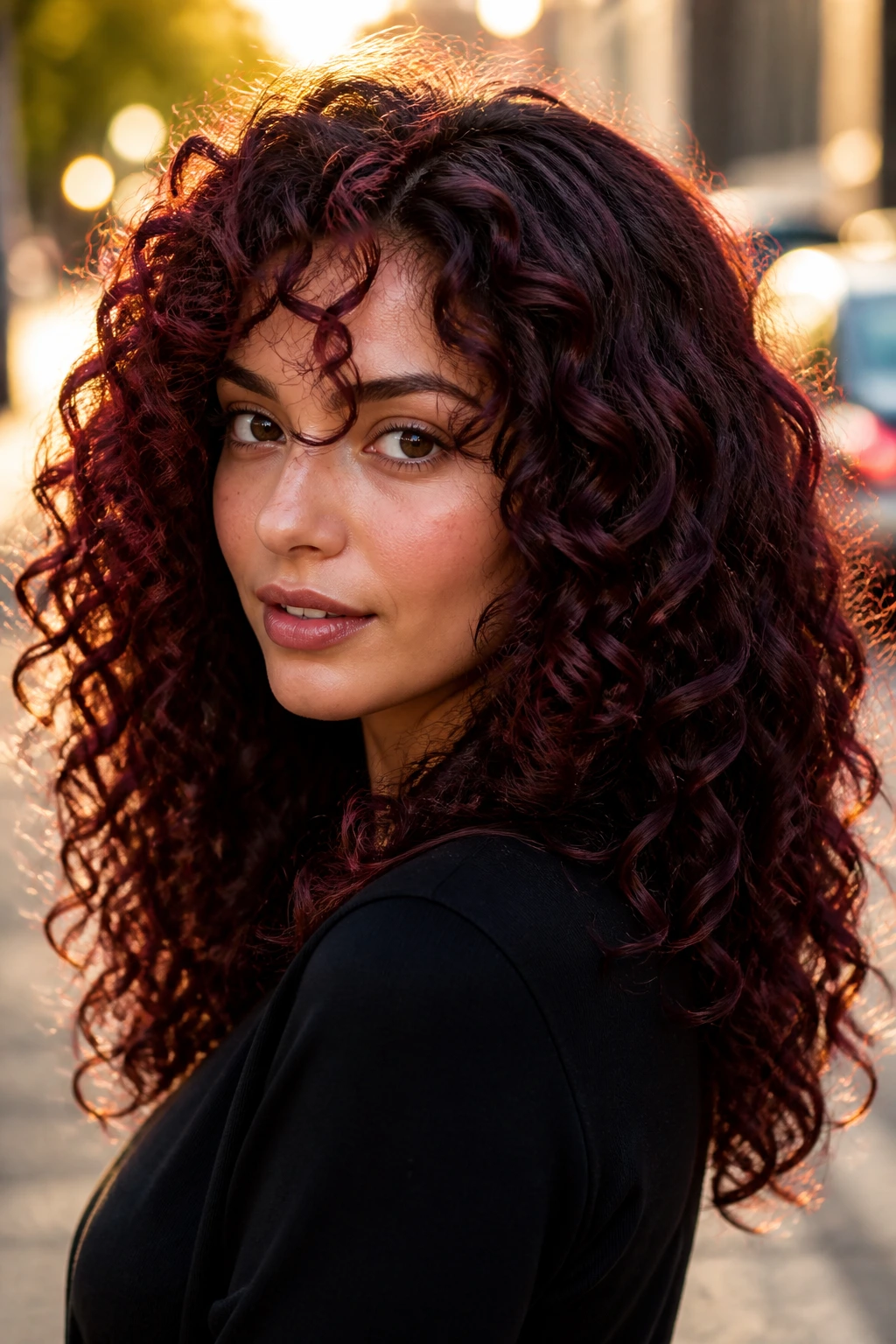
Midnight mahogany is dark, rich, and a little dramatic in the best way. It mixes deep brown with red-violet warmth, so the color reads almost black in low light and then opens up in sunlight. On curls, that shift is half the appeal. The coils catch the red where the light lands and keep the rest deep and glossy.
This is a strong choice if you want dark hair with warmth and depth, not flat black. It can also make the curl pattern look denser because the mahogany tone gives the hair a thicker visual body. The maintenance is easier than bright red, too. You’ll still want gloss and sulfate-free washing, but the grow-out is kinder.
If you’ve been living in brunette land for years and want a change that still feels grounded, this is the one I’d circle first.
How Curly Hair Color Should Be Placed, Not Just Chosen
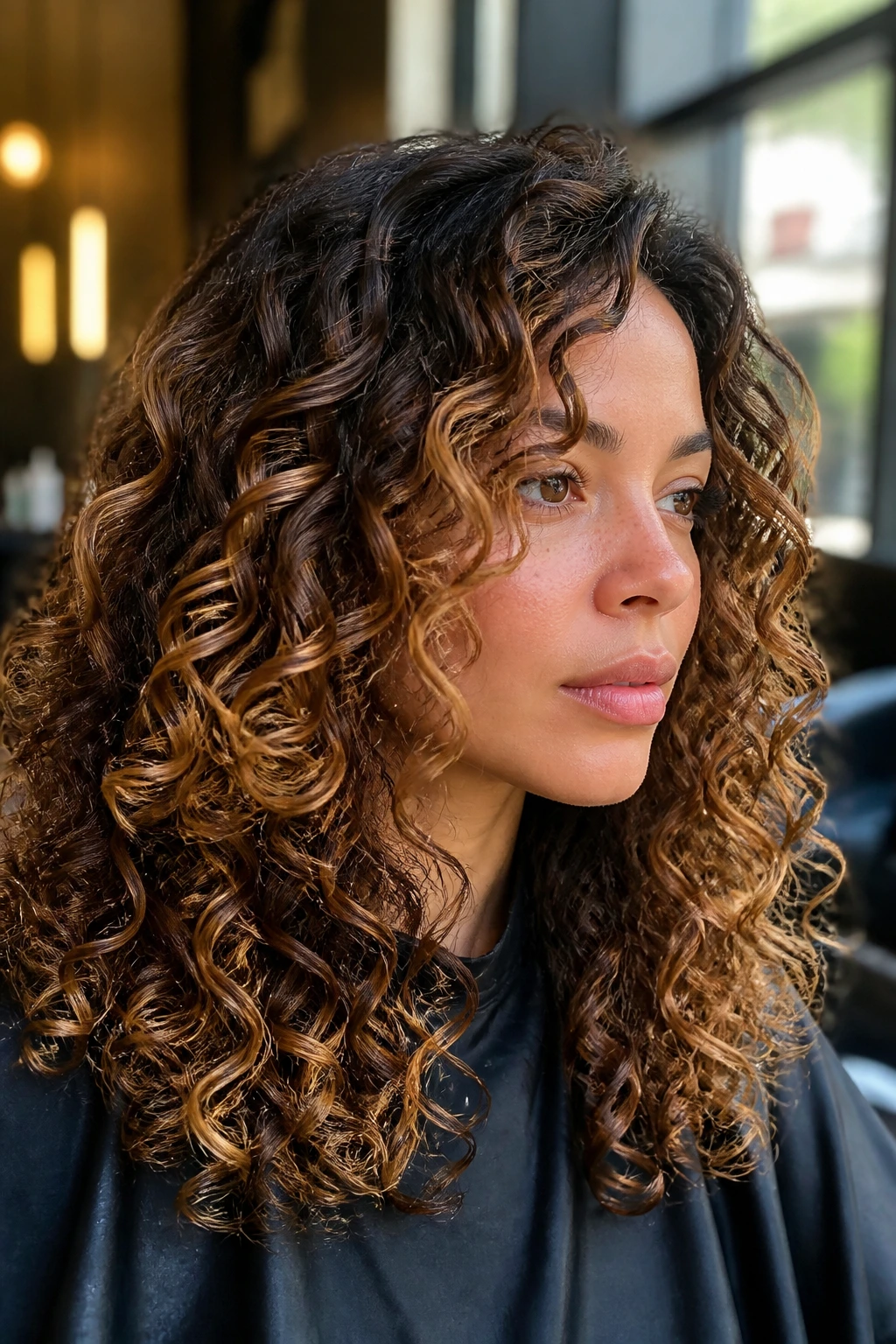
Placement changes everything on curls. A shade that sits all over the head in the same intensity can look heavy, while the same shade painted in ribbons, panels, or underlayers can suddenly look soft and expensive. That’s why curl-friendly color work usually starts with a haircut map, not a color tube.
Placement: Keep the brightest pieces where curls naturally open—around the face, canopy, and outer curve of the ringlet. That’s where the eye sees them first.
Contrast: Leave some of the natural base between lighter pieces. Curls need dark space to keep the shape defined.
Texture: Tight coils usually look better with less saturation and more deliberate spacing. Looser curls can wear brighter panels a bit more easily.
Growth pattern: If you hate root upkeep, ask for balayage, root shadow, or underlights instead of full-head lightening.
Essential Tools for Coloring Curly Hair at Home or in the Salon Chair
- Color-safe sulfate-free shampoo: Keeps pigment from flushing out too fast and protects the cuticle.
- Deep conditioner or mask: Curly hair needs moisture after any lift, even a mild one.
- Wide-tooth comb: Better than a brush for distributing conditioner and color on textured hair.
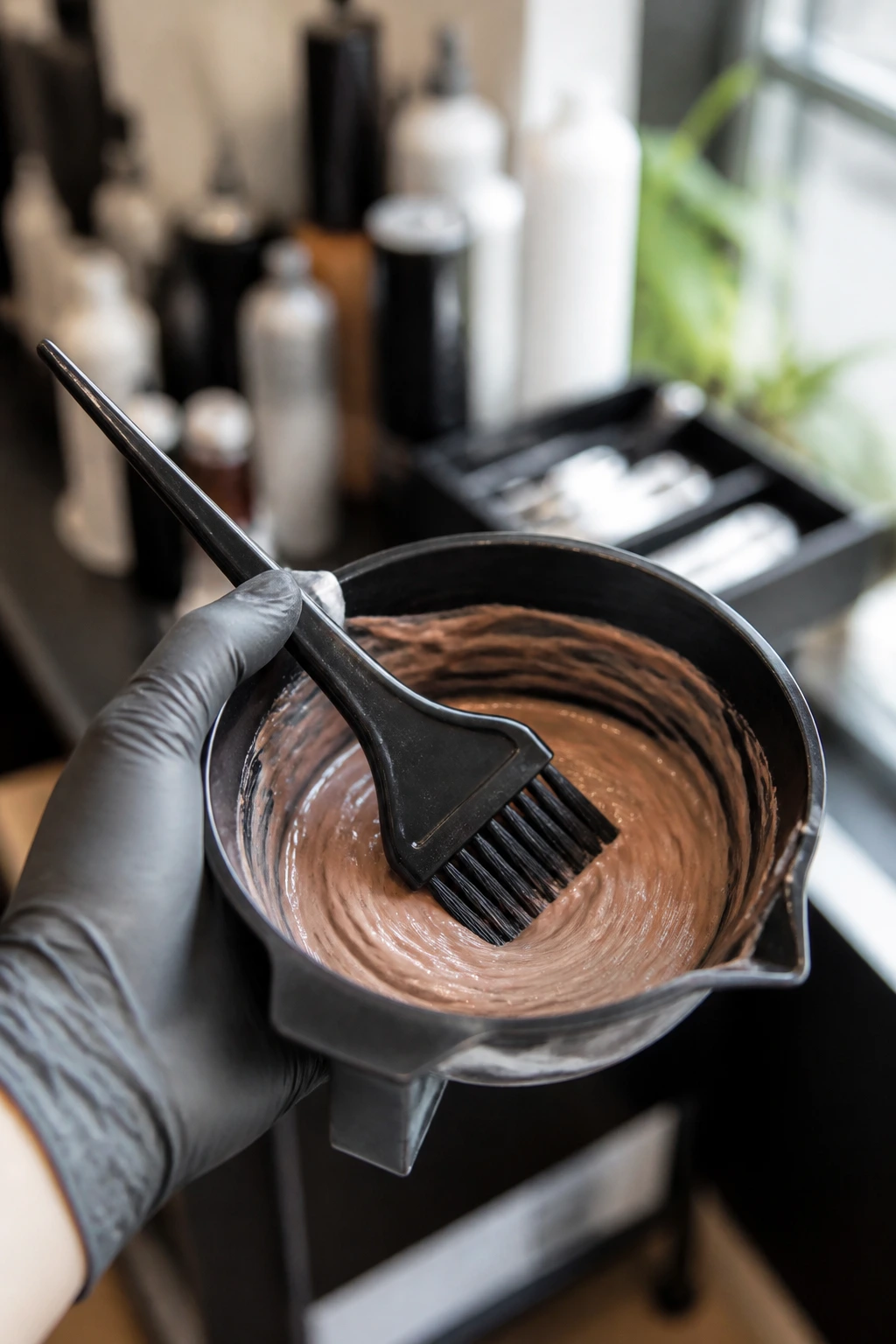
- Tint bowl and brush: Useful for root smudges, glosses, and targeted placement.
- Gloves: Non-negotiable if you’re handling direct dye, toner, or lightener.
- Sectioning clips: Curls hide missed spots, so clean sectioning matters more than people think.
- Foils or color film: Helpful for peekaboo panels, face frames, and vivid pieces.
- Microfiber towel or cotton T-shirt: Reduces frizz during the first dry after coloring.
- Heat protectant: Necessary if you diffuse, stretch, or silk-press after color.
- Purple or blue shampoo: Only if your blonde or brunette needs tone correction; don’t overuse it.
How to Pick the Right Tone, Depth, and Formula
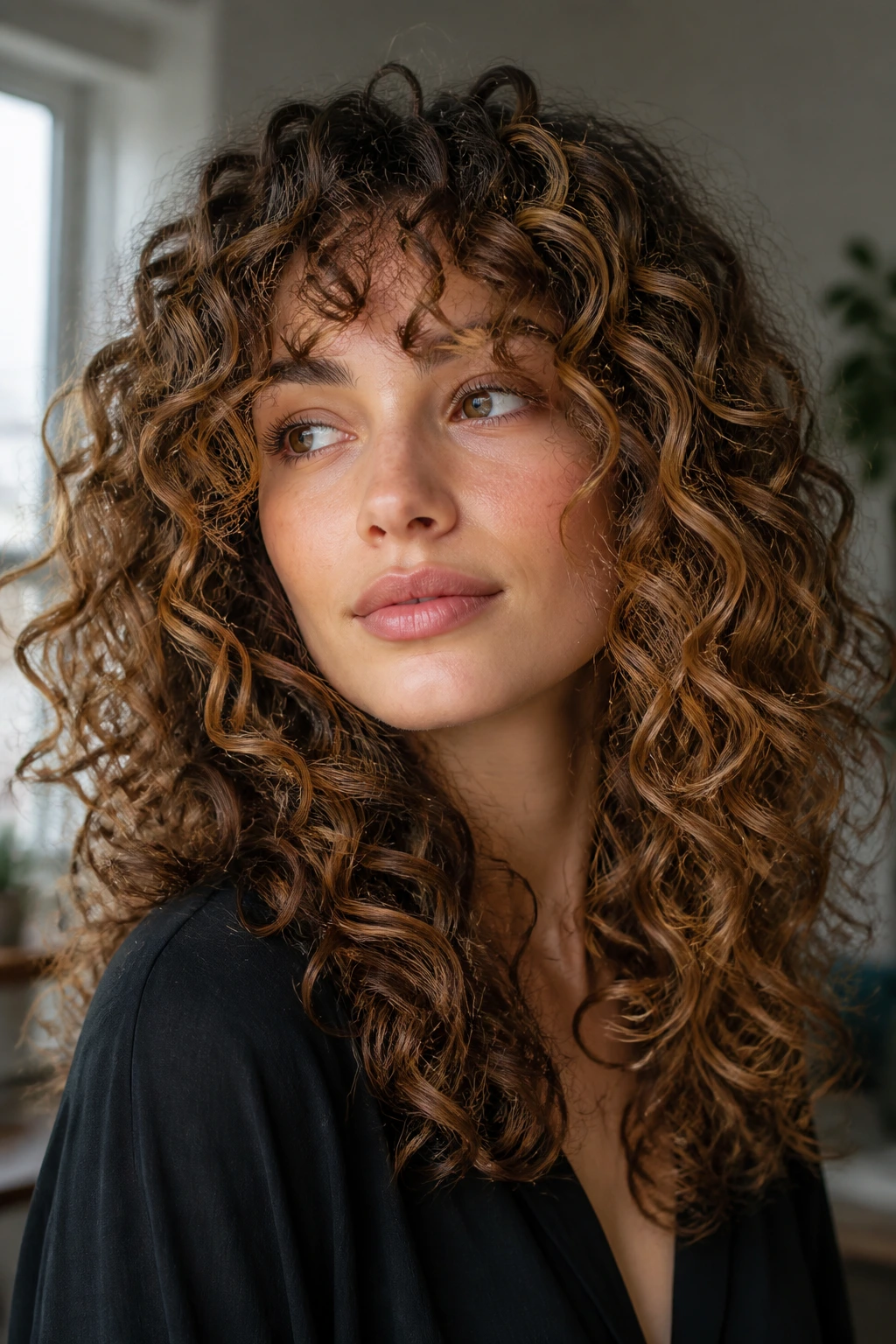
Curly hair tells on bad color choices fast, so shade selection matters. If your base is dark brown and you want dimension, caramel, honey, copper, and chestnut are safer than very pale blonde. They give contrast without asking the hair to survive a huge lift.
If you’re going lighter, decide whether you want warmth or coolness. Warm tones—gold, honey, caramel, copper—usually look softer on curls and fade in a friendlier way. Cool tones—ash, mushroom, silver, navy, plum—can look fantastic, but they need tighter maintenance because porous curls love to grab and then twist the tone out of shape.
Demi-permanent color is useful when you want to deposit tone, deepen the base, or refresh faded ends. Permanent color makes more sense when you need gray coverage or a deeper, long-lasting base shift. Lightener should be used with care, and on curls I’d rather see several controlled sessions than one aggressive push to pale blonde.
A strand test saves arguments later. So does a consultation photo taken in daylight, not under warm bathroom bulbs. Those bulbs lie.
How to Style These Colors So the Curl Pattern Does the Work
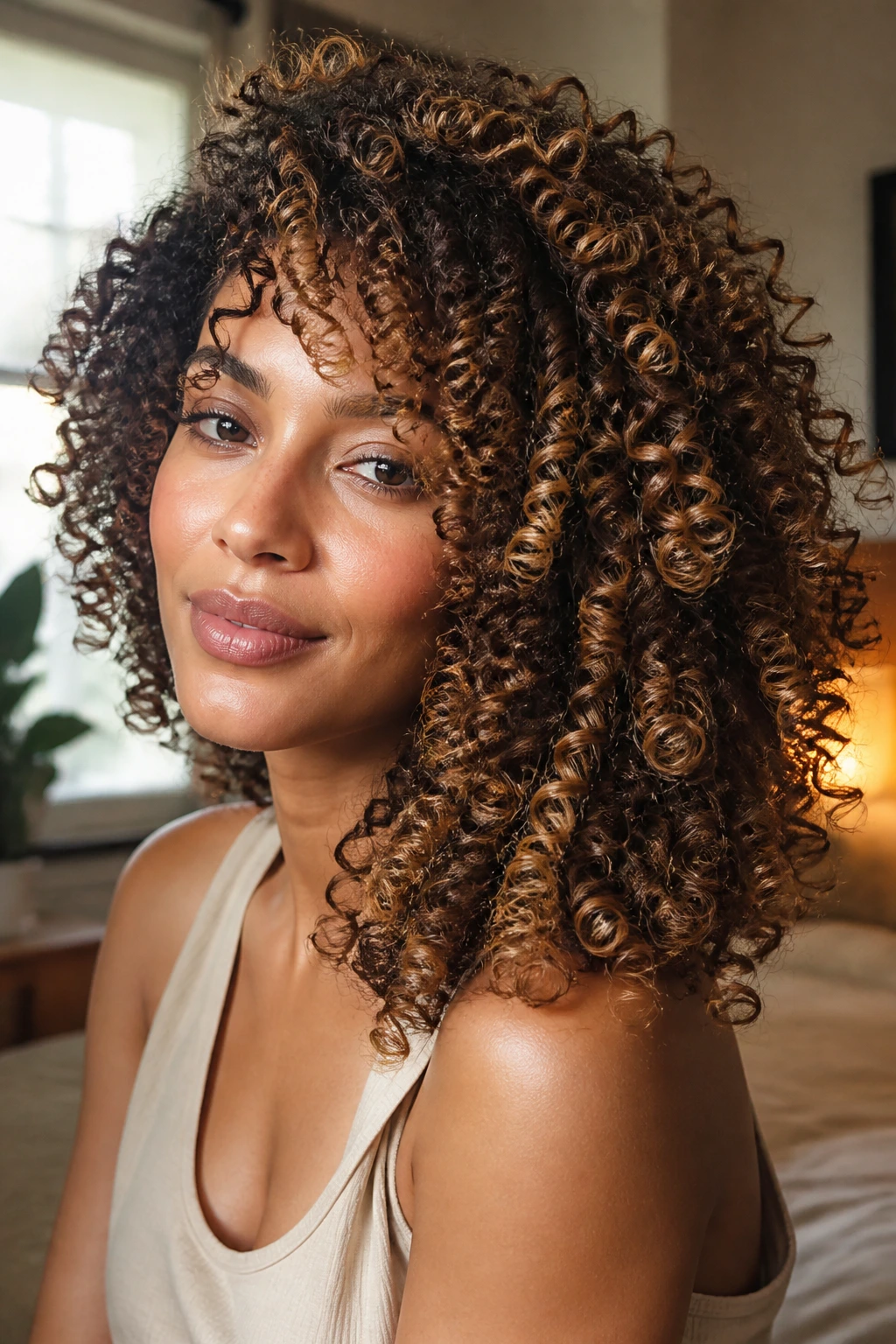
Color on curly hair looks best when the curl pattern is defined, not stretched into submission. A wash-and-go with a good gel cast will show ribbons, money pieces, and underlights more clearly than a brushed-out style. A twist-out or braid-out can do the same thing if you want a softer, more separated finish.
Finish: Use a light serum or oil on the very ends only. Too much product on the canopy can mute highlights and make darker colors look dusty.
Style choice: Diffusing usually shows dimension better than air-drying if your curls tend to clump too tightly. More separation means more visible color.
Haircut: Layers help every one of these shades. They stop the color from pooling at the bottom and make the curl shape easier to read.
Face framing: If you want the color to pop in photos and in real life, keep some brighter pieces near the cheekbones. That’s where people look first.
Extra Tips for Better Shine, Softer Grow-Out, and More Dimension
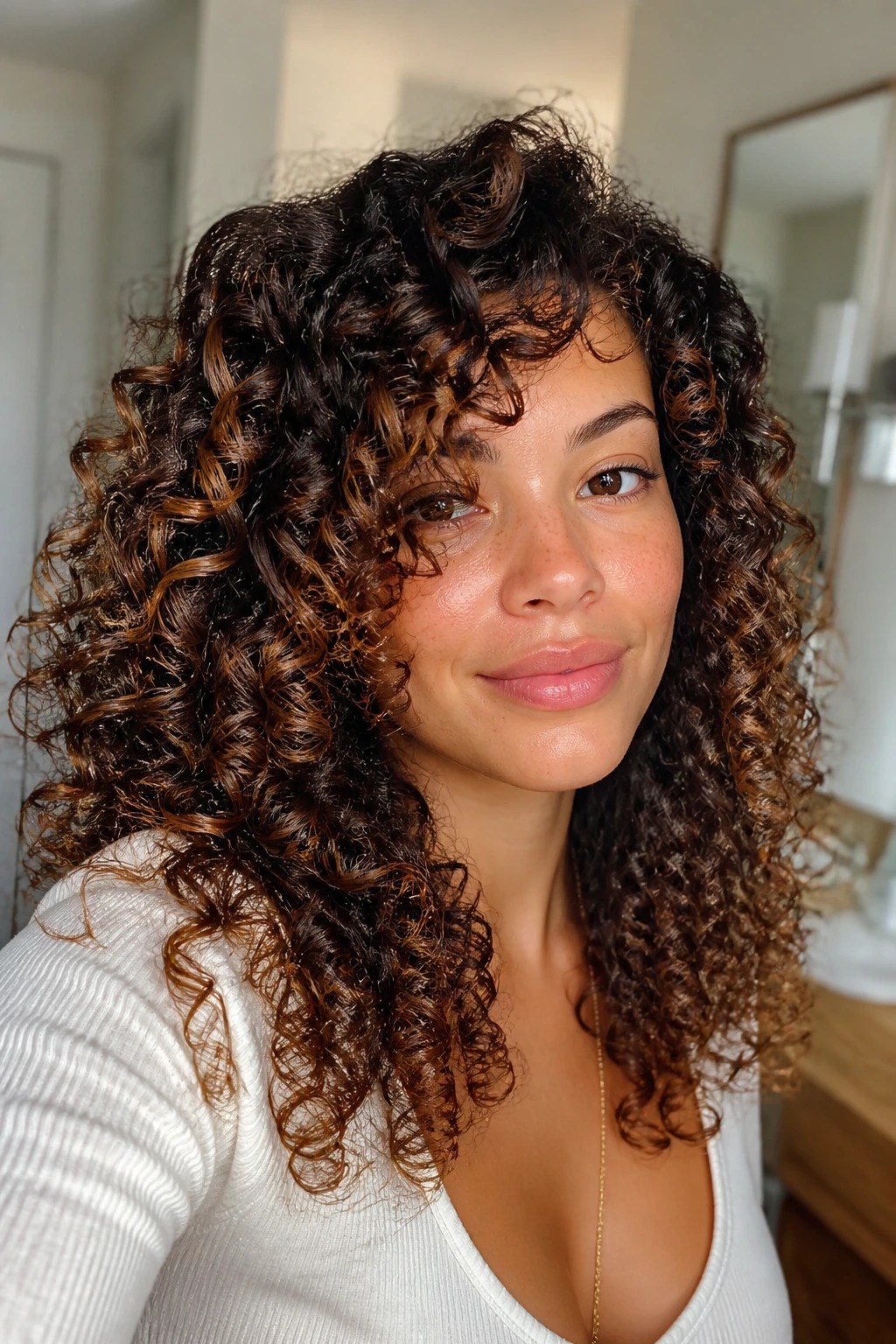
Gloss Timing: A clear or tinted gloss every 6 to 8 weeks keeps brunette, copper, and red tones from getting dull. It also helps the cuticle look smoother, which matters a lot on curls.
Color Placement: Ask for lighter pieces on the outer curl layer instead of burying everything underneath. Hidden color is fun. Visible dimension is what makes the style read.
Customization: If you hate brass, lean beige, ash, mushroom, or chestnut. If you want warmth, go honey, caramel, copper, or auburn. A tiny tone shift changes the whole mood.
Make-It-Yours: For low-maintenance wear, keep your natural root and add face-framing color only. For a bolder finish, add underlayers or peekaboo panels so the color shows when the hair moves.
Shine Trick: Apply a lightweight leave-in and then stop. Overloading curls with heavy cream flattens highlights faster than it helps them.
Maintenance, Fading, and Refresh Schedules That Actually Make Sense
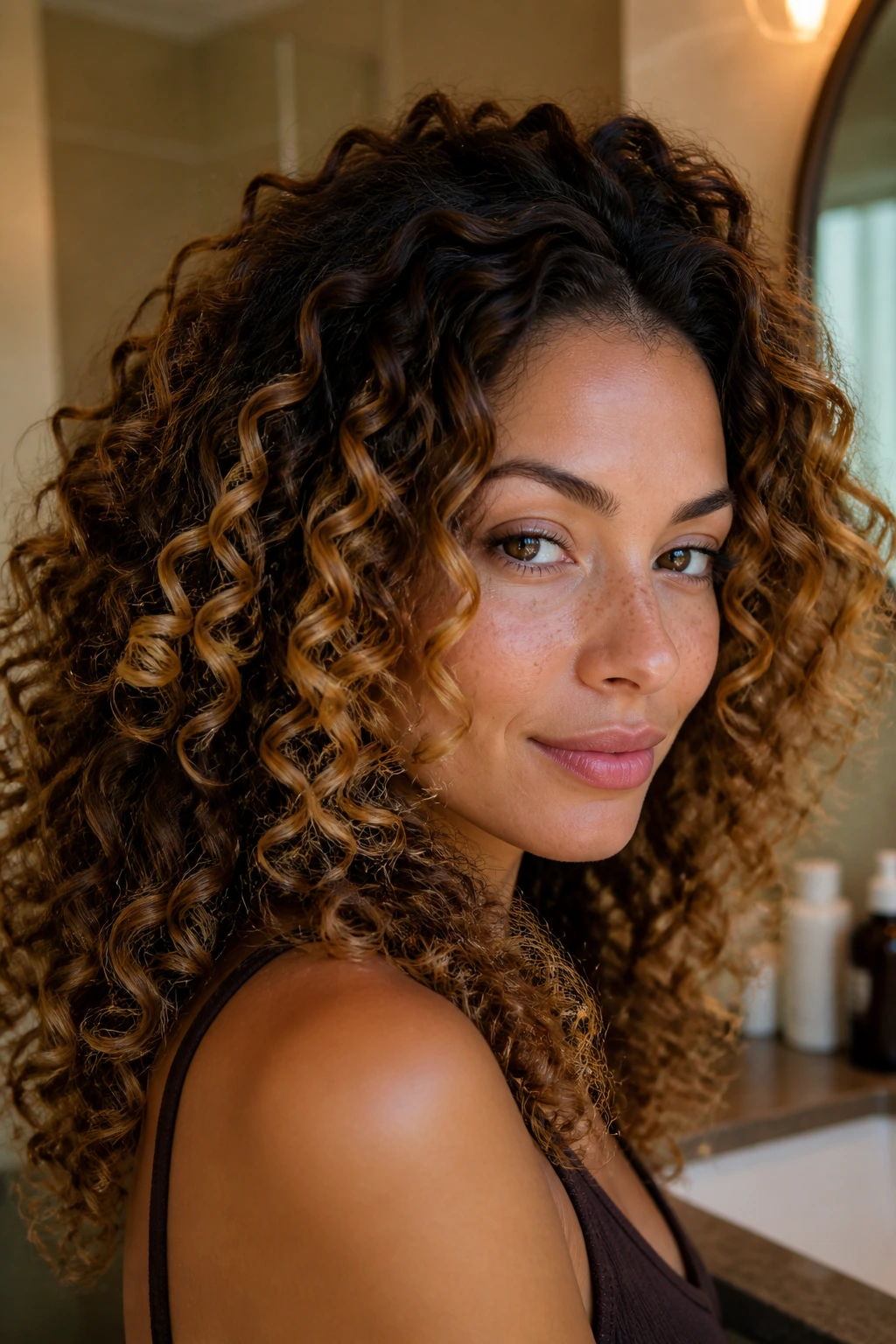
Curly color usually looks best when you stop washing like you’re trying to erase paint from a wall. Two to three washes per week is plenty for most people, and cool or lukewarm water keeps pigment in the hair longer than hot water does. That matters a lot with copper, burgundy, strawberry blonde, and any pastel shade.
If you’ve gone lighter, plan on toner or gloss refreshes every 4 to 8 weeks depending on how fast your hair pulls warmth. Very bright blondes and silvers often need the tighter end of that range. Warm brunettes and caramel ribbons can stretch longer.
For vivid shades like plum, emerald, coral, or navy, a color-depositing conditioner can help between salon visits. Use it every 1 to 2 weeks, not every wash, unless the color is fading fast. Too much deposit can make the hair look muddy.
Sleep on a satin pillowcase or wear a bonnet. It sounds small. It isn’t. Friction dulls color and roughs up the cuticle, which makes curls look faded before they actually are.
Common Mistakes That Make Curly Hair Color Look Striped, Dry, or Off
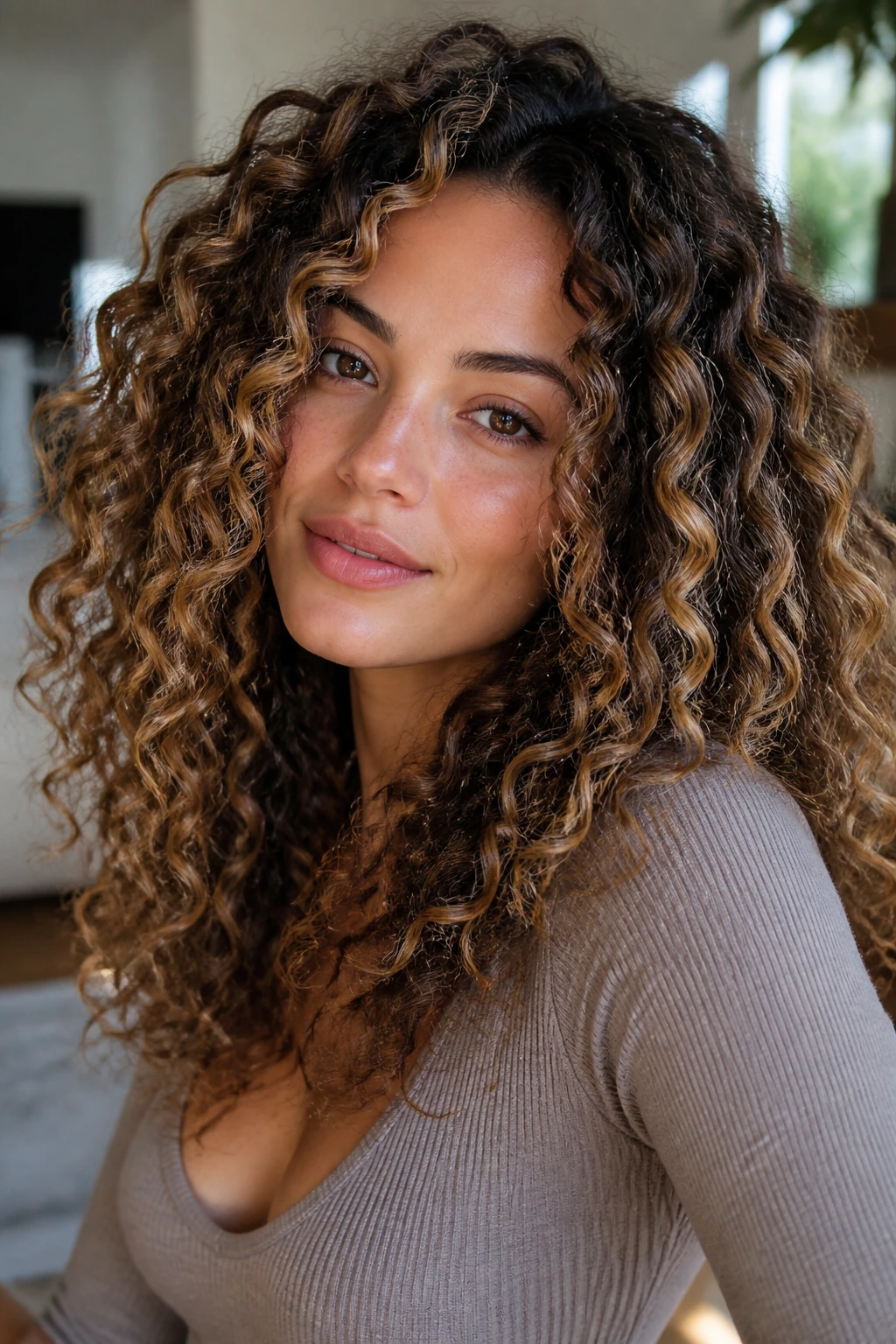
Going too light too fast: Curls can handle lightening, but not abuse. If the hair lifts in one harsh session, the ends often end up rough and the curl pattern loosens. Slow, controlled lightening is kinder.
Choosing color from straight-hair photos only: A shade that looks sleek on pin-straight hair can look louder, puffier, or flatter on curls. Always ask how the color will read in its natural shape.
Skipping toner or gloss: Raw lightener on curls almost always looks unfinished. A toner or gloss is what turns pale strands into caramel, beige, ash, or silver.
Using too much heavy cream after coloring: Thick products can weigh down the canopy and blur all the little highlights you paid for. Light leave-in, then judge from there.
Ignoring porosity: If your ends grab color fast, they may need less processing time than the mids. A one-time strand test tells you more than a dozen guesses.
Lifting damaged curls just because you can: Some hair can take platinum. Some hair should not. Those are two different facts.
Frequently Asked Questions About Curly Hair Color
What hair color looks best on curly hair?
The shades that usually look richest are the ones with some depth: caramel balayage, copper melt, chestnut gloss, auburn, burgundy, and honey bronde. Curly texture gives those tones movement, so they rarely look flat. If you want bold color, plum and navy peekaboo styles also hold up well because the curl pattern breaks up the pigment.
Is balayage better than highlights for curly hair?
Usually, yes. Balayage follows the curl shape more naturally, while traditional foil highlights can look too stripy if they’re placed without thinking about the texture. That said, baby highlights and contour foils can still work if they’re fine, blended, and spaced well.
Will bleach ruin my curls?
It can, if it’s rushed or overdone. Curls are more likely to dry out and lose bounce when they’re lifted too far in one session, especially if the hair already has heat damage. If you’re going blonde, bond care, lower-volume developer, and patience matter a lot.
Can I color curly hair at home?
Yes, but keep the job simple. Demi-permanent glosses, root smudges, and darker tone refreshes are the safest at-home options. Full bleach, silver blondes, and vivid fashion colors are better handled by someone who knows how textured hair lifts.
How often should I refresh curly hair color?
Glosses and toners usually need refreshing every 4 to 8 weeks, while vivid colors may need a top-up every 2 to 4 weeks depending on washing habits. Brunette balayage and darker glosses can often go longer. If the shine disappears before the color does, that’s a sign the cuticle needs moisture more than more pigment.
What if my highlights look too stripey?
That usually means the pieces are too wide, too close together, or lifted too evenly. A toner can soften the tone, but the real fix is often better placement on the next visit. Ask for finer weaving, more root shadow, or balayage instead of chunkier foils.
Do cool shades like ash or silver work on curly hair?
They can, but they need more control. Curly hair often grabs ash unevenly, and silver can turn yellow fast if the base isn’t clean enough. If you want a cool result, expect more toner visits and a stricter wash routine.
Can gray curls be colored without losing texture?
Yes. Gray curly hair often takes color well, but it can be more resistant in some areas and more porous in others. A gloss or demi-permanent shade usually keeps the texture softer than a heavy permanent dye job, especially if you want coverage without flattening the curl pattern.
The Color That Still Looks Like Hair
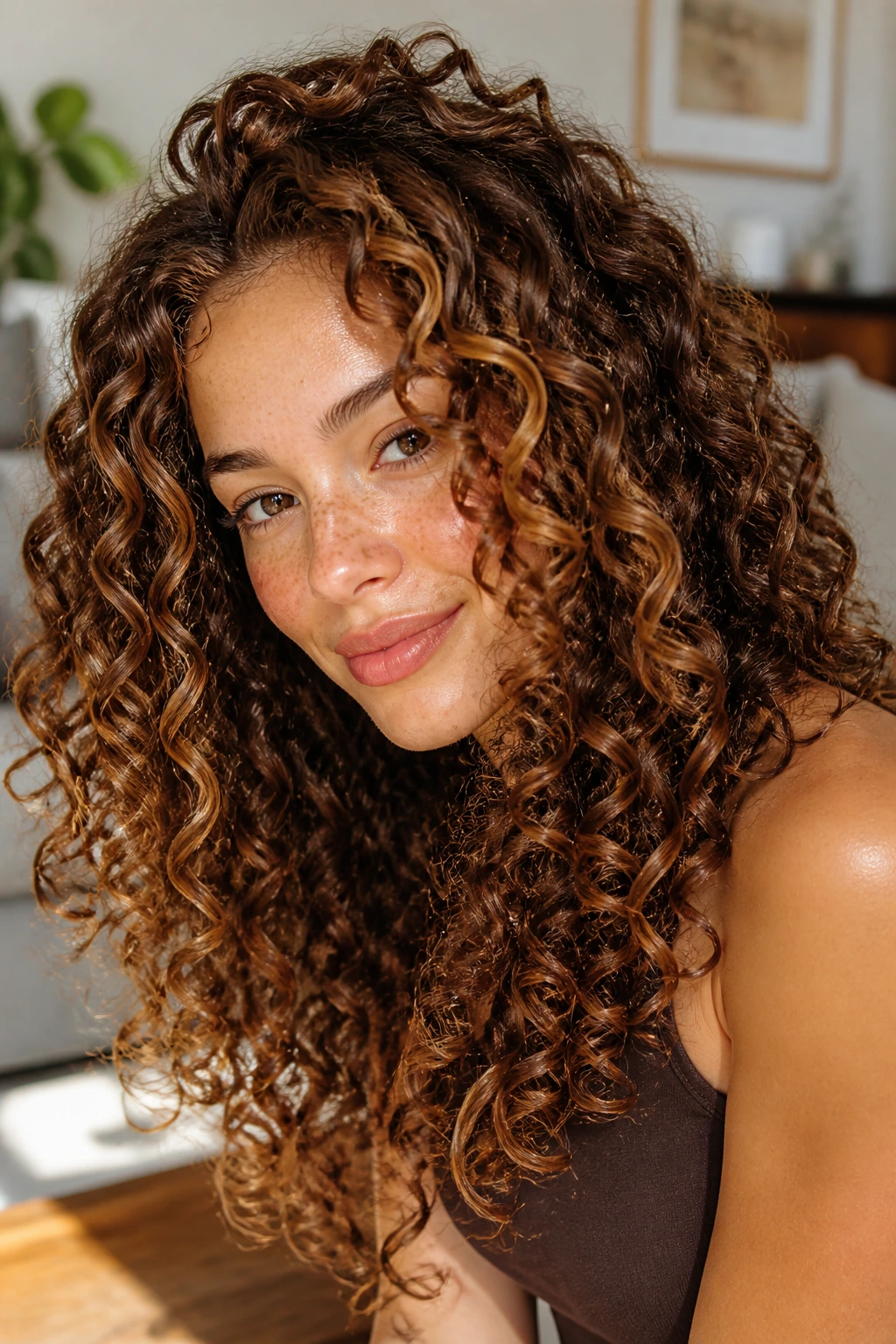
The best curly color isn’t the one that looks the most dramatic on a swatch. It’s the one that still looks good when the curls shrink, separate, frizz a little, and settle into real life. That’s where caramel ribbons, copper melts, chestnut glosses, and clever peekaboo panels earn their keep.
If you’re choosing between two shades, pick the one that gives the curl pattern more shape, not less. Curly hair already does the hard work. The color should ride along with it.
And if you’re sitting on the fence, start with one small bright piece around the face or a gloss over your natural base. Small moves tell you a lot.
