



Medium length hair is where color stops hiding and starts behaving. At shoulder-grazing and collarbone length, the ends sit right in the light, the face frame stays visible, and every toner decision shows up fast. That’s exactly why these hair color ideas for medium length hair matter so much: the cut gives you enough surface to show dimension, but not so much length that the whole thing gets swallowed by one flat tone.
I like medium-length color because it’s honest. A lob, shag, or blunt shoulder cut won’t politely cover up a muddy formula or a lazy highlight placement. Brass shows. So do good choices. Shadow roots look softer, face-framing pieces feel sharper, and even a quiet brunette can look expensive if the tone is right and the ends aren’t overworked.
The best part is that medium length can handle almost anything if the placement makes sense. You can go glossy and dark, warm and coppery, cool and beige, or all the way into silver or peach if the canvas is prepped well. The trick is not picking the loudest color on the board. It’s picking the one that makes your cut look more alive when it swings around your jaw, your collarbone, and that little patch of hair that always falls forward when you’re talking with your hands.
Why Medium-Length Hair Makes Color Look Sharper
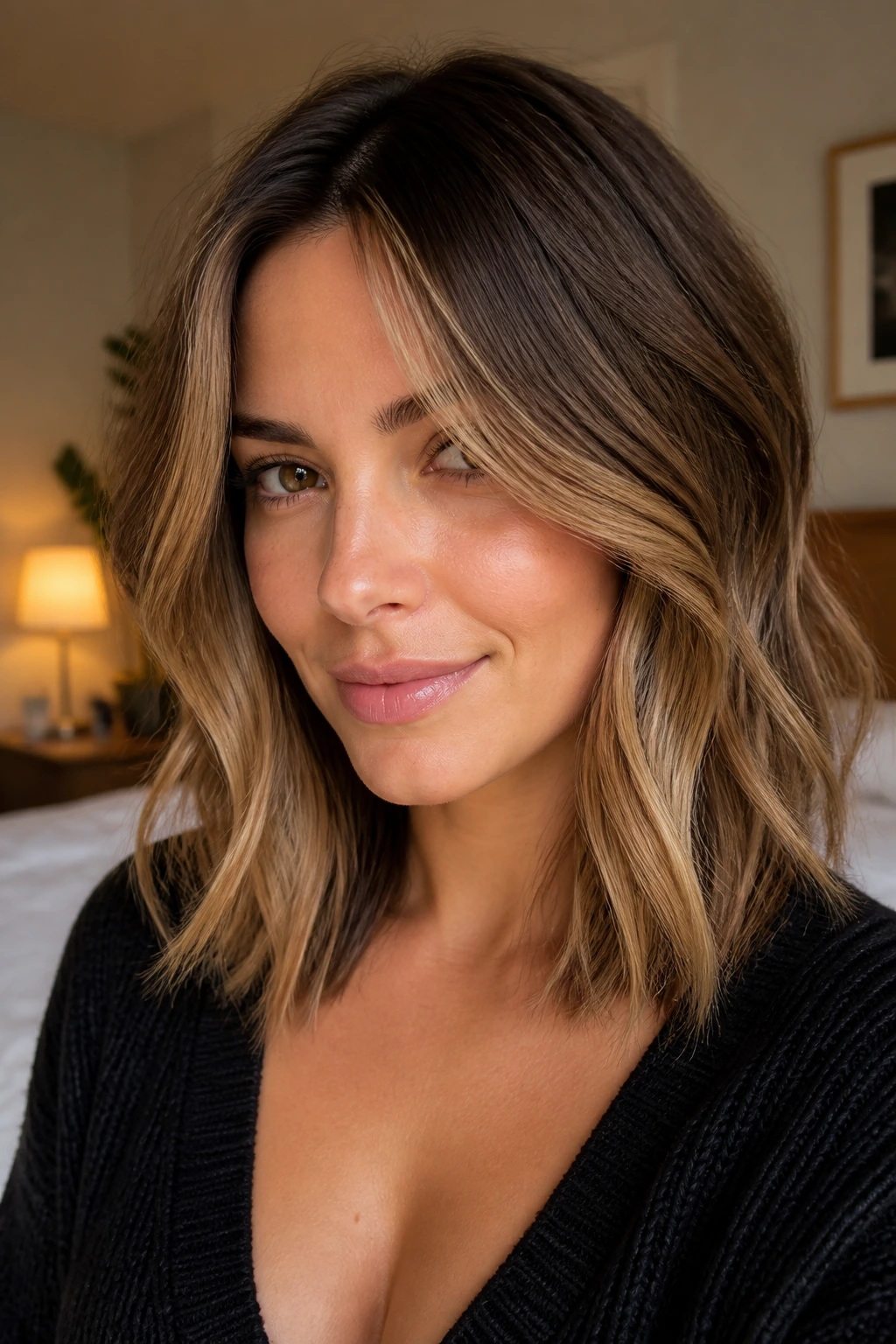
-
Dimension shows faster: A shoulder-length cut doesn’t have long layers swallowing the tone, so one well-placed ribbon of caramel or beige can change the whole read of the haircut.
-
Root growth looks more intentional: Shadow roots and root smudges are easier to live with on medium hair because the transition from dark to light has a shorter distance to travel.
-
Face-framing pieces do heavy lifting: A few brighter pieces around the cheekbones can do what a full head of foils would do on longer hair.
-
Damage shows sooner: The upside is clarity. The downside is that dry ends look dry. A medium-length color job needs shine and condition, not just lift.
-
Texture changes the whole mood: Straight hair shows tone. Waves show movement. Curls show placement. The same shade can read polished, soft, or edgy depending on how you wear it.
-
There’s room for both subtle and bold: Medium hair can carry a quiet brunette gloss or a punchy plum panel without either one looking lost.
1. Caramel Balayage with a Shadow Root
Caramel balayage on medium hair is the one I recommend when someone wants brightness but doesn’t want to babysit roots every three weeks. The color lives in soft ribbons, not stripes, and the deeper root keeps the whole look grounded instead of frosty.
Why It Works on a Lob
Balayage needs enough length to stretch out, and medium hair gives it just enough room. The shorter distance between root and ends makes the transition look clean, especially on layered cuts where the pieces can move a little separately.
Ask for a shadow root that sits one to two levels deeper than the caramel mids, then keep the lightest pieces around the face and the last inch or two of the ends. That’s the part people forget. If the brightness starts too high, the color can look chunky on medium hair.
- Best base: level 4 to 6 brown hair
- Best finish: loose waves, a bendy blowout, or soft texture
- Maintenance: gloss every 6 to 8 weeks keeps the caramel from turning orange
My advice: keep the highlights airy near the crown and denser around the face. That gives the haircut lift without making the whole head look foiled to death.
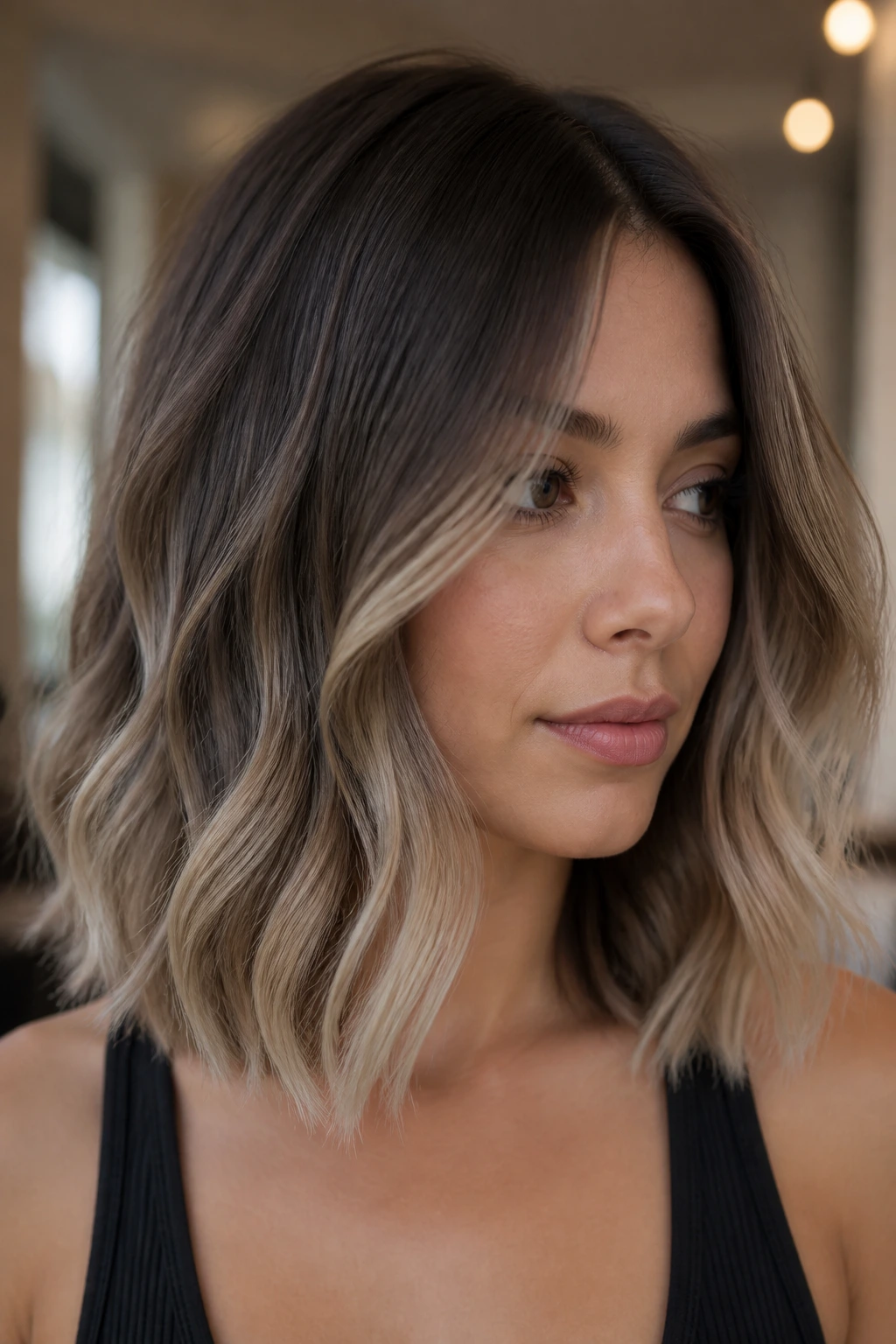
2. Mushroom Brown with Beige Ends
Mushroom brown is what I reach for when someone says “I want brown, but not boring brown.” It has that cool, earthy finish that looks expensive in daylight and calm under indoor lighting, which is rarer than people think.
On medium-length hair, the cool base and beige ends read as dimension instead of flat ash. That’s the sweet spot. If the hair were longer, the tone could disappear into the length. On a collarbone cut, though, the contrast is visible in a way that feels deliberate.
This shade is good on neutral and cool undertones, especially if gold-toned brunettes keep pulling too warm for their taste. I would not force this look on someone who loves copper lipstick and warm gold jewelry all the time. That mismatch shows.
The best version has a muted root, a soft taupe midsection, and beige ends that never cross into icy territory. Think damp river stone, not silver paint. Subtle. Clean. A little moody.
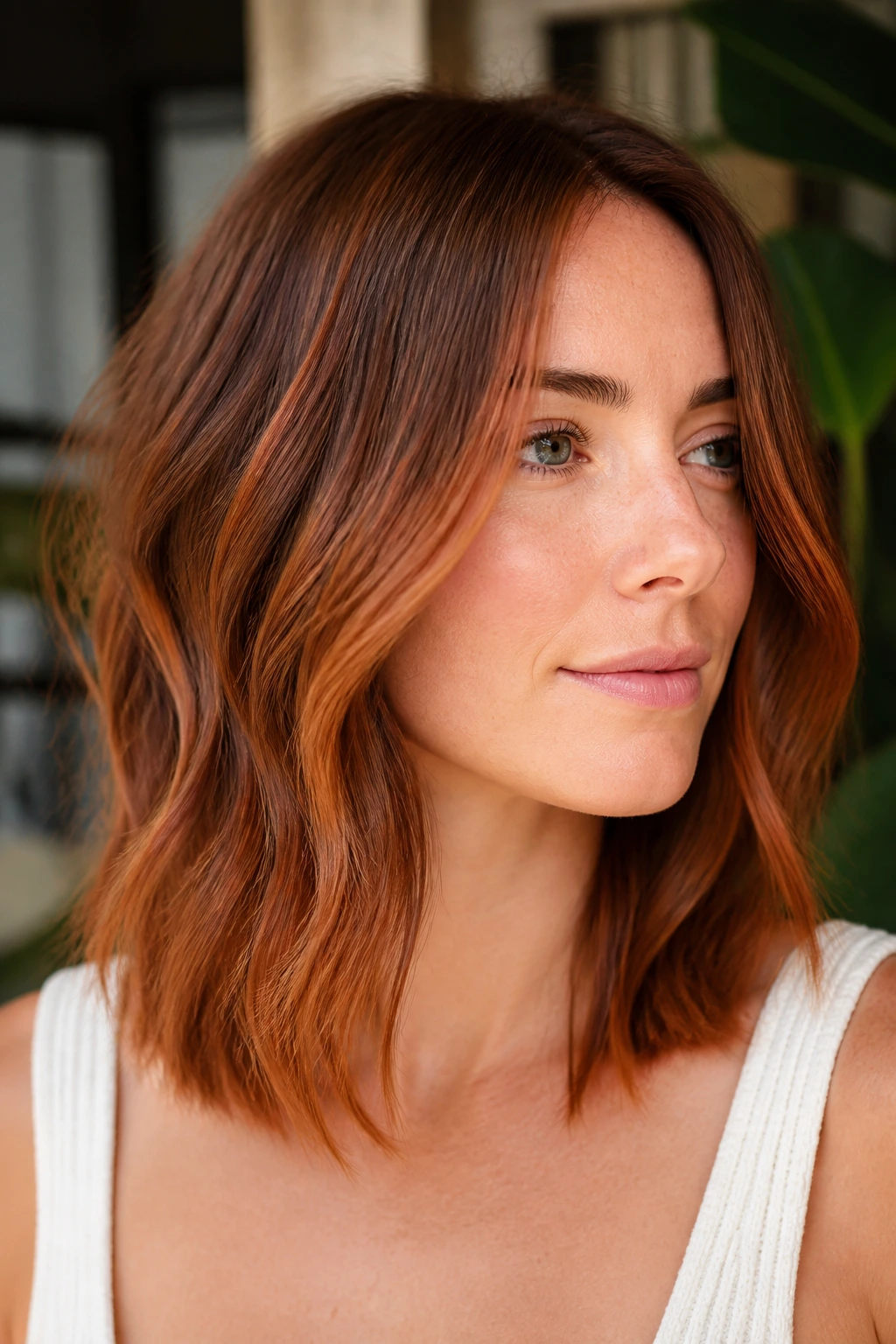
3. Soft Copper Glaze
Why does copper look so good at medium length? Because the shade doesn’t have to fight for attention. It lands right at the face, catches light at the ends, and warms up layered cuts in a way that feels immediate.
A soft copper glaze is different from a full copper transformation. You’re not necessarily changing the entire base. You’re adding warmth, shine, and a thin veil of red-orange tone that makes medium hair look fuller and more alive. On a lob, that matters. Flat copper is too much; a glaze is smarter.
How to Wear It
If your base is light brown or dark blonde, ask for a demi-permanent copper gloss with some gold mixed in so the result doesn’t skew pumpkin. If your hair is darker, a tinted glaze or fine copper ribbons can keep the look wearable.
Best with a rough blowout, soft waves, or even a tucked-behind-the-ear style. Copper looks best when it has movement. And yes, it fades faster than brunette tones. That’s the price of warmth.
4. Vanilla Blonde with a Root Smudge
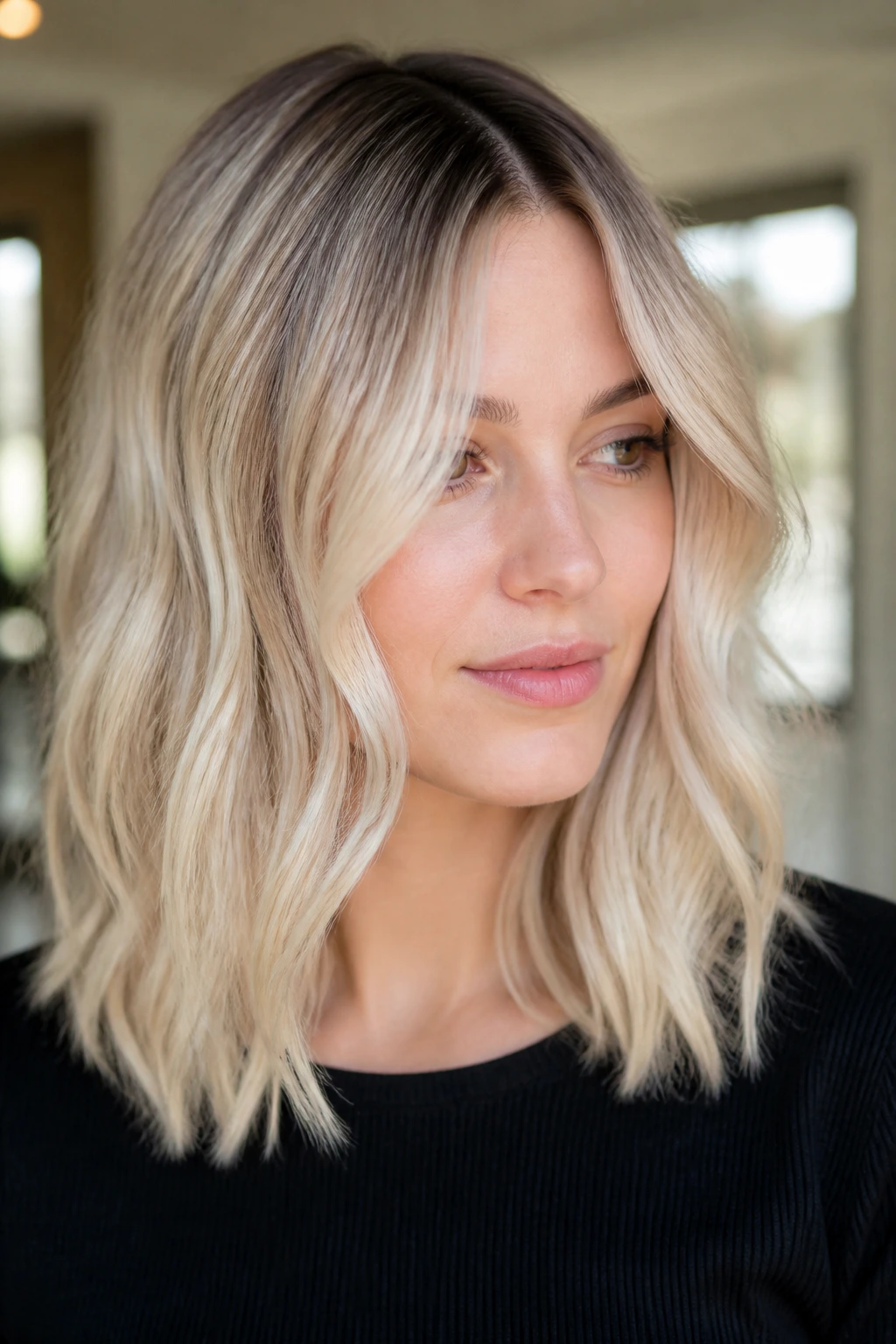
A vanilla blonde with a root smudge is for the person who wants light hair without the hard line that screams “I was in the salon three days ago.” On medium-length hair, that soft root matters even more because the whole cut sits close to the face and shoulders.
The root smudge should be a shade or two deeper than the blonde mids, not a dark stripe. Then the blonde opens up into vanilla, cream, and a touch of beige near the ends. That blend keeps the look soft instead of chalky.
I like this shade on medium hair with some layering, because the pieces move just enough for the color to read as airy. A blunt cut can still wear it, but only if the finish is glossy and the ends are clean. Dry ends will make vanilla blonde look tired. Fast.
If you want a blonde that feels expensive rather than icy, this is the lane.
5. Cherry Cola Brunette
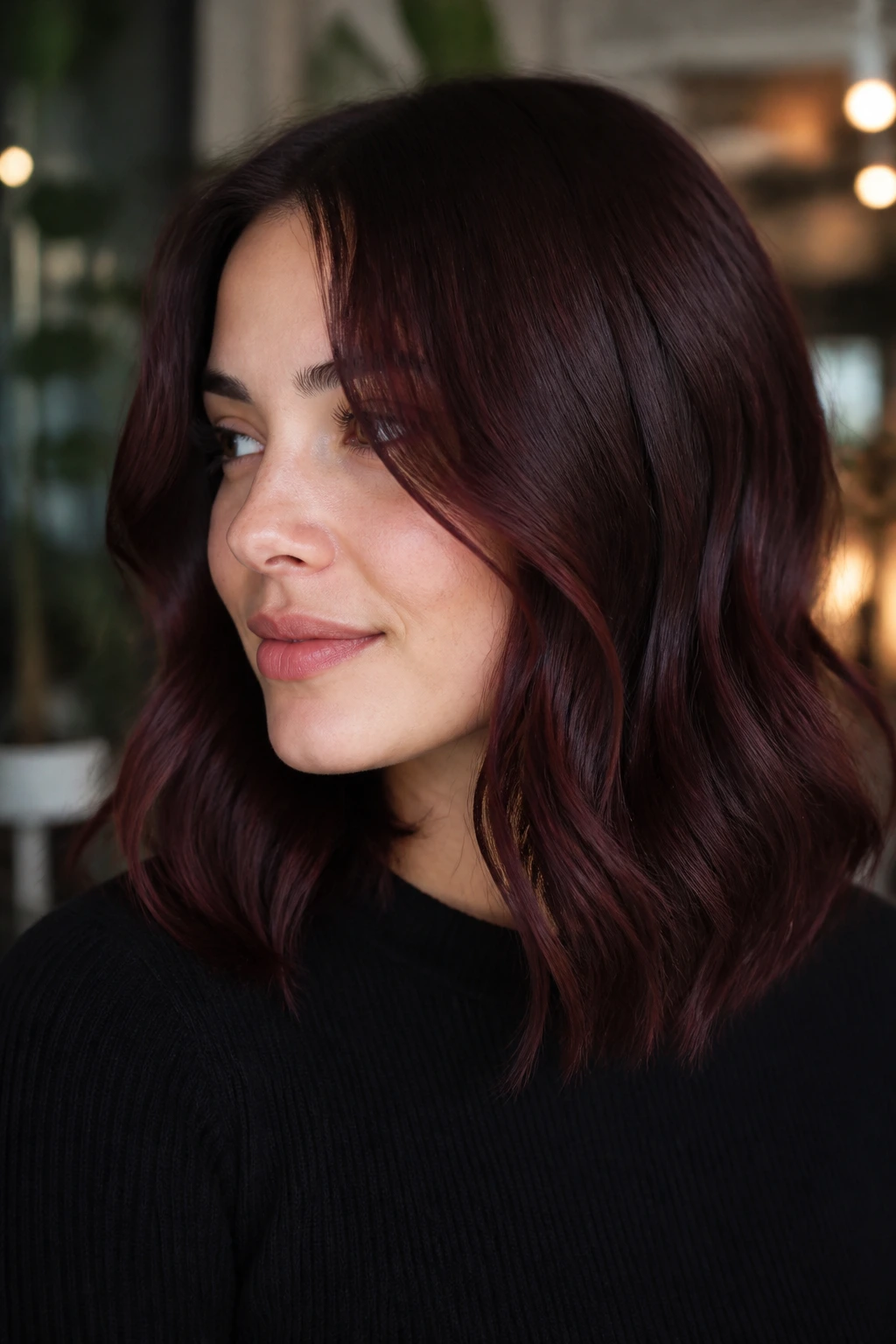
Cherry cola brunette is the shade that surprises people because it’s subtle until light hits it. Indoors, it can look like a rich brunette. Outside, the red-violet undertone wakes up and you get that deep cherry edge that sits somewhere between wine and espresso.
Medium-length hair is ideal for this color because the red undertone needs movement to show. On a long curtain of hair, it can disappear. On a shoulder-grazing cut, especially one with soft layers, it comes forward in flashes.
This is one of my favorite shades for darker brunettes who want something less safe but not loud. It works beautifully with waves, curls, and even a brushed-out blowout. The color has depth, and depth is what keeps red-brown shades from looking flat.
The catch is fade. Red-violet tones slip out faster than neutral browns, so plan on refreshing the gloss more often than you would with chocolate or chestnut. Worth it, though. The shine is hard to beat.
6. Beige Bronde Ribbons
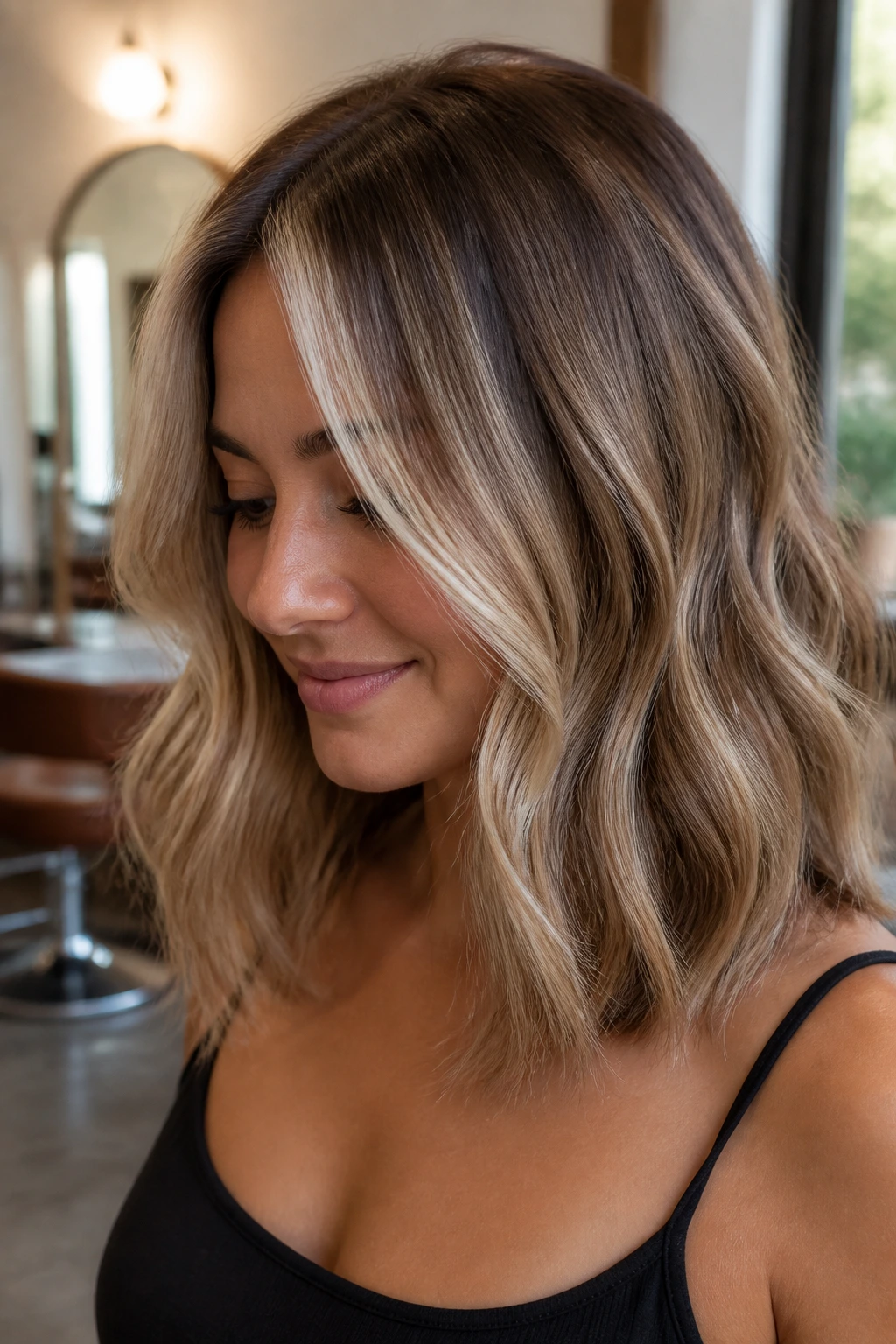
Bronde gets tossed around a lot, but the good versions are specific: brown enough to stay soft, blonde enough to show up, beige enough to avoid brass. That’s why I like it on medium-length cuts.
Unlike an all-over blonde, beige bronde ribbons keep your base visible. Unlike plain brown, the lighter pieces actually catch on medium hair instead of hiding under the top layer. The whole thing feels balanced, which is a boring word for a very useful result.
What Makes It Different
This shade is best if you want your hair to look dimensional from the front and still make sense when you throw it up. The color doesn’t depend on perfect styling. That matters.
Ask for low-contrast ribbons through the mid-lengths, a few brighter face pieces, and deeper lowlights under the crown. That mix keeps the lob from turning stripey. If you hate toner appointments, this is a smarter choice than full blonde.
7. Espresso Gloss on a Sleek Lob
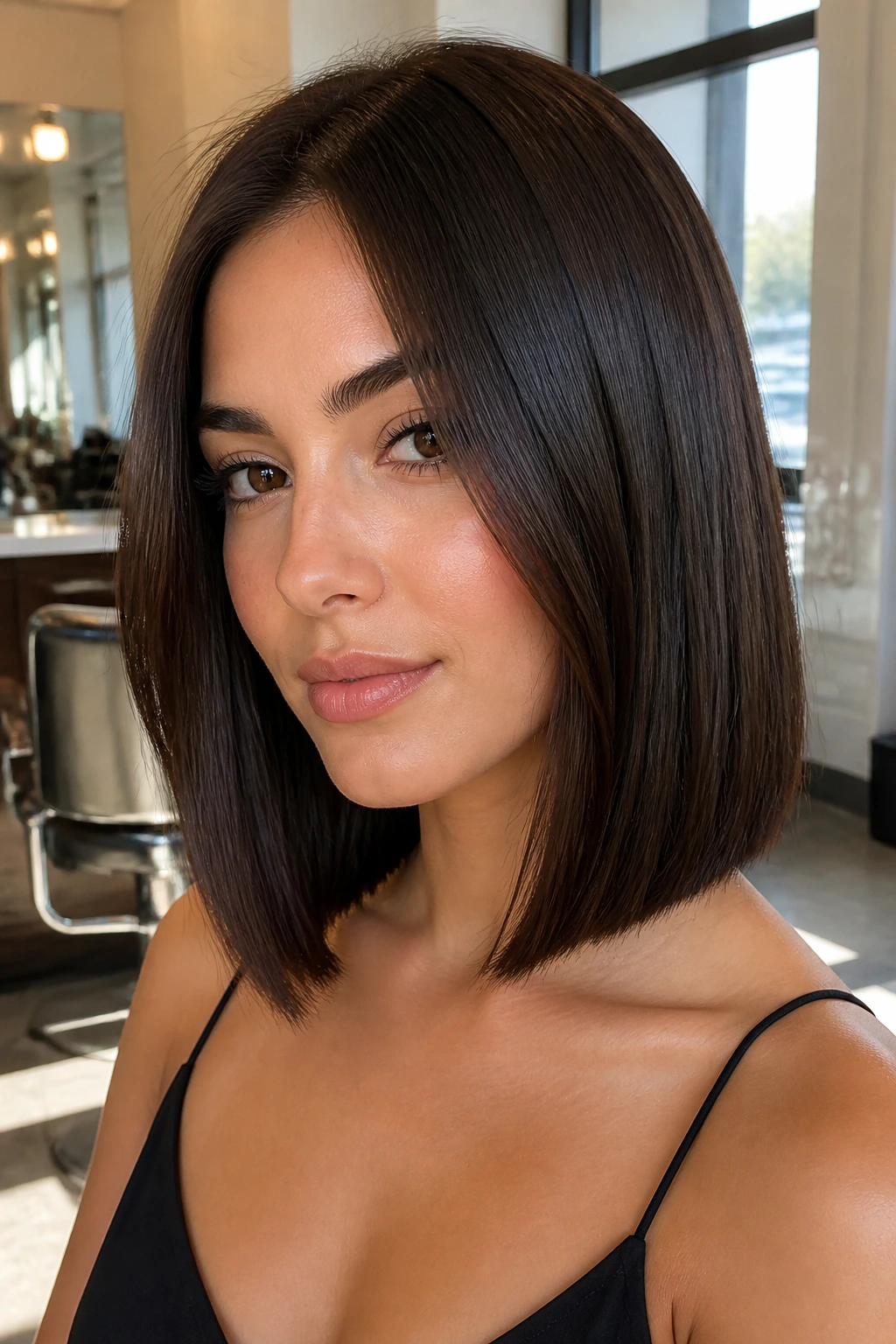
There’s a reason a glassy espresso lob keeps showing up in salons. It looks sharp without needing drama. The color is mostly about shine, and medium-length hair has enough surface area to make that shine matter.
A deep espresso gloss makes strands look denser, especially if your hair is fine or naturally straight. On a blunt cut, it gives the ends weight. On a layered cut, it keeps the shape crisp instead of frizzy. I’d pick this before I’d pick a boring medium brown, every time.
Use a clear or deep brown gloss to deepen the natural pigment, then keep the style sleek with a round brush or flat iron set low enough that you’re not frying the ends. The point is not poker-straight stiffness. It’s reflective movement.
One practical note: dark glossy hair shows dry ends fast. If your ends are rough, trim first and color second. You’ll thank yourself.
8. Honey Money Piece
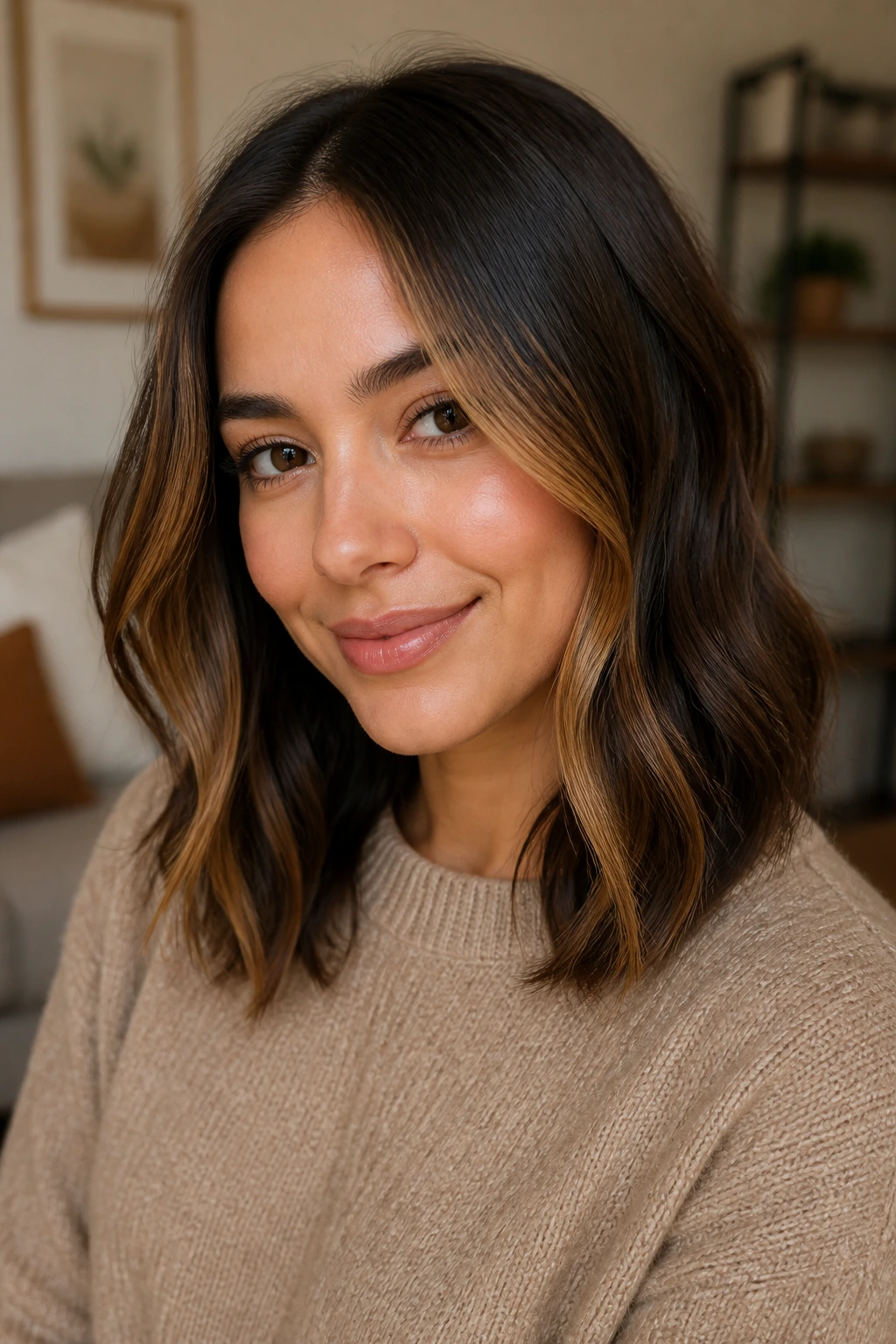
The fastest way to wake up medium-length brunette hair is a honey money piece. Not all-over highlights. Just the front sections, brightened enough to frame the eyes and cheekbones without turning the whole head into a project.
A money piece works because it changes the read of the haircut instantly. On medium hair, the lighter front pieces sit right where people look first, so you get more visual payoff than you would on longer hair that hides at the back.
- Best base: level 4 to 6 brunette or dark blonde
- Best placement: cheekbone to chin length around the face
- Best styling: center part for symmetry, side part for a bigger contrast hit
- Maintenance: easy if the rest of the hair stays deeper
My favorite version keeps the honey tone warm but not gold-bar yellow. Ask for something that sits between beige and amber. Too much warmth and it starts looking stripy.
9. Rose Gold Melt
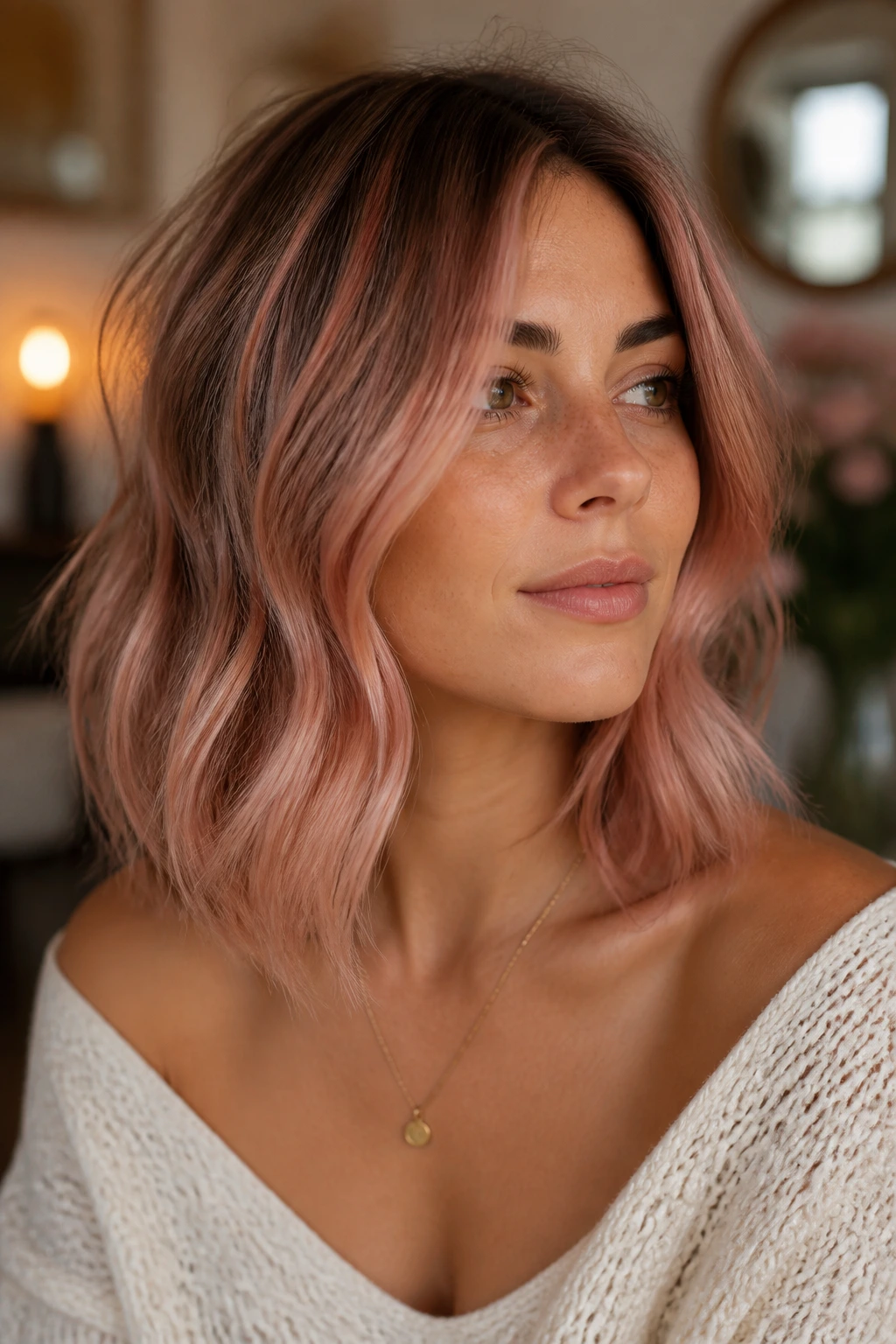
Can rose gold work on medium hair without feeling sugary? Yes, if the color is dusty rather than neon. That’s the whole trick.
Rose gold on a collarbone cut gives you enough surface for the color to move from blush to warm beige without turning into a solid pastel block. It looks especially good when the root is a muted beige blonde or soft light brown, so the melt has somewhere to go.
Best Styling Moves
Loose curls show the color best. Straight hair can still wear it, but the shade needs dimension at the ends or it can read flat. If your hair is pre-lightened, ask for a semi-permanent rose gloss rather than a long-lasting permanent red that will fight you as it fades.
This is a good pick if you want something playful but not cartoonish. It also ages out gracefully. As the pink softens, the hair often lands in a pretty peach-beige range instead of disappearing into brass.
10. Toasted Pecan Brunette
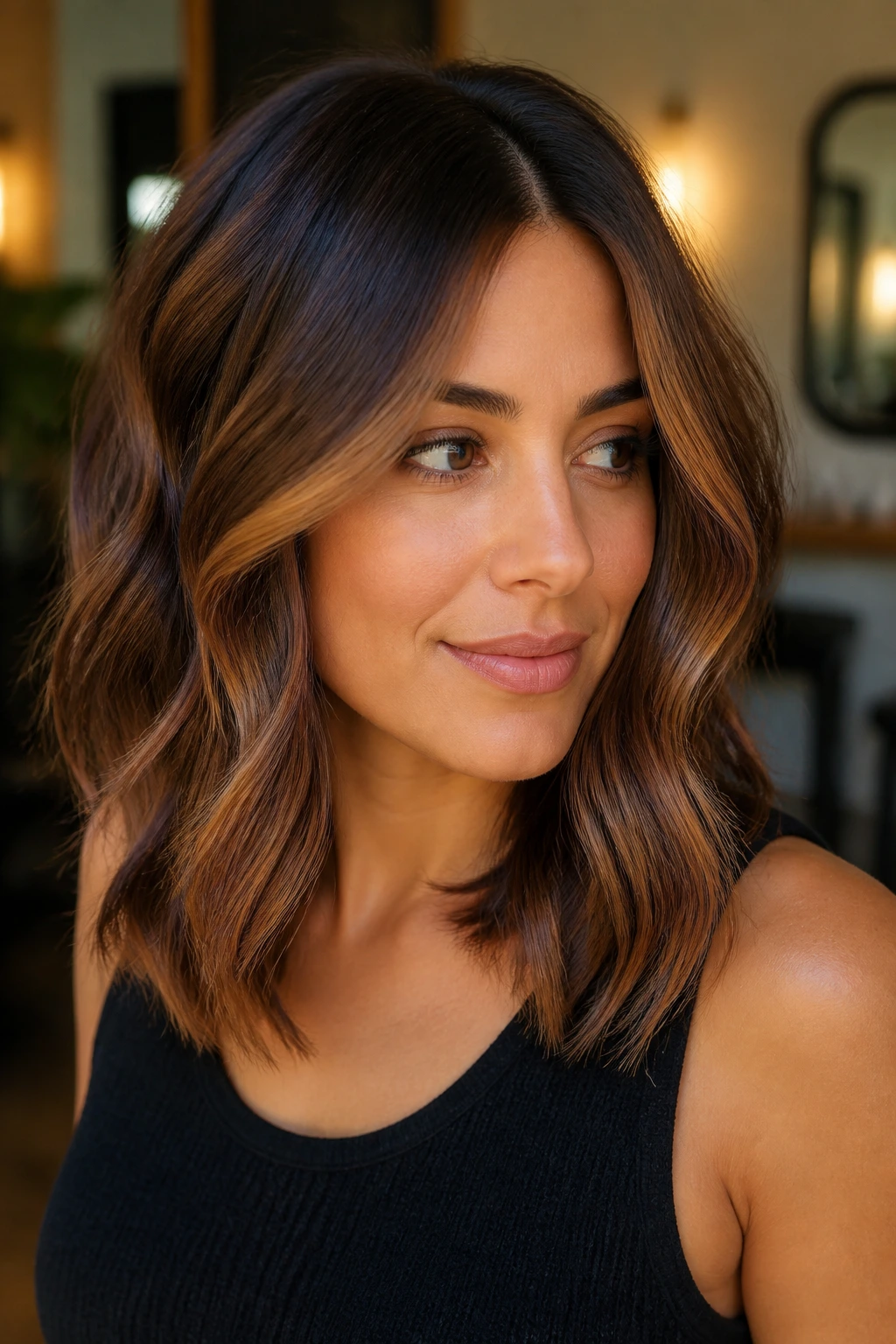
Toasted pecan brunette sits in that sweet zone between plain brown and highlighted brown. It has a warm, nutty base with lighter pecan ribbons that show up when the hair swings.
On medium-length hair, that movement matters. A pecan ribbon can disappear in long hair or get lost in dense curls, but on a lob or shag it moves just enough to read. The result is richer than a single-process brunette and quieter than full balayage.
I’d choose this for someone who wants hair that looks cared for without screaming highlight appointment. It plays nicely with soft layers, curtain bangs, and blowouts that aren’t too perfect. The color does not need precision to make sense.
Ask for a brunette base with thin, warm ribbons placed around the face and the outer perimeter. Keep the crown deeper so the color doesn’t look too light from above. That little bit of darkness at the top keeps the whole thing from floating away.
11. Smoky Beige Blonde
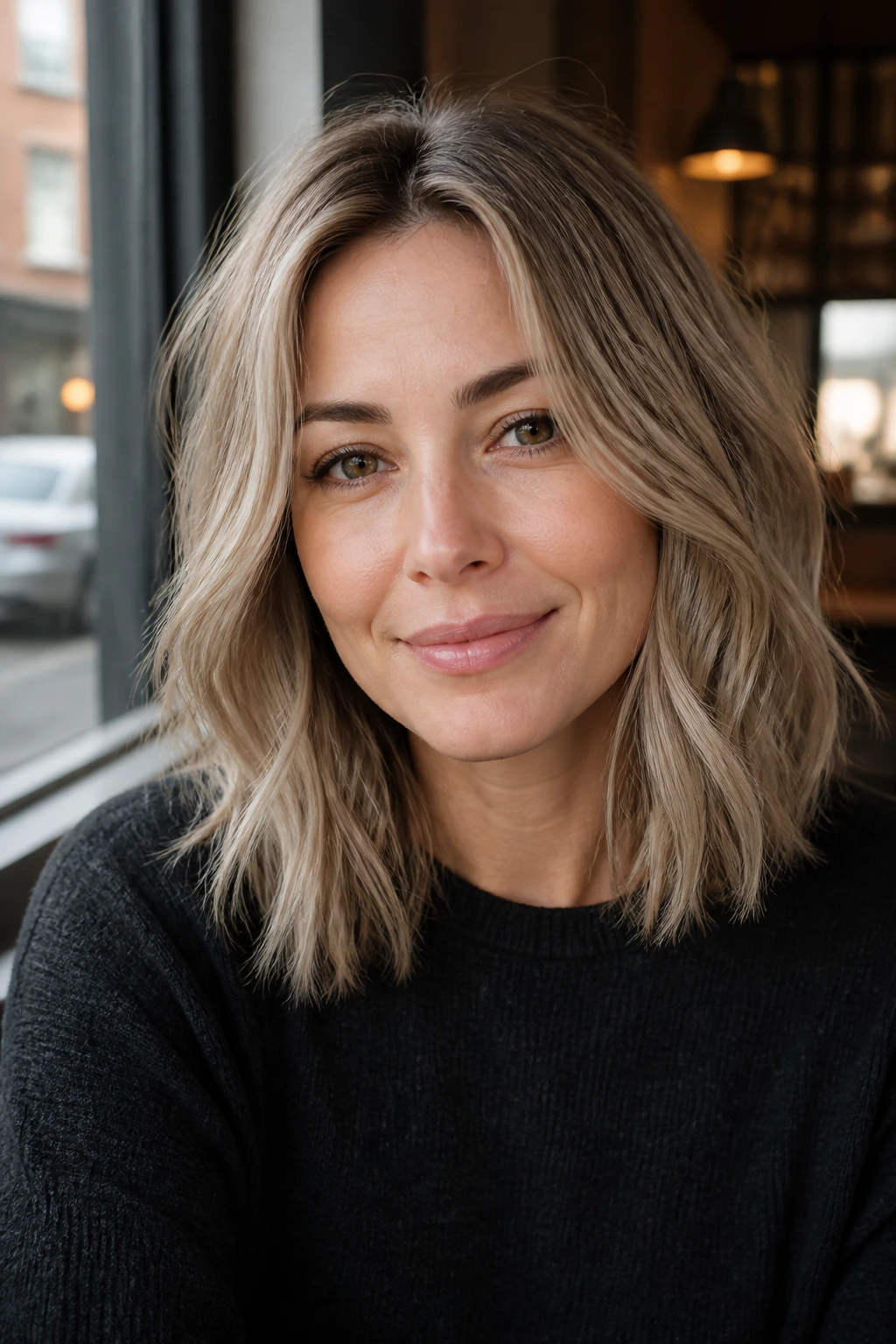
Smoky beige blonde is what happens when you want blonde, but you’re tired of yellow. It has softness, not starkness. The beige tone keeps it wearable, and the smoky root keeps it from looking over-processed.
On medium-length hair, this color shines because the cut is short enough to keep the blonde from feeling endless. Long hair can make beige blonde feel washed out if the tone is too light. A shoulder cut gives it structure.
Brass loves beige hair. Beige hates brass. That’s why toner maintenance matters here more than people want to admit.
The best version has a neutral root, a beige blonde midsection, and just enough lowlight to keep the whole thing from going flat. Wear it with a loose wave or a center part if you want the color to look deliberate instead of beachy.
12. Cinnamon Auburn
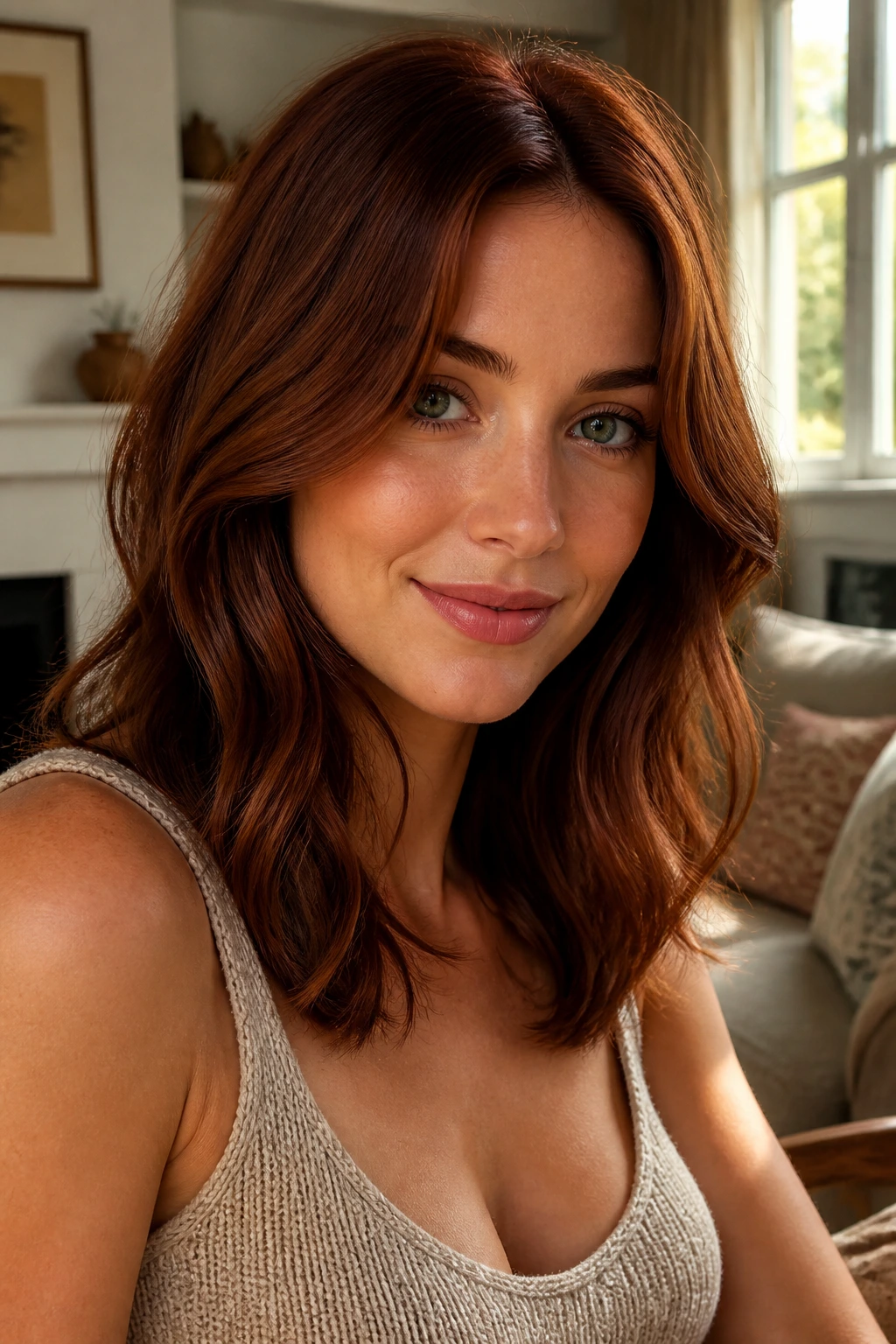
Compared with copper, cinnamon auburn is deeper, softer, and easier to wear every day. It sits in the red-brown family, but it doesn’t shout. The warmth is there, just folded into brown so the color feels grounded.
This is one of the best choices for medium-length hair because the shape can carry a warm color without needing tons of length to show off. A collarbone cut with a little movement will catch the auburn tones right where you want them: around the face and through the ends.
If your natural hair is medium to dark brown, this shade is easier to live with than bright red. It also fades in a nicer direction. Instead of going dull orange, it softens into warm chestnut if you keep up with a gloss.
I like cinnamon auburn on people who want warmth in their hair but not in a loud way. It’s the color version of a good leather jacket. Familiar, but sharper than plain brown.
13. Pearl Blonde with Soft Dimension
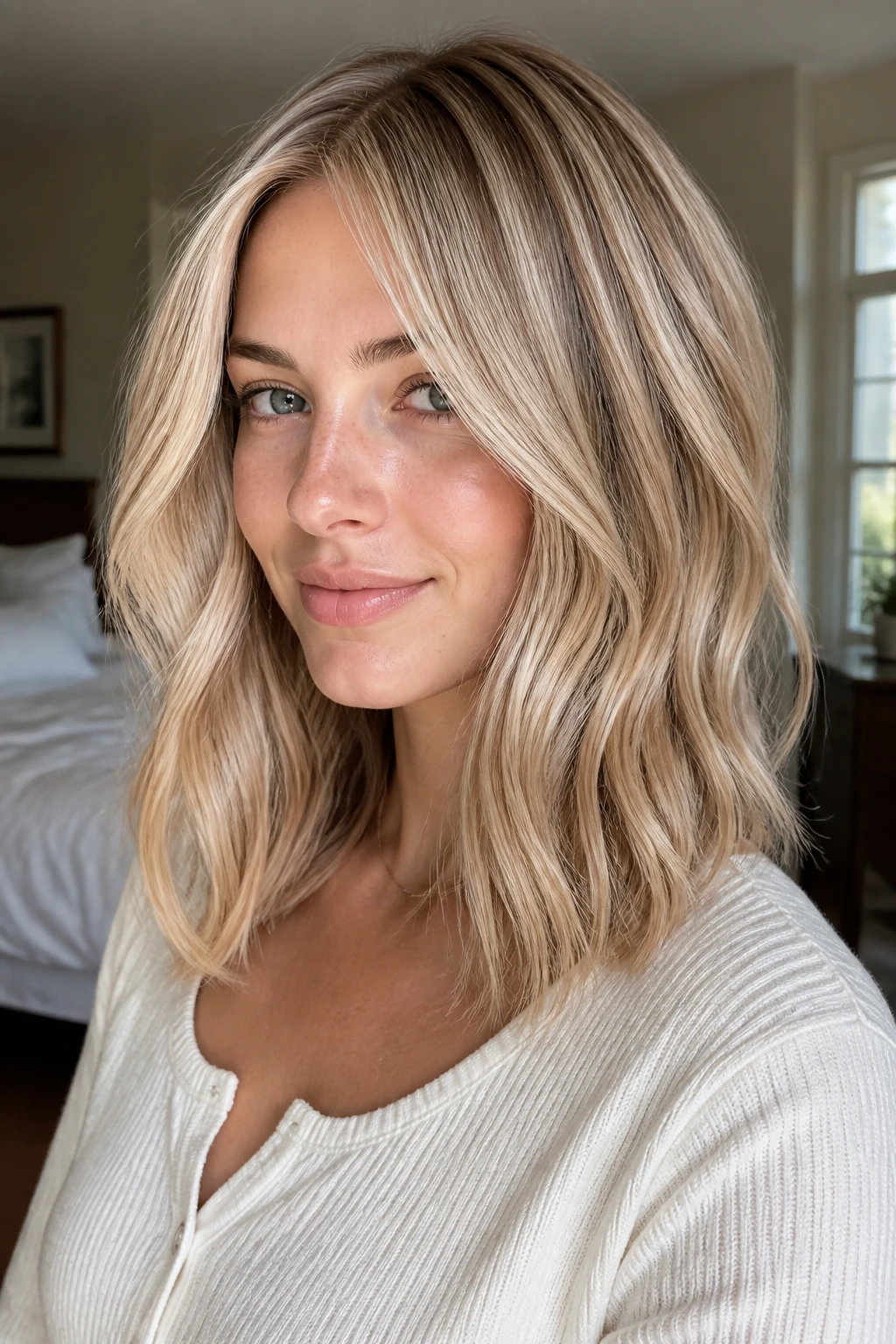
Why do pearl blondes sometimes look flat on long hair but clean and chic on medium-length cuts? Because the shorter shape doesn’t need the whole head to be a color story. It just needs enough variation to keep the blonde from turning chalky.
Pearl blonde leans cool, but it shouldn’t feel icy or gray. The best versions use a soft pearl toner over pale blonde with a few faint lowlights tucked underneath. That keeps the color reflective instead of paper thin.
What to Ask For
Ask for pale blonde with a pearl finish and a whisper of beige near the roots. If the blonde is too clean, it can look stripped out. If it’s too warm, it stops being pearl at all.
This works especially well on medium hair with a blunt edge or soft face layers. The color looks polished when the cut is clean. If your ends are jagged or dry, pearl blonde will expose that in a hurry.
14. Chestnut Babylights
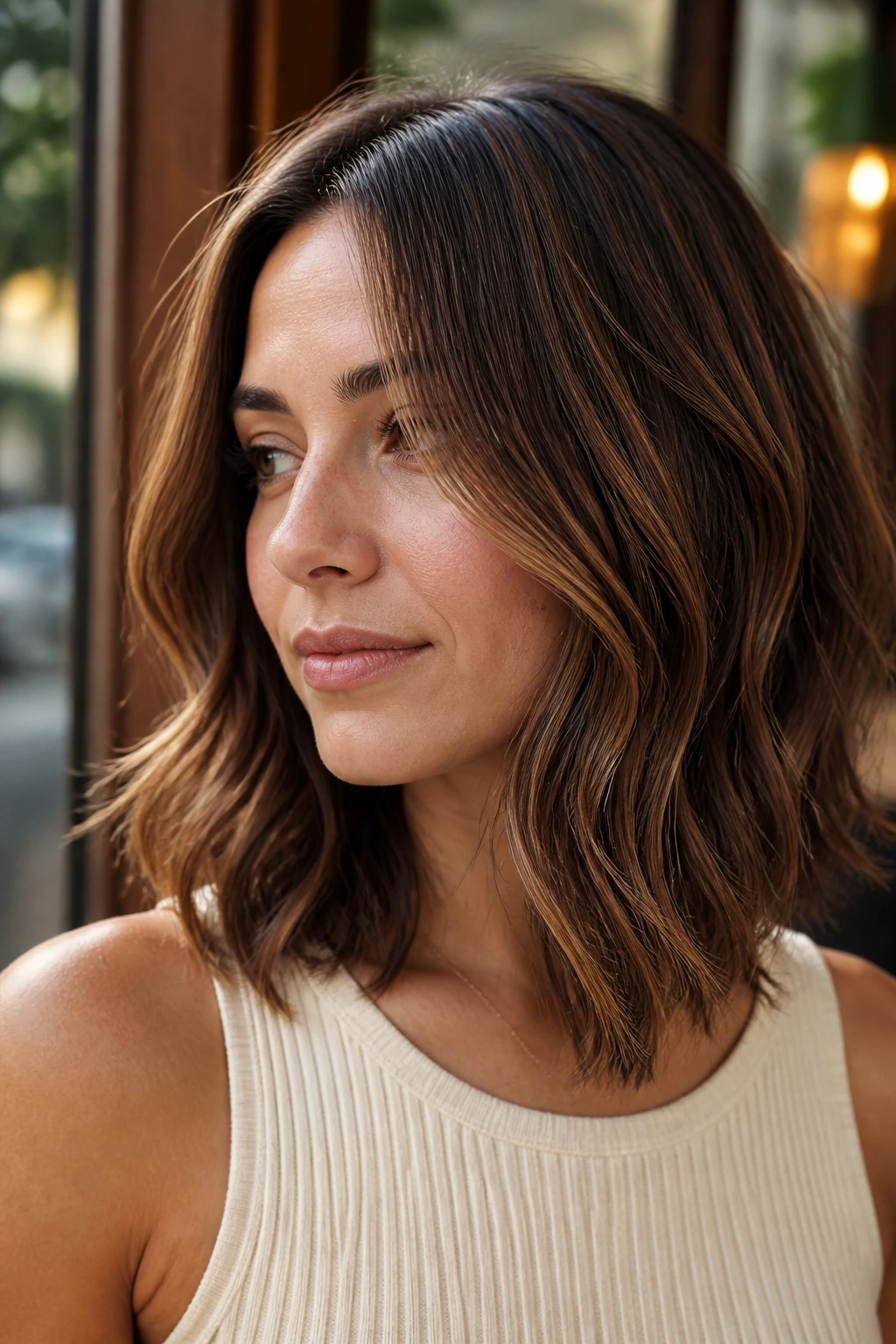
Chestnut babylights are the anti-drama brunette move. They’re tiny, warm, and scattered so finely through the hair that the color looks like natural sun warmth instead of an obvious highlight job.
Medium-length hair is a perfect canvas for babylights because the pieces show up without needing a lot of length to stretch them out. On a lob, the effect can make the cut feel thicker and more textured, which is a nice trick if your hair is fine or straight.
The key is restraint. Babylights should be thin enough that they don’t form chunky stripes. The highlight pattern should feel soft from the root and a little brighter through the mid-lengths and ends.
This is the shade I’d suggest if you want dimension but hate obvious maintenance. It grows out quietly. That alone makes it worth a look.
15. Peekaboo Plum Panels
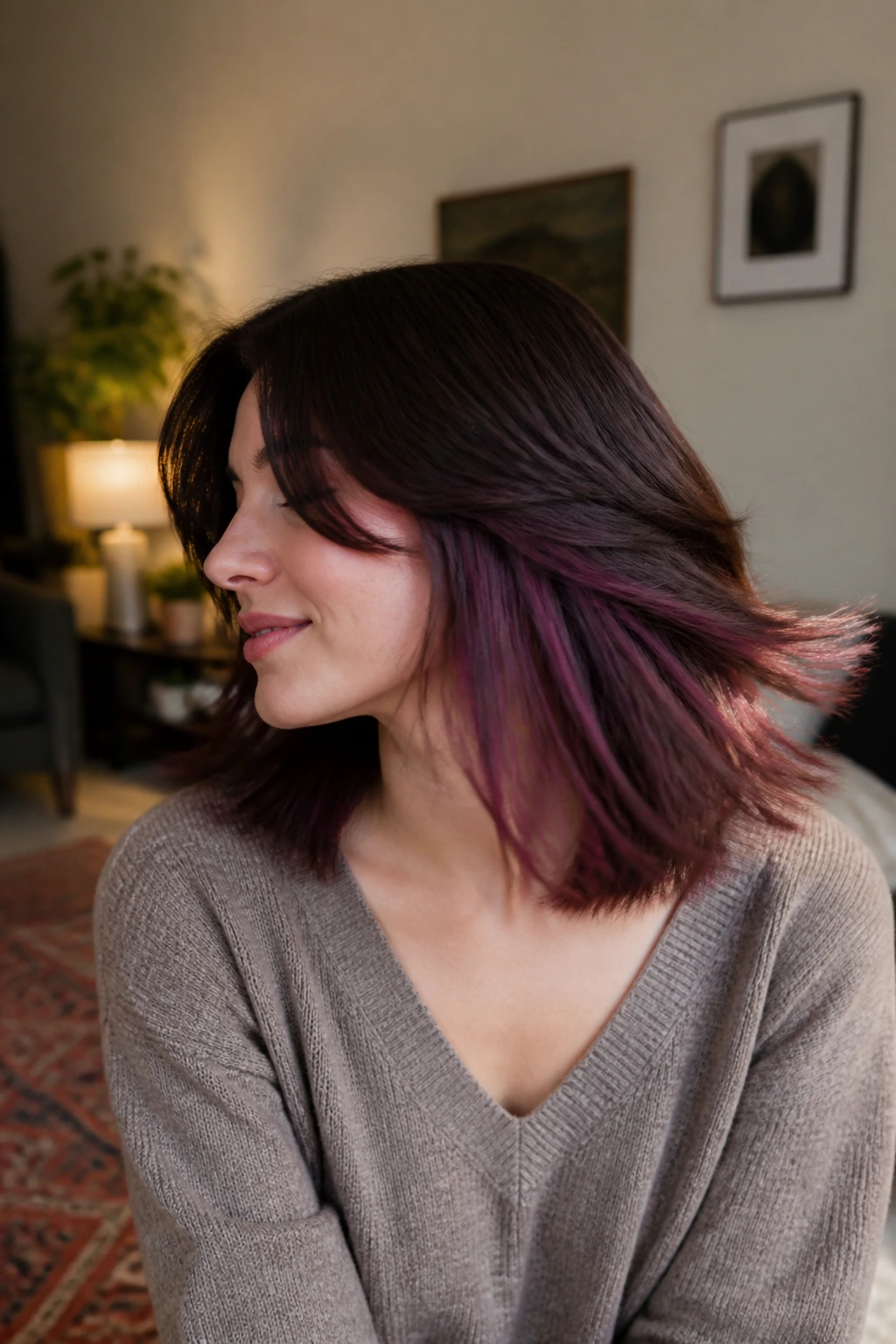
You only see peekaboo plum when the hair moves, and that’s the point. It lives under the top layer, tucked in where it flashes when you tuck your hair behind your ear, curl it, or pull it half up.
Medium-length hair is the sweet spot for this look because the panels aren’t buried under endless length. They’re hidden enough to feel playful, but not so hidden that you forget they’re there. On a medium shag or layered lob, the effect can be surprisingly vivid.
- Best base: dark brunette or pre-lightened hair
- Best placement: underneath the top layer, near the back and sides
- Best styling: waves, curls, or clipped-back looks
- Maintenance: easy if the top layer stays natural
I like this for anyone who wants a little rebellion without living in full fantasy color. Plum is rich, not neon. It holds up better than bright purple, and when it fades, it often softens into berry brown instead of turning sad.
16. Platinum Face-Framing Highlights
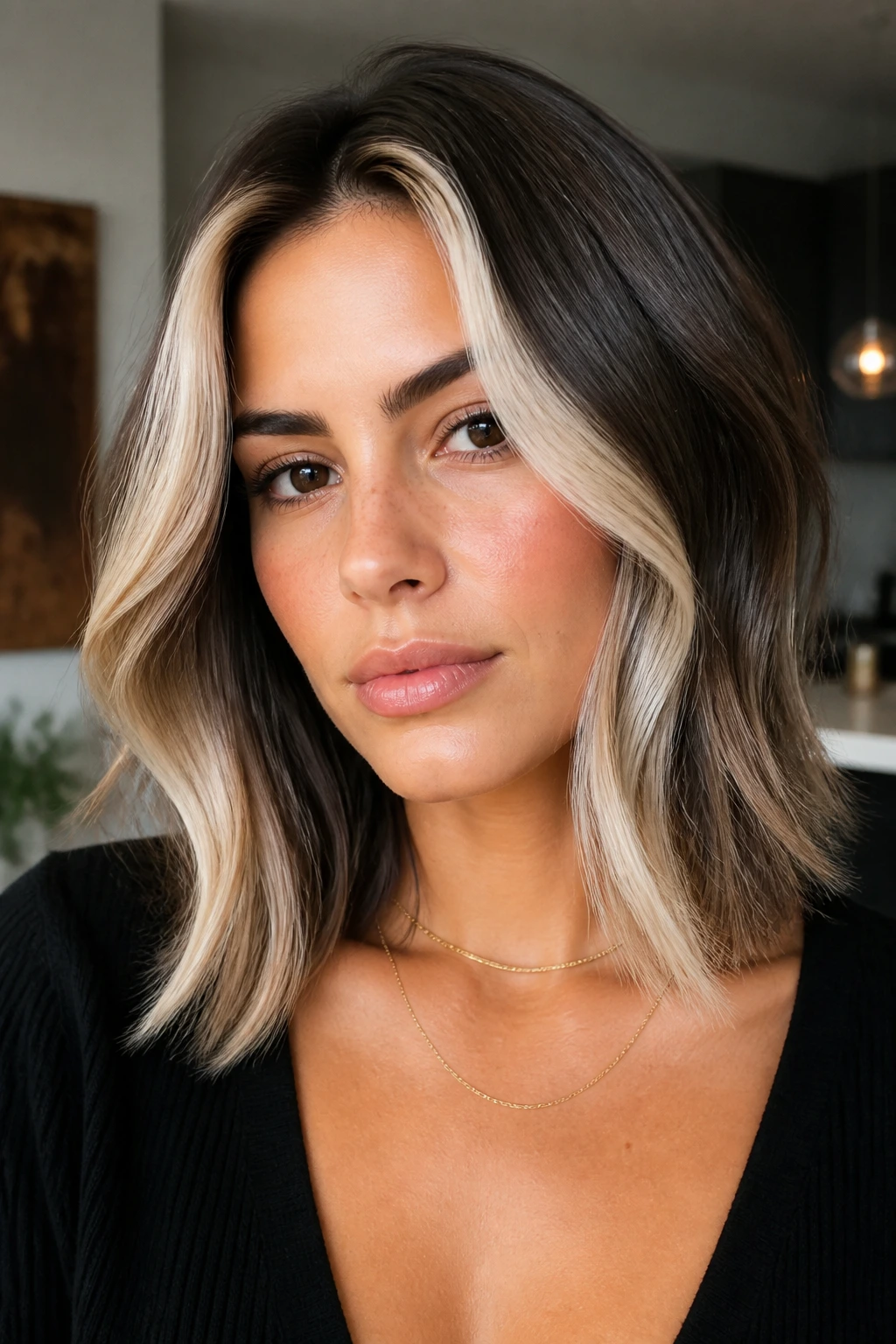
A full platinum blonde on medium-length hair can be a lot. Platinum face-framing highlights are smarter. They give you the brightness up front where it matters, then let the rest of the hair keep its depth.
That contrast is what makes the look work. On a lob or shoulder cut, the light pieces sit close to the eyes and cheekbones, so you get instant lift without bleaching the whole head. I prefer this to a global platinum on most medium-length cuts, honestly. It looks fresher and grows out with less panic.
The face frame should be bright enough to read as platinum, but the root area can stay soft so the color doesn’t look like a helmet. Keep a toner schedule tight. Platinum is unforgiving when it starts to yellow.
If your hair is naturally dark, this is still possible, but the upkeep jumps fast. Make sure the ends are healthy first. Platinum has zero patience for weak hair.
17. Chocolate Cherry
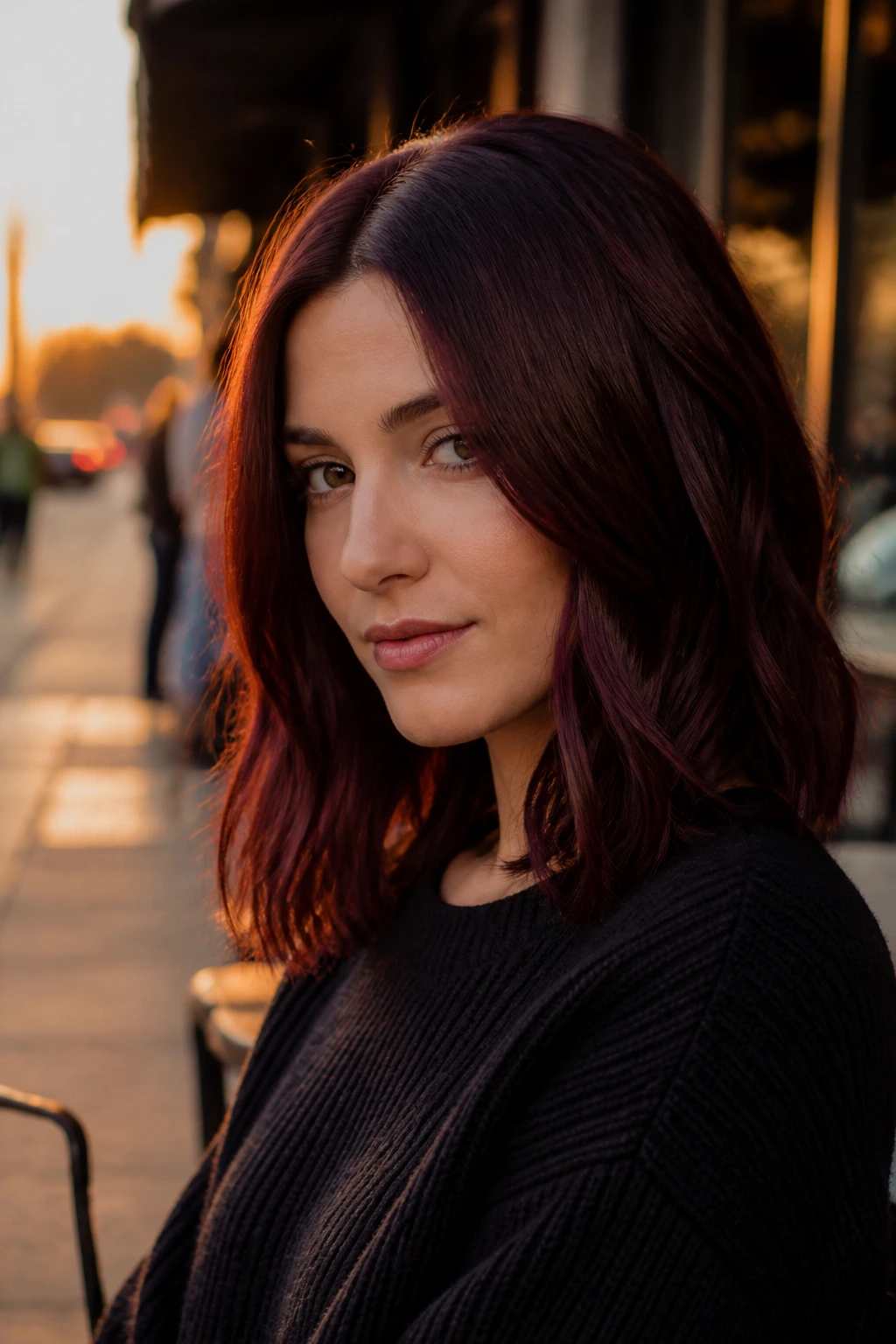
Chocolate cherry sits between brunette and red, which is exactly why it’s so wearable. It’s darker than cherry cola, smoother than cinnamon auburn, and richer than a plain burgundy gloss.
On medium-length hair, the depth is enough to read as brunette indoors, then the red tone wakes up when light hits it. That keeps the color from feeling theatrical. A shoulder cut gives the pigment room to move, especially if the hair has some bend or a few layers.
This is one of those shades I recommend to people who like color but don’t want to explain their color every day. It’s noticeable, but not loud. The finish matters, though. Chocolate cherry needs shine. If the cut is dry, the red can look muddy.
A gloss every few weeks and a trim when the ends start to fray will keep it looking plush instead of dull. It deserves a little care.
18. Soft Black with a Blue-Black Sheen
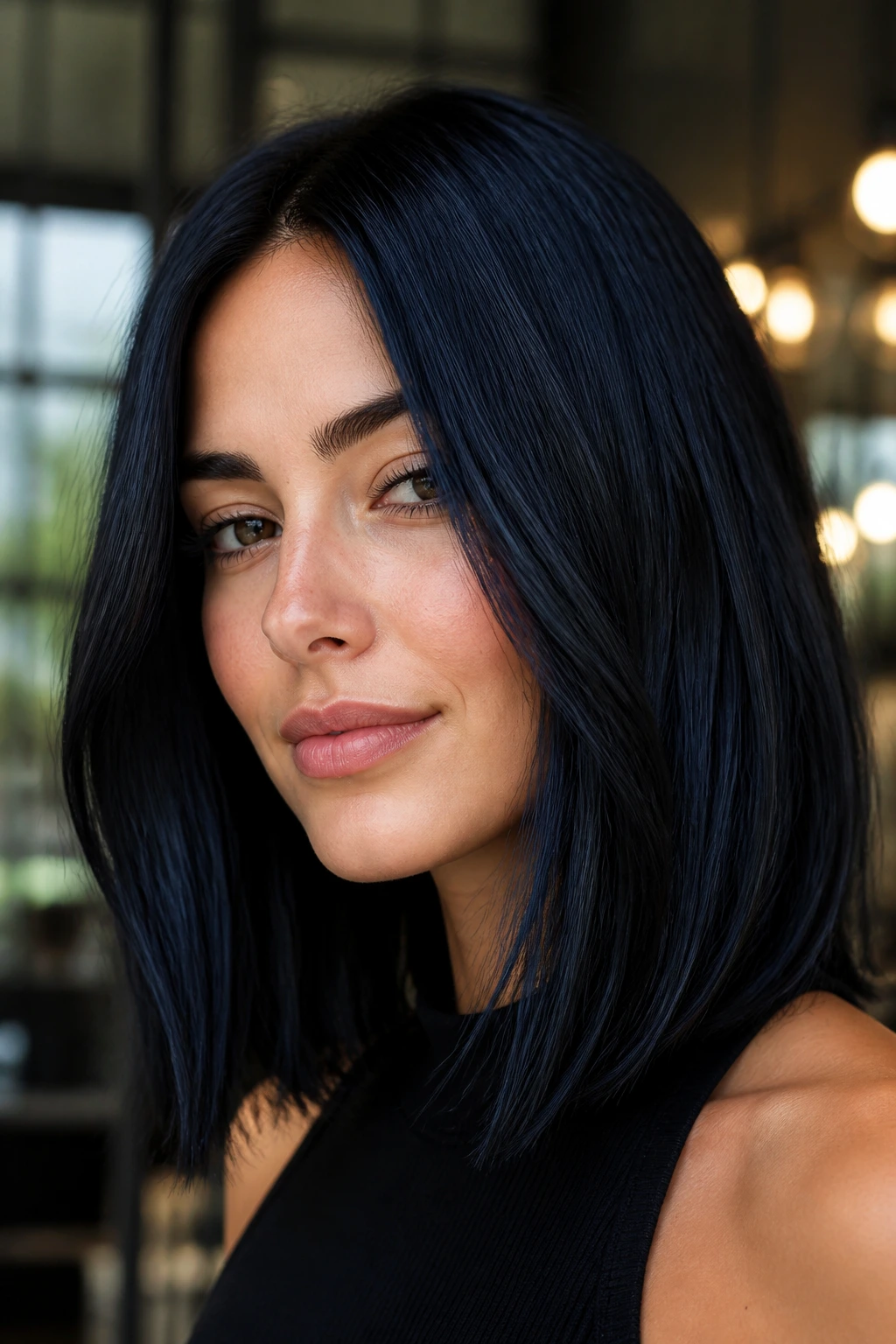
Black hair on medium length only works if it has shine. Otherwise it can go dead fast. A blue-black sheen fixes that problem by giving the darkest shade a reflective edge instead of a flat one.
This look is especially good on blunt medium cuts and sleek styling. The sharp line of a lob plus the cool undertone makes the whole haircut look graphic. On a layered cut, the blue-black finish adds a bit of depth without needing lighter pieces.
I’m picky about black hair because it can be harsh when the tone is wrong. Blue-black is better than plain black for most people because it gives the eye something to catch in the light. It also pairs well with cool-toned makeup and darker wardrobes.
One caution: dark permanent color is not casual if you want to go lighter later. If you’re unsure, try a demi-permanent gloss first or keep the black confined to the mid-lengths and ends.
19. Peach Coral Gloss
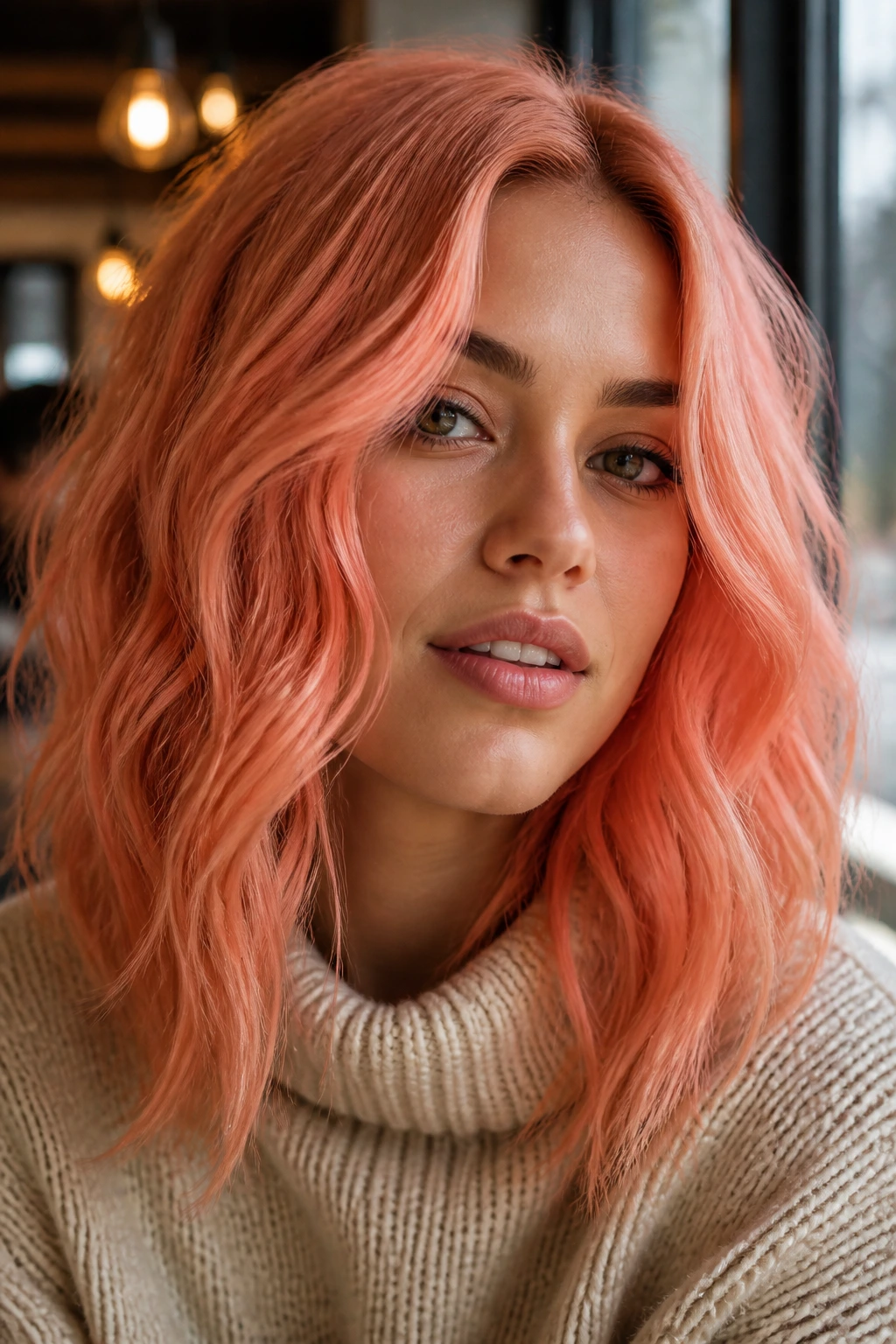
If you want something playful that still looks grown-up on medium-length hair, peach coral is a good lane. It’s bright enough to feel fresh, but soft enough that it doesn’t read like costume color.
The reason it works on medium hair is simple: the length is enough for the gloss to fade gracefully. On very short hair, coral can look abrupt. On long hair, it can get lost. A lob gives it a neat middle ground where the color can bloom around the face and soften toward the ends.
How to Keep It from Going Muddy
Peach coral needs a pre-lightened base, usually a pale blonde. Then a color-depositing gloss or direct dye keeps the tone in that peachy zone. Use cool water and a gentle shampoo or the coral will fade out fast.
This shade is best when the styling is loose. Wavy texture shows the blush notes better than a tight curl pattern. And if you tuck one side behind the ear, the front pieces do a lot of the visual work.
20. Sandalwood Brown
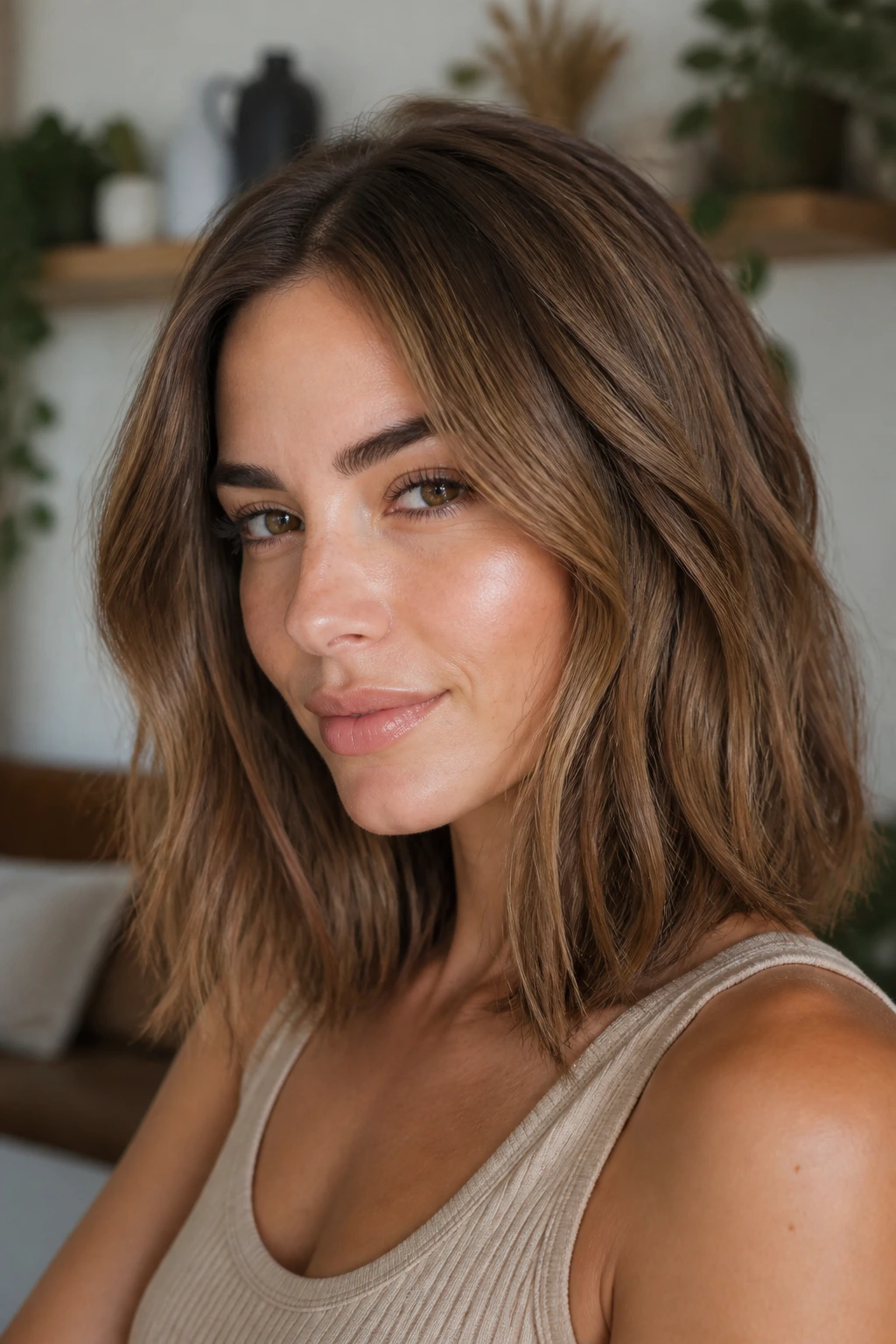
Sandalwood brown is one of my favorite low-drama shades for medium-length hair because it isn’t trying too hard. It sits between warm and cool, with a soft brown base and quiet caramel or taupe reflected through the lengths.
That balance matters on medium hair. A flat brown can disappear. A loud highlight job can fight the cut. Sandalwood gives you movement without announcing itself from across the room.
If your hair has a blunt edge, this shade keeps the line from looking heavy. If your cut has layers, the color reveals them without making them stripey. That’s why I’d put it on someone who wants a color that behaves in both office light and bathroom light.
Ask for low-contrast ribbons and a gloss finish. The effect should look blended, not highlighted in the old-school sense. Subtle is the point here. Not boring. Subtle.
21. Dimensional Silver Blending
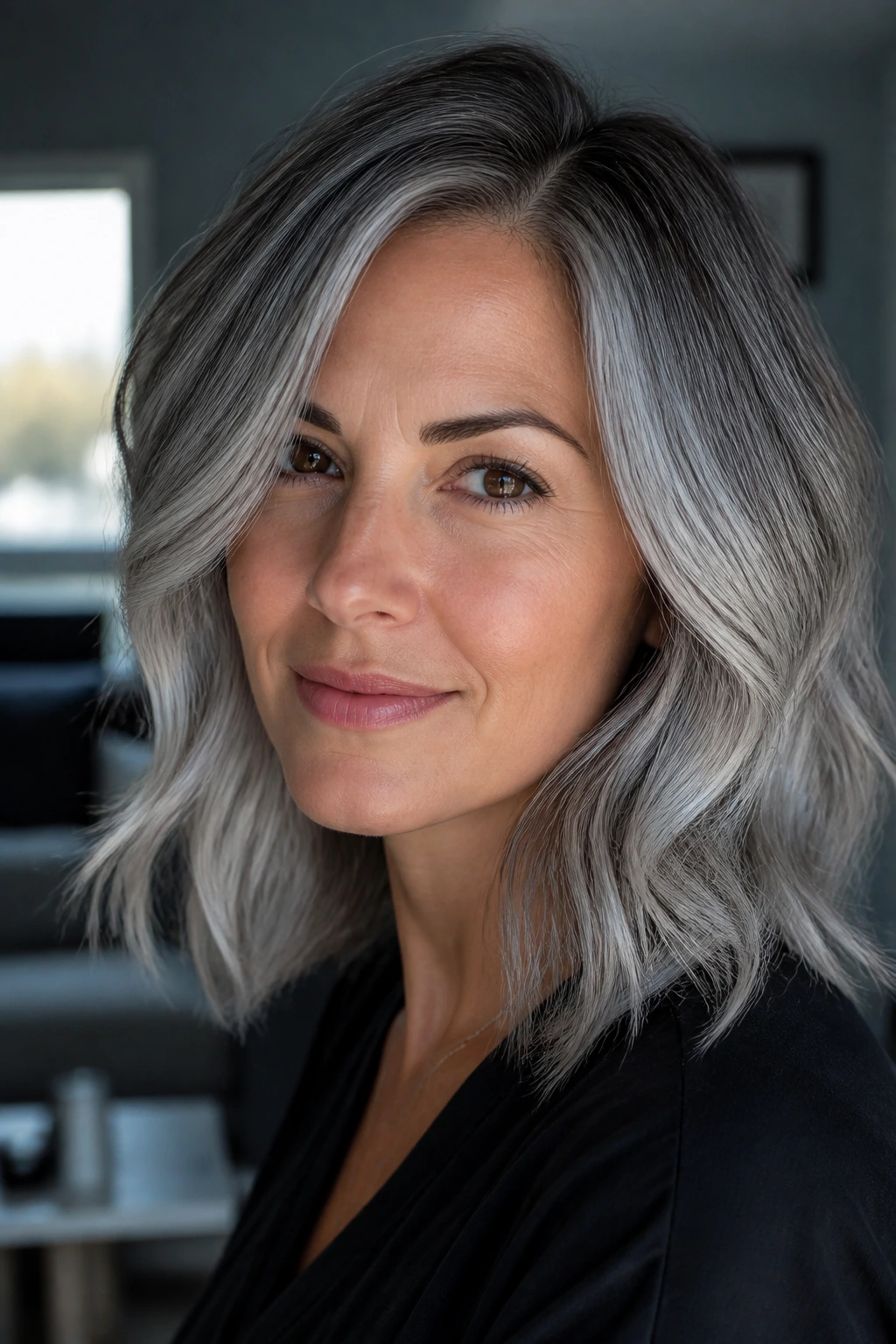
Can gray hair look polished instead of patchy? Absolutely. Dimensional silver blending is the version that makes the silver work with the natural pattern instead of fighting it.
On medium-length hair, silver blending looks especially good because the cut is long enough to show the different tones but short enough to keep the look tidy. Add cool lowlights where the hair is dense, then brighten the silver pieces around the crown and face. That keeps the contrast from getting noisy.
Best Way to Wear It
Loose waves show the silver and gray movement best. A flat iron can make it look shiny, but it can also erase some of the dimension if you press everything too smooth. I like this look with a soft side part and a clean trim.
This is a smart choice if you’re easing into gray or you want a fashion silver that doesn’t feel stark. Don’t bleach every strand to the same level. The depth is what makes it interesting.
22. Strawberry Blonde
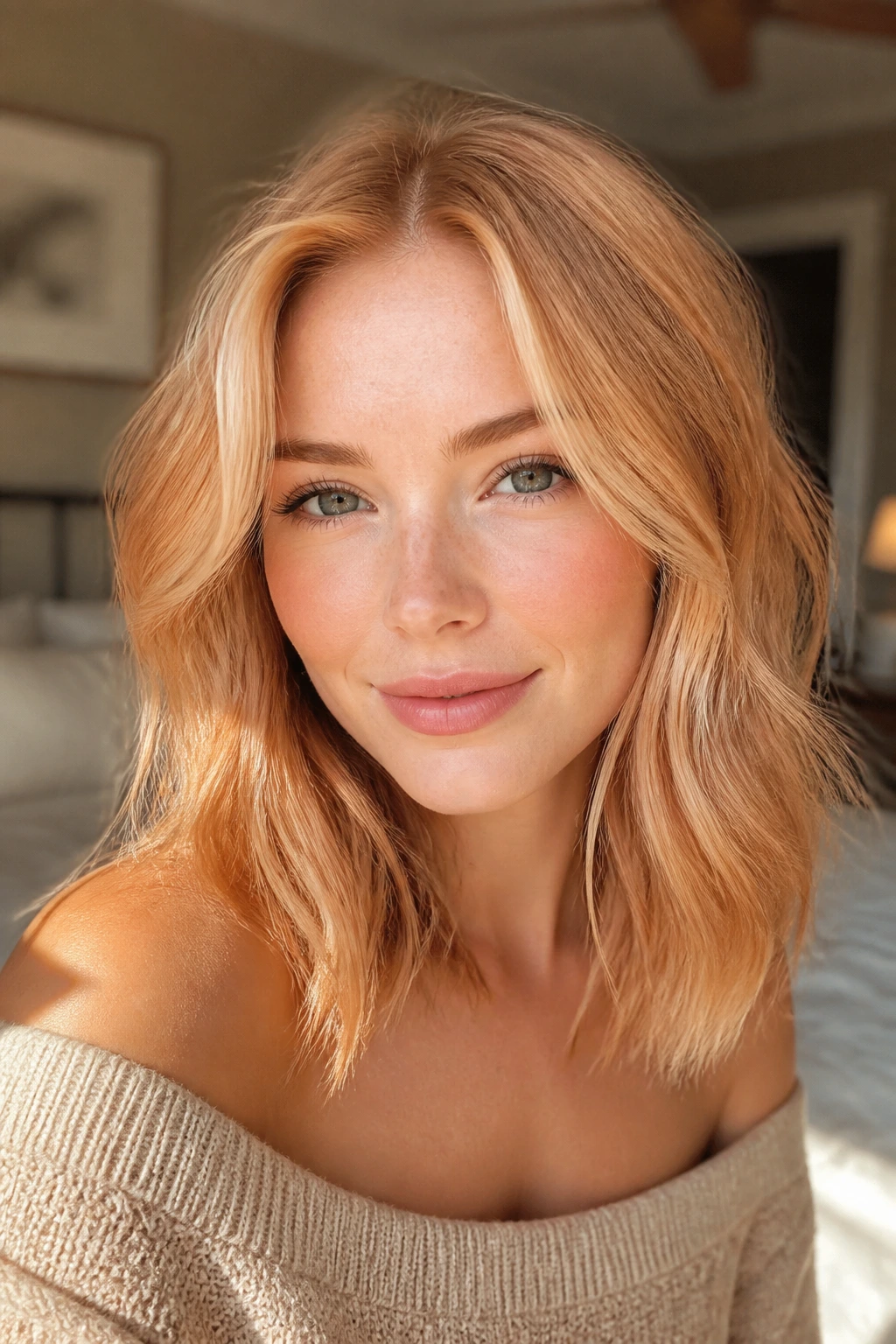
Strawberry blonde is one of the few warm shades that looks soft rather than loud on medium-length hair. It has that pale copper-gold mix that sits somewhere between blonde and red, which means it can brighten the face without a huge commitment.
Medium hair gives strawberry blonde enough room to look like an actual color, not just a tint. On shorter cuts, it can feel too fleeting; on longer hair, it may need more depth to stay visible. A shoulder-length shape lets it sit right where the light catches it.
If your skin tone leans fair or neutral-warm, this can be lovely. If you’re deeper or cooler, the tone can still work, but it needs more customization so it doesn’t read orange. A peach-beige gloss can keep it soft.
I like strawberry blonde with curtain bangs or soft layers because the front pieces do a lot of the work. It’s a bright shade, but not a noisy one.
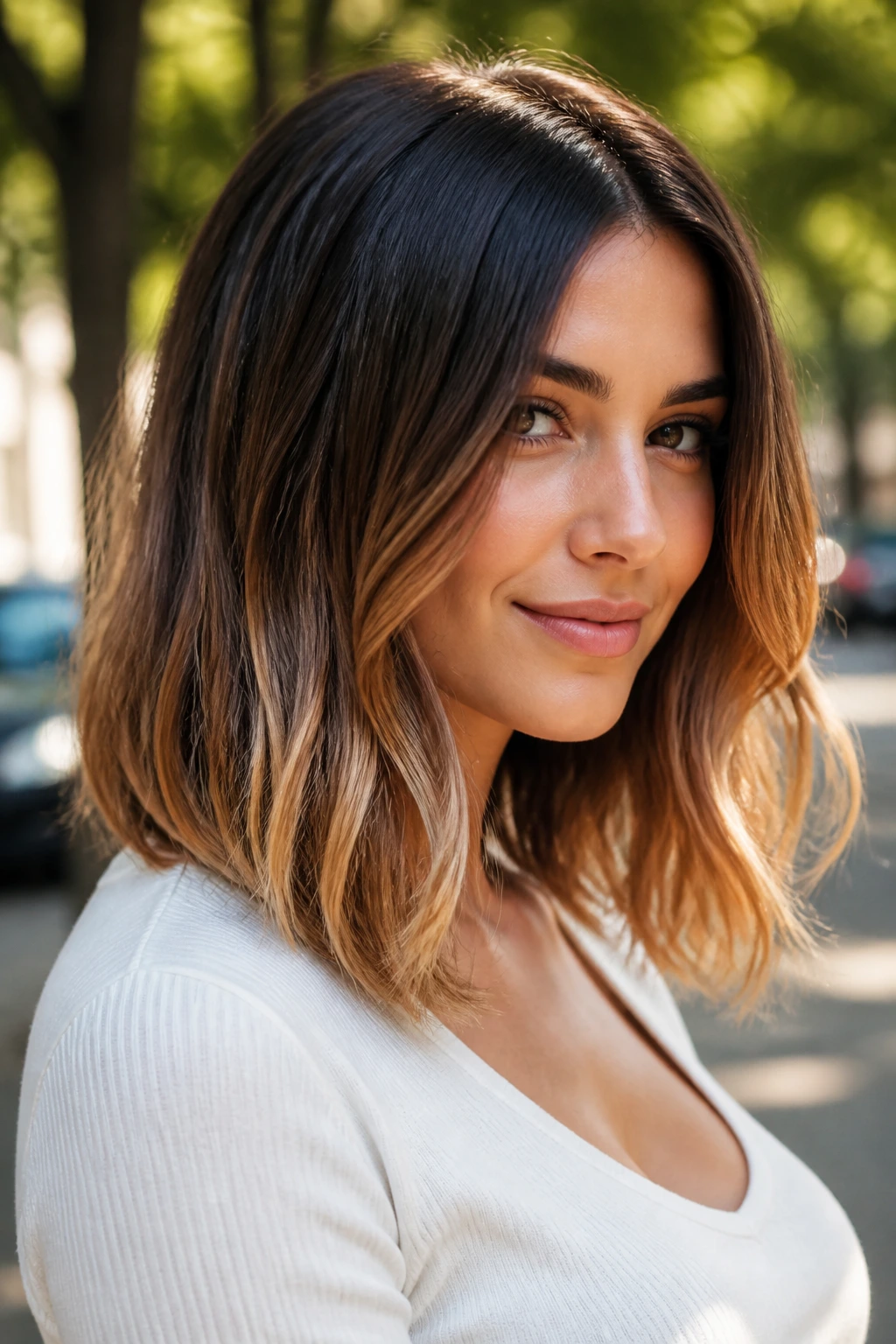
23. Espresso-to-Caramel Ombré
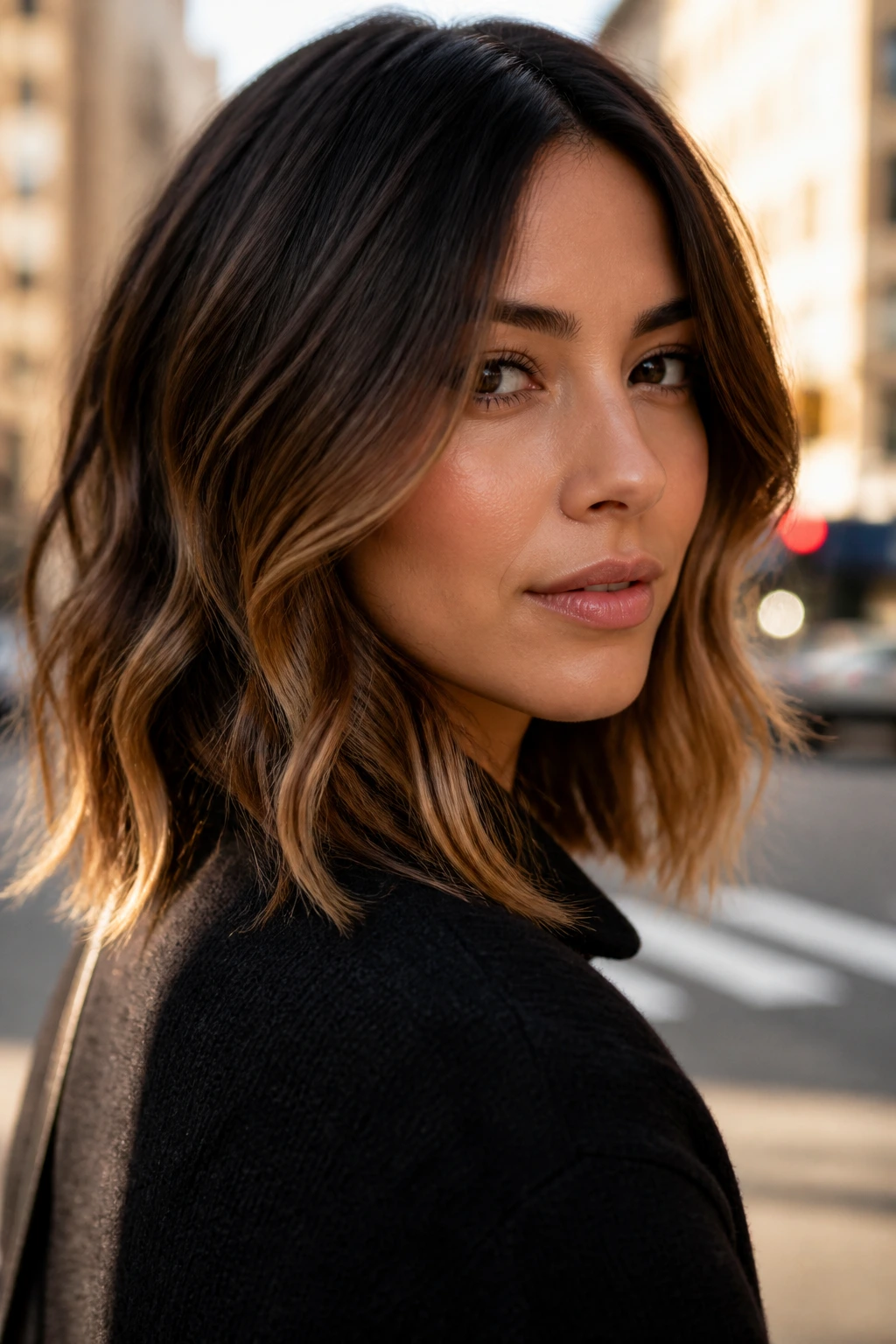
Espresso-to-caramel ombré is the cleanest answer for brunettes who want contrast without a full highlight commitment. The roots stay deep and rich, then the caramel opens up through the mids and ends.
Medium-length hair is ideal for this because the gradient has enough room to show, but not so much room that it drags the ends down. On a collarbone cut, the transition looks intentional, not lazy. That’s the difference between good ombré and old, tired ombré.
Unlike uniform highlights, ombré lets the darker root do some of the visual work. That means easier grow-out and less fuss between appointments. It’s also a smart way to test lighter color if you’ve never gone beyond brunette.
If your cut is blunt, soften the ends a little with texture or face-framing layers. A very hard line and a very hard ombré can argue with each other. A little movement solves that fast.
Why Medium-Length Hair Deserves More Thought Than People Give It
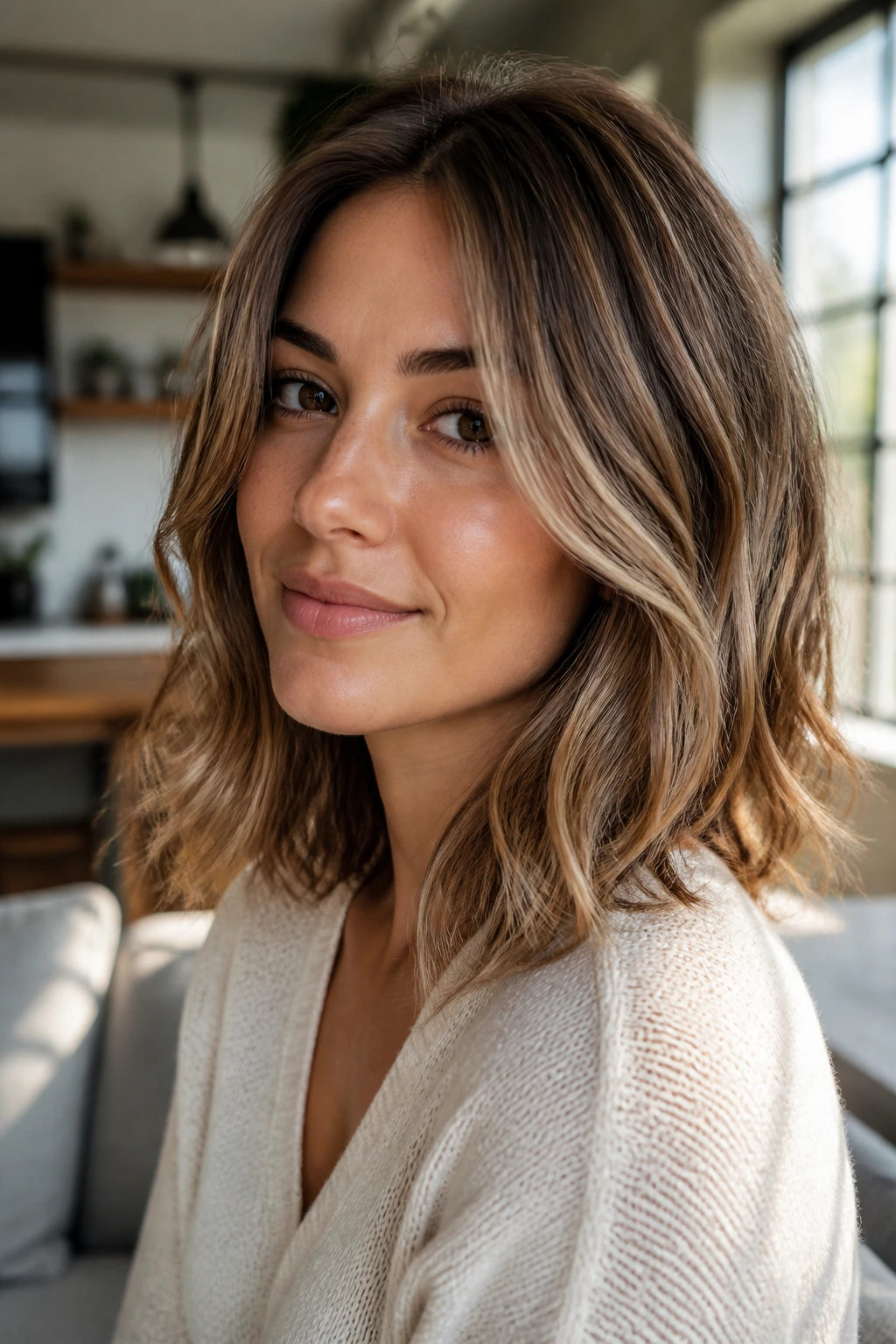
Medium-length hair is a funny length. People call it easy, which is lazy shorthand for “there’s enough hair to matter, but not enough to hide mistakes.” That’s why color placement matters so much here. A few inches can shift the whole mood from polished to stripey.
The good news is that medium hair also gives you control. You can keep a root shadow visible, put brightness exactly where the face needs it, and still move the hair around without the color falling apart. On a lob, the whole head reads at once. On a shag, the layers make tone look softer and more expensive. On a blunt cut, shine becomes the star.
I’d rather color medium hair than very long hair, honestly. Long lengths can swallow subtle work. Medium hair tells the truth faster. That’s not a flaw. It’s useful.
Tools That Keep the Color Looking Intentional
-
Color-safe shampoo: A sulfate-free formula helps keep toner and gloss from rinsing out too fast, especially on blondes, coppers, and fashion shades.
-
Moisturizing conditioner: Medium hair shows dry ends quickly, so pick a conditioner that smooths without making the roots limp.
-
Purple or blue shampoo: Purple keeps blonde and silver shades cleaner; blue helps knock back orange in brunette balayage and caramel tones.
-
Heat protectant spray: Use it before every blow-dry, curling iron pass, or flat-iron session. Skipping this is how shine disappears.
-
Deep conditioning mask: Once a week is a good rhythm for most colored medium-length hair, more often if you’ve lightened the ends a lot.
-
Wide-tooth comb or detangling brush: Less breakage, less stress on fragile highlighted pieces.
-
Microfiber towel or soft T-shirt: Rough terry cloth can rough up the cuticle and make color look dull.
-
Shower filter: If your water is hard, a filter can help blondes and coppers stay cleaner longer.
-
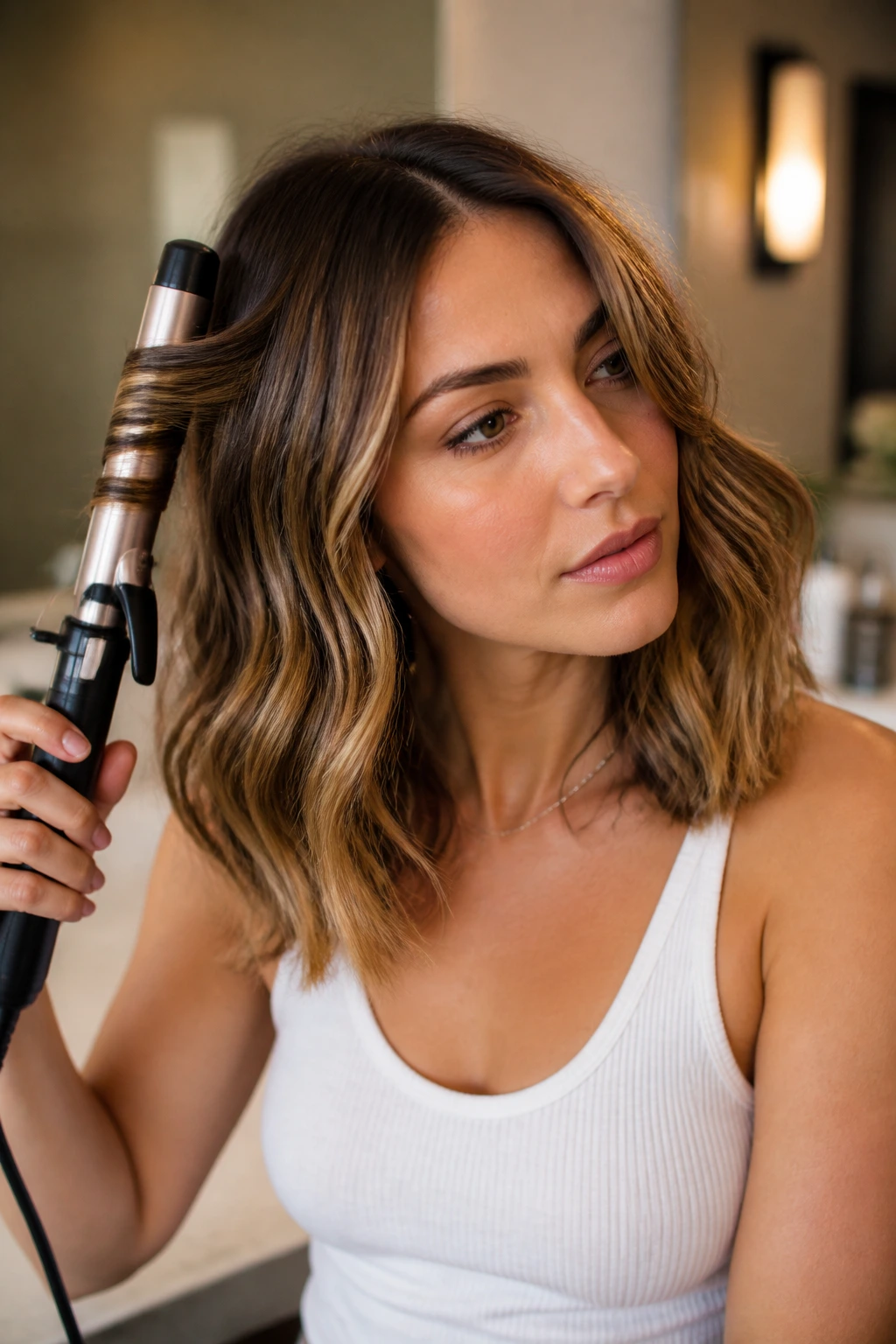
1.25-inch curling iron or round brush: Soft bends and loose waves show dimension better than pin-straight hair on most of these shades.
-
Gloss or color-depositing conditioner: Useful between salon visits when the tone starts to fade or go flat.
How to Choose the Right Tone, Lift, and Placement
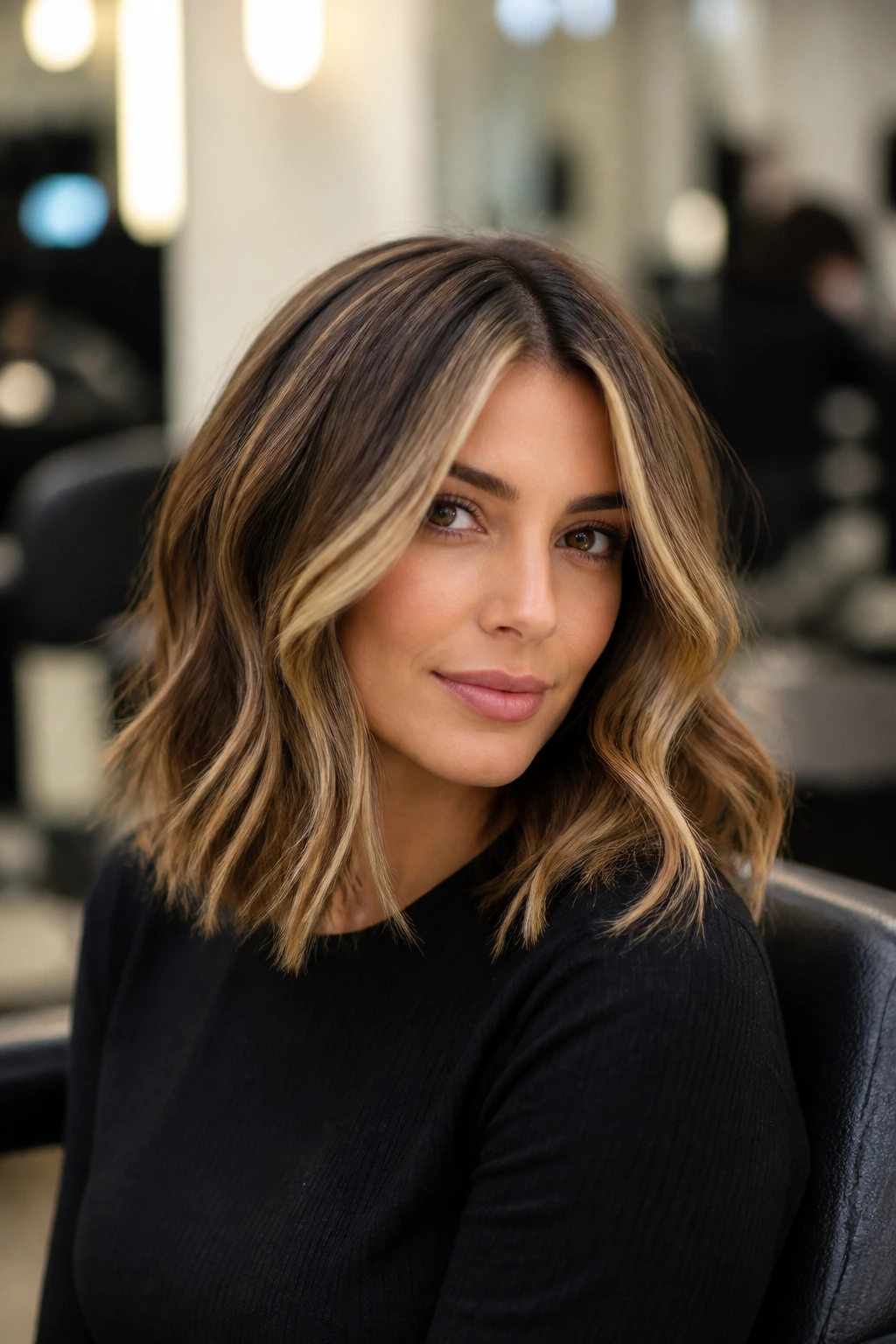
Hair color is not a lipstick swatch. A shade that looks dreamy on one head can turn muddy or harsh on another because base level, porosity, and cut matter just as much as tone. That’s especially true on medium-length hair, where every inch of color is easy to read.
Start with your base level. If you’re around a level 4 or 5 brunette, caramel, honey, chestnut, cherry cola, and toasted pecan will usually feel natural. If you live closer to a level 6 or 7 dark blonde, beige bronde, mushroom brown, smoky beige blonde, and vanilla blonde become easier to land. Going four levels lighter in one appointment is where people get into trouble. The hair often looks piecey instead of blended.
Ask for placement, not just color. A money piece, root smudge, face frame, babylights, or lowlights can change the final look as much as the actual tone. Medium hair does well with contrast near the face and softer depth underneath. If you want brightness but not maintenance, tell your colorist you want the ends lighter and the root left soft.
Porosity matters too. Dry ends grab pigment fast and can look darker or duller than expected, especially with reds and coppers. That’s why a gloss test strand or a cautious formula is smarter than chasing a photo on your phone. Bring photos, yes, but also be ready to talk about what you want the color to do: soften the cut, brighten the face, hide regrowth, or make the shape look thicker.
How to Wear These Shades So They Actually Show
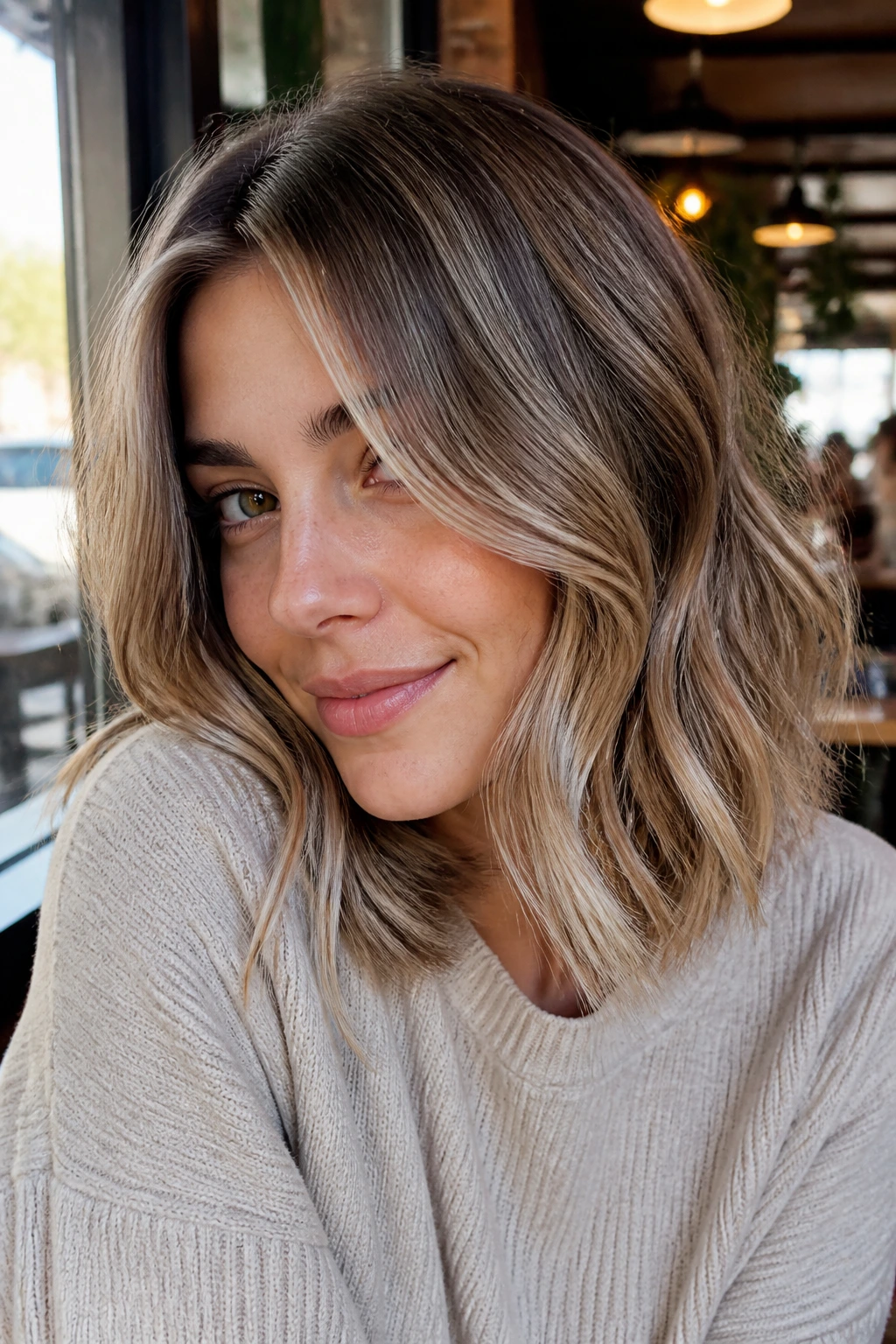
Straight and sleek: This finish makes glossy brunettes, espresso glosses, pearl blondes, and blue-black shades look sharp. If the cut is blunt, the color reads cleaner because the line is crisp.
Soft waves: Caramel balayage, bronde ribbons, rose gold melts, and copper glazes all wake up with a loose bend. The wave pattern gives the eye places to land, which is why these colors can look flat when the hair is too smooth.
Half-up or tucked-back styling: Money pieces, platinum face-framing highlights, and peekaboo plum panels show up best when you pull the front away from the face. It’s a small move, but it changes everything.
Best cut pairings: A layered lob likes ribbons and lowlights. A blunt shoulder cut likes glossy solids or one strong money piece. A shag loves warm tonal shifts because the layers create their own movement. That pairing matters more than people think.
Little Upgrades That Change the Whole Result
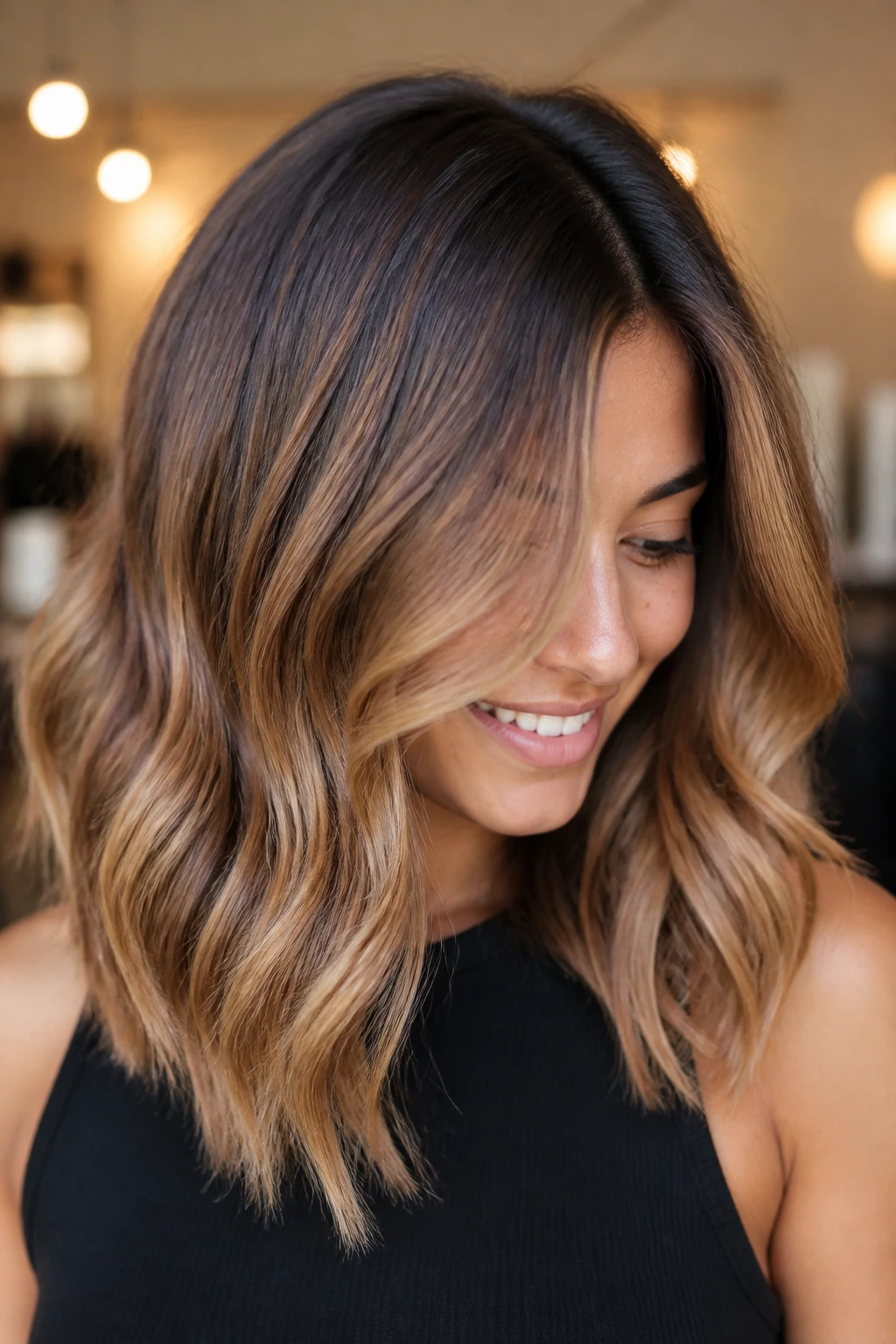
Gloss Boost: A clear or tinted gloss can rescue hair that looks dull two weeks after color. For brunettes, a brown or beige gloss keeps the tone clean; for blondes, a pearl or champagne glaze softens brass without turning the hair gray.
Depth: Leaving a little darkness under the crown makes medium-length hair look thicker. I’d rather see one good panel of brightness than a whole head of over-lightened ends that look thin and thirsty.
Face-Framing: If you can only afford one color detail, put it around the face. It changes the haircut faster than almost anything else and gives the rest of the hair time to grow into the look.
Tone Control: Warm color needs warmth; cool color needs coolness. Don’t mix them randomly. A beige root with copper mids and ash ends can look confused. Pick a lane and refine it.
Texture: A wave spray, round brush, or a few bends from a curling iron can make the same color look twice as rich. Color and texture talk to each other. Ignore one, and the other works harder than it should.
Keeping Color Fresh Between Salon Visits
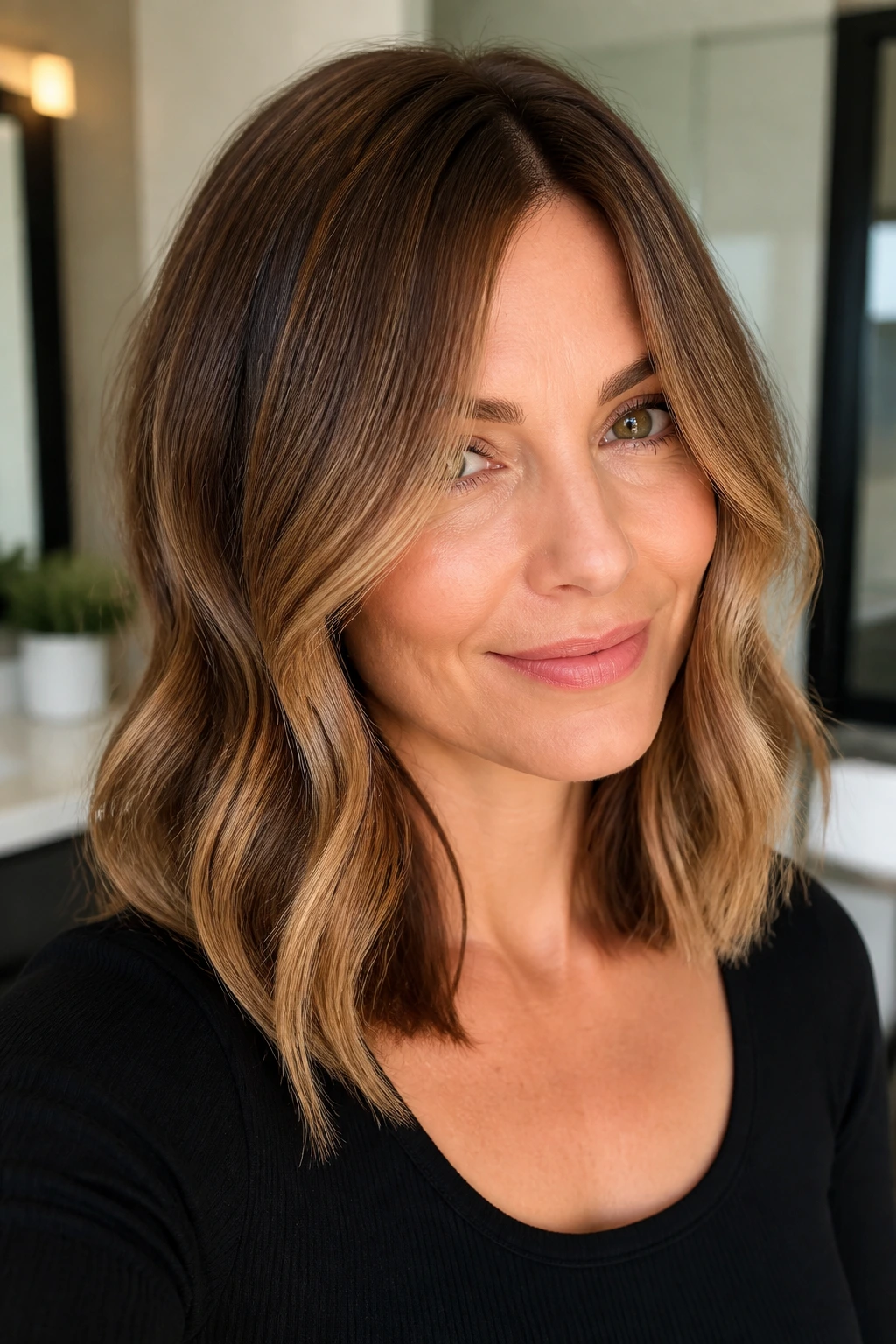
Fresh color on medium-length hair doesn’t usually fail all at once. It fades in layers. The shine goes first. Then the tone starts to drift. Then the ends start looking a little rough. If you catch those stages early, the color stays wearable much longer.
For most permanent or demi-permanent shades, try to wait 48 hours before the first shampoo if your colorist says the formula allows it. After that, keep washes to 2 to 3 times a week for brunettes and 1 to 2 times a week for blondes, coppers, and rose tones. Use lukewarm water. Hot water strips tone faster than people want to admit.
Glosses and toner refreshes depend on the shade. Brunette balayage usually does well with a gloss every 6 to 8 weeks. Copper, rose gold, peach, and other warm fashion tones often need a refresh closer to 3 to 5 weeks because they fade fast. Shadow roots and root smudges can usually stretch to 6 to 10 weeks before they start looking obvious.
If you heat-style often, use protectant every time and keep the iron pass count low. One smooth pass is better than three panicked ones. And if your ends feel rough, don’t keep layering pigment on top of damage. Trim the ends first, then gloss. That order matters.
Smart Variations for Different Lifestyles and Hair Types
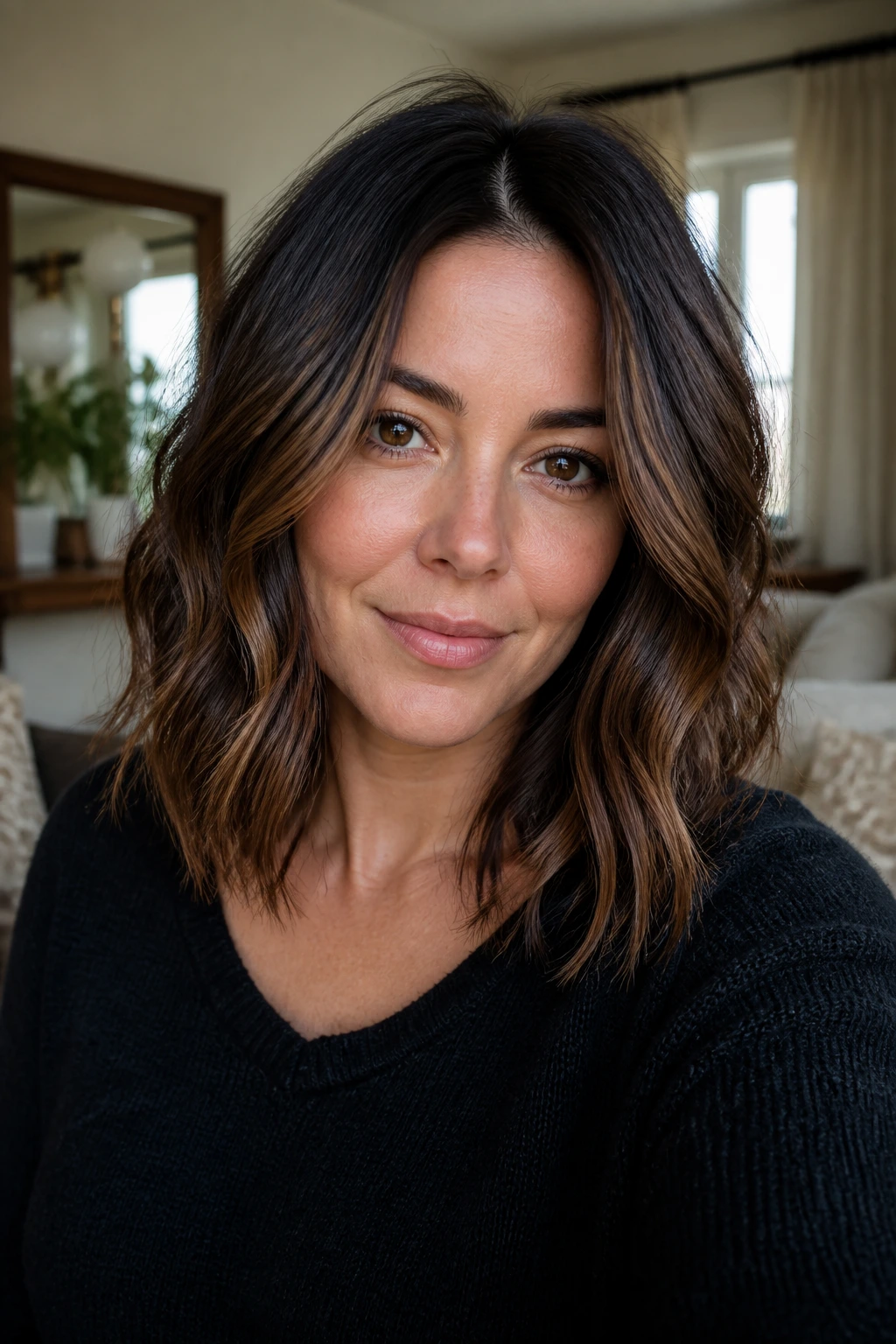
The Low-Fuss Brunette Edit: Choose shadow roots, chestnut babylights, or espresso gloss if you want a color that grows out quietly. These shades hide regrowth better and don’t need constant toner work.
The Curly-Hair Version: Go for ribbons, lowlights, or face-framing highlights instead of thick block color. Curly medium-length hair shows placement in spirals, so too much contrast can look busy fast.
The Fine-Hair Boost: Babylights, money pieces, and glossy single-process shades tend to work best. Fine hair can get see-through if the highlight sections are too wide, so lots of tiny pieces are kinder to the cut.
The Bold-Color Version: Peekaboo plum, peach coral gloss, rose gold, and cherry cola are the friendlier entry points. They give you color without needing a full fantasy head.
The Cool-Tone Version: Mushroom brown, smoky beige blonde, pearl blonde, and silver blending are the cleanest choices if warm gold tones make you look sallow. Keep the gloss cool but not gray.
The Warm-Tone Version: Caramel balayage, honey money pieces, cinnamon auburn, and toasted pecan brunettes all live in that warmer lane. They add softness around the face and usually play well with creamier skin tones.
Color Mistakes That Show Up Fast on Medium Hair
-
Choosing a photo, not a formula: A screenshot can’t tell you the base level or maintenance schedule. If you want the look, ask what level the hair starts at and what tone sits on top.
-
Lightening too much at the ends: Medium hair can look wispy fast if the last few inches are pushed too pale. The fix is to keep some depth at the perimeter.
-
Ignoring the cut: A blunt lob and a shag do not wear color the same way. One wants clean gloss. The other can handle softer ribbons and more contrast.
-
Going too warm or too cool all at once: Mixed tones can look muddy on shoulder-length hair because the eye sees the whole head at once. Pick the dominant tone and let the rest support it.
-
Skipping upkeep on red and blonde shades: Reds fade; blondes brass. That’s not theory. It’s what they do. Use the right shampoo and book glosses before the color looks tired.
-
Forgetting that shine matters: Medium hair shows dullness fast. If the color looks flat, sometimes the problem is dryness, not the formula.
Hair Color Questions People Actually Ask
What hair color looks best on medium-length hair?
The best shade is the one that supports your cut and base level. Caramel balayage, beige bronde, chestnut babylights, and glossy brunettes are safe favorites because they add movement without fighting the length.
Is balayage or highlights better for a lob?
Balayage usually looks softer on medium-length hair because the placement can be tailored around the face and ends. Traditional highlights can still work, but they need a lighter hand or the result can turn stripey.
How often do medium-length colors need touch-ups?
That depends on the shade. Shadow roots and brunette blends can often go 6 to 10 weeks. Blonding, copper, and fashion colors usually need more frequent gloss or toner refreshes.
Can I go blonde if my medium-length hair is already dry?
You can, but not all at once if the hair is fragile. A better move is partial lightening, a root smudge, and a bond-building plan so the ends don’t turn brittle.
What shade is lowest maintenance?
Shadow-root balayage, espresso gloss, chestnut babylights, and sandalwood brown usually age the best. They keep the grow-out soft and don’t depend on perfect toner timing.
Do vivid colors work on medium-length hair?
Yes, and sometimes better than on longer hair. Peekaboo plum, peach coral, and rose gold look especially good because the shorter length lets the color stay visible without becoming a full-time commitment.
Should I cut my hair before or after coloring?
If you’re making a big change, cut first or at least get the ends trimmed close to the color appointment. Freshly shaped ends help the shade sit cleanly, especially on blunt lobs and medium shags.
What if my color turns brassy?
Brass usually means the tone drifted warmer than you wanted. Use the right shampoo for your shade, book a gloss, and stop over-washing. If the brass is stubborn, a colorist can correct it without taking the hair lighter again.
The Shade That Moves With You
Medium-length hair does one thing better than almost any other cut: it makes color look like part of the shape, not something sitting on top of it. That’s why the best ideas here aren’t just pretty swatches. They’re placement plans. Root smudges, face frames, ribbons, babylights, glosses, and soft ombrés all work because they respect the length you actually have.
The right choice will depend on how much upkeep you want, how light your hair can safely go, and whether you like warmth, coolness, or a little in-between. But the real test is simpler than all the salon language. If the color still looks good when you tuck one side behind your ear, throw on a jacket, or catch yourself in daylight, it’s doing its job.
That’s the version worth keeping.
