



A long blonde on a woman over 50 can look airy and sharp, or it can slide into one flat sheet of color that shows every dry end. The difference rarely comes down to age. It comes down to where the brightness sits, how much root you leave alone, and whether the shade has enough cream or beige to flatter real skin instead of looking like a strip on a color chart.
I’ve always thought long hair gets better with a little dimension. A single pale blonde from roots to ends is unforgiving on length; a soft balayage, a root melt, or even a few silver-blending ribbons can make the same hair look thicker, shinier, and much less styled-by-committee. The best blonde hair looks for long hair over 50 do that balancing act almost quietly.
That quiet part matters. You want movement at the ends, light near the face, and enough depth at the root that the color doesn’t shout the second it grows out. Once those three pieces are working together, long blonde hair stops feeling like a maintenance problem and starts looking like a choice.
Why These Blonde Looks Earn Their Keep
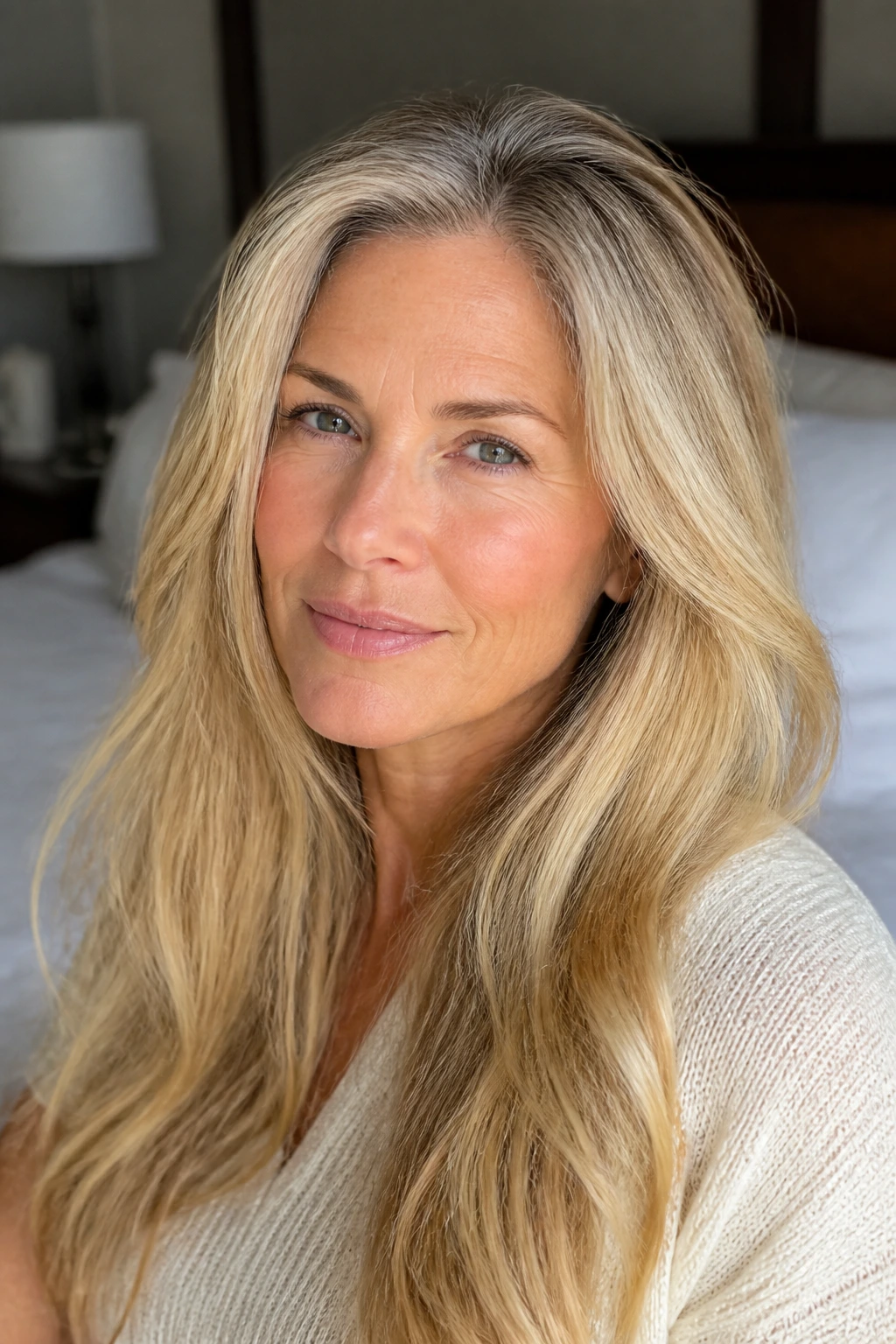
-
Gray blending without a hard line: These shades don’t fight every silver strand; they fold gray into the design so the grow-out looks intentional instead of streaky.
-
Light where the eye goes first: Brightness around the cheekbones, temples, and part line makes long hair look fuller from the front, which matters more than chasing a pale end result.
-
More shine, less dryness on the ends: Beige, champagne, and honey tones tend to reflect light better than icy blondes on older hair that has seen a few bleach sessions.
-
Longer wear between salon visits: Root shadow, balayage, and ribbon highlights stay pretty for 8 to 12 weeks without turning into a stripy mess.
-
Better shape for length: Long hair needs dimension or it can look like a curtain. These looks keep the color moving through layers, waves, and bends.
-
Flexible with skin tone: Some of these blondes lean warm, some cool, some sit in the middle. That gives you room to match the color to your face instead of forcing your face to match the color.
What Makes Blonde Look Rich on Long Hair After 50
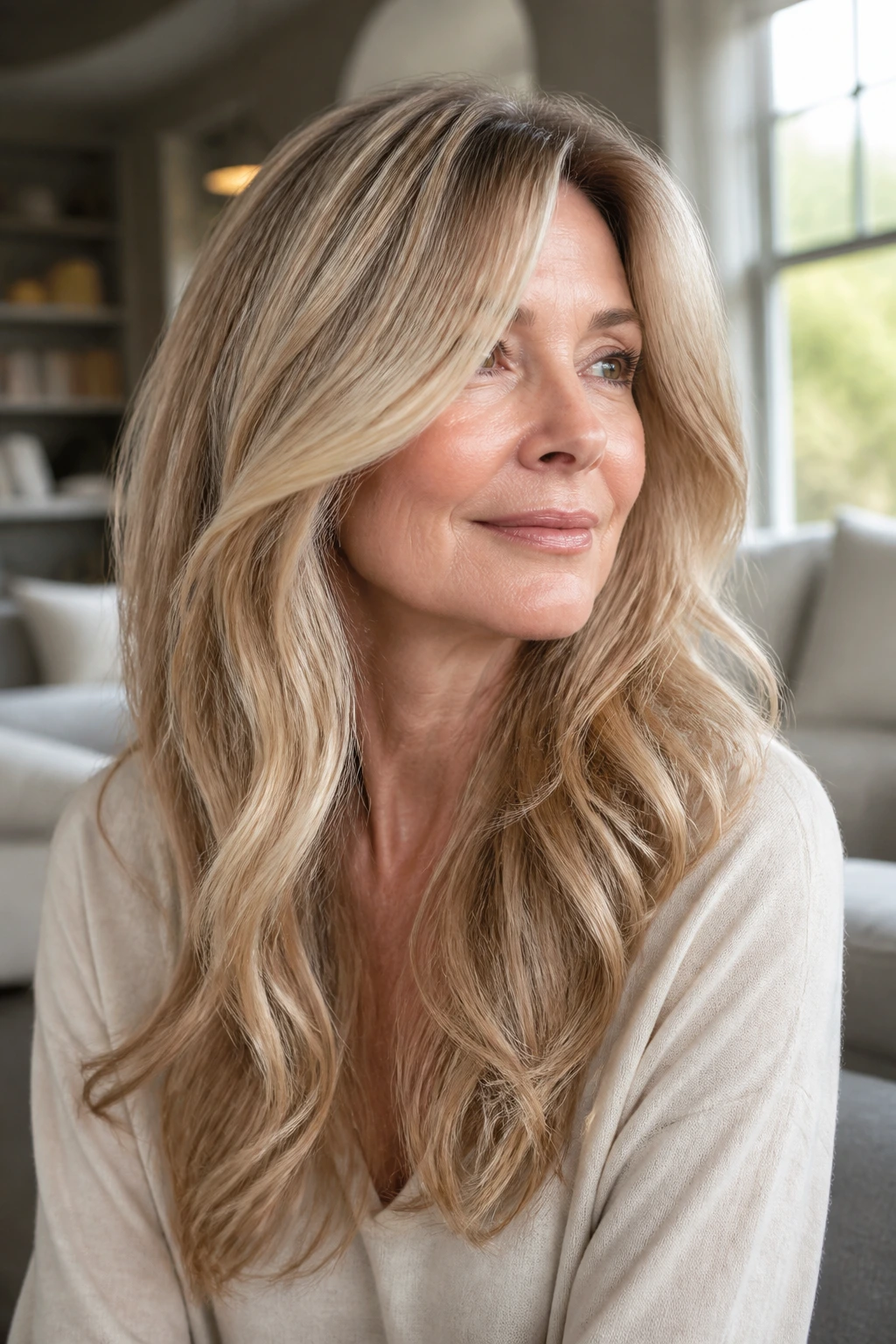
The main trick is restraint. A heavy, all-over blonde can flatten long hair fast, especially if the ends are fine or the density has thinned a bit at the temples. A better approach is to treat the root, mids, and ends differently so the color keeps some lift and shadow. That little bit of depth is what makes the hair look plush instead of bleached-out.
Placement matters more than the exact name of the blonde. Bright pieces around the face do more visual work than a full head of pale foil work, and a root melt of even 1 to 2 inches can make grow-out look deliberate. If the hair is long, the lower half usually needs more care and less bleach, not the other way around. Sounds backward. It is. And it works.
Texture changes the story too. Soft waves, a round-brush blowout, or a bend through the mid-lengths gives blonde something to catch on. Straight, pin-flat hair can still look beautiful, but it needs more tonal contrast or a glossy finish to avoid that one-tone sheet effect. That’s why beige blonde, champagne blonde, and silver-ribbon placement keep showing up here. They move with the hair instead of sitting on top of it.
1. Soft Champagne Balayage
Champagne blonde is the shade I reach for when someone wants lightness without that overprocessed, lemony look. On long hair, the soft beige-gold tone reads polished because it has enough warmth to flatter skin and enough neutrality to keep the color from yelling from across the room.
Why it works on long hair
Champagne balayage gives you brightness in the upper layers and around the face, while leaving the lower lengths a touch deeper. That little contrast keeps long hair from collapsing into one pale block. It also grows out better, which matters if you’re not eager to live at the salon.
Ask for hand-painted pieces through the top third of the hair and softer ribbons through the mids. Keep the lightest pieces no more than 1/2 inch wide so the blonde stays woven, not striped.
If your hair tends to go dull, this shade is a smart move. It reflects light without looking icy, and on textured or wavy long hair, it picks up movement in a way that reads expensive without trying too hard.
2. Honey Face-Frame Blonde
Want brightness without bleaching the whole head? Start at the front. Honey face-framing pieces can do more for your face than a full set of highlights ever will, especially if your natural base is medium blonde, light brown, or gray-blended.
What to ask for
Keep the brightest strands from the temple down to the chin, with a couple of softer pieces just behind them so the front doesn’t look sketched on. Honey blonde should look like sunlight, not orange. That means your colorist needs to leave enough beige in the toner to keep it grounded.
This look flatters warm and neutral skin especially well. It also plays nicely with long layers because the front pieces catch the edge of each bend or wave. The result is lift at the face and depth everywhere else, which is the right trade-off for long hair over 50.
A small tip: if you wear your hair half-up a lot, this one shows well even when the back is tucked away. That matters more than most people admit.
3. Beige Blonde with Shadow Root
If you hate seeing a hard line six weeks after color day, this is the one to save. A beige blonde with a shadow root keeps the base soft and believable while the lighter lengths do the brightening work.
The root shade should usually sit about 1 to 2 levels darker than the blonde through the mids. Not much darker. Just enough to blur the grow-out and make the part look fuller. Beige tones are useful here because they sit between warm and cool, which means they don’t tilt too yellow or too ash.
Why gray blending looks good here
Gray hair at the temples and crown can be the thing that ruins a one-note blonde. A shadow root turns that into part of the design instead of a problem to hide. The transition looks gentler, and on long hair, gentler usually looks better.
This is also one of the best looks for fine hair. A bit of root depth creates the illusion of more density near the scalp. Flat root to flat ends is the enemy; shadow root to beige length is the fix.
4. Silver Ribbon Highlights
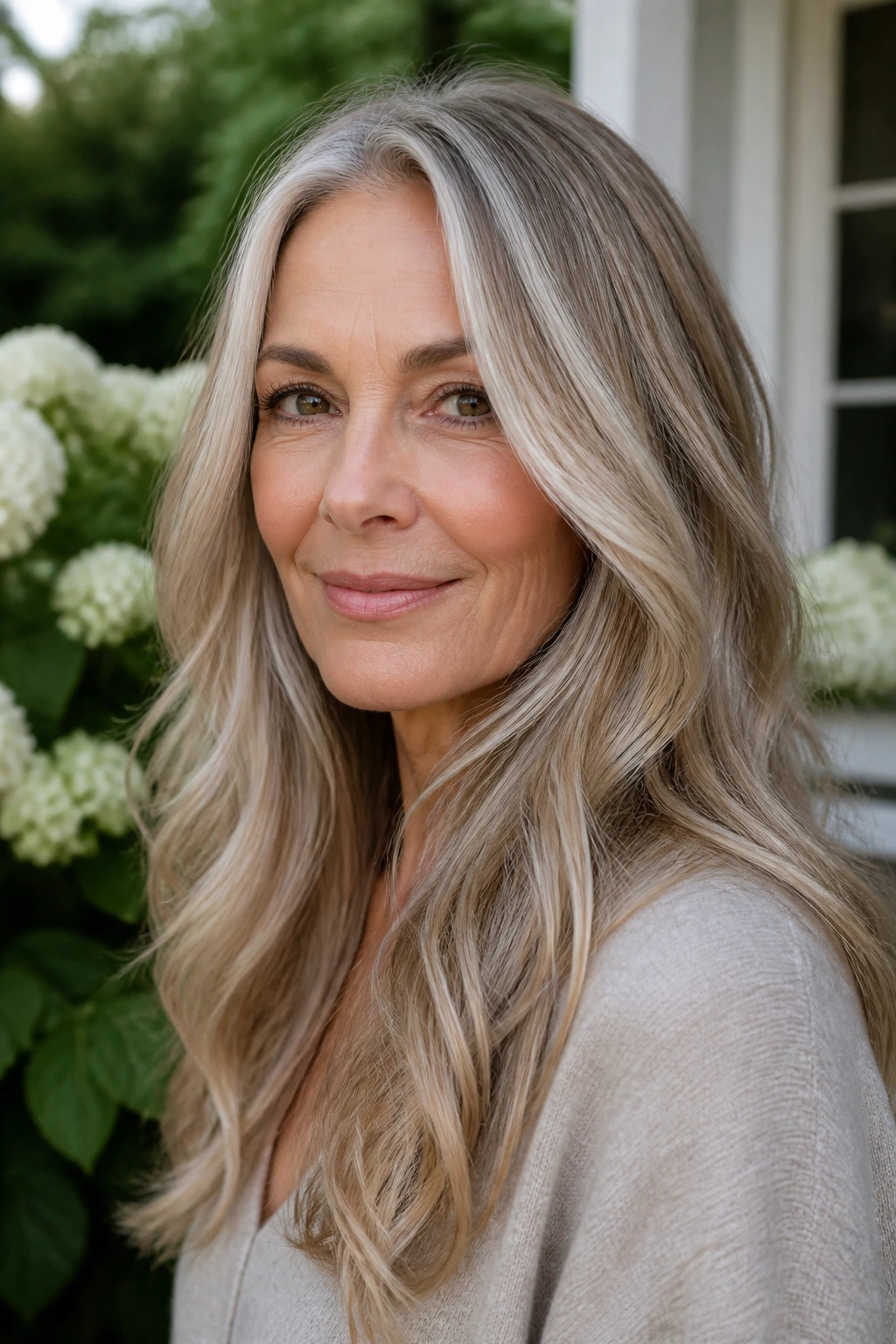
Silver ribbon highlights are for the woman who’s not trying to pretend gray doesn’t exist. I like this look because it uses silver as part of the palette instead of treating it like a mistake.
Why it feels modern, not harsh
The trick is narrow placement. You want thin, cool-toned ribbons woven through the lengths, not chunky streaks that look like tiger stripes in daylight. On long hair, especially wavy hair, those slender ribbons break up the surface and keep the cut from looking heavy.
This is a good choice if your natural gray is coming in at the temples, crown, or hairline. Rather than covering every silver strand, the color leans into them and adds brighter pieces nearby so the whole head reads intentional. That’s the difference between “blending” and “fighting.”
If your skin tone is cool or rosier, silver ribbons can be gorgeous. If your skin is warmer, ask for a beige-silver blend instead of a stark platinum silver. Cool does not have to mean chalky.
5. Creamy Butter Blonde Layers
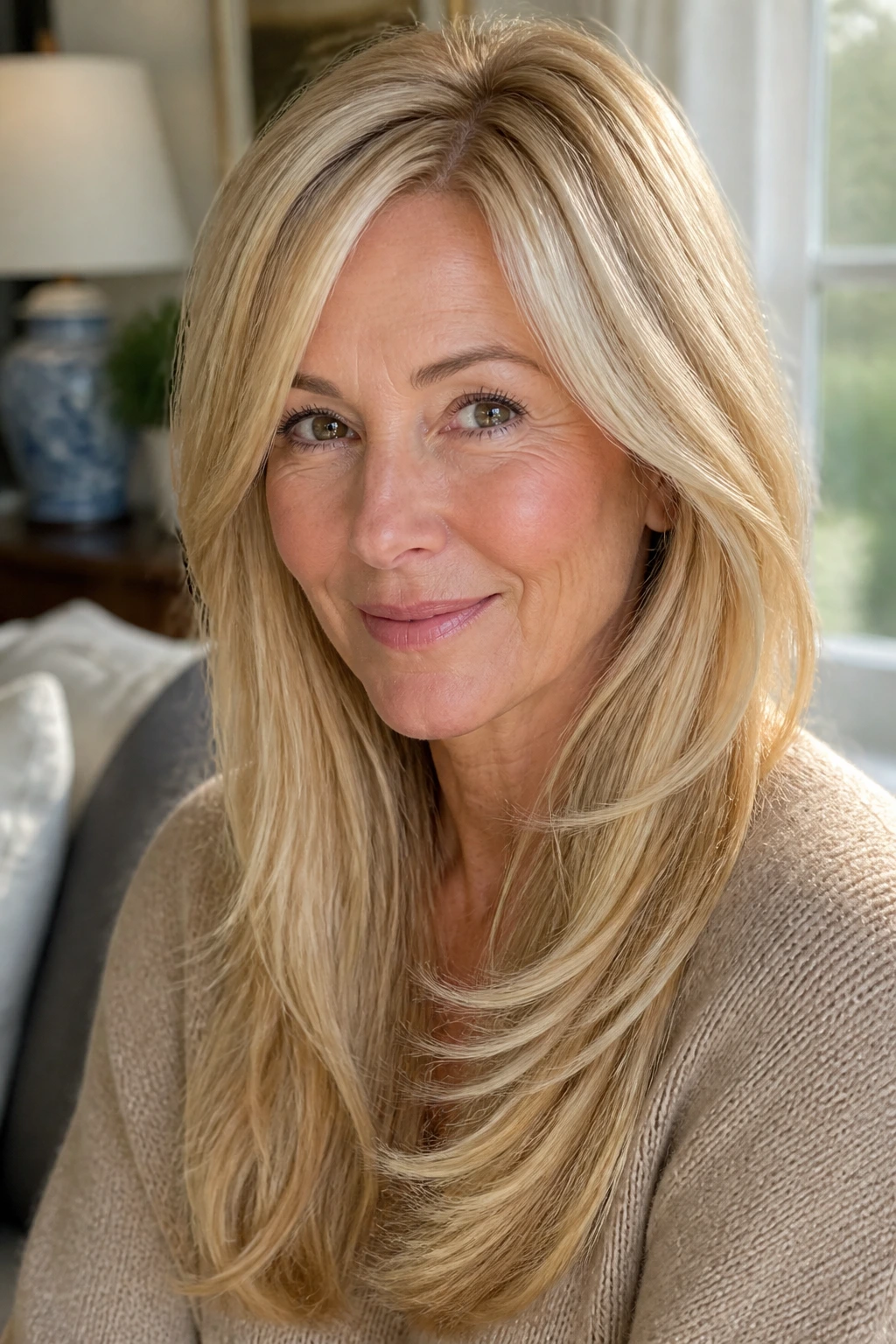
Creamy butter blonde has a richness to it that icy blondes rarely manage. It’s softer, warmer, and a little plush-looking in the mids, which is exactly why it works on long hair that needs more visual weight.
The layers matter here. A single-tone butter blonde can go flat fast, but when the color is painted through long layers, it catches on each bend and looks fuller. I like this especially on hair that has a bit of natural wave or a round-brush finish.
How to wear it
Pair it with soft face-framing layers and a side part or loose middle part. Butter blonde tends to look most expensive when the ends are not over-lightened. Leave a whisper of beige depth on the last few inches so the hair doesn’t look see-through.
This shade is friendly to warm and neutral skin, and it gives dry ends a kinder look than many pale blondes. It’s a blonde with body, not a blonde trying to act like silver.
6. Warm Wheat Blonde
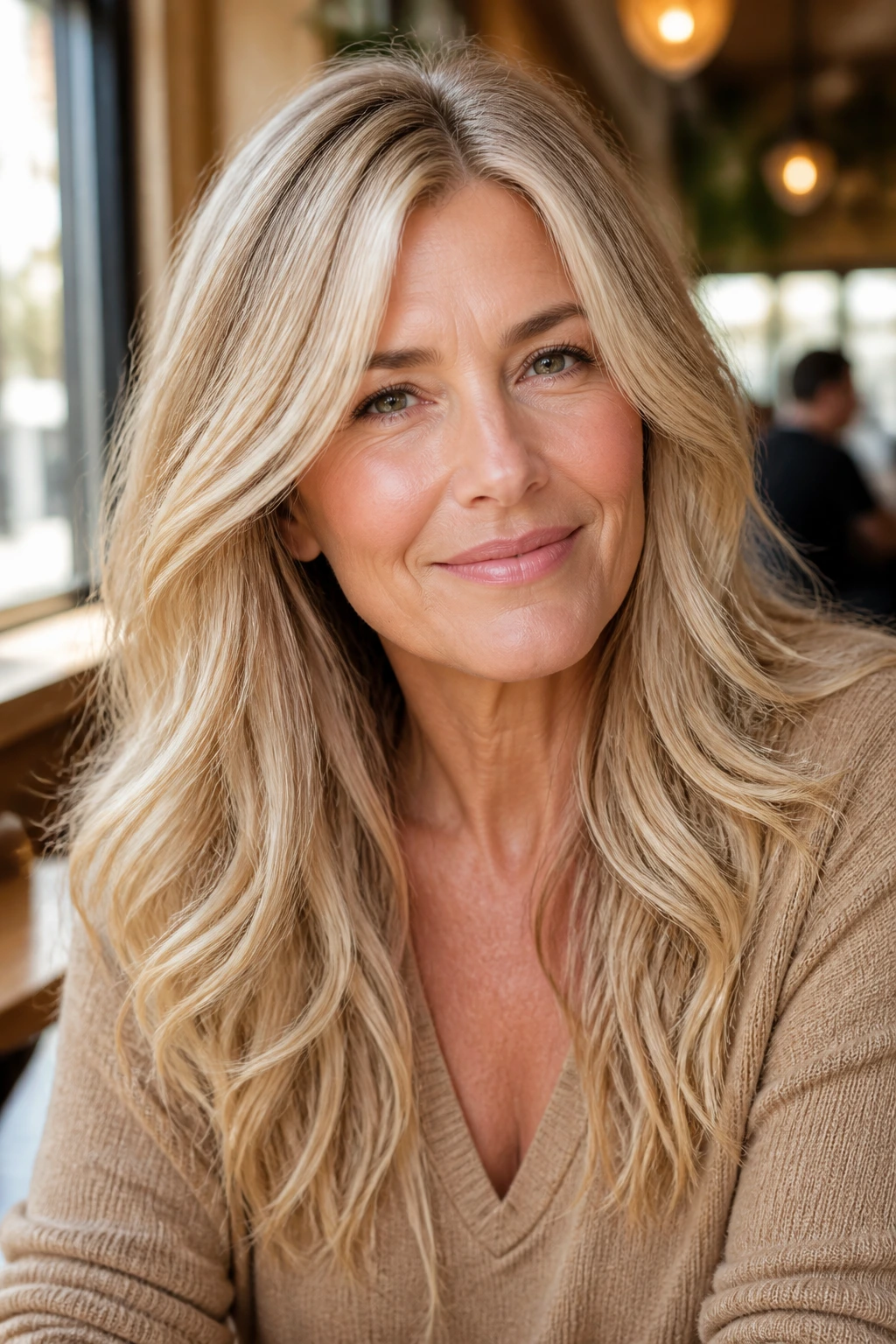
A wheat blonde is one of the easiest ways to stay bright without tipping into brass. It sits in that sweet spot between gold and beige, which gives long hair a sunlit look without the harshness of a pure yellow blonde.
This one works especially well if your hair is coarse, slightly porous, or naturally wavy. Those textures can eat cool toner and end up looking dull. Wheat blonde keeps some warmth alive, so the hair still looks like hair.
Ask for woven highlights through the mids with softer, warmer ends rather than a bright root-to-tip blast. The best version has a lived-in feel, not a fresh-from-the-foil glare. It’s the color equivalent of a good linen shirt: relaxed, not sloppy.
If you like low-maintenance color, wheat blonde is one of the easiest to live with. It grows out softly and doesn’t demand perfect toner every time.
7. Pearl Blonde Waves
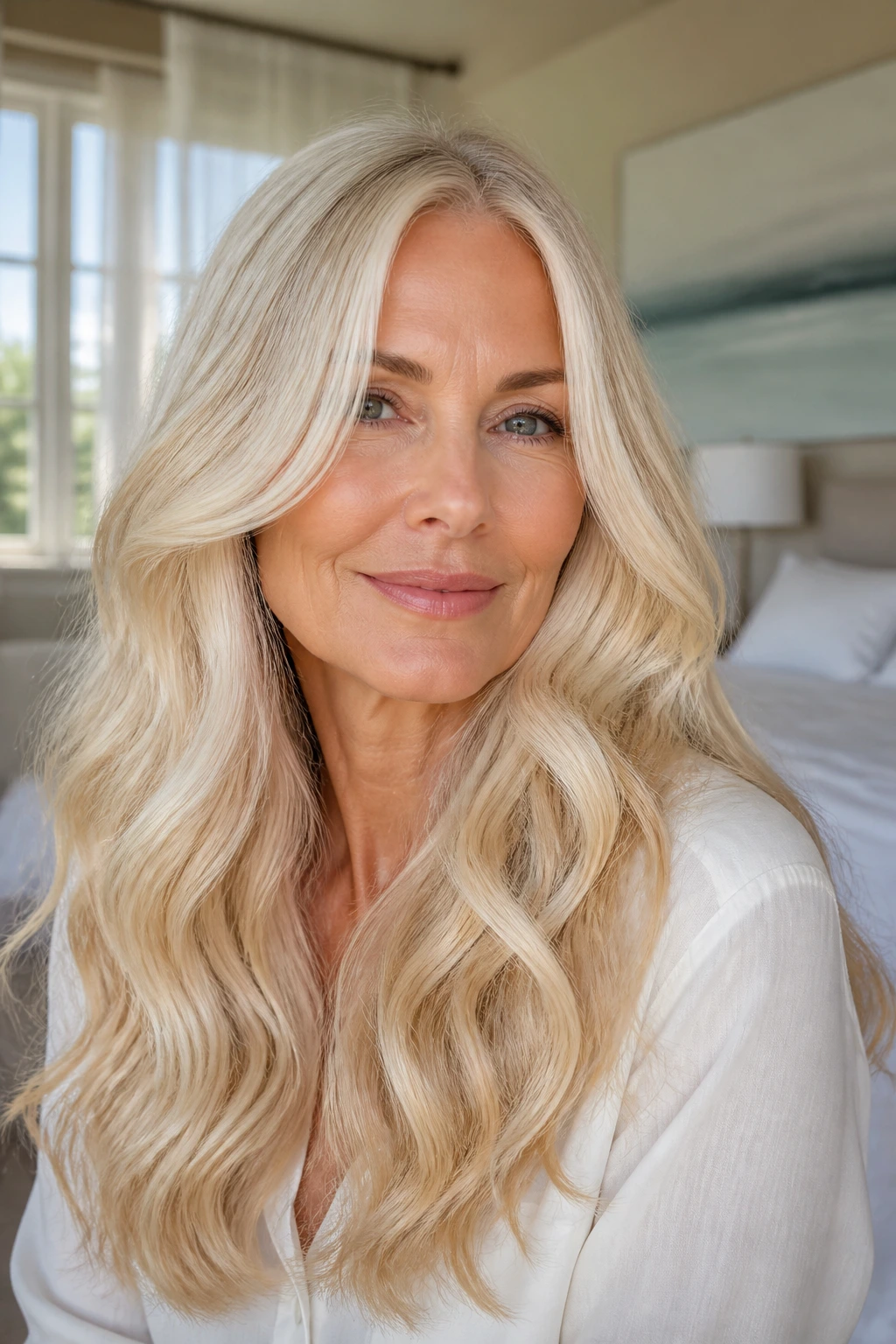
Pearl blonde has a cool, light-reflective finish that can make long hair look glossy in a way warmer blondes sometimes don’t. It’s not flat white. It’s softer than that, with a pearly sheen that reads clean rather than stark.
The shine factor
This shade loves movement. Loose waves or a soft bend through the mids give pearl blonde a chance to show its tone, which is part of why it’s so pretty on long hair. Straight hair can wear it too, but the finish has to be smooth or the tone can look a little severe.
Pearl blonde is best when the toner is kept airy and the hair is healthy enough to carry a reflective finish. If your ends are rough, ask for a beige-pearl mix rather than pure pearl. Too much cool tone on porous hair can go chalky fast.
I’d pick this for someone who likes crisp makeup, silver jewelry, and a clean neckline. The whole look feels cohesive when the hair has that luminous, shell-like finish.
8. Ash Blonde Root Melt
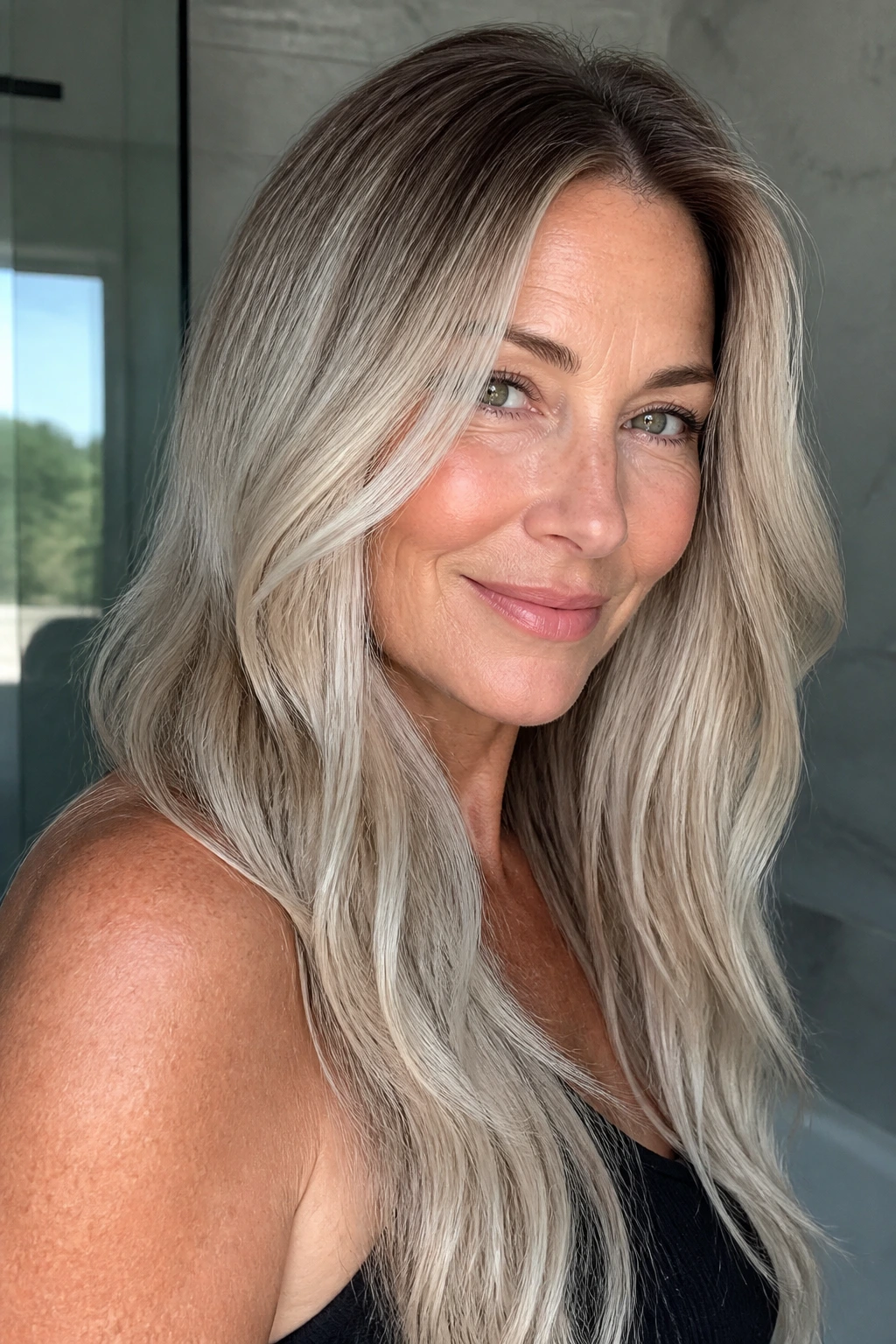
Ash blonde gets a bad reputation because people remember the flat, dusty blondes from years ago. A good ash blonde root melt is nothing like that. Done well, it looks smoky, soft, and expensive.
The root melt usually stretches down an inch or two, then fades into cooler blonde lengths. That keeps long hair from looking like a helmet of highlights. It also helps if your natural base is medium brown or dark blonde and you want the grow-out to behave itself.
Who it suits
This shade is a gift for cool undertones and for anyone whose gray grows in with a silvery cast. It can also make blue or green eyes pop, especially when the haircut has movement around the face. If your skin is very warm, keep the ash subtle and mix in beige so the color doesn’t turn dull.
A good ash blonde should look soft, not muddy. That’s the line worth remembering.
9. Caramel Bronde Ribbons
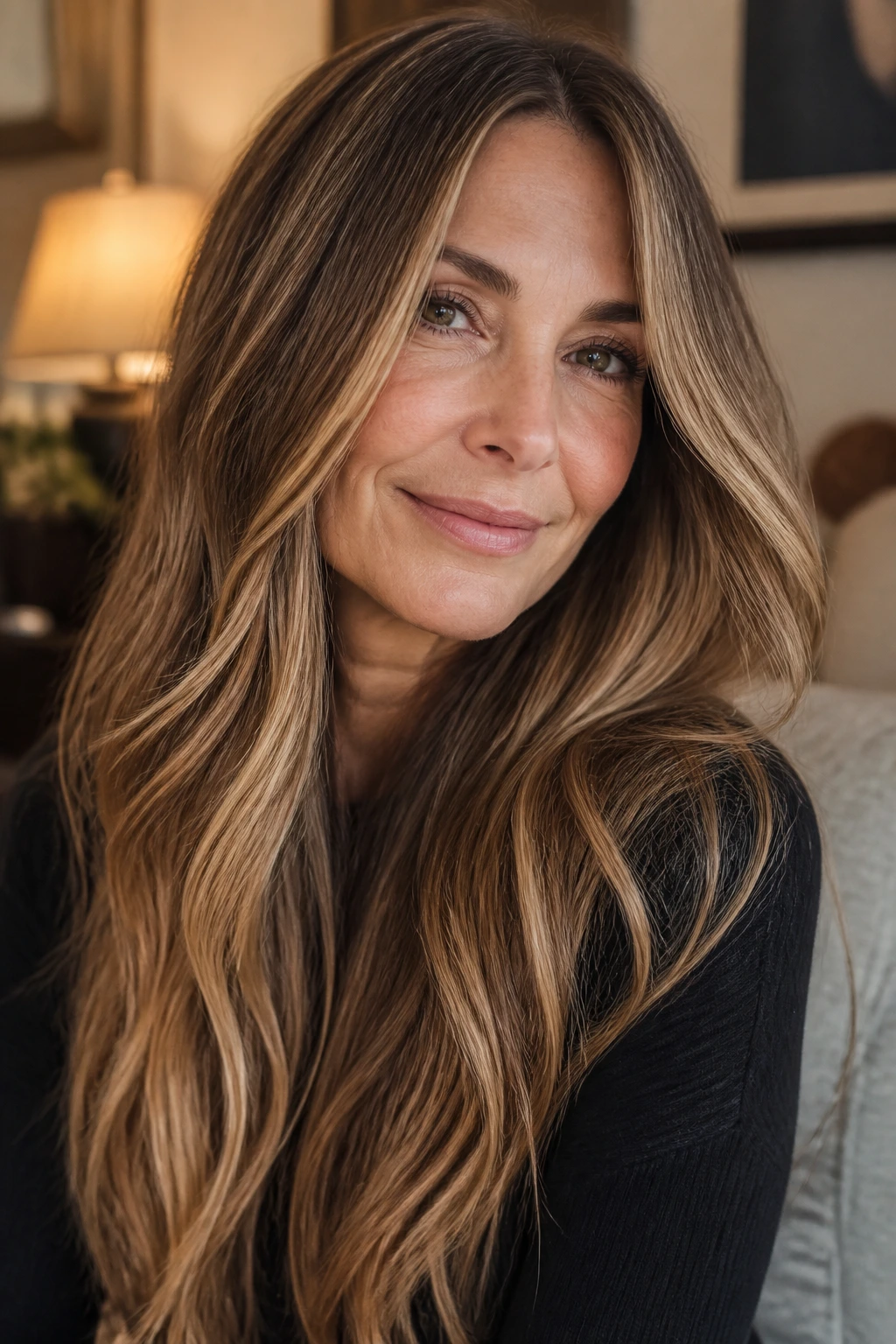
Caramel bronde is the blonde look for people who don’t want to go all the way blonde. It keeps a brunette base in the conversation and adds ribbons of caramel and light blonde where the eye needs lift.
The reason this looks so good on long hair is simple: depth. Long hair can look stringy when every strand is lightened. Bronde keeps some shadow in the mids and ends, which makes the length look thicker and more expensive in person than in a salon photo.
This is one of the easiest transitions if you’re coming from a darker base or if your gray is still growing in at the edges. The contrast is soft, so there’s less obvious regrowth. Pair it with long layers, not blunt ends, or the lighter ribbons can look disconnected.
10. Vanilla Blonde Blowout
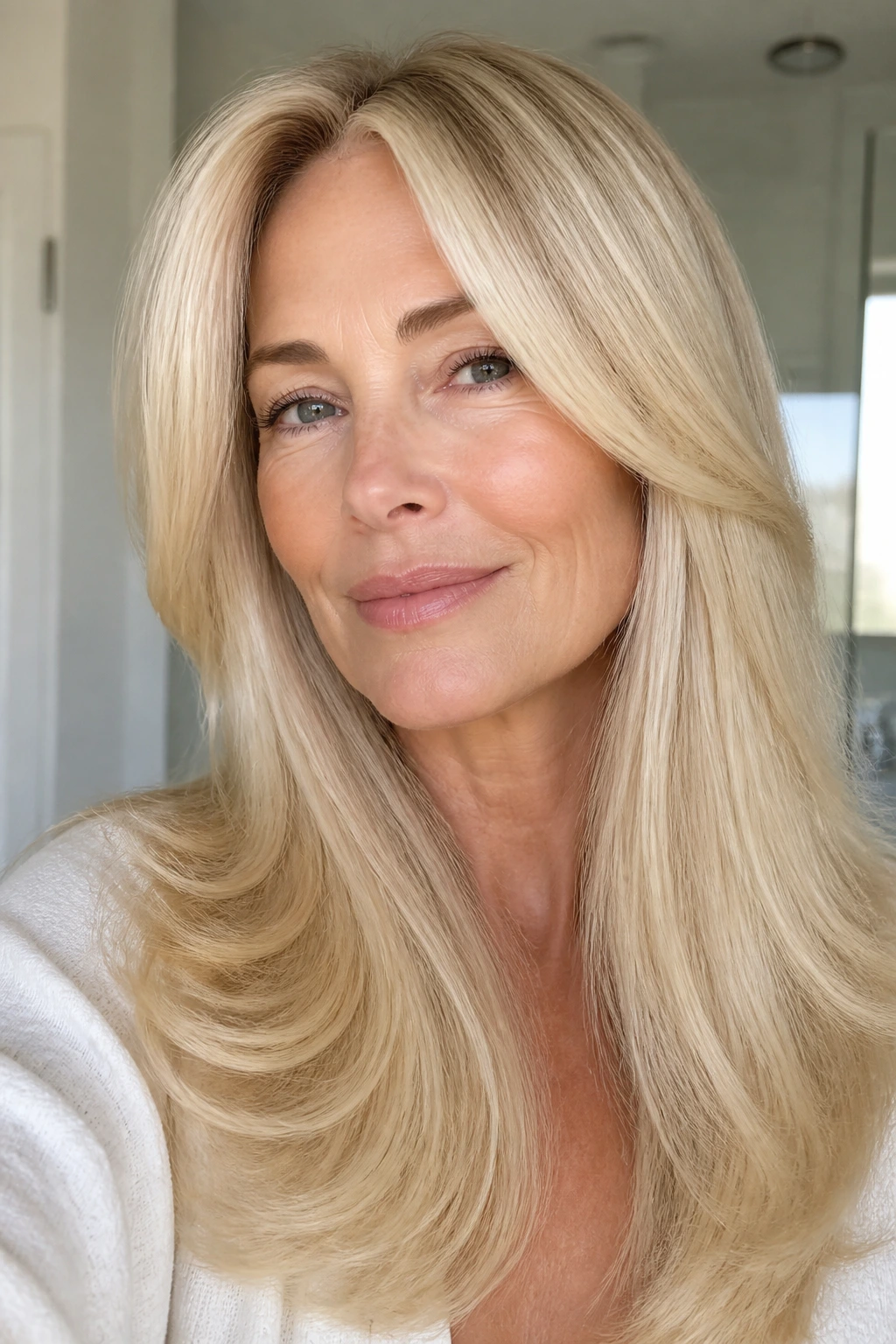
Vanilla blonde has a pale, creamy brightness that looks gorgeous when the hair is blown out smooth and bouncy. It’s a cleaner, lighter version of beige blonde, with just enough warmth to keep it from looking severe.
This look does ask something of the hair. Ends need to be in decent shape, because vanilla shades show dryness faster than honey or wheat. If the cuticle is rough, the color loses that soft glow and starts to look dusty.
How to wear it
A round-brush blowout or a large-barrel hot brush gives vanilla blonde the polish it needs. Add curtain layers or a long face frame, and the hair suddenly has lift around the eyes and cheekbones. It’s a good blonde when you want lightness without a bleach-blonde shout.
Use a gloss between color appointments to keep the tone creamy. That one step makes a bigger difference than people expect.
11. Sandy Blonde with Long Layers
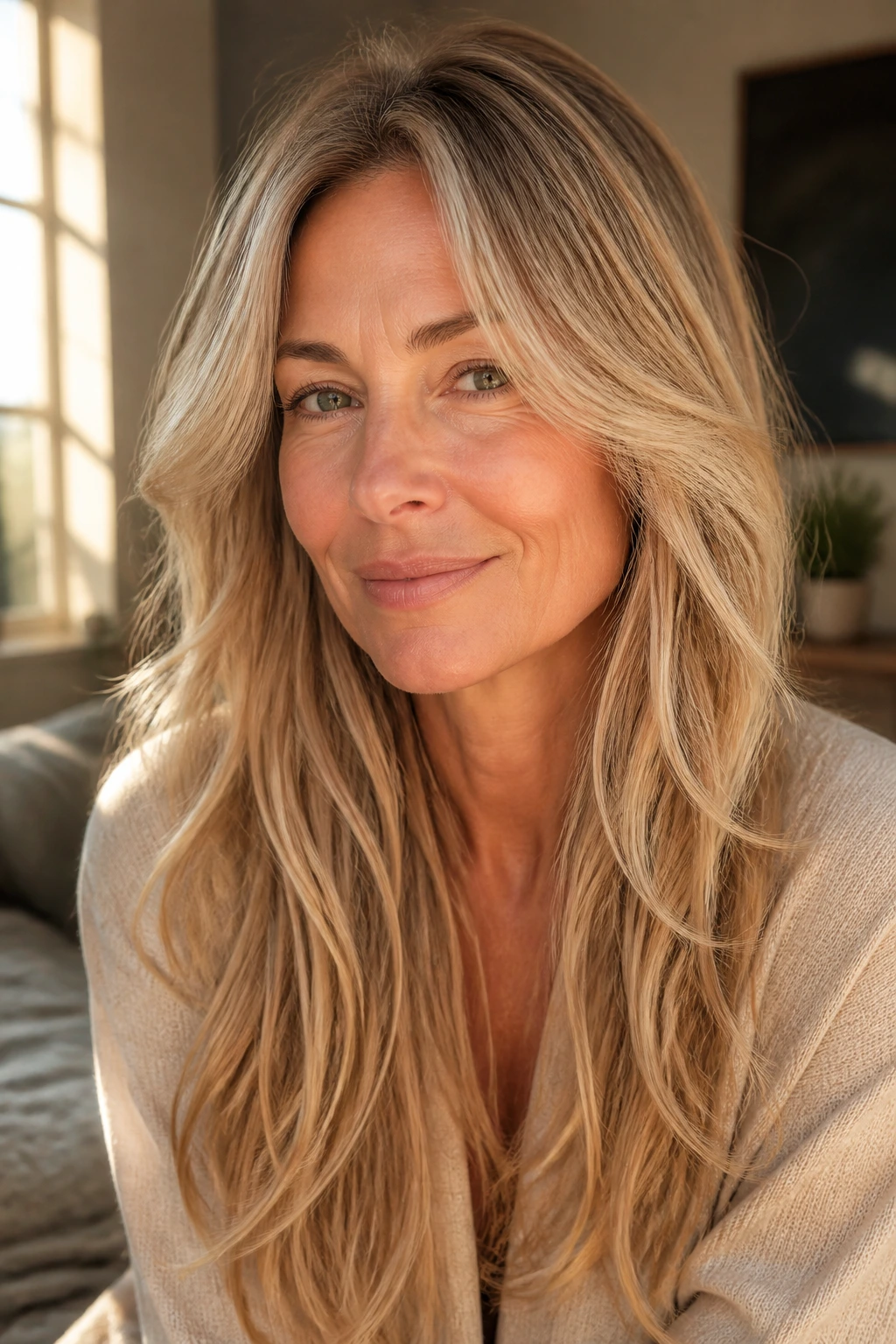
Sandy blonde is the quiet one in the room. Not boring. Quiet. It sits between beige and gold, with a beach-worn softness that works especially well on long layers.
The key here is contrast control. A sandy blonde shouldn’t be too bright at the ends or too flat at the root. Ask for a hand-painted mix that keeps the top a touch deeper and the longest layers slightly lighter, so the color moves with the cut instead of sitting on it.
This look is a nice fit for neutral skin tones and for women who want blonde without the upkeep of high-lift platinum. It also works well if your natural hair has some wave, because the color follows the motion in the cut. That motion is the whole point.
12. Champagne Money Piece
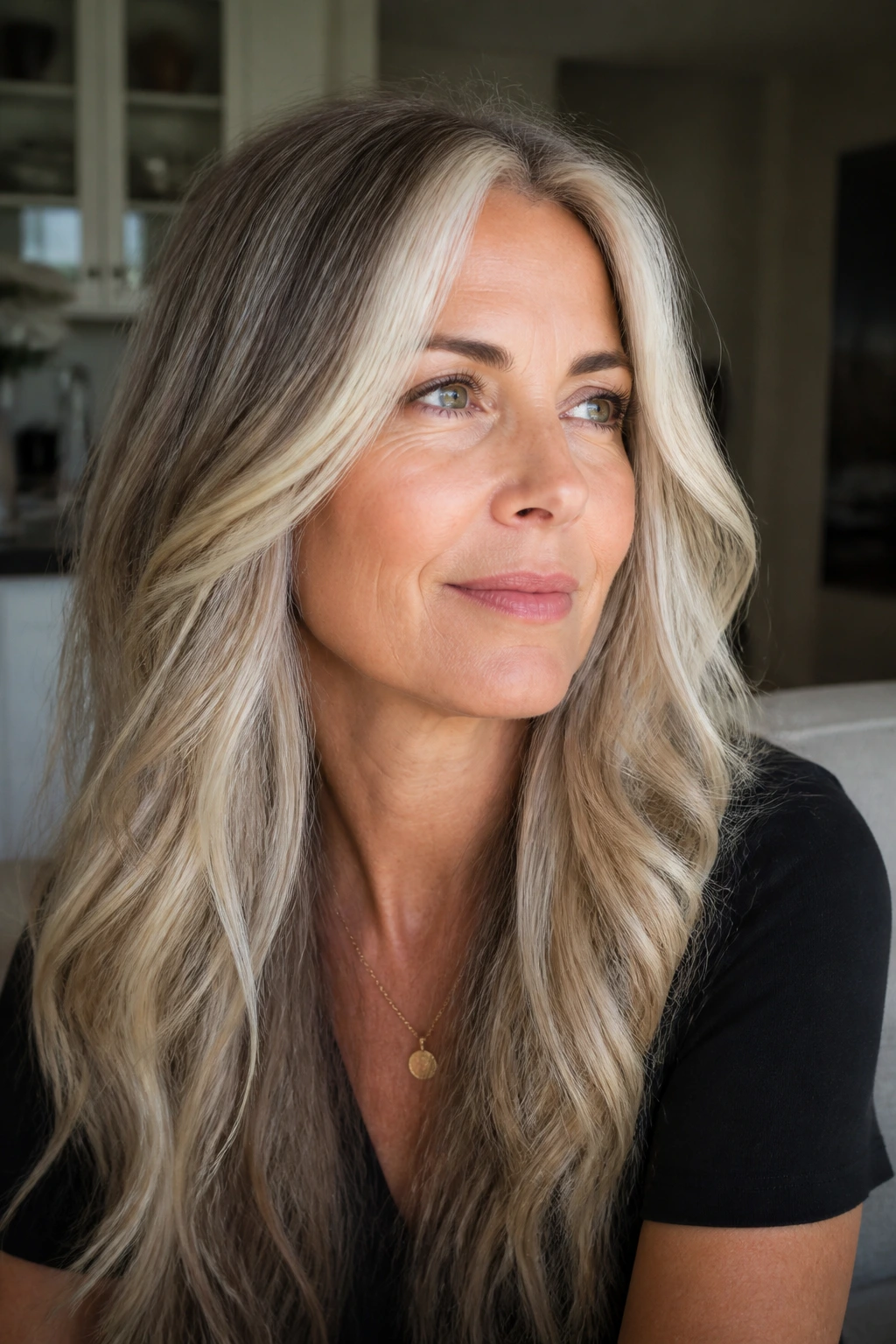
A champagne money piece gives you a bright front without a full-head commitment. It’s one of the fastest ways to wake up long hair, especially if you wear it down or pulled into a low ponytail.
The money piece should be placed to open the face, not sit as a thick stripe. I prefer a softer transition from the front hairline into the rest of the blonde so it doesn’t look like a separate panel. A champagne tone keeps the front bright but civilized.
This one is especially good if you already have balayage and want more lift around the eyes. It’s also smart for long hair that needs a little visual structure because the bright front pieces create a frame and the rest of the length can stay softer. If you only lighten one area, make it this one.
13. Strawberry-Soft Blonde
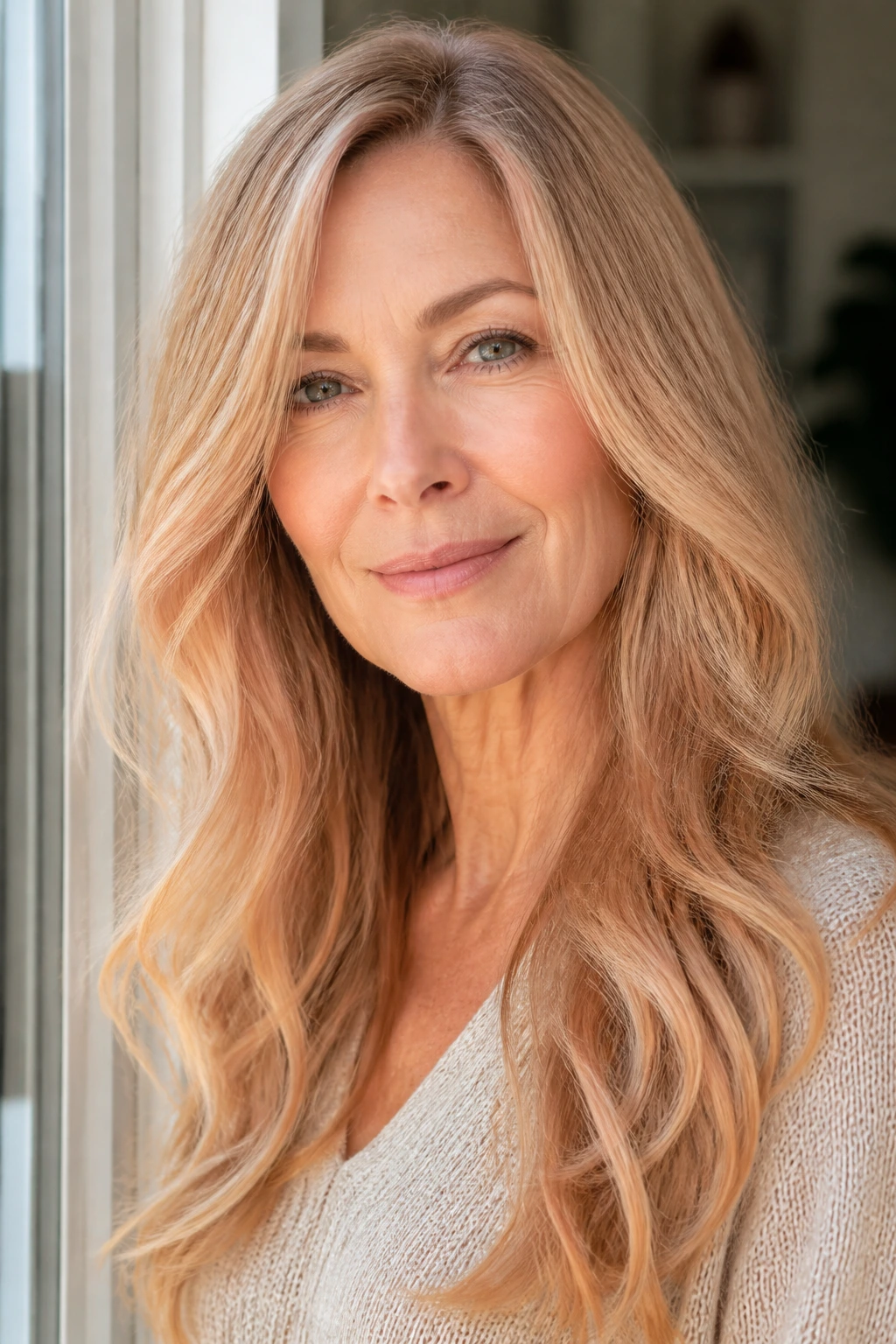
Strawberry-blonde territory can go wrong fast, so I like the softened version best. Think beige blonde with a whisper of peach or rose, not copper. That tiny warmth gives the hair a glow that feels flattering on mature skin.
It works best when the red note is subtle enough that the blonde still reads first. On long hair, that soft warmth shows up beautifully in waves and layers, especially in daylight. If you wear blush, soft coral, or rose lipstick, this shade can feel very natural with your makeup.
What to watch for
Too much copper will fight the blonde and can make the color look dated. Keep the peach note gentle and ask for a gloss, not a permanent red shift. The goal is warmth in the light, not orange at the root.
This is a lovely pick if you want to feel a little less conventional without jumping into obvious fashion color.
14. Mushroom Blonde Dimension
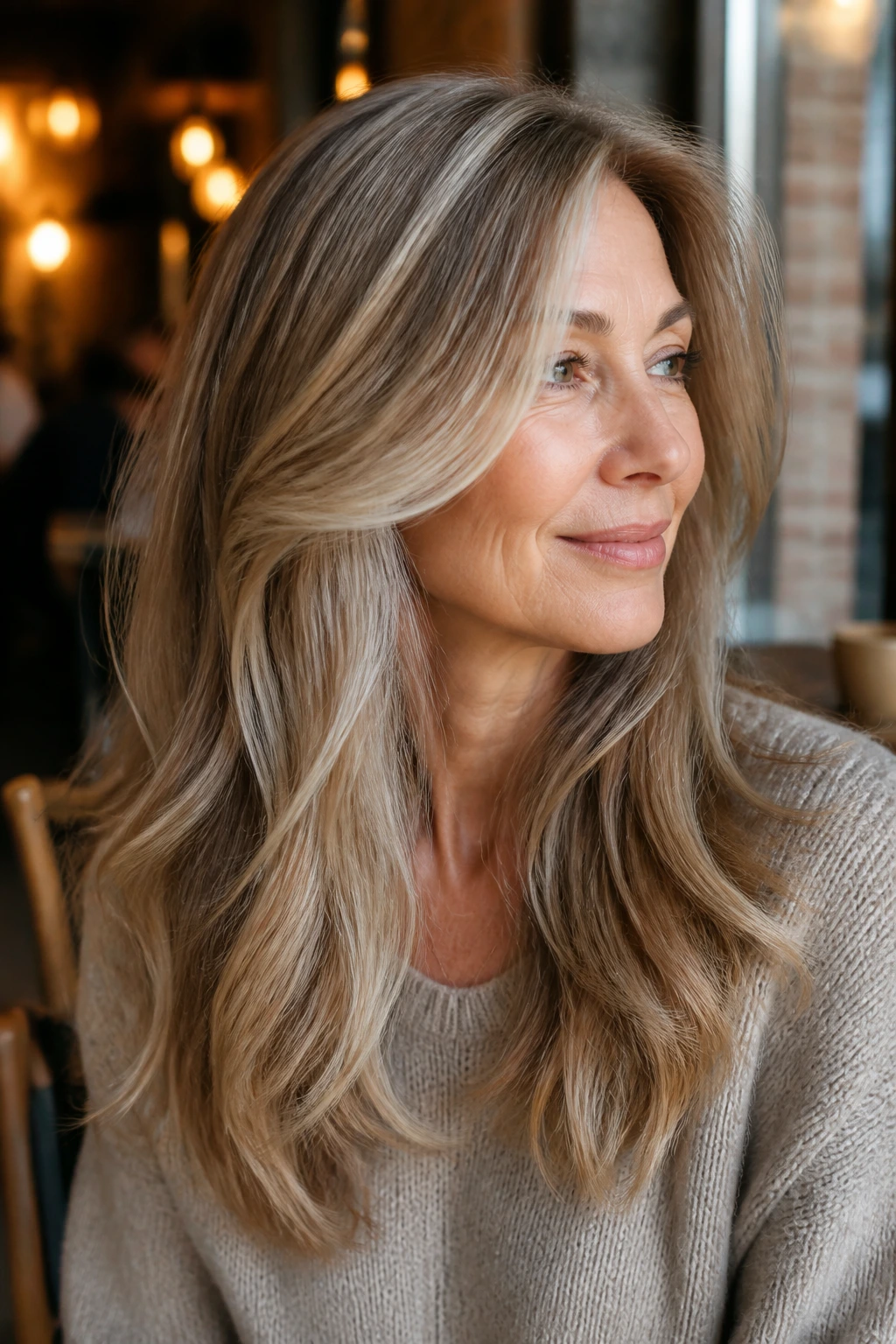
Mushroom blonde is cool, earthy, and a little smoky. It mixes beige, taupe, and light ash so the final color has depth instead of shine alone. On long hair, that depth is the whole game.
I like mushroom blonde for women who are tired of blonde that reads too yellow or too salon-bright. It has a lived-in softness, and it blends gray so well that regrowth is rarely a crisis. The color can be especially flattering on longer cuts with subtle movement through the ends.
Why it works
Mushroom tones are good at diffusing contrast. That means they can make long hair look thicker even when the texture has thinned a little. They also play nicely with cooler wardrobes, navy, charcoal, black, and silver jewelry.
If your skin tone is warm, ask for a little more beige than ash so the color doesn’t go flat. Mushroom blonde should look layered, not ashy for its own sake.
15. Golden Blonde Curls
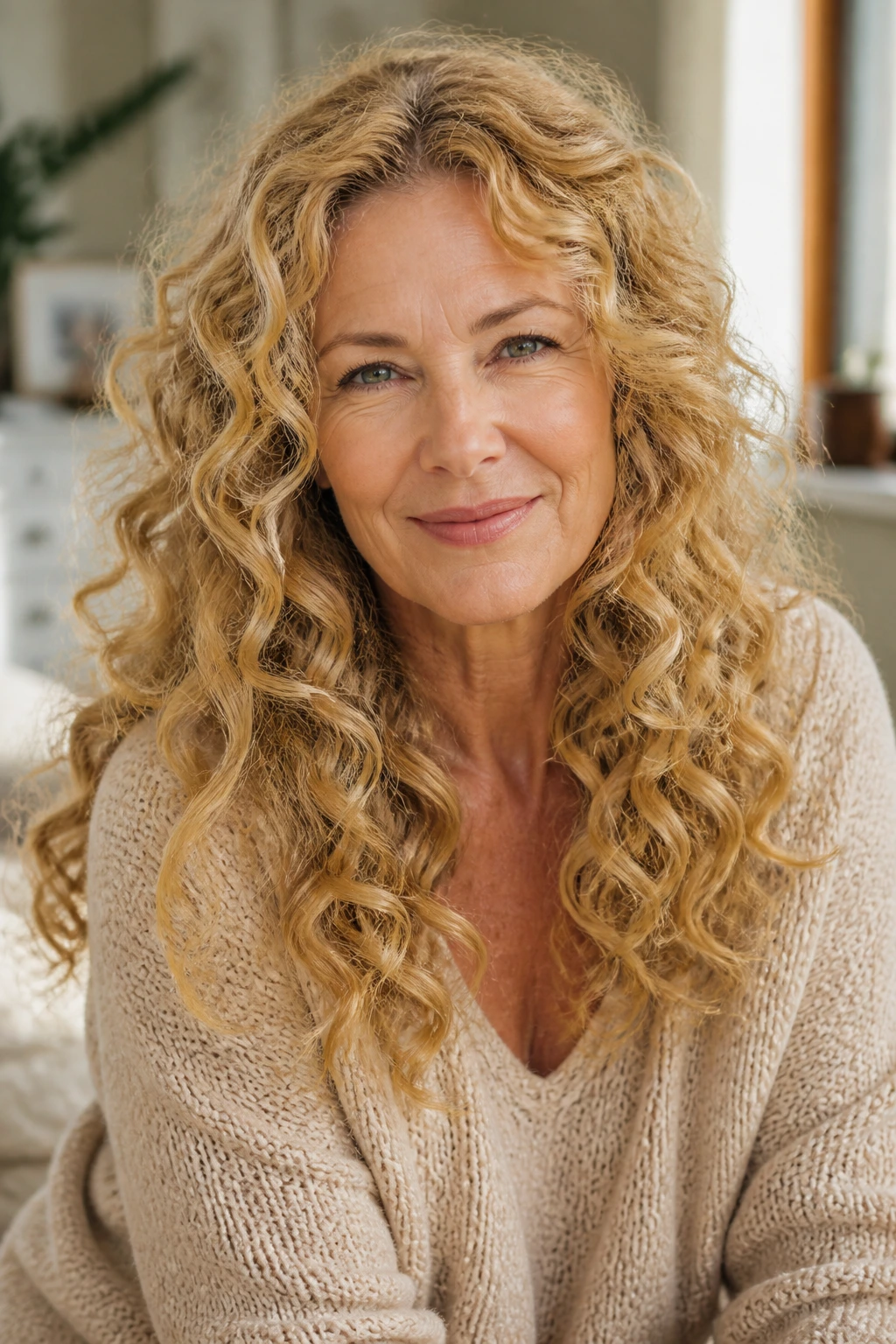
Golden blonde curls do something straight hair can’t quite copy: they catch light on every curve. The result is movement that feels alive rather than painted on, which is why this look can be so flattering on long curly or wavy hair.
The best version follows the curl pattern. Bright pieces should land where the hair naturally bends, not in straight vertical stripes that ignore the shape of the curl. That placement keeps the color from breaking up the curl formation.
If your curls are dry, go easier on the lightening and heavier on the gloss. Golden blonde can be very forgiving because warmth softens the look of texture. The color should make the curls look fuller, not crunchy.
I’d choose this when you want bright hair that still feels friendly and soft in daylight.
16. Nordic Beige Blonde
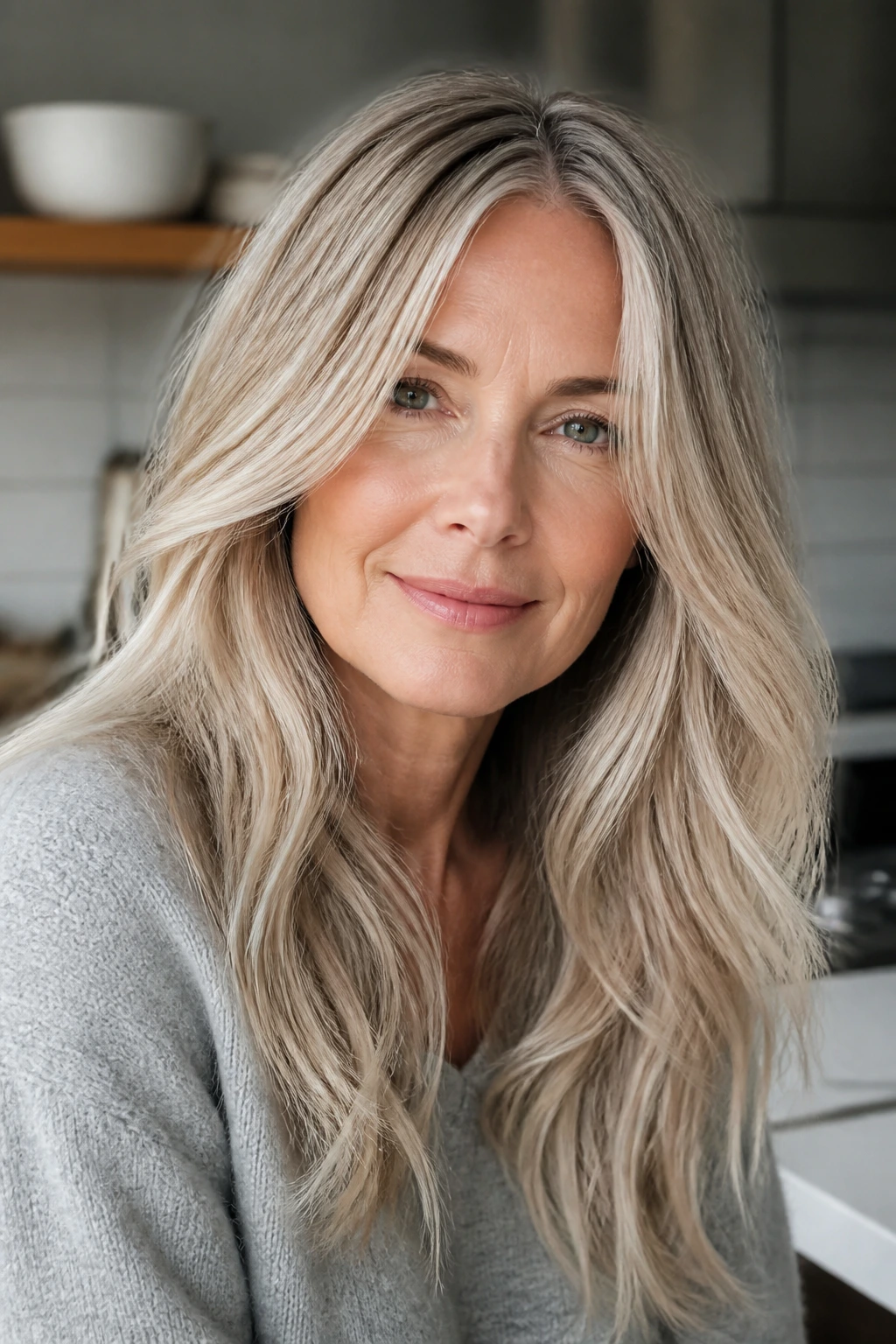
Nordic beige blonde gives you a pale result without the starkness of a white or platinum finish. It’s a lighter, cooler beige that stays wearable because the toner keeps a little softness in the mix.
This is a strong pick if you like light hair and have enough hair health to support it. On long lengths, it reads best when there’s a subtle shadow at the root and maybe a touch of beige lowlight through the underside. That prevents the color from floating away from the cut.
Best for
Cool undertones, light eyes, and people who want brightness but don’t want hard yellow or brassy notes. It also looks good with clean, simple styling — a smooth blowout, a soft wave, or a low twist where the light can move across the surface.
Nordic beige works because it’s pale with manners. There’s no need for it to shout.
17. Sunlit Teasylights
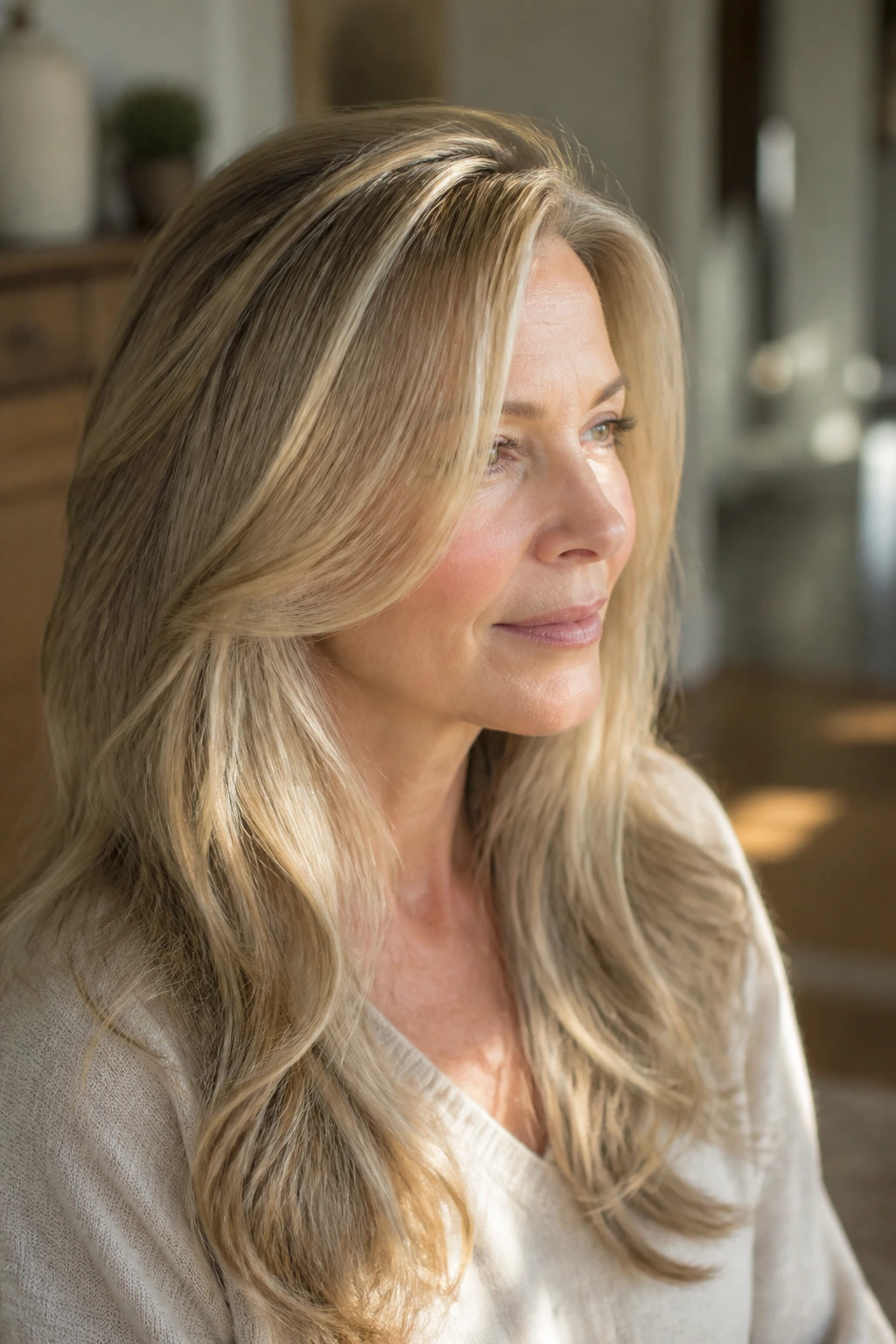
Teasylights are one of those salon tricks that sound technical but translate beautifully on long hair. The hair is lightly teased before the highlight is applied, which leaves a softer root and a more diffused grow-out line.
That makes them perfect for long hair over 50. You get brightness where you want it, but not a hard stripe every time the color grows. The effect is especially nice through the crown and top layers, where long hair can otherwise look flat.
What makes them different
Unlike chunky foil highlights, teasylights can be scattered in tiny woven sections so the blonde reads as light movement rather than obvious color blocks. They’re especially useful if your hair is fine, because the dimension creates depth without screaming “highlighted.”
Ask for lighter pieces concentrated around the top, face frame, and upper mids. Leave the lower lengths softer unless you want a much brighter look. On long hair, too much light all the way to the ends can make the cut look thinner.
18. White-Blonde Gloss
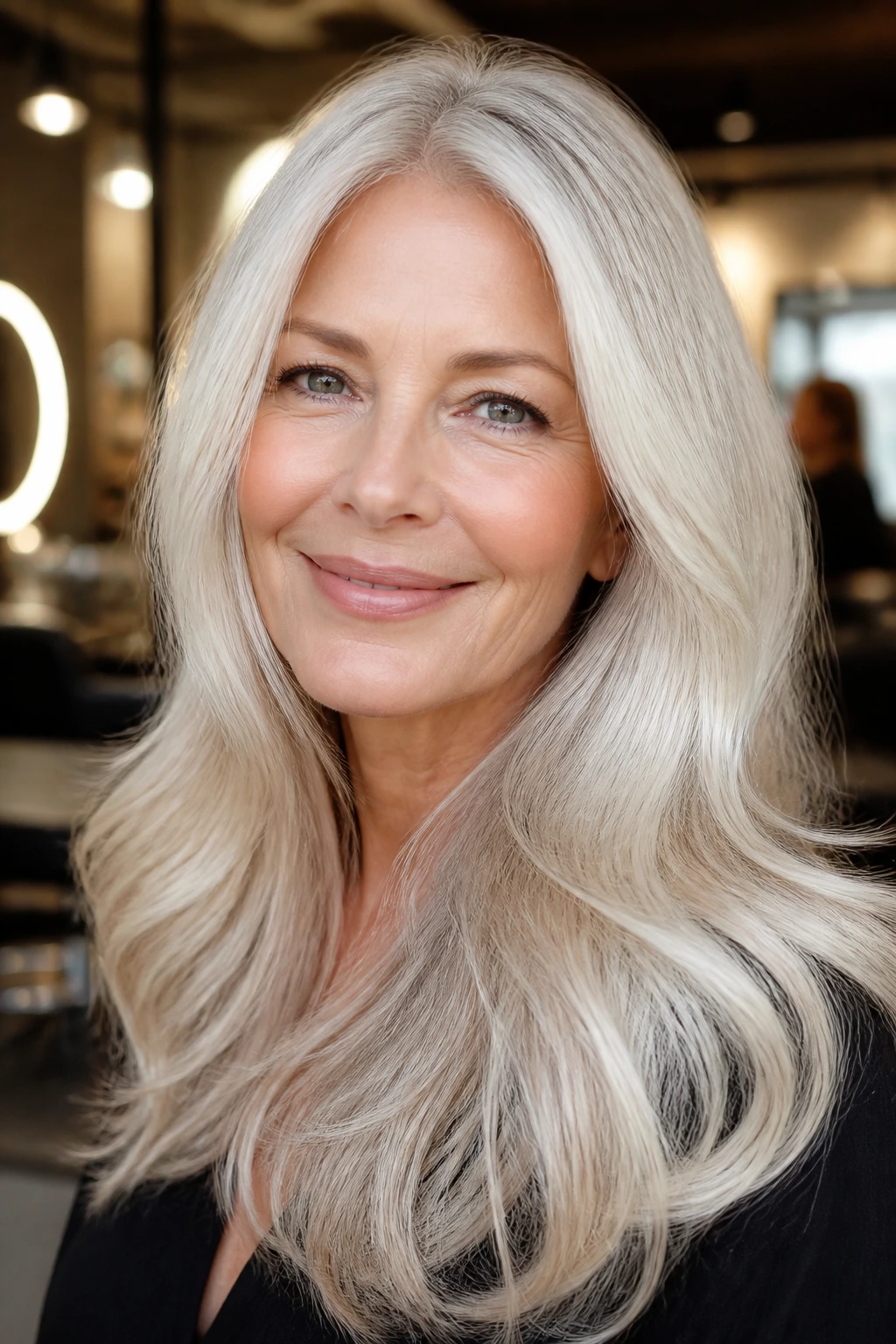
White-blonde is the dramatic option, and it deserves respect. Done badly, it looks brittle. Done well, it looks striking, glossy, and clean around the face.
This is not the easiest look on long hair, especially if the ends have been colored before. The condition of the hair has to be solid, because white blonde shows every rough edge. A gloss is non-negotiable here, and a root shadow helps the color from going flat or stark.
If you like strong makeup, sharp tailoring, and clear contrast, this shade can be stunning. If your hair is fragile, I’d keep the white-blonde effect closer to the front and upper layers rather than bleaching every inch. Brightness is useful; overexposure is not.
19. Dimensional Warm-Cool Blonde Blend
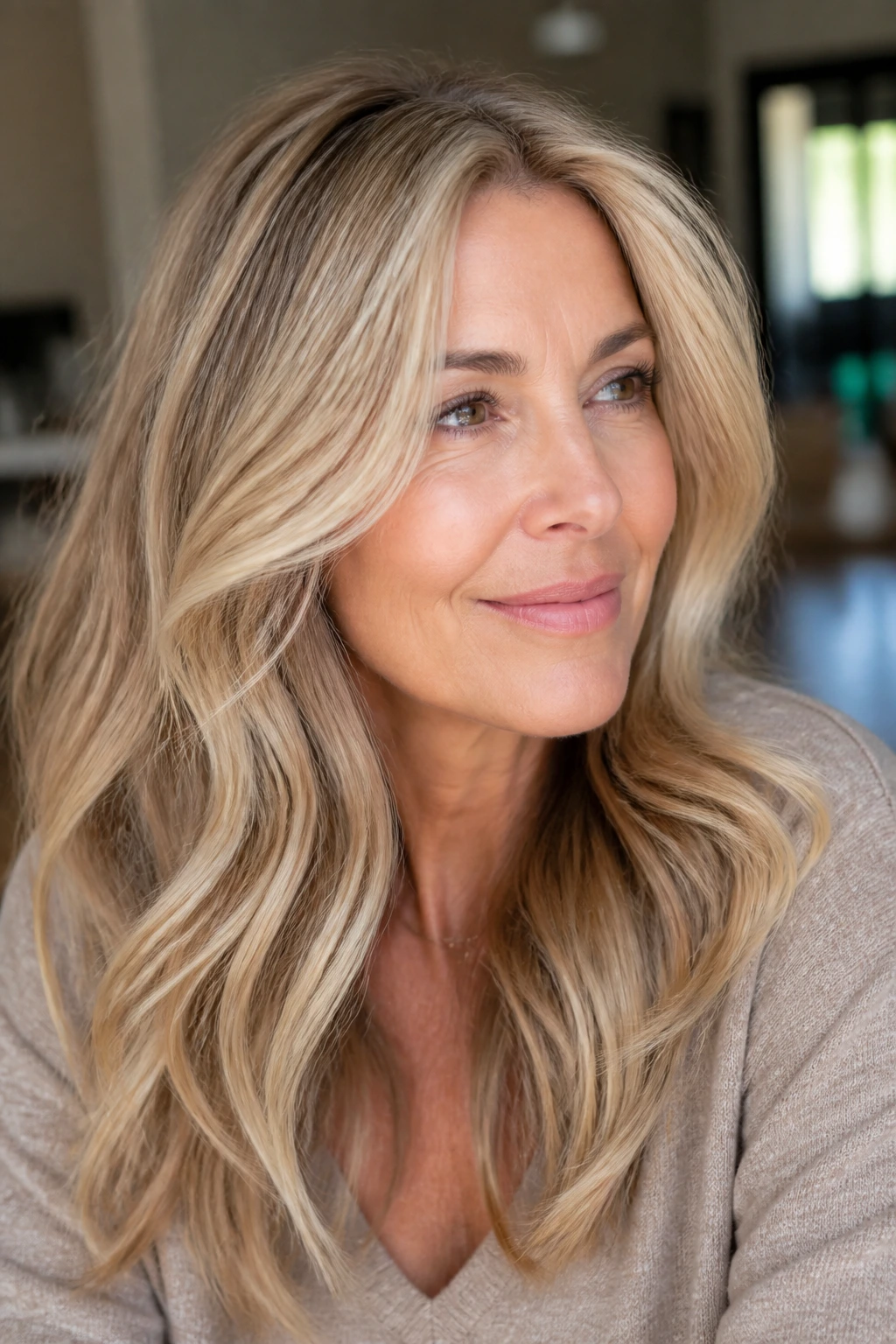
This is the blonde for people who don’t want to choose sides. Beige, honey, pearl, and a little soft brown can live together on long hair if the placement is thoughtful. In daylight, the hair feels warm. Indoors, it reads cooler. That shift is what gives it depth.
The mix works especially well on long hair because different tones stop the length from looking one-note. It also helps with gray blending, since new growth doesn’t have to match one exact blonde family. The eye reads the movement, not the exact formula.
If you’re unsure where to land, this is the safest sophisticated option. It isn’t flashy. It’s smarter than that. A dimensional blend forgives more and flatters more.
How to Choose the Right Blonde for Your Skin Tone and Gray Pattern
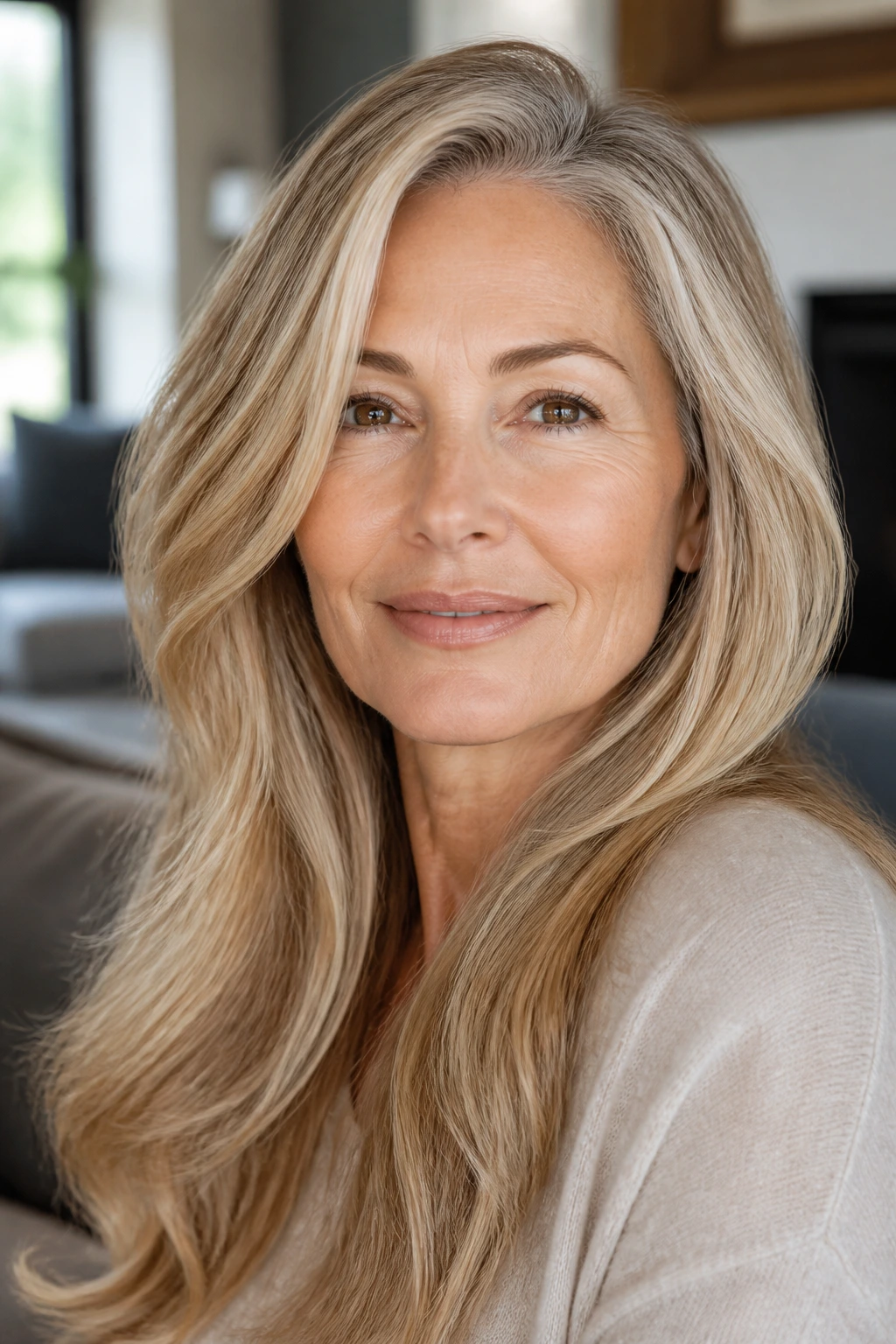
Blonde is not one decision. It’s three decisions at once: tone, placement, and how much of your natural color you keep. Get those three right and long hair feels luxurious. Get them wrong and the color can look busy, dry, or harsher than it should.
If your undertone runs warm
Honey, wheat, butter, champagne, and soft caramel all sit nicely against golden or olive skin. These shades keep the face from looking washed out and often make the hair shine a little more in daylight. Warm tones also hide a bit of brass better because they’re not fighting the natural pigment as hard.
If your undertone runs cool
Pearl, ash, silver ribbons, mushroom, and Nordic beige usually flatter pink, rosy, or cool skin. They keep the blonde from pulling yellow and help the complexion look calmer. A cool blonde can be beautiful on mature skin, but it usually needs a cleaner toner schedule.
If your gray grows in fast
Shadow roots, teasylights, silver ribbons, and beige blends are the least annoying to maintain. They let gray sit in the picture instead of throwing a hard line every few weeks. If the gray is concentrated around the temples or part, that’s where you want the softest transition.
If your hair is fine
Keep the brightest pieces near the face and top layers, not all the way through the ends. Fine long hair gets wispy fast when every inch is lifted too pale. A little depth underneath gives it more body.
If your hair is coarse or curly
Richer blondes — butter, honey, wheat, caramel, and golden — often look softer on textured hair than icy tones do. They show the curl pattern instead of separating it into pale strands. That difference matters more than people think.
Tools, Products, and Salon Terms That Make the Job Easier
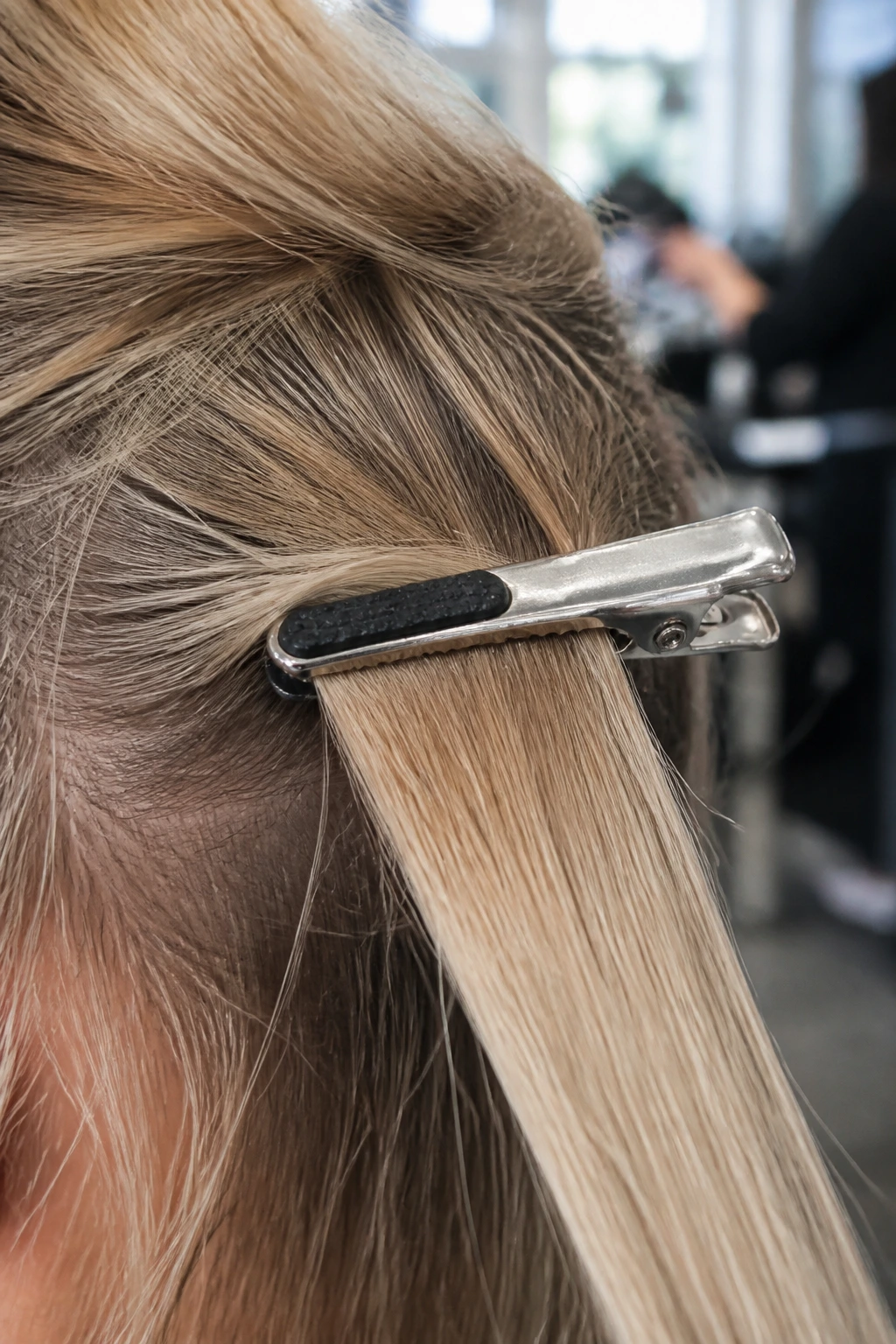
You do not need a drawer full of fancy gear, but a few specific things make blonde care much less annoying.
-
Tail comb: Useful for parting, sectioning, and checking where the brightest pieces are sitting.
-
Sectioning clips: They keep long hair under control while you apply masks, blow-dry, or work through root touch-up appointments.
-
Foils and balayage board: These matter at the salon if you want precision near the face or a softer hand-painted finish through the mids.
-
Tint brush: Handy for root touch-ups, glosses, and toner application. A brush gives you more control than fingers ever will.
-
Purple shampoo: Best for cool blondes or anyone who gets yellow tones quickly. Use it sparingly; overuse can leave the hair dull or gray.
-
Moisturizing color-safe shampoo: Better for long blonde hair than a harsh clarifier used every wash. Blonde ends hate stripping.
-
Deep conditioning mask: A weekly mask keeps porous ends from frizzing out and turning rough under light.
-
Bond-building treatment: Helpful if the hair has been lightened a few times. It won’t fix everything, but it can keep the fiber from feeling as fragile.
-
Heat protectant: Non-negotiable if you blow-dry or curl your hair. Color-treated length and hot tools are not friends.
-
Large round brush or hot brush: Helps the finish stay smooth without looking overstyled.
A useful salon phrase: “I want dimension at the root and brightness around the face, but I don’t want chunky lines.” That sentence saves a lot of trouble.
The Styling and Placement Tricks That Keep Length from Looking Flat
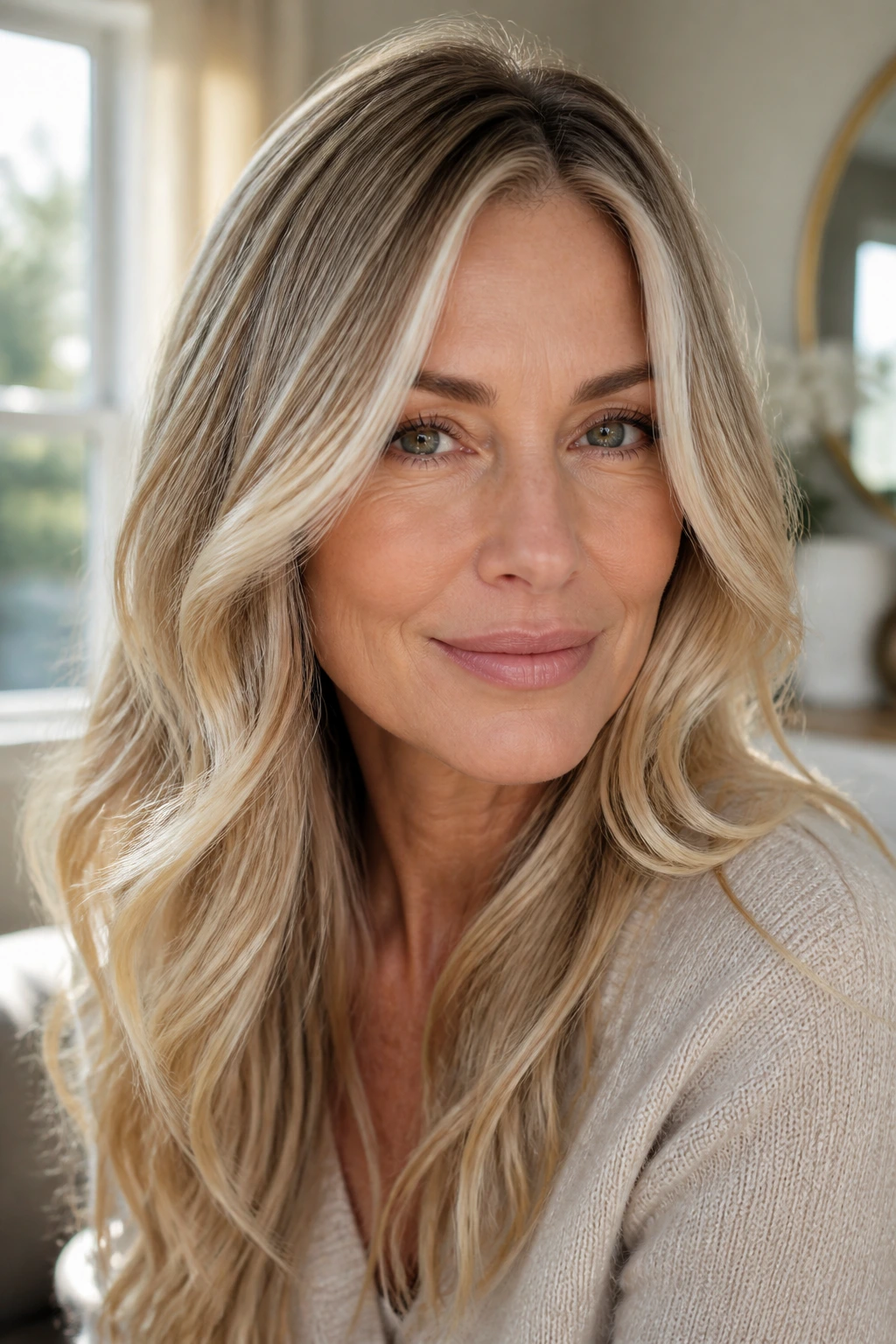
The biggest mistake with long blonde hair after 50 is chasing brightness everywhere. You do not need every inch to be the lightest inch. You need the eye to move.
Root Depth: Keep 1 to 2 inches of softer root in most balayage or root-melt looks. That tiny shadow makes the hairline look fuller and gives the mids room to shine.
Face Brightening: Place the lightest pieces from temple to cheekbone, not just at the crown. That’s where the eye lands first, and it lifts the whole face faster than back-of-head brightness ever will.
Texture: Long layers, soft bends, and loose waves help the blonde show up. Flat iron-straight hair can still look elegant, but it needs cleaner tone and more gloss to avoid a sheet-like finish.
Shine Rule: Use a gloss or glaze every 6 to 8 weeks if the blonde starts looking thirsty. That one step keeps beige and champagne shades from turning tired.
Cost Saver: If budget matters, spend the money on placement near the face and crown. Leave the ends softer and let them grow into the look. You’ll get more visual payoff for less maintenance.
Common Mistakes That Make Blonde Hair Look Dry or Thin
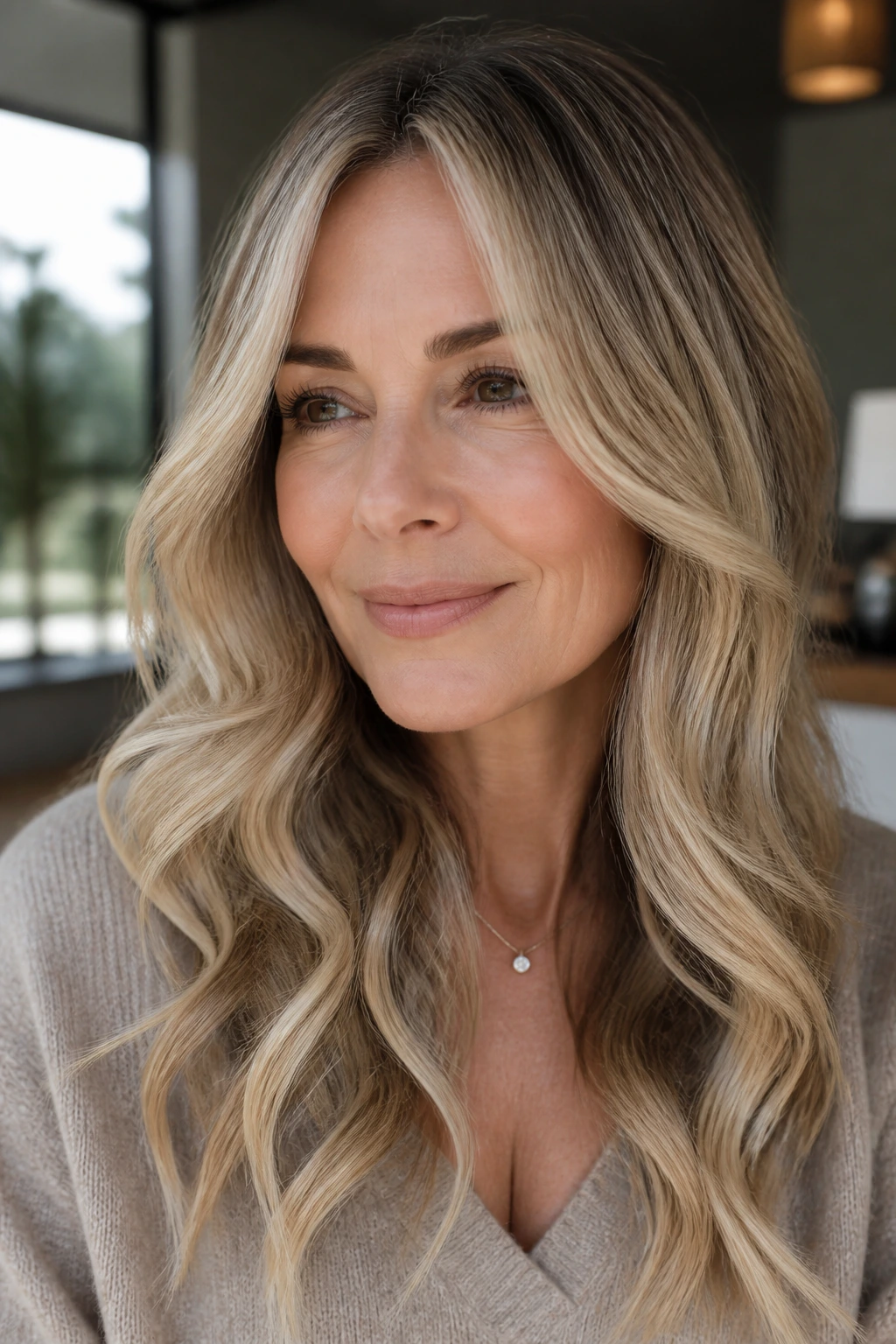
The most common mistake is over-lightening the ends. On long hair, the last few inches are already the oldest and driest part. If you bleach them until they’re nearly white, they can look wispy, see-through, and a little angry.
Another problem is choosing a tone that’s too icy for the hair’s condition. Porous hair grabs cool pigment fast and can come out dull, gray, or flat. If the hair isn’t in excellent shape, a beige or champagne toner is usually a kinder move.
Skipping trims is another one. Split ends scatter light badly. That means the blonde can look rough even if the color itself is fine. A trim every 8 to 10 weeks usually keeps the edge clean enough to reflect light properly.
People also overuse purple shampoo. Once or twice a week is plenty for most cool blondes. More than that can drain the shine and make the hair feel dry to the touch.
And then there’s the hard line at the root. It looks neat on day one and awkward by week five. A soft melt is almost always better than a bright stripe.
Variations and Alternatives for Different Schedules and Tastes
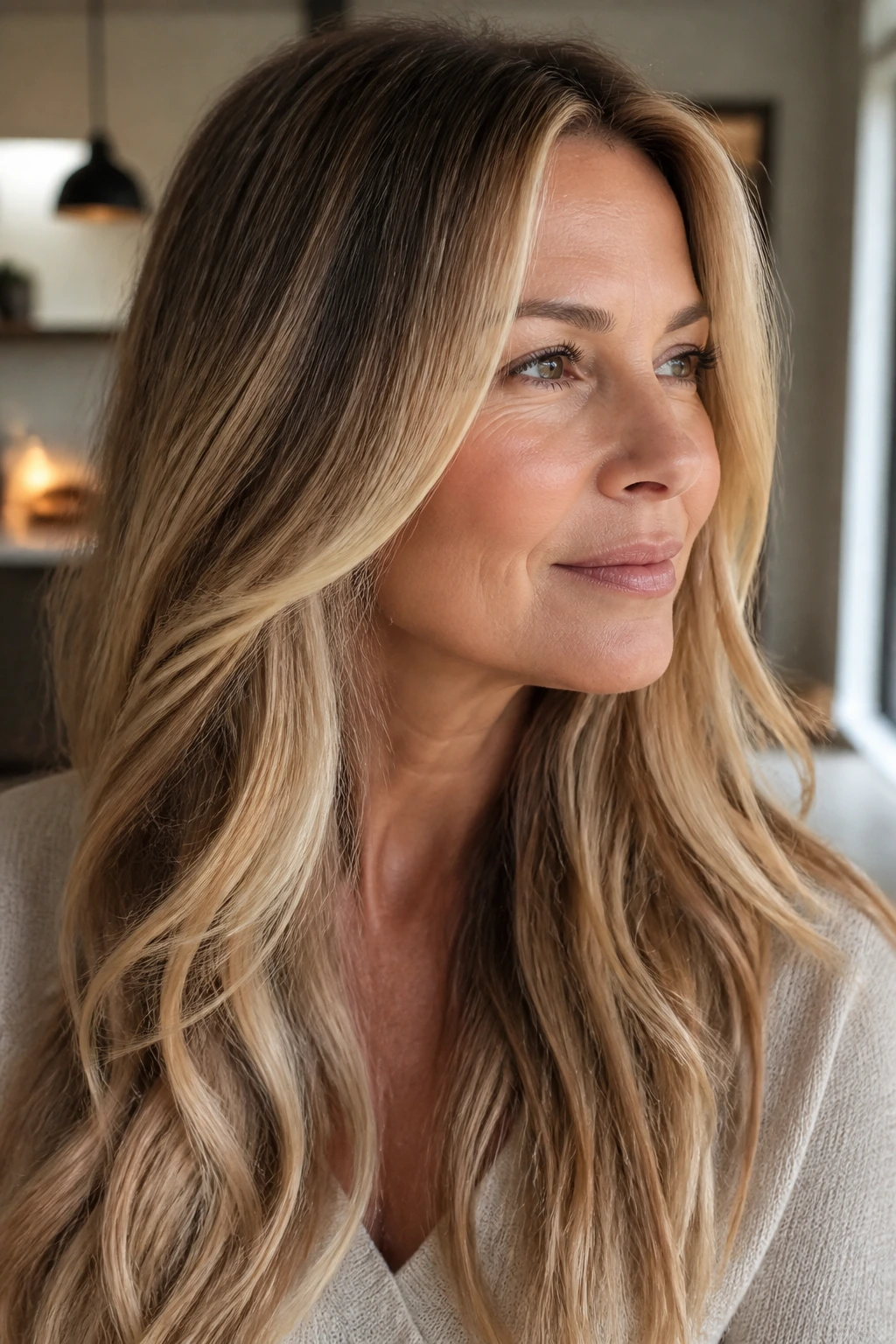
The Low-Maintenance Melt: Ask for a deeper root with beige blonde mids and soft ends. This keeps regrowth easy and is the best option if you don’t want to chase highlights every month.
The Bright Front Frame: Keep the back softer and make the face frame 1 to 2 levels lighter. This gives you the lift of blonde without paying for a full-head brightening service every visit.
The Warm Glow Blend: Use honey, butter, and champagne tones together. It suits warmer skin and gives long hair a sunlit finish that looks relaxed rather than styled to death.
The Cool Silver Mix: Pair silver ribbons with ash-beige lengths. This is a smart route if gray is already part of your hair and you want the blonde to feel seamless.
The Curly Dimension Plan: Keep lightness painted where curls bend, not in straight vertical lines. Curls need tone that follows their shape or the color can break apart visually.
The Soft Platinum Accent: Instead of all-over white blonde, keep the platinum around the front and crown only. The rest can stay beige or rooty, which protects the length and keeps the look from feeling harsh.
Keeping the Blonde Bright Between Appointments
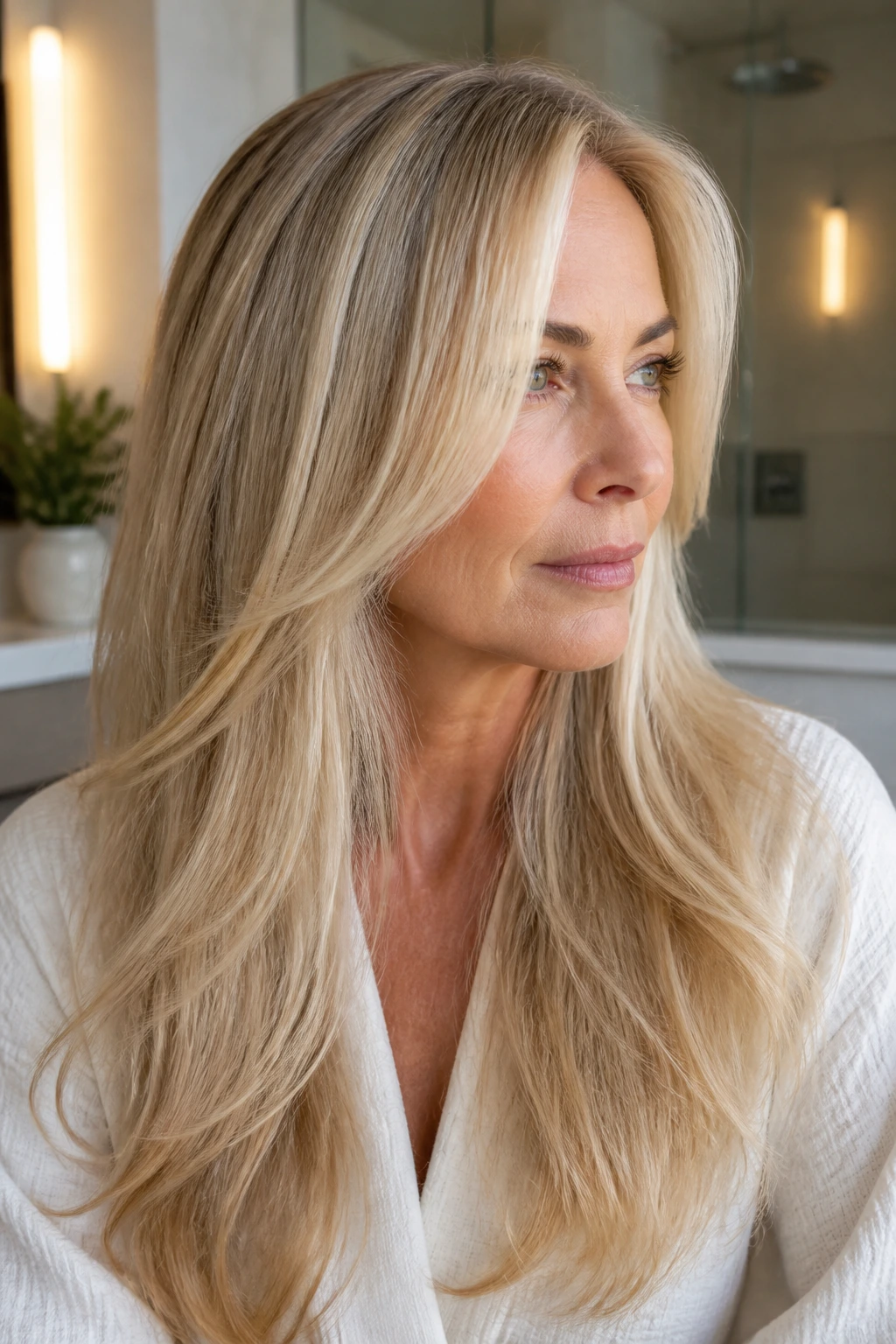
Blonde hair changes faster than dark hair. That’s just the deal. But it does not need to look tired between salon visits if you treat it with a little discipline.
Wash long blonde hair about 2 to 3 times a week if you can. Fewer washes usually means less fading and less dryness through the ends. On cool blondes, use purple shampoo once a week or every 10 to 14 days. Warm blondes usually need it less often, if at all.
Deep condition once a week. If the hair is porous, a mask for 10 to 15 minutes after shampooing can keep the ends from puffing up. If you blow-dry often, use heat protectant every time, and try to keep the dryer under 350°F if your tool has that setting.
Glosses or toners generally hold best for about 6 to 8 weeks, while partial highlights or root refreshes often land around 8 to 12 weeks depending on how soft the grow-out is. Hair that’s mostly balayage can stretch longer. Hair with a bright money piece usually needs more frequent cleanup.
At night, a silk or satin pillowcase helps more than people admit. So does a loose braid or low twist if your ends tangle. Blonde gets dull partly from washing, partly from friction. Reduce both and the color stays kinder for longer.
How to Talk to Your Colorist Without Guessing
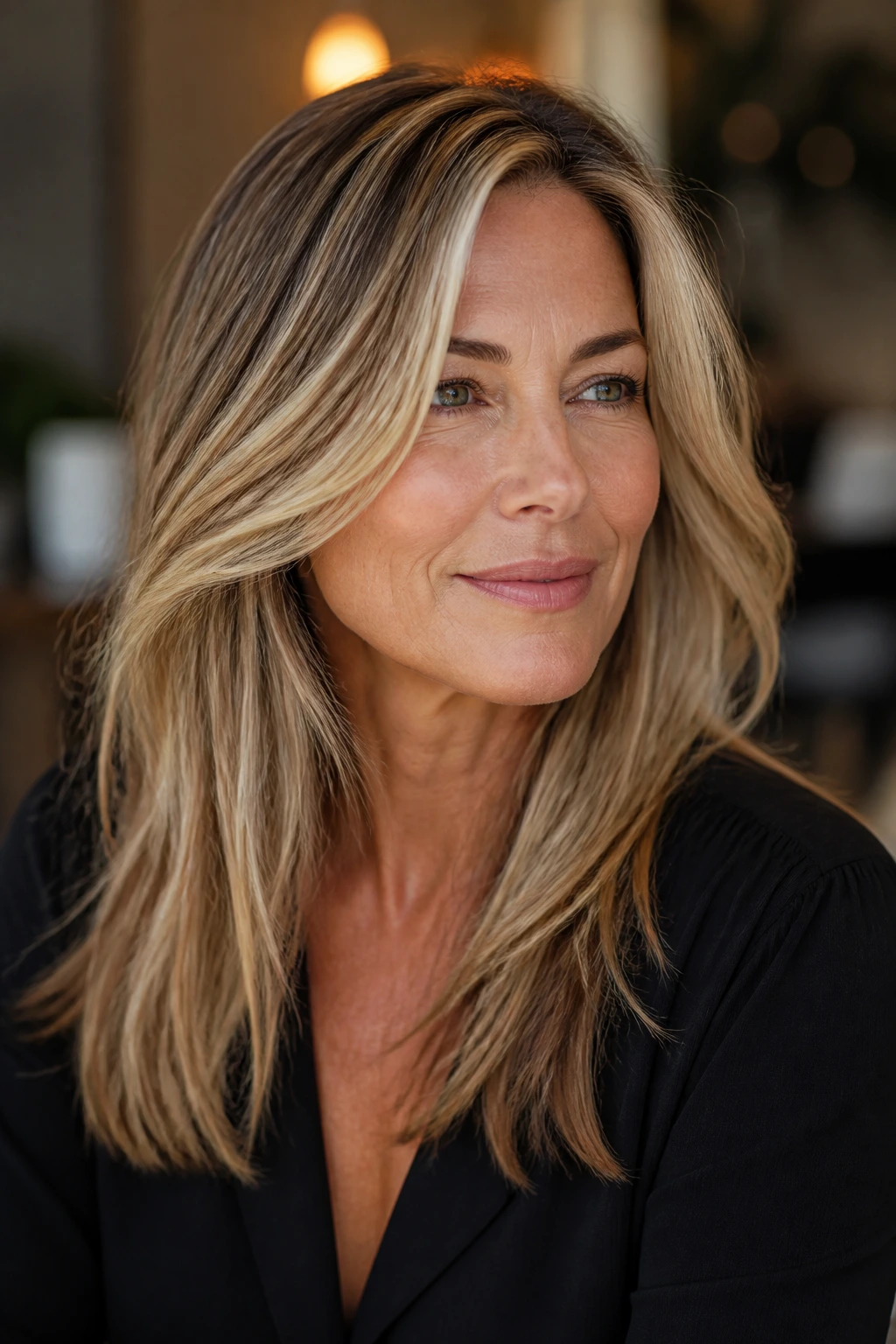
Be specific about where you want the brightness. Say you want light around the face, not all the way through the underside if that’s true. Mention whether you’re okay with a visible root or whether you want a softer grow-out.
Bring two or three photos, but choose photos that match your hair length and density. A shoulder-length platinum on thick hair is not the same thing as a long layered beige blonde on fine hair. The haircut and texture matter as much as the shade.
Tell your colorist what annoys you. Brass? A hard root line? Ends that look too white? That part is gold. A good color plan usually solves one problem while avoiding three others.
If you’re gray-heavy, say how much of it you want to see. Some people want full blending. Some want to keep the silver visible. Those are not the same brief, and they should not be treated like the same brief.
Frequently Asked Questions
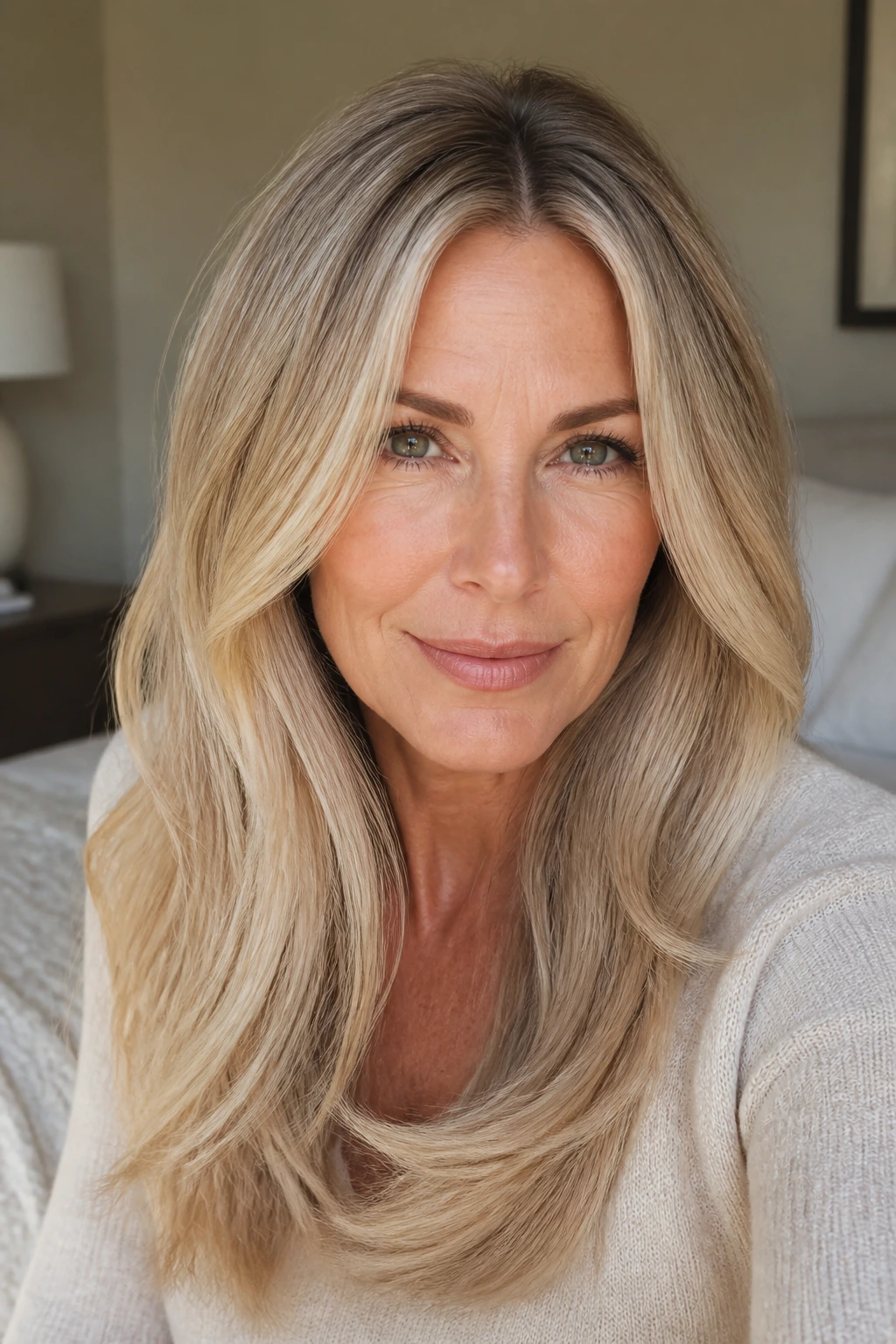
What blonde shades are most flattering on long hair after 50?
Beige blonde, champagne, honey, silver ribbons, and shadow-root blends tend to flatter most often because they keep depth and shine. The best shade depends on your skin tone and how much gray you want to blend, not on age alone.
Is balayage better than full highlights for gray blending?
Usually, yes. Balayage and ribbon highlights grow out more softly, so the gray doesn’t create a harsh line at the scalp. If your gray is very concentrated, a mix of highlights and lowlights often works better than one technique alone.
How do I stop blonde hair from turning brassy?
Use a color-safe shampoo, limit hot tools, and keep purple shampoo to a once-a-week or once-every-10-days routine if your blonde is cool. A toner or gloss every 6 to 8 weeks also helps keep yellow from taking over.
Can fine long hair wear blonde without looking thin?
Yes, but the placement has to be smart. Keep the brightest pieces near the face and crown, and leave some depth underneath so the hair doesn’t look see-through at the ends.
What if my hair is mostly gray already?
That’s actually useful. Silver ribbons, ash-beige blends, and soft shadow roots can make the gray part of the color story instead of something to cover. The result usually looks more natural than forcing a fully opaque blonde.
How often should long blonde hair be touched up?
A gloss or toner often needs refreshment every 6 to 8 weeks, while highlights or balayage can go 8 to 12 weeks or longer depending on how soft the grow-out is. Bright face-framing pieces usually need more frequent attention than the rest of the hair.
Can I go blonde without bleaching everything?
Sometimes. If your base is already light brown or dark blonde, you may only need highlights, babylights, or a few lighter face-framing pieces. Darker hair usually needs more lift, but not every strand has to be taken to the same level.
Which blonde shade makes hair look thicker?
Dimension does. Beige blonde with a shadow root, caramel bronde, and teasylights tend to create the illusion of more density because they keep some contrast in the hair. One flat shade can look thinner by comparison.
How short should the root shadow be?
For most long blonde looks, 1 to 2 inches is enough. That gives you softness without making the root look muddy or obviously dark.
Light That Grows Out Gracefully
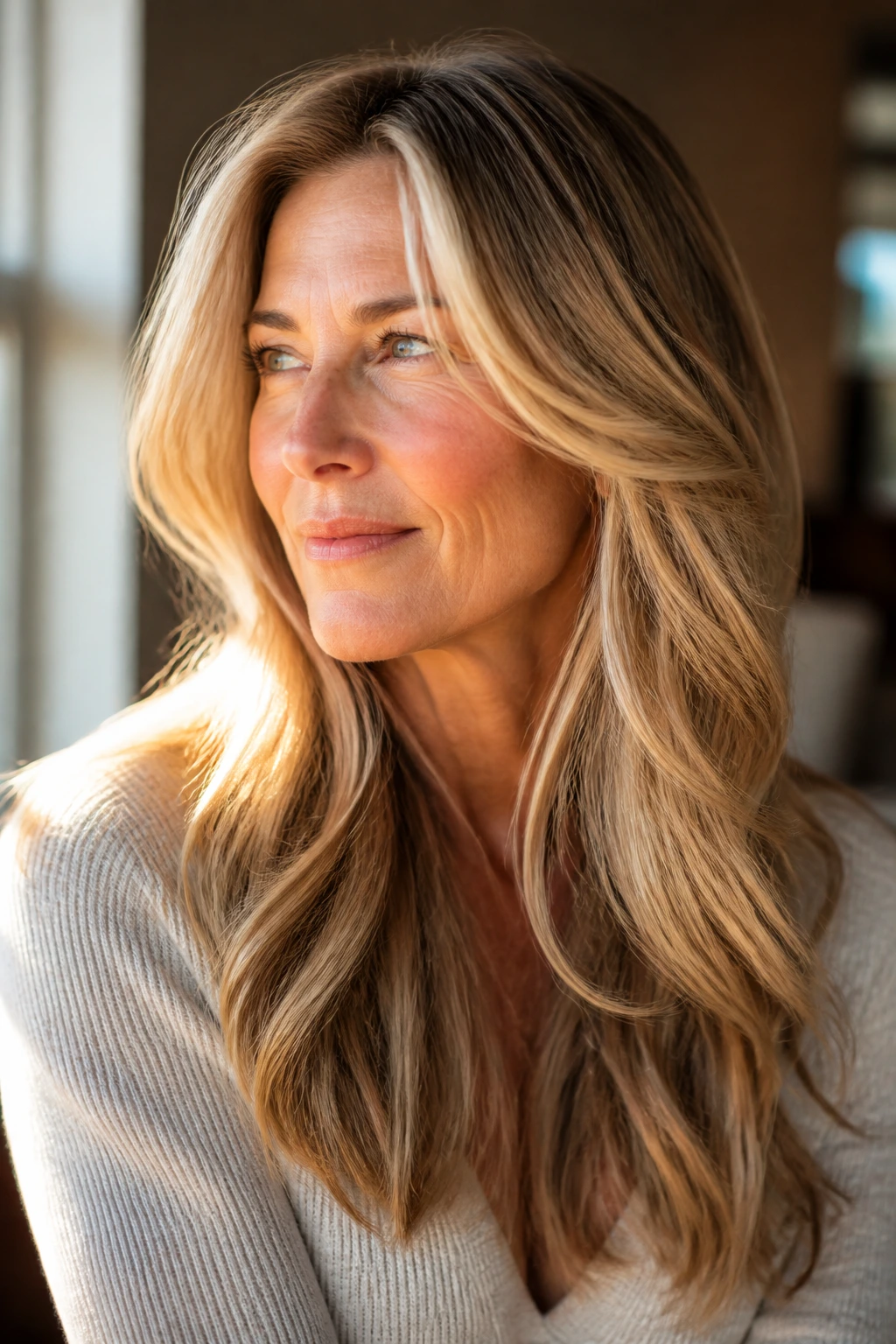
The prettiest long blonde on a woman over 50 usually isn’t the palest one in the room. It’s the one with depth at the root, brightness where the face needs it, and enough tonal variation that the hair still looks alive when the light changes.
That’s the real payoff here. These looks don’t ask long hair to pretend it’s younger. They let it look fuller, softer, and more deliberate — which is a better deal, honestly, than perfection ever was. If you choose a blonde that respects your texture and your grow-out, the color starts working with you instead of against you.
