



Kids’ hairstyles have a funny way of sounding simple until you’re standing behind a wiggling head at 7:15 a.m. with one hair tie in your mouth, a brush in one hand, and a child announcing that the whole thing feels “too tight” before you’ve even found the part. The styles that survive real mornings are rarely the fussiest ones. They’re the ones that keep hair out of eyes, sit comfortably against the scalp, and still look intentional after a backpack strap, a playground slide, and a snack break.
The best hairstyle ideas for kids don’t need to be elaborate to earn their place. A clean side part with one good clip can beat a braided masterpiece if your child hates sitting still. A bubble ponytail can look cheerful and stay controlled with far less skill than a French braid. And on curly or coily hair, the smartest choice is often the one that respects the texture instead of trying to flatten it into something else.
That’s really the theme here: styles that work in the messy middle of actual childhood. School runs. Sunday church. Dance class. Birthday parties. Hair that gets touched, tugged, slept on, and revised halfway through the day. Some are quick. Some need a little patience. All of them can be done at home without turning the bathroom into a battlefield.
Why These Styles Earn Their Keep
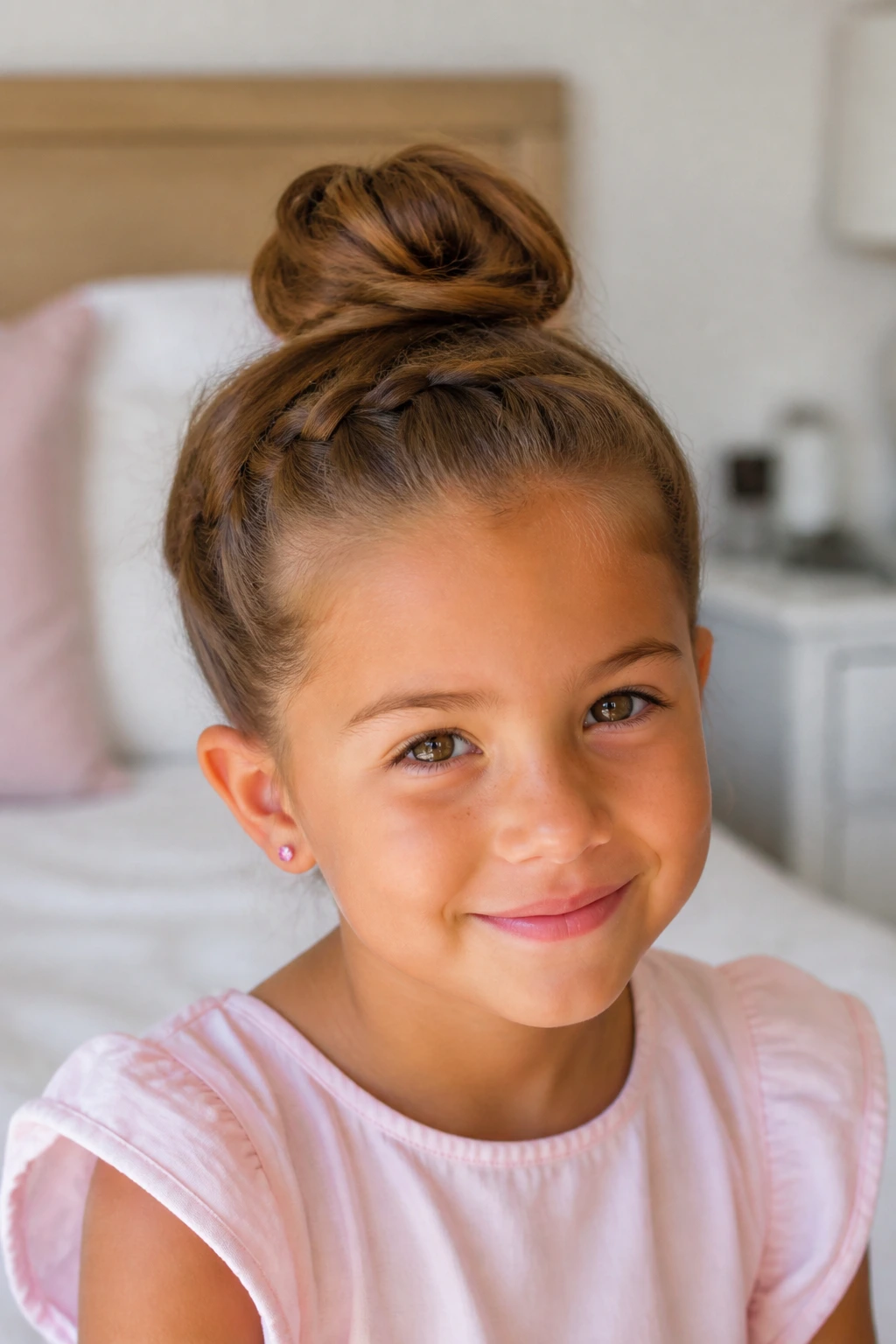
-
They fit different morning moods: Some days you’ve got ten minutes and a cooperative kid, and some days you’ve got neither; this mix gives you both fast fixes and polished looks.
-
They work with the hair you actually have: Straight, wavy, curly, coily, fine, thick, short, long — there’s something here that makes sense without forcing one hair type into another shape.
-
They stay comfortable longer: Tight styles are the fastest way to get complaints. These ideas lean on secure sectioning, soft elastics, and sensible tension.
-
They do not need a drawer full of gear: A rat-tail comb, small elastics, a brush, and a few clips cover most of the list.
-
They can be dressed up or down: The same base style can look school-ready with plain elastics or party-ready with ribbons, beads, or a scarf.
-
They give kids some say: A child who gets to pick between two or three options is far more likely to sit still than one who feels trapped in a style they didn’t want.
1. Smooth Side Part with a Statement Clip
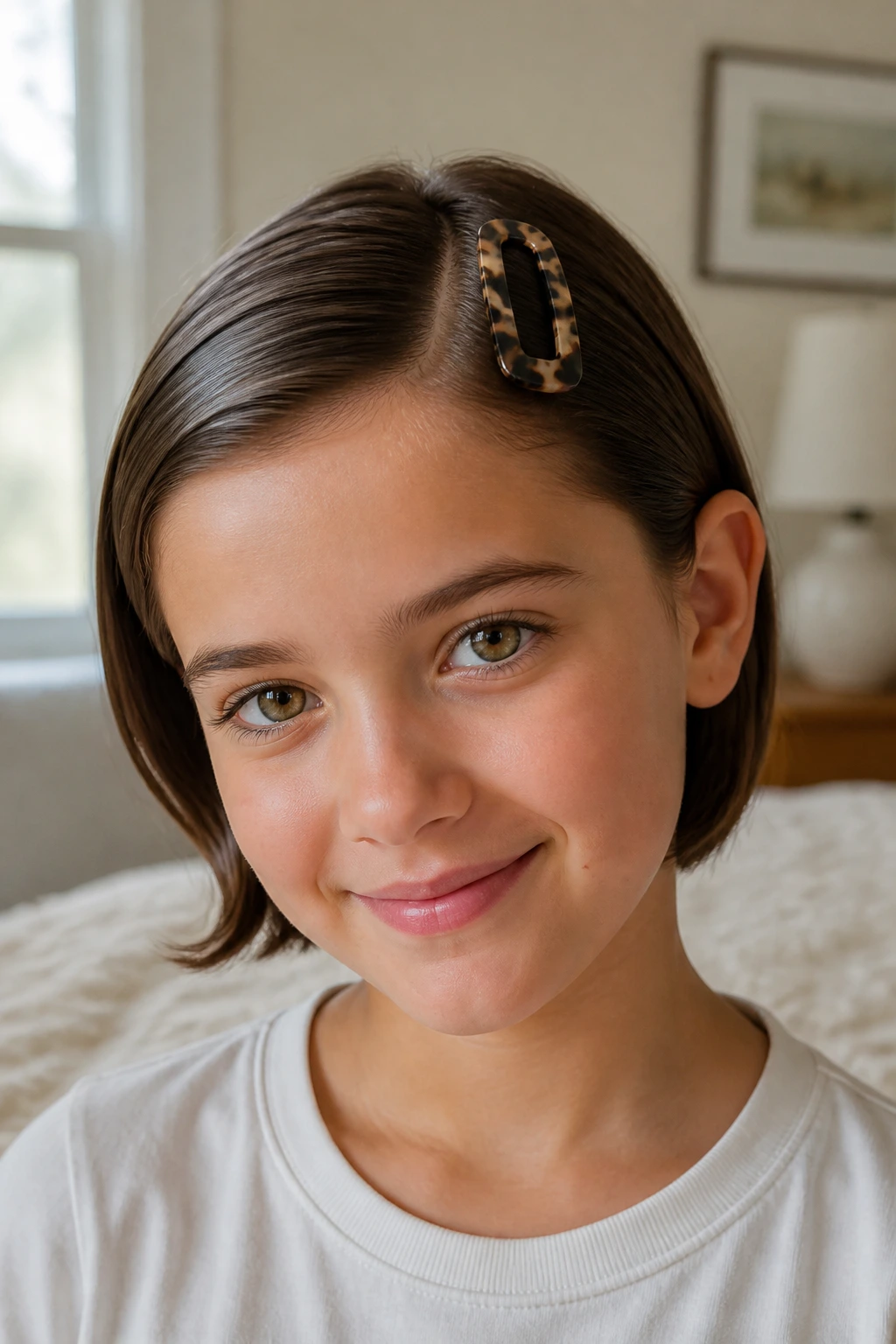
A deep side part and one bold clip can do more than people expect. On a child with short, fine, or straight hair, it creates shape fast, keeps fringe off the face, and looks polished without asking much from the hair itself. It’s the hairstyle equivalent of a clean white T-shirt and one good accessory. Simple. Done.
The trick is to make the part look deliberate. Use a rat-tail comb, mist the hair lightly if it’s staticky, then smooth the front section back with a tiny bit of leave-in or styling cream. Clip just above the temple so the accessory actually holds hair away from the eye instead of sitting there for decoration. A snap clip or barrette with a flat back works better than something bulky that pops open the second a hood goes on.
2. Bubble Ponytail with Soft Elastics
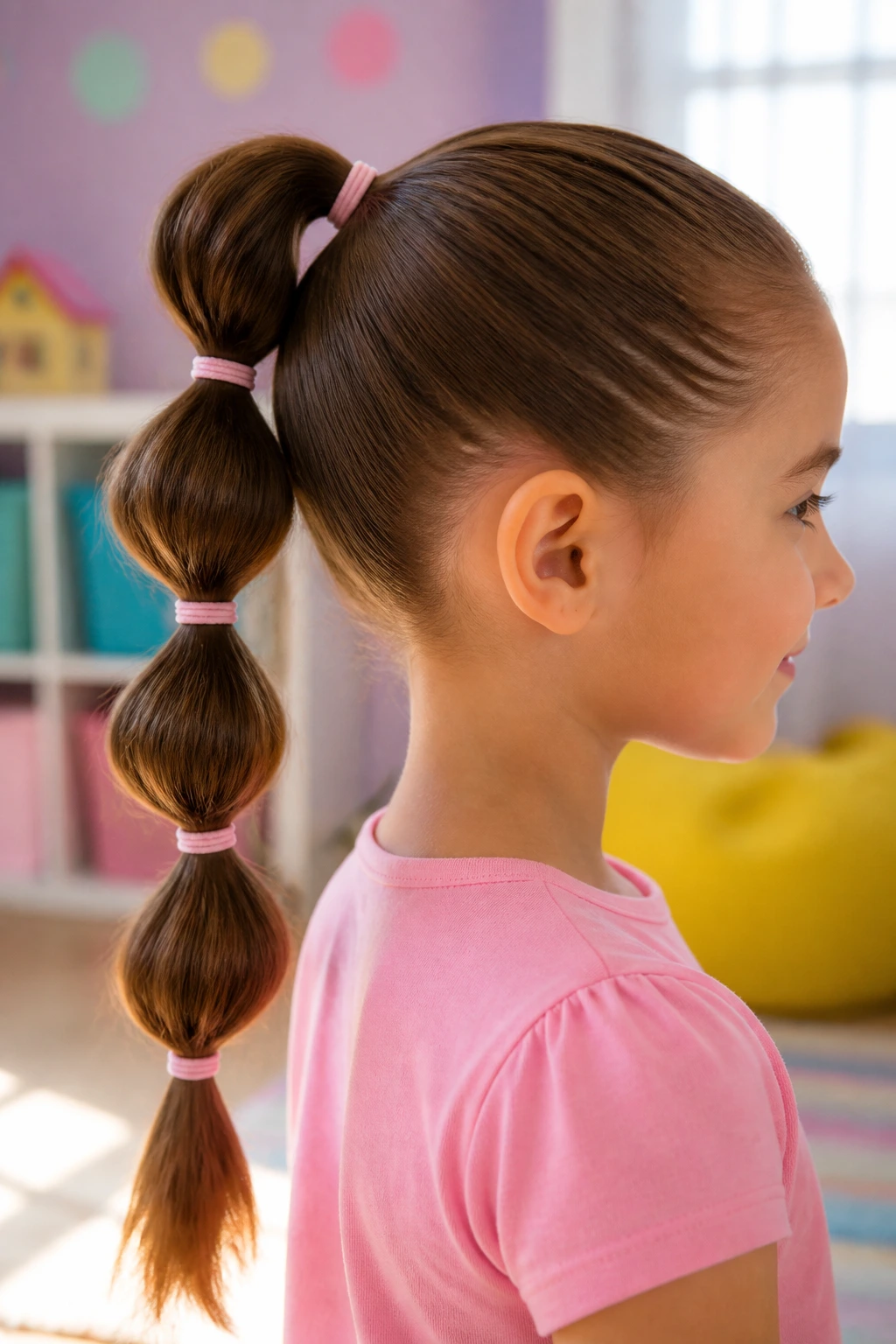
This one looks like it took twice as long as it really did. That’s why I keep coming back to it. A bubble ponytail gives you the clean control of a regular ponytail, but the spaced-out sections make it feel playful instead of severe, which matters when the child in the chair wants “pretty” but not “too fancy.”
Start with a single ponytail, high or low, then add clear or colored elastics every 2 to 3 inches down the length. Gently tug each section outward to puff it into a bubble. Not hard. Just enough to round it out. If the hair is fine, tease each bubble a little with your fingers before tightening the next elastic. If the hair is thick, use snag-free elastics and keep the sections a bit larger so you’re not wrestling a tight rope of hair all morning.
3. Classic Braided Pigtails
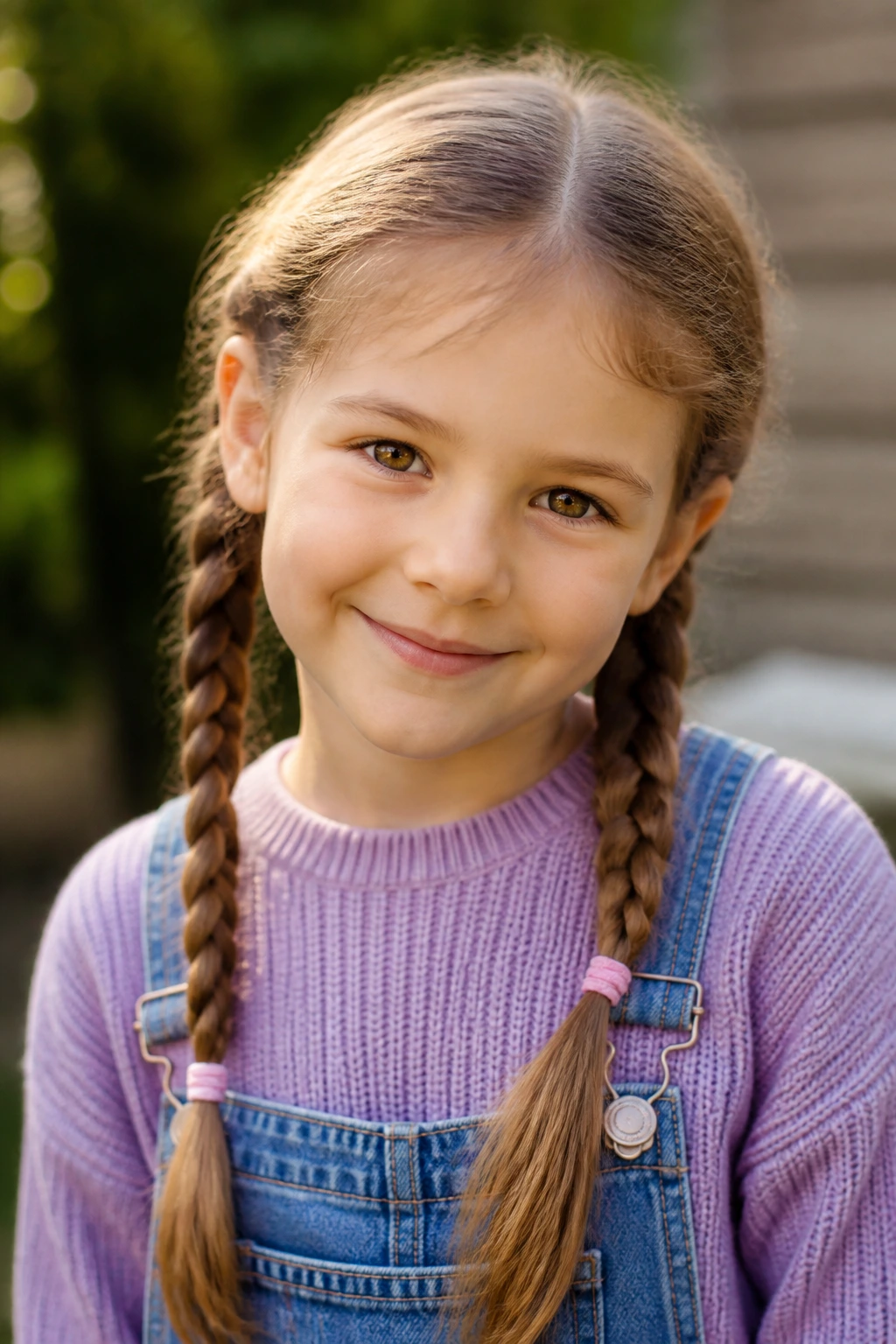
Braided pigtails are the old reliable of kids’ hairstyles. They keep the sides neat, stay out of the eyes, and hold through a lot more movement than loose ponytails do. For children who run hard at recess or lean their head against a car seat on the way home, this is the style that tends to survive the day with the least drama.
The main job is even sectioning. Part the hair down the middle, clip one side away, and braid each half from just behind the ear downward. If the hair tangles easily, a mist of water and leave-in makes the braid smoother without making it slippery. You can use regular three-strand braids, Dutch braids for a little more grip, or finish each end with a ribbon instead of a plain elastic. The look changes fast, but the basic structure stays the same.
4. Half-Up Top Knot
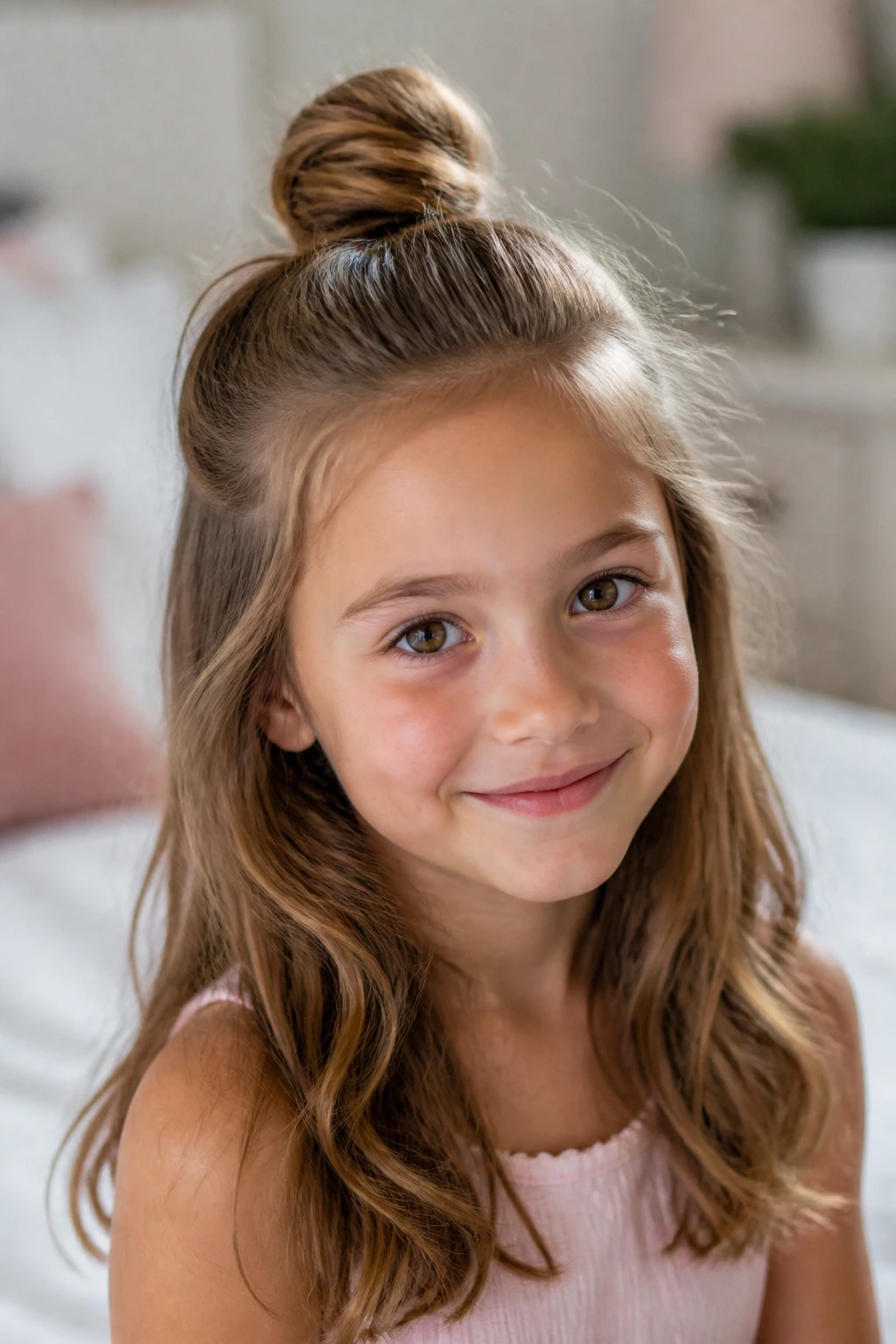
What do you do when a child wants hair down but cannot stand it in their face? The half-up top knot solves that faster than most styles. It keeps the front and crown controlled while leaving the rest loose, which makes it a nice middle ground for kids who like to feel a little “done” without losing their hair completely.
Take the top third of the hair, gather it at the crown, and twist it into a small bun or knot. Secure with a soft elastic, then either tuck the ends in or leave the knot slightly undone for a softer finish. The lower hair can stay straight, wavy, curly, or brushed out. This style looks especially good when you keep the bun small and avoid pulling the top too tight. Too much tension makes the whole thing look stiff. A small, slightly loose knot has a much more natural shape.
5. Dutch Braids into a Low Ponytail
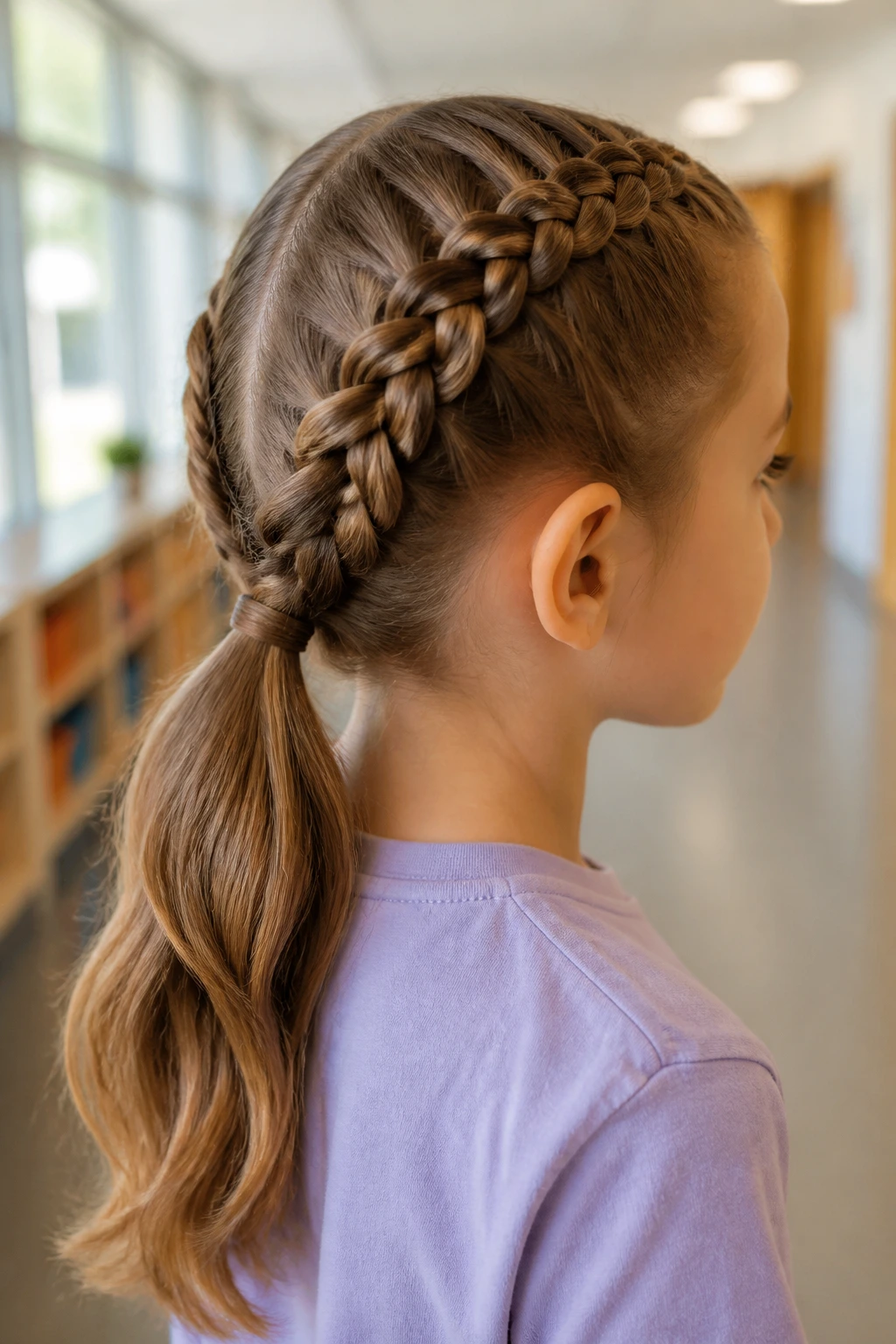
This is one of those styles that sounds more complicated than it really is. Two Dutch braids start at the hairline, hug the scalp, and then meet at the nape where the rest is gathered into a low ponytail. The result is neat, secure, and far less likely to unravel during an active day.
Why it Holds Up
Dutch braids are anchored close to the scalp, which is the whole point. Instead of relying on a single elastic at the top, the braid itself helps distribute tension and keep shorter layers under control. That makes this style useful for sports, long school days, and any child who treats hair like an object to be pushed out of the way.
The ponytail at the bottom also gives you flexibility. Leave it straight, curl the ends, or braid the tail too if you want more hold. If your child has thick hair, split the tail into two smaller ponytails for a lighter finish. If the hair is fine, a little texturizing spray on the roots gives the braids more grip.
6. Twisted Space Buns
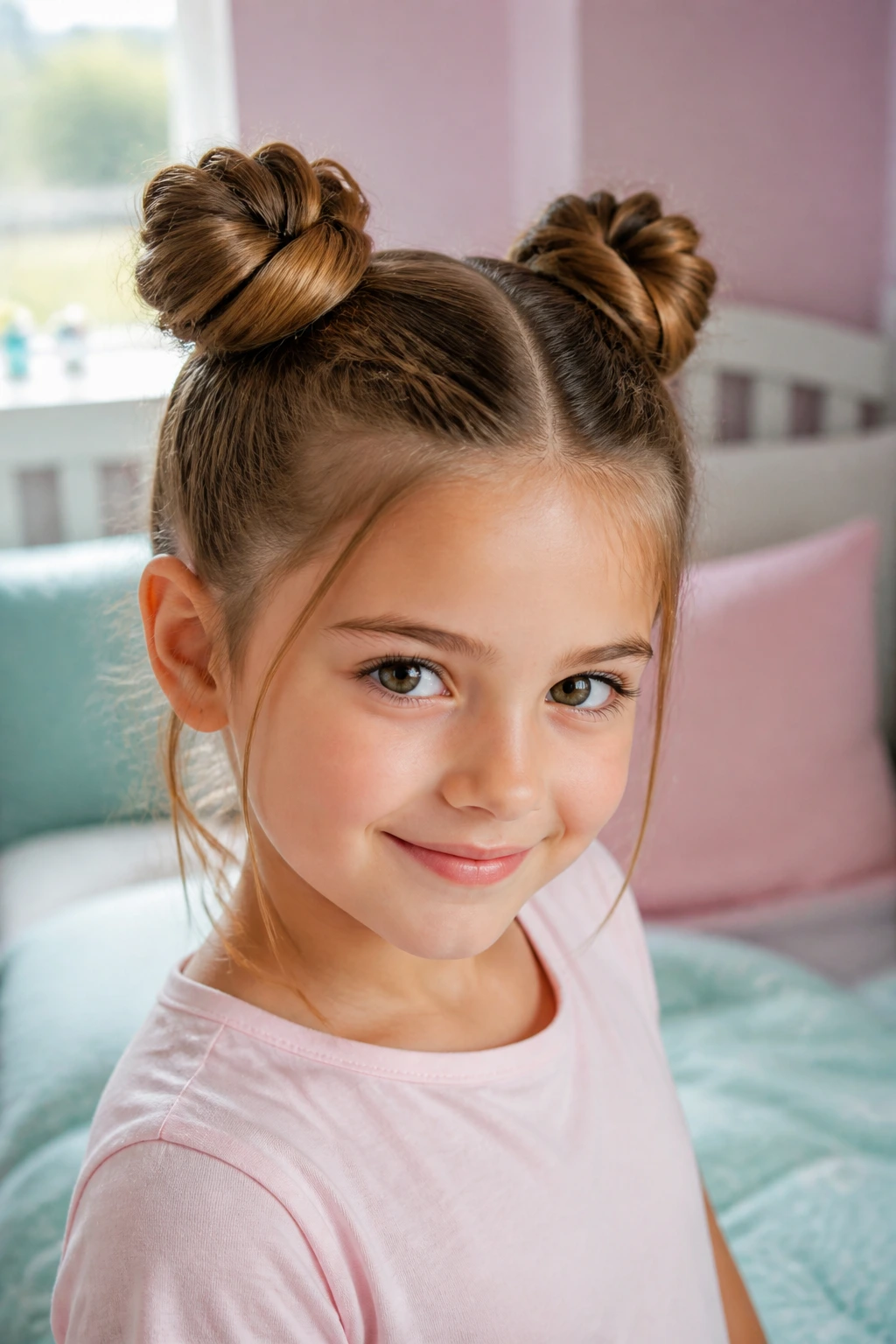
Twisted space buns have that slightly mischievous look kids tend to love. They sit high, frame the face, and keep the ends tucked away so there’s less to loosen during the day. On short-to-medium hair, they create shape without requiring a lot of length. On longer hair, they look cheerful and tidy at the same time.
Part the hair down the middle, then twist each side up into a bun at the crown or just above the ears. A soft elastic holds the base, and a couple of bobby pins help if the hair is slippery or layered. I like to leave the buns a little imperfect — too-smooth space buns can look severe, while a slightly textured version feels more relaxed and age-appropriate. If you’ve got thick hair, don’t force all of it into one tiny bun. Make the buns broader and looser. The shape matters more than the size.
7. Crown Braid Halo
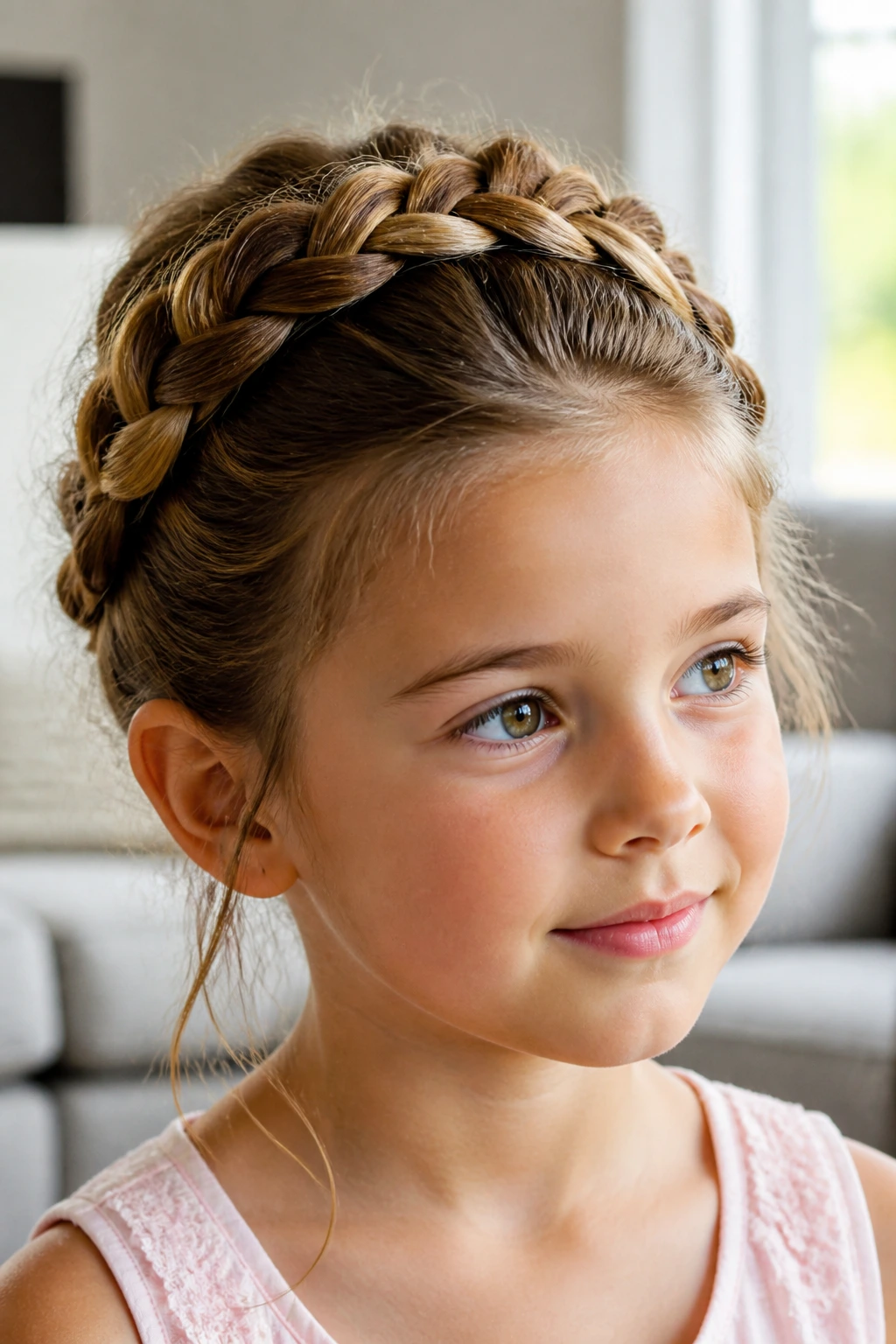
A crown braid halo has a dressed-up look that lands somewhere between a party style and a practical hairdo. It keeps everything off the face and gives long hair a tidy frame around the head. It’s also the kind of style that photographs well without requiring glitter, heat tools, or ten different products.
Start one braid behind the ear and work it around the hairline, pinning as you go. The braid should sit close enough to stay put, but not so tight that it tugs the scalp. That’s the line to watch. If the child has baby hairs or layers that slip out, smooth them with a little leave-in or a damp brush before braiding. Use hidden bobby pins to secure the ends and keep the braid from lifting at the back. For a softer finish, pull a few tiny pieces loose around the temples.
8. Ribbon-Wrapped Low Ponytail
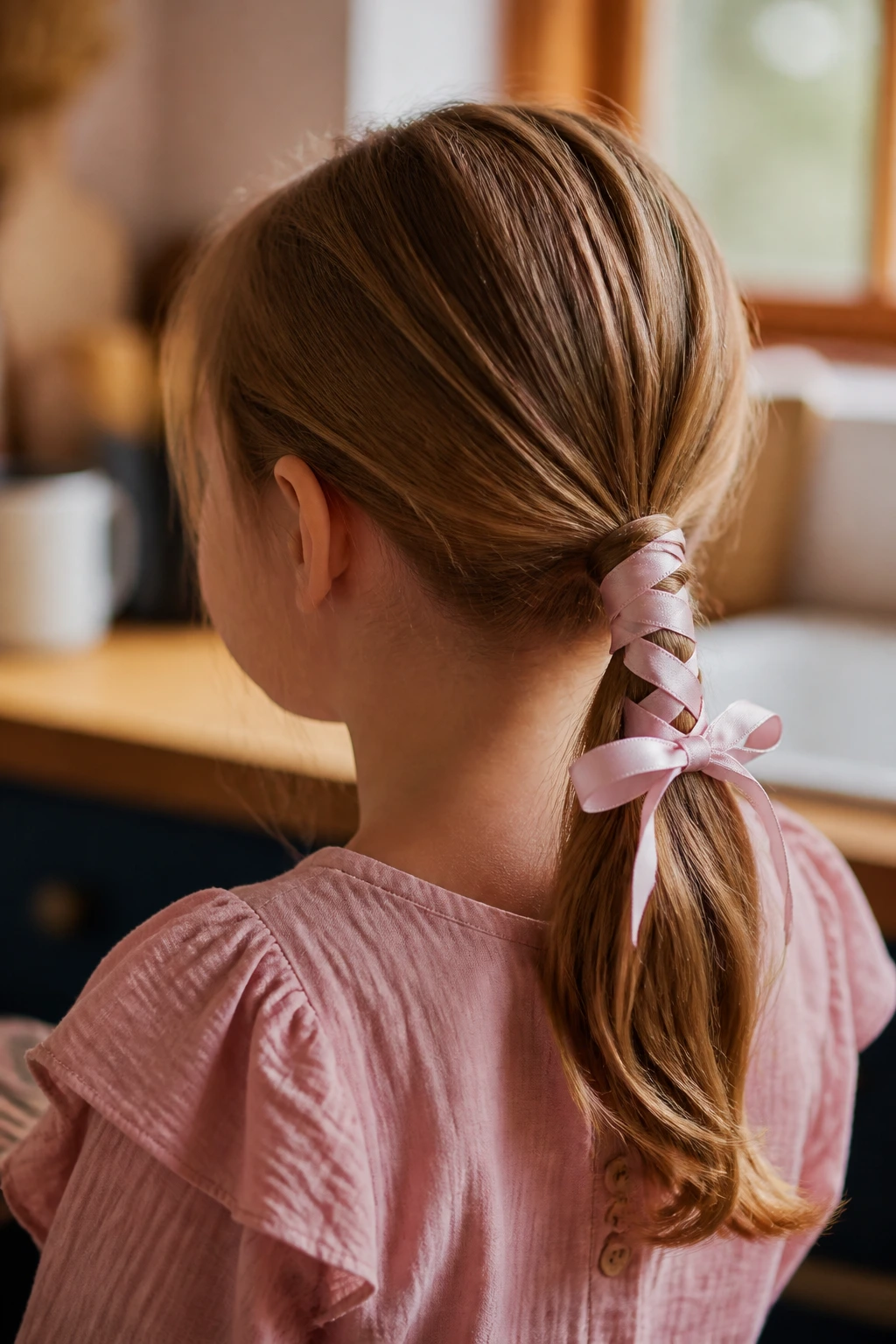
A low ponytail can look plain in the morning and charming by lunch with one small change: a ribbon. Wrap it around the base, weave it through the hair, or tie it in a bow just above the elastic. The style stays low, controlled, and comfortable, but the ribbon makes it feel finished instead of rushed.
This works best when the ponytail is smooth at the top and the ribbon is not so thick that it overwhelms the hair. Satin or grosgrain both work, though satin glides more easily if the child likes to touch the ends. Use a plain elastic first, then tie the ribbon around it so the hold doesn’t depend on the bow alone. If your child has fine hair, this is a nice trick because it gives the illusion of more detail without adding much weight. If the hair is thicker, a longer ribbon tail keeps the ponytail from looking stubby.
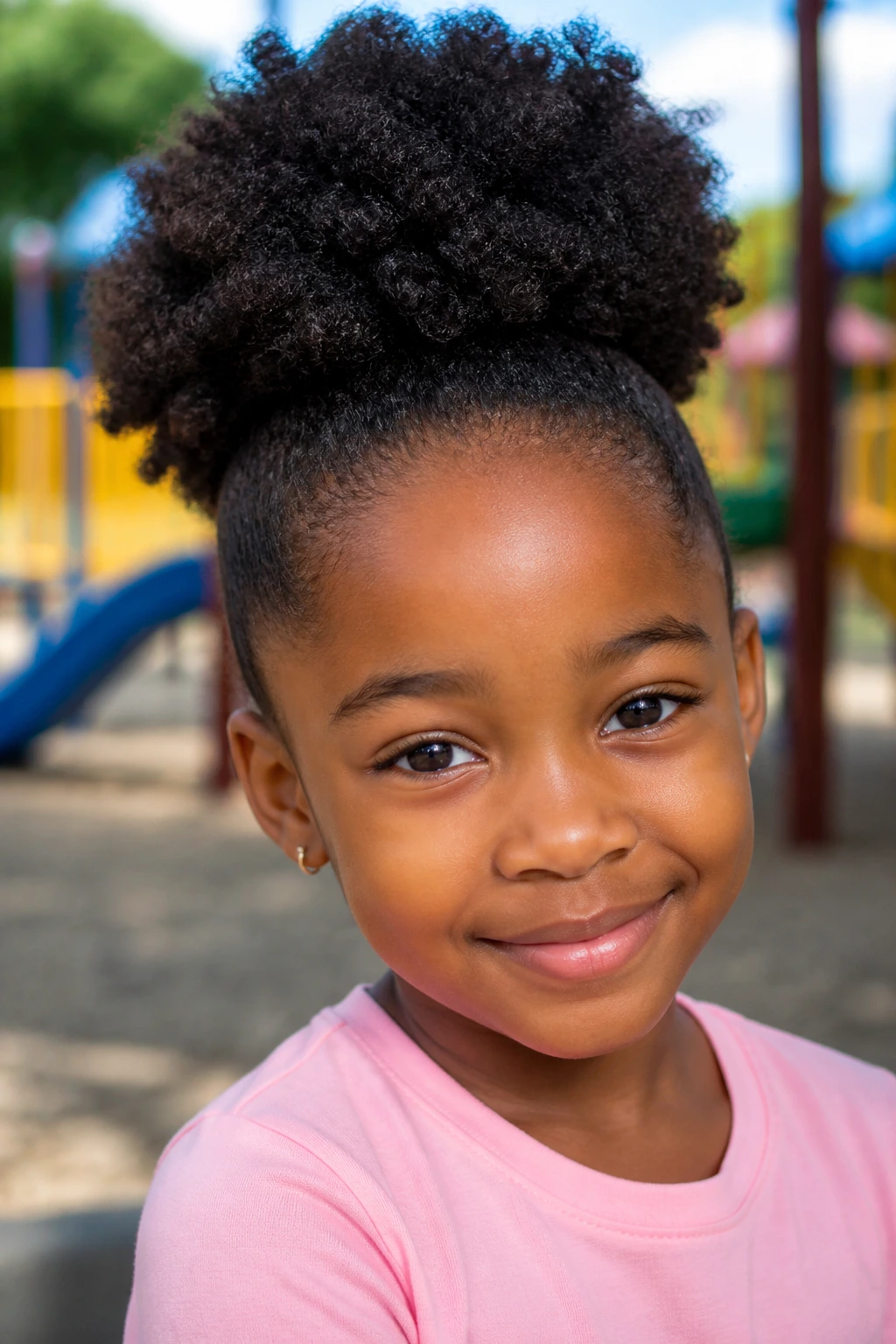
9. Curly Puff with a Wide Headband
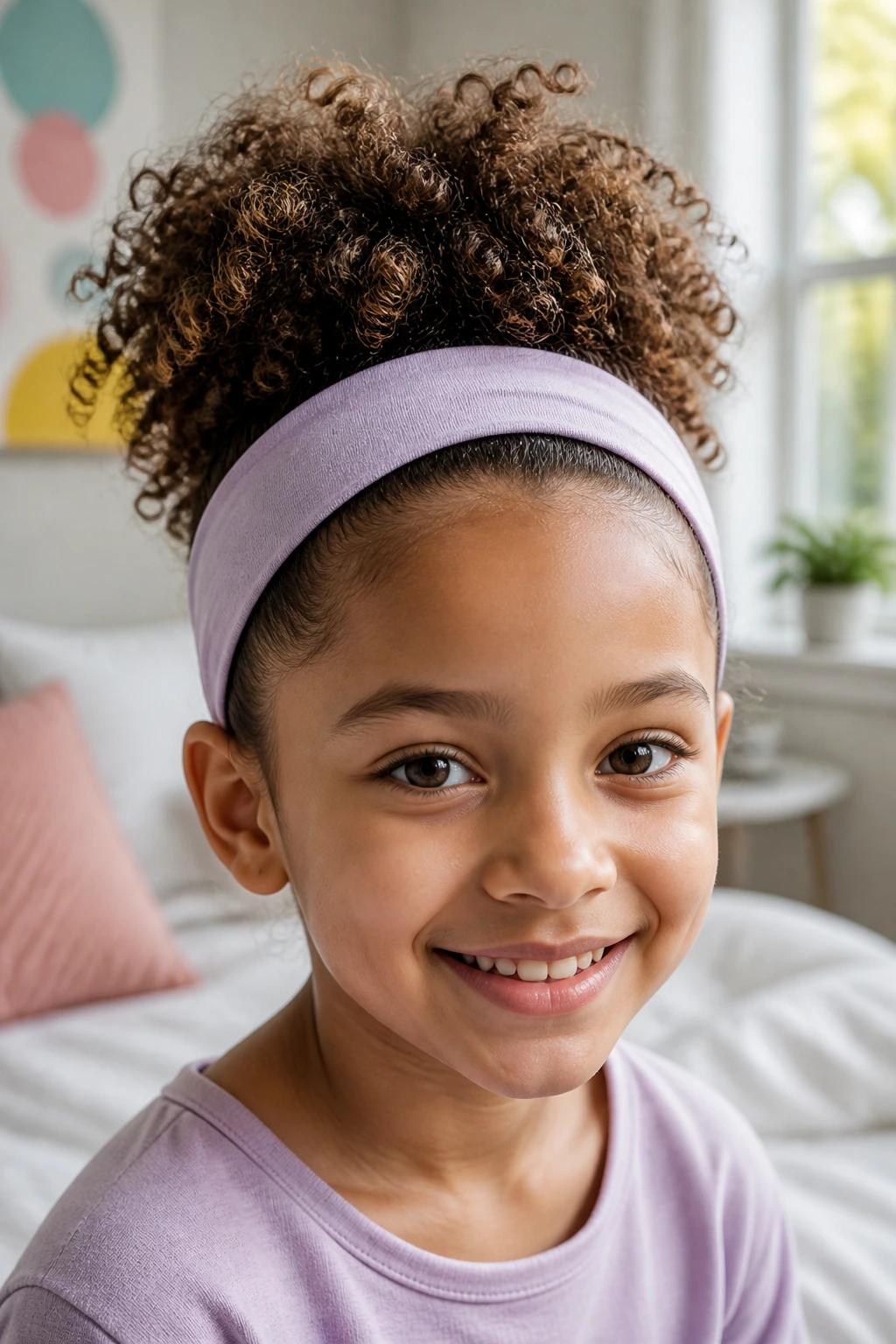
Curly hair does not need to be flattened to look put together. A curly puff with a wide headband keeps the front neat while letting the texture stay big, springy, and visible. That matters. Hiding curls under too much tension is a fast way to make the child hate the style and the parent hate the tugging.
What to Do
Mist the hair lightly with water, add a little leave-in or curl cream, and gather it into a puff at the crown or mid-head with a soft elastic. Then slide on a wide headband or a satin-lined band to smooth the front and keep flyaways from drifting into the eyes. The band should feel secure, not pinched.
This is a good choice for curl patterns that look better when left alone. It’s also one of the fastest ways to make second- or third-day curls feel intentional again. If the edges are sensitive, skip heavy brushing and use your fingers to smooth the front. Clean, comfortable, done.
10. French Braid Ponytail
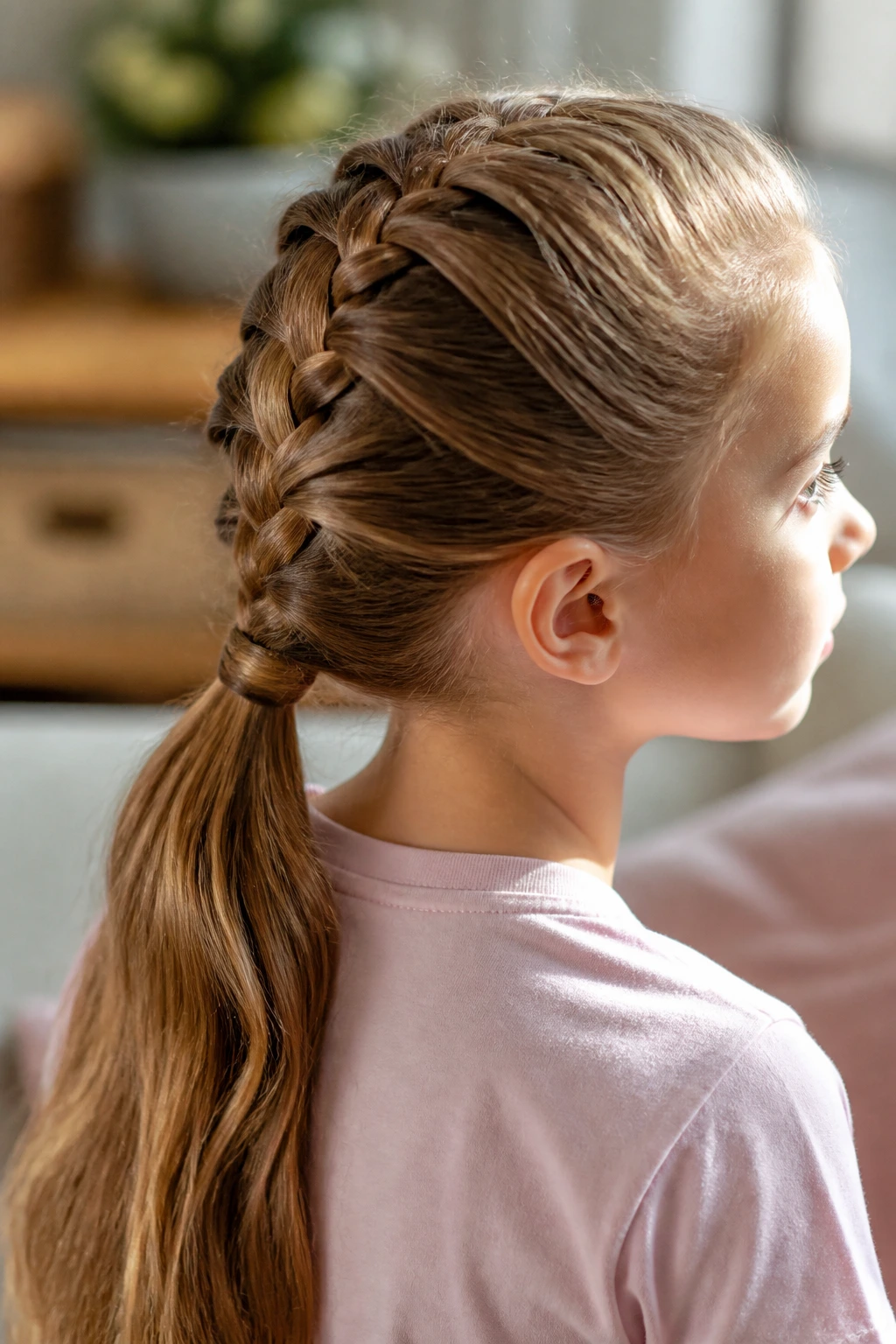
A French braid ponytail gives you control at the top and movement at the bottom. The braid starts at the crown, grabs hair as it goes, and stops near the nape before the remaining length is tied back into a ponytail. It’s tidy without being too rigid, which is why it works for school days, family photos, and kids who do not want hair falling into their lunch.
The braid needs a clean part and steady hands, but the payoff is worth it. Once the braid is secure, you can leave the ponytail straight, curl it with a soft overnight method, or wrap a little section of hair around the elastic to hide it. On long hair, this style can be pulled into a bun the next day without much fuss. On layered hair, a light mist of hairspray or water helps shorter pieces stay woven in instead of slipping out along the sides.
11. Zigzag-Part Pigtails
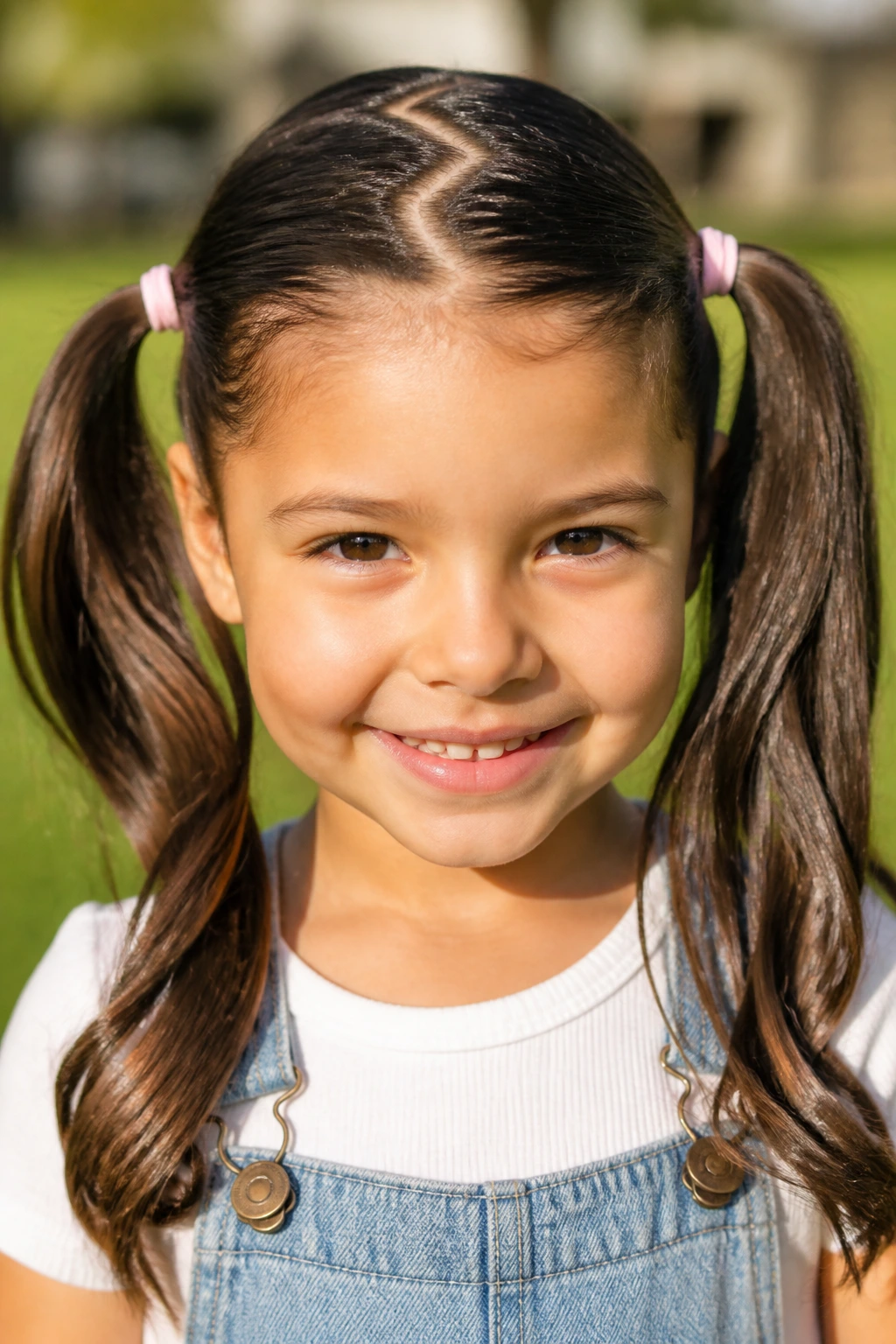
A zigzag part turns plain pigtails into something the child will notice in the mirror. It’s playful without being overbuilt, and once you learn the parting trick, the rest is straightforward. Kids who like “something different” usually like this one because the style feels special before the braid or ponytail even begins.
Use the point of a rat-tail comb to trace the zigzag from forehead to crown, then split the hair into two sections and secure them as pigtails or braids. The key is not to rush the part. A clean zigzag looks intentional; a crooked one just looks rushed, which is a different feeling entirely. This works well on medium-density hair because the part shows clearly. On very curly hair, keep the zigzag a bit larger so it stays visible instead of disappearing into coils.
12. Messy Bun with Soft Tendrils
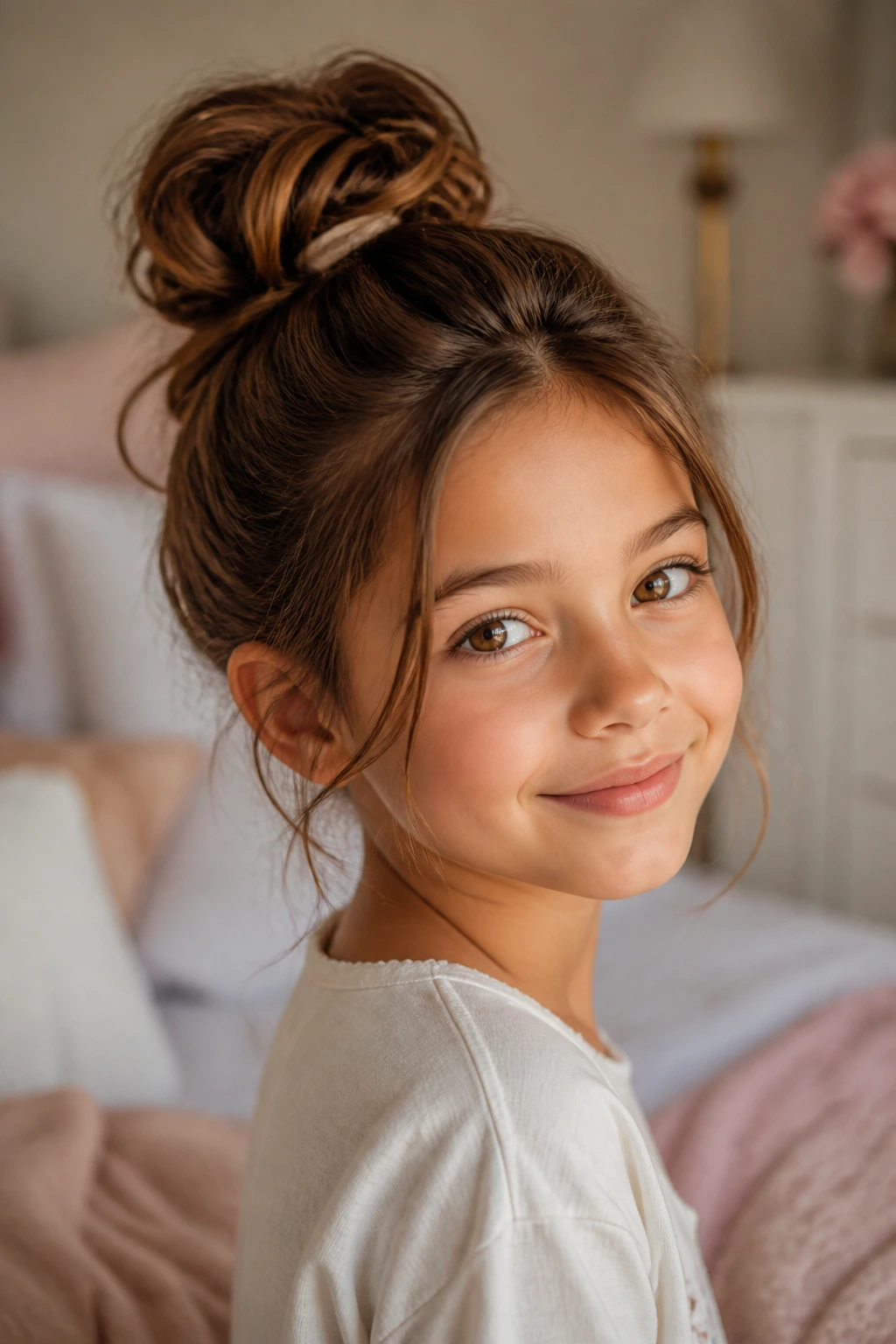
Some mornings call for a hairstyle that looks calm even if the room is not. A messy bun with a few soft pieces left around the face does that job well. It reads relaxed, but there’s still enough structure to keep hair from tumbling everywhere during class or errands.
Pull the hair into a high or low bun, secure it with a soft elastic or scrunchie, and leave a couple of front pieces out on purpose. Those face-framing strands matter. They keep the bun from looking too pulled back or too grown-up. If the hair is very straight, twist the bun loosely before pinning so it has shape. If it’s wavy or curly, let the texture do some of the work. A messy bun should never look like an apology. It should look like a decision.
13. Cornrows into a High Ponytail
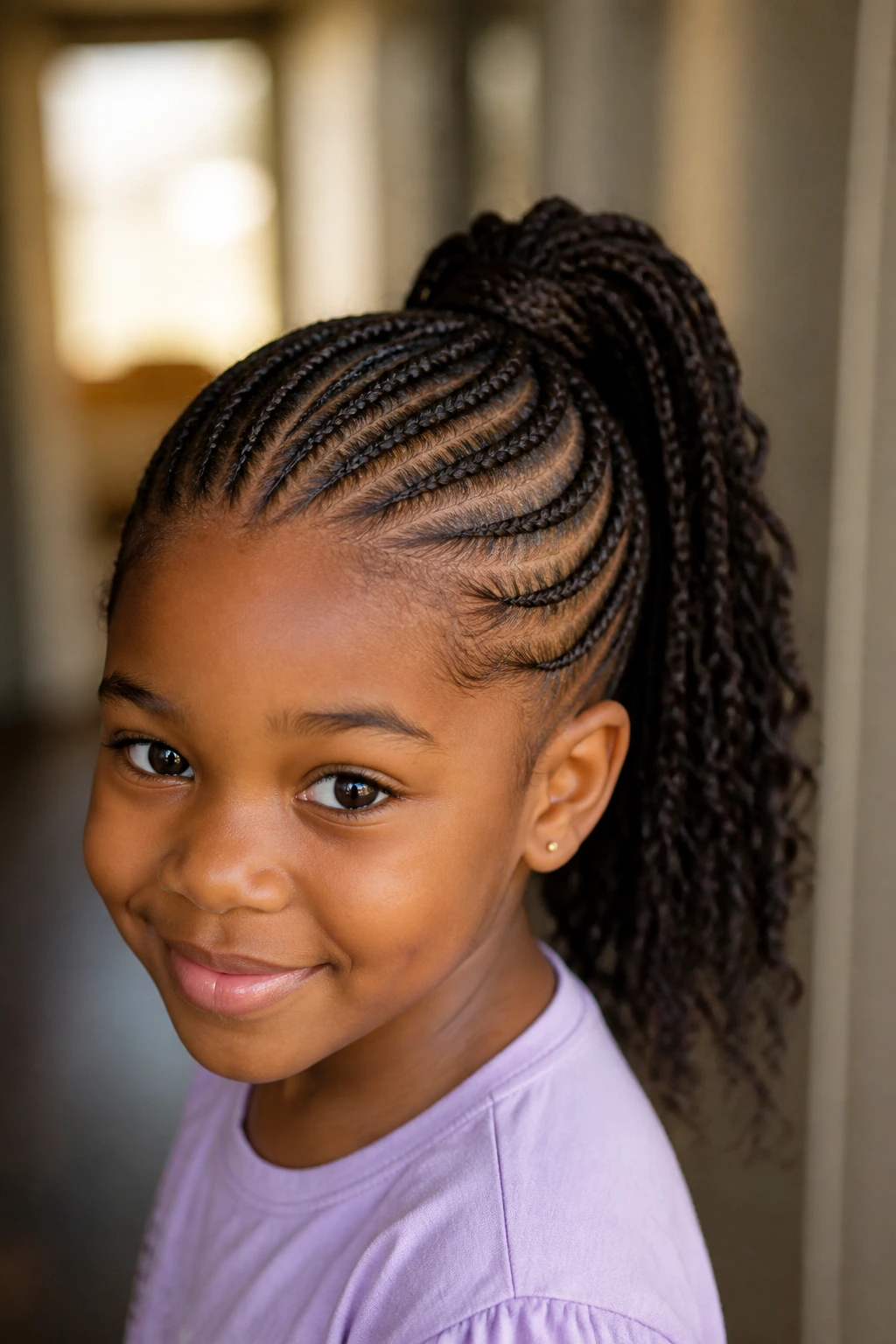
Cornrows into a high ponytail are one of the strongest styles on this list for textured hair. They can last several days, keep the hairline neat, and still let the child wear a ponytail with some bounce and personality. The ponytail lifts the whole style so it feels energetic instead of purely practical.
Why It Works for Busy Weeks
Cornrows hold the roots close to the scalp, which cuts down on daily detangling and keeps smaller strands tucked away. That’s especially useful when a child has school, sports, and bedtime all stacked in the same week. The high ponytail keeps the style from feeling flat or heavy.
The main caution is tension. Cornrows should feel secure, not painful. If the scalp looks pulled or the child says it hurts, the sections are too tight. A little moisturizing product on the parted sections helps the braids look clean without turning them greasy. Finish with a puff, braid, or curly ponytail depending on the hair’s natural texture.
14. Mini Bantu Knots
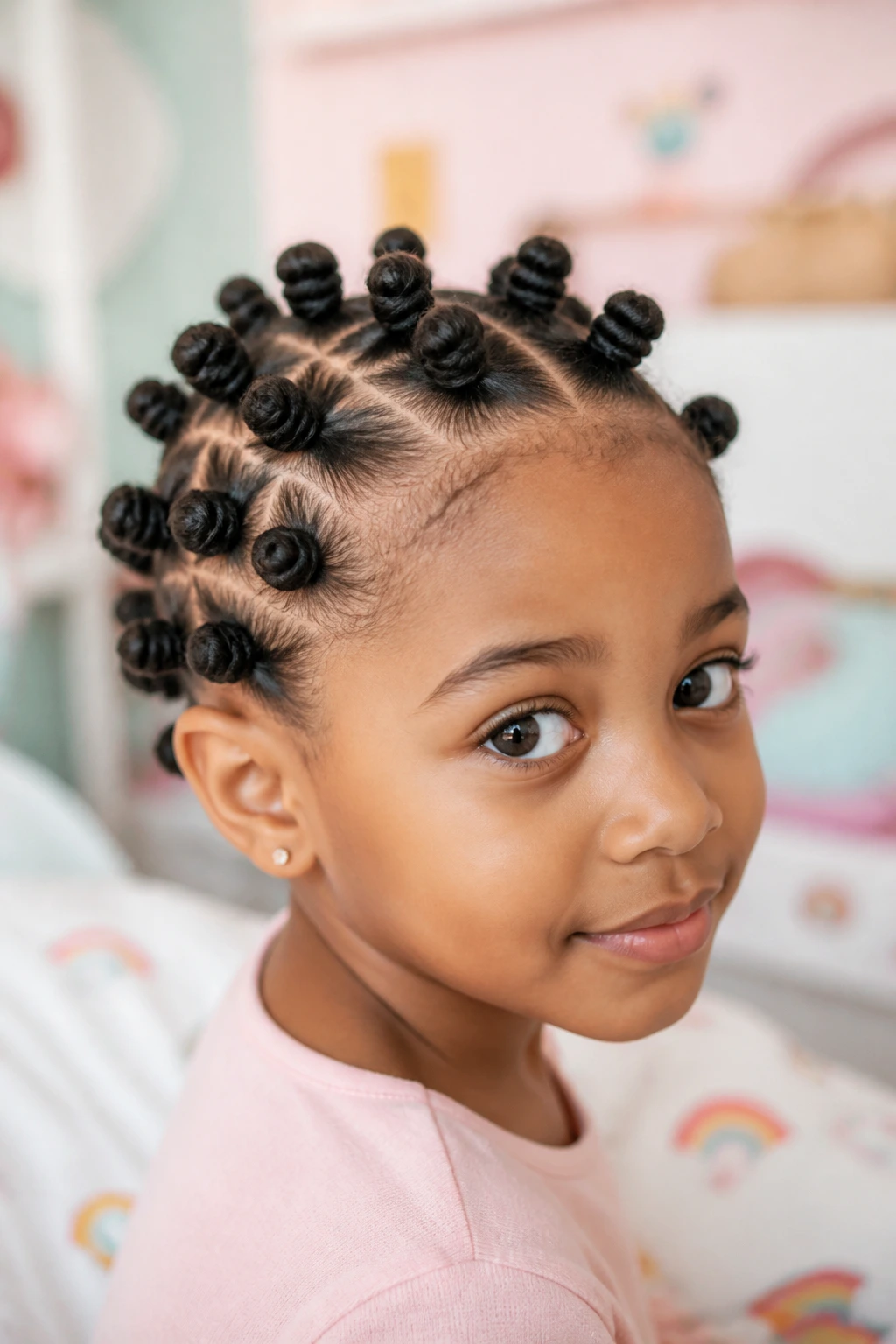
Mini Bantu knots are both a style and, if you want, a set for later curls. The knots sit in neat little sections across the head and create a strong visual pattern that kids often love because it looks playful and bold. They also keep the hair tucked away in a way that feels protective rather than fussy.
Section the hair into small squares or triangles, apply a little moisturizer or leave-in, then twist each section until it coils into a tiny knot against the scalp. Secure the end by tucking it tightly enough that it stays, but not so hard that you strain the base. The smaller the section, the smaller the finished curl if you take the knots down later. That’s useful to know if you’re wearing them for a day and then setting up a next-day style. Avoid doing these on dry, rough hair; the knots look better and feel gentler when the hair has a little slip.
15. Waterfall Braid
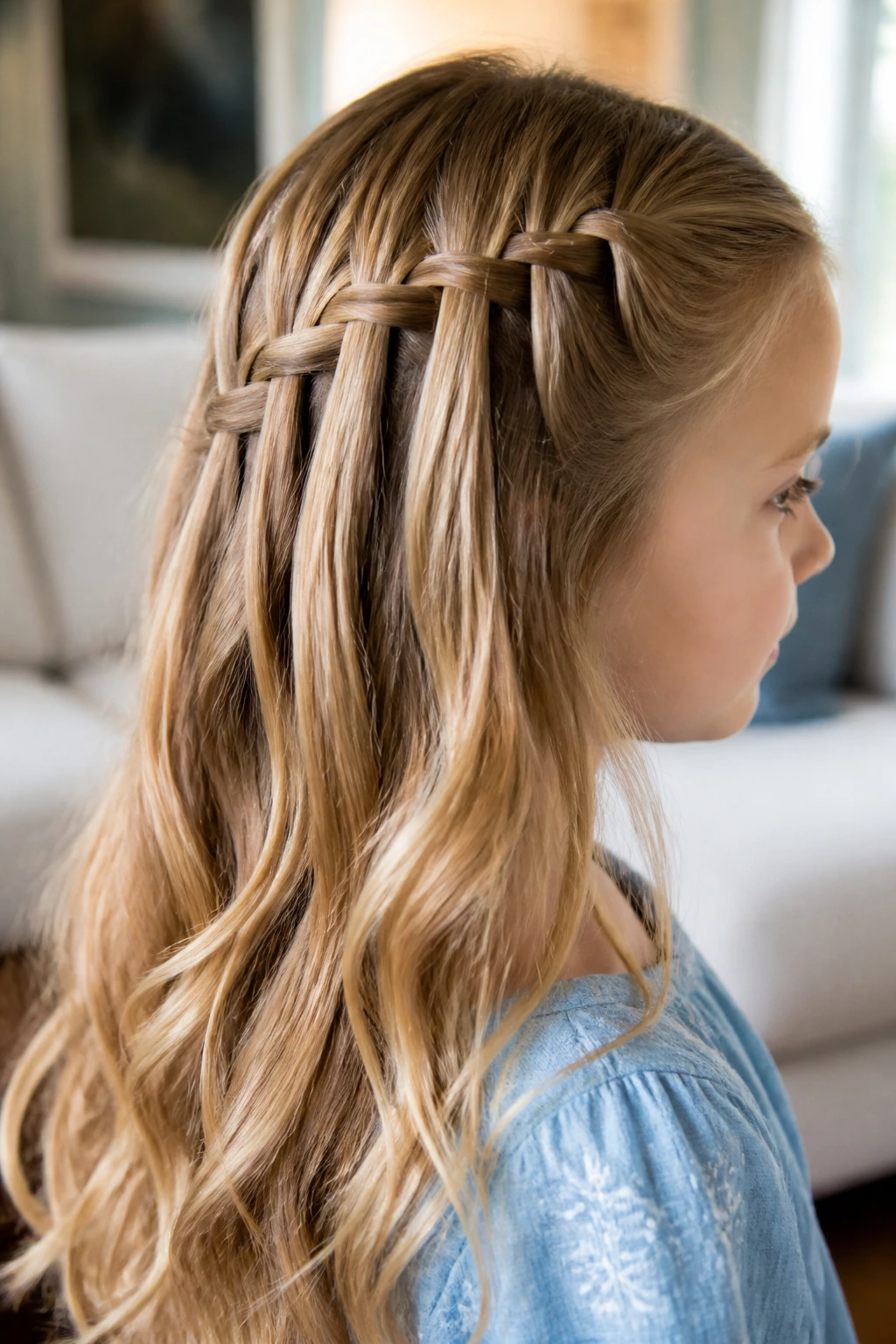
The waterfall braid has that pretty, floating look that makes people stare for half a second longer than usual. It’s a good pick when you want loose hair to stay loose but not chaotic. The dropped strands create a soft pattern across the head, and the rest of the hair can fall in waves, curls, or straight lengths.
Best for Longer Hair
This style works best on medium to long hair with enough length to show the braid clearly. Clean, detangled hair helps a lot, because the braid needs even sections to keep its shape. If the hair is slippery, a little dry shampoo at the roots or styling spray through the first few inches gives the braid more grip.
It’s not the fastest look on this list, and I wouldn’t choose it for a child who hates sitting still. But for a recital, a party, or a day when the outfit is already doing a lot of work, it earns its place. A tiny barrette near the braid’s end can keep the loose side from shifting.
16. Short Hair with Tiny Barrette Clusters
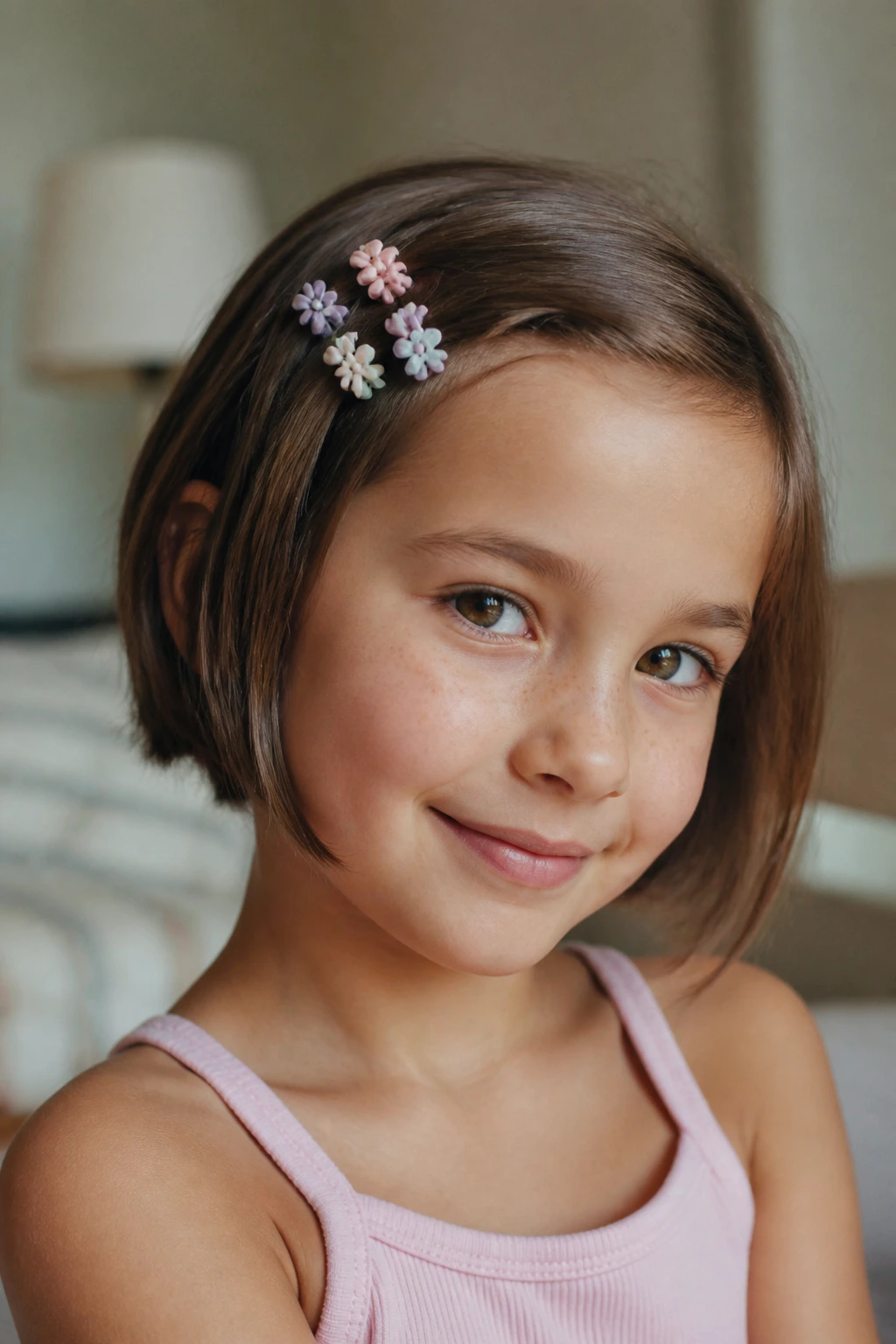
Short hair can feel hard to style when all the ideas seem built for long length. Tiny barrette clusters fix that. A bob, lob, or pixie with a few small clips stacked near one temple instantly looks arranged, and the clips also keep shorter front pieces from drifting into the eyes all day.
The trick is scale. Use small snap clips, mini barrettes, or little alligator clips rather than one heavy accessory that slides out. Two or three in a row is enough. More than that can start to feel crowded. A side part helps the clips show up better, and a little smoothing cream keeps the ends from puffing up around the ears. For a child who dislikes hair touching the face but doesn’t want a ponytail, this is one of the easiest solutions.
17. Faux Hawk with Braided Sides
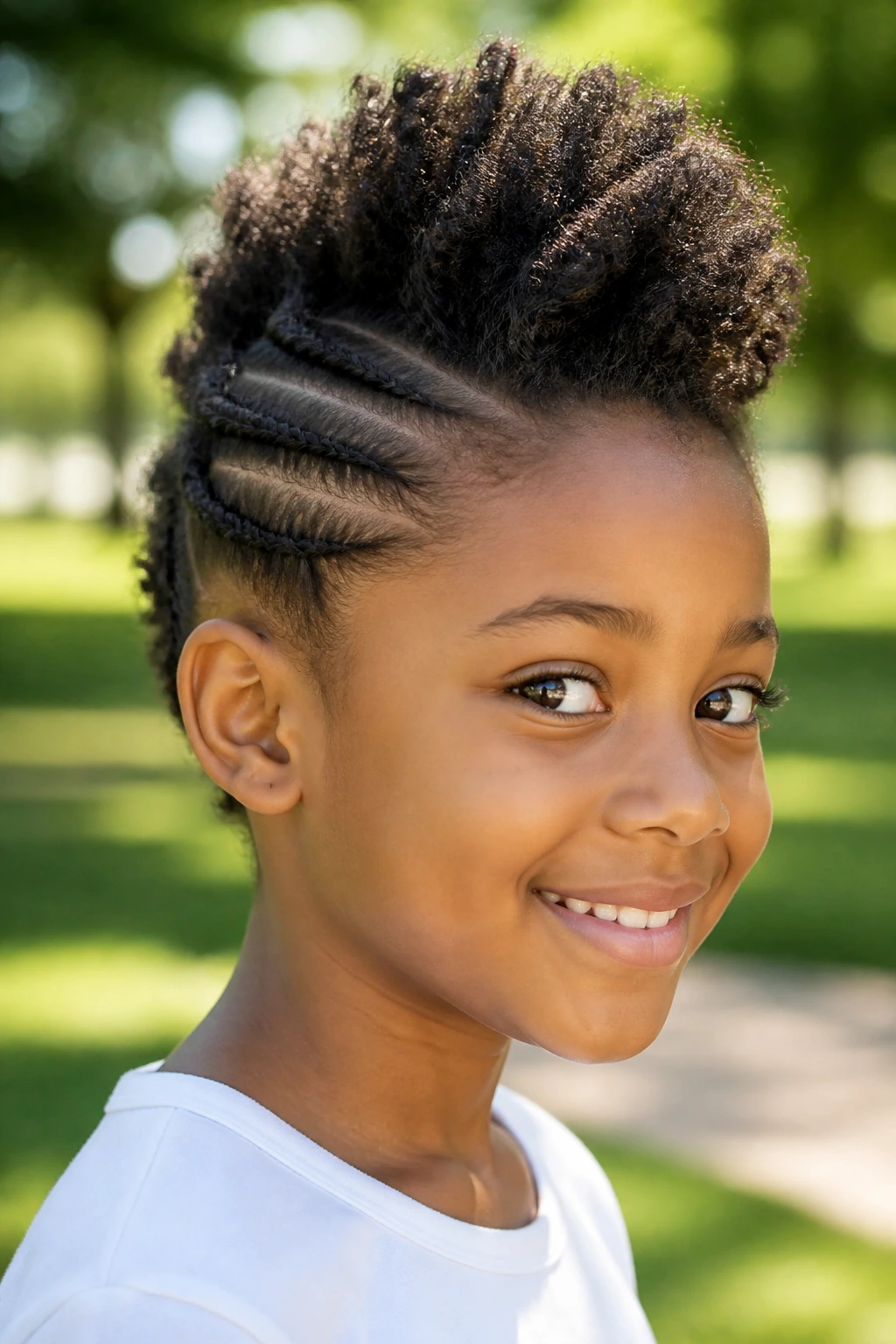
A faux hawk gives kids a little attitude in the best sense. The sides are braided, slicked, or twisted close to the scalp while the middle section is gathered into small ponytails, puffs, or one central row. It’s a fun shape, and it works especially well for children who want something different from the usual braids-and-buns rotation.
How to Make It Feel Fun, Not Severe
The key is balance. If the sides are too tight and the center too tall, the whole look can seem stiff. Softer braids and a slightly rounded middle section make it playful. Colored elastics or tiny clips can help, but I’d keep the extras to one accent color so the style still looks clean.
This one is especially useful for thicker hair because the center section gives the natural volume somewhere to go instead of fighting it. On finer hair, you can create lift by gently loosening the center section with your fingers after securing it. The style looks best when it has shape, not helmet.
18. Rolled Under Low Bun
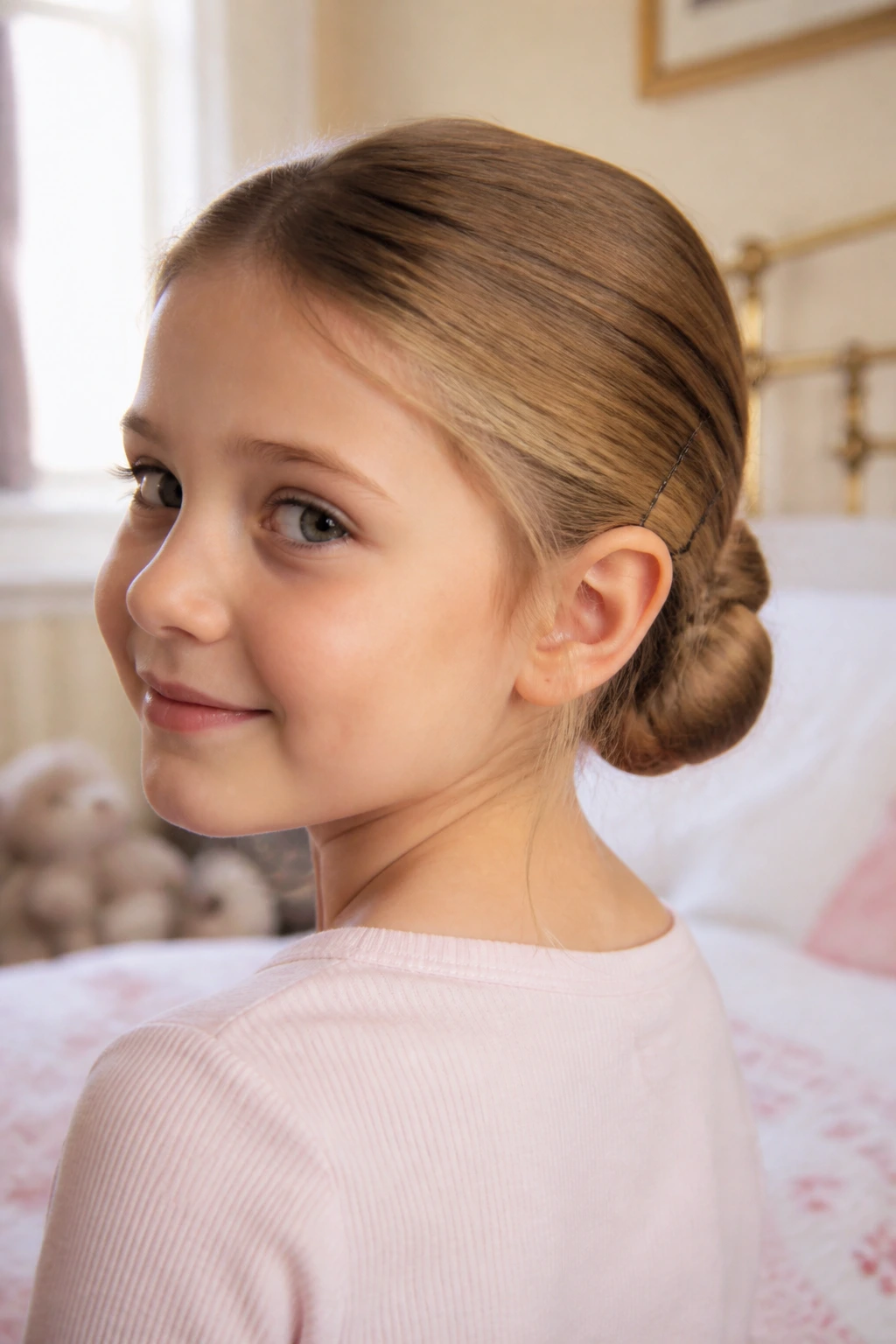
A rolled under low bun is one of the neatest styles on the list, and it has a nice quiet confidence to it. It sits low at the nape, keeps the hair contained, and works well for events where you want the child to look tidy without making the hair the main attraction.
Start with a low ponytail, then roll the length inward and tuck it under itself before pinning. Bobby pins do the real work here, so use enough of them. A light mist of water or styling spray helps smooth the top before you roll. If the child has shorter layers, don’t fight them into place with extra tension. Let a few pieces stay softer around the hairline. The bun does not need to look severe to stay neat.
19. Beaded Braids
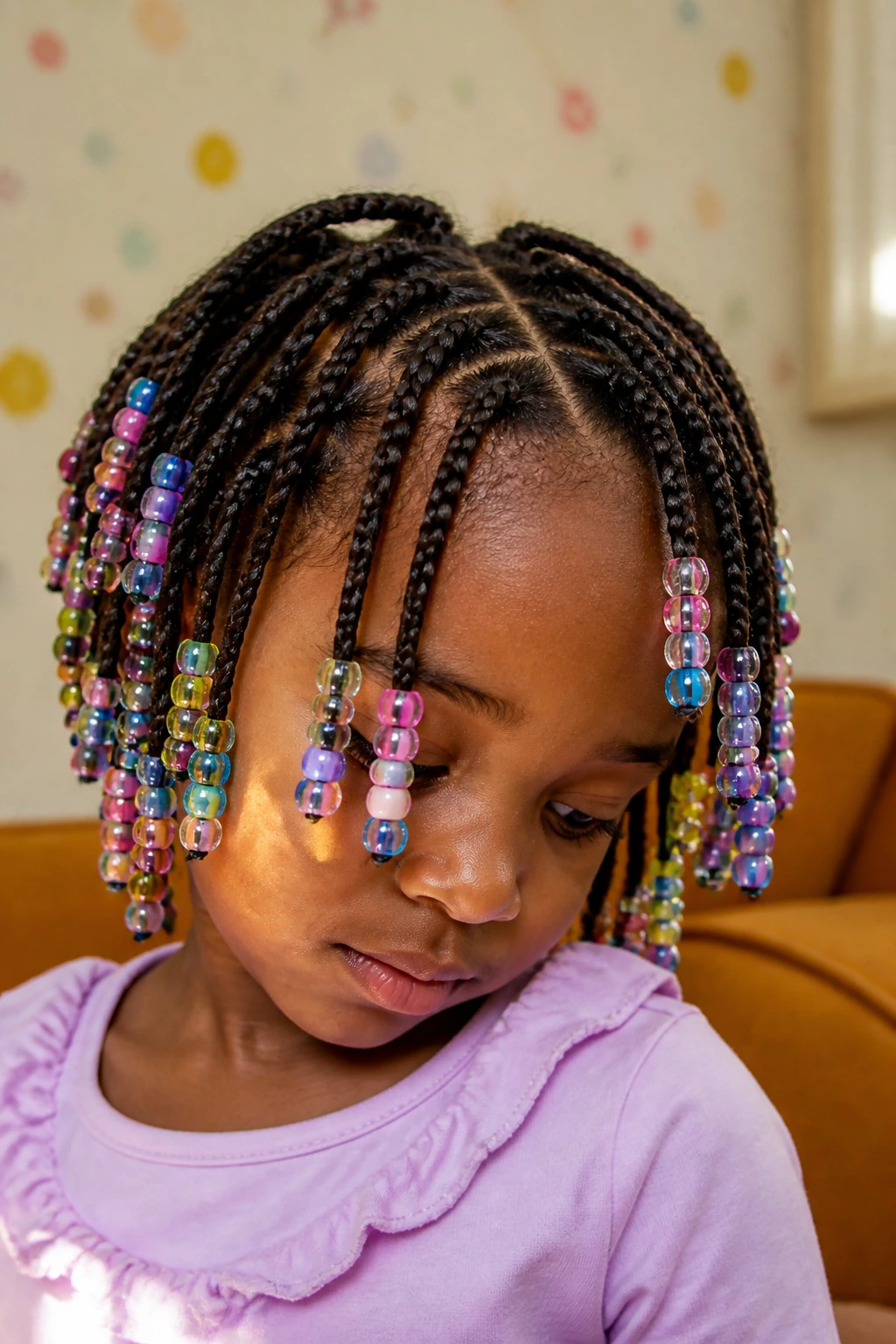
Beaded braids bring sound, color, and movement into the style in a way kids usually love. The beads can be clear, wooden, bright, or patterned, and they change the whole mood of a plain braid without adding much styling time once the braids are in place.
A Few Things That Matter
Use lightweight beads so the ends do not feel heavy or tug at the hair. Secure each braid with a small elastic before adding the beads, and make sure the bead openings fit the braid snugly so they don’t slide off. That little detail matters more than people think.
Beaded braids are great for protective styling and for kids who like to choose their own colors. They do need a bit of thought before bedtime, though. Some beads can be uncomfortable on a pillow, so a satin bonnet or loose braid wrap helps. If school rules limit accessories, check those first. No point building a style that has to be taken out at the door.
20. Scarf-Tied Ponytail
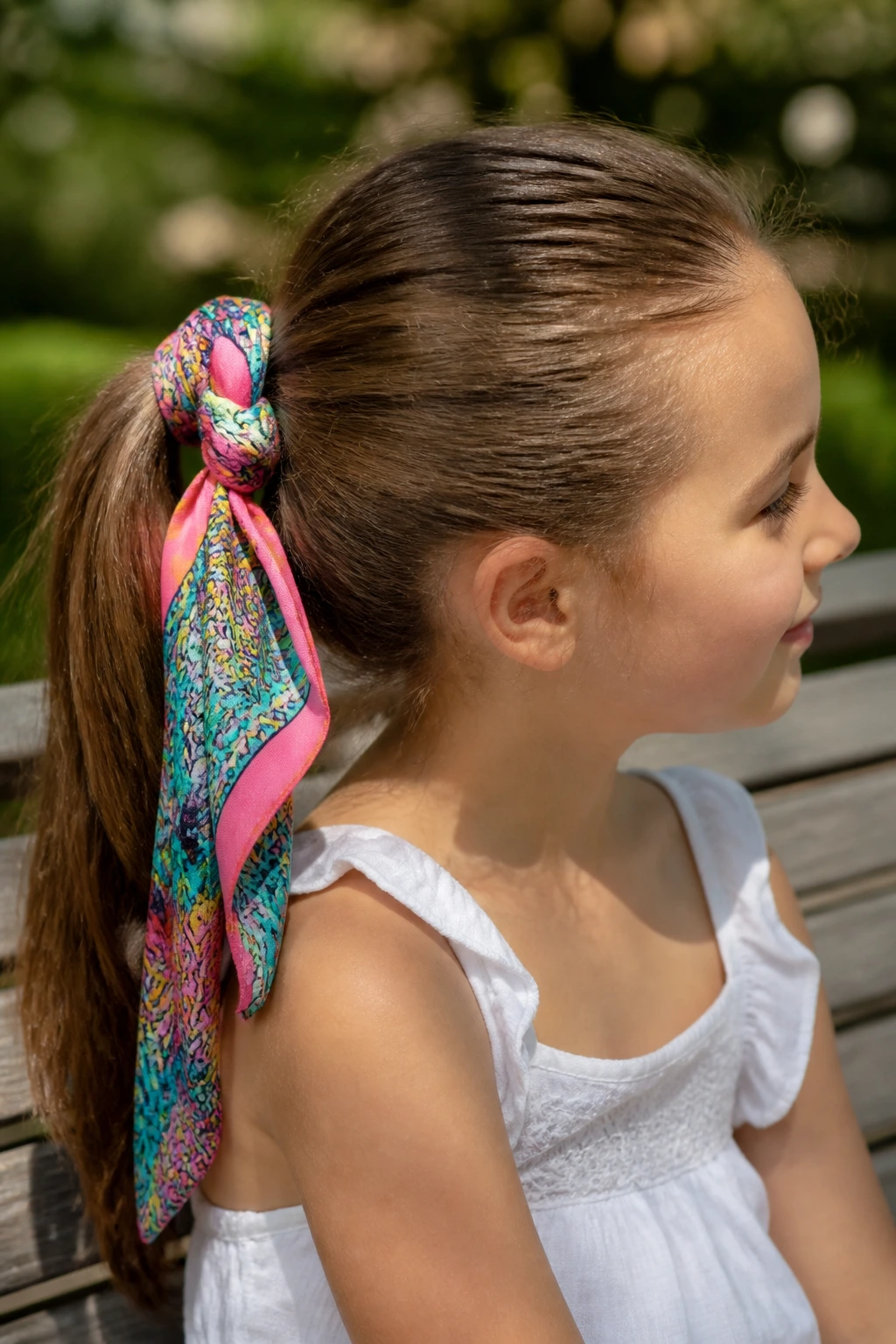
A scarf-tied ponytail is one of my favorite answers to “What can I do when the hair is on day two and not cooperating?” It lets you use a simple ponytail or braid as a base, then turn the accessory into the headline. A scarf adds color, hides an elastic, and buys you style points without asking the hair to do much more.
Tie the ponytail first, then knot a scarf around the base or weave it through the braid. Cotton gives more grip, satin slides a little more, and both can work depending on the texture underneath. On fine hair, a scarf can visually bulk up a ponytail that would otherwise look skinny. On thicker hair, it softens the shape and keeps the style from feeling too heavy. Make sure the scarf is secure enough that the child won’t yank it loose by lunchtime.
21. Defined Wash-and-Go Curls with Side Clips
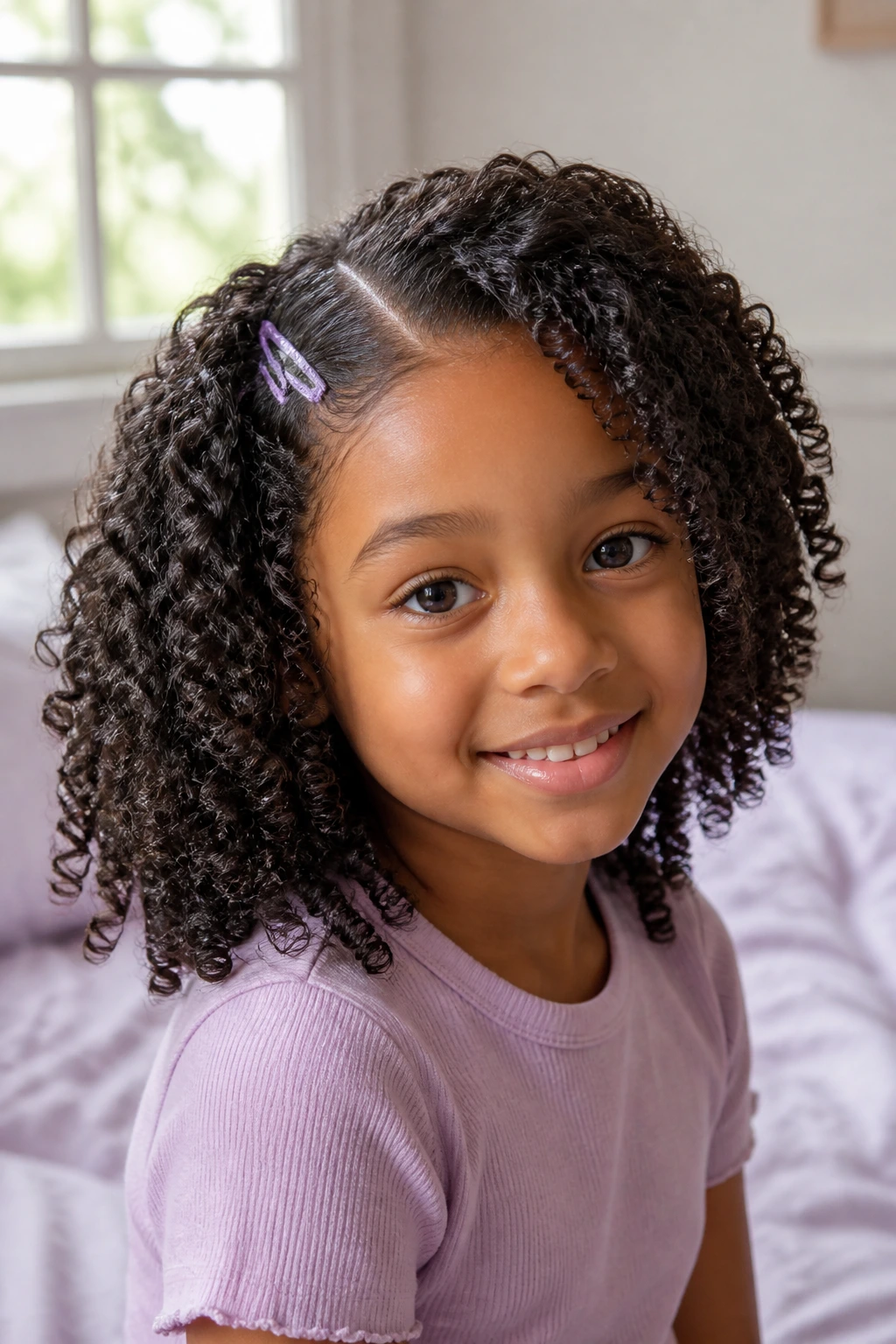
Some mornings, the hair already has the right shape. Don’t fight that. Defined wash-and-go curls with a couple of clips at the side can look polished in a way that still feels natural, especially on children whose curl pattern is already doing most of the styling work.
The Part That Makes It Work
A little leave-in conditioner, a curl cream, or gel on wet hair helps the curls clump instead of frizzing apart. Then let the hair dry without constant touching. Once it’s set, add one or two clips to hold back fringe or a side section if needed. That keeps the style practical without flattening the texture.
This is a good option when you want the child’s hair to look fresh and not overworked. It also saves time on days when a full braid or bun would be too much. The main mistake is brushing curls dry and then wondering why they puff out. Leave them alone once defined. Really. That’s half the battle.
22. Double Rope Twists
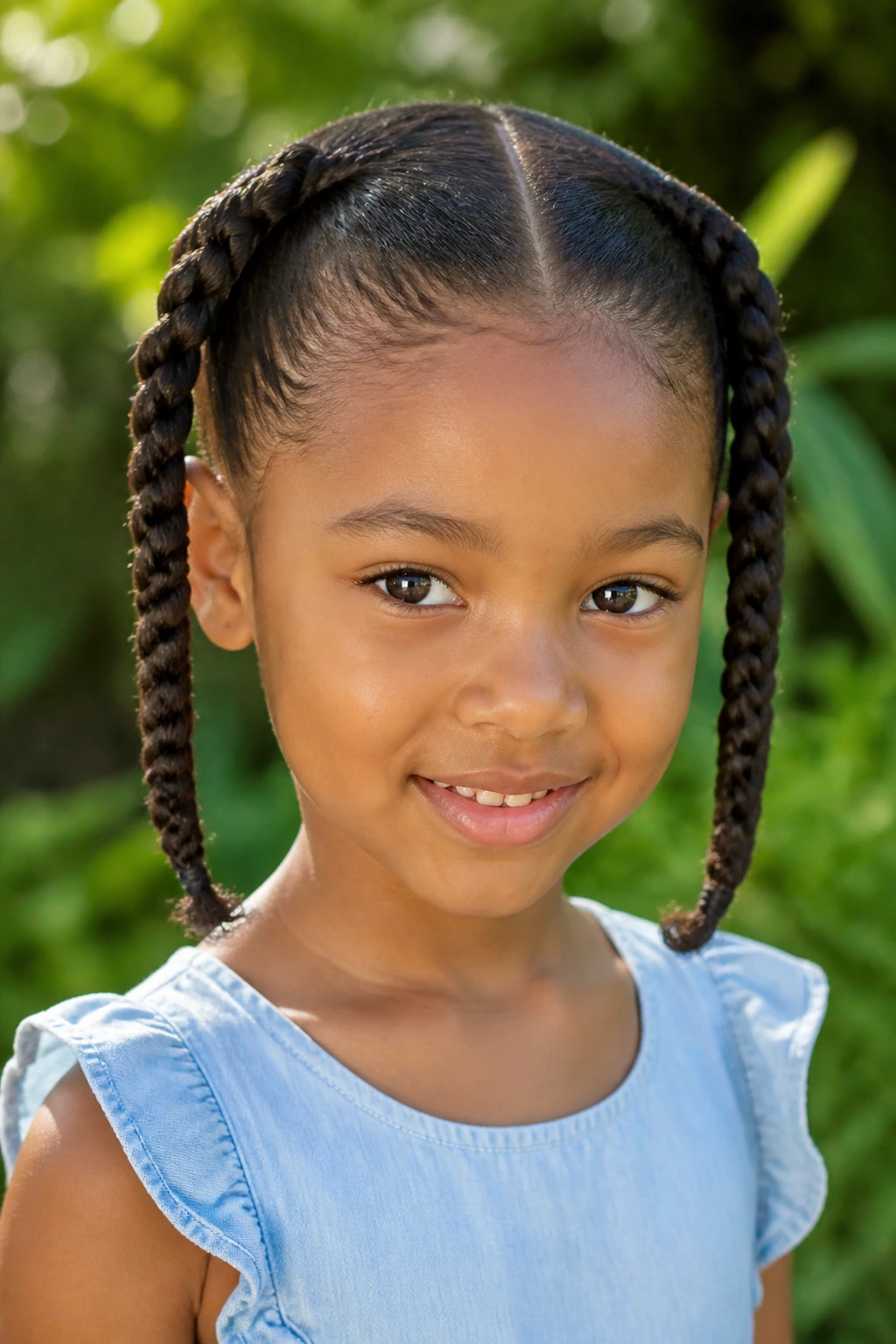
Double rope twists are a tidy, low-frizz choice that work well when braids feel too fiddly. Each side is split into two strands and twisted around itself, then secured at the ends or joined into a ponytail. The result looks clean and controlled, but the technique is often easier for hands that have not fully mastered three-strand braiding.
For thick or coily hair, rope twists can be a life saver because they hold shape without too much pulling. Use a little moisturizer or styling cream before you twist so the sections stay smooth. If you want a more dressed-up look, start the twist at the hairline and keep it snug. If the style is for a toddler, keep the tension light and the sections a little larger. Small parts and tiny hands do not mix well when the morning is already moving fast.
23. Half-Up Braided Crown
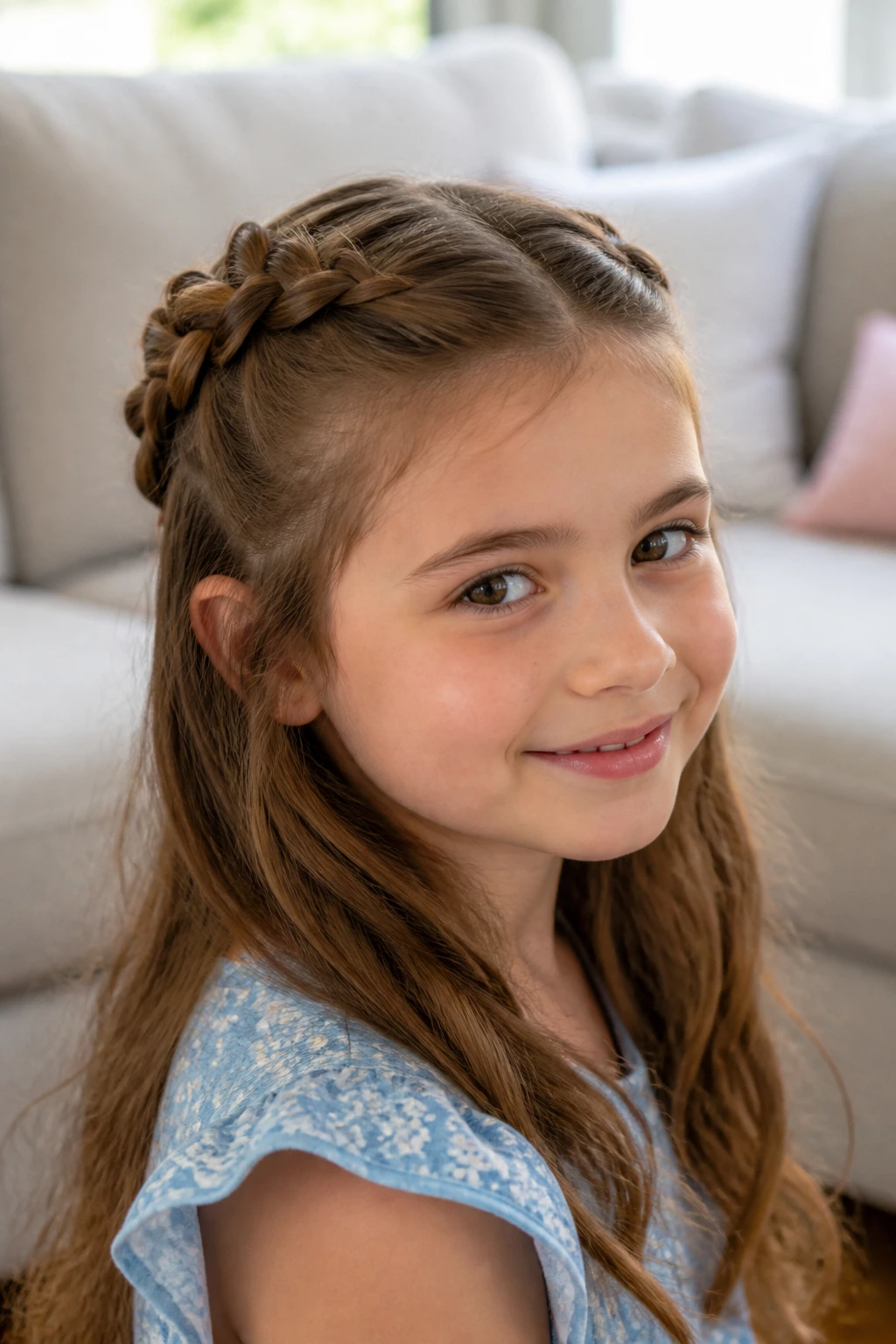
A half-up braided crown gives you the control of a braid without losing all the length. Two braids or twists come from the temples and meet at the back, where they’re pinned or tied together. The rest of the hair stays loose, which makes the whole style feel softer than a full crown braid but still more finished than a simple half-up ponytail.
When to Use It
This is a strong option for picture day, family gatherings, or any time the outfit has a little more structure. It suits medium and long hair especially well, and it can be adjusted depending on the texture underneath. Straight hair shows the braid detail clearly. Curly hair gives the crown more fullness. Neither is wrong.
If the child has layers, take a minute to secure the loose pieces around the front before you pin the braids together. That small step keeps the crown from looking unfinished by noon. A tiny ribbon or one small clip at the join point finishes it cleanly.
What Makes a Kids’ Hairstyle Stay Put Through School, Snacks, and Recess
A hairstyle lasts when the base is solid, not when it’s piled high with product. That’s the part people get backwards. Too much cream, too much gel, too much spray — it all makes hair slippery, and slippery hair escapes. What actually helps is clean sectioning, the right tension, and accessories that match the hair’s thickness instead of fighting it.
The anchor point matters more than the decoration. A braid that starts neatly at the scalp will outlast a prettier style that began on tangled hair. A bun tied with one good elastic and two pins often holds better than a bun stacked with four extras that slide around and create pressure. Kids notice comfort fast. If the style pulls in one spot, they’ll spend the day touching it.
Hair texture changes the equation too. Curly and coily hair usually needs moisture and gentle stretching, not brushing into submission. Fine hair often needs texture or grip at the root so clips and elastics don’t slide out. Straight hair can look sleek with very little product, but it may need a bit more friction for braids or buns to stay in place.
Essential Tools for These Looks
-
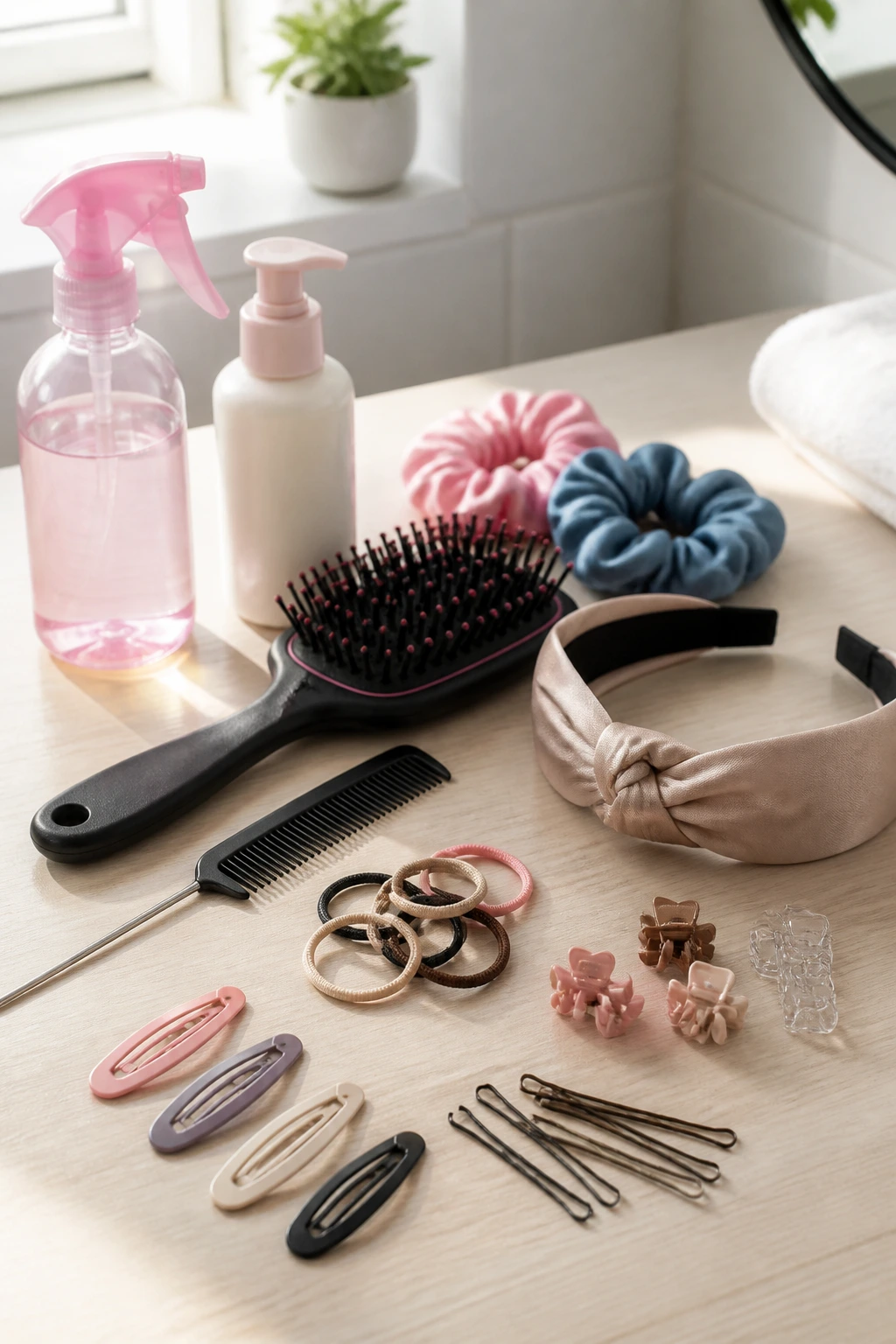
Rat-tail comb: The long pointed end makes clean parts, zigzags, and neat sections much easier.
-
Detangling brush: A flexible brush is gentler on knots than a stiff paddle brush, especially on curly or textured hair.
-
Spray bottle with water: A light mist helps tame flyaways and gives braids a little more control without soaking the whole head.
-
Leave-in conditioner or styling cream: Use a small amount to smooth hair and reduce friction before braiding or twisting.
-
Snag-free elastics: Clear or soft fabric elastics hold ponytails and braids without biting into the hair.
-
Snap clips and barrettes: These are the fastest way to keep fringe and side pieces out of the eyes.
-
Bobby pins: Useful for buns, crown braids, and any style that needs hidden support.
-
Wide headband or satin-lined band: Great for curls, puffs, and styles where you want the front controlled without tension.
-
Satin scrunchies: These help reduce breakage and look softer than tight rubber bands.
-
Small styling clips: Handy for sectioning hair while you braid or twist; they save you from fighting loose pieces at once.
Picking the Right Style for Hair Length, Texture, and the Day Ahead
Not every cute style matches every morning. A child with a soccer game after school needs something sturdier than a style meant for a family photo. A toddler who hates sitting still needs fewer sections and fewer accessories. A child with curls that shrink into a halo after drying is not a good candidate for a style that depends on perfectly visible parts.
Short Hair Needs Tiny Anchors
With short hair, the goal is control, not volume. Clips, side parts, mini pigtails, and small twists usually work better than big ponytails that slide out or look awkward.
Thick or Curly Hair Needs Sectioning
The more hair there is, the more the style benefits from clean parts and smaller anchors. Braids, twists, cornrows, and puffs manage bulk better than single oversized ponytails.
Busy Days Need Low-Mess Styles
If the day includes sports, a long car ride, or nap time, choose a style that can survive friction. Braids, buns, and puffs tend to hold up better than loose curls unless those curls are left alone and protected.
The real trick is matching the style to the child’s tolerance. A five-minute style that they’ll wear happily beats a twenty-minute style they’ll pull apart in the hallway.
Fast Morning Styling Tricks That Save Time
Prep the hair the night before. A quick brush, a loose braid, or a satin bonnet before bed can cut morning detangling in half. That alone changes the whole mood of the routine.
Keep one parting tool in the bathroom. A rat-tail comb should not be hunting for a drawer. If the comb is always there, the parts will be neater and the style will go faster.
Work in small sections. Large chunks of hair are where the tangles hide. Smaller sections take a little longer in the moment, but they usually save time because you aren’t redoing them.
Use one hero accessory. A good clip, ribbon, scarf, or headband does more than a pile of tiny extras. One strong visual point is enough.
Stop before the child gets restless. That sounds obvious, but people ignore it. Once a child starts squirming, every elastic takes longer to place and the style gets rougher. Finish while they’re still willing to sit.
Common Mistakes That Make Hair Days Harder
-
Tightness disguised as neatness: If the child says the style hurts, it’s too tight, even if it looks smooth. Soften the tension at the hairline and rework the section instead of pulling harder.
-
Skipping detangling before braiding: Braiding over knots makes the style bumpy and shortens its life. A quick brush-through with a little moisture saves a lot of redoing later.
-
Using accessories that are too heavy or too slick: Oversized clips slide out of fine hair, and heavy beads pull at delicate strands. Match the accessory to the hair’s thickness and the child’s comfort.
-
Trying to force one style onto every hair type: A braid that looks neat on straight hair may vanish in curls, and a flat slick-back may not suit thick coils without more prep. Use the texture you have.
-
Starting too late in the morning: Hair rushed at the last minute tends to get over-tightened or left half-finished. A simpler style done calmly is usually better than a fancy one done in panic.
Ways to Adapt These Looks for Different Hair Types
For Fine Hair: Use smaller sections, soft textures, and accessories with a strong grip. Bubble ponytails, side clips, and ribbon ties often work better than heavy braids that need more bulk.
For Thick Hair: Split the hair into more sections than you think you need. Dutch braids, rope twists, buns, and cornrows all handle volume better than a single big ponytail.
For Curly and Coily Hair: Add moisture first, style second. Curly puffs, bantu knots, cornrows, and wash-and-go styles respect the texture instead of flattening it.
For Short Hair: Keep the scale small. Barrette clusters, mini twists, side parts, and tiny puffs give short hair shape without trying to fake length.
For Active Kids: Choose styles with low movement at the roots. Braids, buns, and cornrows usually survive better than loose styles or accessories that hang too low.
Keeping Styles Fresh Between Washes
A good kids’ hairstyle does not need to be rebuilt from scratch every single morning. That’s one of the few mercies here. Braids, buns, and twists can often last 2 to 4 days if you protect them at night and only refresh the front pieces in the morning. Curls and puffs may need a little more daily attention, but even then, you can usually revive the shape with water and a small amount of leave-in.
Satin matters. A satin bonnet, pillowcase, or scarf reduces friction so the style doesn’t come apart while the child sleeps. In the morning, use damp fingers or a spray bottle to smooth the hairline instead of flooding the whole head. If a style starts to feel itchy or the scalp looks pulled, take it down. Comfort beats pretending a style still works when it clearly doesn’t.
Frequently Asked Questions
What hairstyle lasts longest for kids who are active all day?
Braids, cornrows, and twist-based styles usually last the longest because they anchor the hair close to the scalp. A low ponytail can work too, but it tends to loosen faster if the child is running, sliding, or flipping around at recess.
How do I keep my child from complaining that the style is too tight?
Start with less tension than you think you need, then check the hairline and behind the ears before you finish. If the child feels pulling at the temples or neck, loosen the section and redo it rather than hoping they’ll forget about it. They won’t.
Can these styles work on toddlers with very little patience?
Yes, but choose the shortest ones first: side clips, simple pigtails, a low ponytail, or a quick puff. Toddlers usually do better with fewer parts and fewer accessories because the style time is short and the discomfort stays low.
What if my child’s hair is always slipping out of clips?
Use a little texture at the root — dry shampoo on straight hair or a small amount of styling cream on curls — and switch to clips with a stronger grip or a flatter shape. Sometimes the clip is fine and the part is the real problem. A cleaner section solves more than a fancier accessory.
Which styles are easiest to do on curly hair without ruining the curl pattern?
Curly puffs, half-up styles, rope twists, bantu knots, and gentle braided styles tend to work well. The key is moisture first and brushing only when the hair is damp enough to cooperate.
How can I make a plain school hairstyle look nicer without spending extra time?
One ribbon, one scarf, or one well-placed clip usually does the job. You do not need five accessories. A single strong detail looks more intentional than a pile of extras that fight each other.
Are beads okay for everyday wear?
They can be, as long as they’re lightweight and comfortable to sleep on. For younger kids, keep the number modest and make sure the beads don’t tug at the ends. If bedtime gets rough, save them for a day or two instead of all week.
What’s the easiest style to redo after nap time or a long school day?
A half-up top knot, a low ponytail, a scarf-tied ponytail, or side clips can all be refreshed in under five minutes. Once the base is still in place, you only need to smooth the front and tighten the accessory a little.
Hairstyles That Hold Up to Real Childhood
The nicest thing about kids’ hairstyles is also the most practical: they do not need to be complicated to work. A good side part, a braid that starts cleanly, a bun that sits comfortably, or a puff that respects the natural texture can carry a child through school, play, and the car ride home without much drama.
Keep two or three go-to styles in rotation and stop feeling guilty about repeating them. Repetition is not a flaw here. It means you’ve found the styles your child will actually wear, and that’s the point. The best hair day is the one that gets out the door on time and still looks decent when the backpack comes off.
