



Black boys haircuts for curly hair work best when the cut respects the curl instead of fighting it. That sounds obvious until you watch a barber push too hard with the clippers, shave the sides clean, and leave the top looking flat for two days before it springs back into a shape nobody planned. Curly texture has its own rules. It shrinks, it bends, it swirls around the crown, and it always looks shorter after it dries.
The good cuts are the ones that leave room for that movement. A low taper can make tight coils look crisp without stealing their bounce. A rounded afro can look polished with almost no product. A sponge curl top can take a plain short cut and give it a little life, a little texture, and a shape that still looks decent when a kid has been running around all afternoon.
What parents usually want is pretty simple: something neat, something that grows out without turning into a helmet, and something a child can actually sit still for long enough to get. Curly hair can do all three, but the shape has to be chosen with some care. A good fade, the right line-up, and a little length in the right places can make the difference between “fresh cut” and “why does it look lopsided already?”
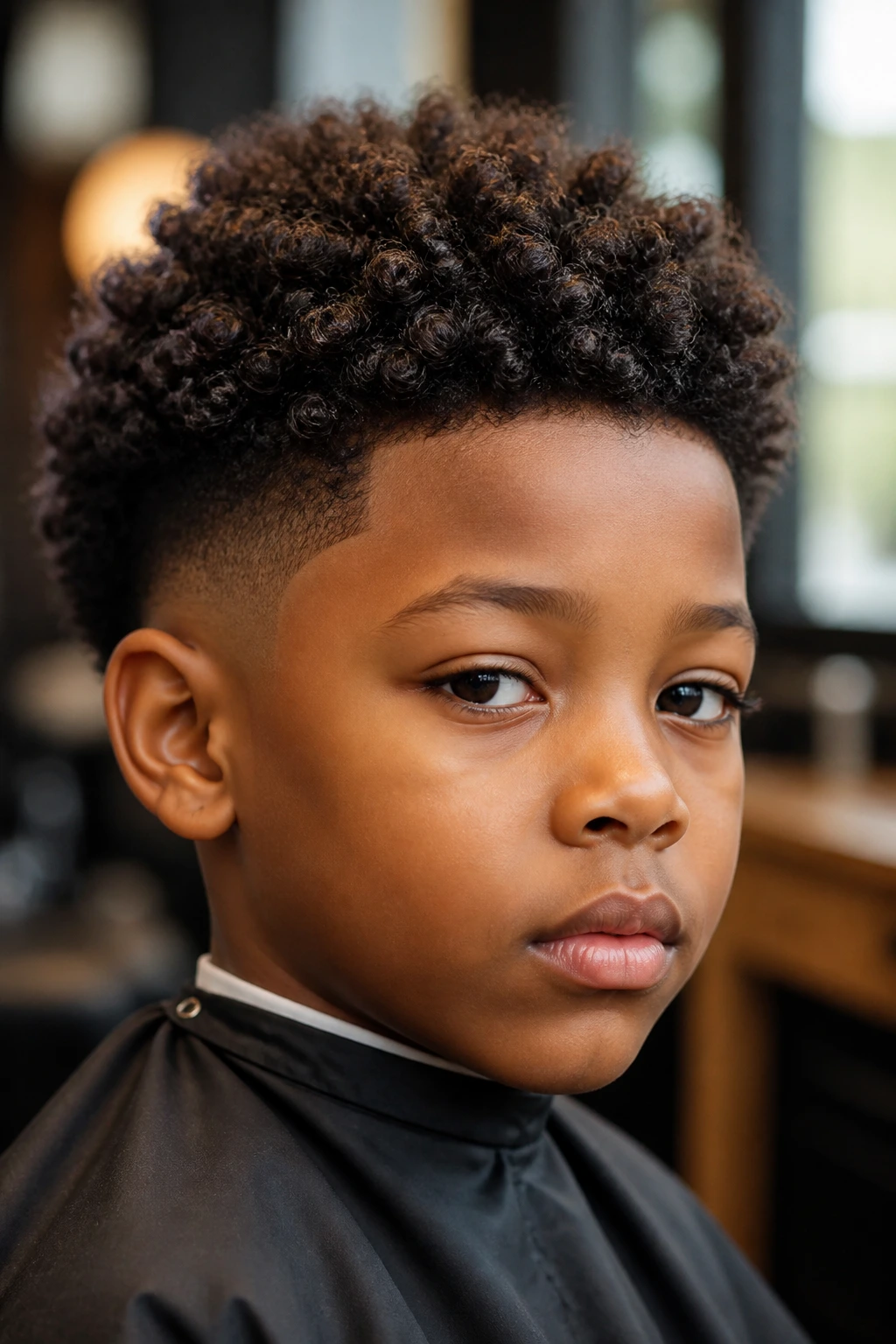
Why These Cuts Deserve a Closer Look
-
Curly hair changes when it dries: A cut that looks even in the chair can finish uneven if the barber trims it soaking wet, so these styles lean on shape and balance instead of guesswork.
-
The grow-out stays cleaner: Tapers, rounded afros, and soft fades keep the edges from puffing out all at once, which buys you more time between appointments.
-
School mornings get easier: Shorter sides, lined edges, and tops that can be misted and finger-styled mean fewer battles at the bathroom sink.
-
The curls get to be the style: With Black boys haircuts for curly hair, the texture is the point. You’re not hiding it under a flat cut; you’re giving it a frame.
-
Different personalities fit different shapes: Some kids want a sharp fade and a hard part. Others look better with a soft fro or a rounded crop that doesn’t read too formal.
Why Curly Texture Changes the Barber’s Plan
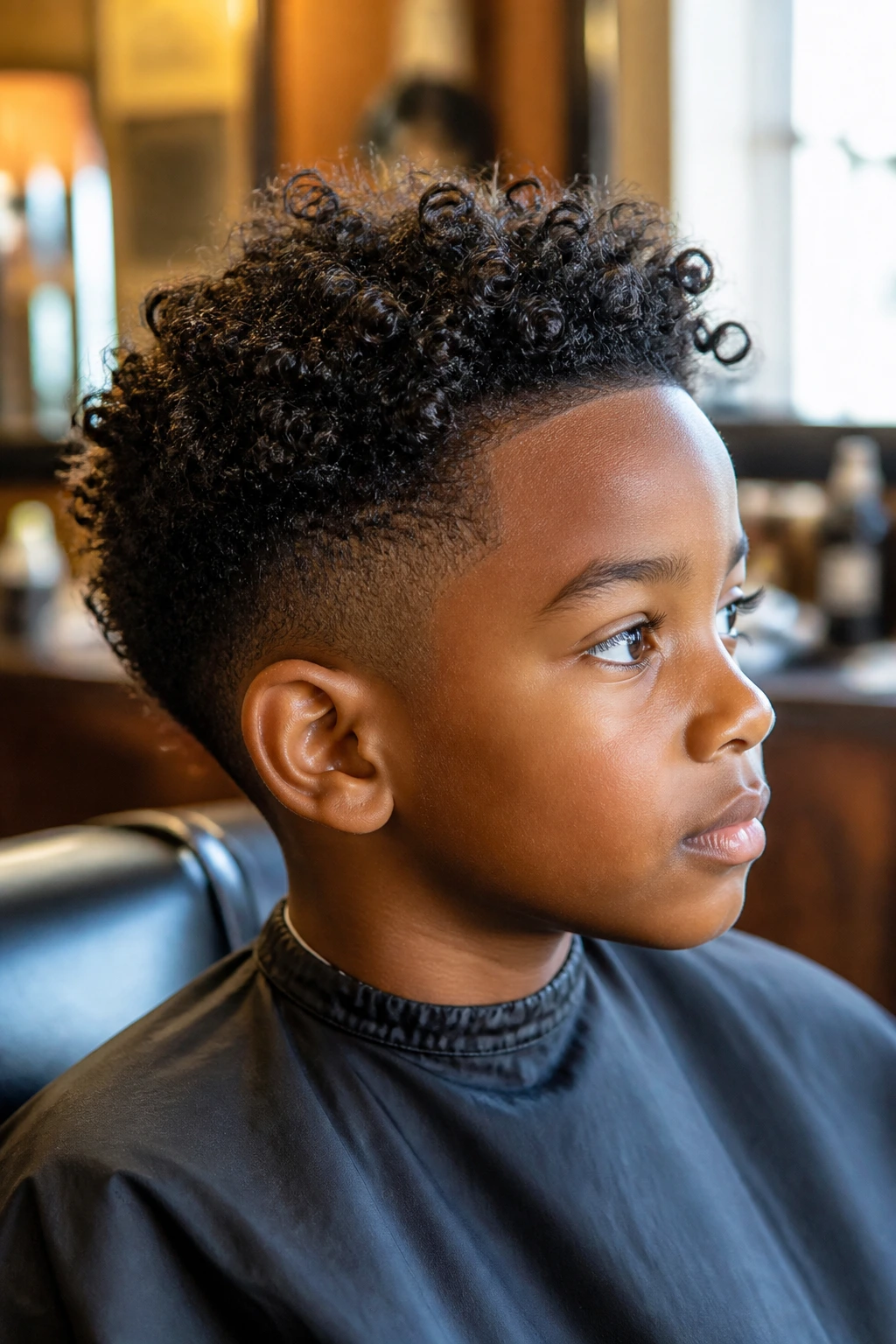
Curly hair does not sit where you put it. That’s the first thing to remember. A half-inch on the clippers can look like almost nothing on wet hair and then show up like a whole new haircut once the curls dry and spring back. Barbers who cut textured hair well usually watch the natural pattern first, especially around the crown, temple, and nape, because that’s where curls bend in the most stubborn ways.
Dry cutting matters here. Not every style needs it, but it helps the barber see the real outline instead of guessing through shrinkage. A child with tight coils might lose an inch of visible length once the hair dries. A child with looser curls may lose less, but the top can still puff out at the corners if the sides are clipped too high. That’s why shape comes before length.
And shape is not just a barber word. It means the line the haircut draws when a kid turns his head, looks down, or walks under bright light in a hallway. A rounded afro gives you softness. A boxier top gives you edges. A taper keeps the neck from looking fuzzy by day six. Different cuts solve different problems, and the best one is the one that matches the kid, not the trend.
1. Low Taper with Sponge Curls
A low taper with sponge curls is one of those cuts that looks neat from every angle without asking for too much maintenance. The taper keeps the sides and neckline clean, and the sponge on top adds those little twisty coils that make short hair look finished instead of plain. It’s a strong choice when you want texture up top and order everywhere else.
Why It Works
The low taper gives the haircut structure, but it stays out of the way. Leave about 1.5 to 2 inches on top, keep the taper low around the ears and nape, and the whole cut grows out in a calm, manageable way. Sponge curls also play well with dense coils because they create a uniform pattern fast, even if the natural curl direction is a little messy.
What to Ask For
- Top: Keep 1.5 to 2 inches for curl definition.
- Sides: Ask for a low taper, not a full skin fade.
- Edges: Keep the line-up soft if the hairline grows fast.
- Finish: Use a curl sponge on damp hair with a little leave-in.
Best for: kids who want texture without a big shape commitment. It’s one of the easiest styles to refresh at home with a spray bottle and a quick sponge pass.
2. High Top Fade with Tight Coils
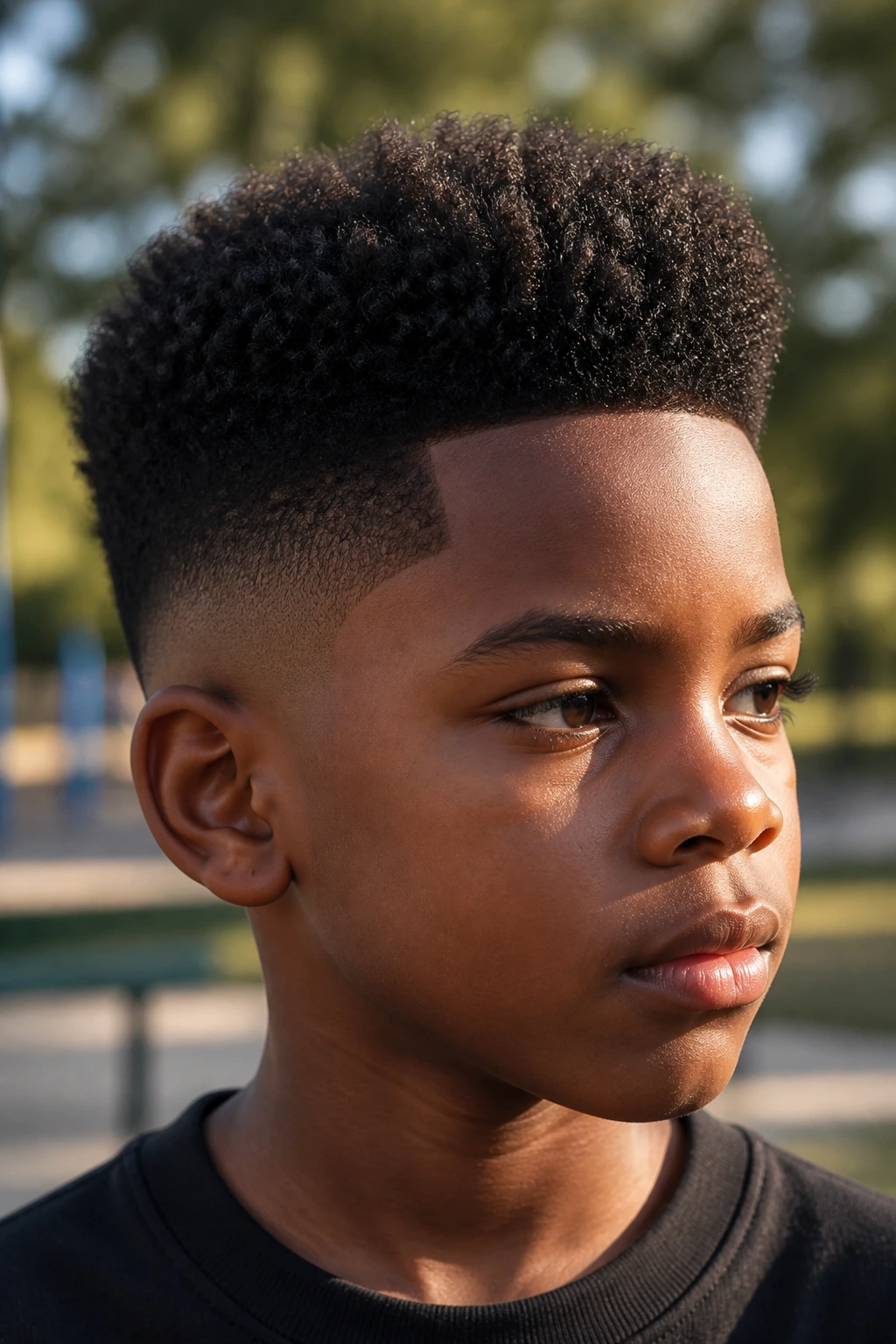
A high top fade gives curly hair room to stand up and announce itself. The sides drop away sharply, and the top becomes the main event — tall, squared, and full of texture when the coils are tight enough to hold shape. It has a little old-school swagger, and on a kid with dense curls, it can look sharp without feeling stiff.
The key is balance. If the top gets too tall for the density of the hair, it starts to look hollow at the corners. Keep the sides clean, but don’t push the fade so high that the shape loses its base. A clean line-up across the forehead helps, though I’d keep the front edge natural if the hairline is still changing fast.
This cut works best when the curls are trimmed with the silhouette in mind, not just the guard number. Ask for the top to be shaped dry if possible. That way the barber can see how much the coils shrink once they settle. The result should feel bold, not boxy in a bad way.
3. Drop Fade with a Curly Crown
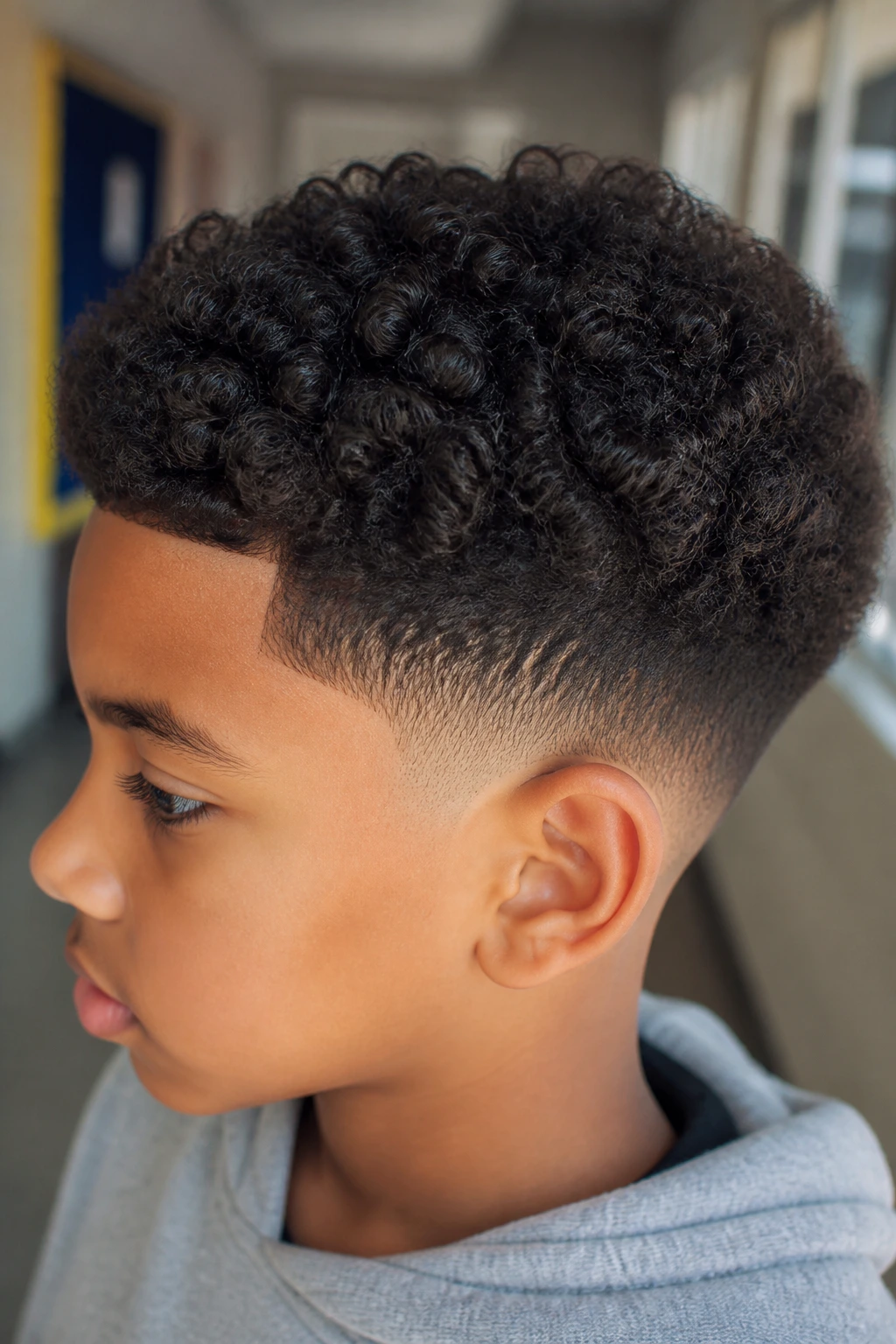
Why does a drop fade look so good on curly hair? Because the fade follows the head instead of fighting it. The line drops behind the ear and curves low at the back, which lets the crown stay fuller and keeps the whole haircut from looking top-heavy. On a child with a strong crown swirl, this shape does a lot of the work for you.
Ask for the top to stay natural and rounded, usually around 2 to 3 inches if the curls are tighter, a little more if the hair is looser. The fade should dip just enough to show the head shape cleanly, but not so low that the neck area feels heavy. It’s a smart choice when you want movement on top and clean sides without a harsh shelf.
How to Use It Well
- Keep the crown area slightly longer so it doesn’t collapse flat.
- Refresh the fade every 2 weeks if you want the curve to stay crisp.
- Use light cream, not grease, or the curls lose their spring.
This one has a nice side effect: it grows out looking intentional for longer than a lot of sharper cuts.
4. Temple Fade with a Sharp Line-Up
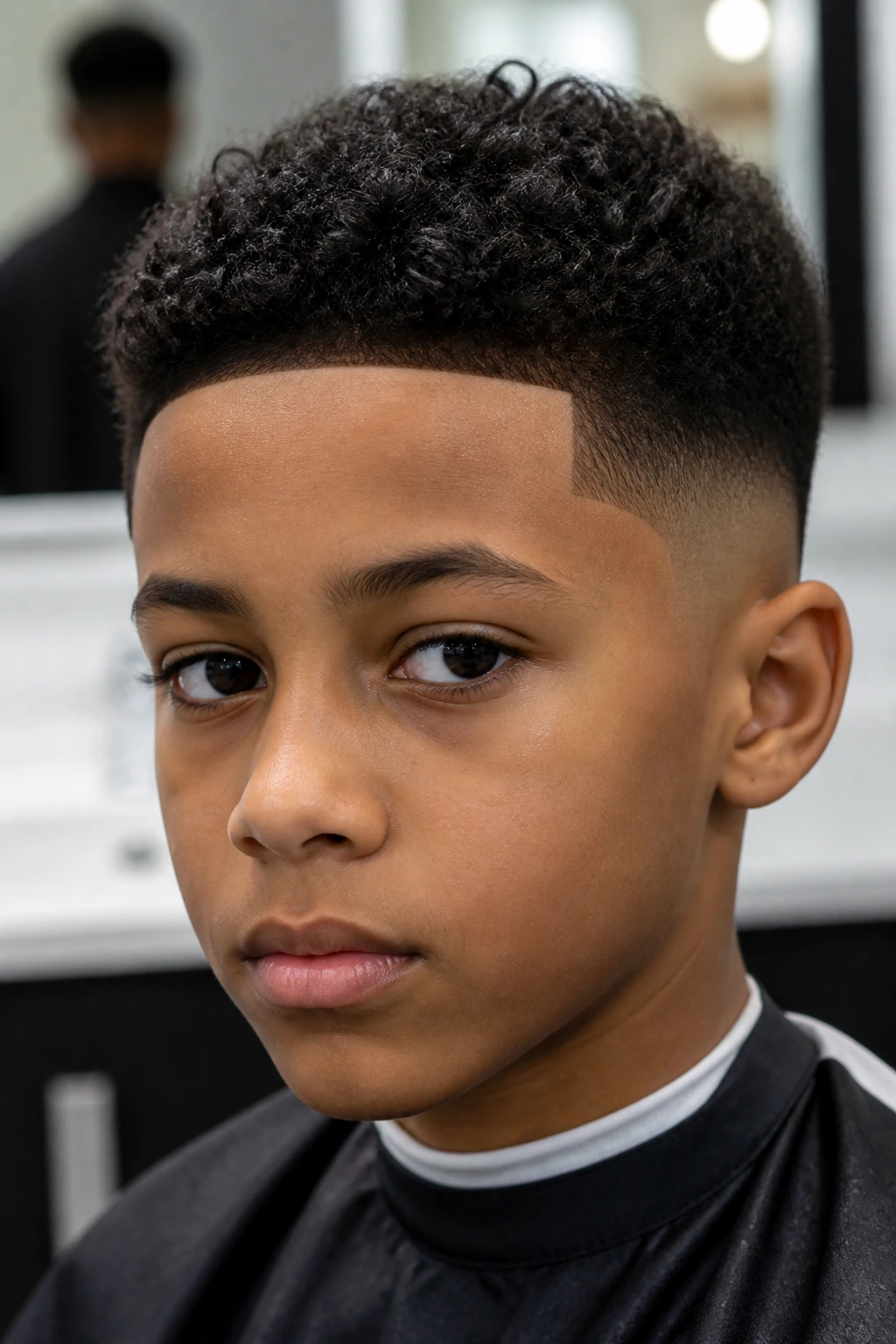
A temple fade is the haircut for a kid who wants the edges to do the talking. The fade stays focused around the temples and sideburns, which keeps the top fuller and the shape tight without taking too much off. Pair that with a clean line-up and curly hair suddenly looks a lot more deliberate.
The trick is not to overwork the front. A sharp line-up should frame the forehead, not push it back. If the hairline already has soft spots or grows unevenly, a barber can square it off gently and leave the corners a little rounded so the cut ages better. That small choice matters more than people think.
This style works especially well when the curls on top are short to medium length. You get enough texture to break up the silhouette, but not so much height that the shape goes fuzzy by the third day. It’s neat, honest, and easy to keep clean between barbers.
5. Burst Fade Mohawk with Defined Curls
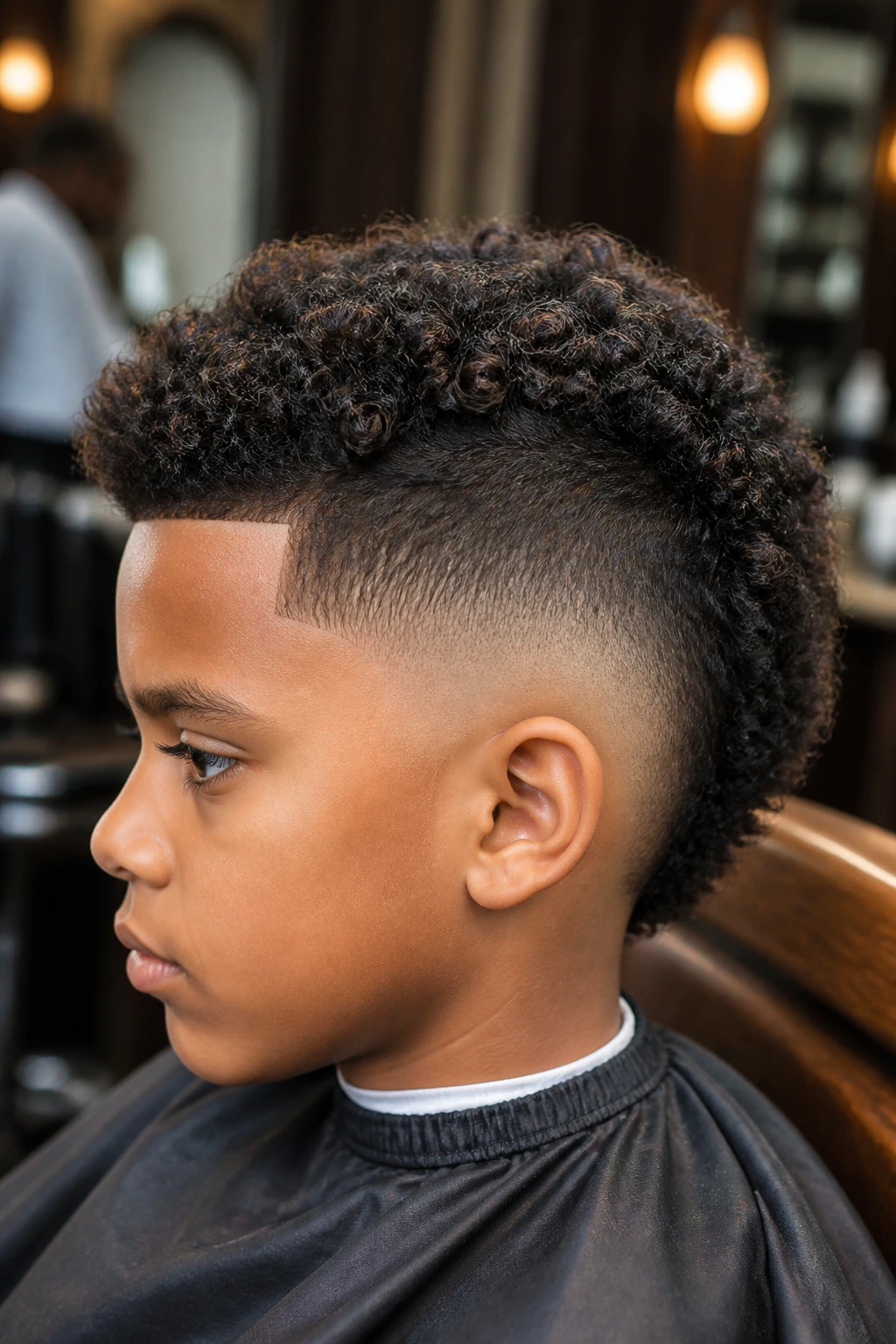
A burst fade mohawk brings energy. The fade wraps around the ear in a curved burst, while the center strip stays fuller and longer, letting the curls rise down the middle like a ridge. It’s a strong shape for kids who like something with personality but don’t want a full wild mohawk that sticks straight up.
The center strip usually looks best around 2 to 4 inches, depending on the curl pattern. Tighter curls hold the line better; looser curls make the strip feel softer. Either way, the fade around the ears has to stay even on both sides or the whole cut tilts. That’s the part parents notice first when the haircut starts growing out.
A burst fade also gives the barber room to clean the neckline and temples without chopping the whole top down. That makes it a nice compromise between bold and manageable. It’s not the quietest style on this list. It doesn’t need to be.
6. Rounded Afro with Soft Edges
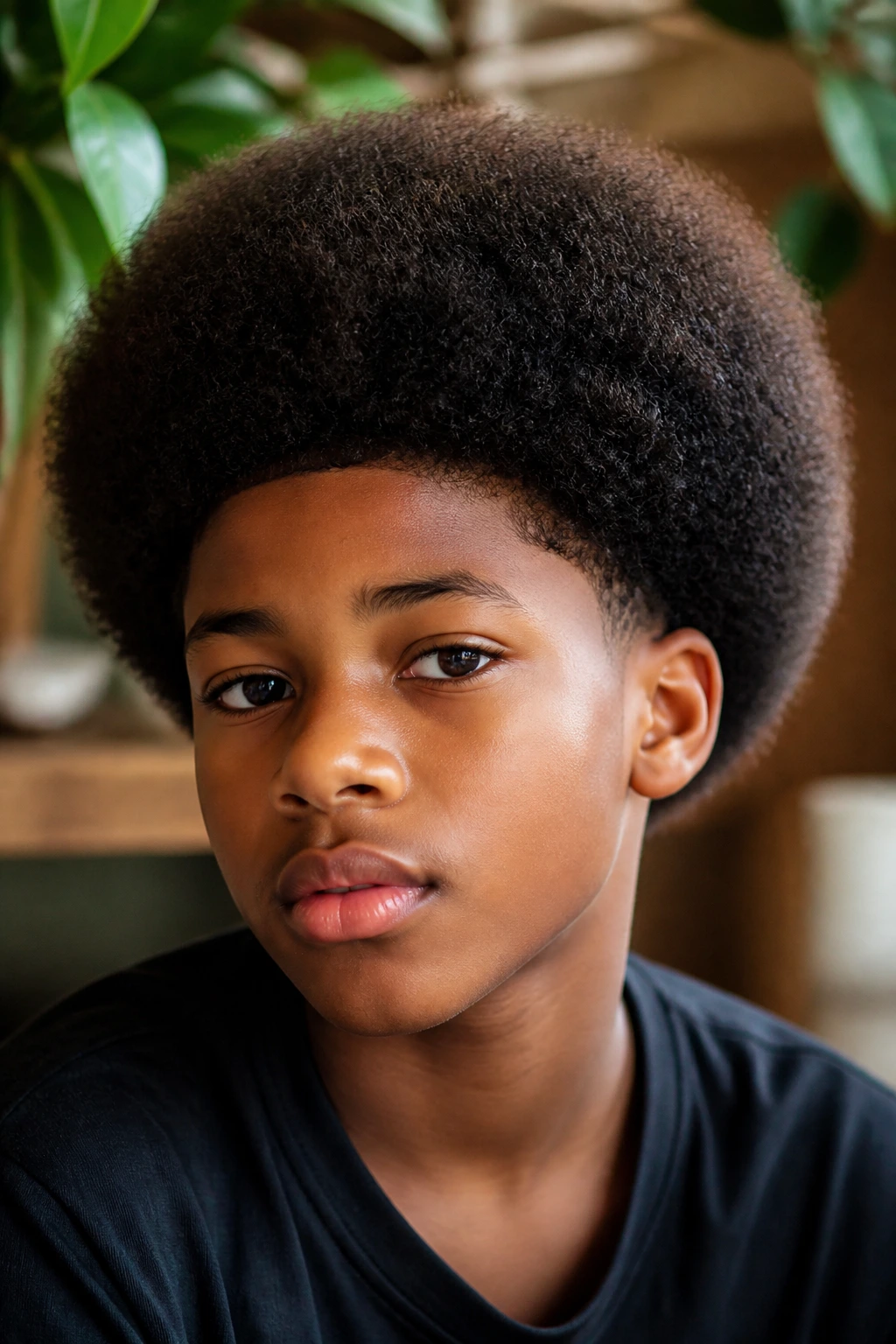
A rounded afro is one of the best answers when you want curly hair to look natural, not managed to death. The shape follows the head in a smooth curve, the edges stay soft, and the whole cut reads as healthy, full, and easygoing. No hard lines. No sharp corners. Just a shape that fits the texture.
The rounded outline is forgiving, which matters a lot with kids. Hair grows unevenly. One side puffs faster. The crown has opinions. A rounded afro absorbs all that better than a boxy cut, and it keeps looking tidy even when it’s not freshly shaped. Ask the barber to clean the neckline and ears without flattening the sides too much.
This is also one of the easiest cuts to maintain at home. A light mist of water, a pick, and a little leave-in conditioner are usually enough. If the curls are dense, a wide-tooth comb can help separate the top without making it frizzy. Simple. That’s the point.
7. Curly Caesar with a Short Fringe
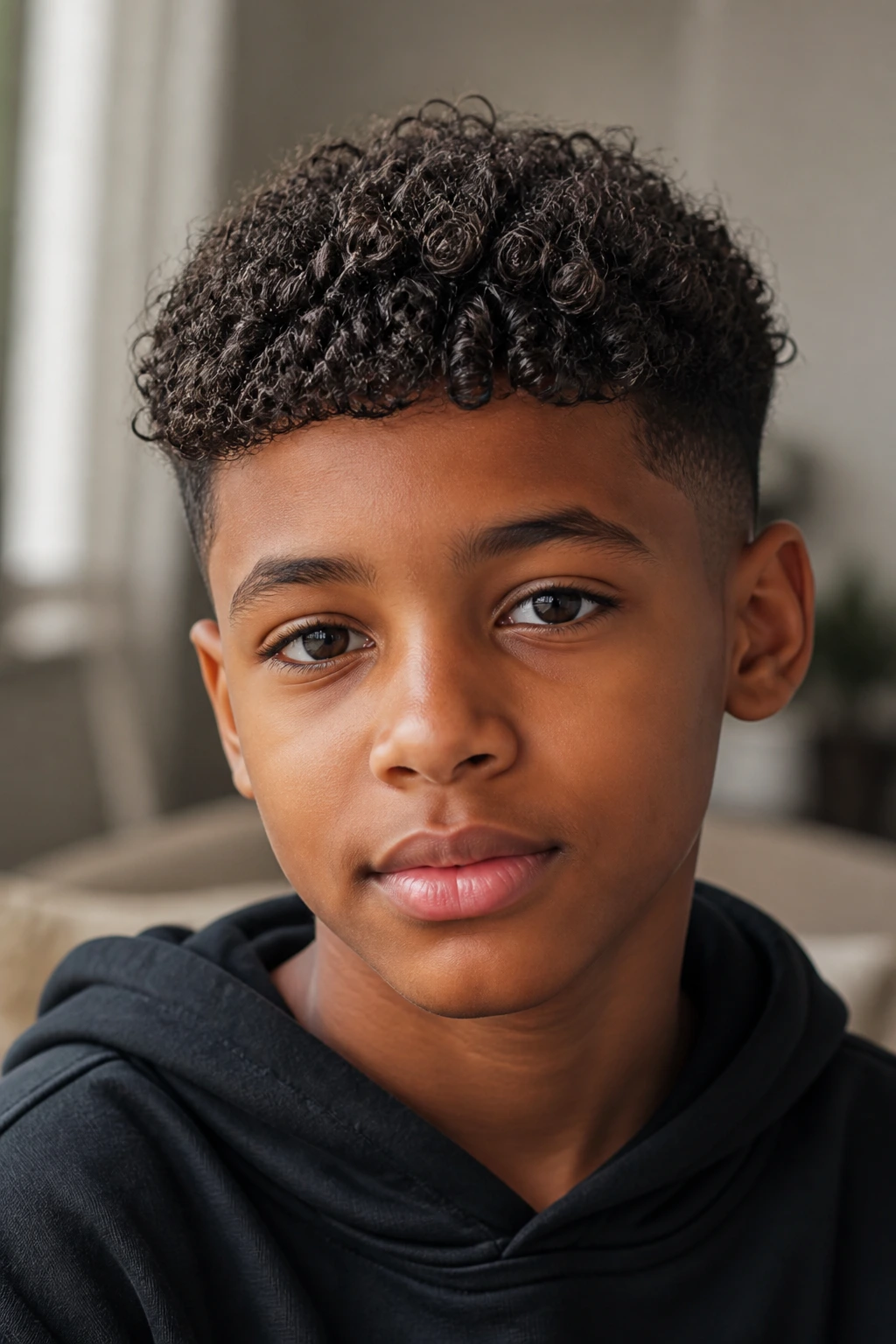
Could a Caesar work on curly hair? Absolutely, and it looks better than most people expect when the curls are short and dense. The fringe sits forward across the forehead, the sides stay close, and the top keeps a short, even texture that feels tidy without looking flat. It’s a practical cut when the hair keeps falling into the eyes.
The fringe should be short enough to stay above the brows, but not so short that the curls lose their shape. Around 1 to 1.5 inches on top is usually enough to give the haircut some texture. Ask the barber to keep the front slightly soft rather than razor-straight if the hairline is still changing.
Good Signs This Cut Fits
- The child hates hair touching the forehead.
- The curls are dense enough to hold a short shape.
- You want a neat cut with very little daily styling.
A curly Caesar grows out fast at the front, so it’s best when you’re fine with touch-ups every couple of weeks. The upside is that it stays practical between appointments.
8. Tapered Frohawk
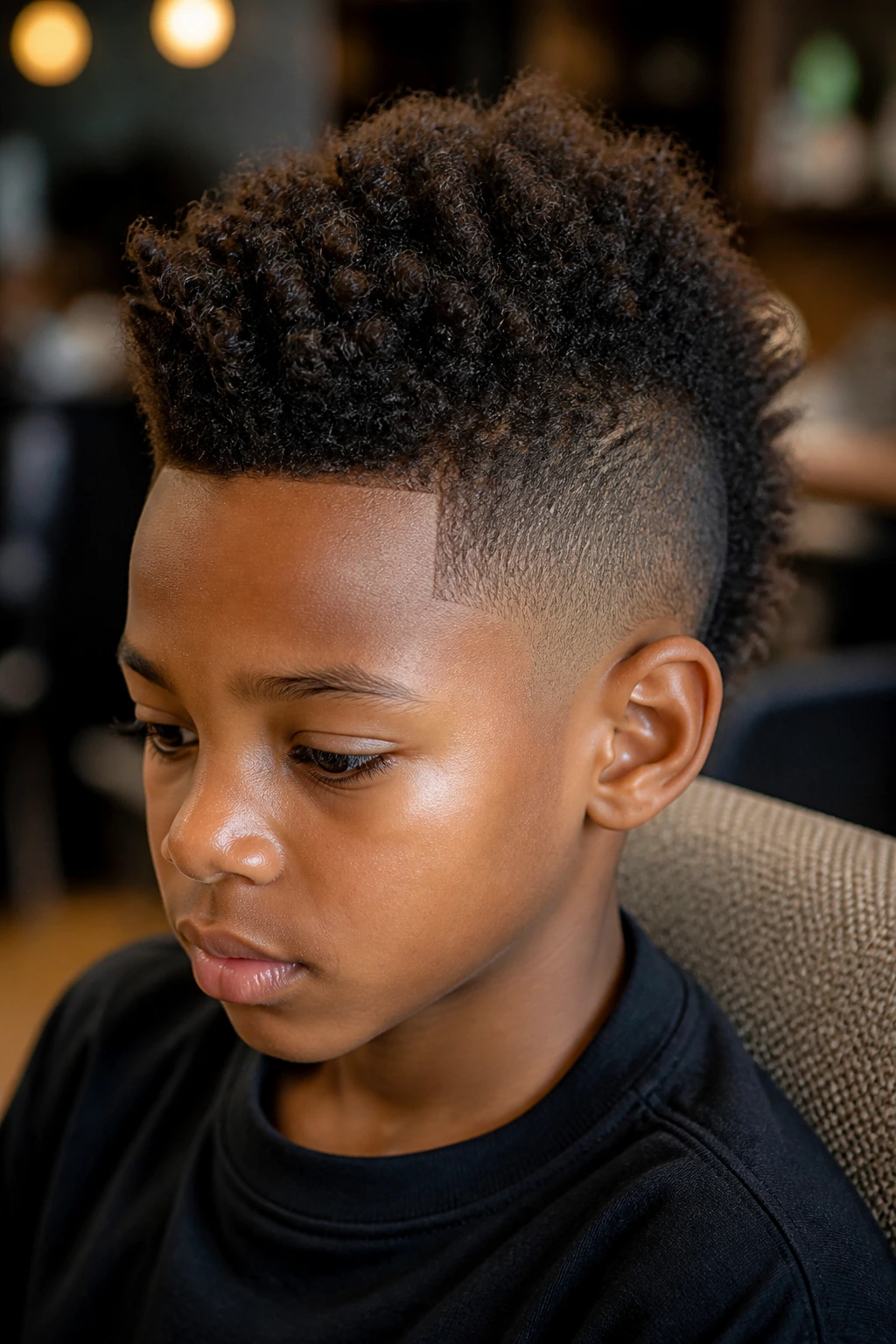
A tapered frohawk keeps the center longer and the sides softer than a burst fade mohawk. That small change makes the whole style feel less aggressive and easier to wear every day. The shape still has attitude, but it doesn’t shout for attention.
Ask for the sides to taper low and gradual, then let the middle ridge keep enough length for the curls to stack on themselves. If the hair is tight and springy, the center can sit nicely at 2 to 3 inches. If it’s looser, the frohawk can look fuller even at slightly less length. A quick sponge pass or finger twist can make the ridge look more defined.
Maintenance Note
This cut keeps its shape better if the sides are cleaned before the top starts puffing out. Once the taper gets fuzzy, the whole style loses its contrast. A light edge-up around the ears every 10 to 14 days helps a lot.
9. Short Curly Crop with a Skin Fade
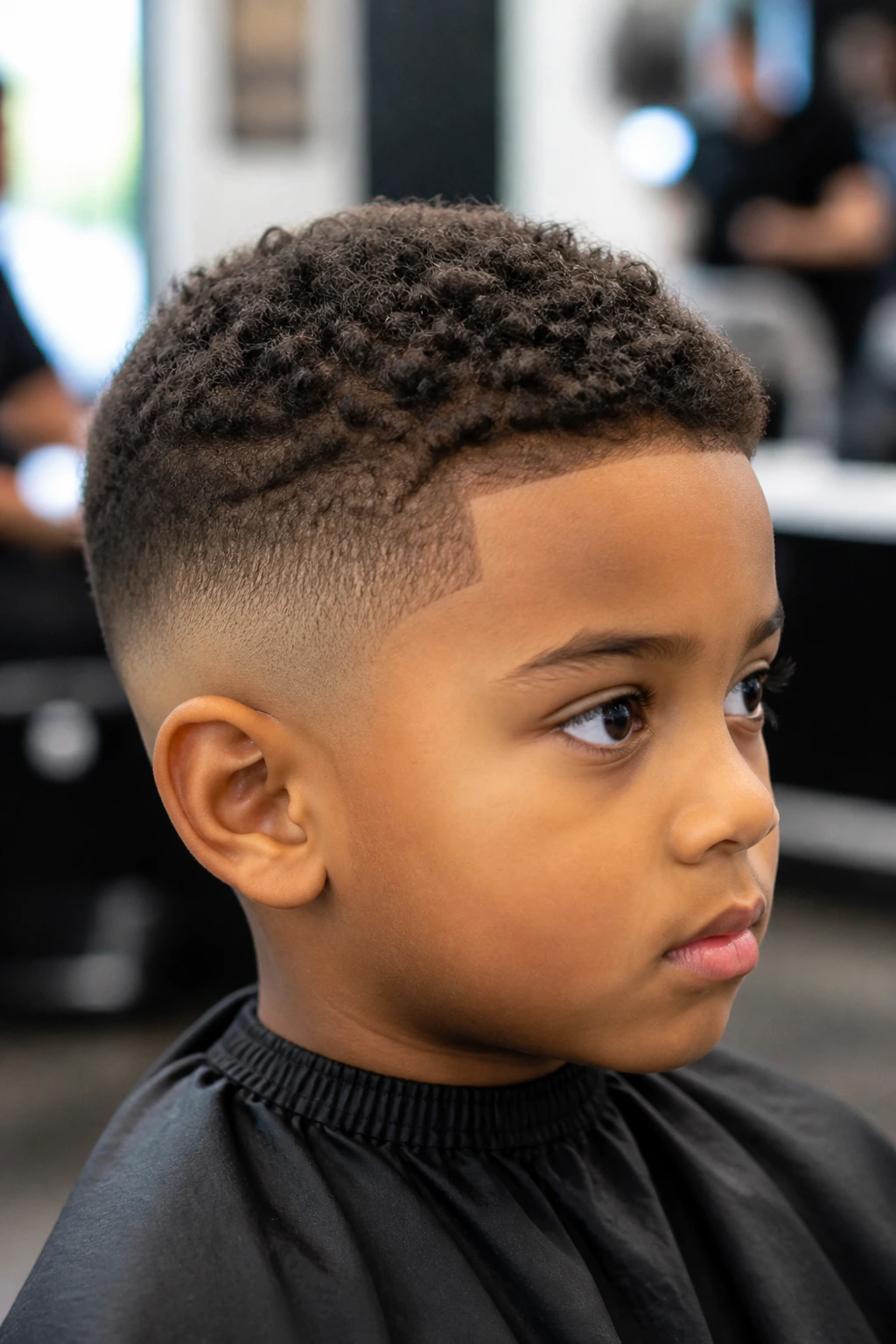
A short curly crop with a skin fade is for the kid who likes clean contrast. The sides disappear quickly, the top stays short and textured, and the result is sharp enough to look finished the moment he leaves the chair. It’s a good choice when the curls are thick and you want the top to feel controlled.
The top usually works best around 1 to 1.5 inches. That’s enough length for the curls to show, but not so much that the cut becomes bulky. The skin fade can start low or mid depending on how much scalp you want to show. Low keeps it softer. Mid makes it read louder.
This haircut does need upkeep. Skin fades grow out with a visible line, and curly texture can blur the transition faster than straight hair. If you want it to stay crisp, plan on a clean-up every 2 weeks. Skip that, and the cut turns fuzzy in a hurry.
10. Twist-Out with a Mid Fade
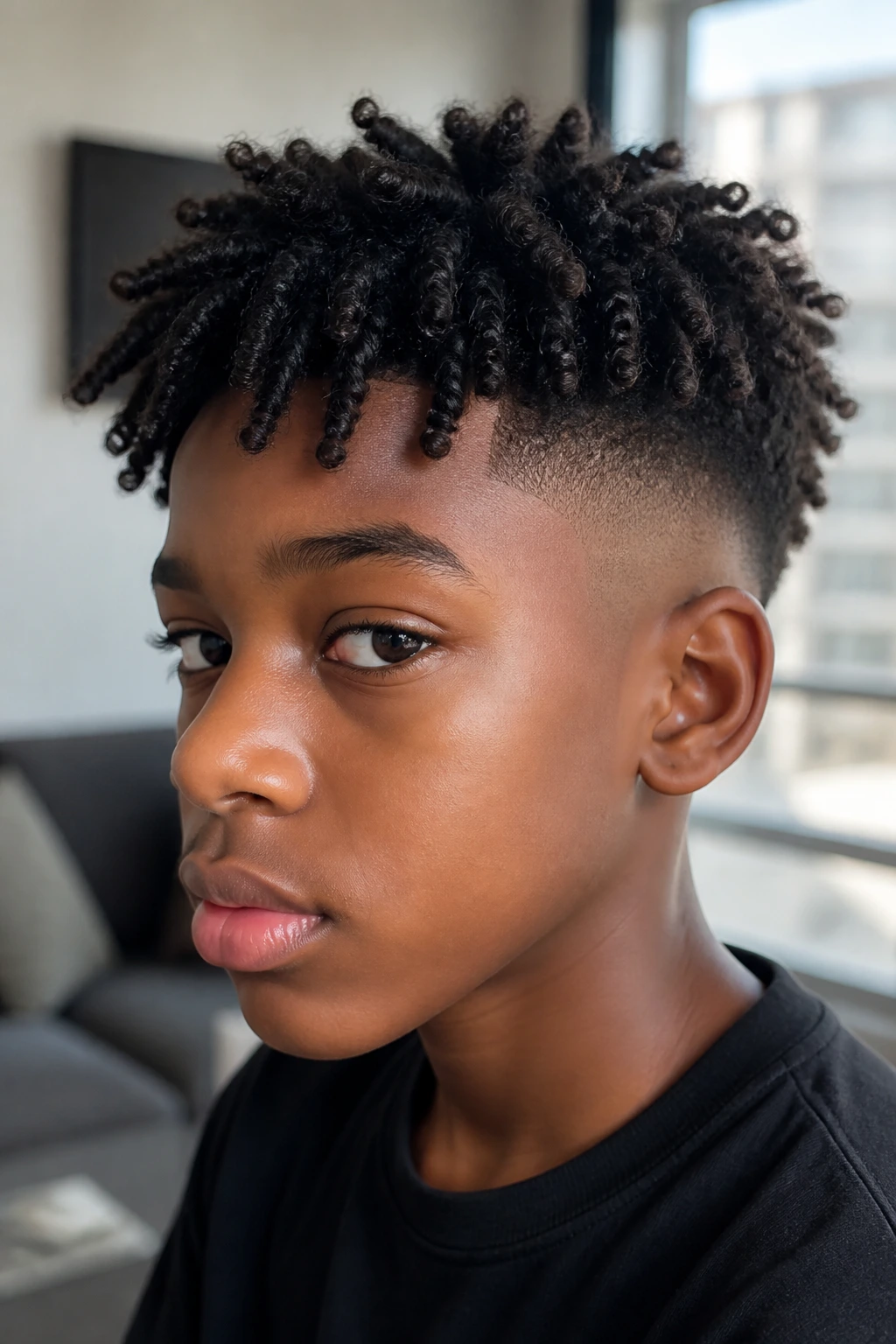
Twist-outs give curly hair a different kind of texture — less springy coil, more stretched definition. With a mid fade on the sides, the top gets to show off that twist pattern while the fade keeps the profile neat. It’s a nice middle ground between styled and effortless-looking, even though it takes some care to get there.
The best part is the shape shift. When the twists come out, the hair opens up into a fuller top with visible direction, not just random fluff. That makes this cut useful for kids who like a little variety. One week the hair can look more separated and defined. Another week it can be fluffier and softer. Same cut. Different mood.
A mid fade helps because it lifts the twist-out off the sides without making the whole haircut too harsh. If you want the style to hold longer, keep the ends moisturized and don’t rough it up with a dry brush. That’s where a lot of the frizz comes from.
11. Two-Strand Twists with Clean Sides
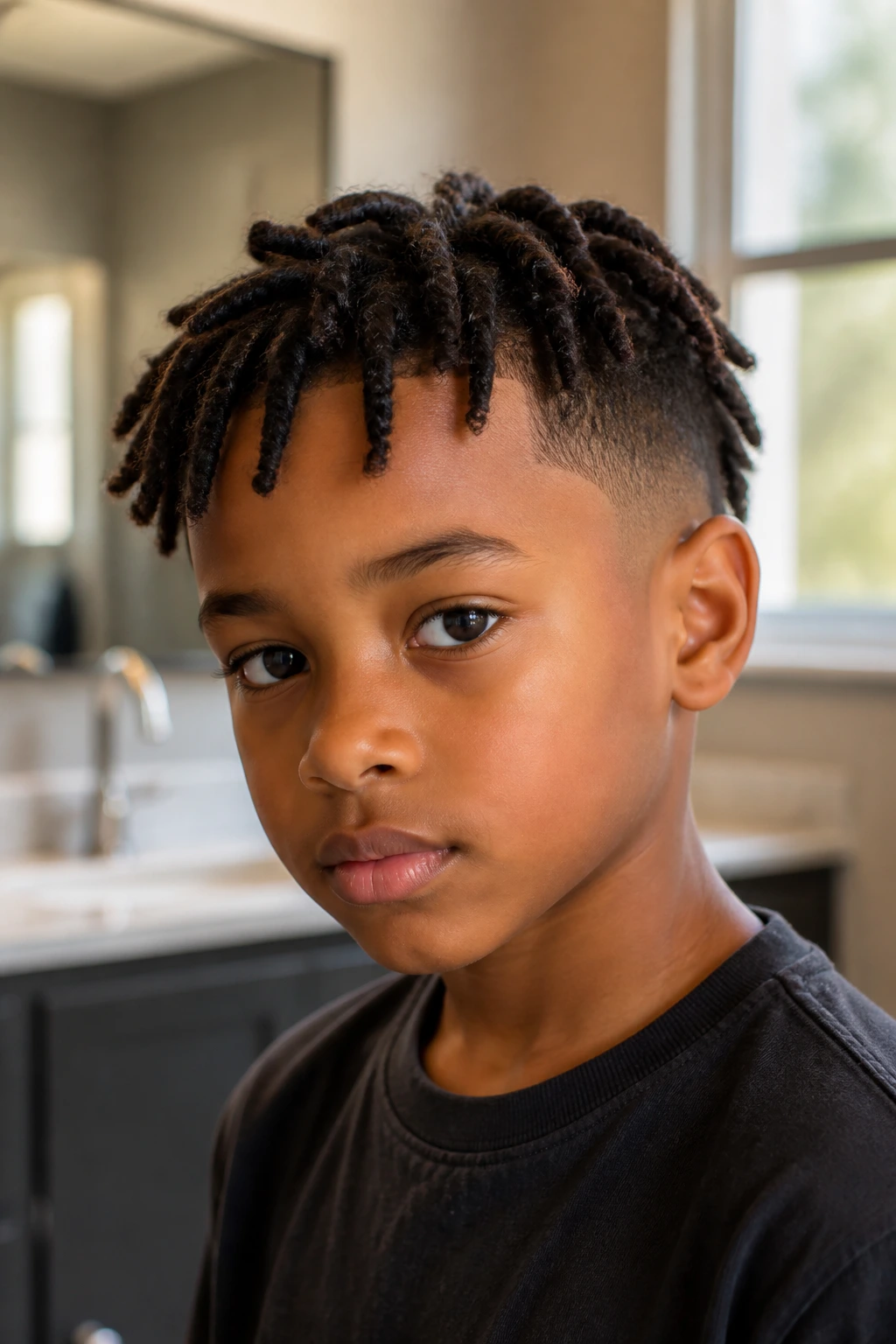
Two-strand twists are one of the cleanest ways to let curly hair rest without losing style. The twists protect the ends, the clean sides keep the haircut looking sharp, and the whole shape has a tidy, deliberate feel. It’s a smart option for families who like styles that last longer than a single weekend.
The twists can be kept short and neat across the top or left a little longer for more movement. Clean sides — whether that means a taper or a low fade — keep the silhouette from getting puffy too fast. If the child’s hair is tender, this is also gentler than constant brushing or repeated sponge work.
This style shines when it’s fresh, but it also holds up in the grow-out stage better than a lot of open cuts. The twists can be separated lightly with oil or leave-in, and the edges can be cleaned up without disturbing the top. That balance is why parents keep coming back to it.
12. Mini Afro with a Low Fade
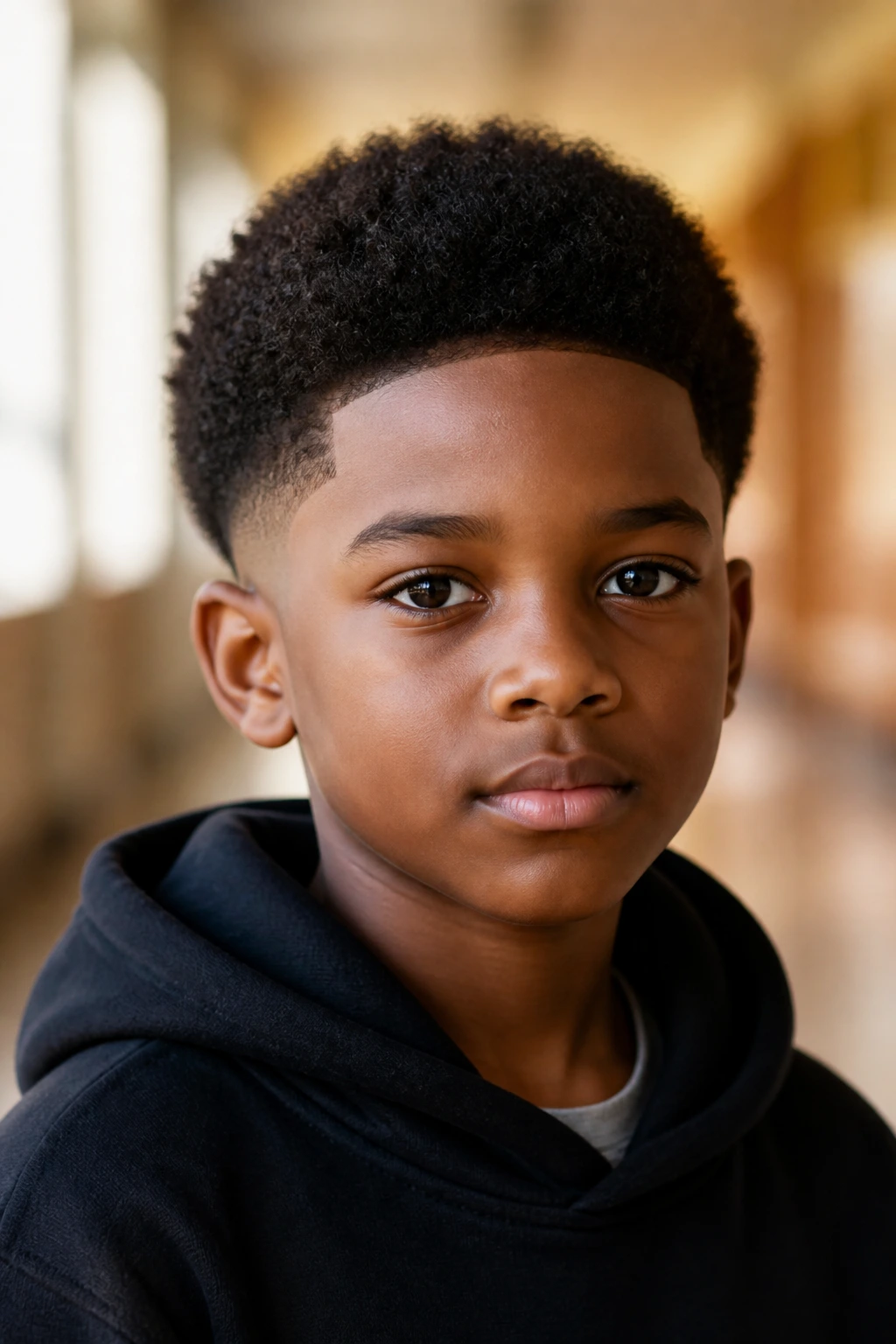
A mini afro with a low fade keeps the fullness of the afro but tightens the edges enough that it still looks intentional. It’s a smaller shape, not a shaved-down one. That distinction matters. You still get the rounded texture on top, but the low fade keeps the sides from blooming too far out.
Ask the barber to keep the afro line soft and even, with the fade starting low around the ears and neckline. This works especially well on kids with dense curls that naturally stand up. If you cut it too short, the shape disappears. If you leave too much bulk on the sides, it starts looking bulky instead of rounded.
The low fade makes this cut easy to wear with school uniforms, sports, and all the movement that comes with a kid who doesn’t sit still for long. It’s one of the more forgiving shapes on the list. That’s not a small thing.
13. Finger Coils with a Temple Fade
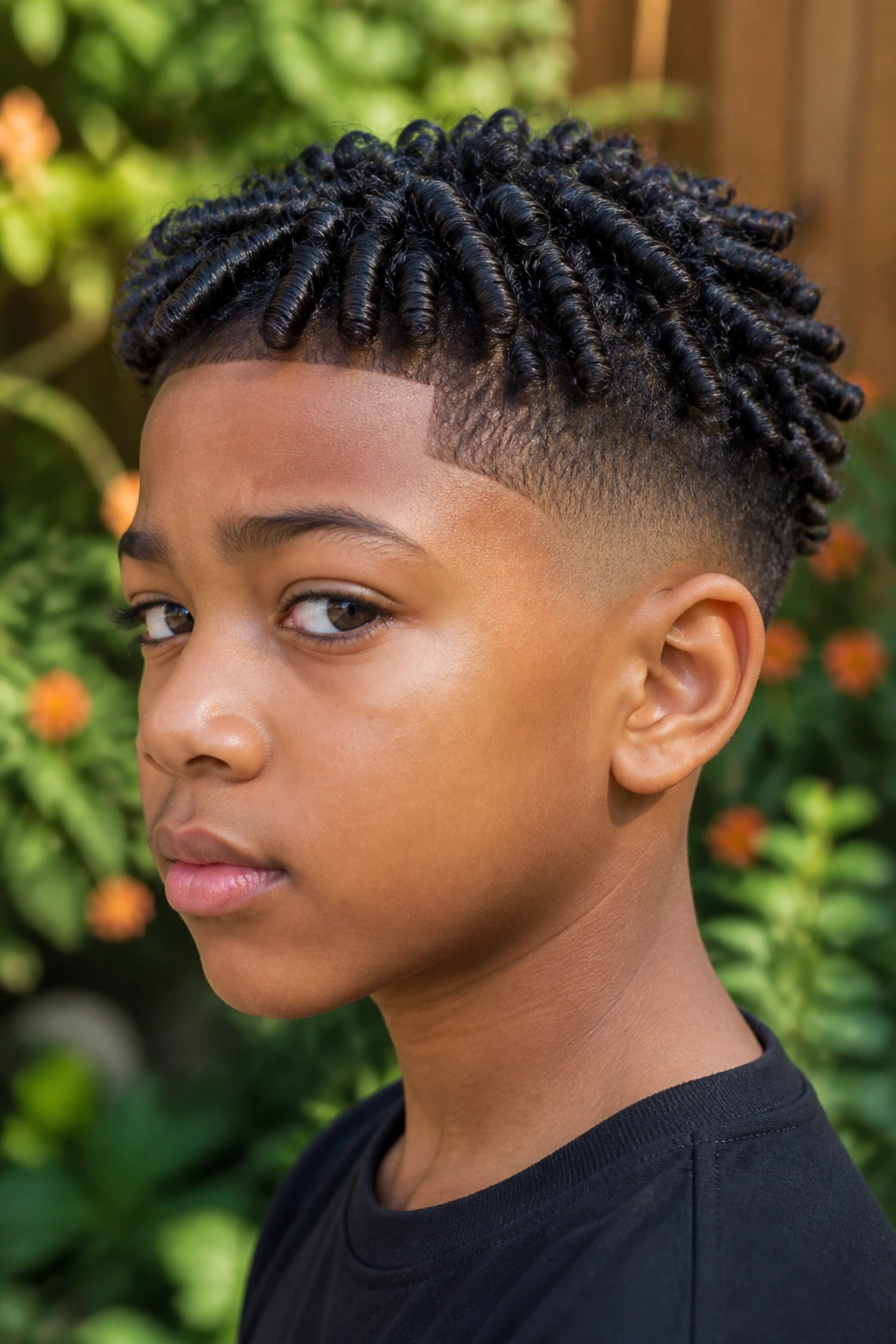
Finger coils turn short curls into tidy little spirals, and a temple fade keeps the edges from looking messy. The result is a clean top with a lot of definition and a neat frame around the face. On shorter hair, this can look more polished than a sponge style because every coil reads separately.
The hair has to be moist, not soaking. A little leave-in conditioner or curl cream helps the coils set without getting crunchy. Each coil is formed with the fingers, so patience matters here more than speed. A temple fade makes the whole look sharper by clearing the sides and keeping attention on the top.
This is a good choice for a child whose curls don’t yet have much length. You can get a finished look without waiting for a lot of growth. It does take more hands-on styling, though, so if mornings are already a battle, you may want something looser.
14. Boxy Afro with a Hard Part
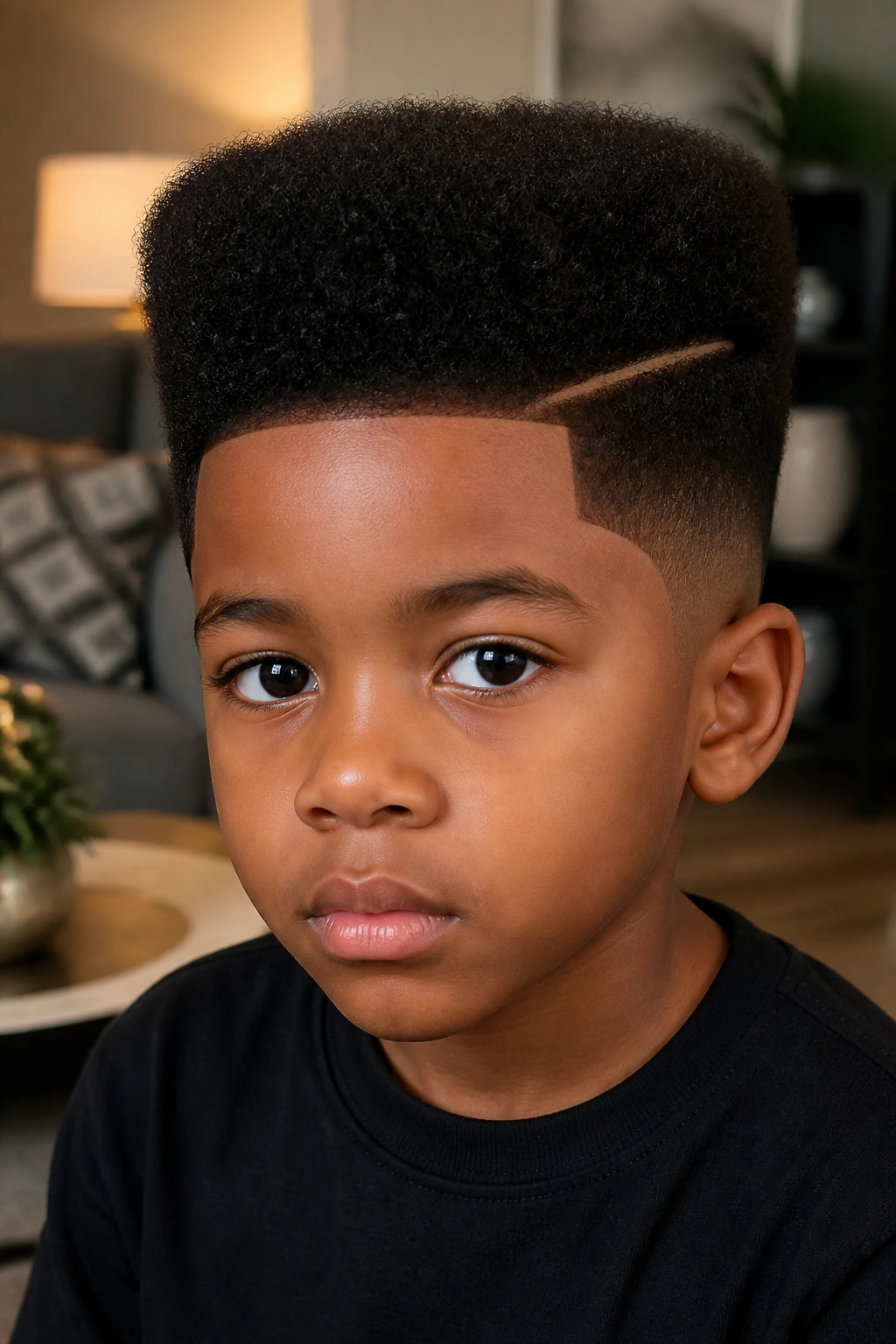
A boxy afro has edges. Real ones. The corners are a little more squared off, the silhouette is more geometric, and the hard part adds a visible line that breaks the shape in a clean way. It’s a stronger look than a rounded afro and works especially well on thick hair that holds width on its own.
The key is restraint. If the box gets too wide, it starts to look heavy around the sides. A good barber will keep the top shape even and the sides tapered just enough to stop the haircut from ballooning. The hard part should sit where the hair naturally separates, not where the barber has to fight the grain.
This style looks best when the hairline is cleaned up but not shaved thin. A child’s hair grows quickly around the temples, and a heavy hard part can look stale fast if the rest of the cut isn’t balanced. Keep the lines fresh, and it reads sharp instead of loud.
15. Flat Top with Coily Texture
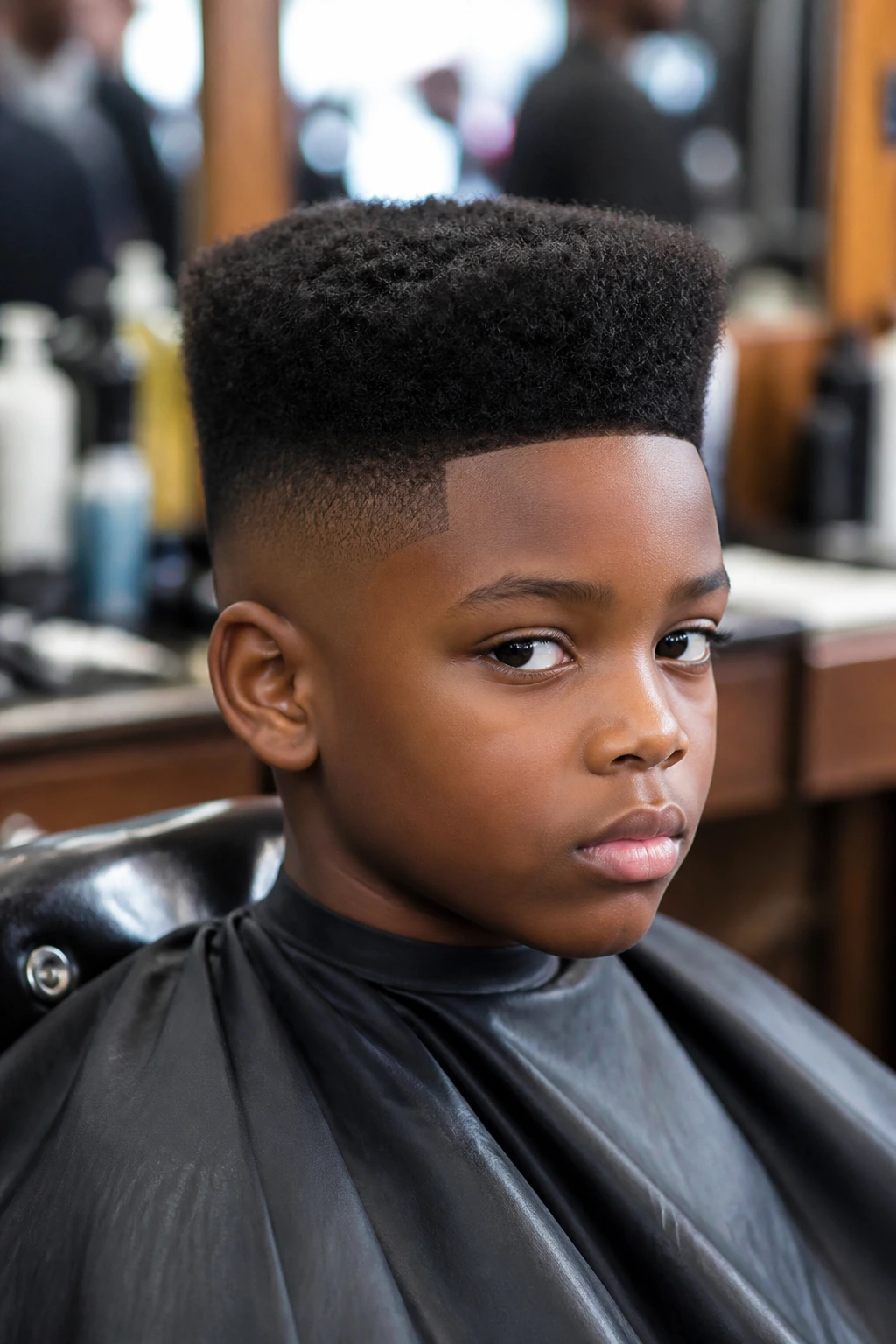
A flat top on curly hair is one of those cuts that can look incredibly cool when the density is right. The top is shaped into a level plane, the sides stay tighter, and the coils on top give the surface a textured finish instead of a smooth one. That rougher texture is what makes it work on curly hair rather than against it.
This cut needs even density. If one side is lighter than the other, the top can look sloped instead of flat. Ask the barber to shape it carefully from the front and both sides, especially around the corners. The height can be modest or a little more dramatic, depending on how much the child wants the style to stand out.
It’s not the lowest-maintenance cut on the list. Flat tops ask for shape-ups to keep the edges clean, and they look best when the top is brushed upward lightly after a mist of water. Still, for a kid who likes a crisp silhouette, it’s hard to beat.
16. Curly Mullet with Tapered Sides
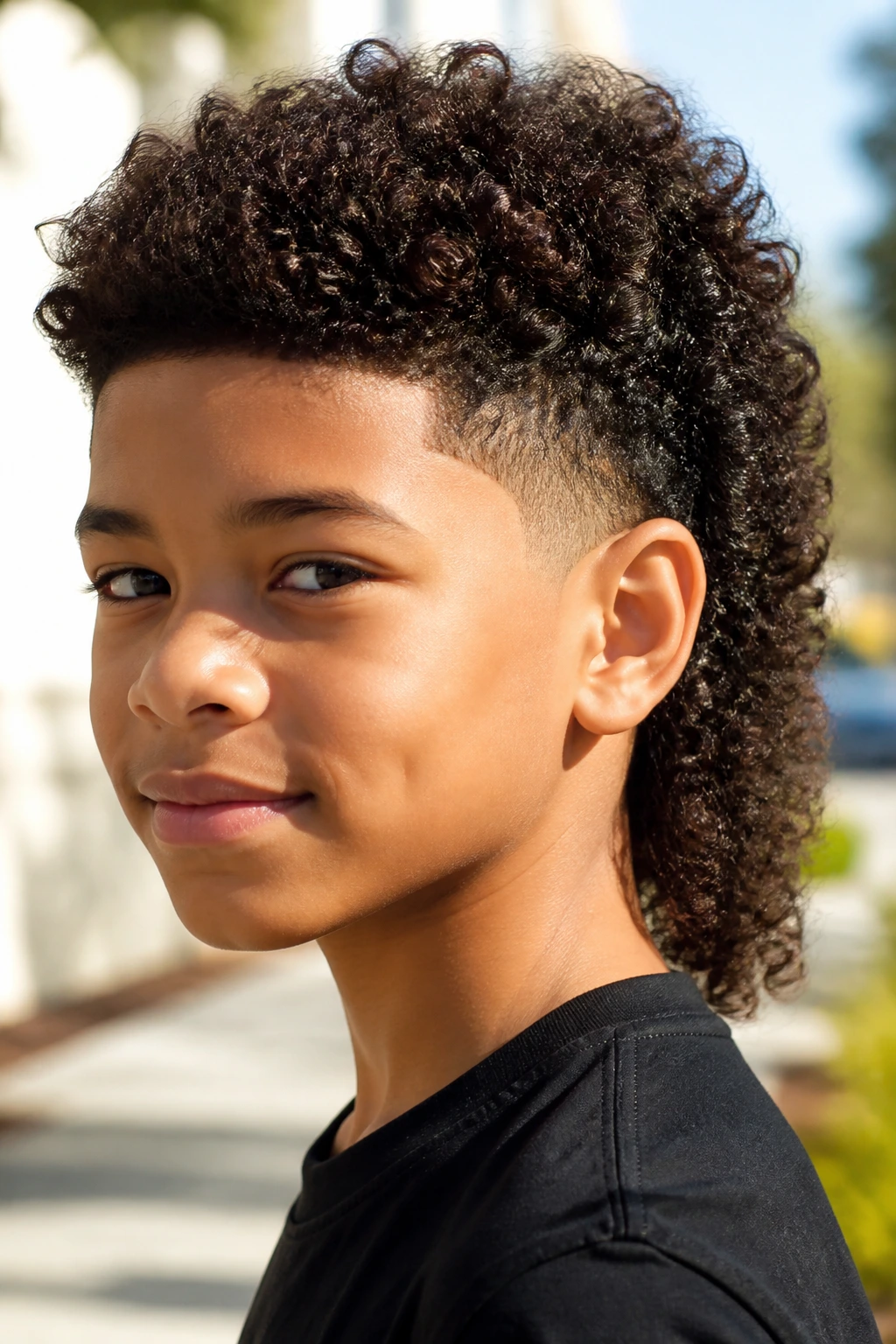
A curly mullet sounds bold because it is. Shorter at the front and sides, longer in the back, it lets curly hair hang with a little attitude while the tapered sides keep it from turning into a mop. On the right kid, it’s playful, a little weird in the best way, and far more wearable than people expect.
The back should stay shaped, not ragged. That’s the difference between a deliberate mullet and something that just got forgotten. A taper around the ears and nape keeps the haircut tidy enough for school while letting the back carry the personality. If the curls are tight, the back can puff nicely. If they’re looser, the length needs a bit more care.
This is one of those cuts that works best when the child likes having hair with some movement. It’s not the style for someone who wants everything hidden and neat. It’s the style for someone who likes the mirror a little.
17. Braided Front with Curly Back
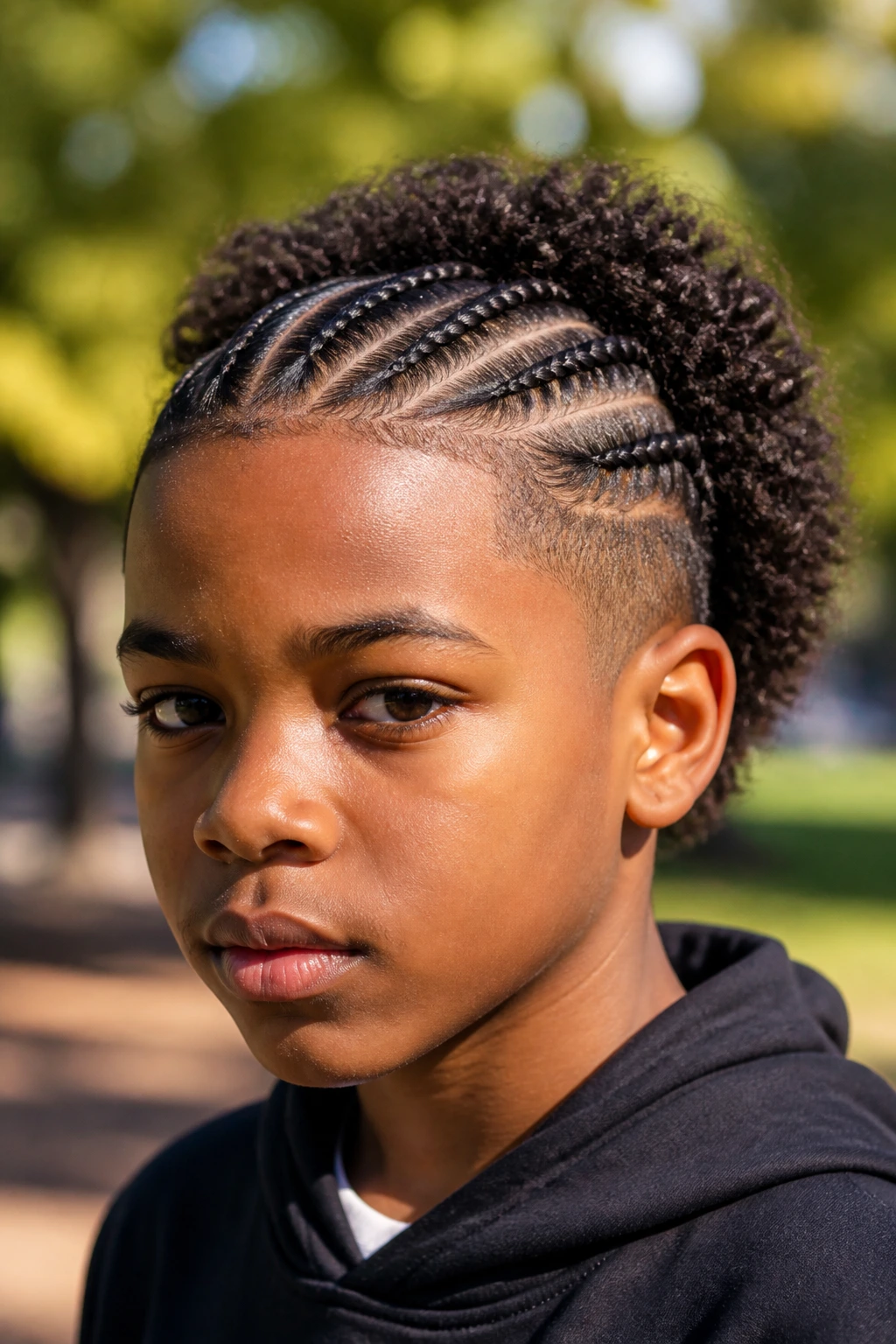
Why choose between braids and curls when you can use both? A braided front with curly back gives the hair a framed look up top while leaving the back loose and textured. It’s a good hybrid style when the front grows fast or tends to fall into the eyes, but the rest of the hair still has enough length to show off its curl pattern.
The front braids need clean parting. That’s the part that makes or breaks the style. The back can stay natural and curly, but the sides should be tapered or cleaned up so the whole look doesn’t feel split in half. If the child has sensitive scalp skin, keep the braids medium tension, not tight.
This cut tends to get compliments because it looks detailed without looking overworked. It can also last longer than a straight textured cut if the braids are maintained well. A light scalp spray and a satin bonnet at night help keep the front neat.
18. High Puff with Clean Edges
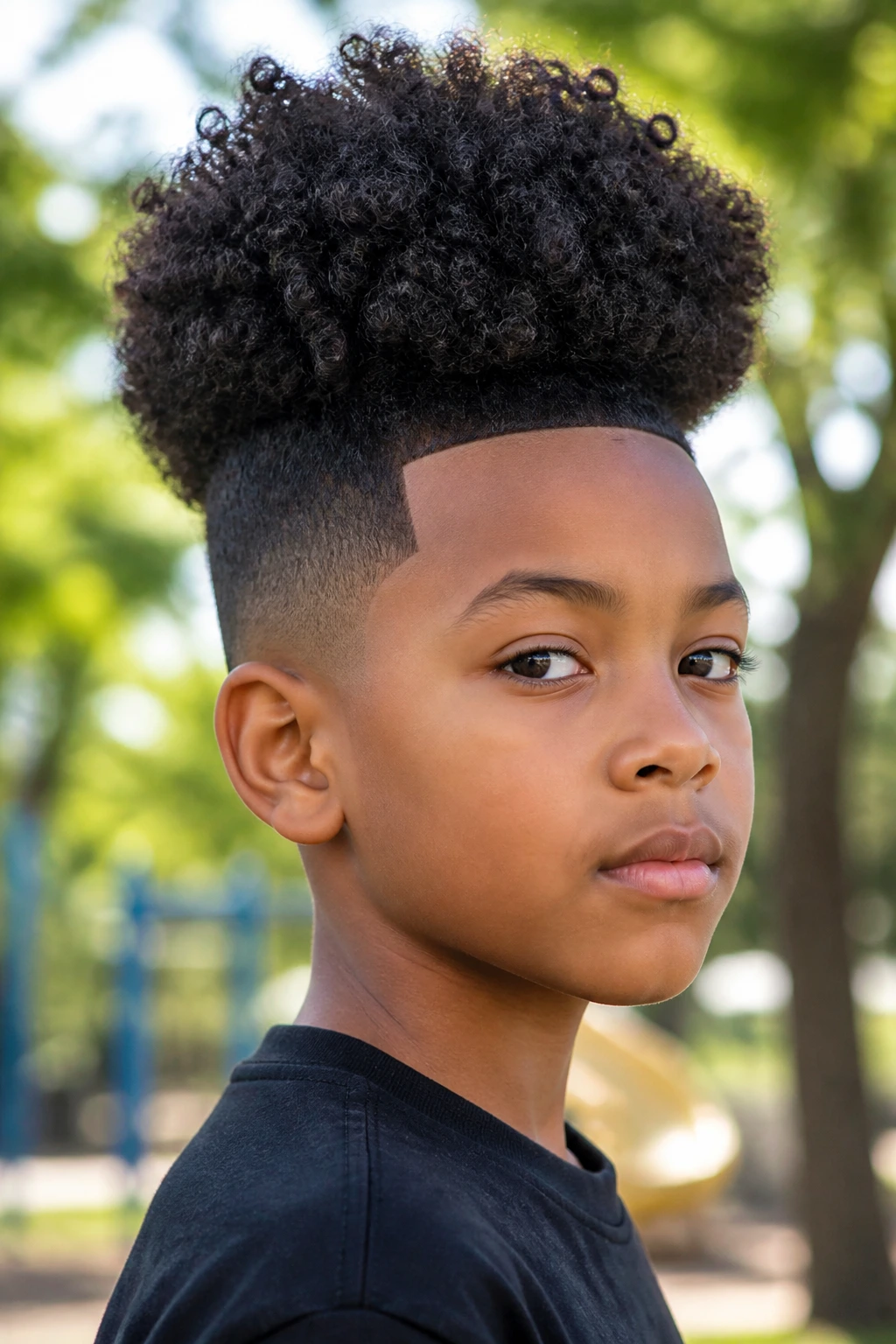
A high puff is more of a shape than a strict haircut, but on longer curly hair, it’s one of the easiest ways to look put together fast. The curls are gathered or brushed upward into a full puff, while the edges stay clean so the style feels intentional instead of thrown together. It works especially well when the hair has enough length to lift naturally.
The puff should sit high but not stretched so tightly that the front looks pulled. Clean edges around the forehead and temples help keep the profile neat, and a small amount of gel or edge control can tame the hairline without making it stiff. If the child’s hair is dense, a puff can hold its shape with very little effort.
This is a smart look for active days because it keeps hair off the face. It’s also flexible. You can wear it with a taper, a soft fade, or just clean edges and leave the rest natural. Easy wins. Those matter.
19. Sponge Twist Top with a Drop Fade
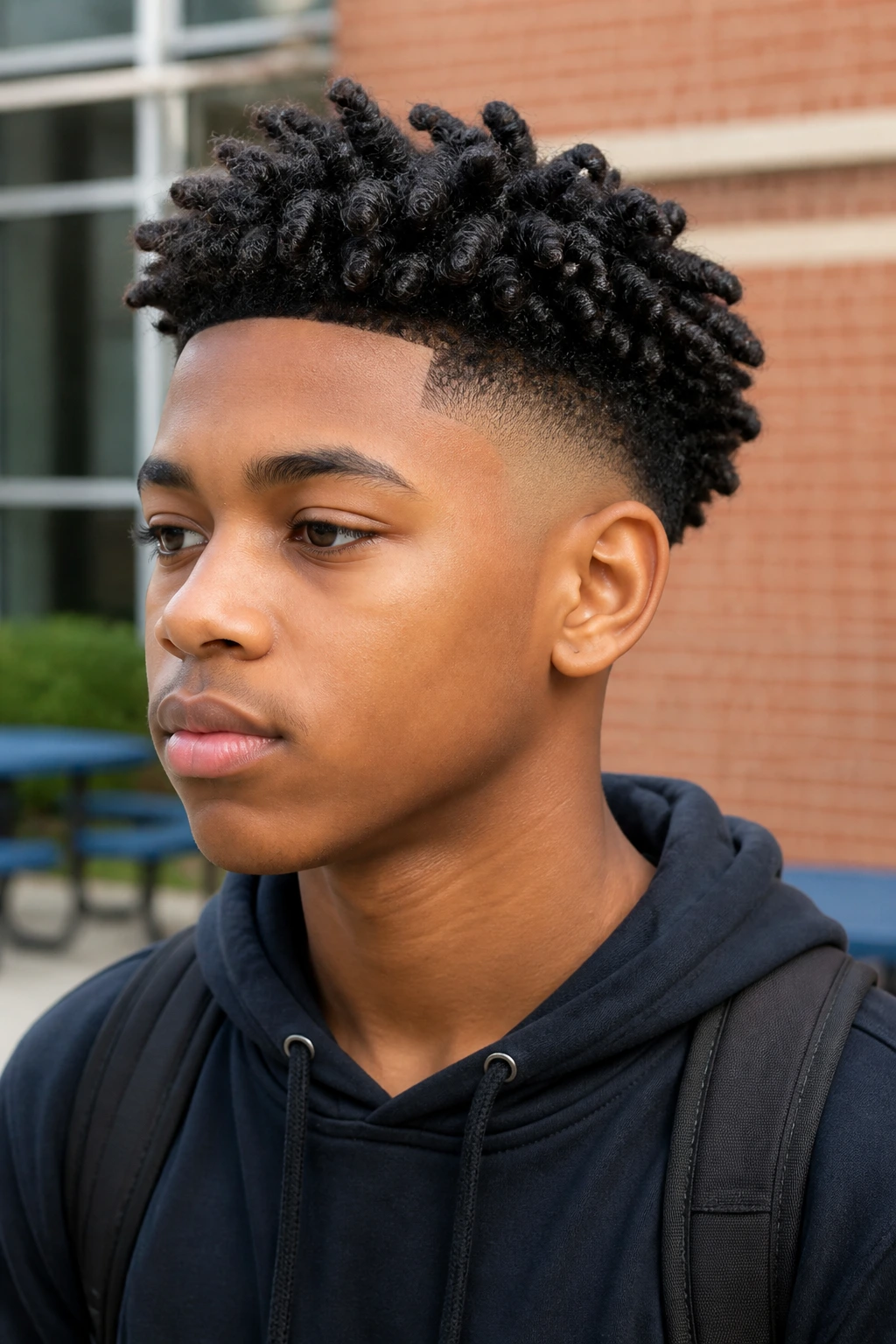
A sponge twist top gives short curls a more organized, rope-like texture than plain coils, and the drop fade helps that top shape sit lower and cleaner around the back. The result has movement without chaos. It’s one of the best options if you want the curls to look styled but not overly done.
Start with damp hair and a light cream. The sponge should be used in one direction, not rubbed back and forth like a scouring pad. That’s where frizz comes from. The drop fade shapes the lower half of the haircut so the twist texture stays the focus. On a good cut, the head looks rounded and balanced from the side.
This style can be refreshed fast in the morning, which makes it useful for school schedules. A quick mist, a few sponge passes, and the top is back in shape. Don’t overdo the sponge. Two short sessions are better than one long, aggressive one.
20. Shadow Fade with Natural Curls
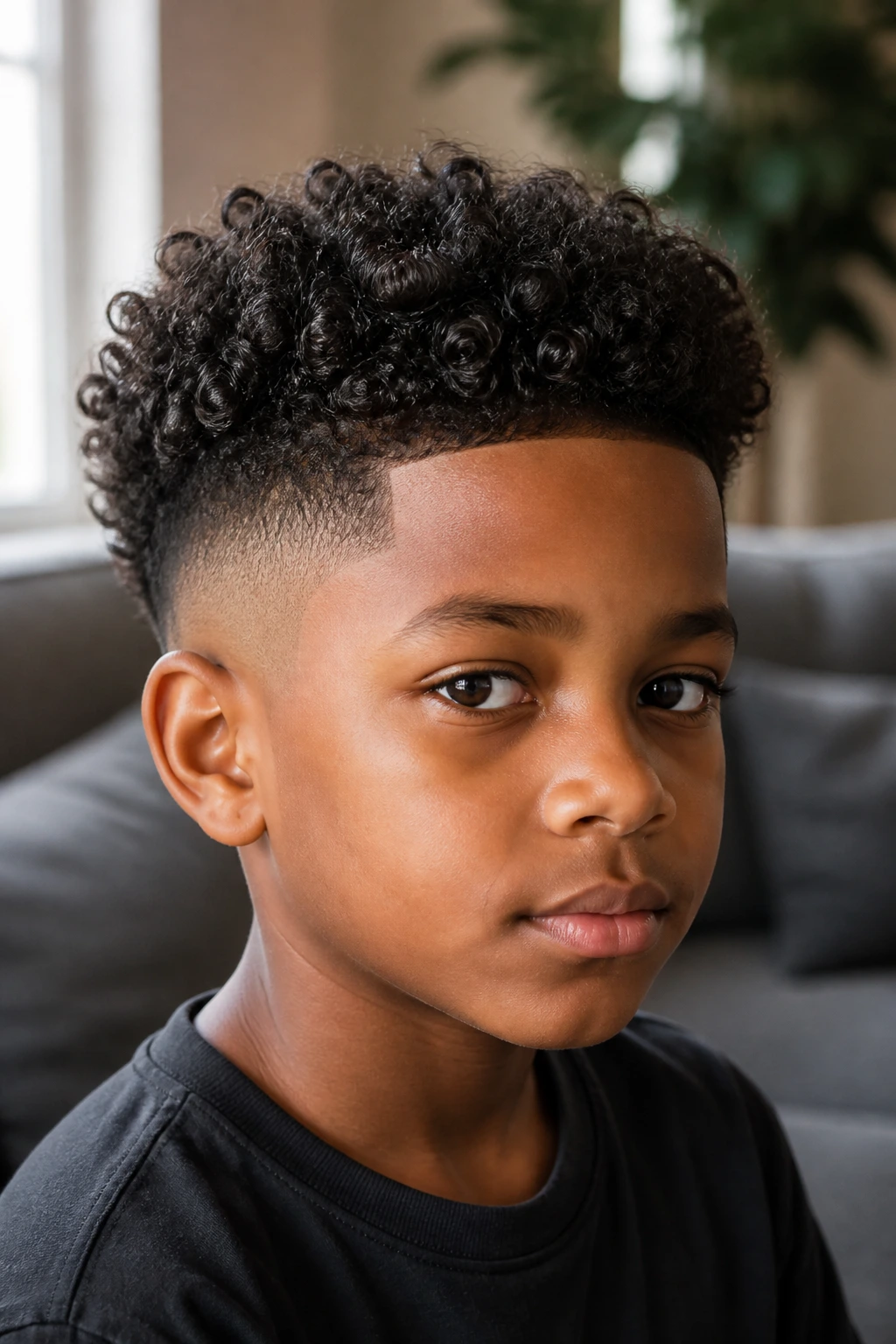
A shadow fade is the quiet one in the room. The fade is soft, the transition is gradual, and the curls on top stay the star without a lot of contrast. If your child doesn’t want a hard-looking cut, this is the move. It feels neat, but not sharp enough to look severe.
The top can be left medium short or a little fuller, depending on how much curl definition you want. What makes the shadow fade work is the blend. There should not be a visible shelf where the fade starts. That soft transition is what gives the haircut its smooth profile, especially around the temples and neckline.
This is a strong everyday haircut because it doesn’t scream for attention and it doesn’t punish you when it grows out. The edges blur in a gentle way, which means less panic between cuts. Some styles need constant rescue. This one doesn’t.
21. Tapered Afro with a Side Part
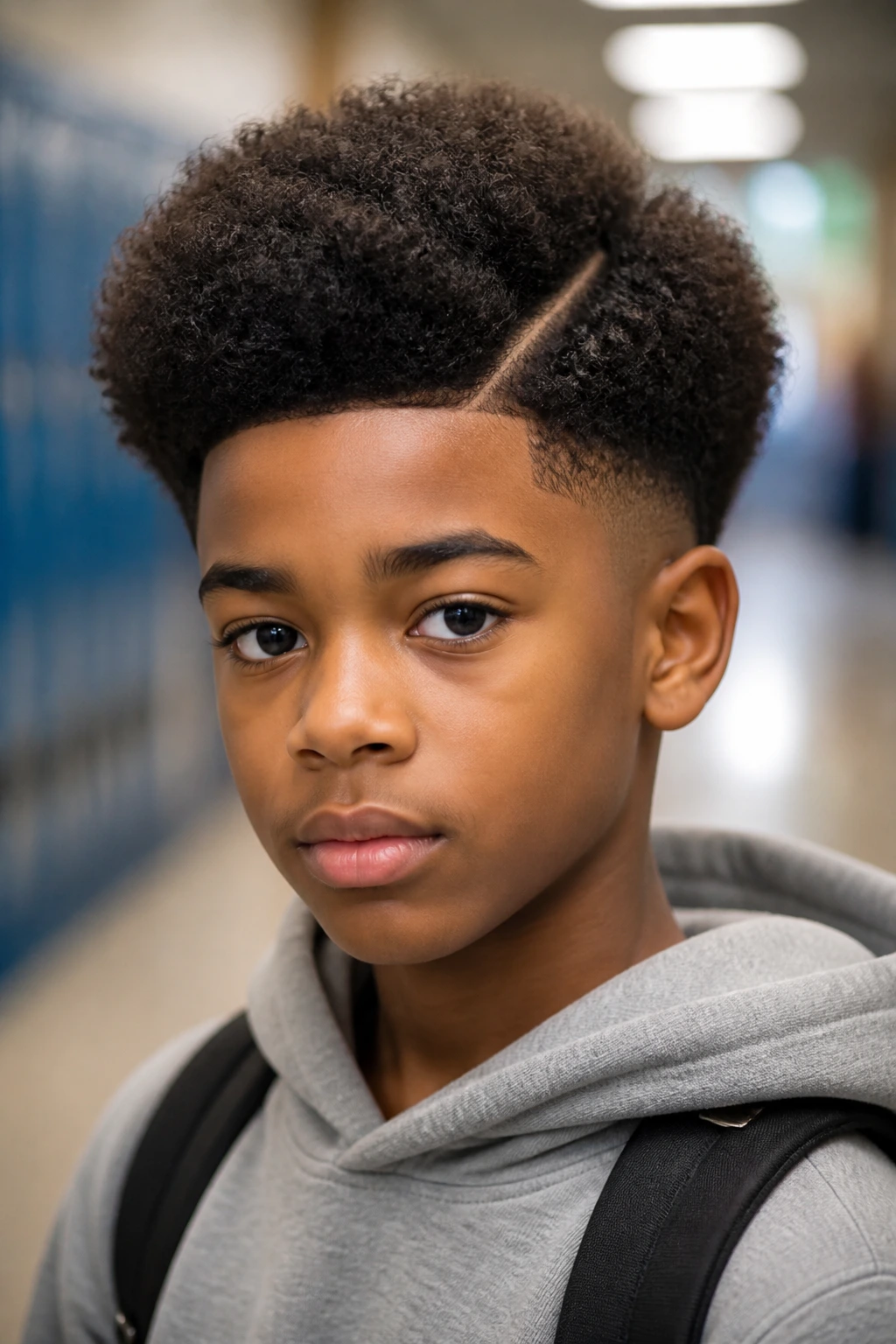
A side part changes the whole mood of a tapered afro. The part gives direction, the afro keeps the fullness, and the taper stops the sides from spreading too wide. It’s a clean, school-friendly style that still feels like curly hair gets to be curly hair.
The part can be hard or soft, but I prefer soft unless the child already knows he wants a sharper look. A hard part looks crisp right away, yet it grows out fast and can make the style feel rigid. The taper should keep the ears and neckline clean without stripping away the shape. That way the afro stays rounded, but guided.
This cut is useful when the hair grows in more than one direction and you want a little control. A side part gives the eye somewhere to go, which helps the style look neat even on busy mornings. Small detail. Big payoff.
22. Curly Top with a Design Line
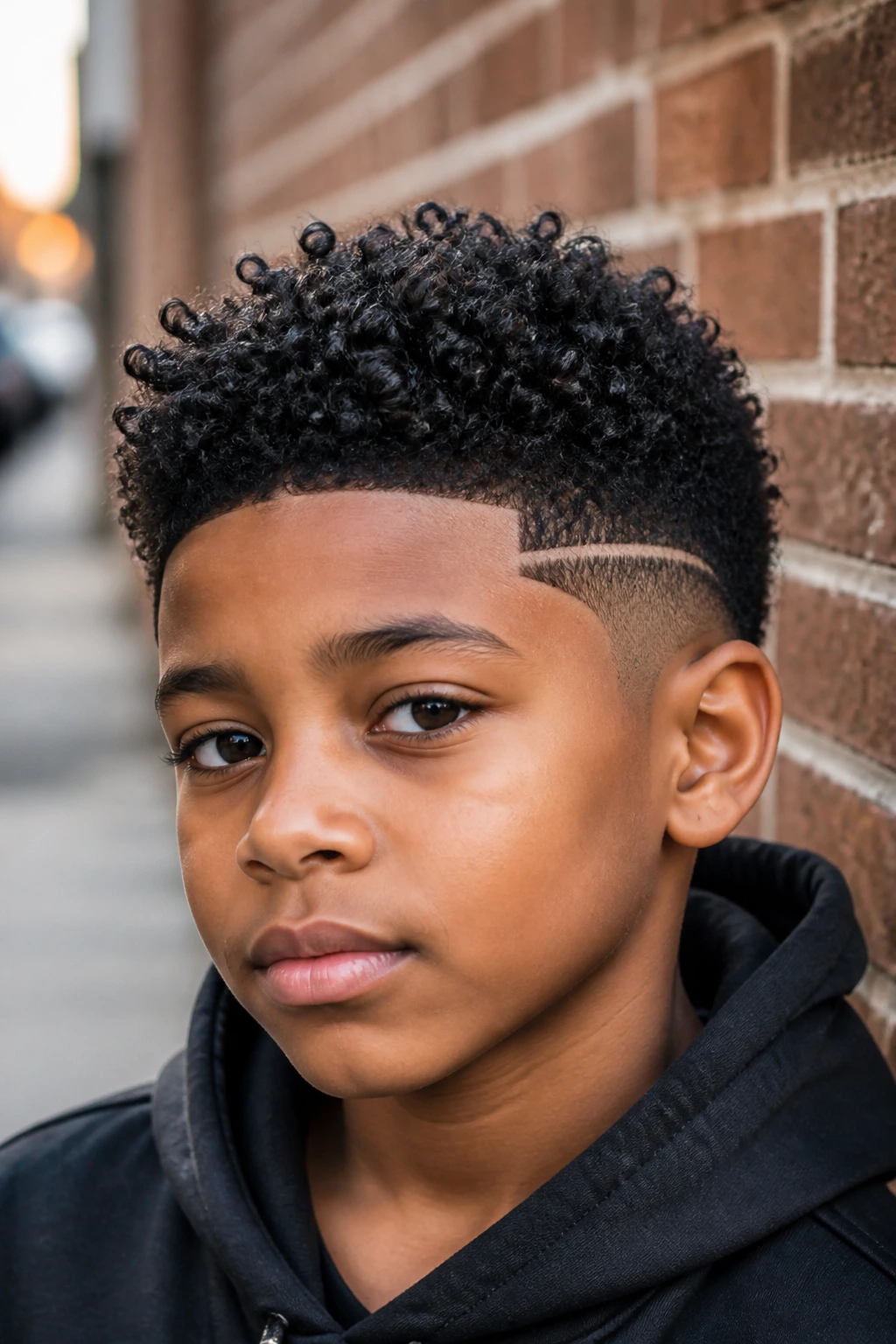
A design line is a small detail, but kids notice it right away. A curved slash, a zig-zag, or a single clean line shaved into the fade can turn a plain curly top into something with personality. The rest of the haircut can stay simple, which is what makes the design pop.
The important thing is not to overload the cut. One clean design line is usually enough. Too many patterns start to look busy, especially on a head that already has strong texture. Keep the top shaped and the sides faded low or mid so the design has room to breathe.
This style works best when the child likes a bit of flair and doesn’t mind touch-ups. Designs grow out fast. That’s the trade-off. But for a birthday, photo day, or a weekend event, a design line gives curly hair a little extra spark without changing the entire haircut.
23. Short Afro with a Burst Fade
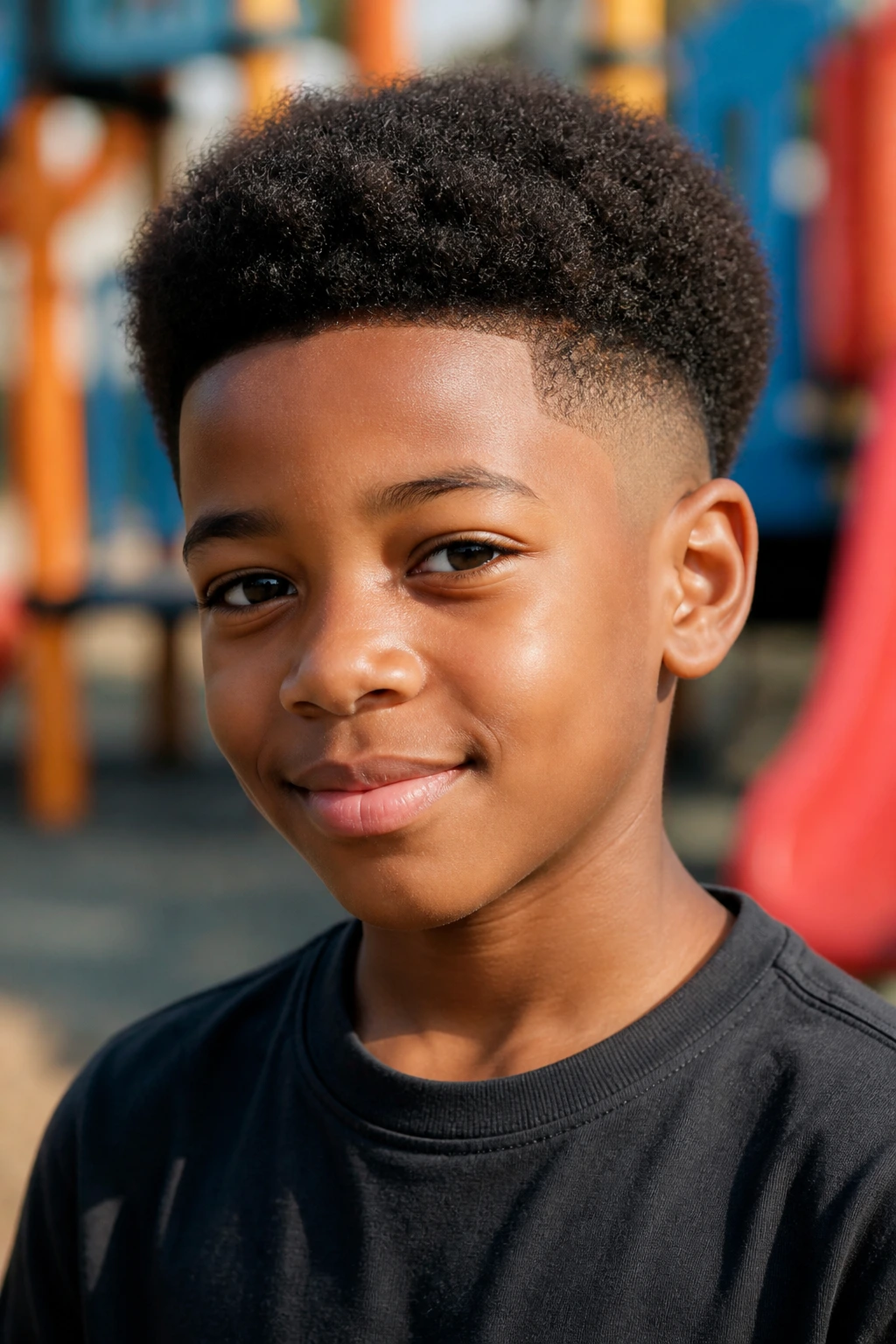
A short afro with a burst fade blends two strong ideas: natural fullness on top and a curved fade around the ears. The result is rounded, neat, and a little more dramatic than a basic taper. It gives the haircut shape at the sides without flattening the curls up top.
The afro should stay short enough to hold its outline but long enough to show texture. The burst fade curves around the ear, which helps the haircut feel balanced from the front and side. That curved fade is especially useful on kids whose hair grows outward around the temples.
This style sits in a sweet spot. It has enough shape to look fresh, but not so much contrast that it becomes fussy. If you want a haircut that can handle playgrounds, school, and weekend pictures, this is a solid one to keep in rotation.
24. Scissor-Cut Coil Top
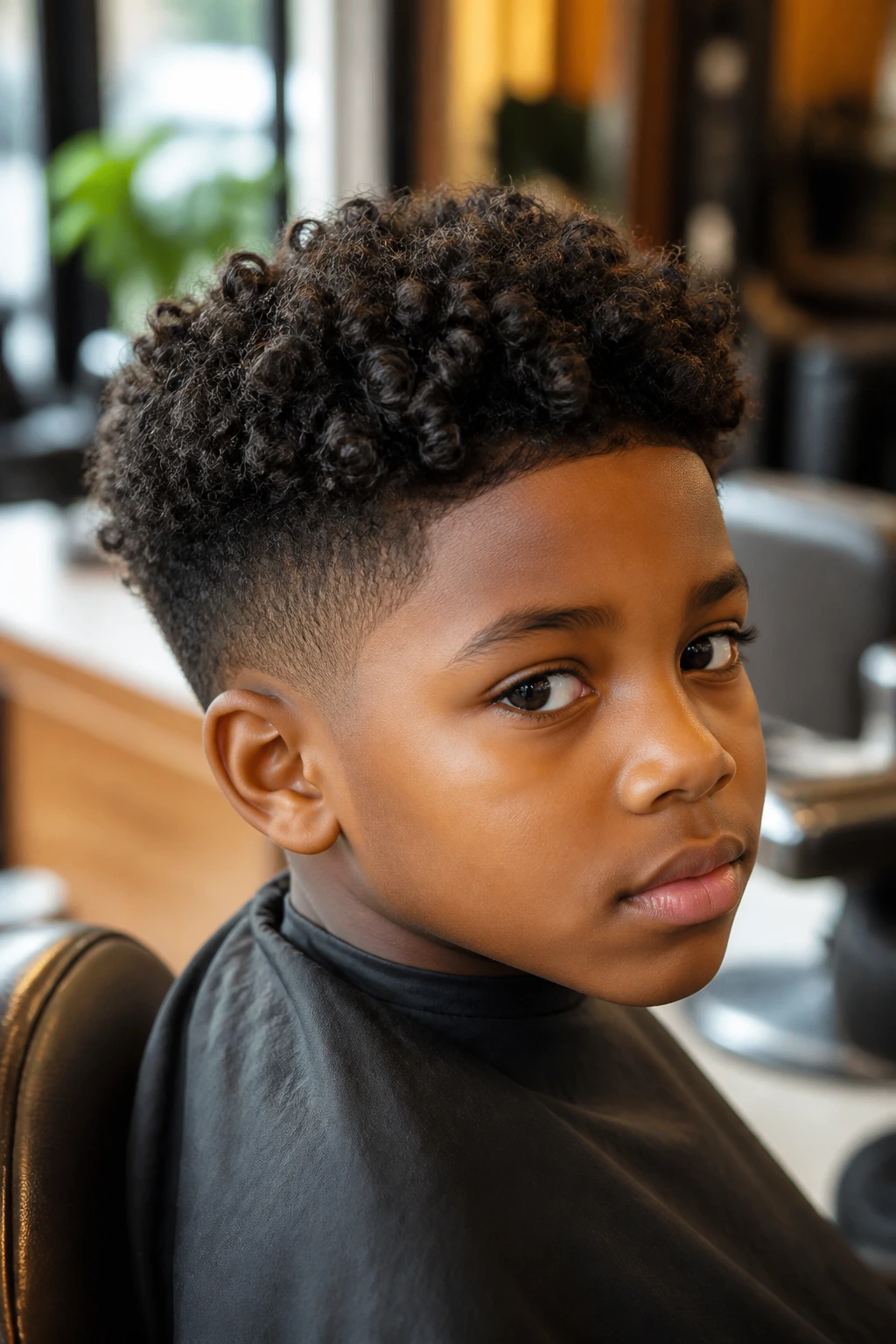
A scissor-cut coil top is the barber’s answer to “I want the curls shaped, not chopped.” Instead of relying heavily on clippers up top, the barber trims the coils with scissors to keep the length even and the shape softer. It’s especially good for kids with dense, delicate curls or a sensitive scalp.
The top usually keeps more personality this way because the curls are left to sit naturally. The sides can still get a taper or low fade, which keeps the haircut clean. The scissors give the barber more control around cowlicks and uneven patches, and that matters when the curl pattern changes from one side of the head to the other.
This cut is less flashy than some of the others, but it has a polished feel that holds up well in everyday life. If a child does not like a loud fade or a hard line, a scissor-cut top is a quiet, smart option.
25. Mini Locs with a Fade
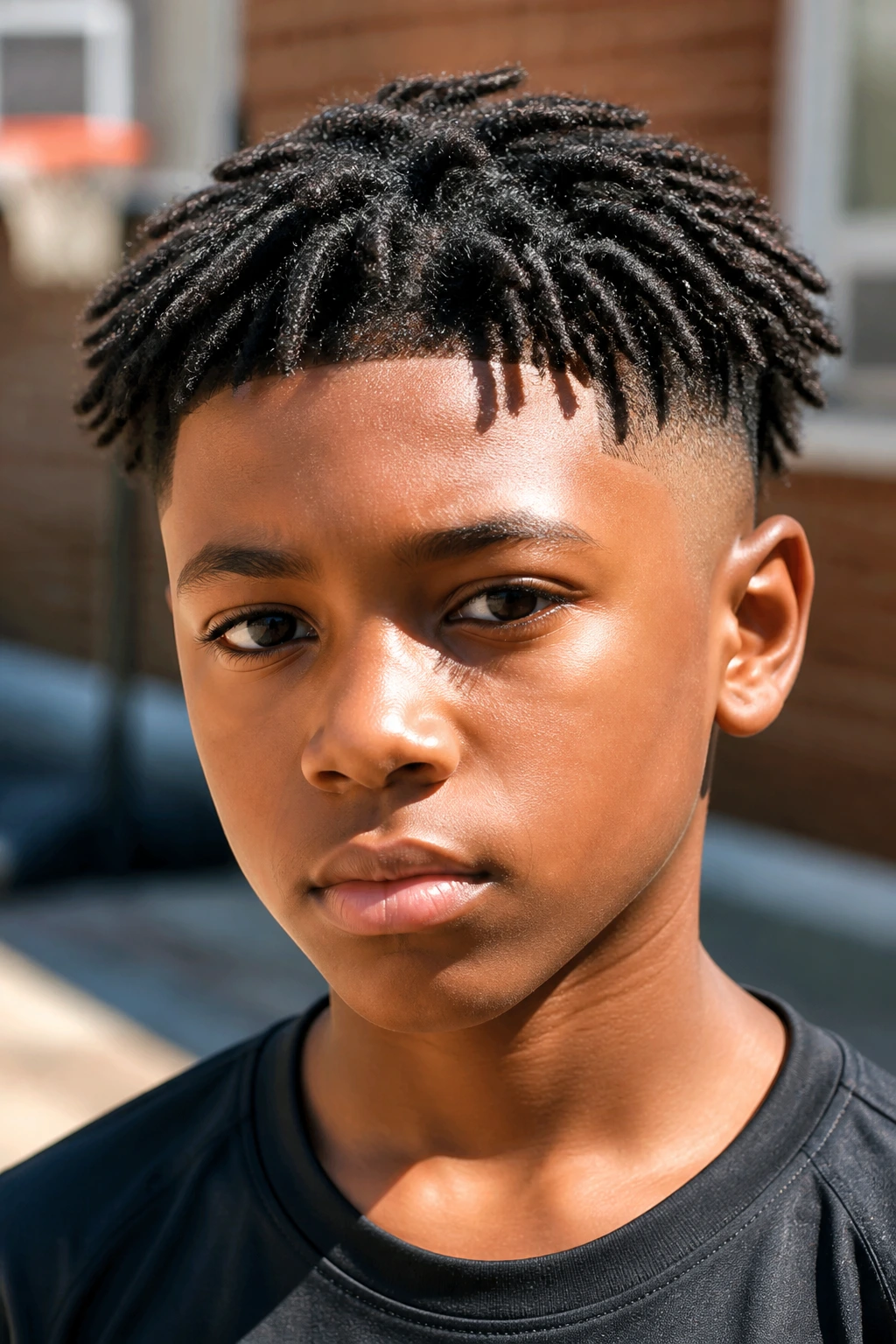
Mini locs with a fade give you a protective style feel with a crisp edge around the sides. The locs can start short and neat, or they can be a little longer if the hair has been growing for a while. The fade keeps the haircut looking clean while the top develops its own texture and movement.
This style needs patience more than anything else. The locs should not be pulled too tight at the root, and the fade should be soft enough to make room for new growth. If the hairline is still changing, ask for the front to stay natural instead of pushed too hard into a sharp shape.
Mini locs are a strong choice when you want a style that lasts and can be refreshed without starting over. They do need care at the roots and a satin bonnet at night, but the payoff is a look that stays put longer than a plain short cut.
26. Frohawk with a Curved Fade
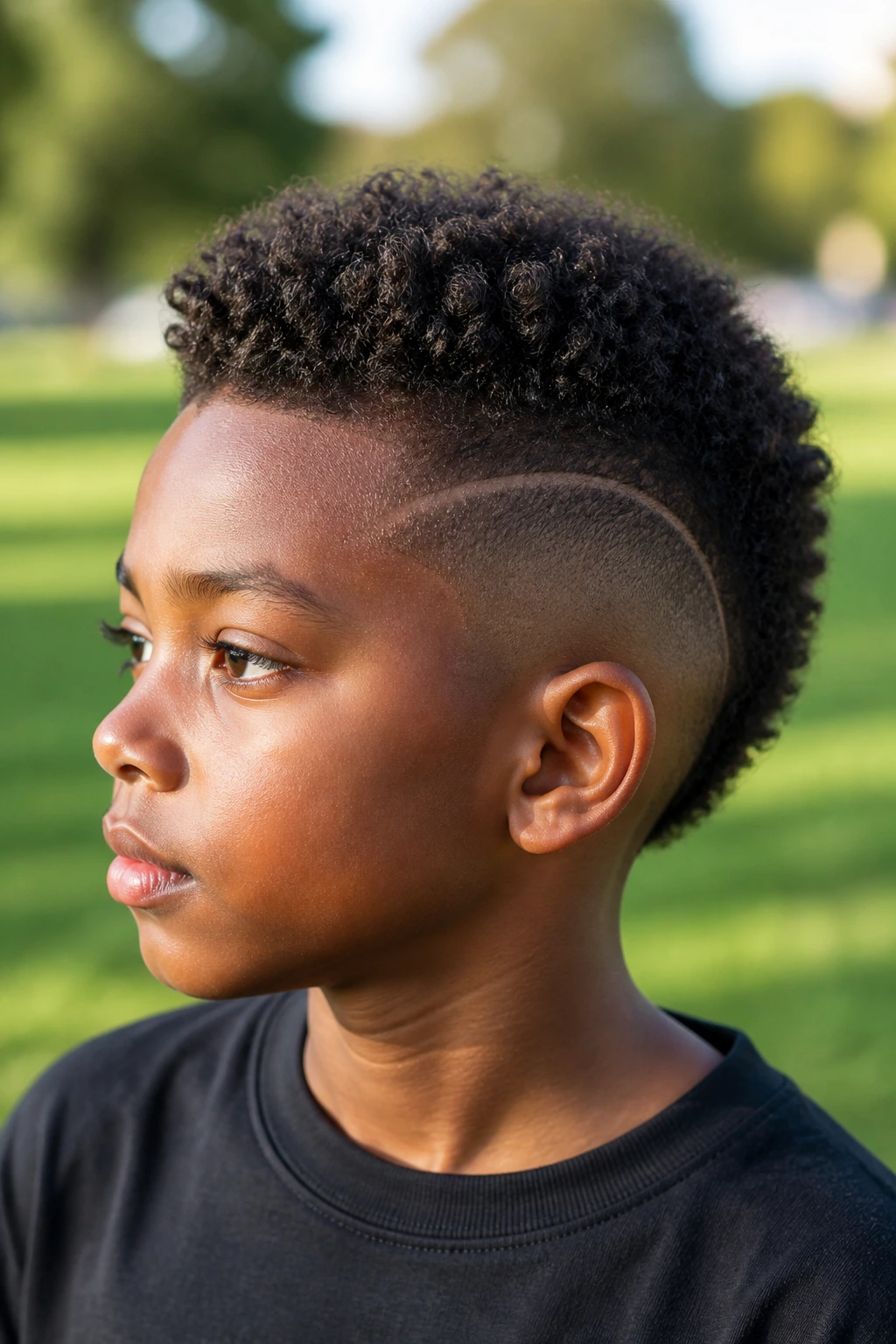
A frohawk with a curved fade gives curly hair a little more attitude than a standard tapered frohawk. The fade arcs around the sides, and the center strip stands out more clearly because the shape around it curves away. It’s a more dramatic outline, but still wearable for kids who want something fun.
The center section can stay dense and textured, or it can be sponge-styled for a more defined look. The curved fade is what separates this from a basic mohawk. It makes the sides feel intentional, not simply cut down. If the child has a round face, the vertical lift can look especially good.
This cut does best with regular edge cleanups. When the fade loses its curve, the whole style starts to look blurred. Keep the outline fresh and the center moisturized, and it stays sharp longer than you’d expect.
27. Side-Swept Curls with a Taper
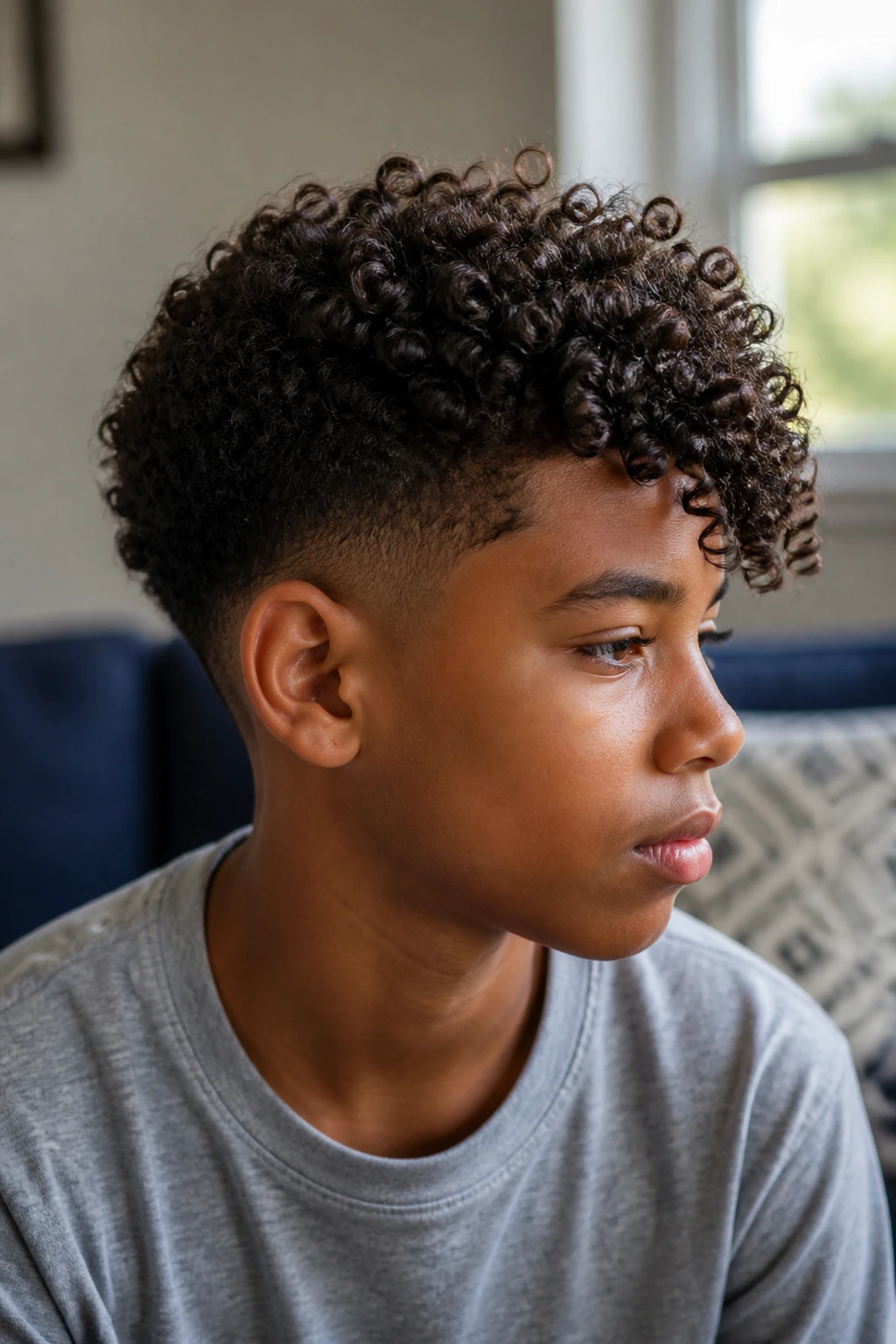
Side-swept curls are the softer sibling in the family. Instead of pushing everything upward or boxing it in, the curls are directed to one side, which gives the haircut a relaxed, natural flow. A taper around the ears and neckline keeps the shape neat enough for school while the top stays easygoing.
This style works when the curls have enough length to move, usually around 2 inches or a little more. A barber can shape the top with scissors or light clipper work, then teach the direction with a comb while the hair is damp. It’s a nice option for kids who don’t want a big, attention-grabbing cut.
The side sweep also grows out forgivingly. When the curls start to lose direction, a quick mist of water and a little finger-combing usually fixes the problem. No drama. That’s what makes it useful.
28. Classic Rounded Cut with a Soft Taper
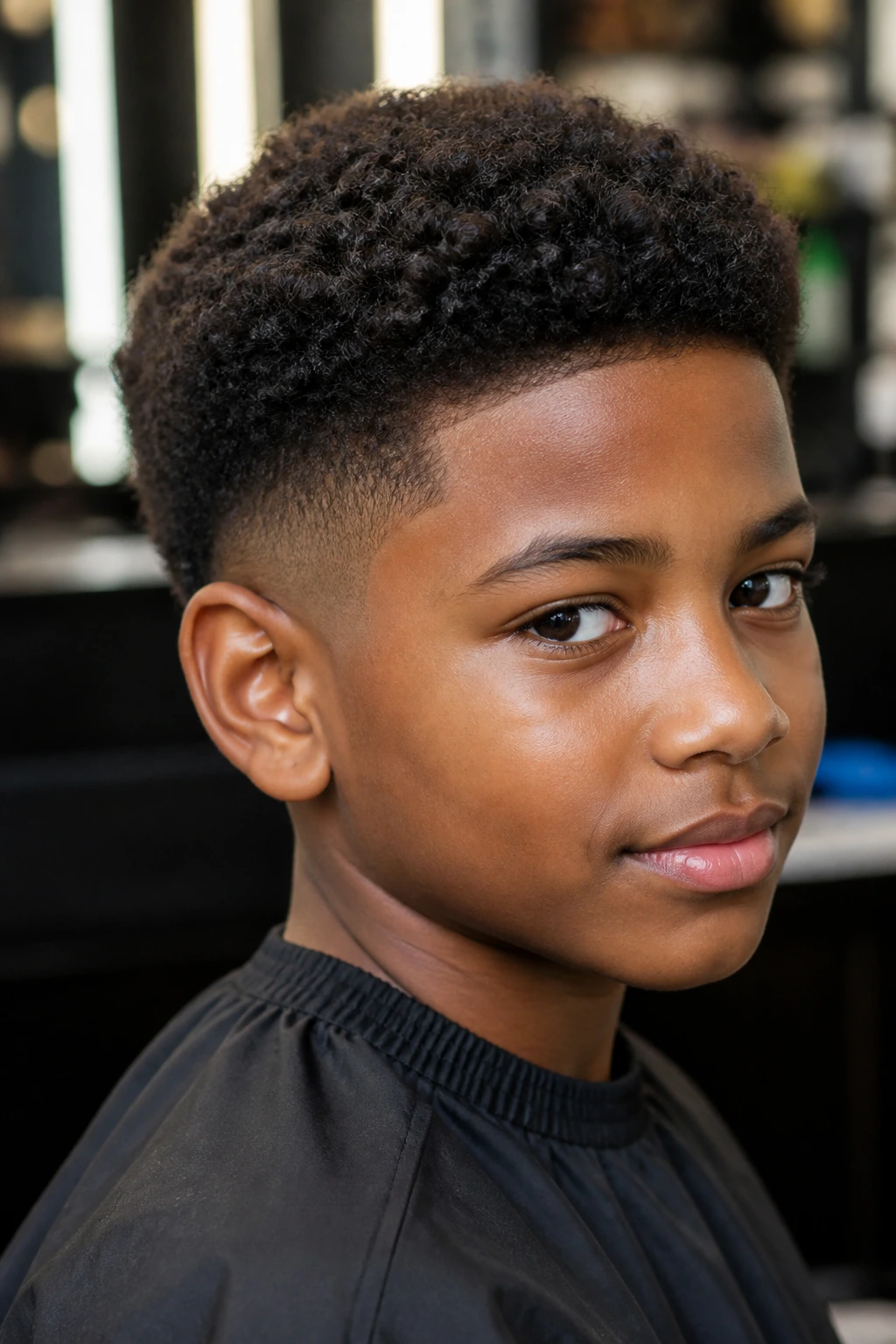
The classic rounded cut is the safe answer, but not in a boring way. The top follows the head in a smooth curve, the curls stay natural, and the soft taper at the sides keeps the haircut from puffing into a wide shape. It’s the style I’d pick when I want a clean finish that won’t fight the child’s hair.
This cut is especially good for kids who are in and out of barbershops often or who don’t want to sit through a lot of clipping. It grows out with grace. The rounded outline hides small uneven spots, and the soft taper buys time before the next appointment. That’s useful, because hair does not stay perfectly shaped for long on an active child.
If you only choose one low-stress option from this whole list, this is the one I’d put near the top. It’s straightforward, tidy, and easy to live with.
What Black Boys Haircuts for Curly Hair Need More Than Anything
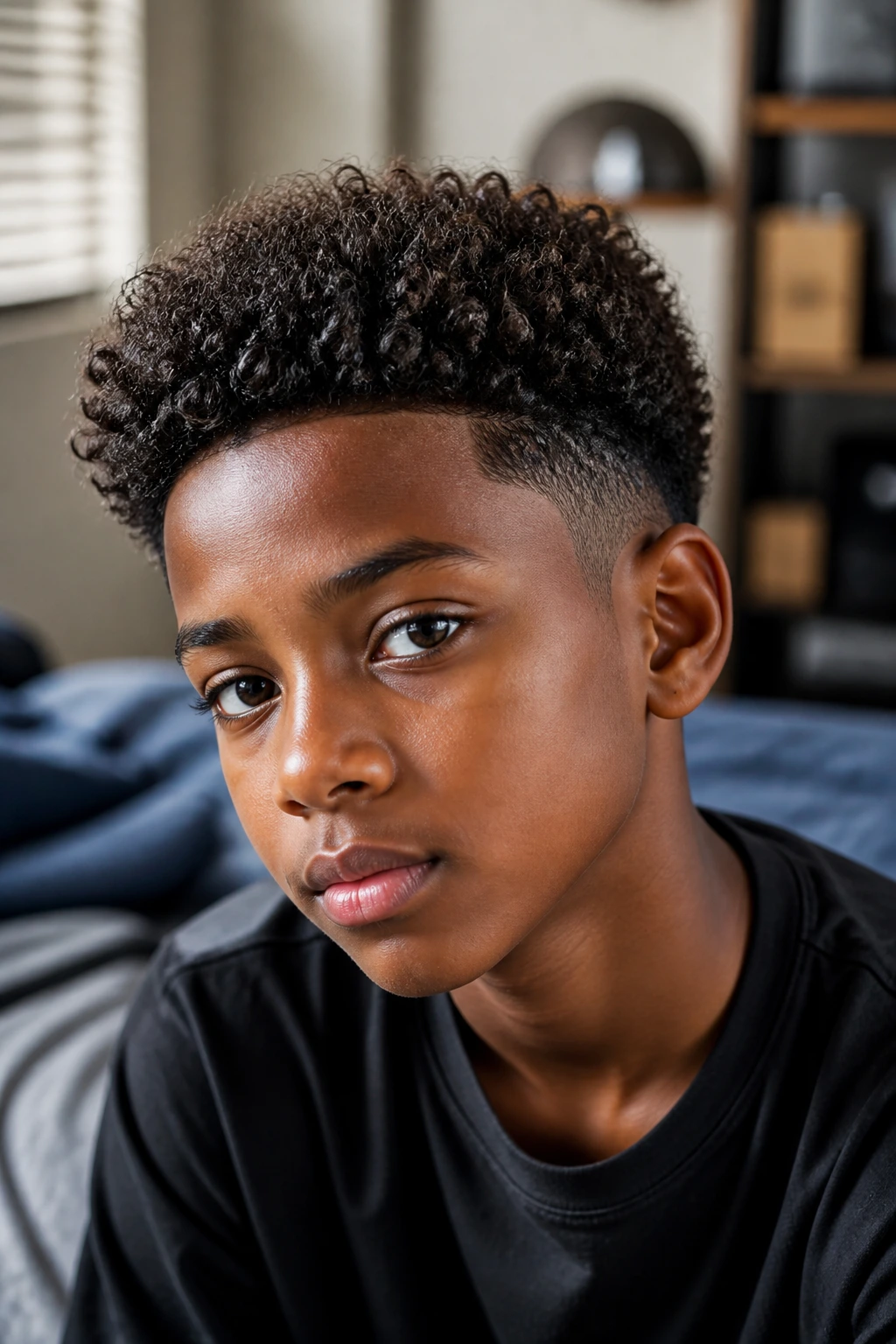
The best curly haircut is not the sharpest one in the chair. It’s the one that still makes sense when the curls dry, the child starts sweating, and the fade has had a week to soften. That means shape, shrinkage, and grow-out all need to be part of the plan before the first clipper guard comes out.
A good barber will look at the crown, the temples, the forehead, and the neckline as separate problems. A good parent will know which of those problems matters most on a school morning. The right cut is usually a compromise between those two truths. Keep that in mind, and the haircut will last longer in the real world, not just in the mirror.
Essential Tools for the Barber Chair and the Bathroom Shelf
-
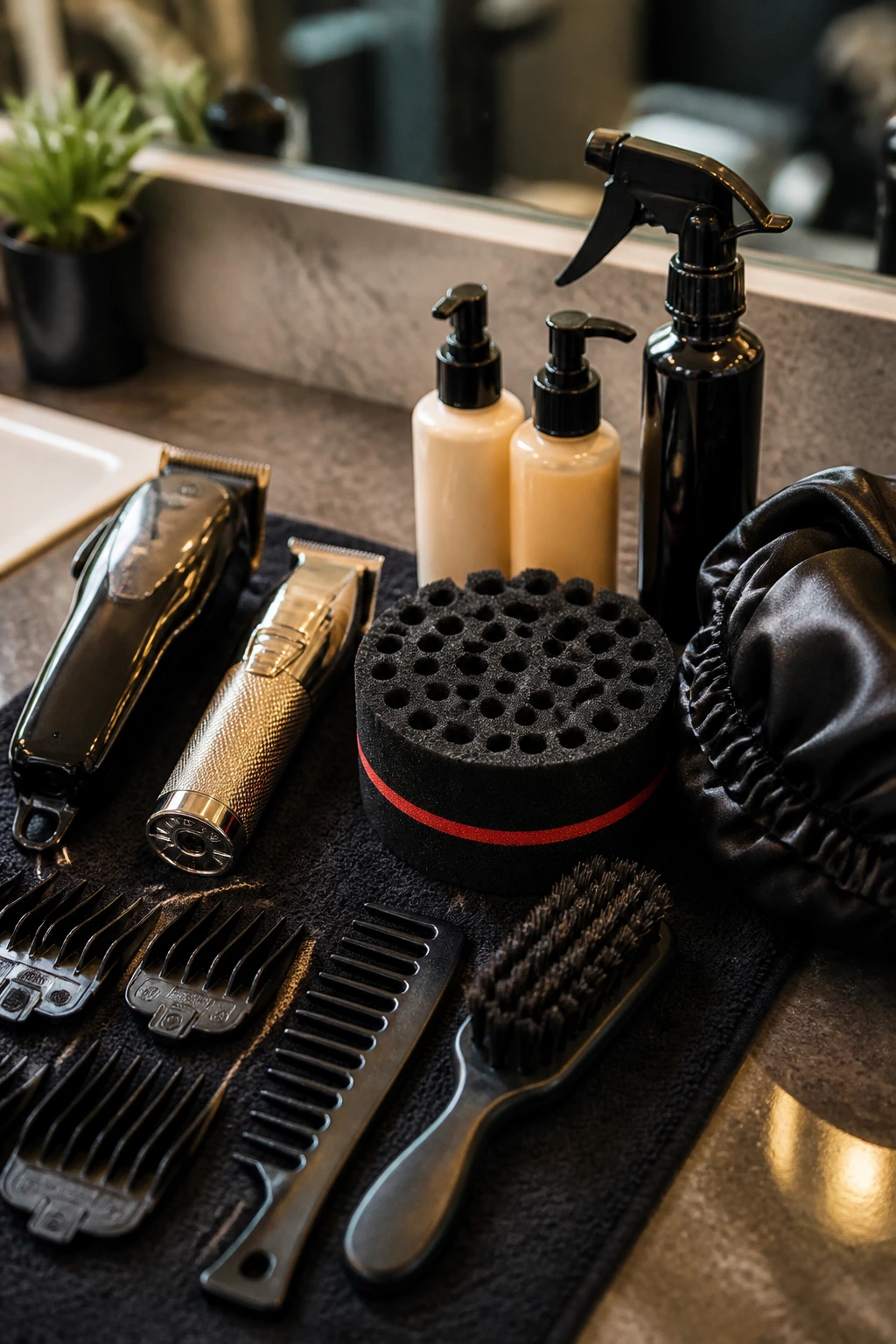
Clipper set with multiple guards: A clean fade depends on the right guard length, especially when the top is curly and the sides need a controlled blend.
-
Detail trimmer: This sharpens the hairline, temples, and neckline without tearing up the skin.
-
Curl sponge: Best for short coils and sponge twist styles; use it lightly on damp hair.
-
Wide-tooth comb: Helps separate curls without pulling them apart too aggressively.
-
Soft brush: Useful for smoothing the top or directing side-swept curls.
-
Spray bottle: A light mist makes styling easier than working on bone-dry curls.
-
Leave-in conditioner: Keeps the hair soft and easier to shape without piling on heavy grease.
-
Light curl cream: Good for finger coils, twist-outs, and sponge styles that need definition.
-
Satin bonnet or pillowcase: Helps reduce friction at night so the curls and edges don’t get roughed up.
-
Hand mirror: Lets you check the back of the fade and neckline at home before it gets too fuzzy.
What to Tell the Barber Before the First Clip
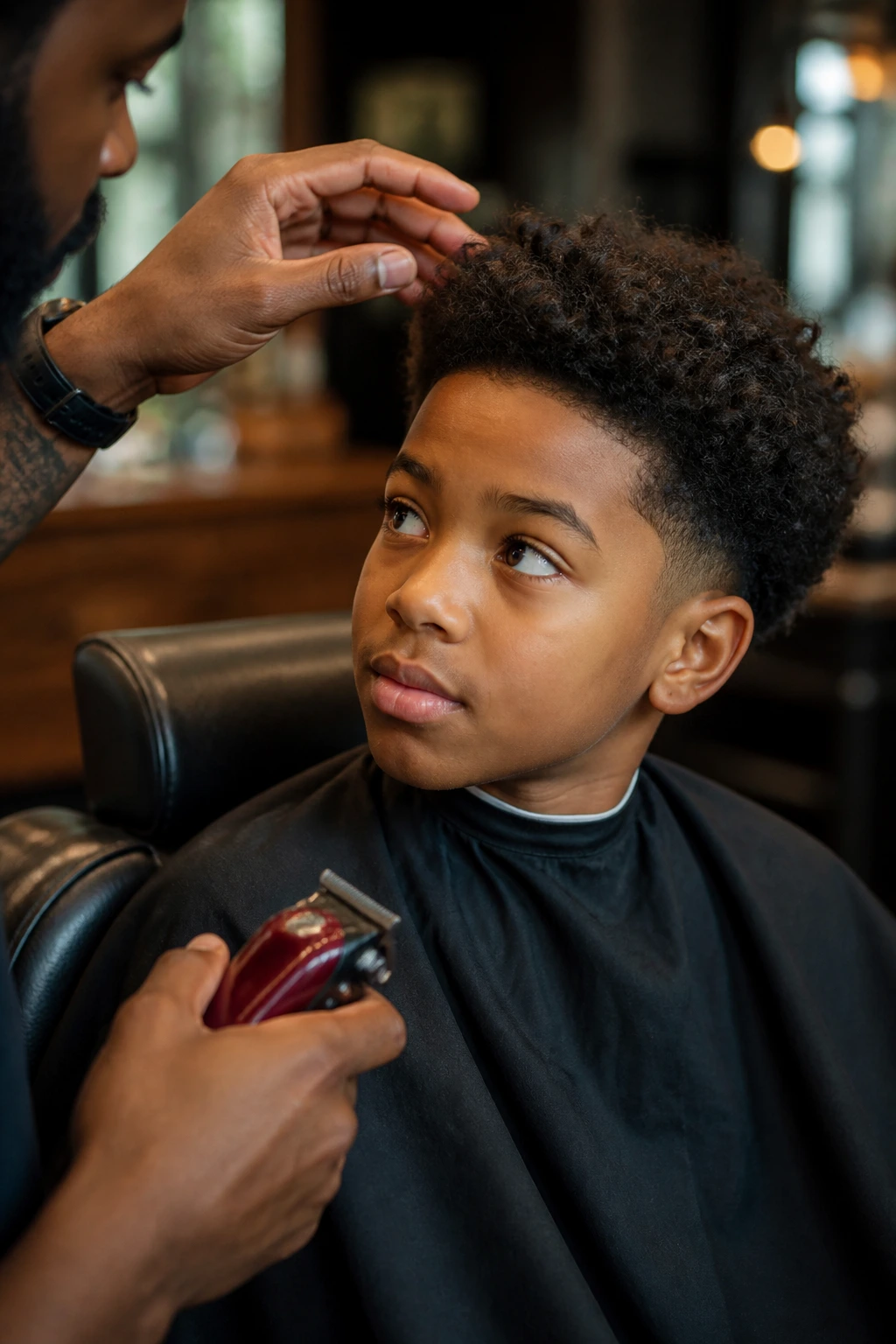
A good haircut starts before the clippers hum. Bring a photo, but bring two if you can: one of the front and one of the side. Curly hair looks different from every angle, and a single front shot rarely shows how much length sits on top or how low the taper should fall behind the ear.
Say what the hair needs to do in real life. Does it have to stay off the forehead during school? Does it need to survive sports? Is the child tender around the ears and hates a skin fade? Those are the useful details. A barber can work with them fast. “Make it cool” is too vague to help much.
If the curls shrink hard when they dry, mention that. If the crown sticks up in one spot, say so. If the hairline grows unevenly, point that out before the line-up starts. A few seconds of explanation can save a week of grow-out regret. And if the child is fidgety, ask for a style that does not depend on razor-thin perfection. That small choice keeps the haircut looking good even after a rough school day.
How to Keep the Cut Looking Fresh Between Visits
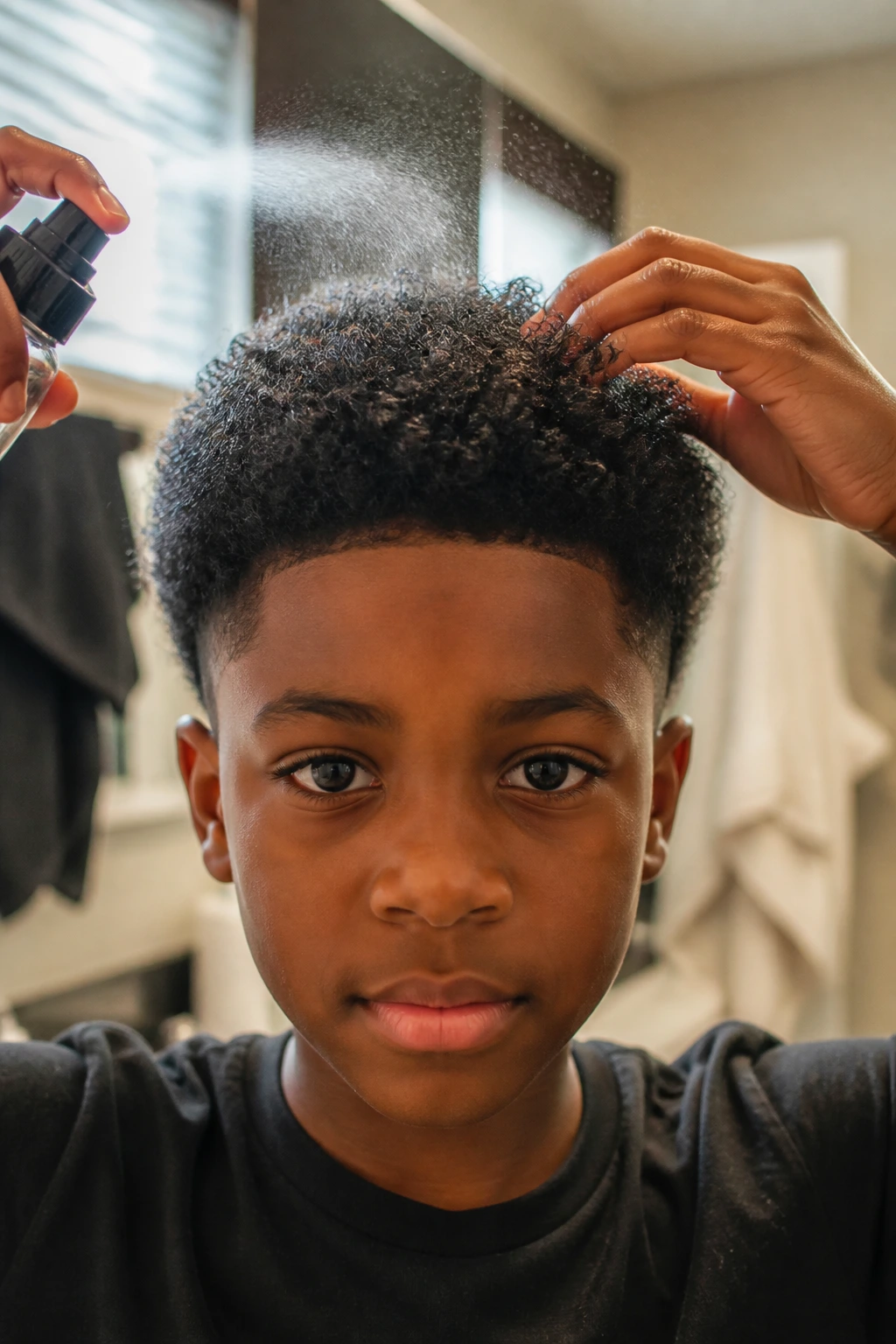
The cleanest way to wear these styles is to treat them like a shape, not a one-time event. A low taper or temple fade usually needs a touch-up every 10 to 14 days if you want the lines crisp. Softer styles — rounded afros, shadow fades, side-swept curls — can stretch farther, often 2 to 4 weeks, before they start looking fuzzy around the edges.
At home, a light morning reset works better than a full restyle. Mist the hair with water, add a pea-sized amount of leave-in if the curls feel dry, and shape with your fingers or a soft brush. If the style uses sponge curls or twist definition, keep the pass short. A minute or two is enough. Overworking the hair only makes it frizz.
Night care matters more than most people expect. A satin bonnet or pillowcase cuts down on friction, which helps the top keep its shape and keeps the line-up from getting rough at the edges. If the child sweats at night, let the hair dry before covering it. Wet curls under fabric can get flat and smell stale fast.
For styles with twists, locs, or braids, check the roots every week. If they start puffing or twisting apart, refresh them before the whole style unravels. That rhythm — light daily care, small weekly checks, regular touch-ups — is what keeps the haircut looking like a haircut instead of a memory of one.
Extra Shape, Cleaner Edges, Better Grow-Out
-
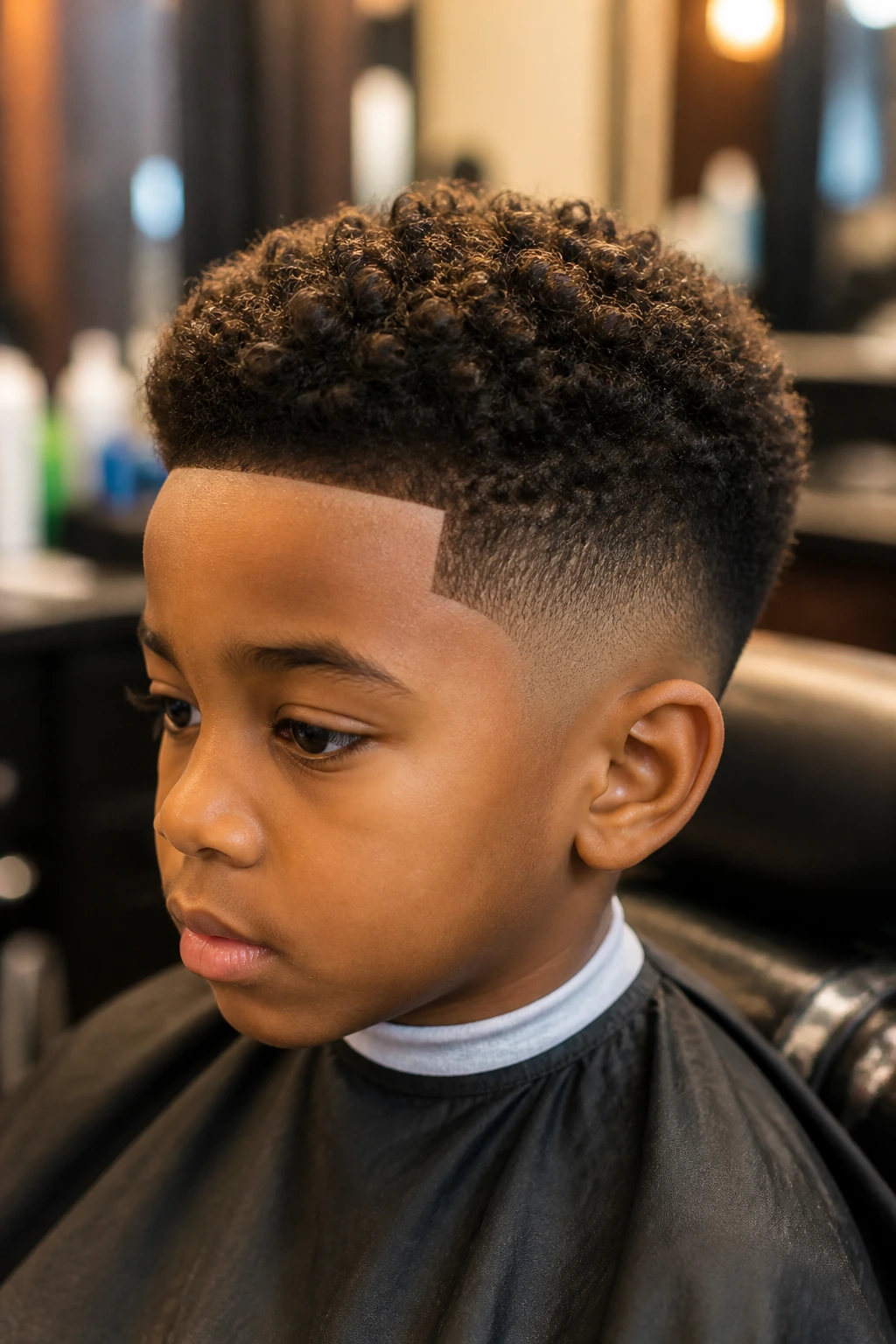
Line-Up Upgrade: Keep the front line clean, but do not push it back aggressively on a child whose hairline is still filling in. A softer corner grows out better and looks less harsh after a week.
-
Curl Definition: Use a leave-in conditioner first, then a small amount of curl cream. Heavy pomade makes curls clump and sit greasy, which is a fast way to lose the shape you just paid for.
-
Parting Detail: A hard part can sharpen a fade or boxy afro, but a soft part ages better. If the child changes styles often, soft is safer.
-
Photo-Day Finish: A quick mist, a tidy sponge pass, and a fresh neckline cleanup the day before pictures make a bigger difference than piling on product.
-
Make It Yours: For low-maintenance kids, choose a rounded afro, shadow fade, or soft taper. For kids who like a bolder look, go with a burst fade, high top, or frohawk.
Common Mistakes That Make Curly Cuts Look Off
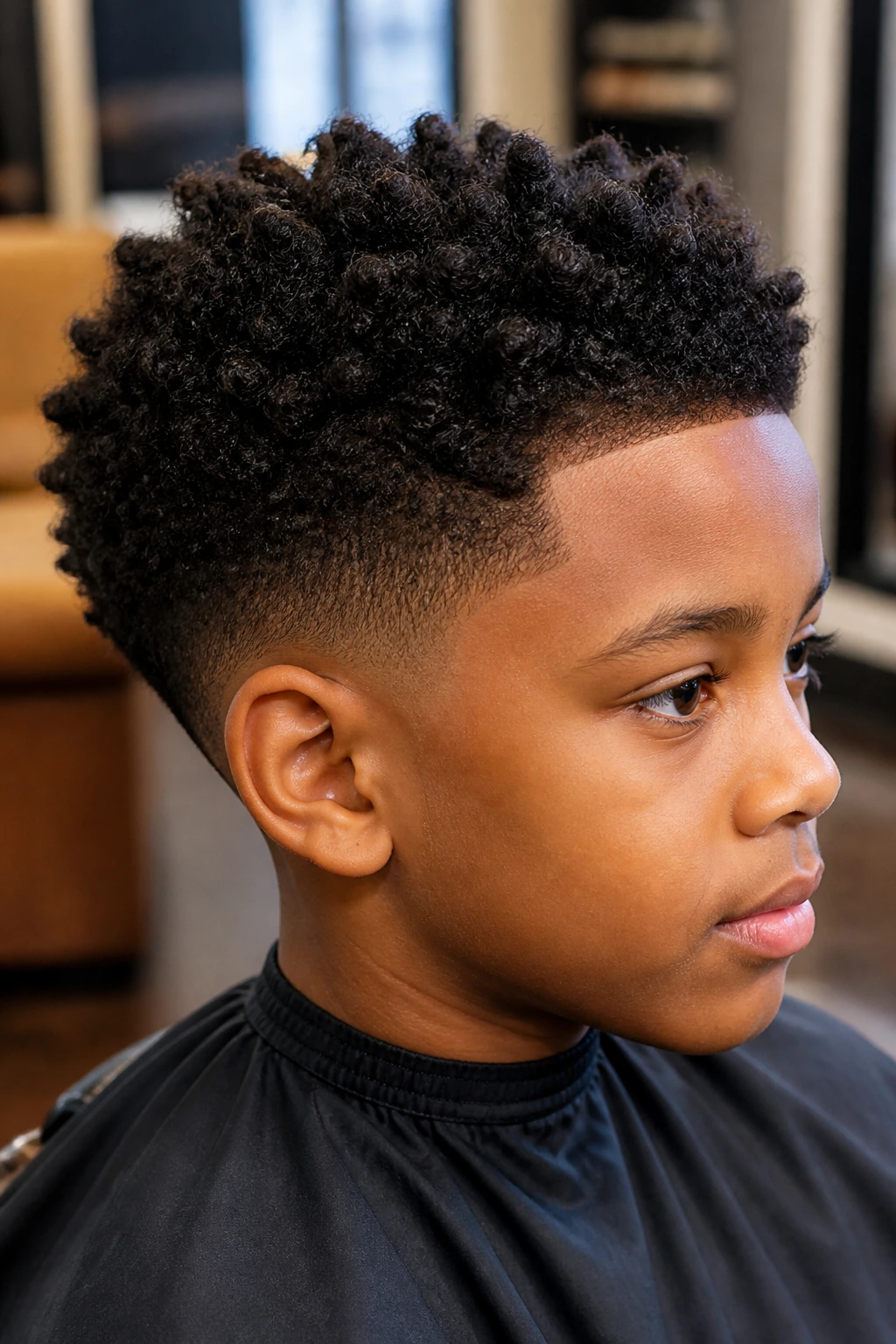
The first mistake is cutting curly hair too wet and assuming the finished shape will match the chair shape. It won’t, at least not exactly. The fix is simple: dry the top enough to see the real curl pattern, or ask the barber to account for shrinkage before taking off length.
Another common problem is pushing the hairline back too far on a line-up. On a child, that can make the forehead look bigger and leave the cut looking older than it should. A softer edge with rounded corners usually grows out better and still looks clean.
Heavy product is another trap. Grease, wax, and thick pomades can make curls sit flat and attract lint by lunchtime. Use a light leave-in or curl cream instead, then add more only if the hair still feels dry.
The last mistake worth calling out is ignoring the crown and the nape. That’s where curly hair sprouts out the fastest. If the barber shapes the front but forgets those two spots, the haircut falls apart from behind first, which is annoying because the front may still look fine.
Variations and Adaptations to Try
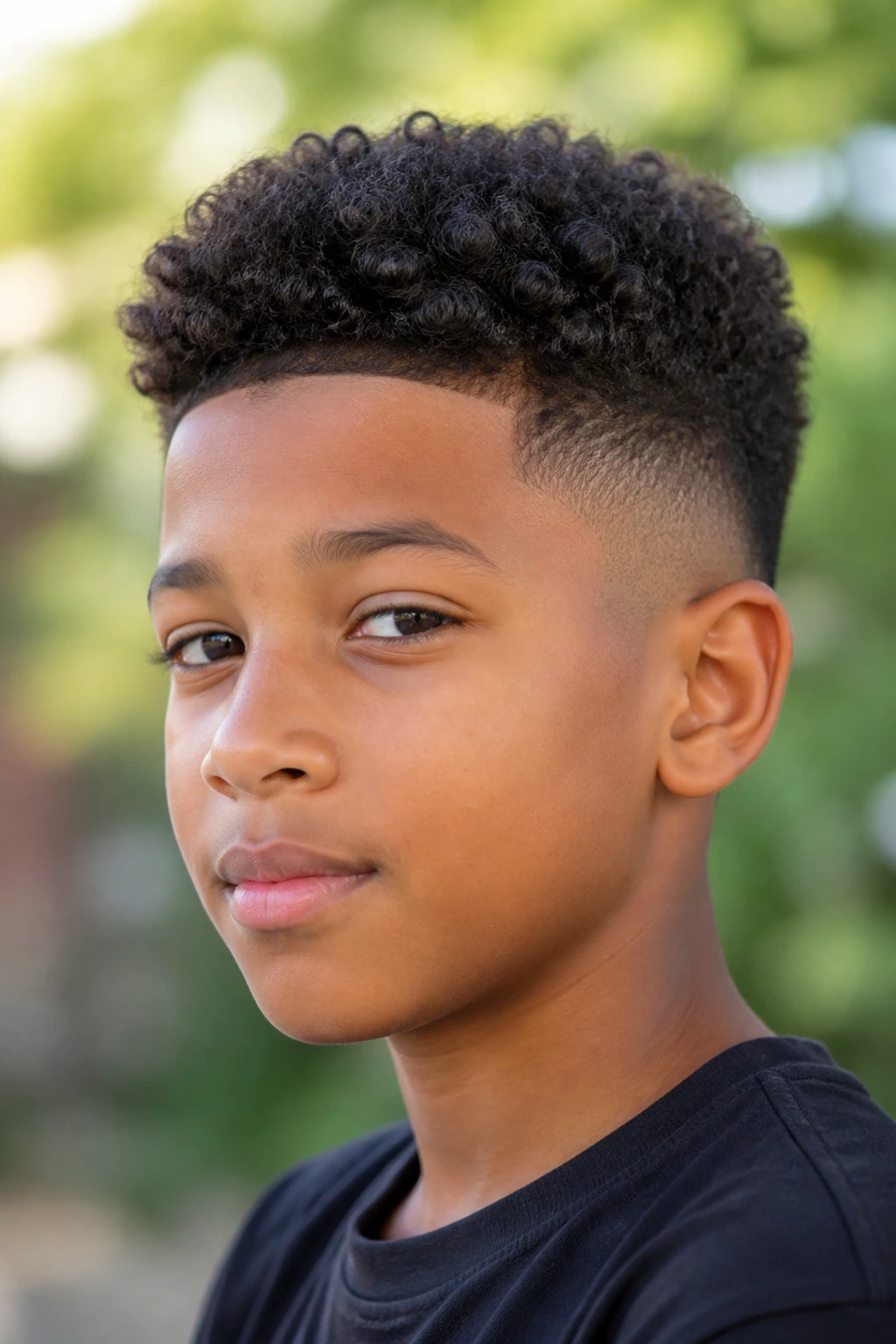
The Low-Key School Version: Start with a low taper, rounded top, or shadow fade and skip shaved designs. It keeps the haircut neat under dress codes and makes grow-out less dramatic. Good for kids who want a cut they don’t have to think about every morning.
The Extra-Defined Coil Version: Use sponge curls, finger coils, or a twist-out on the top with a cleaner fade on the sides. This one puts texture front and center, so the curl pattern becomes part of the style instead of just the hair under the style.
The Protective Style Version: Mini locs, two-strand twists, or braided fronts hold up longer and reduce daily handling. They take more care at the roots, but they’re useful when you want the hair to rest between cuts.
The Sensitive Scalp Version: Skip the skin fade and ask for a soft taper or scissor-cut top. That keeps the clippers farther from the skin and gives you a gentler shape without losing neatness.
The Bold Shape Version: Go with a high top, burst fade mohawk, or frohawk if the kid likes a haircut that stands out in a crowd. These styles need more upkeep, but they also give curly hair the most visual punch.
Questions Parents Ask Before Booking the Cut

What haircut is best for a little boy with tight curls?
A low taper with sponge curls or a rounded afro is usually the easiest place to start. Both keep the texture visible without demanding much daily styling, and both grow out in a clean way.
Should curly hair be cut wet or dry?
Dry or slightly damp is better when the goal is to see the real shape. Wet curls stretch out, then shrink later, which makes the haircut look shorter than expected once it settles.
How often should a curly fade be touched up?
A sharp fade usually needs a refresh every 10 to 14 days. Softer tapers can last longer, sometimes 3 to 4 weeks, because the grow-out blends more quietly.
What if my child hates hair touching his forehead?
Try a curly Caesar, short crop, or side-swept cut with a soft taper. Those keep the front controlled without forcing the curls into a style that fights the face.
Do sponge curls damage the hair?
Not when they’re used lightly on damp hair with a bit of leave-in. The problem comes from pressing too hard, going too long, or using the sponge on dry hair every day.
Which style works best for school and sports?
The low taper, shadow fade, and rounded afro are the safest bets. They stay neat with less effort and don’t need a lot of midweek rescue work after sweating.
What if the curls grow unevenly on one side?
Ask the barber to shape the haircut around the natural growth pattern instead of trying to force both sides to mirror each other perfectly. That keeps the style balanced in motion, which matters more than symmetry in a static mirror.
Can these cuts work if the hair is thick and dry?
Yes, but the hair needs moisture first. A light leave-in after washing and a satin bonnet at night make the cut look softer and help the curls sit where you want them.
A Cut That Leaves Room for Growth
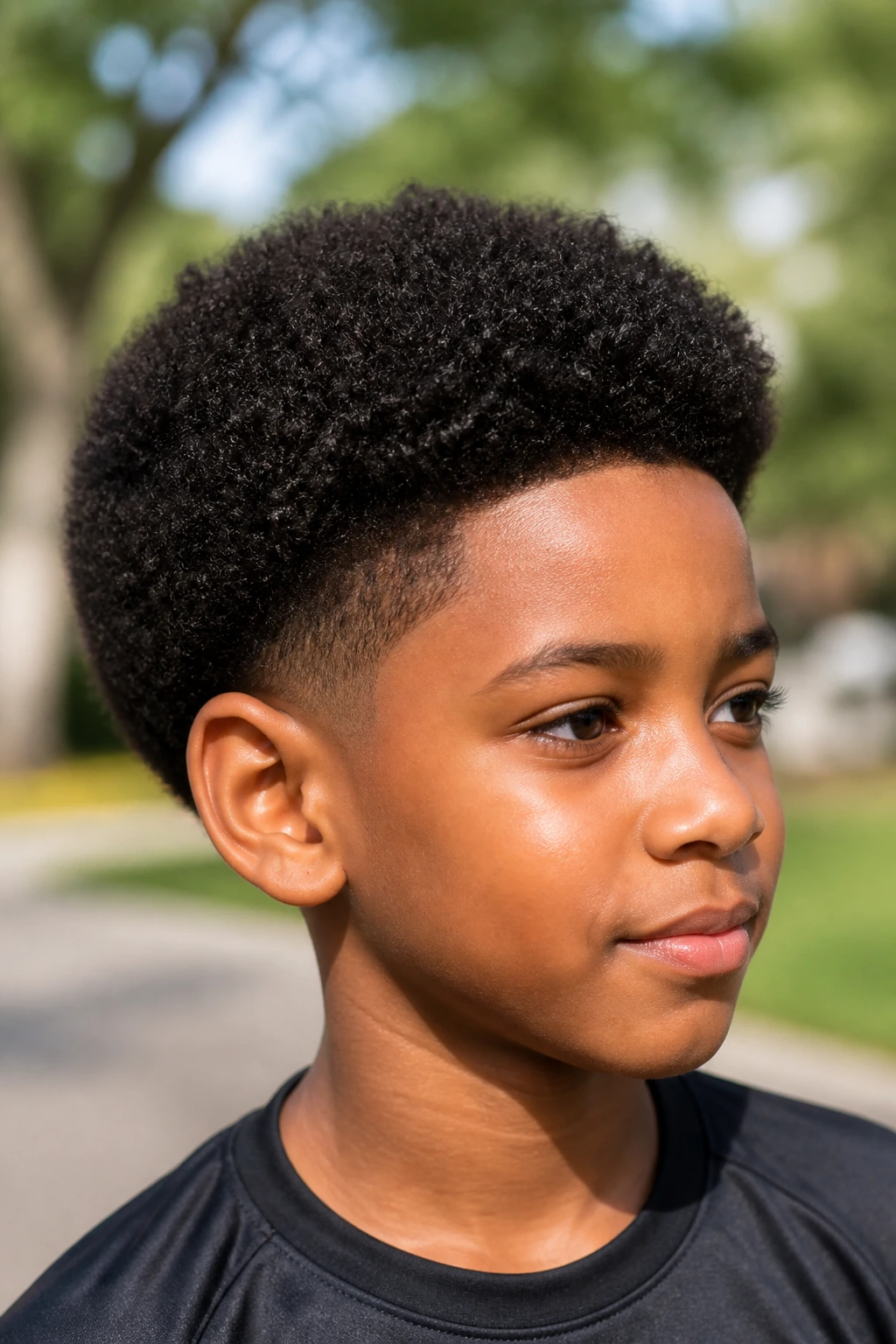
The best black boys haircuts for curly hair do one thing well: they give the curl enough room to be itself while still keeping the outline clean. That balance is what makes a low taper look sharp, a rounded afro look polished, and a fade grow out without turning into a problem by the second week.
And honestly, that’s the whole game. If the cut respects shrinkage, crown shape, and daily life, it will look better in real use than it does in the barber chair. That’s the version worth booking again.
Pick the shape that matches the hair, the schedule, and the kid wearing it. The rest tends to fall into place.
