



The easiest way to lose five minutes before school is to start with a hairstyle that needs twelve pins and a miracle.
Kids’ hairstyles for school work best when they solve a real morning problem: hair in the eyes, tangles at the nape, a style that falls apart on the bus, or a child who melts down the second the brush comes out. A style can look polished in the bathroom mirror and still fail by second period. That’s the part most lists skip.
I care more about a style that survives recess than one that looks clever for a photo. Give me neat partings, soft edges, and something that still makes sense after a backpack, a hoodie, and an hour of head-turning in class. The best school styles are not fussy. They are sturdy.
Why These School Styles Earn Their Spot
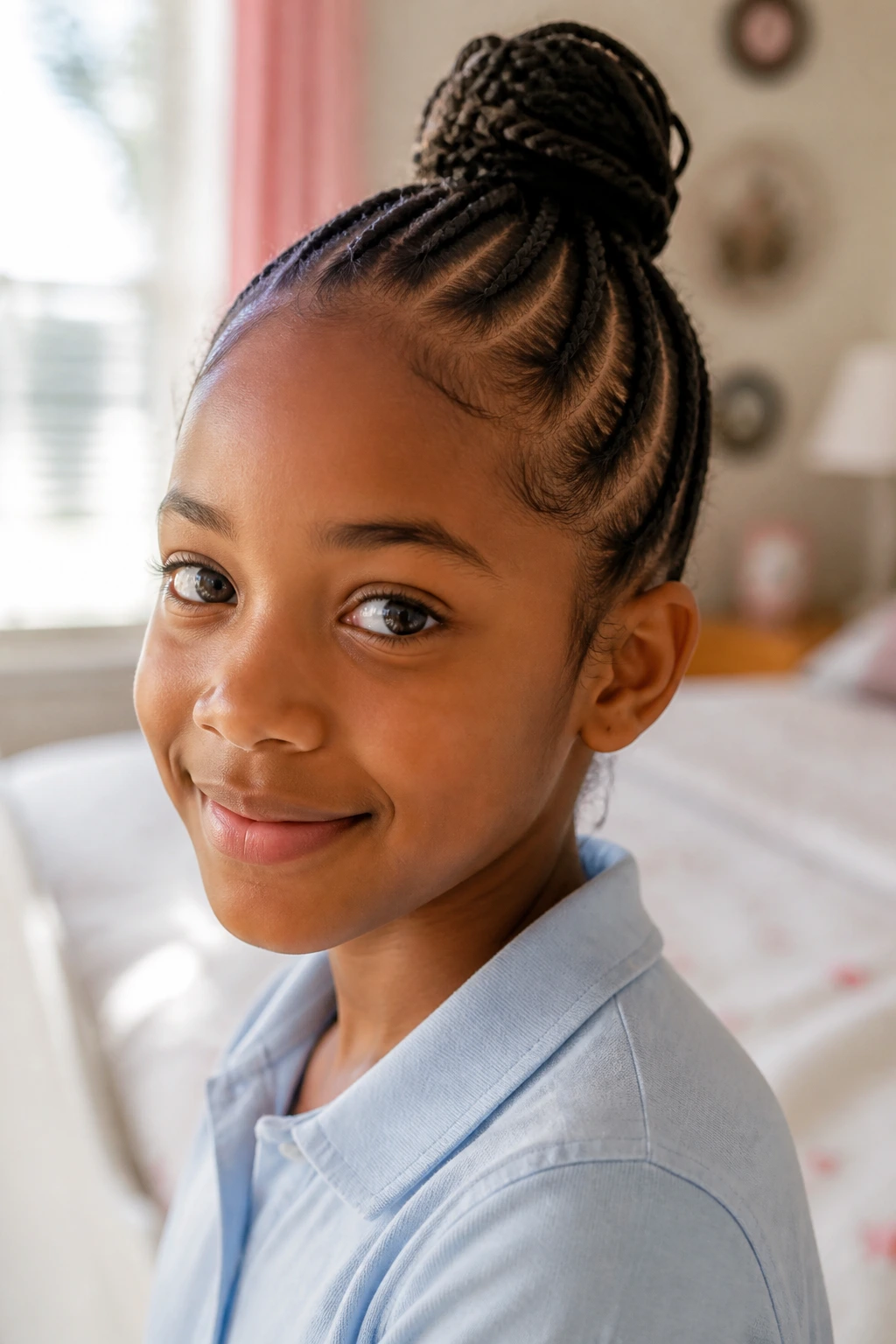
- Fast Morning Build: Most of these styles can be done in three to eight minutes once the hair is detangled, which matters when the bus clock is moving faster than your child is.
- Face-First Comfort: The styles keep bangs, flyaways, and side pieces out of the eyes without pulling so hard that the scalp aches by lunch.
- Active-Day Friendly: They hold up through playground runs, PE, lunchroom chairs, and the always-annoying hoodie-on, hoodie-off shuffle.
- Hair-Type Friendly: There are options here for straight hair, curls, coils, short cuts, and hair that slips out of everything except a determined braid.
- School-Rule Safe: Most can be done with plain elastics, small clips, and simple ribbons, so you can stay within stricter dress codes.
- Not Too Precious: A little mess does not ruin these styles. That matters. School hair has to be useful first, pretty second.
What Makes a Hairstyle Actually Work on a School Day
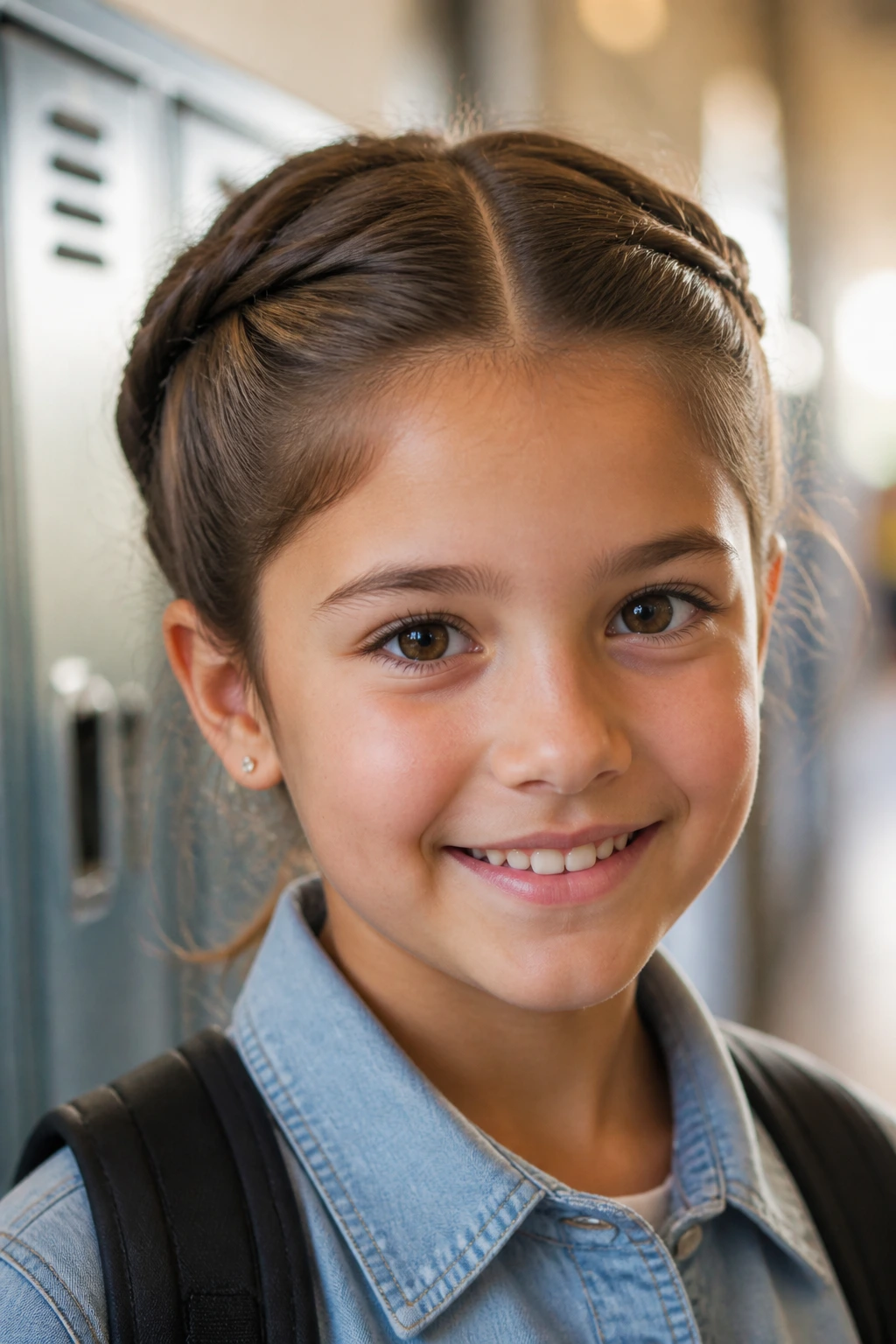
A hairstyle earns its keep when it handles friction. That means backpack straps, collars, gym class, and the habit kids have of shoving one side of their hair behind an ear and forgetting the rest. A good school style does not fight all of that with a mountain of product. It starts with a clean part, a sensible amount of tension, and a shape that suits the child’s hair instead of bullying it into something else.
Comfort counts more than people admit. A style that looks tidy but pinches at the temples or tugs hard along the hairline is the kind of style a child will yank loose halfway through class. I’d rather do a slightly looser braid with a little frizz than a tight, shiny helmet. The first one gets worn. The second one gets ripped out in the car.
Then there’s speed. The best kids hairstyles for school are the ones you can repeat on a sleepy Monday without needing a tutorial video open on your phone. If a style takes longer than the breakfast toast, it had better last two days. That’s the simple math of school mornings.
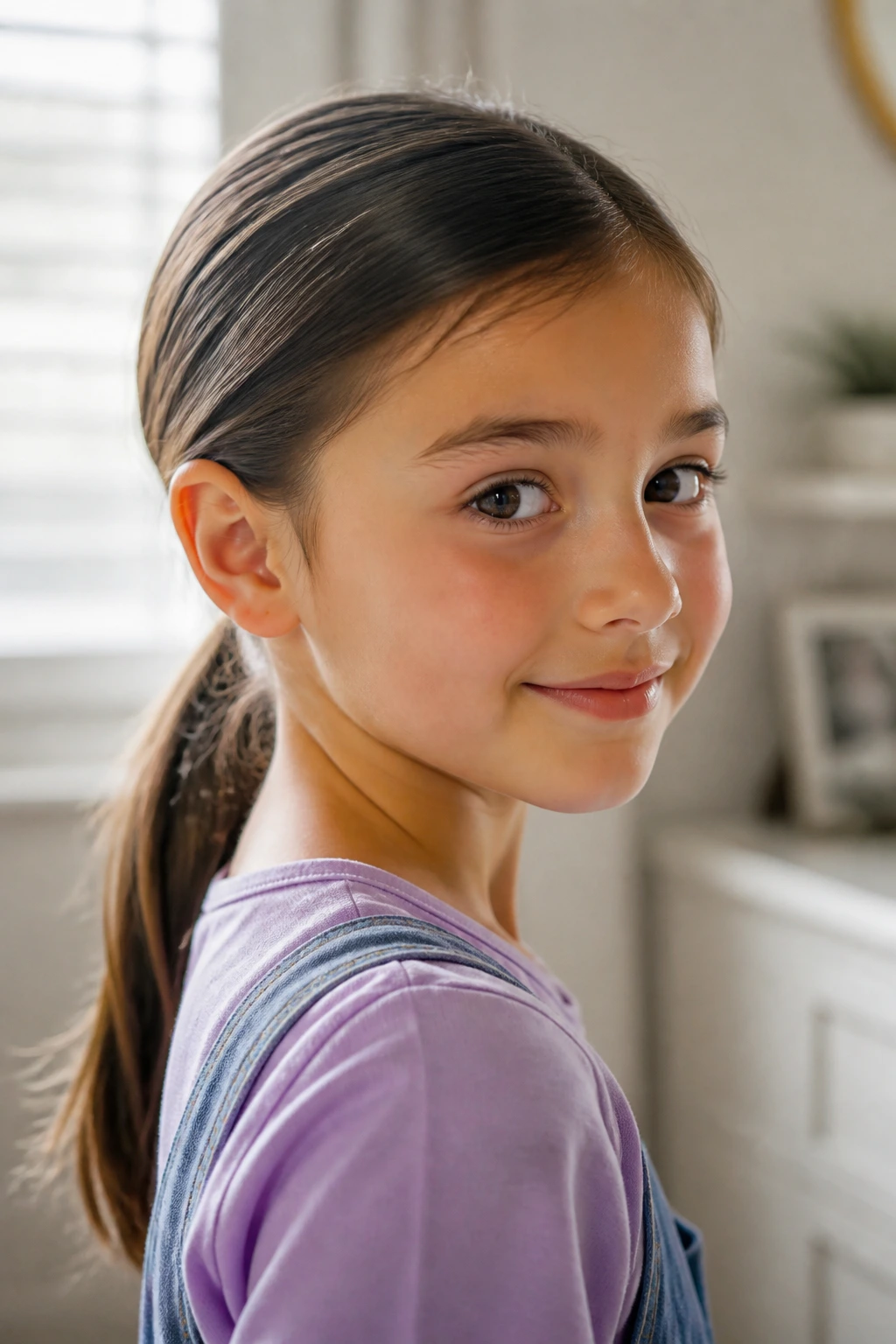
1. Sleek Low Ponytail
A low ponytail is the quiet workhorse of school hair. It sits low enough to fit under a hoodie or backpack strap, and when you smooth the front with a little water or detangler, it looks intentional instead of rushed.
Why it stays put
The low placement keeps tension off the crown, which matters for kids who hate a pulled scalp. I like it with a side part on fine hair and a middle part on thicker hair; both look clean, and both take under three minutes once the hair is brushed through.
- Best for straight or lightly wavy hair.
- Use one snag-free elastic and keep a spare in the backpack.
- Tame flyaways with a pea-size bit of styling cream, not a heavy glob.
- A small strand wrapped around the elastic makes it look finished.
Best move: If the ends tend to frizz, mist them lightly and smooth with your hands before you head out.
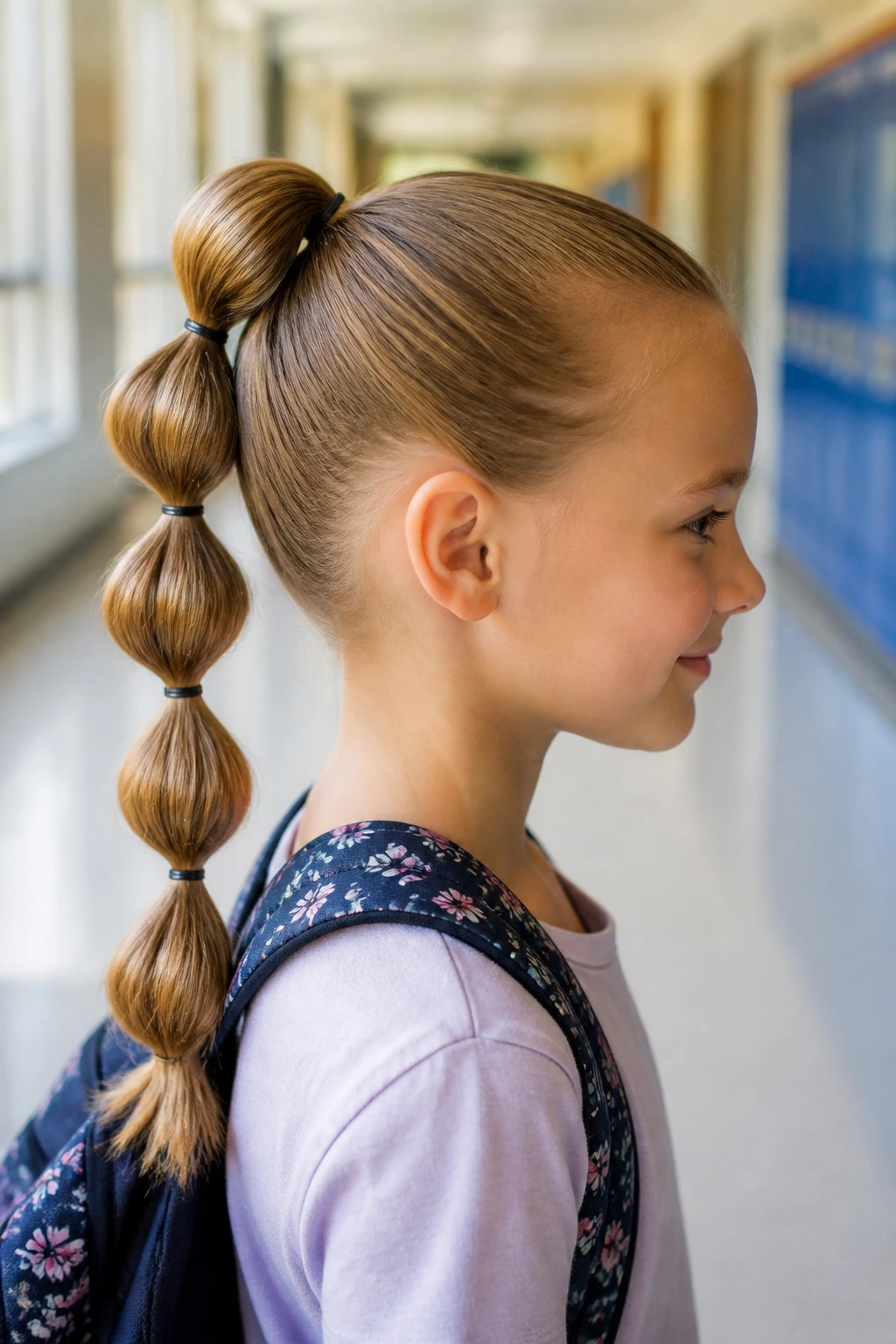
2. Bubble Ponytail
If a child likes a ponytail but gets bored halfway through the week, bubble ponytail is the easiest upgrade. It has shape, but not the kind that makes a child feel overstyled.
The trick is simple: tie the ponytail, then add small elastics every 2 to 3 inches down the length, tugging each section gently so it puffs into a round “bubble.” It works beautifully on medium and long hair, and it stays neat because each elastic acts like a checkpoint. I like clear elastics for a subtle look and colored bands when the school day needs a little personality.
Keep the bubbles even. Uneven spacing looks accidental, not playful. And if the hair is very layered, mist the tail first so the shorter pieces stay inside the bubbles instead of slipping out.
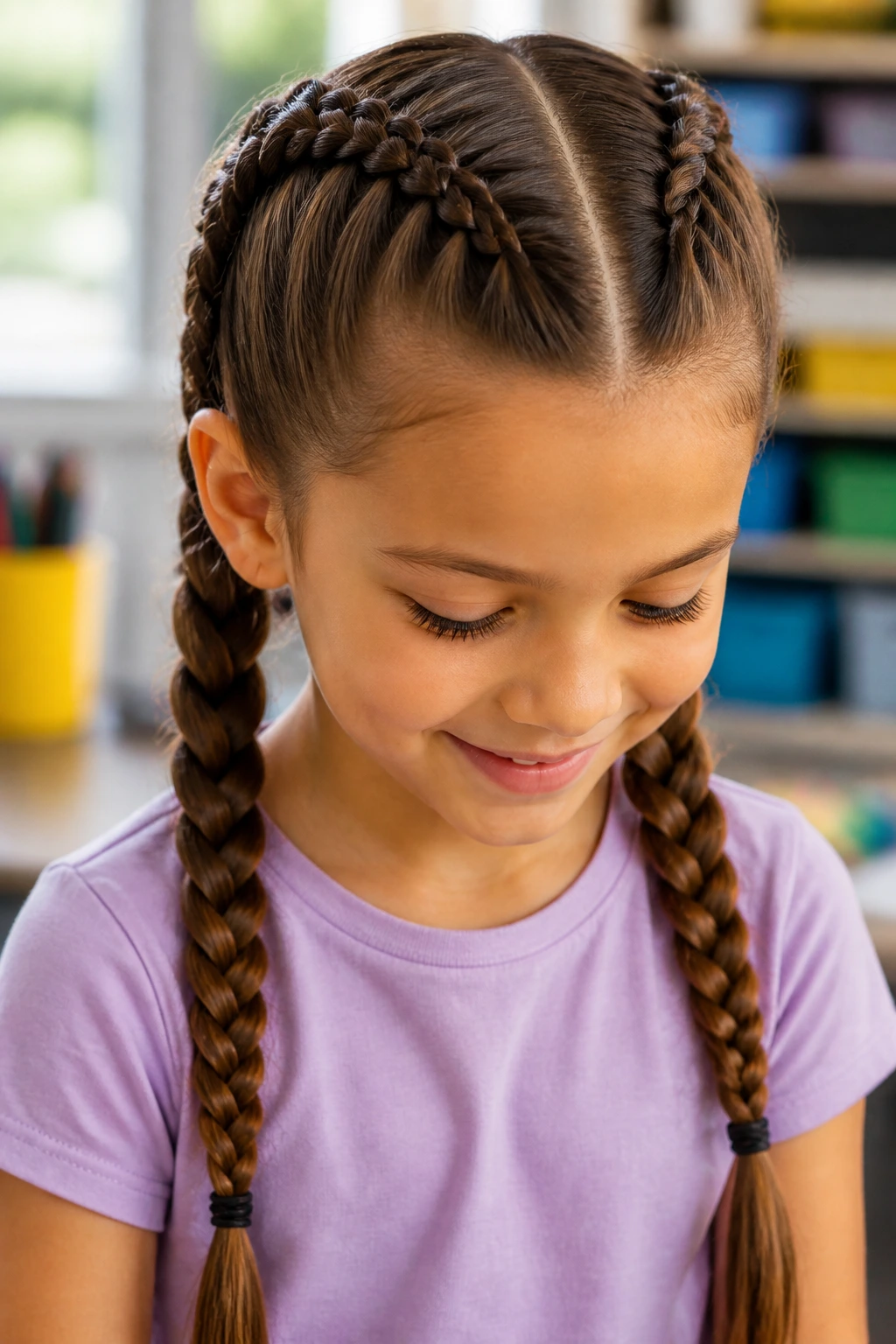
3. Twin Dutch Braids
Need a style that can take a full recess, a lunch spill, and a hoodie without falling apart? Dutch braids are the answer I reach for first.
How to keep the part clean
Dutch braids sit on top of the hair instead of disappearing into it, so they read clearly even on thick or textured hair. Start with a center part, then braid close to the scalp and keep the sections even. On slippery hair, a little detangler or lightweight cream helps the strands hold together without turning slick.
- Best for active days and after-school sports.
- Good for medium to long hair.
- Leaves the ends secure and controlled.
- Works on curls if you braid gently and avoid over-tightening.
A neat braid is not about pulling harder. It’s about keeping the hand motion steady. That’s the part that makes the difference.
4. French Braid Into a Low Bun
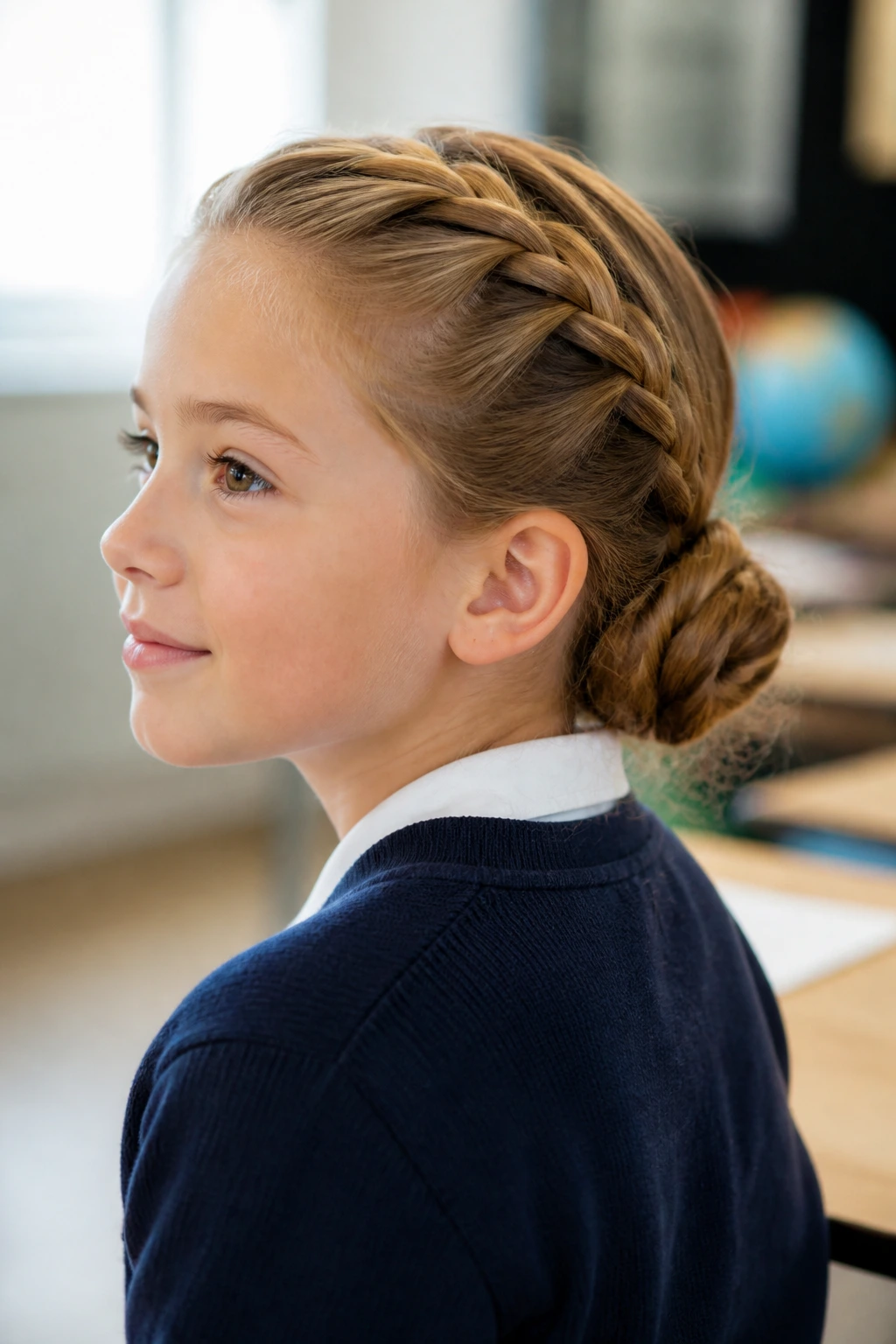
This is the style I’d pick for picture day, concert day, or any morning when the hair needs to look composed without being stiff. The braid does the tidy work at the top, and the bun handles the rest.
Start the French braid at the crown, carry it down the back, then coil the remaining length into a low bun at the nape and pin it flat. The finished look is clean from the front and secure from the back, which matters when a child leans on a chair or spends the afternoon in a car seat. It also keeps shorter layers from falling in the face.
A small ribbon at the base makes it school-ready without pushing the style into costume territory. I’d avoid a giant bow here. It competes with the braid.
5. Half-Up Twisted Crown
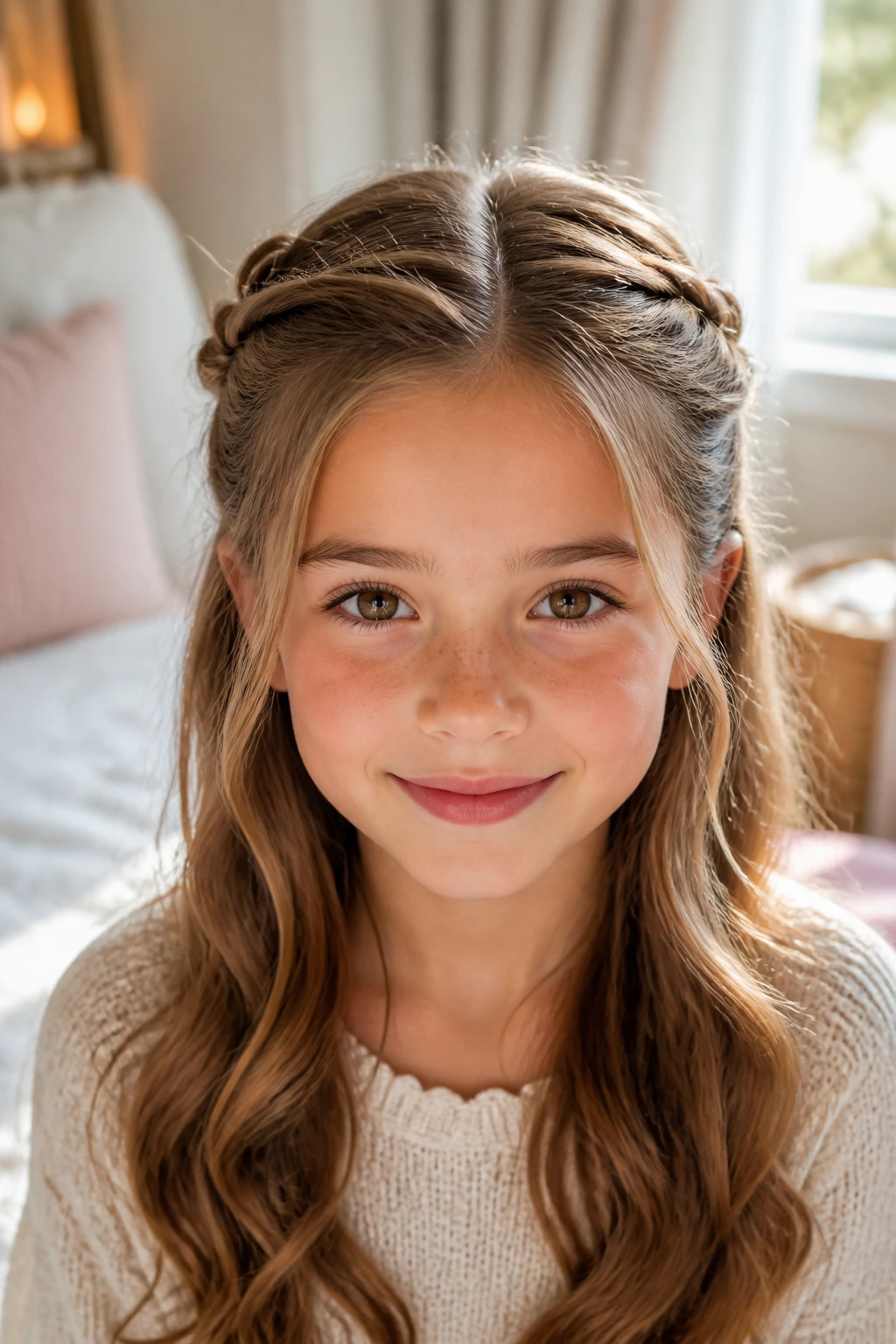
Half-up twists are what I reach for when a child wants to wear the length down but not have it hanging in their face all morning. The style feels soft, but it still clears the temples and forehead.
Take a section from each side, twist it back toward the crown, and secure the two pieces together at the back with a small clip or elastic. On layered hair, the twist hides the shorter front pieces better than a simple barrette does. On straight hair, a tiny bit of texturizing spray or water helps the twist grip.
This one is good for kids who dislike a full ponytail. It looks gentle. That sounds small, but it matters.
6. Two-Strand Pigtails
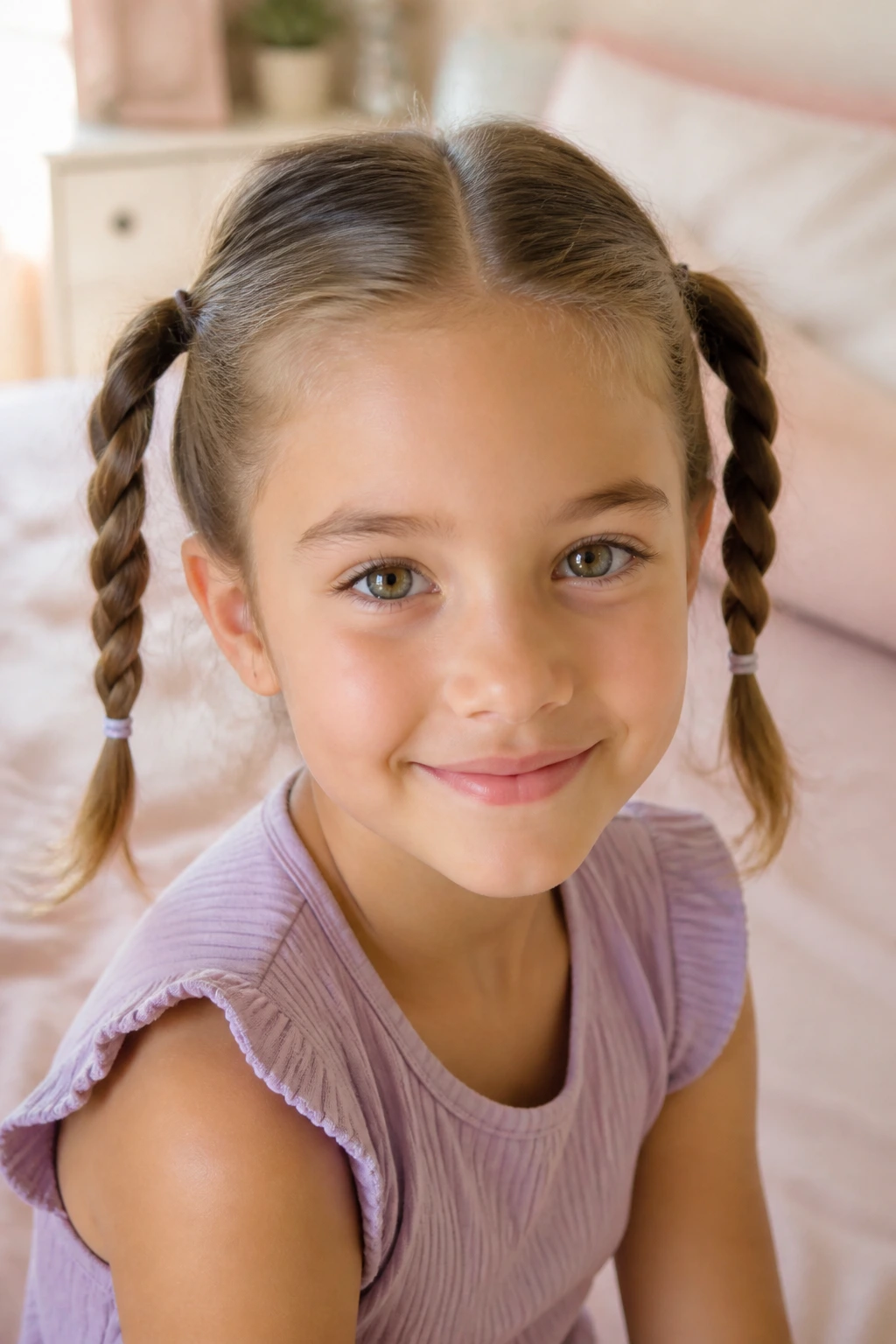
Unlike braids, two-strand pigtails are fast and a little softer around the scalp. That makes them a nice choice for younger kids, tender heads, and mornings that need a quick win.
Split the hair down the middle, divide each side into two sections, twist them around each other, and secure the ends. The style is especially friendly for fine hair because it does not require the extra hand pressure that a three-strand braid does. On curly hair, the twists also help preserve shape without flattening the curls.
If you want them to look crisp, start with damp hair and use the smallest amount of leave-in conditioner. Too much product makes the twists slip apart. Less is more here.
7. Space Buns With a Center Part
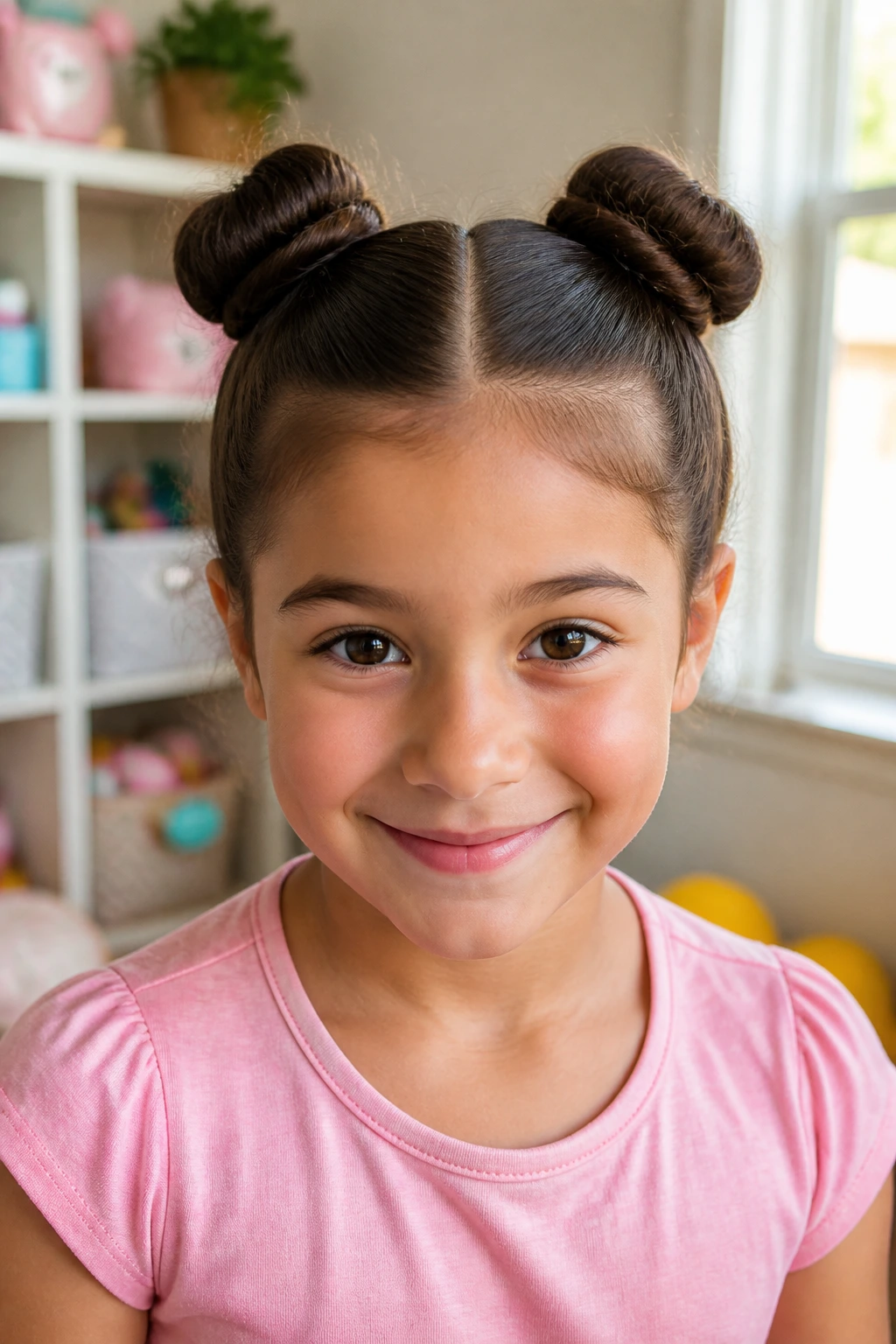
Space buns work because they are practical before they are cute. Two high buns keep the hair off the neck, and a center part gives the style a tidy shape that holds through the day.
I like this for medium-length hair and for kids who get hot easily. The buns can sit high and neat, or slightly lower and softer, depending on how much time you have. If the hair is thick, make each bun a little smaller and flatter so they do not feel heavy. If the hair is fine, lightly backcomb the pony base before wrapping it.
One caution: don’t anchor the buns so tight that the child feels every pin. The style should look playful, not like a stunt.
8. High Puff With a Soft Headband
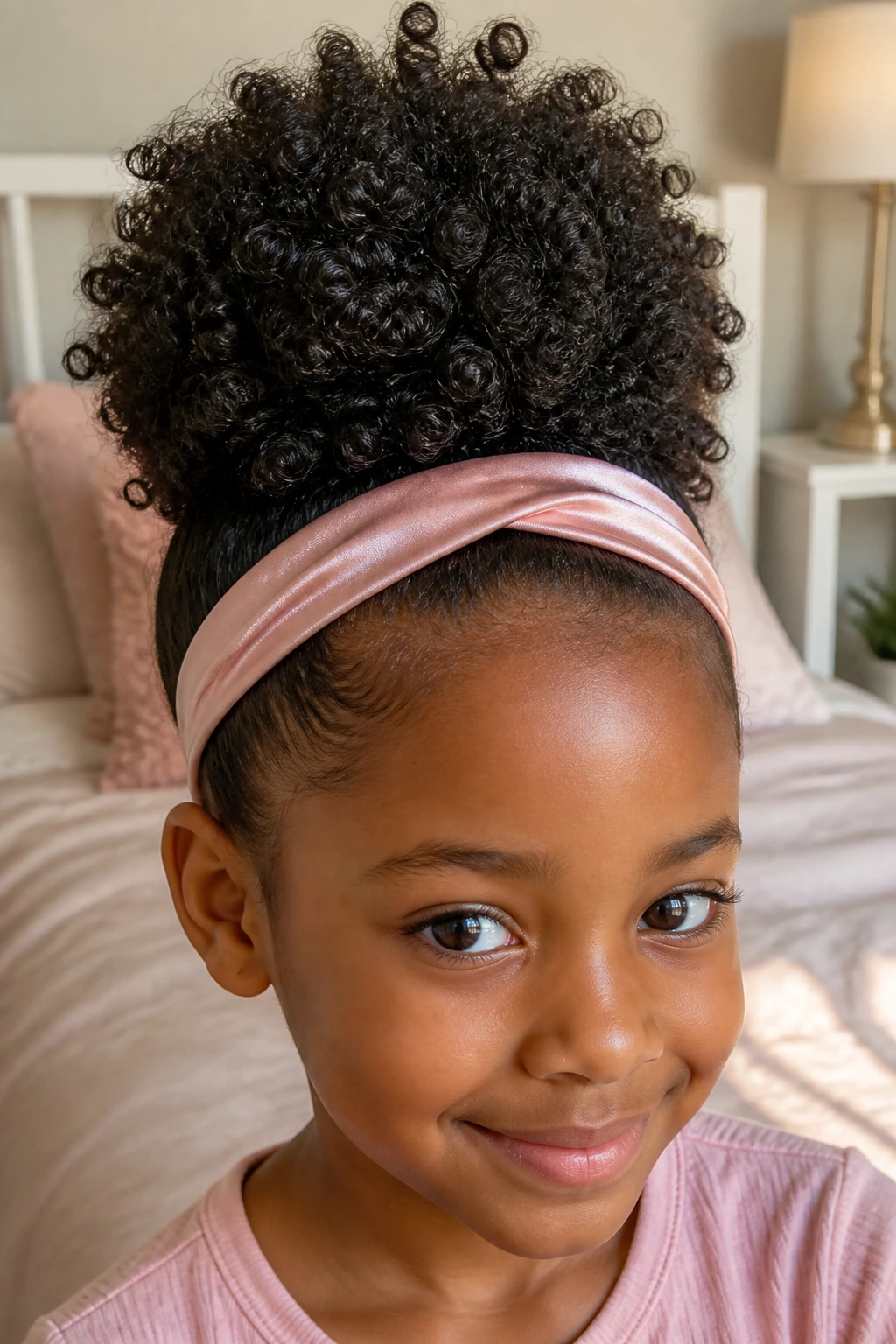
A high puff is one of the cleanest school styles for coils and tight curls when you want the texture to stay visible instead of being brushed away. The soft headband keeps the edges neat, and the puff does the rest.
Gather the hair into a high puff, secure it with a puff cuff or elastic that does not dig in, then smooth the front with a little moisture and your hands. A satin-lined headband helps if the hairline gets frizzy fast. I prefer fabric bands over hard plastic ones because they stay put and they do not leave the forehead sore.
This is a good one on days when the child wants to feel polished without losing volume. It has a little lift. That lift is the whole point.
9. Braided Ponytail Wrap
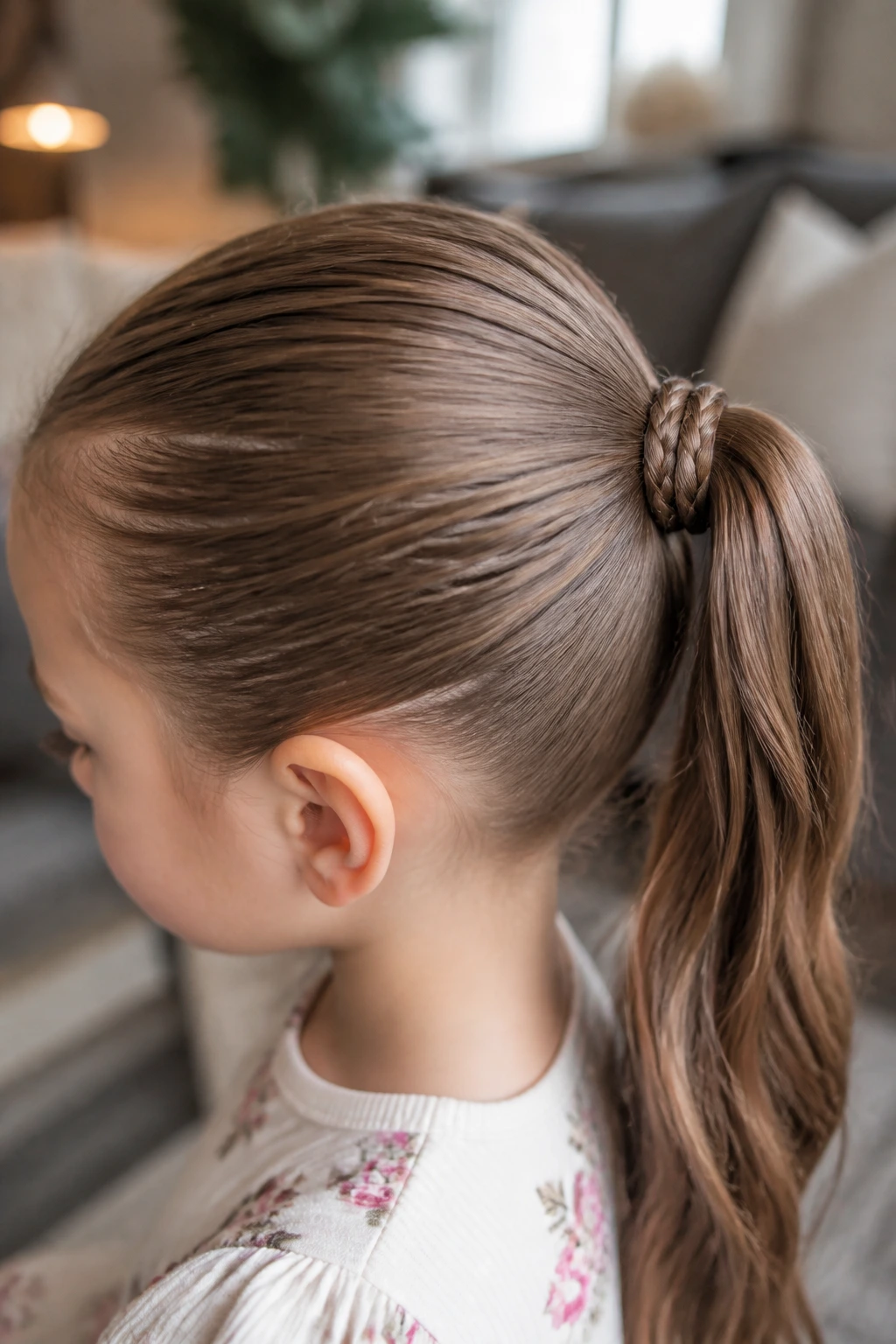
A plain ponytail becomes much more finished when you wrap the base with a tiny braid. It is a small move, but it changes the whole shape of the style.
Make the ponytail first, then take a slim strand from underneath, braid it, and wind it around the elastic. Pin the end underneath or tuck it into the base if the hair is long enough. The result looks neat from every angle and keeps the elastic from looking like an afterthought.
This style is especially good for kids with long hair that frays at the crown. It gives the eye a clear center point. The rest of the hair can stay simple.
10. Side Braid With a Ribbon
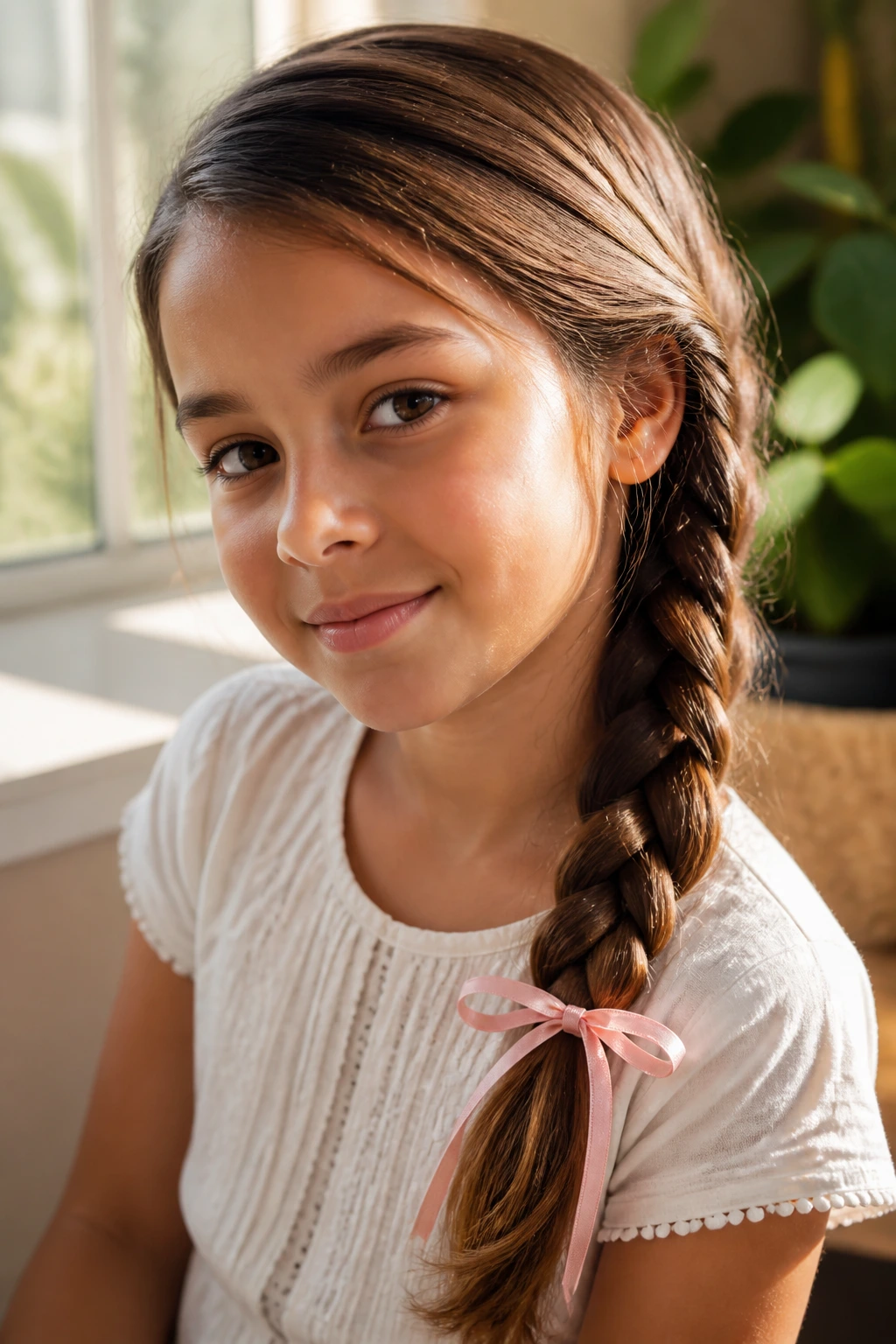
A side braid is one of those styles that looks sweet without asking for much time. Shift the part to one side, braid the hair over one shoulder, and tie the end with a narrow ribbon or small elastic.
It works well when bangs are growing out or when a child keeps pushing hair behind one ear and making a mess of the front. The side placement also helps thin hair look fuller because the braid has more body than a center braid. I like a grosgrain ribbon here better than silky ribbon; it grips better and does not slip as much.
If the child is younger, keep the ribbon short. Long trailing bows tangle in backpack straps fast.
11. Topsy-Tail Ponytail
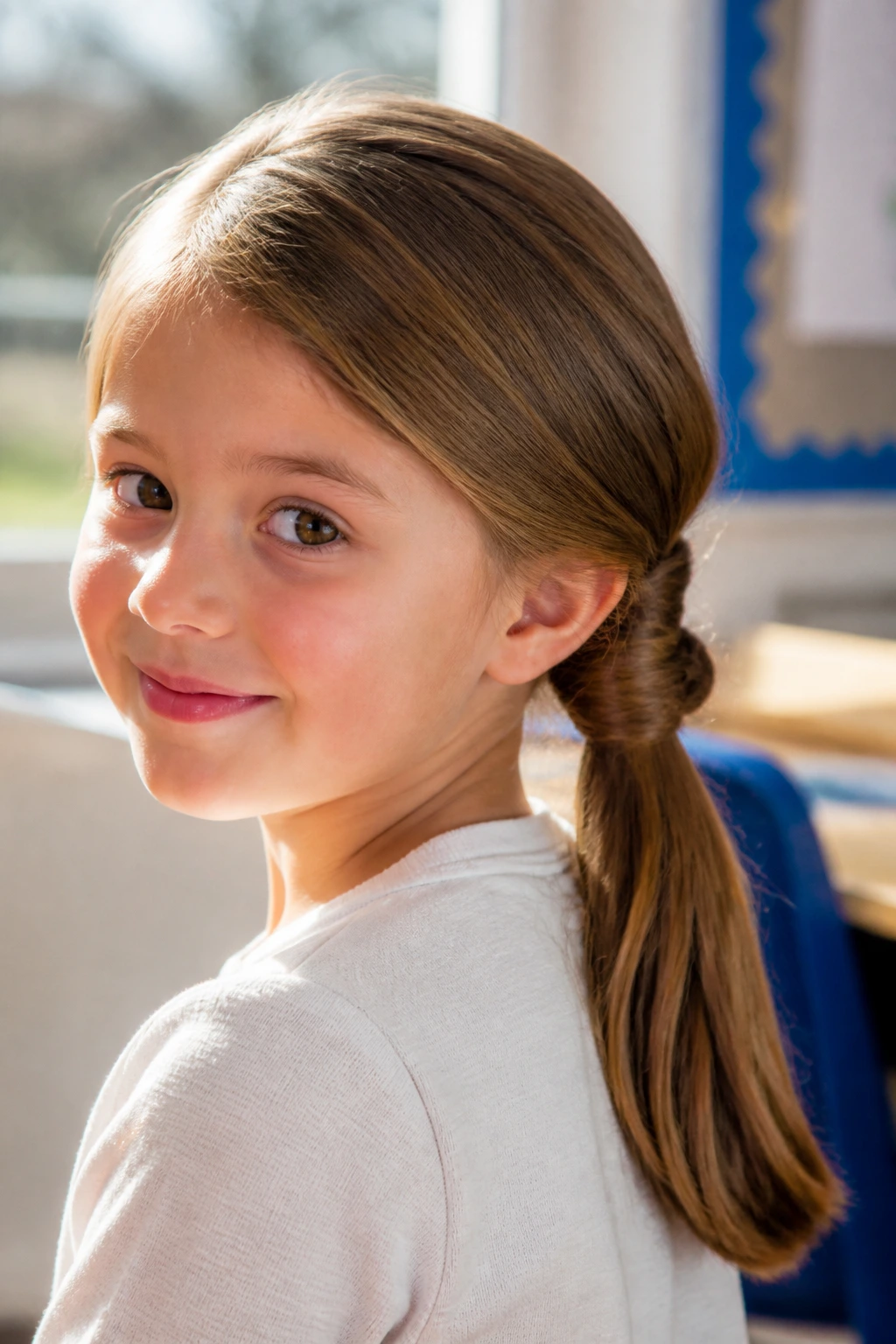
This one has a little movement without asking for much skill. Make a low or mid ponytail, split the hair above the elastic, and flip the tail through the gap. That simple twist changes the shape from plain to tidy.
The topsy-tail works best on medium to long hair and is a nice answer for mornings when a braid feels too fussy. It sits flat at the scalp, which makes it comfortable under jackets and hats. If the hair is slippery, roughing up the section with a touch of dry shampoo or texture spray helps the flip hold.
I like it because it looks more deliberate than a standard ponytail, but it never looks overworked. That balance matters on a school day.
12. Braided Headband for Short or Long Hair
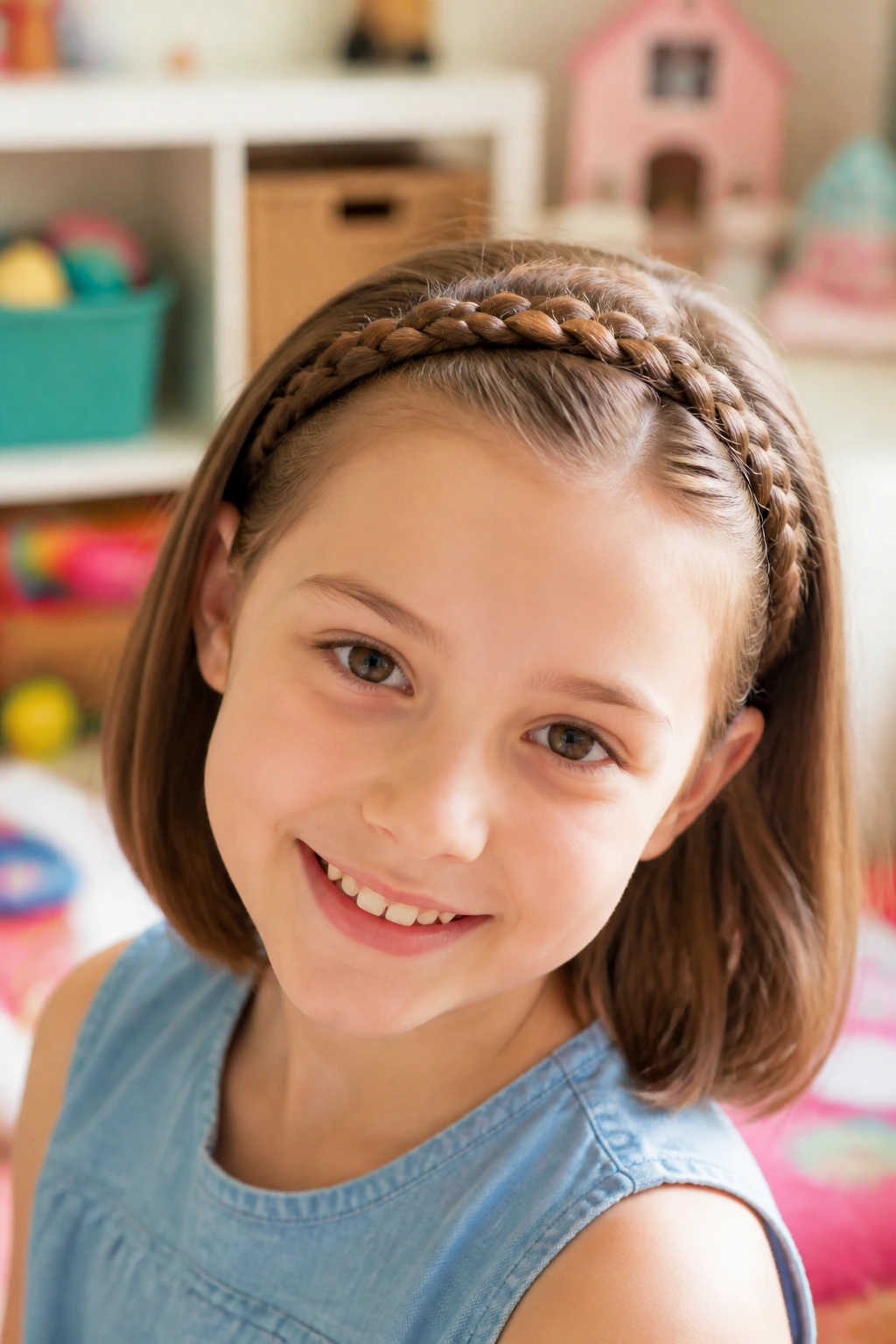
A braided headband keeps the front pieces off the face while leaving the rest of the hair alone. That makes it useful for kids who want their length down but hate hair tickling their eyes during class.
Take a small front section from one side, braid it along the hairline, and pin it behind the opposite ear. On short hair, it can be a tiny braid anchored with bobby pins. On long hair, it becomes a prettier frame for the face. Either way, it solves the same problem.
This is one of my favorites for growing-out bangs. It turns an awkward stage into a style on purpose.
13. Low Messy Bun With Tucked Ends
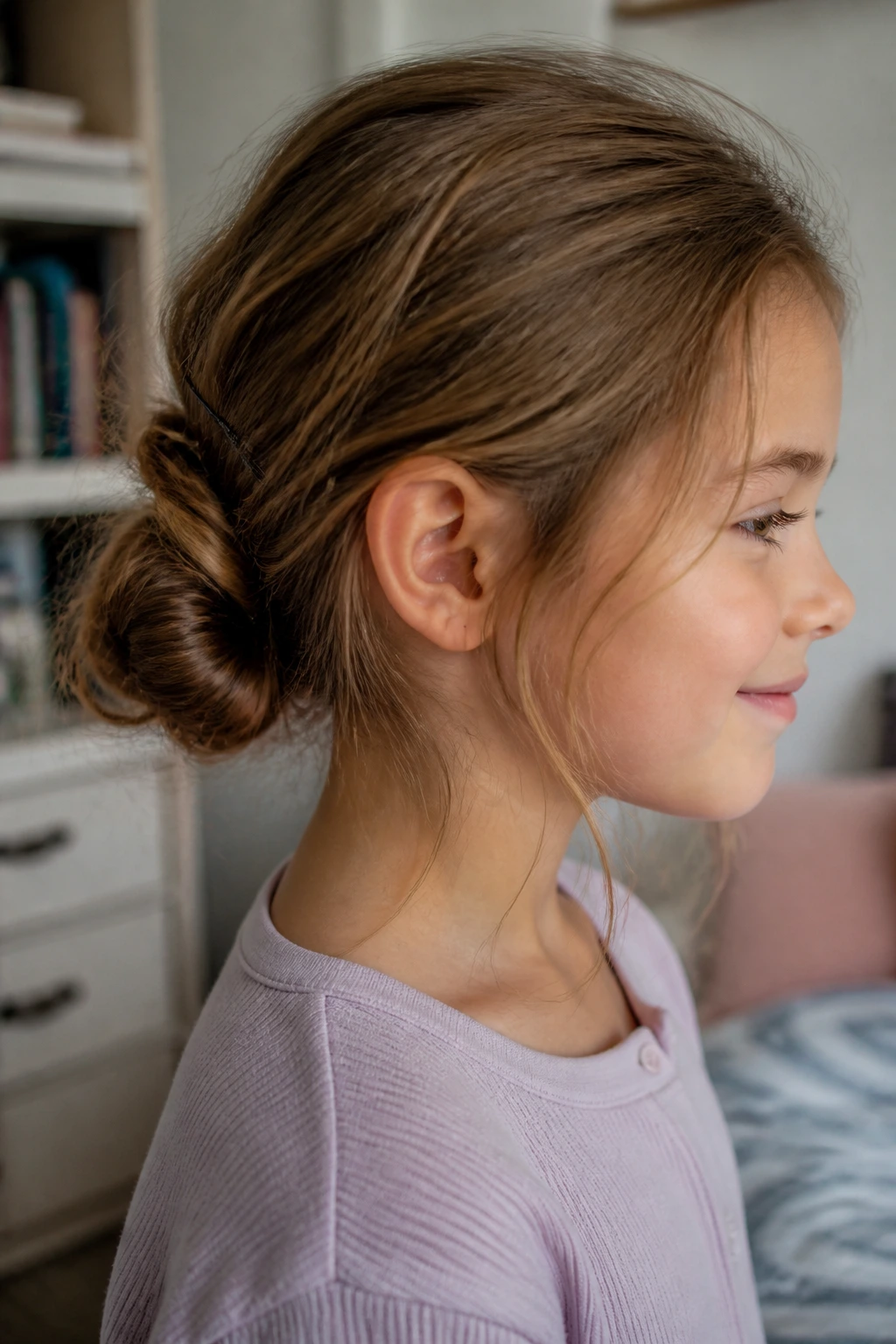
A low bun does not have to be sleek to be school-ready. In fact, a slightly soft bun often looks better on kids because it feels less formal and less stiff.
Gather the hair at the nape, twist it into a bun, and tuck the ends under with two or three bobby pins. Leave a few fine pieces loose around the ears if the child likes a softer finish. This works especially well on layered hair, second-day hair, and hair that refuses to hold a smooth ponytail.
The key is control, not perfection. If the bun is secure and the front is neat, the rest can be a little undone. That’s not a flaw here.
14. Clip-Back Pixie Sweep
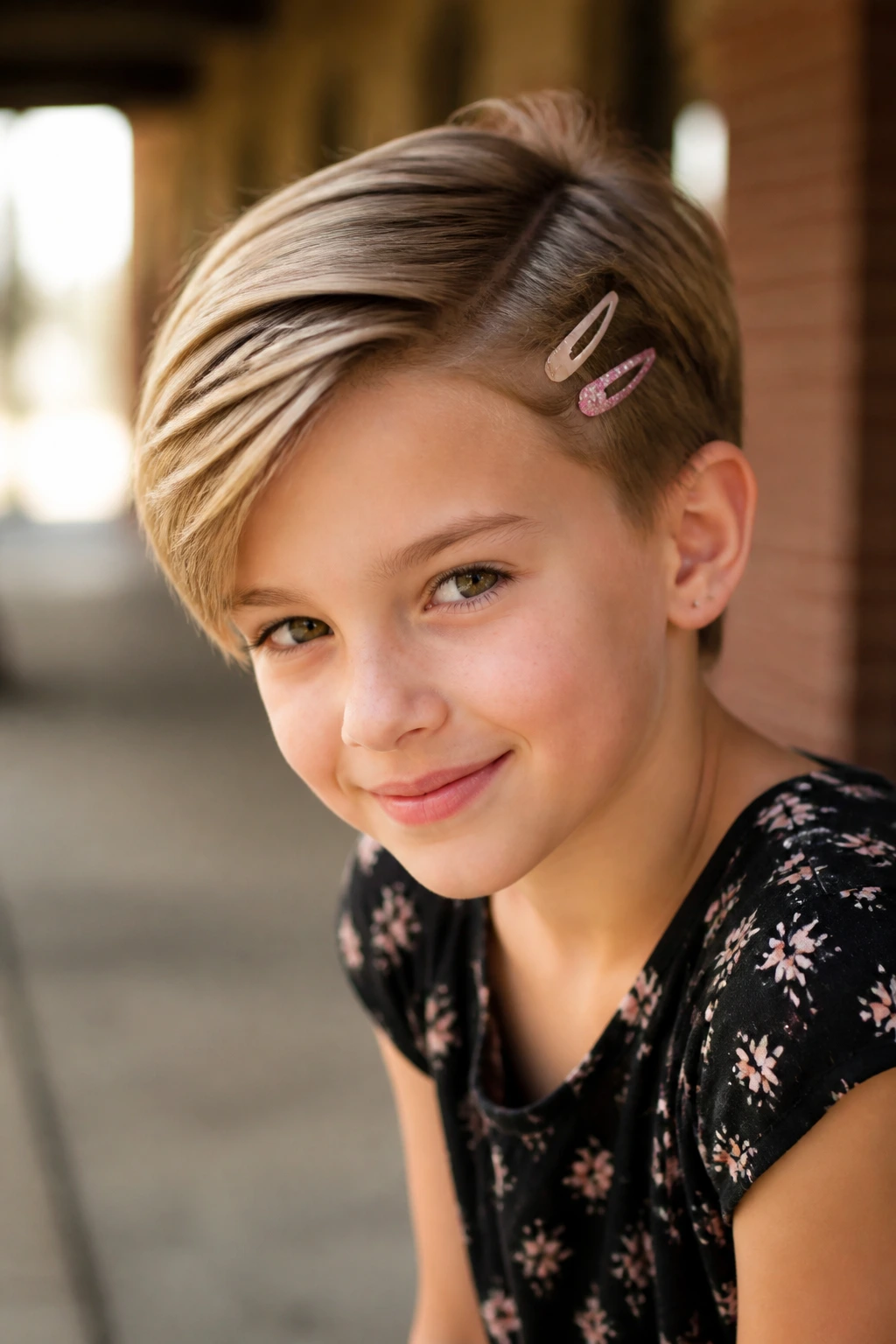
Short hair needs its own respect, and a pixie cut with a side sweep can be one of the neatest school looks around. A clean side part and two small clips do most of the work.
Sweep the longer top section to one side and pin it flat with barrettes or snap clips. If the bangs are still falling into the eyes, place the clip just above the temple instead of right at the hairline. That keeps the look tidy without squashing the hair.
Use matched clips if you want a clean finish, or mix two colors if the child likes a little fun. Either way, this is a fast style that doesn’t ask short hair to pretend it’s long.
15. Mini Box Braids Pulled Back
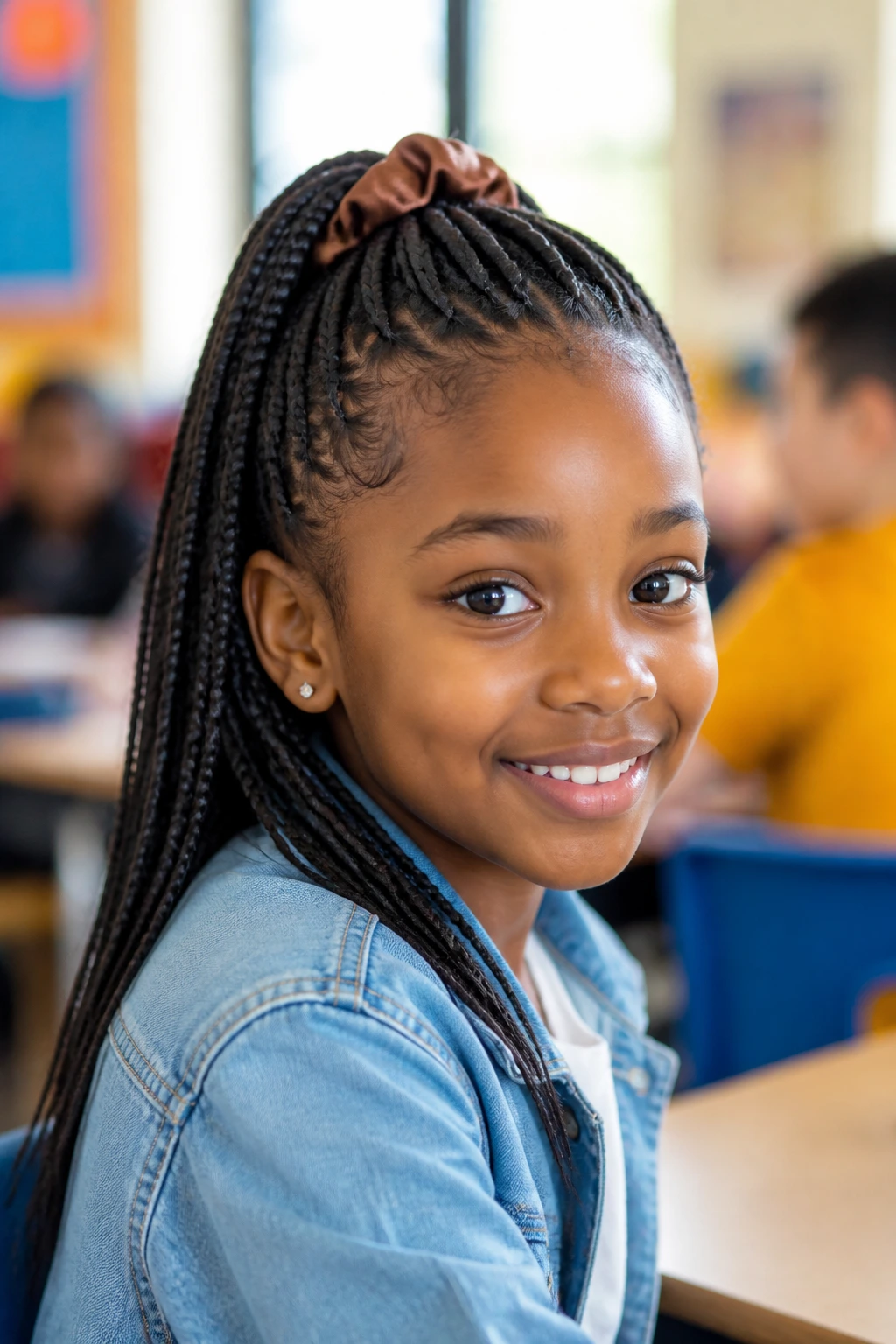
Mini box braids are one of the smartest options when you want a school style that lasts more than one morning. Pulled back into a half-up or ponytail, they stay orderly with almost no daily fuss.
The beauty here is durability. The braids already do the styling work, so the school-day job is just to gather or separate them in a way that keeps them off the face. A small satin scrunchie at the base is kinder than a tight elastic, especially if the style will stay in for several days.
If the braids are fresh, keep the accessories simple. The braid pattern is the detail. It doesn’t need help.
16. Waterfall Braid Half-Up
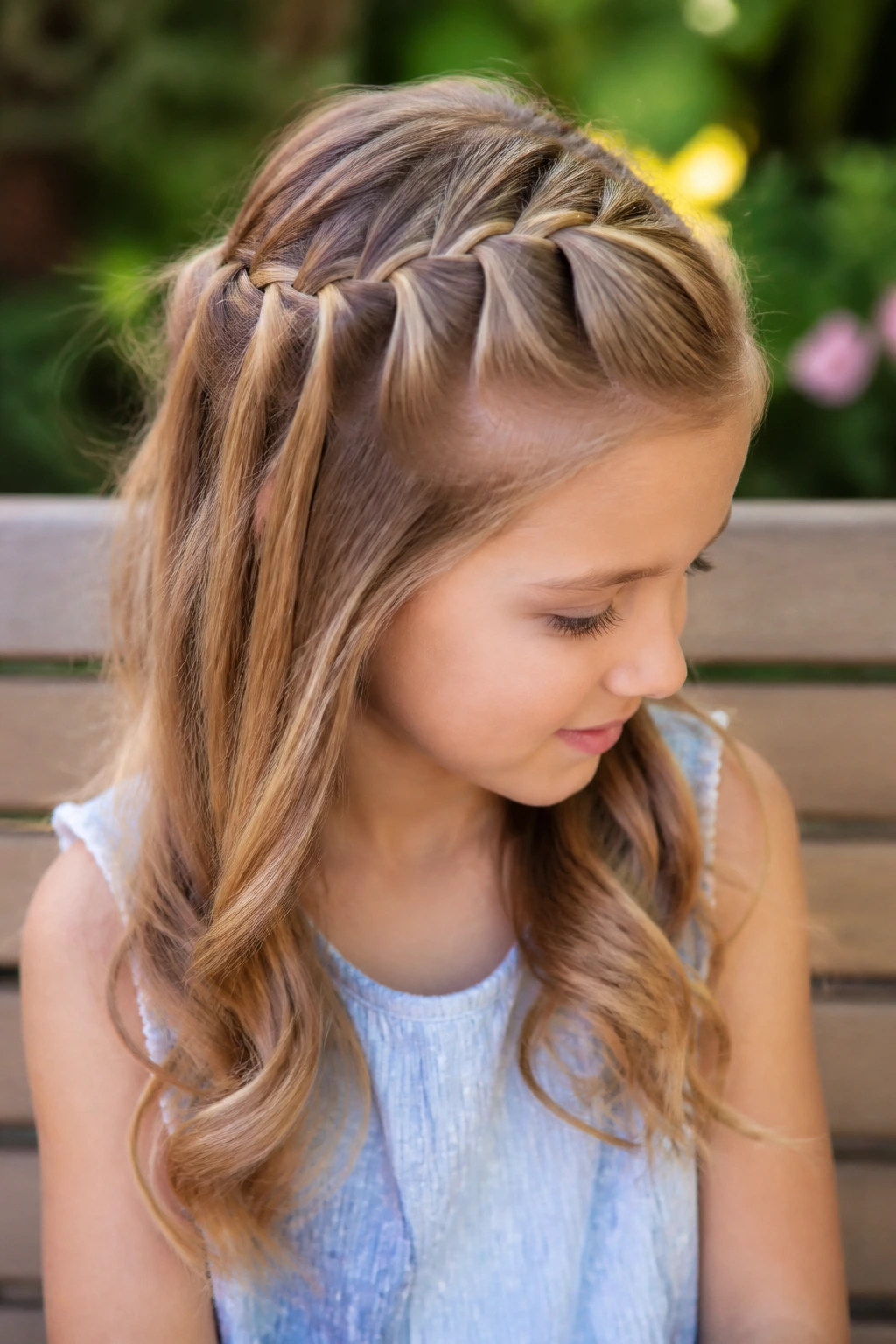
A waterfall braid is the sort of style that looks more complicated than it is, which is useful when you want something pretty without turning the morning into a production. The flowing sections give it movement, but the top stays controlled.
It’s best on medium and long hair that has a bit of grip. If the hair is very silky, a touch of texturizing spray or a light wave from the night before helps. The braid frames the head nicely, and because it is half-up, the length can still move freely down the back.
I’d save this for days when you have five extra minutes. That is enough. More would be wasted.
17. Single Side Braid
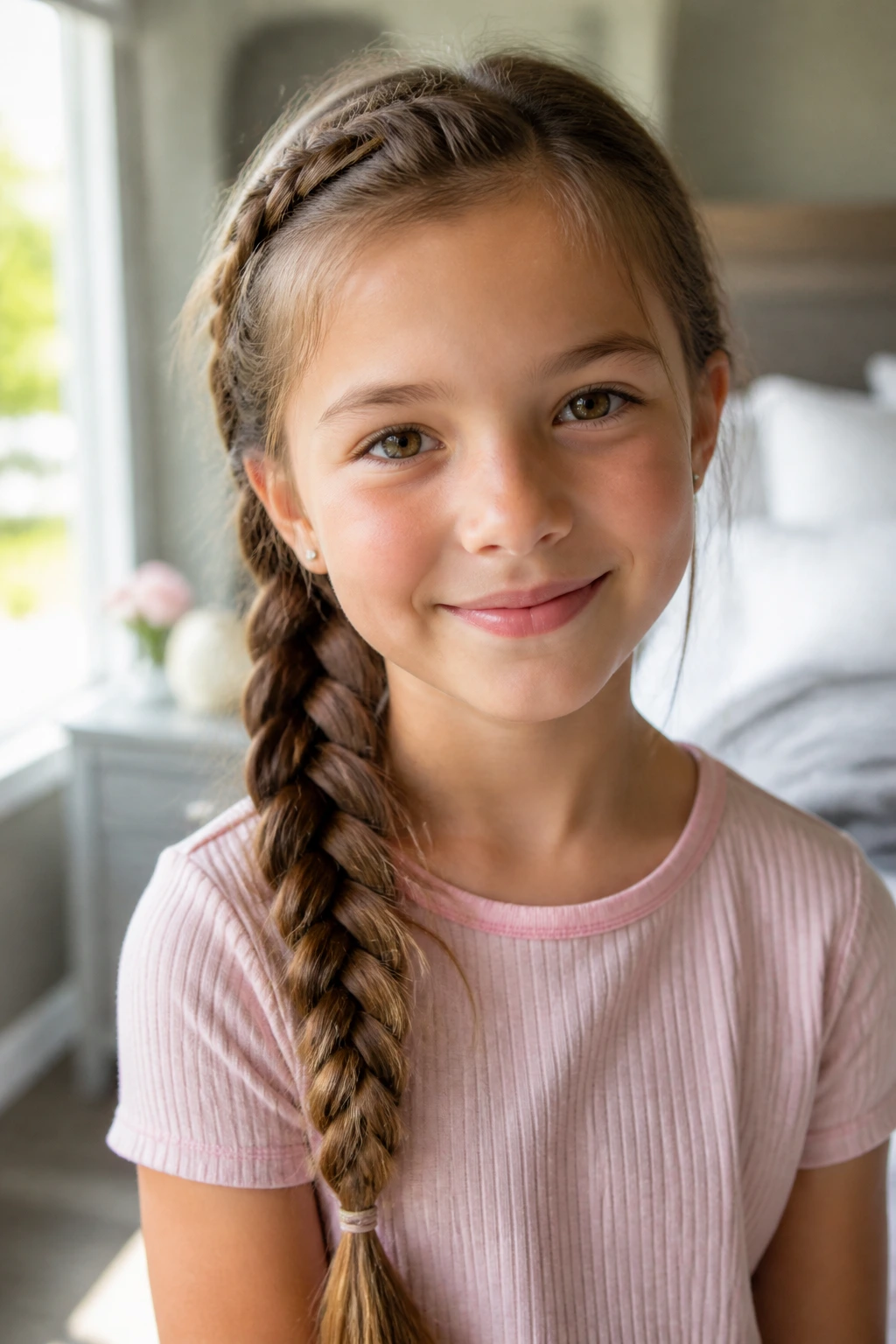
A single braid over one shoulder is one of the simplest ways to keep hair in order without making the child look overstyled. It works on long, medium, and even layered shoulder-length cuts if you’re willing to use a few tiny elastics at the end.
This style is especially useful for fine hair, because braiding one side can make the full length look thicker. It also helps on windy days and during field trips, when you want the hair to stay contained without a tight pull at the scalp. A side braid can be neat and plain or loose and soft. Both are school-safe.
If the braid keeps slipping, start it lower and braid tighter near the nape. That tiny change makes a big difference.
18. Curly Half-Up Pineapple
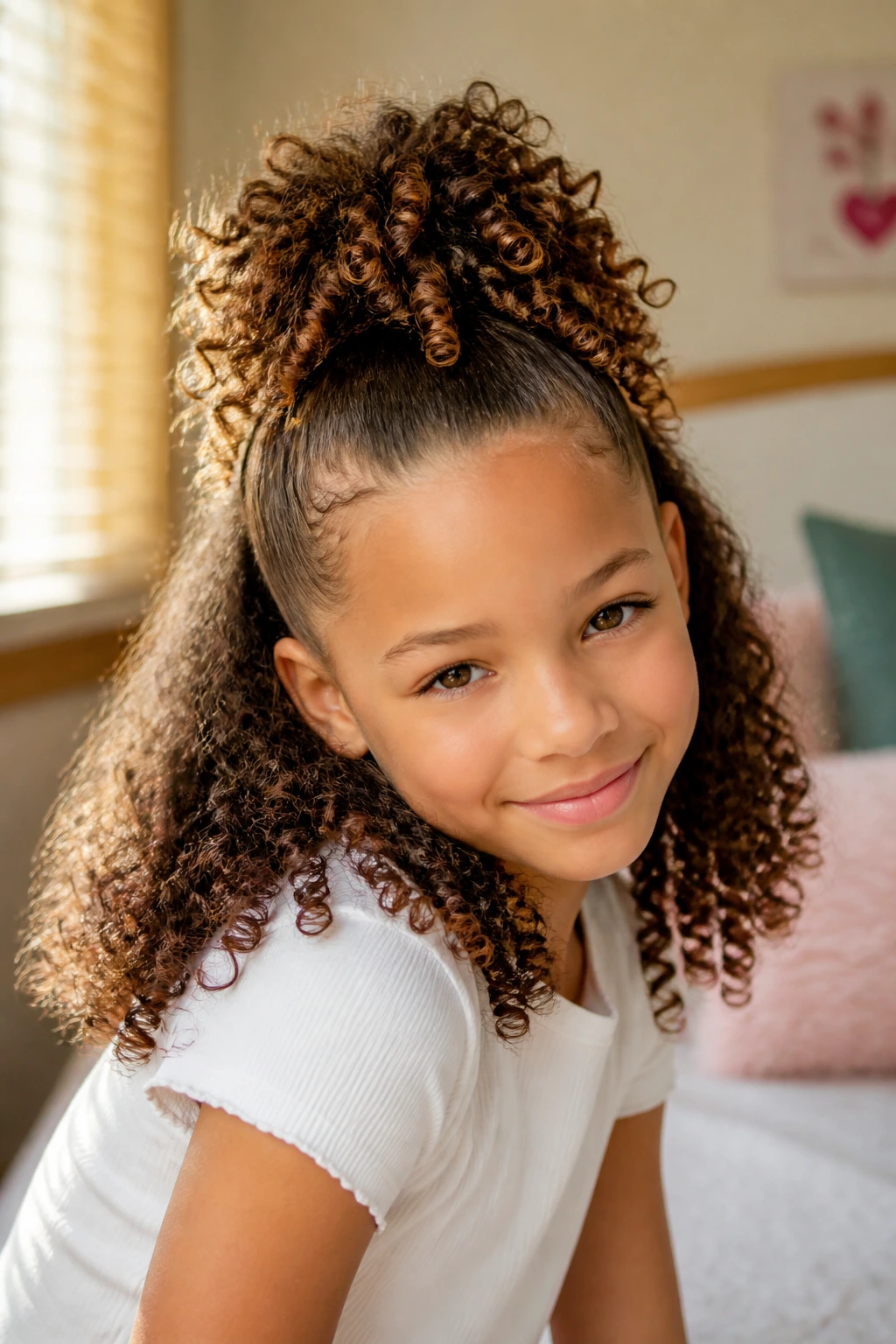
For curls, the school-day win is keeping the shape while getting the face clear. A half-up pineapple does both. It lets the curls keep their lift, which is the part that usually gets flattened by a rushed ponytail.
Gather the top half loosely toward the crown and secure it with a soft scrunchie. Leave the bottom curls free so they keep moving. A little water and curl cream on the front sections helps the style stay smooth without turning crunchy.
This is one of those styles that looks better when you do less. Pulling hard ruins it. Gentle hands make it work.
19. Sleek Top Knot
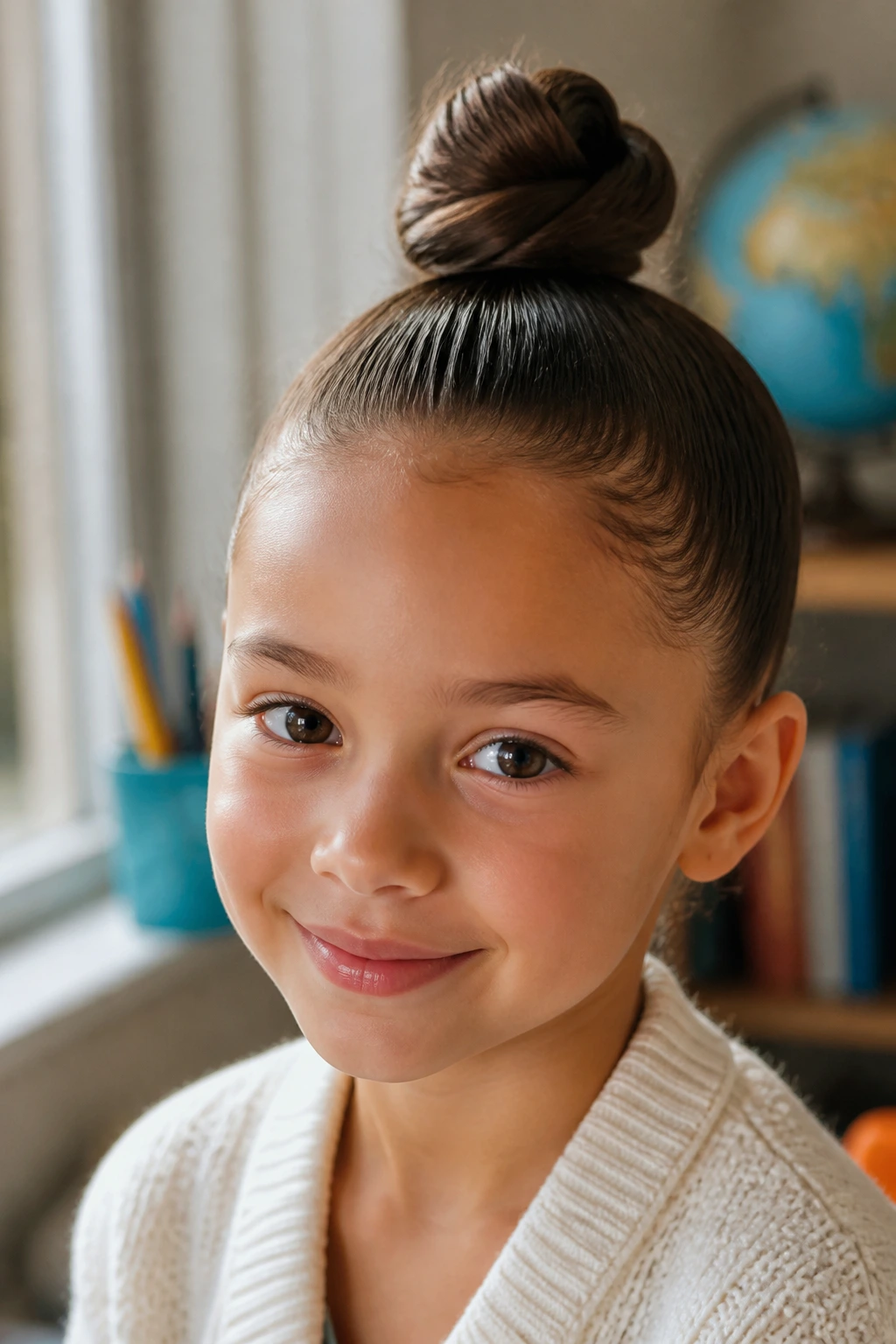
The sleek top knot is for mornings when the clock is rude. Brush the hair up high, twist it into a knot, and secure it firmly so it sits close to the head.
It’s useful for long hair that gets tangled fast, especially on PE days. The high position keeps the neck free, and the shape stays tidy under a hood or hat. If the child has fine hair, tease the base a little before twisting so the knot doesn’t slide.
I like this one because it’s clean without being precious. If you need a style that says “we made it out the door,” this is a strong candidate.
20. Fishtail Side Braid
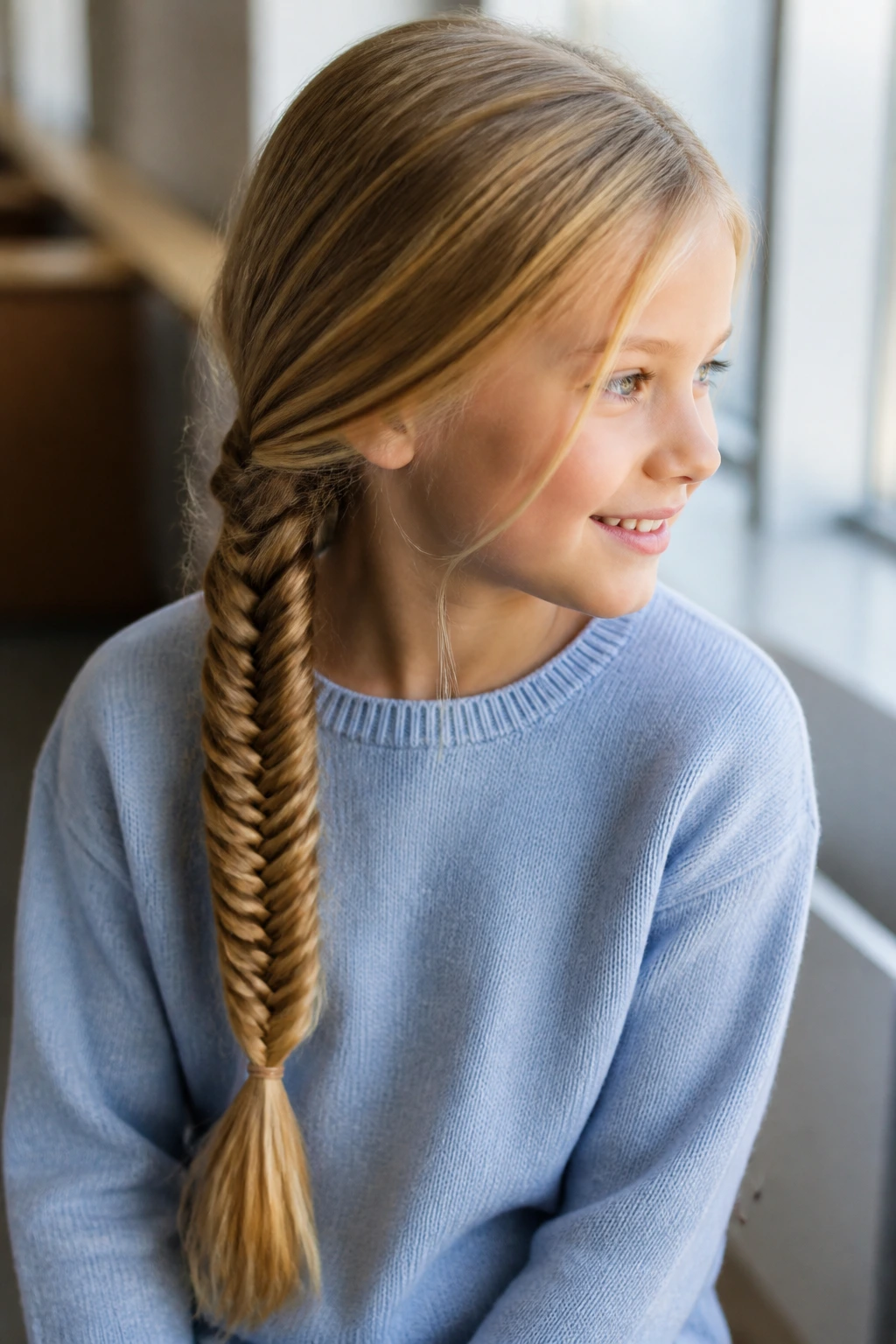
A fishtail braid looks intricate, but on a school morning it just needs patience and two hands. Worn low over one shoulder, it keeps the hair controlled and gives the end a textured, rope-like look.
This style works well on medium to long hair and looks especially good when the hair has a bit of grit from day-old washing. That extra texture helps the tiny sections stay put. If the child’s hair is very smooth, a light mist of water or leave-in spray keeps the strands from slipping.
It’s prettier than a basic braid, but not so elaborate that it feels out of place in a classroom. That’s the sweet spot.
21. Flat Twists Into Pigtails
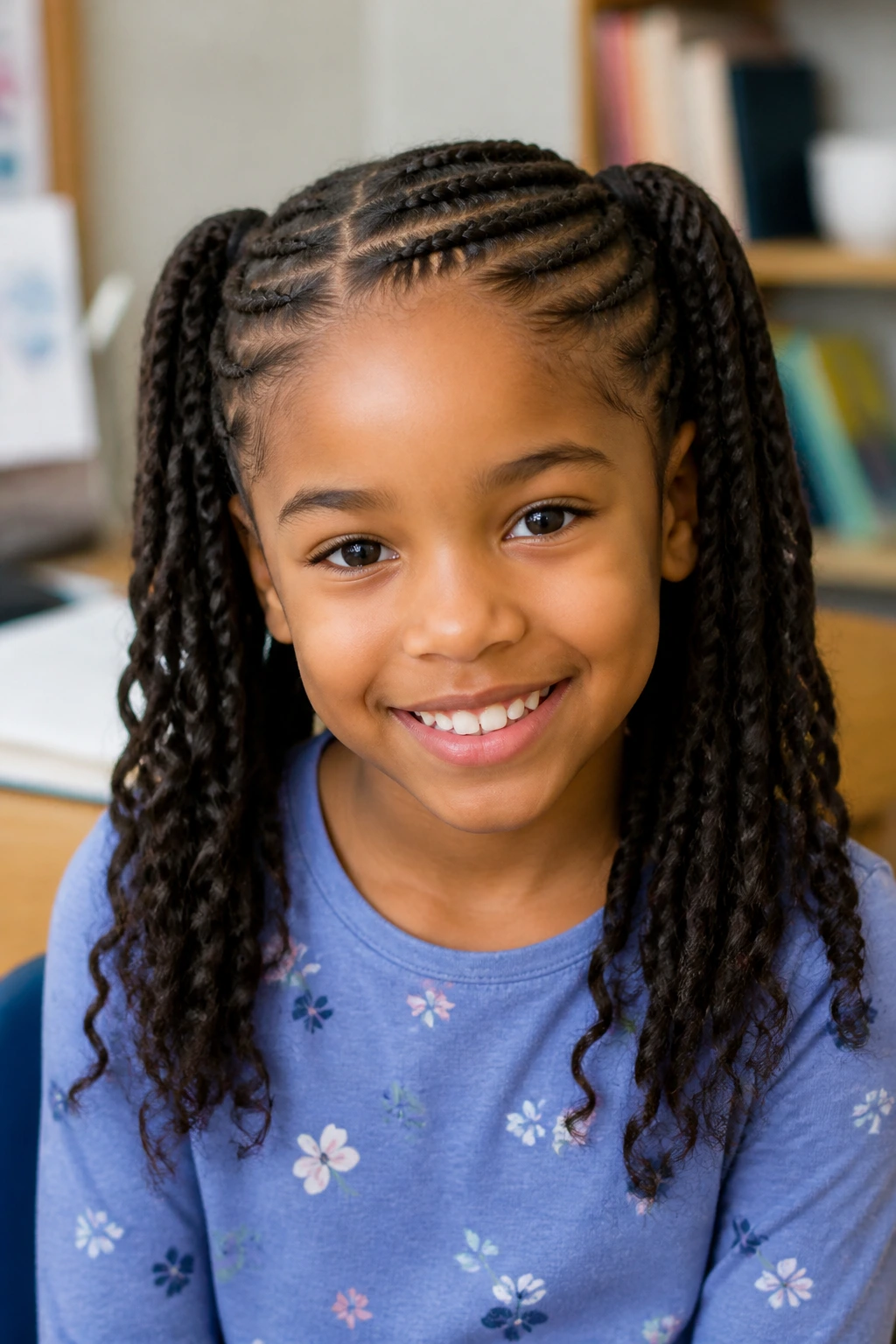
Flat twists are one of the neatest school styles for textured hair because they sit close to the scalp and keep the hairline smooth. Split the hair into two sides, flat-twist each section from the front back, then finish the lengths as pigtails.
The shape is tidy, low-fuss, and comfortable for long wear. It also works well for kids who hate a lot of manipulation, because the twist pattern is gentle when done with enough moisture and not too much tension. I like this style with a soft part and no tight finish at the temples.
It’s practical, but it also has a clean look that children usually notice right away. They know it looks neat. They can feel it, too.
22. Claw-Clip Half-Up Twist
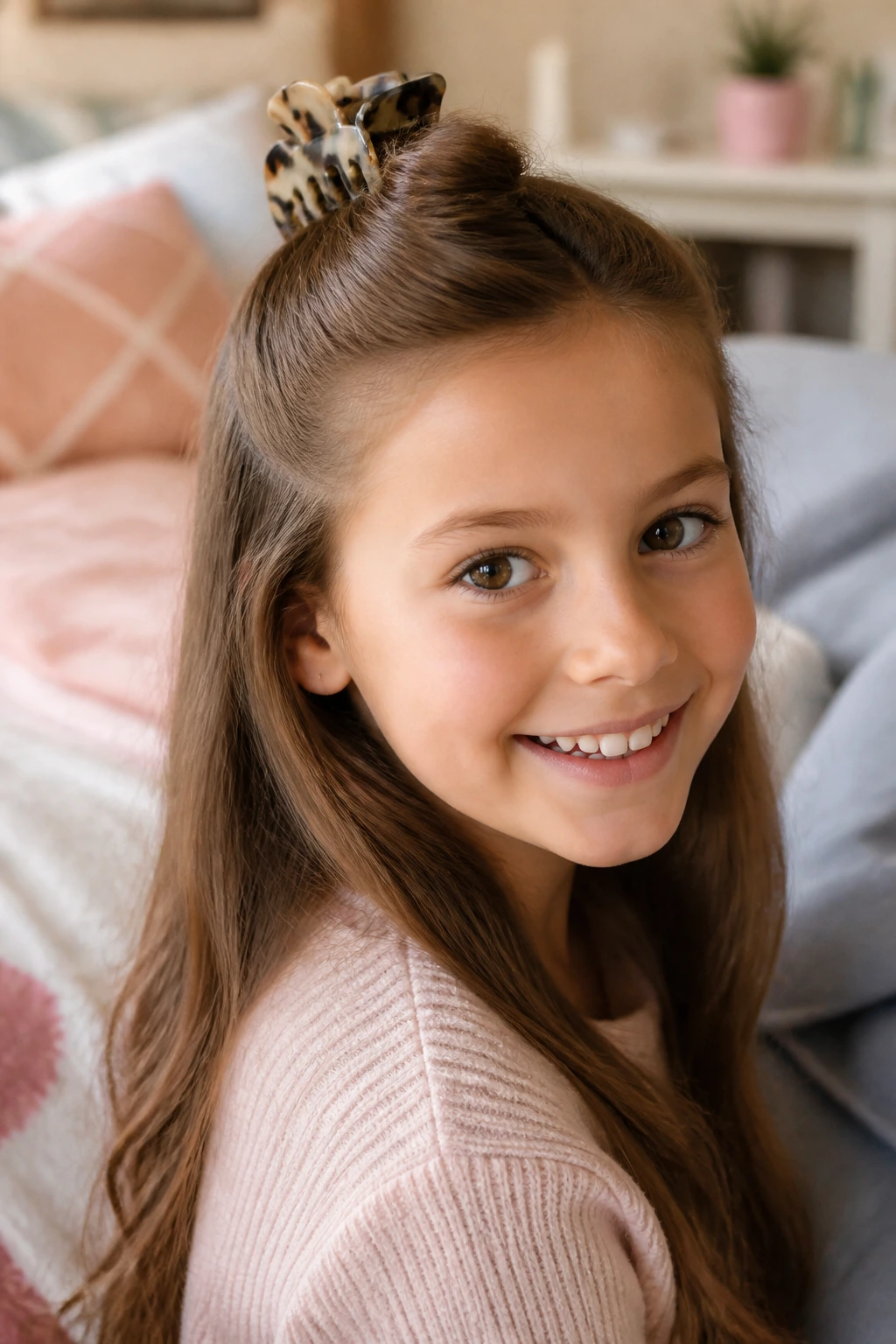
A claw clip can rescue a morning fast. Twist the top section back, fold it once, and clip it in place so the hair clears the face while the rest stays down.
This style is good when the hair is clean and slippery and a ponytail keeps sliding out. It also works on medium to long hair that you don’t want to crease with an elastic. The clip matters here. Choose one with a good grip and rounded teeth, not a flimsy decorative clip that opens when a child leans back in a chair.
I prefer this for days when speed beats polish. It still looks neat. It just doesn’t pretend to be precious.
23. Ponytail With a Braided Wrap
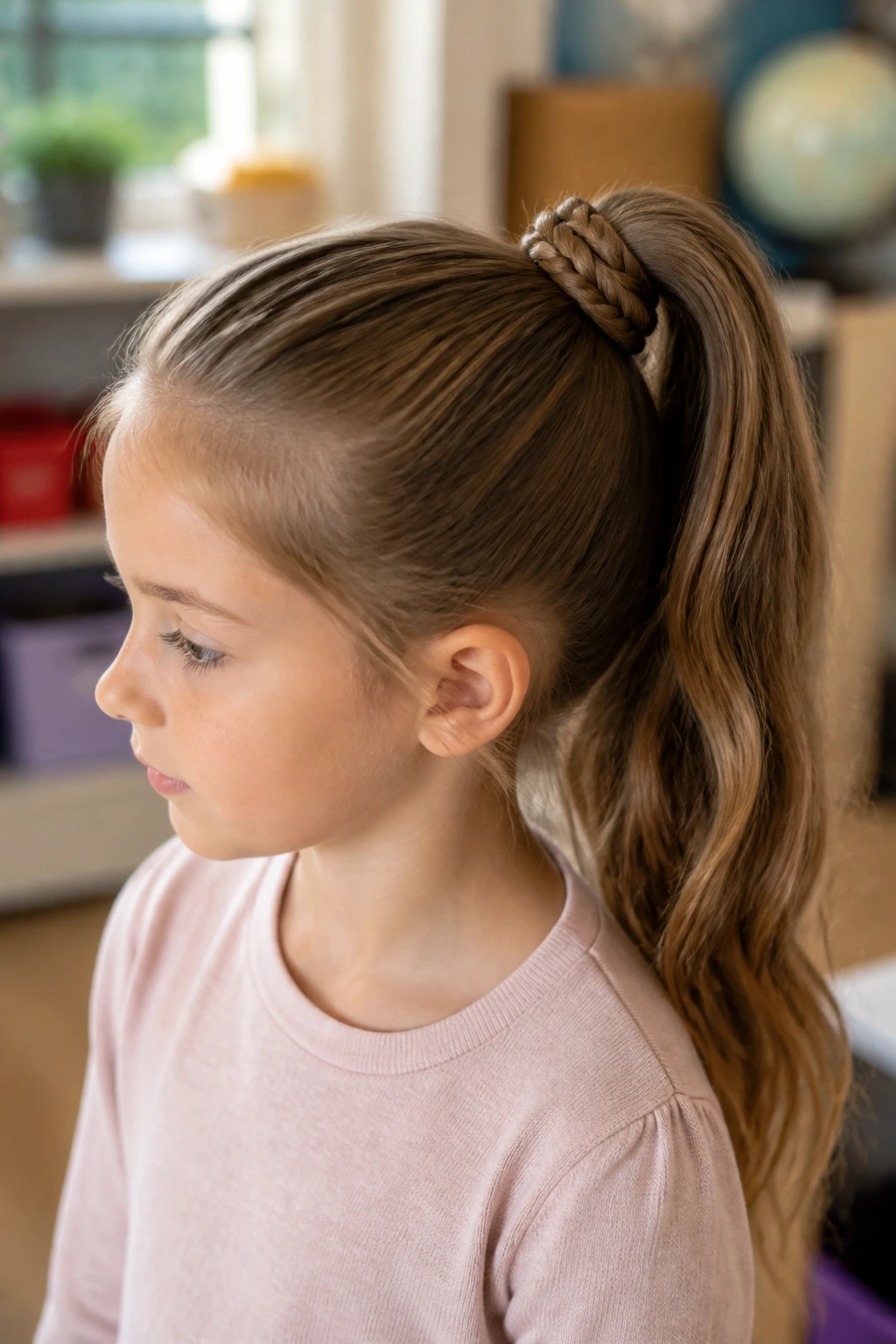
This is a ponytail that knows how to dress up. Make the pony, braid a slim section from underneath, and wind the braid around the elastic to hide it.
The style is good for kids who wear ponytails all the time and need a small change without learning a new routine. It also helps if the elastic is starting to stretch out or if the hair at the base always looks messy. The wrap turns the base into part of the style instead of the thing you’re trying to ignore.
Use a tiny pin under the braid if it needs extra hold. That little fix keeps the wrap from slipping by lunchtime.
24. Heart-Part Pigtails
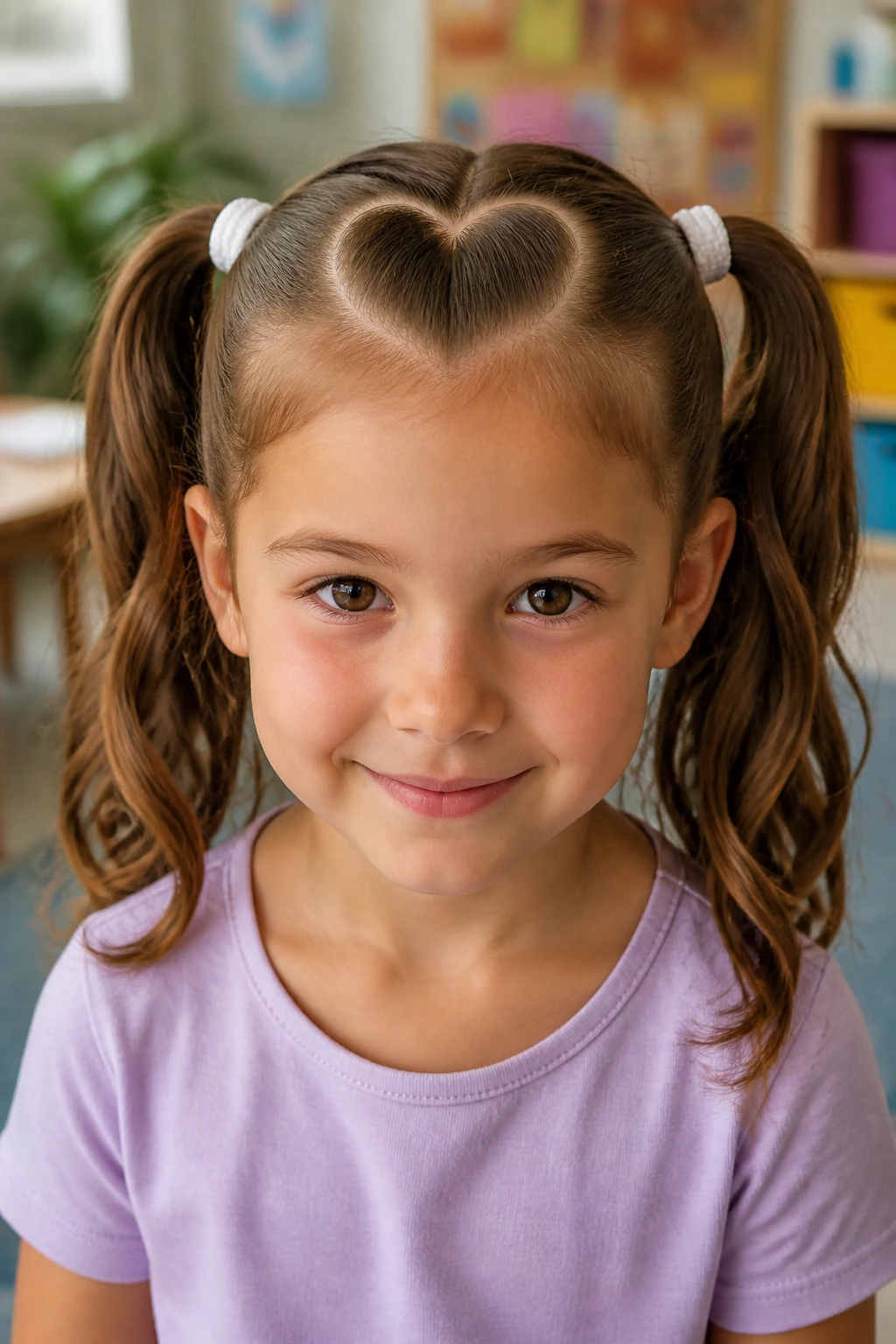
Heart parts sound playful, and they are, but they also solve a practical problem: they make pigtails feel special enough that younger kids will actually keep them in place. The shape starts with a curved parting at the crown and ends in two neat sections tied low or mid-height.
This one takes a little more patience with the comb, but not much else. A tail comb and a mirror help. If the part looks uneven, soften the curves rather than fighting them into perfect symmetry. A hand-drawn part can look charming. A jagged one looks rushed.
It’s a sweet style for younger grades or birthdays, but it still behaves like school hair should.
25. Low Scrunchie Bun
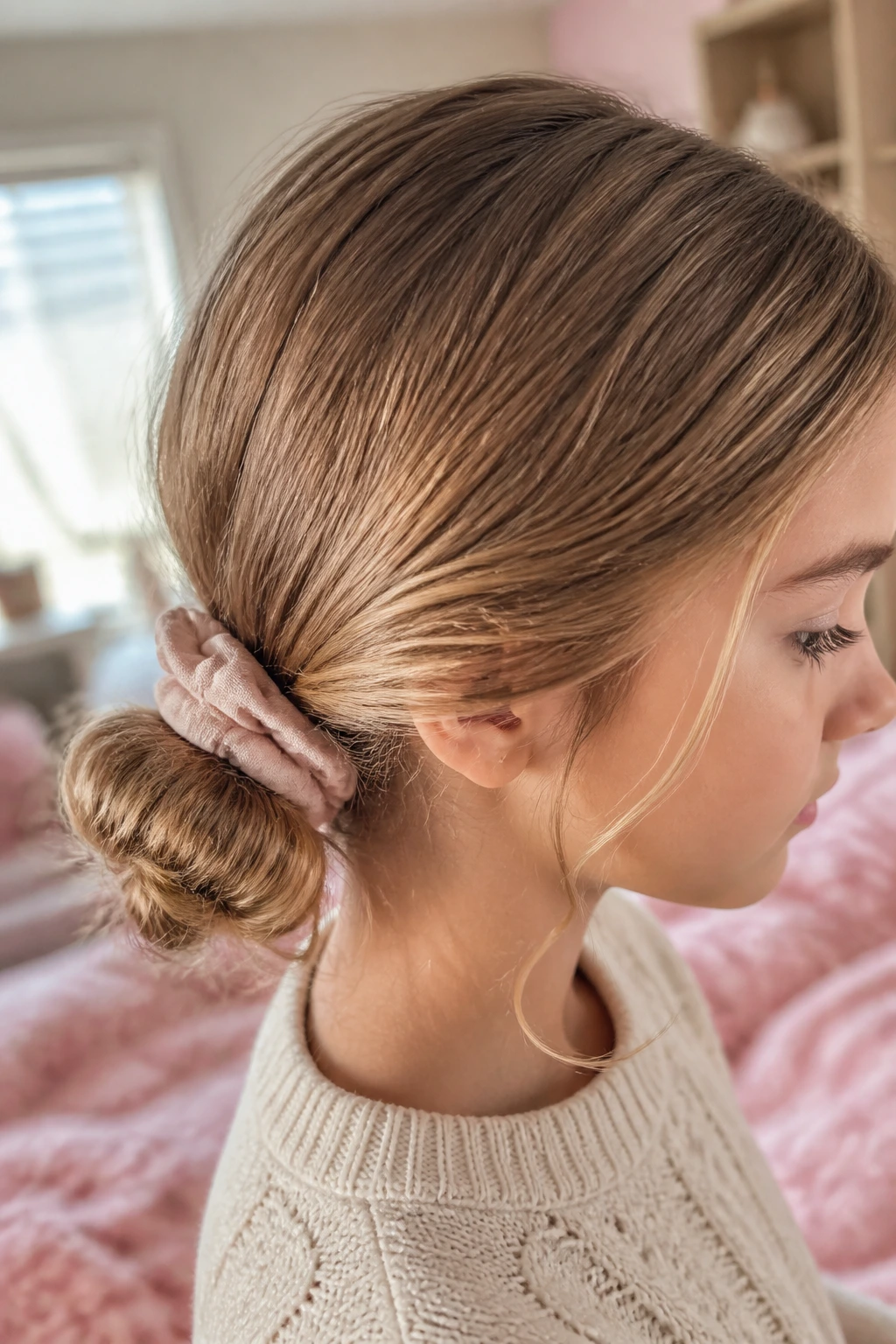
A low bun with a soft scrunchie is about comfort. The scrunchie adds grip without leaving a harsh line, and the bun sits low enough to be practical for class.
It’s one of the easiest options for thick hair that gets hot at the neck. Gather the hair loosely, twist it once or twice, wrap it into a bun, and secure with a fabric scrunchie. If the hair is layered, let a few ends peek out; they’ll look soft rather than messy.
The whole point is to avoid overhandling. When the hair is already brushed and the bun is low, you’ve done enough.
26. Faux Hawk With Elastics
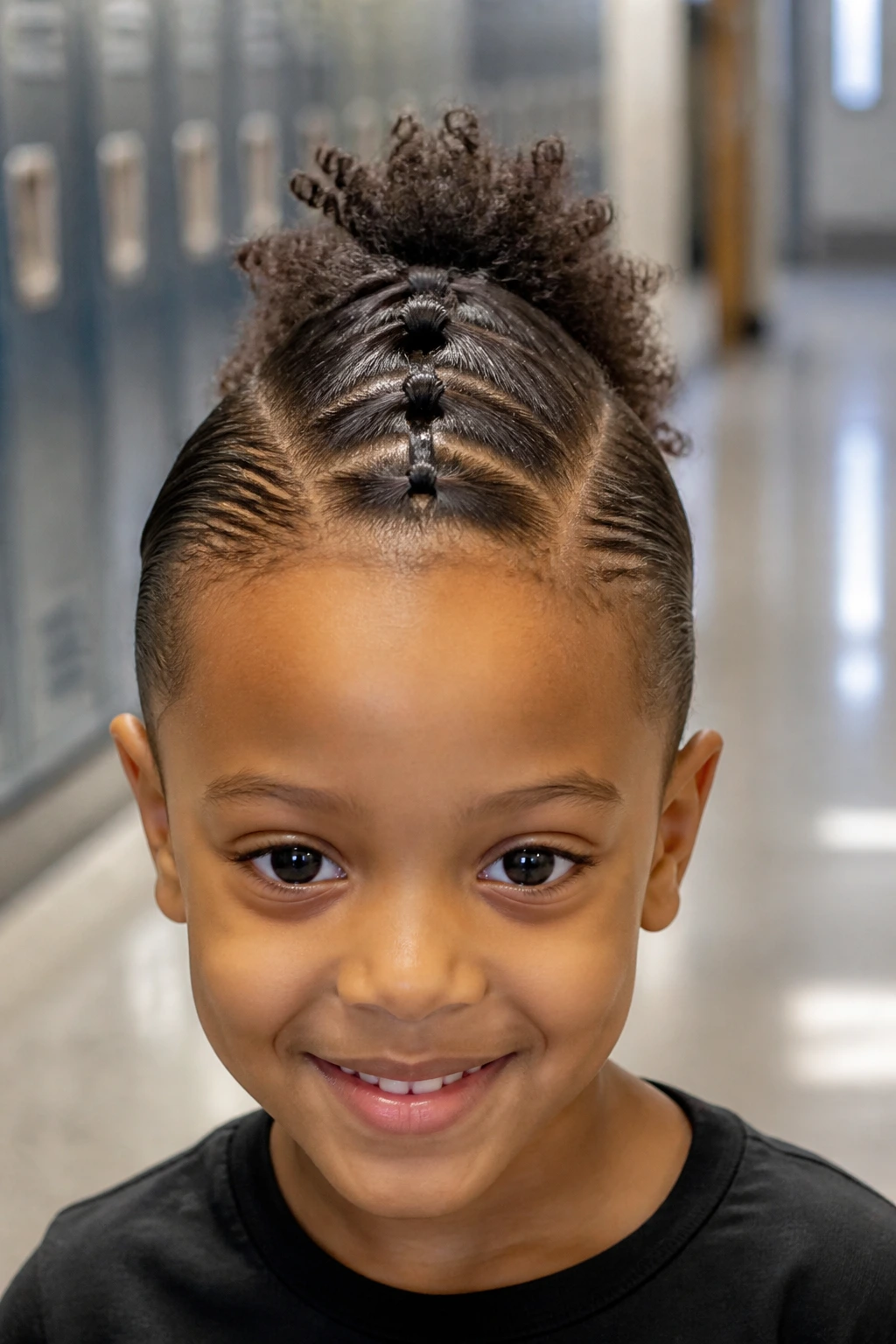
This style is fun, but it still fits the school day if you keep the sections small and the finish neat. Make a line of tiny ponytails down the center of the head, then tug each section slightly so it stands up into a soft faux hawk.
It’s useful for kids who want something a little bolder than a braid. The style stays off the face, which makes it practical, and the sectioned shape gives it a clear, tidy line. On curly hair, it works especially well because the volume becomes part of the look.
Keep the elastics plain if the school dress code is strict. The shape is the point.
27. Headband Tuck
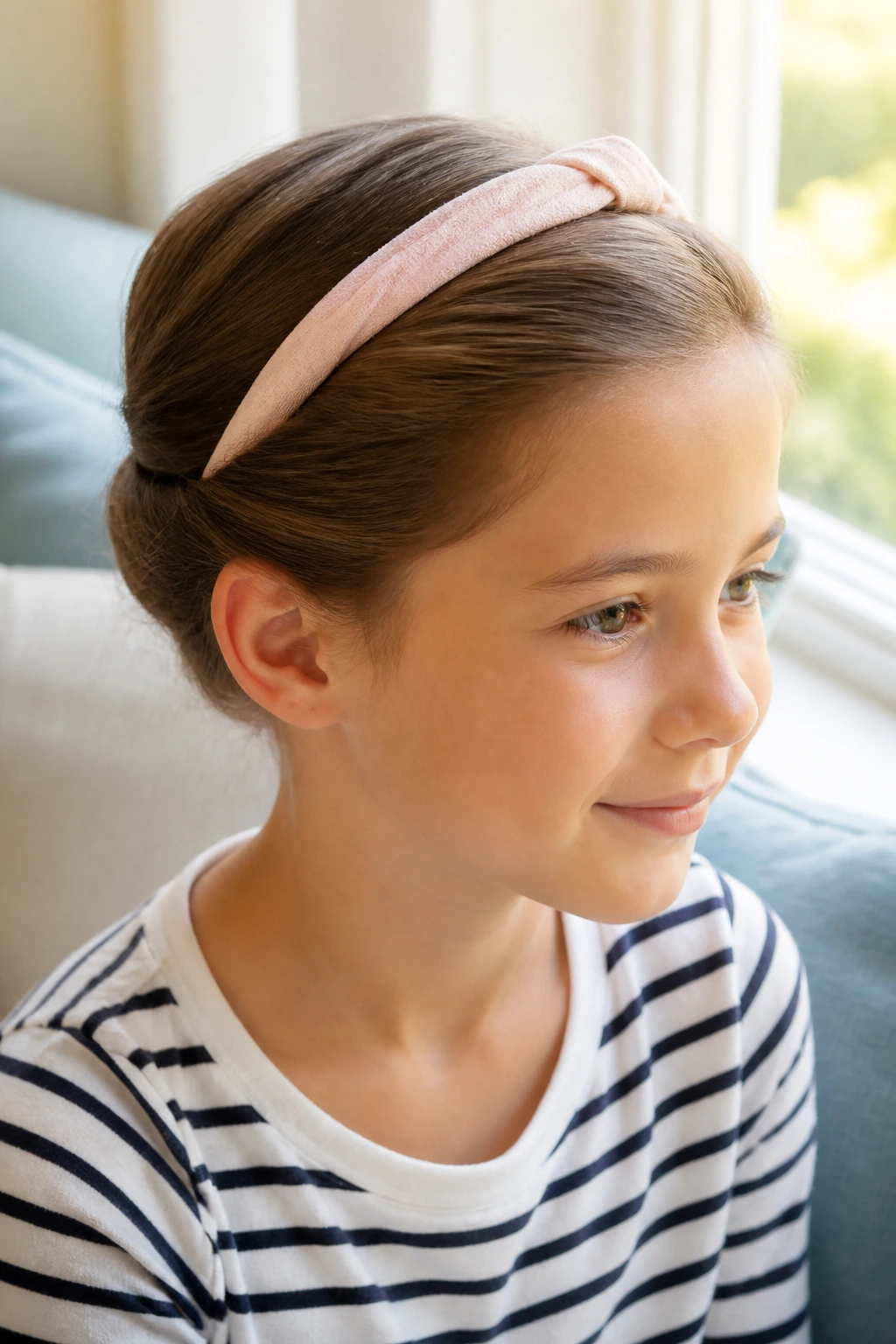
The headband tuck is one of the best tricks for short to medium hair that needs to stay neat without being pinned into submission. Place a soft headband over the hair, then tuck small sections back and under it until the ends sit neatly at the nape.
This is faster than a braid and gentler than a tight ponytail. It also works when the hair is freshly washed and too slippery for anything else. Use a flexible band with enough stretch to stay in place, but not so tight that it leaves a mark.
I like this one for picture day when the hair needs to look calm and orderly. It’s tidy in a very unfussy way.
28. Two-Strand Twist Crown
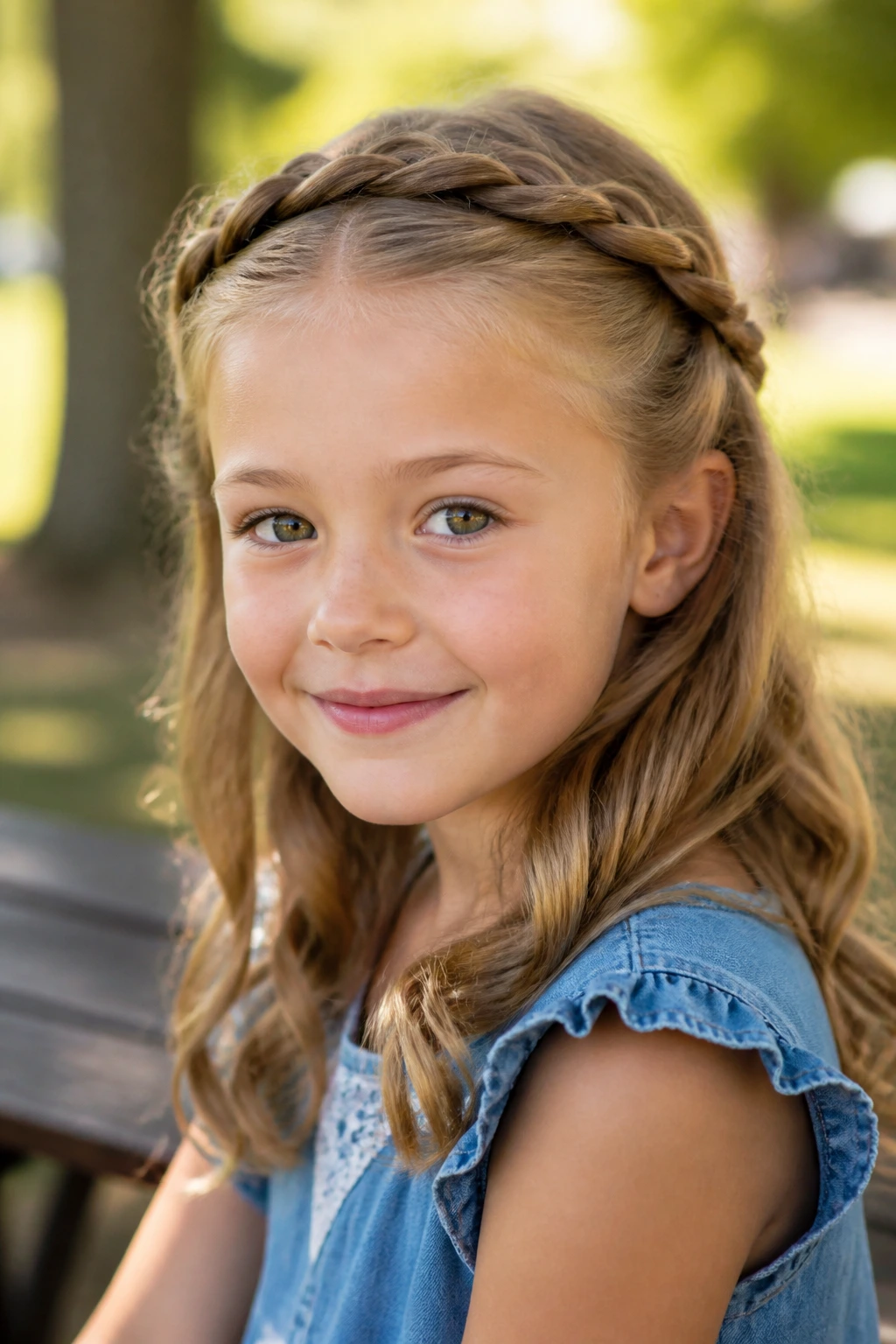
A twist crown keeps the hairline clean and gives the style a circular shape that looks polished without a lot of product. Start on one side, twist along the front, and pin the twist across the crown or around the head.
This is especially nice for textured hair or for children who wear their hair in twists often. It keeps the front controlled and lets the rest of the hair remain soft. If the hair is very thick, make the twist a little looser so it does not sit heavy at the temples.
The crown shape is the part that matters. Once that line is smooth, the rest can be simple.
29. Side-Swept Ponytail
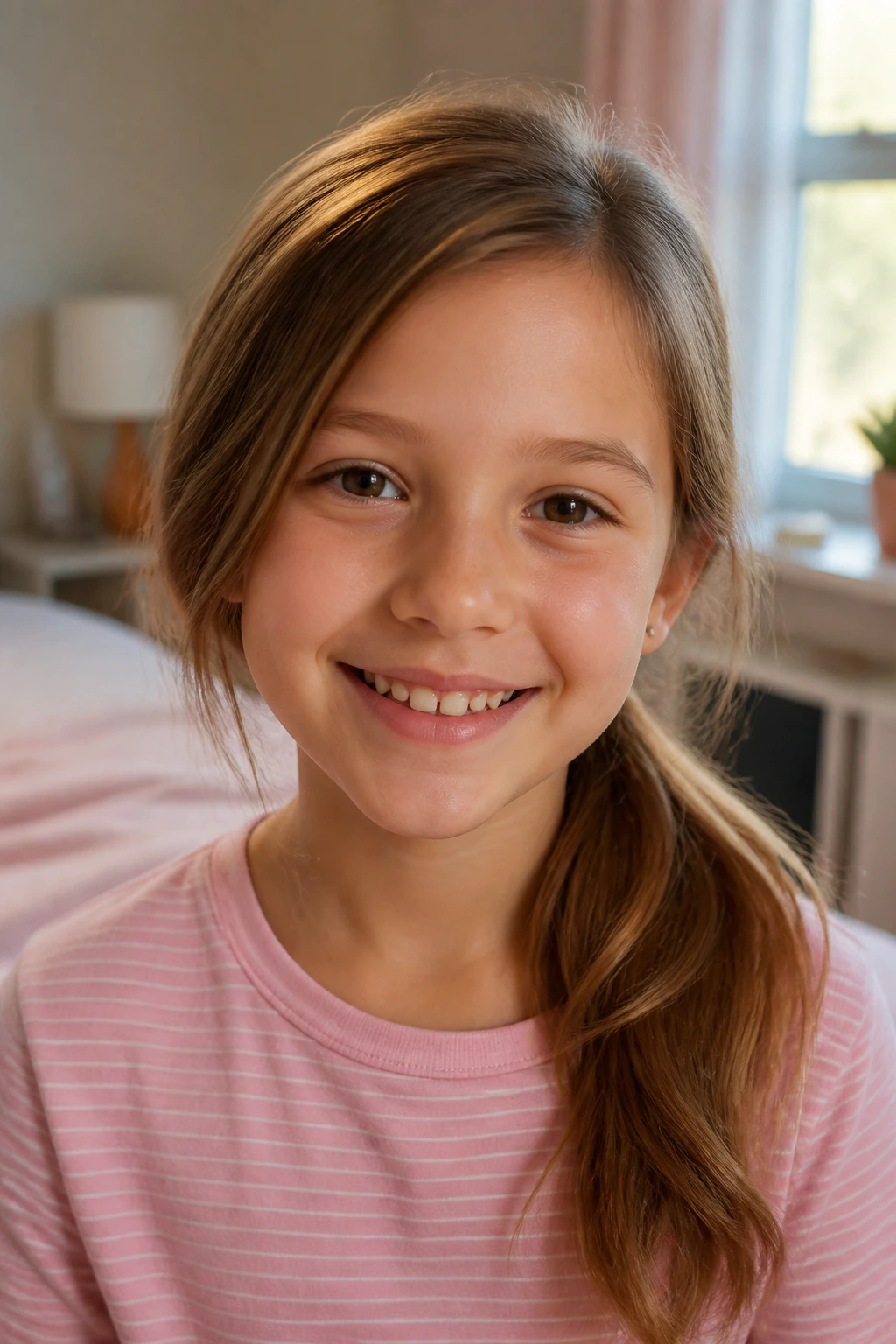
A side-swept ponytail gives a plain ponytail more movement. Shift the hair slightly off-center before securing it low at one side, and the whole style feels softer and a little more deliberate.
This is a good choice for fine hair that flattens in the back. The diagonal line adds shape without extra braiding. It also works on wavy hair that looks better when you let the texture show instead of smoothing every strand flat.
If you want it to stay cleaner through the day, mist the part lightly and brush it into place before you tie it off. That small prep step saves a lot of fixing later.
30. Clean Short-Hair Combover With Barrettes
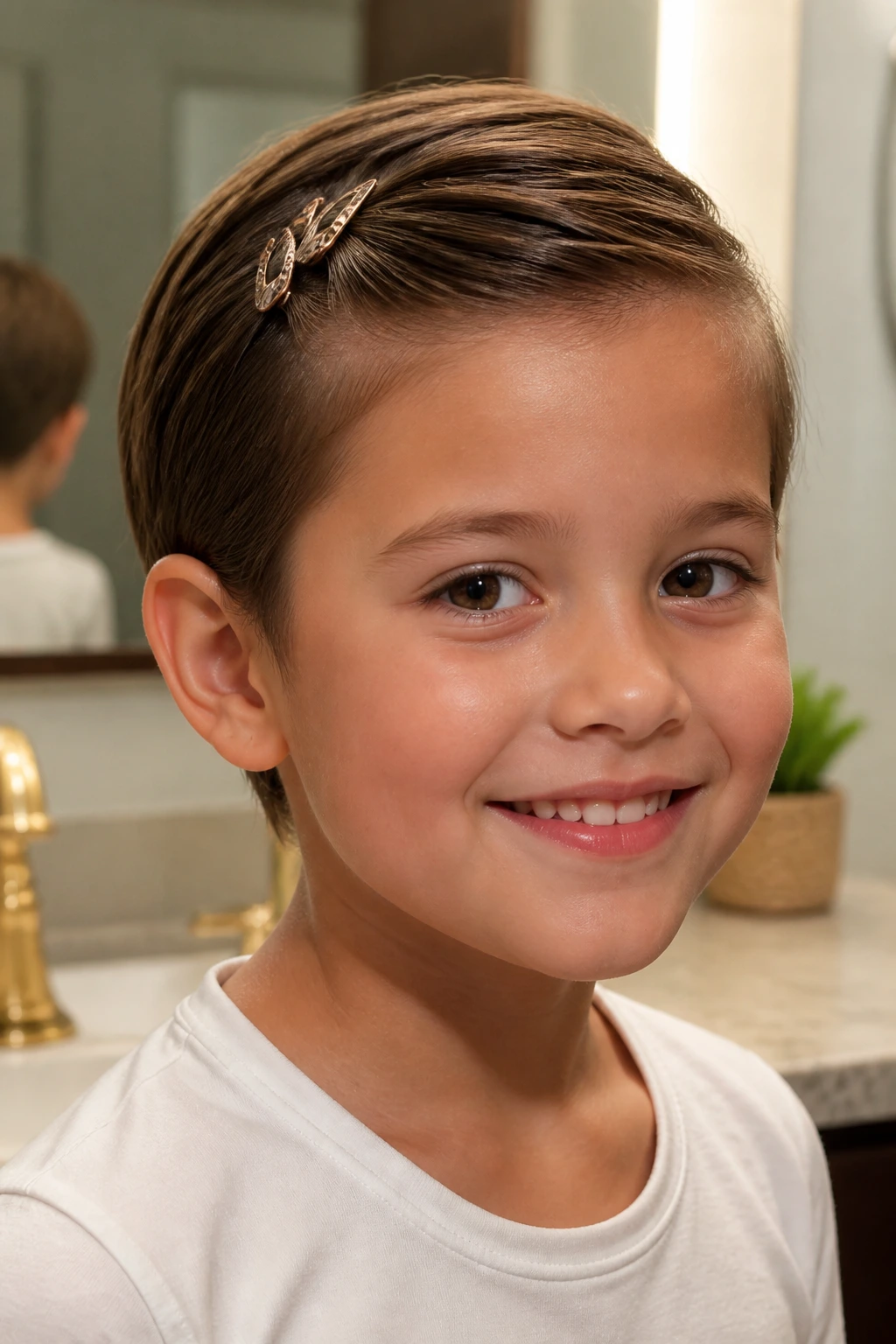
Short hair deserves a style that looks like it was chosen, not merely managed. A clean combover with two or three barrettes can do exactly that.
Sweep the top over to one side, smooth it close to the head, and pin the section back with clips that grip well. If the hair has a stubborn cowlick, dampen the roots first and let the shape dry in place. For very short hair, tiny snap clips work better than large decorative barrettes.
This is one of the most practical styles on the list because it respects the haircut you already have. No pretending. No fighting the shape. Just a neat finish.
Why School Hairstyles Need to Survive More Than the Mirror Test
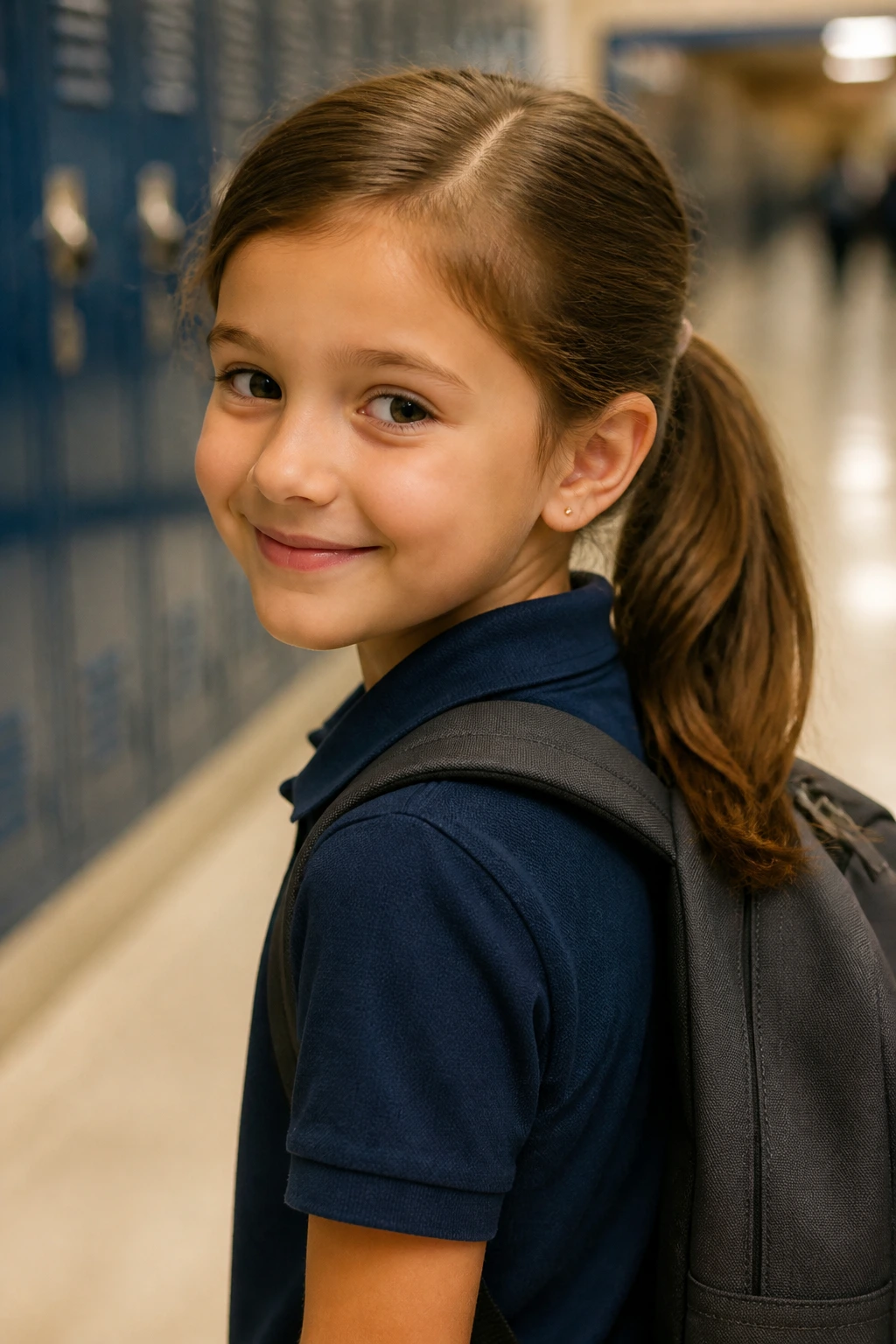
A school hairstyle has to answer to more than looks. It has to survive the bus seat, the classroom radiator, the lunchroom shuffle, and whatever happens when a child decides that one side of the hair should now be behind the ear for the rest of the day. That’s why the best styles are built around grip and comfort, not decoration alone.
I’m not against pretty details. I just like them to earn their place. A ribbon on a braid is useful when it also hides the elastic. A barrette is useful when it actually holds a section back. The accessory should do a job, not merely hang around for attention.
If you think about school hair as a small system — parting, hold, comfort, and reset — the whole routine gets easier. You stop chasing perfect, and you start choosing styles that fit the child’s hair, the day’s schedule, and the amount of patience in the room. That’s the real trick.
The Tools That Make These Styles Faster
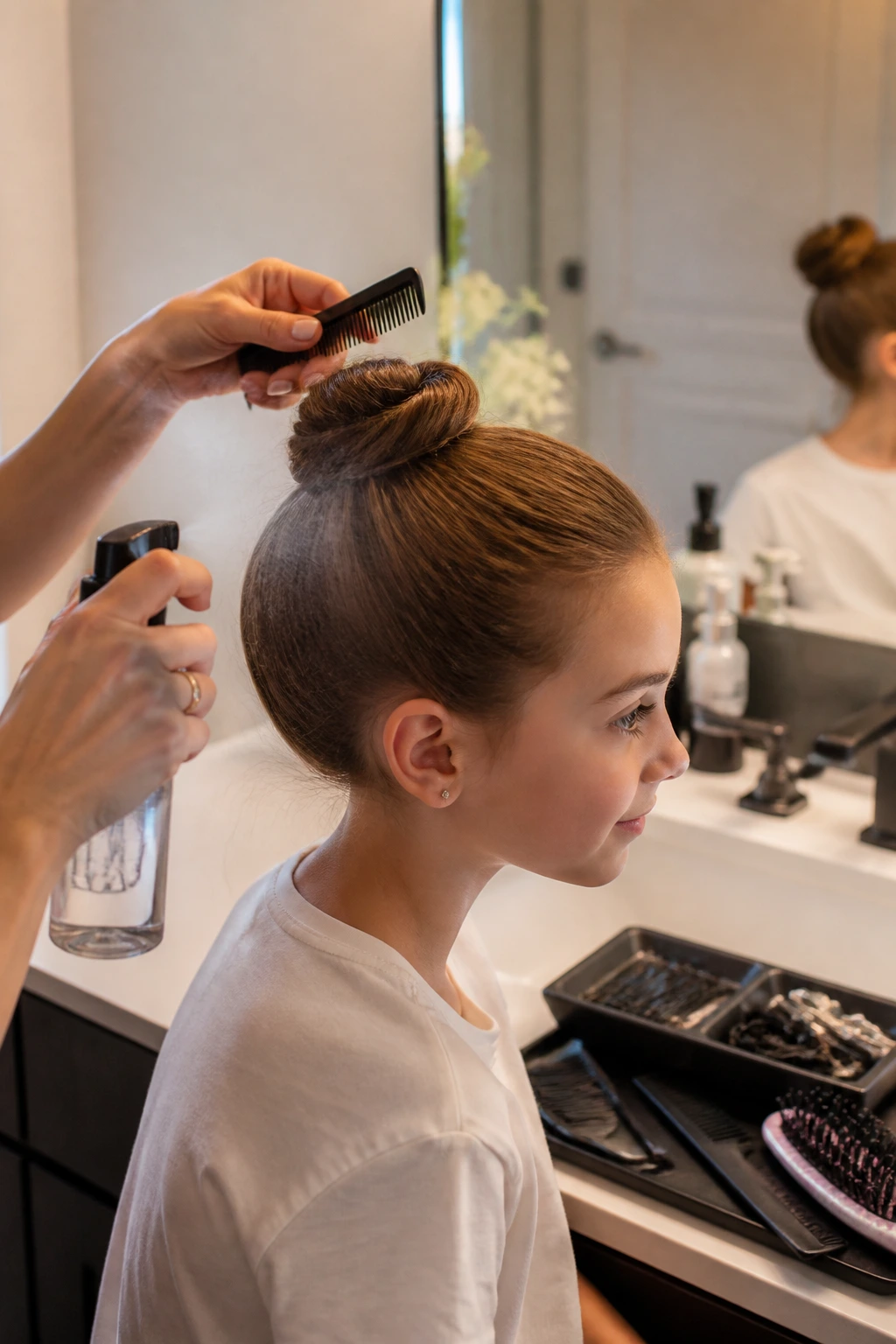
- Rat-tail comb: The thin handle makes clean partings, especially for braids, pigtails, and sections that need to look deliberate.
- Wide-tooth comb: Better for wet curls and textured hair because it cuts down on breakage and does not drag through knots.
- Fine-mist spray bottle: A little water helps calm flyaways and gives braids enough grip without soaking the hair.
- Snag-free elastics: The plain ones with no metal seam are kinder to hair and easier to remove at night.
- Small clear elastics: Handy for bubble ponytails, twist ends, and braids where you want the tie to disappear.
- Bobby pins: Choose the ones with rounded tips and a firm hold; flimsy pins slide out fast.
- Mini claw clips: Good for half-up styles and short hair, as long as the teeth grip rather than just decorate.
- Soft scrunchies: Better for low buns, puffs, and overnight preservation because they don’t bite into the hair.
- Leave-in conditioner or detangling spray: A light mist smooths knots before styling and keeps the comb from snagging.
- Tail comb or pick: Useful for clean parts and sections on both straight and curly hair.
Buying the Right Elastics, Clips, and Brushes
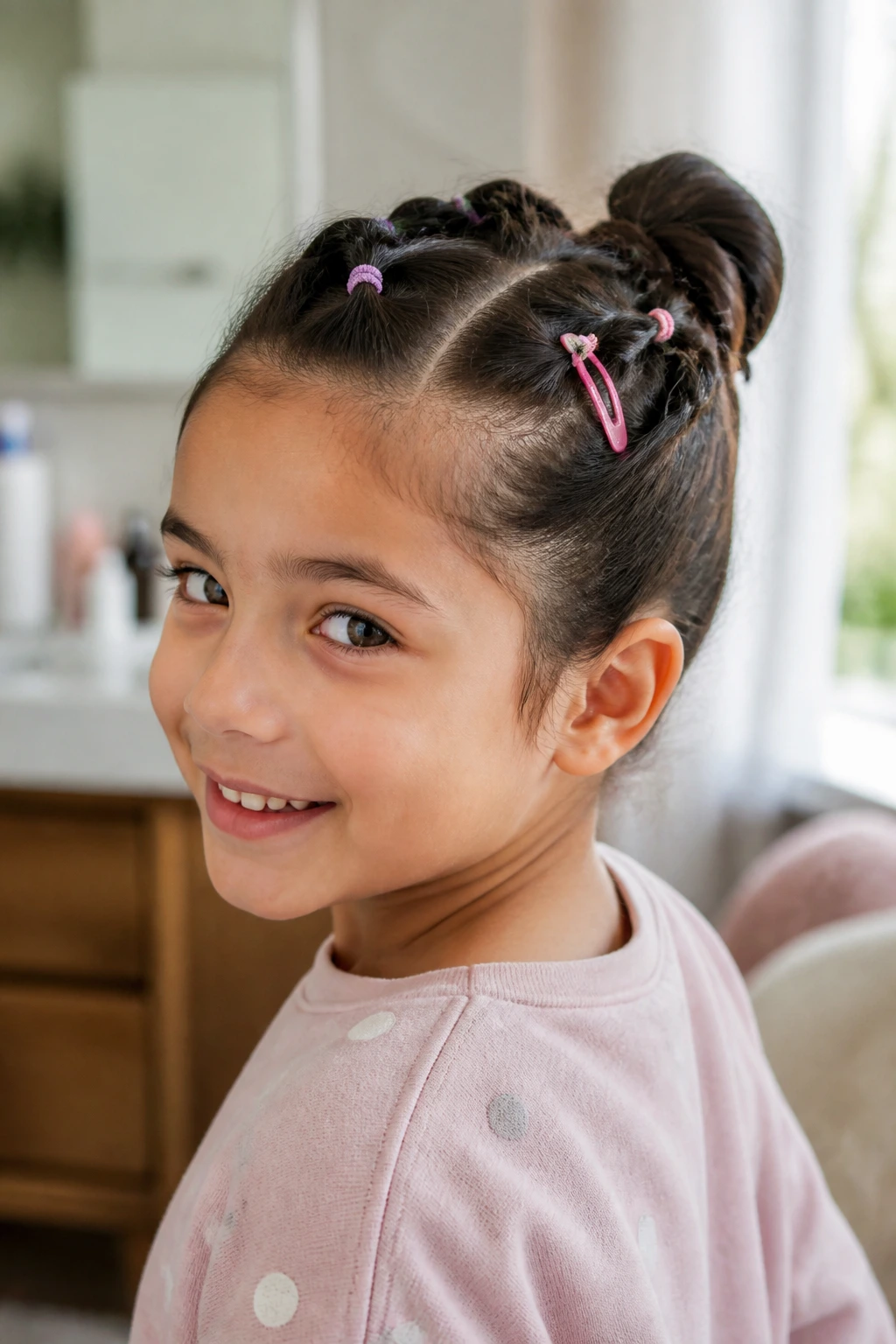
Not all hair accessories behave the same, and school mornings expose the bad ones fast. Elastics with metal seams snag on removal, which is annoying on straight hair and a mess on curls. I’d skip them and buy the plain snag-free kind in a few neutral colors. They disappear better and pull less.
Clips matter even more than people think. A cute clip that opens when a child turns their head is wasted money. Look for clips with a firm spring and teeth that actually close around hair. For finer hair, smaller barrettes usually hold better than big decorative ones. For thicker or coily hair, slightly wider clips and stronger grips make more sense.
Brushes and combs should match the hair texture in front of you. A dense brush can bully curls. A wide-tooth comb can glide through wet hair and preserve shape. If you keep only one extra tool in the car or backpack, make it a tiny brush and a spare elastic. That pair saves more mornings than any fancy gadget ever will.
Choosing the Right Style for Hair Type, Time, and School Rules
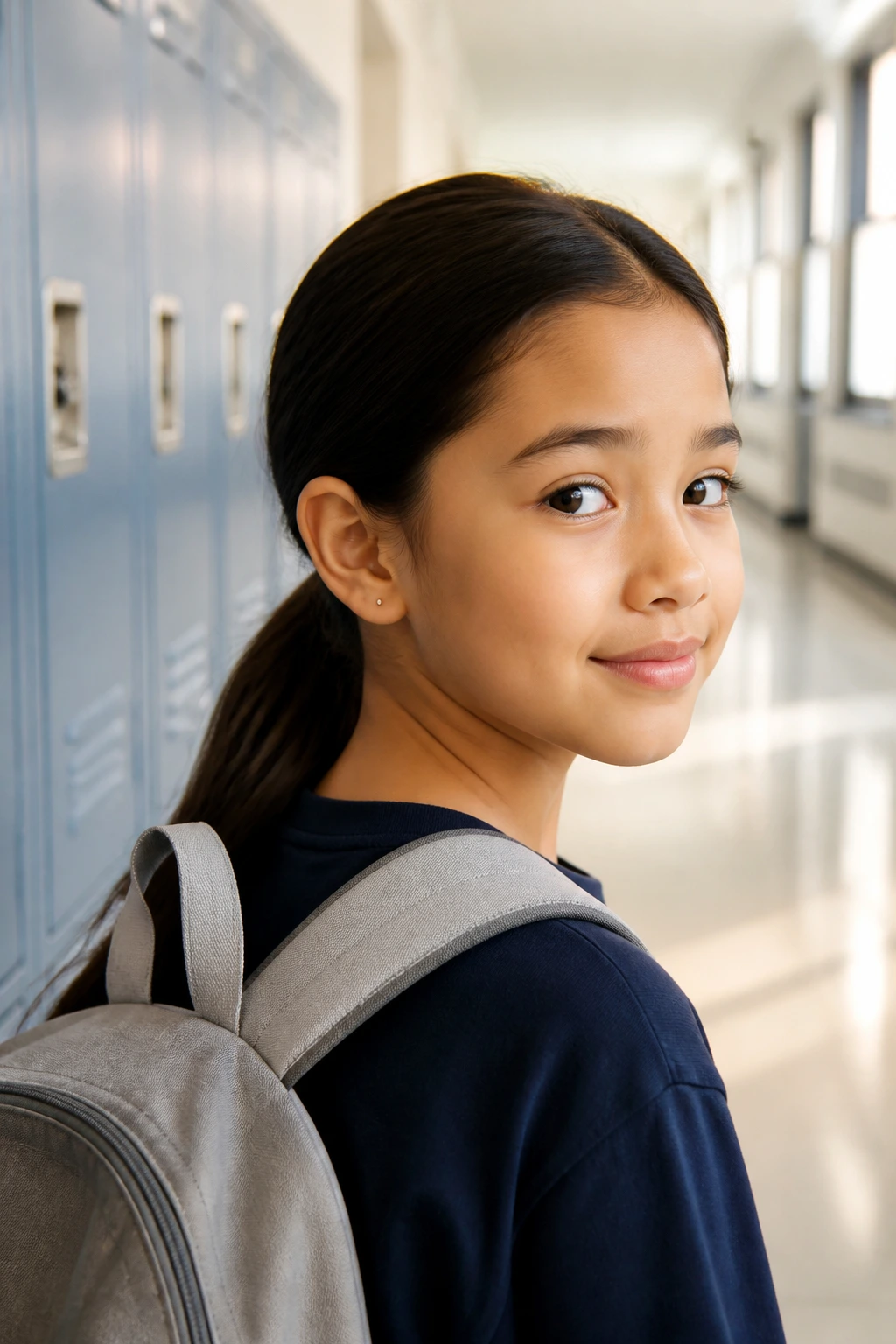
Fastest mornings: go for a low ponytail, low scrunchie bun, claw-clip half-up, or short-hair combover. These are the styles I’d trust when breakfast is half-finished and someone is already asking where the shoes went.
More active days: choose twin Dutch braids, flat twists, a high puff, or a sleek top knot. These styles keep hair secure through PE, playground time, and that bizarre habit kids have of flinging a jacket on and off three times before first bell.
Hair that slips easily: use styles that lock in sections, like bubble ponytails, braids, or braided wraps. Straight, silky hair often needs a little texturizing spray or a tiny bit of grit from day-old roots to stay put.
Sensitive scalps: keep the tension loose and stay away from styles that tug at the hairline. Two-strand twists, soft buns, and half-up styles usually feel better than tight braids pulled hard at the temples.
Small Adjustments That Keep Styles Neat All Day
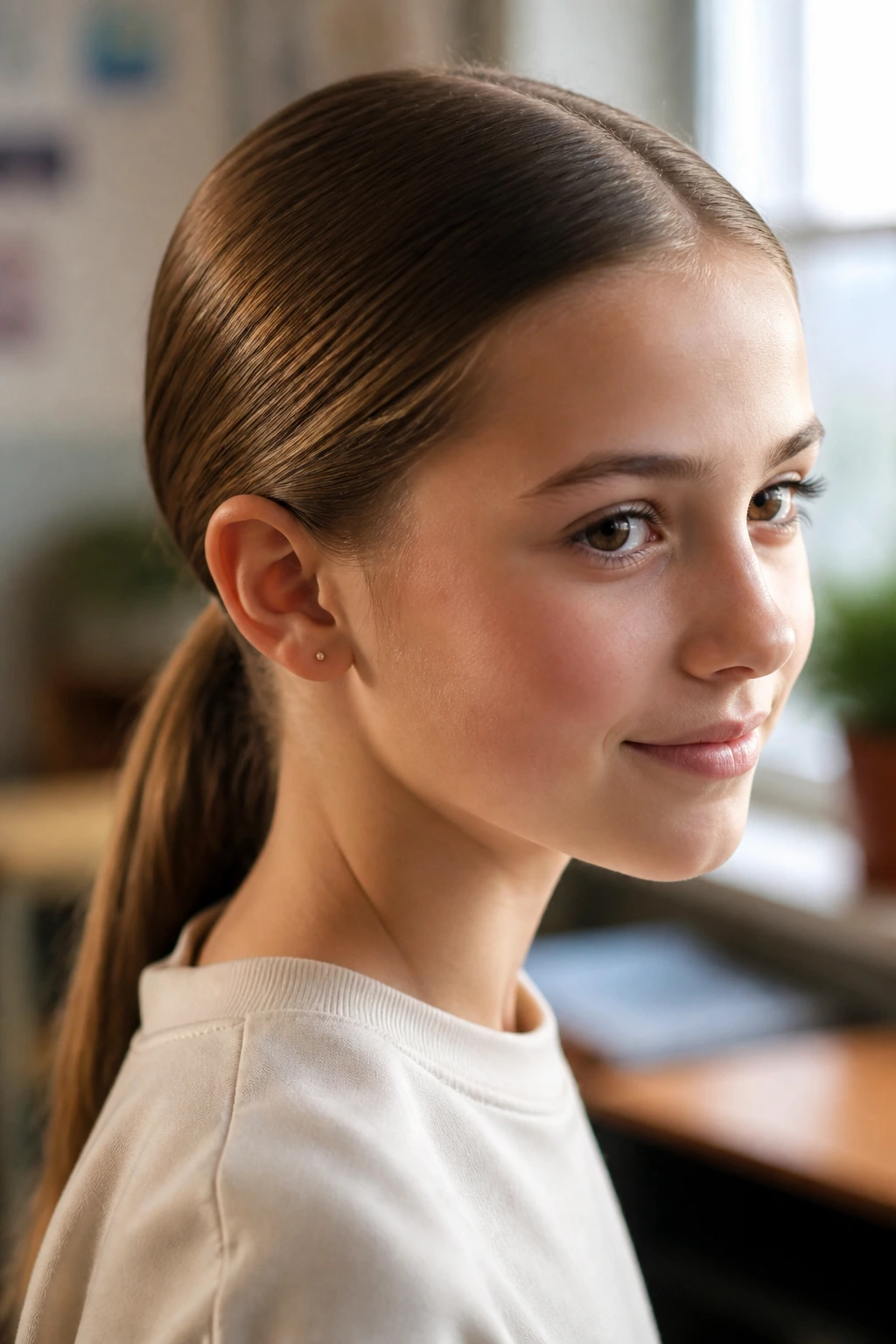
Prep the base: A style usually fails because the hair underneath was tangled or uneven. Take 30 extra seconds to brush the nape and around the ears before you start. That tiny bit of prep does more than extra hairspray ever will.
Use less product than you think: Heavy gel can make a child’s hair look greasy by noon, and it often collects lint around the hairline. A pea-size amount or a light mist is enough for most school styles.
Match the tie to the style: Soft scrunchies for buns and puffs, snag-free elastics for braids and ponytails, clips for short hair and half-up sections. The wrong tie makes a good style slide.
Check the front in daylight: Bathroom lighting hides crooked parts. A quick glance near a window shows the truth. Fix the part now, not at pickup.
Pack a rescue kit: One comb, two elastics, and one small clip. That is enough to rescue most school hair without dragging a full vanity case around.
How to Keep a School Style Fresh Overnight
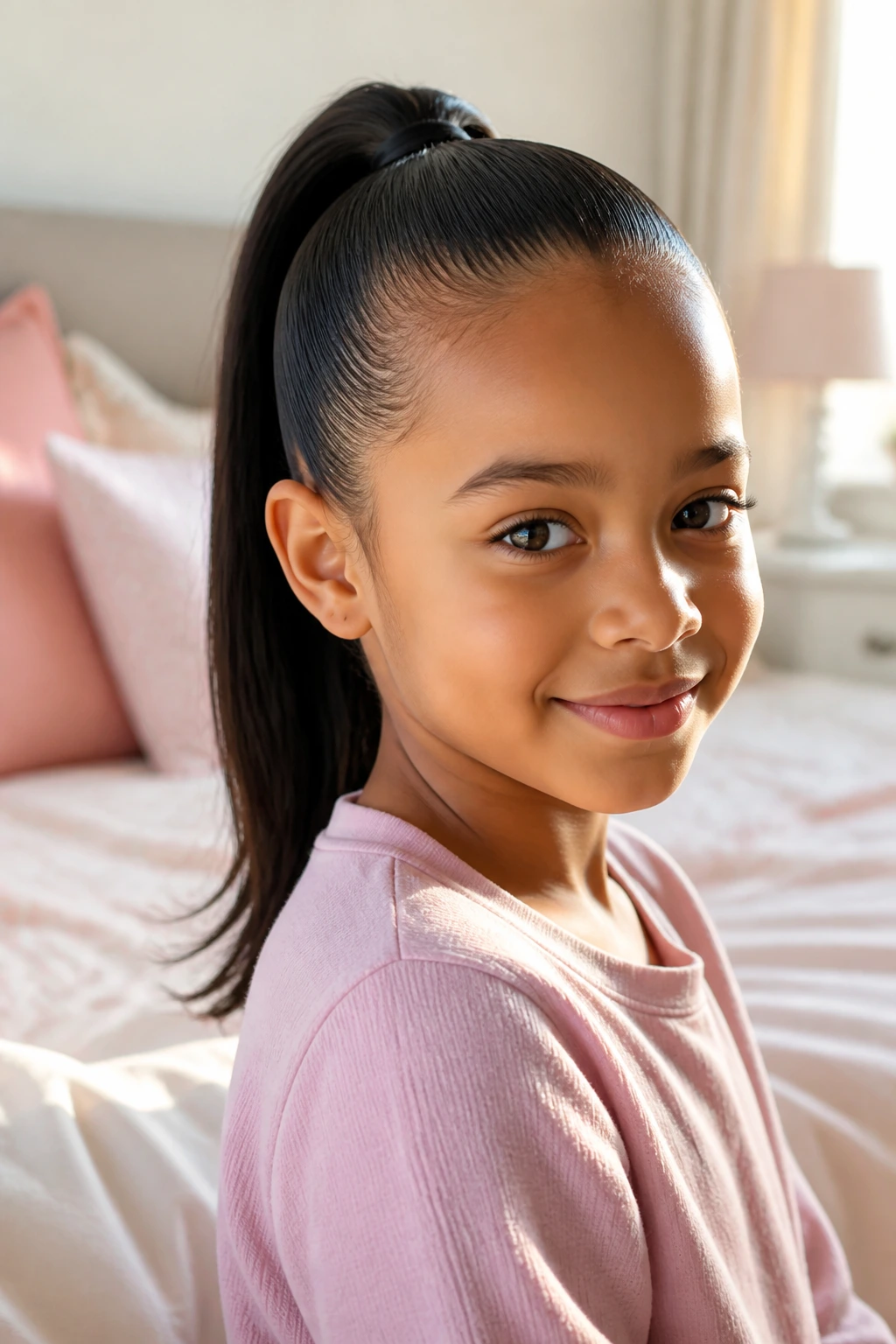
Some styles last a day and some last longer, but almost all of them improve with the right bedtime routine. Braids, twists, mini box braids, and buns often hold for 2 to 3 days if you protect them with a satin bonnet or a satin pillowcase. Sleeker ponytails usually need a refresh the next morning, even if they still look decent.
For curly hair, a loose pineapple or a soft puff at the top of the head keeps the curl shape from getting crushed. In the morning, a little water on the front sections is usually enough to wake the style back up. I’d avoid rewetting the whole head unless you want to start over.
If a style gets messy overnight, do not pile on more product right away. Take it apart enough to remove the bad bend or flat spot, then rebuild only the pieces that need help. A quick reset beats a full redo on most school days.
Curly, Short, Fine, and Active: Ways to Adapt These Looks
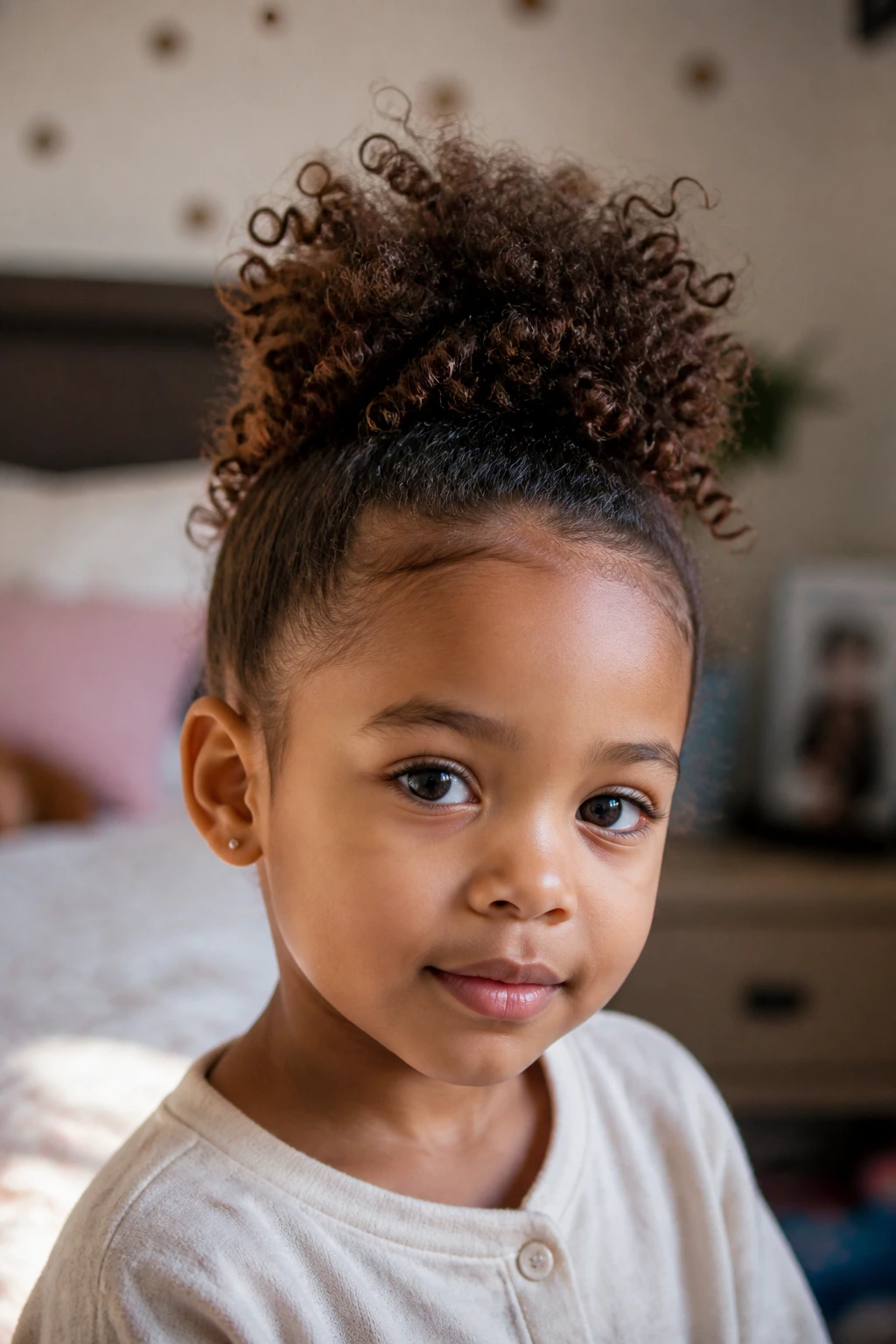
Curly-Hair School Day Swap: Use styles that preserve shape, like the high puff, curly half-up pineapple, flat twists, or a loose low bun. Keep the moisture light and avoid brushing curls dry, which turns morning styling into a puffball battle.
Short-Hair Fixes: Go for the pixie sweep, headband tuck, or short-hair combover with barrettes. Short hair looks best when the accessories are there to hold a section, not crowd the whole head.
Fine-Hair Version: Choose side parts, bubble ponytails, or side-swept ponytails. Fine hair often needs a little texture at the roots and very small accessories so the style doesn’t collapse under its own weight.
Gym-Day Version: Pick twin braids, a top knot, or a low bun. These keep the neck clear and reduce the amount of hair that ends up sticky from sweat and playground dust.
Sensory-Friendly Version: Use loose twists, soft scrunchies, and low-tension styles that avoid pinching. A child who can feel every pull will spend the day thinking about the hairstyle, and that’s not worth the trade.
Common Mistakes That Make School Hairstyles Fall Apart
The first mistake is starting on tangled hair. The style may look fine for ten minutes, then the knots start shifting and the whole thing gets frayed at the ends. Detangle first, even if it takes an extra two minutes.
The second mistake is pulling everything too tight. That causes sore temples, little red marks, and a child who wants the style out before lunch. School hair should feel secure, not punishing.
Another common problem is using the wrong kind of elastic. Rubber bands and brittle ties snag, snap, and leave hair looking chewed at the ends. Snag-free elastics cost less than the repair job later.
The fourth mistake is overloading the hair with product. Too much gel or cream makes the roots greasy and can turn into flakes when the hair dries. Use a small amount and smooth it in with your hands before you add more.
The last one is choosing a style that does not fit the morning. A waterfall braid is lovely. It is not lovely when nobody has eaten yet and one child is already on the floor looking for a missing shoe. Pick the style that matches the day, not the fantasy version of it.
Questions Parents Ask Most Often
Which school hairstyle lasts the longest?
Braids usually win, especially Dutch braids, flat twists, and mini box braids. They keep the hair controlled and can often last into the next day with a quick nighttime wrap.
What if my child’s hair is too slippery for braids?
Use a little water or light detangler before you start, then choose styles with more grip, like bubble ponytails or a low bun. Fine, silky hair often needs a bit of texture at the roots to behave.
Can short hair still have cute school styles?
Absolutely. Short hair works well with headband tucks, side barrettes, clipped-back pixie sweeps, and tiny braided front sections. The style just needs to work with the haircut instead of against it.
Are tight braids bad to wear every day?
Tight braids are the problem, not braids themselves. Keep the tension gentle, especially around the hairline, and switch between braid styles, buns, and looser half-up looks.
How do I stop flyaways without making hair crunchy?
Use a pea-size amount of smoothing cream or a very light mist of gel on your hands first, then press it onto the surface of the hair. Direct product sprayed all over is what leaves the crunchy finish.
What’s best for a child who hates hair on their neck?
High puffs, top knots, space buns, and twin braids usually work well because they lift the hair away from the nape. A low ponytail can also work if the child prefers less tension.
Can I do these styles on second-day hair?
Yes, and sometimes second-day hair is better because it has more grip. Braids, buns, and bubble ponytails often hold better when the hair is not freshly washed and slippery.
What accessories are safest for younger kids?
Soft scrunchies, small snag-free elastics, and lightweight clips are the easiest on little heads. Skip anything sharp, heavy, or so decorative that it catches in backpacks and car seats.
The Styles That Make Mornings Easier
A good school hairstyle does not need a lot of drama. It needs to hold the line while the day gets noisy. That might mean a low ponytail that stays smooth until pickup, braids that take a full day of motion, or a short-hair clip combo that keeps the bangs out of the eyes without a fight.
The nicest part is that most of these looks can be repeated. Once you find the few that suit your child’s hair, mornings stop feeling like improvisation and start feeling like habit. That is worth a lot before coffee.
Pick two or three favorites, keep the elastics where you can reach them, and let the rest of the week build from there.
