



Straight hair makes bangs brutally honest. The cut line shows before the coffee cools, and if the weight is wrong by even a little, the fringe splits, swings sideways, or lies like a wet receipt against your forehead. That’s exactly why bang styles for straight hair deserve more thought than people usually give them.
The upside is better than most people expect. Straight strands hold a shape with almost no visual interference, so a good fringe reads clean, crisp, and deliberate instead of fuzzy or overworked. You see the geometry. You see the line. You also see every mistake, which is why the right choice matters so much.
I’ve always liked straight hair for bangs because it doesn’t hide behind texture. A blunt edge looks blunter, a curtain part looks more architectural, and a wispy fringe can stay airy instead of collapsing into a single heavy strip. The trick is picking a style that fits your density, your forehead space, your cowlicks, and how much trimming you can tolerate without muttering at the mirror.
Why These Bang Styles Work So Well on Straight Hair
-
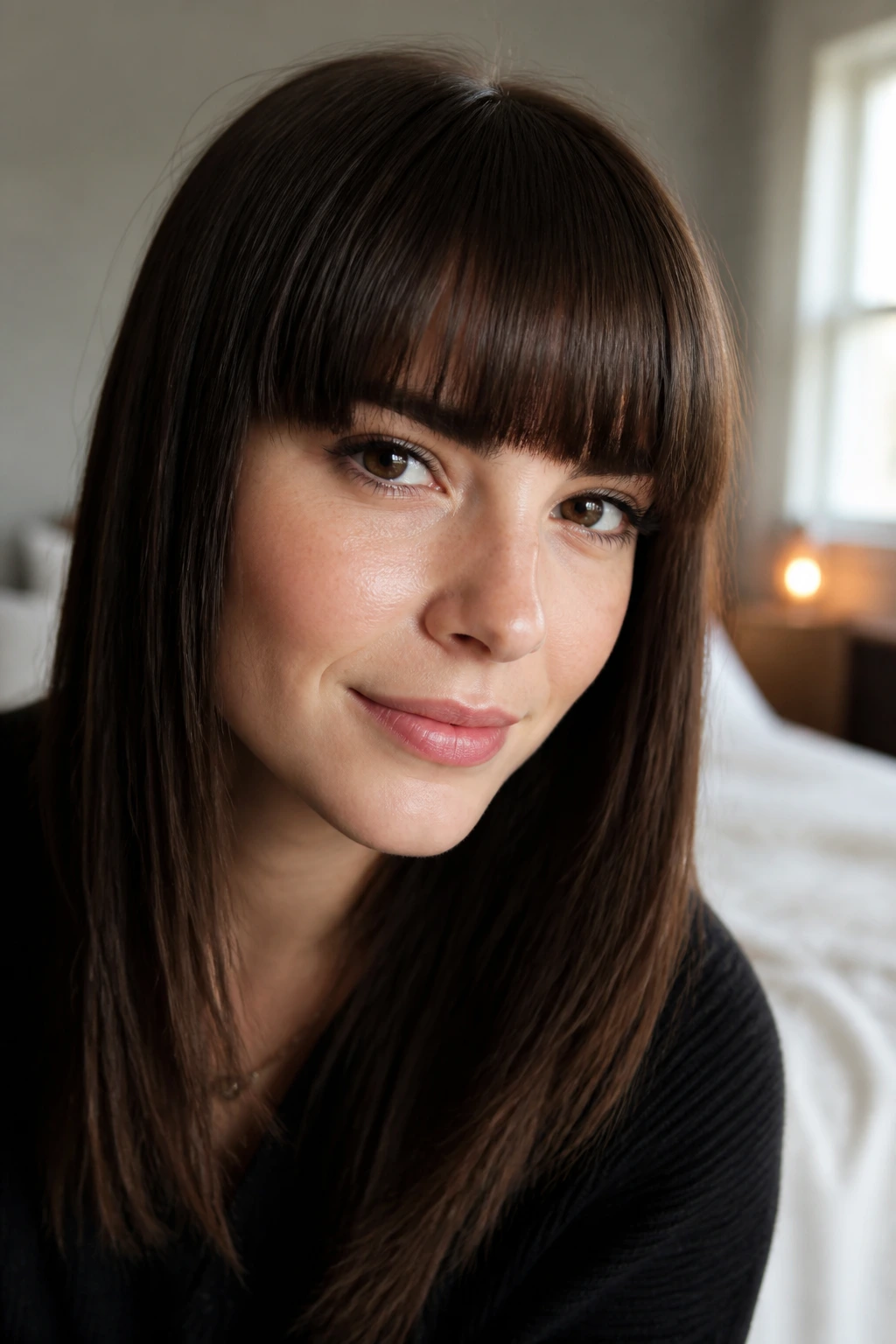
Clean edges: Straight hair keeps the silhouette visible, so blunt, micro, and arched bangs read as a real design choice instead of a vague shape.
-
Fast styling: A small round brush, a blow-dryer nozzle, or a quick pass with a flat iron usually sets the fringe in a few minutes because the hair already wants to lie flat.
-
Flexible grow-out: Curtain, side-swept, and bottleneck shapes slide into layers more easily than a hard straight-across cut.
-
Better control over density: On straight hair, you can see when the bang section is too thick or too sparse right away, which makes the cut easier to fine-tune.
-
Less frizz, more precision: When the strand pattern stays smooth, piecey and sliced bangs keep their separation instead of turning into puff.
-
Cowlick strategy: The right parting angle can quiet a stubborn front swirl without forcing you to fight it every morning.
What Straight Hair Changes About Bangs
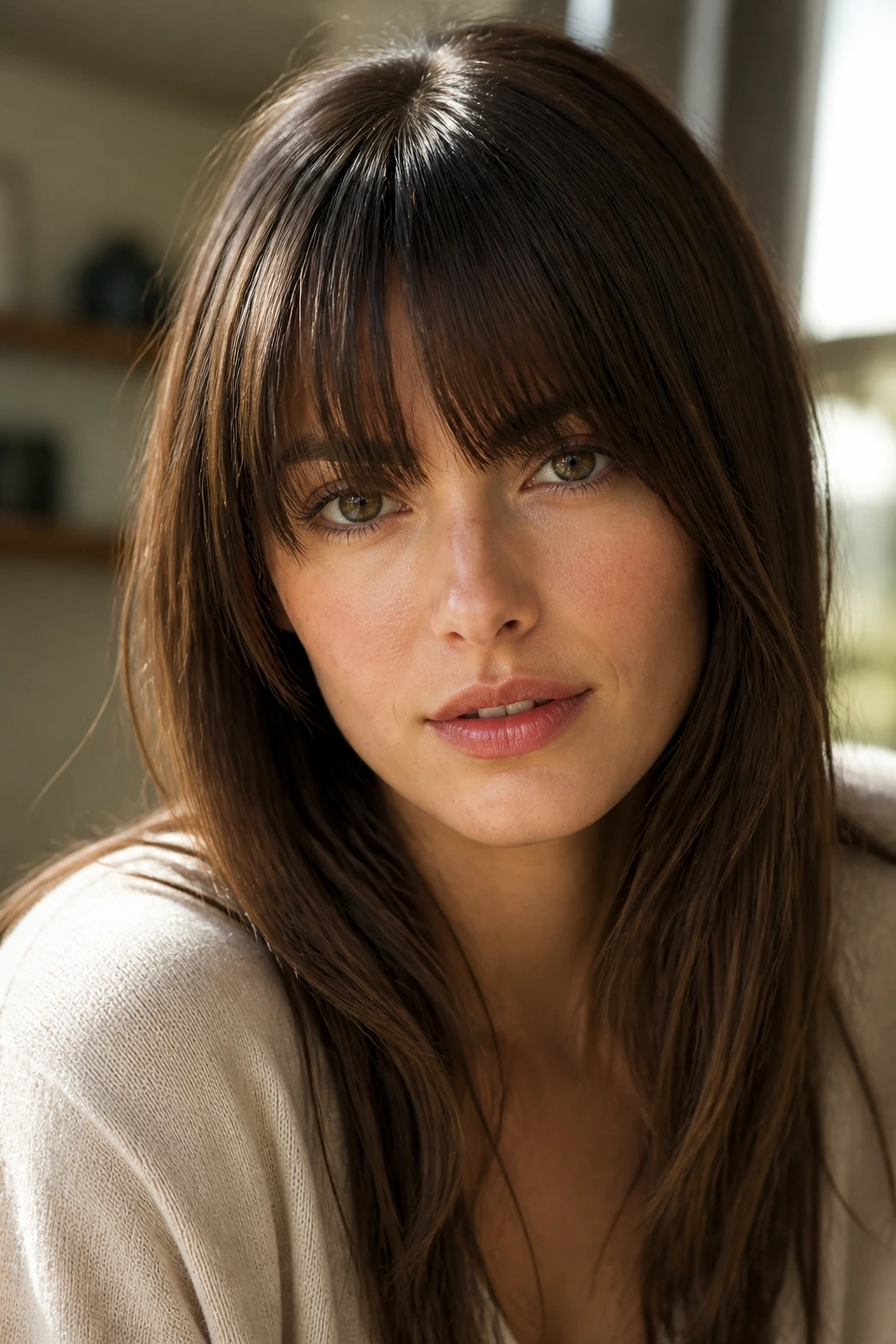
Straight hair does not forgive a lazy fringe cut. That sounds harsh, but it’s also the reason the right bangs on this texture can look so sharp. The hair lies where gravity tells it to lie, which means the shape you leave in the salon is the shape people actually see.
That can be a gift or a headache. A millimeter too short is noticeable. A line that’s too heavy can sit like a shelf. A bang section that’s too wide can drag the whole front of the haircut down and make the face look boxed in. Straight hair exposes all of that.
It also behaves differently around the forehead. Oil shows faster. Separation shows faster. A heavy fringe can look good for three hours and then start sticking together by lunch if you have a warm forehead or a humid commute. That’s not a reason to avoid bangs. It’s a reason to choose a style that matches the way your hair actually moves.
Cutting technique matters too. On straight hair, stylists often point-cut, slice, or slightly bevel the ends so the fringe doesn’t look like a ruler edge unless that’s the point. That tiny change at the bottom makes a huge difference in how the bang settles when it dries.
1. Blunt Brow-Grazing Bangs
A blunt brow-grazing fringe is the classic straight-hair move because it looks so direct. The line sits just at or slightly below the brows, and the ends fall with a clean edge that makes the whole face feel more defined. On straight hair, there’s nowhere for the cut to hide, which is exactly why this style has such presence.
Why It Works on Straight Hair
The shape stays visible without much help. You don’t need curls or waves to make the line read, and that means the cut can do the heavy lifting. It’s best when the front section has enough density to look full without being stiff, and a tiny bevel at the ends keeps it from feeling helmet-like.
- Best for: medium to thick straight hair
- Styling time: 3 to 5 minutes with a round brush or flat iron
- Maintenance: trim every 2 to 3 weeks if you want the line crisp
- Watch for: too much width in the bang section, which can make the fringe feel heavy at the temples
Pro tip: blow the bangs from side to side for the first 20 to 30 seconds, then sweep them down with a brush. That tiny reset helps the roots sit flatter and keeps the center from puffing up.
2. Long Curtain Bangs
If you want a safe first step into bangs, long curtain bangs are the easiest place to start. They part in the center, open across the forehead, and taper into the cheekbones so they feel like part of the haircut instead of a separate piece sitting on top of it. On straight hair, that long glide shows up clearly.
The best version is not too short in the middle and not too blunt at the sides. You want the shortest point to land around the bridge of the nose or just below it, then sweep into the jawline. That keeps the line soft enough to grow out without looking forgotten.
I like this style on straight hair because it buys you time. If you decide you don’t want full bangs, the pieces already live in the right zone to blend into layers. If you do like the fringe, it can still look polished with a quick bend at the ends and a little root lift at the center part.
There’s also an easy practical benefit here: the shape works with a middle part, but it can shift to a slight off-center part if your hair insists on breaking that way. The cut still makes sense.
3. Side-Swept Fringe

Why does a side-swept fringe survive bad hair days better than a lot of other bang styles? Because the weight sits in motion, not in a fixed line. The fringe starts deeper on one side, sweeps diagonally across the forehead, and leaves enough room around the face that straight hair doesn’t feel boxed in.
How to Style It
A side-swept fringe needs direction, not volume. Blow it forward first, then guide it to the side with a small round brush or a flat brush while the roots cool. If you skip that first forward pass, the hair tends to split back into its original part and lie there like it won the argument.
- Best for: cowlicks near the hairline
- Best part: a side part placed roughly one eyebrow width off center
- Finish: a touch of light hold spray at the roots, not the ends
- Daily reality: easy to pin back if you need the forehead clear
This is one of the least fussy options for straight hair. It gives movement without requiring precision every hour of the day, and it grows out in a way that usually looks intentional for longer than a blunt cut does.
4. Bottleneck Bangs
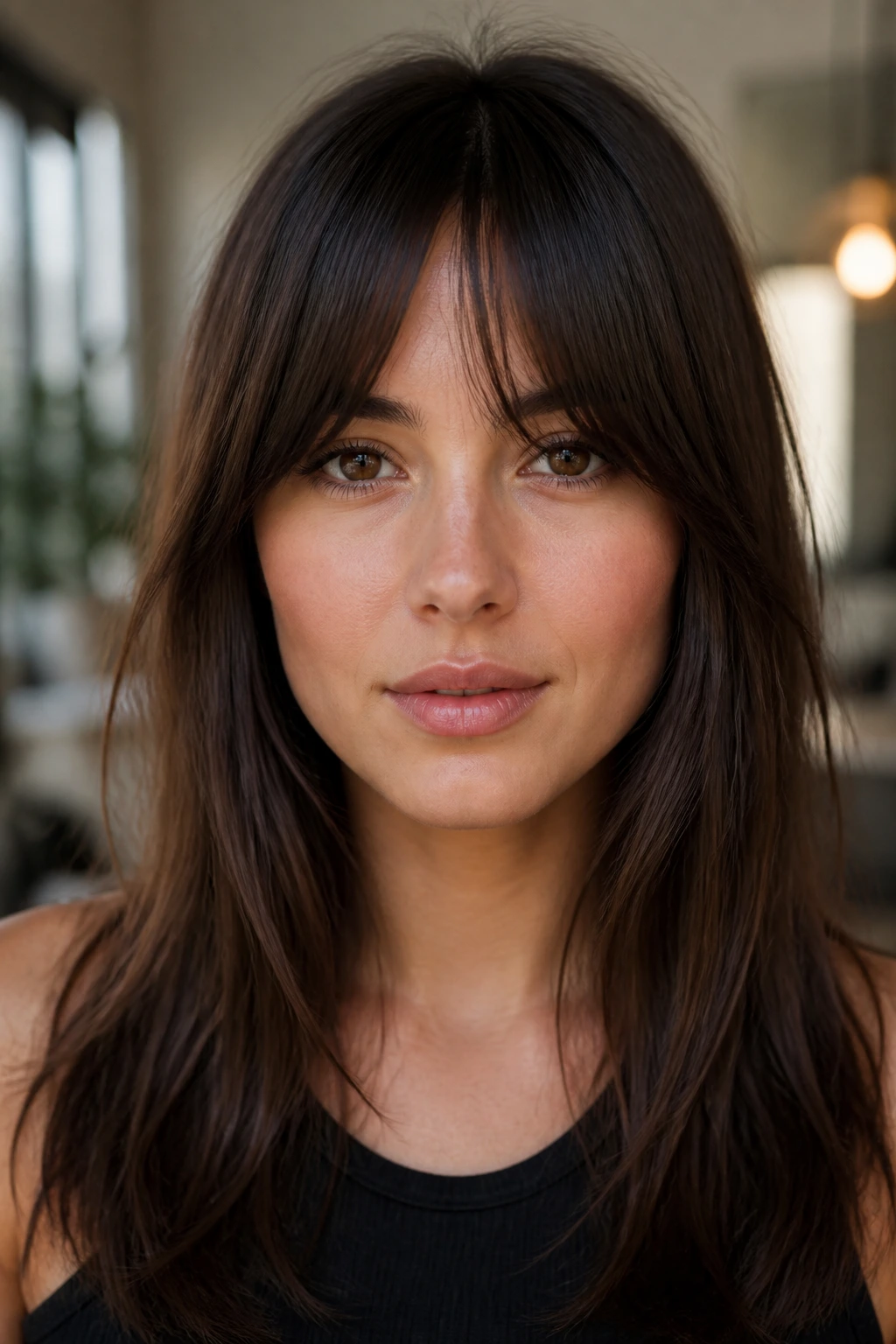
Bottleneck bangs are the smart middle ground for anyone who wants shape without a hard forehead line. The center starts narrow, then the pieces widen as they move outward, so the silhouette feels a little like a bottle neck opening into shoulders. On straight hair, that geometry reads cleanly.
The style works because it creates a soft frame without cutting the whole front section into one dense block. The shortest piece lives around the center of the forehead, while the side pieces fall longer and feather toward the cheekbones. That gradual change matters. Straight hair shows the transition clearly, which makes the cut look polished instead of accidental.
I reach for this shape when someone likes curtain bangs but wants a bit more structure at the center. It also helps if the forehead feels broad and you want the bang to open the face instead of covering it from edge to edge.
This is not the fringe for someone who wants zero maintenance. It does ask for a quick blow-dry and an occasional trim to keep the taper visible. Still, it’s kinder than a blunt cut when you’re trying to live with bangs for the long haul.
5. Wispy See-Through Bangs
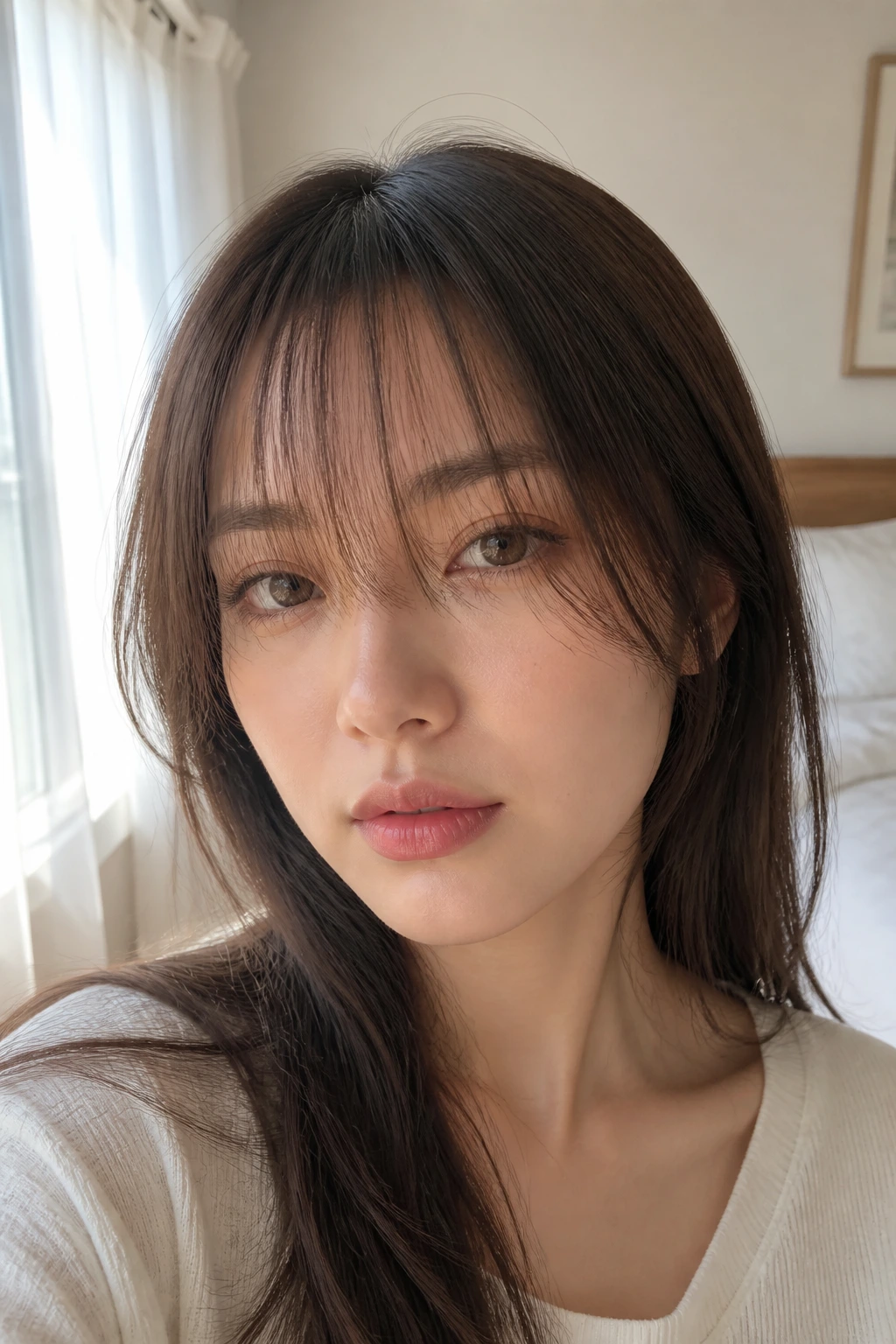
Wispy see-through bangs are the lightest option on this list, and they depend on restraint. The fringe is thin enough that forehead skin shows through in places, which keeps the style from feeling heavy. On straight hair, that translucence is the whole point; the hair stays airy instead of clumping into a solid mat.
This look works best when the front section is intentionally small and a little longer than you might expect. The goal is not to pack the forehead with hair. The goal is to make a veil of soft strands that move when you blink. It’s prettier than that sounds. A lot prettier.
If your straight hair is fine and tends to go flat, this can be a good fit, but only if you keep the product light. Too much cream or oil and the fringe turns stringy fast. A tiny amount of root spray or dry shampoo at the front gives it enough grit to stay separated without looking dry.
The style has a quiet charm that I think gets overlooked. It doesn’t shout. It just frames.
6. Micro Bangs

Micro bangs are the boldest kind of short fringe, and straight hair makes them look especially sharp. The cut sits well above the brows, sometimes close to the middle of the forehead, so the whole face changes shape the second the fringe is in place. There’s no soft hiding spot here.
Unlike a longer blunt bang, micro bangs depend on confidence in the line. If the edge is uneven or the width is off, you’ll see it immediately. Straight hair helps by keeping the shape tidy, but it also means the style has to be cut with real intention. I prefer them when the ends are slightly softened, not hacked into a hard shelf.
They suit people who like strong brows, clear makeup lines, or a haircut that feels a little graphic. They can also make a simple ponytail look deliberate instead of plain. That part is underrated.
Maintenance is the catch. Micro bangs need frequent trims, and they can’t hide a bad day under extra length. If you hate regular upkeep, skip them. If you enjoy a sharp, almost editorial line, they’re hard to beat on straight hair.
7. Arched Bangs

Want the bluntness without the hard edge? Arched bangs give you that middle ground. The center sits slightly shorter, then the sides dip a touch longer, creating a soft curve across the forehead instead of a straight horizontal line. Straight hair shows that curve cleanly, which is why this style looks more precise than it sounds.
The shape is useful if your face benefits from a little softness around the brow area. A square jaw, strong cheekbones, or a broad forehead can all take to this cut well because the arc keeps the eye moving. There’s no sudden wall of hair. Just a controlled bend.
Styling is simple enough, but not lazy. You want a round brush or a blow-dryer brush to nudge the center down and the sides inward. If you leave it to air-dry without help, the curve can collapse into a flat line or split awkwardly. Straight hair likes to obey the path you set, but only if you actually set one.
This is one of those cuts that looks more expensive when the ends are trimmed neatly. Unevenness shows fast. Clean beveling matters.
8. Choppy Piecey Bangs
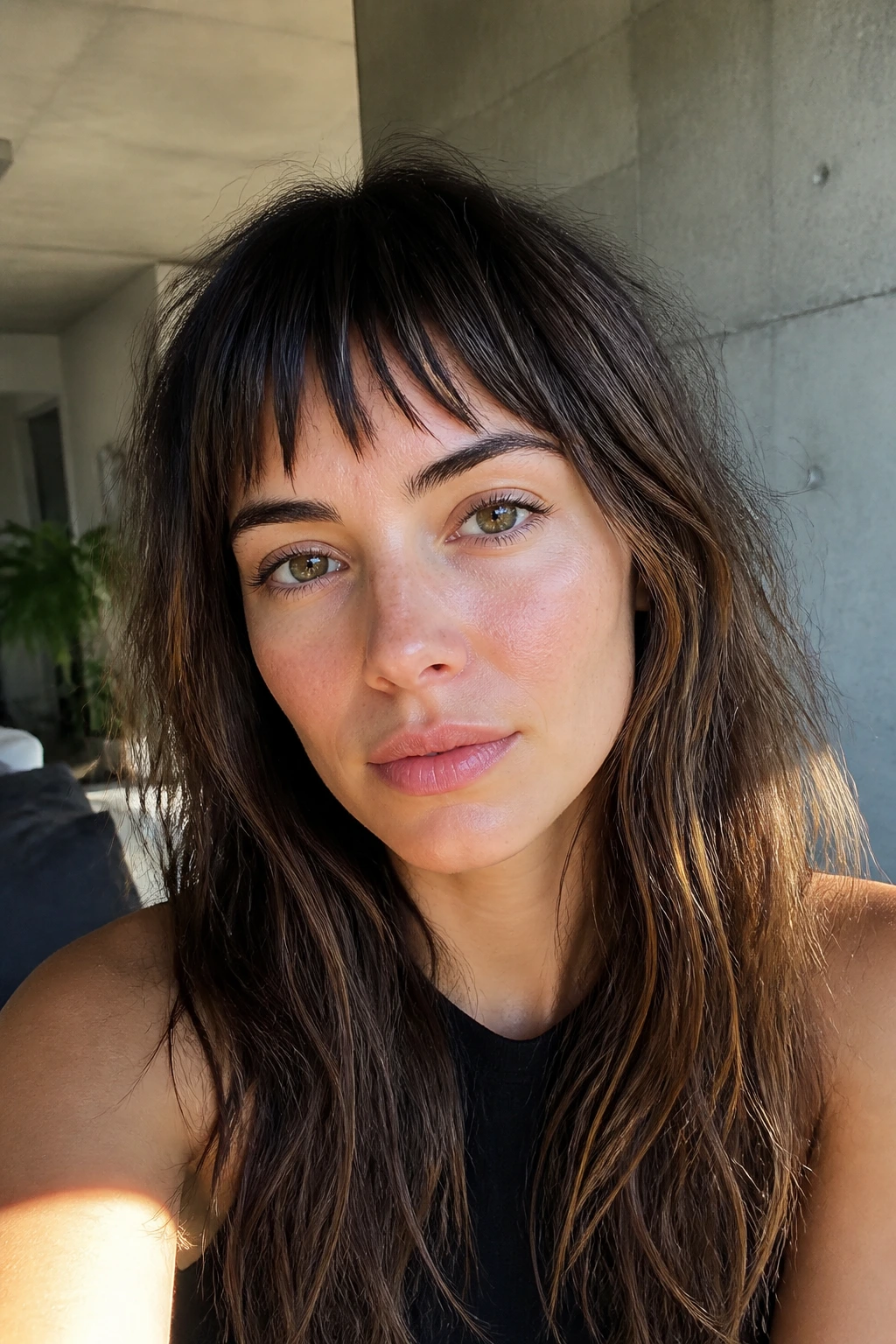
A good choppy fringe looks like it was cut with tiny, deliberate bites instead of one heavy chop. The ends separate into pieces, and the line breaks just enough to keep the forehead visible between strands. On straight hair, that piecey effect stays readable instead of collapsing into a blob.
What Makes It Different
The cut usually involves point-cutting or slicing at the ends so the fringe has uneven texture. That gives you movement without needing waves. Straight hair can hold that definition well, which is why the style works better here than people expect.
- Best for: hair that goes flat fast
- Styling product: a light texture spray or a pea-sized amount of styling paste
- Avoid: heavy creams, which make the pieces stick together
- Best vibe: casual, a little undone, but still shaped
This fringe is useful if you want bangs that don’t feel precious. It can survive being pushed to one side, tucked behind a clip, or worn with a low bun without looking like the haircut gave up.
9. Long Face-Framing Fringe
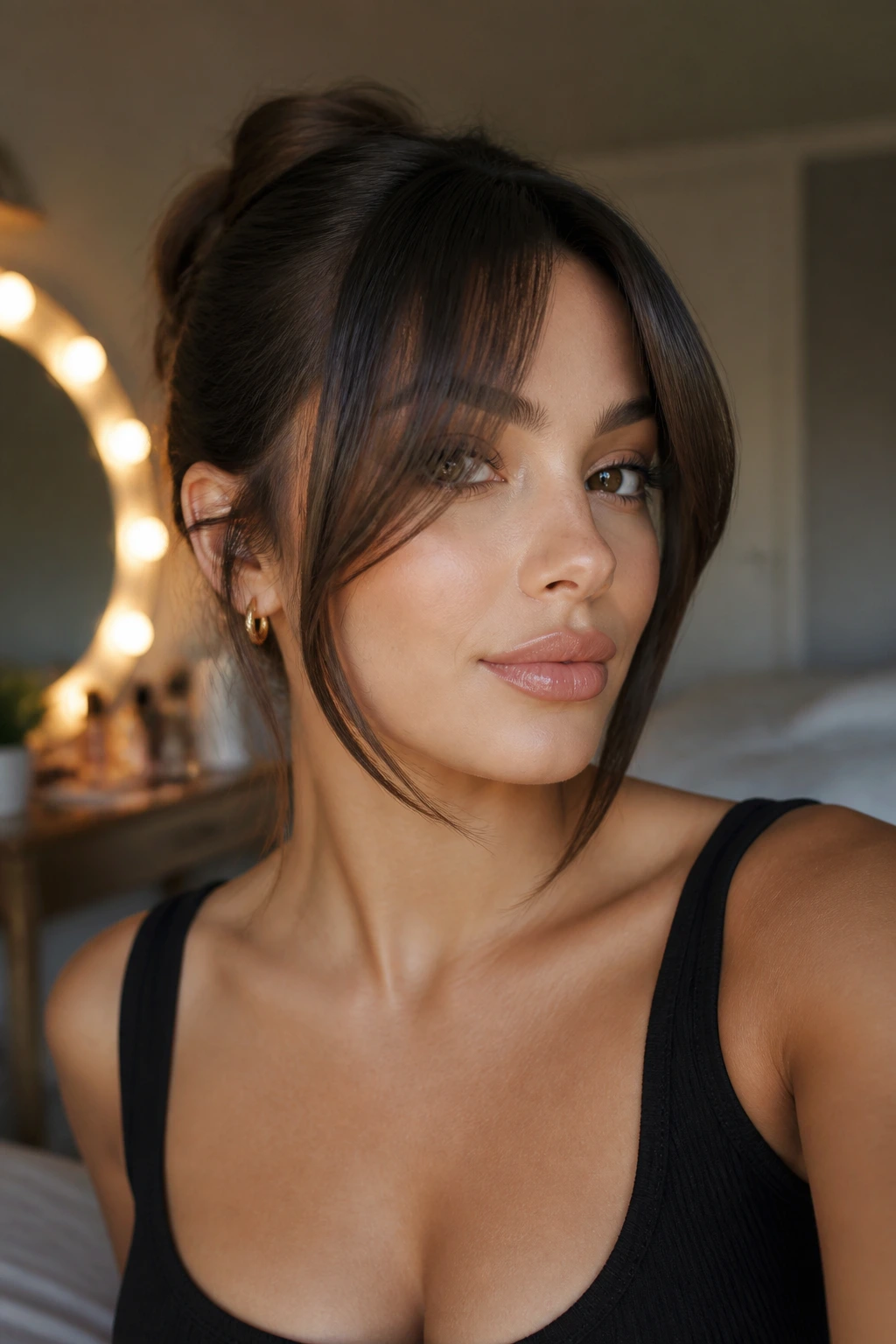
This is the fringe for someone who likes the idea of bangs more than the commitment of bangs. The shortest pieces start near the temples rather than across the center of the forehead, then sweep down to the cheekbones or even the jaw. Straight hair keeps that shape smooth, so the transition reads like part of the cut, not a compromise.
The real appeal is how easy it is to live with. You get movement around the face, but not that immediate feeling of having hair sitting in your eyes. If you’re nervous about a big change, this style gives you something visible without locking you into a heavy front section.
It also works nicely with one-length haircuts that need a little softness. The long fringe takes the edge off a blunt perimeter and makes straight hair feel less rigid. That said, it still needs a bit of bending around the front to keep the pieces from hanging too straight and flat.
I’d call this one of the most forgiving shapes on the list. It grows out into layers without much drama, and it’s a good pick if you want your forehead mostly open.
10. Bardot Bangs
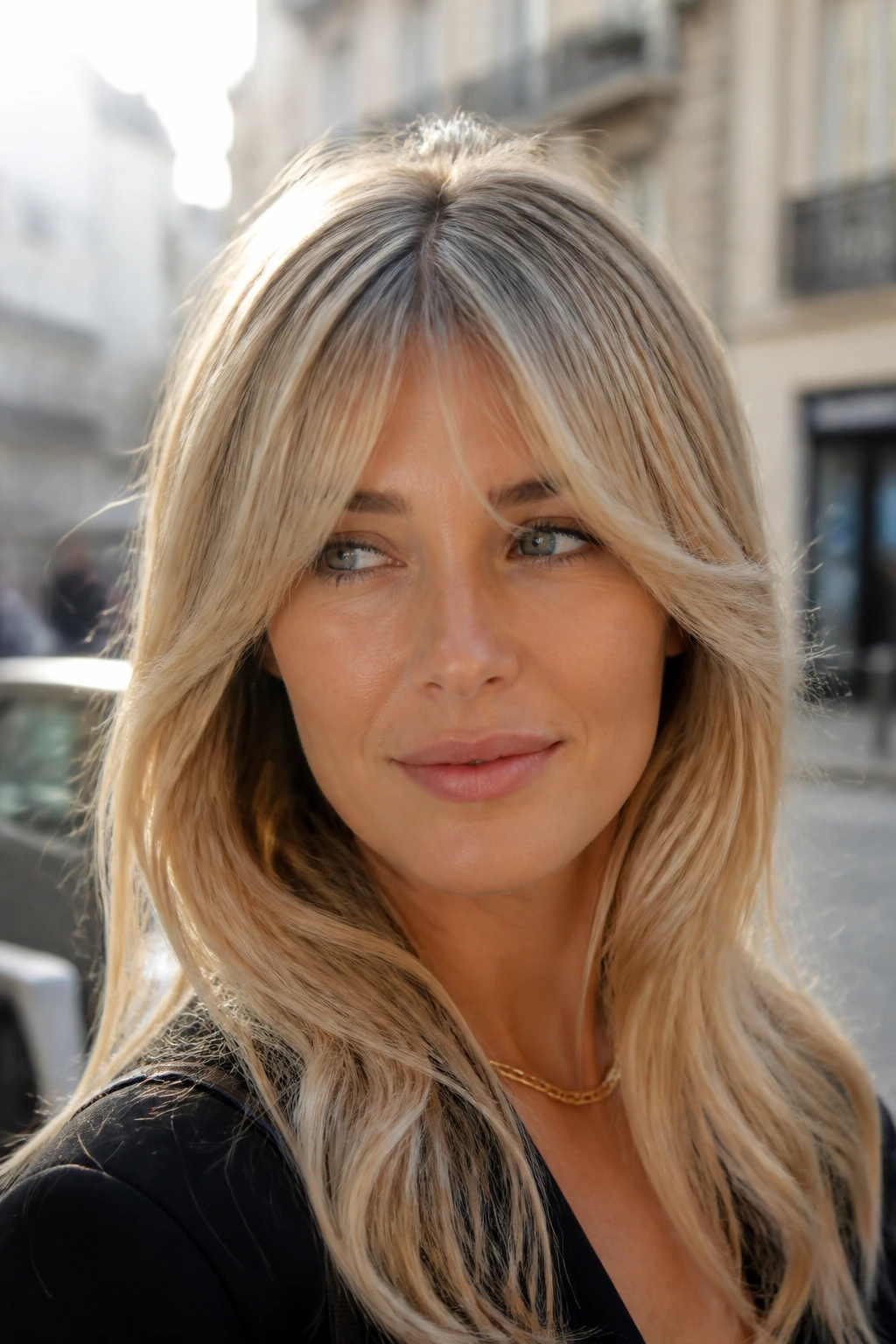
Bardot bangs are the glamorous cousin of curtain bangs. The center opens slightly, the sides fall fuller, and the whole shape wants a little lift at the roots so it doesn’t collapse against the face. Straight hair gives this style a crisp outline, which is part of why it looks so clean when done well.
The trick is volume at the root, not all over the head. You want the fringe to float just enough to move, then taper away from the face with a soft bend. If the hair lies too flat, the shape disappears and the bangs start looking like longer curtain pieces with no intention behind them.
A wide-barrel brush or a blow-dryer brush helps here. I also like a quick set with clips at the roots while the hair cools, especially if the front tends to split in the center. That tiny pause can save the shape for hours.
This is a good style when you want softness but still want the fringe to matter. It has a bit more body than see-through bangs, a bit more romance than a side sweep, and less bluntness than a classic brow-grazer.
11. Feathered Fringe
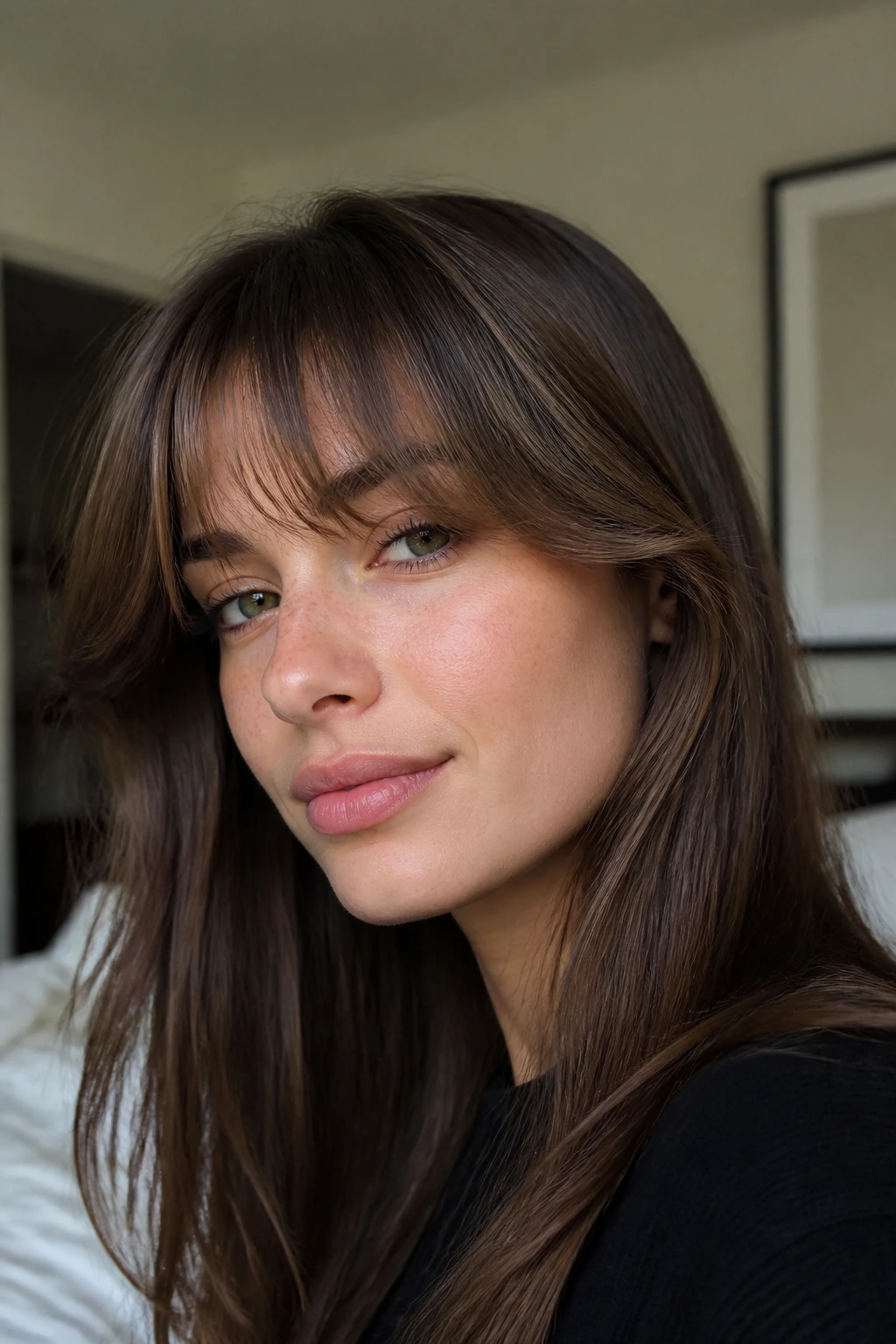
Feathered bangs are all about motion at the ends. The hair is cut and styled so it flicks away from the forehead instead of sitting on top of it, and straight hair gives that airy movement a clean frame. If the line is too blunt, the whole effect dies. If it’s feathered correctly, the fringe looks light without looking thin.
The best feathered fringe usually starts a little longer than people expect. You’re not trying to shave off the weight completely. You’re softening the perimeter and encouraging the ends to separate. A little slide-cutting from the stylist makes a big difference here, because the texture comes from the cut as much as the blow-dry.
I like this style on medium-density straight hair that needs motion but not a full face frame. It’s a good bridge between classic bangs and longer layers. You can push it around, tuck it, or let it fall naturally and still keep a visible shape.
Heavy product ruins it fast. You want movement, not slickness. A light mist of texture spray is usually enough.
12. Baby Bangs

Baby bangs are short, and they make that fact impossible to ignore. They sit just above the brows or in the upper forehead zone, depending on the exact cut, and straight hair keeps the line tidy enough to feel intentional rather than chaotic. This is not a shy fringe.
What separates baby bangs from micro bangs, in my mind, is a touch more softness in the finish. They can still be blunt, but they usually read a little less severe and a little more playful. Straight hair works well here because the hair falls exactly where it’s told and the short length doesn’t get swallowed by bend or wave.
You do need a face shape and brow situation that can handle it. Strong brows, a balanced forehead, or a haircut with some visual edge tends to make the style land better. If your features are very soft and you want them to stay that way, this is probably not the first fringe I’d suggest.
Maintenance is frequent. The grow-out stage between baby bangs and awkward-length bangs can feel strange. Either keep them short on purpose or plan for a transition haircut.
13. Sliced Fringe
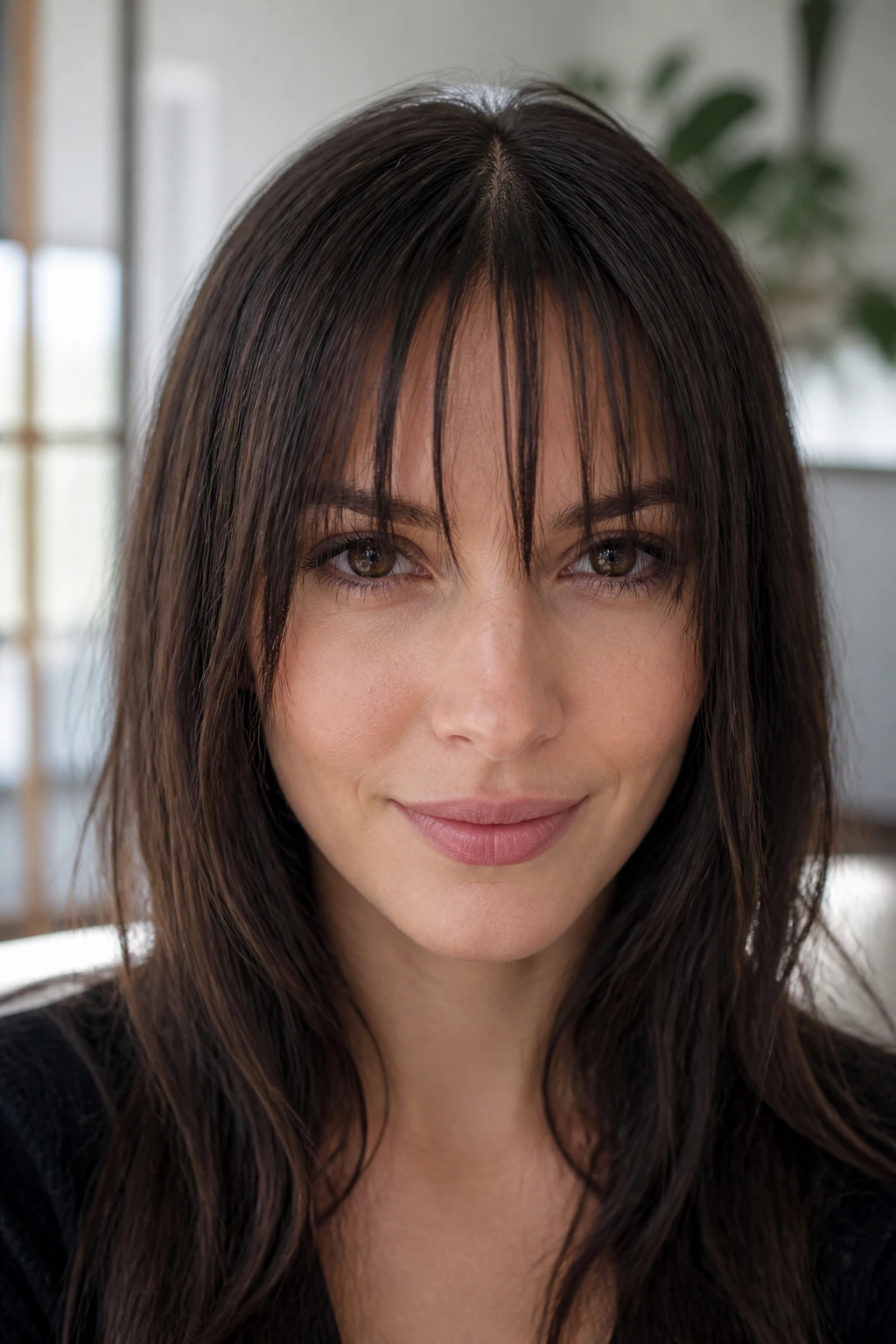
Sliced bangs use narrow sections and soft, vertical separation to create a fringe that feels more fluid than blunt. Think of thin ribbons rather than one solid panel. On straight hair, that structure stays neat and visible, which is half the charm.
This style works well when you want bangs but do not want the face to feel enclosed. The slice technique lets a little forehead show through, especially near the center, while still giving the eyes a frame. It can be flattering on straight hair because the texture appears controlled instead of wispy in a fragile way.
The finish usually depends on a bit of styling cream or a tiny amount of pomade worked through the ends. Not much. Too much and the pieces glue together. Too little and the separation disappears. There’s a narrow lane here, but when you hit it, the fringe looks polished without seeming stiff.
I like sliced bangs on medium-length haircuts where the rest of the hair has movement too. They can feel too delicate against a super blunt bob, but paired with soft layers, they fit beautifully.
14. Rounded Full Bangs

Rounded full bangs curve gently from temple to temple, with the center a touch shorter than the edges so the whole line forms a soft arch. Straight hair is good at making this shape look intentional, because the curve doesn’t get blurred by bends or waves.
This fringe works especially well when you want fullness without a wall of hair. The roundness opens the face a bit more than a straight-across cut does, while still giving the forehead a strong frame. It can make the eyes stand out without relying on makeup or styling tricks.
It does ask for density. Thin hair can wear this shape, but it has to be cut carefully so the edges don’t look sparse. Thick hair, on the other hand, may need a little internal weight removal to keep the bang from feeling too heavy on the forehead.
The easiest way to style it is with a round brush, directing the center down and the sides slightly inward. If the brush diameter is too large, the curve gets lazy. If it’s too small, the ends can flip too hard. A medium brush usually behaves best.
15. Deep Side-Part Fringe
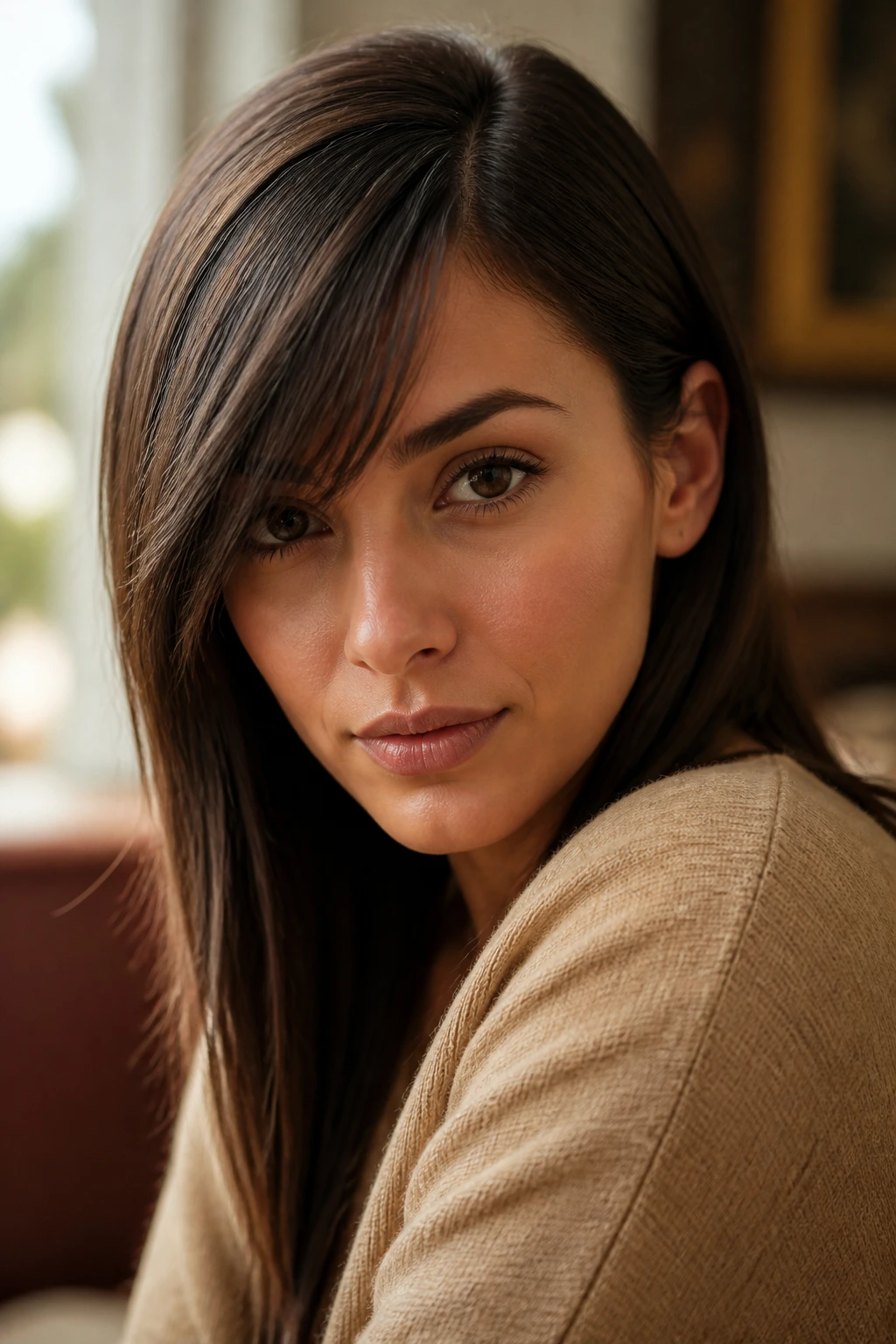
A deep side-part fringe is what happens when one side of the haircut decides to take the lead. The bang section starts high near the part and sweeps across the forehead in one long, angled movement. Straight hair makes the line look smooth and decisive instead of floppy.
This style is useful when a cowlick keeps sabotaging a center fringe. By giving the hair a stronger directional bias, you let the natural growth pattern work with you instead of against you. That part alone makes it worth considering.
It’s also one of the easiest styles to tuck behind the ear, clip back, or blend into layers when you need the face fully open. The grow-out is polite. That matters more than people admit.
If you want to try bangs but are nervous about living with a front section every single day, this is a sensible compromise. It still frames the face. It just does it from the side.
16. Grown-Out Curtain Bangs
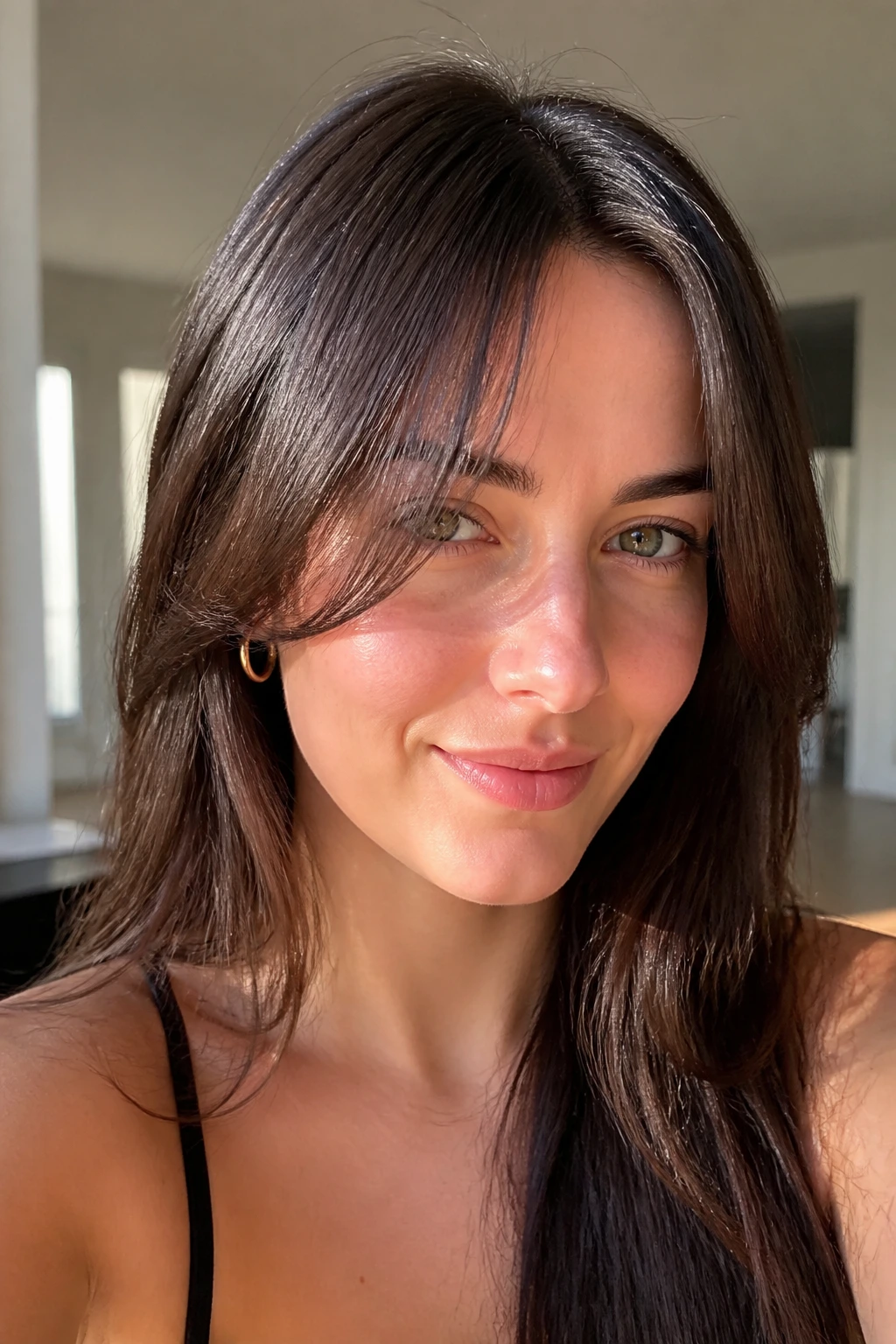
Grown-out curtain bangs are not an accident. They’re a deliberate shape that says you like the fringe effect but don’t need it sitting on the center of your forehead all day. The pieces are longer, looser, and often split a little farther out from the middle than a fresh curtain bang.
Straight hair suits this style because the longer lengths fall in clean lines. You can see the taper into the cheekbones, the bend around the face, and the way the part opens without needing extra texture to make the shape visible. It’s one of the best options when you’re between salon visits.
I like this style most when the rest of the cut has some movement too. A collarbone-length cut or long layers keep it from feeling like the fringe is floating by itself. The hair should look like it belongs together, not like two separate ideas happened to meet.
This is also a forgiving shape on mornings when styling is not happening. A quick brush-through and a little dry shampoo at the roots usually gets it back in line.
17. Soft Blended Bangs
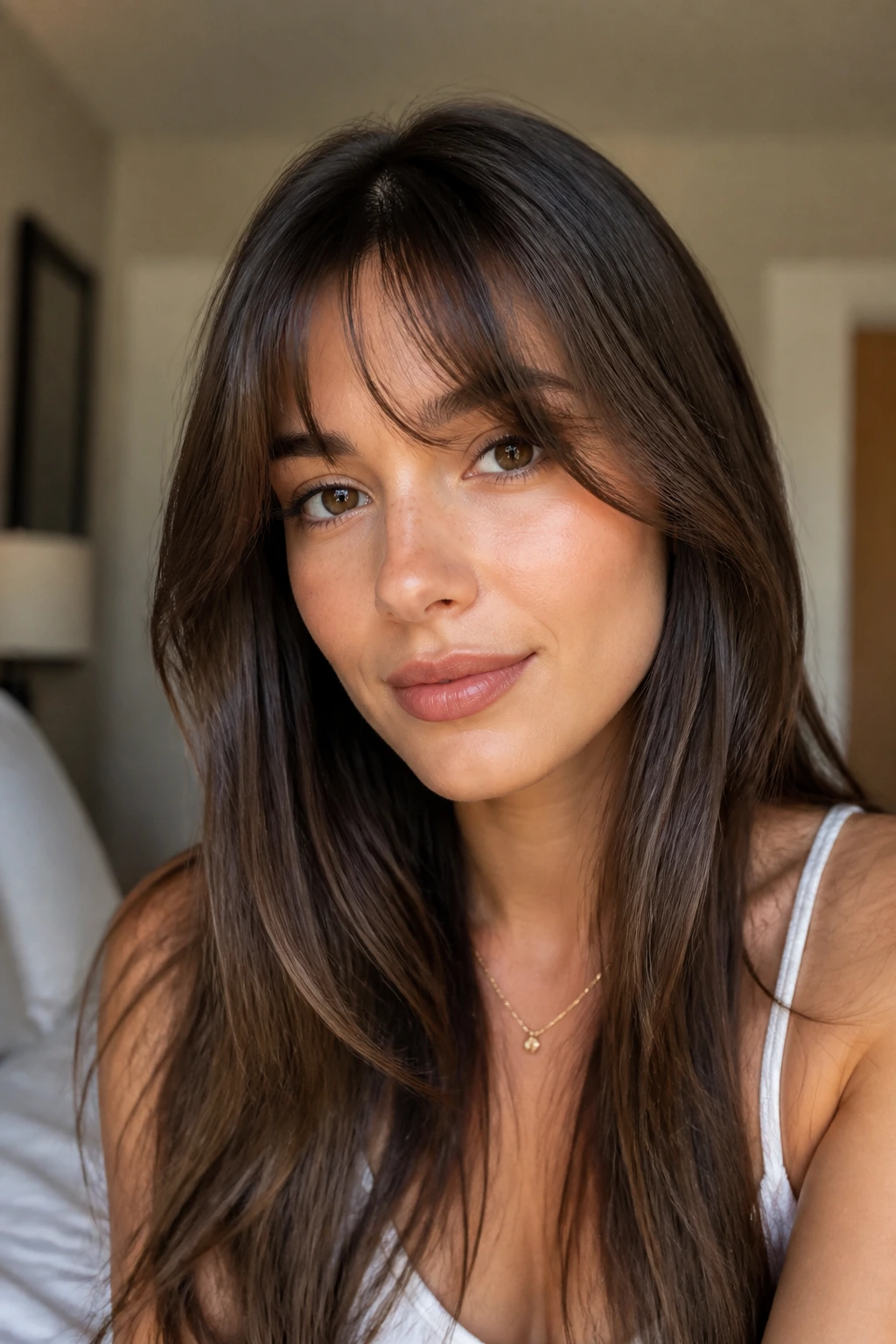
Soft blended bangs melt into the rest of the haircut instead of sitting apart from it. The front pieces are cut to taper into the face-framing layers, which makes the fringe look like a natural extension of the hairstyle. On straight hair, that blend reads especially cleanly.
The style is useful if you want bangs but dislike the feeling of a sharp boundary across the forehead. There’s still enough front coverage to change the shape of the face, but the transition is gentle. That matters on straight hair because a hard line can feel severe fast.
I find this cut especially good for people who want their hair to move as one unit. There’s less difference between the fringe and the sides, which means the haircut can survive ponytails, half-up styles, and clips without looking chopped apart.
It’s not the most dramatic option here. It is one of the easiest to live with, which is its own kind of win.
18. Tapered Fringe
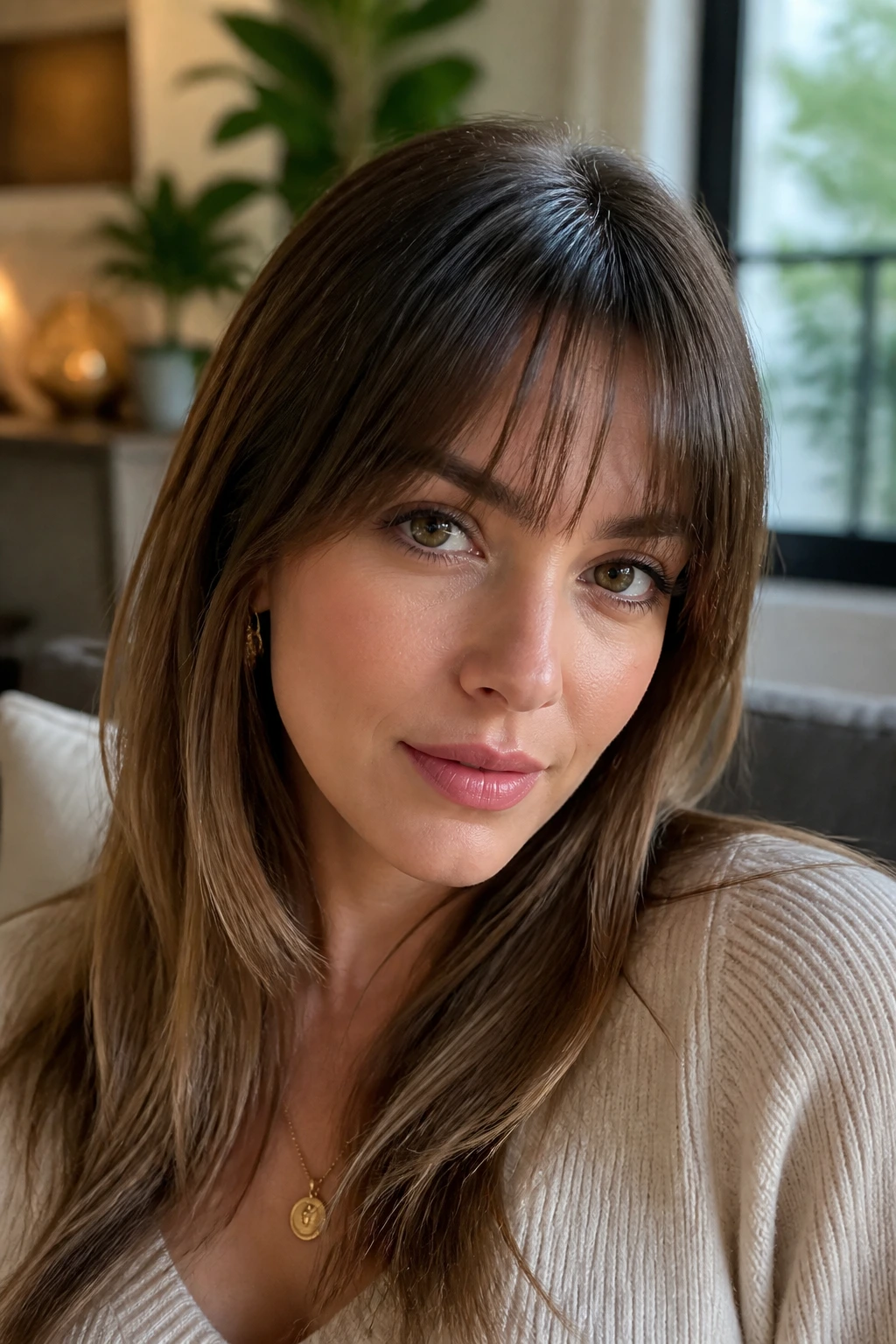
A tapered fringe is narrower in the center and wider toward the temples, but it doesn’t split as openly as a curtain bang. It sits somewhere between a soft fringe and a face frame, which makes it useful if you want forehead coverage without a hard block of hair.
Straight hair is a good match because the taper stays visible. You can actually see the change in width, which gives the cut more shape than it would have on a texture that puffs or bends. The result feels neat, not fussy.
This style is flattering when you want to soften the center of the face. It can make the forehead feel less broad and draw the eye downward toward the cheeks. That effect is subtle, but on straight hair it shows.
Styling usually takes a small brush and a light bend away from the center. Don’t overdo the curl at the ends. A little curve does the job. A big swoop can make the fringe feel dated fast.
19. Swooping Layered Bangs
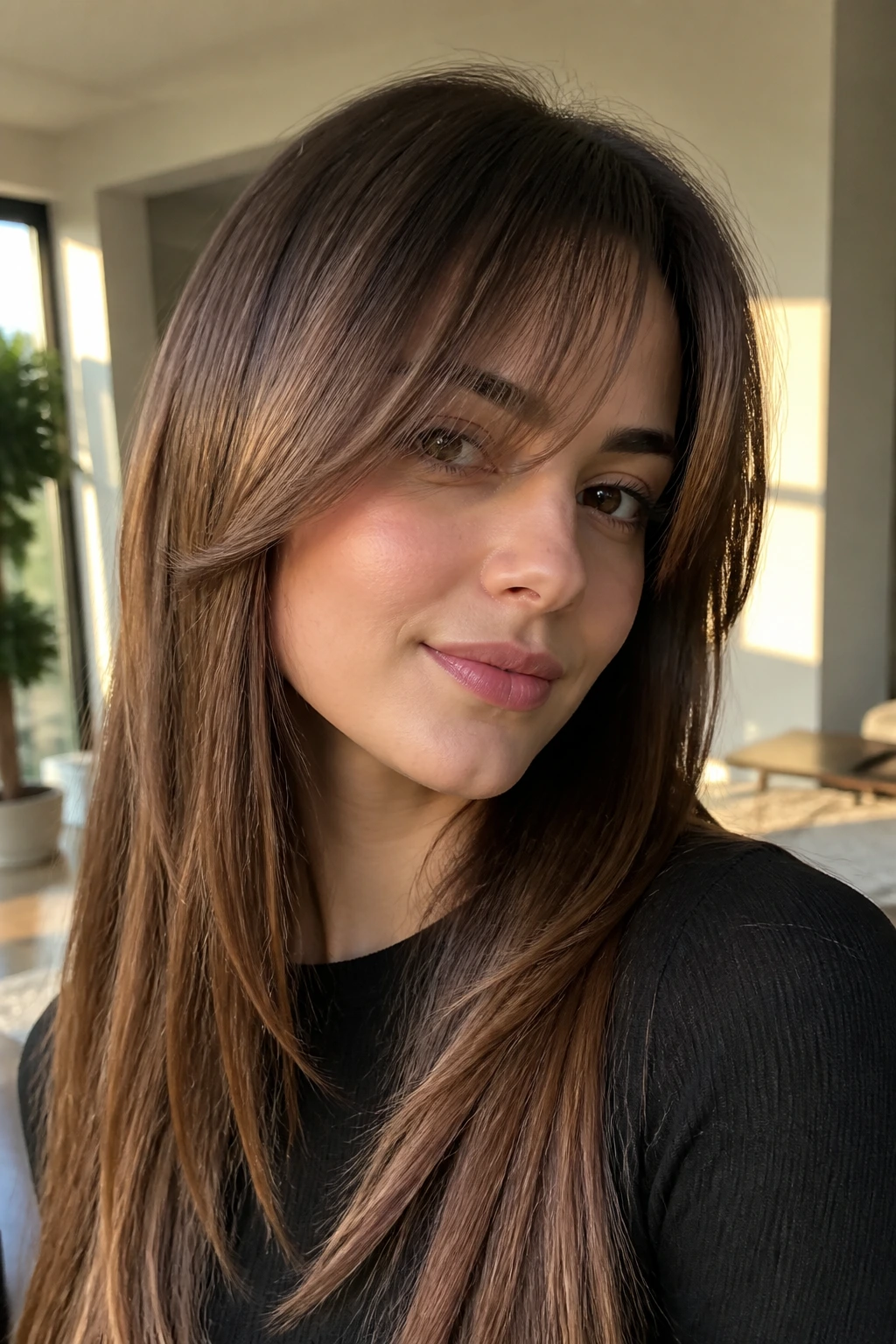
Swooping layered bangs are all about movement across the forehead. The fringe starts fuller near the part, then sweeps into layers that travel diagonally instead of stopping in one hard line. Straight hair helps the shape stay sleek and readable.
This style is ideal if you like a front section that looks styled, not stiff. It can be dressed up with a round brush and pinned while it cools, or it can be worn with a softer bend for a more casual look. Either way, the sweep gives the haircut motion that straight hair sometimes lacks on its own.
I think this is one of the best options for someone who wants bangs to feel part of the whole haircut rather than a separate feature. The layered structure connects the fringe to the rest of the hair, so nothing feels isolated.
It does need direction. If you let it air-dry without setting the front, the sweep can flatten and split. A minute or two with a brush makes a big difference.
20. Heavy Straight-Across Bangs
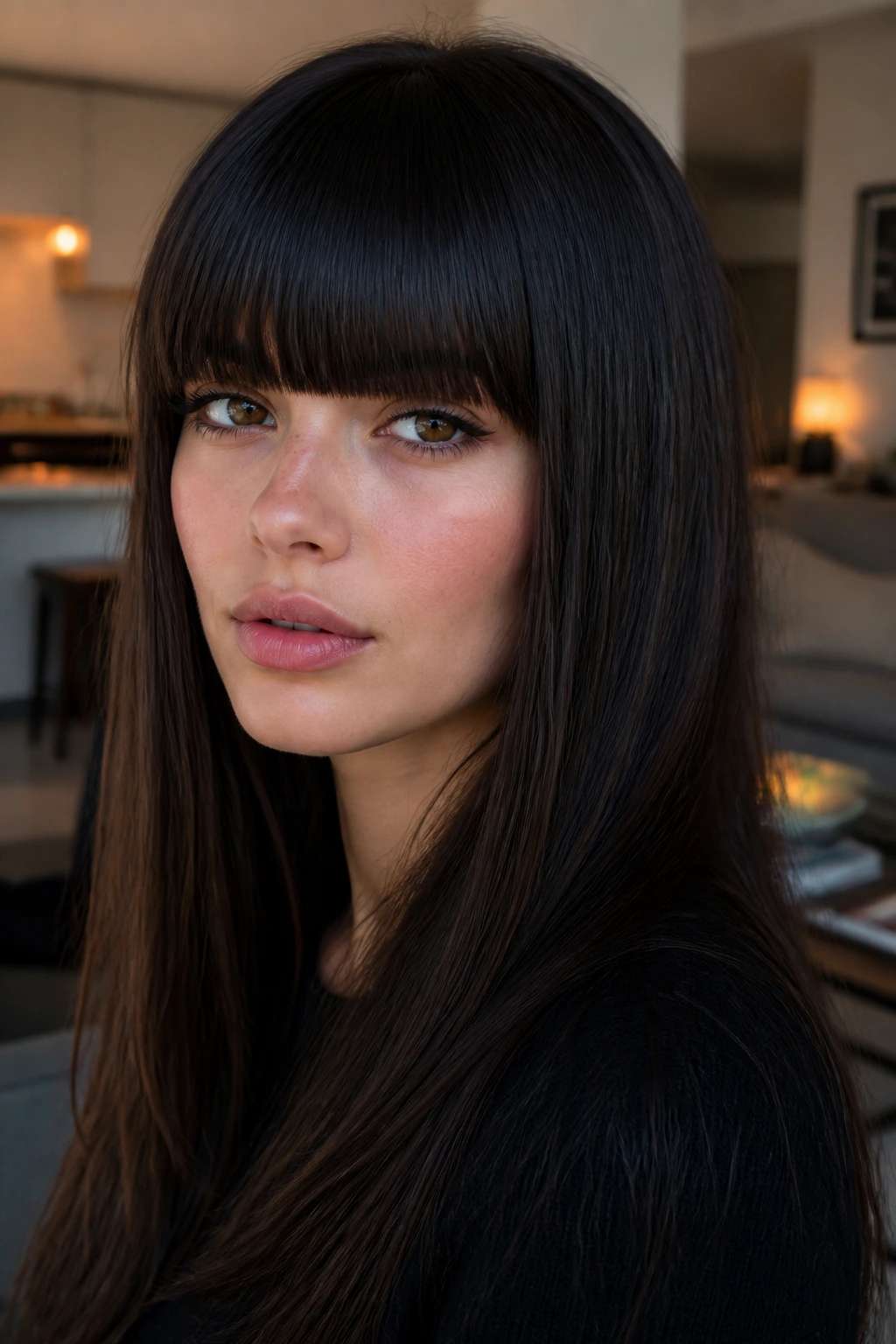
Heavy straight-across bangs are a statement. They’re denser than a standard blunt fringe, often cut with enough weight to cover most of the forehead and sit with a strong, graphic line. Straight hair makes the block of shape look rich and deliberate.
This is the style for someone who wants presence. It can make a simple haircut feel architectural, especially when the rest of the hair is long and clean. The contrast is the point. The fringe does the talking.
You do have to respect the upkeep. Heavy bangs show oil sooner because there’s more hair sitting on the skin, and they can get a little piecey at the roots by the end of the day. Dry shampoo helps, but it won’t replace a good trim schedule.
I like this cut most on thicker straight hair that can support the density without looking see-through at the ends. If the front section is too sparse, the style loses its power. If it’s cut with enough weight, it looks sharp in a way that lighter fringes can’t match.
21. Nearly Invisible Fringe

Can bangs be there without announcing themselves? Yes, if they’re cut as a nearly invisible fringe. This style sits just in front of the brow line, but the section is so light and airy that the forehead remains visible through the strands. Straight hair is helpful because the pieces stay smooth instead of puffing into a heavier curtain.
This is a good entry point if you’re nervous about commitment or if you want a fringe that blends into the haircut most of the time. It can disappear into layers, get swept aside, or fall forward and frame the eyes without taking over the face.
The cut usually depends on a small amount of hair in the bang section and a careful hand with thinning. Too much texturizing and the ends get stringy. Too little and the fringe loses the whispery effect that makes it interesting.
I’d call this one a quiet style, not a weak one. It changes the haircut, but gently.
22. Split Fringe with Tapered Edges

A split fringe with tapered edges is a softer cousin of curtain bangs. The center parts open a bit, but the sides stay close enough to the face to keep some forehead coverage in place. Straight hair makes that split look crisp and controlled.
This style works if you like the idea of a center opening but don’t want a full, dramatic curtain. The tapered edges soften the line so the fringe doesn’t feel like a hard frame around the face. It’s a nice balance for someone with straight hair that tends to hang cleanly and needs just a little shaping.
It also solves a practical problem. If your hair resists staying all the way off the face, this split shape gives you breathing room without fighting your natural growth pattern. The center opens. The sides behave. Everybody gets what they want.
A round brush or a quick bend with a flat iron is enough to keep the edges from lying too straight. Leave the line completely untouched and it can feel unfinished. Nudge it a little, and the whole thing lands.
What Straight Hair Needs From a Fringe Cut
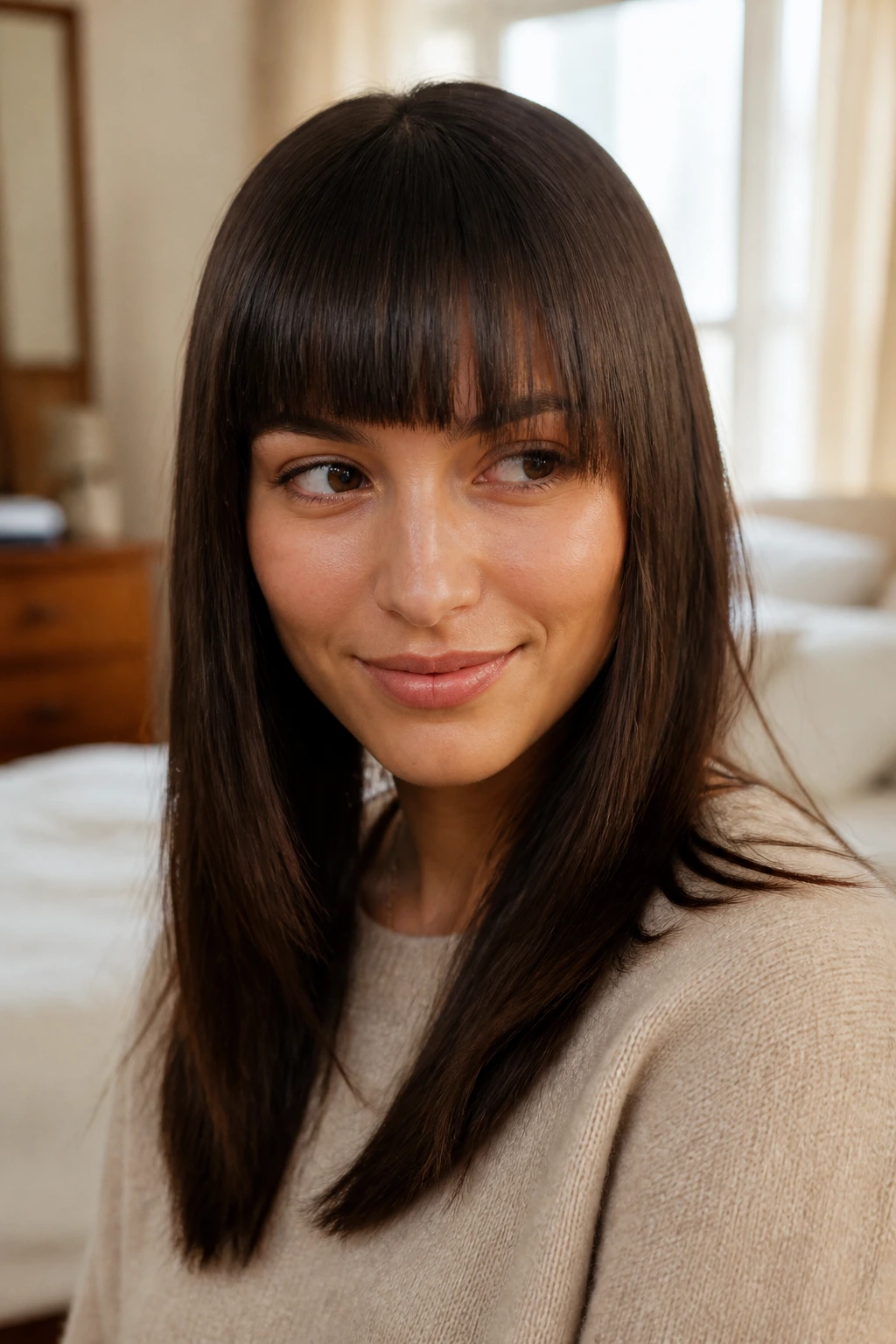
Straight hair usually asks for one of two things: clear structure or deliberate softness. The haircut should decide which one it wants before the scissors come out. If you’re chasing bluntness, the line has to be clean. If you’re chasing movement, the ends need enough texture to avoid falling like a curtain rod.
The width of the bang section matters more than people think. Pull too much hair forward and the fringe eats the face. Take too little and the style looks flimsy. A stylist who understands straight hair will usually work in small sections, check the fall dry, and adjust before committing to the final line. That patience saves a lot of regret.
Cowlicks deserve respect too. If the front hair grows in a stubborn swirl, the wrong bang style can turn into a daily argument. Side-swept, curtain, and deeper side-part fringes often handle that better than hard center lines. A front that wants to split should not be forced into a perfect wall unless you enjoy brushing it fifteen times before breakfast.
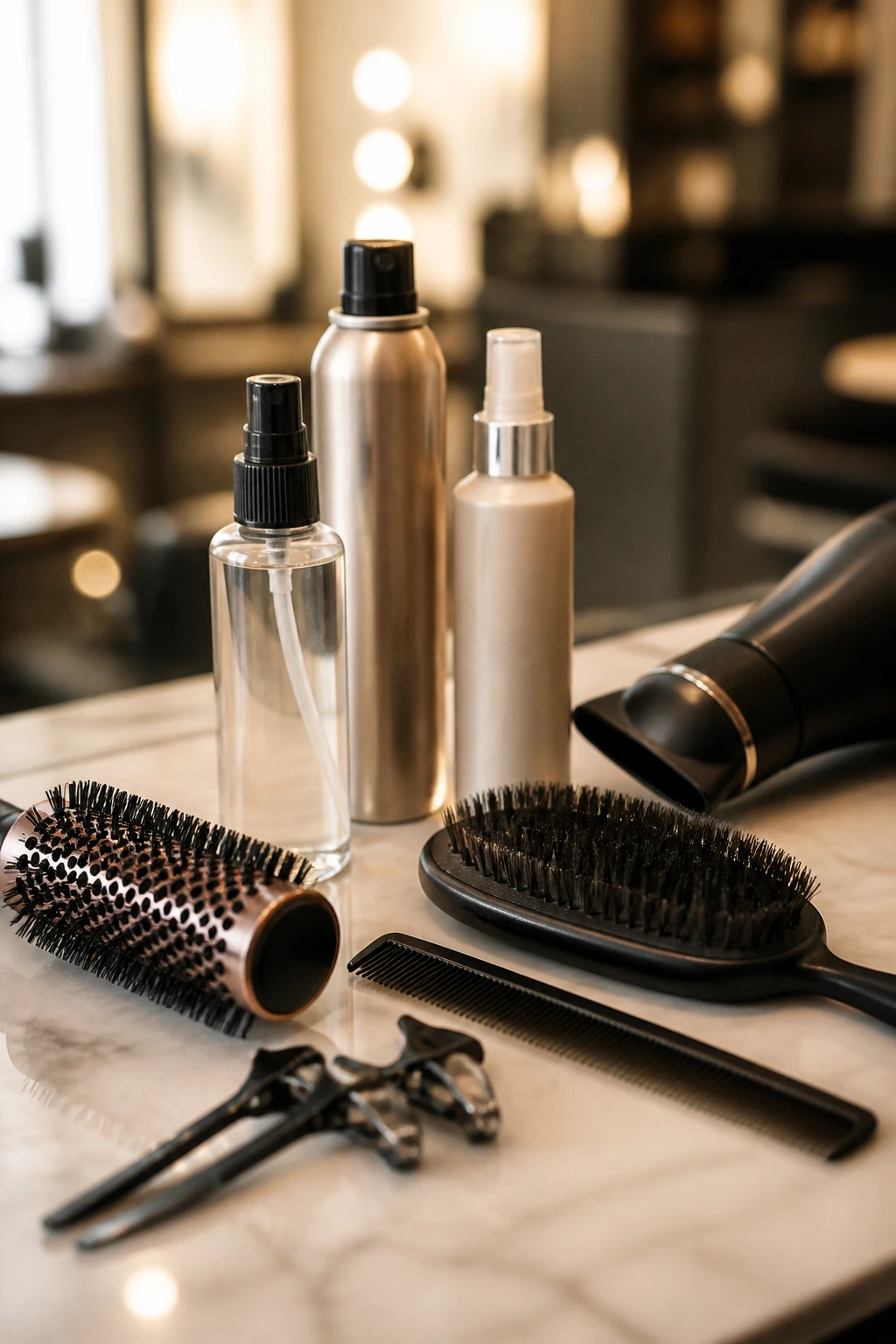
The Tools That Make Fringe Styling Easier
-
Fine-tooth tail comb: Gives you a clean part and helps separate the bang section without dragging too much hair forward.
-
Small round brush, 1 to 1.5 inches: Best for bending ends under, softening a blunt line, or lifting the roots on curtain bangs.
-
Blow dryer with a concentrator nozzle: The nozzle keeps the air focused, which matters when you’re trying to move just the front section.
-
Heat protectant spray: Straight hair shows heat damage fast; a light spray keeps the front from looking dry and fuzzy after repeated styling.
-
Flat iron with rounded edges: Useful for micro-adjustments, gentle bends, and smoothing a stubborn side sweep.
-
Sectioning clips: Keep the rest of the hair out of the way so you can work only on the fringe instead of scorching random pieces near the temple.
-
Dry shampoo: A useful reset tool for forehead oil, especially on blunt or heavy bangs that touch skin all day.
-
Light texture spray: Helps choppy, sliced, and piecey styles keep their separation without sticky buildup.
-
Duckbill or alligator clips: Good for pinning the fringe while it cools into shape after a blow-dry.
-
Hand mirror: Saves you from guessing how the fringe sits from the side, which matters more than people realize with angled or swept styles.
How to Pick the Right Length, Width, and Density
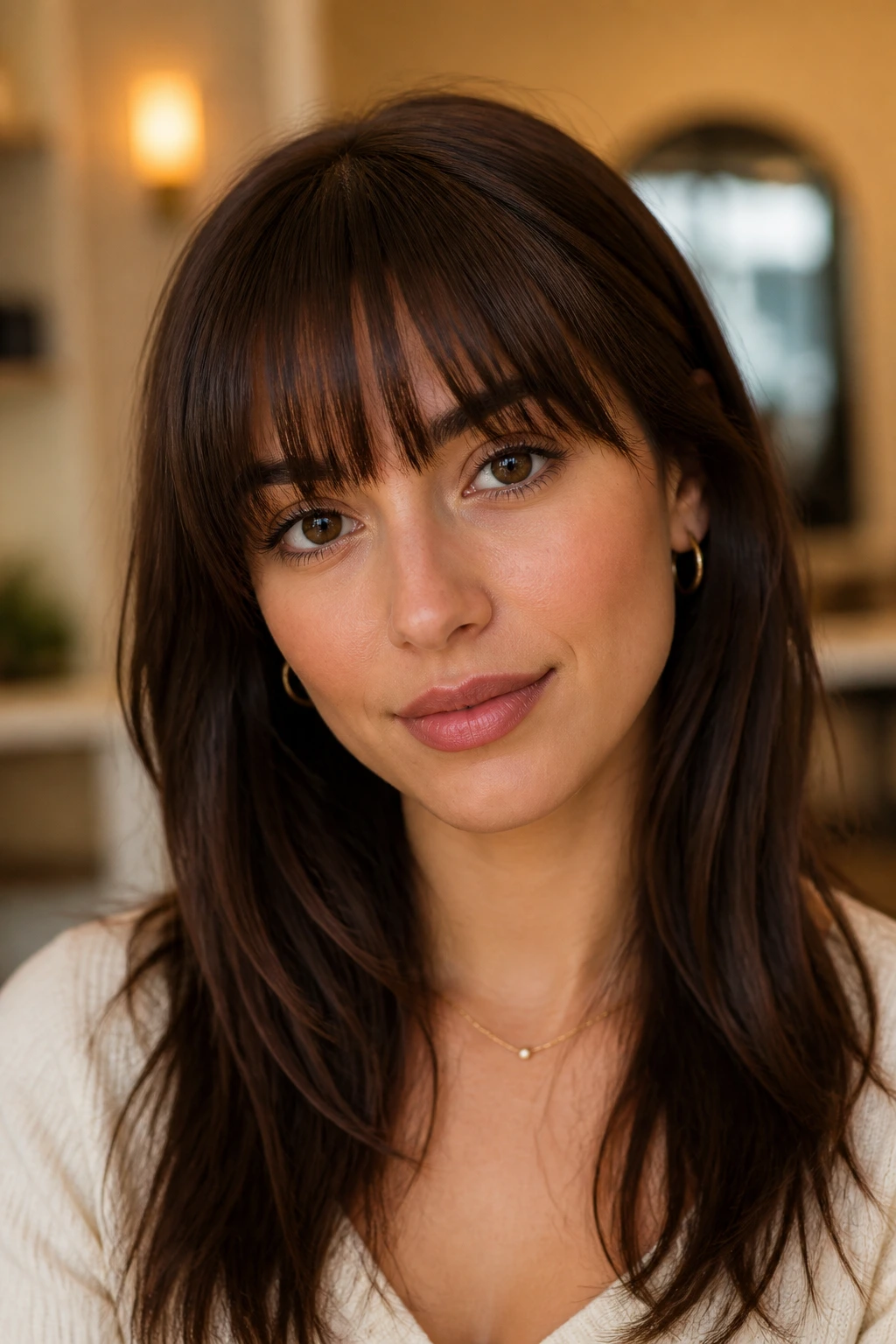
The best bang styles for straight hair usually come down to those three choices. Length decides how much forehead you cover. Width decides how wide the fringe reaches toward the temples. Density decides whether the bangs feel airy or heavy.
If your forehead is short, long fringe pieces can crowd the face fast. If your forehead is long, micro or baby bangs can feel too abrupt unless the rest of the haircut balances them. Width matters in the same way: narrow bang sections tend to look lighter, while wide ones can make the whole front of the haircut feel denser.
Density is the sneaky part. Fine straight hair can wear blunt bangs, but the line has to stay full enough to avoid looking see-through at the tips. Thick straight hair can handle heavy fringes, but it may need internal removal so the cut doesn’t sit like a slab. If you’re unsure, ask for a slightly longer version first. You can always take more off. You cannot put it back.
I’m blunt about one thing here: if you want low-maintenance bangs, choose a shape that already agrees with your natural part and growth pattern. That’s not resignation. That’s good judgment.
How to Style Bangs on Straight Hair Without Flat Spots
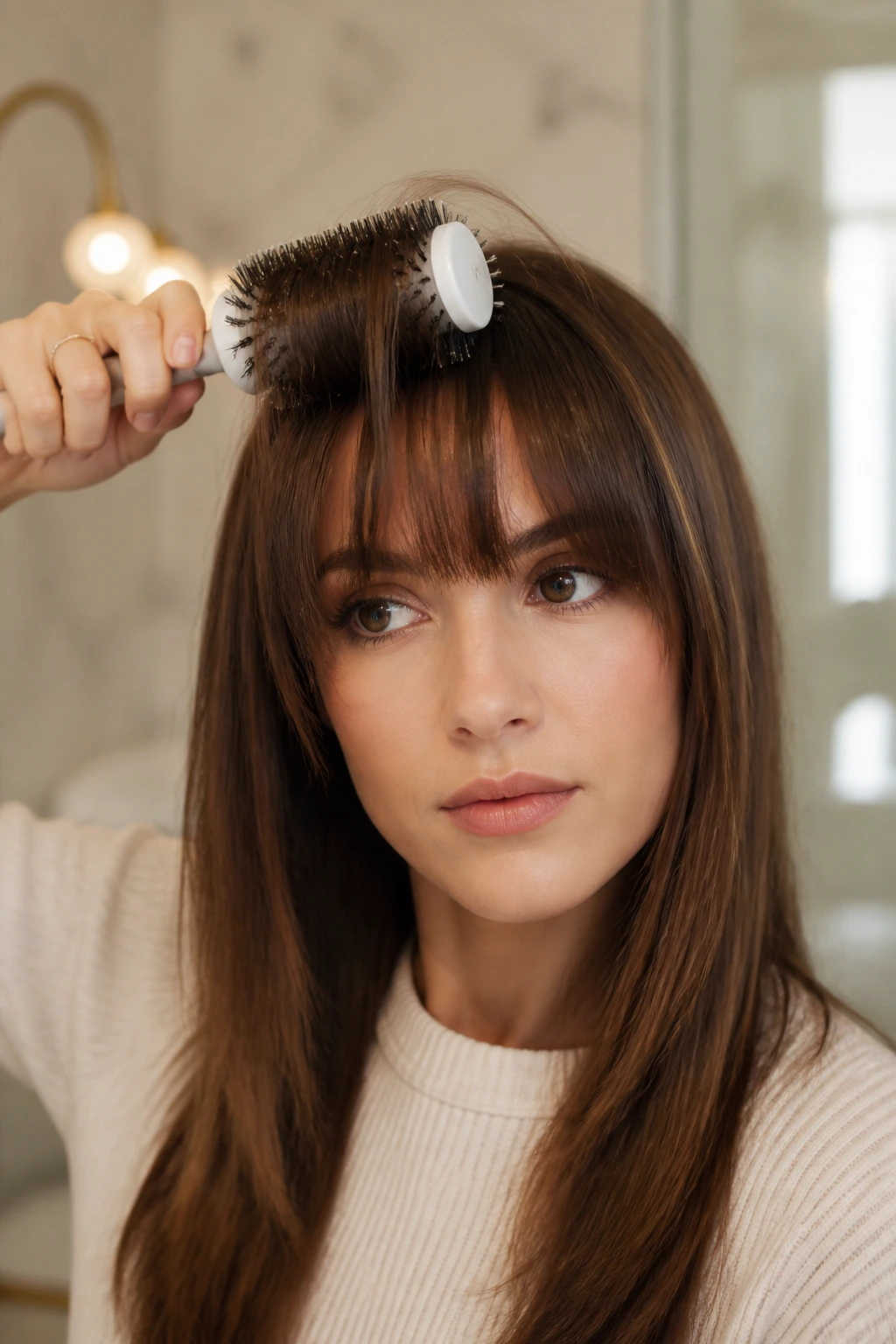
Root lift matters first. If the roots sit flat, the whole fringe can look glued to the forehead by noon. Direct the blow dryer down the hair shaft, then back the brush away from the scalp for a second so the roots cool with a little lift instead of collapsing.
Brush choice changes the finish. A small round brush gives bend and shape. A flat brush gives a sleeker line. A lot of straight hair bangs only need 60 to 90 seconds of shaping, not a full salon blowout. Overworking them can make the front puff up, which is the exact opposite of what you want.
Product should stay light. Use enough to control flyaways, not enough to weigh the fringe down. Dry shampoo at the roots, texture spray on choppy ends, and a tiny bit of serum only on the very tips if they feel rough. Keep anything oily away from the center forehead area.
Cool the bangs in place. That tiny pause is underrated. Pinning the fringe for a minute while it cools helps the shape last longer than blasting it hot and walking away. Straight hair obeys heat, then forgets it the second it cools unless you give it a moment to set.
Small Styling Moves That Keep Straight Hair From Going Flat
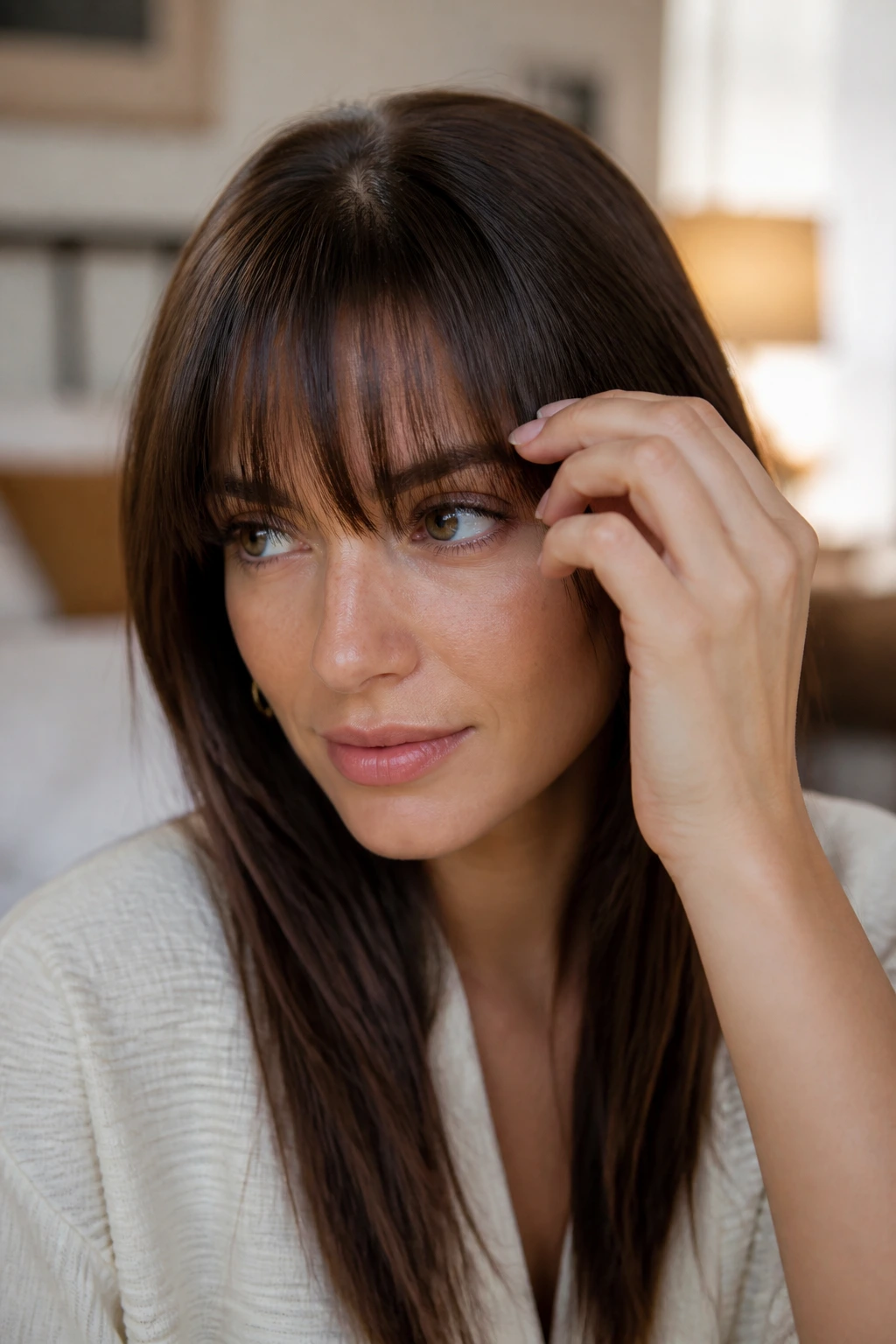
Direction: Always decide where the fringe should live before you dry it. Straight hair remembers the first direction you force on it, so start there instead of fighting the cowlick after the fact.
Texture: A little texture spray can rescue a piecey or sliced fringe, but don’t spray the whole bang section like you’re prepping a stage curtain. Keep the product on the mid-lengths and ends.
Refresh: If the bangs start looking tired by afternoon, hit only the roots with a touch of dry shampoo, then brush the front back and forth once before settling it into place again. That resets the oil line without making the ends chalky.
Night reset: Clip the fringe out of your face before bed if it tends to bend weirdly on the pillow. Straight hair picks up odd kinks fast, and one bad sleep can make a crisp fringe look like you lost an argument with a headrest.
Common Mistakes That Make Straight-Hair Bangs Look Off
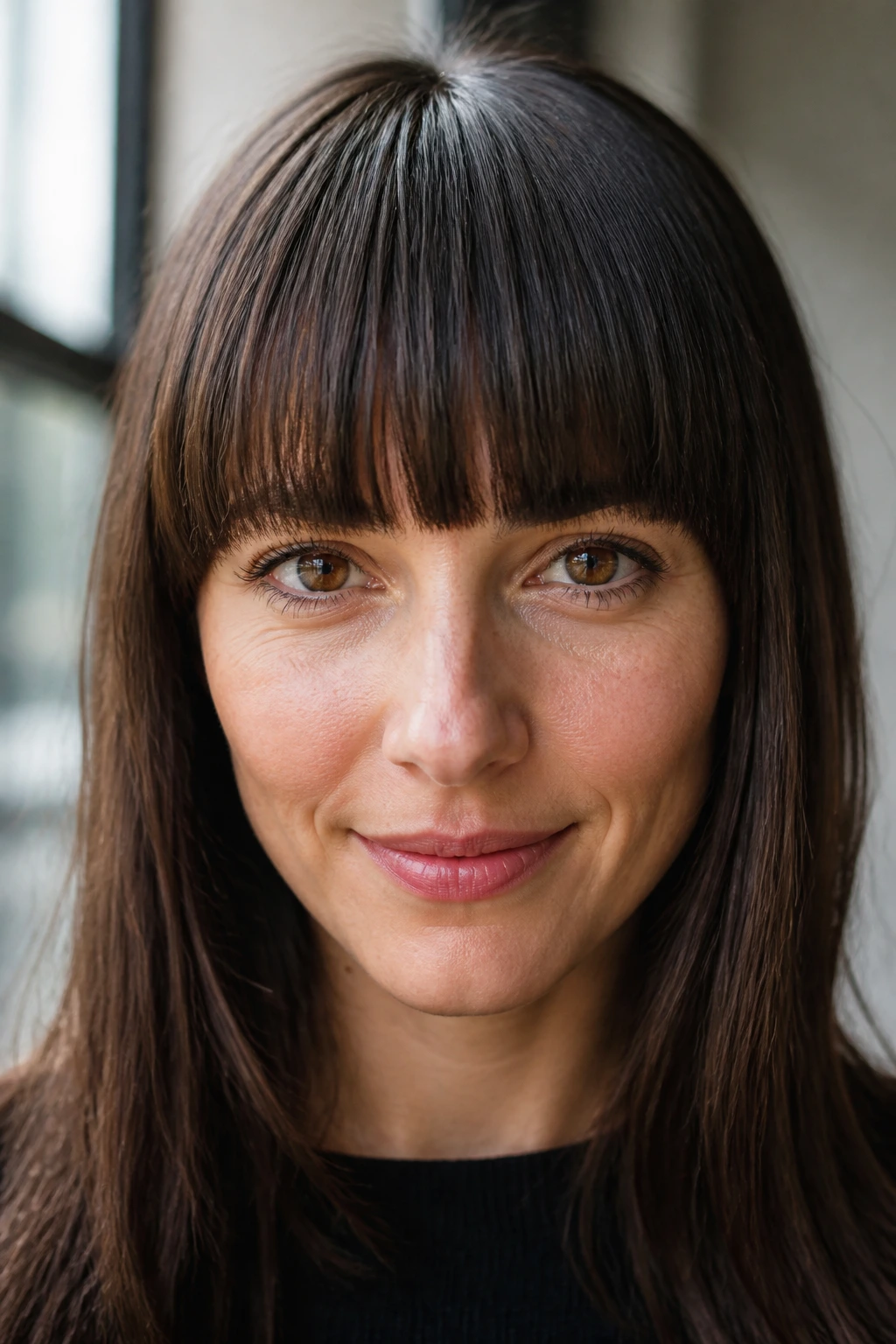
The most common mistake is cutting the fringe too short while it’s wet. Straight hair can spring a little when it dries, and a bang that looked safe in the chair can end up riding higher than you wanted. Leave a little extra length the first time, especially with micro or baby bangs.
Another trap is using too much product at the roots. A fringe that touches forehead skin already has enough oil to deal with. Add a heavy cream or serum, and the bangs collapse into separated strands that look dirty before the day is over. Use lighter formulas and keep them off the scalp line.
People also cut the bang section too wide. That’s the move that turns a fringe into a helmet. The sides get heavy, the temples disappear, and the haircut starts feeling closed in. Narrowing the section slightly can make the whole face look more open without changing the style itself.
The last big mistake is ignoring the natural growth pattern. If the front hair wants to split left, right, or straight down the middle, work with that. A bang that constantly fights the way the hair grows will need twice the effort and still look annoyed.
Variations and Adaptations to Try
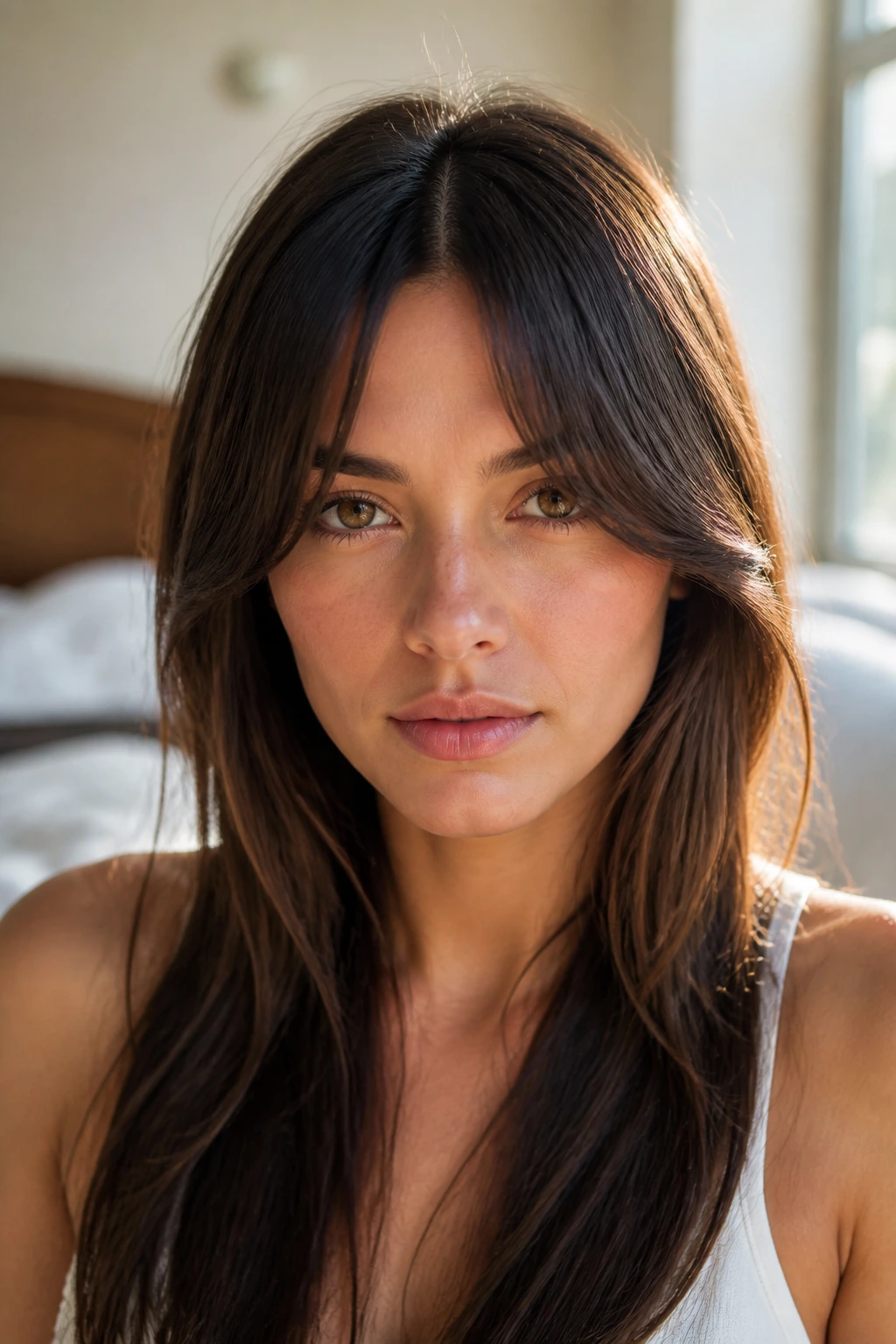
The Low-Maintenance Grow-Out: Start with long curtain bangs or a split fringe with tapered edges. Both shapes can drift into layers slowly, which gives you a softer exit if you change your mind.
The Fine-Hair Lift: Choose wispy see-through bangs or a nearly invisible fringe, then keep the product to a bare minimum. Fine straight hair usually looks better when the front stays light enough to move.
The Thick-Hair Control Cut: Go for blunt brow-grazing bangs, rounded full bangs, or heavy straight-across bangs if your hair has enough density to support the shape. Thick straight hair can carry a stronger line without looking sparse.
The Cowlick Workaround: Side-swept fringe, deep side-part fringe, and long face-framing bangs tend to cooperate better with a front swirl. They redirect the growth instead of bullying it.
The Sharp Shape: Micro bangs, arched bangs, and sliced fringe all give straight hair a more graphic feel. Pick these if you like a cleaner, slightly more fashion-forward edge.
Make-Ahead, Trimming, and Grow-Out Guidance
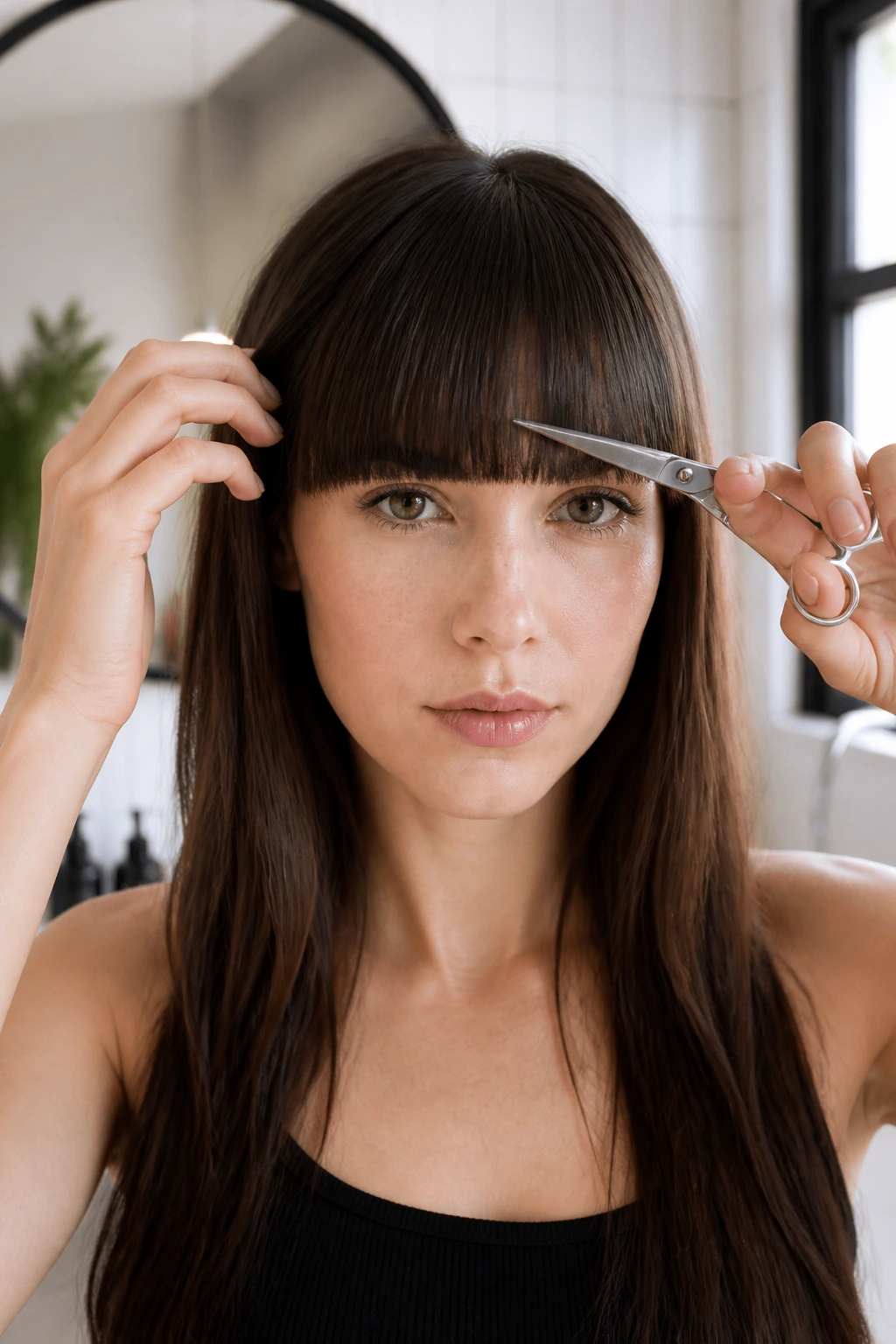
Bangs are one of those hair decisions that look fresh for a while and then need a little ongoing management. For blunt, heavy, or micro styles, a trim every 2 to 4 weeks keeps the line where you want it. Curtain bangs, bottleneck bangs, and longer face-framing fringes can usually stretch to 4 to 6 weeks before they start losing their shape.
Between washes, keep the fringe clean at the roots. Straight hair shows oil quickly, so a bit of dry shampoo on day two or day three can keep the front from separating in greasy ribbons. If the product starts to build up, use a gentle shampoo on just the fringe area or wash the front pieces in the sink. It sounds fussy, but it takes less time than redoing a flat fringe that’s gone limp.
At night, pin or clip the bangs up if they bend awkwardly when you sleep. A tiny bend at the root in the wrong direction can take longer to fix than the entire morning budget allows. If you’re growing bangs out, start brushing them into your chosen side part or center split early. Don’t wait until the length becomes annoying. That’s when grow-out looks accidental instead of planned.
Frequently Asked Questions
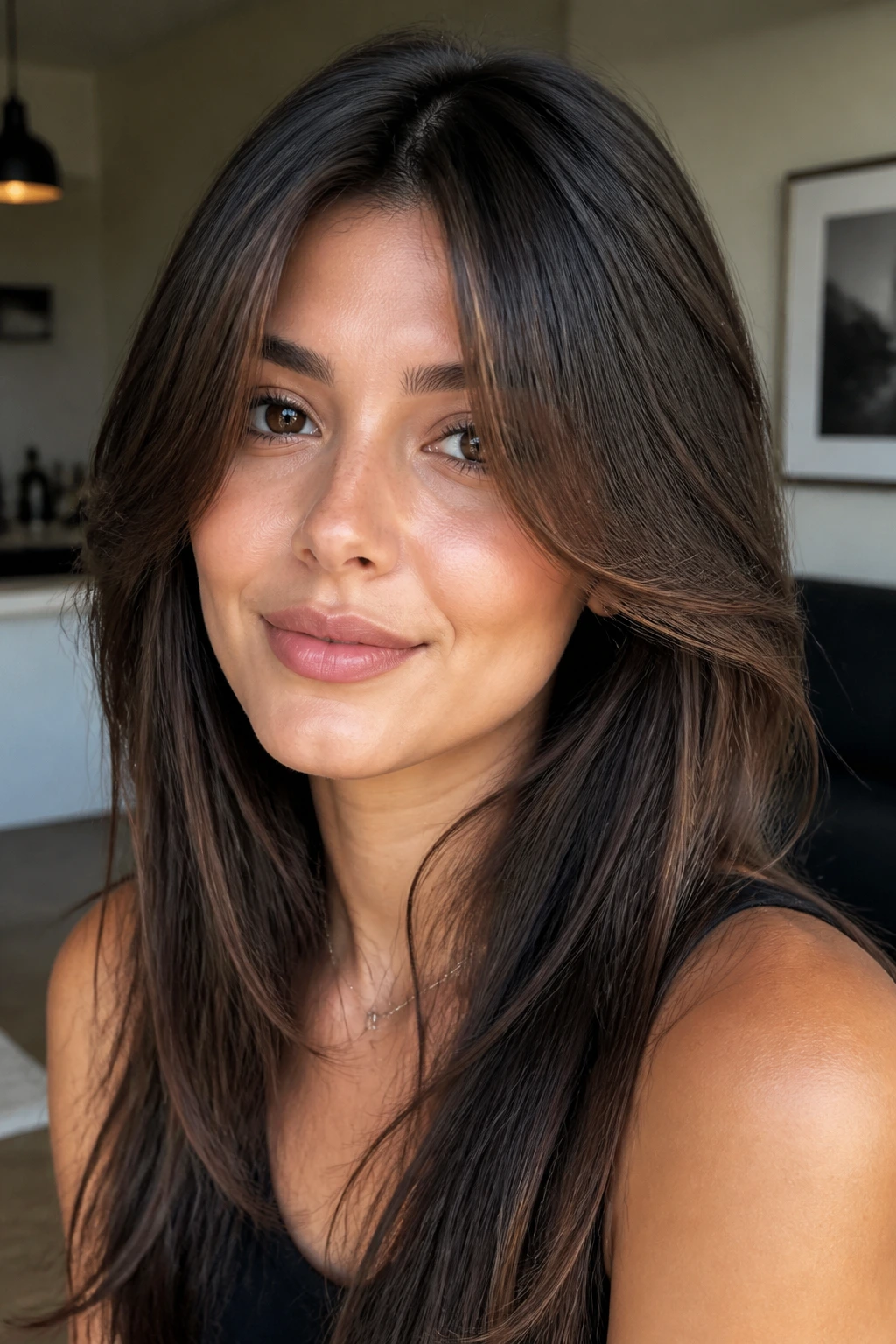
Which bangs are easiest to live with on straight hair?
Long curtain bangs, side-swept fringe, and long face-framing bangs usually ask for the least daily drama. They can shift with your part, hide a little grow-out, and still look like part of the haircut even when styling is minimal.
What bang style is best if I have a cowlick at the front?
Side-swept fringe and deep side-part fringe usually cooperate best. They work with the natural swirl instead of trying to force a straight-down line that keeps splitting apart.
Can fine straight hair wear blunt bangs?
Yes, but the section has to be cut with care so the fringe doesn’t look sparse at the ends. A slightly narrower, slightly longer blunt bang usually behaves better than a thick, heavy block that drags the front down.
How often do bangs need trimming?
Shorter styles like micro bangs, baby bangs, and heavy blunt fringes often need attention every 2 to 3 weeks. Longer shapes like curtain bangs or soft blended bangs can go a bit longer before they lose the line that makes them work.
Why do my bangs separate so fast on straight hair?
Oil from the forehead is usually the main culprit. Straight strands also show every little parting shift, so a tiny bit of scalp oil can turn a clean fringe into separated strands faster than you’d expect.
Can I air-dry bangs and still get a good result?
Sometimes, but not with every style. Soft blended bangs or long face-framing pieces may behave, while blunt, arched, or curtain shapes usually look better with a quick blow-dry or at least a round brush at the roots.
Are micro bangs too much for straight hair?
Not if you want a strong, graphic look and are fine with upkeep. Straight hair actually helps them look neat, but the short length means every trim line and every cowlick becomes more obvious.
What should I ask for at the salon if I’m nervous?
Ask for a slightly longer starting length, soft texturizing at the ends, and a fringe that can grow into face-framing layers. That gives you room to adjust without committing to a shape that feels too severe on day one.
The Fringe That Fits Your Hair
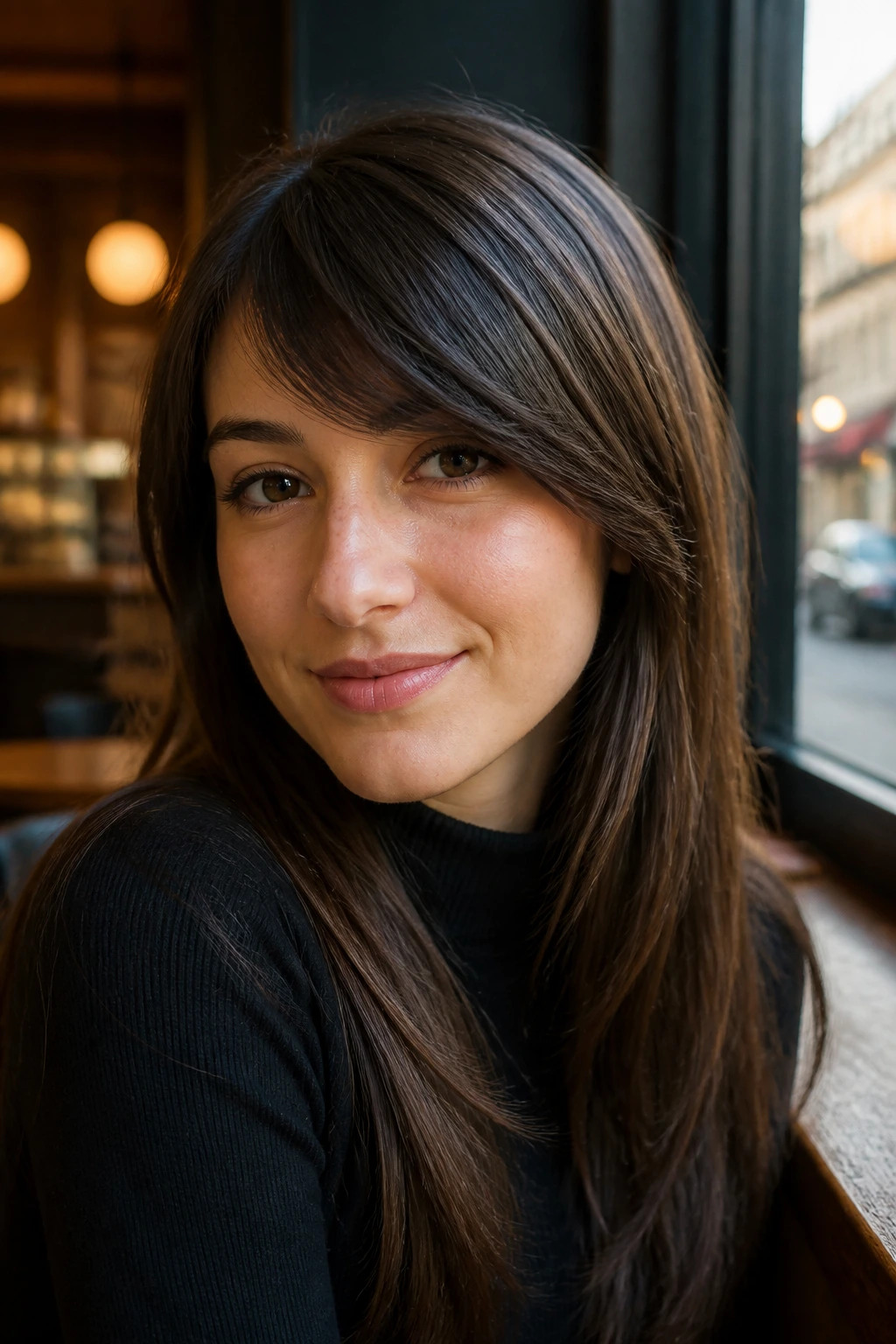
Straight hair can wear bangs with more precision than almost any other texture, but the style has to match the way the hair lives on your head. A blunt line, a soft curtain, a side sweep, or a wispy veil each creates a different mood, and the wrong choice tends to announce itself fast.
The safest place to begin is usually the shape that works with your part, your density, and how much trimming you can honestly keep up with. Once that’s in place, the rest gets easier. The line settles. The forehead feels framed instead of crowded. And the haircut starts looking like it was made for your hair, not pasted onto it.
