



Long hair is where highlights either look expensive or look obvious, and there isn’t much middle ground. When the length runs past the shoulders, every foil line, toner choice, and root shadow has room to show itself. That’s the good part and the trap.
The best long hair highlights don’t fight the length. They use it. A few lighter ribbons through the mid-lengths can make layered hair swing better. A soft money piece can wake up a face that gets lost behind all that hair. Even something subtle, like babylights under a top layer, can change how the whole haircut moves when you turn your head.
The mistake most people make is asking for “more blonde” and stopping there. More blonde is not a plan. On long hair, placement matters as much as tone, sometimes more. Put brightness in the wrong place and you get a busy crown, pale ends, and no real shape. Put it in the right place and the hair looks fuller, cleaner, and a lot more expensive without trying so hard.
Why Long Hair Gives Highlights More Room to Work
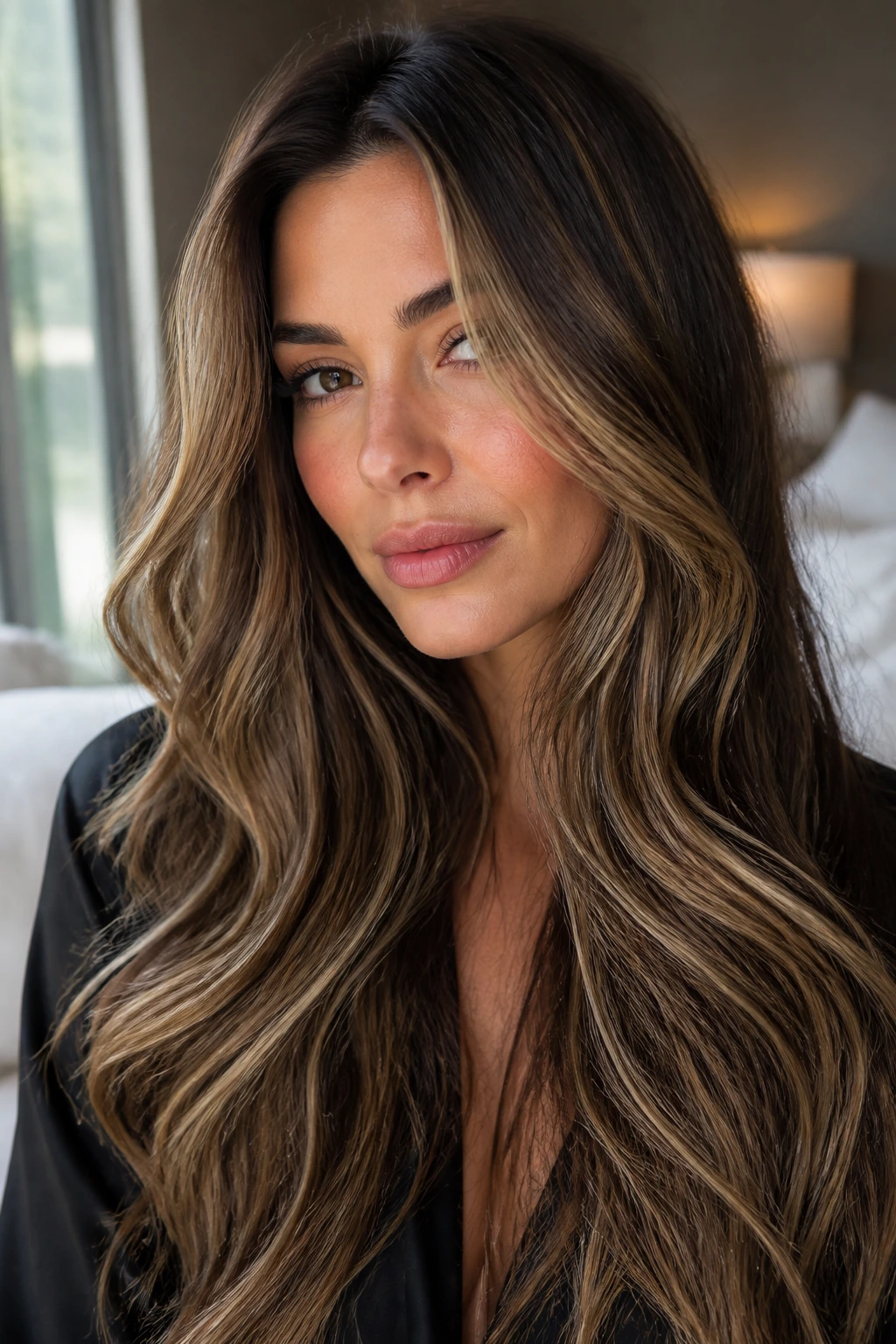
- Movement shows placement: Long lengths swing, twist, and drape, so a highlight pattern reads differently on a braid, a blowout, and a loose wave.
- Tone has space to breathe: A caramel ribbon or ash-beige strand can fade into the next section instead of sitting as one blunt stripe.
- Regrowth can be softer: On long hair, a shadow root or balayage transition can stretch several inches before it looks like maintenance is due.
- Texture changes the finish: Fine hair looks denser with babylights; thick hair often needs wider ribbons so the light actually shows through.
- The ends matter more than people think: Old, porous ends grab color fast, so long hair needs careful placement to avoid hollow, over-light ends.
1. Caramel Ribbons Starting at the Cheekbones
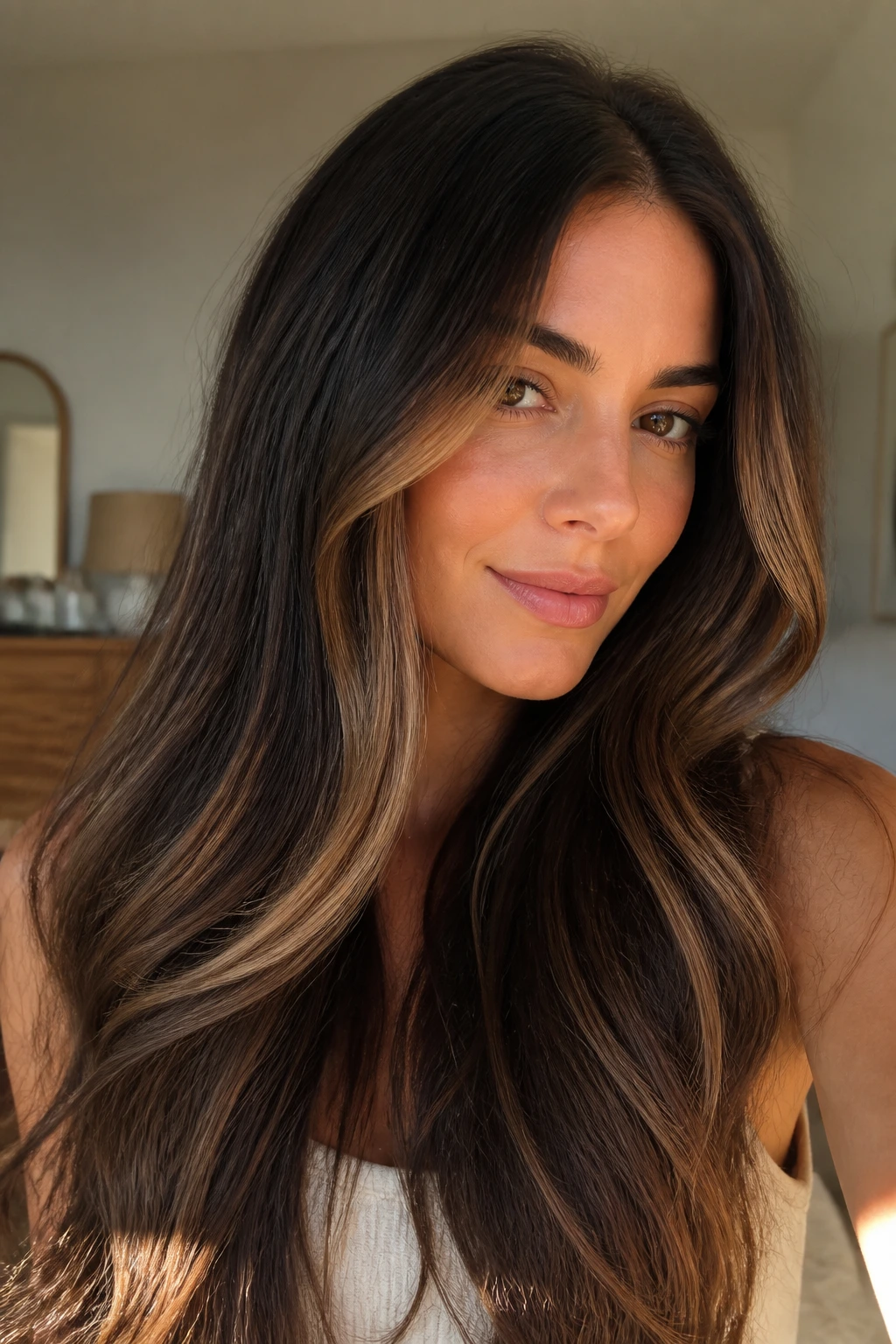
Long brunette hair can look flat when all the brightness sits too low, so caramel ribbons that begin around the cheekbones bring the whole cut back to life. The color is warm, but not orange. Think toasted sugar, not candy.
Why It Works on Long Hair
The cheekbone start point matters. It keeps the crown grounded while still giving you movement around the face, which is where long hair can sometimes swallow the features a bit. If you wear your hair in waves, the caramel pieces catch on the bends instead of disappearing into the base.
Ask for medium ribbons, not fine babylights, if your hair is very long and thick. Tiny pieces can get lost once the hair is all the way past the chest. Wider ribbons keep the dimension visible from top to bottom.
Best for: medium brown to dark brown bases, layered cuts, and anyone who wants warmth without going copper.
Ask for: caramel balayage with a soft root melt and a gloss that lands one step warmer than ash.
Avoid: placing the brightest ribbons all the way under the top layer. They vanish when the hair falls flat.
One-sentence tip: If your ends are already dry, keep the lightest pieces out of the last inch; they’ll thank you later.
2. A Face-Framing Money Piece That Stays Soft
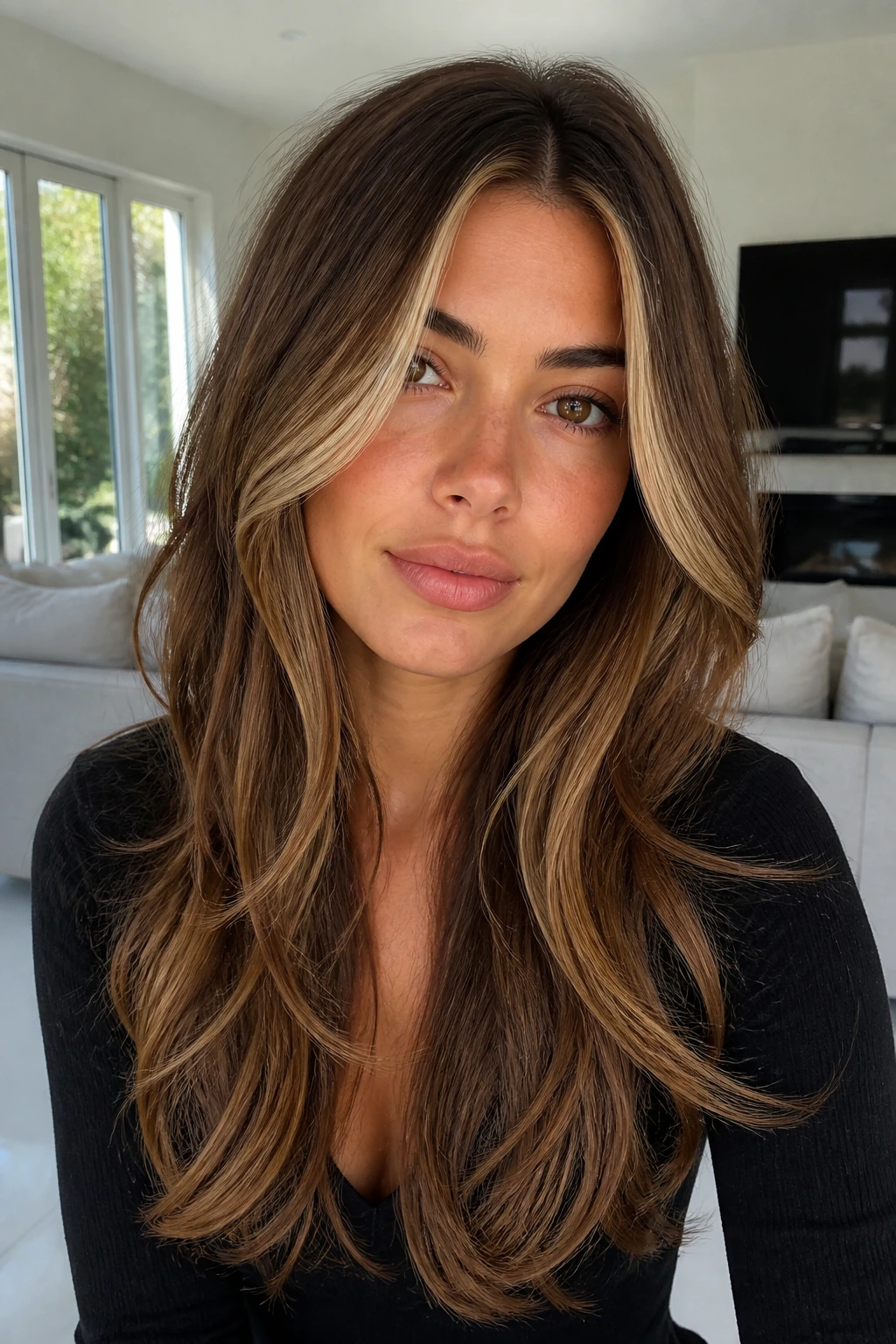
A bright money piece can carry an entire long haircut if the rest of the foil map stays quiet. That’s the trick. Too many people ask for a chunky front streak and then wonder why it looks harsh against long lengths. The answer is usually placement, not brightness.
The soft version keeps the front pieces lighter, but blurs the transition with a couple of baby foils behind them. On long hair, that matters because the face frame has more visual weight than it does on a bob or lob. You see it first, then everything else.
If you wear your hair down a lot, this one earns its keep. If you live in ponytails and claw clips, it still works, but only if the front pieces are cut in a way that falls away from the face instead of sticking straight out. A round brush blowout makes the money piece look polished. Air-dried hair makes it look a little cooler and more undone.
3. Beige Balayage With a Shadow Root
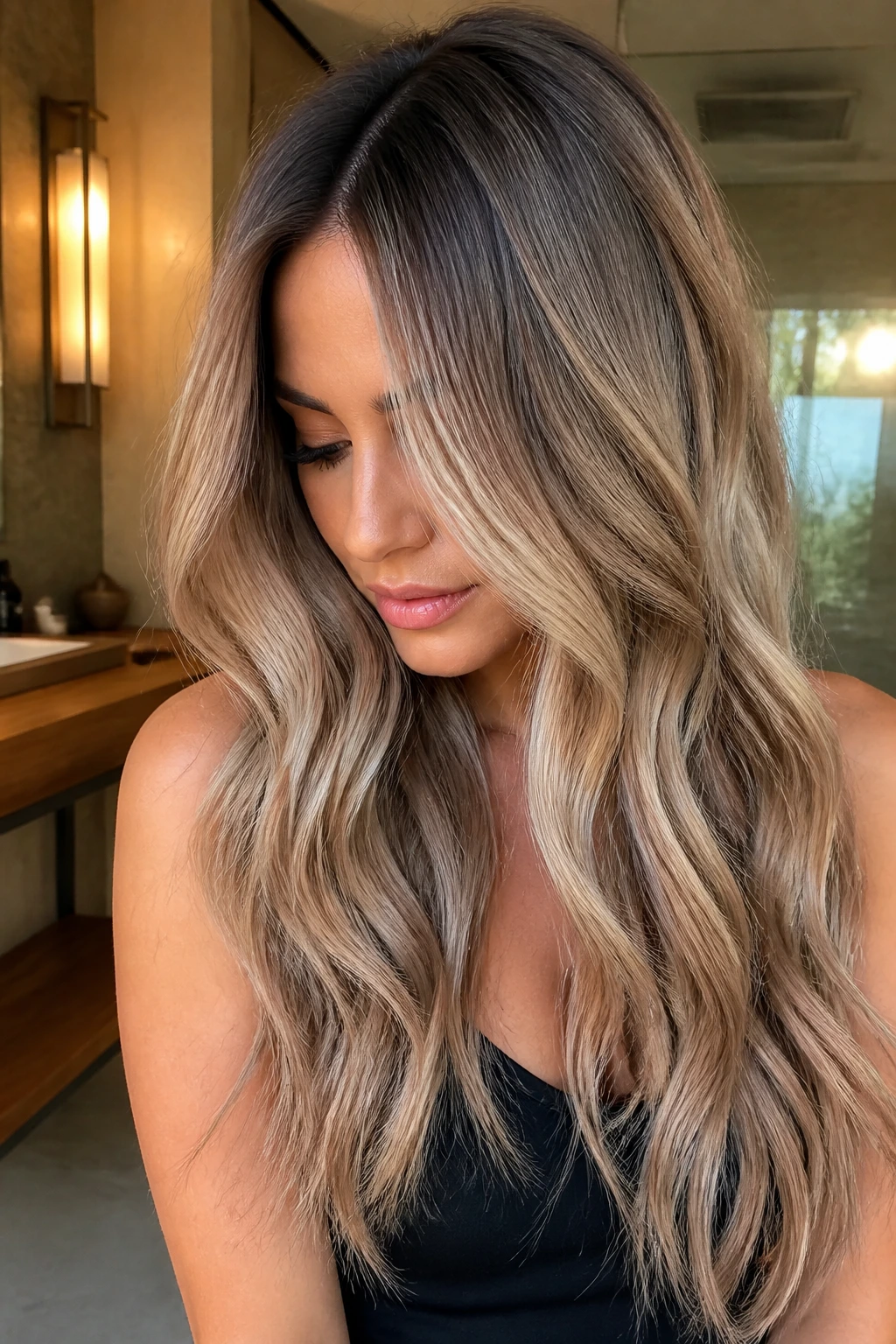
Why does beige balayage stay readable on long hair even after several weeks? Because beige sits in that narrow lane between gold and ash, and the shadow root keeps the whole thing from floating away into a pale blur. It looks calm. That matters.
How to Ask for It
Tell your colorist you want neutral-beige brightness, not icy blonde and not yellow blonde. On long hair, that middle lane is safer because the color travels farther through the ends. You get softness instead of a hard blonde block.
A shadow root should stay close to your natural level, usually about one to two shades deeper than the brightest pieces. That gives the hair some depth at the scalp and prevents a sharp regrowth line. On straight hair, the contrast shows cleanly. On waves, it melts even better.
If your base is dark brown, beige balayage is one of the best ways to lighten the mood without making the whole head look processed. It’s especially good when you want the hair to look bright in daylight but not washed out indoors.
4. Honey Blonde Woven Through Layered Ends
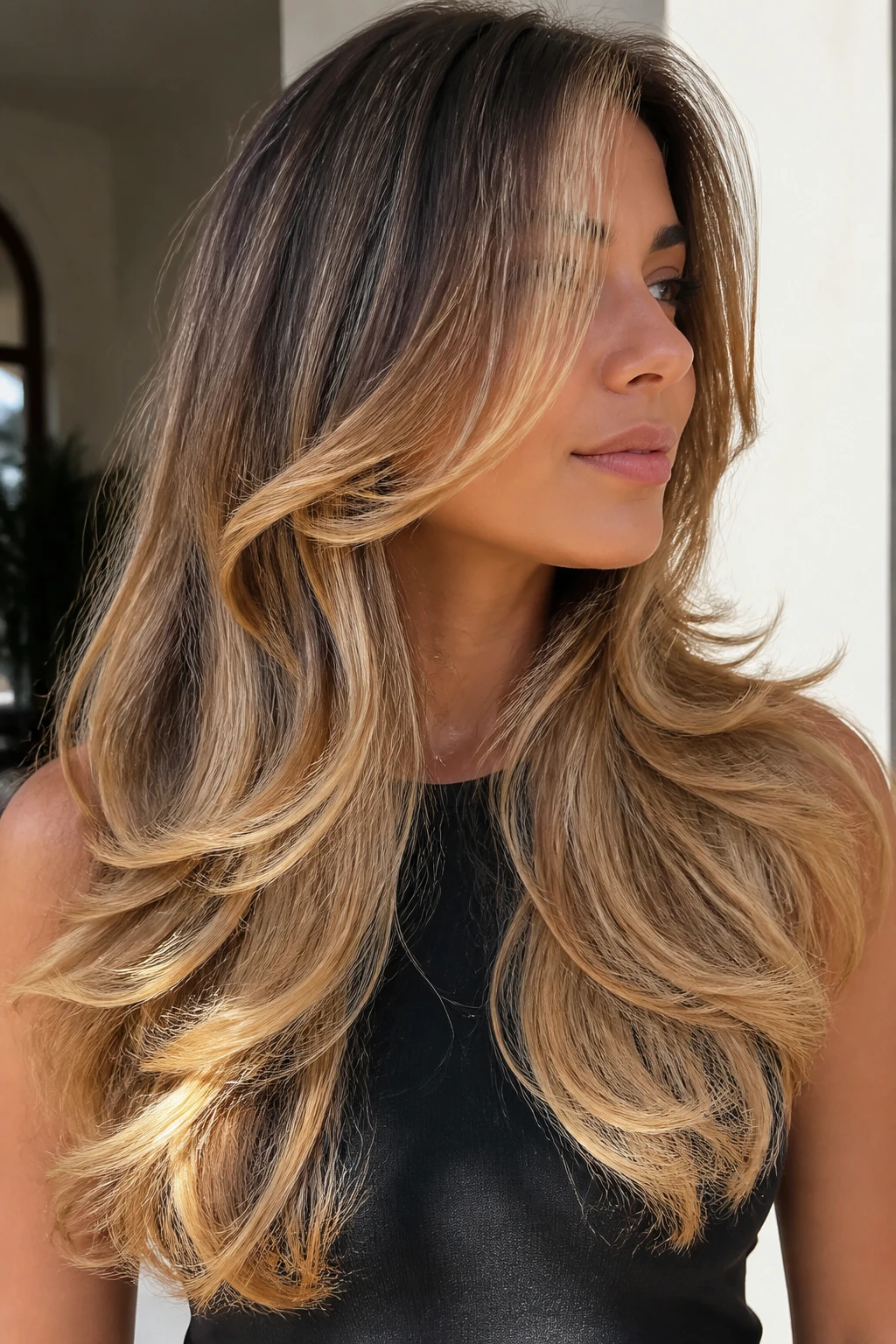
A long, layered cut almost begs for honey blonde if you like warmth. The layers give the lighter pieces somewhere to sit, and the honey tone makes the ends look thicker than they are. That part is not an illusion, exactly. It’s more like smart optical cheating.
I like this look on hair that already moves a little — soft bends, loose curls, blowouts with round-brush lift at the ends. The warmth shows best when the hair can separate. On pin-straight lengths, honey can read flatter unless there’s enough contrast underneath.
- Best placement: mid-lengths through the outer layers, with a few brighter pieces near the front.
- Best tone: golden beige or warm honey, not brassy orange.
- Best haircut pairing: long layers, butterfly layers, or a U-shaped outline.
- Best maintenance move: a gloss every 4 to 6 weeks keeps the warmth from going muddy.
The biggest win here is softness. Nothing about this look needs to shout.
5. Ash-Brown Dimension for Cooler Brunettes
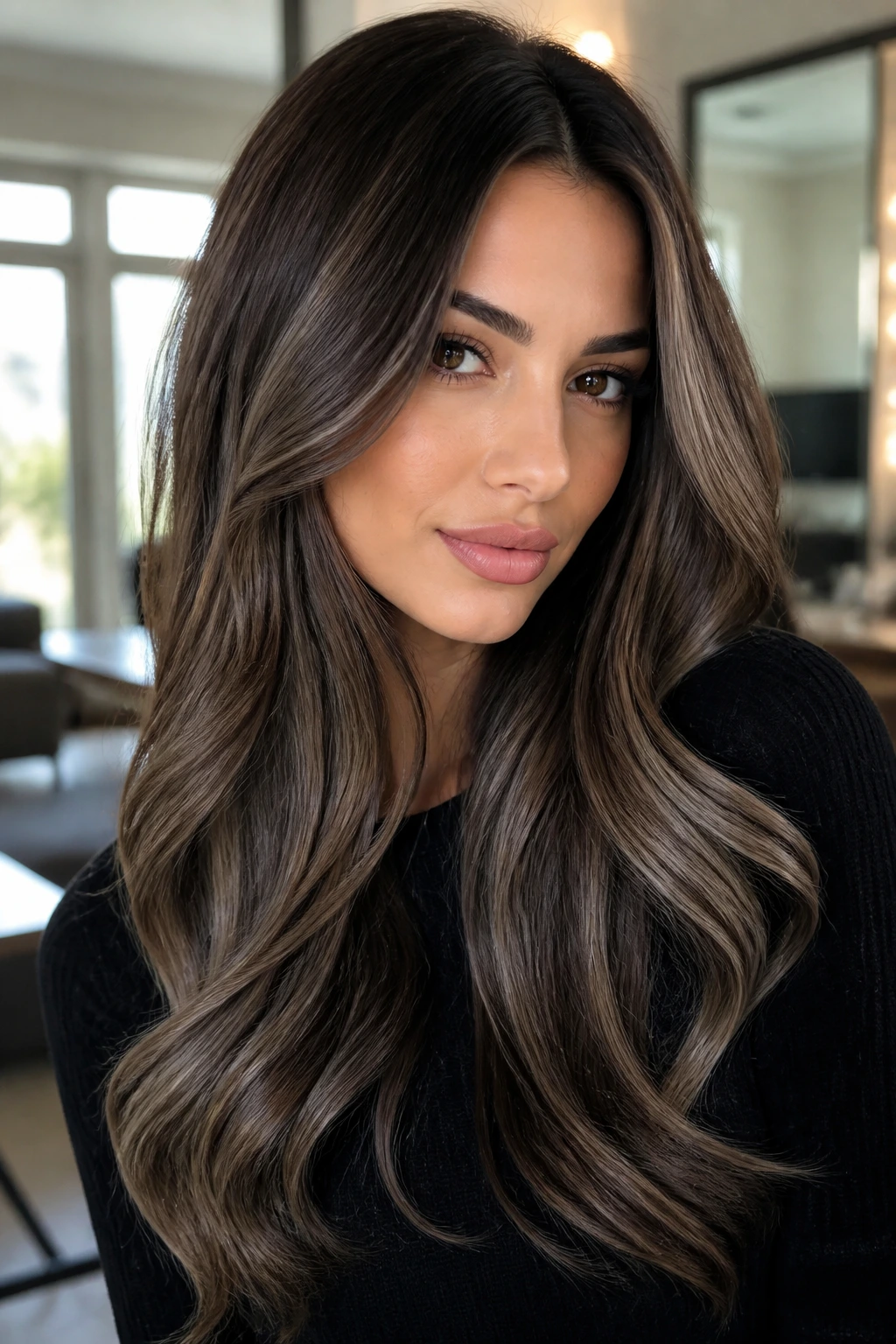
Ash-brown dimension is for the person who keeps saying, “I don’t want it warm,” and means it. Long hair makes this look especially good because the cool pieces can move through the length without turning the whole head gray. The color ends up reading clean, smoky, and a little expensive without leaning dramatic.
The key is not going too flat. If every highlighted piece is the same cool brown, long hair can lose depth fast and start looking like one solid block. You want ash-brown lights plus a few darker lowlights tucked in between so the strands don’t collapse into each other.
This look is strongest on naturally brunette hair that already lives in the medium-to-deep brown range. On very dark hair, too much ash can look dusty if the lift is weak. Better to lighten a half-step and tone carefully than to force the hair into a tone it doesn’t want.
Long hair gives ash-brown dimension a place to show itself. Short cuts don’t always have enough length for the contrast to travel.
6. Chunky Ribbon Highlights, Grown Up
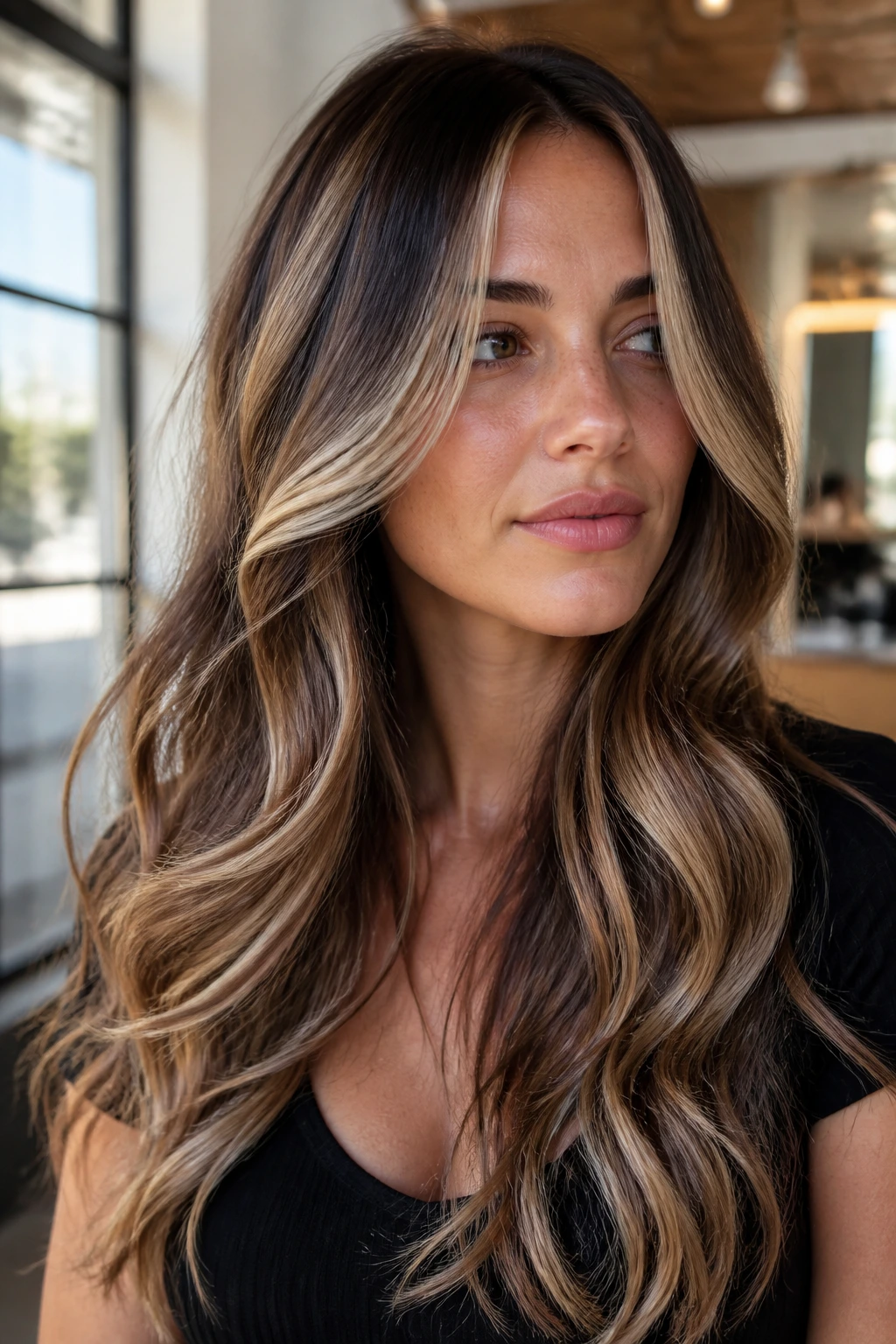
The 90s-inspired stripe is back, but the modern version knows when to stop. Long hair can handle chunky ribbon highlights if the spacing is deliberate and the toner softens the edges. Without that, you get school-photo streaks. With it, you get movement and shine.
What Makes It Different
Unlike babylights, these ribbons are visible on purpose. They’re wider, bolder, and meant to be seen from across the room. On long hair, that can look fantastic because there’s room for the contrast to stretch down the length instead of sitting in one busy zone.
Ask for disconnected ribbons rather than a full stripe pattern. That means the colorist leaves blocks of base color between the light pieces, especially near the crown. The result feels easier on the eye and less dated.
This works best on layered cuts, blunt ends with movement, or hair that gets styled in big waves. It’s not the best pick if you want invisible grow-out. It is the pick if you want the color to have a little attitude.
7. Babylights From Crown to Ends
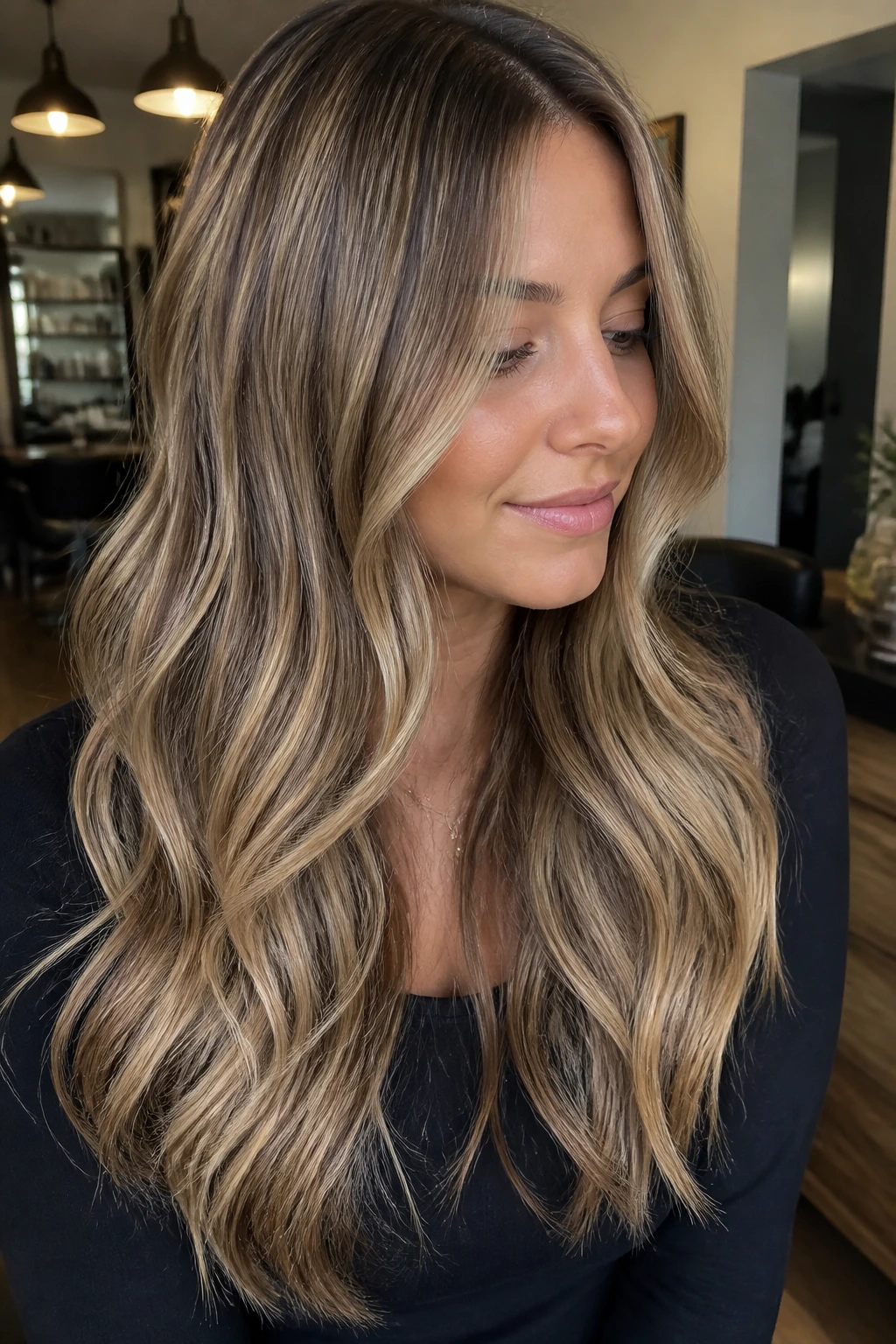
Babylights are the quietest option in the room, and long hair can make them look richer than you’d expect. The tiny, fine weaves add shimmer from top to bottom, which means the hair looks fuller without a lot of visible contrast. On dense hair, that’s a gift.
Why They Flatters Long Lengths
Long hair can sometimes eat subtle color. Babylights solve that by putting brightness everywhere in small doses instead of in one loud stripe. The effect is soft, expensive-looking, and surprisingly practical because it grows out with very little drama.
Best for: fine hair, straight hair, and anyone who wants dimension without obvious streaks.
Best when you want: a subtle blonde shift, not a major color change.
Ask for: micro-weaves with a neutral or beige toner.
Watch for: over-toning. Too much ash can make the hair look dull instead of clean.
Babylights are one of the few highlight ideas for long hair that can live close to the root without making the scalp look busy. That’s why they’re so useful on long, one-length cuts.
8. Copper and Cinnamon Highlights on Dark Hair
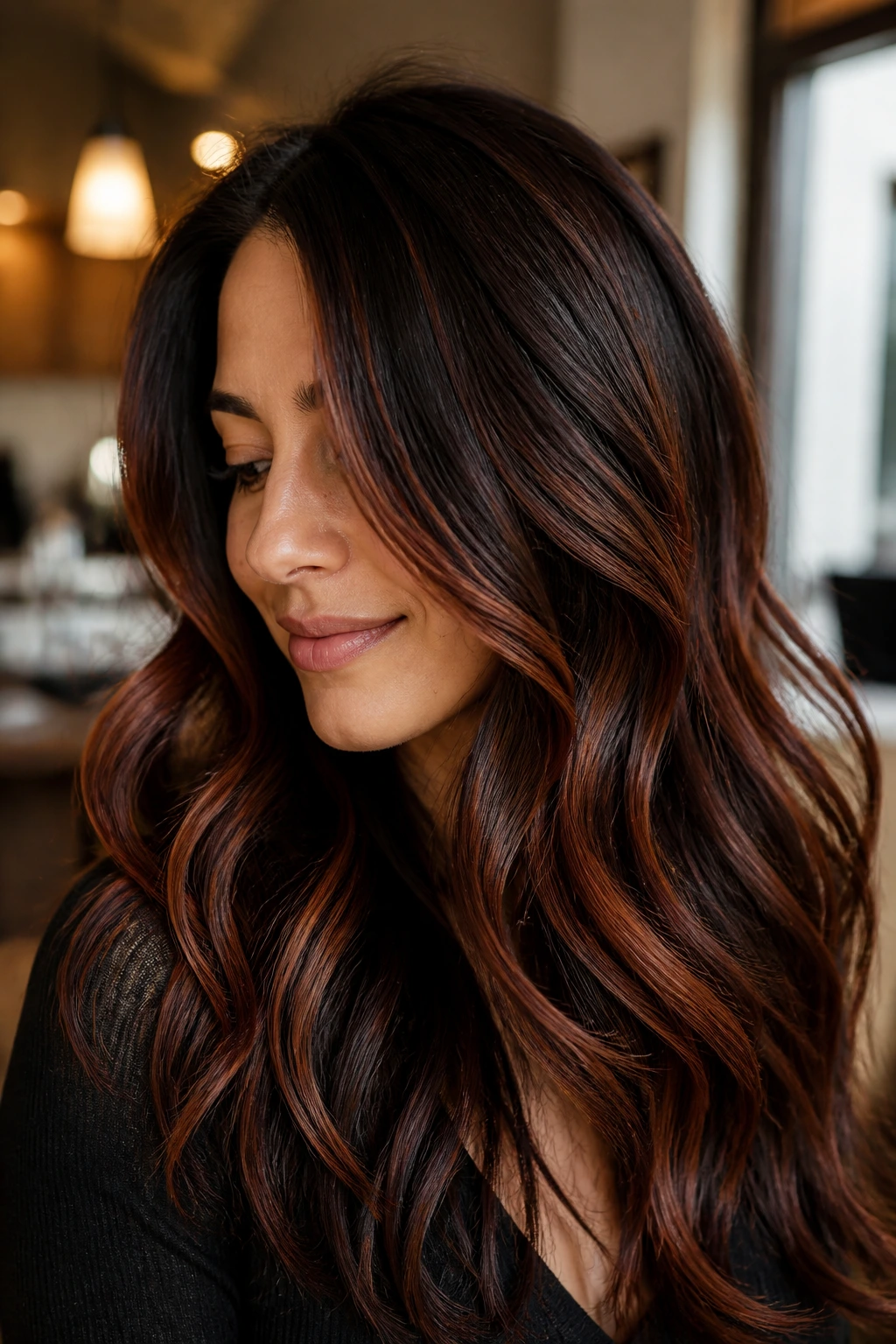
Copper and cinnamon are the move when you want long hair to look warm from across the room. On espresso or chocolate bases, those reddish ribbons don’t need to be super light to make an impact. They just need enough contrast to read as deliberate.
This is one of those looks that gets better when the hair has shape. Waves, curls, or even a rough blow-dry let the copper pieces flash in and out as the hair moves. On completely straight hair, the color still works, but it feels more graphic.
The safest version keeps the copper in ribbon form rather than all-over red. That way you get dimension, not a full copper wash. Cinnamon pieces near the front can brighten the face, while deeper copper hidden in the mid-lengths keeps the rest of the hair from looking one-note.
If your natural base is dark, this is a good way to change the mood without asking the hair to go blonde. Less lift. More character.
9. Mushroom Brown With Barely-There Brightness
Mushroom brown is a cool-neutral brunette shade with just enough lighter pieces to keep it from going flat. On long hair, that “barely there” lightness matters. The length can make heavy color look solid, and solid isn’t the goal here.
Why does this work so well? Because the contrast is tiny, but the placement is smart. A few taupe or beige strands around the face, a few through the surface layers, and the whole head starts to look softer. Not lighter, exactly. Softer.
How to Wear It
Keep the base slightly deeper than the lightest strands so the dimension stays visible. If the highlights and base are too close, long hair can look muddy in indoor light. That’s a common miss with cool brunettes.
This is a strong choice if you want something quieter than caramel and less stark than ash blonde. It looks especially good on thicker hair because the smoky tone breaks up the bulk without turning the cut pale.
10. Platinum Ends on Long Brunette Hair
Platinum ends on long dark hair are not subtle. They’re not supposed to be. When done well, the effect is long, sleek, and a little dramatic — like a dipped hemline for hair. When done badly, the ends look fried. So the margin for error is not generous.
The best version keeps a soft transition from brunette roots into lighter mids before hitting the platinum zone. That transition protects the look from a hard shelf of color. Long hair needs that extra stretch. Shorter hair can sometimes get away with a harsher contrast. Long hair usually cannot.
This style fits people who wear their hair straight, waved, or tucked behind the ears and want the ends to do the talking. It also needs stronger maintenance than most of the softer ideas in this list. Heat styling, bond care, and regular glossing all matter here.
If the ends are already fragile, I’d pass. Save the platinum idea for hair that can handle it.
11. Bronde Balayage With a Soft Root Melt
Bronde is what happens when brunette and blonde stop arguing. The best bronde balayage for long hair keeps the root a touch deeper, threads in warm-beige midtones, and leaves the ends bright enough to move. It’s a very forgiving setup.
Long hair gives bronde room to spread out. The transition can start near the temples, drift through the lengths, and finish with brighter ends that still feel connected to the base. That’s harder to pull off on short hair, where the contrast has to happen fast.
This is the style I’d point someone to if they want dimension but hate anything that looks “done.” It works with waves, blowouts, air-dried bends, and even a braid. The whole point is that the hair should keep looking like hair, not like a color chart.
A root melt helps here too. It softens regrowth, makes the scalp area less busy, and gives the lighter pieces a place to land.
12. Reverse Balayage for Hair That Went Too Blonde
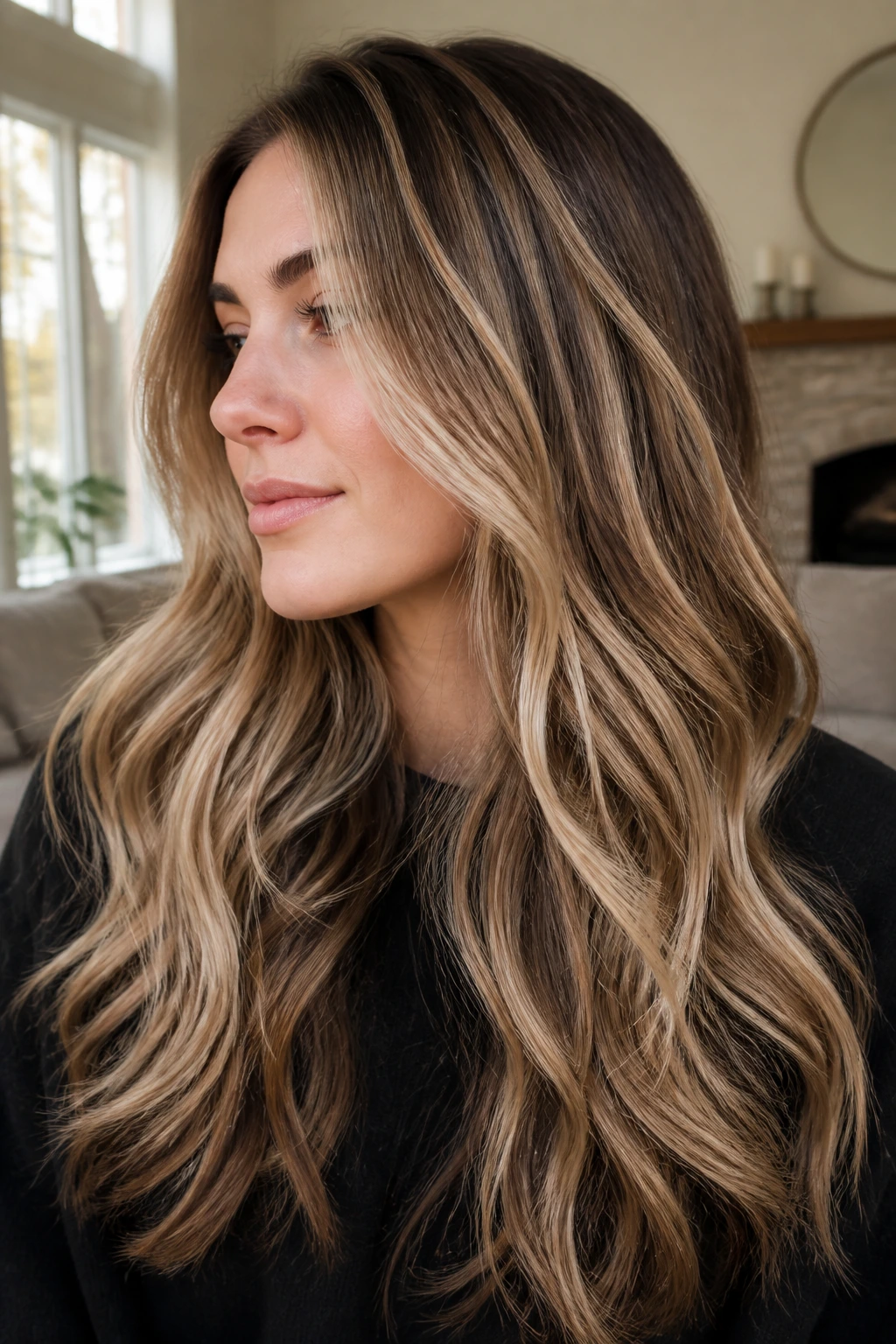
Reverse balayage sounds technical, but the idea is simple: put depth back where the hair got too light. On long hair, that can be a lifesaver. Over-lightened lengths often look dry, thin, and a little see-through. Darker ribbons correct that fast.
Why It Works
Instead of trying to lift more, reverse balayage adds lowlights and shadow. The hair gets back some contrast, which makes the blonde pieces look cleaner and the ends look less frayed. Long hair takes especially well to this because the darker ribbons can travel through the length without making it look heavy.
It’s also a smart move if your blonde went a little washed out or if the hair has lost shape after too many brightening services. A good reverse balayage doesn’t make the hair dark again. It restores structure.
Ask for lowlights that are one to two levels deeper than your lightest blonde, not black or deep espresso unless that’s the look you actually want. The goal is dimension, not a hard reset.
13. Sun-Kissed Contour Highlights Around the Hairline
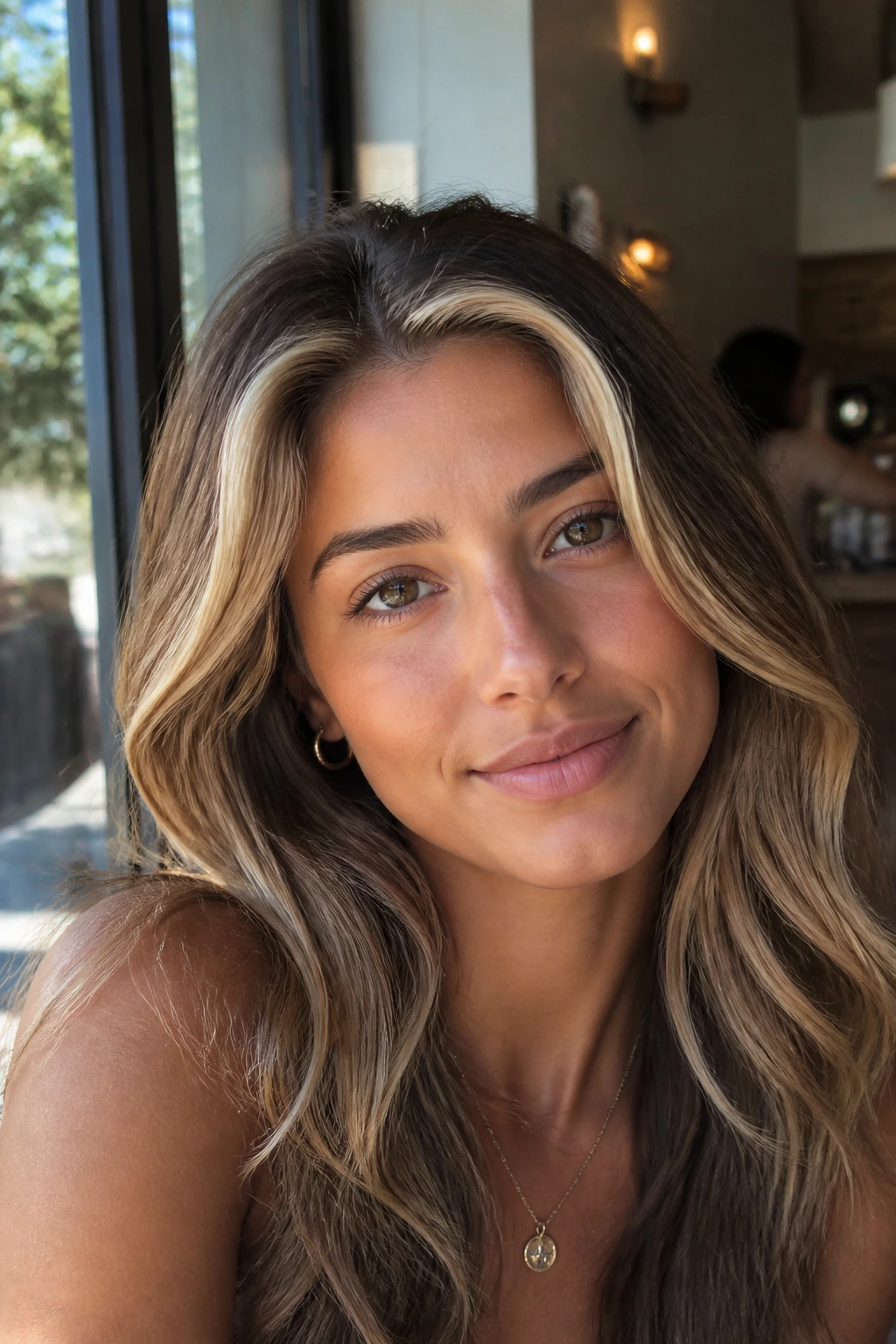
Hairline contour highlights do a lot with very little. A few bright pieces around the temples, cheekbones, and front layers can make long hair look fresher without lighting up the whole head. That is the part people underestimate.
If the face frame is the first thing you notice, the haircut suddenly feels more awake. If the rest of the hair stays deeper, the brightness has somewhere to land. On long hair, that contrast keeps the style from looking washed out.
Best Placement Notes
- Brighten the outer face frame and the first few layers.
- Leave the hidden interior a shade deeper for depth.
- Use a soft gloss so the front pieces don’t turn stark.
- Skip overly wide foils near the temples if the hairline is already fine.
This idea works especially well if you wear a middle part or like pulling the front pieces back. The light stays visible either way.
14. Hidden Peekaboo Panels Under the Top Layer
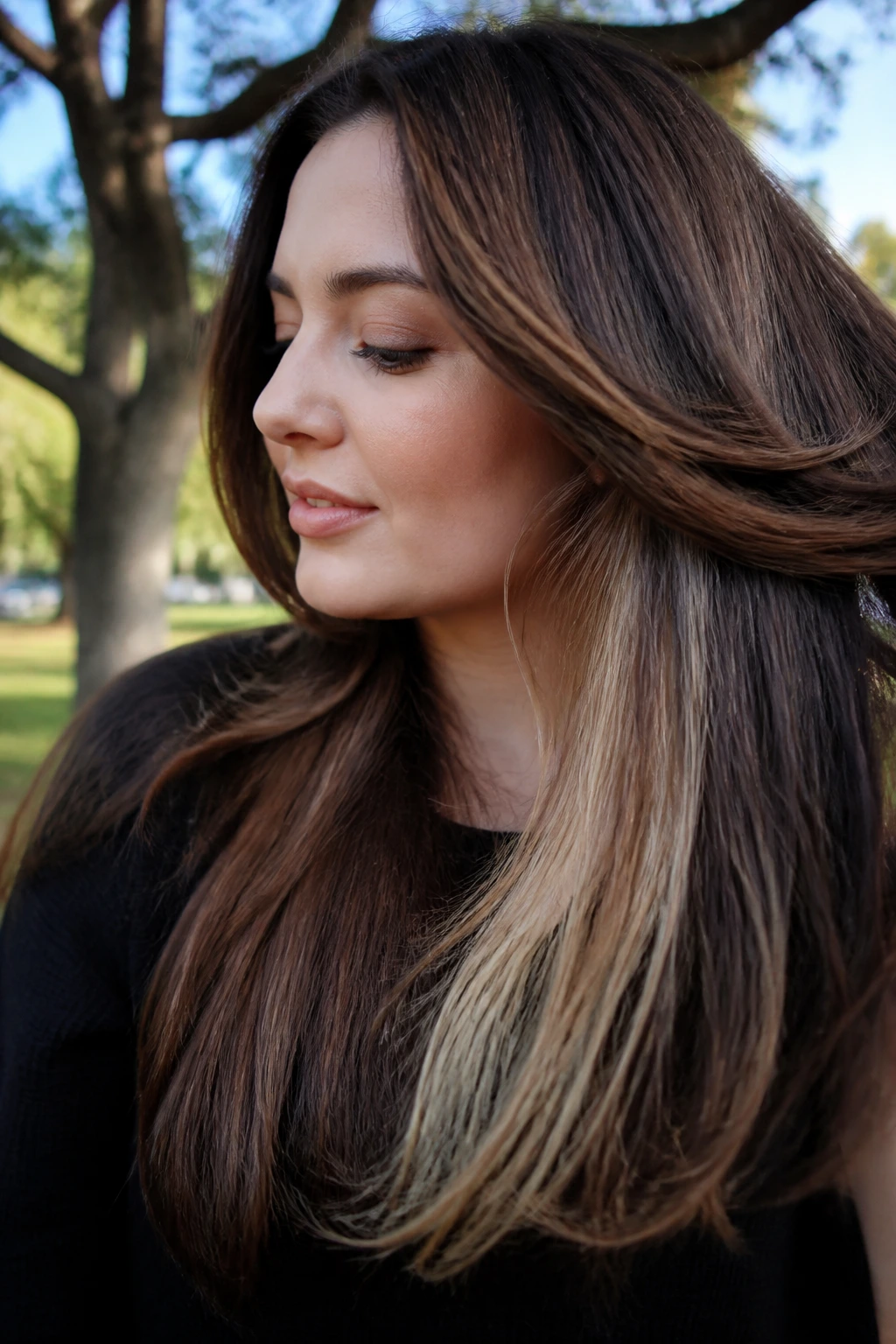
Hidden color is one of the best ways to make long hair a little more fun without changing the whole top layer. Peekaboo panels sit under the surface, so they show when the hair moves, twists, braids, or gets pinned up. They can be blonde, copper, pink, violet, or deep brunette contrast. The placement is the point.
On long hair, the payoff is bigger because the panels have more length to reveal themselves gradually. A flash of color at the nape looks different when it travels six or eight inches down the hair instead of two. It feels intentional, not random.
This is a strong choice if you want color that can be hidden for work or softer settings. It also works well with long layers because the top layer creates a built-in curtain. You get surprise without the commitment of all-over brightness.
A good peekaboo panel should feel like a reveal, not a mistake. If you see it all the time, the placement is probably too high.
15. Vanilla Cream Highlights on Long Layers
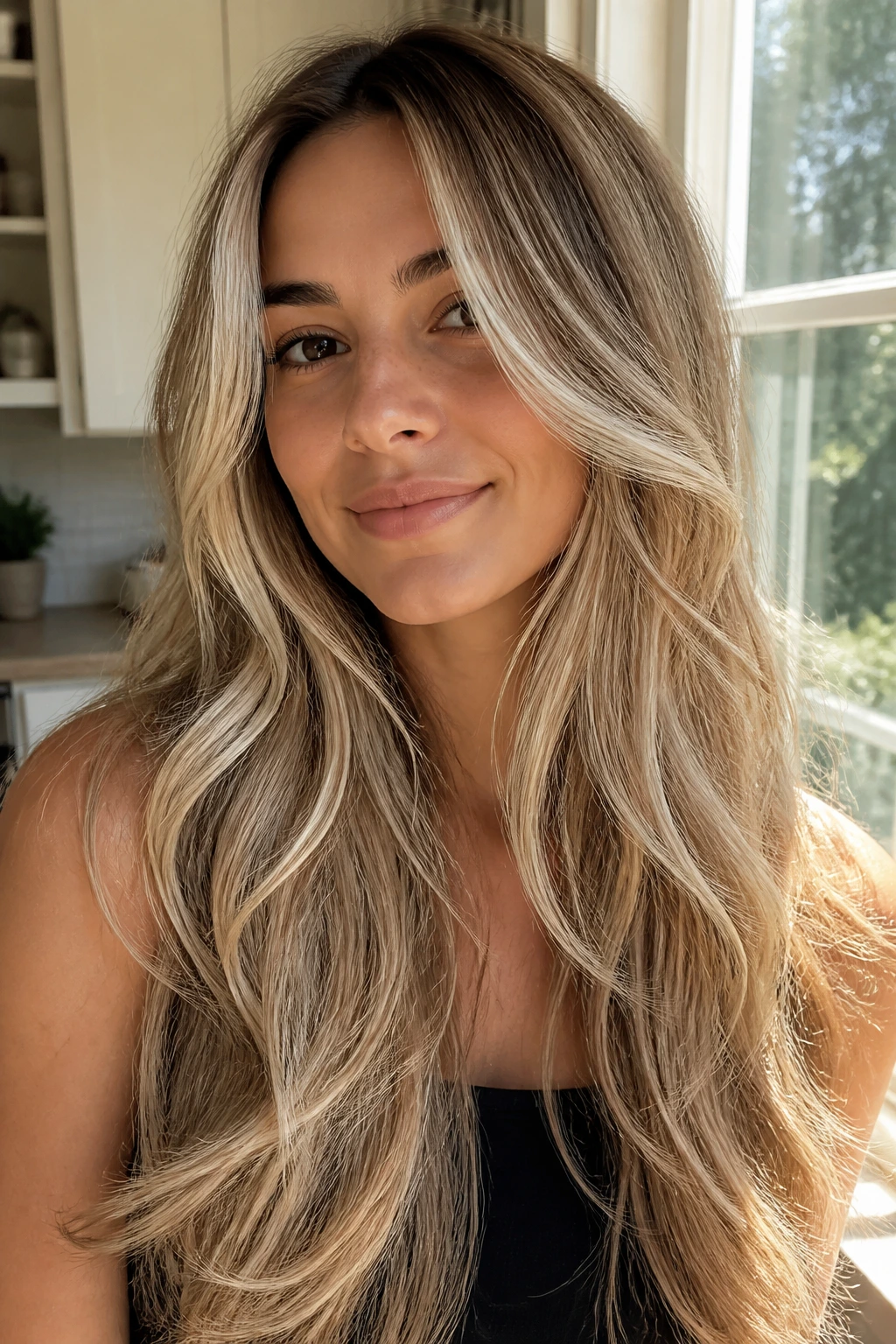
Vanilla cream is one of those tones that sounds simple and turns out tricky. On long hair, the tone has to be pale enough to read as cream, but not so pale that it looks white or chalky. The best version sits in a soft beige lane with a tiny bit of warmth.
Why long layers help is easy: the layers give each lighter section a place to separate. That separation lets the vanilla pieces show up as threads instead of one blanket of blonde. It’s a nicer look than a flat, all-over lightening job.
What to Ask For
Tell your colorist you want soft cream, not icy silver. That wording matters because the toner choice will change the whole feel. On hair with a warm natural base, cream usually needs a careful lift and a neutral-beige finish. On cooler bases, the toner can stay slightly ashier.
This look works best when the brightest pieces live on the surfaces that catch light, not stuffed into the deepest interior sections. Long hair has enough depth already.
16. Toffee Lowlights With a Few Brighter Ribbons
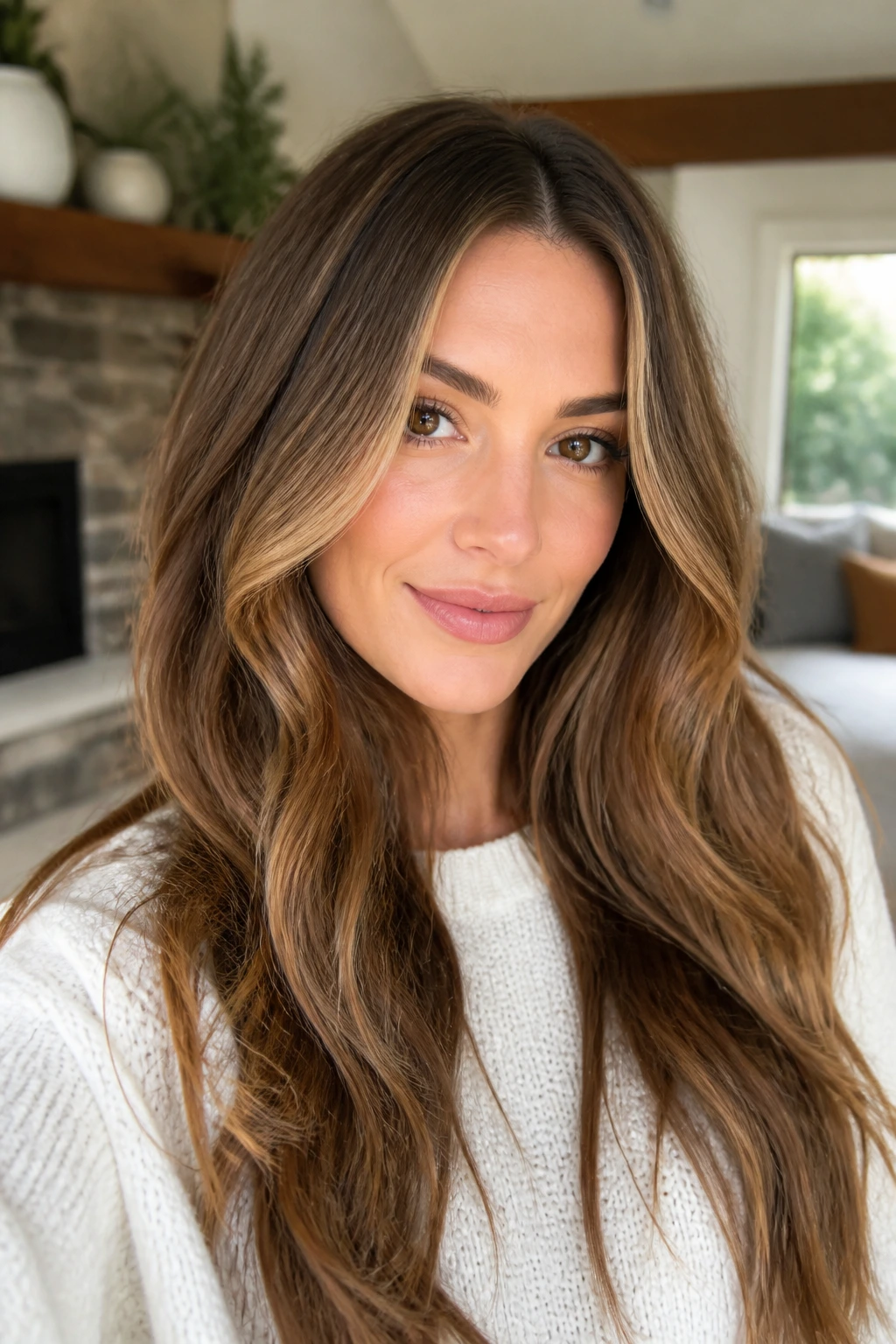
People talk about highlights all the time, but lowlights are the thing that keeps long hair from looking thin. Toffee lowlights add a richer, deeper thread through the length, and a few brighter ribbons on top stop the color from going too dark. That mix gives the hair body.
I like this on long hair that has gone too light or too uniform. If every section is the same blonde, the style can lose shape fast. Toffee lowlights rebuild the illusion of thickness and make the surface shine look more layered.
The trick is keeping the lowlights soft. They should be one shade deeper than the base, maybe two at most. Go too dark and the hair starts looking striped in a different way. Keep the lighter ribbons around the face and outer layers, and the whole thing reads as dimensional instead of busy.
This is one of the smartest ideas for people who want more depth without going back to fully brunette.
17. Strawberry Blonde Dimension on Warm Bases
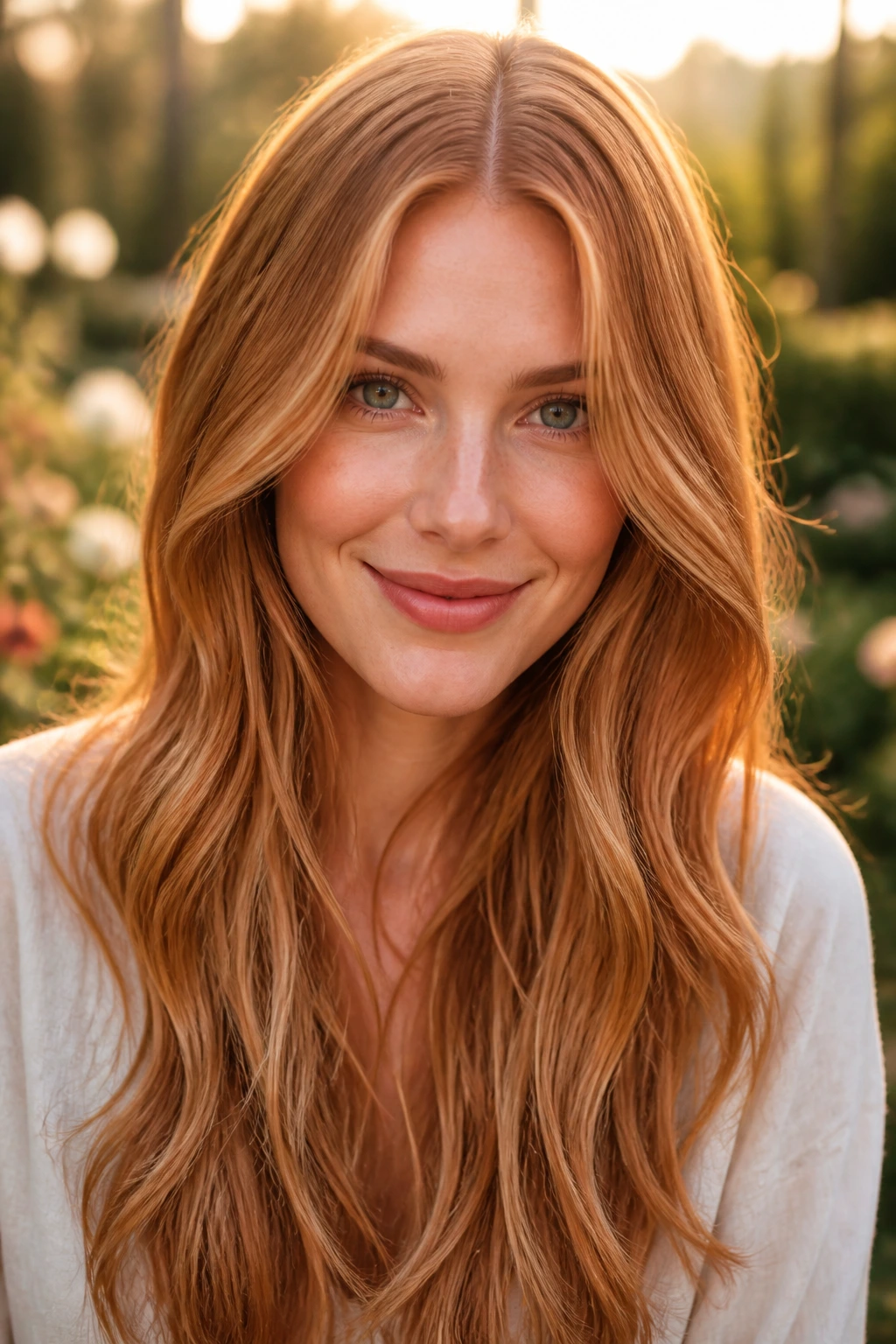
Strawberry blonde on long hair has a very particular charm. It’s warm, soft, and slightly rosy without turning into a full copper head. On natural golden or auburn bases, the effect can look almost like the hair has been lit from inside.
The reason it suits long hair is the length gives the red-gold tone room to blend. Short hair can make strawberry blonde look too singular. Long hair lets the color move from root to end in a more natural way, especially if the finish is a gloss rather than a heavy lift.
This is a good pick if your skin tone likes warmth and you don’t want a sharp blonde contrast. It can also be a nice way to refresh faded copper or warm brunette color. The important part is restraint. Too much red at once can look costume-like. A few soft, strawberry-toned ribbons go a long way.
18. Champagne Blonde for Waves and Curls
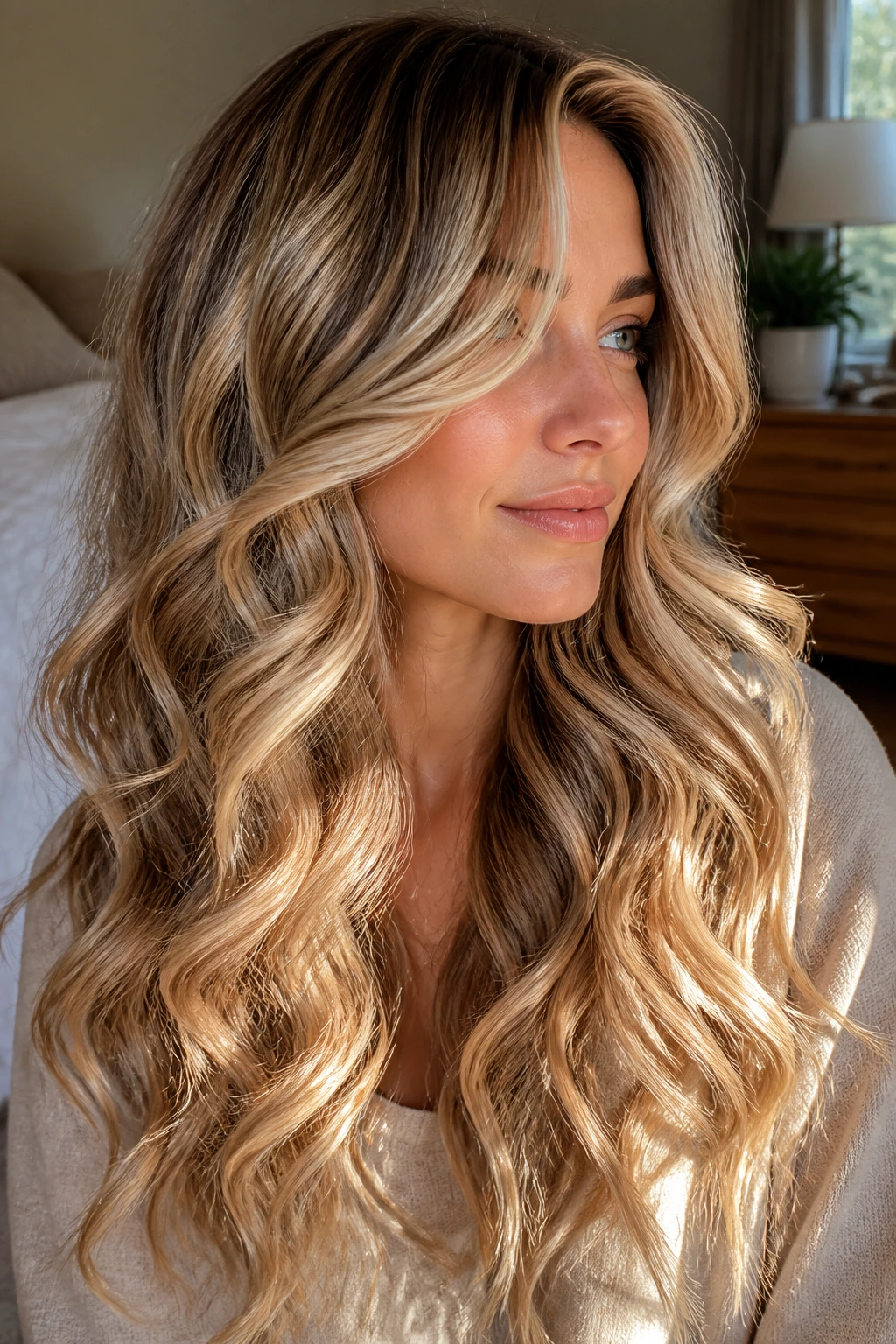
Champagne blonde sits between beige and pale gold, and on long waves or curls it can look polished without feeling stiff. The tone has enough brightness to stand out, but enough warmth to avoid that flat, icy feel that can sometimes wash out texture.
What makes it work on long hair is the wave pattern. When the hair bends, champagne pieces rise and fall across the surface, so the light seems to move through the style. That’s a much better match for long lengths than a blunt block of pale blonde.
How to Wear It
Ask for brighter pieces where the hair naturally curves — around the mid-length wave and the outer layer — and keep the inside a little deeper. That keeps the curls from looking bleached from every angle. A soft root shadow makes the grow-out calmer and gives the champagne pieces more contrast.
This one loves a big blowout, loose curls, or a polished bend with a 1.25-inch iron. It’s not a wash-and-go-only color, though it can still look good air-dried. It just looks richer with a bit of shaping.
19. Ribbon Highlights Made for Curly Long Hair
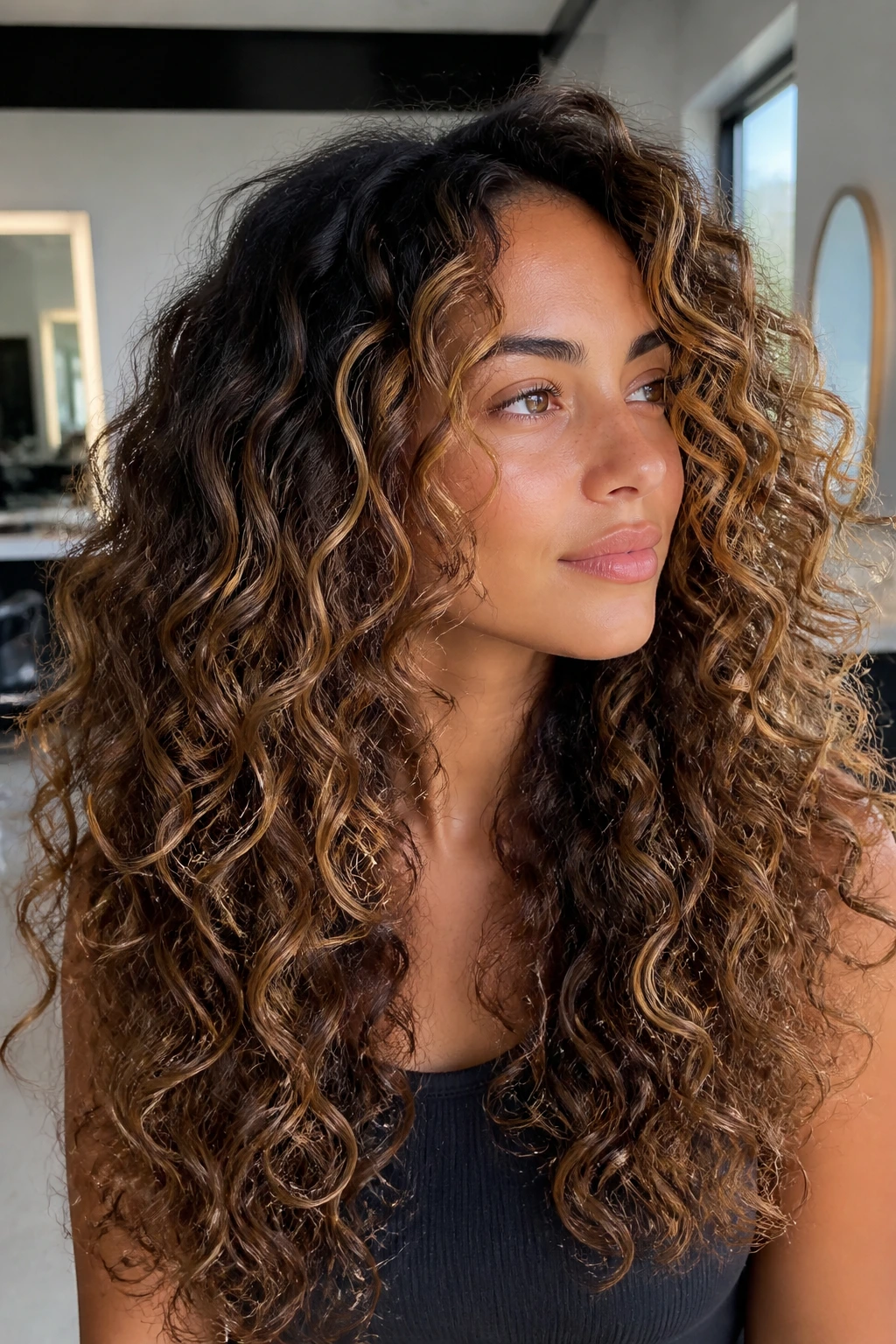
Curly long hair needs a different highlight map, full stop. A ribbon that looks perfect on straight hair can disappear once curls spring up, shrink, and twist over each other. That’s why curly hair usually does better with hand-painted ribbons placed where the curl pattern opens.
What Makes It Work
The brightest pieces should sit on the outer curves of the curls, around the halo area and front sections, so the light has somewhere to catch. The underside can stay deeper. That contrast gives the hair shape without making every curl look outlined.
- Best for: spirals, loose curls, and coily textures with plenty of length.
- Best placement: outer curve, crown halo, and front framing curls.
- Best finish: a gloss that keeps the tone from going brassy between wash days.
- Best warning: thick foils can look louder than expected once the curl contracts.
If you’ve ever had curly highlights disappear, this is why. Curl pattern changes the view. A good curl specialist plans for that from the start.
Why Long Hair Makes Highlight Placement More Important
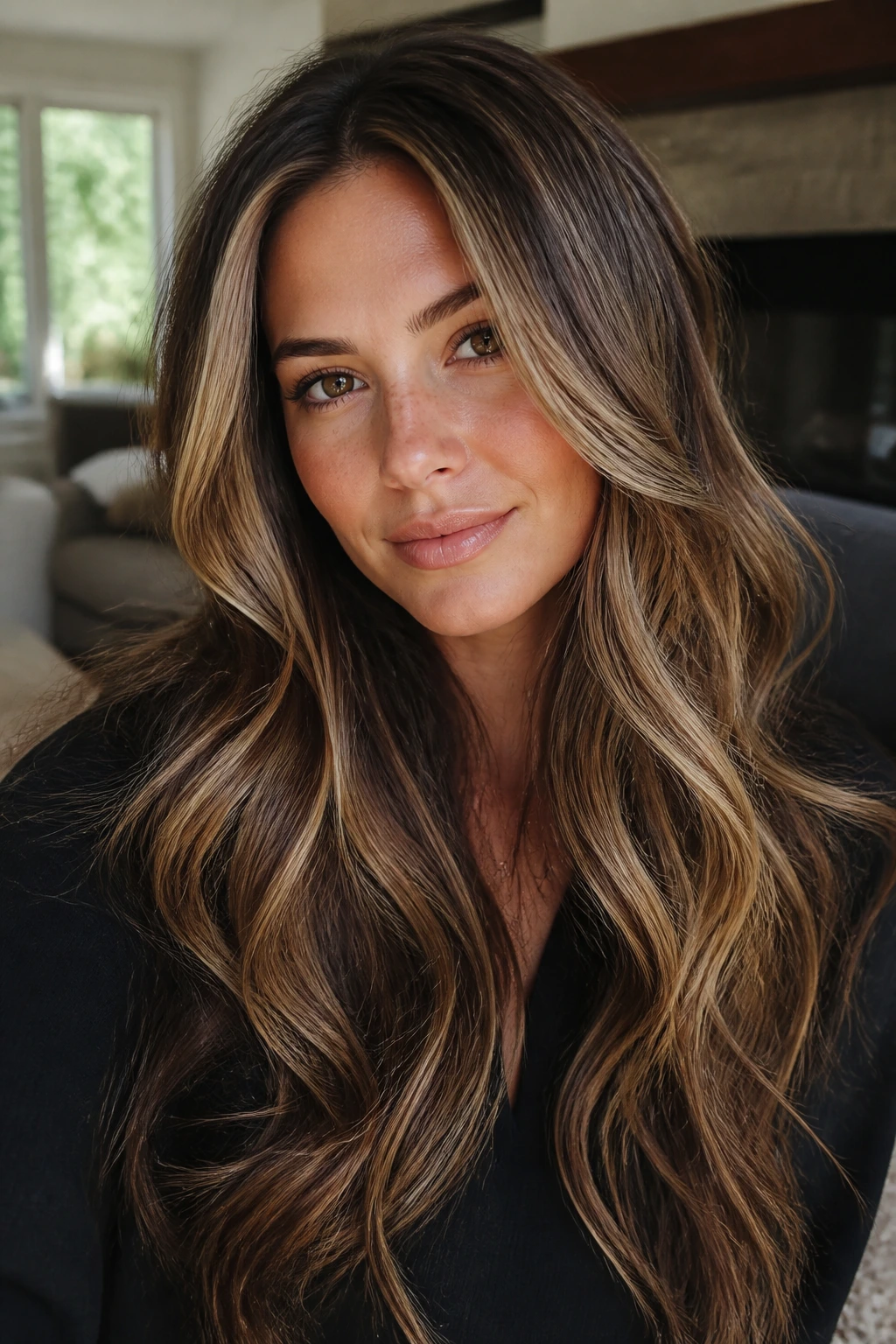
Long hair gives you room, but it also gives mistakes room. A bright section placed too high can make the crown busy. A light section placed too low can leave the top flat. The sweet spot changes with the haircut, the part, and the way you wear it most days.
The smartest highlight work on long hair usually does three things at once: it brightens the face, it keeps depth near the roots, and it leaves enough shadow through the lengths so the color doesn’t turn into one pale sheet. That mix is what makes long hair look full. Not just lighter. Fuller.
Hair texture changes the map too. Fine long hair often needs smaller, more frequent pieces because large ribbons can look sparse. Thick long hair usually needs a few wider sections so the lighter tones can actually show through the bulk. And if the ends are porous, they’ll grab toner fast, sometimes faster than the colorist expects. That’s why long hair needs a consultation, not a guess.
How to Talk to Your Colorist Without Guessing
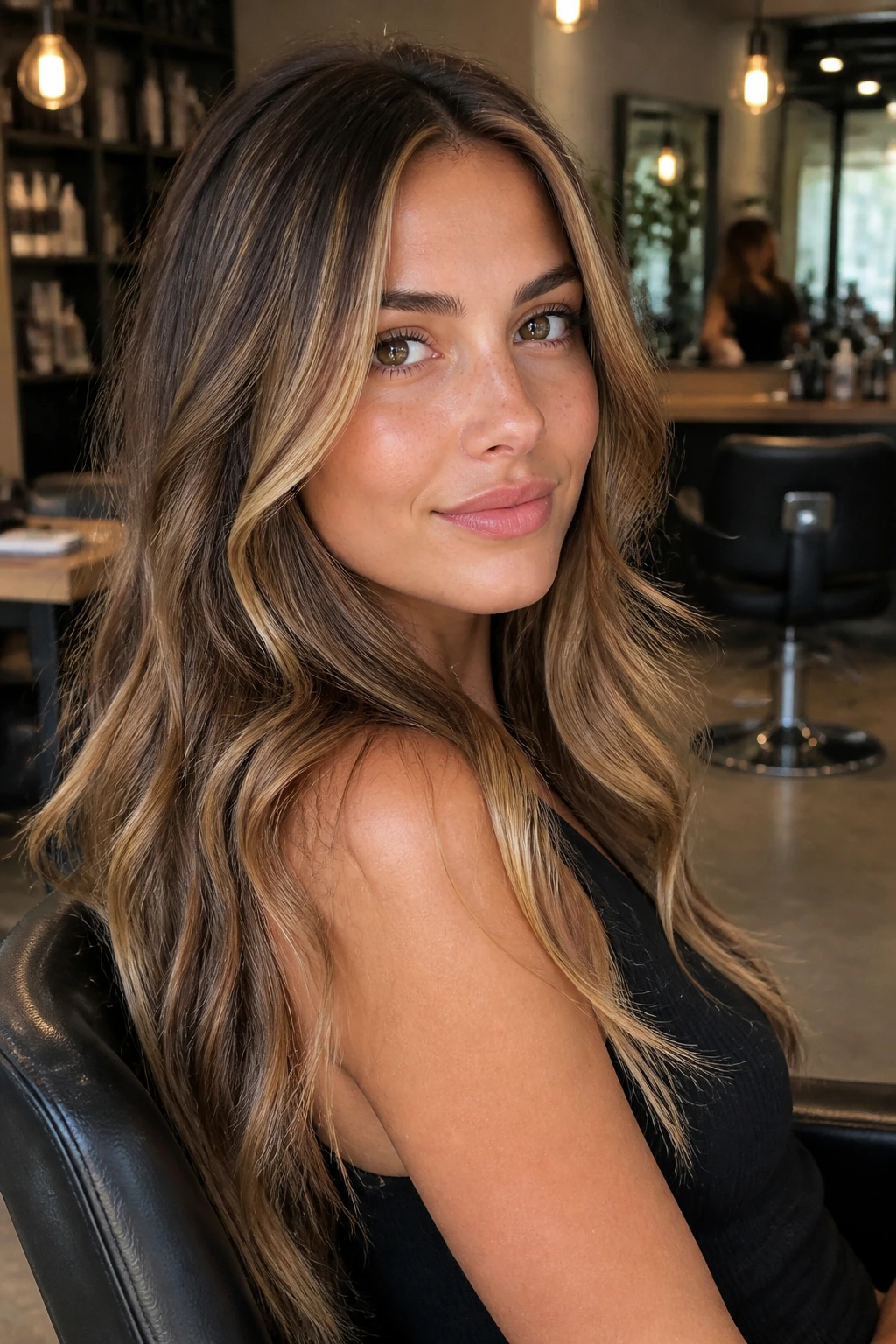
Bring photos, yes. But bring the right kind of photos. One should show the tone you want, and another should show the placement you like. Those are not always the same picture. A beige balayage photo might show the exact color, while a separate photo gives a cleaner idea of where the light pieces sit.
Say how often you want to be in the salon. If you can live with a gloss every 6 weeks and a bigger refresh later, say so. If you want low maintenance, say that too. Long hair can hide regrowth better than short cuts, but only if the root area is planned well from the start.
Also mention how you wear your hair most often. Middle part, side part, pulled back, curls, ironed straight — all of it changes where the brightness should go. If you wear ponytails four days a week, your colorist needs to know that before they paint the crown.
Tools and Products That Make Long-Hair Highlights Behave
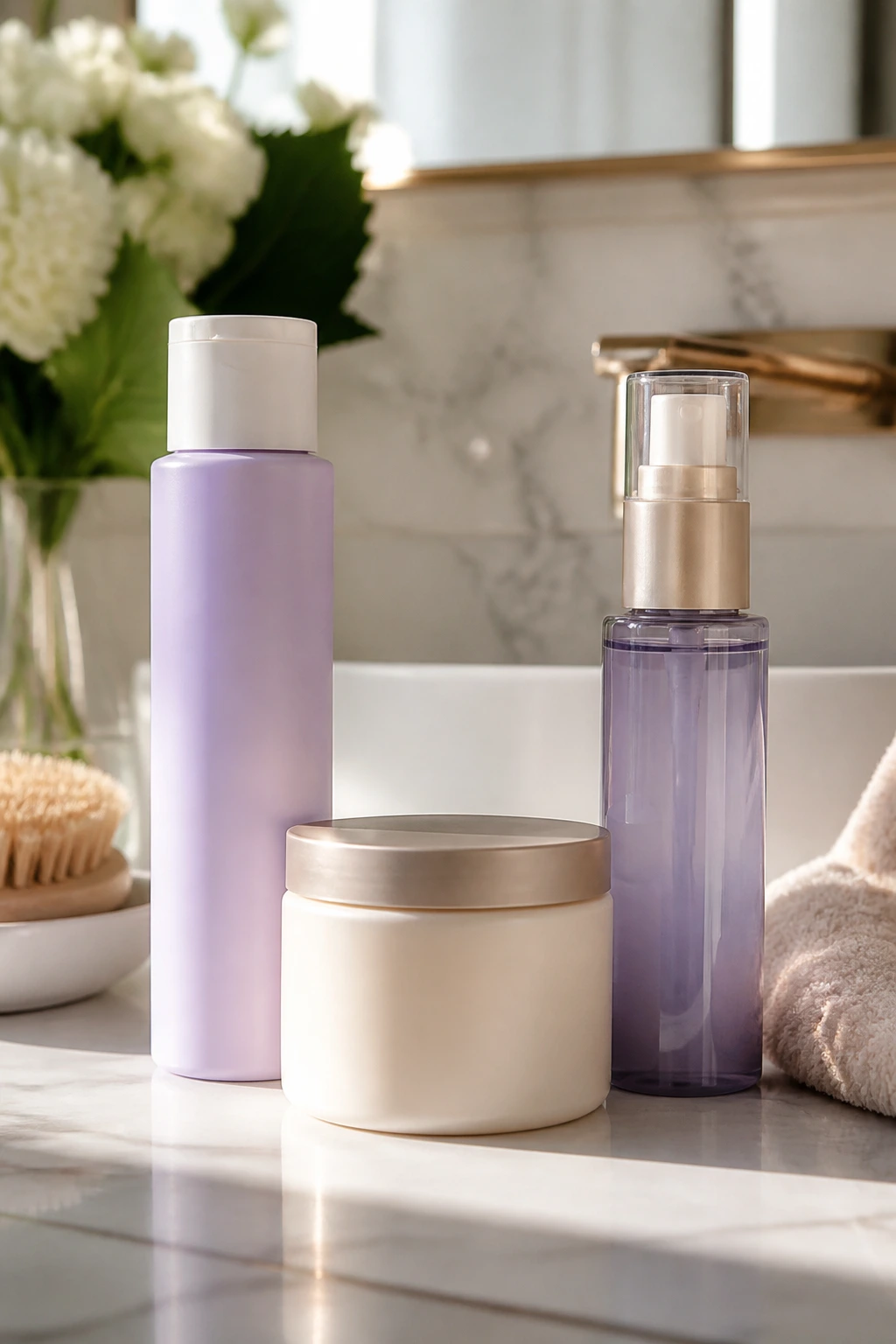
- Color-safe shampoo: Keeps the toner from washing out fast and helps the color stay cleaner between visits.
- Purple shampoo or blue shampoo: Use purple on blonde pieces that yellow; use blue if brunette brass turns orange.
- Deep conditioner or mask: Long highlighted hair needs moisture in the mids and ends, especially after lightening.
- Heat protectant spray or cream: Use it before every blow-dry, iron, or wand pass.
- Wide-tooth comb or detangling brush: Helps through wet highlighted lengths without snapping fragile ends.
- Sectioning clips: Useful if you’re blow-drying or styling at home and want even distribution.
- Microfiber towel or soft T-shirt: Cuts down rough friction after washing.
- Bond-building treatment: Handy for hair that’s been lightened several times or feels stretchy when wet.
- Glossing treatment or salon glaze: Keeps tone clean and shine high when the blonde starts to drift warm.
Smart Ways to Keep Long Highlights Looking Fresh
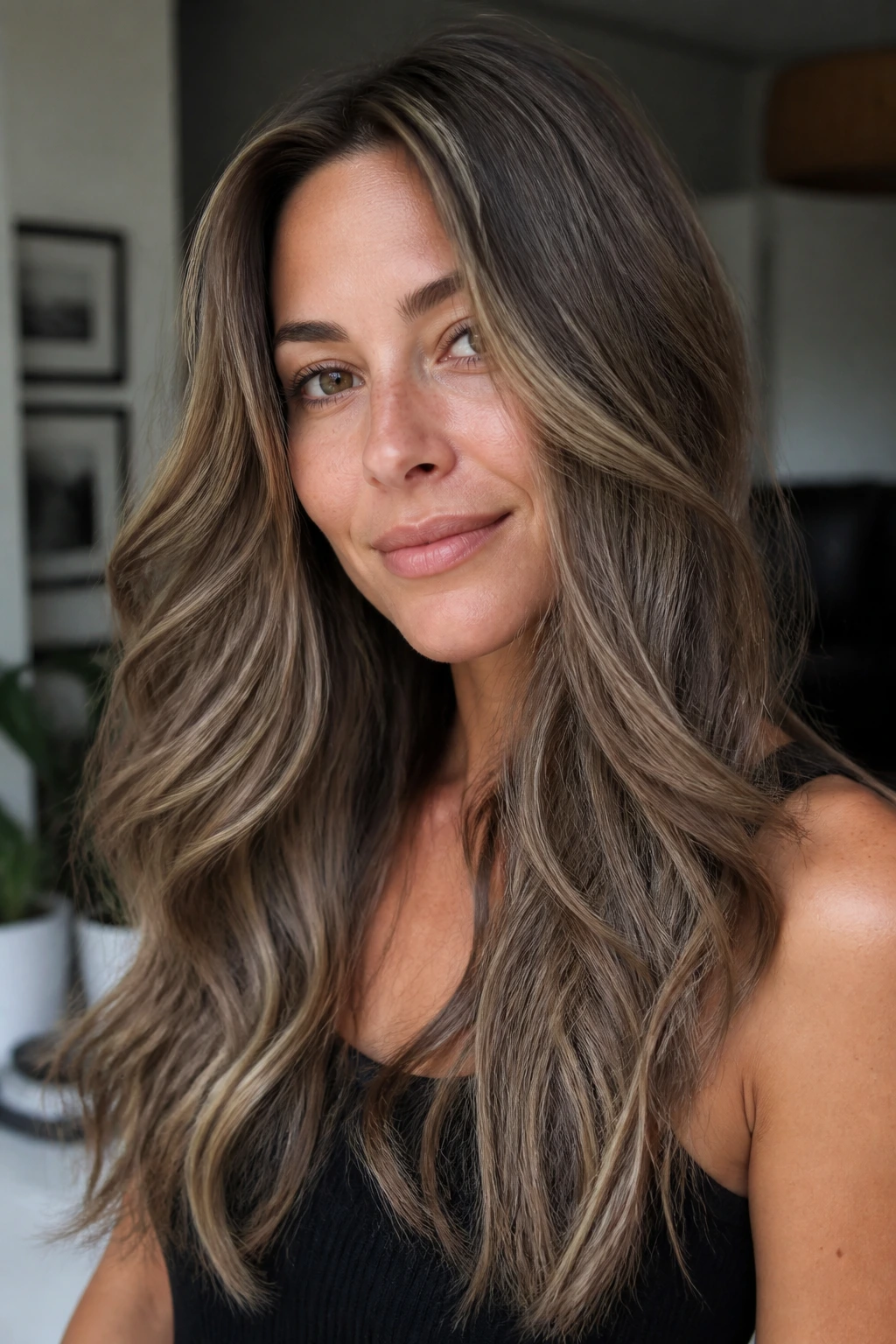
The first rule is to stop washing every little thing out of the hair. Long highlighted hair usually looks better with fewer shampoos and more deliberate conditioning. Two to three washes a week is a reasonable range for most people, especially if you’re using a color-safe formula and not overloading the scalp with dry shampoo.
Glosses and toners matter more than people think. A highlight can look great on day one and oddly dull three weeks later if the tone slips. For blondes and beige tones, a salon gloss every 4 to 6 weeks keeps brass from taking over. For brunettes with caramel or ash ribbons, the same schedule can keep the dimension clean.
Heat is the silent problem. High iron settings chip away at the finish and make the ends look rough faster than color fade does. If your hair is fine or porous, keep hot tools lower and do fewer passes. One slow pass with a heat protectant beats three frantic ones.
Salon timing depends on placement. Soft balayage and bronde can often go 10 to 12 weeks before needing a bigger refresh. Babylights and brighter face frames may want attention sooner. The hair itself will tell you. When the contrast stops reading and the color starts blending into one tone, it’s probably time.
Common Mistakes That Make Long-Hair Highlights Look Flat
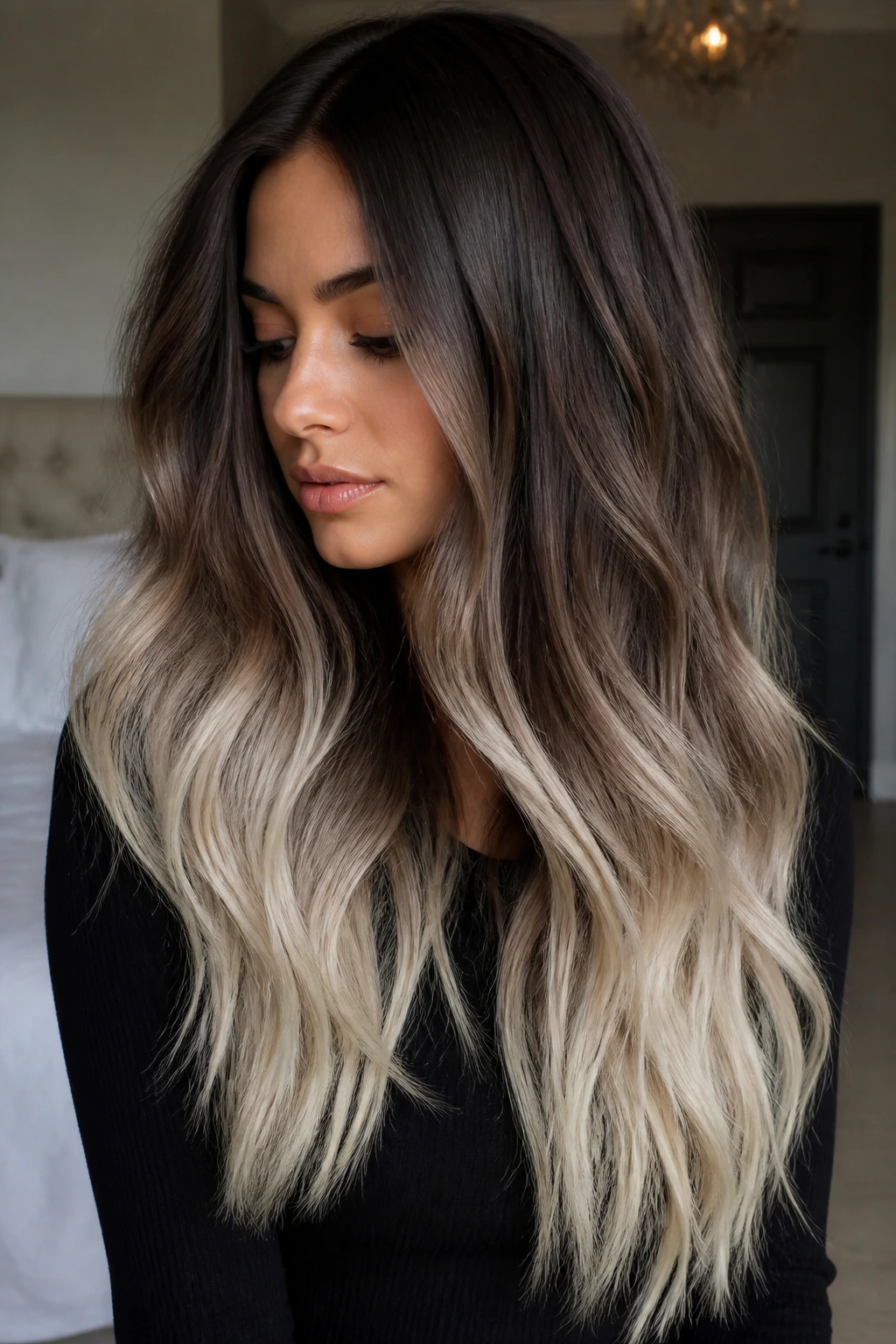
- Putting all the brightness on the top layer: The hair looks pretty from one angle, then loses depth the second it moves. The fix is to build interior light with a few hidden ribbons.
- Going too light on fragile ends: Over-processed ends turn see-through and fuzzy. Leave the last inch darker or cut it off if it can’t take more color.
- Ignoring undertone: A blonde that’s lifted enough but toned wrong can still look yellow, orange, or dusty. Ask for a toner that fits the base, not a one-size-fits-all blonde.
- Skipping a root shadow when the hair needs one: Hard roots on long hair can make the whole style look disconnected. A soft melt keeps the color sitting together.
- Choosing chunky contrast on very fine hair: Big ribbons can read patchy on sparse lengths. Fine hair usually needs smaller weaves or babylights to build fullness instead.
- Using high heat without protection: The shine goes first, then the ends get rough, and the color looks tired even when it’s fresh. Heat protectant is not optional on highlighted lengths.
Variations and Alternatives to Try
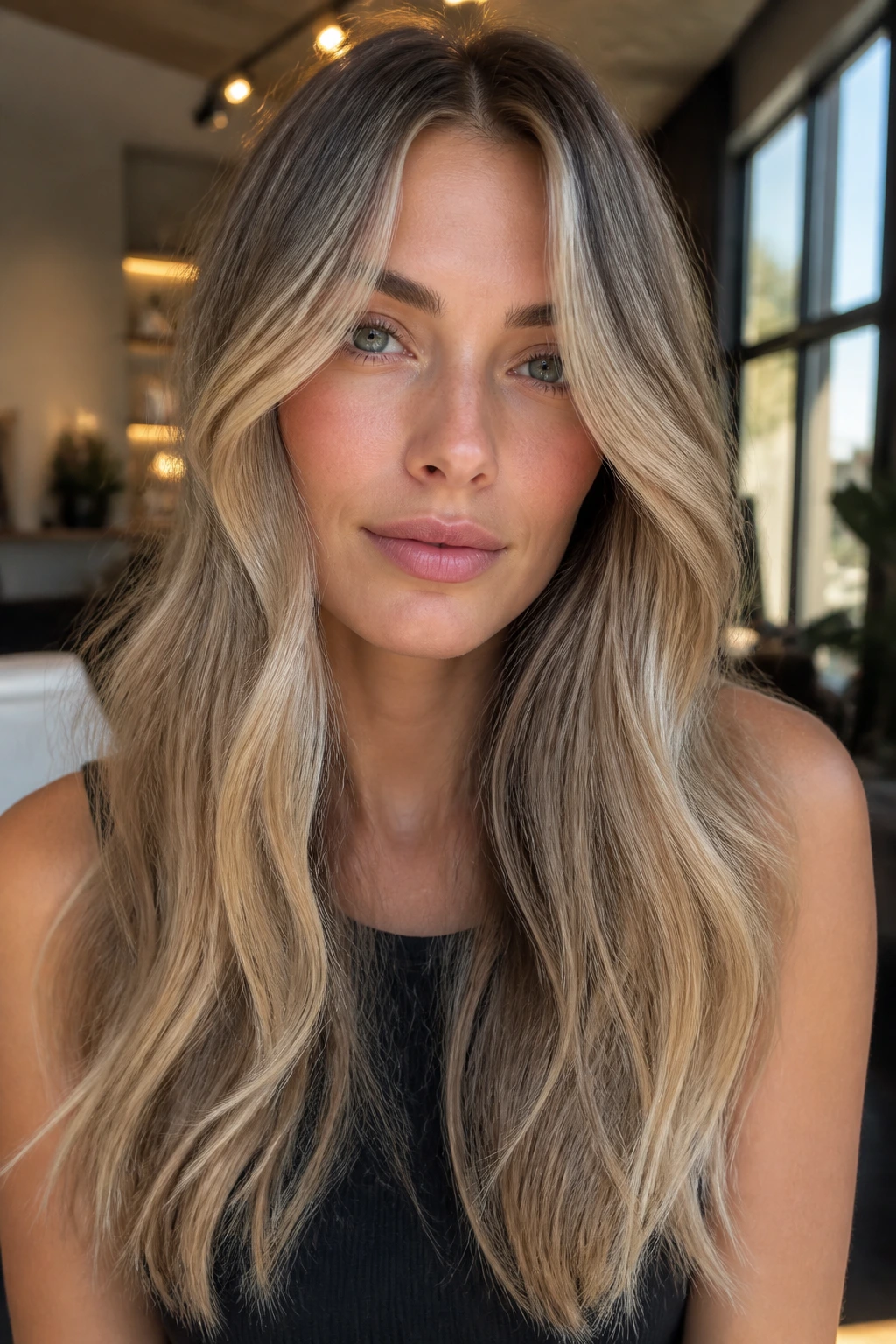
Soft Lived-In Blonde:
Ask for a subtle balayage with a root melt and beige toner. This version gives you brightness without a hard line, which is handy if you don’t want to think about your color every few weeks.
Cool Brunette Edit:
Swap warmth for ash-brown ribbons and a smoky gloss. It’s a good move if caramel makes you feel too golden and you want the hair to read clean in cooler light.
Red-Infused Dimension:
Add copper or strawberry blonde ribbons to a brunette or auburn base. This twist works when you want the hair to look richer, not lighter.
High-Contrast Statement Ends:
Take the brightness down the length and let the ends do the talking. Best on healthy hair with a blunt or softly layered cut, and best when you’re okay with a little more upkeep.
Curly-Hair Paint Job:
Use curl-by-curl placement and keep the brightest pieces on the outer curve. This keeps the color visible after shrinkage and avoids the “where did my highlights go?” problem.
Questions People Ask Before Booking Long-Hair Highlights
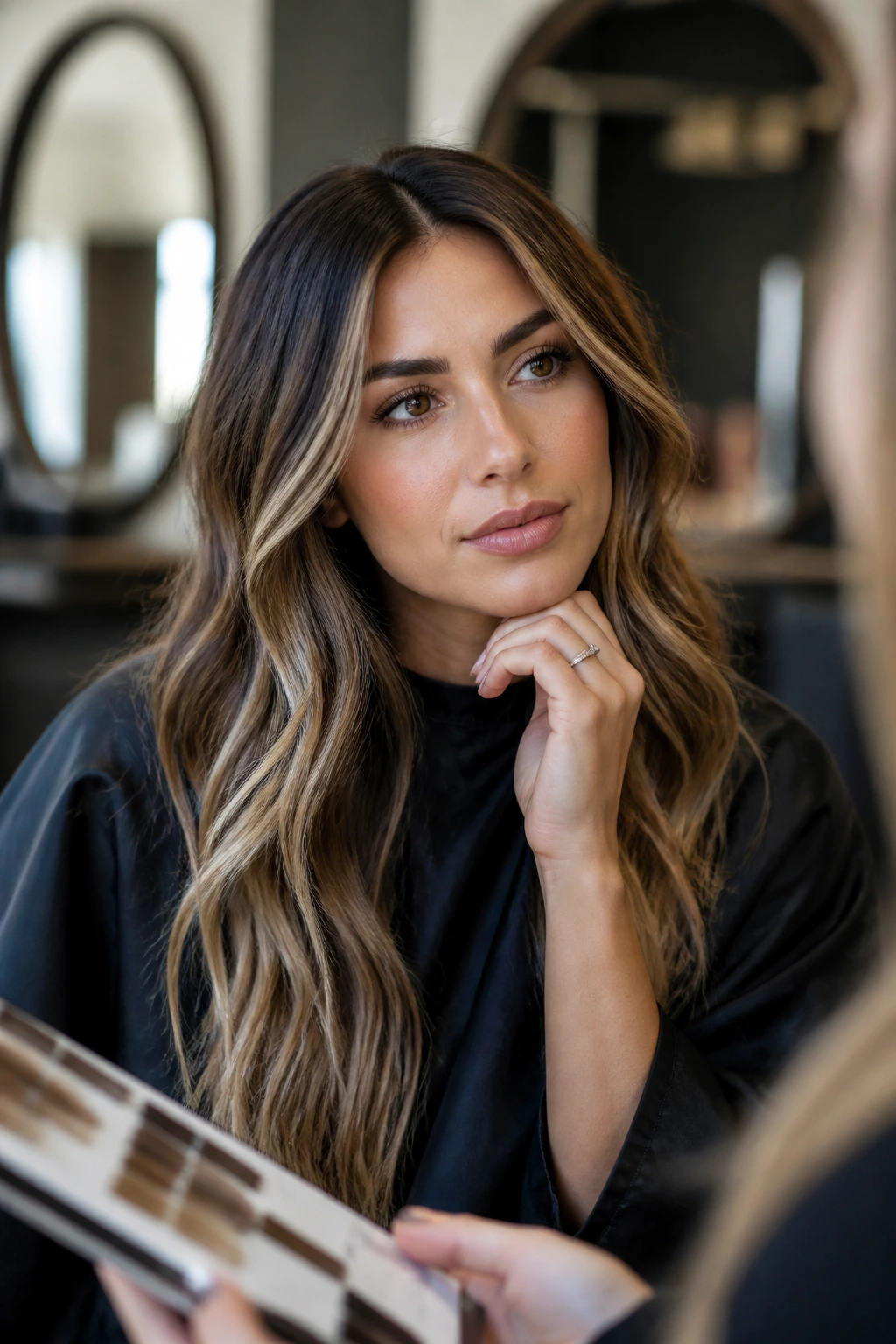
How often do long hair highlights need touching up?
Soft balayage and bronde can usually go 10 to 12 weeks before a bigger refresh, while babylights or bright money pieces often need attention sooner. The maintenance depends more on placement than on hair length alone.
What highlight style is easiest to grow out on long hair?
Shadow-root balayage is the easiest place to start. The root stays close to your natural color, so regrowth blends instead of drawing a hard line across the scalp.
Can long hair take chunky highlights without looking dated?
Yes, if the ribbons are spaced well and toned softly. The problem isn’t chunkiness by itself; it’s uniform spacing and harsh contrast at the root.
Do highlights make long hair look thinner?
They can if the ends get too light and fragile. Done well, highlights add the illusion of movement and thickness, especially when lowlights are mixed in.
What if my hair turns brassy fast?
Use the right shampoo for the tone you’re fighting, but don’t overdo it. Purple shampoo once a week is enough for many blondes; more than that can leave the hair flat or violet-tinged.
Are babylights better than balayage for long hair?
They serve different jobs. Babylights give a finer, more blended finish, while balayage gives you softer grow-out and more visible movement. Long hair can wear both well.
Can curly long hair handle bold highlights?
Absolutely, but the placement has to respect shrinkage and curl pattern. A curl specialist should map the light to the outside of the curl, not the inside where it disappears.
A Few Final Thoughts
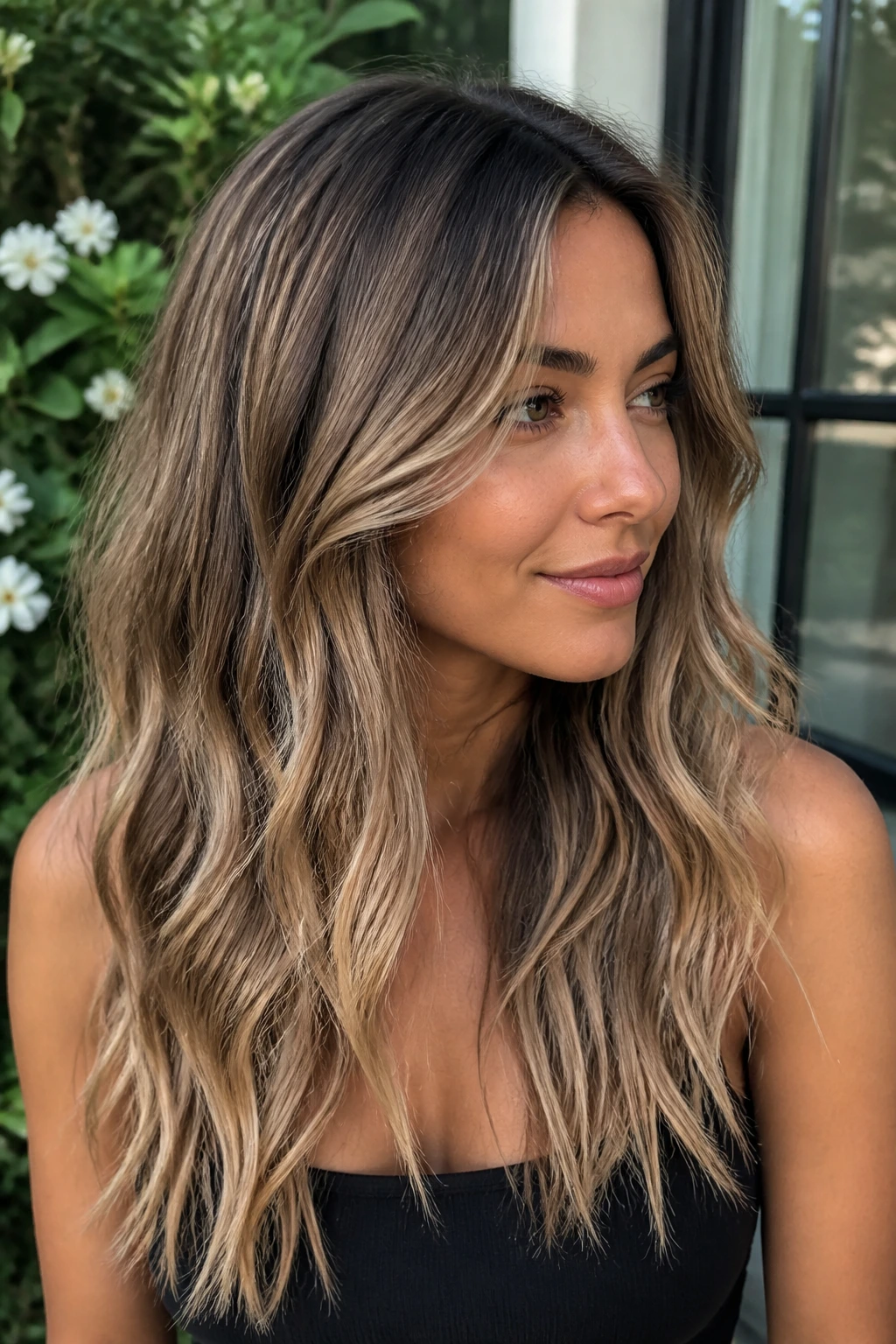
Long hair is a gift to a colorist and a test of one, which is why highlight placement matters so much here. The right idea doesn’t just make the hair lighter. It changes the way the length moves, the way the cut sits on the shoulders, and the way the face reads when the hair falls forward.
Pick the version that matches your maintenance level first, then your color mood second. That order saves a lot of regret. Bring one photo for tone, one for placement, and a plain answer about how often you’re willing to gloss or retouch, and the whole appointment gets easier from there.
