

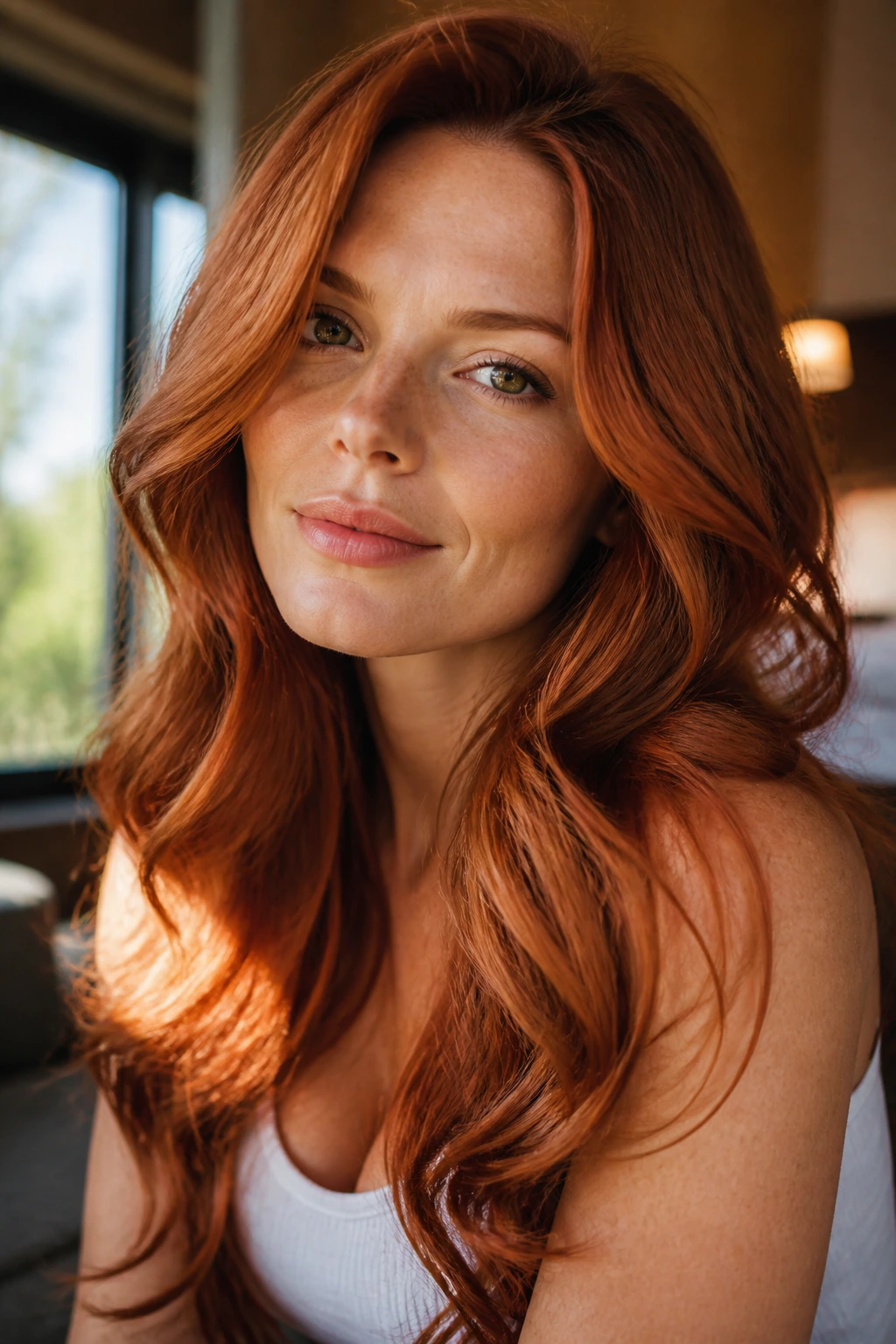
Red hair looks for summer have a funny habit of exposing bad decisions fast. Too flat, and the color reads like a swatch stuck on top of the hair. Too orange, and it starts shouting before noon. Get the tone and placement right, though, and red turns into the most alive-looking color in the room — glossy at the crown, warm at the ends, with enough movement that even a simple blowout looks considered.
The best versions are rarely the loudest ones. A copper bob, a cherry balayage, and a soft auburn melt all land in the same family, but they behave differently once sunlight, pool water, and heat styling get involved. That’s the part people forget. Red is a shape-shifter. It can look soft and costly, or brassy and tired, depending on how much depth you leave at the root, how bright you lift the mids, and how much shine you put back with gloss and conditioning.
Some of the looks below lean bright and playful. Others are deeper, richer, and easier to live with. All of them have a reason to exist. Pick the one that matches your base color, your haircut, and the amount of upkeep you’re actually willing to do.
Why These Reds Work in Real Life
-
They catch light without flattening the cut: Copper, strawberry, and cherry tones show off layers and waves better than a single-tone brown, so the haircut still looks like a haircut even when the color starts to soften.
-
They give you options at different commitment levels: A money piece or glaze can scratch the red itch without turning the whole head into a high-maintenance project.
-
They play well with sun-faded texture: Summer hair usually gets a little rougher at the ends, and dimensional red hides that better than one solid, flat shade.
-
They suit a wide range of bases: Dark brunettes can wear auburn, mahogany, and cherry cola without a full bleach-out, while lighter blondes can lean into strawberry, rose gold, and apricot.
-
They look expensive when they’re shiny: Red loses its charm fast when it goes matte. A gloss, a conditioning mask, and a little bit of polish make a bigger difference here than with most other colors.
-
They’re easy to tailor to your face: A red fringe, a warm bob, or a face-framing money piece changes the whole mood without needing a full-color overhaul.
1. Copper Glow Bob
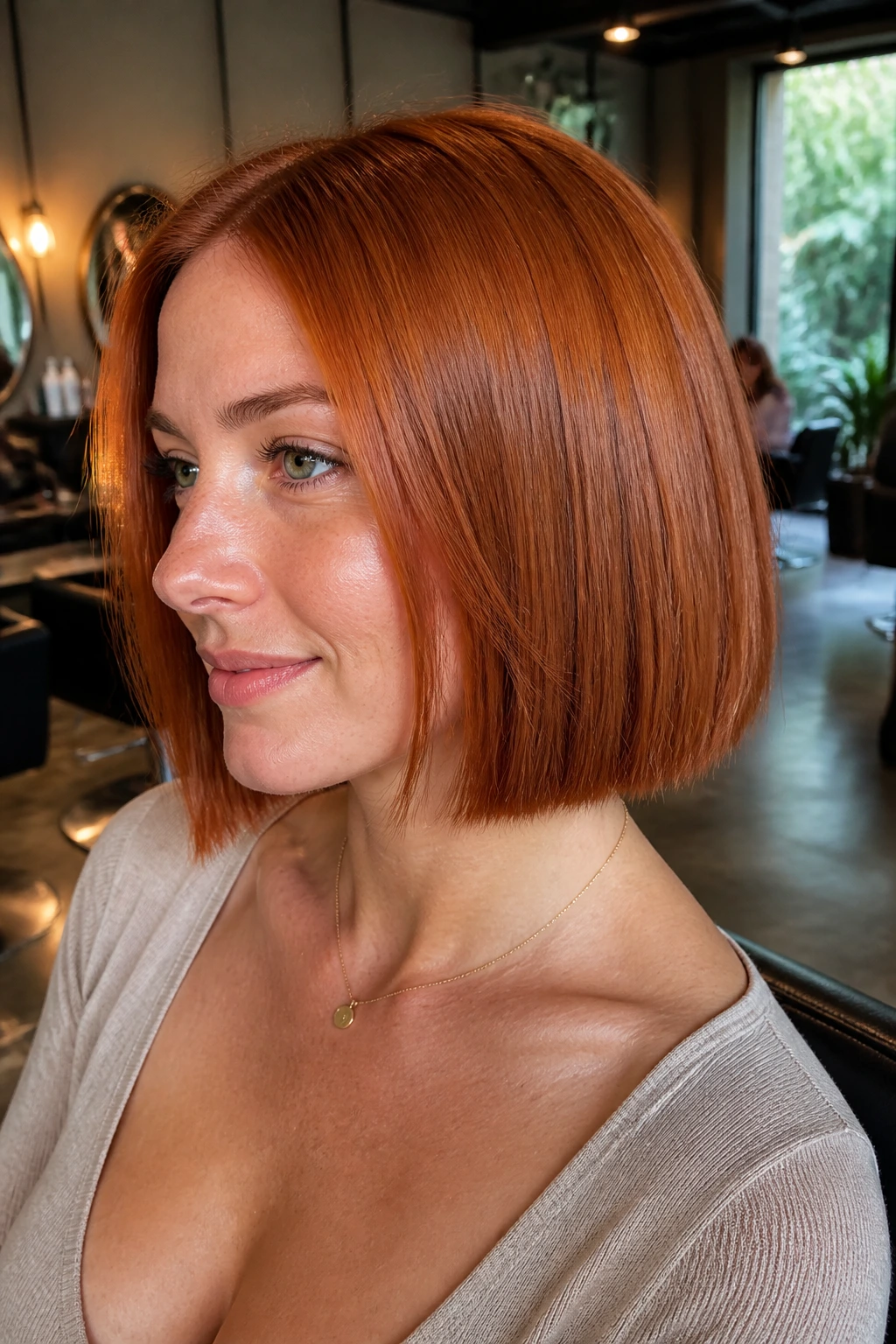
A copper bob has one job: stay bright without looking loud. On a blunt or lightly beveled cut, the color sits right on the surface of the hair, so every curve catches a bit of gold-red shine. Shorter hair also means less faded end business, which is one of the reasons this look feels cleaner than the same shade stretched down the back.
Why It Works
The cut does half the work here. A bob keeps the copper concentrated, and that concentration makes the shade look intentional instead of washed out.
Ask for a level 7 copper glaze over a light brown or dark blonde base, then keep the ends slightly softer than the root so the shape doesn’t turn helmet-stiff. If your hair is naturally flat, a round brush bend at the ends adds just enough movement to keep the color alive.
Best for: straight to wavy hair, especially if you want a red that can survive a busy week.
Styling note: a tiny bit of shine cream on the mid-lengths makes copper look richer than extra spray ever will.
2. Strawberry Blonde Money Piece
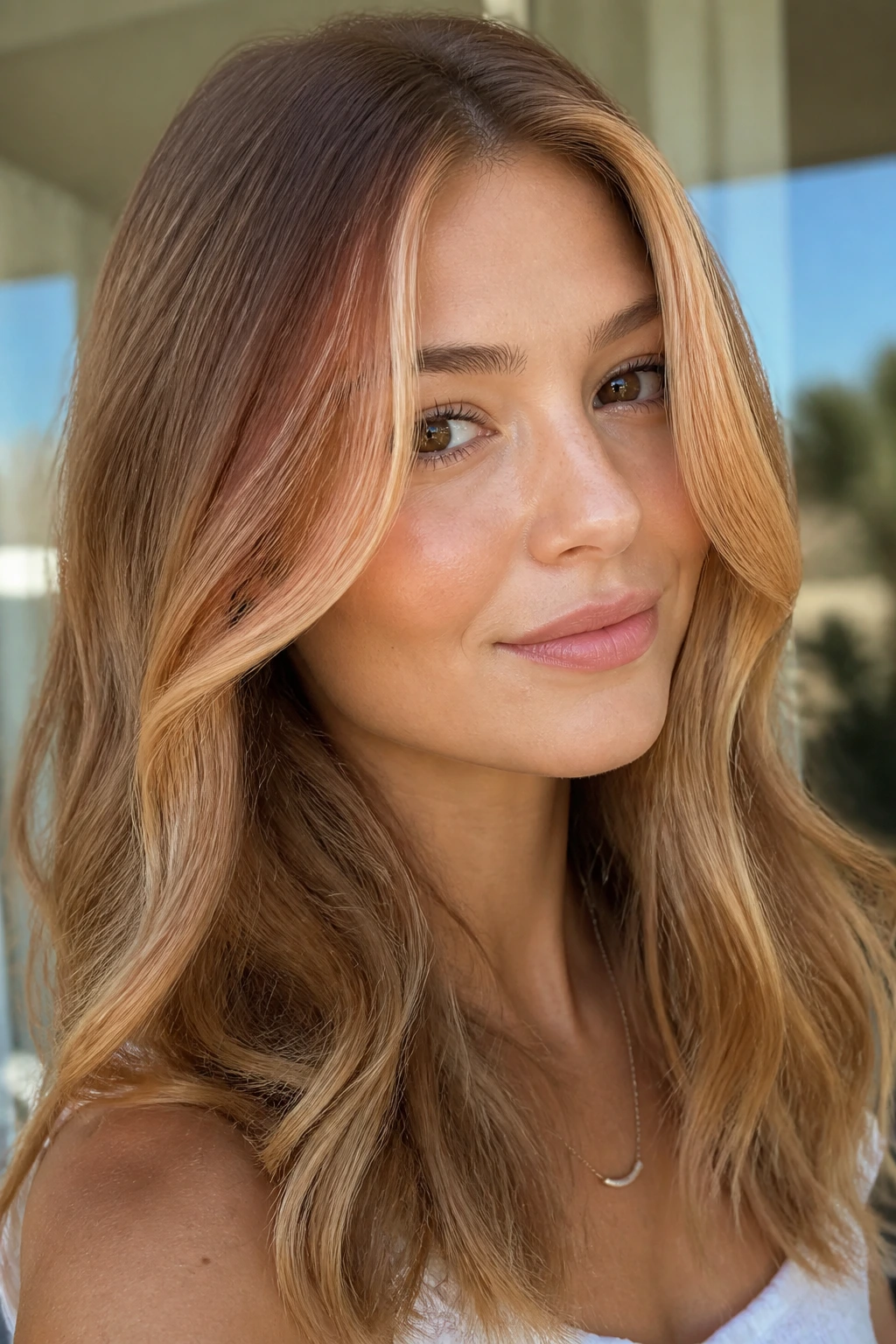
If you want the easiest path into red, spend the color at the front and leave the rest of the head calmer. A strawberry blonde money piece frames the face with warm peach-copper brightness, and the rest of the hair can stay a softer blonde or light brown. It’s flattering in daylight because the front catches the eye first, then the rest of the color quietly supports it.
The trick is restraint. Too much strawberry and it starts looking brassy; too little and it disappears. Keep the face-framing pieces one to two shades lighter than the rest, and let the root stay a little darker so the grow-out doesn’t scream.
This is the one I’d hand to someone who wants red hair looks for summer but doesn’t want a full-time relationship with toner.
3. Cherry Cola Lob
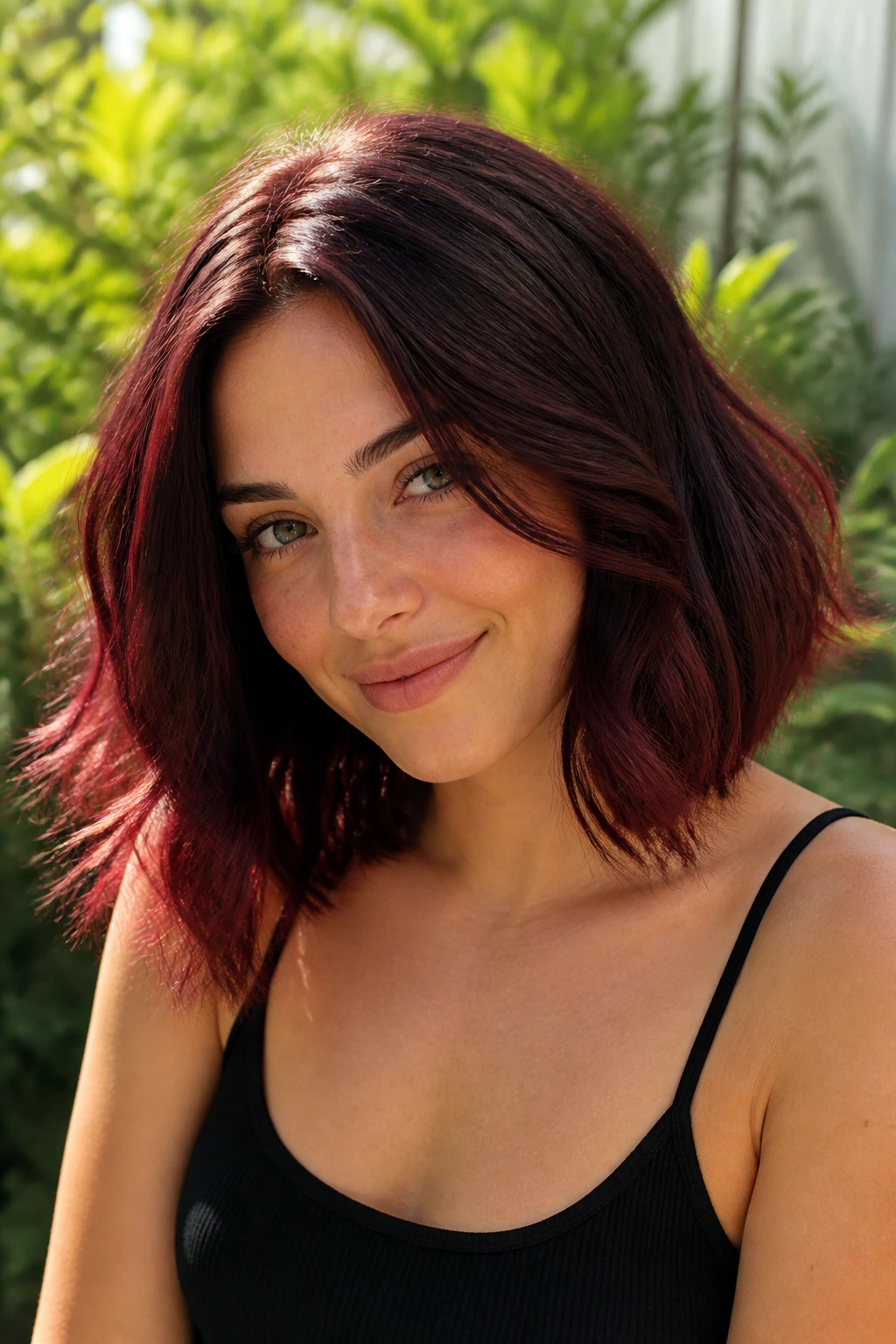
Why does a cherry cola lob work so well when the weather gets hot? Because it stays deep enough to look glossy, but the red undertone still flashes when sunlight hits it. That contrast matters. Flat vivid reds can feel harsh in bright weather; this one reads richer, darker, and more wearable.
What Makes It Different
The base is usually a brunette or dark brown with a cherry overlay rather than a fully lifted copper. That means the color can look almost espresso indoors, then show its red side outside. It’s a nice trick, and it makes the hair feel more dimensional than a one-note burgundy.
Tell your colorist: lowlights at the root, cherry gloss through the mids, and a slightly brighter ribbon at the ends. The lob length keeps the shape modern without making the maintenance feel endless.
4. Sunset Balayage on Long Layers
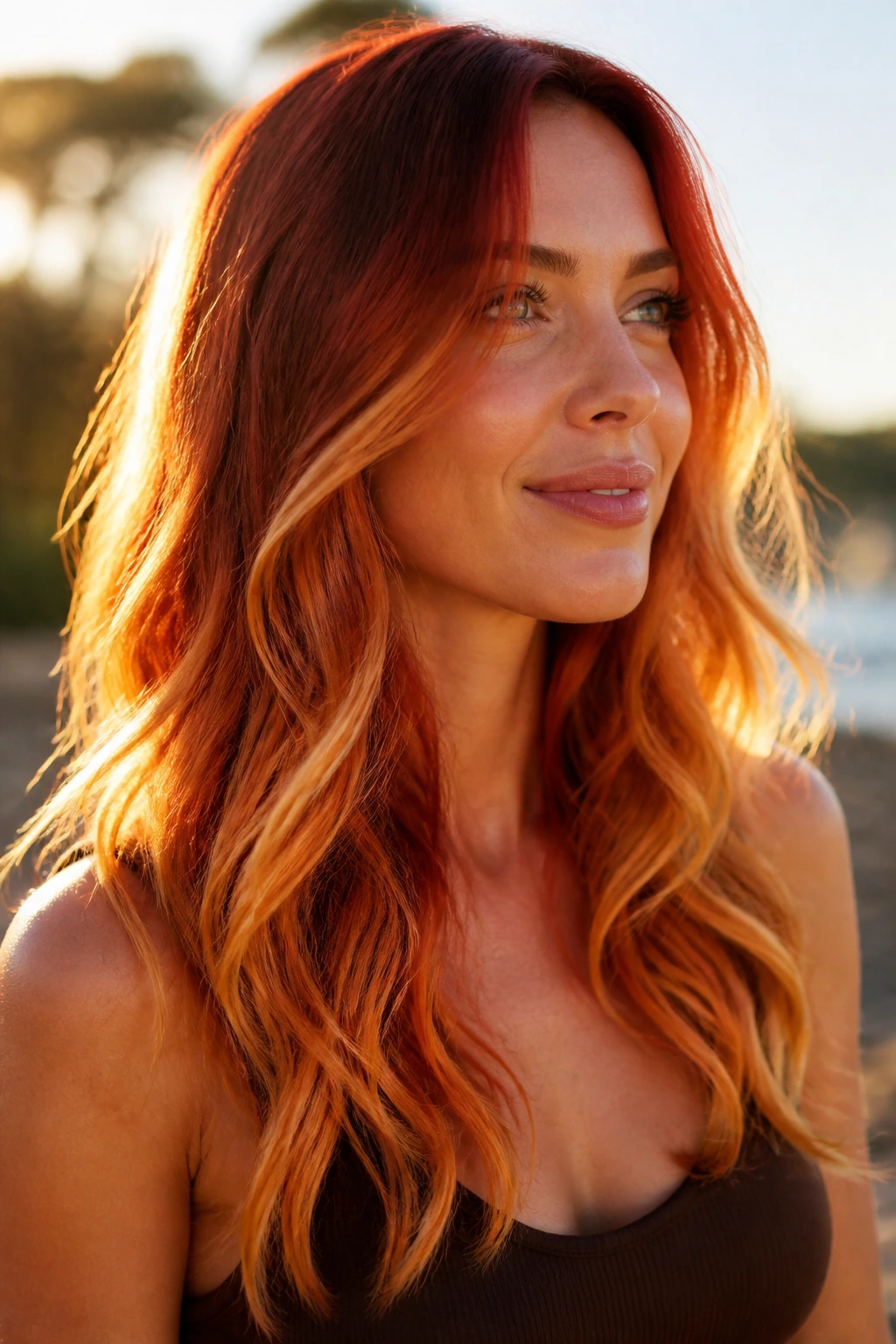
Long layers are where red gets room to breathe. A sunset balayage blends copper, apricot, and soft red-gold ribbons through the lengths, so the color shifts as the hair moves instead of sitting there like paint. On thick hair, this can be a lifesaver; the dimension keeps the whole thing from looking heavy.
Picture the ends first. They should feel warm, not orange. Then build the mids with softer ribbons and leave the root shadowed enough to keep the grow-out from swallowing the whole effect. That depth is what keeps the look from turning into a block of color by week three.
This one likes waves, but it does not need beach-wave cosplay. A loose blowout or soft bend is enough.
5. Cinnamon Auburn Waves
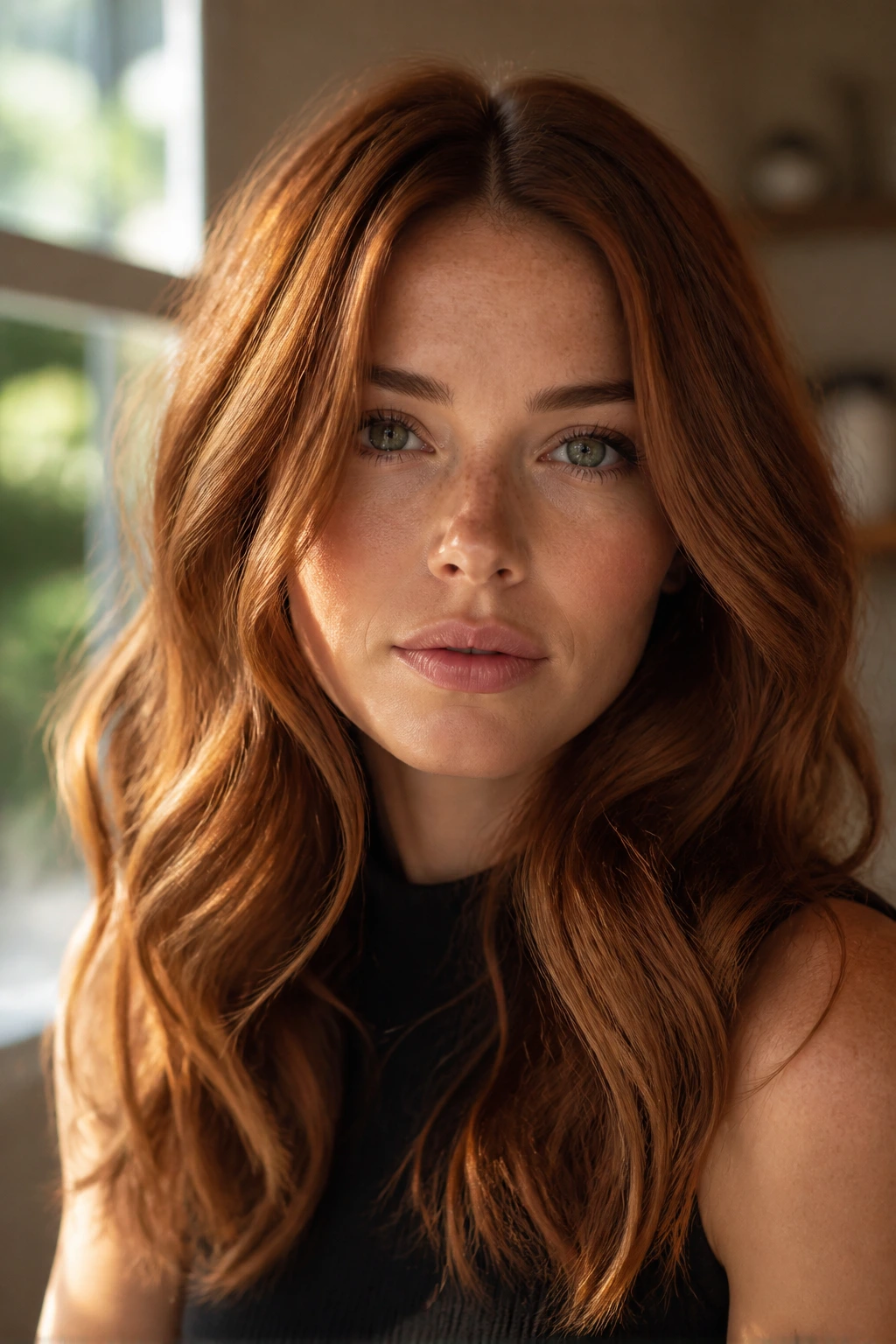
Cinnamon auburn sits in the sweet spot between brown and copper, which is why it behaves so well in bright light. It doesn’t flicker like a true vivid red, and it doesn’t go flat the way some darker browns do. The result is warm, calm, and wearable without being sleepy.
Why It Works
Auburn works best when there’s enough brown in the mix to hold the shape and enough red to keep the tone interesting. Cinnamon pushes it a little warmer than mahogany, but not so far that it starts looking orange.
If your base is medium brown, this shade usually needs less lightening than people expect. That’s the appeal. Less lift, less damage, less panic when the sun starts doing what sun does.
6. Rose Gold Curls
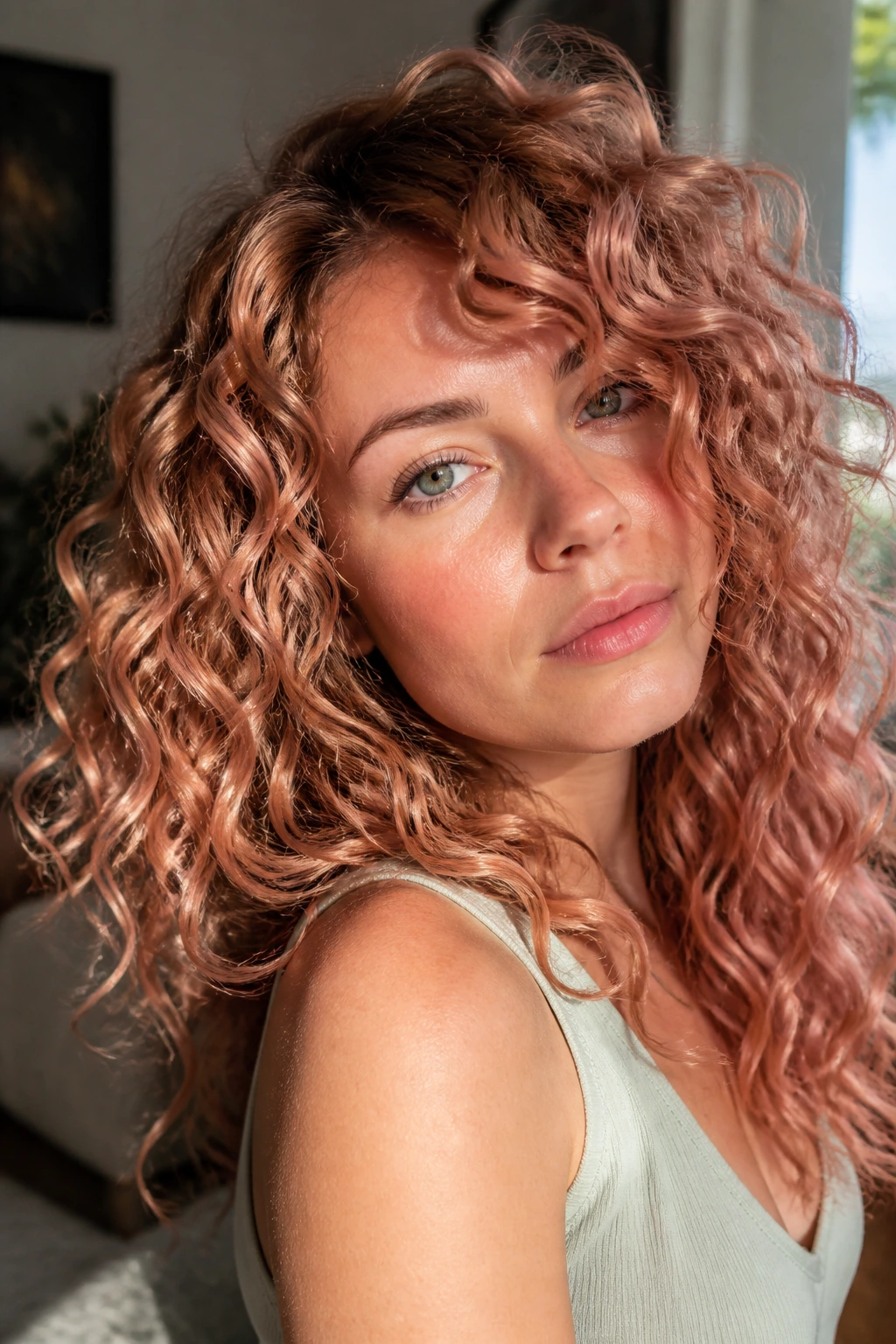
Rose gold curls are soft, almost powdery at first glance, then suddenly shiny once the light hits the curl pattern. That’s the magic. On curls, the color lands in little highlights and lowlights automatically, so the tone can look more expensive than the swatch ever did.
The catch is lift. If the hair is too dark, rose gold disappears into a murky copper-brown. If it’s too light, it can go washed out. The happy place is usually a pale blonde base with a tinted rose-gold gloss layered over it.
Best for: naturally curly or coily hair that already has shape, because the color moves with the texture instead of fighting it.
7. Rust Red Pixie
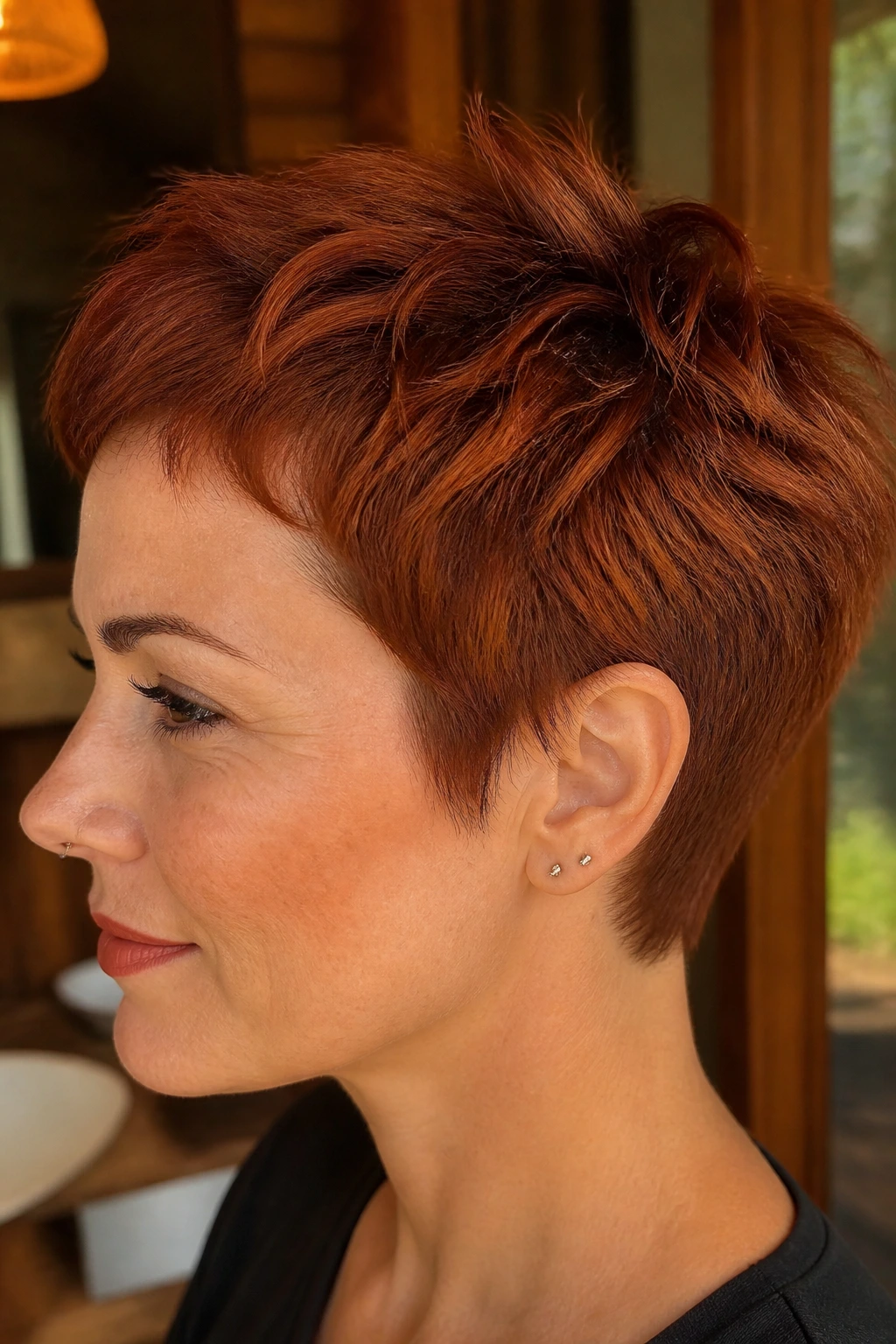
A pixie can take red harder than longer cuts can, and rust red is one of the smartest ways to do it. The shade has enough earthiness to keep the short crop from looking candy-bright, but it still reads warm and current. On a cropped cut, every texture line matters, so the color has to support the shape rather than overpower it.
What to Ask For
- A rust-based red gloss rather than a neon copper.
- Slightly darker roots so the grow-out stays soft.
- Piecey styling wax to show the texture at the crown.
- A satin finish instead of a wet one, unless you want the color to look harsher.
This is the kind of red that works best when the cut already has attitude. If the pixie is too soft or too round, the color can start doing all the work.
8. Mulled Wine Gloss on Sleek Hair
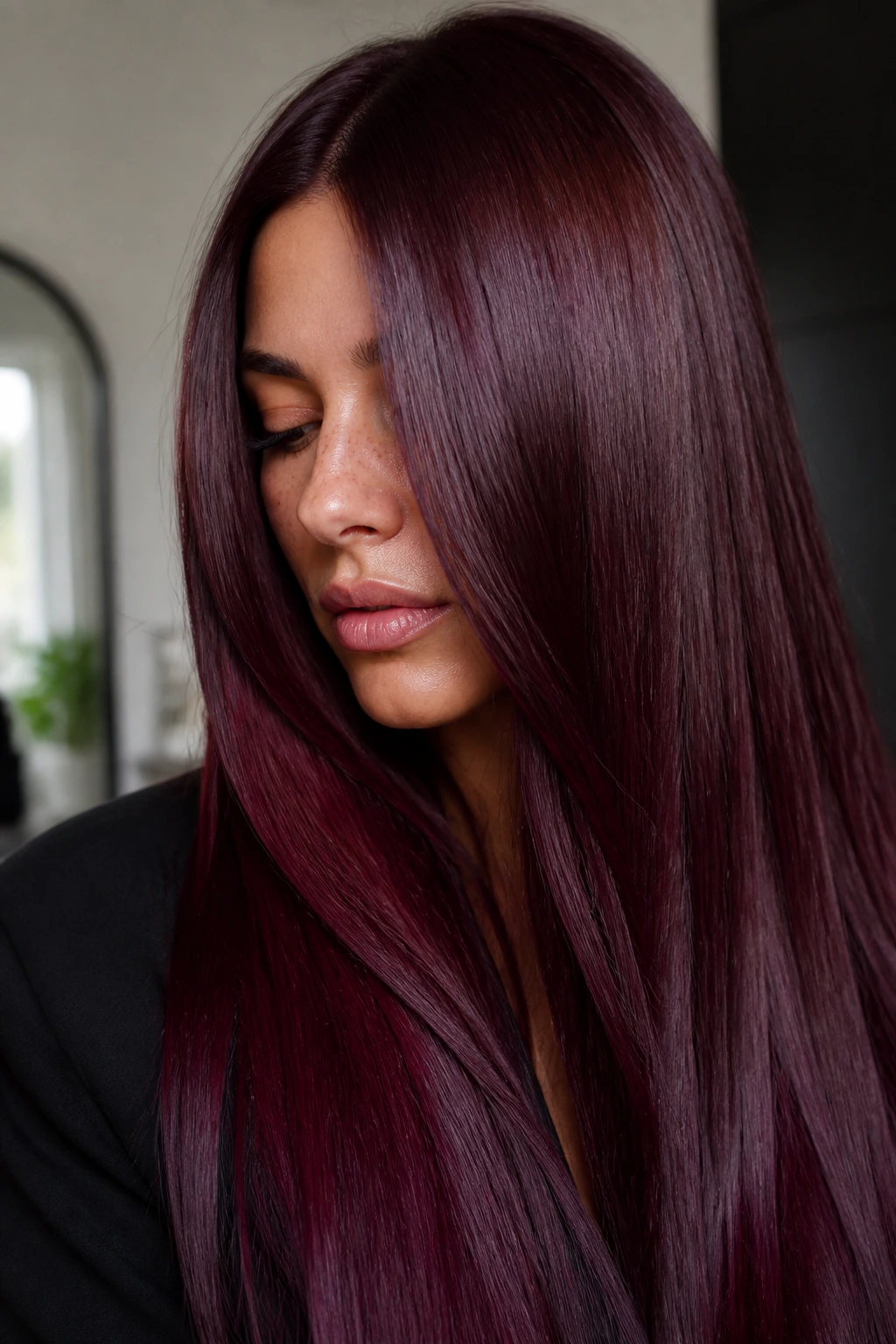
Mulled wine hair is for people who like red to feel deep, not flashy. On straight, sleek lengths, the color sits like polished glass — dark plum at a glance, then red when it turns. That shift is the whole point. You get drama without needing a bright, high-lift base.
The best version is usually a deep demi-permanent gloss over brunette hair with a cool red-violet undertone. Too much warmth and it goes copper. Too much violet and it loses the red story. Keep the finish glossy, and don’t rough it up with a matte paste or heavy powder.
This shade gets especially good on hair that already falls in a clean line. The smoother the cut, the more the color looks intentional.
9. Peachy Copper Shag
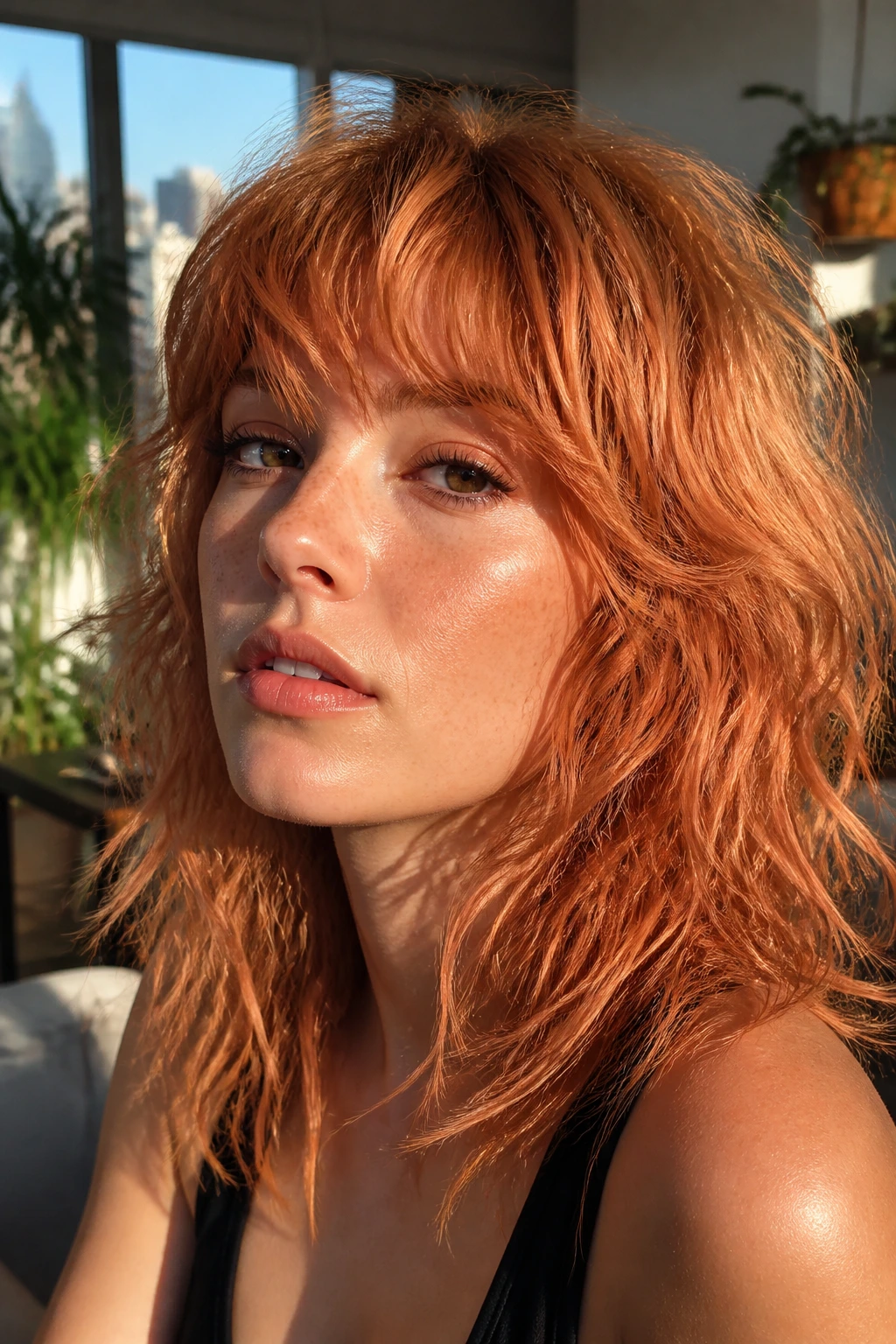
A shag loves a warm, broken-up color story. Peachy copper works because it brightens the layers without making the cut feel too severe. The color catches the choppy ends and curtain pieces, then softens them enough that the whole thing reads airy instead of sharp.
Use this if you want red hair looks for summer that feel easy but not plain. The peach note keeps the copper lighter, which helps when your hair starts to pick up a little sun. On finer hair, the color can also create the illusion of more movement than there really is.
The shag should look a little undone. If it gets too polished, the whole point disappears.
10. Ruby Face-Framing Layers
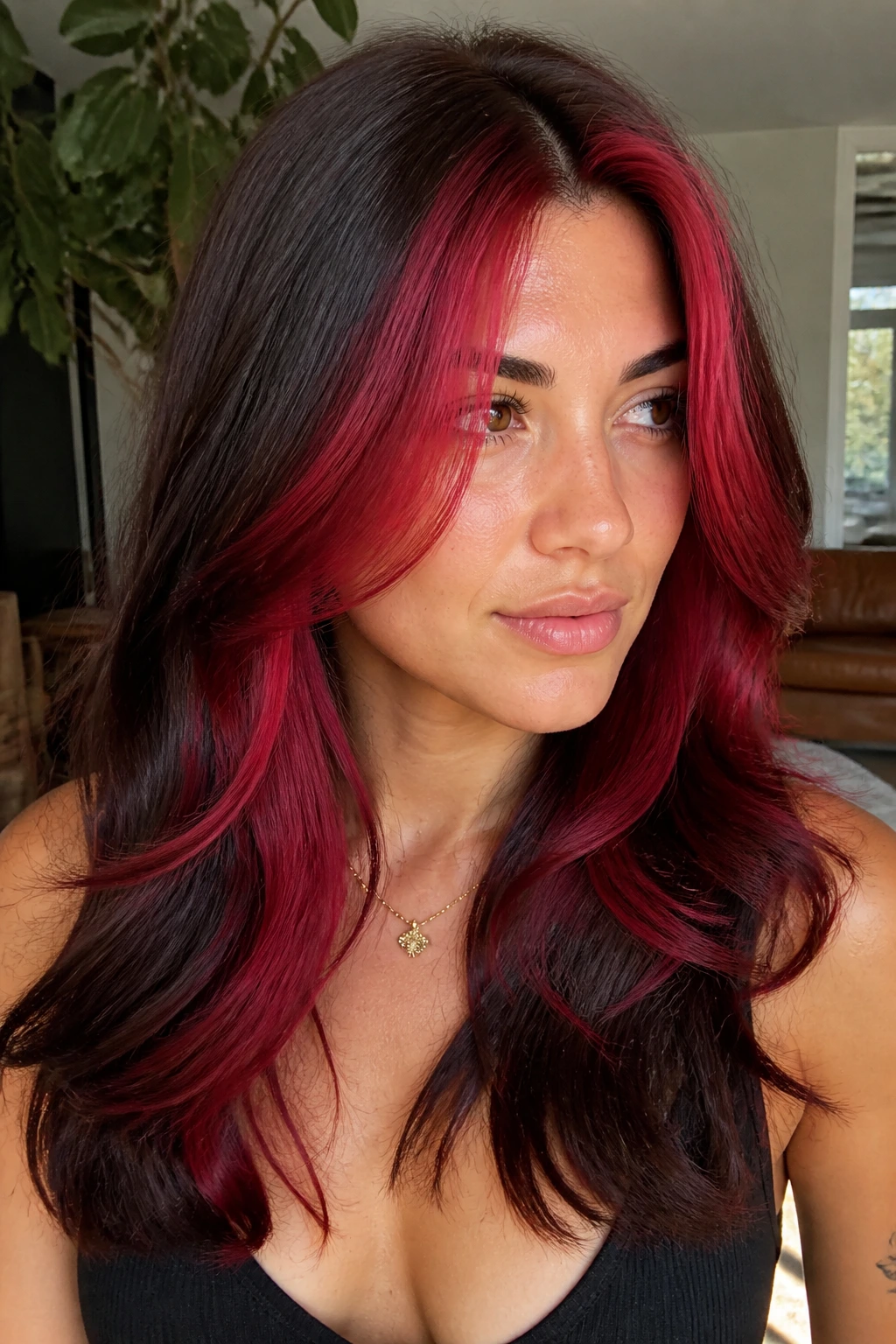
Ruby around the face is a smart way to go bold without repainting every inch of hair. The inner lengths can stay darker, while the front pieces take on a vivid red-violet shine that wakes up the whole haircut. On layered hair, those front streaks move as you talk, tuck, or flip your hair back.
Why It Works
The face-framing placement does two things at once. It adds brightness near the skin, and it keeps the maintenance lighter because the root can stay closer to natural color. That’s a nice balance if you want something vivid but not fussy.
Ask for: ruby money pieces, a dark root melt, and soft layering around the cheekbones. If the red is too vivid everywhere, the layers can vanish. Keep the rest quieter and let the front do the talking.
11. Apricot Red Blowout
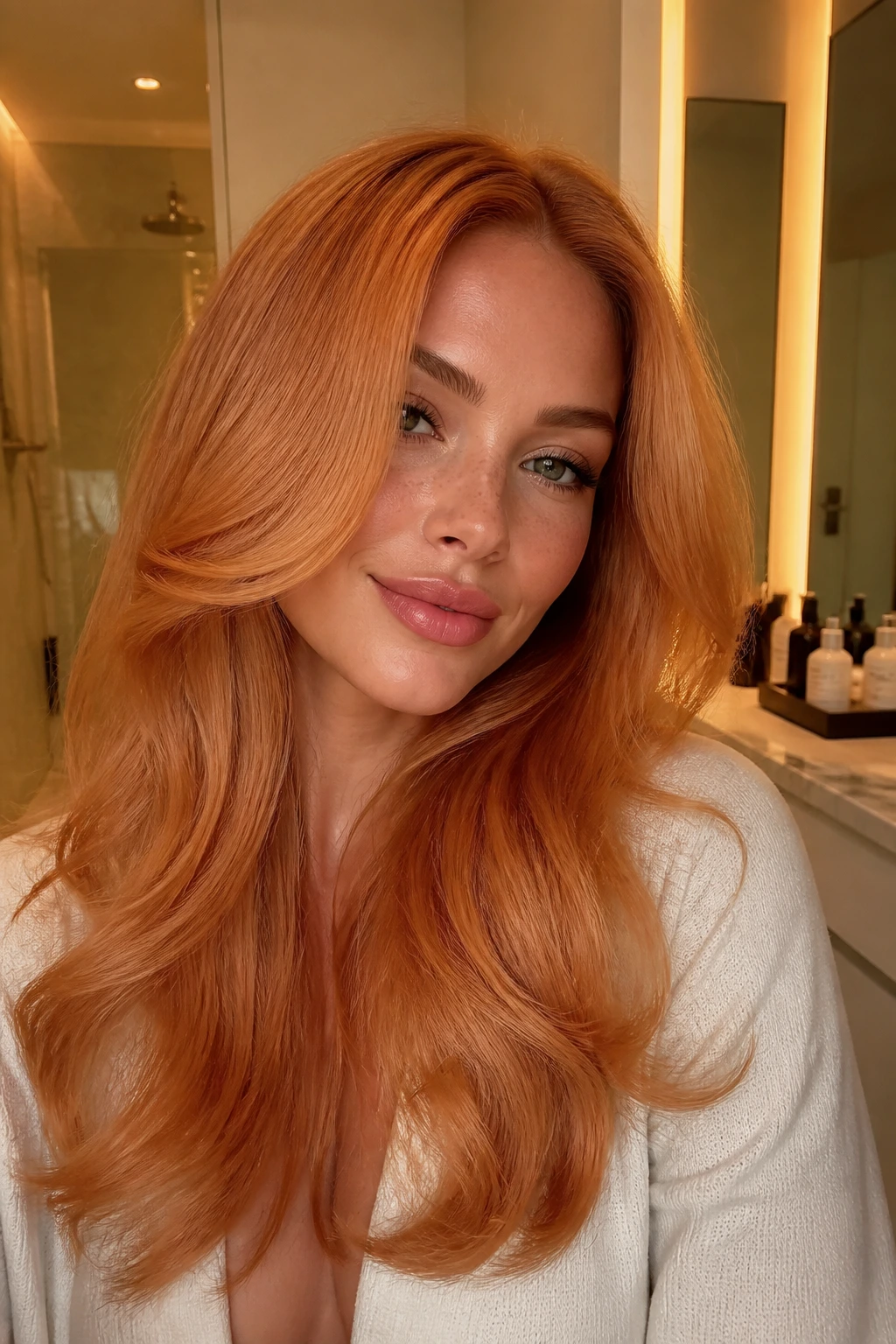
Apricot red has a sun-warmed feel that lands beautifully in a smooth blowout. It’s lighter than cinnamon and less orange than straight copper, which gives it a fresh, glossy look that works especially well on medium-length hair. The blowout matters here because the movement helps the apricot tone feel expensive instead of flat.
This is a good choice if your hair is already light brown or dark blonde. If you’re starting darker, the color may need a gentle lift to keep the apricot from sinking into the base. That’s not a flaw. It’s just how light colors behave on darker hair.
A center part makes the red look modern. A side part makes it softer.
12. Ginger Curtain Bangs

Ginger curtain bangs can change an entire haircut without touching the rest of the head much. The bangs bring the red right to the face, and because curtain bangs split open at the center, they show a little skin underneath, which keeps the color from feeling heavy. The rest of the hair can stay a softer auburn or copper-brown if you want balance.
This look needs movement. If the bangs are iron-straight and stuck to the forehead, the ginger can read harsh. A round brush or a quick bend with a large iron keeps the fringe airy and wearable.
It’s also one of the easiest red placements to grow out. Bangs shift fast, so they’re a good place to test the shade before you commit to the entire head.
13. Pomegranate Ombre
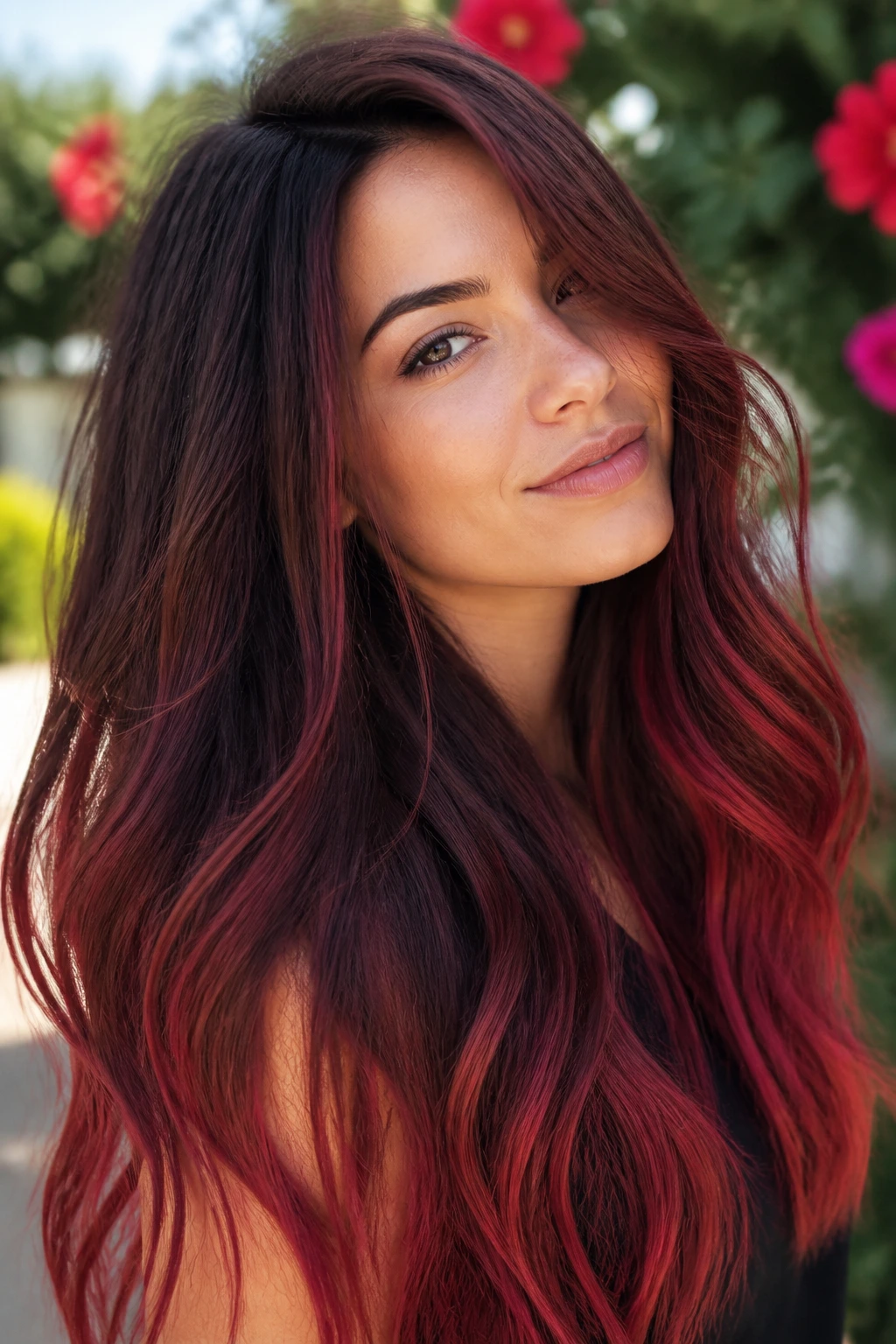
Pomegranate ombre starts dark, then slides into berry-red depth at the ends. The transition keeps the color from looking abrupt, which is exactly why it works on longer hair. You get the richness of red without losing the natural-looking root zone that makes grow-out less annoying.
The Shape of It
The best ombre reds don’t jump from brown to bright. They drift. A deep root, a red-brown midsection, then a more saturated pomegranate end gives the whole head a gradient that looks deliberate in motion and less painted when you wear it straight.
If the ends are porous, go a little slower with the red dye or gloss. Porous ends grab pigment fast, and the bottom can turn darker than you wanted.
14. Mahogany Midi Cut
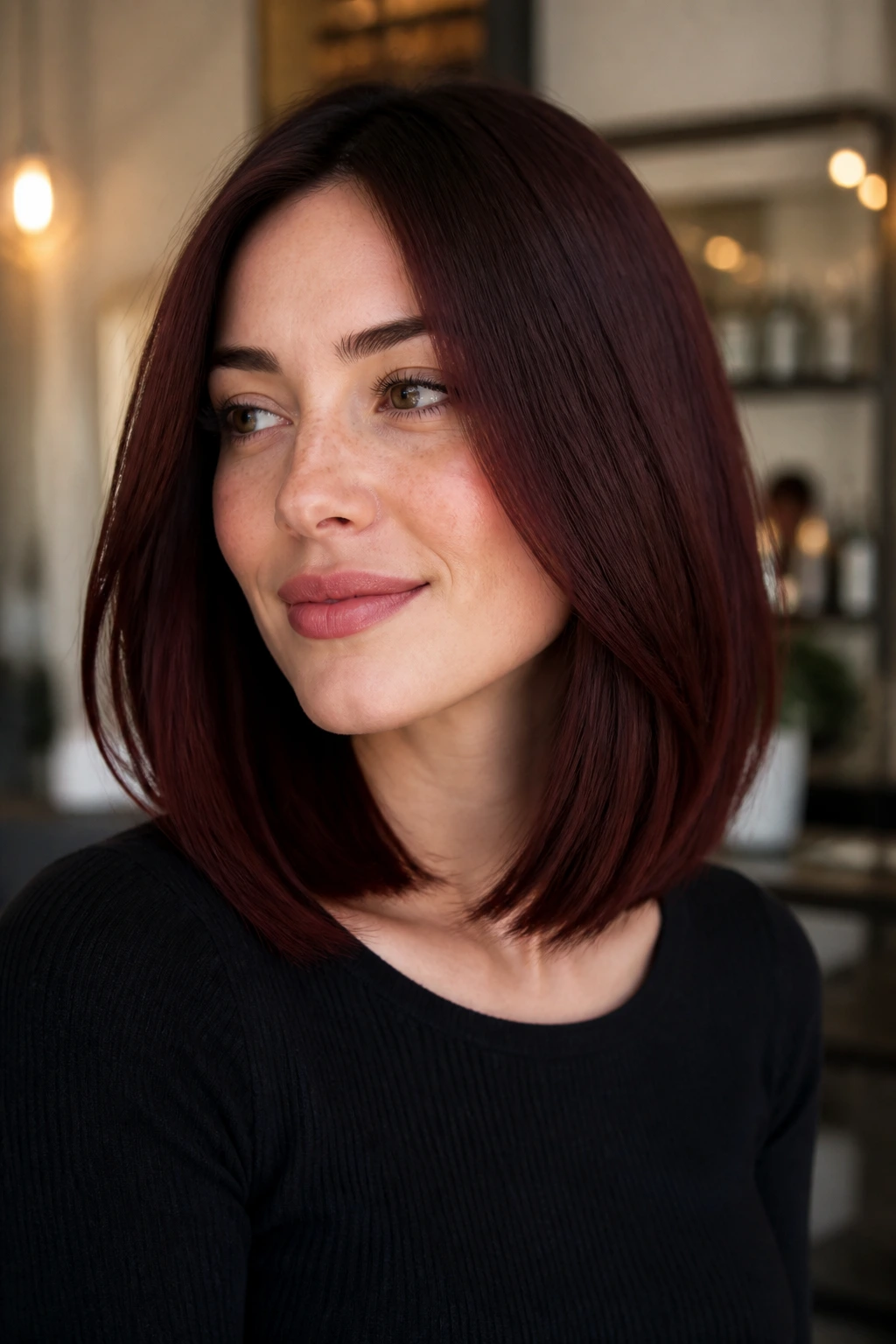
Mahogany is the red for people who want something grown-up and low-drama. On a midi cut, the shade sits somewhere between chocolate and red wine, which makes it easier to wear in strong light than a full copper. It looks especially good on blunt ends because the clean line gives the dark red more presence.
There’s a reason stylists reach for mahogany when they want subtle depth. It reflects light without screaming for it. On medium skin tones, it tends to look rich rather than harsh, and on very light skin, it can read more dramatic and polished.
Keep the finish smooth. Mahogany loses some of its pull when the hair gets too frizzy or textured without shape.
15. Peach Copper Braids
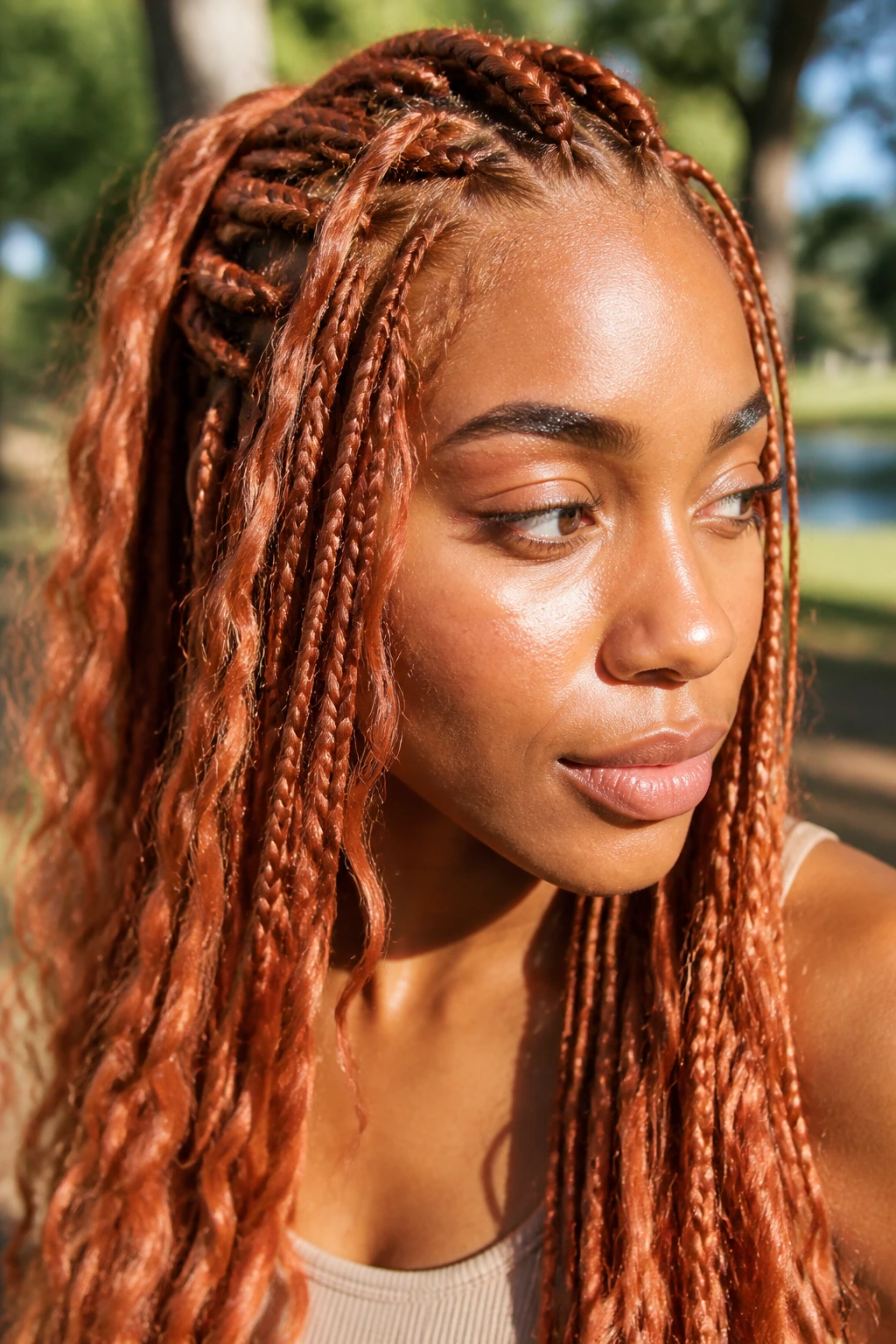
Braids make red hair behave differently. The color folds in on itself, so peach copper can look like woven thread instead of a single flat tone. That’s especially pretty in summer, when loose braids already carry a bit of an easy, sun-worn feel.
What makes this version work is the softness of the shade. Peach copper stays bright, but the peach note keeps it from clashing with skin or looking too orange under daylight. If the hair is very dark, this one will need lift; on lighter hair, it can stay more translucent and gentle.
Best move: add the color before braiding, not after. The braid pattern shows the dimension better that way.
16. Scarlet Power Bob
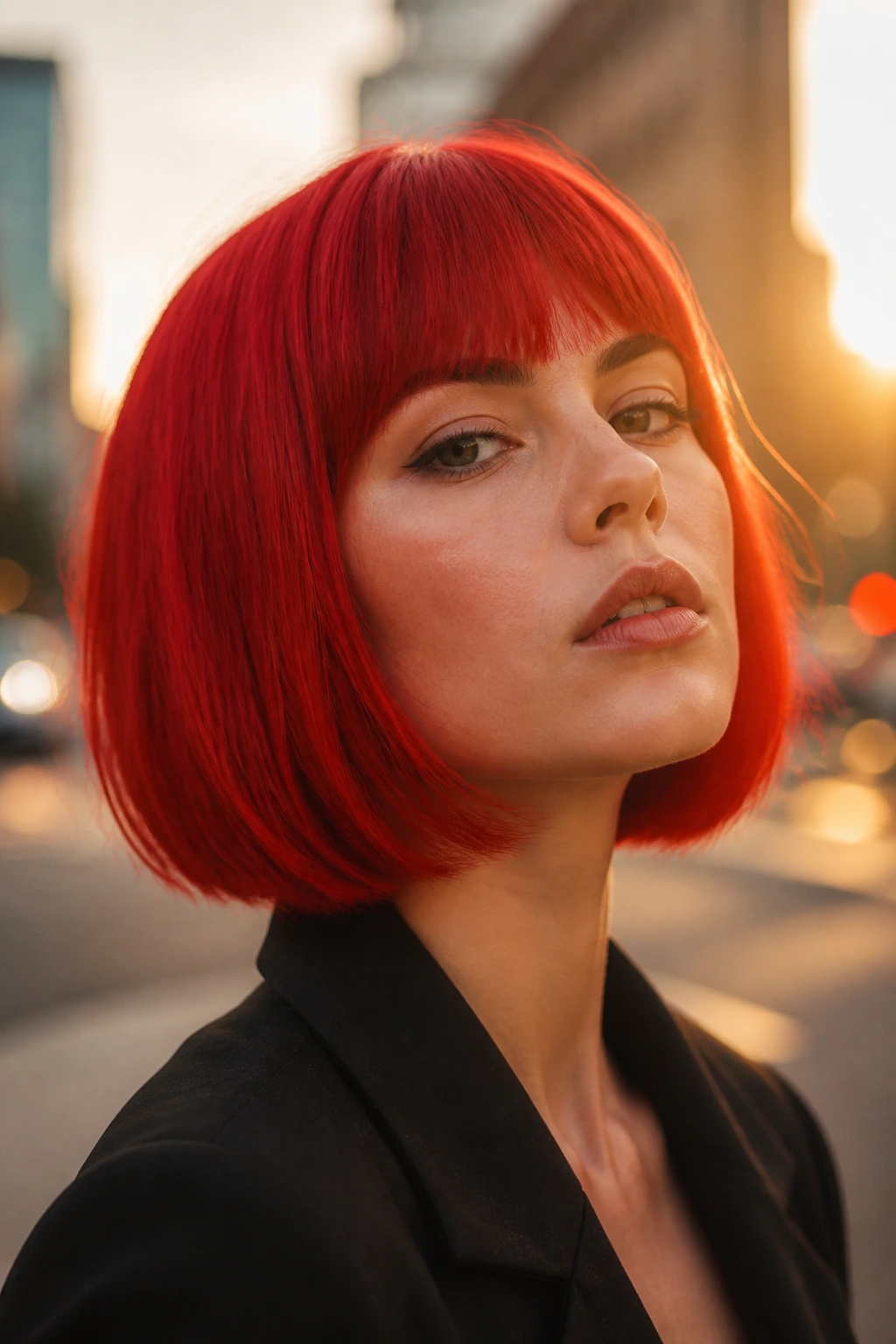
Scarlet is not shy. Put it on a sharp bob and the whole cut suddenly gets architecture — clean line, bright color, no confusion. The red should be vivid enough to read from across the room, but still smooth enough that the bob doesn’t look costume-heavy.
This is one of the more commitment-heavy looks in the bunch. Roots will show faster, and fade will be more obvious. But when it’s fresh, it looks slick and expensive in a way that softer reds can’t match.
If you wear makeup, keep the skin finish clean and the brows a little defined. Scarlet around the face wants structure.
17. Amber Red Curls
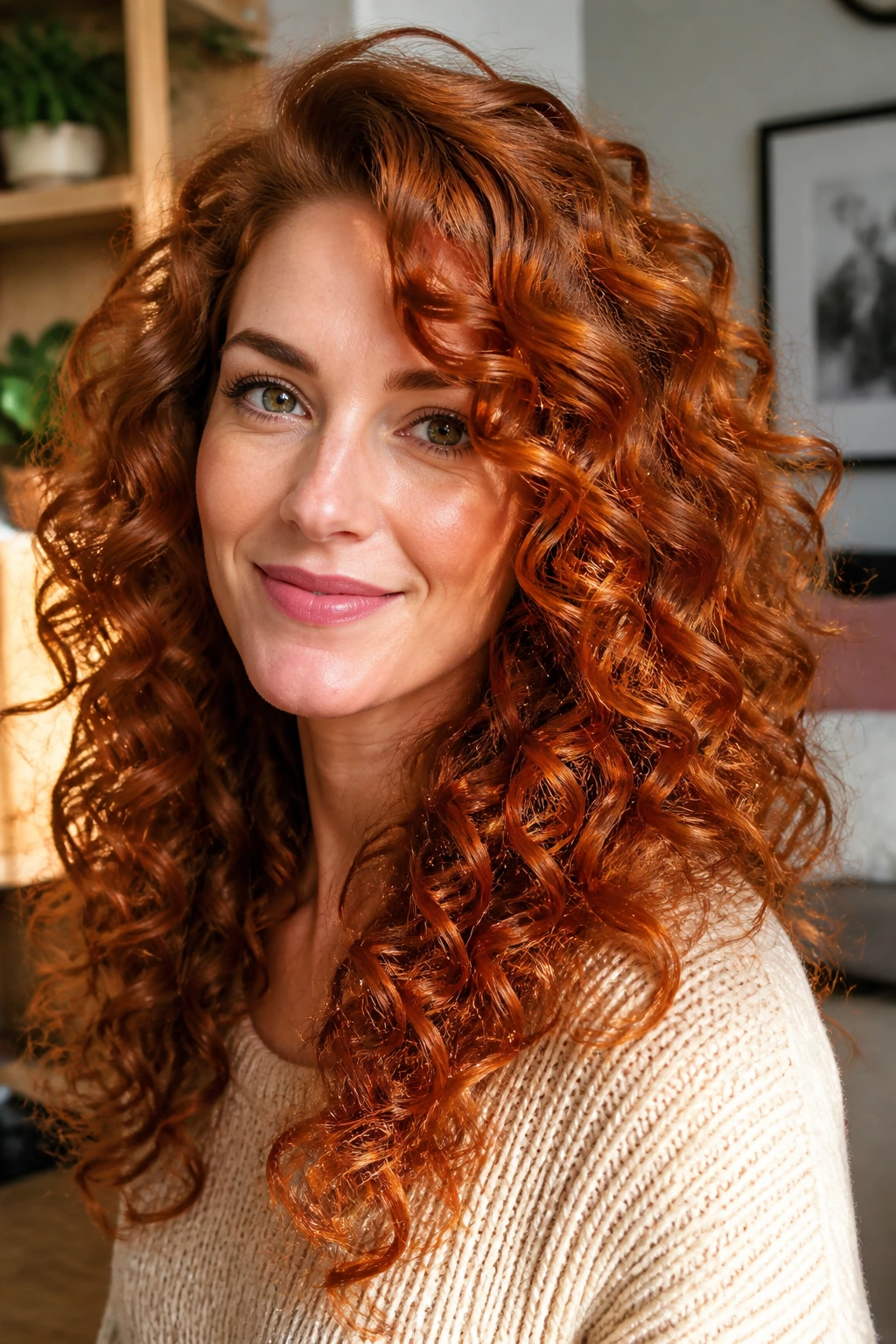
Amber red curls are all about bounce. The amber note brings warmth, and the red keeps the color from turning into plain golden brown. On curls, the shade catches the raised surface of each coil or ringlet, so the whole head reads luminous rather than striped.
Why It Works
Curly hair naturally creates shadow and highlight, which means amber-red color can look dimensional even when it’s applied evenly. That’s a huge advantage. You don’t need a complicated placement to make the shape visible.
Ask for a warm red-brown base with amber-copper highlights concentrated around the top layer and the outer curl pattern. That keeps the interior from going too dark while still preserving depth.
18. Cranberry Dip-Dye Ends
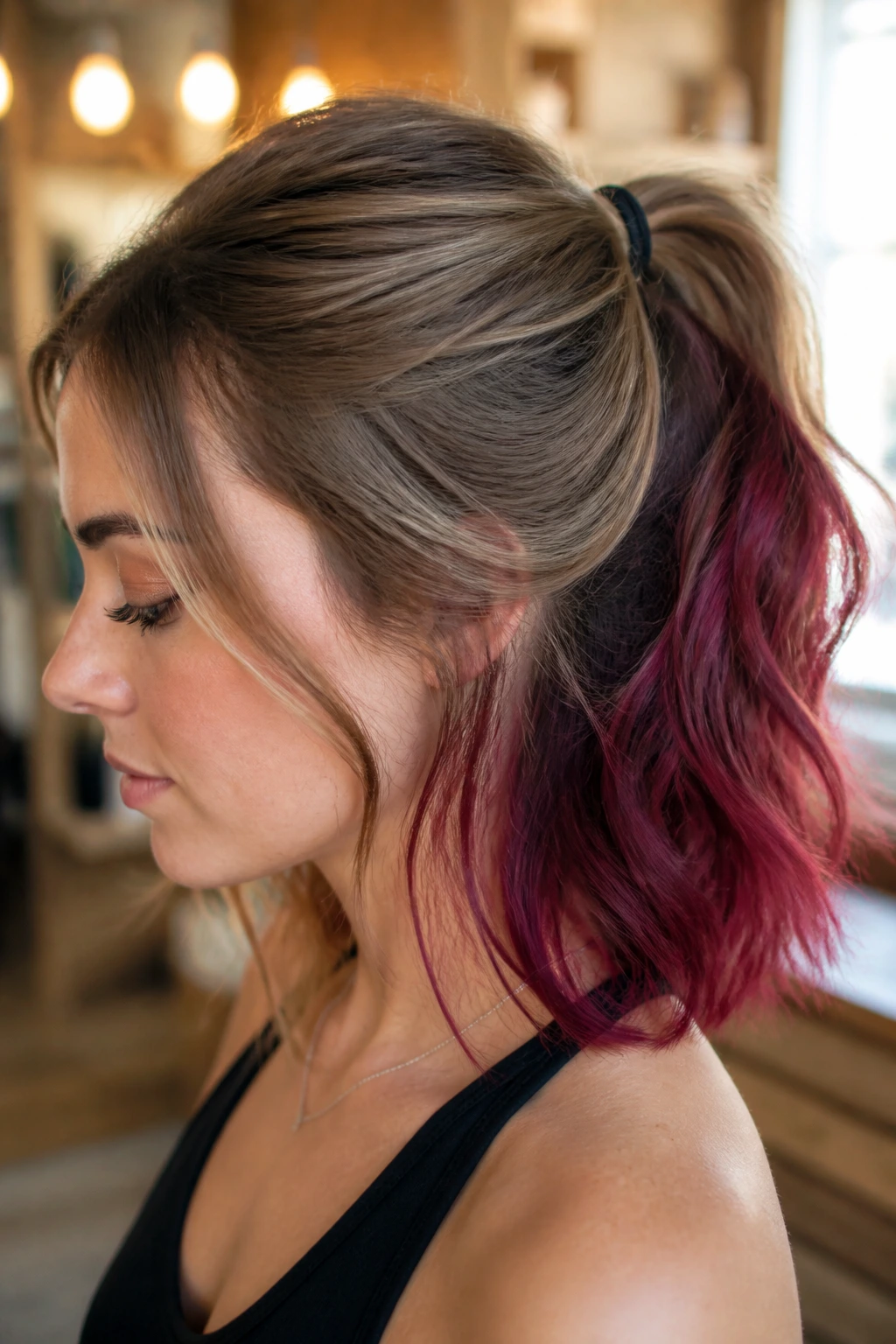
Dip-dye ends are the low-commitment cousin of a full red transformation. Cranberry at the bottom gives you the color hit without requiring you to repaint the root every few weeks. It also looks best when the top half stays natural or close to it, because the contrast is what makes the ends pop.
This is a smart choice for people who tie their hair back a lot. A ponytail, braid, or bun shows the red in the lower half only when you want it to. If you leave it down, the ends still do the visual work.
The main caution: do not make the cranberry too dark. Once the ends sink into burgundy-black, the whole point of the dip-dye goes missing.
19. Toasted Copper Balayage
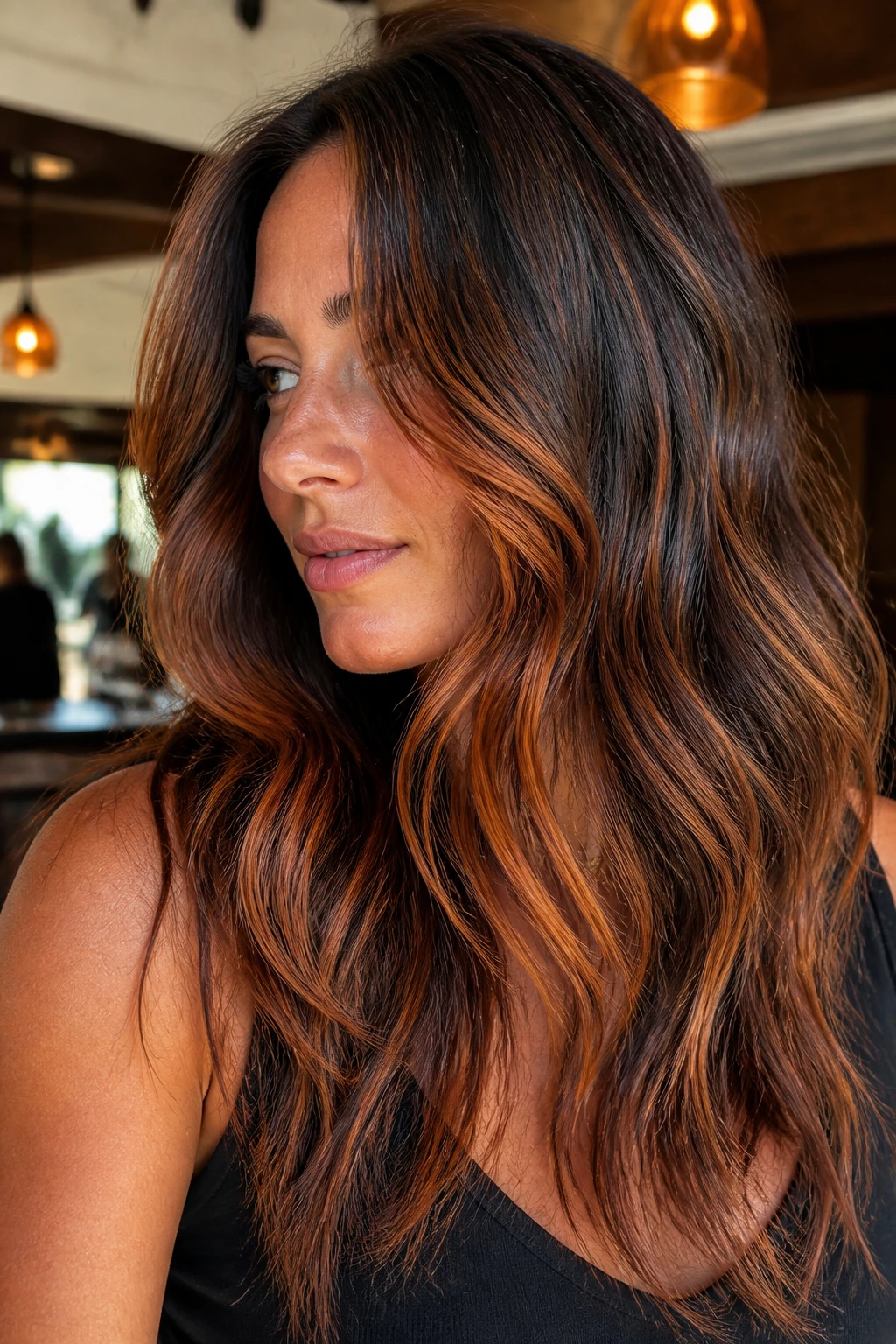
Toasted copper is what happens when you want copper, but you don’t want it shouting from a mile away. Balayage placement keeps the brighter pieces spread through the hair, while the toastier brown-red base anchors everything. It’s one of the most wearable red hair looks for summer because it keeps the warmth but trims the intensity.
This one works beautifully on brunette hair that already has a little natural dimension. The balayage pieces can sit around the face, through the mids, and at the ends, which makes the color feel sunlit rather than streaky.
If your hair is very fine, keep the copper ribbons thin. Big stripes will look obvious fast.
20. Brick Red Straight Layers
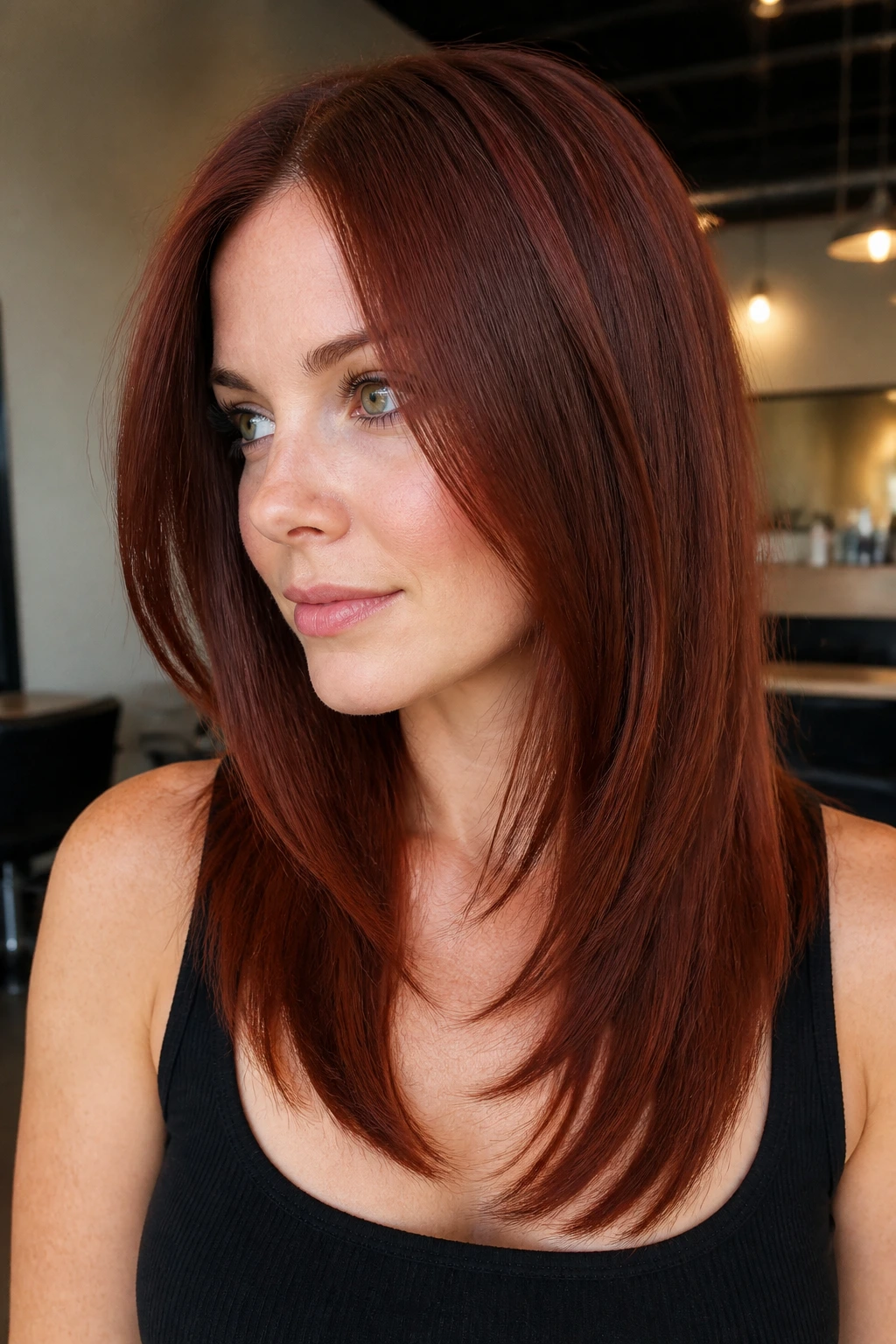
Brick red is the quiet tough guy of the red family. It has more brown in it than a true copper or scarlet, which makes it read grounded, almost architectural, on straight layers. The cut matters here because long, straight lines make the color feel deliberate instead of soft-focus.
This is a good answer if bright reds have never felt like you. The shade still brings warmth, but it does it through red clay, rust, and brown-red depth rather than shine alone. That makes it easier to wear with minimal styling.
Best for: medium to dark hair, especially if you want a red that can survive office lighting and daylight without changing personality every hour.
21. Vermilion Wet Look
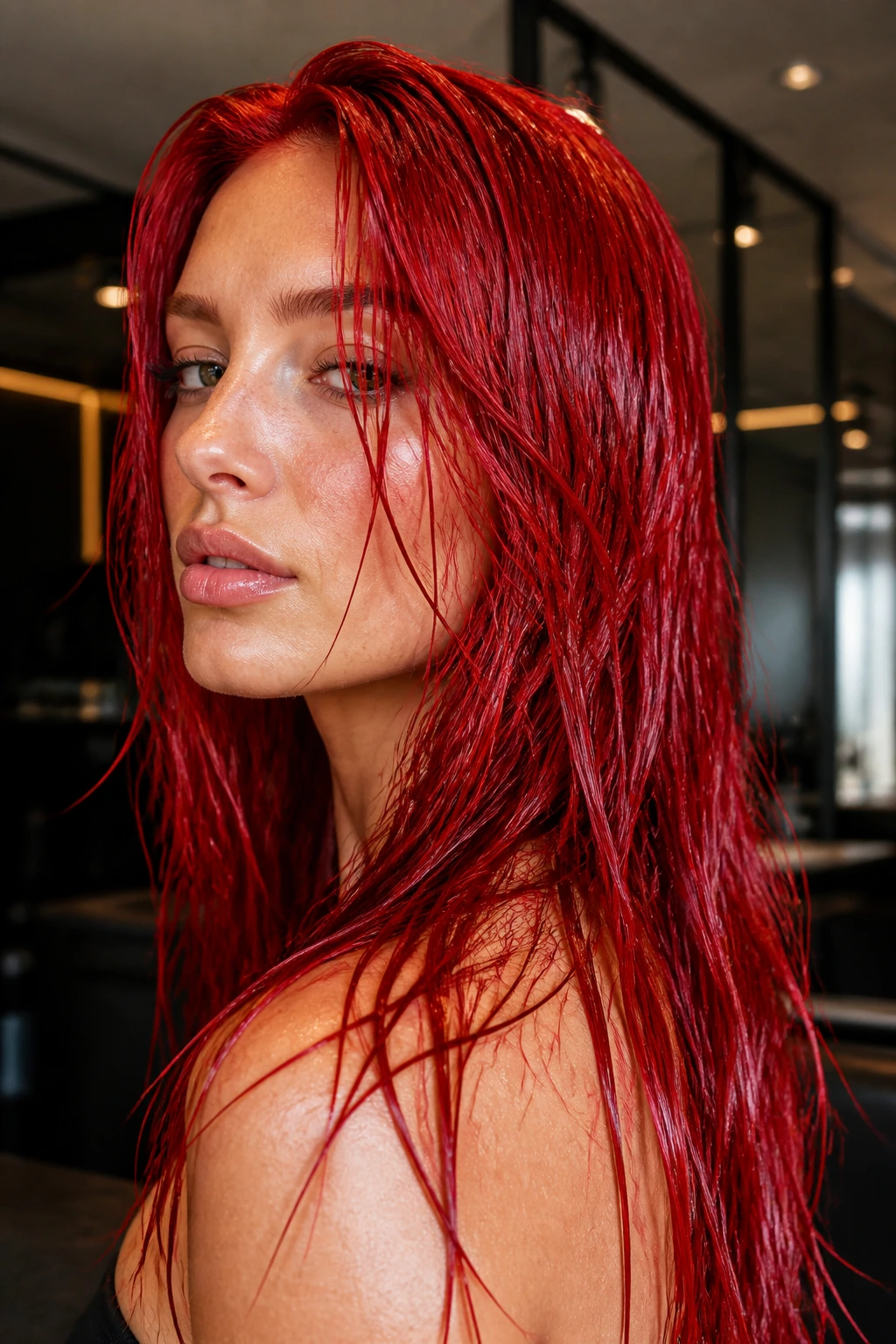
Vermilion is the boldest stop on the map. On a wet-look finish, the color turns almost lacquered, which makes the red look even more saturated than it already is. The style is dramatic and specific — not for everyone, and that’s the charm.
What to Watch For
A wet look shows everything. Dry ends, uneven tone, frizz, all of it. If you want this look to work, the color has to be even and the hair has to be moisturized enough that the shine doesn’t turn greasy.
Use a strong hold gel or glossing cream at the roots and mids, then smooth it with a comb or fingers. The point is a clean finish, not a crunchy shell.
22. Soft Auburn S-Waves
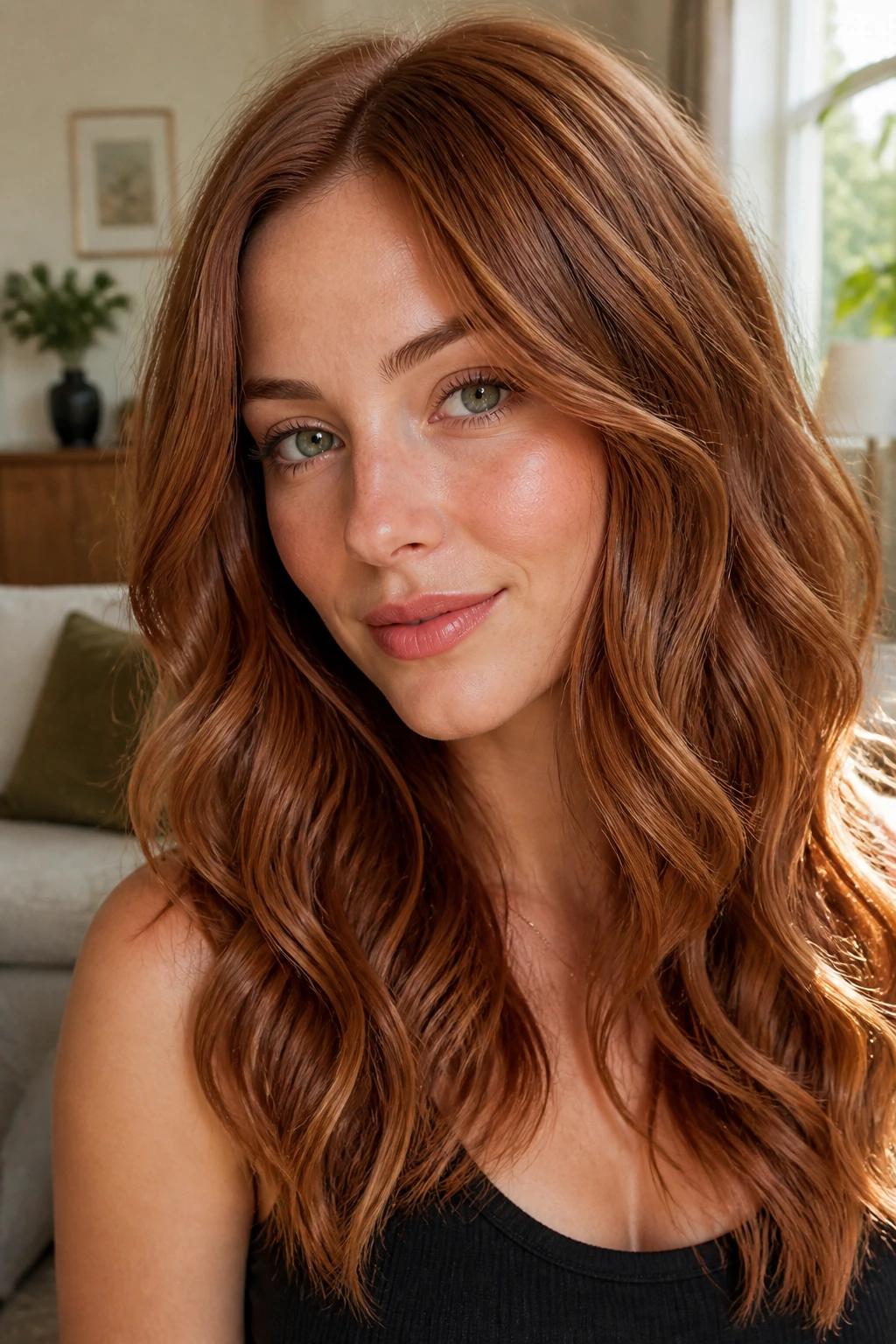
Soft auburn S-waves are the dependable friend in this whole collection. The shade is warm without being orange, deep without being dull, and the waves keep it from sinking into the background. If you only wear one red look for months on end, this is one of the safest bets.
It works on a huge range of cuts because the waves don’t need to be uniform. Slight bends through the mids and ends are enough to make the color feel lived-in. No need to over-style it.
The real advantage is longevity. Auburn tends to fade in a softer, more flattering way than brighter reds, so the grow-out stays kinder.
23. Bronze-Red Tapered Crop
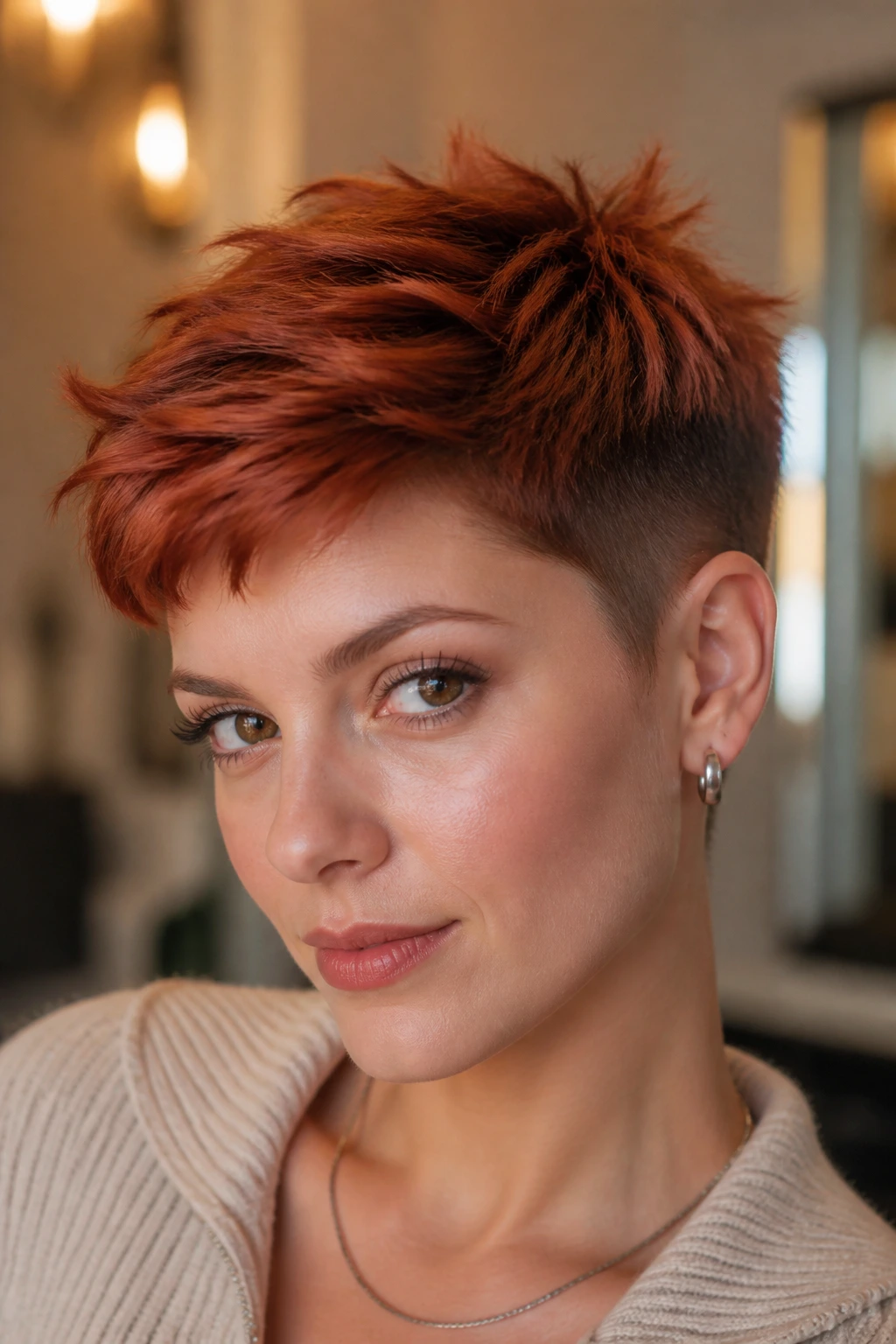
A tapered crop with bronze-red color is sharp in a quiet way. The shorter sides keep the look neat, while the bronze-red top adds warmth that shows up especially well under sun or golden indoor light. It’s not a color for disappearing into the background, but it also doesn’t have to scream.
The tapered cut gives the color a built-in shape. That means you can use slightly deeper bronze at the sides and a brighter red-brown through the crown to keep the silhouette visible. It’s a tidy trick, and it works.
If your hair is coarse or dense, this can be a strong choice because the crop takes some of the weight out of the style and lets the color move.
24. Cherry Bomb Fringe
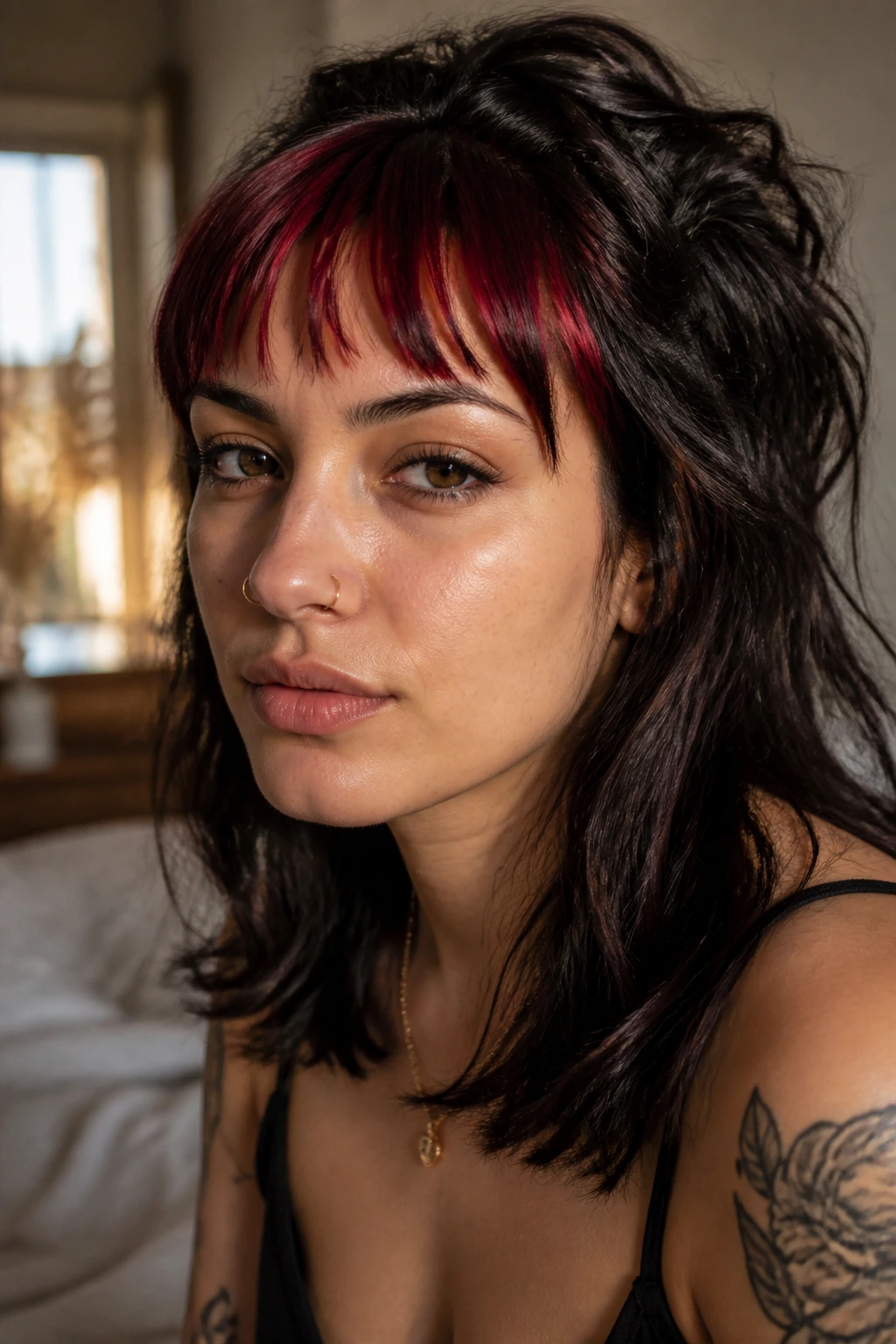
A cherry fringe is tiny real estate with a big payoff. Even if the rest of the hair stays neutral or darker, a red front piece or fringe can make the face look more awake and the haircut feel more styled. Cherry is a good pick here because it reads red first, pink or violet second, depending on light.
Keep the fringe piecey rather than blocky. Heavy bangs can swallow the color, while textured fringe lets the red peek through in little flashes. That tiny bit of separation matters.
This is also one of the easiest ways to test vivid red before committing to full coverage.
25. Warm Cinnamon Pixie
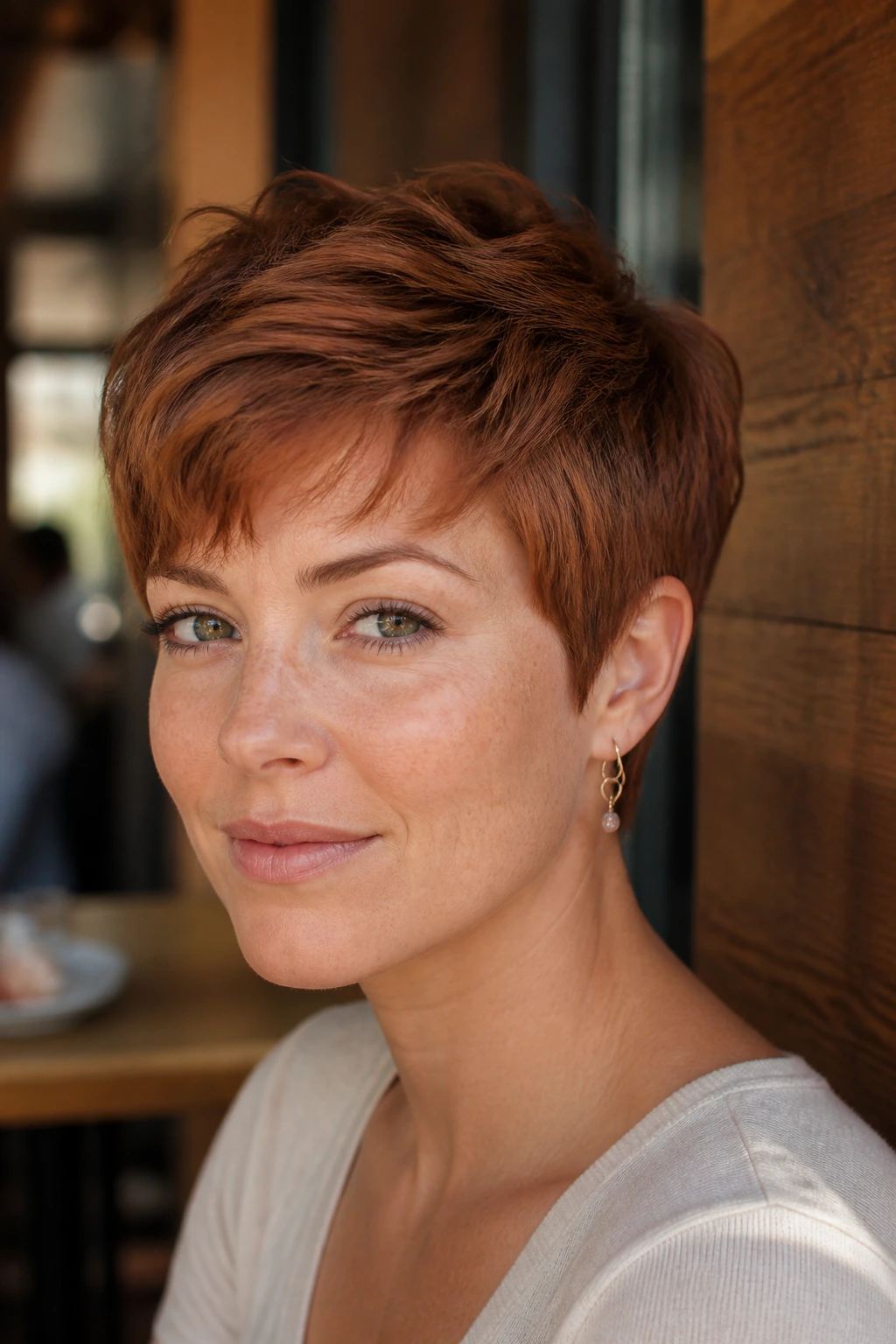
Warm cinnamon on a pixie gives you softness where a lot of short cuts go sharp. The color leans brown-red, which keeps the crop approachable, and the warmer notes stop the cut from feeling severe. On a short length, that balance is worth a lot.
Best For
- People who want a red tint without going full bright.
- Hair that needs less heavy color processing.
- Cuts with texture at the crown or nape.
- Anyone who likes a short style that still feels warm.
The maintenance is easier than scarlet or copper because the shade can fade into a softer auburn without losing the shape of the cut.
26. Henna-Inspired Rich Red
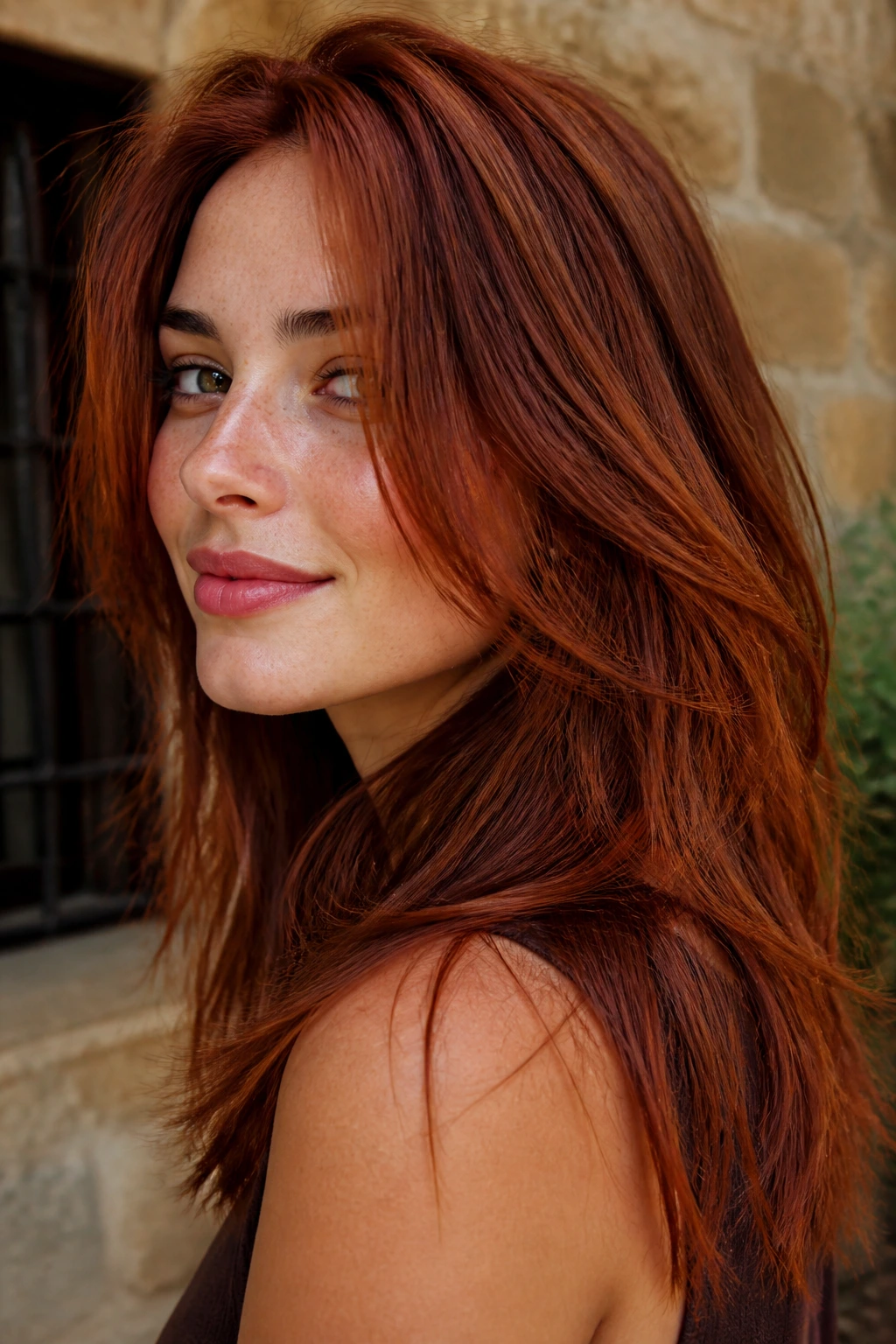
Henna-inspired red is earthy, glossy, and a little old-world in the best way. It usually lands between deep copper and terracotta, which gives it that dense, rich look without going too dark. On natural texture or thicker hair, the color can look especially full because the surface catches the tone in layers.
The important part is avoiding fake orange. Henna-inspired reds should look grounded, almost clay-like, not neon. If the red is too bright, it loses the entire character of the look.
This version is also friendlier to darker bases than lighter fashion reds, which makes it useful if you want warmth but not obvious bleaching.
27. Sunset Copper Afro
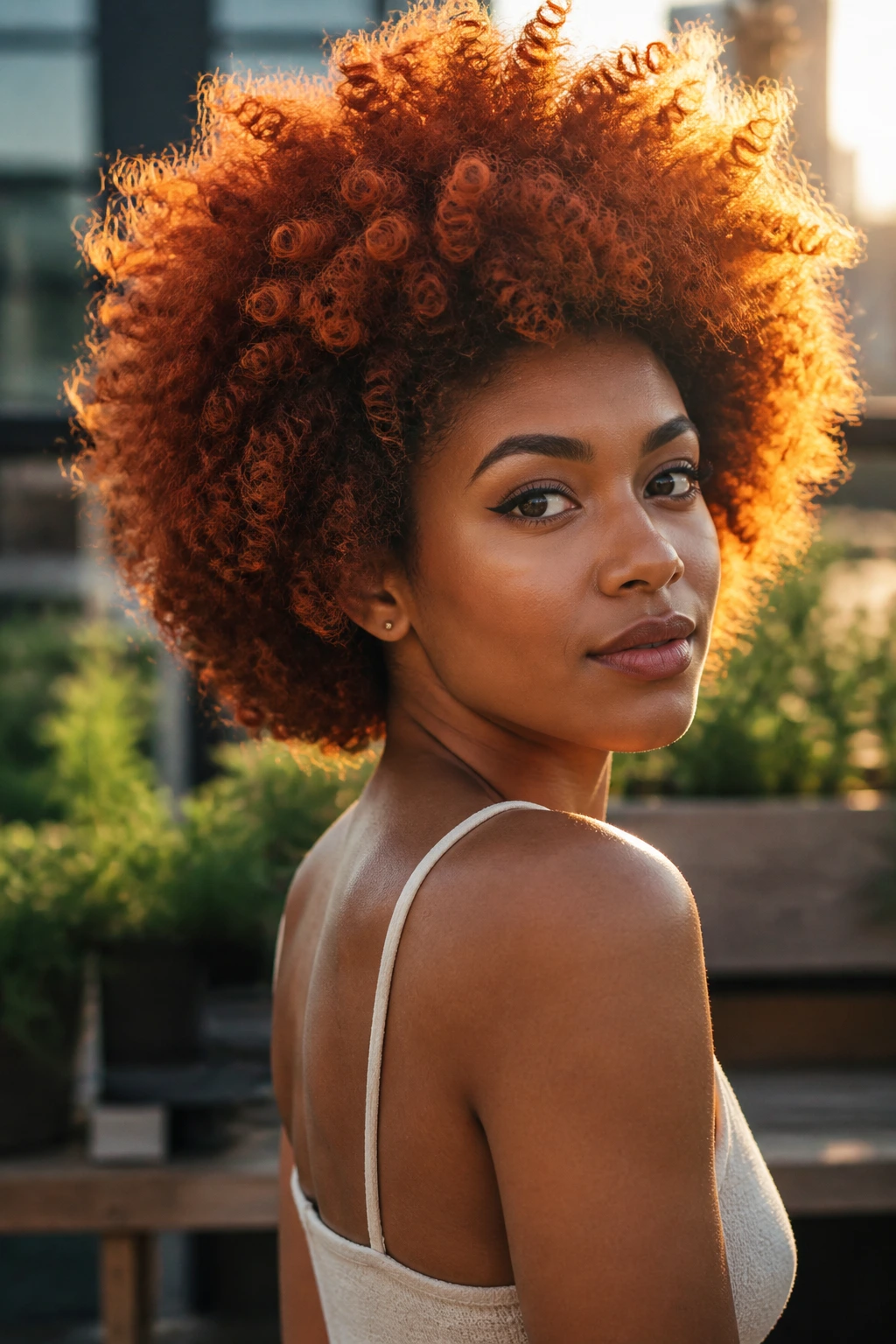
A sunset copper afro is one of the prettiest ways to wear red because the texture does so much of the work. Coils and curls break the color into tiny reflections, so the copper can look fiery in the sun and softer in shade. That kind of change is exactly what makes it feel alive.
The placement should be thoughtful. Brightness around the outer halo and crown keeps the shape open, while deeper roots underneath stop the whole style from collapsing into one flat note. On textured hair, that contrast makes the afro read fuller.
Skip the heavy oil. A light gloss or cream is enough. Too much product will mute the copper before it gets a chance to shine.
28. Tangerine-Red Lob
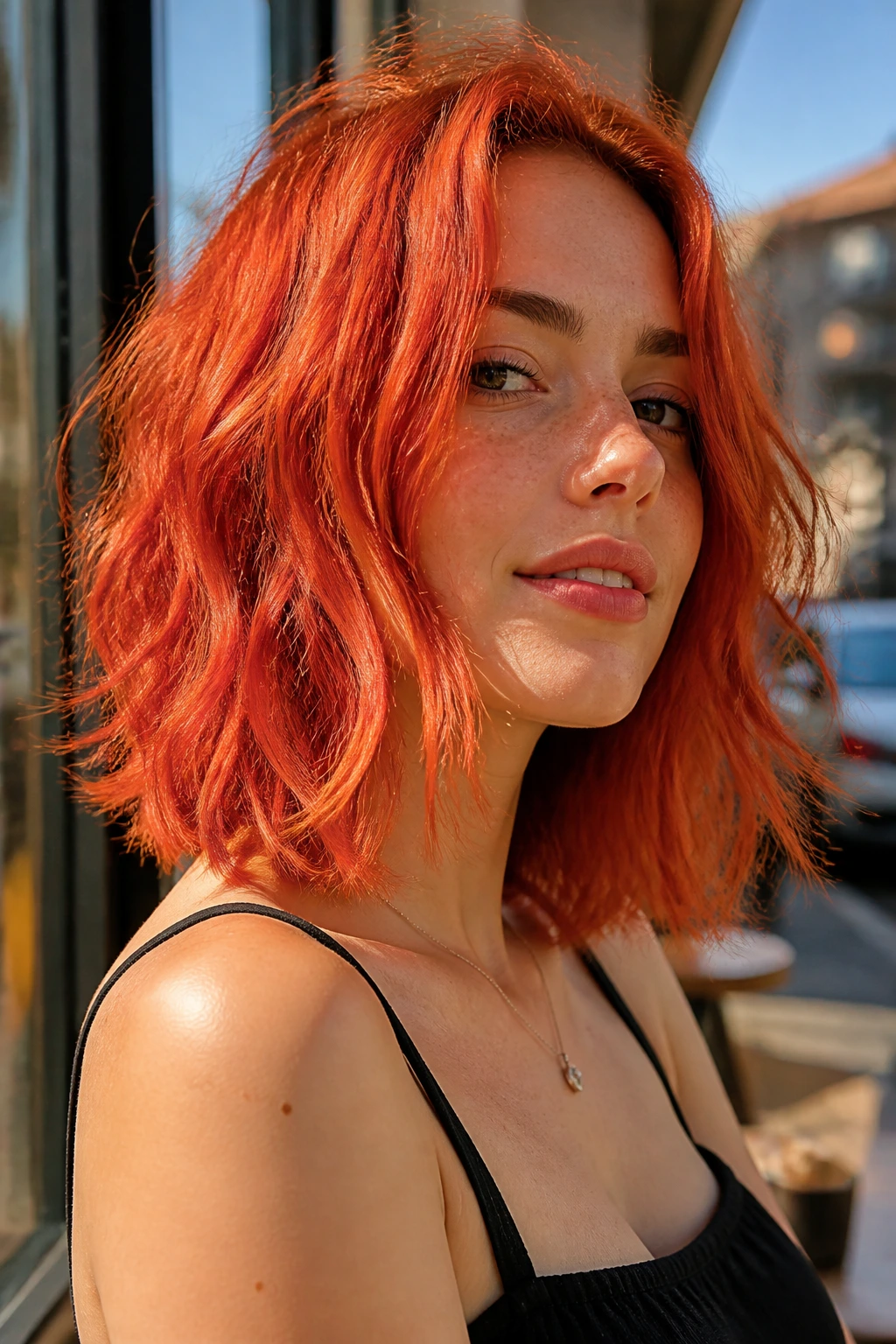
Tangerine-red is bolder than copper and warmer than berry, which is why it feels so distinctly summer-adjacent. On a lob, the color has enough length to ripple a little, but not so much that it drags. That keeps the shade looking bright and fresh instead of heavy.
This is one of the higher-maintenance choices in the group because orange-leaning reds fade fast if you shampoo hard or overheat the hair. But if you want a vivid, almost sun-baked look, it delivers.
Ask for a balanced orange-red rather than a pure orange. The red in the mix keeps it wearable.
29. Deep Garnet Long Layers
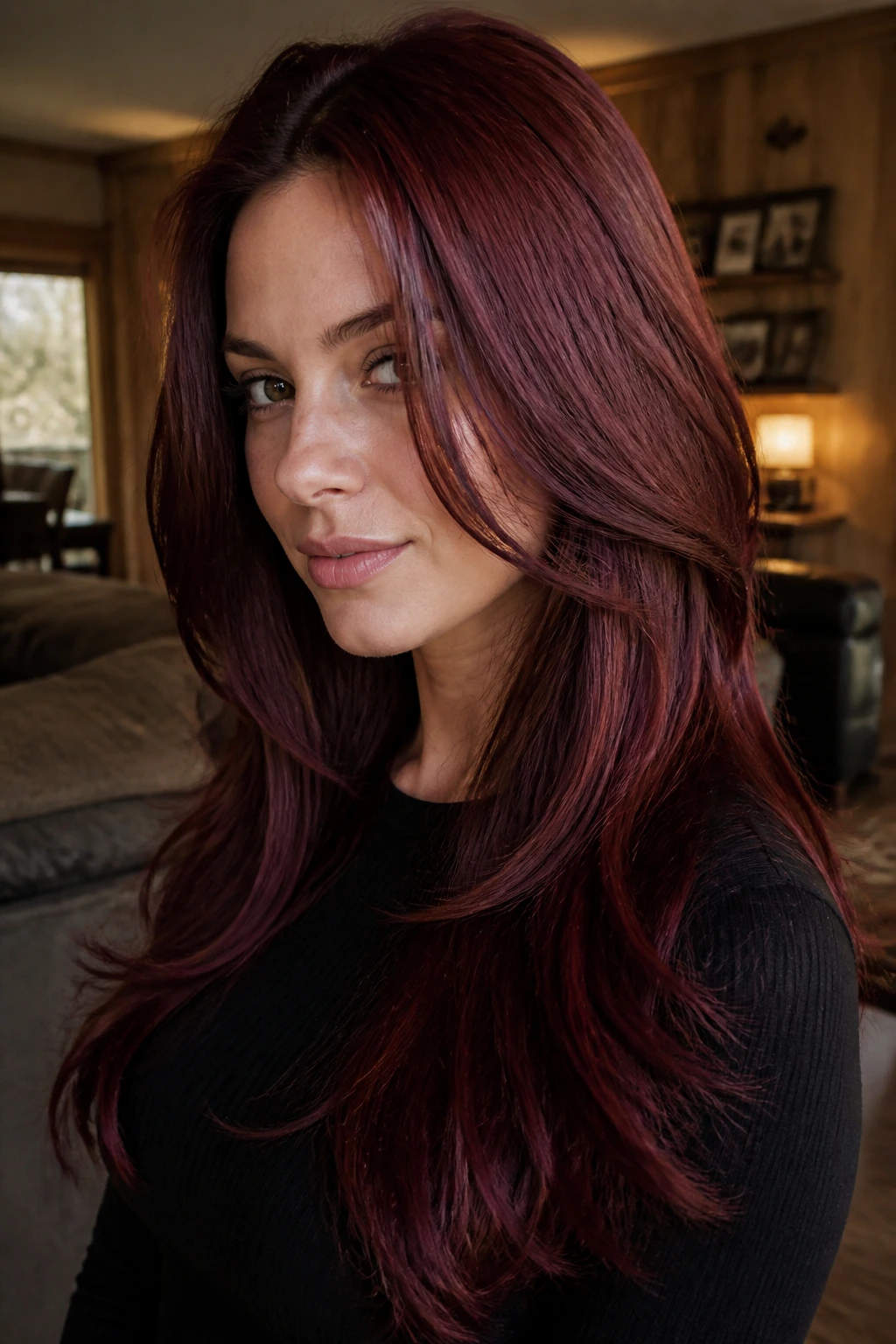
Garnet is for when you want red to read jewel-like rather than fiery. On long layers, the color shifts between deep red, wine, and dark ruby depending on the light, which makes it one of the more elegant options here. Long layers help because the movement prevents the darker shade from feeling static.
Why It Works
A deep garnet tone can get muddy if the hair is all one length and all one note. Layers create room for reflection. The ends catch light, the interior stays rich, and the color moves instead of sitting flat.
If you’re starting from brunette hair, this is one of the easiest reds to live with because you can often stay close to your natural depth and still get a visible red story.
30. Copper Melt with Shadow Root
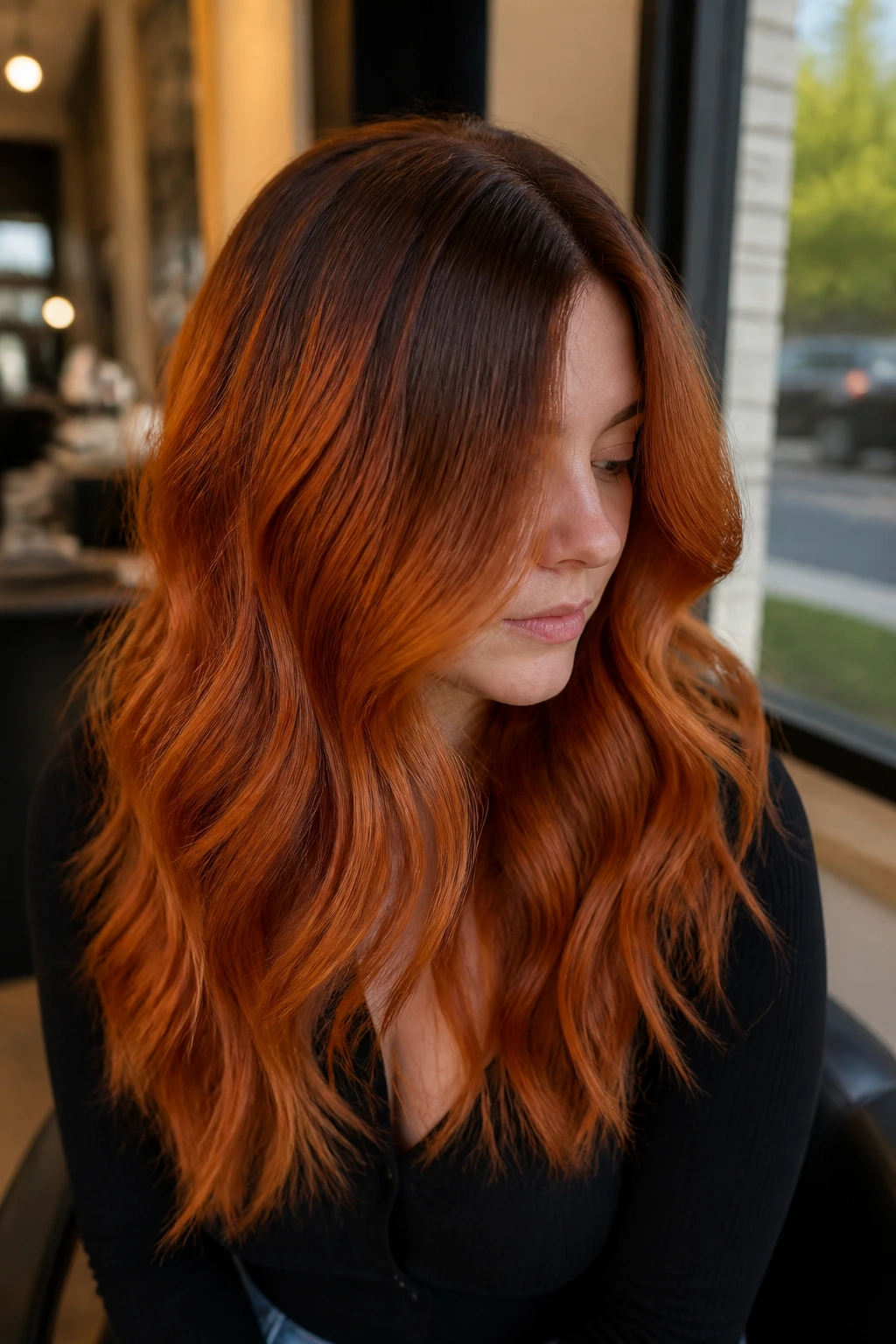
This is the practical copper. The shadow root keeps the scalp area darker, which gives the copper mids and ends room to glow without making the grow-out look harsh. If you want red hair looks for summer that don’t require constant panic, this one belongs near the top of the list.
The melt should be gradual. Dark root, warm midsection, brighter copper ends. No hard line. That soft blend is what makes the color look expensive even when it starts to fade a little.
It’s also one of the easiest looks to book a maintenance plan around. The root can be left alone longer, and the shine can come back with a gloss between appointments.
31. Rosewood Waves
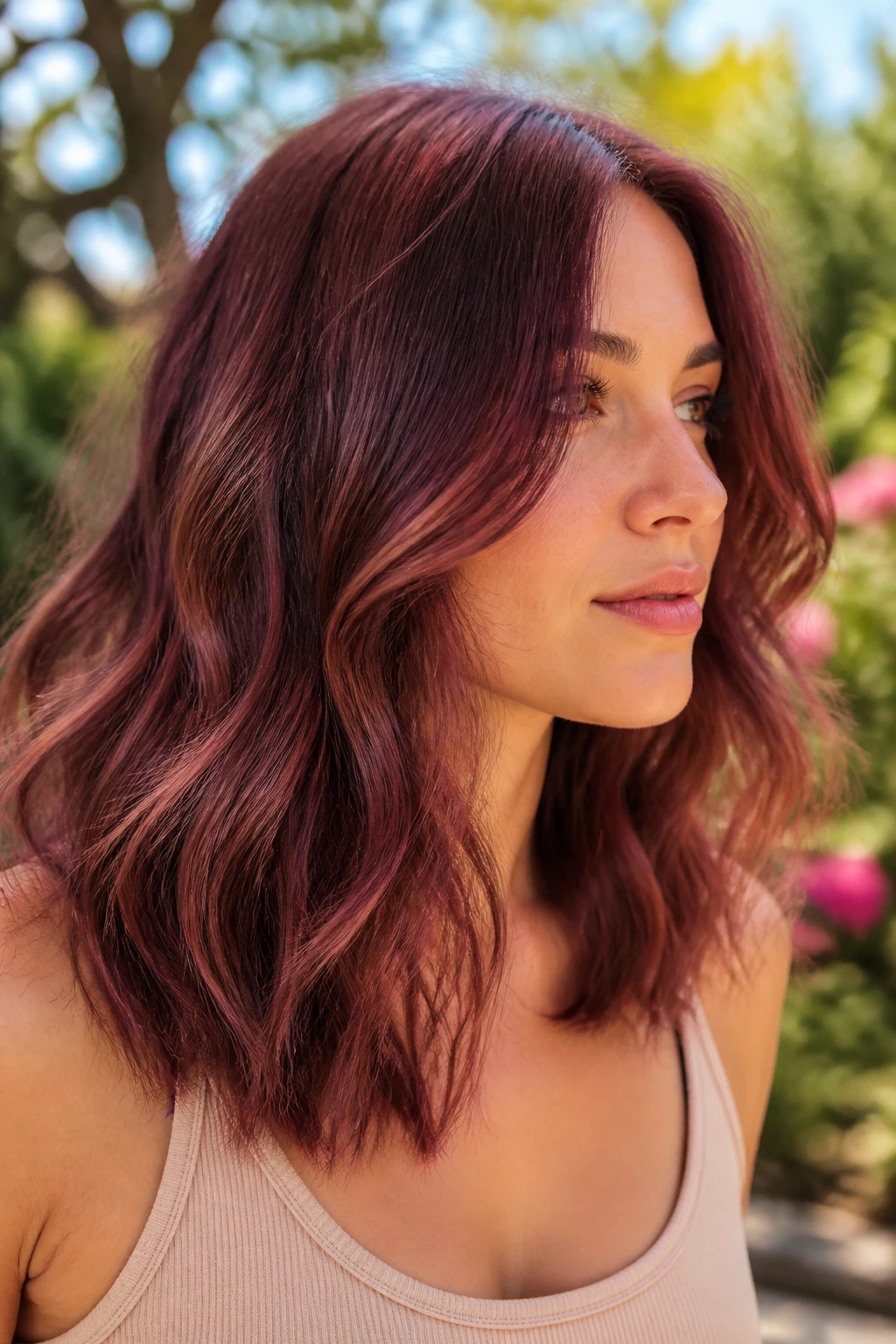
Rosewood sits in a lovely middle ground: dusty, warm, and a little muted without going flat. On waves, the color reads like a soft red-brown with just enough rose in it to feel special. It’s one of the few reds that can look polished in daylight and still feel relaxed.
The muted quality is the advantage. If your skin tones tend to get overwhelmed by bright copper, rosewood stays calmer. It also holds up well on medium to dark bases because it doesn’t need extreme lift to show itself.
A loose wave pattern is enough. The shade does not want overly polished curls or razor-straight hair. It wants motion.
32. Fire Opal Color Melt
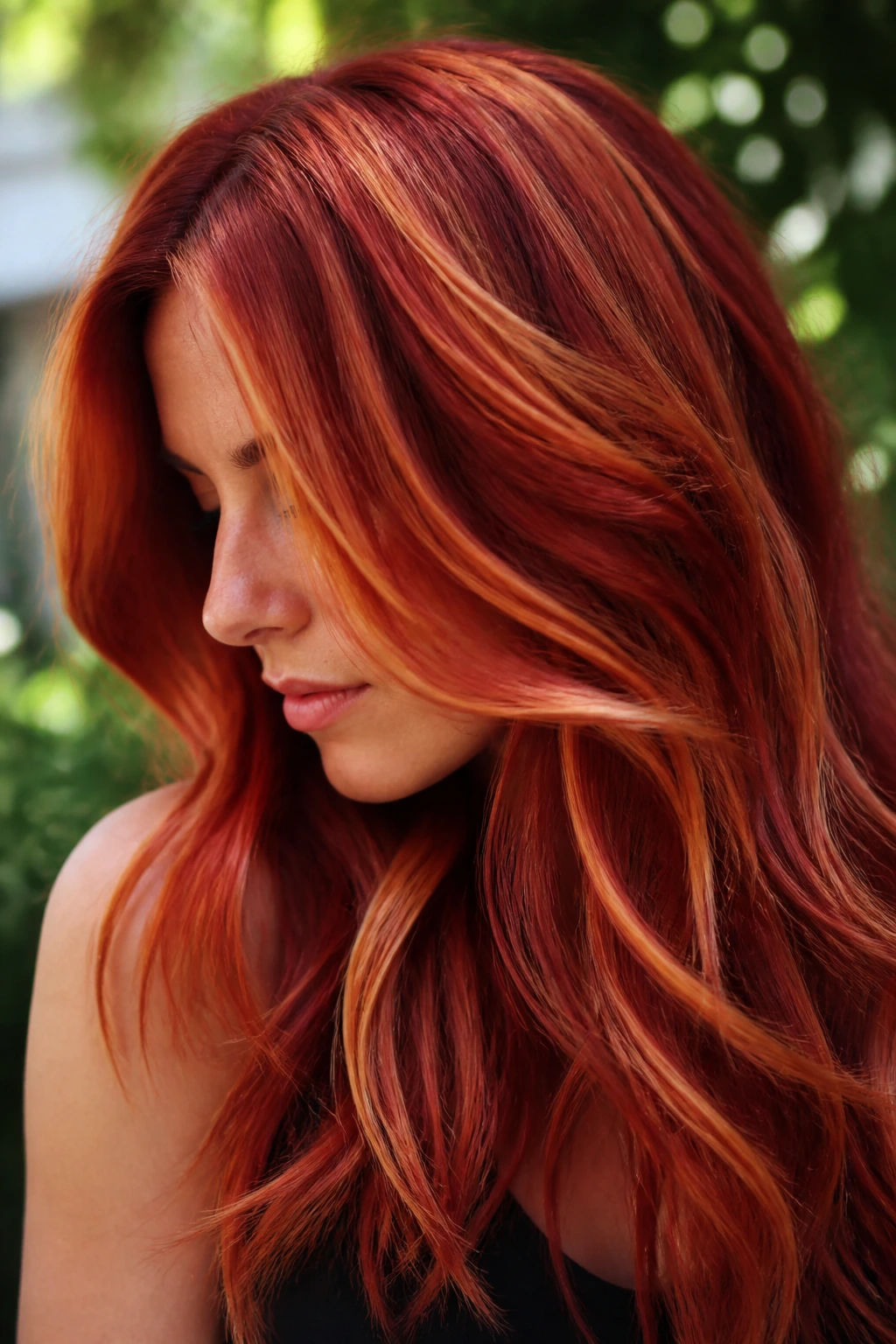
Fire opal is the most dimensional look in the bunch. Think copper, rose, amber, and red-gold blended so the hair changes personality as you move. On long hair or layered mid-lengths, the melt can look almost jewel-toned, especially when the lighter pieces sit near the surface and the deeper reds stay tucked underneath.
The Mechanic Behind It
A multi-tone melt works because no single pigment has to carry the whole look. One shade fades, another holds. That gives the color more staying power and keeps it from looking dead between glosses.
It’s not the easiest option to maintain, but it is one of the prettiest if you like hair that looks different in shade and sun.
33. Clay Red Airy Layers
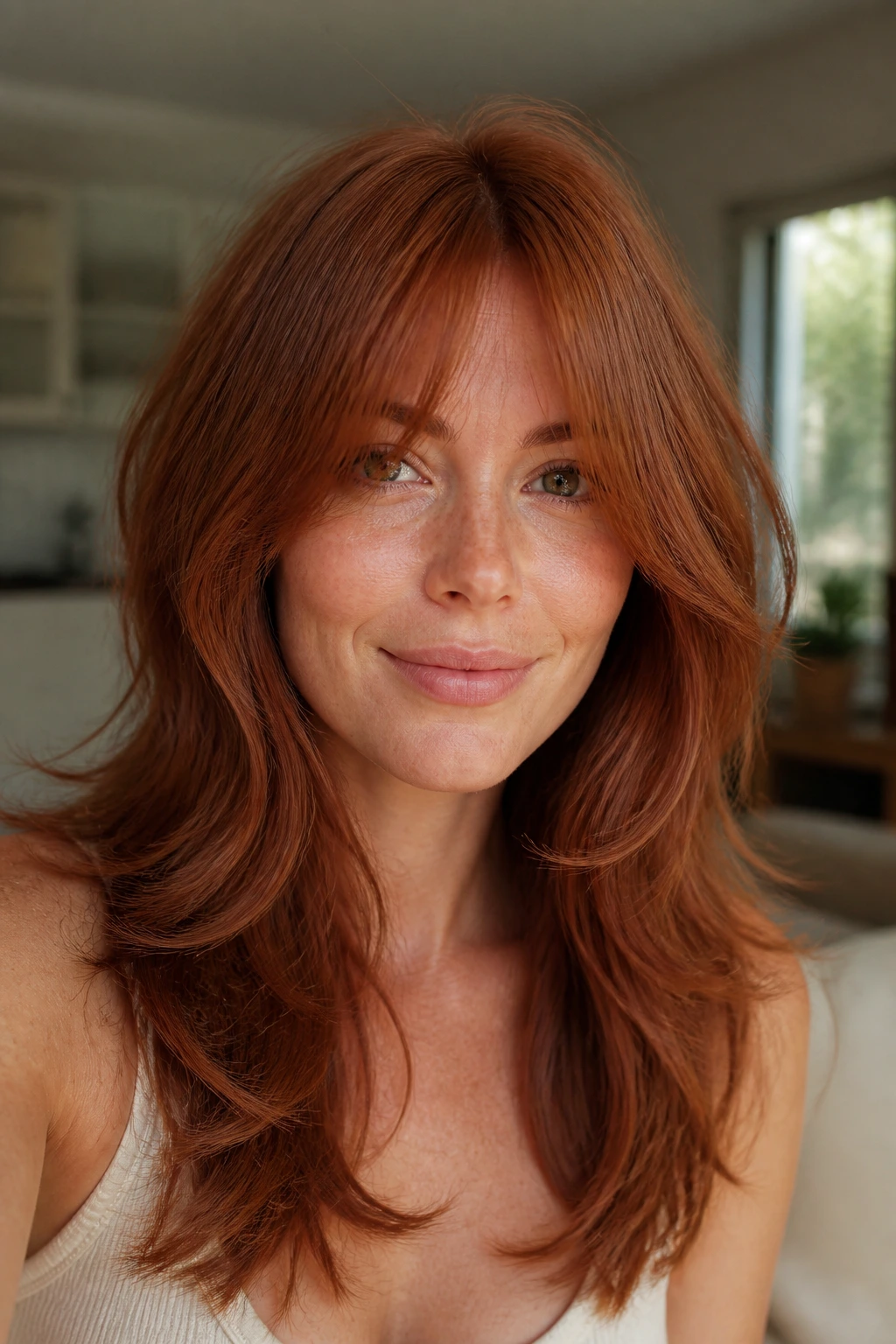
Clay red is what I reach for when I want warmth without brightness. On airy layers, the color has space to move, and the clay note keeps it grounded so it doesn’t drift into orange. It’s especially good on hair that needs body, because the layered cut and muted red tone make the shape feel lighter.
If you want a red that works in both soft daylight and indoor light, this is one of the strongest choices. It doesn’t scream, but it doesn’t disappear either. That’s a useful place to live.
The finish should be soft and touchable. A little cream, a little bend, and not much else.
Why Red Hair Needs More Than a Pretty Swatch
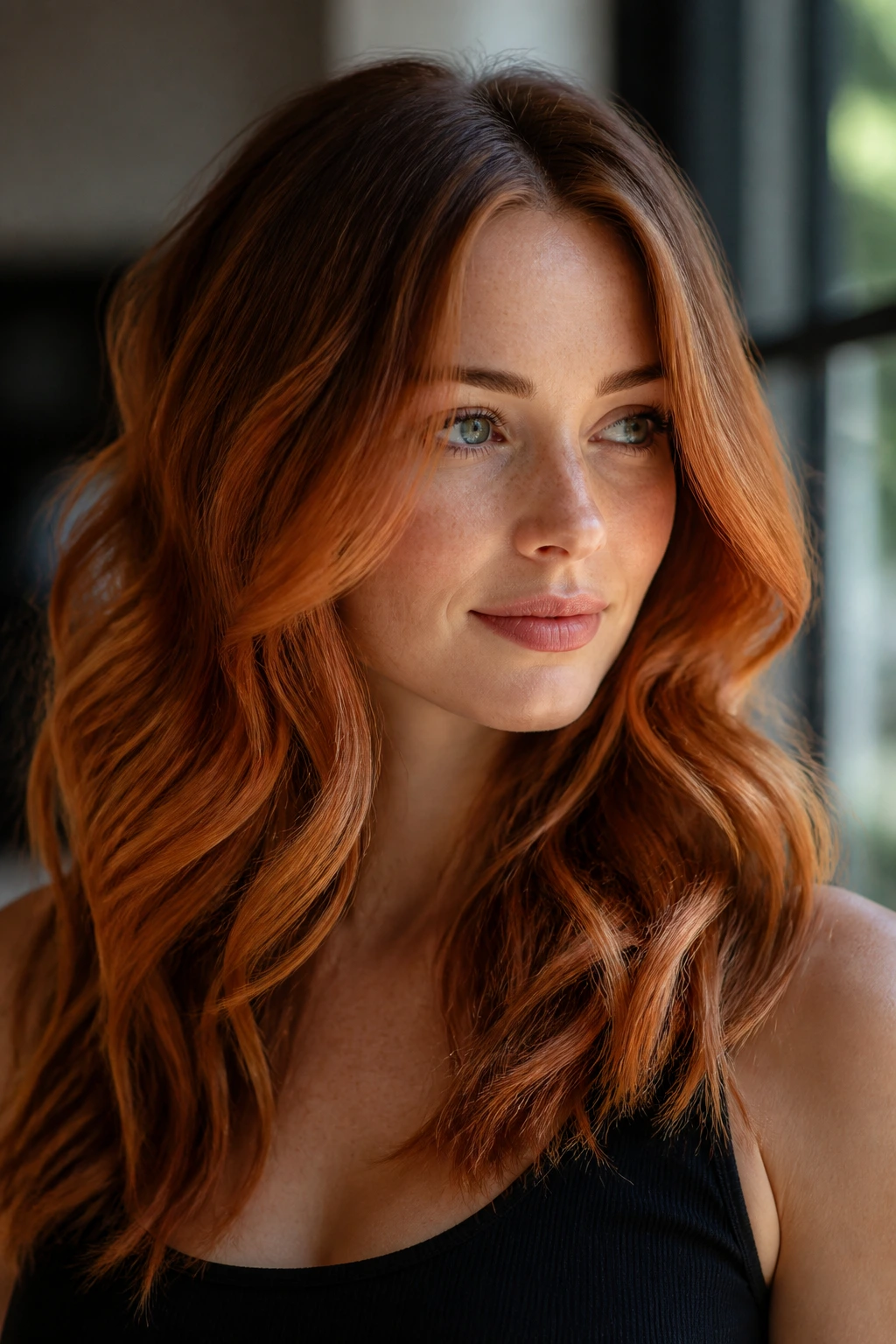
The first thing people notice about red is how fast it changes. The color can look deep and rich in the chair, then two weeks later it starts to shift warm, flat, or oddly transparent at the ends. That’s not because red is a bad choice. It’s because red is visible in a way brown often isn’t. When a little pigment leaves, you see it.
Sun, heat styling, hard water, and frequent shampooing all push red in the same direction: lighter at the ends, duller at the mids, less defined at the root. The fix is not just “buy a red shampoo” and hope. It’s building the color with dimension from the start so the fade still looks intentional. A shadow root, a gloss, and a few lighter ribbons around the face can keep the whole thing looking alive longer.
The other thing red needs is honesty. If your base is dark, a mahogany or cherry cola will behave differently from a strawberry blonde money piece on level 9 hair. Same family. Very different maintenance. That’s why shade choice matters more here than almost anywhere else in hair color.
Essential Tools for Keeping Red Hair Fresh
-
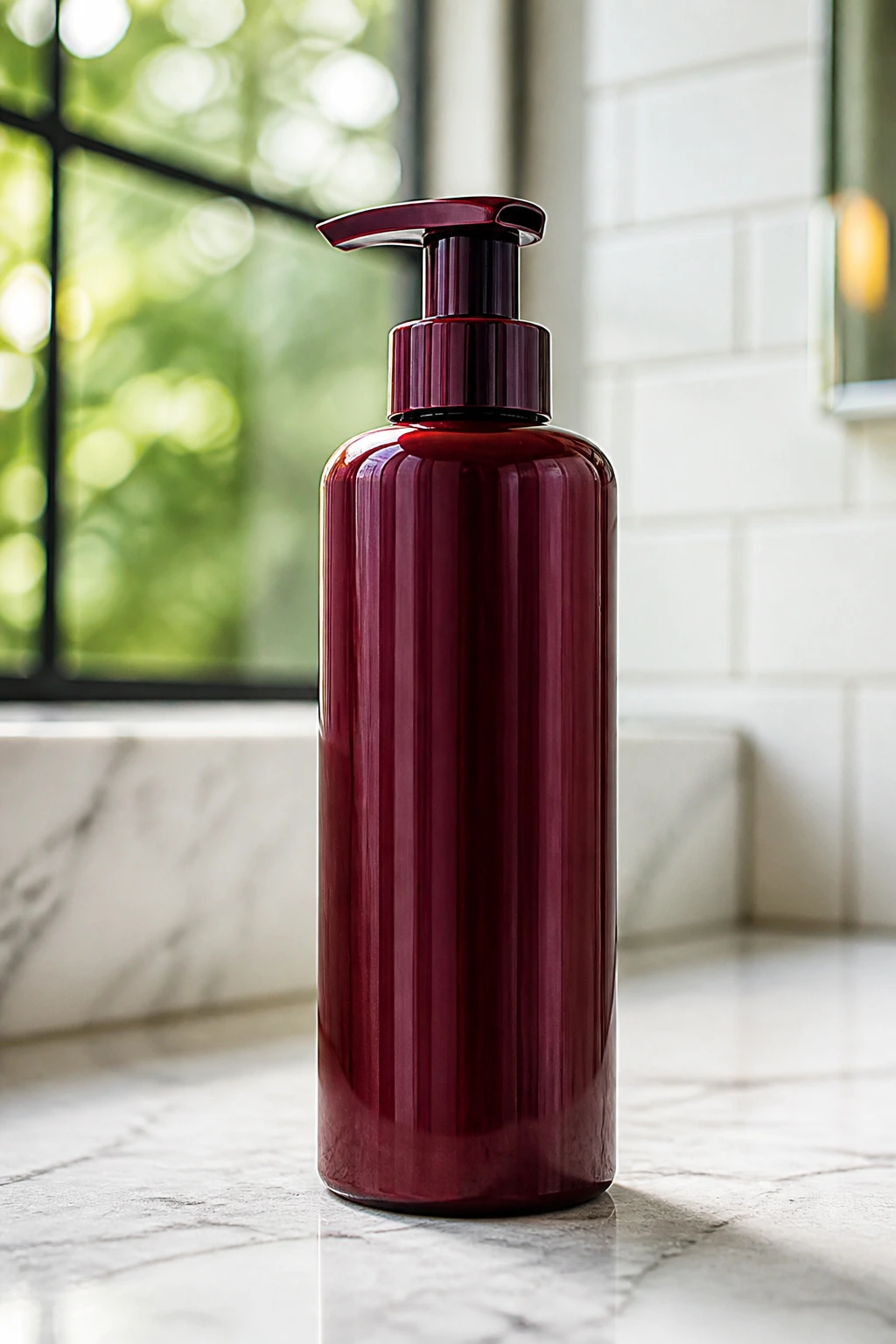
Color-safe shampoo: Choose a sulfate-free formula if your hair is vivid or newly tinted; it slows the heavy wash-out that turns red dusty.
-
Moisturizing conditioner: Red shows dryness fast, especially at the ends, so a richer conditioner keeps the tone from looking rough.
-
Color-depositing mask or gloss: A copper, auburn, or red-brown mask can refresh faded mids between salon visits without redoing the whole head.
-
Heat protectant spray: Flat irons and blow dryers strip shine from red faster than most people expect. Use it every time.
-
Wide-tooth comb: Helpful on wet hair when the cuticle is open and the color is easier to disturb.
-
Sectioning clips: Especially useful if you’re doing a money piece, balayage refresh, or at-home gloss.
-
Tint brush and bowl: Worth having if you mix glosses or apply color-depositing treatments with any precision.
-
Microfiber towel: Cuts down on rough drying, which matters because red tends to look best when the surface stays smooth.
-
UV spray or hat: Direct sun can bleach warmth out of red faster than a week of regular styling.
-
Shower filter, optional but useful: Hard water can make copper and cherry tones look dull or muddy.
Smart Shopping and Shade Selection for Different Base Colors
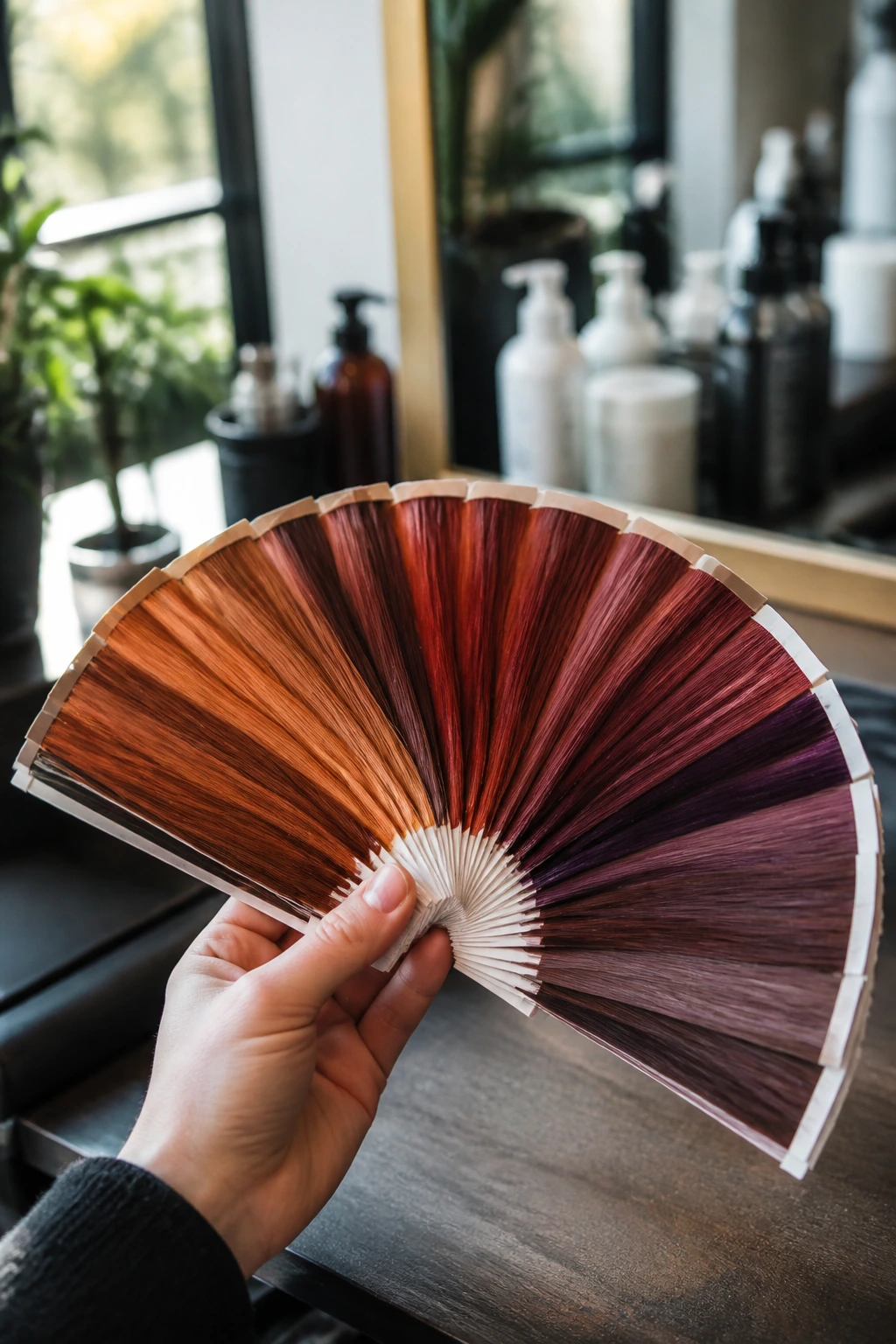
Pick the red that matches your starting point, not the red you wish your hair were. That one decision saves a lot of disappointment. Light bases can carry strawberry blonde, rose gold, apricot, and peachy copper with less effort. Medium brunettes usually look strongest in cinnamon auburn, toasted copper, rust, and cherry cola. Dark hair has the most room for mahogany, garnet, brick red, and mulled wine because those shades sit closer to the base and don’t fight it.
If your hair has already been lightened, porosity matters. Porous ends grab red fast and can go darker than the rest of the head. In that case, a demi-permanent gloss or a root-to-end melt usually behaves better than a heavy permanent red. The color looks smoother, and the fade is less ugly.
Pay attention to undertone too. Copper and apricot lean warm. Cherry, garnet, and mulled wine lean cooler. Rosewood and clay red live in the middle. One clean undertone almost always looks better than three fighting each other in the same head.
How to Wear These Shades With Makeup, Clothes, and Texture
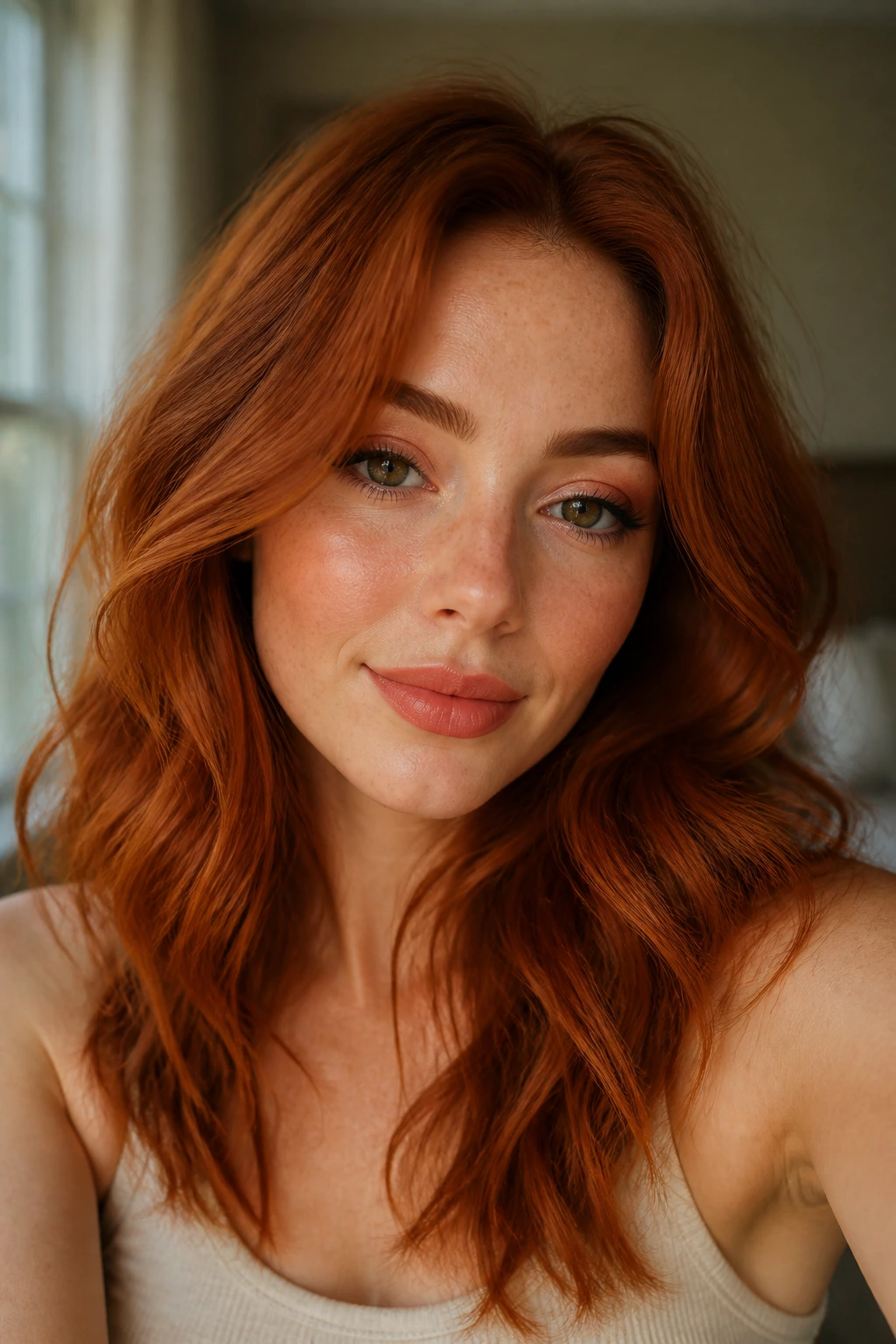
Placement: If the red is bright, keep the placement focused — money piece, face frame, or a copper melt with a shadow root. If the shade is deep, you can spread it more evenly because the contrast is softer and less likely to dominate the face.
Accompaniments: Cream, denim, olive, black, and warm beige all tend to sit nicely next to red hair. Makeup is easier when it matches the undertone: peach blush and gold shadow for copper, berry lip and soft brown liner for cherry, rosy nude and satin skin for rosewood.
Intensity: Choose how much red you actually want to see in the mirror on an average Tuesday. A glazed bob or auburn wave is a different life from scarlet or vermilion. Neither is better. One is simply easier to live with if you’re washing your hair twice a week and air-drying half the time.
Finish: Texture changes everything. Smooth blowouts make red look polished and high-shine. Waves make copper and auburn look sunlit. Curls and coils turn red into something almost multi-dimensional on their own, which is why those textures can carry the bolder shades without looking too heavy.
Small Adjustments That Make Red Look Richer
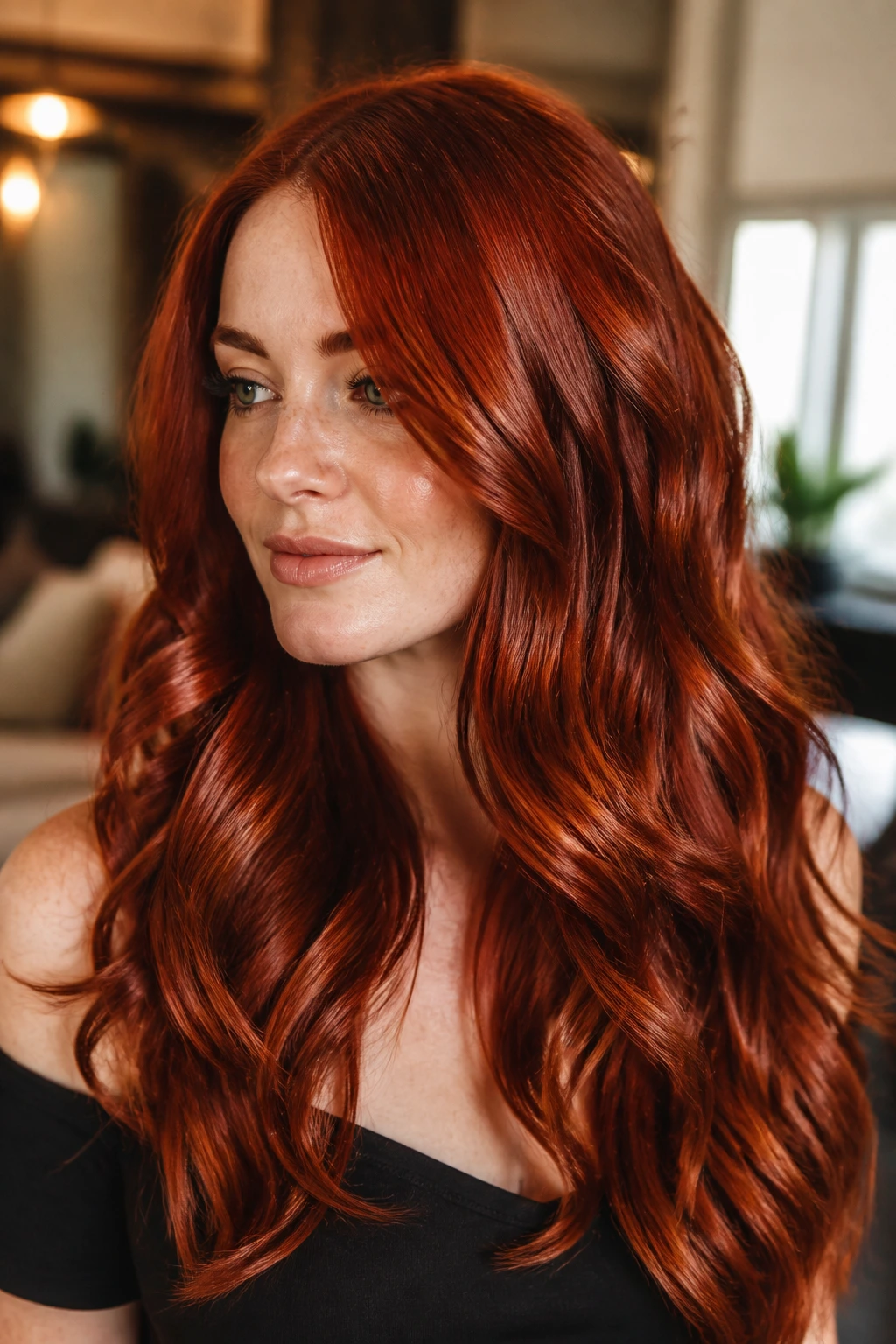
Gloss Boost: A clear or lightly tinted gloss every four to six weeks does more for red than another round of heat styling ever will. It puts the shine back on top of the pigment instead of just hoping the pigment stays bright.
Dimension: Root shadow, lowlights, and slightly lighter ends keep red from reading like a single block of paint. That matters most on straight hair, where every line is visible.
Texture: If the color feels flat, change the finish before you change the shade. A loose bend, a rough blow-dry, or a curved bob can make the same red look more expensive.
Make-It-Yours: Fine hair usually looks fuller with lighter copper and strawberry tones. Thick or coarse hair tends to handle deeper reds better because the darker base gives the cut more structure. Curly and coily hair can go brighter on the outer layer and still look balanced underneath.
Keeping the Color Bright Between Appointments
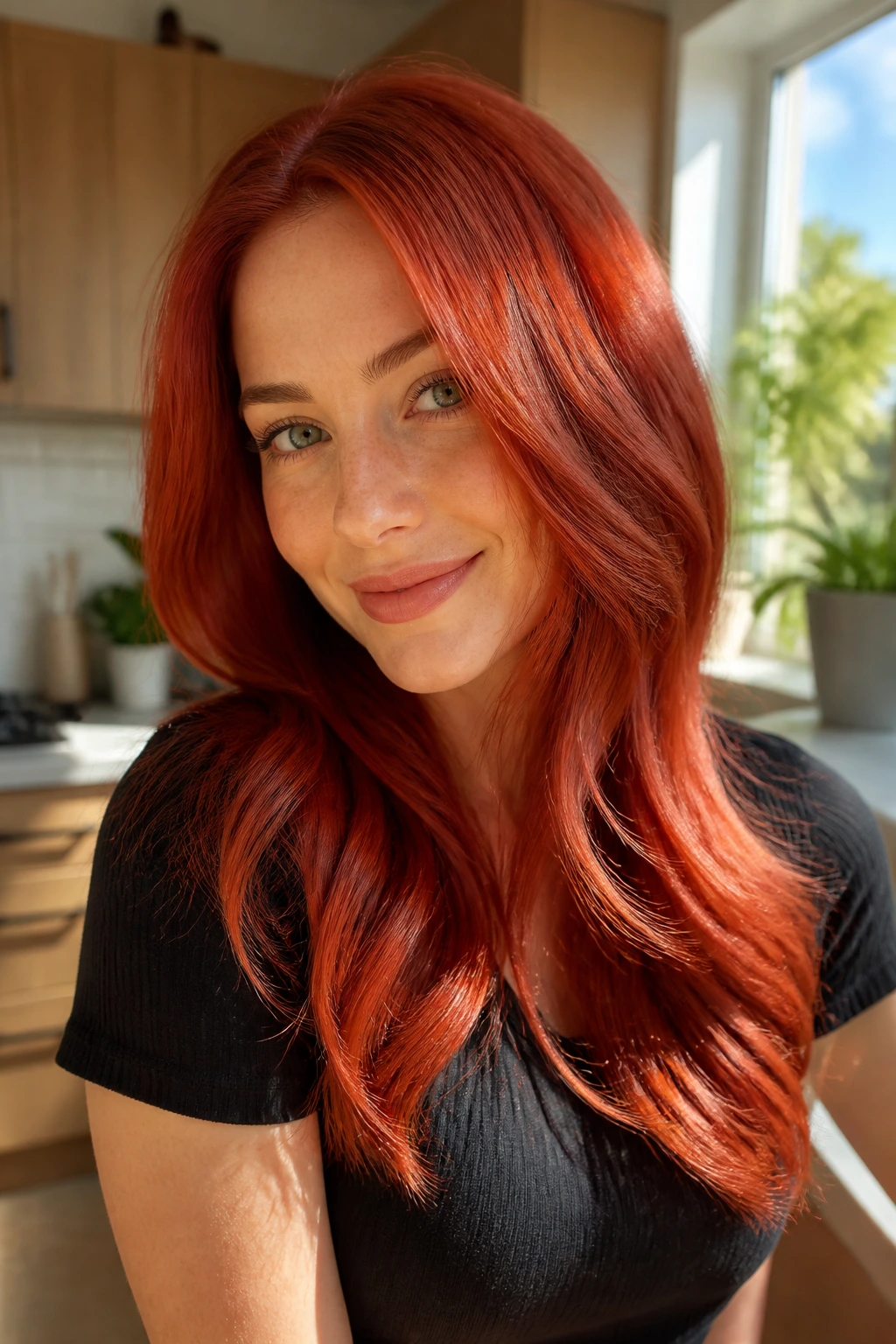
Red hair likes a schedule. Not a strict one, but a real one. If you’re wearing a permanent or demi-permanent red, expect the visible richness to soften after about 4 to 6 weeks, with roots needing attention around 6 to 8 weeks depending on how fast your hair grows. Semi-permanent reds and direct dyes fade faster, sometimes in 3 to 10 shampoos if you wash often and use hot water.
The washing routine matters more than people think. Cool or lukewarm water keeps the cuticle calmer, which helps the color stay where it belongs. A color-safe shampoo two or three times a week is usually kinder than daily washing, especially if your hair is already lightened. If you need volume on off days, dry shampoo is better than scrubbing the color out for a clean-feeling scalp.
Heat is the other thief. Blow dryers, curling irons, and straighteners pull shine out of red faster than they do out of darker brunettes. Use a heat protectant every time, and if you can skip one round of hot tools, do it. Pool days deserve a hat or a UV spray; chlorine and sun make red lose its warmth in a hurry. A deep mask once a week keeps the ends from going straw-dry, which is where a lot of red looks start to fall apart.
Variations and Adaptations to Try
Soft Copper Wash: Ask for a copper glaze over light brown or dark blonde hair instead of a full permanent color. It gives you a warmer result with softer grow-out, which is useful if you want red without a hard line at the root.
Rooted Berry Melt: Keep the root deep, then let the color melt into cherry or berry mids and ends. This version works well if your schedule does not allow frequent touch-ups, because the darker root buys you time.
Curly Halo Red: Place brighter copper or amber on the outer layer of curls and keep the interior a shade darker. The texture creates natural dimension, so the red looks lively without needing complicated highlights.
Peachy Lightener-Friendly Red: On blonde or pre-lightened hair, choose rose gold, apricot, or peach copper with a gloss finish. These shades need less pigment to show and tend to fade in a prettier way than a harsh bright red on the same base.
Deep Wine Veil: For brunettes who want a red story but not a fiery one, a wine or garnet veil adds depth without demanding bleach. It reads richer in low light and becomes glossy rather than loud in the sun.
Common Mistakes That Make Red Look Flat or Orange
-
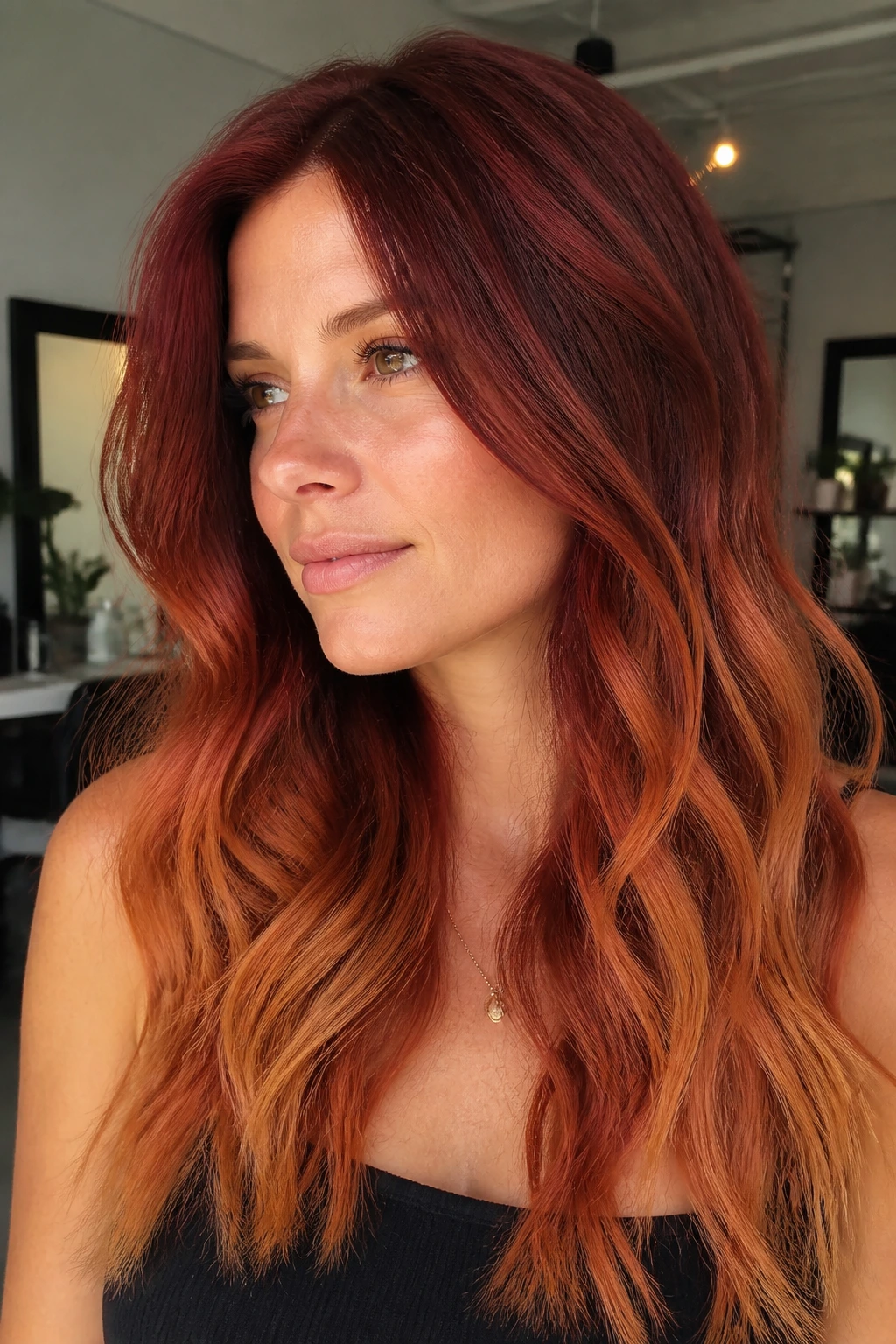
Choosing the wrong red for the base: A pale strawberry on dark brown hair can vanish, while a bright copper on a deep brunette base can look patchy. Match the shade to the starting level, not the Pinterest photo.
-
Lifting too high before adding red: Hair that’s pushed too pale can make red dye grab too loudly at the ends. The result is often a stripey or overly orange finish. A gentler lift usually gives a more even red.
-
Skipping glosses and moisture: Red fades, and dry hair makes fade look worse. If the ends feel rough, the color reads dusty. A gloss and a weekly mask fix more than people expect.
-
Using hot water all the time: It opens the cuticle and washes pigment out faster. Lukewarm water is a small change with a big payoff.
-
Ignoring the undertone: Copper, cherry, rosewood, and auburn are not interchangeable. If the undertone fights your skin or wardrobe, the whole look feels off even when the color itself is technically well done.
-
Going too bright everywhere: Full-head scarlet can be gorgeous, but only if you’re ready for the upkeep. Many people would be happier with a face frame, balayage, or rooted melt that gives the same energy with less stress.
Frequently Asked Questions
Which red hair look fades the slowest?
Deeper shades like mahogany, garnet, brick red, and cherry cola usually hang on longer because they sit closer to brunette depth. They still fade, but they fade into something softer instead of dropping off a cliff.
Can I get red hair without bleaching?
Yes, if your goal is auburn, mahogany, cherry cola, or a deep copper-brown on medium to dark hair. Strawberry blonde, rose gold, and pale apricot usually need lift to show properly, especially on dark bases.
Why does my red turn orange after a few washes?
That usually means the cooler red pigment washed out first, leaving the warm copper or gold behind. It can happen faster on porous hair, especially after heat styling or frequent shampooing. A color-depositing mask in the right undertone can help pull it back.
Do red tones work on curly and coily hair?
They do, and often better than people expect. Texture creates natural shadow and highlight, so even a single red shade can look multi-tonal. The main thing is keeping the hair moisturized, because dry curls make red look rough fast.
What makeup colors go best with red hair?
Copper and apricot hair usually like peach blush, bronze shadow, and warm nude lips. Cherry, garnet, and wine tones often pair better with berry, plum, soft brown liner, and a slightly cooler cheek color. Gold jewelry tends to flatter warm reds; silver can look sharp with cooler ones.
How often should I refresh the color?
Glosses usually need a touch-up every 4 to 6 weeks. Root coverage depends on growth, but 6 to 8 weeks is a common window. Semi-permanent reds may need a refresh much sooner if you wash often.
Is box dye a bad idea for red?
It can be, mostly because red from a box tends to be harder to remove and harder to soften if it comes out too loud. If you’re trying a subtle auburn or copper-brown, a demi-permanent or salon gloss gives you more control.
Can I go back to brunette after wearing red?
Usually yes, but it’s easier if the red was deeper and less lifted. Bright copper and strawberry tones can leave warmth behind, so a brunette return sometimes needs filler or an intermediate color step rather than a single dark dye job.
The Reds That Age Best
The red shades worth keeping are the ones that still look decent after the shine starts to leave. That sounds plain, but it’s the whole game. A color that looks gorgeous for four days and strange for four weeks is not a good deal, no matter how pretty the first photo is.
The best red hair looks for summer tend to have depth at the root, a little softness at the edges, and enough shine that the color never looks dusty. Choose copper if you want brightness, auburn if you want ease, cherry if you want drama, and rosewood or mahogany if you want a red that plays nicely with real life.
Pick the version you can actually maintain, then let the haircut and texture do some of the talking. That’s where red gets interesting.