



Fine hair and a flat, one-note blonde have never been friends. The wrong shade makes every gap between strands look wider, every dry end look thinner, and every part line look like it wandered off center. Soft blonde hair colors for fine hair do the opposite: they blur the scalp line, keep a little depth at the root, and let the hair move instead of exposing every strand like a wire.
The trick is not chasing the palest blonde in the room. It’s choosing tones that reflect light in thin layers — beige, champagne, pearl, butter, sand, mushroom — and placing them with enough restraint that the color looks expensive rather than bleached to death. On fine hair, chunky contrast can turn stripey fast. Tiny ribbons, soft root shadows, and a few face-framing pieces usually do more for fullness than an all-over bright blonde ever will.
I keep coming back to that because the difference is obvious the second the hair moves. One version swings with dimension. The other just sits there and announces how little hair is on the head. The shades below lean into softness, but they’re not timid. They’re chosen because they make thin or low-density hair look thicker, lighter around the face, and less fragile at the ends — which is really the whole game.
Why These Shades Earn Their Place on Fine Hair
-
They blur the scalp line: A soft root or root melt stops the part from opening up like a white stripe, which matters more on fine hair than most people realize.
-
They build visual density: Beige, pearl, and champagne tones create tiny shifts in light, so the eye reads “more hair” instead of “one pale sheet.”
-
They grow out more cleanly: Rooted blondes and diffused balayage usually buy you 6 to 10 weeks before the line looks sharp enough to bother you.
-
They keep the ends from looking frail: Over-lightened, icy ends can look stringy on fine hair; softer blondes leave a little visual weight in the mid-lengths and tips.
-
They’re easier to adjust: A champagne gloss can go cooler, warmer, or softer without changing the whole color story.
1. Champagne Beige Blonde
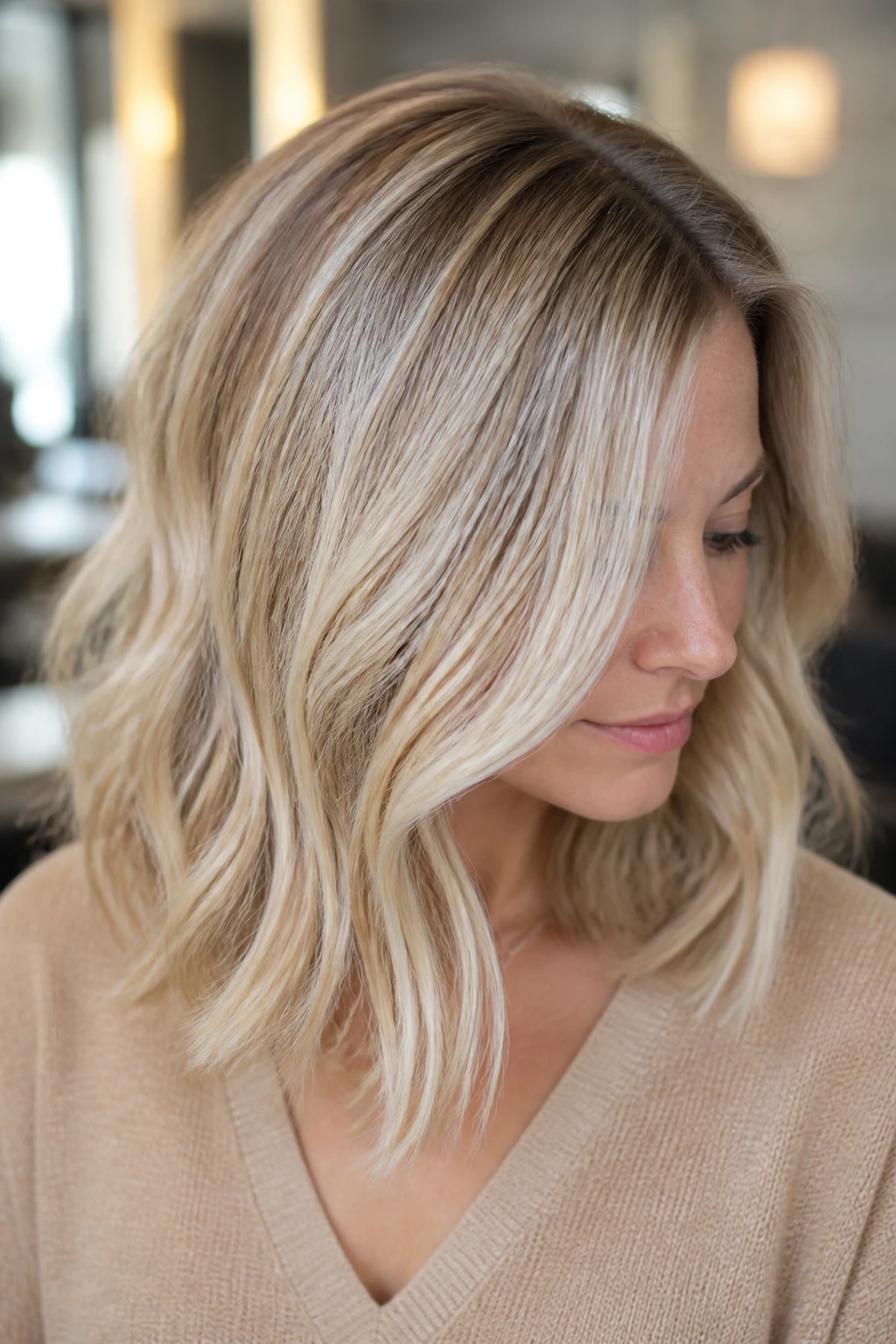
Champagne beige is the shade I reach for when someone wants brightness without that overwhitened, brittle look. The beige keeps it grounded, and the champagne tone catches light in a way that makes fine hair look a touch denser at the crown and around the part. It’s polished, but not stiff.
Ask for micro-babylights through the top, a root shadow 1 to 2 levels deeper than the mids, and a beige gloss at the bowl. On a level 6 to 8 base, that combination usually reads soft rather than stripey. I like this on shoulder-length cuts and airy lobs because the color moves when the hair bends.
2. Creamy Butter Blonde
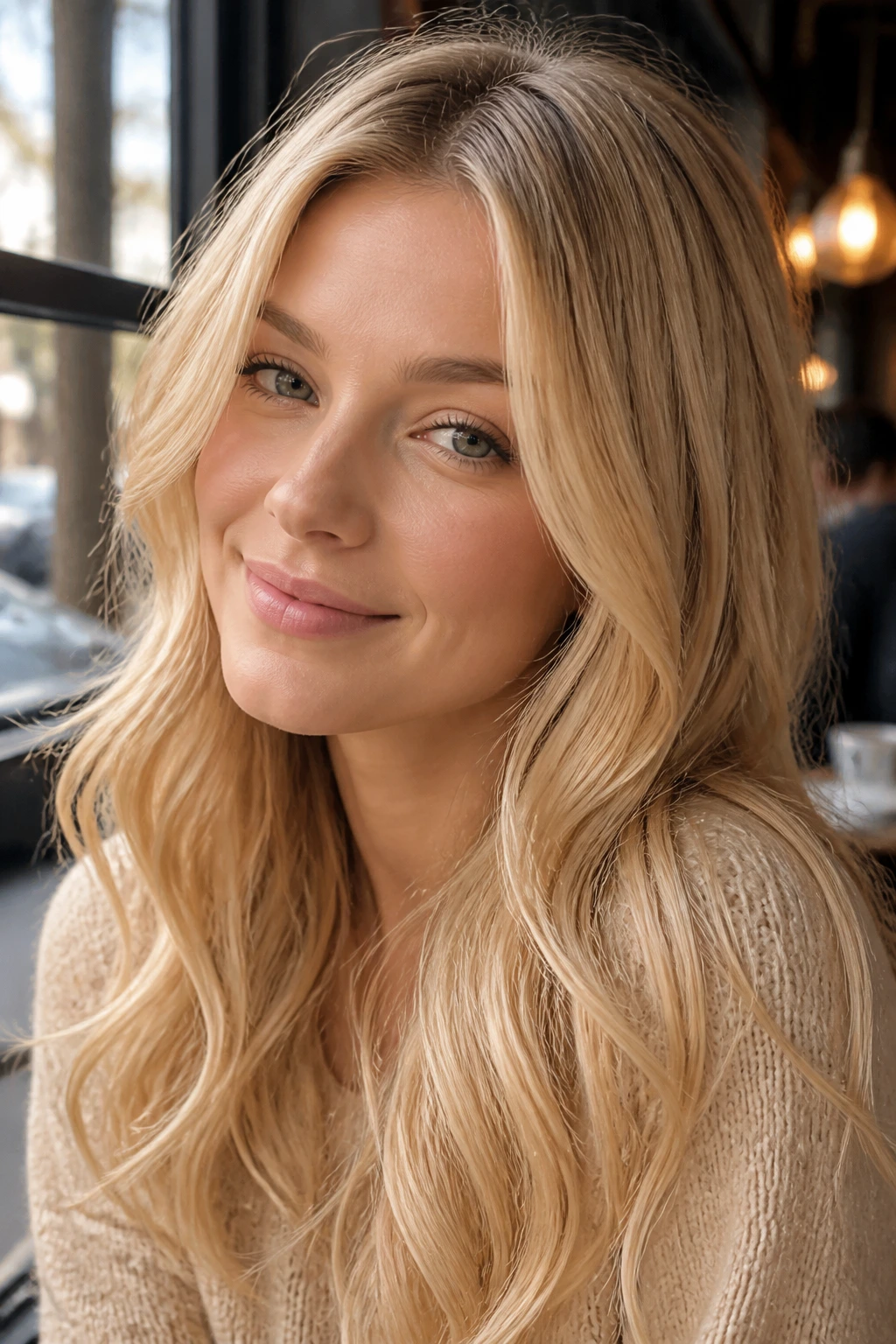
Why does butter blonde work so well on thin strands? Because the warmth fills in the gaps the eye wants to notice. Fine hair can go flat and cold fast; creamy butter brings back that plush, soft-focus look without forcing the hair all the way to pale platinum.
This version is best when your natural color lives around level 7 and you want something that feels sunny but not brassy. Keep the highlights fine and clustered, then glaze with a soft gold-beige toner. If the tone gets too yellow, one violet shampoo wash a week is enough — more than that and the creaminess starts to disappear.
3. Rooted Baby-Light Blonde
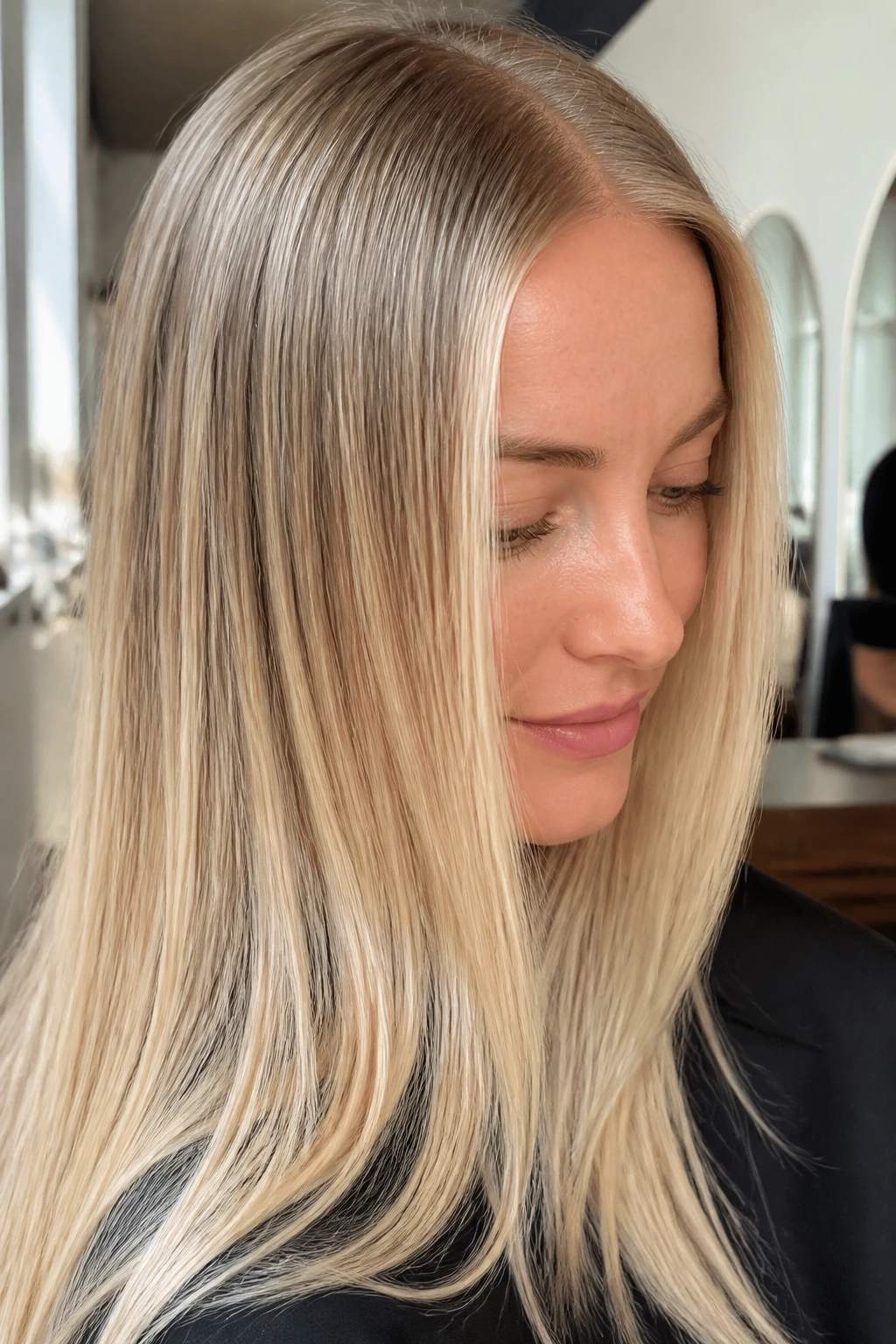
This is the blonde I recommend when a client wants brightness but hates the see-through effect that comes from larger, chunkier foils. Rooted baby-lights use tiny sections placed close together, then leave a soft root so the scalp doesn’t show every time the hair shifts.
-
Best for: fine, straight, or lightly wavy hair that gets limp near the crown.
-
Ask for: a soft level 7 root, baby-fine highlights, and no wide ribbons in the top layer.
-
Why it works: the tiny woven pieces make the hairline read fuller, almost like a fabric with a tighter weave.
It’s one of the safest bets if you want blonde that stays believable two months after the appointment.
4. Mushroom Blonde
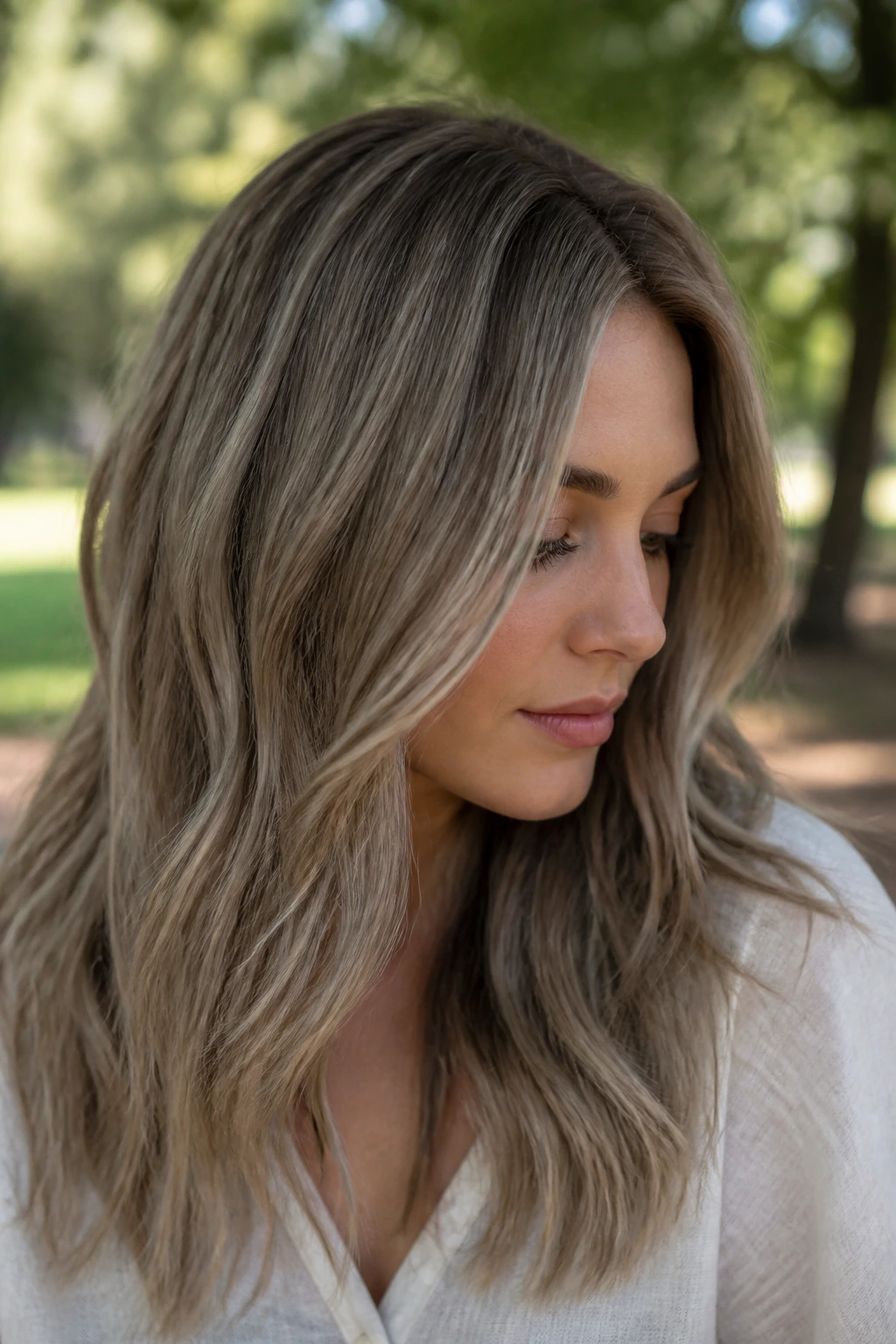
Mushroom blonde has more smoke than shine, and that’s why it flatters fine hair. The taupe-beige base gives the eye somewhere to rest, so the hair doesn’t look like a single pale sheet. I love it on cool or neutral skin tones, especially when someone wants softer contrast rather than obvious highlights.
Unlike icy blondes, mushroom blonde doesn’t ask the hair to go all the way to level 10. It usually lives in that level 7 to 9 range, which is kinder to fragile ends. A gloss with beige and ash in the right proportion keeps it from going muddy. Too much ash, though, and it can look dusty. That’s the line to watch.
5. Sandy Beige Blonde
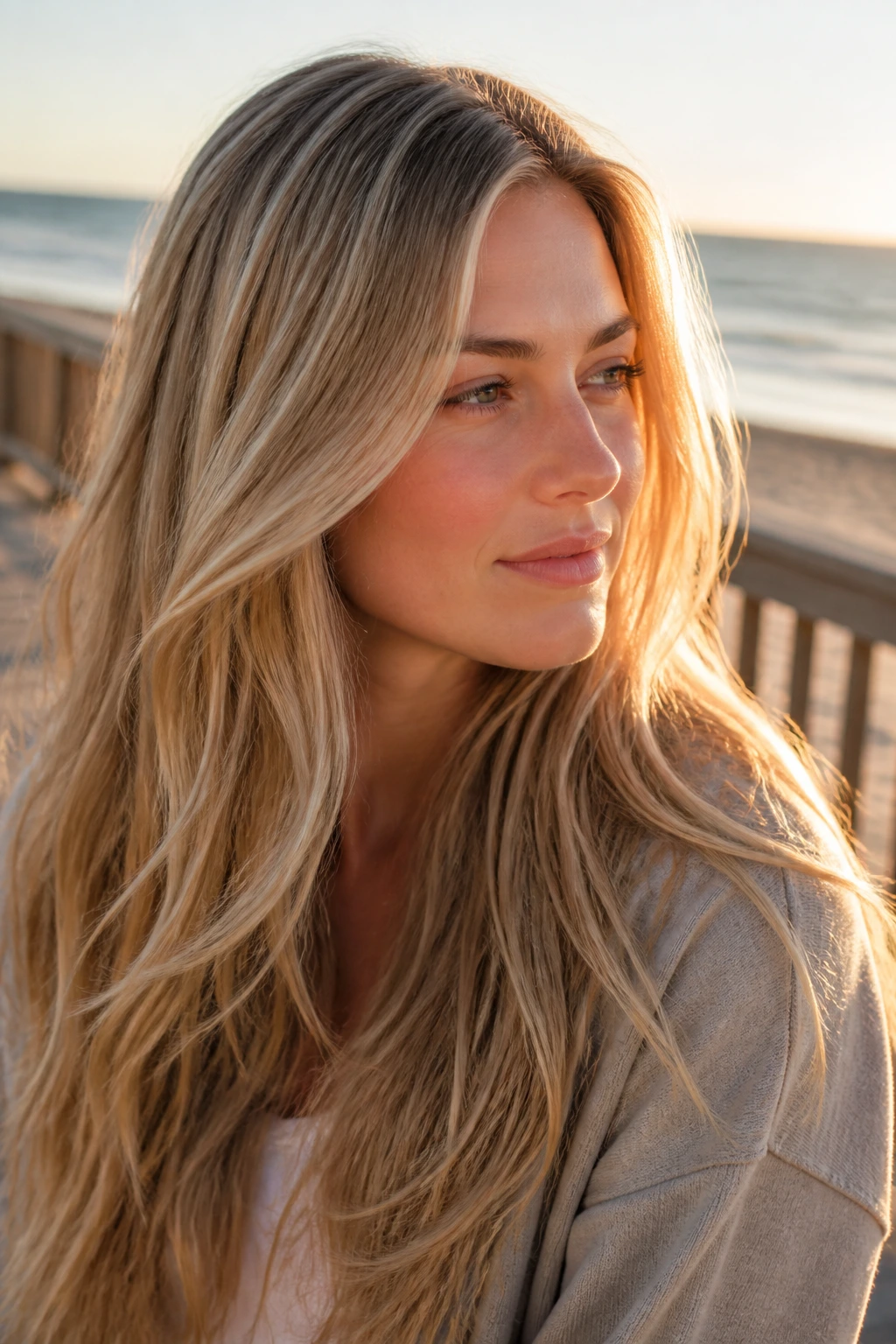
Sandy beige is the beach-blonde version that still respects fine hair. It has warmth, but not the sticky orange kind, and it keeps enough softness at the root to avoid that blown-out salon look that can make thin hair seem even thinner. Think of it as a dry, sunlit neutral rather than a golden one.
This shade works especially well when the cut has movement — long layers, soft face pieces, or a collarbone lob. The color doesn’t need heavy contrast to show up. A few brighter ribbons around the front and crown, plus a light beige gloss through the ends, do the job. Very little drama. That’s the point.
6. Vanilla Cream Blonde
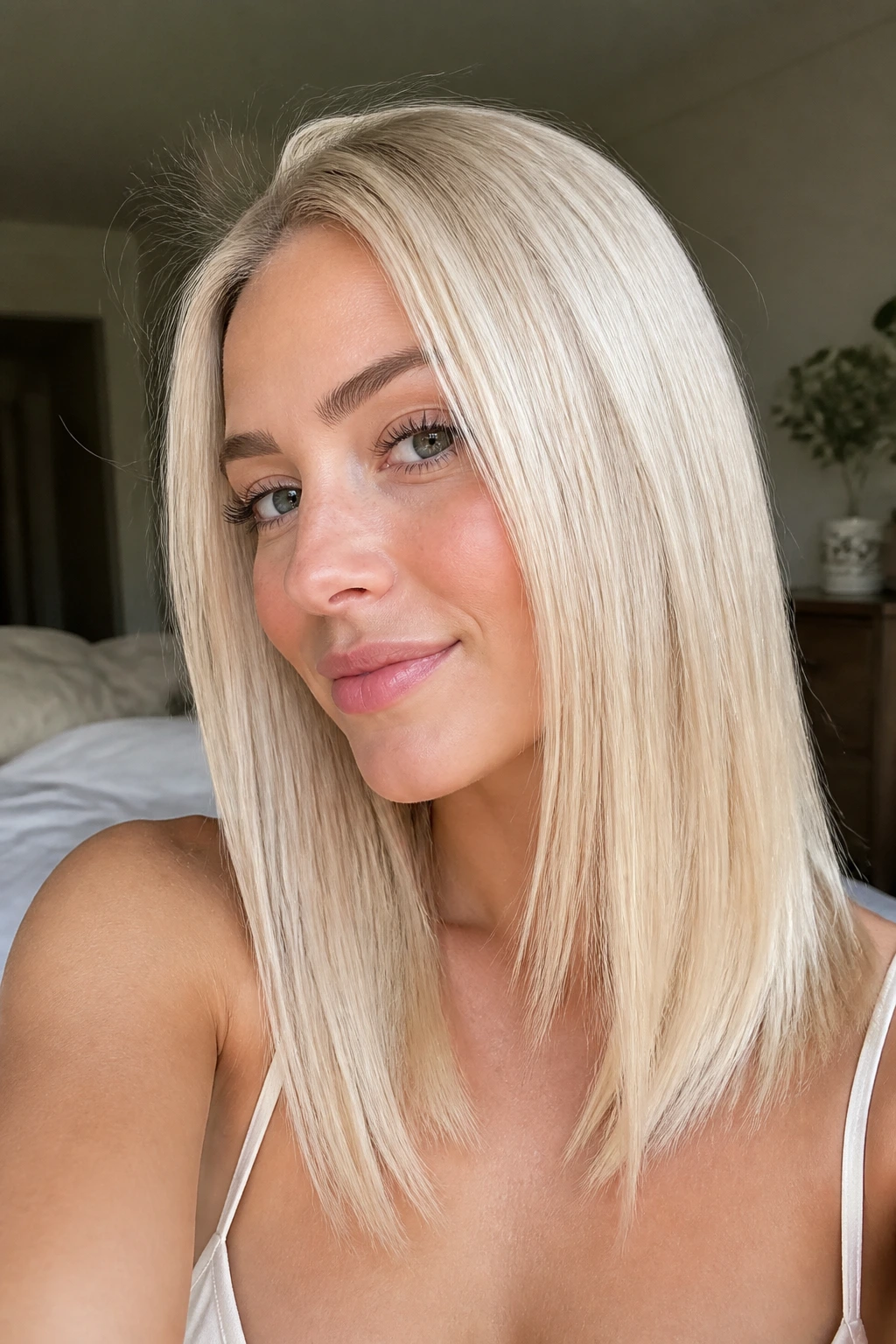
What makes vanilla cream different from plain pale blonde is the milkiness. It’s light, yes, but it has a soft white-beige veil that keeps the color from looking harsh against fine hair. If your strands are delicate and you want brightness without a crunchy edge, this is a strong choice.
-
Best on: lighter natural bases or hair that can lift cleanly without major breakage.
-
Watch for: porous ends that grab toner fast and go flat, so the colorist should check the bowl often.
-
Maintenance: gloss every 4 to 6 weeks if you want it to stay creamy rather than yellow.
It looks especially good on blunt bobs and straight styles, where the shine line is crisp and clean.
7. Honey Veil Blonde
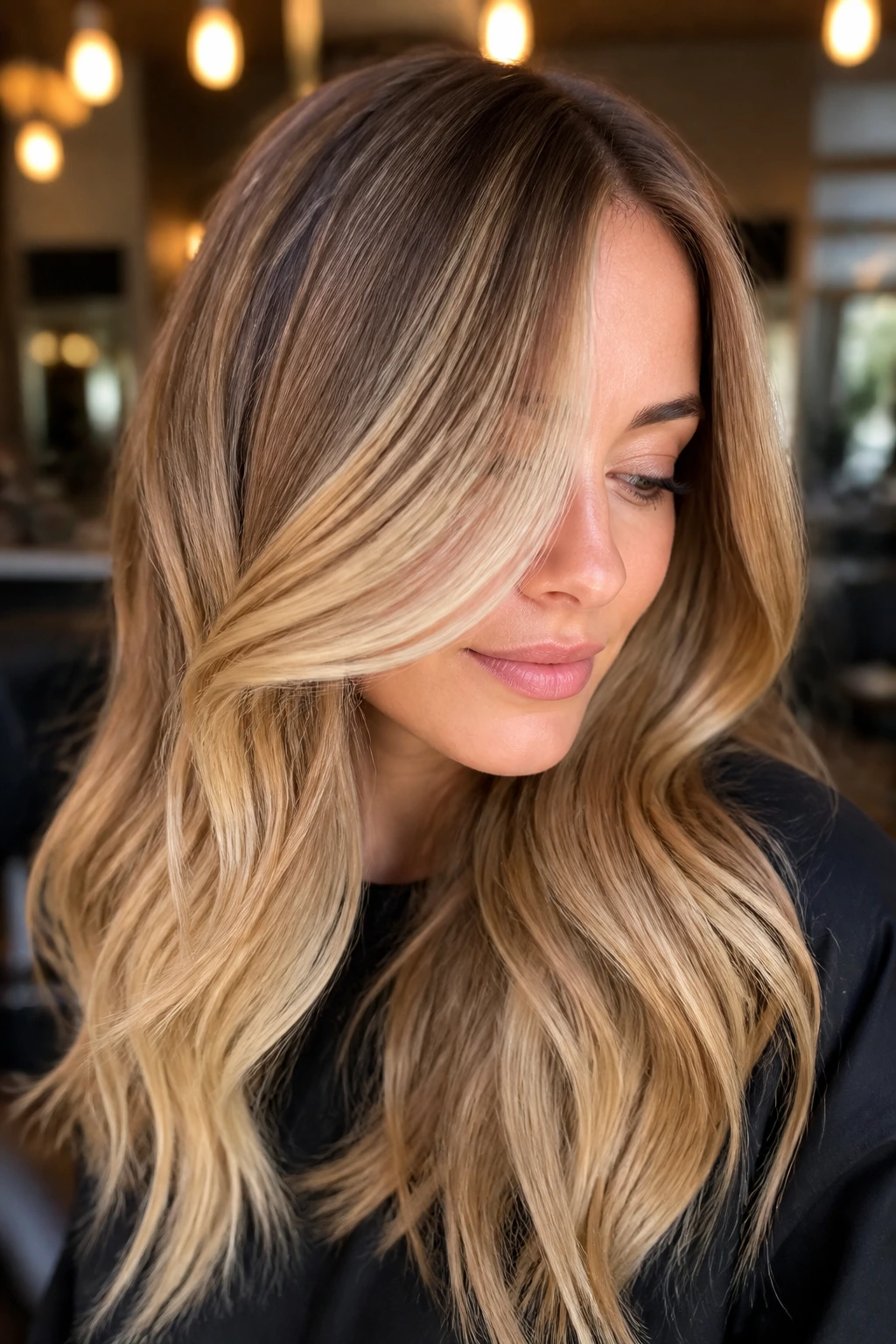
Honey veil blonde is warmer, but not loud. The honey sits over the lighter pieces like a thin glaze, which is exactly what fine hair needs when it starts looking washed out under cooler tones. The warmth gives the hair a little visual weight.
This shade works beautifully on medium brown bases that lift to a soft level 8. Ask for thin ribbons through the mid-lengths and a honey-beige toner, not a deep gold one. If the blonde gets too warm, it can read brassy fast. Keep the root slightly deeper and the honey softly scattered, and the whole thing stays airy instead of heavy.
8. Pearl Blonde
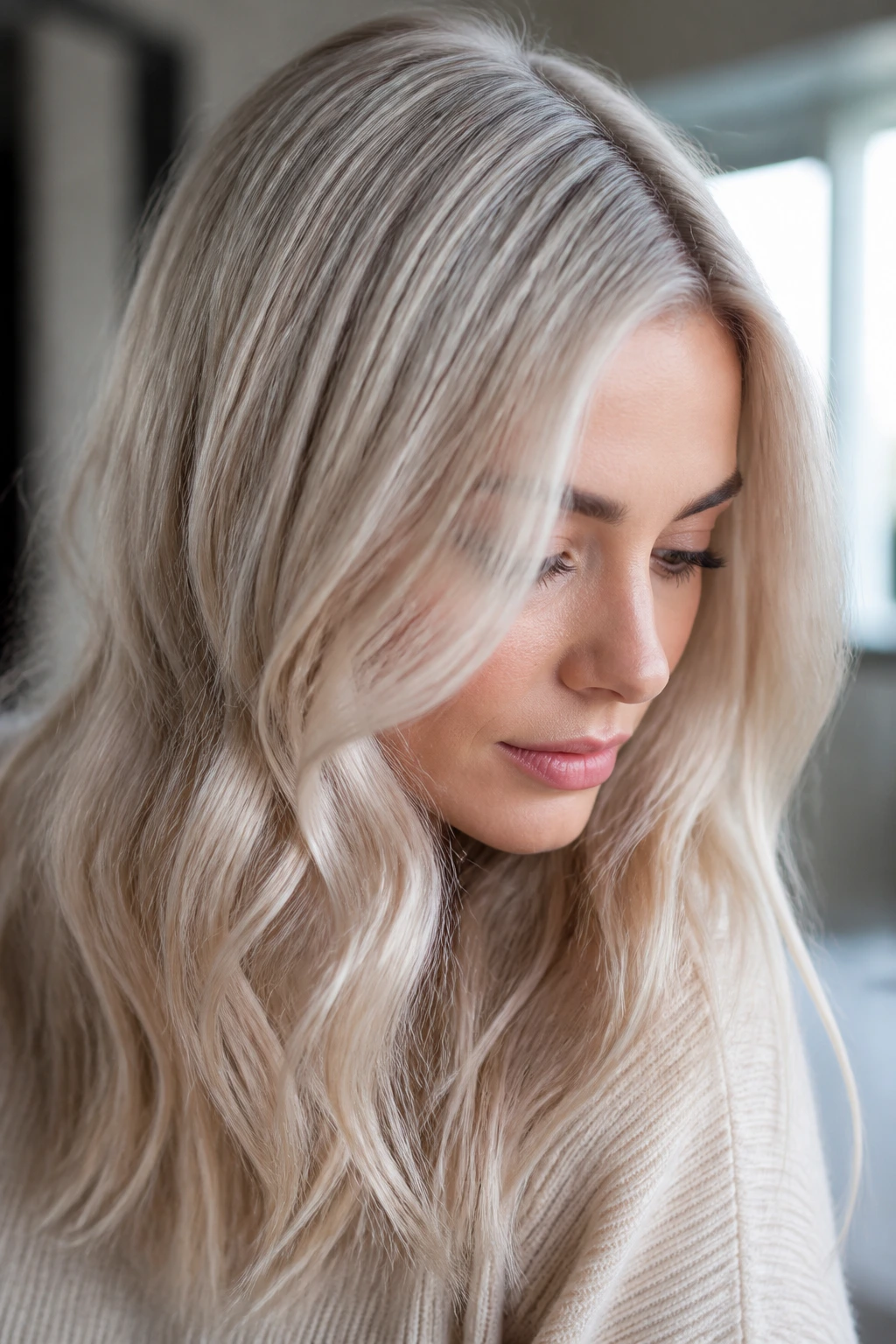
Pearl blonde has that cool, shell-like sheen that can look very sharp on fine hair if it’s done with restraint. The important part is restraint. A little pearl goes a long way; too much ash and the hair starts to look gray in bad indoor light.
I like pearl blonde on finer textures that already have a smooth cuticle, because the shine is what sells it. Ask for tiny highlights and a beige-violet gloss rather than a strong silver toner. On porous hair, the pearl tone can grab fast, so the salon timing matters. Five minutes too long and the color loses its softness.
9. Scandi Hairline Blonde
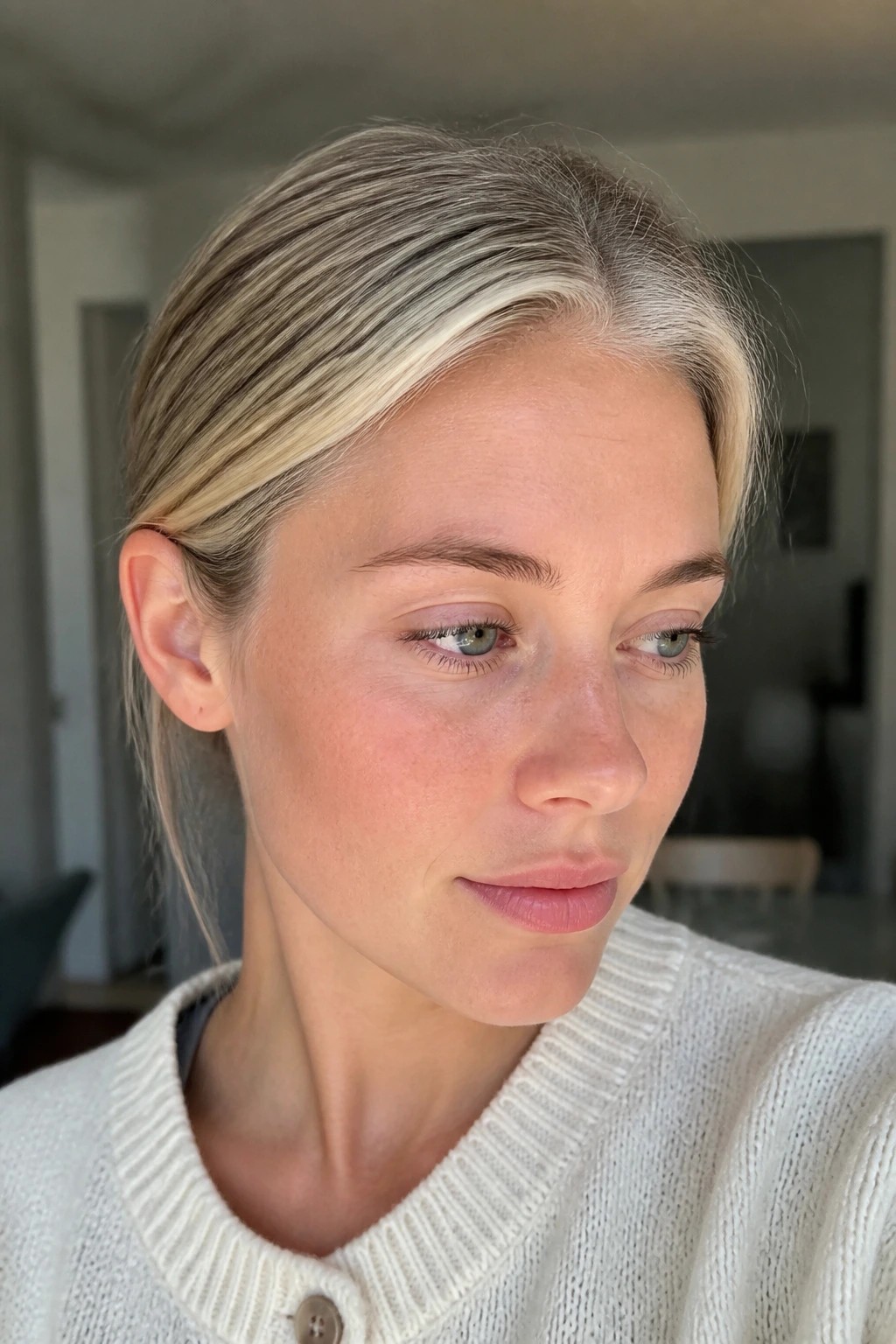
Scandi hairline blonde is less about overall brightness and more about where the light lands. The hairline and part are taken lighter, while the rest of the head stays softer and more natural. On fine hair, that’s smart. It puts attention where the eye goes first and lets the back keep some density.
This is a good fit if you wear your hair up often or tuck it behind your ears. The bright front pieces create lift around the face, even when the rest of the style is plain. Ask for 8 to 12 micro pieces around the hairline and softer beige through the back. It’s a small move that changes the whole read of the hair.
10. Oyster Blonde
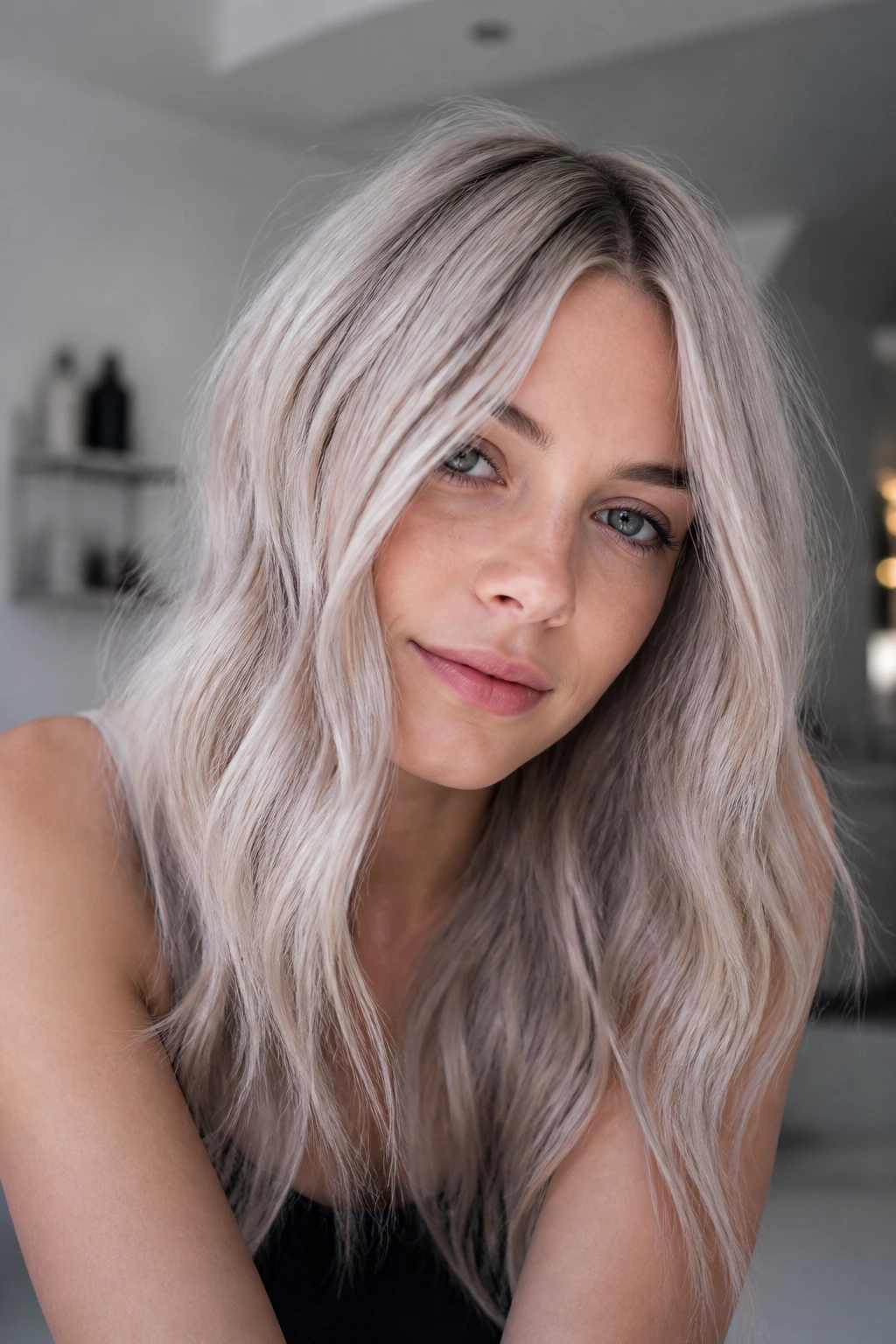
Oyster blonde has a cool, smoky finish that sits between beige and silver. It’s a good answer for people who want blonde that feels modern without the stiff, white-platinum edge. Fine hair often looks more expensive in this shade because the soft gray-beige undertone prevents that overlit, hollow look.
The catch is toner control. Oyster blonde needs a careful hand, because too much ash can flatten the color and make it look dull. I prefer it on hair that lifts well to level 9, then gets softened with a cool beige gloss. On thin strands, that little bit of smoke is what gives the hair shape.
11. Golden Latte Blonde
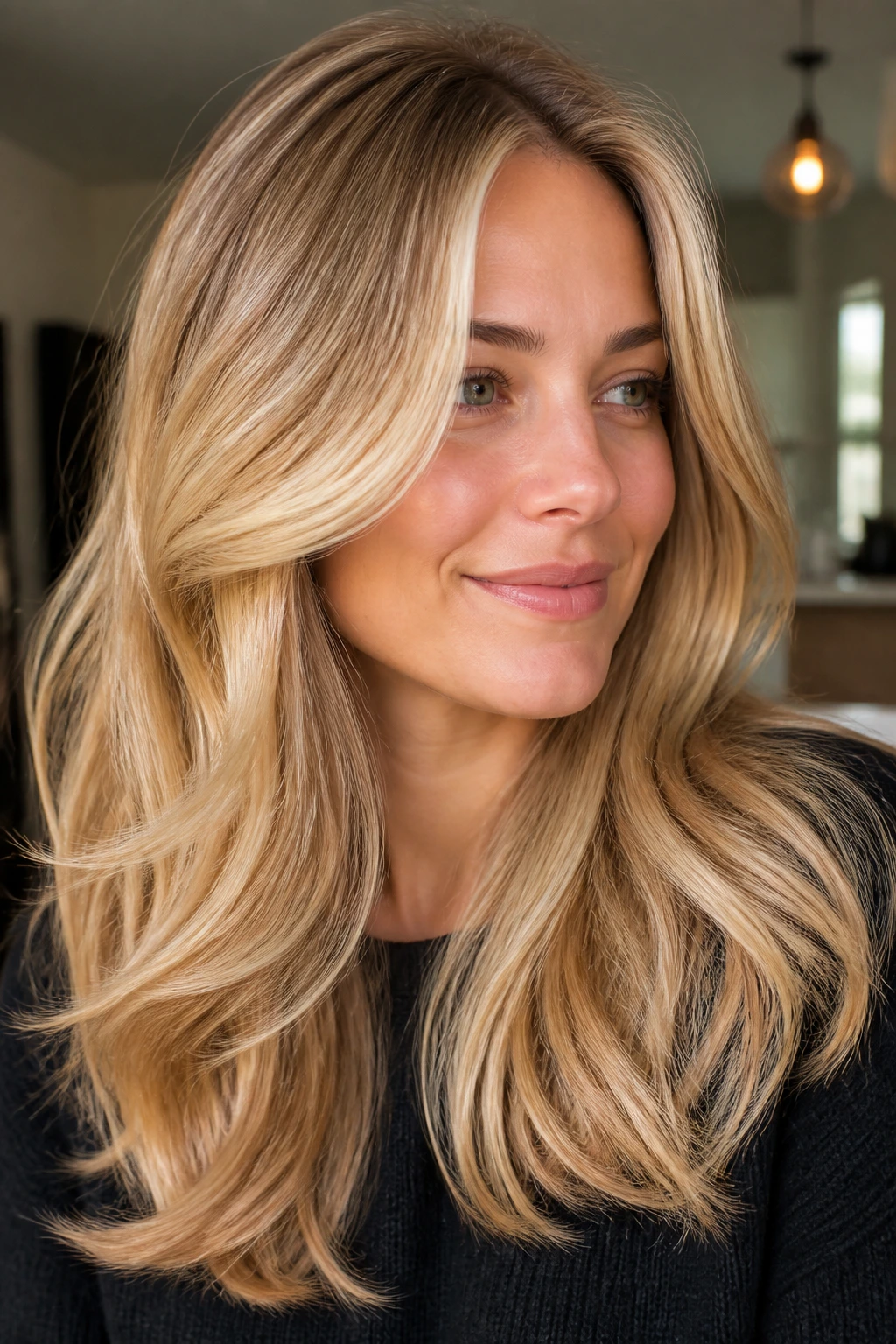
Golden latte is what happens when blonde remembers it has warmth, but doesn’t go full caramel. It’s a creamy gold-beige shade that makes fine hair look plush instead of fragile. I like it for medium bases because it doesn’t require extreme lift to feel bright.
-
Ask for: soft ribbons through the crown and face frame, with a level 7 or 8 base left intact.
-
Why it helps fine hair: the warmth makes the hair reflect light in broader, softer patches, so the ends don’t look wispy.
-
Best styling partner: a loose blowout or a bend with a 1-inch iron; straight ironed to the skull, it loses some of its softness.
If your hair has a tendency to look gray under ash blondes, this one is usually the fix.
12. Butterscotch Blonde
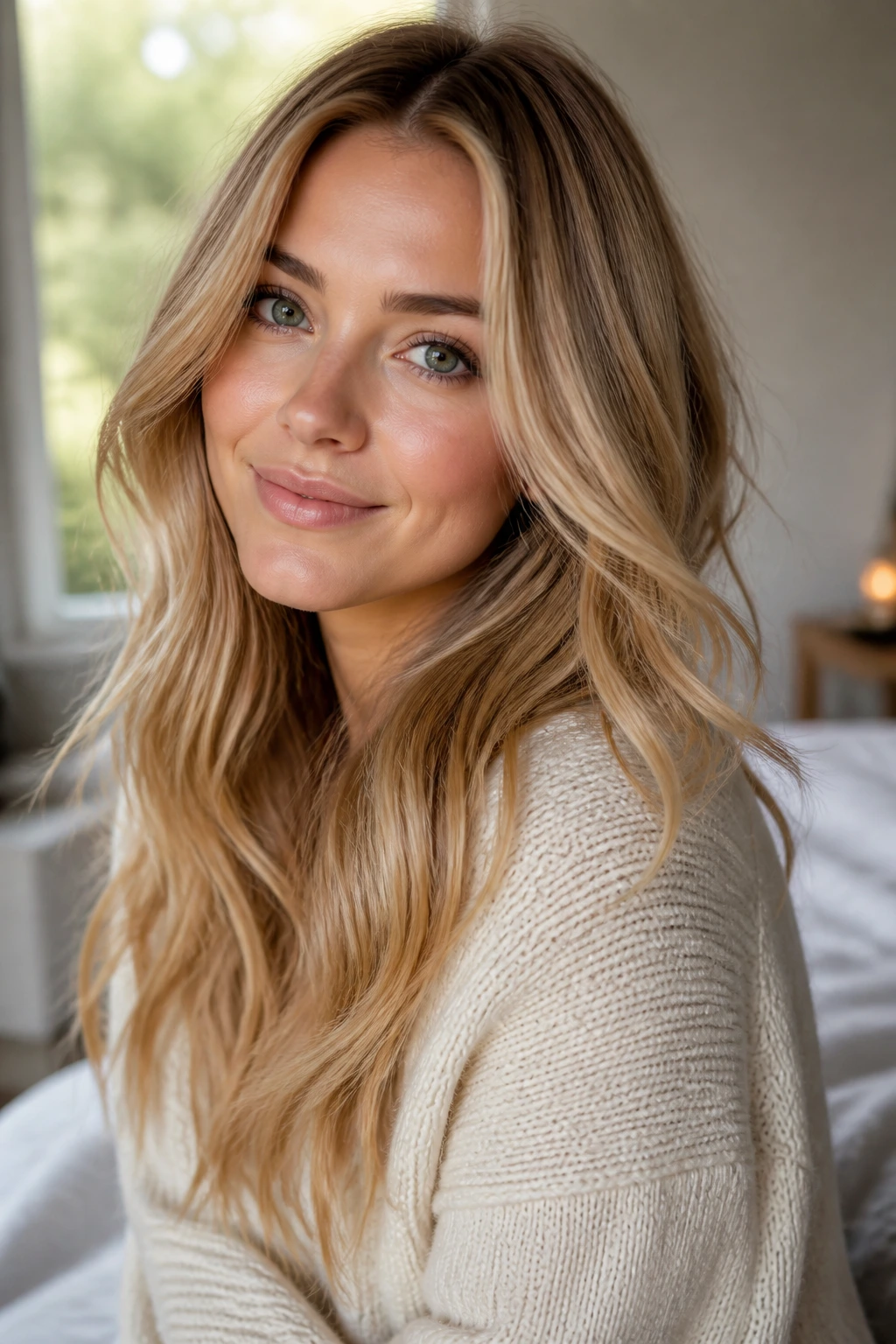
Butterscotch blonde gives fine hair more depth without forcing it into super-pale territory. That matters. A lot of thin hair breaks long before it reaches platinum, and butterscotch lets you stay within a softer lift range while still reading as blonde.
Unlike beige or pearl shades, this one leans richer and a little toastier, so it works best on darker blondes and light brunettes. Keep the highlight placement fine, not chunky, or the contrast gets loud fast. A neutral-gold toner keeps the color from going orange. It’s one of my favorite choices for someone who wants warmth but doesn’t want the hair to look overprocessed.
13. Dusty Champagne Balayage
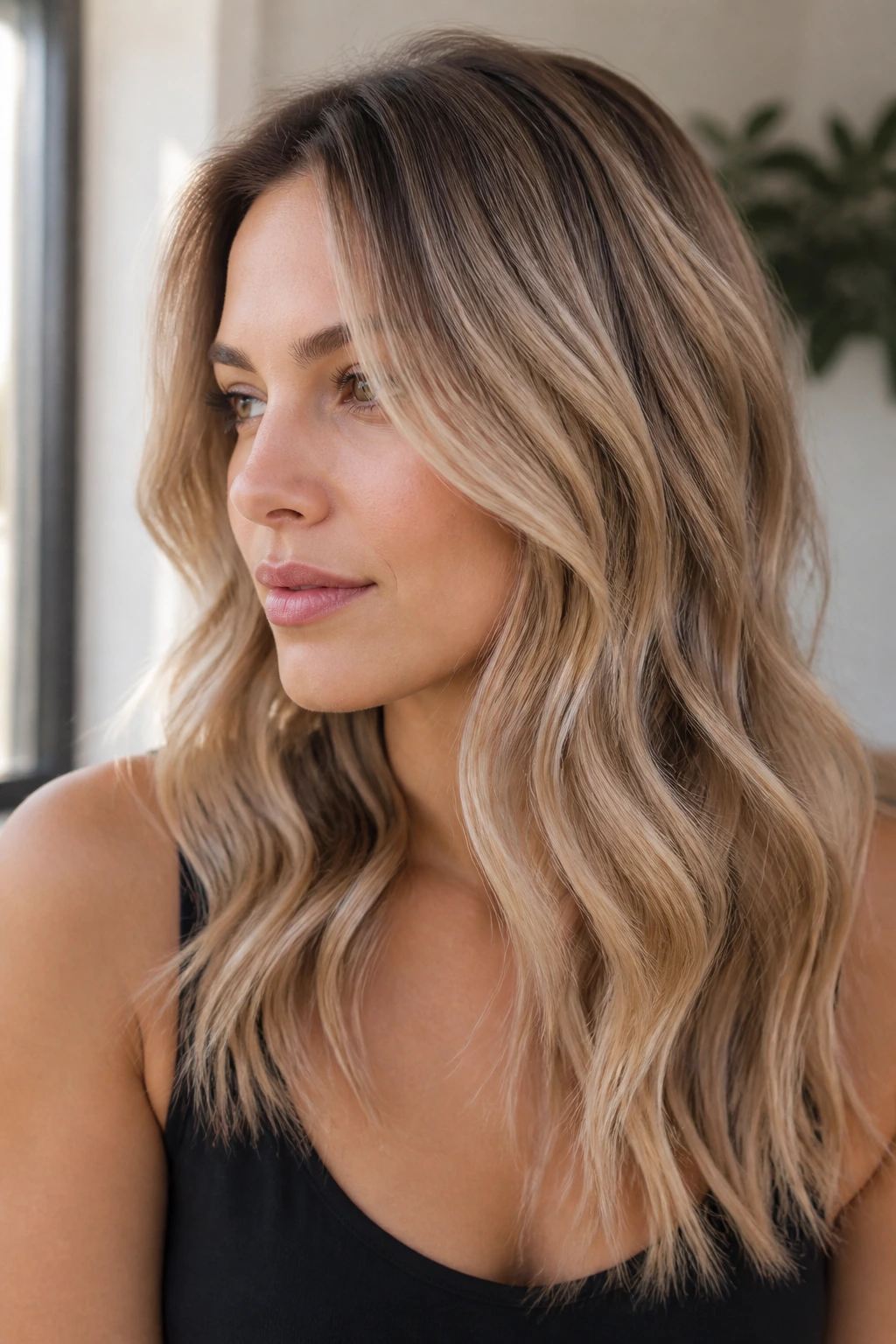
Dusty champagne balayage is for the person who wants light movement rather than obvious blocks of color. The “dusty” part is the magic; it softens the shine just enough that the blonde doesn’t call attention to every thin spot. On fine hair, that translates to more texture and less visual noise.
This shade works best when the balayage pieces are painted with a feather-light hand and blended well at the mid-lengths. Keep the ends a shade lighter than the root, but not dramatically so. The best versions look like light has settled across the hair in thin layers, not like the hair was striped with a brush. That’s a good thing.
14. Taffy Blonde
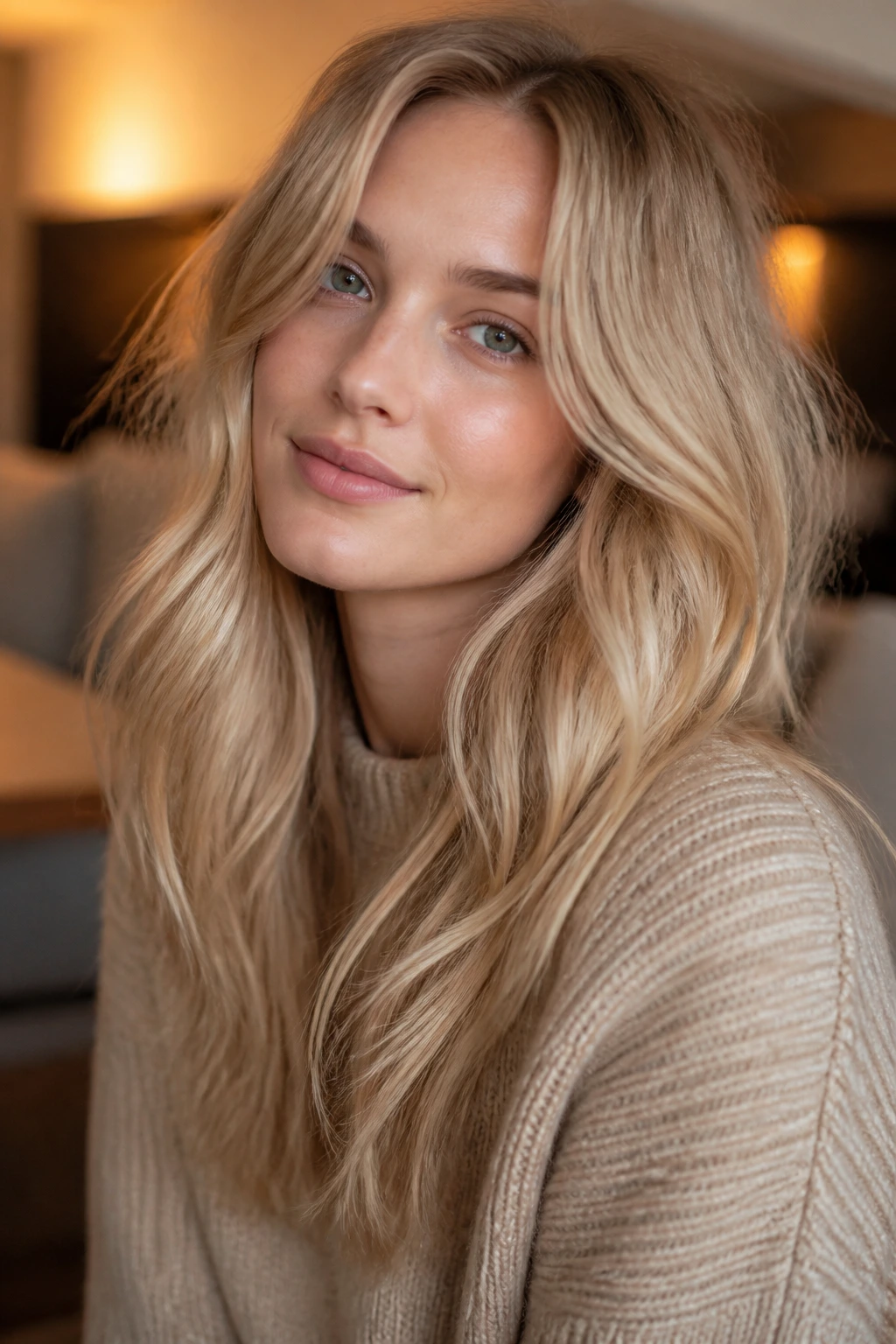
Taffy blonde has a faint rosy-beige warmth that can rescue fine hair when traditional blonde makes it look washed out. It’s not pink in a cartoon way. It’s more like cream with the tiniest blush under it, which gives the strands a softer edge and a little more life.
If your skin tone gets drained by ash or ultra-cool blonde, this is worth a look. Ask for a beige base with a warm glaze, not a copper glaze. The best versions are subtle enough that people don’t point to the color; they just notice the hair looks fuller and healthier. That’s usually the better compliment anyway.
15. Beige Money Piece Blonde
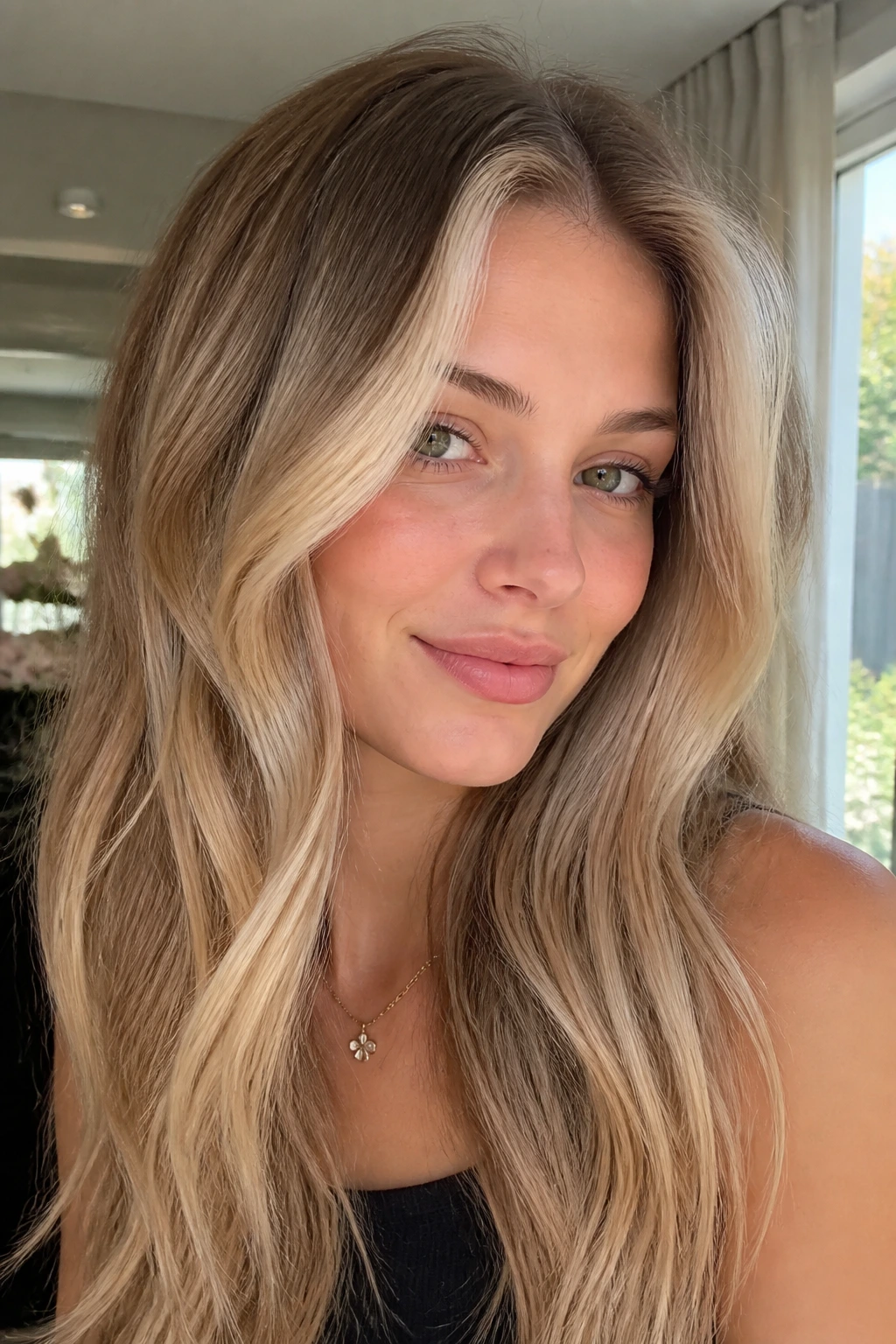
A beige money piece gives you brightness where it counts and leaves the rest of the head alone. For fine hair, that’s a smart move. You get the face-framing lift people want from blonde, but you don’t have to over-light the entire crown just to feel lighter around the face.
-
Best for: people who wear center parts, curtain bangs, or loose waves.
-
Ask for: one to two shades lighter around the front, with the rest of the color kept soft and beige.
-
Why it works: the brighter face frame distracts from sparse density elsewhere and makes the haircut read fuller.
I like this when the budget or the hair condition won’t support a full highlight session. It gives a lot of mileage for a small amount of color.
16. Wheat Blonde
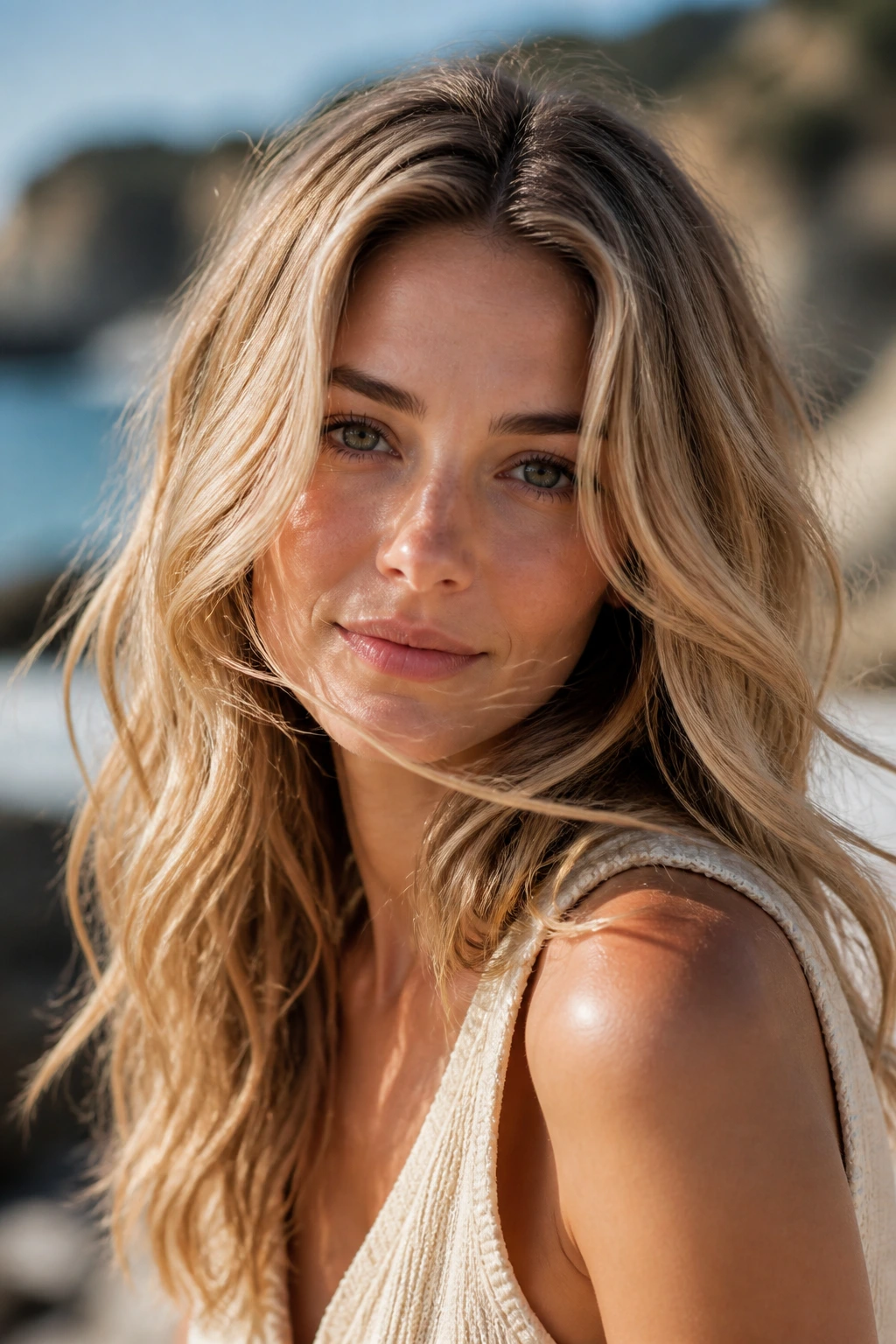
Wheat blonde is the quietest blonde in the group, and sometimes that’s the best choice. It looks natural, almost like the hair has been lightened by sun and time rather than bleach. On fine hair, that natural quality matters because it keeps the color from screaming “processed” every time the wind moves the ends.
Unlike sharper blondes, wheat blonde keeps a little brown-gold depth in the mids. That depth makes the hair read thicker. I like it on fine hair that has some natural warmth already; if the base is cooler, the result can go flat unless the gloss is adjusted carefully. It’s understated, but not boring.
17. Milk Tea Blonde
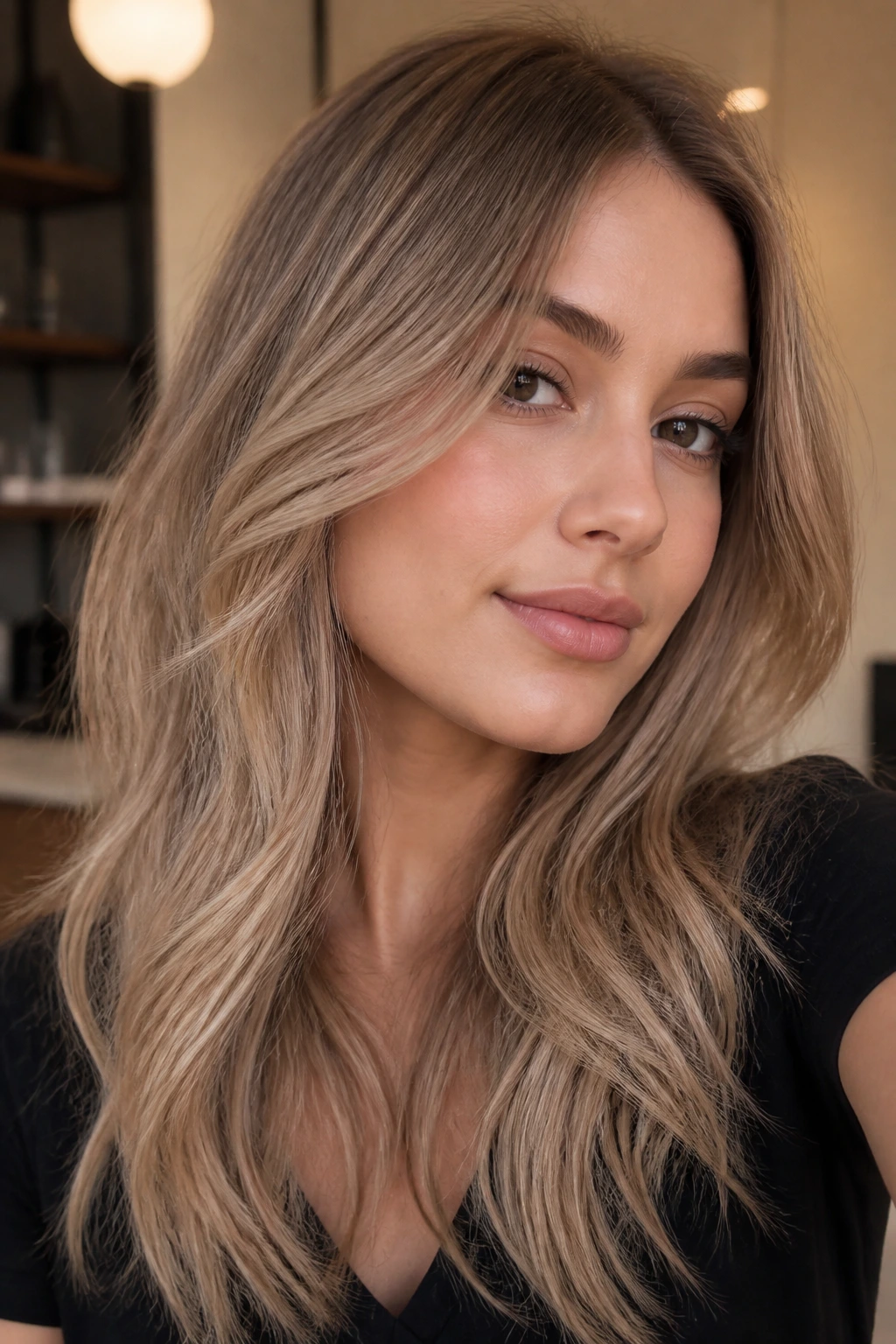
Milk tea blonde sits right in that soft zone between blonde and beige brunette. It’s muted, creamy, and forgiving on hair that tends to look fragile when pushed too light. If you want the color to whisper instead of shout, this is the one.
-
What to ask for: a soft beige melt with low contrast, usually starting around a level 7 root.
-
Who it suits: fine hair that needs more shadow than brightness, especially on longer lengths.
-
Watch for: going too ashy; milk tea should feel creamy, not flat or gray.
I like milk tea blonde because it keeps the hair looking full even when the style is relaxed and air-dried. No harsh lines. No brittle-looking ends.
18. Sunlit Cream Balayage
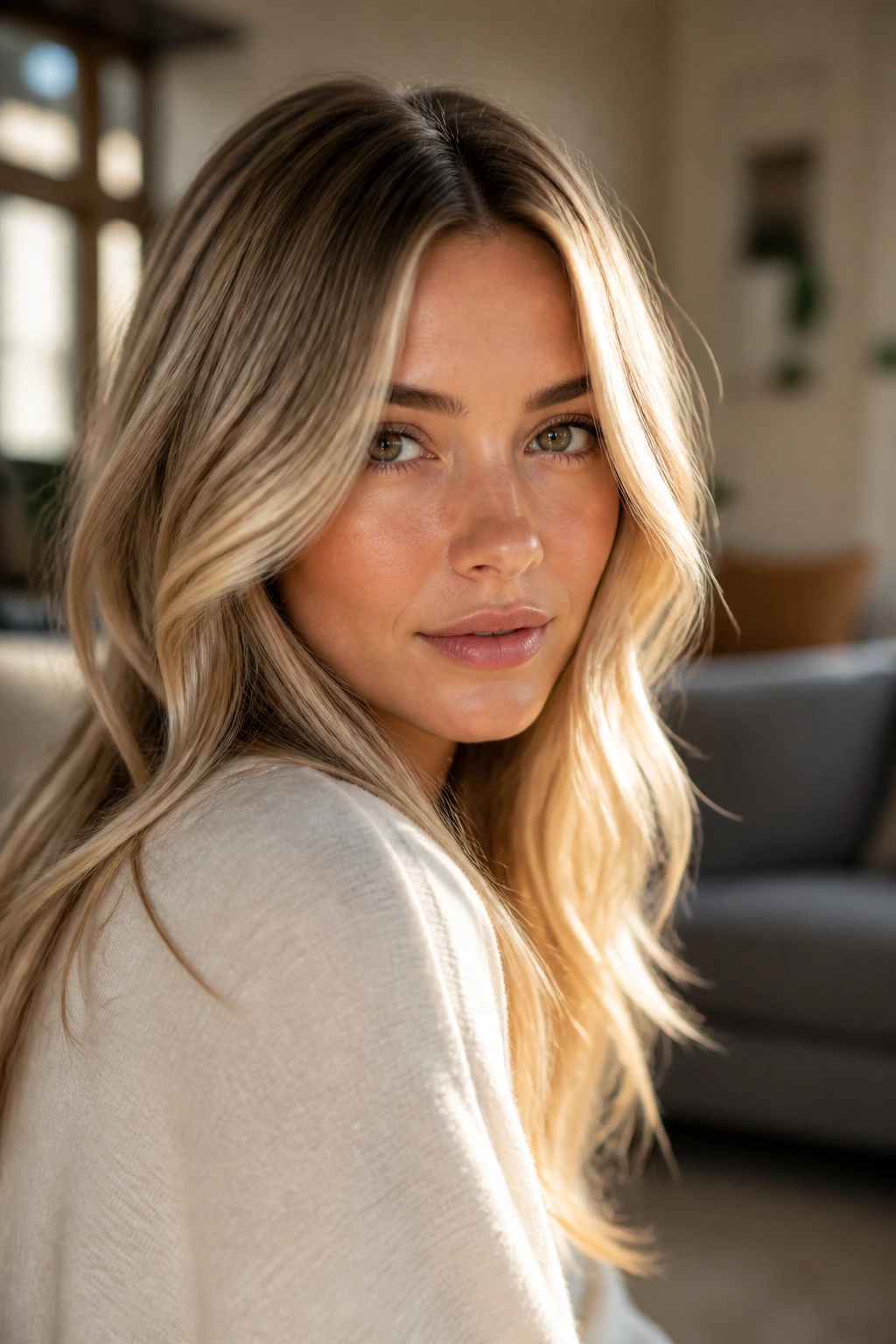
Sunlit cream balayage is one of the easiest ways to get brightness without sacrificing softness. The color sits in airy ribbons, so fine hair gets pockets of light instead of one blanket of blonde. That change in spacing matters. It makes the hair catch movement, not just color.
A good version has brighter ends, a muted root, and very soft blending at the transition. Ask for fewer, finer painted sections rather than big panels. On fine hair, the smaller placement looks richer. It also grows out more gracefully, which is handy if you’re not living in a salon chair every six weeks.
19. Almond Blonde
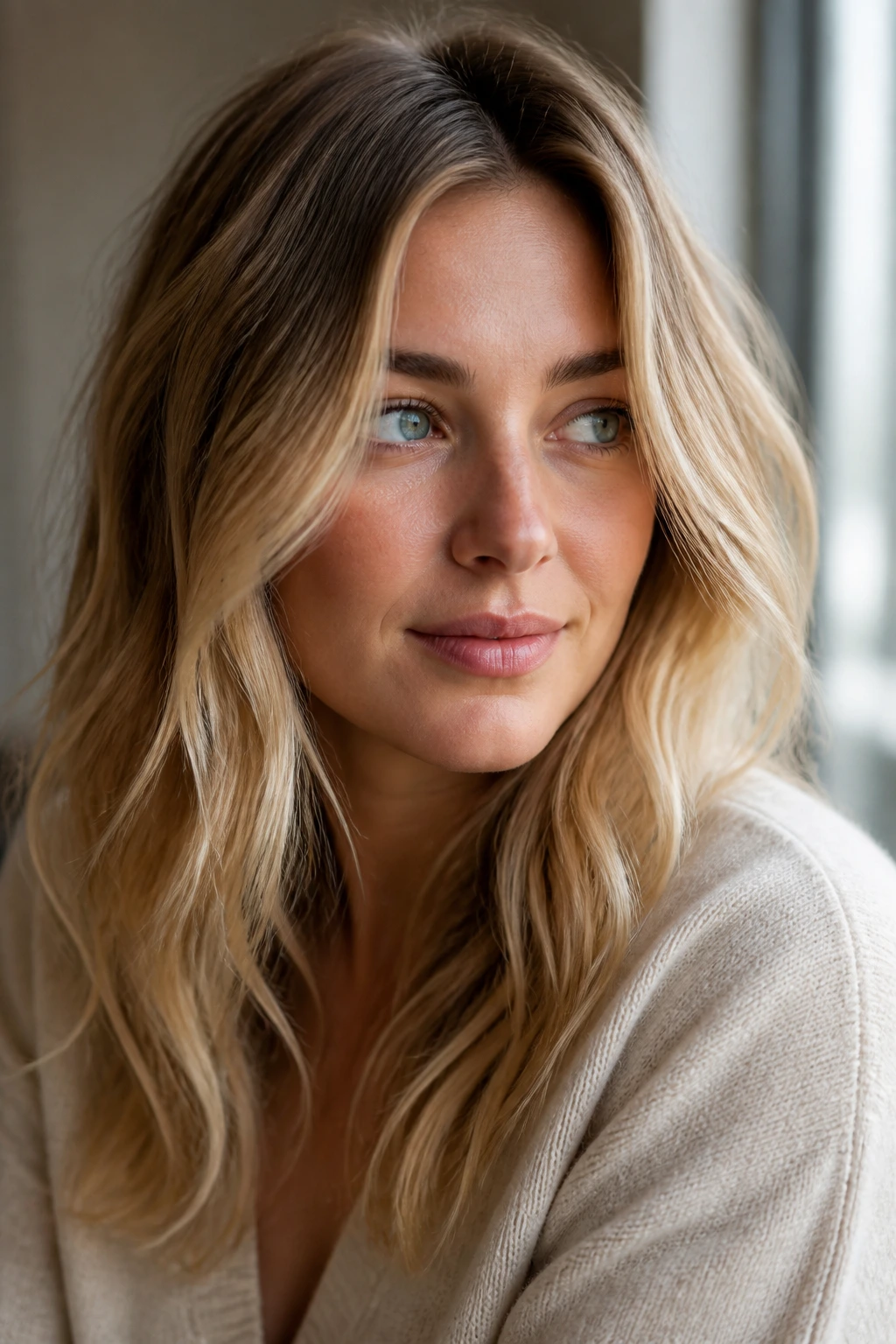
Almond blonde is a nutty beige blonde with enough depth to keep fine hair from looking hollow. It’s softer than golden blonde, cooler than butter blonde, and easier to wear than full ash. That middle ground is where a lot of thin hair does its best work.
This shade is especially kind to people moving from brunette into blonde slowly. It doesn’t require a shockingly pale lift, which means less stress on fragile ends. I’d ask for a beige gloss with a hint of warmth through the mids and a gentle root shadow. The result should look smooth, not painted.
20. Ice Cream Blonde
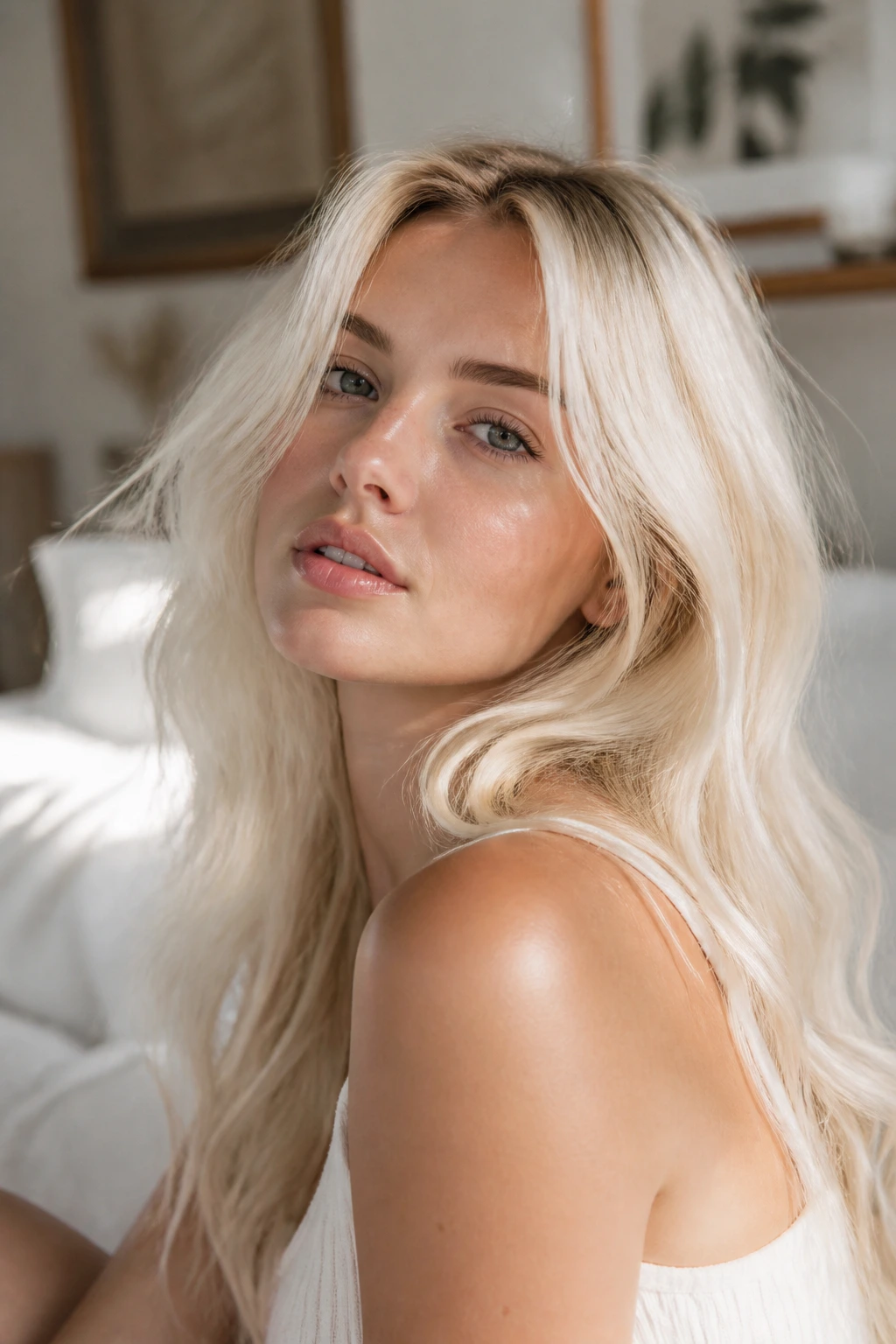
Ice cream blonde is pale, but the creamy base keeps it from turning chalky. That distinction matters on fine hair. Pure white-blonde can make the hair look transparent; a creamy pale blonde still looks soft, bright, and touchable.
This shade usually asks for more maintenance than the deeper blondes. The toner has to stay clean, and the ends need moisture or they start looking frayed. I like it on strong fine hair — not hair that’s already snapping at the ends. If your hair tolerates lightening well, ice cream blonde can be gorgeous. If it doesn’t, the damage shows fast.
21. Bronde Melt
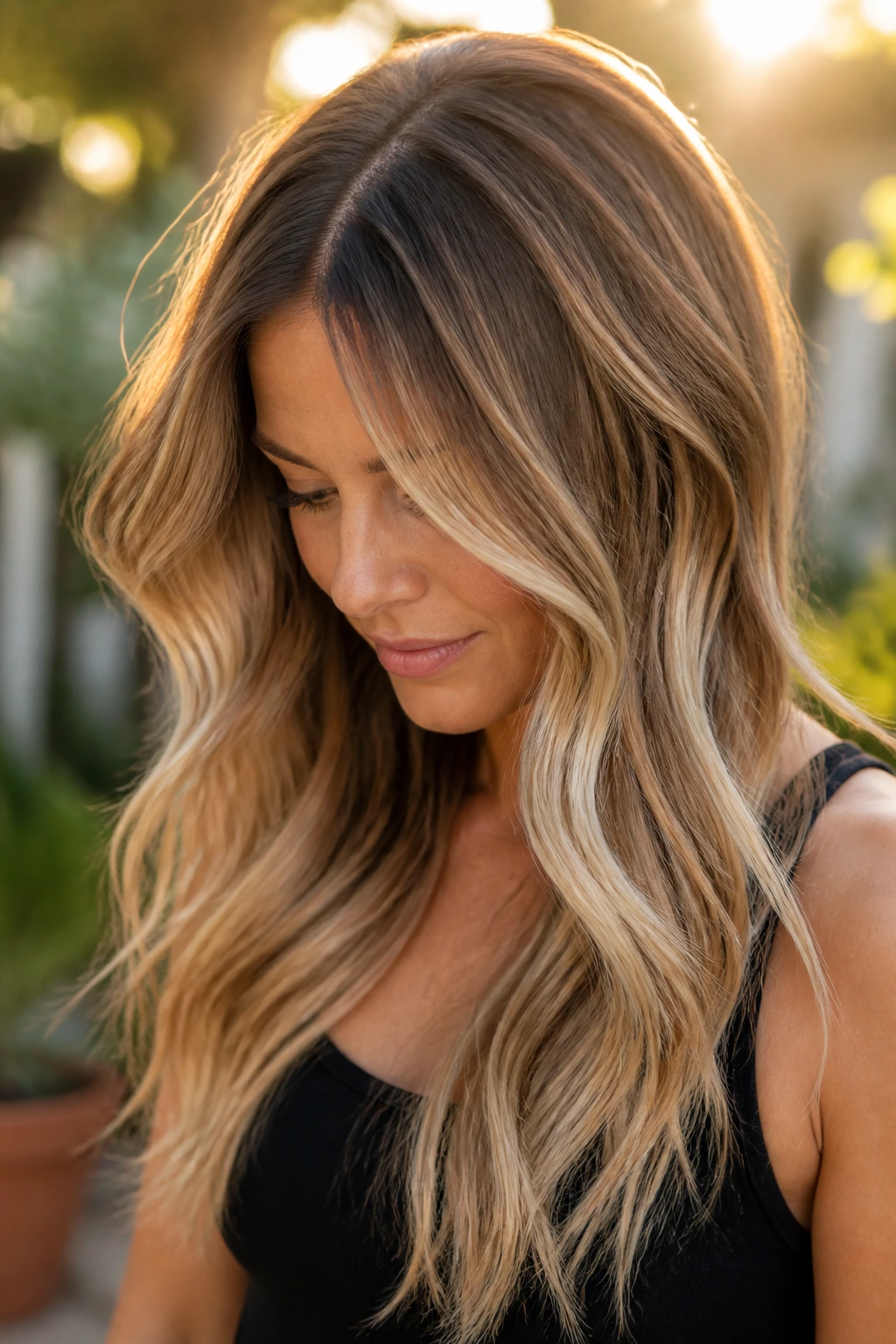
Bronde melt is the most forgiving blonde in the bunch for people with fine hair and a darker natural base. It keeps depth at the root, eases through a soft brunette-to-blonde transition, and avoids the wide bands that make thin hair look separated. The melt is the point.
Unlike an all-over blonde, bronde gives the eye a shaded area near the scalp and brighter mids and ends. That contrast makes the cut look denser. It’s especially good on long layers and wave sets, where the color can move through different tones. If you want blonde that looks lived-in without looking messy, this is a strong pick.
22. Soft Platinum Bob Blonde
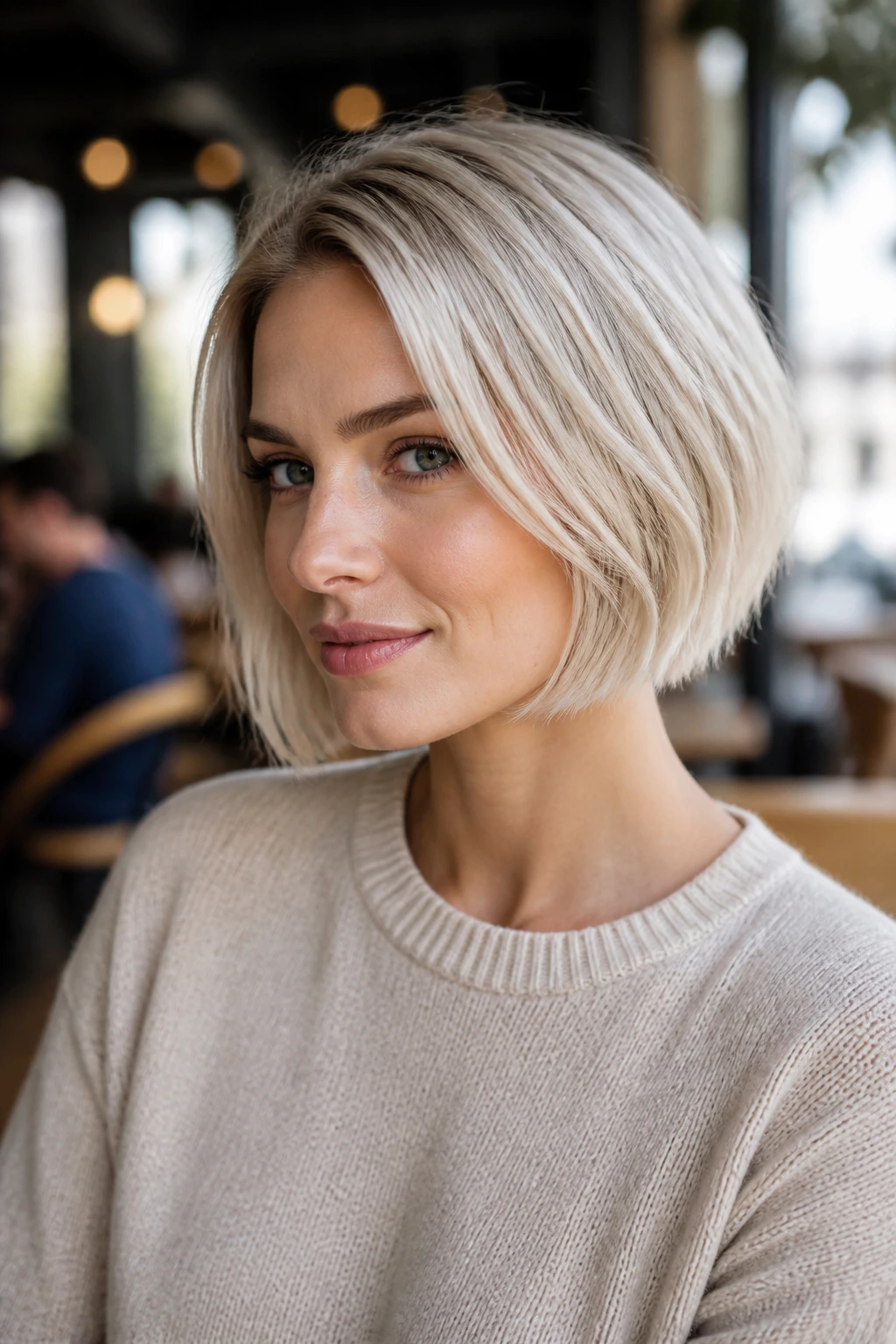
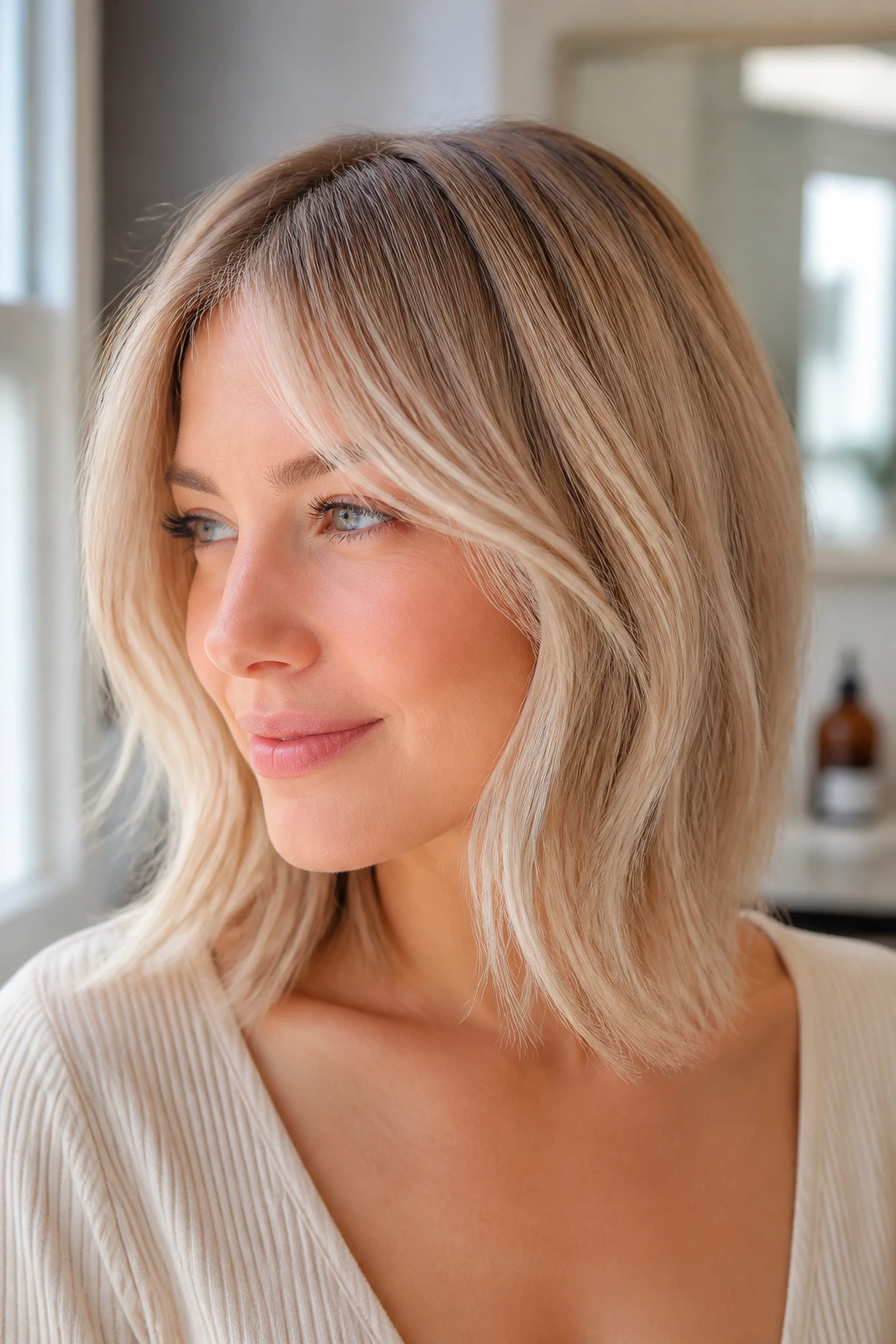
Short fine hair can carry platinum better than long fine hair, but only if the tone stays soft. A bob gives the pale blonde a cleaner shape, and the slight beige softness keeps it from looking like a bleached helmet. That combination is sleek, not harsh.
-
Best for: blunt bobs, chin-length cuts, and hair that already holds a clean line.
-
Ask for: pale blonde through the mids and ends, with a beige or pearl gloss so the finish stays creamy.
-
Maintenance: trim every 6 to 8 weeks, because platinum on a bob shows split ends fast.
I like this when someone wants a bold blonde but needs the haircut to do some of the visual work. The shape helps the color a lot.
23. Champagne Foilayage
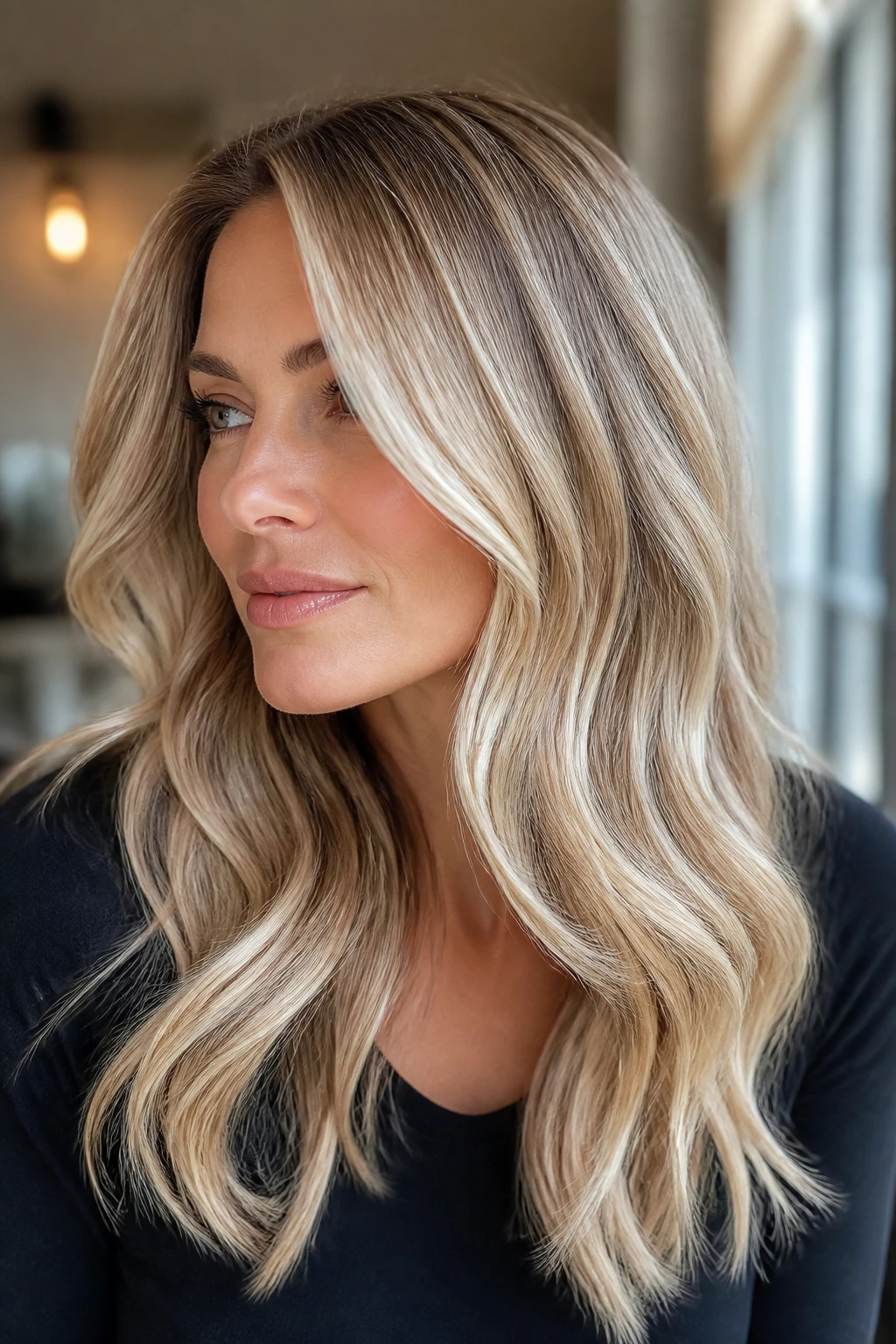
Champagne foilayage gives you more lift than open balayage, but the finish still feels soft. That makes it a clever choice for fine hair that needs brightness yet can’t handle a harsh block of foil streaks. The color sits in ribbons, so it keeps movement and avoids the “all light, no body” problem.
Ask for a handful of foils around the part and face frame, then blend the rest through a hand-painted finish. The champagne gloss is what keeps it from turning icy or brassy. I’d call this the practical blonde for someone who wants dimension with a little more punch than whisper-soft balayage.
24. Vanilla Root Melt
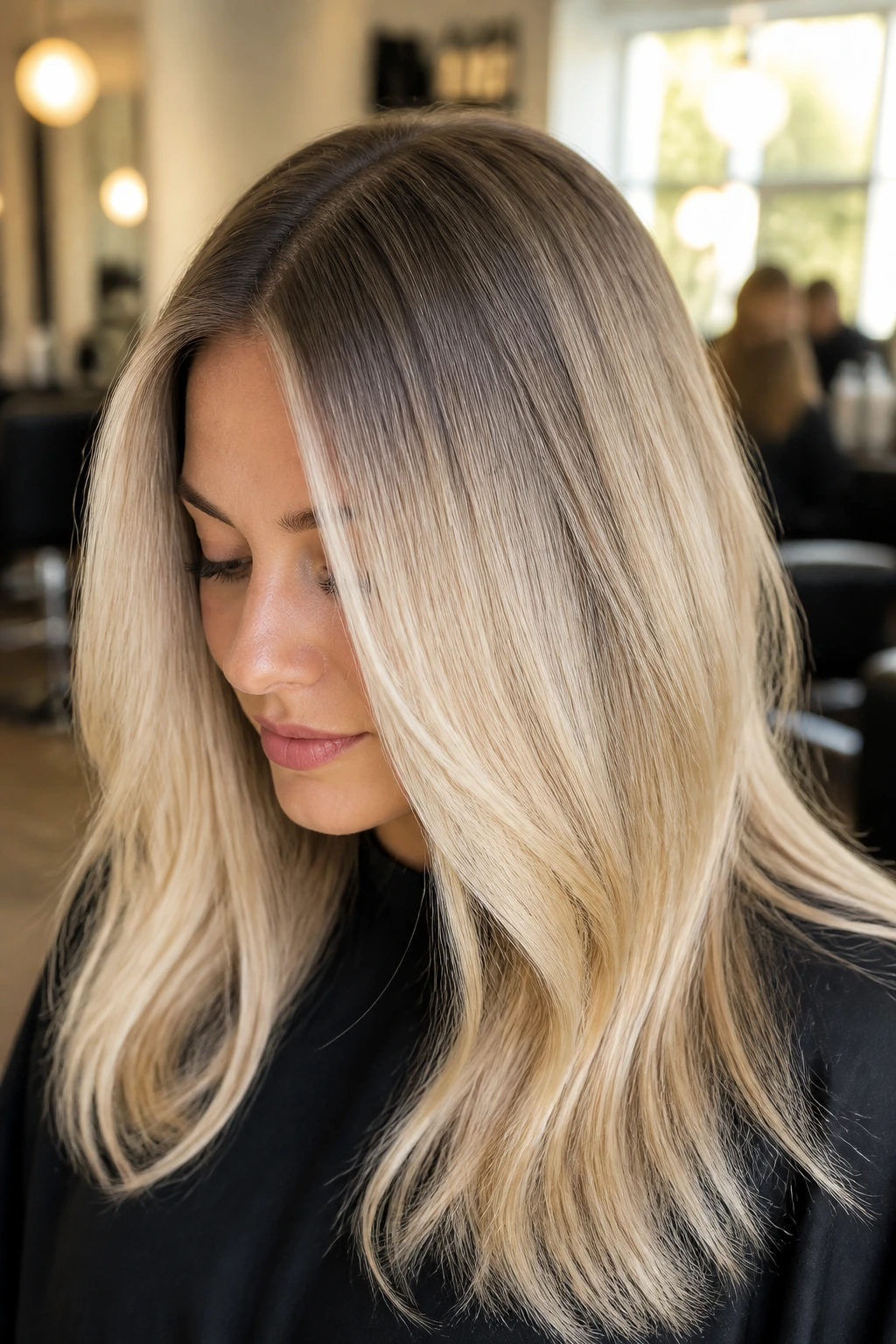
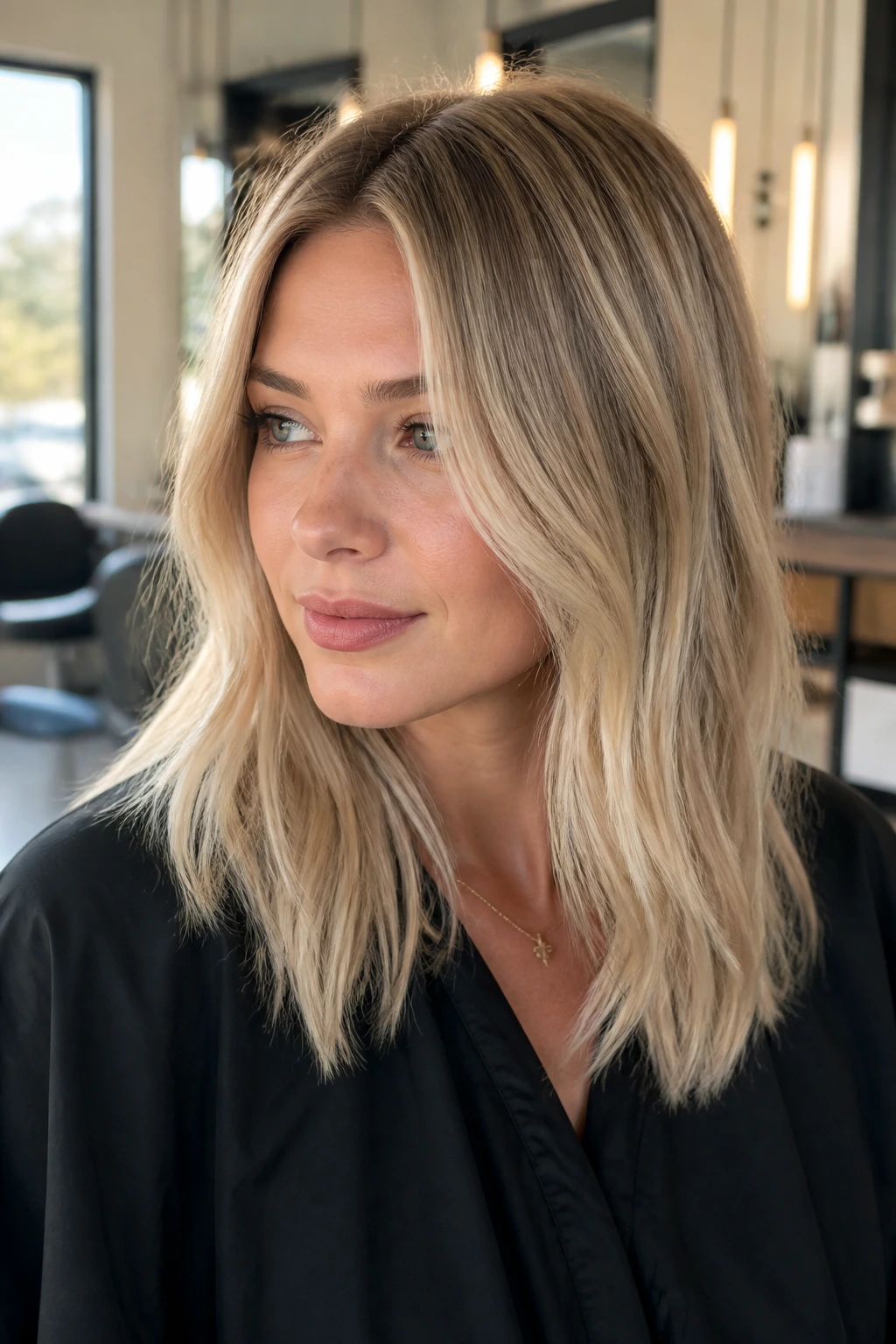
A vanilla root melt keeps the root a shade or two deeper, then lets the blonde drift lighter through the mids and ends. For fine hair, that shadow line does a lot of work. It keeps the part from opening up too much and gives the whole style a fuller base.
Unlike lighter-root blondes, this one is lower maintenance and easier to grow out. It also plays nicely with thin hair that’s already fragile at the ends, because the color change is gentle rather than abrupt. If you wear your hair straight, the melt looks clean; if you wave it, the depth shows even better. Either way, it’s smart color.
25. Sandy Mushroom Balayage
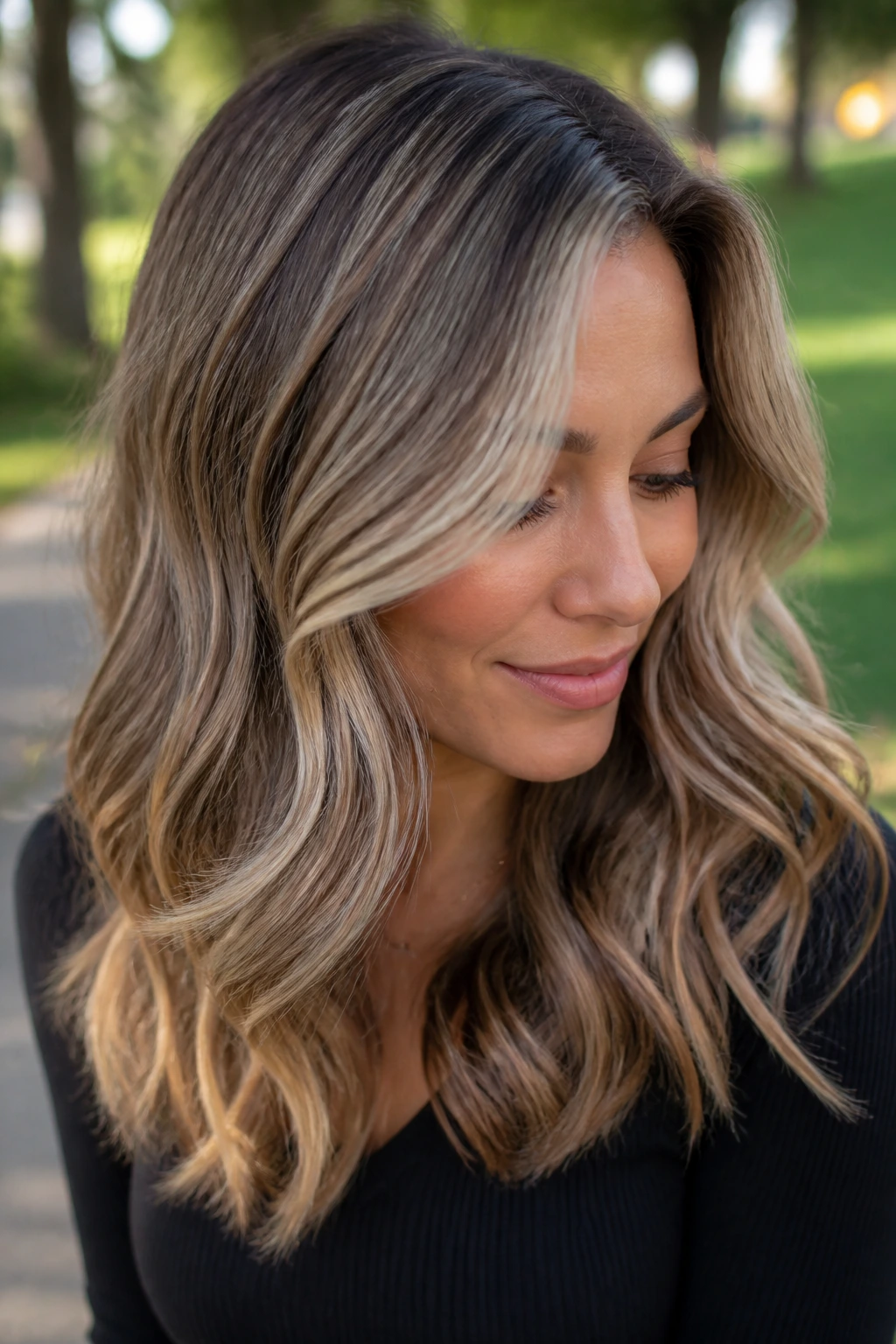
Sandy mushroom balayage takes two things that usually work alone and lets them talk to each other. The sandy pieces add movement. The mushroom base gives the hair a smoky floor so the blonde doesn’t look too bright or too flat. On fine hair, that layered tone is doing real visual work.
This is a good choice when you want dimension but not obvious stripe work. Ask for thin, painted ribbons and a root area that stays cool-neutral rather than dark-dark. The color should feel soft and lived-in, not patchy. If your hair tends to look sparse at the crown, a little mushroom depth there helps more than a brighter blonde would.
26. Honeyed Air-Touch Blonde
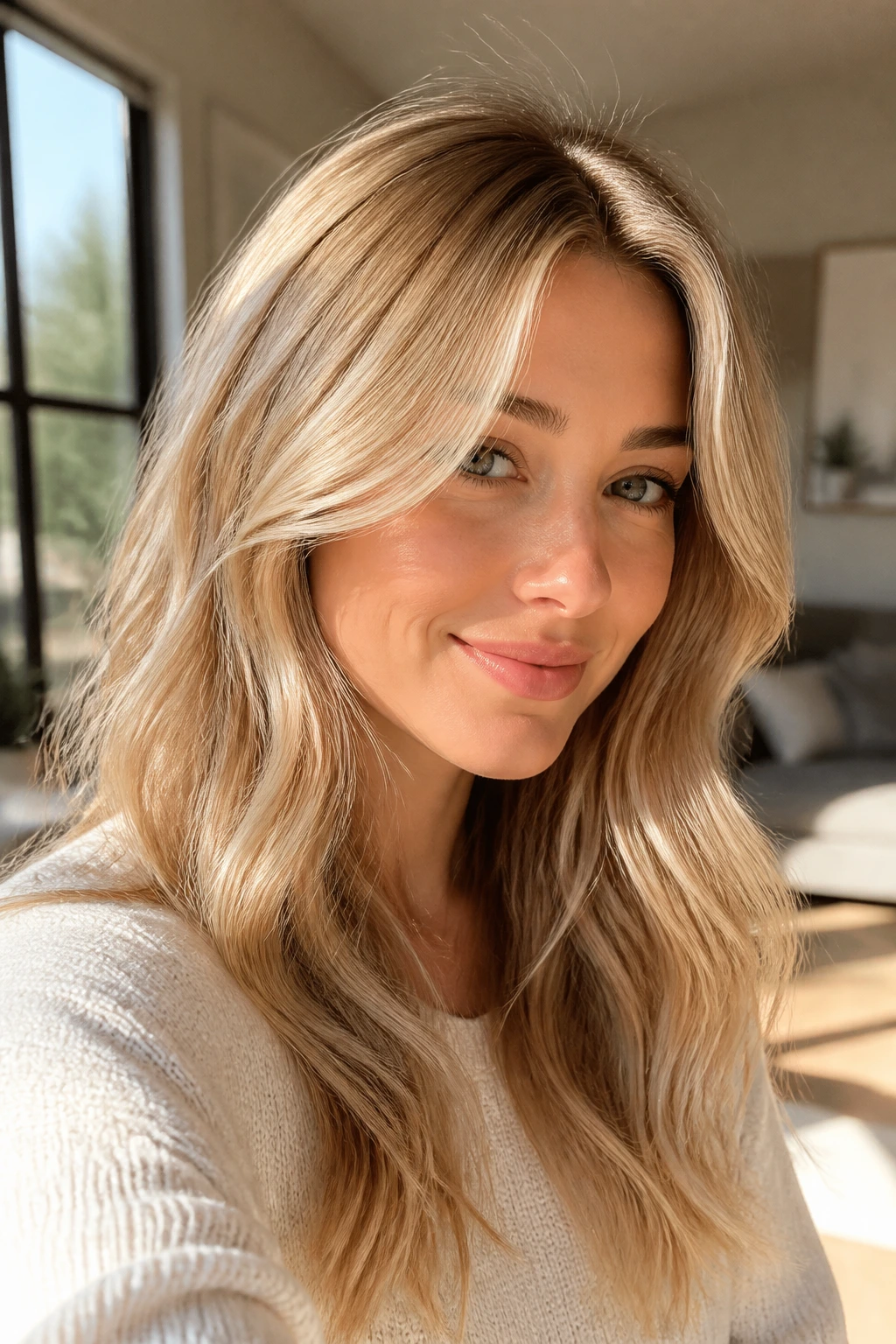
Air-touch blonde is built for softness. The stylist uses airflow to separate the shorter, finer hairs before lightening, which leaves a diffuse result instead of hard lines. On fine hair, that can be excellent because the color looks blended before it even hits the shampoo bowl.
-
Best for: wavy or layered fine hair that needs movement and softness.
-
Ask for: warm honey-beige ribbons with a very soft transition, not a sharp foil line.
-
Why it works: the diffused placement avoids the harsh contrast that can make thin hair look sliced up.
Honeyed air-touch blonde is one of those shades that looks casual in the best way. Nothing shouts. Everything just sits in the right place.
27. Pale Peach Blonde
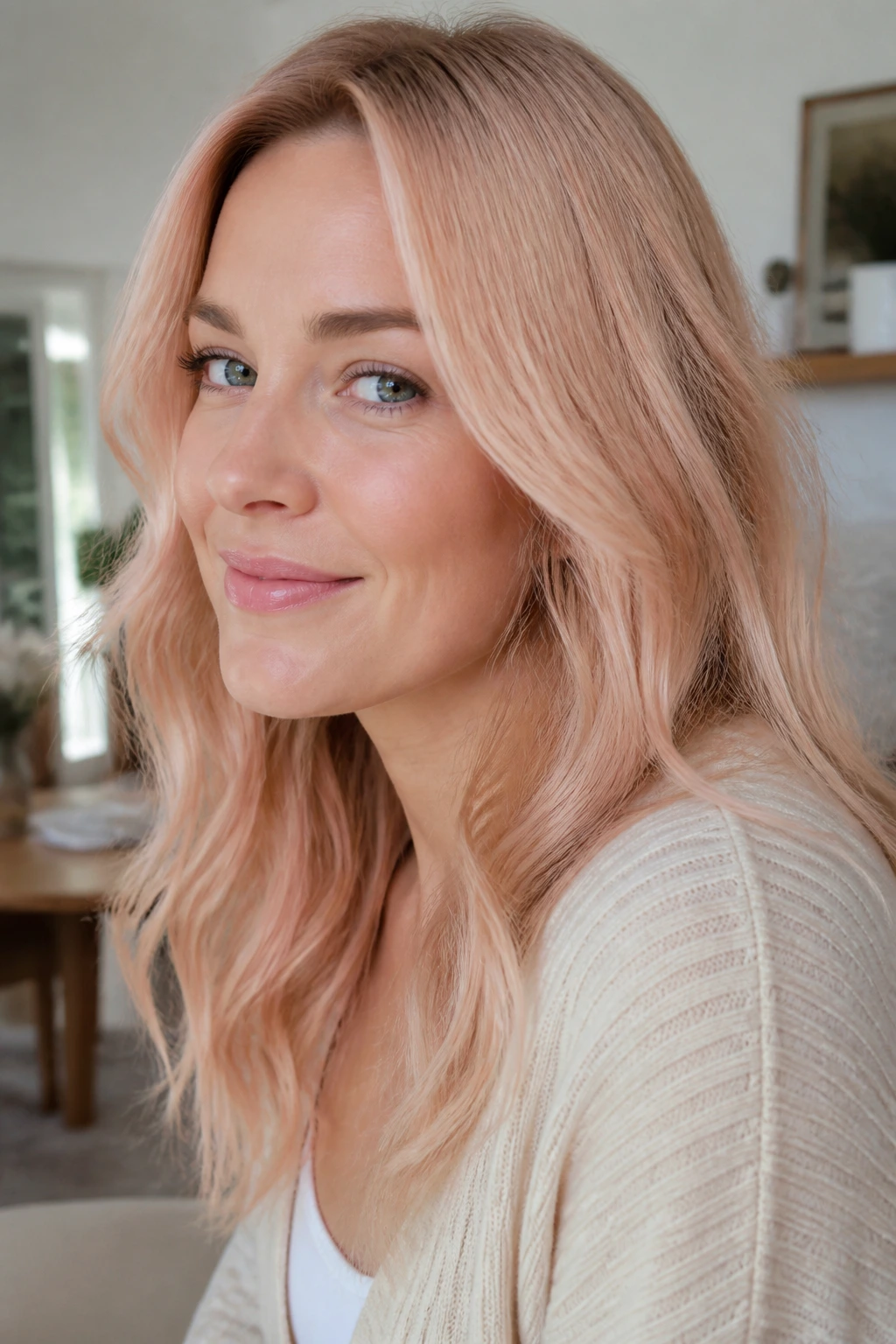
Pale peach blonde is for anyone whose hair looks dull in cool light and needs a little warmth with personality. The peach is whisper-light, not coral, so it stays inside blonde territory. On fine hair, that tiny flush keeps the color from looking gray or washed out.
It works especially well when the base is already light and the goal is to add glow rather than lift. I’d keep the peach in the glaze, not the whole head, so the tone fades softly over time. If your skin tone is neutral or warm, this can look very fresh. If your hair is porous, tell your colorist to watch the toner closely. Peach grabs quickly.
28. Soft Buttercream Lowlights
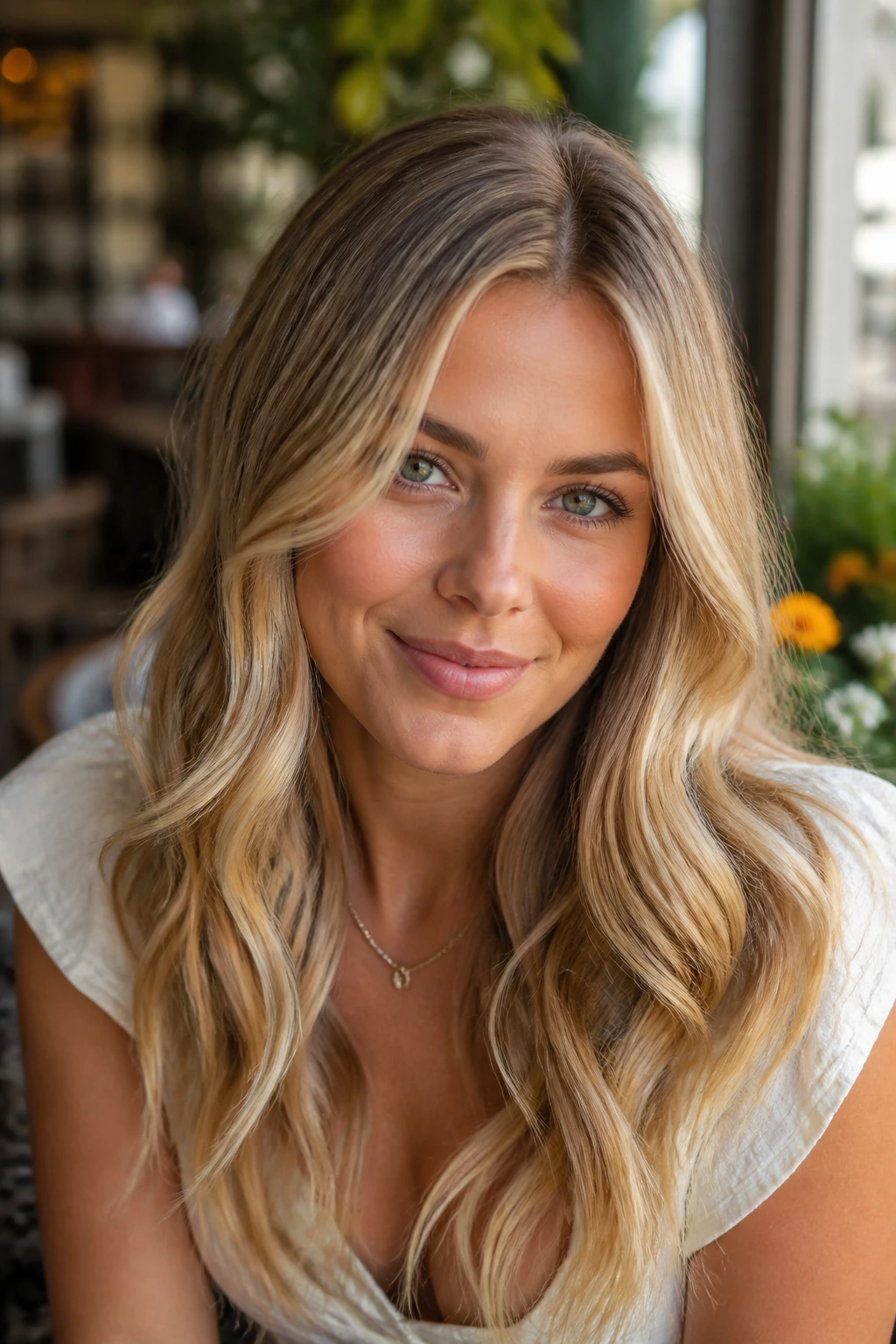
This one is for fine hair that already looks too transparent. Instead of adding more blonde, you add a few soft buttercream lowlights to create depth between the lighter pieces. That extra depth makes the hair look thicker from a distance.
Unlike classic highlight-only blonde, lowlighted blonde reads fuller because the eye can’t separate every strand. Ask for lowlights one level deeper than the base, placed under the top layer and near the nape. Keep the pieces thin. Thick lowlights can get muddy. Thin ones create the illusion of density, which is exactly what you want.
29. Smoky Beige Blonde
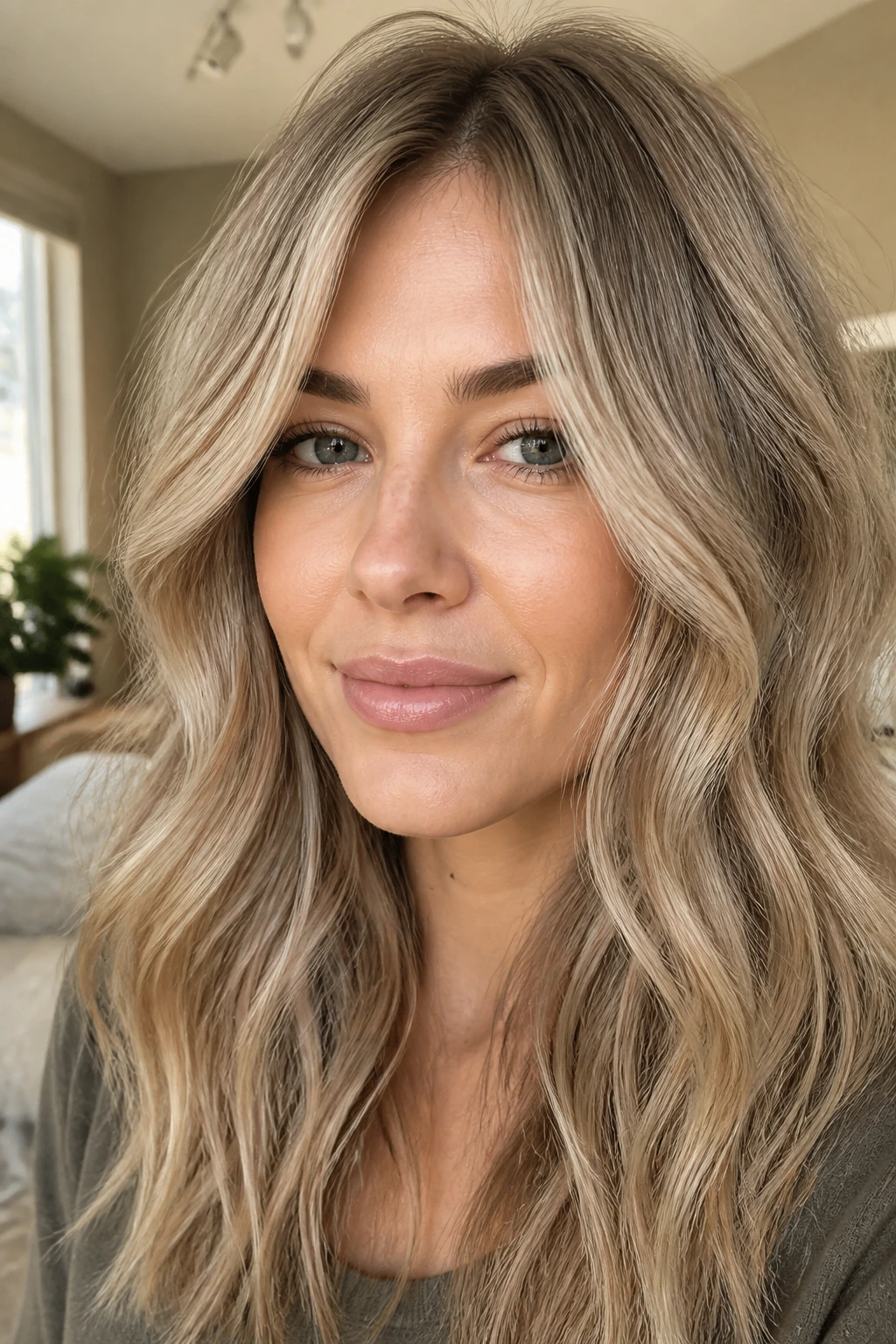
Smoky beige blonde is neutral with a little shadow built in. It’s not as cool as mushroom blonde and not as warm as honey blonde, which is why it tends to work on a wide range of skin tones. Fine hair likes that middle ground because it feels soft but not flat.
The smoky edge keeps the color from looking overly yellow, while the beige preserves shine. I’d recommend it to anyone who wants blonde that can survive a few weeks of root growth without looking harsh. It’s a particularly good pick if your hair is fine but plentiful enough to handle a little dimension around the part.
30. Toasted Coconut Blonde
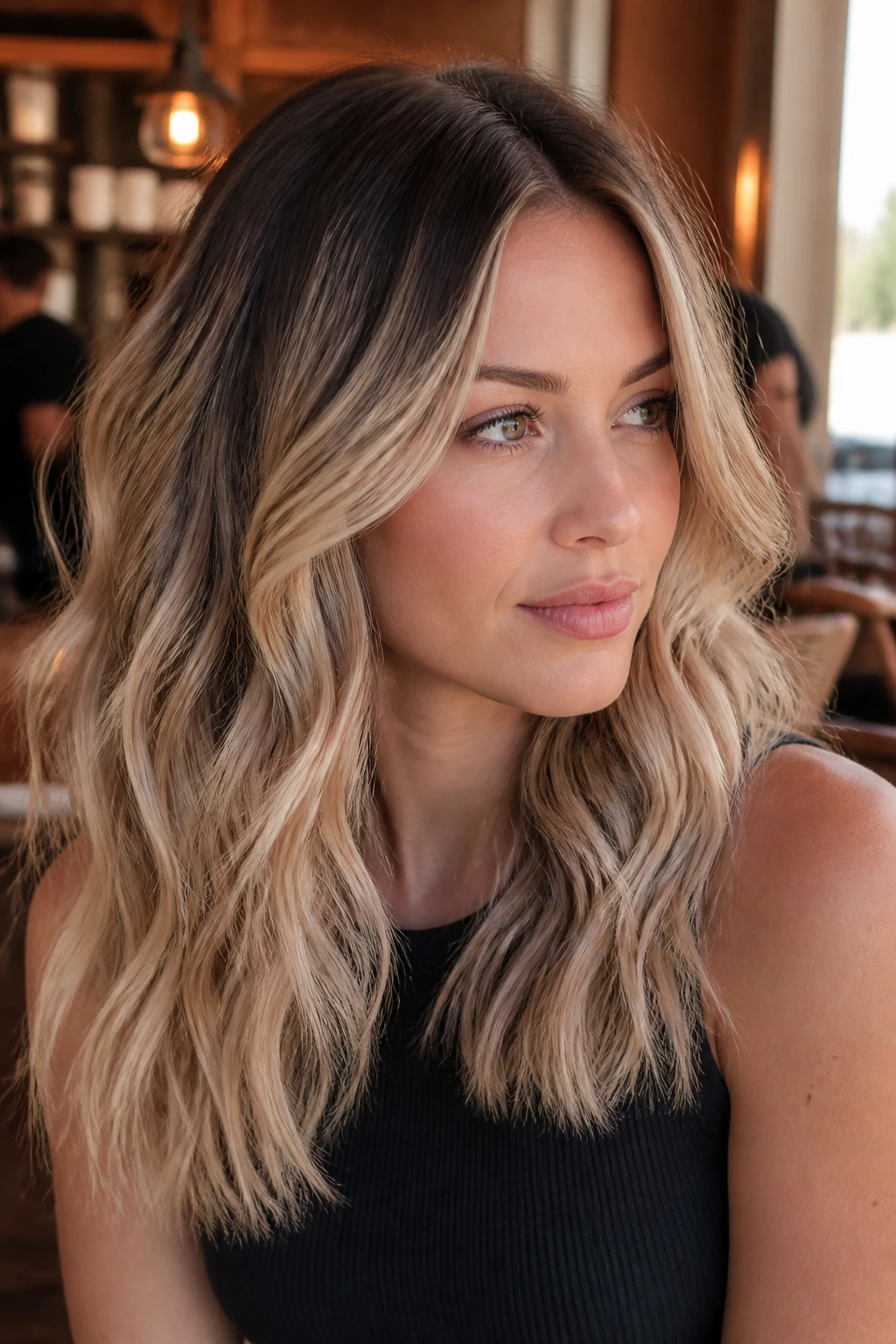
Toasted coconut blonde is a darker-rooted blonde with creamy lengths and a slightly warm finish. The toasted root gives the style structure, and the coconut-toned mids and ends stop it from feeling too dark. Fine hair often needs that root contrast to look fuller, especially at the crown.
-
Ask for: a root shadow with soft beige highlights through the mids, then lighter ends that stay creamy rather than white.
-
Why it flatters fine hair: the darker base makes the hairline look denser and the brighter pieces look more deliberate.
-
Best on: medium to dark blondes or light brunettes who want low-maintenance brightness.
It has more body than a pale blonde and less upkeep than a full highlight job. That’s a solid trade.
31. Linen Blonde
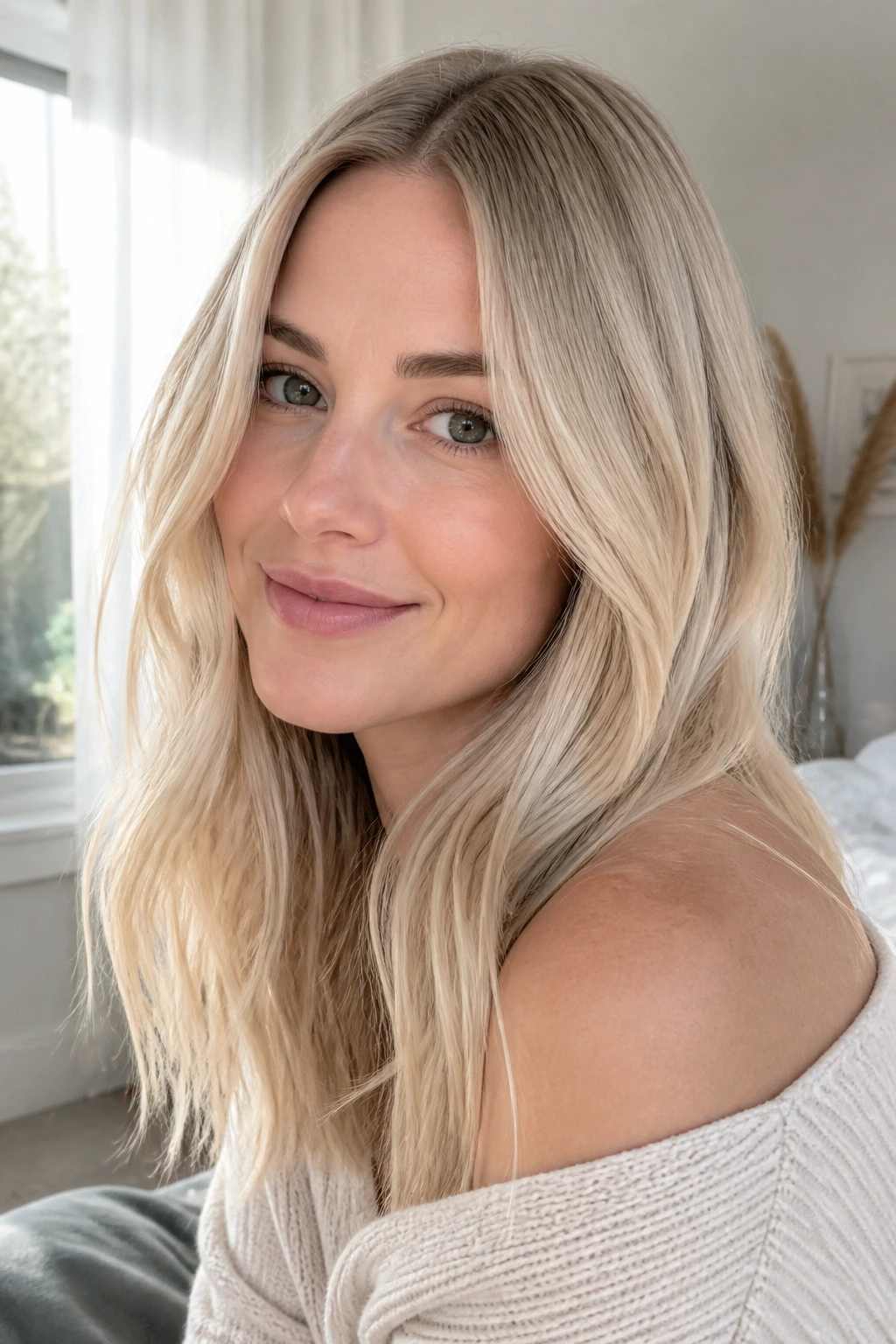
Linen blonde is pale, airy, and surprisingly wearable when it’s done with a soft edge instead of a stark one. The shade sits in that almost-neutral zone where it brightens the face without flattening the hair. On fine hair, that soft neutrality helps a lot.
-
Best for: people who want a clean, light blonde but don’t want brass or gold.
-
Ask for: very fine highlights, a beige gloss, and a root that stays slightly deeper than the mids.
-
Maintenance: keep the tone fresh with a gloss every 6 weeks and avoid overusing purple shampoo.
Linen blonde looks especially good on straight hair and simple cuts because the color itself becomes the detail.
32. Glossy Nordic Blonde
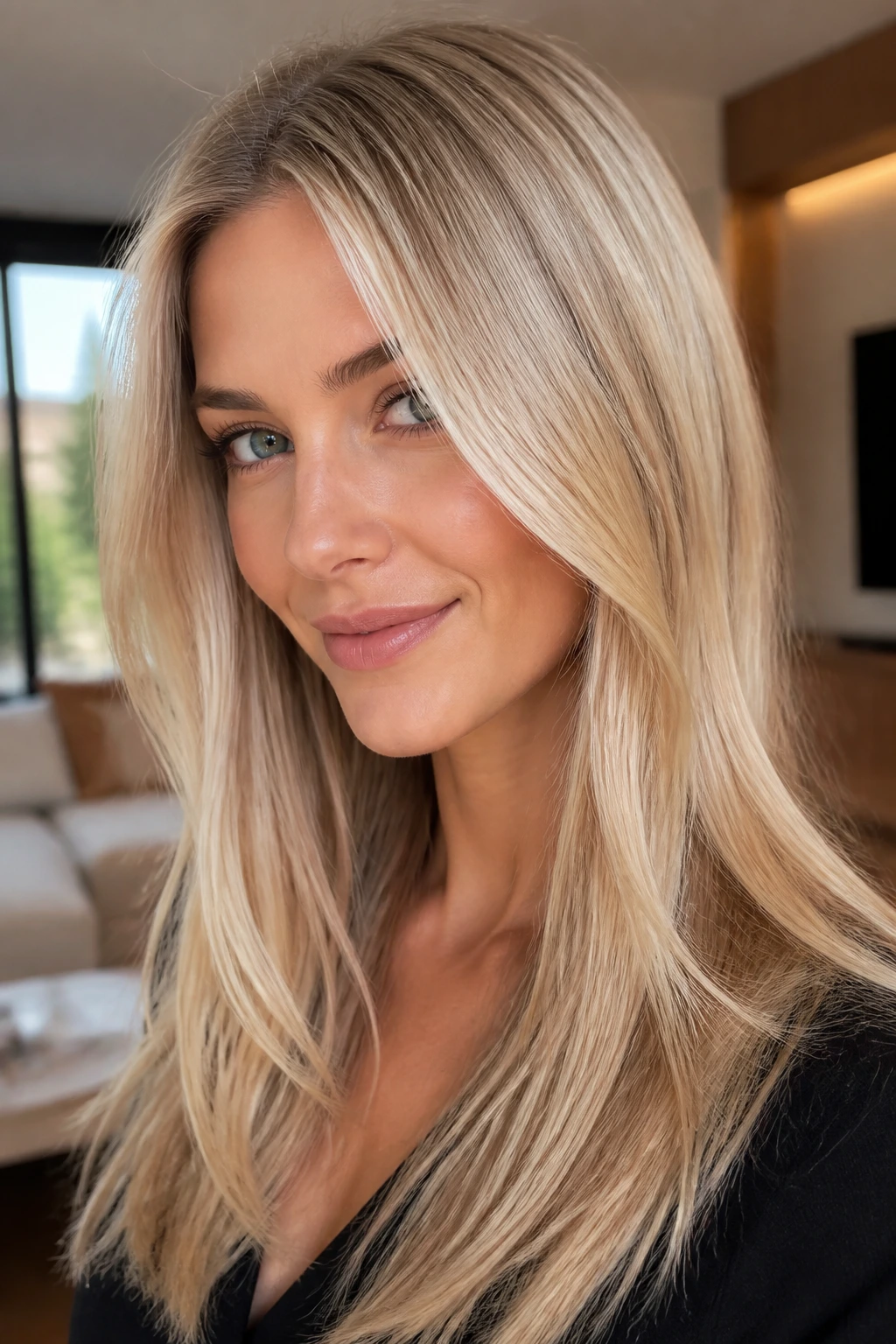
Nordic blonde can go too stark if the toner is pushed too far, but glossy Nordic blonde keeps enough beige in the mix to stay soft. The shine is part of the look. On fine hair, that shine can make the surface look smoother and more substantial, which is half the battle.
Unlike icy platinum, this version leaves a whisper of warmth under the cool finish. That keeps it from looking flat in indoor light. Ask your colorist to keep the blonde bright near the face and a little softer through the back. The result is lighter without being brittle-looking. That’s a nice line to walk.
33. Biscotti Blonde
Biscotti blonde has the color of toasted cookie edges and cream in the middle, which sounds decorative until you see what it does on fine hair. The darker biscuit base adds depth, and the cream ribbons bring enough light to keep the whole thing blonde. It’s soft, dimensional, and forgiving.
I like this shade because it gives the hair some visual structure without dragging it into brunette territory. Ask for a beige-brown root, thin cream highlights, and a gloss that keeps the ends from going yellow. On fine hair, biscotti blonde is one of those shades that can make a simple blowout look like the hair has more moving parts than it really does. That’s the kind of trick worth keeping.
Why Soft Blonde Hair Colors Make Fine Hair Look Fuller
Fine hair isn’t always sparse hair. Those two things get mixed up all the time. A head of hair can have plenty of follicles and still look light because the strands themselves are thin, which means the scalp shows through more easily and the ends lose shape faster. Soft blonde color helps because it changes how the eye reads those gaps.
The biggest mistake is thinking brightness alone creates volume. It usually doesn’t. One-dimensional platinum can light up the scalp and make every part line louder, especially if the hair is fine and straight. Soft blondes — beige, champagne, pearl, honey, mushroom — work in layers. Some pieces catch light. Some pieces hold shadow. That back-and-forth is what makes hair look thicker from a few feet away.
A root shadow matters here too. Leaving the root 1 to 2 levels deeper than the mids gives the crown a visual base, and on fine hair that base keeps the part from looking wide. Lowlights do the same thing at a different scale. They create a few darker lanes inside the blonde so the eye doesn’t read every strand separately. It’s a small change. It changes everything.
The Placement Tricks That Keep Fine Hair from Reading Flat
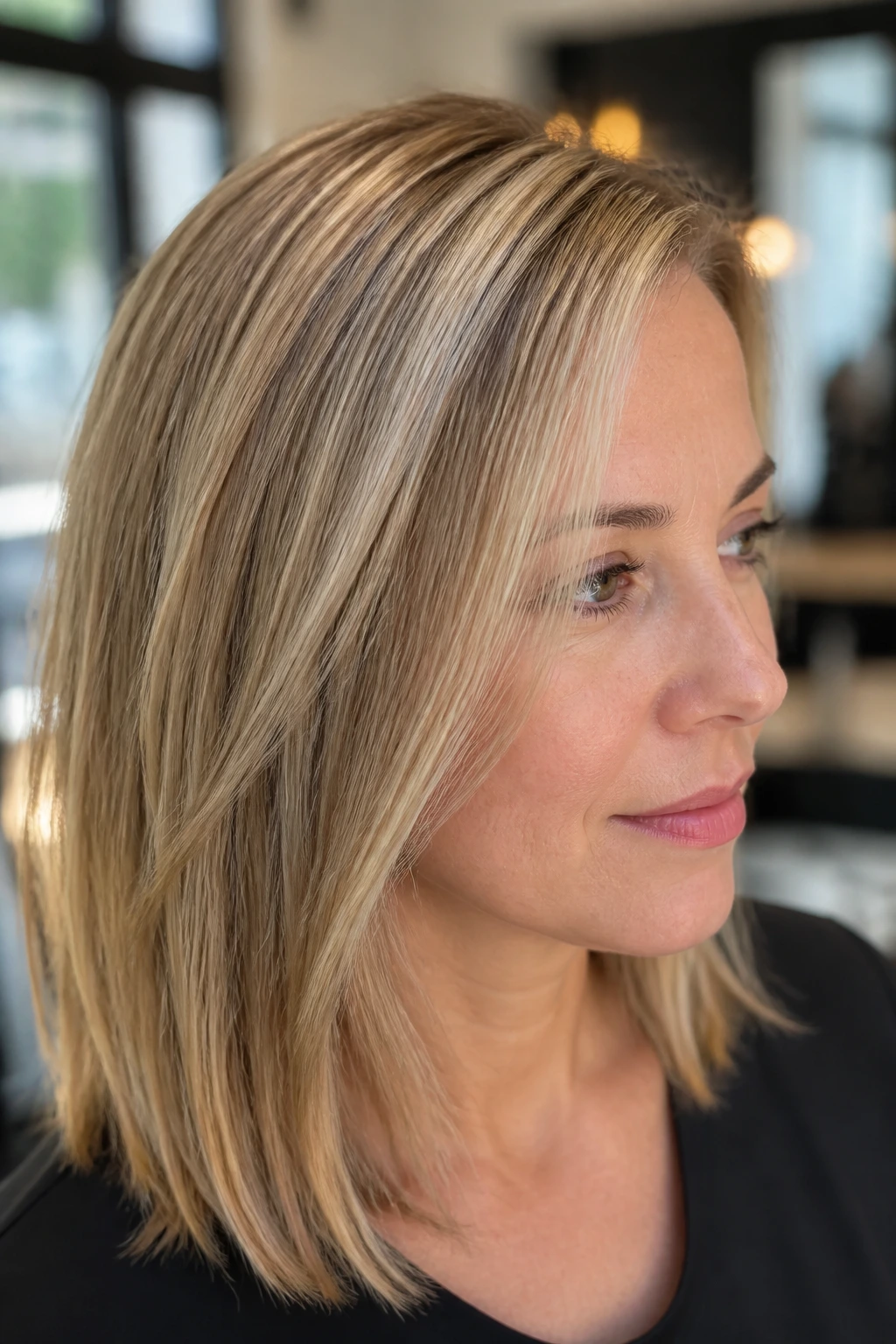
Placement is where good blonde becomes good fine-hair blonde. The color itself matters, sure, but where you put the light matters more. Fine hair needs the illusion of thickness, and that comes from alternating tiny bright pieces with enough depth to make the brighter pieces look intentional. If everything is light, nothing stands out.
I like to think in terms of three zones: the hairline, the crown, and the underlayer. The hairline gets the softest, brightest pieces because that’s where the eye lands first. The crown gets fine babylights or a light veil so the part doesn’t open up. The underlayer stays a shade deeper, which gives the top section something to sit on. If your whole head is bright from root to tip, the color can look washed out and a little see-through. If you leave some shadow underneath, the hair suddenly feels fuller.
Small placement rules that pay off
-
Use finer sections than you think you need. Wide ribbons look pretty on thick hair; on fine hair, they can look like stripes.
-
Keep the face frame brighter than the back. A little extra lift around the front pulls attention away from thin spots elsewhere.
-
Add 4 to 6 lowlights under the part line. That one move can keep the crown from looking overexposed.
-
Don’t bleach every inch to the same level. Hair looks richer when there’s a slight difference between root, mids, and ends.
What to Ask for in the Salon Chair
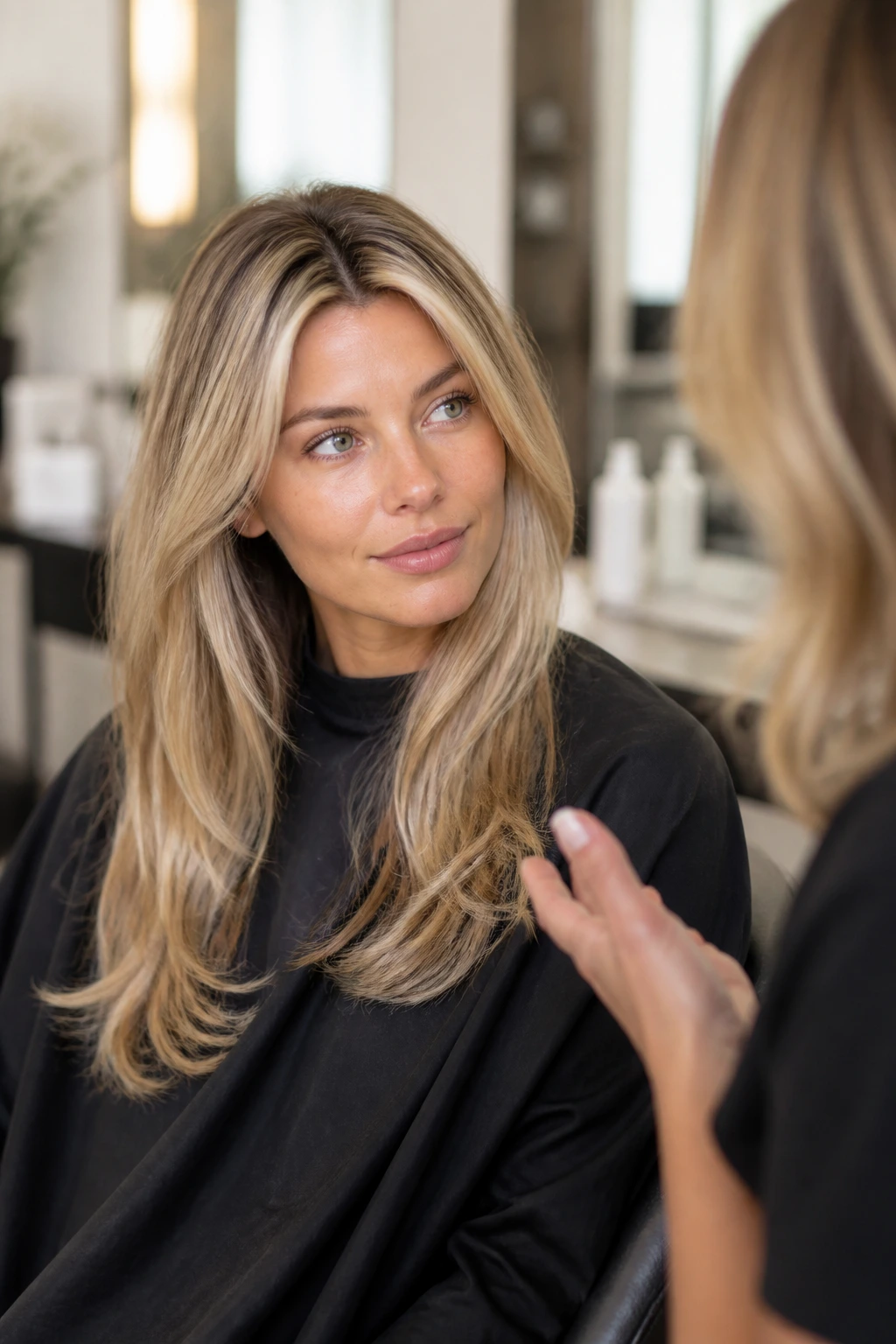
The words you use at the chair matter more than most people expect. If you say “make me blonde,” you might get a version that looks bright in the mirror and tired three weeks later. If you say “I want softness, movement, and a root that won’t show every part line,” you’re already in better territory.
Bring pictures, yes, but bring the right ones. Look for photos of the hair in natural light and from more than one angle. Filters hide the very details you need to judge: root depth, tone, and how wide the highlight pieces really are. On fine hair, ask your colorist to keep the highlights micro-fine, not chunky, and to leave some shadow in the crown so the hair doesn’t look sparse once it starts growing.
A few useful phrases:
-
“Keep the root 1 to 2 levels deeper than the mids.”
-
“Use babylights or very fine ribbons, not wide highlights.”
-
“I want softness around the face, but I don’t want the ends to look transparent.”
-
“Please plan this so the grow-out still looks good in 8 weeks.”
That last line matters. It tells the colorist you want wearable hair, not just day-one hair.
The Tools and Products That Matter
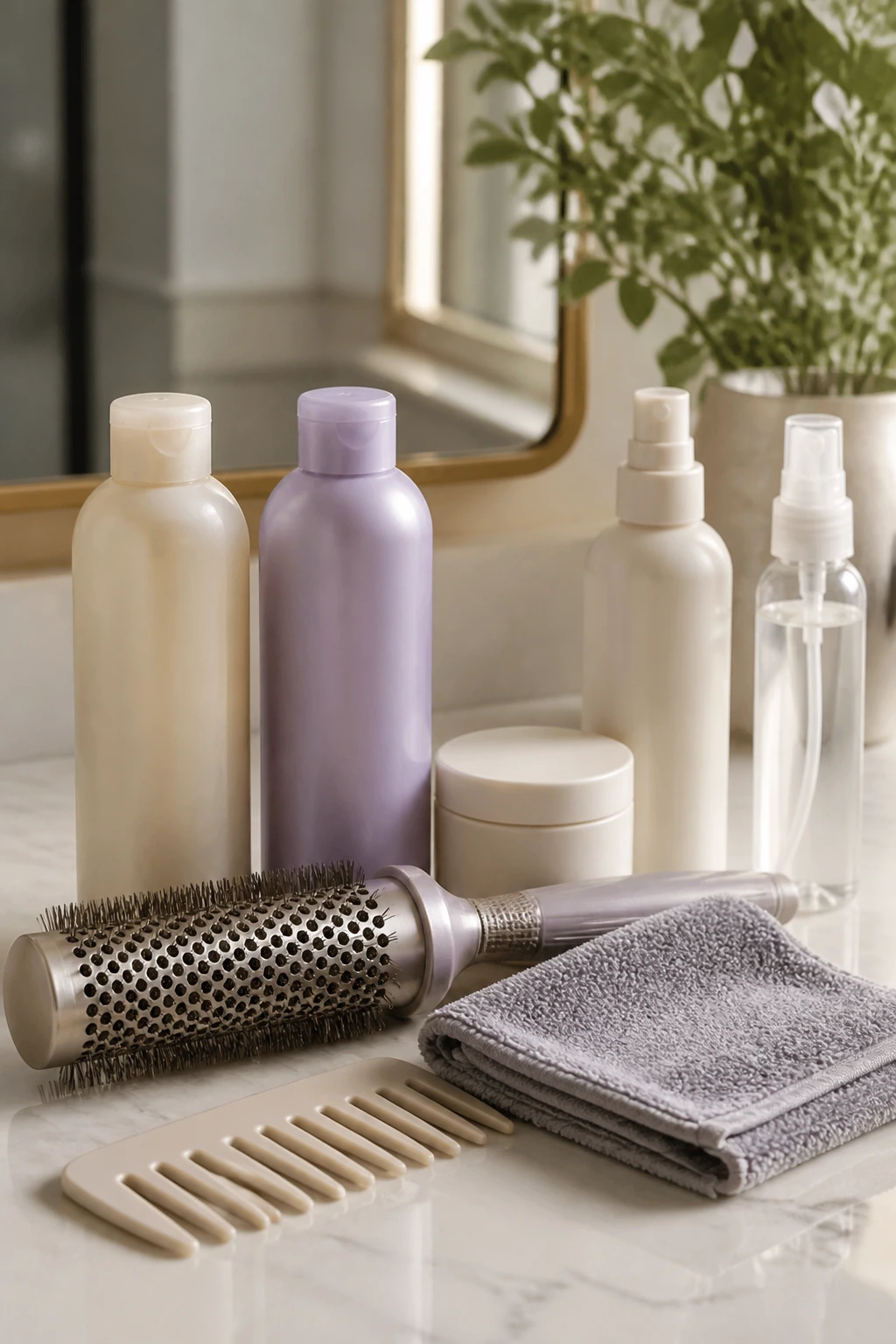
You don’t need a bathroom shelf packed with fancy bottles. You need a small set of tools that protect tone and keep fine hair from getting rough.
-
Color-safe shampoo: A sulfate-free formula helps keep the toner from slipping out too fast, especially if your blonde sits in the beige or pearl range.
-
Violet shampoo or conditioner: Use it sparingly, usually once every 5 to 7 washes, so the blonde stays clean without turning chalky.
-
Bond-building mask: Fine hair that’s been lightened needs this more than a heavy oil. It helps with stretch and snap.
-
Lightweight leave-in conditioner: Look for something that detangles without coating the hair in a waxy film.
-
Heat protectant spray: Fine blonde hair burns fast. Use it every time you blow-dry, curl, or flat iron.
-
Round brush with a ceramic barrel: Good for giving the roots a little lift without needing a ton of product.
-
Microfiber towel or soft cotton T-shirt: Less friction means fewer snags, and fine blonde strands snag easily.
-
Wide-tooth comb: Best for wet detangling when the hair is most vulnerable.
How to Keep the Blonde Creamy Between Appointments
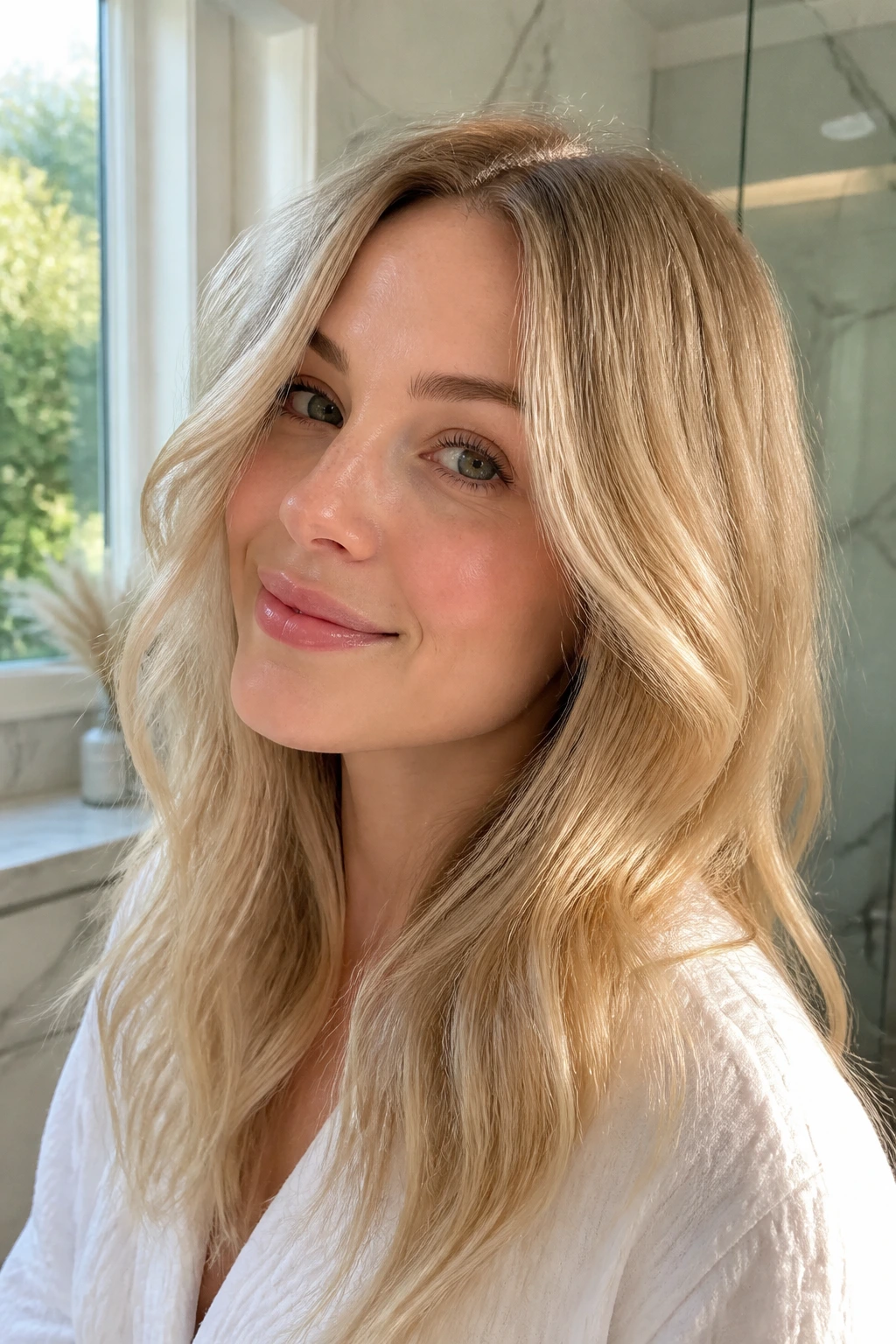
Soft blonde stays soft because you treat tone like something that can drift. It can. Fine hair often shows that drift faster than thick hair, because there’s less fiber to disguise dryness or brass. A sensible rhythm beats panic shopping every time the ends look a little yellow under bathroom lighting.
Start with the wash schedule. Use a color-safe shampoo most of the time, then bring in violet shampoo once every 5 to 7 washes if the blonde is cooling down too much. If your shade leans warm — butter, honey, latte, biscotti — you may barely need violet at all. Too much of it makes blondes look dull and papery, which is the opposite of soft.
Glosses are the real maintenance hero. A salon gloss every 4 to 8 weeks keeps champagne, beige, and pearl tones clean. Rooted looks can usually stretch to 8 to 10 weeks before the grow-out bothers you. If your hair is very porous, don’t wait until the color feels tired. Porous ends grab tone fast and lose it fast.
And yes, heat matters. Keep hot tools reasonable, use protectant every time, and trim the ends every 8 to 10 weeks so the blonde doesn’t start looking wispy at the bottom.
Small Tweaks That Make the Shade More You
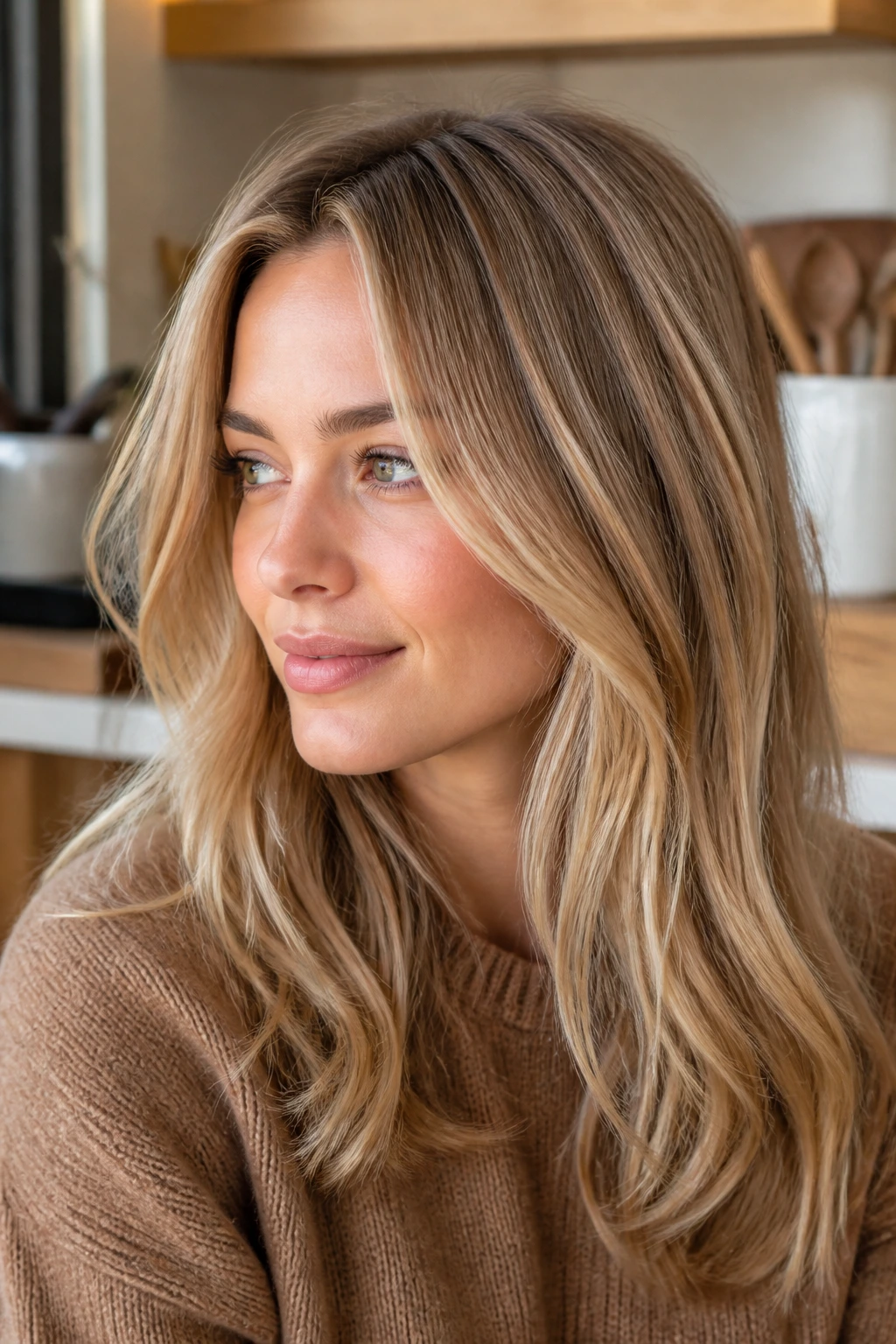
Cooler Finish: Ask for pearl, oyster, or smoky beige if warm tones make your skin look ruddy or your hair pulls yellow within a week. A cool gloss can clean the tone up without making the hair look gray.
Warmer Finish: If ash blondes flatten your face, shift toward butter, honey, or biscuit. Warmth gives fine hair a little more presence, especially around the ends where the hair tends to look see-through.
More Density: Add 4 to 6 lowlights under the top layer and near the nape. It sounds counterintuitive, but darker pieces make the blonde pieces look brighter and the whole head look thicker.
Lower Maintenance: Keep the root 2 levels deeper and ask for a soft money piece only. You’ll get brightness where it matters and a grow-out that doesn’t shout at you from the mirror.
Texture-Friendly Finish: For curls or waves, ask for softer ribbons that follow the bend of the hair instead of sitting across it. That keeps the blonde from breaking up the curl pattern.
Common Mistakes That Thin Hair Out
-
Going too light, too fast: Fine hair that gets pushed from level 6 to icy 10 in one appointment often ends up fragile and see-through. Stop at creamy blondes first, then lighten again later if the hair can handle it.
-
Using chunky highlights: Thick ribbons look bold on paper and stripy on thin hair. Ask for babylights, woven pieces, or diffused balayage instead.
-
Over-toning with ash: Too much ash can make soft blonde look dusty and flat, especially indoors. If the hair starts looking gray or dull, the toner needs more beige or warmth.
-
Skipping lowlights: All-light, no-depth color can make the scalp show more, not less. A few fine lowlights fix that fast.
-
Using purple shampoo too often: It can leave fine blonde hair dry, matte, and slightly lavender. Once a week, or even less, is usually enough.
-
Ignoring the ends: Split, crunchy ends make even the prettiest blonde look tired. Trim them before they start fraying up the shaft.
Frequently Asked Questions
Which blonde shades make fine hair look thickest?
Champagne beige, rooted baby-light blonde, bronde melt, and soft buttercream lowlights usually do the most to fake density. They mix brightness with shadow, which keeps the scalp from looking too exposed.
Is balayage or highlights better for fine hair?
Balayage is usually softer, but very fine hair often benefits most from a blended mix of babylights and balayage. Pure balayage can leave too much dark space if the hair is sparse, while micro-highlights can give a fuller read.
Will ash blonde make fine hair look flatter?
It can if the ash is pushed too far. A little coolness is fine, but when the tone gets smoky to the point of looking dusty, the hair loses shine and can read thinner. Beige-ash or pearl-beige usually works better than hard silver.
How often should I tone soft blonde hair?
Most soft blondes need a gloss every 4 to 8 weeks, depending on how light the hair is and how porous the ends are. If you’re using a rooted style, you can often stretch the root work longer than the tone refresh.
Can I go blonde if my fine hair is already fragile?
Yes, but the shade should stay softer and the lift should happen in stages. Rooted blondes, honey veils, milk tea blonde, and beige balayage are kinder than all-over platinum, which can push fine hair past its limit fast.
What if my blonde turns yellow after a few washes?
That usually means the toner is fading, the water is hard, or heat styling is stripping the tone. Try a violet shampoo once a week, use cooler rinse water, and ask for a beige or pearl gloss next appointment instead of a cooler silver toner.
Does fine curly hair need different placement?
It does. Curly hair needs light placed where the curl opens, not just where the stylist sees it flat on the head. Softer ribbons and diffused balayage usually work better than hard foils, because the curl pattern makes the color read in motion.
How do I ask for a low-maintenance blonde?
Say you want a soft root, fine placement, and a grow-out that still looks good at 8 weeks. That usually tells the colorist to avoid wide stripes and to build a shade with enough depth to survive some regrowth.
The Shade That Lets Fine Hair Move
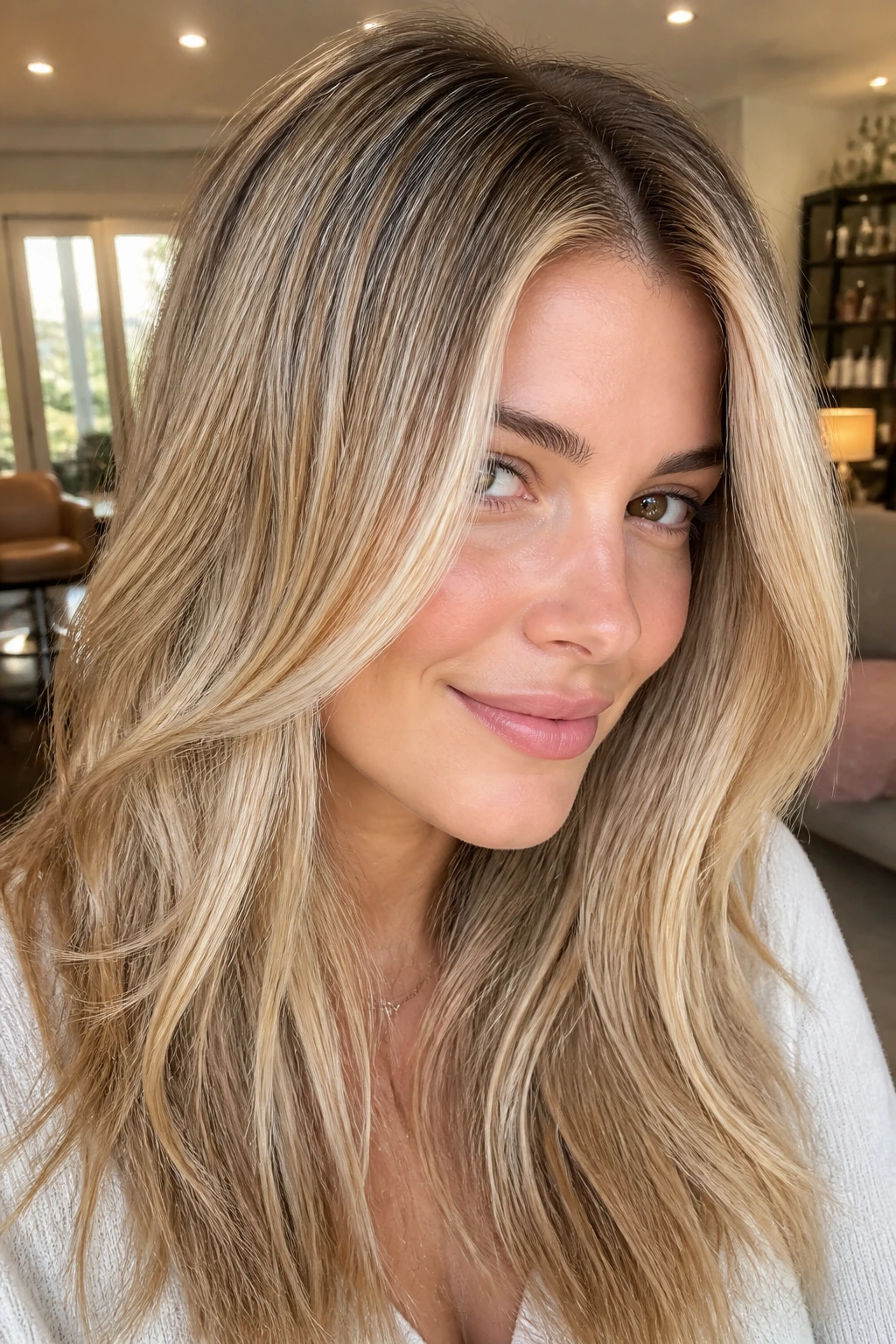
The best soft blonde for fine hair is rarely the brightest one. It’s the one that gives the hair a little shadow at the root, a little glow around the face, and enough tonal variation to make the strands look like they belong together. That’s why champagne beige, rooted babylights, bronde melts, and soft pearl finishes keep coming up again and again.
Fine hair needs shape more than it needs drama. Give it a shade that bends with the cut, keeps the root believable, and leaves the ends with some weight, and the whole head reads fuller before you even pick up a round brush. That’s the kind of blonde worth living with.
