



The best defined curl cuts for Black natural hair don’t fight shrinkage; they plan for it. That’s the whole difference between a cut that looks tidy for an hour and a cut that still has a shape when the hair has dried, stretched, fluffed, and lived a little. A good curl cut lets coils stack, separate, and fall where they want instead of turning into one wide, fuzzy block by lunchtime.
And yes, the wrong cut is usually the one that looks neat while wet. Once the hair dries, the curl pattern shortens, the outline changes, and every blunt line you thought was even starts showing its flaws. I’ve seen heavy ends drag a shape down, and I’ve seen tight coils spring up so much that the whole silhouette looks shorter and wider than the stylist planned. That’s why curl-specific cutting matters.
The cuts below cover tiny TWAs, rounded afros, collarbone bobs, tapered shapes, and long layered styles. Some of them need mousse and a diffuser. Some look better with finger coils, a side part, or a soft pick at the roots and nothing more. The common thread is simple: shape that still makes sense after the hair dries.
Why These Cuts Matter More Than a Simple Trim
Shrinkage changes the silhouette. A cut that looks balanced when the hair is wet can come back two inches shorter and a lot broader once the curls dry. That’s not a flaw in the hair. It’s the hair doing what Black natural hair does.
Internal shape beats blunt weight. When the bottom line is too heavy, curls stack on top of each other and the whole head can turn into a shelf. A curl cut uses layers, soft rounding, and careful tapering to keep the shape readable from every angle.
The right cut saves styling time. If the haircut already supports your curl pattern, you spend less time fighting the front, less time pinning down one side, and less time trying to fake a shape with gel.
Your routine stays more honest. A cut that works with your real wash-day habits is better than one that only looks good after a perfect diffusing session. That’s the version that matters on a random Tuesday.
Salon language gets easier. Once you know which shapes you like, you can explain them: rounded, tapered, layered, halo-shaped, frohawk-inspired, or blunt and dense. That helps a stylist much more than saying you want it “neat.”
Why a Curl-Centered Shape Changes the Whole Routine
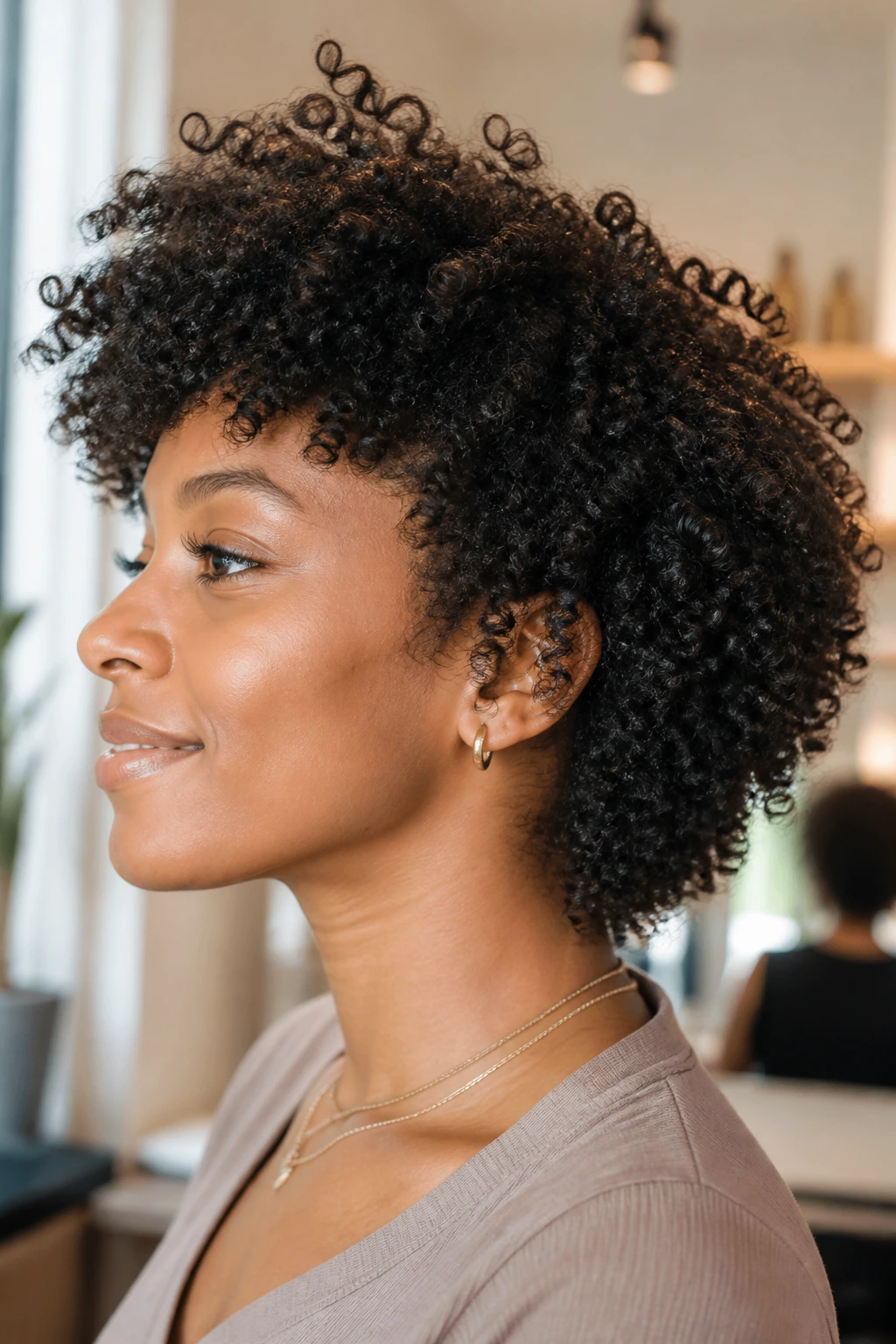
A curl-centered cut starts with the idea that the hair is going to move. It’s going to spring. It’s going to shrink at the roots and loosen at the ends if there’s old color or heat damage. It’s going to sit differently on day one, day three, and day seven. If the cut can’t survive that, it’s too fragile for natural hair.
Dry Cutting Shows the Real Silhouette
Dry cutting is not some fancy salon buzzword. It’s a practical answer to shrinkage. When curls are cut in their dry state, or at least in their natural pattern, the stylist can see where the shape actually lives instead of guessing where it will land later. That matters most on tighter coils, where a small snip can disappear fast.
Density Changes Everything
Two heads of hair can have the same curl pattern and still need completely different cuts. One might be fine and fluffy, the other thick enough to hold a dome on its own. The first needs internal layers that remove bulk without leaving gaps; the second can handle a stronger outline and still keep movement.
The Best Shapes Move With the Head
A good curl cut should look good when you turn your head, not only when you face the mirror straight on. That’s why rounded afros, tapered cuts, and layered bobs work so well on Black natural hair. They hold shape from the side, not just the front.
1. Rounded Layered Afro
A rounded layered afro is the shape I reach for when the goal is definition that still feels full. The perimeter curves softly instead of forming a hard shelf, and the layers keep the crown from ballooning while the sides stay balanced. On dense coils, that rounding step matters a lot. It keeps the cut from turning boxy once the hair dries.
Tell the stylist to check the silhouette from the side and back, not just the front. The best version of this cut looks like a clean dome with movement inside it, not a perfect helmet. If your hair shrinks a lot, ask for the final shape to be judged dry.
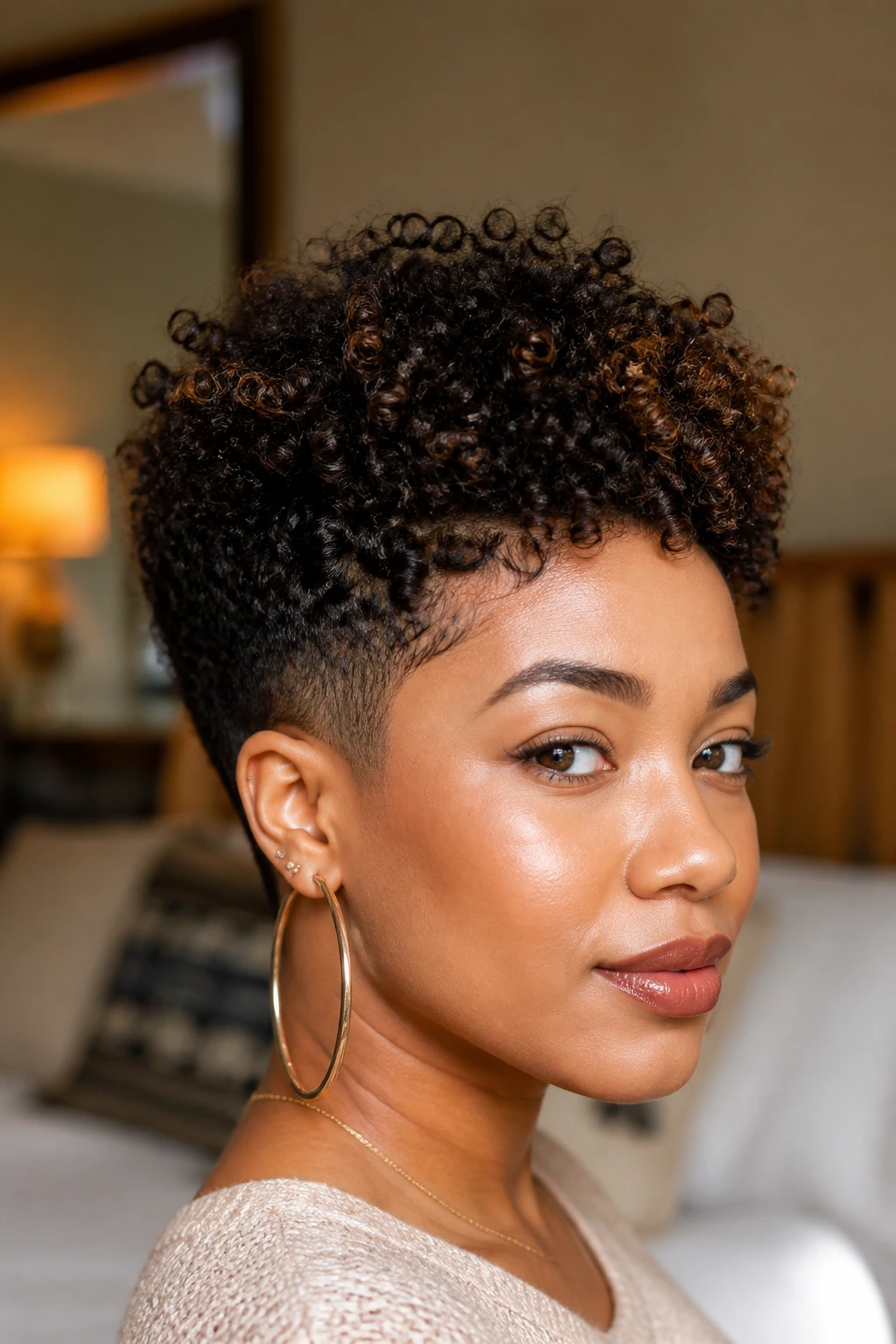
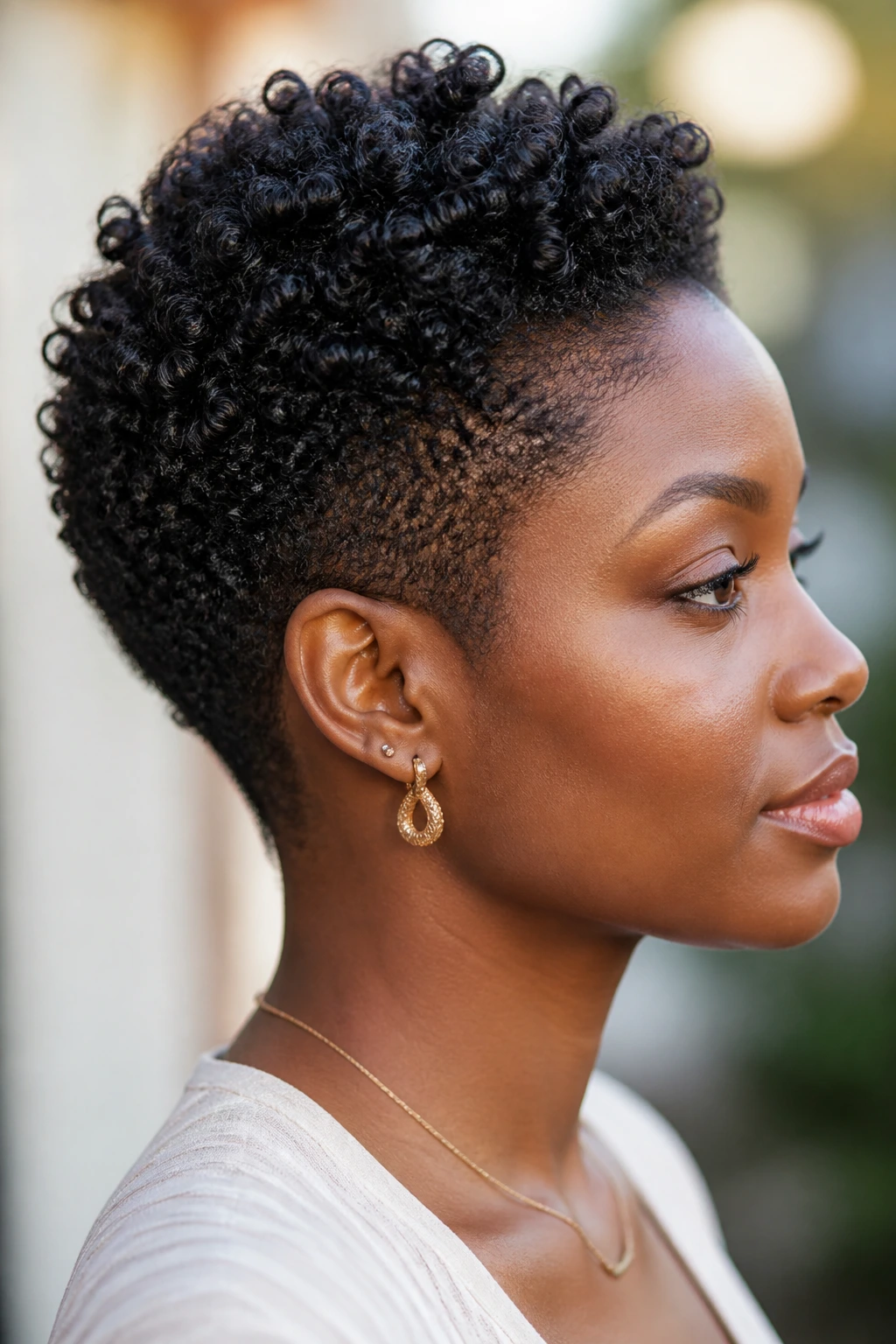
2. Tapered TWA with a Defined Coil Crown
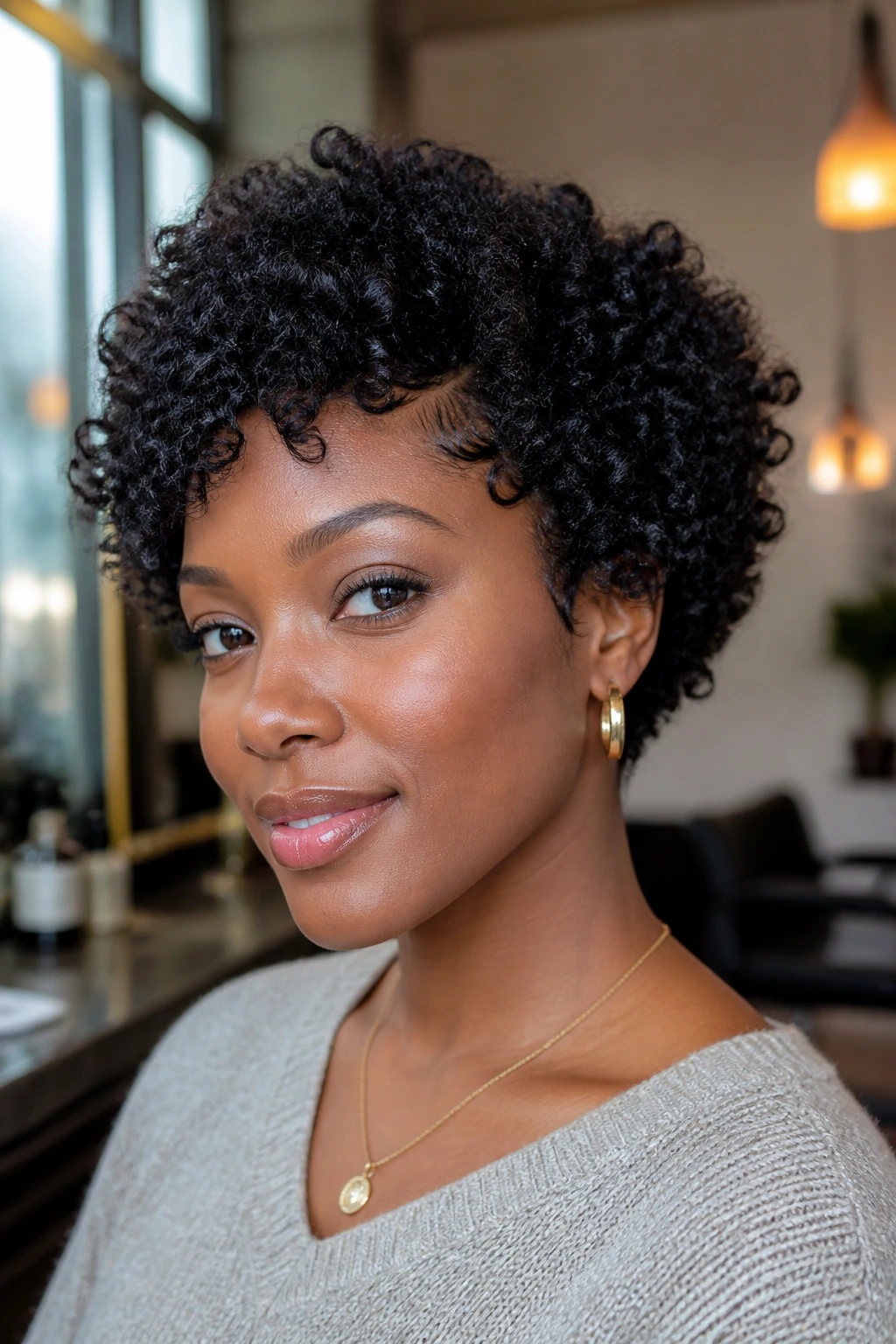
A tapered TWA is tiny, but it is not simple. The sides sit low, the nape stays clean, and the top keeps enough length for the coils to show off their pattern. That contrast is what gives the cut its shape; without it, the whole head can read flat.
This works especially well when you want your features to do more of the talking. The crown holds the definition, the neckline stays sharp, and the grow-out looks intentional instead of awkward. If your curls are tight, leave the top a touch longer than you think. Coils will shrink up and steal some of that length anyway.
What makes it read clean
- Keep the taper low if you want a softer grow-out.
- Use a curl sponge or finger coils only on the top.
- Ask for a soft edge at the hairline, not a harsh skin fade.
3. Curly Bob with Internal Layers
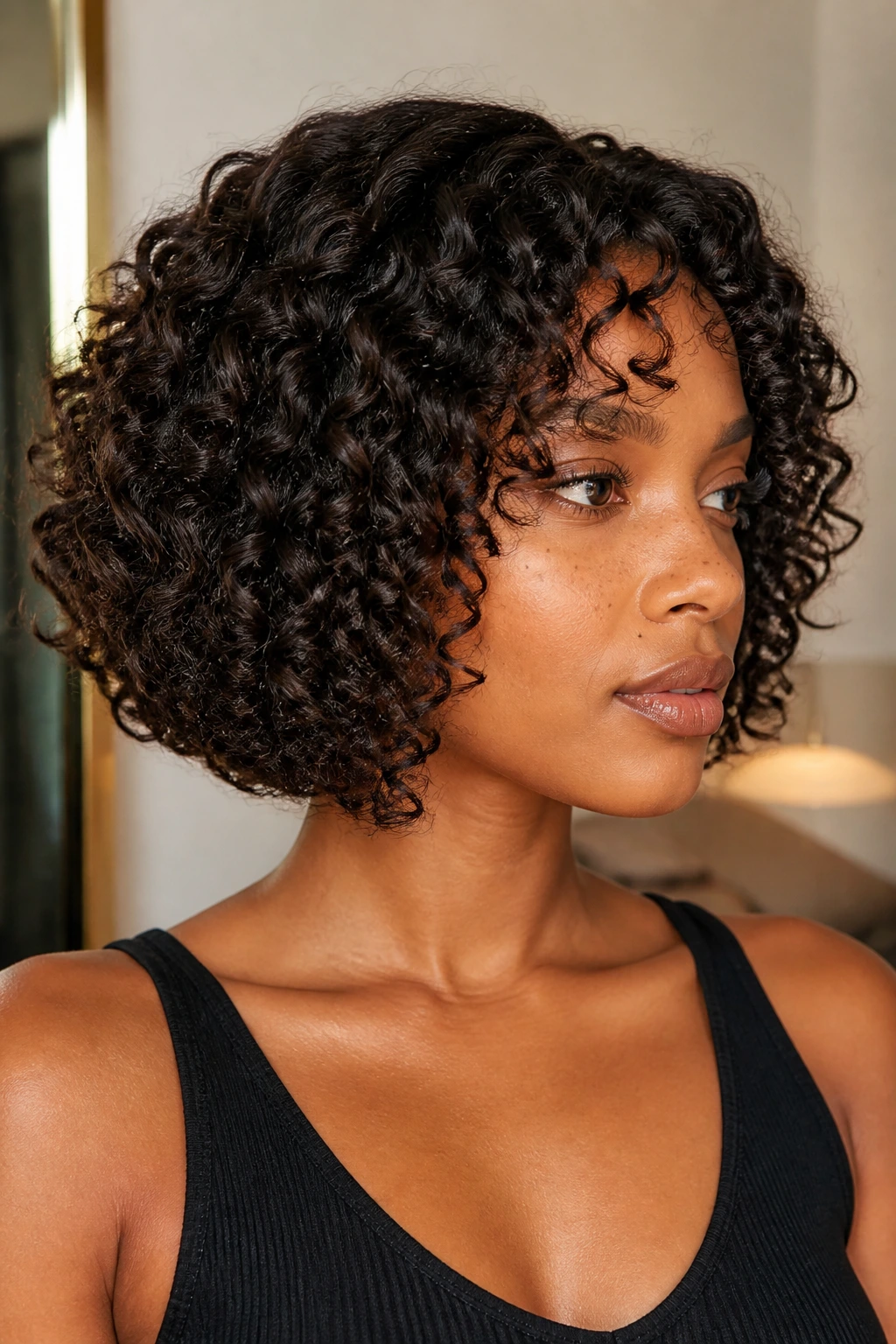
A curly bob with internal layers is one of those cuts that looks easy until you try to live with the wrong version of it. The outside line should stay crisp around the chin or jaw, but the bulk inside the shape needs to be removed so the curls can fall instead of stacking into a wide block. That’s what separates a good bob from a triangle.
This cut works well if you want volume without the puff. It also behaves better than a blunt bob on hair that expands when dry. Ask for the layers to be hidden inside the shape so the outline stays tidy, because the magic here is movement, not choppy edges.
4. Shoulder-Length U-Shape Cut
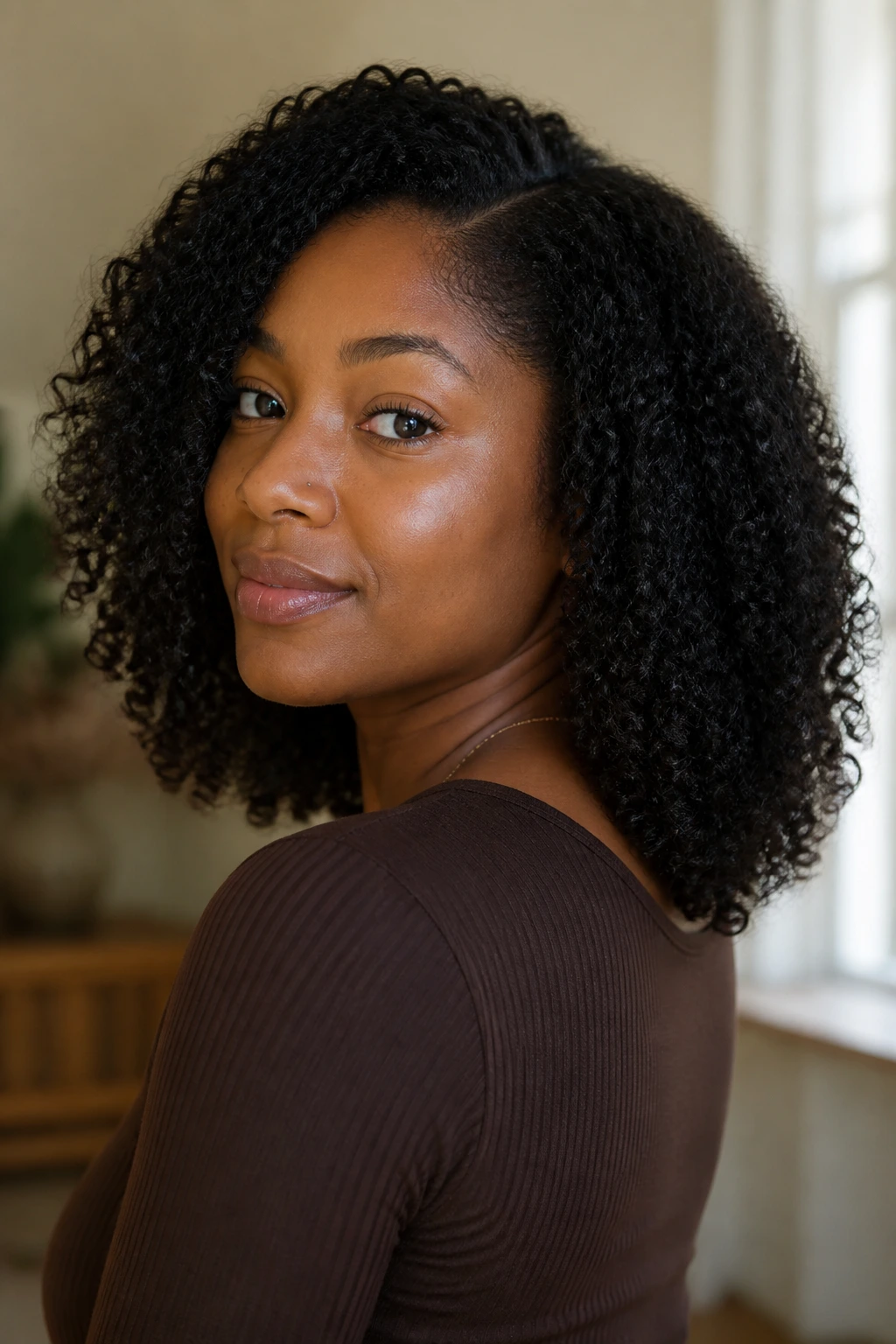
The shoulder-length U-shape keeps the back a little longer than the sides, which gives curls a softer fall and stops the ends from collecting all the weight in one spot. On natural hair, that little arc matters. It helps the curl pattern drop in a way that feels smooth instead of blocky.
I like this shape for people who wear wash-and-gos one week and stretched styles the next. It gives you enough length for versatility without letting the hair sit like a blunt sheet. If the front tends to shrink more than the back, ask the stylist to check the shape dry and trim the pieces that pull up the most.
5. Frohawk with Tapered Sides
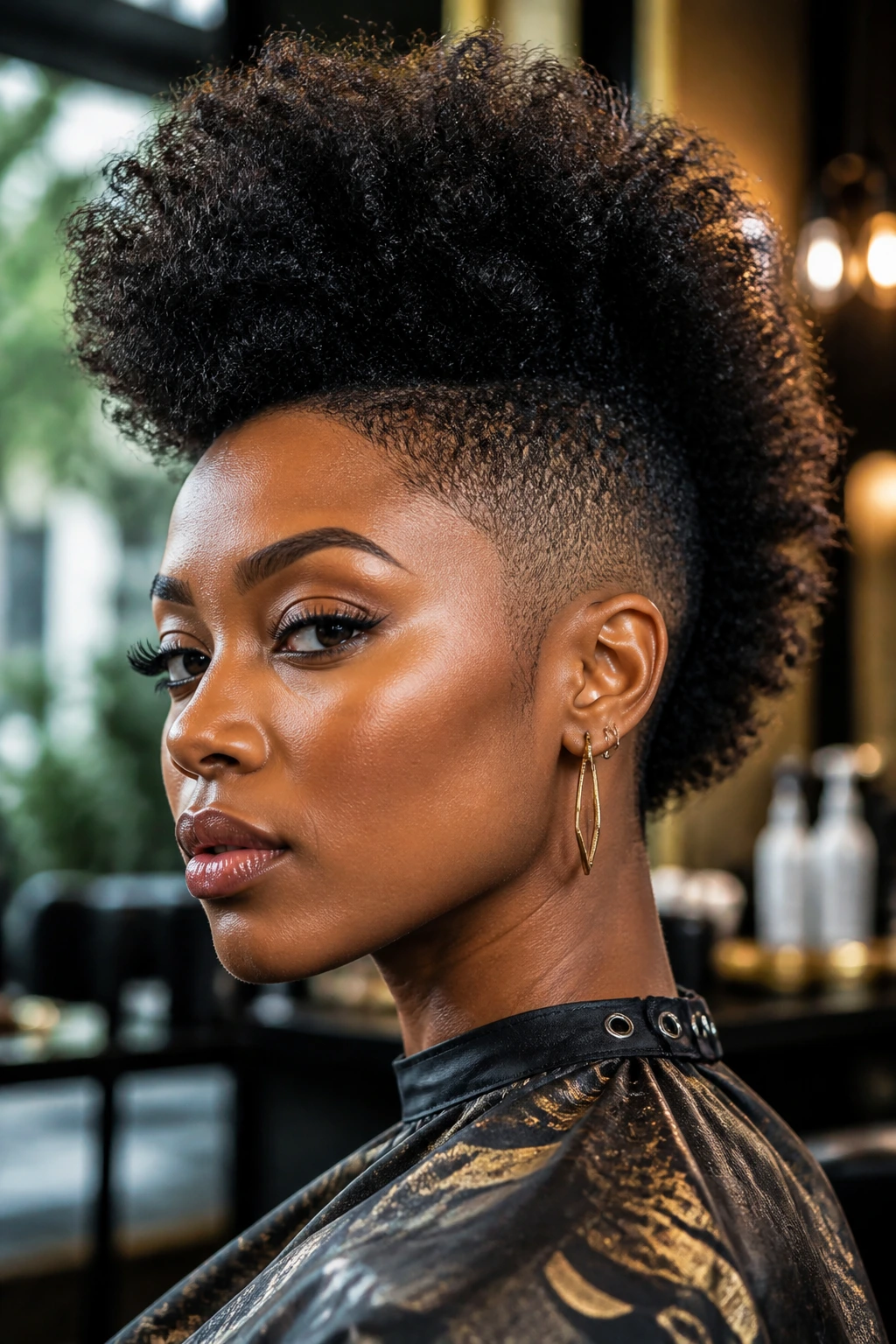
A frohawk is a statement cut, and it knows it. The center ridge gets the height, the sides stay tapered or clipped close, and the whole thing feels sharper than a standard rounded shape. It’s especially good on dense hair that wants to live big anyway.
What I like most here is the clarity. You do not spend much time wondering what the cut is trying to do. It’s doing it. If your curls are thicker at the crown than at the temples, this shape turns that imbalance into the point of the style instead of a problem to hide.
6. Pixie with Curly Top
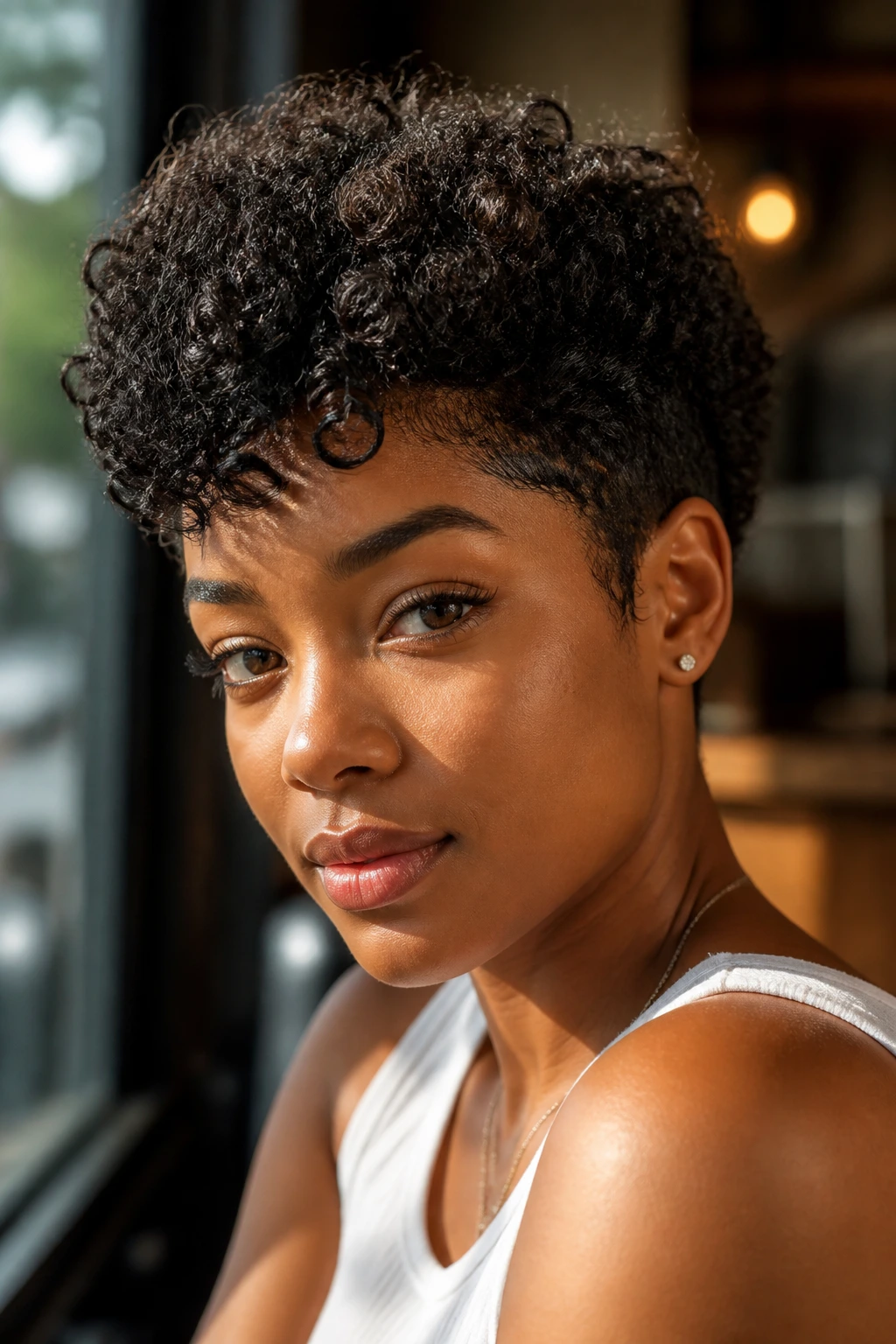
A curly pixie has a bit of attitude built in. The top needs enough length for the curls to spring, while the sides and back stay close enough to keep the whole cut light. If the top is left too short, the curls can disappear into the head and the shape loses its life.
This cut is one of the best options when you want low maintenance but still want visible texture. It frames the face fast, dries quicker than a longer style, and doesn’t ask for much product. A small amount of foam at the roots and a diffuser on low heat can be enough to make the pattern pop.
7. Angled Curly Lob
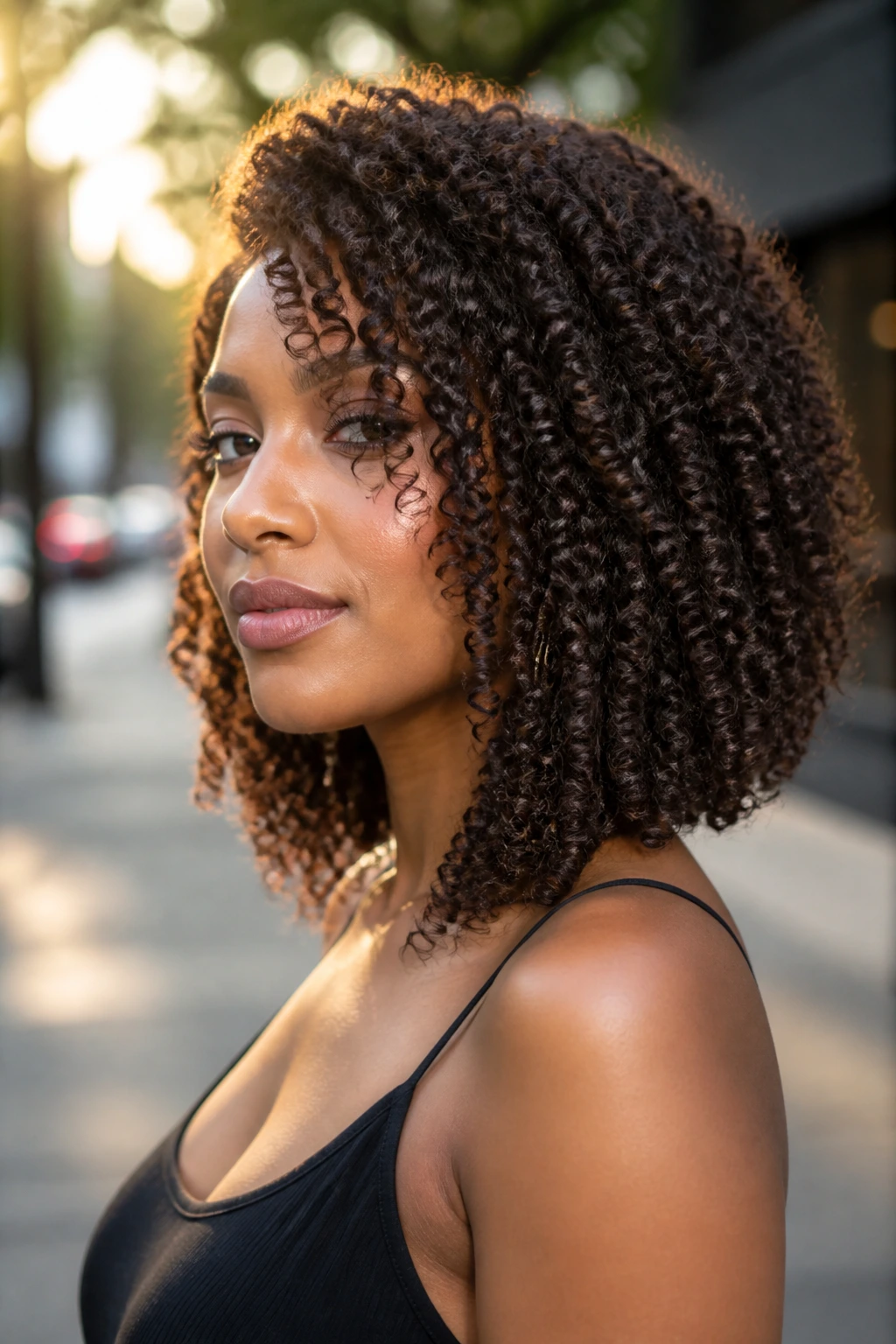
An angled curly lob sits between shoulder and collarbone length, with the front hanging a little longer than the back. That angle gives the face a cleaner line and keeps the hair from reading heavy all the way around. It’s a smart cut for loose curls and tighter coils alike, as long as the layers are placed with the shrinkage in mind.
The angle also gives you control. You can wear it with a side part, tuck one side behind the ear, or let it fall forward for a softer shape. If you like a cut that changes a little depending on how you style it, this one earns its keep.
8. Shaggy Coil Cut
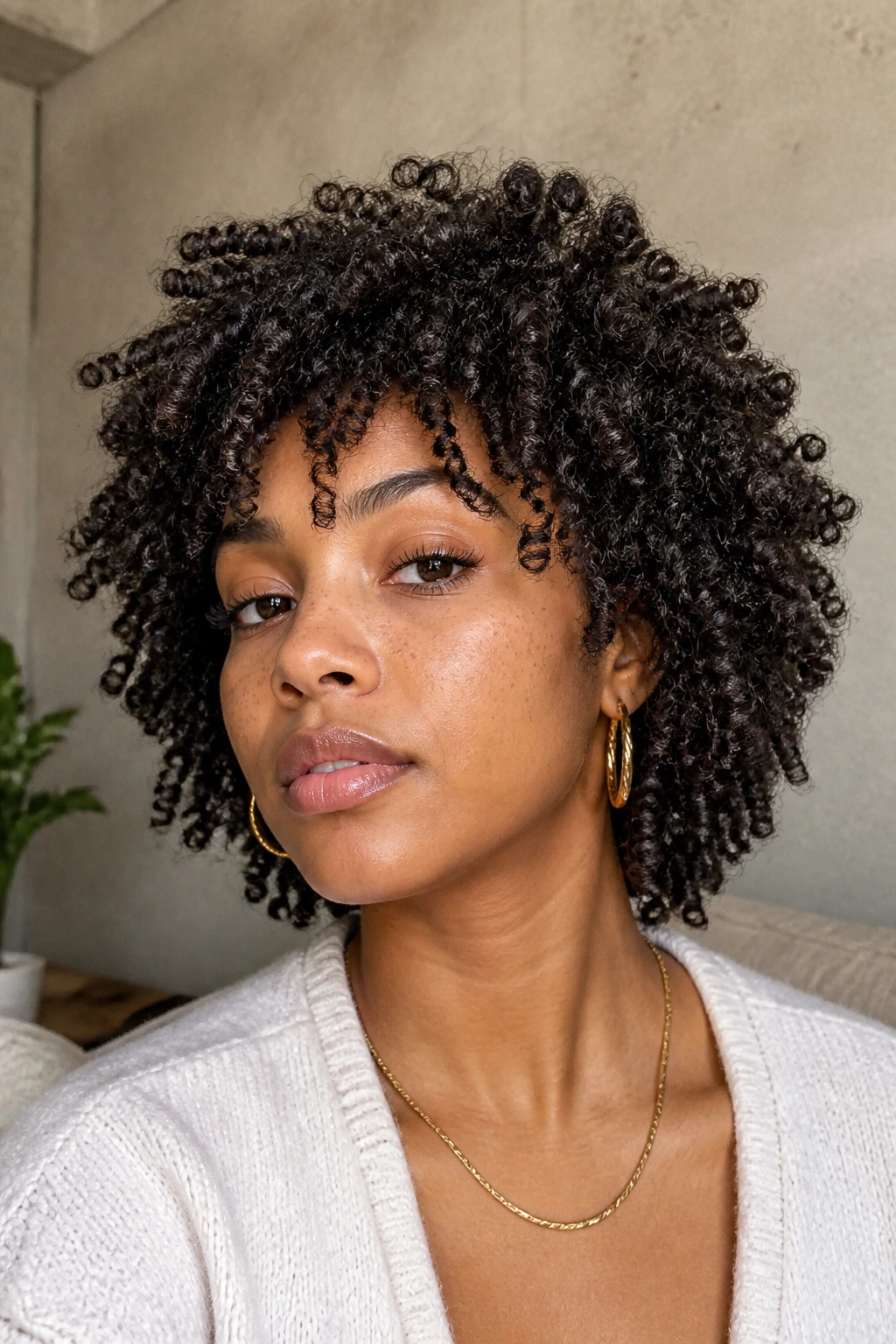
A shaggy coil cut is for people who want texture to feel a little undone on purpose. The layers are more visible here, the outline is softer, and the curls can fall in pieces instead of forming one single wall. Done well, it looks lived-in, not messy.
This shape loves mousse, finger scrunching, and a diffuser on low. It also works nicely if your hair has different textures in different zones, because the shag can hide some of that variation. Keep the layers balanced, though. Too many short pieces at the crown can make the top puff before the rest of the hair has a chance to settle.
9. Side-Parted Collarbone Cut
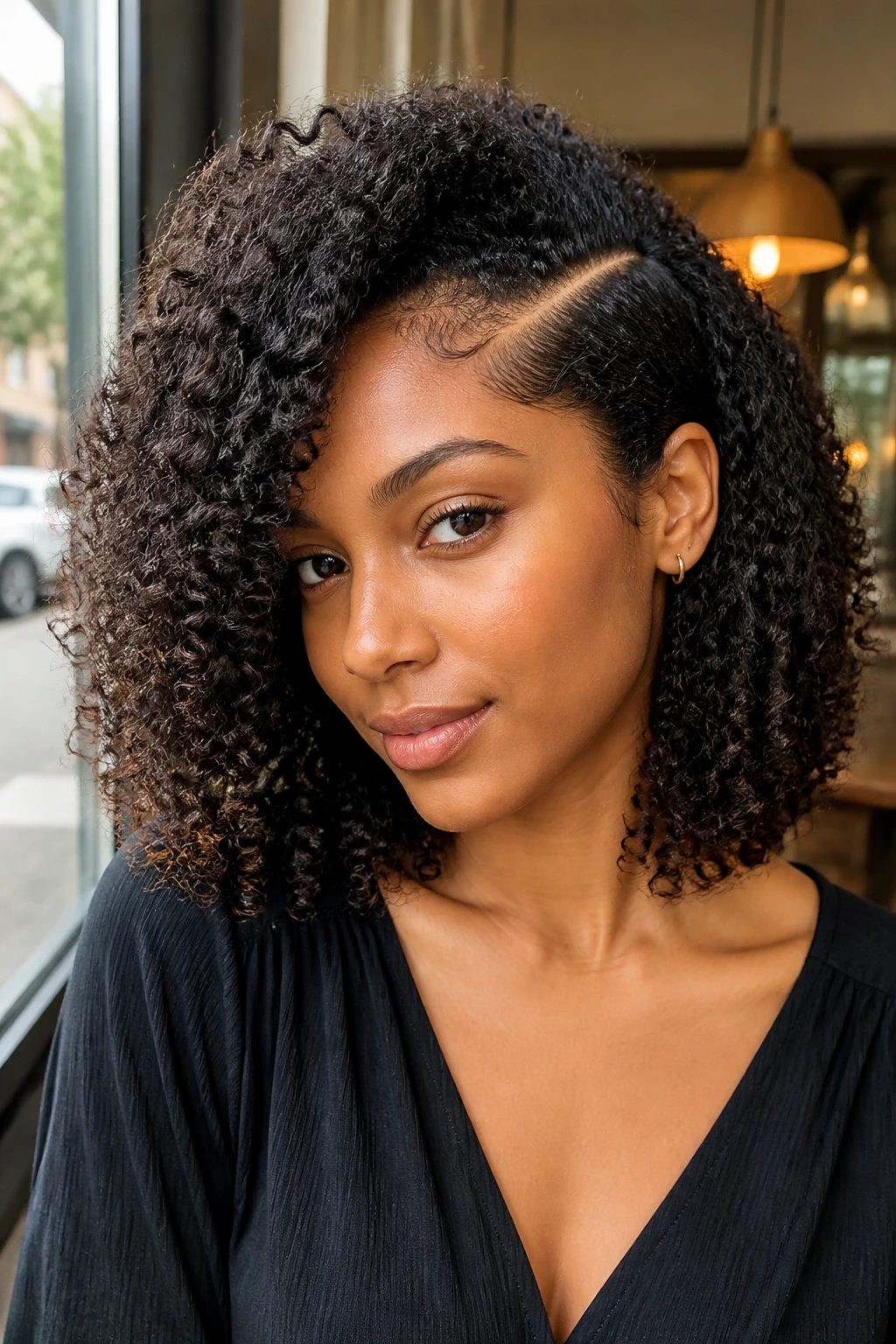
A deep side part changes the whole mood of a collarbone cut. Suddenly the volume shifts, one side frames the cheek, and the style looks more deliberate without needing extra length. That’s the beauty of it: the part becomes part of the shape.
This cut is especially good if your face tends to read rounder and you want a little more line on one side. It also works with mixed curl patterns because the side with looser curls can blend into the part instead of fighting it. Ask for the part to be set where your hair naturally wants to fall. A forced part usually grows annoying fast.
10. High-Top Taper with Soft Edges
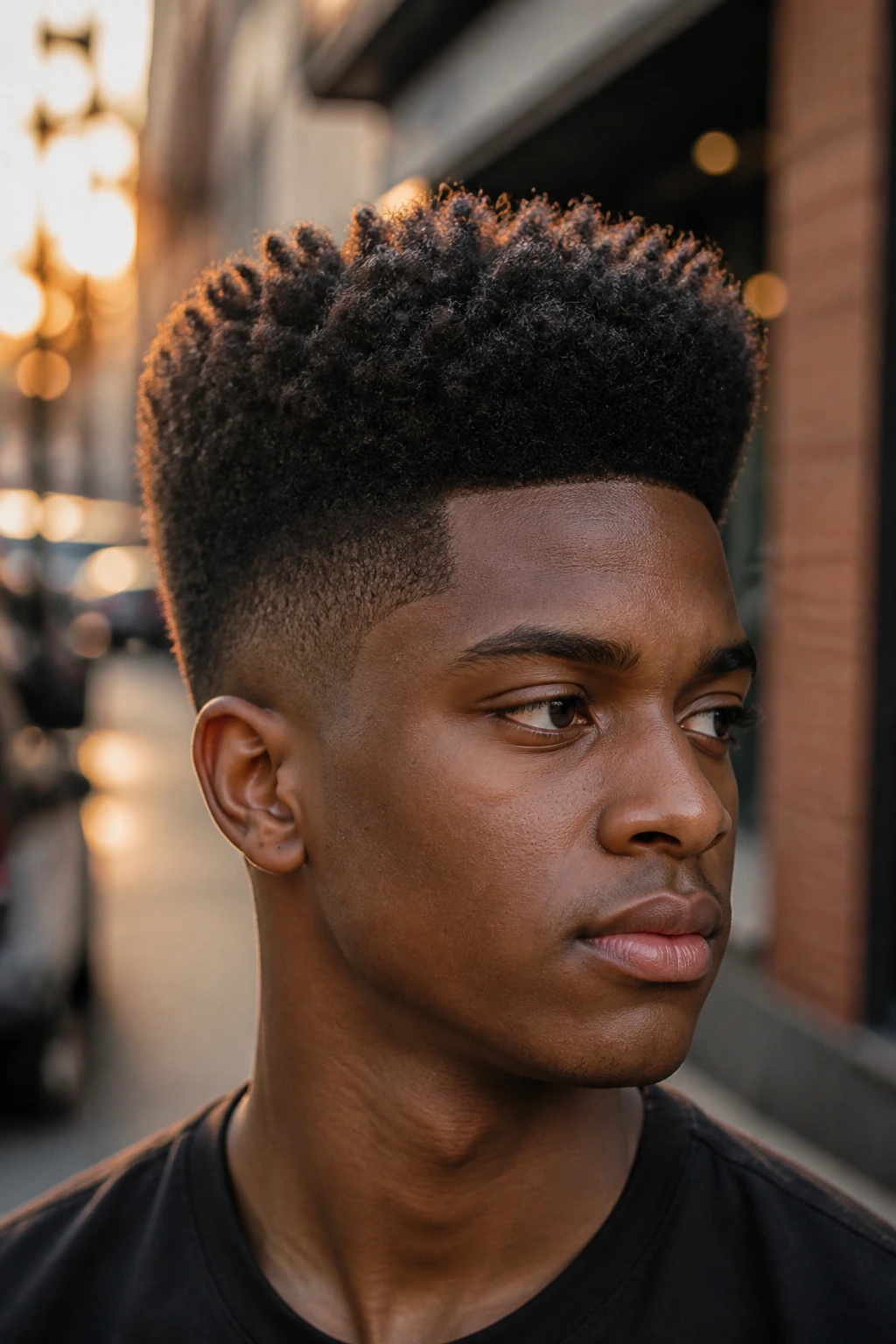
A high-top taper gives you height without making the sides compete for attention. The top stays plush and defined, while the sides and nape stay close enough to keep the outline clean. If the taper is too severe, the cut can look stiff. Soft edges keep it wearable.
This is one of my favorite shapes for coils that hold form but need direction. You get that sculpted crown without sacrificing the natural texture that makes the cut interesting in the first place. If the hairline is sensitive or you like softer edges around the temples, say that clearly in the chair. A taper does not have to mean a hard line.
11. Asymmetrical Curl Crop
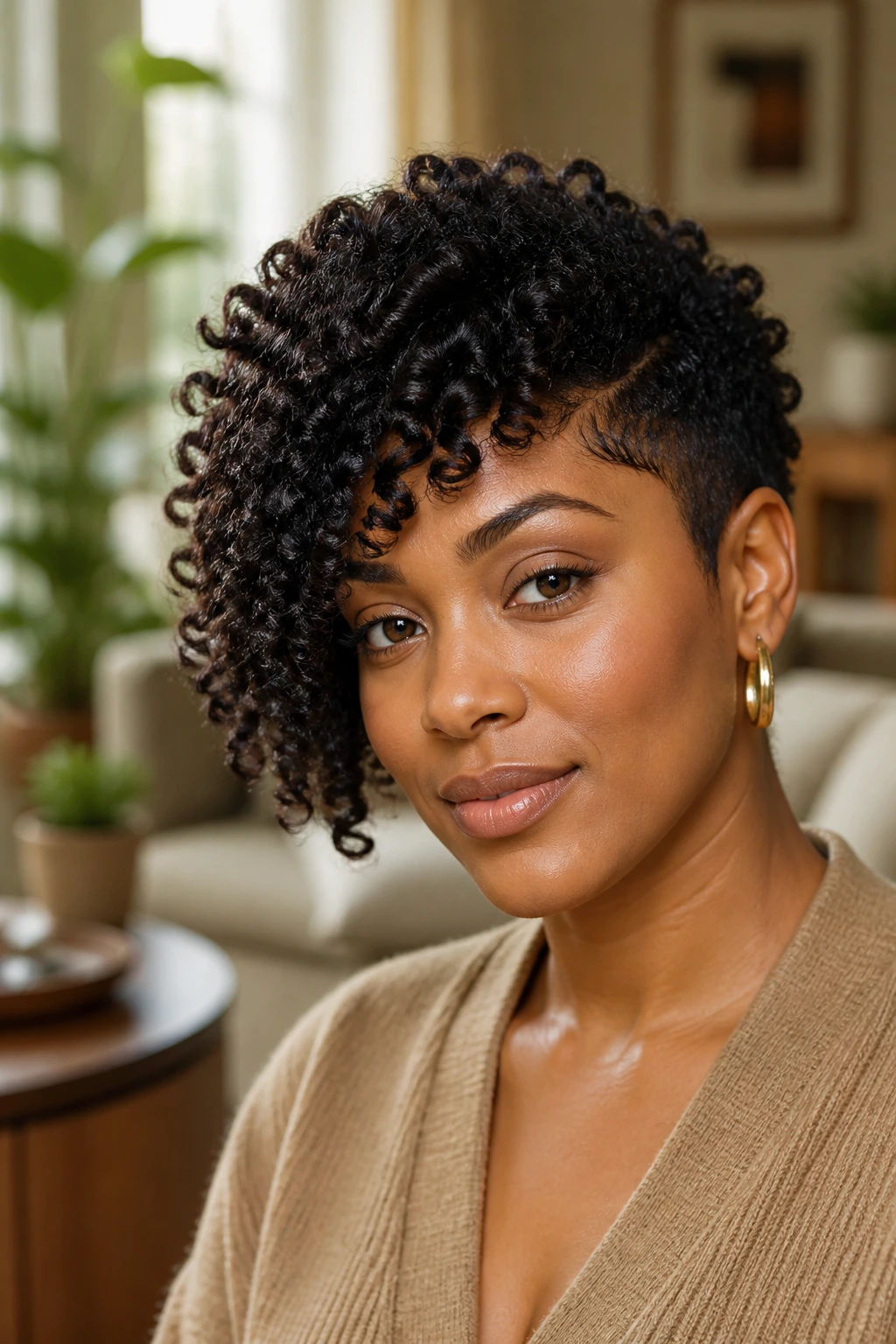
An asymmetrical crop is the haircut version of a slight smirk. One side sits a bit longer, or one section drops lower than the other, and the cut suddenly feels more alive. It’s a good answer for hair that has uneven density or a cowlick that pushes one side off its mark.
The trick is restraint. You want the asymmetry to look intentional, not accidental. A difference of an inch or so can be enough. If you go too dramatic, the shape can stop reading as curl-focused and start looking like it’s fighting itself.
12. Bangs and Bob Combo
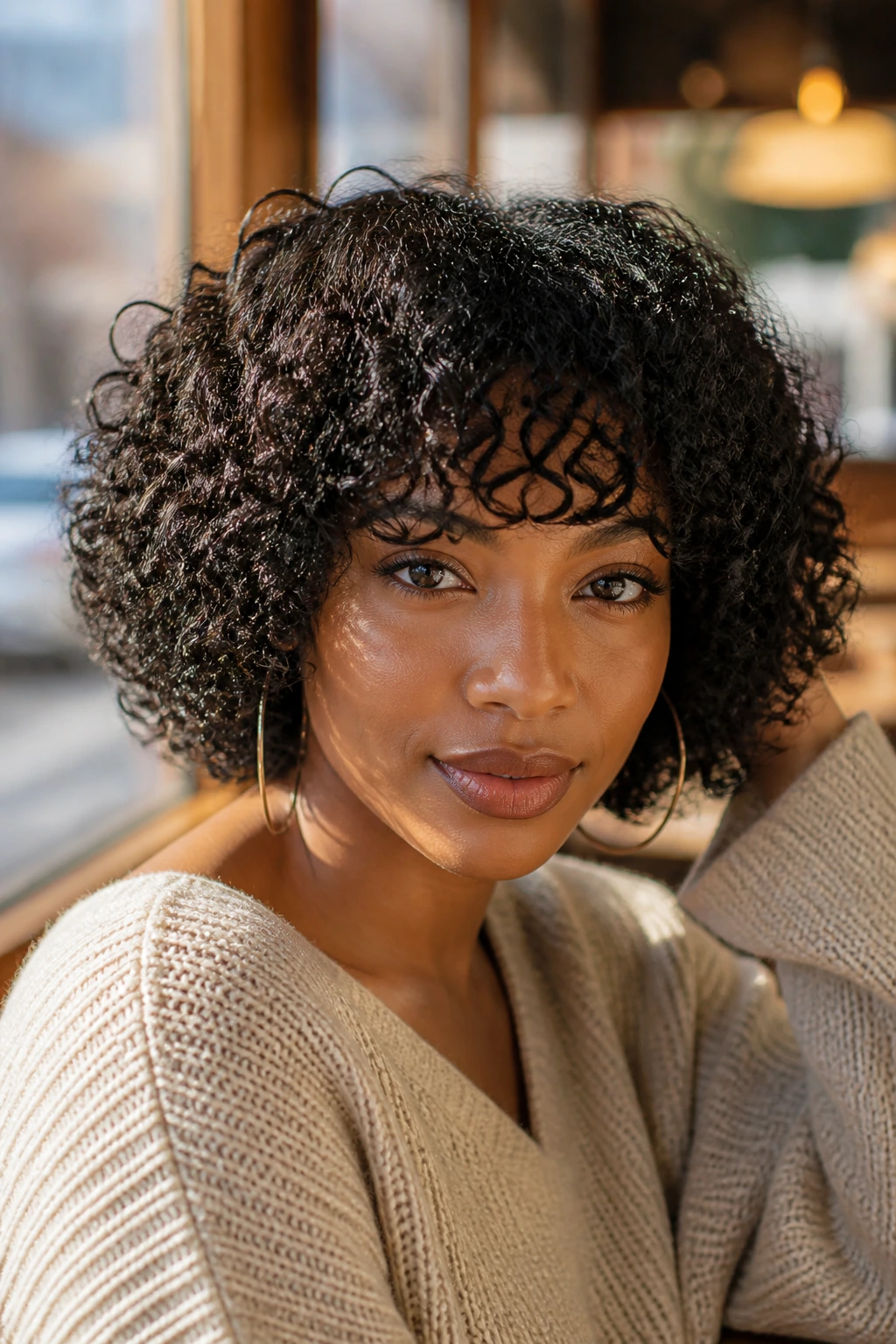
Curly bangs can be gorgeous, but they need their own plan. A bob with bangs works when the fringe is shaped to curl up and away from the eyes instead of hanging there like an afterthought. The bob underneath should support the bangs, not compete with them.
This cut is best when the fringe is trimmed dry and checked again after the curls spring up. If your hair shrinks a lot, leave the bangs longer than you think and let them settle for a wash or two before making them shorter. That sounds cautious because it is. Bangs are not the place to get reckless with shrinkage.
13. Long Layered Spiral Cut
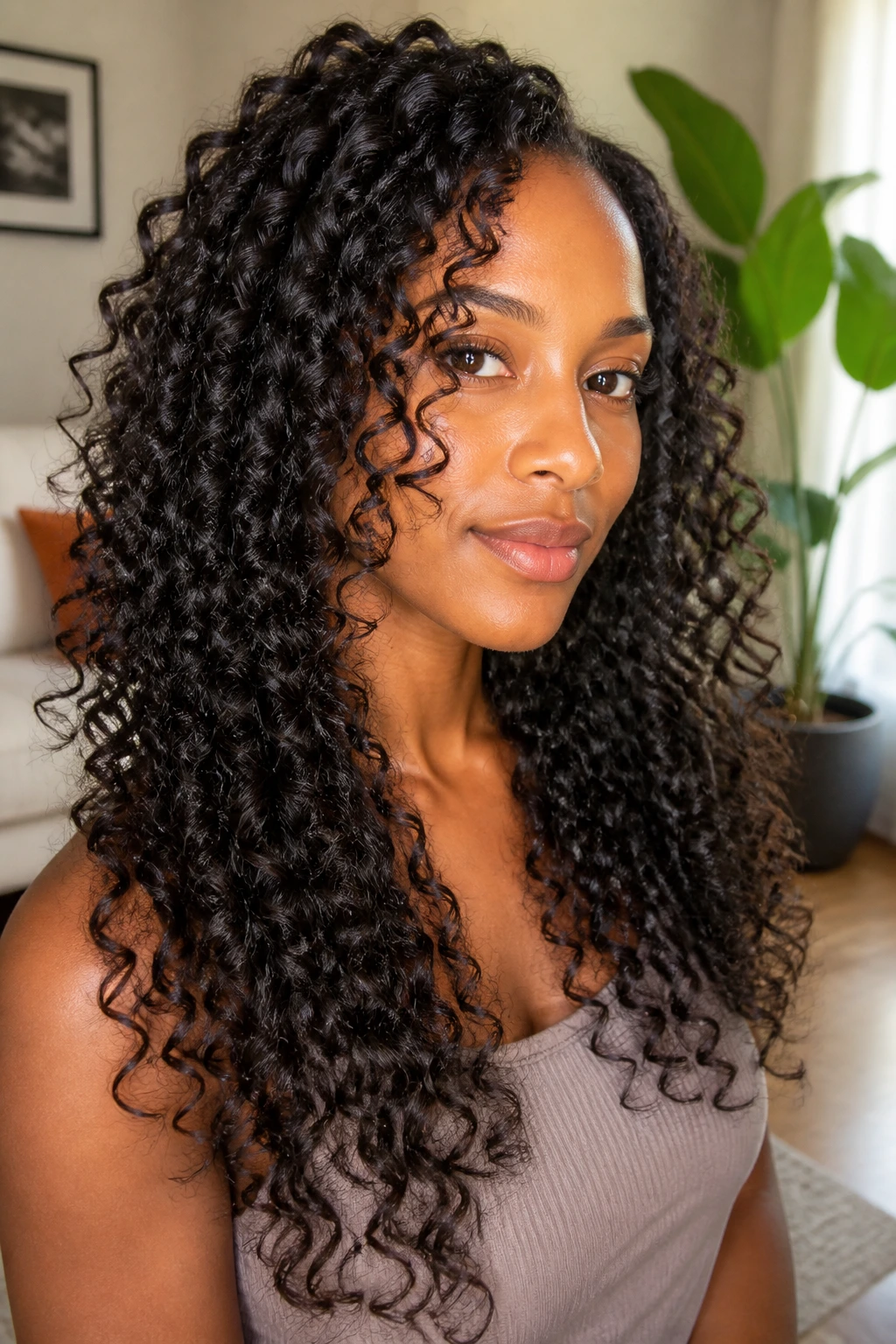
Long hair can go flat fast if the bottom gets too heavy. A long layered spiral cut keeps the length but takes weight out of the places that make curls hang in one solid sheet. The result is movement from root to end, not just length for the sake of length.
I like this one for people who want to keep their hair stretched or braided occasionally but still wear it curly with shape. The layers should be soft enough that the longest pieces keep their drama. Too many short layers, and you lose the long line that makes this cut work.
Best when you want both length and bounce
- Keeps the bottom from dragging the whole head down.
- Makes diffused curls look lighter.
- Works better if the ends are trimmed before the layers are built.
14. Halo Cut for Tight Coils
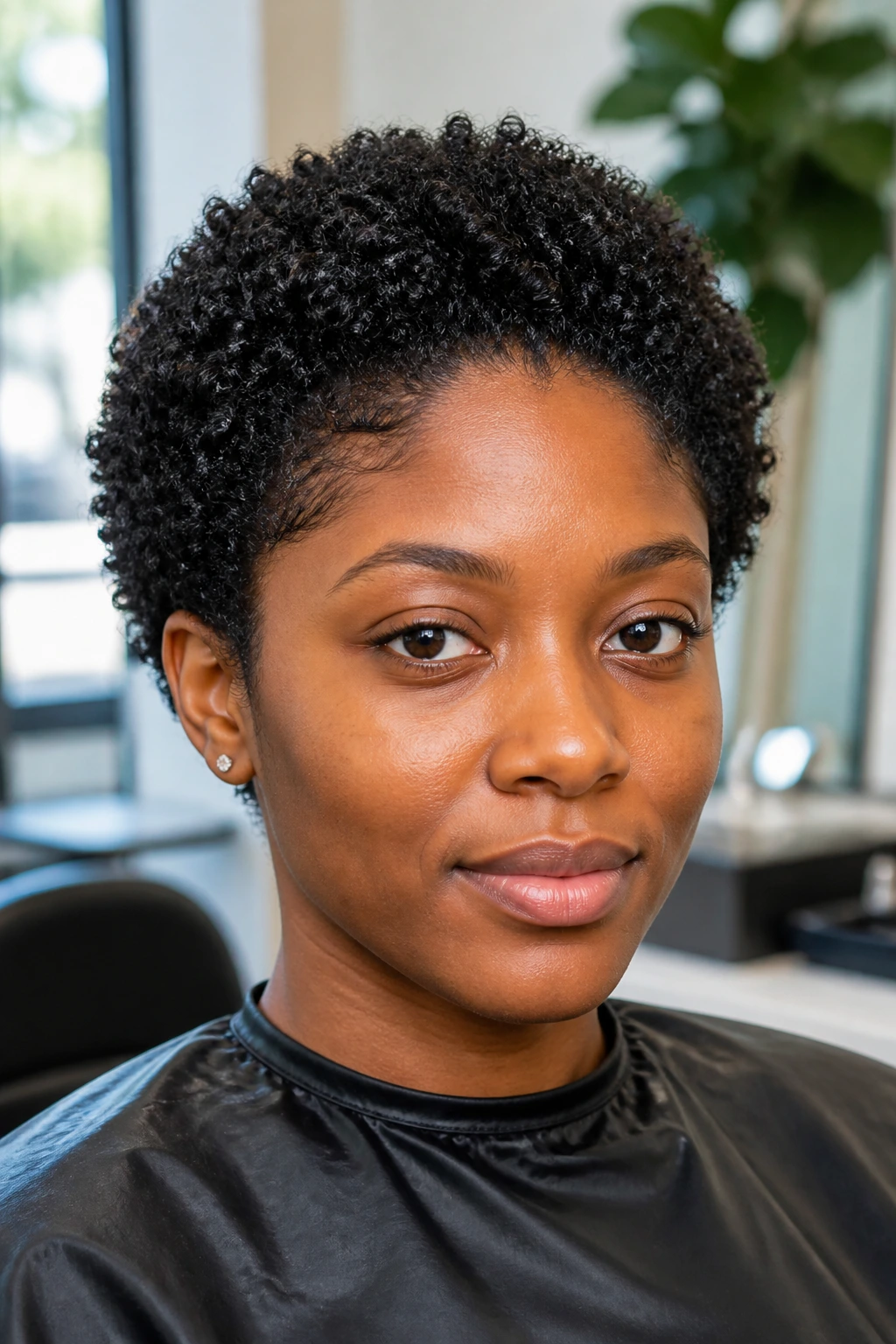
A halo cut follows the curve of the head, which is a beautiful thing on tight coils. The shape sits close to the scalp, rounds out gently above the ears, and creates a clean outline even when the hair shrinks hard. It’s one of the neatest ways to make shrinkage look intentional.
This cut is especially useful if you’re tired of shaping the same puff every morning. The halo already has structure, so a little pick at the roots or a light mist of leave-in is often enough. Ask for the cut to stay rounded around the temples and ears. Sharp corners ruin the whole effect.
15. Blunt Cut on Dense Curls
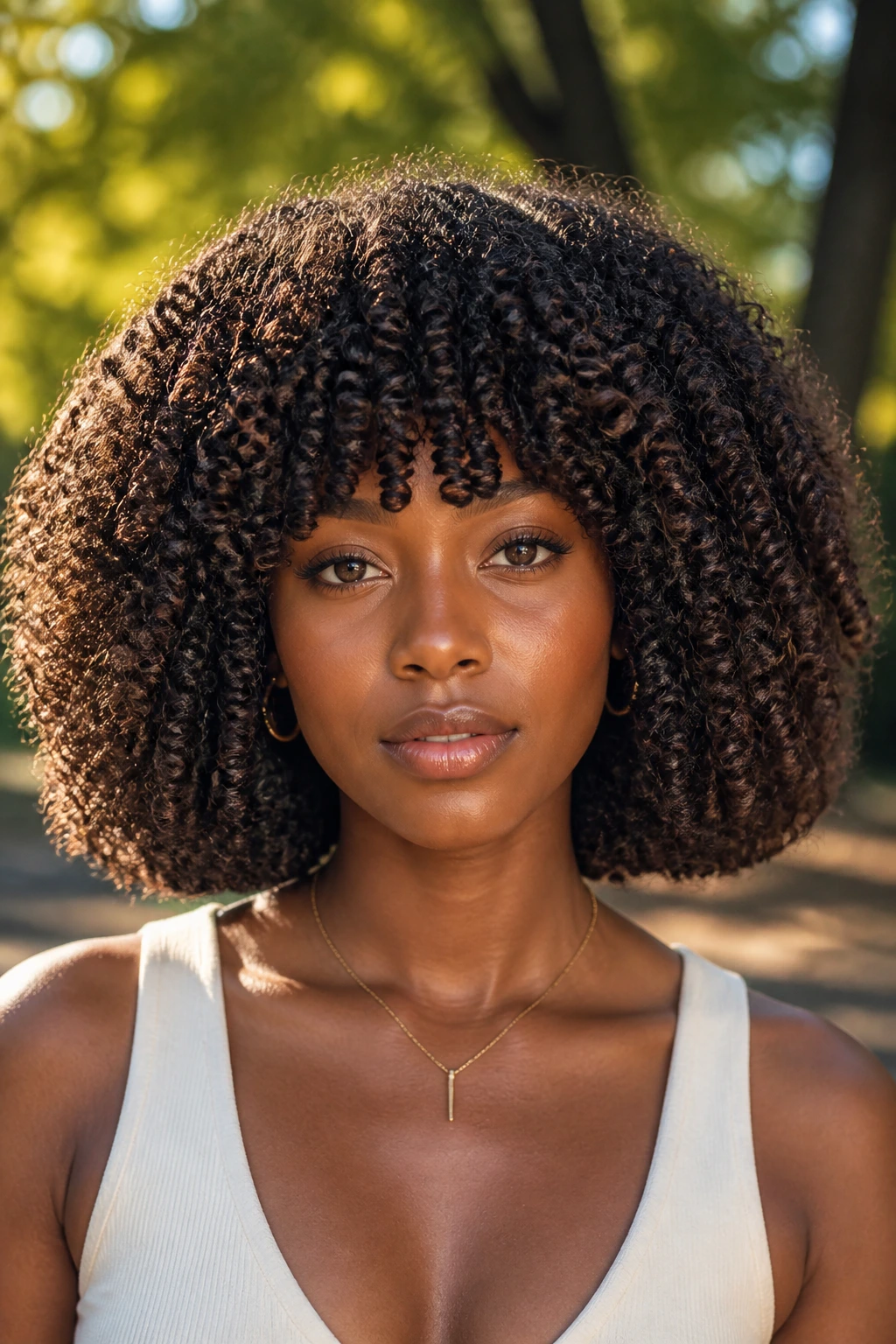
A blunt cut on dense curls can look strong in the best possible way. The ends form one clean line, and when the density is there, the haircut has enough body to support that shape without looking sparse. The catch is obvious: if the hair is low-density, the same blunt edge can turn see-through and thin.
This is not the cut I’d hand to everyone. I’d hand it to someone with enough fullness that the line stays solid after shrinkage and a few days of wear. If that’s you, keep the ends trimmed often so the blunt line doesn’t fray into a fuzzy edge.
16. Face-Framing Feathered Layers
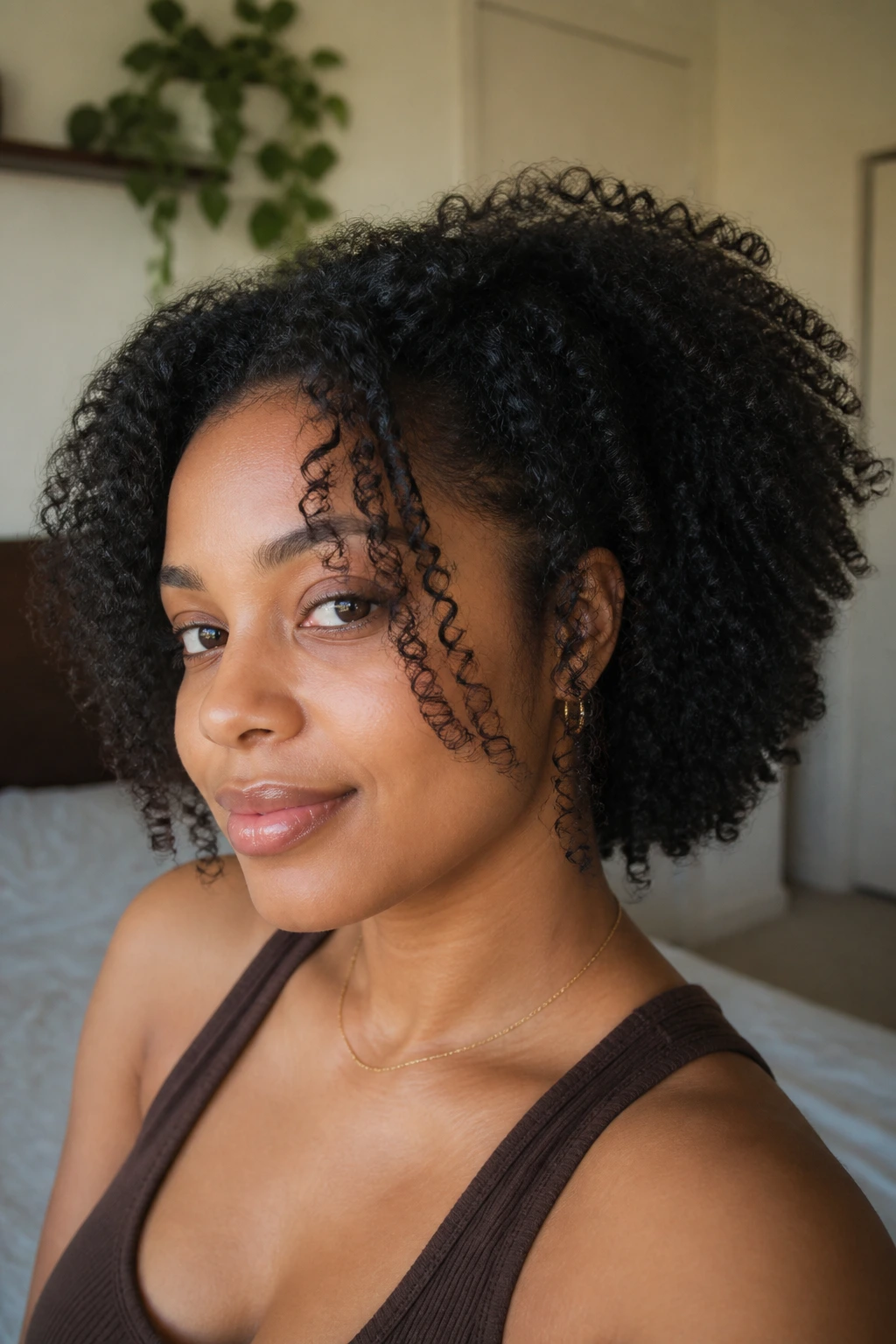
Face-framing layers are the easiest way to soften a curl cut without taking away the shape. The pieces around the cheekbones and jaw do the work, and the rest of the hair can stay fuller behind them. It’s a small move with a big visual payoff.
This cut is useful if you want your curls to open around the face rather than sit all in one mass. It also helps when your hair has more density in the back than in the front. Ask for the shortest face-frame pieces to be long enough to curl, not short enough to poof away from your cheek.
17. Crown-Heavy Rounded Cut
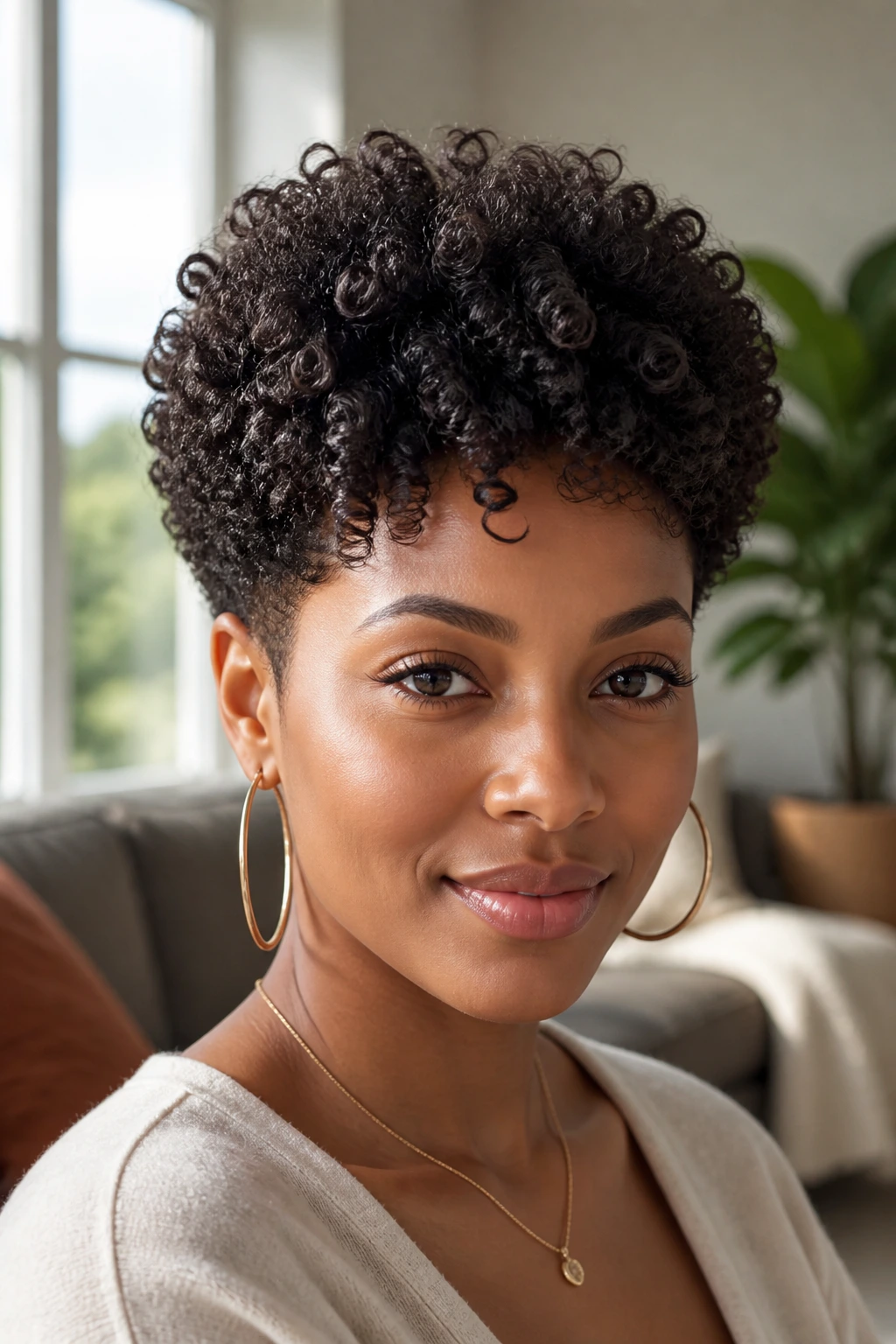
A crown-heavy rounded cut puts the emphasis up top, where the hair naturally wants to lift anyway. The sides stay balanced, the back follows a soft curve, and the top has enough length to show off definition. It’s a smart shape if you like height but don’t want a tall taper.
What makes this cut work is placement. The volume has to stay centered, not drift forward or collapse to one side. A little mousse at the roots and a diffuser can help, but the haircut itself does most of the job. That’s the part I like. Good shaping means less arguing with the mirror.
18. Nape-Tapered Curly Cut
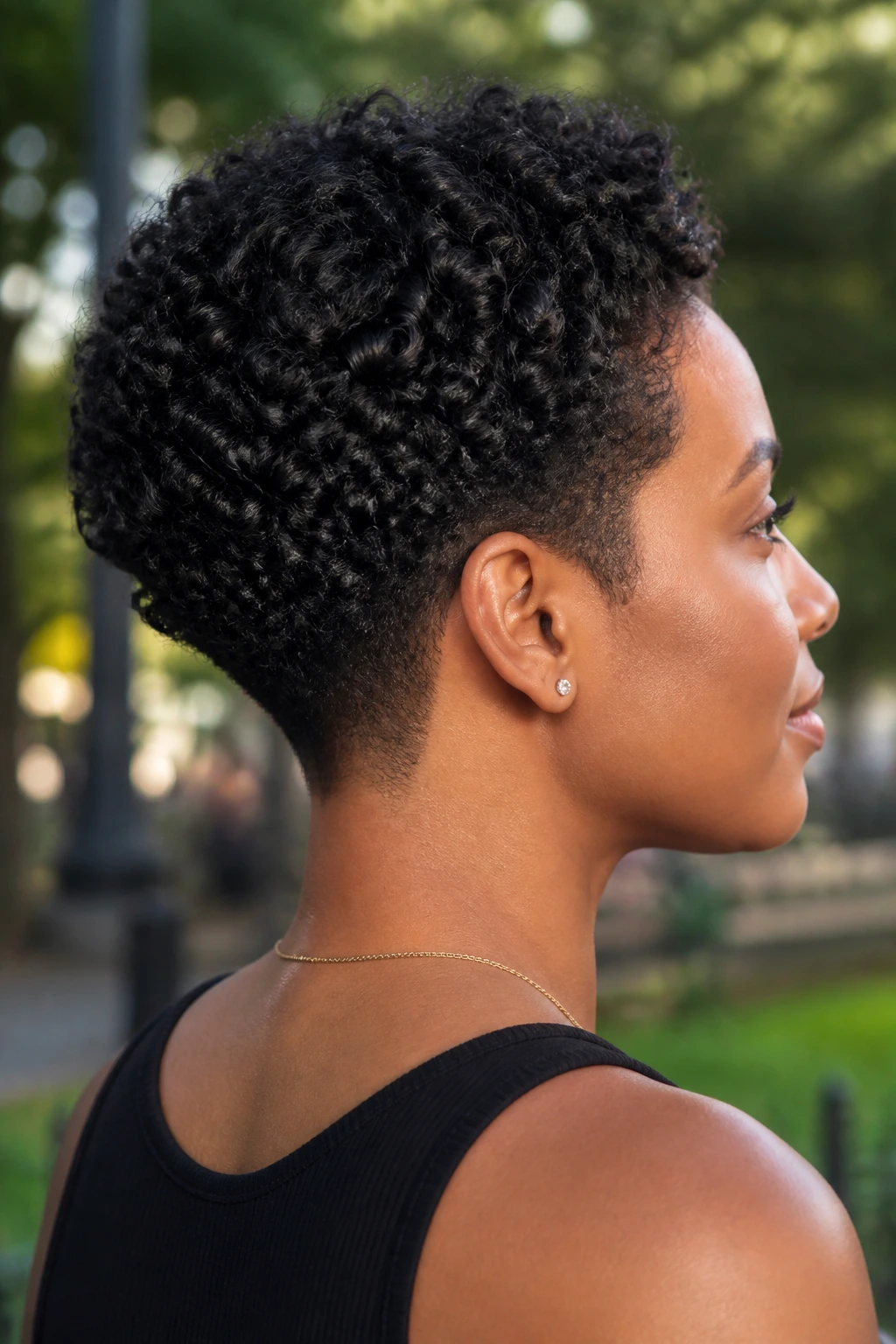
A nape-tapered cut keeps the back tidy in a way that matters more than people admit. Scarves, collars, and hoodie seams all rub right there, and a clean taper keeps the back from puffing into a rough shelf. The top still has room to curl and move.
This is a good fit if you wear your hair up half the time or if the back tends to expand faster than the rest. It also grows out gracefully. You can let the nape get a little longer before the whole style looks unfinished, which is useful when you don’t want to be in the salon every few weeks.
19. Mid-Length Shape with Curtain Bangs
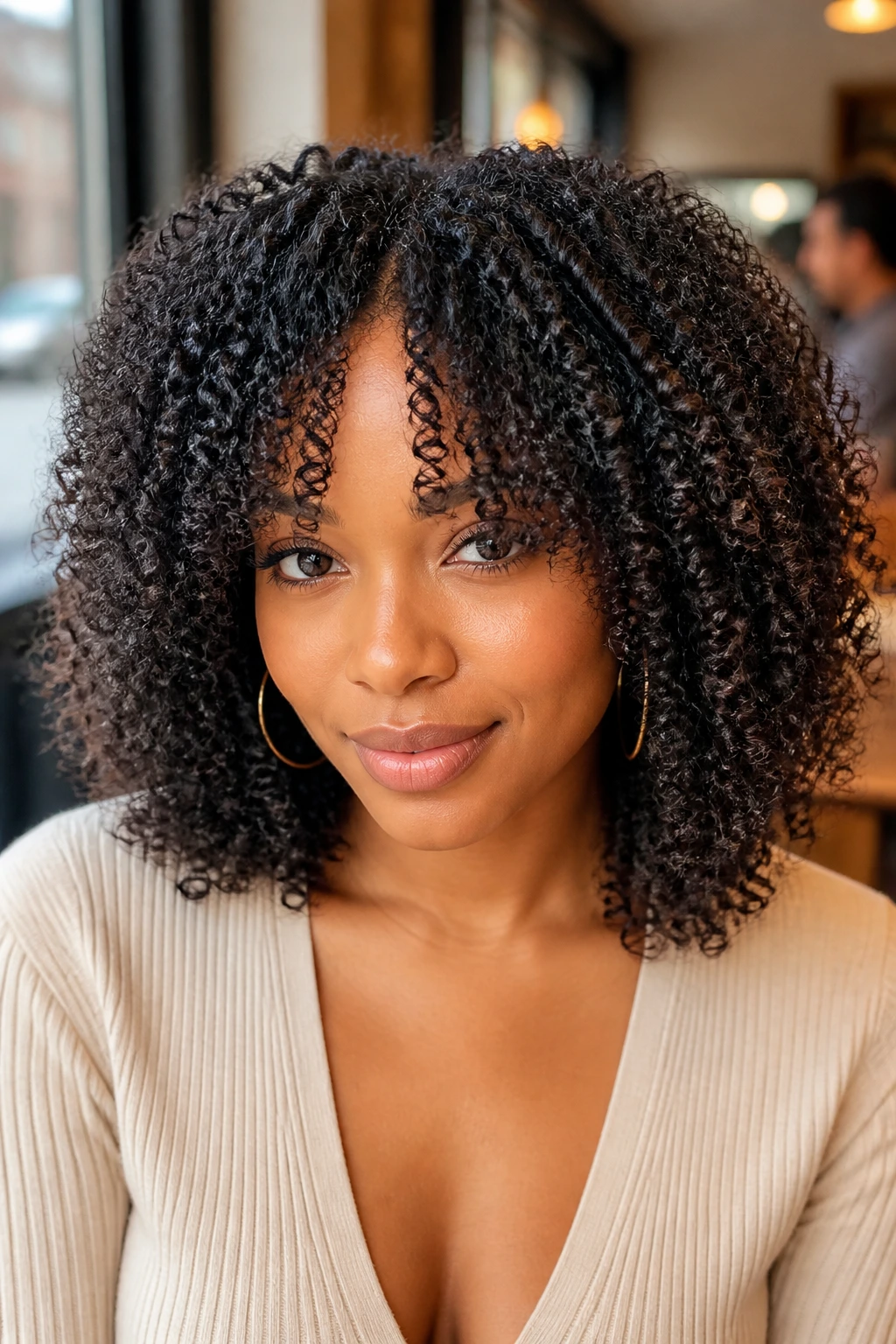
Curtain bangs on natural hair need a soft hand. They should part around the forehead and fall into the sides instead of hanging in one blunt curtain that shrinks up and sits awkwardly. Paired with a mid-length shape, they give the cut a softer face frame without locking you into a short fringe.
This is one of those styles that looks casual but still requires a plan. The bangs and the rest of the hair need to be balanced so the top doesn’t get too dense. If your front section shrinks more than the rest, have the stylist leave the curtain pieces longer and dry them in the direction you actually wear them.
20. Short Coily Puff Cut
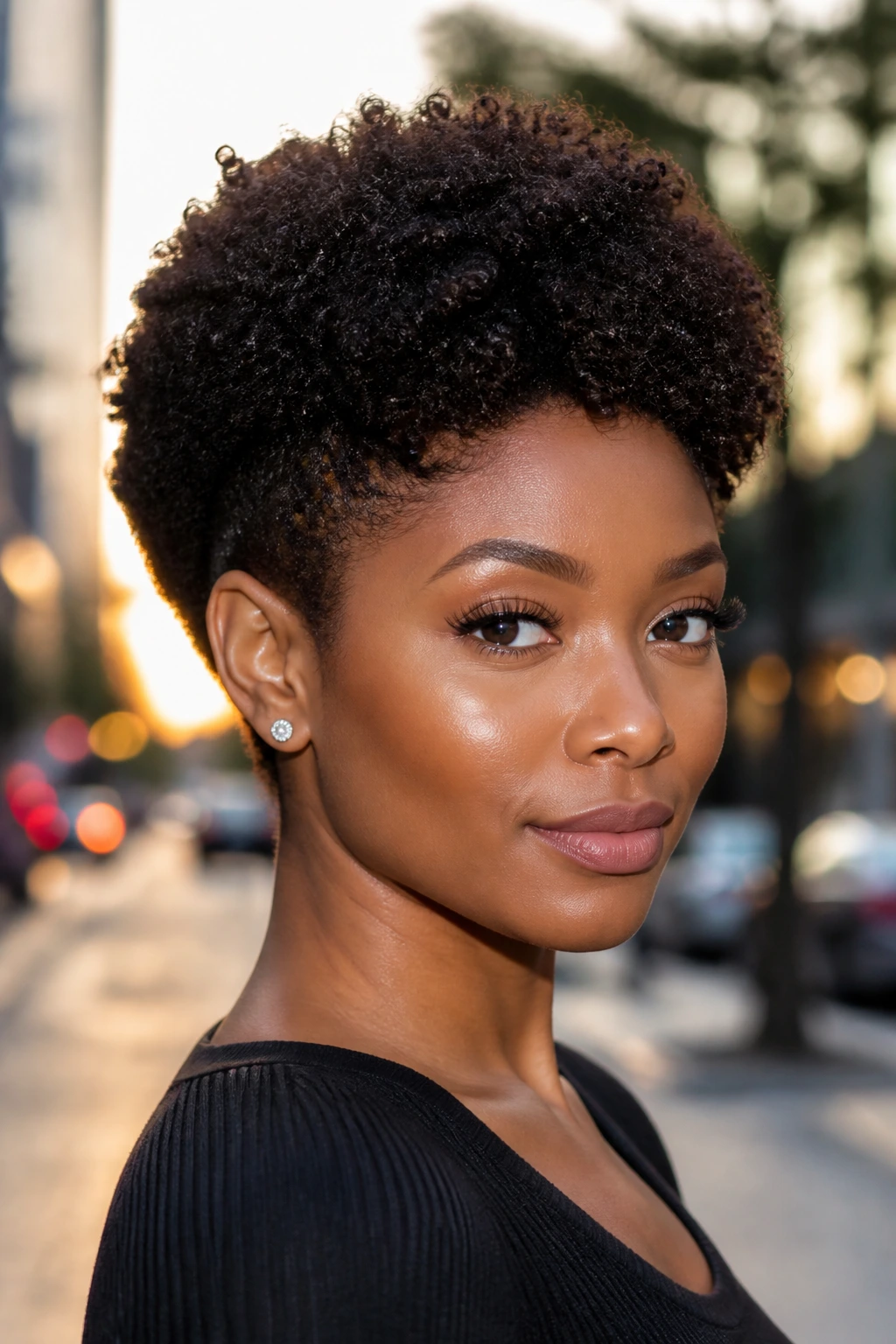
A short coily puff cut is for people who want a fast shape that still looks put together. The cut is built so the hair gathers upward or forward into a puff without fighting weird corners at the sides. It’s a clean answer for mornings when you don’t want to spend ten minutes reshaping your head.
The edges matter here. Keep the shape rounded enough that the puff reads as one style, not a collection of separate sections. A soft brush at the hairline and a light gel can finish it off, but the haircut should already do most of the work. That’s what makes it feel easy.
21. Triangle-Softened Afro
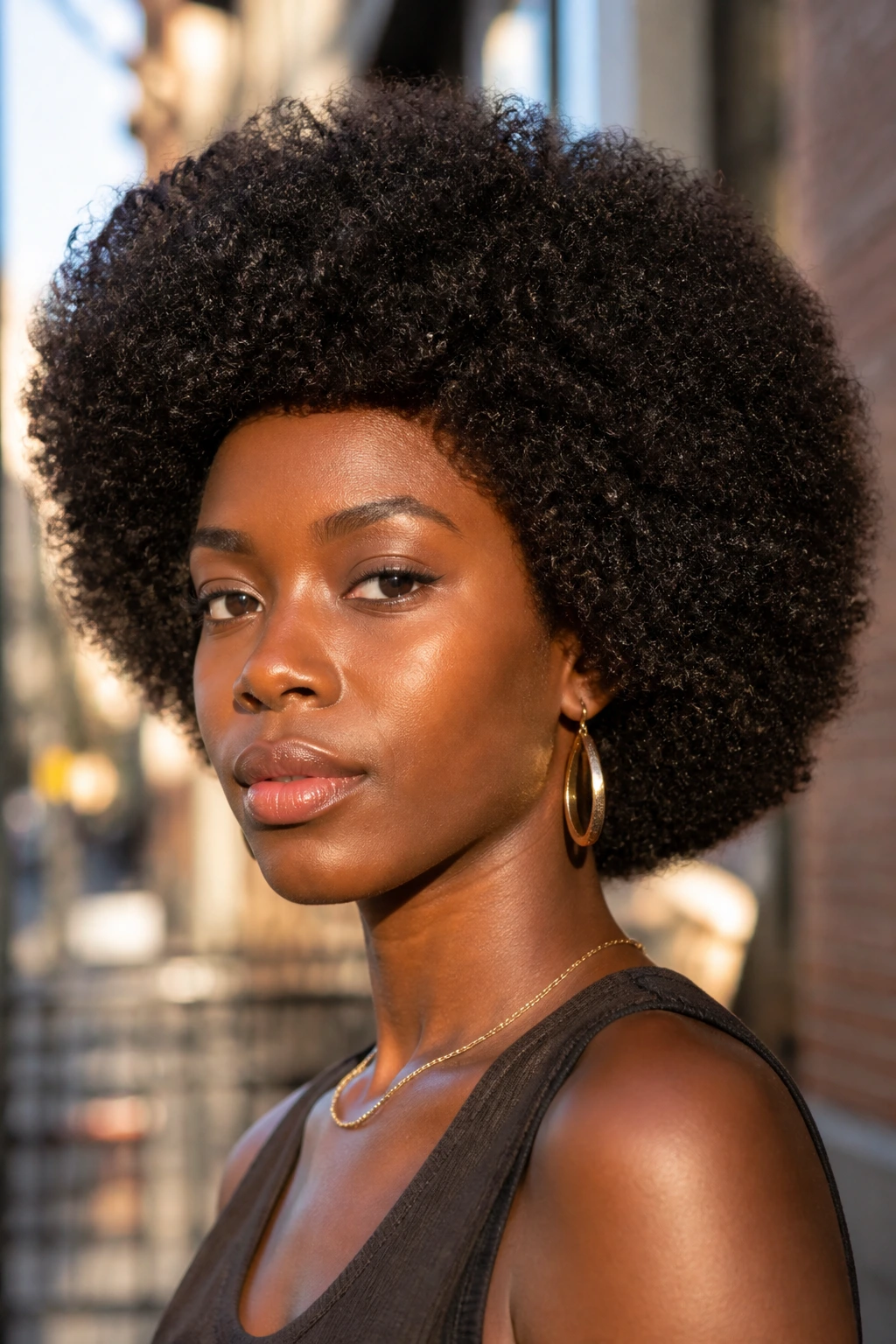
A triangle-softened afro keeps a little fullness at the bottom, but not the kind that makes the silhouette look like it’s wearing a bell. The key is rounding the temples and softening the sides so the lower half doesn’t spread too wide. It’s a bold shape, but it has to be controlled.
I know triangle shapes get a bad rap. Fair enough. When they’re too sharp, they can look heavy. When they’re softened on purpose, though, they create a strong silhouette that feels graphic and confident. If you like volume and want the base to hold some presence, this cut earns a look.
22. Waterfall Layers on Type 3–4 Hair
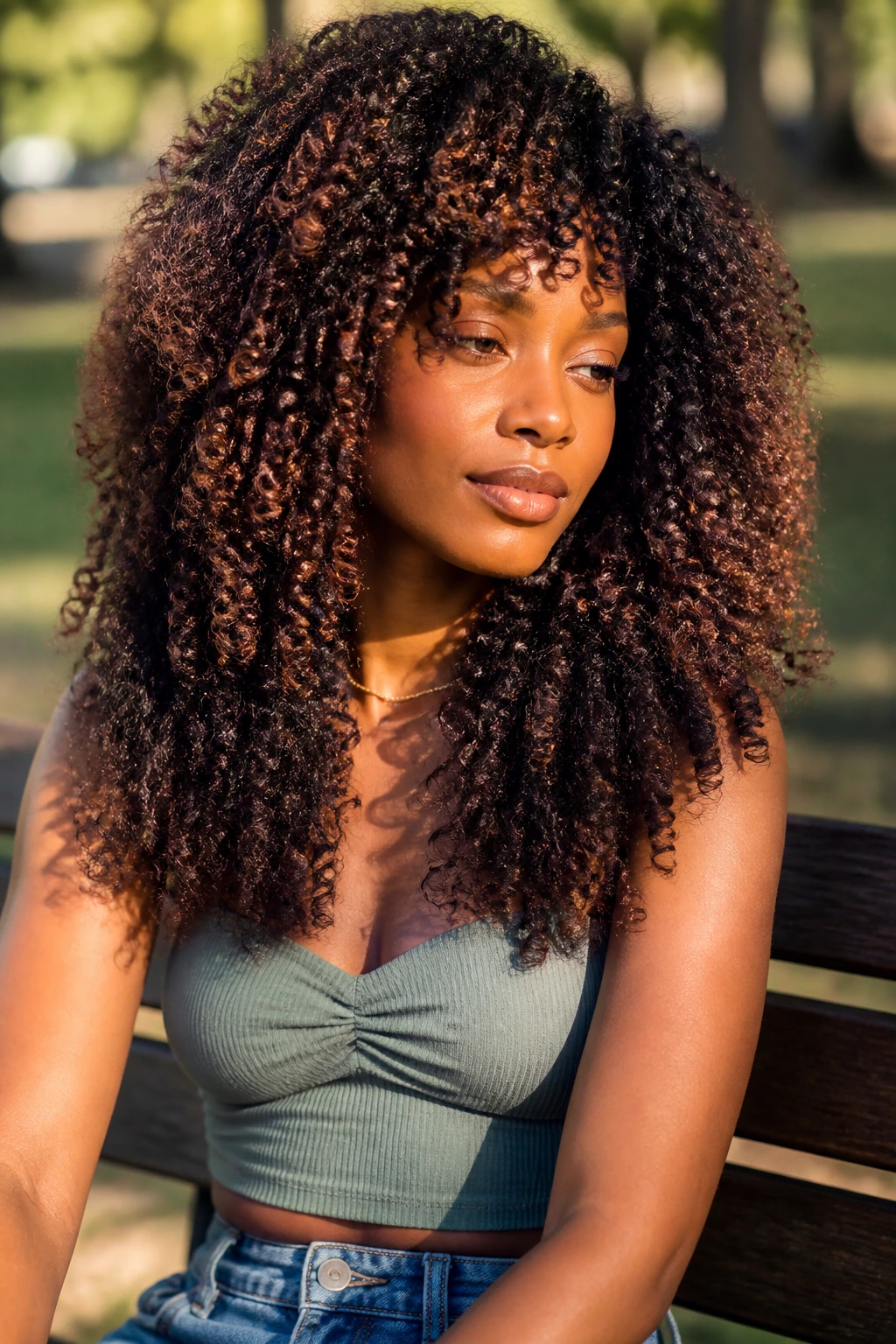
Waterfall layers make the curls fall in a stepped pattern instead of one flat curtain. On looser curls, that gives movement. On tighter coils, it helps the hair avoid that dense, all-one-length look that can build at the ends. The shape should look like it’s flowing, not chopped.
This cut is a good middle ground for people who want body without too much bluntness. It can be worn stretched, diffused, or air-dried, and the layers still keep their shape. Ask the stylist to avoid overcutting the top section. Too many short layers at the crown can flatten the silhouette over time.
23. Tapered Fro with Curly Fringe
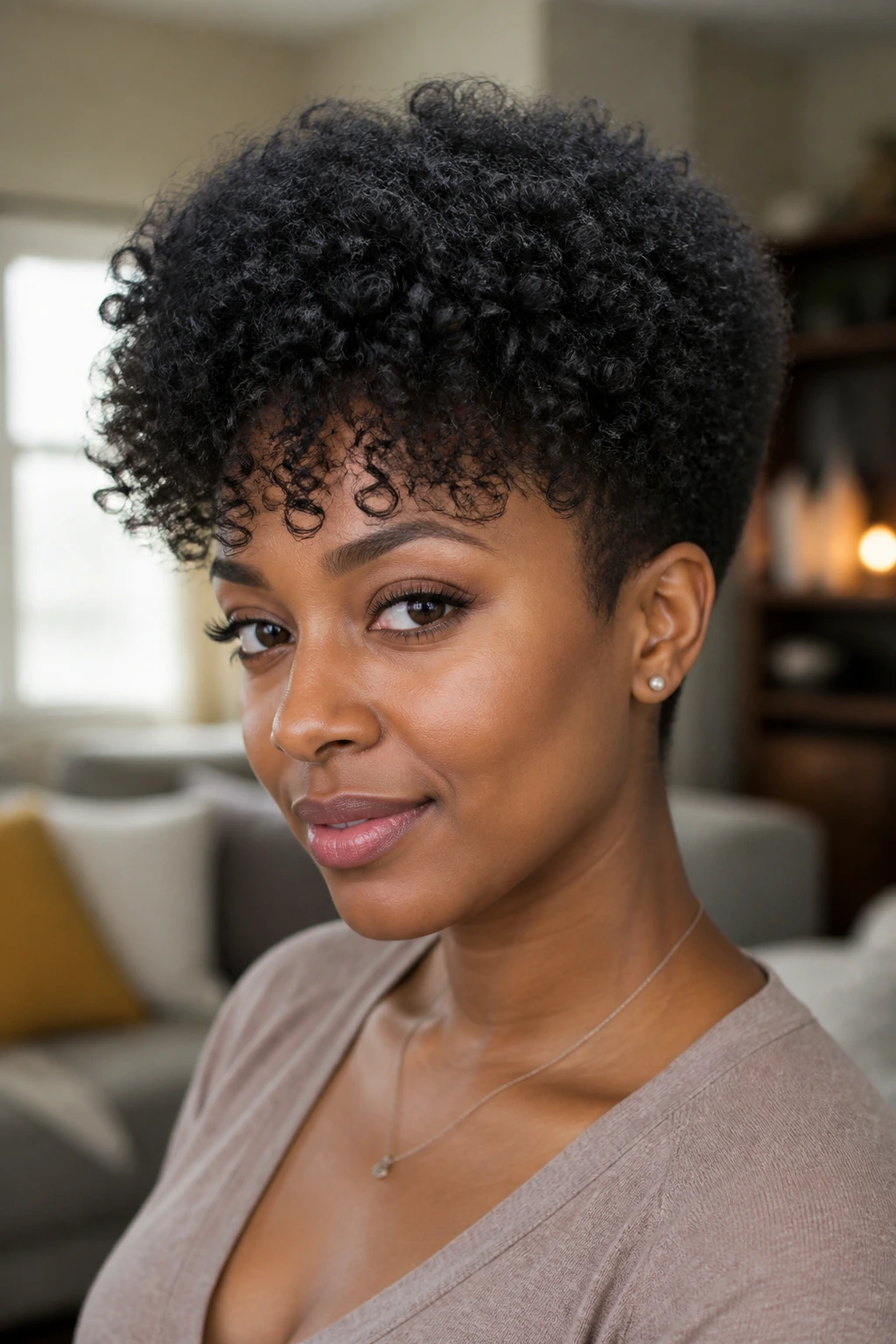
A tapered fro with a curly fringe gives you lift up top and a little motion in front. It’s cleaner than a full afro fringe but softer than a sharp bang. The taper on the sides keeps the shape readable, and the fringe gives your face a bit of framing without a heavy line.
This cut is especially nice if your curls behave better around the hairline than they do farther back. The fringe can catch the eye and make the whole cut look more deliberate. Keep the front long enough to curl into shape; if it sits too short, it can poke out awkwardly.
24. Chin-Length Spiral Bob
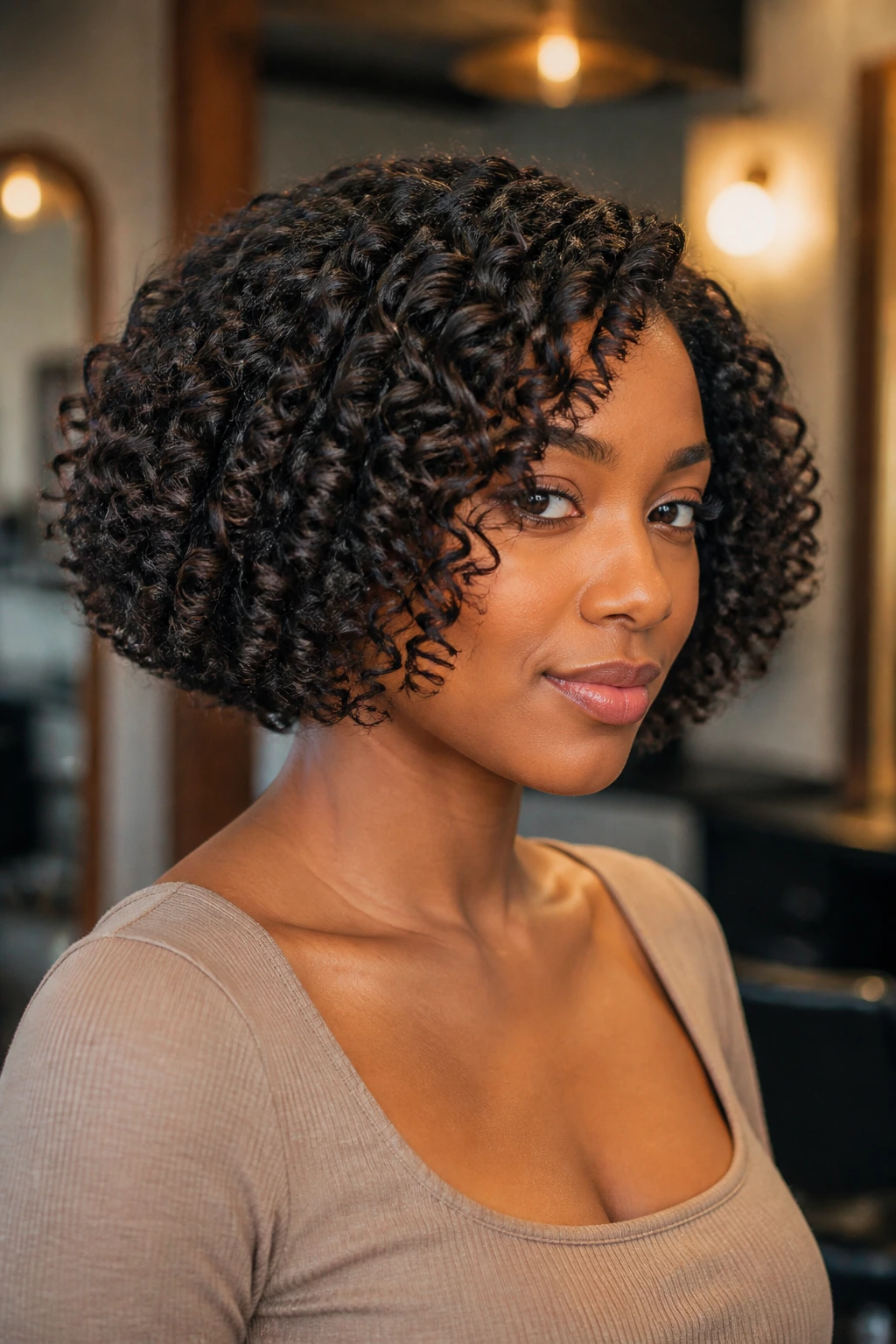
A chin-length spiral bob has bounce built into it. The curls sit around the jaw, which gives the face a neat frame, and the short length keeps the shape springy instead of weighed down. It’s a strong choice for tighter spiral patterns that hold their own.
I like this cut because it looks finished even when the styling is simple. A little leave-in, a curl cream, and a diffuser pass can be enough. The one thing to watch is the bottom line. If the ends are cut too blunt and the density is low, the shape can look thin at the corners.
25. Rounded Cut with a Deep Side Part
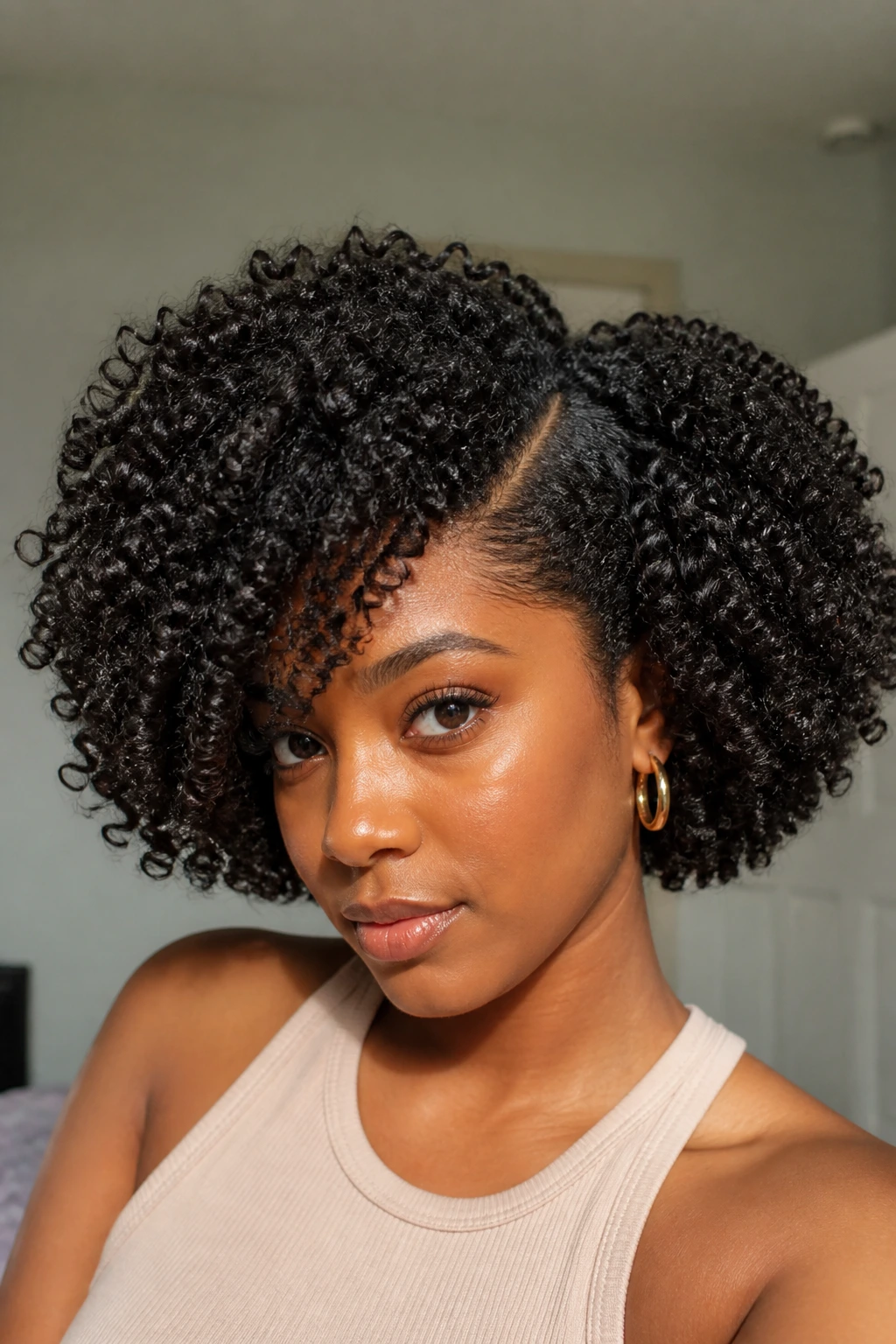
A deep side part can make a rounded cut feel much more dramatic without changing the length at all. The hair falls across one side, the crown lifts a little on the other, and the whole cut suddenly has motion. It’s a good option if you like volume but don’t want the top to sit straight up.
This shape works especially well when one side of the hair has more shrinkage than the other. The part gives you a way to control that difference instead of fighting it. Tell the stylist where your part usually lands, because forcing a new one can make the cut harder to wear at home.
26. Layered Cut for Stretch-and-Go Styling
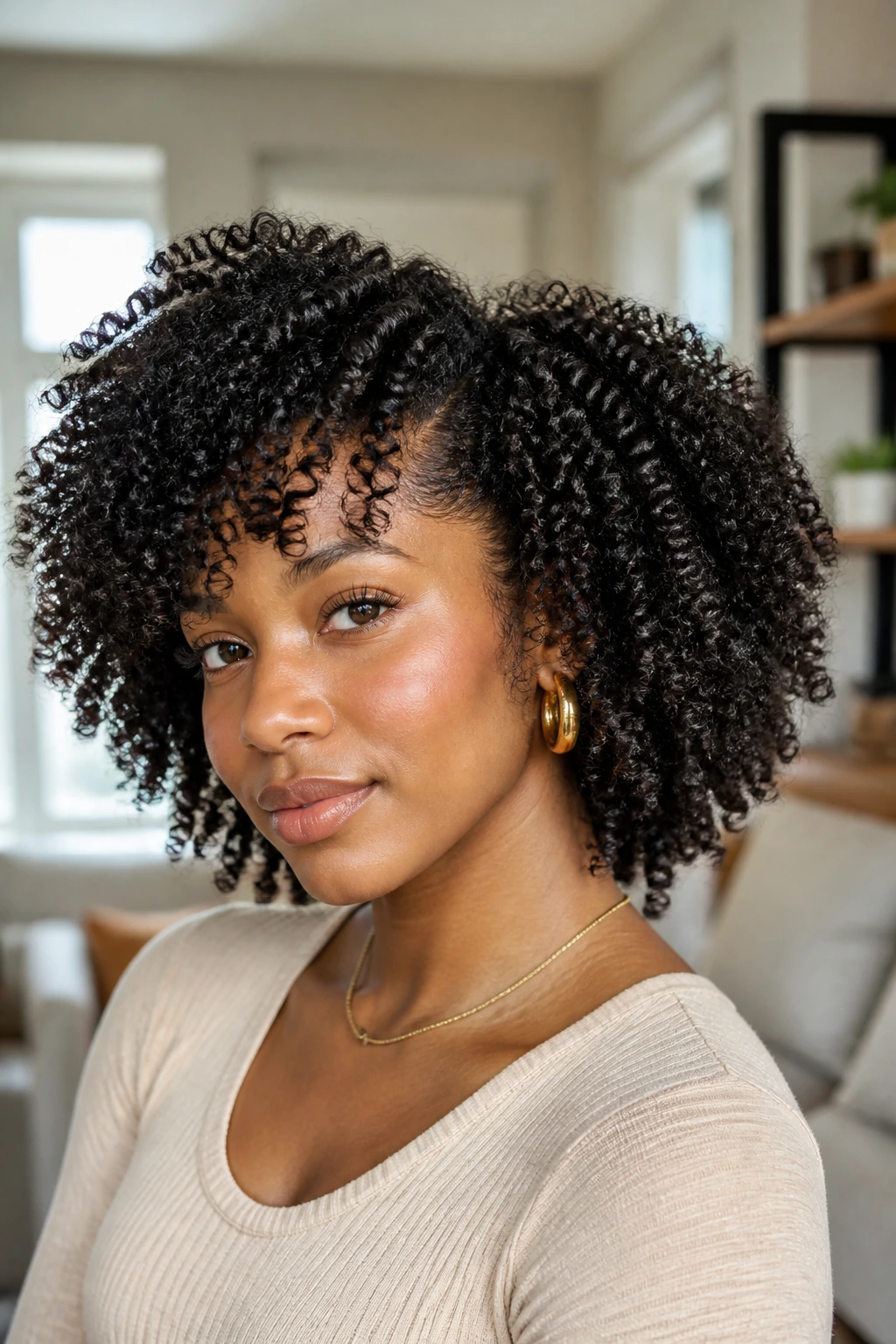
If you stretch your hair one week and wear it curly the next, this is the cut I’d pay attention to. The layers are placed so the hair still has shape when it shrinks, but they don’t look jagged when it’s blown out or banded. That balance is harder than it sounds.
The whole point is flexibility without losing structure. You want enough layering that the curls can stack, but not so much that a stretched style falls apart into flyaway pieces. If your routine changes a lot, this kind of cut keeps the shape from being hostage to one styling method.
27. Soft Sculpted Afro with Invisible Layers
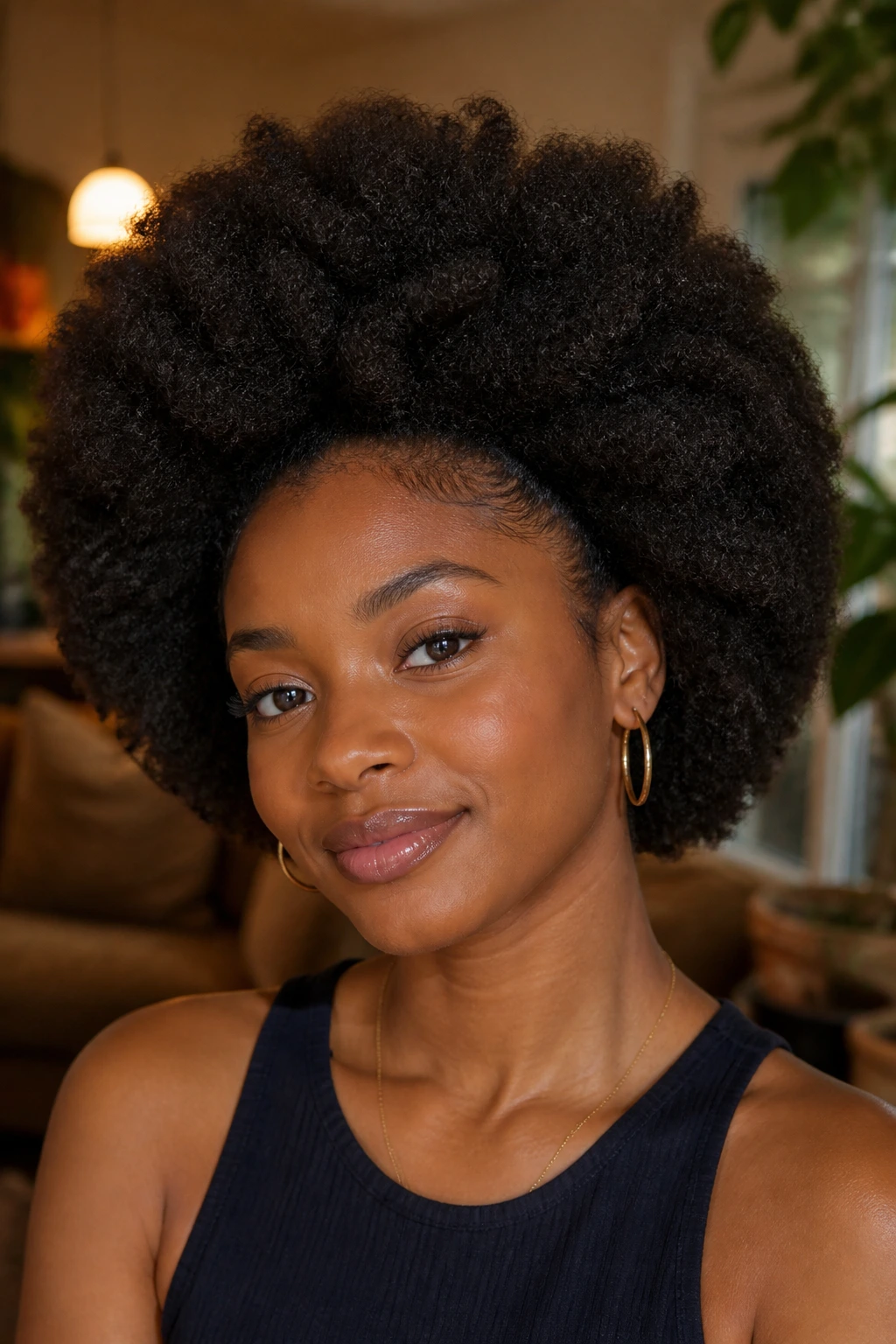
A soft sculpted afro looks almost one-length until the hair moves. That’s because the layers are hidden inside the shape, doing the quiet work of lifting the crown and balancing the sides. It’s one of the cleanest ways to get fullness without that hard outer edge that can make coils look heavy.
This cut is a favorite when you want polished shape without an obvious layer map. It holds up well on thick hair, and it still looks good if the curls get a little frizzy between washes. If you like your afro to feel rounded, plush, and controlled, this is the version that earns its keep.
How to Choose the Right Defined Curl Cut for Black Natural Hair
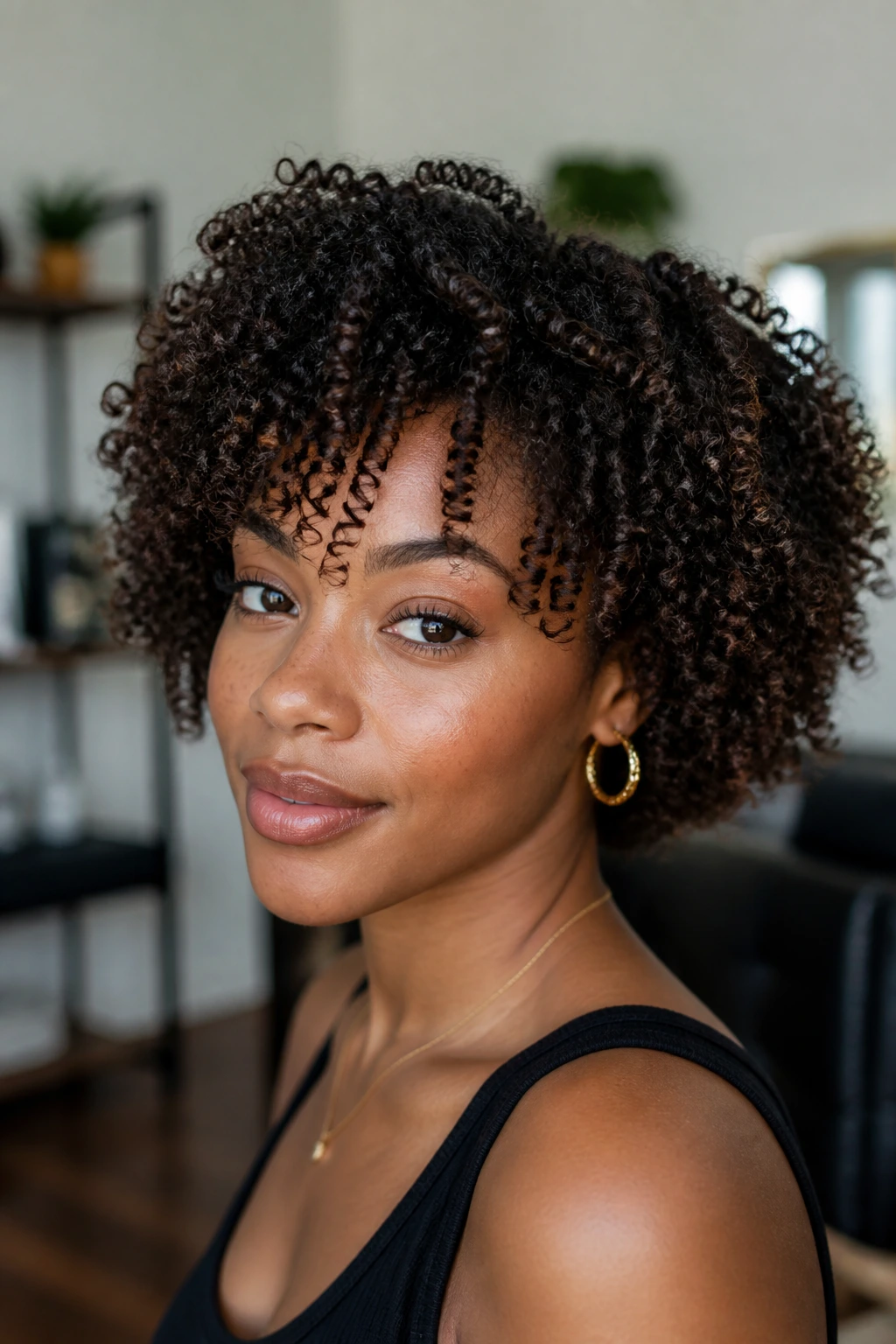
The right cut starts with your curl behavior, not with somebody else’s photo. If your hair shrinks hard, needs room to move, or forms dense clusters, you want a shape that keeps weight from building at the ends. If your pattern is looser or your density is lower, too many layers can leave gaps and make the cut look thin. That’s why one exact haircut rarely works for everyone.
Tight Coils Need a Little More Length Than You Think
Tighter coils shrink more, so a style that looks shoulder length in the chair may land much higher once dry. If that’s your texture, ask the stylist to preserve enough length in the areas that frame your face and at the top of the crown. A small amount of dry cutting goes a long way.
Mixed Textures Need a Shape That Doesn’t Panic
Plenty of Black natural hair has looser curls in one zone and tighter coils in another. The front may spring a little less, the nape may be denser, and the crown may behave like its own person. In that case, choose a cut that can hide those differences inside the silhouette rather than exposing every mismatch.
Low-Density Hair Needs Structure, Not Too Many Layers
If your hair is fine or low-density, over-layering can make the ends look wispy. Better to keep the outline cleaner and use a little face-framing or crown shaping for movement. The goal is lift, not see-through ends.
Dense Hair Can Handle More Shape Work
High-density hair benefits from internal shaping, rounded layers, and some removal of bulk around the crown and sides. Without that, the cut can get heavy and sit like a block. Dense hair is usually the easiest to shape, but it’s also the easiest to overdo if a stylist gets enthusiastic with thinning shears.
Tools and Products That Keep the Shape Crisp
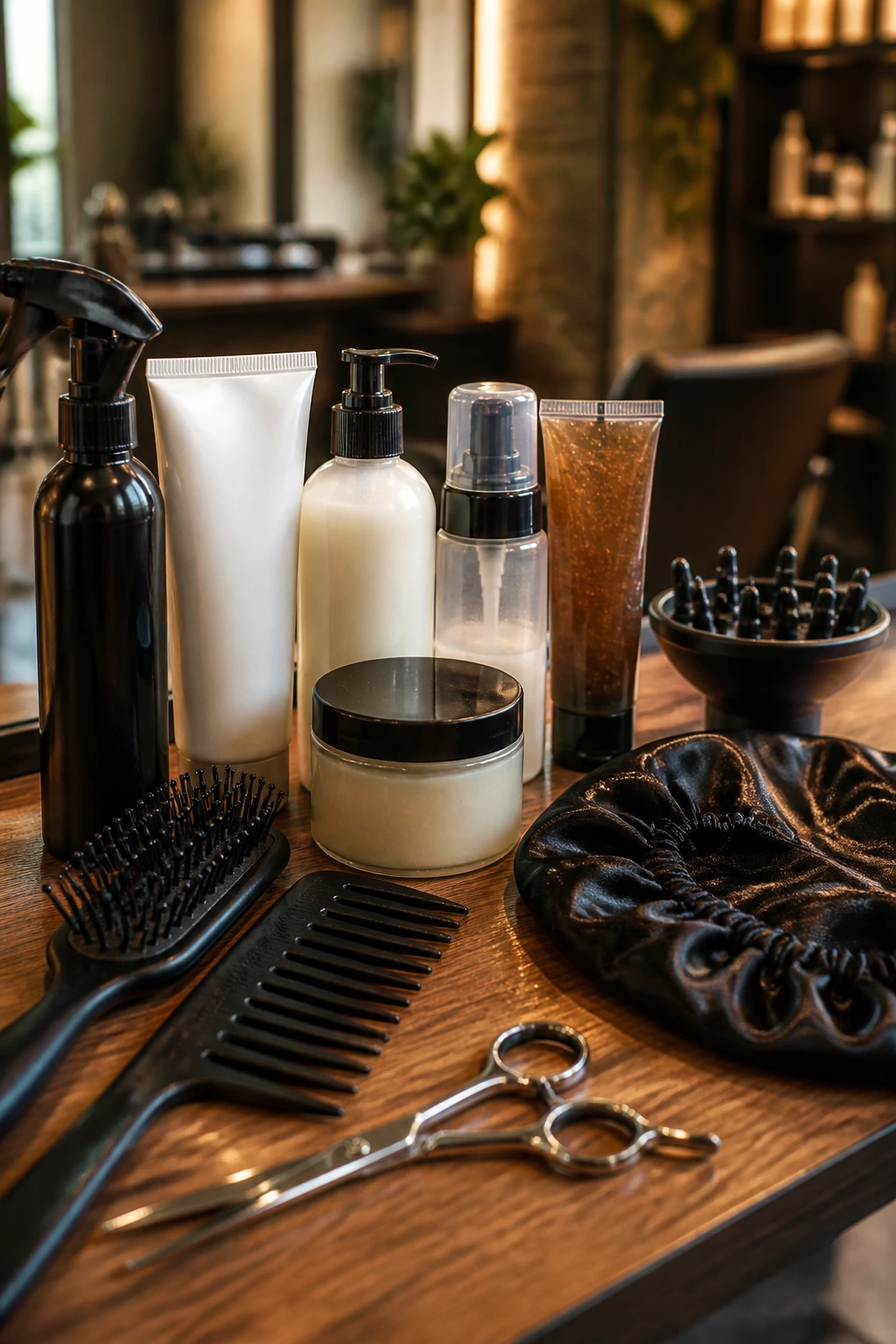
- Sharp haircut shears: Dull scissors bend curls and leave ragged ends, especially on dry cuts.
- Hand mirror: You need to check the back, because curl cuts can look balanced from the front and crooked from behind.
- Wide-tooth comb: Use it only when needed; it separates curls without tearing them apart.
- Detangling brush: Helpful for wash-day styling on dense hair, especially before a diffuser.
- Spray bottle with water and leave-in mix: Good for refreshing only the frizzy sections, not soaking the entire head.
- Curl cream or leave-in conditioner: Gives slip and softness for styles that need a little control.
- Foam or mousse: Best for lift and light hold on shaped styles like shags, bangs, and TWAs.
- Gel with flexible hold: Helps define the outline on wash-and-gos without freezing the hair into a helmet.
- Diffuser attachment: Useful when you want definition at the roots without blasting the curls out of shape.
- Satin bonnet or scarf: Night friction can wreck a shape faster than bad trimming, so this one is not optional in my book.
How to Ask for the Cut in the Salon Chair
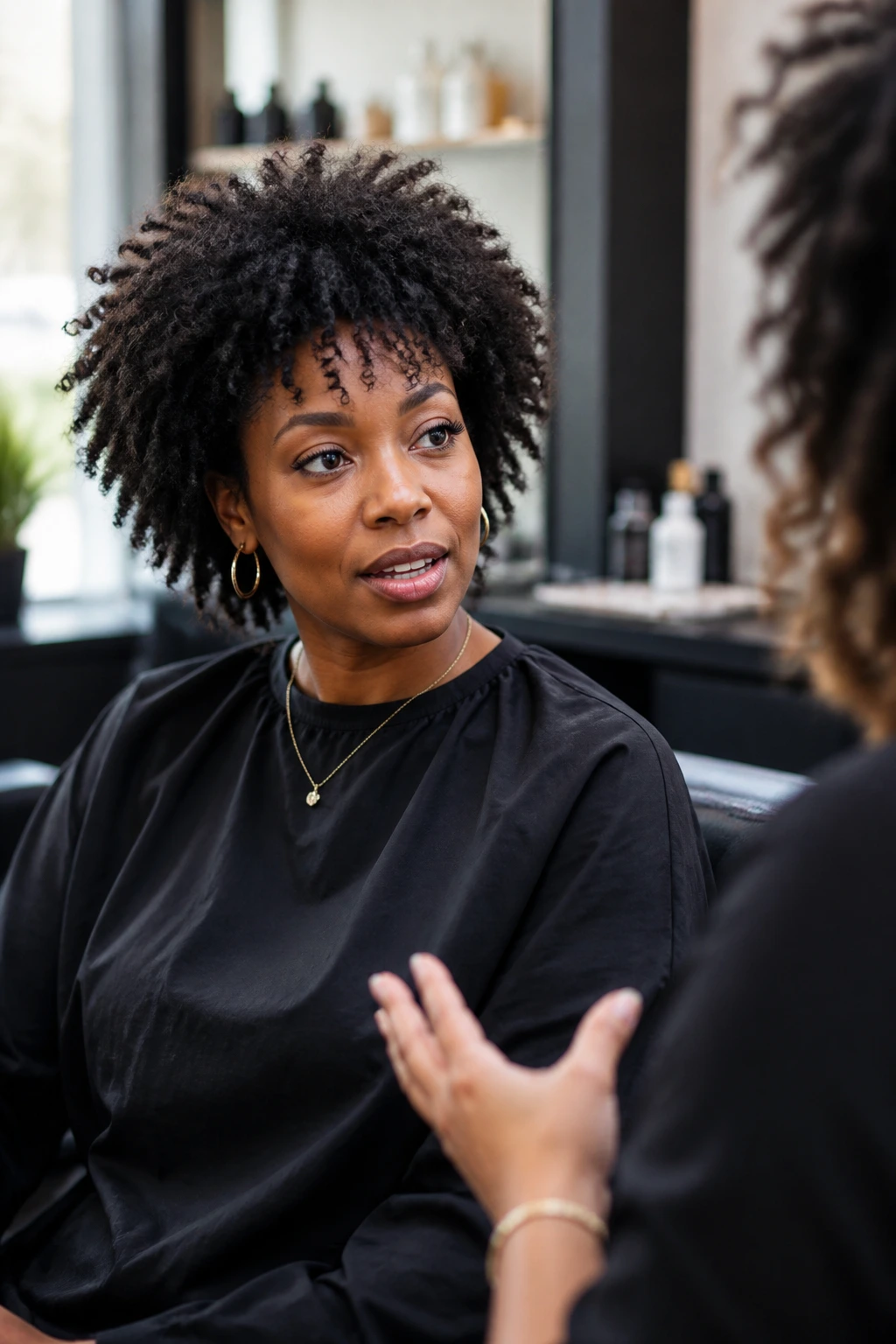
Bring a photo, but bring the right photo. Pick one that shows the same density, curl pattern, and length range you actually have, not just a pretty face and a similar color. A cut on loose curls will not behave the same way on tight coils, and a thick head of hair will not sit like fine strands.
Say how you wear your hair most of the time. If you stretch it, say that. If you wear wash-and-gos, say that. If you need it to fit under headwraps, helmets, or scarves, say that too. The stylist needs to know whether they’re shaping for one day or for your real week.
Ask where the heaviest part of the cut will sit. That question alone can save you from getting a triangle you never asked for. And if you’re nervous about shrinkage, tell them you want the shape checked dry before they call it done.
How to Refresh and Maintain the Shape Between Wash Days
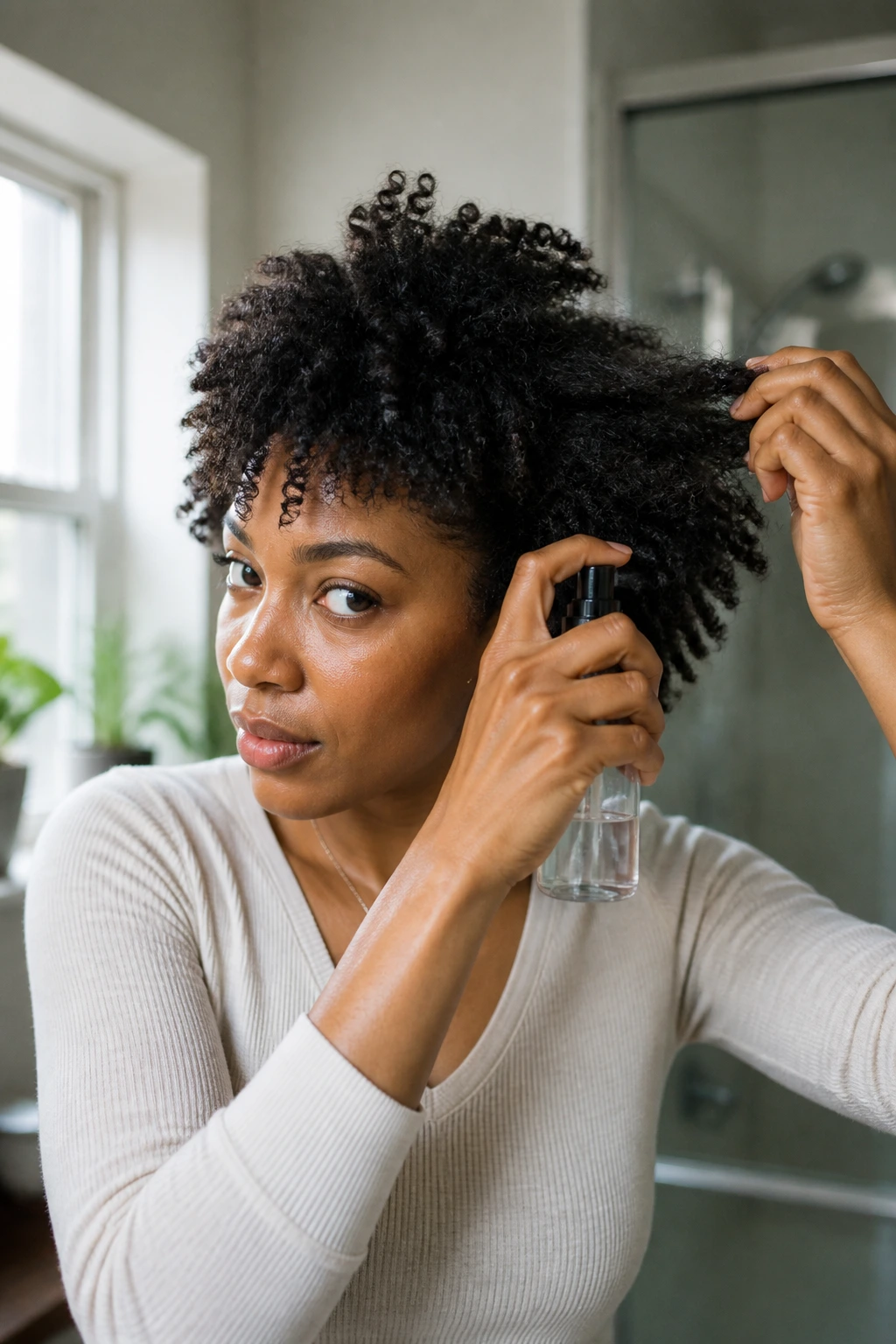
A defined curl cut usually looks best when you leave it alone on day one. The more you touch it while it’s drying, the more pieces separate and frizz up. Once the style is set, use your hands less than you think. That alone keeps the shape cleaner.
For day-two refreshes, mist only the sections that have gone fuzzy. A little water mixed with leave-in is often enough. Scrunch the curls back into place, smooth the part if you wear one, and let the hair air-dry or diffuse for a few minutes on low heat. You are not trying to restart wash day.
At night, protect the shape. Use a satin bonnet if your hair fits comfortably inside it, or wrap the curls in a satin scarf and sleep on a smooth pillowcase. Longer cuts can be pineappled loosely, while shorter cuts usually do better with a bonnet and a quick reshape in the morning.
Trim timing depends on the cut. Short tapered shapes and pixies often need cleanup every 6 to 8 weeks. Rounded afros, bobs, and layered mid-length cuts can usually go 8 to 12 weeks before the outline starts to feel tired.
Common Mistakes That Flatten the Shape
-
Cutting only for wet length. Wet curls lie and look longer than they are. If the cut is shaped before the hair’s real shrinkage is visible, the finished silhouette can come back too short or too wide. Fix: ask for a dry check before the final snip.
-
Over-thinning tight coils. Thinning shears can make the ends look fuzzy and weak, especially on coarse, springy textures. Fix: use point-cutting or strategic layering instead of aggressive thinning.
-
Choosing a photo with the wrong density. A style that looks full on one head may look sparse on another. Fix: bring examples with a similar curl pattern and hair thickness, not just a similar length.
-
Loading the roots with heavy cream. Too much product at the scalp weighs down the crown and makes the shape collapse. Fix: keep richer products on the mid-lengths and ends, and use foam or light gel near the roots.
-
Skipping nighttime protection. Cotton pillowcases rough up the curl clumps and flatten the shape fast. Fix: satin bonnet, satin scarf, or a silk pillowcase. Pick one and use it consistently.
Ways to Personalize These Cuts Without Losing Definition
More Height: Ask for the crown to stay longer and the sides to taper more gradually. That gives lift without making the top look patched together. It’s a good move if your face likes vertical shapes.
More Softness: Keep the perimeter rounded and avoid a hard line at the ends. A softer edge works well on bobs and afros when you want movement instead of a crisp frame.
More Edge: Add a cleaner taper at the neckline or a sharper part line. That detail changes the whole mood without touching the overall length.
Humidity-Ready Version: Use a firmer gel or mousse on wash day and keep the layers slightly longer. Short, choppy layers can puff early when the air gets heavy.
Low-Maintenance Version: Choose a cut that needs less daily rearranging, like a rounded afro, halo cut, or soft sculpted bob. These shapes stay readable even when the curls are not in their best behavior.
Questions People Always Ask About Defined Curl Cuts
Should a curl cut be done wet or dry?
Dry or mostly dry is safer when shrinkage is strong, because the stylist can see the real silhouette. Wet cutting can still work on some looser textures, but the final shape should always be checked after the hair has dried.
Can mixed textures still get a defined curl cut?
Yes, and they often need one more than uniform textures. The trick is cutting for the loosest and loosest-looking areas so the tighter sections don’t end up too short or too wide.
What if my hair is low-density?
Choose shapes with fewer layers and a cleaner outline. Too much internal cutting can make low-density hair look see-through at the ends, especially in bright light.
How short is too short for a defined curl cut?
Short is fine. Too short is when the curl no longer has enough length to form its pattern and starts standing up like fuzz. For many textures, that happens faster than people expect, so a stylist should leave a little cushion.
Do I need different products for every cut?
Not different products for every cut, but different hold levels for different shapes. A tapered TWA may need more root lift, while a long layered bob may need softer control at the ends.
What if my cut looks too wide after washing?
That usually means the layers are too blunt or the shape is holding too much weight at the sides. A light root lift, a better dry finish, or a small correction trim can help, but the real fix is in the haircut.
Can I still wear twist-outs or braid-outs with these cuts?
Absolutely. In fact, some of these shapes look better because they were cut with stretch styles in mind. Just tell the stylist how you style the hair most often so the layers land in the right place.
How often should I trim a defined curl cut?
Short, shaped cuts need attention more often than long layered ones. A good rule is 6 to 8 weeks for sharp crops and tapers, and 8 to 12 weeks for rounded afros, bobs, and layered shapes.
The Cut Does the Talking
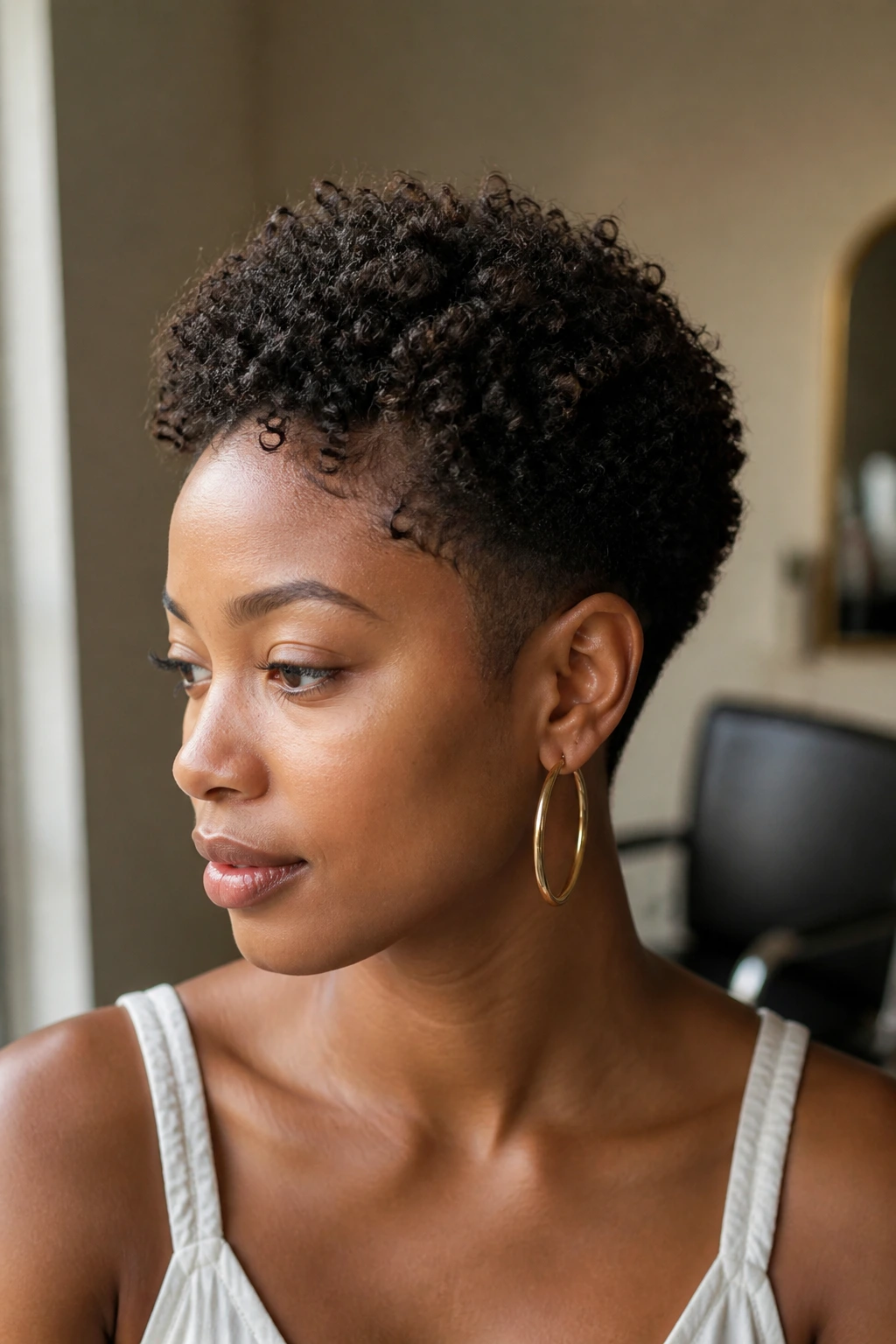
A good curl cut doesn’t need to shout. It does its work in the curve of the crown, the way the sides sit close without looking flat, and the way the hair still holds a shape after it dries and shrinks and lives a little. That’s why these cuts matter so much on Black natural hair.
The right shape saves you from having to rescue your hair every morning. It gives the curls a frame, then gets out of the way. If that sounds like the kind of haircut worth keeping, start with the shape that matches your density and the way you actually wear your hair, not the one that looks prettiest on someone else’s head.
