



Long thin hair can look airy and elegant, and it can also go flat in the span of a coffee run. That’s why wavy hairstyles for long thin hair need a different playbook than the glossy, heavy curls you see on thicker hair. The goal isn’t to pile on more curl. It’s to build shape where the hair actually needs it: around the crown, through the cheekbones, and in those mid-lengths that tend to collapse first.
The best waves on fine, long hair don’t fight the hair’s natural weight. They work with it. A slightly bigger bend, a smarter part, a little lift at the root, and suddenly the whole head of hair looks fuller without looking stiff. Tiny barrel curls can be cute for twenty minutes. Bigger, looser waves tend to hold their line longer and look more believable on long lengths. That’s the sweet spot.
And there’s a real difference between hair that looks wavy and hair that looks overstyled. Long thin hair loses the battle fast when the wave pattern is too tight, too uniform, or too loaded down with heavy cream. The styles below keep the line soft, the crown awake, and the ends from looking stringy. Some are polished. Some are easy. A few are the sort of thing you throw together when you need your hair to look like you meant it.
Why These Styles Work So Well on Long Thin Hair
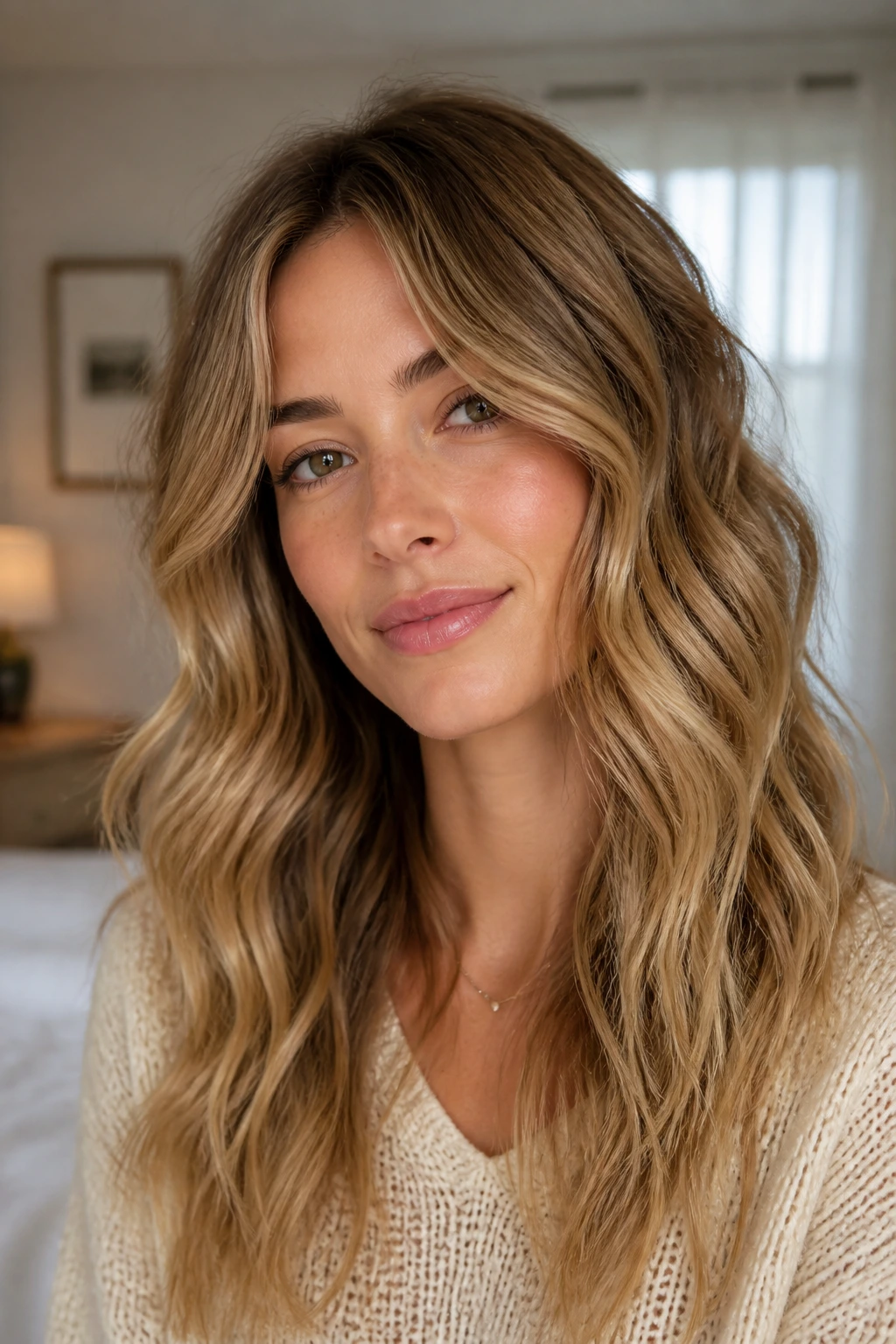
- They build width without bulk: A wider wave pattern makes the hair read fuller across the mid-lengths, which is where thin long hair usually looks the emptiest.
- They keep the crown from collapsing: Styles that use side parts, clips, or root lift stop the top from lying flat against the scalp by noon.
- They leave the ends lighter: Thin hair looks stringy when the wave pattern gets too heavy at the bottom, so these styles keep movement through the length without clumping.
- They’re easier to refresh: A bent section at the front or a loose wave through the top can be revived with a quick mist of water and a few seconds of a wand.
- They look better on day two: Wavy hair on long thin strands often improves after it settles overnight. The line gets softer, not sloppier, if you protect it well.
- They work with layers instead of against them: If your cut has long layers or face-framing pieces, these styles make the shape look intentional instead of wispy.
1. Face-Framing Loose Waves
Loose waves that start around the cheekbone and move downward are one of the easiest ways to give long thin hair some body without dragging the whole head into ringlets. The front pieces do a lot of the work here. They fall forward, skim the jaw, and make the hair look denser around the face where people actually notice it first.
I like this style because it doesn’t ask the ends to carry the whole look. Use a 1.25-inch wand, wrap only mid-lengths to ends, and leave the bottom inch or so straighter. That little bit of straightness keeps the style from looking over-curled and makes the hair read thicker, not smaller.
Why it works
A face-framing wave pulls attention to the front and keeps the eye moving. That matters on long thin hair, where the back can lose volume faster than the front. If the root stays smooth and the wave starts lower, the style looks softer and more expensive without trying too hard.
2. Curtain Bang Waves
Curtain bangs plus long waves is a combination that does a lot of quiet lifting. The bangs break up the forehead area, which makes the hair look fuller right away, and the long wave pattern keeps the rest of the length from feeling heavy. If your hair lies flat at the crown, this one helps disguise it.
The key is to keep the curtain pieces airy. Don’t round-brush them into a hard flip. Bend them once or twice with a small iron, then brush them out with your fingers. You want them to separate a little and fall into the sides of the face, not sit in a stiff arch.
3. Off-Center S-Waves
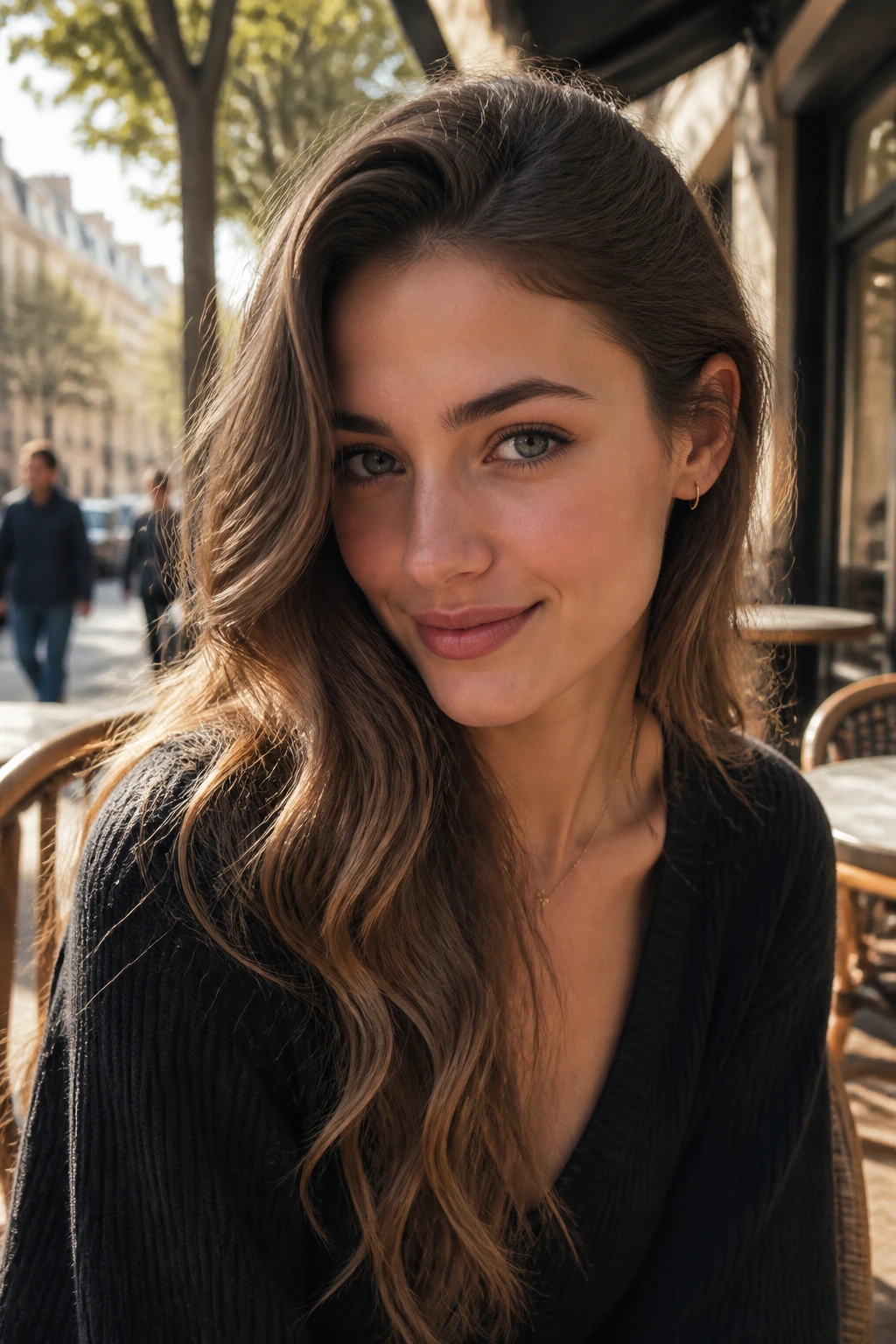
A slightly off-center part gives long thin hair more interest than a strict middle part, and the S-wave shape keeps it from looking overdone. There’s a little more lift on one side, a little more fall on the other, and that imbalance is what makes the hair feel fuller. Symmetry can be boring. Worse, it can be flat.
The trick is to keep the bends broad and relaxed. Wrap each section around a wand for only 4 to 6 seconds, then let it cool in your hand before releasing it. The wave should land in that soft S shape, not a tight corkscrew. One side tucked behind the ear, the other side free, and the whole style suddenly looks intentional.
4. Half-Up Twist and Wave
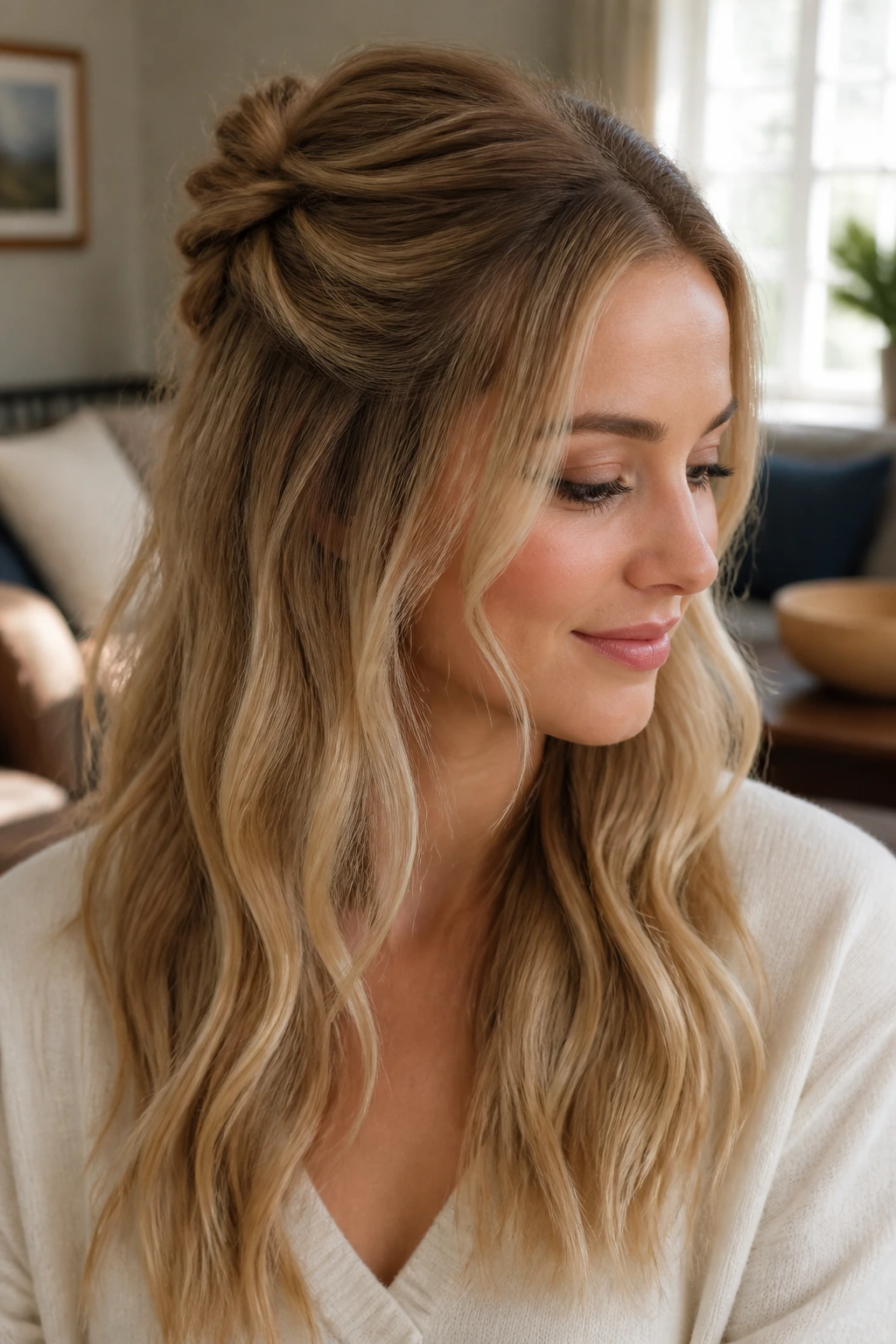
A half-up twist is a gift to long thin hair because it lifts the crown without asking the whole head to stay big all day. Pull back just the top section, twist it once or twice, and pin it low enough that the shape still looks soft. The wave underneath stays loose, which keeps the hair from looking robbed of length.
This one works especially well when the top layer is a little flatter than you’d like. The twist gives a tiny crown bump, and the loose ends do the visual heavy lifting. I prefer a matte pin or two over a big decorative clip. Big clips can swallow fine hair. Small pins disappear.
5. Layered Ends with Mid-Shaft Bends
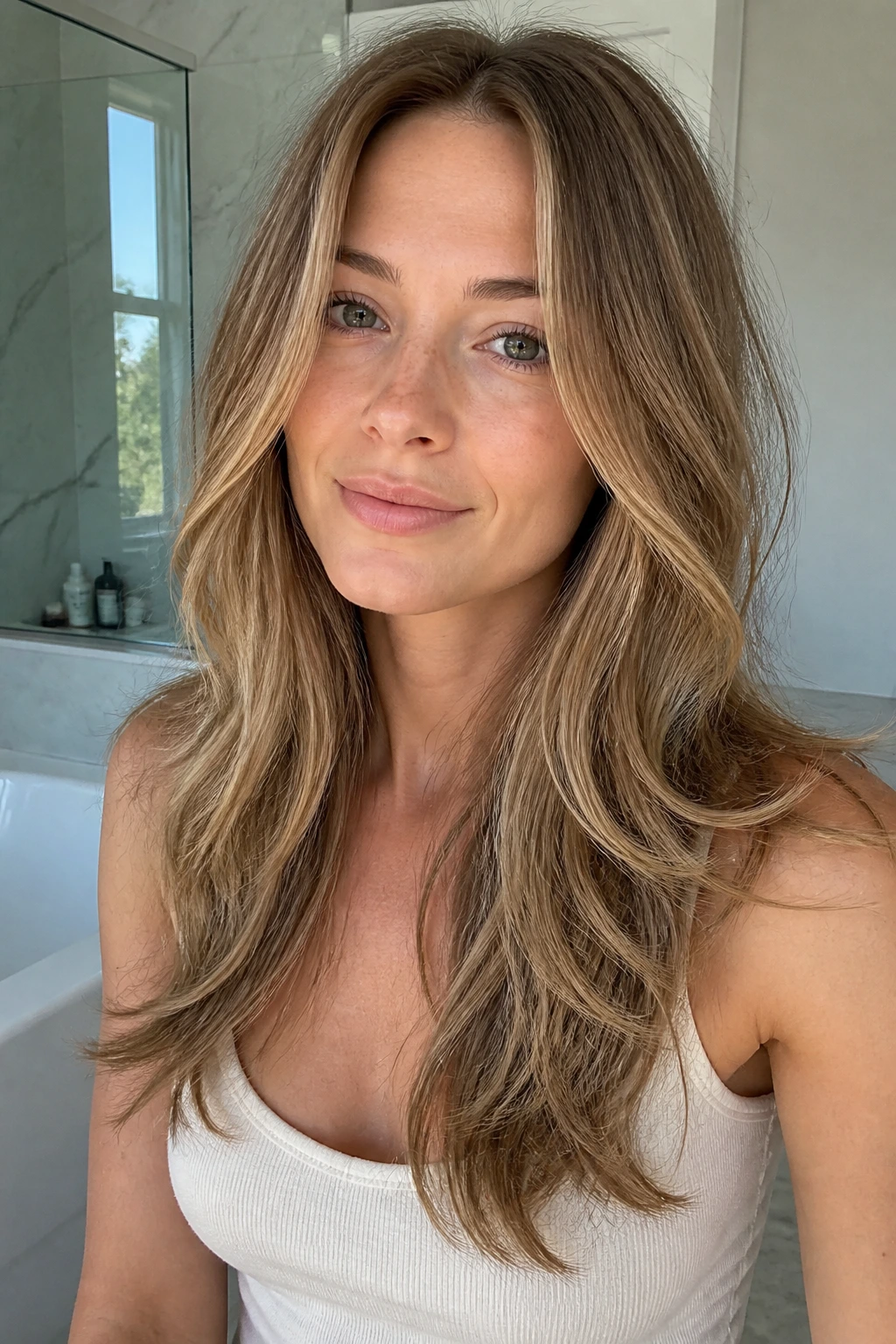
If your haircut has long layers, this is where those layers start earning their keep. Instead of curling from root to tip, bend the hair from the mid-shaft down and let the layers separate naturally. The result is movement without the thin, wispy tail effect that too much curling can create.
A lot of people make the mistake of trying to curl every inch of long thin hair. Don’t. The lower section is already the weakest-looking part of the head. Keep it light, use a bit of texture spray before styling, and let the layers create the broken-up finish for you. That’s what gives the hair body.
6. Deep Side Part Hollywood Waves
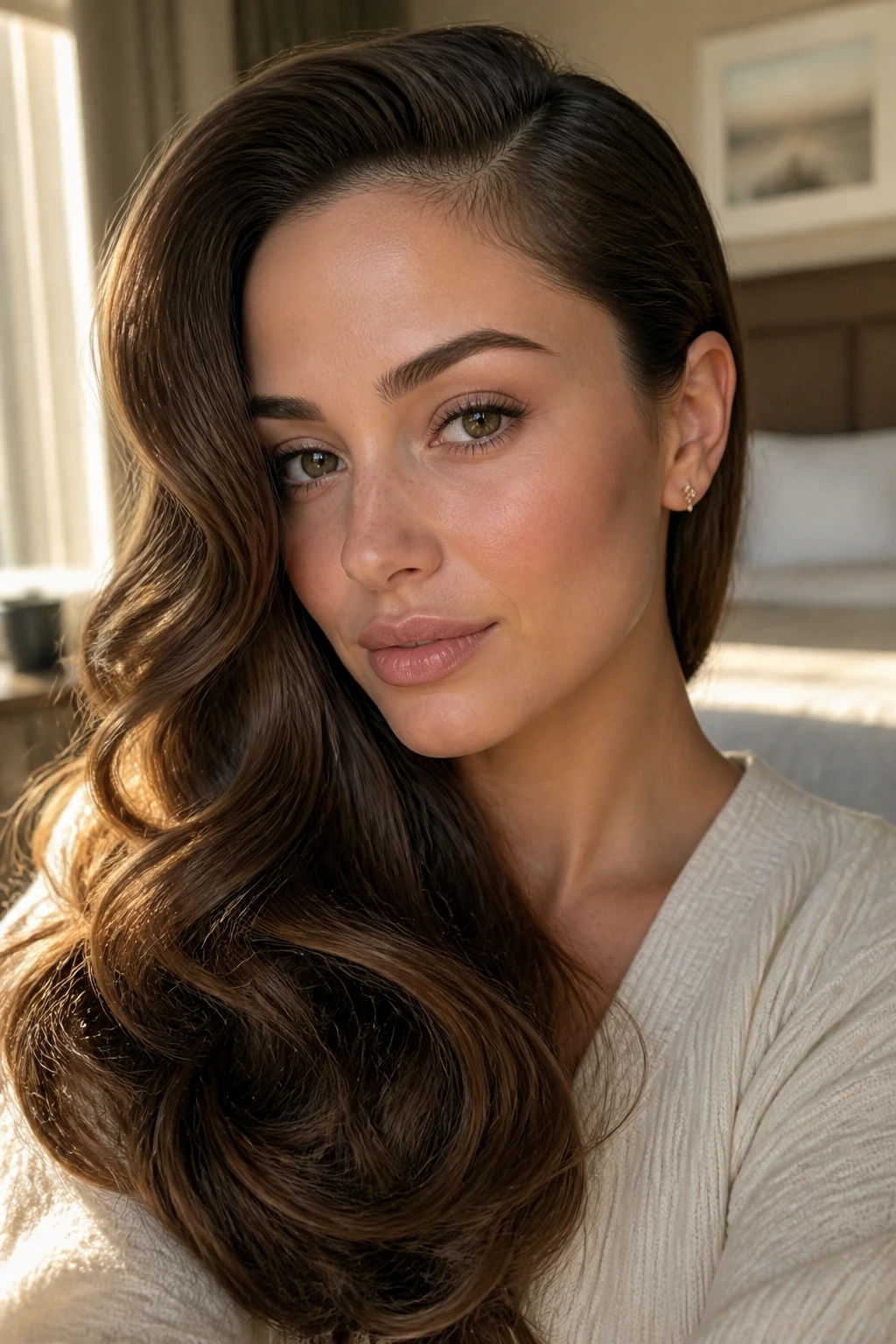
A deep side part is one of the oldest tricks in the book because it still works. It creates immediate lift at the root on one side, and on long thin hair that extra root height matters. The wave pattern can be smooth and polished, but the part does half the volume work before the iron even comes out.
This version looks best when the front section is set away from the face first, then brushed into one large wave. The goal is a thick-looking curve, not a pile of tiny curls. Pin the side with less volume behind the ear or tuck it at the jawline. That asymmetry gives the style some backbone.
7. Beach Waves with Root Lift
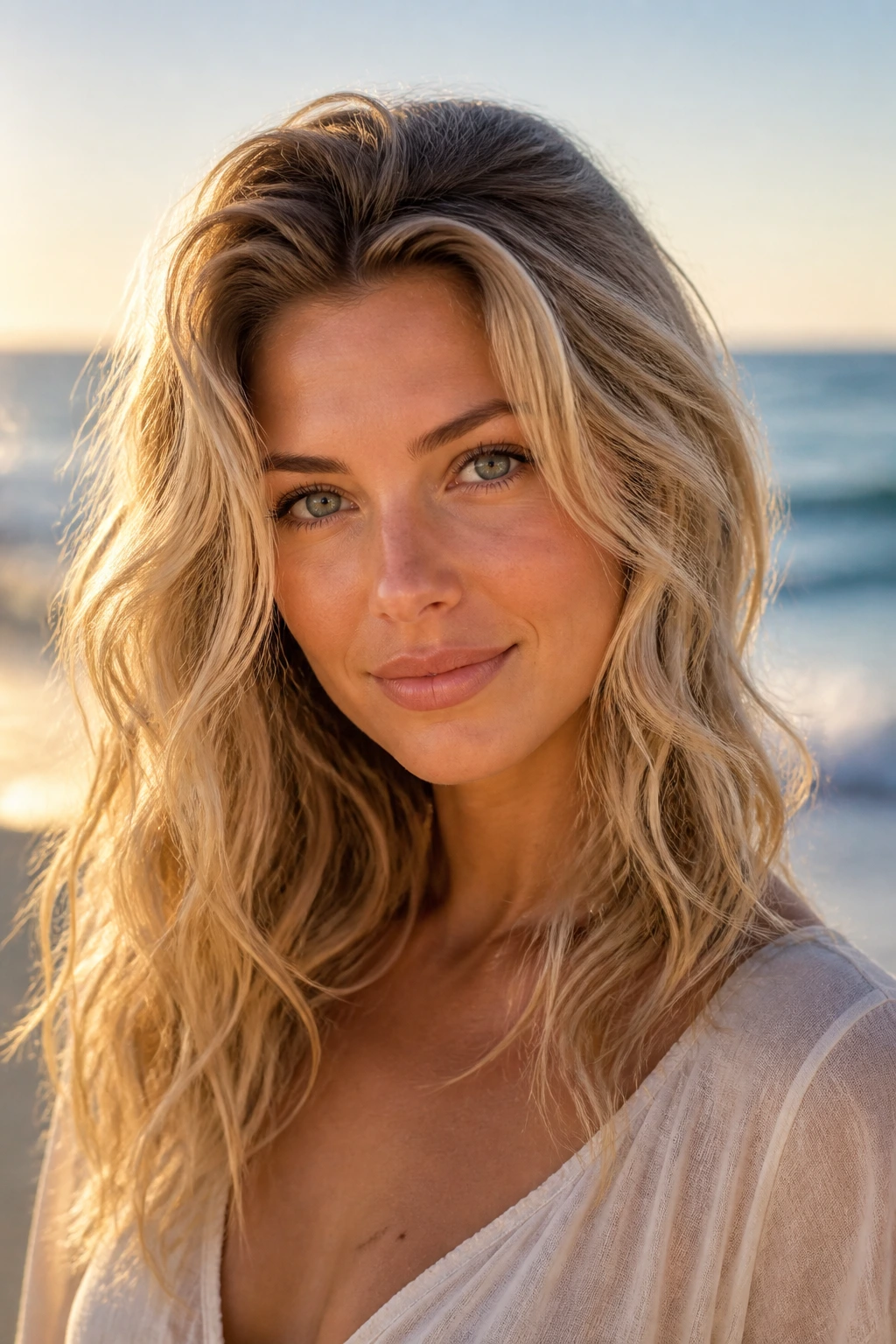
Beach waves on thin hair can go two ways: airy and chic, or flat and crunchy. The difference is the root. If you clamp a few clips at the crown while the hair cools, or rough-dry the roots with mousse first, the wave pattern can float instead of drooping.
Keep the texture spray away from the top third of the head until the very end. Too much grit near the scalp makes the hair look dusty and smaller. I’d rather see a clean root with a soft bend through the length than a rough top that already looks tired by lunch.
8. Overnight Braided Waves
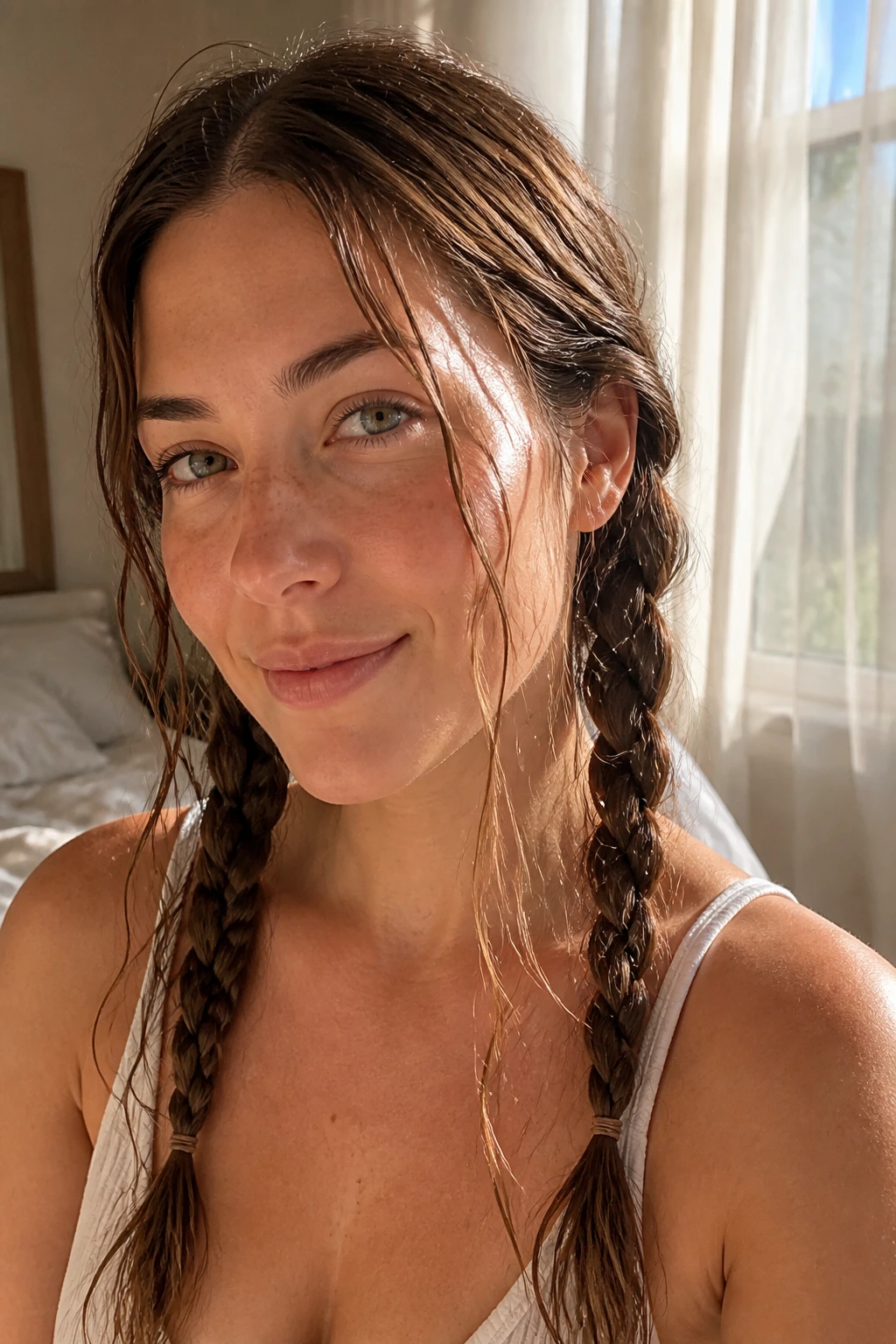
Braids are one of the easiest no-heat options for long thin hair, but the braid has to be loose enough to avoid tiny zigzags. Two low braids usually make a softer wave than one tight one, especially if you’re starting with hair that’s still a little damp, not wet. Wet hair takes forever to dry and can leave the wave pattern odd at the ends.
The best part? You get softness through the mids and less straight collapse near the bottom. Braid from ear level down, tie with fabric elastics, and undo them in the morning only when the hair is fully dry. A drop of lightweight serum on the ends helps keep the braid line from puffing up.
9. Bubble-Braid Waves
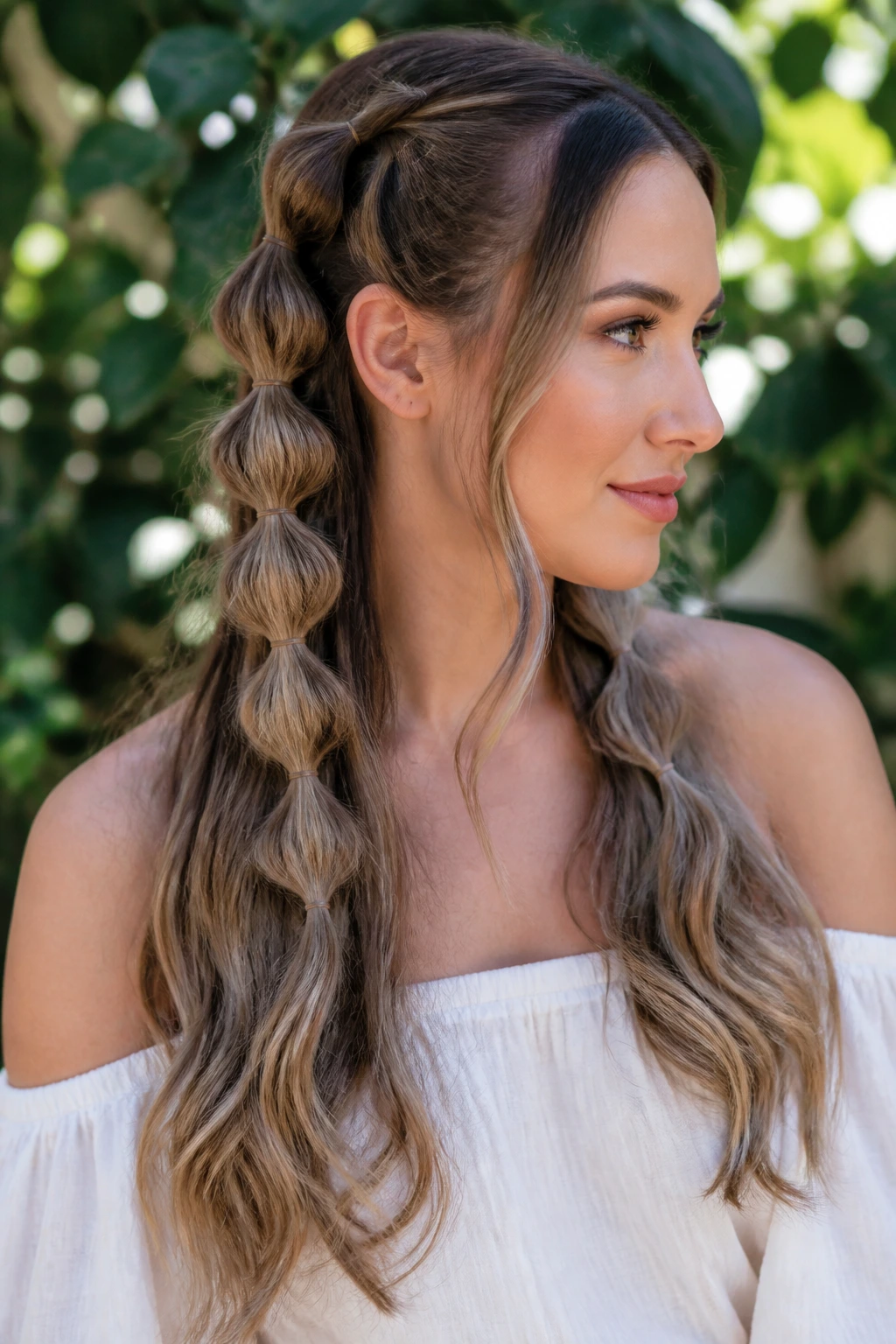
Bubble braids sound playful, but on long thin hair they’re smart. The little elastic sections create soft bends and add visual breaks, which makes the hair look denser than one long uninterrupted sheet. It’s one of the few styles that can make fine length feel thicker even before you style the ends.
Use clear elastics every 2 to 3 inches, then gently tug each bubble wider once the braid is secure. That small stretch gives the illusion of more hair in each section. If your hair is very fine, wrap a tiny strand around the base of each bubble so the elastics disappear.
10. Low Ponytail with Soft Waves
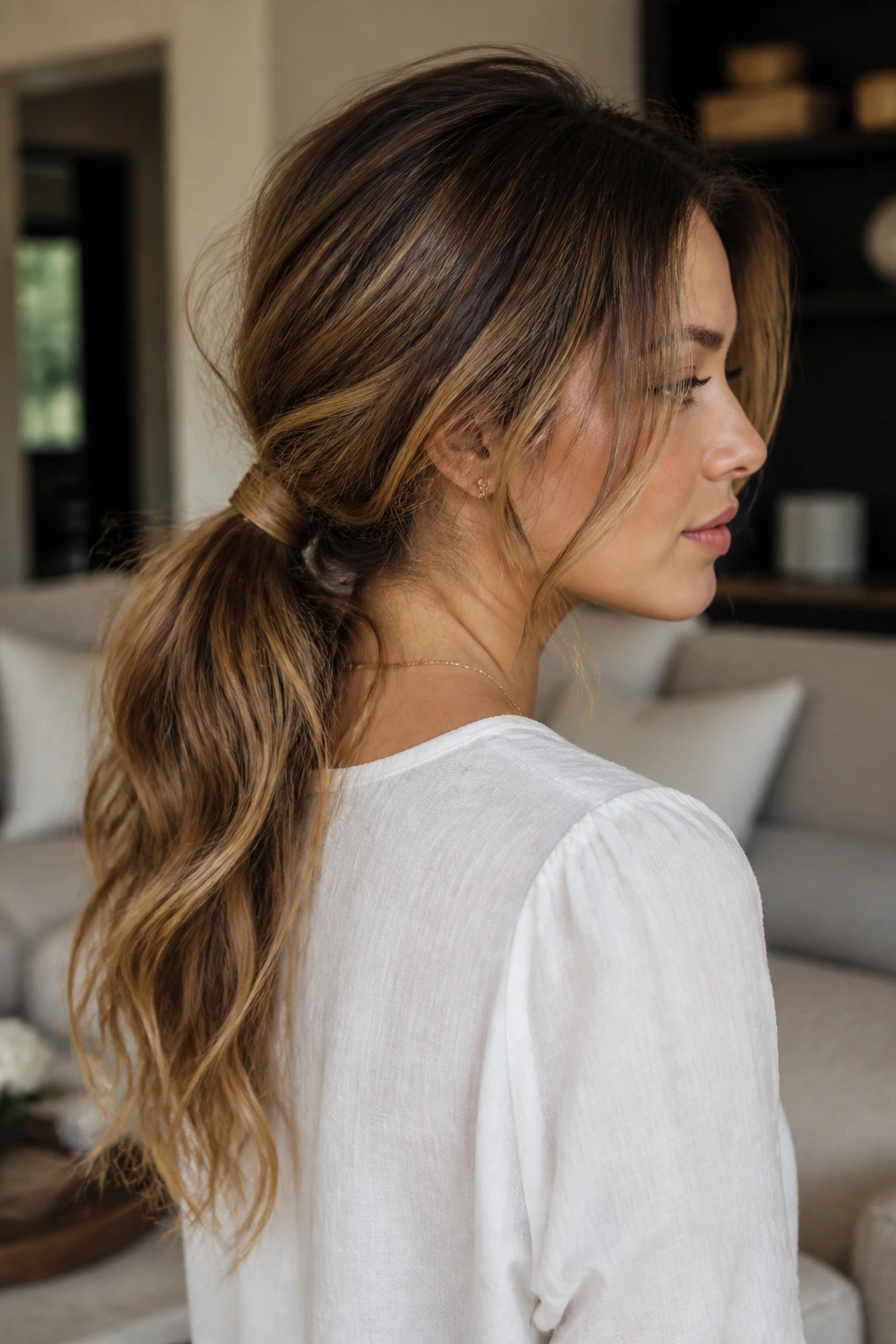
A low ponytail is usually considered simple, but on long thin hair it can look more polished than a loose style if the wave pattern is soft and the crown is smoothed down. The pony gathers the length, which means the waves read as more concentrated and fuller at the tail. That’s useful when the ends are the least dense part.
Leave the front sections loose and bend them away from the face. Then wrap a small piece of hair around the elastic to cover it. That tiny step matters. It keeps the style from looking thin and utilitarian, and it makes the ponytail look like it has more mass than it does.
11. Crown-Lifted Waves with Hidden Clips
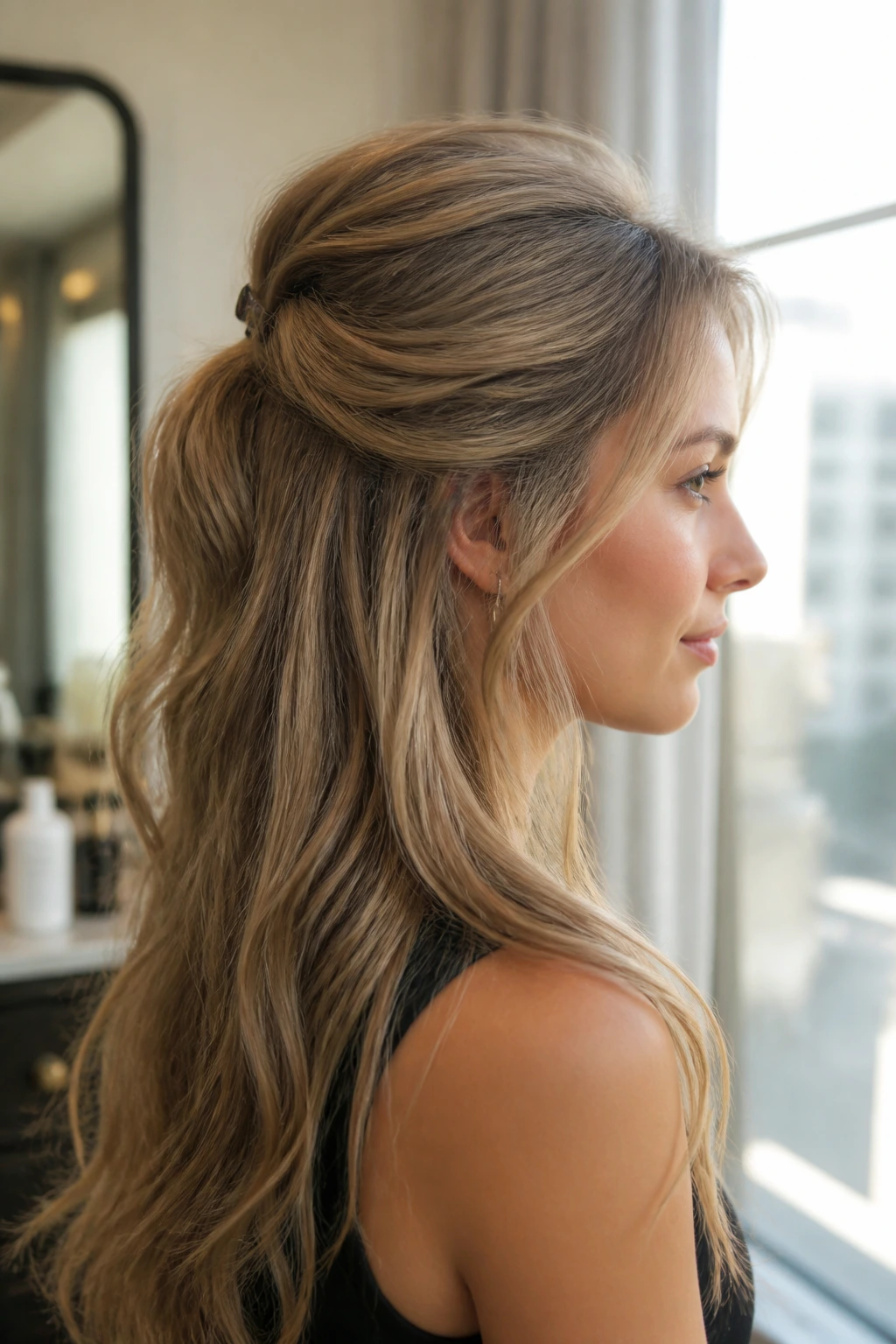
If your roots collapse fast, hidden clips are worth the effort. Lift small sections at the crown, clip them while the hair cools, and let the top set with a little bend instead of a flat line. Once the clips come out, the crown keeps a gentle rise that lasts longer than teasing ever does.
I prefer this to aggressive backcombing on thin hair because it doesn’t rough up the cuticle. Teasing can work, but it also tangles the hair fast. Clips are cleaner. Use them under the top layer, aim for the back crown rather than the very front hairline, and the lift looks like it came from the cut.
12. Blowout Waves with a Round Brush Finish
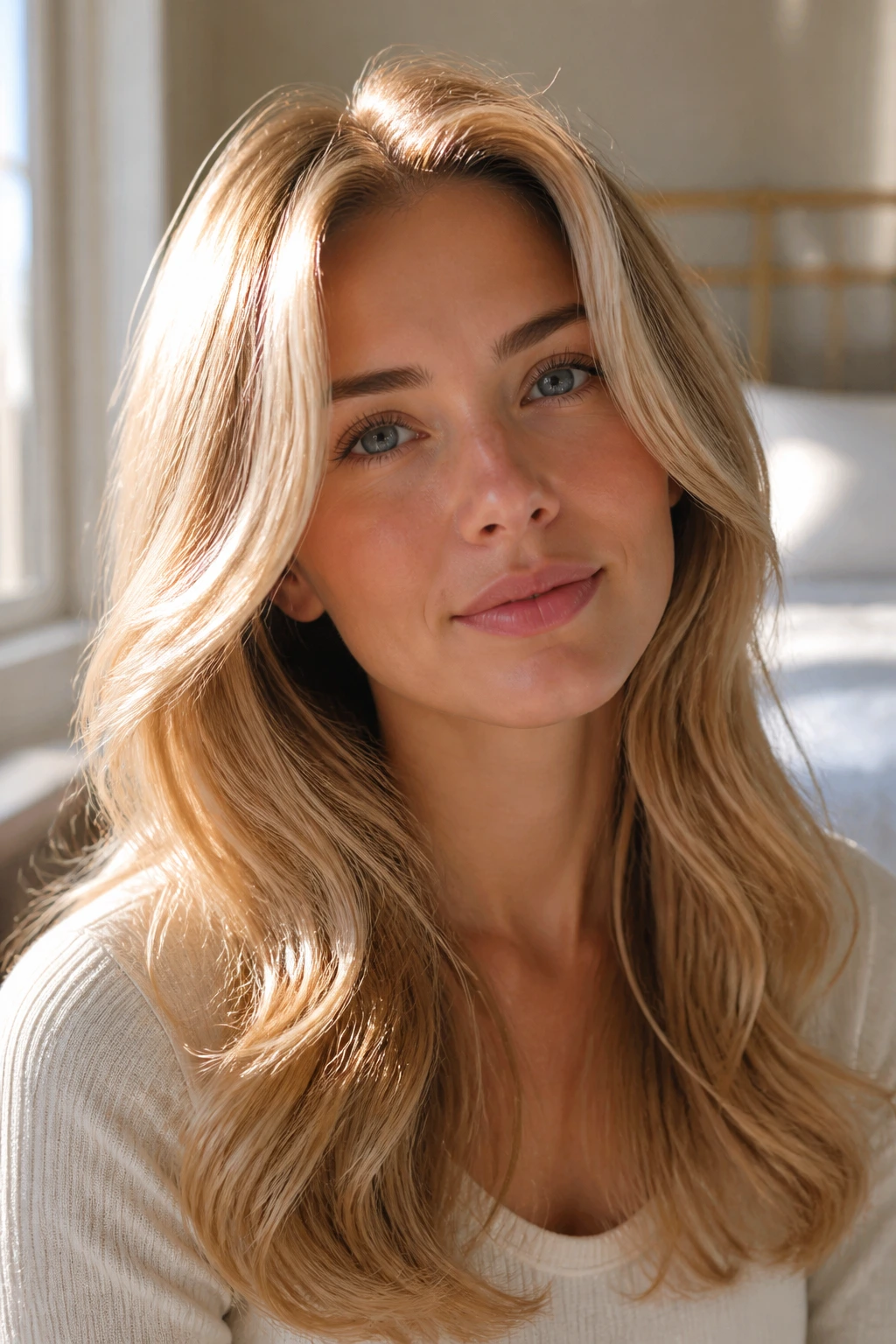
This is the style for people who want their long thin hair to look touched, not tortured. A round brush at the roots, a blow-dryer with a concentrator nozzle, and a loose bend through the mids can create that airy blowout shape that sits between straight and wavy. It’s polished, but not stiff.
The key is to roll the brush just enough to create direction, not a hard curl. Focus on the top layers first, then bend the lengths with your brush or a large-barrel iron if needed. The result feels full because the root lift and the soft wave are doing different jobs.
13. U-Shaped Cut with Soft Waves
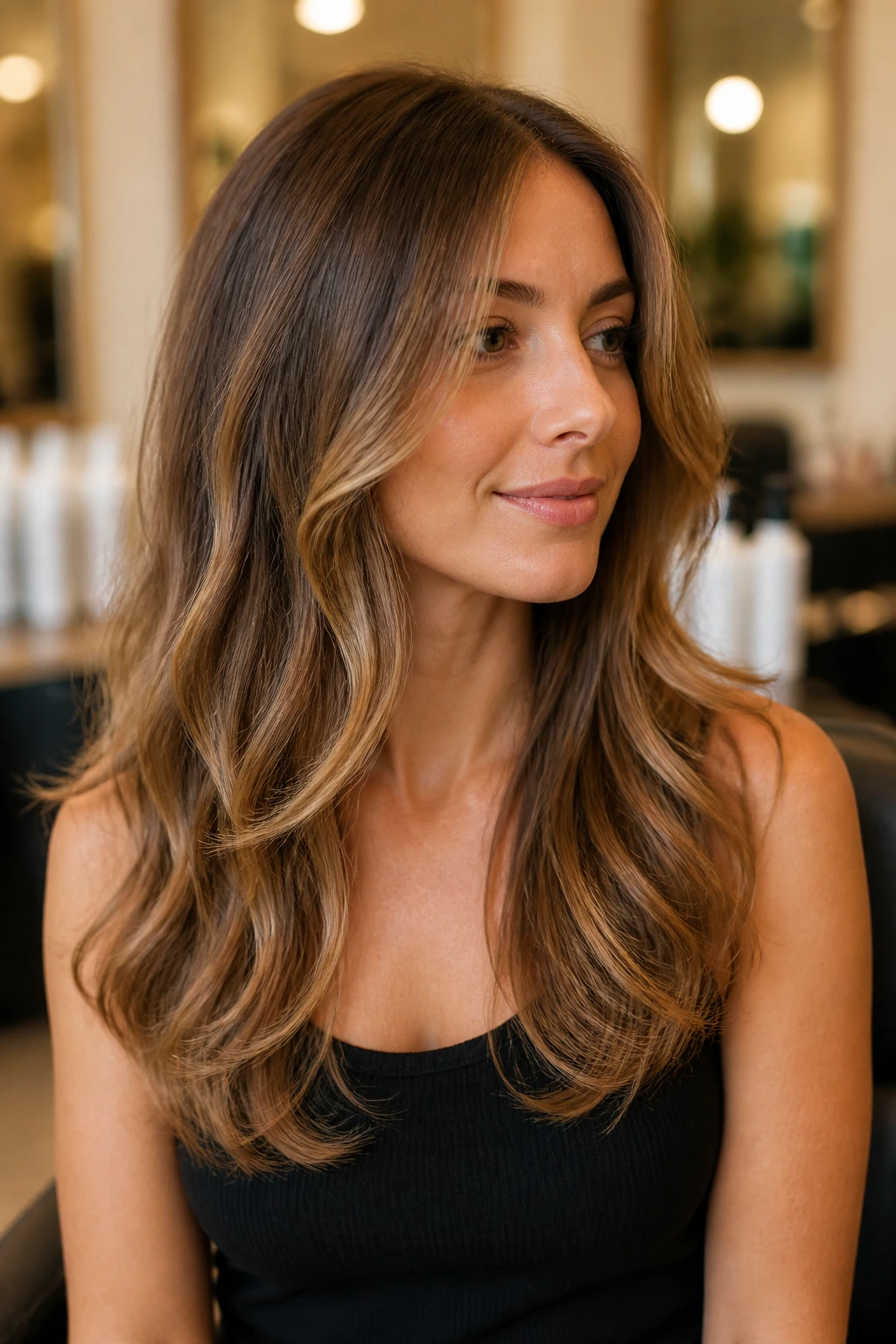
A U-shaped cut gives long thin hair a cleaner line than a blunt edge that can look stringy at the sides. When you add soft waves, the shape becomes even better because the lower curve of the cut catches the movement and keeps the lengths from hanging limp. It’s a small haircut detail, but it changes the whole silhouette.
This style is especially good if your hair is thin at the ends. The U shape prevents the bottom from looking chopped or too sparse, and the waves help the side pieces fall in a fuller arc. If you’re asking your stylist for something practical, this is a smart one.
14. Waterfall Braid Waves
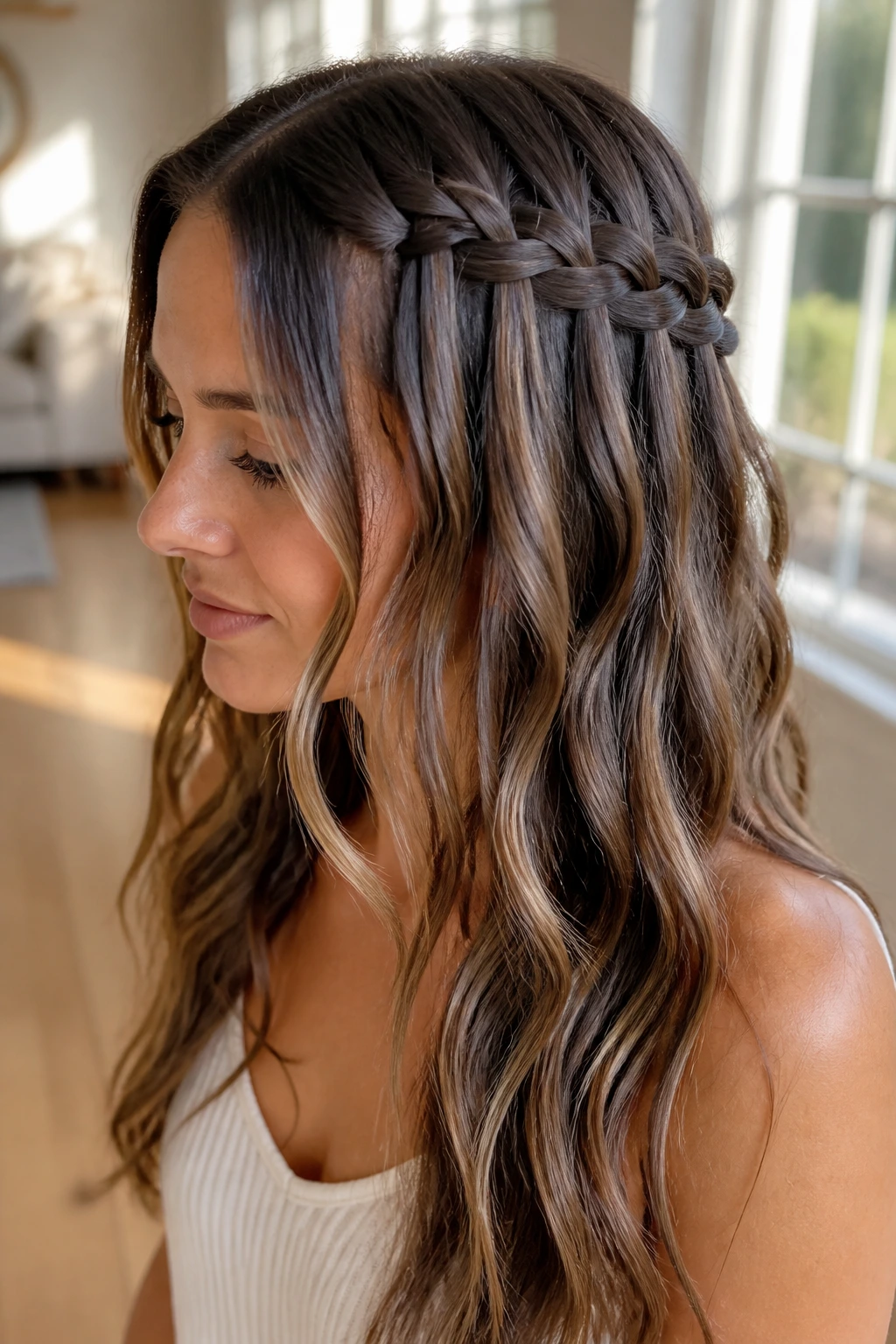
A waterfall braid is one of those styles that looks more complicated than it is, and the falling pieces create a nice bit of texture through the top half of the head. For long thin hair, that’s gold. It visually breaks up the length and gives the impression of more sections of hair than there really are.
Keep the braid loose. Tight braiding will flatten the top and make the cascade pieces too skinny. The prettiest version starts around temple height and drops into waves through the rest of the hair. Use a little dry texture spray on the braid itself so it doesn’t slide out too fast.
15. Sleek Top, Wavy Ends
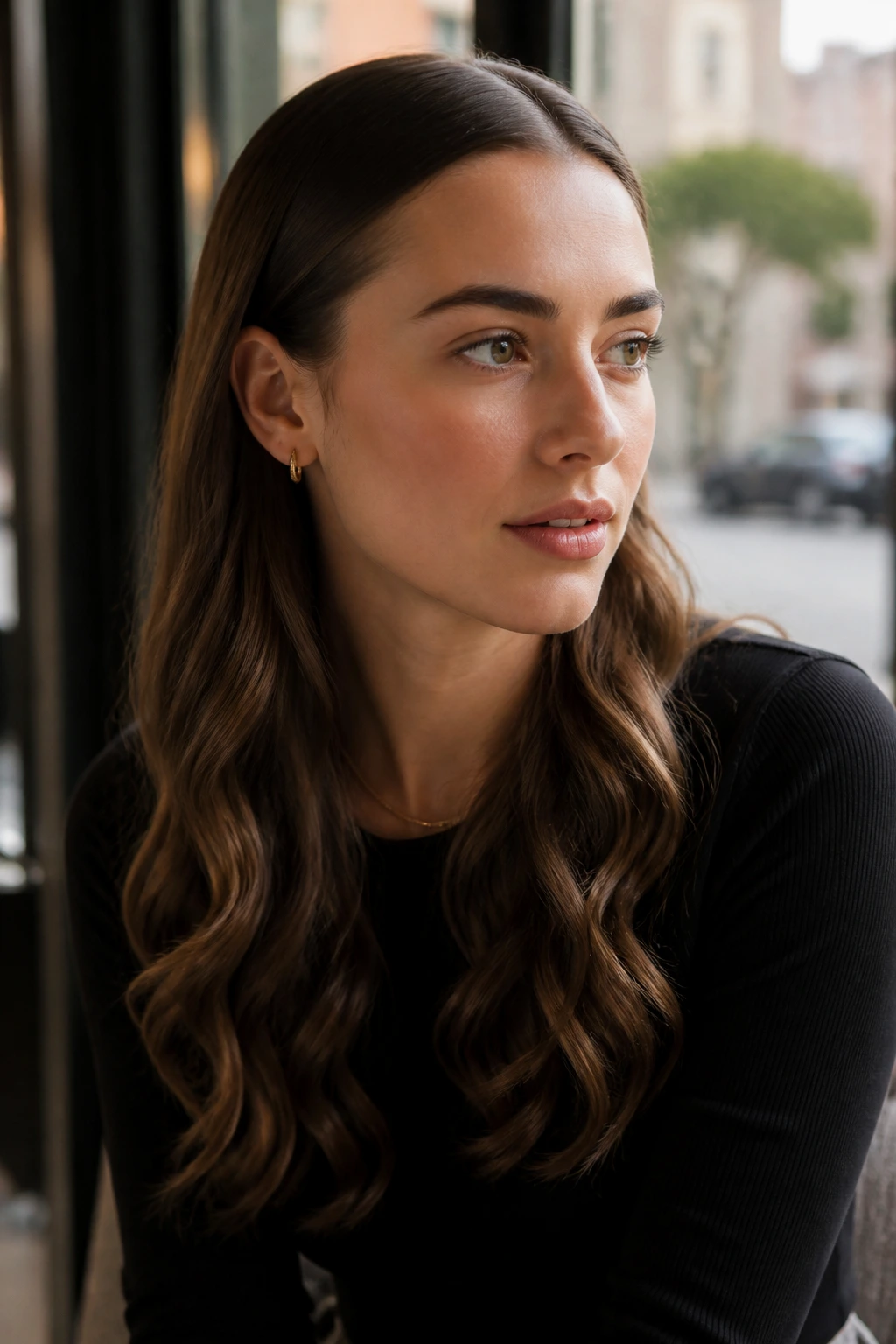
A smooth crown with wavy ends is one of my favorites for long thin hair because it uses contrast. The top stays neat and controlled, which makes the bottom waves look fuller by comparison. If every part of the head is textured, fine hair can turn fuzzy. A sleek top keeps the shape clean.
Brush the top layer flat with a little lightweight cream, then start the wave around ear level. That creates a strong line at the scalp and movement only where you want it. It’s a good move when your hair is feeling fragile, since you don’t have to overstyle the whole head.
16. Messy Bun with Face Waves
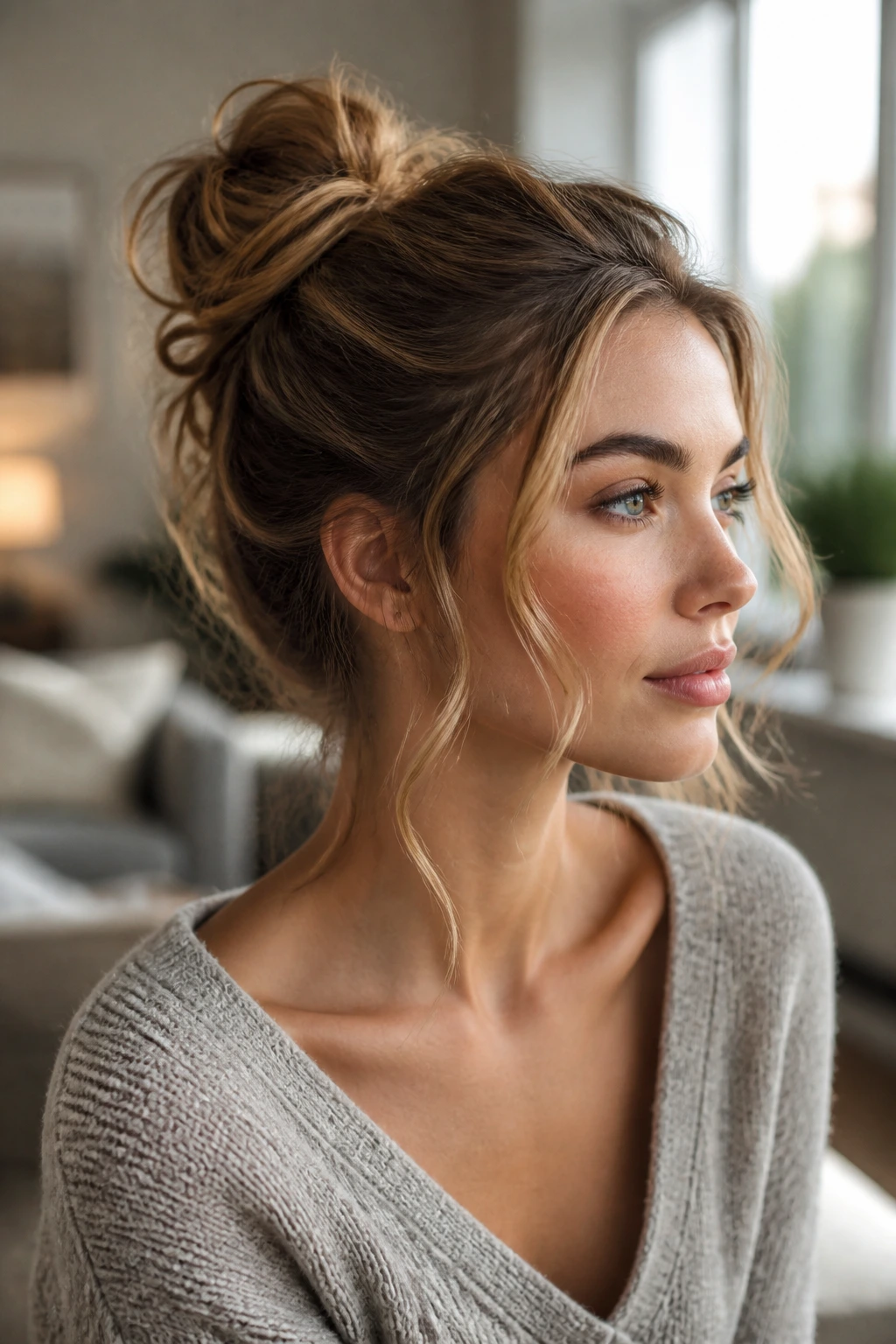
A messy bun can actually help long thin hair look fuller, but only if you leave a few face-framing pieces out and let them wave a little. The bun gives the illusion of density because all the hair is gathered in one spot. The loose front pieces stop it from looking too severe.
Don’t twist the bun into a tiny knot. Fan it out, pin it loosely, and pull a few bits free near the ears and temples. Then bend those pieces once with a wand or the flat iron edge. That softening around the face is what makes the style feel finished.
17. Mermaid Waves
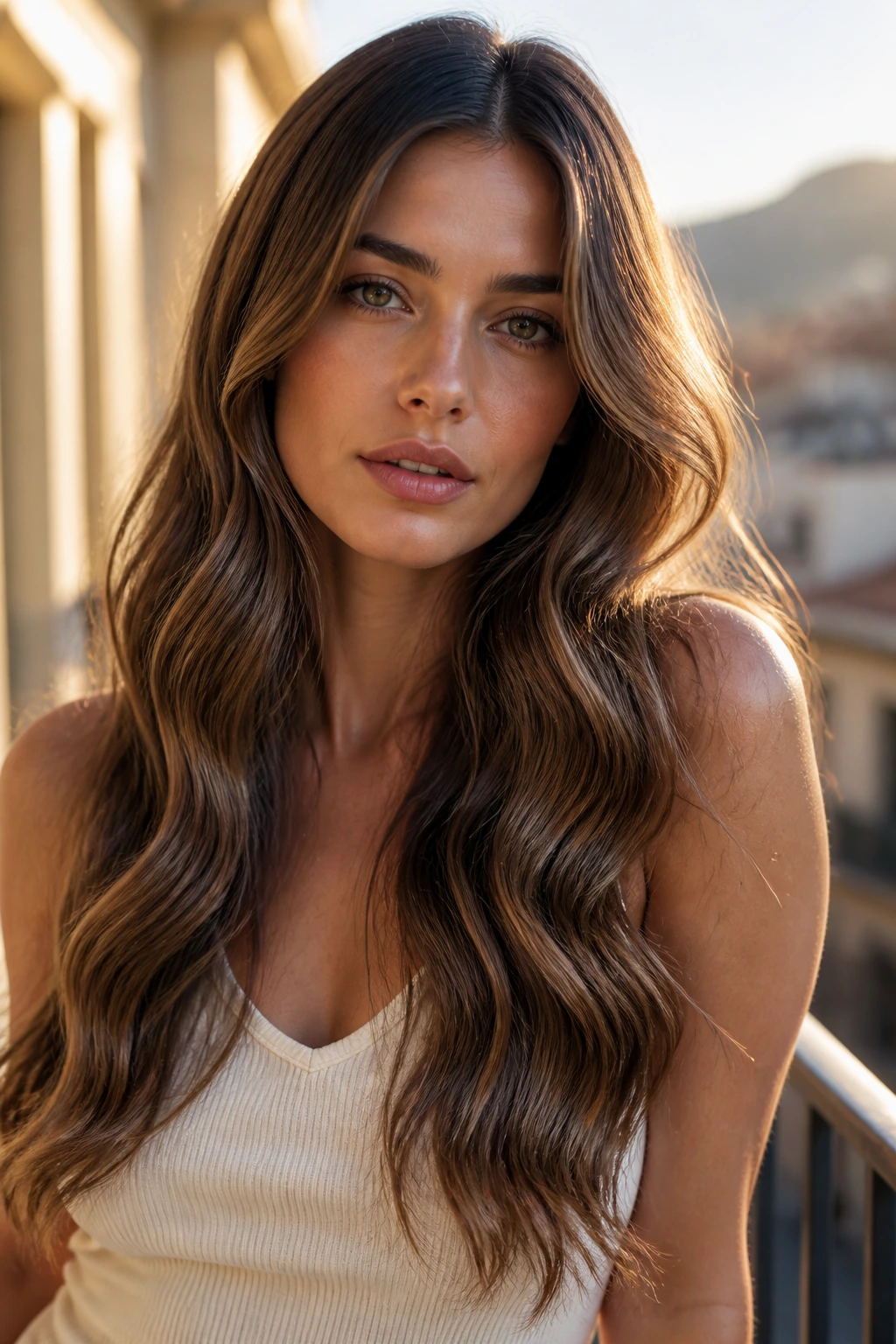
Mermaid waves are longer, broader, and a little more structured than beach waves. On long thin hair, that broader wave pattern can be a better choice because it avoids the over-curled look that makes the length appear even finer. The shape should feel fluid, not crimped.
If you use a wand, take bigger sections and hold them in the barrel for only a few seconds. Brush the waves out after they cool so the line stays wide. A touch of shine spray on the mids gives the look that smooth, long-haired finish without making the roots greasy.
18. Old Hollywood Brush-Out Waves
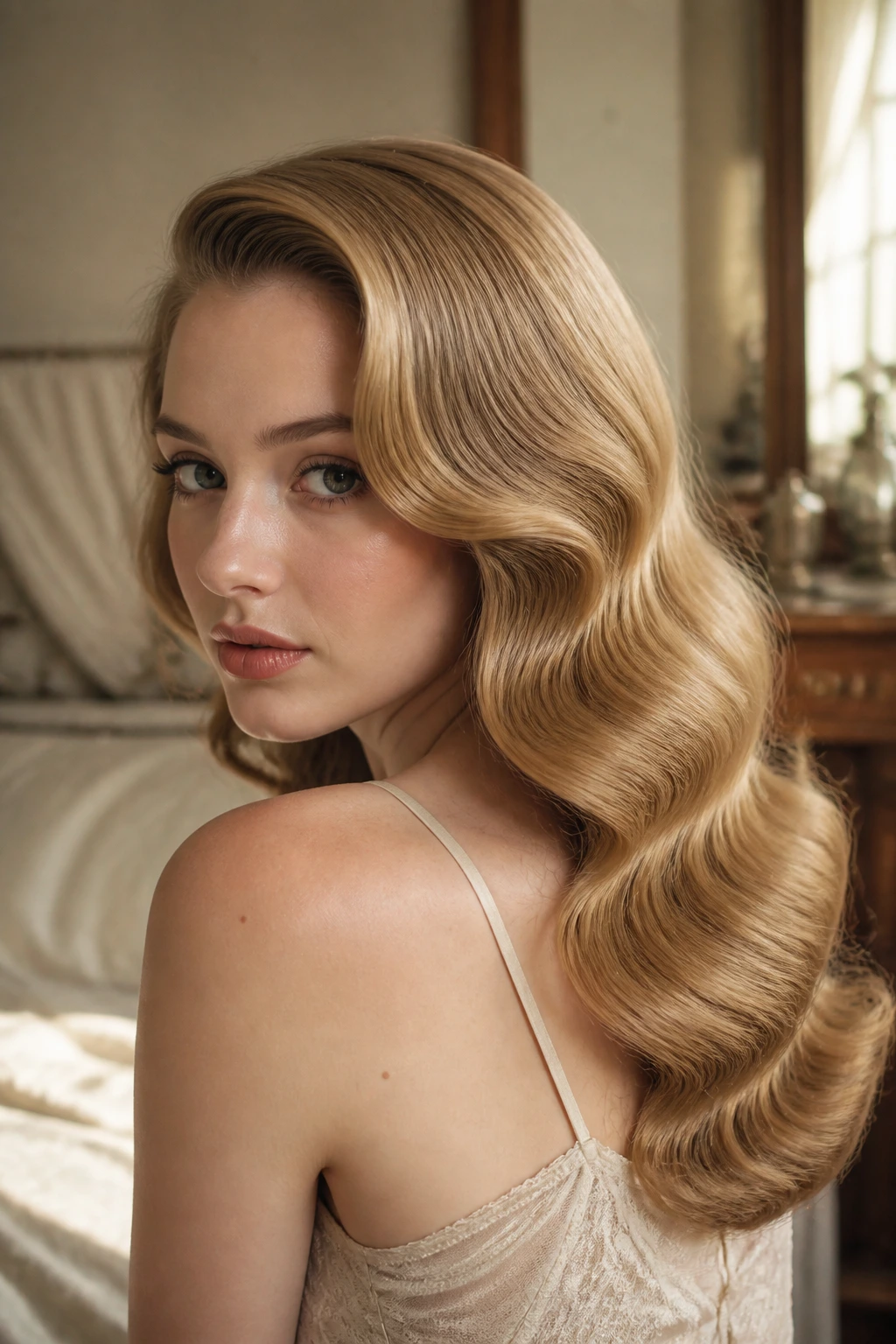
This style is the best reminder that waves don’t have to mean casual. Set the hair with a larger barrel, pin the curls until they’re cool, then brush them into one smooth wave pattern. On long thin hair, that brushed finish can make the hair look denser because the strands sit together in wide, glossy curves.
The brush-out matters. If you skip it, the style can look too separated and small. Use a soft boar-bristle brush or even your hands if the hair is fragile. The point is to merge the wave shapes, not break them apart.
19. Zig-Zag Part Waves
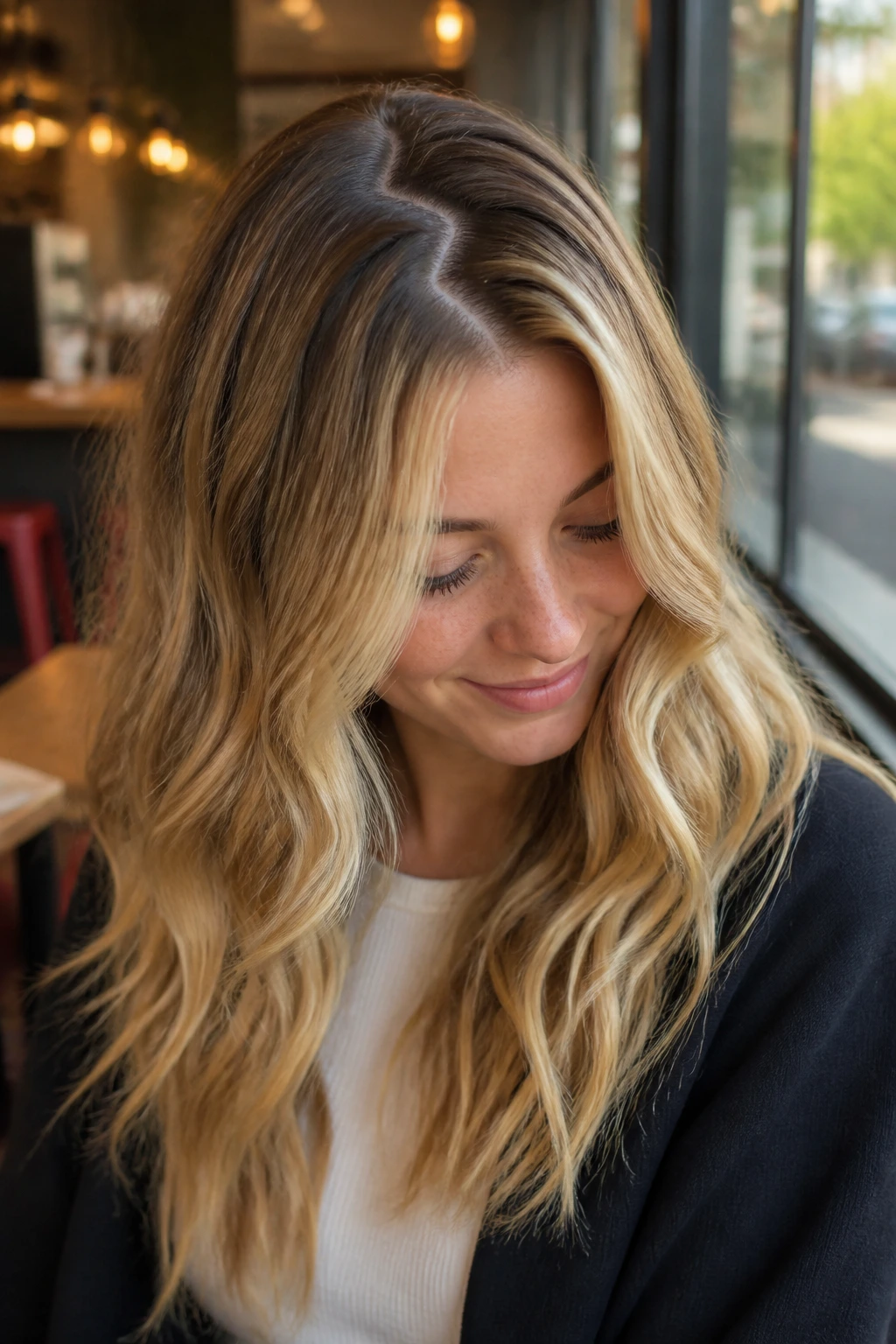
A zig-zag part adds lift in a way that surprises people because it’s such a tiny change. It breaks up the line at the scalp, which makes the crown look less flat, and that can be a huge win for long thin hair. The wave pattern underneath can stay soft and simple.
This is a good day-two trick, too. If your part is starting to collapse, zig-zagging it can hide the flat spot and revive the style without washing. It’s not flashy. It just works.
20. Rope-Braid Waves
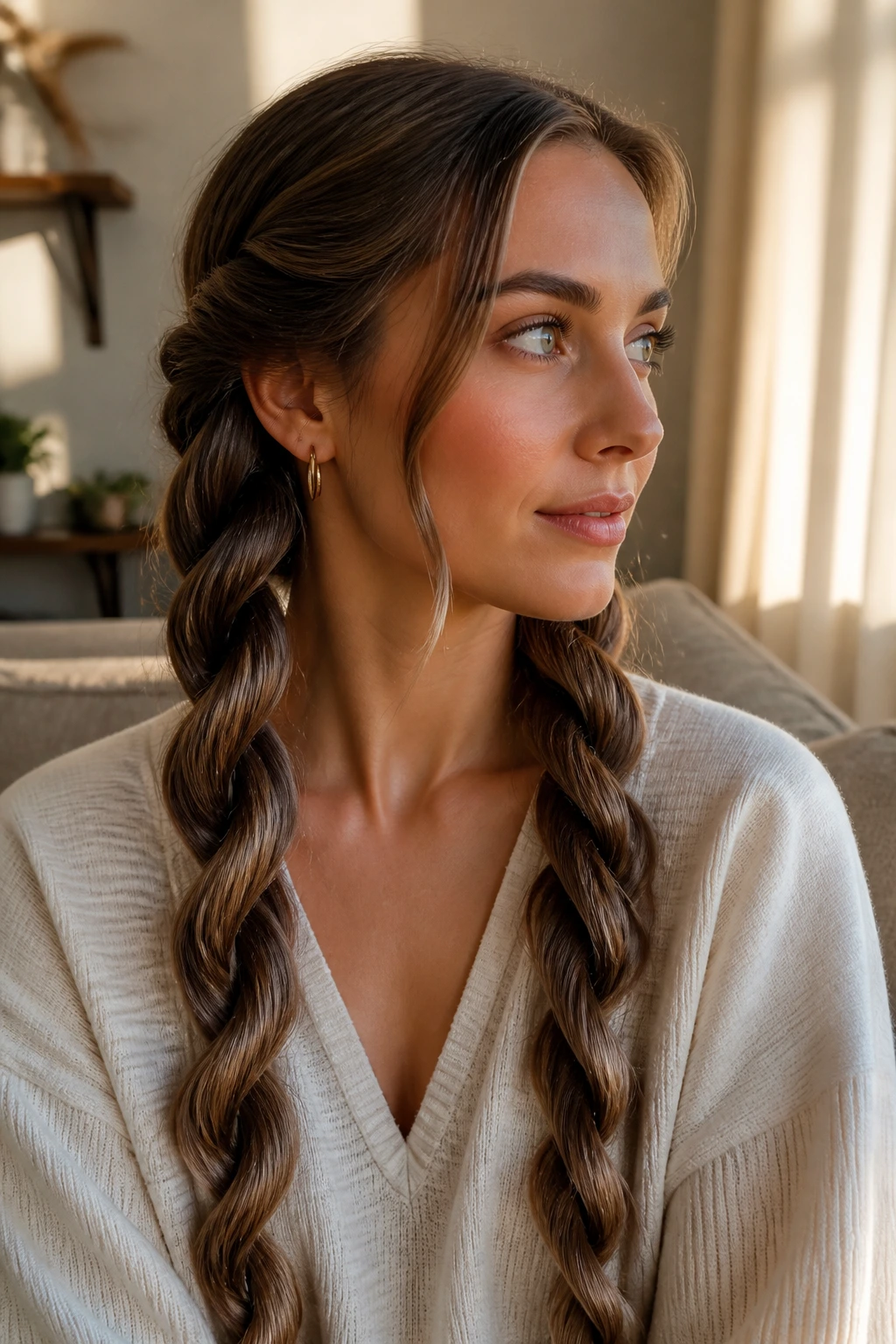
Rope braids create a different kind of bend than regular braids, and on long thin hair that slight twist can add a cleaner, smoother wave pattern. They’re fast, too. Two sections twisted around each other leave a soft spiral line that looks intentional even when you only had ten minutes.
I like rope braids for people who hate sleeping in tight plaits. They don’t press the hair as aggressively, and the wave comes out more relaxed. Spray a little mist on the lengths before braiding, then let them dry completely. Half-dry hair tends to set in weird dents.
21. Claw Clip Half-Up Waves
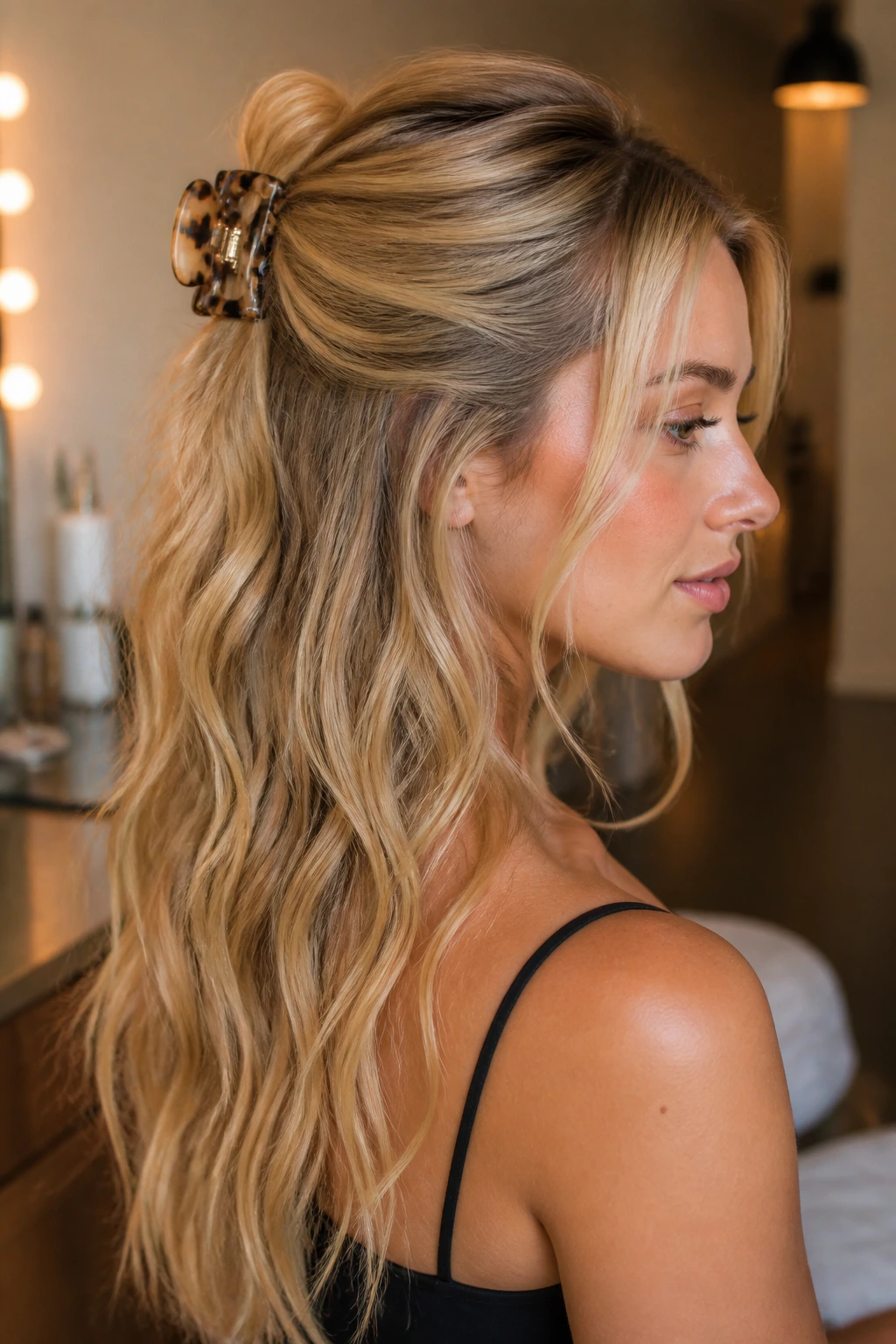
A claw clip half-up style is one of the easiest ways to fake more volume at the crown. The top section gets lifted, the bottom stays loose, and the clip adds a little architectural shape that thin hair sometimes needs. It’s casual, but not sloppy.
Use the clip to gather only the top third of the hair. If you pull too much into it, the bottom can look sparse. That balance matters. The wavy pieces underneath should still move freely, which gives the hair body through the back while the top gets a small boost.
22. Side-Swept Waves Over One Shoulder
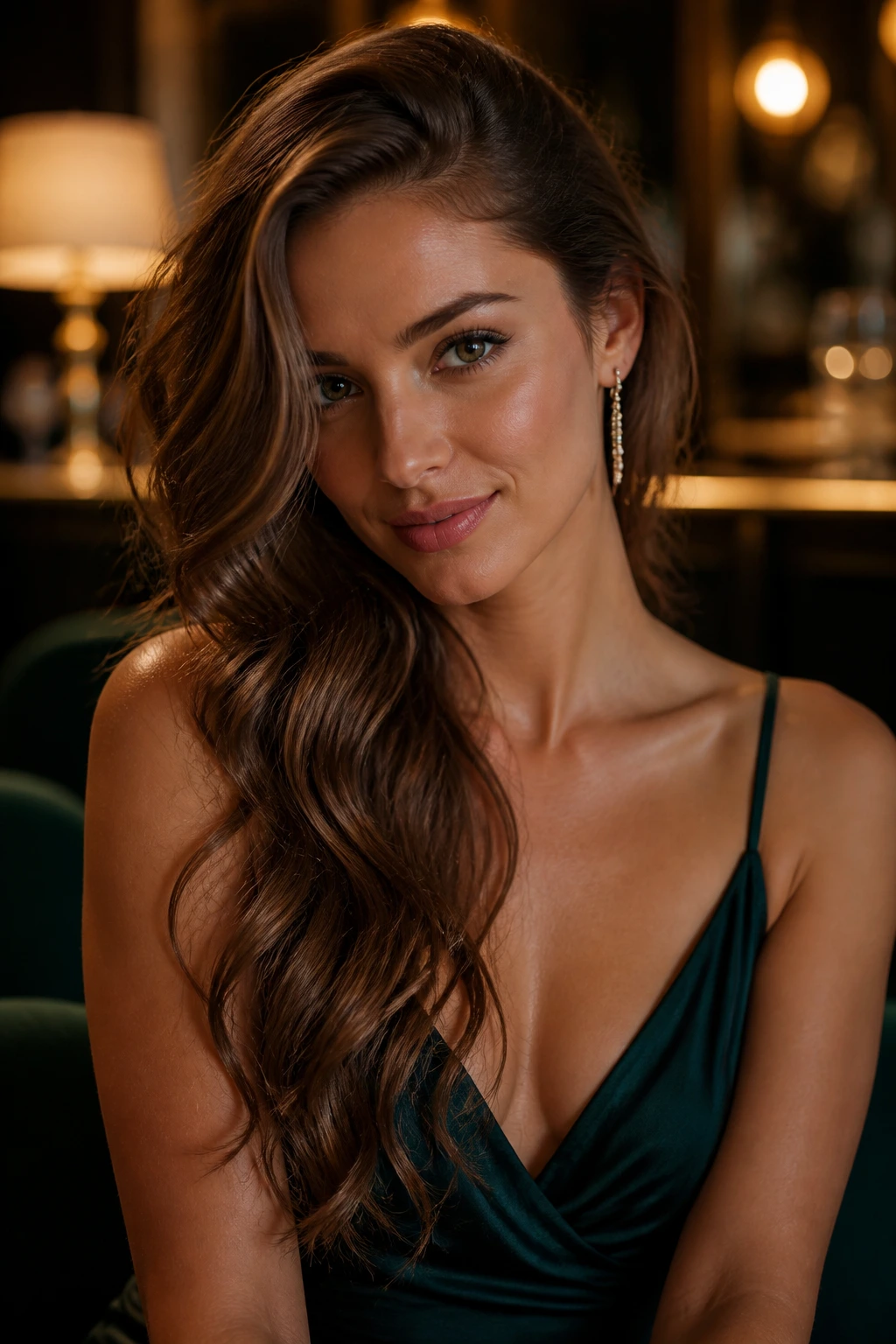
When long thin hair is swept to one side, it instantly looks richer. The weight of the hair stacks visually on one shoulder, which creates the appearance of more density. It’s a smart move for evening or any time you want the style to feel a little more dressed up.
You can start with a deep side part or just guide the hair over after styling. Pin the smaller side close to the head so the wave doesn’t split apart. The shoulder side should feel full and soft, almost like the hair is pooling there on purpose.
23. Ribbon-Set Heatless Waves
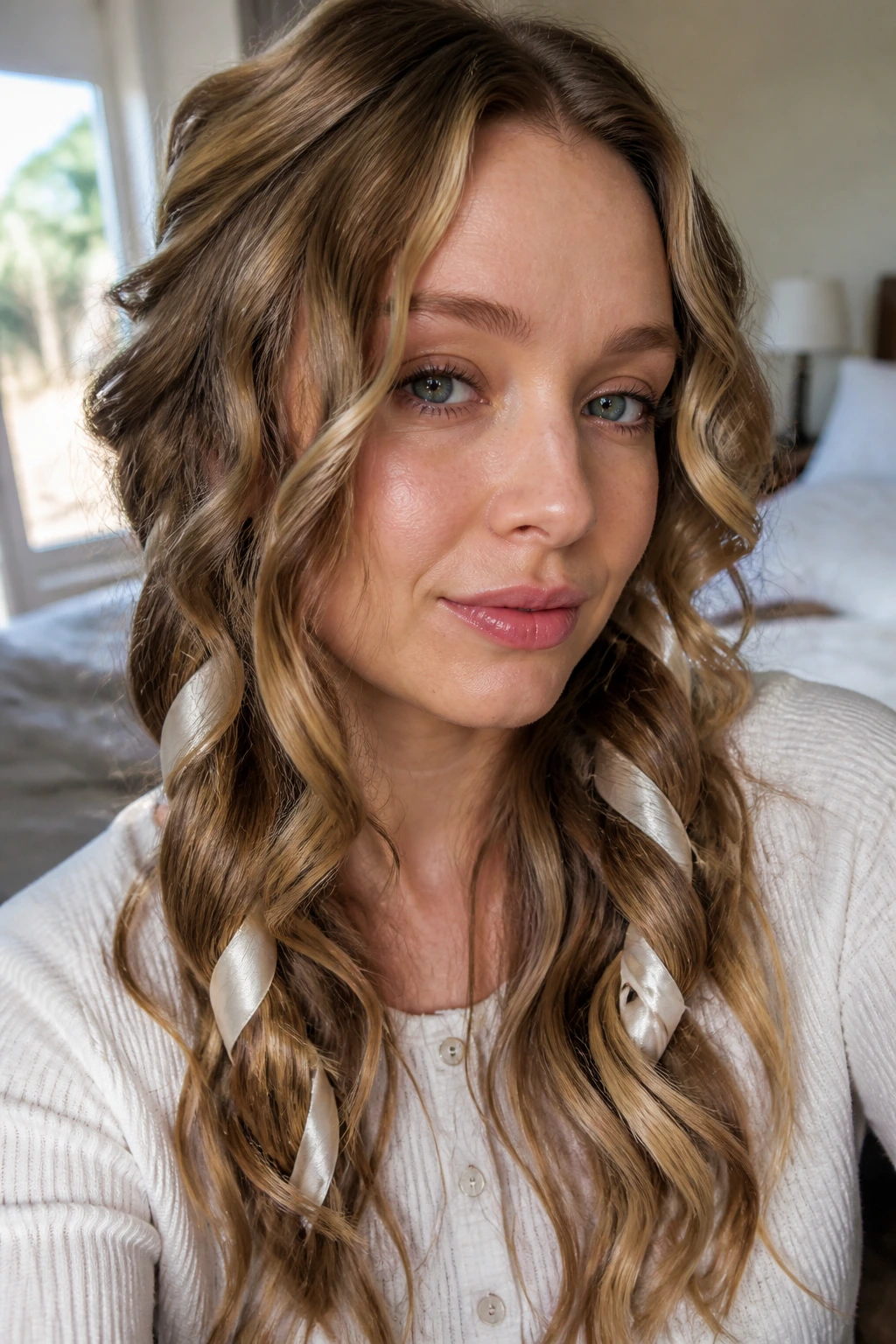
Ribbon-set waves are a softer version of overnight styling, and they’re excellent when you want movement without heat damage. Wrap long sections around a robe tie, ribbon, or soft cord, then tie the ends and let the hair set. The wave comes out broad and loose, which suits thin hair far better than tiny ringlets.
This style is best when the hair is only slightly damp. Too much moisture and the set goes limp; too little and it won’t hold the curve. It’s a patient style, not a rushed one, but the result has that airy, lived-in bend that long thin hair wears well.
24. Soft Crimped Texture Waves
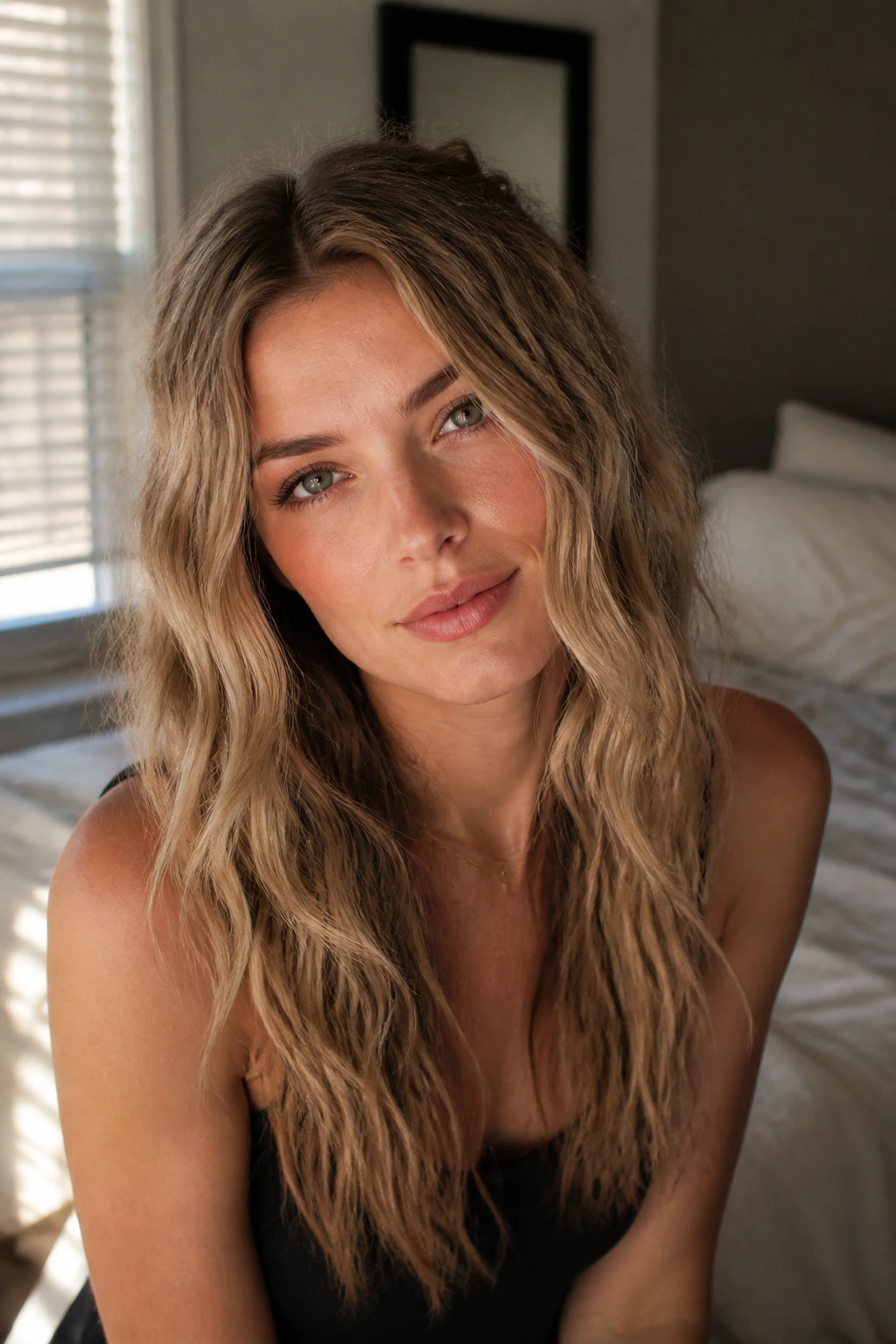
A little crimping under the top layer can make long thin hair look fuller without advertising the trick. You don’t need to crimp the whole head. Just work a few hidden sections at the crown and beneath the top layer, then leave the visible surface wavy and smooth.
That hidden texture gives the hair a base to sit on. The outer layer looks like waves, but underneath there’s enough grip to keep the style from flattening at the roots. It’s a clever move for very fine hair, though I’d keep the crimp subtle. Loud crimping can look dated fast.
25. Feathered Ends and Wave Pattern
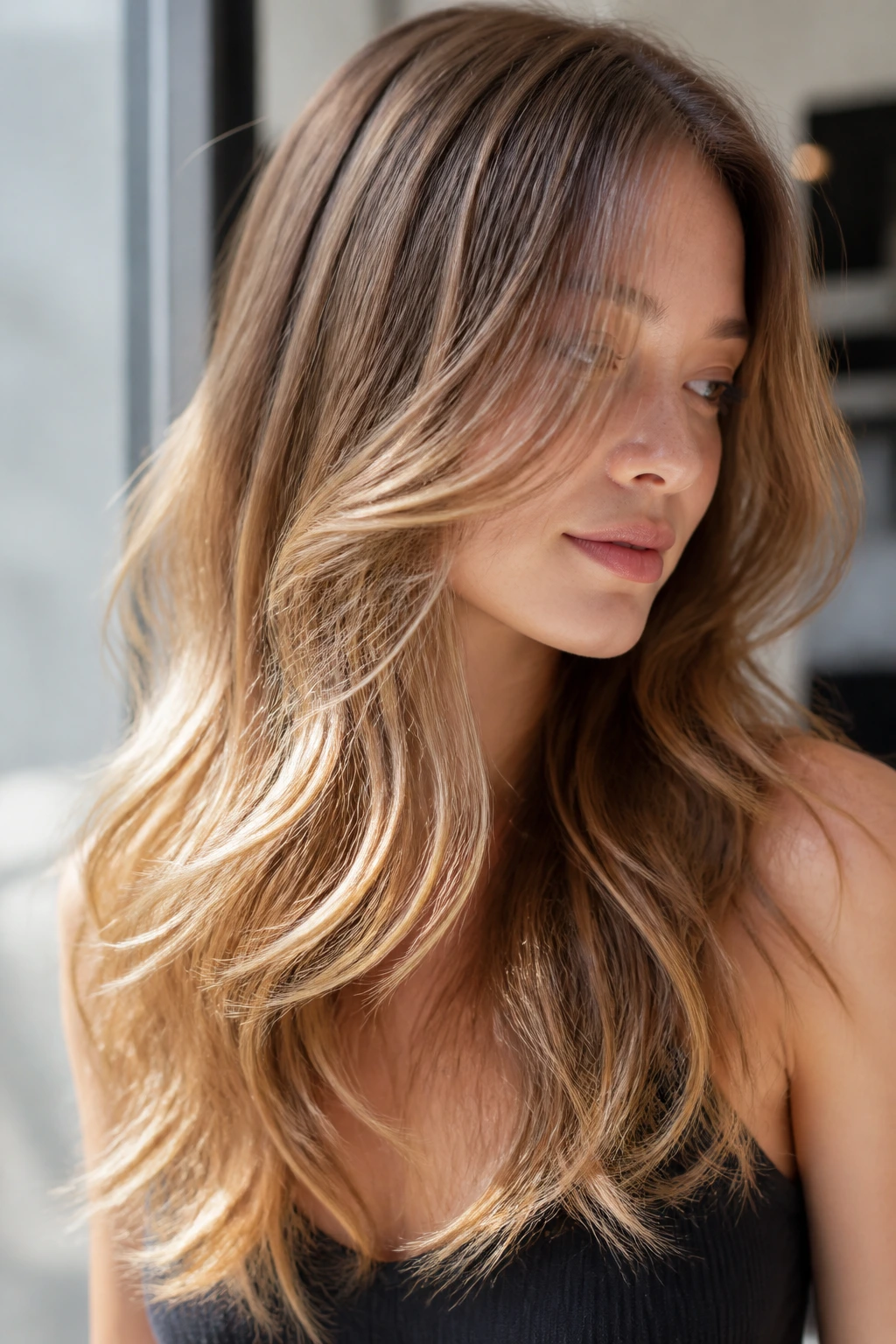
Feathered ends keep long thin hair from looking blunt in a bad way. When the bottom is too heavy, waves can collapse into one sad line. Feathering the ends slightly — either with a cut or with the way you style them — lets the waves move and separate.
This style is a little lighter and airier than mermaid waves. Good when you want swing. The wave should start above the very ends, then taper out so the hair doesn’t read like one solid rope. A light mist of spray at the finish is enough. Too much product and the feathering disappears.
26. High Pony with Wrapped Base Waves
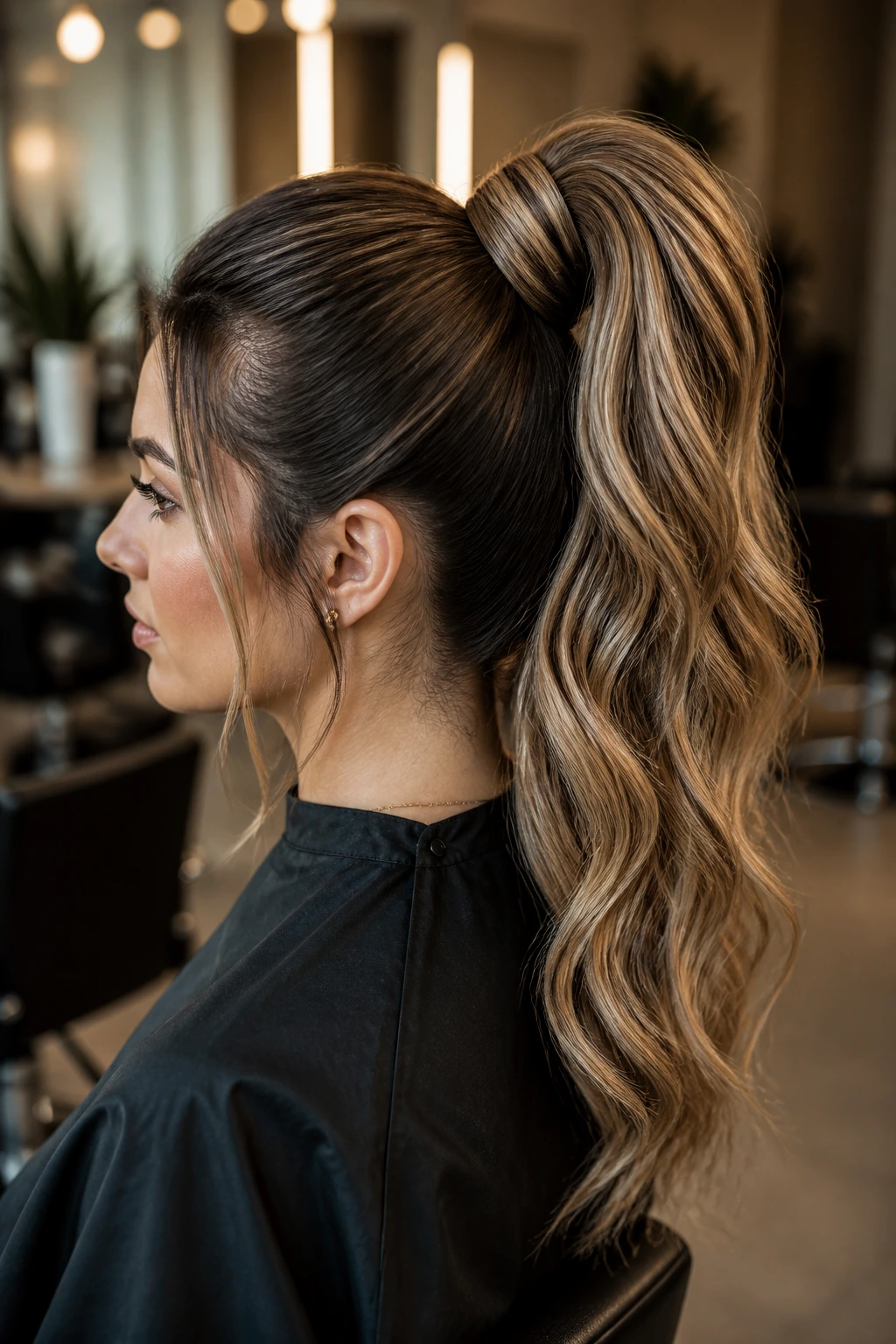
A high ponytail can be a great choice for long thin hair because it pulls all the length upward and makes the tail look fuller than it would hanging loose. Add waves to the ponytail itself, not just the top, and the whole style gets more body. The wrapped base hides the elastic and makes the finish cleaner.
Tease only the underside of the ponytail if you need a little extra lift. Keep the top smooth. That contrast gives the style shape, and it avoids the fuzzy crown that can happen when thin hair is overworked. A wrapped base is not optional here. It’s the difference between polished and rushed.
27. Loose Pin-Curl Waves
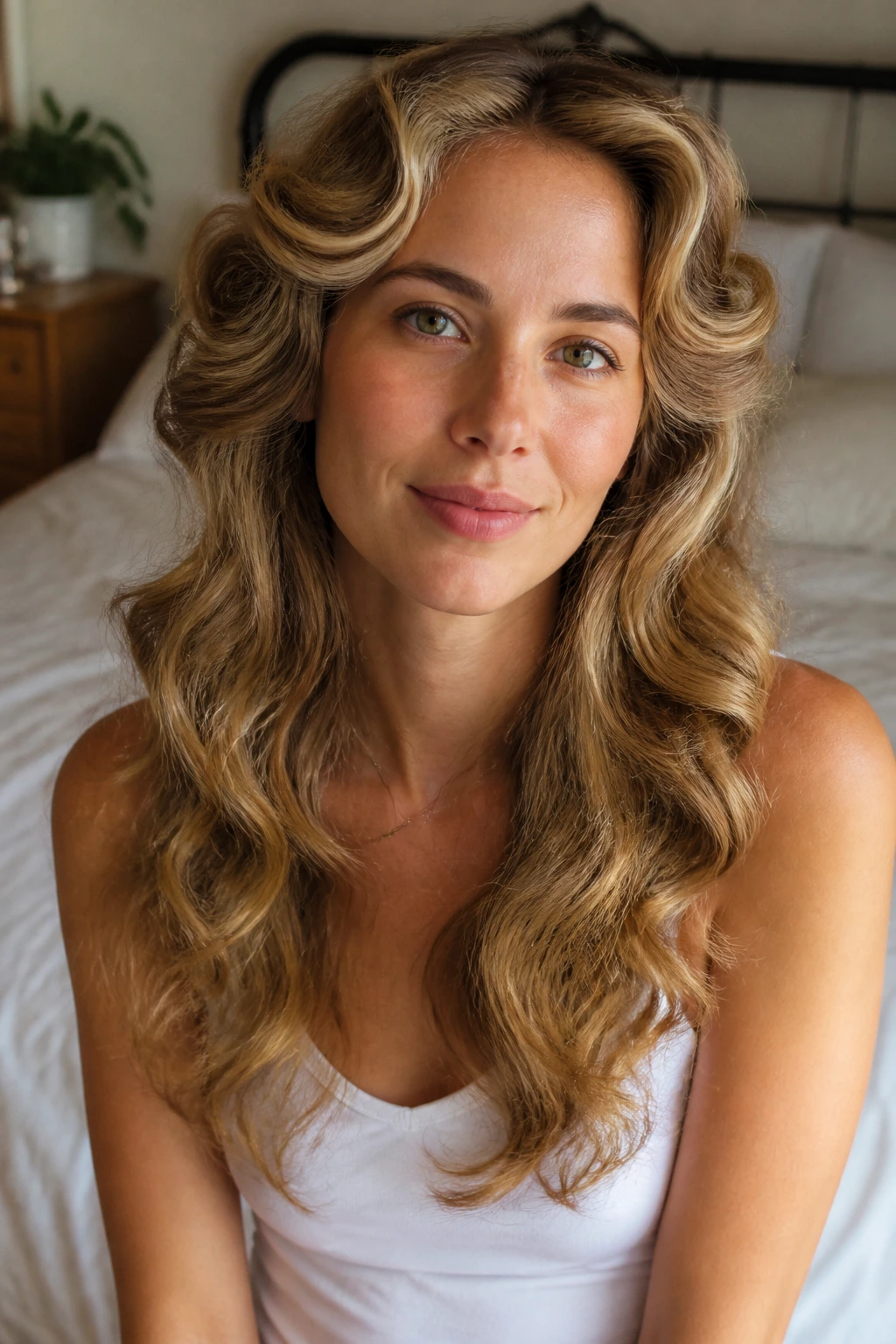
Pin curls are old-school for a reason. They create a controlled wave pattern that can last surprisingly well on long thin hair, especially if the hair is fine and holds shape once it cools. The trick is to make the curls large enough to brush out into waves, not tiny enough to turn springy.
Set a few larger pin curls around the face and through the top layers. Let them cool completely before touching them. If you brush too soon, the shape falls out. If you leave them too tight, the hair looks too curled for the density you have.
28. Glossy, Expensive-Looking Waves
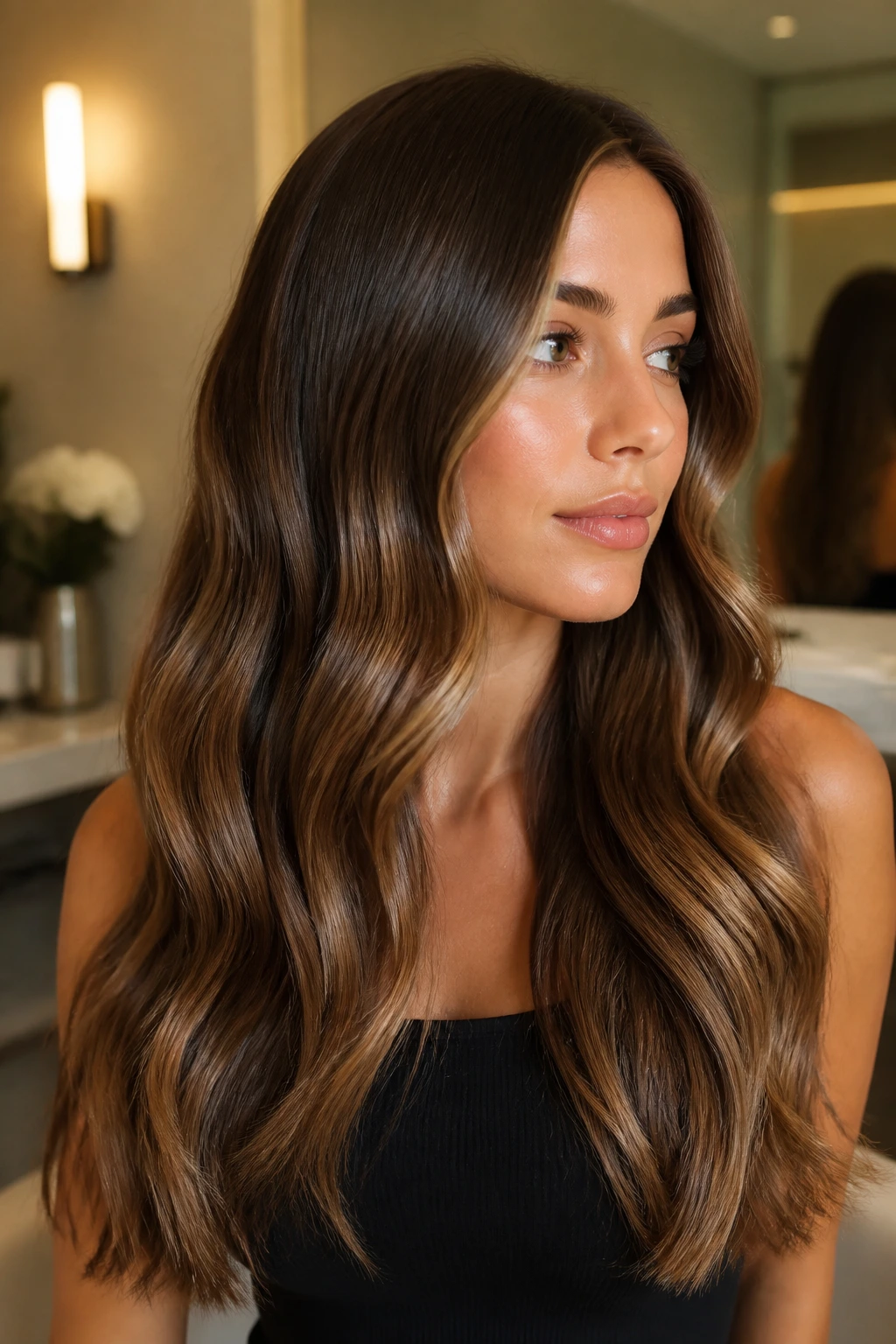
“Expensive-looking” is a silly phrase, but I know exactly what people mean when they say it: smooth roots, controlled shine, and a wave pattern that looks deliberate instead of accidental. On long thin hair, that usually means using less product than you think and choosing a wave that starts low enough to keep the root clean.
A pea-sized amount of serum through the mids and ends is plenty. If the hair shines too much near the scalp, it can read greasy, which does no favors for thin strands. Keep the finish polished, not slick. That’s the line.
29. Air-Dried Wave Enhancer
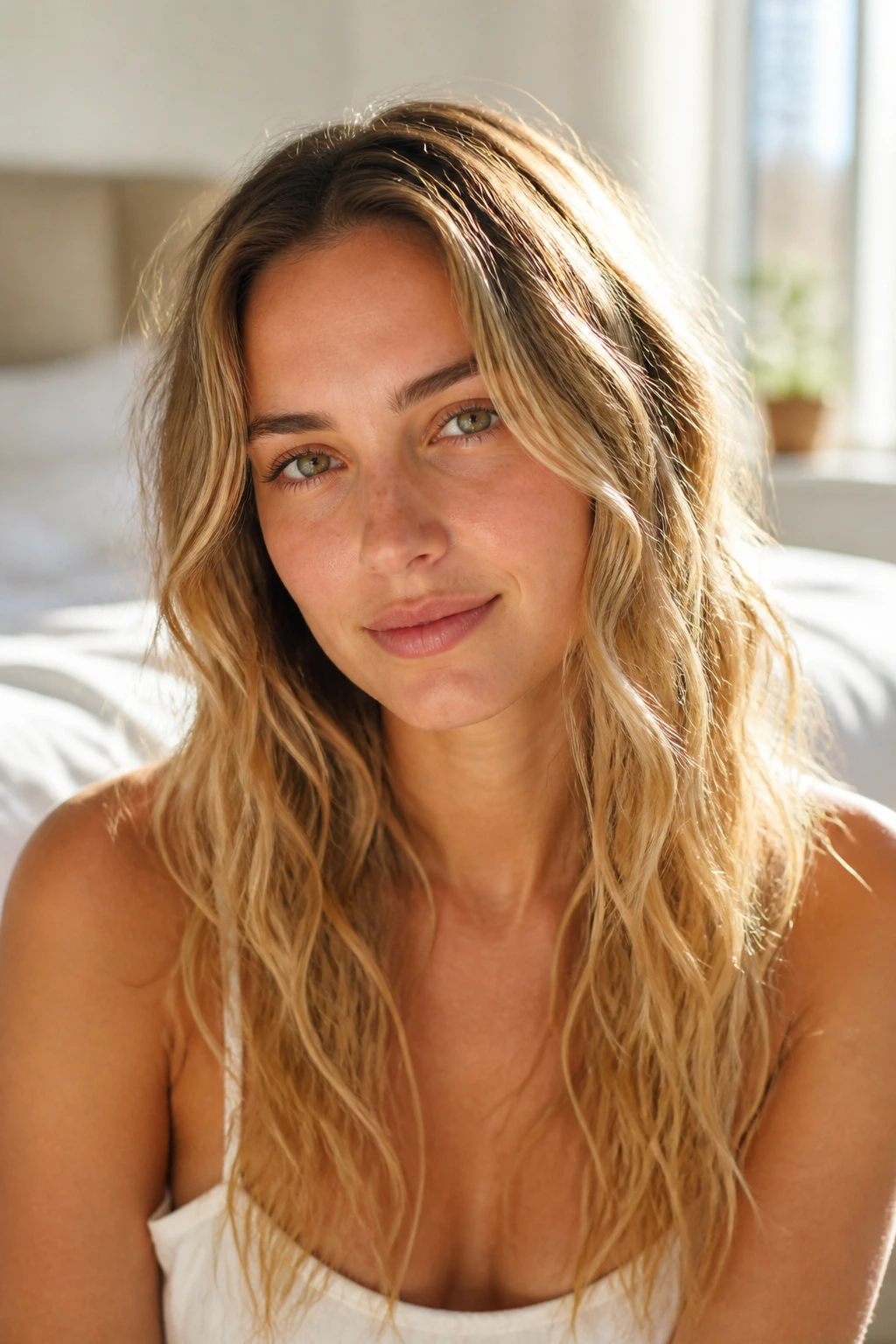
If your natural texture already has a bend, don’t fight it. Use a light mousse or wave cream, scrunch the lengths gently, and let the hair air-dry with the part you want already in place. For long thin hair, this can be a better route than full heat styling because the strands stay soft and less stretched.
The trick is restraint. Too much product and the wave clumps; too little and it disappears. Use your hands to coax the front pieces into shape while the hair is still damp, then leave it alone. Fiddling while it dries is how you end up with frizz and flatness.
30. Layered V-Cut Waves
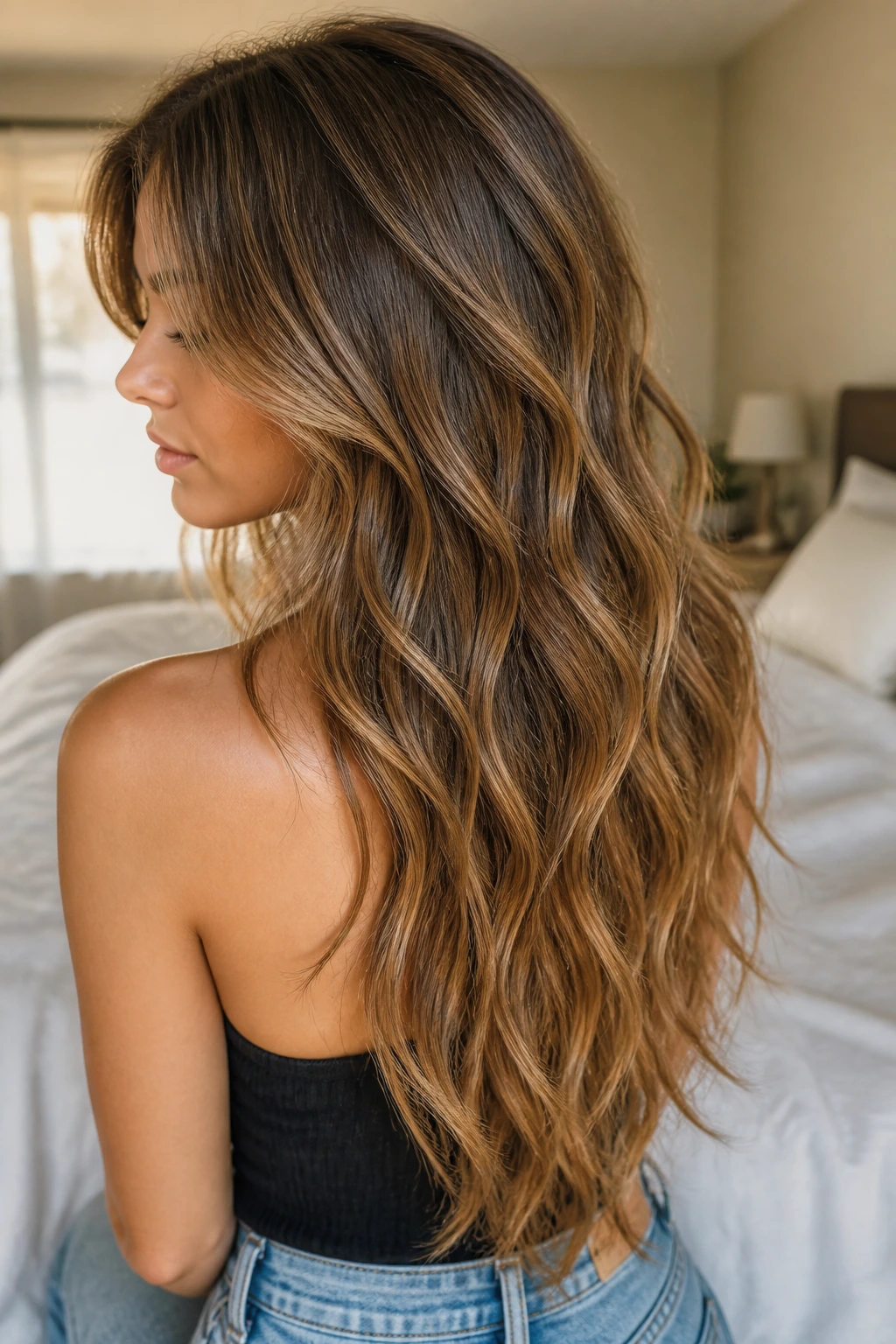
A V-cut adds a pointed shape to the back, which can make long thin hair look longer and more dimensional at the same time. With waves, the V shape gives the ends a little more movement and keeps the overall silhouette from turning boxy. It’s a better fit than one straight horizontal line if your ends are sparse.
This is one of those cuts that quietly helps every style after it. Even simple loose waves look more finished because the length falls into a soft point instead of a blunt shelf. If you like long hair but don’t love heavy ends, this one is worth considering.
31. Hat-Friendly Waves
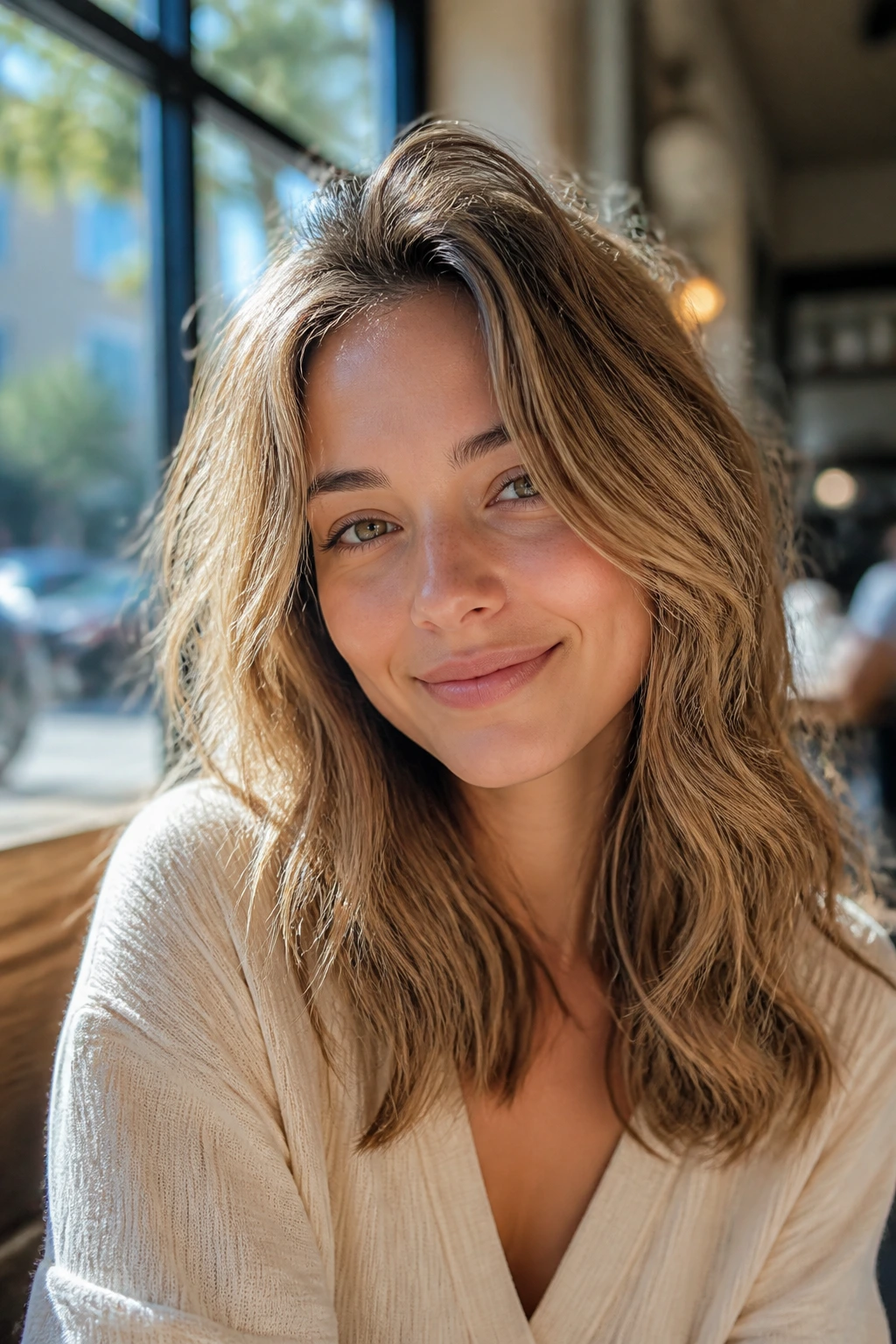
Hat hair is real, and long thin hair shows it fast. The answer isn’t fighting the hat; it’s choosing waves that can spring back. Loose bends near the mid-lengths and a root lift that doesn’t rely on teasing are the safest bet.
Before putting on a hat, loosen the wave at the top a little and tuck the front pieces behind the ears. When the hat comes off, shake the roots with your fingers and give the front a quick re-bend if needed. Styles that are too tight will leave dents. Softer ones recover.
32. Wedding-Ready Polished Waves
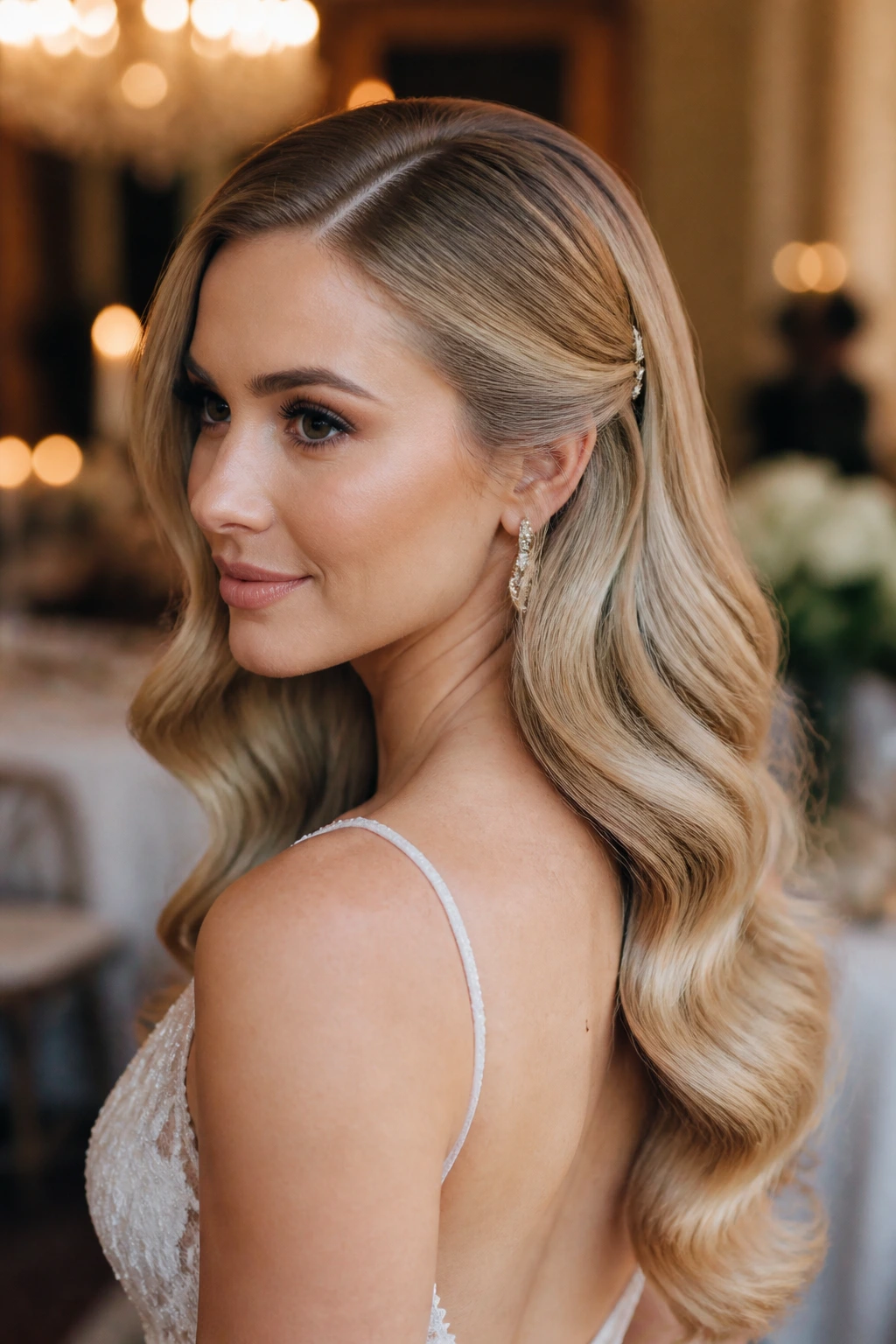
For a formal event, long thin hair usually looks best when the waves are controlled and the surface is smooth. You want the hair to catch light in wide curves, not scatter into tiny bits. A side part, a clean crown, and one or two pinned sections can make the whole style feel more substantial.
This style holds well if you set each section, let it cool, and then brush only the surface. Don’t over-finger it. That’s where the shape falls apart. A little shine spray on the mids and a light mist of flexible hairspray are enough to keep the finish neat for hours.
33. Gym-to-Street Quick Waves
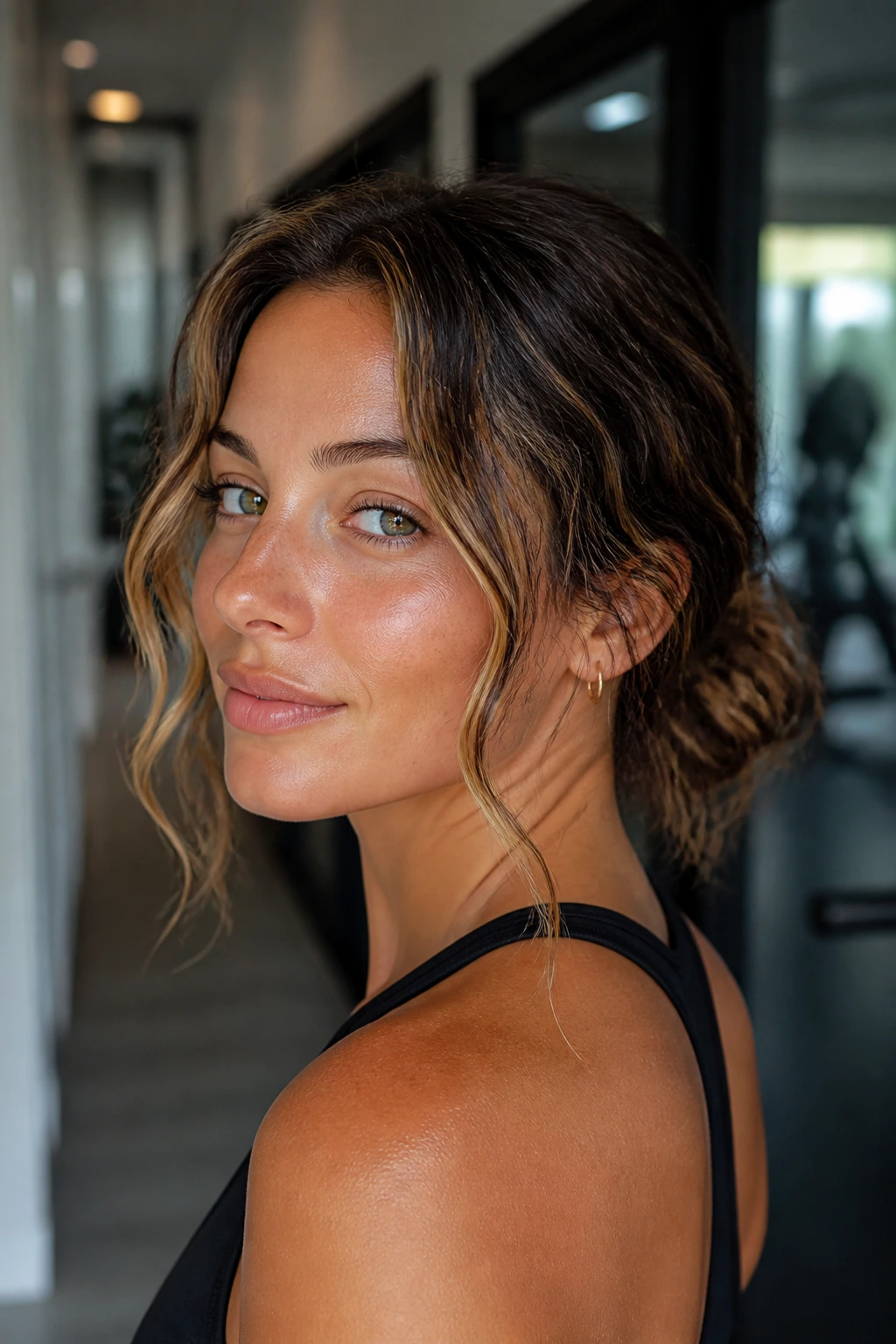
Some days, you need your hair to go from ponytail to presentable in five minutes. Quick waves can do that. Pull the hair into a low bun while it’s slightly damp, take it down, and bend just the front and top pieces with a wand. That gives the illusion of a styled head without a long session.
This is where long thin hair has an advantage. It doesn’t take much to wake it up. A few loose bends near the face and crown can carry the whole look, especially if the ends are left a little straighter. Fast doesn’t have to mean sloppy.
34. Fine-Hair Micro Volume Waves
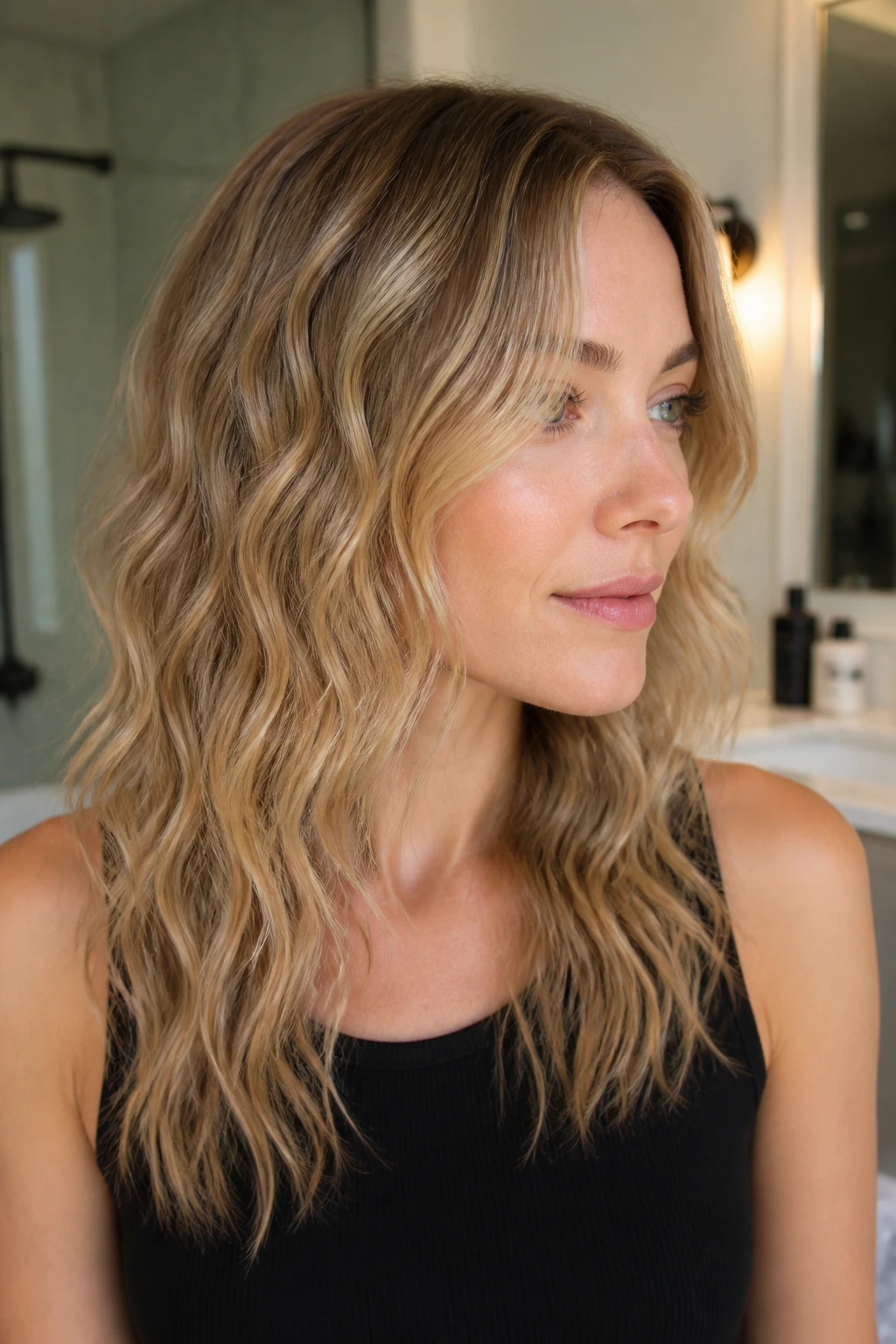
Micro volume waves are for people who want body, not giant curls. The wave pattern is small enough to create texture, but the ends are brushed out enough to keep the style soft. On fine hair, that balance matters. Too loose and the hair falls flat. Too tight and it looks sparse.
Use a smaller barrel than you would for beach waves, but keep the section size modest so the curl doesn’t get too tiny. After cooling, brush lightly from the ends upward. The result is a fluffier wave line that still looks wearable.
35. Root-Clipped Waves
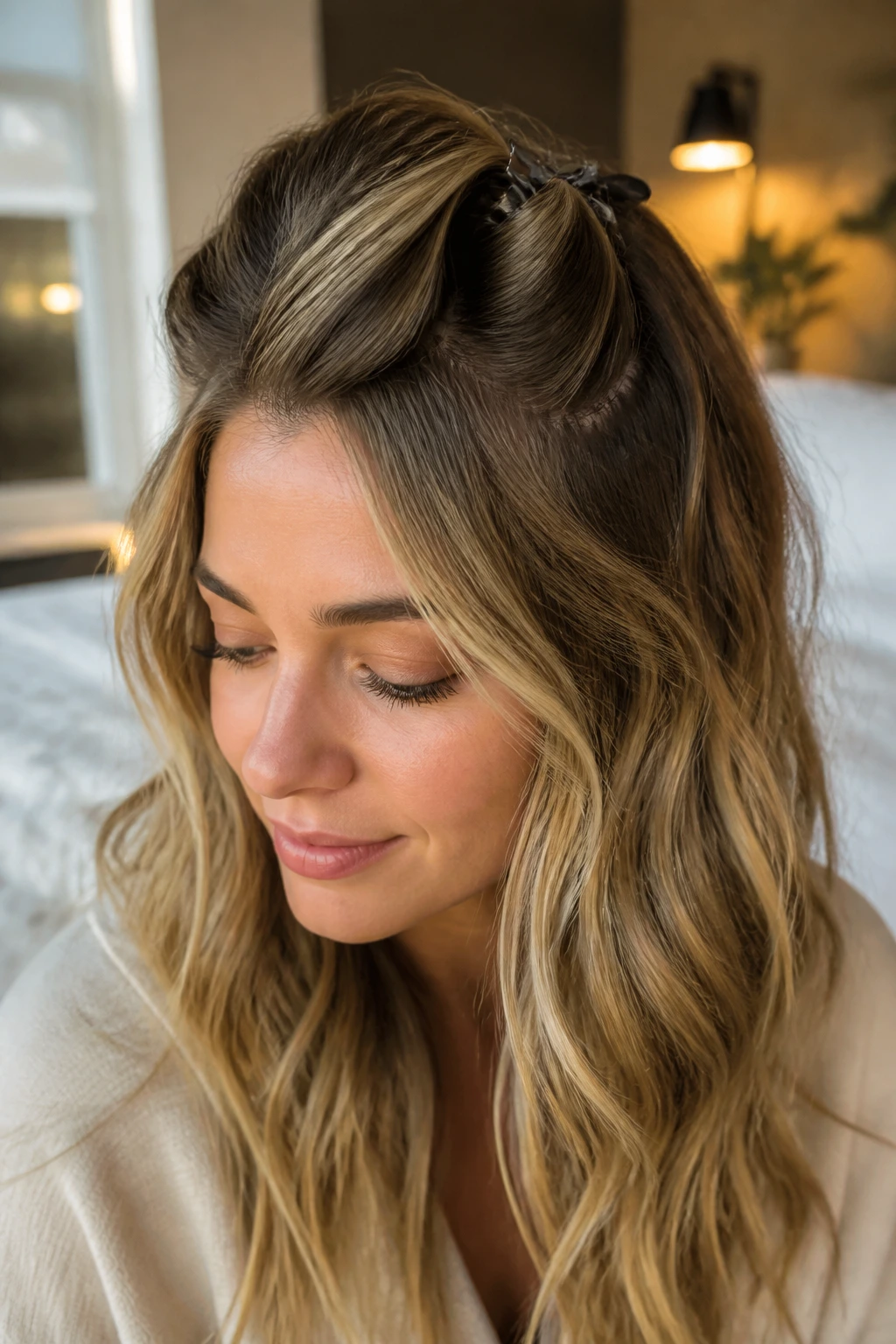
This is one of the simplest tricks in the whole bunch, and one I’d use anytime the crown starts giving up. Style the waves, then clip the root at the top with a flat clip or two while the hair cools. That little lift gives the top a memory it wouldn’t have on its own.
The clips should sit under the top layer, not on the visible surface. If they show, the style looks set, which isn’t the goal. Once the hair cools, remove them and shake the roots lightly. You’ll get more height without the scratchy tease-back that can make fine hair frizzy.
36. Low Knot with Wavy Tendrils
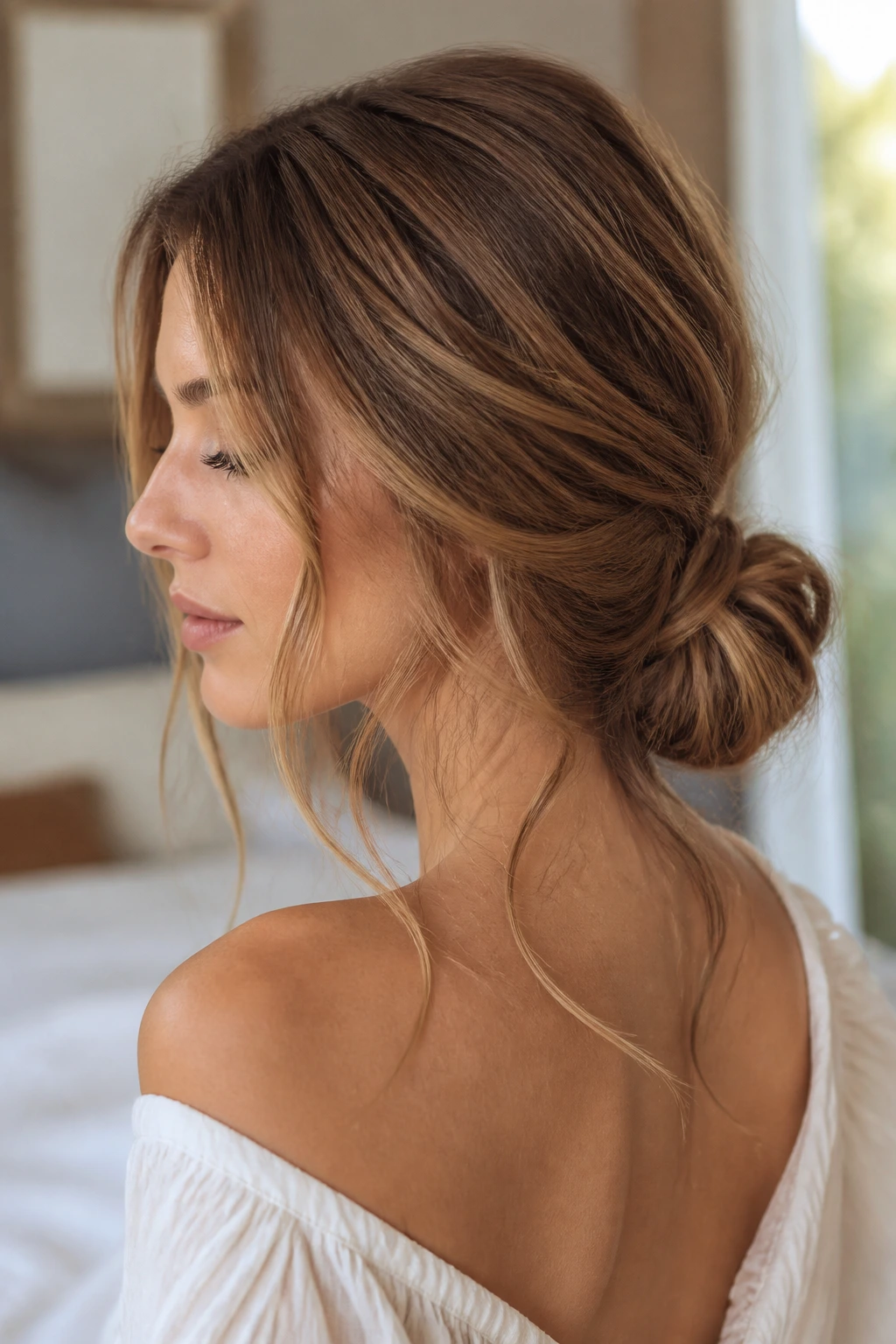
A low knot can be soft and elegant on long thin hair if you let a few wavy tendrils hang free around the face and neck. The knot itself gathers the hair into a compact shape, which helps it look fuller. The loose pieces keep the style from feeling severe.
Don’t smooth every strand into place. A tiny bit of irregularity is your friend here. Pull the knot apart just enough to widen it, then let the front tendrils sit where they want. The style should look relaxed, not undone in a bad way.
37. Side Braid with Loose Wave Cascade
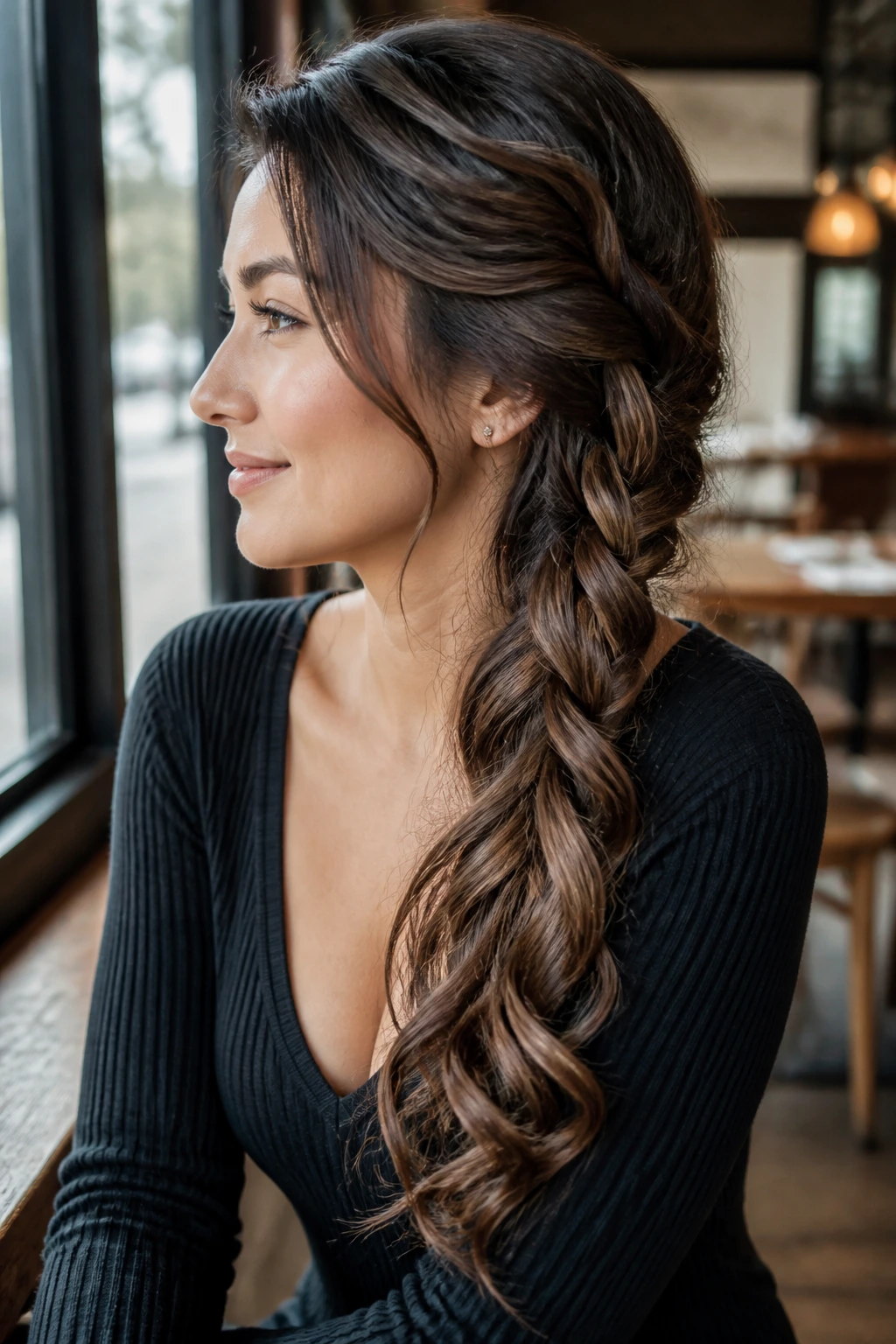
A side braid that ends in loose waves gives you two textures at once. The braid adds visual density up top, and the loose wave cascade keeps the length from looking flat. On thin hair, that combination can make the whole head look richer because the eye keeps moving.
Keep the braid loose enough that the scalp doesn’t show in hard lines. Once it’s secure, gently widen the braid with your fingers. The waves at the bottom can stay softer and more relaxed. That contrast is the whole point.
38. Undone but Intentional Waves
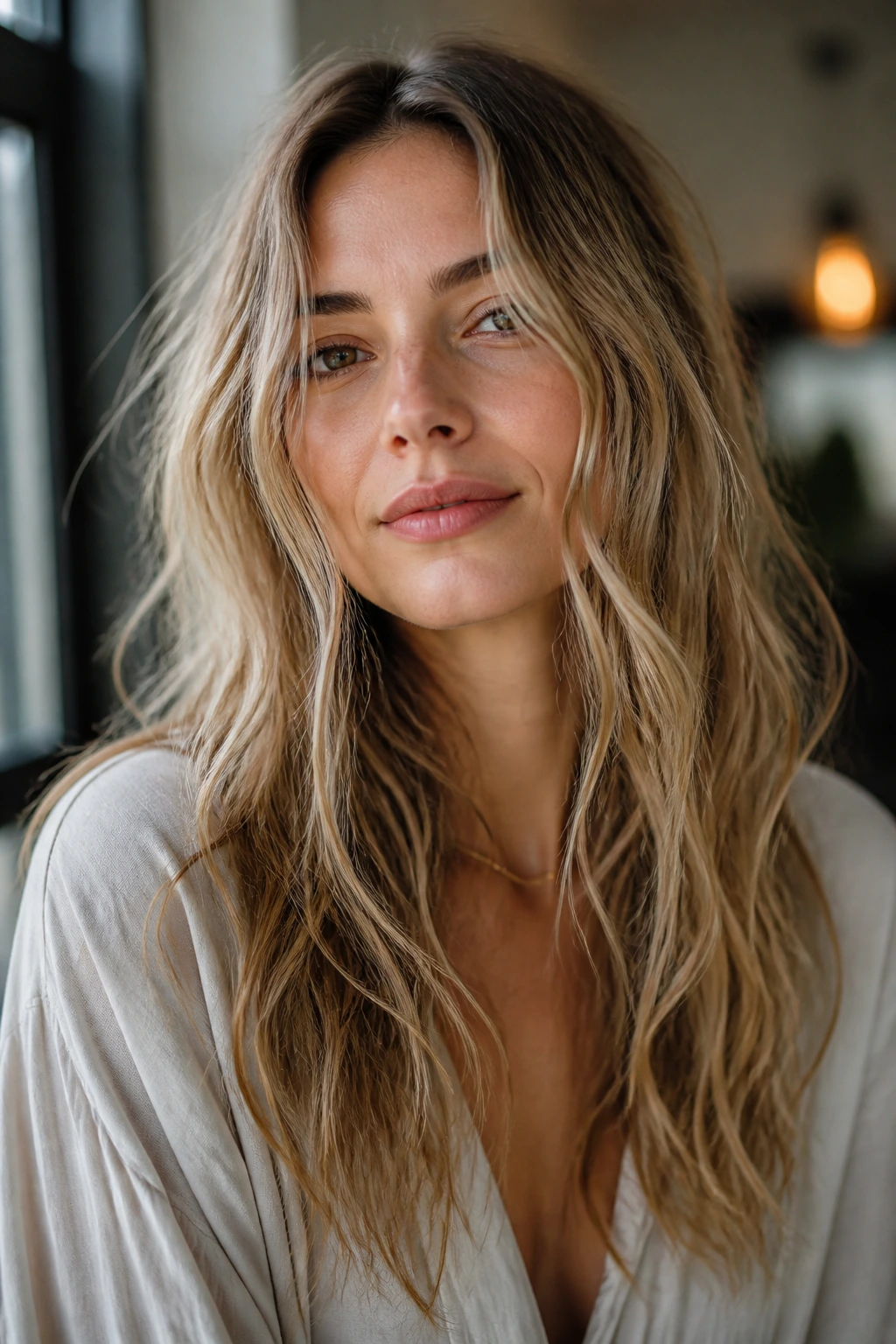
This is the style I reach for when I want long thin hair to look fuller without looking “done.” The roots stay a little lived-in, the wave pattern is irregular on purpose, and a few face pieces fall forward without being overcontrolled. It’s the least fussy option, and often the best-looking one.
The trick is not to overthink it. Use a wand on random sections, skip a few pieces, and break up the wave with your fingers once it cools. Long thin hair often looks better when it keeps some softness and air. Too much perfection is what makes it look skinny.
Why Soft Waves Beat Tight Curls on Long Thin Hair
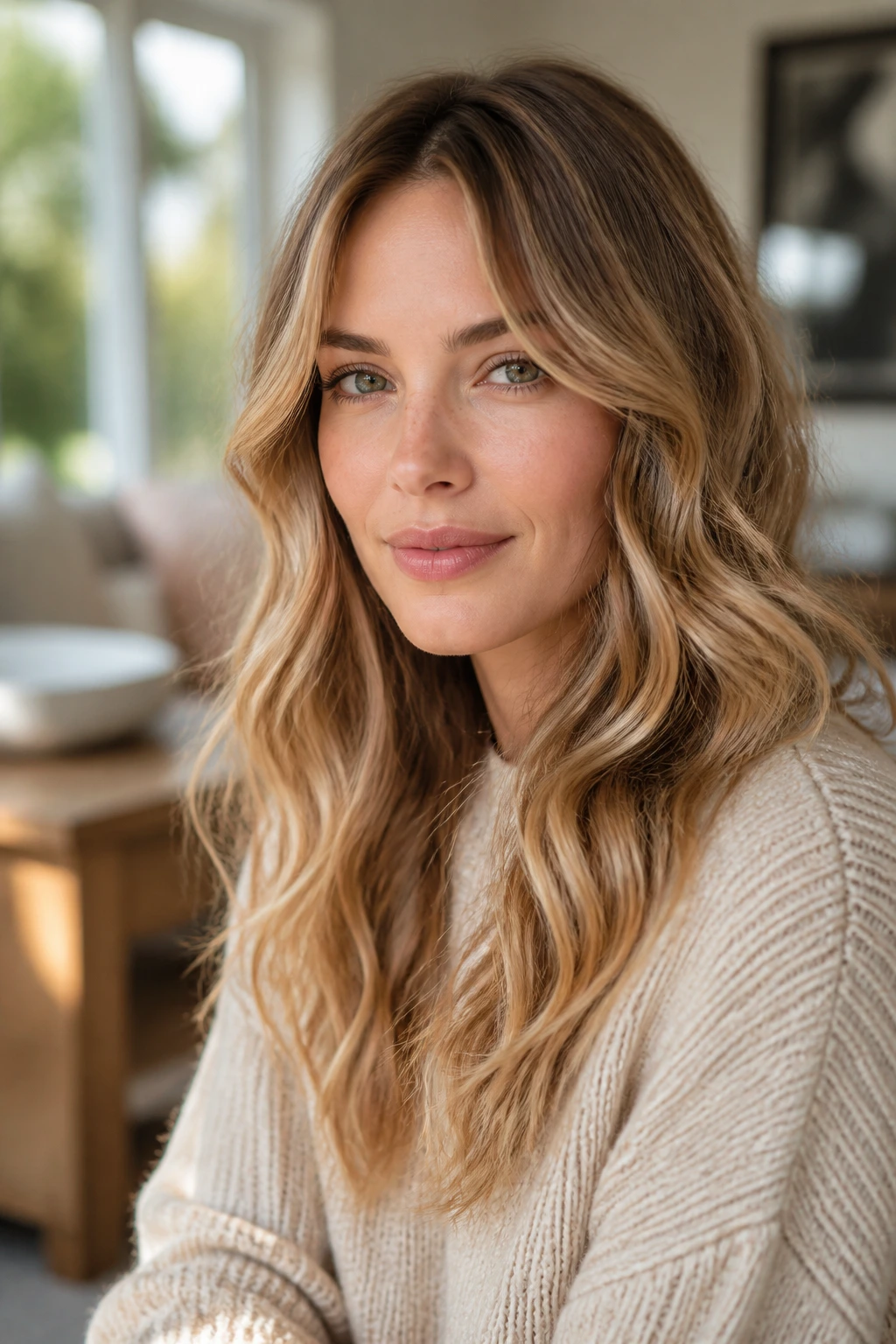
Tight curls can be fun, but on long thin hair they often shrink the length and make the ends look even thinner. Soft waves solve that problem by keeping the shape broad. The hair still moves, but it moves in wider arcs, which makes the whole head read fuller.
There’s another reason I prefer waves here: they don’t need to be perfect to look good. If one section falls a little flatter than the rest, that can actually help. It breaks up the line and keeps the style from looking helmet-stiff. Thin hair usually looks best when it has a bit of irregularity.
A broad wave pattern also plays nicer with long layers, face-framing cuts, and all the little haircut details that are easy to miss until you style them. A tight curl can fight those shapes. A wave works with them.
Essential Tools for These Looks
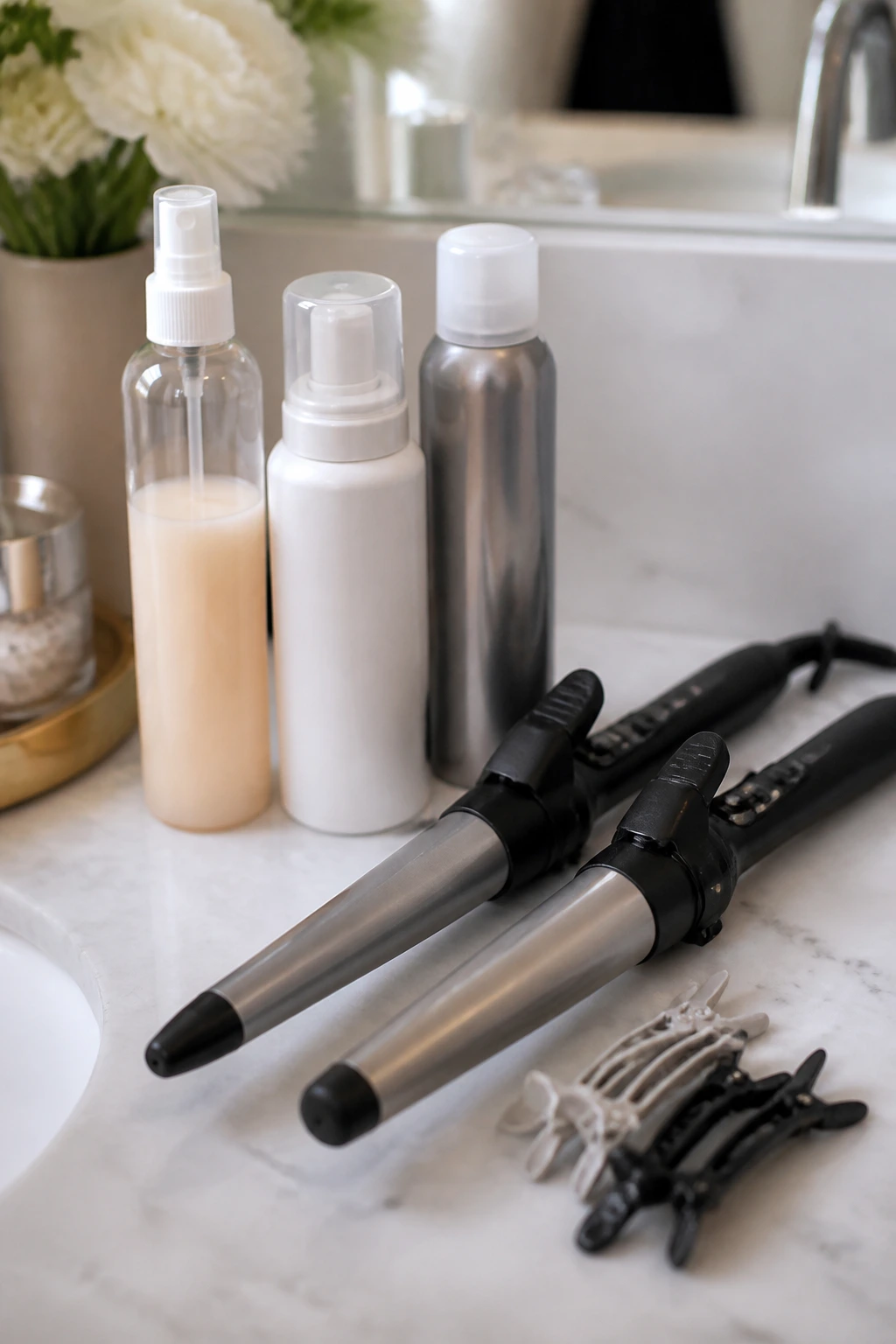
- 1-inch curling wand: Best for tighter bends, pin-curl sets, and wave patterns that need a little grip.
- 1.25-inch curling iron or wand: My favorite size for most long thin hair; it gives a wave that reads full instead of tiny.
- Heat protectant spray: Keeps fine strands from drying out and turning brittle after repeated styling.
- Sectioning clips: Useful for root lift, half-up styles, and keeping the top layer separate while you work.
- Lightweight mousse: Adds memory at the roots without the sticky weight that cream products can leave behind.
- Texturizing spray: Use it sparingly through mids and ends to help the wave hold.
- Flexible-hold hairspray: Holds the shape without freezing the hair into a crunchy shell.
- Fine-tooth rat-tail comb: Handy for clean parts and controlled root lift.
- Soft brush or boar-bristle brush: Best for brushing out waves without roughing up the surface.
- Silk scrunchies or fabric elastics: Better than hard bands for braids, ponytails, and heatless sets.
Smart Product Shopping for Fine, Long Hair
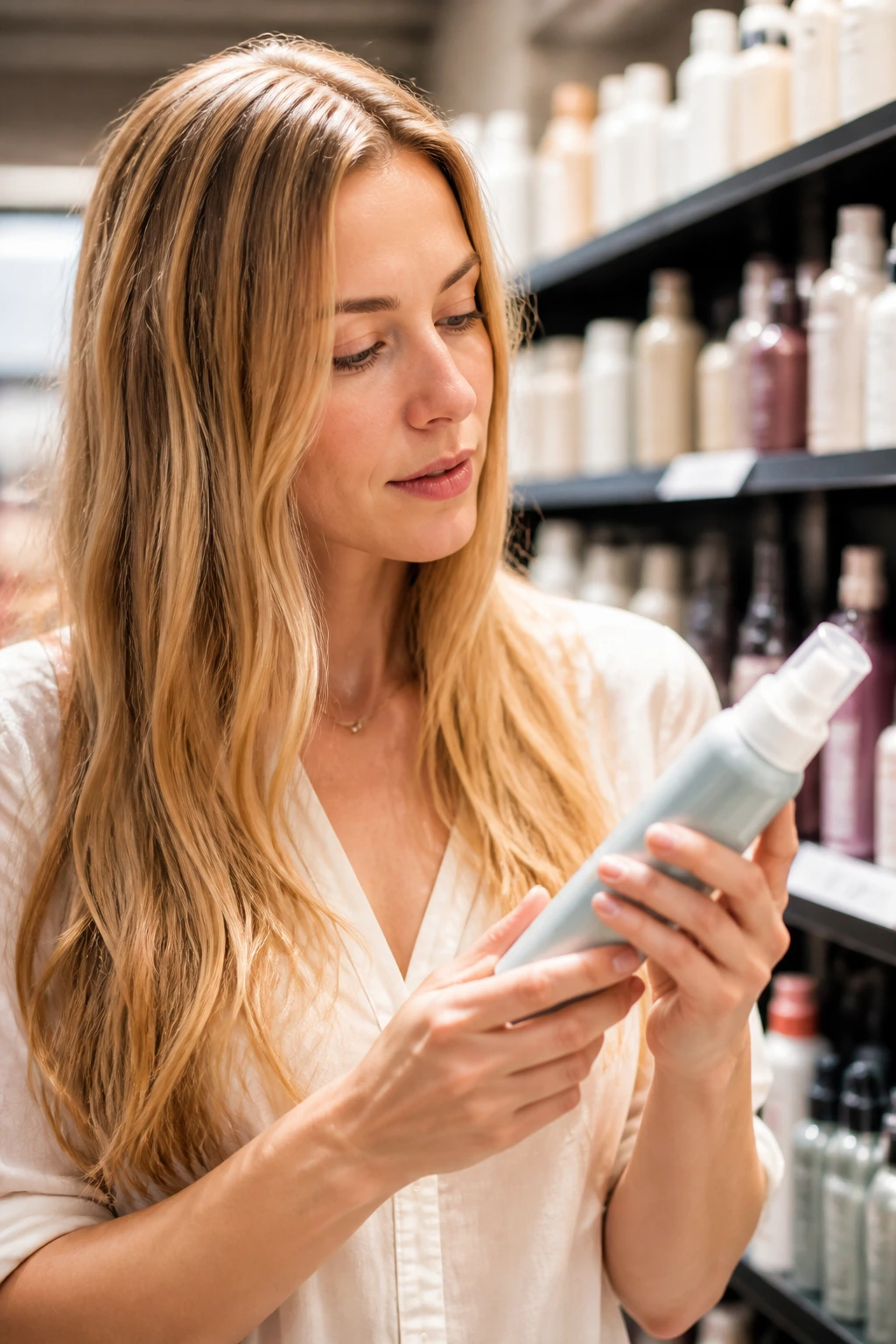
The biggest mistake with long thin hair is buying products that sound nourishing and then watching them crush the roots. Heavy creams, thick oils, and rich masks have their place, but they belong mostly from the mid-lengths down. The crown needs lightness. If a product leaves a slick film on your fingers, it’ll probably flatten the top of your hair.
Look for mousse and volume sprays that dry without stiffness. A good mousse should feel airy when you work it in, not sticky. Same with texture spray. You want a little grip, not a dusty finish. If your hair is extremely fine, start with half the amount you think you need. You can add more. You cannot un-soak the root.
A good heat protectant matters more than people admit, especially if you’re using a wand often. Fine hair burns and bends faster than coarse hair, and once it starts getting rough at the ends, waves look weaker. Pick a spray that disappears quickly and doesn’t leave a wet layer behind.
How to Wear Wavy Hairstyles Without Losing the Shape
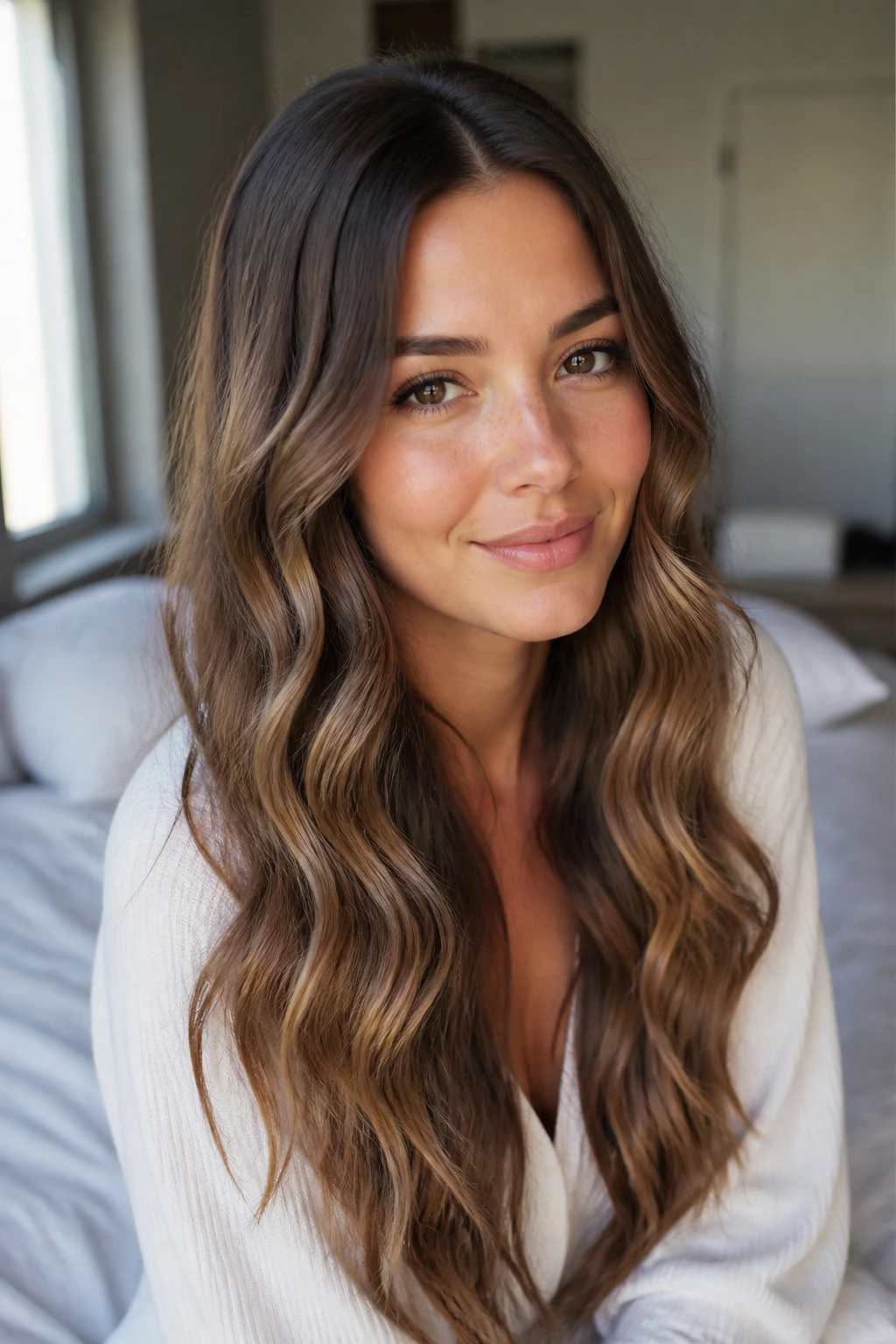
Silhouette: Keep the top smoother than the lengths. That contrast makes the wave pattern look fuller through the body of the hair, which is where thin hair needs help most.
Best Pairings: These styles love simple clothes with clean lines — boat necks, off-shoulder tops, small hoops, even a sharp collar. Heavy, fussy accessories can fight the softness of the waves and make the hair feel smaller by comparison.
Scale: If your hair is very fine, go one step looser on the wave size than you think you need. Broad bends usually last longer and look thicker. Tiny curls can be pretty, but they often shrink the overall silhouette too much.
Weather: Wind and humidity change everything. On a damp day, use less serum and more flexible hairspray. On a dry day, a touch of smoothing cream on the ends keeps the style from fluffing out like a dandelion.
Extra Volume Tricks That Keep the Crown from Collapsing
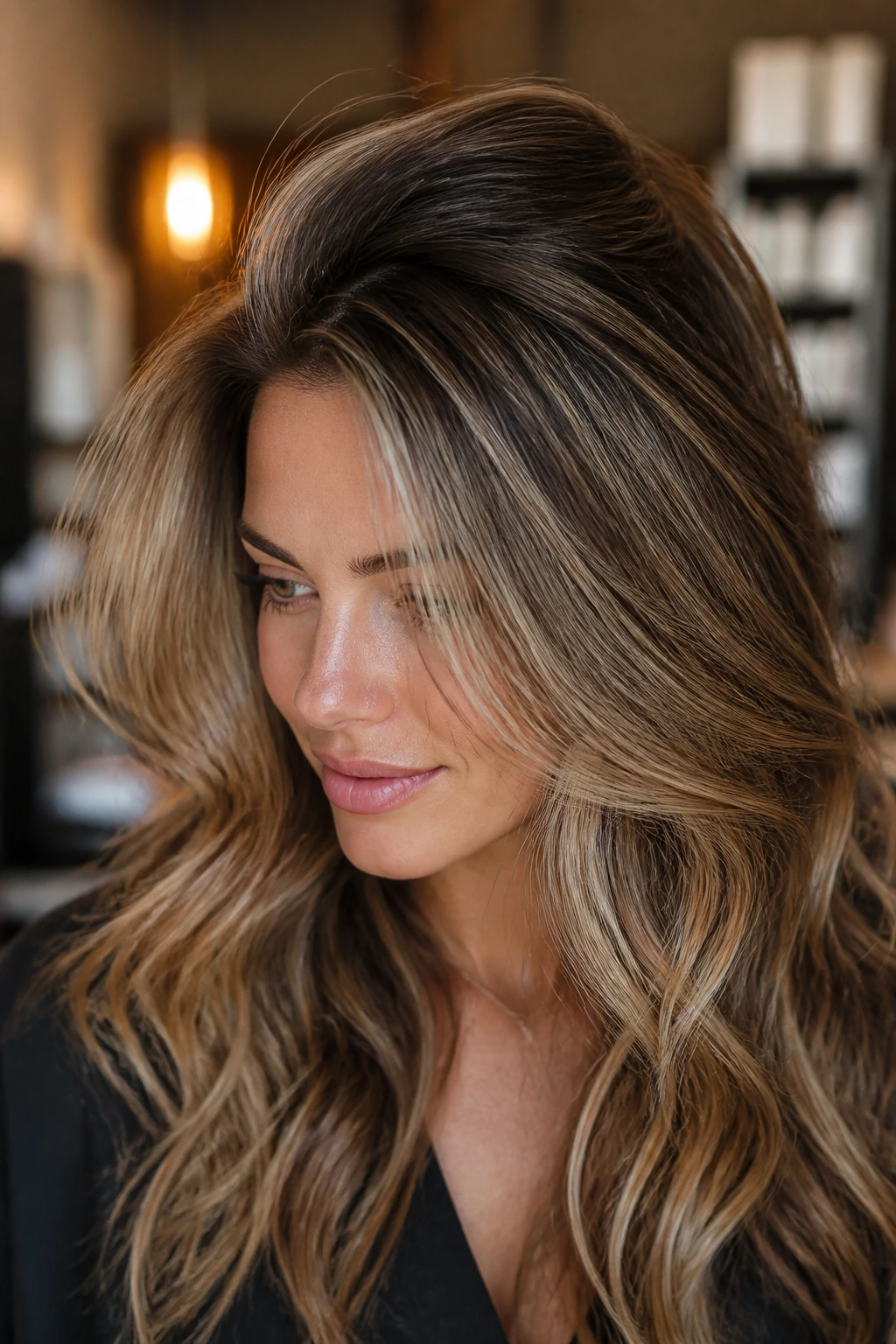
Root Lift: Clip the top section while it cools, or blow-dry the roots in the opposite direction of the part for a few seconds. That tiny change can give the crown a shape that lasts until evening.
Texture Without Crunch: Spray texture product into your hands first, then scrunch it into the mids. That keeps the top from going chalky, which is a common problem with fine hair.
Quick Refresh: If the waves droop, mist only the flat pieces lightly with water and re-bend them with a wand for 5 to 8 seconds. You do not need to redo the whole head.
Scalp Care: A clean scalp helps fine hair look fuller. If the roots are weighed down by product residue, even the best wave pattern will fall flat faster than it should.
Common Mistakes That Flatten Long Thin Hair
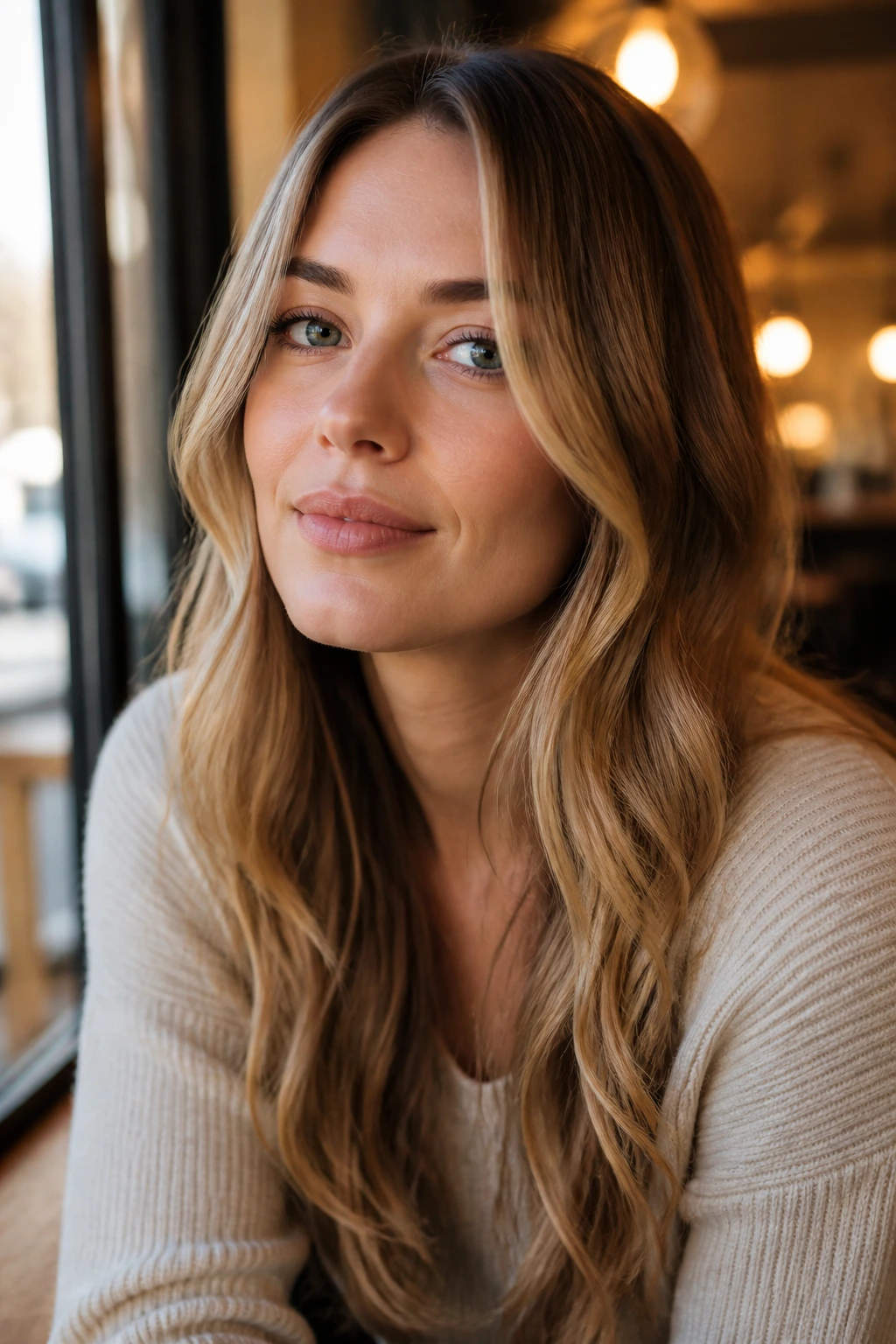
Using a barrel that’s too small: Tiny curls shrink the length and make fine hair look sparse. The fix is a larger barrel and looser sections, even if that means the style feels less dramatic at first.
Loading the roots with heavy product: Rich cream at the scalp is a volume killer. Keep the heavier stuff from the ear down, and use mousse or spray at the top instead.
Brushing too soon: If you brush waves while they’re still hot, they collapse fast. Let them cool fully, then soften them with your fingers or a loose brush.
Over-teasing the crown: A little lift is fine. Big, rough teasing tangles the hair and makes the top look frizzy once it settles. Clips usually do the job better.
Curling every single piece the same way: Uniform waves can make thin hair look stamped and small. Skip a few sections, switch directions, and leave the ends a touch straighter.
Variations and Adaptations to Try
Heatless Ribbon Waves: Wrap damp hair around a soft ribbon or robe tie and leave it overnight. The wave comes out broad and gentle, which is ideal if your hair hates hot tools or feels fragile at the ends.
Fine-Hair Volume Waves: Use a mousse at the roots, a 1.25-inch wand through the mids, and a root clip while the hair cools. This version is built for the kind of hair that goes limp by lunchtime.
Polished Evening Waves: Set the hair with a larger barrel, brush it into one smooth line, and pin one side behind the ear. Add a small shine spray only to the mids and ends. The finish looks tidy, not stiff.
Humidity-Ready Waves: Skip heavy serum and choose a flexible-hold spray with a little texture. Keep the crown smooth and the wave pattern broad. Smaller curls tend to frizz and puff too fast in humidity.
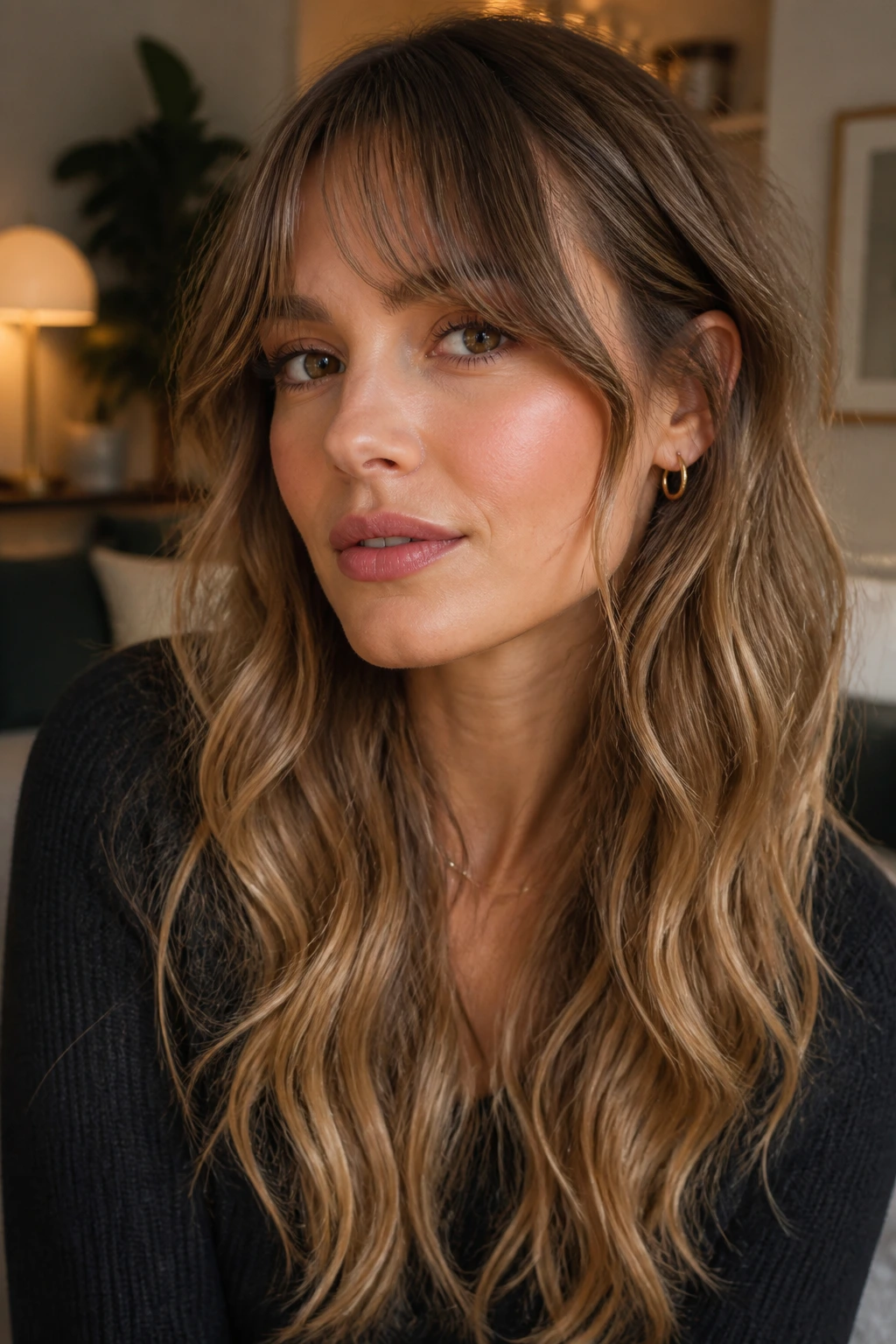
Soft-Banged Waves: If you have curtain bangs or long fringe, bend those pieces away from the face and keep the rest looser. The bangs give instant fullness around the eyes, which helps the whole style feel bigger.
Day-Two Maintenance and Nighttime Care
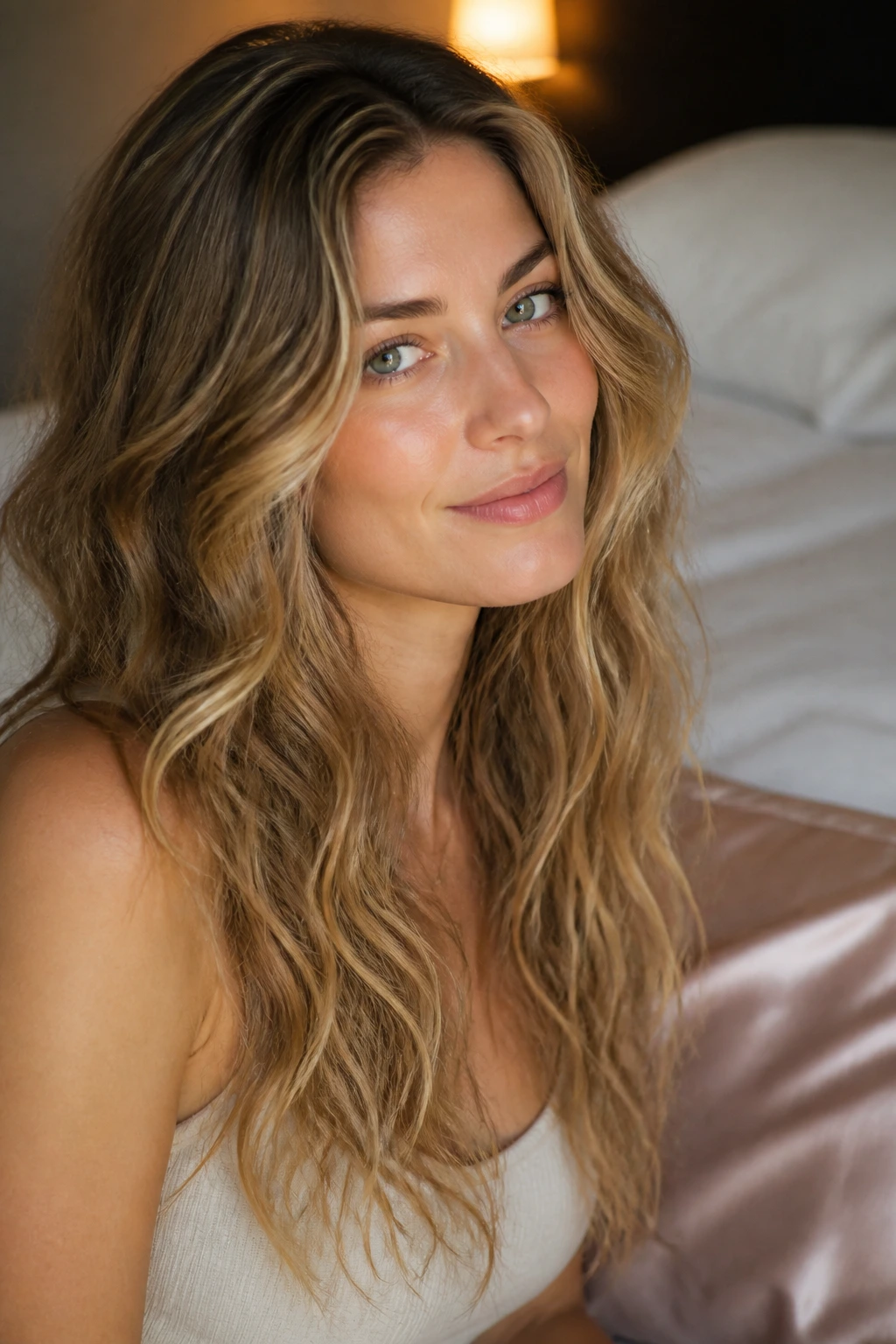
Long thin hair often looks better on the second day, as long as you don’t crush it overnight. Sleep on a silk pillowcase if you can, or gather the hair loosely into a low braid or soft scrunchie before bed. Tight elastics leave dents that are hard to hide in fine hair.
If the crown has gone flat by morning, don’t start by washing. Flip the part, shake the roots, and mist the front sections lightly with water or a curl-refresh spray. Re-bend only the pieces that matter: the face frame, the top layer, and maybe the ends. That’s usually enough.
Most of these styles last 1 to 3 days with the right prep. After that, the hair can start to look stringy at the ends or heavy at the root. Dry shampoo helps, but use it on clean roots and let it sit for a minute before brushing. Too much brushing just pushes the powder around.
Frequently Asked Questions
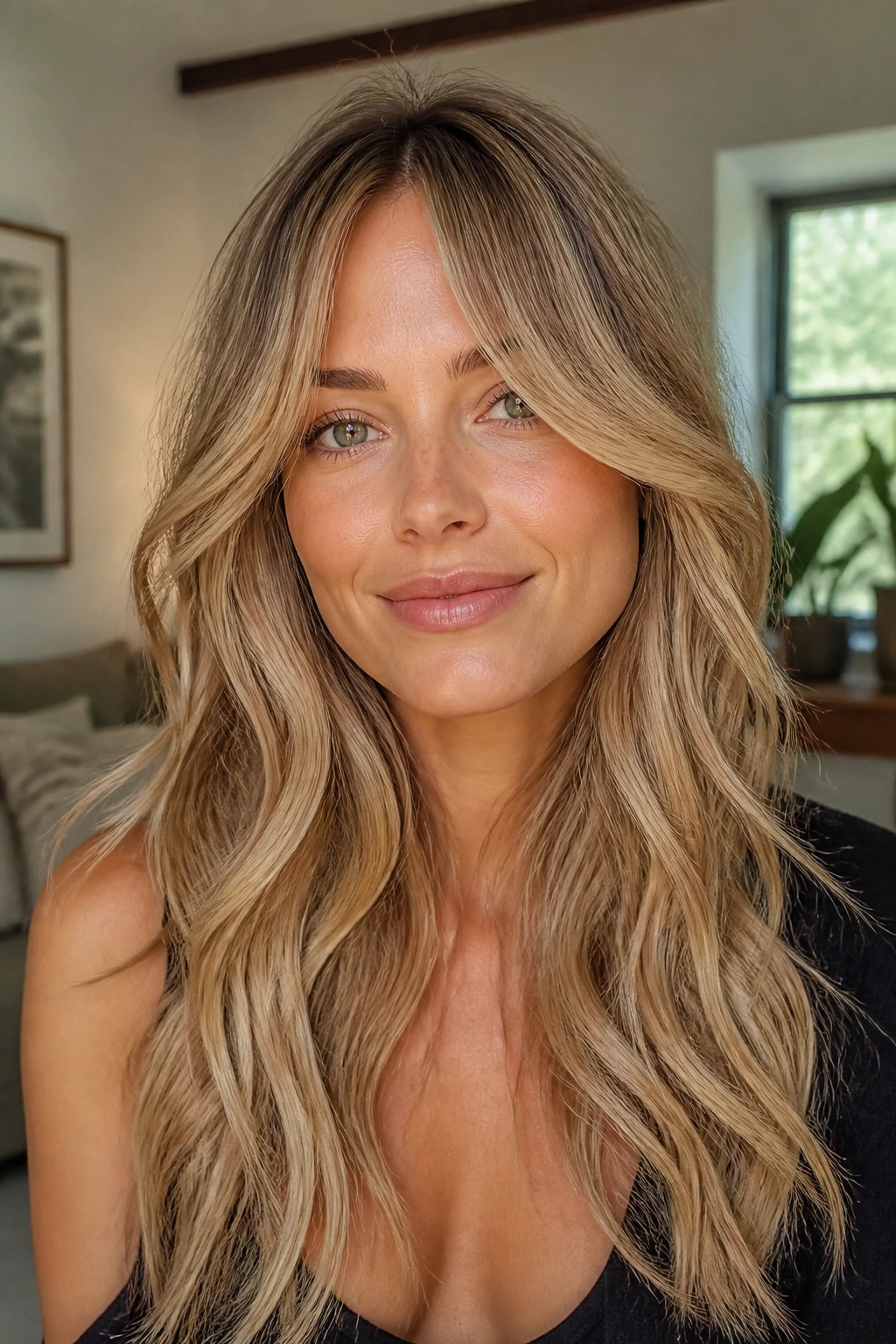
What wave size makes long thin hair look the fullest?
A medium-to-large wave usually wins. It creates width through the lengths without making the hair shrink up into tiny curls, which can expose the thinner ends.
Should I use layers with wavy styles on thin hair?
Yes, but keep them long and soft. Long layers and face-framing pieces help the waves move, while too many short layers can make the ends look wispy.
Why do my waves fall out so fast?
Usually the root is too slippery or the sections are too large for the barrel size you’re using. Try mousse at the roots, smaller sections, and full cooling time before touching the hair.
Can I do these styles without heat?
Absolutely. Braids, ribbon sets, pin curls, and rope twists all work. The trick is starting with hair that’s slightly damp and letting it dry all the way before taking the set out.
How much product is too much for fine hair?
Less than you think. If your hair feels coated, sticky, or heavy at the crown, you’ve gone too far. Start with one pump of mousse or a light mist of spray, then add only where the style needs support.
What if my hair is thin at the ends?
Keep the ends slightly straighter and focus the wave above them. That keeps the bottom from looking stringy and makes the length appear denser overall.
Can I sleep in waves and still have them look good the next day?
Yes, if you protect them. Use a loose braid, soft scrunchie, or silk wrap, and avoid tight knots that leave dents. The wave pattern usually softens, not disappears.
Which styles are best for a quick morning refresh?
Root-clipped waves, side-part waves, claw clip half-ups, and face-framing loose waves are the easiest to revive. They only need a quick mist and a few seconds of re-bending around the front.
The Shape That Holds
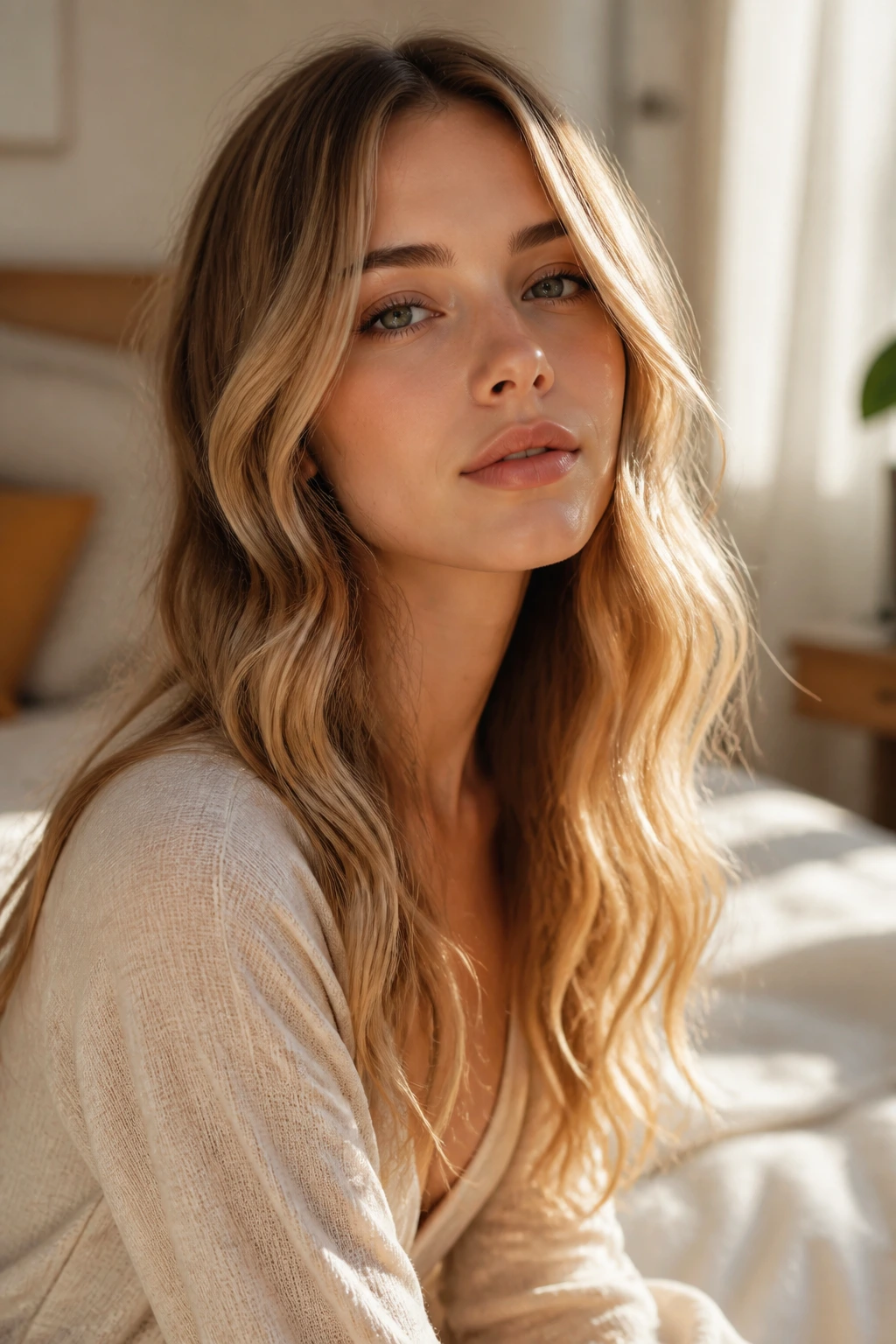
The nicest thing about long thin hair is that it can move. The frustrating thing is that it can lose that movement fast. The right wavy hairstyle fixes both problems at once: it keeps the softness, but gives the hair a shape with enough lift to survive a full day.
If you remember only one rule, make it this one: broad waves beat tiny curls on long thin hair almost every time. They hold better, they look fuller, and they don’t make the ends work harder than they should.
Pick one style that fits your routine, not just your mood. The best-looking wave is the one you can actually repeat on a Tuesday morning, with one mirror, one clip, and enough patience to let the hair cool before you touch it.
