



Hair color ideas for Black natural hair get interesting the moment you stop treating color like a flat swatch and start treating it like texture. A single copper ribbon can change the shape of a twist-out. A blue-black gloss on a dense puff can look almost matte indoors and pick up a deep navy cast when you step outside. Texture does that. It breaks color into pieces, and that is exactly why the right shade can look richer, sharper, or softer without needing an all-over bleach job.
The tricky part is that natural hair is not one surface. A high-porosity coil grabs pigment fast. A tight 4C twist-out hides low-contrast brown until the sun hits it. Locs, braids, blown-out lengths, and cropped curls all read differently too. So the best color ideas are never only about the shade name; they’re about placement, lift, undertone, and how much upkeep you can tolerate without babying your hair every wash day.
Some looks lean subtle and barely announce themselves. Others are blunt and bright and make sense only when the cut or style has enough shape to hold them. Either way, the good ones do the same job: they make Black natural hair look deeper, not flatter. That is the line worth protecting, and everything that follows stays right on it.
Why These Color Ideas Work on Natural Texture
- Placement does half the work: A money piece, halo highlight, or hidden panel can change the whole look without forcing you into full-head bleach.
- Texture multiplies dimension: Coils, braids, and twist-outs break a single shade into light and shadow, so a brown can read like three browns instead of one.
- Warm and cool tones behave differently: Auburn, copper, and honey show fast on dark hair; blue-black, mushroom brown, and plum need cleaner lifting or a stronger deposit.
- Low-commitment options exist: Glosses, demi-permanent color, and color-depositing masks can give you a real change without the brittle feel that comes from repeated lightening.
- The right shade depends on the style: A fro, puff, TWA, locs, or twist-out each frames color in a different way, and the same dye can look louder or quieter depending on the shape.
- Maintenance matters more than hype: A color that fades into brass, pink, or flat brown in two washes is not a bad idea; it’s just a bad fit for your routine.
1. Jet-Black Gloss on a Defined Twist-Out
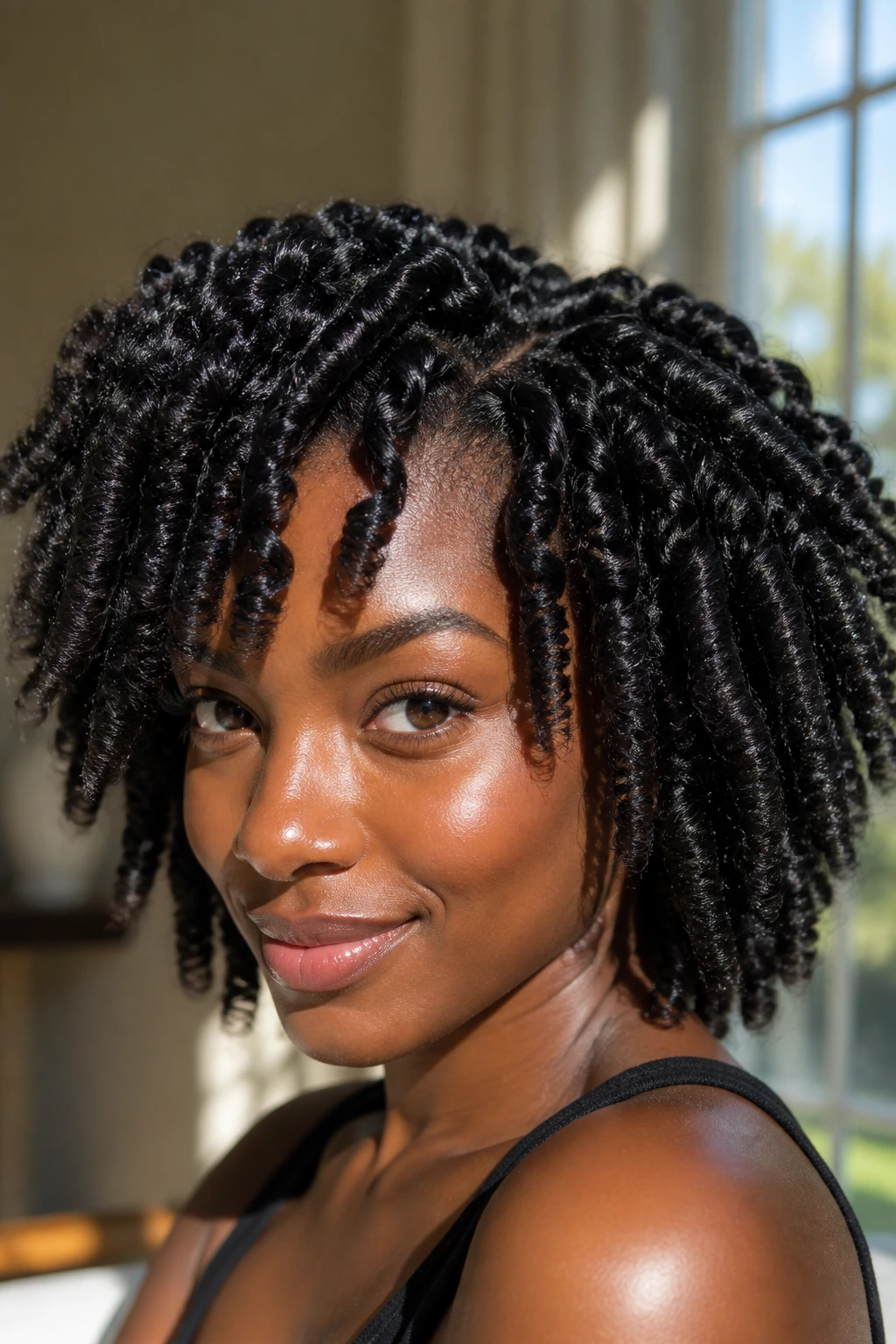
Jet-black is not boring when it’s done with shine. On a defined twist-out, it reads like a polished version of your own hair instead of a hard reset, which is exactly why it works so well on natural textures that already have plenty of shape. If your black has drifted brown at the ends or gone dull from heat and sun, a gloss can pull everything back into one deep, clean tone.
The move here is restraint. You’re not chasing a dramatic color change; you’re sharpening the line between curl and shadow. A clear or black-tinted gloss after a clarifying wash can make the coil pattern look tighter because the light sits on the surface instead of scattering through faded ends.
Best on:
- Twist-outs with definition at the ends
- Dense 4B and 4C hair that needs one uniform tone
- Styles where shine matters more than contrast
A jet-black gloss is also a smart first color step if you’ve never dyed your natural hair before. It lets you test how your hair feels with processing and how much maintenance you can live with. Then you can decide whether you want more warmth or more contrast later.
2. Blue-Black on a Coily Puff
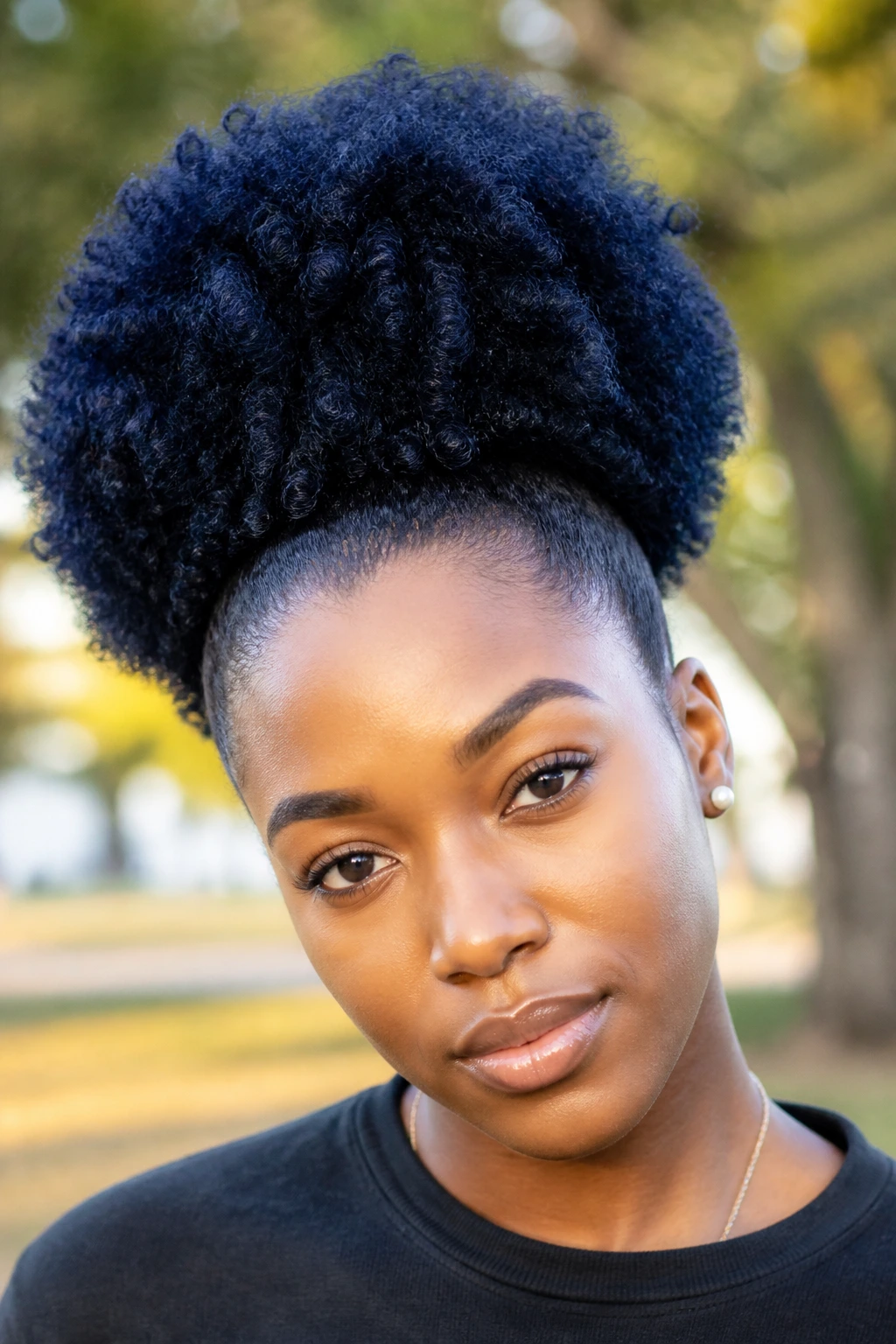
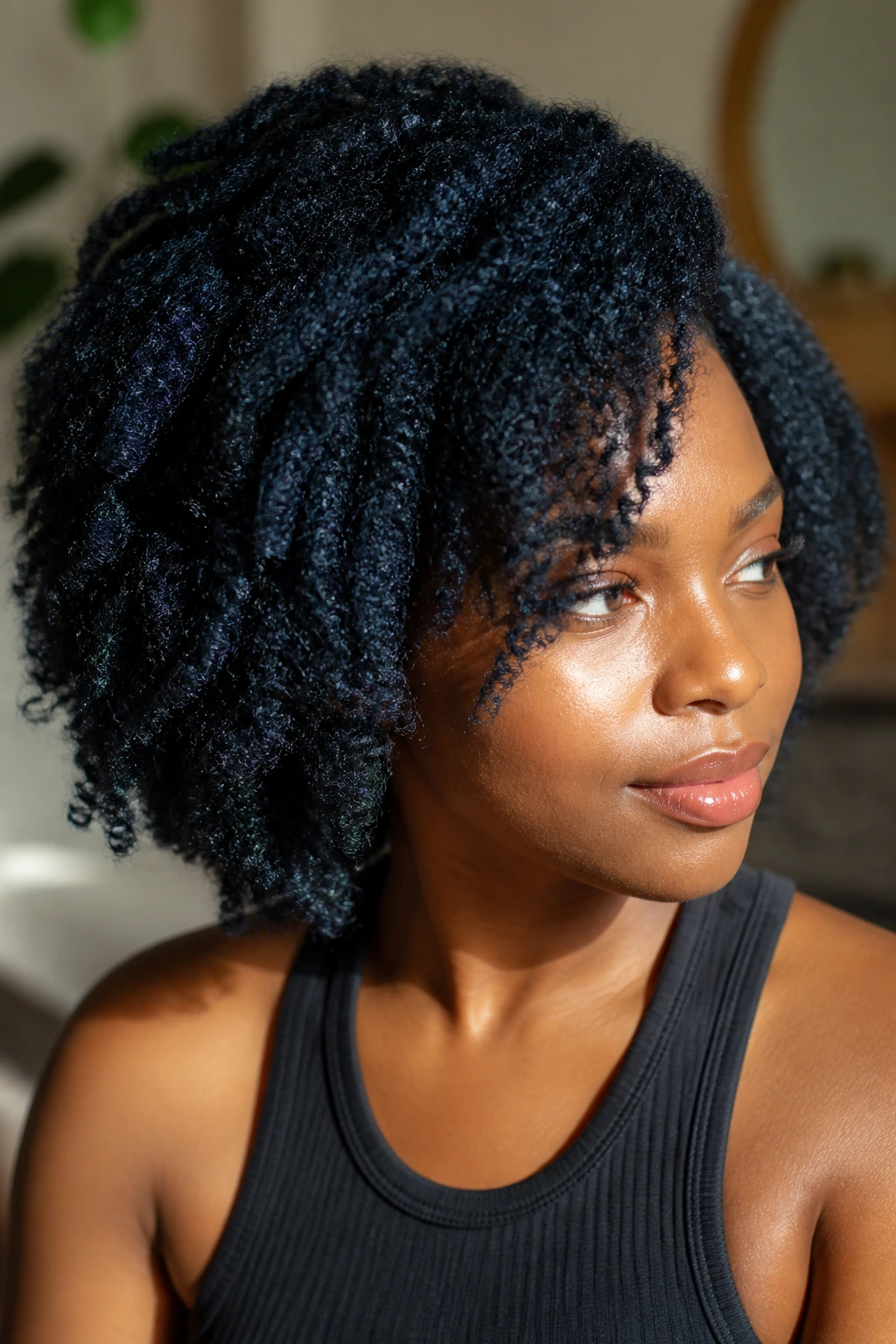
Blue-black works because it doesn’t look like a costume color. It looks like black hair with a cool edge, and that edge shows up most clearly in sunlight or under bright indoor lights. On a coily puff, the rounded shape gives the shade room to move, so the blue cast reads as depth instead of neon.
If plain black feels too flat on you, blue-black is the cleaner choice. It cools down red undertones in the hair and makes the overall finish look sharper, especially when your edges are neat and the puff sits high on the crown. The result is quiet at a distance and more interesting up close.
This shade is best when you want the hair to look rich without shouting. It also plays nicely with gold jewelry and warm makeup because the hair itself stays cool. Just don’t expect it to show the same way on every texture; tighter curls hold the blue-black a little more visibly than stretched hair does.
3. Espresso Brown on a Wash-and-Go
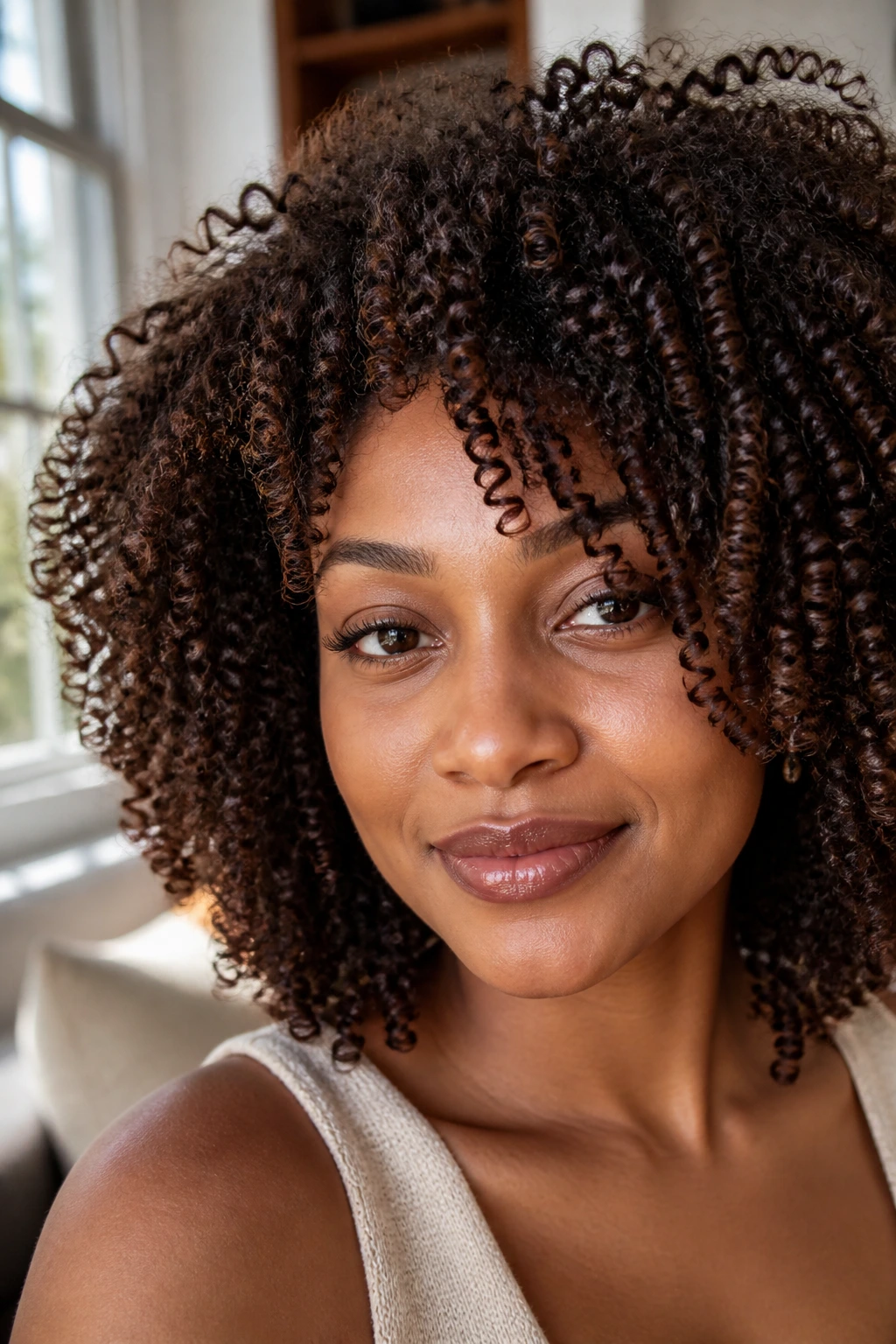
Espresso brown is the shade I reach for when someone wants change but not drama. On a wash-and-go, the curls separate enough to show the brown, but the overall effect stays grounded and wearable. It’s one of the easiest ways to move away from flat black without crossing into obvious red or blonde.
The color works because it adds warmth without forcing the hair to lift several levels. That matters on Black natural hair, where too much lightening can rough up the cuticle and leave the ends fuzzy. Espresso sits in that middle ground: noticeable, but not fragile-looking if you keep the curls moisturized.
If you want something that shows in bright light and still looks natural on a cloudy day, this is a strong pick. It’s also forgiving on grown-out roots, which is a nice bonus if you don’t want a hard line every four weeks. The shade blends best when the curls are clumped and hydrated, not blown out to the point of puffing.
4. Dark Chocolate Ribbon Lights on a Braid-Out
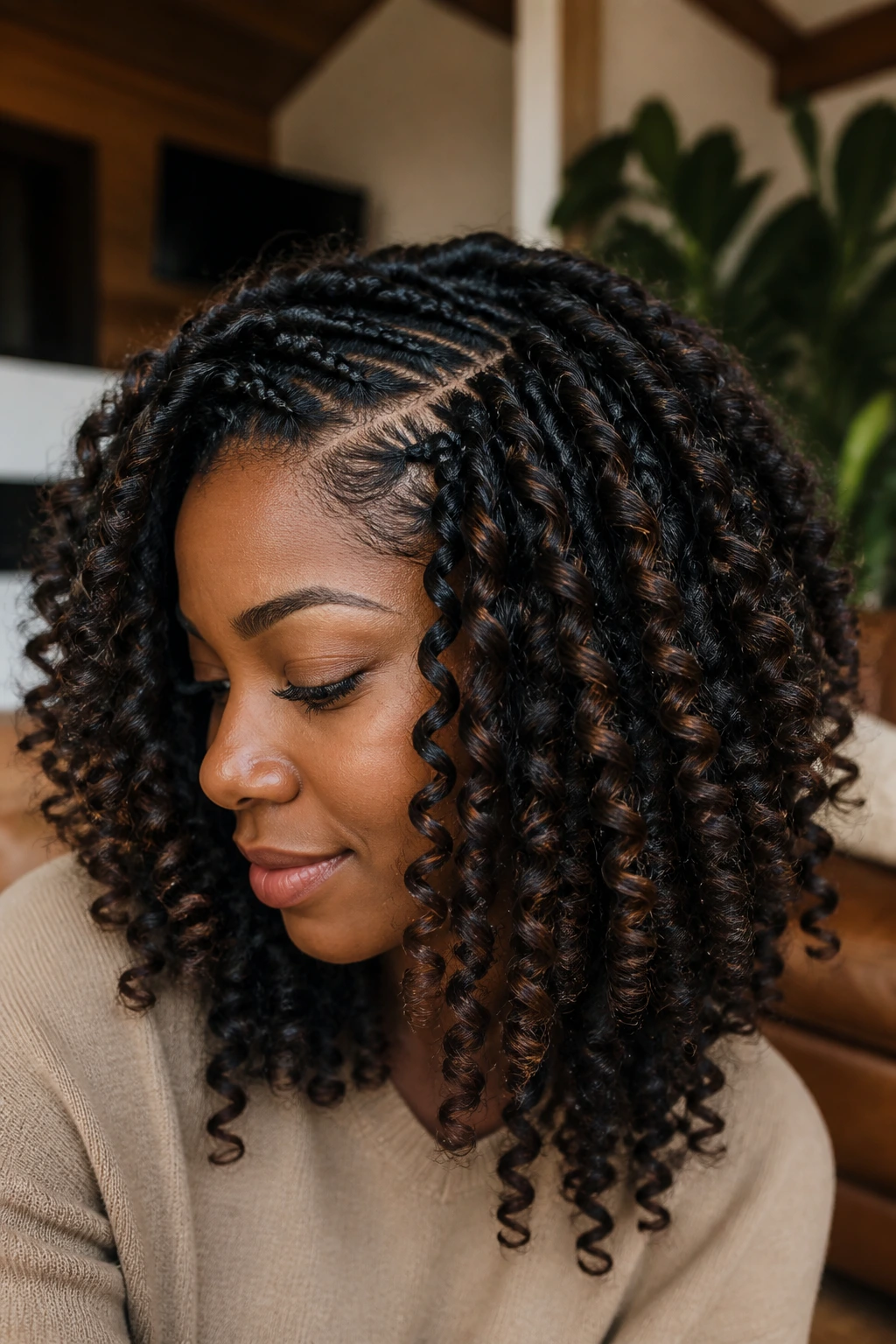
Dark chocolate ribbon lights give you movement without turning the whole head into one flat brown sheet. On a braid-out, the crinkles separate the ribbons just enough to make the color feel woven into the style. That is the whole trick here: the braid pattern does the showing off for you.
This look is especially good if you want dimension on dark hair but don’t want obvious stripes. Ask for thin, soft pieces instead of chunky highlights. The chocolate should live a shade or two lighter than your base, so the contrast looks like depth, not patchwork.
It’s a nice middle path for anyone who likes subtle color but gets bored easily. You can wear it loose, pin one side back, or pull it into a puff and still see the movement around the crown and ends. The color says “I changed something,” but it doesn’t need a spotlight.
5. Cinnamon Brown Ends on a Tapered Cut
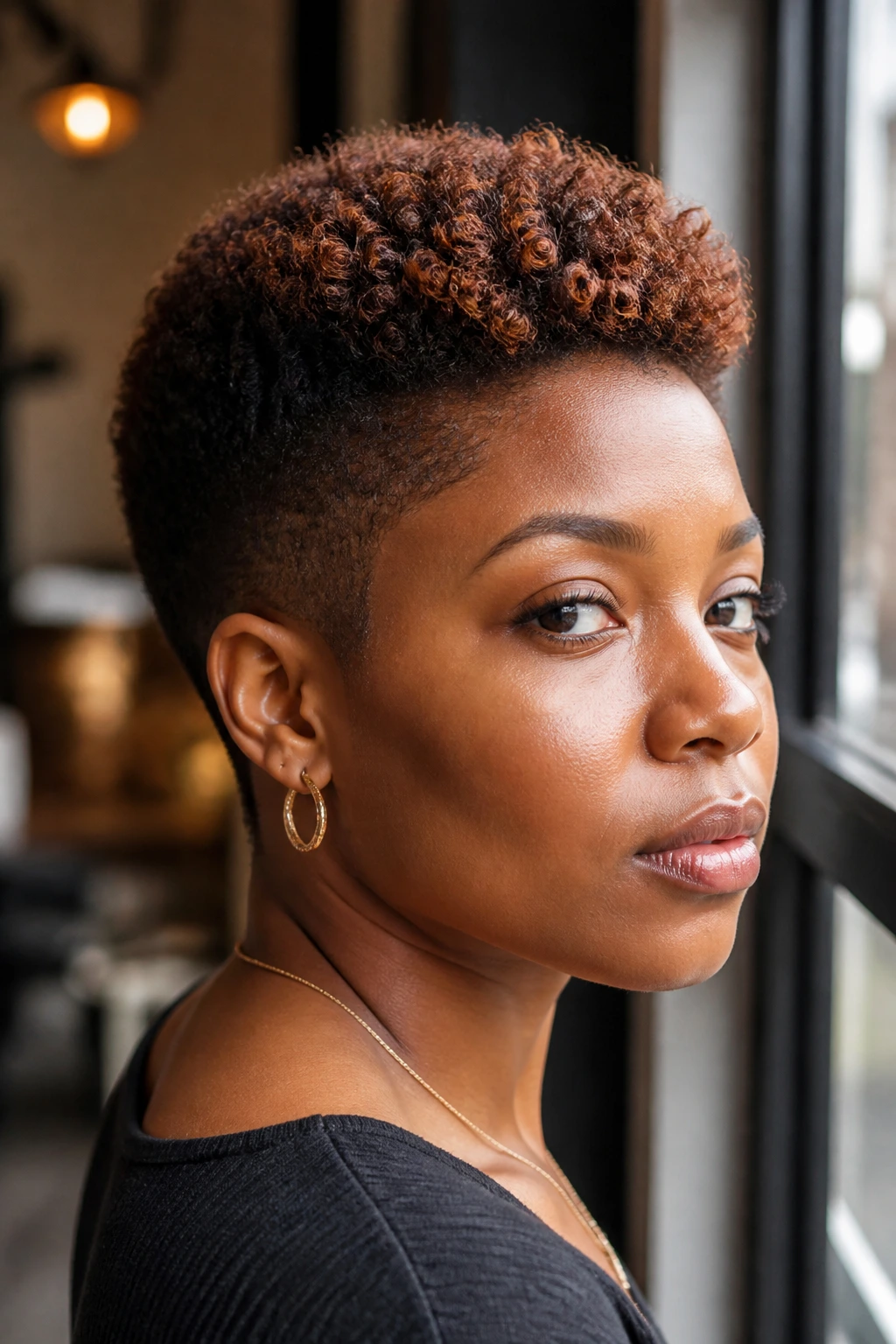
Cinnamon brown on the ends of a tapered cut is one of those looks that makes the shape work harder. The short sides keep the focus near the crown, while the warmer ends catch the eye as the curls bend and shrink. It gives the cut a little heat without swallowing the whole silhouette.
The key is keeping the roots darker and letting the cinnamon show where the curls are softest. That makes the color feel intentional on short natural hair, where too much all-over lightness can blur the shape. A tapered cut also helps because the colored ends aren’t competing with long lengths or layers.
This is a good option if you want warmth, but not blonde. Cinnamon has that toasted, dusty quality that sits nicely on dark skin tones and doesn’t go brassy as fast as brighter copper can. On a fresh cut, it looks crisp. On a grown-out cut, it still holds its line.
6. Caramel Face-Framing Highlights on a Curl Set
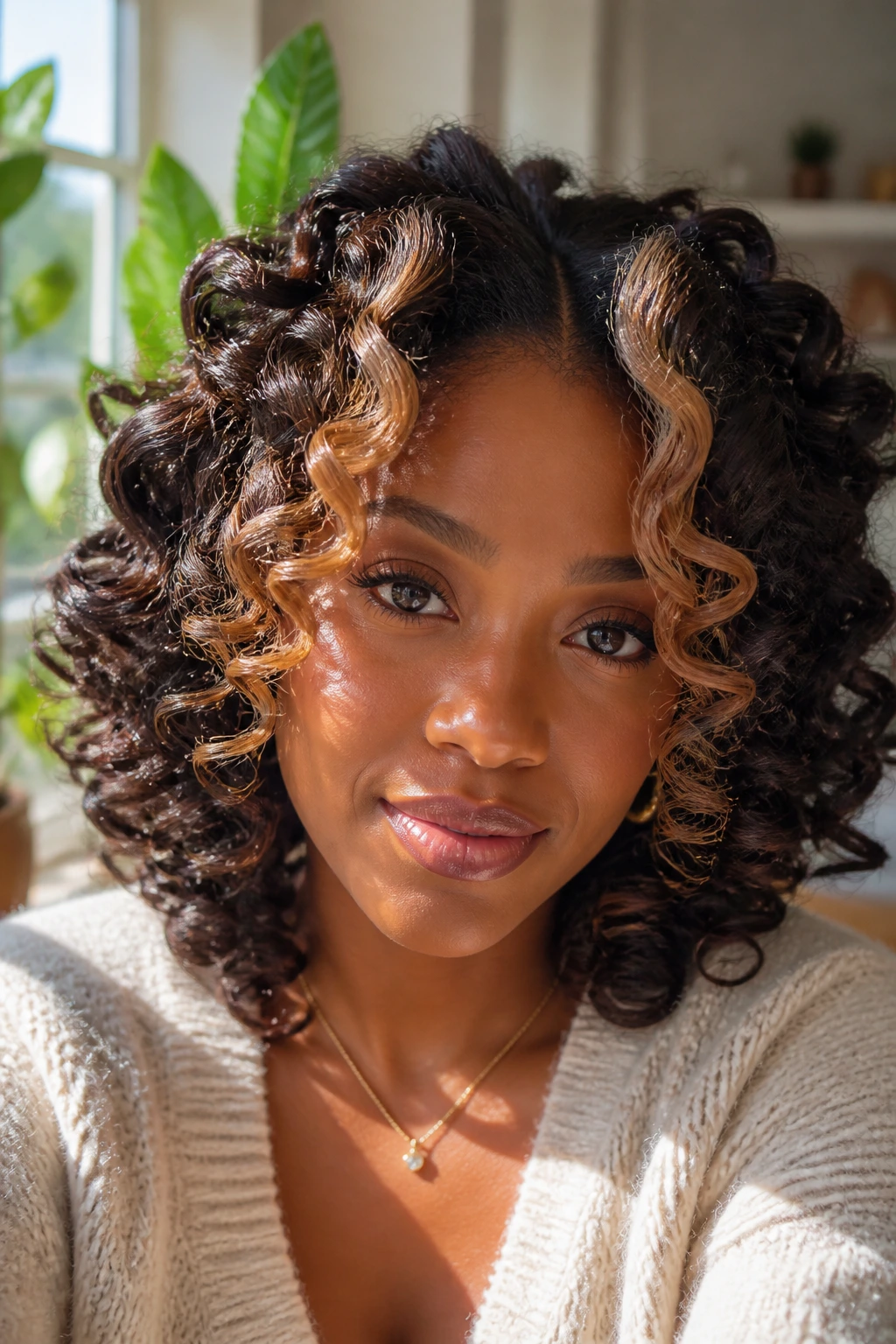
Caramel around the face does something simple and effective: it brightens the part of the head people look at first. On a curl set, the smooth, shaped curls make the highlights sit in clean ribbons instead of random stripes, which keeps the look neat even when the color is bold.
This is the one I’d point to for someone who wants a visible change without touching the whole head. You can keep the back darker and let the front pieces carry the lighter shade. That means less overall processing and less time spent panicking over every washed-out end.
The best caramel is warm but not orange. It should look like toasted sugar, not brass. If your base is already dark brown, this placement can look expensive fast because the contrast stays close to the face and the rest of the hair still reads as your natural color.
7. Honey-Blonde Money Piece Around the Hairline
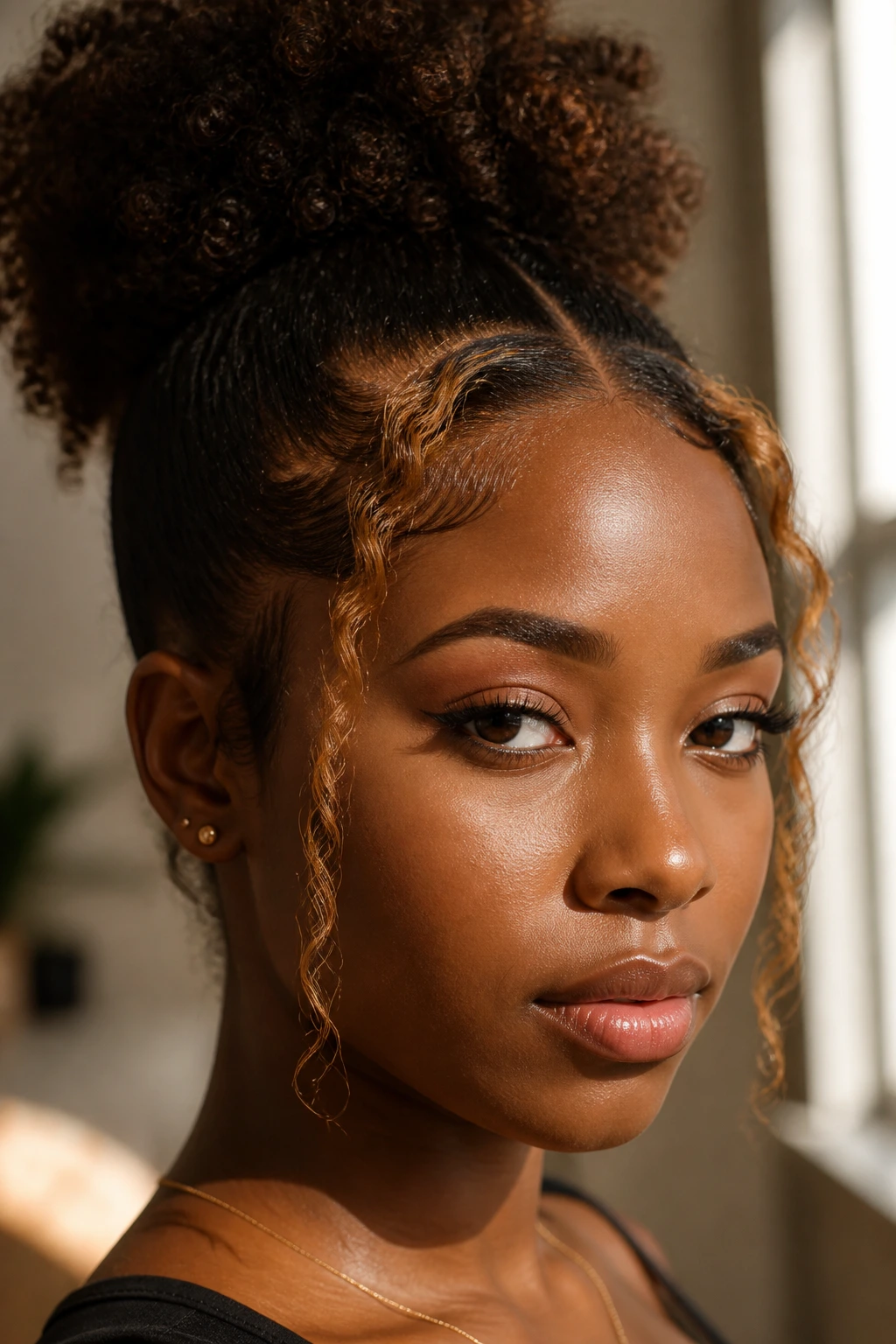
A honey-blonde money piece is loud in the best way. It frames the face, shows immediately in a puff or bun, and gives dark natural hair a bright front edge without forcing the back of the hair to do all the work. This is the color idea that says you want people to notice the hair first.
Honey works better than icy blonde on Black natural hair because it keeps some warmth in the strand. That warmth helps the color blend with deep roots and dark edges instead of looking pasted on. If your hairline is part of the style, this placement gives you a clean contrast right where it matters.
The upkeep is real, though. Light front pieces are the first to get dry, so they need moisture and regular toning if they start turning yellow. Still, if you want a high-impact look that doesn’t demand a full head of bleach, this one earns its place.
8. Amber Balayage Through a Long Coil Pattern
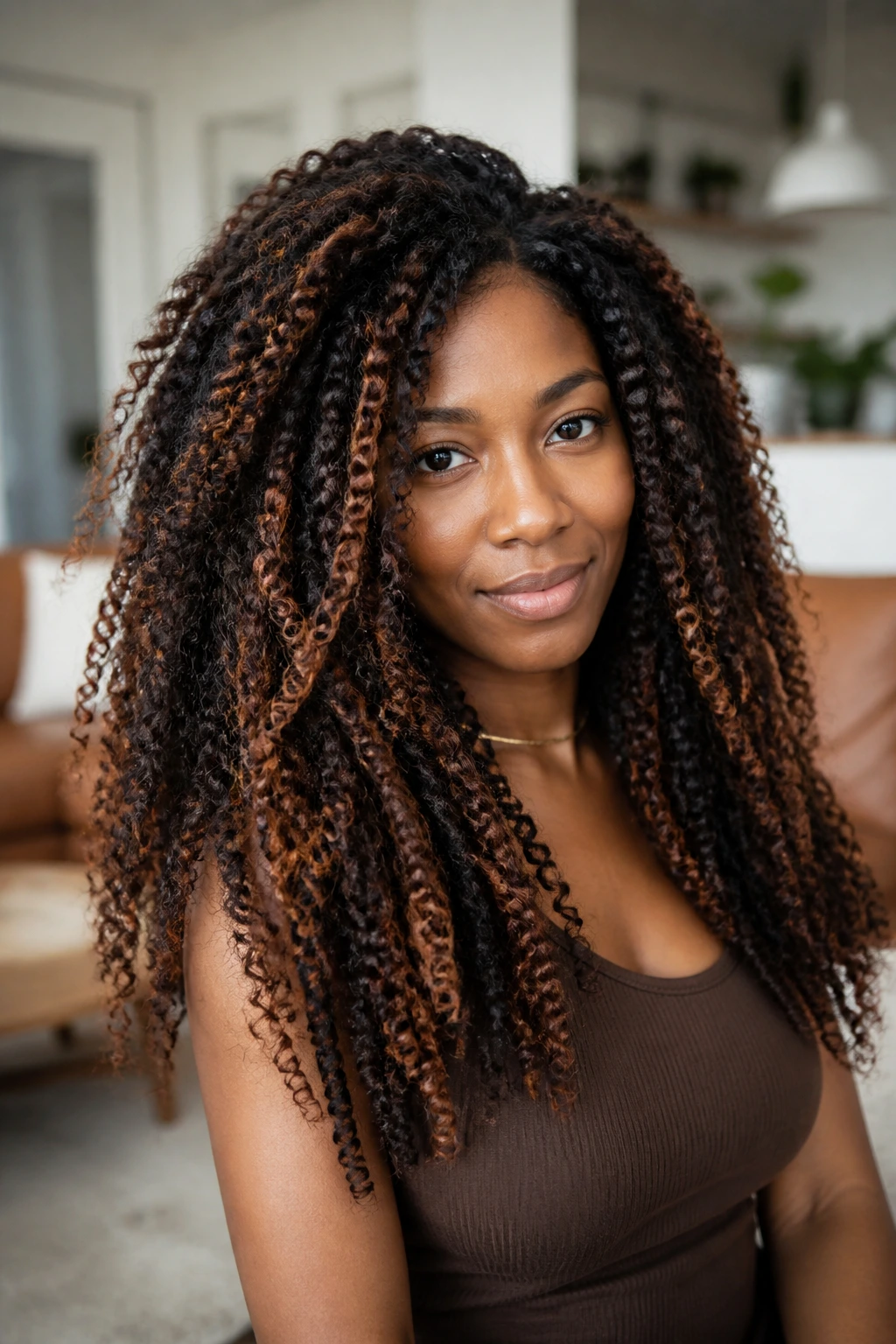
Amber balayage is the shade that makes long coils look expensive without trying too hard. The hand-painted pieces drift through the length, so the color feels like it belongs inside the curl pattern rather than sitting on top of it. On long natural hair, that movement matters more than a blunt stripe ever could.
What I like about amber is the way it shifts between gold and soft orange depending on the light. It has enough warmth to show on dark hair, but it doesn’t scream. If your coils hang past the shoulders, the gradient has room to breathe, and that makes the balayage look smoother.
This is a good choice if you want color that grows out softly. The root area can stay darker for months, and the warm pieces still make sense as the hair gets longer. It’s one of the easiest ways to keep long natural hair interesting without making every wash day a repair project.
9. Auburn Copper on a Full Afro
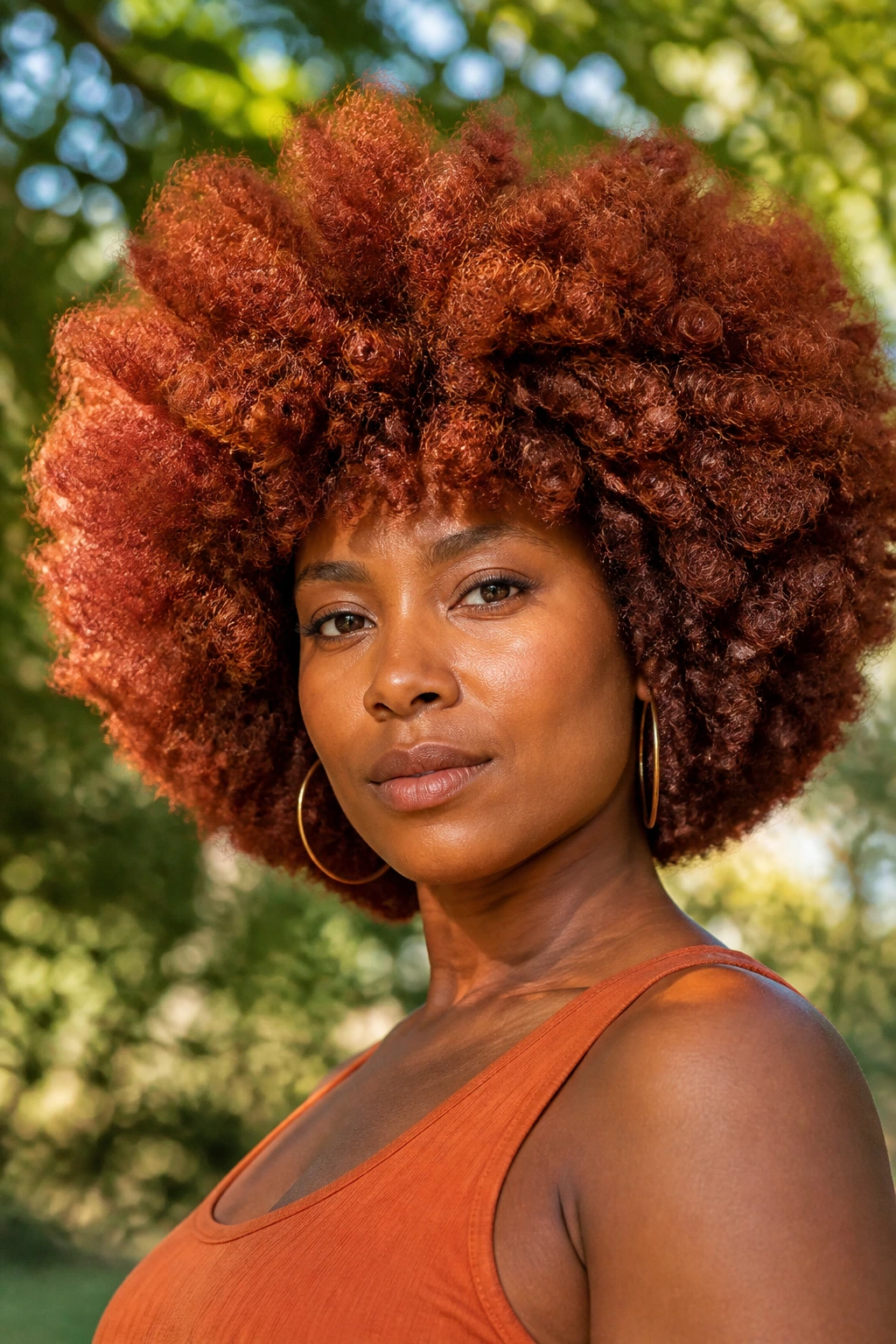
A full afro can carry auburn copper in a way straight or stretched hair never can. The shape itself gives the color movement, so each curl and kink picks up the warm tone a little differently. The result is not flat red. It’s a warm glow that shifts as you turn your head.
This look works best when the afro has enough density to hold its own shape. On thinner hair, the copper can show more starkly and lose some of that cloud-like effect. On a full shape, though, auburn wraps the whole style in warmth and makes the outline look softer.
It’s also one of the better ways to wear red on natural hair if you don’t want cherry or burgundy. Auburn sits in that familiar brown-red lane, which makes it easier to live with over time. It fades gracefully too, usually into a softer rust or brown that still looks intentional.
10. Copper Tips on Two-Strand Twists
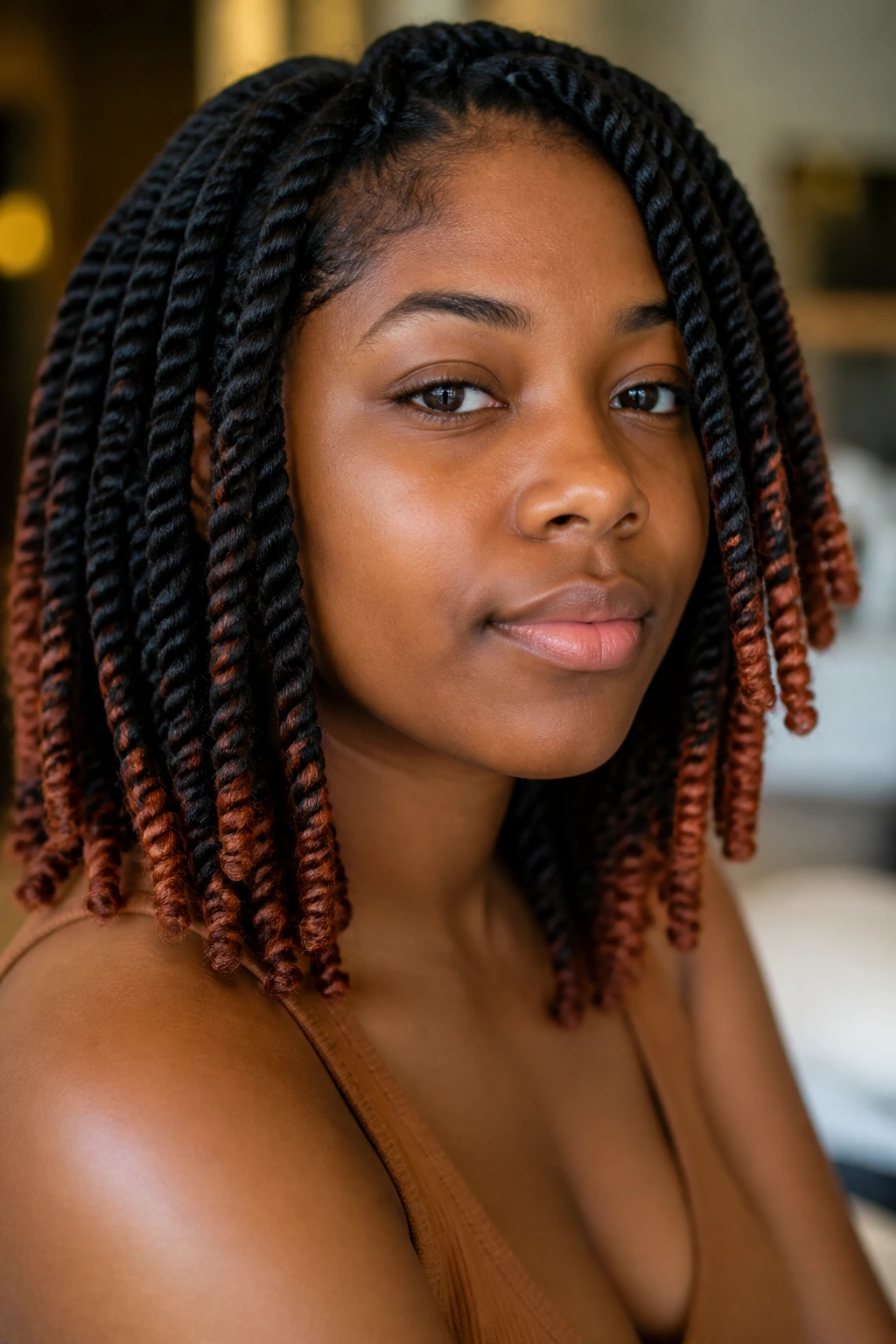
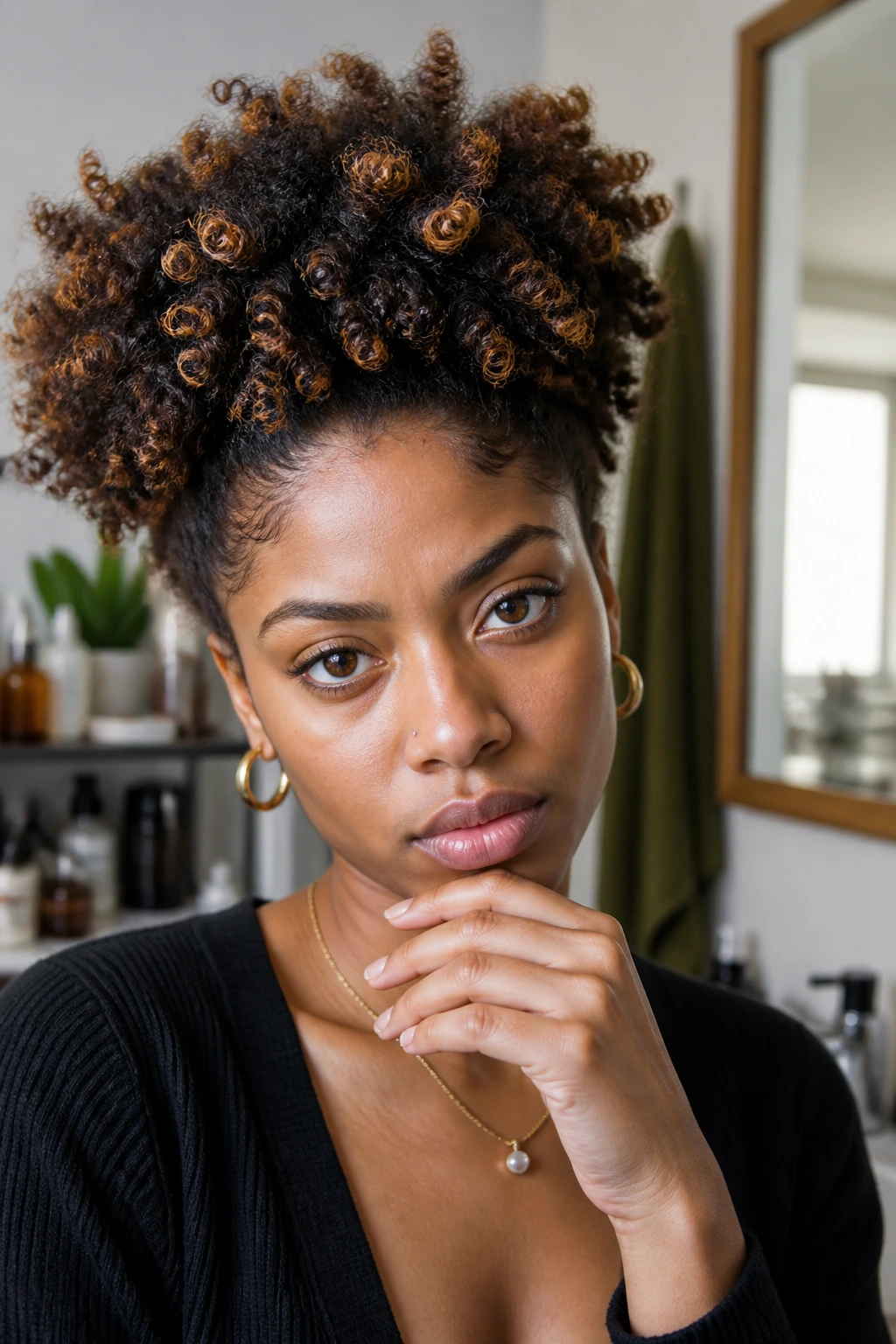
Copper tips are a smart way to add color without coloring the whole head. On two-strand twists, the ends peek out just enough to show the warm shade, and when you untwist the hair, the color spreads through the finish in a softer way. That’s a nice payoff for a relatively small amount of lightening.
This look is especially good if you like changing your style often. The twists can be worn neat, pinned up, or released into a twist-out, and the copper still shows up differently each time. It’s a low-risk way to test whether you actually want brighter color or just a little warmth.
Copper is a little unforgiving if it goes too orange, so keep the tone rich and soft rather than neon. If your hair is already fragile at the ends, coloring only the tips gives you a little breathing room. The style carries the color for you.
11. Mahogany Lowlights in a High Puff
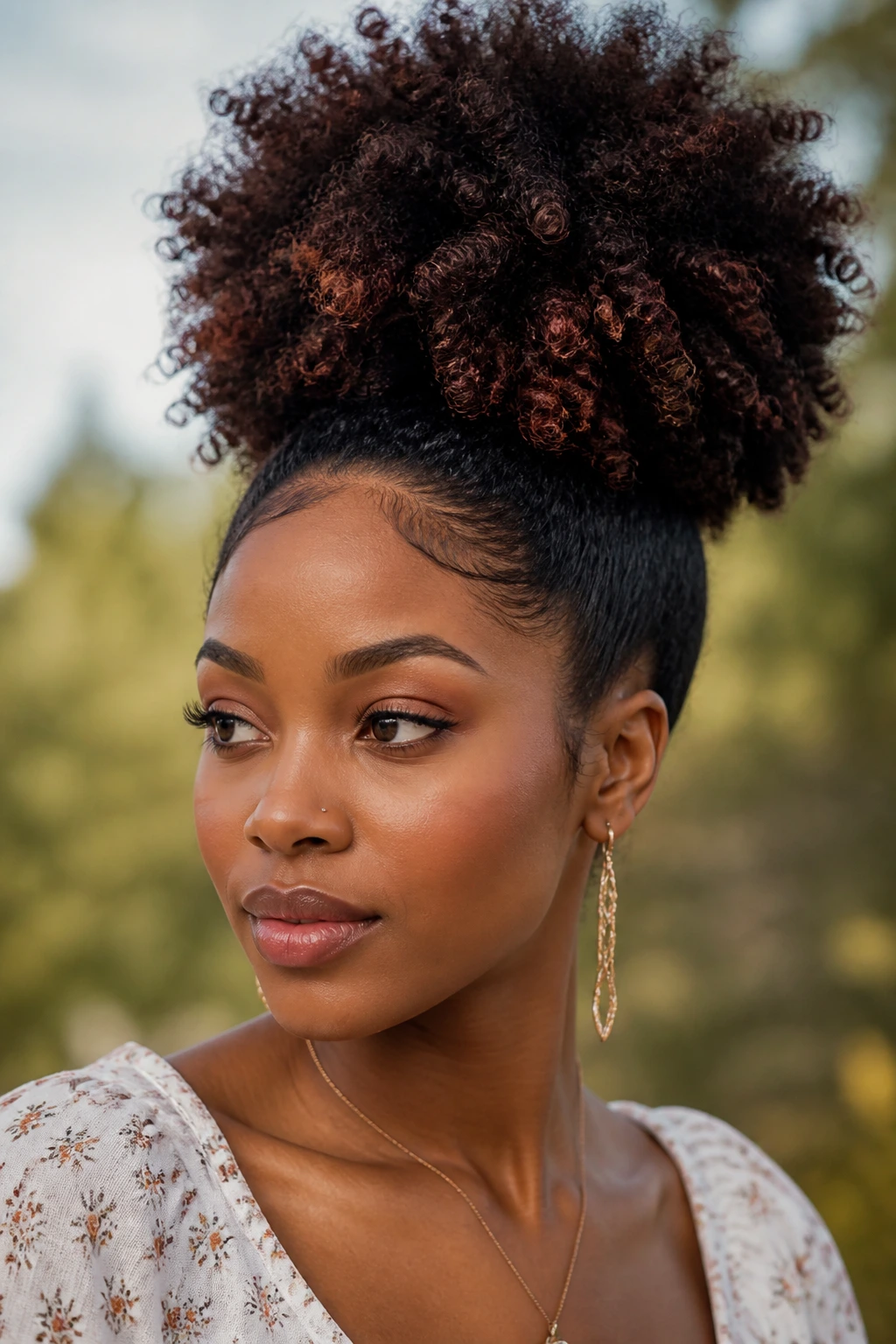
Mahogany lowlights are one of the prettiest ways to make a high puff look deeper without making it darker. Because the color sits underneath the top layer, it shows when the puff moves or when the curls separate in the wind. That hidden depth is what keeps it from feeling obvious.
This is a clever option for conservative settings. From the front, the puff still reads as natural hair. From the side or when you turn your head, the mahogany flashes through like a second tone. It’s a quiet color idea, but not a boring one.
The shade itself should lean red-brown, not plum. Mahogany works because it plays with the warmth already in dark hair and adds a little polish around the edges. If your hair tends to look one-note in a puff, lowlights fix that fast.
12. Cherry Cola Red on a Curly Bob
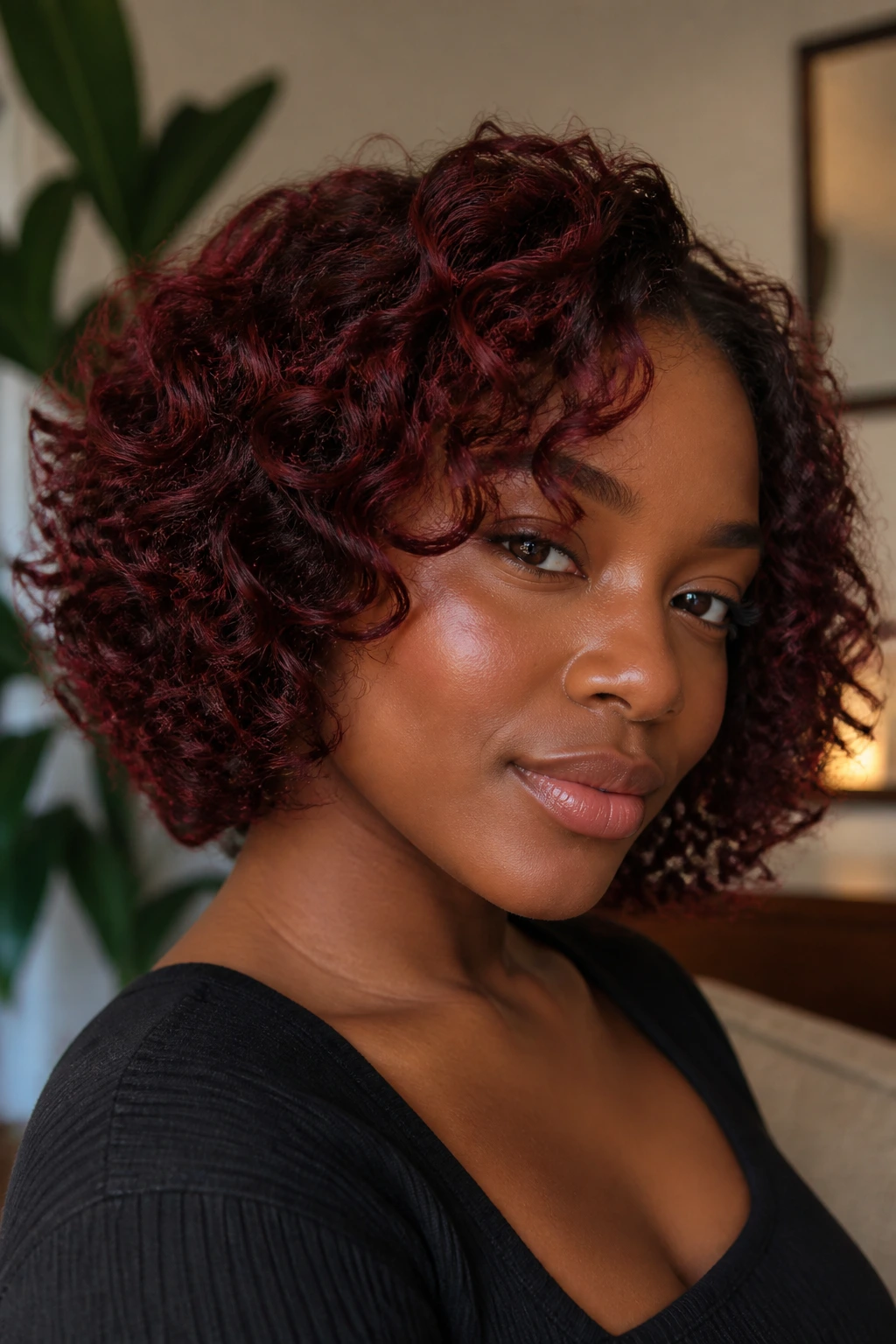
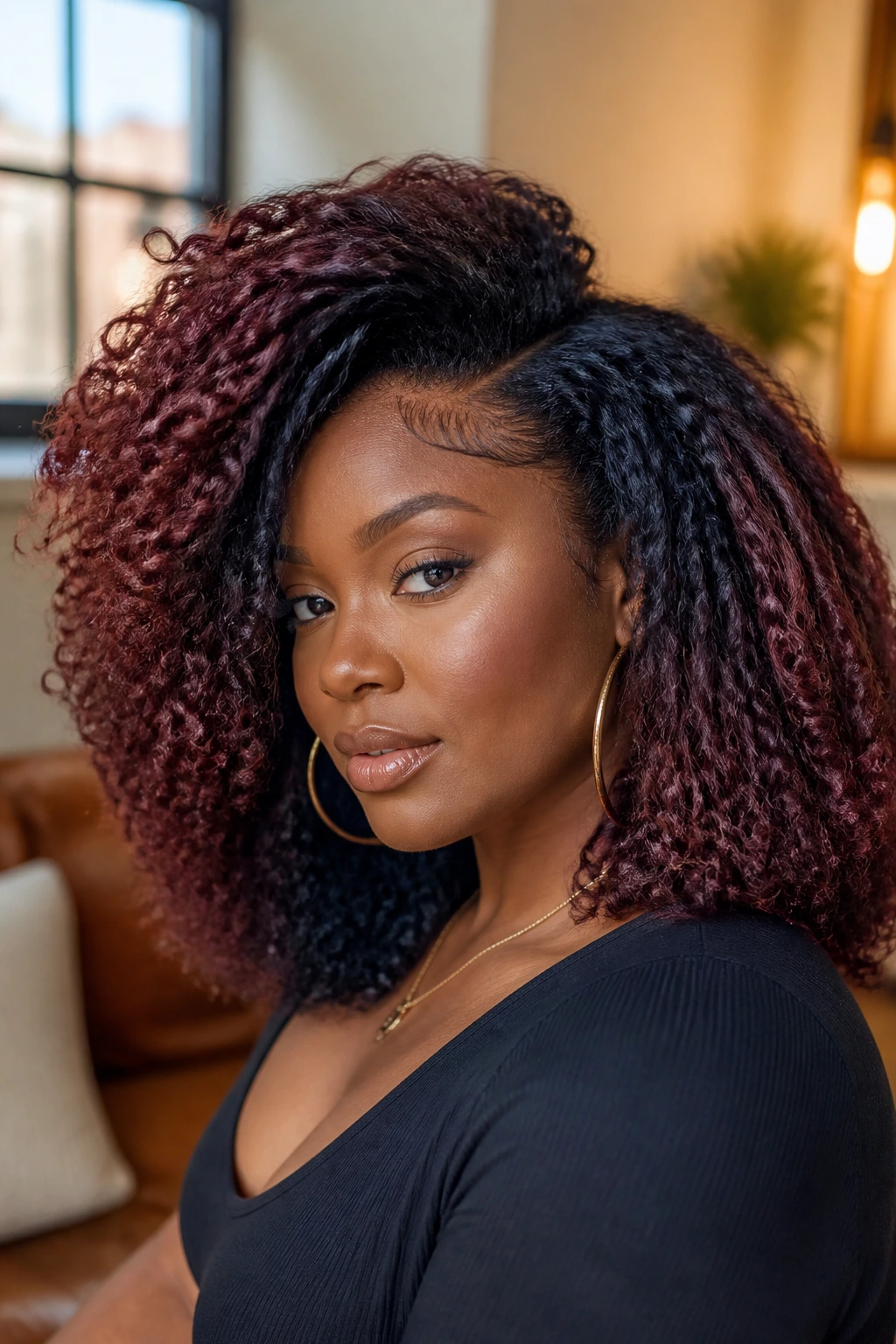
Cherry cola red is rich enough to show on dark natural hair without going full bright red. On a curly bob, it gives the shape a kind of drinkable depth—deep brown at first glance, then a red hit when the curls catch the light. That makes the bob look fuller too.
I like this shade on shorter curls because the cut keeps the ends in view. Longer hair can hide some of the cherry tones, but a bob keeps everything in the frame. If your curls are layered, the red will move through the shape instead of sitting on one flat plane.
It’s a good entry point into red family colors if copper feels too orange and burgundy feels too dark. Cherry cola has enough brown to stay wearable, but it still gives the hair a visible edge. On a clean curl pattern, it looks deliberate right away.
13. Burgundy Wine on Locs
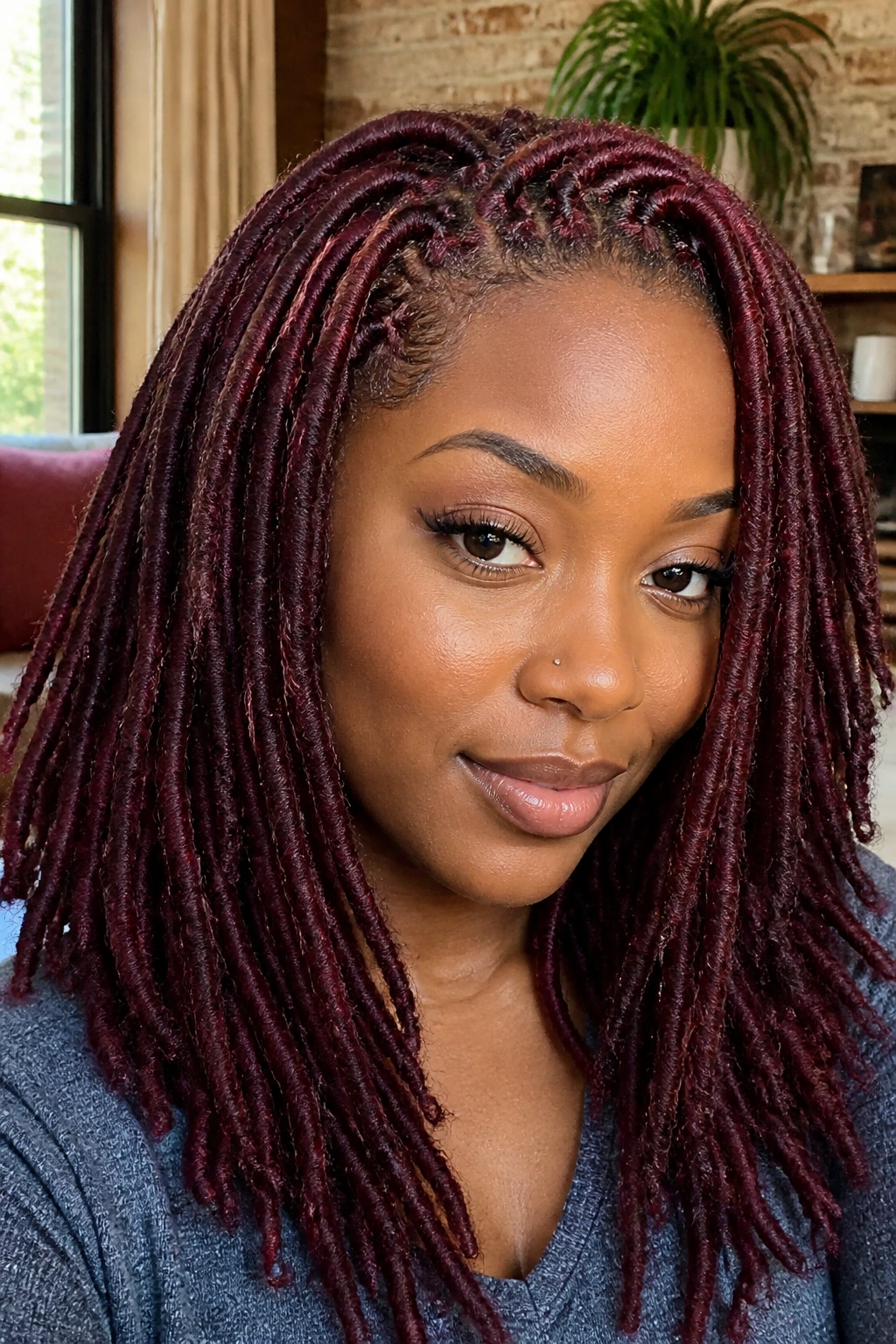
Burgundy on locs has a different personality than burgundy on loose hair. The loc structure holds color in a more solid way, so the shade reads deeper and more even from root to tip. That makes burgundy wine one of the easiest jewel tones to wear if you want something rich and not overly shiny.
You can go full length or keep the color on the ends and mids. Either way, the locs do the work of breaking the tone into softer sections, so the red-purple blend never feels harsh. It looks especially good when the locs are freshly retwisted and the parting is clean.
This is one of those shades that gets better with moisture. Dry locs can make burgundy look dusty, while well-conditioned locs keep the wine tone smooth and full. If you already wear dark clothes and gold jewelry, the color lands even harder.
14. Plum Purple on a Twist-Out
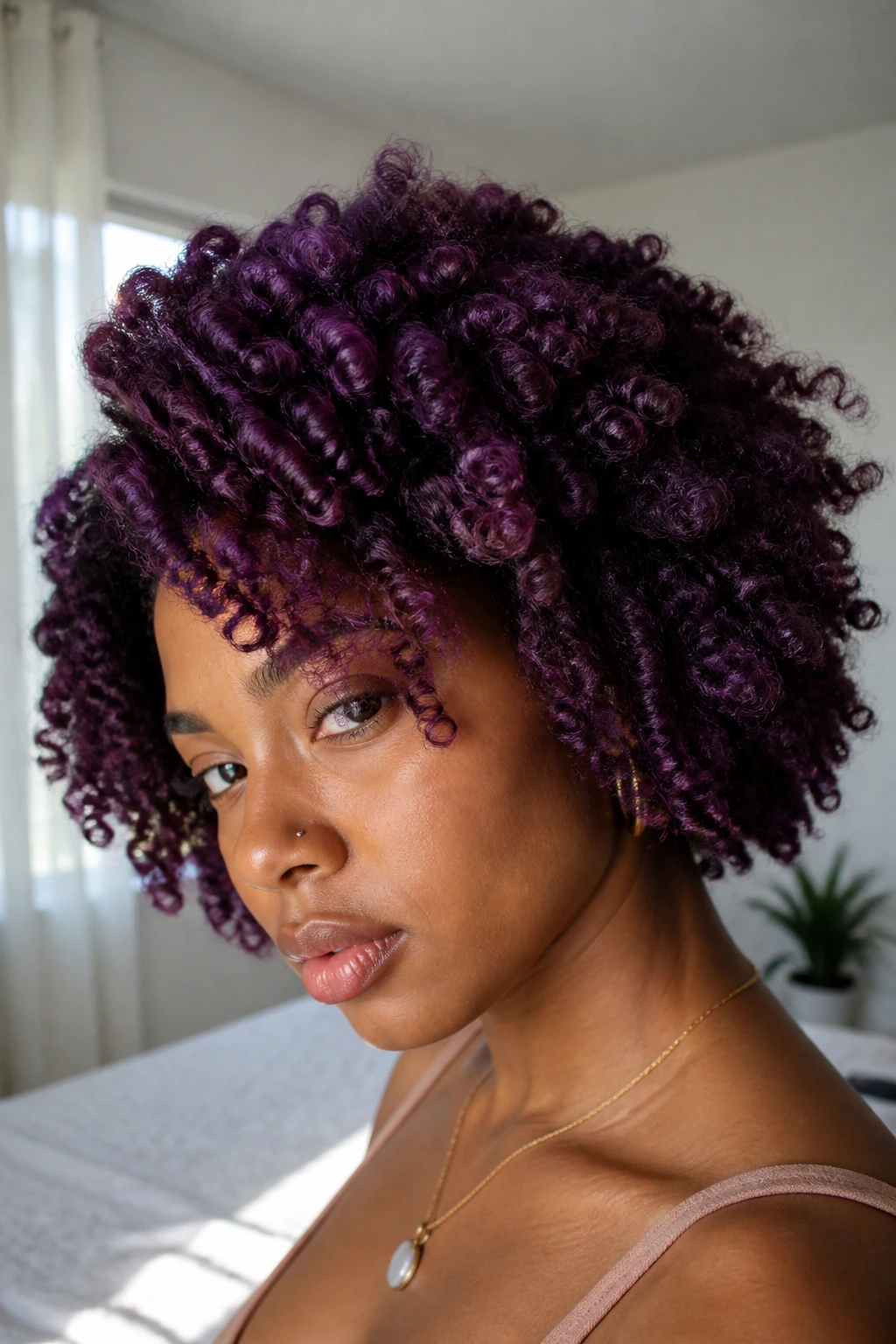
Plum purple is for anyone who wants a cooler jewel tone without going straight into neon territory. On a twist-out, the curl definition lets the purple sit in little pockets of shadow and shine, which keeps it from looking flat. That’s the whole reason plum works so well on textured hair.
This shade usually needs a lighter base or a strong color deposit to show cleanly, especially if your hair is very dark. But once it lands, it has a smoky, grown-up feel that sits somewhere between berry and violet. It does not look childish when the tone is deep enough.
If your wardrobe leans black, gray, denim, or deep green, plum fits right in. It also photographs well in natural light because the curl pattern gives the color enough movement. You don’t need the hair to be loud to get attention from it.
15. Midnight Violet Under a Frohawk
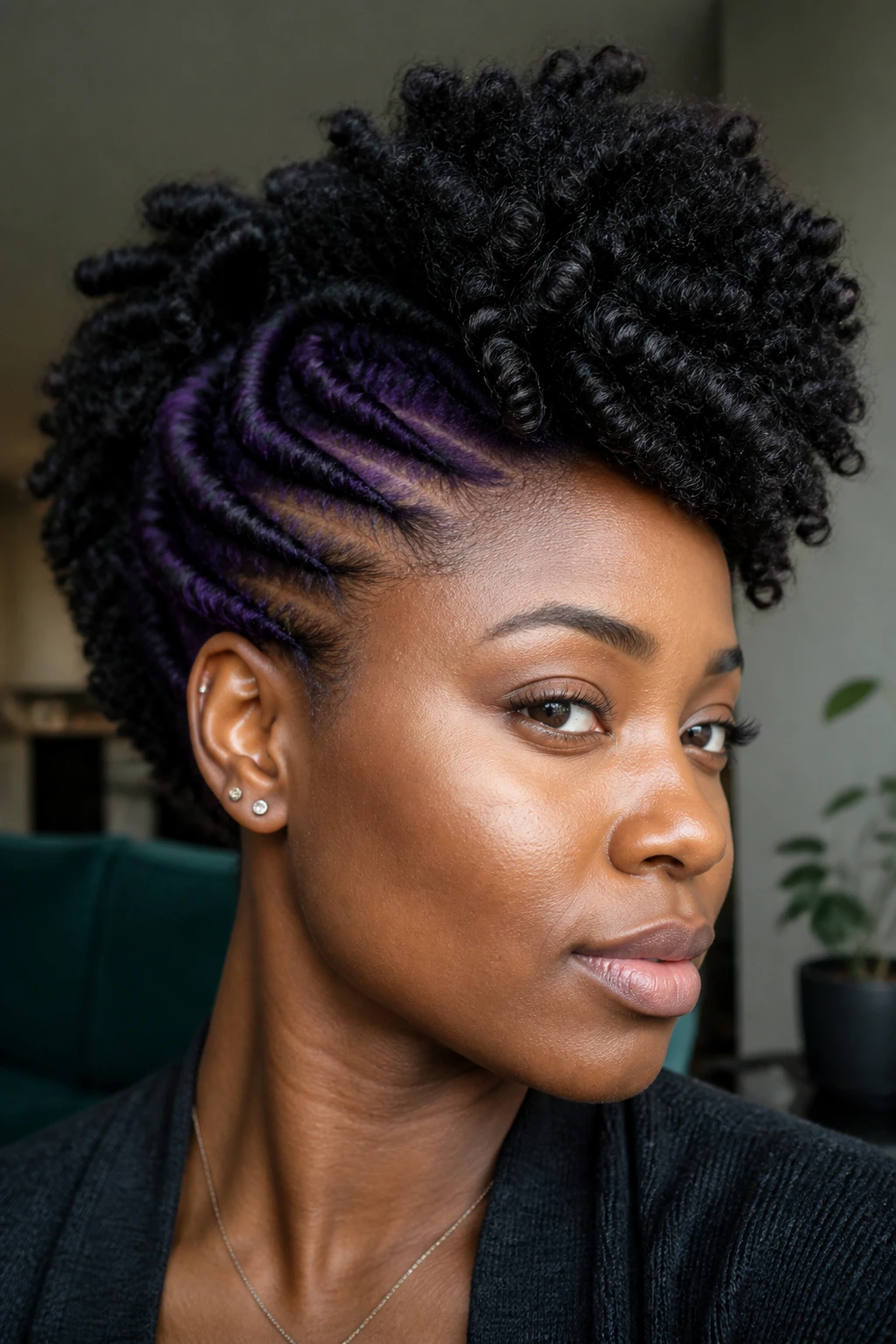
Midnight violet is one of my favorite hidden-color ideas because it gives you surprise without forcing the whole head to be bright. Under a frohawk, the violet sits beneath the lifted sides and top, so the color appears when the hair shifts, not all at once. That makes the look feel smarter than it sounds.
This placement works because it hides the most dramatic shade where the eye doesn’t sit first. The frohawk shape already has built-in height and movement, so the violet shows in flashes as the hair rises and falls. You get color with a little mystery.
It’s also useful if you want to keep one foot in the office and one foot in the weekend. The top layer can stay dark, while the underside carries the color. If you’ve ever wanted purple but worried about seeing it everywhere, this is the better answer.
16. Smoky Silver on a Short TWA
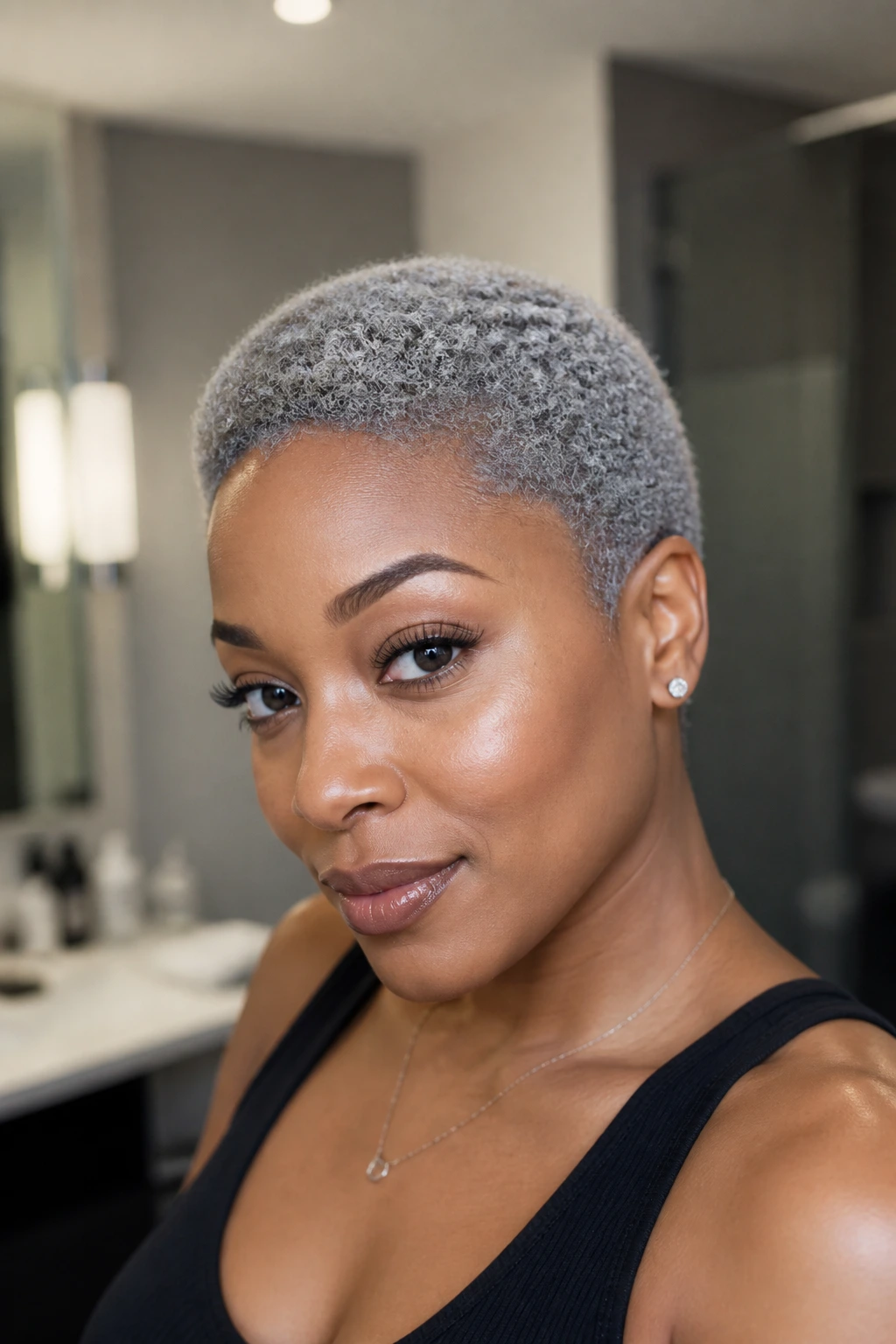
Smoky silver on a short TWA has real attitude. The short length keeps the maintenance manageable, and the silver tone turns the tiny coils into a soft, textured surface instead of a plain light cap. On a tapered or close-cropped cut, it looks sharp fast.
This shade needs serious lifting, so it is not the place to cut corners. But the advantage of a TWA is that there is less length to fight through, and the cut itself can be trimmed as needed if the ends get tired. That makes the color more realistic than it would be on long hair.
The best silver is not flat gray. It should have a cool, smoky cast with enough tone underneath that it doesn’t look chalky. If your skin tone runs cool or neutral, this color can sit beautifully against the face and make the shape of the cut stand out immediately.
17. Mushroom Brown on Loose Curls
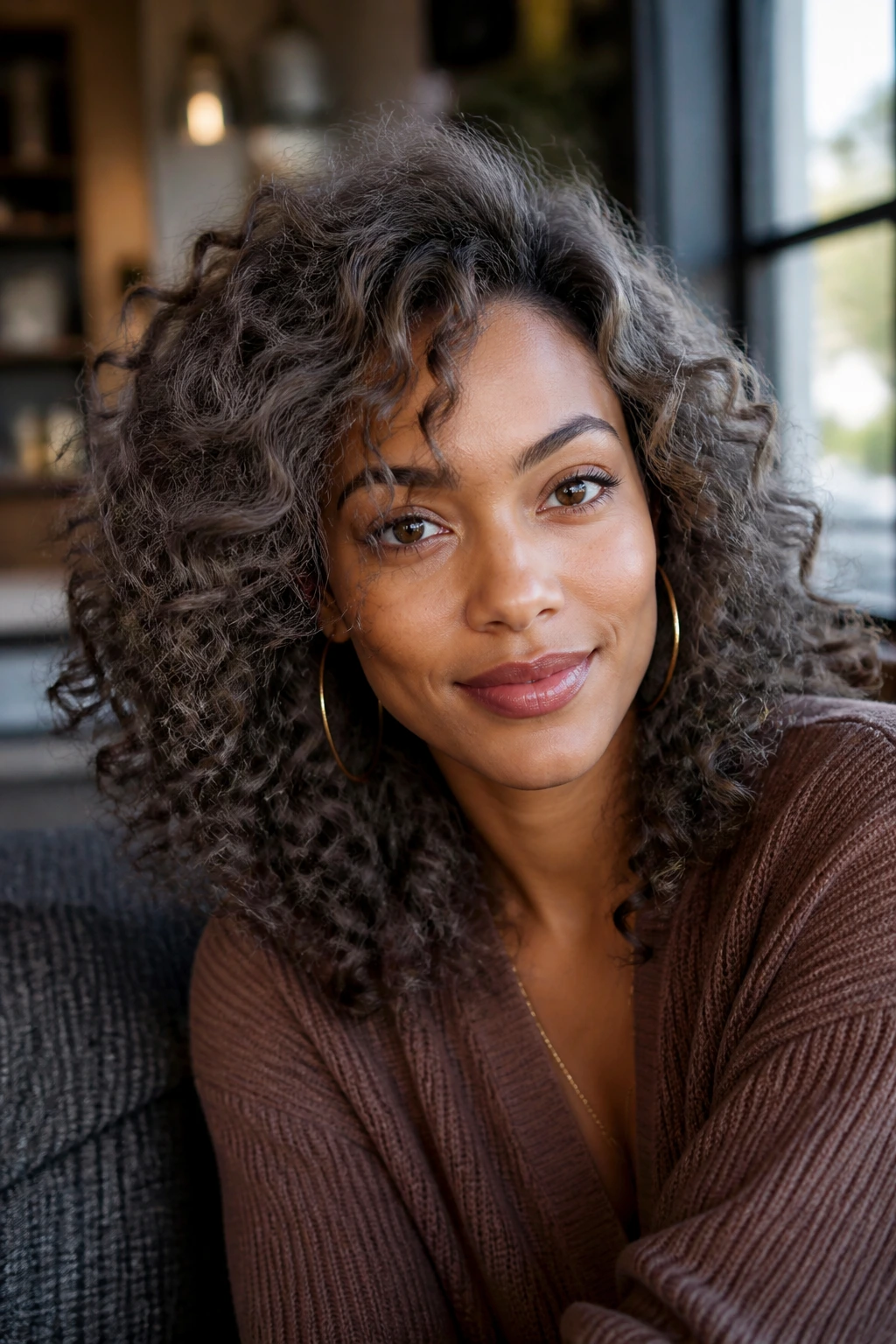
Mushroom brown is the shade for people who want something modern but not flashy. It has that ash-brown, slightly beige quality that makes loose curls look expensive without making the hair look red or gold. On dark natural hair, it softens the overall finish in a clean way.
The reason it works on loose curls is the shape. Loose curls show the subtle shift from brown to ash far better than tightly compressed styles do. Each bend catches the cool tone a little differently, so the color reads as depth instead of one solid color block.
This shade is also kinder to people who hate obvious regrowth. Mushroom brown grows out softly if your root color is already dark. You still need toning now and then, but it doesn’t hit you in the face the way brighter shades can when they fade.
18. Bronde Ribbon Highlights on Shoulder-Length Curls
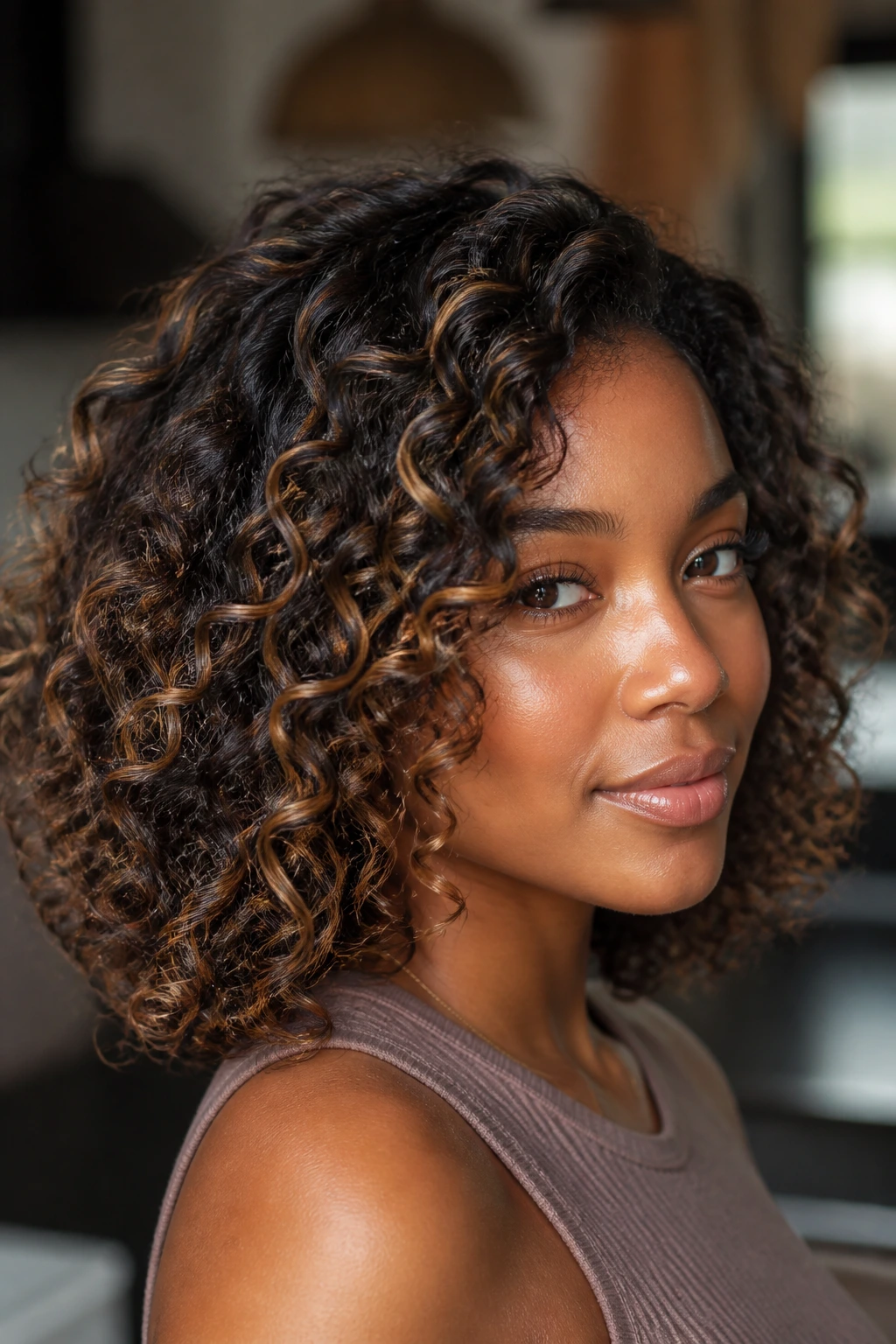
Bronde sounds awkward as a word, but the look itself makes sense. It sits between brown and blonde, and on shoulder-length curls, that middle ground gives you warmth, brightness, and texture all at once. The ribbons are lighter than caramel, but they’re not hard blonde stripes either.
Shoulder-length curls are the sweet spot for this idea. There’s enough hair to show the variation, but not so much that the lighter pieces disappear into the layers. The result is movement—little shifts of honey, beige, and brown whenever the hair moves.
If your main goal is dimension, not drama, bronde is a smart place to land. It looks best when the blonde pieces are spread out thinly and the root stays darker. Done right, the color looks like the hair has a built-in highlight map.
19. Black-to-Chestnut Ombré on Long Natural Hair
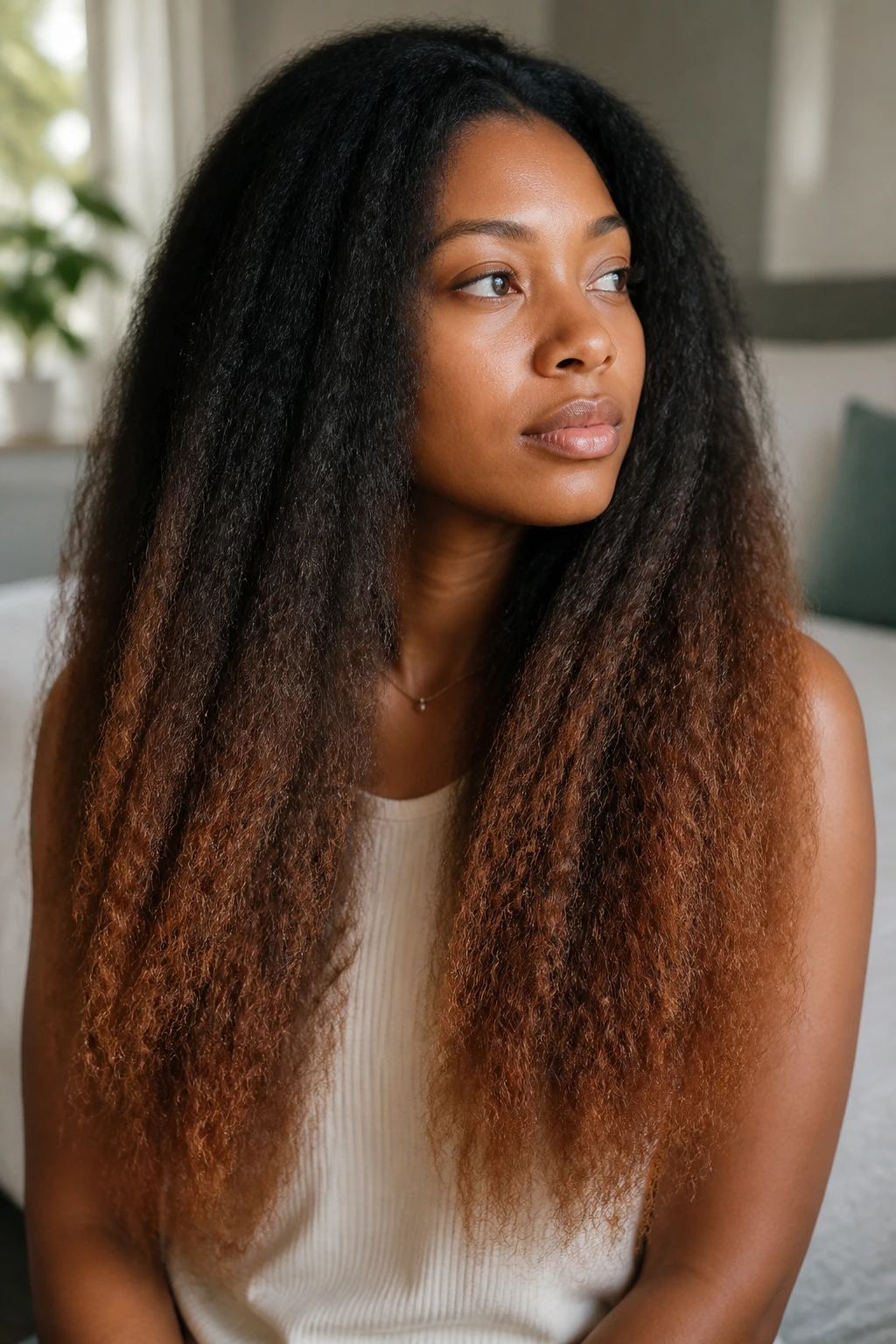
A black-to-chestnut ombré gives long natural hair the kind of slow fade that textured hair handles well. The darker root keeps the style grounded, while the chestnut length warms up the ends and keeps the whole shape from looking heavy. On long hair, the gradient has enough room to read clearly.
This look is especially good on stretched styles—blowouts, twist-outs, and braid-outs—because the longer pattern lets the color transition show. If the hair is too compressed, the ombré can disappear into the curl pattern. Long natural hair solves that problem by giving the fade a longer runway.
Chestnut is a useful middle color because it has some red warmth but not the kind that screams. It softens the line between your base and your ends, which is exactly what ombré should do. Clean blending matters more than brightness here.
20. Peekaboo Red Panels Under a Middle Part
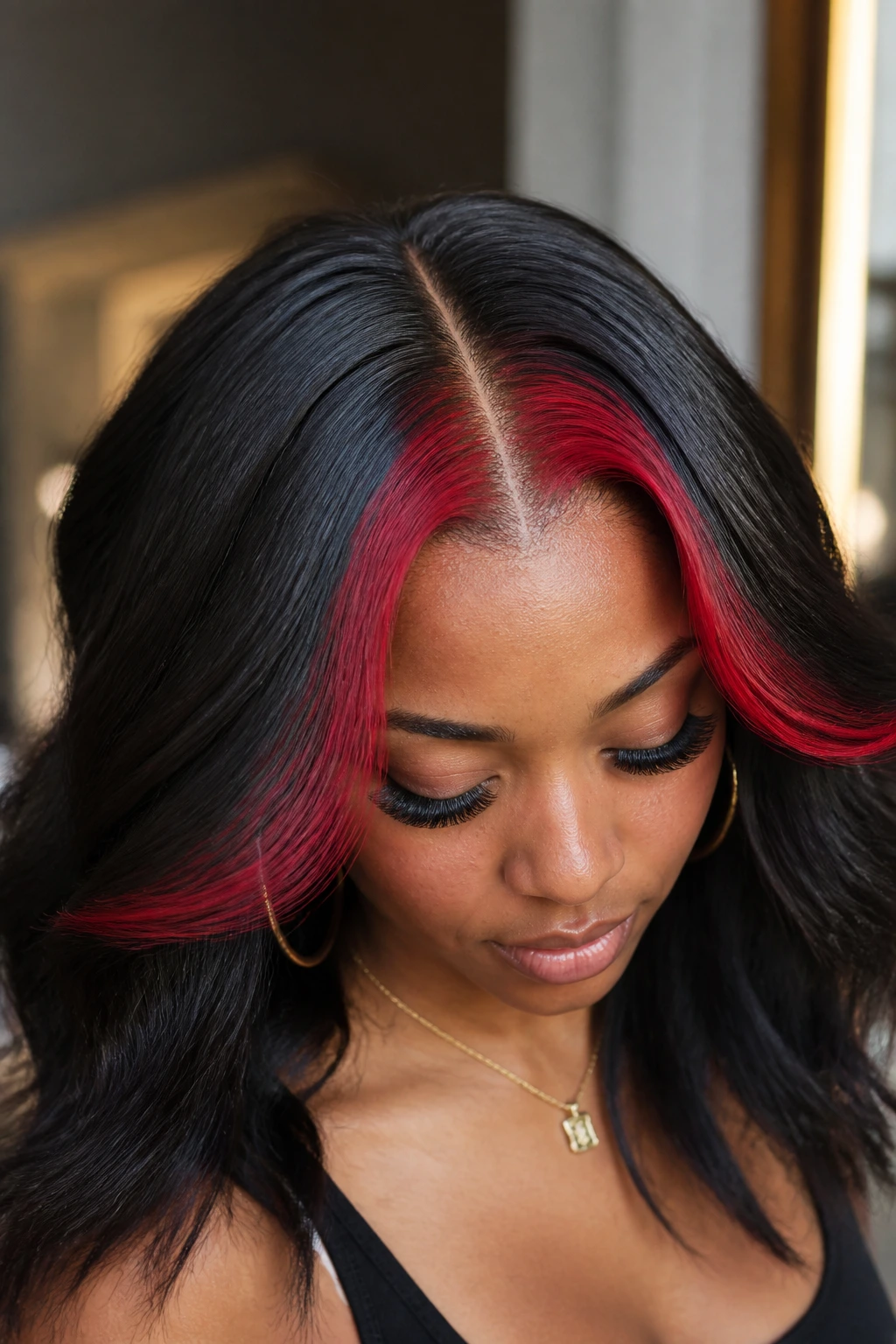
Peekaboo red panels are for people who want a little mischief in the hair. Under a middle part, the red stays mostly hidden until the hair shifts, gets tucked behind the ear, or gets pulled half up. That makes the color feel like a private detail instead of a public announcement.
The middle part is the key. It creates a clean opening where the color can peek through without looking random. On a twist-out or blown-out style, the red panels become more visible as the hair separates, which gives you different levels of drama depending on how you style it.
This is a strong choice if you like color but still need flexibility. You can wear it down, tucked, or pinned without losing the effect. The best part is that the red can be as deep or bright as you want; hidden placement works with both.
21. Peekaboo Blonde Underlayers in a Half-Up Fro
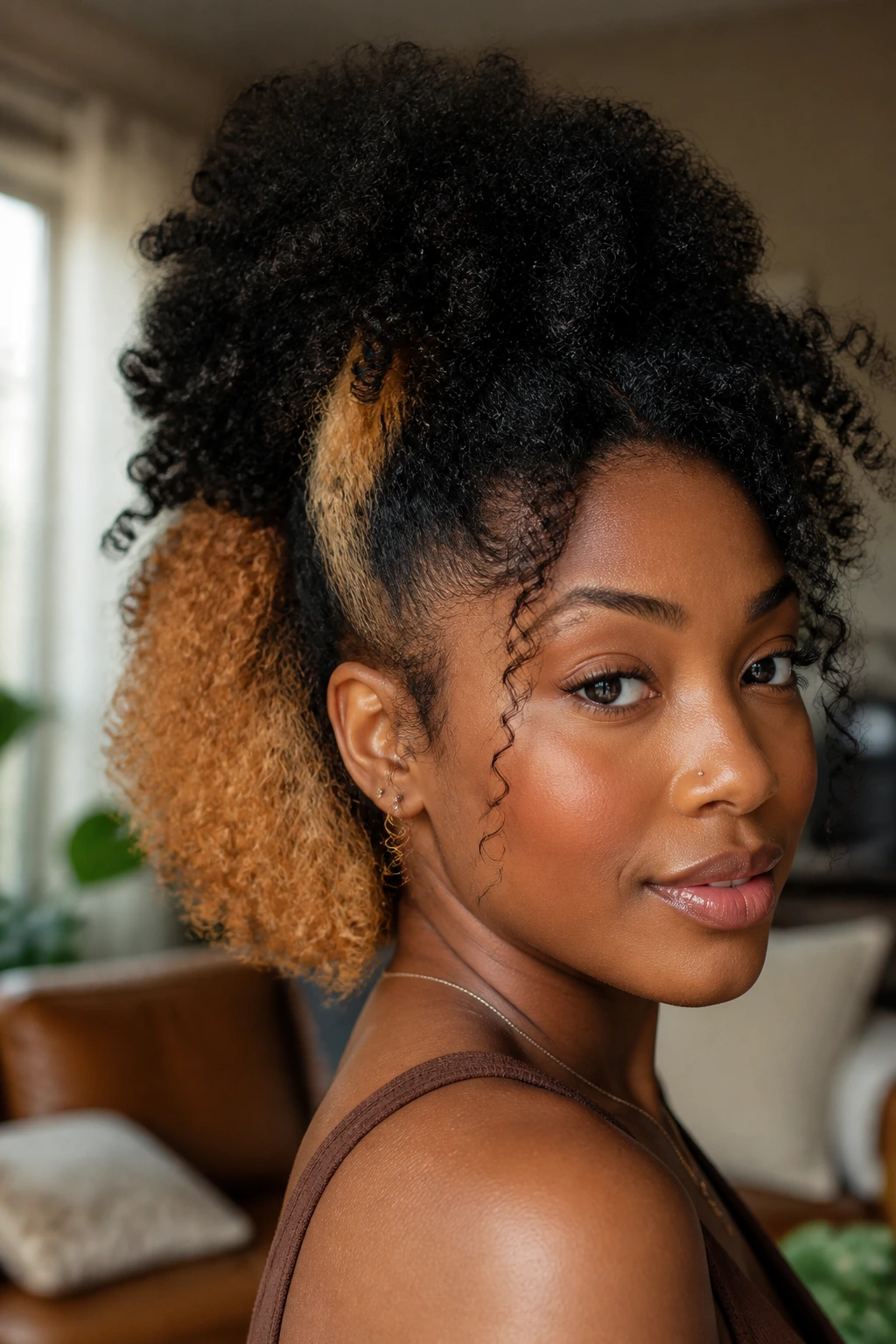
Peekaboo blonde underlayers are the kind of move that makes a half-up fro feel deliberate. The top layer stays dark and full, while the blonde hides underneath and flashes when the hair lifts, swings, or gets pinned back. It’s a good way to test light hair without living in it full-time.
This look works because the fro already has volume. That volume gives the underlayers room to stay hidden until you want them seen. If you wear your hair in a half-up shape, the blonde becomes part of the silhouette instead of fighting it.
I’d recommend this more than all-over blonde for anyone nervous about damage. You only need to lighten the lower sections, and you can keep the root area dark for balance. The effect is playful, but not sloppy, which is a harder line to hit than people think.
22. Split-Dye Contrast on a Curly Bob
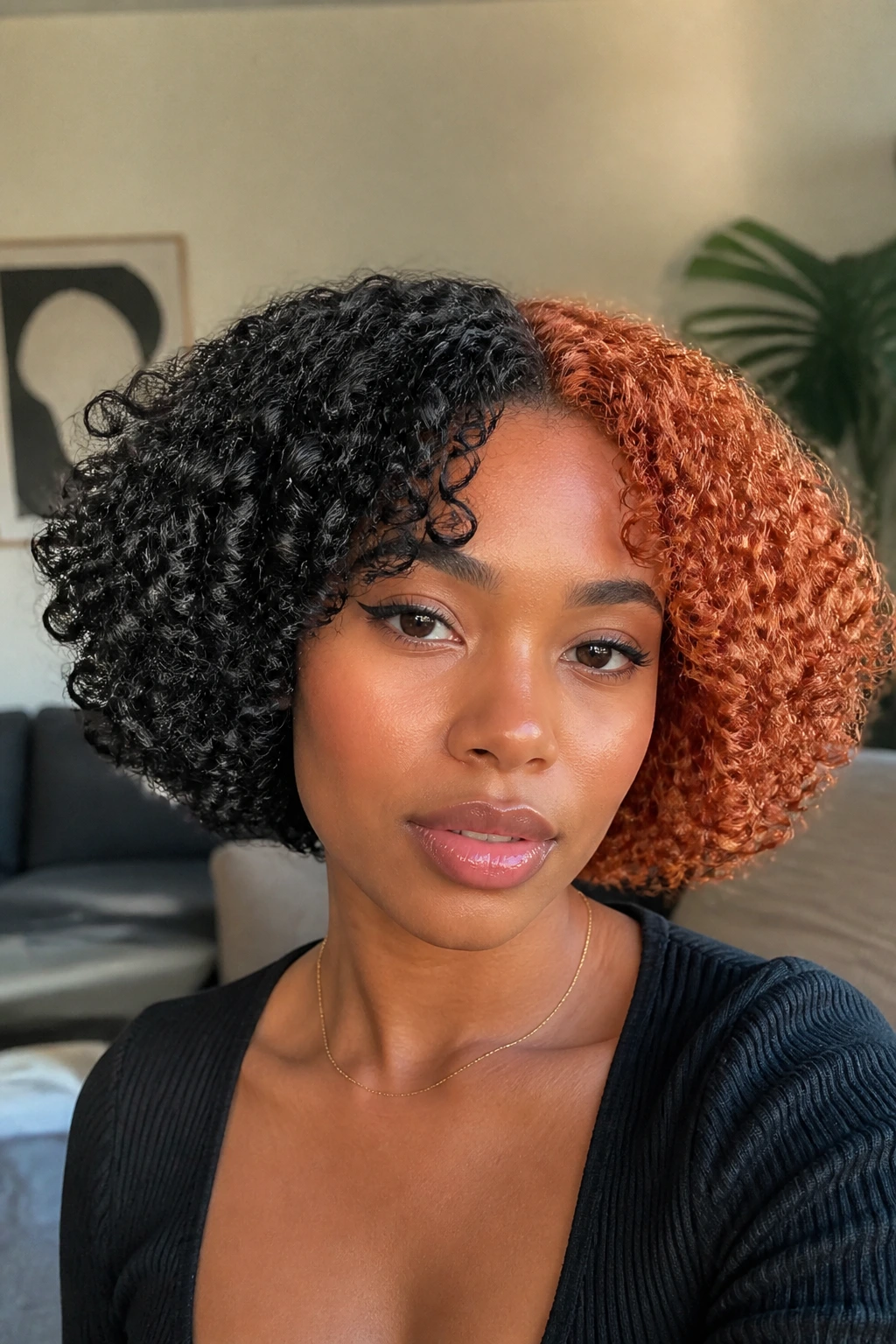
A split-dye curly bob is not subtle, and that is the point. One side black, the other side copper, red, or blonde creates a sharp visual break that textured hair can actually hold without looking costume-like. The bob length keeps the two sides from fighting each other.
The clean part matters here. If the line is crisp, the split dye looks graphic and intentional; if the part gets wobbly, the whole thing can start to feel accidental. A curly bob helps because the volume softens the contrast just enough to keep it wearable.
This is for someone who likes clear shape and clear color. It is not the easiest maintenance job, because both sides need their own care, but the payoff is a look that reads immediately from across a room. If you want people to notice the cut and the color together, this is a strong way to do it.
23. Rose Gold Tips on Soft Locs
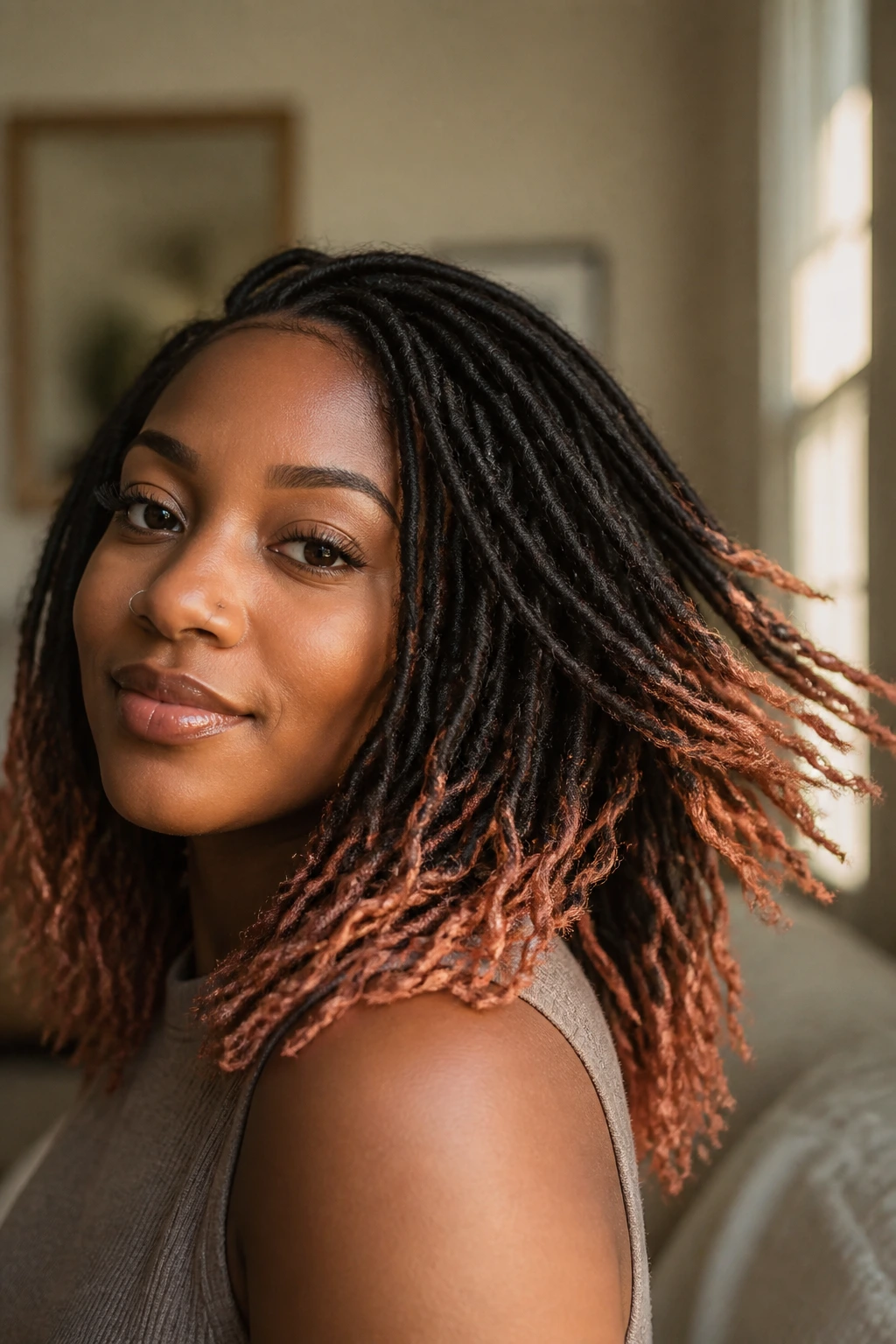
Rose gold tips on soft locs give you warmth with a pink edge that never feels too sweet. The shade sits between copper and blush, which makes it easier to wear than a straight pastel pink. On locs, the color shows at the ends first, then softens as you look farther up the strand.
This works especially well when the locs move. The tips swing and catch the eye, while the darker roots keep the style grounded. If you like a softer aesthetic, rose gold is a nicer fit than hotter reds or bright blondes.
The key is to keep the tone metallic, not chalky. Too much pink can look flat against dark hair, but rose gold has enough warmth to hold its shape. It’s also a good option for people who like color but still want the hair to feel grown.
24. Teal Underlights Beneath a Puff
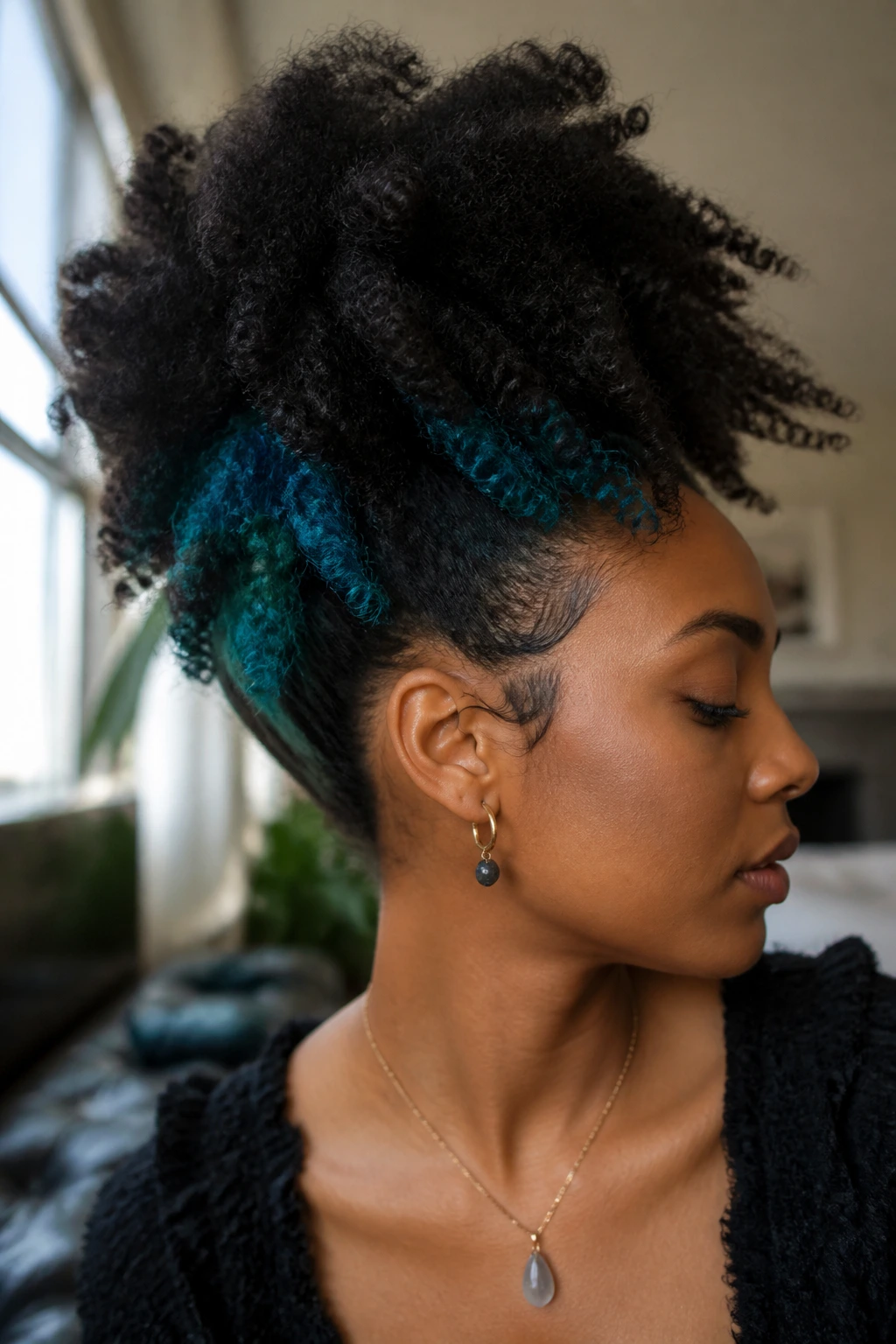
Teal underlights under a puff are one of the easiest ways to make color feel like a surprise. The puff stays dark and round on top, while the teal lives underneath, ready to show when the hair shifts or gets gathered loosely. That contrast is what makes the style fun.
Teal works better when it is kept a little deep, not neon. A richer teal reads cleaner on Black natural hair because it holds onto the dark base instead of floating off it. If the hair is lightened enough, the color can look jewel-like instead of loud.
This is a smart choice if you wear puffs a lot. You can show the color when you want it and hide it when you don’t, which makes the upkeep feel less intense. It’s a practical bold color, which is rare and useful.
25. Emerald Tips on Mini Twists
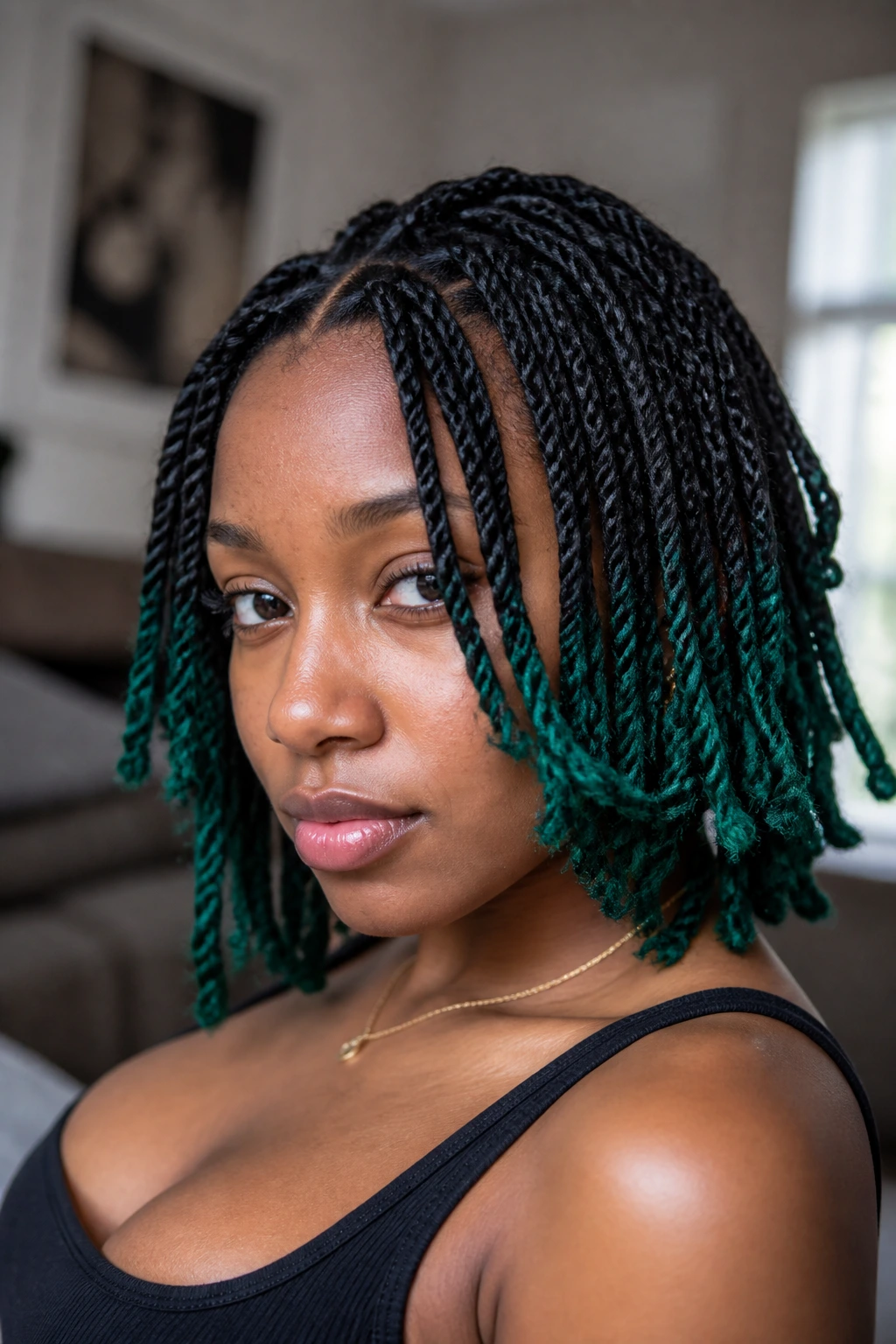
Emerald tips on mini twists bring color to the ends without making the whole style heavy. The twist pattern itself breaks the green into tiny flashes, so the shade looks richer than it would on a smoother texture. That is why jewel tones and twists get along so well.
Emerald is a strong choice if you want green that feels polished. It has enough blue in it to stay deep, but enough warmth to avoid looking muddy. On mini twists, the tips are the part people see first, so even a small amount of color changes the whole look.
If you keep the roots dark, the style stays wearable for longer. The contrast between the dark base and green tips makes the twists read cleanly, especially when they’re fresh and neat. It’s a straightforward color idea with a little edge.
26. Cobalt Blue Ends on a High Fro
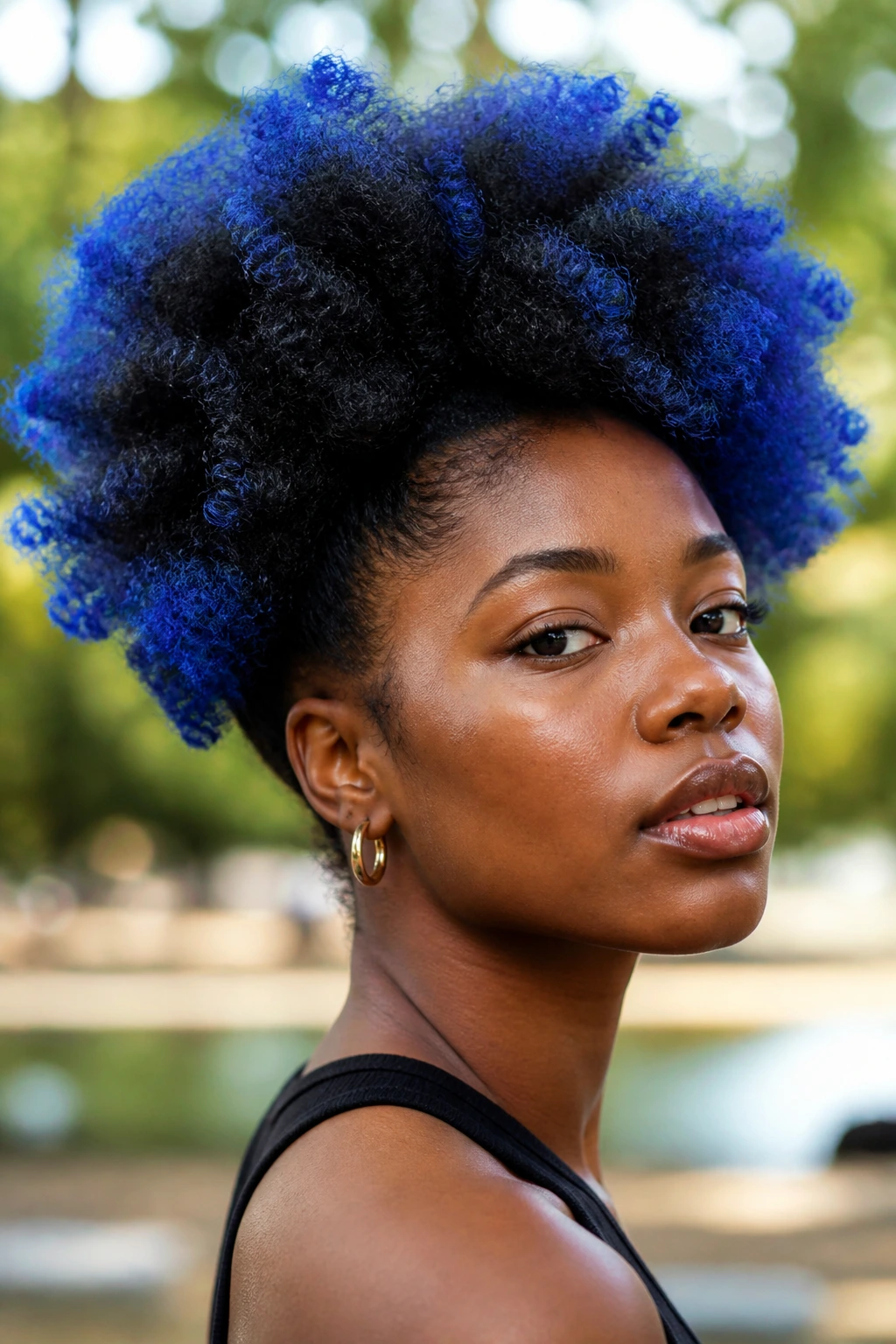
Cobalt blue ends are louder than teal and sharper than navy. On a high fro, the color shows up at the outer edges where the shape is fullest, which makes the whole style feel more graphic. The crown stays dark, while the ends do the announcing.
This look works because a fro already has strong silhouette. The blue ends define that silhouette even more, almost like outlining the shape with color. If you want the hair to read as bold from a distance, cobalt gives you that impact without needing full-head lightening.
The shade looks best when it’s truly saturated. A washed-out blue can go dusty fast, and that is not what you want here. Keep the ends moisturized, and the color stays richer longer. Dry ends make any vivid shade look tired.
27. Lilac Frosting on a TWA
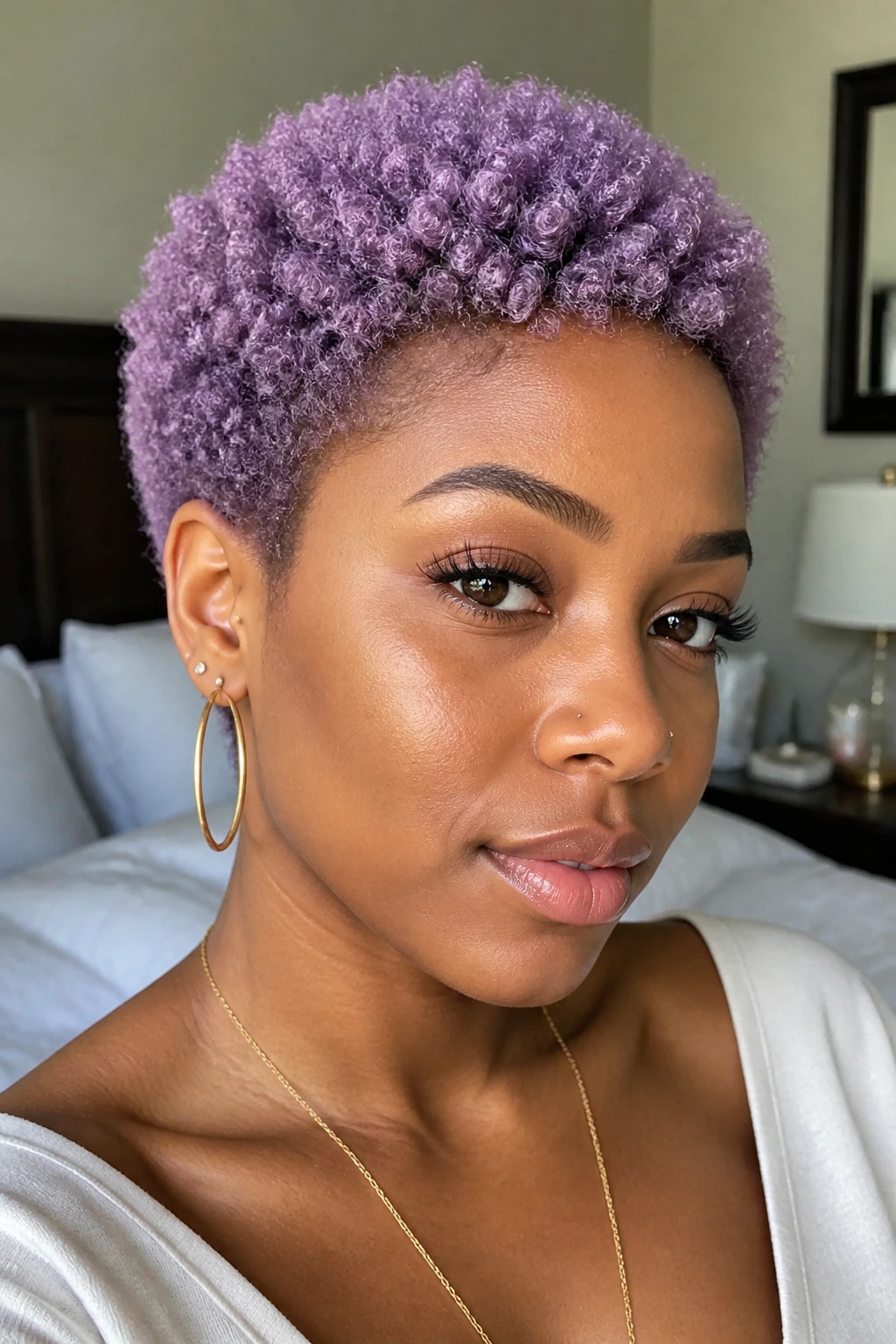
Lilac frosting on a TWA is delicate in the way short hair often can be. Because the crop is small, the pale purple shows up as a full finish rather than isolated streaks. That makes the shade feel soft and even, which suits the scale of the cut.
This one needs a very light base, so it’s more commitment than some of the darker ideas on this list. But a TWA keeps the maintenance manageable because the hair is short enough to tone and refresh without wrestling with long lengths. That matters more than people admit.
Lilac is also a useful test of whether you like cool fashion shades or just like looking at them on other people. On natural hair, the color reads best when the cut is sharp and the curls are close and neat. Messy lilac can look accidental; precise lilac looks styled.
28. Golden Copper Halo Highlights on a Fro
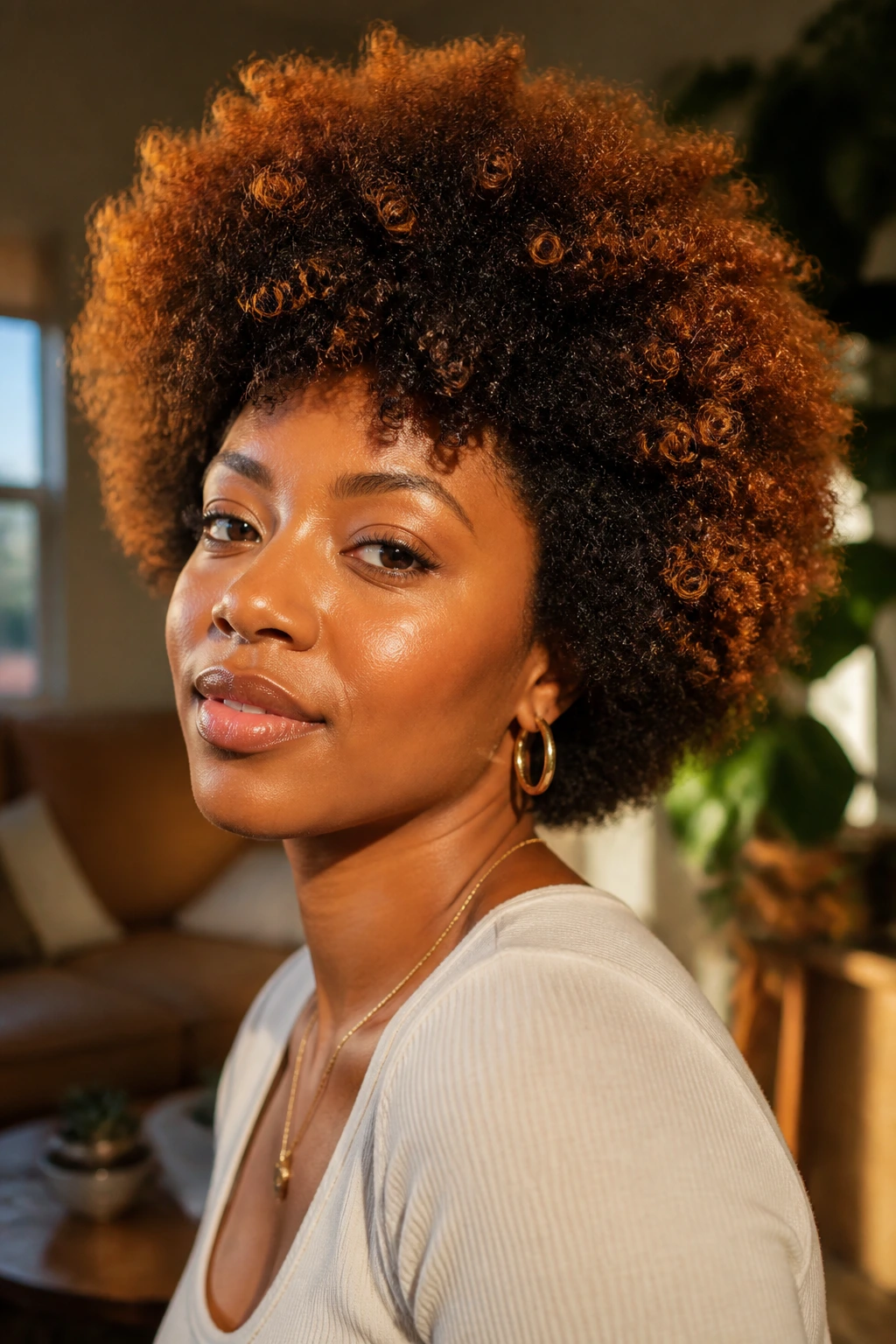
A golden copper halo wraps color around the outer layer of a fro instead of scattering it everywhere. That means the brightness sits where the eye naturally lands first—around the face, crown, and upper edges. The shape gets a little glow without losing its depth.
This is a strong choice if you want warmth but not a full copper head. The halo effect keeps the roots dark and the outer surface brighter, which creates a real sense of dimension. On a fro, that can look bigger and softer at the same time.
The shade should lean golden more than orange. Golden copper keeps the hair from veering into brass and makes the color look lived-in rather than loud. If your fro has good density, the halo highlights will stand out without overwhelming the style.
29. Sunset Ombré From Auburn to Gold
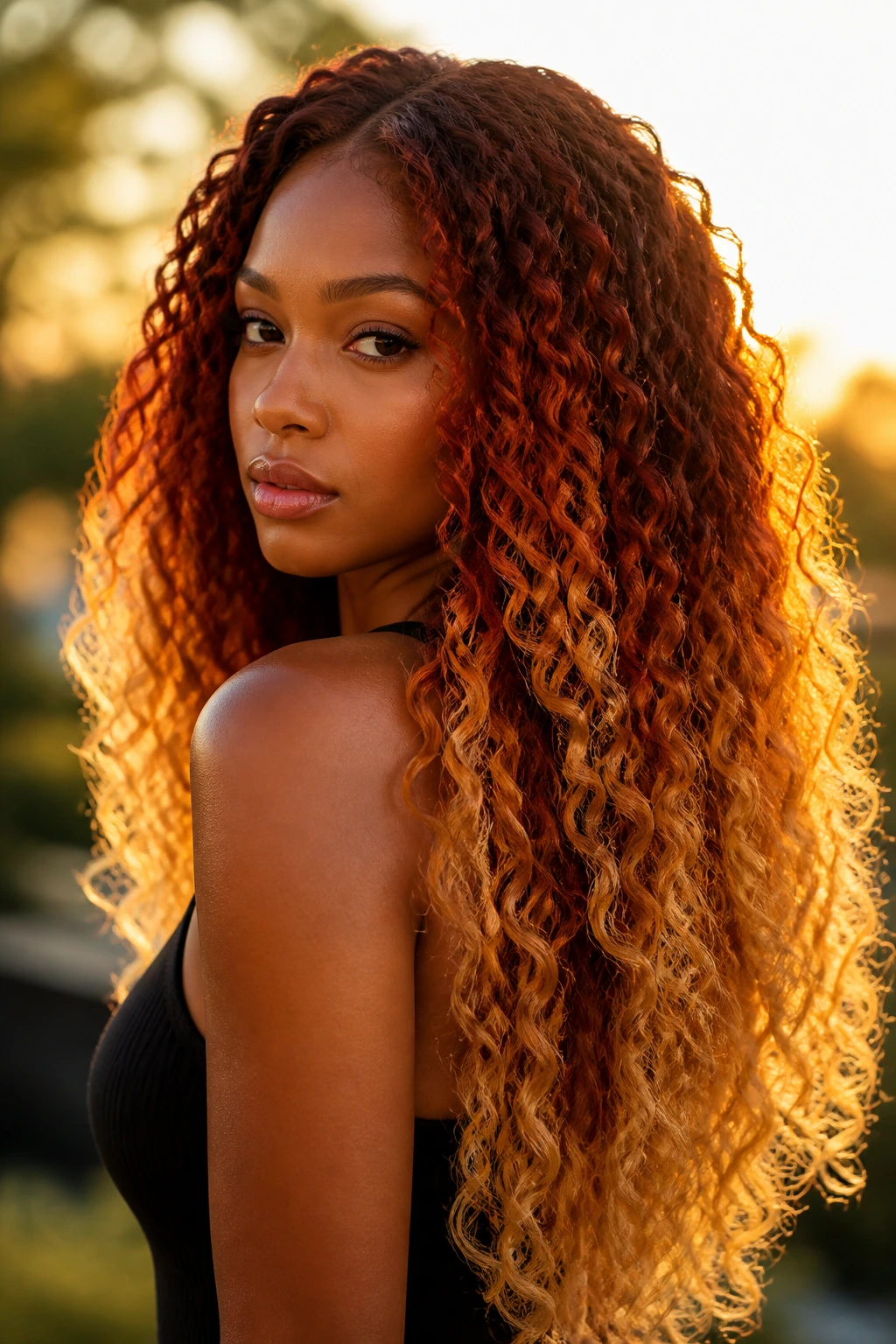
Sunset ombré is the warm-color lover’s answer to all-over red. It moves from auburn near the roots or mids into gold at the ends, which gives the hair a real gradient instead of a single block of warmth. On long natural hair, that fade has room to breathe.
This look needs length or stretching to show the transition properly. On a twist-out or blowout, the change from auburn to gold feels smooth and intentional. On shorter hair, the gradient can collapse too quickly and lose the whole sunset effect.
If you like warm tones but can’t decide between red and blonde, this is the bridge between them. It reads vivid, but not chaotic. And because the colors live in the same warm family, the fade tends to look softer as it grows out.
30. Black-to-Ginger Root Melt
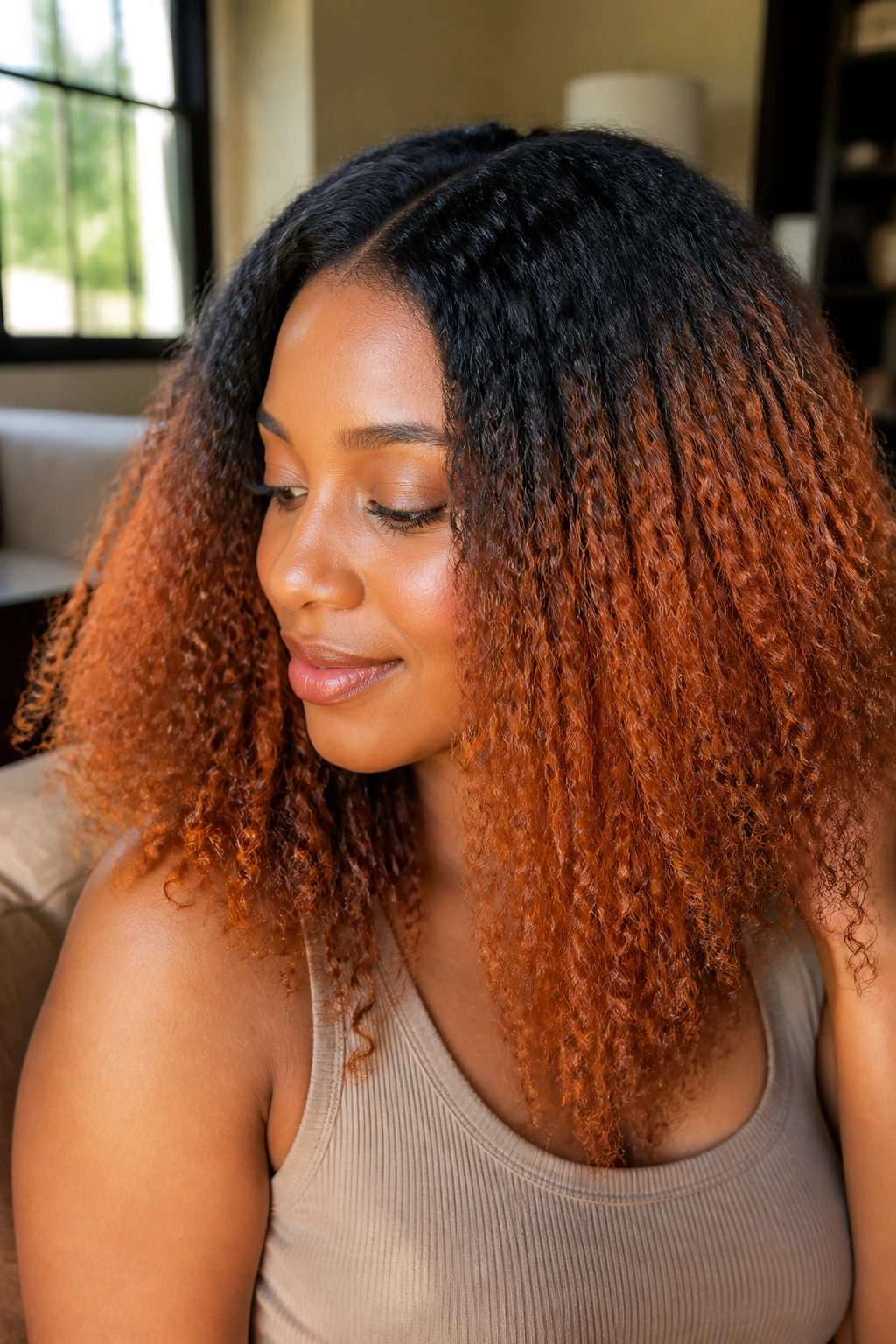
A black-to-ginger root melt is bolder than espresso and less common than copper, which is part of its appeal. The dark base keeps the look grounded, then the ginger warms up the mids and ends without making the whole head look stripped. That makes the color feel like a slow reveal.
The melt works especially well when the hair is styled in a way that shows the transition—stretched curls, twist-outs, or a blown-out afro. Ginger is bright enough to read, but because it starts from a dark root, it doesn’t feel disconnected from the natural base. The blend matters more than the brightness.
This is one of the more ambitious warm shades on the list. If you want a color that looks like it has actual movement instead of just one tone, the root melt does that better than a standard dye job. It takes a careful hand, though. Sloppy ginger looks orange fast.
31. Chocolate Cherry Dimension on a Twist-Out
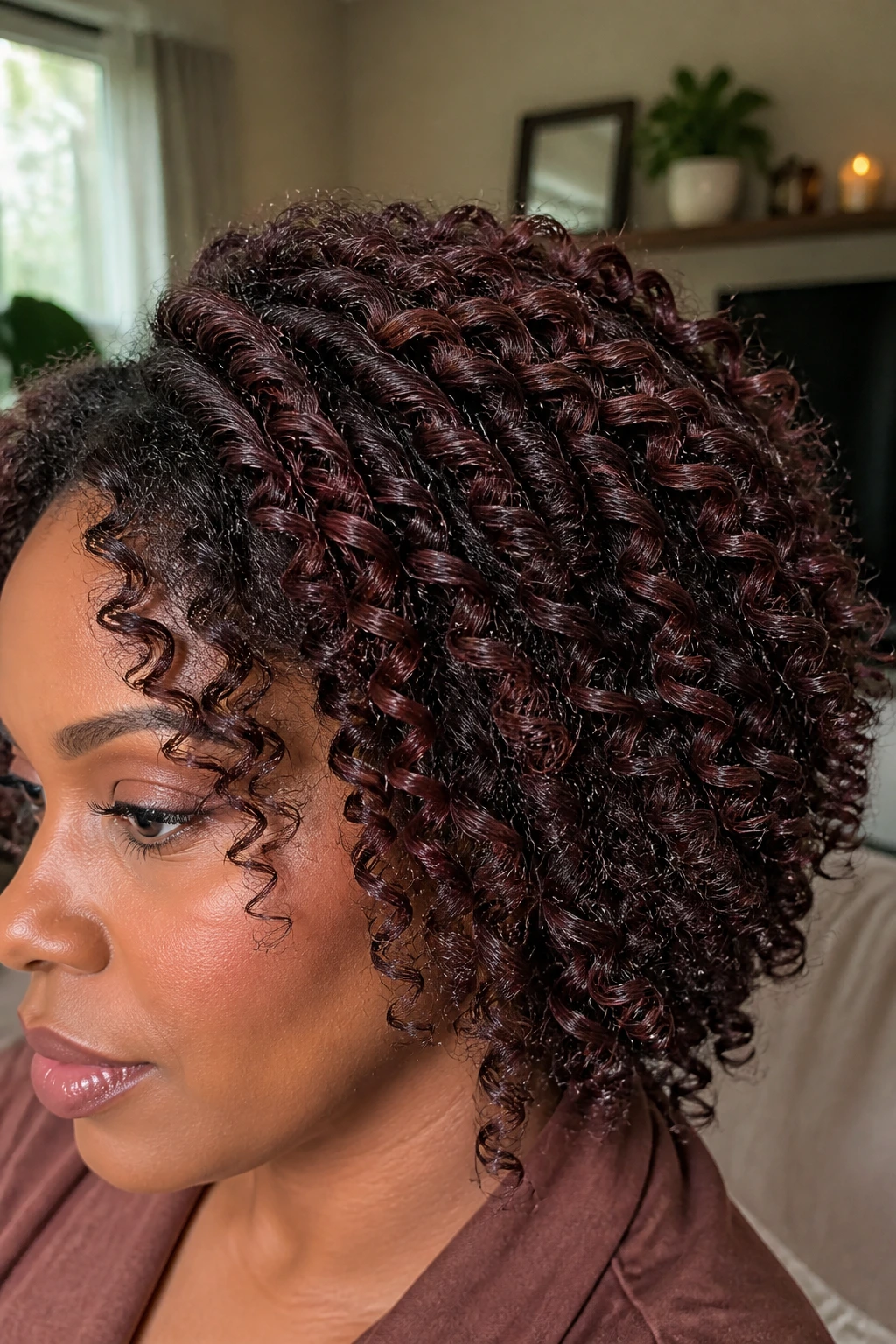
Chocolate cherry dimension is the shade I’d suggest for someone who likes the idea of red but wants it tucked into brown. The cherry ribbons sit inside a chocolate base, so the color changes with movement instead of sitting out front all the time. On a twist-out, that feels especially good.
This look is nice because it doesn’t need to be loud to be visible. The brown does most of the work in low light, while the cherry comes up when the curls separate or the light hits from the side. That makes the hair look deeper, not flatter.
It’s also one of the easiest red-family shades to live with if you’re nervous about upkeep. As it fades, the hair still looks brown and warm. You don’t get that hard “I need to recolor right now” feeling as quickly as you do with brighter reds.
32. Honeyed Highlights on Sisterlocks
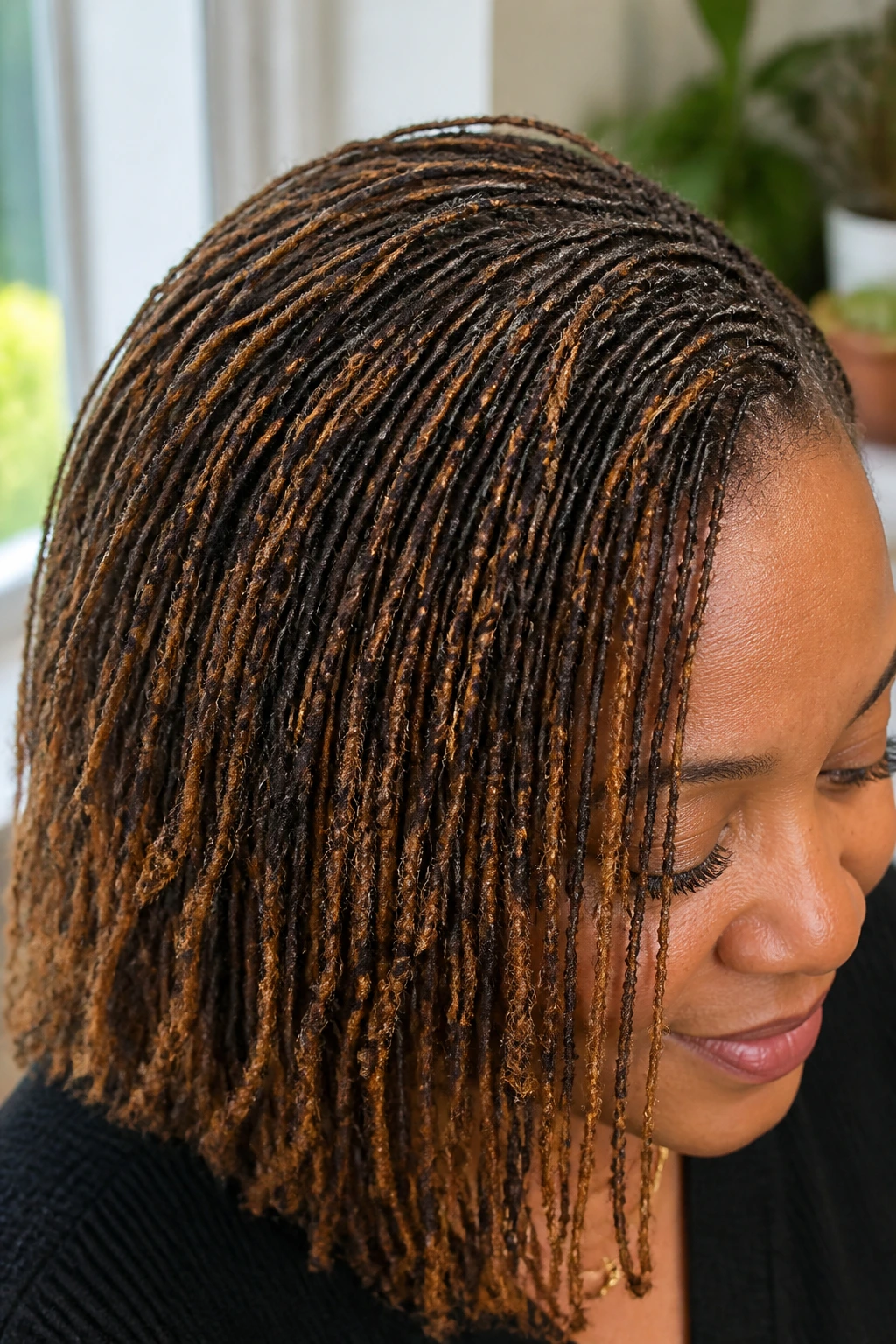
Sisterlocks take honeyed highlights in a very different way than loose hair does. Because the strands are smaller and the pattern is tighter, the color reads as overall warmth rather than individual stripes. That gives the whole style a softer, more blended finish.
The honey shade should stay warm and clean. Too much blonde can make small locs look streaky, but honey sits nicely in the middle and adds brightness without stealing the texture. If your locs are a little dull, this color can wake them up fast.
This is also a good option when you want a lighter look without losing the neat structure of the locs. The highlights show as movement, not as noise. And because Sisterlocks already have visual detail, the color does not need to do a ton of heavy lifting.
33. Platinum Pixie Coils on a Tapered Cut
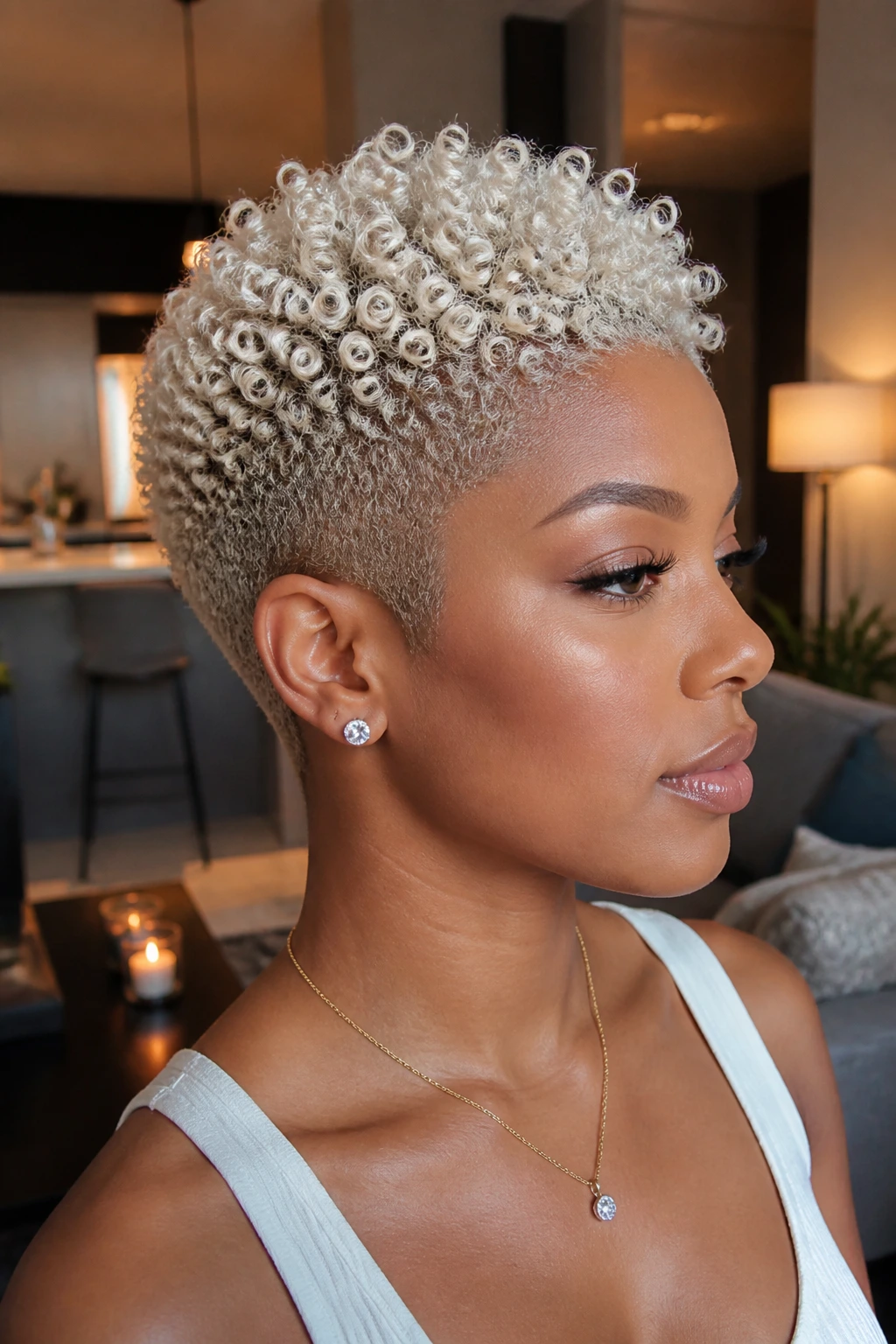
Platinum pixie coils are for the brave or the stubborn, and I mean that as a compliment. The tapered cut keeps the look controlled, while the platinum makes every tiny coil stand out like a bead on the surface. It is a high-contrast style with almost no room to hide mistakes.
Because platinum sits at the far end of lightening, this is one of the most demanding ideas on the list. A short cut helps because the hair can be trimmed if the ends get tired, and the whole style can be refreshed more easily than long hair can. That makes the risk more manageable.
The result is sharp, modern, and not at all quiet. If you want the haircut to read first and the texture to read second, platinum delivers that. Just be honest about maintenance. This shade needs care, toning, and a lot of respect.
34. Auburn Braided Ends on Knotless Braids
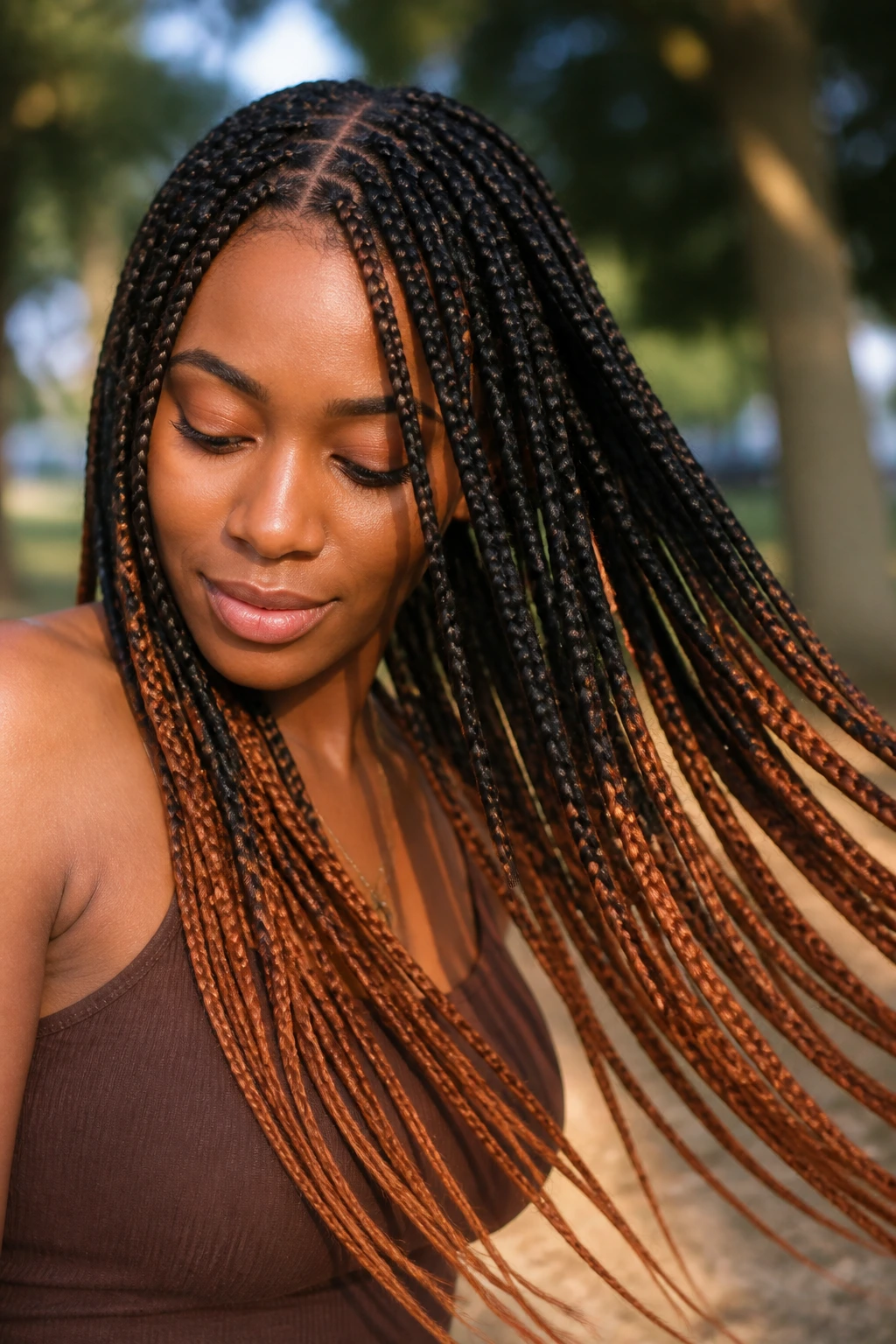
Auburn braided ends soften knotless braids in a way that dark or blonde ends don’t. The warm red-brown at the bottom keeps the braids from looking too heavy, and the color moves when you wear them down, swing them over one shoulder, or gather them into a bun.
This is a smart protective-style color idea because the boldness stays mostly at the ends. You don’t have to process your whole head to get a visible shift. The auburn shade also blends well with dark roots, so the grow-out line stays calmer than a high-contrast blonde would.
If you like braids but want them to feel less standard, this is a good place to start. The warmth adds enough interest to change the whole look, and it still feels wearable every day. Braids with colored ends have range. That’s the appeal.
35. Color-Blocked Curly Bob in Black and Copper
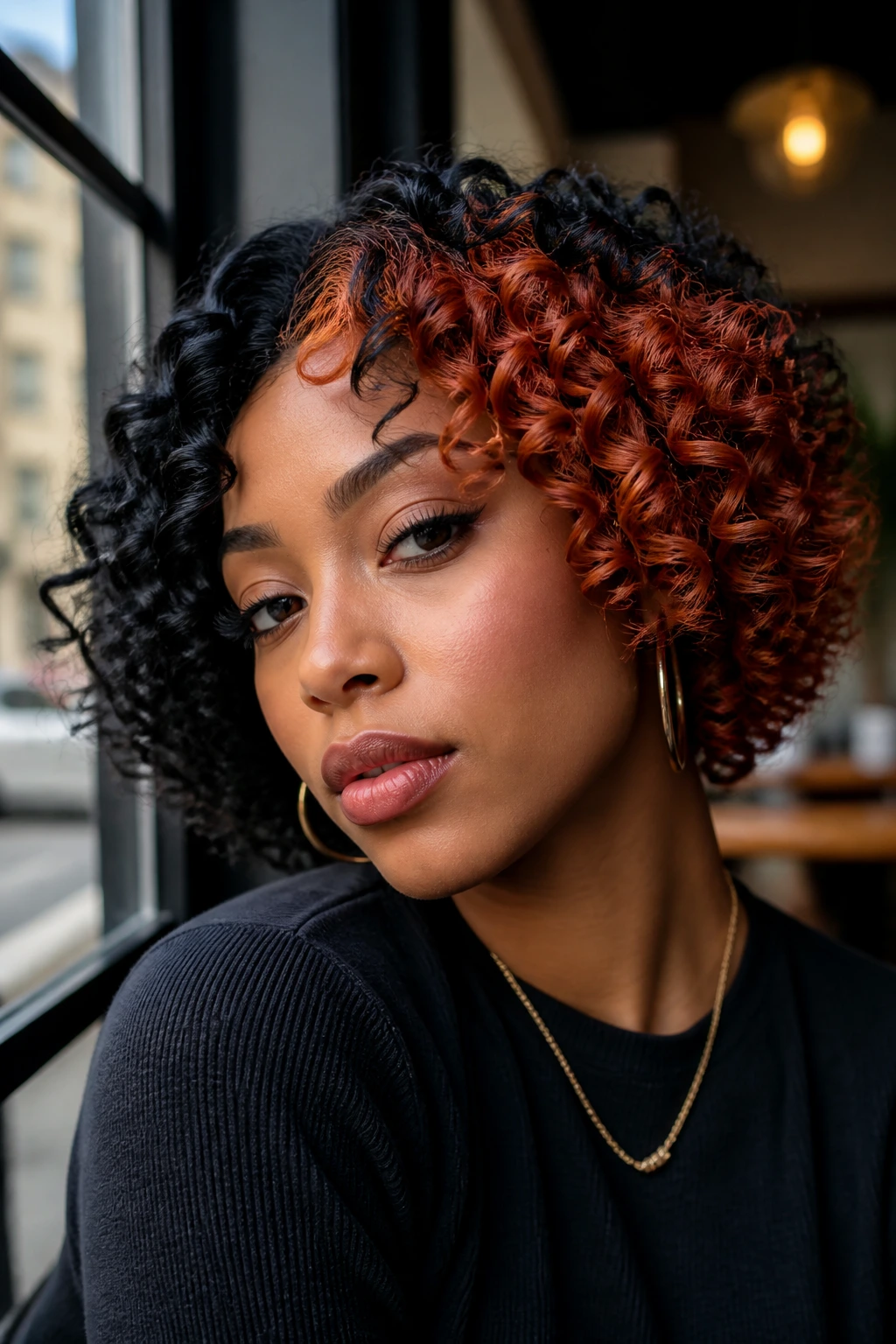
A color-blocked curly bob is the boldest graphic idea in the bunch. Instead of scattered highlights, you get clean sections of black and copper that play against each other on purpose. The bob length keeps the contrast tidy, which is why this style works better than it sounds.
The trick is to keep the lines neat. A color-blocked bob lives or dies by shape, and the curl pattern has to be defined enough that the two tones don’t melt into a blur. When it’s done right, the result looks fashion-forward without losing the softness of natural texture.
This is the look for someone who likes structure. It’s also a good choice if you want your color to double as part of the haircut. The bob, the curls, and the copper blocks all speak at once, which is the whole point.
Why Color Reads Differently on Black Natural Hair
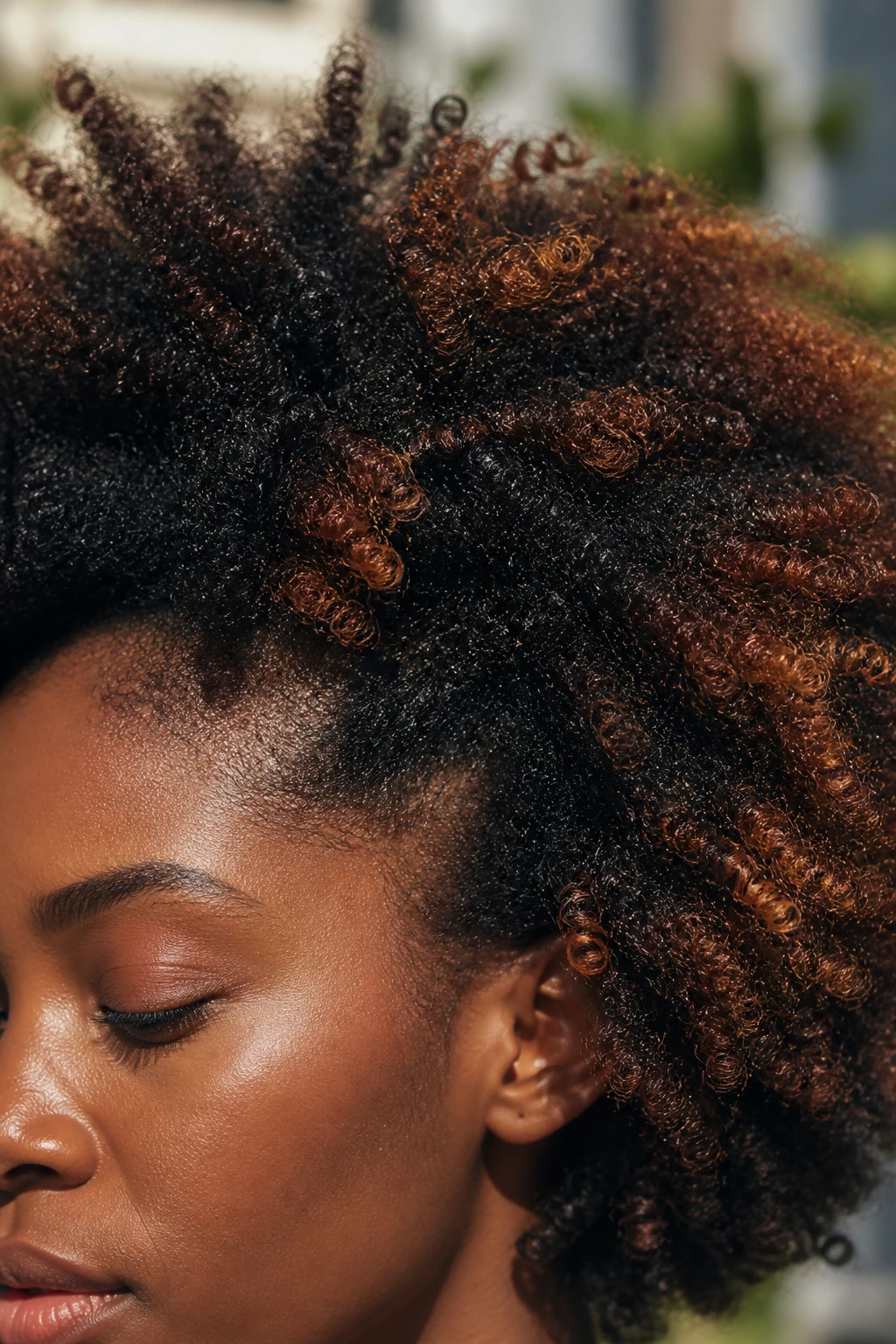
Black natural hair does not show color in a flat, even way, and that is the part people underestimate. Coils, kinks, curls, and locs create tiny shifts in light and shadow, so the same dye can look deeper on one section and warmer on another. That is why a copper on stretched hair can look soft, while the same copper on a tight coil can look louder and more saturated.
Porosity changes the result too. Hair that’s more porous grabs pigment fast and can fade faster if it is not sealed well. Lower-porosity hair tends to resist color at first, which is why some shades need a stronger deposit or a little heat during processing. The strand itself is doing a lot of the work, whether we like it or not.
This is where placement stops being a styling detail and starts becoming the main event. A money piece, halo, underlayer, or ombré can look better than all-over color simply because the texture gets room to show it off. Flat shade on textured hair is usually the wrong move. Dimension wins.
Choosing Black Natural Hair Color by Undertone and Porosity
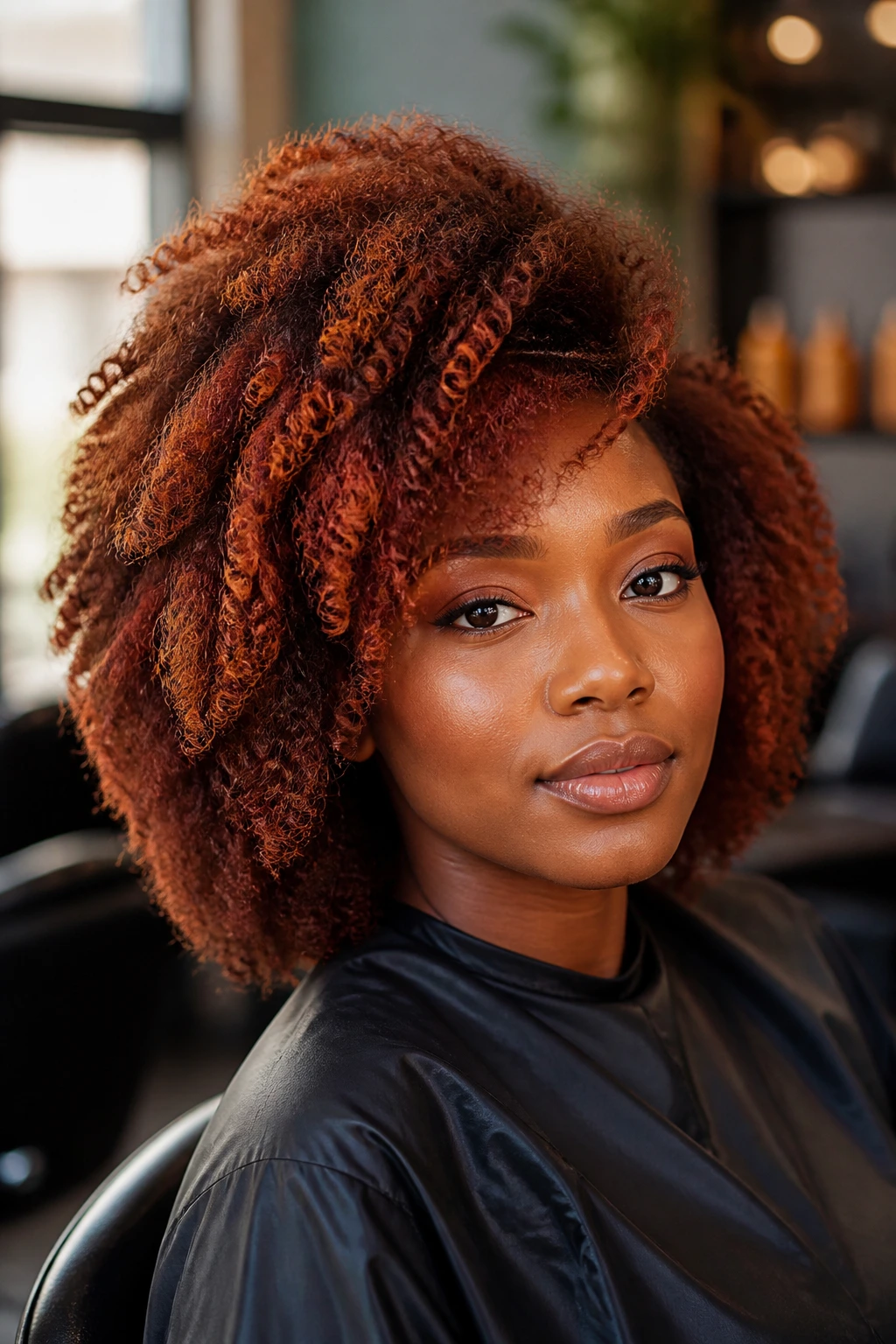
Undertone is the part people skip, then wonder why the color looks muddy. Warm undertones usually play well with honey blonde, auburn, copper, cherry cola, and chestnut. Cool undertones tend to look cleaner with blue-black, plum, mushroom brown, silver, and smoky violet. Neutral skin can wear almost anything if the placement is right, which is the annoying but useful truth.
Porosity matters just as much. High-porosity hair accepts pigment fast, which can make reds and purples show quickly but fade faster too. Low-porosity hair often needs a bit more patience, gentler heat, and careful product choice so the cuticle will take the color instead of resisting it.
Warm, cool, and neutral in practice
- Warm skin usually looks strongest with copper, amber, auburn, and golden brown.
- Cool skin often looks sharper with blue-black, plum, ash brown, and silver.
- Neutral skin can go either way, so the cut, density, and styling matter more than the color family.
If you’re unsure, look at your jewelry first. Gold tends to flatter warm tones, silver tends to flatter cool ones, and that small clue usually saves a lot of bad hair color decisions.
The Tools and Products That Make Coloring Safer
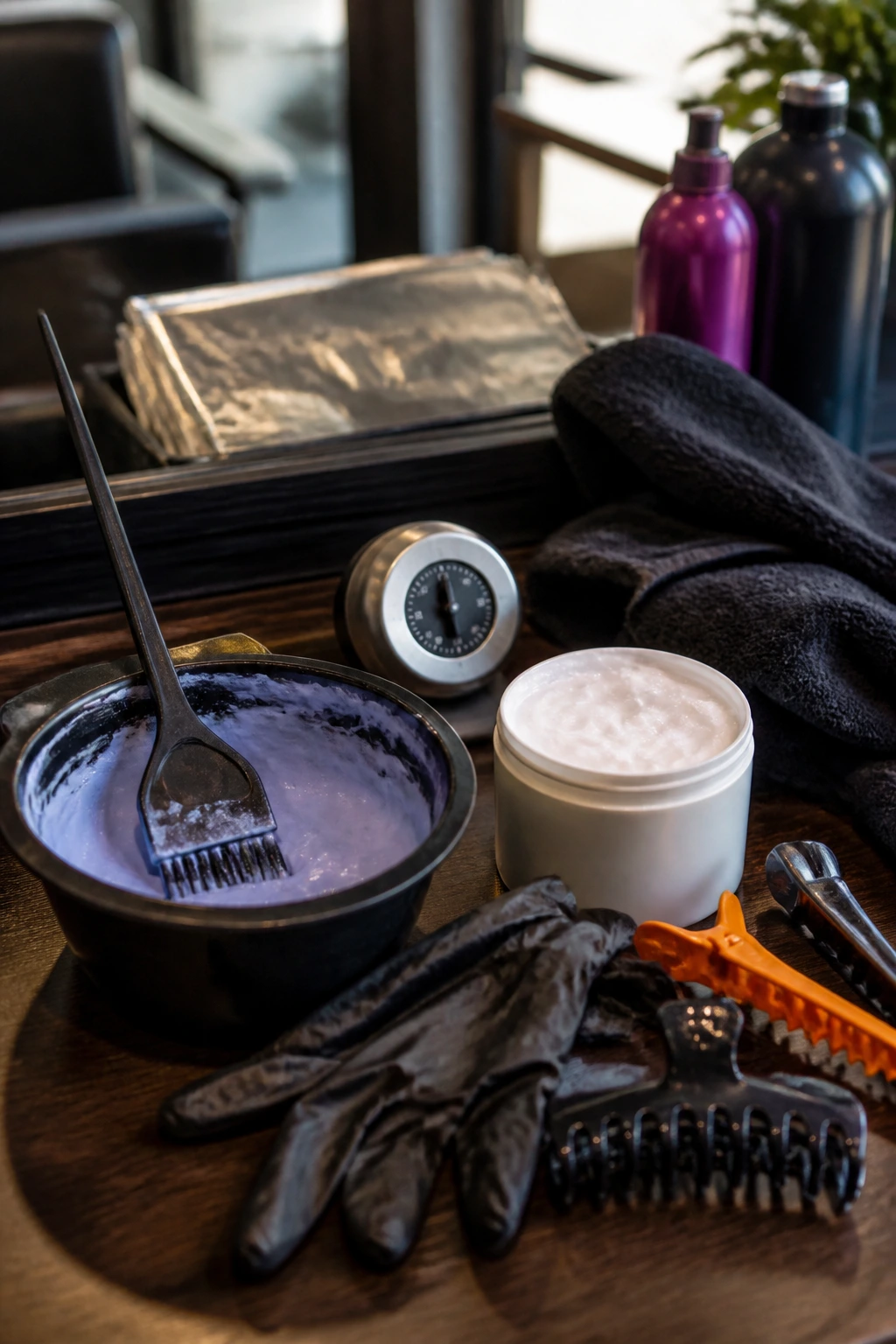
Coloring Black natural hair goes better when the tools are ready before the bottle is open. I’m not precious about salon-grade gear for everything, but a few things do make a real difference, especially if you’re doing highlights or any kind of lift at home.
- Sectioning clips: Keep curls separated so you’re not chasing missed spots with dye-covered gloves.
- Tint bowl and color brush: Better control than squeezing from the bottle, especially on highlights and face-framing pieces.
- Gloves: Nonnegotiable. Stained cuticles and dye under the nails are annoying for days.
- Applicator bottle: Useful for root melts, all-over deposit, or semi-permanent color.
- Petroleum jelly or barrier cream: Put it on the hairline, ears, and neck before application.
- Timer: Color that sits five minutes too long on porous ends can shift fast.
- Wide-tooth comb: Helps distribute product without ripping through curls.
- Shower cap or processing cap: Keeps the hair warm and contained while color develops.
- Old T-shirt and dark towel: The color will not care what you’re wearing.
A color-safe shampoo, deep conditioner, and leave-in are part of the setup too. If you plan to lighten the hair, add a bond-building treatment to the list. That’s not optional in my book if you want the curls to keep their spring.
How to Shop for Dye, Developer, and Lightener Without Guessing
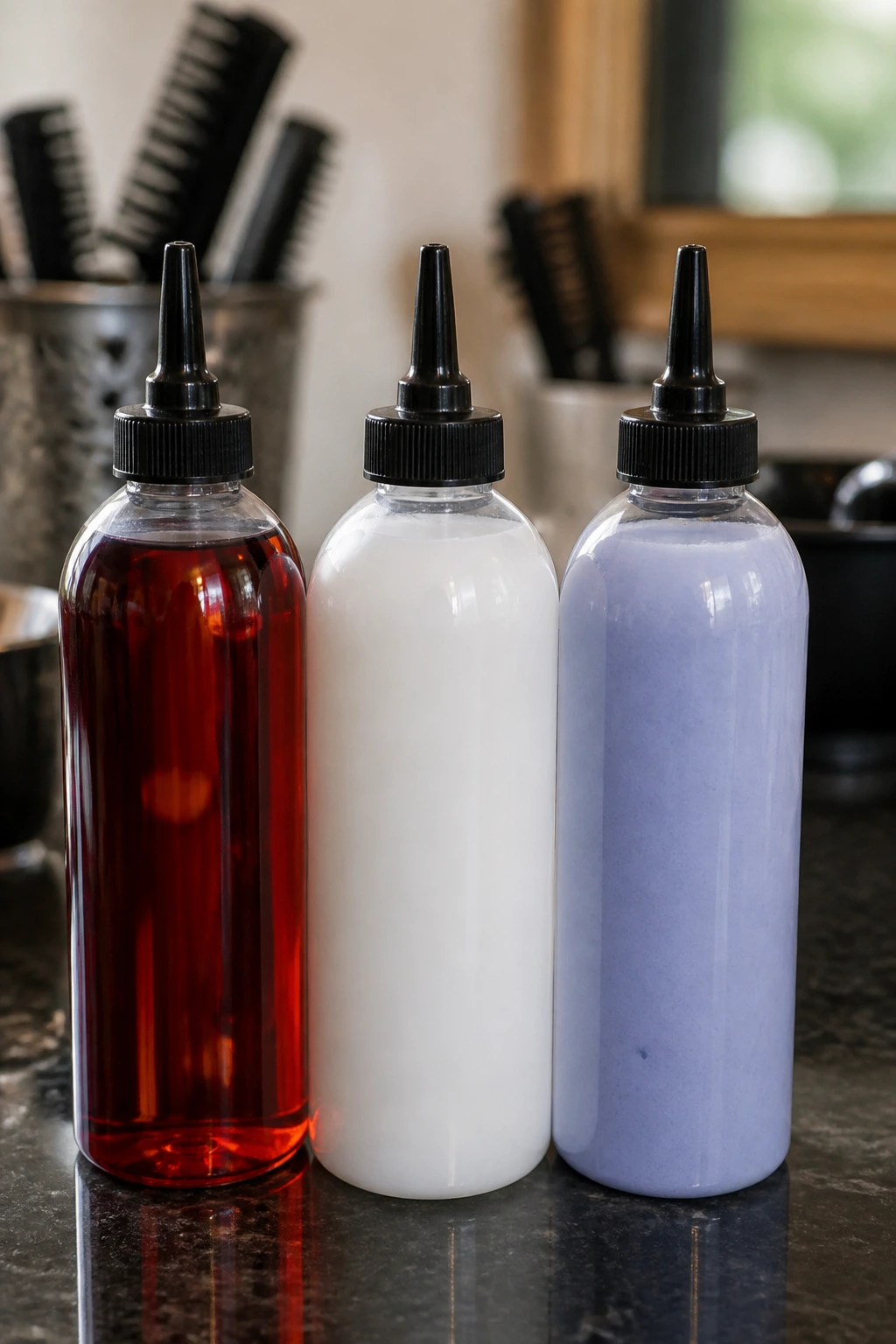
The box swatch is a suggestion, not a promise. On Black natural hair, the starting level matters more than the picture on the front. If your hair is already deep brown or black, warm browns and red tones can show with a deposit-only formula or a demi-permanent color. Blonde, silver, lilac, and teal need a prelightened base if you want them to look clear instead of muddy.
For home coloring, 10-volume developer is gentler for depositing tone and minor shift. 20-volume gives more lift, but it also asks more of the hair, so I’d keep that for careful use and strand-tested sections. I would not rush toward stronger developer just because you want the color to show faster. Faster is not the same as better.
Read the label for tone, not only the name. “Chocolate” can lean red, gold, or ash. “Brown” can turn brassy fast if it is too warm for your undertone. And if you’re picking a fashion shade, ask whether it is semi-permanent, demi-permanent, or permanent. The formula type changes how often you’ll need to refresh it and how rough it may feel on the hair.
How to Wear These Colors With Twist-Outs, Afros, Locs, and Puff Styles
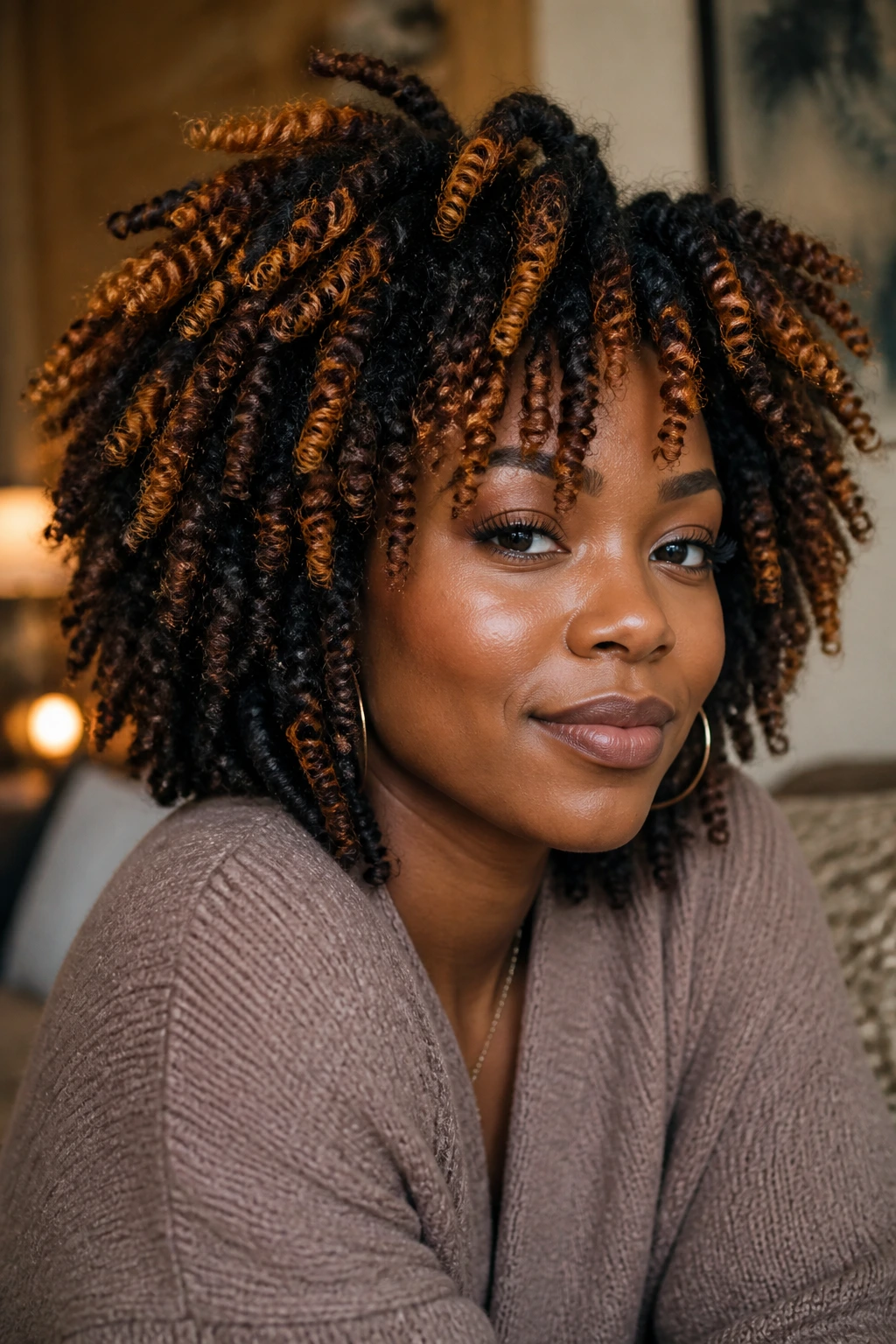
Presentation: A twist-out shows ribboned highlights better than a tight braid set, while a puff or fro makes halo colors and underlayers easier to see. If you want the shade to show up, choose a style with movement and separation. If you want to hide the color between events, choose a puff, bun, or loc style that covers the mids.
Pairings: Gold hoops, a clean part, and a lip color that matches the warmth of the hair can keep warm shades from looking random. Cool shades like blue-black, plum, and silver usually look strongest with sharper liner, silver jewelry, or simple black clothing. You do not need to overstyle the rest of the look, though. The hair should still be the point.
Coverage: Full-head color makes sense when you want a big change and have the time to maintain it. Face-framing pieces, tips, and underlayers are better when you want to test the water or keep the roots darker. The smaller the placement, the easier it is to keep healthy texture at the top.
Setting: Browns, blue-black, and mahogany can live comfortably in everyday wear. Honey, teal, plum, and copper feel louder and work best when you want the hair to carry the outfit. That is not a rule. It’s just the path of least regret.
Small Changes That Make a Shade Feel More Like Yours
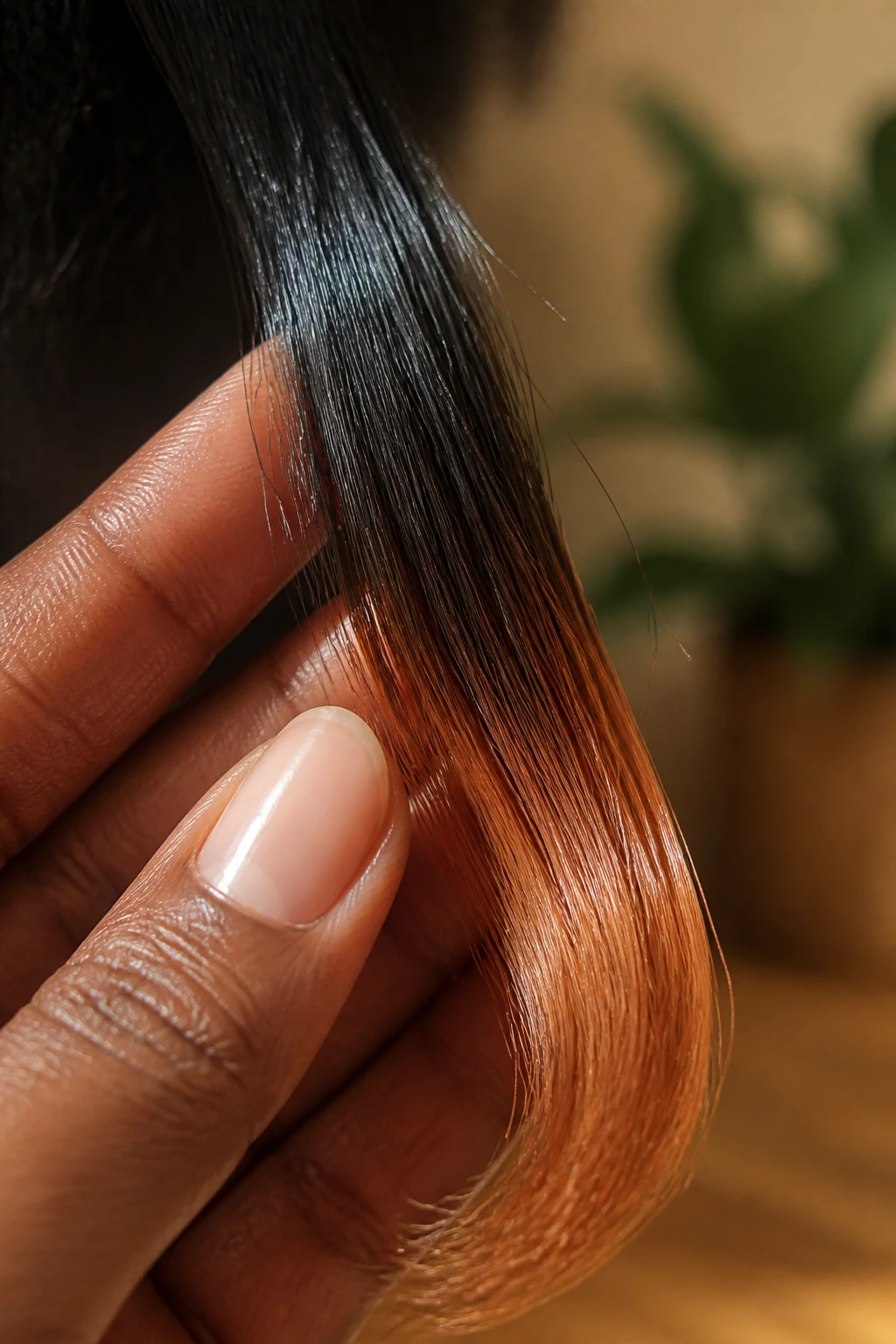
Tone Shift: A copper can lean orange, amber, or red-brown depending on how much warmth you want. The same goes for brown shades—espresso, chocolate, and mushroom all sit in different lanes, even if they sound close on paper.
Placement: If a full head feels like too much, move the color to the front pieces, the tips, or the underlayers. That one choice changes the whole mood of the style without forcing a bigger commitment.
Finish: Gloss matters. A shiny finish makes dark color look richer and keeps lighter pieces from reading dry or chalky. If the ends look rough, a little leave-in and a small amount of oil on the tips usually helps more than another round of product.
Make-It-Yours: For low-maintenance wear, stick with chocolate, mahogany, or blue-black. For a bolder look, pick copper, burgundy, teal, or platinum. For something in between, choose caramel, amber, or chestnut and let the texture do the rest.
Keeping the Color Fresh Between Wash Days
Color fades faster on hair that’s washed too aggressively, left in harsh sun, or stripped with heavy sulfates every week. On Black natural hair, the goal is to keep the curl pattern happy so the color stays inside the strand longer. That means gentler cleansing, more moisture, and less chaos.
For deeper shades like blue-black, espresso, mahogany, and chocolate cherry, a gloss or color-depositing conditioner every 4 to 6 weeks usually keeps the tone from looking tired. Warm reds, coppers, and burgundies often need a refresh a little sooner, especially if your hair is high porosity or you swim often. Bright blondes, silvers, and lilacs need the most babysitting, because toner and pigment wash out fast.
The wash routine matters too. Use a color-safe shampoo most of the time and save clarifying shampoo for when the hair starts feeling coated or dull. If you lightened the hair, deep condition weekly and avoid rough towel drying. A microfiber towel or soft cotton T-shirt is kinder to the cuticle than a regular terry towel.
At night, a satin bonnet or pillowcase keeps the hair from rubbing itself dull. If you live in sun or heat, a UV protectant for hair is not silly at all. Color and curls both hate being baked.
Common Mistakes That Make Natural Hair Color Look Worn Out
The first mistake is chasing a shade that fights your starting level. If your hair is very dark and you want honey blonde, teal, or silver, you will need proper lightening. Trying to skip that step usually gives you muddy color and dry ends, which is the worst combination.
The second mistake is ignoring porosity. Hair that drinks everything up can turn red or copper in a flash and fade just as fast. Hair that resists color needs patience, heat control, and the right formula. If the color looks patchy or disappears unevenly, porosity is often the culprit.
The third mistake is coloring ends that are already weak. That’s where people get that fried, see-through look that makes the whole style feel tired. Trim first if needed, then color healthy sections or choose a richer shade that doesn’t ask for as much lift.
The fourth mistake is picking a placement that doesn’t fit the hairstyle. Blonde money pieces on a style you always wear pulled back might not show enough. Hidden panels on a look you never part might disappear. Let the haircut and the style guide the placement. They know more than the bottle does.
Variations and Adaptations to Try
Low-Commitment Gloss Play: If you want color without a hard change, start with espresso, blue-black, mahogany, or chocolate cherry in a demi-permanent gloss. These shades add depth and shine without forcing you into bleaching. They also fade in a way that feels manageable, not abrupt.
High-Contrast Drama: If you want the hair to read from across the room, choose honey blonde, platinum, cobalt, teal, or split-dye contrast. These looks need more maintenance, but they also deliver the clearest visual payoff. Best on short cuts, bold parts, and styles with strong shape.
Protective-Style Friendly Color: If you live in braids, twists, or locs, keep the brightest color at the ends, underlayers, or just around the face. That lets the style stay neat while still giving you movement and color. It also reduces the amount of hair that has to be processed.
Soft Warmth for Every Day: Cinnamon, amber, chestnut, and auburn are the shades that quietly improve dark natural hair without changing your whole life. They’re good when you want warmth that still fits into workdays, family events, and low-key weekends. These shades age better than people expect.
Cool-Tone Edge: Blue-black, plum, mushroom brown, silver, and midnight violet give natural hair a cooler, sharper finish. They’re best if your wardrobe leans dark or neutral and you want the hair to feel slightly more edited. Cool tones also help cut brass if your hair tends to pull orange.
Questions People Ask Before Coloring Natural Hair
Will hair color loosen my curl pattern?
It can, especially if you lighten more than a few levels or bleach already fragile ends. Deposit-only shades and glosses usually keep the curl pattern more intact than repeated lightening. If the hair starts feeling mushy or stretchy when wet, back off and focus on moisture and trim care.
What color shows best on dark natural hair without bleach?
Blue-black, espresso, mahogany, burgundy, cherry cola, and deep plum are the easiest wins. They show because they deposit tone, not because they rely on heavy lift. If you want blonde, silver, teal, or lilac, you’ll need more lightening.
Is semi-permanent color better than permanent color?
For many natural hair situations, yes. Semi-permanent and demi-permanent formulas are kinder when you’re trying color ideas for Black natural hair without committing to major lift. Permanent color makes more sense for gray coverage or a deeper structural change.
Why did my brown turn orange?
Your hair probably lifted warm, or the dye was a warm brown to begin with. This happens a lot when people buy a brown swatch that looks neutral in the box but runs golden in real life. An ash toner or a cooler shade can help, but the better fix is choosing the right tone from the start.
Can I color locs or twists?
Yes, but the approach matters. Locs handle burgundy, auburn, honey, and chocolate tones well because the structure keeps the color more even. Twists show tips and highlights nicely, especially if you want low-commitment placement instead of full-head color.
How often should highlights be touched up?
Face-framing pieces and blonde highlights usually need attention every 6 to 10 weeks, depending on fade and regrowth. Deep browns and red-browns can go longer. If your ends start looking dry before the color looks faded, treat the dryness first. That’s the hair talking.
Can I do this at home if my hair is fragile?
Only the easier shades, and only if you’re honest about the condition of the hair. A gloss, demi-permanent brown, or a subtle red-brown is one thing. Platinum, silver, or high-lift blonde on fragile coils is a different story and usually belongs in a salon chair.
How do I keep vivid color from bleeding?
Rinse with cool water, use color-safe shampoo, and avoid over-washing. Also keep the hair moisturized so the cuticle lies flatter; dry, rough hair sheds pigment faster. If the color is teal, red, or purple, expect some fade no matter what you do. The goal is slower fade, not no fade.
A Shade Worth Growing Into
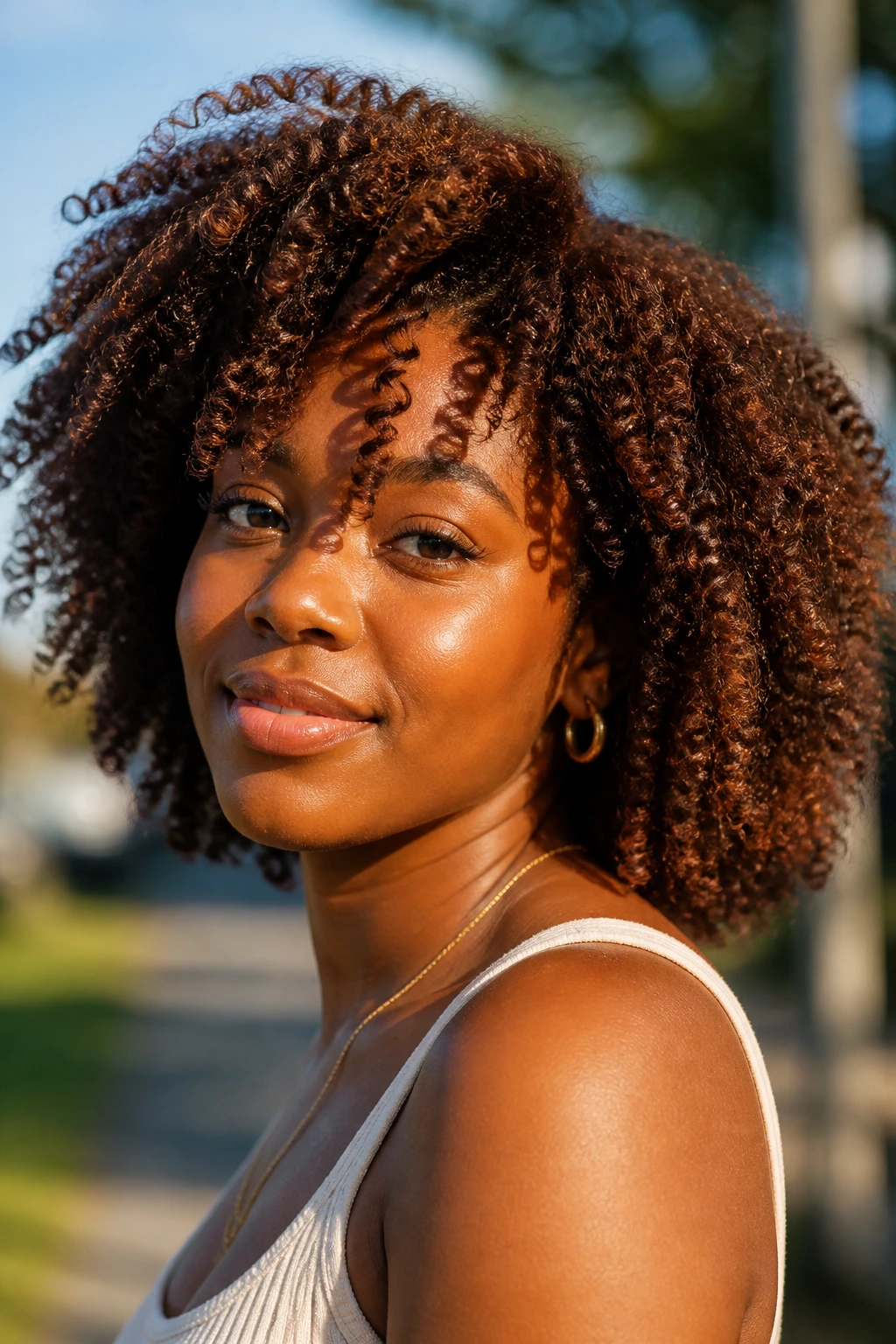
The smartest color ideas for Black natural hair are the ones that respect the hair’s shape before they try to change it. That might mean a soft chestnut glow on a twist-out, a blue-black puff, or a bright money piece that lives at the hairline and nowhere else. The point is not to force the curls into a color they can’t hold. The point is to pick a shade that makes the texture do something interesting.
If you’re deciding between subtle and bold, start with placement. Front pieces, tips, underlayers, and halos tell you a lot about how color lives on your hair without asking for a full commitment. And once you know how your coils, locs, or curls take color, the rest gets easier fast.
The best part is that natural hair gives you room to change your mind. That’s a good thing. Use it.
