



3B curly cuts for Black hair live or die on shape. A cut can look neat in the mirror and then turn into a soft triangle by lunchtime, especially once the curls dry and the crown rises. The trick is not chasing some fantasy of “control.” It’s building a silhouette that still makes sense after shrinkage, fluff, and a little real-life friction from scarves, seats, wind, and the general chaos of being a person.
That’s why the best cuts for this texture respect curl spring, density, and the way Black hair often behaves in more than one pattern at once. A half-inch in the chair can become an inch and a half once the hair dries. A blunt line that looks crisp on wet hair can read heavy or boxy later. And a cut that’s too aggressively thinned can lose the plush, rounded shape that makes 3B curls look full instead of stringy.
Some of the shapes below are quiet and polished. Some have attitude. All of them are built around one simple idea: let the curl do the work, then give it a frame that doesn’t fight back.
Why These Shapes Keep Working
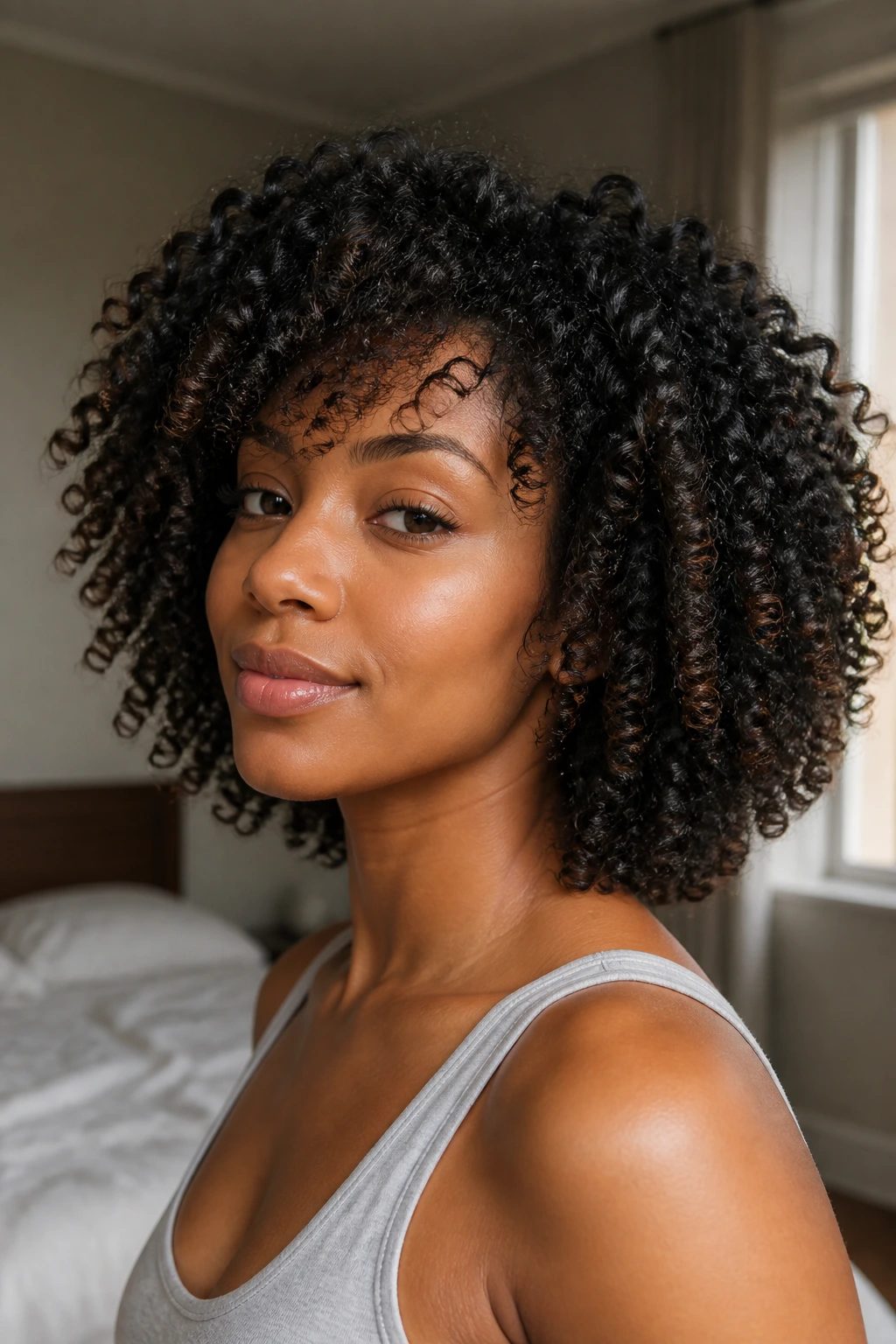
- Shrinkage-aware shaping: The best 3B cuts leave room for the curl to spring up without turning the outline into a box or a triangle.
- Density gets managed, not erased: Black hair often needs bulk removed in specific places, not scattered with thinning shears that make the ends look see-through.
- The front gets a job: Face-framing, side parts, and bangs pull the eye where you want it instead of letting the hair sit in one heavy curtain.
- Length stays believable: These cuts keep enough weight at the perimeter so wash-and-go curls still clump instead of puffing out.
- Styling stays manageable: Most of these shapes can be refreshed with water, leave-in, and a diffuser pass instead of a full reset every morning.
1. Rounded Collarbone Cut
A rounded collarbone cut is the safe bet that never looks boring in real life. It lands right around the collarbone, then curves gently in the back so the silhouette feels soft instead of chopped off. On 3B curls, that little curve matters more than people think. It keeps the ends from flaring out like a shelf when the hair dries.
This cut works because it gives the curls enough length to clump, but not so much length that the shape drags your face down. If your hair tends to puff out at the sides, keep the front just a touch shorter than the back. That tiny difference helps the curls swing when you turn your head.
Ask for a dry check after the first pass. If the stylist only looks at it wet, the final line can surprise both of you. And no, you do not need a lot of layers here. The charm is in the curve.
2. Blunt Curly Bob
Don’t let anybody thin this one to death. A blunt curly bob on 3B hair looks best when the perimeter is kept full, solid, and just below the jaw or right at it, depending on shrinkage. The whole point is density. When those curls stack tightly, the bob gets that plush, rounded look that makes people stare for the right reason.
This cut is sharpest on hair that already clumps well. If your curls separate into wisps the second they dry, a blunt line can look harsher than you want. But if your pattern holds and your ends are healthy, this is one of the cleanest shapes in the whole group.
What to tell the stylist
- Cut it dry or mostly dry so the shrinkage is visible.
- Keep the line full at the ends.
- Skip aggressive razor texturizing near the perimeter.
That’s the difference between a bob and a bob that keeps its nerve after wash day.
3. Side-Part Lob
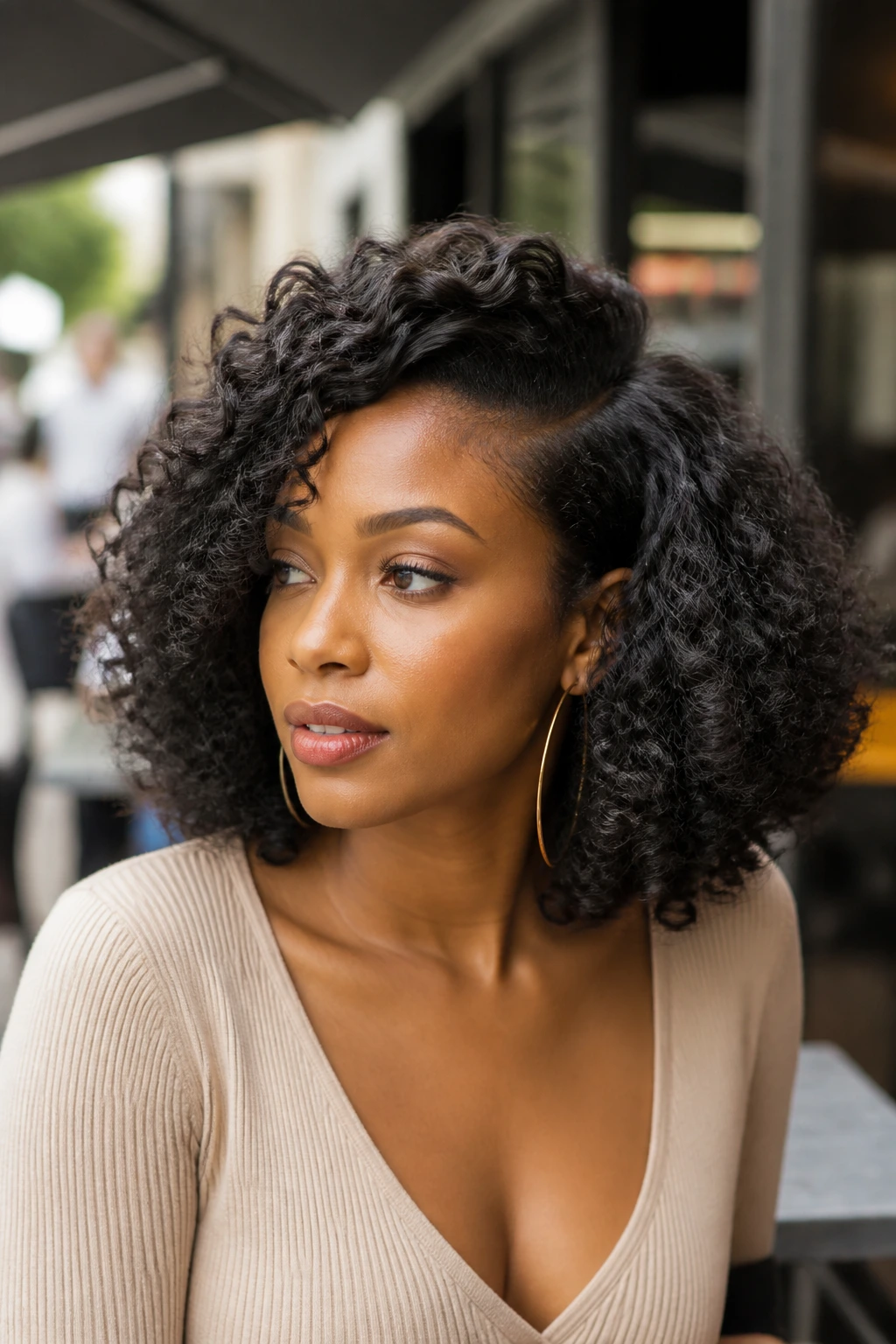
Why does a side part change the whole mood? Because 3B curls respond to gravity in a way straight hair never will. A side-part lob gives the crown a little lift, shifts the bulk away from the center, and lets the curls fall in a looser arc across the face. On rounder faces, that asymmetry can be a blessing. On flatter crowns, it can wake everything up.
The lob sits in that useful middle zone between shoulder length and true long hair. It’s long enough to tuck behind an ear, pin back, or twist up, but short enough that the curls still have spring. I like this cut when someone wants shape without committing to a shorter bob.
If you wear a side part often, ask for the part to be built into the cut, not treated like an afterthought. Curls remember where they want to live. You might as well work with that.
4. Long Face-Framing Layers
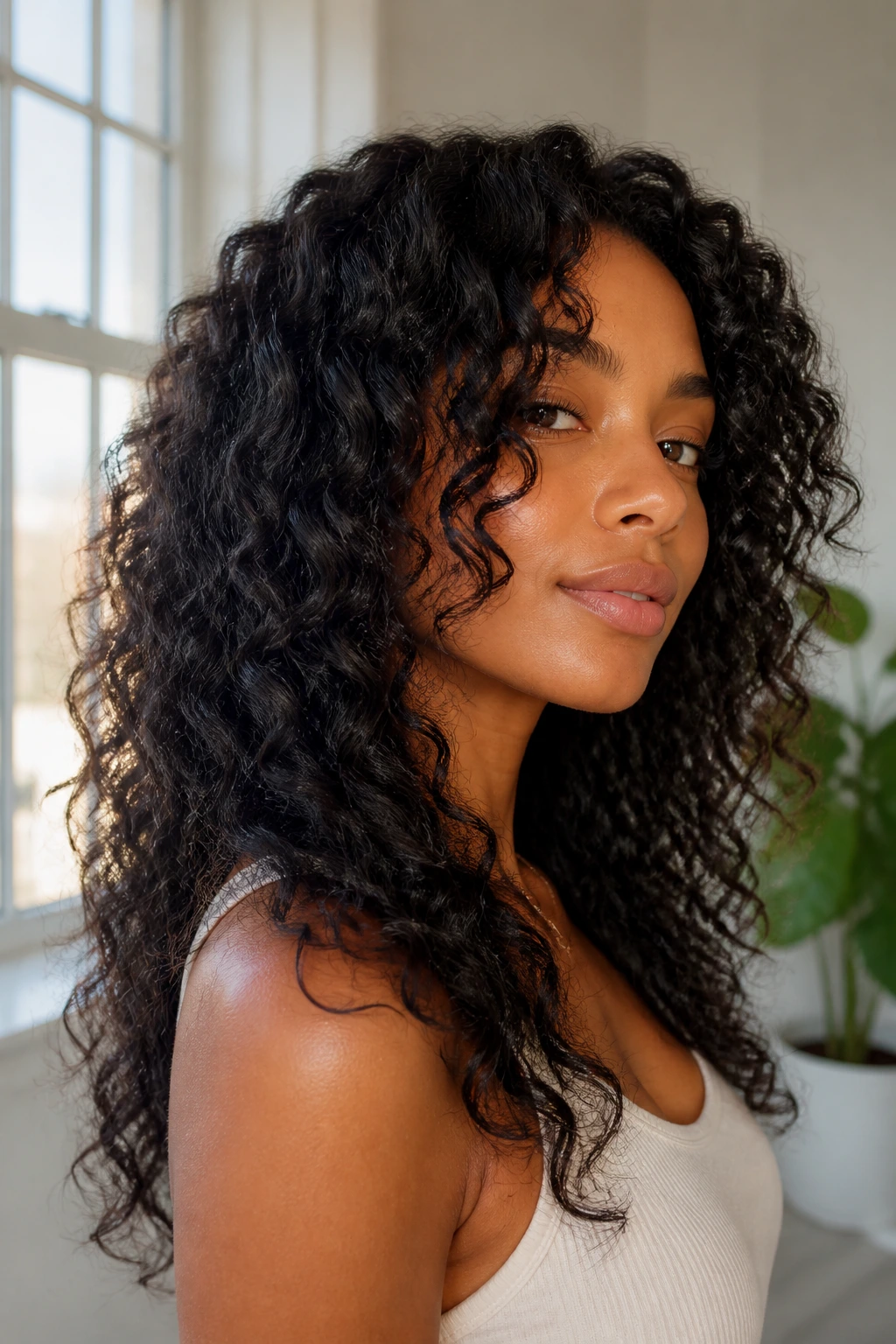
When your length is fine but your front keeps disappearing, face-framing layers solve the problem fast. They carve out a little opening around the cheekbones, jaw, and chin so the curls don’t sit like one heavy wall. On 3B hair, those shorter front pieces can make the whole head feel lighter without sacrificing length through the back.
The best version of this cut keeps the shortest face pieces long enough to curl, not so short that they shrink into fringe you didn’t ask for. That’s especially useful if your hairline curls are tighter than the rest of your head. Leave a little extra room in the front. Better too long than accidentally baby-bang short.
This cut is a smart choice if you wear glasses, big earrings, or makeup that you want people to see. It puts the face back in the frame. Simple. Useful. Hard to mess up when it’s cut well.
5. Soft Curly Shag
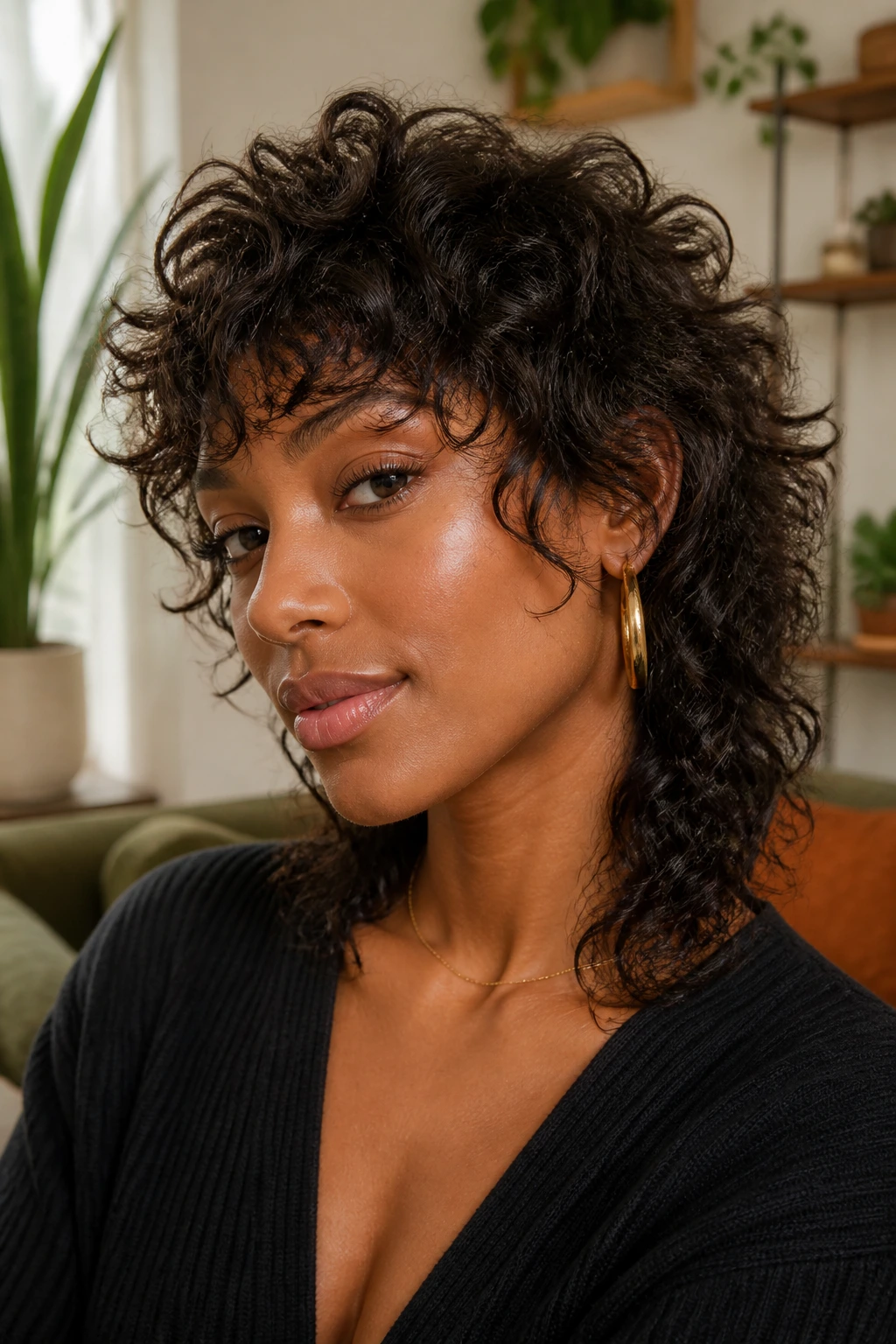
The shag only works when the layers are placed with some discipline. Otherwise it turns into a puffed-up halo with no clear shape. A soft curly shag gives 3B curls movement through the crown and sides without carving so much out that the ends go thin. That balance matters, because once curly hair loses too much weight, it can look frayed instead of airy.
This cut is especially good on dense hair that feels heavy even after a thorough detangle. A few thoughtful interior layers can take pressure off the roots and stop the whole style from sitting like a helmet. But I would not overdo it on finer 3B strands. Keep the longest layer strong. The shag should move, not disappear.
The styling payoff is real. Scrunch in a foam or light gel, diffuse a bit at the roots, and let the layers do what they’re supposed to do. It looks a little rock-and-roll, a little lived-in, and very unfussy when done right.
6. U-Shaped Long Cut
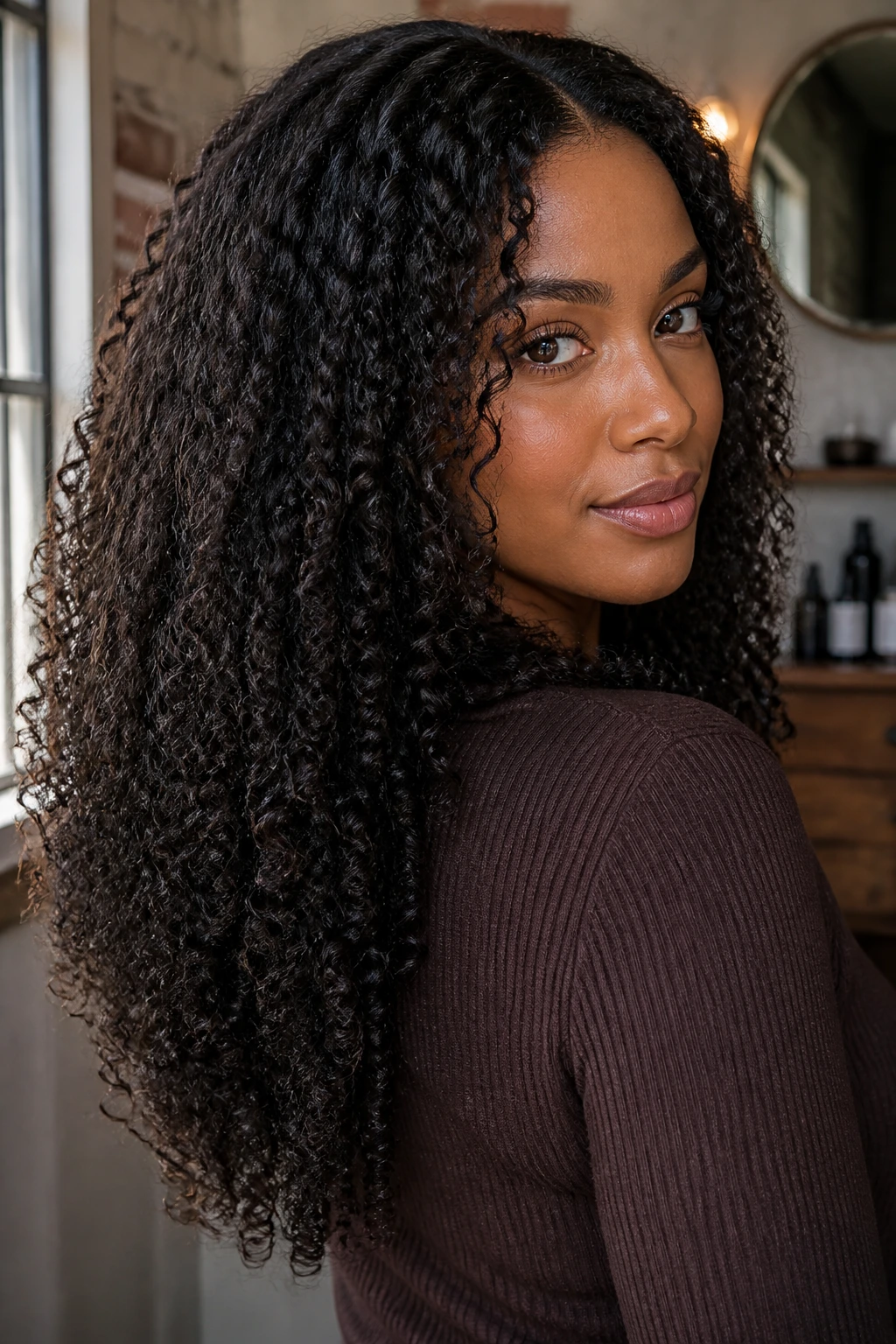
A U-shaped cut is for people who want to keep length and still avoid that blunt block at the back. The back curves gently upward instead of stopping hard in one line, which gives long 3B curls a softer fall. You notice the difference most when the hair is down and moving. The shape reads rounder, calmer, less like someone took shears to the last inch and called it a day.
This cut is a good fit if your curls are thick enough to hold volume but not so dense that you need major bulk removal. It’s also a nice option if you like twisting or pinning the hair into half-up looks, because the shorter front pieces can still blend into the longer back. No harsh corners. No awkward shelf.
Ask for the curve to be checked once the hair is dry or stretched. On curly hair, a U can quietly become a V or a straight line if the final shape isn’t rebalanced.
7. V-Cut with Movement
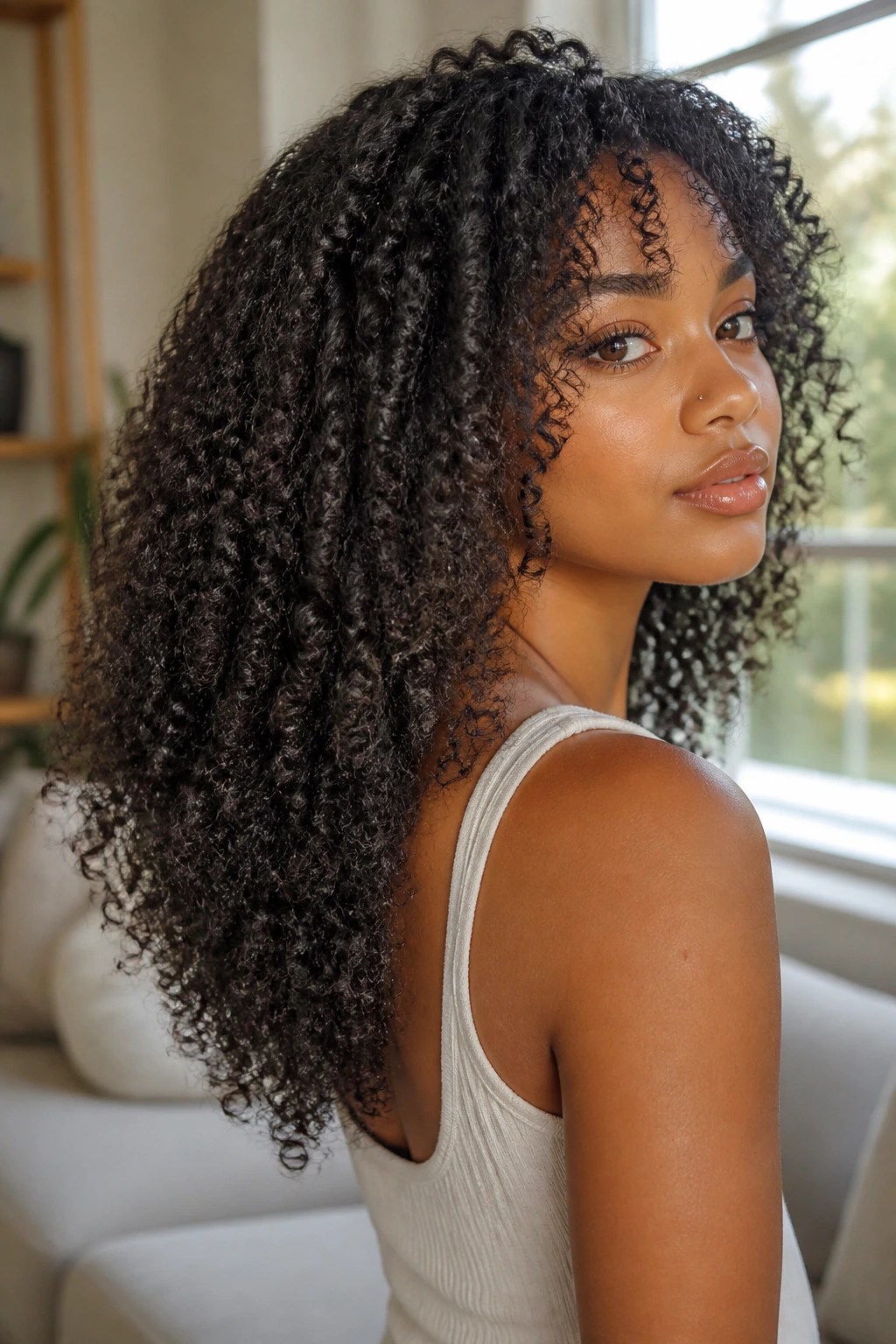
A V-cut gives long 3B curls a pointed back that feels more dynamic than a plain length cut. The lower center hangs a little longer, while the sides taper up just enough to keep the outline from looking flat. On thick Black hair, that shape can pull a surprising amount of weight out of the back without sacrificing the drama of long curls.
The catch is that the V has to be soft, not severe. A sharp point can look dated fast, and on medium-density hair it can create a weird gap between the back and the sides. Keep the point gentle, and ask the stylist to make sure the longest section still blends when the curls spring up.
I like this cut on people who wear their hair loose a lot and want the ends to move when they turn their head. It’s one of those shapes that looks expensive even when the styling is plain.
8. Butterfly Layers
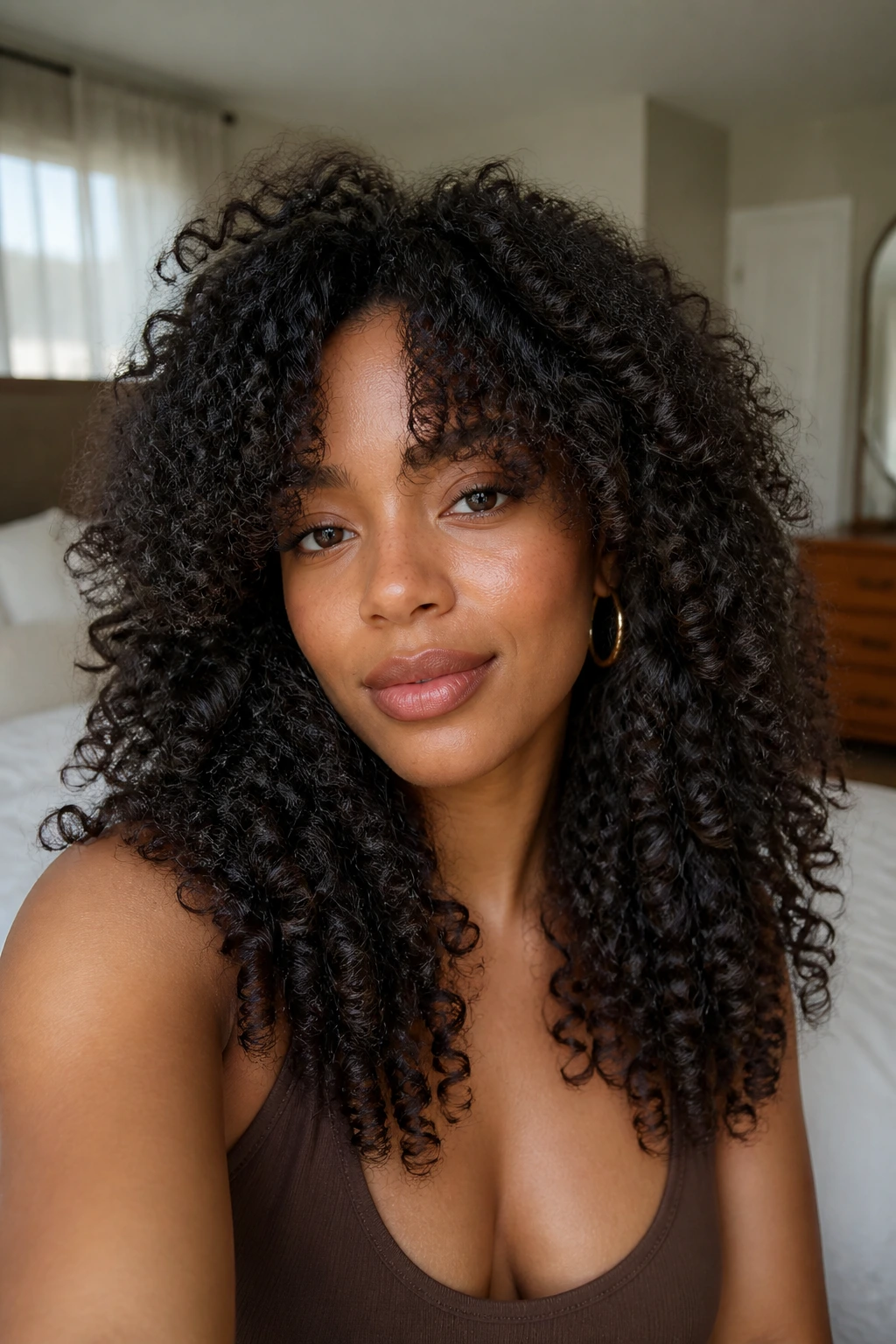
Butterfly layers are basically the answer to “I want big hair, but I still want length.” The shorter top layers give the crown lift, while the longer bottom layers keep the overall shape from shrinking into a puffball. On 3B curls, that contrast can be gorgeous. The top moves. The bottom hangs. The whole head feels lighter without losing the sense of fullness.
This cut does need a careful hand. If the layers are cut too high, the top can shrink past the face and start acting like a mini shag. If they’re too low, you lose the butterfly effect and just get a plain layered cut. The sweet spot sits somewhere between the cheekbone and the jaw on the front sections, with longer weight left underneath.
It’s one of my favorite choices for anyone who likes blowing out their curls occasionally, because the layers still make sense when stretched. Wet, diffused, or blown out, the shape has room to breathe.
9. Angled Bob with a Soft Front Drop
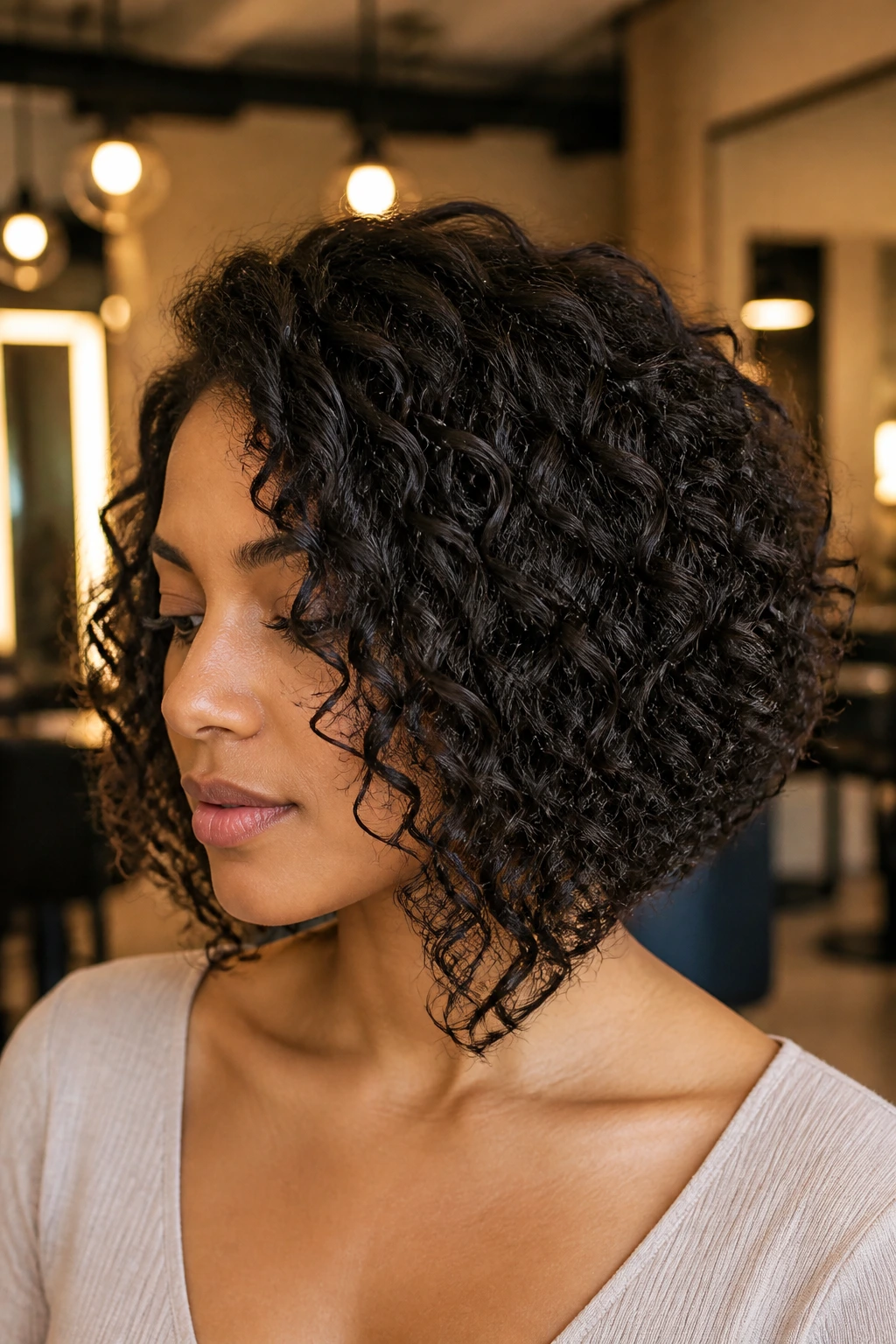
An angled bob is for the person who wants the haircut to do a little talking. The back sits shorter, the front drops lower, and the whole line makes the jaw look a bit more defined. On 3B curls, that angle gives the hair motion, but the front drop keeps it from getting too sharp or stiff.
This shape is strongest when the angle is subtle. I’m not a fan of a dramatic slope on curly Black hair unless the curl pattern is very tight and the density is high. A softer angle keeps the cut wearable on day two, when the curls loosen and the silhouette gets a little bigger.
It’s a smart pick if your face feels hidden by equal-length curls. The longer front pieces open things up without turning the haircut into a full bob drama moment. Clean lines. Easy face-framing. No fuss.
10. Curtain Bangs and Layers
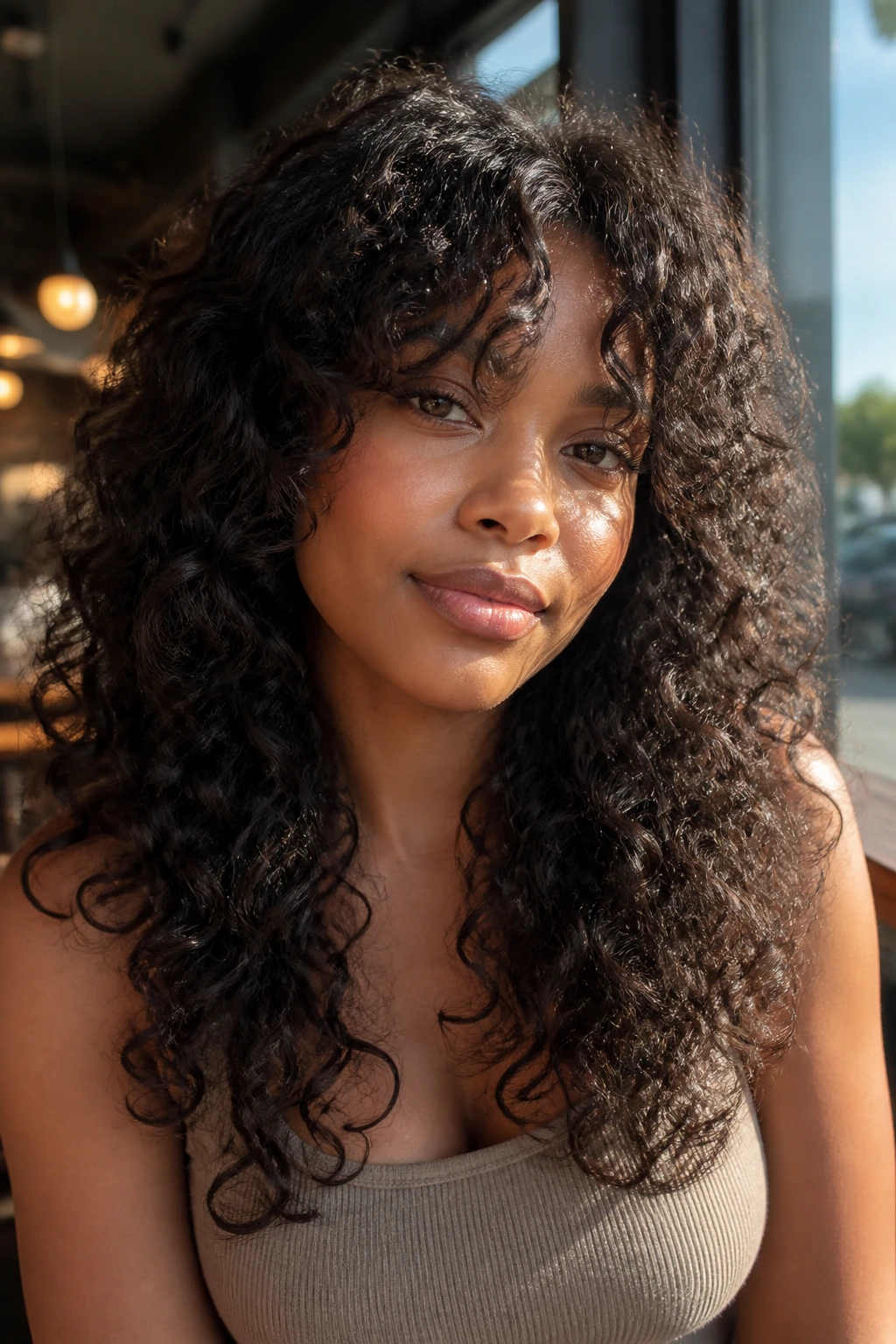
Curtain bangs on 3B hair can look fantastic, but only if the stylist respects shrinkage. The pieces need to be left longer than you think—often longer than cheek level—so they can dry into a soft split fringe instead of a tiny curl shelf. That’s the whole game. Cut for the curl, not the wet strand.
The rest of the cut should stay layered enough to support the bangs. If the back is too heavy, the fringe gets lost. If the front is too short, the shape can feel choppy. Curtain bangs need a little space to breathe, and 3B curls are more than happy to take it once they’re given the room.
This cut works best on people who like their face to feel open but not bare. It’s a little flirtier than a side part, a little softer than blunt bangs, and it can make the whole haircut feel newer without sacrificing length everywhere else.
11. Dense-Hair Internal Layer Cut
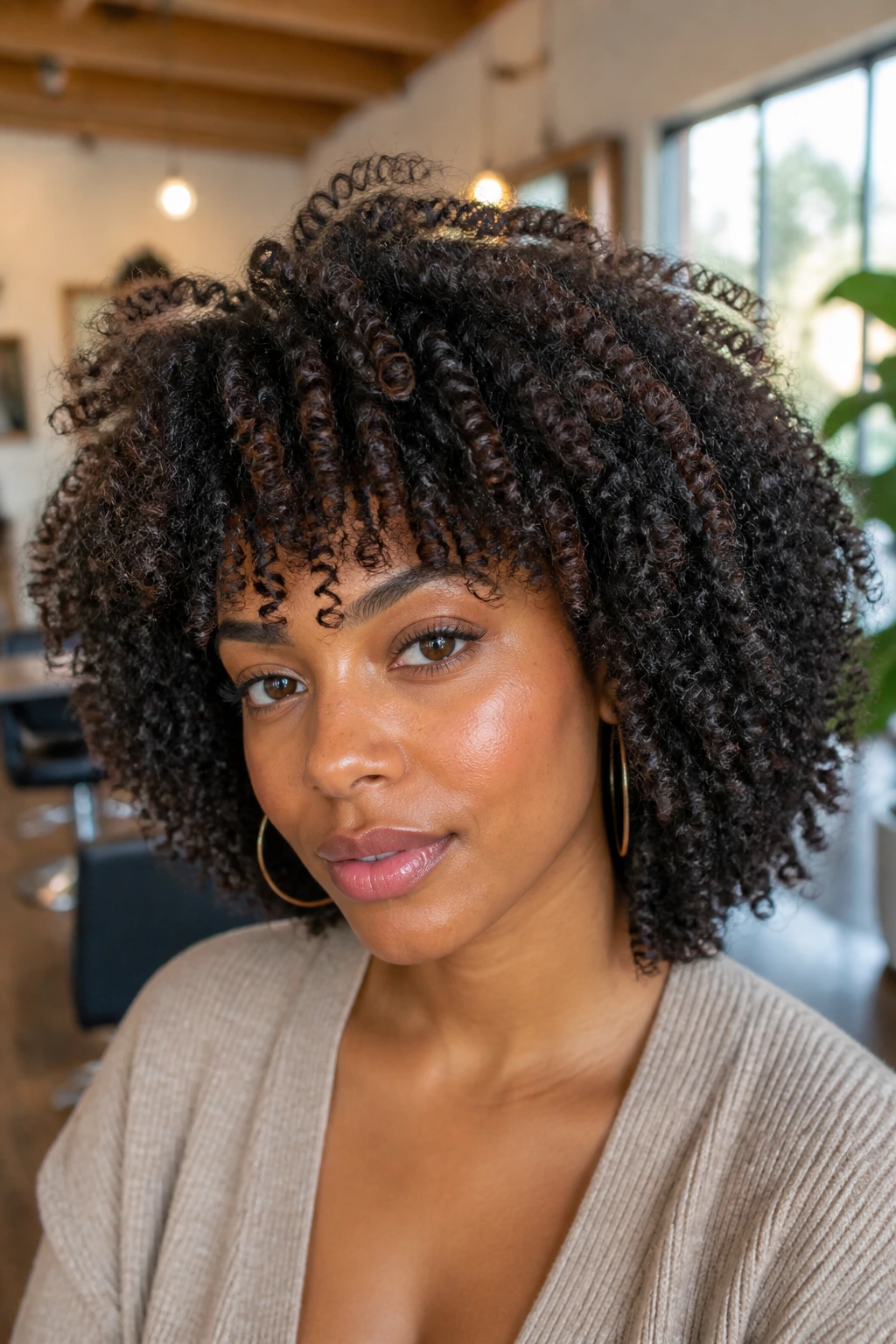
If your 3B hair looks huge before styling and still feels heavy after it dries, internal layers are your friend. Not exterior choppiness. Internal layers. The difference is the way bulk gets removed from inside the shape while the surface keeps its clean line. That’s what lets dense curls move without turning wispy.
This cut is for people who hate the feeling of a heavy block sitting on the head. The stylist opens up the inside, then leaves the perimeter strong enough to hold the shape. It’s a subtle trick, but on thick Black hair it can make a huge difference in how fast the curls dry and how well they clump.
Don’t let anyone go wild with thinning shears. That’s how you end up with frizzed-out ends and a shape that feels bigger but looks worse. Internal layers should solve bulk, not create fuzz.
12. Mid-Length Wolf Cut
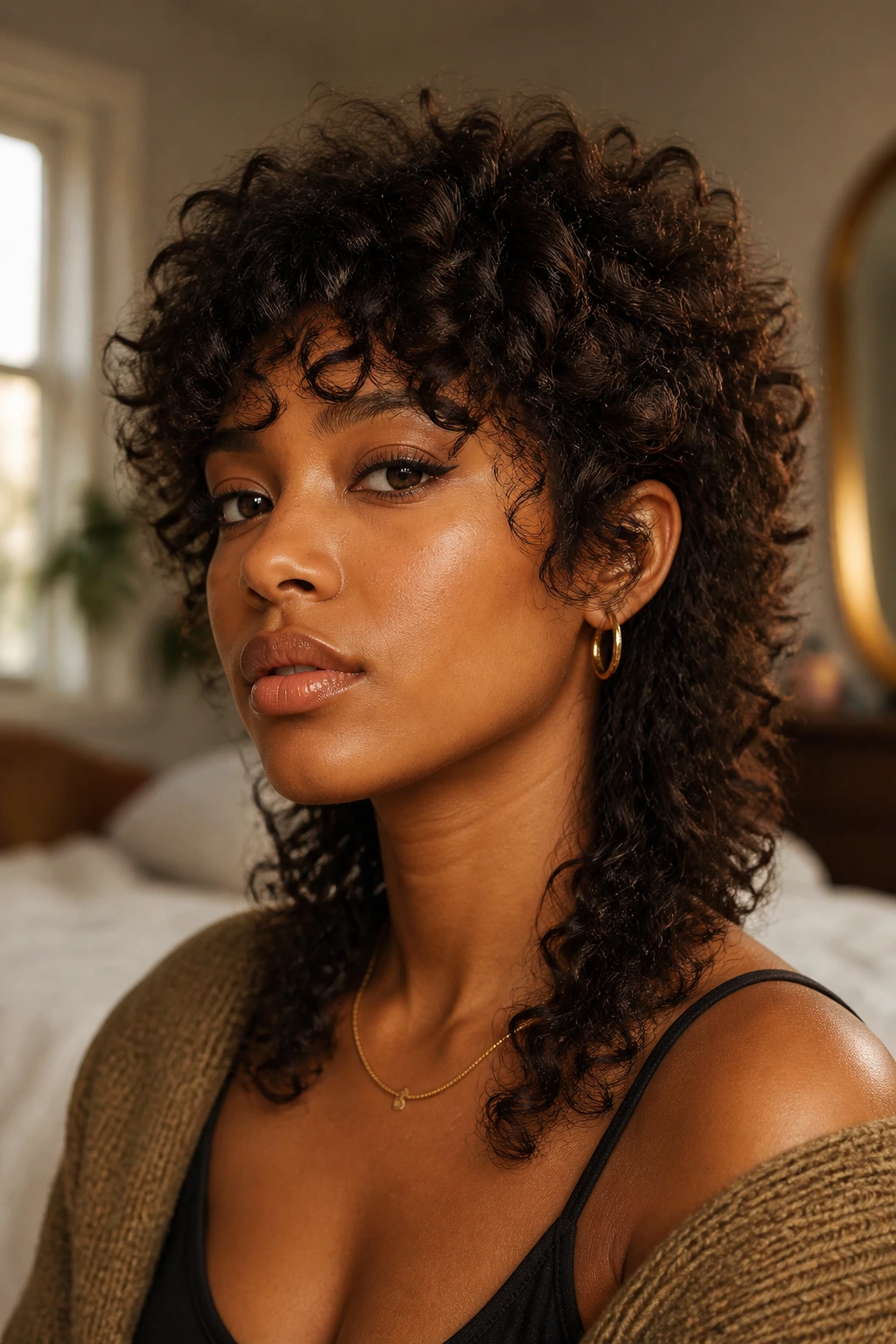
The wolf cut can work on 3B curls, but it needs a softer hand than the internet sometimes implies. You want the crown to feel lively, not shredded. The best version keeps the top layers short enough to bring texture forward, then leaves the bottom long enough that the cut still reads like a shape instead of a dare.
This one suits people who like a little edge and don’t mind volume. It’s especially good if your hair tends to collapse at the top and balloon at the ends. The wolf cut redistributes that weight. Suddenly the crown has a job, and the sides don’t sit there looking sleepy.
Keep an eye on the ends. If they start looking threadbare after a few trims, the cut has gone too far. A good curly wolf cut should look playful, not hungry.
13. Tapered Fro with a Long Top
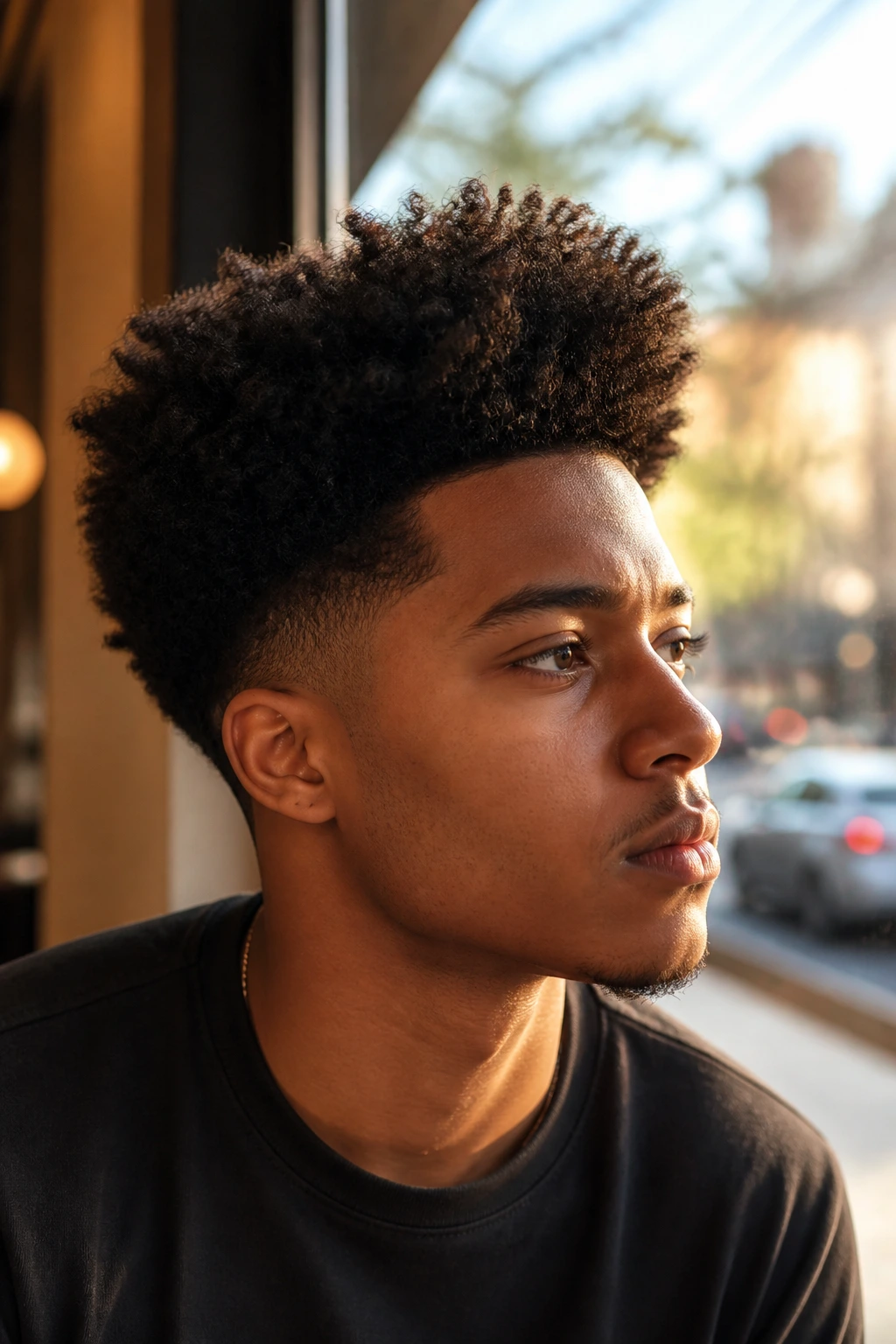
This is the cut for anyone who wants shape, ease, and a little bit of swagger. The sides and back are tapered in close enough to keep the outline neat, while the top stays long and curly so the style still has height. It works beautifully on 3B hair because the curl pattern gives the top natural lift without needing a lot of product or heat.
The tapered fro also solves a practical problem: it cuts down on bulk where you least want it. Around the nape, the temples, and the lower sides, dense curls can puff in weird ways. Tapering handles that. The top stays the star. The rest just behaves.
This is one of the low-maintenance shapes in the bunch, though it does need regular edge cleanup to stay sharp. If you like getting dressed fast and letting your hair be the focal point, this cut pulls its weight.
14. Rounded Halo Cut

A halo cut is all about the silhouette. The length stays fairly even around the head, but the outline rounds off so the curls form a soft cloud instead of a flat rim. On 3B curls, that rounded shape can look especially full around the crown and sides, which is a nice change from cuts that push all the volume down.
This shape is best when you want your hair to look intentionally big. Not messy. Big. There’s a difference. The curve around the head keeps the style from becoming triangular, and it gives earrings, necklines, and makeup a little room to show up.
I’d ask for this cut if you wear your curls out most days and want a shape that reads strong even on minimal styling. It’s one of those cuts that looks like the hair is in on the plan.
15. Side-Swept Layered Cut
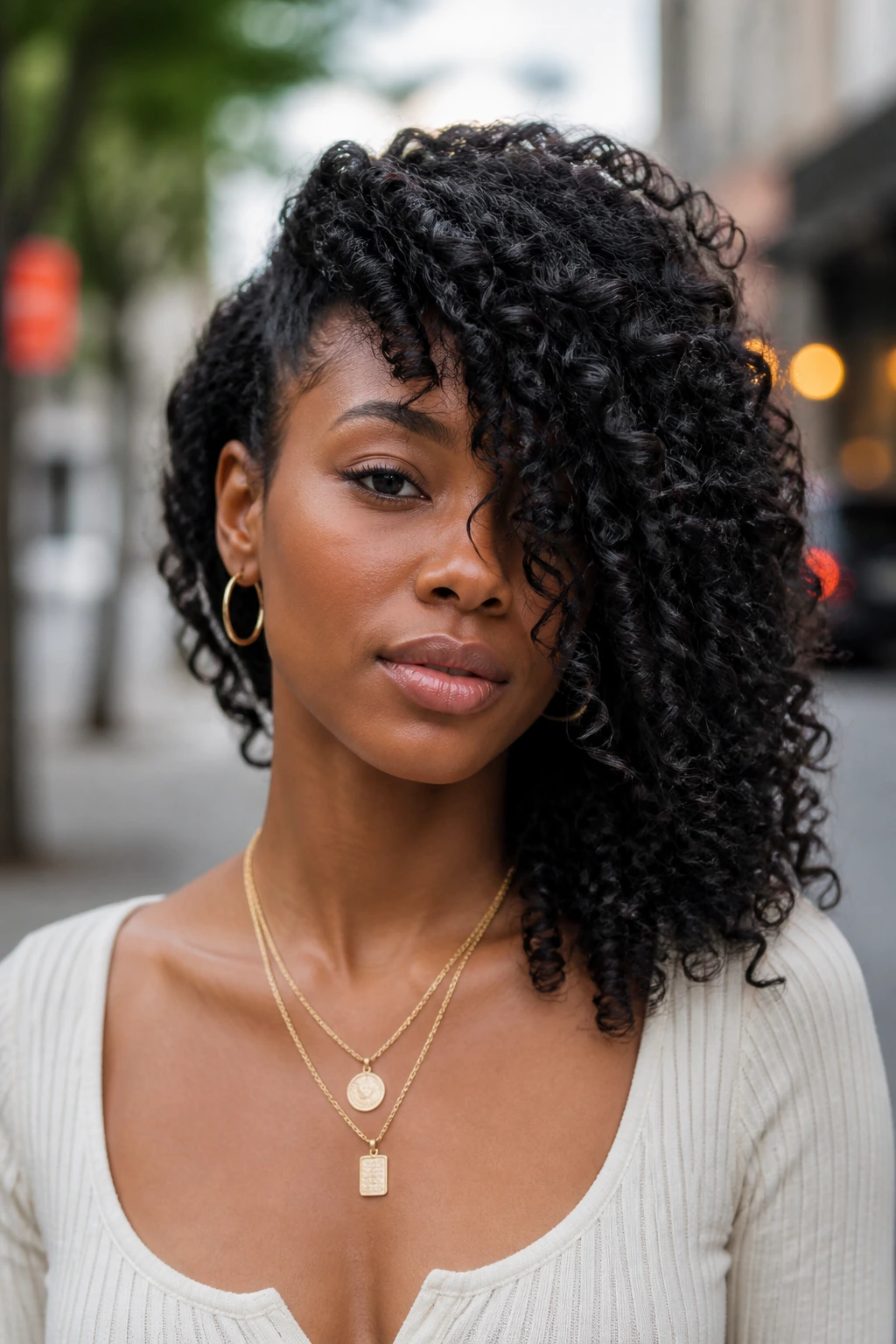
Side-swept layers are a good answer when your hairline, cheekbones, or forehead need a little shifting. The mass of the curls moves to one side, and the layers help the style fall in a long arc instead of sitting straight down. That creates a softer line across the face and keeps the top from looking too flat.
This cut can be especially nice on 3B hair that shrinks unevenly. If one side naturally springs higher than the other, the side-swept shape turns that into part of the design rather than a mistake. It feels thoughtful, not accidental.
The trick is not to over-layer the side that carries the most hair. Keep enough weight so the swept section still looks plush when dry. You want curve and motion, not a lopsided puff.
16. Collarbone Cut with Hidden Layers
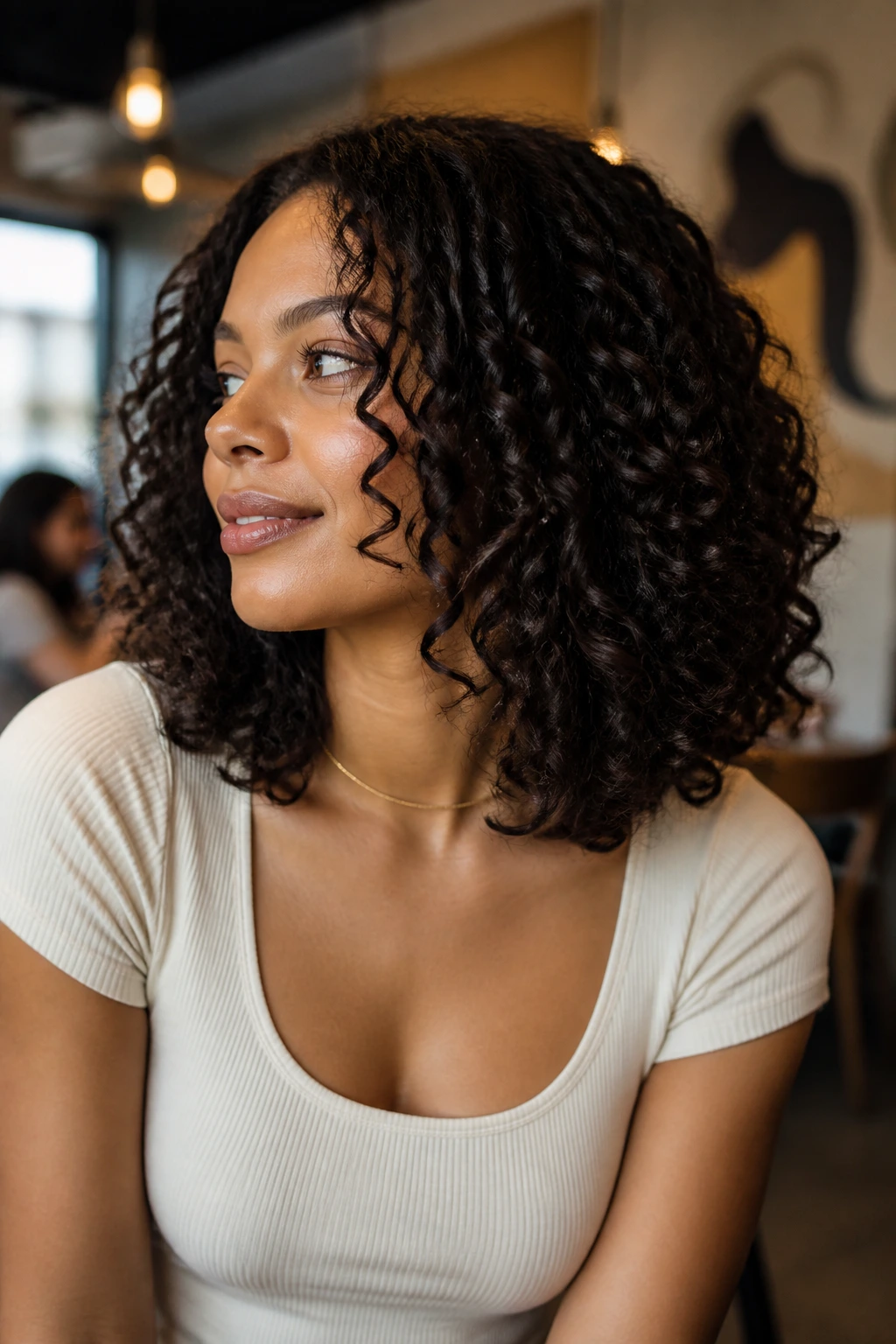
This is the cut for people who want something polished from the outside but a little more interesting underneath. The perimeter stays near the collarbone, clean and easy to wear, while hidden layers inside the shape remove enough bulk to keep the curls from sitting too heavy. From the front, it reads simple. Underneath, it moves.
That hidden structure makes a big difference on Black hair with a lot of density. You keep the security of length, but the cut stops feeling like one solid block. The curls separate more easily, dry faster, and swing a little better when you turn your head.
It’s a good salon request if you want a shape that works for work, weekends, and the occasional stretched-out style. No loud angles. No dramatic corners. Just a smarter version of a plain cut.
17. Chin-Length Curly Crop
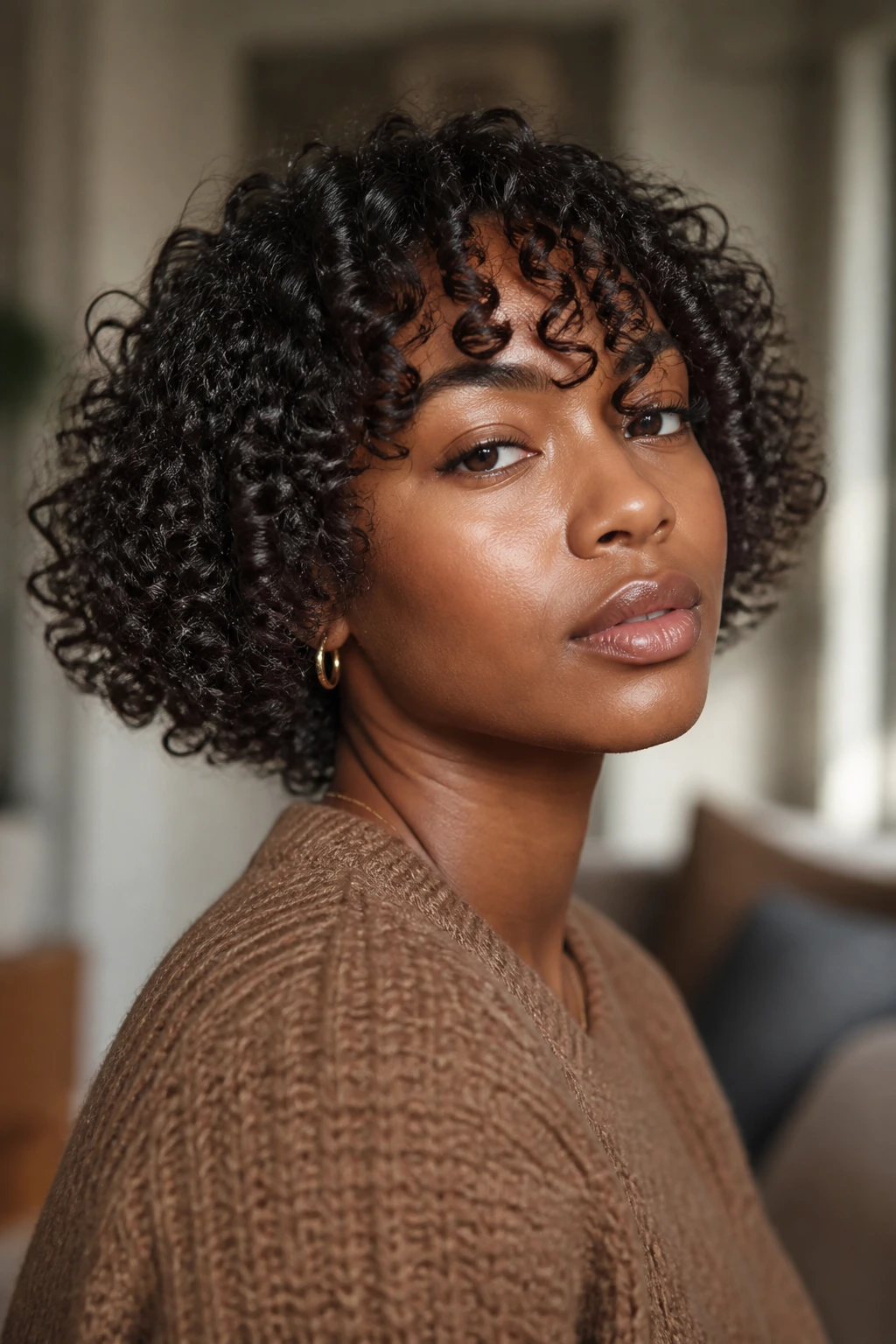
A chin-length crop puts the curls right where the face lives. That’s the magic of it. The shape draws attention to the eyes, the jaw, and the neck, and it does so without needing perfect styling every single day. On 3B curls, the crop can feel youthful and grown at the same time, which is a hard balance to fake.
The main caution is width. If the cut is all one level with no soft shaping, the hair can puff outward instead of hugging the head. Ask for a little rounding at the sides so the cut stays compact. A good curly crop should sit close enough to feel intentional, but not so close that it loses body.
This is a strong choice if you want to make a clean break from longer lengths. The grow-out is manageable, too, which is more than I can say for some sharper cuts.
18. Rounded Frohawk
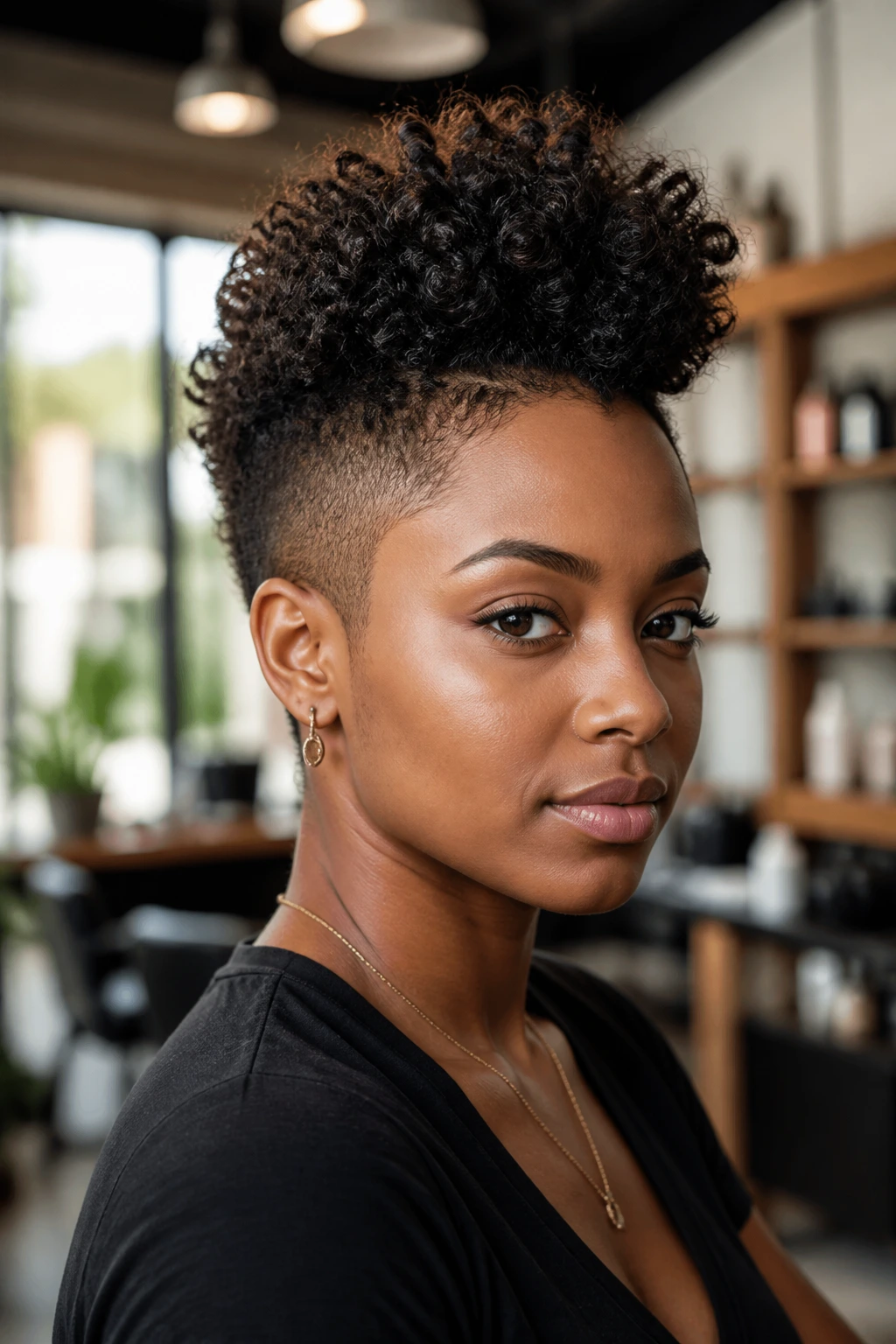
A frohawk gives you the energy of a statement cut without fully committing to a mohawk. The sides are tapered or closely shaped, while the center strip stays fuller and more vertical. On 3B curls, that center section can get gorgeous height with almost no coaxing.
This cut works because it uses contrast. The eye goes straight to the middle, so even simple styling looks deliberate. It’s a good fit for anyone who likes structure around the edges and volume up top. If the sides are cleaned up well, the shape feels modern without being harsh.
The maintenance is in the outline. Keep the sides neat, keep the top hydrated, and don’t let the middle grow wild in one direction. A frohawk can look messy on purpose. It should not look forgotten.
19. Tapered Pixie
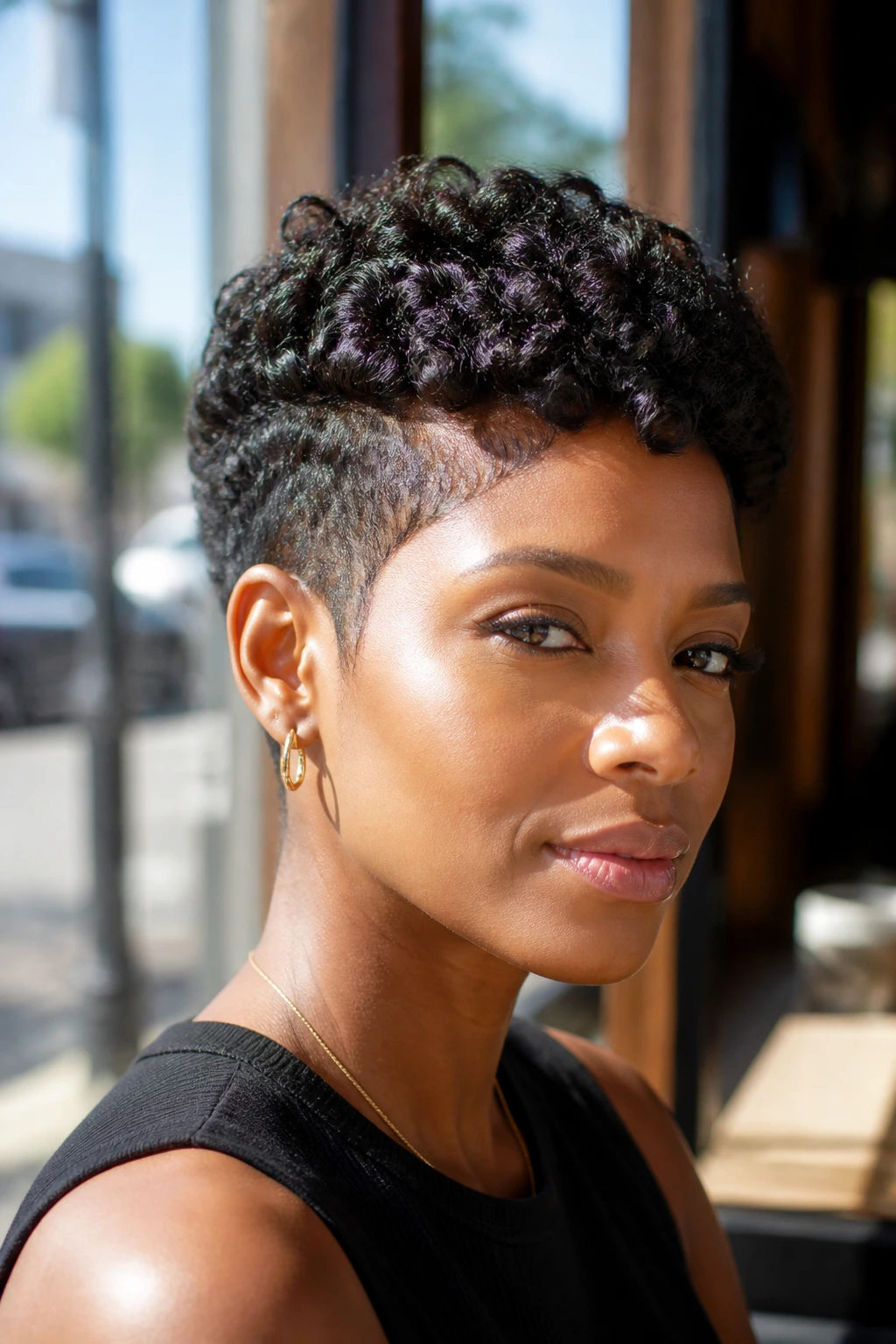
A tapered pixie on 3B hair is tiny in length and big in attitude. The sides and back are clipped short enough to keep the head shape neat, while the top stays long enough for curls to form. It’s not a flat crop. It’s a textured short cut with a little lift.
This is a good pick for people who hate hair on the neck and want the wash routine to feel shorter. There’s less styling time, less drying time, and less chance of the hair sitting in the way. But the cut has to be maintained. Let it go too long, and it loses the crisp taper that makes it work.
If you’re nervous, ask for softness at the edges rather than a hard line. That keeps the pixie from looking severe and helps the curls blend naturally into the shorter areas.
20. Asymmetric Curly Cut
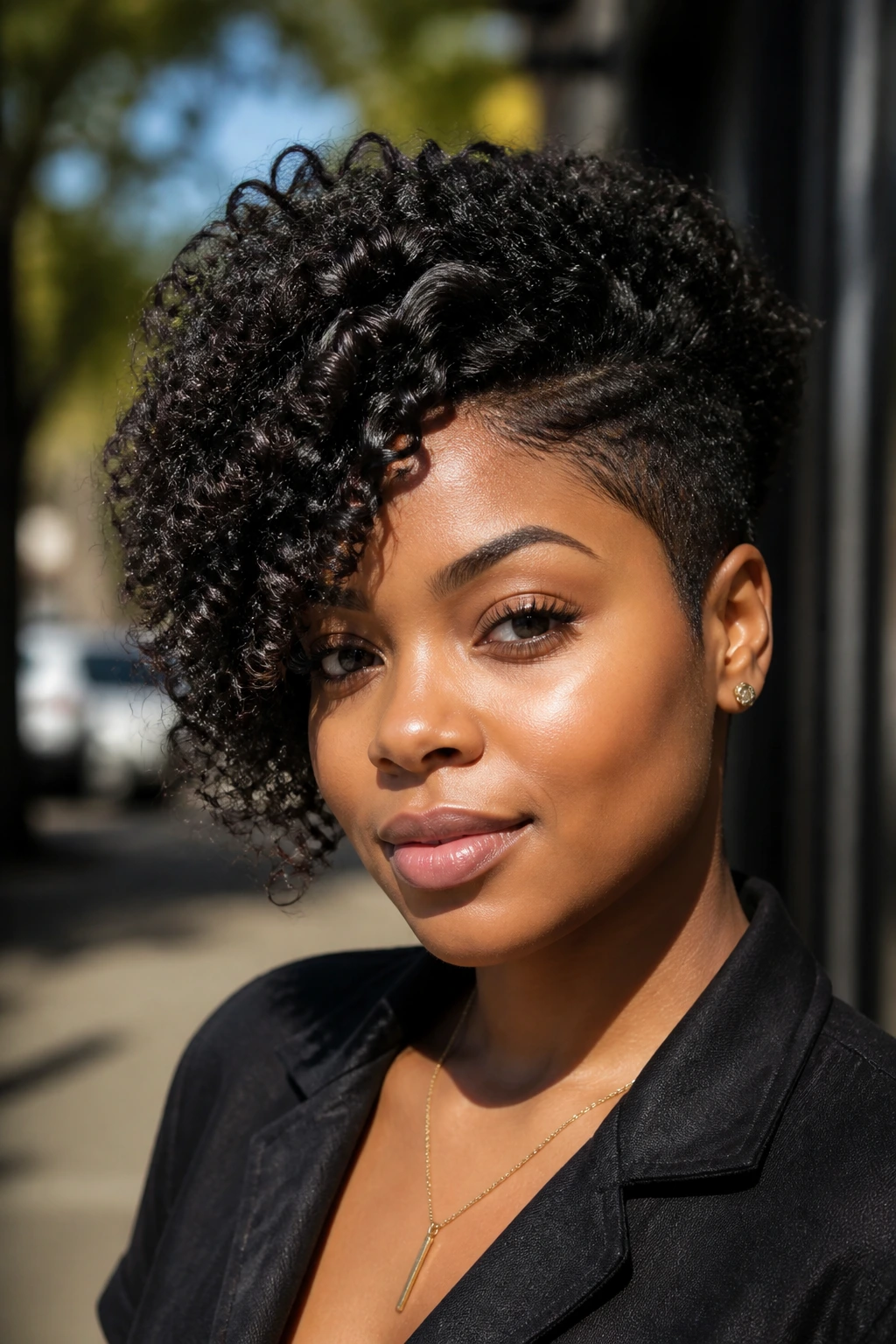
An asymmetric cut is the one for someone who likes a little tension in the shape. One side stays slightly longer, or the front sweeps lower on one side, and the imbalance becomes the point. On 3B curls, that asymmetry looks especially good when the hair has enough density to support the difference without collapsing.
This style can sharpen softer face shapes or make a plain shoulder-length cut feel more interesting. It’s also useful if one side of your hair grows differently from the other. Instead of fighting the unevenness, the cut uses it.
Keep the contrast intentional. A tiny difference can look chic. A random difference can look like a missed section. Tell the stylist exactly how much longer you want the heavier side, then check the dry shape before you leave.
21. High-Volume Crescent Cut
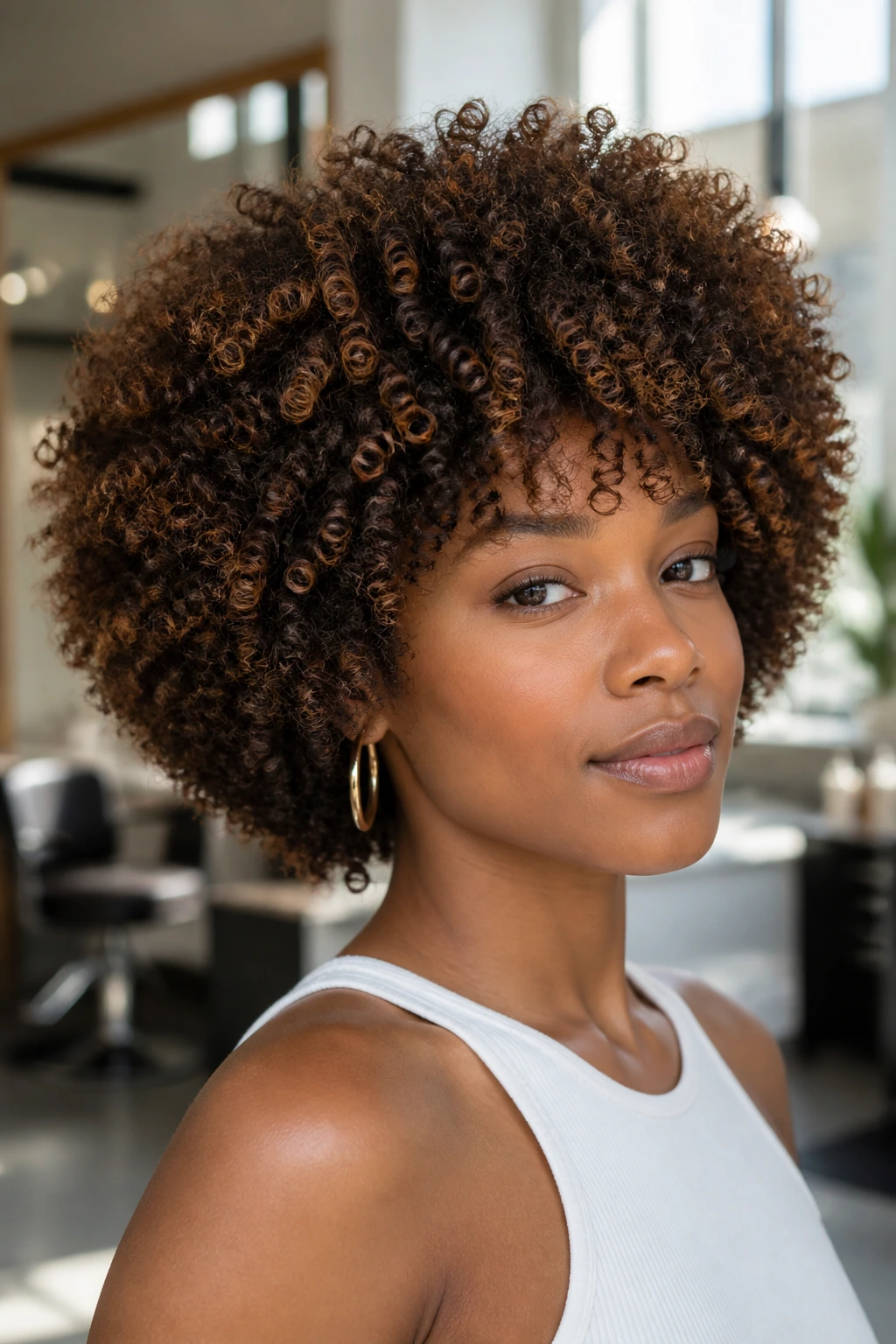
A crescent cut curves around the head like a soft arc, with the height sitting a little higher through the middle and the sides tapering gently outward. It’s a gorgeous shape on dense 3B curls because it gives the hair room to be full without letting the outline turn square. The result feels rounded, lifted, and just a little dramatic.
This one shines when your goal is fullness with direction. The curls don’t just sit there. They rise and curve. That makes the cut especially useful for people whose hair tends to puff outward at the wrong spots. The crescent shape steers the volume instead of trying to crush it.
It does best with a stylist who understands curl placement. A bad crescent cut looks accidental fast. A good one looks like the hair decided to cooperate.
22. Layered Midi with End Definition
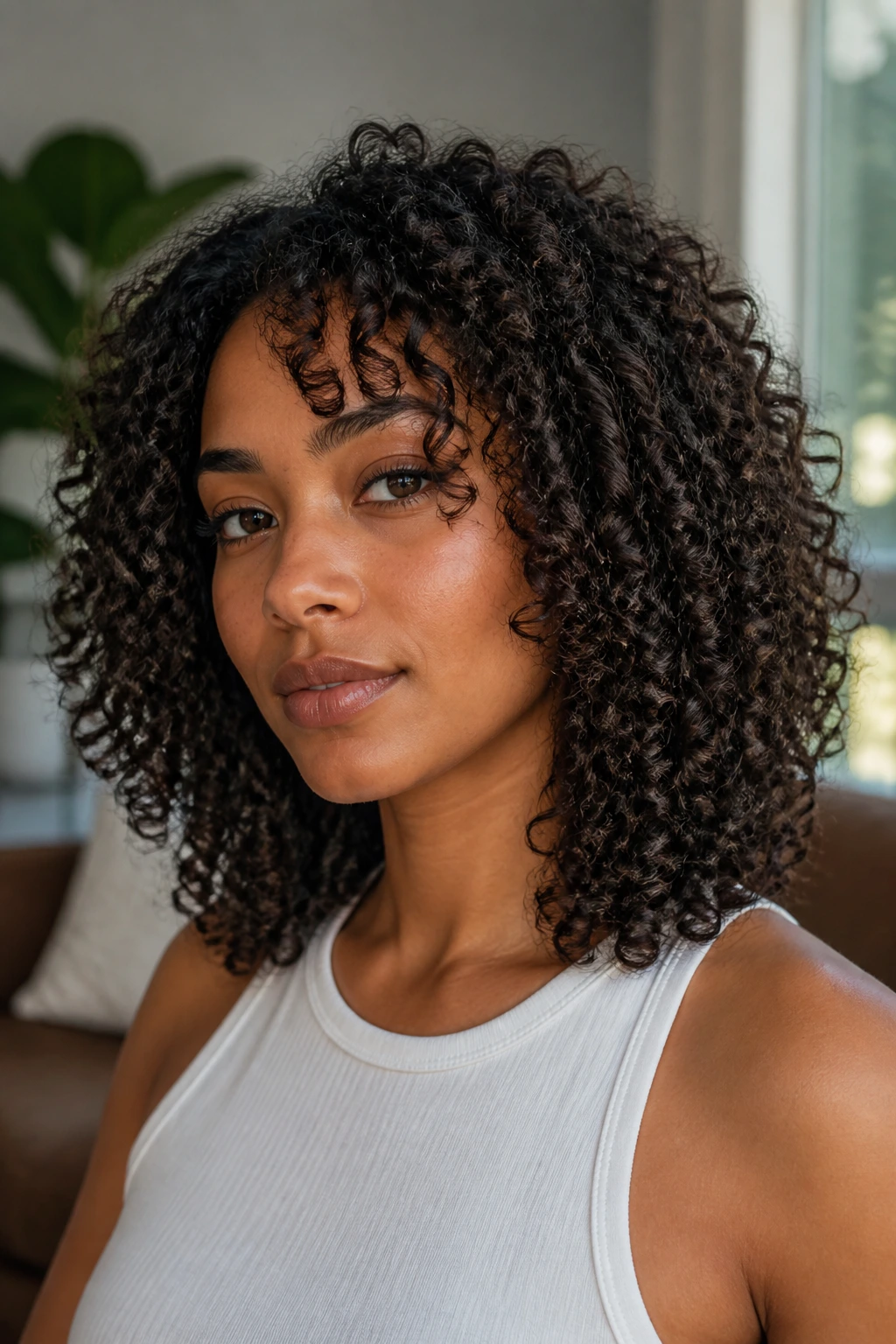
A layered midi is a middle-length cut that keeps the ends from looking too blunt or too heavy. The layers are there, but they don’t dominate the silhouette. Instead, they help the curls fall in cleaner clusters and keep the outline from turning blocky as the hair dries.
This is one of the more practical options if you wear your hair in wash-and-gos, twist-outs, or half-up styles. The length is long enough to tie back, but the shaping still shows when it’s loose. End definition matters here. If the ends are wispy, the whole cut loses balance.
I like this for people who want movement without making the haircut the loudest thing in the room. It’s the kind of shape that looks better and better the more you wear it.
23. Wash-and-Go Shoulder Cut
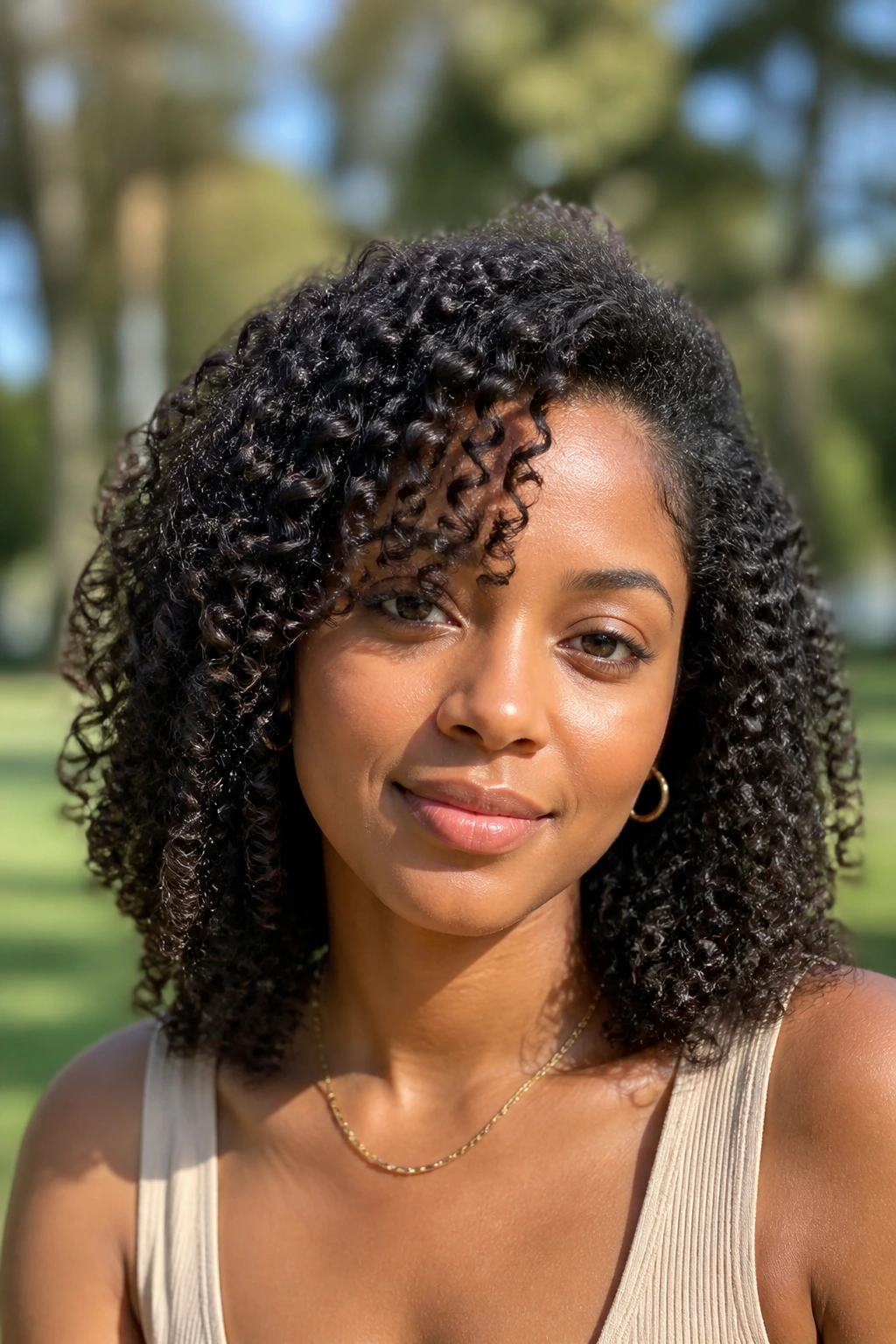
Some cuts only look good after a lot of work. This one is built to survive the wash-and-go. The shoulder length gives the curls enough length to settle, while the shaping keeps the style from ballooning at the sides or collapsing at the crown. It’s a solid choice if your routine is more leave-in, gel, diffuse, and go than anything fancy.
The key here is even distribution. You want enough face framing to avoid the dreaded pyramid, but not so many layers that the shape gets thin by day three. Shoulder length is a sweet spot because it gives the curls room to dry without shrinking into a tiny puff.
If your hair lives in a repeat cycle of co-wash, define, and leave it alone, this cut earns its place. It doesn’t demand drama. It just behaves.
24. Shape-Up TWA with Soft Edges
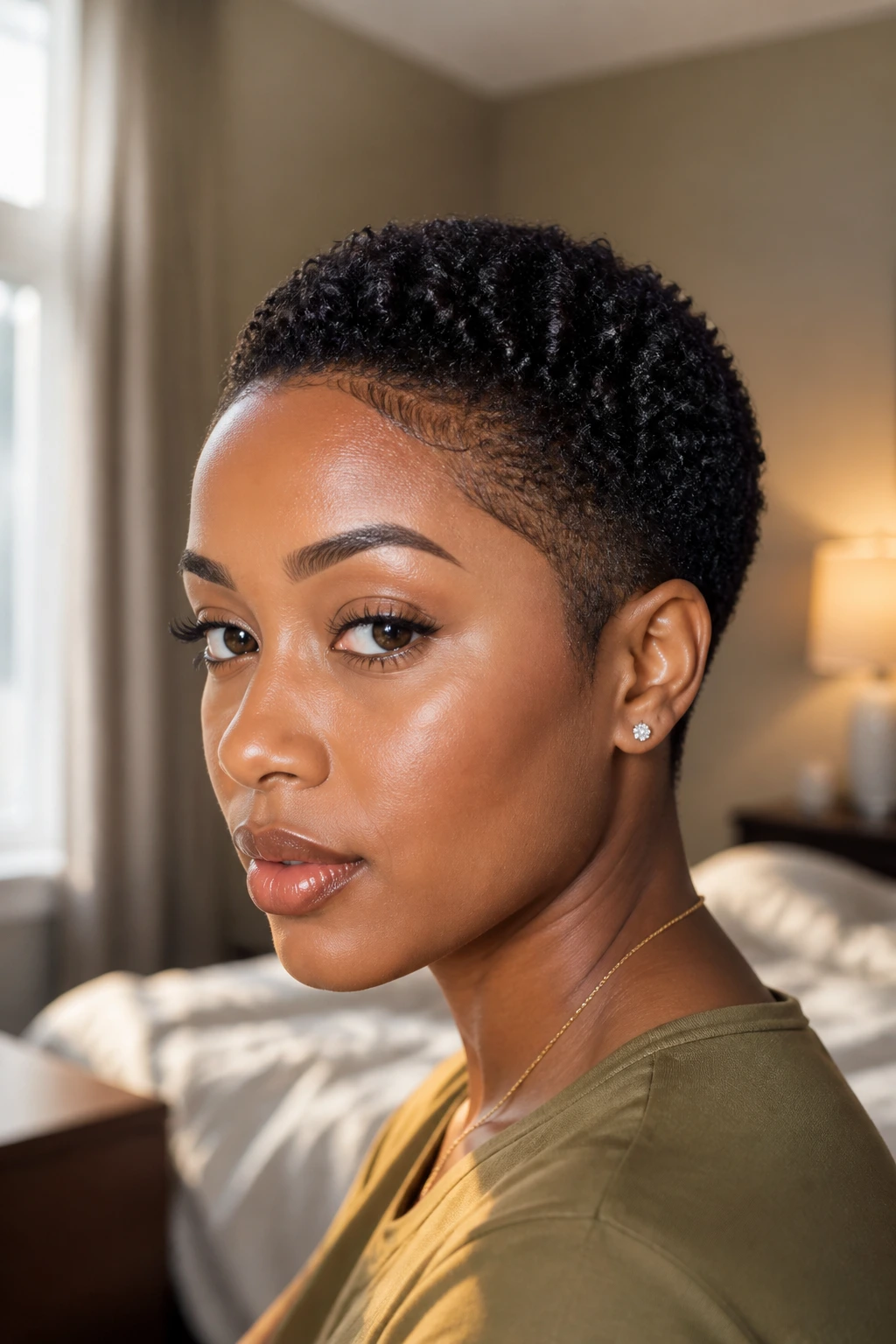
A TWA with soft edges is proof that short natural hair can still have shape, softness, and personality. The cut keeps the sides neat and the outline rounded, but avoids the harsh look that comes from cutting everything into one rigid box. On 3B hair, the texture itself gives the shape enough interest. The cut just clears the path.
This style is especially good if you want low day-to-day maintenance and strong facial focus. Earrings show. Jawlines show. The hair becomes part of the frame instead of a curtain. That can be a relief if you’re tired of handling a lot of length.
Ask for the edges to stay soft at the hairline unless you specifically want a crisp lineup. The softness keeps the cut from looking severe as it grows out, and growing out matters here because short cuts need frequent touchups.
25. Curly Bob with Underlayers
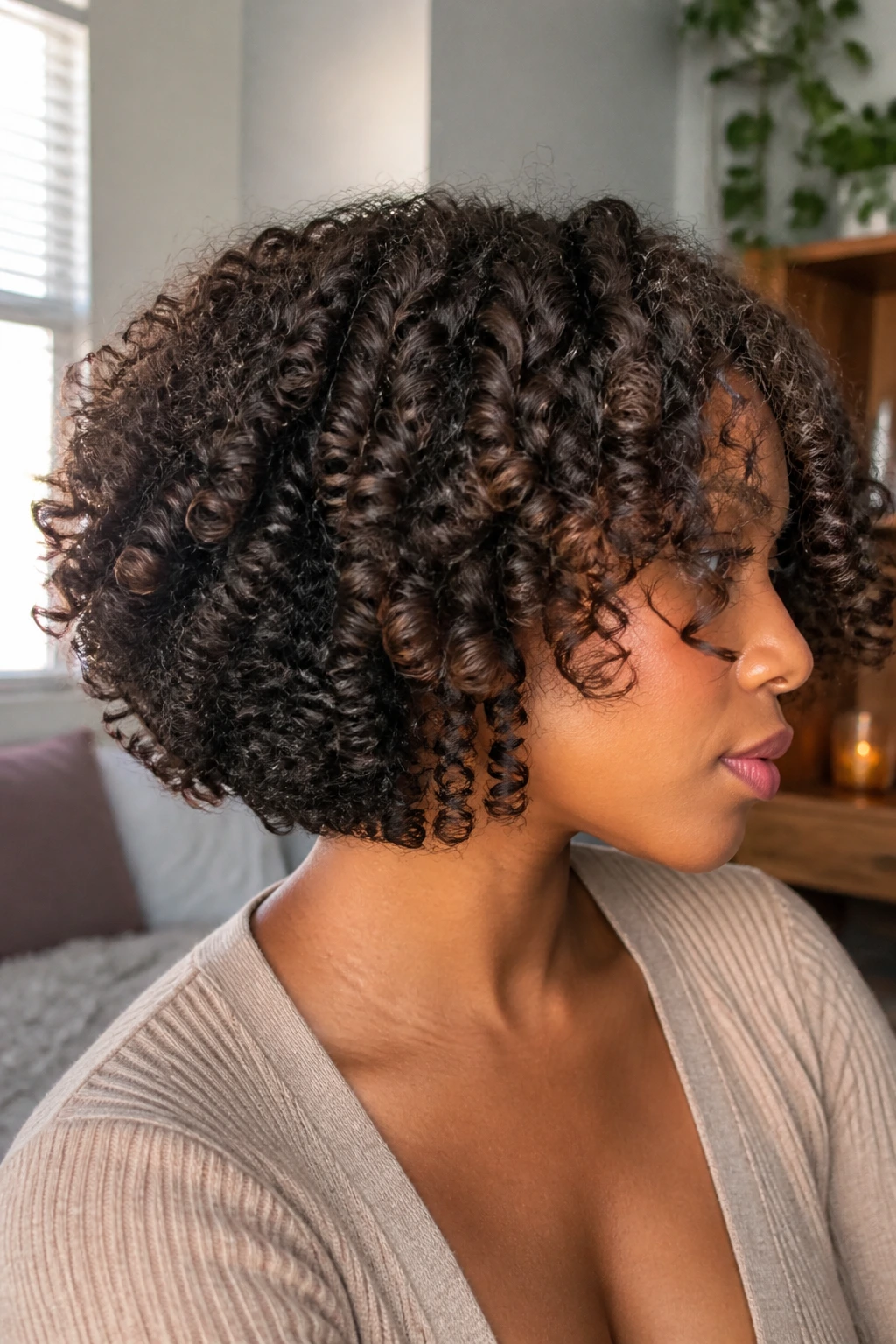
A bob with underlayers is a smart middle ground between blunt and airy. The outside still reads like a bob, but the hidden underlayers remove enough bulk that the cut doesn’t puff into a round helmet. On 3B hair, that internal work can make the difference between a bob that sits and a bob that moves.
This shape is especially handy if your hair is dense at the back of the head. The stylist can lighten the inside while leaving the visible outline full, which means you keep the clean finish without the extra weight. It’s a neat trick. Not flashy. Just effective.
If a blunt bob has ever felt too heavy on you, this is the version to try next. You’ll still get that tidy perimeter, only with less fight from the interior.
26. Sculpted Side-Part Bob
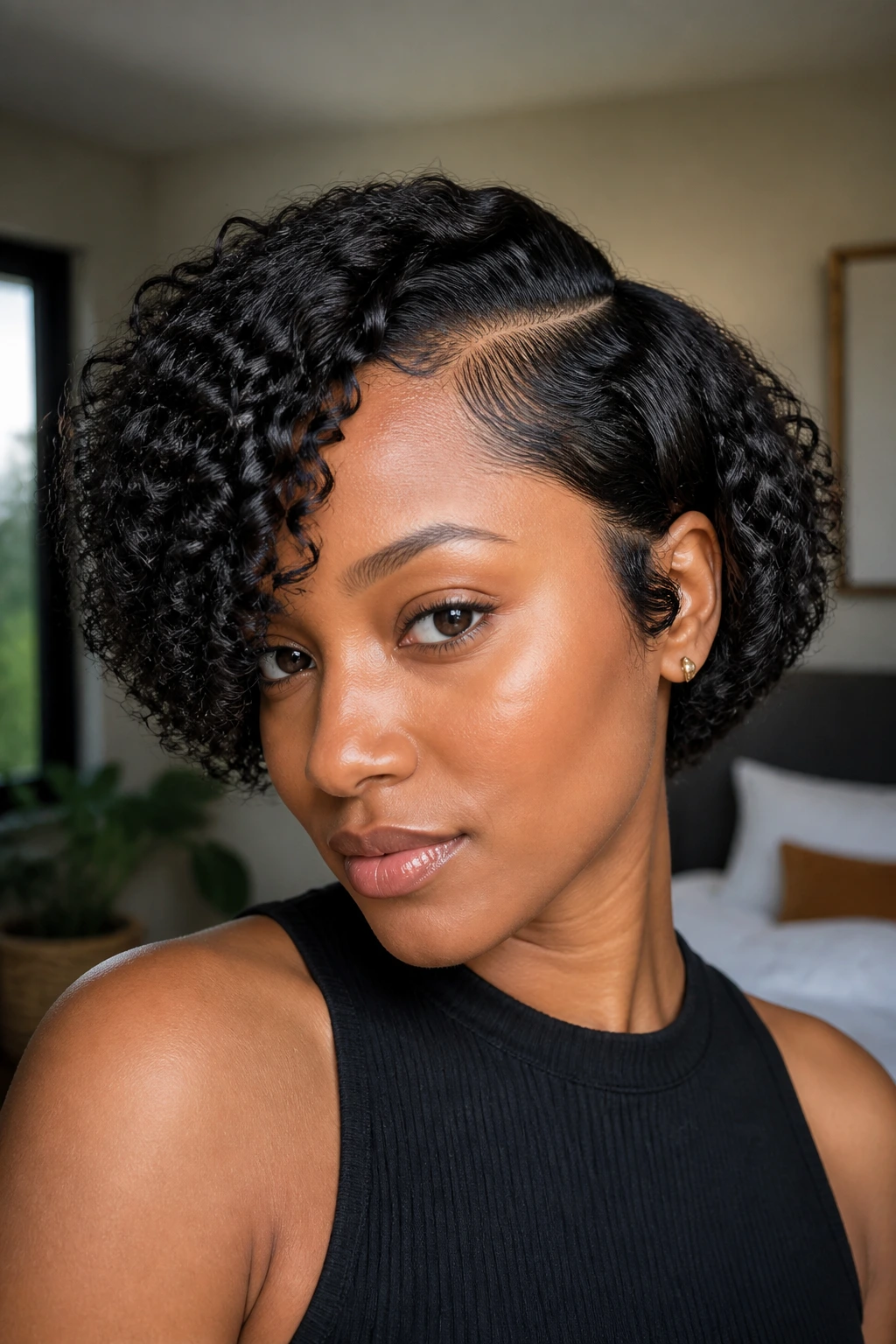
A sculpted side-part bob looks polished because the part and the perimeter are both doing work. The side part brings lift, the bob line keeps the shape clean, and the curls fall in a way that feels intentional rather than random. It’s a strong choice for anyone who wants a haircut that reads sharp with minimal styling.
This cut flatters 3B curls that clump well at the front and don’t need a lot of coaxing to stay together. A little asymmetry in the part can also soften strong jawlines or balance a fuller cheek area. The shape does a lot with a small set of moves.
The key is precision. If the part keeps drifting or the bob gets too wide, the whole look loses its crispness. Use clips while drying if you need to train the direction. It helps more than people admit.
27. Long Layers with Face Opening
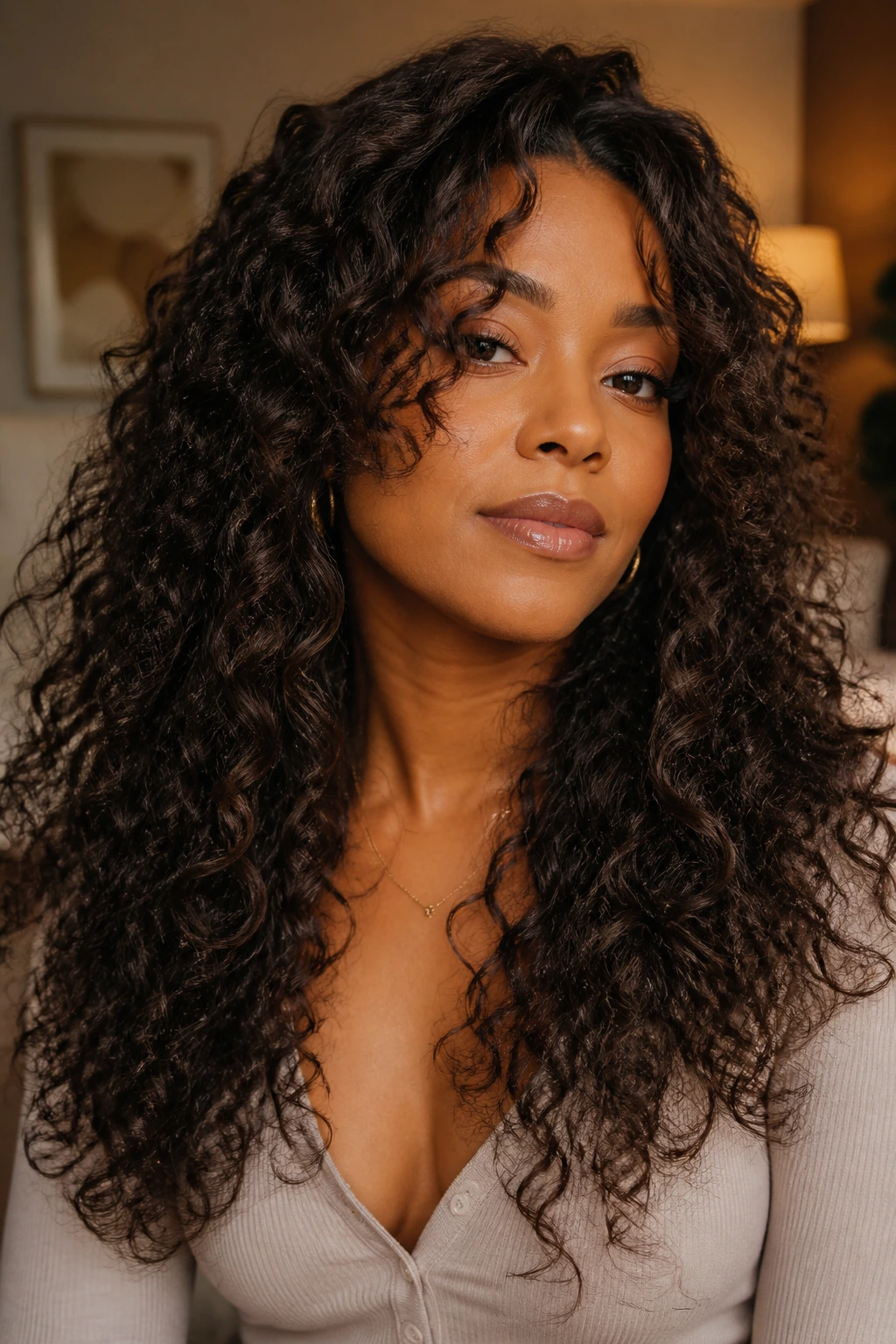
Long layers can get lazy fast if nobody pays attention to the front. This version fixes that. The back keeps its length, but the front gets carved open just enough to show the face, the neck, and a little collarbone when the curls move. On 3B hair, that makes long curls feel shaped instead of simply left alone.
This cut is a strong fit for anyone who loves length but hates when the front droops into one heavy curtain. You still get the swing of long hair, but the layers stop the whole shape from reading flat. If your curls are mixed in density, the face opening also helps the front and sides blend better.
I like this one for people who want to keep the option of ponytails, buns, and stretched styles. It’s long enough to play with, but thoughtful enough to look good down.
28. Soft Crescent Length Cut
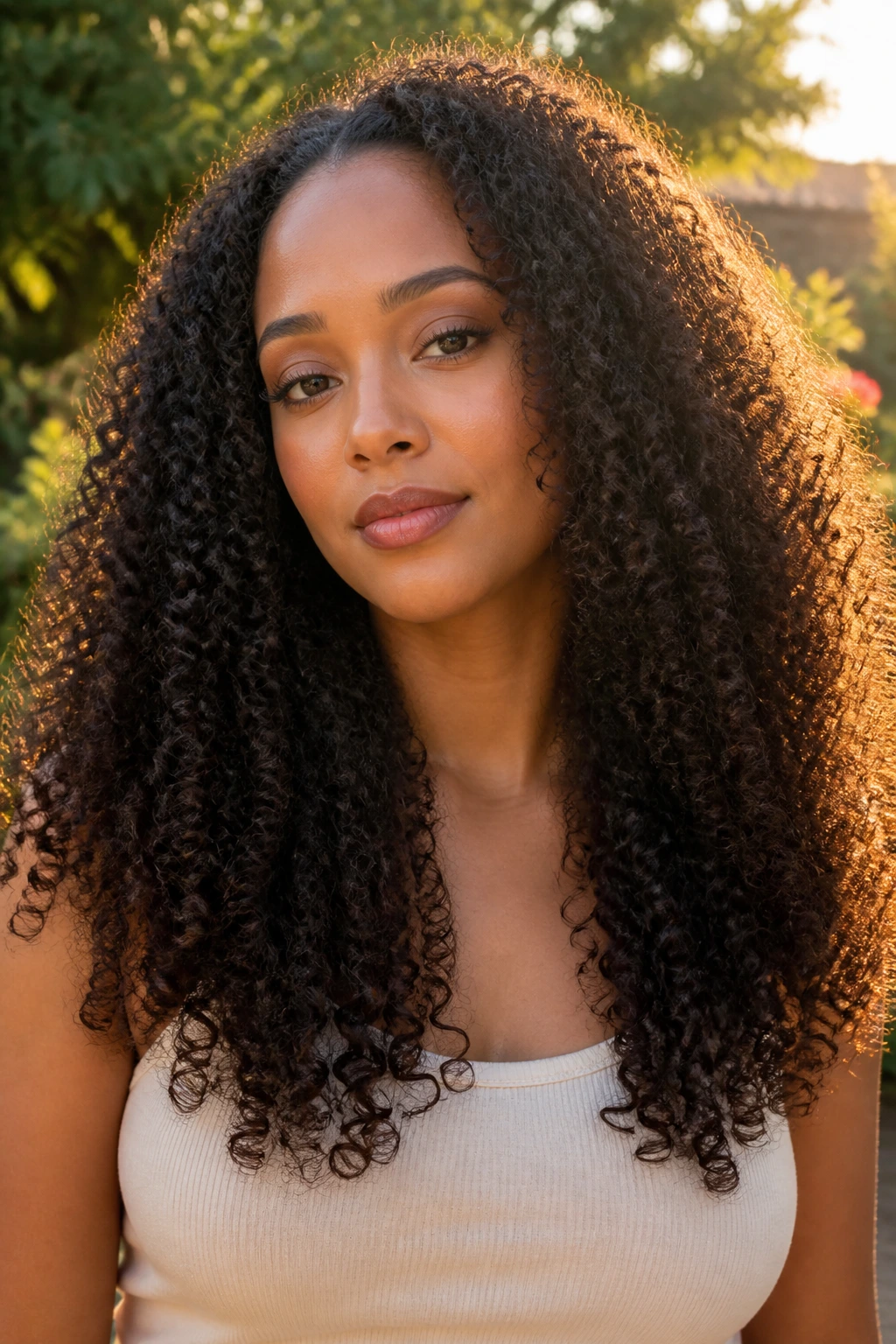
The soft crescent length cut finishes the list because it does a little of everything without acting like it needs applause. The line curves gently around the body of the hair, longer at the center, softer at the sides, and rounded enough to keep 3B curls from looking blocky at full length. It’s elegant in the plainest, best sense of the word.
This shape is ideal if you want long hair that still has a haircut inside it. Not just length. A haircut. That distinction matters. A good crescent cut keeps the bulk balanced so the curls land in a flattering curve instead of hanging in one flat sheet.
If your goal is length with polish, this is a strong final stop. It’s the sort of cut that looks even better after a few weeks of living in it, when the curls settle into their own rhythm.
What Makes a 3B Curl Cut Hold Its Shape
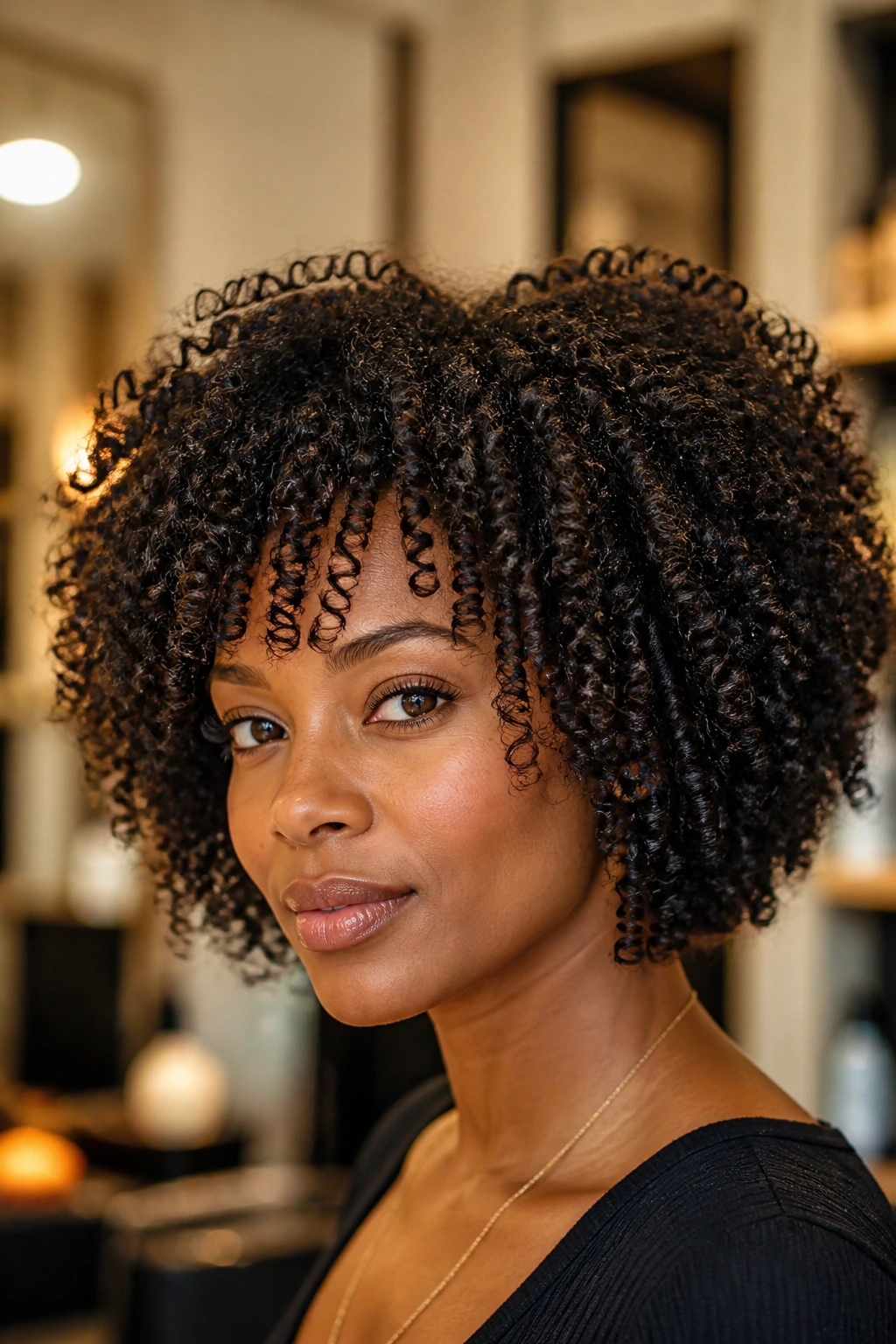
The best 3B cuts are built around curl spring, not around straight strands pretending to be curls. That means a dry cut, or at least a cut that’s checked dry before you leave, usually gives a more honest result. Wet hair lies. Stretched hair tells a little more truth, but even then you still need to account for how the curl will bounce back once it meets humidity and a diffuser.
Black hair also tends to carry density in specific places: the crown, the nape, the temples, the back corners. A good cut doesn’t scatter that weight everywhere. It removes bulk where the head needs air and keeps enough fullness where the silhouette needs structure. I’d rather see a bob kept a little heavy than have it thinned into a frizzy outline with no body.
The other thing that matters is how the front is handled. Too many curly cuts ignore the face and obsess over the back. Bad move. The front is what people see first in photos, in mirrors, and when you tuck a curl behind your ear. A strong 3B cut gives the face room to show up.
The Tools That Keep These Cuts Looking Intentional
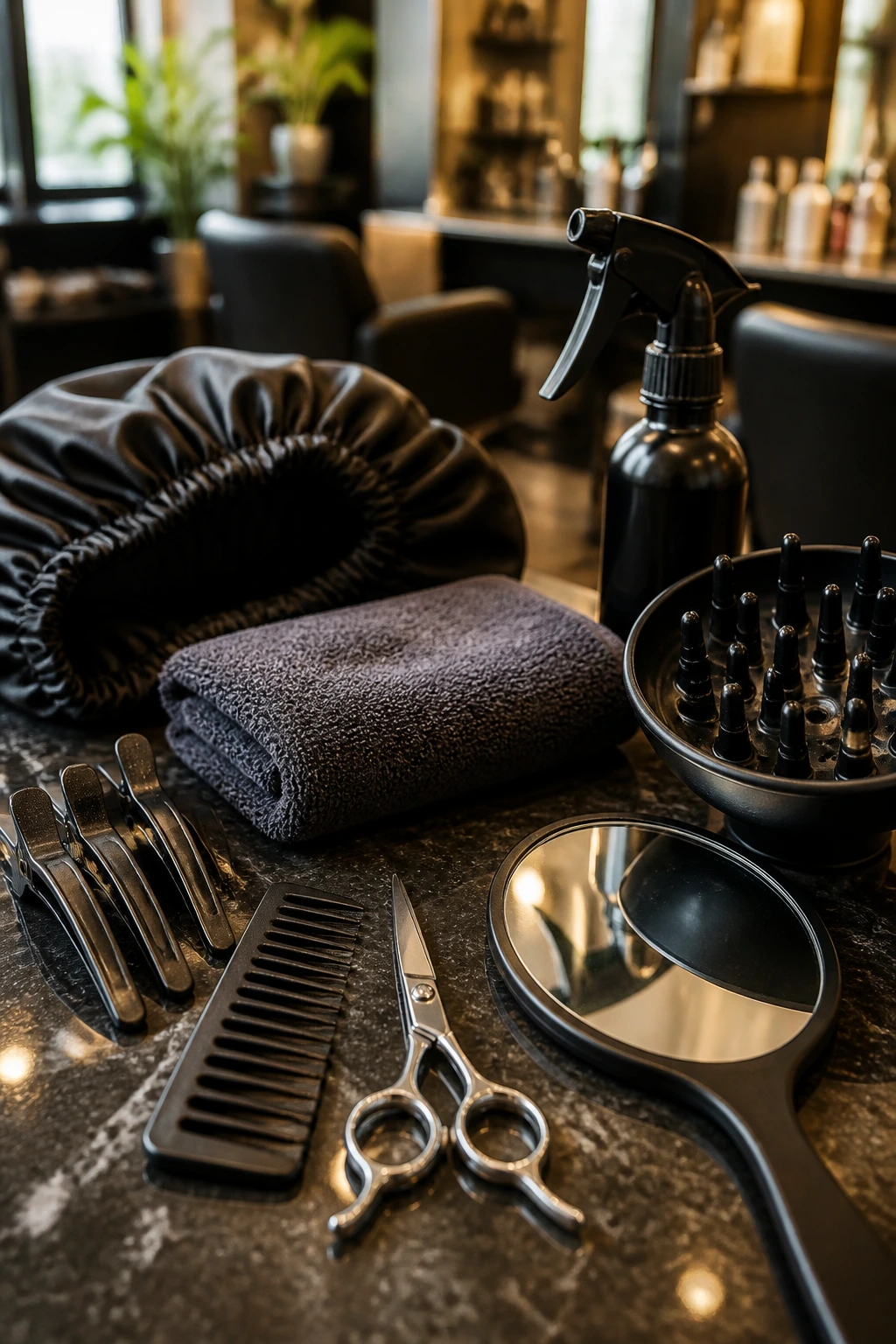
- Sharp haircutting shears: If you trim at home, use real shears, not kitchen scissors. Dull blades crush the ends and make curls frizz faster.
- Wide-tooth comb: Best for detangling after conditioner so the curl clumps stay intact.
- Duckbill or sectioning clips: Useful for separating crown, sides, and nape while styling or checking shape.
- Spray bottle with water: A light mist is enough to reactivate product on day two or three.
- Microfiber towel or cotton T-shirt: Helps blot water without roughing up the curl cuticle.
- Diffuser attachment: Gives the shape more lift at the root and keeps the curls from hanging limp while they dry.
- Hand mirror: Necessary if you’re checking a tapered cut or softening the back neckline.
- Satin bonnet or scarf: Keeps the shape from getting flattened overnight, especially on bobs and layered cuts.
What to Ask for Before the Shears Open
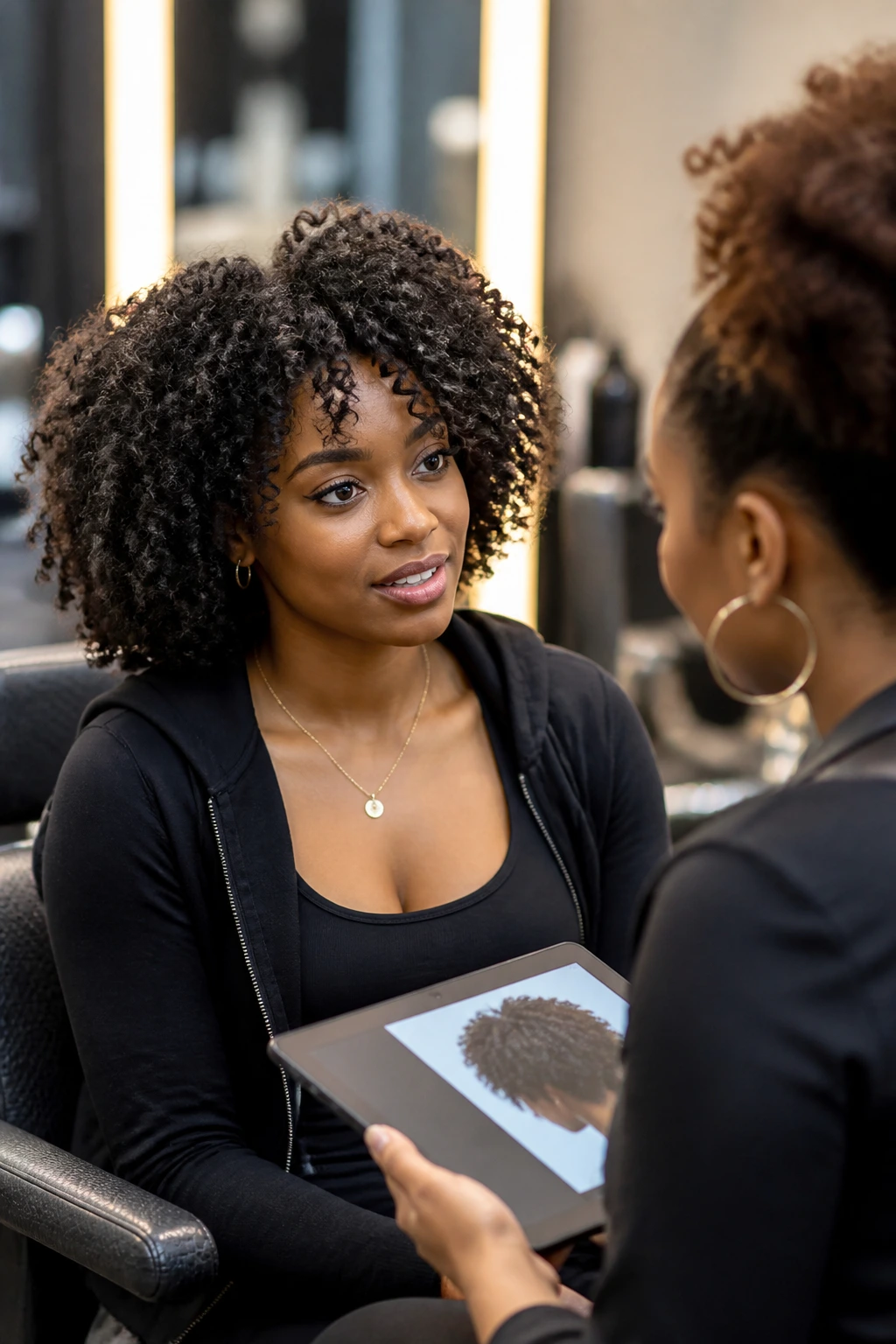
Bring photos, but bring the right ones. Show your stylist pictures of the cut on hair that behaves like yours—same density, similar shrinkage, similar length. A reference photo on blown-out hair can be useful for the silhouette, but it should not be the only photo. Curls are not straight hair with opinions. They sit differently.
Ask whether the cut will be done dry, stretched, or in phases. For 3B texture, I prefer a stylist who checks the shape as it dries and adjusts. That tiny second look saves you from walking out with a style that only works in the chair.
Speak up about your routine. If you diffuse, say so. If you air-dry, say that too. If you avoid heat, don’t let anyone build a cut around a blowout finish you’ll never repeat. The cut should fit the way you actually wear your hair, not the version of you that only exists for the salon mirror.
How to Wear and Refresh These Shapes Between Wash Days
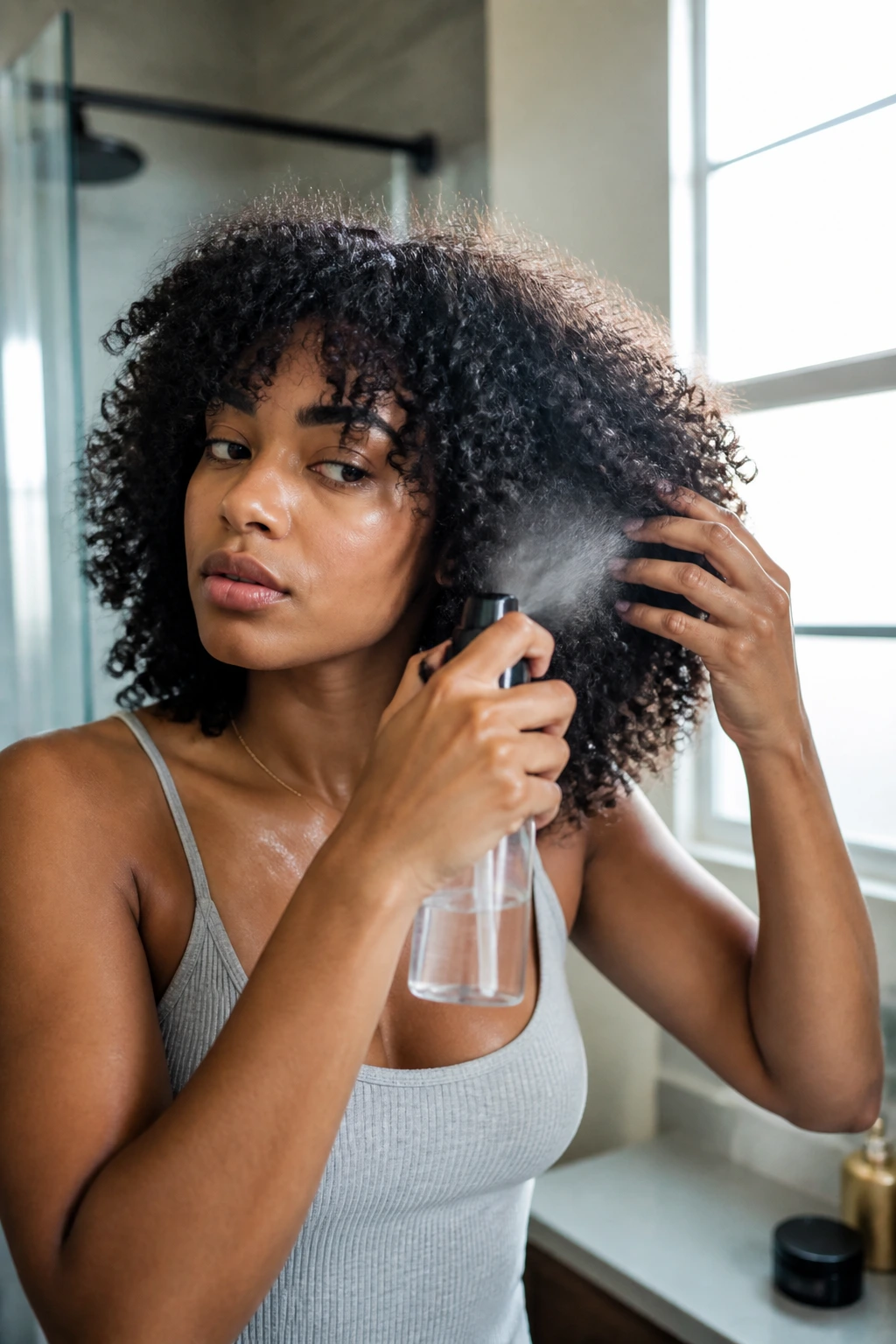
Presentation: Let the hair dry fully before fluffing. If you separate curls too early, the shape expands in the wrong places and the cut loses its lines. A pick at the roots can help with lift, but keep it off the ends unless you want frizz.
Definition: On day one, use a leave-in plus a foam or gel that matches your hold preference. Looser 3B curls often look best when the roots are lightly set and the ends stay soft enough to move.
Refresh: On day two or three, mist the hair with water, then smooth a pea-sized amount of product over the frizzy spots with damp hands. If the roots have flattened, diffuse on low for 5 to 7 minutes instead of soaking the whole head.
Accessories: Clips, satin scarves, and wide headbands can help redirect a part or save a bad front section. I like accessories that work with the cut, not over it. A good haircut should still show through.
Small Changes That Make the Whole Silhouette Better
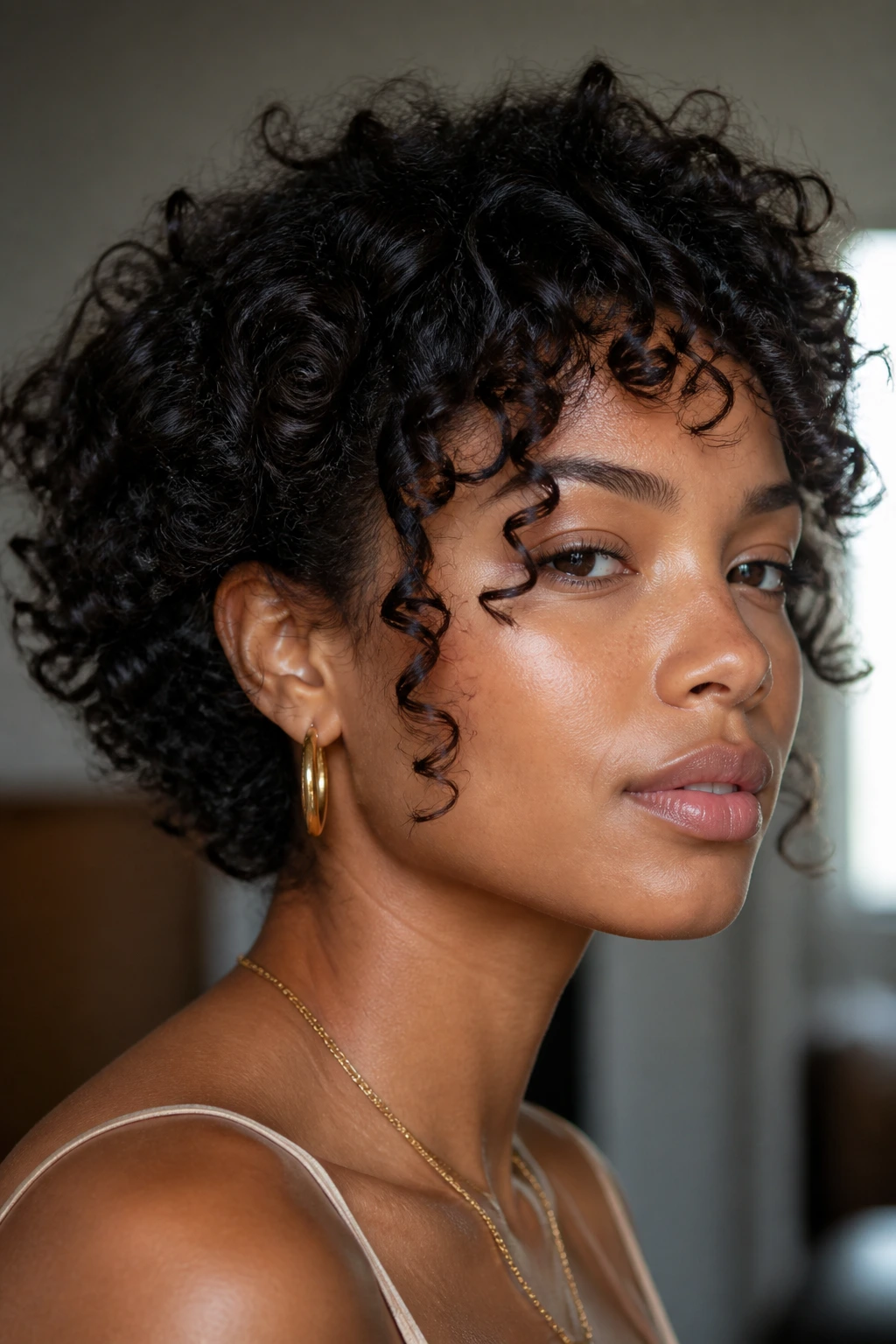
Shape Boost: If your curls hide your cheekbones, ask for a little more opening around the front pieces. Two inches in the right place can matter more than six inches taken off the back.
Definition Boost: A light mousse on soaking-wet hair can help the curl clumps form before gel goes on. That matters on 3B hair that tends to separate into thin ribbons.
Softness Boost: If a cut feels too sharp, leave a few longer pieces at the temples or jawline. That eases the line without losing the shape.
Low-Effort Change: A side part is the cheapest haircut trick in the room. It changes lift, balance, and face framing without touching a single curl.
Common Cutting Mistakes That Flatten 3B Hair

- Cutting only for the wet stage: Wet curls lie about length. The symptom is a cut that looks fine in the chair and shrinks into a shape you never asked for. The fix is a dry check before you leave.
- Over-thinning the ends: If the bottom looks airy but sad, the stylist removed too much weight. 3B curls usually need a fuller perimeter to clump well.
- Ignoring the crown: Flat crown, puffy sides, triangle shape. That’s the usual result when the top is treated like an afterthought. A little crown shaping goes a long way.
- Chasing one curl pattern on a mixed head: Many Black heads have looser curls in some spots and tighter ones in others. If the cut ignores that, the shape falls unevenly.
- Skipping maintenance on bangs or tapers: Shorter front pieces and clean necklines grow out fast. If you want them to stay crisp, they need more frequent trims than the rest.
Ways to Adapt One Cut to Four Different Lives
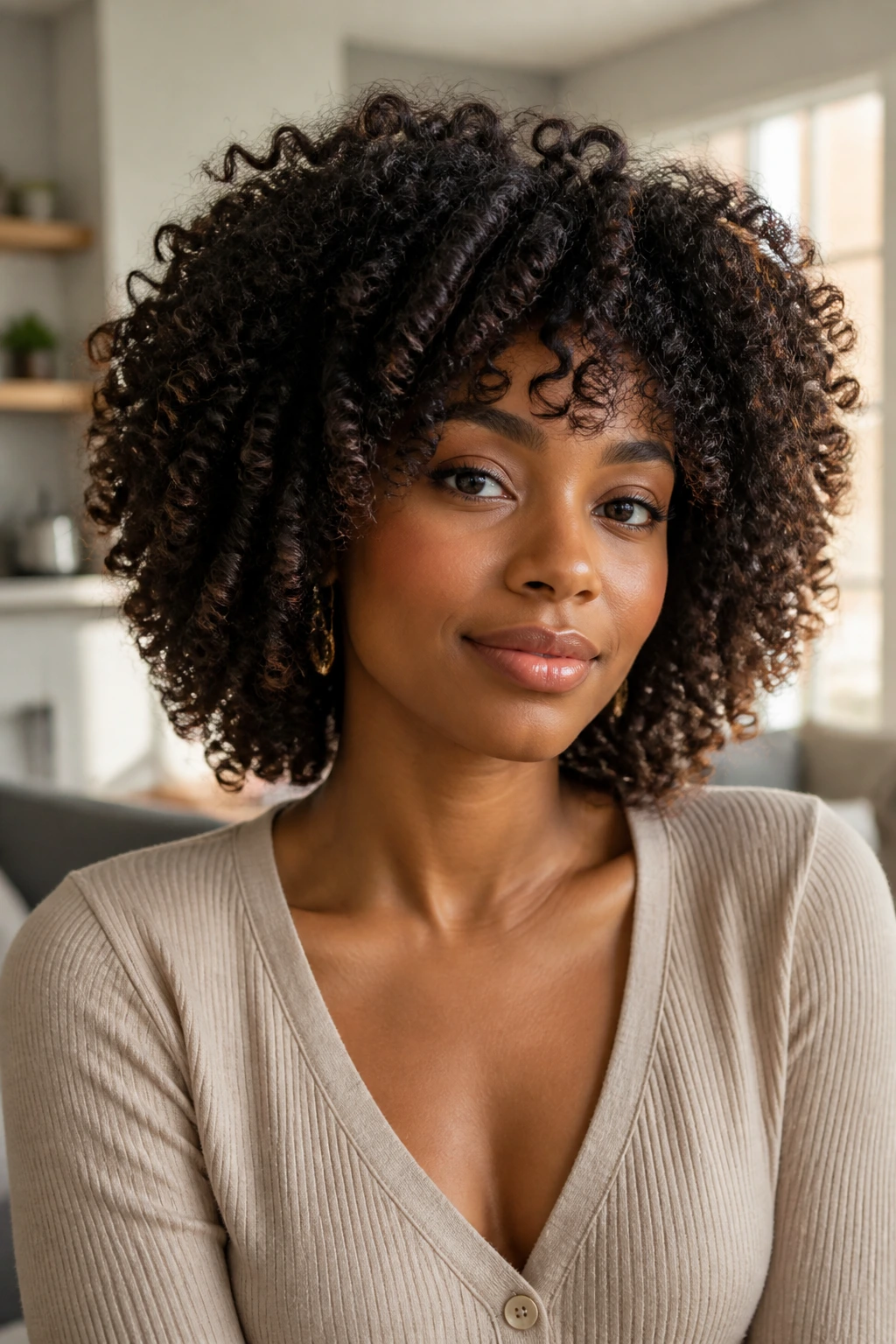
The Stretch-and-Wear Version: If you wear your hair blown out or band-stretched sometimes, keep the layers longer and the perimeter strong. That way the shape still makes sense when the curl pattern is elongated.
The Bigger-Hair Version: Ask for a rounder crown and a little more width through the sides. This works well on dense hair that looks best with visible volume.
The Low-Maintenance Version: Go for hidden layers, a blunt-ish perimeter, and fewer short front pieces. Less interruption in the cut means easier grow-out.
The Face-First Version: Add curtain bangs, side-swept front pieces, or a longer front drop. This is the route if you want the haircut to frame the eyes and cheekbones hard.
Keeping the Shape Clean Between Wash Days
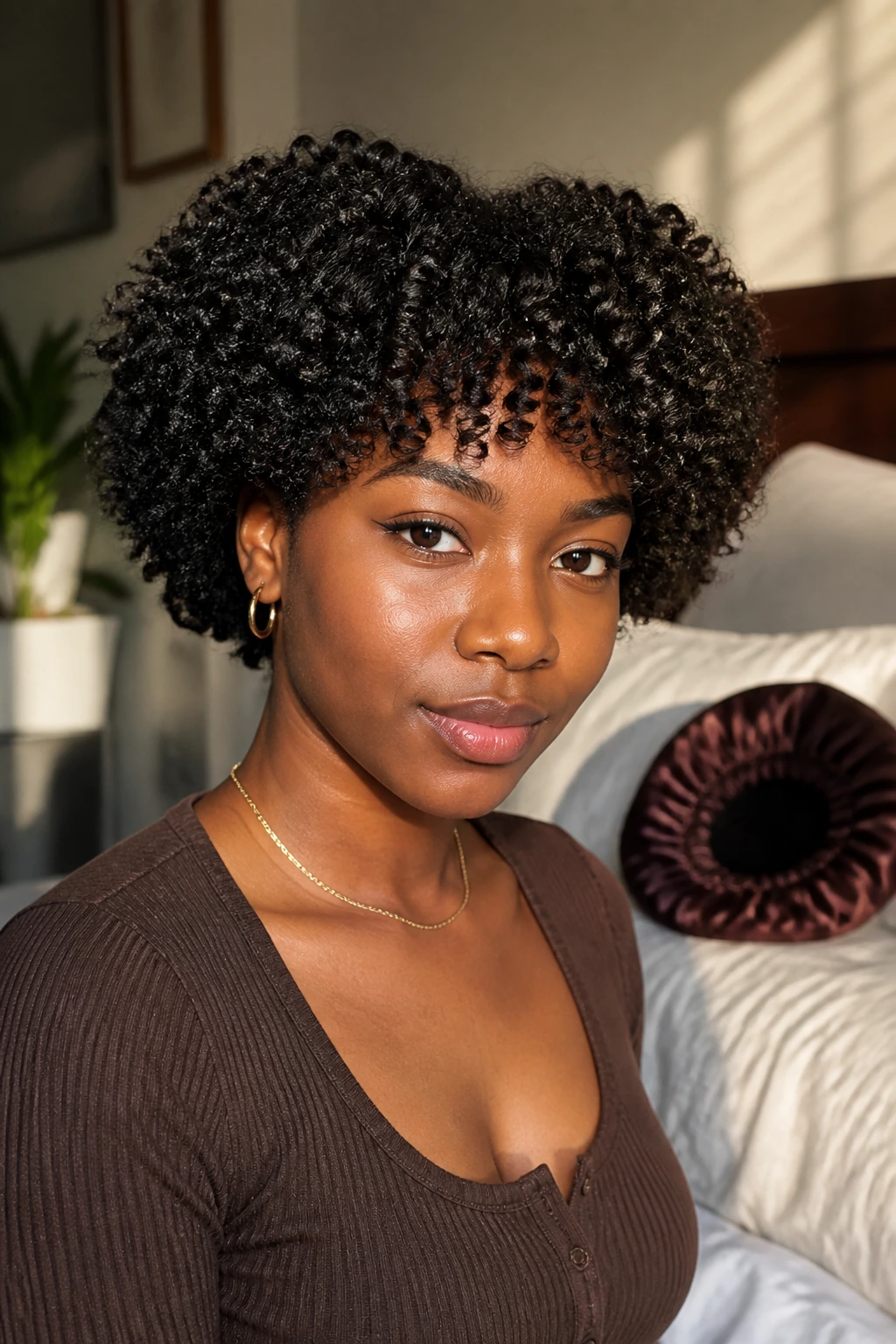
Shorter cuts need a trim every 6 to 8 weeks if you want them to hold the line. Longer layered shapes can usually go 10 to 14 weeks before they start looking fuzzy at the ends, though bangs and tapers always want more attention. That’s the price of precision.
At night, pineapple the curls loosely if the shape allows it, then cover the hair with a satin bonnet or scarf. For bobs and crops, a satin pillowcase helps when the bonnet slips off. If the front pieces flatten, re-wet just those sections in the morning instead of redoing the whole head.
If the curls start looking dull or rough at the ends, stop piling on product and look at the cut itself. Sometimes the answer is a dusting, not a heavier cream. That’s one of the less glamorous truths of curly hair: product can hide a bad shape for a minute, but it cannot save it.
Questions People Ask Before They Sit Down
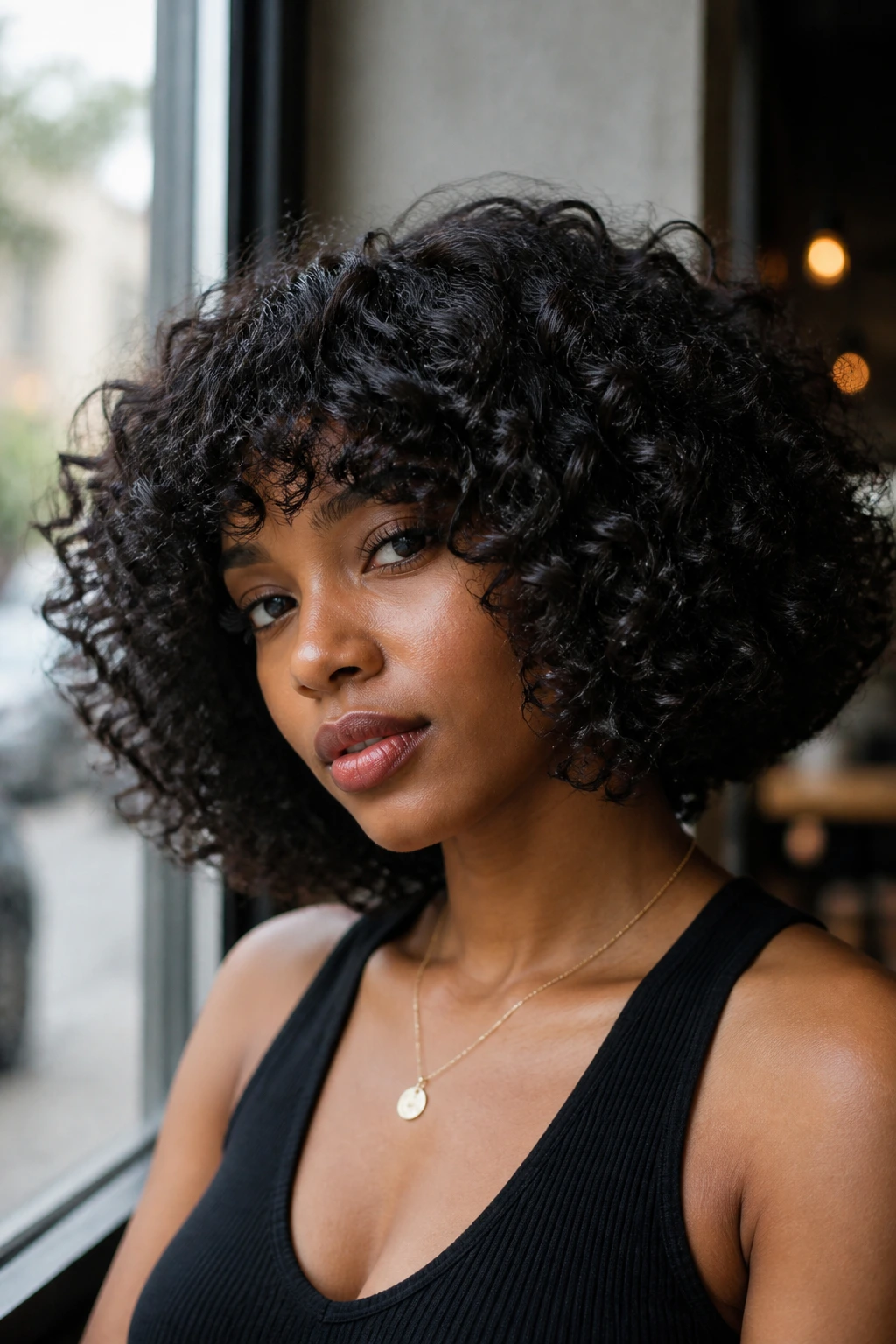
Should 3B curls be cut dry or wet?
Dry is usually safer for shape, especially on Black hair with major shrinkage. Wet cutting can work if the stylist keeps rechecking as the hair dries, but dry gives the honest outline sooner.
Which cuts are best for thick 3B hair?
Rounded bobs, internal layers, tapered shapes, and soft shags usually handle thickness well. They remove bulk without making the ends look threadbare.
Can I get bangs with 3B curls?
Yes, but leave them longer than you think. Curly bangs shrink fast, and a fringe that feels “just right” wet can turn into a short, springy curl line when dry.
What if my curls are 3B in front and tighter in back?
That’s common. Ask the stylist to keep the back a touch longer or use slightly different layering zones so the tighter area doesn’t jump too high.
Do blunt cuts work on curly hair?
They do, but only when the density supports them. A blunt curly bob can look full and rich; on finer hair, the same line can feel heavy or bulky.
How often should I trim a curly cut?
Most shaped cuts need a refresh every 8 to 12 weeks. Short tapers, pixies, and bangs need earlier touchups because shrinkage makes small changes visible fast.
What if the cut looks too short after wash day?
Wait until it’s fully dry, then see how it settles for a few days. If it still feels too short, the fix is usually better face framing or a gentler grow-out trim next time—not more product.
How do I stop a curly bob from mushrooming?
Keep a bit of weight in the perimeter, ask for internal shaping instead of heavy thinning, and check the crown. Mushroom shapes usually come from too much width with too little control on top.
The Shape That Feels Like Yours
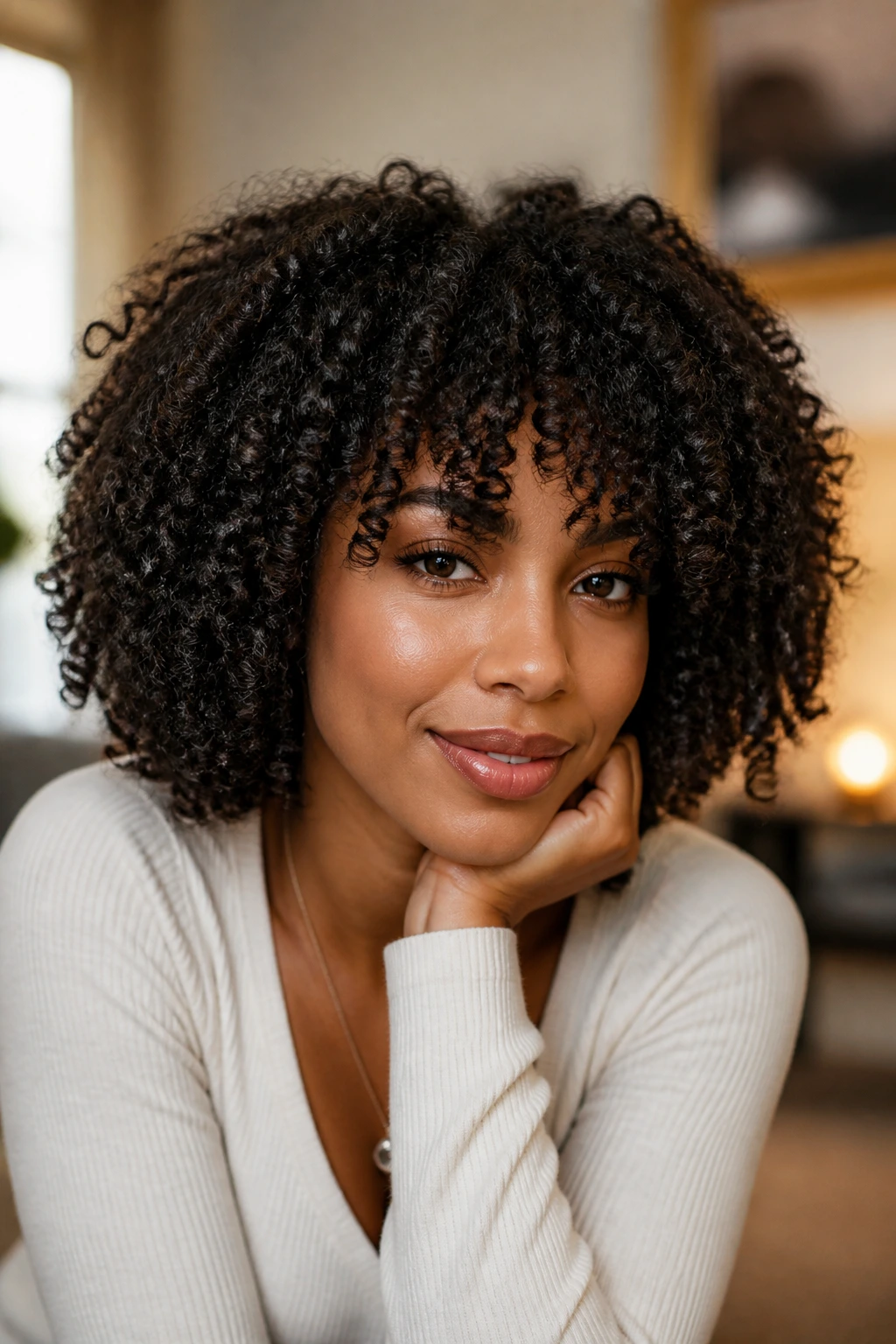
The best haircut for 3B curls is the one that understands shrinkage before it starts arguing with it. That sounds obvious, but plenty of cuts still get ruined by the same mistake: someone treats curls like they’ll fall in a straight line if they’re just cut hard enough. They won’t. They bloom, they lift, they shift, and that is half the charm.
What makes these 28 shapes useful is not that one of them is “the” answer. It’s that each one solves a different version of the same problem. Too much bulk. Too little face framing. A flat crown. A heavy back. A shape that looks fine for one day and fights you on the next three.
Pick the cut that matches how your hair actually behaves, not how you wish it behaved. That’s where the good stuff starts.
